
Article

Non-Imaging Optics as Radiative Cooling Enhancers: An Empirical Performance Characterization
CeDInt-UPM, Universidad Politécnica de Madrid, Campus de Montegancedo, 28223 Pozuelo de Alarcón, Spain
*
Author to whom correspondence should be addressed.
Urban Sci. 2026, 10(1), 64; https://doi.org/10.3390/urbansci10010064
Submission received: 18 December 2025 / Revised: 13 January 2026 / Accepted: 16 January 2026 / Published: 20 January 2026

Abstract

Radiative cooling (RC) offers a passive pathway to reduce surface and system temperatures by emitting thermal radiation through the atmospheric window, yet its daytime effectiveness is often constrained by geometry, angular solar exposure, and practical integration limits. This work experimentally investigates the use of passive non-imaging optics, specifically compound parabolic concentrators (CPCs), as enhancers of RC performance under realistic conditions. A three-tier experimental methodology is followed. First, controlled indoor screening using an infrared lamp quantifies the intrinsic heat gain suppression of a commercial RC film, showing a temperature reduction of nearly 88 °C relative to a black-painted reference. Second, outdoor rooftop experiments on aluminum plates assess partial RC coverage, with and without CPCs, under varying orientations and tilt angles, revealing peak daytime temperature reductions close to 8 °C when CPCs are integrated. Third, system-level validation is conducted using a modified GUNT ET-202 solar thermal unit to evaluate the transfer of RC effects to a water circuit absorber. While RC strips alone produce modest reductions in water temperature, the addition of CPC optics amplifies the effect by factors of approximately three for ambient water and nine for water at 70 °C. Across all configurations, statistical analysis confirms stable, repeatable measurements. These results demonstrate that coupling commercially available RC materials with non-imaging optics provides consistent and measurable performance gains, supporting CPC-assisted RC as a scalable and retrofit-friendly strategy for urban and building energy applications while calling for longer-term experiments, durability assessments, and techno-economic analysis before deriving definitive deployment guidelines.

1. Introduction

Urban areas are experiencing increasing thermal stress due to climate change, urban island effects, and the growing penetration of air-conditioning systems. Conventional vapor compression cooling already represents a significant share of global electricity use and greenhouse gas emissions and simply displaces heat from buildings and infrastructure to the urban canopy layer, further exacerbating local overheating [1]. In this context, passive technologies capable of rejecting heat directly to outer space without electrical input are attracting growing attention as tools for sustainable urban cooling and resilience [2].
Radiative cooling (RC) is a passive heat rejection mechanism that uses the atmospheric transparency window in the mid-infrared (IR) (approximately 8–13 µm) to emit thermal radiation from a surface toward outer space, enabling sub-ambient cooling without electrical power input [3]. By combining high solar reflectance with strong emissivity in this spectral window, properly designed surfaces can offset solar gains and reject heat to the cold sky.
Over the past decade, there has been rapid progress in passive daytime radiative cooling, with efforts focused on tailoring the spectral response of surfaces to achieve strong cooling under direct sunlight [4]. Many of these developments rely on selective emitters and “super-cool” coatings, such as multilayer photonic structures, meta-surfaces, and engineered polymer films, which aim to maximize reflectance in the solar band while maintaining high emissivity in the mid-IR [5]. These selective structures can reach impressive cooling power densities in controlled conditions but often require complex fabrication processes or advanced materials that complicate large-scale deployment [6]. To address these limitations, several works have proposed more pragmatic, scalable RC solutions based on paint-like or film-based coatings, including microparticle–polymer composites that can be applied by conventional methods [7] and aqueous, environmentally benign formulations compatible with large-area processing [8]. These “super-cool” coatings are less spectrally ideal than highly engineered photonic structures, but they offer a more realistic pathway toward wide adoption on roofs, façades, and other building surfaces.
Beyond materials, a growing body of work investigates the system-level integration of RC in buildings and infrastructures. One line of research incorporates spectrum-selective RC surfaces into whole-building energy simulations to quantify cooling load reductions in different climates and building types, demonstrating substantial saving potential when RC is combined with conventional HVAC strategies [9]. Other studies perform detailed energy and economic analyses of RC applied to specific facilities, such as telecommunication base stations, and show that RC-based envelopes can significantly reduce air-conditioning energy use and operating costs [10]. Climate-based assessments further analyze RC performance for multiple cities and climatic zones, highlighting the strong influence of sky clarity, humidity, and diurnal temperature variation on achievable cooling power [11]. In parallel, coupled spectral–thermal models have been developed to link the wavelength-dependent properties of RC materials with building energy simulation tools, providing a more realistic framework to evaluate their impact under real weather conditions [12].
RC has also been explored in hybrid energy systems, where cooling can improve the performance of other technologies. For example, trifunctional systems integrating solar photovoltaics (PV), solar thermal collectors, and radiative sky cooling have been shown to increase overall annual gains by reducing PV operating temperatures and providing additional cooling capacity [13]. Recent overviews focused on daytime RC for PV emphasize that cell-level temperature reductions of only a few degrees can yield measurable improvements in electrical efficiency and reliability while also mitigating thermal stresses in balance-of-system components [14]. These studies serve as case examples of RC embedded in energy conversion technologies and illustrate how modest thermal gains can still be relevant in practice.
However, the performance of RC systems in real environments is strongly constrained by geometry and surroundings. In dense urban or peri-urban contexts, nearby buildings, structures, and vegetation reduce the effective sky view factor and introduce additional thermal radiation from warm surfaces, thereby degrading the net cooling power [15]. One promising approach to mitigating these geometric limitations is the use of non-imaging optics, and particularly compound parabolic concentrators (CPCs), to shape the angular distribution of thermal emission without forming an optical image [16]. Recent work has demonstrated building-integrated RC modules in which CPCs are used to concentrate or redirect long-wave emissions toward the sky while providing solar shielding, improving the robustness of RC performance under practical mounting constraints [17]. Other studies propose crossed CPC configurations that better block unwanted thermal inflow from surrounding objects and enhance the effective cooling power compared to flat RC modules [18]. Numerical evaluations of CPC-assisted RC modules confirm that such non-imaging geometries can reduce parasitic solar and thermal gains and maintain higher cooling performance across a wider range of environmental conditions [19].
Despite this progress, several gaps remain. Most CPC-assisted RC studies rely on numerical modeling or focus on idealized RC modules. There is comparatively little empirical work that combines commercially available RC films with different non-imaging optical geometries and tests them under realistic mounting and boundary conditions representative of building and infrastructure applications.
The present work addresses this gap by experimentally studying non-imaging optical designs as radiative cooling enhancers. Using a commercial RC film as a reference emitter, we design and fabricate several CPC geometries—including 2D linear CPCs for planar emitters, 3D square pyramidal CPCs, and roof-tilted CPCs adapted to 30° inclination—and evaluate their impact on the thermal behavior of planar aluminum plates and water tube emitters. Rooftop experiments provide side-by-side comparisons of different CPC configurations and RC coverage levels, while a dedicated test bench is used to examine their effect at the system level for tubular emitters. Rather than optimizing a specific design for the maximum cooling power, our goal is to carry out an exploratory, empirical benchmark of how much additional benefit can be obtained from CPCs when combined with a realistic RC material and subject to practical constraints such as tilt angle, partial shading, and convective exchange. The results should therefore be interpreted as initial experimental evidence, pointing to trends and design opportunities rather than definitive performance limits.
The main contributions of this paper are threefold. First, we provide a first systematic experimental comparison of several RC-based and CPC + RC-based configurations applied to planar and tubular emitters, quantifying their relative thermal performance under realistic outdoor and bench conditions. Second, we identify which geometries appear to offer the most robust gains in terms of temperature reduction and relative cooling and under what conditions those gains are most significant. Third, we discuss the practical implications and limitations of deploying CPC-assisted RC in urban and building contexts, considering recent advances in RC materials and systems, emphasizing that further measurements and refined designs will be needed to confirm and extend the trends observed here.
The remainder of this paper is organized as follows. Section 2 describes the RC material, CPC designs, and experimental setups for planar and tubular emitters. Section 3 presents the thermal results obtained in rooftop and bench experiments. Section 4 discusses these findings in the context of the existing RC and CPC literature, highlighting practical deployment issues and remaining challenges. Finally, Section 5 summarizes the main conclusions and outlines directions for future work, including the need for longer campaigns and more detailed characterization to derive definitive design guidelines.

2. Materials and Methods

2.1. Radiative Cooling Material

The RC material used in this study is the Reflective Radi-Cool Film (Glossy Silver) manufactured by ColdRays, Inc. (Tucson, AZ, USA) [20]. This multilayer polymeric film is engineered to exhibit high reflectance across the solar spectrum and enhanced thermal emissivity within the atmospheric window (8–13 µm), thereby enabling sub-ambient radiative heat dissipation under direct sunlight. The main specifications reported by the manufacturer are summarized in Table 1.

2.2. Compound Parabolic Concentrators

To tailor the angular distribution of thermal emission and improve the sky view factor under practical mounting constraints, CPCs were designed and fabricated in both 2D (linear) and 3D configurations. These concentrators target deployment on planar emitters mounted with 0° and 30° inclination (flat and roof/architectural tilt), as well as on tubular emitters coupled to water circulation circuits. The CPCs follow non-imaging optic principles and are conceived to redirect long-wave radiation toward the zenith [21,22]. In this exploratory work, the dimensions of the CPCs were selected to sit in a representative, intermediate regime rather than to achieve strict global optimality. The exit aperture was chosen to be comparable to the characteristic size of the emitters under test (planar strips and tubular elements) so that most of the radiating area “sees” the CPC and can benefit from angular shaping. The entrance aperture and height were then derived to provide moderate geometric concentration and an acceptance half-angle typical of roof-mounted RC modules, ensuring that the CPC preferentially redirects radiation toward near-zenith directions while still tolerating realistic deviations in tilt and azimuth. At the same time, the overall size was constrained to remain compatible with 3D printing, easy handling, and side-by-side mounting on the experimental plates without mutual shading between adjacent units.

2.2.1. Two-Dimensional CPC Reference Design

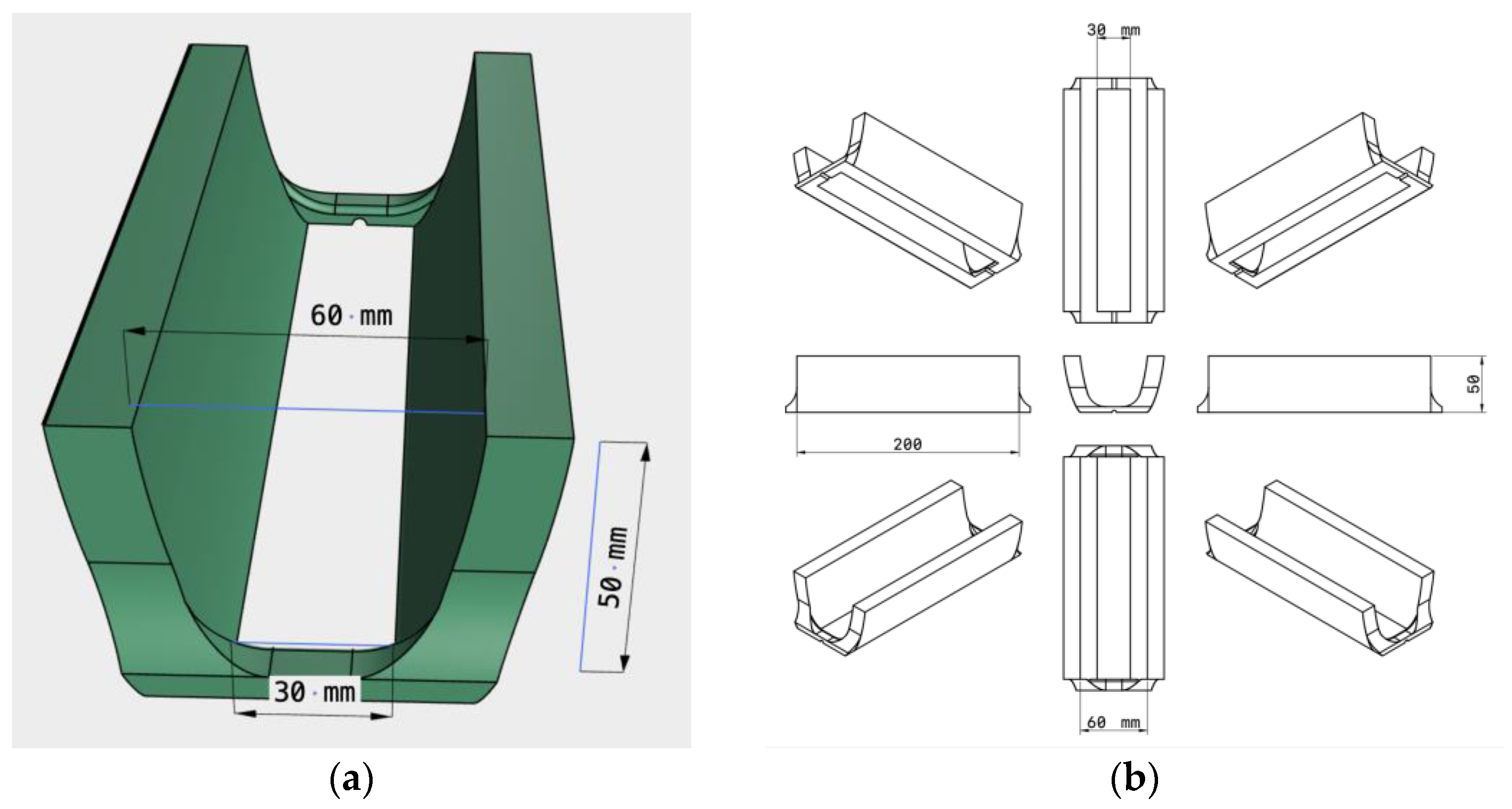
In reference designs, compact 2D CPC geometries (e.g., ~20 cm length, entrance/exit apertures sized for strip-like emitters) were produced by 3D printing (PLA and PETG) and internally metallized with reflective aluminum film to maximize reflectance over the relevant bands. Each CPC possesses a length of 20 cm, an entrance aperture of 6 cm, an exit aperture of 3 cm, a geometric concentration ratio of 2×, and an average acceptance half-angle of approximately 15° (see Figure 1). In the present configuration, the CPC does not concentrate energy in the conventional sense but instead acts as an angular transformer, redirecting radiation emitted at high zenith angles toward the open sky dome. As a result, portions of the hemisphere that would otherwise be blocked by surrounding obstructions or exhibit reduced sky exposure are optically mapped into directions with a clear sky view. Under idealized conditions, the effective sky view factor of the RC surface can approach the ratio between the CPC acceptance solid angle and the full hemispherical solid angle, leading to a theoretical enhancement of several tens of percent compared to an unobstructed flat surface.

2.2.2. Three-Dimensional CPC Design

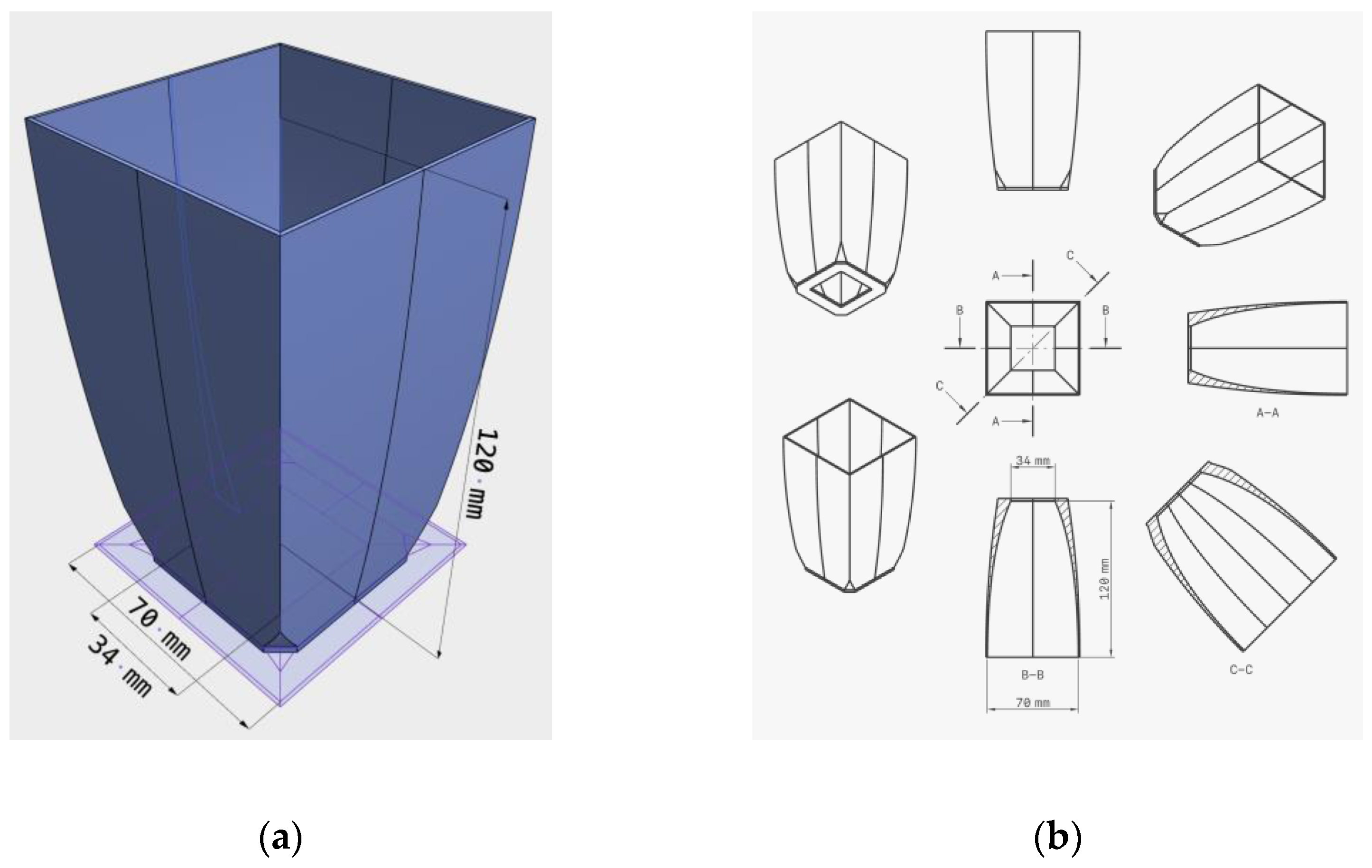
A 3D compound parabolic concentrator was designed in the form of a square pyramidal CPC, i.e., a non-axisymmetric size composed of four parabolic walls surrounding a square exit aperture. The goal of this configuration is to maximize the geometric concentration of the emitted thermal radiation for a given footprint. Figure 2 shows the CAD model of the 3D CPC and its orthogonal projections, illustrating the square entrance and exit apertures and the pyramidal reflector geometry. The CPC’s dimensions (base of 34 × 34 mm2, aperture of 70 × 70 mm2, height = 120 mm) were chosen to be compatible with 3D printing and height constraints: a higher concentration ratio and narrower acceptance angle increase the fraction of long-wave radiation redirected toward the cold sky and reduce the view factor to warm surroundings (horizon, nearby structures) but at the cost of taller optics and tighter alignment tolerances.

2.2.3. Two-Dimensional CPC Design for Architectural Tilts

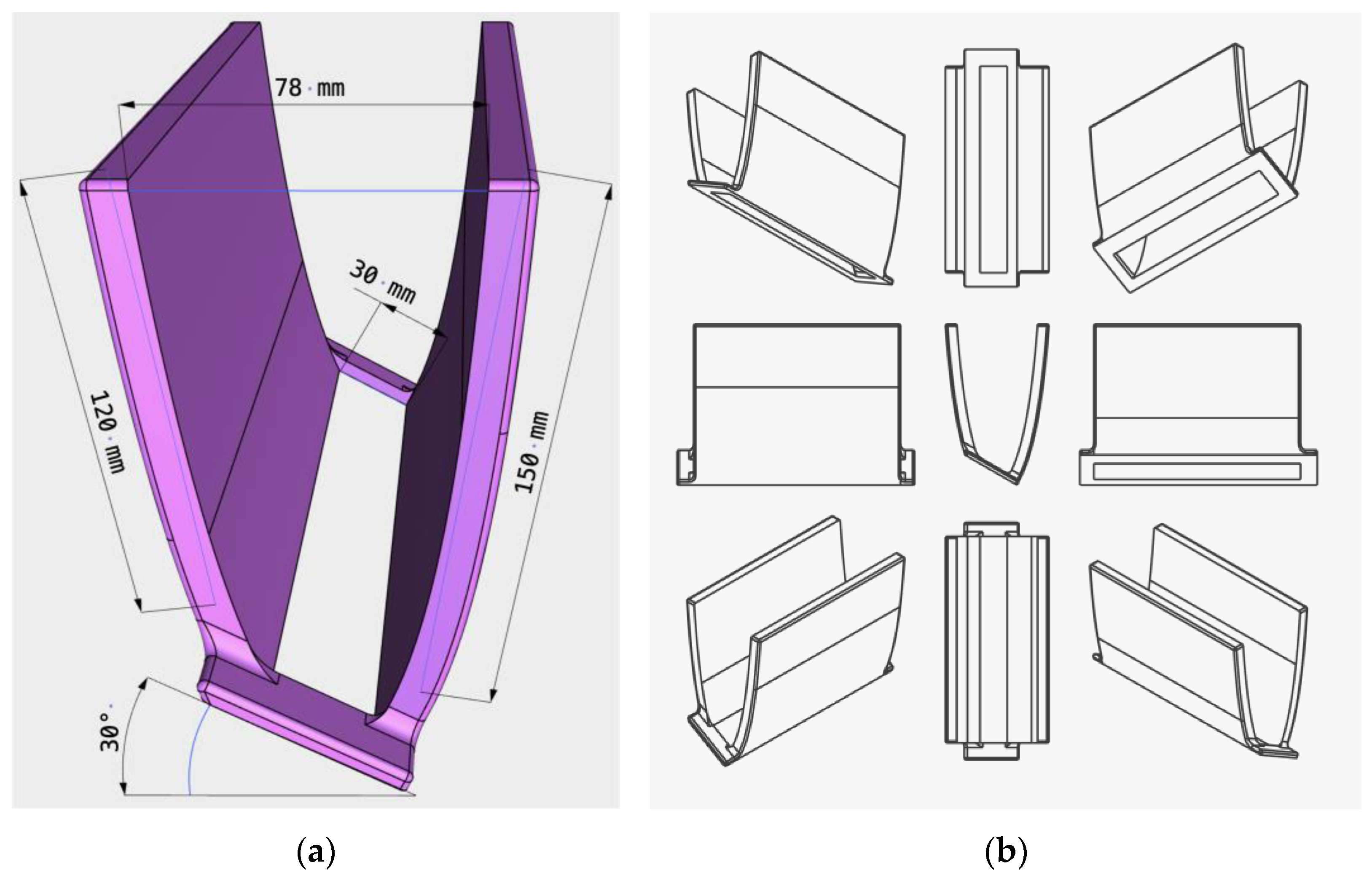
To address frequent mounting conditions in the built environment, a second family of 2D CPCs was designed specifically for inclined surfaces, such as pitched roofs or tilted architectural elements. In these designs, the CPC profile is adapted so that the entrance plane is aligned with a 30° inclined surface, while the internal shape is optimized to redirect accepted rays toward directions close to the local zenith in the global reference frame. Figure 3 presents the CAD rendering and projected views of one representative 30° design.

2.3. Characterization Methodology

This work was structured into four methodological blocks:
  • Optical simulations of CPC designs (2D and 3D) in LightTools.
  • Laboratory screening of the RC film’s solar blocking/heating reduction behavior using an infrared lamp as a controlled heat source.
  • Outdoor characterization (planar emitter): Rooftop tests using an aluminum plate assembly instrumented for comparative RC/CPC evaluation.
  • Outdoor characterization (tubular/water circuit emitter): Tests using a water tube/serpentine absorber in a GUNT solar thermal training unit to quantify the RC/CPC impact on inlet–outlet temperature differences.

2.3.1. Optical Simulation

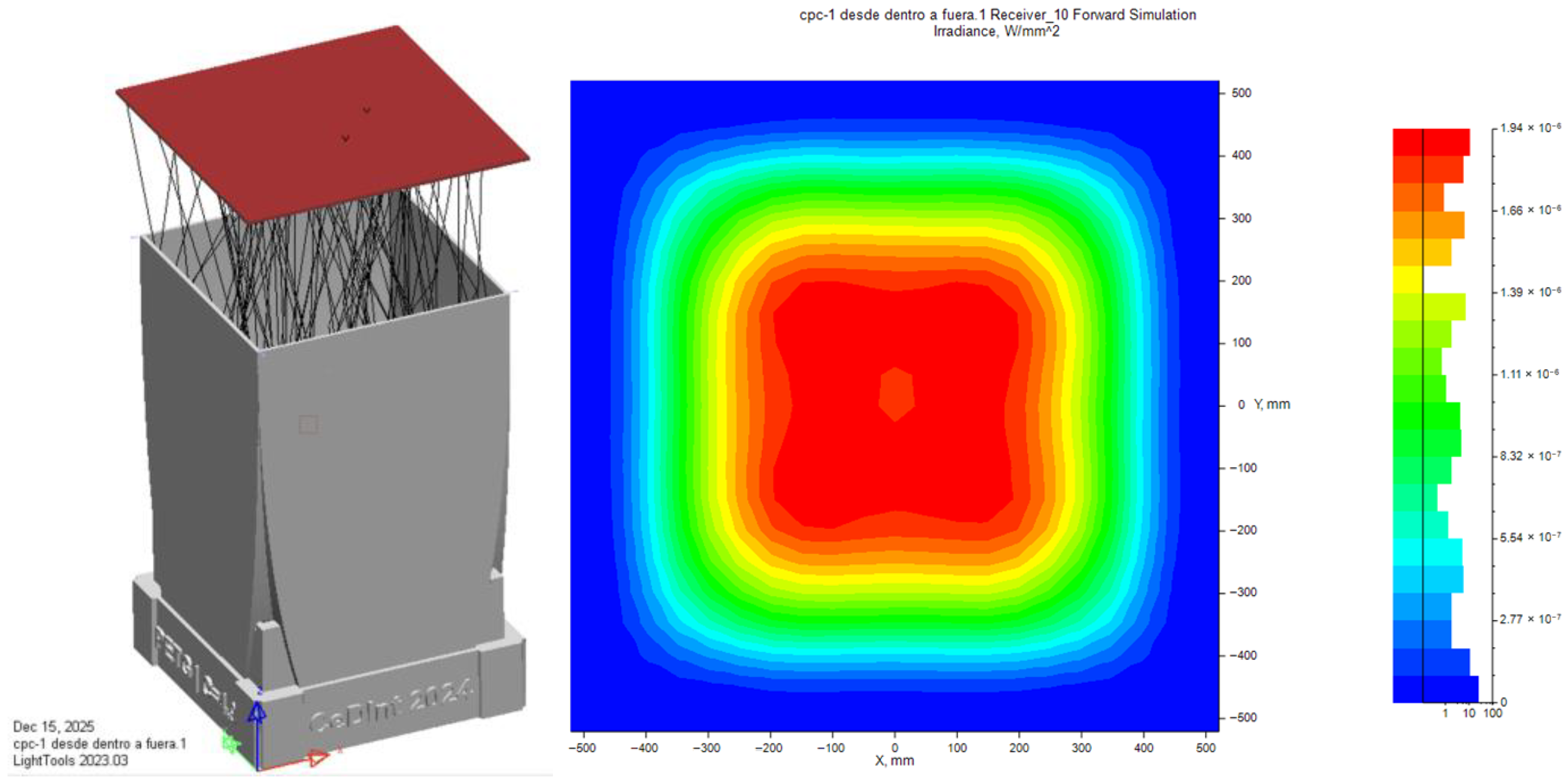
Prior to fabrication and field deployment, CPC geometries (2D and 3D, adapted for 30° tilted operation) were evaluated using LightTools by Synopsys, Inc (Mountain View, CA, USA via ray tracing [23]. The simulations were used to verify the following: (i) the acceptance angle relative to the intended sky directions, (ii) reflective performance, and (iii) the redistribution of radiative flux (i.e., how much emission is redirected toward zenith versus lost to lateral directions). Figure 4 shows the ray tracing simulation of the radiation of the 3D-CPC design.

2.3.2. Solar Blocking

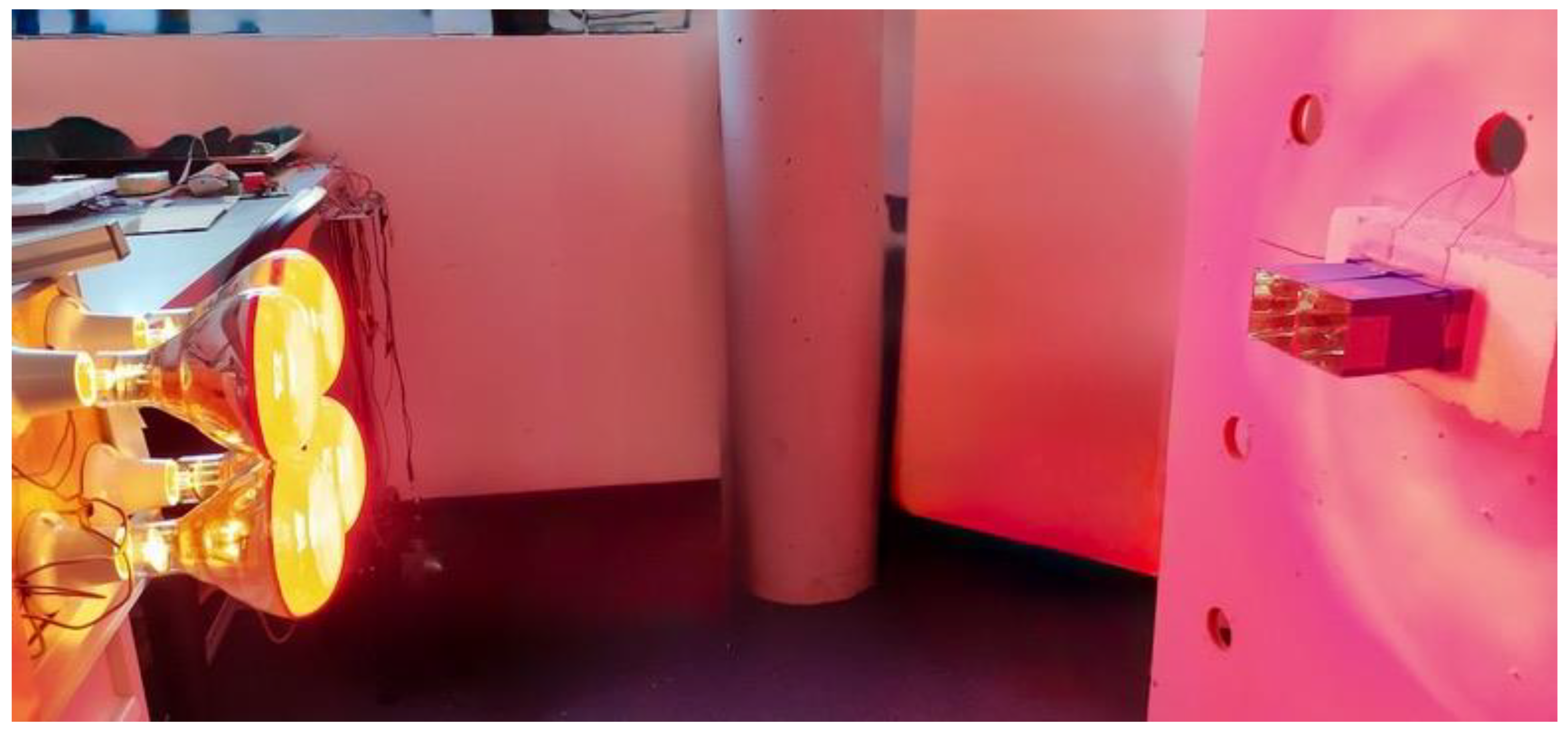
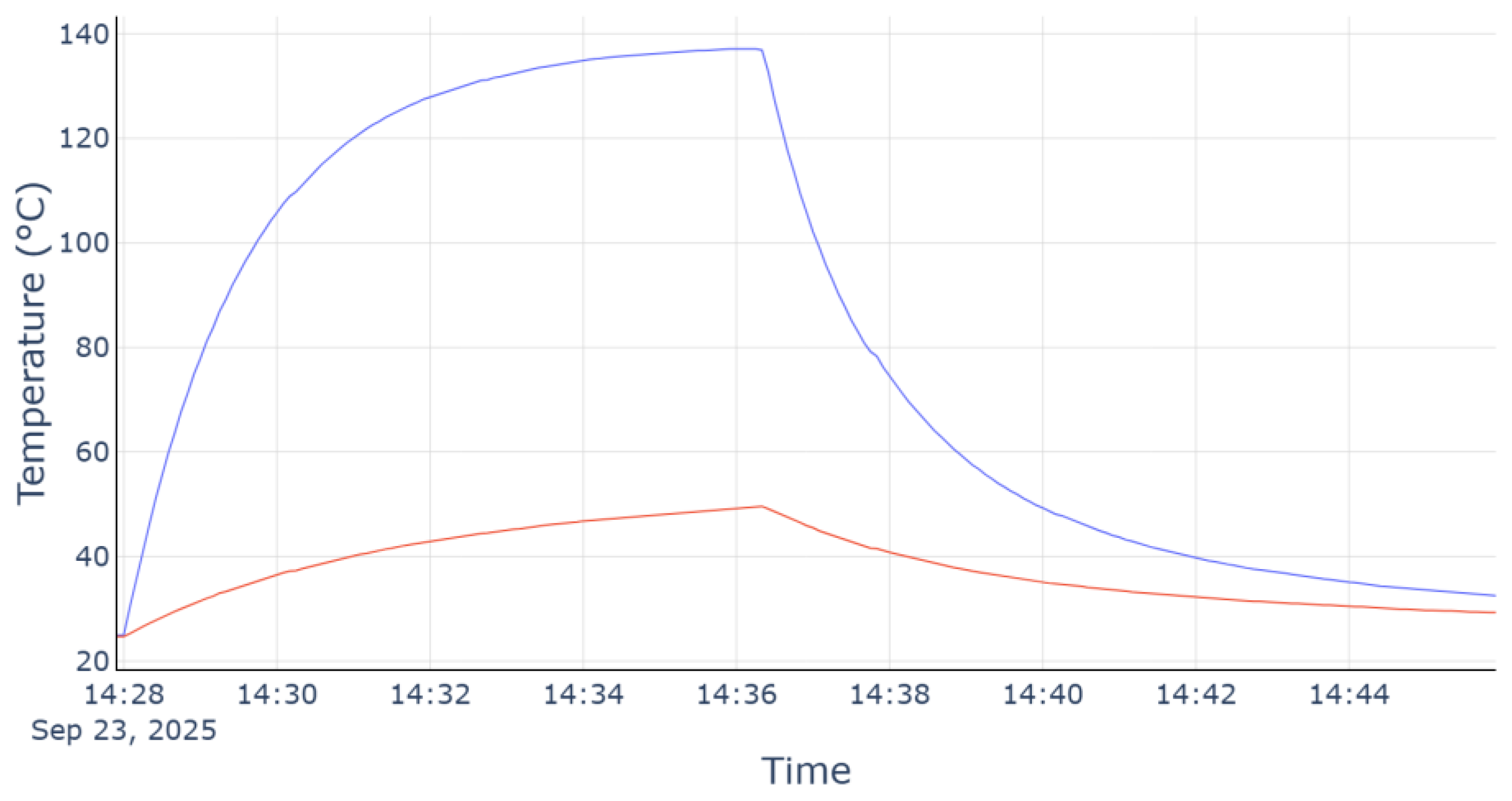
A controlled indoor experiment was conducted to isolate the RC film’s ability to reduce radiative heating under a repeatable source. An infrared lamp, ref.BR125 IR 250W by Koninklijke Philips N.V. (Amsterdam, Netherlands) [24] was used as a stable heat input to emulate broadband irradiation in a laboratory setting. Identical tests were prepared with and without the RC film. Surface (or backside) temperatures were monitored until the steady state was reached, and the “cooling effect” was quantified as the temperature reduction in the RC film sample relative to the reference under the same lamp power, distance, and ambient conditions. This screening was used to validate handling/lamination and to select practical RC geometries for outdoor testing. Figure 5 shows the experimental setup for the 3D CPC in which the lighting source (infrared lamp) is one meter away from the emitters.

2.3.3. Planar RC Emitter on Aluminum Plates

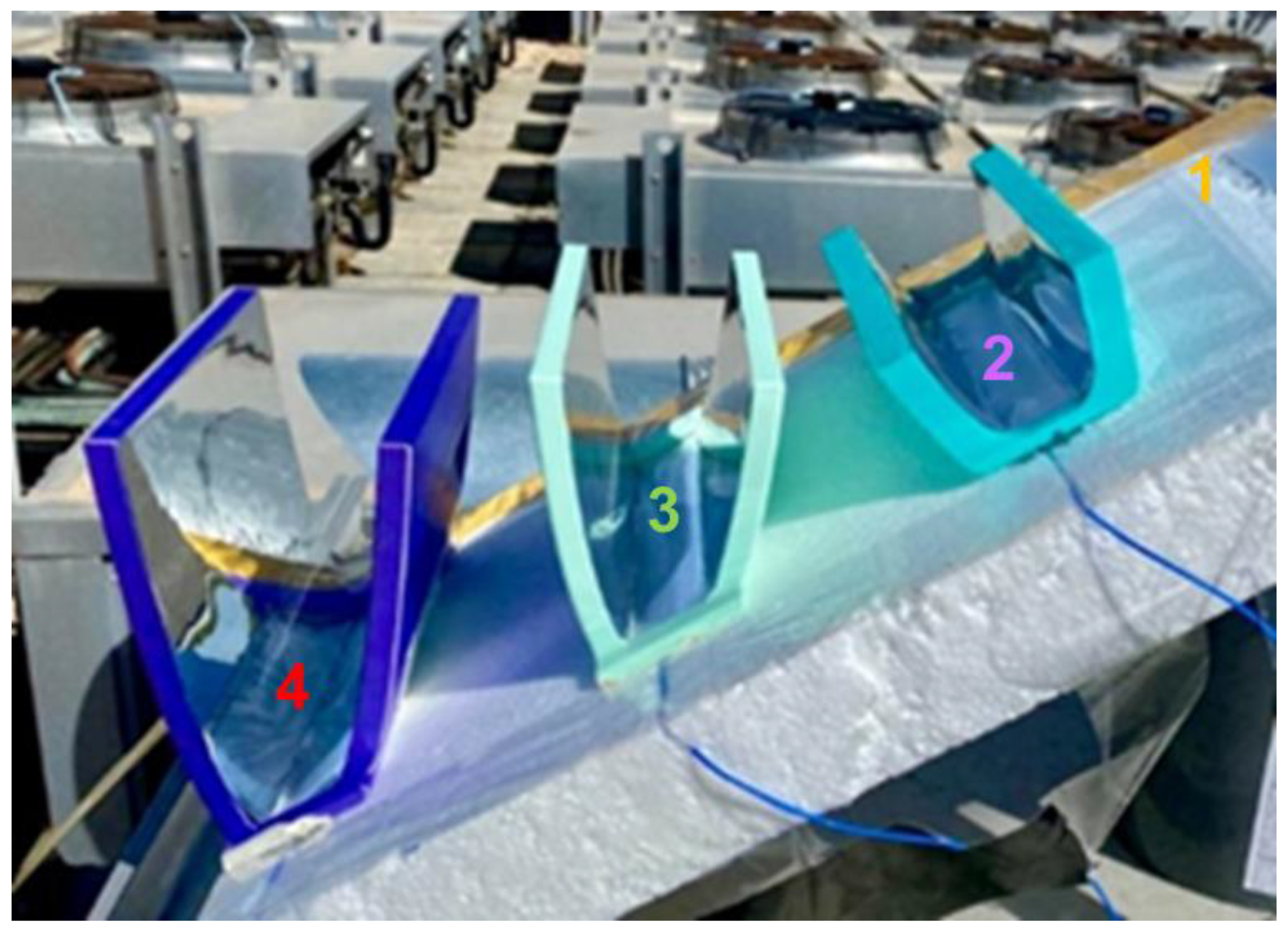
Before characterizing the cooling performance of the combined use of an RC material and CPCs, the behavior of different designs is compared. Figure 6 shows the CPC assemblies mounted to represent 30°tilt deployment while preserving the intended optical axis relative to the zenith. Different RC emitters are compared: a bare RC film, an RC film plus a 2D flat CPC, and CPCs for 30° inclinations with heights of 7 cm and 13 cm. The specific orientation is East–West.
Initial measurements indicate that the 2D flat CPC configuration provides the most robust cooling performance throughout the entire day as the sun position changes, outperforming the tilted CPC variants regardless of the inclination of the supporting surface or roof. This behavior is attributed to its more stable angular response with respect to both solar gains and sky view. For this reason, the 2D flat CPC was selected as the design for the detailed performance characterization presented in the following sections.
Outdoor measurements were performed on a rooftop using multiple aluminum plates (42 × 30 cm, thin sheet) mounted on expanded polystyrene insulation to reduce parasitic conductive exchange. Plates were instrumented with THE-373 K/J/T thermocouples [25] attached on the underside to minimize direct solar exposure and improve repeatability. The RC film was applied as strips (e.g., 3 cm or 6 cm wide) to enable side-by-side comparison across configurations. Temperature was recorded using multichannel thermocouple data loggers.
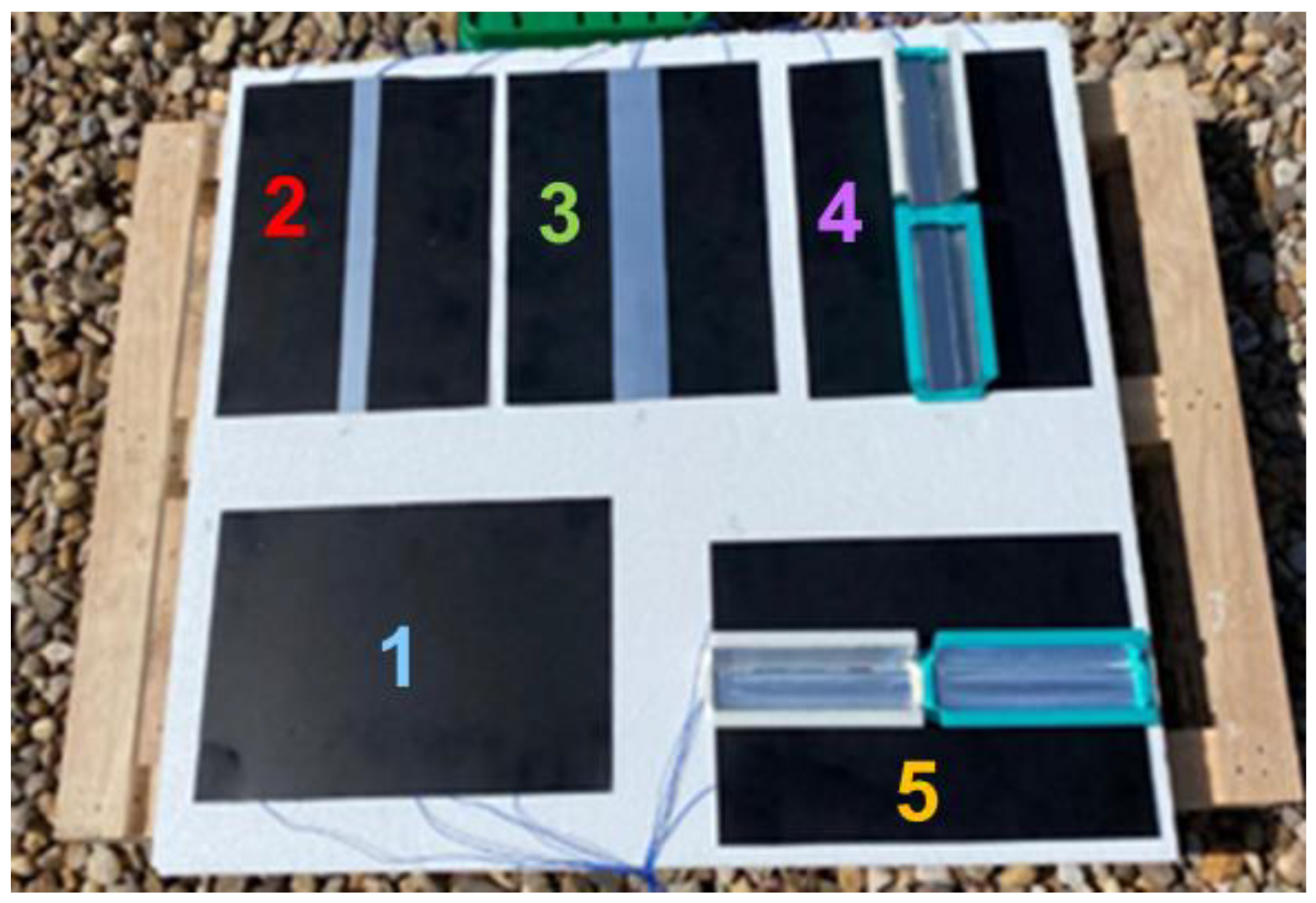
A set of configurations was evaluated simultaneously over a continuous day–night cycle, including the following: a bare, black-painted aluminum reference plate (REF), plates with RC strips only (RC film), and plates combining RC strips with CPCs (RC film + CPC). The CPC orientation was tested along orthogonal directions (e.g., East–West vs. North–South) to assess sensitivity to azimuthal mounting and wind/sky conditions. Figure 7 shows the experimental setup located on a rooftop.
Logged CSV temperature files were post-processed in Python 3.7 to generate comparative time-series visualizations, enabling trace selection and configuration-to-configuration comparison. Rooftop weather station variables (ambient temperature, solar irradiance, humidity, wind, etc.) were synchronized with thermal data to interpret performance under changing atmospheric conditions.

2.3.4. Water Tube RC Emitter

To evaluate RC performance in a tubular/water circuit context, experiments were carried out using the GUNT ET-202 (Fundamentals of Solar Thermal Energy) unit [26]. The platform incorporates a closed-loop water circuit composed of a metallic absorber (copper plate) with temperature sensors located at the inlet and outlet, a peristaltic pump to circulate the water, a flow sensor, and a heat exchanger consisting of a coiled tube immersed in a water reservoir (storage tank). The storage tank is heated by an electric heater with adjustable temperature control.
The temperature measurement system of the Gunt setup consists of PT100 resistance temperature detectors (RTDs) compliant with IEC 60751:2022 (https://www.une.org/encuentra-tu-norma/busca-tu-norma/iec/?c=63753; accessed on 15 January 2026), connected in a three-wire configuration to JUMO dTRANS T03 TU temperature transmitters. The transmitters convert the temperature readings into analog voltage signals ranging from 0 to 10 V, which are subsequently acquired by the ADC inputs of a LabJack U12 data acquisition system. Considering the technical specifications of the sensing, signal conditioning, and data acquisition stages, the resulting temperature measurement system provides a resolution of 0.1 °C and an estimated overall accuracy of ±1 °C.
The built-in artificial light source was removed so measurements could be performed outdoors under natural solar irradiance.
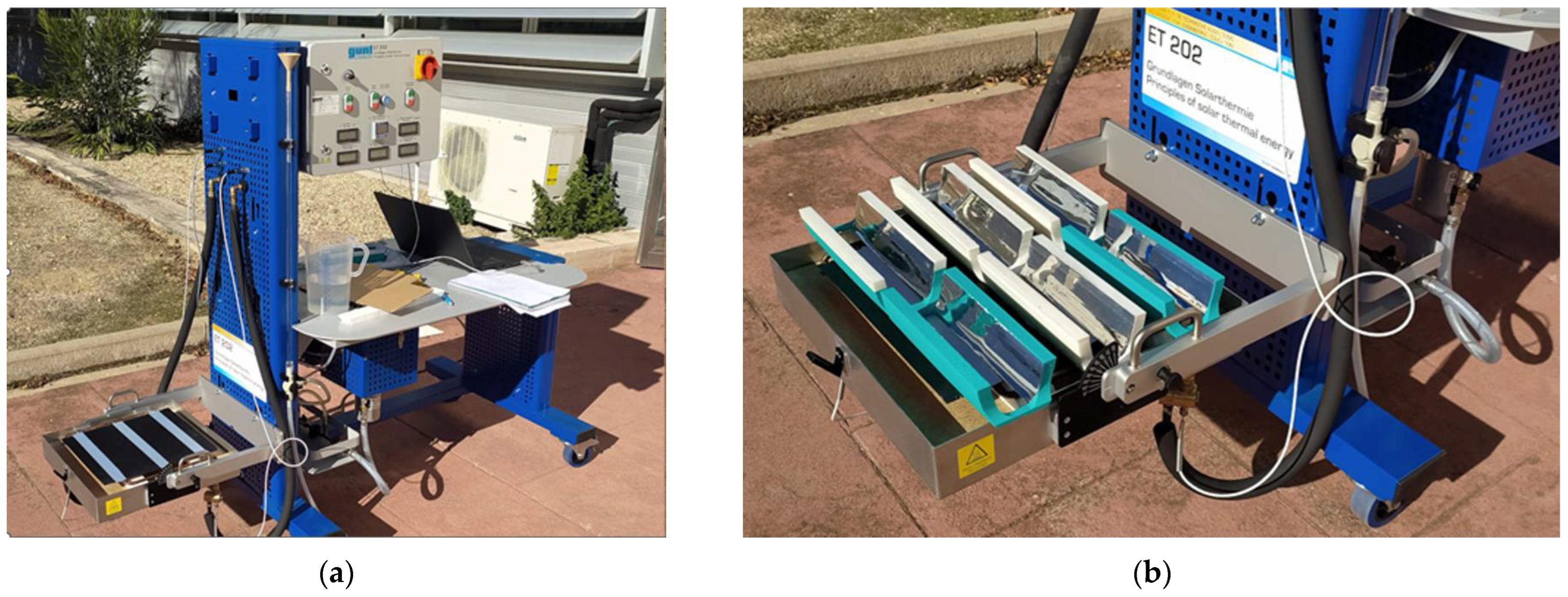
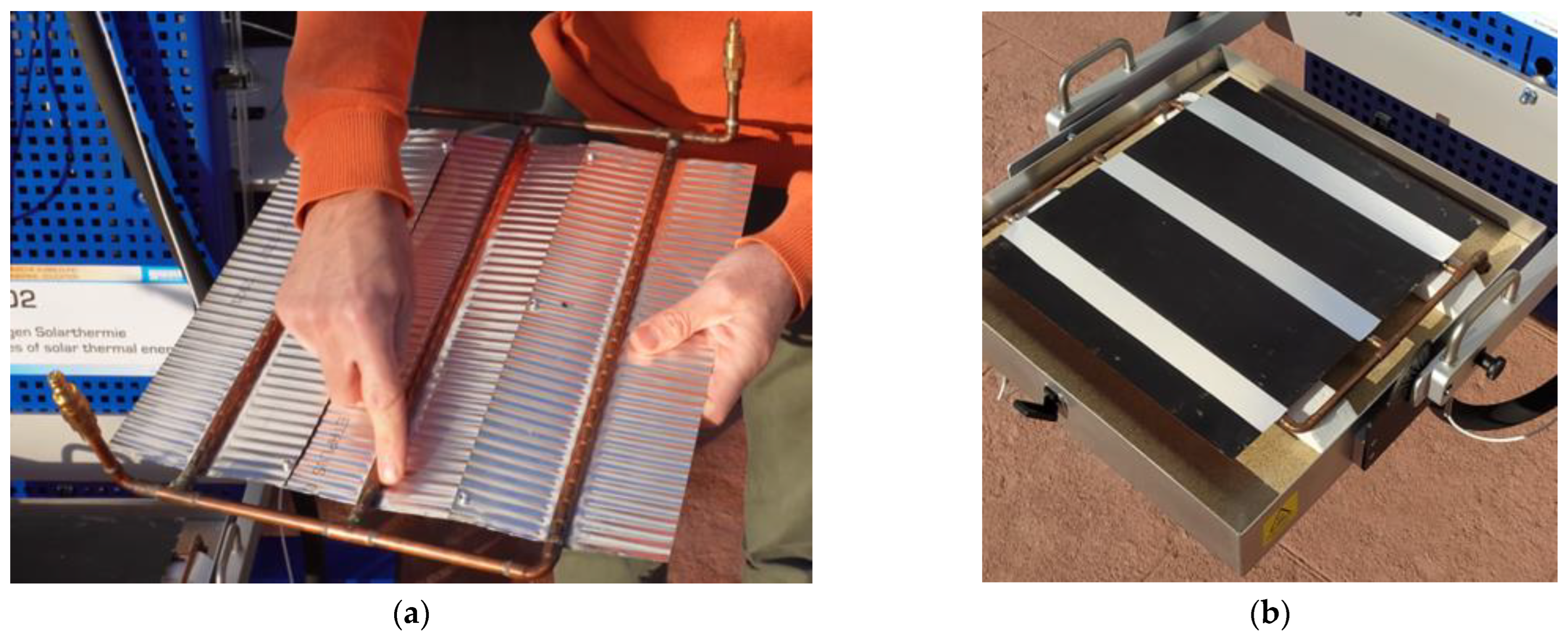
Figure 8 shows the experimental setup using the GUNT ET-202 equipment.
Tests were run in stabilization windows (~10 min observation periods) and compared the following: (i) black-painted aluminum plate (reference), (ii) RC film strips adhered to the absorber plate (RC film), and (iii) CPCs positioned above the RC film strips (RC film + CPC).
As shown in Figure 9, the RC material strips were placed on the metallic plate directly above the tubes through which the water flows beneath the plate.
Each configuration was evaluated for two watertemperature conditions: ambient circulating water and pre-heated water (up to ~70 °C in the internal storage tank). Performance was quantified primarily through the inlet–outlet temperature difference, interpreted as a proxy for net heat transfer changes introduced by RC and CPC integration.

3. Results

In all experiments, a black-painted aluminum plate was used as the reference configuration, providing a consistent baseline for comparison across different setups and operating conditions. The black coating was selected to ensure (i) high and stable solar absorptivity, (ii) reproducible surface properties, and (iii) a well-defined thermal baseline.
While a black-painted aluminum plate represents a thermally adverse reference—maximizing solar absorptance and thus surface heating—it was deliberately chosen as a controlled “upper-bound” baseline that is widely used in radiative cooling studies to illustrate the contrast between conventional and RC-based surfaces [27,28]. This choice provides a simple, reproducible substrate with well-defined optical and thermal properties, against which incremental improvements from RC films and CPCs can be consistently quantified in both planar and tubular configurations. It is not intended to emulate an optimized cool roof or commercial RC coating but rather to offer a stringent baseline; more realistic benchmarks using standard roofing substrates and fully RC-coated surfaces are left for future work.
Before presenting the two outdoor characterizations (rooftop plates and the GUNT ET202 test bench), we first report the laboratory measurements of the RC material.

3.1. Laboratory Characterization of Solar Blocking

As described in Section 2.2.2, these tests quantify the intrinsic cooling capability of the RC film relative to the black-painted aluminum reference under controlled conditions and provide a baseline for later assessing the incremental benefit of integrating CPCs. This laboratory experiment is therefore suitable for characterizing the material’s behavior in terms of near-infrared reflectivity, i.e., its ability to block incoming solar radiation and reduce absorbed heat. In contrast, the emissivity of the RC film in the mid-infrared atmospheric window cannot be fully assessed in this indoor configuration, since it requires radiative exchange with the open sky as the cold sink.
Figure 10 shows the measured temperature of the 3D CPC-mounted emitters together with the black aluminum reference plate (REF + CPC) and the RC film-coated plate (RC film + 3D-CPC). The black-painted aluminum reaches a maximum temperature of about 137 °C, whereas the plate with the RC film stabilizes around 49 °C, clearly illustrating the strong blocking capability of the RC material in the solar spectrum and its much lower solar heat gain.

3.2. Outdoor Experiment 1: Planar RC Emitter on Aluminum Plates

This section presents the results of the roof-scale experiments performed on black-painted aluminum plates under real outdoor conditions. The objective is to evaluate the thermal influence of RC films applied to a black aluminum surface, as well as the effect of integrating CPC optics on top of the RC material. See Section 2.2.3 for the experimental setup.
To facilitate a consistent comparison between configurations, a relative temperature difference (∆Trel) was defined with respect to the black-painted aluminum reference plate. For each configuration,
Δ T r e l = Δ T c o n f i g Δ T r e f
where ∆Tconfig is the plate temperature for a given configuration, and ΔTref is the temperature of the reference plate under identical conditions. Negative values of ∆Trel indicate a cooler surface than the reference. This metric isolates the thermal effect introduced by the RC films and CPCs, reducing the impact of systematic offsets and common external factors, and thus strengthens the robustness of the comparative analysis.
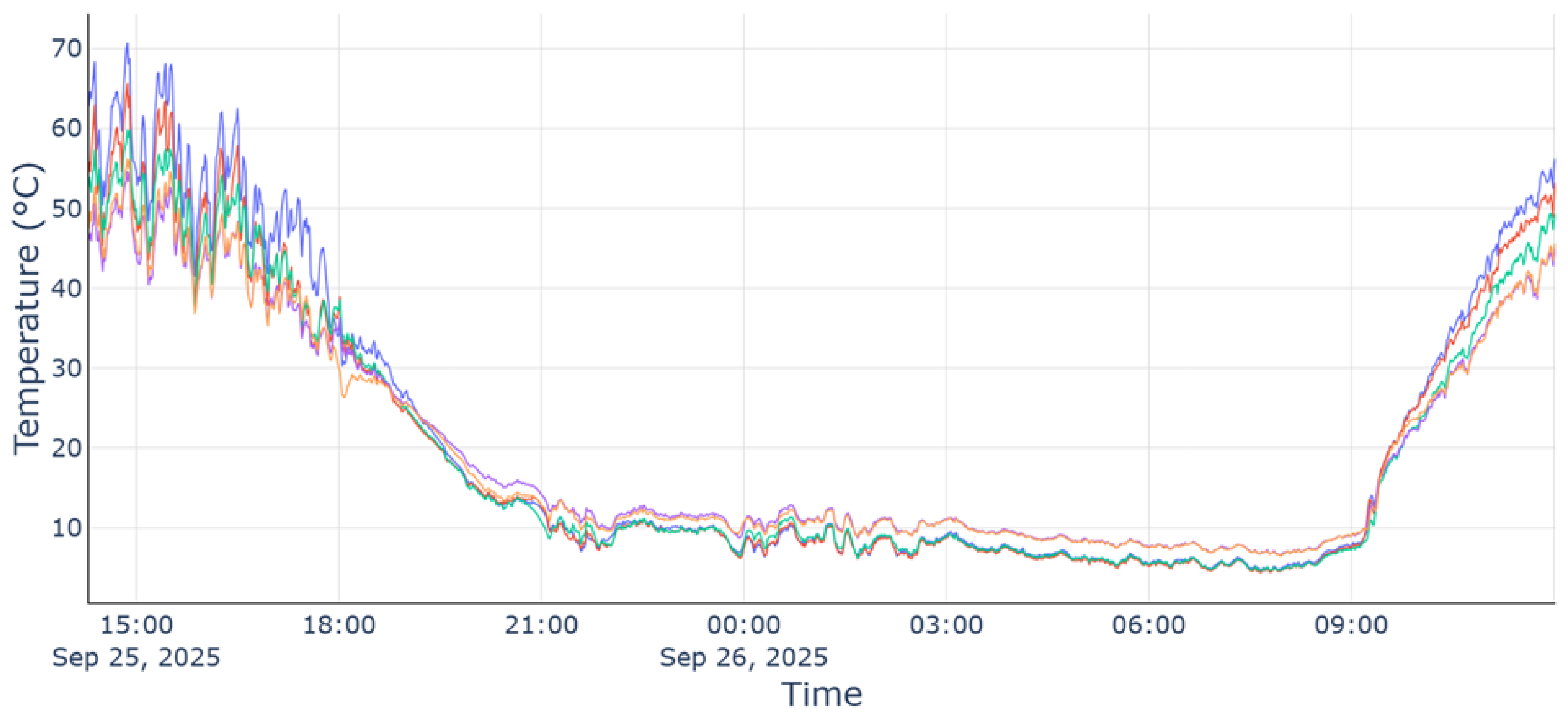
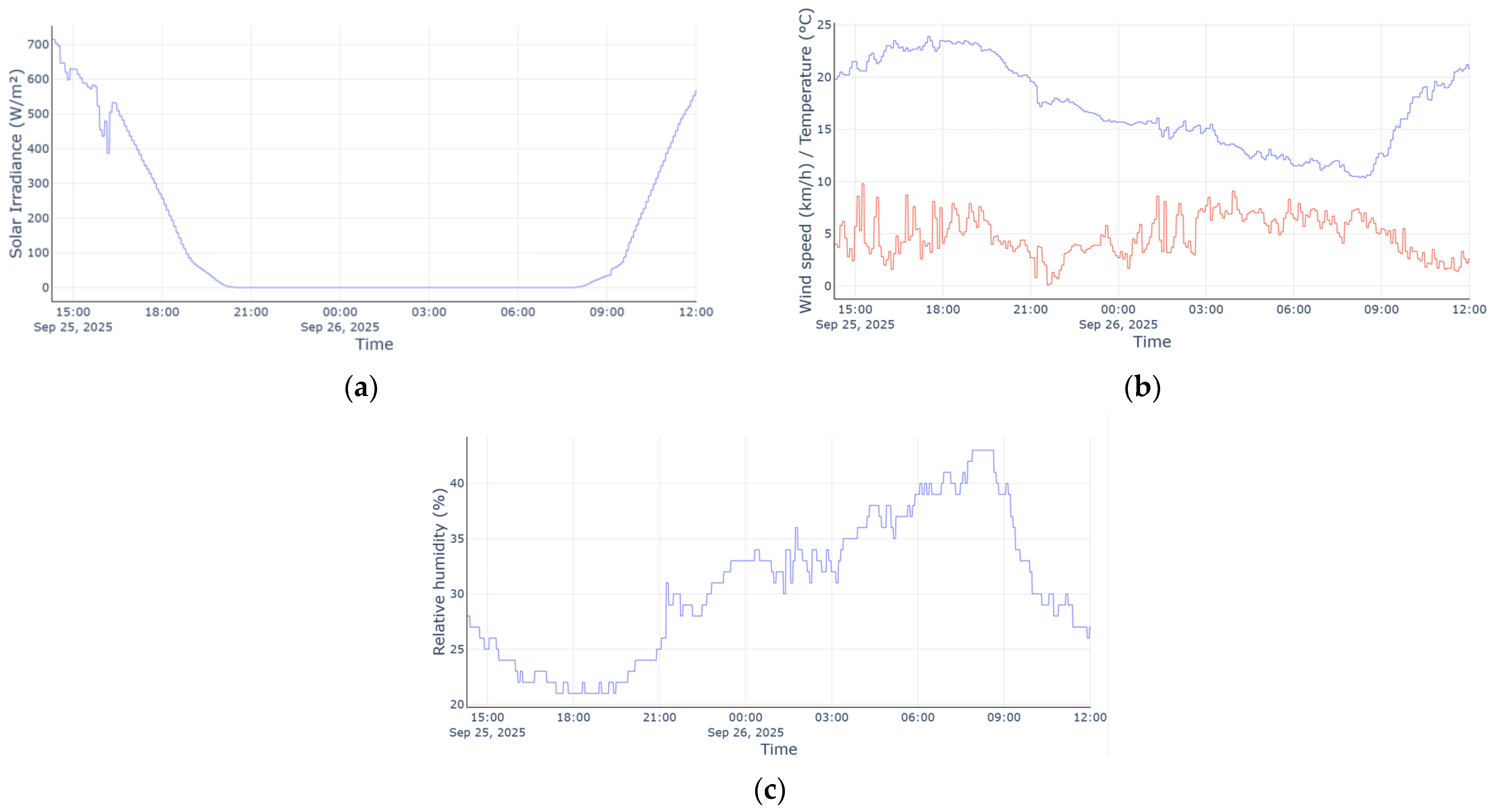
All plates were tested simultaneously on the rooftop, ensuring identical environmental exposure. Each plate was instrumented on its lower surface with four temperature sensors, and the average value was used in the analysis. Experiments were carried out over extended periods, allowing for a slow thermal evolution and qualitative comparison between material and optical configurations. For the present analysis, a representative time window from 14:18 h on 25 September 2025 to 12:01 h on 26 September 2025 was selected. Figure 11 shows the temperature measurements in the selected configurations during the time interval. Figure 12 shows the ambient conditions, temperature, relative humidity, wind speed, and solar irradiance, throughout the measurement interval.
Since solar irradiance strongly affects the thermal balance, the measurements were analyzed in two separate regimes: nighttime, defined as periods with negligible solar irradiance (Global Horizontal Irradiance (GHI) ≈ 0 W/m2), and daytime, defined as periods with sufficiently high irradiance (GHI > 50 W/m2). Data points with intermediate irradiance levels (0 < GHI < 50 W/m2) were excluded, as they correspond to transitional conditions during sunrise and sunset [29].
Using this criterion, nighttime measurements span from 20:29 h on 25 September to 7:53 h on 26 September. Temperature was recorded at 1 min intervals, yielding 685 samples per channel. Daytime measurements were collected from 14:18 to 19:23 on 25 September and from 9:09 to 12:01 on 26 September, yielding 479 temperature samples per channel.
For the statistical analysis of temperature increases, a set of descriptive metrics was computed, including the average, minimum, maximum, median, standard deviation (σ), and the first (25th percentile) and third quartiles (75th percentile).
Table 2 and Table 3 present ∆Trel for the different configurations, including the max, min, and average values, for the nighttime and daytime periods.
The measurements reveal that the impact of the RC film depends strongly on solar irradiance. Under daytime conditions, the RC film provides a clear and significant cooling effect. In contrast, during nighttime, the RC film effect is negligible, and in some cases, it even leads to higher temperatures than the reference configuration.
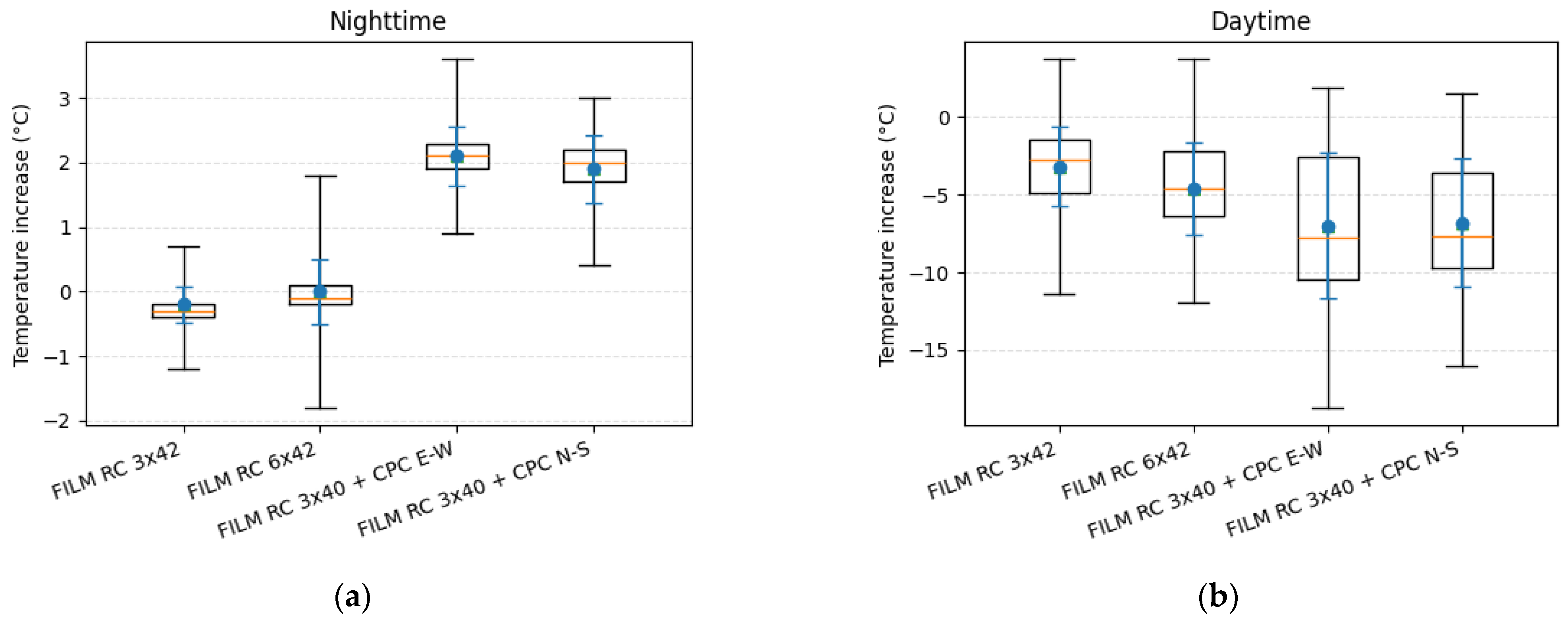
Figure 13 shows boxplots and error bars representing the statistical analysis of temperature increases for nighttime and daytime for the different configurations.
For each boxplot, the orange horizontal line inside the box represents the median. The box represents the interquartile range (Q1–Q3). The whiskers represent the overall data range (excluding outliers).
The error bars are shown as a blue circular marker located at the average value and vertical blue lines extending above and below that marker with short horizontal caps at the upper and lower ends. The upper cap corresponds to the average +σ. The lower cap corresponds to the average −σ. Thus, the total height of each error bar represents a range of ±1σ around the average, providing a moment-based measure of dispersion that complements the boxplot. The blue error bars are independent of the quartiles and whiskers and strictly reflect average-based variability.
This combined visualization allows us to assess robust statistics (median and IQR) alongside average-based dispersion, improving the interpretability of temperature increases.
Within this framework, the nighttime data (irradiance = 0 W/m2) exhibit narrow interquartile ranges and short error bars across all configurations, indicating the low dispersion and high repeatability of the ΔT measurements. The close agreement between the median and average values further confirms the statistical stability of the measurements. Conversely, under daytime conditions (irradiance > 50 W/m2), the boxplots reveal wider interquartile ranges and increased separation between quartiles, while the error bars indicate a larger ±σ spread around the mean. This behavior reflects the inherently dynamic thermal balance under daytime operation, where radiative cooling competes with variable solar gains and convective heat exchange, leading to increased temporal variability in ΔT.
Importantly, the consistency between robust statistics (median and IQR) and average-based dispersion across configurations demonstrates that the observed variability is physically meaningful rather than driven by measurement noise. The differentiated response among configurations, particularly the higher variability observed in CPC-based systems, is clearly captured by both representations and is consistent with their increased sensitivity to irradiance and radiative–convective coupling. As a result, the combined use of boxplots and error bars strengthens the interpretation of the experimental data and supports their validity for the comparative analysis of radiative cooling performance.

3.3. Outdoor Experiment 2: Water Tube RC Emitter

System-level experiments were carried out using a GUNT ET202 test bench, in which the RC material, with and without CPCs, was integrated into a thermal collector. The aim was to assess the influence of these configurations on the overall system behavior, rather than only on surface temperatures, by analyzing statistically robust temperature differences between the input T1 and the output T2 of the collector.
In contrast to the long-duration roof experiments on aluminum plates, the GUNT tests were shorter, with a typical duration of around 10 min per run. Despite this reduced testing time, the operating conditions (flow rate, inlet temperature, ambient conditions) were controlled so that a quasi-steady-state temperature difference ∆T = T2T1 was reached, allowing for a quantitative comparison between the reference and RC-based configurations. Two internal water conditions were considered: ambient water temperature (not pre-heated) and a storage tank temperature of 70 °C (high thermal load).
The measured values T1 and T2 showed stable and reproducible behavior across repeated tests, with low dispersion in the corresponding statistical descriptors. This confirms that the GUNT system operated under well-controlled conditions and that differences in Δ T   can be attributed to the presence of the RC material and CPCs, rather than to measurement noise or external fluctuations.

3.3.1. Results with Internal Water at Ambient Temperature

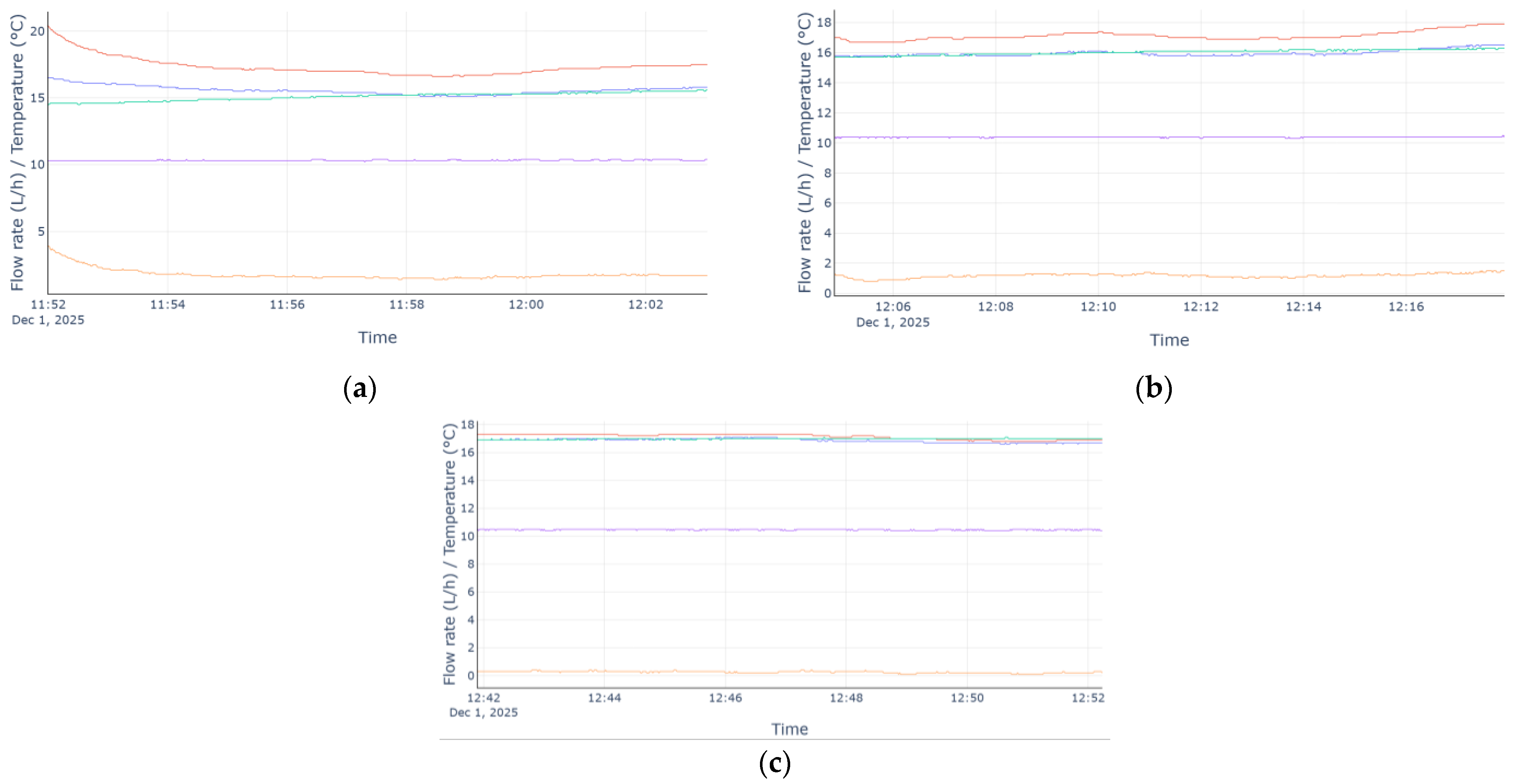
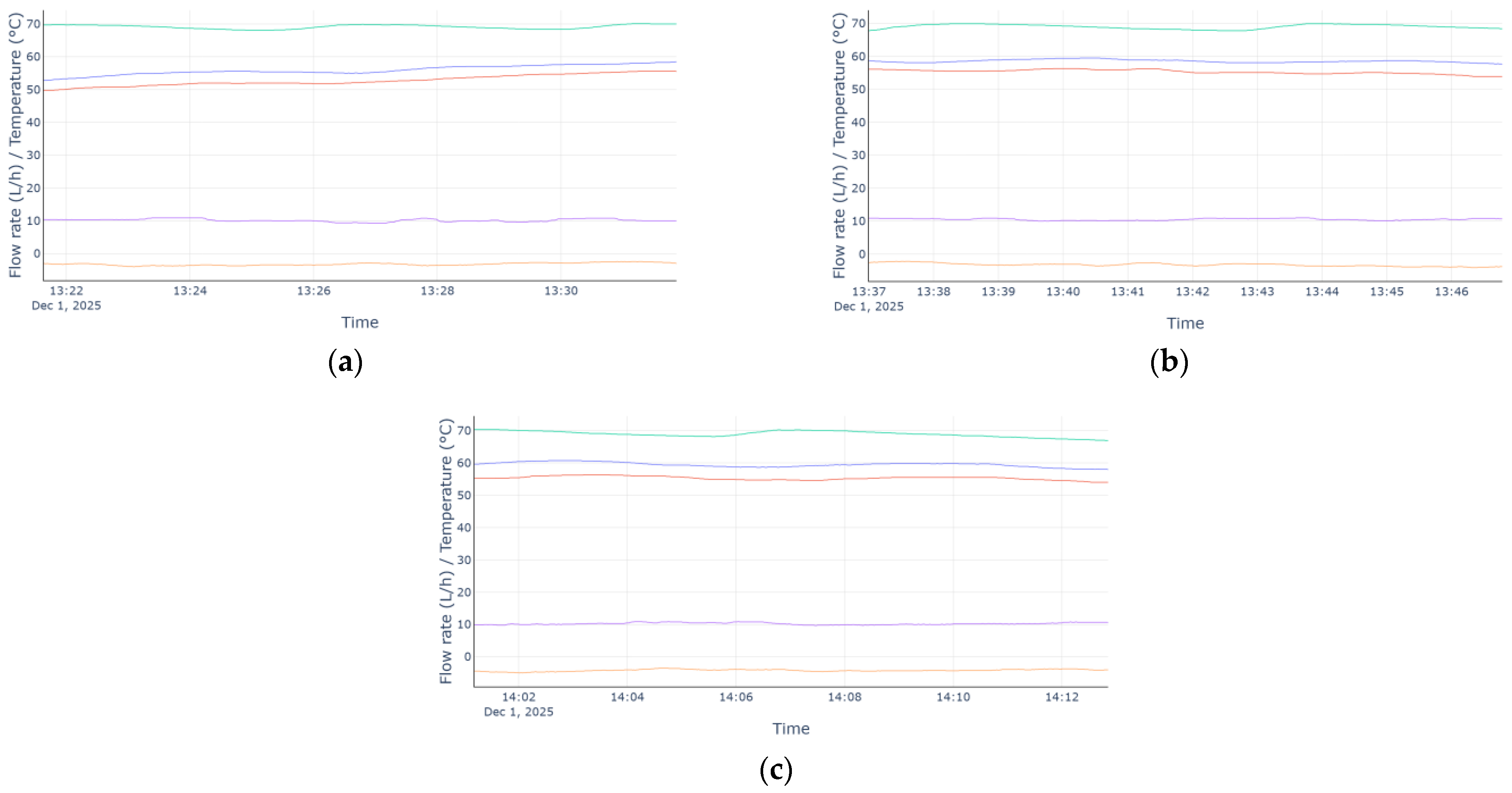
The inlet and outlet temperatures (T1 and T2) and the storage tank temperature (T3) are measured with a flow rate of 10 L/hour in the three experimental configurations:
(i)
Black-painted aluminum plate (REF): Measurements are taken between 11:52 and 12:03 on December 1st. The system records one sample every half second, resulting in a total of 1326 samples.
(ii)
RC film strips adhered to the absorber plate (RC film): Measurements are taken between 12:04 and 12:17 on December 1st. The system records one sample every half second, resulting in a total of 1567 samples.
(iii)
CPCs positioned above the RC film strips (RC film + CPC): Measurements are taken between 12:41 and 12:52 on December 1st. The system records one sample every half second, resulting in a total of 1461 samples.
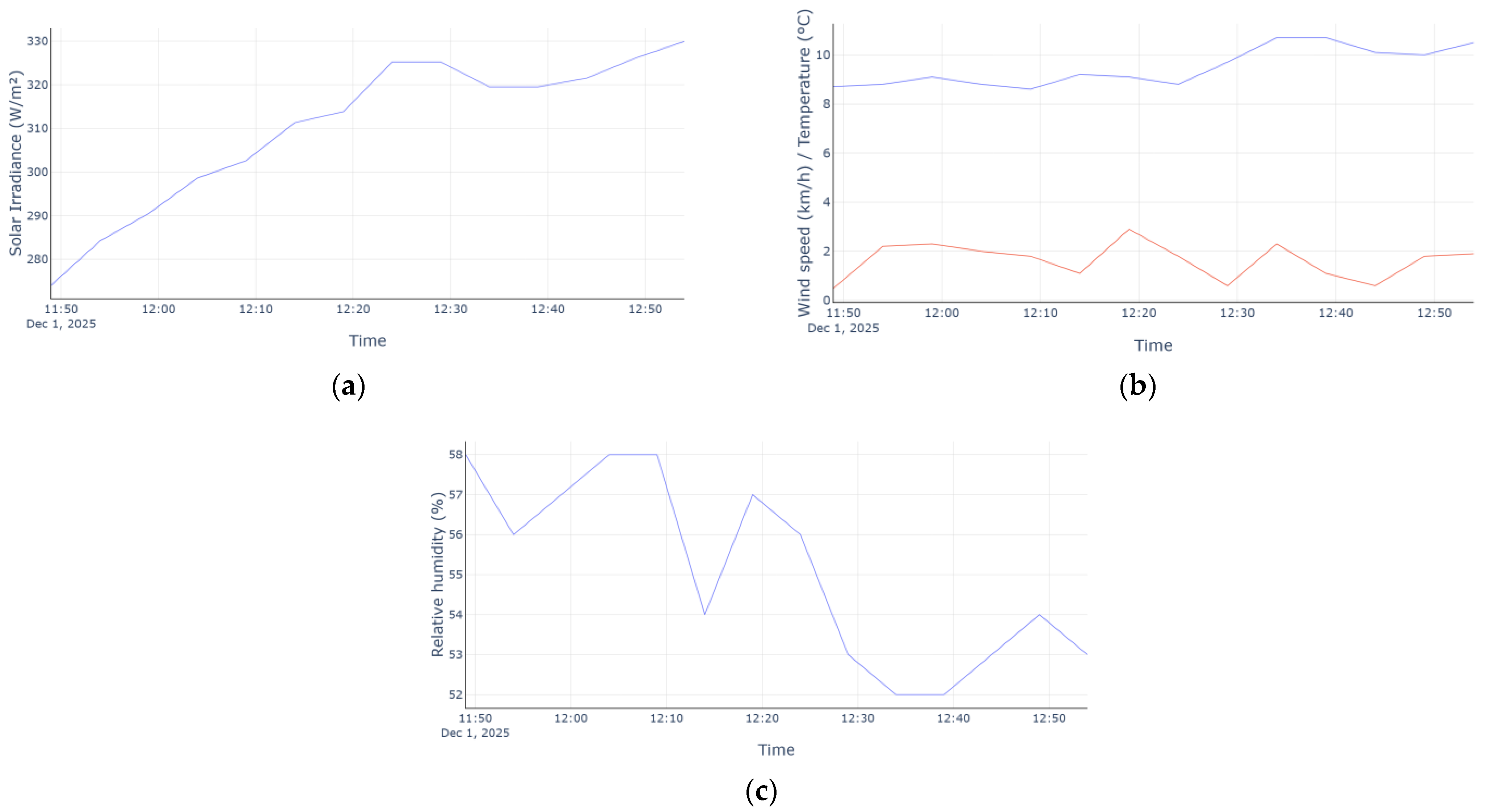
Figure 14 shows the temperature measurements in the selected configurations during the time interval. Figure 15 shows the ambient conditions, temperature, relative humidity, wind speed, and solar irradiance, throughout the measurement interval.
As in the previous section, the statistical analysis of temperature increases was performed based on descriptive metrics including the average, minimum, maximum, median, standard deviation (σ), and the first (25th percentile) and third quartiles (75th percentile). To calculate these parameters, the analysis was performed only after the temperature difference (∆T) reached steady-state conditions. The steady state was identified by computing the slope of the temperature samples and selecting data points with a slope lower than 0.2 °C/min, which is consistent with the measurement resolution (0.1 °C).
Table 4 presents the max, min, and average values of ∆T for the three configurations: the reference, RC film, and RC film + CPC.
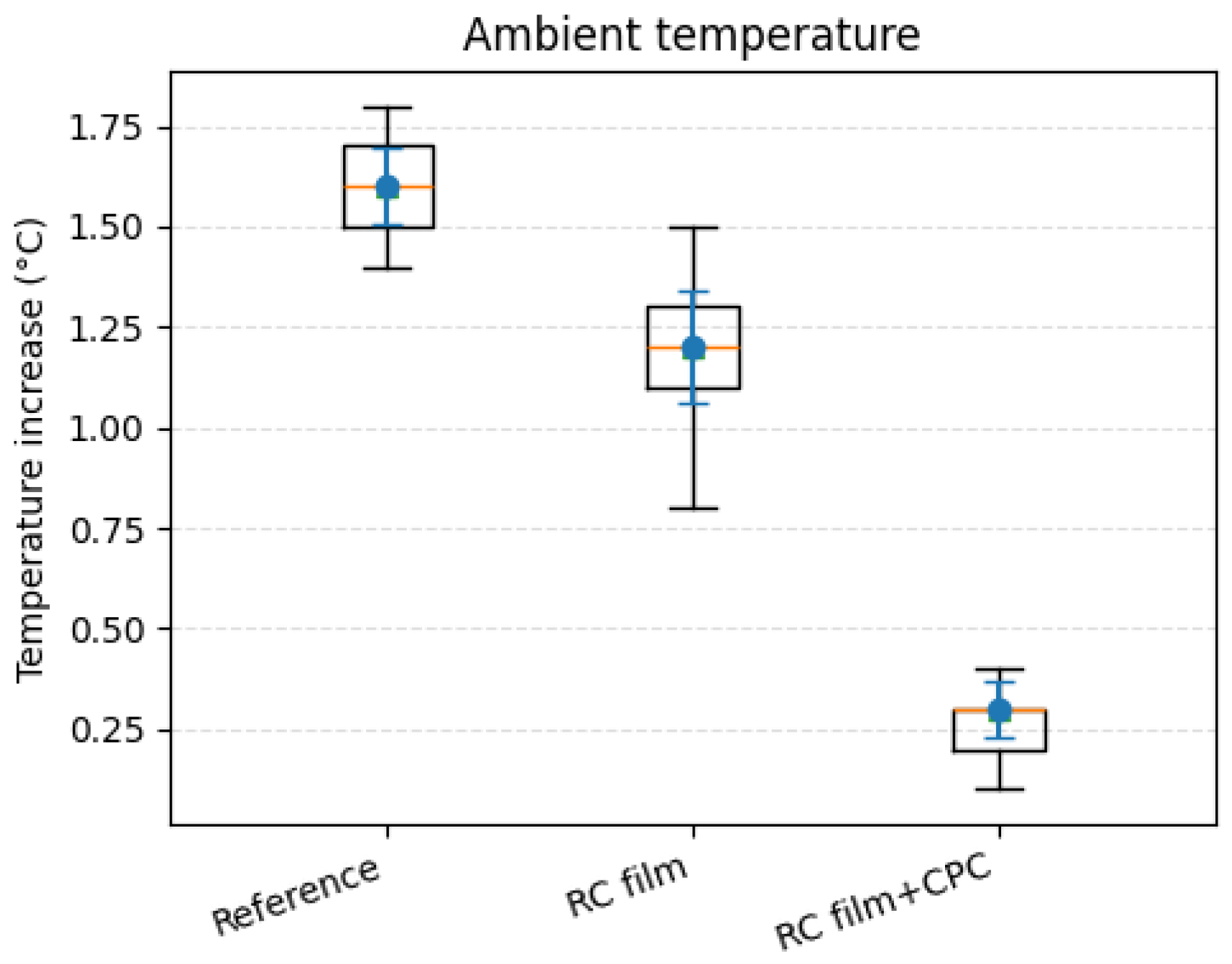
Figure 16 shows boxplots and error bars representing the statistical analysis of temperature increases for the reference plate, RC film, and RC film + CPC configurations.
The statistical analysis of the temperature increase demonstrates a high level of measurement quality and repeatability across all experimental configurations. For each case, the mean and median values are in very close agreement, indicating symmetric data distributions and the absence of significant outliers. The relatively low standard deviations (0.097 °C for the reference, 0.141 °C for the RC film, and 0.069 °C for the RC film + CPC configuration) confirm stable thermal conditions during steady-state operation and the good temporal consistency of the measurements. In addition, the narrow interquartile ranges (Q3–Q1) observed in all configurations reflect limited data dispersion, supporting the robustness of the experimental protocol. Importantly, the progressive reduction in both the central tendency of and variability in ∆T from the reference case to the RC film + CPC configuration indicates that the observed cooling enhancement is not only significant but also consistently reproduced throughout the measurement period.

3.3.2. Results with Storage Tank Temperature of 70 °C

The previous experimental measurements were repeated with an internal storage tank temperature of 70 °C in order to evaluate the cooling performance at high temperature.
The inlet and outlet temperatures (T1 and T2) and the storage tank temperature (T3) were measured at a flow rate of 10 L/hour under the same three experimental configurations:
(i)
Reference: Measurements were taken between 13:21 and 13:31 on December 1st. The system recorded one sample every half second, for a total of 1229 samples.
(ii)
RC film: Measurements were taken between 13:37 and 13:46 on December 1st. The system recorded one sample every half second, for a total of 1176 samples.
(iii)
RC film + CPC: Measurements were taken between 14:01 and 14:12 on December 1st. The system recorded one sample every half second, for a total of 1401 samples.
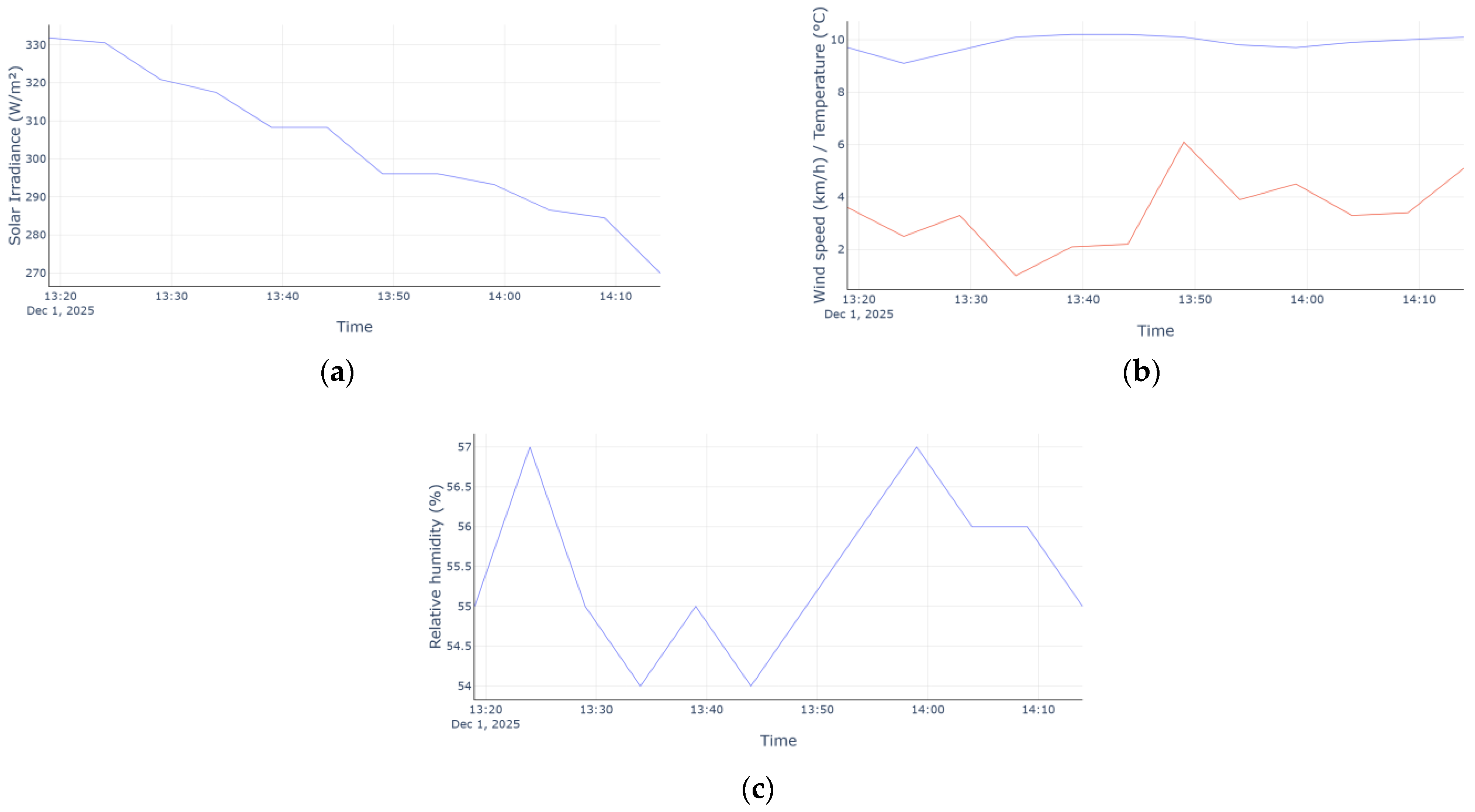
Figure 17 shows the temperature measurements in the selected configurations during the time interval. Figure 18 shows the ambient conditions, temperature, relative humidity, wind speed, and solar irradiance, throughout the measurement interval.
Table 5 presents the max, min, and average values of ∆T for the three configuration: the reference, RC film, and RC film + CPC.
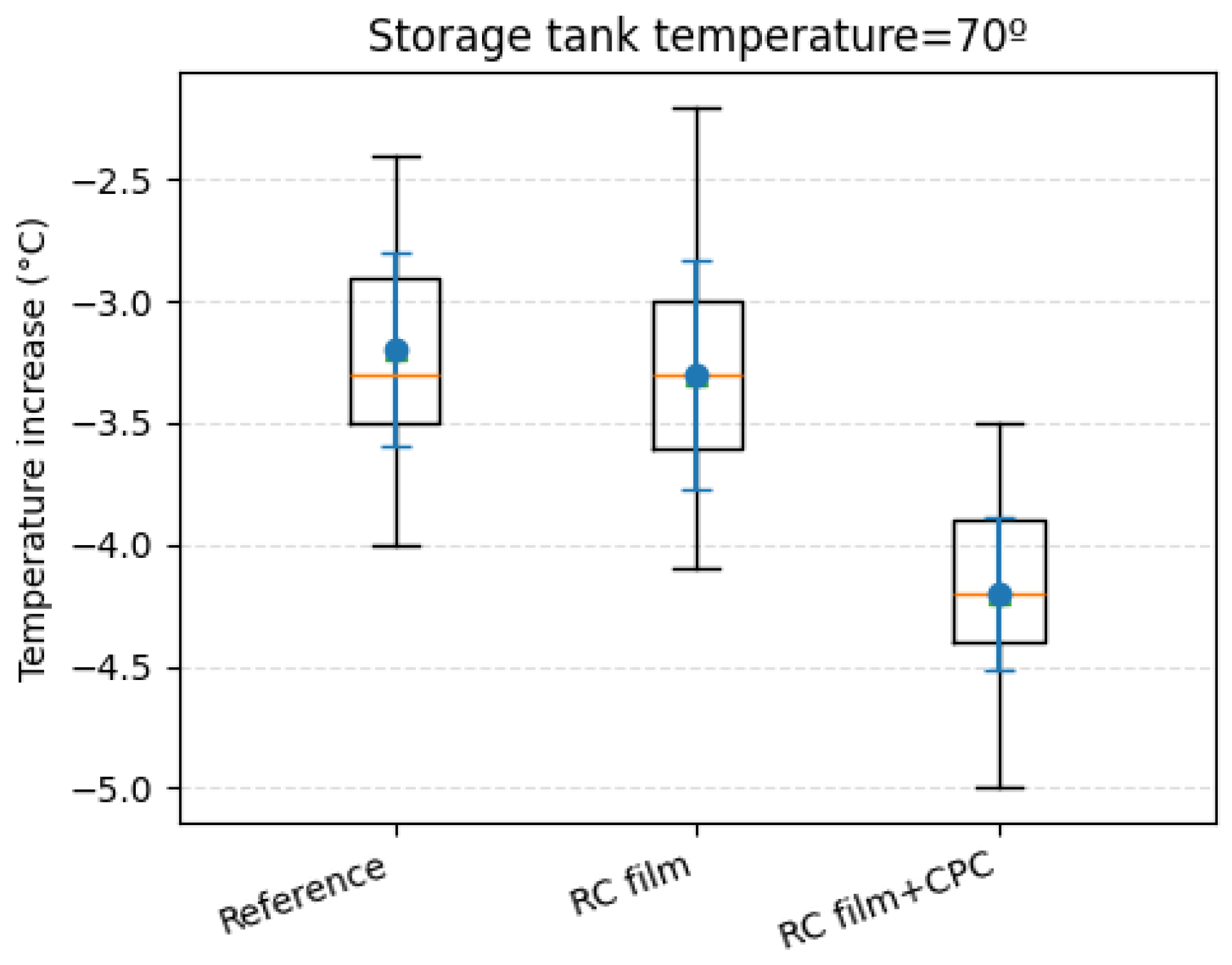
Figure 19 shows boxplots and error bars representing the statistical analysis of temperature increases for the reference plate, RC film, and RC film + CPC configurations.
The statistical distributions are compact, with low standard deviations (≈0.40 for the reference case, ≈0.47 for the RC strips, and ≈0.32 for the RC + CPC configuration), reflecting high measurement repeatability and stable operating conditions. The close agreement between the mean and median values, together with narrow interquartile ranges, confirms the absence of significant asymmetry or outliers. Compared to the reference configuration, the RC strips produce a slightly enhanced cooling effect, while the incorporation of the CPC results in a clear and systematic shift toward more negative ΔT values, accompanied by the lowest dispersion among all cases.

4. Discussion

This study sets out to initially assess whether non-imaging optics (CPCs) can practically enhance the daytime effectiveness of RC films in building-relevant configurations, i.e., on planar roof-like surfaces and on a tubular/water circuit absorber. Across the three experimental tiers, the results support a consistent narrative: (i) the RC film provides a strong suppression of radiative heat gain under broadband irradiation, and (ii) CPC integration yields an additional, measurable improvement, particularly evident when the optics are selected for robust angular response.

4.1. Interpreting the Laboratory Screening: Intrinsic Solar Blocking/Heat Gain Suppression

The controlled indoor test provides a baseline indication of the intrinsic solar blocking/heating reduction capability of the RC film under repeatable irradiation conditions. Under infrared lamp exposure, the black-painted reference reached approximately 137 °C, while the RC-coated plate stabilized around 49 °C. While this screening does not represent the full outdoor radiative balance, the magnitude of the temperature separation is consistent with a strong reduction in absorbed incident power and establishes a clear rationale for testing (a) partial RC coverage (strips) and (b) the incremental impact of CPCs in outdoor conditions.

4.2. Planar Rooftop Results: Incremental Benefit from RC Coverage and CPC Coupling

For the rooftop planar plates, the relative temperature difference ΔTrel (with respect to the co-exposed black reference) provides a robust metric to compare configurations under identical weather forcing. During daytime periods (GHI > 50 W/m2), both the RC film-only and RC film + CPC configurations produced systematic cooling relative to the reference. Increasing the RC film strip width from 3 cm to 6 cm improved the average ΔTrel from −3.2 °C to −4.6 °C, confirming that larger RC coverage yields stronger net cooling under solar load. Placing a 2D CPC above a 3 cm RC strip further increased the average reduction to −7.0 °C (East–West) and −6.8 °C (North–South), with the minimum ΔTrel values reaching −18.7 °C and −16.0 °C, respectively. Interpreted as an incremental effect, the CPC therefore adds roughly 3.6–3.8 °C of average cooling beyond the same-area RC strip, and it can provide an additional ~7 °C reduction under peak conditions within the tested period.
Two physical mechanisms are consistent with these observations. First, enlarging the RC-covered fraction reduces absorbed short-wave energy and increases the effective radiative cooling area, explaining the improvement from 3 cm to 6 cm strips. Second, the CPC acts as a directional radiative interface: it preferentially couples the RC surface to high-elevation sky directions while reducing the view factor to low-elevation surroundings that can contribute parasitic long-wave gains. The near overlap between the East–West and North–South orientations in daytime averages suggests that the selected 2D CPC geometry is relatively tolerant to practical azimuthal mounting. However, the nighttime results (GHI ≈ 0 W/m2) highlight a countervailing effect: RC film-only configurations were close to the reference (average ΔTrel between −0.2 °C and 0.0 °C), whereas RC film + CPC-covered strips became warmer (+1.9 to +2.1 °C on average), consistent with the CPC partially shielding the emitter from the cold sky hemisphere and reducing net radiative loss when solar forcing is absent.
It is worth clarifying the rationale behind using the black-painted plate as the common reference and applying the RC material as strips rather than fully covering the surface. First, the rooftop experiment explicitly includes both the RC film-only and RC film + CPC configurations, so the incremental effect of the optics is already captured by comparing these two cases, while the black plate serves as a consistent baseline across all configurations and experimental setups. Second, partial RC coverage was selected to emulate realistic retrofit scenarios—where RC films may be applied on limited areas of existing roofs or components—and to study how performance scales with RC fraction. As Table 2 shows, increasing the RC film strip width from 3 cm to 6 cm leads to a stronger cooling effect, consistent with the expectation that full coverage would provide the largest absolute temperature reduction. In this exploratory work, we chose to investigate relative gains and design trends under constrained geometries; future experiments will extend the comparison to fully RC-covered surfaces with and without CPCs to quantify the ultimate benefit of optics on optimally coated emitters.

4.3. Water Tube Results: Small Absolute Temperature Shifts—Amplified by CPCs

In the experiments for cooling water using the GUNT ET-202 equipment, limited heat transfer is observed from the RC film and RC film + CPC configurations to the fluid.
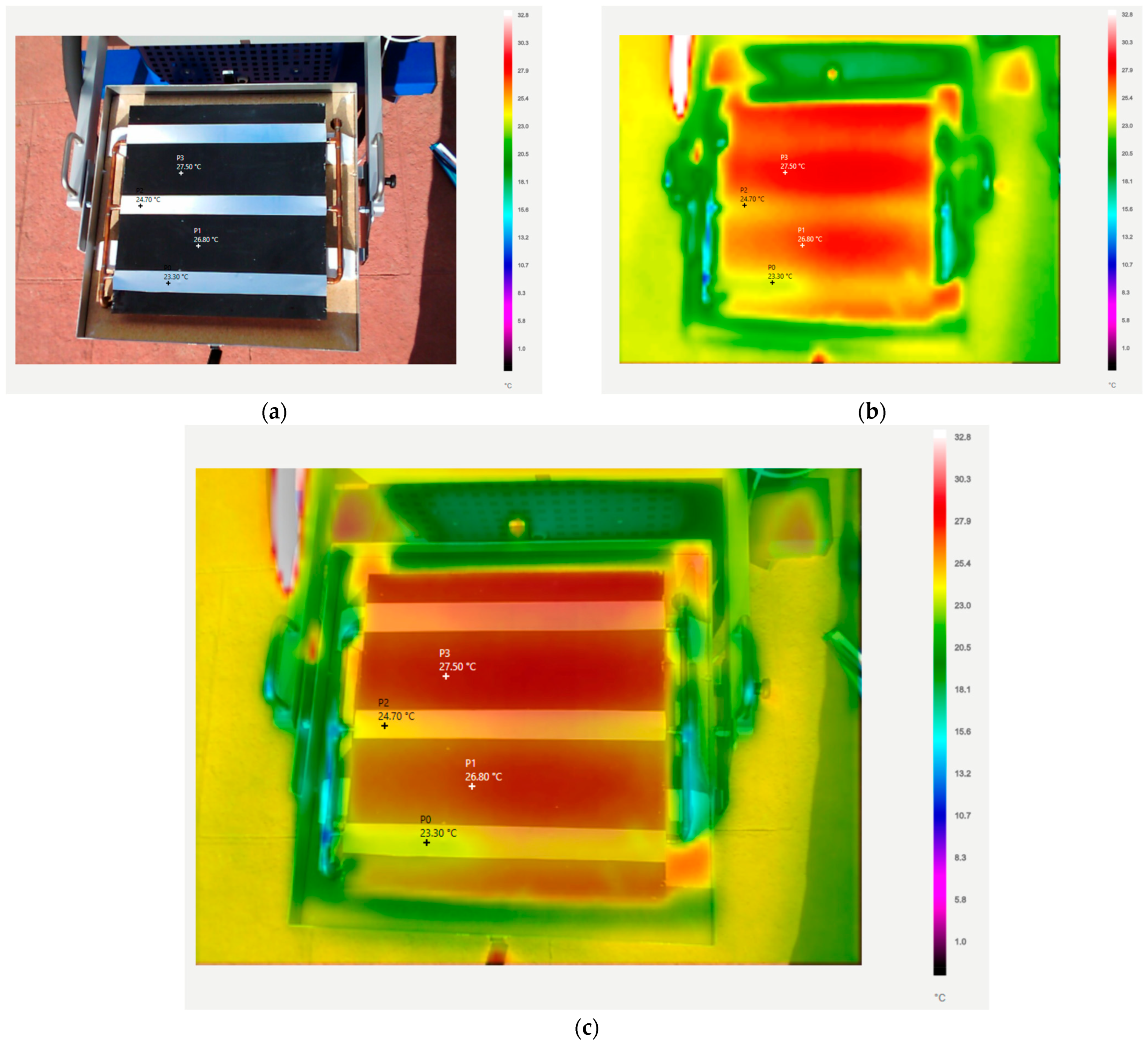
Although the application of radiative cooling strips clearly reduces the surface temperature of the absorber plate, as observed in the thermal images of Figure 20, this surface cooling does not translate into a significant temperature reduction in the fluid flowing through the tube located beneath the plate. This behavior can be explained by several coupled thermal effects.
First, radiative cooling acts primarily at the surface level, extracting heat directly from the exposed surface by emitting thermal radiation toward the sky. This process lowers the surface temperature of the plate but does not inherently enhance heat conduction through the plate thickness. As a result, the temperature gradient between the upper surface and the lower surface in contact with the tube remains limited.
Second, the thermal resistance between the plate and the fluid plays a dominant role. Heat transfer from the plate to the liquid must occur through multiple resistances: conduction through the plate material, thermal contact resistance between the plate and the tube, conduction through the tube wall, and finally convection inside the tube. Even if the surface temperature decreases, these resistances strongly limit the amount of heat that can be extracted from the fluid.
In addition, the internal convective heat transfer coefficient inside the tube is relatively low due to the modest flow rate. The flowing water has a high thermal capacity, and its continuous motion tends to homogenize its temperature, making it less sensitive to localized surface cooling effects. Another important factor is that radiative cooling reduces the plate temperature mainly by decreasing its heat gain from the environment, rather than by actively extracting heat from the fluid. In this configuration, the radiative cooling surface is not thermally optimized to act as an efficient heat exchanger for the liquid but rather as a surface-level heat rejection mechanism.
Consequently, while radiative cooling effectively lowers the temperature of the exposed plate, the lack of strong thermal coupling and the presence of significant thermal resistances prevent this cooling effect from being efficiently transferred to the fluid flowing beneath the plate.
Despite the limitations discussed above, the measurements confirm that the use of RC film leads to a measurable reduction in water temperature. At ambient water temperature, the average temperature increase is reduced from 1.6 °C in the reference configuration to 1.2 °C with RC film strips and further to 0.3 °C when CPC optics are added, corresponding to a reduction factor of more than three relative to RC film alone. At elevated operating temperature (70 °C), the RC film by itself produces only a marginal improvement over the reference, whereas the RC film + CPC configuration yields a substantially larger average temperature reduction: −4.2 °C compared to −3.2 °C for the reference configuration.
These initial results indicate that the primary contribution of the CPC is to strengthen the radiative component of the heat balance. While the absolute cooling of the fluid is constrained by non-radiative losses, the systematic improvement introduced by the CPC, especially at higher temperatures, demonstrates that CPC-assisted radiative cooling can remain effective when integrated into thermal components and not only when applied to isolated planar surfaces.

4.4. Implications for Urban and Building Deployment

From an urban science and building physics perspective, the rooftop plate experiment maps directly onto envelope overheating mitigation, where reductions in daytime surface temperature can translate into lower sensible heat release to the urban canopy layer and potentially reduced cooling loads. Under daytime conditions (GHI > 50 W/m2), the RC strips already provide a measurable temperature decrease relative to the black reference, and coupling the RC strip to a 2D CPC further increases the reduction (Table 3), indicating that angular shaping can enhance the daytime radiative balance under realistic mounting constraints.
Complementarily, the ET-202 experiments probe whether the same strategy remains meaningful when embedded into a water circuit thermal component. Even though the absolute temperature shifts at the system level are modest in this non-optimized configuration, the RC film → RC film + CPC step consistently drives the outlet–inlet temperature difference toward lower values for both ambient and pre-heated water regimes (Table 4 and Table 5). Taken together, these two experimental tiers suggest that CPC-assisted RC is not restricted to an idealized planar emitter but can be treated as a modular add-on concept that preserves its directional cooling benefit across distinct thermal boundary conditions relevant to buildings.
Although the present study demonstrates the potential of non-imaging optics to enhance radiative cooling, it is important to emphasize that the prototypes used here are small-scale, 3D-printed demonstrators with idealized surfaces. As such, they represent an exploratory step rather than ready-to-deploy urban products. In real applications, several additional constraints must be considered.
First, cost and structural integration are critical: CPCs would need to be manufactured in durable, UV-stable materials (e.g., metals or engineering polymers); designed to withstand wind, snow, and mechanical loads; and integrated into roofing or façade systems without compromising waterproofing or fire performance. Second, soiling and maintenance are non-negligible issues. Dust, pollution, leaves, bird nesting, and insect or spider webs can partially obstruct the CPC aperture, degrade reflectance, and reduce effective cooling, implying the need for periodic cleaning or self-cleaning surface treatments. Third, scalability to relevant areas requires modular designs that can be mass-produced and installed over large roof or envelope surfaces with acceptable cost per unit area; otherwise, simpler flat RC coatings may remain preferable despite their lower theoretical performance.
In this sense, the results reported here should be interpreted as a first experimental indication of potential performance gains rather than a complete deployment blueprint. Future work will have to extend the present analysis with long-term outdoor durability tests, soiling and cleaning studies, and techno-economic evaluations that compare CPC-assisted RC to flat RC solutions at façade or roof scale, including installation and maintenance costs.

4.5. Limitations

Several limitations should be considered when interpreting the results presented in this work. First, the experimental campaigns were conducted over limited time windows and specific environmental conditions; therefore, the reported temperature reductions should not be extrapolated directly to long-term or seasonal performance without further validation. Second, the CPCs evaluated in this study are small-scale, 3D-printed demonstrators with idealized reflective surfaces, which do not yet account for durability, soiling, aging, or mechanical constraints typical of real building installations. Third, the water cooling experiments are inherently constrained by significant conductive and convective losses in the GUNT ET-202 setup, limiting the absolute temperature reductions achievable in the fluid and preventing the direct optimization of heat transfer efficiency. Finally, this study focuses on relative performance trends rather than absolute cooling power and does not include a detailed techno-economic assessment or life-cycle analysis. As such, the results should be interpreted as exploratory experimental evidence that identifies promising design directions, rather than definitive performance limits for CPC-assisted radiative cooling systems.

5. Conclusions

This work provides an experimental assessment of non-imaging optics, specifically compound parabolic concentrators, as practical enhancers of radiative cooling systems based on commercially available RC films. Through a multi-scale experimental approach—ranging from controlled laboratory screening to rooftop and system-level outdoor tests—the results consistently demonstrate that CPC integration improves the effectiveness and robustness of radiative cooling under realistic operating conditions.
Laboratory measurements under controlled infrared irradiation confirmed the strong intrinsic heat gain suppression capability of the RC film, with temperature differences close to 88 °C relative to a black-painted aluminum reference. This result establishes a clear baseline for evaluating the incremental benefits of optical coupling in outdoor scenarios.
Rooftop experiments on planar aluminum plates showed that partial RC coverage already produces measurable daytime cooling, which increases with RC-covered area. More importantly, coupling RC strips with CPC optics led to a further and systematic enhancement, achieving peak temperature reductions close to 8 °C relative to the reference surface. Early comparisons among CPC geometries indicate that a 2D flat CPC offers the most stable performance across changing solar positions and orientations, making it particularly attractive for building-scale deployment.
At the system level, experiments using a modified GUNT ET-202 solar thermal collector revealed that transferring surface radiative cooling effects to a circulating fluid is inherently limited by thermal resistances and weak surface–fluid coupling. Nevertheless, the measurements confirm that RC films introduce a reproducible reduction in water temperature and that CPC integration significantly amplifies this effect. The magnitude of cooling increased by a factor of approximately three for ambient-temperature water and up to nine for water at 70 °C, highlighting the growing relevance of CPC-assisted radiative exchange at higher operating temperatures.
Overall, the results demonstrate that CPC-assisted radiative cooling constitutes a modular, scalable, and retrofit-compatible strategy capable of enhancing both surface-level and system-level thermal performance. While the present study focuses on short-term experiments and small-scale demonstrators, the observed trends justify further investigation through long-duration outdoor campaigns, durability studies, and techno-economic assessments. Such efforts are necessary to fully evaluate the potential of CPC-enhanced radiative cooling as a viable solution for urban heat mitigation and building energy applications.

Future Work

Future research should extend the present study toward a longer-term and larger-scale validation of CPC-assisted radiative cooling systems under real urban conditions. Multi-day and seasonal outdoor campaigns are required to quantify performance variability as a function of atmospheric parameters such as humidity, sky emissivity, wind speed, and soiling. From a design perspective, the further optimization of CPC geometries is needed to balance optical performance, structural height, and manufacturability, including the use of durable materials and surface treatments compatible with building integration. In parallel, coupling detailed optical ray tracing with thermal and convective heat transfer models would enable predictive assessments of system performance and guide geometry selection beyond empirical testing.
Finally, techno-economic and life-cycle analyses should be conducted to evaluate the cost–benefit trade-offs of CPC-enhanced radiative cooling relative to flat RC coatings, particularly for retrofit applications on roofs, façades, and thermal components within urban energy systems.

Author Contributions

Conceptualization, methodology, validation, E.S., G.d.C. and A.S.; writing—review and editing, E.S. and G.d.C.; software, I.G., J.C. and A.P.; formal analysis, visualization, data curation, J.C. and A.P.; investigation, writing—original draft preparation, E.S., I.G. and G.d.C.; supervision, project administration, funding acquisition, A.S. All authors have read and agreed to the published version of the manuscript.

Funding

This work was funded by the Spanish State Research Agency (Agencia Estatal de Investigación), Ministry of Science, Innovation and Universities (Ministerio de Ciencia, Innovación y Universidades); Projects OPERA (grant number TED2021-132660B-I00) and OSLO (grant number PID2021-127807OB-I00).

Institutional Review Board Statement

Not applicable.

Informed Consent Statement

Not applicable.

Data Availability Statement

The original contributions presented in this study are included within this article’s text, figures, and tables. Further inquiries can be directed to the corresponding author.

Conflicts of Interest

The authors declare no conflicts of interest.

References

  1. D’Odorico, P.; Davis, K.F.; Rosa, L.; Carr, J.A.; Chiarelli, D.; Dell’Angelo, J.; Gephart, J.; MacDonald, G.K.; Seekell, D.A.; Suweis, S.; et al. The global food–energy–water nexus. Rev. Geophys. 2018, 56, 456–531. [Google Scholar] [CrossRef]
  2. Liu, J.; Zhang, J.; Tang, H.; Zhou, Z.; Zhang, D.; Ye, L.; Zhao, D. Recent advances in the development of radiative sky cooling inspired from solar thermal harvesting. Nano Energy 2021, 81, 105611. [Google Scholar] [CrossRef]
  3. Zhao, B.; Hu, M.; Ao, X.; Chen, N.; Pei, G. Radiative cooling: A review of fundamentals, materials, applications, and prospects. Appl. Energy 2019, 236, 489–513. [Google Scholar] [CrossRef]
  4. Yang, Y.; Zhang, Y. Passive daytime radiative cooling: Principle, application, and economic analysis. MRS Energy Sustain. 2020, 7, E18. [Google Scholar] [CrossRef]
  5. Sun, X.; Sun, Y.; Zhou, Z.; Alam, M.A.; Bermel, P. Radiative sky cooling: Fundamental physics, materials, structures, and applications. Nanophotonics 2017, 6, 997–1015. [Google Scholar] [CrossRef]
  6. Chen, M.; Pang, D.; Chen, X.; Yan, H.; Yang, Y. Passive daytime radiative cooling: Fundamentals, material designs, and applications. EcoMat 2022, 4, e12153. [Google Scholar] [CrossRef]
  7. Chae, D.; Son, S.; Lim, H.; Jung, P.H.; Ha, J.; Lee, H. Scalable and paint-format microparticle–polymer composite enabling high-performance daytime radiative cooling. Mater. Today Phys. 2021, 18, 100389. [Google Scholar] [CrossRef]
  8. Huang, W.; Chen, Y.; Luo, Y.; Mandal, J.; Li, W.; Chen, M.; Tsai, C.C.; Shan, Z.; Yu, N.; Yang, Y. Scalable Aqueous Processing-Based Passive Daytime Radiative Cooling Coatings. Adv. Funct. Mater. 2021, 31, 2010334. [Google Scholar] [CrossRef]
  9. Bu, F.; Yan, D.; Tan, G.; Sun, H.; An, J. Systematically incorporating spectrum-selective radiative cooling into building performance simulation: Numerical integration method and experimental validation. Appl. Energy 2022, 312, 118733. [Google Scholar] [CrossRef]
  10. Cui, Z.; Guo, C.; Zhao, D. Energy-saving and economic analysis of passive radiative sky cooling for telecommunication base station in China. Build. Simul. 2022, 15, 1775–1787. [Google Scholar] [CrossRef]
  11. Ding, X.; Li, S.; Hu, C.; Yu, Q.; Fukuda, H.; Gao, W. Climate-Based Assessment of Radiative Cooling Potential Using Energy Simulation and Atmospheric Indicators. Buildings 2025, 15, 4098. [Google Scholar] [CrossRef]
  12. Yu, X.; Chen, C. Developing a Coupled Spectral-Dependent Radiative Cooling and Building Energy Model. In Proceedings of the 5th International Conference on Building Energy and Environment COBEE 2022; Environmental Science and Engineering; Springer: Singapore, 2022. [Google Scholar] [CrossRef]
  13. Hu, M.; Zhao, B.; Ao, X.; Ren, X.; Cao, J.; Wang, O.; Su, Y.; Pei, G. Performance assessment of a trifunctional system integrating solar PV, solar thermal, and radiative sky cooling. Appl. Energy 2020, 260, 114167. [Google Scholar] [CrossRef]
  14. Zhao, W.; Lu, H. Advancements in Daytime Radiative Cooling Technology and Its Applications in Photovoltaic Systems-A Review. In Proceedings of the 2024 International Conference on Energy Engineering ICEE 2024 2024; Lecture Notes in Electrical Engineering; Springer: Singapore, 2024; Volume 1425. [Google Scholar] [CrossRef]
  15. Yang, K.; Wu, X.; Zhou, L.; Wu, P.; Gereige, I.; Gan, Q. Towards practical applications of radiative cooling. Nat. Rev. Clean Technol. 2025; advance online publication. [Google Scholar] [CrossRef]
  16. Marko, G.; Prajapati, A.; Shalev, G. Subwavelength nonimaging light concentrators for the harvesting of the solar radiation. Nano Energy 2019, 61, 275–283. [Google Scholar] [CrossRef]
  17. Dan, Y.; Hu, M.; Suhendri, S.; Su, Y.; Riffat, S. Harnessing the characteristic of compound parabolic concentrators for directional concentration of emitted thermal radiation and solar shielding in building-integrated radiative cooling. Energy Build. 2024, 307, 113922. [Google Scholar] [CrossRef]
  18. Dan, Y.; Hu, M.; Wang, Q.; Su, Y.; Riffat, S. Enhancing radiative sky cooling performance by employing crossed compound parabolic concentrating configurations. Renew. Energy 2025, 239, 121979. [Google Scholar] [CrossRef]
  19. Dan, Y.; Hu, M.; Wang, O.; Su, Y.; Riffat, S. Comprehensive evaluation of integrating radiative sky cooling with compound parabolic concentrator for cooling flux amplifying. Energy 2024, 312, 133673. [Google Scholar] [CrossRef]
  20. ColdRays Inc. Reflective Radi-Cool Film (Glossy Silver). Available online: https://coldrays.com/product/reflective-radi-cool-film-glossy-silver/ (accessed on 12 December 2025).
  21. Koshel, R.J. Illumination Engineering: Design with Nonimaging Optics; John Wiley & Sons: Tucson, AZ, USA, 2013. [Google Scholar]
  22. Chaves, J. Introduction to Nonimaging Optics; Taylor & Francis Group: Boca Raton, FL, USA, 2008. [Google Scholar]
  23. Synopsys Inc. LightTools—Illumination Design Software. Available online: https://www.synopsys.com/optical-solutions/lighttools.html (accessed on 12 December 2025).
  24. Philips Lighting. BR125 IR 250W E27 230-250V Red 1CT/10: Specifications. 2025. Available online: https://www.lighting.philips.com/prof/conventional-lamps-and-tubes/special-lamps/infrared-heat-incandescent/infrared-lamps-industrial-use/923212043801_EU/product (accessed on 12 December 2025).
  25. CEM Instruments. THE-373 K/J/T Thermometer: User Manual. 2025. Available online: https://cd50.net/wp-content/uploads/2025/10/37_E.pdf (accessed on 12 December 2025).
  26. GUNT Gerätebau GmbH. ET 202 Datasheet. Available online: https://www.gunt.de/images/datasheet/182/ET-202-Fundamentos-de-la-energia-termica-solar-gunt-182-pdf_1_es-ES.pdf (accessed on 12 December 2025).
  27. Lv, S.; Sun, X.; Zhang, B.; Lai, Y.; Yang, J. Research on the influence and optimization of sunshade effect on radiative cooling performance. Energy 2024, 297, 131172. [Google Scholar] [CrossRef]
  28. Zhao, B.; Lu, K.; Hu, M.; Wang, K.; Gao, D.; Chen, K.; Xuan, Q.; Pei, G. Sub-ambient daytime radiative cooling based on continuous sunlight blocking. Sol. Energy Mater. Sol. Cells 2022, 245, 111854. [Google Scholar] [CrossRef]
  29. Manni, M.; Nocente, A.; Skeie, K.; Bellmann, M.; Lobaccaro, G. Validation of Decomposition Models for Solar Irradiance at High Latitudes: A Preliminary Study. J. Phys. Conf. Ser. 2023, 2654, 012149. [Google Scholar] [CrossRef]
Figure 1. (a) The CAD rendering of the 2D CPC units showing the 6 cm entrance aperture, 3 cm exit aperture, and 5 cm height and (b) projections thereof.
Urbansci 10 00064 g001
Figure 2. (a) The CAD rendering of the 3D CPC design and (b) projections thereof.
Urbansci 10 00064 g002
Figure 3. (a) The CAD rendering of the 2D CPC design for 30°-inclined surfaces and (b) projections thereof.
Urbansci 10 00064 g003
Figure 4. The ray tracing simulation of the radiation generated by the 3-D CPC design.
Urbansci 10 00064 g004
Figure 5. Experimental setup of laboratory test using IR lamp as solar source pointing to two 3D CPC emitters (with and without RC film).
Urbansci 10 00064 g005
Figure 6. Experimental setup of outdoor experiment for 30° inclined surfaces: 3 cm wide RC film strip (1); 3 cm wide RC film strip plus 2D flat CPC (2); 3 cm wide RC film strip plus 2D 30°tilt, 7 cm height CPC (3); and 3 cm wide RC film strip plus 2D 30°tilt, 13 cm height CPC (4).
Urbansci 10 00064 g006
Figure 7. Experimental setup of outdoor experiment for planar emitters: black-painted aluminum plate REF (1), 3 cm wide RC film strip (2), 6 cm wide RC film strip (3), 3 cm wide RC film strip + CPC with North–South orientation (4), and 3 cm wide RC film strip + CPC with East–West orientation (5).
Urbansci 10 00064 g007
Figure 8. Experimental setup of outdoor experiment using GUNT ET-202 unit: (a) RC film strips adhered to absorber plate, (b) RC film + CPCs positioned above reference aluminum plate.
Urbansci 10 00064 g008
Figure 9. The placement of the RC material on the metallic plate: (a) RC strips located on the plate’s top face; (b) the water-carrying tubes underneath the strips.
Urbansci 10 00064 g009
Figure 10. The temperature increase in 3D CPC-mounted emitters together with the black aluminum reference plate (red) and the RC film-coated plate (blue) illuminated by an infrared lighting source.
Urbansci 10 00064 g010
Figure 11. Temperature measurement at planar emitters on 25–26 September 2025: black-painted aluminum plate reference (blue), 3 cm wide RC film strip (red), 6 cm wide RC film strip (green), 3 cm wide RC film strip + CPC with North–South orientation (purple), and 3 cm wide RC film strip + CPC with East–West orientation (orange).
Urbansci 10 00064 g011
Figure 12. Ambient conditions on 25–26 September 2025 during temperature measurements: (a) solar irradiance (W/m2); (b) ambient temperature (blue) and wind speed (red); (c) relative humidity.
Urbansci 10 00064 g012
Figure 13. The distribution of and variability in the temperature increase (°C) for the different configurations. Box-and-whisker plots summarize the median, interquartile range, and overall spread, while overlaid error bars represent the mean ± σ at (a) nighttime and (b) daytime.
Urbansci 10 00064 g013
Figure 14. Measurements at water tube emitters between 11:52 and 12:52 on December 1st (water at ambient temperature): T1 (blue), T2 (red), T3 (green), ∆T (orange), and flow rate (purple), for (a) reference, (b) RC film-coated absorber, and (c) RC film + CPC-coated absorber.
Urbansci 10 00064 g014
Figure 15. Ambient conditions between 11:52 and 12:52 on December 1st (water at ambient temperature measurements): (a) solar irradiance (W/m2); (b) ambient temperature (blue) and wind speed (red); (c) relative humidity.
Urbansci 10 00064 g015
Figure 16. The distribution of and variability in the temperature increase (°C) for water at ambient temperature. Box-and-whisker plots summarize the median, interquartile range, and overall spread, while overlaid error bars represent the mean ± σ.
Urbansci 10 00064 g016
Figure 17. Measurements at water tube emitters between 13:21 and 14:12 on December 1st (water at 70 °C): T1 (blue), T2 (red), T3 (green), ∆T (orange), and flow rate (purple), for (a) reference, (b) RC film-coated absorber, and (c) RC film + CPC-coated absorber.
Urbansci 10 00064 g017
Figure 18. Ambient conditions between 13:21 and 14:12 on December 1st (water at 70 °C measurements): (a) solar irradiance (W/m2); (b) ambient temperature (blue) and wind speed (red); (c) relative humidity.
Urbansci 10 00064 g018
Figure 19. The distribution of and variability in the temperature increase (°C) for water at 70 °C. Box-and-whisker plots summarize the median, interquartile range, and overall spread, while overlaid error bars represent the mean ± σ.
Urbansci 10 00064 g019
Figure 20. Thermal camera images of the experiment using RC film strips for water cooling in the GUNT ET-202 system. The (a) visible view, (b) infrared view, and (c) combined view. The measured temperature at points of interest is shown.
Urbansci 10 00064 g020
Table 1. Specifications of ColdRays Reflective Radi-Cool Film (Glossy Silver).
ParameterValue
Radiative Cooling Power 143 W/m2
Solar Reflectivity (0–2.8 µm)91%
Emissivity (8–13 µm) 93%
Color Matte Silver
Thickness 0.02 mm (adhesive) + 0.18 mm (film)
Country of Origin China
Table 2. Temperature difference relative ( Δ T r e l ) to black-painted aluminum reference for nighttime period.
ConfigurationMax. ∆Trel (°C)Min. ∆Trel (°C)Avg. ∆Trel (°C)
3 cm wide RC film strip0.7–1.2–0.2
6 cm wide RC film strip1.8–1.80.0
3 cm wide RC film strip + CPC (EW)3.60.92.1
3 cm wide RC film strip + CPC (NS)3.00.41.9
Table 3. Temperature difference relative ( Δ T r e l ) to black-painted aluminum reference for daytime period.
ConfigurationMax. ∆Trel (°C)Min. ∆Trel (°C)Avg. ∆Trel (°C)
3 cm wide RC film strip3.7–11.4–3.2
6 cm wide RC film strip3.7–11.9–4.6
3 cm wide RC film strip + CPC (EW)1.9–18.7–7.0
3 cm wide RC film strip + CPC (NS)1.5–16.0–6.8
Table 4.T for the reference, RC film, and RC film + CPC configurations in the experiment at ambient water temperature.
ConfigurationMax. ∆T (°C)Min. ∆T (°C)Avg. ∆T (°C)
Reference1.81.41.6
RC film1.50.81.2
RC film + CPC0.40.10.3
Table 5.T for the reference, RC film, and RC film + CPC configurations in the experiment with an internal storage tank temperature of 70 °C.
ConfigurationMax. ∆T (°C)Min. ∆T (°C)Avg. ∆T (°C)
Reference−2.4−4.0−3.2
RC film −2.2−4.1−3.3
RC film + CPC −3.5−5.0−4.2
Disclaimer/Publisher’s Note: The statements, opinions and data contained in all publications are solely those of the individual author(s) and contributor(s) and not of MDPI and/or the editor(s). MDPI and/or the editor(s) disclaim responsibility for any injury to people or property resulting from any ideas, methods, instructions or products referred to in the content.