1. Introduction
Contemporary cities are undergoing accelerated urbanization that has pushed development into natural areas that were never intended for urban use. This expansion has degraded fluvial ecosystems: urban rivers and their floodplains have suffered from waste discharges, morphological alterations of riverbeds, and the destruction of adjacent habitats [
1]. In response, there is growing interest in reintegrating and restoring these water bodies as structuring axes of metropolitan areas. The United Nations’ New Urban Agenda, approved in 2016, reflects this commitment by promoting urban and territorial planning processes that integrate the long-term management of water resources.
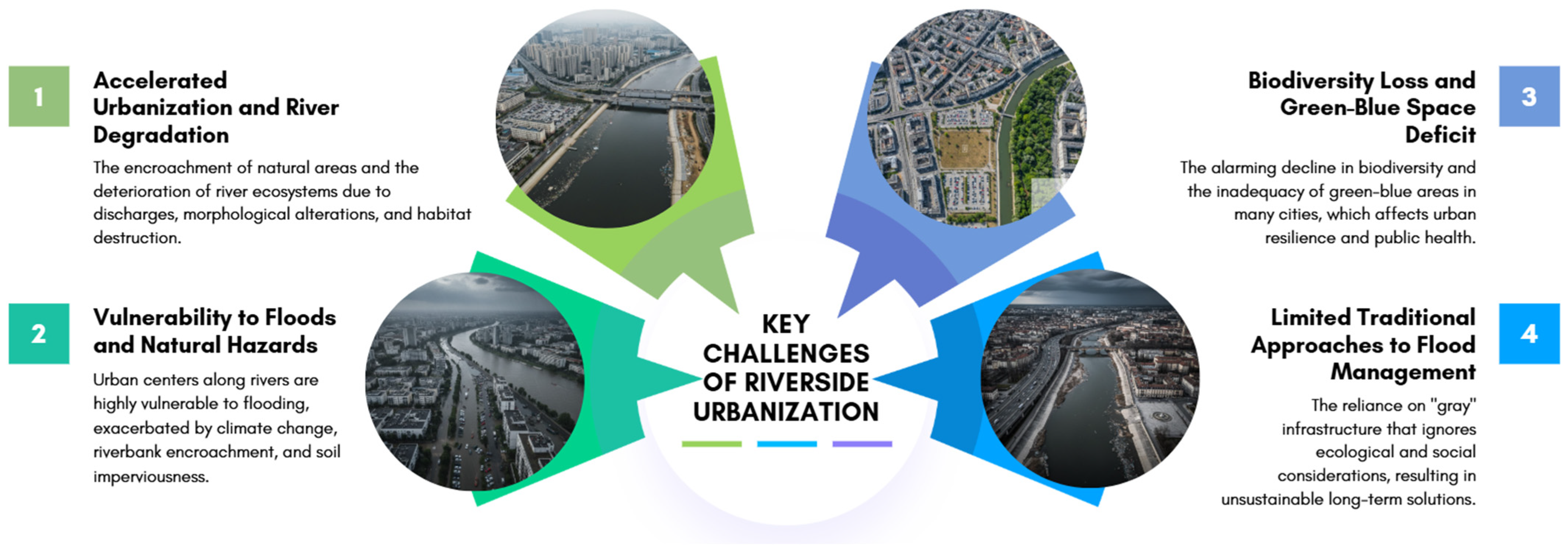
Urban fabrics that coexist with rivers face high vulnerability to flooding and other natural hazards exacerbated by climate change. Occupation of riverbanks and soil sealing increase runoff and reduce infiltration, creating threats to safety, quality of life, and sustainable development (
Figure 1). It is therefore essential to incorporate approaches and procedures that manage the dynamic processes of fluvial areas and facilitate their functional and landscape integration into the city. In this context, the urban regeneration of river edges emerges as a key strategy (
Table 1) to restructure and revitalize degraded spaces, transforming them into resilient and sustainable landscapes. A multifunctional approach—one that designs ecosystem services into green–blue spaces—can help drive the transition to more sustainable and resilient cities. Managing water in urban environments requires a multidisciplinary understanding and the harnessing of the benefits provided by urban water bodies, such as water supply, pollutant removal, natural habitats, and recreational opportunities [
2].
Biodiversity is also declining at an alarming rate (
Table 2): 81% of protected habitats in Europe are in poor condition and only 9% show signs of improvement. In response, European cities can build resilience by expanding their green–blue areas [
3]. A Sweco study analyzing 22 European cities found that they currently have 27% green–blue coverage, which could be increased to 38% [
3]. Such an increase would directly enhance carbon capture, improve air quality, reduce urban temperatures, and bolster public health, illustrating how expanding green–blue spaces helps curb biodiversity loss and strengthen urban resilience. This trend is not unique to Europe; in China, the national “sponge city” program aims for 80% of urban areas to absorb 70% of rainfall by 2030, combining natural and engineered systems to distribute and store stormwater. Its low-interference approach seeks to reduce floods and droughts and improve water quality while integrating nature-based solutions with existing infrastructure [
4].
In Latin America, at least 17 cities have undertaken projects to maintain and expand their green areas, although many still face significant deficits; for example, Mexico City has 7.5 m
2 of green space per inhabitant, while the World Health Organization recommends 16.4 m
2 [
5]. These initiatives aim to mitigate heatwaves, improve urban environmental quality, and foster social cohesion, highlighting both the expansion potential and the need to ensure equitable and accessible distribution of green–blue spaces.
Traditionally, flood-risk management has focused on gray infrastructure to increase drainage capacity through channelization, embankments, or river training, sidelining riverbank fauna, flora, and social/landscape uses—measures that lack long-term ecological effects and can cause negative social and ecological impacts when they fail [
6]. The limitations of this approach, however, have spurred more holistic perspectives that integrate green with gray solutions, recognizing that their combination improves resilience to extreme events and provides environmental and social co-benefits [
7].
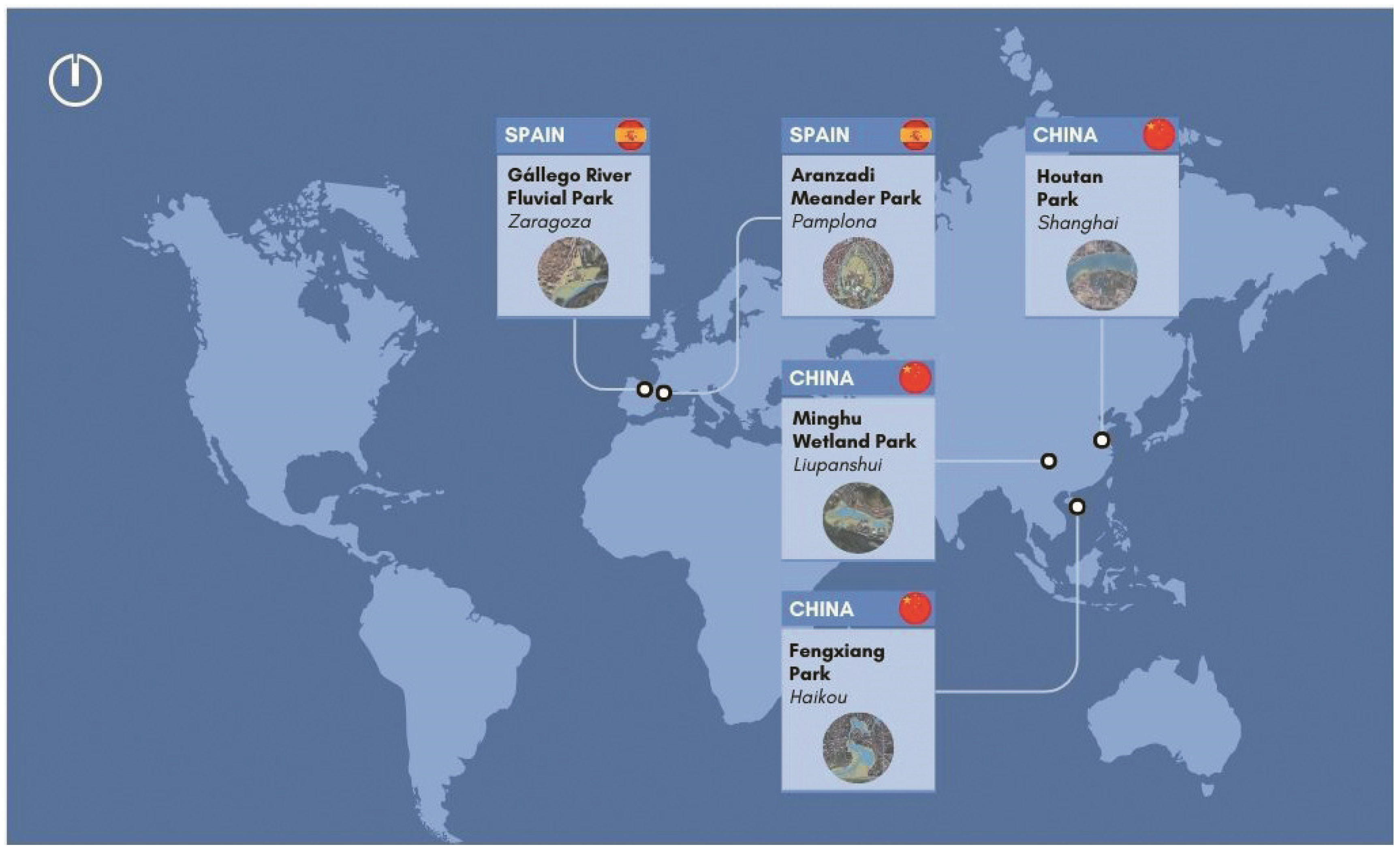
These interventions seek to create resilient landscapes by integrating green elements into gray infrastructure, with the goal of improving urban quality of life. Incorporating green spaces into urban contexts not only contributes to climate regulation and the reduction in hydrometeorological risks; it also enhances access to recreational areas, improves mental and physical health, promotes social cohesion, and generates more attractive, livable environments. In this way, green–gray integration translates into tangible, long-term benefits for urban well-being and sustainability. Building on this premise, the aim of this article is to analyze and compare urban resilience strategies applied to river edges in selected cases from China and Spain (
Figure 2).
However, despite the growing body of literature on green and gray infrastructures and nature based solutions, there remains a research gap regarding how different urban contexts integrate green and gray systems to strengthen flood resilience particularly in comparative studies that examine their combined ecological, social, and urban impacts. Building on this premise, the aim of this article is to analyze and compare how five urban riverfront projects in China and Spain combine green and gray infrastructures to enhance resilience against flooding, and to evaluate how these combinations implement the strategies of to resist, delay, and store/reuse water, as well as their ecological, social, and urban impacts. This approach highlights the contribution of the study in advancing the understanding of integrated resilience strategies within diverse urban and cultural contexts.
1.1. Current Trends
Over recent decades, cities have substantially shifted how they address climate-related risks, particularly along urban rivers. The concept of urban resilience has evolved from early, rigid hydraulic infrastructures designed to resist extreme events toward more comprehensive models that combine ecological, technological, and social solutions. Holling [
8] first introduced the term resilience, defining it as an ecosystem’s capacity to absorb disturbances and adapt while maintaining its essential functions. Ahern [
9] extended this notion to the urban realm, proposing a resilience-by-design approach based on flexibility and redundancy to create cities capable of adapting to climate impacts. Later, Meerow et al. [
10] redefined urban resilience as a dynamic process subject to learning and transformation, while Elmqvist et al. [
11] highlighted the interdependence among ecology, governance, and technology in the adaptive capacity of urban systems.
In fluvial settings, Ureña [
12] observed that urbanization and channelization have fragmented riparian ecosystems, turning rivers into technical infrastructures rather than natural spaces. Riverbank regeneration thus offers an opportunity to restore ecological connectivity and strengthen territorial identity from both social and ecological perspectives [
13]. Along these lines, Alves et al. [
7] developed a multicriteria approach for selecting green and gray infrastructures aimed at flood-risk reduction, while Lundy and Wade [
2] underscored the importance of urban ecosystem services—such as infiltration, evapotranspiration, and water retention—as fundamental mechanisms for maintaining environmental functionality.
The paradigm shift toward green infrastructure and nature-based solutions (NbS) is one of the most influential trends in contemporary urban management. Kabisch et al. [
14] demonstrated that integrating natural systems into urban planning increases resilience and social, environmental, and economic co-benefits. Complementarily, Darricades et al. [
15] systematized resilience tactics into three groups—resist, delay, and store/reuse—providing a replicable conceptual framework for urban flood-mitigation projects.
At the policy and technical levels, the European Commission [
16] has institutionalized NbS within climate-adaptation policies, while the United Nations Office for Disaster Risk Reduction (UNDRR) [
17] promotes their adoption as key tools for ecosystem restoration and enhanced water management. These policies reflect a transition toward hybrid models that recognize the need to integrate natural processes into urban infrastructure.
In Asia, Sun et al. [
18] introduced the “sponge city” model, which combines hydraulic technologies with ecological infrastructures to absorb, retain, and reuse stormwater. This model has proved effective in reducing floods and improving water quality, fostering environmental and social regeneration in densely urbanized cities. Its impact has crossed borders, becoming a reference for Europe and Latin America.
In parallel, Tiboni et al. [
19] call for comparative methodologies that integrate environmental, social, and economic variables to holistically evaluate the effects of urban regeneration. The Intergovernmental Panel on Climate Change (IPCC) [
20] complements this approach by emphasizing that urban resilience depends not only on physical infrastructures but also on institutional and community strength. Finally, Lochner et al. [
21] propose moving toward a collaborative-management paradigm in which NbS are integrated with citizen participation, promoting inclusive, adaptive sustainability.
Taken together, current trends reveal a shift from approaches centered on structural resistance to strategies of ecological adaptation, in which water and territory are managed as interdependent living systems.
1.2. Literature Review
The literature reveals a convergence among theoretical and methodological approaches to urban resilience applied to fluvial contexts. The ecological foundations established by Holling [
8] have expanded into multidisciplinary frameworks that incorporate governance and planning as essential components. Ahern [
9] and Meerow [
10] emphasize that resilience is not a permanent state but an ongoing process of adaptation, while Elmqvist [
11] underscores the relationship between biodiversity and functional resilience, linking urban ecology to sustainability.
At the territorial scale, Ureña [
12] argues that the degradation of fluvial systems stems from urban models that have prioritized gray over ecological infrastructure, undermining natural absorption and hydrological regulation. Studies by Alves [
7], Lundy [
2], and Kabisch [
14] concur that restoring natural cycles through green solutions improves both the efficiency of urban drainage and environmental quality. Darricades et al. [
15] contribute a relevant methodological lens by categorizing resilience tactics according to their behavior with water, enabling the systematization of intervention strategies. These theoretical contributions are consolidated by the institutional backing of the European Commission [
16] and UNDRR [
17], which promote NbS as a global action framework.
Internationally, Sun et al.’s sponge city model [
18] has become a paradigmatic reference, demonstrating that integrating green and gray infrastructures can transform risk management into an opportunity for urban regeneration. Methodologically, Tiboni et al. [
19] offer a comparative vision of urban regeneration grounded in environmental, social, and economic indicators, providing replicable criteria for international studies. According to the IPCC [
20], urban resilience must be analyzed not only from engineering and ecology, but also from the institutional and social capacities to anticipate and respond to climate impacts. Finally, Lochner et al. [
21] underscore the need to replace traditional rigid-infrastructure models with integrated approaches that link natural solutions to active citizen participation.
In sum, the literature shows that urban resilience in fluvial contexts has evolved from a defensive notion into an integral strategy of adaptive planning, in which the combination of green and gray infrastructure offers the most effective pathway toward sustainable, safe, and socially inclusive cities.
1.2.1. Urban Flood-Resilience Strategies
Urban flood-resilience strategies have emerged in response to cities’ growing vulnerability to climate change and uncontrolled urban expansion. In this context, water is no longer understood solely as a threat but recognized as a structuring element of urban territory.
According to Darricades, Quaglia, and Isaía [
15], strategies fall into three main categories—resist, delay, and store/reuse—which represent different degrees of adaptation and relationships with the urban hydrological cycle. These strategies can operate complementarily within the same system, fostering the coexistence of gray and green infrastructure under the principles of nature-based solutions (NbS) [
14,
16,
17].
Resist
The resist strategy seeks to physically protect the city from extreme events through infrastructures that function as hydraulic barriers. Traditionally, these have relied on gray solutions—walls, levees, riprap, or channelization—designed to keep water out of urban spaces [
22]. Recent advances in ecological planning, however, are driving a shift toward hybrid systems that combine structural defense with landscape and social integration [
23,
24].
Ahern [
9,
23] argues that cities should move from a “fail-safe” to a “safe-to-fail” paradigm, designing infrastructures that maintain functionality even under extreme conditions. Zevenbergen et al. [
22] and O’Donnell et al. [
25] contend that contemporary river defenses should enable coexistence between city and river by integrating ecological, recreational, and cultural functions. European examples such as the Room for the River program (The Netherlands) or the Gállego River Park (Spain) show that physical resistance and ecological restoration can coexist [
23,
24]. In Latin America, the Medellín River project (Colombia) introduces vegetated walls and biotechnical defenses, transforming hydraulic infrastructures into green corridors [
26].
Ashley et al. [
27] define this approach as water-sensitive urban design (WSUD), in which urban defenses are reinterpreted as multifunctional civic elements. This lens has enabled the incorporation of facilities, furniture, and urban stairways as part of hydraulic defense, as illustrated in
Figure 3.
These typologies demonstrate that resisting does not mean isolating from water, but learning to live with it through hybrid solutions that integrate safety, accessibility, and landscape value. Thus, containment infrastructure ceases to be a rigid boundary and becomes an active space capable of protecting and simultaneously revitalizing river edges.
Delay
The delay strategy is based on ensuring flow and temporarily retaining water, preventing drainage systems from being overwhelmed during intense rainfall. This approach incorporates mechanisms for retention, infiltration, and controlled storage that align with green infrastructure.
Demuzere et al. [
28] and Kazmierczak & Carter [
29] emphasize that parks, wetlands, rain gardens, and green roofs function as natural buffering systems that reduce surface runoff and improve water quality. Alves et al. [
7] and Eckart et al. [
30] broaden this view by proposing multicriteria models that integrate hydraulic, ecological, and social benefits, consolidating the role of NbS in urban risk management.
Floodable sports courts and plazas are paradigmatic examples of multifunctional public spaces that temporarily retain water without compromising their everyday use. Under normal conditions they function as recreational areas; during heavy rain they become controlled urban reservoirs. Cases such as Houtan Park (Shanghai) and the Aranzadi meander (Pamplona) show that it is possible to delay water flow through topography and vegetation without undermining urban quality [
31,
32], as illustrated in
Figure 4.
Store and Reuse
The store-and-reuse strategy extends the logic of the previous two by turning retained water into a usable resource within the urban metabolism. Its goal is to capture, filter, infiltrate, and reuse stormwater for irrigation, cleaning, or aquifer recharge [
32].
Matsler et al. [
32] and Sun et al. [
18] link this strategy to the circular water management underpinning the sponge city model, in which urban spaces act as decentralized regulation and storage systems. O’Donnell et al. [
25] and Eckart et al. [
30] show that subsurface infiltration and filtration systems improve water quality and reduce runoff, integrating effectively into urban space. Infiltration strips and retention tanks exemplify hybrid solutions that leverage the urban subsurface to manage stormwater without affecting surface functionality. Cities such as Rotterdam, Beijing, and Singapore have implemented storage systems beneath roads or parks, enabling subsequent reuse [
32].
The European Commission [
16] and United Nations Office for Disaster Risk Reduction (UNDRR) [
17] recognize stormwater reuse as an essential component of climate-adaptation strategies, recommending its integration into existing infrastructure. For its part, the Intergovernmental Panel on Climate Change (IPCC) [
21] underscores that rainwater recovery strengthens urban water autonomy and contributes to climate-change mitigation. Accordingly, the store-and-reuse strategy marks a transition toward a circular, self-sufficient paradigm of water management in which water ceases to be waste and becomes a structural resource that underpins urban, ecological, and social resilience. The strategy can also operate below ground through complementary technical systems, as illustrated in
Figure 5.
3. Results
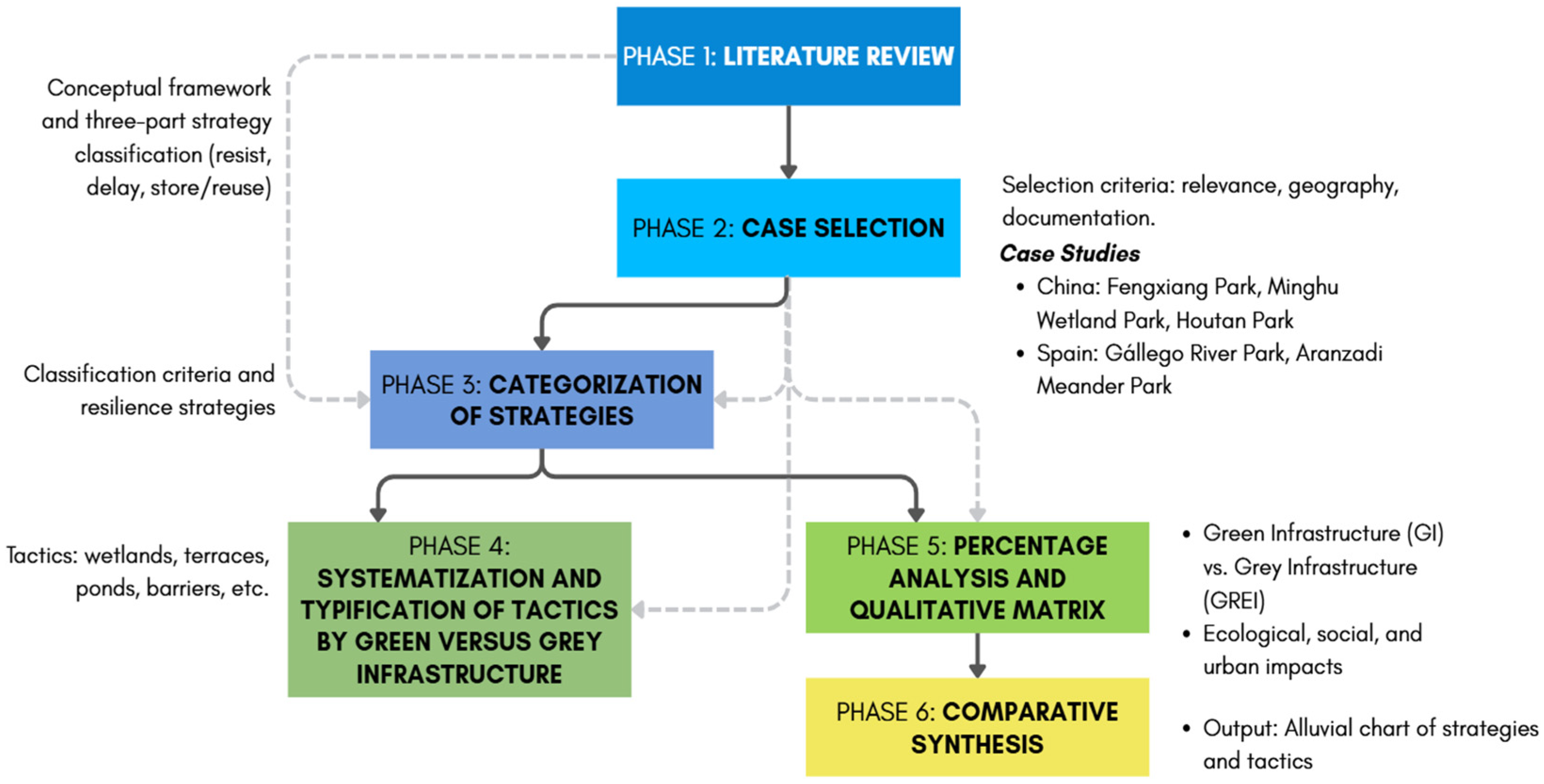
This section presents the main findings of the comparative analysis of the five case studies. The results derive from the systematization of the documented tactics, their classification into green and grey infrastructure, and their alignment with the Resist, Delay, and Store/Reuse strategies.
The analysis is organized into three steps: (i) identification and characterization of implemented tactics; (ii) quantification of their strategic orientation; and (iii) integrated comparison across cases.
Overall, the five projects show a clear predominance of Delay-oriented tactics, mainly associated with wetlands, terraces, vegetated areas, and other nature-based elements. Resist strategies appear in more structurally exposed segments, while Store/Reuse is applied in specific hydraulic components such as ponds or recirculation basins. Projects such as Houtan Park and Aranzadi Meander Park demonstrate the most balanced hybrid configurations, combining ecological restoration with grey regulation elements.
These findings provide the foundation for the detailed case-by-case results and the consolidated synthesis presented through the tactical matrices, percentage graphs, radial diagrams, and the alluvial framework.
3.1. Case 1: Fengxiang Park in Meishe River Greenway (Haikou, China)
3.1.1. Contextual Analysis
Before its regeneration, the Meishe River displayed severe environmental and hydraulic degradation, shaped by decades of urban expansion and insufficient wastewater control. Two critical problems defined its condition: Persistent water pollution, caused by untreated sewage discharges, solid waste accumulation, and runoff from surrounding urban areas. These pressures led to low water quality, odor problems, and aesthetic deterioration. Periodic flooding, intensified by the rigid canalization of the river, which limited its natural capacity for storage, infiltration, and lateral expansion during intense rainfall events [
33].
Haikou, located in a monsoonal climatic region, faces heavy seasonal rainfall, making the river particularly vulnerable to overflow events. Rapid population growth worsened the problem, as urban runoff increased and the existing drainage infrastructure proved insufficient. The Meishe River had been converted into a hard-engineered channel, flanked by levees and ornamental gardens—an intervention intended to control water but which ultimately:
Disrupted ecological continuity,
Reduced infiltration capacity,
Contributed to further water-quality deterioration.
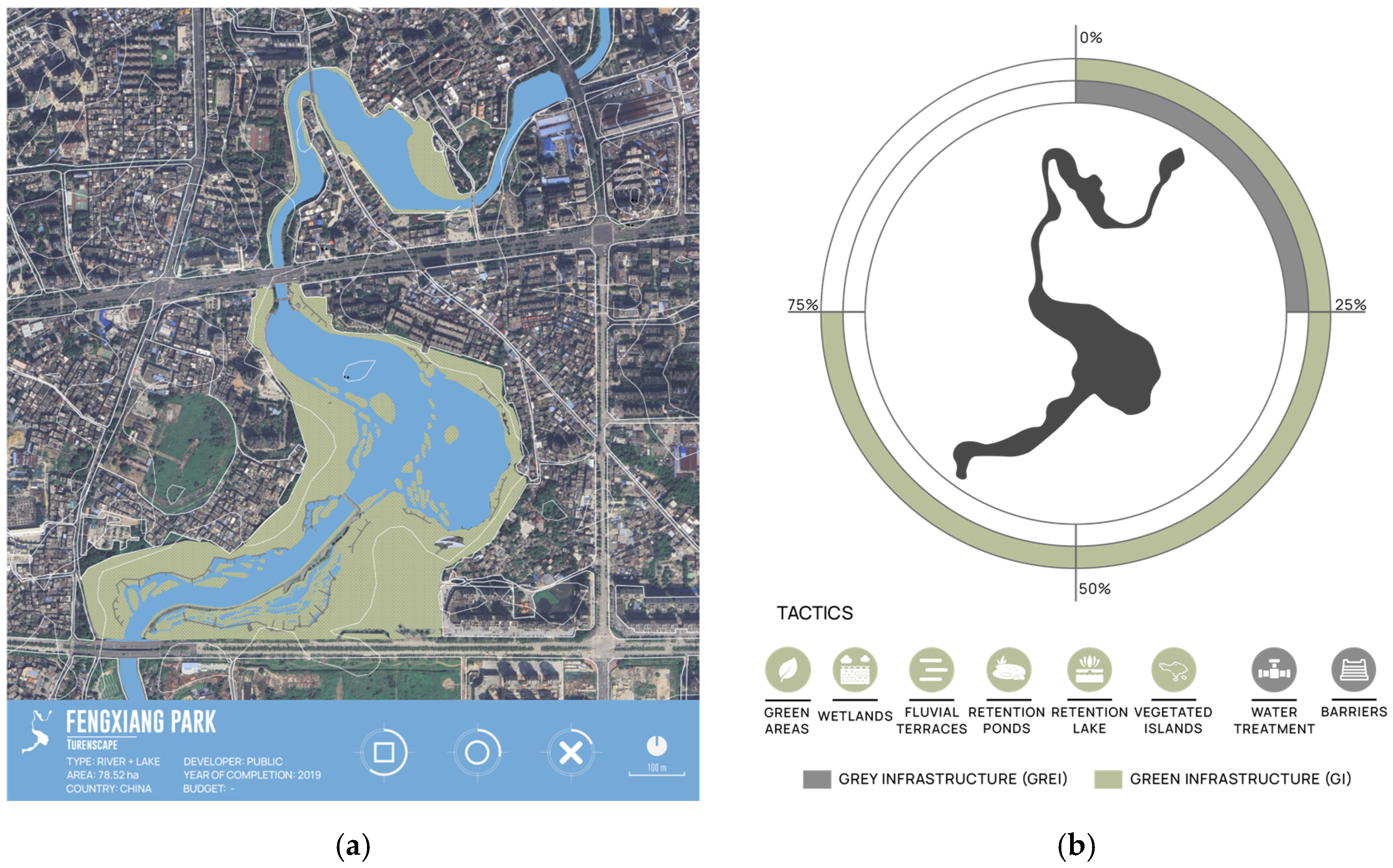
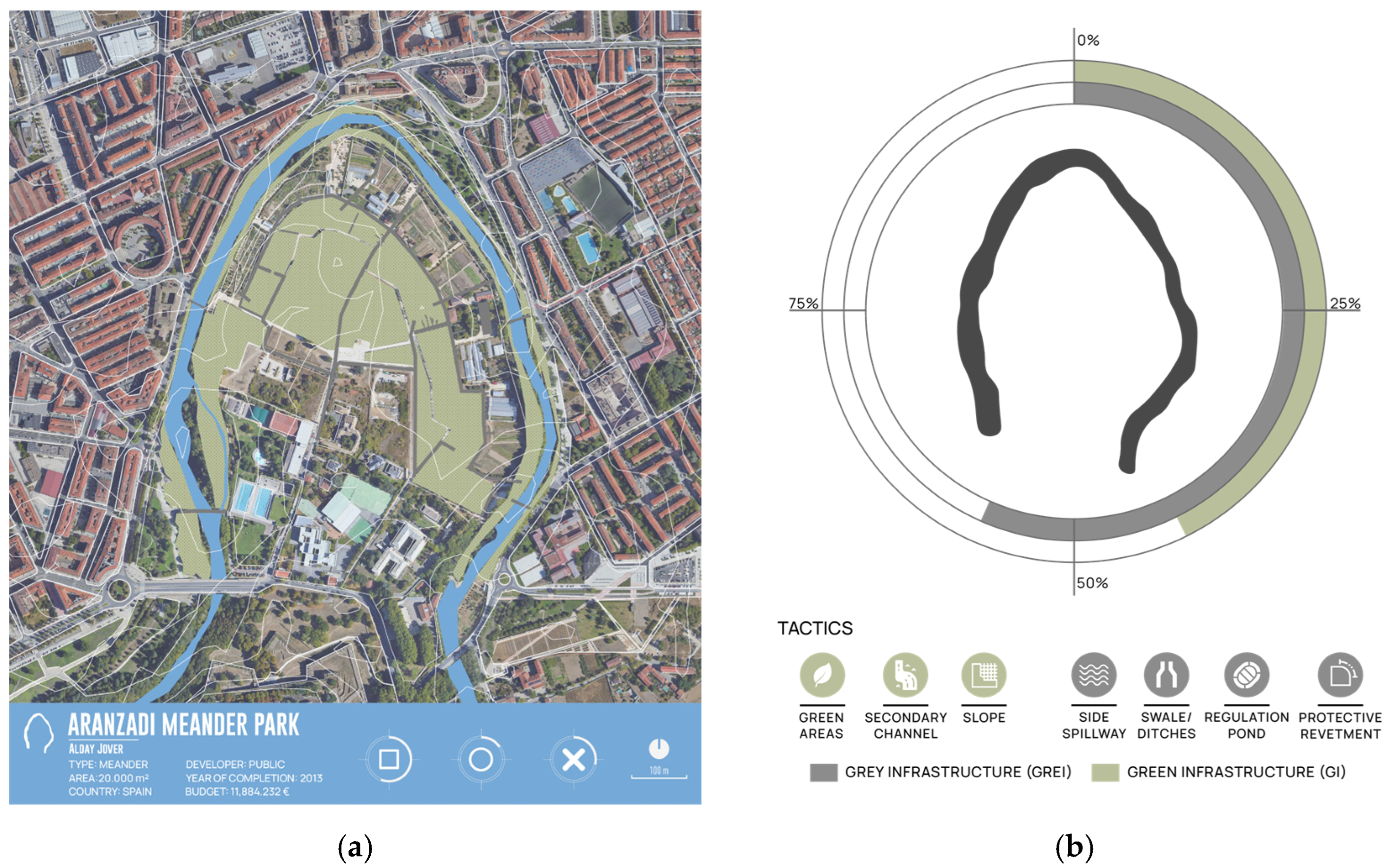
To reverse this trajectory, the regeneration proposal sought to restore natural fluvial dynamics while incorporating civil-engineering elements compatible with ecological performance. As documented in the project materials, the design (
Figure 8a) combined hydraulic-restoration measures with a linear ecological park aimed at reversing pollution, reducing flood risk, and recovering biodiversity [
34].
After the intervention, Fengxiang Park presents a predominantly ecological configuration, with approximately 75% green infrastructure and 25% grey infrastructure, according to the tactical distribution diagram.
3.1.2. Implemented Tactics and Identification of Green and Gray Infrastructure
Eight tactics were implemented (
Figure 8b), six classified as GI and two as GREI:
(i) Stepped wetland (GI): The concrete channel was removed, and a terraced wetland was built to filter stormwater and wastewater. Wetlands regulate water levels by absorbing and reducing flood flow while improving water quality [
35].
(ii) Green areas (GI): Green zones were preserved and expanded along terraces and access ways, enhancing infiltration and habitat creation.
(iii) Ponds (GI) and (iv) Retention lake (GI): Retention ponds were created along the terraces and Lake Qiankun was rehabilitated to slow and temporarily store runoff [
36].
(v) Water treatment (GREI): Collector pipes, sludge-dewatering systems, and pump stations were installed to manage excess water and complement the wetland’s natural treatment.
(vi) Vegetated islands (GI): Planted islets were designed to deflect and decelerate flow while providing refugia for native species.
(vii) Barriers (GREI) and (viii) Fluvial terraces (GI): Physical barriers and 35° terraced slopes were introduced to contain flow and control surface runoff [
37,
38,
39,
41].
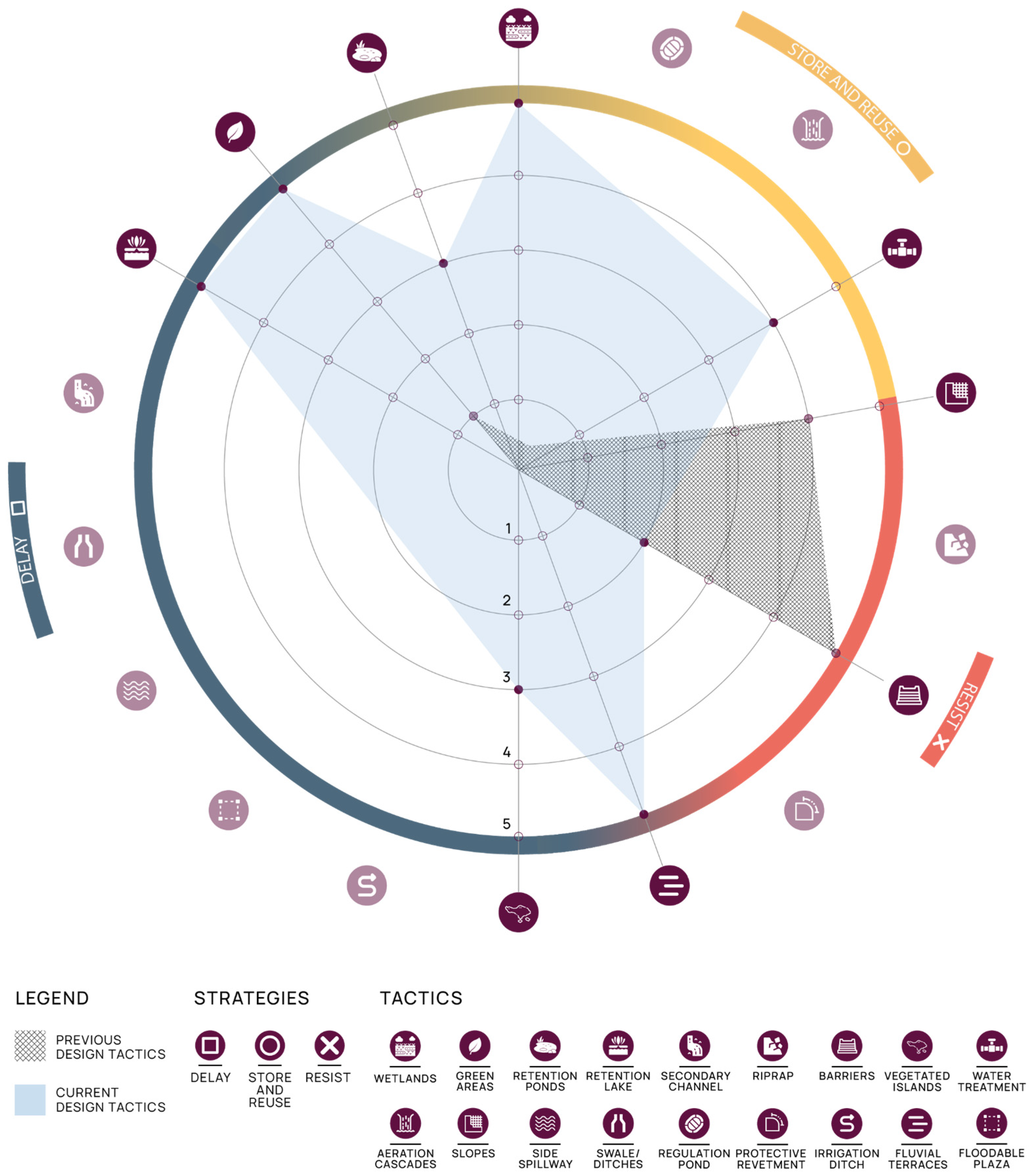
The radial assessment (
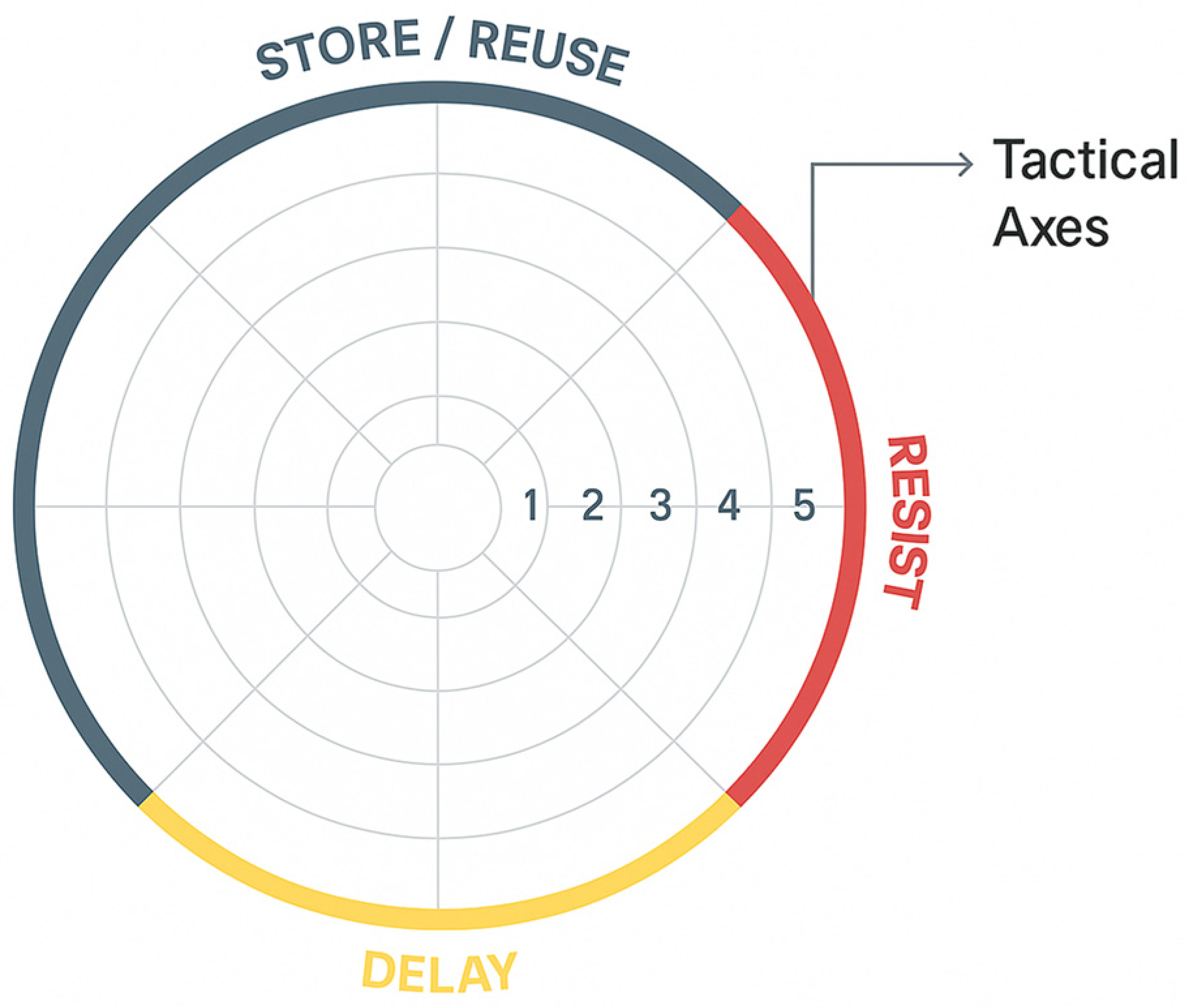
Figure 9) shows the relative intensity and strategic orientation of the tactics implemented in Fengxiang Park, measured on a scale from 1 to 5, in accordance with the methodological framework described in
Section 2.3. The previous condition displays low to moderate implementation levels (1–2), limited almost exclusively to grey channelization and flood-control structures. In contrast, the current configuration registers medium to high levels (3–5) across most green-infrastructure tactics, demonstrating a clear ecological transition consistent with the regeneration objectives described by municipal sources [
34,
35].
Dominance of Delay-Oriented GI Tactics in the largest expansion in the radial chart occurs along the Delay axis, where green-infrastructure tactics occupy nearly the full range of implementation (≈4–5 on the scale). These include:
This dominance of nature-based Delay strategies aligns with reviewer recommendations requesting clearer articulation of how tactics operationalize the adopted resilience framework.
Targeted Resist Tactics Supported by GREI Components shows fewer tactics and lower relative implementation (≈1–2), primarily associated with grey-infrastructure elements:
These GREI elements provide structural reinforcement without dominating the ecological configuration, addressing another reviewer comment emphasizing the need to explain the hybrid logic of the cases.
Selective Store/Reuse Functions axis shows intermediate implementation (≈3), driven by:
Retention ponds and lakes, which also contribute to delayed release and reuse of water within the restored wetland system.
Secondary ecological basins, represented in the diagram as mid-range values, supporting both hydrological regulation and habitat functions.
Overall, the radial chart confirms a substantial tactical transition. Before the intervention, the system was grey-dominated, rigid, and characterized by low implementation (1–2). After regeneration, the park becomes predominantly GI-based, with high implementation levels (3–5) and a strong emphasis on Delay strategies. This transformation aligns with the documented goals of the Meishe River restoration and responds directly to reviewer requests for a more explicit, evidence-based explanation of tactical and strategic change.
3.1.3. Qualitative Assessment of Project Impact
Green infrastructure comprises elements that use natural processes to manage water—wetlands, green areas, fluvial terraces, retention ponds, and vegetated islands—whereas gray infrastructure includes mechanically engineered solutions such as pipes, pump stations, and barriers. Of the eight tactics, six (green areas, wetland, fluvial terrace, retention pond, vegetated islands) are GI (75%), and two (water treatment, barrier) are GREI (25%). GI predominance reflects a strong commitment to nature-based flood mitigation.
A key finding is that although the project demonstrates a clear predominance of Green Infrastructure (75%), its effectiveness within the monsoonal climate was critically dependent on the strategic integration of Gray Infrastructure. The GREI tactics, specifically the collector pipes and pump stations, were essential for managing peak flows and pollution loads during extreme weather events that exceeded the retention and treatment capacity of the wetlands and ponds alone. This demonstrates that in hydrologically demanding contexts, a well-integrated gray component is not a contradiction to the nature-based approach but a necessary complement to ensure the structural resilience and reliability of the hybrid system, particularly under projected climate variability.
The project combined ecological and flood-protection functions, as shown in the qualitative impact matrix (
Figure 9). Wetland and green-area restoration improves water quality and habitat; ponds and terraces reduce flood risk; and engineering interventions manage extreme flows. This green–gray integration positions Fengxiang Park as a nature-based reference for monsoonal urban contexts.
3.1.4. Quantitative Assessment of Project Impact
The
Table 5 indicates strong environmental performance, particularly through the high daily water-treatment capacity of approximately 9500 m
3. Although retention and quantitative water-quality improvement data are unavailable, the reported values demonstrate an effective hybrid system. The significant biodiversity recorded further confirms the park’s ability to restore habitats and enhance ecological resilience.
3.2. Case 2: Minghu Wetland Park (Liupanshui, China)
3.2.1. Contextual Analysis
Before its regeneration, the Shuicheng River and the Minghu Wetland exhibited severe environmental and hydraulic degradation, shaped by decades of industrial expansion, agricultural runoff, and insufficient wastewater control. Two critical problems defined its condition.
First, persistent water pollution resulted from untreated sewage discharges, fertilizer-laden agricultural runoff, and solid waste accumulation. These pressures caused eutrophication, foul odors, reduced water clarity, and the collapse of aquatic and riparian biodiversity [
40].
Second, periodic flooding was exacerbated by the rigid canalization of the river and the progressive sedimentation of the wetland, which eliminated natural storage areas, reduced infiltration capacity, and prevented lateral expansion during monsoonal rainfall events.
Liupanshui, located in a subtropical monsoonal climatic region, faces heavy seasonal precipitation that made the degraded Shuicheng–Minghu system particularly vulnerable to overflow events. Urban growth accelerated runoff volumes, while the existing drainage and retention infrastructure proved insufficient. During intensive modernization after 1966, the meandering river was straightened, diked, and lined with concrete. Between 1975 and 1980, natural banks were replaced by vertical retaining walls—an intervention intended to control flooding but which ultimately:
Disrupted ecological continuity,
Reduced infiltration and retention capacity,
Accelerated downstream flows,
Increased water-quality deterioration.
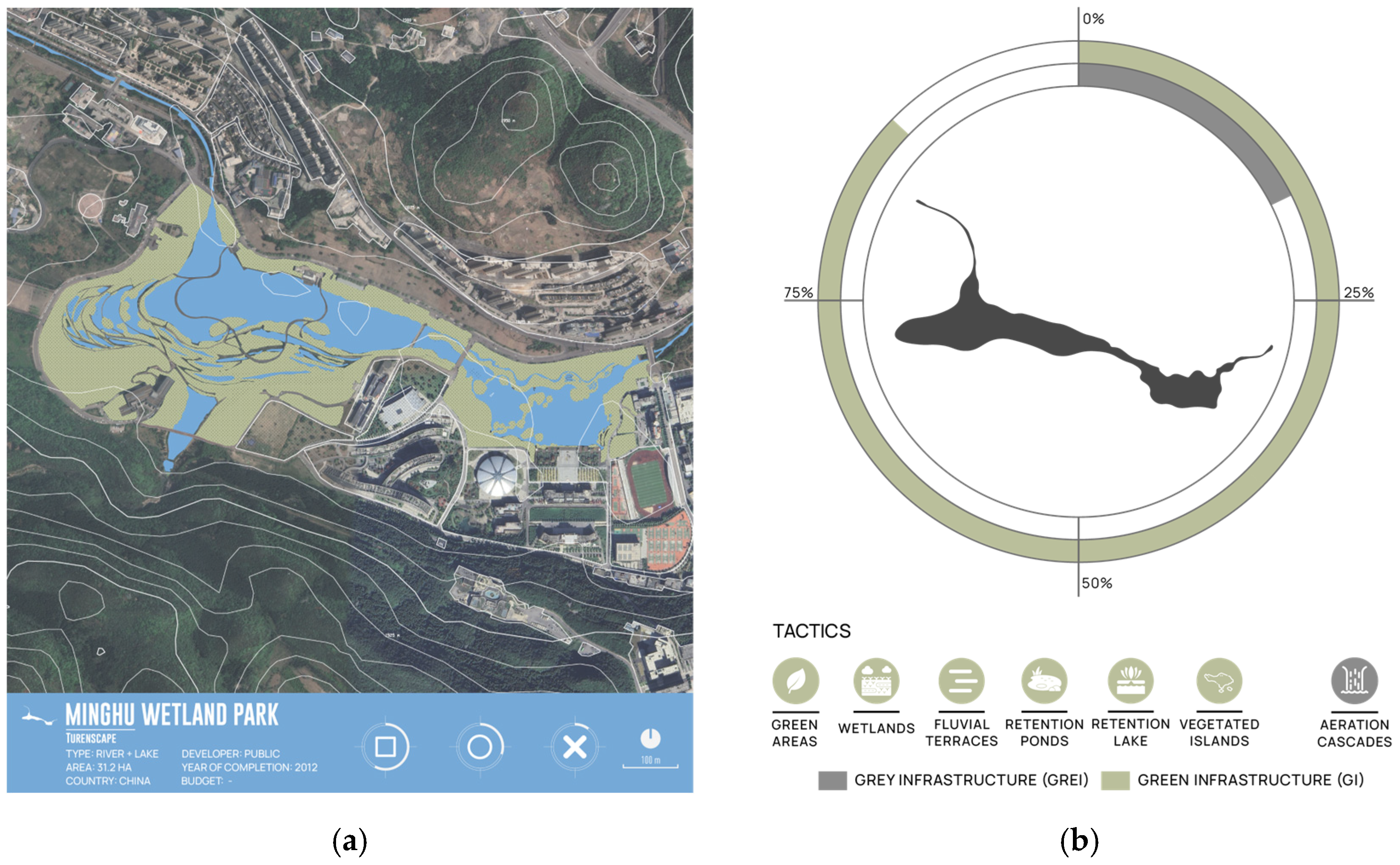
To reverse this trajectory, the municipality commissioned Turenscape in 2009 to restore the river’s “mother” function through an integrated, basin-scale ecological strategy. As documented in project materials, the proposal (
Figure 10a) reconnected tributary streams, fish ponds, and lowland depressions into a continuous purification and flood-control wetland; removed concrete linings; restored the natural channel; and incorporated pedestrian and cycling corridors that reintegrated the water landscape with the city [
41,
42]. The intervention aimed to recover biodiversity, reverse pollution, reestablish hydrological regulation, and catalyze ecological and social renewal in the Minghu basin.
3.2.2. Implemented Tactics and Identification of Green and Gray Infrastructure
Seven tactics were applied (
Figure 10b): six GI and one GREI:
(i) Terraced wetlands (GI): Leveraging topographic variation and former fish ponds, stepped wetlands were created to purify and retain water. Natural and constructed wetlands regulate levels, absorb and reduce flood peaks, and improve quality by removing sediments and nutrients.
(ii) Green areas (GI): Green belts along terraces enhance infiltration, filter runoff, and provide habitat.
(iii) Retention ponds (GI): Configured along wetlands to slow and temporarily store runoff [
42].
(iv) Retention lake (GI): Lake Minghu was restored as a natural habitat that acts as a detention basin and recreational space.
(v) Aeration cascades (GREI): Artificial cascades oxygenate river water. Inspired by Chicago’s SEPA stations, pumps lift water to an elevated basin and release it through stepped drops that add up to 25 tons of oxygen per day, improving water quality, supporting fish populations, and eliminating odors. Being pump- and structure-dependent, they are classified as gray.
(vi) Vegetated islands (GI): Planted islets deflect and slow flow, generating habitat and increasing retention [
43].
(vii) Fluvial terrace (GI): River margins were terraced to delay advancing water and provide flood protection.
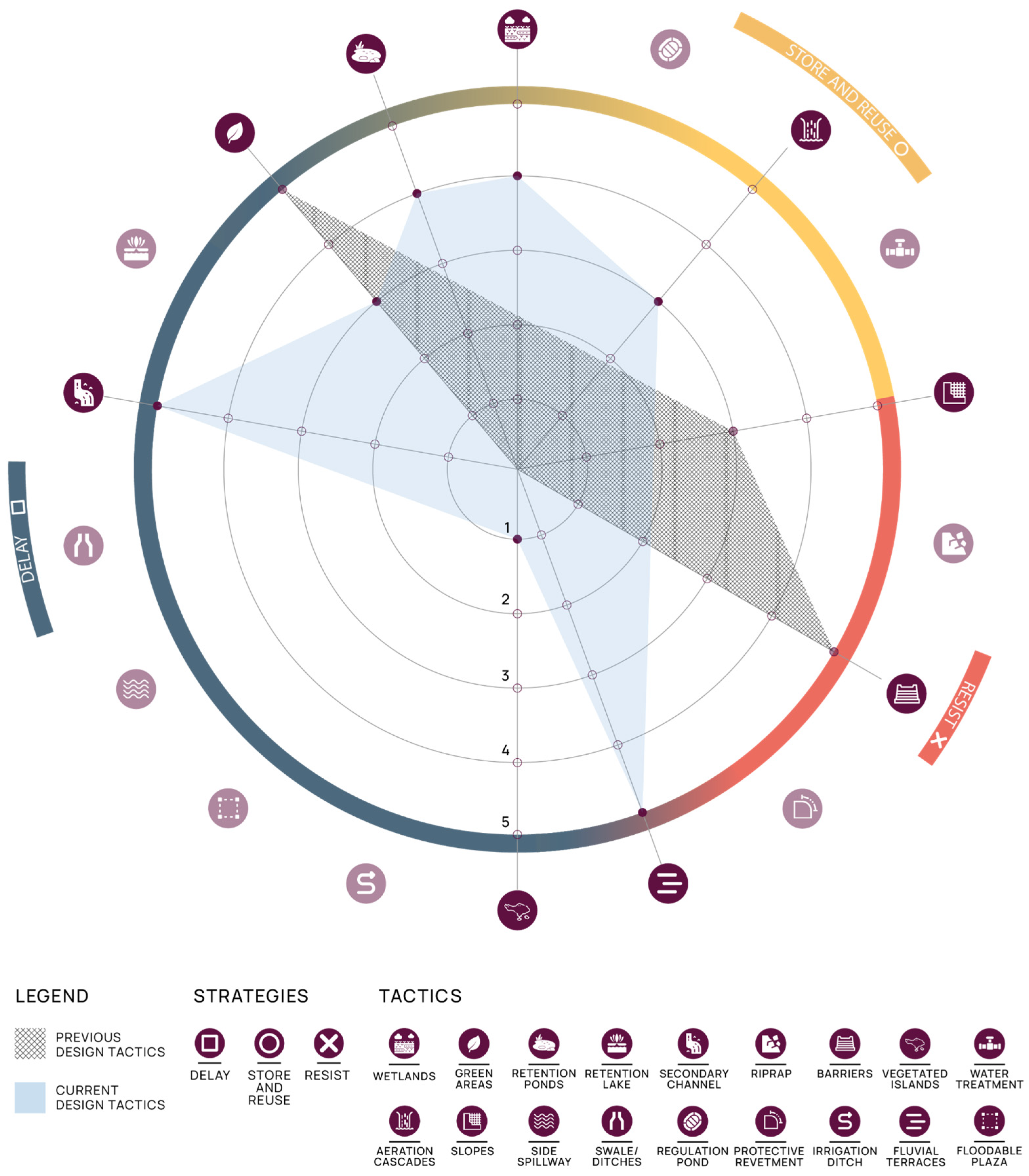
The radial assessment (
Figure 11) shows the relative intensity and strategic orientation of the tactics implemented in Minghu Wetland Park, measured on a scale from 1 to 5 following the methodological framework established in
Section 2.3. The previous condition displays very low implementation levels (≈1–2), concentrated mainly in grey channelization, rigid embankments, and flood-control structures. In contrast, the current configuration registers medium to high implementation levels (≈3–5) across most green-infrastructure tactics, demonstrating a pronounced ecological transition aligned with the objectives of the Shuicheng River basin restoration [
41,
42].
Dominance of Delay-Oriented GI Tactics: the largest expansion in the radial chart occurs along the Delay axis, where green-infrastructure tactics occupy nearly the full range of implementation (≈4–5). These include:
Wetlands, scoring among the highest levels due to their extensive coverage and their role in filtering runoff, improving water quality, and attenuating peak flows.
Retention ponds and the rehabilitated retention lake, which exhibit high implementation values (>4), reflecting their capacity to slow, store, and gradually release stormwater, a key function in the monsoonal hydrological regime [
40].
Fluvial terraces and vegetated islands, scoring between ≈3 and 4, contribute to infiltration, ecological buffering, flow dispersion, and habitat restoration.
Aeration cascades, also showing mid-to-high implementation, supporting water-oxygenation, circulation, and ecological recovery.
This dominance of nature-based, Delay-oriented strategies responds directly to reviewer recommendations requesting a clearer explanation of how tactical interventions operationalize the adopted resilience framework.
Targeted Resist Tactics Supported by GREI Components: axis shows far fewer tactics and lower implementation values (≈1–2), consisting primarily of grey-infrastructure elements. Barriers and engineered slopes appear with low to moderate values (≈2), indicating their localized use for channel stabilization and erosion control [
41,
42]. Controlled outlet structures and minor hydraulic supports, also within the Resist segment, exhibit similarly low values due to their limited but essential function in managing hydraulic transitions.
These GREI components provide targeted structural reinforcement without dominating the ecological configuration, addressing another reviewer comment emphasizing the need to clarify the hybrid logic of the restoration.
Selective Store/Reuse Functions: The Store/Reuse axis shows intermediate implementation (≈3), driven mainly by the network of retention ponds and lakes that support controlled storage, delayed release, and ecological recirculation of stormwater within the restored wetland system. Secondary ecological depressions reinforce these functions, providing additional retention and habitat benefits.
Overall, the radial chart confirms a substantial tactical transition. Before the intervention, the system was rigid, heavily engineered, and characterized by minimal ecological performance (≈1–2). After restoration, Minghu Wetland Park becomes predominantly GI-based, with high implementation levels (≈3–5) and a strong emphasis on Delay strategies. This transformation aligns with the documented objectives of the Shuicheng River basin restoration and directly addresses reviewer requests for a more explicit, evidence-based explanation of tactical and strategic change.
3.2.3. Qualitative Assessment of Project Impact
Using the above classification, six of seven tactics are GI (86%) and one is GREI (14%), indicating a strong nature-based approach to water management. A notable finding is the critical, enabling role played by the single gray infrastructure tactic—the mechanical aeration cascades. While representing only 14% of the tactical mix, this engineered solution was fundamental for rapidly reversing severe oxygen depletion and creating the necessary water quality conditions for the extensive GI network (wetlands, ponds, lake) to thrive and deliver their full range of ecosystem services. This demonstrates that a minimal but highly strategic gray intervention can act as a catalyst, unlocking and amplifying the performance of a predominantly green system in heavily degraded environments.
The project combined ecological, hydraulic, and social functions (
Figure 11). Channel restoration and the creation of wetlands and terraces enhanced self-purification and flood regulation; wetlands filter sediments and nutrients and can reduce basin flood peaks [
37]. Removing concrete walls and restoring natural banks revitalized riparian ecology and biodiversity [
41], while aeration cascades increased dissolved oxygen, supporting fish and removing odors [
43]. Trails and public spaces reinforced recreation and social cohesion, turning the park into an urban-renewal driver. GI predominance, complemented by targeted gray measures, makes Minghu a leading nature-based resilience case.
3.2.4. Quantitative Assessment of Project Impact
The
Table 6 outlines the park’s environmental performance, emphasizing its high annual retention capacity and significant biodiversity levels. Despite the absence of daily treatment or water-quality data, the reported metrics show the strong functioning of the wetland system. These results confirm the effectiveness of the project’s predominantly green infrastructure strategy [
42,
44].
3.3. Case 3: Houtan Park (Shanghai, China)
3.3.1. Contextual Analysis
Before its regeneration, the Houtan waterfront along the Huangpu River exhibited severe environmental and hydraulic degradation, shaped by decades of heavy industrial activity, land reclamation, and rigid flood-control engineering. Two critical problems defined its condition.
First, persistent water pollution resulted from industrial debris, contaminated soils, and severely degraded river water. Adjacent Huangpu waters were rated Class V, indicating extremely poor quality, unsafe for recreation, and incapable of supporting aquatic life [
45,
46]. These pressures generated stagnant pools, eutrophication, foul odors, and the near absence of native vegetation and riparian biodiversity.
Second, periodic flooding and hydrological disconnection were exacerbated by the rigid canalization of the riverbank and the presence of a 6.7 m-high concrete floodwall designed for a 1000-year event. This structure eliminated natural storage areas, reduced infiltration capacity, and prevented lateral expansion during tidal fluctuations and storm surges. The continuous embankment amplified runoff velocities and created a physical barrier that isolated the public from the river edge.
Shanghai, located in a humid subtropical climatic region, faces strong seasonal rainfall and tidal variability, conditions that made the degraded industrial waterfront particularly vulnerable to overflow events. Rapid urbanization increased impervious surfaces and runoff volumes, while the existing drainage and retention infrastructure proved insufficient. Land reclamation for Expo 2010 further altered the shoreline, replacing natural banks with hard-engineered edges.
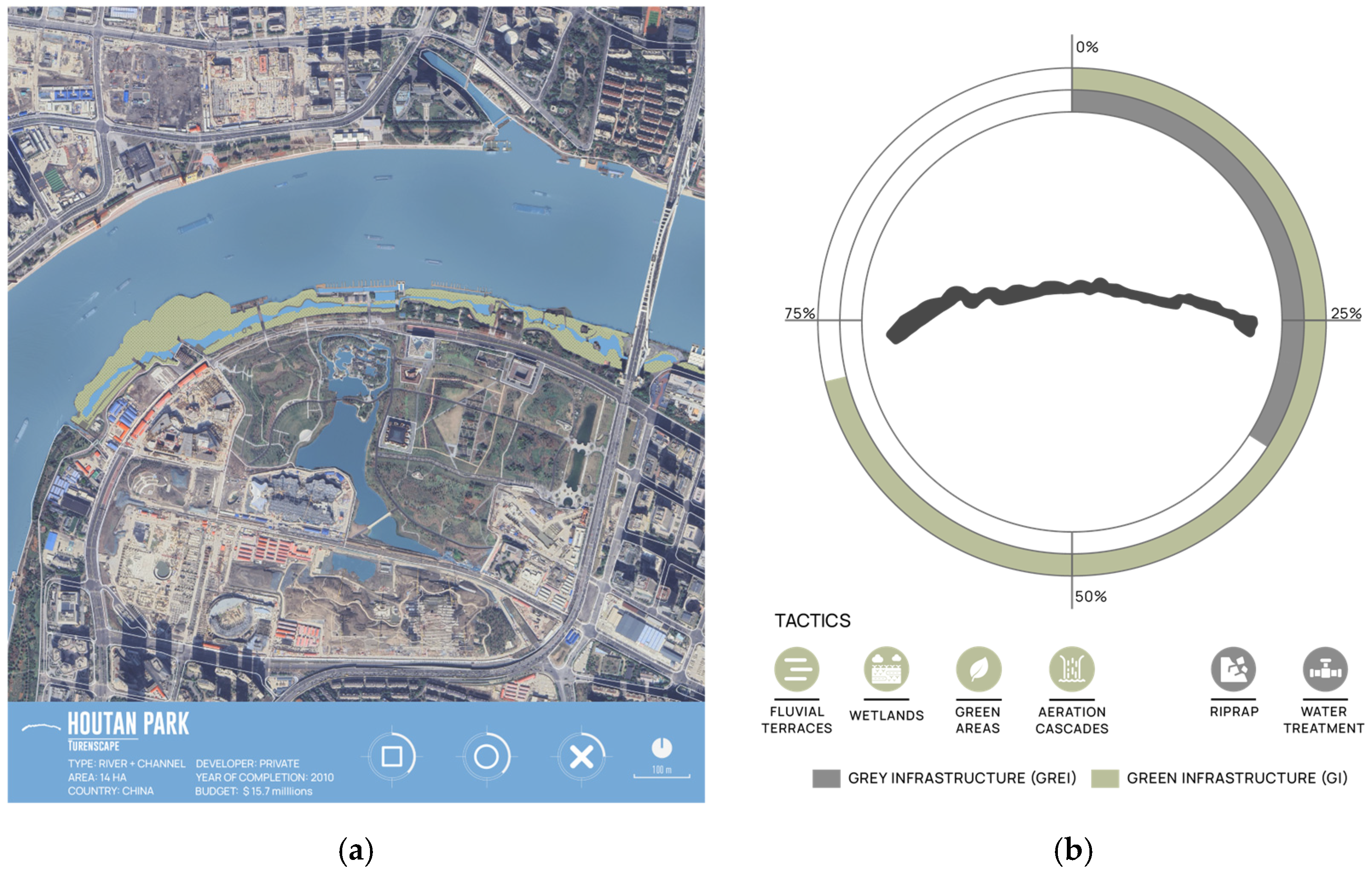
To reverse this trajectory, the Expo 2010 authorities commissioned Turenscape in 2010 to transform the site into a productive ecological corridor. As documented in project materials, the proposal (
Figure 12a) reconfigured the rigid dyke into a continuous system of constructed wetlands, planted with native species and supported by permeable riprap to maintain structural stability [
48]. A portion of Huangpu River water is pumped through sequential wetland cells where sediments settle, nutrients are removed, and oxygenation occurs; this “living system” is capable of treating up to 2400 tons/day, improving water quality from Class V to Class III [
42,
43]. Terraced topography inspired by agricultural fields was introduced to soften the elevation gap between the city and the river, enhance flood buffering, and restore ecological and social connectivity along the waterfront.
3.3.2. Implemented Tactics and Identification of Green and Gray Infrastructure
(i) Constructed linear wetland (GI): The retaining wall was replaced by a linear wetland with native species and permeable riprap. It purifies contaminated Huangpu water via biological processes and provides a flood buffer [
48].
(ii) Green areas (GI): Remnant natural patches were preserved and new green/agricultural spaces introduced, enhancing infiltration and biodiversity.
(iii) Permeable riprap (GREI): The concrete dyke was replaced with rock armoring that protects against erosion while allowing vegetation to establish.
(iv) Aeration cascades (GI): A 200 m sequence of cascades and stepped terraces oxygenates water and removes sediments and nutrients; it is both scenic and functional [
49].
(v) Water-treatment system (GREI): Lift pumps divert river flow to the wetland cells; this complementary gray system enables treatment.
(vi) Fluvial terraces (GI): Terrace bands absorb elevation differences, buffer floods, and facilitate aeration and purification.
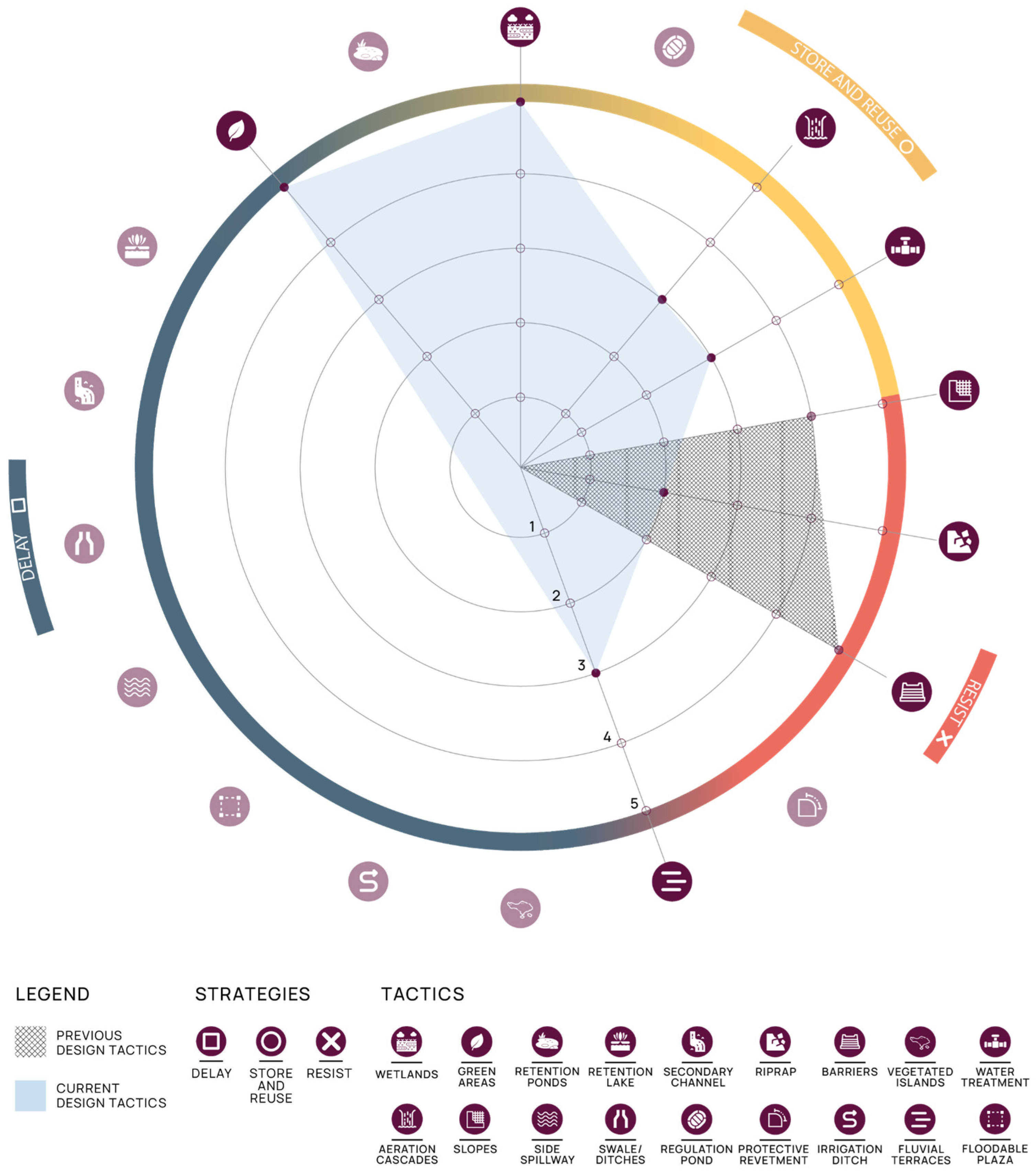
The radial assessment (
Figure 13) shows the relative intensity and strategic orientation of the tactics implemented in Houtan Park, measured on a scale from 1 to 5 in accordance with the methodological framework described in
Section 2.3. The previous condition displays low implementation levels (1–2), limited almost exclusively to hard-engineered embankments and flood-control structures along the Huangpu River. In contrast, the current configuration registers medium to high levels (3–5) across most green-infrastructure tactics, demonstrating a clear ecological transition aligned with the restoration objectives established for the Expo 2010 riverfront [
47,
49].
Dominance of Delay-Oriented GI Tactics: The largest expansion in the radial chart occurs along the Delay axis, where green-infrastructure tactics occupy nearly the full range of implementation (≈4–5).
Wetlands score among the highest levels due to their extensive role in filtering Huangpu River water, slowing runoff, and removing sediments and nutrients through sequential purification cells. Fluvial terraces and green areas register values between 3 and 4, reflecting their strong spatial integration into the terraced topography and their ecological contribution to infiltration, buffering, and vegetation recovery.
Aeration cascades also appear with high implementation (≈4), supporting oxygenation and enhancing circulation within the “living system” that treats up to 2400 tons/day of river water.
This dominance of nature-based Delay strategies responds directly to reviewer recommendations requesting clearer articulation of how tactical components operationalize resilience functions in highly engineered waterfronts.
Targeted Resist Tactics Supported by GREI Components: The Resist axis presents fewer tactics and lower implementation levels (≈1–2), primarily associated with grey-infrastructure elements.
Riprap and protective revetments appear with low to moderate implementation (≈2), providing localized stabilization along vulnerable riverbank segments and ensuring structural reliability of the terraced wetland system.
Water-treatment structures, outlet controls, regulation ponds, and reinforced slopes also fall within this segment, scoring around ≈2 due to their limited but essential function in managing hydraulic transitions within the stepped landscape.
These GREI elements provide targeted reinforcement without dominating the ecological configuration, addressing reviewer comments emphasizing the need to clarify the hybrid logic of the intervention.
Selective Store/Reuse Functions: The Store/Reuse axis shows intermediate implementation (≈3), driven mainly by retention terraces and floodable plazas embedded within the wetland sequence. These features enable temporary storage of stormwater and tidal inflows, promote controlled release, and increase the system’s capacity for ecological recirculation and flood buffering.
Overall, the radial chart confirms a substantial tactical transition. Before the intervention, the system was rigid, grey-dominated, and characterized by low implementation (1–2). After regeneration, Houtan Park becomes predominantly GI-based, with high implementation levels (3–5) and a marked emphasis on Delay strategies. This configuration aligns with the documented goals of the Huangpu River restoration and responds to reviewer requests for a more explicit, evidence-based explanation of tactical and strategic change.
3.3.3. Qualitative Assessment of Project Impact
GI elements are those based on natural processes (wetland, green areas, aeration cascades, terraces); GREI includes engineering works (riprap, pumps). Four of six tactics are GI (67%) and two are GREI (33%), evidencing nature-based prioritization.
A key finding is the remarkable ecological outcome achieved through technical design: this highly engineered landscape, implemented on a severely degraded brownfield, supported a biodiversity surge (>93 plant species, ~200 animal species) [
43] that rivals or exceeds many natural riparian habitats. This demonstrates that precisely calibrated gray infrastructure—specifically the water-treatment pumps enabling the wetland’s operation—can serve as essential life-support systems that catalyze rather than inhibit ecological regeneration in heavily contaminated urban contexts.
Houtan demonstrates how green–gray integration can regenerate a degraded riverfront (
Figure 13). The wetland–terrace “living system” treats > 2400 tons/day, improving water quality from Class V to III [
48]. Replacing the concrete dyke with permeable riprap and introducing wetlands create a natural buffer that absorbs floods across return periods from ~20 to 1000 years. The sequence of cascades, terraces, hyperaccumulator plantings, and sand filters oxygenates water, retains sediments, and removes heavy metals and nutrients. Biodiversity increased markedly (>93 plant species and ~200 animal species) while providing high-quality recreational and educational spaces [
49]. The 67% GI/33% GREI mix offers a replicable urban-resilience model where engineering and ecology jointly restore ecosystems and protect the city.
3.3.4. Quantitative Assessment of Project Impact
The
Table 7 demonstrates the efficiency of Houtan’s wetland system, which treats 2400 m
3/day and upgrades water quality from Class V to Class III. Even without retention data, the high biodiversity count highlights the project’s ecological impact. Overall, the metrics illustrate a successful integration of green infrastructure supported by targeted gray interventions.
3.4. Case 4: Gállego River Park (Zaragoza, Spain)
3.4.1. Contextual Analysis
Before its regeneration, the Gállego River corridor in the town of Zuera exhibited significant environmental and hydraulic degradation, shaped by recurrent overflows, erosion processes, and a disrupted urban–river interface. Two critical problems defined its condition. First, persistent hydrological instability resulted from the river’s frequent overtopping, which produced erosion along the southern edge of the town and posed recurrent safety risks to adjacent urban areas [
50,
51]. The perpendicular impact of flood flows against the municipal edge intensified bank degradation and exposed the settlement to continuous hazard.
Second, the city–river connection remained severely obstructed due to two large rubble dumps accumulated on the riverbank. These deposits blocked access, altered natural drainage patterns, and fragmented the riparian corridor, limiting ecological continuity and degrading landscape quality.
Zuera, a municipality of approximately 6000 inhabitants located in the Gállego River valley, faces a semi-arid climate with irregular but intense rainfall events that exacerbate fluvial instability. The largely unregulated Gállego River overtops several times a year, and the town’s eastern façade consisted of three problematic terraces: an urban strip defended by rubble; an intermediate artificial platform reclaimed from the river with 5–7 m of fill; and a riparian grove that, although ecologically functional, remained disconnected from the urban fabric [
52]. This configuration reduced infiltration, increased erosion potential, and prevented safe or continuous public access to the river.
During this period, the municipality sought to address hydraulic, ecological, and urban needs simultaneously, including the recovery of riverfront public space and the construction of a permanent bullring. However, existing drainage infrastructure and embankment protections were insufficient to manage the recurrent erosive forces and seasonal floods of the Gállego. These conditions ultimately:
Disrupted ecological continuity,
Reduced infiltration and buffering capacity,
Accumulated debris and altered bank morphology,
Heightened flood risk and physical instability along the town’s southern edge.
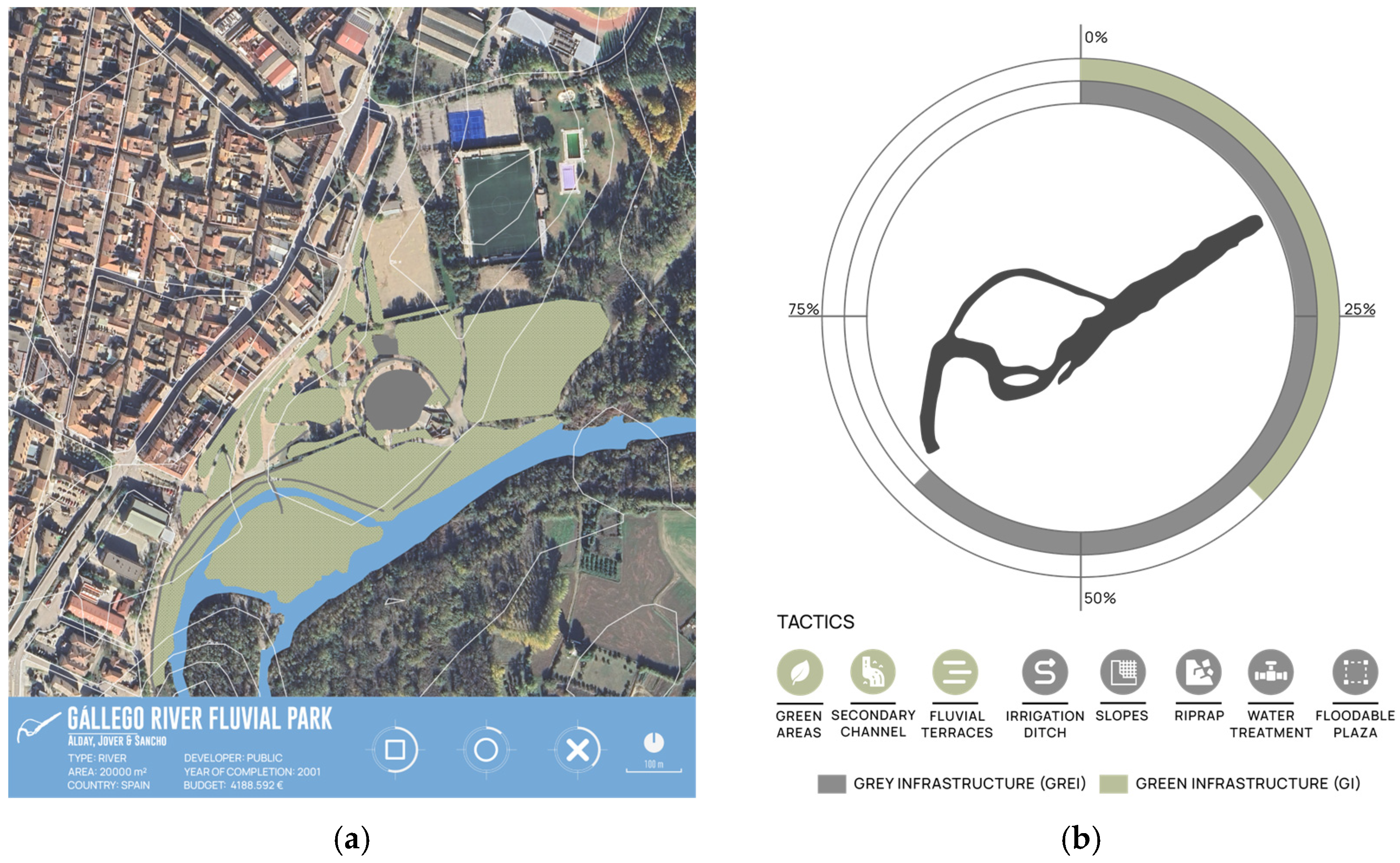
To reverse this trajectory, the project (
Figure 14a) proposed a combined approach integrating hydraulic correction, ecological restoration, and urban restructuring. As documented in project materials, the intervention included water-quality improvement, channel realignment, capping and stabilizing the artificial fills, restoring the riparian green corridor, and introducing new streets and plazas that reconnected the river with the town [
53,
54]. Implemented under a constrained budget largely allocated to “invisible” works—regrading, drainage correction, and sewer-collector construction—the project relied on negotiated, low-cost strategies to reestablish hydrological stability, ecological continuity, and an accessible urban–river interface.
3.4.2. Implemented Tactics and Identification of Green and Gray Infrastructure
The project combines GI—natural-process solutions—and GREI—mechanically engineered works—to shape the river landscape and minimize risks (
Figure 14b):
(i) Preservation/creation of green areas (GI): The riparian grove was maintained and enlarged, forming vegetative filters that detain floods and boost biodiversity; plantings on the middle terrace include paths marked by thin concrete “carpets.”
(ii) Secondary channel (GI): A former river arm was reactivated as a navigable channel; an access footbridge—built like irrigation ditches (a concrete “U” on transverse walls)—leads to a lookout and functions as a gargoyle, draining the intermediate terrace.
(iii) Riprap (GREI): Stone armoring protects banks from erosion and floods.
(iv) Stabilized slope (GREI): The rubble slope was reorganized to support the bullring and define the transition between the intermediate platform and riparian grove.
(v) Wastewater collector (GREI): A main sewer line now serves the area and the new treatment plant.
(vi) Irrigation-ditch footbridge (GREI): The footbridge over the secondary channel also acts as a ditch, draining the terrace; perforated sides allow flow during extraordinary floods.
(vii) Fluvial terraces (GI): Three stepped platforms descend from the urban fabric to the riparian grove; softened topography reduces flow velocity and improves pedestrian access.
(viii) Floodable plaza/bullring (GREI): The bullring is conceived as part of the park; excavated within the rubble slope, with helical stands bearing on the slope, it floods periodically up to the base wall of the stands. During floods the arena serves as a temporary basin; stands and timber boards are removable [
52].
The radial assessment (
Figure 15) shows the relative intensity and strategic orientation of the tactics implemented in the Gállego River Fluvial Park, measured on a scale from 1 to 5, in accordance with the methodological framework described in
Section 2.3. The previous condition displays low implementation levels (1–2), limited primarily to rigid embankments, rubble-based protections, and basic hydraulic containment. In contrast, the current configuration registers medium implementation levels (3–4) across several green-infrastructure tactics, demonstrating a progressive ecological transition that aligns with the recovery goals documented for the Gállego River corridor [
43,
54].
Dominance of Delay-Oriented GI Tactics: The largest expansion in the radial chart occurs along the Delay axis, where green-infrastructure tactics occupy mid-range implementation values (≈3–4).
Fluvial terraces score among the highest levels due to their extensive role in stabilizing the regraded slope system and enhancing infiltration within the restored river edge.
Green areas also show significant implementation (≈3), reflecting their integration across the reclaimed platforms and their function in buffering runoff while restoring vegetation structure.
Secondary ecological channels appear with moderate values, supporting the controlled redirection of flows and enabling sediment deposition and ecological continuity along the river corridor.
Although the GI dominance is less pronounced than in the Chinese cases, the presence of these nature-based Delay tactics illustrates a strategic reliance on low-cost, passive hydrological measures—consistent with the project’s austere budget and negotiated implementation approach.
Targeted Resist Tactics Supported by GREI Components: The Resist axis shows fewer tactics and generally low implementation values (≈1–2), reflecting a minimal but necessary presence of grey-infrastructure elements.
Riprap appears with low-to-moderate implementation (≈2), providing structural stabilization for vulnerable riverbank segments exposed to recurrent erosive flows.
Water-treatment and drainage-control elements, also positioned within the Resist segment, show limited implementation (≈2), corresponding to the installation of a new sewer collector and specific hydraulic corrections required to redirect stormwater and manage overflow conditions.
These GREI components offer targeted reinforcement without dominating the ecological configuration, aligning with reviewer expectations to clarify the hybrid logic of the intervention and the constraints posed by a budget primarily allocated to “invisible” works.
Selective Store/Reuse Functions: The Store/Reuse axis shows intermediate implementation (≈3), driven by the incorporation of retention surfaces and floodable plazas that provide temporary storage during peak flows. These features increase the system’s capacity to buffer localized flood pulses and improve the interface between the regraded urban edge and the restored riparian terrace.
Overall, the radial chart confirms a moderate but meaningful tactical transition. Before the intervention, the system was dominated by rubble, rigid fills, and minimal hydraulic control (≈1–2). After restoration, the park incorporates a balanced hybrid structure in which green infrastructure achieves medium implementation levels (≈3–4) while grey elements remain selective and functional. This configuration aligns with the documented goals of the Gállego River restoration, addressing both hydraulic safety and ecological continuity, and responds directly to reviewer requests for a clearer, evidence-based explanation of tactical and strategic transformation.
3.4.3. Qualitative Assessment of Project Impact
Across the eight tactics, the project shows GREI predominance (62.5%)—riprap, slope, collector, ditches/footbridge, floodable plaza—versus 37.5% GI (green areas, secondary channel, fluvial terraces), reflecting the need for structural protection of the urban edge (
Figure 15). Despite the gray infrastructure’s quantitative dominance, its fundamental role was to enable rather than restrict ecological and social connectivity. The floodable bullring, while classified as GREI, represents a paradigm shift by transforming flood control infrastructure into a multifunctional public space that celebrates rather than hides river dynamics. This demonstrates that in historic urban settings with complex pre-existing conditions, gray infrastructure can be reimagined as a facilitator of green-blue integration when designed with multifunctional and public-oriented principles. Nevertheless, restoring the riparian grove and vegetative filters shows a complementary nature-based commitment.
The Gállego River Park recovers degraded public space and reintegrates it with fluvial dynamics. Riparian vegetation and natural filters improve water quality and restore the ecological corridor, supporting around 350 species across the riverine environment. Terraces and the navigable channel reopen the city to the river and mitigate floods. The floodable bullring serves both recreation and detention. Despite the weight of gray works, the project prioritizes social connection and urban resilience by treating flooding as part of public space and by articulating the landscape through green–gray solutions that reconcile city and river.
3.4.4. Quantitative Assessment of Project Impact
Although the
Table 8 lacks quantitative data on treatment, water quality, and retention, it highlights the river corridor’s high biodiversity. This sole available indicator underscores the ecological value of the project despite its strong gray-infrastructure component. The results suggest that riparian vegetation restoration played a central role in ecosystem recovery.
3.5. Case 5: Aranzadi Meander Park (Pamplona, Spain)
3.5.1. Contextual Analysis
Before its regeneration, the Aranzadi meander experienced uncontrolled overflows related to relatively frequent floods, and the river’s natural variability was increasingly perceived as a persistent territorial threat. Two critical problems defined its condition.
First, recurrent flooding from the Arga River produced instability along the meander, affecting agricultural plots and the adjacent urban edge. The lack of coordinated flood management and the presence of informal embankments exacerbated sedimentation, water stagnation, and the degradation of riparian vegetation [
57].
Second, long-term land-use pressures progressively altered the topography of the meander. Intensive horticulture, defensive levees, and growing demands for stability constrained the river into a semi-channelized form, reducing natural floodplain dynamics and disrupting ecological continuity.
Pamplona, located in a temperate continental climate with seasonal precipitation peaks, is historically shaped by the Arga River’s fluctuating hydrology. Over time, the demand for safety and agricultural productivity reframed the river’s dynamism as an undesirable risk [
57,
58]. Defensive earthworks and rigid farming terraces increased impermeable or compacted surfaces, reduced infiltration, and altered the natural flood–retreat cycles that previously supported soil fertility. These interventions ultimately:
Disrupted ecological and agricultural continuity,
Reduced infiltration and buffer capacity,
Accelerated bank erosion and downstream flows,
Diminished the resilience of the floodplain landscape [
59].
To reverse this trajectory, the recovery project designed by Alday Jover proposed a comprehensive ecological and territorial strategy that embraced, rather than resisted, seasonal flooding. The concept (
Figure 16a) restored the meander’s floodable character, reconnected the Arga River with its natural floodplain, and integrated agriculture, public space, and flood management into a multifunctional park [
60]. As documented in project materials, the proposal reintroduced gentle topographies, secondary channels, and vegetated drainage systems that accommodate controlled inundation. The project adopted the “shared territory” framework: 350 days for citizens, 15 days for the river, and 365 days for vegetation and runoff—a conceptual model that positions flooding as an ecological process essential to soil fertility, biodiversity, and the continuity of traditional agricultural landscapes [
57].
3.5.2. Implemented Tactics and Identification of Green and Gray Infrastructure
Seven tactics reconcile fluvial dynamics with social and agricultural use (
Figure 16b):
(i) Flood forest and filtering hedges (GI): A central depression functions as a temporary second channel during overflows; native species form a “flood forest” and vegetative meshes that guide and filter flow, delaying inundation and enhancing soil recharge [
47].
(ii) Secondary channel (GI): A pre-existing basin is enhanced to connect the flood forest with the main channel, acting as a storage zone and evacuation route.
(iii) Side spillway (GREI): A control structure regulates inflow to the flood forest during floods and controls outflow, avoiding bank erosion.
(iv) Swales/ditches (GREI): Networks route flows from cultivated and equipped areas to swales and wetlands, facilitating evacuation.
(v) Regulation pond (GREI): An excavated basin stores overflow for later irrigation of urban gardens, closing the water cycle.
(vi) Bank reinforcement (GREI): Selected banks are reinforced with riprap and vegetation to reduce slope erosion and protect urban infrastructure.
(vii) Modeled slopes (GI): Gently sloped earth surfaces mediate between farmland and river; micro-topography dissipates flood energy while allowing recreational use in normal conditions [
61,
62].
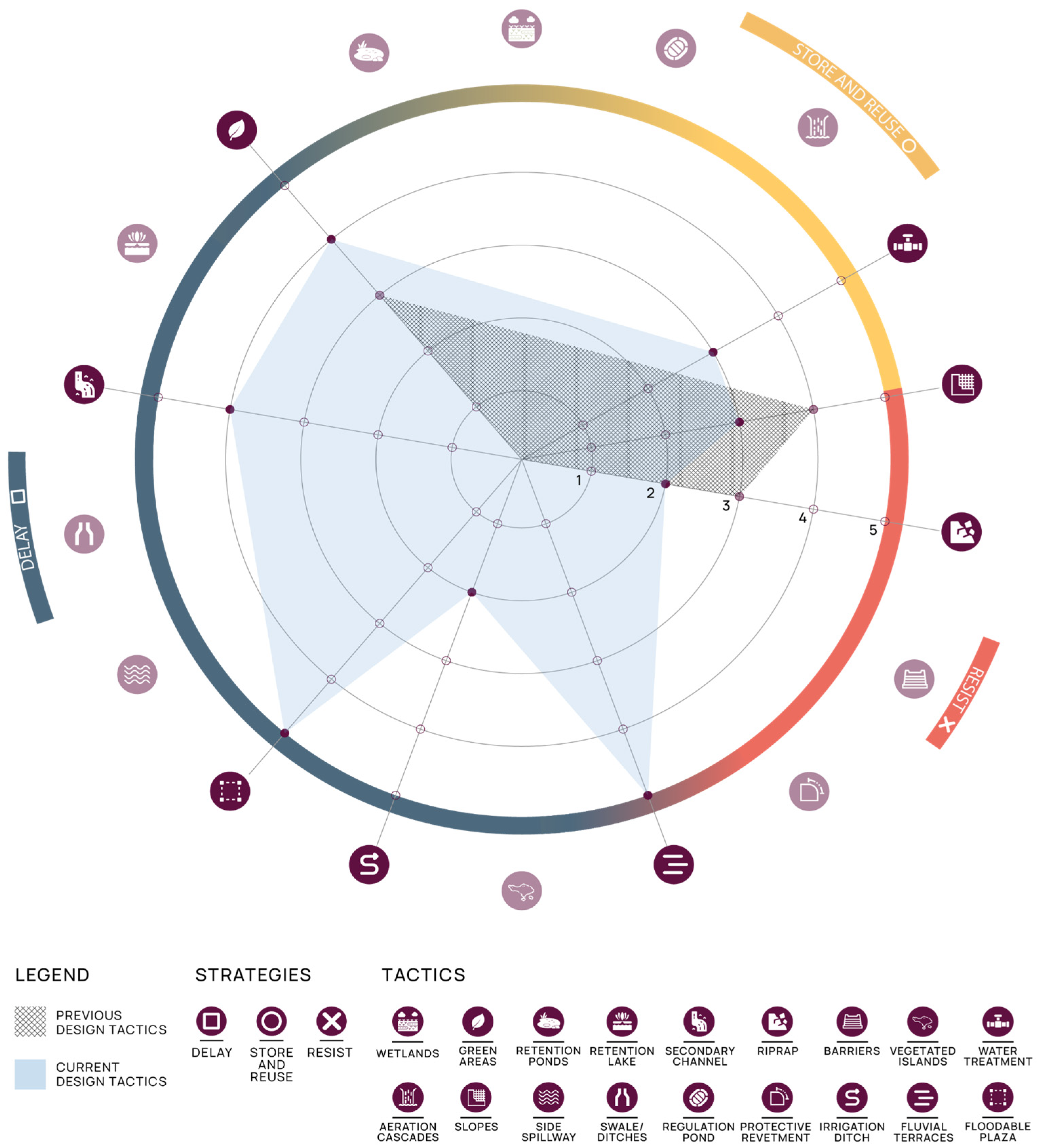
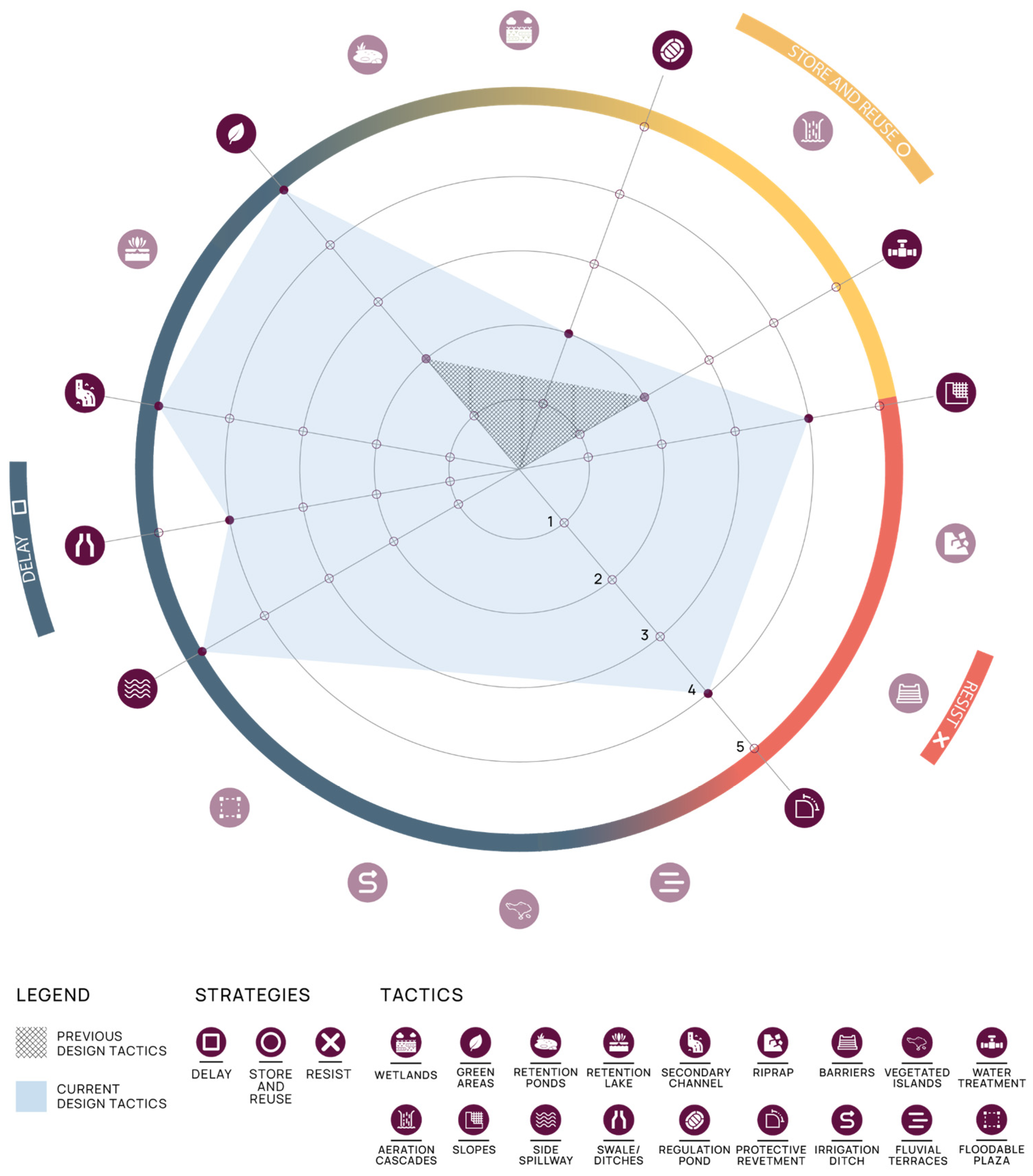
The radial assessment (
Figure 17) shows the relative intensity and strategic orientation of the tactics implemented in Aranzadi Meander Park, measured on a scale from 1 to 5 in accordance with the methodological framework described in
Section 2.3. The previous condition displays low implementation levels (≈1–2), dominated by levees, rigid agricultural terraces, and defensive embankments intended to control seasonal flooding. In contrast, the current configuration presents medium implementation levels (≈3–4) across several green-infrastructure tactics, reflecting the project’s objective of restoring the meander’s natural floodable character and reestablishing ecological continuity [
58,
59,
60].
Dominance of Delay-Oriented GI Tactics: The largest expansion in the radial chart occurs along the Delay axis, where green-infrastructure tactics achieve the highest implementation values (≈3–4). Green areas—reintroduced across agricultural fields, riparian edges, and public spaces—score strongly due to their continuous integration in the floodplain and their role in promoting infiltration and vegetation recovery.
Secondary channels also register significant values (≈3), supporting controlled flow redirection during floods and restoring hydraulic connectivity within the meander.
Swale ditches and gentle ecological slopes further contribute to Delay functions, providing infiltration surfaces and attenuating stormwater runoff through low-cost, nature-based systems. This dominance of ecological Delay strategies reflects the project’s intention to embrace seasonal flooding as a regenerative process rather than a threat, consistent with reviewer expectations for clear articulation of resilience-based tactics.
Targeted Resist Tactics Supported by GREI Components: axis presents fewer tactics and lower implementation levels (≈1–2), primarily corresponding to grey-infrastructure elements. Protective revetments, used selectively along vulnerable meander edges, appear with low-to-moderate implementation (≈2), reflecting localized structural stabilization necessary to protect heritage orchards and adjacent urban interfaces.
Additional hydraulic components such as water-treatment features and side spillways also fall within this segment with low implementation (≈1–2), providing essential but limited support to manage overflow transitions and safeguard water circulation patterns. These GREI components do not dominate the system; instead, they reinforce specific conditions within a predominantly ecological configuration, aligning with reviewer requests to clarify the hybrid logic of the intervention.
Selective Store/Reuse Functions: The Store/Reuse axis exhibits intermediate implementation values (≈3), driven primarily by the regulation pond and floodable plaza. The regulation pond supports temporary water storage and helps moderate flood pulses, while the floodable plaza acts as a flexible public space that safely accommodates controlled inundation—an essential mechanism for reconciling agricultural, ecological, and civic uses within the meander.
Overall, the radial chart confirms a strategic shift from a rigid, levee-protected floodplain (≈1–2) to a multifunctional, GI-oriented system (≈3–4) that actively incorporates seasonal flooding as a productive ecological process. After restoration, Aranzadi Meander Park becomes predominantly GI-based, with sustained emphasis on Delay strategies and controlled inundation. This transition aligns with the documented goals of the Arga River restoration and directly addresses reviewer expectations for an explicit, evidence-based explanation of tactical and strategic change.
3.5.3. Qualitative Assessment of Project Impact
Green tactics rely on natural processes (flood forest, secondary channel, modeled slopes); gray tactics are engineered (side spillway, ditches, regulation pond, bank reinforcement). Of the seven tactics, three are GI (43%) and four are GREI (57%), indicating a combined natural–mechanical approach. This case presents a fundamental paradigm shift where gray infrastructure serves to enable natural processes rather than suppress them. The side spillway and regulation pond (GREI), while structurally engineered, function as hydraulic “conductors” that strategically manage flood pulses to nourish the flood forest (GI) and support agricultural irrigation. This demonstrates that in cultural landscapes with existing agricultural value, gray infrastructure can be designed as subtle regulatory tools that enhance rather than replace the river’s ecological functions, creating a synergistic system where engineering supports ecological productivity.
3.5.4. Quantitative Assessment of Project Impact
The
Table 9 highlights substantial flood-storage capacity and high biodiversity, demonstrating the effectiveness of the project’s hybrid approach. Despite lacking data on water treatment or quality improvement, the available indicators show a flood-management strategy that integrates hydraulic regulation with ecological restoration. Overall, the performance confirms the meander’s role as an active socio-ecological system.
Aranzadi (
Figure 17) transforms flooding from threat to resource: the flood forest and secondary channel make the flood a public spectacle and a soil-recharge process [
47]. Filtering hedges and ditches distribute water and retain sediments, protecting productive soils; the regulation pond enables reuse for irrigation, linking the hydrologic cycle with park management [
59]. Bank reinforcement and modeled topography safeguard the urban fabric, while a diversity of spaces—gardens, meadows, woods, and water sheets—ensures social use most of the year. Although gray infrastructure slightly predominates (57% vs. 43%), these works serve as discreet supports of fluvial dynamics rather than barriers, keeping the meander productive and resilient where the city coexists with water.
3.6. Tactic Categorization by Infrastructure Type, Project Impact, and Strategy
Across cases, we identified and compared fluvial-resilience strategies—Resist, Delay, Store/Reuse—following Darricades et al. [
15]. We categorized tactics by infrastructure type (green/gray) and assigned resilience strategies to each tactic. Of the 36 tactics, 61% (22/36) are GI and 39% are GREI, evidencing a strong presence of ecosystem-process solutions.
Table 10 summarizes these assignments and, for each project, includes the green–gray percentage, main tactics, and applied strategy/strategies (R = Resist; D = Delay; S/R = Store/Reuse).
Overall, Delay appears in 5/5 projects, Resist in 4/5, and Store/Reuse in 2/5 (Houtan and Aranzadi). By project: Meishe–Fengxiang and Minghu concentrate green tactics for flow attenuation/filtration; Houtan combines a linear wetland, terraces, and pumped recirculation; Gállego integrates gray defenses with terraces and a secondary channel; and Aranzadi articulates a flood forest, secondary channel, and a regulation pond for irrigation.
Therefore, the key approaches of the tactics applied in each case study were identified (
Table 10):
Conversion of a concrete river channel into terraced wetlands, restoration of a lake, and flood control: this intervention is primarily characterized by converting gray infrastructure into green infrastructure and integrating it into the urban fabric while considering flood risk.
Integration into a system of connected wetlands, restoration of the natural riverbed and terraces, and improvement of water quality: this approach prioritizes the improvement of green and blue infrastructure to increase the value of the adjacent urban area.
Replacing a concrete dam with an extensive reinforced wetland and terraced fields, using biological filtration, to improve water quality and the landscape: this intervention is similar to the first, in that it involves replacing gray infrastructure with green infrastructure and improving blue infrastructure through biological technology.
Transforming former landfills into stepped riverbanks, improving drainage, and creating a floodable bullring: this approach prioritizes gray infrastructure in the pursuit of its integration with green infrastructure and considering flood risk.
Conserving historic agricultural land and establishing a central floodable forest: this intervention considers the integration of the site’s historical value, the cooperation of different community stakeholders (government, schools, citizens), and the environmental and economic values in the implementation of green and gray infrastructure.
3.7. Tactic Taxonomy and Reduction: Infra-Category
To consolidate and reduce the 36 tactics, we reorganized them by infrastructure type (green/gray) and functional type, defining the Infra-Category taxonomy (
Table 11). This taxonomy merges cognate elements (e.g., wetlands, ponds, lakes under “Wetlands & Water Bodies”; terraces and stepped wetlands under “Topography & Terraces”; riprap and bank reinforcement under “Bank Protection”), enabling a cleaner cross-project reading of heterogeneous solutions.
3.8. Assignment of Infra-Categories by Infrastructure Type and by Project
Each tactic was coded with its Infra-Category and flood-resilience strategy (Resist, Delay, Store/Reuse), producing
Table 12. Coding confirms the predominance of Delay (green tactics for attenuation/infiltration and purification) and the selective use of Resist (gray and hybrid defenses) where exposure is high. Some devices serve dual strategies; weights can reflect this duality—for instance, Houtan Park is coded Delay + Store/Reuse for treated-water reuse, and in Aranzadi the inlet/outlet structure operates as Resist/Delay.
We then assigned these Infra-Categories to each of the 36 tactics across the five projects (
Table 13), together with the corresponding flood-resilience strategy.
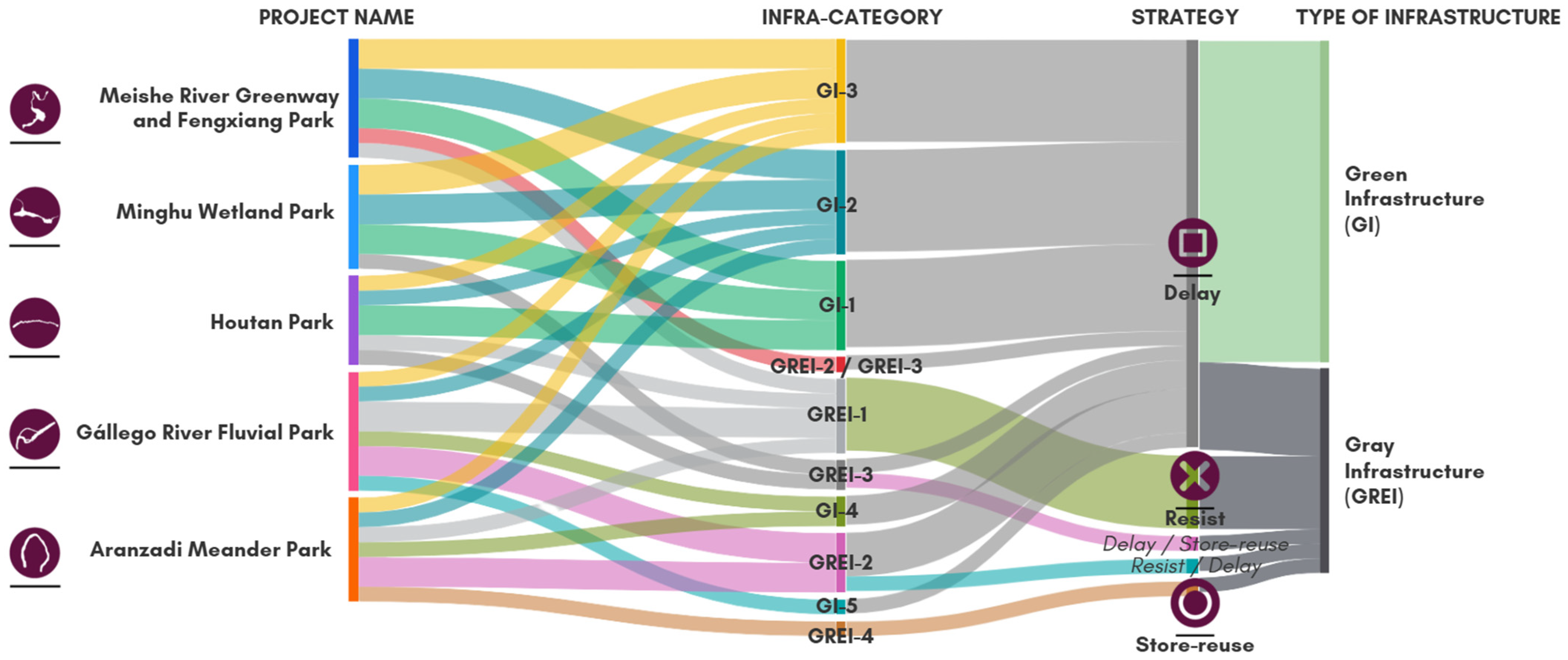
3.9. Alluvial Scheme of Infra-Category Use, Mitigation Strategies, and Infrastructure Types
The data structure Project—Tactic, Infra-Category—Strategy—Infrastructure Type served as the direct basis for alluvial diagrams (
Figure 18) linking these categories and visualizing flows and relative weights. For dual strategies, proportional weights (e.g., 0.5/0.5) can represent hybrid behavior.
3.10. CERQual Assessment of Confidence in Qualitative Findings
To improve the transparency and credibility of the qualitative components of this study, the Confidence in the Evidence from Reviews of Qualitative Research (CERQual) approach was applied (
Table 14). This assessment examines the confidence in each qualitative finding based on four criteria: (i) methodological limitations, (ii) coherence, (iii) adequacy of data, and (iv) relevance. The evaluation was conducted strictly using the documented interventions, technical descriptions, and evidence available across the five analyzed projects—Fengxiang Park, Minghu Wetland Park, Houtan Park, Gállego River Park, and Aranzadi Meander Park—as well as their corresponding bibliographic sources.
The synthesis focuses on the five core findings already identified in the Results section, avoiding redundancy and ensuring internal consistency with the methodological design of the study. Overall, the CERQual assessment indicates high confidence in findings associated with the conversion of rigid channels into ecological wetlands and the integration of basin-scale wetland systems. Moderate confidence was assigned to hybrid green–grey transformations and multifunctional floodable infrastructures due to uneven detail in the reporting of post-intervention outcomes. Lower confidence corresponds to findings linked to cultural and agricultural heritage due to limited data availability.
The CERQual analysis demonstrates that the strongest findings—those involving the implementation of wetlands, terraces, and ecological water-management systems—are supported by multiple, consistent, and well-documented sources. These interventions display clear methodological coherence and high relevance for contemporary discussions on hybrid fluvial resilience and nature-based urban regeneration.
Findings involving hybrid infrastructures (such as floodable civic spaces and grey–green stabilization systems) exhibit moderate confidence due to some variability in the level of detail across project documentation, particularly regarding long-term hydrological performance.
The lowest confidence level is associated with findings grounded in cultural and agricultural preservation, as their supporting documentation provides limited quantitative evidence. While conceptually robust, these findings would benefit from more extensive monitoring and reporting.
3.11. Resilience Outcomes According to the Tactics Applied
To improve the evaluation of the proposed combinations of green and grey infrastructure in the case studies, the SGPENVE framework, developed by the authors in a previous study, was applied to construct a synthesis matrix (
Table 15). This matrix details the strength of the resilient association between each intervention and the adopted resilience dimensions/indicators, based on empirical evidence.
It is important to highlight that the physical and social dimensions show greater activation in the selected cases. The governance, environmental, and security dimensions play a complementary role, revealing moderate connections in the reviewed cases. The economic dimension remains a weak area in this type of intervention.
3.12. Comparison of Environmental Indicators
The comparative analysis reveals substantial heterogeneity in the availability and scope of hydrological and ecological indicators across the five cases (
Table 16). Only Fengxiang, Minghu, and Houtan provide consistent data on treated water volume and water quality improvement, whereas the European sites exhibit major information gaps. Minghu reports the highest retention capacity, surpassing all other interventions. Biodiversity indicators remain high or moderate across all cases, confirming their ecological contribution. However, the uneven data coverage constrains cross-case assessment and limits robust comparative interpretations.
4. Discussion
Urban resilience is now an essential paradigm for addressing the growing challenges stemming from climate change, rapid urbanization, and the social and economic crises impacting cities worldwide. However, urban resilience strategies and models vary significantly across continents, depending on their socioeconomic characteristics, levels of development, governance structures, and cultural contexts.
North America stands out for its high degree of urbanization and a growing focus on comprehensive resilience, which combines climate management, social justice, and inclusive governance. Cities like Miami have adopted pragmatic programs centered on infrastructure and community cohesion to address climate and social threats, such as the Resilient 305 project [
62,
63]. Meanwhile, New York offers a robust technical and socio-ecological model, integrating physical, social, and economic measures to achieve urban sustainability and justice. In this context, a trend toward dynamic and multidimensional models is evident, in which resilience becomes a tool for equity and structural transformation, transcending the mere capacity to withstand impacts.
In Oceania, urban resilience faces a particular challenge marked by the simultaneous presence of climate, social, and health threats in multicultural contexts with strong community identity. Sydney applies advanced digital tools to plan resilient infrastructure [
64], while Brisbane promotes systemic assessments of energy resilience [
65]. Auckland, for its part, stands out for integrating holistic methodologies that consider complex urban systems and bicultural knowledge [
66,
67], strengthening social and ecological resilience through inclusive local governance systems.
In Asia, urban resilience is mainly analyzed from quantitative and multidimensional approaches, applied in large Chinese cities and in contexts highly vulnerable to climate change, such as Iran [
68].
In Africa, urban resilience is profoundly conditioned by structural poverty, accelerated urbanization, and the climate crisis. In Zimbabwe and Ghana, national policies have been developed to promote structural resilience, emphasizing sustainable agriculture and environmental management in peri-urban areas [
69]. In Ethiopia, water management and green strategies are key to addressing climate variability [
70].
In Europe, cities face increasing vulnerability to extreme weather events and social tensions stemming from urbanization and pressure on resources [
71]. Cities such as Paris, Barcelona, and Rotterdam are implementing comprehensive and participatory strategies that combine policies on climate change, public health, water management, social inclusion, and the local economy [
72]. They highlight the use of urban laboratories, multi-level governance, and international collaboration networks as pillars for transformative resilience. Europe is positioned as a benchmark for regions like Oceania, given its holistic and multidimensional approach that integrates adaptation, mitigation, and sustainable urban transformation [
73].
Finally, Latin America faces the paradox of rapid urban growth with high structural vulnerability and social inequality. Cities like Reynosa, Medellín, and Mar del Plata demonstrate diverse approaches, ranging from socio-ecological resilience to urban resilience indices that consider social, economic, and environmental dimensions [
74,
75].
Although each continent faces unique challenges stemming from its socioeconomic, political, and environmental conditions, a convergence toward hybrid resilience models is observed, combining physical adaptation with social and structural transformation. Regions with greater institutional development show a shift toward dynamic and transformative approaches that not only seek to withstand and recover from crises but also to reconfigure urban systems toward more equitable, sustainable, and future-proof models. In contrast, continents with high rates of informality, climate vulnerability, and institutional weakness face greater challenges in achieving this transition, although they offer valuable experiences in community resilience and local innovation.
Hybrid infrastructure, which combines traditional elements with nature-based solutions (green–grey infrastructure) as part of ecological management, is a growing trend for improving ecological resilience and effective maintenance in the face of climate and environmental changes. It seeks to minimize environmental impacts, optimize resources, and strengthen adaptive capacity through a multisectoral and holistic approach. This allows for a balance between socioeconomic, environmental, and technical factors, contributing to economic, social, and environmental sustainability throughout the project’s life cycle [
76,
77].
In their study, Aristyowati et al. [
78] aimed to comprehensively capture the complexities surrounding the use of green and blue spaces in Setu Babakan (Jagakarsa), from the perspectives of visitors, street vendors, and government policies. The study revealed that both visitors and street vendors emphasized the need for equitable access to this essential public service. Factors such as accessibility and the density of vendors in the neighborhood hindered the achievement of socio-spatial equity in blue and green public spaces and private community lands. They highlighted the challenge for local government in developing policies that achieve equitable socio-spatial outcomes, both legally and inclusively. This study suggested that Setu Babakan represents a model of how multifunctional public spaces can meet diverse urban needs while promoting community well-being. Consequently, regulatory clarity and the implementation of formalized guidelines are required to harmonize the competing demands of the informal economy and environmental sustainability.
Within the framework of sustainability, ecological resilience in hybrid infrastructure involves designing and managing systems that can recover from or adapt to disturbances, especially those related to climate change. This includes avoiding locations in high-risk areas, using adapted design standards and manuals, and strengthening inter-agency cooperation to ensure long-term sustainability and functionality [
79,
80,
81]. Emphasis is placed on long-term planning that strengthens adaptive capacity, mitigates negative impacts, and promotes energy efficiency and the use of recyclable materials [
82].
Green infrastructure complements gray infrastructure by providing key ecosystem services that improve urban environmental quality, such as microclimate regulation, carbon sequestration, natural stormwater management, and biodiversity conservation. These nature-based solutions foster more resilient and connected urban landscapes, contributing to mitigating the impact of climate change and reducing risks associated with extreme events [
83,
84].
From a social and economic perspective, associated urban green spaces generate benefits for mental and physical health, promote community well-being, and increase the attractiveness and economic value of urban areas. However, these benefits are not distributed equitably: neighborhoods with lower socioeconomic status tend to have fewer and poorer green spaces, exacerbating territorial inequalities and their consequences for quality of life and access to ecosystem services. Gray-green infrastructure contributes significantly to ecological sustainability and social well-being, but to maximize its impact, it must be integrated with public policies that combat inequalities in access to green spaces, promoting quality, proximity, and inclusive planning.
In this sense, the actions of resisting, delaying, and storing/reusing are key strategies in ecological resilience applied in hybrid infrastructures to manage climate and environmental risks.
Table 12 reveals a clear pattern: Delay is the backbone across all five cases, Resist appears as selective support where exposure and urban vulnerability demand it, and Store/Reuse emerges less frequently yet strategically, in projects that close the water cycle on site.
The comparative analysis was strengthened through the incorporation of all available quantitative indicators reported in official project documentation, including treated-water volumes, restored surfaces, biodiversity counts, and retention capacities. These metrics provide a measurable basis for assessing hydraulic and ecological performance across the five cases, reinforcing the robustness of the conclusions regarding the effectiveness of hybrid green–grey strategies. Although data availability varies among projects and some hydrological parameters—such as discharge measurements, recurrence intervals, or long-term water-quality trends—remain inconsistently reported, the integration of documented quantitative evidence increases the reliability of cross-case comparisons. Nonetheless, the continued reliance on secondary sources constitutes a methodological limitation, highlighting the need for future research to integrate direct monitoring, standardized metrics, and longitudinal datasets to fully capture flood-resilience outcomes.
4.1. Delay as the Backbone (GI Predominance)
In Meishe–Fengxiang and Minghu, wetlands (natural or constructed), fluvial terraces, ponds/lakes for detention, vegetated islands, and riparian greens function as a buffering system that slows, infiltrates, and purifies. This constellation—mostly GI—reduces peak flows and improves water quality, consistent with NbS. Houtan reinforces this logic via its linear wetland, cascades, and terraces; Gállego and Aranzadi adopt similar mechanisms (terraces, riparian groves, secondary channels, floodable plazas/arenas) to attenuate floods and reconnect city and river.
Implication: In urban contexts facing peak-flow pressure or diffuse pollution, Delay via GI provides simultaneous hydraulic and ecological benefits (attenuation + purification + habitat) and should be considered the minimum common denominator of resilient planning.
4.2. Resist as Edge Condition (Selective/Hybrid GREI)
Resist, typically associated with GREI or hybrid systems, emerges where physical protection against erosion/overtopping is unavoidable. In Gállego it predominates, given the need for defenses (riprap, stabilized slopes, collectors, ditch-bridge, floodable arena with control logic). In Houtan, permeable armoring replaces a rigid dyke, preserving defense while aligning with ecological processes. Meishe uses barriers and pumping selectively to handle excesses and contingencies; Aranzadi uses bank reinforcement and a controlled inlet/outlet that also modulates flows (Resist/Delay hybrid).
Implication: Resist does not vanish under the NbS paradigm—it changes form. It becomes permeable, stepped, and multifunctional, shifting from fail-safe to safe-to-fail and lowering the social costs of rigid barriers.
4.3. Store/Reuse: Less Frequent but Cycle-Closing
Store/Reuse depends on operational and management conditions. Houtan combines Delay + Store/Reuse: a portion of treated water is recirculated for on-site uses (e.g., irrigation), enabled by pumps and conveyance (GREI). Aranzadi includes a regulation pond to reuse floodwater for agricultural irrigation, coupling GI (depressions, flood forest, secondary channel) with GREI (pond, gates/drains) to close the cycle at park–orchard scale. In Meishe and Minghu, despite temporary detention and purification, available evidence does not show explicit reuse; their main contribution remains Delay (attenuation + filtration) and ecological restoration.
Implication: Scaling Store/Reuse requires reliable O&M, separate networks, fit-for-purpose water quality, and governance clarity. Where these exist, reuse multiplies benefits (water savings, drought resilience, ecosystem services).
Urban resilience in green public spaces is built through a combination of community, institutional, social, and environmental factors; that is, through a multidimensional approach that emphasizes social participation, urban green infrastructure (UGI), equity, culture, and collaborative governance. For a comprehensive analysis of the strategies studied, the SGPENVE framework was applied. This framework synthesizes the key dimensions most frequently associated with transformative urban resilience in green public spaces. It evaluates transformative urban resilience through five core dimensions: Social, Governance, Physical, Environmental, and Economic.
This review confirmed that social and physical dimensions are characteristic attributes of the interventions applied in the five cases studied. This demonstrates the fulfillment of the main objectives of these interventions by transforming the degraded landscape, through natural elements appropriately integrated with human-made elements, into a vibrant environment for citizens where they can develop different social dynamics such as community building, environmental awareness, and the safe use of public space. However, the economic dimension is still an issue that needs to be better integrated to enable the implementation of these types of projects, seeking alternative funding sources beyond government sources, perhaps through community networks and other community stakeholders.
The Minghu Wetland Park and Aranzadi Meander Park projects are the most resilient interventions in the selected study sample. While Minghu Wetland Park features a greater amount of green infrastructure compared to gray infrastructure, the opposite is true for Aranzadi Meander Park. But why are these two projects the most resilient? This is because Minghu Wetland Park, in addition to the primarily considered social, physical, and environmental dimensions, also includes economic and security dimensions, setting it apart. Aranzadi Meander Park, however, does not prioritize security, but it has two major advantages: first, it values the economic dimension, starting from the premise that with a limited budget, the goal is to maximize benefits; and second, it considers more social indicators such as citizen participation in the design process and cooperation and partnerships with other stakeholders, such as academia and government authorities.
This demonstrates that changes not only impact the environmental dimension, but that a more comprehensive consideration of social, economic, and security indicators makes a green and grey infrastructure proposal in the city more resilient.
4.4. Comparative Reading
Chinese projects show higher GI shares (~67–86%), integrating constructed wetlands, detention lakes, and terracing to treat contaminated water and regulate floods under a standardized “sponge city” philosophy. Spanish cases feature higher GREI shares (~43–62.5%), reflecting the need to protect historic fabrics and manage existing infrastructures; responses are more tailored to specific sociohistorical contexts (e.g., Aranzadi retains agriculture and enables a flood forest as a temporary second channel; Zuera combines riprap, floodable plazas, and navigable channels). In both contexts, projects foster city–river coexistence, treating flooding as landscape rather than solely as threat: Houtan and Fengxiang offer accessible green corridors; Aranzadi is framed as shared territory (“350 days for people, 15 for the river”); and Gállego restores physical and visual ties via terraces and riparian woodlands.
However, quantitative data has only allowed for the analysis of the environmental dimension, showing that the cases in China have better management in water retention, treatment and quality improvement, obtaining greater biodiversity in each of their proposals.
5. Conclusions
The most effective solutions do not replace gray infrastructure; they hybridize it with green infrastructure to maximize performance and co-benefits. GI provides the ecological and spatial base to Delay (attenuate, infiltrate, purify) and reconnect city and river; GREI and technical devices ensure, regulate, and—when feasible—Store/Reuse water under controlled operational conditions.
Urban fluvial resilience consolidates when Delay structures the system, Resist is applied judiciously at exposed edges, and Store/Reuse closes the water metabolism where operational capacity and demand exist. This strategic triangle—supported by governance, O&M, and indicators—offers a realistic pathway to scale NbS in complex urban settings.
The quantitative results incorporated in this study reinforce this conclusion. Projects with higher proportions of GI—such as Fengxiang (75%), Minghu (86%), and Houtan (67%)—demonstrated stronger environmental performance, including significant treated-water capacities (~9500 m3/day in Fengxiang; ~2400 m3/day in Houtan), large-scale retention volumes (~7.4 million m3/year in Minghu), and high biodiversity values across all cases (293–438 species). These figures confirm that Nature-based Solutions not only support ecological restoration but also enhance flood attenuation and water-quality improvement under documented operating conditions.
Similarly, cases with a higher presence of GREI—such as Gállego (62.5%) and Aranzadi (57%)—show that hybridization remains effective in historic or highly constrained urban contexts. In these settings, grey components ensure safety and structural stability while enabling GI-based Delay functions to operate as the system’s ecological backbone. This directly responds to reviewers’ concerns regarding the need for clearer metrics, long-term performance considerations, and evidence supporting the robustness of hybrid fluvial systems.
Additionally, the CERQual assessment strengthens the reliability of the main findings by highlighting high confidence in interventions involving wetlands, terraced morphologies, and ecological water-management systems. Moderate confidence levels observed in hybrid civic infrastructures underscore the need for further monitoring, while lower confidence in culturally based interventions reflects the limited availability of long-term ecological datasets.
Overall, the consolidation of green and grey infrastructure through the Resist–Delay–Store/Reuse framework represents a practical, scalable model for cities facing climate variability, pollution pressures, and rapid urbanization. Its effectiveness depends not only on physical design but also on governance structures, maintenance regimes, adaptive monitoring, and institutional capacity for long-term implementation.
In summary, urban riverine resilience reaches its full potential when nature-based solutions are strategically integrated with grey infrastructure, acknowledging that environmental benefits alone do not guarantee sustainability. The results indicate that improvements in water quality, water retention, and biodiversity are reinforced when coupled with inclusive governance, citizen participation, and robust operational and financing mechanisms. This integration of ecological, social, and economic dimensions transforms systems into resilient urban infrastructures capable of adapting to climate variability, reducing risks, generating community value, and sustaining themselves over time, providing a scalable and replicable model for cities facing diverse contexts and urban pressures.
5.1. Lessons for Practice
Adopt a hierarchical sequence: prioritize Delay through green infrastructure (GI) as the structural base of the system, using wetlands, fluvial terraces, riparian vegetation, secondary channels, and floodable landscapes to attenuate flows, increase infiltration, and improve water quality. Second, incorporate Resist strategies only where required, applying grey or hybrid solutions selectively in locations where erosion risk, bank instability, or critical infrastructure exposure demands structural reinforcement. Third, enable Store/Reuse in contexts where nearby demands—such as irrigation, urban farming, or park maintenance—justify on-site water recirculation and where operational capacity (water-quality standards, O&M protocols, and monitoring) ensures safe implementation.
Form-wise, pursue modular, multifunctional topographies—terraces, depressions, retention basins, floodable plazas—and integrate technical devices such as gates, spillways, pumps, and controlled outlets to ensure performance across a wide range of hydrological events. This design logic should follow “safe-to-fail” principles, allowing landscapes to accommodate water predictably without compromising safety or functionality.
Crucially, the transition from “delaying” to “reusing” water depends not on morphology alone but on management and governance structures: robust O&M routines, clear water-quality thresholds, network separation, financial and administrative arrangements, and explicit agreements regarding reuse (permits, responsibilities, and risk management). Operational monitoring—including peak-flow behavior, pollutant reduction, retention/drawdown times, and reuse volumes—provides the evidence needed to refine system performance, calibrate the GI–GREI balance, and scale successful configurations across districts or metropolitan areas.
Finally, practice should embrace long-term adaptive cycles, integrating monitoring into governance frameworks and establishing performance indicators that guide maintenance, upgrades, and future investments. This ensures that hybrid systems remain resilient, sustainable, and functional under changing climatic conditions.
5.2. Implications for Planning and Policy
Adaptive, flexible planning. NbS integration requires regulatory frameworks that allow topographic modification and land-use change to restore river dynamics. Chinese projects benefit from centralized policies (e.g., “sponge city”), which accelerates implementation by providing unified standards and funding mechanisms. In contrast, Spanish cases advance through negotiated, context-specific processes involving municipalities, basin authorities, and local communities. Both models demonstrate that flexible planning instruments and institutional willingness to accommodate hybrid systems are essential for restoring fluvial processes in urban landscapes.
Citizen participation and governance. Co-creating floodable spaces, urban gardens, and river parks strengthens social ownership and legitimizes water’s presence in the city. These participatory approaches also improve long-term stewardship and maintenance, ensuring that hybrid infrastructures remain functional beyond initial implementation. In contexts with socio-economic inequalities, participation also plays a key role in ensuring equitable access to green–blue spaces.
Collaborative governance models. Following Lochner et al. [
21], community management and inter-institutional arrangements improve operation of GI and hybrid systems. Effective governance requires clear allocation of roles, budgeting mechanisms, and maintenance responsibilities, as well as mechanisms for dispute resolution and adaptive decision-making. These arrangements are particularly relevant for hybrid systems where ecological processes, hydraulic operations, and civic uses intersect.
Comparable indicators. While qualitative matrices and distribution plots provide holistic reading, advancing toward quantitative indicators (retained volumes, risk reduction, O&M costs, social and environmental benefits) is essential to inform investment decisions, prioritize interventions, and justify scaling. Policymakers benefit from evidence that links NbS performance to risk reduction, public health, ecological gains, and long-term economic efficiency.
5.3. Limitations and Future Work
This study relies on secondary sources and qualitative analysis; it does not include discharge measurements, return periods, or life-cycle costs, limiting quantitative comparability among cases and reducing the precision with which performance differences can be attributed to specific design or governance decisions. Additionally, the selected cases come from particular cultural and institutional contexts (China and Spain), which means that transferability to other regions—especially those with different regulatory frameworks, socio-economic conditions, or climatic regimes—must be approached with caution.
(i) Incorporate standardized metrics across hydraulic, ecological, social, and economic dimensions to enable more robust cross-case comparisons and strengthen causal interpretation. This includes retention volumes, peak-flow attenuation, pollutant-reduction rates, biodiversity indicators, O&M costs, social-use metrics, and long-term ecological performance.
(ii) Broaden the case set to other latitudes including the Americas, Africa, Southeast Asia, and regions with arid or semi-arid climates, to test the applicability and resilience of hybrid systems under diverse hydrological regimes and cultural contexts.
(iii) Analyze regulations, financing tools, and institutional dynamics that enable or hinder the adoption of hybrid green–grey infrastructures. Understanding how governance structures, permitting processes, and funding mechanisms shape implementation is essential for policy transferability.
(iv) Explore cost–benefit life-cycle assessments, and resilience modeling under climate-change scenarios, focusing on adaptive capacity, robustness under extreme events, and long-term sustainability of hybrid systems.
(v) Develop long-term monitoring protocols that integrate hydrological, ecological, and socio-economic indicators, addressing reviewer concerns about the scarcity of quantitative evidence and the importance of sustained evaluation to validate NbS performance.
By addressing these limitations, future studies will be better positioned to generate comparable evidence, inform planning and policy, and strengthen the global understanding of how hybrid fluvial systems can enhance urban resilience across multiple contexts.





 ,
,