Article

Mining-Scapes of Participation in Serbian Extractive Regions: Enhancing Participatory Processes in Decision-Making


by
Marijana Pantić
1,*,
Milena Toković
2,
Tamara Maričić
1,
Dušanka Milosavljević
3 and
Milovan Vuković
4
1
Institute of Architecture and Urban & Spatial Planning of Serbia, Bulevar kralja Aleksandra 73/II, 11000 Belgrade, Serbia
2
Faculty of Geography, University of Belgrade, Studentski trg 3/III, 11000 Belgrade, Serbia
3
Institute for Philosophy and Social Theory, University of Belgrade, Kraljice Natalije 45, 11000 Belgrade, Serbia
4
Technical Faculty in Bor, University of Belgrade, Vojske Jugoslavije 12, 19210 Bor, Serbia
*
Author to whom correspondence should be addressed.
Urban Sci. 2026, 10(1), 5; https://doi.org/10.3390/urbansci10010005
Submission received: 13 November 2025 / Revised: 10 December 2025 / Accepted: 18 December 2025 / Published: 20 December 2025

Abstract

Extractive regions are among the most visible frontlines of the Anthropocene as they are areas where the environmental and social consequences of intensive resource exploitation are concentrated. In Serbia, mining areas such as Bor and Majdanpek represent complex socio-spatial assemblages in which everyday life, work, and governance intersect under pressures of neoliberal development and ecological degradation. This study aims to identify the challenges and opportunities for citizen participation in mining regions, providing guidance on enhancing participatory processes in decision-making. To operationalise this aim, the study pursues three objectives: (1) to assess residents’ awareness, participation practices, access to information, and motivation to engage in planning; (2) to identify perceived barriers and opportunities for participation; and (3) to formulate recommendations for improving participatory and communication processes in extractive-region governance. Accordingly, the research is guided by the main question: How do residents of the Bor–Majdanpek mining region perceive opportunities and barriers to public participation in planning and decision-making processes? To address this question, a face-to-face field survey was conducted in the summer of 2024 with a random sample of residents (N = 300). In this mixed-methods exploratory study, primary survey data were analysed using descriptive and inferential statistical methods. In contrast, open-ended questions were analysed qualitatively to capture respondents’ detailed perceptions and suggestions. Findings indicate limited awareness of planning procedures, low participation experience, and structural barriers related to information access, trust, and institutional responsiveness. At the same time, respondents show a strong interest in more transparent, accessible, and dialogic forms of engagement. This study demonstrates that citizen participation in extractive landscapes is not only a procedural requirement but a mechanism to strengthen democratic governance and rebuild trust. Insights from Bor–Majdanpek provide an evidence base for improving participatory practices in mining regions undergoing socio-environmental transformation.

1. Introduction

Mining activities exert profound and multidimensional impacts on territories and communities, influencing housing, the economy, transport, and energy and water infrastructure, as well as the biosphere. Technological progress in the mining sector over the past century has significantly accelerated extraction processes and increased profit margins [1]. While mining brings certain economic benefits—such as employment opportunities and local economic growth—its adverse environmental consequences are well documented, including increased greenhouse gas emissions, deforestation, loss of fertile land, degradation of aquatic ecosystems, and disruption of ecological balance [2,3].
Beyond environmental degradation, mining also produces substantial social challenges. These include forced displacement of local populations, inadequate compensation for expropriated land, the rise of boom towns and company settlements, jeopardised indigenous rights, impoverishment, human rights abuses, forced and child labour, threats to health and physical cultural resources, gender-related impacts (the nature of the work predominantly requires a male workforce), workforce migration, limited engagement of responsible institutions, restrictions on landowners’ rights, and other related issues [4,5,6,7,8,9,10,11,12]. Such cumulative effects have fostered growing distrust and critical reflection on the actions of both mining companies and governmental institutions [13,14,15,16,17], particularly given that their environmental and social practices often remain questionable [5].
These tensions are further amplified within the context of neoliberal economies, where spatial planning tends to prioritise private interests and market-driven imperatives over public welfare. Such an approach often marginalises local communities and weakens transparency in the governance of large-scale mining projects [18,19].
Within the broader context of the Anthropocene—an epoch in which human activity has become a dominant geological force, reshaping planetary systems and entangling ecological and social processes—the urgency of inclusive and participatory governance becomes particularly evident. The Anthropocene’s intertwined social–ecological dynamics demand more active involvement of residents and the wider public in decision-making processes, as their participation and agency have become key determinants of sustainable and socially responsible outcomes [20,21,22,23].
Given the profound and intertwined environmental and social impacts of mining, the planning of mines and the preparation of spatial plans for mining areas require a rethinking of participation frameworks. Scholars increasingly argue that the timing, methods, and intensity of public involvement in the planning of mining regions should differ from those applied in other contexts, requiring more extensive information sharing and a deeper understanding of the socio-environmental implications of planned interventions [24,25,26].
In Serbia, mining regions have historically been regarded as valuable resources serving the broader public and state interests. Until the 1980s, a symbiotic relationship between state-owned mining companies and local communities prevailed, reflecting the country’s welfare-state orientation and the societal benefits attributed to mining. In recent decades, this balance has eroded, as environmental damage has affected an increasing number of residents, shifting scholarly and professional attention toward the negative consequences of mining activities [27]. In the post-socialist period, most mining companies in Serbia are privately owned—primarily by multinational corporations—and their engagement in local community development, in terms of corporate social responsibility, remains minimal.
In the early 2020s, Serbia experienced an unprecedented wave of public dissatisfaction related to the expansion of mining activities, most notably the proposed Jadar lithium project located in western Serbia. The project triggered one of the largest environmental protest movements in the country’s recent history, with demonstrations, road blockades, and coordinated actions occurring across dozens of cities throughout 2021 and 2022 [28]. Scholars have noted that the Jadar case became emblematic of broader concerns regarding environmental risks, potential contamination of water sources, and threats to agricultural livelihoods at both the local and national scales [29,30]. Although the formal spatial planning and permitting procedures were carried out in accordance with existing legislation [31], many citizens perceived the process as insufficiently transparent and weak in terms of meaningful public involvement, particularly given the potential long-term socio-environmental consequences [32,33].
This national mobilisation exposed a deeper structural issue: the gap between legally prescribed participation mechanisms and public expectations for substantive engagement in decisions that may profoundly shape local environments and long-term regional development. The Jadar protests demonstrated that procedural compliance alone is inadequate when public trust is low and when extractive interventions pose high environmental uncertainty [34,35].
Against this background, this study focuses on the Bor–Majdanpek mining region in Eastern Serbia, aiming to identify challenges and opportunities in citizen participation in mining regions, and providing guidance for enhancing participatory processes in decision-making. The analysis is situated at the intersection of neoliberal governance pressures, the Anthropocene condition, and ongoing efforts to democratise spatial planning. To achieve this, we investigate how residents in already established mining regions perceive opportunities and barriers to participating in planning and decision-making processes. Understanding these perceptions allows us to identify systemic weaknesses in participatory practice and to highlight ways to strengthen transparency, communication, and community engagement in extractive-region governance.

2. Theoretical Background

2.1. Anthropocene

The concept of the Anthropocene has emerged as a powerful framework for understanding the magnitude of human influence on Earth’s systems. It designates a new geological epoch in which human activity has become the dominant force shaping planetary processes—from climate systems and biodiversity to hydrological and geochemical cycles [36,37]. This epochal shift challenges the long-standing dichotomy between “nature” and “society,” revealing how deeply human, technological, and economic activities are embedded within ecological processes. Scholars argue that the Anthropocene is not only a scientific concept but also a political and ethical one, prompting reconsideration of humanity’s role, responsibility, and agency in shaping planetary futures [21,22,38].
From the Anthropocene perspective, environmental risks and benefits are distributed unequally across different geographies and populations, highlighting social, economic, and ecological inequalities. Industrialised economies and extractive industries have generated disproportionate environmental degradation in specific regions—often those already socially or economically marginalised [23,39]. This uneven geography of impact calls for more inclusive, just, and participatory modes of governance that recognise local knowledge, vulnerability, and resilience as critical components of sustainable development. In mining regions, such as Bor–Majdanpek, the Anthropocene is not an abstract notion but a lived experience, reflected in degraded landscapes, livelihoods disrupted by resettlement, and polluted air, soil and water.
From a governance perspective, the Anthropocene necessitates a transformation in how planning and decision-making processes are conceptualised and implemented. Traditional spatial planning models—rooted in technocratic and hierarchical approaches—often fail to account for the complex, multi-scalar interdependencies characteristic of the Anthropocene [40,41]. In contrast, planning in the Anthropocene demands adaptive, reflexive, and participatory frameworks that embrace uncertainty and acknowledge the co-production of space by human and non-human actors. This reorientation implies that public participation should not be treated as a procedural requirement but as a substantive dimension of governance—one that shapes how communities understand, negotiate, and respond to planetary change.
Participation in the Anthropocene, therefore, becomes a democratic imperative grounded in planetary ethics, whereas spatial planning is repositioned as a critical arena where the intertwined social and ecological dimensions are made visible and contestable [22,23]. Participatory planning in mining regions, where decisions about land use and resource extraction directly influence both local and planetary systems, represents not only a governance challenge but also an opportunity to reimagine planning as a practice of shared responsibility for Earth’s future.

2.2. Neoliberalism

Neoliberalism, as both an economic doctrine and a political rationality, has profoundly reshaped governance systems and spatial planning practices since the late 20th century. Rooted in the principles of market liberalisation, deregulation, and privatisation, neoliberalism promotes the idea that market mechanisms are the most efficient means of allocating resources and managing public affairs [18,19]. This ideology extends beyond economic policy to influence how institutions, policies, and even social relations are organised—prioritising efficiency, competitiveness, and investment attractiveness over equity and collective well-being. In the spatial domain, neoliberal rationalities have led to a reconfiguration of planning from a redistributive, welfare-oriented practice into an entrepreneurial, market-responsive activity [42].
Spatial planning under neoliberal conditions increasingly functions as a tool to attract investment, stimulate economic growth, and facilitate large-scale development projects, often at the expense of social and environmental considerations. This shift has been particularly evident in resource-dependent regions, where extractive industries are positioned as engines of regional development. Mining projects are frequently framed as opportunities for modernisation and economic revitalisation, yet they often perpetuate spatial inequalities and environmental degradation [43,44]. The alignment of planning goals with corporate interests can lead to the marginalisation of local communities, whose voices and knowledge are treated as secondary to the imperatives of global capital. Brunet & Longboat [45] present chapters exploring how mining corporations’ programmes often treat local stakeholders as secondary to corporate agendas.
In this context, neoliberal planning frameworks tend to privilege technocratic and expert-driven forms of decision-making while reducing public participation to a formal or symbolic exercise [46,47]. Participatory mechanisms, when they exist, are often limited to consultation rather than co-decision-making, thereby reproducing structural asymmetries between state, market, and citizens. The resulting “post-political” condition [48] depoliticises planning by framing complex social and environmental issues as technical challenges, thus narrowing the space for genuine democratic deliberation.
Within the broader framework of neoliberal governance, mining regions such as Bor–Majdanpek are primarily assessed through economic performance indicators, profitability, and resource efficiency, while the social fabric and well-being of local communities are often marginalised. Land is increasingly perceived as a monetary and financial asset [49], reinforcing market-oriented priorities in spatial planning and decision-making. Consequently, understanding participation in the neoliberal context necessitates a critical reflection on how planning can reclaim its democratic purpose—not merely as an instrument for facilitating economic growth, but as a means of empowering communities to negotiate the future of their territories in more equitable, inclusive, and transparent ways.

2.3. Participative Democracy

The growing complexity of socio-environmental challenges in the Anthropocene and the dominance of market-oriented governance in the neoliberal era have renewed interest in participatory democracy as a means of reasserting citizens’ voices in decision-making processes. Participatory democracy extends beyond representative models by emphasising direct engagement, deliberation, and collective action as integral components of governance [50,51]. In contrast to technocratic or market-driven forms of governance, participatory approaches recognise citizens not as passive recipients of policy outcomes, but as active co-creators of the spaces they inhabit. Within this framework, participation is valued not only for its instrumental benefits—such as improving policy efficiency or public acceptance—but also for its intrinsic role in fostering democratic legitimacy, trust, and social learning [52,53].
In spatial planning, participatory democracy has evolved as a response to the limitations of top-down planning traditions and the procedural inadequacies of formal consultation mechanisms. It seeks to open deliberative arenas in which diverse actors—including marginalised or less powerful groups—can articulate their interests, challenge dominant narratives, and co-produce spatial knowledge [20,54]. Such engagement is particularly vital in contexts characterised by high environmental risks and social inequalities, where planning decisions shape not only land use but also the social and ecological conditions of everyday life [55]. Meaningful participation thus becomes both a right and a necessity in ensuring that spatial decisions reflect the collective priorities of all stakeholders, rather than the interests of a few dominant ones [56].
In the context of neoliberal extractivism, however, achieving participatory democracy is particularly challenging. The concentration of decision-making power in the hands of corporations and state agencies often constrains the scope for genuine public influence [57,58]. Participation is often limited to procedural compliance—a mere checkbox exercise within environmental and social impact assessments or planning regulations—rather than a transformative process that can redistribute power [59,60]. Yet, numerous studies emphasise that when communities are actively involved in co-designing plans and negotiating project outcomes, the resulting decisions tend to be more socially robust and environmentally responsible [25,61]. As citizens are considered significant actors within this concept, questions arise regarding their level of knowledge, expertise, and motivation for responsible environmental governance. In this regard, there is a need to reaffirm the notion of “committed actors”, who are engaged with issues of public interest and demonstrate a sense of responsibility toward their community [62,63,64].
The specific socio-historical context of Serbia also shapes participatory democracy. The country’s approach to environmental issues is influenced by its post-socialist, semi-peripheral position [26]. Economic hardships, relatively closed political structures, and the wars of the 1990s contributed to limited engagement with environmental concerns [65]. International isolation further delayed the harmonisation of national environmental regulations with global standards. Despite transformative processes after 2000, the implementation of new environmental governance frameworks remains slow and inadequate, particularly regarding citizen participation [64].
In mining regions such as Bor–Majdanpek, where the environmental, economic, and social stakes are exceptionally high, participatory democracy represents both a challenge and an opportunity. The urgency of addressing cumulative impacts on health, livelihoods, and ecosystems creates a compelling rationale for deeper public involvement, as the relatively new reality of majority foreign ownership further complicates the relationship between local communities, governance structures, and corporate actors. By exploring how citizens in this region perceive and engage in spatial planning processes, this study contributes to broader debates about the democratisation of planning in extractive contexts—highlighting the potential for participatory frameworks to enhance transparency, accountability, and long-term sustainability.
A substantial body of literature examines environmental governance (e.g., [28,66,67,68,69,70,71]), public participation (e.g., [72,73]), and the social licence to operate (e.g., [74,75,76,77,78]). There is also a growing body of research on mining, community perspectives, and socio-environmental conflicts (e.g., [14]). However, these strands of scholarship tend to remain analytically separate. Studies on participation rarely focus on mining-affected populations, while studies on mining communities typically do not investigate participatory practices or citizens’ roles in decision-making (e.g., [79,80,81,82,83,84,85]).
Although recent work has examined public perceptions related to the Jadar lithium project (e.g., [29]), it does not do so in relation to the limitations of formal participatory mechanisms or the public demand for more transparent, inclusive, and dialogic processes. As a result, there remains a clear gap in research that simultaneously examines public participation in mining regions from the perspective of local communities. Therefore, this study addresses these gaps by providing empirical evidence on how residents in established mining regions perceive opportunities and barriers to participation, identifying systemic weaknesses in current practices, and offering actionable guidance for enhancing participatory processes in decision-making under the intersecting pressures of neoliberal governance, ecological risk, and the Anthropocene condition.

3. Materials and Methods

This study aims to identify the challenges and opportunities for citizen participation in mining regions, providing guidance on enhancing participatory processes in decision-making. In line with this aim, the research adopts a mixed-methods approach and an exploratory research design. Given the limited empirical evidence on citizen experiences in Serbian mining regions, the study is based on the collection of primary data through a face-to-face survey conducted with residents of the Bor–Majdanpek mining region. The survey was designed to capture their perceptions of opportunities and barriers to participating in planning and decision-making processes. By combining these survey data with theoretical reflection in the Discussion chapter, the research seeks to provide a comprehensive understanding of participation practices and their implications for democratic governance in a neoliberal economy.
To operationalise this aim, the study pursues three research objectives:
(1)
To assess residents’ levels of awareness, participation, information access, and motivation related to planning and decision-making;
(2)
To identify key barriers and opportunities that influence citizen participation within the Bor–Majdanpek mining region;
(3)
To formulate evidence-based recommendations for enhancing participatory practices and communication processes in extractive-region governance.
Building on this framework, the study is guided by the following main research question: How do residents of the Bor–Majdanpek mining region perceive opportunities and barriers to public participation in planning and decision-making processes? To address this question systematically, we developed a set of sub-questions aligned with the key dimensions of citizen involvement that also structure the survey questionnaire. These dimensions reflect essential aspects of participatory practice in planning and allow for coherent integration of empirical findings.
The main research question is further elaborated through the following sub-questions:
  • Awareness: How aware are residents of local community issues and their opportunities to participate in planning processes?
  • Participation: How do residents currently participate in planning, and which participatory methods do they prefer?
  • Information: What sources and channels of information do residents rely on, and how effective are these in supporting participation?
  • Motivation: What motivates or discourages residents from engaging in planning and decision-making?
  • Proposals: What suggestions do residents have for improving participation methods and communication channels?
A survey was conducted between July and September 2024. Prior to fieldwork, pollsters received training focused on the ethical conduct of survey administration, including approaches to communication, neutrality, and respectful engagement with respondents. The questionnaire was administered exclusively to adult citizens, ensuring that all participants were legally eligible to provide informed consent.
The survey satisfied the ethical principle of respondent anonymity. Individual responses were not linked to any identifying information. All survey data were treated with the strictest confidentiality. Only authorised researchers directly involved in the project had access to the data. Participation in the survey was entirely voluntary. Respondents were not required to answer any specific question and could withdraw from the survey at any time without any consequences. The data were stored on the servers of the research institution leading the project. Only authorised researchers directly involved in the project have access to the data.
The survey conducted with the local population in Bor and Majdanpek was preceded by two earlier research phases. The first phase involved desktop analysis, which included a review of literature, projects, reports, and other documents. The second phase consisted of a professional visit to the Tara mine in Ireland. These research phases provided an important conceptual and contextual framework for designing the questionnaire. Through the analysis of secondary sources, we examined local community issues in mining areas, mapped existing formal and informal participation methods, as well as information channels related to planning documents. One of the key insights is that the main factor driving opposition to mining activities is the lack of trust within the local community [86].
A significant contextual finding we arrived at is that the specific characteristic of state-owned and mining companies in Serbia is that the perspectives of citizens and the social values related to proposed mining projects are often deliberately overlooked [29,87]. In practice, only the minimal, legally prescribed level of public participation is usually implemented, while decision-making often remains non-transparent and susceptible to manipulation. The voice of the local community is often considered less important by the business and government sectors [88,89]. The professional visit to the Tara mine in Ireland offered additional insights and perspectives from the mining industry in more developed countries regarding the motivation of local residents to participate in planning processes, their trust in institutions, and how they receive information about planning documents. Given the extremely neglected local perspective in mining areas in Serbia, we intended to design a questionnaire that would capture attitudes toward public participation, perceptions of transparency and trust in institutions, and citizens’ willingness to engage in planning processes. It consisted of 20 questions, both closed- and open-ended.
The data were collected through a structured, interviewer-administered questionnaire survey conducted face-to-face in both urban and rural settlements of the City of Bor and the Municipality of Majdanpek. In urban areas, a random sample of 200 respondents was drawn using systematic household selection within each local community (“mesna zajednica”), with one randomly chosen respondent per household. In rural areas, a two-stage sampling procedure was applied: villages were first purposively selected based on (1) proximity to the mining basin and (2) population size, after which respondents were randomly selected during fieldwork (N = 100). This combined approach was adopted due to time and resource constraints that made it unfeasible to cover all rural settlements.
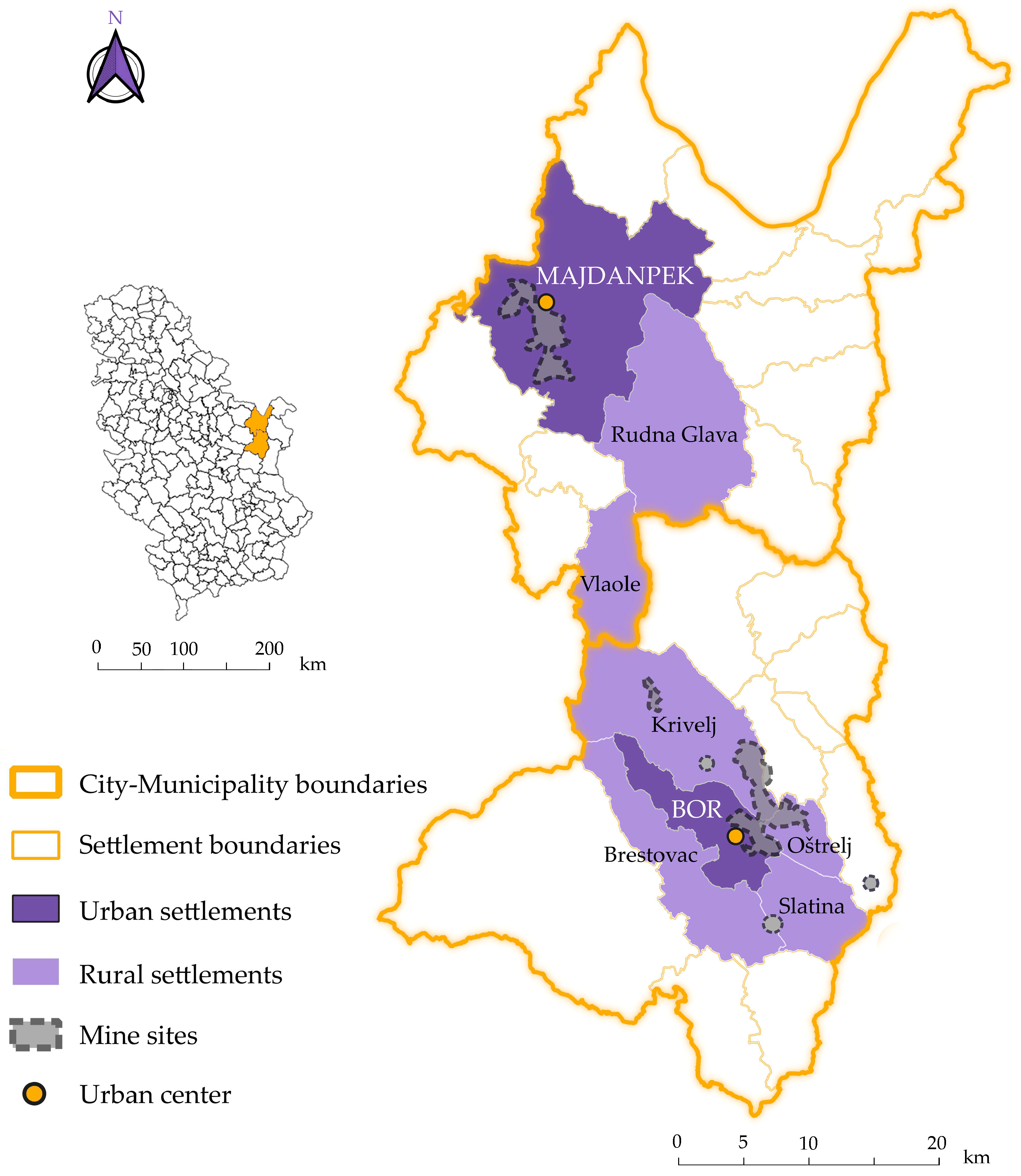
The final sample included all urban and selected rural settlements in proximity to mining sites—Bor, Brestovac, Krivelj, Oštrelj, and Slatina in the City of Bor, and Majdanpek, Rudna Glava, and Vlaole in the Municipality of Majdanpek (Figure 1).
Key sociodemographic characteristics—gender, age, place of residence, and educational attainment—were used to ensure the sample’s representativeness (Table 1). Although primary school students from the Bor–Majdanpek region were slightly underrepresented in the survey (15.2% in the survey vs. 19.2% in the population), the sample can still be considered broadly representative, and such minor discrepancies are, according to Groves et al. [90], Babbie [91] and Dillman et al. [92], generally acceptable in social research.
This analysis focuses on key dimensions of citizen involvement in urban and spatial planning: (1) awareness, (2) participation, (3) information, (4) motivation, and (5) proposals. Each dimension provides insight into different aspects of how citizens engage with and perceive the planning process. The first dimension, awareness, refers to citizens’ understanding of local community issues. Participation examines both citizens’ involvement in planning processes and their preferences regarding participation methods. In addition to participation methods, we also analyse how citizens prefer to express their opinions in planning processes. The information dimension captures citizens’ self-assessment of their knowledge about planning documents, as well as the channels through which they obtain information. Motivation focuses on identifying what drives citizens to engage in planning processes, including the amount of time they are willing to dedicate, as well as the reasons for a lack of interest. Finally, the proposals reflect citizens’ perspectives and provide an opportunity to collect concrete suggestions for improving participation methods and information channels related to planning documents. Table 2 presents a detailed overview of the analysed dimensions and the related survey questions.
To help readers interpret the table and research findings, it is important to clarify the distinction between early public review and public review. The early public review (“rani javni uvid”) is an initial stage of participation that takes place before the plan is drafted. It typically lasts 15 days and gives the public an opportunity to examine preliminary planning materials, such as maps and the proposed spatial coverage, and to submit written comments with no feedback on them. Its primary purpose is to inform residents about the objectives and scope of the forthcoming plan and to gather early feedback.
The public review (“javni uvid”), by contrast, occurs once the draft plan is prepared. This procedure lasts a minimum of 30 days and allows citizens to review the draft plan either online or in the municipal building, consult with planners, and submit formal comments. It usually includes a public hearing or discussion, often accompanied by a live PowerPoint presentation of the plan and feedback on the comments.
Before conducting the field research, the research team carried out a pilot study to test whether the questions were sufficiently clear. The pilot was conducted with respondents of different educational backgrounds, gender, age, and place of residence (urban/rural areas) in order to ensure that the questionnaire would be understandable to participants with diverse sociodemographic characteristics. All suggestions from the pilot study were incorporated into the final version of the questionnaire.
After the survey was conducted, a logical data check was performed. Additional reliability testing was also carried out for the questions that used scales. In this paper, we analysed only one closed-ended scale question. This refers to question 2c: “On a scale from 1 to 5, please rank how well the listed participation methods in development planning suit your needs”. Of the 300 collected questionnaires, 284 (94.7%) were complete and included in the analysis. The 13-item scale demonstrated excellent internal consistency, with a Cronbach’s alpha of 0.905, indicating that the items reliably reflected respondents’ overall evaluation of the participation methods.
Closed-ended single-choice questions are not subject to psychometric testing, as they represent standalone nominal items. However, these questions were reviewed during the pilot study to assess their clarity and comprehensibility to respondents. The set of response options was developed based on the conceptual and contextual framework established through desk research, as well as insights gained during the expert visit to the Tara mine in Ireland. All closed-ended questions were analysed using descriptive and inferential statistical methods in IBM SPSS Statistics (IBM Corp., Armonk, NY, USA, v25).
The open-ended responses were analysed using content analysis. The content analysis combines key qualitative and quantitative methodological features. Its initial phase—coding the text through the development of categories and assignment rules—is inherently qualitative, as it preserves contextual information and enables interpretive insight. Once coded, the data were organised into a matrix and subjected to quantitative analysis. Because it integrates qualitative data generation with quantitative processing, content analysis is often regarded as a suitable tool for mixed-method designs and for methodological triangulation [95].
In our research, we applied the method of content analysis specifically to the open-ended responses to questions 3a, 5b, and 5c (Table 2). We conducted initial, or open coding, which is performed without predetermined categories. Good coding practice must include a phase of rater training. During this process, raters need to learn how to apply the coding scheme and harmonise their individual criteria and “equations” so that their evaluations become consistent. The reliability of qualitative data coding is most commonly operationalised as interrater reliability. This, in essence, reflects the level of agreement between coders [95]. Coding validity was ensured by having five coders independently code the entire dataset. After a joint brainstorming session, a high level of agreement regarding the assigned codes was achieved. Following the coding process, the categories were quantified and analysed in the same manner as the closed-ended questions were—using descriptive and inferential statistical methods in SPSS (v25).

Case Study

The Bor region is known for hosting the largest copper deposits in Serbia and among the largest in Europe. The existence and development of Bor as an urban settlement have been intrinsically linked to planning processes surrounding the exploitation of mineral resources, dating back to the opening of the copper mine in 1903 [96]. Majdanpek, on the other hand, was established much later, in 1961, primarily for the exploitation of copper and gold deposits [97].
The character of public participation in the planning of these settlements has evolved alongside broader socio-political transformations. During the monarchy period (1903–1945), planning was driven by foreign capital and expert-led decision-making, leaving little room for the involvement of local inhabitants [98]. In the socialist period (1945–2000), urban development became deeply institutionalised: planning was comprehensive, long-term, and state-coordinated, yet citizen participation remained subordinate to collective state priorities, primarily related to mining [88,99]. Although this period emphasised social welfare, residents were not spared from the environmental impacts of intensive mining activities.
In the post-socialist era (after 2000), the shift toward neoliberal governance and privatisation profoundly reshaped the planning framework. The sale of the majority stake in the former state enterprise RTB Bor to a foreign investor in 2018 introduced new decision-making hierarchies, mainly oriented toward economic efficiency and profitability. While planning instruments formally remained in place, the legitimacy and transparency of decision-making weakened, and mechanisms for meaningful public participation became fragmented [100]. Today, the challenge lies in rebuilding participatory planning practices that can address not only spatial and environmental degradation but also the erosion of trust between institutions, companies, and residents in the Bor–Majdanpek region.
In the literature, Bor and Majdanpek are frequently described as “environmental black spots” [101,102]. For several decades, the mining and smelting complex in Bor has been the dominant source of air, water, and soil pollution in the region, primarily due to emissions of suspended particles, heavy metals, and sulfur dioxide [103,104,105]. Mining in Bor causes stronger pollution than in Majdanpek [97], although recent detonations of Starica Mountain—situated directly above the settlement—have raised concerns about residents’ safety and water supply, as they obstruct underground water streams characteristic of limestone formations [102]. Elevated sulfur dioxide levels from metallurgical processes in Bor have caused soil acidification, vegetation loss, and erosion, while also contributing to landslides and contamination of surface and groundwater—particularly the Bor River, whose quality often falls below national standards [103,105,106,107].
Beyond the direct health effects on residents, local well-being is further compromised by the reduced quality of agricultural products cultivated in the surrounding areas [108]. Long-term mining activity has led to the occupation of agricultural, forest and construction land, and the removal of the topsoil has led to severe degradation of arable areas; however, soil remediation and revitalisation have been omitted for decades [104]. It is estimated that over 25,000 hectares of land have been damaged.

4. Results

4.1. Awareness of Local Community Issues

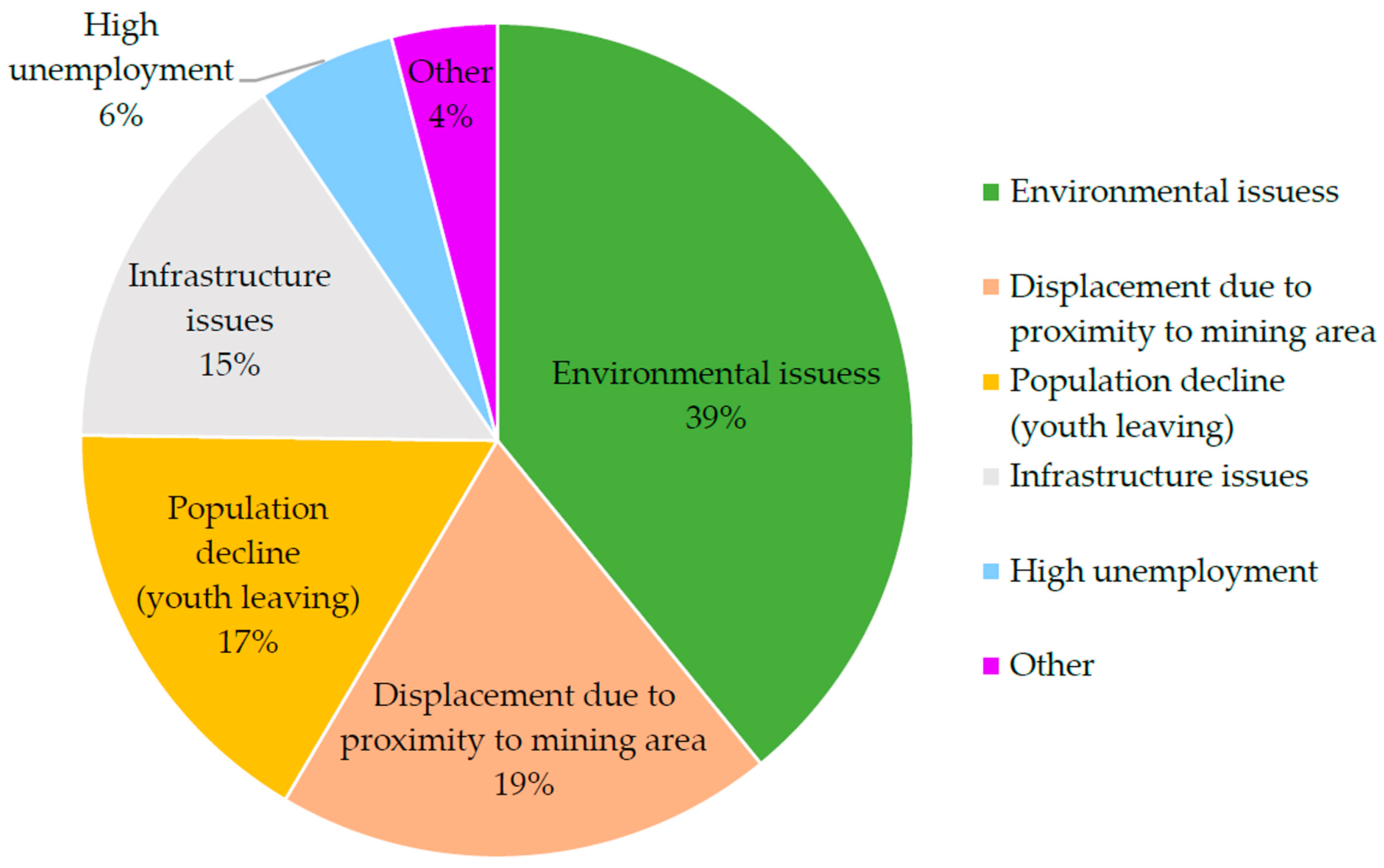
Figure 2 presents the issues that residents perceive as the most pressing in their communities. As shown, environmental problems are identified by the largest proportion of respondents (39.1%), followed by displacement due to proximity to the mine (19%), while unemployment is considered a major concern by the smallest proportion (5.4%). The “Other” category, selected by 4% of respondents, was open-ended, allowing participants to indicate the issues that concern them most. The responses included corruption, current government performance, lack of healthcare services, insufficient cultural and recreational facilities, poor roads and infrastructure, substandard housing conditions, frequent power outages, and inadequate social support.
Regarding all socio-demographic indicators, a statistically significant relationship was found between age groups and perceived problems in the local community (χ2(15) = 35.392, p = 0.002). Respondents aged 45–64 expressed greater concern compared to other age groups for environmental issues, displacement due to proximity to mining areas, and municipal problems. In contrast, the youngest age group (20–24 years) did not show pronounced concern for displacement and municipal issues. This younger cohort was primarily worried about environmental problems and the outflow of young residents. Other age groups demonstrated a more balanced concern across almost all issues, with environmental problems being dominant across generations.
A statistically significant relationship was also identified between education level and perceived community problems (χ2(10) = 18.648, p = 0.045). Respondents with secondary and higher education most frequently indicated environmental problems as the primary challenge in their community. Among those with tertiary education (completed university or higher), the outflow of residents—particularly younger populations—emerged as the second most frequently cited concern, following environmental issues. Conversely, respondents with no formal education or lower educational attainment more often expressed concern regarding displacement due to proximity to mining areas.
Additionally, a statistically significant relationship was found between place of residence and perceived community problems (χ2(15) = 72.184, p = 0.001). Urban residents of Bor were concerned about environmental problems, which is expected, given that urban areas are most exposed to industrial activity and pollution. In contrast, rural residents in Bor were more concerned about displacement, which is consistent with the fact that some sampled villages were directly affected. Rural residents in Majdanpek were primarily concerned with municipal issues, likely reflecting long-term neglect of infrastructure and limited investment in rural areas. At a descriptive level, though not statistically significant, women expressed slightly greater concern for environmental problems than men, whereas men showed slightly greater concern for municipal issues.

4.2. Citizen Participation in the Urban/Spatial Planning Process and Preferred Methods

Given that the majority of respondents identified environmental and, to a lesser extent, social impacts as the most significant consequences of mining activities, we next examined their participation in shaping planning documents and their preferred methods of engagement. Finally, we explored the ways in which citizens feel most comfortable expressing their views during the planning process.
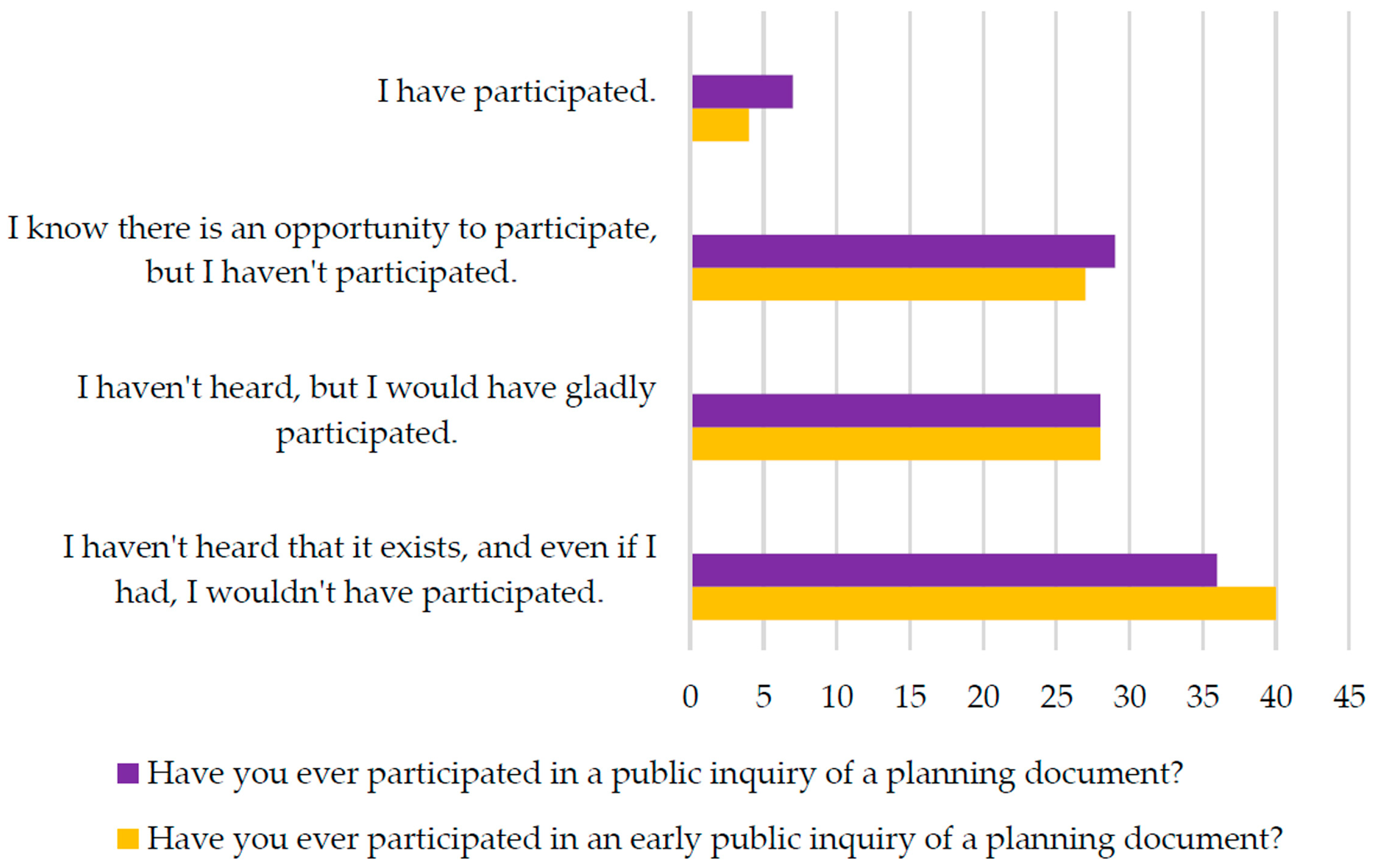
A striking 40% of respondents stated that they were not aware that early public review exists, and even if they had known, they would not have participated. A similar percentage was observed for the public review (36.2%). This points to a general lack of awareness, but also indicates potential for future engagement, as 28.0%/27.9% of respondents said they had not heard of early public review/public review but would be willing to participate. Conversely, nearly the same proportion (27.0%/29.2%) were informed about the opportunity but chose not to engage.
Pollsters also reported that many respondents were unable to distinguish between the early public review and the public review stages of planning procedures, which likely explains the similar response rates regarding participation in both stages (Figure 3).
Only 4.3% of respondents reported having participated in the early public review of planning documents. Among them, men are notably more represented (61.5%) than women (38.5%). Most belong to the 45–64 age group (53.8%), followed by those 65 years and older (30.8%) and aged 25–44 (15.4%). Not a single respondent aged 20–24 had ever taken part in an early public review. A slightly higher, yet still low, share of respondents (6.7%) participated in the public review. Notably, participation was higher among men (75.0%) than among women (25.0%). The youngest age group was absent from the public review, while citizens aged 45–64 and those over 64 were equally represented (40.0% each). In contrast, individuals aged 25–44 participated to a lesser extent (20.0%).
In terms of education, in the early public review, all levels were represented, but respondents with secondary or post-secondary education formed the largest group (46.2%), followed by those with low or no formal education (30.8%) and those with higher education (23.1%). This finding is significant as it shows that participation is not limited to highly educated citizens—individuals with lower levels of education also tend to get involved in shaping planning documents. A similar trend is observed in the public review process: half of the active respondents have secondary or post-secondary education, while those with low or no formal education (30.0%) and those with higher or the highest education (20.0%) are represented in proportions similar to those in the early public review.
Regarding employment status, participants who were involved in an early public review/public review were mostly permanently employed (46.2%/40.0%) or retired (38.4%/35.0%), while those temporarily employed (7.7%/10.0%) or unemployed were least represented (7.7%/15.0% each). In terms of occupation, the respondents who were engaged in the planning procedure were dominated by retirees and individuals in technical or administrative professions. Participants were distributed across both urban and rural areas, with 38.5%/30.0% from urban Bor, 15.3%/40.0% from rural Bor, and 23.1%/15.0% each from urban and rural settlements in Majdanpek. A noticeably higher percentage of residents from the rural area of Bor participated in the public review compared to their participation in the early public review.
Responses regarding participation in the early public review/public review were grouped into two categories. The first category included respondents who selected “I have participated” and “I haven’t heard about it, but I would have gladly participated.” The second category comprised those who chose “I know there is an opportunity to participate, but I haven’t participated” and “I haven’t heard of it, and even if I had, I wouldn’t have participated.” This classification allowed us to distinguish between citizens with participatory potential and those without participatory intent. The first group—citizens with participatory potential—accounts for only 32.6%/34.6% of the sample, while the second group—citizens without participatory intent—represents 67.4%/65.4%. The finding that nearly two-thirds of respondents have neither participated nor expressed an intention to participate in the process of developing planning documents (specifically, the early public review) indicates a generally low participatory potential among residents. No statistically significant relationship was found between these two groups and any of the examined sociodemographic variables.
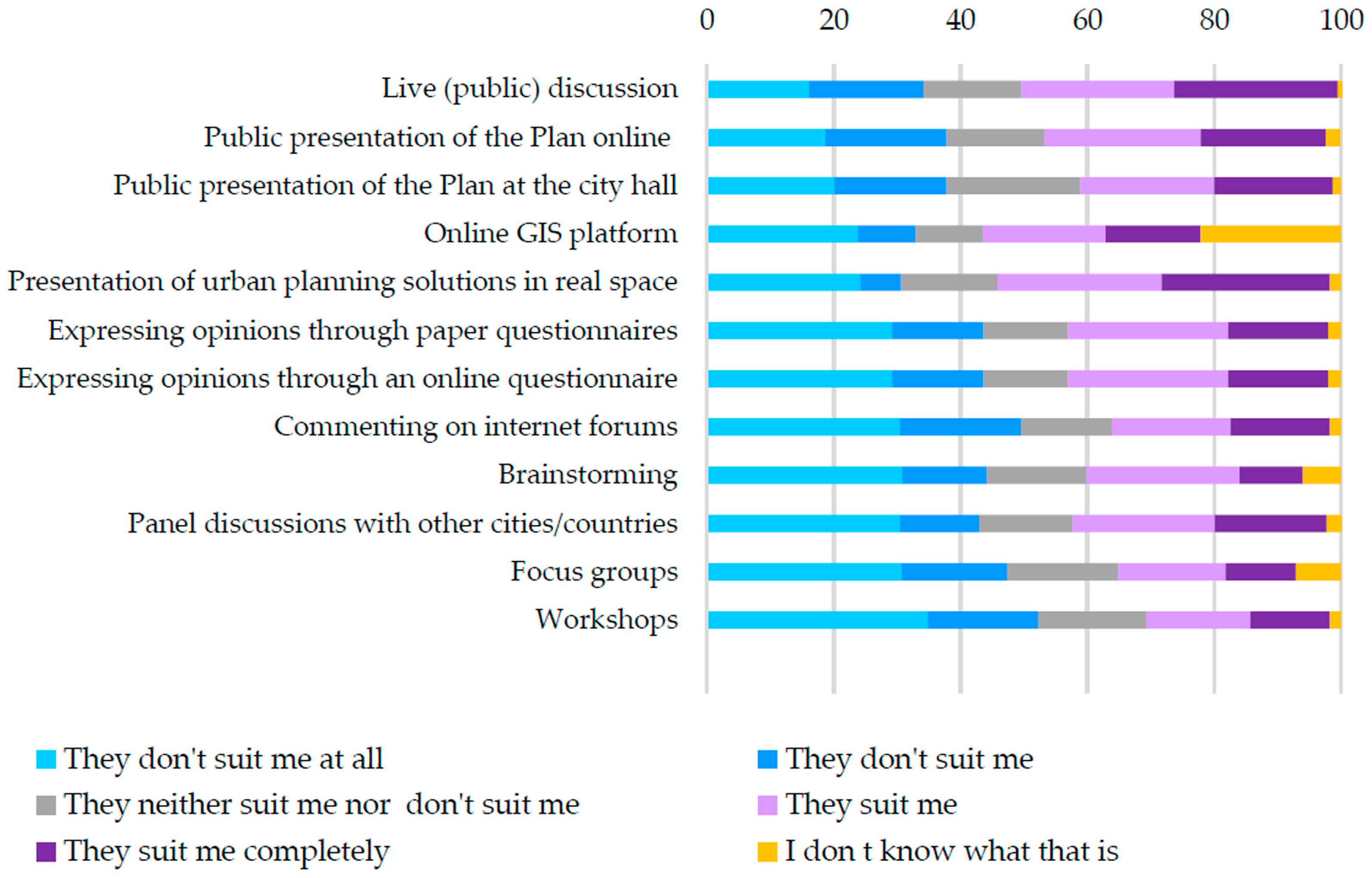
As shown in Figure 4, no single participatory method stands out as clearly preferred over others. The diversity of responses can be partly explained by the limited education of residents regarding participation methods. Field reports from survey enumerators indicate a generally poor understanding of this topic among the local population, which further corroborates the previously noted finding on citizens’ low levels of awareness. When asked to choose a single method, the largest proportion of respondents indicated a preference for live public discussions (27.3%), followed by panel discussions with participants from other cities or countries to share experiences (11.4%), and public presentation of plans at the municipal premises (text and maps) (10.4%).
We were particularly interested in understanding the reasons behind the choice of anonymous versus attributed participation, given the specific social context and diverse attitudes toward mining and its implications in Serbia. The reasons for presenting opinions under one’s real name can be grouped as follows: (1) accountability and potential consequences; (2) moral and ethical considerations, integrity, absence of fear, and freedom of expression; and (3) transparency. Conversely, the reasons for preferring anonymous input were primarily related to (1) personal safety and security. Table 3 provides the detailed responses of participants corresponding to these categories.

4.3. Reaching Information and Preferred Information Channels

In addition to low participatory potential, the local population is also poorly informed about urban development plans. As many as 73.8% of respondents rated their knowledge of development plans as nonexistent or very poor. Only 4.1% described themselves as very well informed, and 22.1% as well informed. Who are the well-informed respondents? Among them, women are slightly more represented. In terms of occupation, the most prevalent groups are retirees (20.8%), followed by skilled workers (16.9%) and professionals (13%). Respondents from rural areas rated their level of awareness lower than those from urban areas. Respondents aged 45–64 years are better informed than other age groups.
Given the high proportion of respondents who rated their awareness of spatial and urban planning as low or non-existent, it is important to examine how citizens currently obtain information about municipal and city plans. The survey first included an open-ended question, allowing respondents to indicate their sources of information. The majority of residents identified the internet and social media as their primary channels (25.0%). Notably, 22.7% reported that they do not actively seek information, providing answers such as “nowhere,” “I have no source,” “in no way,” “I hear something occasionally,” and “I am not interested,” among others. Within this category of open-ended responses, several explicitly highlighted issues of non-transparency: for example, “plans are not available, they are posted and quickly removed from the municipal website,” “nowhere, no one informs us, only the mayor knows,” and “nowhere, we had to inquire about everything ourselves at the urban planning office”.
Unsurprisingly, informal social networks emerged as the next most frequently cited source (19.3%), just behind the internet and social media. In contexts where official information is limited or insufficiently transparent, people rely on informal social networks to stay informed. Respondents described these networks as encompassing parents, children, acquaintances, friends, colleagues, shop assistants, cleaners, neighbours, social circles, a husband who is a journalist, a wife working for the City/Municipality, activists, other residents, people “around the village,” and those at the market. These findings are particularly relevant for stakeholders involved in citizen information and engagement, as informal networks represent a critical communication channel that should not be strategically overlooked in efforts to improve public awareness of planning processes.
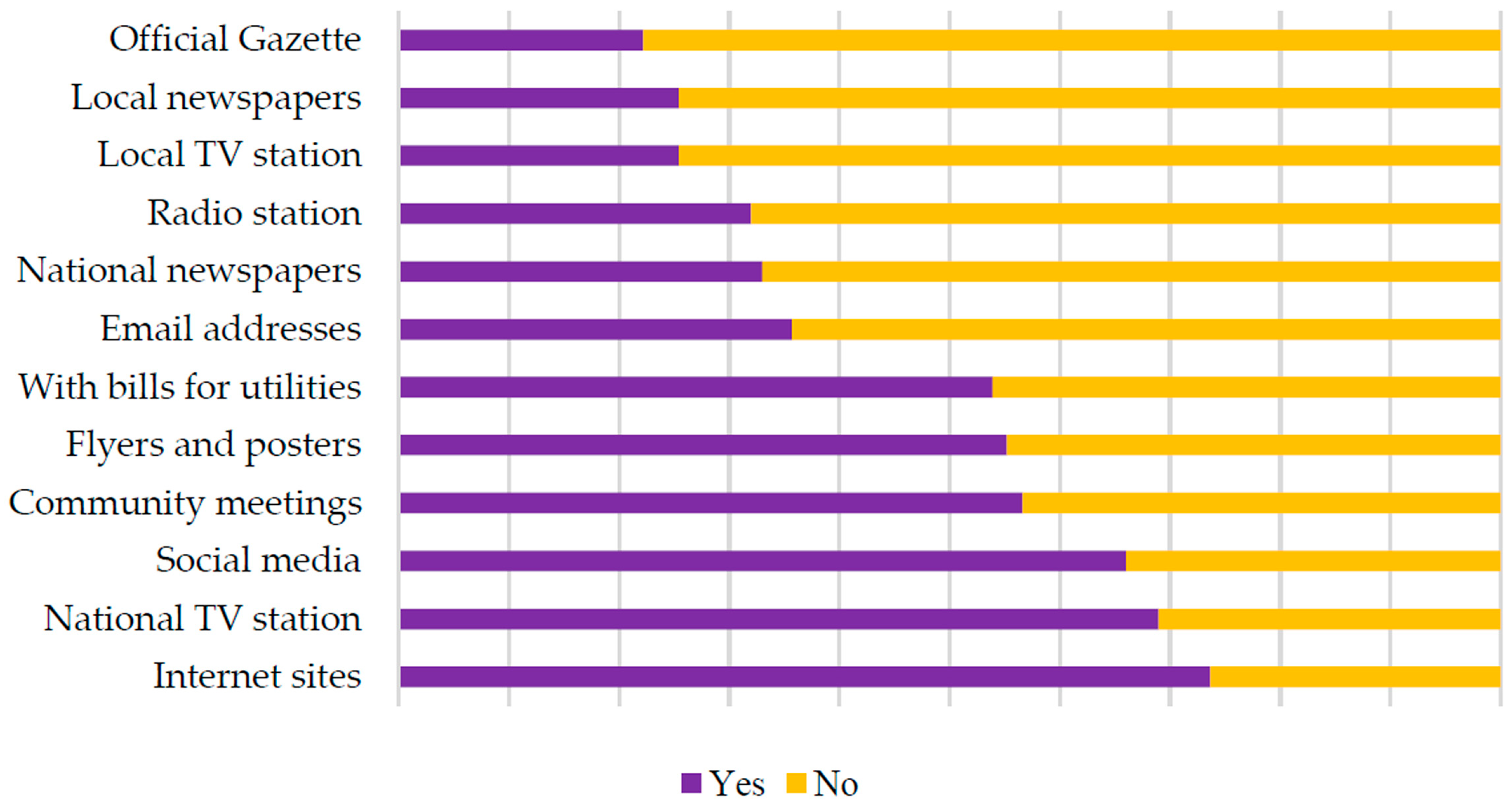
In addition to open-ended questions, respondents were asked whether they would like to receive information through specific channels. Their answers are presented in Figure 5.
Among the responses, the internet and social media clearly predominate, except for personalised communication via email, which was preferred by only 35.7% of respondents. Traditional media—such as local and national newspapers, the Official Gazette, and radio stations—have largely lost their significance as sources of information. Among traditional media, flyers, posters, and television still retain some relevance, with slightly more than half of respondents indicating a preference for these channels.
It is important to note that respondents expressed greater trust in national than in local television stations, with 69.0% indicating a preference for receiving information via national TV and 53.4% via local TV. Another noteworthy finding is that respondents would rather receive information through utility bills than via email, suggesting that traditional media still dominate over modern technological channels in personalised communication. Additionally, the continued importance of face-to-face communication is evident, as over 50% of respondents preferred obtaining information at local community meetings.
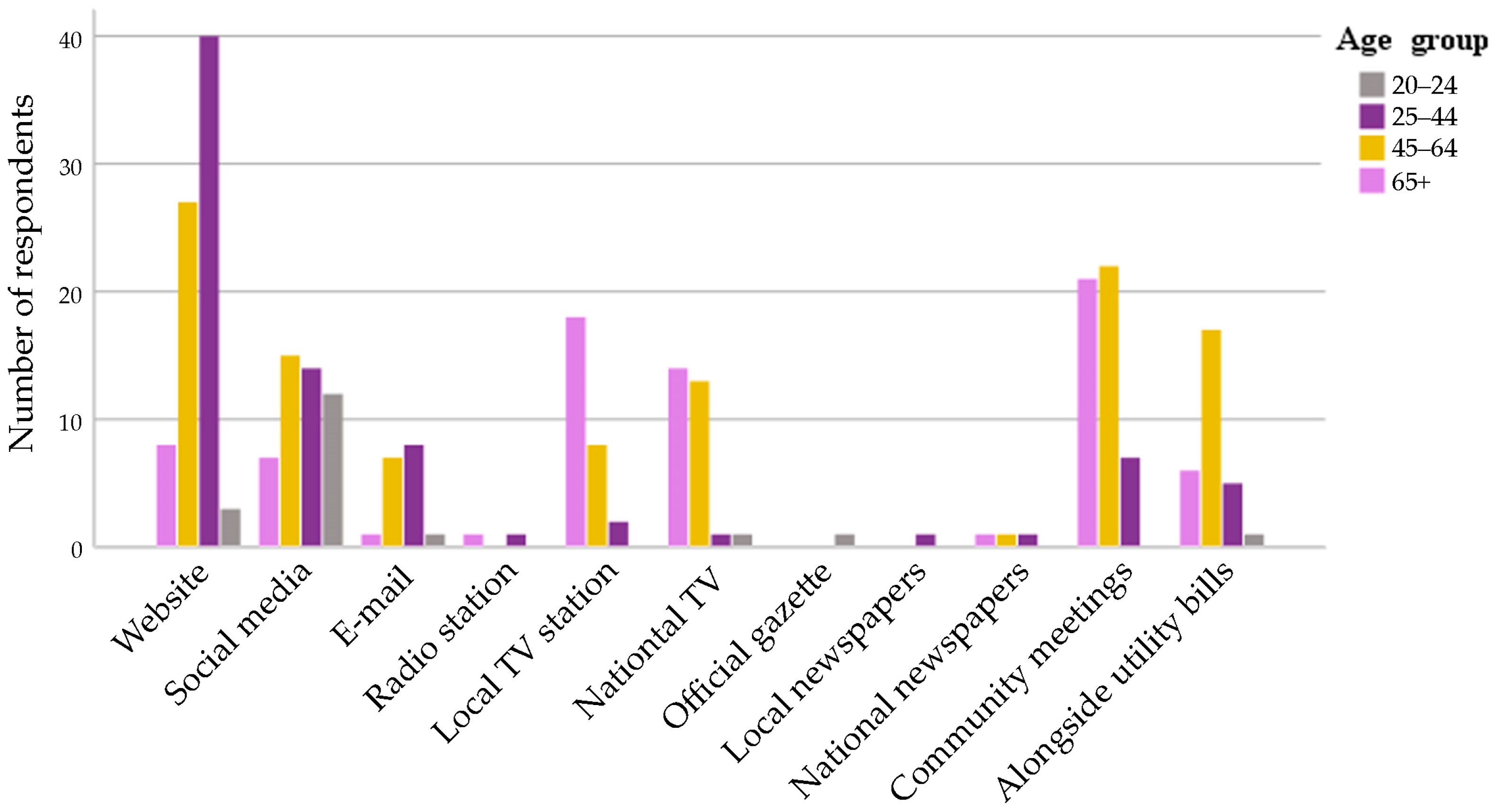
A clear generational trend is evident: younger respondents tend to prefer digital channels, middle-aged respondents show mixed preferences, and older respondents favour in-person and traditional channels. As shown in Figure 6, social media dominates as the primary source of information for the youngest respondents (20–24 years). Those aged 25–44 rely more on websites than other age groups. Respondents aged 45–64 are receptive to both websites and in-person or traditional channels, such as community meetings and information delivered via utility bills. Among the oldest respondents, the main sources of information remain primarily in-person and traditional channels, including community meetings, local TV stations, and, to a lesser extent, national TV stations.

4.4. Motivation of Citizens to Participate in the Development of Planning Documents

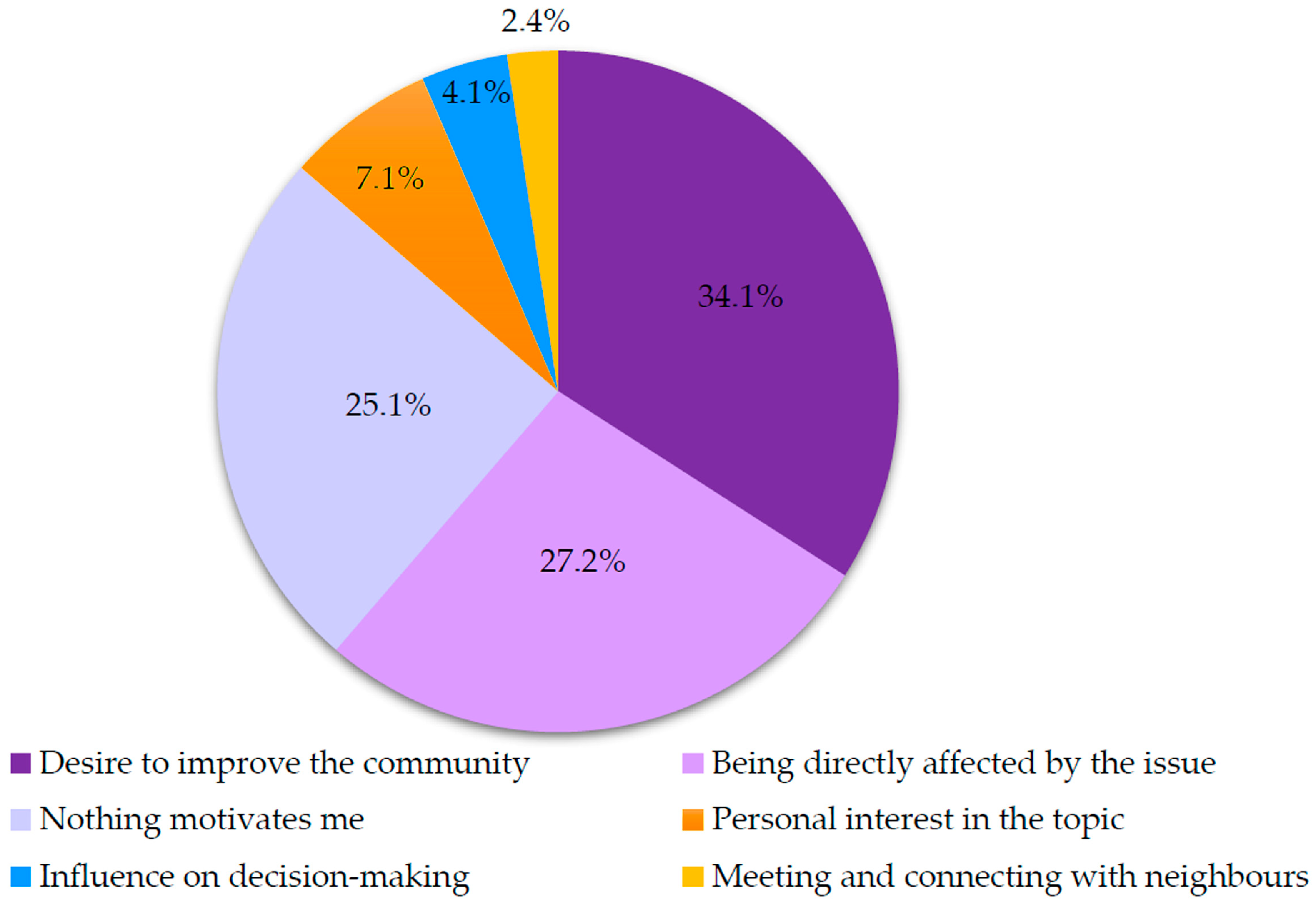
Given the low levels of participation and limited awareness, it is important to examine what motivates residents to engage in the planning process. As illustrated in Figure 7, the most frequently cited motivation is the desire to improve the community (34.1%), followed by personal concern regarding a specific issue (27.2%). However, a concerning finding is that 25.1% of respondents indicated that nothing motivates them to participate at all.
The main reasons cited by citizens for not participating more actively in the planning document creation process are a belief that they cannot make a difference (33.0%), followed by a lack of information (18.2%) and a lack of interest (17.2%). Smaller proportions of respondents identified other reasons, including lack of expertise in the relevant field (10.8%), absence of feedback or response (9.0%), and lack of time (4.7.0%). In addition to the provided options, 7.4% of respondents selected “other” and mentioned factors such as rudeness, fear (of authorities, blackmail, workplace coercion), relocation, disinterest among young people, feelings of powerlessness against profit-driven, self-interested stakeholders, distrust in authorities (both local and national), and a perceived lack of interest from local authorities in involving citizens in planning.
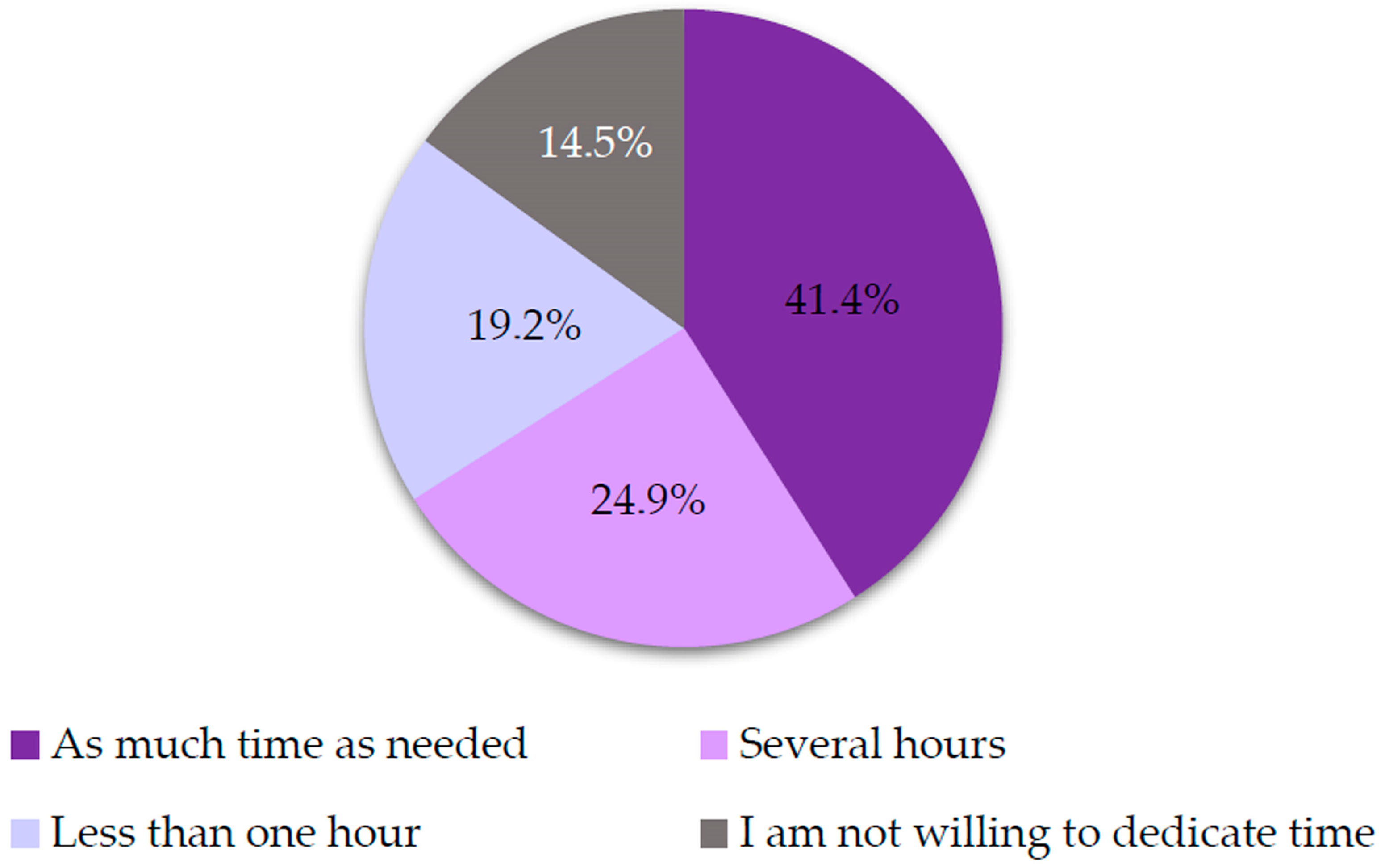
As Figure 8 indicates, the majority of respondents are willing to dedicate as much time as necessary to the planning document creation process, with only 14.5% indicating that they are not willing to engage at all. When participating in this process, residents prefer to express their opinions orally, in person, during a meeting or public discussion (57.6%), followed by online platforms (24.9%). The smallest proportion of respondents (17.5%) prefer to provide written input in paper form. Citizens are more inclined to express their views openly, with their names attached (29.5%), rather than anonymously (18.6%), although the largest proportion indicated no preference (51.9%).

4.5. Citizens’ Proposals for Improving Participation Methods and Information Channels

We focused on the local perspective and invited citizens to propose ways to improve public awareness regarding participation in spatial and urban planning processes. Unlike the previously mentioned questions, this one was open-ended, aiming to elicit a wide range of responses and to avoid constraining respondents in their choice of information channels. Almost one-third of participants did not provide an answer, which is discouraging: on the one hand, respondents pointed to the problem of non-transparency, yet when asked how the flow of information could be improved, a considerable proportion offered no suggestions.
The responses received were diverse. The largest share of respondents perceived the greatest potential for improving information dissemination in traditional media—particularly through the freedom and strengthening of both national and local media outlets—with an emphasis on revitalising local TV stations and newspapers (18%). Another group (12.4%) highlighted the internet and social media as key tools for improving public awareness, suggesting the regular updating of municipal websites, activation of village portals, and the use of online campaigns.
Respondents also emphasised the importance of transparency, education, and continuous communication with citizens, as well as the professionalism, commitment, and sincerity of mayors and local authorities (12.3%). Several participants mentioned the distribution of promotional materials—such as leaflets, flyers, posters, visual panels, and billboards—as potential awareness-raising instruments (8.7%). Less frequently mentioned were the improvement of local community councils, citizen associations and meetings, public debates, and neighbourhood assemblies attended by local government representatives.
A few respondents pointed to the significance of the “digitalisation of democracy,” proposing that citizens could be informed through electronic channels such as email, SMS, Viber, telephone calls, utility bills, or letters delivered to home addresses. Although less common, several responses referred to political and economic preconditions for improving the quality of public information, including statements such as: “the government should stabilise,” “people’s brains should be cleansed of politics” “citizens need increased salaries so think more about where they live rather than what to eat,” and “we should expel the Chinese company”.
Some participants also stressed the need for a more proactive approach among citizens themselves, particularly among younger generations (“Those who want to know, will know”, “People should take more interest themselves,” “Young people should take more initiative to explain things to the elderly”). Finally, a few respondents expressed a deeply pessimistic attitude toward the prospects of improving public awareness, which is reflected in statements such as “There is no hope for us” and “people are illiterate, stupid, the only way is to implant something in their heads”.
The next open-ended question asked citizens whether they had any suggestions for improving methods of public participation in spatial and urban planning. The aim was again to avoid constraining respondents with predefined options and to allow them to freely express their views on the matter. Unfortunately, nearly half of the respondents (47.0%) did not provide an answer. Many suggestions had already been mentioned in the previous question, so here we only report those that appeared for the first time or were further elaborated in this section. Given the diversity of responses and their low individual frequency, we present them briefly to provide a qualitative overview of all suggestions, emphasising that each appeared in only a negligible percentage of responses.
Among the proposed improvements to participation methods, some respondents mentioned introducing a legal obligation for direct citizen voting via e-government, as well as financial incentives. Others emphasised the importance of considering citizens’ remarks and suggestions and providing feedback. Prior to these steps, however, respondents pointed out that the way citizens are informed plays a crucial role—highlighting the need for transparency, clarity, and simplicity in reporting and during public hearings, with an honest presentation of plans, “without lies or manipulation,” as several stated.
Respondents also proposed conducting more surveys and interviews (both online and in person) with residents. As with improving information access, socio-political factors were often mentioned as prerequisites for better participation methods, including “a change of government”, “depoliticisation of local authorities”, “stopping the depopulation of the area”, “restoring trust in institutions”, and “giving everyone a voice at public meetings, not only those supporting the ruling party”. Others stressed that trust will return only when citizen proposals are truly implemented and promises made before elections are fulfilled afterwards.
According to many respondents, improving participation methods also requires raising awareness of the importance of participation and encouraging citizens to take initiative: “Warn people what will happen if they don’t participate”, “Find initiators (leaders) among interested people”, “Identify self-aware, open-minded, educated individuals willing to engage without personal interest”, “Dialogue—stop watching Pink and Happy TV channels”—commercial television stations with national coverage, characterised programmatically by entertainment formats, reality shows, and mass culture content, alongside the presence of news programming. They are often perceived as media favourable to the current government, although they formally operate as independent commercial entities. Taking initiative was frequently linked to youth engagement, with an emphasis on motivating young people from an early age and engaging them through social media and youth workshops.
This question, too, revealed a degree of pessimism among respondents, expressed in statements such as “There’s no point in doing anything” and “There’s no help for us”. The reasons for such attitudes were attributed to low trust in institutions, the perception that personal interests dominate public life, and the belief that the ageing population means that “there is no one left to participate in the planning processes”.

5. Discussion

These findings highlight the salience of environmental issues in the everyday concerns of residents in mining-affected regions, reflecting localised manifestations of Anthropocene challenges, where human activity has created direct and tangible impacts on socio-ecological systems [36,37]. The prioritisation of ecological degradation over economic concerns such as unemployment suggests that communities living near extractive industries are particularly responsive to immediate and visible environmental impacts [109,110]. Moreover, the diversity of responses under “Other” underscores the interconnection of environmental problems with governance, infrastructure, and social welfare issues, highlighting the cumulative and inseparable nature of socio-environmental pressures [22,23]. Collectively, these patterns suggest that meaningful public participation in spatial planning must account for both ecological and socio-political concerns to address the cumulative risks faced by residents effectively.
Residents’ prioritisation of environmental over economic concerns aligns with global findings from mining regions, where local communities tend to focus on visible ecological degradation [23,36,37]. Similar patterns in Chile and Peru show that issues such as water contamination outweigh employment considerations [43,44]. These parallels indicate that localised manifestations of Anthropocene pressures strongly shape residents’ perceptions and motivations for participation.
Residents’ perceptions of local issues also vary by age, education, and settlement type, indicating that participatory mechanisms cannot adopt a uniform approach. Tailored strategies are required to respond to the specific concerns and capacities of different demographic groups [22,50,111,112]. In mining regions shaped by long-term industrial activity and socio-economic transformation, inclusive and responsive participatory planning is essential to rebuild trust, address cumulative impacts, and empower communities to influence territorial development.
The low rate of public participation and limited awareness of planning mechanisms in Bor and Majdanpek reflect broader participation deficits observed in post-socialist contexts, where formal opportunities often coexist with weak institutional communication and low citizen trust [54,113]. Procedural confusion and limited outreach underscore a lack of transparency, echoing observations that in transitional societies, participation is frequently reduced to formal compliance rather than meaningful engagement [52,64,114,115]. Arnstein’s ladder of citizen participation suggests [116] that local processes rarely surpass the lowest rungs of manipulation and tokenism, with minimal engagement even at the “informing” stage. Generational differences and the near absence of youth participation reinforce the perception of planning as technical rather than democratic [20,54]. Strengthening participation, therefore, requires better information channels, civic education, and the rebuilding of trust between citizens and institutions [1].
Low levels of participation, distrust, and procedural uncertainty correspond with literature on neoliberal governance, where engagement often remains symbolic and constrained by institutional arrangements [19,42,48]. Comparable dynamics have been reported in post-industrial regions in the UK and Australia, where market-oriented planning logics and selective involvement limit meaningful participation [46,77]. This suggests that challenges observed in Bor and Majdanpek are characteristic of broader governance regimes in extractive and transitional contexts.
Regarding communication channels, residents rely heavily on digital platforms while informal social networks remain a critical supplement where official communication is limited. Traditional media, community meetings, and even utility bills continue to play a role, highlighting the value of tangible and interpersonal channels in fostering trust [52,54]. Preferences for national over local TV indicate that the legitimacy and authority of information sources shape engagement. These findings highlight the need to combine digital, traditional, and face-to-face channels to enhance transparency and accessibility and move beyond tokenistic participation [54,116].
The diversity of preferences for participation methods and channels mirrors challenges identified in other countries. In Canada, Australia, and the Netherlands, residents in mining or industrial regions often prefer in-person and deliberative formats over formal written submissions, reflecting a desire for dialogue, transparency, and accountability [50,52,61,62]. Our findings reinforce the idea that participatory democracy is contextually mediated: socio-demographic factors, trust, and familiarity with planning processes determine both willingness to participate and preferred modes of engagement.
Participation in Bor and Majdanpek remains largely symbolic, with low trust and limited influence in decision-making, which Wilson et al. [117] identify as common problems in participatory processes in general. Politicisation of planning further constrains meaningful engagement. As Grange [118] notes, planners may align with neoliberal decisionism, making non-grounded decisions driven by political agendas. Zeković, Perić, and Hadžić [119] show how, in post-socialist Serbia, planning can become a tool for financialised urban development, leaving little room for citizen input. Non-participation is further reinforced by interpersonal distrust, with some residents expressing scepticism toward their fellow citizens and perceiving collective action as futile, generating hopelessness [120,121,122]. Broader distrust toward state institutions and mining companies also shapes non-engagement, reflecting patterns seen even in developed countries [14,123,124]. Historical legacies of authoritarianism and low civic activism further exacerbate distrust and fear of sanctions [64,125,126]. The Serbian context, therefore, requires social dialogue and political will to enable participatory planning in a neoliberal and post-socialist setting [127].
Trust and transparency emerge as central determinants of meaningful engagement [121,128]. Citizens emphasised that procedural clarity, accessible information, and feedback mechanisms are prerequisites for active participation [129,130]. Grassroots and social networks also play a crucial r ole, complementing formal channels and enabling bottom-up engagement. Such initiatives often represent the highest rungs of Arnstein’s ladder—partnership and citizen control—and can empower communities more effectively than tokenistic consultations [113,116,117,121,131]. Supporting grassroots activity can strengthen trust, increase civic agency, and bridge gaps left by top-down planning processes.
Education about the purpose and procedures of planning is critical, as understanding the process increases the likelihood of meaningful engagement [121,129]. Most respondents are willing to invest time in participation, indicating a latent capacity for engagement, provided mechanisms are transparent, meaningful, and perceived as effective. Preferences regarding anonymity versus attributed participation highlight the tension between accountability and personal safety, suggesting that offering both options can enhance inclusivity, reduce fear, and improve trust [117,132].

6. Conclusions

The findings of this study reveal that public participation in the spatial planning of Serbia’s extractive regions remains largely limited and formalistic. Survey results indicate that citizens’ involvement in planning processes is low, primarily due to insufficient access to information and a widespread perception of powerlessness—many respondents believe that their engagement cannot influence decisions, and that the authorities are generally uninterested in citizens’ views. This distrust is reinforced by the politicisation of planning and the dominance of top-down, neoliberal decision-making practices that marginalise local voices.
In the context of the Anthropocene, where extractive industries intensify socio-environmental pressures, such exclusion undermines both democratic legitimacy and the pursuit of sustainability. Strengthening participation, therefore, requires improvements in several interrelated domains. Institutionally, planning needs to become more transparent, accountable, and depoliticised, ensuring that procedures enable genuine deliberation rather than formal compliance. Socially, citizens’ capacities for informed participation should be enhanced through access to clear information, professional and legal support, and civic education about the purpose of planning and available participatory methods. Culturally, participation must be reframed from a reactive act into an ongoing process of negotiating collective spatial futures.
For practice, the study recommends developing context-sensitive participatory mechanisms in mining regions—such as local deliberative forums, participatory mapping, and Geodesign workshops—that connect expert, political, and community knowledge. Such approaches could rebuild trust and foster shared responsibility for spatial outcomes.
A primary limitation of this study is that it reflects only the perspectives of the local population in the Bor–Majdanpek region, without including other relevant stakeholders or vulnerable groups. The survey design also limited the depth of insight, as only a few open-ended questions were included. Additionally, the case study approach constrains the generalisation of the findings, since context-specific conditions in this region may not reflect those in other mining areas. These limitations could be addressed in future research by incorporating multiple stakeholder groups, using mixed qualitative methods to enrich context, and conducting comparative studies across different regions.
Future research should also explore comparative post-socialist cases to understand how participation evolves within hybrid governance systems. Interdisciplinary perspectives combining political ecology, planning theory, and participatory design may offer further insights into how participation can become not only a procedural right but a transformative tool for democratising planning in the era of the Anthropocene.

Author Contributions

Conceptualization, M.P. and M.T.; methodology, M.P., M.T., T.M. and D.M.; software, M.T.; validation, M.P. and T.M.; formal analysis, M.T.; investigation, M.T. and D.M.; resources, M.T., T.M. and M.V.; data curation, M.T., T.M. and D.M.; writing—original draft preparation, M.P., M.T. and M.V.; writing—review and editing, M.P. and T.M.; visualisation, M.P. and M.T.; supervision, M.P., M.T., T.M. and D.M.; project administration, T.M.; funding acquisition, T.M. All authors have read and agreed to the published version of the manuscript.

Funding

This research was funded by the Science Fund of the Republic of Serbia (Grant No. 7598) and the Ministry of Science, Technological Development and Innovation of the Republic of Serbia (Grant No. 451-03-137/2025-03/200091, 451-03-136/2025-03/200006, 451-03-136/2025-03/200025, and 451-03-137/2025-03/200131).

Institutional Review Board Statement

Ethical review and approval were waived for this study by the Ethics Committees of the Institute of Architecture and Urban & Spatial Planning of Serbia (Number: 840) on 11 October 2022, the Technical Faculty in Bor, University of Belgrade (Number: I/1-959/2) on 12 October 2022, the Faculty of Geography, University of Belgrade (Number: 218) on 20 February 2023, and the Institute for Philosophy and Social Theory, University of Belgrade (Number: 842) on 1 September 2023.

Informed Consent Statement

Informed consent was obtained from all subjects involved in the study.

Data Availability Statement

The data presented in this study are available from the corresponding author upon reasonable request. Although the survey was conducted anonymously, data sharing is restricted to protect respondent privacy.

Acknowledgments

The authors would also like to express their sincere gratitude to the pollsters —Dejan Lazar, Lazar Marinković, Maja Petković, Milena Cvetkovska, Miloš Novaković, Sandra Vukašinović, Stefan Zdravković, and Vladan Fares Galavenži—for their dedicated fieldwork and professionalism during data collection. We also thank all survey participants for their time and valuable insights. The authors gratefully acknowledge Matija Mitrović, PhD student in the Institute of Architecture and Urban & Spatial Planning of Serbia, for preparing the map used in this study.

Conflicts of Interest

The authors declare no conflicts of interest. The funders had no role in the design of the study; in the collection, analyses, or interpretation of data; in the writing of the manuscript; or in the decision to publish the results.

References

  1. Kuzović, D. Rudarstvo i Savremeni Urbanizam. Nekoliko Aktuelnih Problema na Primeru Rudnika Litijuma u Jadru. U: P. Marković, N. Đereg (ur.) Rudarstvo—Opasnosti i Izazovi u Zaštiti Životne Sredine (str. 27–32); Centar za Ekologiju i Održivi Razvoj: Subotica, Serbia, 2022. [Google Scholar]
  2. Haddaway, N.R.; Cooke, S.J.; Lesser, P.; Macura, B.; Nilsson, E.A.; Taylor Raito, K. Evidence of the impacts of metal mining and the effectiveness of mining mitigation measures on social–ecological systems in Arctic and boreal regions: A systematic map protocol. Environ. Evid. 2019, 8, 9. [Google Scholar] [CrossRef]
  3. Perović, V.; Kadović, R.; Đurđević, V.; Pavlović, D.; Pavlović, M.; Čakmak, D.; Mitrović, M.; Pavlović, P. Major drivers of land degradation risk in Western Serbia: Current trends and future scenarios. Ecol. Indic. 2021, 123, 107377. [Google Scholar] [CrossRef]
  4. Petovar, K. Social pre-conditions for moving inhabitants out of new-purpose zones. Sociol. Sela 1983, 21, 211–219. [Google Scholar]
  5. Terminski, B. Mining-Induced Displacement and Resettlement: Social Problem and Human Rights Issue (A Global Perspective); SSRN: New York, NY, USA, 2013. [Google Scholar]
  6. Petovar, K. Izveštaj o Praksi Preseljavanja Domaćinstava u Kolubarskom Lignitskom Basenu; CEKOR: Subotica, Serbia, 2015. [Google Scholar]
  7. Oliveira, G.; McKay, B.; Liu, J. Beyond land grabs: New insights on land struggles and global agrarian change. Globalizations 2021, 18, 321–338. [Google Scholar] [CrossRef]
  8. Batas Bjelić, I. Ne Samo za Dobrobit Povlašćenih. Da li bi Pametno Korišćenje Jadarita Značajno Ubrzalo Energetsku Tranziciju Srbije? U: P. Marković, N. Đereg (ured.) Rudarstvo—Opasnosti i Izazovi u Zaštiti Životne Sredine (str. 13–19); Centar za Ekologiju i Održivi Razvoj: Subotica, Serbia, 2022. [Google Scholar]
  9. Petrović, M. Globalno grabljenje zemljišta i novi ekstraktivizam: Postsocijalistička perspektiva. Zb. Instituta Za Kriminološka I Sociološka Istraživanja 2023, 42, 25–40. [Google Scholar] [CrossRef]
  10. Petrović, M.; Tošović, L.; Krčum, A. Preseljenje Stanovništva iz Zone Rudarskih Aktivnosti—Primer Naselja Krivelj. Lokalna Samouprava u Planiranju i Uređenju Prostora i Naselja (9–15); Joksimović, U.M., Protić, B., Eds.; Asocijacija Prostornih Planera Srbije, Geografski Fakultet Univerzitet u Beogradu: Beograd, Serbia, 2024. [Google Scholar]
  11. Akıncı, M.; Yılmaz, M. Mining-Induced Environmental Degradation and Its Social Impacts. Sustainability 2025, 17, 7757. [Google Scholar] [CrossRef]
  12. Maričić, T. Controlling the rich and powerful: The role of human rights norms in mining. Teme, 2025; Advance online publication. [Google Scholar] [CrossRef]
  13. Arsel, M.; Hogenboom, B.; Pellegrini, I. The extractive imperative and the boom in environmental conflicts at the end of the progressive cycle in Latin America. Extr. Ind. Soc. 2016, 3, 877–879. [Google Scholar] [CrossRef]
  14. Conde, M.; Billon, P.L. Why do some communities resist mining projects while others do not? Extr. Ind. Soc. 2017, 4, 681–697. [Google Scholar] [CrossRef]
  15. Schilling-Vacaflor, A.; Eichler, J. The shady side of consultation: Community fragmentation through tactics od ‘divide and rule’ in Bolivia’s resource extraction. Dev. Change 2017, 48, 1439–1463. [Google Scholar] [CrossRef]
  16. Espinosa, C. Reducing power disparities in large-scale mining governance through counter-expertise: A synthesis of case studies from Ecuador. Extr. Ind. Soc. 2022, 9, 101000. [Google Scholar] [CrossRef]
  17. Heikkinen, A.; Nygren, A.; Custodio, M. The slow violence of mining and environmental suffering in the Andean waterscapes. Extr. Ind. Soc. 2023, 14, 101254. [Google Scholar] [CrossRef]
  18. Peck, J.; Tickell, A. Neoliberalizing space. Antipode 2002, 34, 380–404. [Google Scholar] [CrossRef]
  19. Harvey, D. A Brief History of Neoliberalism; Oxford University Press: Oxford, UK, 2005. [Google Scholar]
  20. Forester, J.F. The Deliberative Practitioner: Encouraging Participatory Planning Processes; MIT Press: Cambridge, MA, USA, 1999. [Google Scholar]
  21. Dalby, S. Anthropocene geopolitics: Globalization, empire, environment and critique. In Geopolitics, 1st ed.; Dittmen, J., Shart, J., Eds.; Routledge: Oxfordshire, UK, 2014; Available online: www.taylorfrancis.com/chapters/edit/10.4324/9780203092170-58/anthropocene-geopolitics-simon-dalby (accessed on 2 September 2025).
  22. Lövbrand, E.; Mobjörk, M.; Söder, R. The Anthropocene and the geo-political imagination: Re-writing Earth as political space. Earth Syst. Gov. 2020, 4, 100051. [Google Scholar] [CrossRef]
  23. Ellis Erle, C. The Anthropocene condition: Evolving through social–ecological transformations. Phil. Trans. R. Soc. B 2023, 379, 20220255. [Google Scholar] [CrossRef]
  24. International Council on Mining and Metals (ICMM) Community Development Tool Kit. A Set of 20 Revised and Updated Tools Intended for Use Throughout the Mining Project Cycle; ICMM: London, UK, 2012. [Google Scholar]
  25. Egunyu, F.; Boakye-Danquah, J. A Systematic Review of the Socio-Economic Impacts of Mining in Africa: Do Research Methods Influence Participation? Extr. Ind. Soc. 2024, 17, 101408. [Google Scholar] [CrossRef]
  26. Toković, M.; Milosavljević, D.; Vuković, M.; Pantić, M.; Maričić, T. Resistance and engagement in mining communities: Experiences from Bor and Majdanpek (Serbia). Spatium 2025, 53, 11–21. [Google Scholar] [CrossRef]
  27. Petovar, K. Rudarstvo i Lokalne Zajednice u Srbiji—Od Uzajamne Zavisnosti do Isključivnja Zajednice. U: P. Marković, N. Đereg (ured.) Rudarstvo—Opasnosti i Izazovi u Zaštiti Životne Sredine (str. 67–85); Centar za Ekologiju i Održivi Razvoj: Subotica, Serbia, 2022. [Google Scholar]
  28. Ristić, R.; Đorđević, D.; Đorđević, L.; Malušević, I.; Polovina, S.; Radić, B.; Milčanović, V. Environmental protection, public interest, sustainable development. In Sustainable Development—Vector of Serbia to the Future; Stojkov, B., Pantić, M., Eds.; IAUS, AINS, University of Belgrade—Faculty of Geography: Belgrade, Serbia, 2024; pp. 91–108. [Google Scholar]
  29. Ivanović, S.; Tomićević-Dubljević, J.; Bjedov, I.; Đorđević, I.; Živojinović, I. Cultural landscape management in context: Local communities’ perceptions under Jadar mineral extraction project in Serbia. Extr. Ind. Soc. 2023, 16, 101361. [Google Scholar] [CrossRef]
  30. Stuehlen, C.; Anderl, F. Transnational companies in environmental conflicts: Rio Tinto, anti-mining resistance in Serbia, and the contradictions of Europeanization. Z. Für Friedens-Und Konfliktforschung 2024, 13, 243–268. [Google Scholar] [CrossRef]
  31. Stefanović, N.; Danilović Hristić, N.; Petrić, J. Spatial planning, environmental activism, and politics—Case study of the Jadar project for lithium exploitation in Serbia. Sustainability 2023, 15, 1736. [Google Scholar] [CrossRef]
  32. Allen, C.; Galgóczi, B. The Jadar lithium mining project in Serbia: Imperatives mean complex decision-making. SEER J. Labour Soc. Aff. East. Eur. 2024, 27, 77–98. [Google Scholar] [CrossRef]
  33. Vivoda, V.; Loginova, J. Lithium at the crossroads: Geopolitical, economic, and socio-environmental complexities of the Jadar project in Serbia. Miner. Econ. 2025, 38, 665–681. [Google Scholar] [CrossRef]
  34. van Meurs, W.; van de Grift, L. Environmental politics in Southeastern Europe. Comp. Southeast Eur. Stud. 2021, 63, 365–371. [Google Scholar] [CrossRef]
  35. Environmental Governance—the Key Determinant of Serbia’s Mining Future. 26 November 2025. Mining South East Europe. Available online: https://www.miningsee.eu/environmental-governance-the-key-determinant-of-serbias-mining-future/ (accessed on 7 December 2025).
  36. Steffen, W.; Grinevald, J.; Crutzen, P.; McNeill, J. The Anthropocene: Conceptual and historical perspectives. Philos. Trans. R. Soc. A Math. Phys. Eng. Sci. 2011, 3691938, 842–867. [Google Scholar] [CrossRef]
  37. Crutzen, P.J.; Stoermer, E.F. The ‘Anthropocene’ 2000. In Paul J. Crutzen and the Anthropocene: A New Epoch in Earth’s History. The Anthropocene: Politik—Economics—Society—Science; Benner, S., Lax, G., Crutzen, P.J., Pöschl, U., Lelieveld, J., Brauch, H.G., Eds.; Springer: Cham, Switzerland, 2021; Volume 1. [Google Scholar] [CrossRef]
  38. Janković, S. Gradovi, Antropocen, Infrastrukture. O Urbanoj Ontologiji Neizvesnosti; Filozofski fakultet, Institut za sociološka istraživanja: Belgrade, Serbia, 2024. [Google Scholar]
  39. Zalasiewicz, J.; Waters, C.N.; Head, M.J.; Poirier, C.; Summerhayes, C.P.; Leinfelder, R.; Grinevald, J.; Steffen, W.; Syvitski, J.; Haff, P.; et al. A formal Anthropocene is compatible with but distinct from its diachronous anthropogenic counterparts: A response to W.F. Ruddiman’s ‘Three Flaws Defin. A Form. Anthropocene’. Prog. Phys. Geogr. Earth Environ. 2019, 43, 319–333. [Google Scholar] [CrossRef]
  40. Davoudi, S. Resilience: A bridging concept or a dead end? Plan. Theory Pract. 2012, 13, 299–333. [Google Scholar] [CrossRef]
  41. Swyngedouw, E.; Ernstson, H. Interrupting the anthropo-obscene: Immuno-biopolitics and depoliticizing ontologies in the Anthropocene. Theory Cult. Soc. 2018, 35, 3–30. [Google Scholar] [CrossRef]
  42. Allmendinger, P. Planning Theory, 3rd ed.; Palgrave Macmillan: London, UK, 2017. [Google Scholar]
  43. Bridge, G. Global production networks and the extractive sector: Governing resource-based development. J. Econ. Geogr. 2008, 8, 389–419. [Google Scholar] [CrossRef]
  44. Bebbington, A.; Hinojosa, L.; Bebbington, D.H.; Burneo, M.L.; Warnaars, X. Governing Extractive Industries: Politics, Histories, Ideas; Oxford University Press: Oxford, UK, 2018. [Google Scholar] [CrossRef]
  45. Brunet, N.; Longboat, S. (Eds.) Local Communities and the Mining Industry: Economic Potential and Social and Environmental Responsibilities; Routledge: Oxfordshire, UK, 2023. [Google Scholar]
  46. Purcell, M. Resisting Neoliberalization: Communicative Planning or Counter-Hegemonic Movements? Plan. Theory 2009, 8, 140–165. [Google Scholar] [CrossRef]
  47. Sager, T. Neo-liberal urban planning policies: A literature survey 1990–2010. Prog. Plan. 2011, 76, 147–199. [Google Scholar] [CrossRef]
  48. Swyngedouw, E. The Antinomies of the Postpolitical City: In Search of a Democratic Politics of Environmental Production. Int. J. Urban Reg. Res. 2009, 33, 601–620. [Google Scholar] [CrossRef]
  49. Perić, A.; Maruna, M. Post-socialist discourse of urban megaproject development: From City on the Water to Belgrade Waterfront. Cities 2022, 130, 103876. [Google Scholar] [CrossRef]
  50. Fung, A.; Wright, E.O. (Eds.) Deepening Democracy: Institutional Innovations in Empowered Participatory Governance; Verso: New York, NY, USA, 2003. [Google Scholar]
  51. Dryzek, J.S. (Ed.) Foundations and Frontiers of Deliberative Governance; Oxford University Press: Oxford, UK, 2010. [Google Scholar]
  52. Innes, J.E.; Booher, D.E. Reframing public participation: Strategies for the 21st century. Plan. Theory Pract. 2004, 5, 419–436. [Google Scholar] [CrossRef]
  53. Healey, P. Collaborative Planning: Shaping Places in Fragmented Societies; Macmillan Press Ltd.: London, UK, 1997. [Google Scholar] [CrossRef]
  54. Fischer, F. Democracy and Expertise: Reorienting Policy Inquiry; Oxford University Press: Oxford, UK, 2009. [Google Scholar]
  55. Maričić, T.; Pantić, M. Overview of the MINIPART project: Enhancing participatory planning in mining regions. In Proceedings of the 21st Scientific-Professional Conference with International Participation “Urbanism and Sustainable Development”; Silver Lake, Serbia, 29–31 May 2025, Jevtić, A., Ed.; Association of Urban Planners of Serbia: Belgrade, Serbia, 2025; pp. 49–54. [Google Scholar]
  56. Pantić, M.; Cilliers, J.; Cimadomo, G.; Montaño, F.; Olufemi, O.; Torres Mallma, S.; van den Berg, J. Challenges and opportunities for public participation in urban and regional planning during the COVID-19 pandemic: Lessons learned for the future. Land 2021, 10, 1379. [Google Scholar] [CrossRef]
  57. Andreucci, D.; Radhuber, I.M. Limits to “counter-neoliberal” reform: Mining expansion and the marginalisation of post-extractivist forces in Evo Morales’s Bolivia. Geoforum 2020, 84, 280–291. [Google Scholar] [CrossRef]
  58. Bechtum, A. Transnational corporate influence and local politics: How mining companies intervene in neighbouring communities. Z. Für Friedens Und Konfliktforschung 2024, 13, 193–219. [Google Scholar] [CrossRef]
  59. Agyeman, J.; Evans, B. Just sustainability’: The emerging discourse of environmental justice in Britain? Geogr. J. 2004, 170, 155–164. [Google Scholar] [CrossRef]
  60. Gaventa, J. Finding the spaces for change: A power analysis (IDS Working Paper No. 274). IDS Bull. Vol. 2006, 37, 23–33, Retrieved from 1Intro37.6.qxd. [Google Scholar]
  61. OECD. Government at a Glance 2019; OECD Publishing: Paris, France, 2019. [Google Scholar] [CrossRef]
  62. Barry, J. Vulnerability and virtue: Democracy, dependency and ecological stewardship. In Democracy and the Claims of Nature; Minteer, B., Pepperman, B.T., Eds.; Rowman and Littlefield: Lanham, MD, USA, 2002; pp. 133–152. [Google Scholar]
  63. Börzel, T. New Modes of Governance and Accession: The Paradox of Double Weakness. In Coping with Accession to the European Union, New Modes of Environmental Governance; Borzel, T., Ed.; Palgrave Macmillan: London, UK; New York, NY, USA, 2009; pp. 7–31. [Google Scholar]
  64. Petrović, M. Neke Dimenzije Ekološkog Građanstva. U: M. Petrović, J. Vukelić. Zaštita Životne Sredine u Pančevu i Boru: Izazovi Participativnog Pristupa Upravljanju Okruženjem (str. 101–126); ISI FF: Beograd, Serbia, 2013. [Google Scholar]
  65. Vukelić, J.; Petrović, M.; Kukuridi, A. Environmental activism in Serbia: Challenges to cooperation between professional and grassroots organisations. Balkanologie 2021, 16, 1–18. [Google Scholar] [CrossRef]
  66. Lemos, M.C.; Agrawal, A. Environmental governance. Annu. Rev. Environ. Resour. 2006, 31, 297–325. [Google Scholar] [CrossRef]
  67. Gupta, J.; Termeer, C.; Klostermann, J.; Meijerink, S.; van den Brink, M.; Jong, P.; Nooteboom, S.; Bergsma, E. The adaptive capacity wheel: A method to assess the inherent characteristics of institutions to enable the adaptive capacity of society. Env. Ment. Sci. Policy 2010, 13, 459–471. [Google Scholar] [CrossRef]
  68. Bebbington, A.; Bury, J. (Eds.) Subterranean Struggles: New Dynamics of Mining, Oil, and Gas in Latin America; University of Texas Press: Austin, TX, USA, 2013. [Google Scholar]
  69. Kemp, D.; Owen, J.R. Community relations and mining: Core to business but not “core business”. Resour. Policy 2013, 38, 523–531. [Google Scholar] [CrossRef]
  70. Owen, J.R.; Kemp, D. Extractive Relations: Countervailing Power and the Global Mining Industry, 1st ed.; Routledge: Oxfordshire, UK, 2017. [Google Scholar] [CrossRef]
  71. Lahn, B.; Graf, A. The Ambivalence of Extractivism; Palgrave Macmillan: London, UK, 2021. [Google Scholar]
  72. Alterman, R.; Harris, D.; Hill, M. The impact of public participation on planning. Town Plan. Rev. 1984, 55, 177–196. [Google Scholar] [CrossRef][Green Version]
  73. Al-Kodmany, K. Using visualization techniques for enhancing public participation in planning and design: Process, implementation, and evaluation. Landsc. Urban Plan. 1999, 45, 37–45. [Google Scholar] [CrossRef]
  74. Prno, J.; Slocombe, D.S. Exploring the origins of “social license to operate” in the mining sector: Perspectives from governance and sustainability theories. Resour. Policy 2012, 37, 346–357. [Google Scholar] [CrossRef]
  75. Prno, J. An analysis of factors leading to the establishment of a social licence to operate in the mining industry. Resour. Policy 2013, 38, 577–590. [Google Scholar] [CrossRef]
  76. Moffat, K.; Zhang, A.R. The paths to social licence to operate: An integrative model explaining community acceptance of mining. Resour. Policy 2014, 39, 61–70. [Google Scholar] [CrossRef]
  77. Lacey, J.; Edwards, P.; Lamont, J. Social licence as social contract: Procedural fairness and forest agreement-making in Australia. Forestry 2016, 89, 489–499. [Google Scholar] [CrossRef]
  78. Lesser, P.; Gugerell, K.; Poelzer, G.; Hitch, M.; Tost, M. European mining and the social license to operate. Extr. Ind. Soc. 2021, 8, 100787. [Google Scholar] [CrossRef]
  79. Hudson-Smith, A.; Evans, S.; Batty, M. Building the virtual city: Public participation through e-democracy. Knowl. Technol. Policy 2005, 18, 62–85. [Google Scholar] [CrossRef]
  80. Čolić, N. Operationalizing the public interest in the local planning context of Serbia. Spatium 2017, 38, 10–17. [Google Scholar] [CrossRef]
  81. Čolić, N.; Dželebdžić, O. Beyond formality: A contribution towards revising the participatory planning practice in Serbia. Spatium 2018, 39, 17–25. [Google Scholar] [CrossRef]
  82. Kahila-Tani, M.; Kyttä, M.; Geertman, S. Does mapping improve public participation? Exploring the pros and cons of using public participation GIS in urban planning practices. Landsc. Urban Plan. 2019, 186, 201–211. [Google Scholar] [CrossRef]
  83. Newell, R.; Picketts, I. Spaces, places and possibilities: A participatory approach for developing and using integrated models for community planning. City Environ. Interact. 2020, 6, 100040. [Google Scholar] [CrossRef]
  84. Nadin, V.; Stead, D.; Dąbrowski, M.; Fernandez-Maldonado, A.M. Integrated, adaptive and participatory spatial planning: Trends across Europe. Reg. Stud. 2021, 55, 791–803. [Google Scholar] [CrossRef]
  85. Kasimba, S.A.; Lujala, P. Community-based participatory governance platforms and sharing of mining benefits: Evidence from Ghana. Community Dev. J. 2022, 57, 635–654. [Google Scholar] [CrossRef]
  86. Lesser, P. The road to societal trust: Implementation of Towards Sustainable Mining in Finland and Spain. Miner. Econ. 2021, 34, 175–186. [Google Scholar] [CrossRef]
  87. Maričić, T. Social Aspects in the Spatial Development of Mining Regions—Possibility of Improvement Using the Example of Serbia. (Socijalni Aspekti u Prostornom Razvoju Rudarskih Regiona—Mogućnost Unapređenja na Primeru Srbije). Ph.D. Thesis, Faculty of Geography, University of Belgrade, Belgrade, Serbia, 2014. [Google Scholar]
  88. Maričić, T.; Cvetinović, M.; Bolay, J.-C. Participatory planning in urban development of post-socialist Serbia. In A Support to Urban Development Process; Bolay, J.-C., Maričić, T., Zeković, S., Eds.; EPFL CODEV & IAUS: Lausanne, Switzerland; Belgrade, Serbia, 2018; pp. 1–28. [Google Scholar]
  89. Slavković, L.; Graovac, A.; Đokić, J.; Radovanović, K. Public at a Distance—Democracy in Crisis: Analysis of Planning Procedures During the Pandemic Period (Javnost na Distanci—Demokratija u Krizi. Analiza Planskih Procedura u Periodu Pandemije); CZKD: Belgrade, Serbia, 2021. [Google Scholar]
  90. Groves, R.M.; Fowler, F.J., Jr.; Couper, M.P.; Lepkowski, J.M.; Singer, E.; Tourangeau, R. Survey Methodology, 2nd ed.; Wiley: Hoboken, NJ, USA, 2009. [Google Scholar]
  91. Babbie, E. The Practice of Social Research; Wadsworth: New York, NY, USA, 2010. [Google Scholar]
  92. Dillman, D.A.; Smyth, J.D.; Christian, L.M. Internet, Phone, Mail, and Mixed-Mode Surveys: The Tailored Design Method; Wiley: Hoboken, NJ, USA, 2014. [Google Scholar]
  93. Statistical Office of the Republic of Serbia. Age and Sex. Data by Settlements; SORS: Belgrade, Serbia, 2023. [Google Scholar]
  94. Statistical Office of the Republic of Serbia. Educational Attainment, Literacy and Computer Literacy—Data by Municipalities and Cities. Data by Settlements; SORS: Belgrade, Serbia, 2023. [Google Scholar]
  95. Fajgelj, S. Metode Istraživanja Ponašanja; Centar za Primenjenu Psihologiju: Belgrade, Serbia, 2005. [Google Scholar]
  96. Nikolić, D.; Pantić, M.; Jokić, V. Urban and Spatial Planning: Pragmatic Considerations for Plan Implementation Improvements (A Case Study of the City of Bor). SAGE Open J. 2021, 11, 1–14. [Google Scholar] [CrossRef]
  97. Adamovic, D.; Ishiyama, D.; Dordievski, S.; Ogawa, Y.; Stevanovic, Z.; Kawaraya, H.; Sato, H.; Obradovic, L.; Marinkovic, V.; Petrovic, J.; et al. Estimation and comparison of the environmental impacts of acid mine drainage-bearing river water in the Bor and Majdanpek porphyry copper mining areas in Eastern Serbia. Resour. Geol. 2021, 71, 123–143. [Google Scholar] [CrossRef]
  98. Čolić, N. The Changing Role of ‘the Public Interest’ in Serbian Planning Practice. Doctoral Thesis, Edinburgh Napier University, Edinburgh, Scotland, 2016. Available online: http://hdl.handle.net/10399/3159 (accessed on 5 December 2025).
  99. Čolić, R.; Milovanović-Rodić, D.; Maruna, M. The instruments of urban governance in the new legal framework. In Planning and Normative Protection of Space and Environment; Filipović, D., Šećerov, V., Dragićević, S., Rados-avljević, Z., Eds.; Association of Spatial Planners of Serbia; University of Belgrade—Faculty of Geography: Belgrade, Serbia, 2017; pp. 105–113. [Google Scholar]
  100. Kovachev, A.; Slaev, A.D.; Zeković, S.; Maričić, T.; Daskalova, D. The changing roles of planning and the market in the processes of urban growth in Belgrade and Sofia. Spatium 2017, 37, 34–41. [Google Scholar] [CrossRef]
  101. Radulović, M. CrnibisernaIstokuSrbije—Ima li krivaca za sistemskoekološkouništavanjeborskogkraja. In Zaštitaživotnesredine u Pančevui Boru: Izazoviparticipativnogpristupaupravljanjuokruženjem; Petrović, M., Ed.; ISI FF: Beograd, Serbia, 2013; pp. 28–39. [Google Scholar]
  102. Krstić, I. Ono u Grudima ti ne da, to je ono Što nas Vodi”: Aktivisti Protiv Miniranja Zaštitnog Znaka Majdanpeka, Mašina. 25 August 2022. Available online: https://www.masina.rs/ono-u-grudima-ti-ne-da-to-je-ono-sto-nas-vodi-aktivisti-protiv-miniranja-zastitnog-znaka-majdanpeka/ (accessed on 25 July 2025). (In Serbian)
  103. Šerbula, S.M.; Antonijević, M.M.; Milošević, N.M.; Milić, S.M.; Ilić, A.A. Concentrations of particulate matter and arsenic in Bor (Serbia). J. Hazard. Mater. 2010, 181, 43–51. [Google Scholar] [CrossRef]
  104. Šerbula, S.M.; Živković, D.T.; Radojević, A.A.; Kalinović, T.S.; Kalinović, J.V. Emission of SO2 and SO42− from copper smelter and its influence on the level of total S in soil and moss in Bor and the surroundings. HemijskaIndustrija 2015, 69, 51–58. [Google Scholar] [CrossRef]
  105. Šerbula, S.; Stanković, V.; Živković, D.; Kamberović, Ž.; Gorgievski, M.; Kalinović, T. Characteristics of wastewater streams within the Bor copper mine and their influence on pollution of the Timok River, Serbia. Mine Water Environ. 2016, 35, 480–485. [Google Scholar] [CrossRef]
  106. Šerbula, S. Zagađenje životne sredine u Borskoj regiji. In Zaštita Životne Sredine u Pančevu i Boru: Izazovi Participativnog Pristupa Upravljanju Okruženjem (str. 15–28); Petrović, M., Vukelić, J., Eds.; ISI FF: Beograd, Serbia, 2013. [Google Scholar]
  107. Alagić, S.Č.; Šerbula, S.S.; Tošić, S.B.; Pavlović, A.N.; Petrović, J.V. Bioaccumulation of arsenic and cadmium in birch and lime from the Bor region. Arch. Environ. Contam. Toxicol. 2013, 65, 671–682. [Google Scholar] [CrossRef]
  108. Filimon, M.N.; Caraba, I.V.; Popescu, R.; Dumitrescu, G.; Verdes, D.; Petculescu Ciochina, L.; Sinitean, A. Potential ecological and human health risks of heavy metals in soils in selected copper mining areas—A case study: The Bor area. Int. J. Environ. Res. Public Health 2021, 18, 1516. [Google Scholar] [CrossRef]
  109. Rootes, C.A. Environmental movements and green parties in western and eastern Europe. In The International Handbook of Environmental Sociology; Woodgate, R., Ed.; Edward Elgar: Cheltenham, UK; Northampton, MA, USA, 1997. [Google Scholar]
  110. Rootes, C.A. Acting Locally: The character, contexts and significance of local environmental mobilisation. Environ. Politics 2007, 16, 722–741. [Google Scholar] [CrossRef]
  111. Healey, P. Urban Complexity and Spatial Strategies: Towards a Relational Planning for Our Times; Routledge: Oxfordshire, UK, 2006. [Google Scholar]
  112. Dalby, S. Anthropocene formations: Environmental security, geopolitics and disaster. Theory Cult. Soc. 2015, 34, 1–20. [Google Scholar] [CrossRef]
  113. Seltzer, E.; Mahmoudi, D. Citizen Participation, Open Innovation, and Crowdsourcing: Challenges and Opportunities for Planning: Challenges and Opportunities for Planning. J. Plan. Lit. 2012, 28, 3–18. [Google Scholar] [CrossRef]
  114. Tsenkova, S. Planning trajectories in post-socialist cities: Patterns of divergence and change. Urban Res. Pract. 2014, 7, 278–301. [Google Scholar] [CrossRef]
  115. Perić, A. Public engagement under authoritarian entrepreneurialism: The Belgrade Waterfront project. Urban Res. Pract. 2020, 13, 213–227. [Google Scholar] [CrossRef]
  116. Arnstein, S.R. A Ladder of Citizen Participation. J. Am. Plan. Assoc. 2019, 85, 24–34. [Google Scholar] [CrossRef]
  117. Wilson, E.; Best, S.; Blackmore, E.; Ospanova, S. Meaningful Community Engagement in the Extractive Industries: Stakeholder Perspectives and Research Priorities; International Institute for Environment and Development (IIED): London, UK, 2016; Available online: https://www.iied.org/16047iied (accessed on 5 December 2025).
  118. Grange, K. Planners—A silenced profession? The politicisation of planning and the need for fearless speech. Plan. Theory 2017, 16, 275–295. [Google Scholar] [CrossRef]
  119. Zeković, S.; Perić, A.; Hadžić, M. The financialization of “the urban” in the post-socialist Serbia: Evidence from the Belgrade Waterfront megaproject. J. Urban Aff. 2023, 47, 1579–1598. [Google Scholar] [CrossRef]
  120. Ansell, C.; Torfing, J. Handbook on Theories of Governance, 2nd ed.; Edward Elgar Publishing: Camberley, UK, 2022. [Google Scholar]
  121. OECD. OECD Guidelines for Citizen Participation Processes; OECD Public Governance Reviews: Paris, France; OECD Publishing: Paris, France, 2022. [Google Scholar] [CrossRef]
  122. OECD. Innovative Public Participation. 2024. Available online: https://www.oecd.org/en/topics/sub-issues/open-government-and-citizen-participation/innovative-public-participation.html (accessed on 5 December 2025).
  123. Duch, R.M.; Taylor, M.A. Postmateraialism and the Economic Condition. Am. J. Political Sci. 1993, 37, 747–779. [Google Scholar] [CrossRef]
  124. Howard, M. The Weakness of Civil Society in Post-Communist Europe; Cambridge University Press: Cambridge, UK; New York, NY, USA, 2003. [Google Scholar]
  125. Arendt, H. On Violence; Harcourt Brace Jovanovich: San Diego, CA, USA, 1970. [Google Scholar]
  126. Inglehart, R.; Baker, W. Modernization, Cultural Change, and the Persistence of Traditional Values. Am. Sociol. Rev. 2000, 65, 19–51. [Google Scholar] [CrossRef]
  127. Zeković, S. Evaluation of the current urban land system in Serbia. Spatium 2008, 17–18, 55–60. [Google Scholar] [CrossRef]
  128. Aitken, D. Trust and participation in urban regeneration. People Place Policy 2012, 6, 133–147. [Google Scholar] [CrossRef]
  129. Menon, S.; Hartz-Karp, J. Institutional innovations in public participation for improved local governance and urban sustainability in India. Sustain. Earth 2019, 2, 6. [Google Scholar] [CrossRef]
  130. Bell, K.; Reed, M. The tree of participation: A new model for inclusive decision-making. Community Dev. J. 2022, 57, 595–614. [Google Scholar] [CrossRef]
  131. Hughes, M.; Overney, C.; Kamra, A.; Tepale, J.; Hamby, E.; Jasim, M.; Roy, D. Voice to Vision: Enhancing Civic Decision-Making through Co-Designed Data Infrastructure. arXiv 2025, arXiv:2505.14853. [Google Scholar]
  132. Fung, A. Putting the public back into governance: The challenges of citizen participation and its future. Public Adm. Rev. 2015, 75, 513–522. [Google Scholar] [CrossRef]
Figure 1. Bor and Majdanpek—the surveyed settlements.
Urbansci 10 00005 g001
Figure 2. Key issues of concern for citizens in their local community.
Urbansci 10 00005 g002
Figure 3. Participation of the local population in the planning document development.
Urbansci 10 00005 g003
Figure 4. The method that best suits the needs of the local population.
Urbansci 10 00005 g004
Figure 5. Citizens’ preferences for information delivery channels (%).
Urbansci 10 00005 g005
Figure 6. Preferred information sources by age group.
Urbansci 10 00005 g006
Figure 7. The main residents’ motives for participating in the planning document development.
Urbansci 10 00005 g007
Figure 8. Willingness of citizens to dedicate time to the planning document creation process.
Urbansci 10 00005 g008
Table 1. Survey representativeness—survey region vs. survey sample.
Bor–Majdanpek RegionSurvey SampleRespondents Number
Settlement type
     Urban66.3%66.8%200
     Rural33.7%33.3%100
Gender
     Male48.9%47.3%142
     Female51.1%52.7%158
Age structure
     I age group: (20–24)5.6%6.4%19
     II age group: (25–44)27.2%28.0%84
     III age group: (45–64)34.5%38.2%115
     IV age group: (65 and older)27.1%27.4%82
Educational attainment
     No formal or incomplete primary education9.17%6.4%19
     Primary education19.2%15.2%46
     Secondary education55.7%57.6%173
     Higher and high education15.6%21.2%64
Source: for the regional level—[93,94]; for the survey sample—authors.
Table 2. Analytical framework for local citizen engagement in urban and spatial planning.
Key DimensionsSurvey QuestionsQuestion Type
I AWARENESS
Awareness of local community issues
1. Which issues concern you the most in your local community?Closed-ended
II PARTICIPATION
Citizen participation in the urban/spatial planning process and preferred methods
2a. Have you ever participated in an early public review of a planning document?Closed-ended, single choice
2b. Have you ever participated in a public review of a planning document?Closed-ended, single choice
2c. On a scale from 1 to 5, please rank how well the listed participation methods in development planning suit your needs.Closed-ended, scale
2d. Choose the method from the list that best suits your needs.Closed-ended, single choice
2e. Do you feel more comfortable expressing your opinion in the planning document creation process: Anonymously/By providing your name/It doesn’t matter to me.Closed-ended, single choice
2f. Can you indicate the reason (if the respondent chose “Anonymous” or “By providing their name”)?Open-ended
III INFORMATION
Reaching information and preferred information channels
3a. How would you assess your level of information regarding your city’s development plans?Closed-ended, single choice
3b. How and where do you get information about the spatial and urban plans of your city/municipality?Open-ended
3c. How would you like to receive information about opportunities to participate in the spatial and urban planning of your city/region?Closed-ended, single choice
IV MOTIVATION
Motivation of citizens to participate in the development of planning documents
4a. What motivates you the most to participate in the planning document creation process?Closed-ended, single choice
4b. In your opinion, what is the main reason for citizens not to participate more in the planning document creation process?Closed-ended, single choice
4c. How much time are you willing to dedicate to participating in the planning document creation process?Closed-ended, single choice
V PROPOSALS
Citizens’ proposals for improving participation methods and information channels
5a. Do you have any suggestions on how to improve citizens’ awareness of participation in urban and spatial planning?Open-ended
5b. Do you have any suggestions on how to improve citizens’ participation methods in urban and spatial planning?Open-ended
Source: authors.
Table 3. Reasons addressed in favour of named participation/anonymity.
Named
Participation
MotivationAnonymous
Participation
Motivation
Responsibility & AccountabilityEnsures input is recognised, weighs opinions, holds self/others accountableAvoiding Negative ConsequencesPrevents professional, social, or political repercussions
Morality, Integrity & Freedom of ExpressionPersonal ethics, integrity, and freedom to express oneself openlyEmotional Comfort/Avoiding DiscomfortReduces stress, feels safe, avoids social judgment
TransparencyPromotes legitimacy, openness, and public trustSafety & SecurityProtects identity, privacy, and personal safety
Source: authors.
Disclaimer/Publisher’s Note: The statements, opinions and data contained in all publications are solely those of the individual author(s) and contributor(s) and not of MDPI and/or the editor(s). MDPI and/or the editor(s) disclaim responsibility for any injury to people or property resulting from any ideas, methods, instructions or products referred to in the content.