1. Introduction
Developing effective evaluation frameworks for urban regeneration in non-metropolitan areas is increasingly challenging, particularly for small-scale projects where conventional administrative indicators are often insufficient on their own. Over the past several decades, Republic of Korea has experienced rapid urban growth followed by population decline, economic restructuring, and the deterioration of inner-city neighborhoods in many non-metropolitan areas. In response, national and local governments have launched urban regeneration policies aimed at improving physical environments, restoring local economic vitality, and supporting community-based, socially inclusive development. Parallel international discourse on sustainable urban regeneration emphasizes that evaluation should consider not only physical renewal but also social welfare, long-term livelihood security, and institutional capacity for inclusive development trajectories [
1,
2,
3,
4,
5,
6,
7].
Despite these policy shifts, evaluation frameworks for urban regeneration remain underdeveloped, especially for small-scale projects in non-metropolitan cities where multiple objectives and limited data infrastructures pose challenges [
4,
8,
9]. While the scholarly landscape has progressed from establishing basic indicator systems [
3,
8,
10] to integrating spatial big data [
9] and adopting international multi-criteria approaches [
11,
12,
13], a significant methodological gap remains. Many existing frameworks rely on indicators that are difficult to compile at fine spatial and temporal resolutions and are often tailored to large-scale metropolitan projects rather than smaller settlements with limited analytical capacity [
4,
9,
10,
14]. Consequently, there is an urgent need for evaluation models that can distinguish project-specific outcomes from broader structural trajectories in data-scarce, non-metropolitan contexts.
Evaluating the effects of regeneration projects is complicated by external contextual factors such as demographic decline, macroeconomic changes, and concurrent development programs in the vicinity [
12,
13,
15]. Changes in residents’ quality of life, local commercial vitality, or neighborhood-level social cohesion typically unfold over long periods and are shaped by multiple policy and market drivers operating at different spatial scales [
5,
12,
16]. In non-metropolitan areas, conventional administrative statistics are often available only at coarse spatial units and with substantial time lags [
4,
9]. This makes it difficult to construct counterfactual trends and to distinguish project-related changes from broader structural trajectories, especially in the small districts of regeneration projects. These challenges have motivated a growing interest in geospatial data sources to support systematic, spatially explicit monitoring of local change [
17,
18,
19].
Within this context, remotely sensed nighttime lights (NTL) data and high-resolution multispectral satellite imagery like Sentinel-2 have emerged as promising complementary sources for monitoring urban change [
20,
21,
22]. NTL data offer valuable insights into economic activity and urbanization [
21,
23,
24]. Sentinel-2 provides detailed information on physical and environmental transformations [
19,
25,
26]. However, applying geospatial data for the type-specific evaluation of small-scale urban regeneration projects in non-metropolitan contexts presents challenges and remains an underexplored area in the literature [
27,
28].
This study addresses these gaps by developing and applying a multilayer evaluation framework that integrates NTL, Sentinel-2 multispectral indices, and administrative statistics to assess small-scale regeneration projects in non-metropolitan Republic of Korea. The study has two primary objectives: First, to identify the project types and spatial conditions under which NTL effectively detect regeneration-related changes. Second, to evaluate how Sentinel-2-derived NDVI and NDBI can complement NTL by capturing physical and environmental improvements in residential support projects where nighttime radiance exhibits limited responsiveness.
To guide the analysis, we formulate the following research questions (RQ) and associated hypotheses (H):
RQ1. Under what conditions does NTL effectively detect changes associated with urban regeneration projects?
H1. Larger project areas with intensive economic or commercial activities are more likely to exhibit detectable increases in nighttime radiance.
RQ2. How does the explanatory power of NTL differ across regeneration project types when compared to administrative socio-economic statistics?
H2. Central commercial area and economy-based projects show a stronger correspondence between NTL changes and administrative indicators, such as business establishment and employment counts.
RQ3. How can Sentinel-2 imagery complement NTL and administrative data for evaluating residential support projects?
H3. NDVI and NDBI provide effective supplementary indicators for detecting small-scale environmental and physical improvements that may not be fully captured in aggregate administrative records.
RQ4. Can NTL detect indirect or spillover changes outside project boundaries?
H4. NTL can capture shifts in commercial, residential, or public activity in adjacent neighborhoods, reflecting broader spatial-economic impacts documented in regional statistics.
By integrating these multi-source data, this study contributes to the development of a context-sensitive evaluation framework. This approach is context-sensitive as it explicitly accounts for local baseline radiance, diverse project typologies (e.g., economy-based vs. residential), and the specific data constraints of non-metropolitan governance, allowing for a diagnostic rather than purely descriptive assessment of urban change [
4,
9,
29].
3. Materials and Methods
3.1. Study Area and Project Selection
This study systematically investigates completed urban regeneration projects in non-metropolitan areas of Republic of Korea. The analytical focus is on relatively small urban districts that have historically experienced population decline, economic stagnation, and a progressive deterioration of their built environment, specifically excluding those within the capital region. From this comprehensive universe, we identified 46 regeneration project sites, ensuring they consistently met strict criteria pertaining to project type classification, precise spatial delineation, and robust data availability.
The final sample covers three officially recognized project typologies. Economy-based regeneration initiatives primarily aim to fortify industrial bases and attract new investment, often targeting aging industrial complexes. Central commercial area projects are designed to revitalize traditional downtowns through strategic enhancements to commercial streets, public plazas, and cultural infrastructure. Residential support projects focus on elevating the quality of daily living in established residential neighborhoods, predominantly through micro-scale physical interventions such as housing refurbishment, alleyway improvements, and the provision of essential amenities like parking facilities and community centers. These categorizations align with the established policy typology of the Korean national urban regeneration program and have been widely utilized in prior evaluation research [
1,
3,
8,
10,
31].
The selection process for these projects involved several steps. First, we compiled a definitive list of non-metropolitan projects characterized by unambiguous type classification and possessing officially recognized spatial boundaries (available in polygon GIS format). Next, we retained only those projects for which continuous NTL data from VIIRS were consistently accessible for multiple years both before and after project implementation, thereby allowing a coherent analysis of temporal luminosity trends. Third, candidate sites underwent rigorous screening based on the empirical reliability of NTL observations, quantified by the proportion of valid, cloud-free pixels within each project polygon (the VIIRS coverage ratio). For economy-based and central commercial area projects, a minimum coverage ratio of approximately 50% in relevant years was required (with one economy-based site slightly below this threshold intentionally retained due to its unique representativeness of industrial regeneration dynamics). Finally, for residential support projects, an additional prerequisite was the availability of Sentinel-2 imagery suitable for deriving stable NDVI and NDBI time series, ensuring that subtle physical and environmental transformations could be examined even in scenarios of minimal NTL alteration.
Table 1 provides a concise overview of the final sample composition by project type, alongside the primary urban centers involved and the overarching selection considerations. The sample comprises 5 economy-based projects, 20 central commercial area projects, and 21 residential support projects. In the table, criteria such as an expected increase in NTL indicate that sites were chosen based on the anticipation of a measurable rise in nighttime brightness (i.e., they were deemed suitable for NTL change analysis) rather than on a confirmed outcome. The selected projects are geographically distributed across a diverse range of small and medium-sized cities, collectively representing a broad spectrum of industrial structures and spatial configurations prevalent in non-metropolitan Republic of Korea.
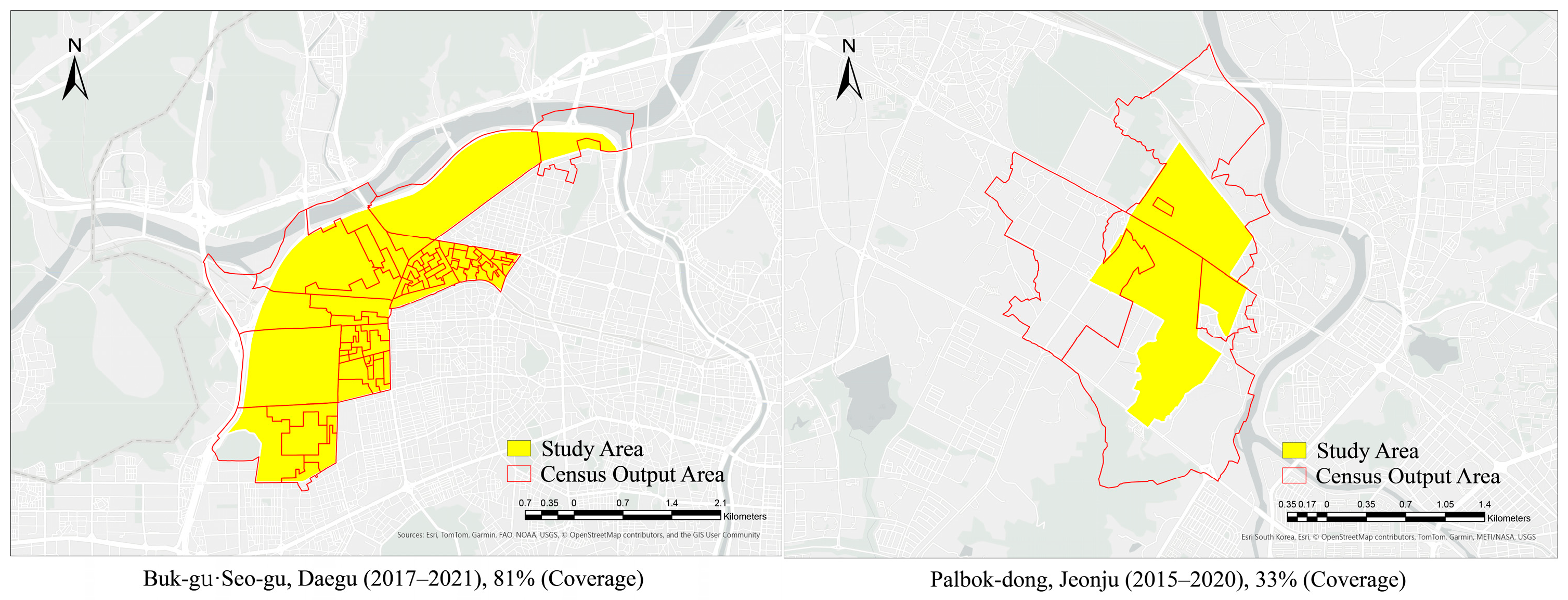
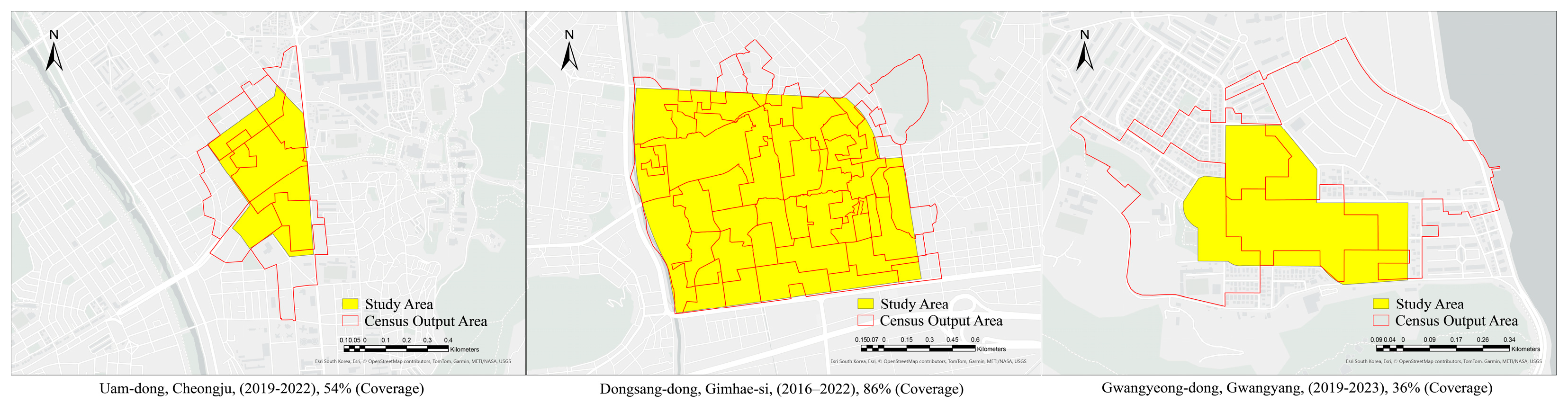
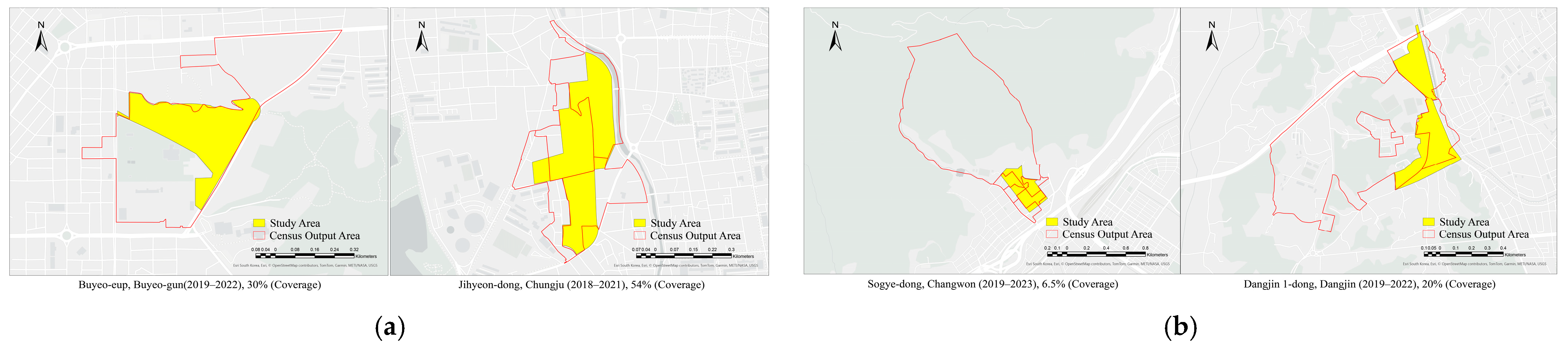
To offer a spatial context for the study sites,
Figure 1,
Figure 2 and
Figure 3 illustrate representative examples of each project typology.
Figure 1 shows two economy-based regeneration sites in Daegu and Jeonju, with project boundaries delineated (yellow) overlaid on base maps, and labels indicating implementation years and VIIRS NTL coverage ratios for each project.
Figure 2 showcases three central commercial area projects located in Cheongju, Gimhae, and Gwangyang, which represent traditional city centers characterized by dense commercial corridors (project extents are outlined in these maps).
Figure 3 depict four residential support projects situated in Buyeo, Chungju, Changwon, and Dangjin, where the project polygons are embedded within broader urban fabrics predominantly defined by low-rise housing and mixed land uses.
These visual representations underscore two fundamental methodological challenges that drive the necessity for integrating multiple data sources. First, the project polygons frequently cover a very small area relative to the 500 m spatial resolution of the NTL data, a characteristic particularly evident in residential support areas with intricate street networks and irregular lot configurations. Second, project boundaries seldom align neatly with the administrative units typically used in official statistical datasets, significantly complicating the accurate allocation of demographic and economic data to specific project areas. The methodological protocols elaborated in the subsequent subsections are designed to overcome these challenges through the judicious combination of diverse forms of remotely sensed and administrative data.
3.2. Nighttime Lights Data
For the analysis of nighttime luminosity patterns, we utilized VIIRS Day/Night Band (DNB) products systematically generated by the U.S. National Oceanic and Atmospheric Administration (NOAA). Monthly cloud-free composites (VCMSLCFG) were acquired, covering the period from 2010 through 2022, to include multiple years both prior to and following the implementation periods of the selected regeneration projects. VIIRS DNB provides radiance values at a nominal spatial resolution of approximately 500 m (day/night average), with 14-bit quantization. This represents a substantial enhancement over the earlier DMSP-OLS sensors in terms of radiometric sensitivity and reduced saturation in brightly lit areas [
23,
27,
34].
To contextualize the VIIRS DNB observations within the broader landscape of available nighttime lights products, we distinguish between the original NASA/NOAA VIIRS sensor data (as used in this study) and the derived VIIRS Nighttime Lights (VNL) annual composites (Version 2) that provide consistently processed yearly datasets.
Table 2 summarizes the salient characteristics of these products, including spatial resolution, temporal coverage, and typical use cases, drawing upon established validation studies that have leveraged NTL as proxies for economic activity and urbanization [
20,
21,
22,
23,
24,
34].
In this study, we opted for the monthly VIIRS DNB composites over the annual VNL products due to the former’s finer temporal granularity and greater flexibility for quality control. For each monthly composite, pixels contaminated by stray light, lightning, lunar illumination, or sensor edge effects were rigorously excluded using the quality flags provided by NOAA. Subsequently, annual mean radiance values were calculated by averaging the 12 monthly composites for each calendar year. This procedure adheres to best practices in contemporary NTL-based studies of economic activity and urban dynamics [
20,
21,
22,
23,
24,
34].
To assess data reliability within each project polygon, a coverage ratio was computed based on the cf_cvg variable, which quantifies the proportion of valid, cloud-free observations for every pixel. For each project and each year, the coverage ratio was defined as the mean cf_cvg across all pixels intersecting the project boundary. Projects and year-cases with exceptionally low coverage ratios were excluded from the temporal change analysis. As noted, economy-based and central commercial area projects generally attained coverage ratios well above 50%; however, certain residential support projects showed lower ratios, owing to their small polygon size and more frequent cloud cover. (In our dataset, coverage values below ~20% were treated as unreliable and omitted; thus, the few cases with around one-third coverage were still retained, as they exceeded this threshold and displayed discernible trends.) For each project, annual mean radiance values were extracted by overlaying the project polygon on the annual VIIRS mosaics and averaging radiance across all intersecting pixels. In addition, buffer zones (of 500 m) were generated around each project to capture potential spillover effects in adjacent areas. The resulting time series of mean radiance within both project and buffer zones forms the basis for analyzing NTL dynamics across different project types and for correlating luminosity changes with administrative data on local economic activity.
3.3. Sentinel-2 Imagery and Spectral Indices
To complement the NTL data and capture nuanced physical and environmental transformations not discernible through nighttime illumination, particularly in residential support projects, we utilized optical imagery from the Sentinel-2 mission (European Space Agency). Sentinel-2 provides global coverage with revisit intervals of ~5 days, and supplies spectral bands at 10 m and 20 m resolutions across visible, near-infrared (NIR), and shortwave infrared (SWIR) wavelengths. These characteristics make Sentinel-2 well-suited for high-resolution detection of vegetation, impervious surfaces, and land cover changes at detailed neighborhood scales [
18,
25].
Level-2A surface reflectance images from 2017 to 2024 were acquired, covering implementation and post-implementation periods for the residential support projects. All images underwent preprocessing, including cloud/shadow masking (using the provided scene classification layer and an Fmask algorithm), atmospheric correction, and resampling to a common 10 m grid. For each project and each reference year, we selected cloud-free scenes from the peak growing season and generated median composites. This approach mitigates the influence of any residual atmospheric noise and transient land-cover anomalies [
18,
22,
25].
From the processed Sentinel-2 imagery, we derived two key spectral indices. The Normalized Difference Vegetation Index (NDVI) was computed using the NIR (B8) and RED (B4) bands:
which captures vegetation cover and vitality, and has been widely applied to assess urban green infrastructure and ecological quality [
19,
22]. Similarly, the Normalized Difference Built-up Index (NDBI) was calculated from the SWIR (B11) and NIR (B8) bands:
which reflects the intensity of built-up impervious surfaces and is commonly used to map urban expansion and surface sealing [
18,
25]. The synergistic interpretation of both NDVI and NDBI proved particularly enlightening for distinguishing forms of urban transformation such as densification versus greening [
22,
25].
For each residential support project and corresponding reference years, we computed the mean and examined the distribution of NDVI and NDBI values both within the project polygon and in the surrounding census output areas. This comparative approach allowed us to differentiate project-level changes from broader neighborhood trends. Detailed NDVI and NDBI maps were also generated to visually inspect the spatial configuration of changes, aiding the identification of phenomena such as the creation of new small parks, the conversion of bare ground into paved lots, or the partial demolition and rebuilding of structures (Note that the minimum and maximum NDVI/NDBI values can be negative; indeed, NDVI ranges from –1 to 1, and negative values typically correspond to non-vegetated or newly paved surfaces such as water or fresh asphalt. All values observed in our data fell within expected ranges for these indices, and no anomalous outliers were detected).
3.4. Auxiliary Spatial and Statistical Data
The remotely sensed data were comprehensively augmented by several crucial types of ancillary information to enhance interpretability and control for potential confounding influences. Firstly, administrative statistics detailing the number of business establishments and employees, disaggregated by industrial sector, were assembled from official Korean government sources. These data serve to construct robust indicators of economic activity within each project area and its surrounding environs. Acknowledging that statistical units do not invariably align with project boundaries, we employed standard areal interpolation practices by spatially intersecting unit polygons with project polygons and allocating counts proportionally to overlapping areas.
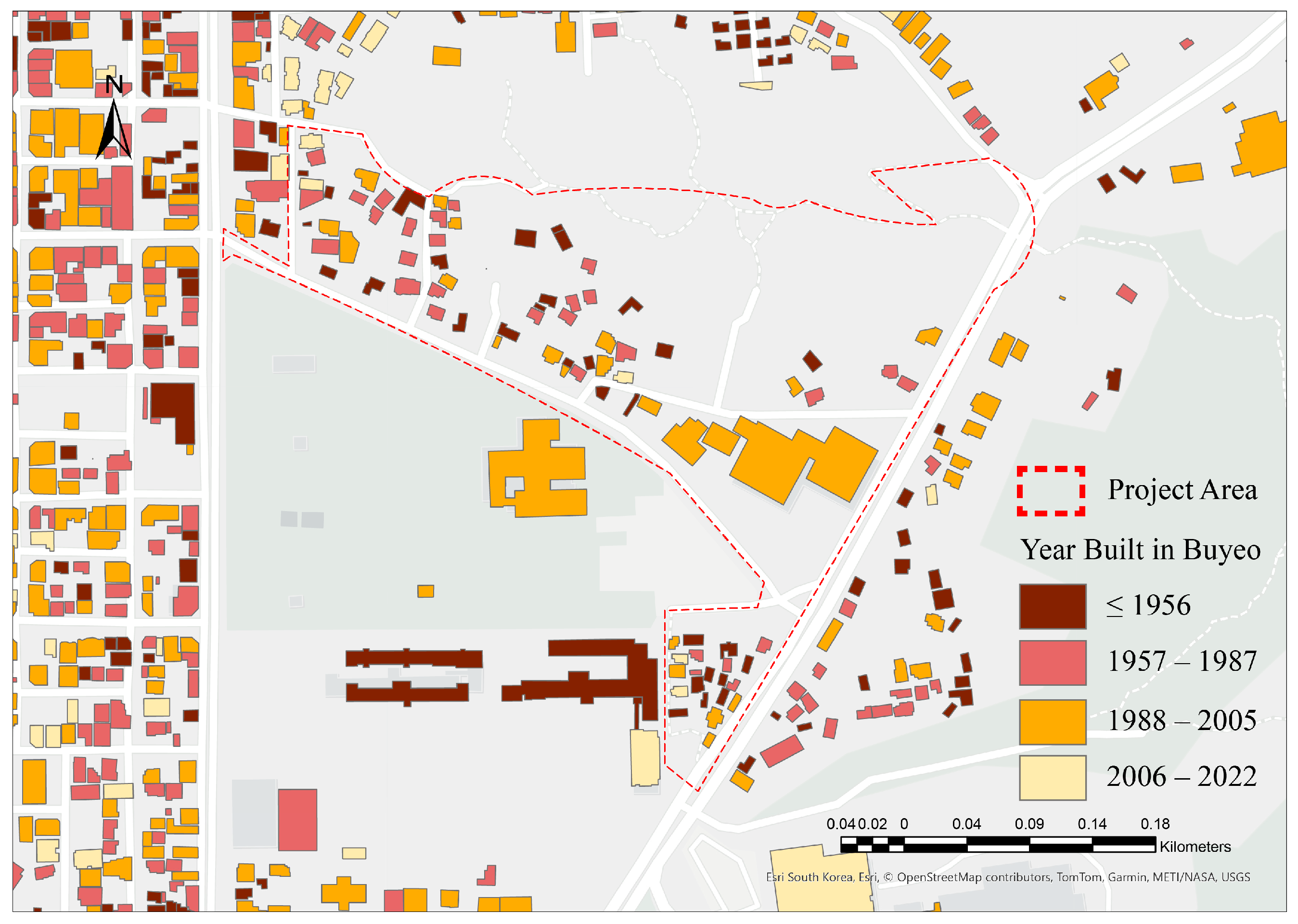
Secondly, we utilized building register data to construct precise measures of building age structure within each project. Buildings were systematically classified into distinct age cohorts, which allowed for a nuanced characterization of the prevalence of older housing stock and an examination of whether regeneration projects were causally associated with shifts in the distribution of building ages. This information is profoundly significant for residential support projects, where the explicit objective often involves the reduction in aging and substandard dwellings.
Thirdly, we compiled comprehensive spatial information concerning proximate development projects. This included designated urban development districts, planned residential sites, and large-scale redevelopment zones situated within an approximate two-kilometer radius of each regeneration project. These ancillary data are instrumental in contextualizing the observed changes in NTL, NDVI, and NDBI, by indicating whether such changes might be attributable to external development pressures rather than solely to the regeneration initiatives themselves.
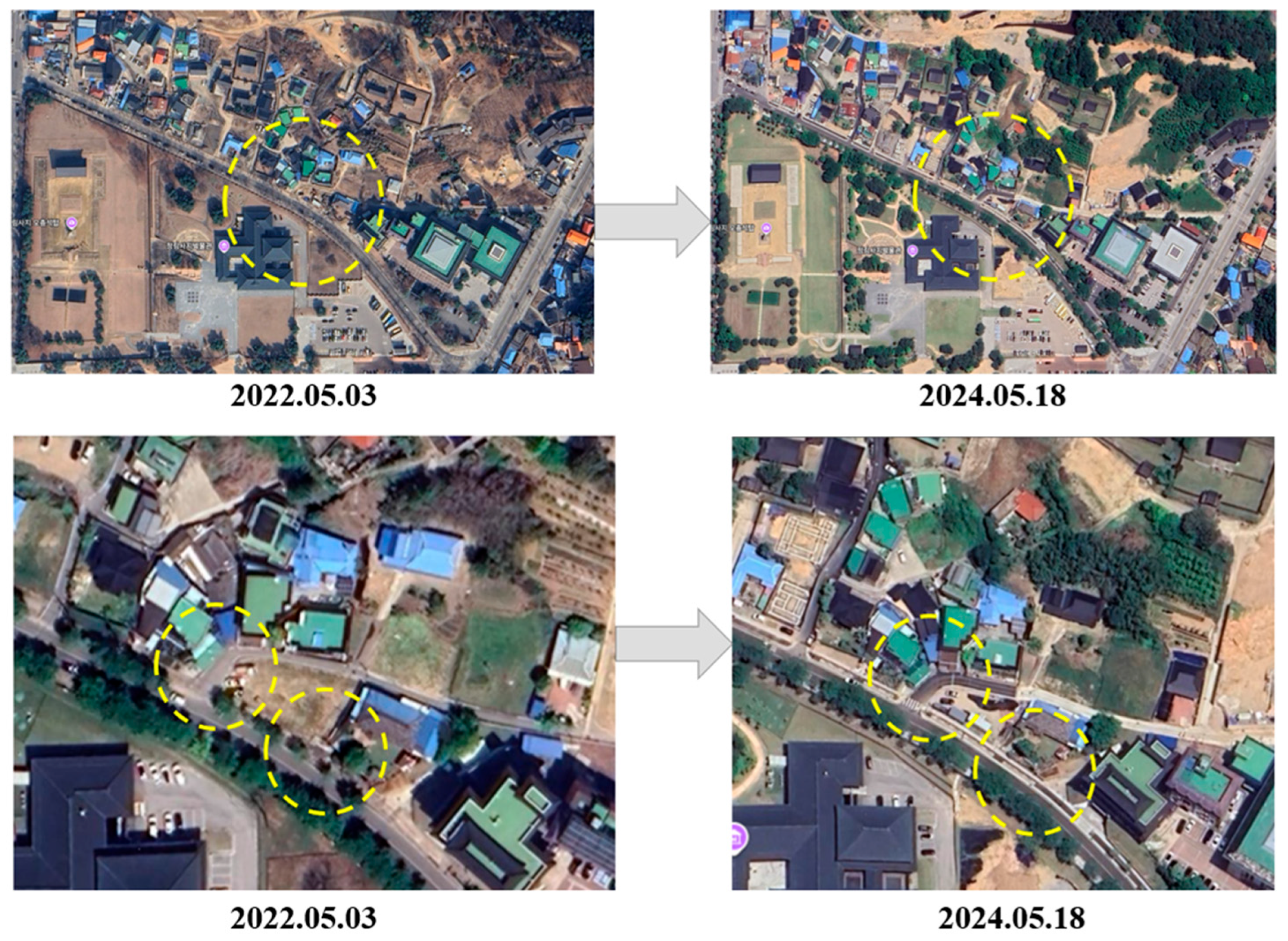
Fourthly, we systematically leveraged high-resolution time series imagery from platforms such as Google Earth. This served as a qualitative, yet spatially explicit, reference for rigorously verifying remote sensing-based interpretations. Such imagery permitted the visual inspection of micro-scale changes, including, but not limited to, the addition of sidewalks, alterations to alleyway widths, the construction of small parking lots, and the renovation of individual buildings. These subtle transformations, while central to the objectives of residential support projects, might not be fully discernible even at the 10 m resolution of Sentinel-2. This method of visual validation has been widely recommended in contemporary reviews of urban remote sensing as an invaluable complement to quantitative indices when assessing localized environmental change.
Together, this integrated combination of NTL, Sentinel-2 derived indices, comprehensive administrative statistics, and judiciously selected auxiliary spatial data furnishes a robust, multilayer empirical foundation. This foundation facilitates a thorough examination of how diverse indicators respond to various typologies of urban regeneration and permits a rigorous evaluation of their suitability within project type-specific assessment frameworks.
3.5. Analytical Workflow
The analytical workflow of this study was structured into four sequential stages: (1) data collection and preprocessing, (2) indicator construction, (3) comparative analysis, and (4) synthesis of findings. Each stage was designed to integrate the NTL, Sentinel-2, and administrative datasets into a coherent evaluation framework tailored to diverse types of small-scale urban regeneration projects.
In the first stage, we compiled polygon boundaries for all 46 projects, assembled the relevant business and demographic statistics, and acquired the full time series of VIIRS DNB and Sentinel-2 imagery. NTL data were subjected to quality screening, aggregated to annual means, and spatially intersected with project and buffer polygons to produce radiance time series. Sentinel-2 data were cloud-masked, corrected, composited, and then used to calculate NDVI and NDBI for each project and its surrounding neighborhood.
In the second stage, we derived measures capturing the luminosity and spectral dynamics for each project. From the NTL data, we computed baseline brightness levels, annual change rates, and pre-to-post-project differences in mean radiance. From the Sentinel-2 data, we calculated changes in mean NDVI and NDBI between pre-project and post-project reference years, and examined shifts in the distributions of these indices within project areas. These indicators were then combined with ancillary statistics on establishments, employment, and building age to provide a multidimensional profile of change for each site.
The third stage employed a spatially comparative diagnostic design, incorporating both qualitative and quantitative assessments. We compared NTL change trajectories across the three project types, evaluating whether economy-based and central commercial area projects showed a stronger correspondence between radiance changes and economic indicators. To address the need for a more formal comparative focus, the analysis treated the surrounding 500 m buffer zones and adjacent census units as localized control units. For residential support projects, we focused on the extent to which NDVI and NDBI captured physical and environmental improvements that were not reflected in NTL trends. By comparing changes inside project boundaries to those in the surrounding buffer zones, the study sought to distinguish project-related transformations from broader regional socioeconomic trajectories.
In the fourth stage, we integrated all results to derive broader implications for designing evaluation frameworks for small-scale urban regeneration in non-metropolitan areas. By synthesizing findings across the 46 cases through a cross-situational logic, we were able to discern which project types are well-served by luminosity-based indicators and which require high-resolution spectral information. This multi-layer approach directly responds to calls in the urban regeneration and geospatial literature for indicator systems that are both empirically grounded and sensitive to local spatial conditions, providing a robust diagnostic foundation for policy evaluation in data-constrained environments.
4. Results
4.1. Spatial Patterns of NTL Change Across Project Types
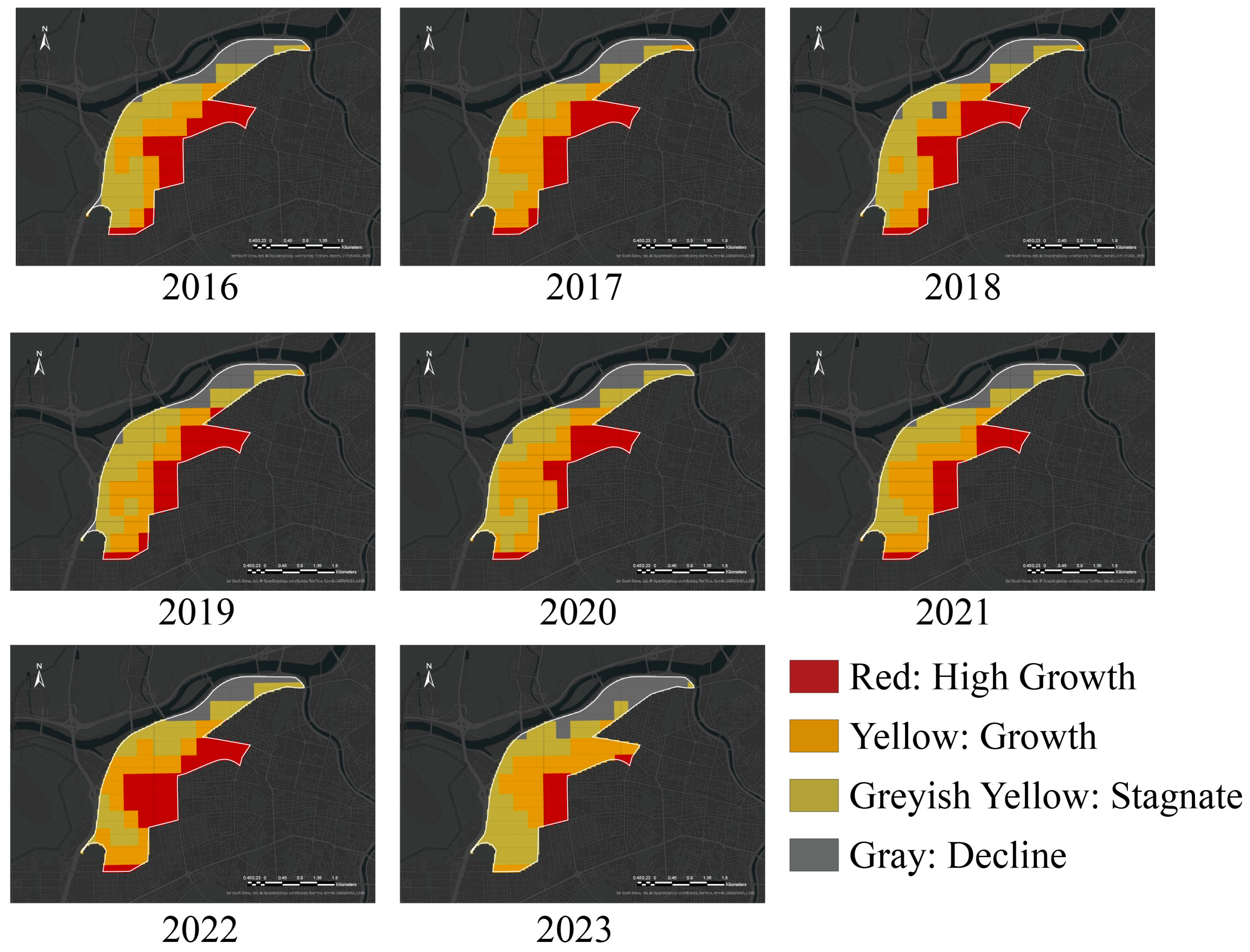
We first examined the spatial dynamics of nighttime lights across the 46 regeneration sites, focusing on representative cases where VIIRS-DNB data coverage was high and radiance changes were clearly detectable. Five illustrative cases are highlighted, spanning the three project categories: economy-based regeneration (Daegu and Jeonju), central commercial area revitalization (Gimhae, Cheongju, and Gwangyang), and a residential-support case where NTL signals were minimal.
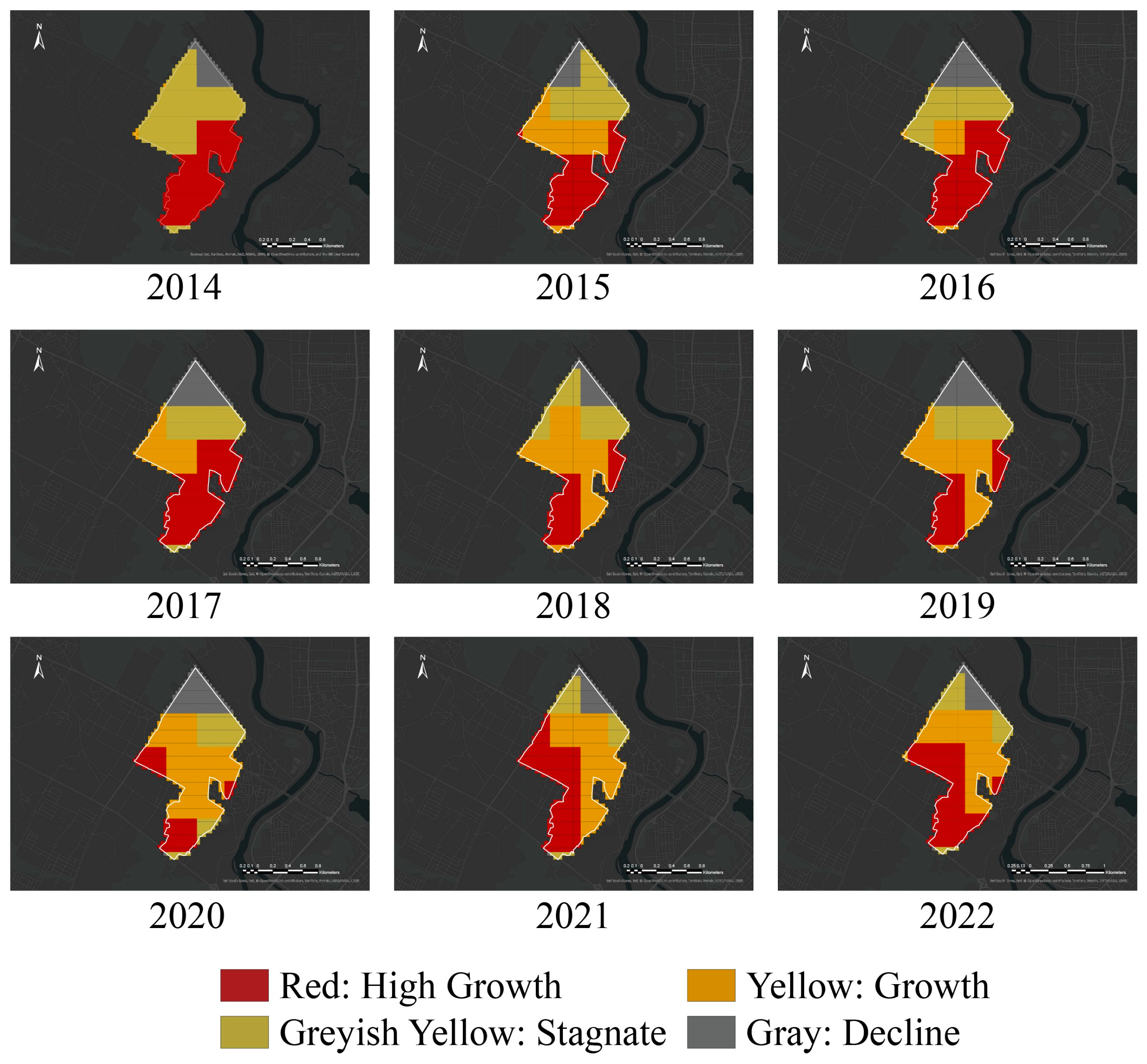
Figure 4 shows the NTL change map for the Daegu economy-based project. Brightness increases were modest and concentrated near industrial facilities, reflecting a focus on upgrading existing operations rather than introducing new light-intensive activities. In contrast,
Figure 5 (Jeonju, economy-based) reveals a sharp radiance increase both within and around the project site, indicating that this project’s industrial restructuring was accompanied by diversification into evening-oriented activities (e.g., creative or cultural industries) that boosted overall nighttime brightness.
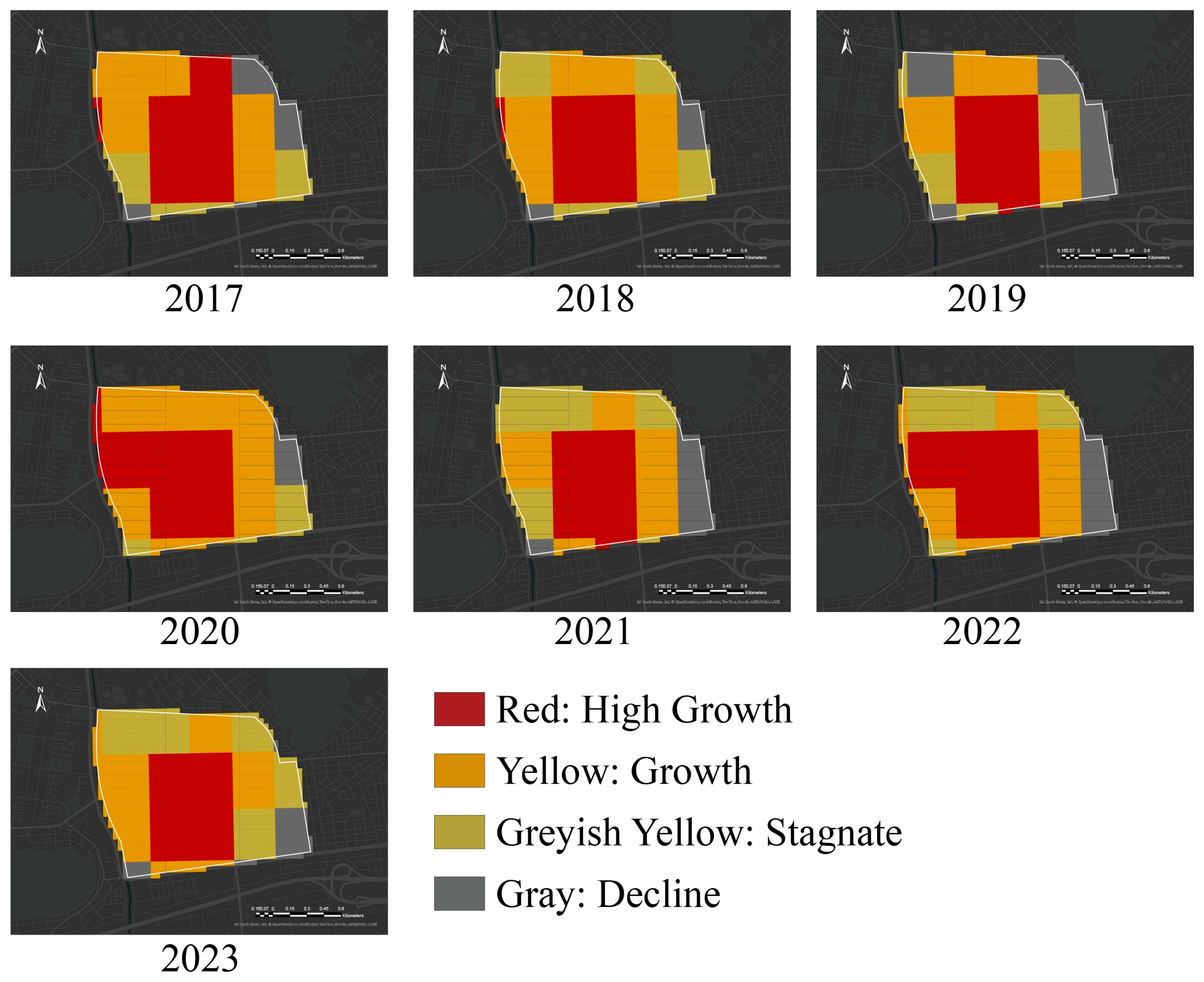
Figure 6,
Figure 7 and
Figure 8 present NTL change maps for the three central commercial area projects. Gimhae displays a cohesive but moderate radiance increase along its main commercial street, whereas Cheongju and Gwangyang show more pronounced and spatially diffuse brightening, especially in zones of retail and service expansion. These cases confirm that central commercial area projects tend to generate detectable NTL responses due to the intensification of economic activity, increased pedestrian flows, and extended business hours following regeneration. Notably, a separate evaluation of the Cheongju Jungang-dong project documented increased pedestrian activity and business vitality after project completion, consistent with the radiance gains observed in that area.
The spatial visualizations of NTL in these cases provided the empirical basis for assessing how project type, local economic structure, and baseline urban form influence radiance sensitivity. Each figure includes a legend and uses a consistent color scale, with brighter tones indicating areas of radiance increase. These qualitative patterns also informed the design of the subsequent quantitative analysis.
4.2. NTL Coverage, Radiance Change, and Economic Activity
Building on the spatial examination, we investigated how NTL changes correspond to basic characteristics of the project areas, including VIIRS data coverage and changes in local economic indicators. Five representative sites were selected based on data completeness and the availability of administrative statistics. These include Daegu and Jeonju (economy-based), as well as Gimhae, Cheongju, and Gwangyang (central commercial).
Table 3 summarizes the VIIRS-DNB coverage ratios, annual NTL change rates, and the relative change in number of business establishments and employees for these five sites. Several patterns emerge. First, sites with higher VIIRS data coverage tend to exhibit smoother radiance time series, lending confidence to the observed trends. Second, the magnitude and direction of NTL change align with the nature of the regeneration strategy in each area.
For example, the Daegu project recorded a relatively modest radiance increase, despite having one of the highest coverage ratios among the sample. This outcome reflects the project’s emphasis on upgrading industrial facilities, improving transportation conditions, and enhancing worker welfare rather than introducing new commercial functions. In contrast, Jeonju demonstrated a substantial rise in NTL values even with lower data coverage. The sharp radiance increase in Jeonju corresponds to the simultaneous transformation of industrial functions and diversification into cultural and creative industries, which stimulated broader evening and night activity within the area.
The three central commercial area projects exhibit a different dynamic. All three demonstrate notable gains in establishments and employees, and these increases often align with observable radiance enhancement. Gimhae, which features the highest coverage level among the entire sample, shows a moderate NTL increase but strong positive growth in business statistics. This suggests that some forms of commercial revitalization, such as improvements to the pedestrian environment, tenant turnover, and functional reorganization of commercial blocks, do not necessarily manifest as proportional radiance increases. Cheongju and Gwangyang both show higher radiance sensitivity, especially in districts where retail and service activities expanded most rapidly.
Taken together, these results indicate that NTL data are particularly effective for capturing changes linked to commercial and industrial intensification. However, the relationship between radiance and economic indicators is not linear and is influenced by local spatial structure, baseline activity patterns, and the specific configuration of regeneration measures. These findings reinforce the importance of interpreting NTL variation within the contextual conditions of each project type.
4.3. Sentinel-2 NDVI and NDBI as Indicators of Environmental and Physical Change
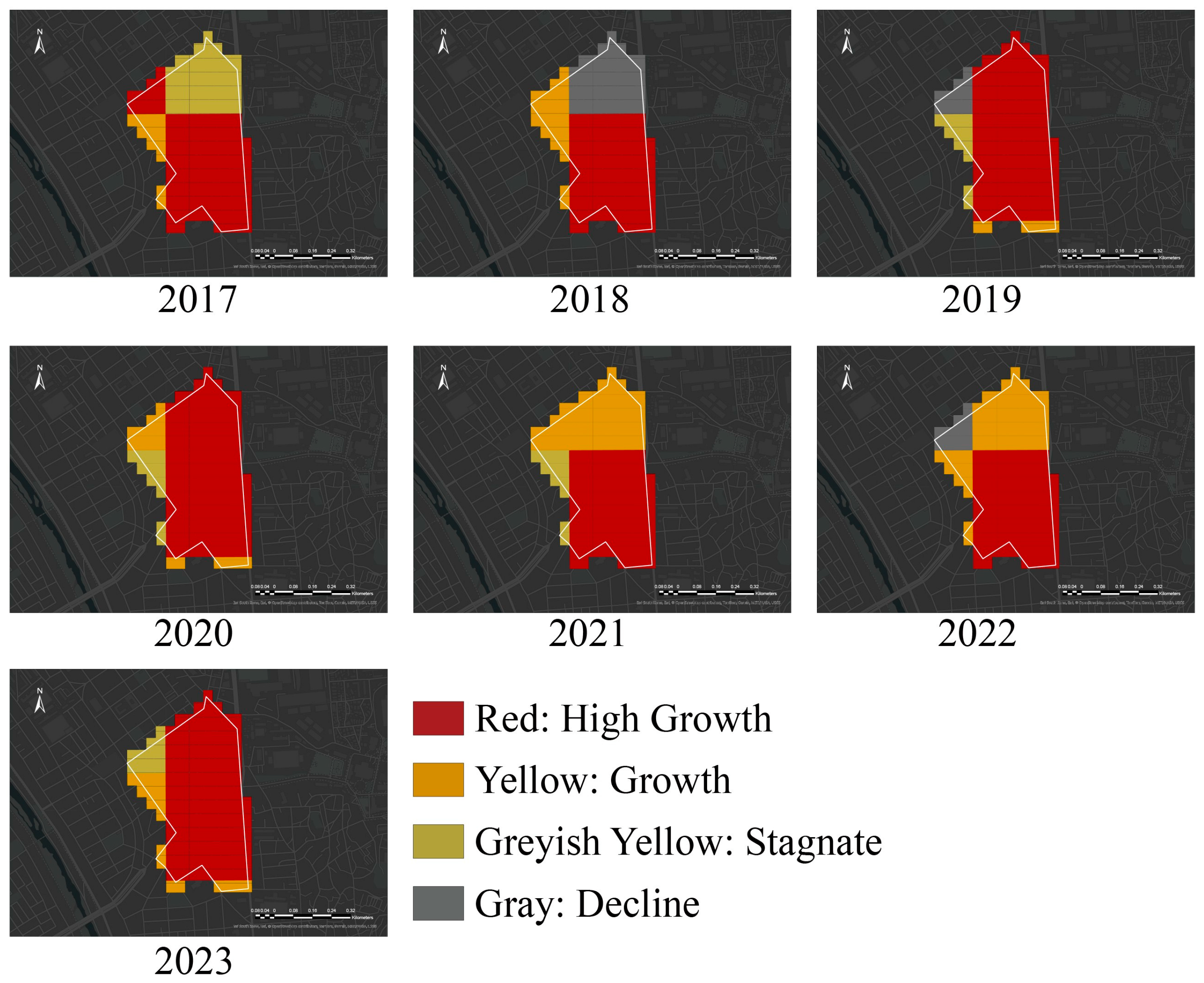
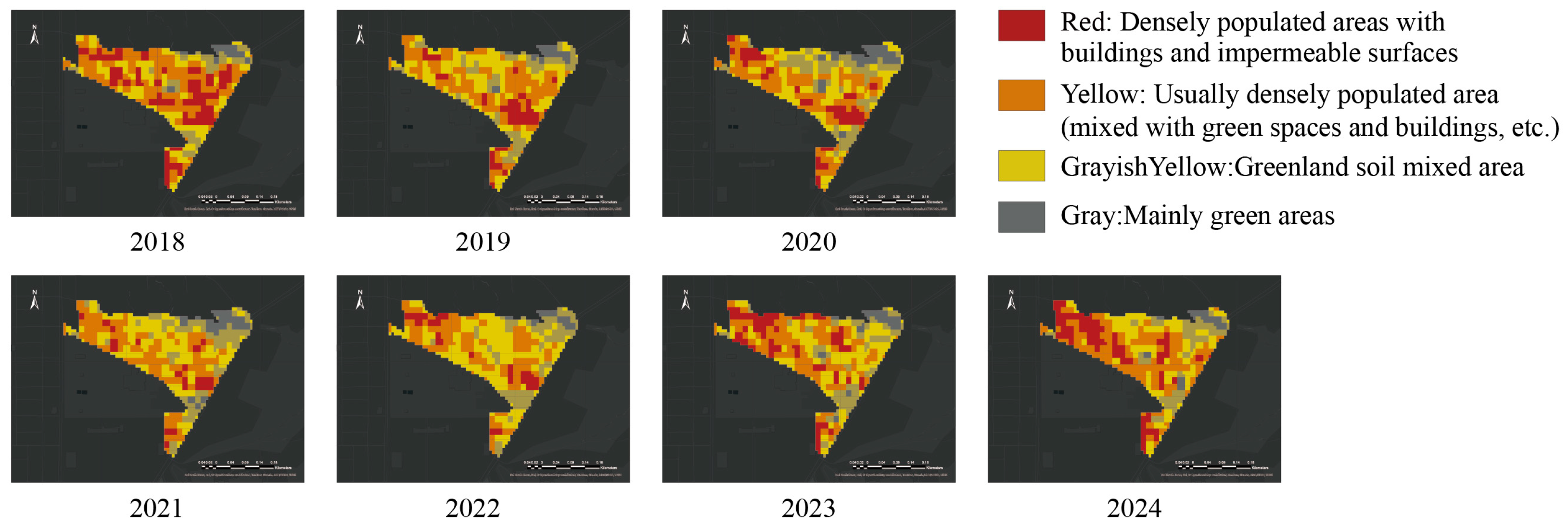
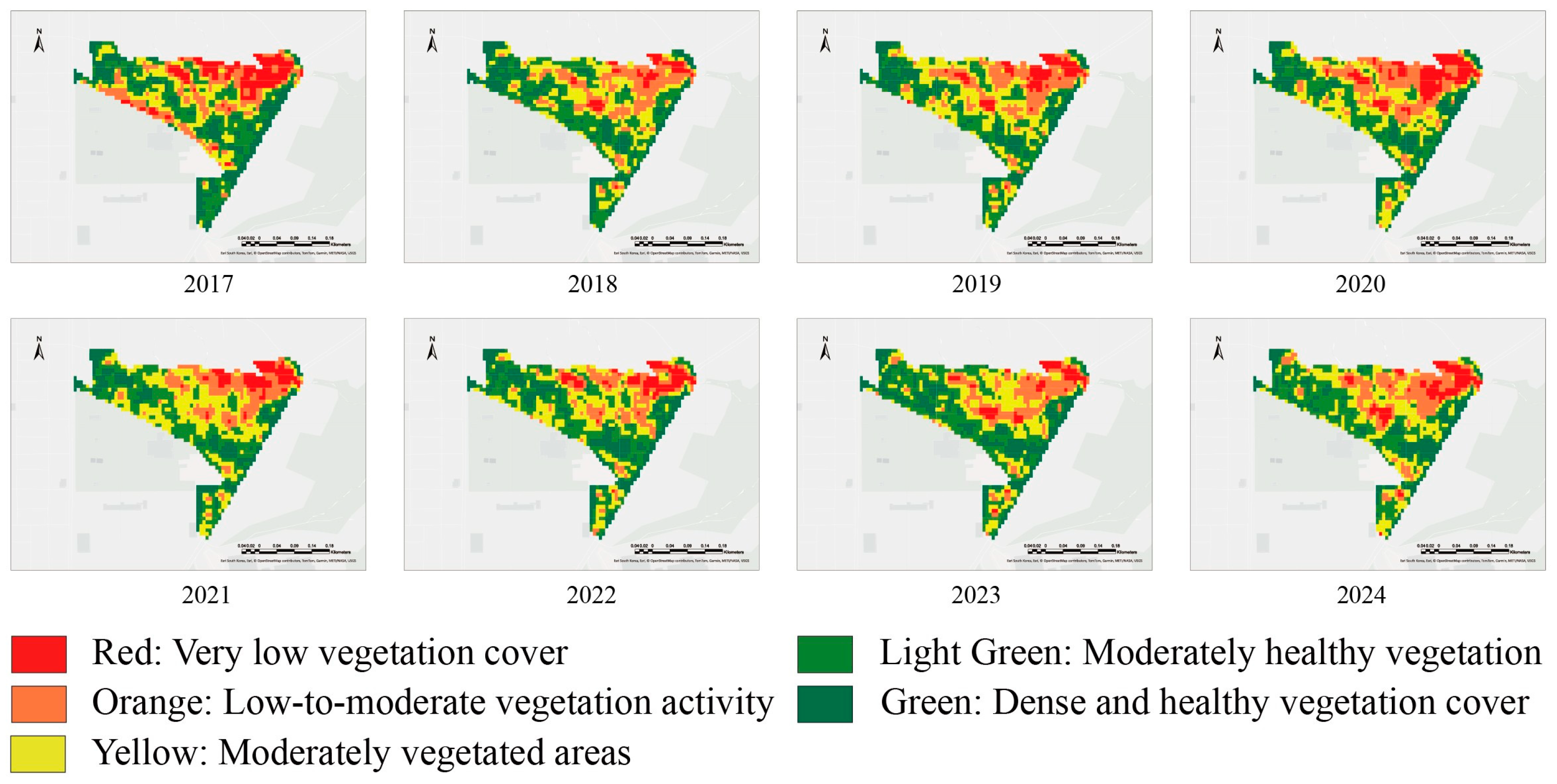
To complement the NTL-based assessment and to address its known limitations in residential-support contexts, Sentinel-2 derived NDVI and NDBI indices were examined to capture micro-scale physical and environmental transformations within regeneration areas. Because NTL signals remained weak across most residential-support sites, the spectral analysis focused on detecting changes in vegetation cover, impervious surfaces, and micro-level land-use adjustments that are not reflected in nighttime radiance. Among the four residential-support sites analyzed, the Buyeo project provided the clearest temporal and spatial signals across both indices. Therefore, Buyeo is presented as the primary illustrative case, with the remaining three sites briefly discussed to highlight broader trends.
Figure 9 illustrates the temporal evolution of NDBI in the Buyeo project area. Across the 2018–2024 period, NDBI values initially increased modestly, reflecting incremental additions of paved surfaces and small-scale physical improvements associated with alleyway upgrades, sidewalk repairs, and the installation of parking areas. After 2021, however, NDBI gradually declined, indicating a stabilization of physical interventions and a resettling of land-cover conditions.
Table 4 presents the descriptive statistics for NDBI across the full time series. The downward trend in mean values after 2022 suggests that initial construction-related land disturbances subsided over time, while impervious surfaces underwent moderate reconfiguration rather than expansion.
Figure 10 shows the corresponding NDVI changes in Buyeo. NDVI increased steadily from 2018 to 2021, consistent with the installation of pocket parks, tree planting along pedestrian pathways, and the redesign of open spaces within the project boundary. As with NDBI, NDVI exhibited a decline after 2022, though mean values remained higher than at the beginning of the project period.
Table 5 summarizes the NDVI distributional statistics, which indicate that vegetation cover improved during the early project years but diminished slightly as construction activities intensified and temporary surface disturbances occurred. This pattern highlights that NDVI is particularly sensitive to short-term vegetation losses even when longer-term greening initiatives remain intact.
Taken together, the combined interpretation of NDBI and NDVI in Buyeo demonstrates the advantage of multispectral Sentinel-2 indicators for detecting subtle land-cover adjustments. Whereas NTL values exhibited minimal change throughout the project period due to the primarily residential context of intervention, the multispectral indices captured quantifiable variations linked to environmental improvements and physical restructuring at the neighborhood scale.
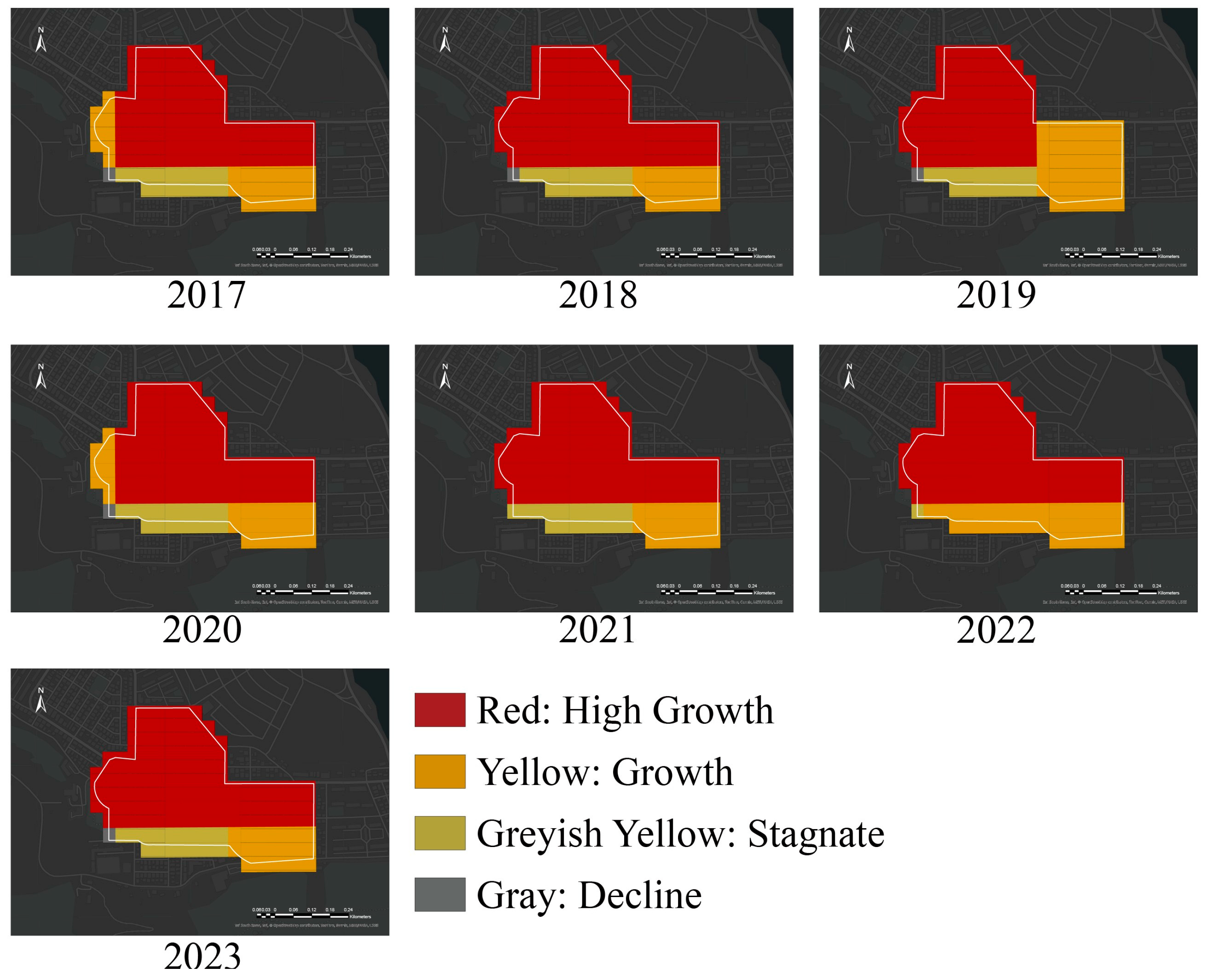
As illustrated in
Figure 11 and
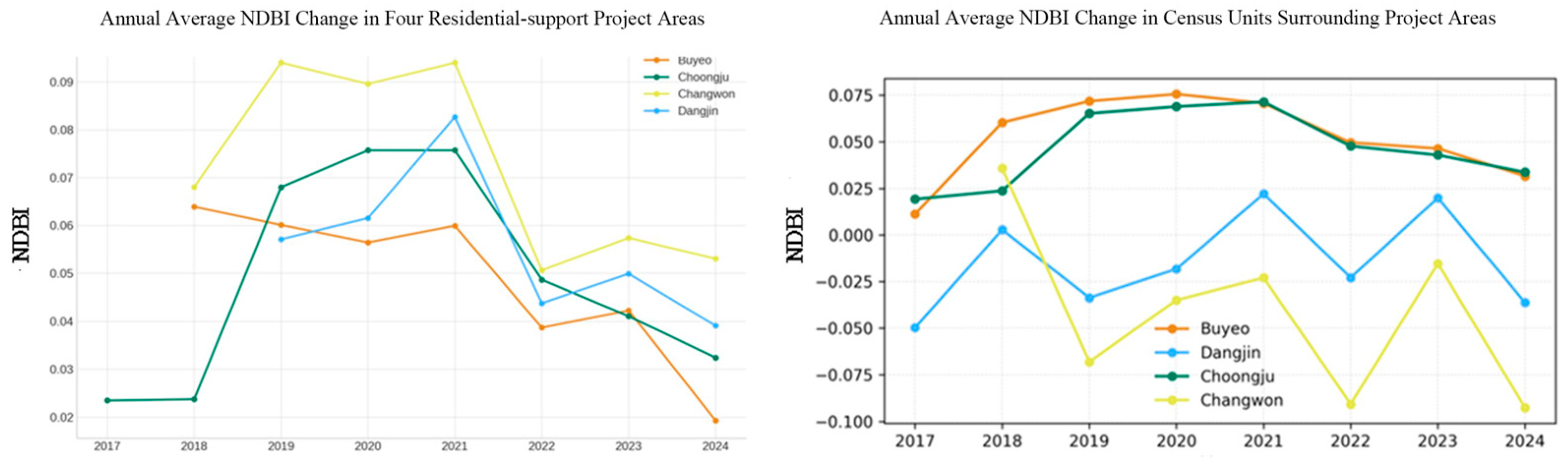
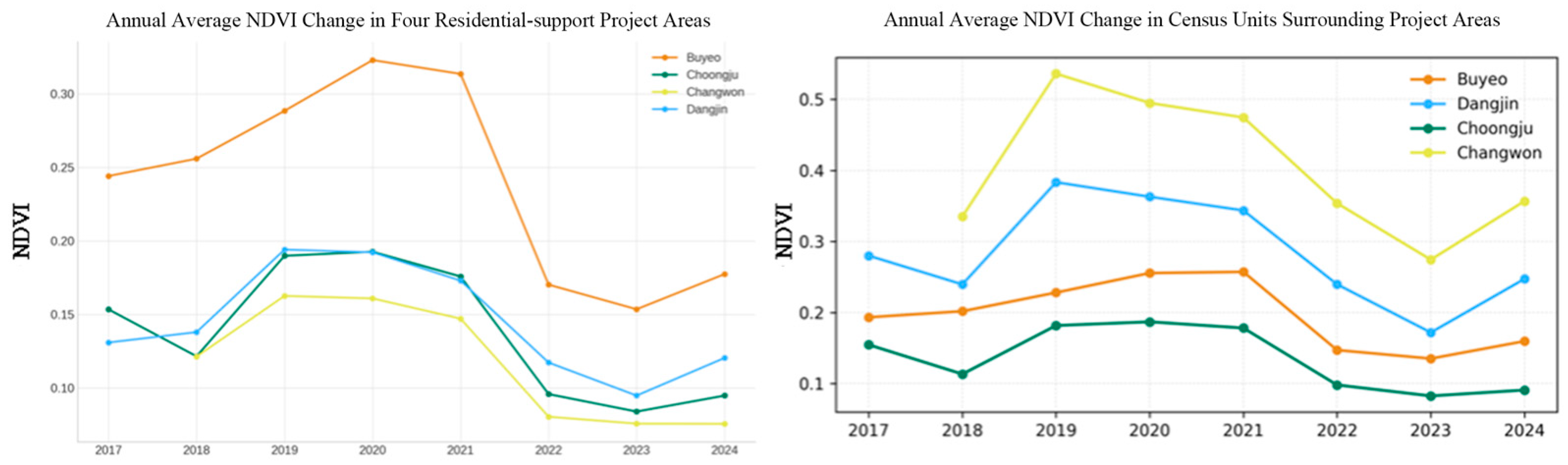
Figure 12, the remaining three residential-support sites (Changwon, Chungju, and Dangjin) display broadly comparable patterns. NDBI values typically rose during the early stages of project implementation, corresponding to street improvements, housing repairs, and minor infrastructure upgrades, and subsequently stabilized or declined after 2022. NDVI followed a similar arc, with increases during the greening and open-space enhancement phases, followed by modest declines as redevelopment activity progressed. Across all four sites, the magnitude of index changes was more pronounced within the project polygons than in the surrounding census areas, confirming that Sentinel-2 indices are capable of distinguishing site-specific interventions from broader district-level environmental trends.
These findings underscore the complementary role of high-resolution multispectral data in the evaluation of residential-support regeneration projects. Whereas NTL effectively captures commercial or industrial intensification, Sentinel-2 imagery offers a more sensitive measure of physical and environmental improvements that unfold at finer spatial scales and do not manifest as changes in nighttime radiance.
4.4. Comparative Trends in NDBI and NDVI Across the Four Residential-Support Sites
Building on the detailed case analysis of Buyeo, the multispectral patterns were expanded to include all four residential-support sites: Buyeo, Changwon, Chungju, and Dangjin. To visualize broader temporal tendencies, annual mean NDBI and NDVI values for each site were aggregated and compared with the corresponding averages of their surrounding census units. This comparative assessment enabled the distinction between site-specific physical and environmental changes and background trends occurring at the neighborhood scale.
Figure 11.
Annual average NDBI trends for the four residential-support project areas and their surrounding census units.
Figure 11.
Annual average NDBI trends for the four residential-support project areas and their surrounding census units.
The comparative NDBI trajectories demonstrate a consistent pattern across the four sites (
Figure 11). NDBI values generally peaked between 2019 and 2021, reflecting the timing of construction activity, street surface improvements, and localized infrastructure adjustments associated with project implementation. After 2022, NDBI values declined in all sites, indicating the completion of major physical works and the stabilization of land-cover conditions. Whereas NDBI within project polygons showed pronounced short-term variability due to localized interventions, the surrounding census units exhibited smoother and more gradual changes. This contrast suggests that project-site NDBI reacts more sensitively to micro-level physical adjustments than the broader neighborhood environment.
A similar pattern is observed for NDVI (
Figure 12).
Figure 12.
Annual average NDVI trends for the four residential-support project areas and their surrounding census units.
Figure 12.
Annual average NDVI trends for the four residential-support project areas and their surrounding census units.
NDVI values increased during the early project stages, especially between 2018 and 2021, coinciding with the installation of small parks, planting initiatives, and open-space enhancement programs characteristic of residential-support regeneration. All sites recorded a noticeable decline after 2022, reflecting either temporary vegetation disturbance due to construction or a plateau in greening activities once initial improvements had been delivered. As with NDBI, NDVI fluctuations were more pronounced within project areas, while surrounding census units displayed more moderate and stable transitions. This indicates that vegetation and surface-cover changes triggered by regeneration were highly localized and did not significantly spill over into adjacent neighborhoods.
To summarize these temporal patterns, the direction of NDBI and NDVI change for each site was classified based on the observed trends.
Table 6 presents the combined interpretation framework.
This classification provides an interpretive lens for understanding the distinct environmental trajectories of residential-support regeneration projects. Unlike commercial or industrial projects, where NTL serves as a strong proxy for economic activity, residential-support initiatives require spectral indicators such as NDVI and NDBI to capture subtle, micro-scale transitions. By jointly considering the two indices, the analysis reveals whether regeneration activity primarily influenced surface materials, vegetation conditions, or both. These insights highlight the importance of multispectral remote sensing for monitoring regeneration programs that emphasize environmental quality and neighborhood livability rather than economic expansion.
4.5. Visual Verification Using Google Earth Imagery
To assess whether the spectral signals correspond to visually observable physical changes, high-resolution Google Earth imagery was used as an auxiliary qualitative reference (
Figure 13). The Buyeo site was selected for illustration because the physical improvements were clearly identifiable in the images, whereas other sites showed subtler modifications that were less visible in overhead views.
The comparison reveals improvements in pedestrian pathways, upgraded street surfaces, and the addition of newly delineated sidewalks. The highlighted sections show areas where pedestrian markings were introduced and new walkways were constructed. These visible enhancements align with the NDBI decrease observed after 2022, reflecting the completion of physical works and the transition from active construction to stabilized urban form.
The convergence of visual evidence with spectral indices reinforces the interpretation that residential-support regeneration produces meaningful, though spatially compact, improvements that may not appear in NTL data but can be captured through Sentinel-2 imagery and ground-level observations.
4.6. Structural Context: Building Age Distribution
Because the physical changes observed might be influenced by underlying urban structure, we also examined the building age distribution in the regeneration areas.
Figure 14 maps the building ages in Buyeo’s project area. A large share of buildings date to the 1950s–1980s, indicating an aging residential stock prior to regeneration. This context helps explain the focus on pedestrian improvements and basic infrastructure upgrades—many structures and streets were several decades old and in decline. The prevalence of older buildings also suggests that some spectral changes (e.g., minor NDBI fluctuations) could be related to ongoing deterioration or gradual replacement of old structures in parallel with the regeneration efforts.
In Buyeo’s case, no widespread redevelopment (i.e., wholesale replacement of old buildings with new ones) occurred during the study period; rather, the project sought to improve the environment while preserving existing buildings. Thus, the building age map largely remained unchanged, but it underscores why the project’s interventions were needed and where further changes might occur beyond our observation window.
4.7. Surrounding Development Context and Its Influence on Local Land-Cover Dynamics
Finally, we evaluated broader spatial processes around the regeneration sites to see if external developments might have contributed to the observed changes. In Chungju, the project lies in a landscape of active development: a small urban development zone within ~2 km and a large planned residential area immediately south of the site. Additional new development districts are located slightly farther out. This broader development context provides a backdrop for the moderate decreases in NDVI and NDBI after 2021, as nearby construction and land-use change could have influenced local conditions.
Dangjin presents an even more pronounced case of external influence. Several large-scale housing and urban development projects surround the regeneration site, effectively enveloping it in ongoing construction and land conversion. In such a setting, it becomes challenging to disentangle the spectral effects of the regeneration project from those of the concurrent developments. The downward trends in NDVI and NDBI after 2022 in Dangjin may partly reflect this spillover of regional development dynamics. New construction in the vicinity could lead to vegetation removal lowering NDVI and increased surface disturbance or dust that alters reflectance affecting the indices.
These observations underscore the importance of situating project-level changes within their wider territorial environment. While our analysis focused on within-project improvements, the interpretation of those changes benefits from an understanding of nearby developments. In non-metropolitan cities, multiple initiatives often unfold simultaneously; acknowledging their influence provides a more nuanced perspective on the regeneration outcomes and cautions against over-attributing all observed changes solely to the project itself.
5. Discussion and Conclusions
The findings of this study provide new empirical evidence on how nighttime lights (NTL), Sentinel-2 multispectral indices, and administrative statistics can be combined to evaluate the outcomes of small-scale urban regeneration projects in non-metropolitan contexts. The analysis addressed four research questions concerning the conditions under which NTL effectively detect regeneration-induced changes, the variation in NTL responsiveness across project types, the complementary value of NDVI and NDBI in residential-support projects, and the extent to which remote-sensed indicators capture changes beyond the immediate project boundaries. Taken together, the results highlight both the strengths and inherent limitations of NTL-based evaluation while demonstrating the value of multispectral data for capturing micro-scale environmental and physical transformations.
With regard to the first research question (RQ1) concerning the conditions that shape the effectiveness of NTL in detecting regeneration-related changes, the results suggest that NTL responsiveness is strongly dependent on baseline brightness conditions, the nature of local economic activity, and the scale of nighttime functional changes. Economy-based regeneration projects exhibit contrasting patterns in this respect. Daegu, which focused primarily on upgrading existing manufacturing operations without substantially altering industrial structure, recorded only modest increases in radiance despite high VIIRS-DNB coverage. In contrast, Jeonju—where industrial restructuring was accompanied by diversification into cultural and creative sectors—exhibited a notable rise in NTL intensity even under lower coverage conditions. These findings support the hypothesis that NTL captures changes most effectively when regeneration induces substantive shifts in evening and night-time economic activity rather than incremental improvements to infrastructure or production efficiency.
The second research question (RQ2) addressed variation in NTL sensitivity across project types. The three central commercial area projects demonstrated that commercial revitalization consistently generates detectable NTL increases. Sites such as Cheongju and Gwangyang showed clear radiance intensification aligned with expansions in retail and service activities, whereas Gimhae displayed stabilizing yet positive trends that corresponded to improvements in the pedestrian environment and commercial restructuring. These results affirm that NTL serves as a robust indicator for regeneration strategies focused on commercial activation, extended business hours, and increased pedestrian circulation. At the same time, the analysis cautions that NTL does not scale linearly with the magnitude of economic change. For example, Gimhae recorded strong growth in establishments and employment but only modest radiance increases, demonstrating that visible nighttime illumination is shaped not only by economic intensity but also by architectural form, lighting practices, and the spatial distribution of commercial functions.
The third research question (RQ3) considered the utility of Sentinel-2 multispectral indices as complementary indicators in residential-support projects where NTL signals remained weak. The analysis of Buyeo, along with the comparative trends observed across Changwon, Chungju, and Dangjin, demonstrates that NDVI and NDBI capture meaningful environmental and physical transformations that are not reflected in nighttime radiance. Both indices increased during early project stages—corresponding to greening initiatives, sidewalk improvement, and micro-scale construction—and declined after 2022 as land-cover patterns stabilized post-implementation. Importantly, project areas showed sharper fluctuations than surrounding census units, indicating that Sentinel-2 indices effectively detected localized interventions that did not generate nighttime illumination. These findings suggest that regeneration programs centered on livability, environmental quality, and public-space enhancement require high-resolution spectral indicators rather than NTL to evaluate their outcomes accurately.
The fourth research question (RQ4) addressed whether NTL and multispectral indicators detect changes that extend beyond project boundaries. The comparative analysis indicates that while project polygons experienced sharper and more volatile spectral changes, the surrounding census units exhibited smoother trajectories. This suggests that regeneration effects on land cover were largely contained within project areas. However, the review of external development conditions revealed that broader territorial processes—such as large-scale housing development near Dangjin and sequential development districts around Chungju—may have influenced spectral fluctuations after 2021. These observations underscore the importance of interpreting regeneration outcomes within their wider spatial context, particularly in non-metropolitan cities where multiple development initiatives may occur concurrently.
Overall, the study demonstrates that a combined NTL–Sentinel-2 framework provides a more nuanced understanding of small-scale regeneration outcomes than either data source alone. NTL is well suited to projects focused on economic activation and commercial intensification, offering a consistent, spatially explicit proxy for nighttime economic dynamics. By contrast, Sentinel-2 NDVI and NDBI offer crucial insight into environmental quality, land-cover restructuring, and micro-scale improvements in residential-support projects where NTL fails to capture meaningful change. The multi-layer approach also enables differentiation between regeneration impacts and broader regional development trajectories, particularly when supplemented with contextual information such as building age maps and external development plans.
Several implications arise from these findings. First, evaluation frameworks for urban regeneration should be tailored to project type, recognizing that indicators effective for commercial cores may be inadequate for residential environments. Second, remote-sensing data must be interpreted in relation to local structural conditions, including industrial composition, baseline illumination levels, and surrounding land-use pressures. Third, combining radiance- and reflectance-based indicators provides a more comprehensive understanding of regeneration, particularly in small settlements where conventional socio-economic datasets are limited. Lastly, the study contributes to ongoing discussions on developing scalable, transparent, and spatially explicit monitoring systems for urban regeneration, offering a methodological blueprint for integrating multiple forms of geospatial data.
In conclusion, the integration of NTL, Sentinel-2 multispectral imagery, and administrative datasets offers substantial promise for evaluating small-scale urban regeneration in non-metropolitan contexts. While NTL remains a powerful tool for detecting transformations associated with commercial and industrial activity, its limitations become evident in residential-support projects. In such cases, high-resolution spectral indices provide essential insights into environmental and physical improvements that unfold within compact urban areas. By applying this combined approach to a diverse set of regeneration projects, the study advances the development of a more adaptable and context-sensitive evaluation framework. Future research could expand on these findings by incorporating additional indicators such as land-surface temperature, pedestrian mobility patterns, or nighttime micro-environmental surveys, further enriching the capacity of remote sensing to support evidence-based regeneration policy and practice.
Despite the contributions of this study, several limitations should be acknowledged. One important limitation concerns the spatial resolution and coverage constraints of the nighttime lights data. The coarse resolution of the VIIRS sensor and its sensitivity to cloud cover led to noise in the annual radiance series, and a number of small or short duration projects exhibited incomplete or marginal data availability. Furthermore, the sample size for certain typologies, particularly economy-based projects, remains relatively small, which precludes the application of formal inferential statistics or rigorous econometric modeling such as synthetic control methods. However, the primary objective of this study was not to establish universal statistical causality but to develop a context-sensitive diagnostic tool for small-scale projects where conventional administrative data are often sparse or unreliable. By focusing on a detailed comparative analysis of 46 distinct cases, the research provides a necessary empirical baseline for how multi-source remote sensing data perform in diverse local settings. Future research, as data infrastructures in non-metropolitan areas improve, could incorporate larger longitudinal samples to support more formal comparative designs and verify the generality of these findings across broader geographic scales. It would also be beneficial to integrate in situ measurements such as resident surveys or pedestrian counts to further validate the remote sensing indicators and strengthen interpretability.