


Abstract
Amid increasing urbanization and escalating global mental health concerns, understanding the environmental determinants of mental illness has become a research priority. This study presents a bibliometric analysis of global research exploring the intersection of green spaces and mental illness. Drawing on 2136 peer-reviewed articles and review papers published between 1990 and 2024 from the Web of Science Core Collection and Scopus, this study examined publication trends, geographic and institutional contributions, research hotspots, and thematic evolution. Findings reveal a sharp increase in scholarly output since 2012, reflecting heightened interdisciplinary engagement and alignment with global frameworks, such as the United Nations Sustainable Development Goals. China, the United States, and the United Kingdom are leading contributors. Keyword co-occurrence analysis highlights major themes such as green spaces, mental health, physical activity, urban planning, and air pollution. Despite notable progress, the field faces methodological inconsistencies, limited integration of air quality data, and a lack of representation from low- and middle-income countries. This study offers a comprehensive overview of the research progress and gaps, supporting the development of nature-based strategies and sustainable urban planning to mitigate mental illness and promote psychological resilience.
1. Introduction
Mental illness represents one of the most significant global public health challenges of the 21st century. Conditions such as depression, anxiety, psychological distress, and stress-related disorders have increased substantially worldwide, partly driven by rapid urbanization, population density, and exposure to environmental stressors [1,2]. Urban environments, characterized by noise, pollution, overcrowding, heat stress, and reduced access to natural settings, have consistently been linked to deteriorated mental well-being. As cities continue to expand and environmental stressors intensify, identifying modifiable environmental determinants of mental health has become a crucial priority for public health, urban planning, and sustainability.
Green spaces, encompassing parks, forests, gardens, and other vegetated environments, have been widely recognized for their positive effects on mental health [3]. Numerous empirical studies have suggested that proximity to and engagement with green environments can reduce stress, alleviate symptoms of anxiety and depression, and enhance psychological resilience [4,5,6,7,8,9,10]. These benefits are believed to operate through several mechanisms, including psychological restoration, increased opportunities for physical activity, improved social cohesion, and reduced exposure to environmental stressors [4,5,6,7,8,9,10]. In addition to these psychosocial mechanisms, green spaces also perform important ecological functions by filtering air pollutants, moderating land surface temperatures, reducing noise, and improving microclimatic comfort [11,12,13,14,15,16]. Collectively, these roles position green spaces as key buffers against environmental exposures that independently contribute to poor mental health.
Despite these advances, existing studies remain fragmented, and several gaps persist. While various reviews have examined green spaces or mental health independently, relatively few studies have synthesized the broader landscape that links environmental exposure, mental illness, and their underlying mechanisms. Moreover, the interdisciplinary nature of this field, which spans environmental science, urban planning, psychology, public health, geography, and data science, has made it increasingly challenging to track conceptual developments and emerging trends. Traditional narrative reviews, though valuable, are limited in their ability to systematically map large volumes of literature, trace thematic evolution, or identify new research frontiers.
For these reasons, this study conducts a global bibliometric analysis to systematically map the research landscape connecting green spaces and mental illness. The analysis evaluates publication performance and geographic or institutional contributions, identifies major research themes and their temporal dynamics, and visualizes keyword co-occurrence networks to uncover conceptual linkages. It further highlights emerging frontiers, underexplored areas, and evolving methodological and disciplinary trends within this rapidly growing field. By offering a structured and integrative overview of the literature, this study contributes to a deeper understanding of the green-space determinants of mental health. The findings aim to support the development of nature-based strategies, inform urban planning and public health policy, and guide future interdisciplinary research toward more effective prevention and intervention strategies for mental illness in increasingly urbanized societies.
2. Materials and Methods
2.1. Data
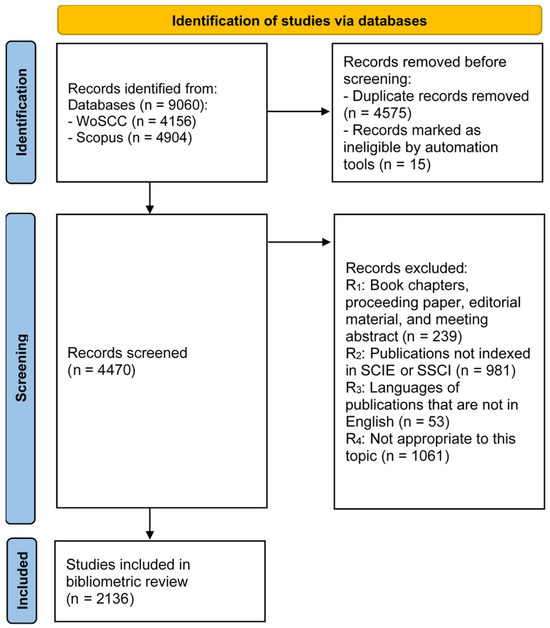
This study integrated data from two major databases, the Web of Science Core Collection (WoSCC) and Scopus, to ensure comprehensive coverage of research addressing the relationship between green space and mental illness. As illustrated in Figure 1, a total of 9060 records were initially retrieved (WoSCC = 4156; Scopus = 4904) using topic search fields in titles, abstracts, author keywords, and keywords plus. Multiple keyword combinations were tested to optimize the search strategy, as detailed in Supplementary Material Table S1. After several iterations to ensure both precision and inclusiveness, the final search query was defined as follows: TS = (“greenness” OR “green space” OR “greening” OR “green area”) AND TS = (“psychological” OR “mental illness” OR “depression” OR “anxiety” OR “stress” OR “psychological distress” OR “psychiatric” OR “mental”). This formulation was selected to capture a comprehensive range of studies that examine the relationship between exposure to green spaces and various aspects of mental health while minimizing the retrieval of unrelated records. The search covered the period from 1 January 1990 to 31 December 2024 and was limited to Articles and Review Articles written in English. Duplicate records across databases were automatically identified and removed using DOI and title matching, resulting in the exclusion of 4575 duplicates and 15 ineligible records identified by automation tools. After initial screening, 4470 records remained, from which non-research materials (book chapters, conference papers, editorials, and meeting abstracts), publications not indexed in SCIE or SSCI, non-English papers, and studies unrelated to the research theme were excluded. Following this process, 2136 documents were retained for bibliometric analysis. This refined dataset provides a robust and representative foundation for examining global research trends on green space and mental illness.
Figure 1.
PRISMA 2020 flow diagram for data collection and screening.
2.2. Methods
To examine and illustrate the research trends and current status of studies on green space and mental illness, a comprehensive bibliometric analysis was conducted, integrating performance evaluation and scientific mapping. The performance analysis assessed the contributions of keywords, institutions, journals, and countries or regions, providing an overview of research productivity and influence. Scientific mapping was then applied to identify thematic structures and emerging research directions within the field. The general publication performance was analyzed and visualized using Microsoft Excel, while keyword co-occurrence and hotspot analyses were performed with Bibliometrix package (version 5.0.1) and VOSviewer (version 1.6.20). CiteSpace (version 6.4.R2) was employed to map and visualize international collaboration networks and temporal trends among countries and regions. All figures generated by VOSviewer were analyzed using the full-counting method, with a minimum threshold of five selected units. Normalization employed the association-strength algorithm, and clustering used the LinLog/modularity optimization technique. All analyses conducted by Bibliometrix used one-year time slices (1990–2024) and default pruning parameters. All bibliometric data used for these analyses were derived from the WoSCC and Scopus databases.
3. Results
3.1. General Performance of Publications
A total of 2136 publications were retrieved from the WoSCC and Scopus databases. Among these, 1888 (88.3%) were classified as Articles and 248 (11.6%) as Review Articles. In terms of indexing, 1549 (72.5%) records were listed in the Science Citation Index Expanded (SCIE) and 1571 (73.5%) in the Social Sciences Citation Index (SSCI), with some overlap across categories. This distribution highlights the field’s broad interdisciplinary scope, encompassing both environmental and social science perspectives.
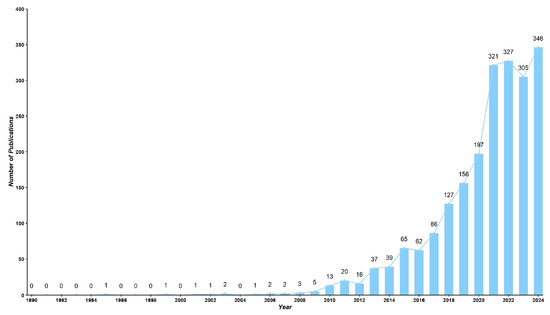
Figure 2 illustrates the annual publication trends from 1990 to 2024, showing the progressive development and expansion of research on green space and mental health. Fewer than five papers were published annually before 2010, marking an exploratory phase. A gradual increase occurred after 2012, followed by a pronounced surge after 2015, coinciding with rising global awareness of environmental influences on mental well-being. The number of publications grew from 65 in 2015 to 197 in 2019 and accelerated sharply after 2020 amid the COVID-19 pandemic, which drew increased attention to the psychological and social benefits of access to green and blue spaces. The trend culminated in 2024 with 346 publications, confirming that research on the intersection of green space and mental health has evolved into a dynamic and rapidly expanding interdisciplinary frontier linking environmental science, urban planning, and public health.
Figure 2.
Annual publication trends in research on mental illness and green space (1990–2024).
3.2. Countries/Regions Contribution Analysis
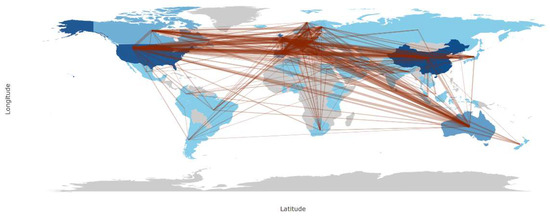
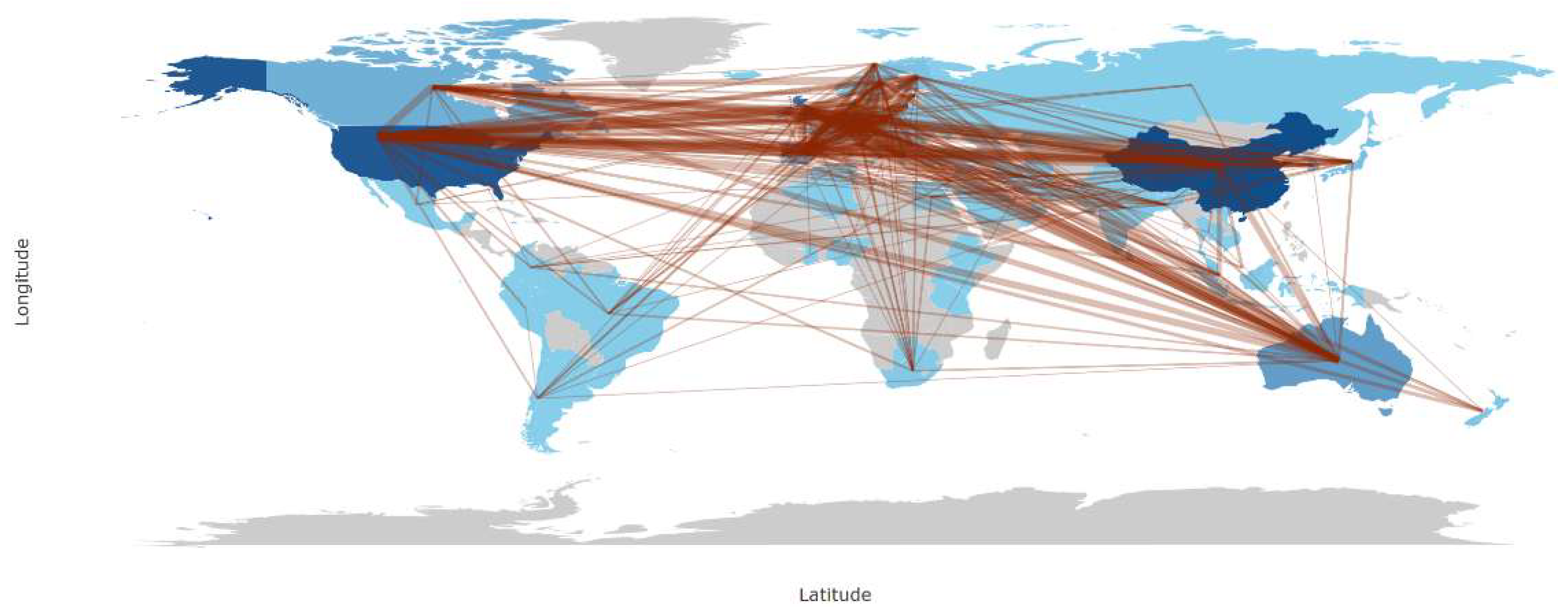
This study assessed the global distribution and collaborative landscape of research on green space and mental illness across countries and regions. As shown in Figure 3, the international co-citation and collaboration network demonstrates dense linkages among Europe, North America, and East Asia, reflecting the highly transnational character of this research domain. The United States, China, and the United Kingdom function as primary hubs of scholarly collaboration, establishing extensive citation connections with research partners in Australia, the Netherlands, Sweden, and Canada. These nations not only lead in publication output but also serve as central nodes that facilitate cross-border knowledge exchange and interdisciplinary research integration. The strong interconnections among Western Europe, North America, and parts of Asia indicate the formation of a globally interconnected research community addressing the environmental determinants of mental health.
Figure 3.
Global co-citation and collaboration network in mental illness and green space research.
Table 1 lists the top ten countries contributing to this field between 2000 and 2024. The United States, China, and the United Kingdom dominate in total publication output, highlighting their substantial academic engagement and leadership in environmental mental-health research. When normalized by population, Australia and the Netherlands display the highest per capita publication rates, reflecting their exceptional research productivity relative to national size. Citation-based indicators further show that publications from the UK, Australia, and the Netherlands achieve particularly strong impact, underscoring the global visibility and influence of their scholarship. Notably, several European countries, such as Spain, Germany, and the Netherlands, began contributing as early as 2004, reflecting their early recognition of the significance of linking environmental exposure, urban greening, and mental well-being. Overall, the geographic distribution illustrates a pattern of concentrated yet globally influential research leadership dominated by Western and Asia-Pacific countries, supported by robust international collaboration networks that continue to expand and diversify.
Table 1.
Top 10 countries by number of publications on mental illness and green space.
3.3. Institution Contribution Analysis
Institutional contributions play a crucial role in shaping the research landscape and advancing scholarly output in the field of green space and mental illness. Table 2 presents the top five institutions with the highest number of publications in this area. The majority of these contributions originate from academic and research institutions, reflecting the strong involvement of universities and public health institutes. These institutions emerged as leading institutions in terms of publication volume, demonstrating their central role in driving research productivity and international collaboration in this domain.
Table 2.
Top five institutions by publication output on mental illness and green space.
3.4. Keywords Analysis
Keyword analysis provides an overview of the thematic structure, intellectual focus, and temporal evolution of research on green space and mental illness. As shown in Table 3, the top 20 most frequent keywords reveal the core concepts shaping this interdisciplinary domain. The most prominent terms, “mental health” (524 occurrences) and “green spaces” (494 occurrences), underscore the central objective of understanding the psychological and behavioral impacts of natural environments. Related terms such as “urban green space,” “well-being,” “nature,” and “physical activity” highlight the health-promoting, restorative, and behavioral dimensions of exposure to natural environments. Other recurrent keywords, including “public health,” “environment,” and “greenness,” indicate the growing integration of environmental epidemiology and population health perspectives. Emerging keywords such as “COVID-19,” “air pollution,” “urban planning,” “built environment,” and “blue space” reflect the field’s broadening focus toward complex systems-level frameworks that link environmental quality, spatial planning, and psychological resilience.
Table 3.
Top twenty most frequently used keywords in mental illness and green space research.
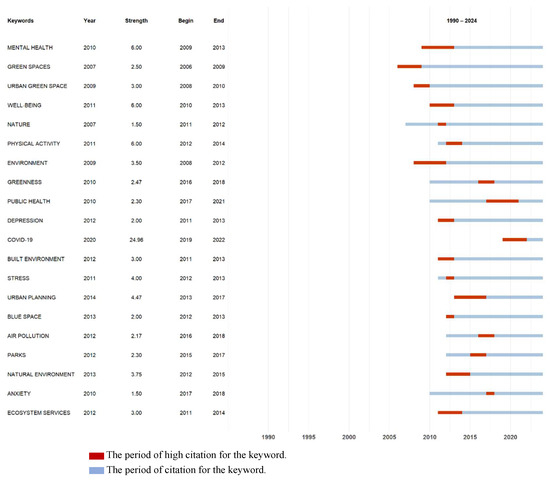
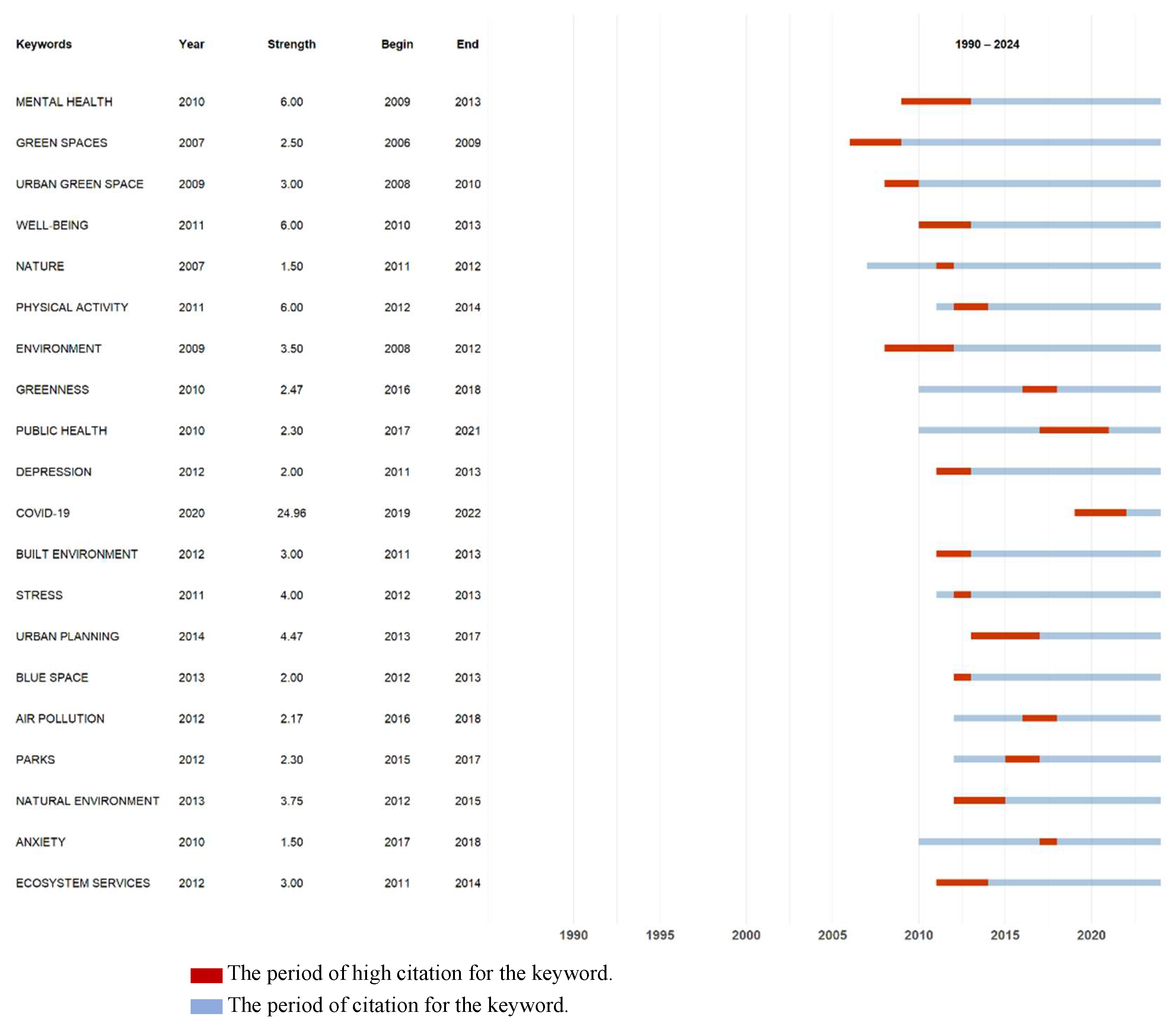
Temporal evolution patterns further reveal the development of research priorities. As shown in Figure 4, early bursts between 2007 and 2013 centered on foundational topics such as mental health, green spaces, urban green space, well-being, and nature, emphasizing early investigations into the restorative effects of natural environments. In the mid-2010s, new terms such as physical activity, environment, greenness, public health, and depression gained traction, marking a shift toward empirical studies incorporating environmental exposure and mental illness. The most recent stage (2016–2024) features emerging themes such as air pollution, built environment, urban planning, blue space, and ecosystem services, indicating expanded attention to the ecological and spatial determinants of health. Notably, COVID-19 shows the strongest and most recent citation burst (2020–2022), signifying growing scholarly interest in the mental-health implications of global crises and the potential buffering effects of access to green and blue spaces.
Figure 4.
Top twenty keywords with the strongest citation bursts in mental illness and green space research (1990–2024).
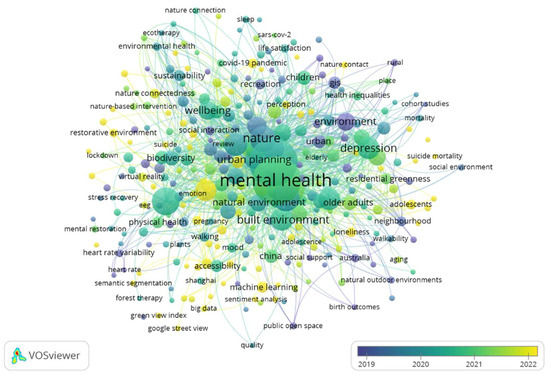
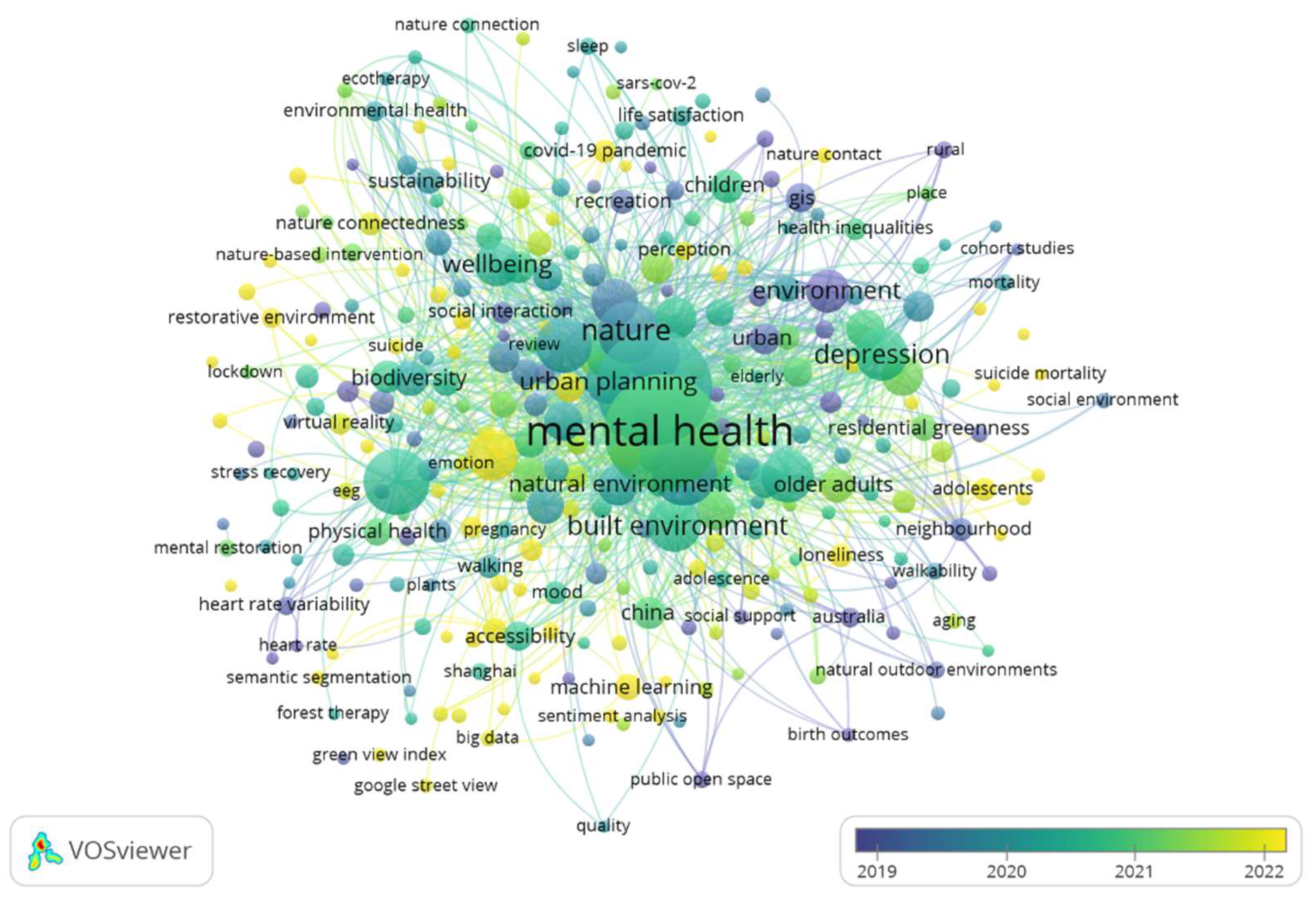
The keyword co-occurrence network shown in Figure 5 reveals the structural and thematic interrelations within this field. Central nodes such as mental health, nature, environment, urban planning, and built environment demonstrate the core linkage between environmental exposure and mental illness. Closely associated clusters, including well-being, public health, biodiversity, depression, and physical activity, illustrate the multidisciplinary connections spanning environmental science, psychology, urban design, and public health. The color-coded temporal evolution (2019–2022) indicates growing interest in technologically supported and data-driven approaches, with emerging topics such as machine learning, virtual reality, green view index, and nature-based interventions complementing long-standing themes like restorative environments and sustainability.
Figure 5.
Keyword co-occurrence network of research on mental illness and green space. Note: Font size reflects usage frequency, with larger fonts indicating more frequent use.
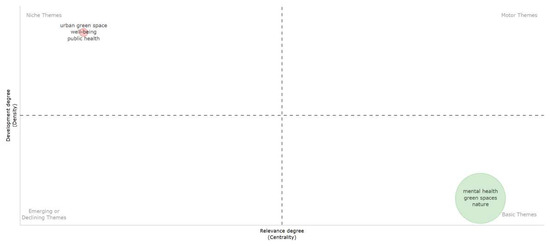
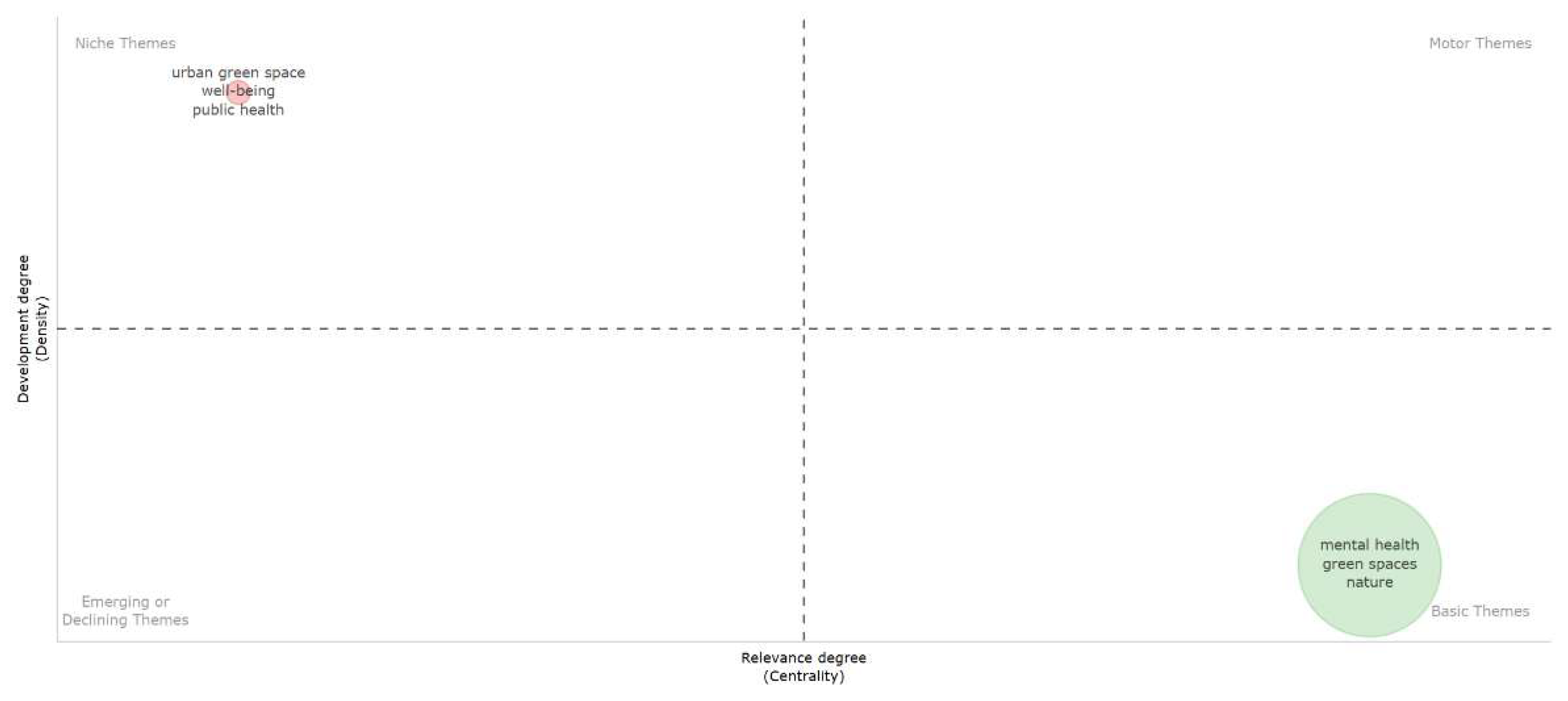
The thematic map in Figure 6 classifies research clusters based on centrality (relevance) and density (development). The lower-right quadrant is anchored by mental health, green spaces, and nature; it represents basic and foundational themes, forming the conceptual backbone of the field. In contrast, the upper-left quadrant identifies niche themes such as urban green space, well-being, and public health, which are highly specialized yet less integrated with broader interdisciplinary frameworks. This distribution suggests a well-established but continually evolving research structure, with potential for deeper integration into urban design, health equity, and sustainability research.
Figure 6.
Thematic cluster map of research on mental illness and green space based on bibliographic coupling.
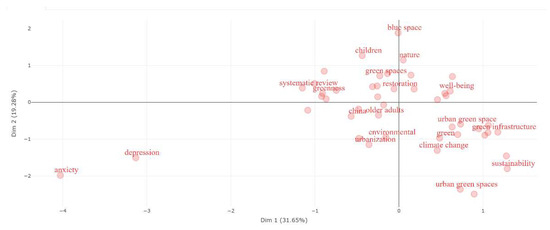
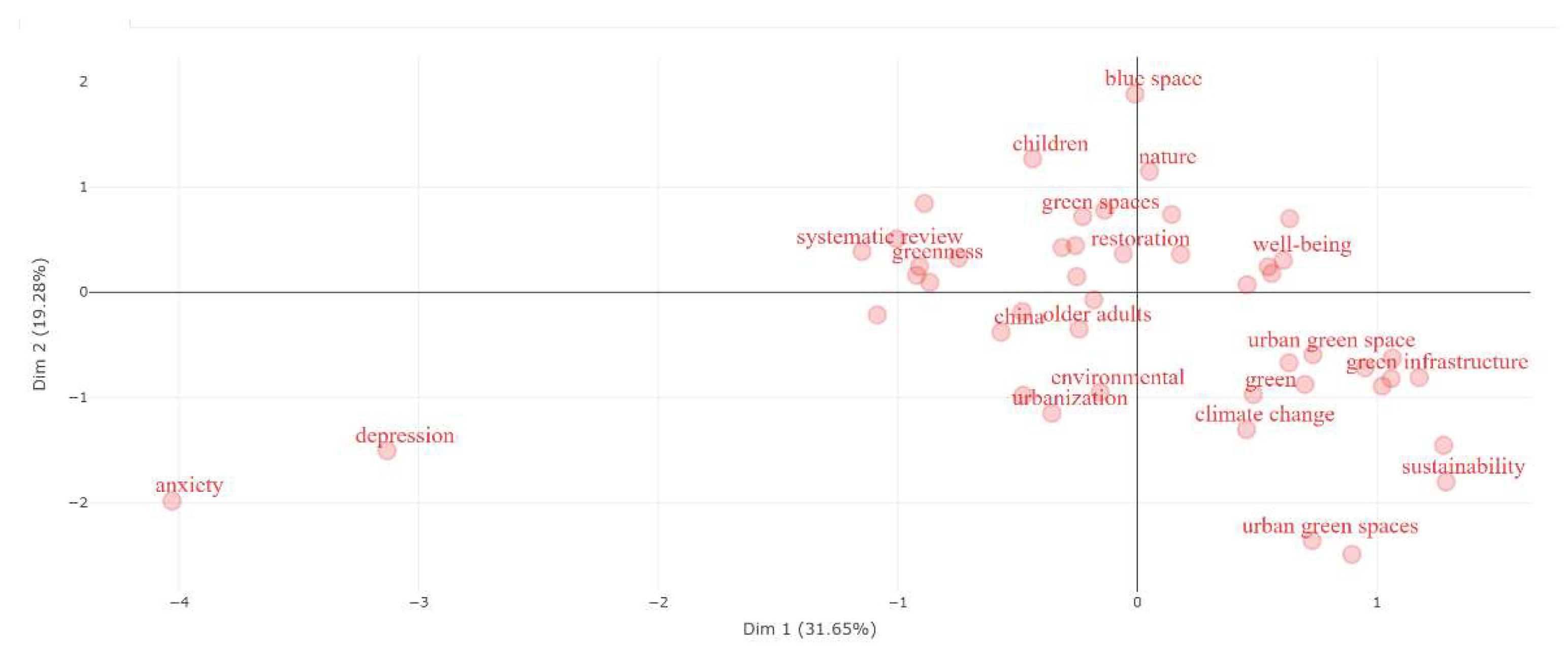
Finally, the factorial correspondence analysis shown in Figure 7 reveals two main conceptual dimensions that organize the field. The first dimension (31.65% of variance) separates studies emphasizing environmental and urban factors (e.g., urban green space, climate change, sustainability, infrastructure) from those focusing on psychological outcomes (e.g., depression, anxiety). The second dimension (19.23%) captures the transition from individual-level restoration and well-being to broader public and environmental health frameworks. Central integrative themes such as green spaces, well-being, nature, and restoration link these dimensions, while peripheral terms such as climate change and anxiety reflect emerging intersections between mental health and global environmental change.
Figure 7.
Conceptual structure of research on mental illness and green space based on factorial or correspondence analysis.
Overall, the results of keyword frequency, burst, co-occurrence, thematic, and factorial analyses collectively demonstrate that research on green space and mental illness has evolved from early restorative and health-focused studies to a mature, multidisciplinary field. The current trajectory integrates urban planning, environmental sustainability, and public health, emphasizing a holistic understanding of how natural and built environments shape mental well-being in an era of rapid urbanization and environmental change.
3.5. High Productive Journals Analysis
Academic journals are essential for the advancement of scientific research, serving as key channels for the dissemination and preservation of scholarly knowledge. In this study, a total of 179 academic journals were identified as having published research related to green space and mental illness. The top ten journals in terms of publication volume are summarized in Table 4, presenting each journal’s Journal Impact Factor (JIF), quartile ranking, and disciplinary classification. All JIF values, JIF quartile rankings, and corresponding disciplinary categories were obtained from the 2024 edition of the Journal Citation Reports (Clarivate Analytics, 2025; https://jcr.clarivate.com). Collectively, these journals represent the principal publication venues for influential, interdisciplinary research linking environmental factors with mental illness.
Table 4.
Top ten journals publishing research on mental illness and green space.
3.6. Sustainable Development Goals (SDGs) Analysis
The SDGs analysis contextualizes research on green space and mental health within global sustainability priorities and identifies how current scholarship contributes to the United Nations SDGs. Table 5 highlights the alignment of green space and mental health research with the United Nations SDGs. The data demonstrate a strong concentration of research under Goal 3 (Good health and well-being) and Goal 11 (Sustainable cities and communities), underscoring the field’s focus on promoting public health through urban environmental interventions. Lesser but relevant contributions appear in areas such as climate action, biodiversity, inequality, and education, reflecting the interdisciplinary and cross-sectoral impact of environmental mental-health studies.
Table 5.
Number of publications on mental illness and green space in relation to the Sustainable Development Goals (SDGs).
4. Discussion
4.1. Research Trends, Development, and Hotspots
Research on green space and mental illness has advanced rapidly over the past three decades, evolving from preliminary explorations into a mature, interdisciplinary field connecting environmental science, public health, and urban planning. Analysis of 2136 publications retrieved from WoSCC and Scopus reveals a strong upward trajectory in both research output and scholarly impact. Growth has been particularly pronounced since 2020, as the COVID-19 pandemic underscored the vital role of green and blue spaces in supporting mental health and social well-being. These geographic patterns reflect disparities in research capacity and environmental-health infrastructure.
Thematic hotspots illustrate a clear intellectual evolution. Early studies emphasized the restorative and psychological benefits of natural environments, focusing on themes such as mental health, green spaces, well-being, and nature. Research during the mid-2010s expanded toward empirical analyses of environmental exposure and mental illness, incorporating topics such as physical activity, greenness, public health, and depression. In recent years, the field has further diversified, integrating system-level and spatial perspectives, including air pollution, built environment, urban planning, blue space, and ecosystem services. The keyword COVID-19 represents the strongest and most recent burst, signaling heightened attention to the buffering effects of natural environments during global crises.
Co-occurrence and correspondence analyses identify two major organizing dimensions: (1) environmental and urban determinants, covering sustainability, climate, and infrastructure, and (2) psychological outcomes, such as depression, anxiety, and well-being. Foundational themes such as mental health, green spaces, and nature remain central, while emerging research directions highlight data-driven and technology-enabled approaches, including machine learning, spatial analytics, virtual reality, and nature-based interventions. Regional thematic variations were observed: European studies tend to prioritize urban design, well-being, and ecosystem services, whereas research from Asia more commonly emphasizes air pollution, greenness exposure, and public-health outcomes. These thematic distinctions reflect underlying disparities in environmental policy maturity and research funding capacity, contributing to the broader global inequalities identified earlier.
Overall, the research landscape on green space and mental illness is defined by rapid growth, international collaboration, and thematic diversification. The field has progressed from early studies on nature’s psychological benefits to a comprehensive, cross-disciplinary framework that integrates urban design, environmental exposure, sustainability, and health equity, positioning it as a pivotal research frontier for advancing both human well-being and sustainable urban development. These findings also have direct implications for urban policy. Cities can leverage these insights to integrate green-infrastructure planning with mental-health and air-quality initiatives. Evidence from leading institutions in the UK, Spain, and China demonstrates how nature-based solutions and urban-greening programs align with SDG 3 and SDG 11, providing a foundation for evidence-based policy design.
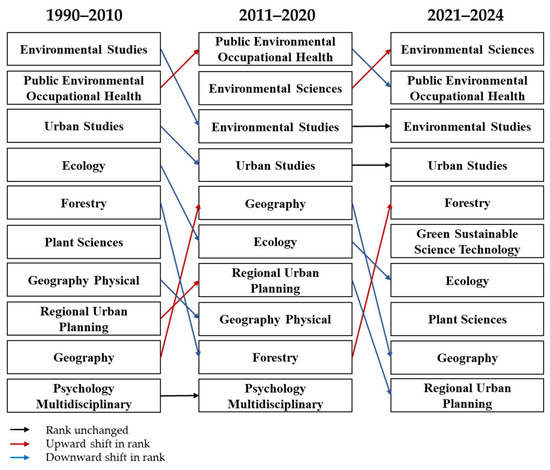
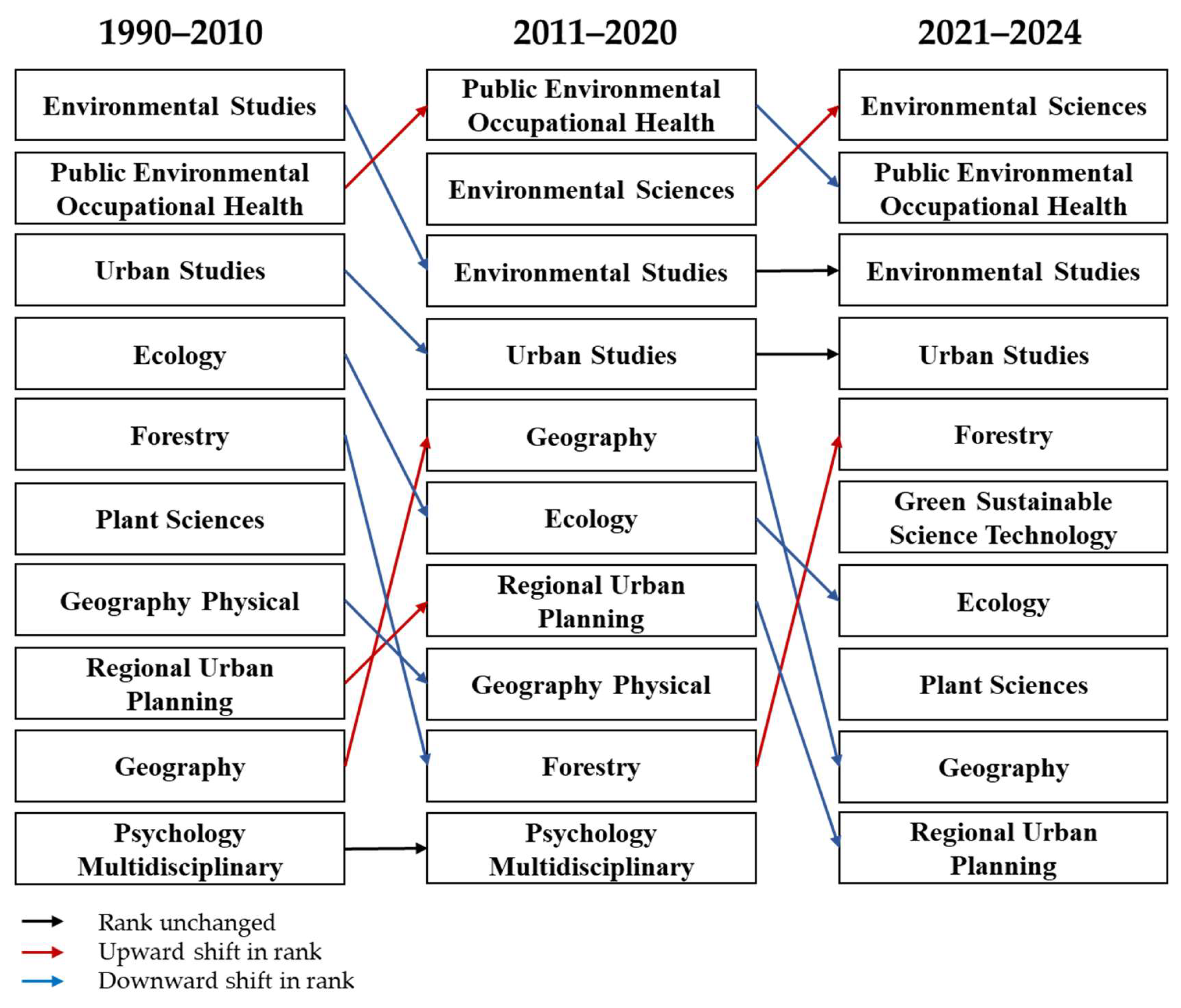
Figure 8 depicts the evolution of research domains in studies on mental illness and green space across three distinct periods: 1990–2010, 2011–2020, and 2021–2024. This illustrates the field’s progressive diversification and interdisciplinary integration. In the early stage (1990–2010), research was primarily rooted in traditional disciplines such as environmental studies, ecology, geography, plant sciences, and forestry, reflecting an environmental perspective that emphasized natural environments and their potential links to mental health. During the second phase (2011–2020), the research scope expanded to encompass public environmental and occupational health, urban studies, and regional urban planning, marking a shift toward human-centered approaches and applied environmental-health research. In the most recent phase (2021–2024), the field exhibited a clear trend toward interdisciplinary convergence. Emerging domains such as green and sustainable science and technology have gained importance, representing an integration of environmental science, urban sustainability, and mental-health research. Meanwhile, core areas, such as environmental sciences, public health, and urban studies, remain central but are now embedded within broader sustainability-oriented frameworks. Overall, the evolution shown in Figure 8 demonstrates how research on green space and mental illness has transitioned from ecological and disciplinary origins to a mature, cross-cutting field that bridges environmental science, urban planning, and sustainability to address complex global health and environmental challenges.
Figure 8.
Evolution of research domains in studies on mental illness and green space (1990–2024).
Previous studies have sought to quantify the characteristics of green space using a range of objective and subjective indicators. Greenness, quality, accessibility, and landscape configuration are among the most widely used dimensions [9,17,18]. The normalized difference vegetation index (NDVI) remains the most prevalent objective metric for greenness, as it leverages satellite-derived spectral reflectance values to indicate vegetation density on a scale from −1 to +1, with higher values denoting more robust vegetation cover [19,20,21]. NDVI has been validated as a reliable proxy for neighborhood greenness in epidemiological studies [22], particularly when applied within buffer zones around residential addresses [23]. Complementary indicators include green space area, coverage ratio, and the number of green patches, often derived from remote sensing or GIS-based land-use datasets [24,25,26]. In addition to quantity, the qualitative attributes of green space (such as safety, maintenance, and functionality) have gained increasing attention, as these factors mediate actual use and perceived benefits [5,27]. Accessibility has been linked to usage rates and mental illness [28,29]. More sophisticated spatial analyses employ landscape metrics to capture spatial configuration features, such as fragmentation, edge density, core area, and connectivity [30,31]. For example, Shen and Lung [7] found that minimizing fragmentation and increasing patch size could reduce suicide rates, illustrating how spatial structure may influence psychological outcomes.
The assessment of mental illness within environmental health research relies on a range of standardized psychological instruments that offer reliable and valid measures of psychological states, distress, and well-being. The Perceived Stress Scale (PSS) and Kessler Psychological Distress Scale (K10) measure stress and general psychological distress [32,33,34,35]. The General Health Questionnaire (GHQ) screens for psychiatric disorders [36,37], while the Depression Anxiety Stress Scale (DASS) evaluates symptom severity across emotional domains [38]. Tools like the Warwick-Edinburgh Mental Well-being Scale (WEMWBS) and Manchester Short Assessment of Quality of Life (MANSA) capture positive mental health and life satisfaction [39,40]. These instruments enable consistent and multidimensional evaluations of mental health in relation to environmental exposures.
Within this framework, the relationship between green space and mental health has emerged as a central focus in environmental health research. Empirical evidence increasingly supports the notion that exposure to green space is associated with reduced mental illness, including reduced symptoms of depression, anxiety, psychological distress, and enhanced psychological well-being [5,20,41,42,43,44]. These effects are attributed to multiple pathways, such as stress recovery, attention restoration, increased opportunities for physical activity, and facilitation of social cohesion [5,7,45,46]. Importantly, green spaces offer not only direct psychological benefits but also indirect protective effects through environmental regulation. Urban vegetation can filter air pollutants, reduce noise and thermal exposure, and mitigate urban heat island effects [11,13,14,15,47,48,49,50,51]. These ecological functions help lower the environmental burden on mental health, reinforcing the multifaceted role of green spaces as both restorative and protective urban resources.
4.2. Frontier of Green Space and Mental Illness
Despite the evident progress in this research domain, several key challenges and opportunities define its future trajectory. One major limitation remains the lack of methodological consistency, particularly concerning the definition and quantification of green space. Studies vary in their use of satellite-derived indices (e.g., NDVI), land-use classifications, and landscape metrics. Future research should emphasize standardized measurement of green space that can reliably capture both quantity and quality of green space access.
Second, while many existing studies document associations between environmental variables and mental illness, few establish causal relationships. Longitudinal designs, quasi-experimental methods (e.g., natural experiments from urban greening interventions), and mixed-methods approaches are essential to move beyond correlational evidence and unpack the temporal and contextual dynamics underlying mental health benefits.
Third, there is also a pressing need to expand research beyond high-income countries. While most studies originate in North America, Europe, and parts of Asia, low- and middle-income regions remain underrepresented despite facing escalating urbanization and mental-health burdens. The persistence of research gaps in low- and middle-income regions may be attributed to structural disparities in scientific capacity and resource allocation. Limited access to international databases and subscription-based journals constrains the visibility of locally produced studies. Moreover, unequal research funding and dependence on short-term donor projects often inhibit the establishment of long-term environmental–health monitoring systems. Urban policy priorities in LMICs frequently emphasize rapid economic development and housing, which can hinder investment in green spaces or mental-health research due to insufficient institutional and financial support. These systemic factors collectively contribute to the continued global imbalance in environmental mental-health scholarship. Thus, context-specific studies that address unique socio-environmental dynamics in these regions are vital for global equity in environmental health knowledge and interventions.
Air pollutants are another important but insufficiently integrated mediator in the relationship between green spaces and mental health. Given the dual role of vegetation in providing both restorative settings and air-quality regulation, future studies should explore synergistic effects between green infrastructure and air-pollution mitigation on mental well-being. Additionally, advances in low-cost sensor networks, mobile monitoring, and high-resolution remote sensing offer promising avenues for improving exposure assessment and supporting precision public health applications. Emerging contaminants further broaden the frontier of this field. Airborne micro- and nanoplastics (MPs/NPs) have recently been identified as pervasive pollutants in urban atmospheres. Although direct evidence linking these particles to mental disorders is limited, early findings suggest potential neurotoxic, oxidative, and inflammatory effects that may influence cognitive and psychological health. Integrating such novel pollutants into future bibliometric, toxicological, and epidemiological research may reveal previously overlooked pathways connecting atmospheric quality and mental well-being [52].
Finally, greater attention must be directed toward vulnerable populations, including children, older adults, socially disadvantaged communities, and individuals with pre-existing mental health conditions. These groups often face disproportionate environmental burdens and may benefit differently from green-space exposure. Examining how social determinants intersect with environmental exposures through an equity-focused lens will be essential for designing inclusive nature-based interventions and reducing mental-health disparities.
In summary, the frontier of green space and mental illness research lies in: (1) Developing standardized measurements of green space; (2) Conducting rigorous longitudinal and experimental studies; (3) Integrating environmental and behavioral health data; (4) Expanding geographic representation; (5) Prioritizing health equity across vulnerable groups. Advancing this field requires sustained interdisciplinary collaboration among urban planners, public health professionals, environmental scientists, and mental health researchers to design cities that foster ecological sustainability and psychological resilience.
4.3. Strengths and Limitations
This study presents several significant strengths. First, it conducts a rigorous bibliometric analysis to systematically map the scholarly landscape concerning green space and mental illness. By tracing the evolution of research themes, identifying influential publications, leading authors, and collaborative networks, the study offers a comprehensive overview of intellectual structures and temporal trends in this interdisciplinary domain. Second, the analysis elucidates key environmental determinants of mental health by exploring the association between green space and mental illness. Third, by identifying existing research gaps, underexplored topics, and emerging frontiers, the study provides valuable guidance for shaping future research agendas and fostering cross-disciplinary integration within environmental mental health scholarship.
Nonetheless, several limitations warrant consideration. The analysis was restricted to English-language publications, potentially introducing language bias and excluding pertinent research disseminated in non-English outlets. Additionally, the scope of analysis was limited to publications classified as “Articles” and “Review Articles,” thereby excluding other scholarly outputs (such as book chapters and policy documents) that may also contribute meaningful insights. Although the WoSCC and Scopus databases offer standardized and high-quality metadata, their coverage may underrepresent regional journals; accordingly, future studies may benefit from integrating multiple databases to enhance completeness. Further, comparability across countries could be improved by incorporating additional normalization metrics (e.g., per R&D spending, fractional counting) and field-weighted citation indicators (e.g., FWCI/JCI equivalents). Finally, this study employed conventional bibliometric techniques; future research could explore methodological innovations, such as machine-learning or deep semantic analysis, to generate more granular thematic structures and gain deeper insights into the evolution of research on green spaces and mental illness.
5. Conclusions
The bibliometric analysis presented in this study reveals a rapidly expanding body of literature focused on the interplay between green space and mental illness. Research output has grown substantially since 2012, reflecting increased academic and policy interest in environmental determinants of mental health. Most publications originate from high-income countries, particularly China, the USA, and the UK, suggesting a geographical research gap in low- and middle-income regions. This highlights the continued need for research in low- and middle-income regions experiencing fast-paced urbanization and disproportionate mental health burdens.
Key thematic areas include the mental health benefits of green space exposure, the mediating role of air quality and physical activity, and the neurobiological pathways underlying environmental influences on mood disorders. Both acute and sustained exposure to green environments can reduce symptoms of depression, anxiety, and psychological distress, especially when coupled with cleaner air and opportunities for physical or social engagement.
Nonetheless, the field faces several methodological challenges, including inconsistent definitions of green space, variations in mental health assessment, and a lack of longitudinal and experimental designs. Future research should prioritize standardized exposure metrics, integrate atmospheric data, and examine vulnerable populations such as those with pre-existing mental health conditions.
Overall, integrating green infrastructure and air quality improvements into urban design offers a promising avenue to enhance mental well-being and reduce the burden of mental illness. The findings of this study offer actionable insights for urban policy, encouraging cities to align green-space planning with mental health and environmental objectives. Notably, initiatives led by institutions in the UK and Spain showcase the potential for nature-based solutions and urban-greening efforts to effectively support the Sustainable Development Goals, particularly SDG 3 (Good health and well-being) and SDG 11 (Sustainable cities and communities). This synthesis offers a foundational perspective to inform evidence-based policy and foster interdisciplinary collaboration among environmental scientists, mental health professionals, public health experts, and urban planners.
Supplementary Materials
The following supporting information can be downloaded at: https://www.mdpi.com/article/10.3390/urbansci10010035/s1, Table S1: list of keyword combinations tested during search strategy refinement and retrieved record counts, Figure S1: Data of software export.
Author Contributions
Y.-S.S.: Conceptualization, Methodology, Writing—Original Draft, Writing—Review & Editing, Visualization, Funding acquisition. X.W.: Methodology, Investigation/Collect Data, Data Curation, Analysis, Writing—Original Draft, Writing—Review & Editing, Visualization. L.X.: Collect Data, Visualization. B.-Q.L.: Collect Data, Visualization. P.-Y.L.: Methodology, Investigation/Collect Data, Data Curation, Analysis, Writing—Original Draft, Writing—Review & Editing, Visualization. All authors have read and agreed to the published version of the manuscript.
Funding
This research received no external funding.
Institutional Review Board Statement
Not applicable.
Informed Consent Statement
Not applicable.
Data Availability Statement
The datasets generated and/or analyzed during the current study are available in the Web of Science and Scopus repositories.
Acknowledgments
The authors have reviewed and edited the output and take full responsibility for the content of this publication.
Conflicts of Interest
The authors declare no conflicts of interest.
References
- Lederbogen, F.; Haddad, L.; Meyer-Lindenberg, A. Urban social stress-Risk factor for mental disorders. The case of schizophrenia. Environ. Pollut. 2013, 183, 2–6. [Google Scholar] [CrossRef] [Scilit] [PubMed]
- Shen, Y.S.; Lung, S.C.C.; Cui, S.H. Exploring multiple pathways and mediation effects of urban environmental factors for suicide prevention. Environ. Pollut. 2022, 294, 118642. [Google Scholar] [CrossRef] [Scilit] [PubMed]
- Roberts, M.; Irvine, K.N.; McVittie, A. Associations between greenspace and mental health prescription rates in urban areas. Urban For. Urban Green. 2021, 64, 127301. [Google Scholar] [CrossRef] [Scilit]
- Astell-Burt, T.; Mitchell, R.; Hartig, T. The association between green space and mental health varies across the lifecourse: A longitudinal study. J. Epidemiol. Community Health 2014, 68, 578–583. [Google Scholar] [CrossRef] [Scilit]
- Beyer, K.M.M.; Kaltenbach, A.; Szabo, A.; Bogar, S.; Nieto, F.J.; Malecki, K.M. Exposure to neighborhood green space and mental health: Evidence from the survey of the health of Wisconsin. Int. J. Environ. Res. Public Health 2014, 11, 3453–3472. [Google Scholar] [CrossRef] [Scilit]
- Nutsford, D.; Pearson, A.L.; Kingham, S. An ecological study investigating the association between access to urban green space and mental health. Public Health 2013, 127, 1005–1011. [Google Scholar] [CrossRef] [Scilit]
- Shen, Y.S.; Lung, S.C.C. Identifying critical green structure characteristics for reducing the suicide rate. Urban For. Urban Green. 2018, 34, 147–153. [Google Scholar] [CrossRef] [Scilit]
- Kondo, M.C.; Fluehr, J.M.; McKeon, T.; Branas, C.C. Urban green space and its impact on human health. Int. J. Environ. Res. Public Health 2018, 15, 445. [Google Scholar] [CrossRef] [Scilit]
- Malekinezhad, F.; Courtney, P.; bin Lamit, H.; Vigani, M. Investigating the mental health impacts of university campus green space through perceived sensory dimensions and the mediation effects of perceived restorativeness on restoration experience. Front. Public Health 2020, 8, 578241. [Google Scholar] [CrossRef] [Scilit]
- Shen, Y.S. Nature-based solutions to address anxiety disorders: A cross-sectional ecological study of green spatial patterns in Taiwan. Soc. Sci. Med. 2025, 365, 117540. [Google Scholar] [CrossRef] [Scilit]
- Bowler, D.E.; Buyung-Ali, L.; Knight, T.M.; Pullin, A.S. Urban greening to cool towns and cities: A systematic review of the empirical evidence. Landsc. Urban Plan. 2010, 97, 147–155. [Google Scholar] [CrossRef] [Scilit]
- Dadvand, P.; Bartoll, X.; Basagana, X.; Dalmau-Bueno, A.; Martinez, D.; Ambros, A.; Cirach, M.; Triguero-Mas, M.; Gascon, M.; Borrell, C.; et al. Green spaces and general health: Roles of mental health status, social support, and physical activity. Environ. Int. 2016, 91, 161–167. [Google Scholar] [CrossRef] [Scilit]
- Herb, W.R.; Janke, B.; Mohseni, O.; Stefan, H.G. Ground surface temperature simulation for different land covers. J. Hydrol. 2008, 356, 327–343. [Google Scholar] [CrossRef] [Scilit]
- Leuzinger, S.; Vogt, R.; Koerner, C. Tree surface temperature in an urban environment. Agric. For. Meteorol. 2010, 150, 56–62. [Google Scholar] [CrossRef] [Scilit] [PubMed]
- Jim, C.Y.; Chen, W.Y. Assessing the ecosystem service of air pollutant removal by urban trees in Guangzhou (China). J. Environ. Manag. 2008, 88, 665–676. [Google Scholar] [CrossRef] [Scilit] [PubMed]
- Shen, Y.-S.; Lung, S.-C.C. Can green structure reduce the mortality of cardiovascular diseases? Sci. Total Environ. 2016, 566, 1159–1167. [Google Scholar] [CrossRef] [Scilit]
- Knobel, P.; Dadvand, P.; Alonso, L.; Costa, L.; Espanol, M.; Maneja, R. Development of the urban green space quality assessment tool (RECITAL). Urban For. Urban Green. 2021, 57, 126895. [Google Scholar] [CrossRef] [Scilit]
- Yang, Z.Q.; Fang, C.L.; Mu, X.F.; Li, G.D.; Xu, G.Y. Urban green space quality in China: Quality measurement, spatial heterogeneity pattern and influencing factor. Urban For. Urban Green. 2021, 66, 127381. [Google Scholar] [CrossRef] [Scilit]
- Tucker, C.J. Red and photographic infrared linear combinations for monitoring vegetation. Remote Sens. Environ. 1979, 8, 127–150. [Google Scholar] [CrossRef] [Scilit]
- Dzhambov, A.M.; Markevych, I.; Hartig, T.; Tilov, B.; Arabadzhiev, Z.; Stoyanov, D.; Gatseva, P.; Dimitrova, D.D. Multiple pathways link urban green- and bluespace to mental health in young adults. Environ. Res. 2018, 166, 223–233. [Google Scholar] [CrossRef] [Scilit]
- Gascon, M.; Cirach, M.; Martinez, D.; Dadvand, P.; Valentin, A.; Plasencia, A.; Nieuwenhuijsen, M.J. Normalized difference vegetation index (NDVI) as a marker of surrounding greenness in epidemiological studies: The case of Barcelona city. Urban For. Urban Green. 2016, 19, 88–94. [Google Scholar] [CrossRef] [Scilit]
- Rhew, I.C.; Vander Stoep, A.; Kearney, A.; Smith, N.L.; Dunbar, M.D. Validation of the normalized difference vegetation index as a measure of neighborhood greenness. Ann. Epidemiol. 2011, 21, 946–952. [Google Scholar] [CrossRef] [Scilit] [PubMed]
- McEachan, R.R.C.; Prady, S.L.; Smith, G.; Fairley, L.; Cabieses, B.; Gidlow, C.; Wright, J.; Dadvand, P.; van Gent, D.; Nieuwenhuijsen, M.J. The association between green space and depressive symptoms in pregnant women: Moderating roles of socioeconomic status and physical activity. J. Epidemiol. Community Health 2016, 70, 253–259. [Google Scholar] [CrossRef] [Scilit] [PubMed]
- MacKerron, G.; Mourato, S. Happiness is greater in natural environments. Glob. Environ. Change-Hum. Policy Dimens. 2013, 23, 992–1000. [Google Scholar] [CrossRef] [Scilit]
- Groenewegen, P.P.; van den Berg, A.E.; de Vries, S.; Verheij, R.A. Vitamin G: Effects of green space on health, well-being, and social safety. BMC Public Health 2006, 6, 149. [Google Scholar] [CrossRef] [Scilit]
- van den Berg, A.E.; Maas, J.; Verheij, R.A.; Groenewegen, P.P. Green space as a buffer between stressful life events and health. Soc. Sci. Med. 2010, 70, 1203–1210. [Google Scholar] [CrossRef] [Scilit]
- Pope, D.; Tisdall, R.; Middleton, J.; Verma, A.; van Ameijden, E.; Birt, C.; Macherianakis, A.; Bruce, N.G. Quality of and access to green space in relation to psychological distress: Results from a population-based cross-sectional study as part of the EURO-URHIS 2 project. Eur. J. Public Health 2018, 28, 35–38. [Google Scholar] [CrossRef] [Scilit]
- Lee, A.C.K.; Maheswaran, R. The health benefits of urban green spaces: A review of the evidence. J. Public Health 2011, 33, 212–222. [Google Scholar] [CrossRef] [Scilit]
- Tannous, H.O.; Major, M.D.; Furlan, R. Accessibility of green spaces in a metropolitan network using space syntax to objectively evaluate the spatial locations of parks and promenades in Doha, State of Qatar. Urban For. Urban Green. 2021, 58, 126892. [Google Scholar] [CrossRef] [Scilit]
- McGarigal, K.; Marks, B.J. FRAGSTATS: Spatial Pattern Analysis Program for Quantifying Landscape Structure; U.S. Forest Service General Technical Report PNW: Portland, OR, USA, 1995; Volume 351, I–IV; pp. 1–122. [Google Scholar]
- Leitão, A.B.; Miller, J.; Ahern, J.; McGarigal, K. Measuring Landscapes: A Planner’s Handbook; Island Press: Washington, DC, USA, 2012. [Google Scholar]
- Cohen, S.; Kamarck, T.; Mermelstein, R. A global measure of perceived stress. J. Health Soc. Behav. 1983, 24, 385–396. [Google Scholar] [CrossRef] [Scilit]
- Cohen-Cline, H.; Turkheimer, E.; Duncan, G.E. Access to green space, physical activity and mental health: A twin study. J. Epidemiol. Community Health 2015, 69, 523–529. [Google Scholar] [CrossRef] [Scilit] [PubMed]
- Sugiyama, T.; Leslie, E.; Giles-Corti, B.; Owen, N. Associations of neighbourhood greenness with physical and mental health: Do walking, social coherence and local social interaction explain the relationships? J. Epidemiol. Community Health 2008, 62, e9. [Google Scholar] [CrossRef] [Scilit] [PubMed]
- Andrews, G.; Slade, T. Interpreting scores on the Kessler Psychological Distress Scale (K10). Aust. N. Z. J. Public Health 2001, 25, 494–497. [Google Scholar] [CrossRef] [Scilit] [PubMed]
- Goldberg, D.P.; Gater, R.; Sartorius, N.; Ustun, T.B.; Piccinelli, M.; Gureje, O.; Rutter, C. The validity of two versions of the GHQ in the WHO study of mental illness in general health care. Psychol. Med. 1997, 27, 191–197. [Google Scholar] [CrossRef] [Scilit]
- White, M.P.; Alcock, I.; Wheeler, B.W.; Depledge, M.H. Would you be happier living in a greener urban area? A fixed-effects analysis of panel data. Psychol. Sci. 2013, 24, 920–928. [Google Scholar] [CrossRef] [Scilit]
- Lovibond, P.F.; Lovibond, S.H. The structure of negative emotional states: Comparison of the Depression Anxiety Stress Scales (DASS) with the Beck Depression and Anxiety Inventories. Behav. Res. Ther. 1995, 33, 335–343. [Google Scholar] [CrossRef] [Scilit]
- Tennant, R.; Hiller, L.; Fishwick, R.; Platt, S.; Joseph, S.; Weich, S.; Parkinson, J.; Secker, J.; Stewart-Brown, S. The Warwick-Edinburgh mental well-being scale (WEMWBS): Development and UK validation. Health Qual. Life Outcomes 2007, 5, 63. [Google Scholar] [CrossRef] [Scilit]
- Priebe, S.; Huxley, P.; Knight, S.; Evans, S. Application and results of the Manchester Short Assessment of Quality of Life (MANSA). Int. J. Soc. Psychiatry 1999, 45, 7–12. [Google Scholar] [CrossRef] [Scilit]
- Maas, J.; Verheij, R.A.; De Vries, S.; Spreeuwenberg, P.; Schellevis, F.G.; Groenewegen, P.P. Morbidity is related to a green living environment. J. Epidemiol. Community Health 2009, 63, 967–973. [Google Scholar] [CrossRef] [Scilit]
- Houlden, V.; de Albuquerque, J.P.; Weich, S.; Jarvis, S. A spatial analysis of proximate greenspace and mental wellbeing in London. Appl. Geogr. 2019, 109, 102036. [Google Scholar] [CrossRef] [Scilit]
- Astell-Burt, T.; Feng, X.; Kolt, G.S. Mental health benefits of neighbourhood green space are stronger among physically active adults in middle-to-older age: Evidence from 260,061 Australians. Prev. Med. 2013, 57, 601–606. [Google Scholar] [CrossRef] [Scilit] [PubMed]
- Yang, L.; Ho, J.Y.S.; Wong, F.K.Y.; Chang, K.K.P.; Chan, K.L.; Wong, M.S.; Ho, H.C.; Yuen, J.W.M.; Huang, J.X.; Siu, J.Y.M. Neighbourhood green space, perceived stress and sleep quality in an urban population. Urban For. Urban Green. 2020, 54, 126763. [Google Scholar] [CrossRef] [Scilit]
- Gulwadi, G.B.; Mishchenko, E.D.; Hallowell, G.; Alves, S.; Kennedy, M. The restorative potential of a university campus: Objective greenness and student perceptions in Turkey and the United States. Landsc. Urban Plan. 2019, 187, 36–46. [Google Scholar] [CrossRef] [Scilit]
- Lu, M.; Fu, J. Attention restoration space on a university campus: Exploring restorative campus design based on environmental preferences of students. Int. J. Environ. Res. Public Health 2019, 16, 2629. [Google Scholar] [CrossRef] [Scilit]
- Dadvand, P.; Rivas, I.; Basagana, X.; Alvarez-Pedrerol, M.; Su, J.; Pascual, M.D.C.; Amato, F.; Jerret, M.; Querol, X.; Sunyer, J.; et al. The association between greenness and traffic-related air pollution at schools. Sci. Total Environ. 2015, 523, 59–63. [Google Scholar] [CrossRef] [Scilit]
- Pauleit, S.; Ennos, R.; Golding, Y. Modeling the environmental impacts of urban land use and land cover change—A study in Merseyside, UK. Landsc. Urban Plan. 2005, 71, 295–310. [Google Scholar] [CrossRef] [Scilit]
- Jo, H.K. Impacts of urban greenspace on offsetting carbon emissions for middle Korea. J. Environ. Manag. 2002, 64, 115–126. [Google Scholar] [CrossRef] [Scilit]
- Yang, J.; McBride, J.; Zhou, J.; Sun, Z. The urban forest in Beijing and its role in air pollution reduction. Urban For. Urban Green. 2005, 3, 65–78. [Google Scholar] [CrossRef] [Scilit]
- Hamada, S.; Ohta, T. Seasonal variations in the cooling effect of urban green areas on surrounding urban areas. Urban For. Urban Green. 2010, 9, 15–24. [Google Scholar] [CrossRef] [Scilit]
- Casella, C.; Cornelli, U.; Ballaz, S.; Zanoni, G.; Merlo, G.; Ramos-Guerrero, L. Plastic smell: A review of the hidden threat of airborne micro and nanoplastics to human health and the environment. Toxics 2025, 13, 387. [Google Scholar] [CrossRef] [Scilit]

Disclaimer/Publisher’s Note: The statements, opinions and data contained in all publications are solely those of the individual author(s) and contributor(s) and not of MDPI and/or the editor(s). MDPI and/or the editor(s) disclaim responsibility for any injury to people or property resulting from any ideas, methods, instructions or products referred to in the content. |
© 2026 by the authors. Licensee MDPI, Basel, Switzerland. This article is an open access article distributed under the terms and conditions of the Creative Commons Attribution (CC BY) license.