


Hydrodynamic Cavitation for the Sustainable Recovery of Bioactive and Functional Fractions from Agri-Food Residues and Plant-Derived Matrices: Process Functions, Quantitative Evidence, and Application Requirements


Abstract
1. Introduction
1.1. Bioactive Compounds from Agri-Food Residues and Plant-Derived Matrices
1.2. Need for Green Extraction and Process Intensification
1.3. Hydrodynamic Cavitation as a Conditional Process-Intensification Platform
2. Scope, Literature Basis, and Critical Assessment Criteria
2.1. Scope of the Analysis
2.2. Literature Base
2.3. Criteria for Critical Assessment
3. Bioactive and Functional Fractions from Agri-Food Residues and Plant-Derived Matrices
3.1. Citrus By-Products
3.2. Pomegranate By-Products
3.3. Apple, Coffee, Conifer-Derived Materials, and Other Plant Matrices
3.4. Proteins, Peptides, Pectins, and Bioactive Macromolecules
4. Hydrodynamic Cavitation as a Process-Intensification Platform for Bioactive and Functional Fraction Recovery
4.1. Mechanisms Relevant to Bioactive and Functional Fraction Recovery
4.2. Reactor Configurations and Operating Variables
4.3. Process Functions in Bioactive and Functional Fraction Recovery
5. Matrix-Specific Quantitative Evidence and Comparison with Alternative Technologies
5.1. Citrus By-Products, Flavonoids, and Pectin-Associated Fractions
5.2. Pomegranate and Polyphenol-Rich Residues
5.3. Apple Residues, Coffee Grounds, and Lignocellulosic Matrices
5.4. Beverages and Liquid Food Systems
5.5. Plant Proteins, Peptides, and Antinutritional Factors
5.6. Protein–Polyphenol Systems and Functional Restructuring
5.7. Cross-Technology Interpretation and Evidence Limits
5.8. Quantitative Evidence, Scale-Relevant Indicators, and Reporting Limits
6. Application Requirements: Stability, Safety, Functionality, and Scale Relevance
7. Sustainability, Scale-Up, and Evidence Requirements
7.1. Solvents, Water, and Energy
7.2. Scale-Up and Process Integration
7.3. Raw-Material, Regulatory, and Standardization Requirements
7.4. Evidence Gaps and Future Priorities
8. Conclusions
Funding
Data Availability Statement
Conflicts of Interest
References
- Andrade, M.A.; Barbosa, C.H.; Shah, M.A.; Ahmad, N.; Vilarinho, F.; Khwaldia, K.; Silva, A.S.; Ramos, F. Citrus by-products: Valuable source of bioactive compounds for food applications. Antioxidants 2023, 12, 38. [Google Scholar] [CrossRef] [Scilit] [PubMed]
- Kaur, S.; Panesar, P.S.; Chopra, H.K. Citrus processing by-products: An overlooked repository of bioactive compounds. Crit. Rev. Food Sci. Nutr. 2023, 63, 67–86. [Google Scholar] [CrossRef] [Scilit] [PubMed]
- Šafranko, S.; Šubarić, D.; Jerković, I.; Jokić, S. Citrus by-products as a valuable source of biologically active compounds with promising pharmaceutical, biological and biomedical potential. Pharmaceuticals 2023, 16, 1081. [Google Scholar] [CrossRef] [Scilit] [PubMed]
- Cano-Lamadrid, M.; Martínez-Zamora, L.; Castillejo, N.; Artés-Hernández, F. From pomegranate byproducts waste to worth: A review of extraction techniques and potential applications for their revalorization. Foods 2022, 11, 2596. [Google Scholar] [CrossRef] [Scilit] [PubMed]
- Patra, A.; Abdullah, S.; Pradhan, R.C. Review on the extraction of bioactive compounds and characterization of fruit industry by-products. Bioresour. Bioprocess. 2022, 9, 58. [Google Scholar] [CrossRef] [Scilit] [PubMed]
- Yusuf, H.; Fors, H.; Galal, N.M.; Elhabashy, A.E.; Melkonyan, A.; Harraz, N. Barriers to implementing circular citrus supply chains: A systematic literature review. J. Environ. Manag. 2025, 373, 123963. [Google Scholar] [CrossRef] [Scilit] [PubMed]
- Fernandes, F.; Delerue-Matos, C.; Grosso, C. Unveiling the potential of agrifood by-products: A comprehensive review of phytochemicals, bioactivities and industrial applications. Waste Biomass Valorization 2025, 16, 2715–2748. [Google Scholar] [CrossRef] [Scilit]
- El-Saadony, M.T.; Saad, A.M.; Mohammed, D.M.; Alkafaas, S.S.; Abd El-Mageed, T.A.; Fahmy, M.A.; Ezzat Ahmed, A.; Algopishi, U.B.; Abu-Elsaoud, A.M.; Mosa, W.F.A.; et al. Plant bioactive compounds: Extraction, biological activities, immunological, nutritional aspects, food application, and human health benefits—A comprehensive review. Front. Nutr. 2025, 12, 1659743. [Google Scholar] [CrossRef] [Scilit] [PubMed]
- Moreira, M.M.; Morais, S.; Delerue-Matos, C. Environment-friendly techniques for extraction of bioactive compounds from fruits. In Soft Chemistry and Food Fermentation; Elsevier: Amsterdam, The Netherlands, 2017; pp. 21–47. [Google Scholar]
- Chemat, F.; Rombaut, N.; Sicaire, A.-G.; Meullemiestre, A.; Fabiano-Tixier, A.-S.; Abert-Vian, M. Ultrasound assisted extraction of food and natural products. Mechanisms, techniques, combinations, protocols and applications—A review. Ultrason. Sonochem. 2017, 34, 540–560. [Google Scholar] [CrossRef] [Scilit] [PubMed]
- de Souza Mesquita, L.M.; Contieri, L.S.; e Silva, F.A.; Bagini, R.H.; Bragagnolo, F.S.; Strieder, M.M.; Sosa, F.H.B.; Schaeffer, N.; Freire, M.G.; Ventura, S.P.M.; et al. Path2Green: Introducing 12 green extraction principles and a novel metric for assessing sustainability in biomass valorization. Green Chem. 2024, 26, 10087–10106. [Google Scholar] [CrossRef] [Scilit] [PubMed]
- Arya, S.S.; More, P.R.; Ladole, M.R.; Pegu, K.; Pandit, A.B. Non-thermal, energy efficient hydrodynamic cavitation for food processing, process intensification and extraction of natural bioactives: A review. Ultrason. Sonochem. 2023, 98, 106504. [Google Scholar] [CrossRef] [Scilit] [PubMed]
- Panda, D.; Saharan, V.K.; Manickam, S. Controlled hydrodynamic cavitation: A review of recent advances and perspectives for greener processing. Processes 2020, 8, 220. [Google Scholar] [CrossRef] [Scilit]
- Carpenter, J.; Badve, M.; Rajoriya, S.; Pandit, A.B. Hydrodynamic cavitation: An emerging technology for the intensification of various chemical and physical processes in a chemical process industry. Rev. Chem. Eng. 2017, 33, 433–468. [Google Scholar] [CrossRef] [Scilit]
- Meneguzzo, F.; Zabini, F.; Albanese, L. Green extraction at scale: Hydrodynamic cavitation for bioactive recovery and protein functionalization—A narrative review. Molecules 2026, 31, 192. [Google Scholar] [CrossRef] [Scilit] [PubMed]
- Ciriminna, R.; Scurria, A.; Pagliaro, M. Natural product extraction via hydrodynamic cavitation. Sustain. Chem. Pharm. 2023, 33, 101083. [Google Scholar] [CrossRef] [Scilit]
- Manoharan, D.; Zhao, J.; Ranade, V.V. Cavitation technologies for extraction of high value ingredients from renewable biomass. TrAC Trends Anal. Chem. 2024, 174, 117682. [Google Scholar] [CrossRef] [Scilit]
- Tang, J.; Zhu, X.; Jambrak, A.R.; Sun, D.W.; Tiwari, B.K. Mechanistic and synergistic aspects of ultrasonics and hydrodynamic cavitation for food processing. Crit. Rev. Food Sci. Nutr. 2024, 64, 8587–8608. [Google Scholar] [CrossRef] [Scilit] [PubMed]
- Meneguzzo, F.; Zabini, F. Industrialization of hydrodynamic cavitation in plant resource extraction. Curr. Opin. Chem. Eng. 2025, 48, 101140. [Google Scholar] [CrossRef] [Scilit]
- EFSA. Novel Food. Available online: https://www.efsa.europa.eu/en/topics/topic/novel-food (accessed on 24 May 2026).
- Fernández-Cabal, J.; Avilés-Betanzos, K.A.; Cauich-Rodríguez, J.V.; Ramírez-Sucre, M.O.; Rodríguez-Buenfil, I.M. Recent developments in Citrus aurantium L.: An overview of bioactive compounds, extraction techniques, and technological applications. Processes 2025, 13, 120. [Google Scholar] [CrossRef] [Scilit]
- Brezo-Borjan, T.; Švarc-Gajić, J.; Rodrigues, F. Chemical and biological characterisation of orange. Processes 2023, 11, 1766. [Google Scholar] [CrossRef] [Scilit]
- Hussain, A.; Gulbadan Dar, N.; Paracha, G.M.; Akhter, S. Evaluation of different techniques for extraction of antioxidants as bioactive compounds from citrus peels (industrial by products). J. Agric. Environ. Sci. 2015, 15, 676–682. [Google Scholar]
- Papoutsis, K.; Pristijono, P.; Golding, J.B.; Stathopoulos, C.E.; Bowyer, M.C.; Scarlett, C.J.; Vuong, Q.V. Screening the effect of four ultrasound-assisted extraction parameters on hesperidin and phenolic acid content of aqueous citrus pomace extracts. Food Biosci. 2018, 21, 20–26. [Google Scholar] [CrossRef] [Scilit]
- Maqsood, M.; Saeed, R.A.; Rahman, H.U.; Khan, M.I.; Khalid, N. Pomegranate punicalagin: A comprehensive review of various in vitro and in vivo biological studies. ACS Food Sci. Technol. 2025, 5, 2064–2085. [Google Scholar] [CrossRef] [Scilit]
- Eghbali, S.; Askari, S.F.; Avan, R.; Sahebkar, A. Therapeutic effects of Punica granatum (pomegranate): An updated review of clinical trials. J. Nutr. Metab. 2021, 2021, 5297162. [Google Scholar] [CrossRef] [Scilit] [PubMed]
- Grabež, M.; Škrbić, R.; Stojiljković, M.P.; Rudić-Grujić, V.; Paunović, M.; Arsić, A.; Petrović, S.; Vučić, V.; Mirjanić-Azarić, B.; Šavikin, K.; et al. Beneficial effects of pomegranate peel extract on plasma lipid profile, fatty acids levels and blood pressure in patients with diabetes mellitus type-2: A randomized, double-blind, placebo-controlled study. J. Funct. Foods 2020, 64, 103692. [Google Scholar] [CrossRef] [Scilit]
- Drevenšek, G.; Lunder, M.; Benković, E.T.; Mikelj, A.; Štrukelj, B.; Kreft, S. Silver fir (Abies alba) trunk extract protects guinea pig arteries from impaired functional responses and morphology due to an atherogenic diet. Phytomedicine 2015, 22, 856–861. [Google Scholar] [CrossRef] [Scilit] [PubMed]
- Drevenšek, G.; Lunder, M.; Benković, E.T.; Štrukelj, B.; Kreft, S. Cardioprotective effects of silver fir (Abies alba) extract in ischemic-reperfused isolated rat hearts. Food Nutr. Res. 2016, 60, 29623. [Google Scholar] [CrossRef] [Scilit] [PubMed]
- Tavčar Benković, E.; Žigon, D.; Mihailović, V.; Petelinc, T.; Jamnik, P.; Kreft, S. Identification, in vitro and in vivo antioxidant activity, and gastrointestinal stability of lignans from silver fir (Abies alba) wood extract. J. Wood Chem. Technol. 2017, 37, 467–477. [Google Scholar] [CrossRef] [Scilit]
- Geana, E.I.; Ciucure, C.T.; Tamaian, R.; Marinas, I.C.; Gaboreanu, D.M.; Stan, M.; Chitescu, C.L. Antioxidant and wound healing bioactive potential of extracts obtained from bark and needles of softwood species. Antioxidants 2023, 12, 1383. [Google Scholar] [CrossRef] [Scilit] [PubMed]
- Quin, O.; Bertrand, M.; Gerardin, P.; Gerardin-Charbonnier, C.; Landon, C.; Pichon, C. Antioxidant impact of soft knotwood extracts on human keratinocytes shown by NMR metabolomic analysis. J. Proteome Res. 2025, 24, 1745–1756. [Google Scholar] [CrossRef] [Scilit] [PubMed]
- Soyama, H.; Hiromori, K.; Shibasaki-Kitakawa, N. Simultaneous extraction of caffeic acid and production of cellulose microfibrils from coffee grounds using hydrodynamic cavitation in a Venturi tube. Ultrason. Sonochem. 2025, 118, 107370. [Google Scholar] [CrossRef] [Scilit] [PubMed]
- Tagliavento, L.; Nardin, T.; Chini, J.; Vighi, N.; Lovatti, L.; Testai, L.; Meneguzzo, F.; Larcher, R.; Zabini, F. Sustainable exploitation of apple by-products: A retrospective analysis of pilot-scale extraction tests using hydrodynamic cavitation. Foods 2025, 14, 1915. [Google Scholar] [CrossRef] [Scilit] [PubMed]
- Liu, C.; Wang, R.; Wang, T.; Gu, C.; Zhang, L.; Meng, D.; Pan, M.; Yang, R. The whey-plant protein heteroprotein systems with synergistic properties and versatile applications. J. Agric. Food Chem. 2025, 73, 4440–4454. [Google Scholar] [CrossRef] [Scilit] [PubMed]
- Vathsala, V.; Singh, S.P.; Bishnoi, M.; Varghese, E.; Saurabh, V.; Khandelwal, A.; Kaur, C. Ultrasound-assisted extraction (UAE) and characterization of citrus peel pectin: Comparison between pummelo (Citrus grandis L. Osbeck) and sweet lime (Citrus limetta Risso). Sustain. Chem. Pharm. 2024, 37, 101357. [Google Scholar] [CrossRef] [Scilit]
- Marić, M.; Grassino, A.N.; Zhu, Z.; Barba, F.J.; Brnčić, M.; Rimac Brnčić, S. An overview of the traditional and innovative approaches for pectin extraction from plant food wastes and by-products: Ultrasound-, microwaves-, and enzyme-assisted extraction. Trends Food Sci. Technol. 2018, 76, 28–37. [Google Scholar] [CrossRef] [Scilit]
- Brennen, C.E. Cavitation and Bubble Dynamics; Oxford University Press: Oxford, UK, 1995. [Google Scholar] [CrossRef] [Scilit]
- Franc, J.P.; Michel, J.M. Fundamentals of Cavitation; Kluwer Academic Publishers: Dordrecht, The Netherlands, 2004. [Google Scholar] [CrossRef] [Scilit]
- Gogate, P.R.; Pandit, A.B. Hydrodynamic cavitation reactors: A state of the art review. Rev. Chem. Eng. 2001, 17, 1–85. [Google Scholar] [CrossRef] [Scilit]
- Pandit, A.B.; Gogate, P.R. A review and assessment of hydrodynamic cavitation as a technology for the future. Ultrason. Sonochem. 2005, 12, 21–27. [Google Scholar] [CrossRef] [Scilit] [PubMed]
- Senthilkumar, P.; Sivakumar, M.; Pandit, A.B. Experimental quantification of chemical effects of hydrodynamic cavitation. Chem. Eng. Sci. 2000, 55, 1633–1639. [Google Scholar] [CrossRef] [Scilit]
- Kanthale, P.M.; Gogate, P.R.; Pandit, A.B.; Wilhelm, A.M. Dynamics of cavitational bubbles and design of a hydrodynamic cavitational reactor: Cluster approach. Ultrason. Sonochem. 2005, 12, 441–452. [Google Scholar] [CrossRef] [Scilit] [PubMed]
- Groß, T.F.; Pelz, P.F. Diffusion-driven nucleation from surface nuclei in hydrodynamic cavitation. J. Fluid Mech. 2017, 830, 138–164. [Google Scholar] [CrossRef] [Scilit]
- Bashir, T.A.; Soni, A.G.; Mahulkar, A.V.; Pandit, A.B. The CFD driven optimization of a modified Venturi for cavitation activity. Can. J. Chem. Eng. 2011, 89, 1366–1375. [Google Scholar] [CrossRef] [Scilit]
- Li, M.; Bussonnière, A.; Bronson, M.; Xu, Z.; Liu, Q. Study of Venturi tube geometry on the hydrodynamic cavitation for the generation of microbubbles. Miner. Eng. 2019, 132, 268–274. [Google Scholar] [CrossRef] [Scilit]
- Simpson, A.; Ranade, V.V. Modeling hydrodynamic cavitation in Venturi: Influence of Venturi configuration on inception and extent of cavitation. AIChE J. 2019, 65, 421–433. [Google Scholar] [CrossRef] [Scilit]
- Simpson, A.; Ranade, V.V. Flow characteristics of vortex based cavitation devices. AIChE J. 2019, 65, e16675. [Google Scholar] [CrossRef] [Scilit]
- Zheng, H.; Zheng, Y.; Zhu, J. Recent developments in hydrodynamic cavitation reactors: Cavitation mechanism, reactor design, and applications. Engineering 2022, 19, 180–198. [Google Scholar] [CrossRef] [Scilit]
- Zhang, X.; Lin, R.; Zhang, L.; Chen, J.; Li, M.; Wang, Y. Numerical investigation of effect of geometric parameters on performance of rotational hydrodynamic cavitation reactor. Ultrason. Sonochem. 2024, 103, 106790. [Google Scholar] [CrossRef] [Scilit] [PubMed]
- Zeman, R.; Rudolf, P. Optimizing Venturi nozzle design for enhanced cavitation and pressure dynamics: A comparative analysis of turbulence models for cavitating flow characterization. Eng. Mech. 2024, 30, 326–329. [Google Scholar] [CrossRef] [Scilit]
- Nadiri, K.; Baradaran, S. Geometric optimization of Venturi reactors for enhanced hydrodynamic cavitation efficiency: From conventional to advanced tandem configurations. Chem. Eng. J. Adv. 2025, 24, 100844. [Google Scholar] [CrossRef] [Scilit]
- Zhang, Y.-H.; Zheng, Z.-Y.; Ezekoye, D.; Wang, L.; Yao, L.-M.; Kulagin, V.A.; Wu, J. Rotational cavitator: Advances and applications in cavitation-enhanced technologies. Ultrason. Sonochem. 2026, 124, 107727. [Google Scholar] [CrossRef] [Scilit] [PubMed]
- Asaithambi, N.; Singha, P.; Singh, S.K. Hydrodynamic cavitation and its application in food and beverage industry: A review. J. Food Process Eng. 2019, 42, e13144. [Google Scholar] [CrossRef] [Scilit]
- Garcia Bustos, K.A.; Rossetti, C.; Frascarelli, D.; Brunori, G. Hydrodynamic cavitation as a promising technology for fresh produce-based beverages processing. Innov. Food Sci. Emerg. Technol. 2024, 96, 103784. [Google Scholar] [CrossRef] [Scilit]
- Zoglopiti, E.; Roufou, S.; Psakis, G.; Okafor, E.T.; Dasenaki, M.; Gatt, R.; Valdramidis, V.P. Unravelling the hydrodynamic cavitation potential in food processing: Underlying mechanisms, crucial parameters, and antimicrobial efficacy. Food Eng. Rev. 2025, 17, 994–1035. [Google Scholar] [CrossRef] [Scilit]
- Sun, X.; Xuan, X.; Ji, L.; Chen, S.; Liu, J.; Zhao, S.; Park, S.; Yoon, J.Y.; Om, A.S. A novel continuous hydrodynamic cavitation technology for the inactivation of pathogens in milk. Ultrason. Sonochem. 2021, 71, 105382. [Google Scholar] [CrossRef] [Scilit] [PubMed]
- Pathania, S.; Ho, Q.T.; Hogan, S.A.; McCarthy, N.; Tobin, J.T.; Gogate, P.R. Applications of hydrodynamic cavitation for instant rehydration of high protein milk powders. J. Food Eng. 2018, 225, 18–25. [Google Scholar] [CrossRef] [Scilit]
- Meneguzzo, F.; Brunetti, C.; Fidalgo, A.; Ciriminna, R.; Delisi, R.; Albanese, L.; Zabini, F.; Gori, A.; Nascimento, L.B.d.S.; De Carlo, A.; et al. Real-scale integral valorization of waste orange peel via hydrodynamic cavitation. Processes 2019, 7, 581. [Google Scholar] [CrossRef] [Scilit]
- Scurria, A.; Sciortino, M.; Albanese, L.; Nuzzo, D.; Zabini, F.; Meneguzzo, F.; Alduina, R.; Presentato, A.; Pagliaro, M.; Avellone, G.; et al. Flavonoids in lemon and grapefruit IntegroPectin. ChemistryOpen 2021, 10, 1055–1058. [Google Scholar] [CrossRef] [Scilit] [PubMed]
- Scurria, A.; Sciortino, M.; Presentato, A.; Lino, C.; Piacenza, E.; Albanese, L.; Zabini, F.; Meneguzzo, F.; Nuzzo, D.; Pagliaro, M.; et al. Volatile compounds of lemon and grapefruit IntegroPectin. Molecules 2021, 26, 51. [Google Scholar] [CrossRef] [Scilit] [PubMed]
- Scurria, A.; Sciortino, M.; Garcia, A.R.; Pagliaro, M.; Avellone, G.; Fidalgo, A.; Albanese, L.; Meneguzzo, F.; Ciriminna, R.; Ilharco, L.M. Red orange and bitter orange IntegroPectin: Structure and main functional compounds. Molecules 2022, 27, 3243. [Google Scholar] [CrossRef] [Scilit] [PubMed]
- Flori, L.; Albanese, L.; Calderone, V.; Meneguzzo, F.; Pagliaro, M.; Ciriminna, R.; Zabini, F.; Testai, L. Cardioprotective effects of grapefruit IntegroPectin extracted via hydrodynamic cavitation from by-products of citrus fruits industry: Role of mitochondrial potassium channels. Foods 2022, 11, 2799. [Google Scholar] [CrossRef] [Scilit] [PubMed]
- Nuzzo, D.; Scordino, M.; Scurria, A.; Giardina, C.; Giordano, F.; Meneguzzo, F.; Mudò, G.; Pagliaro, M.; Picone, P.; Attanzio, A.; et al. Protective, antioxidant and antiproliferative activity of grapefruit IntegroPectin on SH-SY5Y cells. Int. J. Mol. Sci. 2021, 22, 9368. [Google Scholar] [CrossRef] [Scilit] [PubMed]
- Ciriminna, R.; Di Liberto, V.; Albanese, L.; Li Petri, G.; Valenza, C.; Angellotti, G.; Meneguzzo, F.; Pagliaro, M. Citrus IntegroPectin: A family of bioconjugates with large therapeutic potential. ChemFoodChem 2025, 1, e00014. [Google Scholar] [CrossRef] [Scilit]
- Ciriminna, R.; Angellotti, G.; Li Petri, G.; Meneguzzo, F.; Riccucci, C.; Di Carlo, G.; Pagliaro, M. Cavitation as a zero-waste circular economy process to convert citrus processing waste into biopolymers in high demand. J. Bioresour. Bioprod. 2024, 9, 486–494. [Google Scholar] [CrossRef] [Scilit]
- Al Jitan, S.; Scurria, A.; Albanese, L.; Pagliaro, M.; Meneguzzo, F.; Zabini, F.; Al Sakkaf, R.; Yusuf, A.; Palmisano, G.; Ciriminna, R. Micronized cellulose from citrus processing waste using water and electricity only. Int. J. Biol. Macromol. 2022, 204, 587–592. [Google Scholar] [CrossRef] [Scilit] [PubMed]
- Butera, V.; Ciriminna, R.; Valenza, C.; Li Petri, G.; Angellotti, G.; Barone, G.; Meneguzzo, F.; Di Liberto, V.; Bonura, A.; Pagliaro, M. Citrus IntegroPectin: A computational insight. Discov. Mol. 2025, 2, 6. [Google Scholar] [CrossRef] [Scilit]
- Di Sano, C.; D’Anna, C.; Li Petri, G.; Angellotti, G.; Meneguzzo, F.; Ciriminna, R.; Pagliaro, M. Citrus flavonoid–pectin conjugates: Towards broad scope therapeutic agents. Food Hydrocoll. Health 2025, 8, 100246. [Google Scholar] [CrossRef] [Scilit]
- Ballistreri, G.; Gugino, I.M.; Papa, M.; Canale, M. Comparative evaluation of ultrasound-assisted extraction and hydrodynamic cavitation under optimized solvent conditions for phenolic recovery from lemon by-products. Foods 2026, 15, 1418. [Google Scholar] [CrossRef] [Scilit] [PubMed]
- Psakis, G.; Lia, F.; Valdramidis, V.P.; Gatt, R. Exploring hydrodynamic cavitation for citrus waste valorisation in Malta: From beverage enhancement to potato sprouting suppression and water remediation. Front. Chem. 2024, 12, 1411727. [Google Scholar] [CrossRef] [Scilit] [PubMed]
- Minutolo, A.; Gismondi, A.; Chirico, R.; Di Marco, G.; Petrone, V.; Fanelli, M.; D’Agostino, A.; Canini, A.; Grelli, S.; Albanese, L.; et al. Antioxidant phytocomplexes extracted from pomegranate (Punica granatum L.) using hydrodynamic cavitation show potential anticancer activity in vitro. Antioxidants 2023, 12, 1560. [Google Scholar] [CrossRef] [Scilit] [PubMed]
- Benedetti, G.; Flori, L.; Spezzini, J.; Miragliotta, V.; Lazzarini, G.; Pirone, A.; Meneguzzo, C.; Tagliavento, L.; Martelli, A.; Antonelli, M.; et al. Improved cardiovascular effects of a novel pomegranate byproduct extract obtained through hydrodynamic cavitation. Nutrients 2024, 16, 506. [Google Scholar] [CrossRef] [Scilit] [PubMed]
- Vallarino, G.; Salis, A.; Lucarini, E.; Turrini, F.; Olivero, G.; Roggeri, A.; Damonte, G.; Boggia, R.; Di Cesare Mannelli, L.; Ghelardini, C.; et al. Healthy properties of a new formulation of pomegranate-peel extract in mice suffering from experimental autoimmune encephalomyelitis. Molecules 2022, 27, 914. [Google Scholar] [CrossRef] [Scilit] [PubMed]
- Gull, H.; Ikram, A.; Khalil, A.A.; Ahmed, Z.; Nemat, A. Assessing the multitargeted antidiabetic potential of three pomegranate peel-specific metabolites: An in silico and pharmacokinetics study. Food Sci. Nutr. 2023, 11, 7188–7205. [Google Scholar] [CrossRef] [Scilit] [PubMed]
- Ballistreri, G.; Amenta, M.; Fabroni, S.; Timpanaro, N.; Platania, G.M. Sustainable extraction protocols for the recovery of bioactive compounds from by-products of pomegranate fruit processing. Foods 2024, 13, 1793. [Google Scholar] [CrossRef] [Scilit] [PubMed]
- Albanese, L.; Bonetti, A.; D’Acqui, L.P.; Meneguzzo, F.; Zabini, F. Affordable production of antioxidant aqueous solutions by hydrodynamic cavitation processing of silver fir (Abies alba Mill.) needles. Foods 2019, 8, 65. [Google Scholar] [CrossRef] [Scilit] [PubMed]
- Tienaho, J.; Liimatainen, J.; Myllymäki, L.; Kaipanen, K.; Tagliavento, L.; Ruuttunen, K.; Rudolfsson, M.; Karonen, M.; Marjomäki, V.; Hagerman, A.E.; et al. Pilot scale hydrodynamic cavitation and hot-water extraction of Norway spruce bark yield antimicrobial and polyphenol-rich fractions. Sep. Purif. Technol. 2024, 360, 130925. [Google Scholar] [CrossRef] [Scilit]
- Pozzo, L.; Raffaelli, A.; Ciccone, L.; Zabini, F.; Vornoli, A.; Calderone, V.; Testai, L.; Meneguzzo, F. Conifer by-products extracted using hydrodynamic cavitation as a convenient source of phenolic compounds and free amino acids with antioxidant and antimicrobial properties. Molecules 2025, 30, 2722. [Google Scholar] [CrossRef] [Scilit] [PubMed]
- Fidelis, M.; Tienaho, J.; Meneguzzo, F.; Pihlava, J.-M.; Rudolfsson, M.; Järvenpää, E.; Imao, H.; Hellström, J.; Liimatainen, J.; Kilpeläinen, P.; et al. Spruce, pine and fir needles as sustainable ingredients for whole wheat bread fortification: Enhancing nutritional and functional properties. LWT 2024, 213, 117055. [Google Scholar] [CrossRef] [Scilit]
- Albanese, L.; Ciriminna, R.; Meneguzzo, F.; Pagliaro, M. Beer-brewing powered by controlled hydrodynamic cavitation: Theory and real-scale experiments. J. Clean. Prod. 2017, 142, 1457–1470. [Google Scholar] [CrossRef] [Scilit]
- Albanese, L.; Ciriminna, R.; Meneguzzo, F.; Pagliaro, M. Gluten reduction in beer by hydrodynamic cavitation assisted brewing of barley malts. LWT-Food Sci. Technol. 2017, 82, 342–353. [Google Scholar] [CrossRef] [Scilit]
- Ciriminna, R.; Albanese, L.; Di Stefano, V.; Delisi, R.; Avellone, G.; Meneguzzo, F.; Pagliaro, M. Beer produced via hydrodynamic cavitation retains higher amounts of xanthohumol and other hops prenylflavonoids. LWT-Food Sci. Technol. 2018, 91, 160–167. [Google Scholar] [CrossRef] [Scilit]
- Albanese, L.; Ciriminna, R.; Meneguzzo, F.; Pagliaro, M. Innovative beer-brewing of typical, old and healthy wheat varieties to boost their spreading. J. Clean. Prod. 2018, 171, 297–311. [Google Scholar] [CrossRef] [Scilit]
- Albanese, L.; Meneguzzo, F. Hydrodynamic cavitation-assisted processing of vegetable beverages: Review and the case of beer-brewing. In Production and Management of Beverages; Grumezescu, A.M., Holban, A.M., Eds.; Woodhead Publishing: Cambridge, UK, 2019; pp. 211–257. [Google Scholar] [CrossRef] [Scilit]
- Meneguzzo, F.; Albanese, L.; Zabini, F. Hydrodynamic cavitation in beer and other beverage processing. In Innovative Food Processing Technologies; Knoerzer, K., Muthukumarappan, K., Eds.; Elsevier: Cambridge, UK, 2021; pp. 369–394. [Google Scholar] [CrossRef] [Scilit]
- Meneguzzo, F.; Albanese, L. Intensification of the dimethyl sulfide precursor conversion reaction: A retrospective analysis of pilot-scale brewer’s wort boiling experiments using hydrodynamic cavitation. Beverages 2025, 11, 22. [Google Scholar] [CrossRef] [Scilit]
- Štěrba, J.; Punčochář, M.; Brányik, T. The effect of hydrodynamic cavitation on isomerization of hop alpha-acids, wort quality and energy consumption during wort boiling. Food Bioprod. Process. 2024, 144, 214–219. [Google Scholar] [CrossRef] [Scilit]
- Tang, J.; Zhu, X.; Dong, G.; Hannon, S.; Santos, H.M.; Sun, D.W.; Tiwari, B.K. Comparative studies on enhancing pea protein extraction recovery rates and structural integrity using ultrasonic and hydrodynamic cavitation technologies. LWT 2024, 200, 116130. [Google Scholar] [CrossRef] [Scilit]
- Tang, J.; Goksen, G.; Islam, M.S.; Ranade, V.; Hannon, S.; Sun, D.W.; Tiwari, B.K. Large-scale protein extraction from oat hulls using two hydrodynamic cavitation techniques: A comparison of extraction efficiency and protein nutritional properties. Food Chem. 2025, 471, 142724. [Google Scholar] [CrossRef] [Scilit] [PubMed]
- Das, S.; Zhu, X.; Hannon, S.; Mullins, E.; Alves, S.; Garcia-Vaquero, M.; Tiwari, B.K. Exploring Osborne fractionation and laboratory/pilot scale technologies (conventional extraction, ultrasound-assisted extraction, high-pressure processing and hydrodynamic cavitation) for protein extraction from faba bean (Vicia faba L.). Innov. Food Sci. Emerg. Technol. 2023, 89, 103487. [Google Scholar] [CrossRef] [Scilit]
- Dong, G.; Hu, Z.; Tang, J.; Das, R.S.; Sun, D.W.; Tiwari, B.K. Reducing anti-nutritional factors in pea protein using advanced hydrodynamic cavitation, ultrasonication, and high-pressure processing technologies. Food Chem. 2025, 488, 144834. [Google Scholar] [CrossRef] [Scilit] [PubMed]
- Mustafa, S.; Bashir, I.; Wani, S.M.; Sofi, S.A.; Amin, T.; Malik, A.R.; Khan, F.; Murtaza, I.; Khan, I.; Ayaz, Q.; et al. Protein extraction from apple seeds for waste valorization for sustainable food systems. Sustain. Food Technol. 2025, 4, 637–645. [Google Scholar] [CrossRef] [Scilit]
- Faraloni, C.; Albanese, L.; Zittelli, G.C.; Meneguzzo, F.; Tagliavento, L.; Zabini, F. New route to the production of almond beverages using hydrodynamic cavitation. Foods 2023, 12, 935. [Google Scholar] [CrossRef] [Scilit] [PubMed]
- Yu, J.; Qin, J.; Sun, H.; Ruan, Y.; Fang, D.; Wang, J. The changes induced by hydrodynamic cavitation treatment in wheat gliadin and celiac-toxic peptides. J. Food Sci. Technol. 2024, 61, 1976–1985. [Google Scholar] [CrossRef] [Scilit] [PubMed]
- Wei, F.; Ren, X.; Huang, Y.; Hua, N.; Wu, Y.; Yang, F. Hydrodynamic cavitation induced fabrication of soy protein isolate–polyphenol complexes: Structural and functional properties. Curr. Res. Food Sci. 2025, 10, 100969. [Google Scholar] [CrossRef] [Scilit] [PubMed]
- Hua, N.; Ren, X.; Yang, F.; Huang, Y.; Wei, F.; Yang, L. The effect of hydrodynamic cavitation on the structural and functional properties of soy protein isolate–lignan/stilbene polyphenol conjugates. Foods 2024, 13, 3609. [Google Scholar] [CrossRef] [Scilit] [PubMed]
- Wang, B.; Pham, L.B.; Adhikari, B. Complexation and conjugation between phenolic compounds and proteins: Mechanisms, characterisation and applications as novel encapsulants. Sustain. Food Technol. 2024, 2, 1206–1227. [Google Scholar] [CrossRef] [Scilit]
- Ebrahimi, P.; Lante, A.; Grossmann, L. Protein-polyphenol complexation vs. conjugation: A review on mechanisms, functional differences, and antioxidant-emulsifier roles. Food Hydrocoll. 2025, 169, 111590. [Google Scholar] [CrossRef] [Scilit]
- Nayak, B.; Dahmoune, F.; Moussi, K.; Remini, H.; Dairi, S.; Aoun, O.; Khodir, M. Comparison of microwave, ultrasound and accelerated-assisted solvent extraction for recovery of polyphenols from Citrus sinensis peels. Food Chem. 2015, 187, 507–516. [Google Scholar] [CrossRef] [Scilit] [PubMed]
- Durmus, N.; Kilic-Akyilmaz, M. Bioactivity of non-extractable phenolics from lemon peel obtained by enzyme and ultrasound assisted extractions. Food Biosci. 2023, 53, 102571. [Google Scholar] [CrossRef] [Scilit]
- García-Martín, J.F.; Feng, C.H.; Domínguez-Fernández, N.M.; Álvarez-Mateos, P. Microwave-assisted extraction of polyphenols from bitter orange industrial waste and identification of the main compounds. Life 2023, 13, 1864. [Google Scholar] [CrossRef] [Scilit] [PubMed]
- Alvi, T.; Asif, Z.; Iqbal Khan, M.K. Clean label extraction of bioactive compounds from food waste through microwave-assisted extraction technique—A review. Food Biosci. 2022, 46, 101580. [Google Scholar] [CrossRef] [Scilit]
- Peiró, S.; Luengo, E.; Segovia, F.; Raso, J.; Almajano, M.P. Improving polyphenol extraction from lemon residues by pulsed electric fields. Waste Biomass Valorization 2019, 10, 889–897. [Google Scholar] [CrossRef] [Scilit]
- Chatzimitakos, T.; Athanasiadis, V.; Kalompatsios, D.; Mantiniotou, M.; Bozinou, E.; Lalas, S.I. Pulsed electric field applications for the extraction of bioactive compounds from food waste and by-products: A critical review. Biomass 2023, 3, 367–401. [Google Scholar] [CrossRef] [Scilit]
- Hwang, H.J.; Kim, H.J.; Ko, M.J.; Chung, M.S. Recovery of hesperidin and narirutin from waste Citrus unshiu peel using subcritical water extraction aided by pulsed electric field treatment. Food Sci. Biotechnol. 2021, 30, 217–226. [Google Scholar] [CrossRef] [Scilit] [PubMed]
- Luengo, E.; Álvarez, I.; Raso, J. Improving the pressing extraction of polyphenols of orange peel by pulsed electric fields. Innov. Food Sci. Emerg. Technol. 2013, 17, 79–84. [Google Scholar] [CrossRef] [Scilit]
- Carpentieri, S.; Režek Jambrak, A.; Ferrari, G.; Pataro, G. Pulsed electric field-assisted extraction of aroma and bioactive compounds from aromatic plants and food by-products. Front. Nutr. 2022, 8, 792203. [Google Scholar] [CrossRef] [Scilit] [PubMed]
- Costa, J.M.; Strieder, M.M.; Saldaña, M.D.A.; Rostagno, M.A.; Forster-Carneiro, T. Recent advances in the processing of agri-food by-products by subcritical water. Food Bioprocess Technol. 2023, 16, 2705–2724. [Google Scholar] [CrossRef] [Scilit]
- Ko, M.J.; Kwon, H.L.; Chung, M.S. Pilot-scale subcritical water extraction of flavonoids from Satsuma mandarin (Citrus unshiu Markovich) peel. Innov. Food Sci. Emerg. Technol. 2016, 38, 175–181. [Google Scholar] [CrossRef] [Scilit]
- Kim, D.S.; Lim, S.B. Kinetic study of subcritical water extraction of flavonoids from Citrus unshiu peel. Sep. Purif. Technol. 2020, 250, 117259. [Google Scholar] [CrossRef] [Scilit]
- Lachos-Perez, D.; Baseggio, A.M.; Mayanga-Torres, P.C.; Maróstica, M.R.; Rostagno, M.A.; Martínez, J.; Forster-Carneiro, T. Subcritical water extraction of flavanones from defatted orange peel. J. Supercrit. Fluids 2018, 138, 7–16. [Google Scholar] [CrossRef] [Scilit]
- Lachos-Perez, D.; Baseggio, A.M.; Torres-Mayanga, P.C.; Ávila, P.F.; Tompsett, G.A.; Marostica, M.; Goldbeck, R.; Timko, M.T.; Rostagno, M.; Martinez, J.; et al. Sequential subcritical water process applied to orange peel for the recovery of flavanones and sugars. J. Supercrit. Fluids 2020, 160, 104789. [Google Scholar] [CrossRef] [Scilit]
- Panić, M.; Andlar, M.; Tišma, M.; Rezić, T.; Šibalić, D.; Cvjetko Bubalo, M.; Radojčić Redovniković, I. Natural deep eutectic solvent as a unique solvent for valorisation of orange peel waste by the integrated biorefinery approach. Waste Manag. 2021, 120, 340–350. [Google Scholar] [CrossRef] [Scilit] [PubMed]
- Mayanin, I. Evaluation of polyphenol profile from citrus peel obtained by natural deep eutectic solvent/ultrasound extraction. Processes 2024, 12, 2072. [Google Scholar] [CrossRef] [Scilit]
- Gómez-Urios, C.; Viñas-Ospino, A.; Puchades-Colera, P.; López-Malo, D.; Frígola, A.; Esteve, M.J.; Blesa, J. Sustainable development and storage stability of orange by-products extract using natural deep eutectic solvents. Foods 2022, 11, 2457. [Google Scholar] [CrossRef] [Scilit] [PubMed]
- Li, B.B.; Smith, B.; Hossain, M.M. Extraction of phenolics from citrus peels: II. Enzyme-assisted extraction method. Sep. Purif. Technol. 2006, 48, 189–196. [Google Scholar] [CrossRef] [Scilit]
- Chávez-González, M.L.; López-López, L.I.; Rodríguez-Herrera, R.; Contreras-Esquivel, J.C.; Aguilar, C.N. Enzyme-assisted extraction of citrus essential oil. Chem. Pap. 2016, 70, 412–417. [Google Scholar] [CrossRef] [Scilit]
- Rubio-Senent, F.; Bermúdez-Oria, A.; Rodríguez-Gutiérrez, G.; Lama-Muñoz, A.; Fernández-Bolaños, J. Structural and antioxidant properties of hydroxytyrosol-pectin conjugates: Comparative analysis of adsorption and free radical methods and their impact on in vitro gastrointestinal process. Food Hydrocoll. 2025, 162, 110954. [Google Scholar] [CrossRef] [Scilit]
- Tang, C.; Tan, B.; Sun, X. Elucidation of interaction between whey proteins and proanthocyanidins and its protective effects on proanthocyanidins during in-vitro digestion and storage. Molecules 2021, 26, 5468. [Google Scholar] [CrossRef] [Scilit] [PubMed]
- Chen, Y.; Huang, F.; Xie, B.; Sun, Z.; McClements, D.J.; Deng, Q. Fabrication and characterization of whey protein isolates–lotus seedpod proanthocyanin conjugate: Its potential application in oxidizable emulsions. Food Chem. 2021, 346, 128680. [Google Scholar] [CrossRef] [Scilit] [PubMed]
- Filla, J.M.; Hinrichs, J. Processing of whey protein–pectin complexes: Upscaling from batch lab scale experiments to a continuous technical scale process. J. Food Eng. 2023, 347, 111437. [Google Scholar] [CrossRef] [Scilit]
- Qin, X.; Di, X.; Li, Y.; Wang, Q.; Harold, C.; Liu, G. Bioactivity of proanthocyanidin–whey protein isolate stabilized Pickering emulsion with encapsulated β-carotene. Food Chem. 2025, 493, 145756. [Google Scholar] [CrossRef] [Scilit] [PubMed]
- Manochai, T.; Kamthai, S.; Siriwoharn, T. Comparative study of free radical grafting and alkaline conjugation for enhanced resveratrol incorporation and whey protein functionalities. Foods 2025, 14, 2596. [Google Scholar] [CrossRef] [Scilit] [PubMed]
- Zhu, X.; Caihe, P.; Kang, W.; Zhang, J.; Yin, R.; Wu, Z.; Dong, Z. Cavitation behavior in a coaxial ultrasonic microreactor and its effects on mixing performance and liposomes preparation. Chem. Eng. Process. Process Intensif. 2025, 209, 110155. [Google Scholar] [CrossRef] [Scilit]
- Nuzzo, D.; Scurria, A.; Picone, P.; Guiducci, A.; Pagliaro, M.; Pantaleo, G.; Albanese, L.; Meneguzzo, F.; Ciriminna, R. A gluten-free biscuit fortified with lemon IntegroPectin. ChemistrySelect 2022, 7, e202104247. [Google Scholar] [CrossRef] [Scilit]
- Breschi, C.; D’Agostino, S.; Meneguzzo, F.; Zabini, F.; Chini, J.; Lovatti, L.; Tagliavento, L.; Guerrini, L.; Bellumori, M.; Cecchi, L.; et al. Can a fraction of flour and sugar be replaced with fruit by-product extracts in a gluten-free and vegan cookie recipe? Molecules 2024, 29, 1102. [Google Scholar] [CrossRef] [Scilit] [PubMed]
- Parenti, O.; Albanese, L.; Guerrini, L.; Zanoni, B.; Zabini, F.; Meneguzzo, F. Whole wheat bread enriched with silver fir needles (Abies alba Mill.) extract: Technological and antioxidant properties. J. Sci. Food Agric. 2021, 101, 5807–5816. [Google Scholar] [CrossRef] [Scilit] [PubMed]
- Rodrigues, C.V.; Pintado, M. Hesperidin from orange peel as a promising skincare bioactive: An overview. Int. J. Mol. Sci. 2024, 25, 1890. [Google Scholar] [CrossRef] [Scilit] [PubMed]
- Chakkalakal, M.; Nadora, D.; Gahoonia, N.; Dumont, A.; Burney, W.; Pan, A.; Chambers, C.J.; Sivamani, R.K. Prospective randomized double-blind placebo-controlled study of oral pomegranate extract on skin wrinkles, biophysical features, and the gut-skin axis. J. Clin. Med. 2022, 11, 6724. [Google Scholar] [CrossRef] [Scilit] [PubMed]
- Ikeda, Y.; Nasu, M.; Bruxer, J.; Díaz-Puertas, R.; Martínez-Godfrey, J.; Bulbiankova, D.; Herranz-López, M.; Micol, V.; Álvarez-Martínez, F.J. Photoprotective, antioxidant and anti-inflammatory effects of aged Punica granatum extract: In vitro and in vivo insights. Food Sci. Nutr. 2025, 13, 70631. [Google Scholar] [CrossRef] [Scilit] [PubMed]
- Félix, J.; Díaz-Del Cerro, E.; Baca, A.; López-Ballesteros, A.; Gómez-Sánchez, M.J.; De la Fuente, M. Human supplementation with AM3, spermidine, and hesperidin enhances immune function, decreases biological age, and improves oxidative–inflammatory state: A randomized controlled trial. Antioxidants 2024, 13, 1391. [Google Scholar] [CrossRef] [Scilit] [PubMed]
- Omidian, H.; Akhzarmehr, A.; Bertol, C.D. Natural-based antioxidants in cosmeceuticals: Extraction, bioavailability and skin ageing applications. Int. J. Cosmet. Sci. 2026, 48, 394–427. [Google Scholar] [CrossRef] [Scilit] [PubMed]
- Fernandez Martinez, S.; Jaouhari, Y.; Giovannelli, L.; Bordiga, M. From waste to dermocosmetic value: A narrative review of agro-industrial residues in skincare innovation. Appl. Sci. 2026, 16, 4777. [Google Scholar] [CrossRef] [Scilit]
- Tomas, M.; Günal-Köroğlu, D.; Kamiloglu, S.; Ozdal, T.; Capanoglu, E. The state of the art in anti-aging: Plant-based phytochemicals for skin care. Immun. Ageing 2025, 22, 5. [Google Scholar] [CrossRef] [Scilit] [PubMed]
- Gǎlbǎu, C.-Ș.; Irimie, M.; Neculau, A.E.; Dima, L.; Pogačnik da Silva, L.; Vârciu, M.; Badea, M. The potential of plant extracts used in cosmetic product applications—Antioxidants delivery and mechanism of actions. Antioxidants 2024, 13, 1425. [Google Scholar] [CrossRef] [Scilit] [PubMed]
- Iyer, G.; Pandit, A.B. Bridging ingenuity and utility in cavitation—A pioneer’s predicament. Ind. Eng. Chem. Res. 2024, 63, 12265–12276. [Google Scholar] [CrossRef] [Scilit]
- Malkapuram, S.T.; Sonawane, S.H. Intensified physical and chemical processing using cavitation: How far are we from commercial applications of hydrodynamic cavitation? Curr. Opin. Chem. Eng. 2025, 49, 101154. [Google Scholar] [CrossRef] [Scilit]
- Galloni, M.G.; Fabbrizio, V.; Giannantonio, R.; Falletta, E.; Bianchi, C.L. Applications and applicability of the cavitation technology. Curr. Opin. Chem. Eng. 2025, 48, 101129. [Google Scholar] [CrossRef] [Scilit]
- Ahmed, M.B.; Rudra, S. Hydrodynamic cavitation-assisted hydrothermal separation: A pathway for valorizing lignocellulosic biomass into biopolymers and extractives. Processes 2025, 13, 2041. [Google Scholar] [CrossRef] [Scilit]
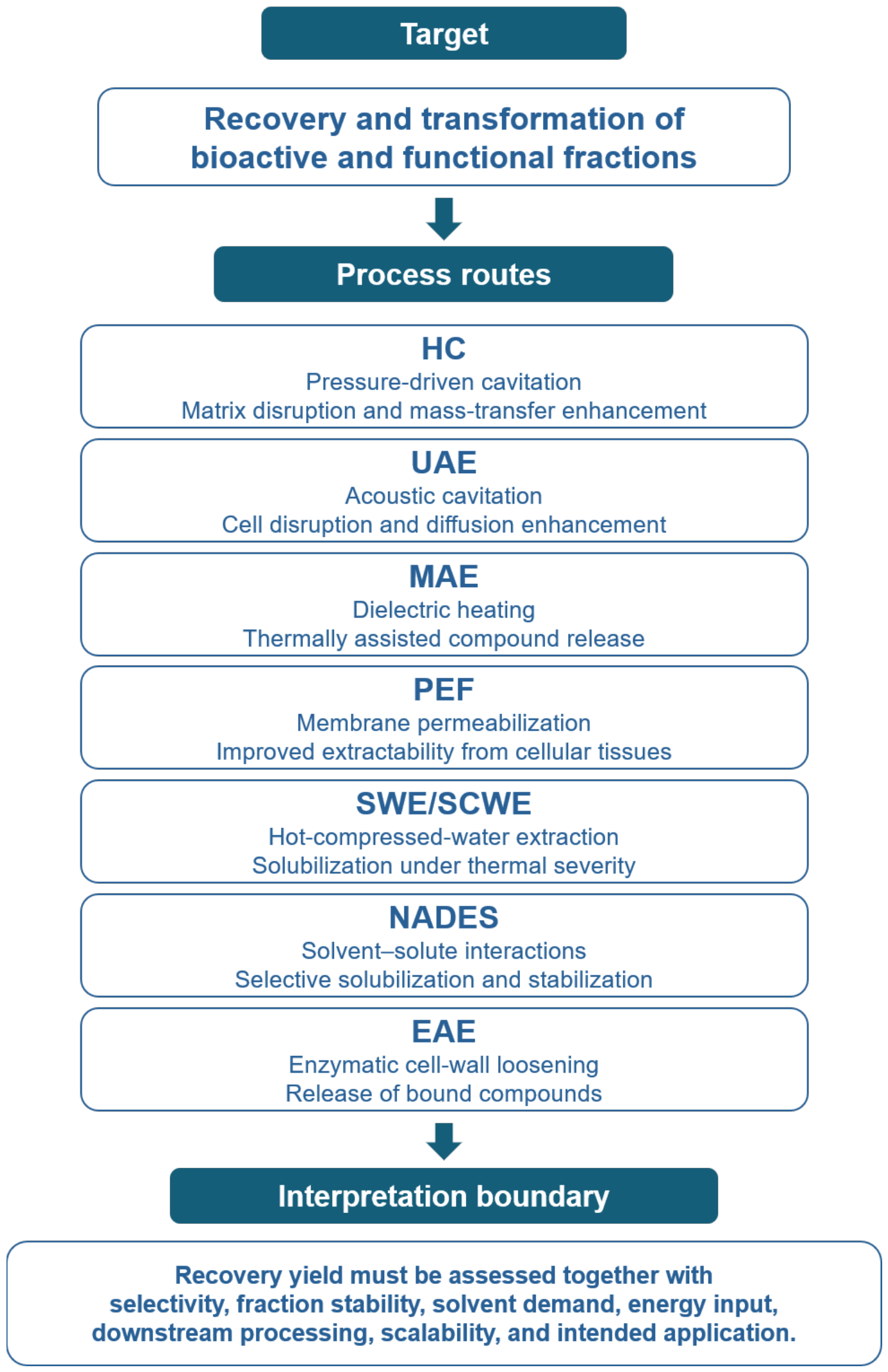
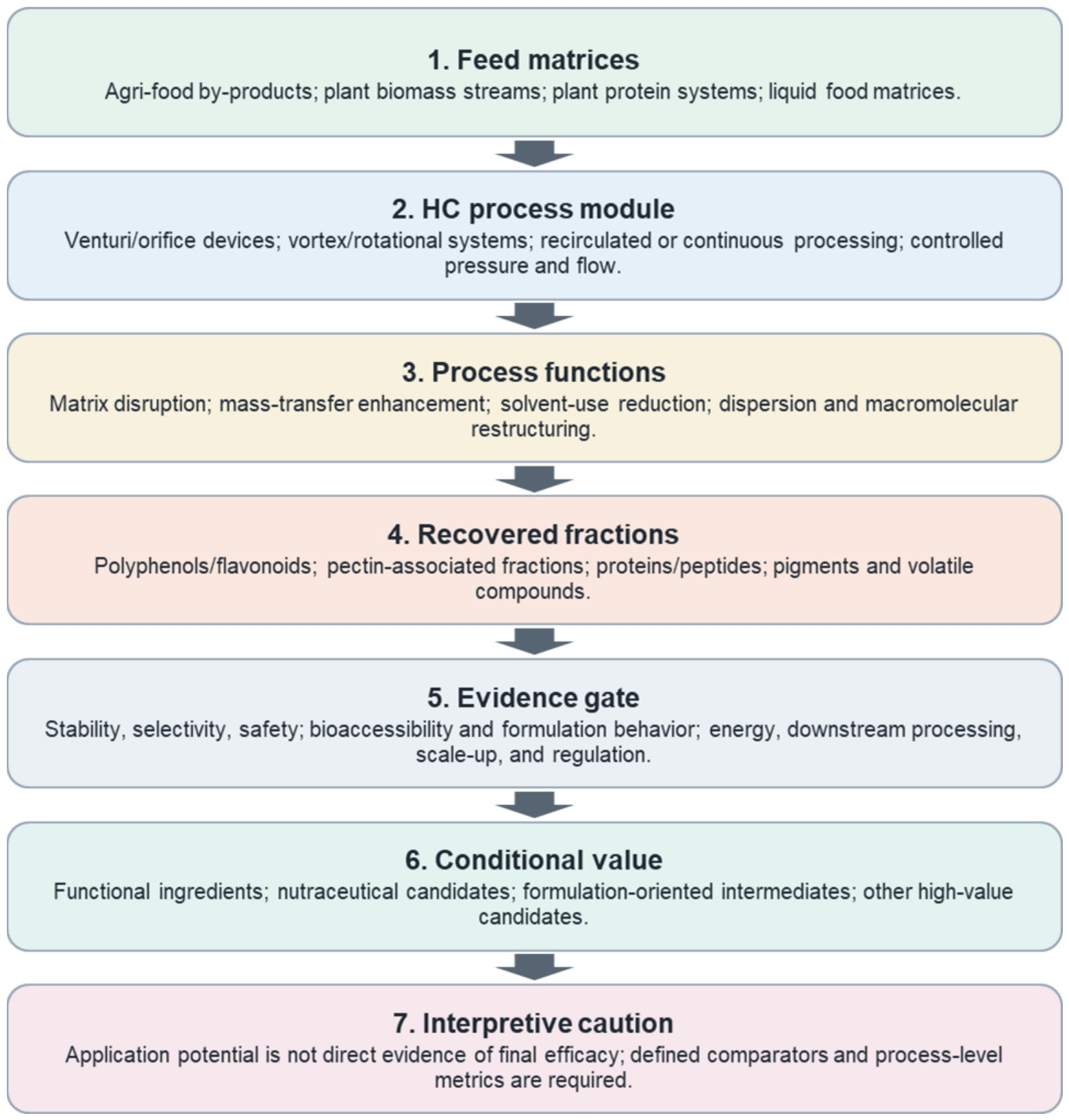

| Matrix or System | Target Fractions | Main Reported or Assessed HC Effect | Process Purpose | Evidence Support and Interpretation Boundary |
|---|---|---|---|---|
| Citrus by-products | Flavonoids, pectins, essential oils, volatile compounds | Matrix disruption and mass-transfer enhancement | Low-solvent recovery of citrus-derived fractions | Moderate; requires stability, selectivity, temperature control, downstream separation, and comparison with green alternatives |
| Citrus pectin-associated systems | Flavanones, phenolics, pectin-associated fractions | Release and partial restructuring of pectin-rich fractions | Recovery of complex pectin-containing fractions | Moderate; requires structural characterization, reproducibility, molecular-property assessment, and stability beyond total phenolic yield |
| Pomegranate by-products | Punicalagin, ellagitannins, polyphenols | Tissue disruption and enhanced polyphenol release | Recovery of polyphenol-rich fractions | Limited; requires distinction among antioxidant activity, bioaccessibility, functional relevance, and final-product efficacy |
| Fruit residues and wet processing by-products | Polyphenols, phenolic acids, fibers | Enhanced solid–liquid contact and wet-stream processing | Recovery from variable wet matrices with reduced preprocessing | Limited; requires matrix variability, water use, process severity, mass balance, and scale relevance |
| Coffee grounds and lignocellulosic plant-derived streams | Phenolics, lignans, cellulose, microfibrils | Mechanical disruption and multiphase fraction release | Integrated recovery of soluble and solid fractions | Limited; requires energy demand, separation requirements, co-product quality, and multiproduct feasibility |
| Beverages and liquid food systems | Hop compounds, proteins, peptides, aroma compounds | Mixing, dispersion, precursor transformation, and process integration | Direct processing of liquid matrices or food intermediates | Moderate; requires sensory quality, colloidal stability, system specificity, temperature effects, and energy use |
| Plant protein matrices | Plant proteins and peptides | Protein release and structural modification | Recovery of protein fractions and improvement of techno-functional properties | Moderate; requires solubility, digestibility, structural integrity, nutritional quality, and antinutritional-factor assessment |
| Protein–polyphenol systems | Complexes, conjugates, colloids, emulsions | Macromolecular restructuring and interaction modulation | Generation of functional complexes or structured intermediates | Limited; requires distinction among functionalization, aggregation, denaturation, and non-specific structural effects |
| Application-oriented candidate fractions | Polyphenols, flavonoids, antioxidants, formulation-relevant fractions | Upstream recovery, dispersion, or structuring | Production of candidate ingredients or functional intermediates | Preliminary; composition alone does not support efficacy claims without safety, stability, bioaccessibility, formulation, and regulatory evidence |
| Evidence Domain | Quantitative Anchors Considered | Main Interpretation | Main Reporting Limit |
|---|---|---|---|
| Citrus by-products | Process scale, water-based operation, pectin properties, phenolic recovery, flavonoid-rich pectin-associated fractions, volatile behavior, and HC–UAE comparison | Most developed matrix-specific evidence for HC in wet citrus residues, pectin-associated phenolic recovery, and integrated citrus-waste valorization | Energy input, volatile retention, concentration steps, storage stability, downstream separation, and application-oriented performance are not harmonized |
| Pomegranate residues | Target polyphenols, extraction yield, process time, energy input, and comparison with CE, UAE, and MAE | Supports recovery of polyphenol-rich fractions under defined study conditions | Bioaccessibility, dose realism, long-term stability, formulation compatibility, and final application remain conditional |
| Apple residues, coffee grounds, and fibrous matrices | Biomass loading, process temperature, cavitation regime, treatment time, energy estimate, phenolic recovery, and cellulose-rich co-products | Supports wet-stream handling, tissue disruption, rapid extraction, and multiproduct valorization | Solids handling, mass balance, specific energy allocation, downstream separation, and co-product quality remain incomplete |
| Beverages and liquid food | Precursor conversion, process time, energy demand, product quality, and liquid-phase integration | HC can act as an integrated process-intensification step in liquid systems | Sensory quality, shelf life, foaming behavior, microbiology, and industrial transfer require case-specific validation |
| Plant proteins | Protein recovery, protein purity, extraction efficiency, antinutritional-factor distribution, and selected functional indicators | HC may improve extraction and selected nutritional-quality indicators | pH adjustment, precipitation, drying, digestibility, antinutritional-factor partitioning, and residue use must be reported together |
| Protein–polyphenol systems | Binding level, structural modification, emulsifying properties, and antioxidant response | HC may also function as a macromolecular structuring technology | Evidence remains mainly model-system based and requires validation in real matrices |
| Comparator technologies | UAE, MAE, PEF, SWE/SCWE, NADES, and EAE, each with technology-specific parameters, mechanisms, and endpoints | HC is most defensible when the limitation is hydrodynamic, diffusional, related to wet-matrix handling, or linked to combined extraction and physical restructuring | No universal ranking is justified across different solvents, temperatures, pressures, scales, endpoints, and downstream requirements |
| Domain | Information to Report | Purpose | Interpretation Boundary |
|---|---|---|---|
| Feedstock | Origin, matrix type, moisture, particle size, pretreatment | Support reproducibility | Avoid generalization across matrices |
| Target fraction | Target class, markers, profile, co-products | Distinguish recovery from valorization | Avoid equating extraction with selectivity |
| HC setup | Reactor type, geometry, flow, pressure, cavitation number | Enable hydraulic comparison | Avoid generic attribution to HC |
| Conditions | Medium, ratio, time, temperature, pH, recirculation | Separate cavitation from other effects | Avoid attributing uncontrolled effects to cavitation |
| Controls | No-HC, thermal, conventional, green comparator | Support process claims | Avoid unsupported superiority claims |
| Fraction quality | Yield, selectivity, purity, degradation, assays | Link yield to usable quality | Avoid equating yield with value |
| Resource use | Energy, water, solvent, reagents, mass balance, throughput, and concentration burden | Assess efficiency | Avoid green claims from solvent reduction alone |
| Downstream steps | Separation, concentration, stabilization, residues | Identify hidden burdens | Avoid judging only the HC step |
| Application relevance | Stability, bioaccessibility, formulation behavior, safety-related data, material specifications, and product-oriented requirements | Connect fractions to realistic use | Avoid inferring functionality from composition alone |
| Scale-up | Volume, continuity, stability, solids handling, integration | Assess transferability | Avoid equating laboratory feasibility with scale-up readiness |
Disclaimer/Publisher’s Note: The statements, opinions and data contained in all publications are solely those of the individual author(s) and contributor(s) and not of MDPI and/or the editor(s). MDPI and/or the editor(s) disclaim responsibility for any injury to people or property resulting from any ideas, methods, instructions or products referred to in the content. |
© 2026 by the author. Licensee MDPI, Basel, Switzerland. This article is an open access article distributed under the terms and conditions of the Creative Commons Attribution (CC BY) license.
Share and Cite
Albanese, L. Hydrodynamic Cavitation for the Sustainable Recovery of Bioactive and Functional Fractions from Agri-Food Residues and Plant-Derived Matrices: Process Functions, Quantitative Evidence, and Application Requirements. Sci 2026, 8, 157. https://doi.org/10.3390/sci8070157
Albanese L. Hydrodynamic Cavitation for the Sustainable Recovery of Bioactive and Functional Fractions from Agri-Food Residues and Plant-Derived Matrices: Process Functions, Quantitative Evidence, and Application Requirements. Sci. 2026; 8(7):157. https://doi.org/10.3390/sci8070157
Chicago/Turabian StyleAlbanese, Lorenzo. 2026. "Hydrodynamic Cavitation for the Sustainable Recovery of Bioactive and Functional Fractions from Agri-Food Residues and Plant-Derived Matrices: Process Functions, Quantitative Evidence, and Application Requirements" Sci 8, no. 7: 157. https://doi.org/10.3390/sci8070157
APA StyleAlbanese, L. (2026). Hydrodynamic Cavitation for the Sustainable Recovery of Bioactive and Functional Fractions from Agri-Food Residues and Plant-Derived Matrices: Process Functions, Quantitative Evidence, and Application Requirements. Sci, 8(7), 157. https://doi.org/10.3390/sci8070157