Article

Effect of Waste Granite Stone Powder on the Mechanical and Microstructural Properties of Cement Mortars

by
Rajab Abousnina
1,2,* and
Fahad Aljuaydi
3,*
1
School of Civil and Mechanical Engineering, Curtin University, Perth 6102, Australia
2
Civil Engineering Department, Faculty of Engineering and Petroleum, University of Benghazi, Benghazi P.O. Box 1308, Libya
3
Department of Mathematics, College of Sciences & Humanities, Prince Sattam Bin Abdulaziz University, Al-Kharj 11942, Saudi Arabia
*
Authors to whom correspondence should be addressed.
Infrastructures 2026, 11(3), 73; https://doi.org/10.3390/infrastructures11030073
Submission received: 30 January 2026 / Revised: 14 February 2026 / Accepted: 21 February 2026 / Published: 24 February 2026

Abstract

The construction industry is under increasing pressure to reduce cement consumption and associated CO2 emissions while managing the growing generation of industrial by-products. Granite stone powder (GSP), produced in large quantities during aggregate crushing operations, is commonly treated as waste despite its potential application in cementitious systems. This study evaluates the feasibility of using GSP as a supplementary cementitious material (SCM) in cement mortars, benchmarked against fly ash (FA). Cement mortars were prepared with 0%, 10%, 15%, 20%, and 25% replacement of Ordinary Portland Cement (OPC) using GSP and, for comparison, identical replacement levels of FA. Fresh behaviour, physical properties, mechanical performance, and microstructural characteristics were evaluated using flow tests, isothermal calorimetry, SEM, and XRF. FA and GSP exhibited distinct effects on mortar performance. FA improved workability at higher replacement levels, with flow diameter increasing by 2% above the control at 25% replacement, whereas GSP progressively reduced flowability by approximately 33% at 25% replacement due to its angular particle shape and higher surface area. Hydration analysis showed that both SCMs reduced early hydration intensity compared to the control; however, GSP consistently exhibited higher peak heat-flow values than FA, indicating stronger early-age hydration supported by physical filler and nucleation effects. At 28 days, the 10% GSP mixture achieved 30 MPa, retaining about 94% of the control strength (32 MPa), while FA mixtures showed strength reductions exceeding 23% at comparable replacement levels. Granite stone powder is most effective at low replacement levels (10%), where it promotes early hydration, improves matrix densification, and preserves compressive strength, demonstrating its suitability as a low-carbon supplementary cementitious material in cement-based construction.

1. Introduction

Concrete is one of the most widely used construction materials worldwide due to its remarkable durability, resistance to environmental influences, ease of production and application, and relatively low cost compared to other structural materials [1,2,3,4]. These attributes have made concrete indispensable for infrastructure, buildings, and transportation networks, thereby driving a continuous increase in cement demand. In 2018, global cement output was expected at roughly 4.3 billion tonnes and is anticipated to rise by nearly 40% by 2050, indicating persistent growth in construction demand [5]. This rapid expansion has significant environmental implications, as cement manufacture is responsible for approximately 8% of global CO2 emissions, largely due to its energy-intensive processes and reliance on fossil fuels and raw materials [6]. These impacts are primarily driven by the production of OPC, which controls the performance of typical concrete. The manufacture of OPC clinker is both energy and resource-intensive, typically requiring about 3.2–6.3 GJ of combined thermal and electrical energy and consuming approximately 1.7 tonnes of raw materials, mainly limestone, with thermal energy accounting for more than 90% of total energy demand. Consequently, OPC production is a major contributor to resource depletion and greenhouse gas emissions [7]. Extensive research has concentrated on creating low-carbon binders and more sustainable cementitious processes to tackle these environmental concerns [8,9,10]. Recent studies have further explored the incorporation of recycled fibres and waste-derived materials into cementitious composites as strategies to reduce raw material consumption and environmental impact while maintaining mechanical performance [11,12]. A typical technique is to partially substitute Ordinary Portland Cement with SCMs, especially those derived from industrial byproducts or waste materials. Fly ash, metakaolin, volcanic ash, rice husk ash, glass powder, and quarry-generated stone powders are examples of typical SCMs [13,14,15,16]. The use of these materials fosters resource conservation, diverts waste from landfills, and lowers the embodied carbon of cementitious systems [17,18,19]. Within this context, quarry-derived stone powders have emerged as particularly promising supplementary cementitious materials.
Stone powder, a fine by-product generated during quarrying and aggregate crushing operations, has recently attracted increasing attention as a potential SCM. Previous studies have demonstrated the feasibility of using various rock dusts derived from quarrying and aggregate processing as partial replacements for OPC in cementitious materials [20,21,22]. Rock powders such as limestone, basalt, marble, and quarry fines have been reported to influence hydration behaviour, particle packing, and strength development through a combination of filler effects and, in some cases, pozzolanic reactivity [23]. Previous studies have reported positive outcomes from incorporating different types of rock dust as partial cement replacements in cementitious systems. Limestone and quarry dust have been shown to improve particle packing and early-age strength through filler effects, while basalt and marble powders have demonstrated potential to enhance mechanical performance and durability when used at appropriate replacement levels [24,25,26,27]. Other investigations have highlighted reductions in clinker content and associated CO2 emissions without compromising workability or strength, particularly at low to moderate substitution ratios [28,29,30]. However, the reported performance varies widely depending on the mineral composition, fineness, and dosage of the rock dust employed.
Granite-derived stone powder is produced in large quantities during aggregate crushing and processing; however, it remains largely underutilised and is commonly stockpiled as waste, creating environmental and disposal challenges [31,32]. Early efforts to valorise granite by-products can be traced back to at least 2016, when studies conducted in the Sardinia region demonstrated the feasibility of reusing granite waste as high-performance granular materials for road pavement applications, particularly within the inverted pavement technique [33]. Laboratory investigations confirmed that granite by-products possessed favourable physical, chemical, and mechanical properties comparable to conventional aggregates, enabling reductions in asphalt layer thickness, construction costs, and environmental impacts while supporting sustainable infrastructure development [33]. These early findings established granite by-products as a viable engineering resource rather than a disposal liability. More recent investigations conducted by Xie, Jiang [31], have confirmed the functional role of granite stone powder in alternative binder systems. An optimal substitution level of approximately 20% was identified, achieving compressive strengths of about 32.8 MPa at 7 days and 48.8 MPa at 28 days due to the formation of dense microstructures dominated by ettringite and calcium–silicate–hydrate phases. However, higher replacement levels resulted in delayed hydration, reduced heat release, coarser pore structures, and deterioration in mechanical performance, highlighting the critical role of dosage control and binder chemistry. The previous studies indicate that replacing 20–30% of OPC with stone powder can significantly reduce carbon emissions without compromising mechanical performance [34,35,36]. Nevertheless, the reported outcomes vary considerably depending on mineralogical composition, fineness, source, and binder system [37,38]. Despite growing interest in granite stone powder as a supplementary cementitious material, comprehensive investigations into its performance as a cement replacement particularly in direct comparison with established SCMs such as fly ash remain limited. This gap is especially evident in the New Zealand context, where construction aggregates are predominantly derived from volcanic stone sources, and only a small number of studies have examined the cementitious potential of locally sourced granite-related stone powders.
Although granite stone powder has shown potential as a supplementary material in cementitious systems, existing studies have largely focused on mechanical performance or aggregate-level replacement, with limited integration of hydration and microstructural analyses, particularly in comparison with established SCMs such as fly ash. This gap is especially pronounced for granite stone powder sourced from Kayasand Limited, NZ, where large volumes are generated as by-products of aggregate processing but remain underutilised. Given the predominantly volcanic nature of Kayasand Limited aggregates, region-specific evaluation is essential to establish reliable performance data and support practical adoption. Accordingly, this study systematically investigates the fresh properties, hydration process, mechanical performance, and microstructural evolution of cement mortars incorporating granite stone powder as a partial replacement for Ordinary Portland Cement, using fly ash as a benchmark SCM.
Although granite stone powder has shown potential as a supplementary material in cementitious systems, previous studies have primarily focused on mechanical performance or aggregate-level replacement, with limited integration of hydration kinetics and microstructural analyses. Moreover, most investigations have not considered region-specific material sources or benchmarked performance against established SCMs such as fly ash. This knowledge gap is particularly significant in New Zealand, where the availability of fly ash is limited due to the gradual reduction of coal-fired power generation. At the same time, large volumes of granite stone powder generated by Kayasand Limited (Riverlea, Hamilton, New Zealand) remain underutilised despite their potential as alternative supplementary materials. Accordingly, this study provides the first comprehensive evaluation of New Zealand-sourced granite stone powder as a partial replacement for Ordinary Portland Cement, systematically examining fresh properties, hydration behaviour, mechanical performance, and microstructural evolution, with direct comparison to fly ash as a benchmark SCM. By establishing region-specific performance data, this work aims to support practical adoption and contribute to reducing cement consumption and associated CO2 emissions.

2. Materials and Methods

2.1. Material and Characterisation

Granite stone powder was used as the primary supplementary cementitious material in this study, while Class F fly ash was included as a well-established reference material for comparative purposes. Granite stone powder was processed in a grinding chamber, where it was subjected to high-speed impacts from rotating elements to achieve particle size homogenisation and enhance reactivity (Figure 1). The grinding process involved a combination of impact, cutting, and compression mechanisms, resulting in the production of ultrafine particles. The physical and chemical characteristics of all materials were characterised using Microstructural characterization was performed using a scanning electron microscope (JEOL JSM-6510, JEOL Ltd., Tokyo, Japan) equipped with an energy-dispersive X-ray spectroscopy (EDS) detector. Chemical composition was further analysed using X-ray fluorescence (XRF, PANalytical Axios, Almelo, The Netherlands).

2.2. Chemical Composition

As presented in Table 1, fly ash contains a high SiO2 content (≈59%) and a relatively elevated Al2O3 content (≈29%), which are favourable for pozzolanic reactivity. In contrast, granite stone powder exhibits a slightly higher SiO2 content (≈63%) but a considerably lower Al2O3 content (≈14%), indicating a predominantly siliceous composition with comparatively limited intrinsic chemical reactivity. These compositional differences are expected to influence hydration behaviour and strength development. Accordingly, this study evaluates the relative effects of fly ash and granite stone powder on cement hardening and mechanical performance.

2.3. Physical Characteristics

The physical properties of fly ash (FA) and granite stone powder (GSP) differ significantly, as summarised in Table 2. Fly ash particles are predominantly spherical and exhibit a broad particle size distribution, which enhances workability through a ball-bearing effect. In contrast, granite stone powder consists mainly of irregular and angular particles with a more uniform size distribution and an average particle diameter of approximately 200 μm. These differences in particle morphology and size distribution are expected to influence fresh-state behaviour, particle packing density, and ultimately the mechanical performance of the cementitious systems.

2.4. Particle Size Distribution

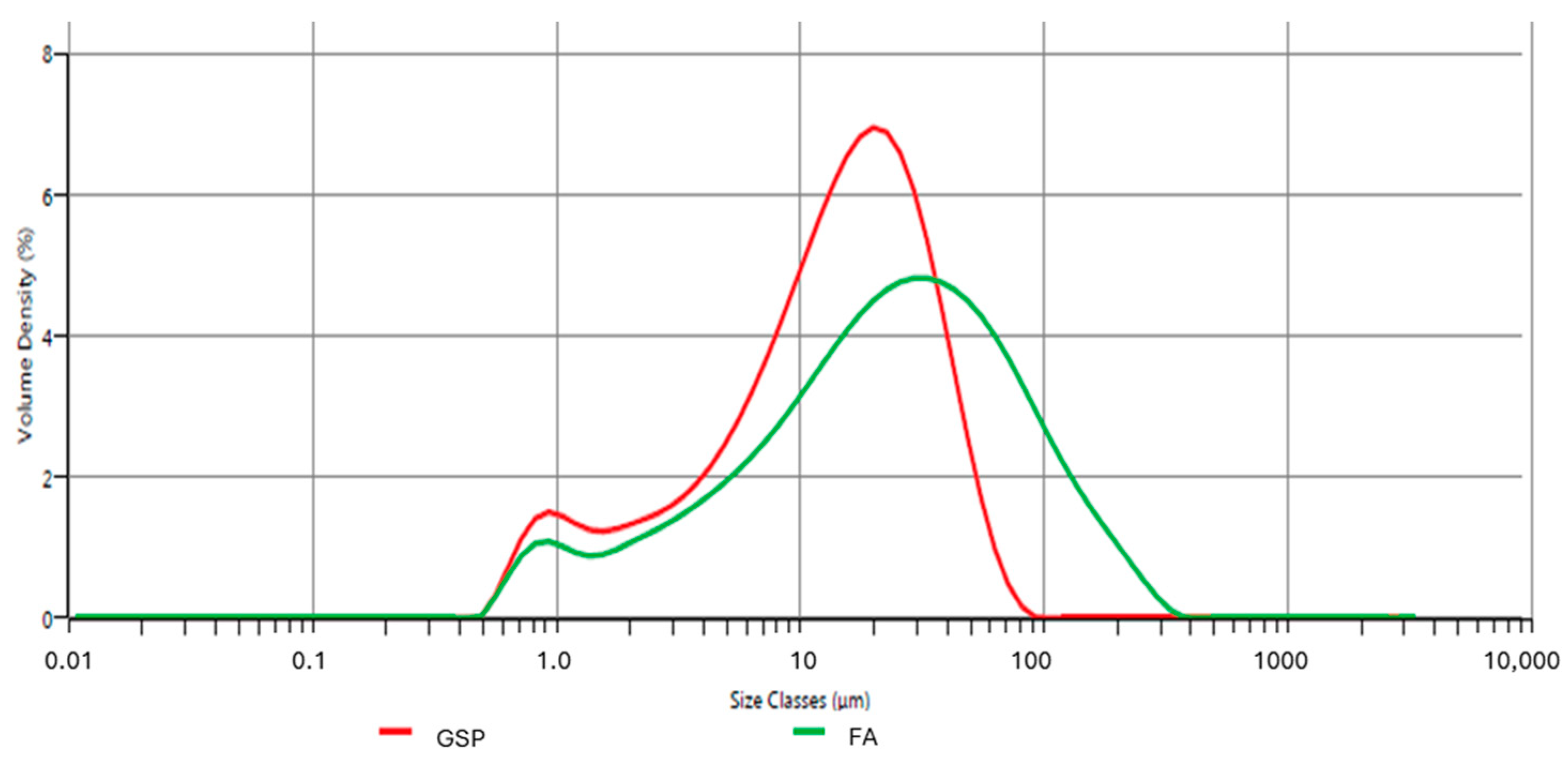
The particle size distribution (PSD) of FA and GSP was characterised using a Malvern Mastersizer 3000 (Malvern Panalytical B.V., Almelo, The Netherlands) under wet dispersion conditions (Figure 2). FA exhibited a finer and more uniform distribution, with Dv10 ≈ 2.71 μm, Dv50 ≈ 23.4 μm, and Dv90 ≈ 40.2 μm, indicating a relatively narrow particle size range consistent with its spherical morphology. In contrast, GSP samples showed broader and coarser distributions depending on source, with representative values of Dv10 ≈ 1.94 μm, Dv50 ≈ 14.2 μm, and Dv90 ≈ 37.1 μm (APQ), reflecting the angular particle shape and wider size spectrum produced during crushing and grinding. The larger span values and higher volume-weighted mean diameters of GSP indicate increased surface area and particle interaction, which are expected to increase water demand and influence fresh-state behaviour. These PSD characteristics provide a clear explanation for the observed differences in workability, hydration kinetics, and microstructural development between FA- and GSP-modified mortars.

2.5. Sample Preparation

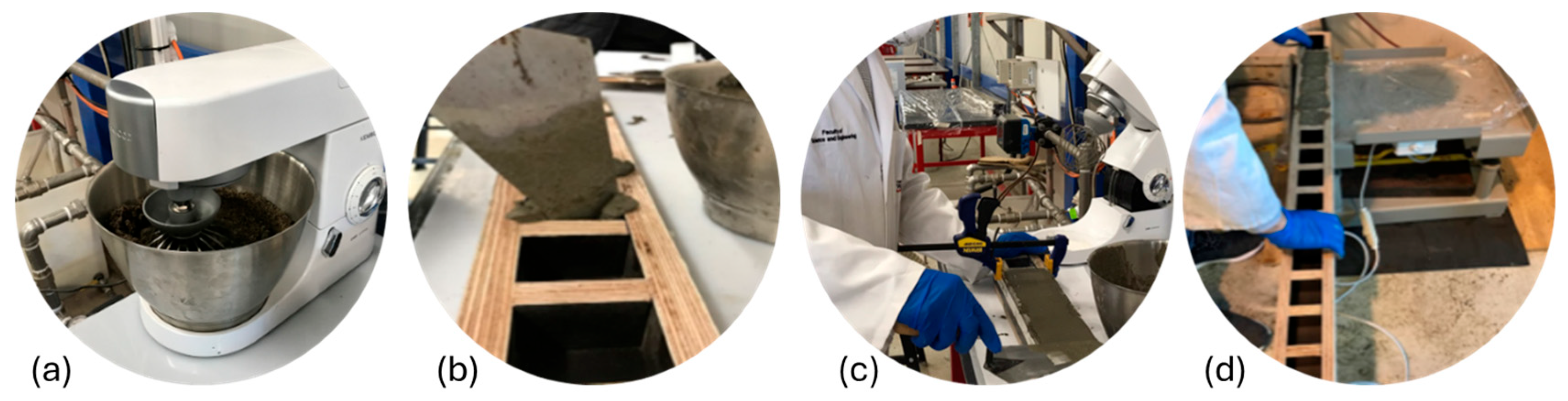
Cement mortar mixtures were prepared using a fixed binder-to-sand ratio of 1:3 and a water-to-binder ratio (w/b) of 0.50. Three test mixtures and one control mixture were designed in accordance with ASTM C311-17 [39]. The reference (control) mixture consisted of 500 kg/m3 of Ordinary Portland Cement, 1500 kg/m3 of standard sand, and 250 kg/m3 of water. FA and GRP were incorporated separately as partial replacements of cement at levels of 10%, 15%, 20%, and 25% by mass, corresponding to replacement contents of 50, 75, 100, and 125 kg/m3, respectively. These replacement levels were selected based on commonly reported practical ranges for supplementary cementitious materials and to enable a systematic evaluation of performance trends with increasing substitution [40,41]. The chosen range allows assessment of both filler and potential pozzolanic effects while avoiding excessive cement dilution that could significantly compromise mechanical performance. In all modified mixtures, the cement content was reduced proportionally to maintain a constant total binder content of 500 kg/m3, while the sand and water contents were kept constant to isolate the effects of FA and GRP on the fresh, hydration, microstructural, and mechanical properties of the mortars. After casting, the specimens were stored at room temperature for 24 h, demoulded, and subsequently cured under ambient laboratory conditions until testing. Compressive strength tests were conducted at a curing age of 28 days to evaluate the hardened mechanical performance. Specimens were designated according to the type and proportion of supplementary cementitious material used; for example, FA15 denotes a mixture containing 15% fly ash and 85% cement, whereas GSP25 represents a mortar with 25% granite stone powder and 75% cement. Cement mortar samples were prepared by blending the volcanic materials with general-purpose cement [42] and construction sand. The mixtures were designed with varying replacement percentages to identify optimal mix proportions. Four groups, including controls and admixtures, were cast using 50 mm3 wooden moulds, as shown in Figure 3. Each specimen type was replicated five times, with six replicates used for strength testing to ensure statistical reliability.
Standard construction sand and general-purpose cement that complies with [42] were combined with additional cementitious ingredients to create cement mortar specimens. To find the ideal ratios, the mixes were created with different replacement levels. As shown in Figure 2, four mix groups including a control and modified mortars were made using 50 × 50 × 50 mm moulds. To guarantee statistical reliability, numerous specimens were created for each blend, with five duplicates made for each mix and six specimens evaluated for compressive strength. Flow Test Workability: The workability of the cement mortar was evaluated in line with the ASTM C1437 standard [43].
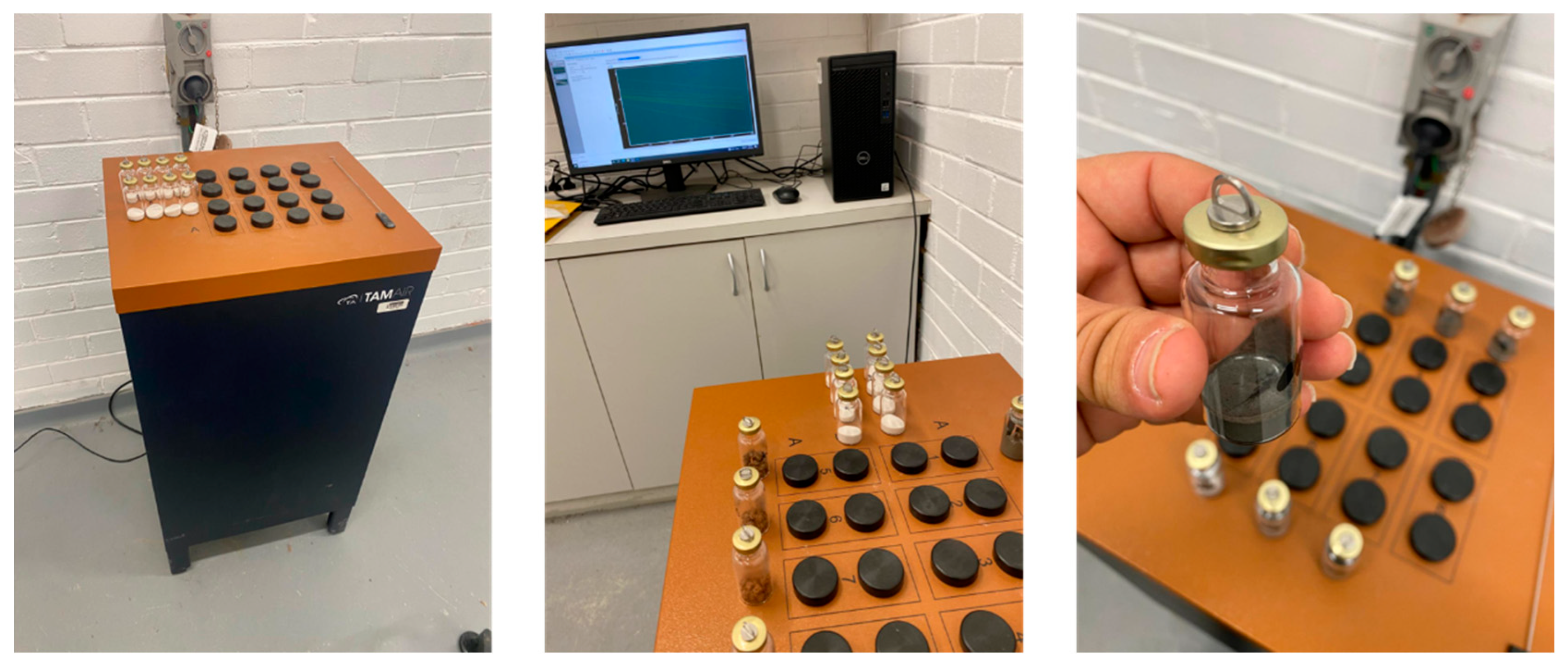
Isothermal Calorimetry: Isothermal calorimetry was employed to evaluate the early hydration behaviour of the paste mixtures. Heat evolution was measured using a TAM Air isothermal calorimeter (Figure 4) in accordance with ASTM C1679 [44]. Approximately 6 g of freshly mixed paste was sealed in ampules and monitored under isothermal conditions for up to 72 h at a controlled temperature representative of laboratory curing conditions. Heat flow data were continuously recorded, and the cumulative heat release was determined by integrating the heat flow curves. An inert reference material of equal mass was used in the reference cell to ensure accurate baseline correction.
Density: All specimens with differing degrees of crude oil contamination were assessed using an Alfa Mirage Electronic Densimeter (Model: SD-200L, Co., Ltd., Osaka, Japan), and density was determined following the pycnometer and hydrostatic procedures in accordance with ASTM D297 [45].
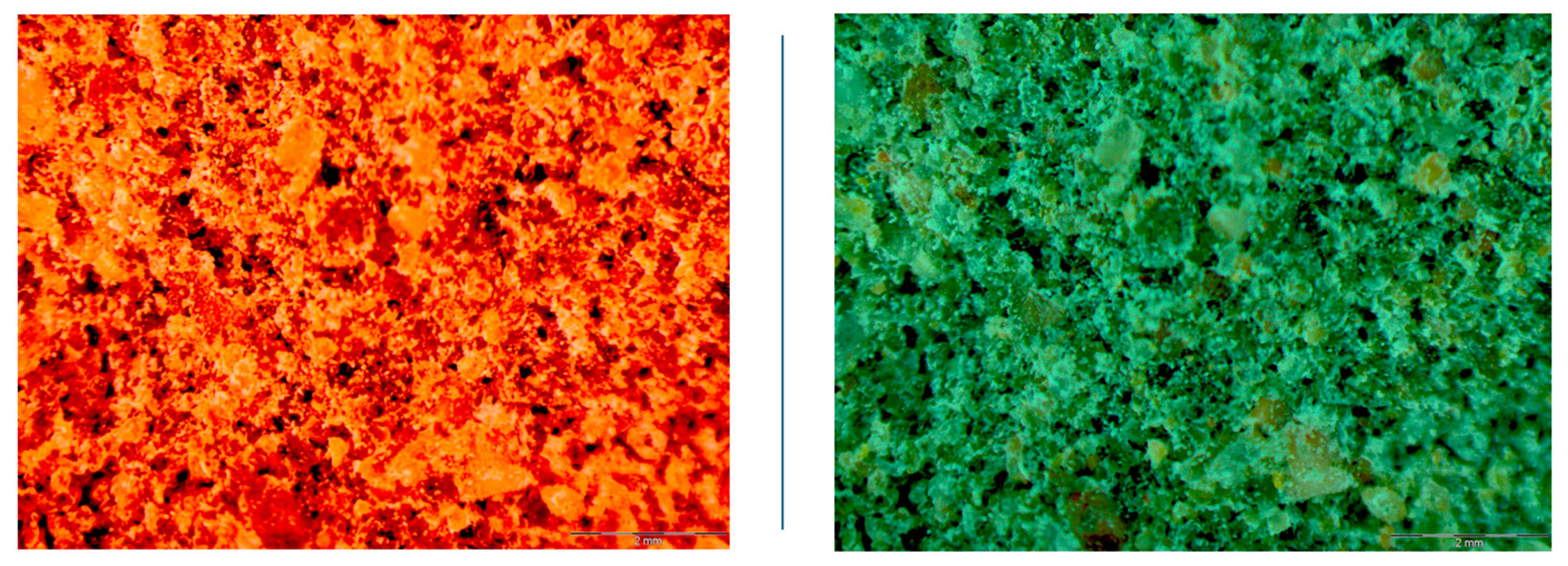
Porosity: The porosity was quantified using TBitmap software (standalone program; no version number specified by the developer) based on ten randomly selected micrographs per sample, representing approximately 20% of the analysed surface area (Figure 5). The low standard deviation obtained confirms that this number of images was sufficient to reliably characterise the material porosity. Following compressive strength testing, two specimens from each mix were selected for microstructural examination after 28 days of curing. Sections from the interior of each specimen were imaged at a magnification of 65× and analysed using TBitmap software, where pores were identified through resin colour thresholding to distinguish pore pixels from the solid matrix.
Surface Microstructure and Chemical Analysis: The surface morphology and internal structure of the samples were analysed using TESCAN MIRA3, a Scanning Electron Microscope (VP-FESEM), which provides high-resolution imaging (20×–30,000×) to assess texture, composition, and crystal orientation. Secondary electrons reveal surface details, while backscattered electrons indicate compositional contrast. Combined with SEM, energy-dispersive EDS enables rapid qualitative and quantitative elemental analysis of microscopic regions. XRF was employed to determine the chemical composition of the samples. XRF identifies elements based on the characteristic secondary X-rays they emit when excited, covering a broad range from fluorine (F) to uranium (U).
Compressive strength: was determined on hardened cement mortar specimens cast as 50 × 50 × 50 mm cubes in accordance with ASTM C109 [46]. Testing was performed for 28 days using a universal testing machine operated under displacement control at a loading rate of 0.5 mm/min. For each mix, three cube specimens were tested, and the average value was reported as the representative compressive strength.

3. Results and Discussion

3.1. Workability

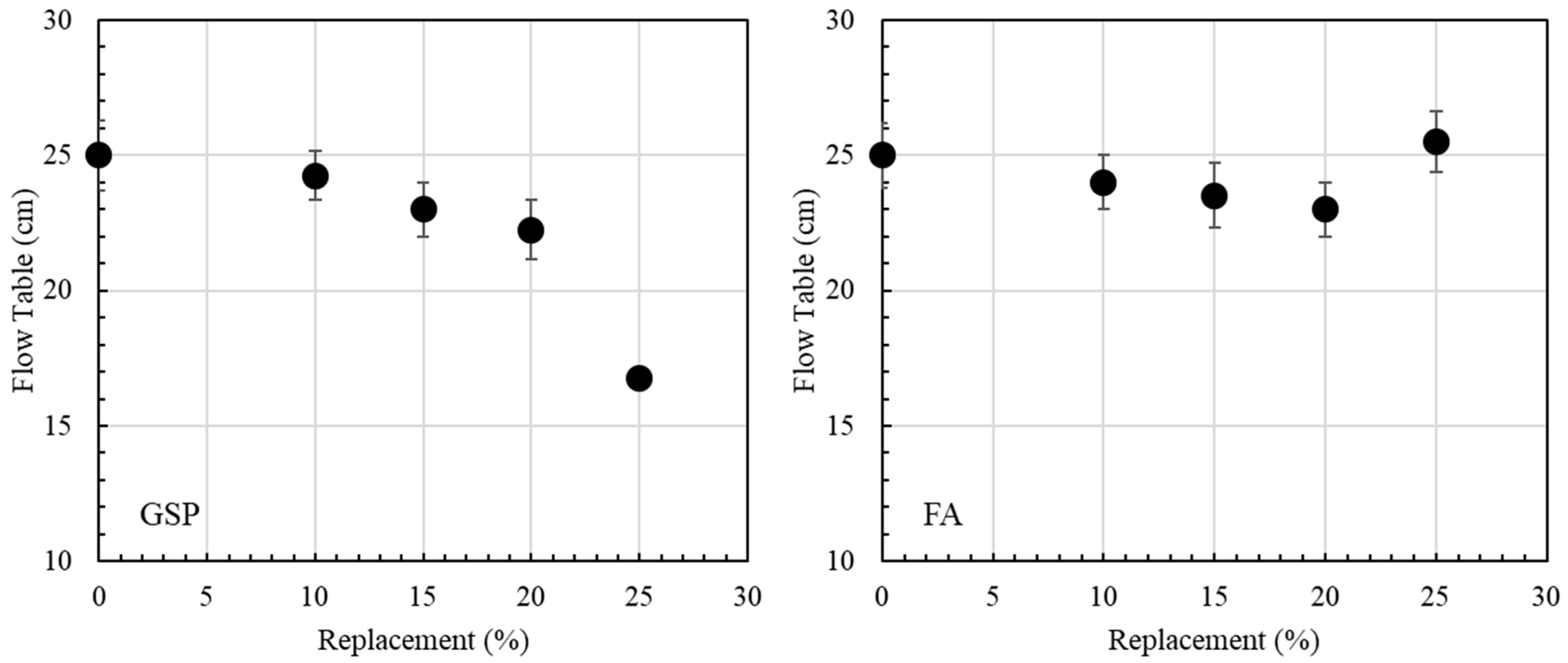
The workability test results demonstrate the impact of FA and GSP on the workability of cement mortars, as seen in Figure 6. The control mixture consistently demonstrated a flow diameter of 25 cm and served as the benchmark for comparison. The flow diameter of FA-modified mortars exhibited a little drop when the replacement level escalated from 10% to 20% (decreasing from 24 cm to 23 cm), indicating a modest decline in workability. At 25% FA replacement, the flow diameter has increased to 25.5 cm, which exceeded the control. The enhancement in workability with elevated fly ash content is due to the spherical particle morphology and fineness of fly ash, which create a significant “ball-bearing” effect, diminish water demand per unit binder, and improve particle lubrication, consequently reducing interparticle friction [47]. Comparable trends have been observed in high-performance cementitious systems, where mixtures with elevated fly ash content demonstrated enhanced slump flow, while materials with angular and porous particles exhibited decreased workability due to increased water absorption and reduced availability of free mixing water [48,49]. Contrariwise, mortars containing GSP demonstrated a significant decline in workability as the replacement amount increased. The flow diameter decreased gradually from 24.25 cm at 10% replacement to 16.75 cm at 25%, indicating the lowest workability of all mixes. This behaviour is mostly linked to the angular morphology and elevated surface area of GSP, which augment water consumption and diminish the supply of free water necessary for sufficient lubrication. The use of fine, angular mineral powders is recognised to enhance water absorption, thereby impairing flowability if the water content is not appropriately modified [50,51]. Furthermore, Yuan, Xie [52] elucidated this behaviour by categorising water in cementitious systems into three types: free water, adsorbed water, and filled water. Among them, only free water substantially enhances workability by decreasing interparticle friction. When tiny particles are added without augmenting the overall water content, they absorb additional water (both adsorbed and filled), resulting in inadequate free water to provide sufficient flow.

3.2. Hydration Process

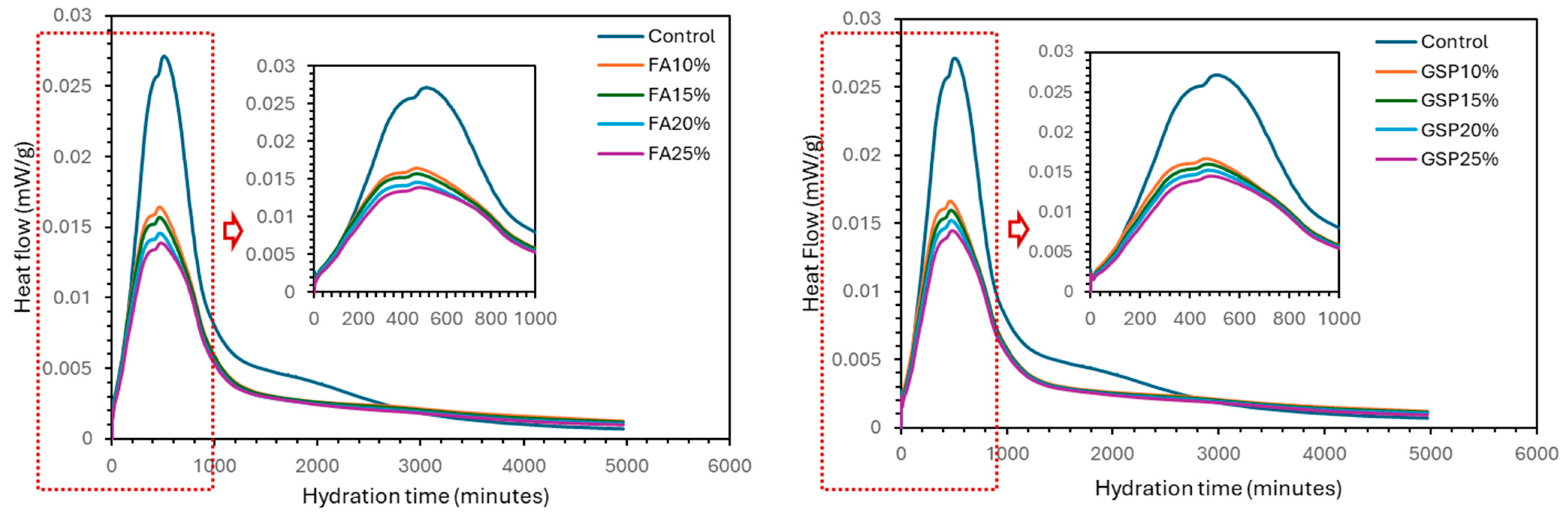
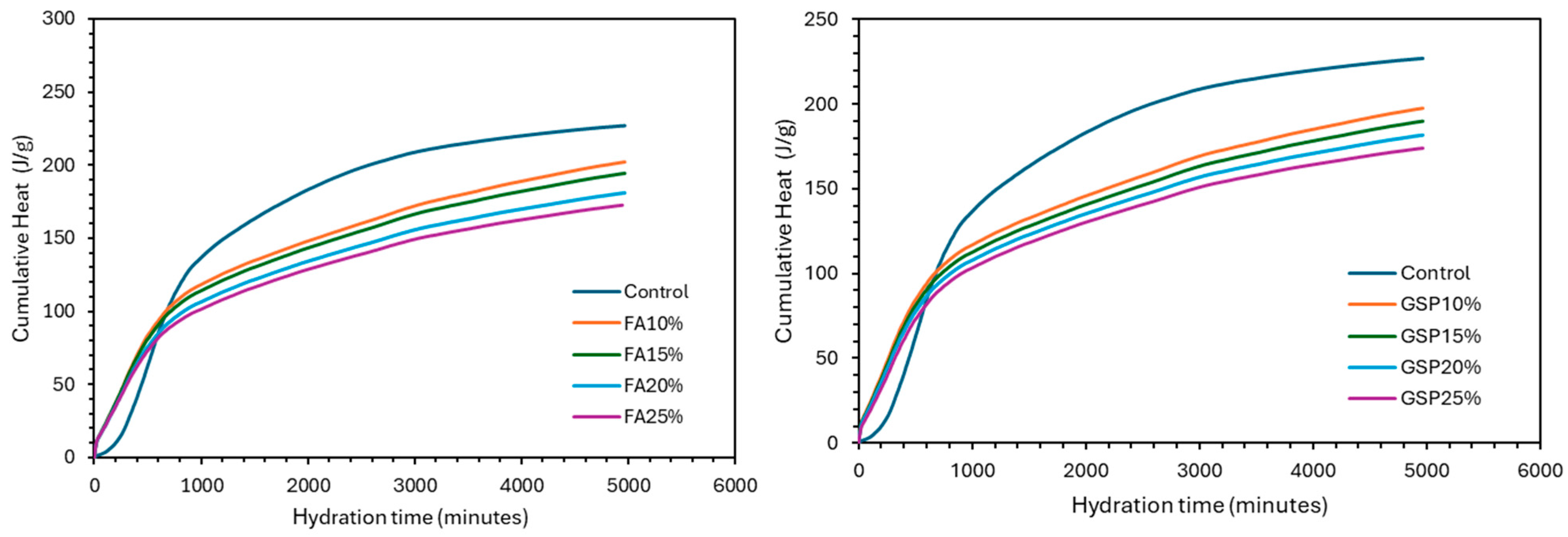
Figure 7 and Figure 8 presents the heat flow and cumulative heat evolution of cement pastes incorporating FA and GSP, together with the control paste containing 100% cement. The control sample exhibited a peak heat flow of 0.027 mW/g and a cumulative heat release of 227.7 J/g, representing the highest hydration intensity among all mixtures. For GSP-blended pastes, a gradual reduction in peak heat flow was observed as the replacement level increased, decreasing from 0.01664 mW/g at 10% GSP to 0.01447 mW/g at 25% GSP, corresponding to an overall reduction of approximately 13%. Similarly, the cumulative heat release declined from 197.58 J/g to 174.01 J/g with increasing GSP content. This reduction relative to the control reflects the dilution effect associated with cement replacement. Nevertheless, the presence of GSP maintained a relatively stable early hydration response, which can be attributed to its physical filler effect and its ability to provide nucleation sites that promote early-age hydration [53,54]. In contrast, FA-blended mixtures exhibited a more pronounced decrease in both peak heat flow and cumulative heat release as the replacement level increased. The peak heat flow decreased from 0.01644 mW/g at 10% FA to 0.01389 mW/g at 25% FA, representing a reduction exceeding 15%, while the cumulative heat release declined from 202.16 J/g to 172.57 J/g, corresponding to an approximate 15% decrease. This behaviour indicates a stronger suppression of early hydration with increasing FA content, as fly ash initially contributes limited reactive calcium phases. However, the extended heat release tails observed in the calorimetry curves suggest the gradual onset of pozzolanic reactions at later stages [55] consistent with previous studies highlighting the delayed but beneficial long-term reactivity of fly ash in blended cement systems [56]. Overall, compared with the control paste, both FA and GSP reduced the early hydration intensity due to cement dilution. However, GSP demonstrated a more moderate reduction in heat evolution than FA at equivalent replacement levels, indicating a greater capacity to sustain early hydration through physical effects, whereas FA primarily contributes to hydration at later ages through pozzolanic reactions.
Moreover, GSP-blended pastes consistently demonstrated elevated peak heat flow values compared to FA-blended pastes across all replacement levels, suggesting a more significant impact of GSP on early hydration kinetics. At a 15% replacement level, the GSP combination attained a maximum heat flow of 0.01597 mW/g, in contrast to 0.01571 mW/g for the equivalent FA mixture. The cumulative heat release at this replacement level was marginally lower for GSP (189.92 J/g) compared to FA (194.39 J/g), indicating that GSP facilitates early-stage hydration through physical filler and nucleation effects, whereas FA plays a more substantial role in extended hydration due to its delayed pozzolanic reactivity. This differential indicates that GSP is superior in enhancing early hydration intensity and strength potential at a young age, whereas FA facilitates prolonged hydration and enduring performance. The choice between these two supplementary cementitious materials should be determined by performance criteria: GSP is preferable for applications necessitating early strength development, whereas FA is more suitable for structures emphasising long-term durability and sustained performance.

3.3. Density and Total Porosity

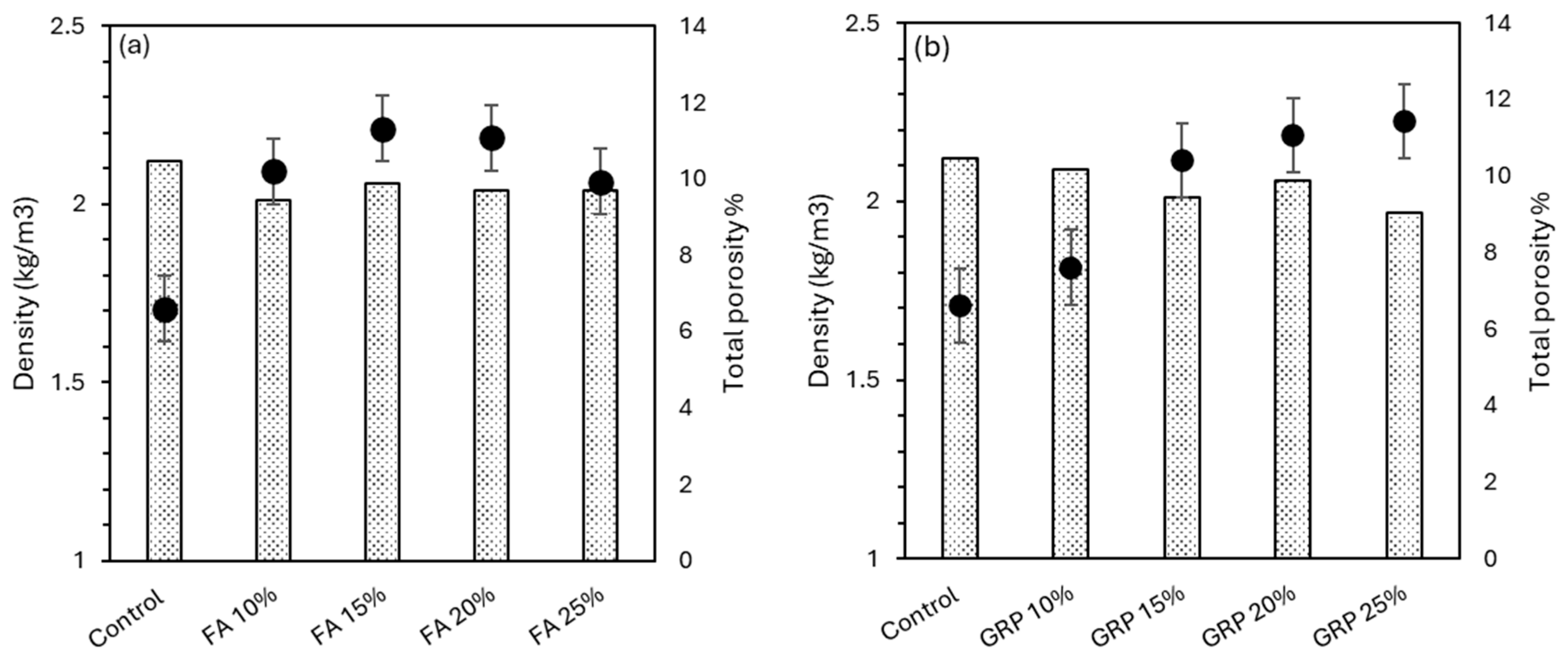
The bulk density of the mortar specimens was measured at 28 days of curing, and Figure 9 illustrates the relationship between porosity and density for the control and blended mortar mixtures. The control mortar had the greatest density (2.12 g/cm3) and the lowest porosity (6.67%), aligning with recognised correlations between increased density, reduced pore volume, and enhanced mechanical performance [57]. In FA-modified mortars, bulk density decreased relative to the control, while porosity increased with replacement level up to 15%. At 10% FA, the density reduced to 2.01 g/cm3 and porosity increased to 10.19%, indicating partial disruption of matrix packing. The maximum porosity (11.32%) was observed at 15% FA, accompanied by a density of 2.06 g/cm3, suggesting delayed hydration and reduced early pore refinement at this replacement level. At higher FA contents (20–25%), porosity showed a slight reduction to 11.07% and 9.93%, respectively, while density remained relatively stable (~2.04 g/cm3), which may be attributed to the onset of secondary pozzolanic reactions contributing to gradual microstructural refinement [58].
On the other hand, GRP-modified mortars exhibited a similar but more pronounced sensitivity to replacement level. At 10% GRP, the mortar maintained a relatively high density (2.09 g/cm3) and low porosity (7.61%), indicating effective particle packing and a filler-dominated densification effect. However, increasing the GRP content beyond 10% resulted in a marked increase in porosity, reaching 10.4%, 11.07%, and 11.44% at 15%, 20%, and 25% replacement levels, respectively. Concurrently, bulk density decreased to 1.97 g/cm3 at 25% GRP, reflecting reduced matrix cohesion due to cement dilution and limited chemical reactivity of excess stone powder. The results demonstrate a clear inverse relationship between density and porosity across all mixtures. Low replacement levels, particularly 10% GRP, promote matrix densification through improved particle packing, whereas higher replacement ratios increase void content and reduce structural compactness [59,60]. These findings highlight the importance of optimising replacement levels to balance microstructural integrity and sustainability benefits when incorporating supplementary materials into cement mortars.

3.4. Microstructural Analysis

3.4.1. SEM

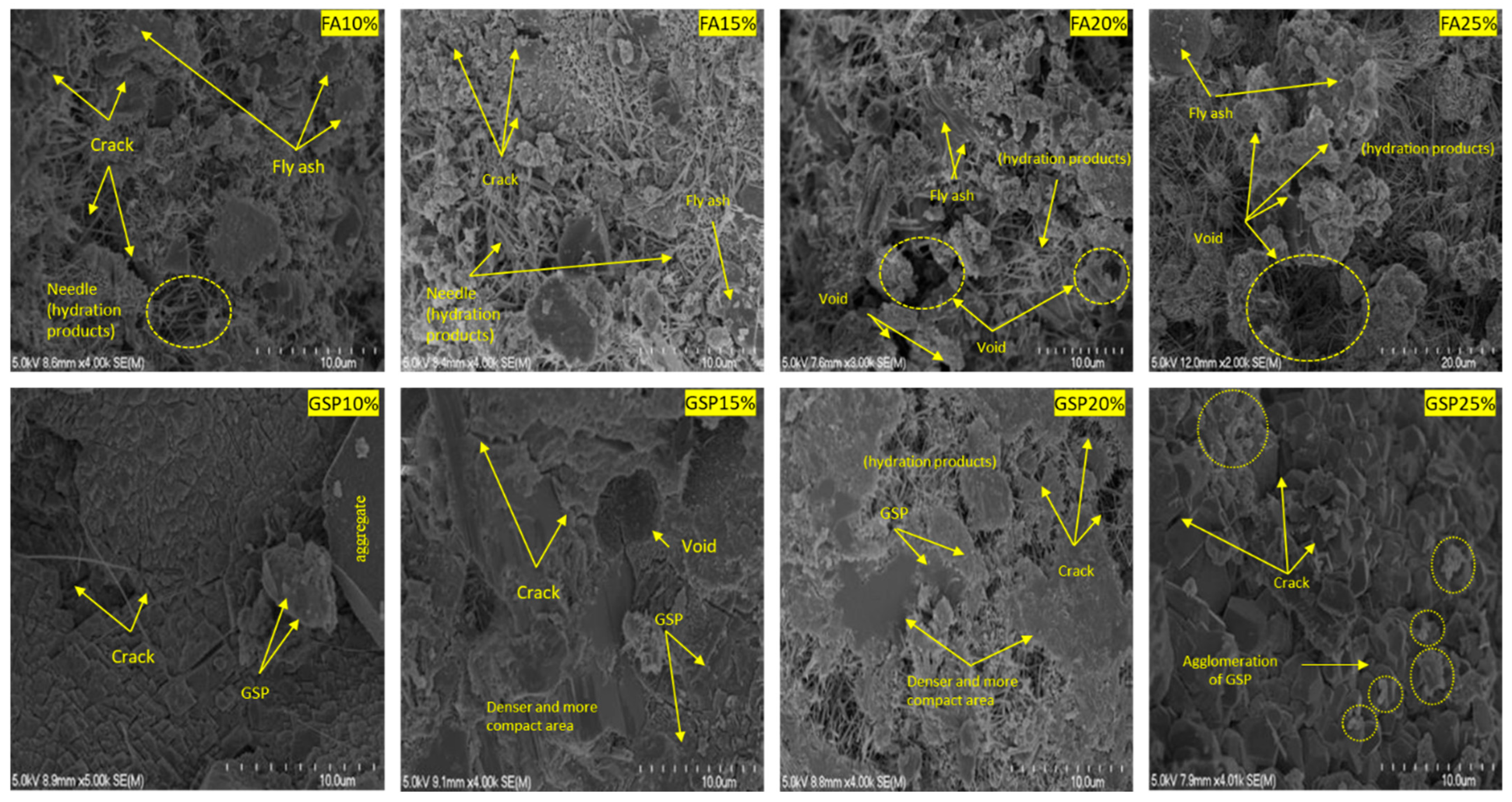
The microstructures of cement pastes containing FA at various replacement levels are shown in Figure 10. At 10% FA, the matrix exhibits comparatively continuous hydration clusters, with dispersed spherical fly ash particles embedded within the hydrated paste. The distribution of needle-like hydration products (commonly associated with ettringite formation) [61,62] is generally homogeneous. With increasing FA content (15% and 20%), isolated and partially reacted fly ash particles become more prominent, indicating delayed pozzolanic activity. This behaviour is consistent with the hydration results presented in Section 3.2, where increasing FA replacement led to reduced peak heat flow and cumulative heat release. At early ages, fly ash primarily contributes through filler and packing effects, while its chemical participation via pozzolanic reaction is delayed. The influence of particle size and fineness on hydration kinetics has been widely reported, where finer FA particles enhance nucleation and early reaction, while coarser fractions remain relatively inert at early stages [63,64,65]. This explains the persistence of unreacted FA particles and reduced early heat evolution at higher replacement levels. A similar microstructural pattern is observed at 25% FA, where dilution effects become more evident.
In contrast, at low GSP replacement levels (10% and 15%), the cement pastes exhibit a denser and more compact microstructure, with fewer visible pores and improved inter-particle bonding within hydration clusters. This observation aligns with calorimetric findings, where GSP-blended systems demonstrate higher peak heat flow compared to FA-blended systems at equivalent replacement levels. The enhanced early hydration can be attributed to the physical filler effect and nucleation sites provided by fine GSP particles, which accelerate cement hydration. However, at higher GSP replacement levels (20% and 25%), the matrix becomes progressively less compact, characterised by smaller hydration clusters, increased void content, and visible particle agglomeration at 25% replacement. The corresponding reduction in peak heat flow indicates cement dilution and limited chemical reactivity of the stone powder. The weaker inter-cluster bonding observed at higher GSP levels reflects reduced hydration product formation. Overall, SEM analysis reveals distinct mechanisms: FA-modified systems are governed by delayed pozzolanic reactivity and particle size effects, while GSP-modified systems benefit from physical filler and nucleation effects at low dosages but exhibit dilution-induced porosity at higher replacements. The needle-like crystalline features observed are consistent with ettringite (AFt) morphology commonly reported in cement hydration studies [65], further supporting the microstructural interpretation.

3.4.2. X-Ray Fluorescence Analysis

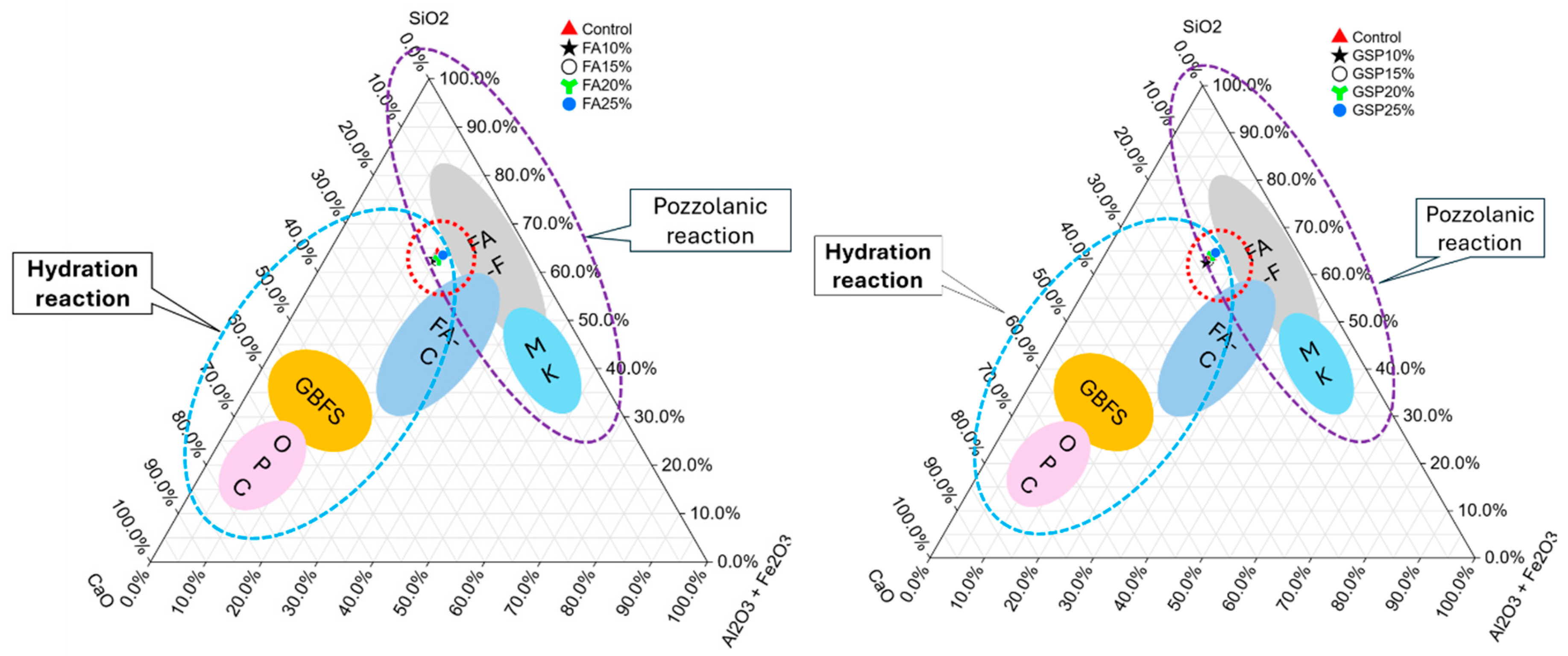
The ternary diagram analysis of the XRF data (SiO2–(Al2O3 + Fe2O3)–CaO) enables the classification of cement replacement materials, namely FA and granite stone powder (GSP), according to their pozzolanic or hydraulic reactivity [66]. XRF provides quantitative chemical composition data, which is widely used to assess the potential reactivity and classification of supplementary cementitious materials. As shown in Figure 11, all samples, including the control, are located closer to the SiO2 apex, indicating a silica-rich composition. The FA-blended samples are positioned within the pozzolanic region of the diagram, characterised by high SiO2 and moderate Al2O3 contents combined with low CaO levels. Increasing the FA replacement level leads to a slight increase in Al2O3 + Fe2O3 content and a corresponding reduction in SiO2, while CaO remains largely unchanged, confirming the predominantly pozzolanic nature of FA. Similarly, the GSP-modified samples remain within the pozzolanic domain, reflecting the siliceous mineralogy of granite. GSP exhibits high SiO2 content and comparatively low CaO, indicating limited hydraulic reactivity and a primary contribution through physical filler effects and potential secondary pozzolanic reactions. Although XRD analysis can provide detailed crystalline phase identification, the present study focuses on chemical classification and performance evaluation; therefore, XRF-based compositional analysis is considered adequate to establish the pozzolanic potential of the investigated materials. None of the replacement materials approaches the high-CaO hydration region associated with binders such as Ordinary Portland Cement or ground granulated blast furnace slag, confirming that both FA and GSP act predominantly as pozzolanic materials rather than hydraulic binders.

3.5. Compressive Strength

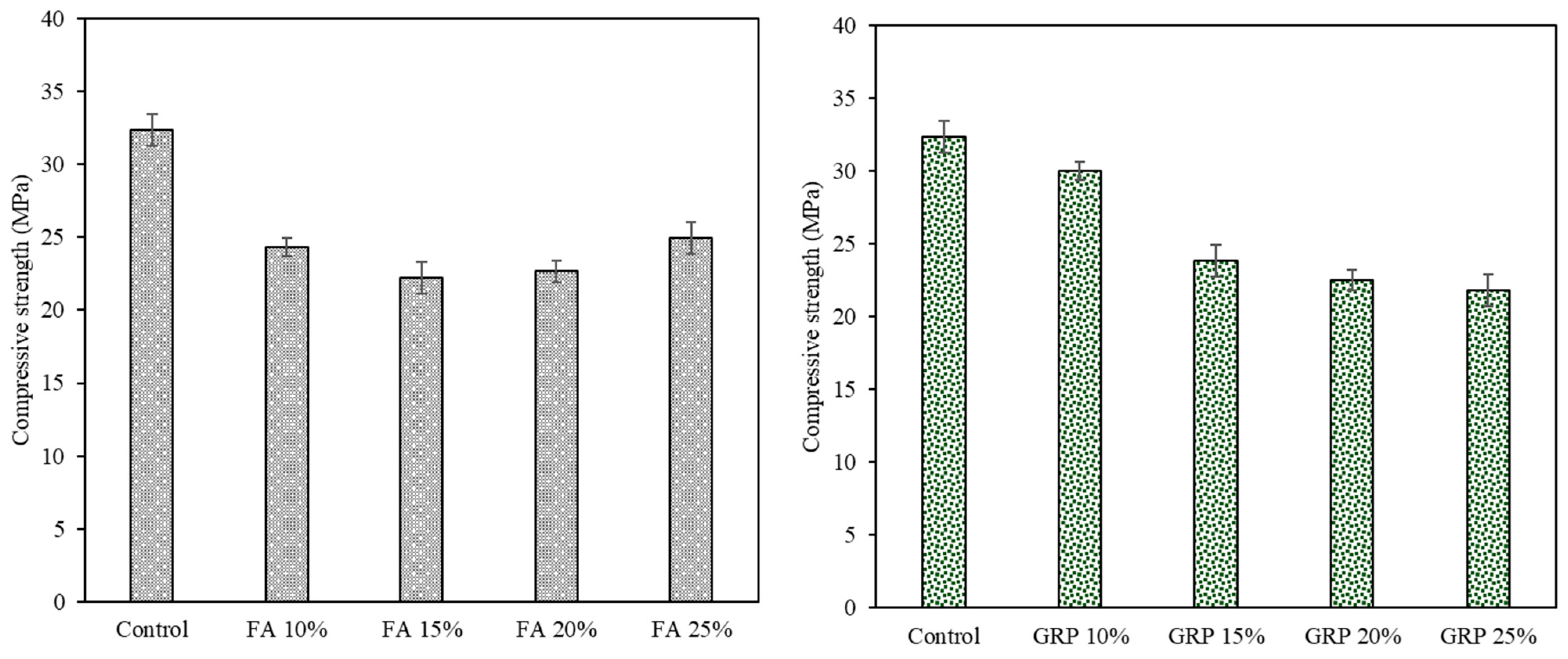
At 28 days of ambient curing, the control mix acquired a compressive strength of 32 MPa, which was used as the benchmark to analyse the impact of partly substituting cement with 10–25% FA and GSP (Figure 12). In general, all mixes demonstrated lower compressive strength than the control; however, the magnitude of strength decrease varied depending on the kind of extra material and the replacement level. Fly ash mortars showed the most pronounced reduction in compressive strength. The FA10%, FA15%, and FA20% mixtures achieved strengths of 24.30 MPa, 22 MPa, and 22.7 MPa, respectively. A modest recovery in strength was observed for the FA25% mixture (24.9 MPa), which can be attributed to the delayed pozzolanic reaction of fly ash under ambient curing conditions. Owing to its spherical particle morphology and relatively low surface area, fly ash exhibits limited early-age reactivity, contributing less to early strength development while enhancing long-term performance [67,68,69]. This behaviour is consistent with previous studies reporting restrained early hydration activity and improved later-age strength in FA-containing systems [70,71]. In comparison, GSP mortars showed better efficiency, especially at lower replacement amounts.
The GSP10% combination obtained a compressive strength of 30 MPa, only slightly lower than that of the control mix, suggesting a noticeable physical filler effect and better matrix densification linked with the angular and irregular particle shape of granite stone powder [72,73]. However, as the GSP content increased, compressive strength progressively declined, reaching 21.8 MPa at 25% substitution. This reduction is attributed to cement dilution effects and disruption of the water-to-cementitious material balance at higher replacement levels, which constrain hydration and reduce strength development [74,75]. The results indicate that GSP exhibits better strength retention than FA at equivalent replacement levels, particularly at low substitution ratios. These findings highlight the potential of granite stone powder as an effective supplementary cementitious material when used at optimised dosages, offering a practical approach to reducing cement consumption while maintaining acceptable mechanical performance in sustainable cementitious composites. The combined mechanical, hydration, and microstructural results demonstrate that FA and GSP influence cementitious systems through distinct mechanisms. FA primarily contributes through delayed pozzolanic reactions that may enhance long-term performance, while GSP enhances early-age hydration and matrix densification at low replacement levels via physical effects. At higher substitution ratios, both materials exhibit reduced hydration activity and increased porosity, highlighting the importance of optimising replacement levels to balance mechanical performance and sustainability benefits when using supplementary cementitious materials.

4. Conclusions

This study evaluated the performance of fly ash (FA) and granite stone powder (GSP) as partial cement replacements (10–25 wt.%) in cement mortars, examining fresh properties, hydration behaviour, microstructure, and 28-day mechanical performance. Both FA and GSP reduced early hydration intensity due to cement dilution; however, GSP demonstrated stronger early-age hydration response through physical filler and nucleation effects, while FA exhibited delayed pozzolanic reactivity. Microstructural observations confirmed that low GSP replacement (10%) improved matrix densification, whereas higher replacement levels for both materials increased porosity and reduced cohesiveness.
At 28 days, all blended mortars showed lower compressive strength than the control, but GSP provided better strength retention than FA, with 10% GSP maintaining over 90% of the reference strength. Overall, GSP is most effective at low replacement levels (~10%), where it enhances early hydration and structural integrity, while FA is better suited for systems benefiting from longer-term pozzolanic reactions. These findings demonstrate that careful optimisation of replacement dosage is essential to achieve balanced mechanical performance and reduced cement consumption in sustainable cementitious materials.

Author Contributions

Conceptualization, R.A.; methodology, R.A.; validation, R.A.; investigation, R.A.; writing—original draft preparation, R.A.; writing—review and editing, R.A.; visualization, F.A.; project administration, F.A.; funding acquisition, F.A. All authors have read and agreed to the published version of the manuscript.

Funding

This research received no external funding.

Institutional Review Board Statement

Not applicable.

Informed Consent Statement

Not applicable.

Data Availability Statement

No data was used for the research described in the article.

Acknowledgments

The authors thank Prince Sattam bin Abdulaziz University for funding this research through the project number (PSAU/2024/01/31426).

Conflicts of Interest

The authors declare no conflicts of interest.

References

  1. Semmana, O.; Rihan, M.A.M.; Barrie, Z.M.; Daniel, C.; Abdalla, T.A. A systematic review of the strength, durability, and microstructure properties of concrete incorporating glass powder. Eng. Rep. 2025, 7, e70002. [Google Scholar] [CrossRef] [Scilit]
  2. Arbab, F.; Tarighat, A.; Shayanfar, M.A. Evaluation of electrical resistivity, hydration, and durability against sulfate attack of limestone calcined clay cement (LC3) with various kaolinite content at high-replacement levels. Constr. Build. Mater. 2025, 469, 140505. [Google Scholar] [CrossRef] [Scilit]
  3. Kumar, P.R. Low carbonizing cement and concrete industry: A state-of-art review on quaternary blended sustainable self-compacting concrete. Innov. Infrastruct. Solut. 2025, 10, 43. [Google Scholar] [CrossRef] [Scilit]
  4. da Silva, L.B.; Orejuela, C.O.P.; da Silva, L.F.; dos Santos, J.O.; Rodrigues, R.L.; da Silva, A.C.F.; Thalhofer, J.L.; da Silva, A.X. Radiometric analysis and implementation of a new hazard index (IBRA) for Brazilian construction materials. Radiat. Phys. Chem. 2025, 229, 112476. [Google Scholar] [CrossRef] [Scilit]
  5. Desport, L.; Andrade, C.; Corral, D.; Selosse, S. Feasibility, conditions, and opportunities for achieving net-negative emissions in the global cement industry. Int. J. Greenh. Gas Control 2025, 141, 104280. [Google Scholar] [CrossRef] [Scilit]
  6. Sawa, D.; Yamashita, N.; Tanikawa, H.; Daigo, I.; Maruyama, I. CO2 uptake estimation in Japan’s cement lifecycle. J. Clean. Prod. 2025, 486, 144542. [Google Scholar] [CrossRef] [Scilit]
  7. Luo, Z.; Song, H.; Huang, Y.; Jin, B. Recent advances on the uses of biomass alternative fuels in cement manufacturing process: A review. Energy Fuels 2024, 38, 7454–7479. [Google Scholar] [CrossRef] [Scilit]
  8. Kumar, A.; Kumar, P.; Gogineni, A.; Ahmed, M.; Chen, W. Evolution of cementitious binders: Overview of history, environmental impacts, and emerging low-carbon alternatives. Buildings 2025, 15, 3811. [Google Scholar] [CrossRef] [Scilit]
  9. Kumar, S.; Gangotra, A.; Barnard, M. Towards a net zero cement: Strategic policies and systems thinking for a low-carbon future. Curr. Sustain./Renew. Energy Rep. 2025, 12, 5. [Google Scholar] [CrossRef] [Scilit]
  10. Yue, Z.; Zhu, X. Microstructural insights and technical challenges of effectively adopting high-volume GGBS in blended cements for low-carbon construction. npj Mater. Sustain. 2025, 3, 25. [Google Scholar] [CrossRef] [Scilit]
  11. Coviello, C.G.; Lassandro, P.; Foti, D.; Ros, P.S. Comparison at the short and long term of the mechanical performance of FRCs with recycled, natural and commercial fibers. J. Build. Eng. 2026, 119, 115304. [Google Scholar] [CrossRef] [Scilit]
  12. Foti, D.; Lerna, M. New mortar mixes with chemically depolymerized waste PET aggregates. Adv. Mater. Sci. Eng. 2020, 2020, 8424936. [Google Scholar] [CrossRef] [Scilit]
  13. Singh, N.; Sharma, R.; Yadav, K. Sustainable solutions: Exploring supplementary cementitious materials in construction. Iran. J. Sci. Technol. Trans. Civ. Eng. 2025, 49, 2191–2224. [Google Scholar] [CrossRef] [Scilit]
  14. Sajeev, P.; Rajagopal, V.S.G.; Arasu, N. Investigation of concrete durability enhancement using supplementary cementitious materials. MethodsX 2025, 15, 103527. [Google Scholar] [CrossRef] [Scilit]
  15. Tahwia, A.M.; Atyia, M.M.; Eltawil, K.A. Experimental evaluation of magnetite powder and ilmenite powder as novel promising cementitious materials for eco-friendly high-performance mortar. Constr. Build. Mater. 2025, 489, 142228. [Google Scholar] [CrossRef] [Scilit]
  16. Nandhini, K.; Sundar, M.S. Towards Greener Mortars: Blended Cementitious Systems Using Waste Eggshell Powder. Clean. Waste Syst. 2025, 12, 100408. [Google Scholar] [CrossRef] [Scilit]
  17. Akbarnezhad, A.; Xiao, J. Estimation and minimization of embodied carbon of buildings: A review. Buildings 2017, 7, 5. [Google Scholar] [CrossRef] [Scilit]
  18. Zhang, Z.; Lei, Y.; Liew, J.R.; Liu, M.; Wong, G.; Du, H. Embodied carbon saving potential of using recycled materials as cement substitute in Singapore’s buildings. npj Mater. Sustain. 2024, 2, 27. [Google Scholar] [CrossRef] [Scilit]
  19. Al-Najjar, A.; Malmqvist, T.; Stenberg, E.; Höjer, M. Stock, flow and reuse potential of precast concrete in Swedish residential buildings: Embodied carbon assessment. Resour. Conserv. Recycl. 2025, 218, 108229. [Google Scholar] [CrossRef] [Scilit]
  20. Zhao, Y.; Goulias, D.; Dobiszewska, M.; Modrzyński, P. Life-cycle sustainability assessment of using rock dust as a partial replacement of fine aggregate and cement in concrete pavements. Sustainability 2022, 14, 12449. [Google Scholar] [CrossRef] [Scilit]
  21. AL-Kharabsheh, B.N.; Moafak Arbili, M.; Majdi, A.; Ahmad, J.; Deifalla, A.F.; Hakamy, A.; Majed Alqawasmeh, H. Feasibility study on concrete made with substitution of quarry dust: A review. Sustainability 2022, 14, 15304. [Google Scholar] [CrossRef] [Scilit]
  22. Yang, R.; Yu, R.; Shui, Z.; Gao, X.; Xiao, X.; Fan, D.; Chen, Z.; Cai, J.; Li, X.; He, Y. Feasibility analysis of treating recycled rock dust as an environmentally friendly alternative material in Ultra-High Performance Concrete (UHPC). J. Clean. Prod. 2020, 258, 120673. [Google Scholar] [CrossRef] [Scilit]
  23. Norbidin, N.R. Packing Density and Reactivity of Waste Quarry Dust as a Supplementary Cementitious Material. Ph.D. Thesis, University of Sheffield, Sheffield, UK, 2024. [Google Scholar]
  24. Xue, C.; Youssa, L.K.; Kai, M.; Sirivivatnanon, V. Effect of particle size and amount of limestone filler on concrete properties: A review. J. Sustain. Cem.-Based Mater. 2025, 14, 2255–2270. [Google Scholar] [CrossRef] [Scilit]
  25. Hou, W.; Zhang, Q.; Zhuang, Z.; Zhang, Y. Sustainable reusing marble powder and granite powder in cement-based materials: A review. ACS Sustain. Chem. Eng. 2024, 12, 2484–2510. [Google Scholar] [CrossRef] [Scilit]
  26. Chakkor, O.; Altan, M.F.; Canpolat, O.; Dilbas, H.; Uysal, M. Relative performance of limestone, marble, and basalt powders in replacement of a recycled fine aggregate from red mud and metakaolin-based geopolymer mortar. Iran. J. Sci. Technol. Trans. Civ. Eng. 2022, 46, 2961–2974. [Google Scholar] [CrossRef] [Scilit]
  27. Karthick, J.; Suguna, K.; Raghunath, P.; Murugesan, A.; Rathinavel, N. Eco-enhanced concrete: Harnessing marble powder for sustainable strength and durability. Innov. Infrastruct. Solut. 2025, 10, 139. [Google Scholar] [CrossRef] [Scilit]
  28. Antunes, M.; Santos, R.L.; Pereira, J.; Rocha, P.; Horta, R.B.; Colaço, R. Alternative clinker technologies for reducing carbon emissions in cement industry: A critical review. Materials 2021, 15, 209. [Google Scholar] [CrossRef] [Scilit]
  29. Shah, I.H.; Miller, S.A.; Jiang, D.; Myers, R.J. Cement substitution with secondary materials can reduce annual global CO2 emissions by up to 1.3 gigatons. Nat. Commun. 2022, 13, 5758. [Google Scholar] [CrossRef] [Scilit]
  30. Williams, F.; Yang, A. Potential of reducing CO2 emissions in cement production through altering clinker compositions. Ind. Eng. Chem. Res. 2024, 63, 17158–17167. [Google Scholar] [CrossRef] [Scilit]
  31. Xie, Y.; Jiang, Y.; Wang, J.; Sun, J.; Du, J.; Zhou, H.; Gong, Z.; Hu, Y. Effect of waste granite stone powder content on the rheological and hydration properties of titanium gypsum-based supersulfated cement. Constr. Build. Mater. 2025, 494, 143457. [Google Scholar] [CrossRef] [Scilit]
  32. Chen, Z. Environmental Alternatives for Stone Slurry Circularity: From Waste to Resource. Master’s Thesis, Politecnico di Milano, Milan, Italy, 2023. [Google Scholar]
  33. Etzi, A. Granite By-Products for Inverted Pavement Technique. Ph.D. Thesis, University of Studies of Cagliari, Cagliari, Italy, 2016. [Google Scholar]
  34. Silva, L.S.; Amario, M.; Stolz, C.M.; Figueiredo, K.V.; Haddad, A.N. A comprehensive review of stone dust in concrete: Mechanical behavior, durability, and environmental performance. Buildings 2023, 13, 1856. [Google Scholar] [CrossRef] [Scilit]
  35. Ma, R.; Zhang, L.; Song, Y.; Lin, G.; Qian, X.; Qian, K. Recycling stone powder as a partial substitute for cementitious materials into eco-friendly manufactured sand ultra-high performance concretes: Towards cleaner and more cost-effective construction production. J. Build. Eng. 2024, 92, 109772. [Google Scholar] [CrossRef] [Scilit]
  36. Xie, D.; Liu, Q.; Zhou, Z.; Gao, J.; Liu, C. Rheology and hardened properties of eco-friendly ultra-high performance concrete paste: Role of waste stone powder fillers. Constr. Build. Mater. 2024, 447, 138163. [Google Scholar] [CrossRef] [Scilit]
  37. Bouzar, B.; Benzerzour, M.; Abriak, N.-E. Evaluation of mineral eco-binders from secondary raw materials: Environmental assessments. J. Mater. Cycles Waste Manag. 2024, 26, 2546–2566. [Google Scholar] [CrossRef] [Scilit]
  38. Panda, S.; Pradhan, M.; Panigrahi, S.K. Sustainable development of ternary binder-based mortar using OPC, GGBFS, and Coal Bottom Ash. Constr. Build. Mater. 2025, 496, 143862. [Google Scholar] [CrossRef] [Scilit]
  39. ASTM C311/C311M-17a; Standard Test Method for Sampling ad Testing of Fly Ash or Natural Pozzolans for Use in Portland-Cement Concrete. American Society for Testing and Materials: West Conshohocken, PA, USA, 2017.
  40. Ibrahim, K.I.M. Recycled waste glass powder as a partial replacement of cement in concrete containing silica fume and fly ash. Case Stud. Constr. Mater. 2021, 15, e00630. [Google Scholar] [CrossRef] [Scilit]
  41. Hsu, S.; Chi, M.; Huang, R. Effect of fineness and replacement ratio of ground fly ash on properties of blended cement mortar. Constr. Build. Mater. 2018, 176, 250–258. [Google Scholar] [CrossRef] [Scilit]
  42. NZS 1322:2009; General Purpose and Blended Cements. Standards New Zealand: Wellington, New Zealand, 2009.
  43. ASTM C1437-20; Standard Test Method for Flow of Hydraulic Cement Mortar. ASTM International: West Conshohocken, PA, USA, 2020. [CrossRef] [Scilit]
  44. ASTM C1679-22; Standard Practice for Measuring Hydration Kinetics of Hydraulic Cementitious Mixtures Using Isothermal Calorimetry. ASTM International: West Conshohocken, PA, USA, 2022. [CrossRef] [Scilit]
  45. ASTM D297–21; Standard Test Methods for Rubber Products—Chemical Analysis. ASTM International: West Conshohocken, PA, USA, 2021. [CrossRef] [Scilit]
  46. ASTM C109/C109M-16a; Standard Test Method for Compressive Strength of of Hydraulic Cement Mortars. American Society for Testing and Materials: West Conshohocken, PA, USA, 2016.
  47. Ma, J.; Wang, D.; Zhao, S.; Duan, P.; Yang, S. Influence of particle morphology of ground fly ash on the fluidity and strength of cement paste. Materials 2021, 14, 283. [Google Scholar] [CrossRef] [Scilit]
  48. Le, T.H.; Mai, D.L.; Ta, T.H. Effects of fly ash and ground bottom ash from thermal power plants on workability, compressive strength and durability of high performance fine-grained concrete. Appl. Eng. Sci. 2025, 24, 100261. [Google Scholar] [CrossRef] [Scilit]
  49. Chuang, C.-W.; Chen, T.-A.; Huang, R. Effect of finely ground coal bottom ash as replacement for portland cement on the properties of ordinary concrete. Appl. Sci. 2023, 13, 13212. [Google Scholar] [CrossRef] [Scilit]
  50. Uysal, M.; Aygörmez, Y.; Canpolat, O.; Cosgun, T.; Kuranlı, Ö.F. Investigation of using waste marble powder, brick powder, ceramic powder, glass powder, and rice husk ash as eco-friendly aggregate in sustainable red mud-metakaolin based geopolymer composites. Constr. Build. Mater. 2022, 361, 129718. [Google Scholar] [CrossRef] [Scilit]
  51. Liang, Y.; Wang, W.; Zhang, Z.; Xing, H.; Wang, C.; Zhang, Z.; Guan, T.; Gao, D. Effect of material selection and surface texture on tribological properties of key friction pairs in water hydraulic axial piston pumps: A review. Lubricants 2023, 11, 324. [Google Scholar] [CrossRef] [Scilit]
  52. Yuan, Q.; Xie, Z.; Tian, Y.; Sun, L.M.; Yang, C.; Chi, H.; Zhu, X. The driving force of water absorption in cementitious materials: An analysis of surface-free energies and pore structure. J. Mater. Res. Technol. 2024, 30, 4714–4724. [Google Scholar] [CrossRef] [Scilit]
  53. Dobiszewska, M.; Bagcal, O.; Beycioğlu, A.; Goulias, D.; Köksal, F.; Niedostatkiewicz, M.; Ürünveren, H. Influence of rock dust additives as fine aggregate replacement on properties of cement composites—A review. Materials 2022, 15, 2947. [Google Scholar] [CrossRef] [Scilit] [PubMed]
  54. Barsi, A.D.S.; Marchetti, G.; Trezza, M.A.; Irassar, E.F. Carbonate rocks as fillers in blended cements: Physical and mechanical properties. Constr. Build. Mater. 2020, 248, 118697. [Google Scholar] [CrossRef] [Scilit]
  55. Deng, G.; Zhang, N.; Liao, W.; Ma, H.; He, Y.; Lu, L.; Chi, L. Pozzolanic reactivity of carbonated high-calcium fly ash: A mechanism study. Constr. Build. Mater. 2024, 446, 138015. [Google Scholar] [CrossRef] [Scilit]
  56. Lv, T.; Zhang, J.; Li, C.; Xu, L.; Hou, D.; Hong, S.; Dong, B. Durability and sustainable assessment of fly ash-blended cement paste modified by MgO expansive additive. J. Clean. Prod. 2024, 468, 143135. [Google Scholar] [CrossRef] [Scilit]
  57. Jambri, S.S.; Ali, N. Performance of Coal Bottom Ash as Partial Cement Replacement in Mortar. Recent Trends Civ. Eng. Built Environ. 2023, 4, 189–196. [Google Scholar]
  58. Fu, J.-X.; Wang, K.; Wang, J. Internal pore evolution and early hydration characterization of fly ash cement backfill. J. Build. Eng. 2023, 72, 106716. [Google Scholar] [CrossRef] [Scilit]
  59. Gayathiri, K.; Praveenkumar, S. Retaining the Particle packing approach and its application in developing the cement composites towards sustainability. J. Build. Pathol. Rehabil. 2023, 8, 26. [Google Scholar] [CrossRef] [Scilit]
  60. Chen, J.; Li, B.; Ng, P.L.; Kwan, A. Adding granite polishing waste as sand replacement to improve packing density, rheology, strength and impermeability of mortar. Powder Technol. 2020, 364, 404–415. [Google Scholar] [CrossRef] [Scilit]
  61. Ogawa, K.T.; Roy, D. C4A3S hydration, ettringite formation, and its expansion mechanism: II. Microstructural observation of expansion. Cem. Concr. Res. 1982, 12, 101–109. [Google Scholar] [CrossRef] [Scilit]
  62. Wu, Y.-H.; Huang, R.; Tsai, C.-J.; Lin, W.-T. Recycling of sustainable co-firing fly ashes as an alkali activator for GGBS in blended cements. Materials 2015, 8, 784–798. [Google Scholar] [CrossRef] [Scilit]
  63. Marinković, S.; Dragaš, J. Fly ash. In Waste and Supplementary Cementitious Materials in Concrete; Elsevier: Amsterdam, The Netherlands, 2018; pp. 325–360. [Google Scholar]
  64. Kwon, Y.-H. Effect of Intensified Pozzolanic Reaction and Thermal Treatment on Properties of Cementless Composites. Doctoral Dissertation, Seoul National University, Seoul, Republic of Korea, 2017. [Google Scholar]
  65. Pławecka, K.; Bazan, P.; Lin, W.-T.; Korniejenko, K.; Sitarz, M.; Nykiel, M. Development of geopolymers based on fly ashes from different combustion processes. Polymers 2022, 14, 1954. [Google Scholar] [CrossRef] [Scilit]
  66. Yu, X.; Shi, J.; He, Z.; Yalçınkaya, Ç.; Revilla-Cuesta, V.; Gencel, O. Review of the materials composition and performance evolution of green alkali-activated cementitious materials. Clean Technol. Environ. Policy 2023, 25, 1439–1459. [Google Scholar] [CrossRef] [Scilit]
  67. Kang, S.-H.; Jeong, Y.; Kim, M.O.; Moon, J. Pozzolanic reaction on alkali-activated Class F fly ash for ambient condition curable structural materials. Constr. Build. Mater. 2019, 218, 235–244. [Google Scholar] [CrossRef] [Scilit]
  68. Kupwade-Patil, K.; Al-Aibani, A.F.; Abdulsalam, M.F.; Mao, C.; Bumajdad, A.; Palkovic, S.D.; Büyüköztürk, O. Microstructure of cement paste with natural pozzolanic volcanic ash and Portland cement at different stages of curing. Constr. Build. Mater. 2016, 113, 423–441. [Google Scholar] [CrossRef] [Scilit]
  69. Kaja, A.; Lazaro, A.; Yu, Q. Effects of Portland cement on activation mechanism of class F fly ash geopolymer cured under ambient conditions. Constr. Build. Mater. 2018, 189, 1113–1123. [Google Scholar] [CrossRef] [Scilit]
  70. Zeng, H.; Jin, M.; Li, W.; Gao, C.; Ma, Y.; Guan, Q.; Li, B.; Liu, J. Assessing the durability performance of high belite cement incorporating fly ash under long-term temperature variations. Cem. Concr. Compos. 2024, 152, 105643. [Google Scholar] [CrossRef] [Scilit]
  71. Sun, J.; Zhang, P. Effects of different composite mineral admixtures on the early hydration and long-term properties of cement-based materials: A comparative study. Constr. Build. Mater. 2021, 294, 123547. [Google Scholar] [CrossRef] [Scilit]
  72. Wang, J.; Xue, C.; Zhang, Y.; Li, Q.; Han, Y.; Qiao, H. Study of early-age hydration, mechanical properties development, and microstructure evolution of manufactured sand concrete mixed with granite stone powder. Materials 2023, 16, 4857. [Google Scholar] [CrossRef] [Scilit] [PubMed]
  73. Ulusoy, U. A review of particle shape effects on material properties for various engineering applications: From macro to nanoscale. Minerals 2023, 13, 91. [Google Scholar] [CrossRef] [Scilit]
  74. Tavakkoli, M.A.; Ardakani, A.; Kordnaiej, A. Predictive Modeling and Optimization of Zeolite–Microsilica Cementitious Grouts for Geotechnical Ground Improvement. Geotech. Geol. Eng. 2025, 43, 532. [Google Scholar] [CrossRef] [Scilit]
  75. Singh, A.; Panghal, H.; Bhadauria, S.S.; Chaudhary, S. Valorization of de-oiled sesame and sunflower seed residues as sustainable alternatives to limestone and supplementary cementitious materials in cement matrices. J. Sustain. Cem.-Based Mater. 2025, 1–21. [Google Scholar] [CrossRef] [Scilit]
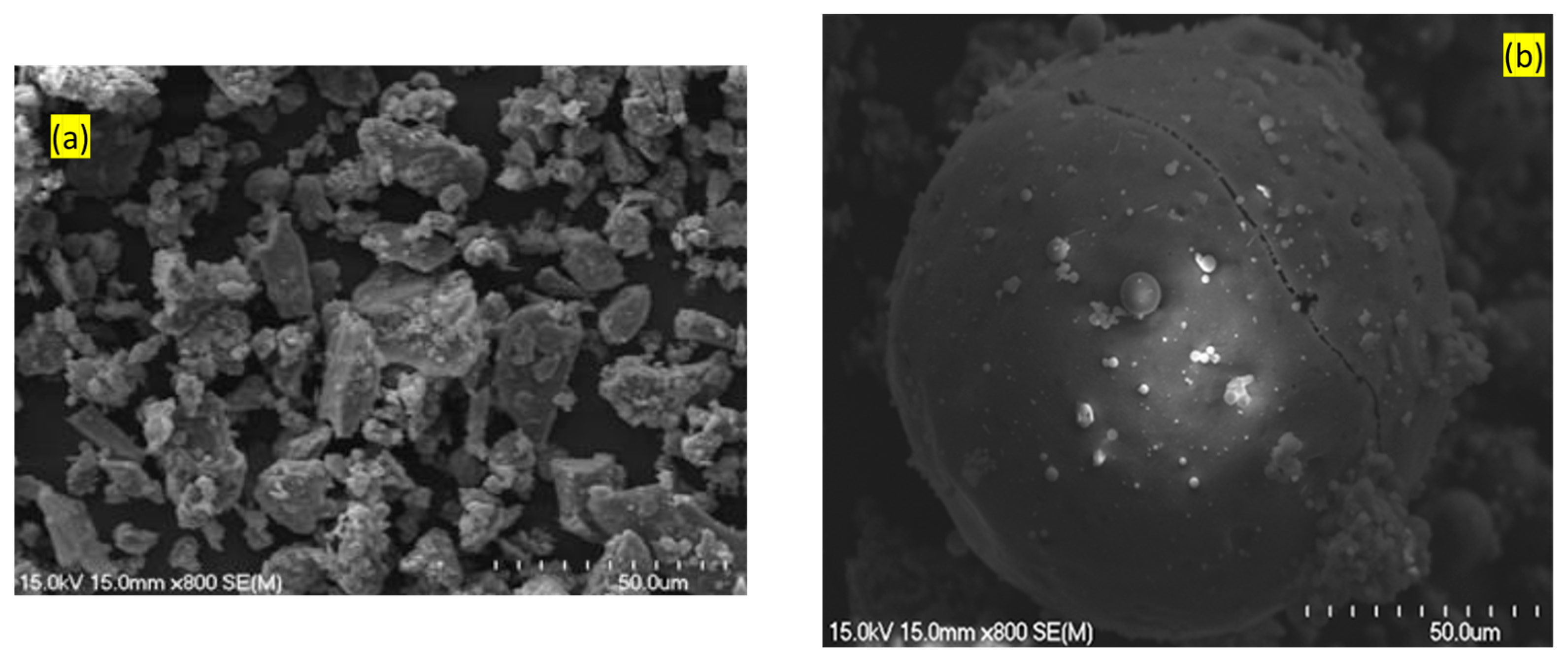
Figure 1. SEM of (a) Granite stone powder, (b) Fly ash.
Infrastructures 11 00073 g001
Figure 2. Article size distribution curves of fly ash (FA) and granite stone powder (GSP) determined by laser diffraction analysis.
Infrastructures 11 00073 g002
Figure 3. Sample preparation (a) Mechanical mixing of materials; (b) Casting into cube moulds; (c) Surface levelling; (d) Vibration for compaction.
Infrastructures 11 00073 g003
Figure 4. Hydration test (TAM Air isothermal calorimeter).
Infrastructures 11 00073 g004
Figure 5. POptical micrographs of mortar specimens used for software-based image analysis.
Infrastructures 11 00073 g005
Figure 6. Flow table test results for fresh mortar mixtures (percent of control).
Infrastructures 11 00073 g006
Figure 7. Hydration behaviour (Heat flow).
Infrastructures 11 00073 g007
Figure 8. Hydration process (Cumulative heat).
Infrastructures 11 00073 g008
Figure 9. Density and total porosity of (a) Cement mortar with FA and (b) Cement mortar with GRP.
Infrastructures 11 00073 g009
Figure 10. SEM of all mix designs (The dashed circles highlight selected microstructural features (e.g., voids and GSP agglomeration) discussed in the text).
Infrastructures 11 00073 g010
Figure 11. The ternary diagram of precursor materials FA, GSP and BSP with cement. The coloured ellipses indicate compositional domains associated with different precursor materials and hydration/pozzolanic reaction regions.
Infrastructures 11 00073 g011
Figure 12. Compressive strength (MPa) 28 days.
Infrastructures 11 00073 g012
Table 1. Chemical composition of the Fly ash, and Granite Stone Powder.
CompoundFly AshGranite Stone Powder
SiO2 (%)58.6963.14
Al2O3 (%)29.2414.16
Fe2O3 (%)2.65.9
Sum90.5383.2
Table 2. Physical Properties Comparison.
PropertyFly AshGranite Stone Powder
ShapeSphericalMostly irregular
Surface textureSmoothAngular/rough
MorphologyHollow/solid spheresCrushed particles
Disclaimer/Publisher’s Note: The statements, opinions and data contained in all publications are solely those of the individual author(s) and contributor(s) and not of MDPI and/or the editor(s). MDPI and/or the editor(s) disclaim responsibility for any injury to people or property resulting from any ideas, methods, instructions or products referred to in the content.