

Effect of Waste Granite Stone Powder on the Mechanical and Microstructural Properties of Cement Mortars

Abstract
1. Introduction
2. Materials and Methods
2.1. Material and Characterisation
2.2. Chemical Composition
2.3. Physical Characteristics
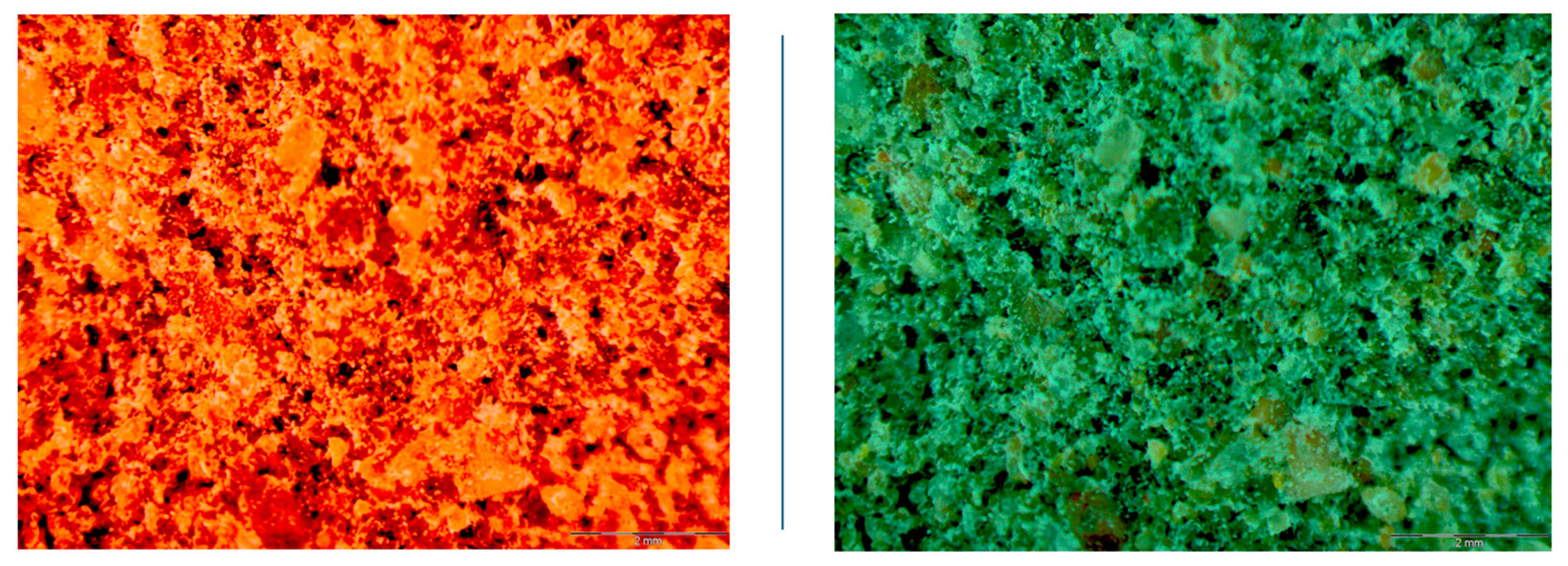
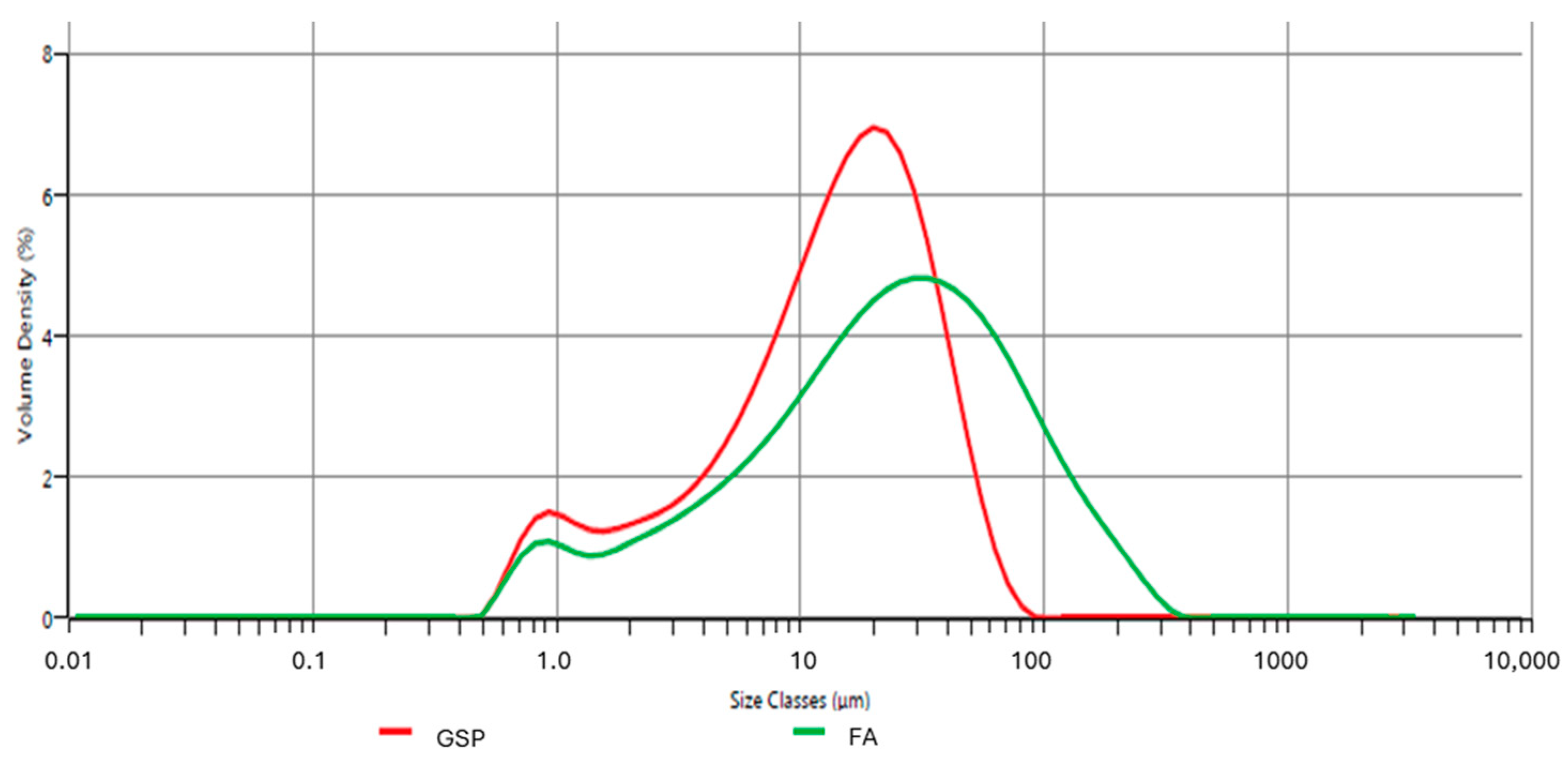
2.4. Particle Size Distribution
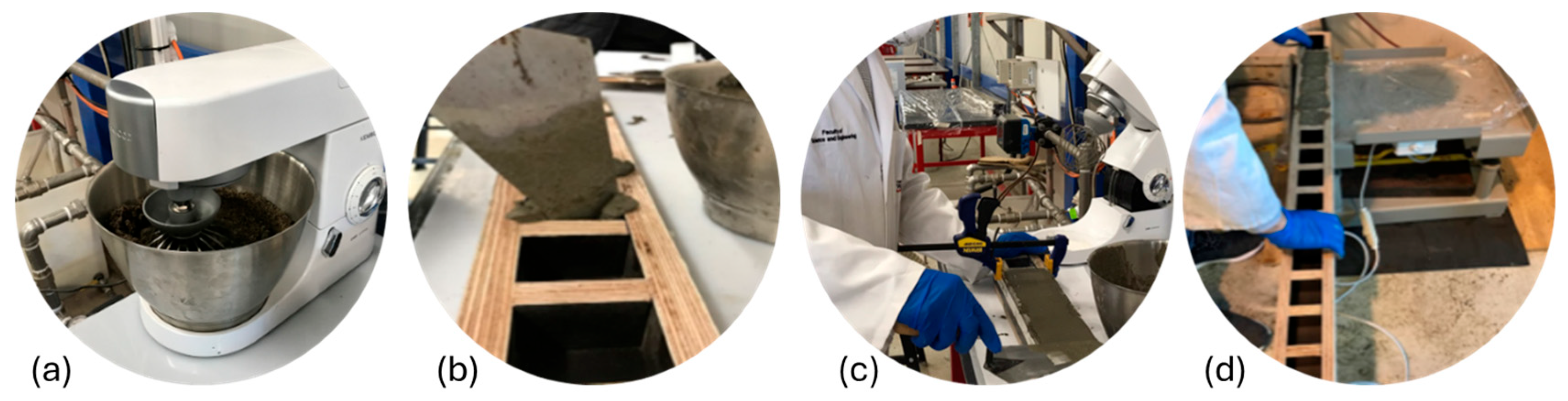
2.5. Sample Preparation
3. Results and Discussion
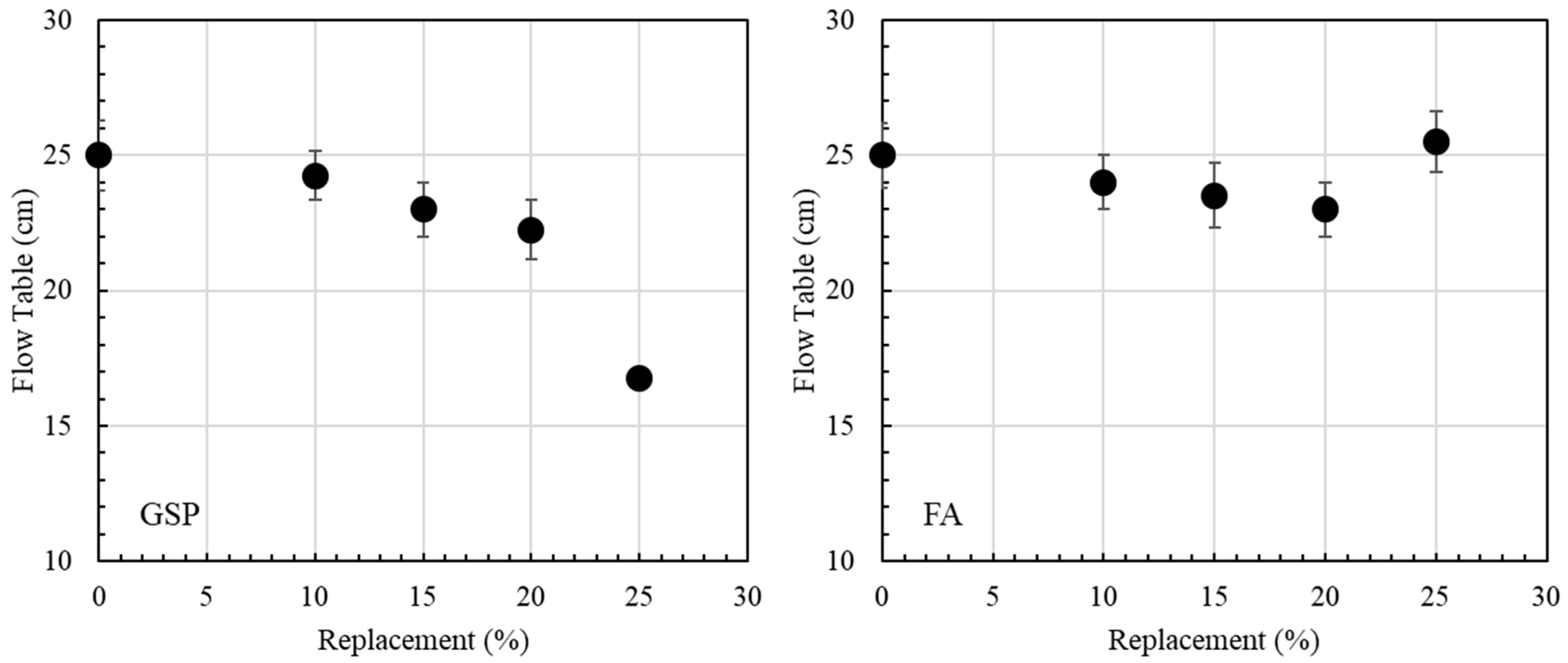
3.1. Workability
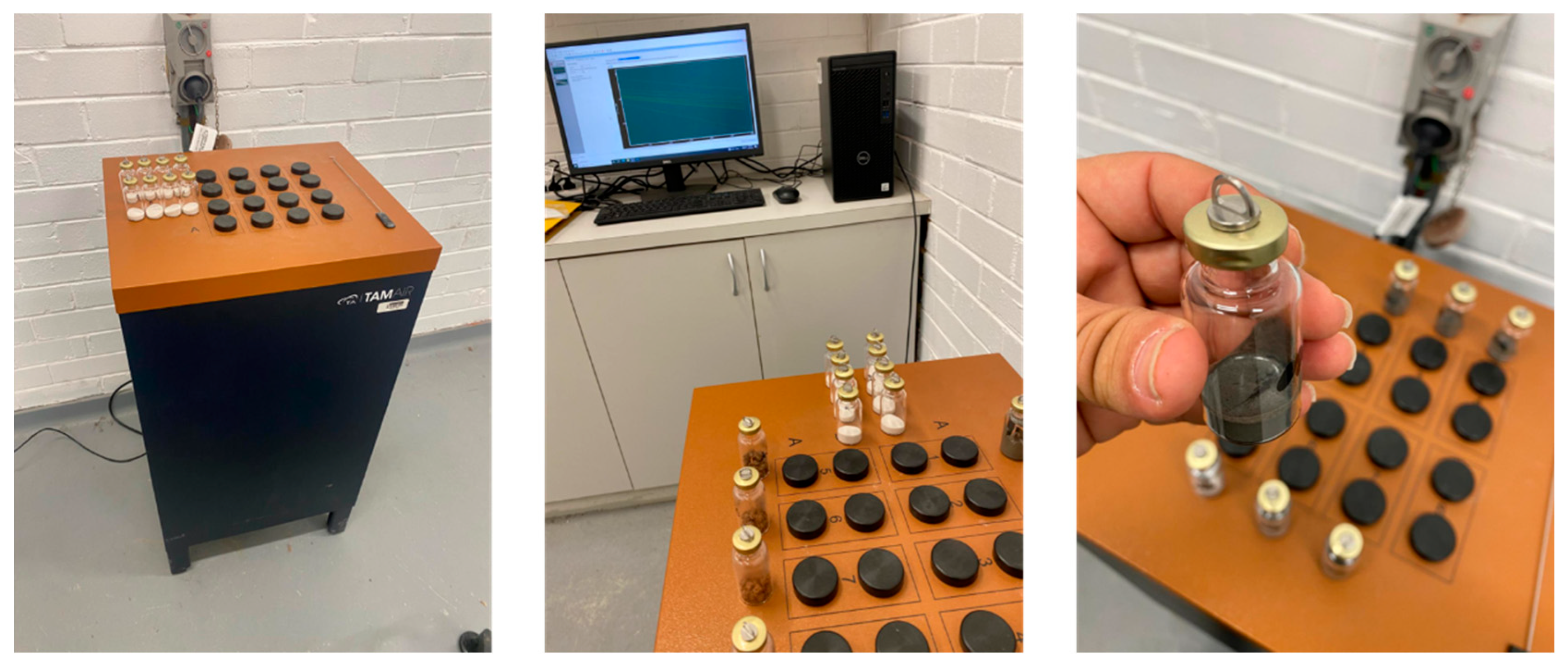
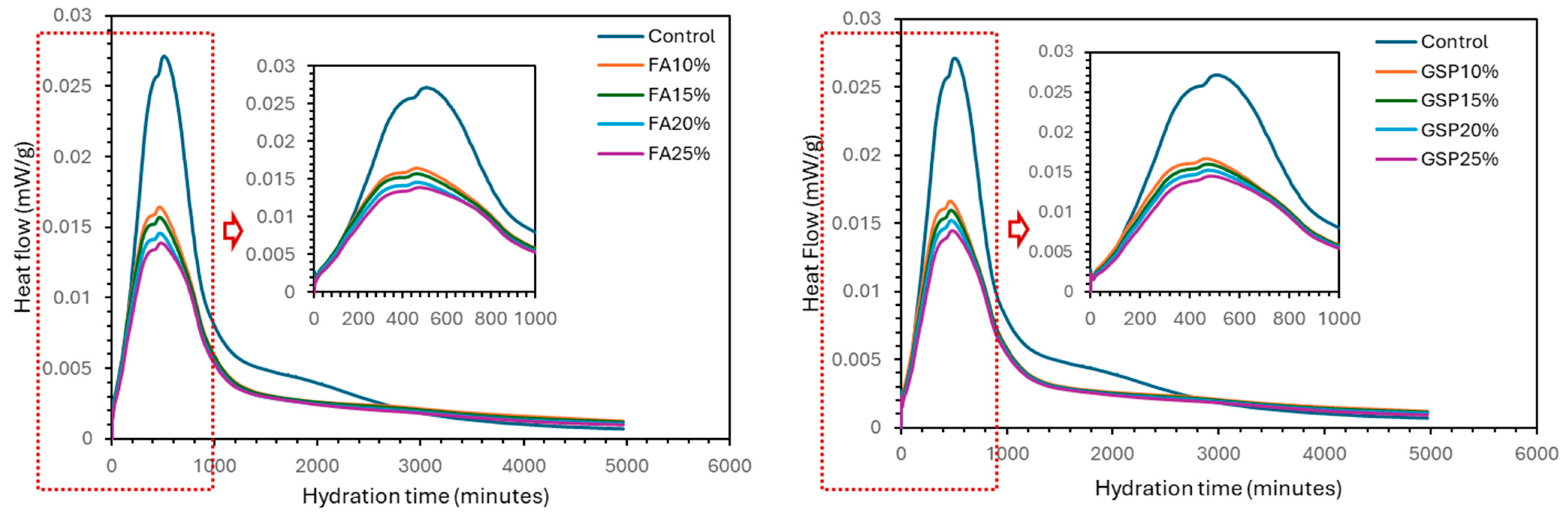
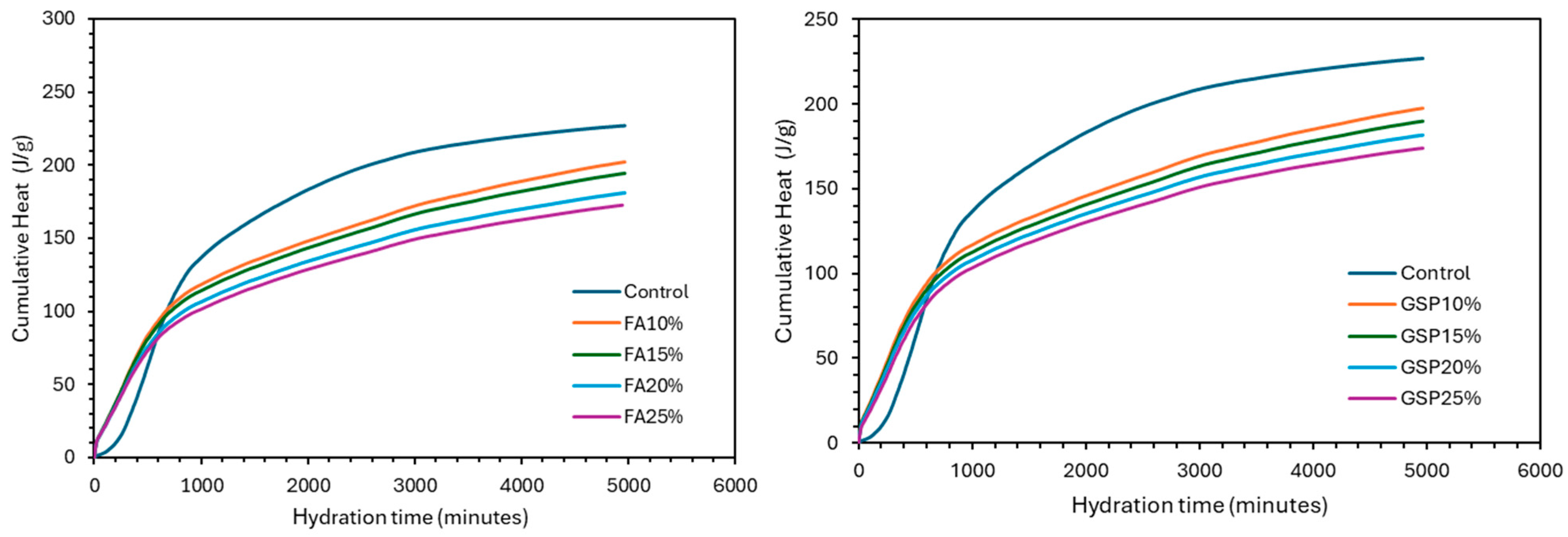
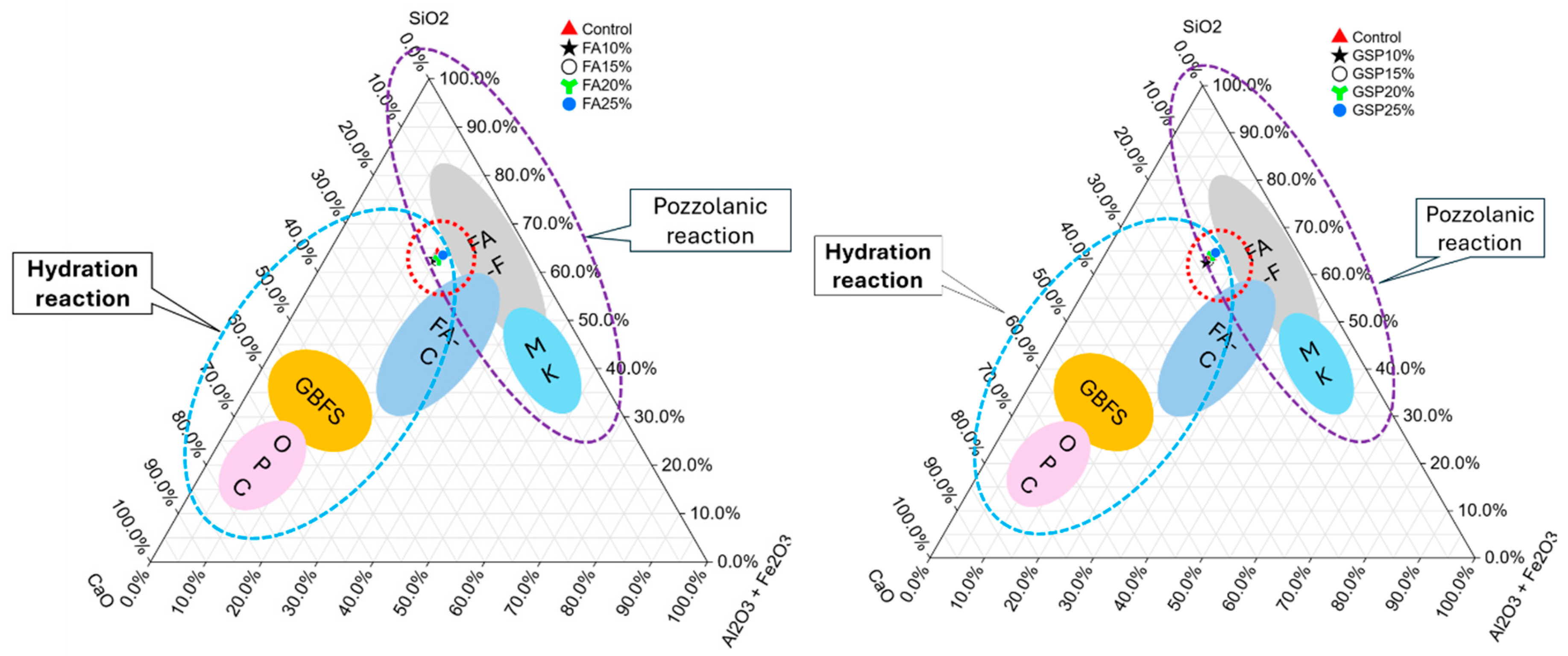
3.2. Hydration Process
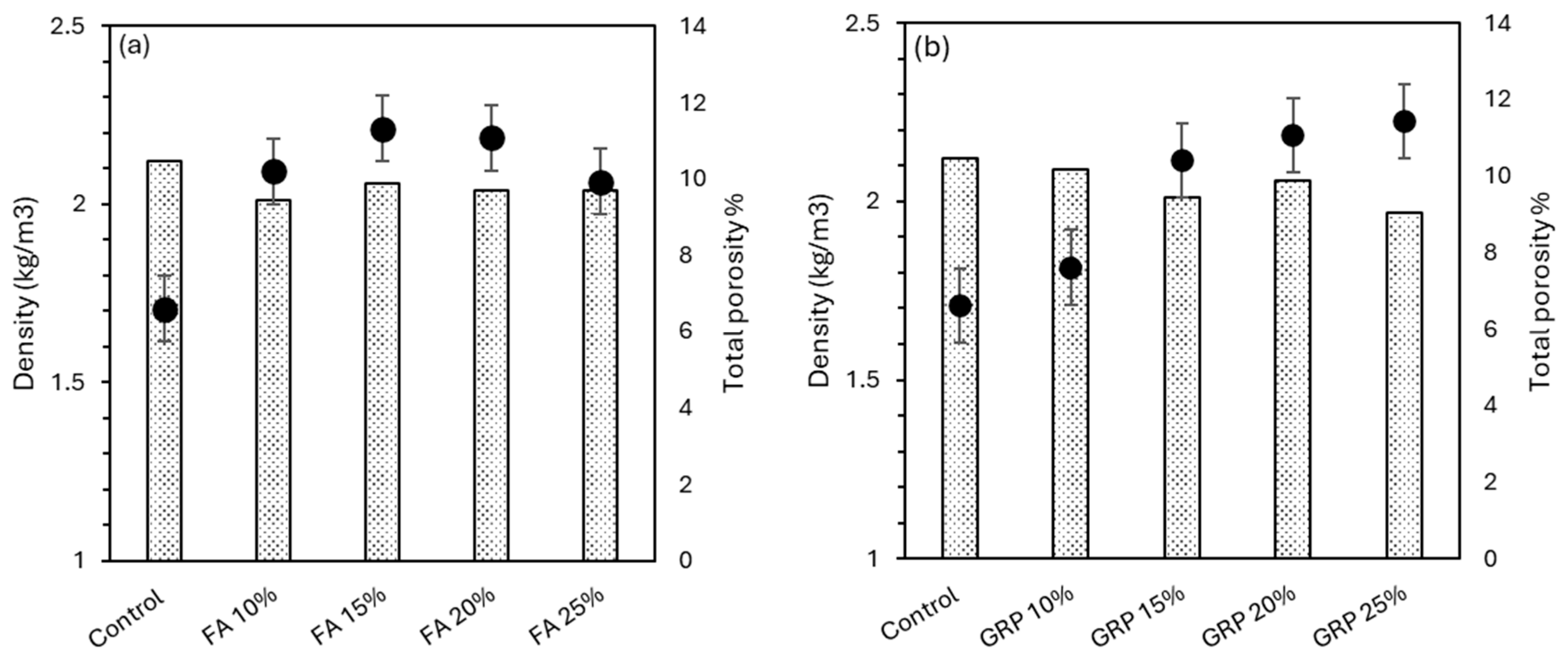
3.3. Density and Total Porosity
3.4. Microstructural Analysis
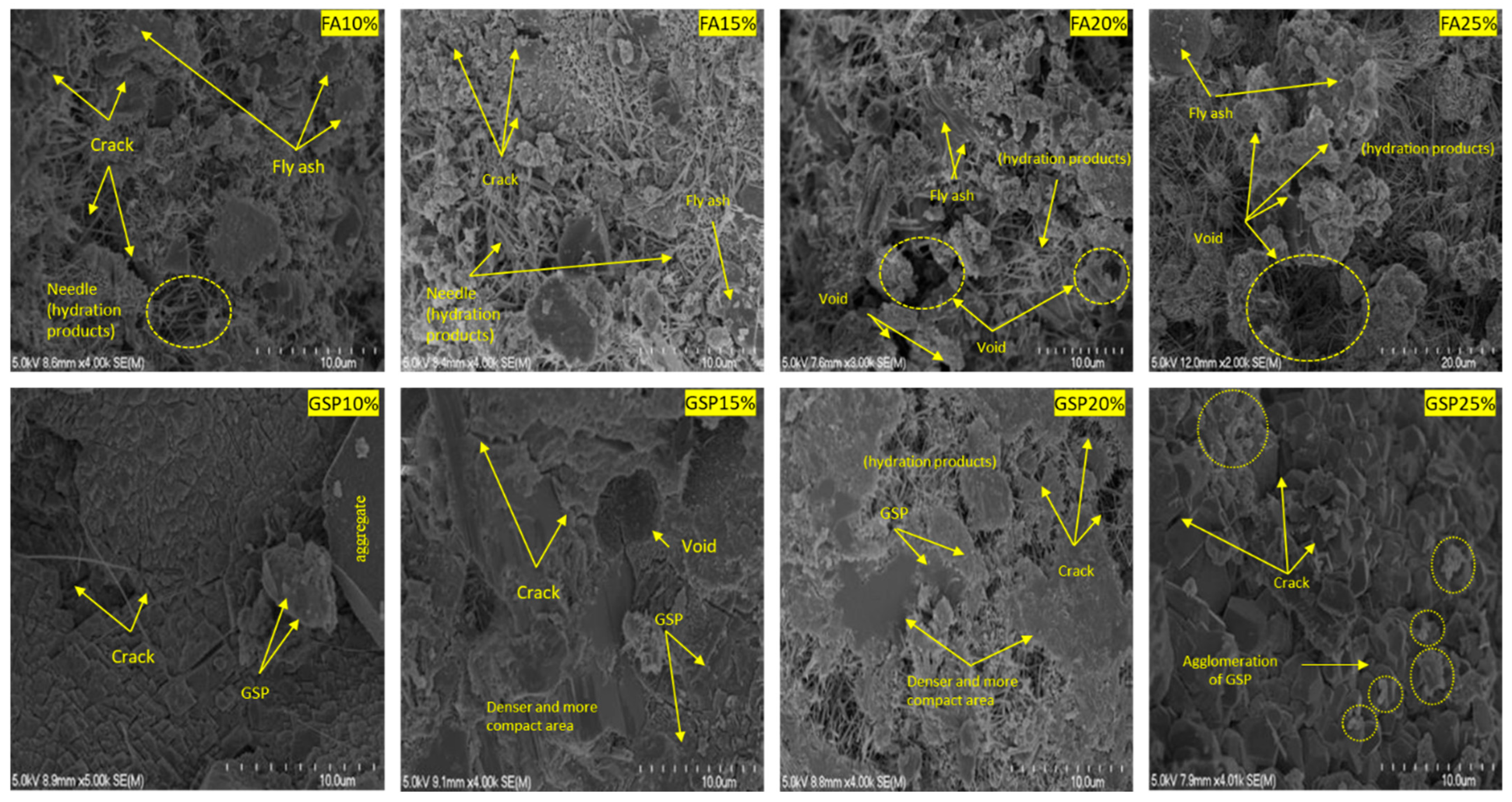
3.4.1. SEM
3.4.2. X-Ray Fluorescence Analysis
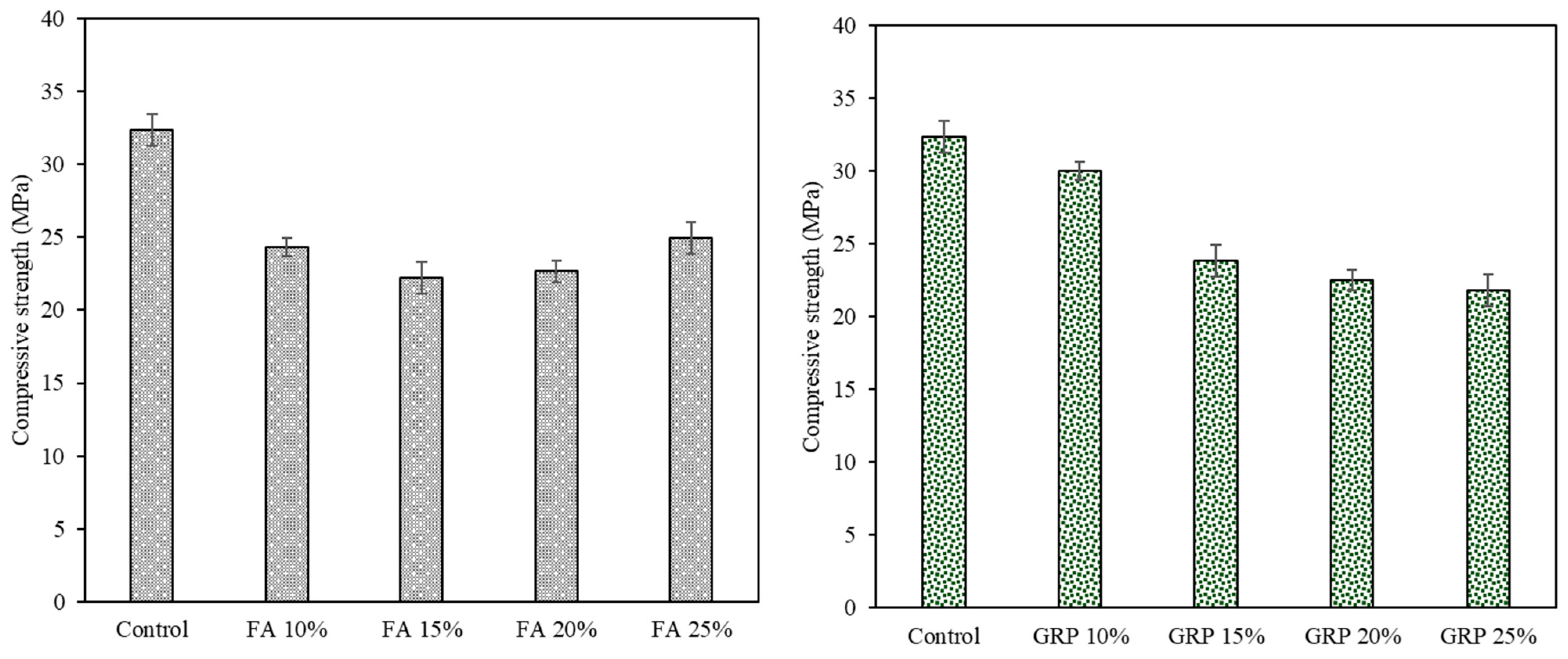
3.5. Compressive Strength
4. Conclusions
Author Contributions
Funding
Institutional Review Board Statement
Informed Consent Statement
Data Availability Statement
Acknowledgments
Conflicts of Interest
References
- Semmana, O.; Rihan, M.A.M.; Barrie, Z.M.; Daniel, C.; Abdalla, T.A. A systematic review of the strength, durability, and microstructure properties of concrete incorporating glass powder. Eng. Rep. 2025, 7, e70002. [Google Scholar] [CrossRef] [Scilit]
- Arbab, F.; Tarighat, A.; Shayanfar, M.A. Evaluation of electrical resistivity, hydration, and durability against sulfate attack of limestone calcined clay cement (LC3) with various kaolinite content at high-replacement levels. Constr. Build. Mater. 2025, 469, 140505. [Google Scholar] [CrossRef] [Scilit]
- Kumar, P.R. Low carbonizing cement and concrete industry: A state-of-art review on quaternary blended sustainable self-compacting concrete. Innov. Infrastruct. Solut. 2025, 10, 43. [Google Scholar] [CrossRef] [Scilit]
- da Silva, L.B.; Orejuela, C.O.P.; da Silva, L.F.; dos Santos, J.O.; Rodrigues, R.L.; da Silva, A.C.F.; Thalhofer, J.L.; da Silva, A.X. Radiometric analysis and implementation of a new hazard index (IBRA) for Brazilian construction materials. Radiat. Phys. Chem. 2025, 229, 112476. [Google Scholar] [CrossRef] [Scilit]
- Desport, L.; Andrade, C.; Corral, D.; Selosse, S. Feasibility, conditions, and opportunities for achieving net-negative emissions in the global cement industry. Int. J. Greenh. Gas Control 2025, 141, 104280. [Google Scholar] [CrossRef] [Scilit]
- Sawa, D.; Yamashita, N.; Tanikawa, H.; Daigo, I.; Maruyama, I. CO2 uptake estimation in Japan’s cement lifecycle. J. Clean. Prod. 2025, 486, 144542. [Google Scholar] [CrossRef] [Scilit]
- Luo, Z.; Song, H.; Huang, Y.; Jin, B. Recent advances on the uses of biomass alternative fuels in cement manufacturing process: A review. Energy Fuels 2024, 38, 7454–7479. [Google Scholar] [CrossRef] [Scilit]
- Kumar, A.; Kumar, P.; Gogineni, A.; Ahmed, M.; Chen, W. Evolution of cementitious binders: Overview of history, environmental impacts, and emerging low-carbon alternatives. Buildings 2025, 15, 3811. [Google Scholar] [CrossRef] [Scilit]
- Kumar, S.; Gangotra, A.; Barnard, M. Towards a net zero cement: Strategic policies and systems thinking for a low-carbon future. Curr. Sustain./Renew. Energy Rep. 2025, 12, 5. [Google Scholar] [CrossRef] [Scilit]
- Yue, Z.; Zhu, X. Microstructural insights and technical challenges of effectively adopting high-volume GGBS in blended cements for low-carbon construction. npj Mater. Sustain. 2025, 3, 25. [Google Scholar] [CrossRef] [Scilit]
- Coviello, C.G.; Lassandro, P.; Foti, D.; Ros, P.S. Comparison at the short and long term of the mechanical performance of FRCs with recycled, natural and commercial fibers. J. Build. Eng. 2026, 119, 115304. [Google Scholar] [CrossRef] [Scilit]
- Foti, D.; Lerna, M. New mortar mixes with chemically depolymerized waste PET aggregates. Adv. Mater. Sci. Eng. 2020, 2020, 8424936. [Google Scholar] [CrossRef] [Scilit]
- Singh, N.; Sharma, R.; Yadav, K. Sustainable solutions: Exploring supplementary cementitious materials in construction. Iran. J. Sci. Technol. Trans. Civ. Eng. 2025, 49, 2191–2224. [Google Scholar] [CrossRef] [Scilit]
- Sajeev, P.; Rajagopal, V.S.G.; Arasu, N. Investigation of concrete durability enhancement using supplementary cementitious materials. MethodsX 2025, 15, 103527. [Google Scholar] [CrossRef] [Scilit]
- Tahwia, A.M.; Atyia, M.M.; Eltawil, K.A. Experimental evaluation of magnetite powder and ilmenite powder as novel promising cementitious materials for eco-friendly high-performance mortar. Constr. Build. Mater. 2025, 489, 142228. [Google Scholar] [CrossRef] [Scilit]
- Nandhini, K.; Sundar, M.S. Towards Greener Mortars: Blended Cementitious Systems Using Waste Eggshell Powder. Clean. Waste Syst. 2025, 12, 100408. [Google Scholar] [CrossRef] [Scilit]
- Akbarnezhad, A.; Xiao, J. Estimation and minimization of embodied carbon of buildings: A review. Buildings 2017, 7, 5. [Google Scholar] [CrossRef] [Scilit]
- Zhang, Z.; Lei, Y.; Liew, J.R.; Liu, M.; Wong, G.; Du, H. Embodied carbon saving potential of using recycled materials as cement substitute in Singapore’s buildings. npj Mater. Sustain. 2024, 2, 27. [Google Scholar] [CrossRef] [Scilit]
- Al-Najjar, A.; Malmqvist, T.; Stenberg, E.; Höjer, M. Stock, flow and reuse potential of precast concrete in Swedish residential buildings: Embodied carbon assessment. Resour. Conserv. Recycl. 2025, 218, 108229. [Google Scholar] [CrossRef] [Scilit]
- Zhao, Y.; Goulias, D.; Dobiszewska, M.; Modrzyński, P. Life-cycle sustainability assessment of using rock dust as a partial replacement of fine aggregate and cement in concrete pavements. Sustainability 2022, 14, 12449. [Google Scholar] [CrossRef] [Scilit]
- AL-Kharabsheh, B.N.; Moafak Arbili, M.; Majdi, A.; Ahmad, J.; Deifalla, A.F.; Hakamy, A.; Majed Alqawasmeh, H. Feasibility study on concrete made with substitution of quarry dust: A review. Sustainability 2022, 14, 15304. [Google Scholar] [CrossRef] [Scilit]
- Yang, R.; Yu, R.; Shui, Z.; Gao, X.; Xiao, X.; Fan, D.; Chen, Z.; Cai, J.; Li, X.; He, Y. Feasibility analysis of treating recycled rock dust as an environmentally friendly alternative material in Ultra-High Performance Concrete (UHPC). J. Clean. Prod. 2020, 258, 120673. [Google Scholar] [CrossRef] [Scilit]
- Norbidin, N.R. Packing Density and Reactivity of Waste Quarry Dust as a Supplementary Cementitious Material. Ph.D. Thesis, University of Sheffield, Sheffield, UK, 2024. [Google Scholar]
- Xue, C.; Youssa, L.K.; Kai, M.; Sirivivatnanon, V. Effect of particle size and amount of limestone filler on concrete properties: A review. J. Sustain. Cem.-Based Mater. 2025, 14, 2255–2270. [Google Scholar] [CrossRef] [Scilit]
- Hou, W.; Zhang, Q.; Zhuang, Z.; Zhang, Y. Sustainable reusing marble powder and granite powder in cement-based materials: A review. ACS Sustain. Chem. Eng. 2024, 12, 2484–2510. [Google Scholar] [CrossRef] [Scilit]
- Chakkor, O.; Altan, M.F.; Canpolat, O.; Dilbas, H.; Uysal, M. Relative performance of limestone, marble, and basalt powders in replacement of a recycled fine aggregate from red mud and metakaolin-based geopolymer mortar. Iran. J. Sci. Technol. Trans. Civ. Eng. 2022, 46, 2961–2974. [Google Scholar] [CrossRef] [Scilit]
- Karthick, J.; Suguna, K.; Raghunath, P.; Murugesan, A.; Rathinavel, N. Eco-enhanced concrete: Harnessing marble powder for sustainable strength and durability. Innov. Infrastruct. Solut. 2025, 10, 139. [Google Scholar] [CrossRef] [Scilit]
- Antunes, M.; Santos, R.L.; Pereira, J.; Rocha, P.; Horta, R.B.; Colaço, R. Alternative clinker technologies for reducing carbon emissions in cement industry: A critical review. Materials 2021, 15, 209. [Google Scholar] [CrossRef] [Scilit]
- Shah, I.H.; Miller, S.A.; Jiang, D.; Myers, R.J. Cement substitution with secondary materials can reduce annual global CO2 emissions by up to 1.3 gigatons. Nat. Commun. 2022, 13, 5758. [Google Scholar] [CrossRef] [Scilit]
- Williams, F.; Yang, A. Potential of reducing CO2 emissions in cement production through altering clinker compositions. Ind. Eng. Chem. Res. 2024, 63, 17158–17167. [Google Scholar] [CrossRef] [Scilit]
- Xie, Y.; Jiang, Y.; Wang, J.; Sun, J.; Du, J.; Zhou, H.; Gong, Z.; Hu, Y. Effect of waste granite stone powder content on the rheological and hydration properties of titanium gypsum-based supersulfated cement. Constr. Build. Mater. 2025, 494, 143457. [Google Scholar] [CrossRef] [Scilit]
- Chen, Z. Environmental Alternatives for Stone Slurry Circularity: From Waste to Resource. Master’s Thesis, Politecnico di Milano, Milan, Italy, 2023. [Google Scholar]
- Etzi, A. Granite By-Products for Inverted Pavement Technique. Ph.D. Thesis, University of Studies of Cagliari, Cagliari, Italy, 2016. [Google Scholar]
- Silva, L.S.; Amario, M.; Stolz, C.M.; Figueiredo, K.V.; Haddad, A.N. A comprehensive review of stone dust in concrete: Mechanical behavior, durability, and environmental performance. Buildings 2023, 13, 1856. [Google Scholar] [CrossRef] [Scilit]
- Ma, R.; Zhang, L.; Song, Y.; Lin, G.; Qian, X.; Qian, K. Recycling stone powder as a partial substitute for cementitious materials into eco-friendly manufactured sand ultra-high performance concretes: Towards cleaner and more cost-effective construction production. J. Build. Eng. 2024, 92, 109772. [Google Scholar] [CrossRef] [Scilit]
- Xie, D.; Liu, Q.; Zhou, Z.; Gao, J.; Liu, C. Rheology and hardened properties of eco-friendly ultra-high performance concrete paste: Role of waste stone powder fillers. Constr. Build. Mater. 2024, 447, 138163. [Google Scholar] [CrossRef] [Scilit]
- Bouzar, B.; Benzerzour, M.; Abriak, N.-E. Evaluation of mineral eco-binders from secondary raw materials: Environmental assessments. J. Mater. Cycles Waste Manag. 2024, 26, 2546–2566. [Google Scholar] [CrossRef] [Scilit]
- Panda, S.; Pradhan, M.; Panigrahi, S.K. Sustainable development of ternary binder-based mortar using OPC, GGBFS, and Coal Bottom Ash. Constr. Build. Mater. 2025, 496, 143862. [Google Scholar] [CrossRef] [Scilit]
- ASTM C311/C311M-17a; Standard Test Method for Sampling ad Testing of Fly Ash or Natural Pozzolans for Use in Portland-Cement Concrete. American Society for Testing and Materials: West Conshohocken, PA, USA, 2017.
- Ibrahim, K.I.M. Recycled waste glass powder as a partial replacement of cement in concrete containing silica fume and fly ash. Case Stud. Constr. Mater. 2021, 15, e00630. [Google Scholar] [CrossRef] [Scilit]
- Hsu, S.; Chi, M.; Huang, R. Effect of fineness and replacement ratio of ground fly ash on properties of blended cement mortar. Constr. Build. Mater. 2018, 176, 250–258. [Google Scholar] [CrossRef] [Scilit]
- NZS 1322:2009; General Purpose and Blended Cements. Standards New Zealand: Wellington, New Zealand, 2009.
- ASTM C1437-20; Standard Test Method for Flow of Hydraulic Cement Mortar. ASTM International: West Conshohocken, PA, USA, 2020. [CrossRef] [Scilit]
- ASTM C1679-22; Standard Practice for Measuring Hydration Kinetics of Hydraulic Cementitious Mixtures Using Isothermal Calorimetry. ASTM International: West Conshohocken, PA, USA, 2022. [CrossRef] [Scilit]
- ASTM D297–21; Standard Test Methods for Rubber Products—Chemical Analysis. ASTM International: West Conshohocken, PA, USA, 2021. [CrossRef] [Scilit]
- ASTM C109/C109M-16a; Standard Test Method for Compressive Strength of of Hydraulic Cement Mortars. American Society for Testing and Materials: West Conshohocken, PA, USA, 2016.
- Ma, J.; Wang, D.; Zhao, S.; Duan, P.; Yang, S. Influence of particle morphology of ground fly ash on the fluidity and strength of cement paste. Materials 2021, 14, 283. [Google Scholar] [CrossRef] [Scilit]
- Le, T.H.; Mai, D.L.; Ta, T.H. Effects of fly ash and ground bottom ash from thermal power plants on workability, compressive strength and durability of high performance fine-grained concrete. Appl. Eng. Sci. 2025, 24, 100261. [Google Scholar] [CrossRef] [Scilit]
- Chuang, C.-W.; Chen, T.-A.; Huang, R. Effect of finely ground coal bottom ash as replacement for portland cement on the properties of ordinary concrete. Appl. Sci. 2023, 13, 13212. [Google Scholar] [CrossRef] [Scilit]
- Uysal, M.; Aygörmez, Y.; Canpolat, O.; Cosgun, T.; Kuranlı, Ö.F. Investigation of using waste marble powder, brick powder, ceramic powder, glass powder, and rice husk ash as eco-friendly aggregate in sustainable red mud-metakaolin based geopolymer composites. Constr. Build. Mater. 2022, 361, 129718. [Google Scholar] [CrossRef] [Scilit]
- Liang, Y.; Wang, W.; Zhang, Z.; Xing, H.; Wang, C.; Zhang, Z.; Guan, T.; Gao, D. Effect of material selection and surface texture on tribological properties of key friction pairs in water hydraulic axial piston pumps: A review. Lubricants 2023, 11, 324. [Google Scholar] [CrossRef] [Scilit]
- Yuan, Q.; Xie, Z.; Tian, Y.; Sun, L.M.; Yang, C.; Chi, H.; Zhu, X. The driving force of water absorption in cementitious materials: An analysis of surface-free energies and pore structure. J. Mater. Res. Technol. 2024, 30, 4714–4724. [Google Scholar] [CrossRef] [Scilit]
- Dobiszewska, M.; Bagcal, O.; Beycioğlu, A.; Goulias, D.; Köksal, F.; Niedostatkiewicz, M.; Ürünveren, H. Influence of rock dust additives as fine aggregate replacement on properties of cement composites—A review. Materials 2022, 15, 2947. [Google Scholar] [CrossRef] [Scilit] [PubMed]
- Barsi, A.D.S.; Marchetti, G.; Trezza, M.A.; Irassar, E.F. Carbonate rocks as fillers in blended cements: Physical and mechanical properties. Constr. Build. Mater. 2020, 248, 118697. [Google Scholar] [CrossRef] [Scilit]
- Deng, G.; Zhang, N.; Liao, W.; Ma, H.; He, Y.; Lu, L.; Chi, L. Pozzolanic reactivity of carbonated high-calcium fly ash: A mechanism study. Constr. Build. Mater. 2024, 446, 138015. [Google Scholar] [CrossRef] [Scilit]
- Lv, T.; Zhang, J.; Li, C.; Xu, L.; Hou, D.; Hong, S.; Dong, B. Durability and sustainable assessment of fly ash-blended cement paste modified by MgO expansive additive. J. Clean. Prod. 2024, 468, 143135. [Google Scholar] [CrossRef] [Scilit]
- Jambri, S.S.; Ali, N. Performance of Coal Bottom Ash as Partial Cement Replacement in Mortar. Recent Trends Civ. Eng. Built Environ. 2023, 4, 189–196. [Google Scholar]
- Fu, J.-X.; Wang, K.; Wang, J. Internal pore evolution and early hydration characterization of fly ash cement backfill. J. Build. Eng. 2023, 72, 106716. [Google Scholar] [CrossRef] [Scilit]
- Gayathiri, K.; Praveenkumar, S. Retaining the Particle packing approach and its application in developing the cement composites towards sustainability. J. Build. Pathol. Rehabil. 2023, 8, 26. [Google Scholar] [CrossRef] [Scilit]
- Chen, J.; Li, B.; Ng, P.L.; Kwan, A. Adding granite polishing waste as sand replacement to improve packing density, rheology, strength and impermeability of mortar. Powder Technol. 2020, 364, 404–415. [Google Scholar] [CrossRef] [Scilit]
- Ogawa, K.T.; Roy, D. C4A3S hydration, ettringite formation, and its expansion mechanism: II. Microstructural observation of expansion. Cem. Concr. Res. 1982, 12, 101–109. [Google Scholar] [CrossRef] [Scilit]
- Wu, Y.-H.; Huang, R.; Tsai, C.-J.; Lin, W.-T. Recycling of sustainable co-firing fly ashes as an alkali activator for GGBS in blended cements. Materials 2015, 8, 784–798. [Google Scholar] [CrossRef] [Scilit]
- Marinković, S.; Dragaš, J. Fly ash. In Waste and Supplementary Cementitious Materials in Concrete; Elsevier: Amsterdam, The Netherlands, 2018; pp. 325–360. [Google Scholar]
- Kwon, Y.-H. Effect of Intensified Pozzolanic Reaction and Thermal Treatment on Properties of Cementless Composites. Doctoral Dissertation, Seoul National University, Seoul, Republic of Korea, 2017. [Google Scholar]
- Pławecka, K.; Bazan, P.; Lin, W.-T.; Korniejenko, K.; Sitarz, M.; Nykiel, M. Development of geopolymers based on fly ashes from different combustion processes. Polymers 2022, 14, 1954. [Google Scholar] [CrossRef] [Scilit]
- Yu, X.; Shi, J.; He, Z.; Yalçınkaya, Ç.; Revilla-Cuesta, V.; Gencel, O. Review of the materials composition and performance evolution of green alkali-activated cementitious materials. Clean Technol. Environ. Policy 2023, 25, 1439–1459. [Google Scholar] [CrossRef] [Scilit]
- Kang, S.-H.; Jeong, Y.; Kim, M.O.; Moon, J. Pozzolanic reaction on alkali-activated Class F fly ash for ambient condition curable structural materials. Constr. Build. Mater. 2019, 218, 235–244. [Google Scholar] [CrossRef] [Scilit]
- Kupwade-Patil, K.; Al-Aibani, A.F.; Abdulsalam, M.F.; Mao, C.; Bumajdad, A.; Palkovic, S.D.; Büyüköztürk, O. Microstructure of cement paste with natural pozzolanic volcanic ash and Portland cement at different stages of curing. Constr. Build. Mater. 2016, 113, 423–441. [Google Scholar] [CrossRef] [Scilit]
- Kaja, A.; Lazaro, A.; Yu, Q. Effects of Portland cement on activation mechanism of class F fly ash geopolymer cured under ambient conditions. Constr. Build. Mater. 2018, 189, 1113–1123. [Google Scholar] [CrossRef] [Scilit]
- Zeng, H.; Jin, M.; Li, W.; Gao, C.; Ma, Y.; Guan, Q.; Li, B.; Liu, J. Assessing the durability performance of high belite cement incorporating fly ash under long-term temperature variations. Cem. Concr. Compos. 2024, 152, 105643. [Google Scholar] [CrossRef] [Scilit]
- Sun, J.; Zhang, P. Effects of different composite mineral admixtures on the early hydration and long-term properties of cement-based materials: A comparative study. Constr. Build. Mater. 2021, 294, 123547. [Google Scholar] [CrossRef] [Scilit]
- Wang, J.; Xue, C.; Zhang, Y.; Li, Q.; Han, Y.; Qiao, H. Study of early-age hydration, mechanical properties development, and microstructure evolution of manufactured sand concrete mixed with granite stone powder. Materials 2023, 16, 4857. [Google Scholar] [CrossRef] [Scilit] [PubMed]
- Ulusoy, U. A review of particle shape effects on material properties for various engineering applications: From macro to nanoscale. Minerals 2023, 13, 91. [Google Scholar] [CrossRef] [Scilit]
- Tavakkoli, M.A.; Ardakani, A.; Kordnaiej, A. Predictive Modeling and Optimization of Zeolite–Microsilica Cementitious Grouts for Geotechnical Ground Improvement. Geotech. Geol. Eng. 2025, 43, 532. [Google Scholar] [CrossRef] [Scilit]
- Singh, A.; Panghal, H.; Bhadauria, S.S.; Chaudhary, S. Valorization of de-oiled sesame and sunflower seed residues as sustainable alternatives to limestone and supplementary cementitious materials in cement matrices. J. Sustain. Cem.-Based Mater. 2025, 1–21. [Google Scholar] [CrossRef] [Scilit]
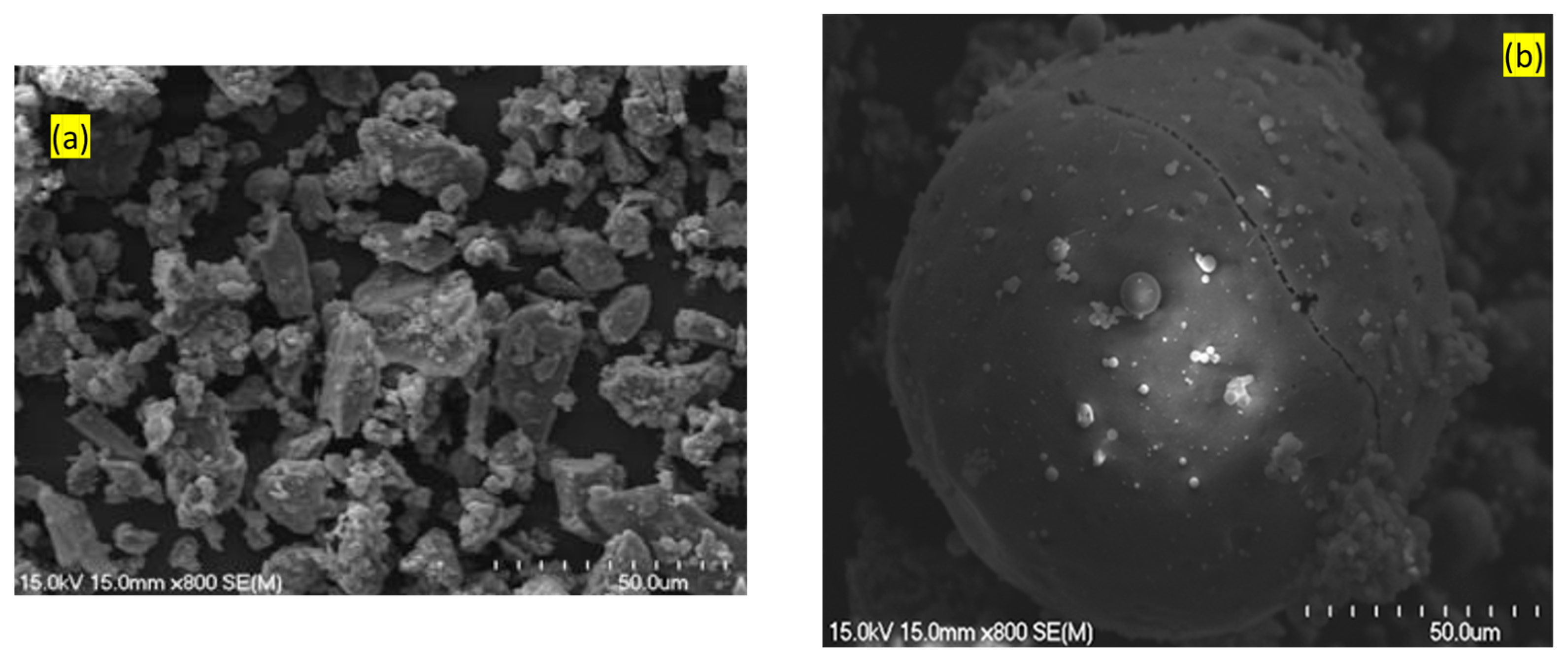





| Compound | Fly Ash | Granite Stone Powder |
|---|---|---|
| SiO2 (%) | 58.69 | 63.14 |
| Al2O3 (%) | 29.24 | 14.16 |
| Fe2O3 (%) | 2.6 | 5.9 |
| Sum | 90.53 | 83.2 |
| Property | Fly Ash | Granite Stone Powder |
|---|---|---|
| Shape | Spherical | Mostly irregular |
| Surface texture | Smooth | Angular/rough |
| Morphology | Hollow/solid spheres | Crushed particles |
Disclaimer/Publisher’s Note: The statements, opinions and data contained in all publications are solely those of the individual author(s) and contributor(s) and not of MDPI and/or the editor(s). MDPI and/or the editor(s) disclaim responsibility for any injury to people or property resulting from any ideas, methods, instructions or products referred to in the content. |
© 2026 by the authors. Licensee MDPI, Basel, Switzerland. This article is an open access article distributed under the terms and conditions of the Creative Commons Attribution (CC BY) license.
Share and Cite
Abousnina, R.; Aljuaydi, F. Effect of Waste Granite Stone Powder on the Mechanical and Microstructural Properties of Cement Mortars. Infrastructures 2026, 11, 73. https://doi.org/10.3390/infrastructures11030073
Abousnina R, Aljuaydi F. Effect of Waste Granite Stone Powder on the Mechanical and Microstructural Properties of Cement Mortars. Infrastructures. 2026; 11(3):73. https://doi.org/10.3390/infrastructures11030073
Chicago/Turabian StyleAbousnina, Rajab, and Fahad Aljuaydi. 2026. "Effect of Waste Granite Stone Powder on the Mechanical and Microstructural Properties of Cement Mortars" Infrastructures 11, no. 3: 73. https://doi.org/10.3390/infrastructures11030073
APA StyleAbousnina, R., & Aljuaydi, F. (2026). Effect of Waste Granite Stone Powder on the Mechanical and Microstructural Properties of Cement Mortars. Infrastructures, 11(3), 73. https://doi.org/10.3390/infrastructures11030073