Article

Chitin Synthase Is Critical for Epidermal Chitin Deposition and Molting in the Swimming Crab Portunus trituberculatus


Key Laboratory of Aquacultural Biotechnology Ministry of Education, School of Marine Sciences, Ningbo University, Ningbo 315832, China
*
Authors to whom correspondence should be addressed.
Fishes 2026, 11(6), 336; https://doi.org/10.3390/fishes11060336
Submission received: 13 May 2026 / Revised: 29 May 2026 / Accepted: 30 May 2026 / Published: 3 June 2026
(This article belongs to the Special Issue Advances in the Physiology of Aquatic Organisms)

Abstract

Chitin synthase (CHS) catalyzes the final polymerization step in chitin biosynthesis and is therefore central to cuticle formation in arthropods. In this study, a chitin synthase gene from the swimming crab Portunus trituberculatus (PtCHS) was identified and functionally characterized in relation to epidermal formation and molting. The open reading frame of PtCHS was 4731 bp and encoded a predicted protein of 1576 amino acids belonging to glycosyltransferase family 2. Domain prediction revealed multiple transmembrane helices, a conserved chitin-synthase catalytic region, a coiled-coil region, and the diagnostic EDR, QRRRW, and SWGTRE motifs. Phylogenetic analysis assigned PtCHS to the class A/CHS1 chitin synthase lineage, and two alternative splice variants, designated PtCHS1a and PtCHS1b were detected. PtCHS transcripts were broadly distributed across examined tissues, with comparatively high abundance in the Y-organ, midgut, ovary, and epidermis. During the molting cycle, epidermal PtCHS expression increased during premolt, reached its highest level in postmolt stages, and declined during intermolt. During embryonic development, PtCHS expression remained relatively stable until late embryogenesis and then increased sharply before hatching. RNA interference-mediated knockdown of PtCHS reduced the expression of key chitin-biosynthesis genes, decreased epidermal chitin content, prolonged the molting interval, and was associated with molting failure and increased mortality. Conversely, unilateral eyestalk ablation induced PtCHS and molting-related genes, increased epidermal chitin content, shortened the molting interval, and promoted histological features consistent with enhanced extracellular matrix deposition and epidermal biosynthesis. These findings indicate that PtCHS is indispensable for epidermal chitin deposition and successful molting in P. trituberculatus, and provide a molecular basis for understanding molting regulation in economically important portunid crabs.
Key Contribution: In this study, the PtCHS gene was first isolated and cloned from Portunus trituberculatus, and its biological role involved in the molting process was further explored.

1. Introduction

Chitin is a linear polymer of β-(1,4)-linked N-acetyl-D-glucosamine and is generally recognized as the second most abundant natural polysaccharide after cellulose [1,2]. In arthropods, it is a major structural component of the exoskeleton and the peritrophic membrane, contributing to mechanical protection, body support, and digestive-tract barrier function [3]. In decapod crustaceans, the chitin-rich exoskeleton must be periodically replaced to permit growth; consequently, molting is an essential developmental process that integrates cuticle degradation, cuticle biosynthesis, water uptake, mineralization, and endocrine regulation [4].
Chitin biosynthesis is catalyzed by chitin synthase (CHS), a membrane-bound enzyme classified within glycosyltransferase family 2 [5]. Since the first arthropod CHS cDNA was reported from Lucilia cuprina, CHS genes have been identified in many insects and crustaceans [6]. In insects, two major CHS lineages, CHS1 and CHS2, have been characterized in species such as Anopheles gambiae, Aedes aegypti, Drosophila melanogaster, Manduca sexta, and Tribolium castaneum [7,8,9,10,11]. CHS1 is mainly associated with epidermal cuticle and ectoderm-derived tissues, whereas CHS2 is predominantly involved in chitin formation in the midgut peritrophic matrix [12,13,14]. In several insect species, CHS1 also generates alternative splice variants with divergent exon usage, and these variants often exhibit tissue- or stage-dependent expression patterns [15,16,17,18].
Compared with insects, knowledge of crustacean CHS genes remains limited. CHS has been reported in species including Pandalopsis japonica, Macrobrachium nipponense, Penaeus japonicus, Litopenaeus vannamei, Eriocheir sinensis, and Macrophthalmus japonicus. However, existing studies are largely restricted to gene cloning and spatiotemporal expression profiling. Current genomic and transcriptomic evidence suggests that many crustaceans possess a single CHS gene, which generally clusters with the class A/CHS1 lineage [6,18,19,20,21,22,23]. Nevertheless, the tissue-specific role of this single-copy CHS, particularly its contribution to epidermal chitin deposition and molting progression, remains incompletely understood in economically important crabs.
The swimming crab Portunus trituberculatus is an important marine aquaculture species along the coast of China [24]. With the expansion of intensive culture, elevated stocking density and molting failure have become major constraints affecting survival, growth performance, and production stability. Periodic molting occurs throughout the life cycle of P. trituberculatus and is directly associated with metamorphosis, somatic growth, and reproductive development [25]. Previous work in this species has characterized molting-related enzymes such as chitinase [26], but the molecular identity and physiological function of CHS have not yet been systematically investigated.
RNA interference (RNAi) provides an effective approach for analyzing gene function through sequence-specific post-transcriptional silencing [27,28]. In arthropods, dsRNA-mediated knockdown has been widely used to examine genes involved in development, cuticle formation, and molting [29,30,31,32,33]. In crustaceans, hemolymph injection of dsRNA has also become a practical strategy for functional validation of candidate genes [34,35,36]. In E. sinensis, CHS knockdown disrupts the chitin-biosynthesis pathway, impairs cuticle formation, causes molting abnormalities, and increases mortality [20]. These findings indicate that CHS is a suitable molecular target for testing the functional linkage between chitin biosynthesis and molting success.
Eyestalk ablation (ESA) is a classical endocrine manipulation used to accelerate molting and reproductive maturation in crustaceans. The eyestalk contains the X-organ-sinus gland complex, which secretes neurohormones, including molt-inhibiting hormone, that suppress Y-organ ecdysteroidogenesis. Removal of the eyestalk releases this inhibition and can activate downstream molting-related signaling pathways [37,38,39]. ESA therefore provides a complementary model to RNAi for evaluating whether PtCHS responds to endocrine stimulation associated with accelerated molting.
In the present study, we identified and validated PtCHS from P. trituberculatus, analyzed its sequence characteristics and phylogenetic position, and examined its expression patterns across tissues, molting stages, and embryonic developmental stages. We then used RNAi and unilateral ESA to down-regulate and up-regulate PtCHS expression, respectively, and evaluated changes in chitin-biosynthesis genes, molting-related genes, epidermal chitin content, molting interval, mortality, and epidermal histology. The results provide functional evidence that PtCHS is required for epidermal chitin deposition and successful molting in P. trituberculatus.

2. Materials and Methods

2.1. Ethics Statement

In China, ethical approval is not mandatory for experiments involving crabs. All procedures were conducted in accordance with the provincial regulations on laboratory animal administration in Zhejiang Province (Decree No. 263 of the Zhejiang Provincial People’s Government, issued on 17 August 2009 and implemented on 1 October 2010) and with the relevant guidelines of the Animal Care and Use Committee of Ningbo University.

2.2. Experimental Animals and Sample Collection

Five wild male and five wild female P. trituberculatus (body weight, 220 ± 20 g) with intact appendages and vigorous activity were purchased from Guoju Market, Beilun District, Ningbo, China. After a 3-day acclimation period under laboratory conditions, crabs were dissected, and the brain (Br), epidermis (Ep), eyestalk (Es), gill (Gi), hepatopancreas (Hp), heart (Ht), muscle (Ms), intestine (In), ovary (Ov), testis (Te), thoracic ganglion (TG), and Y-organ (YO) were sampled for gene cloning and tissue-expression analysis.
Female P. trituberculatus near hatching were obtained from Xiangshan County, Ningbo, China, for embryonic-development sampling. After oviposition and during embryonic development, samples were collected every 2 days and temporarily preserved in RNA preservation solution until RNA extraction.
Additional P. trituberculatus individuals with a body weight of 40 ± 10 g were purchased from Xiangshan County. Molting stages were identified according to the staging criteria established for P. trituberculatus [40]. Whole-tissue samples from different molting stages were collected and preserved in RNA preservation solution. Stage C samples were collected uniformly on day 3 after molting.
Juvenile crabs (5–10 g) with intact appendages and normal vitality were purchased from Shipu, Ningbo, and maintained in the Crab Apartment culture system at the Pilot Base of Ningbo University. These crabs were used for RNAi and ESA experiments.

2.3. Total RNA Extraction and cDNA Synthesis

Total RNA was extracted from collected samples using TRIzol reagent (Cwbiotech, Taizhou, China) or RNA-Solv® reagent (Omega Bio-tek, Norcross, GA, USA) according to the manufacturers’ protocols. Potential genomic DNA contamination was removed using DNase I (Takara, Kusatsu, Japan) or 10× gDNA Remover Mix (Takara, Kusatsu, Japan). RNA concentration and purity were assessed using a NanoDrop 2000 UV spectrophotometer (Thermo Fisher Scientific, Waltham, MA, USA). First-strand cDNA was synthesized from 1 μg of total RNA using the PrimeScript® RT reagent Kit (Takara, Kusatsu, Japan) or the HiFiScript gDNA Removal cDNA Synthesis Kit (Cwbiotech, Taizhou, China). Synthesized cDNA was stored at −80 °C until subsequent analysis.

2.4. Molecular Cloning and Bioinformatic Characterization of PtCHS

Candidate CHS sequences were retrieved from available P. trituberculatus transcriptome data using the keywords CHS, chitin synthase, and CS. Multiple pairs of specific primers were designed using Primer 5.0 and validated by PCR amplification. Target PCR products were separated by agarose gel electrophoresis, excised according to the expected fragment size, and purified using a gel extraction kit following the manufacturer’s instructions. Purified amplicons were ligated into the pMD19-T vector (Takara, Kusatsu, Japan) and transformed into Escherichia coli DH5α competent cells (Vazyme, Nanjing, China). Five positive monoclonal colonies were selected for sequencing, and the PtCHS core sequence was assembled from overlapping fragments.
The open reading frame (ORF) of PtCHS cDNA was predicted using ORF Finder. Conserved motifs were analyzed using MEME (https://meme-suite.org/meme/tools/meme, accessed on 12 May 2026), and transmembrane regions and catalytic domains were predicted using SMART (https://smart.embl.de/smart/change_mode.cgi, accessed on 12 May 2026). Homologous CHS amino-acid sequences from representative arthropods were retrieved for multiple sequence alignment and phylogenetic analysis. Phylogenetic trees were constructed in MEGA 7.0 using the Neighbor-Joining method, and node support was assessed by bootstrap resampling.

2.5. RNA Interference

For the RNAi experiment, healthy juvenile crabs were randomly divided into three groups: dsCHS, dsGFP, and crab saline (CS), with 50 crabs per group. Two target fragments of 350 bp and 568 bp were amplified using primer pairs F1/R1 and F2/R2 containing the T7 promoter sequence. After sequence verification, dsCHS and dsGFP were synthesized. Crab saline was prepared according to the previously described formulation [41].
Injection began on day 3 after molting and was repeated at 3-day intervals. Crabs in the dsRNA groups were injected with dsRNA at 3 μg/g body weight, and the injection volume was adjusted according to body weight and kept consistent among treatment groups. The CS group received the same injection volume of crab saline. Epidermal samples were collected at 48 h after the first injection for qPCR analysis. Additional epidermal samples were collected 48 h after the third, fourth, and fifth injections. Each sample was divided into two portions: one portion was stored in RNA preservation solution at −80 °C for the assessment of interference efficiency and molting-related gene expression, and the other portion was used for chitin-content determination. In addition, seven crabs were randomly selected from each group for continuous injection. The molting interval and mortality of each individual were recorded until all crabs had either molted successfully or died (Mortality rate = Number of dead individuals in the same group/Total number of experimental individuals in the same group × 100%).

2.6. Eyestalk Ablation

Healthy crabs with intact appendages were randomly assigned to an ESA group or a control group on day 3 after molting. In the ESA group, unilateral eyestalk ablation was performed using heated forceps to clamp and remove the eyestalk at its base. Sustained pressure was applied to the wound until hemostasis was achieved [42]. Unilateral ablation was selected to reduce experimental mortality [43]. Crabs in both groups were fed one clam meat per day. After 15 days of rearing, epidermal samples were collected to evaluate the effects of ESA on PtCHS expression, molting-related gene expression, epidermal chitin content, molting interval, and epidermal histology.

2.7. Quantitative Real-Time PCR

The expression levels of target genes were determined by quantitative real-time PCR (qRT-PCR) using an ABI 7500 qPCR system (Thermo Fisher Scientific, Waltham, MA, USA) and SYBR® Premix Ex Taq™ II (Takara, Kusatsu, Japan) following the manufacturer’s instructions. The qPCR program was 95 °C for 2 min, followed by 40 cycles of 95 °C for 15 s and 56 °C for 20 s. Melting-curve analysis was conducted from 55 °C to 95 °C at an increment of 0.2 °C/s to confirm amplification specificity. Amplification efficiency was evaluated using a five-point 10-fold serial dilution of cDNA. All reactions were performed with three technical replicates per sample. β-actin was used as the internal reference gene [44], and relative expression levels were calculated using the 2−ΔΔCt method [45].

2.8. Statistical Analysis

Data are presented as mean ± standard deviation (SD). The Kolmogorov–Smirnov and Cochran tests were applied for normality assessment, and Levene’s test was used to examine homogeneity of variance prior to all statistical analyses. Data that did not conform to a normal distribution were analyzed via the Mann–Whitney non-parametric test. For normally distributed data, independent-samples t-test was adopted for comparisons between two groups, while one-way analysis of variance (ANOVA) combined with Tukey’s test or Duncan’s multiple range test was used for multiple-group comparisons. All analyses were conducted using GraphPad Prism 8, and a p value less than 0.05 was considered statistically significant, as marked by letters or asterisks in the figures.

3. Results

3.1. Identification, Sequence Characterization, and Tissue Distribution of PtCHS

A cDNA sequence encoding a putative chitin synthase with two alternative splice variants was identified from the P. trituberculatus transcriptome. The core sequence was verified by PCR amplification, cloning, and sequence assembly. The ORF of PtCHS was 4731 bp and encoded a predicted protein of 1576 amino acids with an estimated molecular mass of approximately 180 kDa.
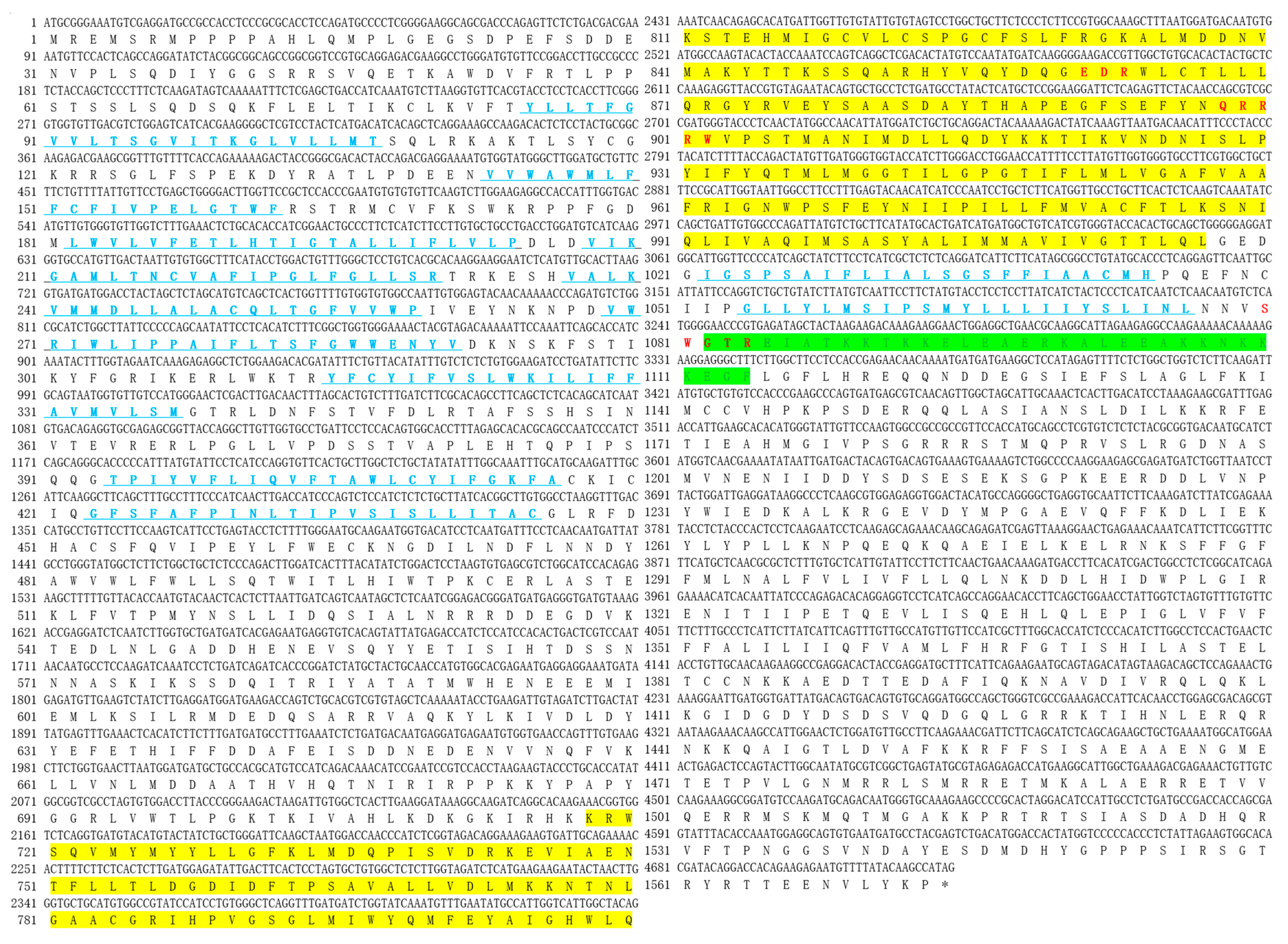
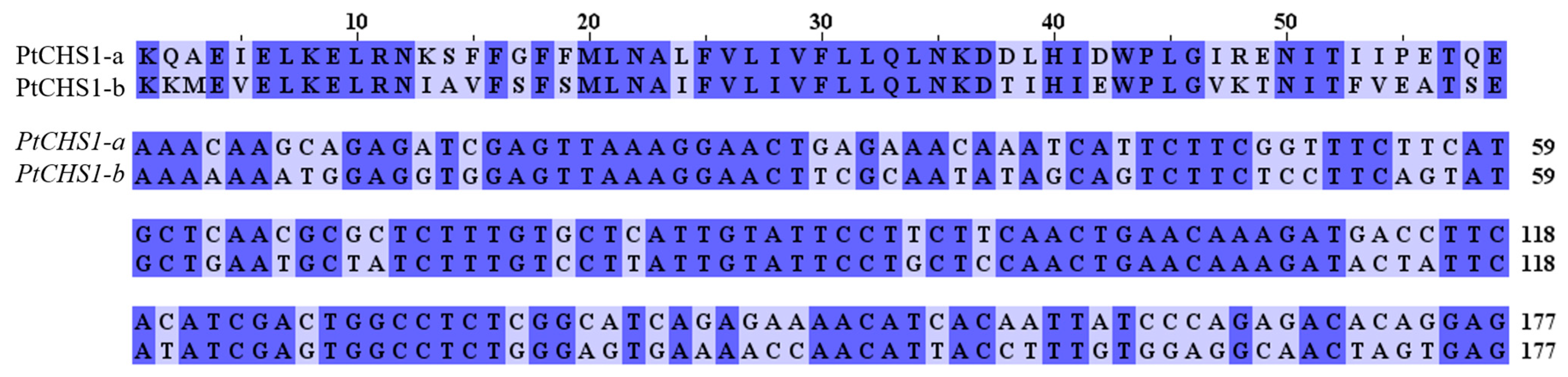
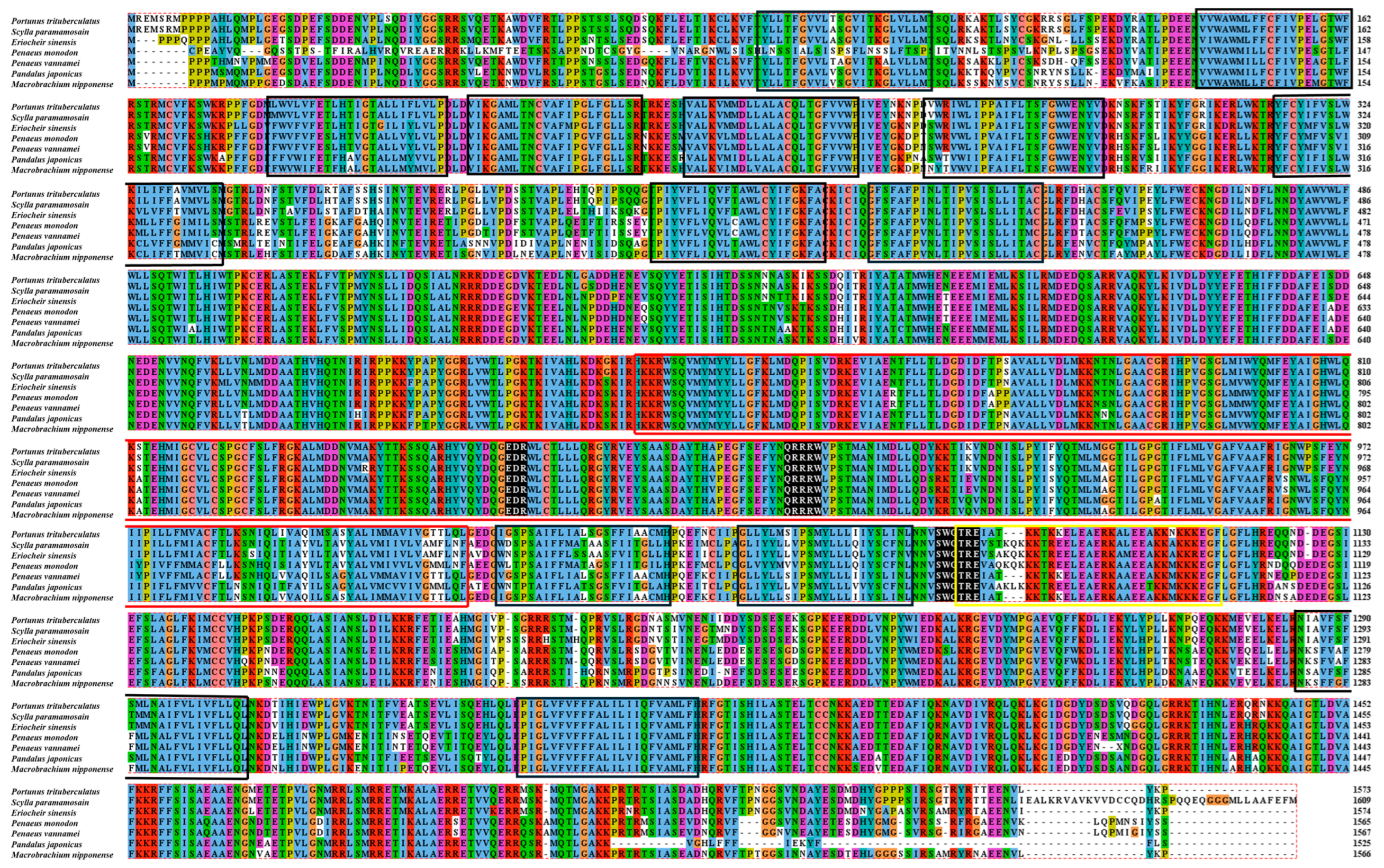
Domain analysis indicated that PtCHS contains three major structural regions. Domain A is located at the N-terminus and contains multiple transmembrane helices. Domain B constitutes the central region and includes a conserved chitin-synthase catalytic domain of approximately 300 amino acids. Within this catalytic region, the CHS-specific motifs EDR and QRRRW were detected. Domain C is located at the C-terminus and contains a coiled-coil region, the highly conserved SWGTRE motif, and additional transmembrane helices (Figure 1). Sequence comparison showed that the two splice variants differed by a 177 bp region encoding 59 amino acids (Figure 2). Multiple sequence alignment with homologous crustacean CHS proteins confirmed conservation of the Chitin_synth_2 domain, transmembrane domains, coiled-coil region, and diagnostic motifs (Figure 3). Domain mapping further supported the predicted membrane-integrated architecture of PtCHS (Figure 4).
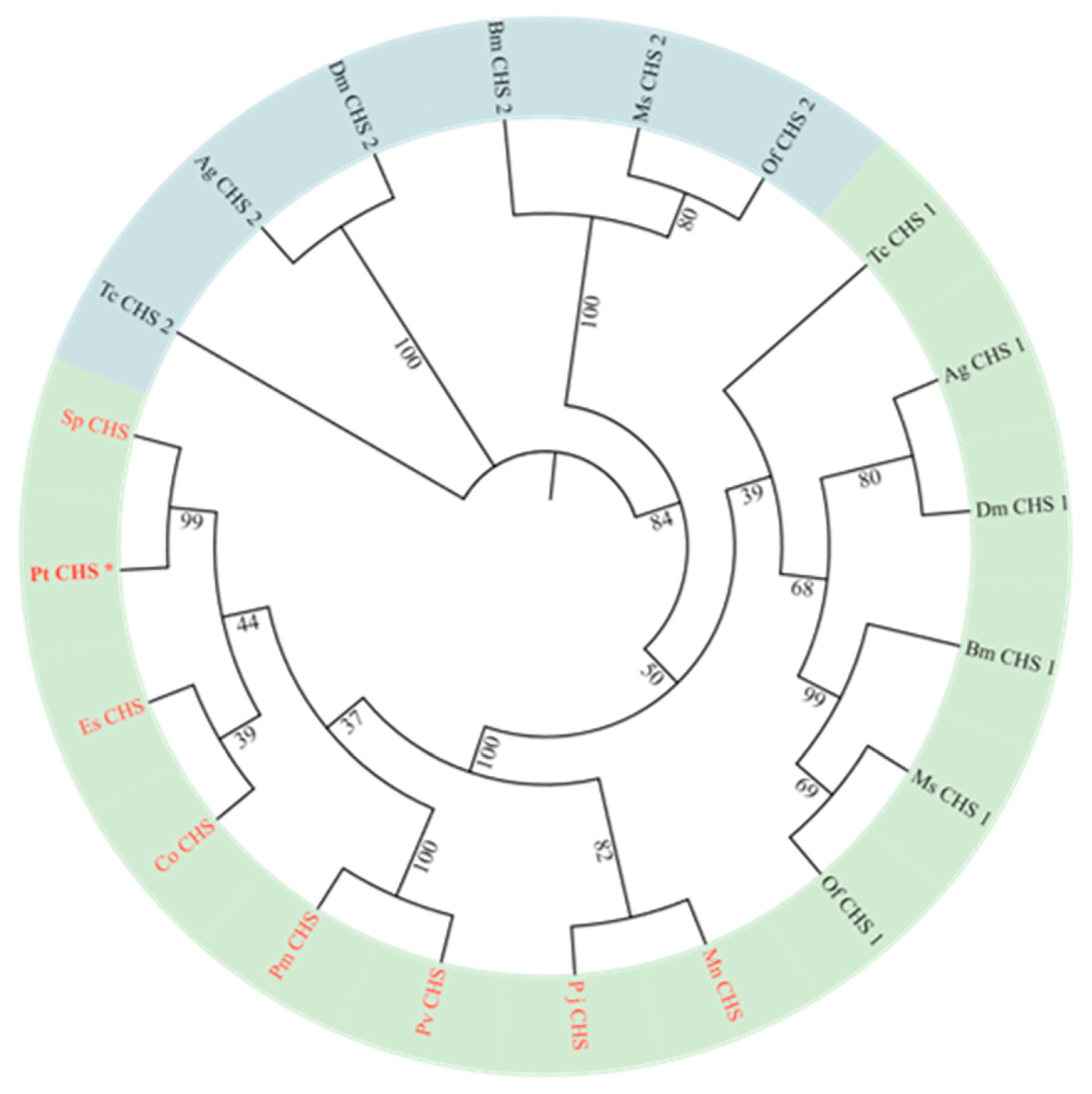
Phylogenetic analysis based on catalytic-domain sequences showed that PtCHS clustered within the class A/CHS1 chitin synthase lineage. PtCHS was most closely related to the CHS homolog from Scylla paramamosain, followed by homologs from E. sinensis and Chionoecetes opilio. Crustacean CHS proteins formed a clade distinct from insect CHS proteins, supporting the assignment of PtCHS to the crustacean CHS1 lineage (Figure 5).
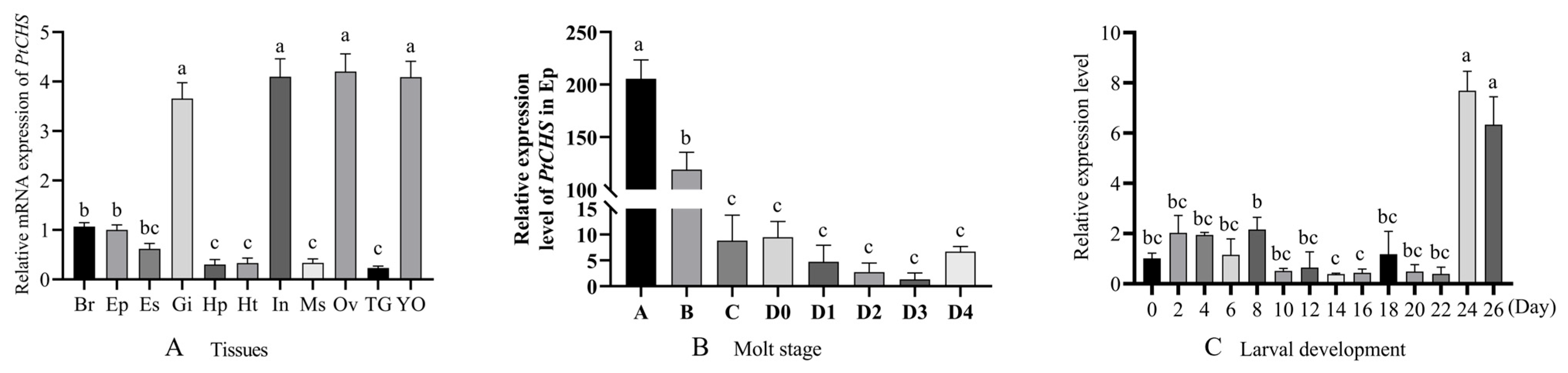
PtCHS transcript abundance was examined in adult tissues at stage C. PtCHS was detected in all examined tissues, including the brain, epidermis, eyestalk, gill, hepatopancreas, intestine, muscle, ovary, testis, Y-organ, and thoracic ganglion. Relatively high expression was observed in the Y-organ, midgut, ovary, and testis, and a comparatively high transcript level was also detected in the epidermis (Figure 6A).

3.2. PtCHS Expression During the Molting Cycle and Embryonic Development

qRT-PCR analysis revealed a stage-dependent epidermal expression pattern of PtCHS across the molting cycle. PtCHS expression gradually increased during premolt (stage D), was significantly up-regulated during postmolt stages (stages A and B), and then declined during intermolt (stage C) (Figure 6B). During embryonic development, PtCHS expression remained relatively stable from 0 to 22 days post-oviposition, increased sharply at 24 and 26 days, and remained at a high level until larval hatching (Figure 6C).

3.3. Effects of PtCHS Knockdown on Chitin-Biosynthesis and Molting-Related Genes

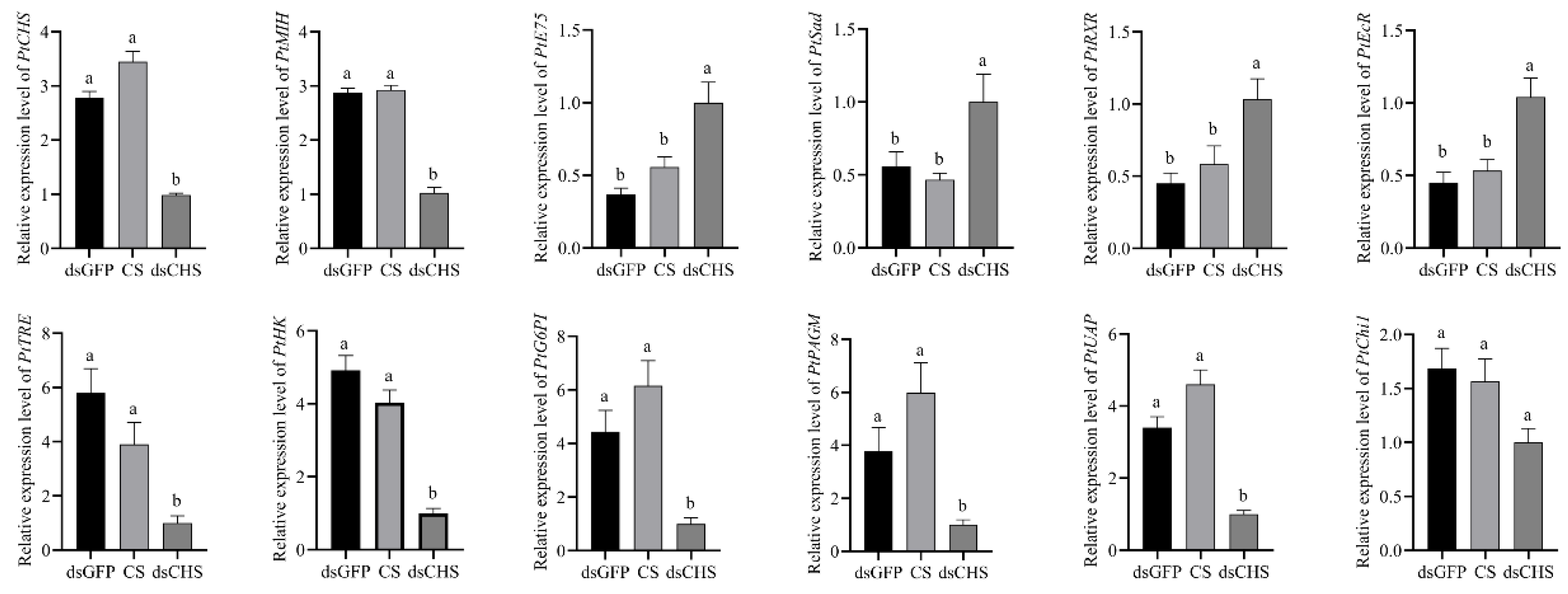
At 48 h after dsRNA-CHS injection, epidermal PtCHS expression was significantly lower in the dsCHS group than in the dsGFP and CS groups, confirming efficient knockdown. In response to PtCHS silencing, the expression levels of chitin-biosynthesis pathway genes, including TRE, HK, G6PI, PAGM, and UAP, were significantly reduced. By contrast, molting-related genes, including E75, Sad, RXR, and EcR, were significantly up-regulated. No significant change was detected in Chi1 expression among the three groups (Figure 7).

3.4. Effects of PtCHS Knockdown on Chitin-Biosynthesis and Molting-Related Genes

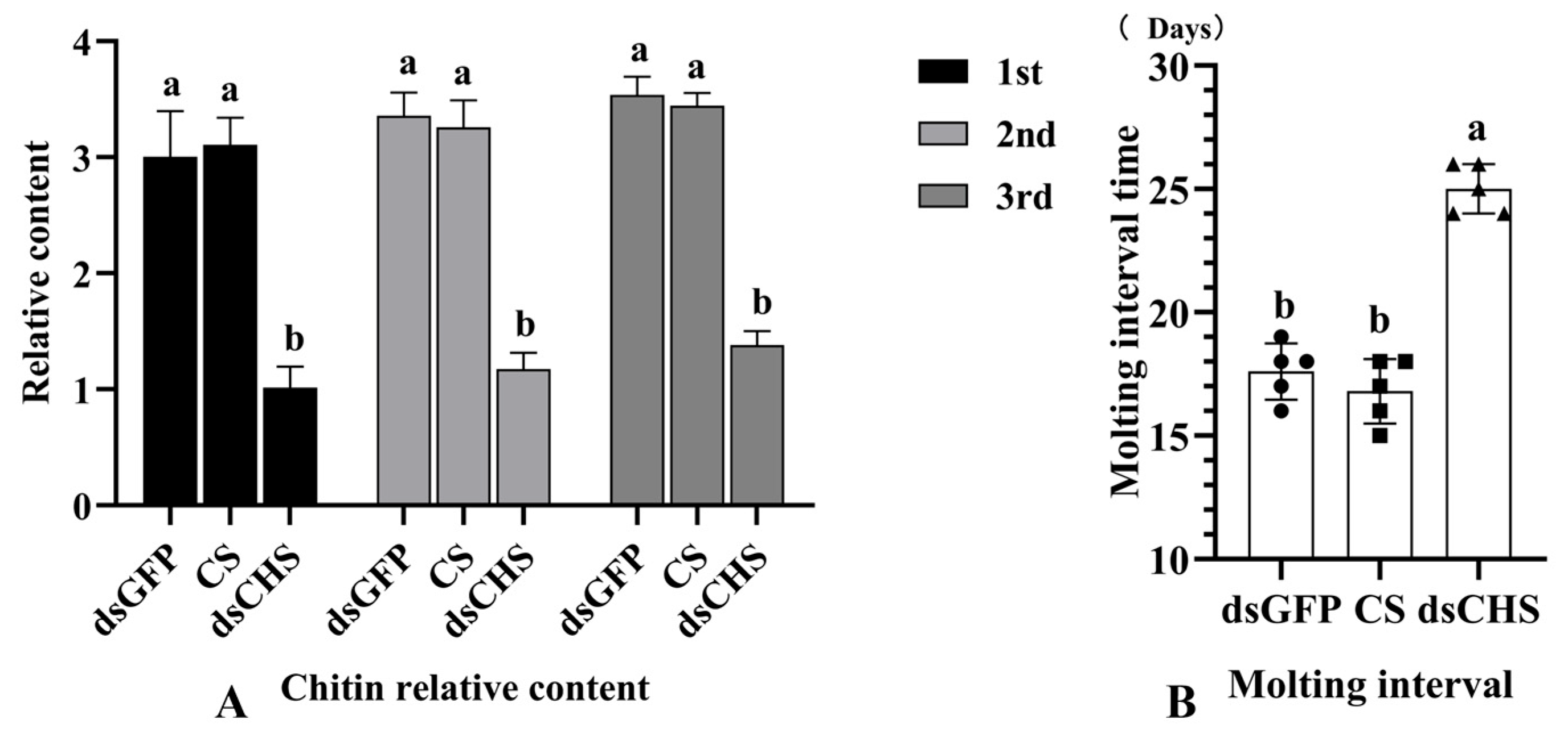
Epidermal chitin content was determined using a chitin assay kit according to the manufacturer’s instructions. After repeated injections, the dsCHS group consistently exhibited significantly lower epidermal chitin content than the dsGFP and CS groups at corresponding sampling points (p < 0.05). Although chitin content in the dsCHS group tended to increase with additional injections, it remained significantly below that of the control groups, indicating that PtCHS silencing impaired epidermal chitin biosynthesis (Figure 8A). Molting-interval analysis showed that PtCHS knockdown significantly prolonged the molting interval relative to both control groups (p < 0.05), whereas no significant difference was detected between the dsGFP and CS groups (Figure 8B). In addition, molting failure and mortality were observed in the dsCHS group during the experimental period.

3.5. Effects of Eyestalk Ablation on Molting-Related Gene Expression and Epidermal Structure

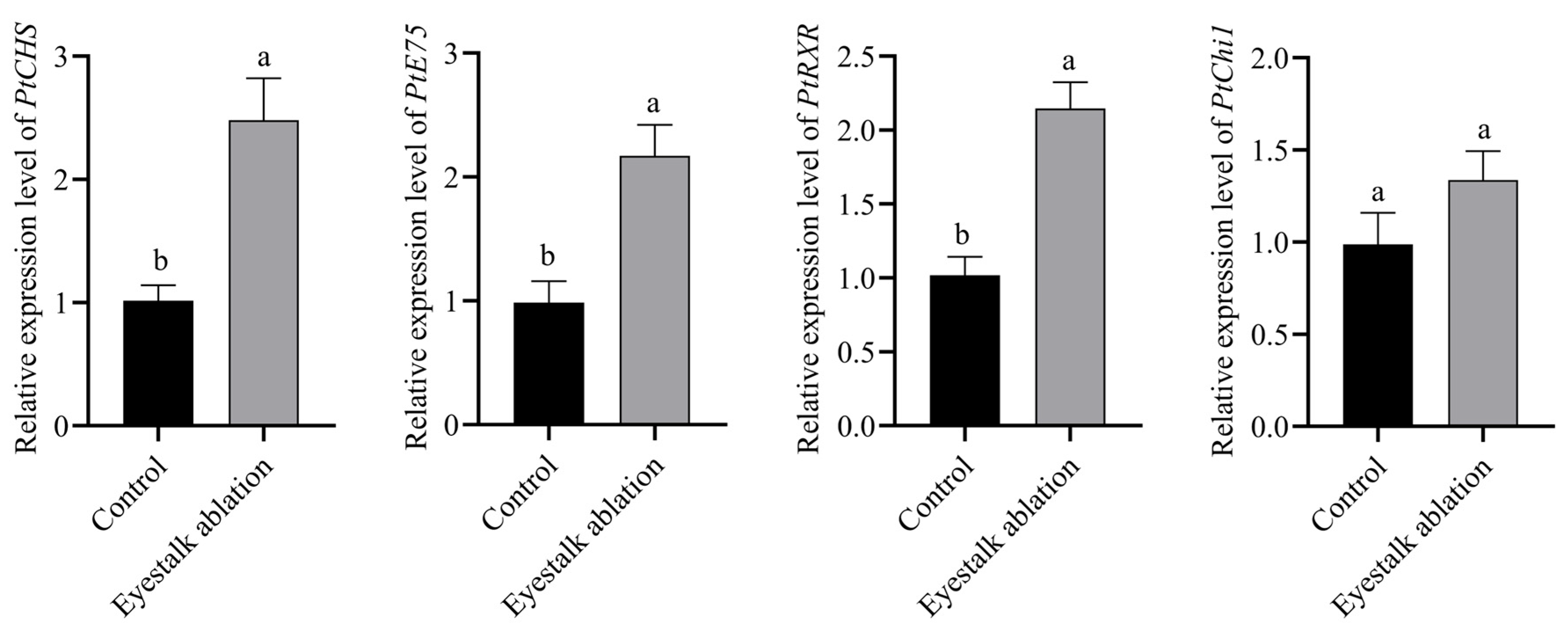
Epidermal samples were collected 15 days after unilateral ESA. Compared with the control group, ESA significantly induced the expression of PtCHS, PtE75, and PtRXR in the epidermis. PtChi1 showed an increasing trend after ESA, but the difference was not significant (Figure 9).
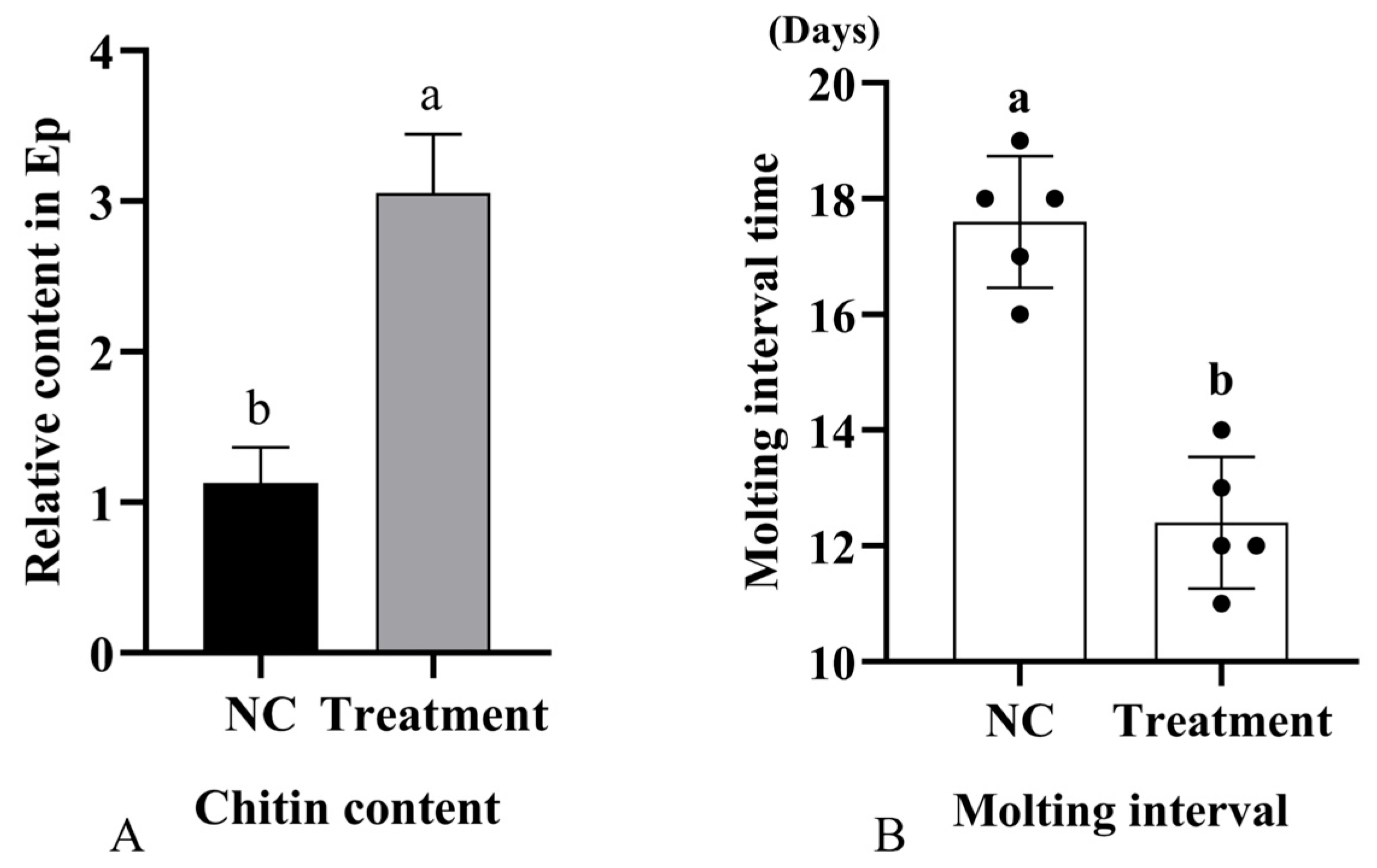
Consistent with the transcriptional induction of PtCHS, epidermal chitin content increased significantly after ESA (Figure 10A). Molting-interval analysis further showed that ESA significantly shortened the molting interval relative to the control treatment (Figure 10B).
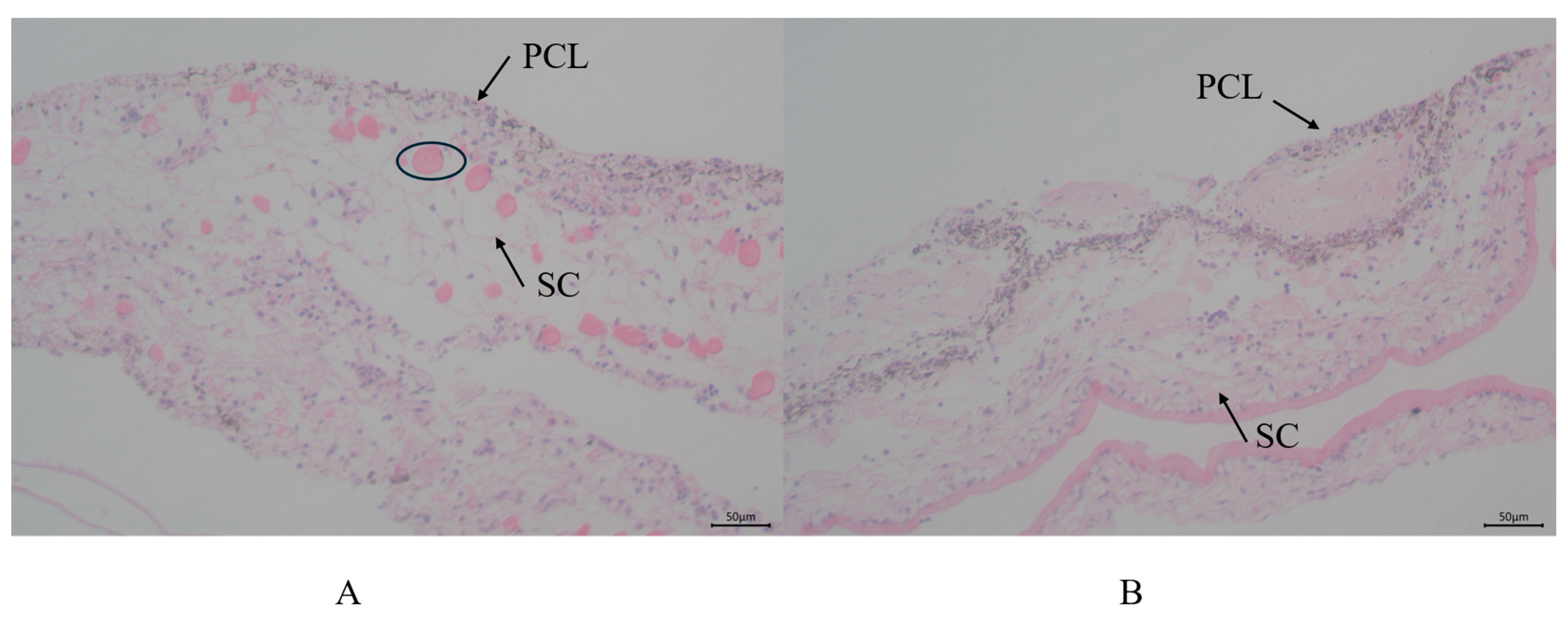
Hematoxylin-eosin staining revealed clear histological differences in the epidermis after ESA. Compared with the control group, the ESA group showed more intensely eosinophilic material, the formation of storage cells, reduced epidermal cell density, and increased extracellular matrix deposition (Figure 11). These histological changes suggest enhanced biosynthetic and metabolic activity in the epidermal tissue after ESA.

4. Discussion

CHS is the terminal enzyme in the chitin-biosynthesis pathway and is indispensable for arthropod cuticle formation and molting [25]. Since the enzymatic synthesis of chitin was first described in Neurospora crassa [46], CHS genes have been identified in diverse insects and crustaceans. However, compared with insects, functional studies of crustacean CHS remain relatively scarce. In this study, PtCHS was identified and characterized from P. trituberculatus, and its expression and functional role were evaluated through developmental expression profiling, RNAi, ESA, chitin-content measurement, and histological analysis. The combined evidence supports the central role of PtCHS in epidermal chitin deposition and successful molting [25].
Sequence analysis showed that PtCHS possesses the canonical structural features of arthropod CHS proteins, including multiple transmembrane helices, a conserved catalytic domain, and the diagnostic EDR, QRRRW, and SWGTRE motifs. Previous structural and mutagenesis studies indicate that EDR and QRRRW are essential for catalytic activity, whereas SWGTRE is characteristic of arthropod CHSs and may be related to chitin translocation rather than polymerization itself [13,47]. The predicted transmembrane topology of PtCHS matches the model. Its catalytic region faces the cytoplasm, which enables access to UDP-N-acetylglucosamine. Meanwhile, the polymerized chitin chain can be extruded or translocated across the membrane [25,47].
Phylogenetic analysis placed PtCHS within the class A/CHS1 lineage. This classification agrees with previous reports showing that crustacean CHSs generally cluster with CHS1 rather than CHS2 [18,19,20,21,22,23,48]. In insects, CHS1 and CHS2 are functionally specialized for epidermal cuticle and midgut peritrophic matrix synthesis, respectively [12,13,14]. In contrast, many crustaceans appear to have retained only one CHS gene [25]. A study in Penaeus japonicus suggested that the same CHS gene functions in both the intestine and epidermis [22], implying that crustacean CHS may perform broader tissue functions than insect CHS1 alone. The broad tissue distribution of PtCHS, especially its relatively high expression in the epidermis and midgut, is consistent with this interpretation.
A notable finding of this study is the detection of two PtCHS splice variants. Alternative exon usage has been reported for insect CHS1 genes, where CHS1a and CHS1b variants are often associated with different tissues or developmental processes [14,15,16,17,49]. The 177 bp differential region detected between PtCHS1a and PtCHS1b encodes 59 amino acids, a length comparable to the divergent regions described in several insect CHS1 variants. Distinct differences exist among CHS1 splice variants from different insect species in terms of their functions. Injection of dsRNA targeting CHS1 and its splice variants significantly reduced the corresponding transcript levels and induced lethal phenotypic defects in different insects. In N.lugens, silencing of CHS1 and CHS1a caused elongated distal wing pads, “wasp-waisted” or crimpled cuticle phenotypes, and eventual death, whereas CHS1b silencing produced less obvious morphological defects but slightly increased mortality. Similarly, silencing of OfCHS1a resulted in incomplete molting, while OfCHS1b specifically affected head cuticle formation in third-instar larvae. In B.dorsalis, knockdown of BdCHS1, BdCHS1a, and BdCHS1b also reduced the expression of the corresponding variants, caused phenotypic defects, and killed most treated larvae; however, BdCHS1 and BdCHS1a silencing mainly led to larvae being trapped in the old cuticle and dying before complete tanning, whereas BdCHS1b silencing had no obvious effect on insect morphology [15,16,17]. Alternative splicing of CHS genes has been poorly characterized in crustaceans. The identification of PtCHS splice variants therefore reveals a potential regulatory mechanism whereby a single crustacean CHS gene can execute diverse tissue- and stage-specific biological functions [25]. Referencing previous insect research, we hypothesize that PtCHS1a and PtCHS1b exhibit distinct functional activities across different developmental stages and tissues. It is reasonable to speculate that one isoform is functionally dominant under specific temporal and spatial conditions, such that the suppression of the other isoform fails to induce severe phenotypic abnormalities. Further isoform-specific functional analysis will be required to resolve the distinct biological roles of PtCHS1a and PtCHS1b.
The expression profile of PtCHS across tissues provides additional evidence for its physiological importance. High expression in the epidermis is consistent with a role in cuticle formation, whereas high expression in the midgut suggests involvement in chitin-containing digestive structures. Elevated expression in the ovary and testis may indicate participation in gonadal or reproductive processes. In T. castaneum, CHS activity is required for survival, fecundity, and egg hatch [50], and studies in Aedes aegypti have shown that chitin-like components occur in eggshells, eggsand ovaries [51]. Although the present study did not directly examine reproductive functions of PtCHS, the high ovary expression suggests that this possibility warrants further investigation [52].
During the molting cycle, epidermal PtCHS expression increased during premolt and peaked during postmolt stages A and B. This temporal pattern is biologically plausible because postmolt is the period in which the newly formed exoskeleton expands, hardens, and undergoes substantial chitin deposition and mineralization. Similar postmolt or molt-associated increases in CHS expression have been reported in L. vannamei, M. nipponense, and E. sinensis [19,20,21]. In P. trituberculatus, the postmolt induction of PtCHS therefore likely reflects the demand for rapid epidermal chitin synthesis during new cuticle formation.
Functional evidence from RNAi further supports the necessity of PtCHS for epidermal chitin deposition. PtCHS knockdown significantly decreased epidermal chitin content and prolonged the molting interval, while molting failure and mortality were observed in the dsCHS group. These effects are consistent with RNAi studies in E. sinensis, Lepeophtheirus salmonis, and Macrophthalmus japonicus, in which CHS suppression impaired cuticle integrity, reduced survival, or disrupted molting [20,23,48]. Comparable effects have also been observed in insects: interference with CHS1 in T. castaneum or Locusta migratoria manilensis disrupts molting or metamorphosis [11,50,53]. Together, these findings demonstrate that adequate CHS expression is a prerequisite for the production of sufficient cuticular chitin during the molting process.
PtCHS knockdown also altered the transcription of upstream chitin-biosynthesis genes. TRE, HK, G6PI, PAGM, and UAP were significantly reduced after dsCHS treatment, indicating that suppression of the terminal enzyme may feed back on earlier steps in the pathway [20]. By contrast, E75, Sad, RXR, and EcR were significantly up-regulated. These increases may represent a compensatory endocrine or transcriptional response to defective cuticle formation, consistent with crustacean neuroendocrine regulatory mechanisms described previously [52] EcR and RXR constitute the functional ecdysteroid receptor complex, Sad is involved in ecdysteroid biosynthesis, and E75 is an ecdysone-responsive nuclear receptor. Their induction after PtCHS knockdown suggests that P. trituberculatus may attempt to compensate for impaired chitin deposition by activating molting-related regulatory pathways [54,55,56]. However, this response was insufficient to restore normal chitin content and molting progression.
ESA produced an opposite physiological trend to RNAi. ESA significantly up-regulated PtCHS, PtE75, and PtRXR, increased epidermal chitin content, and shortened the molting interval. These results are consistent with the endocrine model in which removal of the eyestalk disrupts the X-organ-sinus gland complex, reduces inhibitory control over the Y-organ, and promotes ecdysteroid-mediated molting progression [37,38,39]. ESA has previously been shown to accelerate molting, growth, or ovary maturation in crustaceans, including M. nipponense and L. vannamei [21,57], and has also been associated with increased chitin-metabolism activity in Sinopotamon henanense [58,59]. The present results indicate that PtCHS is transcriptionally responsive to ESA-induced endocrine changes in P. trituberculatus.
Histological observations further support the molecular and biochemical results. After ESA, epidermal tissues displayed storage-cell formation, reduced epidermal cell density, stronger eosinophilic staining, and increased extracellular matrix deposition. Similar cuticular responses after ESA have been reported in S. henanense [59]. These changes align with greater deposition of carbohydrate- and protein-rich extracellular materials during rapid cuticle formation. Given that chitin is a principal structural component of the crustacean cuticle [60,61,62], the histological changes observed after ESA likely reflect coordinated activation of epidermal biosynthesis, including increased chitin production mediated at least in part by PtCHS induction.
From an aquaculture perspective, molting failure is a major cause of mortality under intensive culture conditions. The present study indicates that reduced PtCHS expression compromises epidermal chitin biosynthesis, delays molting, and increases the risk of molting failure. Conversely, PtCHS induction under ESA is associated with enhanced chitin accumulation and accelerated molting. PtCHS may therefore serve as a molecular indicator of epidermal molting readiness, although practical application will require validation across developmental stages, culture conditions, and genetic backgrounds. These results also provide a basis for future studies on nutritional, endocrine, or selective-breeding strategies aimed at improving molting success and growth stability in P. trituberculatus.
In summary, this study identified and characterized PtCHS in P. trituberculatus and demonstrated its functional importance in epidermal chitin deposition and molting. PtCHS shows conserved CHS structural features, belongs to the crustacean CHS1 lineage, and displays tissue- and stage-dependent expression. RNAi-mediated knockdown impaired the chitin-biosynthesis pathway, reduced epidermal chitin content, prolonged the molting interval, and was associated with molting failure and mortality. ESA induced PtCHS and molting-related genes, increased epidermal chitin content, and promoted histological changes consistent with enhanced epidermal biosynthesis. Collectively, these findings establish PtCHS as a key molecular component linking chitin biosynthesis, epidermal formation, and molting regulation in P. trituberculatus [25,52].

5. Conclusions

PtCHS is a conserved class A/CHS1 chitin synthase that is essential for epidermal chitin deposition and molting in P. trituberculatus. Its expression is tightly associated with molting stage, and functional perturbation by RNAi disrupts chitin biosynthesis and molting success. ESA-induced up-regulation of PtCHS further confirms its responsiveness to endocrine regulation during accelerated molting. These results provide a molecular framework for understanding cuticle formation in portunid crabs and identify PtCHS as a candidate marker for molting-related physiological status.

Supplementary Materials

The following supporting information can be downloaded at: https://www.mdpi.com/article/10.3390/fishes11060336/s1, Table S1: The qPCR primers used in this study.

Author Contributions

D.Z. and X.X. conceived and designed the experiment. Experimental samples of this study were collected by Y.H. Y.H. analyzed the data and wrote the main manuscript text. D.Z. and X.X. edited the manuscript. All authors have read and agreed to the published version of the manuscript.

Funding

This research was supported by the National Natural Science Foundation of China (U23A20248 and Nos. 32373124), and the K. C. Wong Magna Fund in Ningbo University.

Institutional Review Board Statement

In China, ethical approval is not mandatory for experiments involving crabs. All procedures were conducted in accordance with the provincial regulations on laboratory animal administration in Zhejiang Province (Decree No. 263 of the Zhejiang Provincial People’s Government, issued on 17 August 2009 and implemented on 1 October 2010) and with the relevant guidelines of the Animal Care and Use Committee of Ningbo University.

Data Availability Statement

The original contributions presented in this study are included in the article/Supplementary Material. Further inquiries can be directed to the corresponding author.

Conflicts of Interest

The authors declare no conflicts of interest.

References

  1. Spindler, K.D.; Spindler-Barth, M.; Londershausen, M. Chitin metabolism: A target for drugs against parasites. Parasitol. Res. 1990, 76, 283–288. [Google Scholar] [CrossRef]
  2. Hao, Z.; Cai, Y.; Liao, X.; Zhang, X.; Fang, Z.; Zhang, D. Optimization of nutrition factors on chitinase production from a newly isolated Chitinolyticbacter meiyuanensis SYBC-H1. Braz. J. Microbiol. 2012, 43, 177–186. [Google Scholar] [CrossRef]
  3. Richards, A.G.; Richards, P.A. The peritrophic membranes of insects. Annu. Rev. Entomol. 1977, 22, 219–240. [Google Scholar] [CrossRef]
  4. Coutinho, P.M.; Deleury, E.; Davies, G.J.; Henrissat, B. An evolving hierarchical family classification for glycosyltransferases. J. Mol. Biol. 2003, 328, 307–317. [Google Scholar] [CrossRef] [PubMed]
  5. Tellam, R.L.; Vuocolo, T.; Johnson, S.E.; Jarmey, J.; Pearson, R.D. Insect chitin synthase: cDNA sequence, gene organization and expression. Eur. J. Biochem. 2000, 267, 6025–6043. [Google Scholar] [CrossRef] [PubMed]
  6. Zhang, X.; Yuan, J.; Li, F.; Xiang, J. Chitin synthesis and degradation in crustaceans: A genomic view and application. Mar. Drugs 2021, 19, 153. [Google Scholar] [CrossRef] [PubMed]
  7. Zhang, X.; Zhang, J.; Park, Y.; Zhu, K. Identification and characterization of two chitin synthase genes in African malaria mosquito, Anopheles gambiae. Insect Biochem. Mol. Biol. 2012, 42, 674–682. [Google Scholar] [CrossRef]
  8. Ibrahim, G.H.; Smartt, C.T.; Kiley, L.M.; Christensen, B.M. Cloning and characterization of a chitin synthase cDNA from the mosquito Aedes aegypti. Insect Biochem. Mol. Biol. 2000, 30, 1213–1222. [Google Scholar] [CrossRef]
  9. Gagou, M.E.; Kapsetaki, M.; Turberg, A.; Kafetzopoulos, D. Stage-specific expression of the chitin synthase DmeChSA and DmeChSB genes during the onset of Drosophila metamorphosis. Insect Biochem. Mol. Biol. 2002, 32, 141–146. [Google Scholar] [CrossRef]
  10. Hogenkamp, D.G.; Arakane, Y.; Zimoch, L.; Merzendorfer, H.; Kramer, K.J.; Beeman, R.W.; Kanost, M.R.; Specht, C.A.; Muthukrishnan, S. Chitin synthase genes in Manduca sexta: Characterization of a gut-specific transcript and differential tissue expression of alternately spliced mRNAs during development. Insect Biochem. Mol. Biol. 2005, 35, 529–540. [Google Scholar] [CrossRef]
  11. Arakane, Y.; Hogenkamp, D.G.; Zhu, Y.C.; Kramer, K.J.; Specht, C.A.; Beeman, R.W.; Kanost, M.R.; Muthukrishnan, S. Characterization of two chitin synthase genes of the red flour beetle, Tribolium castaneum, and alternate exon usage in one of the genes during development. Insect Biochem. Mol. Biol. 2004, 34, 291–304. [Google Scholar] [CrossRef]
  12. Merzendorfer, H. Insect chitin synthases: A review. J. Comp. Physiol. B 2006, 176, 1–15. [Google Scholar] [CrossRef]
  13. Merzendorfer, H.; Zimoch, L. Chitin metabolism in insects: Structure, function and regulation of chitin synthases and chitinases. J. Exp. Biol. 2003, 206, 4393–4412. [Google Scholar] [CrossRef]
  14. Arakane, Y.; Muthukrishnan, S.; Kramer, K.J.; Specht, C.A.; Tomoyasu, Y.; Lorenzen, M.D.; Kanost, M.; Beeman, R.W. The Tribolium chitin synthase genes TcCHS1 and TcCHS2 are specialized for synthesis of epidermal cuticle and midgut peritrophic matrix. Insect Mol. Biol. 2005, 14, 453–463. [Google Scholar] [CrossRef] [PubMed]
  15. Qu, M.; Yang, Q. A novel alternative splicing site of class A chitin synthase from the insect Ostrinia furnacalis: Gene organization, expression pattern and physiological significance. Insect Biochem. Mol. Biol. 2011, 41, 923–931. [Google Scholar] [CrossRef]
  16. Wang, Y.; Fan, H.W.; Huang, H.J.; Xue, J.; Wu, W.J.; Bao, Y.Y.; Xu, H.J.; Zhu, Z.R.; Cheng, J.A.; Zhang, C.X. Chitin synthase 1 gene and its two alternative splicing variants from two sap-sucking insects, Nilaparvata lugens and Laodelphax striatellus (Hemiptera: Delphacidae). Insect Biochem. Mol. Biol. 2012, 42, 637–646. [Google Scholar] [CrossRef]
  17. Yang, W.J.; Xu, K.K.; Cong, L.; Wang, J.J. Identification, mRNA expression, and functional analysis of chitin synthase 1 gene and its two alternative splicing variants in oriental fruit fly, Bactrocera dorsalis. Int. J. Biol. Sci. 2013, 9, 331–342. [Google Scholar] [CrossRef]
  18. Uddowla, M.H.; Kim, A.R.; Park, W.G.; Kim, H.W. cDNAs encoding chitin synthase from shrimp (Pandalopsis japonica): Molecular characterization and expression analysis. J. Aquac. Res. Dev. 2015, 6, 1–8. [Google Scholar] [CrossRef]
  19. Wang, P.; Guo, A.L.; Zhang, Y.; Lv, Y.J.; Ning, Q.J. Gene cloning and expression analysis of cuticular chitin synthase from Macrobrachium nipponense. J. Fish. China 2015, 39, 1450–1458. Available online: http://www.china-fishery.cn/article/doi/10.11964/jfc.20150409819 (accessed on 12 May 2026). [CrossRef]
  20. Zhang, T.; Hu, Y.; Lu, S.; Deng, Y.F.; Zhang, H.M.; Zhao, Y.H.; Yu, Y.W.; Huang, H.B.; Zhou, J.; Li, X.G. Chitin synthase is required for cuticle formation and molting in the Chinese mitten crab Eriocheir sinensis. Int. J. Mol. Sci. 2025, 26, 2358. [Google Scholar] [CrossRef]
  21. Rocha, J.; Garcia-Carreño, F.L.; Muhlia-Almazán, A.; Peregrino-Uriarte, A.B.; Yépiz-Plascencia, G.; Córdova-Murueta, J.H. Cuticular chitin synthase and chitinase mRNA of whiteleg shrimp Litopenaeus vannamei during the molting cycle. Aquaculture 2012, 330–333, 111–115. [Google Scholar] [CrossRef]
  22. Imaizumi, K.; Sano, M.; Kondo, H.; Hirono, I. Insights into a chitin synthase of kuruma shrimp Penaeus japonicus and its role in peritrophic membrane and cuticle formation. Mar. Biotechnol. 2023, 25, 837–845. [Google Scholar] [CrossRef]
  23. Park, K.; Kwak, T.S.; Kwak, I.S. Integrated analysis of exoskeletal surface profile and chitin-related gene expression on Macrophthalmus japonicus mud crabs exposed to hexabromocyclododecane. Comp. Biochem. Physiol. Part C Toxicol. Pharmacol. 2022, 257, 109331. [Google Scholar] [CrossRef] [PubMed]
  24. Cheng, G.B.; Shi, H.L.; Lou, B.; Mao, G.M.; Zhan, W.; Xu, D.D.; Xue, B.G. Biological characteristics and current status of breeding and cultivation of Portunus trituberculatus. Hebei Fish. 2012, 59–61. Available online: http://dianda.cqvip.com/Qikan/Article/Detail?id=41644886 (accessed on 12 May 2026). [CrossRef]
  25. Campli, G.; Volovych, O.; Kim, K.; Veldsman, W.P.; Drage, H.B.; Sheizaf, I.; Lynch, S.; Chipman, A.D.; Daley, A.C.; Robinson-Rechavi, M.; et al. The moulting arthropod: A complete genetic toolkit review. Biol. Rev. 2024, 99, 2338–2375. [Google Scholar] [CrossRef]
  26. Song, L.; Lv, J.; Wang, L.; Sun, D.F.; Gao, B.Q.; Liu, P. Characterization of a chitinase-1 gene (PtCht-1) from a marine crab Portunus trituberculatus and its response to immune stress. Gene 2020, 741, 144523. [Google Scholar] [CrossRef] [PubMed]
  27. Iwasaki, S.; Sasaki, H.M.; Sakaguchi, Y.; Suzuki, T.; Tadakuma, H.; Tomari, Y. Defining fundamental steps in the assembly of the Drosophila RNAi enzyme complex. Nature 2015, 521, 533–536. [Google Scholar] [CrossRef] [PubMed]
  28. Hammond, S.M. Dicing and slicing: The core machinery of the RNA interference pathway. FEBS Lett. 2005, 579, 5822–5829. [Google Scholar] [CrossRef]
  29. Fire, A.Z. Gene silencing by double-stranded RNA (Nobel lecture). Angew. Chem. Int. Ed. 2007, 46, 6966–6984. [Google Scholar] [CrossRef]
  30. Hussain, M.; Abraham, A.M.; Asgari, S. An ascovirus-encoded RNase III autoregulates its expression and suppresses RNA interference-mediated gene silencing. J. Virol. 2010, 84, 3624–3630. [Google Scholar] [CrossRef]
  31. Terenius, O.; Papanicolaou, A.; Garbutt, J.S.; Eleftherianakis, I.; Huvenne, H.; Kanginakudru, S.; Albrechtsen, M.; An, C.J.; Aymeric, J.L.; Barthel, A.; et al. RNA interference in Lepidoptera: An overview of successful and unsuccessful studies and implications for experimental design. J. Insect Physiol. 2011, 57, 231–245. [Google Scholar] [CrossRef] [PubMed]
  32. Chen, X.; Tian, H.; Zou, L.; Tang, B.; Hu, J.; Zhang, W. Disruption of Spodoptera exigua larval development by silencing chitin synthase gene A with RNA interference. Bull. Entomol. Res. 2008, 98, 613–619. [Google Scholar] [CrossRef] [PubMed]
  33. Ohde, T.; Masumoto, M.; Morita-Miwa, M.; Matsuura, H.; Yoshioka, H.; Yaginuma, T.; Niimi, T. Vestigial and scalloped in the ladybird beetle: A conserved function in wing development and a novel function in pupal ecdysis. Insect Mol. Biol. 2009, 18, 571–581. [Google Scholar] [CrossRef]
  34. Lugo, J.M.; Morera, Y.; Rodríguez, T.; Huberman, A.; Ramos, L.; Estrada, M.P. Molecular cloning and characterization of the crustacean hyperglycemic hormone cDNA from Litopenaeus schmitti: Functional analysis by double-stranded RNA interference technique. FEBS J. 2006, 273, 5669–5677. [Google Scholar] [CrossRef]
  35. Sagi, A.; Manor, R.; Ventura, T. Gene silencing in crustaceans: From basic research to biotechnologies. Genes 2013, 4, 620–645. [Google Scholar] [CrossRef]
  36. Fajardo, C.; De Donato, M.; Macedo, M.; Charoonnart, P.; Saksmerprome, V.; Yang, L.; Purton, S.; Mancera, J.M.; Costas, B. RNA interference applied to crustacean aquaculture. Biomolecules 2024, 14, 1358. [Google Scholar] [CrossRef]
  37. Zeleny, C. Compensatory Regulation. Ph.D. Thesis, University of Chicago, Chicago, IL, USA, 1905. [Google Scholar]
  38. Head, T.B.; Pérez-Moreno, J.L.; Ventura, T.; Durica, D.S.; Mykles, D.L. Two cGMP-dependent protein kinases have opposing effects on molt-inhibiting hormone regulation of Y-organ ecdysteroidogenesis. J. Exp. Biol. 2025, 228, jeb249739. [Google Scholar] [CrossRef] [PubMed]
  39. Shen, H.; Hu, Y.; Zhang, Y.; Zhou, X.; Xu, Z.H. Calcium-calmodulin dependent protein kinase I from Macrobrachium nipponense: cDNA cloning and involvement in molting. Gene 2014, 538, 235–243. [Google Scholar] [CrossRef]
  40. Shen, J.; Zhu, D.F.; Hu, Z.H.; Qi, Y.Z.; Wang, C.J. Molt staging in the swimming crab Portunus trituberculatus. J. Fish. China 2011, 35, 1481–1487. Available online: https://www.china-fishery.com/jfcen/article/abstract/20110307418?st=article_issue (accessed on 12 May 2026). [CrossRef]
  41. Duan, S.; Cooke, I.M. Selective inhibition of transient K+ current by La3+ in crab peptide-secretory neurons. J. Neurophysiol. 1999, 81, 1848–1855. [Google Scholar] [CrossRef]
  42. Shen, H.; Hu, Y.; Zhou, X. Sex-lethal gene of the Chinese mitten crab Eriocheir sinensis: cDNA cloning, induction by eyestalk ablation, and expression of two splice variants in males and females. Dev. Genes Evol. 2014, 224, 97–105. [Google Scholar] [CrossRef]
  43. Shui, Y.; Shi, Y.H.; Xu, Z.H.; Zhou, X. Research progress on rapid induction of growth and development in crustaceans via eyestalk ablation. Guangdong Agric. Sci. 2013, 40, 124–126. [Google Scholar] [CrossRef]
  44. Liu, M.; Xie, X.; Tao, T.; Jiang, Q.H.; Shao, J.; Zhu, D.F. Molecular characterization of methoprene-tolerant gene (Met) in the swimming crab Portunus trituberculatus: Its putative role in methyl farnesoate-mediated vitellogenin transcriptional activation. Anim. Reprod. Sci. 2016, 174, 132–142. [Google Scholar] [CrossRef] [PubMed]
  45. Livak, K.J.; Schmittgen, T.D. Analysis of relative gene expression data using real-time quantitative PCR and the 2−ΔΔCt method. Methods 2001, 25, 402–408. [Google Scholar] [CrossRef] [PubMed]
  46. Glaser, L.; Brown, D.H. The enzymic synthesis of chitin by extracts of Neurospora crassa. Biochim. Et. Biophys. Acta 1957, 23, 449–450. [Google Scholar] [CrossRef]
  47. Chen, W.; Cao, P.; Liu, Y.; Yu, A.L.; Wang, D.; Chen, L.; Sundarraj, R.; Yuchi, Z.G.; Gong, Y.; Merzendorfer, H.; et al. Structural basis for directional chitin biosynthesis. Nature 2022, 610, 402–408. [Google Scholar] [CrossRef] [PubMed]
  48. Harðardóttir, H.M.; Male, R.; Nilsen, F.; Eichner, C.; Dondrup, M.; Dalvin, S. Chitin synthesis and degradation in Lepeophtheirus salmonis: Molecular characterization and gene expression profile during synthesis of a new exoskeleton. Comp. Biochem. Physiol. Part A Mol. Integr. Physiol. 2019, 227, 123–133. [Google Scholar] [CrossRef]
  49. Wang, Z.; Yang, H.; Zhou, C.; Yang, W.J.; Jin, D.C.; Long, G.Y. Molecular cloning, expression, and functional analysis of the chitin synthase 1 gene and its two alternative splicing variants in the white-backed planthopper, Sogatella furcifera. Sci. Rep. 2019, 9, 1087. [Google Scholar] [CrossRef]
  50. Arakane, Y.; Hogenkamp, D.G.; Zhu, Y.C.; Muthukrishnan, S.; Beeman, R.W. Chitin synthases are required for survival, fecundity and egg hatch in the red flour beetle, Tribolium castaneum. Insect Biochem. Mol. Biol. 2008, 38, 959–962. [Google Scholar] [CrossRef]
  51. Moreira, M.F.; Dos Santos, A.S.; Marotta, H.R.; Mansur, J.F.; Ramos, I.B.; Machado, E.A.; Souza, G.H.M.F.; Eberlin, M.N.; Kaiser, C.R.; Kramer, K.J.; et al. A chitin-like component in Aedes aegypti eggshells, eggs and ovaries. Insect Biochem. Mol. Biol. 2007, 37, 1249–1261. [Google Scholar] [CrossRef]
  52. Simões, L.A.R.; Normann, R.S.; Chung, J.S.; Vinagre, A.S. A brief and updated introduction to the neuroendocrine system of crustaceans. Mol. Cell. Endocrinol. 2024, 590, 112265. [Google Scholar] [CrossRef]
  53. Zhang, J.; Liu, X.; Zhang, J.; Li, D.; Sun, Y.; Guo, Y.P.; Ma, E.; Zhu, K.Y. Silencing of two alternative splicing-derived mRNA variants of chitin synthase 1 gene by RNAi is lethal to the oriental migratory locust, Locusta migratoria manilensis. Insect Biochem. Mol. Biol. 2010, 40, 824–833. [Google Scholar] [CrossRef] [PubMed]
  54. Cui, X.Y.; Zhu, D.F.; Tang, J.; Xie, X.; Qiu, X. Cloning and expression analysis of ecdysteroid receptor (EcR) in Portunus trituberculatus. J. Fish. China 2013, 37, 1645–1654. Available online: http://www.aquaticjournal.com/article/doi/10.3724/SP.J.1231.2013.38847 (accessed on 17 May 2014). [CrossRef]
  55. Wang, W.; Wu, X.G.; Lou, B.; Xu, L.; Liu, Z.J.; Cheng, Y.X. Molecular cloning and expression analysis of RXR gene during molting in Portunus trituberculatus. Oceanol. Limnol. Sin. 2014, 5, 1105–1114. [Google Scholar]
  56. Xie, X.; Zhou, Y.; Liu, M.; Tao, T.; Jiang, Q.H.; Zhu, D. The nuclear receptor E75 from the swimming crab, Portunus trituberculatus: cDNA cloning, transcriptional analysis, and putative roles on expression of ecdysteroid-related genes. Comp. Biochem. Physiol. Part B Biochem. Mol. Biol. 2016, 200, 69–77. [Google Scholar] [CrossRef] [PubMed]
  57. Zhang, H.Y.; Chen, X.D.; Fan, Y.W.; Zhang, C.L.; Ge, M.S.; Yuan, W.J. Effects of bilateral eyestalk ablation on Macrobrachium nipponense. J. Shanghai Norm. Univ. (Nat. Sci. Ed.) 1999, 28, 84–88. [Google Scholar]
  58. Pei, S.H.; Luo, J.X.; Zou, E.M.; Sun, M.; Liu, N.; Jin, W.X.; Wang, L. Effects of eyestalk ablation on ecdysteroid content, chitinase content and β-NAGase activity in Sinopotamon henanense. J. Fish. China 2014, 38, 677–683. Available online: https://www.china-fishery.com/scxuebao/article/abstract/20131209025?st=search (accessed on 12 May 2026). [CrossRef]
  59. Pei, S.H.; Wang, L. Effects of eyestalk ablation on cuticle tissue and setae of Sinopotamon henanense. Sci. Technol. Innov. 2014, 114–115. [Google Scholar]
  60. Nagasawa, H. The crustacean cuticle: Structure, composition and mineralization. Front. Biosci. 2012, 4, 711–720. [Google Scholar] [CrossRef]
  61. Skinner, D.M. The structure and metabolism of a crustacean integumentary tissue during a molt cycle. Biol. Bull. 1962, 123, 635–647. [Google Scholar] [CrossRef]
  62. Roer, R.; Dillaman, R. The structure and calcification of the crustacean cuticle. Am. Zool. 1984, 24, 893–909. [Google Scholar] [CrossRef]
Figure 1. Nucleotide and deduced amino-acid sequences of PtCHS. Blue font and underlining indicate transmembrane regions; the yellow region indicates the Chitin_synth_2 domain; red font indicates conserved motifs; and the green region indicates the coiled-coil region.
Fishes 11 00336 g001
Figure 2. Nucleotide and deduced amino-acid sequence alignment of PtCHS alternative exon-a and exon-b. Identical colors at corresponding positions indicate identical nucleotides or amino acids.
Fishes 11 00336 g002
Figure 3. Multiple sequence alignment of the deduced amino-acid sequence of P. trituberculatus CHS and CHS homologs from other crustaceans. Red boxes indicate the Chitin_synth_2 domain; black boxes indicate transmembrane domains; yellow boxes indicate the coiled-coil region. EDR, QRRRW, and SWGTRE represent conserved CHS motifs.
Fishes 11 00336 g003
Figure 4. Predicted domain architecture of PtCHS. Blue indicates transmembrane domains, red indicates the core catalytic domain, green indicates the coiled-coil region and Gray indicates linker.
Fishes 11 00336 g004
Figure 5. Phylogenetic analysis of CHS catalytic-domain sequences. The tree was constructed with 1000 bootstrap replicates. PtCHS from P. trituberculatus is highlighted in bold red. Green indicates CHS1, blue indicates CHS2, black font indicates insects, and red font indicates crustaceans. PtCHS*: Portunus trituberculatus CHS.
Fishes 11 00336 g005
Figure 6. Relative expression of PtCHS in different tissues (A), during the molting cycle (B), and during larval development (C). qRT-PCR was performed using β-actin as the internal reference gene. Data are presented as mean ± SD (n = 3). Different letters indicate significant differences among groups (p < 0.05).
Fishes 11 00336 g006
Figure 7. Relative expression levels of PtCHS, chitin-biosynthesis pathway genes, and molting-related genes in the epidermis of P. trituberculatus after dsRNA treatment. Data are presented as mean ± SD (n = 3). Different lowercase letters indicate significant differences among groups (one-way ANOVA followed by Duncan’s multiple range test, p < 0.05).
Fishes 11 00336 g007
Figure 8. Effects of PtCHS knockdown on epidermal chitin content and molting interval. (A) Relative chitin content in the epidermis after repeated injections Data are presented as mean ± SD (n = 3). (B) Molting interval after continuous treatment. Data are presented as mean ± SD (n = 5). Different lowercase letters indicate significant differences among groups (p < 0.05).
Fishes 11 00336 g008
Figure 9. Relative expression levels of molting-related genes in the epidermis of P. trituberculatus after 15 days after eyestalk ablation. Data are presented as mean ± SD (n = 3). Different lowercase letters indicate significant differences between groups (p < 0.05).
Fishes 11 00336 g009
Figure 10. Effects of eyestalk ablation on epidermal chitin content and molting interval. (A) Relative chitin content in the epidermis, Chitin content in samples was quantified with a chitin assay kit following the manufacturer’s protocol. Data are presented as mean ± SD (n = 3). (B) Molting interval after ESA treatment. The time required for the next molting after ESA was recorded; the control group began at the same time. Data are presented as mean ± SD (n = 5). Data are presented as mean ± SD. Different lowercase letters indicate significant differences between groups (p < 0.05).
Fishes 11 00336 g010
Figure 11. Hematoxylin-eosin staining of epidermal tissues after eyestalk ablation. (A) ESA treatment group; (B) control group. PCL: pigment cell layer; SC: storage tissue; black ellipse: carbohydrate or protein substances.
Fishes 11 00336 g011
Disclaimer/Publisher’s Note: The statements, opinions and data contained in all publications are solely those of the individual author(s) and contributor(s) and not of MDPI and/or the editor(s). MDPI and/or the editor(s) disclaim responsibility for any injury to people or property resulting from any ideas, methods, instructions or products referred to in the content.