Article

Physiological Benefits of Probiotic Refeeding After Short-Term Fasting in Nile Tilapia: Growth Performance, Histomorphological, and Gene Expression Responses


1
Department of Biology, College of Science, Jazan University, P.O. Box. 114, Jazan 45142, Saudi Arabia
2
Medicine of Aquatic Life Department, Faculty of Veterinary Medicine, Qena University, Qena 83523, Egypt
3
Department of Anatomy and Embryology, Faculty of Veterinary Medicine, Qena University, Qena 83523, Egypt
*
Authors to whom correspondence should be addressed.
Fishes 2026, 11(3), 156; https://doi.org/10.3390/fishes11030156
Submission received: 17 January 2026 / Revised: 28 February 2026 / Accepted: 5 March 2026 / Published: 8 March 2026
(This article belongs to the Special Issue Advances in the Physiology of Aquatic Organisms)

Abstract

This study investigated the physiological benefits of probiotic supplementation during refeeding after short-term fasting in Nile tilapia (Oreochromis niloticus). A total of 180 fish were assigned to three groups: continuously fed control or subjected to 5 days of fasting followed by 15 days of refeeding with either a basal or probiotic-enriched diet containing Bacillus subtilis, B. licheniformis, and B. pumilus. Growth performance indices (body weight, length, weight gain, specific growth rate, condition factor, relative feed intake, and feed conversion ratio) were measured. Muscle samples were collected for histomorphological evaluation and quantitative real-time PCR analysis of antioxidant genes catalase (cat) and superoxide dismutase 2 (sod-2), growth-related genes insulin-like growth factor 1 (igf-1) and suppressor of cytokine signaling 2 (soc-2), anti-inflammatory gene transforming growth factor beta (tgf-β), and myostatin genes. Fasting significantly reduced (p < 0.05) body weight compared to control, confirming the impact of nutrient deprivation. Upon refeeding, fish on the basal diet showed partial growth recovery but remained below control levels, whereas probiotic-fed fish exhibited superior recovery, surpassing both control and basal groups in body weight, length and weight gain. Condition factor exhibited insignificant changes among all groups after fasting and upon refeeding. Specific growth rate of the entire experiment was highest in the probiotic group, while insignificant. Relative feed intake decreased in both refed groups, yet feed conversion ratio improved, particularly with probiotics. Gene expression analysis revealed fasting-induced upregulation of antioxidant (cat and sod-2) and myostatin (p < 0.05), alongside downregulation of growth-related (igf-1 and soc-2) and anti-inflammatory (tgf-β) genes (p < 0.05). Basal refeeding restored most expressions, whereas probiotics enhanced antioxidant, growth, and anti-inflammatory genes while normalizing myostatin (p > 0.05 vs. control). Histological evaluation showed fasting-induced muscle atrophy, which was most effectively reversed by probiotics. Overall, probiotics accelerated recovery, highlighting their potential to optimize post-fasting growth in aquaculture.
Key Contribution: Probiotic supplementation during refeeding after short-term fasting enhanced growth recovery, improved feed efficiency, and maintained condition factor. It also modulated antioxidant, growth, and anti-inflammatory gene expression while reversing muscle atrophy, establishing probiotics as an effective strategy to optimize post-fasting recovery in aquaculture.

1. Introduction

In aquaculture, achieving optimal growth is a key objective, making proper feeding practices essential [1]. Under consistent feeding regimens, fish grow efficiently and accumulate energy reserves. However, during periods of feed restriction, these reserves are mobilized to meet basic survival needs [2]. It is important to recognize that short-term feed deprivation can serve as a strategic management tool in aquaculture. This approach helps address water quality concerns, mitigate the effects of temperature fluctuations, and ease stress associated with pre-harvest and handling procedures [3,4,5].
Fasting and subsequent refeeding protocols provide valuable insights for both fundamental and applied research. Fasting triggers a shift toward catabolic metabolism, resulting in reduced growth rates. In contrast, refeeding triggers a hyper-anabolic response, prompting fish to accelerate their growth in compensation [6]. Hyperphagia is a primary mechanism underlying compensatory growth, as previously fasted fish increase voluntary feed intake to restore lost body mass and energy reserves [7]. This post-fasting increase in appetite, often supported by endocrine modulation of orexigenic signals, enhances feed utilization efficiency [8] and facilitates catch-up growth in several fish species [9,10]. The extent of compensatory growth, determined by the recovery of fish body weight following fasting, can be categorized as over-compensatory, complete, partial, or non-compensatory [11]. However, compensatory growth may not be uniformly expressed across growth parameters, as previous studies have shown that fish may compensate for lost body mass without a proportional recovery in body length, indicating parameter-specific growth responses [10]. Following periods of growth suppression due to fasting, fish often exhibit compensatory growth once favorable feeding conditions are restored. This accelerated growth may surpass that of continuously fed control fish and may be driven by enhanced feed intake, increased mitogen activity, and improved feed conversion efficiency [7,8,12].
Fasting and refeeding significantly alter gene expression patterns, which may affect muscle metabolism and growth rates and, in some cases, may impair muscle development [13,14]. In teleost fish, the maintenance and progression of skeletal muscle growth are largely dependent on nutrient availability. This, in turn, regulates the growth hormone/insulin-like growth factor 1 (GH/IGF1) axis, a key hormonal pathway that governs nutrient metabolism, muscle protein synthesis, and the growth of various tissues [15,16,17]. IGF-I is the primary mitogenic polypeptide acting through both autocrine and paracrine pathways, and it is widely regarded as a leading biomarker for assessing fish growth. Its role in stimulating protein synthesis and promoting muscle hypertrophy makes it a strong indicator of growth performance [18,19].
Muscle growth is regulated by various genes, notably myostatin (MSTN), a member of the transforming growth factor-beta (TGF-β) superfamily, which acts as a potent inhibitor of skeletal muscle development. Its role as a negative regulator is highly conserved among vertebrates, underscoring its critical importance in controlling muscle growth and development [20,21,22,23]. Additionally, the research has demonstrated that fasting can reduce antioxidant reserves in various organs and increase the production of oxygen-free radicals, with the liver experiencing the most significant impact [24,25,26,27,28].
In recent years, the application of probiotics has gained significant attention in aquaculture. Probiotics are live beneficial microorganisms that have been shown to enhance nutrient absorption, modulate the gut microbiota, and strengthen immune responses, all of which are critical during the recovery period after feed deprivation [29,30,31]. For instance, studies on Nile tilapia and other aquaculture species have confirmed that probiotics such as Bacillus subtilis, Lactobacillus plantarum, and Saccharomyces cerevisiae can significantly enhance growth performance, feed conversion efficiency, and oxidative stress resistance [32,33,34].
Although probiotics have been extensively studied for their benefits in aquaculture, their specific role during the refeeding phase following fasting has received limited attention, particularly in Nile tilapia (Oreochromis niloticus). Most existing research explores probiotics in general feeding regimes, disease resistance, or growth enhancement, rather than specifically addressing post-fasting refeeding, leaving a gap in understanding how probiotics might influence efficiency of growth recovery and oxidative stress recovery following feed deprivation. Addressing this gap could provide novel insights into optimizing refeeding strategies and enhancing resilience in farmed tilapia. Therefore, this study aimed to evaluate the effects of probiotic supplementation on recovery efficiency in Nile tilapia following short-term fasting. Specifically, we investigated whether probiotics during refeeding could improve growth performance, histological changes in muscle tissue, and the expression of key stress- and growth-related genes. By integrating growth metrics with tissue- and gene-level analyses, this research seeks to identify a feeding strategy that supports rapid recovery and sustained growth.

2. Materials and Methods

2.1. Diet Preparation

During the experiment, Nile tilapia were subjected to two distinct dietary treatments. The first treatment involved a commercially formulated feed manufactured by Skretting (Nutreco, Egypt, 10th of Ramadan City, El Sharqia Governorate), specifically designed for tilapia, which served as the basal diet. This feed contained 30% crude protein, 6% crude lipid, and 5.22% crude fiber. The second treatment consisted of a probiotic-enriched diet, prepared by supplementing the basal feed with a commercially available lyophilized probiotic blend (Sanolife® PRO-F, INVE Aquaculture, Thailand). This blend, containing Bacillus subtilis, B. licheniformis, and B. pumilus at a total concentration of not less than 1 × 10⁹ CFU/g, was applied at a rate of 1 g/kg feed as per El-Son, et al. [35]. The probiotic mixture was prepared as an aqueous suspension, first homogenized in sterile distilled water and then uniformly sprayed onto the feed to ensure even surface coating, followed by air-drying at room temperature (25 ± 2 °C) to remove excess moisture and stabilize the coating. Prior to feed supplementation, the viability of probiotic cells was confirmed by plate counting on nutrient agar, ensuring that the number of viable bacterial cells was consistent with the manufacturer’s specification. Representative feed samples were collected after coating and drying, and bacterial counts were repeated to verify uniform distribution and viability in the supplemented diet. The prepared diets were stored in airtight containers at 4 °C until use.

2.2. Fish Source and Acclimation

Nile tilapia (Oreochromis niloticus) were obtained from a commercial fish farm in Qena Governorate, Egypt. The fish were transported to the wet laboratory at the Medicine of Aquatic Life Department, Qena University, where they underwent a two-week acclimation period under controlled environmental conditions. Water quality parameters, including dissolved oxygen (5.7 ± 0.7 mg/L), temperature (25.5 ± 0.6 °C), pH (7.2 ± 0.3), and total ammonia nitrogen (<0.07 mg/L), were monitored on a regular basis. During this phase, all fish were fed exclusively on the basal diet.

2.3. Experimental Design

After acclimation, 180 healthy Nile tilapia, with an average initial body weight of 37 ± 1.8 g (Mean ± SD), were randomly allocated into nine fiberglass tanks, with 20 fish per tank. These tanks were divided into three treatment groups, each comprising three replicates:
Group 1 (control): fish were continuously fed a basal diet for 20 days.
Group 2 (fasting/basal diet refed): fish underwent a 5-day fasting period followed by 15 days of refeeding with the basal diet.
Group 3 (fasting/enriched diet refed): fish experienced the same 5-day fasting period, followed by 15 days of refeeding with the basal diet enriched with a commercial probiotic formulation.
During the refeeding stage, fish were fed at a fixed ration of 3% of body weight/day, adjusted based on biomass. This standardized feeding ensured equal provision across groups but did not allow for ad libitum intake. Consequently, the design controlled for feed input while potentially limiting the natural hyperphagic response associated with compensatory growth.
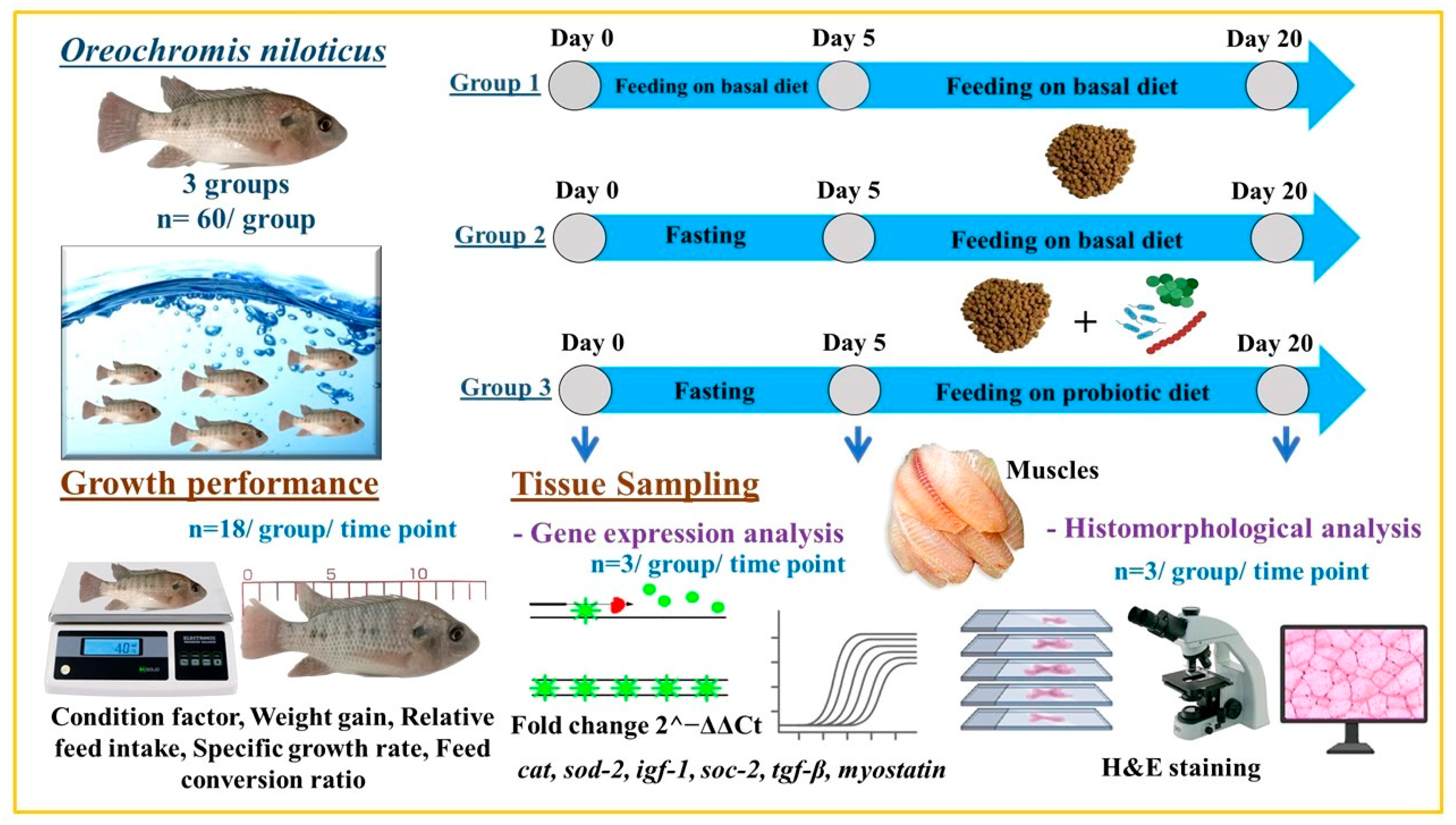
Fish were hand-fed twice daily. All tanks were maintained under identical environmental conditions, including water temperature 25.8  ±  0.5, dissolved oxygen 6  ±  0.6 mg/L, pH 7.2  ±  0.3, total ammonia nitrogen  <  0.07 mg/L, and a photo period of 12 L:12D. Water quality parameters were monitored regularly to ensure optimal conditions for fish health and growth. Figure 1 illustrates the experimental workflow of the study.

2.4. Growth Performance Metrics and Feed Utilization

At the start of the experiment (0 day), 5 days post-fasting and 15 days post-refeeding, six fish per tank were sampled (total n = 18 fish per treatment group) and randomly selected and euthanized using an overdose of clove oil. Each fish was individually measured for body weight (g) and total length (cm). These biometric measurements were utilized to calculate growth performance and feed utilization parameters, as detailed in Table 1. These resulting data provide valuable insights into fish physiology and energy use during the fasting and subsequent refeeding periods. Moreover, the survival rate was calculated at the end of the experiment using the formula: Survival rate (%) = Final number of fish/Initial number of fish × 100
Mortalities were recorded daily, and the number of surviving fish in each tank was counted at the conclusion of the trial. Values were expressed as percentages of the initial stocking density.

2.5. Tissue Sampling

Muscle samples were collected at the start of the experiment (0 day), 5 days post-fasting and 15 days post-refeeding. Sampling was collected from the dorsal region along the body axis from the 3 groups (n = 3/group, 1 fish/replicate tank). The samples were stored in RNA-later, kept refrigerated overnight, and then frozen at −80 °C to preserve RNA integrity. Another set of muscle tissues (n = 3/group) was kept in 10% formalin for histomorphology.

2.6. Gene Expression Analysis

2.6.1. RNA Extraction and cDNA Synthesis

Total RNA was extracted from 30 mg of each muscle tissue sample (n = 3/group) using the RNeasy® Mini Kit (Qiagen, Hilden, Germany), following the manufacturer’s protocol. RNA concentration and purity were determined using a NanoDrop Spectrophotometer (Implen GmbH, Munich, Germany). Before to cDNA synthesis, RNA integrity was assessed by evaluating the A260/A280 absorbance ratio and visualizing ribosomal RNA bands via agarose gel electrophoresis. First-strand cDNA was synthesized from 1 μg of total RNA using the RevertAid First Strand cDNA Synthesis Kit (Thermo Scientific, Waltham, MA, USA), according to the manufacturer’s instructions. The resulting cDNA was stored at −20 °C for subsequent gene expression analysis.

2.6.2. Quantitative Real-Time PCR (qRT-PCR)

Gene-specific primers specific for Nile tilapia were employed in this study, with their sequences and characteristics provided in Table 2. The β-actin gene was used as an internal reference to normalize gene expression data. Quantitative real-time PCR (qRT-PCR) was performed using the HERAPLUS SYBR Green qPCR Kit (Willowfort, Nottingham, UK). Primer efficiencies, determined via standard curve analysis, ranged between 90% and 100%. Amplification specificity was confirmed by melt curve analysis, which showed single peak profiles, and further validated through sequencing of the PCR products.
Thermal cycling conditions of the PCR protocol included an initial denaturation at 95 °C for 3 min, followed by 40 amplification cycles consisting of denaturation at 95 °C for 10 s and annealing/extension at 60 °C for 1 min. Fluorescence signals were monitored during the extension phase of the qPCR reactions. To ensure amplification specificity and exclude the possibility of contamination, no-template controls were included in all reactions. Cycle threshold (Ct) values were determined for each sample, and relative gene expression levels were calculated using the 2−ΔΔCt method, as outlined by [36].
Table 2. Primers used in this study for real-time PCR.
GenePrimer NamePrimers Sequences (5′–3′)Amplified Segment (bp)Accession NumberReference
Catalasecat FTCCTGGAGCCTCAGCCAT79JF801726[37]
cat RACAGTTATCACACAGGTGCATCTTT
Superoxide dismutase 2sod-2 FCTCCAGCCTGCCCTCAA58JF801727.1[38]
sod-2 RTCCAGAAGATGGTGTGGTTAATGTG
Insulin-like growth factor 1igf-1 FTCCTGTAGCCACACCCTCTC197NM_001279503.1[39]
igf-1 RACAGCTTTGGAAGCAGCACT
Suppressor of cytokine signaling 2soc-2 FAACAACACCGGAGCTGTGGAA119KR149238.1[40]
soc-2 RTGCAGGATCTCTTTGGCTTCA
Transforming growth factor betatgf-β FGTTTGAACTTCGGCGGTACTG80NM_001311325.1[41]
tgf-β RTCCTGCTCATAGTCCCAGAGA
Myostatinmyostatin FTGTGGACTTCGAGGACTTTGG59AF197193.3[6]
myostatin RTGGCCTTGTAGCGTTTTGGT
β-actinβ-actin FCAGGATGCAGAAGGAGATCACA92KJ126772.1[42]
β-actin RCGATCCAGACGGAGTATTTACG

2.7. Histological Examination

Muscle tissues from the three groups (n = 3/group) were collected from the dorsal region along the body axis (from head to tail). Three cross-sections were analyzed for each fish, for a total of 3 fish per group (n = 3/group). For each cross-section, three measurements were taken, resulting in a comprehensive dataset. Mean values were calculated from these measurements for each parameter, allowing for a more nuanced understanding of the data.
Samples were cut into small pieces (3–5 mm) and fixed in 10% neutral buffered formalin (NBF) for 48 h. Tissue dehydration was carried out via a graded ethanol series (70%, 80%, 90%, and 100%), followed by paraffin embedding at 65 °C (Paraffin I: 2 h, Paraffin II: 2 h, and Paraffin III: overnight). Longitudinal and cross skeletal muscle sections (3–4 microns) were obtained via a Leica Rotary Microtome (Leica Microsystems, Germany) and stained with hematoxylin and eosin (H&E) for histomorphological evaluation [43]. Cross-sectional images of white muscle fibers were analyzed using ImageJ software, Version 1.46r (available at http://Fiji.sc/Fiji (accessed on 27 November 2025)) to determine muscle fiber cross-sectional area (CSA), fiber diameter (FD), and the endomysial space diameter (ESD) between muscle fibers [6,44].
The cross-sectional area (CSA) was measured via the freehand selection tool in ImageJ software to delineate individual muscle fiber parameters, and the area (μm2) was calculated automatically. Meanwhile, the fiber diameter (FD) was determined for each fiber to accommodate its polyhedral shape. Further, endomysial space diameter (ESD) was taken by measuring the distance between adjacent muscle fiber boundaries using the straight-line tool. Three muscle cross-sections were examined per fish. Within each section, five non-overlapping fields were selected, and three randomly chosen muscle fibers were measured per field. This sampling strategy was designed to account for within-section variability in fiber size and shape while minimizing selection bias.

2.8. Data Analysis

Statistical analyses and data visualizations were performed using GraphPad Prism (version 9.3.0; San Diego, CA, USA). Results are expressed as the mean ± standard error of the mean (SEM). Differences between groups were assessed using one-way (for SGR, RFI, and FCR) and two-way analysis (for body weight, WG, CF, gene expression, and histomorphometric parameters) of variance (ANOVA), with a significance threshold of p < 0.05. Post hoc comparisons were conducted using Tukey’s multiple-range test to determine significant pairwise differences among treatment groups.

3. Results

3.1. Growth Performance Indexes and Recovery Responses

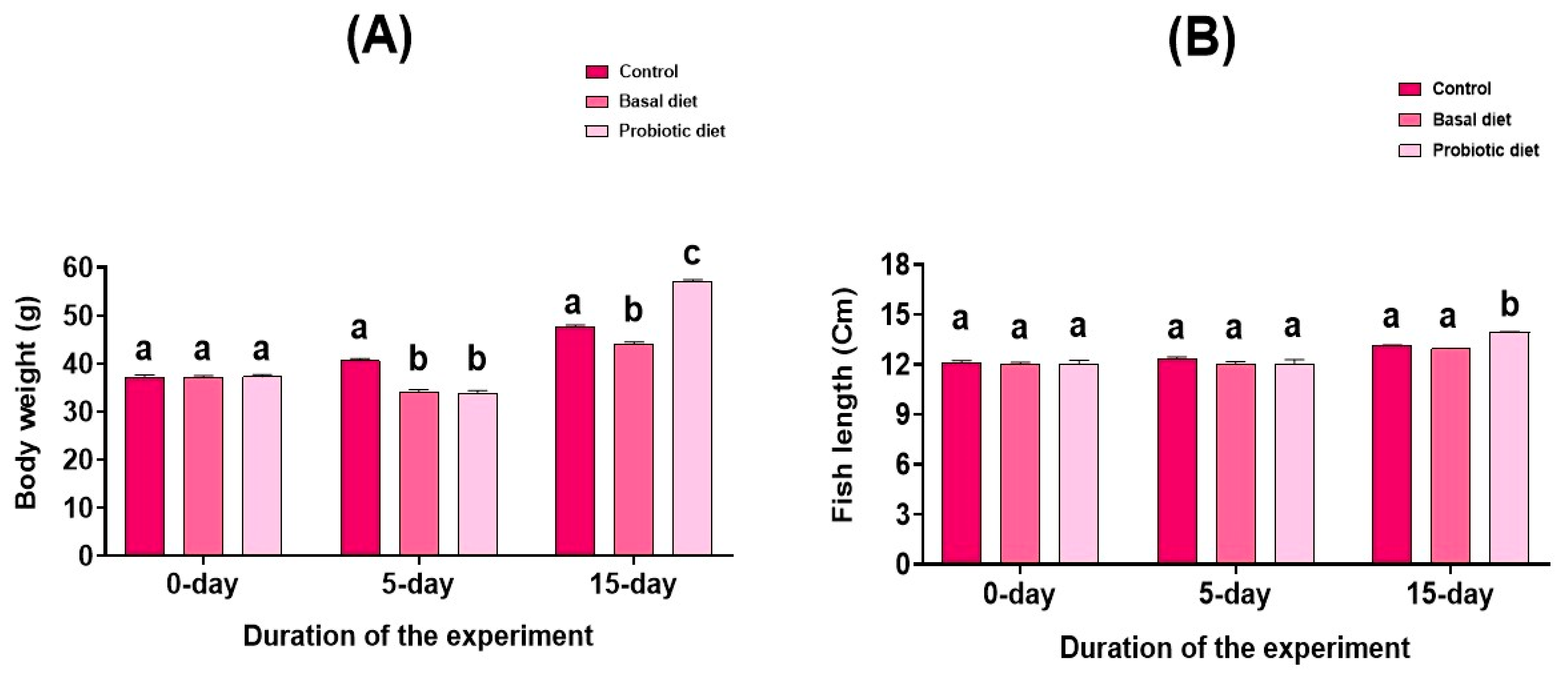
No mortality was recorded during the experiment. At the beginning of the experiment, as shown in Figure 2A,B, all groups exhibited comparable body weights and length, with no statistically significant differences observed. Following a 5-day fasting period, both fasted groups showed a marked and statistically significant reduction in body weight compared to the continuously fed control group (p < 0.05), while fish length exhibited statistically insignificant changes. However, recovery patterns differed during the 15-day refeeding phase; the basal diet group failed to achieve full recovery in body weight, while maintaining a comparable value of body length. Conversely, fish refed with a probiotic-enriched diet exhibited a notable increase in body weight and length, surpassing both the control and basal diet groups (p < 0.05).
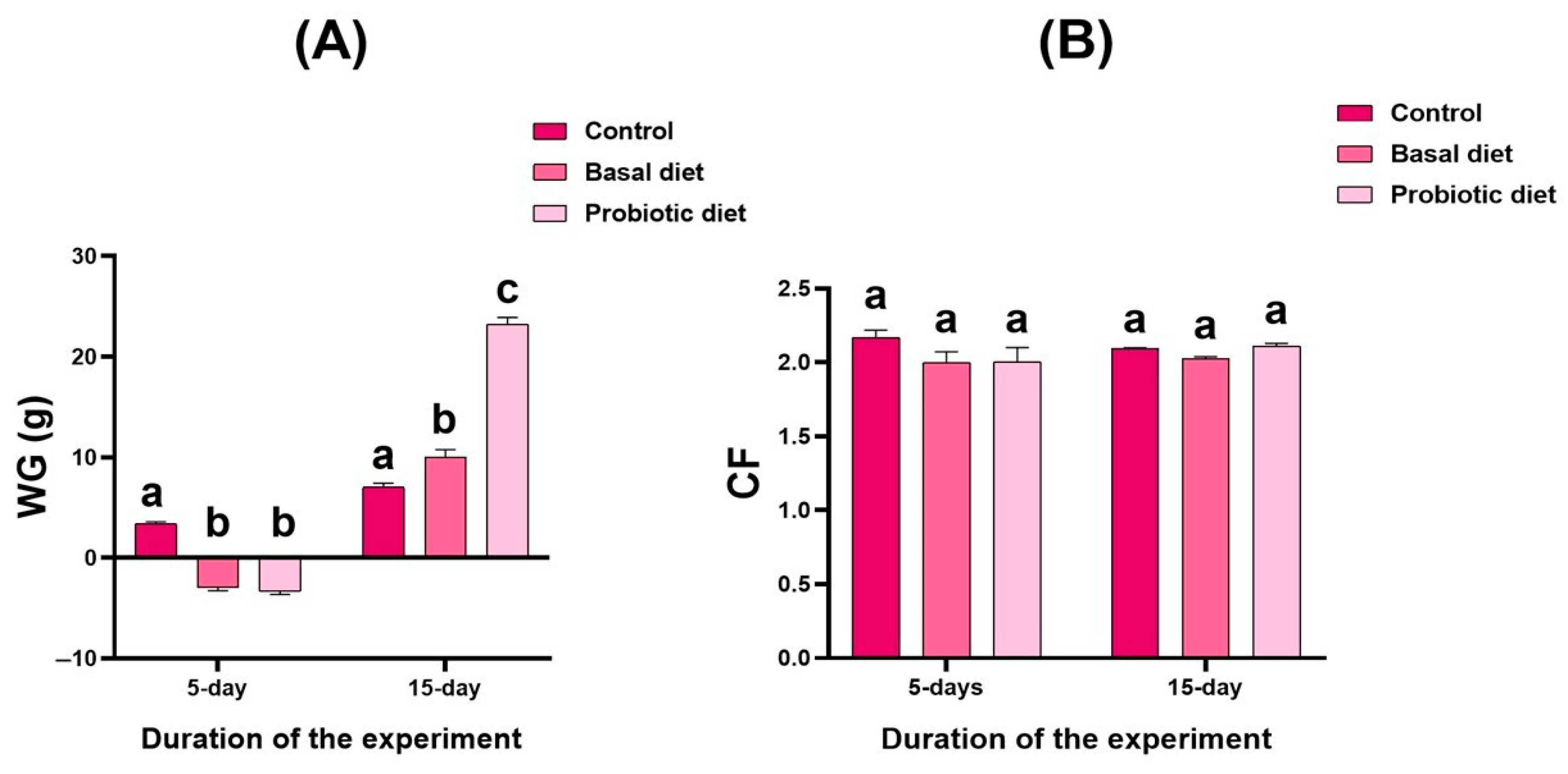
The pattern of WG closely mirrored the changes observed in body weight across the experimental groups. Following the 5-day fasting, fasted groups exhibited significantly reduced WG (Figure 3A) compared to the control group (p < 0.05). During the 15-day refeeding phase, fish refed with the basal diet showed a notable increase in WG, surpassing the control group (p < 0.05), although still remaining below the probiotic-supplemented group. However, the probiotic-enriched group achieved the highest WG among all groups (p < 0.05). Analysis of the CF revealed insignificant change between groups following a 5-day fasting and 15 days of refeeding with either a basal diet or a probiotic-supplemented diet (Figure 3B).
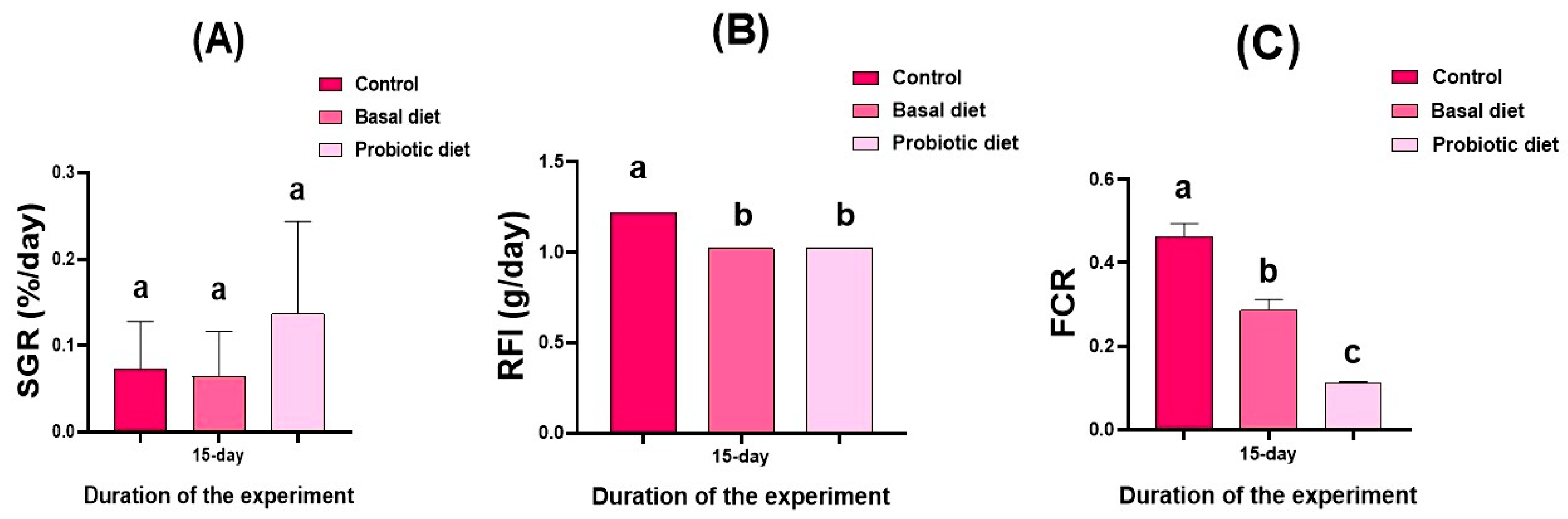
The SGR, calculated over the entire experimental period, did not differ significantly among treatments. Although fish in the probiotic-supplemented group showed slightly higher SGR values compared with the control and basal diet groups, these differences were not statistically significant (p > 0.05) (Figure 4A).
Relative feed intake was significantly lower (p < 0.05) in both groups compared to the control group (Figure 4B). Regarding feed utilization, both groups exhibited significantly lower (p < 0.05) FCR compared to the control group (Figure 4C). In addition, the probiotic-fed group exhibited a further significant reduction in FCR relative to the basal diet group.

3.2. Molecular Responses

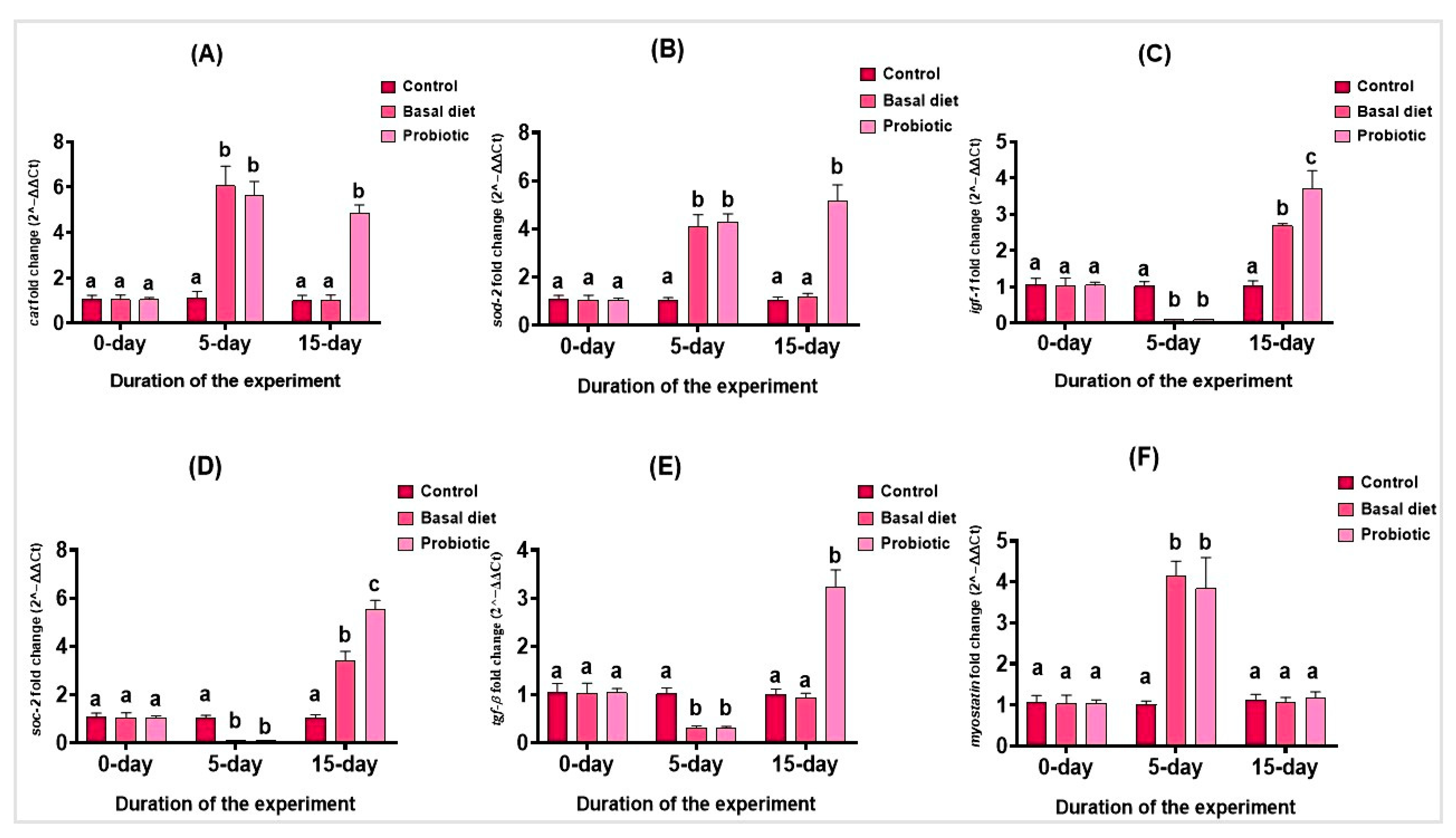
Following five days of fasting, the antioxidant genes cat and sod-2 were significantly upregulated in both the basal diet and probiotic-supplemented groups compared to the control (p < 0.05). Refeeding with the basal diet restored their expression to levels comparable to the control fish. In contrast, refeeding with the probiotic-supplemented diet elicited a pronounced upregulation of both genes, exceeding the expression levels observed in the control and basal-diet-refed groups (Figure 5A,B).
Inversely, the growth-related genes igf-1 and soc-2 were significantly downregulated after the 5-day fasting period compared to the control group. Refeeding resulted in a marked upregulation in both dietary groups relative to the control, with the probiotic-supplemented diet eliciting the highest expression levels (Figure 5C,D).
Similarly, the anti-inflammatory gene tgf-β was significantly downregulated following fasting. Refeeding with the basal diet restored its expression to baseline levels comparable to the control group, whereas probiotic supplementation induced a pronounced upregulation, surpassing both the control and basal-diet-refed groups (Figure 5E).
The myostatin gene was markedly upregulated after five days of fasting in both dietary groups relative to the control (p < 0.05). Subsequent refeeding, whether with the basal or probiotic-supplemented diet, normalized its expression, restoring levels comparable to those observed in the control group (Figure 5F).

3.3. Histological Assessment

3.3.1. Histomorphology of Skeletal Muscle

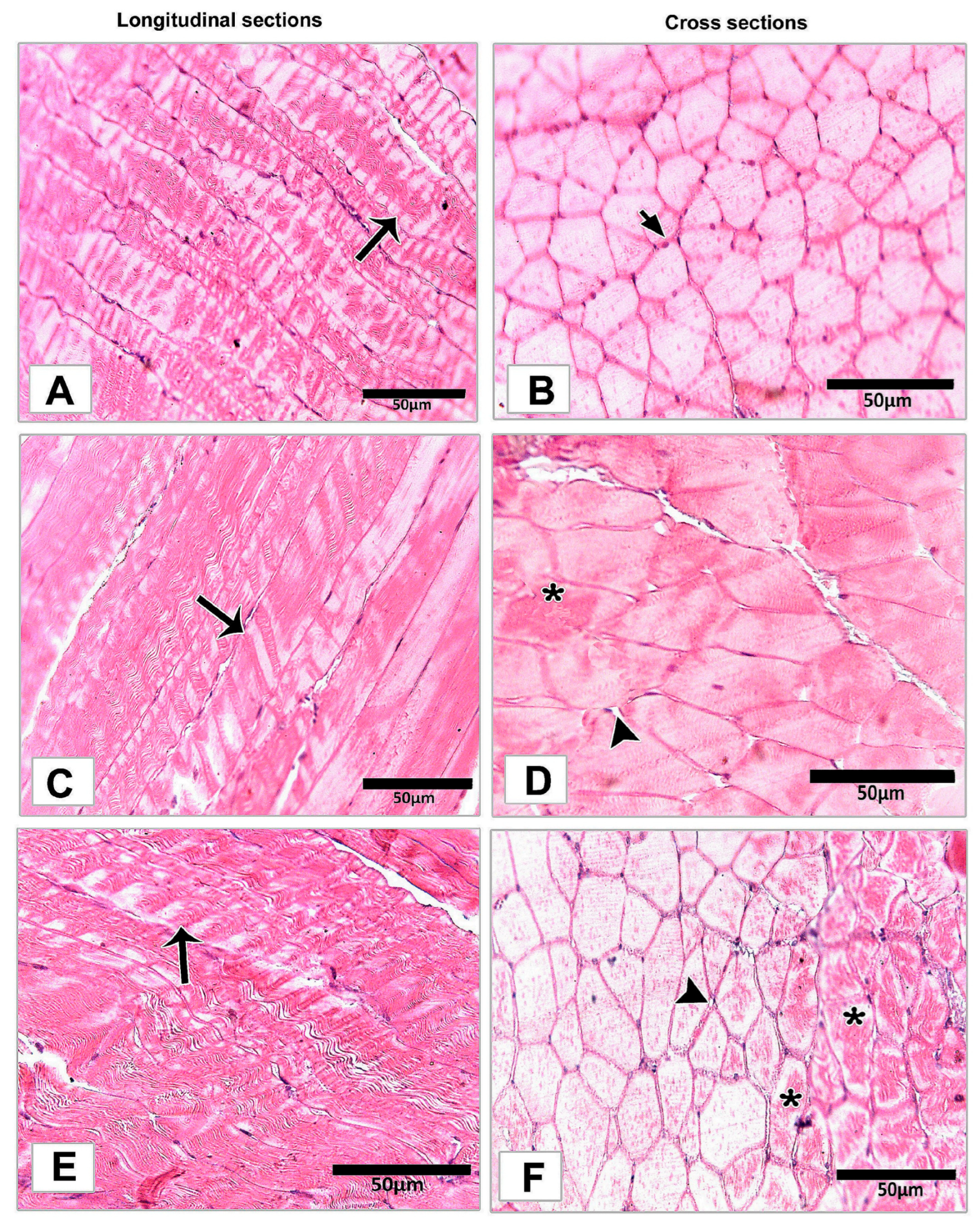
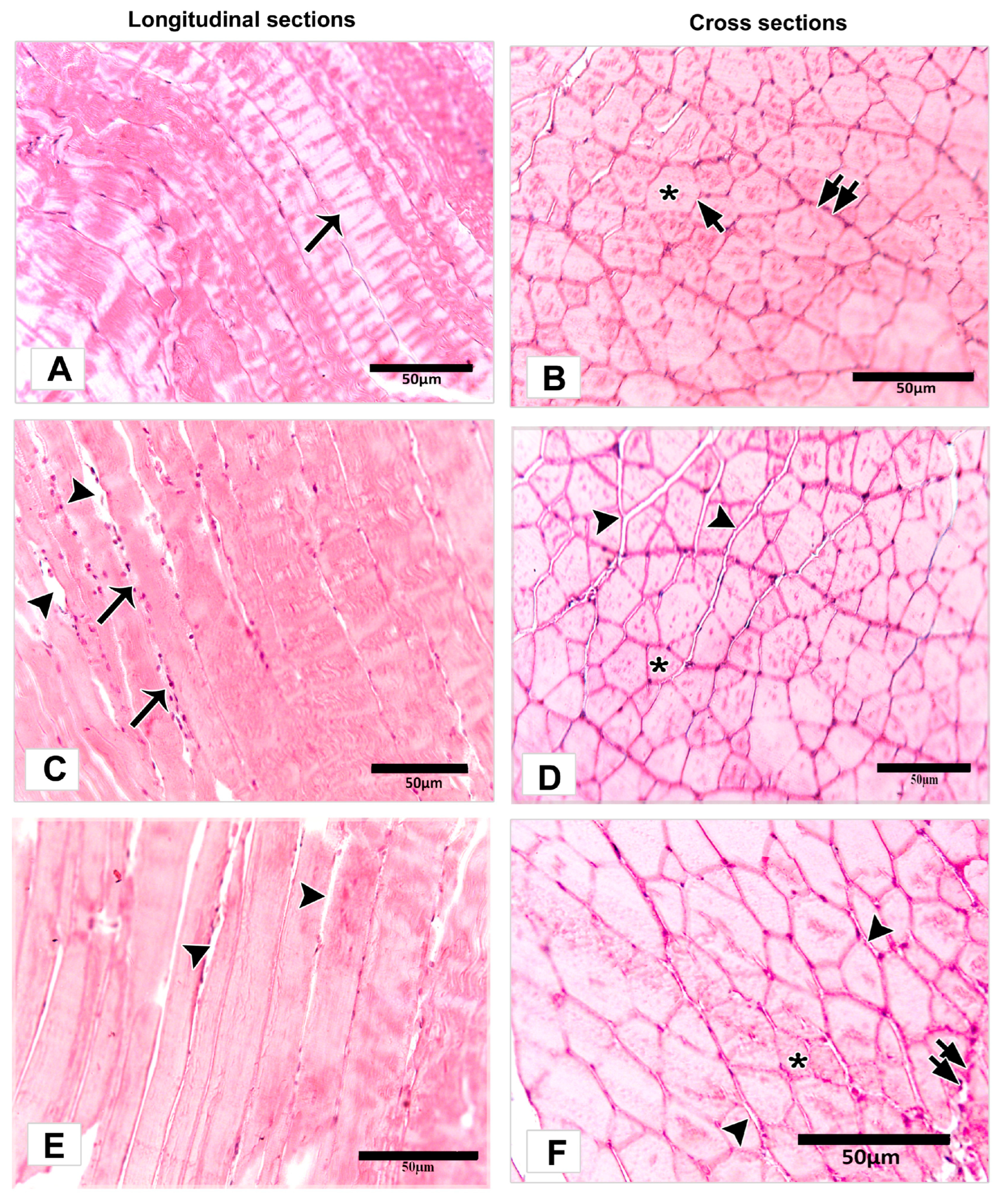
The skeletal muscle of Nile tilapia in the control group at day 5 showed a normal structural organization. Muscle fibers were aligned in parallel and exhibited distinct transverse striations in longitudinal sections (Figure 6A). In cross-sections, the rhabdomyocytes appeared polyhedral, with nuclei positioned at the periphery and individual fibers separated by normal endomysial tissue (Figure 6B).
In contrast, during the fasting period, both basal and probiotic groups showed noticeable structural alterations in both longitudinal and cross-sectional views (Figure 6C–F). These changes included reduced muscle fiber size, pyknotic nuclei, infiltration of inflammatory cells around blood vessels, and loss of striations in the rhabdomyocytes (Figure 6C,E). Furthermore, there was evident myofibrillar degradation, widening of the endomysial (interstitial) spaces between muscle fibers, and a pronounced increase in perimysial thickness (Figure 6D,F).
The skeletal muscle of tilapia in the control group at day 20 exhibited normal multinucleated fibers with well-defined striations, indicative of an orderly myofibrillar arrangement (Figure 7A,B). In the basal-diet-refed group, muscle morphology showed clear signs of recovery toward the control condition, including progressive restoration of myofibrillar content, improved striation clarity, and reduced interstitial spaces (Figure 7C,D).
The probiotics-refed group displayed the most substantial improvement, characterized by enhanced muscle fiber integrity and sharply defined striation patterns (Figure 7E). Rhabdomyocytes in this group showed a pronounced increase in myofibril density, appearing speckled with densely packed myofilament dots (actin and myosin), with this effect more prominent in red muscle fibers than in white (Figure 7F). Furthermore, this group exhibited larger muscle fiber diameters and a noticeable reduction in endomyosial (interstitial) spacing (Figure 7F).

3.3.2. Histomorphometric Analysis

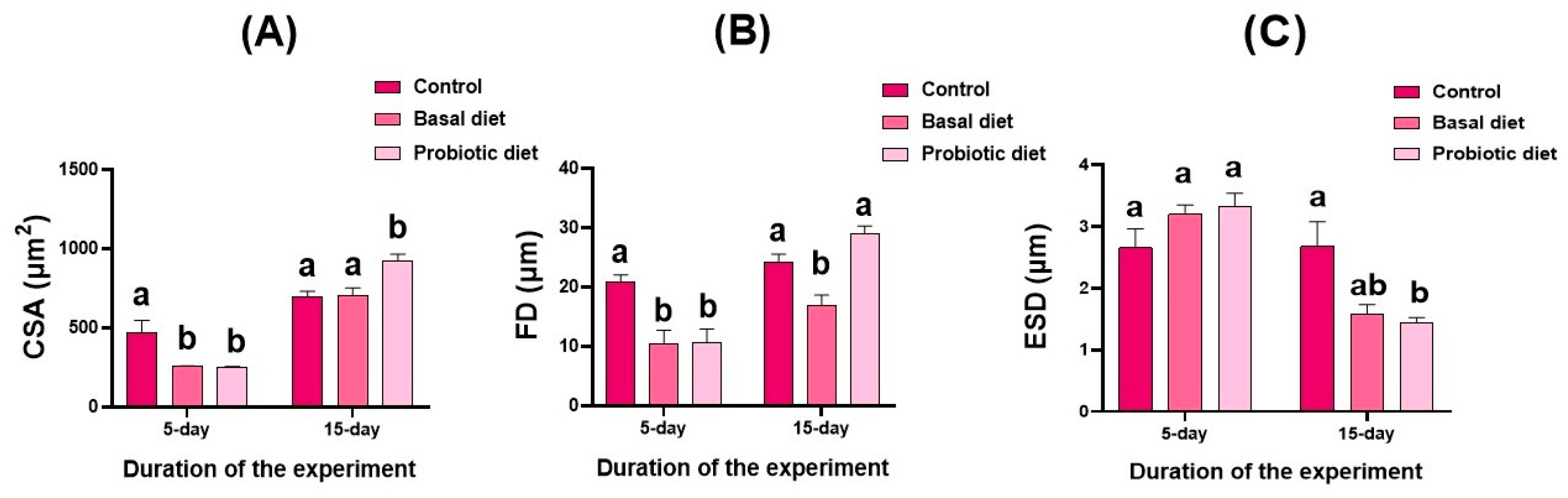
Histomorphometric evaluation of Nile tilapia skeletal muscle cross-sections revealed clear differences in muscle fiber structure among the experimental groups (Figure 8). At day 5, the control group exhibited a cross-sectional area (CSA) of 465.02 μm2, fiber diameter (FD) of 20.80 μm, and endomysial spacing (ESD) of 2.65 μm, while both fasted groups showed pronounced atrophic changes, with CSA and FD significantly decreasing (p < 0.05). Although ESD increased, these changes were not statistically significant. The reduction in CSA nonetheless reflects measurable muscle fiber shrinkage and early extracellular matrix expansion.
By day 20 (Figure 8), the control group showed a CSA of 695.26 μm2, FD of 24.24 μm, and ESD of 2.67 μm. The basal-diet-refed group exhibited a comparable CSA with no significant difference from the control but demonstrated a significantly smaller FD and a reduced ESD, though the latter was not statistically significant. In contrast, the probiotics-refed group illustrated the greatest structural recovery. This group exhibited a significantly larger CSA (p < 0.05) and a significantly more compact ESD (p < 0.05), indicating superior muscle fiber regeneration and reduced extracellular matrix expansion.

4. Discussion

This study aimed to evaluate the impact of probiotic supplementation on growth performance and recovery in Nile tilapia under standardized feeding conditions. While compensatory growth is often characterized by hyperphagia and accelerated recovery under ad libitum feeding, our design applied a fixed ration to control feed input across groups. This approach allowed us to isolate the dietary effect of probiotics but limited the expression of natural compensatory mechanisms. The results, therefore, reflect recovery efficiency under standardized feeding conditions rather than full compensatory growth.
The significant reduction in body weight and WG across fasted groups reflects typical physiological responses to nutrient deprivation, where energy reserves are mobilized to maintain basal metabolism [45] and to maintain necessary metabolic processes [46,47]. This catabolic state leads to reductions in somatic growth and body mass. Previous studies have demonstrated that growth performance in fish is strongly dependent on nutritional status and is primarily driven by skeletal muscle development. In Atlantic cod, fasting significantly reduced CF, muscle metabolic capacity, and endurance performance, with white muscle being particularly affected by nutrient deprivation. Fasting altered muscle energy metabolism and reduced growth-related physiological performance, highlighting muscle tissue as a key target of fasting stress [48]. Similarly, studies in cyprinid fish have shown that growth reflects a coordinated development of muscle, bone, and adipose tissues, with muscle representing the main site of protein retention. Nutritional conditions markedly influence muscle structure, morphometric traits, and tissue organization, thereby shaping overall growth performance [49].
In this study, after refeeding, divergent recovery patterns emerged between the two fasted groups, indicating that the duration was insufficient for complete recovery in the case of the basal-diet-fed group.
Fish refed with the basal diet exhibited incomplete recovery, as evidenced by their persistently lower body weights. Importantly, all refed groups received a standardized ration (3% body weight/day), ensuring equal feed provision at the group level. While this confirms that feed was experimentally restricted, individual intake may have varied due to behavioral interactions during feeding.
The lower body weights observed in the basal diet group likely reflects incomplete physiological recovery and reduced efficiency of nutrient utilization during the refeeding period, rather than insufficient feed availability. This suggests that the duration of refeeding, while sufficient to initiate recovery, was inadequate for full restoration of body mass under standard dietary conditions. Similar findings are reported by Mishra, et al. [50], who observed that short-term refeeding after fasting did not fully restore growth parameters in Nile tilapia, highlighting the importance of both refeeding duration and nutritional quality. Also, incomplete compensatory growth has been documented in European sea bass, Dicentrarchus labrax, during 5-day fasting followed by 20 days of refeeding for 50 days [51].
In contrast, the probiotic-supplemented group showed superior performance across all growth metrics. These fish exhibited a marked rebound in body weight, length and weight gain, surpassing both the basal diet and continuously fed groups, while maintaining a CF comparable to the continuously fed group under the same feeding regime, suggesting an improvement in growth performance during the refeeding period. These results indicate that dietary probiotics may support recovery after short-term fasting, potentially through mechanisms such as enhanced nutrient absorption, modulation of gut microbiota, and improved digestive enzyme activity [29,52,53].
The CF maintained to control levels in both refeeding groups, this indicates that fish were able to restore their body condition after fasting. This suggests that the refeeding period was sufficient to recover the weight–length balance, even though differences in growth performance remained between treatments. Similar CF values imply successful physiological recovery, while the superior growth metrics observed in the probiotic group may reflect enhanced nutrient utilization rather than differences in body condition alone.
The SGR calculated for the entire experimental period showed no significant differences among groups. However, the probiotic-fed group exhibited a numerically higher SGR compared with the other groups. This trend suggests a possible supportive role of probiotics in improving growth performance during recovery, although the effect was not statistically significant under the present experimental conditions. The similarity in overall SGR values indicates that growth suppression during fasting was temporary and largely compensated during refeeding, resulting in comparable overall growth trajectories among groups.
Additionally, RFI was significantly reduced in both groups, yet growth performance remained high, especially in the probiotic group. This reduction suggests that previously fasted fish consumed less feed relative to their body weight during the refeeding phase, enhanced nutrient assimilation and metabolic efficiency, a hallmark of effective compensatory growth. These findings are supported by Elbialy, Gamal, Al-Hawary, Shukry, Salah, Aboshosha and Assar [45], who observed improved feed efficiency and gene expression linked to growth in refed tilapia.
Interestingly, both groups displayed a significantly lower FCR relative to the control group, suggesting enhanced feed efficiency during the refeeding period. This improvement may reflect a compensatory physiological response, where previously fasted fish utilized nutrients more effectively to support rapid tissue regeneration and growth. Such findings are consistent with the concept of compensatory growth, where nutrient-deprived animals exhibit improved feed efficiency upon refeeding as part of their recovery strategy [7]. Moreover, it is known that probiotics can counteract stress-related growth suppression by improving digestion and nutrient uptake, resulting in improved FCR [54].
Aquatic animals possess a physiological defense system against oxidative stress (OS), comprising both nonenzymatic antioxidants and enzymatic components such as CAT and SOD [55,56]. The significant upregulation of cat and sod-2 following 5 days of fasting indicates an enhanced OS in Nile tilapia under nutrient deprivation and reflects a compensatory mechanism to counteract reactive oxygen species generated during fasting stress. This is consistent with previous findings that fasting induces oxidative stress, thereby stimulating antioxidant defense mechanisms in brown trout (Salmo trutta) and Siberian sturgeon (Acipenser baerii) [28,57]. Similar studies have reported increased activities of antioxidant enzymes during short-term fasting in hybrid grouper [16] and grass carp [58], where starvation altered non-specific immune parameters and antioxidant status.
Refeeding with the basal diet restored gene expression to control levels, suggesting that the antioxidant system rapidly returns to homeostasis once nutrient supply is resumed and reflecting reduced oxidative stress burden. Interestingly, refeeding with the probiotic induced a further upregulation of cat and sod-2, surpassing both the control and basal-diet-refed groups, suggesting that probiotics may potentiate antioxidant defenses beyond baseline recovery, thereby providing additional protection against oxidative damage during metabolic transitions [53]. Previous studies in Nile tilapia showed that dietary probiotic supplementation can enhance the antioxidant defense system even in the absence of an external stressor. Probiotics such as B. subtilis increased the activities of key antioxidant enzymes, including glutathione peroxidase, CAT, and SOD, while reducing oxidative damage markers like malondialdehyde in fish fed probiotic-supplemented diets compared to controls, indicating improved oxidative status [59]. Similarly, mixed Bacillus strains enhanced antioxidant enzyme activities, including SOD and CAT, in Nile tilapia prior to any stress challenge, suggesting a direct modulatory effect of probiotics on innate antioxidant defenses [60].
In this study, during fasting, igf-1 expression declines markedly, reflecting the suppression of the IGF/GH axis as an adaptive mechanism to conserve energy and reduce anabolic processes [61]. Similarly fasting for 1, 2, or 4 weeks in Nile tilapia reduced liver IGF1 expression [45]. Also, in gilthead sea bream Lavajoo, et al. [62] demonstrated that feed restriction downregulated key growth-promoting components, including IGF-1. Similarly, SOC-2 is a key metabolic switch that functions as a negative regulator of cytokine and GH signaling, and its reduced expression under fasting conditions due to suppressed GH/IGF signaling may represent a coordinated adjustment of the endocrine system to limit the anabolic activity of growth-related signaling during energy scarcity while preventing excessive inflammatory or cytokine-driven responses [63]. Consistent with this a significant decrease in socs-2 expression in both vaccinated and unvaccinated Nile tilapia after 7 days of fasting was reported [40].
Upon refeeding, the marked upregulation of igf-1 and socs-2 highlights the strong nutritional regulation of the IGF/GH axis. Nutrient availability rapidly stimulates igf-1 transcription, thereby promoting protein synthesis, cell proliferation, and compensatory growth [64]. The enhanced expression in the probiotic-supplemented group suggests that probiotics may potentiate IGF signaling, possibly by improving nutrient absorption and stimulating endocrine pathways. Recent work in rohu (Labeo rohita) reported that multi-strain probiotics significantly increased the expression of GH and IGF genes, leading to improved growth performance [65]. The upregulation of soc-2 expression observed in probiotic-supplemented fish may be attributed to probiotic-mediated modulation of the Janus kinase-signal transducers and activation of transcription (JAK-STAT) signaling pathway. Probiotics are known to enhance STAT1 and STAT3 activation, which promotes SOCS gene transcription, while concurrently suppressing excessive JAK2 phosphorylation, a negative regulator of socs-2 expression [66].
Transforming growth factor-β is a multifunctional cytokine involved in immune regulation, tissue repair, and growth [67]. The significant downregulation of tgf-β following fasting reflects the sensitivity of anti-inflammatory pathways to nutritional status. Its suppression under starvation conditions likely represents an adaptive response to conserve energy by downregulating immune and anabolic processes [68]. Refeeding with the basal diet restored tgf-β expression to baseline levels, consistent with the recovery of immune and metabolic homeostasis once nutrients became available. This normalization suggests that the tgf-β pathway is tightly regulated by nutritional inputs and can rapidly rebound after energy replenishment. Interestingly, probiotic supplementation induced a pronounced upregulation of tgf-β, reflecting enhanced immune regulation and a more robust anti-inflammatory response, which could contribute to improved resilience under stress conditions. Probiotics are known to enhance anti-inflammatory cytokine expression, improve gut health, and strengthen host immunity. Study in Cyprinus carpio has shown that probiotic-supplemented diets upregulated anti-inflammatory markers and improved disease resistance [69].
The marked upregulation of myostatin gene following 5 days of fasting is consistent with its established role as a negative regulator of muscle growth, and the function is to inhibit myogenesis by suppressing satellite cell proliferation and protein synthesis [70]. Its increased expression under nutrient deprivation reflects a catabolic response, limiting muscle growth and conserving energy during periods of restricted feed availability. Similar fasting-induced upregulation of myostatin has been reported in Atlantic salmon, where nutrient scarcity triggered enhanced transcription of growth-inhibitory genes [71]. Moreover, Nebo, Portella, Carani, de Almeida, Padovani, Carvalho and Dal-Pai-Silva [6] found that tilapia fasted for 5 days showed enhanced myostatin expression.
Refeeding, whether with the basal or probiotic-supplemented diet, normalized myostatin expression to control levels, indicating a rapid recovery of growth-promoting pathways once nutrient supply was restored. This normalization is consistent with the compensatory growth phenomenon observed in fish, where suppressed growth during fasting is followed by accelerated growth upon refeeding [7]. Interestingly, unlike antioxidant and immune-related genes, probiotic supplementation did not further suppress myostatin expression beyond basal diet refeeding. This suggests that, while probiotics may enhance antioxidant and immune responses [29], their influence on growth-inhibitory pathways, such as myostatin, is limited. Nevertheless, the normalization of myostatin expression under probiotic feeding supports the role of probiotics in maintaining endocrine balance and facilitating recovery growth [30].
The present study demonstrates that short-term fasting induces skeletal muscle atrophy in Nile tilapia, reflected by marked reductions in FD and CSA, along with disruption of normal myofibrillar organization. These structural changes corresponded closely with the upregulation of myostatin and downregulation of igf-1 observed during fasting, confirming that catabolic signaling inhibited muscle growth and promoted fiber degradation. These observations are consistent with previous findings in Nile tilapia, rice flower carp, and blunt snout bream, which showed that muscle proteins are mobilized during periods of nutritional stress [45,72,73,74]. As reported by Elbialy, Gamal, Al-Hawary, Shukry, Salah, Aboshosha and Assar [45], fasting-induced muscle atrophy is commonly accompanied by histopathological alterations, including pyknotic nuclei and loss of striations, indicative of impaired sarcomeric structure.
In the current study, refeeding effectively reversed these fasting-related changes, leading to substantial recovery of muscle morphology. The basal-diet-refed group exhibited only partial muscle recovery. In contrast, a key finding is the markedly enhanced muscle regeneration observed in the probiotic-supplemented group. Relative to the controls, fish receiving probiotics showed increased muscle fiber CSA and FD, clearly surpassing the recovery achieved with the basal diet. This enhanced morphological recovery paralleled the highest igf-1 expression and normalization of myostatin in the probiotic group, demonstrating that molecular regulation via these key growth genes underlies the compensatory growth and muscle regeneration observed. These results provide an integrative link between gene expression responses and histomorphometric outcomes, highlighting the synergistic effect of probiotics in promoting structural and functional muscle recovery after fasting. These results support accumulating evidence that dietary probiotics enhance fish health and growth performance by promoting white muscle fiber hypertrophy [75,76]. The latter author further emphasized that probiotics improve nutrient utilization and absorption, contributing to superior muscle development. Skeletal muscle tissue is inherently heterogeneous, and individual microscopic fields may not always visually capture the overall quantitative differences. In this study, morphometric analysis was performed on multiple non-overlapping fields per section across all fishes to ensure objectivity and minimize selection bias. Therefore, while representative micrographs illustrate general morphology, they may not always reflect the subtle differences captured by pooled quantitative measurements.

5. Conclusions

Short-term fasting in Nile tilapia reduced body weight, growth performance, condition factor, and induced muscle atrophy alongside altered antioxidant, growth-related, and immune gene expression. Refeeding with a basal diet partially restored growth and muscle morphology, but recovery remained incomplete. In contrast, probiotic supplementation markedly enhanced growth recovery, feed efficiency, and body condition, while promoting superior muscle regeneration with increased fiber diameter and cross-sectional area. At the molecular level, probiotics upregulated antioxidant defenses, growth pathways, and anti-inflammatory responses, as well as normalized myostatin. Overall, probiotics proved an effective nutritional strategy to accelerate recovery and improve resilience in Nile tilapia following periods of nutrient deprivation, offering valuable insights for sustainable aquaculture practices that support fish health and production efficiency.

Author Contributions

Conceptualization: M.A.K., W.F.A.E. and K.A.B.; Data curation: M.A.K., W.F.A.E., M.N., F.A.M. and K.A.B.; Formal analysis: M.A.K., W.F.A.E., F.A.M. and K.A.B.; Funding acquisition: M.A.K.; Investigation: W.F.A.E., M.N., F.A.M. and K.A.B.; Methodology, M.A.K., W.F.A.E., M.N., F.A.M. and K.A.B.; Resources, M.A.K., W.F.A.E., F.A.M. and K.A.B.; Supervision: W.F.A.E. and K.A.B.; Validation: M.A.K., W.F.A.E., M.N., F.A.M. and K.A.B.; Visualization: M.A.K., W.F.A.E., M.N., F.A.M. and K.A.B.; Writing—original draft, M.A.K., W.F.A.E., F.A.M. and K.A.B.; Writing—review and editing: M.A.K., W.F.A.E., M.N., F.A.M. and K.A.B. All authors have read and agreed to the published version of the manuscript.

Funding

This research received no external funding.

Institutional Review Board Statement

All experimental procedures were reviewed and approved by the Research Ethics Committee of the Faculty of Qena University (REC-FSCI-SVU), Qena, Egypt (Approval No. 002/11/25), hold on 11 November 2025 and were conducted in accordance with international guidelines for the ethical treatment of animals in research.

Informed Consent Statement

Not applicable.

Data Availability Statement

The original contributions presented in this study are included in the article. Further inquiries can be directed to the corresponding author.

Conflicts of Interest

The authors declare no conflicts of interest.

References

  1. Khan, M.A.; Zafar, N.; Naz, S. Nutritional Strategies for Improving Growth and Health in Aquaculture. In Aquaculture: Enhancing Food Security and Nutrition; Ahmed, I., Ahmad, I., Eds.; Springer Nature: Cham, Switzerland, 2025; pp. 1–41. [Google Scholar]
  2. Zhang, X.-D.; Zhu, Y.-F.; Cai, L.-S.; Wu, T.-X. Effects of fasting on the meat quality and antioxidant defenses of market-size farmed large yellow croaker (Pseudosciaena crocea). Aquaculture 2008, 280, 136–139. [Google Scholar] [CrossRef]
  3. Al-Zahrani, M.S.; Hassanien, H.A.; Alsaade, F.W.; Wahsheh, H.A.M. Sustainability of Growth Performance, Water Quality, and Productivity of Nile Tilapia-Spinach Affected by Feeding and Fasting Regimes in Nutrient Film Technique-Based Aquaponics. Sustainability 2024, 16, 625. [Google Scholar] [CrossRef]
  4. Lu, D.L.; Ma, Q.; Wang, J.; Li, L.Y.; Han, S.L.; Limbu, S.M.; Li, D.L.; Chen, L.Q.; Zhang, M.L.; Du, Z.Y. Fasting enhances cold resistance in fish through stimulating lipid catabolism and autophagy. J. Physiol. 2019, 597, 1585–1603. [Google Scholar] [CrossRef] [PubMed]
  5. Hvas, M.; Kolarevic, J.; Noble, C.; Oppedal, F.; Stien, L.H. Fasting and its implications for fish welfare in Atlantic salmon aquaculture. Rev. Aquac. 2024, 16, 1308–1332. [Google Scholar] [CrossRef]
  6. Nebo, C.; Portella, M.C.; Carani, F.R.; de Almeida, F.L.; Padovani, C.R.; Carvalho, R.F.; Dal-Pai-Silva, M. Short periods of fasting followed by refeeding change the expression of muscle growth-related genes in juvenile Nile tilapia (Oreochromis niloticus). Comp. Biochem. Physiol. Part B Biochem. Mol. Biol. 2013, 164, 268–274. [Google Scholar] [CrossRef]
  7. Ali, M.; Nicieza, A.; Wootton, R.J. Compensatory growth in fishes: A response to growth depression. Fish Fish. 2003, 3, 147–190. [Google Scholar] [CrossRef]
  8. Won, E.T.; Borski, R.J. Endocrine regulation of compensatory growth in fish. Front. Endocrinol. 2013, 4, 74. [Google Scholar] [CrossRef]
  9. Gaylord, T.G.; Gatlin, D.M. Dietary protein and energy modifications to maximize compensatory growth of channel catfish (Ictalurus punctatus). Aquaculture 2001, 194, 337–348. [Google Scholar] [CrossRef]
  10. Bavčević, L.; Klanjšček, T.; Karamarko, V.; Aničić, I.; Legović, T. Compensatory growth in gilthead sea bream (Sparus aurata) compensates weight, but not length. Aquaculture 2010, 301, 57–63. [Google Scholar] [CrossRef]
  11. Oh, S.-Y.; Park, J. Effect of feed deprivation on compensatory growth in juvenile rock bream Oplegnathus fasciatus. Fish. Sci. 2019, 85, 813–819. [Google Scholar] [CrossRef]
  12. Rescan, P.-Y.; Le Cam, A.; Rallière, C.; Montfort, J. Global gene expression in muscle from fasted/refed trout reveals up-regulation of genes promoting myofibre hypertrophy but not myofibre production. BMC Genom. 2017, 18, 447. [Google Scholar] [CrossRef]
  13. Hornick, J.L.; Van Eenaeme, C.; Gérard, O.; Dufrasne, I.; Istasse, L. Mechanisms of reduced and compensatory growth. Domest. Anim. Endocrinol. 2000, 19, 121–132. [Google Scholar] [CrossRef] [PubMed]
  14. Hagen, Ø.; Fernandes, J.M.; Solberg, C.; Johnston, I.A. Expression of growth-related genes in muscle during fasting and refeeding of juvenile Atlantic halibut, Hippoglossus hippoglossus L. Comp. Biochem. Physiol. Part B Biochem. Mol. Biol. 2009, 152, 47–53. [Google Scholar] [CrossRef] [PubMed]
  15. Reinecke, M.; Björnsson, B.T.; Dickhoff, W.W.; McCormick, S.D.; Navarro, I.; Power, D.M.; Gutiérrez, J. Growth hormone and insulin-like growth factors in fish: Where we are and where to go. Gen. Comp. Endocrinol. 2005, 142, 20–24. [Google Scholar] [CrossRef]
  16. Liu, X.; Zeng, S.; Liu, S.; Wang, G.; Lai, H.; Zhao, X.; Bi, S.; Guo, D.; Chen, X.; Yi, H.; et al. Identifying the Related Genes of Muscle Growth and Exploring the Functions by Compensatory Growth in Mandarin Fish (Siniperca chuatsi). Front. Physiol. 2020, 11, 553563. [Google Scholar] [CrossRef] [PubMed]
  17. Butler, A.A.; Le Roith, D. Control of growth by the somatropic axis: Growth hormone and the insulin-like growth factors have related and independent roles. Annu. Rev. Physiol. 2001, 63, 141–164. [Google Scholar] [CrossRef]
  18. Kandarian, S.C.; Jackman, R.W. Intracellular signaling during skeletal muscle atrophy. Muscle Nerve 2006, 33, 155–165. [Google Scholar] [CrossRef]
  19. Fuentes, E.N.; Valdés, J.A.; Molina, A.; Björnsson, B.T. Regulation of skeletal muscle growth in fish by the growth hormone--insulin-like growth factor system. Gen. Comp. Endocrinol. 2013, 192, 136–148. [Google Scholar] [CrossRef]
  20. Acosta, J.; Carpio, Y.; Borroto, I.; González, O.; Estrada, M.P. Myostatin gene silenced by RNAi show a zebrafish giant phenotype. J. Biotechnol. 2005, 119, 324–331. [Google Scholar] [CrossRef]
  21. de Santis, C.; Gomes, G.B.; Jerry, D.R. Abundance of myostatin gene transcripts and their correlation with muscle hypertrophy during the development of barramundi, Lates calcarifer. Comp. Biochem. Physiol. Part B Biochem. Mol. Biol. 2012, 163, 101–107. [Google Scholar] [CrossRef]
  22. Lv, Q.; Yuan, L.; Deng, J.; Chen, M.; Wang, Y.; Zeng, J.; Li, Z.; Lai, L. Efficient Generation of Myostatin Gene Mutated Rabbit by CRISPR/Cas9. Sci. Rep. 2016, 6, 25029. [Google Scholar] [CrossRef]
  23. Kang, J.-D.; Kim, S.; Zhu, H.-Y.; Jin, L.; Guo, Q.; Li, X.-C.; Zhang, Y.-C.; Xing, X.-X.; Xuan, M.-F.; Zhang, G.-L.; et al. Generation of cloned adult muscular pigs with myostatin gene mutation by genetic engineering. RSC Adv. 2017, 7, 12541–12549. [Google Scholar] [CrossRef]
  24. Pascual, P.; Pedrajas, J.R.; Toribio, F.; López-Barea, J.; Peinado, J. Effect of food deprivation on oxidative stress biomarkers in fish (Sparus aurata). Chem.-Biol. Interact. 2003, 145, 191–199. [Google Scholar] [CrossRef] [PubMed]
  25. Morales, A.E.; Pérez-Jiménez, A.; Hidalgo, M.C.; Abellán, E.; Cardenete, G. Oxidative stress and antioxidant defenses after prolonged starvation in Dentex dentex liver. Comp. Biochem. Physiol. Toxicol. Pharmacol. CBP 2004, 139, 153–161. [Google Scholar] [CrossRef]
  26. Pérez-Jiménez, A.; Guedes, M.J.; Morales, A.E.; Oliva-Teles, A. Metabolic responses to short starvation and refeeding in Dicentrarchus labrax. Effect of dietary composition. Aquaculture 2007, 265, 325–335. [Google Scholar] [CrossRef]
  27. Furné, M.; García-Gallego, M.; Hidalgo, M.C.; Morales, A.E.; Domezain, A.; Domezain, J.; Sanz, A. Oxidative stress parameters during starvation and refeeding periods in Adriatic sturgeon (Acipenser naccarii) and rainbow trout (Oncorhynchus mykiss). Aquac. Nutr. 2009, 15, 587–595. [Google Scholar] [CrossRef]
  28. Bayir, A.; Sirkecioglu, A.N.; Bayir, M.; Haliloglu, H.I.; Kocaman, E.M.; Aras, N.M. Metabolic responses to prolonged starvation, food restriction, and refeeding in the brown trout, Salmo trutta: Oxidative stress and antioxidant defenses. Comp. Biochem. Physiol. Part B Biochem. Mol. Biol. 2011, 159, 191–196. [Google Scholar] [CrossRef]
  29. Fachri, M.; Amoah, K.; Huang, Y.; Cai, J.; Alfatat, A.; Ndandala, C.B.; Shija, V.M.; Jin, X.; Bissih, F.; Chen, H. Probiotics and paraprobiotics in aquaculture: A sustainable strategy for enhancing fish growth, health and disease prevention-a review. Front. Mar. Sci. 2024, 11, 1499228. [Google Scholar] [CrossRef]
  30. Mohammed, E.A.; Ahmed, A.E.; Kovács, B.; Pál, K. The Significance of Probiotics in Aquaculture: A Review of Research Trend and Latest Scientific Findings. Antibiotics 2025, 14, 242. [Google Scholar] [CrossRef] [PubMed]
  31. Elsegeny, S.R.; Radwan, F.S.; Elshamy, Y.M.; Amer, S.M.; Mohamed, R.A.; Shokrak, N.M.; Abdella, B. A comprehensive overview of probiotics in aquaculture: From efficacy evaluation to diverse applications. Ann. Microbiol. 2025, 75, 35. [Google Scholar] [CrossRef]
  32. do Carmo Alves, A.P.; Peconick, A.P.; da Silva Cerozi, B.; Possebon Cyrino, J.E. Role of probiotics on the immunity of Nile tilapia Oreochromis niloticus: A review. Aquac. Int. 2022, 30, 1905–1929. [Google Scholar] [CrossRef]
  33. Adel, M.; Dawood, M.A.O. Probiotics Application: Implications for Sustainable Aquaculture. In Probiotic Bacteria and Postbiotic Metabolites: Role in Animal and Human Health; Mojgani, N., Dadar, M., Eds.; Springer: Singapore, 2021; pp. 191–219. [Google Scholar]
  34. Hoseinifar, S.H.; Sun, Y.-Z.; Wang, A.; Zhou, Z. Probiotics as Means of Diseases Control in Aquaculture, a Review of Current Knowledge and Future Perspectives. Front. Microbiol. 2018, 9, 2429. [Google Scholar] [CrossRef]
  35. El-Son, M.A.M.; Elshopakey, G.E.; Rezk, S.; Eldessouki, E.A.A.; Elbahnaswy, S. Dietary mixed Bacillus strains promoted the growth indices, enzymatic profile, intestinal immunity, and liver and intestinal histomorphology of Nile tilapia, Oreochromis niloticus. Aquacult. Rep. 2022, 27, 101385. [Google Scholar] [CrossRef]
  36. Livak, K.J.; Schmittgen, T.D. Analysis of relative gene expression data using real-time quantitative PCR and the 2(-Delta Delta C(T)) Method. Methods 2001, 25, 402–408. [Google Scholar] [CrossRef]
  37. Varela-Valencia, R.; Gómez-Ortiz, N.; Oskam, G.; de Coss, R.; Rubio Piña, J.; Del Río-García, M.; Albores, A.; Zapata-Pérez, O. The effect of titanium dioxide nanoparticles on antioxidant gene expression in tilapia (Oreochromis niloticus). J. Nanopart. Res. 2014, 16, 2369. [Google Scholar] [CrossRef]
  38. Elashry, M.A.; Mohammady, E.Y.; Soaudy, M.R.; Ali, M.M.; El-Garhy, H.S.; Ragaza, J.A.; Hassaan, M.S. Growth, health, and immune status of Nile tilapia Oreochromis niloticus cultured at different stocking rates and fed algal β-carotene. Aquacult. Rep. 2024, 35, 101987. [Google Scholar] [CrossRef]
  39. Costa, L.S.; Rosa, P.V.; Fortes-Silva, R.; Sánchez-Vázquez, F.J.; López-Olmeda, J.F. Daily rhythms of the expression of genes from the somatotropic axis: The influence on tilapia (Oreochromis niloticus) of feeding and growth hormone administration at different times. Comp. Biochem. Physiol. Toxicol. Pharmacol. CBP 2016, 181–182, 27–34. [Google Scholar] [CrossRef] [PubMed]
  40. Wang, J.; Du, J.J.; Jiang, B.; He, R.Z.; Li, A.X. Effects of short-term fasting on the resistance of Nile tilapia (Oreochromis niloticus) to Streptococcus agalactiae infection. Fish Shellfish Immunol. 2019, 94, 889–895. [Google Scholar] [CrossRef] [PubMed]
  41. Standen, B.T.; Peggs, D.L.; Rawling, M.D.; Foey, A.; Davies, S.J.; Santos, G.A.; Merrifield, D.L. Dietary administration of a commercial mixed-species probiotic improves growth performance and modulates the intestinal immunity of tilapia, Oreochromis niloticus. Fish Shellfish Immunol. 2016, 49, 427–435. [Google Scholar] [CrossRef]
  42. He, A.-Y.; Liu, C.-Z.; Chen, L.-Q.; Ning, L.-J.; Zhang, M.-L.; Li, E.-C.; Du, Z.-Y. Identification, characterization and nutritional regulation of two isoforms of acyl-coenzyme A oxidase 1 gene in Nile tilapia (Oreochromis niloticus). Gene 2014, 545, 30–35. [Google Scholar] [CrossRef]
  43. Suvarna, K.S.; Layton, C.; Bancroft, J.D. Bancroft’s Theory and Practice of Histological Techniques, 8th ed.; Churchill Livingstone Elsevier: London, UK, 2019. [Google Scholar]
  44. Silva, P.; Valente, L.M.; Galante, M.H.; Andrade, C.A.; Monteiro, R.A.; Rocha, E. Dietary protein content influences both growth and size distribution of anterior and posterior muscle fibres in juveniles of Pagellus bogaraveo (Brunnich). J. Muscle Res. Cell Motil. 2009, 30, 29–39. [Google Scholar] [CrossRef][Green Version]
  45. Elbialy, Z.I.; Gamal, S.; Al-Hawary, I.I.; Shukry, M.; Salah, A.S.; Aboshosha, A.A.; Assar, D.H. Exploring the impacts of different fasting and refeeding regimes on Nile tilapia (Oreochromis niloticus L.): Growth performance, histopathological study, and expression levels of some muscle growth-related genes. Fish Physiol. Biochem. 2022, 48, 973–989. [Google Scholar] [CrossRef]
  46. Pérez-Jiménez, A.; Cardenete, G.; Hidalgo, M.C.; García-Alcázar, A.; Abellán, E.; Morales, A.E. Metabolic adjustments of Dentex dentex to prolonged starvation and refeeding. Fish Physiol. Biochem. 2012, 38, 1145–1157. [Google Scholar] [CrossRef]
  47. Nebo, C.; Overturf, K.; Brezas, A.; Dal-Pai-Silva, M.; Portella, M.C. Alteration in expression of atrogenes and IGF-1 induced by fasting in Nile tilapia Oreochromis niloticus juveniles. Int. Aquat. Res. 2017, 9, 361–372. [Google Scholar] [CrossRef]
  48. Martínez, M.; Guderley, H.; Dutil, J.D.; Winger, P.D.; He, P.; Walsh, S.J. Condition, prolonged swimming performance and muscle metabolic capacities of cod Gadus morhua. J. Exp. Biol. 2003, 206, 503–511. [Google Scholar] [CrossRef]
  49. Fauconneau, B.; Alami-Durante, H.; Laroche, M.; Marcel, J.; Vallot, D. Growth and meat quality relations in carp. Aquaculture 1995, 129, 265–297. [Google Scholar] [CrossRef]
  50. Mishra, R.K.; Gamango, B.; Jamwal, A.; Ram, R.K.; Sharma, A.; Kumar, P. Effect of fasting and re-feeding cycles on growth, glucose level, glycogen level, and digestive enzyme activity of Nile tilapia juveniles (Oreochromis niloticus) for cost-effective aquaculture. Aquac. Int. 2024, 33, 61. [Google Scholar] [CrossRef]
  51. Adaklı, A.; Taşbozan, O. The Effects of Different Cycles of Starvation and Refeeding on Growth and Body Composition on European Sea Bass (Dicentrarchus labrax). Turk. J. Fish. Aquat. Sci. 2015, 15, 425–433. [Google Scholar] [CrossRef] [PubMed]
  52. Ahmed, R.A.; EL-Katan, M.S.; Abdel Kareem, N.A.A.; Mahmoud, N.M.S. Effect of Probiotics on Growth Performance, Feed Utilization, and Water Quality Parameters of the Nile Tilapia (Oreochromis niloticus) Fingerlings. Egypt. J. Aquat. Biol. Fish. 2024, 28, 1781–1791. [Google Scholar] [CrossRef]
  53. Ng’onga, L.; Amoah, K.; Chen, H.; Huang, Y.; Wang, B.; Shija, V.M.; Mpwaga, A.Y.; Fachri, M.; Cai, J.; Adjei-Boateng, D. The metabolism and antioxidant properties of probiotics and prebiotics in fish: A review. Front. Mar. Sci. 2025, 12, 1622474. [Google Scholar] [CrossRef]
  54. Swain, H.S.; Baisakhi, B.; Ramteke, M.H.; Kumar, V.; Upadhyay, A. Application of Probiotics in Aquaculture. In Biotechnological Tools in Fisheries and Aquatic Health Management; Behera, B.K., Ed.; Springer Nature: Singapore, 2023; pp. 217–230. [Google Scholar]
  55. Biller, J.D.; Takahashi, L.S. Oxidative stress and fish immune system: Phagocytosis and leukocyte respiratory burst activity. An. Da Acad. Bras. De Cienc. 2018, 90, 3403–3414. [Google Scholar] [CrossRef]
  56. Wang, G.; Huang, S.; Cai, S.; Yu, H.; Wang, Y.; Zeng, X.; Qiao, S. Lactobacillus reuteri Ameliorates Intestinal Inflammation and Modulates Gut Microbiota and Metabolic Disorders in Dextran Sulfate Sodium-Induced Colitis in Mice. Nutrients 2020, 12, 2298. [Google Scholar] [CrossRef]
  57. Babaei, S.; Abedian Kenari, A.; Hedayati, M.; Yazdani Sadati, M.A.; Metón, I. Effect of diet composition on growth performance, hepatic metabolism and antioxidant activities in Siberian sturgeon (Acipenser baerii, Brandt, 1869) submitted to starvation and refeeding. Fish Physiol. Biochem. 2016, 42, 1509–1520. [Google Scholar] [CrossRef]
  58. Qin, L.; Wang, X.; Zhang, S.; Feng, S.; Yin, L.; Zhou, H. Lipopolysaccharide-induced autophagy participates in the control of pro-inflammatory cytokine release in grass carp head kidney leukocytes. Fish Shellfish Immunol. 2016, 59, 389–397. [Google Scholar] [CrossRef]
  59. Yu, H.; Nazir, S.; Ijaz, F.; Zahid, M.U.; Mushtaq, M.; Khan, M.; Rahman, A.; Rahman, M.A. Dietary Supplementation of Bacillus subtilis as Probiotic Influenced the Growth Performance, Hematological Parameters, Immune Function, Antioxidant Status, and Digestive Enzyme Activity of Nile Tilapia Fingerlings (Oreochromis niloticus). Animals 2025, 15, 1256. [Google Scholar] [CrossRef] [PubMed]
  60. Elbahnaswy, S.; Elshopakey, G.E.; Abdelwarith, A.A.; Younis, E.M.; Davies, S.J.; El-Son, M.A.M. Immune protective, stress indicators, antioxidant, histopathological status, and heat shock protein gene expression impacts of dietary Bacillus spp. against heat shock in Nile tilapia, Oreochromis niloticus. BMC Vet. Res. 2024, 20, 469. [Google Scholar] [CrossRef] [PubMed]
  61. Chandhini, S.; Trumboo, B.; Jose, S.; Varghese, T.; Rajesh, M.; Kumar, V.J.R. Insulin-like growth factor signalling and its significance as a biomarker in fish and shellfish research. Fish Physiol. Biochem. 2021, 47, 1011–1031. [Google Scholar] [CrossRef] [PubMed]
  62. Lavajoo, F.; Perelló-Amorós, M.; Vélez, E.J.; Sánchez-Moya, A.; Balbuena-Pecino, S.; Riera-Heredia, N.; Fernández-Borràs, J.; Blasco, J.; Navarro, I.; Capilla, E.; et al. Regulatory mechanisms involved in muscle and bone remodeling during refeeding in gilthead sea bream. Sci. Rep. 2020, 10, 184. [Google Scholar] [CrossRef]
  63. Ntantali, O.; Malandrakis, E.E.; Abbink, W.; Bastiaansen, J.; Chatzoglou, E.; Karapanagiotidis, I.T.; Golomazou, E.; Panagiotaki, P. Effects of Short-Term Intermittent Fasting on Growth Performance, Fatty Acids Profile, Glycolysis and Cholesterol Synthesis Gene Expression in European Seabass Dicentrarchus labrax. Fishes 2023, 8, 582. [Google Scholar] [CrossRef]
  64. Bertucci, J.I.; Blanco, A.M.; Sundarrajan, L.; Rajeswari, J.J.; Velasco, C.; Unniappan, S. Nutrient Regulation of Endocrine Factors Influencing Feeding and Growth in Fish. Front. Endocrinol. 2019, 10, 83. [Google Scholar] [CrossRef]
  65. Ferdous, Z.; Fariha, F.; Jahan, N.; Shahriar, S.I.; Hossain, M.K.; Uddin, M.J.; Shahjahan, M. Influence of Multistrain Probiotics on Growth, Hematology, Gut and Liver Morphometry, and GH and IGFs Genes Expression in Rohu (Labeo Rohita) Fry. Aquac. Res. 2025, 2025, 5892568. [Google Scholar] [CrossRef]
  66. Lee, J.S.; Paek, N.S.; Kwon, O.S.; Hahm, K.B. Anti-inflammatory actions of probiotics through activating suppressor of cytokine signaling (SOCS) expression and signaling in Helicobacter pylori infection: A novel mechanism. J. Gastroenterol. Hepatol. 2010, 25, 194–202. [Google Scholar] [CrossRef] [PubMed]
  67. Zou, J.; Secombes, C.J. The Function of Fish Cytokines. Biology 2016, 5, 23. [Google Scholar] [CrossRef]
  68. Funkenstein, B.; Olekh, E.; Jakowlew, S.B. Identification of a novel transforming growth factor-β (TGF-β6) gene in fish: Regulation in skeletal muscle by nutritional state. BMC Mol. Biol. 2010, 11, 37. [Google Scholar] [CrossRef]
  69. Feng, J.; Chang, X.; Zhang, Y.; Yan, X.; Zhang, J.; Nie, G. Effects of Lactococcus lactis from Cyprinus carpio L. as probiotics on growth performance, innate immune response and disease resistance against Aeromonas hydrophila. Fish Shellfish Immunol. 2019, 93, 73–81. [Google Scholar] [CrossRef]
  70. McPherron, A.C.; Lee, S.-J. Double muscling in cattle due to mutations in the myostatin gene. Proc. Natl. Acad. Sci. USA 1997, 94, 12457–12461. [Google Scholar] [CrossRef]
  71. Bower, N.I.; Johnston, I.A. Discovery and characterization of nutritionally regulated genes associated with muscle growth in Atlantic salmon. Physiol. Genom. 2010, 42, 114–130. [Google Scholar] [CrossRef]
  72. Johnston, I.A. Environment and plasticity of myogenesis in teleost fish. J. Exp. Biol. 2006, 209, 2249–2264. [Google Scholar] [CrossRef]
  73. Cheng, J.; Luo, J.; Xu, Z.; Liu, Z.; Bao, L.; Xue, L. ROS-Induced Autophagy of Skeletal Muscle Confers Resistance of Rice Flower Carp (Cyprinus carpio) to Short-Term Fasting. Genes 2024, 15, 840. [Google Scholar] [CrossRef] [PubMed]
  74. Peng, L.; You, J.; Liu, R.; Long, Y.; Song, G.; Benjakul, S.; Xiong, S.; Rahman, Z.; Huang, Q.; Chen, S.; et al. Fasting influences the muscle quality of fish during transportation by regulating the balance between energy metabolism and ammonia nitrogen stress. J. Adv. Res. 2026, 79, 75–88. [Google Scholar] [CrossRef] [PubMed]
  75. Dawood, M.A.; Koshio, S. Recent advances in the role of probiotics and prebiotics in carp aquaculture: A review. Aquaculture 2016, 454, 243–251. [Google Scholar] [CrossRef]
  76. Silva, V.V.; Salomão, R.A.S.; Mareco, E.A.; Dal Pai, M.; Santos, V.B. Probiotic additive affects muscle growth of Nile tilapia (Oreochromis niloticus). Aquac. Res. 2021, 52, 2061–2069. [Google Scholar] [CrossRef]
Figure 1. A schematic representation of the experimental workflow illustrating the study’s methodology, fasting and refeeding phases, and sampling points across treatment groups. Group 1 (continuous feeding on basal diet), Group 2 (fasted then refed basal diet), and Group 3 (fasted then refed probiotic-supplemented diet) are illustrated. Arrows indicate sampling points. Fish were sampled at day 0 (before fasting), day 5 (end of fasting), and day 20 (end of refeeding).
Fishes 11 00156 g001
Figure 2. Changes in body weight (A) and length (B) of Nile tilapia at the start of the experiment, after a 5-day fasting period and following 15 days of refeeding with either a basal diet or a probiotic-supplemented diet. Data presented as mean ± SEM (n = 18). Statistically significant differences between groups at each time point (two-way ANOVA, p < 0.05) are indicated by different lowercase letters.
Fishes 11 00156 g002
Figure 3. Changes in the weight gain (WG) (A) and condition factor (CF) (B) of Nile tilapia following 5 days of fasting and subsequent 15 days of refeeding with either a basal diet or probiotic-supplemented diet. Data presented as mean ± SEM (n = 18). Statistically significant differences between groups at each time point (two-way ANOVA, p < 0.05) are indicated by different lowercase letters.
Fishes 11 00156 g003
Figure 4. Final specific growth rate (SGR) (A), relative feed intake (RFI) (B), and feed conversion ratio (FCR) (C) of Nile tilapia at the end of the experiment following 5 days of fasting and subsequent 15 days of refeeding with either a basal or probiotic-supplemented diet. Data presented as mean ± SEM (n = 18). Statistically significant differences between groups (one-way ANOVA, p < 0.05) are indicated by different lowercase letters.
Fishes 11 00156 g004
Figure 5. Expression of catalase (cat) (A), superoxide dismutase 2 (sod-2) (B), insulin-like growth factor 1 (igf-1) (C), suppressor of cytokine signaling 2 (soc-2) (D), transforming growth factor beta (tgf β) (E), and myostatin (F) in the muscles of Nile tilapia at the start of the experiment, after a 5-day fasting period, and following 15 days of refeeding with either a basal diet or a probiotic-supplemented diet. Data presented as mean ± SEM (n = 3). Statistically significant differences between groups at each time point (two-way ANOVA, p < 0.05) are indicated by different lowercase letters.
Fishes 11 00156 g005
Figure 6. Longitudinal and cross-sectional views of skeletal muscle from the control (A,B) and the fasting for the basal-diet-refed (C,D), and probiotics-refed (E,F) groups at day 5, stained with H&E. (A,B) Muscle fibers exhibit normal architecture with distinct transverse striations (arrow). Rhabdomyocytes (asterisk) appear intact and are separated by normal endomysium (short arrow) and perimysium (double short arrows). (CF) Fasting in both groups induces noticeable pathological changes, including inflammatory cell infiltration around shrunken muscle fibers (arrows), loss of striations, and degradation of myofibrillar content within rhabdomyocytes (asterisks). A pronounced widening of the endomysial (interstitial) space (arrowheads) and increased perimysial thickness (double short arrows) are also evident.
Fishes 11 00156 g006
Figure 7. Longitudinal and cross-sectional views of skeletal muscle from the control group at day 20 (A,B), the 15-day basal-diet-refed group (C,D), and the probiotics-refed group (E,F), stained with H&E. (A,B) Muscle fibers display normal multinucleated morphology (short arrow) with well-defined striations (arrow). (C,D) Basal diet refeeding promotes partial recovery toward the control phenotype, showing progressive restoration of myofibrillar content (asterisk), clearer striation patterns (arrows), and reduced interstitial spacing (arrowhead). (E,F) Probiotic refeeding results in the most pronounced muscle restoration, characterized by improved fiber integrity, sharply defined striations (arrow), and increased myofibril density within rhabdomyocytes (asterisks), particularly in red compared to white muscle fibers. A marked reduction in endomyosial (interstitial) spacing is also evident (arrowhead).
Fishes 11 00156 g007
Figure 8. Histomorphometric parameters of Nile tilapia following 5 days of fasting and subsequent 15 days of refeeding with either a basal diet or probiotic-supplemented diet. Measurements include the muscle fiber cross-sectional area (CSA) (A), fiber diameter (FD) (B), and the endomysial space diameter (ESD) between muscle fibers (C). Data presented as mean ± SEM (n = 3). Statistically significant differences between groups analyzed at each time point (two-way ANOVA, p < 0.05) are indicated by different lowercase letters.
Fishes 11 00156 g008
Table 1. Key growth performance metrics.
MetricFormula
Condition factor (CF)(Final weight/final length3) ×  100
Weight gain (WG)Final body weight − initial body weight (g)
Relative feed intake (RFI)Total feed intake per tank (g)/feeding days
Specific growth rate (SGR)100 × [(natural logarithm of final body weight − natural logarithm of initial body weight)/duration of the trial]
Feed conversion ratio (FCR)Feed intake (g)/weight gain (g)
Disclaimer/Publisher’s Note: The statements, opinions and data contained in all publications are solely those of the individual author(s) and contributor(s) and not of MDPI and/or the editor(s). MDPI and/or the editor(s) disclaim responsibility for any injury to people or property resulting from any ideas, methods, instructions or products referred to in the content.