Article

Effects of Coated and Crystaline Methionine and Lysine Supplementation on Growth, Body Composition, Digestive Enzyme Activity, Antioxidant Status, Serum Biochemistry, and Gene Expression in Common Carp (Cyprinus carpio)

1
School of Life Science, Huzhou Normal University, Huzhou 313000, China
2
Guizhou Fisheries Research Institute, Guiyang 550025, China
3
Guizhou Special Aquatic Engineering Technology Center, Guiyang 550025, China
*
Authors to whom correspondence should be addressed.
These authors contributed equally to this work.
Fishes 2026, 11(6), 321; https://doi.org/10.3390/fishes11060321
Submission received: 14 April 2026 / Revised: 20 May 2026 / Accepted: 25 May 2026 / Published: 28 May 2026

Abstract

An eight-week feeding trial was conducted to investigate methionine and lysine supplementation on the growth performance, body composition, antioxidant index and protein synthesis-related gene expression of the FFCR No. 2 strain common carp (Cyprinus carpio). The experiment included five groups: the CON group (basal diet), CM group (supplemented with 0.6% crystalline methionine), CML group (supplemented with 0.6% crystalline methionine and 0.3% crystalline lysine), HM group (supplemented with 0.6% coated methionine), and HML group (supplemented with 0.6% coated methionine and 0.3% coated lysine). The results showed that the WG (weight gain), SGR (specific growth rate) and CF (condition factor) of the HML group were significantly increased (p < 0.05), and the activities of amylase, lipase, and protease in the intestine of those belonging to the HML group were significantly higher than those in the CON group (p < 0.05). The whole-body crude lipid, SOD (superoxide dismutase), GOT (glutamic oxaloacetic transaminase) activity, and BUN (urea nitrogen) levels in serum were reduced significantly in the HM and HML groups than in the CON group (p < 0.05). Additionally, in the HML group the gene expression levels of IGF-1 (insulin-like growth factor-1), IGFBP (insulin-like growth factor binding protein), 4EBP1(recombinant eukaryotic translation initiation factor 4E binding protein 1), and S6K1 (ribosomal protein s6 kinase 1) in the muscle were significantly higher than those in the CON group. In summary, supplementing coated methionine and lysine improved amino acid utilization, enhanced growth performance, and upregulated the expression of genes associated with growth and protein synthesis.
Key Contribution: Dietary supplementation of coated methionine and lysine significantly improved growth performance, the enzyme activity of amylase, lipase, protease and antioxidant capacity in common carp, and reduced related blood biochemical indicators. It also increased essential and non-essential amino acid contents and significantly up-regulated the expression of IGF-1, IGFBP and S6K1 genes related to growth and protein anabolism in hepatopancreas and muscle. These results demonstrate that coated methionine and lysine can effectively promote growth and protein synthesis in common carp.

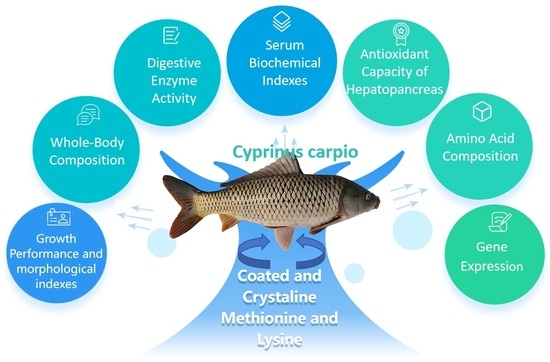
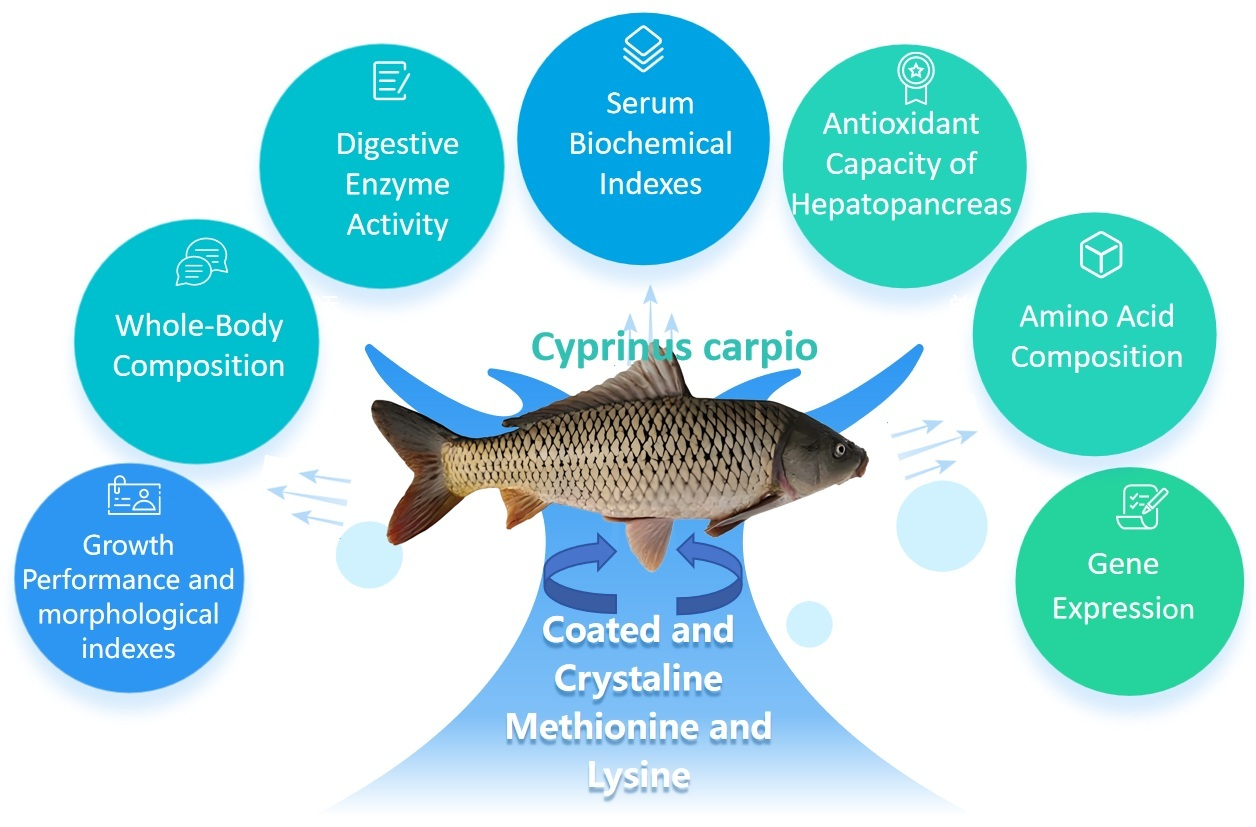
Graphical Abstract

1. Introduction

Aquaculture is developing rapidly, leading to an increasingly limited supply of fish meal as a feed ingredient. To address this shortage and reduce feed costs, plant-based proteins are now widely used as alternatives to fish meal. However, when compared with fish meal, plant proteins are present at lower concentrations of some essential amino acids, meaning their amino acid profile is not considered to be ideal for fish. Therefore, it is imperative to supplement diets with limited amino acids to fulfill the specific nutritional needs of aquatic organisms [1]. Among these essential amino acids, methionine and lysine are the most commonly deficient in fish feeds, making them the first and second limiting amino acids, respectively. These are often referred to as “growth amino acids” [2]. Methionine is particularly limiting in common plant protein sources including soybean meal and wheat flour [3], and its deficiency can impair protein conversion efficiency and consequently suppress fish growth [4]. Optimal supplementation of methionine in feed can significantly improve this situation [5]. Appropriate dietary supplementation of lysine can improve the digestion and absorption capacity, immunity, protein utilization, and metabolism of lipid, nitrogen, and glucose in fish [6,7]. Species-specific disparities in crystalline amino acid utilization are evident. While Atlantic salmon (Salmo salar) and rainbow trout (Oncorhynchus mykiss) can effectively utilize crystalline methionine, species like crucian carp (Carassiusauratus gibelio) and common carp (Cyprinus carpio) have shown poor utilization of exogenous crystalline amino acids [8,9,10,11]. This discrepancy can be attributed to the rapid intestinal absorption of crystalline amino acids in agastric fish, which prevents synchronous absorption with dietary amino acids, ultimately reducing utilization efficiency [12]. Slow-release technologies, such as coating or microencapsulation, have been shown to significantly improve crystalline amino acid utilization [6,13]: adding coated methionine to feed enhanced the growth performance and specific activities of amylase and lipase in songpu mirror carp (Cyprinus carpio Songpu) [12]. Dietary coated amino acid supplementation enhanced the growth performance of Lateolabrax japonicus and improved rearing water quality [14]. Dietary supplementation with coated methionine in gibel carp (Carassius auratus gibelio) changed the related processes associated with amino acid metabolism and energy metabolism to promote its growth [5].
Common carp is a commercially valuable aquaculture species that plays a pivotal role in both China’s domestic fisheries and the international market. This study puts forward the following hypotheses: coated amino acids can effectively reduce the loss of amino acids due to leaching in water, improve the growth performance of common carp, enhance digestive enzyme activity, and up-regulate the expression level of genes related to protein synthesis in fish. This experiment investigated the effects of supplementation with different types and combinations of methionine and lysine on the growth performance, digestive enzyme activity, and protein synthesis-related gene expression of carp, aiming to verify the efficacy of coated amino acids. Furthermore, the study investigated the underlying mechanisms of dietary amino acid supplementation on fish growth, with the objective of providing theoretical support for amino acid applications in aquafeed production for sustainable aquaculture.

2. Materials and Methods

2.1. Experimental Material

The FFRC No.2 strain common carp (Cyprinus carpio) was procured from the Freshwater Fisheries Research Center, CAFS (Dapu Base). Crystalline DL-methionine and L-lysine hydrochloride were acquired from Hangzhou Kangdequan Feed Co., Ltd. (Hangzhou, China). The coated methionine and coated lysine formulations were prepared in-house through laboratory-developed methods. The coating materials included extruded corn, sodium carboxymethyl cellulose (CMC-Na), and glycerol. Each 100 g of the coated amino acid product contained 10 g of amino acid, 85 g of extruded corn, 4 g of CMC-Na, and 1 g of glycerol.
For the present study, experimental diets were prepared using fish meal, soybean meal, cottonseed meal, and rapeseed meal as the main protein ingredients. The basal diet group (CON group) was not supplemented with additional amino acids. Four distinct treatment groups were administered targeted amino acid supplements at defined dietary inclusion levels, with group assignments as follows: (1) CM group: 0.6% crystalline methionine; (2) CML group: 0.6% crystalline methionine and 0.3% crystalline lysine; (3) HM group: 0.6% coated methionine; (4) HML group: 0.6% coated methionine and 0.3% coated lysine. Feed raw materials were first comminuted to a particle size capable of passing through a 60-mesh sieve. Following crushing and sieving, all components were thoroughly homogenized. Soybean oil and fish oil were manually incorporated into the mixture after the addition of water; the blended materials were processed through an extruder to form uniform strips. These feeds were subsequently dried at 38 °C, crushed into granular form, then stored at −20 °C in a freezer. The detailed formulation and their proximate composition are summarized in Table 1.
Before the initiation of the feeding trial, the experimental fish were acclimatized at the College of Life Sciences, Huzhou University. Following a one-week acclimation period, a total of 300 fish with an average initial body weight of (1.52 ± 0.00) g were selected and randomly assigned to the five experimental groups. Each group was set up with three replicates, and each replicate contained 20 fish. The 56-day feeding trial was carried out, during which the fish were provided with feed twice daily at fixed times (08:30 and 18:30). The daily feeding ration was adjusted biweekly according to the total body weight of the fish in each treatment group, maintaining a feeding rate of 5% of the total weight. Throughout the experimental period, water temperature was maintained within the range of 25–30 °C. The water quality parameters were carefully controlled as follows: the pH was stabilized at (7.0 ± 0.1), the ammonia nitrogen concentration remained under 0.5 mg·L−1, and dissolved oxygen levels were consistently maintained above (6 ± 0.5) mg·L−1.

2.2. Growth Performance and Sample Collection

Following the conclusion of the feeding trial, all fish were counted, and the body weight and body length were measured. Growth performance was assessed based on weight gain (WG), condition factor (CF), and specific growth rate (SGR). Nine fish were randomly selected from each replicate tank: three for whole-body composition analysis, three for amino acid composition analysis, and three for the determination of viscerosomatic index (VSI), hepatosomatic index (HSI), blood sample collection, digestive enzyme activity assays, mRNA expression profiling, antioxidant capacity assays, and gene expression analysis related to muscle growth and protein synthesis. Of these, three fish were frozen immediately at −20 °C and stored for subsequent proximate analysis, and another three were frozen for amino acid composition analysis. Additionally, three fish were selected for blood collection; blood samples were centrifuged at 1000× g for 15 min at 4 °C, and the resulting serum supernatant was aliquoted into sterile microtubes and preserved at −80 °C for subsequent biochemical analysis. The viscera and hepatopancreas were carefully excised, weighed, and utilized for the calculation of the VSI and HSI. Hepatopancreas samples were promptly snap-frozen in liquid nitrogen and subsequently stored at −80 °C for mRNA expression profiling and antioxidant capacity assays. Intestinal segments were similarly preserved at −80 °C to enable digestive enzyme activity assays. Finally, dorsal muscle tissues were collected from experimental fish and immediately stored at −80 °C for subsequent gene expression analysis related to muscle growth and protein synthesis.
The growth performance calculations are as follows:
  • Weight gain (WG, %) = (Wf − Wi)/Wi × 100.
  • Specific growth rate (SGR, %/d) = (ln Wf − ln Wi)/d × 100.
  • Condition factor (CF, g·cm−3) = Wf × 100/Lf3.
  • Hepatosmatic index (HSI, %) = (Wh/Wf) × 100.
  • Viscerosomatic index (VSI, %) = (Wv/Wf) × 100.
  • Survival rate (SR, %) = (Fi/Ff) × 100 [15,16].
  • Here, Wf and Wi represent the final and initial body weight of fish, Lf denotes the initial body length, Wv is the total viscera weight, and Wh refers to the hepatopancreas weight of the fish. Fi is the initial total fish count at the commencement of the study, and Ff refers to the final total fish count at the end of the experiment.

2.3. Whole-Body Composition Analyses

Moisture content was measured by the 105 °C constant-temperature drying method (GB/T 5506.3-2008/ISO 21415-3: 2006). Crude protein content was determined by the Kjeldahl method (GB/T 31578-2015/ISO/TS 16634-2: 2009), while crude lipid content was determined by Soxhlet extraction (GB/T 14772-2008). Ash content was measured through the high-temperature combustion method (GB/T 4498.1-2013/ISO 247: 2006).

2.4. Amino Acid Composition Analysis

The bodies of the fish samples were processed via oxidative hydrolysis pretreatment first. Free amino acid content was then quantified using sodium ion-exchange high-performance liquid chromatography with an automated amino acid analyzer (Hitachi L-8900, Hitachi, Ltd., Tokyo, Japan).

2.5. Activities of Digestive Enzyme Analysis

The frozen intestinal tissues (−80 °C) were thawed at 4 °C, and surface moisture was removed using sterile filter paper. The intestinal tissue (0.3–0.4 g) was weighed and homogenized in nine volumes of 0.85% physiological saline. Following centrifugation at 1789× g for 10 min at 4 °C, the obtained supernatant was collected for enzymatic assays. The activities of three core digestive enzymes, namely protease, amylase, and lipase, were measured using commercially available assay kits procured from Nanjing Jiancheng Bioengineering Institute (Nanjing, China).

2.6. Antioxidant Status of Hepatopancreas

Hepatopancreas samples were processed following the same protocol as described for intestinal tissues. The resulting supernatant was analyzed for malondialdehyde (MDA) concentration, SOD, and catalase (CAT) activity. All biochemical assays were performed using kits (Nanjing Jiancheng Bioengineering Institute, Nanjing, China) following the manufacturer’s instructions.

2.7. Serum Biochemistry

The cryopreserved serum samples (−80 °C) were thawed and processed in strict accordance with the recommended instructions. Following appropriate dilution and centrifugation, the obtained supernatant was harvested and maintained at 4 °C for subsequent biochemical analysis. Serum concentrations of BUN, blood ammonia (Amon), glutamic pyruvic transaminase (GPT) and glutamic oxaloacetic transaminase (GOT) were quantified with kits (Nanjing Jiancheng Bioengineering Institute, China).

2.8. Total RNA Extraction and Real-Time Fluorescence Quantitative PCR (qPCR)

The expression profiles of genes involved in muscle protein synthesis pathways, including components of the TOR and GH/IGF-I signaling pathways, were analyzed with quantitative real-time PCR (qPCR). Total RNA was isolated from liver and dorsal muscle samples via MonzolTM Reagent (Mona Biotechnology Co., Ltd., Suzhou, China) following the manufacturer’s instructions. First-strand cDNA was synthesized with a mRNA reverse transcription kit (Mona Biotechnology Co., Ltd., China) via a polyadenylation approach. Specifically, for miRNA analysis Poly(A) tails were enzymatically added to the 3’ ends of miRNAs using E. coli Poly(A) Polymerase. Reverse transcription was conducted with Oligo(dT)-UniversalTag primers. The resulting miRNA-specific cDNA templates were synthesized and cryopreserved at −80 °C for subsequent applications.
This study performed comparative quantification of target gene mRNA expression. The qPCR reactions were conducted with 20 μL volumes, including 1× 10 μL MonAmpTMSYBR® Green qPCR Mix (Mona Biotechnology Co., Ltd.), 7.2 μL ddH2O, 2 μL cDNA, and 0.4 μL of primers (Table 2). The quantitative real-time PCR amplification was conducted using the following optimized reaction conditions: initial denaturation at 95 °C for 30 s, then 40 cycles at 95 °C for 15 s and 60 °C for 30 s. Beta-actin (β-actin) was employed as the internal reference gene. Relative gene expression levels were quantified via the 2−△△CT method.

2.9. Statistical Analysis

Experimental data were statistically analyzed by SPSS software (Version 25.0) via one-way analysis of variance (ANOVA). If a statistically significant difference (p < 0.05) was observed, the Tukey test was used; all data are presented as mean ± standard deviation (means ± SD). To investigate factor interactions, two-way ANOVA was subsequently conducted, with the model incorporating main effects and interaction terms.

3. Results

3.1. Growth Performance and Morphological Indexes

Our findings indicate that SR was unaffected in all experimental groups (Table 3). Relative to the CON group, the WG, SGR, CF, HSI and VSI of the HML group were significantly improved (p < 0.05), but the CM and CML groups exerted no significant effect (p > 0.05). The morphological indexes of the HM group exhibited statistically significant differences compared with those of the CON group (p > 0.05); nevertheless, no statistically significant differences were detected in their growth indexes. Two-way ANOVA revealed that amino acid type exerts a significant impact on growth indexes and morphological index; meanwhile, the combination of amino acids also has a significant impact, except on HSI. There was no interaction between amino acid type and combination on the growth performance and morphological indicators in carp, except for VSI.

3.2. Whole-Body Composition

The impacts of experimental diets on carp whole-body composition are presented in Table 4. No significant changes were observed in the whole-body moisture, crude protein, and crude ash contents in each group (p > 0.05), whilst the crude lipid of the CML group and HM group significantly decreased (p < 0.05). Two-way ANOVA indicated that the whole-body crude lipid was affected by the interaction of amino acid type and combination.

3.3. Digestive Enzyme Activity

As illustrated in Table 5, the specific activities of lipase and amylase in the HML group were significantly higher than in the CON group (p < 0.05). However, no significant difference was observed in the specific activity of digestive enzymes between the CM, CML, and HM groups when compared with the CON group. The results of the two-way ANOVA demonstrate that the specific activities of three digestive enzymes were affected by amino acid type. Only lipase specific activity was influenced by amino acid combination, and none of the digestive enzymes were affected by the interaction between them.

3.4. Serum Biochemical Indexes

The carp serum biochemical indexes are shown in Table 6. Compared with the CON group, the specific activities of GOT, GPT (glutamic pyruvic transaminase), BUN, and blood ammonia (Amon) in serum decreased significantly in the CML, HM and HML groups (p < 0.05). In the CM group, the specific activities of GOT and GPT were significantly higher than in the CON group (p < 0.05); however, there was no significant difference in BUN and Amon contents in serum. The two-way ANOVA results indicate that the GOT, GPT, BUN, and Amon levels in carp were significantly influenced by both amino acid type and combination, as well as their interaction (p < 0.05).

3.5. Antioxidant Capacity of Hepatopancreas

Relative to the CON group, SOD specific activity was markedly reduced in the HML group, whereas MDA content was significantly elevated (p < 0.05) (Table 7). No significant differences were observed in the SOD, catalase (CAT), and MDA content between the HM and CON groups. In the CM group, only the SOD content was significantly higher than in the CON group (p < 0.05). In the CML group, only MDA content was markedly elevated than in the CON group (p < 0.05). Two-way ANOVA demonstrates that the content of MDA, as well as the specific activities of SOD and CAT in the hepatopancreas of carp, were affected by amino acid type. Additionally, MDA content and SOD activity were affected by the combination of amino acids, but only the content of MDA was affected by their interaction.

3.6. Amino Acid Composition

The amino acid composition of common carp fed the respective experimental diets is presented in Table 8. No statistically significant variations were observed between the CM group and the CON group. In comparison with the CON group, only phenylalanine showed a significant difference in the CML group (p > 0.05). The contents of EAAs and NEAAs in the HM and HML groups were significantly increased compared to the CON group (p < 0.05), except for glycine, cysteine and alanine. Two-way ANOVA showed that the EAA and NEAA content in fish were significantly impacted by the type of amino acids, except for glycine and cysteine. Only the content of glycine and phenylalanine was significantly impacted by amino acid combination. The interaction of amino acid type and combination had no significant impact on any amino acid content.

3.7. Gene Expression

The gene expression in carp across different experimental dietary groups are shown in Table 9. For genes associated with growth and protein synthesis, TOR gene expression did not differ significantly across all experimental groups in either the hepatopancreas or muscle (p > 0.05). Relative to the control group, hepatopancreatic expression levels of IGF-1, IGFBP, and S6K1 genes were markedly elevated in the HM and HML groups (p < 0.05), whereas 4EBP-1 gene expression was significantly reduced (p < 0.05). Meanwhile, in comparison with the control group, the expression level of IGF-1, IGFBP, and 4EBP-1 significantly increased in the CM and CML groups (p < 0.05). In muscle, the GHR, 4EBP-1, and MSTN expression levels in the HM and HML groups were significantly different in contrast to the CON group. The expression of S6K1 in muscle was significantly higher than the control group (p < 0.05). Two-way ANOVA showed that the expression levels of genes were significantly affected by amino acid type, except for GHR and TOR genes in hepatopancreas. At the same time, only the TOR and 4EBP-1 genes were affected by the amino acid combination. Except for the TOR, all the measured genes were affected by the interaction between the two factors in the hepatopancreas. In muscle, the expression levels of GHR, 4EBP-1, MyoG and MSTN genes were significantly affected by the combination of amino acids. Only the expression levels of S6K1 and MSTN genes were affected by the interaction between them.
For genes associated with muscle development and protein synthesis, the expression levels of IGFBP, TOR, Myf5, and Myf6 did not differ significantly among the different treatment groups (p > 0.05). Two-way ANOVA indicated that the expression levels of GHR, 4EBP-1, MyoG and MSTN genes were significantly impacted by amino acid type (p < 0.05), and S6K1, MyoD and MSTN gene expression levels were affected significantly by amino acid combination (p < 0.05). Only S6K1 and MSTN gene expression levels were influenced by the interaction between them.

4. Discussion

The study revealed that dietary supplementation with coated methionine and lysine significantly enhanced the growth performance of carp, such as in terms of WG and SGR. Furthermore, the coated methionine and lysine positively influenced morphological parameters such as CF, HSI and VSI. In contrast, crystalline amino acid supplementation showed no significant effects on these parameters. This was consistent with previous studies: the supplementation of carboxymethyl cellulose coated lysine in the feed of Triploid crucian carp was shown to significantly improve growth performance [17]. Leng et al. also observed that crystalline amino acids failed to enhance growth performance in allogynogenetic crucian carp (Carassius auratus gibelio) [10], while coated amino acid groups effected significant improvements, with dextrin-coated amino acids outperforming starch-coated. Leng et al. reported that dietary supplementation with microencapsulated amino acids could improve the weight gain rate of common carp [18]. For grass carp (Ctenopharyngodon idellus), comparative analysis of protein digestion kinetics revealed that extruded corn (28.9 mg/h) most closely approximated the enzymatic hydrolysis rate of fish meal (32.4 mg/h) among tested feed ingredients [19]. These findings demonstrate that extruded corn coating effectively modulates amino acid release, achieving intestinal absorption rates comparable to fish meal. This controlled-release mechanism provides three key metabolic advantages: plasma amino acid homeostasis, enhanced nutrient utilization, and anabolic promotion. Slower, more physiological absorption reflects natural digestion patterns, optimizes metabolic utilization, and minimizes amino acid catabolism.
Statistical analysis revealed a significant interaction effect between amino acid type and combination on whole-body crude lipid content in carp, while moisture, crude protein, and crude ash content were unaffected. Notably, dietary supplementation with coated methionine and lysine significantly reduced whole-body lipid compared to control groups. These results suggest that coated amino acids effectively compensate for the methionine and lysine deficiencies typically found in plant-based protein sources, while simultaneously regulating free amino acid homeostasis in blood. This finding is consistent with previous research on juvenile turbot (Scophthalmus maximus L.) [20] demonstrating an inverse relationship between dietary lysine intake and whole-body lipid deposition. Our experimental results demonstrate distinct metabolic responses in common carp to different amino acid formulations. While crystalline lysine supplementation showed no significant effect on whole-body lipid content, the coated amino acids group significantly reduced lipid content, indicating superior bioavailability of the coated formulation. At the same time, some studies have shown that increasing the amount of methionine can affect the crude lipid content of animals [21,22,23]. The reduction in whole-body crude lipid deposition is attributed to the supplementation of coated amino acids, which enhances fatty acid oxidation, consequently reducing lipid deposition in diverse adipose tissues. Additionally, the improved dietary amino acid balance may prevent selective amino acid catabolism, thereby promoting protein synthesis while reducing lipid content [23].
In the study, no significant differences in amino acid content were detected between the group supplemented with crystalline amino acid and the control group, except for phenylalanine content. Consistent observations have been documented in prior research: [24] observed that supplementation of crystalline amino acids in the diet did not significantly induce significant changes in the amino acid profile of groupers (Epinephelus ssp), consistent with results reported for grass carp (Ctenopharyngodon idella) by [25]. In this study, supplementation of the diet with coated methionine and lysine significantly enhanced the content of most amino acids in common carp, except for glycine, cysteine, and alanine. These findings align with previous research on rouge fish (Myxocyprinus asiaticus) [26], demonstrating that when the fish lacks one or more amino acids, its utilization of other amino acids is reduced, thereby affecting the total content of amino acids of the fish [27]. Studies on Nile tilapia (Oreochromis niloticus) [28], yellow catfish (Pelteobagrus fulvidraco Richardson) [29], yellow croaker (Nibea albiflora) [19], and flatfish (Pleuronectiformes) [30] have also confirmed the same result. Two-way ANOVA analysis of amino acid composition revealed that essential amino acid content was significantly influenced by amino acid type, and all amino acids except phenylalanine showed no significant response to amino acid combination. These results demonstrate that crystalline methionine and lysine supplementation failed to adequately compensate for dietary deficiencies, leading to impaired amino acid metabolism. In contrast, coated amino acid supplementation effectively balanced amino acid profiles and significantly enhanced overall amino acid content in fish tissues.
Data analysis showed that intestinal digestive enzyme specific activities in carp were significantly influenced by amino acid type, with only lipase activity showing dependence on amino acid supplementation combination. No significant interactive effects between these two factors were observed for any digestive enzymes. Our findings demonstrate distinct effects of amino acid formulations on intestinal enzyme specific activity in fish. Notably, crystalline amino acid supplementation significantly enhanced amylase specific activity in half-smooth tongue sole (Cynoglossus semilaevis) [31], consistent with our observations in carp. However, studies on grass carp revealed that methionine deficiency reduced intestinal digestive enzyme specific activity [32], while crystalline amino acid supplementation showed limited effects. In contrast, coated amino acids were more effectively absorbed and utilized by carp, meeting their essential amino acid requirements and consequently improving the activity of intestinal digestive enzymes [12]. In fish, the intestine acts as the core organ responsible for the digestion and absorption of nutrients, while simultaneously functioning as a crucial immune and endocrine organ [33]. Numerous studies have provided compelling evidence that in aquatic animals, dietary amino acid balance significantly influences intestinal health, microbiota composition, and endocrine function [34,35]. The research into common carp by Chen et al. [36] revealed a positive correlation between dietary amino acid balance and intestinal digestive enzyme activity. This enhanced enzymatic activity improved feed utilization efficiency, thereby promoting growth performance and reducing production costs in aquaculture feed.
SOD serves as a crucial antioxidant enzyme in aerobic organisms, primarily responsible for catalyzing the dismutation of superoxide anions (O2−) into molecular oxygen and hydrogen peroxide, thus conferring protection against oxidative damage to cells [37]. As the primary defense component of the cellular antioxidant system, SOD plays a pivotal role in mitigating oxidative stress. Under oxidative stress conditions, the peroxidation of membrane lipids generates MDA [38]. The production of MDA can cause damage to the cell membrane. When the body cannot effectively remove oxidative free radicals, excessive oxygen free radicals damage cells, which leads to oxidative stress in the biological body, ultimately compromising cellular integrity and function [39]. Catalase (CAT), a key antioxidant enzyme, mediates the breakdown of hydrogen peroxide (H2O2) into molecular oxygen and water, thereby protecting organisms from oxidative damage [40]. In the experiment, coated amino acid supplementation in the diets led to a significant reduction in SOD activity, accompanied by a marked elevation in MDA content in the hepatopancreas. Previous studies across multiple fish species have consistently demonstrated that dietary amino acid supplementation significantly enhances antioxidant capacity; for instance, in Nile tilapia (Oreochromis niloticus) [41], loach (Misgurnus anguillicaudatus) [42] and grass carp [43]. These findings are in opposition to our experimental results, and the discrepancy may be attributed to the following mechanisms.
Blood biochemical parameters are reliable indicators of systemic metabolism and are routinely employed for clinical assessment of physiological disorders in animals [44]. The dynamic fluctuations in blood biochemical parameters of fish act as highly sensitive indicators reflecting nutritional adequacy and metabolic homeostasis [45]. GOT and GPT are two vital transaminases in fish, with essential functions in amino acid and protein metabolism [31], and are commonly used as one of the indicators to evaluate liver health [46]. Under normal physiological conditions, GOT and GPT are predominantly localized within hepatocytes, with minimal presence in circulation. However, hepatocellular damage resulting in membrane integrity loss leads to enzyme leakage into the bloodstream, which causes an increase of GOT and GPT in the serum. Therefore, serum GPT and GOT activities serve as clinically validated biomarkers for hepatocellular integrity assessment [47,48]. Serum GPT and GOT activities in carp treatment groups were markedly lower than in their control counterparts, and were affected by amino acid type and combination, but only GOT activity was affected by the interaction between them. It can be concluded that dietary supplementation with coated amino acids is beneficial to the liver health of carp relative to crystalline amino acids; moreover, they can promote the amino acid metabolic processes and protein anabolism of carp. The supplementation of methionine and lysine at the same time also had a similar promotion effect on carp compared with supplementation with methionine alone. This was consistent with the results seen in yellow catfish (Pelteobagrus fulvidraco), where the activity of GPT and GOT decreased with the increase in dietary methionine level [49]. Studies have demonstrated that maintaining an optimal balance of blood amino acids significantly enhances the efficiency of amino acid transport. This improvement in transport mechanisms not only boosts the overall utilization rate of amino acids, but also suppresses transamination metabolism, thus reducing the activity of GPT and GOT [50]. Amon and BUN levels serve as reliable indicators for evaluating the extent of amino acid utilization and the status of protein metabolism in fish [51]. Supplementation with coated amino acids significantly decreased serum Amon and BUN contents, and supplementation with crystalline amino acids also had similar effects; however, the impact of crystalline methionine supplementation was not significant. Two-way ANOVA showed that serum Amon and BUN levels were influenced not only by the type and combination of amino acids supplemented, but also by the interaction between these factors. The underlying mechanism was that the supplementation of coated amino acids enhances the amino acid utilization efficiency in carp. Simultaneously, it maintains the serum free amino acid levels in a relatively balanced state, thereby decreasing the deposition of ammonia in the serum. However, crystalline amino acids tend to dissolve readily, and their absorption is asynchronous, which ultimately results in a lower utilization rate. When only a single crystalline amino acid is supplemented, it exacerbates the imbalance of free amino acids in the serum. This imbalance leads to a suboptimal improvement in reducing ammonia deposition within the serum, consequently resulting in a limited decrease in the serum levels of Amon and BUN. Research on piglets has further corroborated that supplementing crystalline amino acids to maintain a balanced status of serum free amino acids is advantageous for decreasing the levels of amino acid metabolites in the serum [52,53,54].
As the core of the nutrition—and hormone—sensitive signaling pathway, TOR is pivotal in regulating various physiological activities [55,56]; the mTOR-4EBP1/p70S6K1 signaling pathway is critical to cell growth, proliferation, differentiation, and protein synthesis [57]. In this experiment, no significant difference was observed in TOR gene expression in the hepatopancreas and muscle tissues across all groups. Nevertheless, the expression of 4EBP1 in the hepatopancreas and muscle of carp in the coated amino acid groups showed a significant downward trend, and the expression levels of S6K1 in muscle tissues were significantly elevated. This upward trend was consistent with the gene expression pattern observed in the hepatopancreas. Conversely, no significant differences were observed in S6K1 expression between the group supplemented with crystalline methionine and the control group. The underlying mechanisms contributing to these observations warrant further investigation. Amino acids have been demonstrated to exert a regulatory effect on the mTOR-4EBP1/p70S6K1 signaling pathway [58]. When the levels of various amino acids are in equilibrium, this regulatory function can effectively promote the growth and development of fish. Additionally, the growth and development processes of carp are also under the control of the GH/IGF axis. The growth hormone (GH) is crucial for regulating animal growth and development [59]. The GH gene exerts its regulatory effects on target cells by binding to the GHR expressed on these cells [60]. IGF not only plays a pivotal role in regulating glucose, lipid metabolism [61], and protein metabolism [62], but also exerts a negative feedback influence on GH expression and secretion [63]. This intricate interplay between GH, GHR, and IGF forms a regulatory network that precisely controls growth and metabolic processes. Our present study revealed that coated amino acid supplementation led to a significant upregulation of the IGF-1 and IGFBP genes in the hepatopancreas. Notably, among individual amino acids, only the supplementation of coated methionine significantly enhanced the GHR gene expression level in the hepatopancreas. Conversely, no statistically significant alterations were detected in IGFBP gene expression under different treatment conditions. However, in carp muscle, supplementation with coated amino acids significantly upregulated GHR gene expression, highlighting the differential regulatory roles of coated amino acids on gene expression in various tissues. Previous research on spotted seabass (Lateolabrax maculatus) have shown that dietary supplementation with limiting amino acids significantly impacts GH/IGF axis-related genes expression [64]. This finding was in agreement with the outcomes of our study. However, the precise regulatory mechanisms underlying these effects remain elusive. Further investigation is indispensable to unravel the sophisticated molecular mechanisms by which limiting amino acids modulate the GH/IGF axis, which will facilitate a more holistic comprehension of how amino acids orchestrate growth regulatory processes in teleosts.
As a core regulatory module in vertebrate myogenesis, the myogenic regulatory factor (MRF) transcription factor family serves as a key regulator of muscle tissue formation in teleosts. This family primarily exerts its control over the proliferation, growth, and differentiation of muscle cells through four muscle-specific proteins: MyoD, Myf5, MyoG, and Myf6 [65]. Our experimental data indicated that there were no significant variations in the Myf6 and Myf5 gene transcriptional expression levels of muscle across all groups. These results indicate that these gene expressions were not influenced by supplementary amino acid type, their combination, or the interactions between two factors. The MyoG gene expression level increased significantly only in the supplementation with coated methionine and lysine in fish muscle. Conversely, the MyoD gene expression level was upregulated significantly in crystalline and coated methionine supplementation groups. These results highlight the critical role of amino acids in muscle synthesis, as the specific type of amino acid supplementation can differentially modulate the expression of regulatory genes, thereby influencing muscle development and growth. The study on grass carp has shown that supplementing amino acids is conducive to balancing serum free amino acid content. This, in turn, contributes to a marked elevation in the rate of muscle synthesis [66]. MSTN regulates muscle growth and development through negative feedback [14]. This study demonstrated that the supplementation of coated amino acids significantly downregulated the expression of muscle MSTN gene expression levels. Previous research on broilers [67] and piglets [68] has revealed that MSTN is an amino-acid-sensitive gene. Specifically, its expression levels decline as the amino acid content in the feed increases. These findings across different species suggest a conserved regulatory relationship between amino acid availability and MSTN gene expression, highlighting the potential of targeted amino acid supplementation as a nutritional intervention to modulate muscle growth by influencing the expression of this key negative regulator.


5. Conclusions

Dietary supplementation of coated amino acids led to a significant improvement in the growth performance of common carp. The WGR, SGR and CF of common carp in the coated amino acids groups increased significantly and the activities of GOT, GPT, BUN and blood Amon decreased significantly. The contents of EAAs and NEAAs in coated amino acids were higher. The expression levels of IGF-1, IGFBP and S6K1 genes with coated amino acids groups were significantly increased. In summary, supplementation of coated amino acids in feed can effectively improve the growth performance of carp, enhance the specific activity of digestive enzymes, and improve its antioxidant capacity, as well as significantly up-regulate the expression of genes associated with growth and protein anabolism in the hepatopancreas and muscle tissues of carp.

Author Contributions

All authors contributed to the study. M.Z.: writing—original draft, data curation, methodology, visualization. X.Y.: writing—original draft, conceptualization, formal analysis. F.Z.: formal analysis, methodology. R.Q.: data curation, data curation, software, supervision, investigation. Z.Z.: formal analysis, visualization. B.S.: validation, methodology. X.S.: writing—review and editing. J.Z.: writing—review and editing, funding acquisition, project administration. All authors have read and agreed to the published version of the manuscript.

Funding

This research was funded by “Pioneer” and the “Leading Goose” R&D Program of Zhejiang with grant number [2023C02024].

Institutional Review Board Statement

This research was conducted in strict accordance with the guidance for the care and use of laboratory animals in China. The experimental protocol was approved by Huzhou University’s Committee on Ethics of Animal Experiments (Approval Code: 20220916; Approval Date: 16 September 2022).

Informed Consent Statement

Not applicable.

Data Availability Statement

All data presented in the work are available from the corresponding authors, upon reasonable request.

Conflicts of Interest

The authors declare no conflicts of interest.

References

  1. Baek, S.; Jeong, H.; Cho, S. Replacement Effect of Fish Meal by Plant Protein Sources in Olive Flounder (Paralichthys olivaceus) Feeds with an Addition of Jack Mackerel Meal on Growth, Feed Availability, and Biochemical Composition. Aquac. Nutr. 2023, 2023, 7965258. [Google Scholar] [CrossRef]
  2. Gatlin, D.M., III; Barrows, F.T.; Brown, P.; Dabrowski, K.; Gaylord, T.G.; Hardy, R.W.; Herman, E.; Hu, G.; Krogdahl, Å.; Nelson, R.; et al. Expanding the utilization of sustainable plant products in aquafeeds: A review. Aquac. Res. 2007, 38, 551–579. [Google Scholar] [CrossRef]
  3. Dilger, R.; Baker, D. DL-methionine is as efficacious as L-methionine, but modest L-cystine excesses are anorexigenic in sulfur amino acid-deficient purified and practical-type diets fed to chicks. Poult. Sci. 2007, 86, 2367–2374. [Google Scholar] [CrossRef]
  4. Niu, J.; Figueiredo-Silva, C.; Dong, Y.; Yue, Y.; Lin, H.; Wang, J.; Wang, Y.; Huang, Z.; Xia, D.; Lu, X. Effect of replacing fish meal with soybean meal and of DL-methionine or lysine supplementation in pelleted diets on growth and nutrient utilization of juvenile golden pompano (Trachinotus ovatus). Aquac. Nutr. 2016, 22, 606–614. [Google Scholar] [CrossRef]
  5. Liu, Y.; Qian, R.; Xu, Q.; Zhao, J. Integrative metabolomic and transcriptomic analyses reveal the impact of methionine supplementation to gibel carp (Carassius auratus gibelio). Fishes 2025, 10, 203. [Google Scholar] [CrossRef]
  6. Fan, Z.; Wang, L. Advances in fish lysine nutrition research. China Feed 2021, 13, 66–72. [Google Scholar]
  7. Yang, P.; Wang, W.; Chi, S.; Mai, K.; Song, F.; Wang, L. Effects of dietary lysine on regulating GH-IGF system, intermediate metabolism and immune response in largemouth bass (Micropterus salmoides). Aquac. Rep. 2020, 17, 100323. [Google Scholar] [CrossRef]
  8. Powell, C.D.; Chowdhury, M.K.; Bureau, D.P. Assessing the bioavailability of L-methionine and a methionine hydroxy analogue (MHA-Ca) compared to DL-methionine in rainbow trout (Oncorhynchus mykiss). Aquac. Res. 2017, 48, 332–346. [Google Scholar] [CrossRef]
  9. Marit, E.; Bjørn, L.; Ernst, M.; Adel, E. DL-methionine enrichment in diets fed to Atlantic salmon increases apparent digestibility. Aquac. Res. 2011, 42, 1123–1130. [Google Scholar]
  10. Leng, X.; Wang, G.; Li, X.; Hu, B.; Yang, Z. Supplemental effects of crystalline or coated amino acids on growth performance and serum free amino acids of allogynogenetic crucian carp. J. Fish. China 2007, 6, 743–748. [Google Scholar]
  11. Chen, B.; Leng, X.; Li, X.; Hu, B. Stusy on the effect of crystalline or coated amino acids for cuprinus carpio. Acta Hydrobiol. Sin. 2008, 5, 774–778. [Google Scholar] [CrossRef]
  12. Zhao, J.; Yang, X.; Xu, Q. Effects of coated methionine on growth performance, intestinal digestive enzymes and muscle amino acids content of Songpu mirror carp (Cyprinus carpio Songpu). Feed Ind. 2022, 42, 40–46. [Google Scholar]
  13. Peng, Y.; Tang, L.; Shuai, K.; Zhou, X.; Feng, L. Effect of methionine on digestive function of juvenile jian carp (Cyprinus carpio var. Jian). Chin. J. Anim. Husb. 2009, 45, 33–38. [Google Scholar]
  14. Yang, H.; Zeng, Z.; Yang, Y.; He, Y.; Wang, Q.; Zhao, H.; Zhang, Y.; Lin, H. Research progresses of myostatin in fish muscle. Acta Sci. Anturalium Univ. Sunyatseni 2022, 61, 1–8. [Google Scholar]
  15. Hopkins, K. Reporting fish growth: A review of the basics. J. World Aquac. Soc. 1992, 23, 173–179. [Google Scholar] [CrossRef]
  16. Wang, W.; Yang, P.; He, C.; Chi, S.; Li, S.; Mai, K.; Song, F. Effects of dietary methionine on growth performance and metabolism through modulating nutrient-related pathways in largemouth bass (Micropterus salmoides). Aquac. Rep. 2023, 30, 100642. [Google Scholar] [CrossRef]
  17. Qian, Q. Effect of Crystalline or Coated Lysine on Growth and Physiological Effect of triploid crucian carp. Ph.D. Thesis, Southwest University, Chongqing, China, 2014. [Google Scholar]
  18. Leng, X.; Luo, Y.; Li, X.; Wu, X.; Chen, S. Effects of Dietary Supplementation of Crystalline or Micro-capsulated Amino Acids on Growth Performance of Common Carp (Cyprinus carpio). Chin. J. Anim. Nutr. 2010, 22, 1599–1606. [Google Scholar]
  19. Wang, L.; Fan, Y.; Xu, Y.; Luo, L. Study on enzymatic hydrolysis rate of protein in extruded feed and non-extruded feed of grass carp. Feed Res. 2005, 8, 57–60. [Google Scholar]
  20. Dai, W.; Mai, K.; Xu, W.; Zhang, Y.; Ai, Q. Effects of lysine-arginine interaction on growth performance, body composition, and muscle amino acid levels of juvenile turbot (Scophthalmus maximus L.). J. Fish. China 2015, 39, 876–887. [Google Scholar]
  21. Ruchimat, T.; Masumoto, T.; Hosokawa, H.; Shimeno, S. Quantitative methionine requirement of yellowtail (Seriola quinqueradiata). Aquaculture 1997, 150, 113–122. [Google Scholar] [CrossRef]
  22. Farhat, A.; Khan, M. Dietary L-lysine requirement of fingerling stinging catfish, Heteropneustes fossilis (Bloch) for optimizing growth, feed conversion, protein and lysine deposition. Aquac. Res. 2013, 44, 523–533. [Google Scholar]
  23. Wang, L.; Zhao, D.; Tan, P.; Chen, R.; Xu, D. Dietary lysine affects growth performance, whole-body composition and growth-related gene expression in the yellow drum Nibea albiflora. Aquac. Nutr. 2020, 26, 1970–1980. [Google Scholar] [CrossRef]
  24. Luo, Z.; Liu, Y.; Mai, K.; Tian, L.; Yang, H.; Tan, X.; Liu, D. Dietary l-methionine requirement of juvenile grouper Epinephelus coioides at a constant dietary cystine level. Aquaculture 2005, 249, 409–418. [Google Scholar] [CrossRef]
  25. Tan, F.; Ye, Y.; Ma, H.; Xiao, S. Effects of dietary supplementation of crystalline and microencapsulated amino acids on amino acid composition of grass carp. Feed Res. 2010, 5, 65–68. [Google Scholar]
  26. Chu, Z.; Gong, Y.; Lin, Y.; Yuan, Y.; Cai, W.; Gong, S.; Luo, Z. Optimal dietary methionine requirement of juvenile Chinese sucker, Myxocyprinus asiaticus. Aquac. Nutr. 2014, 20, 253–264. [Google Scholar] [CrossRef]
  27. Azarm, H.; Sangmin, L. Effects of partial substitution of dietary fish meal by fermented soybean meal on growth performance, amino acid and biochemical parameters of juvenile black sea bream Acanthopagrus schlegeli. Aquac. Res. 2014, 45, 994–1003. [Google Scholar] [CrossRef]
  28. Lay, N.; Hieu, D.; Allen, D. Efficacy of reduced protein diets and the effects of indispensable amino acid supplements for Nile tilapia Oreochromis niloticus. Anim. Feed Sci. Technol. 2020, 268, 114593. [Google Scholar]
  29. Dong, G.; Yang, Y.; Yao, F.; Chen, L.; Yue, D.; Yu, D.; Huang, F.; Liu, J.; Liu, L. Growth performance and whole-body composition of yellow catfish (Pelteobagrus fulvidraco Richardson) under feeding restriction. Aquac. Nutr. 2017, 23, 101–110. [Google Scholar] [CrossRef]
  30. Alam, S.; Teshima, S.; Yaniharto, D.; Koshio, S.; Ishikawa, M. Influence of different dietary amino acid patterns on growth and body composition of juvenile Japanese flounder, Paralichthys olivaceus. Aquaculture 2002, 210, 359–369. [Google Scholar] [CrossRef]
  31. Zhang, S.; Ai, Q.; Mai, K.; Xu, W.; Han, B. Effects of fish meal replacement with crystalline amino acid on digestive and metabolic enzymes of tongue sole (Cynoglossus semilaevis GÜnther, 1873) larvae. Acta Hydrobiol. Sin. 2014, 38, 801–808. [Google Scholar]
  32. Wu, P.; Tang, L.; Jiang, W.; Hu, K.; Liu, Y.; Jiang, J.; Kuang, S.; Tang, L.; Tang, W.; Zhang, Y.; et al. The relationship between dietary methionine and growth, digestion, absorption, and antioxidant status in intestinal and hepatopancreatic tissues of sub-adult grass carp (Ctenopharyngodon idella). J. Anim. Sci. Biotechnol. 2017, 8, 970–983. [Google Scholar] [CrossRef]
  33. Liu, Y.; Kong, X. Effect of low protein diets with balanced amino acids on intestinal health of pigs. Chin. J. Anim. Nutr. 2021, 33, 679–685. [Google Scholar]
  34. Liu, H.; Yan, Q.; Han, D.; Jin, J.; Zhu, X.; Yang, Y.; Xie, S. Effect of dietary inclusion of cottonseed meal on growth performance and physiological and immune responses in juvenile grass carp, Ctenopharyngodon idellus. Aquac. Nutr. 2019, 25, 414–426. [Google Scholar] [CrossRef]
  35. Zheng, J.; Ou, W.; Mai, K.; Zhang, Y. Research progress of plant protein on intestinal health of mariculture fish. Chin. J. Anim. Nutr. 2019, 31, 1072–1080. [Google Scholar]
  36. Chen, X.; Shen, B.; Li, M.; Yu, G.; Wang, G.; Lu, H. Effects of dietary essential amino acid balance relativity on growth, digestion and metabolism of protein of Cyprinus carp. J. South China Agric. Univ. 2015, 36, 36–42. [Google Scholar]
  37. Chen, W.; Shi, P.; Li, Y.; Hou, Z.; Li, H. Research progress of superoxide dismutase in animal production. Feed Res. 2024, 47, 151–155. [Google Scholar]
  38. Liu, Y. Effect of Different Dietary Lipid Levels on the Growth performance, Antioxidantion, Immunity, Fatty Acid Metabolism and Related Gene Expression in Juvenile Tilapia. Ph.D. Thesis, Guangxi University, Nanning, China, 2021. [Google Scholar]
  39. Luo, Q.; Zhao, Y.; Li, H.; Gu, X.; Ding, G.; Wang, G.; Xu, Q.; Liu, C. Effects of replacement of fish meal by stickwater on growth performance, body composition, immune indexes and intestinal digestive enzyme activities of Macrobrachium rosenbergii. Chin. J. Anim. Nutr. 2021, 33, 6366–6375. [Google Scholar]
  40. Li, S.; Wang, J.; Jian, Y.; Song, J.; Zhou, D.; Zheng, J.; Kong, Y.; Ding, Z. Effects of adding catalase in diets on growth performance, antioxidant activity, immune performance and intestinal flora structure of Macrobrachium nipponense. Chin. J. Anim. Nutr. 2024, 36, 464–477. [Google Scholar] [CrossRef]
  41. Wangkahart, E.; Kersante, P.; Lee, P.-T.; Sanbut, O.; Nontasan, S.; Chantiratikul, A. Effect of Kera-Stim®50, a feed additive containing free amino acid mix on growth, antioxidant and immune responses, digestive enzymes, and fatty acid composition in nile tilapia (Oreochromis niloticus). Aquaculture 2022, 551, 737874. [Google Scholar] [CrossRef]
  42. Yan, J.; Wen, Y.; Wang, W.; Cao, X.; Gao, J. Effects of different dietary protein sources on growth performance, amino acid composition and antioxidant ability of loach, Misgurnus anguillillcaudatus fingerling. J. Huazhong Agric. Univ. 2016, 35, 101–107. [Google Scholar]
  43. Qu, F.; Liu, Z.; Hu, Y.; Zhao, Q.; Zhou, Y.; Liu, Z.; Zhong, L.; Lu, S.; Li, J. Effects of dietary glutamine supplementation on growth performance, antioxidant status and intestinal function in juvenile grass carp (Ctenopharyngodon idella). Aquac. Nutr. 2019, 25, 609–621. [Google Scholar] [CrossRef]
  44. Chang, Z.; Li, J.; Li, J.; Li, Z. Characteristics of blood biochemical parameters in turbot, olive flounder and tongue sole. Chin. Fish. Qual. Stand. 2013, 3, 76–82. [Google Scholar]
  45. Wang, A.; Han, G.; Feng, G.; Yang, W.; Guo, J.; Wang, T.; Xu, P. Effects of dietary lipid levels on growth performance, nutrient diges tibility and blood biochemical indices of gift tilapia (Oreochromis Niloticus). Acta Hydrobiol. Sin. 2011, 35, 80–87. [Google Scholar] [CrossRef]
  46. Duan, J. Effects of Replacement of Fish Meal Protein with Soybean Meal and Extruded Soybean Meal on Growth, Activities of Protein Metabolism Enzymes and Intestinal Tissue of Rhynchocypris lagowskii Dybowski; Jilin University: Changchun, China, 2019. [Google Scholar]
  47. Lu, X.; Lin, H.; Li, Z.; Yuan, F.; Yang, Q. Effects of dietary Chinese herbal medicines on hematological and blood biochemical indices in cultured seabass Lates calarifer. J. Dalian Fish. Univ. 2009, 24, 279–282. [Google Scholar]
  48. Yang, C.; Tan, T.; Yangm, N.; Wang, J.; Wu, H.; Lei, X. Effects of phenanthrene stress on aminotransferase and liver tissue structure of loach (Misgurnus anguillicaudatus). Chin. J. Ecol. 2023, 42, 1443–1448. [Google Scholar]
  49. Huang, J. Effects of Low Protein Diet Supplemented Lysine and Methionine on Growth Performance, Nutrient Digesitibility and Serum Biochemical Indices of Sika Deer Fawns; Chinese Academy of Agricultural Sciences: Beijing, China, 2015. [Google Scholar]
  50. Zhao, H.; Qiao, G.; Li, P.; Chen, X.; Chen, B.; Huang, W.; Cao, J. Effects of dietary L-Arginine or N-Carbamylglutamate on growth performance, intestinal function, serum biochemical indexes and anti-ammonia-nitrogen stress ability of yellow catfish (Pelteobagrus fulvidraco). Chin. J. Anim. Nutr. 2021, 33, 6330–6339. [Google Scholar]
  51. Braun, M.; Steele, S.; Perry, S. The responses of zebrafish (Danio rerio) to high external ammonia and urea transporter inhibition: Nitrogen excretion and expression of rhesus glycoproteins and urea transporter proteins. J. Exp. Biol. 2009, 212, 3846–3856. [Google Scholar] [CrossRef] [PubMed]
  52. Dong, Z.; Fang, G.; Liu, J.; Ye, D.; Feng, Y.; Wu, D.; Yang, H. The effect of dietary protein and lysine level on growth performance and serum urea nitrogen and free amino acid of growing pigs. J. Fujian Agric. For. Univ. Nat. Sci. Ed. 2011, 40, 511–515. [Google Scholar]
  53. Li, D.; Xi, P.; Wang, J.; Wang, J.; Thacker, P. The Effect of lysine to protein ratio on growth performance and efficiency of nitrogen utilization in pigs. Asian Australas. J. Anim. Sci. 2001, 14, 1282–1289. [Google Scholar] [CrossRef]
  54. Takada, R.; Mai, H.; Sano, T.; Okada, T. Effects of L-arginine supplementation on the growth performance, nitrogen balance, plasma urea nitrogen and plasma free amino acids profiles in weaning pigs. Nihon Yoton Gakkaishi 2016, 53, 1–9. [Google Scholar] [CrossRef]
  55. Kim, D.; Sarbassov, D.; Ali, S.; King, J.; Latek, R.; Erdjument-Bromage, H.; Tempst, P.; Sabatini, D. mTOR interacts with raptor to form a nutrient-sensitive complex that signals to the cell growth machinery. Cell 2002, 110, 163–175. [Google Scholar] [CrossRef]
  56. Zheng, P.; Ji, J. Advance in research onthe relationship between mTORsignaling pathway andtumors. J. Xi Jiaotong Univ. Med. Sci. 2010, 1, 1–9. [Google Scholar]
  57. Li, Y.; Wang, C.; Ren, M. The expression of mTOR-4EBP1/p70S6K signaling pathway in benign and malignant pleural effusion. Lab. Med. Clin. 2022, 19, 2660–2663. [Google Scholar]
  58. Meuten, T.; Dean, G.; Thamm, D. Review: The PI3K-AKT-mTOR signal transduction pathway in canine cancer. Vet. Pathol. 2024, 61, 339–356. [Google Scholar] [CrossRef]
  59. Guo, Y.; Liu, X.; Zheng, L.; Wang, H. Cloning and bioinformatics analysis of GH gene from Equus przewalskii. Chinses J. Bioinform. 2023, 21, 138–145. [Google Scholar]
  60. Wang, H.; Chen, G.; Luo, J.; Zhou, Z.; Wang, Q. Cloning of GHR1 and GHR2 Genes, and Effects of Temperature Stress and Food Deprivation on their Expression in Snubnose Pompano (Trachinotus blochii). In Proceedings of the Annual Academic Conference of Chinese Society of Fisheries, Nanchang, China, 8–10 November 2017. [Google Scholar]
  61. Miao, X.; Li, L.; Guan, W.; Wen, L.; Zhang, H.; Huang, X. Research progress on the mechanism of insulin-like growth factor 1 regulating animal glucose and lipid metabolism and nutritional regulation. Jiangxi J. Anim. Husbandryand Vet. Med. 2022, 4, 8–12. [Google Scholar]
  62. Dou, L.; Liu, C.; Yang, Z.; Jin, Y. Research progress on regulation of protein metabolism in animal muscle tissue. Chin. J. Anim. Nutr. 2022, 34, 39–50. [Google Scholar]
  63. Perrini, S.; Laviola, L.; Carreira, M.; Cignarelli, A.; Natalicchio, A.; Giorgino, F. The GH/IGF1 axis and signaling pathways in the muscle and bone: Mechanisms underlying age-related skeletal muscle wasting and osteoporosis. J. Endocrinol. 2010, 205, 201–210. [Google Scholar] [CrossRef]
  64. Zhang, Z.; Xue, M.; Wang, J.; Wu, X.; Zheng, Y.; Han, F. The Short and Long-Term Effects of Plant Protein On feeding, Growth and GH/IGF-I Axis Expression of Japanese Seabass (Lateolabrax japonicus); The 9th World Symposium on Chinese Fish and Shrimp Nutrition: Xiamen, China, 2013. [Google Scholar]
  65. Li, W.; Zhao, J. Research progress on the relationship between muscle regulatory factor gene family and muscle formation. Mod. Anim. Husb. Technol. 2021, 11, 22–23. [Google Scholar]
  66. Liu, Y.; Tian, L.; Liu, D.; Liang, G.; Zhao, X.; Zhu, X.; Yang, H.; Guan, G. Influence of practical diet supplementation with free or coated lysine on the growth, plasma free amino acids and protein synthesis rates in the muscle of Ctenopharyngodon idellus. J. Fish. China 2002, 26, 252–258. [Google Scholar]
  67. Gao, S.; Liao, X.; Lin, L.; Duan, X.; Chen, H.; Jin, Y.; Zhou, C. Effects of sulfur amino acid levels in low protein diets on growth and myostatin expression in broilers. Feed Res. 2015, 1, 1–4. [Google Scholar]
  68. Liu, X. Effects of Maternal Dietary Protein on Protein Synthesis and Myostatn Transcriptional Regulation in Skeletal Muscle of Meishan Piglets and Its Mechanisms. Ph.D. Thesis, Nanjing Agricultural University, Nanjing, China, 2011. [Google Scholar]
Table 1. Formulation and proximate nutritional composition of experimental feeds (air-dry basis, %).
Ingredients (%)CONCMCMLHMHML
Total100100100100100
Fish meal55555
Soybean meal4040404040
Wheat middling10.810.810.810.810.8
Rapeseed meal1414141414
Cottonseed protein1414141414
Soybean lecithin oil0.50.50.50.50.5
Soybean oil + Fish oil22222
DL-Met00.60.600
L-Lysine-HCl000.300
Coated Met (10%)00066
Coated Lys (10%)00003
Vitamin mixture 10.50.50.50.50.5
Mineral mixture 20.20.20.20.20.2
Carboxymethyl cellulose22222
Choline chloride0.50.50.50.50.5
Calcium dihydrogen phosphate1.51.51.51.51.5
Coating materials 398.48.130
Proximate composition (%)
Crude protein37.4138.1337.9238.0538.01
Crude lipid5.045.015.015.065.06
Dry matter94.8594.7394.7294.8794.94
Total100100100100100
Fish meal55555
1 Vitamin premix supplied the following nutrients per kilogram of the experimental diets: VA 8000 IU; VD3 1000 IU; VC 175 mg; VE 100 mg; K3 4.8 mg; VB1 14.7 mg; VB2 28 mg; VB12 0.07 mg; VB6 19.6 mg; Pantothenic acid 22.5 mg; Inositol 122.5 mg; Nicotinic acid 78.4 mg; Folic acid 1.65 mg; Biotin 0.5 mg. 2 Mineral premix supplied the following nutrients per kilogram of the experimental diets: FeSO4∙H2O 960 mg; zeolite powder 920 mg; MnSO4∙H2O 33 mg; CuSO4∙5H2O 12 mg; ZnSO4∙H2O 70 mg; Ca(IO3)2 1.4 mg; Na2SeO3 1.2 mg; CoCl2∙6H2O 2.4 mg. 3 Coating materials: extruded corn.
Table 2. Primer sequences of target genes in real-time qPCR assays.
Target GenesForward/Reverse PrimerGene ID
IGF-1F: ACAACCGTGGCATTGTGGATR: CCTTGGGCTGTCTGTATGCC109104460
IGFBPF: TGTGACAAGCACGGTTTCTAR:TCAGTGGTTGAGTTCCTCGG109094169
GHRF:TGCTTTCCGATGGAGCCTACR:GGAGCTTCAGGAACCAGGC109095237
TORF:ATCTACGGCAAGACGAGAGGR:GTTGGTGGAGAGTGGGATCA109094977
4EBP1F:GCAGCTACCTCACGACTATTR:GGACGTTCTTGCTTGTCACT109102219
S6K1F:ATGGCAGGGGTTTTCGACATR:TCGCGTTAGCCTGTTAGCAT109083699
MyoDF:TCTTTGAAGACCTGGACCCCR:CGTCGTTGACTTTGCTCAGT109050760
MyoGF:TCGAGACCCTCAAGAGATGCR:GAGCAGTTGGATCTCGGACT109081827
Myf5F:AAACGCAAATCCAGCACAGTR:TCGATGTACTGGATGGCGTT109076639
Myf6F:ATTTGCGTTATCTCGAGGCGR:TCGGCGCGGATTTTCTTTTA109057517
MSTNF:ACACACCGAACGAATTGGTAAR:CCTTCTGTCCCCTAATGCCG109091639
β-actinF:CTCTTCCCCATGCCATCCTGR:GAAGCACTTCCTGTGGACGA109073280
Note: Insulin-like growth factors-1, IGF-1; IGF-binding protein, IGFBP; growth hormone receptor, GHR; mammalian target of rapamycin, TOR; recombinant eukaryotic translation initiation factor 4E binding protein 1, 4EBP1; ribosomal protein s6 kinase 1, S6K1; myogenin, MyoG; myogenic differentiation antigen, MyoD; myogenic factor 5, Myf5; myogenic factor 6, Myf6; myostatin, MSTN.
Table 3. Growth performance and morphological index of carp.
Growth
Index
GroupTwo-Way ANOVA
CONCMCMLHMHMLTCT × C
BWi (g)1.52 ± 0.001.52 ± 0.011.52 ± 0.001.52 ± 0.011.53 ± 0.01---
BWf (g)14.27 ± 0.55 a13.57 ± 0.63 a14.12 ± 0.38 a15.05 ± 0.15 ab16.62 ± 0.93 b0.0000.0150.177
WG (%)838.60 ± 36.23 a790.60 ± 41.34 a828.73 ± 25.12 a887.97 ± 10.55 ab988.51 ± 62.50 b0.0010.0170.212
SGR (%/d)4.00 ± 0.07 ab3.90 ± 0.08 a3.98 ± 0.05 ab4.09 ± 0.02 bc4.26 ± 0.10 c0.0000.0160.283
SR (%)100 ± 0.00100 ± 0.00100 ± 0.00100 ± 0.00100 ± 0.00---
Morphological index
CF (g·cm−3)2.49 ± 0.13 a2.58 ± 0.05 ab2.71 ± 0.13 bc2.72 ± 0.12 bc2.85 ± 0.14 c0.0180.0340.963
HSI (%)1.99 ± 0.23 b1.68 ± 0.13 a1.55 ± 0.15 a1.49 ± 0.23 a1.42 ± 0.14 a0.0780.2520.735
VSI (%)10.81 ± 0.34 c10.84 ± 0.29 c9.99 ± 0.34 b9.36 ± 0.11 a9.74 ± 0.32 ab0.0000.0850.000
Note: Data are presented as means ± SD. Values with no letter superscripts mean insignificant differences (p > 0.05), while values with different letter superscripts mean significant differences (p < 0.05) in the same row. Two-way ANOVA p values are shown in the table, in which “T” represents the type of amino acid, “C” represents the combination of amino acid, and “T × C” represents the interaction between type and combination of amino acid. The same as below.
Table 4. The whole-body approximate composition of carp fed the experimental diets (%).
GroupMoistureCrude ProteinCrude LipidAsh
CON78.49 ± 0.1414.43 ± 0.194.67 ± 0.12 b2.43 ± 0.02
CM78.85 ± 0.6014.39 ± 0.404.30 ± 0.12 a2.70 ± 0.53
CML78.45 ± 0.7714.61 ± 0.314.77 ± 0.23 b2.49 ± 0.11
HM77.81 ± 0.3414.54 ± 0.324.73 ± 0.08 b2.53 ± 0.07
HML78.28 ± 0.6314.63 ± 0.784.20 ± 0.26 a2.44 ± 0.11
Two-way ANOVA
T0.1190.7620.5390.540
C0.9200.6100.7740.377
T × C0.2460.8140.0020.715
Data are presented as means ± SD. Values with no letter superscripts mean insignificant differences (p > 0.05), while values with different letter superscripts mean significant differences (p < 0.05) in the same row.
Table 5. The digestive enzyme activity of carp fed the experimental diets.
GroupLipase (U/mg Prot)Protease (U/mg Prot)Amylase (U/mg Prot)
CON14.27 ± 1.84 a6.19 ± 0.13 ab62.01 ± 5.11 ab
CM10.04 ± 3.64 a6.37 ± 1.12 ab65.95 ± 16.16 abc
CML17.38 ± 4.39 a5.43 ± 1.53 a57.04 ± 10.25 a
HM16.82 ± 6.11 a7.19 ± 0.78 ab77.90 ± 7.28 bc
HML28.59 ± 3.38 b7.45 ± 0.44 b82.29 ± 6.72 c
Two-way ANOVA
T0.0090.0470.017
C0.0060.5950.726
T × C0.4200.3490.316
Data are presented as means ± SD. Values with no letter superscripts mean insignificant differences (p > 0.05), while values with different letter superscripts mean significant differences (p < 0.05) in the same row.
Table 6. The serum biochemical indexes of carp fed the experimental diets.
GroupGOT (U/L)GPT (U/L)BUN (mmol/L)Amon (μmol/L)
CON2.43 ± 0.31 d1.05 ± 0.09 d17.25 ± 0.42 c1615.87 ± 43.17 c
CM0.77 ± 0.09 c0.68 ± 0.06 c17.58 ± 0.31 c1631.59 ± 45.50 c
CML0.25 ± 0.02 a0.30 ± 0.04 a15.04 ± 0.31 a1384.63 ± 19.77 ab
HM0.53 ± 0.02 b0.57 ± 0.04 b16.68 ± 0.17 b1406.08 ± 44.62 b
HML0.14 ± 0.02 a0.27 ± 0.04 a14.84 ± 0.38 a1343.26 ± 21.40 a
Two-way ANOVA
T0.0000.0010.0010.000
C0.0000.0000.0000.000
T × C0.0020.0740.0190.000
Data are presented as means ± SD. Values with no letter superscripts mean insignificant differences (p > 0.05), while values with different letter superscripts mean significant differences (p < 0.05) in the same row.
Table 7. The antioxidant indexes of hepatopancreas from carp fed the experimental diets.
GroupSOD (U/mg Prot)CAT (U/mg Prot)MDA (nmol/mg Prot)
CON1.84 ± 0.02 b4.58 ± 0.14 ab0.17 ± 0.01 b
CM2.28 ± 0.08 c5.72 ± 0.24 b0.11 ± 0.01 a
CML1.74 ± 0.15 b5.70 ± 0.61 b0.37 ± 0.03 d
HM1.54 ± 0.10 ab4.31 ± 0.92 ab0.17 ± 0.01 b
HML1.29 ± 0.17 a3.36 ± 0.84 a0.24 ± 0.02 c
Two-way ANOVA   
T0.0000.0020.007
C0.0010.2650.000
T × C0.0840.2810.000
Data are presented as means ± SD. Values with no letter superscripts mean insignificant differences (p > 0.05), while values with different letter superscripts mean significant differences (p < 0.05) in the same row.
Table 8. Amino acid profiles of carp fed the experimental diets (wet basis).
Amino AcidGroupTwo-Way ANOVA
CONCMCMLHMHMLTCT × C
Essential amino acid (EAA)
Arginine2.11 ± 0.02 a2.10 ± 0.13 a2.20 ± 0.18 a2.56 ± 0.04 b2.67 ± 0.12 b0.0000.2110.988
Histidine0.75 ± 0.01 a0.73 ± 0.05 a0.80 ± 0.07 a0.92 ± 0.02 b0.94 ± 0.04 b0.0000.1670.332
Isoleucine1.13 ± 0.03 a1.09 ± 0.05 a1.18 ± 0.10 ab1.27 ± 0.03 b1.28 ± 0.04 b0.0030.1510.289
Leucine2.03 ± 0.02 a2.01 ± 0.12 a2.22 ± 0.19 a2.47 ± 0.05 b2.50 ± 0.10 b0.0010.1440.230
Lysine1.54 ± 0.04 a1.57 ± 0.08 a1.58 ± 0.07 a1.85 ± 0.13 b1.99 ± 0.18 b0.0010.2860.376
Methionine0.53 ± 0.13 a0.69 ± 0.06 ab0.67 ± 0.23 ab0.87 ± 0.02 b0.88 ± 0.03 b0.0210.9440.854
Phenylalanine1.35 ± 0.00 a1.31 ± 0.09 a1.49 ± 0.14 b1.66 ± 0.05 c1.70 ± 0.07 c0.0000.0470.157
Threonine1.05 ± 0.01 a1.03 ± 0.06 a1.10 ± 0.07 a1.23 ± 0.03 b1.23 ± 0.06 b0.0000.2700.193
Valine1.39 ± 0.02 a1.32 ± 0.09 a1.44 ± 0.12 a1.61 ± 0.04 b1.64 ± 0.06 b0.0000.0870.316
Non-essential amino acid composition (NEAA)
Aspartic acid2.55 ± 0.02 a2.46 ± 0.17 a2.77 ± 0.31 a3.22 ± 0.11 b3.22 ± 0.14 b0.0000.1670.188
Glutamic acid5.77 ± 0.13 a5.71 ± 0.35 a6.01 ± 0.25 ab6.45 ± 0.21 bc6.69 ± 0.28 c0.0020.1300.858
Serine1.28 ± 0.01 a1.22 ± 0.07 a1.35 ± 0.12 a1.53 ± 0.05 b1.56 ± 0.07 b0.0000.1120.324
Glycine1.27 ± 0.01 ab1.22 ± 0.08 a1.17 ± 0.06 a1.35 ± 0.03 b1.18 ± 0.05 a0.0780.0130.091
Cysteine0.42 ± 0.010.40 ± 0.030.41 ± 0.010.41 ± 0.000.41 ± 0.020.4430.7710.865
Alanine1.22 ± 0.01 ab1.16 ± 0.07 a1.21 ± 0.09 ab1.31 ± 0.04 b1.27 ± 0.08 ab0.0470.9910.275
Tyrosine0.79 ± 0.03 a0.75 ± 0.05 a0.82 ± 0.07 a0.92 ± 0.02 b0.92 ± 0.07 b0.0000.1710.250
Total EAAs11.88 ± 0.15 a11.94 ± 0.60 a12.81 ± 0.70 a14.39 ± 0.29 b14.82 ± 0.67 b0.0000.0940.540
Total NEAAs13.30 ± 0.21 a12.83 ± 0.57 a13.61 ± 0.77 a15.14 ± 0.42 b15.29 ± 0.57 b0.0000.2120.393
Data are presented as means ± SD. Values with no letter superscripts mean insignificant differences (p > 0.05), while values with different letter superscripts mean significant differences (p < 0.05) in the same row.
Table 9. Gene expression profiles of carp fed the experimental diets.
GenesGroupTwo-Way ANOVA
CONCMCMLHMHMLTCT × C
Hepatopancreas      
IGF-11.00 ± 0.05 a1.24 ± 0.07 b1.13 ± 0.11 b1.47 ± 0.07 c1.68 ± 0.05 d0.0000.2710.004
IGFBP1.00 ± 0.07 a3.70 ± 0.28 b4.05 ± 0.50 b3.36 ± 0.38 b9.05 ± 2.25 c0.0030.0000.001
GHR1.00 ± 0.03 a1.15 ± 0.02 a1.22 ± 0.19 a1.42 ± 0.30 b1.03 ± 0.10 a0.6020.0600.012
TOR1.01 ± 0.190.95 ± 0.051.10 ± 0.051.02 ± 0.041.13 ± 0.160.4260.0500.749
4EBP-11.00 ± 0.07 b1.25 ± 0.13 c1.81 ± 0.07 d0.82 ± 0.17 a0.75 ± 0.03 a0.0000.0000.000
S6K11.11 ± 0.58 ab2.01 ± 0.57 b0.34 ± 0.11 a3.77 ± 1.17 c4.34 ± 0.45 c0.0000.1210.006
Muscle   
IGFBP1.00 ± 0.041.10 ± 0.050.96 ± 0.091.03 ± 0.111.02 ± 0.040.9860.1240.191
GHR1.02 ± 0.24 a0.85 ± 0.05 a1.06 ± 0.19 a2.02 ± 0.52 b1.56 ± 0.29 b0.0000.4950.081
TOR1.00 ± 0.051.03 ± 0.071.08 ± 0.061.07 ± 0.071.01 ± 0.260.8370.9620.527
4EBP-11.01 ± 0.15 b1.13 ± 0.17 b1.11 ± 0.09 b0.36 ± 0.12 a0.41 ± 0.13 a0.0000.8070.603
S6K11.01 ± 0.14 a1.90 ± 0.04 b1.89 ± 0.66 b0.46 ± 0.05 a2.65 ± 0.44 c0.1190.0000.000
MyoD1.02 ± 0.27 a1.45 ± 0.16 b1.15 ± 0.21 ab1.42 ± 0.22 b1.26 ± 0.18 ab0.6630.0340.496
MyoG1.03 ± 0.30 a0.99 ± 0.19 a0.97 ± 0.08 a1.23 ± 0.14 a1.61 ± 0.27 b0.0010.0850.056
Myf51.00 ± 0.111.17 ± 0.111.24 ± 0.121.14 ± 0.191.30 ± 0.340.9290.3620.702
Myf61.00 ± 0.101.06 ± 0.131.08 ± 0.210.99 ± 0.091.17 ± 0.240.8670.2770.366
MSTN1.00 ± 0.08 b1.18 ± 0.15 c0.97 ± 0.06 b0.29 ± 0.02 a0.40 ± 0.09 a0.0000.0390.010
Data are presented as means ± SD. Values with no letter superscripts mean insignificant differences (p > 0.05), while values with different letter superscripts mean significant differences (p < 0.05) in the same row.
Disclaimer/Publisher’s Note: The statements, opinions and data contained in all publications are solely those of the individual author(s) and contributor(s) and not of MDPI and/or the editor(s). MDPI and/or the editor(s) disclaim responsibility for any injury to people or property resulting from any ideas, methods, instructions or products referred to in the content.