
Article

Natural Dietary Supplementation with Elionurus muticus Essential Oil Enhances Growth Performance and Modulates Physiological Responses to Transport Stress in Nile Tilapia

by
Aline da Silva Rocha
1,*,
José Fernando Bibiano Melo
2,
David Ramos da Rocha
3,
Rafael Carvalho da Silva
2,
Rafael Silva Marchão
2,
Alane Pains Oliveira do Monte
2,
Gabriela Cristina da Silva Santos
2,
Samantha Chung
4,
Leandro Licursi de Oliveira
5,
Denise Schmidt
6,
Rodrigo Fortes-Silva
1,7 and
Carlos Eduardo Copatti
1,*
1
Programa de Pós-Graduação em Zootecnia, Universidade Federal da Bahia (UFBA), Salvador 40170-115, BA, Brazil
2
Programa de Pós-Graduação em Ciência Animal, Universidade Federal do Vale do São Francisco (UNIVASF), Petrolina 56300-000, PE, Brazil
3
Pós-Graduação em Engenharia Agrícola, Universidade Federal do Vale do São Francisco (UNIVASF), Juazeiro 48902-300, BA, Brazil
4
Programa de Pós-Graduação em Aquicultura, Universidade Nilton Lins, Manaus 69058-030, AM, Brazil
5
Department of General Biology, Federal University of Viçosa (UFV), Viçosa 36570-900, MG, Brazil
6
Departamento de Agronomia e Ciências Ambientais, Universidade Federal de Santa Maria (UFSM), Frederico Westphalen 98400-000, RS, Brazil
7
Programa de Pós-Graduação em Zootecnia, Universidade Federal de Viçosa (UFV), Viçosa 36570-900, MG, Brazil
*
Authors to whom correspondence should be addressed.
Fishes 2026, 11(5), 305; https://doi.org/10.3390/fishes11050305
Submission received: 18 April 2026 / Revised: 14 May 2026 / Accepted: 16 May 2026 / Published: 20 May 2026
(This article belongs to the Special Issue Advances in Tilapia Aquaculture)

Abstract

This study evaluated the effects of dietary Elionurus muticus essential oil (EMEO) on growth performance, physiological responses, and resistance to car transport stress in Nile tilapia (Oreochromis niloticus). Fish were fed experimental diets for 60 days and subsequently subjected to 6 h of transport stress. Five diets were tested: 0.00 (control), 0.25, 0.50, 1.00, and 1.50 mL EMEO kg−1, in triplicate (10 fish per 500 L tank; stocking density 0.4 kg L−1). Citral was the major EMEO compound (73.91%). Increasing dietary EMEO levels improved growth performance and reduced the feed conversion ratio. Before transport, EMEO supplementation increased erythrocyte counts and plasma glucose levels, while reducing hematocrit and hepatic aspartate aminotransferase (AST) activity (p < 0.05). After transport, plasma glucose, hematocrit, and hepatic AST values decreased, whereas hepatic glycogen and hemoglobin levels increased with higher EMEO inclusion (p < 0.05). Also, post-transport, EMEO-fed fish showed enhanced intestinal digestive enzyme activity (lipase and amylase) and antioxidant capacity (superoxide dismutase and ferric reducing antioxidant power) but increased protein carbonyl levels. Lipid peroxidation (malondialdehyde) was reduced at intermediate EMEO levels (p < 0.05). Histological analyses indicated no tissue damage and suggested improved liver and intestinal function with increasing EMEO inclusion. Overall, dietary supplementation with 1.00 mL EMEO kg−1 is recommended to enhance growth performance and metabolic adjustment and to improve physiological status to withstand transport stress in Nile tilapia.
Key Contribution: First evidence that dietary Elionurus muticus essential oil enhances growth performance and health and improves metabolic, antioxidant, and physiological responses in juvenile Nile tilapia after transport stress, with a recommended inclusion level in the diet of 1.00 mL kg−1.

1. Introduction

Current aquaculture practices have become one of the most dynamic livestock sectors worldwide, playing a crucial role in global food security and in supplying high-quality protein. In this context, Nile tilapia (Oreochromis niloticus) stands out as one of the most widely cultivated freshwater species globally [1]. This species is known for its tolerance to a wide range of stressful conditions and its high consumer acceptance. However, the intensification of production systems has imposed significant challenges on fish health, welfare, and particularly growth performance, thereby requiring the development of effective nutritional strategies to enhance productivity [2,3,4].
Furthermore, common practices in intensive fish farming, such as frequent handling and transportation, can trigger adverse physiological responses associated with stressful situations [5,6,7]. The physiological and biochemical pathways in fish subjected to transport stress include rapid neuroendocrine activation (with sustained cortisol release), metabolic reprogramming (including digestive dysfunction and mobilization of glucose and lipids), increased production of reactive oxygen species (ROS), depletion of antioxidant defenses, and alterations in immunological and barrier function. Furthermore, transport stress also degrades water quality, which can affect osmoregulation [5,6,7,8,9]. As a result, fish become more susceptible to physiological imbalances and diseases, ultimately reducing productive efficiency. This is particularly evident during critical events such as long-distance transport, which is recognized as a major stressor in the production chain and is closely associated with oxidative imbalance and hematobiochemical alterations [2,10,11].
To mitigate production losses and overcome performance limitations, many fish farmers have relied on synthetic additives and antibiotics in intensive aquaculture [12]. However, these practices pose risks to biological safety and consumer health, and their use has been increasingly restricted or prohibited due to the potential for environmental contamination and the development of bacterial resistance [13,14]. This concern has spurred the pursuit of natural and nutritional alternatives that minimize environmental and public health risks, such as plant-based dietary supplementation [15].
Among these alternatives, essential oils used as functional feed additives have shown promising results in improving fish growth performance and health status [16]. Essential oils are secondary plant metabolites composed of bioactive compounds, whose therapeutic properties are largely attributed to monoterpenes (e.g., citral) and other volatile lipophilic constituents [17]. Previous studies have demonstrated that their inclusion in fish diets can enhance growth, digestibility, nutrient absorption, and gastrointestinal integrity, in addition to exerting antimicrobial, antioxidant, anti-inflammatory, immunomodulatory, and immunostimulatory effects [18,19,20,21,22,23,24,25,26].
Elionurus muticus is a shrubby plant native to the Brazilian coast, commonly known as wire grass (or wire lemongrass or Brazilian lemongrass) [27]. Species of this genus exhibit several medicinal properties, including antipyretic [28], antifungal [29], antibacterial [27], and antioxidant activities [30]. In addition, the essential oil of E. muticus (EMEO) has demonstrated antioxidant potential, with citral as its major bioactive compound [27,30]. Notably, the presence of citral is particularly relevant, as previous studies have shown that citral-rich essential oils in aquafeeds can improve growth performance, metabolism, and overall fish health [21,22,23,24,25,26,31,32].
Despite the promising results reported for plant-derived products in aquaculture, their role in modulating physiological responses to transport stress—particularly in terms of metabolic, hematological, histological, and antioxidant parameters—remains poorly understood. Moreover, to the best of our knowledge, no previous study has evaluated the use of EMEO as a dietary additive for fish. Therefore, this study aimed to investigate the effects of dietary supplementation with EMEO on growth performance, feed efficiency, intestinal and hepatic histology, and hematological and biochemical parameters (plasma and liver), as well as intestinal enzyme activity and hepatic antioxidant capacity in juvenile Nile tilapia subjected to a 6 h car transport challenge, replicating the physical and vibrational stressors of vehicular transport.

2. Materials and Methods

2.1. Location, Animals, and Experimental Conditions

The experiment was approved by the Ethics Committee for the Use of Animals of the Federal University of the São Francisco Valley (UNIVASF) (protocol no. 0001/250424). The experiment was conducted at the Aquaculture Laboratory of UNIVASF, Petrolina, PE, Brazil. One hundred and fifty juvenile Nile tilapias (average initial weight of 19.56 g) from commercial fish farms in the region were used.
Before the tests, the fish were acclimated for 10 days in 500 L tanks with water recirculation, constant aeration, a temperature of approximately 27 °C, pH 7.00, and dissolved oxygen > 6.0 mg O2 L, which were checked three times a week. During this period, the fish were fed a commercial diet (30% crude protein and 3000 kcal kg−1 of digestible energy; Nutripiscis, Chapadinha, Brazil) three times a day (08:00, 12:00, and 16:00 h) until apparent satiety (chosen to avoid frequent biometrics that could cause stress to the fish and alter the final results). Feeding was suspended 16 h before the experiment.
Subsequently, the fish (10 per tank; stocking density of 0.4 kg L−1) were weighed and randomly distributed into 15 tanks (500 L) in a recirculating system with aeration and mechanical and biological filters. Water quality parameters were monitored three times a week and kept stable for temperature (26.50 ± 1.04 °C) (graduated thermometer), pH (7.00 ± 0.03) (HI 8424 pH meter, Hanna®, Woonsocket, RI, USA), total ammonia (0.01 ± 0.01 mg N NH3 L−1), nitrite (0.01 ± 0.01 mg N NO2 L−1) (commercial kit Alcon Ltda, Camboriú, Brazil), and dissolved oxygen (6.22 ± 0.13 mg O2 L−1) (HI 9146 oximeter, Hanna®, Woonsocket, RI, USA). Daily siphoning was performed to remove feces and any leftover food.

2.2. Acquisition of Essential Oil

The EMEO was obtained from fresh leaves cultivated in Frederico Westphalen, RS, Brazil. The essential oil was extracted by steam distillation for 4 h and stored in amber vials at −20 °C until use. Chemical characterization was performed by gas chromatograph spectrometry (GC-MS) (Agilent Technologies 6890N GC-FID, Santa Clara, CA, USA) coupled to an inert mass-selective detector (Agilent Technologies 5973, Santa Clara, CA, USA), and the NIST database for compound identification (retention indices and fragmentation patterns) [33]. The conditions were a 1:100 split injection, a temperature range of 40 to 320 °C (4 °C min−1), He as the carrier gas, and a flow rate of 1 mL min−1, using an HP5-MS column and 70 eV EI-MS [7]. The EMEO used in this study was the same as that used by Correia-Silva et al. [34], in which the main compound was citral (73.91%, comprising 43.74% α-citral and 30.17% β-citral).

2.3. Experimental Diets

The experimental diets contained different concentrations of EMEO: 0 (control), 0.25, 0.50, 1.00, and 1.50 mL kg−1. Treatments were administered in triplicate. The quantity of ingredients was the same in all treatments, differing only in the addition of EMEO (Table 1). The experimental period lasted 60 days. The concentrations and protocol selected were based on previous studies [10,19,21,22,23,24,25,26,32]. These studies have shown that concentrations of essential oils up to 1.50 mL kg−1 improve growth and produce desirable physiological effects without affecting palatability or causing adverse effects in fish. In addition, concentrations above this increase the cost of diet formulation.
The diets were extruded in an industrial mixer (Inbramaq, model AM25, Ribeirão Preto, SP, Brazil; 0.5 mm matrix plate; 120 rpm), weighed, and then mixed. Soya oil (vehicle) was mixed with EMEO (except for the control diet), added to the prepared formulation, and mixed well. Water (12% of the total weight) at 55 °C was mixed with the ingredients, and feed pellets (2.0 mm) were formed using the laboratory pelletizing machine. The obtained pellets were kept in plastic bags in the refrigerator at −20 °C.
Diet analyses were performed in triplicate by the Laboratory of Animal Nutrition from Universidade Federal da Bahia (Salvador, BA, Brazil) following AOAC [35] methods. Crude protein was estimated via the Kjeldahl method (Quimis®, Diadema Brazil), using a nitrogen-to-protein conversion factor of 6.25. Ether extract was determined by solvent extraction (LUCA-202, Lucadema®, São José do Rio Preto, Brazil), ash by combustion in a muffle furnace (TE-1100-1P, Tecnal, Piracicaba, Brazil), and crude energy via adiabatic bomb calorimetry (Parr 1266, Parr Instruments Co., Moline, IL, USA).

2.4. Feeding and Growth Performance

During the experimental period, the experimental diets were provided in three daily meals (08:00, 12:00, and 16:00) until apparent satiety. The consumption of each experimental unit was measured daily by the difference in diet weight between the containers for each unit.
The zootechnical variables (FW = final weight; WG = weight gain; RWG = relative weight gain; FI = feed intake; SGR = specific growth rate; FCR = feed conversion ratio) were calculated on day 61, after a 16 h fast and before the car transport challenge, as follows:
FW (g) = fish weight at the end of the experimental period
WG   ( g ) = final   body   weight   ( g )     initial   body   weight   ( g )
RWG   ( % ) = 100   ×   final   weight   ( g )     initial   weight   ( g ) i n i t i a l   w e i g h t g
FI   ( g   fish 1 ) = t o t a l   c o n s u m e d   f e e d   ( g ) n u m b e r   o f   f i s h   p e r   t a n k
SGR   ( %   day 1 ) = 100   ×   ln   final   weight   ( g )     ln   initial   weight   ( g ) t i m e   ( d a y s )
FCR = f e e d   i n t a k e   ( g ) w e i g h t   g a i n ( g )

2.5. Sample Collection Before the Transport Challenge

Following growth performance assessments and before the transport challenge, three fish from each tank (n = 9 per treatment) were randomly sampled for blood, total intestinal tract, and liver collection. The fish were anesthetized with eugenol (40 mg L−1), and two blood samples were drawn by caudal vein puncture using sterile syringes (Descarpack, Manaus, Brazil) containing 10 µL of 5000 IU heparin. The first aliquot (0.5 mL) was used for hematological analyses (erythrocyte, hematocrit, and hemoglobin). The second aliquot (1.0 mL) was centrifuged at 4 °C at 3000 G for 10 min to obtain plasma, which was used for biochemical determinations (glucose, triglycerides, total protein, albumin, and total cholesterol).
Subsequently, the fish were euthanized with a lethal dose of eugenol (200 mg L−1), followed by sectioning of the spine for collection of intestine and liver, which were preserved at −80 °C until analysis. The intestine was divided into anterior and posterior portions for histological analysis. The liver was divided into three parts, used for histological analysis (100 mg) and for biochemical analysis (50 mg for glycogen and 100 mg for aspartate aminotransferase (AST) and total protein).

2.6. Car Transport Challenge and Sample Collection

After growth performance assessments, five fish per tank (n = 15 per treatment) were randomly selected and subjected to car transport stress for 6 h (ambient temperature of 29 °C) to simulate transport conditions in commercial fish farms in Brazil [4,7]. For car transport, the fish were placed in transparent plastic bags filled with 10 L of water (cargo density of 0.065 kg L−1, based on Castro Neto et al. [7]), and the remainder were placed in bags filled with pure oxygen. Each plastic bag contained 5 fish from the same replicate (tank). Before transport, the physical-chemical parameters of water quality were measured for temperature (27.00 °C), pH (7.40), total ammonia (0.10 mg N NH3 L−1), nitrite (0.02 mg N NO2 L−1), and dissolved oxygen (6.90 mg O2 L−1). After transport, they were similar across the different treatments and again measured for temperature (27.50 °C), pH (6.90), total ammonia (1.75 mg N NH3 L−1), nitrite (0.15 mg N NO2 L−1), and dissolved oxygen (5.50 mg O2 L−1). All parameters were measured as previously described in Section 2.1 (Location, Animals, and Experimental Conditions).
Then, the fish were taken to the Aquaculture Laboratory of UNIVASF, where 3 fish were randomly selected from each plastic bag (n = 9 per treatment). These fish were anesthetized with eugenol (40 mg L−1) for blood collection (which occurred approximately 24 h after the last feeding). The same hematological (0.5 mL) and plasma (1.00 mL) variables described in the pre-transport period were analyzed. Subsequently, the animals were euthanized with eugenol (200 mg L−1) for whole intestine and liver collection. Since the intestine collected before transport was used only for histological analyses, we collected the intestine from transported fish to analyze digestive enzyme activity (alkaline protease, lipase, and amylase). The liver was divided into three parts and used for the same biochemical analyses (two parts: 50 and 100 mg) described in the pre-transport period, as well as for analysis of oxidative stress (100 mg). The fish not used for tissue collection (pre- and post-transport) were euthanized in accordance with the ethics committee’s guidelines.

2.7. Hematological and Plasmatic Analysis

Hemoglobin concentration was determined by the cyanmethemoglobin method (540 nm). Hematocrit was measured after centrifugation (12,000× g for 5 min at 4 °C) of heparinized capillary tubes. Erythrocytes were counted using a Neubauer chamber (Sigma-Aldrich, São Paulo, SP, Brazil) under a microscope (400×; Marte Scientific, Santa Rita do Sapucaí, MG, Brazil). The values for mean corpuscular volume (MCV), mean corpuscular hemoglobin (MCH), and mean corpuscular hemoglobin concentration (MCHC) were determined based on the number of erythrocytes, the hemoglobin index, and the hematocrit. Hematological analyses were performed as described by Blaxhall and Daisley [36].
The obtained plasma was used for the determination of triglycerides (mg dL−1), total protein (g dL−1), albumin (g dL−1), total cholesterol (mg dL−1), glucose (mg dL−1), and aspartate aminotransferase (AST) activity (U mL−1) by the enzymatic colorimetric method, using commercial kits (Labtest®; Vista Alegre, MG, Brazil). Readings were taken with a spectrophotometer (Thermo Scientific Genesys 10S UV–Vis, Madison, WI, USA).

2.8. Liver Biochemical Analyses

The liver was homogenized in a buffer solution (10 mM phosphate/20 mM tris, pH 7.0 at 4.0 °C) using a mechanical homogenizer (Marconi MA039, São Paulo, Brazil). Then, 20 µL of the sample was mixed with 1.0 mL of the Biuret reagent. Next, the sample was placed in a water bath at 37 °C for 10 min. Liver total protein levels and AST activity were determined using a commercial kit (Labtest®) and spectrophotometer with 340 and 545 nm wavelengths, respectively (Thermo Scientific Genesys).
Liver glycogen levels were quantified as described by Bidinotto et al. [37], with readings taken in a spectrophotometer at 480 nm. Initially, to determine hepatic glycogen, 1 mL of 6 N KOH was added to the hepatic tissue, which was then incubated at 100 °C for 2 min. Then, 250 μL of ethanol and 100 μL of 10% K2SO4 were added to 100 μL of the sample, which was centrifuged at 2000 g at 4.0 °C for 3 min. After, the precipitate was resuspended in 2 mL of distilled water, and 100 μL of the sample was transferred to a cuvette. Then, 250 μL of phenol and 1.0 mL of H2SO4 were used to stop the reaction.

2.9. Hepatic Oxidative Stress and Antioxidant Activity

Liver tissue samples were washed in saline solution to remove blood residues, dried, weighed (100 mg), and homogenized (Tissue Master 125 homogenizer, OMNI, Kennesaw, GA, USA) in 0.1 M phosphate buffer (pH 7.4) at a 1:10 (w/v) ratio. After homogenization in a ball mill under cooling, the samples were centrifuged at 10,000× g (12,000 rpm) for 10 min at 4 °C, and the supernatants were used for analyses of oxidative stress and antioxidant activity. These analyses were carried out using a spectrophotometer (UV-Mini 1240, Shimadzu, Barueri, Brazil) or an ELISA microplate reader (Multiskan SkyHigh, Thermo Scientific, Waltham, MA, USA).
Catalase (CAT) activity was determined by measuring the decomposition of hydrogen peroxide (H2O2) according to Aebi [38], with reaction interruption by ammonium molybdate, and read in a spectrophotometer at 374 nm using the H2O2 standard curve. One unit of catalase activity was defined as the amount of enzyme capable of decomposing 1 mmol of H2O2 per min. Results were expressed in units per milligram of protein.
Superoxide dismutase (SOD) activity was measured by inhibition of pyrogallol auto-oxidation, monitored at 320 nm in a ELISA microplate reader (Multiskan SkyHigh, Thermo Scientific, Waltham, MA, USA), as described by Dieterich et al. [39]. SOD activity was expressed in units per milligram of protein, where one unit of SOD is defined as the amount required to inhibit 50% of the pyrogallol auto-oxidation rate.
Nitric oxide (NO) production was estimated by the Griess method [40], quantifying nitrite at 540 nm using a ELISA microplate spectrophotometer, (Multiskan SkyHigh, Thermo Scientific, Waltham, MA, USA). NO concentration (μmol L−1) was determined based on a sodium nitrite standard curve (0–100 μM), and results were expressed as μmol L−1.
Total antioxidant capacity was assessed by the ferric reducing antioxidant power (FRAP) assay, with readings in a spectrophotometer at 593 nm after reduction of ferric-TPTZ (Fe3+-TPTZ) complex to the ferrous form (Fe2+-TPTZ). Results were expressed as μmol mL−1 according to the process described by Benzie and Strain [41].
Protein carbonyl (PC) content was determined using the 2,4-dinitrophenylhydrazine (DNPH) method, as described by Levine et al. [42], which is based on the reaction of carbonyl groups with DNPH. Absorbance was measured at 370 nm. Results were expressed as nmol/mg of protein, based on a molar extinction coefficient of ɛ370 = 22 mmol L cm−1.
Lipid peroxidation (LPO) was determined according to Buege and Aust [43] using the thiobarbituric acid reactive substances (TBARS) method, quantifying malondialdehyde (MDA) by measuring absorbance at 535 nm after reaction with thiobarbituric acid and extraction in n-butanol. MDA concentration was determined based on a standard curve of known concentrations of 1,1,3,3-tetramethoxypropane (TMPO), and results were expressed as μmol per L per mg of protein.

2.10. Histological Analysis

The liver and intestinal (2 cm of anterior and posterior sections) samples (~100 mg each) were fixed in 10% buffered formalin for 18 h and then dehydrated in an increasing series of ethanol. Subsequently, they were cleared in xylene and embedded in histological paraffin (all reagents obtained from Dinâmica, São Paulo, Brazil). Then, from each paraffin block containing the tissue samples, 5 µm sections were cut using a microtome (EasyPath, São Paulo, Brazil), mounted on glass slides, and stained with Harris hematoxylin and eosin (HHE) and periodic and reactive Schiff acid (PAS) [44] for evaluation under light microscopy at 400× magnification.
The histological sections were evaluated for morphological characteristics, and the material was photographed using a trinocular biological microscope with a Moticam 1080X microscope camera ((Motic, Xiamen, China). Five photomicrographs per fish (n = 15 per repetition or n = 45 per treatment) were considered for each tissue. Photomicrographs, analysis, and sample quantification were performed using Motic Images Plus 3.0 software.
Intestinal samples were microphotographed at 200× and 400× magnifications to measure the following variables (in µm): villus height and width, epithelial thickness, and number of goblet cells [45]. Height was measured from the apex to the base of each villus; width was measured in the midline region of the villus (in a straight line); and epithelial thickness was measured from one end of the midline region. The quantification analysis was performed using a modified Mers grid design, with a systematic set of random-area windows that formed equidistant points and parallel lines [46].
Liver samples were microphotographed at 200× and 400× magnifications to quantify the following variables (in µm): area (measurement of the hepatocyte surface) and perimeter (sum of all sides) [47] of the nucleus and hepatocytes. The quantification analysis took place as described for the histological analysis of the intestine.

2.11. Intestinal Enzymes

The anterior small intestine was taken 4 cm distal to the stomach. Then, the tissue was homogenized in 10 mM phosphate/20 mM Tris buffer (pH 7.0 at 4 °C) using a mechanical homogenizer (Marconi MA039®, Piracicaba, Brazil). Supernatants were used for enzyme determinations. Amylase and lipase activities were quantified using commercial kits (BioClin®, Belo Horizonte, MG, Brazil) with absorbance readings at 405 nm and 410 nm, respectively.
Alkaline protease activity was assayed following Sarath et al. [48], using 0.1 M Tris/HCl buffer (pH 8.5) and 1% casein. Reactions were incubated at 30–35 °C, stopped with 15% trichloroacetic acid, and centrifuged at 1800× g for 10 min. Tyrosine served as a standard, with absorbance measured at 420 nm.

2.12. Statistical Analysis

The experimental design was entirely randomized, with five treatments and three replicates. Shapiro–Wilk and Levene’s tests confirmed normality and homogeneity of variances. The results are expressed as the mean ± standard error of the mean. The obtained data were subjected to a one-way ANOVA. Significant results (p < 0.05) were compared using orthogonal polynomial contrasts for the first- and second-order polynomial models, and the best model was selected based on the higher R2. Estimating the EMEO inclusion involved using derived quadratic equations for growth performance. In addition, differences between the means were tested at the 5% significance level using a Tukey post hoc test.

3. Results

3.1. Growth Performance

No mortality was observed in juveniles during the 60-day experimental period or after the car transport stress. According to quadratic regression analysis, increasing the inclusion levels of EMEO in diets increased growth performance variables (final weight, weight gain, RWG, and SGR) and reduced FCR after 60 days of the trial period. A positive linear regression was observed for feed intake (p < 0.05; Table 2).
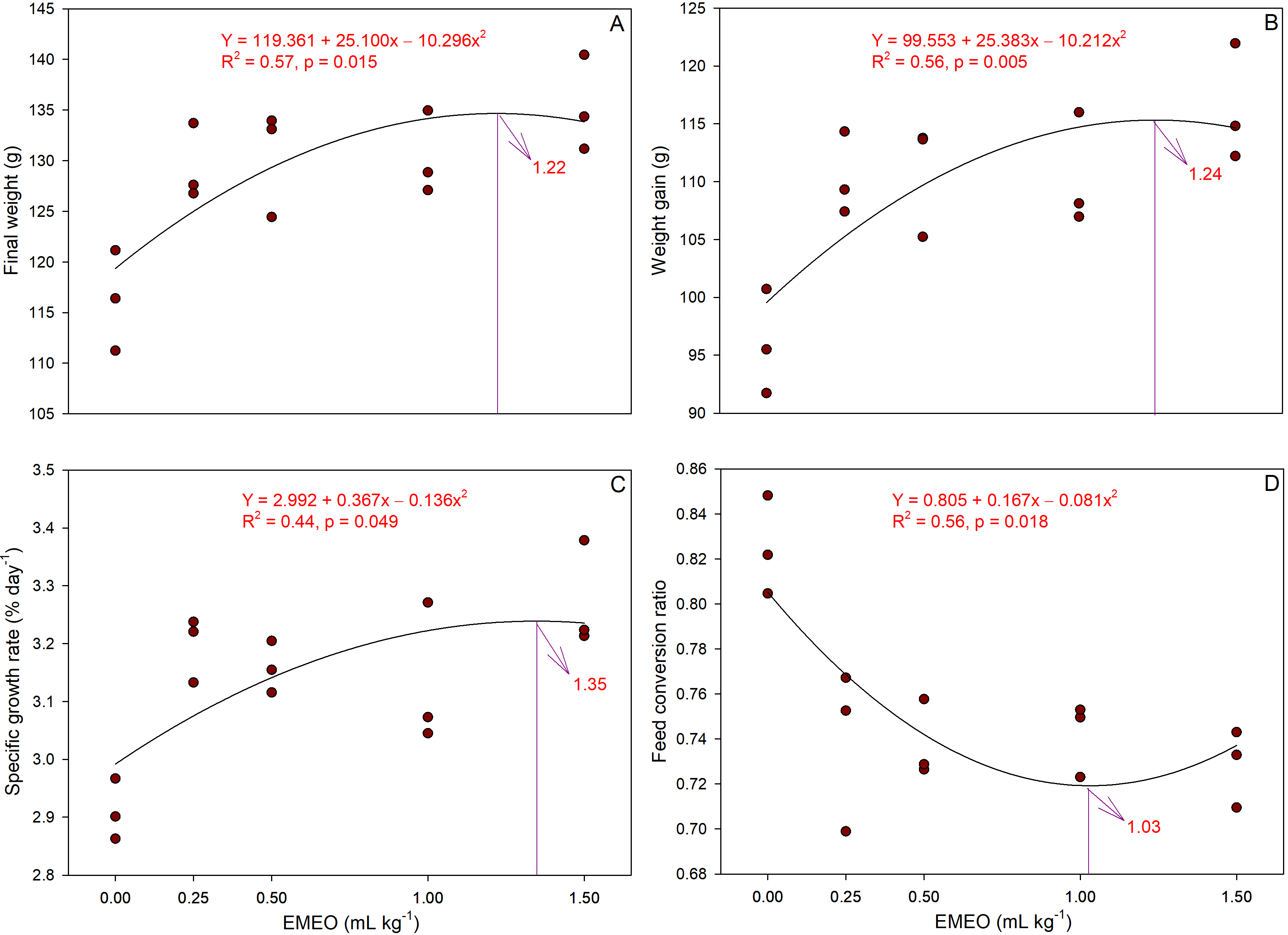
Similarly, Tukey’s test indicated that animals fed EMEO diets (0.25–1.50 mL kg−1) showed significant increases in growth performance variables and a significant reduction in FCR compared with the control group. Fish that received 1.50 mL EMEO kg−1 showed significantly higher feed intake values than those in the control group (p < 0.05; Table 2). The estimated dietary EMEO requirement, determined by second-order polynomial regression, was 1.03, 1.22, 1.24, and 1.35 mL kg−1 for FCR, final weight, weight gain, and SGR, respectively (Figure 1A–D).

3.2. Biochemical Analysis

Before transport, linear regression analysis showed that increased dietary EMEO was associated with increased plasma glucose and total liver protein levels. Quadratic regression showed increased plasma total protein levels and reduced hepatic AST activity. After car transport, hepatic AST activity showed a negative linear effect. In addition, quadratic regression showed that plasma glucose and total liver protein levels decreased, while hepatic glycogen levels increased, as dietary EMEO levels increased. A quadratic relationship was also found for total plasma protein, with the lowest values occurring in the 0.50 mL EMEO kg−1 treatment (p < 0.05; Table 3).
Additionally, Tukey’s test showed that, before transport, fish receiving 1.50 mL EOEM kg−1 generally had significantly higher total plasma protein levels than those receiving other diets. For hepatic AST activity, the opposite was observed: it was significantly higher in the 0.0 and 0.25 mL EOEM kg−1 treatments than in the others. After car transport, these same treatments (0.0 and 0.25 mL EOEM kg−1) resulted in significantly higher plasma glucose levels and hepatic AST activity than the other treatments. The opposite was observed for hepatic glycogen, where juveniles fed 1.00 and 1.50 mL EOEM kg−1 showed significantly higher levels than the other juveniles. Total protein findings varied according to the tissue analyzed, with significantly lower values than in the other treatments in plasma and liver for the 0.50 and 1.50 mL EOEM kg−1 treatments, respectively (p < 0.05; Table 3).
No regression or significant difference was found between treatments for triglycerides, total cholesterol, and plasma albumin and liver glycogen before transport nor for plasma albumin and AST after transport (p > 0.05; Table 3).

3.3. Hematological Variables

A positive linear effect was observed for hemoglobin after transport. According to quadratic regression, there was a reduction in MCV and hematocrit and an increase in MCHC both before and after car transport and an increase in erythrocytes before transport, as the concentration of EMEO was supplemented in the diet (p < 0.05; Table 4).
According to the Tukey test, before transport, the control group showed significantly higher hematocrit and MCV values and significantly lower MCHC values than the other treatments. Furthermore, after transport, fish fed 0.00 and 0.25 mL EMEO kg−1 showed significantly higher hematocrit and MCV values when compared to those fed diets between 0.50 and 1.50 mL EMEO kg−1. For MCHC, the 1.50 mL EMEO kg−1 treatment showed significantly higher values than the other treatments after transport (p < 0.05). No regression or significant difference was found between treatments for hemoglobin before transport, nor for erythrocytes and MCH after car transport (p > 0.05; Table 4).

3.4. Histological Analysis

Before transport, linear regression analysis showed that increased dietary EMEO was associated with increased villus height in the anterior and posterior intestine, as well as increased villus thickness and goblet cell density in the posterior intestine. According to Tukey’s test, for both the foregut and hindgut, the control group showed significantly lower villus height than the group fed 1.50 mL EMEO kg−1 (and also than 1.00 mL EMEO kg−1 in the hindgut) (p < 0.05; Table 5).
Before transport, in the liver, a quadratic effect was observed for hepatocyte area and perimeter, as well as for nuclear area and perimeter, with the lowest values observed in the control group. Similarly, Tukey’s test showed that the control treatment presented significantly lower values for hepatic histological parameters—hepatocyte area and perimeter and nuclear area and perimeter—compared to the other treatments (p < 0.05). No regression or significant difference was found between treatments for villi width, thickness, and goblet cells in the foregut, nor for thickness in the hindgut (p > 0.05; Table 5).
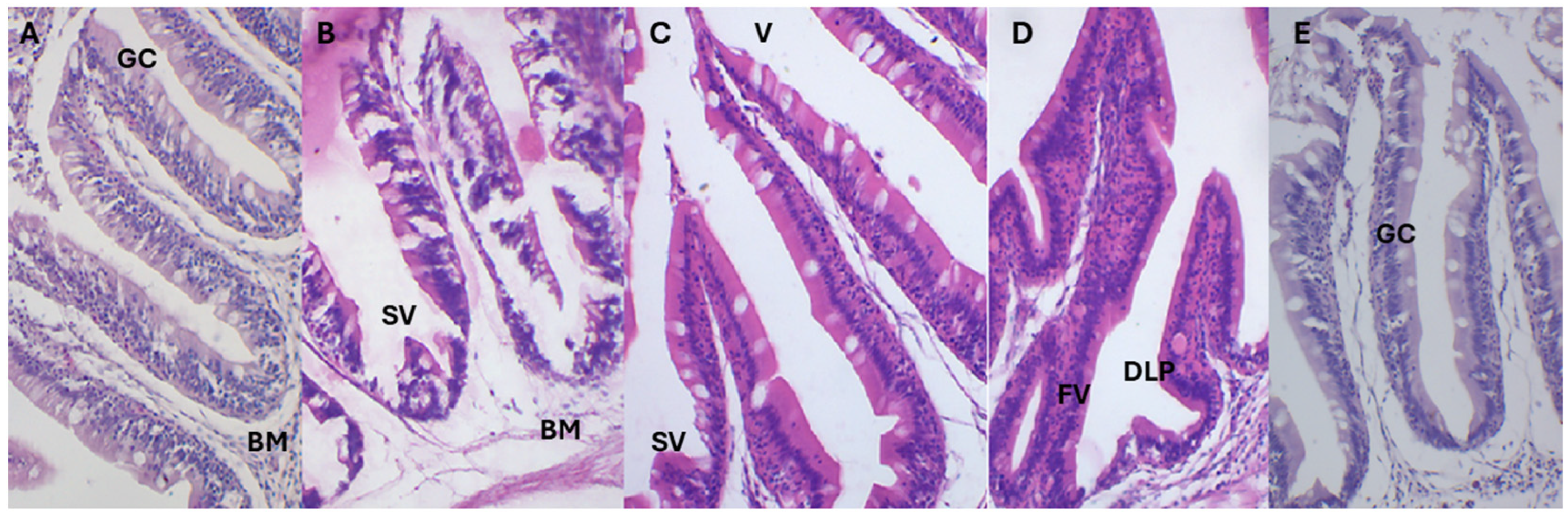
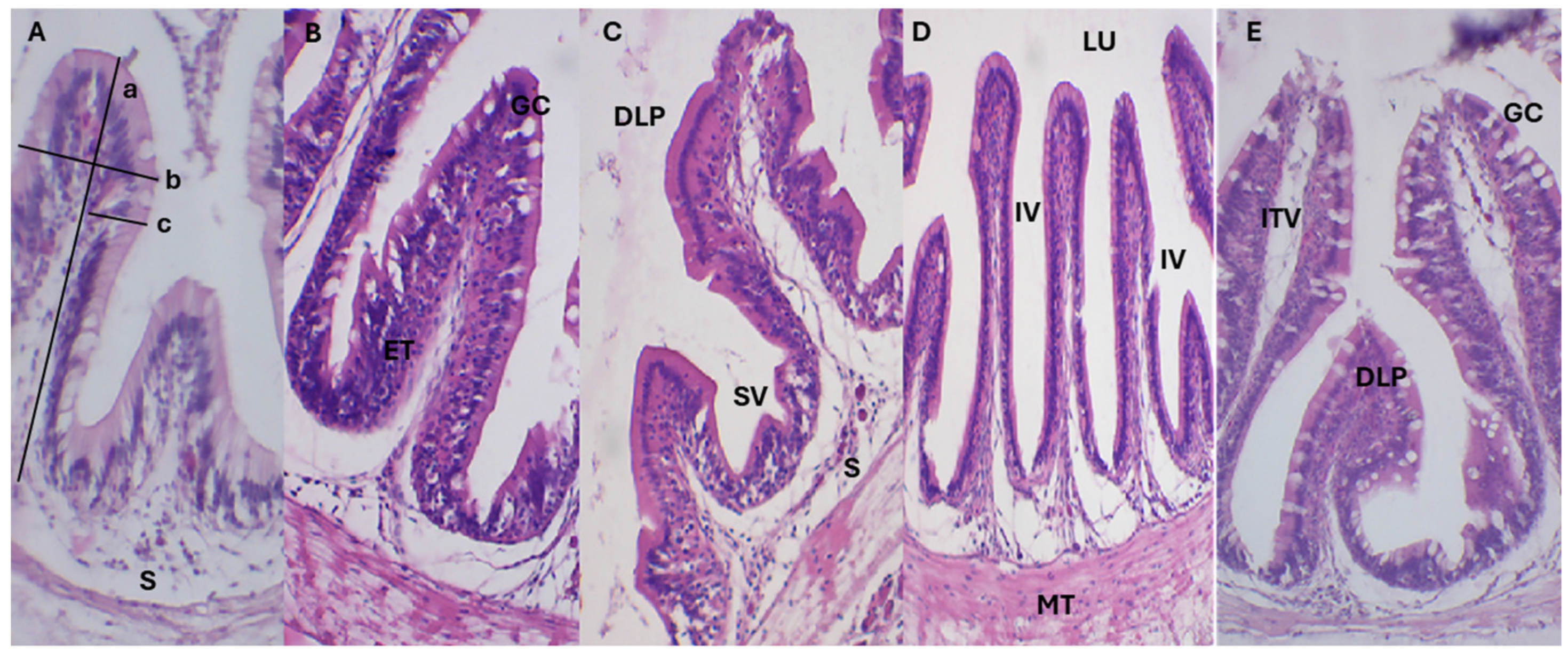
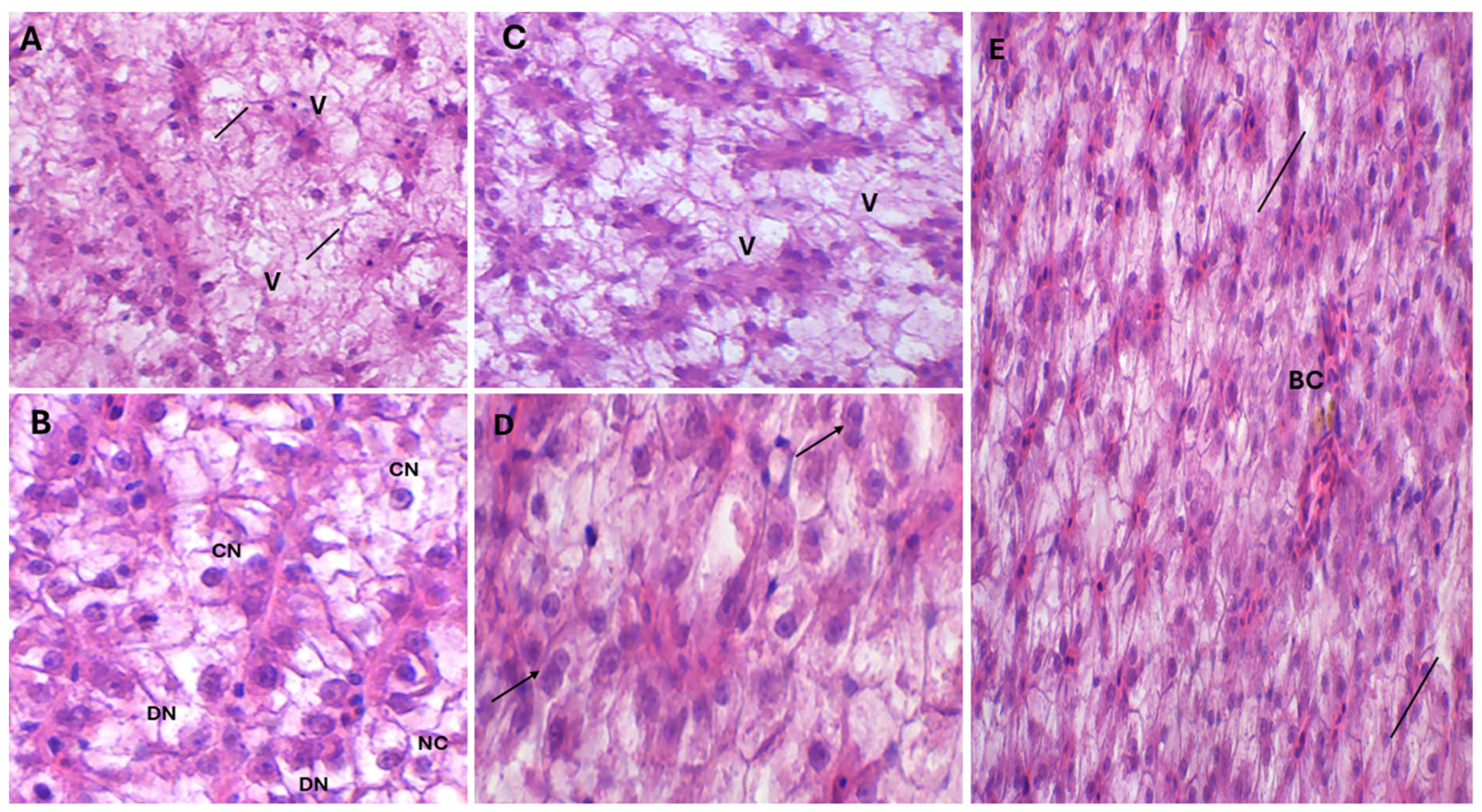
Histological analyses revealed that the fish were healthy and that, as the EMEO concentration in the diet increased, liver and intestinal function should have improved. In the intestine, both in the anterior (Figure 2) and posterior (Figure 3) portions, healthy villi were observed for all treatments, showing an augmented number of goblet cells in the posterior portion for fish fed the highest levels of EMEO in the diet (1.00 and 1.50 mL kg−1). In the liver, healthy structures were also observed in all treatments, with a lower prevalence of vacuolization reported in the 1.00 and 1.50 mL EMEO kg−1 treatments (Figure 4).

3.5. Oxidative Stress and Antioxidant Enzymes

After car transport, the increase in EMEO in the diets had a positive linear effect on SOD and FRAP. For PC and MDA, a quadratic relationship was observed, with the lowest values in fish receiving diets with EMEO levels between 0.00 and 1.00 (PC) and 0.25 and 0.50 (MDA) mL kg−1. Furthermore, Tukey’s test showed that the control group had significantly lower FRAP and PC values than the group fed 1.50 mL EMEO kg−1. For MDA, juveniles supplemented with 0.25 and 0.50 mL EMEO kg−1 presented significantly lower values than those supplemented with 0.00 and 1.50 mL EMEO kg−1 (p < 0.05). No regression or significant difference was found between treatments for CAT, SOD, and NO (p > 0.05; Table 6).

3.6. Intestinal Enzymes

After car transport, a quadratic regression analysis showed that dietary EMEO levels affected intestinal amylase, lipase, and alkaline protease activities, with the 1.00 mL EMEO kg−1 treatment standing out. According to Tukey’s test, intestinal amylase activity was significantly higher in fish fed 0.50 and 1.00 mL EMEO kg−1 than in fish fed other diets. For intestinal lipase and alkaline protease, activities were significantly higher in juveniles supplemented with EMEO levels between 0.50 and 1.50 mL kg−1 compared to other juveniles (p < 0.05; Table 7).

4. Discussion

The current study demonstrated that including EMEO in the Nile tilapia aquafeed improved feed efficiency and growth performance parameters. All dietary EMEO levels tested (0.25–1.50 mL kg−1) showed improvements in final weight, weight gain, RWG, SGR, feed intake, and FCR compared to the control group (0.0 mL EMEO kg−1). These growth and consumption parameters showed progressive improvement with increasing EMEO inclusion, as indicated by regression analysis. In addition, the second-order polynomial model of these parameters indicated an optimal inclusion level between 1.02 and 1.35 mL EMEO kg−1.
Interestingly, in this study, FCR was 0.84, whereas it was below 0.74 in the other groups. The reduced FCR was influenced by several factors, such as fish health, low stocking density, optimal environmental conditions (water quality, reduced handling or disturbance, and recirculating aquaculture systems), and feed quality. The EMEO used in this study stands out for its high citral content (73.91%), which may explain the observed improvement in fish growth performance.
These results were expected because, although no studies have examined EMEO supplementation in fish diets, other citral-rich essential oils added to fish feed have already shown positive effects on growth performance. In addition, previous studies on citral-rich essential oils have reported similar effects in Nile tilapia. Dietary supplementation with the essential oils of Cymbopogon flexuosus (2.0 mL kg−1; 89% citral) and Aloysia triphylla (2.0 mL kg−1; 40% citral) increased growth and consumption parameters and reduced FCR in this species [21,23]. Additionally, dietary supplementation with Cymbopogon citratus essential oil (200–400 mg kg−1; 59.55% citral and 2.0 mL kg−1; majority of citral not detailed) enhanced feed utilization and growth indices in these fish species [49,50]. Similarly, in the other fish species, promising results were also found. The essential oils of A. triphylla (2.00 mL kg diet−1; 50% citral) and C. citratus (0.25–0.50 mL kg−1; 73.56% citral) increased the zootechnical performance of silver catfish (Rhamdia quelen) and tambaqui (Colossoma macropomum) [26,32]. In common snook (Centropomus undecimalis) and lebranche mullet (Mugil liza), dietary citral (0.50 and 2.0 mL kg−1, respectively) also improved growth and feed efficiency [51,52]. As shown, citral-rich essential oils are important alternatives for formulating practical fish diets. The choice of dietary supplements should take into account several factors, such as the availability of essential oils, organic production, product quality, and the level of citral, a major component. In this respect, EMEO can be advantageous compared to other essential oils, as it contains approximately 80% citral.
Citral is known for its functional properties, which enhance physiological responses in fish by improving metabolic efficiency, promoting gastrointestinal health, and increasing nutrient absorption [53,54]. Citral also has the potential to exert antimicrobial activity [21,55], enhance immune markers [51,55], and induce endogenous antioxidant proteins, thereby strengthening antioxidant defenses [19,56]. These benefits of citral likely contributed to the results of the present study, as aquafeeds that improve digestive enzyme activity and gut morphology while reducing oxidative damage tend to result in better growth rates and FCR [49,50]. In our study, fish fed EMEO diets showed improvements in gut morphology. In addition, when subjected to transport stress (6 h), they exhibited increased intestinal amylase and lipase activities, as well as enhanced liver antioxidant responses.
Histological parameters are widely used as indicators of digestive efficiency, nutrient absorption, and the overall physiological status of fish [25]. In the present study, morphological analyses of the anterior and posterior intestinal regions did not reveal structural alterations that could impair intestinal function, indicating that the juveniles were healthy. This is an important finding, as the capacity for nutrient assimilation depends on intestinal morphology and villus surface area [25] and can even improve intestinal motility [57]. The observed increase in villus height and thickness in fish fed EMEO (especially at higher inclusion levels) indicates an expansion of the intestinal absorptive area, thereby enhancing nutrient digestion efficiency [58]. Furthermore, this increase may enhance mucosal integrity [24,59], as evidenced by improved productive performance in fish fed EMEO-supplemented diets.
Another critical finding of our study was the increase in the number of goblet cells in the hindgut. These cells contribute to intestinal function by secreting mucus that supports nutrient absorption. Díaz et al. [60] and Inami et al. [61] reported that an increase in goblet cell number enhanced the transport of macromolecules across the intestinal membrane in Atlantic cod (Gadus morhua) and striped weakfish (Cynoscion guatucupa). Despite their role in nutrient absorption, their primary function is to reinforce the intestinal barrier and support the microbiota [62]. There is a positive relationship between increased mucus production and anti-inflammatory effects that improve mucosal health, contributing to the maintenance of digestive tract homeostasis and the protection of enterocytes [63]. These changes may indirectly favor nutrient absorption. Moreover, although the most pronounced increases in villus area and goblet cell number were observed in the hindgut rather than in the foregut (where nutrient absorption is typically higher), this finding should not be overlooked. Increased villus development in the hindgut also expands the surface area available for nutrient absorption [64]. It may help explain the increased weight gain observed in Nile tilapia fed EMEO-supplemented diets in the current study.
Goblet cells secrete mucus that protects the intestine and shapes the luminal environment, thereby favoring nutrient absorption. In fish, changes in goblet cell number and villus morphology are often associated with alterations in digestive enzyme activity [62,65,66]. The results of this study indicated that dietary supplementation with EMEO positively modulated amylase (0.50–1.00 mL kg−1) and lipase (0.50–1.50 mL kg−1) activities but did not affect intestinal alkaline protease activity. The efficiency of carbohydrate and lipid digestion depends primarily on the activity of intestinal amylases and lipases, respectively [23]. These responses may be related to the presence of bioactive compounds in essential oils rich in monoterpenes (such as citral), which can stimulate digestive secretions, promote efficient digestion and nutrient absorption [21,26,54,56,58], and ultimately improve nutrient utilization and growth.
In Nile tilapia, there is strong evidence that essential oils (including those rich in citral) increase digestive enzyme activity and improve intestinal morphology, with larger villi and increased goblet cell numbers, as reported in a meta-analysis by Orzuna-Orzuna and Granados-Rivera [67]. Similar results have been reported in other studies with juveniles of this species fed diets supplemented with different essential oils. Increased intestinal villus height has been observed in aquafeed supplemented with 0.5 or 1.0 mL kg−1 of ginger (Zingiber officinale) essential oil [24] or blends of essential oils [68]. Dietary supplementation with microencapsulated essential oils containing cinnamaldehyde, thymol, and carvacrol (500 mg kg−1) increased intestinal fold size and goblet cell number [59]. Similar results were also reported in other fish species. Supplementation with isolated citral (1.3 mL kg−1) or May Chang (Litsea cubeba) essential oil (100–200 mg kg−1; 65.91% citral) improved intestinal absorptive area in Brazilian sardinella (Sardinella brasiliensis) [53] and in channel catfish (Ictalurus punctatus) [54]. Citral-rich essential oils or isolated citral can also enhance intestinal enzyme activity in Nile tilapia, common snook, tambaqui, and Brazilian sardinella, thereby improving feed conversion and weight gain [21,26,49,53,68].
Another crucial result of the current study was the elevation of hepatic enzymatic (SOD) and non-enzymatic (FRAP) antioxidants in fish fed EMEO for 60 days and then subjected to car transport for 6 h. This improvement occurred across all treatments with EMEO supplementation in the aquafeed, with the highest inclusion level (1.50 mL kg−1) showing the highest effect. Improving antioxidant action not only mitigates oxidative stress-induced damage but also prevents cellular aging and strengthens immune defenses against disease [8,9,66]. Thus, the increase in liver SOD and FRAP activities suggests that the bioactive compounds present in EMEO may enhance the antioxidant system, assisting in maintaining homeostasis and regulating ROS action that could otherwise damage cellular tissues and inactivate key enzymes [19,22,49,67]. In this study, the antioxidant activity of EMEO may be related to citral, its main compound, which is known for its antioxidant activity [49], thereby decomposing free radicals and neutralizing ROS.
Additionally, in the 0.25 and 0.50 mL EMEO kg−1 treatments, a reduction in hepatic MDA levels was observed compared with the most extreme levels tested (0.0 and 1.50 mL kg−1). MDA is a known byproduct of LPO, a process in which free radicals attack membrane lipids [9]. Therefore, adding EMEO to Nile tilapia diets at levels of 0.25–0.50 mL kg−1 may reduce LPO-induced damage to proteins, enzymes, and the plasma membrane [8]. These effects may be linked to the presence of major compounds such as citral, which is known to increase antioxidant activity and reduce markers of LPO [20].
In addition to MDA, PC is another biomarker widely used to indicate oxidative protein damage in animals. Both increases and decreases in PC can reflect oxidative processes. Mild increases in carbonylation may signal the upregulation of antioxidant defenses, whereas sustained high levels are associated with dysfunction and disease [9,69]. In our study, only the 1.50 mL EMEO kg−1 treatment increased hepatic PC activity. This result is consistent with the increased antioxidant activity observed for SOD and FRAP in the same treatment, suggesting that liver oxidative damage was avoided. This is an important finding because, if not properly regulated, ROS can damage proteins, lipids, and DNA and induce inflammation [70]. Thus, a combined assessment of all oxidative stress parameters indicates that treatments at 0.25–1.00 mL EMEO kg−1 alter the liver redox state, reducing ROS damage in fish subjected to transport stress.
Another finding corroborating the absence of liver damage was observed in histological analysis and in liver AST enzyme activity. Histological changes in the liver can indicate compromised nutritional status since it is a fundamental organ in nutrient metabolism [24,25]. In addition to no liver lesions being observed, dietary supplementation with EMEO (0.25–1.50 mL kg−1) promoted an increase in the area and perimeter of hepatocytes. These morphological changes suggest increased hepatic metabolic activity, as the liver plays a central role in regulating energy metabolism, protein synthesis, and the storage of energy reserves [21,23,52].
Aminotransferases are commonly used as indirect markers of hepatocellular integrity, and their reduction may indicate decreased metabolic overload and reduced transamination, thereby reducing the use of amino acids for energy production [22]. In our study, a reduction in liver AST activity occurred before and after car transport in fish fed diets containing 0.50–1.50 mL EMEO kg−1. These effects may be associated with the presence of citral, recognized for its antioxidant, immunological, anti-inflammatory, and metabolism-stimulating properties [49,51,53,54,70], suggesting that citral-rich EMEO may exert a hepatoprotective effect in fish.
In the present study, during the experimental period (60 days), the energy required for the maintenance of physiological functions and for fish growth appears to have been supplied by increased plasma glucose and total protein levels in fish fed diets supplemented with EMEO, as well as by hepatic glycogen reserves and plasma cholesterol, which remained similar among the different treatments. However, after a transport challenge (acute stressor), metabolic changes are expected [5,7]. These alterations were observed in this study, particularly in the control group, where increases in glycemia and total protein, along with hepatic glycogen mobilization, were detected.
As mentioned above, total plasma protein levels differed between treatments before and after transport. Elevated total plasma protein, without a concomitant increase in transaminases (e.g., AST), suggests improved nutritional status and baseline metabolic condition [71]. In the present study, this finding was correlated with growth performance, as EMEO levels increased in the juveniles’ diets. However, when changes in this parameter result from stress, they may be associated with both energy mobilization and redistribution of body fluids [72]. In our study, after the car transport challenge, the smallest changes in this metabolite were observed in treatments with 0.50 and 1.00 mL EMEO kg−1.
In fish, elevated glycemia under non-stress conditions is generally associated with alterations in energy metabolism [73]. In the current study, the increase in glycemia observed in fish fed EMEO for 60 days may have been driven by bioactive compounds present in the essential oils [6,10]. Conversely, under transport challenge, glycemia may also increase, which, in this case, is associated with a stress response [2,5,7]. Despite this, in our study, the fish did not present hyperglycemia. Conversely, the groups fed EMEO had the highest blood glucose levels and the best growth and feed intake responses. According to Miranda de Souza et al. [73], in a study evaluating glucose tolerance in six fish species, Nile tilapia showed basal glucose levels around 90 mg dL−1. In contrast, our findings showed glycemia values ranging from 65.77 to 92.24 mg dL−1.
Thus, the glycemic response observed during the experimental period (before transport) in juveniles receiving EMEO should be interpreted as an important metabolic adjustment that promotes enhanced growth, as confirmed by our zootechnical data. Furthermore, the increase in glucose may have been stored as glycogen or converted into lipids. This suggests the use of hepatic glycogen and plasma cholesterol as energy sources [74]. These parameters (glycogen and cholesterol) remained similar between the control and EMEO-fed groups. In an integrative context, improved growth performance and higher plasma glucose levels were associated with increasing EMEO supplementation in Nile tilapia aquafeed. This relationship suggests that excess glucose was mobilized to support tissue growth. After transport, fish supplemented with EMEO showed higher efficiency in utilizing their energy reserves.
Following transport, EMEO treatments also resulted in reduced total liver protein and higher hepatic glycogen preservation. Thus, the behavior of total hepatic protein, together with hepatic AST activity, indicates reduced amino acid catabolism, metabolic overload, and hepatic stress [71]. Furthermore, the higher hepatic glycogen reserves suggest lower energy expenditure under stress conditions [74]. These findings may be associated with the presence of citral, which modulates hepatic metabolism and may have contributed to improved glucose utilization efficiency [75], thereby characterizing a state of metabolic homeostasis in the fish.
Finally, hematological assessment is essential for understanding the physiological state and stress response capacity in fish [76]. During the experimental period, juveniles fed increasing levels of EMEO showed a compensatory response. Hematocrit and MCV decreased, while erythrocyte count and MCHC increased. Hemoglobin concentration remained unchanged. After car transport, a similar pattern was observed: hemoglobin increased while hematocrit decreased as EMEO levels in the diet increased. Although it may seem paradoxical, a decrease in hematocrit and VCM with an increase in erythrocyte count, hemoglobin, and MCHC can reflect plasma expansion outpacing cell increase or indicate alterations in red blood cell size and packing, leading to smaller, more hemoglobin-dense cells [77]. These processes can act in a compensatory manner, that is, raise cell number and hemoglobin concentration per cell while reducing average cell size and the fraction of blood volume occupied by cells [78].
Furthermore, erythrocytes increased in all treatments after transport. That was expected, because even if the bags are filled with pure oxygen, transporting fish in sealed plastic bags is a strong stressor, and the rise in erythrocyte count may be a response to meet the higher oxygen demand under stress. However, these physiological adjustments did not appear to compromise oxygen transport capacity or overall homeostasis. This is supported by the other investigated parameters, which indicated improved nutritional status and metabolism in fish receiving EMEO supplementation.
In the present study, dissolved oxygen levels remained within satisfactory levels for the fish (5.50 mg O2 L−1). Although these levels did not compromise water quality, the measured values for total ammonia (1.75 mg N NH3 L−1) and nitrite (0.15 mg N NO2 L−1) after transport are concerning. While these values were similar across treatments, this reveals that in situations involving long-distance car transport (e.g., 6 h), extreme caution is necessary. When nitrogen compounds accumulate in water, toxic levels can be reached in fish tissues, affecting osmoregulation and physiology [5,7]. In our study, the fish underwent a 16 h fasting period before transport, and we suggest that, in future studies and in practical fish farming, the fasting period should be longer.

5. Conclusions

Natural dietary supplementation with EMEO improved growth performance, feed efficiency, and intestinal and hepatic health in Nile tilapia juveniles. It also enhanced digestive, antioxidant, and hematobiochemical responses, particularly under car transport stress, indicating increased physiological resilience. Based on the results, mainly on quadratic modeling for growth performance and FCR, 1.03–1.35 mL EMEO kg−1 in the diet is recommended to promote weight gain and maintain metabolic homeostasis. These effects are likely associated with the high citral content of EMEO. As a suggestion for future studies, they should investigate interactions with other dietary components and the applicability of EMEO across different species and farming conditions to support its use as a functional additive in aquaculture. Other valuable suggestions include conducting fatty acid composition analysis and sensory analysis tests.

Author Contributions

Conceptualization: C.E.C. Methodology: A.d.S.R. and C.E.C. Validation: L.L.d.O., R.F.-S. and D.S. Formal analysis: A.d.S.R., R.C.d.S., R.S.M., A.P.O.d.M., G.C.d.S.S. and S.C. Investigation: A.d.S.R., J.F.B.M., D.R.d.R. and C.E.C. Resources: C.E.C., L.L.d.O., R.F.-S., J.F.B.M., D.R.d.R. and D.S. Data curation: A.d.S.R., R.C.d.S., R.S.M., A.P.O.d.M., G.C.d.S.S. and S.C. Writing—original draft preparation: A.d.S.R. and C.E.C. Writing—review and editing: C.E.C. Supervision and project administration: C.E.C. All authors have read and agreed to the published version of the manuscript.

Funding

The authors are grateful to the CNPq (Conselho Nacional de Desenvolvimento Científico e Tecnológico, Brazil) for the research fellowships provided to C.E. Copatti (# PQ 303337/2025-7), D. Schmidt (# PQ 314827/2021-8), L.L. Oliveira (# PQ 306887/2022-3), and A.S. Rocha (140580/2024-7).

Institutional Review Board Statement

This study was conducted in accordance with the requirements of and approved by the Committee on Ethics in the Use of Animals at the Federal University of the São Francisco Valley (UNIVASF), Petrolina, Brazil. (Approval code: Protocol Number 0001/250424; approval date: 25 April 2024.).

Data Availability Statement

Data are contained within the article.

Conflicts of Interest

There are no conflicts of interest.

References

  1. FAO—Food and Agriculture Organization of the United Nations. The State of the World’s Land and Water Resources for Food and Agriculture: The Potential to Produce More and Better; FAO: Rome, Italy, 2025. [Google Scholar]
  2. Lemos, C.H.P.; De Oliveira, C.P.B.; De Oliveira, I.C.; Lima, A.O.; Couto, R.D.; Vidal, L.V.O.; Copatti, C.E. Responses to graded levels of zinc amino acid complex in Nile tilapia (Oreochromis niloticus). Vet. Res. Comm. 2024, 48, 1025–1036. [Google Scholar] [CrossRef]
  3. Lemos, C.H.P.; Santos, A.A.; De Oliveira, C.P.B.; Silva, I.S.; Couto, R.D.; Braga, L.G.T.; Vidal, L.V.O.; Copatti, C.E. Zinc-L-Selenomethionine improves growth and hemato-biochemical parameters at low but not at high stocking density for Nile tilapia males. Biol. Trace Elem. Res. 2025, 203, 4807–4819. [Google Scholar] [CrossRef]
  4. Emam, W.; Lambert, H.; Brown, C. The welfare of farmed Nile tilapia: A review. Front. Vet. Sci. 2025, 12, 1567984. [Google Scholar] [CrossRef] [PubMed]
  5. Oliveira, I.C.; Oliveira, R.S.M.; Lemos, C.H.P.; de Oliveira, C.P.B.; Felix e Silva, A.; Lorenzo, V.P.; Lima, A.O.; Cruz, A.L.; Copatti, C.E. Essential oils from Cymbopogon citratus and Lippia sidoides in the anesthetic induction and transport of ornamental fish Pterophyllum scalare. Fish. Physiol. Biochem. 2022, 48, 501–519. [Google Scholar] [CrossRef] [PubMed]
  6. Martos-Sitcha, J.A.; Mancera, J.M.; Prunet, P.; Magnoni, L.J. Editorial: Welfare and stressors in fish: Challenges facing aquaculture. Front. Physiol. 2020, 11, 162. [Google Scholar] [CrossRef] [PubMed]
  7. Castro Neto, O.P.A.; Correia-Silva, P.J.; Silva, I.S.; Santos, A.A.; Rocha, A.S.; Couto, R.D.; Silva, E.S.; Schmidt, D.; Copatti, C.E. Use of essential oil from Aloysia citrodora Paláu in anesthesia and simulated transport of tambaqui Colossoma macropomum (Cuvier 1826) at two different cargo densities. Fishes 2025, 10, 448. [Google Scholar] [CrossRef]
  8. Lushchak, V.I. Environmentally induced oxidative stress in aquatic animals. Aquat. Toxicol. 2011, 101, 13–30. [Google Scholar] [CrossRef]
  9. Hoseinifar, S.; Yousefi, S.; Van Doan, H.; Ashouri, G.; Gioacchini, G.; Maradonna, F.; Carnevali, O. Oxidative stress and antioxidant defense in fish: The implications of probiotics, prebiotics, and synbiotics. Rev. Fish. Sci. Aquac. 2020, 29, 198–217. [Google Scholar] [CrossRef]
  10. Pereira, G.A.; Copatti, C.E.; Rocha, A.S.; Marchão, R.S.; de Santana, A.S.; Rocha, D.R.; Da Costa, M.M.; Almeida, J.R.G.S.; De Figueiredo, R.A.C.R.; De Souza, A.M.; et al. Physiological and growth responses of tambaqui (Colossoma macropomum) fed Croton conduplicatus essential oil and challenged with Aeromonas hydrophila. Vet. Res. Commun. 2025, 49, 58. [Google Scholar] [CrossRef]
  11. Yuan, M.; Wang, J.; Mei, J.; Xie, J. Mechanisms of laurel (Laurus nobilis) essential oil on oxidative stress and apoptosis in hybrid grouper (Epinephelus fuscoguttatus♀ × Epinephelus lanceolatus♂) during keep live transport. Fishes 2025, 10, 436. [Google Scholar] [CrossRef]
  12. Mohammed, E.A.H.; Kovács, B.; Kuunya, R.; Mustafa, E.O.A.; Abbo, A.S.H.; Pál, K. Antibiotic resistance in aquaculture: Challenges, trends analysis, and alternative approaches. Antibiotics 2025, 14, 598. [Google Scholar] [CrossRef]
  13. Cabello, F.C. Heavy use of prophylactic antibiotics in aquaculture: A growing problem for human and animal health and for the environment. Environ. Microbiol. 2006, 8, 1137–1144. [Google Scholar] [CrossRef] [PubMed]
  14. Pelić, D.L.; Radosavljević, V.; Pelić, M.; Živkov Baloš, M.; Puvača, N.; Jug-Dujaković, J.; Gavrilović, A. Antibiotic residues in cultured fish: Implications for food safety and regulatory concerns. Fishes 2024, 9, 484. [Google Scholar] [CrossRef]
  15. Bondad-Reantaso, M.G.; MacKinnon, B.; Karunasagar, I.; Fridman, S.; Alday-Sanz, V.; Brun, E.; Le Groumellec, M.; Li, A.; Surachetpong, W.; Karunasagar, I.; et al. Review of alternatives to antibiotic use in aquaculture. Rev. Aquac. 2023, 15, 1421–1451. [Google Scholar] [CrossRef]
  16. Sutili, F.J.; Gatlin, D.M.; Heinzmann, B.M.; Baldisserotto, B. Plant essential oils as fish diet additives: Benefits on fish health and stability in feed. Rev. Aquac. 2018, 10, 716–726. [Google Scholar] [CrossRef]
  17. Nakatsu, T.; Lupo, A.T.; Chinn, J.W.; Kang, R.K.L. Biological activity of essential oils and their constituents. Stud. Nat. Prod. Chem. 2000, 21, 571–631. [Google Scholar] [CrossRef]
  18. Valladão, G.M.R.; Gallani, S.U.; Pala, G.; Jesus, R.B.; Kotzent, S.; Costa, J.C.; Silva, T.F.A.; Pilarski, F. Practical diets with essential oils of plants activate the complement system and alter the intestinal morphology of Nile tilapia. Aquac. Res. 2017, 48, 5640–5649. [Google Scholar] [CrossRef]
  19. Zeppenfeld, C.C.; Saccol, E.M.H.; Pês, T.S.; Salbego, J.; Koakoski, G.; dos Santos, A.C.; Heinzmann, B.M.; Cunha, M.A.; Barcellos, L.J.G.; Pavanato, M.A.; et al. Aloysia triphylla essential oil as food additive for Rhamdia quelen—Stress and antioxidant parameters. Aquac. Nutr. 2017, 23, 1362–1367. [Google Scholar] [CrossRef]
  20. De Freitas Souza, C.; Baldissera, M.D.; Bianchini, A.E.; da Silva, E.G.; Mourão, R.H.V.; da Silva, L.V.F.; Schmidt, D.; Heinzmann, B.M.; Bernardo Baldisserotto, B. Citral and linalool chemotypes of Lippia alba essential oil as anesthetics for fish: A detailed physiological analysis of side effects during anesthetic recovery in silver catfish (Rhamdia quelen). Fish. Physiol. Biochem. 2018, 44, 21–34. [Google Scholar] [CrossRef]
  21. De Souza, R.C.; Baldisserotto, B.; Melo, J.F.B.; Da Costa, M.M.; De Souza, E.M.; Copatti, C.E. Dietary Aloysia triphylla essential oil on growth performance and biochemical and haematological variables in Nile tilapia. Aquaculture 2020, 519, 734913. [Google Scholar] [CrossRef]
  22. Abdel-Tawwab, M.; Samir, F.; Abd El-Naby, A.S.; Monier, M.N. Dietary essential oils improved growth performance, biochemical variables, antioxidative status and resistance of Nile tilapia (Oreochromis niloticus) to environmental stress. Aquaculture 2020, 528, 735–742. [Google Scholar]
  23. Souza, E.M.; De Souza, R.C.; Melo, J.F.B.; Da Costa, M.M.; Souza, S.A.; Souza, A.M.; Copatti, C.E. Cymbopogon flexuosus essential oil as an additive improves growth, biochemical and physiological responses and survival against Aeromonas hydrophila infection in Nile tilapia. An. Acad. Bras. Ciênc. 2020, 92, 20190140. [Google Scholar] [CrossRef]
  24. Chung, S.; Ribeiro, K.; Melo, J.F.B.; Teixeira, D.V.; Vidal, L.V.O.; Copatti, C.E. Essential oil from ginger influences the growth, haematological and biochemical variables and histomorphometry of intestine and liver of Nile tilapia juveniles. Aquaculture 2021, 534, 736325. [Google Scholar] [CrossRef]
  25. Chung, S.; Ribeiro, K.; Teixeira, D.V.; Copatti, C.E. Inclusion of essential oil from ginger in the diet improves physiological parameters of tambaqui juveniles (Colossoma macropomum). Aquaculture 2021, 543, 736934. [Google Scholar] [CrossRef]
  26. Copatti, C.E.; Felix E Silva, A.; Lorenzo, V.P.; Da Costa, M.M.; Melo, J.F.B. Addition of essential oil from lemongrass to the tambaqui (Colossoma macropomum) diet: Effects on growth, intestinal enzymes, haematological and metabolic variables, and antimicrobial challenge. Aquac. Res. 2022, 53, 5656–5666. [Google Scholar] [CrossRef]
  27. Braga, R.O.; Martinazzo, A.P.; Teodoro, C.E.S. Alternative control of phytopathogenic bacteria with essential oils of Elionurus latiflorus and Cymbopogon flexuosus. Ciênc. Nat. 2022, 44, 25. [Google Scholar] [CrossRef]
  28. Dzingirai, B.; Muchuweti, M.; Murenje, T.; Chidewe, C.; Benhura, M.A.N.; Chagonda, L.S. Phenolic content and phospholipids peroxidation inhibition by methanolic extracts of two medicinal plants: Elionurus muticus and Hypoxis hemerocallidea. Afric J. Biochem. Res. 2007, 1, 137–141. [Google Scholar]
  29. Chagonda, L.S.; Fungirayi, B. Antifungal activity of the essential oil of Elionurus muticus (Spreng) Kunth from Zimbabwe against Candida albicans, C. krusei, and Cryptococcus neoformans. J. Multidisc Eng. Sci. Technol. 2016, 3, 5331–5335. [Google Scholar]
  30. Yang, Y.; De Cian, M.-C.; Nsikabaka, S.; Tomi, P.; Silou, T.; Costa, J.; Paolini, J. Volatile fraction composition and total phenolic and flavonoid contents of Elionurus hensii—Antioxidant activities of essential oils and solvent extracts. Nat. Prod. Com. 2013, 8, 655–661. [Google Scholar] [CrossRef]
  31. Cruz, N.E.; Martina, P.F.; Brumovsky, T.N.; Ferreyra, D.J.; Heit, C.I.; Herrera, J.L.; Celaya, L.S. Physical-chemical and nutritional assessment of Elionurus muticus (Spreng.): An underutilized medicinal and aromatic plant from South America. Plant Foods Hum. Nutr. 2025, 80, 79. [Google Scholar] [CrossRef]
  32. Zeppenfeld, C.C.; Hernández, D.R.; Santinón, J.J.; Heinzmann, B.M.; Da Cunha, M.A.; Schmidt, D.; Baldisserotto, B. Essential oil of Aloysia triphylla as feed additive promotes growth of silver catfish (Rhamdia quelen). Aquac. Nutr. 2016, 22, 933–940. [Google Scholar] [CrossRef]
  33. Burgess, D.R.; Linstrom, P.J.; Mallard, W.G. NIST Chemistry WebBook; Linstrom, PJ: Gaithersburg, MD, USA, 2016. [Google Scholar]
  34. Correia-Silva, P.J.; Castro Neto, O.P.A.; Silva, I.S.; Caron, B.O.; Copatti, C.E. Essential oil from Elionurus muticus as an anesthetic for Nile tilapia: Evidence of pH-dependent physiological responses. Aquaculture 2026, 621, 744017. [Google Scholar] [CrossRef]
  35. AOAC. Official Methods and Recommended Practices of the American Oil Official Method Chemists’ Society, 7th ed.; AOAC: Urbana, IL, USA, 2017. [Google Scholar]
  36. Blaxhall, P.C.; Daisley, K.W. Routine haematological methods for use with fish blood. J. Fish. Biol. 1973, 5, 771–781. [Google Scholar] [CrossRef]
  37. Bidinotto, P.M.; Moraes, G.; Souza, R.D.S. Hepatic glycogen and glucose in eight tropical freshwater teleost fish: A procedure for field determinations of micro samples. Bol. Técn CEPTA 1997, 1, 53–60. [Google Scholar]
  38. Aebi, H. Catalase in vitro. Métodos em enzimologia. Imprensa Acadêmica 1984, 105, 121–126. [Google Scholar]
  39. Dieterich, S.; Bieligk, U.; Beulich, K.; Hasenfuss, G.; Prestle, J. Gene expression of antioxidative enzymes in the human heart: Increased expression of catalase in the end-stage failing heart. Circulation 2000, 101, 33–39. [Google Scholar] [CrossRef]
  40. Tsikas, D. Analysis of nitrite and nitrate in biological fluids by assays based on the Griess reaction: Appraisal of the Griess reaction in the L-arginine/nitric oxide area of research. J. Chromatogr. B Anal. Technol. Biomed. Life Sci. 2007, 851, 51–70. [Google Scholar] [CrossRef]
  41. Benzie, I.F.; Strain, J.J. The ferric reducing ability of plasma (FRAP) as a measure of “antioxidant power”: The FRAP assay. Anal. Biochem. 1996, 239, 70–76. [Google Scholar] [CrossRef]
  42. Levine, R.L.; Williams, J.A.; Stadtman, E.P.; Shacter, E. Carbonyl assays for determination of oxidatively modified proteins. Meth Enzymol. 1994, 233, 346–357. [Google Scholar] [CrossRef]
  43. Buege, J.A.; Aust, S.D. Microsomal lipid peroxidation. Meth Enzymol. 1978, 52, 302–310. [Google Scholar]
  44. Prophet, E.B.; Mills, B.; Arrington, J.B.; Sobin, L.H. Laboratory Methods in Histotechnology; American Registry of Pathology, Armed Forces Institute of Pathology: Washington, DC, USA, 1992; Volume 279. [Google Scholar]
  45. Schwarz, K.K.; Furuya, W.M.; Natali, M.R.M.; Gaudezi, M.C.; Lima, P.A.G. Mananoligossacarídeo em dietas para larvas de tilápia. Rev. Bras. Zootec. 2011, 40, 2634–2640. [Google Scholar] [CrossRef]
  46. Howard, C.V.; Reed, M. Unbiased Stereology, Three-Dimensional Measurement in Microscopy; BIOS Scientific Publishers: Milton Park, UK, 2005. [Google Scholar]
  47. Gundersen, H.J.G. Notes on the estimation of the numerical density of arbitrary profiles: The edge effect. J. Microsc. 1977, 111, 219–223. [Google Scholar] [CrossRef]
  48. Sarath, G.; De Lamotte, R.S.; Wagner, F.W. Proteases. In Proteolytic Enzymes: A Practical Approach; Beynon, R.J., Bond, J.S., Eds.; Oxford University Press: London, UK, 1889; pp. 25–55. [Google Scholar]
  49. Al-Sagheer, A.A.; Mahmoud, H.K.; Reda, F.M.; Mahgoub, S.A.; Ayyat, M.S. Supplementation of diets for Oreochromis niloticus with essential oil extracts from lemongrass (Cymbopogon citratus) and geranium (Pelargonium graveolens) and effects on growth, intestinal microbiota, antioxidant and immune activities. Aquac. Nutr. 2018, 24, 1006–1014. [Google Scholar] [CrossRef]
  50. Cheyadmi, S.; Chadli, H.; Maadoudi, M.E.; Sedki, S.; Abrini, J.; El Baaboua, A.; Nhhala, H.; Chairi, H. Effect of dietary additives based on essential oils of Lemongrass and Chamomile on the zootechnical performance and physiological stress response of European seabass (Dicentrarchus labrax) in aquaculture. Fish. Physiol. Biochem. 2025, 51, 186. [Google Scholar] [CrossRef] [PubMed]
  51. Michelotti, B.T.; Mori, N.C.; Magnotti, C.C.F.; Heinzmann, B.M.; Almeida, A.P.G.; Cerqueira, V.R.; Baldisserotto, B. Citral as food additive for common snook—Zootechnical parameters and digestive enzymes. Ciênc. Rur. 2020, 50, e20190577. [Google Scholar] [CrossRef]
  52. Mori, N.C.; Michelotti, B.T.; Magnotti, C.C.F.; Bressan, C.A.; Bianchin, L.B.; Sutili, F.J.; Almeida, A.P.G.; Kreutz, L.C.; Pavanato, M.A.; Cerqueira, V.R.; et al. Growth, metabolic, hepatic and redox parameters, digestive enzymes and innate immunity in Mugil liza fed a citral-supplemented diet. Fishes 2024, 9, 240. [Google Scholar] [CrossRef]
  53. Michelotti, B.; Owatari, M.; Magnotti, C.; Klinger, A.; Da Silva Palma, U.; Santos, M.; Descovi, S.; Cerqueira, V.; Costa, S.; Bianchin, L.; et al. Functional assessment of citral dietary supplementation on growth performance, intestinal parameters, and specific activity of the digestive enzymes of Sardinella brasiliensis reared in recirculating aquaculture system. Bol. Inst. Pesca 2024, 50, e85. [Google Scholar] [CrossRef]
  54. Wang, Y.; Liu, Z.; Wang, Z.; Xia, J.; Fu, G. Dietary Litsea cubeba essential oil enhances growth, immunity, and intestinal health in channel catfish. Fish. Shellfish. Immunol. 2025, 165, 110487. [Google Scholar] [CrossRef]
  55. Mohamed, R.A.; Yousef, Y.M.; El-Tras, W.F.; Khalafallaa, M.M. Dietary essential oil extract from sweet orange (Citrus sinensis) and bitter lemon (Citrus limon) peels improved Nile tilapia performance and health status. Aquac. Resh. 2021, 52, 1463–1479. [Google Scholar] [CrossRef]
  56. Dawood, M.A.O.; El Basuini, M.F.; Yilmaz, S.; Abdel-Latif, H.M.R.; Alagawany, M.; Kari, Z.A.; Abdul Razab, M.K.A.; Hamid, N.K.A.; Moonmanee, T.; Van Doan, H. Exploring the roles of dietary herbal essential oils in aquaculture: A review. Animals 2022, 12, 823. [Google Scholar] [CrossRef]
  57. Aguiar, G.A.C.C.d.; Carneiro, C.L.d.S.; Campelo, D.A.V.; Rusth, R.C.T.; Maciel, J.F.R.; Baldisserotto, B.; Zuanon, J.A.S.; Oliveira, A.V.d.; Oliveira, M.G.d.A.; Freitas, M.B.D.d. Effects of dietary peppermint (Mentha piperita) essential oil on growth performance, plasma biochemistry, digestive enzyme activity, and oxidative stress responses in juvenile Nile tilapia (Oreochromis niloticus). Fishes 2023, 8, 374. [Google Scholar] [CrossRef]
  58. Brum, A.; Cardoso, L.; Chagas, E.C.; Chaves, F.C.M.; Mourino, J.L.P.; Martins, M.L. Histological changes in Nile tilapia fed essential oils of clove basil and ginger after challenge with Streptococcus agalactiae. Aquaculture 2018, 490, 98–107. [Google Scholar] [CrossRef]
  59. Roldan-Juarez, J.; Pinares, R.; Smith, C.E.; Llerena, C.A.; Machaca, V.; Pizarro, D.M. Microencapsulated essential oils influence the growth and foregut histomorphometry of Nile tilapia (Oreochromis niloticus) fingerlings. Vet. Anim. Sci. 2023, 22, 100316. [Google Scholar] [CrossRef] [PubMed]
  60. Díaz, A.O.; García, A.M.; Goldemberg, A.L. Glycoconjugates in the mucosa of the digestive tract of Cynoscion guatucupa: A histochemical study. Acta Histochem. 2008, 110, 76–85. [Google Scholar] [CrossRef]
  61. Inami, M.; Taverne-Thiele, A.J.; Schrøder, M.B.; Kiron, V.; Rombout, J.H.W.M. Immunological differences in intestine and rectum of Atlantic cod (Gadus morhua L.). Fish. Shellfish. Immunol. 2009, 26, 751–759. [Google Scholar] [CrossRef] [PubMed]
  62. Liu, Y.; Fan, J.; Huang, H.; Zhou, H.; Cao, Y.; Zhang, Y.; Jiang, W.; Zhang, W.; Deng, J.; Tan, B. High dietary non-starch polysaccharides detrimental to nutrient digestibility, digestive enzyme activity, growth performance, and intestinal morphology in largemouth bass, Micropterus salmoides. Front. Nutr. 2022, 9, 1015371. [Google Scholar] [CrossRef]
  63. McCauley, H.A.; Guasch, G. Three cheers for the goblet cell: Maintaining homeostasis in mucosal epithelia. Trends Mol. Med. 2015, 21, 492–503. [Google Scholar] [CrossRef]
  64. Islam, M.; Linda, S.; Khan, M.; Islam, M. Boosting growth, muscle development, and intestinal morphology in gangetic Mystus (Mystus cavasius) with dietary synbiotics. Aquac. Res. 2025, 2025, 3638368. [Google Scholar] [CrossRef]
  65. Magouz, F.; Dawood, M.; Salem, M.; Mohamed, A. The effects of fish feed supplemented with Azolla meal on the growth performance, digestive enzyme activity, and health condition of genetically-improved farmed tilapia (Oreochromis niloticus). Ann. Anim. Sci. 2020, 20, 1029–1045. [Google Scholar] [CrossRef]
  66. Khalafalaa, M.; Shehab, S.M.; Aboraya, M.H.; Amer, A.A.; Farrag, F.; Abdelghany, M.F.; Alotaibi, B.S.; Abdelmegeid, M.; Shukry, M.; Elolimy, A.A. Herbal essential oils improve growth, antioxidant response, and gene expression in Nile Tilapia fingerlings. Front. Vet. Sci. 2025, 12, 1620632. [Google Scholar] [CrossRef]
  67. Orzuna-Orzuna, J.; Granados-Rivera, L. Growth performance, antioxidant status, intestinal morphology, and body composition of Nile tilapia (Oreochromis niloticus) supplemented with essential oils: A meta-analysis. Res. Vet. Sci. 2024, 176, 105353. [Google Scholar] [CrossRef]
  68. Magouz, F.; El-Din, S.; Amer, A.; Gewaily, M.; El-Dahdoh, W.; Dawood, M. A blend of herbal essential oils enhanced the growth performance, blood bio-immunology traits, and intestinal health of Nile tilapia (Oreochromis niloticus). Ann. Anim. Sci. 2022, 22, 751–761. [Google Scholar] [CrossRef]
  69. Estévez, M.; Díaz-Velasco, S.; Martínez, R. Protein carbonylation in food and nutrition: A concise update. Amino Acids 2021, 54, 559–573. [Google Scholar] [CrossRef]
  70. Duarte da Silva, K.C.; Carneiro, W.F.; Virote, B.C.R.; Santos, M.F.; de Oliveira, J.P.L.; Castro, T.F.D.; Bertolucci, S.K.V.; Murgas, L.D.S. Evaluation of the anti-inflammatory and antioxidant potential of Cymbopogon citratus essential oil in zebrafish. Animals 2024, 14, 581. [Google Scholar] [CrossRef]
  71. Oshiro, A.; Khan, K.; Carli, G.; Pahor-Filho, E.; Sakomura, N.; Fernandes, J.; Takahashi, L. Effect of digestible protein on intermediate metabolism, hepatic enzyme activities, energy reserves, and growth performance of pacu (Piaractus mesopotamicus) in the finishing growth phase. Fish. Physio Biochem. 2023, 50, 259–271. [Google Scholar] [CrossRef] [PubMed]
  72. Barton, B.A. Stress in Fishes: A diversity of responses with particular reference to changes in circulating corticosteroids. Integr. Comp. Biol. 2002, 42, 517–525. [Google Scholar] [CrossRef] [PubMed]
  73. Miranda de Souza, A.; Copatti, C.E.; Campeche, D.F.B.; de Melo, F.V.S.T.; Melo, J.F.B. Glucose tolerance in six fish species reared in Brazil: Differences between carnivorous and omnivorous. An. Acad. Bras. Ciênc. 2021, 93, e20201541. [Google Scholar] [CrossRef] [PubMed]
  74. Walker, A.M.; Copatti, C.E.; Melo, F.V.S.T.; Melo, J.F.B. Metabolic and physiological responses to intraperitoneal injection of chromium oxide in hyperglycaemic Nile tilapia juveniles. Aquaculture 2020, 517, 734821. [Google Scholar] [CrossRef]
  75. Li, C.C.; Yu, H.F.; Chang, C.H.; Liu, Y.T.; Yao, H.T. Effects of lemongrass oil and citral on hepatic drug-metabolizing enzymes, oxidative stress, and acetaminophen toxicity in rats. J. Food Drug Anal. 2018, 1, 432–438. [Google Scholar] [CrossRef]
  76. Fazio, F. Fish hematology analysis as an important tool of aquaculture: A review. Aquaculture 2019, 500, 237–242. [Google Scholar] [CrossRef]
  77. Parrino, V.; Cappello, T.; Costa, G.; Cannavà, C.; Sanfilippo, M.; Fazio, F.; Fasulo, S. Comparative study of haematology of two teleost fish (Mugil cephalus and Carassius auratus) from different environments and feeding habits. Eur. Zool. J. 2018, 85, 193–199. [Google Scholar] [CrossRef]
  78. Neves, M.; Barbas, L.; Fujimoto, R. Hematology and recovery response in jacundá, Crenicichla saxatilis (Linnaeus, 1758) after short-term handling stress. J. Appl. Ichthyol. 2014, 30, 42–47. [Google Scholar] [CrossRef]
Figure 1. Graphical representation (estimations with derived quadratic regression models) of final weight (A), specific growth rate (B), weight gain (C), and feed conversion ratio (D) of Nile tilapia fed diets containing different concentrations of Elionurus muticus essential oil (EMEO) for 60 days.
Fishes 11 00305 g001
Figure 2. Morphometry of intestinal villi in the anterior portion of juvenile tilapia (Oreochromis niloticus) (n = 9 fish per treatment) supplemented with Elionurus muticus essential oil: (A) 0.0 mL kg−1—basement membrane (BM), goblet cells (GC); (B) 0.25 mL kg−1—shorter villi (SV); (C) 0.50 mL kg−1—villi (V), shorter villi (SV); (D) 1.00 mL kg−1—fused villi (FV), dislocation of the slide position (DLP); (E) 1.50 mL kg−1—goblet cells (GC). Staining in HHE and PAS (magnification: 200×).
Fishes 11 00305 g002
Figure 3. Morphometry of intestinal villi in the posterior portion of juvenile tilapia (Oreochromis niloticus) (n = 9 fish per treatment) supplemented with Elionurus muticus essential oil: (A) 0.0 mL kg−1—villus height (a), villus width (b), villus thickness (c), submucosa (S); (B) 0.25 mL kg−1—goblet cells (GC), enterocytes (ET); (C) 0.50 mL kg−1—dislocation of the slide position (DLP), shorter villi (SV), submucosa (S); (D) 1.00 mL kg−1—Lumen (LU), Muscle tunic (MT), intestinal villi (IV); (E) 1.50 mL kg−1—inside the village (ITV), goblet cells (GC), dislocation of the slide position (DLP). Staining in HHE and PAS (magnification: 200×).
Fishes 11 00305 g003
Figure 4. Histological cross-sections of liver cells of juvenile tilapia (Oreochromis niloticus) (n = 9 fish per treatment) supplemented with Elionurus muticus essential oil: (A) 0.0 mL kg−1—sinusoidal capillaries (straight line), vacuolization (V); (B) 0.25 mL kg−1—hepatocyte with central nucleus (CN), dislocation of the nucleus to the periphery of the cell (DN); (C) 0.50 mL kg−1—vacuolization (V); (D) 1.00 mL kg−1—binucleated hepatocytes (arrow); (E) 1.50 mL kg−1—sinusoidal space (straight line), blood congestion (BC). Staining in HHE and PAS (magnification: 200×).
Fishes 11 00305 g004
Table 1. Composition of the control diet fed to juvenile Nile tilapia.
Ingredients%
Soybean meal (45% crude protein)37.46
Fish meal (54% crude protein)16.54
Rice grits15.00
Corn (7.88% crude protein)14.05
Wheat bran12.00
L-lysine2.07
Dl-methionine0.61
Soya oil0.75
Dicalcium phosphate0.75
Premix a0.50
Salt0.20
Vitamin C0.05
Butylated hydroxytoluene0.01
Analyzed proximal composition %
Crude energy (Kcal kg−1)4200.00
Crude protein32.01
Crude fiber3.59
Ether extract1.33
a Vitaly; Feira de Santanta, BA, Brazil. Composition of the vitamin and mineral mixture provided per kg diet: vit. A (retinyl palmitate). 8750 UI; vit. D3 (cholecalciferol) 2500 UI; vit. E (DL-a-tocopherol) 100 UI; vit. K3 (menadione) 2.50 mg; vit. B1 (thiamine HCl) 18.75 mg; vit. B2 (riboflavin) 18.75 mg; vit. B6 (pyridoxine HCl) 18.75 mg; vit. B12 (cyanocobalamin) 18.75 mg; D-calcium pantothenate 25.00 mg; niacin 50.00 mg; folic acid 2.50 mg; D-biotin 0.38 mg; choline 0.88 g; Vit C (ascorbic acid) 150.00 mg; manganese(II) sulfate monohydrate (MnSO4·H2O.) 31.25 mg; ferrous sulfate heptahydrate (FeSO4·7H2O) 62.50 mg; copper(II) sulfate heptahydrate (CuSO4·7H2O) 7.50 mg; potassium iodide (KI) 0.63 mg; cobalt(II) sulfate tetrahydrate (CoSO4·4H2O) 0.13 mg; sodium selenite (Na2SeO3) 0.38 mg.
Table 2. Growth performance of juvenile Nile tilapia fed diets containing different concentrations of Elionurus muticus essential oil (EMEO) for 60 days.
VariablesEMEO (mL kg−1)SEMANOVA p-ValueRegression (P)
0.000.250.501.001.50LinQuadr
IW20.28 a19.00 a19.61 a19.93 a19.00 a0.200.1450.2820.458
FW116.25 b129.35 a130.49 a130.29 a135.32 a1.980.0050.0050.015
WG95.98 b110.35 a110.88 a110.36 a116.32 a2.070.0040.0050.017
RWG473.40 b581.10 a565.35 a555.07 a612.82 a14.260.0040.0110.054
SGR2.91 b3.19 a3.16 a3.13 a3.27 a0.040.0030.0110.049
FI79.10 b81.53 ab81.72 ab81.81 ab84.67 a0.610.0440.0040.034
FCR0.82 a0.74 b0.74 b0.74 b0.72 b0.010.0020.0210.018
Equations          
FWY = 119.361 + 25.100x − 10.296x2; R2 = 0.57
WGY = 99.553 + 25.383x − 10.212x2; R2 = 0.56
RWGY = 504.571 + 131.709x − 45.800x2; R2 = 0.43
SGRY = 2.992 + 0.367x − 0.136x2; R2 = 0.44
FIY = 79.832 + 2.977x; R2 = 0.49
FCRY = 0.805 + 0.167x − 0.081x2; R2 = 0.56
IW (initial weight), FW (final weight), and WG (weight gain) are expressed as g. FI (feed intake) is expressed as g fish−1. RWG (relative weight gain) is expressed as %. SGR (specific growth rate) is expressed as % day−1. FCR = feed conversion ratio. n = 3 tanks per treatment. SEM = standard error of the mean. Different letters indicate statistical differences between treatments (Tukey’s test, p < 0.05).
Table 3. Biochemical analysis of Nile tilapia juveniles fed diets containing different concentrations of Elionurus muticus essential oil (EMEO) for 60 days before and after the car transport for 6 h.
VariablesEMEO (mL kg−1)SEMANOVA
p-Value
Regression (P)
0.000.250.501.001.50LinQuadr
  Before transport
Plasma         
Glucose82.80 a88.13 a90.45 a91.87 a92.24 a1.460.2300.0410.092
Triglycerides159.36 a154.11 a151.48 a154.11 a159.59 a4.780.9820.8990.601
Total cholesterol142.09 a152.33 a144.82 a147.67 a146.08 a4.960.9800.9520.856
Total protein2.95 b2.91 b2.93 b3.25 ab3.73 a0.44<0.001<0.001<0.001
Albumin1.12 a1.00 a1.10 a1.27 a1.21 a0.050.5660.2120.382
Equations         
GlucoseY = 85.550 + 5.460x; R2 = 0.14
Total proteinY = 2.935 − 0.218x + 0.504x2; R2 = 0.52
Liver         
Total protein3.69 a3.86 a3.86 a3.87 a3.97 a0.040.2300.0410.130
AST11.38 a8.03 a3.93 b3.58 b4.18 b0.56<0.001<0.001<0.001
Glycogen3.39 a3.26 a3.35 a3.37 a3.23 a0.060.2200.6540.714
Equations         
Total proteinY = 3.755 + 0.145x; R2 = 0.15
ASTY = 11.259 − 16.466x + 7.948x2; R2 = 0.89
 After transport
Plasma         
Glucose88.98 a77.30 b67.04 c66.29 c65.77 c1.58<0.001<0.001<0.001
Total protein3.73 a3.52 ab3.17 c3.31 bc3.72 a0.04<0.0010.629<0.001
Albumin1.36 a1.33 a1.32 a1.33 a1.33 a0.050.9000.8490.823
AST21.34 a21.05 a21.83 a21.92 a21.63 a0.250.8130.5800.620
Equations 
GlucoseY = 86.896 − 46.201x + 21.490x2; R2 = 0.65
Total proteinY = 3.703 − 1.439x + 0.956x2; R2 = 0.47
Liver         
Total protein3.02 a3.05 a2.94 a2.94 a2.59 b0.03<0.001<0.001<0.001
AST3.80 a3.67 a3.01 b3.03 b2.51 c0.09<0.001<0.001<0.001
Glycogen1.56 c1.77 bc1.96 ab2.12 a2.13 a0.05<0.001<0.001<0.001
Equations         
Total ProteinY = 3.011 + 0.149x − 0.279x2; R2 = 0.65
ASTY = 3.801 − 0.824x; R2 = 0.55
GlycogenY = 1.561 + 0.951 x − 0.383x2; R2 = 0.42
Glucose, triglycerides, total cholesterol, and lactate are expressed as mg dL−1. ALT (aspartate aminotransferase) is expressed as U L−1. Total protein and albumin are expressed as g dL−1. Glycogen is expressed as nmol g tissue−1. n = 9 fish per treatment. SEM = standard error of the mean. Different letters indicate statistical differences between treatments (Tukey’s test, p < 0.05).
Table 4. Hematological analysis of Nile tilapia juveniles fed diets containing different concentrations of Elionurus muticus essential oil (EMEO) for 60 days before and after the car transport for 6 h.
VariablesEMEO (mL kg−1)SEMANOVA p-ValueRegression (P)
0.000.250.501.001.50LinQuadr
 Before transport
Ht37.00 a33.67 b34.67 b34.50 b33.33 b0.340.0010.0100.043
Hb8.48 a8.99 a9.09 a9.12 a9.05 a0.100.2700.1400.124
Ery2.02 a2.01 a2.39 a2.51 a2.49 a0.070.0490.0080.035
MCV185.17 a168.62 ab146.91 ab143.91 ab137.85 b5.360.0160.0020.011
MCH42.62 a45.10 a38.43 a38.15 a37.50 a1.370.3310.0490.216
MCHC22.93 b26.73 a26.35 a26.42 a27.22 a0.440.0070.0140.031
Equations         
HtY = 36.093 − 3.945x + 1.551x2; R2 = 0.26
EryY = 1.952 + 0.903x − 0.359x2; R2 = 0.27
MCVY = 184.138 − 77.320x + 31.735x2; R2 =0.36
MCHCY = 23.839 + 6.482x − 2.982x2; R2 = 0.28
 After transport
Ht35.00 a31.22 a27.11 b27.56 b27.33 b0.59<0.001<0.001<0.001
Hb9.59 a9.76 a9.75 a9.84 a9.98 a0.060.2370.0330.130
Ery3.14 a2.91 a3.13 a3.34 a3.27 a0.060.1750.0870.227
MCV111.80 a108.55 a87.45 b83.31 b84.95 b2.48<0.001<0.001<0.001
MCH30.79 a33.95 a31.45 a29.94 a30.99 a0.560.1500.3330.497
MCHC27.70 b31.42 b35.97 b36.00 b36.83 a0.69<0.001<0.001<0.001
Equations         
HtY = 34.615 − 16.014x + 7.633x2; R2 = 0.57
HbY = 9.640 + 0.225x; R2 = 0.11
MCVY = 114.350 − 56.091x + 24.312x2; R2 = 0.50
MCHCY = 28.008 + 16.659x − 7.369x2; R2 = 0.55
Ht (hematocrit) is expressed as %. Hb (hemoglobin concentration) and MCHC (mean corpuscular hemoglobin concentration) are expressed as g dL−1. Ery (erythrocytes) is expressed as ×106 µL. MCV (mean corpuscular volume) is expressed as fL. MCH (mean corpuscular hemoglobin) is expressed as pg. n = 9 fish per treatment. SEM = standard error of the mean. Different letters indicate statistical differences between treatments (Tukey’s test, p < 0.05).
Table 5. Histological analysis of the intestine and liver of Nile tilapia juveniles fed diets containing different concentrations of Elionurus muticus essential oil (EMEO) for 60 days.
VariablesEMEO (mL kg−1)SEMANOVA
p-Value
Regression (P)
0.000.250.501.001.50LinQuadr
Foregut         
Height240.92 b279.11 ab291.50 ab306.16 ab361.53 a13.000.0420.0020.025
Width120.46 a108.47 a105.22 a101.23 a116.93 a3.330.3360.7730.125
Thickness50.46 a44.91 a46.48 a43.21 a49.44 a1.210.2900.8600.157
Goblet cells162.20 a160.44 a179.86 a168.26 a168.13 a8.320.9620.8200.737
Equation         
HeightY = 249.906 + 70.682x; R2 = 0.30
Hindgut         
Height188.92 b243.61 ab235.41 ab269.47 a302.98 a10.580.004<0.0010.006
Width90.80 a98.71 a100.27 a103.65 a103.98 a3.370.7600.2270.338
Thickness37.33 a40.06 a40.59 a42.42 a44.85 a1.050.2230.0170.087
Goblet cells92.84 a99.00 a99.80 a100.37 a124.76 a4.290.1510.0200.074
Equations         
HeightY = 204.916 + 66.406x; R2 = 0.40
ThicknessY = 38.095 + 4.547x; R2 = 0.20
Goblet cellsY = 91.582 + 18.109x; R2 = 0.20
Liver         
HA197.27 b387.73 a368.19 a359.71 a362.78 a11.07<0.001<0.001<0.001
HP67.33 b84.79 a85.68 a83.97 a83.05 a1.31<0.0010.006<0.001
NA21.10 b37.44 a40.71 a42.02 a43.25 a1.28<0.001<0.001<0.001
NP17.93 b24.79 a25.71 a25.81 a25.82 a0.47<0.001<0.001<0.001
Equations         
HAY = 241.435 + 347.602x − 185.598x2; R2 = 0.42
HPY = 71.075 + 37.845x − 20.647x2; R2 = 0.33
NAY = 24.104 + 41.015x − 19.453x2; R2 = 0.60
NPY = 19.259 + 16.356x − 8.255x2; R2 = 0.60
HA = hepatocyte area. HP = hepatocyte perimeter. NA = nuclear area. NP = nuclear perimeter. All variables are expressed as μm. n = 9 fish per treatment. SEM = standard error of the mean. Different letters indicate statistical differences between treatments (Tukey’s test, p < 0.05).
Table 6. Hepatic oxidative stress and antioxidant analysis of Nile tilapia juveniles fed diets containing different concentrations of Elionurus muticus essential oil (EMEO) for 60 days after the car transport challenge.
VariablesEMEO (mL kg−1)SEMANOVA p-ValueRegression (P)
0.000.250.501.001.50LinQuadr
CAT114.42 a123.62 a124.16 a121.24 a139.42 a6.890.8560.3360.489
SOD17.40 a21.00 a22.18 a24.37 a29.96 a1.690.1950.0140.081
FRAP16.52 b21.64 ab22.63 ab25.30 ab27.23 a1.110.0220.0010.015
NO8.39 a7.99 a9.84 a8.30 a8.93 a0.730.9970.8530.851
CP9.37 b10.09 ab10.25 ab10.53 ab14.04 a0.540.0490.0060.034
MDA109.78 a67.13 b66.00 b91.83 ab111.91 a5.560.0060.2050.025
Equations         
SODY = 18.066 + 7.561x; R2 = 0.14
FRAPY = 18.583 + 6.353x; R2 = 0.22
CPY = 9.772 − 1.095x + 2.519x2; R2 = 0.19
MDAY = 97.194 − 73.632x + 58.669x2; R2 = 0.22
CAT (catalase) and SOD (superoxide dismutase) are expressed as U mg protein−1. FRAP (ferric reducing antioxidant power) and PC (protein carbonyl) are expressed as nmol mg protein−1. NO (nitric oxide) and MDA (malondialdehyde) are expressed as pmol mg protein−1. n = 9 fish per treatment. SEM = standard error of the mean. Different letters indicate the statistical difference between treatments (Tukey’s test, p < 0.05).
Table 7. Activity of intestinal enzymes of Nile tilapia juveniles fed diets containing different concentrations of Elionurus muticus essential oil (EMEO) for 60 days after the car transport challenge.
VariablesEMEO (mL kg−1)SEMANOVA p-ValueRegression (P)
0.000.250.501.001.50LinQuadr
Amylase0.64 b0.76 b1.20 a1.52 a0.71 b0.07<0.0010.236<0.001
Lipase4.78 b5.18 b8.14 a10.56 a9.57 a0.50<0.001<0.001<0.001
Alk prot0.03 b0.04 ab0.05 a0.05 a0.05 a0.010.0220.0140.018
Equations         
AmylaseY = 0.496 + 2.170x − 1.323x2; R2 = 0.62
LipaseY = 4.102 + 9.913x − 4.067x2; R2 = 0.66
Alk protY = 0.0361 + 0.0335x − 0.0164x2; R2 = 0.33
Amylase and lipase are expressed as U mg protein−1. Alk prot (alkaline protease) is in µg tyrosine min−1 mg−1. n = 6 fish per treatment. SEM = standard error of the mean. Different letters indicate the statistical difference between treatments (Tukey’s test, p < 0.05).
Disclaimer/Publisher’s Note: The statements, opinions and data contained in all publications are solely those of the individual author(s) and contributor(s) and not of MDPI and/or the editor(s). MDPI and/or the editor(s) disclaim responsibility for any injury to people or property resulting from any ideas, methods, instructions or products referred to in the content.