Article

Seasonal Variation in the Body and Biochemical Condition of Gonads in Female Common Sardine (Strangomera bentincki)


1
Programa de Doctorado en Ciencias con mención en Biodiversidad y Biorecursos, Facultad de Ciencias, Universidad Católica de la Santísima Concepción, Alonso de Ribera 2850, Concepción 4090541, Biobío, Chile
2
Instituto de Fomento Pesquero (IFOP), Colón 3656, Talcahuano 4290031, Biobío, Chile
3
Departamento de Ecología, Facultad de Ciencias, Universidad Católica de la Santísima Concepción, Alonso de Ribera 2850, Concepción 4090541, Biobío, Chile
4
Centro de Investigación en Biodiversidad y Ambientes Sustentables (CIBAS), Universidad Católica de la Santísima Concepción, Alonso de Ribera 2850, Concepción 4090541, Biobío, Chile
*
Author to whom correspondence should be addressed.
Fishes 2026, 11(4), 225; https://doi.org/10.3390/fishes11040225
Submission received: 20 March 2026 / Revised: 6 April 2026 / Accepted: 7 April 2026 / Published: 12 April 2026
(This article belongs to the Section Physiology and Biochemistry)

Abstract

Understanding the reproductive physiology of marine fish is critical for sustainable fisheries management, particularly under environmental variability. This study evaluated seasonal changes in body parameters (condition factor, Kn, and gonadosomatic index, GSI, as proxies for body condition and reproductive status, respectively) and biochemical composition (P, proteins; G, glucose; L, lipids; fatty acids; and bioenergetic ratios L/P, LG, all as proxy of integrated biochemical condition) of female gonads in Strangomera bentincki, a key pelagic species in the Humboldt Current System (HCS) off south-central Chile. Moreover, environmental factors (sea surface temperature and chlorophyll-a) were also analyzed to explore their influence on the FA profile of gonads. Female body parameters showed significant seasonal variations, with high values of Kn and GSI in autumn and spring, respectively. The biochemical composition also revealed significant seasonal variation in protein and glucose content, with the highest protein levels in winter and elevated glucose in autumn. While total lipid and energy content remained relatively stable across seasons, the L/P and L/G ratios presented seasonal variations. Similarly, the fatty acid composition showed pronounced seasonal differences, particularly with increased polyunsaturated fatty acids (e.g., DHA) in winter. The SST was the environmental factor with the greatest influence on the seasonal variations in the gonadal FA profile. Altogether, these findings suggest a partial capital breeding strategy in S. bentincki, where reproductive investment depends on both accumulated reserves and environmental conditions during reproduction. This study underscores the importance of incorporating reproductive biochemical indicators into ecosystem-based fisheries management models to improve assessments of stock health and reproductive potential.
Key Contribution: This study reveals significant seasonal variation in body parameters and biochemical composition of female Strangomera bentincki gonads. The findings support a partial capital breeding strategy in S. bentincki.

1. Introduction

Most fishery resources worldwide are overexploited [1], primarily due to high human demand and ineffective fisheries management plans [2,3,4]. Consequently, the study of fish population dynamics has become the central focus of most fisheries management strategies [5]. These strategies involve collecting and analyzing data on reproductive periods, peak spawning times, size and sex distribution, size at first sexual maturity, gonad condition, population abundance, and mortality rates, among other factors [6,7,8]. Within this body of information, the detailed study of fish gonads is especially important for understanding reproductive processes, as it underpins the recruitment of new generations into the adult population [9]. For commercially important marine species, integrating reproductive biology into ecosystem management models is a fundamental component of decision-making. This ecosystem approach provides a comprehensive understanding of population dynamics and their relationship with environmental conditions, enabling the implementation of sustainable exploitation strategies that promote resource conservation and maintain fishery productivity [10].
Within strategies for the sustainable exploitation of small pelagic fish, the monitoring and quantification of body-related parameters and/or indices—such as the condition factor (Kn) and the gonadosomatic index (GSI)—are commonly included. These indices are widely used as proxies for overall body condition and reproductive status, respectively [11,12,13,14]. In small pelagic species (e.g., sardines and anchovies), these metrics may vary not only at the intra-individual level due to species-specific biological characteristics (i.e., sex, developmental stage, age), but also temporally, potentially reflecting adaptive responses to seasonal variability in oceanographic and environmental conditions within their habitat [12,14,15,16]. At a global scale, the distribution patterns and high abundances of these species in upwelling systems—such as the Humboldt Current (Chile/Perú), California, the Iberian Peninsula (Spain/Portugal), the Canary Current, and the Benguela system—have been linked to pronounced seasonality in water temperature and the availability of planktonic food resources (phyto- and zooplankton) [12,17]. These factors, in turn, are thought to modulate reproductive timing, particularly the periods of gonadal maturation in small pelagic fishes [18].
At the ecophysiological level, gonadal condition in ectothermic fish can be influenced by various environmental factors, with temperature and food availability playing key roles [19,20,21,22]. Temperature is the primary modulator of physiological processes in ectotherms and directly affects hormonal regulation related to gonad growth and quality, spawning, and embryonic development [22]. Variations in temperature can lead to reduced gamete quality, delayed or desynchronized spawning, and disruptions in embryonic development, ultimately lowering larval viability and impacting population survival [23,24,25]. Additionally, food availability is crucial in determining the nutritional composition and energy reserves of organisms [26,27]. These reserves are vital for proper physiological functioning, providing the energy necessary for producing high-quality gonads [26,27,28]. Adequate access to food resources ensures optimal levels of nutrients, such as lipids and proteins, which are essential for successful reproduction [26]. Conversely, insufficient food intake can impair physiological performance and reproduction, thereby affecting population dynamics and species sustainability [22,23]. In certain marine ecosystems, these factors show high temporal and spatial variability, contributing to significant fluctuations in the physiology and ecology of ectothermic fish.
Within the planet’s temperate regions that are characterized by coastal upwelling systems, the Humboldt Current System stands out as one of the most productive and variable marine ecosystems, supporting numerous fisheries in Chile [29,30]. This environmental and oceanographic variability results from processes such as seasonal upwelling and climate phenomena like El Niño and La Niña (ENSO), which alter water temperature and nutrient availability [30,31,32]. The Humboldt Current System (HCS) is characterized by upwellings of cold, nutrient-rich waters [30]. Along the coasts of south-central Chile, these upwellings are seasonal, typically longer and more intense during the southern spring and summer [29,30,31,32,33]. Such variability causes physiological and biochemical changes in many marine species in Chilean waters [34,35,36]. It has been widely reported that biochemical composition—measured as lipid, protein, and glucose content, as well as fatty acid profiles—varies in response to environmental factors such as temperature and food availability [22,26,37]. As temperatures decrease, organisms tend to accumulate greater energy reserves, which are necessary to maintain physiological functions and ensure successful reproduction [34,37,38]. These biochemical components serve as the primary energy sources for development, growth, and survival [38]. Moreover, certain fatty acids play a crucial role in reproduction by influencing the quality of eggs and larvae [39,40].
Strangomera bentincki is a small pelagic fish endemic to Chile that supports a significant fishery in the south-central region of the country [41]. The sardine fishery is considered fully exploited, with landings projected to reach approximately 130,000 tons in 2024. It presents two biological closed seasons associated with spawning and recruitment, occurring from August to September and from December to February, respectively [42]. The catch is primarily used for fishmeal production [43]. This species is distributed from the Coquimbo Region (29° S) to Puerto Montt (42° S), although industrial and artisanal fishing efforts are mainly concentrated between 34° S and 40° S [33]. The common sardine is a partial spawner that reproduces almost year-round, with a peak spawning period occurring between July and October [44,45]. This small pelagic species is not only commercially valuable but also ecologically important, serving as a key species in the coastal upwelling systems of south-central Chile [41,46,47]. It plays a central role in the food web, feeding mainly on zooplankton and phytoplankton, and serving as prey for a variety of predators, including fish (e.g., Cilus gilberti), mollusks (e.g., Dosidicus gigas), marine mammals (e.g., Otaria flavescens), and seabirds (e.g., Spheniscus humboldti) [48,49,50,51]. Through these trophic interactions, it facilitates the transfer of energy—particularly essential fatty acids—through the food chain from lower to higher trophic levels [52]. S. bentincki is typically found in areas of high productivity where upwelling events are frequent [30,31,32,33], conditions that favor its reproductive cycle by ensuring that larvae emerge during periods of peak food availability.
Most fisheries management plans focus on characterizing population dynamics, primarily by evaluating data related to the ecological aspects of the fishery [6,7]. In the case of the common sardine, the current management plan—implemented in 2016—is based exclusively on population-level data. However, in teleost fish, population sustainability largely depends on the production of viable, healthy, and high-quality oocytes [10]. Therefore, it is crucial to consider the physiological condition of the gonads, as this represents the initial stage in the recruitment of new cohorts into the adult population [9]. Environmental factors such as temperature and food availability strongly influence oocyte viability and quality, thereby directly affecting population dynamics and the status of fish stocks [7,10,28]. An integrated approach that incorporates both reproductive and environmental factors is essential for achieving sustainable fisheries management.
Given the limited availability of marine resources and the critical need for strategies that prevent population collapse, it is essential to incorporate innovative approaches and complementary indicators to achieve a more comprehensive understanding of population dynamics [53,54]. Assessing the seasonal variation in the biochemical composition of female gonads is particularly important, as key processes such as offspring survival and recruitment largely depend on the initial quality of the oocytes. Gonad quality, in turn, is strongly influenced by the environmental conditions experienced by the organism. We hypothesize that during austral mild–warm seasons (spring–summer), when temperature conditions are optimal and planktonic food availability is high, female common sardines exhibit enhanced body condition and reproductive status, with gonads containing higher concentrations of biochemical components (proteins, glucose, lipids, and fatty acids) and greater overall energy content. Such findings could provide valuable inputs for fisheries management models aimed at the sustainable exploitation of resources under an ecosystem-based approach, as environmental drivers such as temperature and food availability can directly influence reproductive performance and, consequently, the status of fishery resources.

2. Materials and Methods

2.1. Study Area, Sample Collection and Processing

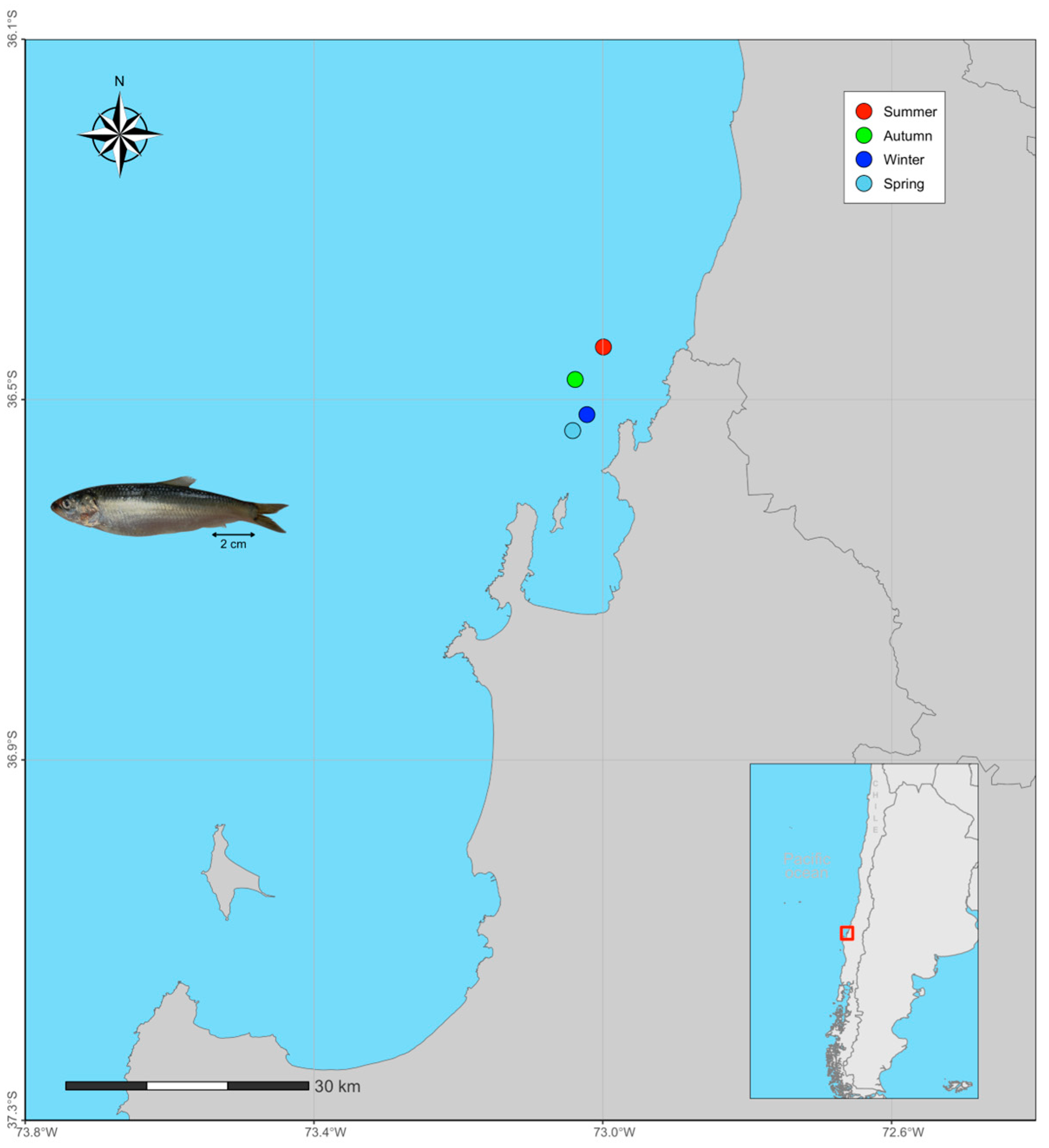
Adults of common sardine (S. bentincki) were captured from two locations along the coast of south-central Chile: off the mouth of the Itata River (36°23′08″ S) and Cocholgüe (36°35′30″ S). Opportunistic sampling was conducted during the summer (February), autumn (May), winter (August), and spring (November) seasons of 2021 as part of fishery biological monitoring carried out by the Fisheries Development Institute (IFOP) (Figure 1). It is worth noting that the pelagic purse-seine fleet targeting common sardines has historically operated in these areas.
As oocyte quality and subsequent juvenile survival—both critical for population recruitment—are determined by female reproductive condition [55], only sexually mature female specimens (total length 12–14 cm) at early stages of oocyte development were selected for analysis [56]. For each individual, we evaluated (i) body-related parameters, including the condition factor (Kn) and the gonadosomatic index (GSI), used as proxies for overall body condition and reproductive status, respectively; and (ii) gonadal biochemical composition (proteins, glucose, lipids, and fatty acids) as a proxy for nutritional condition. Each selected female was weighed (body weight, W) and measured (total length, TL) to calculate the condition factor (Kn) following Le Cren [57]. Subsequently, the gonads were excised and weighed to calculate the gonadosomatic index (GSI = [gonad weight/(body weight − gonad weight)] × 100) [56]. Subsequently, the gonads were freeze-dried at –80 °C using a freeze dryer (FDU-7012, Operon Co., Ltd., Gimpo-si, Gyeonggi-do, Republic of Korea). After drying, 30 mg of gonadal tissue from each specimen was weighed and used for subsequent biochemical analyses.

2.2. Environmental Data

Because environmental conditions—such as temperature and food availability—can influence reproduction, recruitment, and adult abundance of the common sardine (Strangomera bentincki) [58,59,60], satellite-derived environmental data were used to assess their potential effects on gonadal fatty acid profiles. Monthly data on sea surface temperature (SST; °C) and chlorophyll-a concentration (mg m−3)—used as proxies for seawater temperature, primary productivity, and planktonic food availability—were obtained from NASA’s GIOVANNI database for the year 2021. Data were extracted for the study area located between the mouth of the Itata River (36°23′08″ S) and Cocholgüe (36°35′30″ S), approximately 5–10 nautical miles offshore (Figure 1).

2.3. Biochemical Composition

2.3.1. Total Proteins

Total protein extraction and quantification were performed using the colorimetric method described by Lowry and collaborators [61], modified for use in microplates (DC Protein Assay, BIO-RAD Laboratories, Hercules, CA, USA). Dried gonad samples were mixed with 1 mL of ultrapure water (Barnstead MicroPure ST, Thermo Scientific, Waltham, MA, USA) in 1.5 mL centrifuge tubes and homogenized using a sonic dismembrator (Model 50, Fisherbrand, Thermo Fisher Scientific, Waltham, MA, USA). A volume of 5 µL of the homogenized sample was transferred to a 96-well microplate, followed by the addition of 25 µL of Reagent A (alkaline copper tartrate solution) and 200 µL of Reagent B (diluted Folin’s reagent). This procedure was repeated for all samples, and the plate was gently shaken to ensure thorough mixing of the reagents. A calibration curve was prepared using a series of known concentrations of bovine serum albumin (BSA) as the standard. Samples were incubated at room temperature for 15 min, and absorbance was measured at 750 nm using a multi-plate reader (ELx808, BioTek Instruments, Winooski, VT, USA). Protein concentrations were determined by interpolating absorbance values against the standard curve.

2.3.2. Total Glucose

Total glucose extraction and quantification were performed using the colorimetric method described by Bell [62], adapted for microplate analysis (IVD, Spinreact S.A., Girona, Spain). The sample homogenate used for protein quantification was also used for glucose analysis. In separate centrifuge tubes, 1 mL of Reagent R—containing TRIS buffer (pH 7.4), phenol, 4-aminophenazone, glucose oxidase, and peroxidase—was mixed with 10 µL of the sample homogenate. A separate tube was prepared containing Reagent R and a glucose standard. From each reaction mixture, 200 µL was transferred into individual wells of a 96-well microplate. Samples were incubated for 20 min at room temperature, after which absorbance was measured at 490 nm using a multi-plate reader (BioTek, ELx808). Glucose concentrations were calculated by dividing the absorbance of each sample by that of the standard. A blank (ultrapure water) was used to apply a correction factor.

2.3.3. Total Lipids

Lipid extraction was performed using the method described by Folch and collaborators [63]. Each sample was placed in an amber glass flask, and 5 mL of a dichloromethane–methanol solution (2:1 v/v) was added. The tissue was homogenized using a sonic dismembrator (Model 50, Fisherbrand, Thermo Fisher Scientific, Waltham, MA, USA). Subsequently, 4 mL of 0.88% potassium chloride (KCl), prepared with ultrapure Milli-Q water, was added to each sample. The mixture was centrifuged at 1500 RPM for 5 min (Fascio, TG1650-WS, Santiago, Chile). After phase separation, the lower organic phase was transferred into pre-weighed amber tubes. The solvent was evaporated under a stream of nitrogen using a sample concentrator (109A YH-1, Glas-Col LLC, Terre Haute, IN, USA). Once dried, the tubes were weighed using an analytical balance, and total lipid content was determined by subtracting the weight of the empty tube from the final weight.

2.3.4. Fatty Acid Composition

For fatty acid quantification, the lipid extracts were resuspended in a dichloromethane–methanol solution (2:1 v/v). The transmethylation of fatty acids followed the method described by Malzahn and collaborators [64], with modifications by Urzúa and Anger [65]. Fatty acids were analyzed as fatty acid methyl esters (FAMEs). One milliliter of the lipid homogenate and 2 mL of 1% sulfuric acid (H2SO4) in methanol were added to a reaction tube. The tubes were incubated at 70 °C for 1 h in a thermoshaker (DBS-001, MRC Laboratory Equipment Ltd., Holon, Israel). After incubation, 3 mL of n-hexane was added, and the mixture was vortexed (ZX3, Velp Scientifica, Usmate Velate, Italy). The upper (organic) phase was transferred to an amber flask, and this extraction step was repeated three times to maximize recovery. The combined hexane extracts were evaporated under nitrogen gas using a sample concentrator (109A YH-1, Glas-Col LLC, Terre Haute, IN, USA). A few drops of n-hexane were then added to re-dissolve the residue, and the solution was transferred to a 1.5 mL amber vial. The FAMEs were analyzed using a gas chromatograph (7890A, Agilent Technologies, Santa Clara, CA, USA) equipped with an autosampler. Separation was performed on a DB-225ms capillary column (30 m length, 0.25 mm internal diameter, 0.25 µm film thickness). The injector temperature was set at 250 °C. Quantification was carried out using a calibration curve generated from known FAME standards.

2.4. Total Energy Content and Bioenergetic Ratios

The energy content of gonadal tissue was estimated in joules per milligram (J mg−1) using the bioenergetic equivalence of the quantified biochemical components. The following caloric conversion factors were applied: 1 mg of protein = 23.69 J, 1 mg of glucose = 17.15 J, and 1 mg of lipid = 39.54 J [66,67]. Total energy content was calculated by multiplying the amount of each biochemical component by its respective conversion factor and summing the resulting values. The lipid-to-protein (L/P) and lipid-to-glucose (L/G) bioenergetic ratios were estimated based on data obtained from measurements of the respective biochemical constituents [68,69].

2.5. Statistical Analyses

Statistical analyses followed standard procedures [70,71] and were conducted using RStudio (version 2025.05.01). To evaluate seasonal differences in Kn, GSI, protein, glucose, lipid, energy content, L/P, and L/G, one-way ANOVAs were performed for each biochemical component, with season (i.e., summer, autumn, winter, spring) as the independent variable. Each biochemical component was treated as a dependent variable in separate models. Prior to analysis, data were tested for normality (Shapiro–Wilk test) and homogeneity of variances (Levene’s test). When assumptions of parametric tests were violated, data were first log-transformed; if this transformation did not meet the assumptions, the non-parametric Kruskal–Wallis test was used instead. To assess differences in fatty acid composition among seasons, a multivariate analysis (PERMANOVA) was applied using square-root-transformed data and the Bray–Curtis similarity index. A principal coordinates analysis (PCoA) was then used to visually represent the seasonal variation in fatty acid composition. A distance-based linear model (distLM) was used to evaluate the relationship between gonadal fatty acid profiles and environmental parameters (temperature and chlorophyll-a), based on Bray–Curtis dissimilarities, with statistical significance assessed through permutation tests. The results of the distLM were visualized using distance-based redundancy analysis (dbRDA), which provided a canonical ordination of samples and allowed the identification of the environmental variables that most strongly explained the observed patterns.

3. Results

3.1. Environmental Data at the Sampling Site

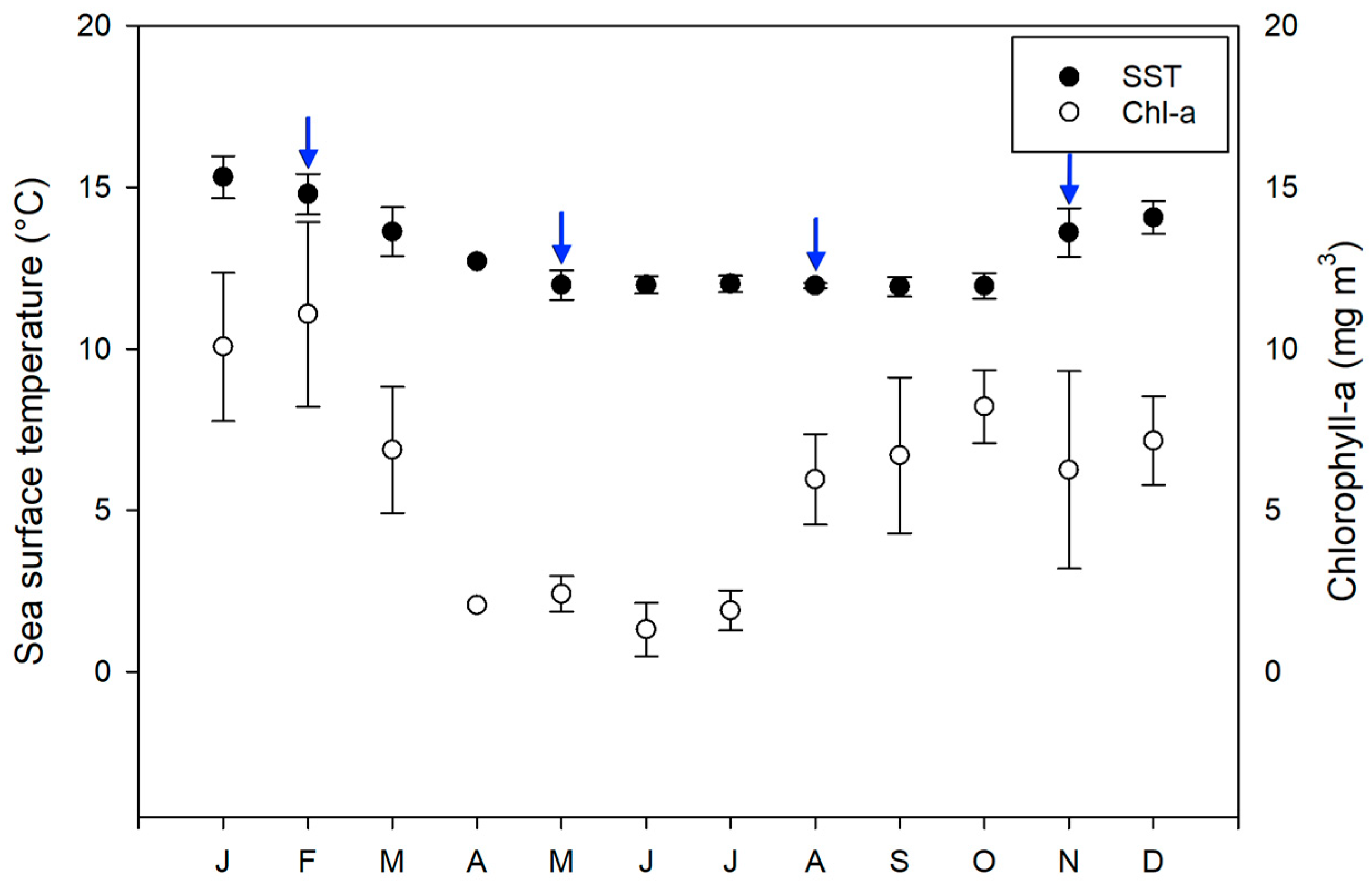
Seasonal variations in sea surface temperature (SST) and chlorophyll-a concentrations were observed in the study area based on satellite data from the GIOVANNI database. The highest SSTs were recorded in summer, with an average of 14.58 ± 0.86 °C. In autumn, the average SST decreased to 12.41 ± 0.44 °C, reaching its lowest values in winter (11.96 ± 0.04 °C). In spring, temperatures increased slightly, averaging 13.21 ± 1.11 °C (Figure 2). Seasonal fluctuations were also evident in chlorophyll-a concentrations, used as a proxy for planktonic food availability. The highest concentrations occurred in summer, with an average of 10.57 ± 0.71 mg m−3. In autumn, chlorophyll-a levels dropped to the lowest annual average of 1.92 ± 0.56 mg m−3. Concentrations began to increase again in winter (4.85 ± 2.59 mg m−3) and reached 7.21 ± 0.98 mg m−3 in spring (Figure 2).

3.2. Body Parameters (Kn, GSI)

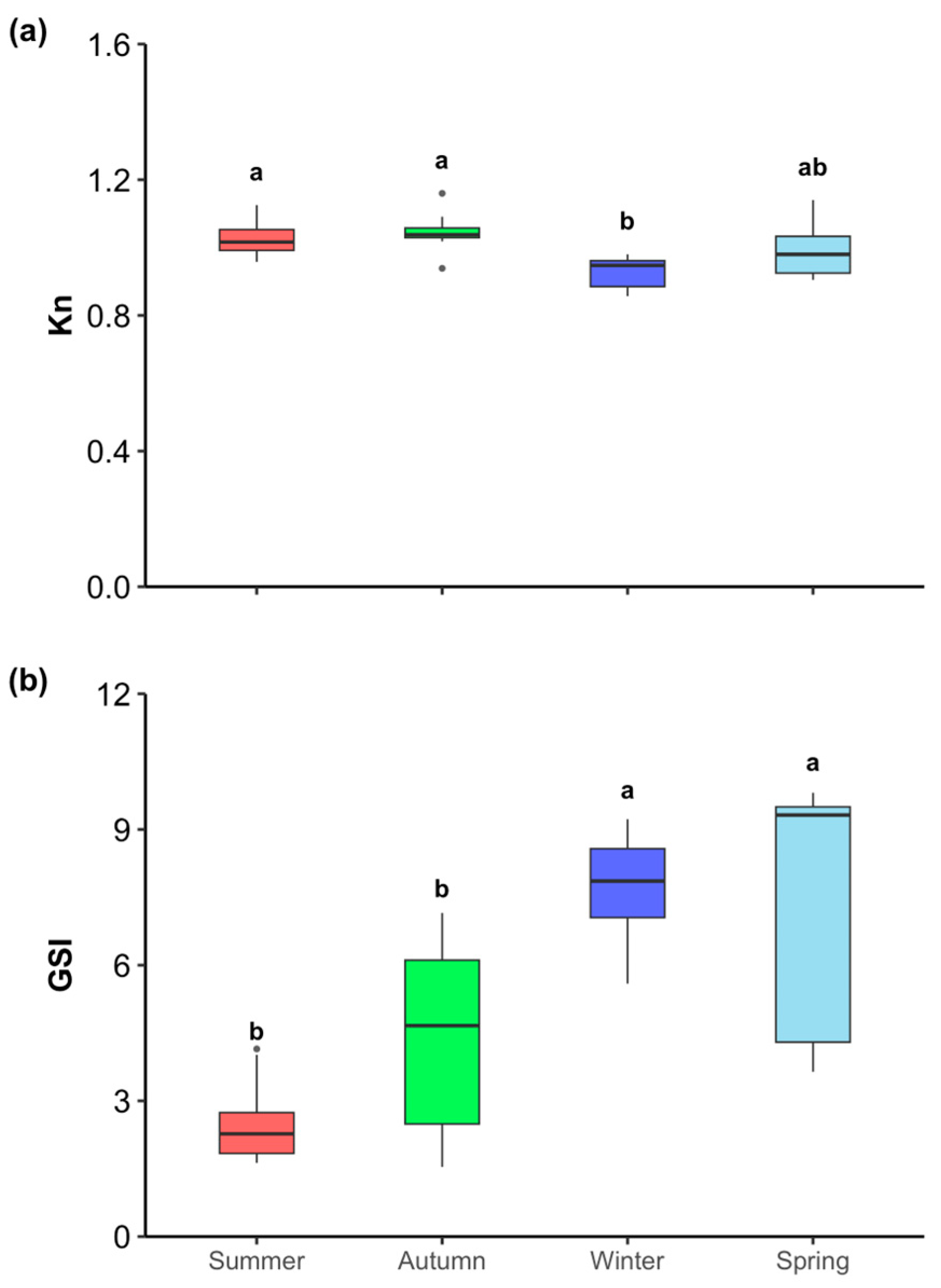
The condition factor (Kn) of female common sardine also showed significant differences among seasons (F1,39 = 3.159; p < 0.05). Females sampled during autumn exhibited a slightly higher condition factor (1.04 ± 0.06), followed by summer (1.03 ± 0.08) and spring (0.99 ± 0.09), whereas the lowest values were recorded during winter (0.95 ± 0.04; Figure 3a). In turn, significant seasonal differences in the gonadosomatic index (GSI) of female common sardine were detected (F1, 39 = 13.43; p < 0.001). Spring exhibited the highest GSI values (7.92 ± 4.12), followed by winter (7.80 ± 1.26) and autumn (3.90 ± 2.53), whereas the lowest values were recorded during summer (1.90 ± 1.37; Figure 3b).

3.3. Total Protein Content

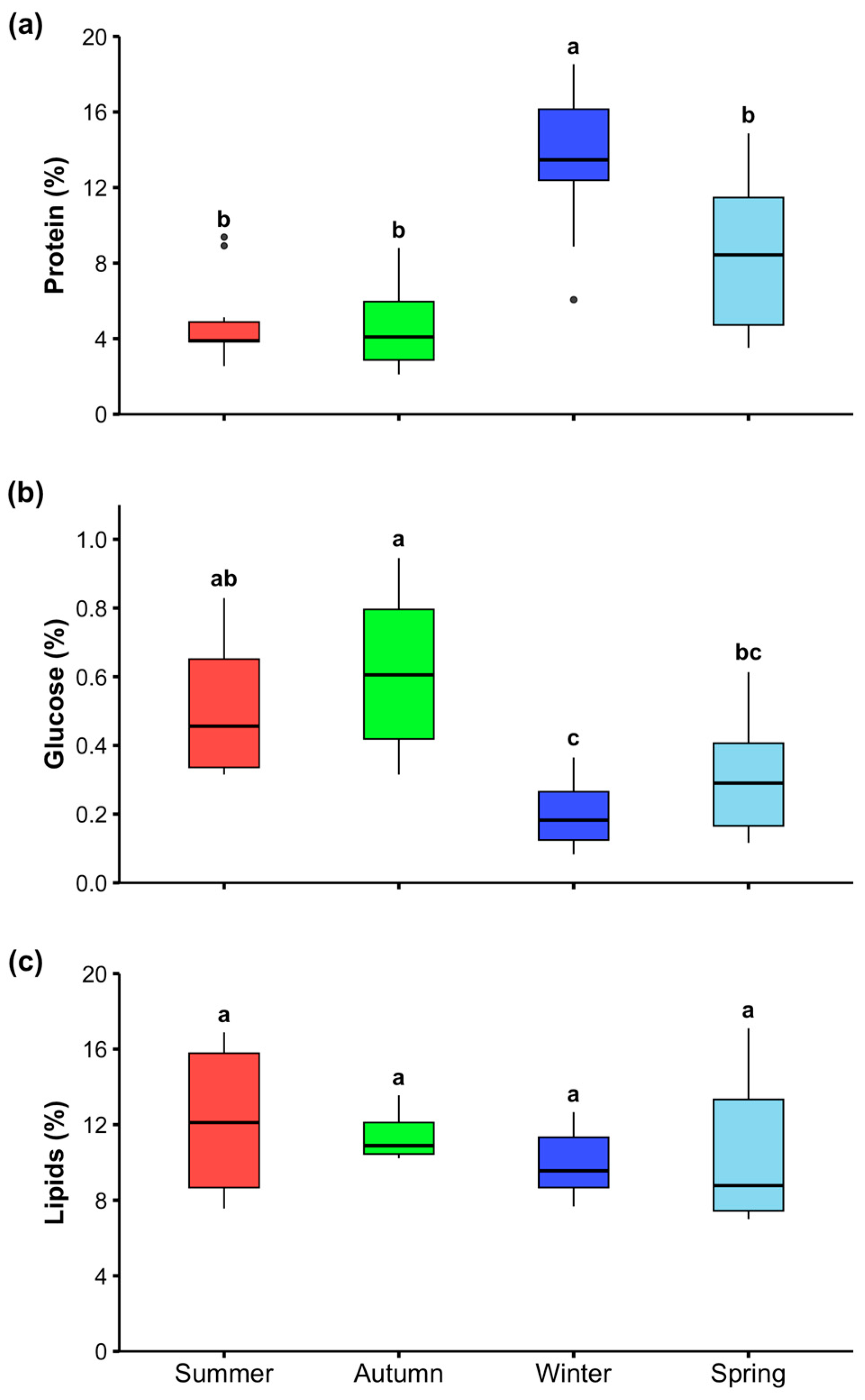
Significant seasonal differences were observed in the protein content of female S. bentincki gonads (F1, 39 = 16.488; p < 0.001). The highest protein levels were recorded in winter (13.51 ± 3.87%), significantly greater than those observed in the other seasons. In contrast, the lowest protein content was found in autumn (4.71 ± 2.35%), followed closely by summer (4.84 ± 2.38%), while spring showed intermediate values (8.42 ± 3.92%). These results highlight pronounced seasonal variability in gonadal protein content (Figure 4a).

3.4. Glucose Content

Significant seasonal differences were found in the glucose content of S. bentincki gonads (F1, 39 = 11.231; p < 0.001). The highest glucose levels were recorded in autumn (0.62 ± 0.22%), followed by summer (0.50 ± 0.20%) and spring (0.31 ± 0.16%). The lowest glucose content was observed in winter (0.20 ± 0.10%), indicating clear seasonal variation in gonadal glucose levels (Figure 4b).

3.5. Total Lipid Content

No significant seasonal differences were observed in the lipid content of S. bentincki gonads (F1, 39 = 0.43; p = 0.734). Lipid percentages remained relatively stable throughout the year, with average values of 12.20 ± 4.15% in summer, 11.44 ± 1.39% in autumn, 9.98 ± 2.02% in winter, and 10.73 ± 4.36% in spring (Figure 4c).

3.6. Energy Content

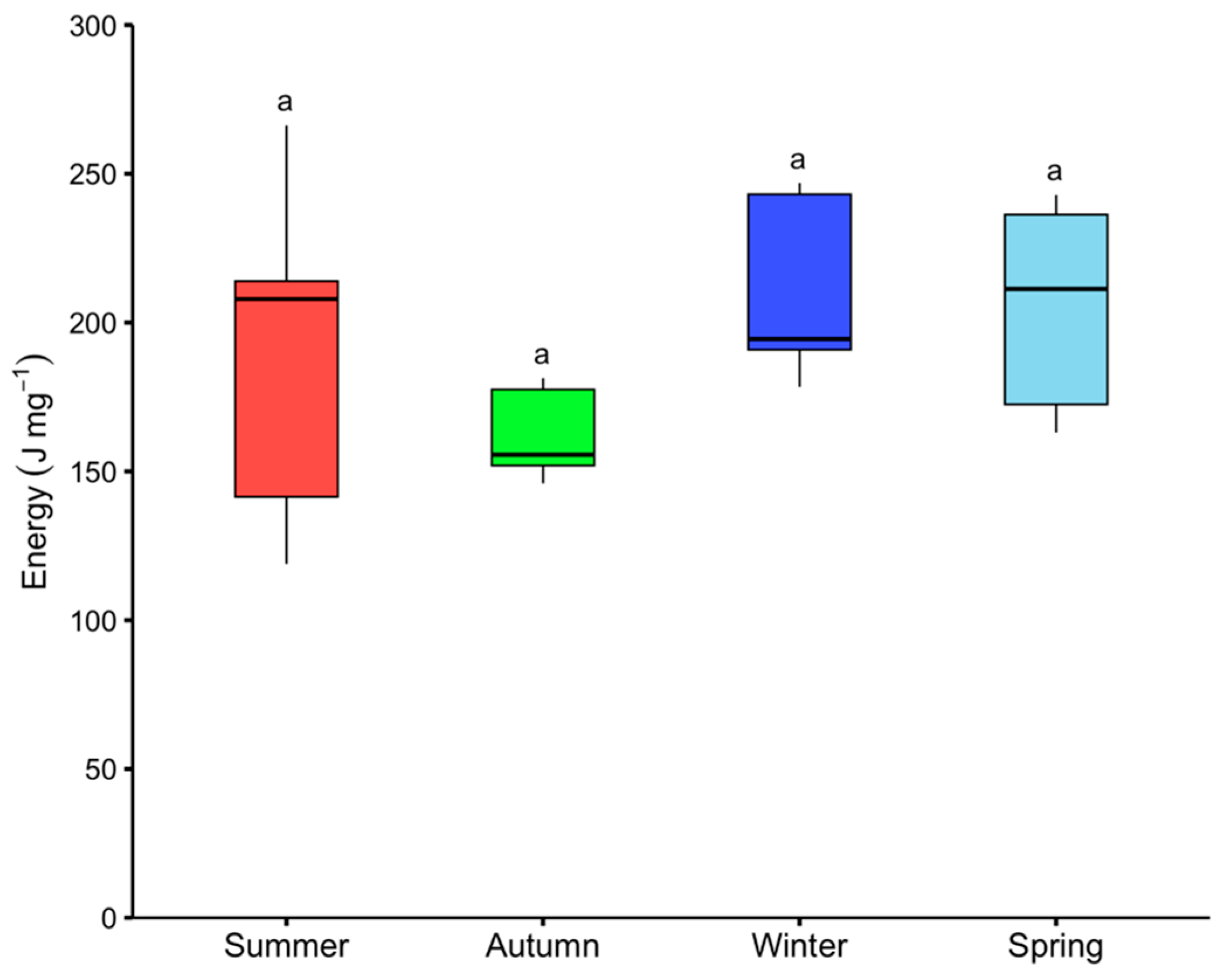
No significant differences were observed in the energy content of female S. bentincki gonads across the four seasons of 2021 (F1, 39 = 1.528; p = 0.246). Energy values remained relatively consistent throughout the year, with seasonal averages of 189.7 ± 59.42 J mg−1 in summer, 162.5 ± 15.91 J mg−1 in autumn, 210.7 J mg−1 in winter, and 205.2 ± 36.31 J mg−1 in spring (Figure 5).

3.7. Bioenergetic Ratios

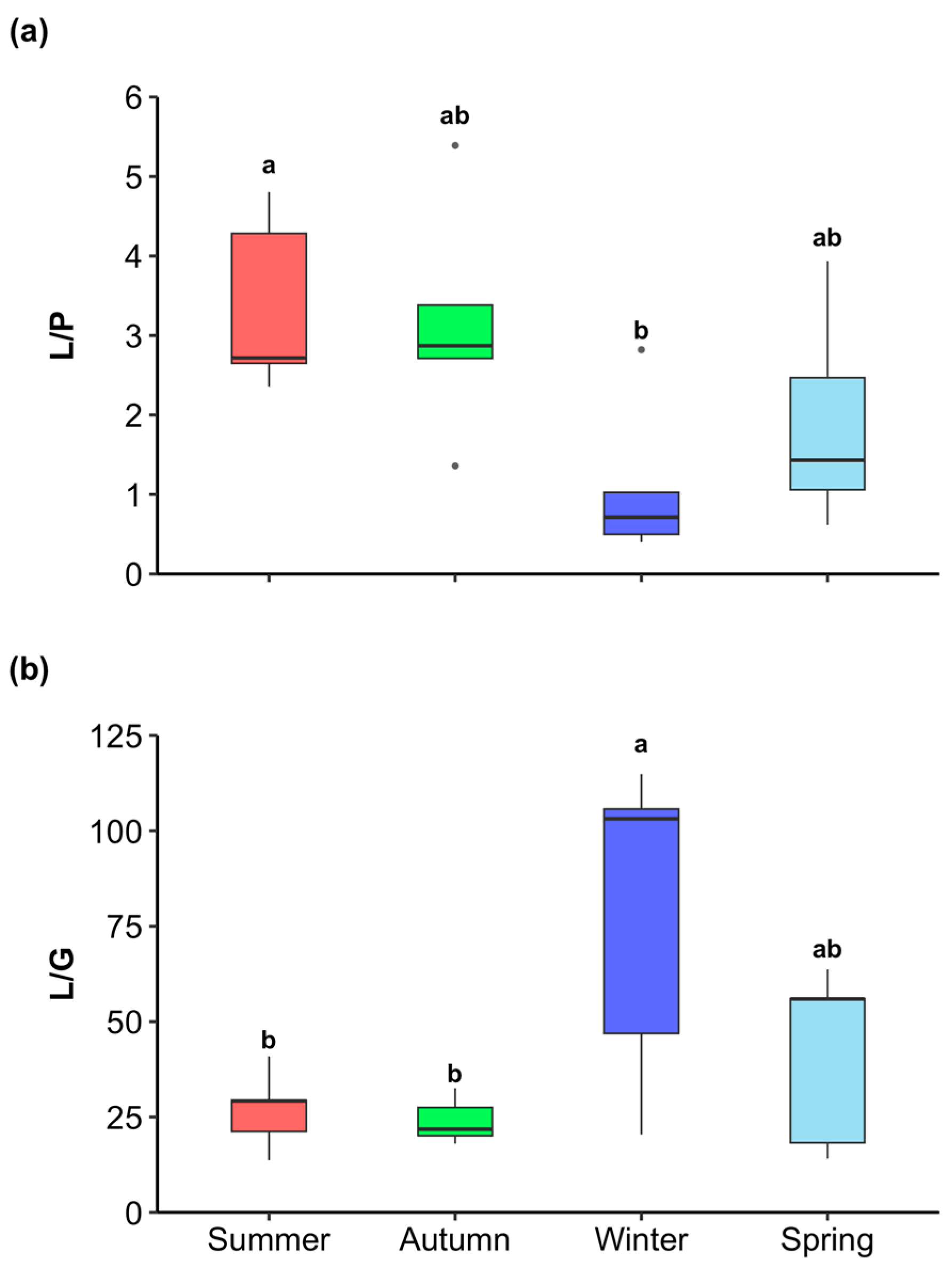
The lipid-to-protein (L/P) ratio in the gonads of female common sardine showed significant seasonal differences (F1, 39 = 3.748; p < 0.05). The highest values were recorded during summer (3.36 ± 1.10), followed by autumn (3.14 ± 0.99) and spring (1.90 ± 1.32), whereas the lowest values were observed during winter (1.09 ± 1.46; Figure 6a). Finally, the lipid-to-glucose (L/G) ratio in the gonads of female common sardine also exhibited significant seasonal variation (F1, 39 = 5.064; p < 0.05). The highest values were recorded during winter (78.19 ± 41.96), followed by spring (41.60 ± 23.45) and summer (26.87 ± 10.18), whereas the lowest values were observed during autumn (24.00 ± 5.93; Figure 6b).

3.8. Fatty Acid Composition

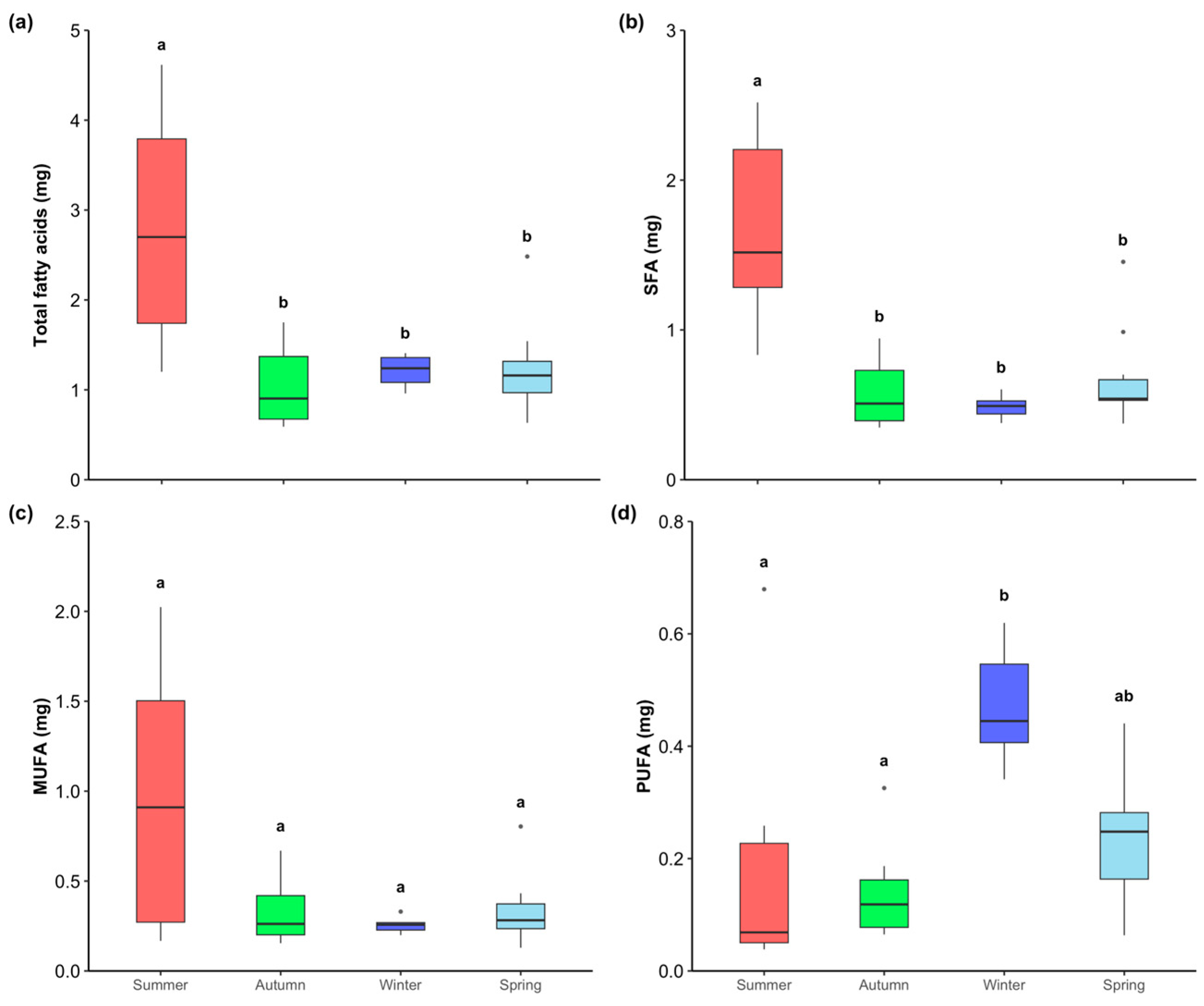
Significant seasonal differences were observed in the total fatty acid content of S. bentincki gonads in 2021 (F1, 39 = 6.9; p < 0.001). According to Tukey’s post hoc test, only the summer season showed significantly higher total fatty acid levels (2.73 ± 0.27 mg) compared to the other seasons. Autumn, winter, and spring exhibited relatively similar values, with averages of 1.04 ± 0.11 mg, 1.21 ± 0.11 mg, and 1.25 ± 0.12 mg, respectively (Figure 7a). Likewise, the total content of saturated (SFA, Figure 7b) and polyunsaturated fatty acids (PUFA, Figure 7d) also showed significant seasonal differences (p < 0.001). No significant differences were observed in monounsaturated fatty acids (MUFA, Figure 7b). Higher SFA contents were observed during summer (1.59 ± 0.36 mg), whereas PUFA content was highest during winter (0.47 ± 0.1 mg).
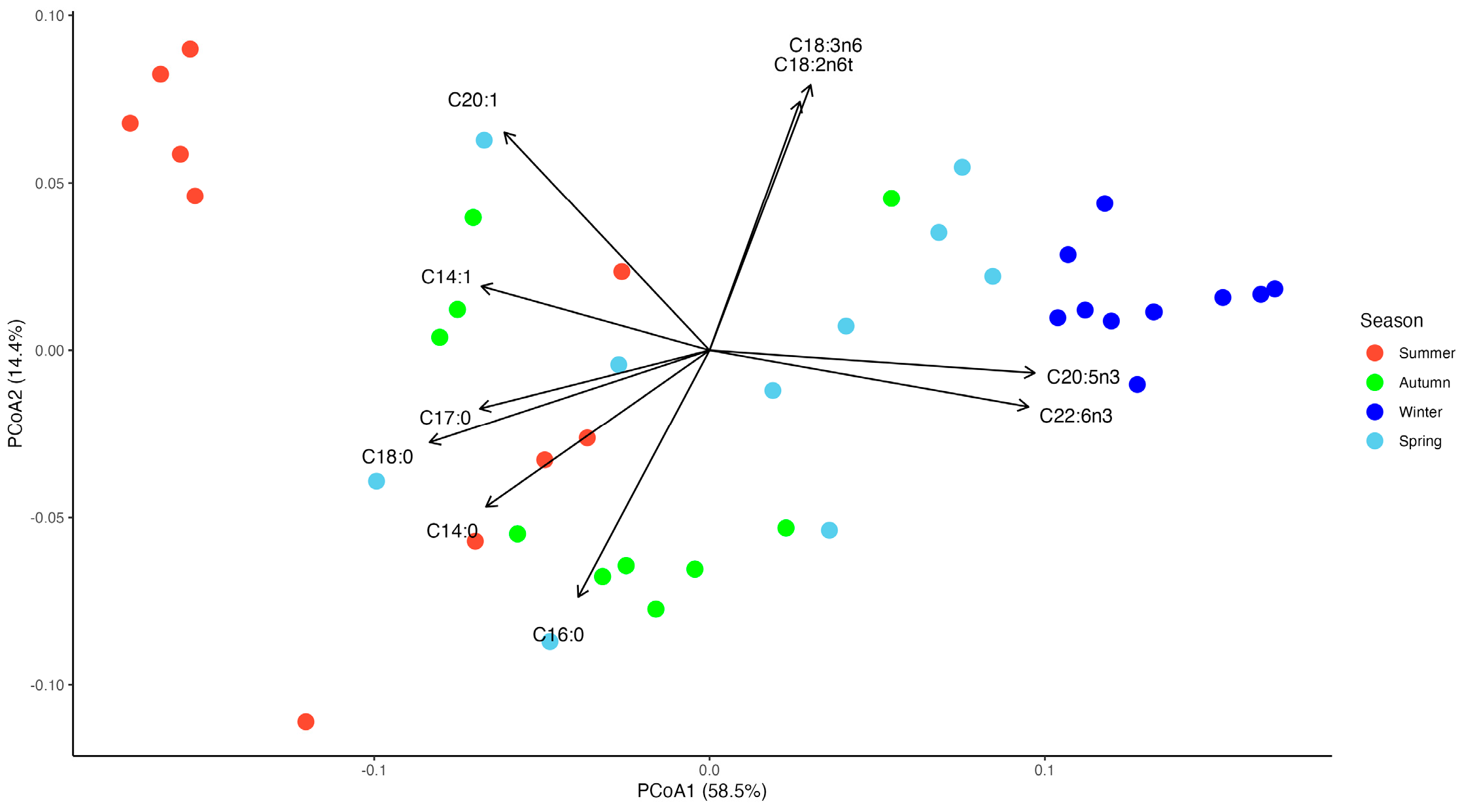
A total of 23 distinct fatty acids were detected throughout the year. The highest diversity was recorded during summer and spring (21 fatty acids each), while autumn and winter had a lower diversity, with 16 fatty acids detected in both seasons (Table 1). Multivariate analysis revealed significant seasonal differences in the fatty acid composition of sardine gonads (PERMANOVA, Pseudo-F = 14.778; p < 0.001). Principal coordinates analysis (PCoA) indicated high seasonal variability in fatty acid profiles, with nearly 80% of the variance explained by the first two axes. PCoA1 accounted for 58.5% of the variation, while PCoA2 explained 14.4% (Figure 8). Along PCoA1, a clear distinction was evident between summer and winter—the two most contrasting seasons in terms of temperature and food availability. Additionally, high variability and moderate overlap were observed between the fatty acid profiles of autumn and spring.

3.9. Fatty Acid Profile and Its Relationship with Environmental Variables

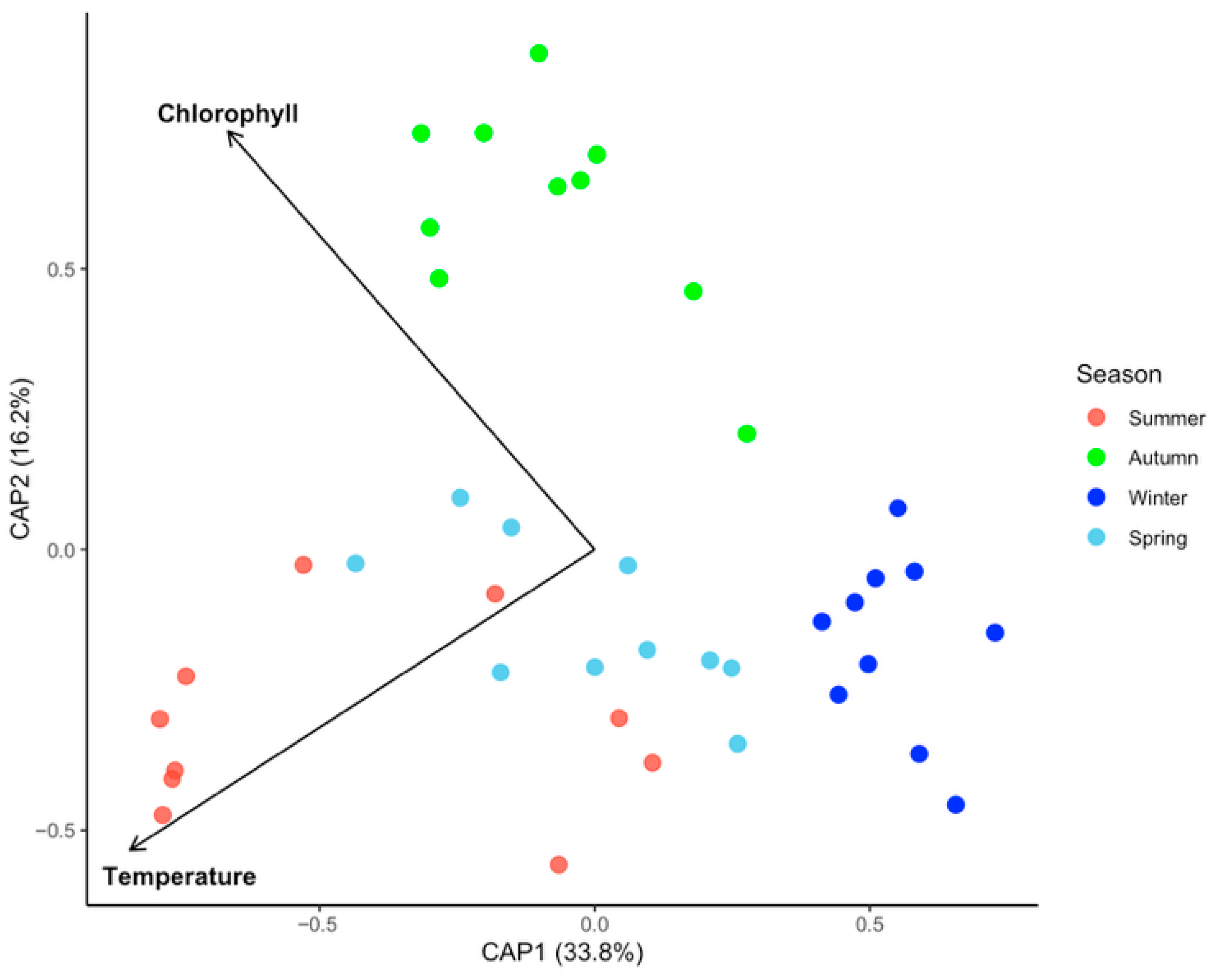
The distLM revealed that temperature and chlorophyll-a significantly explained the variation in fatty acid profiles (pseudo-F = 18.5; p < 0.001). Temperature accounted for 28.7% of the total variation in fatty acid composition, whereas chlorophyll-a explained 21.3%. The dbRDA analysis showed a clear seasonal structuring of the fatty acid profiles in common sardine. The CAP1 axis primarily represented the thermal gradient, separating summer and winter profiles, and explained 33.8% of the total variation, while the CAP2 axis accounted for 16.2%. Together, both axes explained 50.0% of the seasonal variation in fatty acid profiles during the year 2021 (Figure 9).

4. Discussion

The common sardine (S. bentincki) is a key fishery resource in the south-central Humboldt Current System (HCS) off the coast of Chile. However, prolonged overexploitation has led to severe stock depletion, resulting in the collapse of fisheries targeting this species [33,60]. This marine bioresource is primarily exploited for fishmeal production for animal feed and, to a lesser extent, for human consumption [72]. Despite its ecological and economic importance, information on the reproductive biology of the common sardine—particularly regarding body condition and reproductive bioenergetics and their relationship with environmental conditions—remains limited. This knowledge gap is especially evident when considering a holistic, ecosystem-based perspective that integrates the monitoring and quantification of body indices (e.g., condition factor, Kn, and gonadosomatic index, GSI) and the biochemical composition of gonads (glucose, proteins, lipids, and fatty acid profiles), as well as their linkage to key environmental drivers such as temperature and food availability in the south-central HCS. Therefore, the findings presented in this study are of considerable ecological and economic relevance, as they provide insight into the nutritional and bioenergetic condition of gonads, which constitute the reproductive foundation of future generations and population sustainability. This information contributes to identifying environmental conditions that promote the development of healthier populations with greater bioenergetic reserves, thereby supporting successful reproduction, larval development, and subsequent recruitment of this species.
The condition factor (Kn) of S. bentincki revealed only slight seasonal differences, with higher values observed during summer and autumn, followed by a gradual decline toward winter and a subsequent increase during spring, preceding the onset of the reproductive period. In this context, Kn tends to decrease gradually because of the high energetic costs associated with the onset of oogenesis under low winter temperatures and the subsequent gonadal maturation in spring, resulting in a temporary loss and later recovery of body mass once these processes are completed [26]. These findings are consistent with previous studies conducted on this species [16,33], as well as with reports for other small pelagic fishes inhabiting temperate latitudes [12,73]. In turn, the gonadosomatic index (GSI) showed consistent seasonal variation, indicating natural fluctuations in the reproductive condition of the species. In particular, the presence of mature females was evident during the transition from the cold to the temperate period, reaching maximum GSI values in spring, which corresponds to the main season of gonadal maturation and spawning for S. bentincki [45,56,72]. Similar seasonal patterns in GSI have been reported for this species in the south-central Humboldt Current System [14,33]. This seasonal variability in GSI, as a proxy for female reproductive status, should therefore be considered a biologically relevant factor that may be influencing the biochemical patterns observed in the present study.
Proteins, lipids, glucose, and overall biochemical reserves play crucial roles in the reproductive physiology of fish, particularly during oogenesis. Proteins are fundamental for gonadal development, participating in oocyte growth and maturation, and acting as precursors to vitellogenin—a key yolk-forming protein that serves as a nutrient reserve for the embryo [74,75,76]. In S. bentincki, higher protein levels were observed in gonads during winter, which coincides with the onset of gonadal maturation. This pattern has also been documented in other species such as Percophis brasiliensis, where protein content peaks during the reproductive season [77].
Similarly, glucose, a rapidly mobilized carbohydrate, appears to play a preparatory role in the reproductive cycle. The elevated glucose content observed in autumn in S. bentincki may reflect increased immediate energy availability, potentially associated with early physiological changes before vitellogenesis begins. This trend is consistent with patterns observed in other teleosts, where glucose levels increase in the pre-vitellogenic phase to support cellular proliferation and protein synthesis in the gonads [78,79,80].
In contrast, total lipid content in the gonads remained relatively stable throughout the year, suggesting a strategy of maintaining a consistent energy reserve to support a prolonged reproductive period, which in S. bentincki spans from late winter to late summer. This stability in lipid levels is also observed in P. brasiliensis, with only minor seasonal variations [77]. As lipids are the primary energy substrate in ectothermic fish [81,82,83], their conservation may be critical for meeting the energy demands of sustained reproductive activity. Likewise, gonadal energy content—an integrative measure of reproductive investment—remained relatively stable across seasons, reinforcing the idea that S. bentincki maintains a constant energetic allocation to reproduction throughout the year. This pattern, again, mirrors observations in P. brasiliensis, where energy content only shows a slight decline during autumn [77]. Taken together, these findings suggest that while protein and glucose levels fluctuate seasonally in response to specific reproductive stages, lipid and energy content are maintained more consistently to ensure reproductive success over an extended spawning period.
In the context of metabolic substrate utilization for fundamental physiological processes such as homeostasis and reproduction [84], the accumulation and use of lipids and proteins during the reproductive cycle and early ontogeny of S. bentincki provide insight into the mechanisms underlying the seasonal variation observed in the L/P and L/G ratios. The lipid-to-protein (L/P) ratio reached lower values during winter–spring, coinciding with the onset of reproduction, whereas the lipid-to-glucose (L/G) ratio was higher during this period. This pattern suggests that lipids and proteins function as the primary energetic and structural substrates supporting gonadal development and oocyte formation [85,86]. Similar seasonal trends in these bioenergetic fuels have been reported for other temperate coastal fishes exhibiting partial spawning strategies [15,87]. Such strategies are thought to reflect adaptive adjustments in reproductive energy allocation in response to environmental conditions, particularly temperature and food availability, in order to maximize offspring survival during early planktonic development (see match–mismatch hypothesis; refs. [33,87,88,89]).
At the level of fatty acid composition, seasonal variation was observed, with higher total fatty acid content during summer. This pattern likely reflects increased availability of lipid-rich biomolecules in phytoplankton and zooplankton—the main prey of the common sardine [60]—during this season in the study area. In S. bentincki, these dietary lipids are incorporated through feeding and stored in tissues, including the gonads, as metabolic energy reserves required for reproductive processes [83,90]. Among fatty acid classes, higher contents of saturated (SFAs) and monounsaturated fatty acids (MUFAs) were observed in summer, whereas polyunsaturated fatty acids (PUFAs) predominated during winter. In small pelagic fishes, long-chain polyunsaturated fatty acids (LC-PUFAs) are known to play a crucial role in successful gonadal development and larval survival, particularly under conditions of low food availability and cold-water temperatures [91,92]. These fatty acids are conservatively allocated to oocytes and subsequently support larval neurogenesis, especially visual development, which is essential for prey capture during the first-feeding planktonic stage [91]. This strategy can therefore be interpreted as an adaptive bioenergetic trait of early ontogeny that enhances resilience to unpredictable or variable coastal environmental conditions [91,93,94].
The fatty acid profile further highlights the dynamic biochemical adaptations associated with reproduction. Polyunsaturated fatty acids (PUFAs), such as EPA and DHA, are essential for gonadal development, playing roles in eicosanoid and steroid hormone synthesis and cell membrane formation [81,90,95]. These molecules are known to increase in concentration prior to spawning and are crucial for gamete quality and recruitment success [96]. Our results revealed significant seasonal variation in fatty acid composition, with the highest total fatty acid content recorded in summer, coinciding with intense coastal upwelling and elevated plankton availability [29,30,60]. This season was characterized by higher levels of saturated (e.g., C20:0) and monounsaturated fatty acids (e.g., C20:1), while winter, which marks the onset of spawning, showed an increase in polyunsaturated fatty acids (notably DHA, C22:6n3). This pattern suggests selective accumulation or mobilization of PUFAs for ovarian development and may reflect dietary shifts influenced by seasonal plankton dynamics, with potential implications for reproductive success and recruitment [83]. Similar seasonal variations in gonadal fatty acid profiles, particularly in EPA and DHA content, have been documented in other clupeids, such as Sardina pilchardus from the Portuguese coast and Engraulis encrasicolus from Croatia [91,97]. These patterns support the broader relevance of our findings within a global-scale context of potentially convergent reproductive bioenergetic adaptations in small pelagic fishes inhabiting temperate coastal systems characterized by pronounced seasonal variability in temperature and planktonic food availability [17,87,97].
In general, it has been reported that the biochemical and bioenergetic components in teleost fishes vary throughout the year in response to both endogenous and exogenous factors. For instance, Eliassen and Vahl [98] examined lipid, protein, and energy contents in the liver, muscle, and gonads of Arctic cod (Gadus morhua) and found that during the months leading up to spawning (January–March), the total body energy content decreased, while the energy content of the gonads increased. This suggests that fish mobilize energy reserves primarily from the liver and muscle to support gonadal maturation and the reproductive process. Although no significant seasonal differences were observed in the total lipid or energy content of the gonads in S. bentincki, we detected seasonal changes in the fatty acid profile. This indicates that, beyond the quantity of energy mobilized, the quality and composition of lipids used for gametogenesis may be modulated according to environmental conditions and reproductive stage.
The common sardine has consistently been described as a “capital breeding” species, meaning it accumulates energy reserves prior to reproduction [72]. Based on the body parameters and biochemical composition observed in this study, it is suggested that the common sardine exhibits a “partial capital breeding” strategy. This suggests that S. bentincki mobilizes substantial reserves of proteins and polyunsaturated fatty acids to the gonads at the onset of the reproductive period during late winter, attaining the highest GSI values in spring, while maintaining an optimal condition factor (Kn) and showing no clear seasonal variation in lipid levels or total energy content. This pattern indicates that the species relies both on previously accumulated energy reserves and on resources acquired during the reproductive cycle. Furthermore, these results suggest that energy reserves are strongly influenced by planktonic food availability in the environment, as well as by seasonal thermal transitions in seawater, with a particularly notable accumulation of long-chain polyunsaturated fatty acids (LC-PUFAs) during winter.
It is important to note that to fully understand the bioenergetic dynamics of S. bentincki, sampling with higher temporal resolution—ideally monthly—throughout the entire annual cycle is essential. Moreover, the analysis should not be limited to the gonads but include other metabolically relevant tissues such as the liver and muscle. These tissues serve as major energy reserves and play critical roles in mobilizing nutrients to the reproductive organs during gonadal maturation. Studies in other marine species have demonstrated that the liver functions as a primary lipid storage organ, with decreases during the reproductive period serving as a good indicator of the energetic costs of reproduction [17,99,100]. Conversely, muscle acts as the main protein storage organ, reflecting both the individual’s trophic condition and the effects of protein mobilization to the gonads [17,99,100,101]. Therefore, future studies should adopt an integrated approach that simultaneously examines seasonal variations in gonads, liver, and muscle tissues. This would allow for a more accurate estimation of intra-organismal energy fluxes and the construction of comprehensive energy budgets for the species [102,103]. Such an approach would not only help identify critical stages of the reproductive cycle, as well as age- and/or size-related effects, from physiological and bioenergetic perspectives, but also assess how environmental, climatic, and trophic conditions across different temporal windows and scales—shaped by processes such as coastal upwelling and the El Niño–Southern Oscillation (ENSO)—influence energy allocation to somatic growth and reproduction. This knowledge is essential for understanding the mechanisms underlying reproductive success, gamete quality, recruitment, and population dynamics of the common sardine, and is fundamental for advancing more integrative, ecosystem-based fisheries management strategies.
Finally, a minor limitation of this study is the relatively small sample size, reflecting the constraints associated with opportunistic sampling during the biological closure of this fishery resource [42]. However, the magnitude of the observed variation suggests that the probability of failing to detect significant differences (i.e., a Type II error) is reduced [71]. Despite this, caution should be exercised when generalizing these findings. Therefore, as noted previously, future research should aim to expand sampling effort and increase sample size to improve the robustness of biological studies on S. bentincki.

5. Conclusions

This study provides novel insights into seasonal variation in body parameters and the biochemical composition of female S. bentincki gonads, revealing key links between reproductive investment and environmental conditions. Both Kn and GSI exhibited significant seasonal changes. Protein and glucose contents also varied significantly among seasons, indicating phase-specific biochemical demands throughout the reproductive cycle. In contrast, the relative stability of lipid and total energy content across the year suggests a prolonged reproductive period supported by sustained energetic allocation. Seasonal shifts in fatty acid profiles—particularly the enrichment of polyunsaturated fatty acids during winter—highlight the influence of diet and upwelling-driven productivity on reproductive quality. Together, these patterns support the hypothesis that S. bentincki follows a partial capital breeding strategy, relying on both stored energy reserves and environmentally derived food resources during reproduction. Incorporating biochemical indicators into fisheries assessments may improve evaluations of reproductive potential and stock health. Future research should increase temporal resolution, expand the range of body sizes, include both sexes and ages examined, and incorporate additional tissues such as liver and muscle to construct comprehensive energy budgets and better resolve intra-organismal energy allocation throughout the reproductive cycle.

Author Contributions

Conceptualization, F.G.-R. and Á.U.; methodology, F.G.-R.; software, F.G.-R.; validation, J.C.O. and S.M.; formal analysis, F.G.-R.; investigation, F.G.-R.; resources, F.G.-R. and Á.U.; data curation, F.G.-R.; writing—original draft preparation, F.G.-R.; writing—review and editing, Á.U., J.C.O. and S.M.; visualization, F.G.-R.; supervision, Á.U., J.C.O. and S.M.; project administration, Á.U.; funding acquisition, F.G.-R. and Á.U. All authors have read and agreed to the published version of the manuscript.

Funding

This research was funded by Agencia Nacional de Investigación y Desarrollo (ANID)-Subdirección de Capital Humano, Beca Doctorado Nacional (Folio 21230424); Universidad Católica de la Santísima Concepción, PROYECTO: USC-20102 “Internacionalización Transversal en la UCSC: enfrentando los nuevos desafíos”; Ciencia Abierta en la UCSC, Grant INCA 210005; DIREG 16/2025. The funders had no role in the study design, data collection, and analysis, the decision to publish, or the preparation of the manuscript.

Institutional Review Board Statement

The animal study protocol was approved by Ethics Committee of Universidad Católica de la Santísima Concepción (Protocol code: N° 38; Approval date: 6 December 2024).

Informed Consent Statement

Not applicable.

Data Availability Statement

Data are contained in this article.

Acknowledgments

We thank the scientific observers of IFOP for assistance aboard fishing vessels, and Esthefany Reyes and Lorena Toloza for their help with the chemical analyses. We sincerely thank the editor and the two anonymous reviewers for their constructive feedback and valuable suggestions.

Conflicts of Interest

The authors declare no conflicts of interest.

References

  1. Sadovy de Mitcheson, Y.J.; Linardich, C.; Barreiros, J.P.; Ralph, G.M.; Aguilar-Perera, A.; Afonso, P.; Erisman, B.E.; Pollard, D.A.; Fennessy, S.T.; Bertoncini, A.A.; et al. Valuable but Vulnerable: Over-Fishing and under-Management Continue to Threaten Groupers so What Now? Mar. Policy 2020, 116, 103909. [Google Scholar] [CrossRef]
  2. Anderson, C.M.; Krigbaum, M.J.; Arostegui, M.C.; Feddern, M.L.; Koehn, J.Z.; Kuriyama, P.T.; Morrisett, C.; Allen Akselrud, C.I.; Davis, M.J.; Fiamengo, C.; et al. How Commercial Fishing Effort Is Managed. Fish Fish. 2019, 20, 268–285. [Google Scholar] [CrossRef]
  3. Guiry, E.J.; Kennedy, J.R.; O’Connell, M.T.; Gray, D.R.; Grant, C.; Szpak, P. Early Evidence for Historical Overfishing in the Gulf of Mexico. Sci. Adv. 2021, 7, eabh2525. [Google Scholar] [CrossRef]
  4. Ramírez, F.; Shannon, L.J.; Angelini, R.; Steenbeek, J.; Coll, M. Overfishing Species on the Move May Burden Seafood Provision in the Low-Latitude Atlantic Ocean. Sci. Total Environ. 2022, 836, 155480. [Google Scholar] [CrossRef]
  5. Izzo, C.; Ward, T.M.; Ivey, A.R.; Suthers, I.M.; Stewart, J.; Sexton, S.C.; Gillanders, B.M. Integrated Approach to Determining Stock Structure: Implications for Fisheries Management of Sardine, Sardinops sagax, in Australian Waters. Rev. Fish Biol. Fish. 2017, 27, 267–284. [Google Scholar] [CrossRef]
  6. Klibansky, N.; Scharf, F.S. Success and Failure Assessing Gonad Maturity in Sequentially Hermaphroditic Fishes: Comparisons between Macroscopic and Microscopic Methods. J. Fish Biol. 2015, 87, 930–957. [Google Scholar] [CrossRef] [PubMed]
  7. Morgan, M.J. Integrating Reproductive Biology into Scientific Advice for Fisheries Management. J. Northwest Atl. Fish. Sci. 2008, 41, 37–51. [Google Scholar] [CrossRef]
  8. Tara Marshall, C. Implementing Information on Stock Reproductive Potential in Fisheries Management: The Motivation, Challenges and Opportunities. In Fish Reproductive Biology; Wiley: Hoboken, NJ, USA, 2016; pp. 438–464. [Google Scholar]
  9. Houde, E.D. Recruitment Variability. In Fish Reproductive Biology; Wiley: Hoboken, NJ, USA, 2016; pp. 98–187. [Google Scholar]
  10. Brooks, S.; Tyler, C.R.; Sumpter, J.P. Egg Quality in Fish: What Makes a Good Egg? Rev. Fish Biol. Fish. 1997, 7, 387–416. [Google Scholar] [CrossRef]
  11. Wuenschel, M.J.; McElroy, W.D.; Oliveira, K.; McBride, R.S. Measuring Fish Condition: An Evaluation of New and Old Metrics for Three Species with Contrasting Life Histories. Can. J. Fish. Aquat. Sci. 2019, 76, 886–903. [Google Scholar] [CrossRef]
  12. Caballero-Huertas, M.; Frigola-Tepe, X.; Viñas, J.; Muñoz, M. Somatic Condition and Reproductive Potential as a Tandem in European Sardine: An Analysis with an Environmental Perspective in the Northern Adriatic (Gulf of Trieste). Fishes 2022, 7, 105. [Google Scholar] [CrossRef]
  13. Frigola-Tepe, X.; Ollé-Vilanova, J.; Schull, Q.; Caballero-Huertas, M.; Viñas, J.; Muñoz, M. Phenotypic Plasticity in the Health Status of Western Mediterranean Sardines. Estimation of Spawning Quantity and Quality. Front. Mar. Sci. 2025, 12, 1576148. [Google Scholar] [CrossRef]
  14. Brosset, P.; Fromentin, J.-M.; Van Beveren, E.; Lloret, J.; Marques, V.; Basilone, G.; Bonanno, A.; Carpi, P.; Donato, F.; Čikeš Keč, V.; et al. Spatio-Temporal Patterns and Environmental Controls of Small Pelagic Fish Body Condition from Contrasted Mediterranean Areas. Prog. Oceanogr. 2017, 151, 149–162. [Google Scholar] [CrossRef]
  15. Albo-Puigserver, M.; Sánchez, S.; Coll, M.; Bernal, M.; Sáez-Liante, R.; Navarro, J.; Palomera, I. Year-Round Energy Dynamics of Sardine and Anchovy in the North-Western Mediterranean Sea. Mar. Environ. Res. 2020, 159, 105021. [Google Scholar] [CrossRef] [PubMed]
  16. Cubillos, L.; Claramunt, G. Length-Structured Analysis of the Reproductive Season of Anchovy and Common Sardine off Central Southern Chile. Mar. Biol. 2009, 156, 1673–1680. [Google Scholar] [CrossRef]
  17. Caballero-Huertas, M.; Vargas-Yánez, M.; Frigola-Tepe, X.; Viñas, J.; Muñoz, M. Unravelling the Drivers of Variability in Body Condition and Reproduction of the European Sardine along the Atlantic-Mediterranean Transition. Mar. Environ. Res. 2022, 179, 105697. [Google Scholar] [CrossRef]
  18. Lowerre-Barbieri, S.K.; Ganias, K.; Saborido-Rey, F.; Murua, H.; Hunter, J.R. Reproductive Timing in Marine Fishes: Variability, Temporal Scales, and Methods. Mar. Coast. Fish. 2011, 3, 71–91. [Google Scholar] [CrossRef]
  19. Alfonso, S.; Gesto, M.; Sadoul, B. Temperature Increase and Its Effects on Fish Stress Physiology in the Context of Global Warming. J. Fish Biol. 2021, 98, 1496–1508. [Google Scholar] [CrossRef]
  20. Tu, C.-Y.; Chen, K.-T.; Hsieh, C. Fishing and Temperature Effects on the Size Structure of Exploited Fish Stocks. Sci. Rep. 2018, 8, 7132. [Google Scholar] [CrossRef] [PubMed]
  21. Woods, H.A.; Makino, W.; Cotner, J.B.; Hobbie, S.E.; Harrison, J.F.; Acharya, K.; Elser, J.J. Temperature and the Chemical Composition of Poikilothermic Organisms. Funct. Ecol. 2003, 17, 237–245. [Google Scholar] [CrossRef]
  22. Yoneda, M.; Wright, P.J. Effects of Varying Temperature and Food Availability on Growth and Reproduction in First-Time Spawning Female Atlantic Cod. J. Fish Biol. 2005, 67, 1225–1241. [Google Scholar] [CrossRef]
  23. Donelson, J.M.; Munday, P.L.; McCormick, M.I.; Pankhurst, N.W.; Pankhurst, P.M. Effects of Elevated Water Temperature and Food Availability on the Reproductive Performance of a Coral Reef Fish. Mar. Ecol. Prog. Ser. 2010, 401, 233–243. [Google Scholar] [CrossRef]
  24. Fernández-Palacios, H.; Izquierdo, M.S.; Robaina, L.; Valencia, A.; Salhi, M.; Vergara, J. Effect of n − 3 HUFA Level in Broodstock Diets on Egg Quality of Gilthead Sea Bream (Sparus aurata L.). Aquaculture 1995, 132, 325–337. [Google Scholar] [CrossRef]
  25. King, H.R.; Pankhurst, N.W.; Watts, M.; Pankhurst, P.M. Effect of Elevated Summer Temperatures on Gonadal Steroid Production, Vitellogenesis and Egg Quality in Female Atlantic Salmon. J. Fish Biol. 2003, 63, 153–167. [Google Scholar] [CrossRef]
  26. McBride, R.S.; Somarakis, S.; Fitzhugh, G.R.; Albert, A.; Yaragina, N.A.; Wuenschel, M.J.; Alonso-Fernández, A.; Basilone, G. Energy Acquisition and Allocation to Egg Production in Relation to Fish Reproductive Strategies. Fish Fish. 2015, 16, 23–57. [Google Scholar] [CrossRef]
  27. Tveiten, H.; Solevåg, S.E.; Johnsen, H.K. Holding Temperature during the Breeding Season Influences Final Maturation and Egg Quality in Common Wolffish. J. Fish Biol. 2001, 58, 374–385. [Google Scholar] [CrossRef]
  28. Mohagheghi Samarin, A.; Policar, T.; Lahnsteiner, F. Fish Oocyte Ageing and Its Effect on Egg Quality. Rev. Fish. Sci. Aquac. 2015, 23, 302–314. [Google Scholar] [CrossRef]
  29. Montecino, V.; Lange, C.B. The Humboldt Current System: Ecosystem Components and Processes, Fisheries, and Sediment Studies. Prog. Oceanogr. 2009, 83, 65–79. [Google Scholar] [CrossRef]
  30. Thiel, M.; Macaya, E.; Acuna, E.; Arntz, W.; Bastias, H.; Brokordt, K.; Camus, P.; Castilla, J.; Castro, L.; Cortes, M.; et al. The Humboldt Current System of Northern and Central Chile. Oceanogr. Mar. Biol. 2007, 45, 195–345. [Google Scholar] [CrossRef]
  31. Escribano, R.; Hidalgo, P.; González, H.; Giesecke, R.; Riquelme-Bugueño, R.; Manríquez, K. Seasonal and Inter-Annual Variation of Mesozooplankton in the Coastal Upwelling Zone off Central-Southern Chile. Prog. Oceanogr. 2007, 75, 470–485. [Google Scholar] [CrossRef]
  32. Escribano, R.; Fernández, M.; Aranís, A. Physical-Chemical Processes and Patterns of Diversity of the Chilean Eastern Boundary Pelagic and Benthic Marine Ecosystems: An Overview. Gayana 2003, 67, 190–205. [Google Scholar] [CrossRef]
  33. Cubillos, L.A.; Arcos, D.F.; Bucarey, D.A.; Canales, M.T. Seasonal Growth of Small Pelagic Fish off Talcahuano, Chile (37°S, 73°W): A Consequence of Their Reproductive Strategy to Seasonal Upwelling? Aquat. Living Resour. 2001, 14, 115–124. [Google Scholar] [CrossRef]
  34. Guzmán, F.; Bascur, M.; Olavarria, L.; Mora, S.; Riera, R.; Urzúa, A. Seasonal and Interannual Changes in Reproductive Parameters and Eggs Biochemical Composition of the Fishery Resource Pleuroncodes monodon (Decapoda: Munididae) from the Humboldt Current System. Fish. Res. 2020, 221, 105404. [Google Scholar] [CrossRef]
  35. Lazo-Andrade, J.; Guzmán-Rivas, F.; Barría, P.; Ortega, J.; Mora, S.; Urzúa, A. Seasonal Dynamics of Biochemical Composition and Fatty Acids of Swordfish (Xiphias gladius) in the Southeast Pacific Ocean off the Coast of Chile. Mar. Environ. Res. 2021, 169, 105388. [Google Scholar] [CrossRef]
  36. Quispe-Machaca, M.; Guzmán-Rivas, F.; Ibáñez, C.; Urzúa, A. Intra-Individual Variability in Biochemical Constituents and Fatty Acid Composition of Adult Jumbo Squid (Dosidicus gigas) in the Southeastern Pacific Ocean. J. Sea Res. 2021, 174, 102082. [Google Scholar] [CrossRef]
  37. Guzmán-Rivas, F.; Quispe-Machaca, M.; Queirolo, D.; Ahumada, M.; Urzúa, A. Latitudinal Changes in the Lipid Content and Fatty Acid Profiles of Juvenile Female Red Squat Lobsters (Pleuroncodes monodon) in Breeding Areas of the Humboldt Current System. PLoS ONE 2021, 16, e0253314. [Google Scholar] [CrossRef]
  38. Hochachka, P.W.; Somero, G.N. Biochemical Adaptation: Mechanism and Process in Physiological Evolution; Oxford University Press: Oxford, UK, 2002. [Google Scholar]
  39. Furuita, H.; Hori, K.; Suzuki; Sugita, T.; Yamamoto, T. Effect of N-3 and n-6 Fatty Acids in Broodstock Diet on Reproduction and Fatty Acid Composition of Broodstock and Eggs in the Japanese Eel Anguilla japonica. Aquaculture 2007, 267, 55–61. [Google Scholar] [CrossRef]
  40. Huynh, M.D.; Kitts, D.D. Evaluating Nutritional Quality of Pacific Fish Species from Fatty Acid Signatures. Food Chem. 2009, 114, 912–918. [Google Scholar] [CrossRef]
  41. Soto-Mendoza, S.; Castro, L.; Llanos-Rivera, A. Variations in Space and Time of Eggs and Larvae of Strangomera bentincki and Engraulis ringens Associated to the Itata River Mouth, Chile. Rev. De Biol. Mar. Y Oceanogr. 2010, 45, 471–487. [Google Scholar] [CrossRef]
  42. SUBPESCA. Información General. Sardina común (Strangomera bentincki). Available online: https://www.subpesca.cl/portal/sitio/Institucionalidad/Comites-de-manejo/Comite-de-manejo-Anchoveta-y-Sardina-comun/825:Sardina-comun (accessed on 17 March 2026).
  43. SERNAPESCA. Anuarios Estadísticos de Pesca y Acuicultura—Sernapesca. Available online: https://www.sernapesca.cl/informacion-utilidad/anuarios-estadisticos-de-pesca-y-acuicultura/ (accessed on 28 June 2025).
  44. Bustos, B.; Cubillos, L. Interannual Changes in Size-at-Maturity of Common Sardine, Strangomera bentincki, in the Central-Southern Zone of Chile (2007–2012). Rev. Biol. Mar. Oceanogr. 2016, 51, 317–325. [Google Scholar] [CrossRef]
  45. Claramunt, G.; Cubillos, L.; Castro, L.; Hernández, C.; Arteaga, M. Variation in the Spawning Periods of Engraulis ringens and Strangomera bentincki off the Coasts of Chile: A Quantitative Analysis. Fish. Res. 2014, 160, 96–102. [Google Scholar] [CrossRef]
  46. Cubillos, L.; Canales, M.; Hernández, R.A.; Bucarey, S.D.; Vilugrón, L.; Miranda, A.L. Poder de Pesca, Esfuerzo de Pesca y Cambios Estacionales e Interanuales En La Abundancia Relativa de Strangomera bentincki y Engraulis ringens En El Área Frente a Talcahuano, Chile (1990–97). Investig. Mar. 1998, 26, 3–14. [Google Scholar] [CrossRef]
  47. Molina-Valdivia, V.; Landaeta, M.; Castillo, M.; Alarcón, D.; Plaza, G. Short-Term Variations in the Early Life History Traits of Common Sardine Strangomera bentincki and Anchoveta Engraulis ringens off Central Chile. Fish. Res. 2020, 224, 105460. [Google Scholar] [CrossRef]
  48. Fernández, C.; Oyarzún, C. Trophic Variations of the Chilean Croaker Cilus gilberti During the Summer Period 1997–98 (Perciformes, Sciaenidae). J. Appl. Ichthyol. 2001, 17, 227–233. [Google Scholar] [CrossRef]
  49. Herling, C.; Culik, B.; Hennicke, J. Diet of the Humboldt Penguin (Spheniscus humboldti) in Northern and Southern Chile. Mar. Biol. 2005, 147, 13–25. [Google Scholar] [CrossRef]
  50. Ibáñez, C.M.; Arancibia, H.; Cubillos, L.A. Biases in Determining the Diet of Jumbo Squid Dosidicus gigas (D’ Orbigny 1835) (Cephalopoda: Ommastrephidae) off Southern-Central Chile (34°S–40°S). Helgol. Mar. Res. 2008, 62, 331–338. [Google Scholar] [CrossRef]
  51. Muñoz, L.; Pavez, G.; Quiñones, R.A.; Oliva, D.; Santos, M.; Sepúlveda, M. Diet Plasticity of the South American Sea Lion in Chile: Stable Isotope Evidence. Rev. Biol. Mar. Oceanogr. 2013, 48, 613–622. [Google Scholar] [CrossRef]
  52. Link, J.S.; Stockhausen, W.T.; Stockhausen, W.T.; Methratta, E.T. Food-Web Theory in Marine Ecosystems. In Aquatic Food Webs: An Ecosystem Approach; Belgrano, A., Scharler, U.M., Dunne, J., Ulanowicz, R.E., Eds.; Oxford University Press: Oxford, UK, 2005; p. 98. [Google Scholar]
  53. Charles, A.T. Towards Sustainability: The Fishery Experience. Ecol. Econ. 1994, 11, 201–211. [Google Scholar] [CrossRef]
  54. Garmendia, E.; Prellezo, R.; Murillas, A.; Escapa, M.; Gallastegui, M. Weak and Strong Sustainability Assessment in Fisheries. Ecol. Econ. 2010, 70, 96–106. [Google Scholar] [CrossRef]
  55. Somarakis, S.; Tsoukali, S.; Giannoulaki, M.; Schismenou, E.; Nikolioudakis, N. Spawning Stock, Egg Production and Larval Survival in Relation to Small Pelagic Fish Recruitment. Mar. Ecol. Prog. Ser. 2019, 617–618, 113–136. [Google Scholar] [CrossRef]
  56. Cubillos, S.L.; Canales, A.M.; Bucarey, S.D.; Rojas, S.A.; Alarcón, M.R. Epoca Reproductiva y Talla Media de Primera Madurez Sexual de Strangomera Bentincki y Engraulis Ringens En El Período 1993–1997, En La Zona Centro-Sur de Chile. Investig. Mar. 1999, 27, 73–85. [Google Scholar] [CrossRef]
  57. Le Cren, E.D. The Length-Weight Relationship and Seasonal Cycle in Gonad Weight and Condition in the Perch (Perca fluviatilis). J. Anim. Ecol. 1951, 20, 201–219. [Google Scholar] [CrossRef]
  58. Abdellaoui, S.; El Halouani, H.; Tai, I.; Masski, H. Resource Partitioning within Major Bottom Fish Species in a Highly Productive Upwelling Ecosystem. J. Mar. Syst. 2017, 173, 1–8. [Google Scholar] [CrossRef]
  59. Castillo-Jordán, C.; Cubillos, L.; Navarro, E. Inter-Cohort Growth Rate Changes of Common Sardine (Strangomera bentincki) and Their Relationship with Environmental Conditions off Central Southern Chile. Fish. Res. 2010, 105, 228–236. [Google Scholar] [CrossRef]
  60. Gomez, F.; Montecinos, A.; Hormazabal, S.; Cubillos, L.; Correa-Ramirez, M.; Chavez, F. Impact of Spring Upwelling Variability off Southern-Central Chile on Common Sardine (Strangomera bentincki) Recruitment. Fish. Oceanogr. 2012, 21, 405–414. [Google Scholar] [CrossRef]
  61. Lowry, O.H.; Rosebrough, N.J.; Farr, A.; Randall, R.J. Protein Measurement with the Folin Phenol Reagent. J. Biol. Chem. 1951, 193, 256–275. [Google Scholar] [CrossRef]
  62. Bell, C. Clinical Guide to Laboratory Tests. 3rd Edition. Norbert, W. Tietz, Ed. Transfusion 1995, 35, 972. [Google Scholar] [CrossRef]
  63. Folch, J.; Lees, M.; Stanley, G.H.S. A Simple Method for the Isolation and Purification of Total Lipides from Animal Tissues. J. Biol. Chem. 1957, 226, 497–509. [Google Scholar] [CrossRef] [PubMed]
  64. Malzahn, A.M.; Aberle, N.; Clemmesen, C.; Boersma, M. Nutrient Limitation of Primary Producers Affects Planktivorous Fish Condition. Limnol. Oceanogr. 2007, 52, 2062–2071. [Google Scholar] [CrossRef]
  65. Urzúa, Á.; Anger, K. Larval Biomass and Chemical Composition at Hatching in Two Geographically Isolated Clades of the Shrimp Macrobrachium amazonicum: Intra- or Interspecific Variation? Invertebr. Reprod. Dev. 2011, 55, 236–246. [Google Scholar] [CrossRef]
  66. Caspers, H. Methods for the Estimation of Production of Aquatic Animals. Editor, G.G. Winberg. Translated from the Russian by Annie Duncan. 175 Pp. London and New York: Academic Press 1971. £ 3.00, $ 9.00. Int. Rev. Gesamten Hydrobiol. Hydrogr. 1972, 57, 671. [Google Scholar] [CrossRef]
  67. Urzúa, Á.; Paschke, K.; Gebauer, P.; Anger, K. Seasonal and Interannual Variations in Size, Biomass and Chemical Composition of the Eggs of North Sea Shrimp, Crangon crangon (Decapoda: Caridea). Mar. Biol. 2012, 159, 583–599. [Google Scholar] [CrossRef]
  68. Guzmán-Rivas, F.; Lazo-Andrade, J.; Quispe-Machaca, M.; Ortega, J.; Mora, S.; Barría, P.; Urzúa, A. Biochemical-Ecological Composition and Bio-Stoichiometric Ratios of Swordfish (Xiphias gladius) Gonads in the Southeastern Pacific Ocean. Reg. Stud. Mar. Sci. 2023, 63, 103031. [Google Scholar] [CrossRef]
  69. Lucas, A.; Watson, J.J. Bioenergetics of Aquatic Animals; CRC Press: Boca Raton, FL, USA, 2002. [Google Scholar]
  70. Sokal, R.R.; Rohlf, F.J. Biometry: The Principles and Practice of Statistics in Biological Research; W. H. Freeman & Co. Ltd.: New York, NY, USA, 2013. [Google Scholar]
  71. Zuur, A.F.; Ieno, E.N.; Smith, G.M. Analysing Ecological Data; Springer: Berlin/Heidelberg, Germany, 2007; Volume 680. [Google Scholar]
  72. Cubillos, L.; Claramunt, G.; Castro, L. Simulation of Fishery-Induced Changes on the Reproductive Cycle of Common Sardine, Strangomera bentincki, off Central Southern Chile. Fish. Res. 2014, 160, 103–111. [Google Scholar] [CrossRef]
  73. Ouakka, K.; Yahyaoui, A.; Mesfioui, A.; El Ayoubi, S. Stomach Fullness Index and Condition Factor of European Sardine (Sardina pilchardus) in the South Moroccan Atlantic Coast. Aquac. Aquar. Conserv. Legis. 2017, 10, 56–63. [Google Scholar]
  74. Arukwe, A.; Goksøyr, A. Eggshell and Egg Yolk Proteins in Fish: Hepatic Proteins for the next Generation: Oogenetic, Population, and Evolutionary Implications of Endocrine Disruption. Comp. Hepatol. 2003, 2, 4. [Google Scholar] [CrossRef]
  75. Hara, A.; Hiramatsu, N.; Fujita, T. Vitellogenesis and Choriogenesis in Fishes. Fish. Sci. 2016, 82, 187–202. [Google Scholar] [CrossRef]
  76. Gupta, G.; Kumar, M.; Rani, S.; Mohanta, B. Vitellogenesis and Their Endocrine Control in Fishes. In Recent Updates in Molecular Endocrinology and Reproductive Physiology of Fish: An Imperative Step in Aquaculture; Sundaray, J.K., Rather, M.A., Kumar, S., Agarwal, D., Eds.; Springer: Singapore, 2021; pp. 23–34. [Google Scholar]
  77. Rodrigues, K.A.; Macchi, G.J.; Massa, A.; Militelli, M.I. Seasonal Analysis of Condition, Biochemical and Bioenergetic Indices of Females of Brazilian Flathead, Percophis brasiliensis. Neotrop. Ichthyol. 2013, 11, 153–162. [Google Scholar] [CrossRef]
  78. Soengas, J.L.; Barciela, P.; Aldegunde, M. Variations in Carbohydrate Metabolism during Gonad Maturation in Female Turbot (Scophthalmus maximus). Mar. Biol. 1995, 123, 11–18. [Google Scholar] [CrossRef]
  79. Nynca, J.; Słowińska, M.; Wiśniewska, J.; Jastrzębski, J.; Dobosz, S.; Ciereszko, A. Ovarian Transcriptome Analysis of Diploid and Triploid Rainbow Trout Revealed New Pathways Related to Gonadal Development and Fertility. Animal 2022, 16, 100594. [Google Scholar] [CrossRef]
  80. Kang, T.; Zhao, S.; Shi, L.; Li, J. Glucose Metabolism Is Required for Oocyte Maturation of Zebrafish. Biochem. Biophys. Res. Commun. 2021, 559, 191–196. [Google Scholar] [CrossRef]
  81. Sargent, J.R.; Tocher, D.R.; Bell, J.G. The Lipids. In Fish Nutrition, 3rd ed.; Halver, J.E., Hardy, R.W., Eds.; Academic Press: San Diego, CA, USA, 2003; pp. 181–257. [Google Scholar]
  82. Parrish, C.C. Lipids in Marine Ecosystems. Int. Sch. Res. Not. 2013, 2013, 604045. [Google Scholar] [CrossRef]
  83. Tocher, D.R. Metabolism and Functions of Lipids and Fatty Acids in Teleost Fish. Rev. Fish. Sci. 2003, 11, 107–184. [Google Scholar] [CrossRef]
  84. Wilson, D.F.; Matschinsky, F.M. Metabolic Homeostasis in Life as We Know It: Its Origin and Thermodynamic Basis. Front. Physiol. 2021, 12, 658997. [Google Scholar] [CrossRef] [PubMed]
  85. Johnson, R.B. Lipid Deposition in Oocytes of Teleost Fish During Secondary Oocyte Growth. Rev. Fish. Sci. 2009, 17, 78–89. [Google Scholar] [CrossRef]
  86. Sullivan, C.V.; Yilmaz, O. Vitellogenesis and Yolk Proteins, Fish. Encycl. Reprod. 2018, 6, 266–277. [Google Scholar]
  87. Rosa, R.; Broitman, B.R.; Garrido, S.; Santos, A.M.P.; Gonzalez, L.; Nunes, M.L. Bioenergetics of Small Pelagic Fishes in Upwelling Systems: Relationship between Fish Condition, Coastal Ecosystem Dynamics and Fisheries. Mar. Ecol. Prog. Ser. 2010, 410, 205–218. [Google Scholar] [CrossRef]
  88. Cushing, D.H. Upwelling and the Production of Fish. In Advances in Marine Biology; Russell, F.S., Yonge, M., Eds.; Academic Press: San Diego, CA, USA, 1971; Volume 9, pp. 255–334. [Google Scholar]
  89. Cushing, D.H. Plankton Production and Year-Class Strength in Fish Populations: An Update of the Match/Mismatch Hypothesis. In Advances in Marine Biology; Blaxter, J.H.S., Southward, A.J., Eds.; Academic Press: San Diego, CA, USA, 1990; Volume 26, pp. 249–293. [Google Scholar]
  90. Tocher, D.R.; Glencross, B.D. Lipids and Fatty Acids. In Dietary Nutrients, Additives, and Fish Health; Lee, C.-S., Lim, C., Gatlin, D.M., Webster, C.D., Eds.; Wiley: Hoboken, NJ, USA, 2015; pp. 47–94. [Google Scholar]
  91. Garrido, S.; Rosa, R.; Ben-Hamadou, R.; Cunha, M.E.; Chícharo, M.A.; van der Lingen, C.D. Effect of Maternal Fat Reserves on the Fatty Acid Composition of Sardine (Sardina pilchardus) Oocytes. Comp. Biochem. Physiol. Part B Biochem. Mol. Biol. 2007, 148, 398–409. [Google Scholar] [CrossRef]
  92. Biton-Porsmoguer, S.; Bou, R.; Lloret, E.; Alcaide, M.; Lloret, J. Fatty Acid Composition and Parasitism of European Sardine (Sardina pilchardus) and Anchovy (Engraulis encrasicolus) Populations in the Northern Catalan Sea in the Context of Changing Environmental Conditions. Conserv. Physiol. 2020, 8, coaa121. [Google Scholar] [CrossRef]
  93. Garrido, S.; Rosa, R.; Ben-Hamadou, R.; Cunha, M.E.; Chícharo, M.A.; van der Lingen, C.D. Spatio-Temporal Variability in Fatty Acid Trophic Biomarkers in Stomach Contents and Muscle of Iberian Sardine (Sardina pilchardus) and Its Relationship with Spawning. Mar. Biol. 2008, 154, 1053–1065. [Google Scholar] [CrossRef]
  94. Ganias, K.; Sigurd Kjesbu, O.; Lowerre-Barbieri, S.; Fuentes-Pardo, A.P.; Andersson, L.; Brosset, P. Chapter 7—Reproduction of Marine Fishes. In Ecology of Marine Fish; Cabral, H., Lepage, M., Lobry, J., Le Pape, O., Eds.; Academic Press: San Diego, CA, USA, 2025; pp. 143–159. [Google Scholar]
  95. Huang, K.; Zhu, G. Fatty Acid Composition and Energy Allocation in Muscle and Gonad Tissues Indicate That the Female Mackerel Icefish Champsocephalus gunnari Is an Income Breeder. J. Fish Biol. 2023, 103, 460–471. [Google Scholar] [CrossRef]
  96. Li, Y.; Li, X.; Ye, D.; Zhang, R.; Liu, C.; He, M.; Wang, H.; Hu, W.; Sun, Y. Endogenous Biosynthesis of Docosahexaenoic Acid (DHA) Regulates Fish Oocyte Maturation by Promoting Pregnenolone Production. Zool. Res. 2024, 45, 176–188. [Google Scholar] [CrossRef]
  97. Tufan, B.; Koral, S.; Köse, S. Changes during Fishing Season in the Fat Content and Fatty Acid Profile of Edible Muscle, Liver and Gonads of Anchovy (Engraulis encrasicolus) Caught in the Turkish Black Sea. Int. J. Food Sci. Technol. 2011, 46, 800–810. [Google Scholar] [CrossRef]
  98. Eliassen, J.-E.; Vahl, O. Seasonal Variations in Biochemical Composition and Energy Content of Liver, Gonad and Muscle of Mature and Immature Cod, Gadus morhua (L.) from Balsfjorden, Northern Norway. J. Fish Biol. 1982, 20, 707–716. [Google Scholar] [CrossRef]
  99. Fei, S.; Chen, Z.; Xia, Y.; Liu, H.; Han, D.; Jin, J.; Yang, Y.; Zhu, X.; Xie, S. Effects of Dietary Arachidonic Acid on Reproduction Performance, Tissue Fatty Acid Profile and Gonadal Steroidogenesis in Female Yellow Catfish Pelteobagrus fulvidraco. Aquac. Nutr. 2021, 27, 700–711. [Google Scholar] [CrossRef]
  100. Ladisa, C.; Ma, Y.; Habibi, H.R. Seasonally Related Metabolic Changes and Energy Allocation Associated with Growth and Reproductive Phases in the Liver of Male Goldfish (Carassius auratus). J. Proteom. 2021, 241, 104237. [Google Scholar] [CrossRef] [PubMed]
  101. Nemova, N.N.; Kantserova, N.P.; Lysenko, L.A. The Traits of Protein Metabolism Inthe Skeletal Muscle of Teleost Fish. J. Evol. Biochem. Physiol. 2021, 57, 626–645. [Google Scholar] [CrossRef]
  102. Brownscombe, J.W.; Lawrence, M.J.; Deslauriers, D.; Filgueira, R.; Boyd, R.J.; Cooke, S.J. Applied Fish Bioenergetics. In Fish Physiology; Cooke, S.J., Fangue, N.A., Farrell, A.P., Brauner, C.J., Eliason, E.J., Eds.; Academic Press: San Diego, CA, USA, 2022; Volume 39, pp. 141–188. [Google Scholar]
  103. Hatzonikolakis, Y.; Tsiaras, K.; Tserpes, G.; Somarakis, S.; John, M.A.S.; Peristeraki, P.; Raitsos, D.E.; Triantafyllou, G. Investigating Growth and Reproduction of the Mediterranean Swordfish Xiphias gladius through a Full Life Cycle Bioenergetics Model. Mar. Ecol. Prog. Ser. 2021, 680, 51–77. [Google Scholar] [CrossRef]
Figure 1. Sardine sampling area. Each color represents a season of the year.
Fishes 11 00225 g001
Figure 2. Monthly data of sea surface temperature (black circles) and chlorophyll-a (white circles) in the sampling area during 2021. The data represent the average value for each month, with the corresponding standard deviation. Downward arrows denote the months in which sampling was conducted.
Fishes 11 00225 g002
Figure 3. Body parameters ((a), Kn; (b), GSI) of female common sardine gonads in each season of 2021. Different lowercase letters indicate significant differences. The colors in the box plots represent different seasons.
Fishes 11 00225 g003
Figure 4. Biochemical composition ((a), proteins; (b), glucose; (c), lipids) of female common sardine gonads in each season of 2021. Data are expressed as percentage relative to 30 mg of dry tissue used, with their respective standard deviations. Different lowercase letters indicate significant differences. The colors in the box plots represent different seasons.
Fishes 11 00225 g004
Figure 5. Energy content (J mg−1) of female common sardine gonads in each season of 2021. Data are expressed as mean values with their respective standard deviations. Same lowercase letters indicate no significant differences among groups. The colors in the box plots represent different seasons.
Fishes 11 00225 g005
Figure 6. Bioenergetic ratios ((a), Lipids/Protein; (b), Lipids/Glucose) of female common sardine gonads in each season of 2021. Different lowercase letters indicate significant differences. The colors in the box plots represent different seasons.
Fishes 11 00225 g006
Figure 7. (a) Total fatty acid content, (b) saturated (SFA), (c) monounsaturated (MUFA) and (d) polyunsaturated (PUFA) fatty acids of female common sardine gonads in each season of 2021. Mean values in mg and their standard deviations are shown. Different lowercase letters indicate significant differences. The colors in the box plots represent different seasons.
Fishes 11 00225 g007
Figure 8. Principal coordinates analysis (PCoA) based on fatty acid composition in common sardine gonads for each season of 2021. Points represent the fatty acid profile of each sample, distributed by season: autumn (red), winter (dark blue), spring (light blue), and summer (green). Vectors indicate the contribution of the most relevant fatty acids to seasonal differentiation.
Fishes 11 00225 g008
Figure 9. Distance-based redundancy analysis (dbRDA) showing the relationship between gonadal fatty acids and environmental variables (temperature and chlorophyll) across seasons of the year 2021 in common sardine females. Points represent individual samples of fatty acid profiles, distributed by season: autumn (red), winter (dark blue), spring (light blue), and summer (green). Vectors indicate the contribution of the most relevant fatty acids to seasonal differentiation.
Fishes 11 00225 g009
Table 1. Fatty acid profile of common sardine gonads in the four seasons of 2021. Data are expressed in milligrams (mg).
Fatty AcidSummerAutumnWinterSpring
C12:00.01 ± 0.007n.d.n.d.0.001 ± 0.004
C14:00.37 ± 0.140.11 ± 0.050.07 ± 0.0080.12 ± 0.04
C15:0 0.01 ± 0.0050.007 ± 0.0010.006 ± 0.0010.006 ± 0.003
C16:0 0.97 ± 0.470.41 ± 0.140.37 ± 0.050.47 ± 0.24
C17:00.01 ± 0.0040.002 ± 0.002n.d.0.002 ± 0.003
C18:00.17 ± 0.090.05 ± 0.020.04 ± 0.0070.06 ± 0.03
C20:00.01 ± 0.007n.d.n.d.n.d.
C22:00.03 ± 0.026n.d.n.d.0.002 *
C23:0n.d.n.d.n.d.0.06 *
∑ SFA1.59 ± 0.360.58 ± 0.170.49 ± 0.150.67 ± 0.17
C14:10.01 ± 0.0070.002 ± 0.002n.d.0.001 ± 0.002
C16:10.24 ± 0.150.09 ± 0.030.08 ± 0.0070.1 ± 0.03
C17:10.03 ± 0.010.01 ± 0.0060.01 ± 0.0030.01 ± 0.005
C18:1n90.47 ± 0.350.18 ± 0.090.14 ± 0.030.18 ± 0.14
C20:10.15 ± 0.140.03 ± 0.020.02 ± 0.0060.03 ± 0.02
C22:1n9 0.04 ± 0.010.006 ± 0.008n.d.0.002 ± 0.005
C24:10.01 ± 0.010.006 ± 0.0060.001 ± 0.0030.007 ± 0.005
∑ MUFA0.95 ± 0.220.32 ± 0.070.25 ± 0.060.33 ± 0.08
C18:3n3n.d.n.d.0.009 ± 0.0060.003 *
C20:3n3n.d.n.d.0.002 ± 0.005n.d.
C20:5n30.07 ± 0.050.05 ± 0.020.15 ± 0.030.08 ± 0.04
C22:6n30.08 ± 0.090.08 ± 0.050.28 ± 0.050.15± 0.08
∑ PUFA n30.16 ± 0.080.13 ± 0.040.44 ± 0.120.23 ± 0.07
C18:3n60.009 ± 0.0060.002 ± 0.0030.02 ± 0.0070.01 ± 0.01
C18:2n6t0.01 ± 0.0070.004 ± 0.0040.01 ± 0.0040.007 ± 0.003
C20:3n60.004 ± 0.002n.d.0.003 ± 0.0050.002 ± 0.004
∑ PUFA n60.02 ± 0.0070.006 ± 0.0040.03 ± 0.0080.02 ± 0.01
∑ PUFA0.18 ± 0.060.14 ± 0.040.47 ± 0.10.25 ± 0.07
TOTAL2.73 ± 0.271.04 ± 0.111.21 ± 0.111.25 ± 0.12
SFA: saturated fatty acid; MUFA: monounsaturated fatty acid; PUFA: polyunsaturated fatty acid; n.d.: not detected. Values with an asterisk indicate no standard deviation. Bold values represent the sum of each fatty acid class.
Disclaimer/Publisher’s Note: The statements, opinions and data contained in all publications are solely those of the individual author(s) and contributor(s) and not of MDPI and/or the editor(s). MDPI and/or the editor(s) disclaim responsibility for any injury to people or property resulting from any ideas, methods, instructions or products referred to in the content.