Article

Gut Microbiota Composition and Predicted Functional Profiles of Fishes Along an Urbanization Gradient in Shanghai’s Suzhou River, China


by
Shuo Feng
1,†,
Hua Xue
1,†,
Xirong Lin
2,
Ana Wu
2 and
Wenqiao Tang
1,3,*
1
Shanghai Universities Key Laboratory of Marine Animal Taxonomy and Evolution, Shanghai Ocean University, Shanghai 201306, China
2
Shanghai Environmental Monitoring Center, Shanghai 200030, China
3
Key Laboratory of Exploration and Utilization of Aquatic Genetic Resources, Ministry of Education, Shanghai Ocean University, Shanghai 201306, China
*
Author to whom correspondence should be addressed.
These authors contributed equally to this work.
Fishes 2026, 11(4), 224; https://doi.org/10.3390/fishes11040224
Submission received: 10 March 2026 / Revised: 2 April 2026 / Accepted: 8 April 2026 / Published: 10 April 2026
(This article belongs to the Section Biology and Ecology)

Abstract

Ongoing urbanization continuously reshapes water quality, habitat structure, and biological communities in river ecosystems; however, its impacts on host-associated microbial communities remain poorly documented. The fish gut microbiota, a critical interface between the aquatic environment and host physiology, is widely recognized as an integrative indicator of both environmental change and host ecological traits. This study established a continuous urbanization gradient along Shanghai’s Suzhou River, spanning from suburban areas through the outer and inner ring roads to the city center. Five common wild fish species (Coilia nasus, Hemiculter bleekeri, Culter alburnus, Acheilognathus macropterus, and Pseudorasbora parva) were collected, and their gut microbiota were characterized via high-throughput 16S rRNA gene sequencing. Significant variation in OTU richness, alpha diversity, and community structure was observed across urbanization gradients and among fish species. Principal coordinate analysis revealed that samples from suburban areas were structurally distinct from those collected in other zones, whereas inner-ring and urban-core areas exhibited substantial compositional overlap. Taxonomic analysis revealed that Firmicutes and Pseudomonadota dominated all samples; however, their relative abundances and genus-level composition varied considerably among fish species and across the urbanization gradient. PICRUSt-based functional prediction indicated that metabolic pathways predominated, particularly those involved in global and overview maps, carbohydrate metabolism, amino acid metabolism, energy metabolism, and metabolism of cofactors and vitamins. Collectively, these findings demonstrate that fish gut microbial communities exhibit spatial structuring along the urbanization gradient, with species-specific responses linked to ecological traits. This study provides valuable data on host-associated microbial communities in urban rivers and offers a reference for incorporating microbial indicators into urban water ecological assessments.
Key Contribution: This study addresses a significant knowledge gap by examining the spatial variations in fish gut microbial community structure along the urbanization gradient of the Suzhou River, providing critical insights for ecological management and sustainable development in this highly urbanized region.

1. Introduction

Against the backdrop of rapid global urbanization, river ecosystems face escalating anthropogenic pressures, including industrial and domestic sewage discharge and intensified surface runoff. These pressures profoundly alter water quality, habitat structure, and biological community composition [1]. As highly managed yet irreplaceable components of urban landscapes, rivers not only facilitate material and energy transport but also serve as critical indicators of urban ecosystem health [2]. Under persistent human disturbance, the structure and ecological functions of aquatic communities are often reshaped. Fish, as a key functional group in these ecosystems, are frequently used to assess water quality and ecological integrity via changes in their population dynamics and physiological status.
The fish gut represents a critical interface linking the external aquatic environment to host internal physiology. The microbial communities it harbors are increasingly recognized as an integrated product of environmental factors, host traits, and ecological adaptation [3]. Recent studies have highlighted the critical roles of these gut microbes in nutrient metabolism, immune regulation, and environmental adaptation [4,5]. However, most existing research has focused on farmed fish or single species in relatively undisturbed waters. Despite increasing interest in fish gut microbiota, empirical studies examining spatial variation in gut microbial communities along continuous urbanization gradients in urban rivers remain scarce, particularly in multi-species systems [6,7].
Urban rivers are typically characterized by restricted hydrological connectivity, complex pollutant mixtures, and artificially regulated hydrological regimes [8,9]. These factors can shape fish gut microbiota composition and function by altering waterborne microbial sources, food resource structure, and environmental selective pressures [10]. However, the spatial patterns and predicted functional profiles of gut microbial communities in fish with different ecological habits along well-defined, continuous urbanization gradients remain poorly understood.
The Suzhou River (Wusong River section in Shanghai) flows west to east through distinct urban functional zones. As the “mother river” of Shanghai’s economic development, it has played a crucial role in the city’s industrial growth. The river harbors 45 fish species and stands as a testament to successful environmental remediation: once one of China’s most severely polluted waterways, notorious for its black and odorous water since the 1980s, sustained restoration efforts have revitalized the river, which now features clear water, clean banks, and thriving fish populations [11,12]. Under relatively continuous hydrological conditions, this configuration creates a well-defined spatial gradient of increasing urbanization intensity—from suburbs through the outer and inner ring roads to the city center—with clear spatial differences in water quality and human disturbance levels [13,14]. Although recent comprehensive management efforts have improved the river’s water quality, the response of its biological communities to this environmental gradient under ongoing urbanization requires further investigation. Five fish species—C. nasus, H. bleekeri, C. alburnus, A. macropterus, and P. parva—are widely distributed in the Suzhou River and were selected for their representativeness within the river system. These species cover a range of water column preferences and trophic levels; notably, H. bleekeri, P. parva, and A. macropterus are dominant species in the Suzhou River. This ecological diversity provides a robust basis for comparing the effects of host traits and environmental gradients on gut microbial communities [15].
To address these knowledge gaps, this study utilized high-throughput 16S rRNA gene sequencing to characterize the community structure, diversity, and predicted functions of gut microbiota in five fish species collected across four urbanization gradients along the Suzhou River. Our primary objectives were to compare spatial variations in gut microbial communities along the urbanization gradient and among fish species and to explore the ecological implications of these patterns.

2. Materials and Methods

2.1. Study Area and Sampling Design

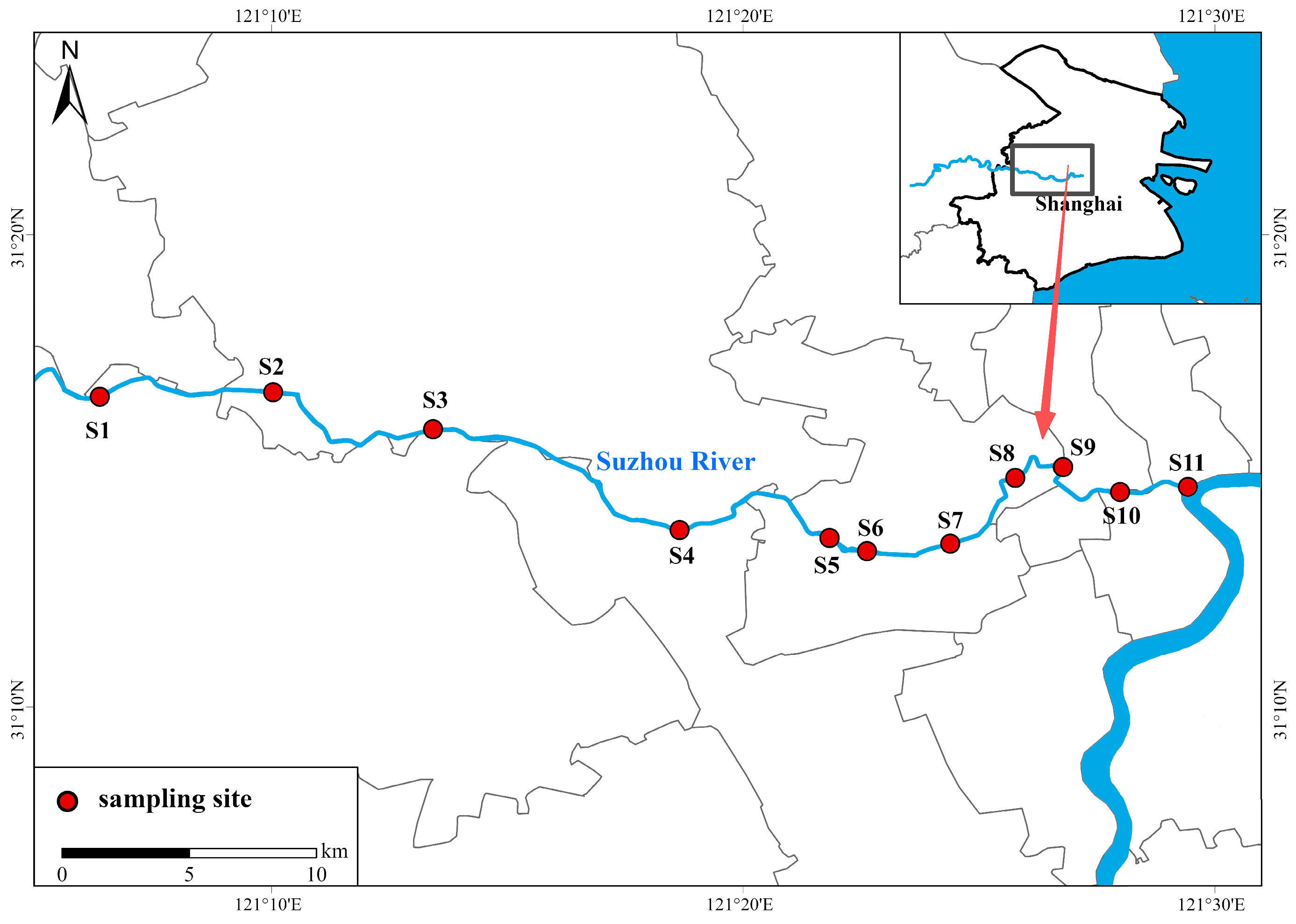
Field sampling was conducted along the Suzhou River (Wusong River section, Shanghai) from 14 to 22 October 2024. The study reach extends from the suburbs to the city center, forming a well-defined urbanization gradient—from suburban areas through the outer and inner ring roads to the urban core—under relatively continuous hydrological conditions. Based on existing fish surveys and urban functional zoning, the study reach was delineated into four zones using Huangdu (S2), the Fengbang River estuary (S4), and Beixinjing (S6) as boundary points. (Figure 1) Within each zone, we collected multiple fish species representing different ecological types, thereby establishing a “gradient × species” cross-factorial sampling design. Fish sampling was conducted by deploying gillnets across river transects and setting cage traps along the riparian zone. Each sampling site encompassed a 200 m river segment, and the linear distance along the river between the centroids of adjacent sites was at least 2 km to ensure spatial independence and avoid cross-contamination of samples among sites. Moreover, the presence of multiple sluice gates along the Suzhou River further restricts the longitudinal movement of fish, effectively fragmenting the river into discrete reaches and reinforcing the spatial independence of the sampling sites [16,17]. This design enabled comparison of spatial variations in gut microbial community structure across the urbanization gradient and among fish species.

2.2. Fish Collection and Gut Sample Preparation

Fishes were collected using a combination of gillnets and cage traps. All fish samples used in this experiment were collected with the approval and under the supervision of local government authorities. The gillnets were of a three-layer design (sizes: 3 × 30 m and 1.5 × 30 m; inner mesh: 20 mm, outer mesh: 60 mm) and deployed in slow-flowing areas of the river cross-section. Cage traps (0.5 × 0.5 m square, main body length: 10 m, mesh size: 10 mm) were deployed approximately 4–5 m from the bank. At each sampling section, gear was deployed for 6–8 h. During this period, the average water temperature ranged from 14 to 19 °C. Nets were checked every 2 h to retrieve fish promptly, ensuring that the fish used for analysis remained alive until dissection [18,19]. Given the presence of pollution and high levels of anthropogenic disturbance in urban waters, we selected three individuals of each species per site, all of which were confirmed to be sexually mature based on body length, body weight, and gonadal development. Their body length (to 0.01 cm) and weight (to 0.01 g) were recorded (Table S1). The body surface of each fish was then sterilized with 75% ethanol, and fish were dissected under relatively aseptic conditions to collect the entire intestine. To minimize potential bias from individual short-term dietary variation, we pooled the intestinal samples from the three conspecific individuals collected at the same site to form a single analytical unit [20,21]. This process yielded a total of 20 pooled intestinal samples, labeled CN1–CN4 (C. nasus), HB1–HB4 (H. bleekeri), CA1–CA4 (C. alburnus), AM1–AM4 (A. macropterus), and PP1–PP4 (P. parva), corresponding to the five species across the four urbanization gradients. All samples were immediately placed on dry ice in the field and subsequently transferred to −80 °C in the laboratory until DNA extraction.

2.3. DNA Extraction, PCR Amplification and Sequencing

Total DNA was extracted from intestinal samples using a commercial kit provided by Majorbio (Majorbio, Shanghai, China). DNA integrity was evaluated by 1% agarose gel electrophoresis, and concentration/purity were measured using a NanoDrop 2000 spectrophotometer (Thermo Fisher Scientific, Waltham, MA, USA). Samples with DNA concentration > 20 ng/μL and A260/A280 ratio between 1.8 and 2.0 were retained. All 20 samples met these criteria; no samples were excluded. Only samples meeting quality standards were used for subsequent amplification and sequencing. The V3–V4 hypervariable region of the 16S rRNA gene was amplified with universal primers 338F (5′-ACTCCTACGGGAGGCAGCA-3′) and 806R (5′-GGACTACHVGGGTWTCTAAT-3′). Each PCR reaction (20 μL) contained 10 μL of 2× Pro Taq Mix, 0.8 μL of each primer (5 μmol/L), 10 ng of template DNA, and ddH2O to volume. Thermal cycling conditions were initial denaturation at 95 °C for 3 min; 29 cycles of 95 °C for 30 s, 53 °C for 30 s, and 72 °C for 45 s; and final extension at 72 °C for 10 min. PCR products were examined by electrophoresis on 2% agarose gel and purified. Sequencing libraries were constructed with the Illumina TruSeq™ DNA Sample Prep Kit (Illumina, Inc., San Diego, CA, USA), and paired-end sequencing was performed on the Illumina MiSeq PE300 platform.

2.4. Sequence Processing and Species Annotation

Raw paired-end reads were quality-filtered with Trimmomatic (version 0.39, https://github.com/usadellab/Trimmomatic/releases/, accessed on 15 October 2025) and assembled with FLASH (v1.2.11, https://ccb.jhu.edu/software/FLASH/index.shtml, accessed on 15 October 2025) [22]. Reads were clustered into Operational Taxonomic Units (OTUs) at 97% similarity using USEARCH (v11.0.667, http://www.drive5.com/usearch/, accessed on 15 October 2025) and UPARSE (v11.0.667, http://www.drive5.com/uparse/, accessed on 15 October 2025) software [23,24], Deblur was not used for denoising. Taxonomic classification was performed using RDP classifier’s (v2.13) Bayesian algorithm (https://sourceforge.net/projects/rdp-classifier/, accessed on 15 October 2025) with a confidence threshold of 0.7, and sequences that could not be annotated were retained as “unclassified” at the corresponding taxonomic level. OTU sequences were aligned and annotated against the SILVA database (Release128 http://www.arb-silva.de/, accessed on 15 October 2025) to obtain taxonomic information and microbial composition at various classification levels. OTUs classified as Cyanobacteria—predominantly environmental photosynthetic microbiota—were removed to minimize potential interference from free-living microbes in assessing resident gut microbiota.

2.5. Diversity Analysis

Alpha diversity was assessed using multiple indices: Sobs (observed OTUs), Chao1, and ACE for species richness [25], and Shannon and Simpson for microbial diversity [26,27]. Coverage index was calculated to assess sequencing completeness. Rarefaction curves were generated to assess whether sequencing depth sufficiently captured microbial diversity. For beta diversity analysis, Bray–Curtis distances were calculated from the OTU abundance matrix (https://sourceforge.net/projects/rdp-classifier/, accessed on 15 October 2025). Differences in microbial community structure among samples were then visualized by principal coordinate analysis (PCoA) and hierarchical clustering [28].

2.6. Functional Predictive Analytics

PICRUSt was used to infer functional profiles from OTU abundance against the Greengenes database, predicting the functional potential of microbial communities [29]. Predicted functions were then mapped to KEGG and COG databases to analyze relative abundances of functional categories at different hierarchical levels. This functional analysis is based on inferences from 16S rRNA gene sequences. As such, it reflects potential functional composition rather than actual metabolic activity.

2.7. Statistical Analysis

All statistical analyses were conducted using R (version 4.4.1). Alpha diversity indices (Sobs, Chao1, ACE, Shannon, Simpson) and beta diversity distances (Bray–Curtis) were calculated using the vegan package (version 2.7-2). To test for significant differences in microbial community structure among urbanization zones and fish species, we performed permutational multivariate analysis of variance (PERMANOVA) using the adonis2 function in the vegan package with 9999 permutations. Prior to PERMANOVA, we assessed homogeneity of multivariate dispersions using PERMDISP (function betadisper), followed by an ANOVA, to ensure that any observed differences were not driven by heterogeneity in dispersion. A significance threshold of p < 0.05 was applied for all statistical tests. All parameters used in these analyses were set to their default values (e.g., adonis2 with default distance = “bray” and permutations = 9999), which are widely accepted as standard in ecological and microbiome research, ensuring reproducibility and comparability across studies. Graphical representations, including bar plots, principal coordinate analysis (PCoA) ordination plots, hierarchical clustering, and Venn diagrams, were generated using the ggplot2 (version 3.5.2) and vegan packages (version 2.6-4).

3. Results

3.1. Sequencing Data and OTU Clustering

After quality control, 1,138,094 high-quality sequences were obtained from the 20 samples. Per-sample sequences ranged from 41,236 to 72,814 (mean: 56,905). Most sequences (99.8%) were 400–440 bp in length, with an average of 415 bp. Clustering at 97% similarity yielded 2880 operational taxonomic units (OTUs). Rarefaction curves indicated that OTU accumulation plateaued for all samples except AM1 once sequencing depth exceeded 40,000 reads. Moreover, Coverage index exceeded 99.5% for all samples, confirming that sequencing depth sufficiently captured microbial community composition (Figure S1).

3.2. OTU Distribution Characteristics

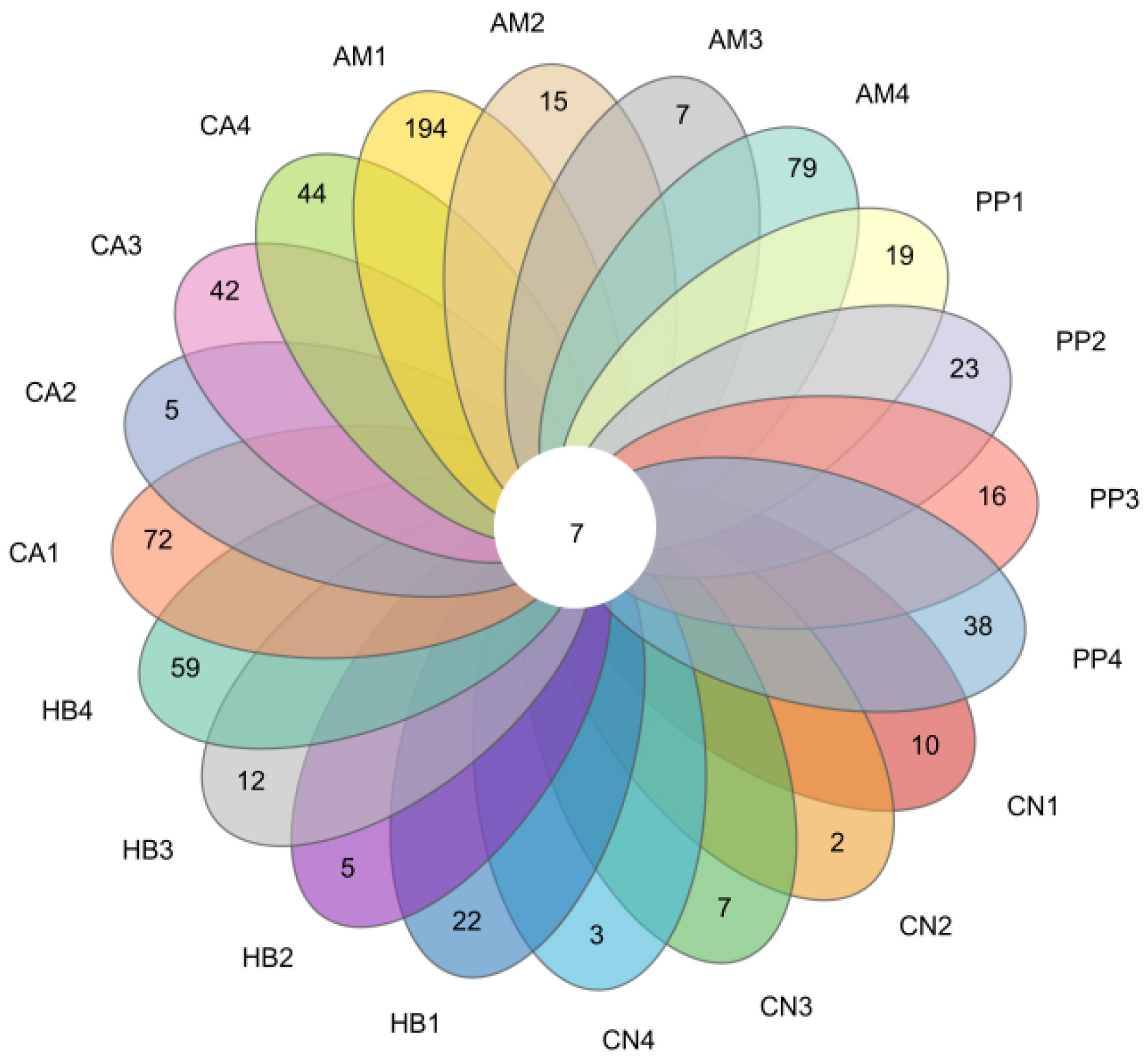
After removing Cyanobacteria-classified OTUs, 7 OTUs were shared across all 20 samples, accounting for only 0.24% of total OTUs. Unique OTUs per sample varied considerably, ranging from 2 to 194. Unique OTU richness was particularly high in A. macropterus, with AM1 and AM4 containing 194 and 79 unique OTUs, respectively (Figure 2). These results indicate that OTU richness varied among fish species, and also showed variation within the same species across the urbanization gradient, although the underlying drivers of this variation remain unclear without additional environmental and host-related data. The specific response mechanisms remain to be further analyzed and discussed in conjunction with additional environmental data.

3.3. Alpha Diversity

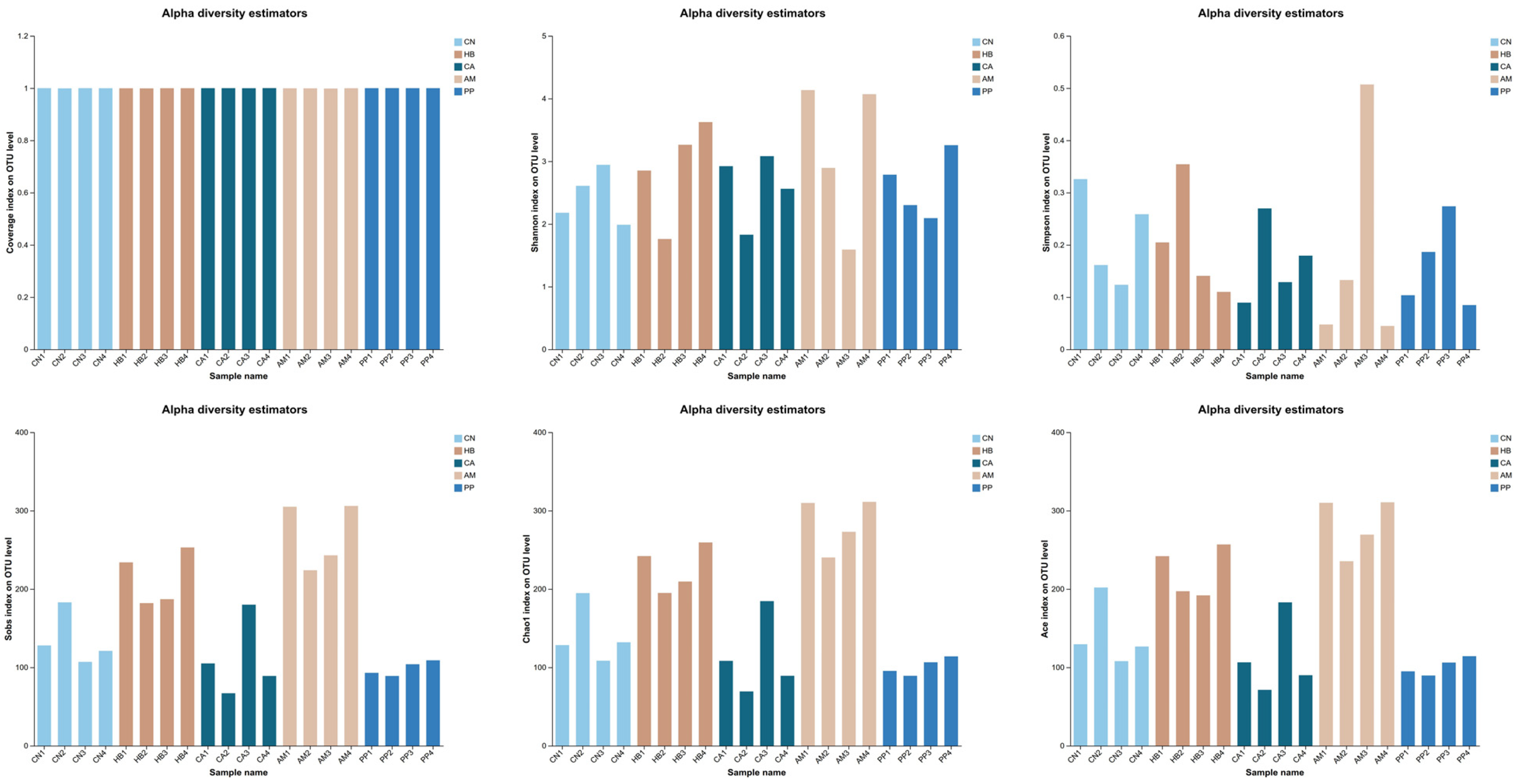
Alpha diversity analysis confirmed that all 20 samples had Coverage indices exceeding 99.5%. Richness and diversity indices varied considerably among fish species and across urbanization gradients (Figure 3). Within the same zone, H. bleekeri and A. macropterus exhibited notably higher species richness, as indicated by Sobs, Chao1, and ACE indices. Sobs values ranged from approximately 260–410 for H. bleekeri and 280–460 for A. macropterus. In contrast, P. parva displayed lower richness, with Sobs values predominantly between 100 and 150. Richness indices for C. nasus and C. alburnus were generally lower than those of omnivorous species (H. bleekeri and A. macropterus). Moreover, their richness showed little variation across urbanization gradients. Shannon and Simpson indices revealed differences in community evenness among fish species. However, no consistent trend in these diversity measures was observed along the urbanization gradient, and the factors contributing to this variation remain unclear without additional environmental and host-related data.

3.4. Classification Composition

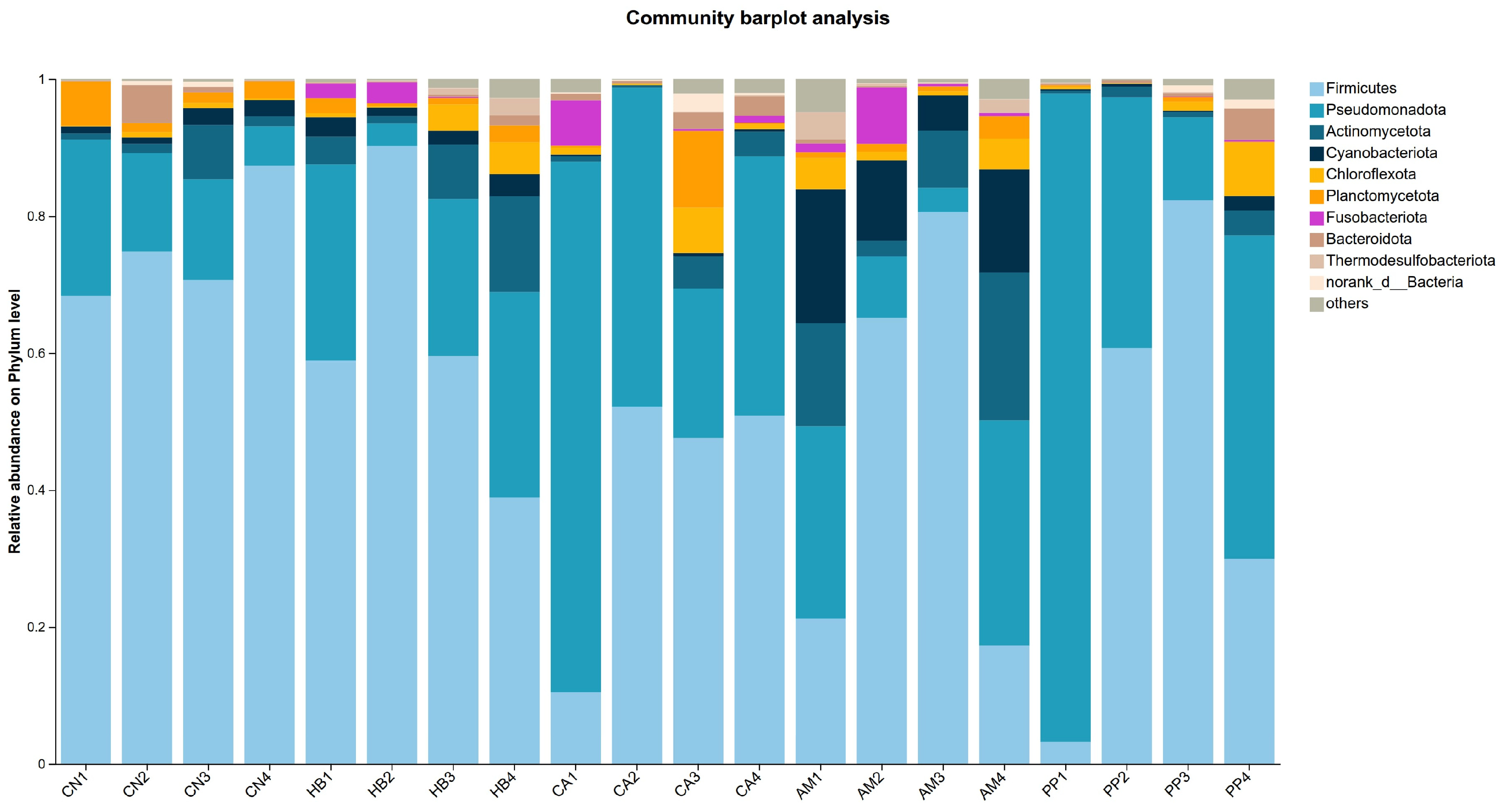
After removing the phylum Cyanobacteria and comparing with the Silva database, 2880 OTUs from 20 sequenced samples were identified as 23 phyla, 43 classes, 100 orders, 165 families, 286 genera, and 396 species of intestinal microbiota. The number of phyla detected in each fish species was 19 for C. nasus, 19 for H. bleekeri, 21 for C. alburnus, 18 for A. macropterus, and 18 for P. parva. The dominant phyla, each with a relative abundance exceeding 1%, were Firmicutes (54.83%), Pseudomonadota (30.15%), Actinomycetota (5.40%), Chloroflexota (2.09%), Planctomycetota (1.84%), Fusobacteriota (1.27%), and Bacteroidota (1.05%) (Figure 4). The relative abundances of these dominant phyla varied considerably among fish species and across the urbanization gradient. For instance, in C. nasus, Firmicutes and Pseudomonadota remained the two most abundant phyla across all zones, but the identity of the third most abundant phylum shifted depending on the location. In A. macropterus, Fusobacteriota exhibited high relative abundance in samples from some gradients but was present at much lower levels in others. These results demonstrate that the structure of the gut microbial community at the phylum level is shaped by a combination of host identity and environmental context along the urban river.
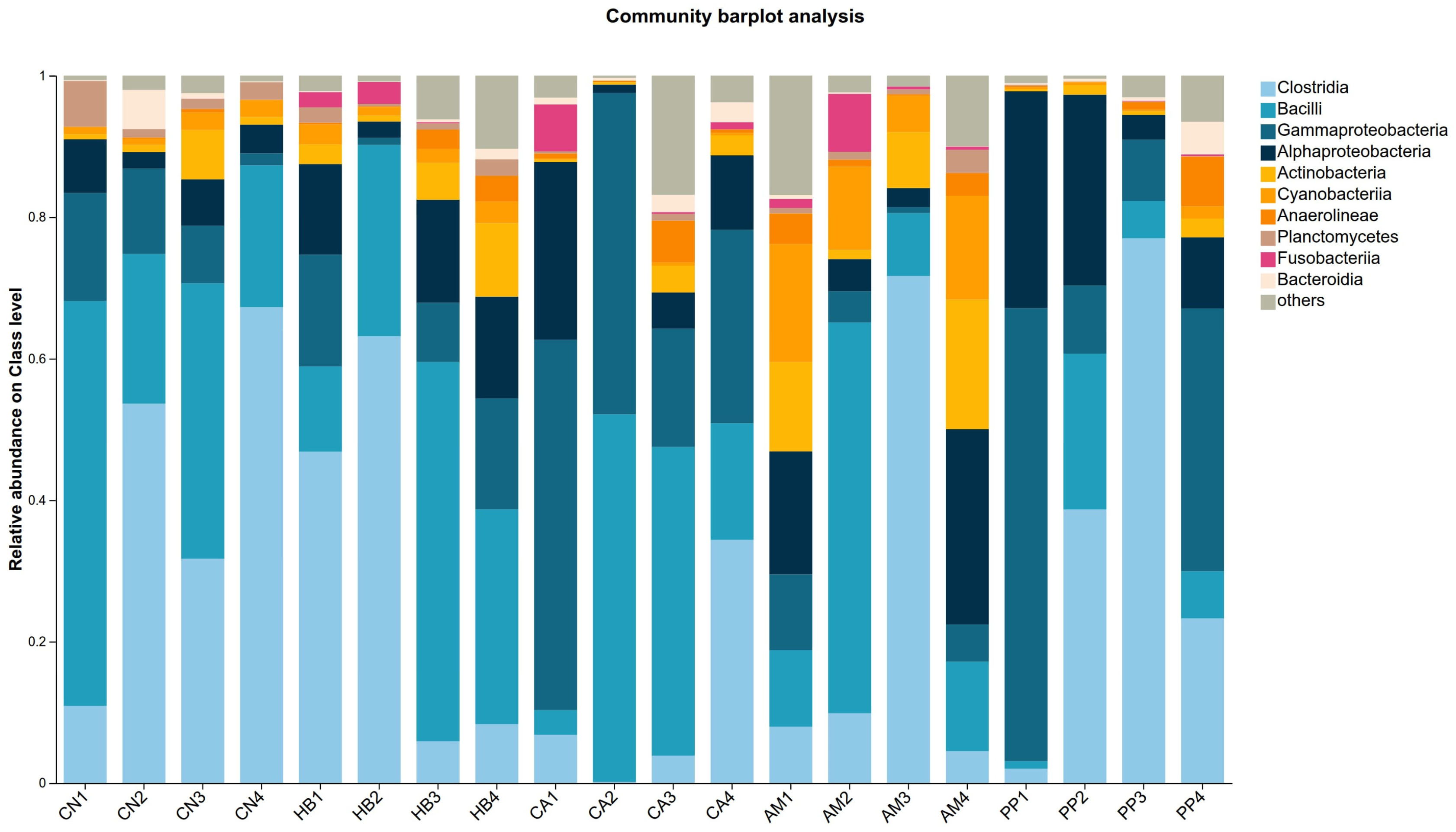
At the class level, a total of 43 bacterial classes were identified across all samples. The number of classes detected in each fish species was 36 for C. nasus, 33 for H. bleekeri, 39 for C. alburnus, 31 for A. macropterus, and 29 for P. parva. The dominant classes across all samples were Clostridia, Bacilli, Gammaproteobacteria, and Alphaproteobacteria (Figure 5). However, the relative abundance patterns of these major classes differed considerably among the five fish species, indicating host-specific variation in gut microbial community composition at this taxonomic level.
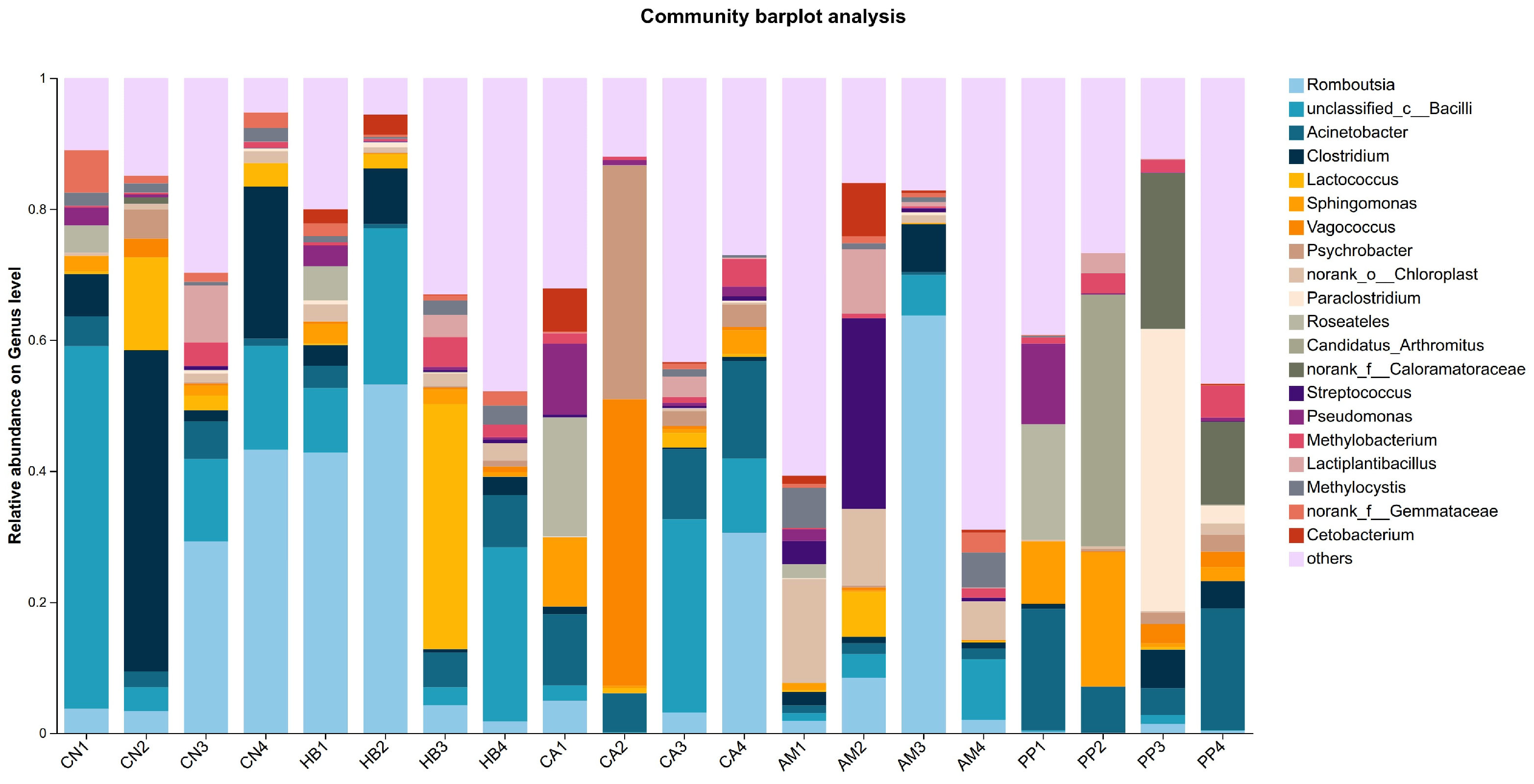
At the genus level, a total of 286 bacterial genera were identified. The number of genera detected in each fish species was 253 for C. nasus, 180 for H. bleekeri, 259 for C. alburnus, 206 for A. macropterus, and 191 for P. parva. The genera with the highest relative abundances across all samples were Romboutsia, Bacillus, Acinetobacter, Clostridium, and Lactococcus (Figure 6). Among these, Romboutsia was consistently abundant across multiple fish species and along the urbanization gradient. In contrast, the relative abundances of the other dominant genera exhibited marked variation among different sample types. These results further illustrate the combined influence of host species and environmental factors in shaping the fine-scale taxonomic composition of the gut microbiota.

3.5. Variation in Community Structure

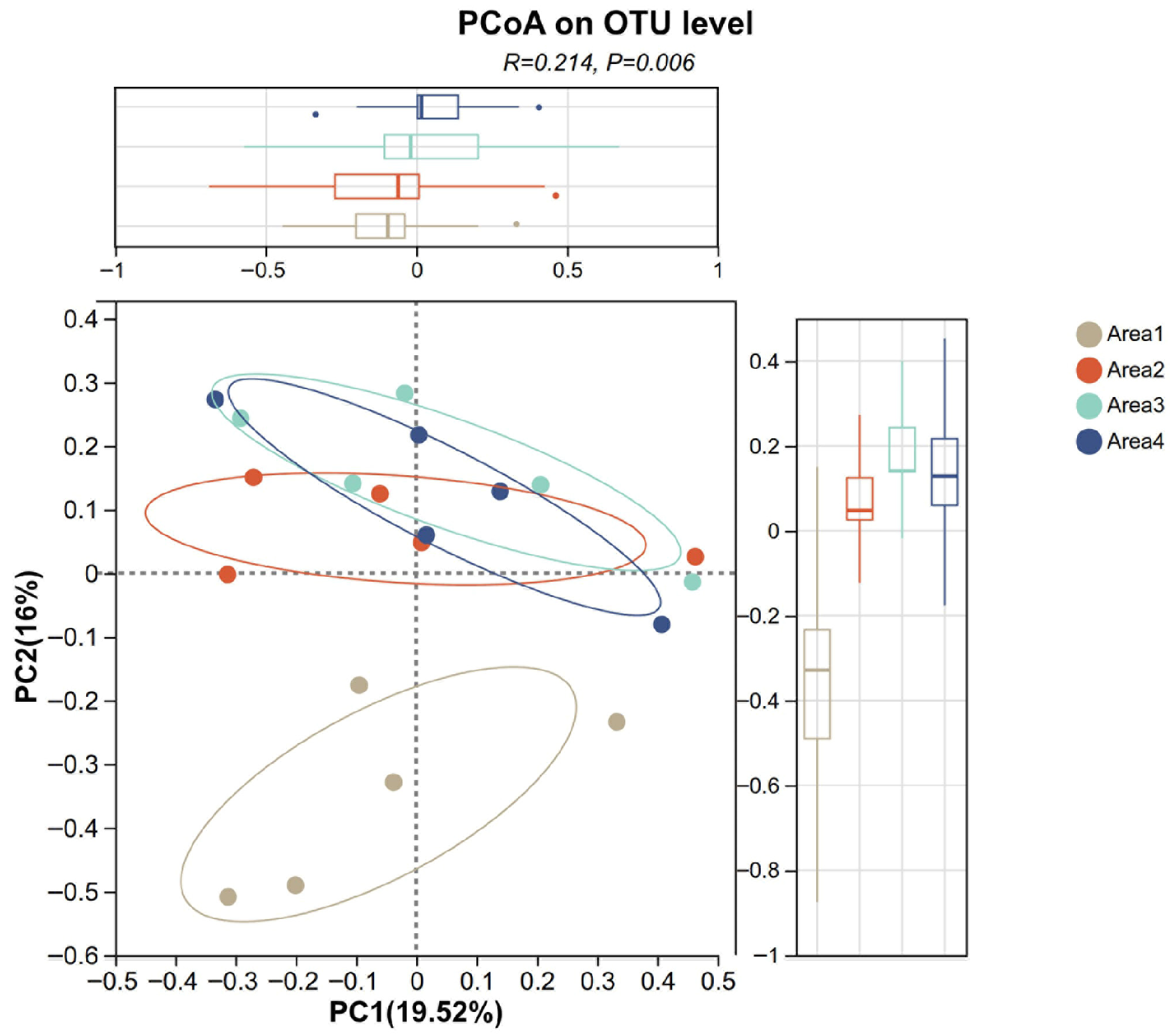
The PCoA results revealed a non-linear spatial pattern in fish gut microbial community structure along the urbanization gradient. The first two principal coordinates explained only 19.52% and 16.00% of the total variation, suggesting that multiple unmeasured factors—such as local water chemistry, food resource availability, or stochastic assembly processes—also contribute to community variation. Suburban samples formed a relatively tight cluster in the ordination space, whereas samples from inner ring and city center zones exhibited substantial overlap (Figure 7). This spatial separation supports the view that the least urbanized areas harbor distinct microbial communities, while the microbial communities in more urbanized zones converge in composition. Notably, the relatively wider dispersion of suburban samples may be partly attributable to sample AM1, whose rarefaction curve did not reach a plateau (Figure S1). Overall, these patterns indicate that while host species remains a primary driver of gut microbial community structure, environmental factors associated with the urbanization gradient exert a measurable influence, with the strongest differentiation occurring between suburban and more urbanized reaches.

3.6. Predicted Functional Profiles of Gut Microbiota

Functional prediction using PICRUSt indicated that the gut microbiota of fish in the Suzhou River were predominantly associated with metabolic pathways, particularly those involved in the transport and metabolism of amino acids, carbohydrates, and inorganic ions [30,31]. This profile aligns with the established role of gut microbiota in nutrient absorption and energy metabolism in fish [32]. To further explore the functional implications of these predictions, we examined differences among fish species with distinct trophic levels. Omnivorous species (H. bleekeri and A. macropterus) exhibited higher relative abundances of pathways related to carbohydrate metabolism and amino acid metabolism compared to carnivorous species (C. nasus and C. alburnus). This pattern is consistent with the broader dietary niches of omnivorous fish, which are exposed to a wider variety of plant- and animal-derived substrates, potentially selecting for a more diverse and metabolically versatile gut microbiota [33]. In contrast, carnivorous species, which rely primarily on protein-rich diets, showed a higher relative abundance of pathways associated with nitrogen metabolism and amino acid degradation, reflecting their dietary specialization [34,35]. These functional differences likely contribute to the species-specific variation in gut microbial community structure observed in this study and underscore the role of host diet as a key determinant of microbial function in the fish gut.
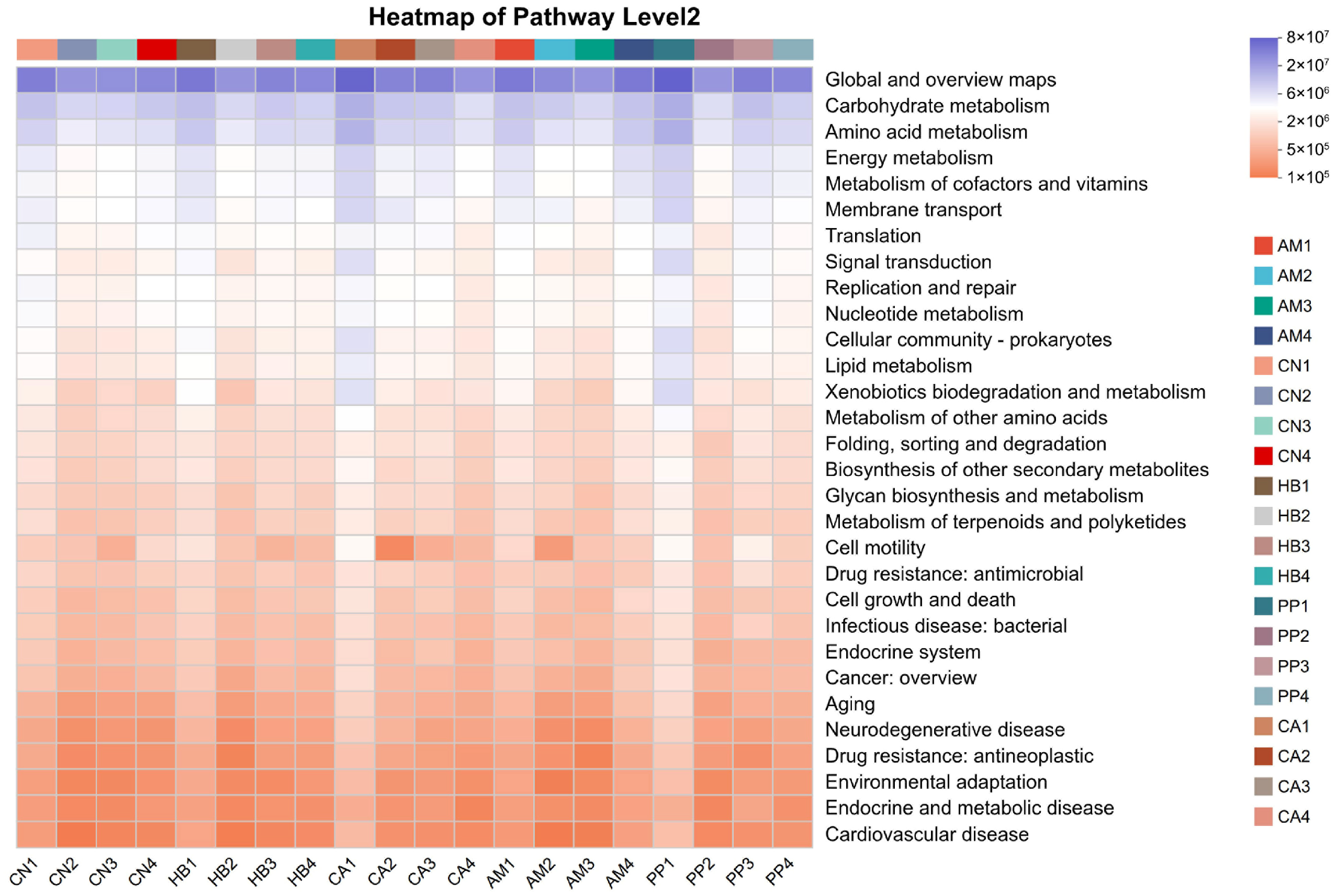
At the KEGG Level 2 and Level 3 classifications (Figure 8), several pathways related to xenobiotic biodegradation and metabolism showed higher relative abundances in samples from urbanized zones, suggesting that the gut microbiota of fish in more heavily impacted areas may possess enhanced capabilities for metabolizing anthropogenic compounds [36,37,38]. However, given that these predictions are derived from 16S rRNA gene sequences and do not represent actual metabolic activity, these findings should be interpreted as hypothesis-generating [39,40]. Future studies incorporating metagenomic or metabolomic approaches are needed to validate these functional patterns and to elucidate the mechanistic links between urbanization, host diet, and gut microbiota function.

4. Discussion

4.1. Spatial Response of Fish Gut Microbial Community Structure to the Urbanization Gradient

This study systematically examined the gut microbial communities of five common wild fish species along an urbanization gradient in the Suzhou River, spanning from suburban areas to the city center. We found significant differences in OTU richness, alpha diversity, and overall gut microbial community structure among fish sampled from different urbanization zones (Figure 2, Figure 3 and Figure 6). These results indicate that environmental variation linked to urbanization may be a key factor shaping spatial differences in fish gut microbial communities. This conclusion is consistent with previous studies across diverse aquatic environments and geographic regions, which show that environmental conditions strongly influence the gut microbial communities of wild fish [41,42,43]. Notably, although sample AM1 did not reach a rarefaction plateau (Figure S1), its Coverage index exceeded 99.5%, indicating that the sequencing depth was sufficient to capture the majority of microbial diversity; thus, it could be included in the analysis alongside the other samples.
Urban rivers often have limited hydrological connectivity, diverse pollutant inputs, and regulated flow regimes [44,45,46,47,48]. These conditions can indirectly affect the establishment and stability of fish gut microbiota by altering waterborne microbial communities, food resources, and environmental selection pressures [49,50,51]. In this study, principal coordinate analysis (PCoA) showed that samples from the suburban zone were clearly distinct from those in other areas, while samples from the inner ring road and city center overlapped considerably (Figure 7). This pattern suggests a non-linear spatial response of fish gut microbial communities along the urbanization gradient, with a marked shift between suburban and more urbanized zones and greater similarity among communities within the urban core. Notably, within the suburban zone, samples exhibited a degree of variability, which may be partially influenced by sample AM1—the only sample whose rarefaction curve did not reach a plateau (Figure S1). Although this indicates slightly lower sequencing depth coverage for that sample, its inclusion does not alter the overall spatial pattern, as the distinction between suburban and urban zones remains evident even when AM1 is excluded from the analysis. Collectively, these findings reflect the complexity and non-linear spatial continuity of environmental conditions in urban river ecosystems, where human disturbances create a mosaic of habitats that do not follow a simple linear gradient from less to more urbanized areas.

4.2. Differential Responses of Fish with Different Ecological Types to the Urbanization Gradient

Beyond spatial gradient effects, we observed clear species-specific differences in how gut microbial communities responded to urbanization. Omnivorous species (e.g., H. bleekeri and A. macropterus) showed higher microbial richness and diversity than carnivorous species (e.g., C. nasus and C. alburnus), whose gut communities displayed lower richness and less variation along the urbanization gradient [52,53]. This difference is likely due to variation in diet, trophic level, and sources of microbial colonization among species [54].
This multi-species comparison shows that even within a single river system, fish occupying different ecological niches display distinct gut microbial responses to environmental change. These species-specific patterns likely reflect interactions between host physiological traits and environmental filtering. Previous studies have shown that host diet and digestive tract structure play central roles in shaping the fish gut microbiome, while environmental conditions influence these processes by affecting the input of external microbes and the composition of available food resources [55,56,57]. Our findings further support the view that host characteristics and environmental factors jointly shape the structure of fish gut microbial communities.

4.3. Composition of the Core Microbiota and Its Potential Ecological Implications

At the phylum level, Firmicutes and Pseudomonadota dominated the gut microbiota of all fish species examined, consistent with previous studies of freshwater fish [58]. Firmicutes are commonly linked to the breakdown of complex organic matter and energy acquisition [59], whereas Pseudomonadota are involved in nitrogen cycling and the metabolism of diverse organic compounds [60,61]. Actinomycetota were also consistently detected across species and along the urbanization gradient, suggesting a possible role in maintaining gut microbial stability.
At the genus level, the composition of dominant taxa varied markedly among fish species and along the urbanization gradient. For example, the relative abundances of Romboutsia, Clostridium, Acinetobacter, and Lactococcus differed across samples. These genera include typical gut-associated microbes as well as taxa that may derive from the surrounding aquatic environment. This pattern indicates that fish gut microbiota are shaped by both host selection and environmental inputs [62,63], reflecting interactions between the host and its environment.
Importantly, this study describes patterns of variation in microbial composition but cannot determine whether these changes are directly driven by environmental factors or indirectly mediated by shifts in food resources and the influx of waterborne microbes. Clarifying the ecological roles of these dominant microbial groups will require further investigation that integrates more detailed environmental and host-related data.

4.4. Predicted Functional Profiles of Gut Microbiota and Their Potential as Ecological Indicators

Functional prediction using PICRUSt indicated that the gut microbiota of fish in the Suzhou River were predominantly associated with metabolic pathways, particularly those involved in global and overview maps, carbohydrate metabolism, amino acid metabolism, energy metabolism, and metabolism of cofactors and vitamins [38,64,65,66,67]. This profile aligns with the established role of gut microbiota in nutrient absorption and energy metabolism in fish [38,64]. To explore more granular functional differences, we compared predicted functions across fish species with distinct trophic levels. Omnivorous species (H. bleekeri and A. macropterus) exhibited significantly higher relative abundances of carbohydrate metabolism and amino acid metabolism pathways compared to carnivorous species (C. nasus and C. alburnus), consistent with their broader dietary niches [68,69]. In contrast, carnivorous species showed slightly higher abundances of pathways related to lipid metabolism and xenobiotics biodegradation, which may reflect their protein-rich diet and exposure to dietary-derived compounds. These functional differences may contribute to the species-specific variation in gut microbial community structure observed in this study. Additional predicted functions included genetic information processing, energy production and conversion, and cellular structure, reflecting the basic requirements for microbial growth and community stability [70].
Overall, these predictions provide preliminary insight into the potential ecological roles of fish gut microbiota in the urbanized Suzhou River environment. However, because this analysis is inferred from 16S rRNA gene sequences, it does not represent actual metabolic activity. These findings should therefore be regarded as hypothesis-generating and validated through metagenomic or metabolomic approaches.

4.5. Significance and Limitations of the Study

By investigating the Suzhou River as a model urban waterway and employing a multi-species comparative approach, this study revealed spatial variations in fish gut microbial communities along a defined urbanization gradient. These findings provide new empirical evidence for understanding the microecological responses of aquatic organisms to urbanization pressure [71]. Compared to previous studies that have primarily focused on single species or non-urban water bodies, this research offers a broader perspective in terms of spatial scale and ecological complexity. It is important to acknowledge the limitations of this study. First, we employed a pooled sample strategy to emphasize the overall effects of the environmental gradient. While this design helped to minimize the influence of random individual variation on the analysis of community structure, it simultaneously precluded a detailed assessment of inter-individual variability and limited our ability to resolve fine-scale ecological mechanisms [20,21]. Second, the functional analysis was based on predictive methods (PICRUSt), and the results should be interpreted as representing potential functional trends rather than confirmed metabolic activities [39]. Future research should aim to elucidate the driving mechanisms of fish gut microbiota along urbanization gradients more comprehensively by incorporating direct measurements of water physicochemical parameters, host physiological indicators, and multi-omics technologies [72,73].

4.6. Limitations of the Study

Several limitations should be acknowledged. The sample size per species per zone was limited to three individuals, which were pooled into a single analytical unit to reduce individual physiological and dietary variation. This was primarily due to the limited abundance of wild fish in urban river sections, where pollution and anthropogenic disturbance reduce fish populations compared to natural habitats. Additionally, the Suzhou River undergoes regular dredging and pollution clean-up operations, which temporarily alter the benthic environment and fish habitats, making fish collection even more challenging and reducing the effective sampling window. Furthermore, we restricted sampling to sexually mature individuals to ensure consistency in host physiological status, which further constrained the number of available specimens. Although the current sample size is adequate for exploratory spatial comparisons, future studies with larger sample sizes will be valuable for validating these patterns and enabling more detailed individual-level analyses. As environmental conditions in the Suzhou River continue to improve through ongoing restoration efforts, parallel comparisons with increased replication will help strengthen the conclusions drawn from this study. Moreover, our research group has previously collected multi-year data on water physicochemical parameters and pollutant indicators, including microplastics, heavy metals, and organic pollutants along the Suzhou River [74,75,76]. Future studies integrating these environmental datasets with gut microbiota profiles will help disentangle the specific drivers of microbial variation and provide a more comprehensive understanding of host–microbe–environment interactions in urban river ecosystems.

5. Conclusions

This study demonstrates a clear association between the urbanization gradient and both the structural composition and predicted functional profiles of fish gut microbial communities. It further reveals that fish of different ecological types exhibit distinct responses to these environmental changes. Collectively, these findings provide fundamental baseline data for the development of microbial indicators to assess the ecological health of urban rivers. Furthermore, they represent a contribution to a framework for future research aimed at elucidating the complex mechanisms underlying host–microbe–environment interactions in anthropogenically influenced aquatic ecosystems.

Supplementary Materials

The following supporting information can be downloaded at https://www.mdpi.com/article/10.3390/fishes11040224/s1: Figure S1: Rarefaction curve of intestinal microbiota in 20 fish samples; Table S1: Sample collection information for experimental species.

Author Contributions

S.F., H.X. and W.T. conceived the ideas and designed the methodology. S.F., H.X. and X.L. collected the research samples. S.F. performed the experiments and data analysis. S.F. and H.X. drafted the manuscript. W.T., A.W. and X.L. provided the experimental conditions. W.T. and H.X. participated in the main revision. All authors have read and agreed to the published version of the manuscript.

Funding

This work was supported by Project Funding from the Shanghai Environmental Monitoring Center (2024) and the National Natural Science Foundation of China (NSFC) (Grant No. 31093430).

Institutional Review Board Statement

The animal study protocol was approved by the Ethics Committee of Shanghai Ocean University (protocol code SHOU-DW-2024-319 and date of approval 12 October 2024).

Data Availability Statement

The datasets generated and analyzed during the current study are available in the National Center for Biotechnology Information (https://www.ncbi.nlm.nih.gov/, accessed on 9 March 2026), accession PRJNA1434382.

Acknowledgments

We would like to express our gratitude to Shanghai Ocean University for providing laboratory facilities and to Shanghai Majorbio Bio-pharm Technology Co., Ltd. for technical support. Special thanks are extended to the Shanghai Environmental Monitoring Center for their assistance in sample collection from the Suzhou River.

Conflicts of Interest

The authors declare no conflicts of interest.

References

  1. Chen, M.; Jin, H.; Xue, Q.; Cao, C.; Ding, Z.; Huang, J. Assessment indicator system construction and evaluation of water ecological environment security for urban rivers: A case study of the Qinhuai River in Nanjing City. J. Environ. Eng. Technol. 2026, 16, 809–819. (In Chinese) [Google Scholar] [CrossRef]
  2. Onuigbo, A.C.; Madu, I.A.; Nwosu, I.G.; Obeta, M.C. Perspective assessment of effects of industrial effluent discharge on stream water in Enugu urban, Enugu state. Int. J. Energy Water Resour. 2024, 9, 853–868. [Google Scholar] [CrossRef]
  3. O’Hara, A.M.; Shanahan, F. The gut flora as a forgotten organ. EMBO Rep. 2006, 7, 688–693. [Google Scholar] [CrossRef] [PubMed]
  4. Sousa, T.; Paterson, R.; Moore, V.; Carlsson, A.; Abrahamsson, B.; Basit, A.W. The gastrointestinal microbiota as a site for the biotransformation of drugs. Int. J. Pharm. 2008, 363, 1–25. [Google Scholar] [CrossRef] [PubMed]
  5. Sommer, F.; Bäckhed, F. The gut microbiota—masters of host development and physiology. Nat. Rev. Microbiol. 2013, 11, 227–238. [Google Scholar] [CrossRef]
  6. Liu, Y.; Li, X.; Kormas, K.A.; Li, Y.; Li, H.; Li, J. Variable phylosymbiosis and cophylogeny patterns in wild fish gut microbiota of a large subtropical river. mSphere 2025, 10, e0098224. (In Chinese) [Google Scholar] [CrossRef]
  7. Du, L.; Xu, J.X.; Li, Y.B.; Qu, X.; Liu, M.; Zhang, M.; Yu, Y. Fish Community Characteristics and Spatial Pattern in Major Rivers of Beijing City. Res. Environ. Sci. 2019, 32, 447–457. (In Chinese) [Google Scholar] [CrossRef]
  8. Kalkhoff, S.; Hubbard, L.; Tomer, M.D.; James, D. Effect of variable annual precipitation and nutrient input on nitrogen and phosphorus transport from two Midwestern agricultural watersheds. Sci. Total Environ. 2016, 559, 53–62. [Google Scholar] [CrossRef]
  9. Müller, A.; Österlund, H.; Marsalek, J.; Viklander, M. The pollution conveyed by urban runoff: A review of sources. Sci. Total Environ. 2020, 709, 136125. [Google Scholar] [CrossRef]
  10. Hilburn, B.G.; Rider, S.J.; Johnston, C.E. Biogeographic Considerations for Fish-Based Indices of Stream Health in Regions with High Species Richness and Endemism: A Perspective from the Southeastern US. Environ. Manag. 2025, 75, 167–174. [Google Scholar] [CrossRef]
  11. Wang, Y.; Wu, A.; Lin, X. Succession of Macrozoobenthos Community in Suzhou River in 1996–2022 and Its Response Characteristics to Water Quality. Environ. Monit. China 2025, 41, 159–174. [Google Scholar] [CrossRef]
  12. Pan, Z.; Lin, X.; Xue, H.; Hu, Z.; Guo, H.; Zhang, Y.; Wu, E.; Tang, W. Fish species diversity background and community structure in the main inland water bodies of Shanghai. Biodivers. Sci. 2025, 33, 53–67. [Google Scholar] [CrossRef]
  13. Zhang, Y.; Yu, H.; Bi, B.; Gong, L.; Tang, W. Ecological Health Assessment of Suzhou River in Shanghai Based on Fish Index of Biotic Integrity. Environ. Monit. China 2021, 37, 164–177. (In Chinese) [Google Scholar]
  14. Gao, L.; Han, C.; Chen, Y. Pollution Elimination Solutions Based on Sluice Gate Operation for Pumping Station Discharge in Suzhou Creek in Shanghai. Water Purif. Technol. 2025, 44, 130–138. (In Chinese) [Google Scholar] [CrossRef]
  15. Yu, H.C.; Bi, B.; Tang, W.Q.; Zhang, Y.; Guo, H. Changes in fish diversity and assemblage during comprehensive restoration of the Suzhou River in Shanghai. Biodivers. Sci. 2021, 29, 32–42. (In Chinese) [Google Scholar] [CrossRef]
  16. Chen, X.; Li, X.; Cheng, X. Spatial-temporal distribution of fish assemblages in the upstreams of Huangpu River and Suzhou Creek. Biodivers. Sci. 2008, 16, 191–196. [Google Scholar] [CrossRef]
  17. Liermann, C.R.; Nilsson, C.; Robertson, J.; Ng, R.Y. Ng, Implications of Dam Obstruction for Global Freshwater Fish Diversity. BioScience 2012, 62, 539–548. [Google Scholar] [CrossRef]
  18. Zhou, Y.; Trujillo-González, A.; Nicol, S.; Boutigny, M.; Huerlimann, R.; Sarre, S.D.; Gleeson, D. Impact of degradation and time of sampling on gut Microbiome composition in wild-caught marine fish. Sci. Rep. 2025, 15, 28947. [Google Scholar] [CrossRef]
  19. Cao, J.; Li, W.-J.; Wang, Y.-F.; An, G.-S.; Lu, X.-J.; Du, Q.-X.; Li, J.; Sun, J.-H. Estimating Postmortem Interval Using Intestinal Microbiota Diversity Based on 16S rRNA High-throughput Sequencing Technology. Fa Yi Xue Za Zhi 2021, 37, 621–626. [Google Scholar] [CrossRef]
  20. Mumford, S.; Patterson, C.; Evered, J.; Brunson, R.; Levine, J.; Winton, J. Comparison of individual and pooled sampling methods for detecting bacterial pathogens of fish. J. Vet. Diagn. Investig. 2005, 17, 305–310. [Google Scholar] [CrossRef]
  21. Abdullah, A.; Nurhayati, T.; Dwiyanti, F.G.; Sauqi, S.D.A. Sampling technique to pool genetic materials of microorganism communities in blue-swimming crab processing plant industry. MethodsX 2023, 12, 102503. [Google Scholar] [CrossRef]
  22. Magoč, T.; Salzberg, S.L. FLASH: Fast length adjustment of short reads to improve genome assemblies. Bioinformatics 2011, 27, 2957–2963. [Google Scholar] [CrossRef]
  23. Edgar, R.C. UPARSE: Highly accurate ASV sequences from microbial amplicon reads. Nat. Methods 2013, 10, 996–998. [Google Scholar] [CrossRef] [PubMed]
  24. Stackebrandt, E.; Goebel, B.M. Taxonomic Note: A Place for DNA-DNA Reassociation and 16S rRNA Sequence Analysis in the Present Species Definition in Bacteriology. Int. J. Syst. Bacteriol. 1994, 44, 846–849. [Google Scholar] [CrossRef]
  25. Chao, A. Nonparametric estimation of the number of classes in a population. Scand. J. Stat. 1984, 11, 265–270. [Google Scholar]
  26. Shannon, C.E. A mathematical theory of communication. Bell Syst. Tech. J. 1948, 27, 379–423. [Google Scholar] [CrossRef]
  27. Simpson, E.H. Measurement of diversity. Nature 1949, 163, 688. [Google Scholar] [CrossRef]
  28. Schloss, P.D.; Westcott, S.L.; Ryabin, T.; Hall, J.R.; Hartmann, M.; Hollister, E.B.; Lesniewski, R.A.; Oakley, B.B.; Parks, D.H.; Robinson, C.J.; et al. Introducing mothur: Open-Source, Platform-Independent, Community-Supported Software for Describing and Comparing Microbial Communities. Appl. Environ. Microbiol. 2009, 75, 7537. [Google Scholar] [CrossRef]
  29. Douglas, G.M.; Maffei, V.J.; Zaneveld, J.R.; Yurgel, S.N.; Brown, J.R.; Taylor, C.M.; Huttenhower, C.; Langille, M.G.I. PICRUSt2 for prediction of metagenome functions. Nat. Biotechnol. 2020, 38, 685–688. [Google Scholar] [CrossRef]
  30. Nayak, S.K. Role of gastrointestinal microbiota in fish. Aquac. Res. 2010, 41, 1553–1573. [Google Scholar] [CrossRef]
  31. Egerton, S.; Culloty, S.; Whooley, J.; Stanton, C.; Ross, R.P. The Gut Microbiota of Marine Fish. Front. Microbiol. 2018, 9, 873. [Google Scholar] [CrossRef]
  32. Wang, A.R.; Ran, C.; Ringø, E.; Zhou, Z.G. Progress in fish gastrointestinal microbiota research. Rev. Aquacult. 2018, 10, 626–640. [Google Scholar] [CrossRef]
  33. Ma, B.; Zhang, J.; Li, D.; Chu, Z.; Liu, J.; Jin, J.; Zhong, L. Comparative Analysis of Intestinal Microbiota in Wild, Domesticated, and Cultured Gymnocypris potanini firmispinatus. Biology 2024, 13, 983. [Google Scholar] [CrossRef] [PubMed]
  34. Kanika, N.H.; Liaqat, N.; Chen, H.; Ke, J.; Lu, G.; Wang, J.; Wang, C. Fish gut microbiome and its application in aquaculture and biological conservation. Front. Microbiol. 2025, 15, 1521048. [Google Scholar] [CrossRef] [PubMed]
  35. De Angelis, M.; Ferrocino, I.; Calabrese, F.M.; De Filippis, F.; Cavallo, N.; Siragusa, S.; Rampelli, S.; Di Cagno, R.; Rantsiou, K.; Vannini, L.; et al. Diet influences the functions of the human intestinal microbiome. Sci. Rep. 2020, 10, 4247. [Google Scholar] [CrossRef]
  36. Yan, B.; Li, J.; Xiao, N.; Qi, Y.; Fu, G.; Liu, G.; Qiao, M. Urban-development-induced Changes in the Diversity and Composition of the Soil Bacterial Community in Beijing. Sci. Rep. 2016, 6, 38811. [Google Scholar] [CrossRef]
  37. Chen, F.; Luo, Z.; Chen, G.-H.; Shi, X.; Liu, X.; Song, Y.-F.; Pan, Y.-X. Effects of waterborne Cu exposure on intestinal copper transport and lipid metabolism of Synechogobius hasta. Aquat. Toxicol. 2016, 178, 171–181. [Google Scholar] [CrossRef] [PubMed]
  38. Jiali, X.; Yuan, L.; Puqing, S.; Shigang, L.; Rui, W.; Hai, L.; Xing, M.; Ran, Z.; Longshan, L. Research progress on gut microbial diversity of fish and its relationship with environmental factors. J. Fish. Res. 2022, 44, 187–195. [Google Scholar] [CrossRef]
  39. Langille, M.G.I.; Zaneveld, J.; Caporaso, J.G.; McDonald, D.; Knights, D.; Reyes, J.A.; Clemente, J.C.; Burkepile, D.E.; Vega Thurber, R.L.; Knight, R.; et al. Predictive functional profiling of microbial communities using 16S rRNA marker gene sequences. Nat. Biotechnol. 2013, 31, 814–821. [Google Scholar] [CrossRef]
  40. Jovel, J.; Patterson, J.; Wang, W.; Hotte, N.; O’Keefe, S.; Mitchel, T.; Perry, T.; Kao, D.; Mason, A.L.; Madsen, K.L.; et al. Characterization of the Gut Microbiome Using 16S or Shotgun Metagenomics. Front. Microbiol. 2016, 7, 459. [Google Scholar] [CrossRef]
  41. Ding, H.; Li, Z.; Liu, J.; Sha, X.; Zhang, L.; Tu, Z. Comparison of intestinal microbiome composition and community characteristics of grass carp from different habitats. Acta Microbiol. Sin. 2021, 61, 729–739. (In Chinese) [Google Scholar] [CrossRef]
  42. Xi, J.; Liu, C.; Wang, Y.; Zhou, Y. Anlysis on the Intestinal Microbial Diversity in Gymnocypris namensis, A Typical Lake Fish on the Qinghai Xizang Plateau. Ind. Microbiol. 2024, 54, 169–172. (In Chinese) [Google Scholar]
  43. Xu, S.Y.; Chen, K.; Luo, Q.; Liu, H.; Ou, M.; Shangguan, Q.; Zhao, J. Microbial community in intestine of snakehead based on 16S rRNA high—Throughput sequencing. J. Dalian Ocean. Univ. 2020, 35, 693–700. (In Chinese) [Google Scholar]
  44. Hu, X.; Zuo, D.; Xu, Z.; Huang, Z.; Liu, B.; Han, Y.; Bi, Y. Response of macroinvertebrate community to water quality factors and aquatic ecosystem health assessment in a typical river in Beijing, China. Environ. Res. 2022, 212, 113474. [Google Scholar] [CrossRef] [PubMed]
  45. Bozóki, T.; Krasznai-Kun, E.Á.; Csercsa, A.; Várbíró, G.; Boda, P. Temporal and spatial dynamics in aquatic macroinvertebrate communities along a small urban stream. Environ. Earth Sci. 2018, 77, 559. [Google Scholar] [CrossRef]
  46. Luo, K.; Hu, X.; He, Q.; Wu, Z.; Cheng, H.; Hu, Z.; Mazumder, A. Impacts of rapid urbanization on the water quality and macroinvertebrate communities of streams: A case study in Liangjiang New Area, China. Sci. Total Environ. 2018, 621, 1601–1614. [Google Scholar] [CrossRef]
  47. Firmiano, K.R.; Castro, D.M.; Linares, M.S.; Callisto, M. Functional responses of aquatic invertebrates to anthropogenic stressors in riparian zones of Neotropical savanna streams. Sci. Total Environ. 2021, 753, 141865. [Google Scholar] [CrossRef]
  48. García-Girón, J.; Tolonen, K.T.; Soininen, J.; Snåre, H.; Pajunen, V.; Heino, J. Anthropogenic land—Use impacts on the size structure of macroinvertebrate assemblages are jointly modulated by local conditions and spatial processes. Environ. Res. 2022, 204, 112055. [Google Scholar] [CrossRef]
  49. Guo, Q. Waterborne Copper Exposure Influencing Intestinal Microflora and Hepatic Lipid Metabolism in Cyprinus carpio L. Master’s Thesis, Henan Normal University, Xinxiang, China, 2016. (In Chinese) [Google Scholar]
  50. Merrifield, D.L.; Shaw, B.J.; Harper, G.M.; Saoud, I.P.; Davies, S.J.; Handy, R.D.; Henry, T.B. Ingestion of metal-nanoparticle contaminated food disrupts endogenous microbiota in zebrafish (Danio rerio). Environ. Pollut. 2013, 174, 157–163. [Google Scholar] [CrossRef]
  51. Shimizu, Y.; Hajima, T.; Omasa, K. Assessments of climate change impacts on the terrestrial ecosystem in Japan using the Bio-Geographical and GeoChemical (BGGC) Model. In Plant Responses to Air Pollution and Global Change; Springer: Tokyo, Japan, 2005; pp. 235–240. [Google Scholar]
  52. Rong, H.; Xie, Y.; Zhao, T.; Yin, H. Comparative Analysis of the Composition and Diversity of the Intestinal Microflora of Four Fishes with Different Feeding Habits. Prog. Fish. Sci. 2024, 45, 75–85. [Google Scholar] [CrossRef]
  53. Jiao, F.; Zhang, L.; Limbu, S.M.; Yin, H.; Xie, Y.; Yang, Z.; Shang, Z.; Kong, L.; Rong, H. A comparison of digestive strategies for fishes with different feeding habits: Digestive enzyme activities, intestinal morphology, and gut microbiota. Ecol. Evol. 2023, 13, e10499. [Google Scholar] [CrossRef]
  54. Huang, Q.; Sham, R.C.; Deng, Y.; Mao, Y.; Wang, C.; Zhang, T.; Leung, K.M.Y. Diversity of gut microbiomes in marine fishes is shaped by host-related factors. Mol. Ecol. 2020, 29, 5019–5034. [Google Scholar] [CrossRef] [PubMed]
  55. Givens, C.; Ransom, B.; Bano, N.; Hollibaugh, J. Comparison of the gut microbiomes of 12 bony fish and 3 shark species. Mar. Ecol. Prog. Ser. 2015, 518, 209–223. [Google Scholar] [CrossRef]
  56. Semova, I.; Carten, J.D.; Stombaugh, J.; Mackey, L.C.; Knight, R.; Farber, S.A.; Rawls, J.F. Microbiota regulate intestinal absorption and metabolism of fatty acids in the zebrafish. Cell Host Microbe 2012, 12, 277–288. [Google Scholar] [CrossRef] [PubMed]
  57. E Sullam, K.; Rubin, B.E.R.; Dalton, C.M.; Kilham, S.S.; Flecker, A.S.; A Russell, J. Divergence across diet, time and populations rules out parallel evolution in the gut microbiomes of Trinidadian guppies. ISME J. 2015, 9, 1508–1522. [Google Scholar] [CrossRef]
  58. Ghanbari, M.; Kneifel, W.; Domig, K.J. A New View of the Fish Gut Microbiome: Advances from Next-Generation Sequencing. Aquaculture 2015, 448, 464–475. [Google Scholar] [CrossRef]
  59. Nuriel-Ohayon, M.; Neuman, H.; Koren, O. Microbial Changes during Pregnancy, Birth, and Infancy. Front. Microbiol. 2016, 7, 1031. [Google Scholar] [CrossRef]
  60. Shu, D.; He, Y.; Yue, H.; Wang, Q. Microbial structures and community functions of anaerobic sludge in six full-scale wastewater treatment plants as revealed by 454 high-throughput pyrosequencing. Bioresour. Technol. 2015, 186, 163–172. [Google Scholar] [CrossRef]
  61. Miura, Y.; Hiraiwa, M.N.; Ito, T.; Itonaga, T.; Watanabe, Y.; Okabe, S. Bacterial community structures in MBRs treating municipal wastewater: Relationship between community stability and reactor performance. Water Res. 2007, 41, 627–637. [Google Scholar] [CrossRef]
  62. McFall-Ngai, M.J. The Development of Cooperative Associations Between Animals and Bacteria: Establishing Détente Among Domains. Am. Zool. 1998, 38, 593–608. [Google Scholar] [CrossRef]
  63. Sullam, K.E.; Essinger, S.D.; Lozupone, C.A.; O’cOnnor, M.P.; Rosen, G.L.; Knight, R.; Kilham, S.S.; Russell, J.A. Environmental and ecological factors that shape the gut bacterial communities of fish: A meta-analysis. Mol. Ecol. 2012, 21, 3363–3378. [Google Scholar] [CrossRef]
  64. Zhou, D. Characteristics of Intestinal Flora of Silver Carp and Bighead Carp in Taihu Lake. Master’s Thesis, Shanghai Ocean University, Shanghai, China, 2022. (In Chinese) [Google Scholar]
  65. Rawls, J.F.; Mahowald, M.A.; Goodman, A.L.; Trent, C.M.; Gordon, J.I. In vivo imaging and genetic analysis link bacterial motility and symbiosis in the zebrafish gut. Proc. Natl. Acad. Sci. USA 2007, 104, 7622–7627. [Google Scholar] [CrossRef] [PubMed]
  66. de Vos, W.M.; Tilg, H.; Van Hul, M.; Cani, P.D. Gut microbiome and health: Mechanistic insights. Gut 2022, 71, 1020–1032. [Google Scholar] [CrossRef] [PubMed]
  67. Gasaly, N.; de Vos, P.; Hermoso, M.A. Impact of Bacterial Metabolites on Gut Barrier Function and Host Immunity: A Focus on Bacterial Metabolism and Its Relevance for Intestinal Inflammation. Front. Immunol. 2021, 12, 658354. [Google Scholar] [CrossRef] [PubMed]
  68. Sekirov, I.; Russell, S.L.; Antunes, L.C.M.; Finlay, B.B. Gut microbiota in health and disease. Physiol. Rev. 2010, 90, 859–904. [Google Scholar] [CrossRef]
  69. Agrawal, V.P.; Sastry, K.V.; Kaushab, S.K. Digestive enzymes of three teleost fishes. Acta Physiol. Acad. Sci. Hung. 1975, 46, 93–98. [Google Scholar] [PubMed]
  70. Niu, X.; Niu, Y.; Suo, Y. Microbial community structure and function prediction of in-situ coal samples. Coal Eng. 2022, 54, 149–156. [Google Scholar]
  71. Colin, Y.; Berthe, T.; Molbert, N.; Guigon, E.; Vivant, A.-L.; Alliot, F.; Collin, S.; Goutte, A.; Petit, F. Urbanization Constrains Skin Bacterial Phylogenetic Diversity in Wild Fish Populations and Correlates with the Proliferation of Aeromonads. Microb. Ecol. 2021, 82, 523–536. [Google Scholar] [CrossRef]
  72. Zhang, X.; Liu, F.; Li, B.; Duan, L.; Yu, J.; Huang, Z.; Huang, S.; Liu, H.; Liu, Q.; Liu, S. Multi-omics reveals the molecular mechanisms of rapid growth in distant hybrid fish. Aquaculture 2025, 596, 741783. [Google Scholar] [CrossRef]
  73. Chandravanshi, S.; Kumari, R.; Chakraborty, D.; HK, D.R.; Manam, V.K.; Sudan, P. Advances in microbiome engineering for enhancing fish health and disease resistance in aquaculture. Int. J. Adv. Biochem. Res. 2025, 9, 447–453. [Google Scholar] [CrossRef]
  74. Liu, S.; Tang, W. Investigation on Microplastic Pollution of the Fish in Main Rivers of Shanghai. Resour. Environ. Yangtze Basin 2022, 31, 1324–1333. [Google Scholar]
  75. Fu, C.; Tang, W.; Guo, H. Microplastic pollution in fish from artificial backbone rivers of the Huangpu River in Shanghai. Acta Hydrobiol. Sin. 2023, 47, 1752–1761. [Google Scholar]
  76. Zhang, Y.; Tang, Z.; Guo, H.; Tang, W. Heavy Metal Content and Health Risk Assessment of Common Fish in the Huangpu River System. Environ. Monit. China 2024, 40, 153–165. Available online: https://cnemce.cn/ch/reader/view_abstract.aspx?file_no=20240416&st=alljournals (accessed on 15 October 2025).
Figure 1. Map of sampling sites along the Suzhou River. Sites S1 and S2 are located in suburban areas, S3 and S4 in outer ring areas, S5 and S6 in inner ring areas, and S7 to S11 in urban areas.
Fishes 11 00224 g001
Figure 2. Petal map of OTU distribution of intestinal microbiota community in 20 fish samples. CN refers to Coilia nasus, CA refers to Culter alburnus, AM refers to Acheilognathus macropterus, HB refers to Hemiculter bleekeri, PP refers to Pseudorasbora parva; the numbers 1–4 indicate the four urbanization zones (suburban, outer ring, inner ring, and city center).
Fishes 11 00224 g002
Figure 3. The Alpha diversity indices of intestinal microbiota of 20 fish samples in different spatial locations. (Different colors represent different sampling regions. CN1-4, HB1-4, CA1-4, AM1-4, and PP1-4 denote individuals of C. nasus, H. bleekeri, C. alburnus, A. macropterus, and P. parva collected from the four regions, respectively.).
Fishes 11 00224 g003
Figure 4. Taxonomic composition at the phylum level for each sample.
Fishes 11 00224 g004
Figure 5. Taxonomic composition at the class level for each sample.
Fishes 11 00224 g005
Figure 6. Taxonomic composition at the genus level for each sample.
Fishes 11 00224 g006
Figure 7. Principal coordinate analysis (PCoA) of gut microbial community structure based on Bray–Curtis distances at the OTU level. The first two principal coordinates explained 19.52% and 16.00% of the total variation, respectively. Suburban samples formed a relatively tight cluster, whereas samples from inner ring and city center zones exhibited substantial overlap, suggesting a non-linear spatial response along the urbanization gradient. Different colors represent the four urbanization zones (suburban, outer ring, inner ring, and city center).
Fishes 11 00224 g007
Figure 8. KEGG Level 2 functional profiles of gut microbiota in five fish species along the urbanization gradient of the Suzhou River. The heatmap shows the relative abundances of KEGG Level 2 functional pathways in gut microbiota samples from five fish species across four urbanization zones. Pathways are clustered by functional category, and color intensity indicates relative abundance (log10-transformed), with warmer colors representing higher abundance. The results reveal functional variations associated with host trophic level and urbanization intensity.
Fishes 11 00224 g008
Disclaimer/Publisher’s Note: The statements, opinions and data contained in all publications are solely those of the individual author(s) and contributor(s) and not of MDPI and/or the editor(s). MDPI and/or the editor(s) disclaim responsibility for any injury to people or property resulting from any ideas, methods, instructions or products referred to in the content.