Article

Reproductive Cycle Dynamics of Subtropical Manila Clams (Ruditapes philippinarum) Cultured in Temperate Waters: Temperature Thresholds and Bimodal Spawning Patterns


1
Tianjin Key Laboratory of Aqua-Ecology and Aquaculture, College of Fisheries, Tianjin Agricultural University, Tianjin 300384, China
2
Key Laboratory of Smart Breeding (Co-Construction by Ministry and Province, Ministry of Agriculture and Rural Affairs), Tianjin Agricultural University, Tianjin 300384, China
3
College of Fisheries and Life Science, Dalian Ocean University, Dalian 116023, China
*
Author to whom correspondence should be addressed.
These authors contributed equally to this work.
Fishes 2026, 11(3), 177; https://doi.org/10.3390/fishes11030177
Submission received: 16 February 2026 / Revised: 11 March 2026 / Accepted: 11 March 2026 / Published: 17 March 2026
(This article belongs to the Special Issue Biology and Culture of Marine Invertebrates)

Abstract

The Manila clam Ruditapes philippinarum is a commercially important bivalve worldwide, with China being the leading producer. While the reproductive biology of this species has been extensively studied in its native or long-established ranges, knowledge of how populations cultured from non-native seed sources adapt their reproductive cycles to new environmental conditions remains limited. In this observational study, we investigated the annual reproductive cycle of a Manila clam population originating from subtropical waters (Zhejiang Province, Southern China) that was cultured in temperate aquaculture grounds in Zhuanghe Bay, Northern China. Monthly histological examination of 50 clams demonstrated that the gametogenic cycle synchronized between male and female clams. Gametogenesis started in March when seawater temperature exceeded 5.7 °C, and most gametes matured by May. A distinct bimodal spawning pattern was observed: a minor spawning event occurred from May to July, followed by a major spawning phase from September to November after a one-month gonadal recovery period in August. The condition index (CI), analyzed monthly in 30 clams, effectively reflected reproductive stages, increasing during gametogenesis and declining sharply during spawning, with its amplitude indicating spawning intensity. Seawater temperature was identified as the primary regulatory factor driving reproductive development from gametogenesis to spawning, while food availability (indicated by chlorophyll a concentration) played a crucial role in supporting gonadal recovery during summer. These results align with observations in other temperate populations, demonstrating that subtropical-origin clams can successfully acclimate their reproductive cycles to temperate environmental conditions. This study provides the first comprehensive description of the reproductive biology of transplanted Manila clams in Northern China, offering critical benchmarks for optimizing hatchery production schedules and informing sustainable fishery management practices in the region.
Key Contribution: This study provides the first comprehensive characterization of the reproductive cycle of subtropical-origin Manila clams following long-term transplantation to temperate waters in Northern China. It identifies key temperature associations (5.7 °C for gametogenesis initiation; ~14 °C for spawning onset) and reveals a distinctive bimodal spawning pattern with a critical summer recovery period, while validating condition index as a reliable indicator of reproductive activity. These findings demonstrate successful reproductive acclimation of transplanted populations and provide essential benchmarks for hatchery management and sustainable aquaculture.

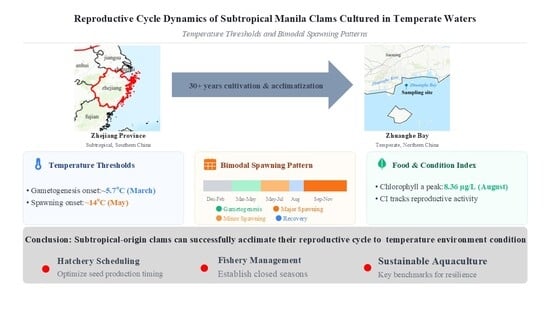
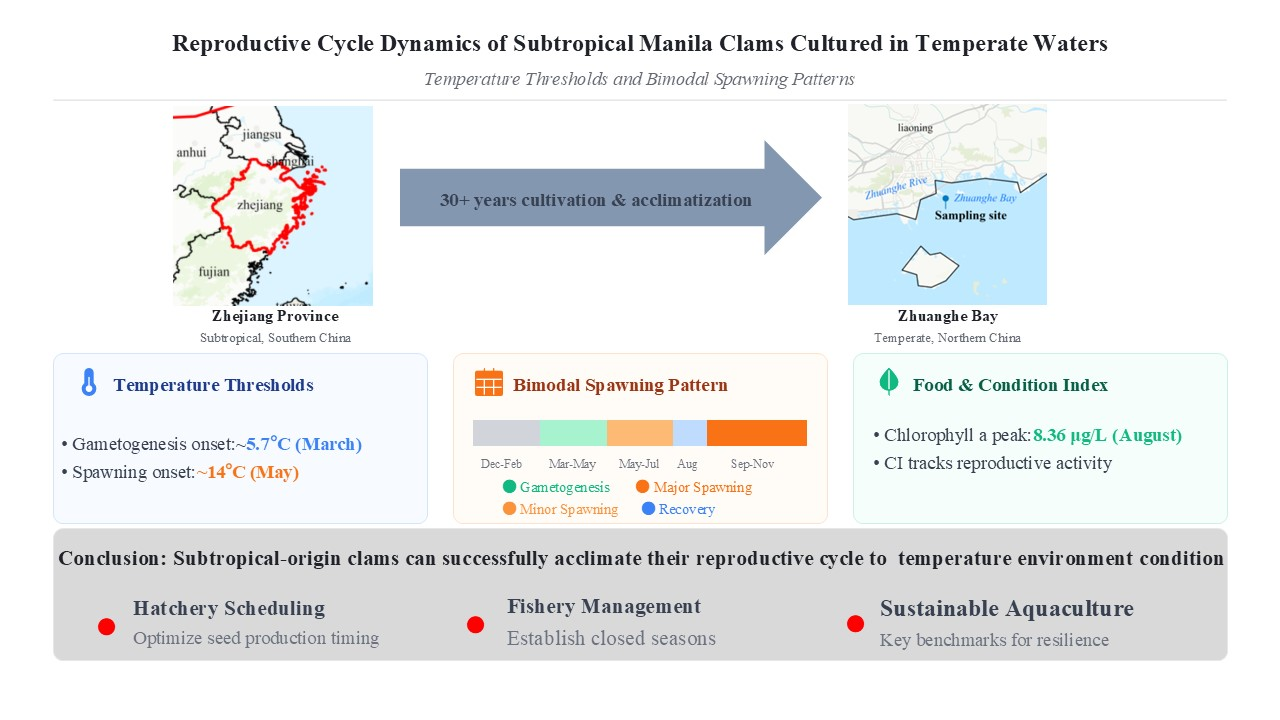
Graphical Abstract

1. Introduction

The Manila clam Ruditapes philippinarum (Adams and Reeve, 1850) is a suspension-feeding bivalve native to the Indo-Pacific region and has become one of the most commercially important aquaculture species worldwide, particularly in China, Korea, and Japan [1,2,3]. In China, this species supports a major mariculture industry, with production exceeding 4,738,952 tons and a farming area of 434,005 hectares in 2024 [4]. The northern coast of China, in particular, has witnessed extensive development of Manila clam culture over the past two decades. Given its ecological, cultural, and economic significance, substantial research efforts have been devoted to various aspects of its biology, including hatchery techniques [5,6,7], culture methods [8], growth performance [9,10], mortality patterns [11], disease resistance [12,13,14], ecological interactions [15,16], physiological responses [17,18], and genetic characteristics [19,20]. However, despite these extensive investigations, comprehensive understanding of the reproductive biology of R. philippinarum in Chinese waters remains surprisingly limited.
Knowledge of the reproductive cycles is fundamental for both aquaculture management and natural population conservation. For commercially important bivalves, detailed reproductive information is essential for establishing successful hatchery production schedules [3,21,22,23,24] and for implementing evidence-based fishery management measures such as closed seasons or protected areas [25]. Without such knowledge, both seed production in hatcheries and sustainable exploitation of wild stocks may be compromised.
The reproductive cycles of marine bivalves are known to be strongly modulated by ambient environmental conditions [7,21,26,27,28]. Among various environmental factors, temperature is widely recognized as the primary timing cue that regulates gametogenesis and spawning processes [29,30,31,32,33]. Importantly, temperature regimes vary with geographic location [32,34,35,36], leading to considerable variability in reproductive patterns even within the same species across different regions. In addition to temperature, food availability—often assessed through chlorophyll a concentration—plays a crucial role in providing the energy necessary for gamete production and gonadal recovery [21,22,30,33,37,38].
Previous studies have established that R. philippinarum exhibits an annual reproductive cycle characterized by a winter resting period and one or two spawning peaks occurring from late spring to early autumn [8,16,27,29,34,35,39,40,41,42,43,44,45]. However, these studies have also revealed significant geographical variation in gametogenic timing and spawning patterns, reflecting the complex interplay between exogenous factors (e.g., temperature, salinity, food availability) and endogenous factors (e.g., energy storage and utilization, genetic background). Consequently, no single reproductive pattern can be universally applied to all populations, underscoring the need for region-specific investigations.
To date, most reproductive studies on R. philippinarum have focused on populations in their native or long-established ranges, such as those in Korea, Japan, and Europe. In China, however, systematic information on the reproductive biology of this species remains scarce. A recent study provided valuable data on gonadal development in a wild population from Laizhou Bay, yet knowledge gaps persist for cultured populations, particularly those originating from different latitudinal sources [46]. Notably, the Manila clam seed cultured in Zhuanghe Bay, Northern China, is predominantly sourced from Zhejiang Province, a subtropical region in Southern China. The subtropical Manila clams cultured in temperate waters raises intriguing questions about reproductive plasticity and adaptation. Understanding how such populations originating from different latitudinal sources adjust their reproductive cycles to local environmental conditions is not only of scientific interest but also of practical importance for aquaculture management.
Therefore, this study aims to (1) characterize the annual reproductive cycle of R. philippinarum cultured in Northern China using histological analysis; (2) correlate gametogenic progression with key environmental factors, particularly temperature and chlorophyll a; and (3) compare the reproductive strategy of this population of subtropical seed origin with those of other global populations. The findings will enhance our understanding of reproductive plasticity in this commercially important species and provide critical information for optimizing hatchery production schedules and supporting sustainable population management in Northern China.

2. Materials and Methods

2.1. Sample Collection

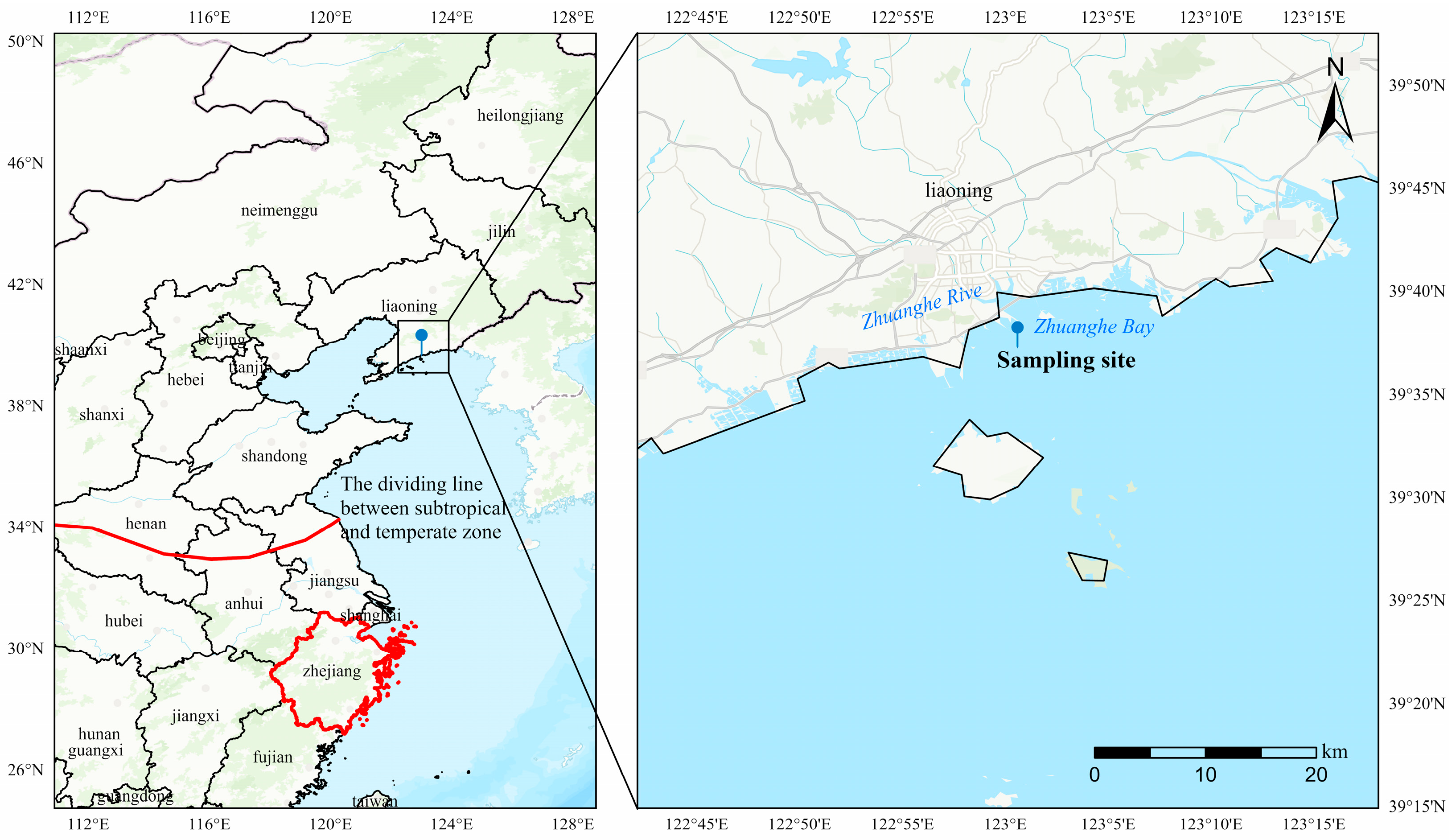
The Manila clams (Ruditapes philippinarum) investigated in this study represent a unique cultured population with a well-documented cultivation history. The seed stock was originally introduced from Zhejiang Province, a subtropical region in Southern China, to the temperate waters of Zhuanghe Bay in Liaoning Province, Northern China (Figure 1). Over the past three decades, this population, derived from subtropical seed and maintained through local aquaculture practices, has been continuously cultured under local aquaculture conditions, allowing for long-term acclimatization to the temperate environmental regime of the bay.
To investigate the reproductive cycle of this established cultured population, monthly sampling of adult clams was conducted at commercial farming sites in Zhuanghe Bay from January to December 2024. The sampling was performed over a complete annual cycle to capture seasonal reproductive dynamics. Upon collection, clams were transported to the laboratory within 2 h in insulated containers. To minimize individual variation and ensure comparability across sampling months, only clams of similar shell length (approximately 35 mm) were selected for subsequent analyses (Table 1).
The surface seawater temperature (SST) and salinity were measured as single-point measurements during each monthly sampling event using a Multi-Parameter Water Quality Monitor (Multi 340i, WTW, Weilheim, Germany). These measurements represent instantaneous conditions at the time of collection and reflect the temperature environment to which the clams were exposed at that specific time point. The concentration of surface chlorophyll a (from 0 to 1 m of depth at the sampling site) was determined according to the national field manual for the Specification for Marine Monitoring in China.

2.2. Histology

Monthly, fifty clams were sampled for histological analysis following the procedure described in our previous study [47]. A section of approximately 0.5 cm2 of gonadal tissue was carefully isolated and processed using standard histological techniques: fixation in Bouin’s solution (MeilunBio, Dalian, China) for 24 h, dehydration through a graded alcohol series, paraffin embedding at 54–56 °C, sectioning at 4 μm, and staining with hematoxylin and eosin. Sex and gonad developmental stages were determined by examining the slides under a microscope (400× magnification, Olympus BX41, Tokyo, Japan) with an image analysis system. Developmental stages were classified based on the maturity scale [26]: stage 0, resting; stage 1, early developing; stage 2, late developing; stage 3, ripe; stage 4, partially spent; stage 5, spent.

2.3. Condition Index

Monthly, thirty clams were collected for condition index (CI) determination, serving as an indirect proxy for reproductive state. The whole soft tissues were dissected individually from the shell, rinsed gently with distilled water. Then, the soft tissues and the shells were dried at 60 °C for 48 h. The dry weights of both soft tissue shells were measured to calculate CI using the following equation:
C I ( % ) = D r y   s o f t   t i s s u e   w e i g h t   ( g ) D r y   s h e l l   w e i g h t   ( g ) × 100

2.4. Statistics

Data normality and homogeneity of variances were verified using the Shapiro-Wilk and Bartlett’s tests, respectively. Monthly variations in chlorophyll a and condition index (CI) were analyzed by one-way ANOVA followed by a post hoc test (Duncan’s test). Sex ratios were assessed using a Chi-square test (χ2). All the data expressed as mean ± SD, and significance was set at p < 0.05. All analyses were performed using SPSS 24.0.

3. Results

3.1. Environmental Parameters

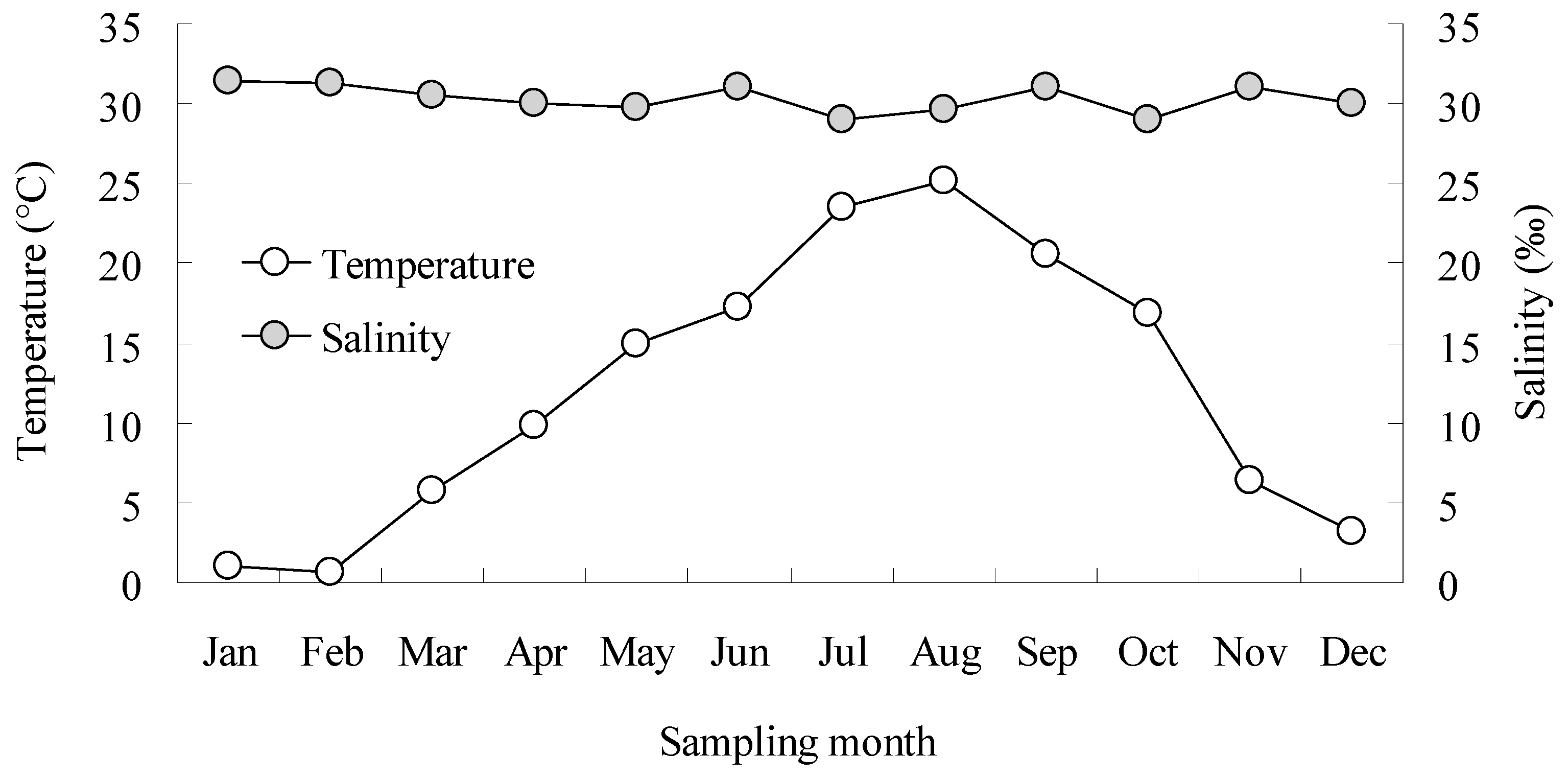
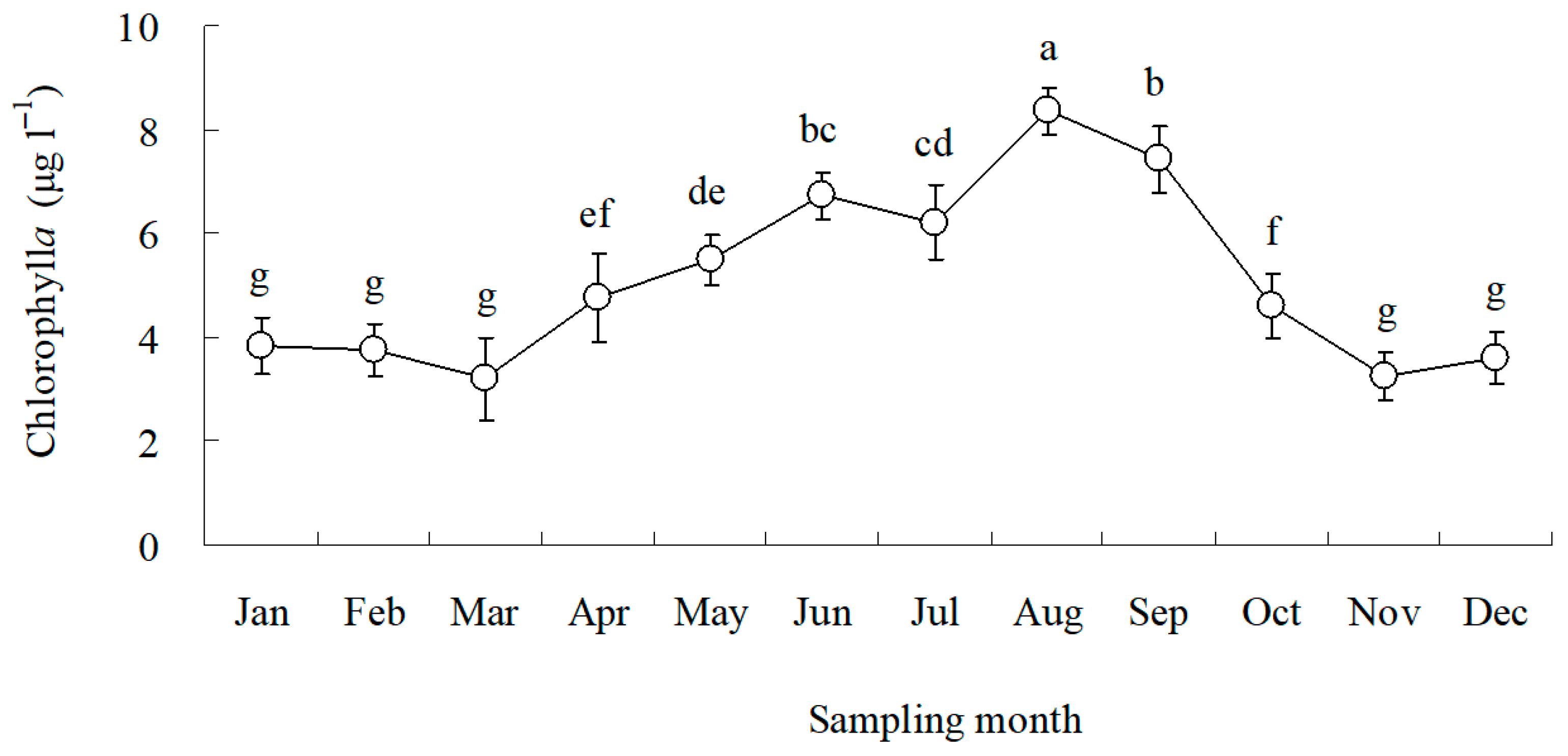
Monthly temperature and salinity at the sampling site of Zhuanghe Bay are shown in Figure 2. Seasonal variation in SST was observed, with a minimum SST of 0.6 °C in February and a maximum SST of 25.2 °C in August. Salinity remained relatively stable throughout the year, varying from 29.02 PSU (Practical Salinity Unit) to 31.45 PSU, with the lowest salinity value recorded in July and the highest value in January. The concentration of chlorophyll a also showed a clear seasonal pattern (Figure 3), ranging from 2.41 μg L−1 in March to 8.36 μg L−1 in August, the latter peak likely reflecting the summer phytoplankton bloom in the bay.

3.2. Histology

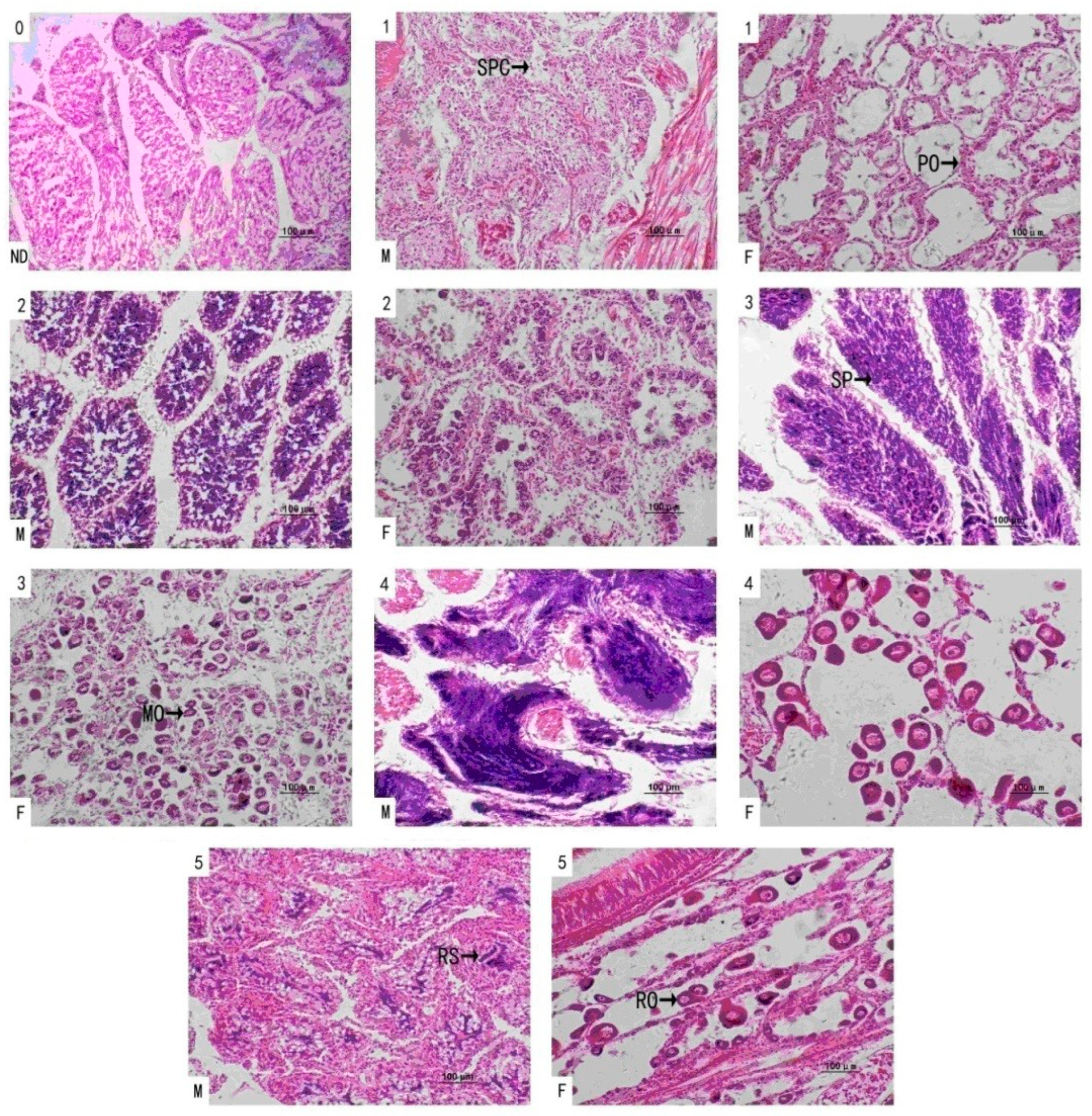
Based on the histological observation, the criteria for each stage for both male and female clams were illustrated in Figure 4.

3.2.1. Sex Ratio

Among 600 clams examined, 237 were male, 222 were female, and 141 were sexually undistinguishable. The overall male-to-female sex ratio was 1.06:1, not significantly deviating from 1:1 (χ2 = 0.490; df = 1; p = 0.484).

3.2.2. Gonadal Development

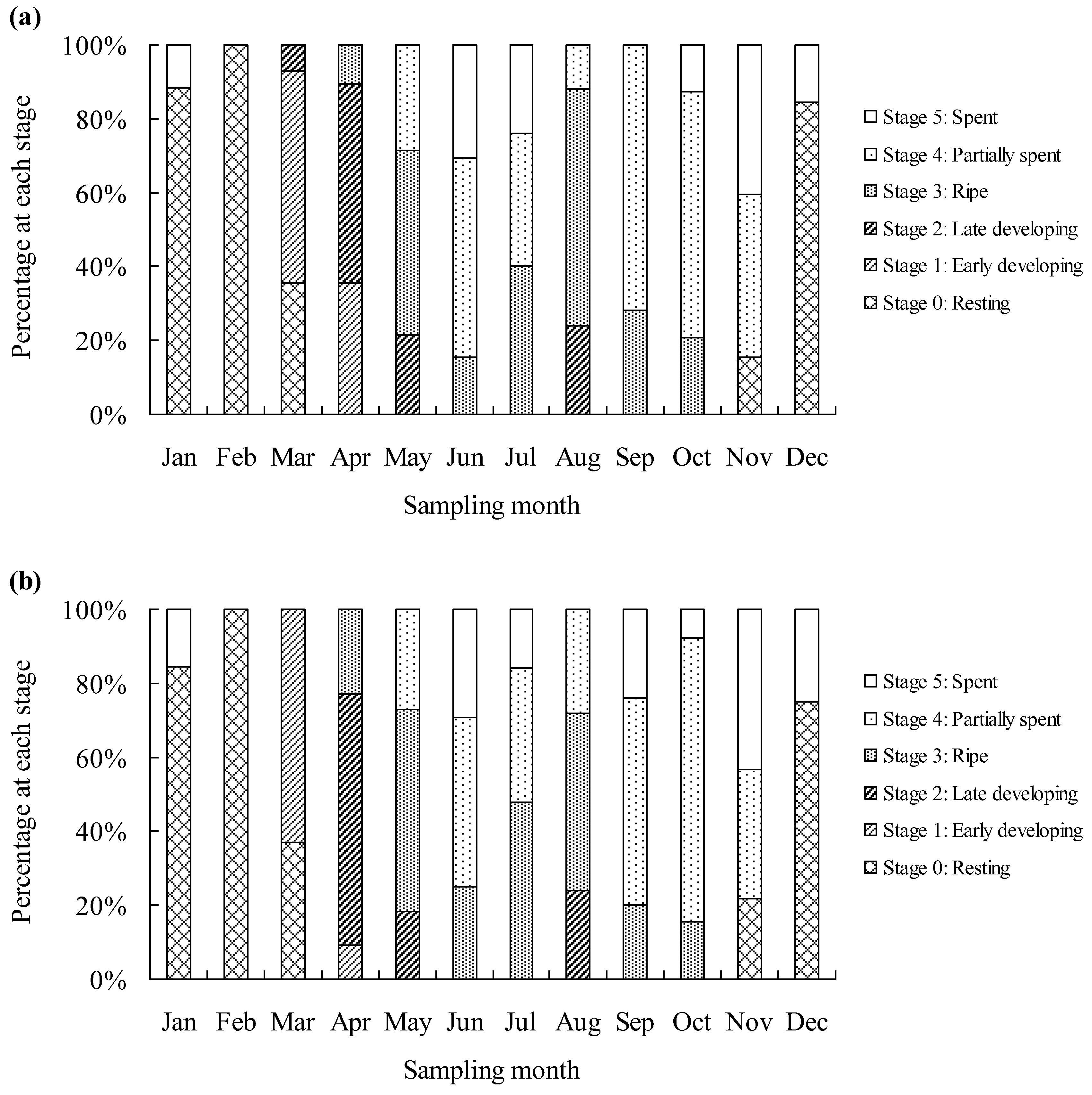
In our study, the gonad development of male and female clams was synchronized, and no hermaphrodites were recorded. Although patterns of the gonad development were similar, minor differences existed between males and females (Figure 5).
In males, gametogenesis started in March when seawater temperature was recorded at 5.7 °C (Figure 5a). Clams in the early developing stage were dominant in March (70.0%), while the late developing stage prevailed in April (53.5%). Ripe clams were first observed in April (10.7%), and the proportion of clams in the ripe stage dramatically increased to 50.1% in May. The first spawning clams appeared in May (28.6%). A minor spawning continued till July and quickly recovered in August (64.0% of clams were in the ripe stage). Spawning activity mainly occurred in autumn: 72.0% of clams spawned in September and 66.7% in October and 57.1% in November. Clams in the resting stage dominated from December to February. Notably, all clams sampled in February were in the resting stage.
In females, 84.4% were in the resting stage in January, and like males, all February samples were resting (Figure 5b). Gametogenesis began in March, with 62.0% at the early developing stage. Ripe clams first appeared in April (22.7%) and reached 54.5% in May. A minor spawning activity occurred from June to August, slightly later than in males. In autumn, a major spawning pulse was also observed. The proportion of clams in the partially spent and/or spent stages declined gradually from 80.0% in September to 65.2% in November. The resting stage was mainly present in winter.

3.3. Condition Index

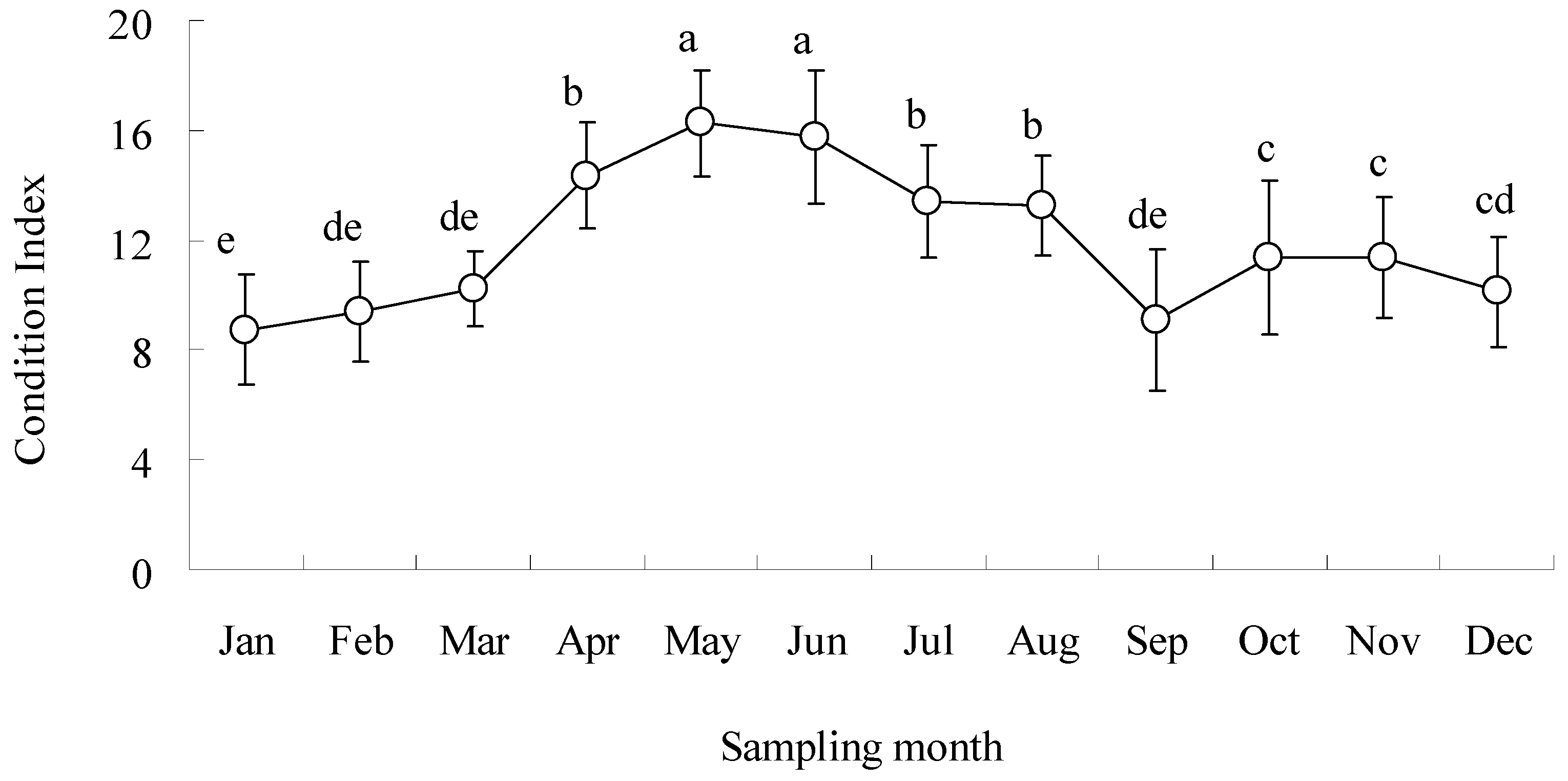
A total of 360 clams were analyzed. As shown in Figure 6, the CI increased rapidly from 10.04% in March to 16.26% in May, followed by a gradual decline to 13.24% by August, indicating a minor spawning event. A sharp drop in mean CI occurred in September, consistent with histological evidence of mass spawning. From October to December, CI values remained relatively stable.

4. Discussion

4.1. Annual Reproductive Cycle of R. philippinarum

In this study, histology clearly showed that all clams sampled in February were in the resting stage, whereas 70.0% of males and 62.0% of females had entered the early developing stage by March. On this basis, we inferred that the onset of gametogenesis started during early spring coinciding with the SST of 5.7 °C, consistent with previous reports. Several authors have reported that R. philippinarum on the coast of Korea initiated gametogenesis when the water temperature increased above 4 °C [3,45]. It is notable that the initiation of female gametogenesis in these coastal waters may occur when the temperature exceeds 3.2 °C [27]. Similar temperatures (5–8 °C) trigger gametogenesis on Europe’s Atlantic coast [29,41,43], while in Mediterranean waters, it typically begins in January–February [43]. As observed for populations in Arcachon Bay (SW France) [34,35], however, the onset of gametogenesis seems to require higher temperatures around 10–14 °C.
As illustrated in Figure 5, the gametogenic cycle of R. philippinarum for both males and females can be characterized by seasonal patterns: a resting stage from December to February, an early developing stage from March to April, a late developing stage from April to May, a ripe stage from May to August, a partially spent stage from June to July, and a spent stage from September to November. These stages indicate two spawning peaks in Zhuanghe Bay, a minor spawning peak between June and July and a major spawning peak in autumn. Our findings are broadly similar to those from other studies around the world, where R. philippinarum usually spawns with two peaks [8,27,29,35,41]. On the coast of Korea (the eastern Yellow Sea), where the water temperature ranges from 4 to 28 °C annually, the gametogenesis occurs from February and November, with minor spawning in May–June and subsequently a major spawning begins in August to October [3,45]. Nevertheless, compared to the eastern Yellow Sea, our results showed that the commencement of major spawning is a one month later, probably attributed to several degrees lower of temperature in the western Yellow Sea (varying from 0.6 to 25.2 °C in the present study). Similarly, a recent study in Laizhou Bay (located in the Bohai Sea, south of the Yellow Sea, China) reported a breeding season from May to October, with temperature and chlorophyll a identified as primary drivers of gonadal development [46]. In Tokyo Bay, R. philippinarum spawning starts as early as April and continues until the end of October, with two peak periods in summer and autumn [16]. On European coasts, spawning timing varies with temperature and latitude: northern populations show minor spawning from May to July and major spawning from July to September [29,41], while a single autumn peak occurs in Brittany Arcachon Bay [34]. Variations have been observed even in geographically close areas. Also in Archchon Bay, spawning events vary at the kilometer scale and one or two spawning peaks are recorded per year [35]. In the Northern Adriatic, spawning is prolonged, occurring most actively from May through September [43]. Further illustrating reproductive variability, a spawning period from June to October in Mutsu Bay (Japan) was observed [48], accompanied by notable oocyte atresia peaks during and after spawning.
Although hermaphrodites or sex reversals have been observed occasionally in some studies [29,49], no examples were found in our study. Actually R. philippinarum is a strictly gonochoristic species. This absence is consistent with the understanding that R. philippinarum is a strictly gonochoristic species, and hermaphroditic individuals, when reported, represent rare anomalies rather than a characteristic reproductive strategy. The male to female sex ratio of 1.06:1 aligns with most previous studies [29], though some exceptions with female-biased ratios have been reported [16,49], possibly due to challenges in sex identification during the resting stage and rare sex reversal events. In addition, the relatively high proportion of sexually undetermined individuals (23.5%) is primarily attributable to sampling during the resting season (December to February) and early gametogenesis (March), when gonadal tissue is minimal and histological sex determination is challenging. These individuals were classified as ‘undetermined’ due to the absence of clearly differentiated gametes, which is consistent with observations in other bivalve reproductive studies [29].

4.2. Effects of Environmental Conditions on Reproductive Cycle

The reproductive strategy of bivalves is considered an adaptation to ambient environmental conditions, particularly temperature and food availability [21,26,33,37,38]. This is the reason we focused on temperature and chlorophyll a (as an indicator of food availability), which are key factors governing reproductive activities from gametogenesis to spawning in the temperate bivalves [29,30,35]. A few degrees of temperature change or a small (2 to 4 weeks) shift in the timing of spring or autumn plankton blooms can significantly alter the spawning pattern of Crassostrea virginica [50]. And at a certain point, temperature is more important because it is closely linked to the geographical locations affecting indirectly the availability of food and consequently the timing and duration of gametogenesis and then the number of spawning periods per year [32].
Temperature significantly influences the process of gametogenesis, either accelerating or delaying gamete maturation [30,33]. R. philippinarum has been found experimentally to start gonadal maturation when the temperature rises to 12 °C [44], although gametogenesis may start at 8 °C, a threshold supported by field studies [29,41]. In our study, gonads began ripening in April when the monthly mean temperature reached 9.8 °C. Notably, the degree of gonadal maturation is dependent on the duration of temperature remains in the desired range for gamete formation. Some authors have pointed that the lowest temperature limit for spawning is 14 °C [29,35,39,40]. In Zhuanghe Bay, partial spawning in May at a monthly mean temperature of 14.8 °C supports this limit. Thus, our findings align with previous reports of maturation onset near 10 °C and spawning around 14 °C.
The spawning patterns of R. philippinarum vary between temperate and tropical regions due to temperature differences [16,27]. Notably, tropical clams transplanted to temperate areas may retain warm-water reproductive characteristics [40]. This finding is particularly important in aquaculture. Similar latitudinal-related variability has been reported along the European coast. According to the general assumption that R. philippinarum has a wide geographical distribution, spawning begins earlier and lasts longer in the southern populations than that in the northern populations [29,34,35,43]. This latitudinal trend is further supported [46], with seawater temperature identified as a key driver (R2 = 0.7095) of gonadal development in a Chinese estuary population. Moreover, temperature is possibly involved in the sex reversal of R. philippinarum [49].
It is known that marine bivalves usually exhibit higher growth and greater gamete production under better nutritional conditions [30,33]. The reproductive cycles of bivalves are linked to energy storage and utilization, regulated by environmental conditions [26]. Therefore, the gonadal ripening process is concomitant to the accumulation of nutrients. In this respect, the abundance of food seems to play an important role because it is likely an important source of the nutrients required for the gonadal development [22,37]. In some cases, food supply rather than temperature governs gametogenesis [44]. An increase in temperature without sufficient food supply may lead to gamete resorption rather than proliferation [51]. Even in nearly identical thermal environments, the gametogenic cycle of Mytilus edulis varies distinctly among locations [52], apparently due to temporal variations in food availability. Under controlled experimental conditions, the quality of microalgae exerted a major role in the reproductive activity of Argopecten purpuratus [53]. When the food supply is sufficient, temperature within the range of 10–27 °C is probably not a limiting factor in the gonadal development of R. philippinarum [42]. Also, if the amount of food ingested is similar, temperature differences (from 14 °C to 18 °C, and from 18 °C to 22 °C) have no significant impact on the reproductive behaviour of R. philippinarum [44].
In this study, chlorophyll a and temperature showed a similar seasonal pattern during a year. However, no strong correlation was observed between chlorophyll a and the reproductive cycle of R. philippinarum. Histology indicated that the initiation of gametogenesis began in March, while the lowest concentration of chlorophyll a occurred during this month. Similar pattern of gametogenesis also noted in Ensis magnus [54]. In contrast, the gonadal recovery coincided with peak chlorophyll a in August, suggesting that energy reserves accumulated in summer support autumn spawning. Thus, the presence of gonadal recovery period and successive spawning in autumn may be the result of the highest chlorophyll a observed in summer.
From an energetic standpoint, the reproductive cycle of this transplanted population reflects a classic trade-off in energy allocation among bivalves. Gametogenesis commenced in March under conditions of low food availability, suggesting reliance on reserves accumulated previously. The marked increase in condition index from March to May indicates active energy acquisition and investment into gamete production following improved feeding conditions. The minor spawning event in early summer, followed by rapid gonadal recovery in August, points to efficient energy partitioning between reproductive output and somatic maintenance. The subsequent major autumn spawning, sustained by energy reserves built during summer, represents the culmination of this seasonal energy budget. Collectively, these observations suggest that the bimodal spawning pattern is not merely a direct response to environmental cues, but an integrated strategy that balances maintenance costs, energy storage, and reproductive investment across seasonal fluctuations in temperature and food supply.

4.3. Condition Index

The condition index (CI) is widely regarded as an indicator of reproductive activity in bivalves [32,47]. In this study, CI clearly tracked the development of gametogenesis, increasing during gamete maturation and decreasing after spawning. A rise in CI was observed from March, coinciding with the onset of gametogenesis. In August, the value peaked immediately after a minor spawning, indicating a rapid recovery and accumulation of reserves in preparation for spawning, which was subsequently confirmed by a sharp decline in autumn major spawning. Based on the amplitude of variation in the CI, hence, we can infer the spawning intensity. The CI is highly influenced by the energy storage and utilization strategy, as reported in previous studies on this species [29,34,35,46,47]. On this basis, the CI seems to be associated with food availability, although no significant correlation between the CI and chlorophyll a was observed in our study (Person product-moment correlation, r = 0.762, p > 0.05).

5. Conclusions

This study provides the first comprehensive characterization of the reproductive cycle of subtropical-origin Manila clams following long-term cultivation in temperate waters in Northern China. Gametogenesis initiated in early spring when seawater temperature reached 5.7 °C, with a distinctive bimodal spawning pattern: a minor event from May to July and a major spawning phase from September to November after August gonadal recovery. Seawater temperature was the primary regulator of reproductive development, with a spawning threshold of approximately 14 °C, while food availability supported summer recovery. The condition index proved a reliable indicator of reproductive activity. It is important to note that the present findings are based on observations from a single annual cycle, and reproductive patterns in bivalves may exhibit interannual variability in response to fluctuating environmental conditions. Nonetheless, the key reproductive features identified, including the key temperature associations and bimodal spawning pattern, provide fundamental insights into the reproductive strategy of this cultured population. These findings demonstrate successful reproductive acclimation of subtropical clams cultured in temperate conditions and provide essential benchmarks for hatchery management and sustainable aquaculture in Northern China.

Author Contributions

W.G.: Writing—original draft, Project administration, Methodology, Investigation, Formal analysis, Data curation. L.G.: Writing—original draft, Methodology, Investigation, Formal analysis, Data curation. X.L.: Visualization, Validation, Investigation. Y.H.: Validation, Methodology, Resources. X.Y.: Methodology, Supervision. S.L.: Visualization, Validation, Formal analysis. J.L.: Writing—review & editing, Supervision, Project administration, Conceptualization, Funding acquisition. All authors have read and agreed to the published version of the manuscript.

Funding

This work has been facilitated by funding from various sources, including the National Key Research and Development Program of China (2023YFD2400800, 2024YFD2401803), the Earmarked Fund for CARS (CARS-49), the Tianjin Science and Technology Project (23YDTPJC00560, 24YDTPJC00820, 24ZYCGSN01210), the Gansu Science and Technology Project (24CXNA086), and the Tianjin Major Special Project for Seed Industry Innovation (24ZXZYSN00010).

Institutional Review Board Statement

In accordance with the policies of our institution’s ethics committee and prevailing national regulations for animal welfare, formal ethical approval is not required for studies involving invertebrates.

Data Availability Statement

The original contributions presented in this study are included in the article. Further inquiries can be directed to the corresponding author.

Conflicts of Interest

The authors declare that they have no known competing financial interests or personal relationships that could have appeared to influence the work reported in this paper.

References

  1. He, G.; Zou, J.; Liu, X.; Liang, F.; Liang, J.; Yang, K.; Masanja, F.; Xu, Y.; Zheng, Z.; Deng, Y.; et al. Assessing the impact of atmospheric heatwaves on intertidal clams. Sci. Total Environ. 2022, 841, 156744. [Google Scholar] [CrossRef] [PubMed]
  2. Jiang, X.; Masanja, F.; Li, W.; Li, J.; Xu, L.; Xu, Y.; Luo, X.; Liu, Y.; Zhao, L. Gonadal rematuration and sex-specific reproductive impairment in Manila clams under ocean acidification. Mar. Pollut. Bull. 2024, 208, 116970. [Google Scholar] [CrossRef]
  3. Subramaniam, T.; Kim, J.-H.; Choi, K.-S.; Yang, H.-S. Interannual variability in the reproductive cycle of Ruditapes philippinarum influenced by environmental and parasitic factors on the west-coast of Korea. Estuar. Coast. Shelf Sci. 2025, 323, 109418. [Google Scholar] [CrossRef]
  4. CSFY. China Fishery Statistical Yearbook; China Agriculture Press: Beijing, China, 2025. [Google Scholar]
  5. Yan, X.; Zhang, G.; Yang, F. Effects of diet, stocking density, and environmental factors on growth, survival, and metamorphosis of Manila clam Ruditapes philippinarum larvae. Aquaculture 2006, 253, 350–358. [Google Scholar] [CrossRef]
  6. Yan, X.; Zhang, Y.; Huo, Z.; Yang, F.; Zhang, G. Effects of starvation on larval growth, survival, and metamorphosis of Manila clam Ruditapes philippinarum. Acta Ecol. Sin. 2009, 29, 327–334. [Google Scholar] [CrossRef]
  7. Yang, F.; Yao, T.; Huo, Z.; Zhang, Y.; Yan, X.; Zhang, G. Effects of starvation on growth, survival, and body biochemical composition among different sizes of Manila clam Ruditapes philippinarum. Acta Ecol. Sin. 2010, 30, 135–140. [Google Scholar] [CrossRef]
  8. Zhang, G.; Yan, X. A new three-phase culture method for Manila clam, Ruditapes philippinarum, farming in northern China. Aquaculture 2006, 258, 452–461. [Google Scholar] [CrossRef]
  9. Yan, X.; Huo, Z.; Yang, F.; Zhang, G. Heritability of larval and juvenile growth for two stocks of Manila clam Ruditapes philippinarum. Aquac. Res. 2014, 45, 484–490. [Google Scholar] [CrossRef]
  10. Moura, P.; Garaulet, L.L.; Vasconcelos, P.; Chainho, P.; Costa, J.L.; Gaspar, M.B. Age and growth of a highly successful invasive species: The Manila clam Ruditapes philippinarum (Adams & Reeve, 1850) in the Tagus Estuary (Portugal). Aquat. Invasions 2017, 12, 133–146. [Google Scholar] [CrossRef]
  11. Zhang, Y.; Nie, H.; Huo, Z.; Yan, X. Heat hardening enhances the energy metabolism activity and oxidative defense ability of Manila clam Ruditapes philippinarum under different thermal stress. Aquaculture 2025, 595, 741511. [Google Scholar] [CrossRef]
  12. Cho, Y.-G.; Lee, H.-M.; Kim, J.-H.; Shin, J.-S.; Jeung, H.-D.; Choi, K.-S. Effects of larval trematode parasitism on the reproductive capacity of Manila clam Ruditapes philippinarum in a sandy-mud tidal flat on the west coast of Korea. Front. Mar. Sci. 2022, 9, 936520. [Google Scholar] [CrossRef]
  13. Lin, Z.; Nie, H.; Zhang, Y.; Yin, Z.; Yan, X. Genome-wide identification and analysis of HECT E3 ubiquitin ligase gene family in Ruditapes philippinarum and their involvement in the response to heat stress and Vibrio anguillarum infection. Comp. Biochem. Physiol. Part D Genom. Proteom. 2022, 43, 101012. [Google Scholar] [CrossRef]
  14. Wang, Y.; Li, D.; Zhang, H.; Chen, J.; Tang, Y.; Nie, H.; Huo, Z.; Yan, X. Transcriptome analysis of Manila clam (Ruditapes philippinarum) under Vibrio parahaemolyticus challenge in a low-salinity environment provides molecular insights into immune response. Aquaculture 2024, 584, 740681. [Google Scholar] [CrossRef]
  15. Zhao, L.; Yan, X.; Yang, F. Food sources of the Manila clam Ruditapes philippinarum in intertidal areas: Evidence from stable isotope analysis. Chin. J. Oceanol. Limnol. 2013, 31, 782–788. [Google Scholar] [CrossRef]
  16. Hamasaki, K.; Ishibashi, Y.; Kitada, S. Reproduction of an alien Ruditapes clam (Bivalvia: Veneridae) on recreational clam-gathering grounds in Tokyo Bay, Japan. Molluscan Res. 2014, 34, 54–61. [Google Scholar] [CrossRef]
  17. Huo, Z.; Li, Y.; Golam Rbbani, M.; Wu, Q.; Yan, X. Temperature challenge on larvae and juveniles of the Manila clam Ruditapes philippinarum. Aquac. Res. 2018, 49, 1727–1731. [Google Scholar] [CrossRef]
  18. Liu, T.; Nie, H.; Ding, J.; Huo, Z.; Yan, X. Physiological and transcriptomic analysis provides new insights into osmoregulation mechanism of Ruditapes philippinarum under low and high salinity stress. Sci. Total Environ. 2024, 935, 173215. [Google Scholar] [CrossRef]
  19. Zhang, Y.; Nie, H.; Yin, Z.; Yan, X. Comparative transcriptomic analysis revealed dynamic changes of distinct classes of genes during development of the Manila clam (Ruditapes philippinarum). BMC Genom. 2022, 23, 676. [Google Scholar] [CrossRef]
  20. Huo, Z.; Wang, Z.; Li, D.; Liu, K.; Li, X.; Fang, L.; Yan, X. Shell shape polymorphism analysis of the Manila clam Ruditapes philippinarum across different geographical populations in China. Front. Mar. Sci. 2024, 11, 1328752. [Google Scholar] [CrossRef]
  21. Joaquim, S.; Matias, D.; Lopes, B.; Arnold, W.S.; Gaspar, M.B. The reproductive cycle of white clam Spisula solida (L). (Mollusca: Bivalvia): Implications for aquaculture and wild stock management. Aquaculture 2008, 281, 43–48. [Google Scholar] [CrossRef]
  22. Serdar, S.; Lök, A. Gametogenic cycle and biochemical composition of the transplanted carpet shell clam Tapes decussatus, Linnaeus 1758 in Sufa (Homa) Lagoon, Izmir, Turkey. Aquaculture 2009, 293, 81–88. [Google Scholar] [CrossRef]
  23. Beninger, P.G. Caveat observator: The many faces of pre-spawning atresia in marine bivalve reproductive cycles. Mar. Biol. 2017, 164, 163. [Google Scholar] [CrossRef]
  24. Pi, J.; Tang, Y.; Coughlan, N.E.; Liu, L.; Wang, X.; Liu, X.; Xiang, J.; Li, D. Temperature drives reproductive activity in a rare trioecy population of Corbicula clams. Hydrobiologia 2025, 852, 1215–1229. [Google Scholar] [CrossRef]
  25. Jaramillo, R.; Prida, V.; Rubilar, P.S.; Cardenas, L.; Prieto, V.; Astorga, M.P. Gonadal cycle, reproductive indices and detection of parasitism in the clam Ameghinomya antiqua in natural beds of importance for fisheries. PLoS ONE 2022, 17, e0266538. [Google Scholar] [CrossRef]
  26. Li, Q.; Liu, W.; Shirasu, K.; Chen, W.; Jiang, S. Reproductive cycle and biochemical composition of the Zhe oyster Crassostrea plicatula Gmelin in an eastern coastal bay of China. Aquaculture 2006, 261, 752–759. [Google Scholar] [CrossRef]
  27. Uddin, M.J.; Yang, H.-S.; Park, K.-J.; Kang, C.-K.; Kang, H.-S.; Choi, K.-S. Annual reproductive cycle and reproductive efforts of the Manila clam Ruditapes philippinarum in Incheon Bay off the west coast of Korea using a histology-ELISA combined assay. Aquaculture 2012, 364, 25–32. [Google Scholar] [CrossRef]
  28. López, M.E.; Gil, D.G.; Kroeck, M.A.; Morsan, E.M. Reproduction and Recruitment of the Intertidal Clam Darina solenoides (Bivalvia: Mactridae) in Patagonian Sandy Shores, Argentina. Malacologia 2022, 64, 185–202. [Google Scholar] [CrossRef]
  29. Drummond, L.; Mulcahy, M.; Culloty, S. The reproductive biology of the Manila clam, Ruditapes philippinarum, from the North-West of Ireland. Aquaculture 2006, 254, 326–340. [Google Scholar] [CrossRef]
  30. Park, H.J.; Lee, W.C.; Choy, E.J.; Choi, K.-S.; Kang, C.-K. Reproductive cycle and gross biochemical composition of the ark shell Scapharca subcrenata (Lischke, 1869) reared on subtidal mudflats in a temperate bay of Korea. Aquaculture 2011, 322, 149–157. [Google Scholar] [CrossRef]
  31. Uddin, M.J.; Jeung, H.-D.; Yang, H.-S.; Kim, B.-K.; Ju, S.-J.; Choi, K.-S. Quantitative assessment of reproductive effort of the Manila clam Ruditapes philippinarum in a lagoon on Jeju Island (Korea) using enzyme-linked immunosorbent assay. Invertebr. Reprod. Dev. 2013, 57, 316–324. [Google Scholar] [CrossRef]
  32. Matias, D.; Joaquim, S.; Matias, A.M.; Moura, P.; de Sousa, J.T.; Sobral, P.; Leitão, A. The reproductive cycle of the European clam Ruditapes decussatus (L., 1758) in two Portuguese populations: Implications for management and aquaculture programs. Aquaculture 2013, 406, 52–61. [Google Scholar] [CrossRef]
  33. Oliveira, G.F.; Siregar, H.; Queiroga, H.; Peteiro, L.G. Main drivers of fecundity variability of mussels along a latitudinal gradient: Lessons to apply for future climate change scenarios. J. Mar. Sci. Eng. 2021, 9, 759. [Google Scholar] [CrossRef]
  34. Robert, R.; Trut, G.; Laborde, J. Growth, reproduction and gross biochemical composition of the Manila clam Ruditapes philippinarum in the Bay of Arcachon, France. Mar. Biol. 1993, 116, 291–299. [Google Scholar] [CrossRef]
  35. Dang, C.; De Montaudouin, X.; Gam, M.; Paroissin, C.; Bru, N.; Caill-Milly, N. The Manila clam population in Arcachon Bay (SW France): Can it be kept sustainable? J. Sea Res. 2010, 63, 108–118. [Google Scholar] [CrossRef]
  36. Derbali, A.; Taieb, A.H.; Kammoun, W.; Gouirah, J.; Wannes-Ghorbel, A.; Zamouri-Langar, N.; Ghorbel, M.; Jarboui, O. Stock assessment, spatial distribution and biological parameters of the clam Venerupis decussata along the Sfax coasts (Tunisia, Central Mediterranean). J. Mar. Biol. Assoc. United Kingd. 2016, 96, 177–184. [Google Scholar] [CrossRef]
  37. Kang, C.-K.; Lee, Y.-W.; Choy, E.J.; Shin, J.-K.; Seo, I.-S.; Hong, J.-S. Microphytobenthos seasonality determines growth and reproduction in intertidal bivalves. Mar. Ecol. Prog. Ser. 2006, 315, 113–127. [Google Scholar] [CrossRef]
  38. Doukilo, I.; Belhsen, O.K.; Hmimid, F.; Idhalla, M.; Manchih, K.; Mouttaki, B.; Errhif, A. Seasonal changes in reproductive biology and biochemical composition of the grooved razor shell Solen marginatus (Bivalvia: Solenidae) from Oualidia Lagoon, Morocco. Reg. Stud. Mar. Sci. 2022, 54, 102474. [Google Scholar] [CrossRef]
  39. Mann, R. The effect of temperature on growth, physiology, and gametogenesis in the Manila clam Tapes philippinarum (Adams & Reeve, 1850). J. Exp. Mar. Biol. Ecol. 1979, 38, 121–133. [Google Scholar] [CrossRef]
  40. Rodríguez-Moscoso, E.; Pazo, J.; Garcia, A.; Cortes, F.F. Reproductive cycle of Manila clam, Ruditapes philippinarum (Adams and Reeve 1850) in Ria de Vigo (NW Spain). Sci. Mar. 1992, 56, 61–67. [Google Scholar]
  41. Xie, Q.; Burnell, G.M. A comparative study of the gametogenic cycles of the clams Tapes philippinarum (A. Adams & Reeve, 1850) and Tapes decussatus (Linnaeus) on the south coast of Ireland. J. Shellfish Res. 1994, 13, 467–472. [Google Scholar]
  42. Toba, M.; Miyama, Y. Influence of temperature on the sexual maturation in Manila clam, Ruditapes philippinarum. Aquac. Sci. 1995, 43, 305–314. [Google Scholar]
  43. Meneghetti, F.; Moschino, V.; Da Ros, L. Gametogenic cycle and variations in oocyte size of Tapes philippinarum from the Lagoon of Venice. Aquaculture 2004, 240, 473–488. [Google Scholar] [CrossRef]
  44. Delgado, M.; Camacho, A.P. Influence of temperature on gonadal development of Ruditapes philippinarum (Adams and Reeve, 1850) with special reference to ingested food and energy balance. Aquaculture 2007, 264, 398–407. [Google Scholar] [CrossRef]
  45. Lee, H.-M.; Kim, H.-J.; Park, K.-I.; Choi, K.-S. Enhanced growth, gonad maturation, and low-level parasite infection in juvenile Manila clam Ruditapes philippinarum cultured in subtidal cages on the south coast of Korea. Aquaculture 2020, 526, 735410. [Google Scholar] [CrossRef]
  46. Liu, L.; Xue, S.; Li, A.; Ren, Y.; Zhu, L.; Li, J.; Liu, L.; Tang, Y.; Qiu, Y.; Mao, Y. Temporal dynamics of gonadal development and reproduction of wild Manila clam (Ruditapes philippinarum) in the Xiaoqing River Estuary, Laizhou Bay. Estuar. Coast. Shelf Sci. 2025, 324, 109474. [Google Scholar] [CrossRef]
  47. Liang, J.; Liu, Y.; Zhu, F.; Li, Y.; Liang, S.; Guo, Y. Impact of ocean acidification on the physiology of digestive gland of razor clams Sinonovacula constricta. Front. Mar. Sci. 2022, 9, 1010350. [Google Scholar] [CrossRef]
  48. Sugiura, D.; Kikuya, N. Cycle of reproduction, oocyte atresia, and maturation size of the Manila clam Ruditapes philippinarum on a pebble beach in Mutsu Bay, Northern Japan. Invertebr. Reprod. Dev. 2022, 66, 8–15. [Google Scholar] [CrossRef]
  49. Lee, J.S.; Park, J.S.; Shin, Y.K.; Lee, Y.G.; Park, J.J. Sequential hermaphroditism in manila clam Ruditapes philippinarum (Bivalvia: Veneridae). Invertebr. Reprod. Dev. 2013, 57, 185–188. [Google Scholar] [CrossRef]
  50. Hofmann, E.E.; Powell, E.N.; Klinck, J.M.; Wilson, E.A. Modeling oyster populations. III. Critical feeding periods, growth and reproduction. J. Shellfish. Res. 1992, 11, 399–416. [Google Scholar]
  51. Vélez, A.; Epifanio, C.E. Effects of temperature and ration on gametogenesis and growth in the tropical mussel Perna perna (L.). Aquaculture 1981, 22, 21–26. [Google Scholar] [CrossRef]
  52. Newell, R.I.; Hilbish, T.J.; Koehn, R.K.; Newell, C.J. Temporal variation in the reproductive cycle of Mytilus edulis L. (Bivalvia, Mytilidae) from localities on the east coast of the United States. Biol. Bull. 1982, 162, 299–310. [Google Scholar] [CrossRef]
  53. Navarro, J.M.; Fernández-Reiriz, M.J.; Labarta, U. Differential absorption of biochemical food components by the scallop Argopecten purpuratus exposed to different salinities and food concentrations. New Zealand J. Mar. Freshw. Res. 2006, 40, 455–466. [Google Scholar] [CrossRef]
  54. Hernández-Otero, A.; Martínez-Castro, C.; Vázquez, E.; Macho, G. Reproductive cycle of Ensis magnus in the Ría de Pontevedra (NW Spain): Spatial variability and fisheries management implications. J. Sea Res. 2014, 91, 45–57. [Google Scholar] [CrossRef]
Figure 1. Location of the sampling site.
Fishes 11 00177 g001
Figure 2. Monthly variations in seawater temperature and salinity in Zhuanghe Bay, Northern China.
Fishes 11 00177 g002
Figure 3. Monthly variations in chlorophyll a in Zhuanghe Bay, Northern China. Values are expressed as mean ± SD (n = 3). Different letters denote significant difference (p < 0.05).
Fishes 11 00177 g003
Figure 4. Images of the gonad developmental stages of Manila clam R. philippinarum. ND: sex not determined; M: male; F: female. 0: resting stage; 1: early developing stage; 2: late developing stage; 3: ripe stage; 4: partially spent stage; 5: spent stage. SPC: spermatocyte; PO: previtellogenic oocyte; SP: spermatozoa; MO: mature oocyte; RS: residual spermatozoa; RO: residual oocyte.
Fishes 11 00177 g004
Figure 5. Temporal distribution of gametogenic stages of males (a) and females (b) of the Manila clam R. philippinarum in Zhuanghe Bay, Northern China.
Fishes 11 00177 g005
Figure 6. Monthly variations in the mean condition index (±SD, n = 30) of the Manila clam R. philippinarum in Zhuanghe Bay, Northern China. Different letters denote significant difference (p < 0.05).
Fishes 11 00177 g006
Table 1. Monthly values (mean ± SD, n = 30) of shell length (mm), shell height (mm), shell width (mm), and total fresh weight (g) for the Manila clam R. philippinarum sampled in Zhuanghe Bay, Northern China.
Sampling DateShell LengthShell HeightShell WidthTotal Fresh Weight
15-January34.56 ± 1.3922.54 ± 1.1614.62 ± 0.916.58 ± 1.08
15-February35.40 ± 1.0023.48 ± 1.1815.17 ± 0.917.69 ± 0.71
18-March35.62 ± 0.6923.90 ± 0.8715.01 ± 0.758.05 ± 0.78
16-April35.36 ± 0.4924.58 ± 0.8116.18 ± 0.778.99 ± 0.60
15-May35.39 ± 0.3023.26 ± 0.6215.21 ± 0.697.67 ± 0.55
18-June35.49 ± 0.2823.07 ± 0.7415.14 ± 0.707.57 ± 0.54
15-July35.43 ± 0.2822.73 ± 0.5314.42 ± 0.617.48 ± 0.50
16-August35.39 ± 0.4924.10 ± 0.7815.12 ± 0.647.74 ± 0.49
18-September35.35 ± 0.2023.48 ± 0.6014.23 ± 0.437.66 ± 0.54
19-October35.43 ± 0.3722.98 ± 0.7214.70 ± 0.647.86 ± 0.61
17-November35.03 ± 0.4123.09 ± 0.5014.44 ± 3.237.63 ± 0.54
21-December35.36 ± 0.3823.21 ± 0.6015.02 ± 0.767.57 ± 0.42
Disclaimer/Publisher’s Note: The statements, opinions and data contained in all publications are solely those of the individual author(s) and contributor(s) and not of MDPI and/or the editor(s). MDPI and/or the editor(s) disclaim responsibility for any injury to people or property resulting from any ideas, methods, instructions or products referred to in the content.