
Article

Synergistic Effects of Multiple Non-Native Species and Phenotypic Plasticity Facilitate the Establishment of Yellow Catfish (Pelteobagrus fulvidraco) in Lake Erhai, a Subtropical Plateau Lake: Trophic Expansion and Robust Body Condition


1
College of Agriculture and Biological Science, Dali University, Dali 671003, China
2
Co-Innovation Center for Cangshan Mountain and Erhai Lake Integrated Protection and Green Development of Yunnan Province, Dali University, Dali 671003, China
3
National Observation and Research Station of Erhai Lake Ecosystem in Yunnan, Dali 671000, China
4
Yunnan Dali Research Institute, Shanghai Jiao Tong University, Dali 671000, China
*
Authors to whom correspondence should be addressed.
These authors contributed equally to this work.
Fishes 2026, 11(3), 155; https://doi.org/10.3390/fishes11030155
Submission received: 25 January 2026 / Revised: 26 February 2026 / Accepted: 3 March 2026 / Published: 8 March 2026
(This article belongs to the Special Issue Ecology of Fish: Age, Growth, Reproduction and Feeding Habits)

Abstract

The successful establishment of non-native fish often relies on life-history plasticity and opportunistic trophic strategies. This study elucidates the invasion mechanisms of the non-native yellow catfish (Pelteobagrus fulvidraco) in Lake Erhai, a plateau lake in China, by integrating morphometrics, stable isotope analysis, and DNA metabarcoding. Our results reveal a “triple mechanism” driving this invasion success. First, the population exhibits significant phenotypic plasticity, manifesting as enhanced somatic growth and superior body condition (mean condition factor: 1.92) and sexually dimorphic growth favoring males. Second, DNA metabarcoding confirms a broad trophic niche dominated by zooplankton (31.70%) and, critically, other non-native fishes (Hypomesus nipponensis and Neosalanx taihuensis), providing strong empirical support for the synergistic effects of multiple non-native species. This predation on high-energy forage fish likely fuels the observed somatic growth and high reproductive output, counteracting the typical size-reduction trade-offs often seen in biological invasions. Third, reproductive assessment indicates a protracted spawning period (spanning at least from spring through summer) and an absolute fecundity (mean: 8471 ± 2194 eggs) consistent with its strategy of producing larger, high-quality eggs, significantly exceeding that of native riverine populations. These findings suggest that P. fulvidraco effectively exploits altered food webs—specifically pre-existing invasive prey—to maximize somatic growth and reproductive output, thereby establishing dominance in the plateau lake ecosystem. Therefore, effective management strategies must go beyond single-species control and prioritize controlling pre-existing invasive forage fish to disrupt the facilitation pathway driven by ecosystem alteration by invasive species.
Key Contribution: This study demonstrates that the successful establishment of non-native yellow catfish in Lake Erhai is driven by a “triple mechanism” involving significant phenotypic plasticity, high reproductive output, and a broad trophic niche. Notably, the exploitation of pre-existing invasive forage fish provides empirical support for the facilitation pathway driven by ecosystem alteration, suggesting that managing multiple invasive species is crucial for plateau lake conservation.

1. Introduction

Biological invasions constitute a primary threat to freshwater biodiversity and ecosystem integrity globally [1,2]. The introduction of non-native fish species frequently precipitates shift in trophic structures, drives the extirpation of native fauna, and leads to ecological homogenization [3,4]. However, establishment success varies significantly among species. Successful invaders typically possess specific life-history traits that facilitate colonization in novel environments, notably phenotypic plasticity and a broad trophic niche. These attributes allow non-native species to maximize fitness and resource exploitation, particularly in disturbed or resource-rich habitats [5,6,7].
Plateau lakes are generally characterized by relative isolation and simplified food webs compared to floodplain lakes, making them particularly vulnerable to perturbations [8,9]. Lake Erhai, a representative plateau lake in Yunnan Province, China, exemplifies this vulnerability. While Lake Erhai historically harbored a diverse array of native species [10,11], anthropogenic stressors and biological invasions—such as icefish (Neosalanx taihuensis) and various carp species—have significantly simplified and altered the current food web structure [12,13,14]. Understanding the dynamics of these biological invasions is critical for the conservation of plateau lake ecosystems.
Among the recent colonizers, the yellow catfish (Pelteobagrus fulvidraco, Bagridae) has successfully established a naturally reproducing population in Lake Erhai following its unintentional introduction. It was first recorded in fishery surveys between 2009 and 2012 [10]. Recent surveys indicate a steady increase in its abundance, making it a dominant component of the lake’s fishery [15]. Generally characterized as a benthic omnivore with strong environmental tolerance in its native riverine ranges [16,17,18], the specific mechanisms driving its explosive success in the distinct deep-water environment of a plateau lake remain poorly understood. In particular, how P. fulvidraco adapts its life history and trophic strategies in response to a community already altered by previous invasions—specifically its interactions with other co-occurring non-native species—has not been investigated.
To address these knowledge gaps, this study integrated morphometrics, stable isotope analysis, and DNA metabarcoding to elucidate the invasion mechanisms of P. fulvidraco in Lake Erhai. Specifically, we tested two hypotheses: (1) The introduced P. fulvidraco population exhibits larger body size structure and robust physiological condition compared to native populations, driven by phenotypic plasticity in the lake’s resource-rich environment, and (2) P. fulvidraco has expanded its trophic niche by exploiting abundant prey resources, particularly other co-occurring non-native species, thereby facilitating its rapid population expansion via the synergistic effects of multiple non-native species.

2. Materials and Methods

2.1. Ethics Statement

All experimental procedures were carried out in strict compliance with the “Guidelines for the Care and Use of Laboratory Animals in China”. The experimental design and operations were approved by the Animal Ethics Committee of Dali University (No. 2020-PZ-46). Before sampling, fish were anesthetized with eugenol at a concentration of 30 mg·L−1 to minimize pain and distress. The tissues extraction procedures adhered to the highest standards of animal welfare, following the aforementioned national guidelines.

2.2. Study Area

Lake Erhai (25°36′–25°58′ N, 100°05′–100°17′ E) is located on the Yunnan-Guizhou Plateau and is one of the nine major plateau lakes in Yunnan Province, China. The lake has an elongated shape, extending approximately 42.5 km from north to south, with a maximum width of about 8.8 km from east to west. It covers a water surface area of approximately 251 square kilometers, with a total shoreline length of 117 km. The maximum water depth is 22 m, with an average depth of 10.2 m and a total water storage capacity of 2.959 billion cubic meters. In recent years, Lake Erhai has implemented a year-round fishing ban, which has protected and restored biodiversity, resulting in increased numbers of fish and benthic organisms [15,19]. As a typical deep-water plateau lake, Lake Erhai has a subtropical plateau monsoon climate with an average annual temperature of approximately 16 °C. Water temperature exhibits seasonal variations, rising in spring and summer and reaching its peak in late summer and early autumn, which constitutes the high-temperature period when zooplankton and phytoplankton densities are relatively high [20,21]. In autumn and winter, water temperature gradually decreases, with winter being the low-temperature period, though water temperature typically remains above 10 °C [22]. Annual precipitation ranges from 1000 to 1200 mm, with rainfall concentrated during the rainy season from May to October.

2.3. Sampling Sites

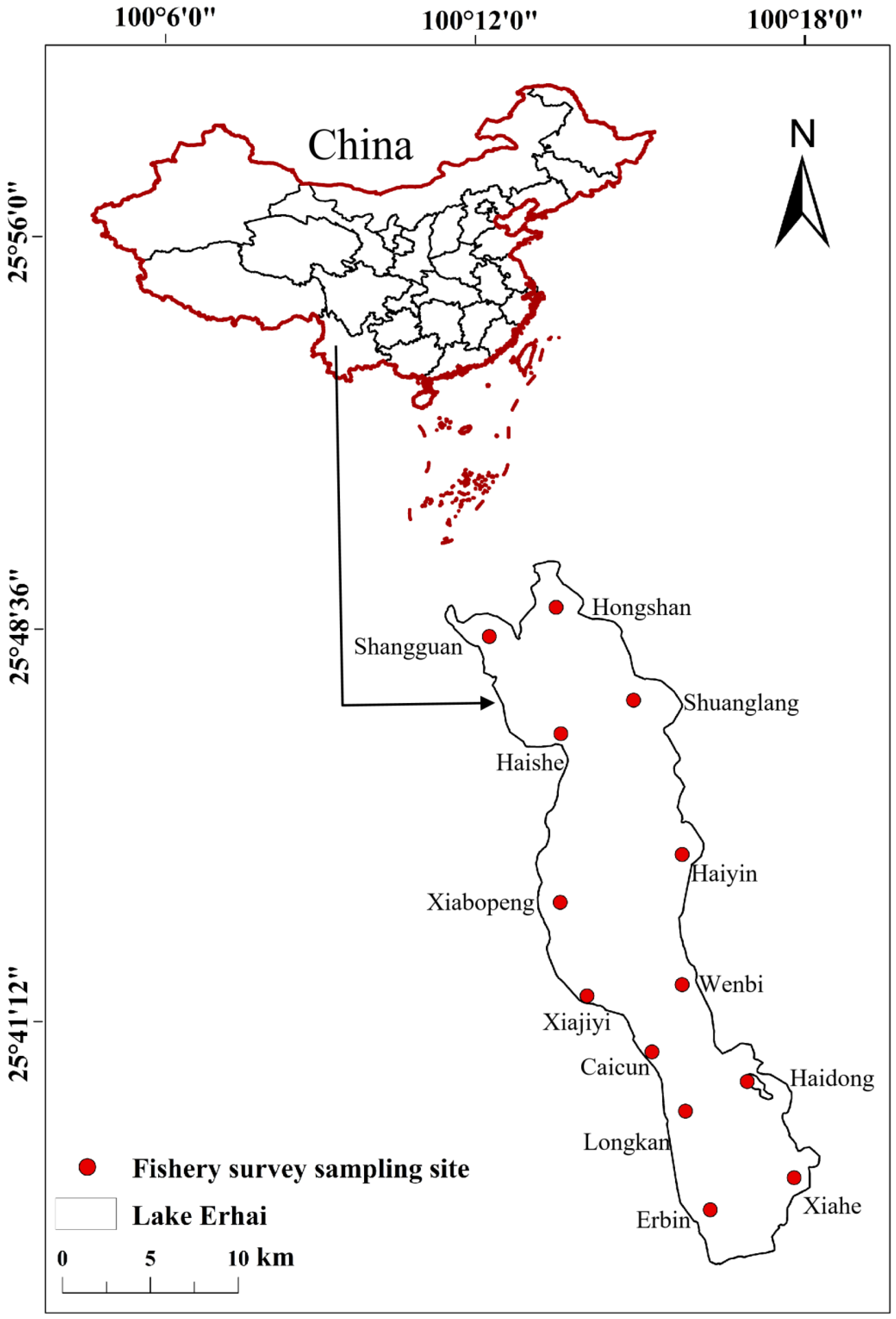
Sampling surveys of Lake Erhai were conducted from May 2023 to March 2024. Based on the lake’s characteristics, 13 sampling sites were established (Shuanglang, Hongshan, Shangguan, Haishe, Xiabopeng, Wenbi, Haiyin, Longkan, Caicun, Xiajiyi, Erbin, Xiahe, and Haidong), with their distribution shown in Figure 1. Sampling was conducted once per quarter, with locations recorded using GPS.

2.4. Sample Collection

Fish sampling was conducted using three-layer multi-mesh composite gill nets and benthic traps (ground cages) to minimize size selectivity. The gill nets were 450 m in length, with three different height specifications (2.5 m, 5.0 m, and 10.0 m) selected based on the actual water depth at each sampling site. These nets consisted of 12 different mesh sizes (1.0, 1.6, 2.0, 2.5, 3.1, 4.0, 4.8, 6.0, 7.5, 8.5, 11.0, and 12.5 cm). To ensure a representative catch, the gill nets were deployed perpendicular to the shoreline. The benthic traps measured 10 m in length, 25 cm in width, and 30 cm in height, with a mesh size of 7 mm. Fish sampling was conducted in May, August, and November 2023 and March 2024, covering four distinct seasonal periods. Sampling was conducted at each of the 13 designated sites (a total of four sampling campaigns during the study period). Fishing gear was deployed at 17:00 and retrieved at 08:00 the following day. Captured specimens were euthanized with eugenol and immediately placed in low-temperature storage boxes for transport to the laboratory. In the laboratory, fresh specimens were measured for standard length (SL, accurate to 0.1 cm) and total length (TL, accurate to 0.1 cm) and weighed to record body weight (W, accurate to 0.1 g). A power function was used to fit the length-weight relationship equation for yellow catfish in Lake Erhai: W = aSLb, where W represents the body weight (g) of yellow catfish, SL represents the standard length (cm), a is the condition factor reflecting habitat quality [23], and b is the allometric growth factor indicating the growth and development of yellow catfish in different habitats. When b = 3, it indicates isometric growth in the current habitat; when b < 3 or b > 3, it indicates allometric growth, meaning that length and weight growth are not proportional [24]. Additionally, the Fulton condition index K was used to calculate the condition factor of yellow catfish in Lake Erhai: K = (W/SL3) × 100. Although Fulton’s K is often calculated using total length, we utilized standard length (SL) to allow for consistent comparison with historical datasets where caudal fin damage was frequent. We acknowledge that this results in higher absolute K values, which are interpreted here as relative indices of somatic condition rather than absolute morphological standards. By comparing the trends in condition factors across different seasons, the relationship with environmental factors was analyzed [25]. After completing biological measurements, specimens used for dietary and reproductive characteristic analyses were dissected, with intestinal contents carefully collected and preserved in 75% ethanol at 4 °C. Dorsal muscle tissue samples were collected and stored at −20 °C for δ13C and δ15N stable isotope analysis. The sex of each fish was confirmed through both the morphological characteristics of the urogenital papilla (present throughout the life of male individuals) and gonadal dissection results, with gonads removed and preserved in specific solutions for subsequent analysis.

2.5. Molecular Identification of Stomach Contents

We acknowledge that the sampling duration (~15 h) may result in the partial digestion of soft tissues, which could potentially affect the visual identification of stomach contents. However, the integration of DNA metabarcoding in this study allowed for the identification of prey items even from heavily digested material, thereby compensating for the limitations of traditional morphological analysis. Gastrointestinal tracts were dissected under sterile conditions. To ensure sufficient DNA quantity for high-quality sequencing and to represent the population-level dietary breadth, stomach contents from every five individuals were pooled into a single composite sample, resulting in a total of 11 samples. This pooling strategy was designed to complement the morphological analysis (N = 59) by focusing on the taxonomic resolution of heavily digested prey items that could not be identified visually, rather than assessing individual-level dietary variance. These were stored at −80 °C until DNA extraction.
Genomic DNA was extracted from the stomach content samples using the E.Z.N.A.™ Mag-Bind Soil DNA Kit (Omega Bio-tek, Norcross, GA, USA). The concentration of extracted DNA was quantified using the Qubit® 4.0 Fluorometer (Thermo Fisher Scientific, Waltham, MA, USA). To identify eukaryotic prey items, the V4 hypervariable region of the 18S rRNA gene was amplified using universal primers 18SV4F (5′-GGCAAGTCTGGTGCCAG-3′) and 18SV4R (5′-ACGGTATCTRATCRTCTTCG-3′). PCR amplification was performed in a 30 μL reaction system containing 15 μL of 2× Hieff® Robust PCR Master Mix (Yeasen Biotechnology, Shanghai, China), 1 μL of each primer (10 μM), 10 ng of template DNA, and 12 μL of ddH2O. The thermal cycling profile consisted of an initial denaturation at 94 °C for 3 min, followed by 5 pre-cycles (denaturation at 94 °C for 30 s, annealing at 45 °C for 20 s, extension at 65 °C for 30 s), 20 main cycles (denaturation at 94 °C for 20 s, annealing at 55 °C for 20 s, extension at 72 °C for 30 s), and a final extension at 72 °C for 5 min. PCR products were purified using 2% agarose gel electrophoresis and the Hieff NGS™ DNA Selection Beads (Yeasen, China) and the QIAquick Gel Extraction Kit. The purified products were then sent to Sangon Biotech (Shanghai, China) for library construction using universal Illumina adapters and indices. The libraries were quantified with an Agilent 2100 Bioanalyzer (Agilent Technologies, Santa Clara, CA, USA) using Agilent 2100 Expert software (version B.02.08.SI648), and the qualified libraries were sequenced on an Illumina MiSeq PE300 platform (Illumina, San Diego, CA, USA) with MiSeq Control Software (MCS, version 2.6.2.1) and Real-Time Analysis (RTA, version 1.18.54) by Sangon Biotech (Shanghai, China).
Raw paired-end reads were processed to remove primer and adapter sequences. Paired-end reads were assembled based on overlap relationships, followed by quality control and filtering to obtain high-quality effective sequences. Sequence clustering and Operational Taxonomic Unit (OTU) definition were performed using USEARCH (version 11.0.667) with a 97% similarity threshold. Representative OTU sequences were taxonomically annotated against the Silva database (http://www.arb-silva.de/, accessed on 25 December 2024). To focus on dietary components, sequences identified as fungi, host DNA (P. fulvidraco), or unidentifiable low-abundance sequences were filtered out. The remaining OTUs with >97% similarity to reference sequences were used to determine prey species composition and calculate relative abundance.

2.6. Analysis of Carbon and Nitrogen Stable Isotopes

An elemental analyzer-stable isotope mass spectrometer (Vario EL III/Isoprime, Chicago, IL, USA) was used to determine the stable isotope values of δ13C and δ15N in specimens. Dorsal muscle tissue was dried, ground, and passed through a 60-mesh sieve. Samples were wrapped in tin capsules (Tin capsules for solid, TLS24005300) for analysis (1.5 mg for muscle samples, 2 mg for potential prey organisms). Carbon and nitrogen stable isotope values were referenced to the internationally accepted standard materials PDB (Pee Dee Belemnite) and atmospheric N2, respectively. One standard sample was inserted for calibration after every 10 test samples. The results of carbon and nitrogen stable isotope values were expressed as δ13C and δ15N, where δ13C or δ15N = [(Rsample/Rstandard) − 1] × 1000, with Rsample being the isotope ratio 13C/12C or 15N/14N of the sample and Rstandard being the isotope ratio of the standard. Trophic level (TL) = λ + (δ15Nconsumer − δ15Nbaseline)/Δδ15N, where δ15Nconsumer is the δ15N of the consumer, and δ15Nbaseline is the δ15N value of the baseline organism. λ is the trophic level of the baseline organism (snail), with λ = 2 when δ15Nbaseline is a primary consumer and λ = 1 when δ15Nbaseline is a producer. Δδ15N is the enrichment value of δ15N between trophic levels, typically taken as 3.4‰ [26].
The stable isotope mixing model (simmr package version 0.5.1) in R (version 4.4.2) was used for food source analysis. By inputting δ13C and δ15N values and teleost isotope enrichment factors (carbon 1.0‰, nitrogen 2.4‰), the contribution rates of various food sources to yellow catfish were fitted [27]. Trophic structure parameters were analyzed based on the SIBER model (version 2.1.9): (1) Nitrogen range (δ15N Range, NR): the difference between the highest and lowest δ15N values of yellow catfish, with higher values indicating higher trophic levels; (2) Carbon range (δ13C Range, CR): the difference between the highest and lowest δ13C values of yellow catfish, representing food source diversity; (3) Total niche area (Total area of convex hull, TA): the area of the convex polygon formed by all fish in the δ13C-δ15N biplot, representing the total degree of trophic structure diversity; (4) Core niche area (Standard ellipse area, SEA): the area of the Bayesian standard ellipse formed by all fish in the δ13C-δ15N biplot, with SEAc being the corrected standard ellipse area, used to reduce the impact of random errors and sampling data uncertainty on the total niche, providing a more accurate reflection of species’ utilization of ecological space [28].

2.7. Gonadal Development Patterns

Gonadal tissue was separated from the fish body, and the gonad weight (GW, accurate to 0.01 g) of each sample was recorded. Some ovarian and testicular tissues were fixed in 4% (w/v) paraformaldehyde solution for histological sectioning; the remaining ovarian tissue was preserved in 8% formalin solution to determine fecundity. The gonadosomatic index (GSI) was used to analyze seasonal changes in gonad weight, calculated as GSI (%) = gonad weight (GW)/fish body weight (W) × 100%. The maturation stages of the gonads were concretely identified following the standard 6-stage scale for fish oocyte and testis development [29,30]. In this study, Stages I and II represent immature and recovering individuals; Stage III indicates developing gonads; Stages IV and V represent mature and spawning individuals with large, visible oocytes or milt; and Stage VI represents spent individuals. The spawning period was found to be protracted, lasting at least from May to August in Lake Erhai. Our specific sampling events in May and August 2023 directly aligned with this protracted reproductive phase, providing representative data for assessing the population’s peak reproductive investment.
The histological analysis procedure was as follows: approximately 1 g of gonadal tissue was placed in a 2 mL centrifuge tube with 1 mL of 4% paraformaldehyde solution for 24 h fixation; subsequently, the tissue was washed with clean water, dehydrated with alcohol, cleared with xylene, and embedded in paraffin, followed by preparation of 5 μm thick paraffin sections; the sections were stained with hematoxylin-eosin (HE), sealed with neutral gum, and observed under a microscope to collect images for analysis.

2.8. Fecundity Measurement

The fecundity of female yellow catfish was determined using weight estimation. Ovaries from females at developmental stages IV and V (identified by the aforementioned 6-stage scale) were randomly selected according to body length [31]. This selection ensures that the measurement reflects the reproductive output consistent with the species’ strategy of producing larger, high-quality eggs. The ovaries were preserved in 8% formalin solution. Approximately 50 mg of ovarian tissue was precisely weighed using an electronic microbalance (accuracy 0.001 g), and the number of eggs was counted under a stereomicroscope. Each sample was measured in triplicate, and the average value was used to calculate absolute fecundity. Absolute fecundity was calculated as: F = (N/WS) × WO; length-relative fecundity as: FL = F/SL; and weight-relative fecundity as: FW = F/W. Where N (eggs) represents the number of eggs in the sample; WS (g) is the sample weight; WO (g) is the ovary weight; FL (eggs/cm) is the length-relative fecundity; SL (cm) is the standard length; FW (eggs/g) is the weight-relative fecundity; and W (g) is the body weight.

2.9. Statistical Analysis

All statistical analyses were performed using SPSS 26.0 software (IBM Corp., Armonk, NY, USA). Experimental data are presented as mean ± standard error (SE). Prior to examining differences between groups, the normality of data distribution was assessed using the Shapiro–Wilk test, and homogeneity of variance was verified using Levene’s test. For data satisfying these assumptions, the independent samples t-test was employed to compare differences (e.g., between sexes or specific seasonal groups). In cases where data did not meet the assumptions of normality or homogeneity of variance, the non-parametric Mann–Whitney U test was applied. Differences were considered statistically significant at p < 0.05.

3. Results

3.1. Community Composition of Fish

A total of 13,328 fish individuals were captured, with a total biomass of 570,997.98 g, belonging to 19 species (Table 1). The fish community was characterized by a high dominance of non-native species in terms of abundance. Specifically, Hypomesus nipponensis was the most abundant species, accounting for 26.30% of the total catch (3505 individuals), followed by Rhinogobius giurinus at 23.57% (3142 individuals). Other non-native species, such as Neosalanx taihuensis, contributed 6.59% to the total abundance.
In terms of biomass, native cyprinids remained dominant despite their lower numerical abundance. Carassius auratus and Hypophthalmichthys molitrix represented the largest proportions of the total weight, accounting for 35.27% and 22.08%, respectively. The target species of this study, Pelteobagrus fulvidraco, accounted for 9.04% of the total abundance and 13.98% of the total biomass. The high numerical dominance of small-sized non-native species (e.g., H. nipponensis and R. giurinus) provides a community context of high prey availability, which likely fuels the observed increased body size and optimized reproductive investment in P. fulvidraco. This synergistic interaction among co-occurring non-native species facilitates the successful establishment and dominance of P. fulvidraco within the altered food web of Lake Erhai.

3.2. Sex Ratio, Size and Condition Factor of P. fulvidraco

Based on anatomical examination and secondary sexual characteristics, a total of 512 yellow catfish were sex-identified, including 299 females (58.4%) and 213 males (41.6%). The overall female/male (F/M) sex ratio was 1.40:1, which significantly deviated from the expected 1:1 sex ratio (X2 = 14.4, df = 1, p < 0.01; Table 2). Only in spring and winter did the sex ratio conform to 1:1 (p > 0.05). The highest sex ratio occurred in summer, reaching 2.92 (F/M). The proportions of yellow catfish in summer and autumn deviated from 1:1, with females predominating (p < 0.01). Significant differences in body length existed between the sexes. Female fish ranged from 9.8 to 19.5 cm in body length, with the dominant size class being 14.0–16.0 cm; male fish ranged from 9.3 to 24.6 cm, with the dominant size class being 18.0–20.0 cm. The standard length of the sampled population ranged from 9.3 cm to 24.6 cm. Based on the presence of mature gonads (Stages IV and V), the minimum size at sexual maturity was recorded at 9.8 cm for females and 9.3 cm for males, indicating that the sampled individuals largely represented the adult breeding population. Gonads were visibly distinguishable in individuals.
The condition factor of yellow catfish was 1.92 ± 0.19, with female and male yellow catfish having condition factors of 2.10 ± 0.14 and 1.68 ± 0.19, respectively. Females exhibited significantly higher condition factors than males (p < 0.05). The average condition factor of Lake Erhai yellow catfish was 1.98 ± 0.18 in spring, 2.01 ± 0.19 in summer, 1.84 ± 0.15 in autumn, and 1.81 ± 0.26 in winter. T-tests revealed that the condition factors of yellow catfish in spring and summer were significantly higher than those in autumn and winter (p < 0.05) (Table 3). Therefore, the condition factor of Lake Erhai yellow catfish varied considerably across different seasons.

3.3. Relationship Between Body Length and Body Weight of P. fulvidraco

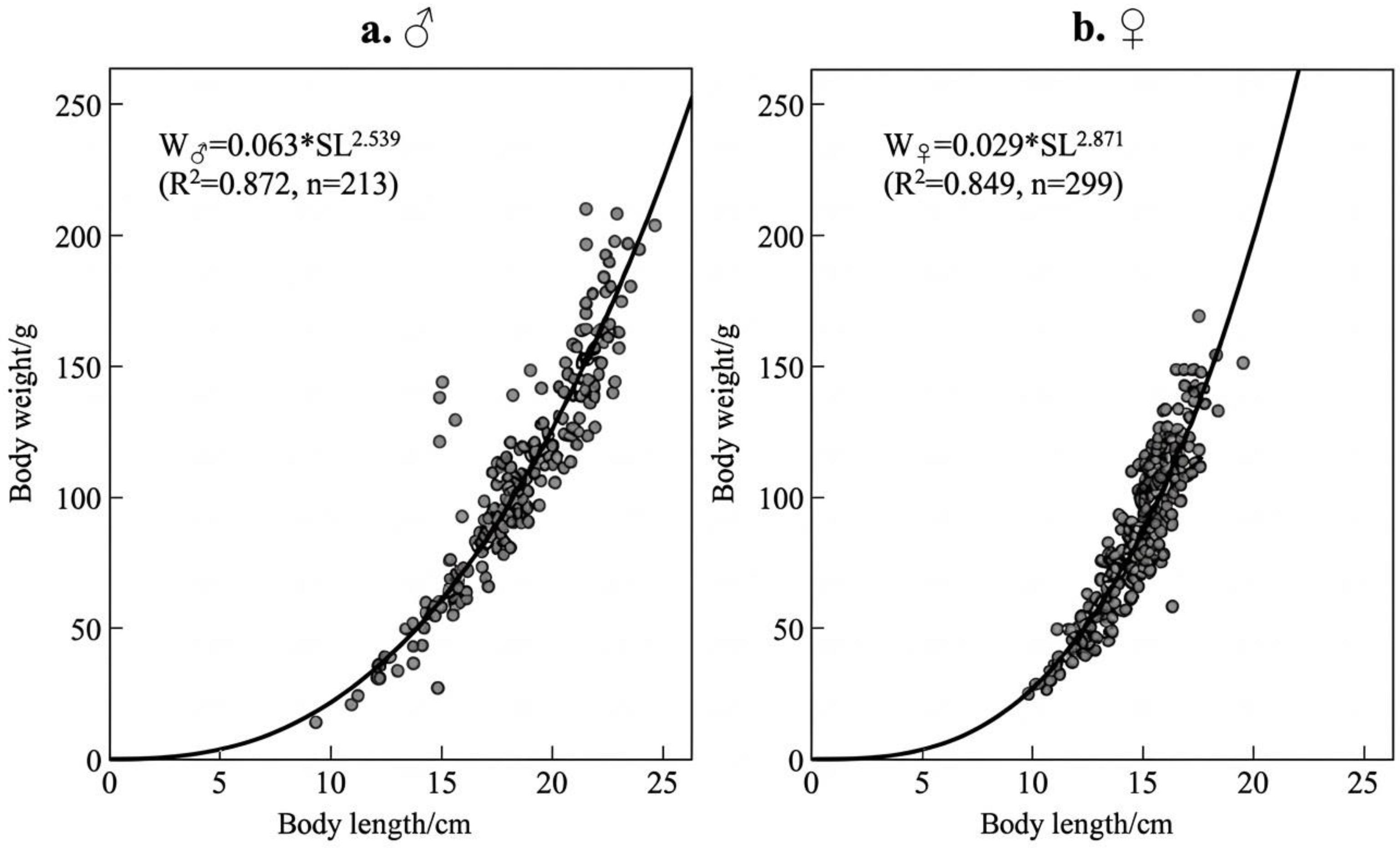
As shown in Figure 2, the length-weight relationships for female and male fish were fitted separately. The a-values ranged from 0.029 to 0.063, while the b-values ranged from 2.539 to 2.871, all less than 3, with female growth being closer to isometric growth than male growth. When the power exponents b (2.539, 2.871) of the length-weight relationships for male and female yellow catfish were compared with the value 3 using t-tests, the results showed no significant difference (p > 0.05) but overall exhibited negative allometric growth.
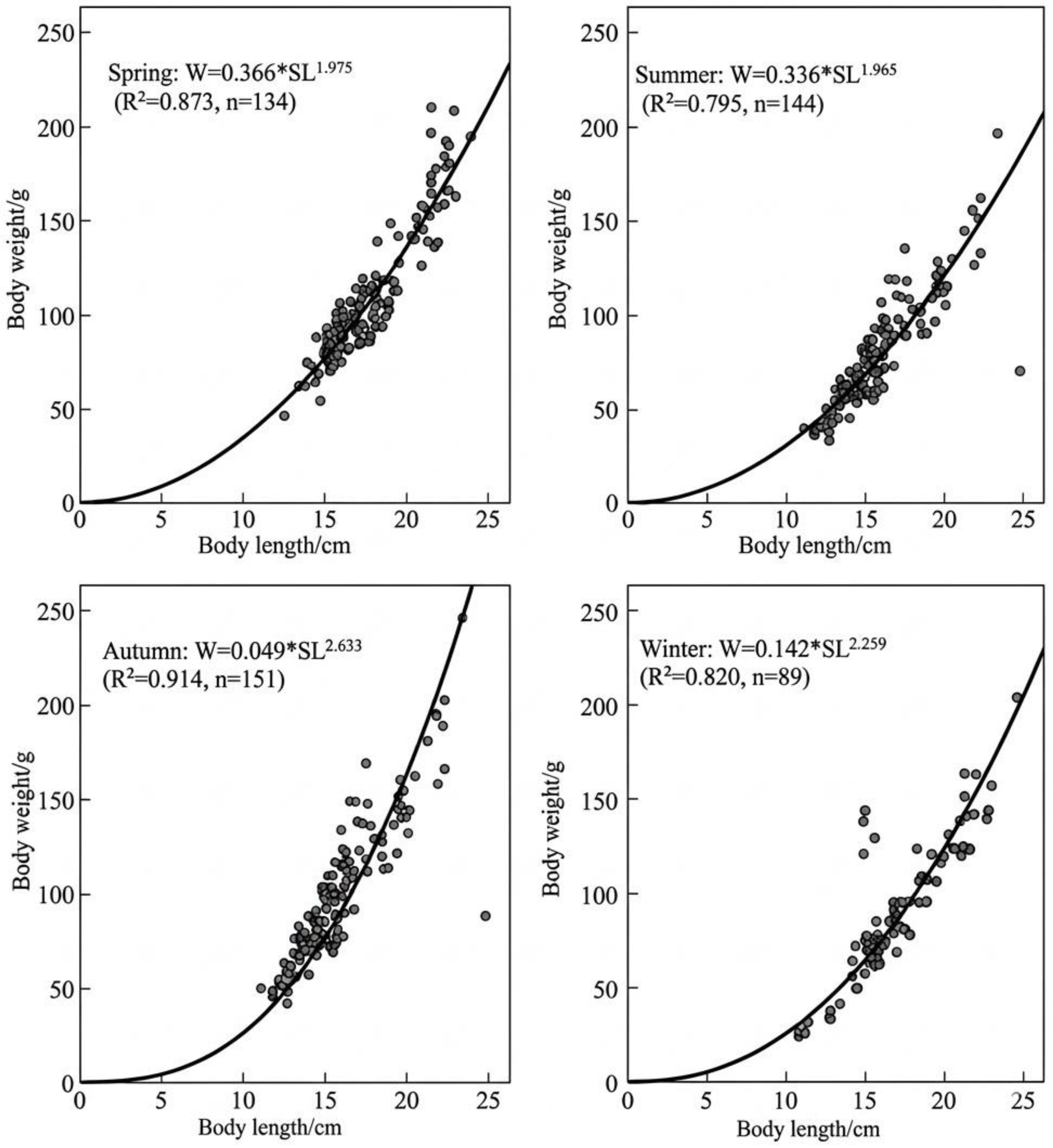
The length-weight relationships for yellow catfish in different seasons were fitted separately (Figure 3), with the following results: a-values ranged from 0.049 to 0.366, while b-values ranged from 1.965 to 2.633. When establishing the relationship between b-values and water temperature, it was found that the b-values of yellow catfish showed corresponding trends with changes in water temperature. When the power exponents b of the length-weight relationships for yellow catfish in different seasons were compared with the value 3 using t-tests, the results showed significant differences (p < 0.05), indicating that Lake Erhai yellow catfish exhibited allometric growth.

3.4. Dietary Composition Based on Microscopic Analysis

The visual and microscopic inspection of gastric contents from 59 P. fulvidraco individuals revealed a diverse dietary spectrum, identifying a total of 11 distinct prey categories (Table 4). Across all examined stomachs, a cumulative total of 279 prey occurrences were recorded. Planktonic organisms were the most frequently encountered group. Phytoplankton exhibited the highest dominance in the diet, with a frequency of occurrence (O%) of 86.44% and a numerical abundance (N%) of 18.28%. Other planktonic components, including Cladocera (50.85% O) and Copepoda (35.59% O), also served as significant supplementary resources. Among benthic invertebrates, Bellamya sp. was the most prominent prey item, identified in 69.49% of the stomachs and accounting for 14.70% of the total numerical abundance. Diptera (primarily larvae) followed closely with a frequency of 61.02%. Notably, small fishes (predominantly non-native species) and fish eggs were observed in 45.76% and 13.56% of the samples, respectively. Other items such as prawns (32.20% O) and plant detritus (40.68% O) further illustrate the generalist and opportunistic feeding behavior of P. fulvidraco in the current ecological state of Lake Erhai.

3.5. Analysis Results of DNA Metabarcoding Technology

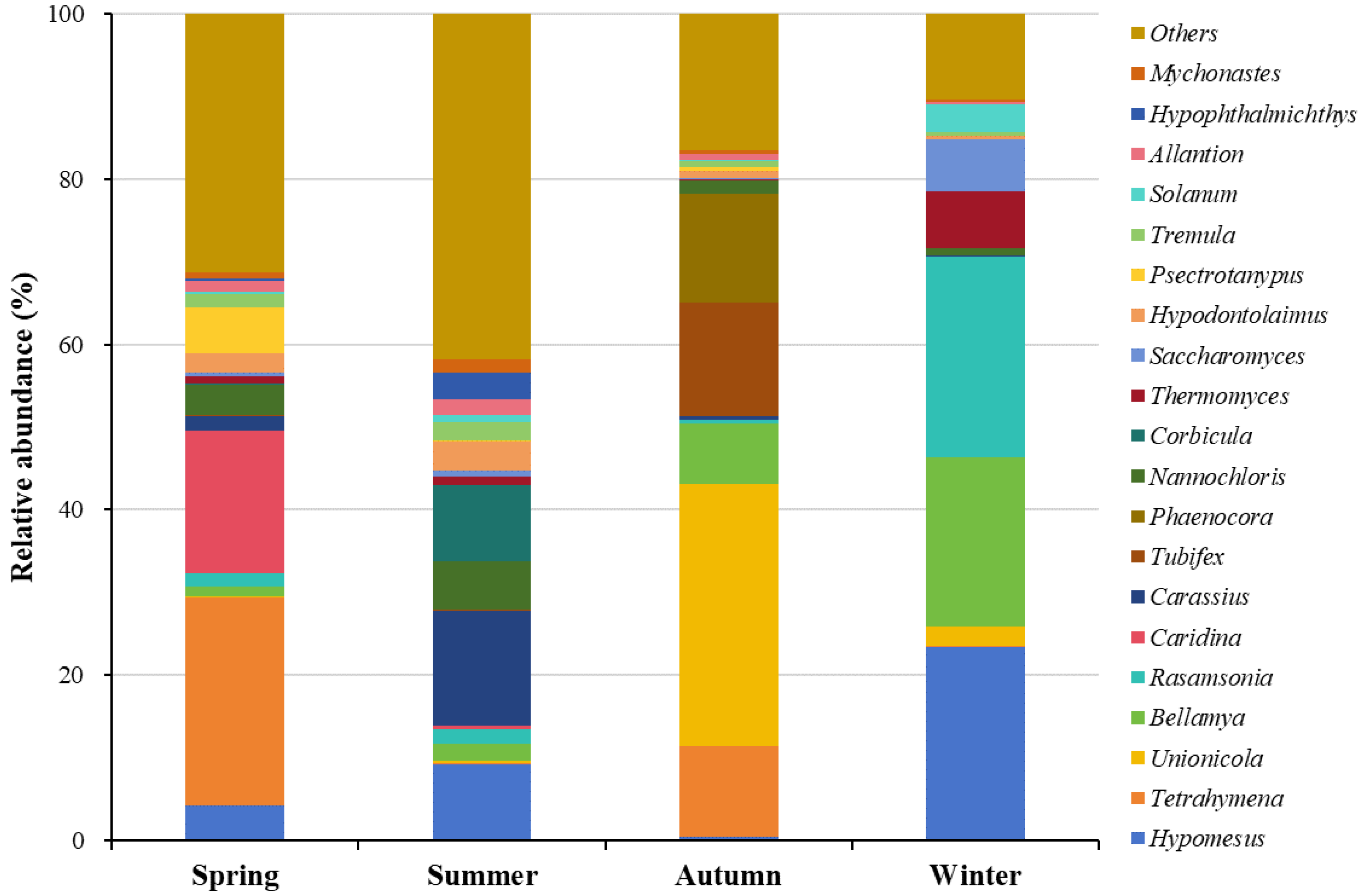
The statistics of effective sequence numbers and total OTUs in the sequencing results of yellow catfish stomach contents are shown in Table 5. Through sequencing, an average of 98,885 original sequences were obtained from 11 stomach content samples, with overall high data quality. The number of original sequences per sample ranged from 55,110 to 162,296. The distribution of effective sequence lengths was stable, averaging 442.0–443.6 bp. Cluster analysis of the 11 samples yielded a total of 157 OTUs, with some variation in the total number of OTUs among different samples. Dietary analysis at the genus level revealed a pronounced seasonal succession in the prey community (Figure 4), with the top 20 genera collectively accounting for over 90% of the total relative abundance. During the warmer months (spring and summer), the diet was characterized by a diverse assemblage of teleosts and plankton; Carassius was the predominant genus in summer (13.92%), supplemented by a significant presence of Hypophthalmichthys (3.23%), while Neosalanx was primarily restricted to the spring season (0.90%). A dramatic dietary shift occurred during the cold season (autumn and winter), marked by the surge of benthic and cold-water taxa. Specifically, the relative abundance of the river snail Bellamya intensified from 1.18% in spring to a dominant 20.47% in winter, and the pond smelt Hypomesus reached its maximum contribution (23.45%) during the winter period. Rare taxa and other minor contributors (e.g., Metschnikowia, Bosmina, and Monoraphidium) categorized as “Others” maintained a relatively stable but low-level presence across all seasons, reflecting a consistent baseline of dietary diversity despite the significant fluctuations in the dominant prey genera.

3.6. Carbon and Nitrogen Stable Isotope Ratios

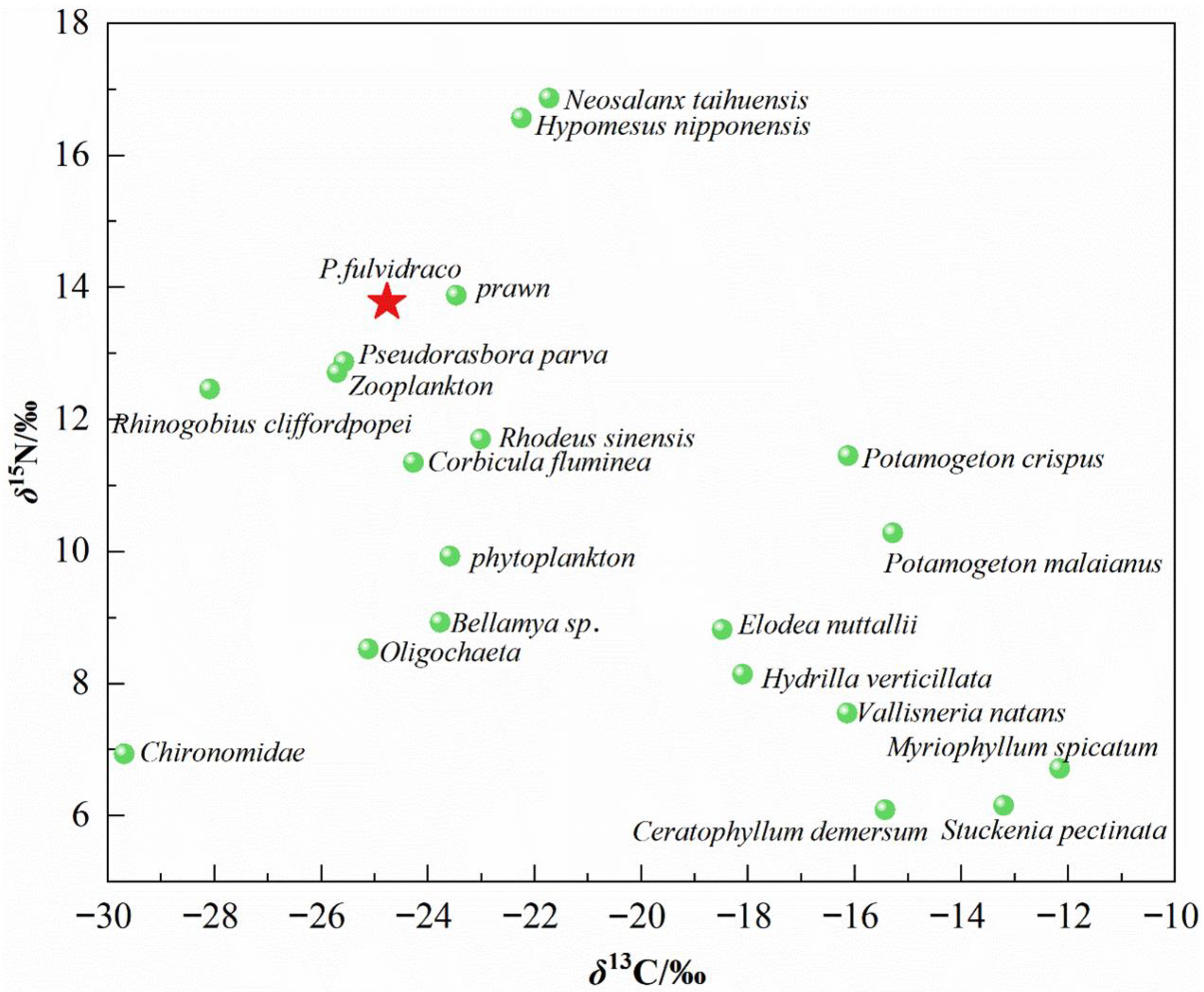
The δ13C and δ15N values of yellow catfish and its potential prey are shown in Figure 5. The δ13C values of yellow catfish ranged from −20.21‰ to −32.43‰, with a mean value of −24.77 ± 1.39‰. The δ15N values ranged from 9.6‰ to 15.49‰, with a mean value of 13.29 ± 0.77‰. For potential prey organisms, the δ13C values ranged from −29.69‰ (chironomid larvae) to −12.16‰ (Myriophyllum spicatum), with a difference of 41.85‰. The δ15N values ranged from 6.09‰ (Ceratophyllum demersum) to 16.87‰ (Neosalanx taihuensis), with a difference of 10.78‰. Chironomidae showed a lower trophic level than the baseline snail (Bellamya sp.) due to its lower δ15N signature, which may be attributed to the utilization of low-δ15N organic matter in benthic habitats.
Based on the δ13C and δ15N values of yellow catfish and potential prey organisms, the contribution rates of different prey populations were calculated using a Bayesian mixing model. The dietary contribution rates and trophic levels are presented in Table 6. The primary prey populations for yellow catfish were small fish, benthic animals, and zooplankton. Small fish (including Hypomesus nipponensis, Neosalanx taihuensis, Pseudorasbora parva, etc.) had an average contribution rate of 26.10%, ranging from 9.30% to 71.80%. Zooplankton ranked second with a contribution rate of 31.70%. Benthic animals contributed 16.68%, primarily consisting of chironomid larvae, snails, shrimp, and Corbicula fluminea, with a range of 11.50% to 33.50%. Algae had a relatively low contribution rate of 11.40%, while aquatic plants had the lowest average contribution rate of only 5.93%. Using primary consumers (snails) as baseline organisms, the trophic level of yellow catfish was calculated to be 3.43 based on the δ15N values of yellow catfish and baseline organisms. This trophic level was only lower than that of Hypomesus nipponensis (4.25) and Neosalanx taihuensis (4.34) but higher than that of other prey organisms, which is consistent with its feeding habits.
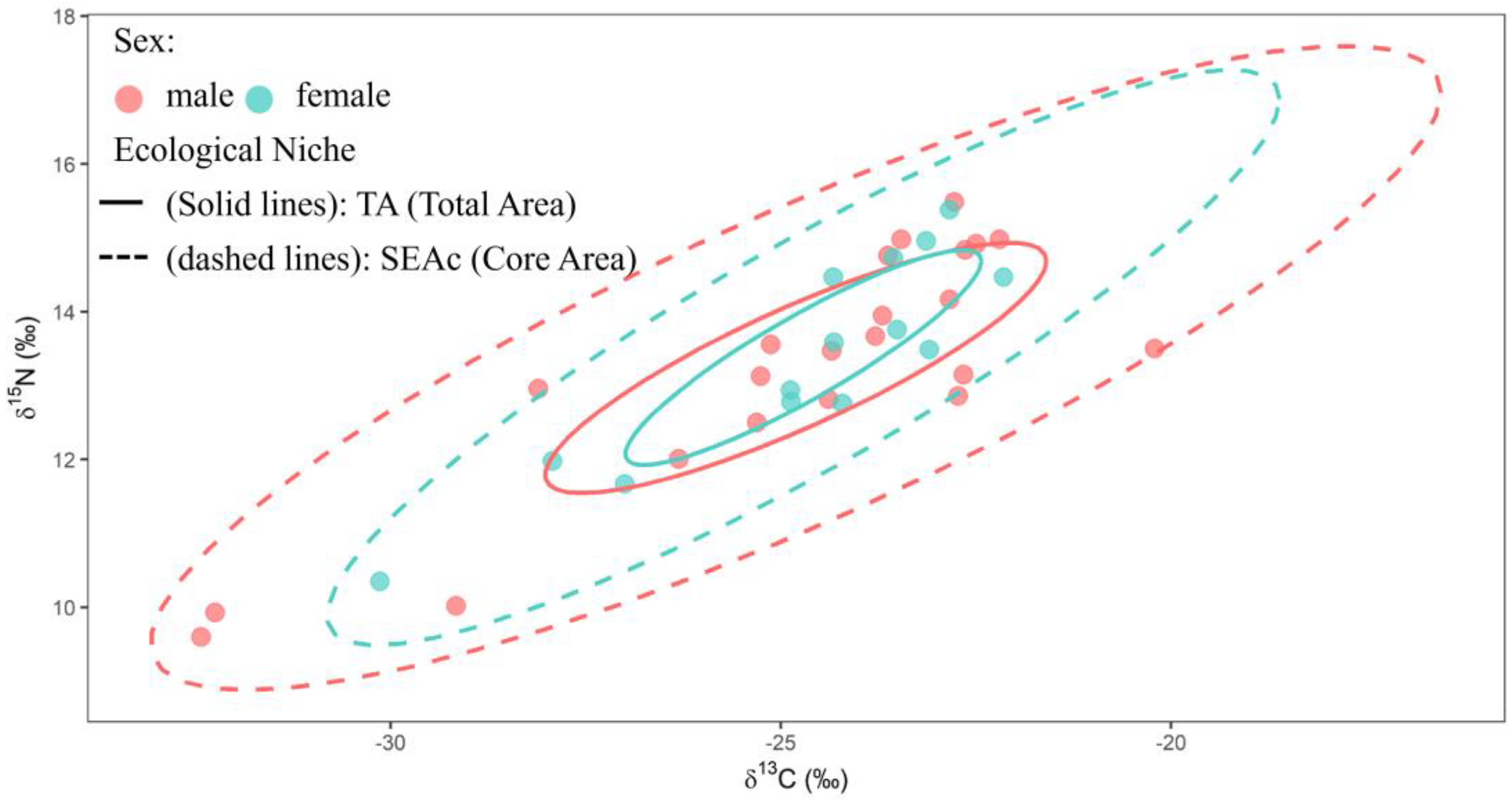
Female yellow catfish had a mean δ13C value of −24.71 ± 1.11‰ with a carbon range (CR) of 7.99‰, while males had a mean δ13C value of −24.81 ± 1.57‰ with a CR of 12.22‰. The mean δ15N value for females was 13.38 ± 0.71‰ with a nitrogen range (NR) of 5.03‰, while males had a mean δ15N value of 13.24 ± 0.83‰ with an NR of 5.89‰. The standard ellipse area corrected for small sample size (SEAc) for females was 4.68‰2, with a total area (TA) of 8.45‰2. For males, the SEAc was 8.92‰2 with a TA of 24.88‰2. The larger core niche of males compared to females indicates that males have a wider activity range, consume a greater variety of prey, and demonstrate stronger resource utilization capabilities (Figure 6).
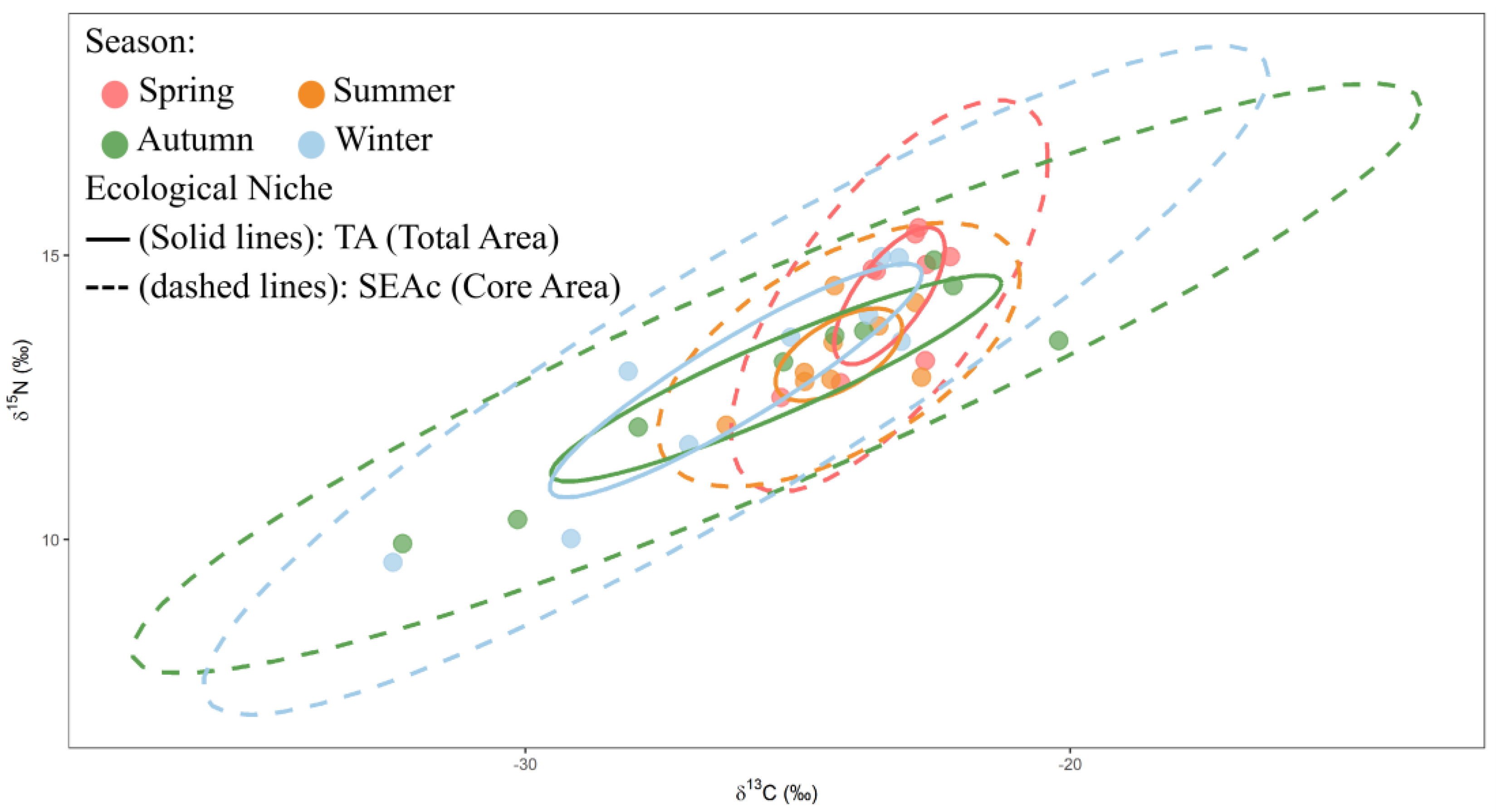
Seasonal analysis revealed that δ13C values were highest in spring and lowest in winter, with winter values significantly lower than those in spring, summer, and autumn (p < 0.05). CR values were highest in autumn and lowest in spring, indicating that food sources in autumn were more diverse compared to the other three seasons. δ15N values were highest in spring and lowest in winter, with spring and summer values significantly higher than those in autumn and winter (p < 0.05). NR values were highest in winter and lowest in summer. The trophic length was similar in autumn and winter, as well as in spring and summer. The SEAc of yellow catfish samples across different seasons ranged from 2.51‰2 to 9.47‰2, with autumn having the highest SEAc and summer the lowest (Figure 7).

3.7. Gonadal Development and Changes in Gonadosomatic Index

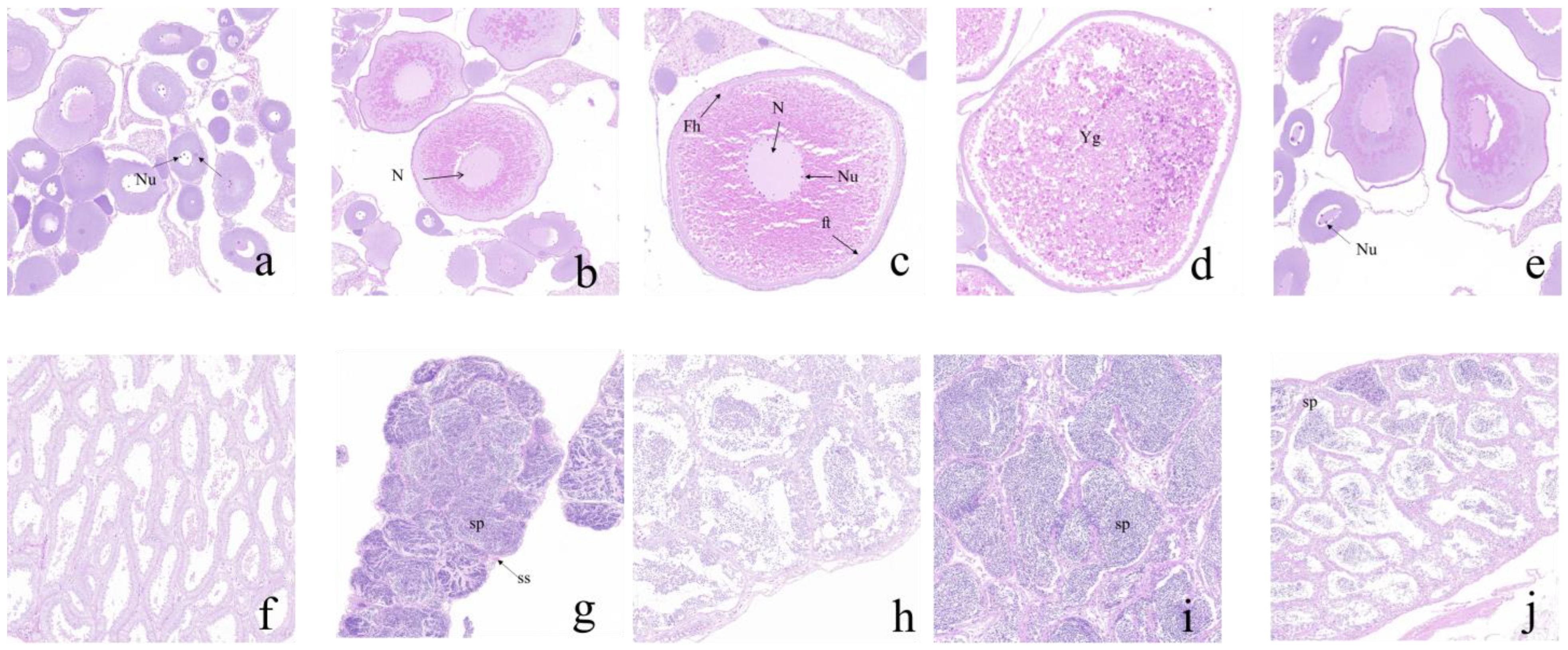
Based on morphological and histological observations, the ovarian development of yellow catfish can be divided into six stages (I–VI). Since stage I ovaries appear only once in a lifetime, no stage I ovarian samples were collected in this study. Stage II ovaries increased in volume and appeared semi-transparent, with no visible oocytes to the naked eye. At this stage, the ovaries primarily contained phase II oocytes with bluish-purple cytoplasm (Figure 8a). Stage III ovaries continued to increase in volume, with oocytes visible to the naked eye and some oocytes showing yolk deposition. Histological sections revealed yolk granules around the nucleus of oocytes, predominantly phase III oocytes mixed with a small number of phase II cells (Figure 8b). Stage IV ovaries occupied most of the abdominal cavity, with fully developed oocytes. Microscopic observation showed cytoplasm filled with yolk granules, with phase IV oocytes being predominant. Most female yellow catfish collected in summer had stage IV ovaries (Figure 8c). Stage V ovaries still occupied most of the abdominal cavity, filled with oocytes that would flow out when pressure was applied to the abdomen. Microscopic observation revealed oocytes filled with large yolk granules and severely deformed nuclei (Figure 8d). Stage VI ovaries decreased in volume, becoming soft and atrophied, with only a few oocytes remaining (Figure 8e).
Testicular development was also classified into six stages, with Stage I being absent from our samples, similar to the findings for ovaries. At Stage II, the testes appeared semi-transparent or light pink; histological examination revealed the early formation of seminiferous tubules containing predominantly spermatogonia (Figure 8f). By Stage III, the testes turned milky white as the tubular lumens became distinct, harboring primary spermatocytes and an increasing number of secondary spermatocytes (Figure 8g). At Stage IV, the seminiferous lobules significantly expanded, with a large number of spermatocytes differentiating into mature spermatozoa (Figure 8h). By Stage V, the lobules were distended and densely packed with fully mature spermatozoa, which were ready for release (Figure 8i). At Stage VI, the testes appeared spent and shrunken, with empty or partially collapsed seminiferous tubules following the discharge of sperm (Figure 8j).

3.8. Gonadosomatic Index and Ovarian Developmental Stages

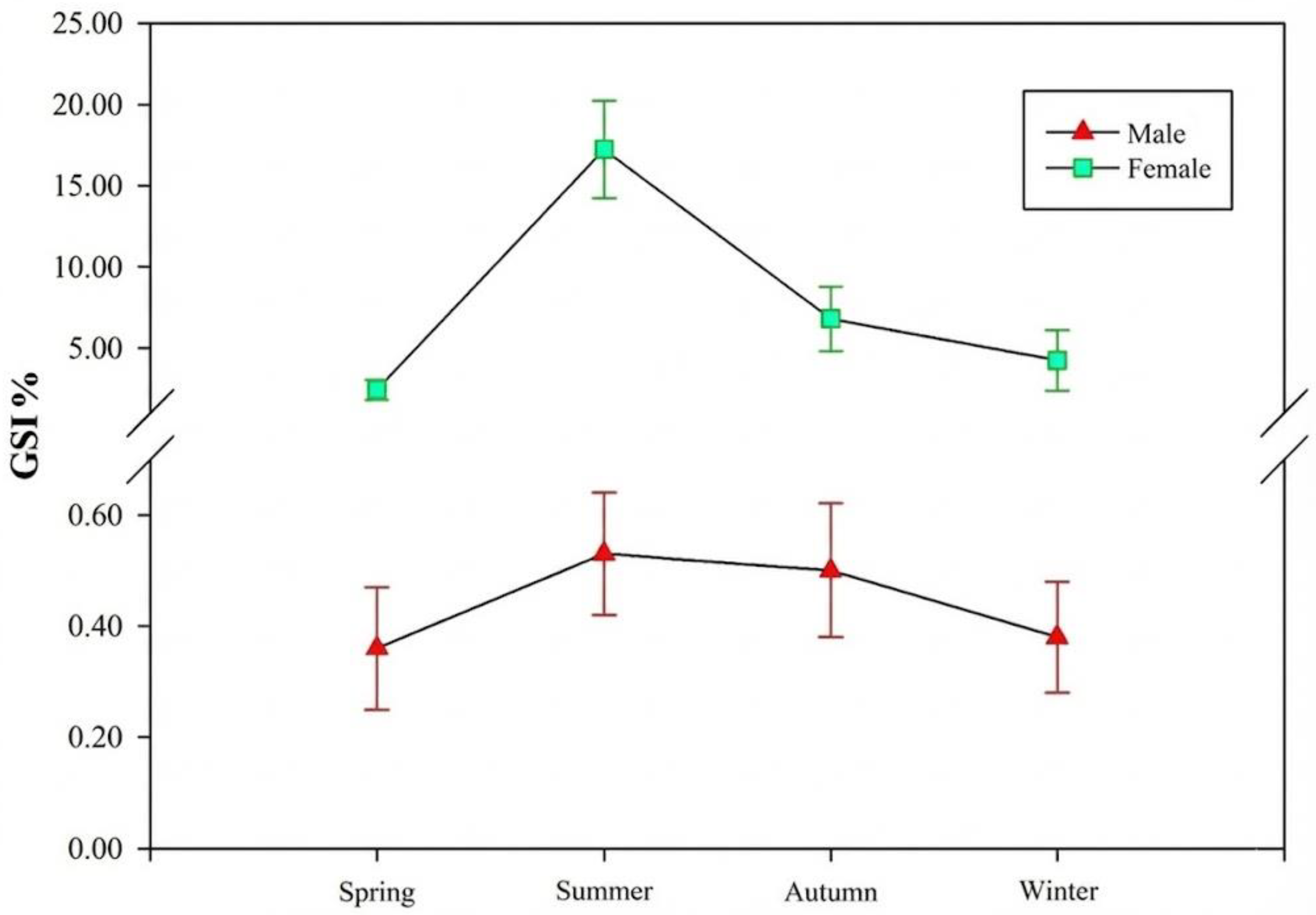
The observed ovarian development was classified into stages II–VI. In summer, stages IV (66.70%) and V (23.90%) were predominant, with the gonadosomatic index (GSI) reaching a peak of 17.24 ± 2.98%. In autumn, the proportion of stage VI ovaries gradually increased, with ovaries primarily at stages III (38.50%), IV (29.70%), and VI (22.00%). In winter, stages VI (34.1%) and II (36.60%) were predominant, with GSI decreasing to its lowest value (2.43 ± 0.62%). The GSI trend for males was consistent with that of females but with lower values (lowest in spring at 0.36 ± 0.11%, highest in summer at 0.53 ± 0.11%) (Figure 9).

3.9. Fecundity

This study analyzed the fecundity of 183 female yellow catfish individuals with stage IV and V ovaries. The absolute fecundity ranged from 1246 to 29,619 eggs (mean: 8471 ± 2194 eggs), the relative fecundity by standard length ranged from 99 to 1732 eggs/cm (mean: 565 ± 133 eggs/cm), and the relative fecundity by body weight ranged from 31 to 357 eggs/g (mean: 122 ± 25 eggs/g) (Table 7).
A strong correlation was observed between absolute fecundity (F) and standard length (SL), with the linear fitting equation: F = 1242.460SL − 9910.129 (R = 0.431, p < 0.05), indicating that the absolute fecundity of yellow catfish increased with increasing body length (Table 8). Similarly, absolute fecundity (F) and body weight (W) also showed a strong correlation, with the linear fitting equation: F = 119.861W + 120.420 (R = 0.550, p < 0.05), demonstrating that the absolute fecundity of yellow catfish increased with increasing body weight (Table 9).

4. Discussion

4.1. Phenotypic Plasticity: Enhanced Somatic Growth and Condition

The non-native population of P. fulvidraco in Lake Erhai exhibits a notably large body size structure and robust physiological condition compared to typical reports from their native range. The maximum standard length recorded in this study (24.6 cm) exceeds those generally observed in native riverine habitats (e.g., [17]). Furthermore, the consistently high condition factor (mean K = 1.92, calculated using standard length) indicates substantial energy reserves in these individuals. It is important to acknowledge a methodological limitation here: as precise age determination via otoliths was not conducted in this study, we cannot definitively distinguish whether this large size structure results from significantly accelerated growth rates or increased longevity in the new lake environment. Nevertheless, the presence of such large, robust individuals confirms successful establishment and significant somatic investment in the invaded habitat. This observed enhanced somatic growth contrasts with a common trend in invasion biology, where invasive species often shift towards an r-selected strategy, prioritizing reproduction over somatic growth, frequently leading to decreased body size compared to native populations [32,33]. This trade-off between growth and reproduction is observed in various other invasive fish species, such as pumpkinseed (Lepomis gibbosus) and round goby (Neogobius melanostomus) in parts of their non-native ranges [33,34]. However, the Lake Erhai P. fulvidraco population deviates significantly from this pattern, maintaining—or even exceeding—native body sizes while simultaneously exhibiting high fecundity (see Section 4.3). We propose that this deviation from typical life-history trade-offs is driven by ecosystem alteration by invasive species [35]. Our DNA metabarcoding and gut content analyses revealed a critical dietary shift: adult P. fulvidraco in Lake Erhai heavily predate upon other small, abundant invasive planktivores, specifically pond smelt (Hypomesus nipponensis) and Taihu icefish (Neosalanx taihuensis). As demonstrated by our community survey (Table 1), the overwhelming numerical dominance of these small-sized non-native fishes fundamentally alters the prey availability in Lake Erhai. P. fulvidraco, as an opportunistic predator, can readily exploit this hyper-abundant prey base. This dynamic provides direct empirical context for ecosystem alteration facilitated by invasive species, where the successful establishment and proliferation of non-native prey species provide a high-energy subsidy that supports the increased body size and optimized reproductive investment of the predator. These species represent a novel, high-protein, and lipid-rich energy resource that is likely unavailable or less accessible in native riverine habitats. The acquisition of this high-quality prey provides a significant energy surplus. Through phenotypic plasticity in foraging behavior, P. fulvidraco can exploit this novel resource, allowing them to bypass standard bioenergetic constraints. This surplus energy enables them to allocate sufficient resources to both maintain large somatic size (which likely further enhances predatory capacity on fish prey) and sustain high reproductive output, rather than sacrificing size for fecundity.

4.2. Trophic Niche Expansion and Ecosystem Alteration Facilitated by Invasive Species

The dietary versatility of P. fulvidraco, characterized by omnivory with a strong carnivorous tendency, is a key driver of its invasion success. While stomach content analysis indicated a broad trophic niche (TL = 3.43), the DNA metabarcoding results provided critical evidence of ecosystem alteration facilitated by invasive species—a process where one invasive species facilitates the establishment or impact of another [36]. Our molecular data revealed substantial predation on Hypomesus nipponensis and Neosalanx taihuensis. Crucially, these prey species are also non-native to Lake Erhai and have exploded in abundance in recent decades. Interestingly, we observed higher δ15N values in these zooplanktivorous fishes compared to some native omnivorous fishes, which can be attributed to several factors. First, Lake Erhai experiences localized nutrient loading from anthropogenic inflows, creating spatial nitrogen baseline heterogeneity. Zooplanktivores often aggregate in pelagic zones or near river mouths where the nitrogen baseline is more enriched (δ15N-enriched) than in benthic habitats. Second, our DNA metabarcoding data suggest that these “zooplanktivores” consume a high proportion of predatory zooplankton and occasionally fish larvae, effectively elevating their functional trophic position—a “trophic leap” that provides a high-energy subsidy to their predators.
We argue that without the prior establishment of these small pelagic invasive fishes, P. fulvidraco might not have achieved such rapid somatic growth or high population density. Ecologically, these abundant prey species (H. nipponensis and N. taihuensis) function as efficient “energy pumps,” transferring energy from the zooplankton-rich pelagic zone—resources typically inaccessible to benthic predators—directly to P. fulvidraco. By opportunistically exploiting these “co-invaders” as a high-energy forage base, this specialized dietary preference in the invaded habitat, particularly the opportunistic utilization of invasive forage fishes, allowed P. fulvidraco to outcompete native species and effectively bypass the resource limitations that might otherwise constrain a new predator. This specific trophic pathway provides the essential metabolic fuel driving the observed increased body (Section 4.1) and maximized reproductive output (Section 4.3), implying that the triple mechanisms are bioenergetically interdependent rather than isolated traits. This interaction creates a “positive feedback loop” characteristic of the synergistic effects of multiple non-native species: the establishment of small pelagic invaders (Neosalanx and Hypomesus) has inadvertently “paved the way” for the subsequent explosion of a higher-trophic-level invader. This suggests that the simplified food web of Lake Erhai has been fundamentally rewired, shifting from a native-dominated structure to an “invasive-sustaining-invasive” energy flow. This phenomenon aligns with the concept of invasional facilitation, where the introduction of non-native prey species amplifies the impact of non-native predators, potentially stabilizing their populations in the early stages of establishment [37,38].
This finding aligns with recent studies on freshwater fish invasions, suggesting that altered food webs often favor generalist predators that can capitalize on novel prey resources [6,7]. Furthermore, our isotopic niche analysis (SIBER) revealed significant intraspecific niche partitioning between sexes. Males exhibited a significantly larger core niche area (SEAc = 8.92‰2) and carbon range (CR = 12.22‰) compared to females (SEAc = 4.68‰2; CR = 7.99‰). The stable isotope Bayesian ellipse analysis revealed that the niche of female P. fulvidraco was largely nested within the broader niche space occupied by males (Figure 6; Table 4). Rather than representing distinct niche divergence or partitioning, this pattern accurately indicates sexual niche expansion in males driven by size dimorphism. Males in this population attain significantly larger body sizes compared to females. For gape-limited predators like catfish, larger body size correlates with reduced gape constraints [39]. Consequently, larger males are capable of ingesting a wider range of prey sizes, particularly larger, energy-rich forage fishes, thereby expanding their realized trophic niche beyond the narrower spectrum of smaller benthic organisms accessible to females. The observed differences in trophic positions between males and females (Table 4) further support these size-dependent foraging behaviors.

4.3. Life-History Strategy: High Reproductive Investment

Successful biological invasions often rely on the ability of a species to rapidly increase its population size during the establishment phase. While this is frequently associated with opportunistic life histories, invasive success can also be driven by the reproductive plasticity of K-selected species. Studies comparing invasive and non-invasive fish species have consistently identified optimized reproductive plasticity, parental care, and protracted spawning seasons as key traits promoting establishment success in novel environments [40,41]. Our integration of gonadal development, GSI trends, and fecundity data demonstrates that P. fulvidraco in Lake Erhai has adopted a strategy of maximized reproductive investment within its inherent K-selection framework.
First, the population exhibits a reproductive investment consistent with its strategy of producing larger, high-quality eggs (mean absolute fecundity: 8471 ± 2194 eggs). Although this absolute fecundity is relatively low compared to many teleosts, it reflects a significant reproductive output for a species characterized by large egg size and parental care. This output is 2–3 times higher than that of populations in Lake Fuxian (2374 eggs) and Lake Ce (3570 eggs). This reproductive output is positively correlated with body size (Table 7 and Table 8), suggesting that the larger size-structure described in Section 4.1 directly translates into a reproductive advantage. Here, we observe a clear bioenergetic link between the three mechanisms: the dietary preference for high-protein invasive prey in the invaded habitat (Section 4.2) provides the necessary caloric surplus to fuel not only somatic increased body size (Section 4.1) but also the energetically costly production of large clutches of eggs. Without the nutritional subsidy from the ecosystem alteration facilitated by invasive species, such optimized fecundity might not be physiologically sustainable. By channeling excess energy into reproduction, females maximize their output.
Second, the breeding season in Lake Erhai was found to be protracted, lasting at least from May to August (and likely extending into early autumn), compared to the typical 2–3 months (May–July) observed in other drainage systems. The GSI analysis confirms a sustained high reproductive investment during summer (peak GSI: 17.2%), with a high proportion of mature ovaries (Stages IV and V) persisting longer than in native populations. This protracted spawning window acts as a bet-hedging strategy, increasing the probability that larval fish will match with optimal environmental conditions (e.g., plankton blooms) for survival. In the context of Lake Erhai, where native fish populations have declined, leaving ecological niches underutilized, this combination of optimized reproductive investment and prolonged breeding allows P. fulvidraco to rapidly saturate the environment with offspring. This robust demographic strategy accelerates population growth and effectively outcompetes remaining native fishes for recruitment space. This robust demographic strategy poses a severe threat to functionally similar native benthic fishes in Lake Erhai, particularly indigenous cyprinids that lack such reproductive plasticity. The combination of numerical dominance (via high fecundity) and size dominance (via optimized reproductive investment) suggests that P. fulvidraco is not merely filling an empty niche but is actively displacing native competitors through asymmetric competition.

5. Conclusions

In summary, the successful establishment of P. fulvidraco in Lake Erhai is driven by a synergistic “triple mechanism” that exploits the specific vulnerabilities of the plateau lake ecosystem. First, the population exhibits remarkable phenotypic plasticity, manifesting as increased body size in response to ecological release from predation and fishing pressure. Second, the species capitalizes on an ecosystem alteration scenario facilitated by invasive species; DNA metabarcoding confirmed that it opportunistically utilizes prior non-native colonizers (Hypomesus nipponensis and Neosalanx taihuensis) as a high-energy forage base to fuel its rapid growth and niche expansion. Third, P. fulvidraco has adopted a life-history strategy characterized by optimized reproductive investment—specifically, a reproductive output consistent with its strategy of producing larger, high-quality eggs and a protracted spawning window (peaking between May and August)—to rapidly saturate ecological niches left vacant by declining native species.
These findings highlight that “generalist” predators can effectively act as “specialist” beneficiaries of the current altered state of the food web. The combination of numerical dominance (via optimized reproductive investment) and size dominance (via increased body size) suggests that P. fulvidraco is not merely filling an empty niche but is actively displacing native competitors through asymmetric competition. Consequently, management strategies for Lake Erhai should move beyond single-species control. We recommend a holistic approach that includes monitoring the trophic linkages between invasive forage fish and predators. Practical measures should prioritize the targeted removal of P. fulvidraco during its peak breeding season (e.g., approximately from May to September). Crucially, this effort must be synchronized with the control of Hypomesus nipponensis and Neosalanx taihuensis to cut off the high-energy nutritional supply that fuels the predator’s increased body size and reproduction, thereby effectively disrupting the facilitation pathway driven by ecosystem alteration.

Author Contributions

Conceptualization, J.F. and X.L.; methodology, X.W.; validation, J.F.; formal analysis, C.Z. and Z.S.; investigation, C.Z., Z.S. and W.C.; resources, X.L.; data curation, C.Z., Z.S., W.C. and J.S.; writing—original draft preparation, C.Z. and Z.S.; writing—review and editing, X.W. and X.L.; visualization, J.S.; supervision, X.L.; project administration, X.L.; funding acquisition, X.L. All authors have read and agreed to the published version of the manuscript.

Funding

This research was funded by the Seed Project of the National Field Scientific Observation and Research Station for the Erhai Lake Ecosystem in Yunnan (No. 2022ZZ04), the Yunnan Fundamental Research Projects (No. 202501AT070431), the Yunnan Province ‘Xingdian Talent Support Plan’ Young Talents Special Project (No. 230212524080), the Dali University Scientific Research Development Fund Special Project (No. KY2519104940), and the Foundation of Yunnan Province Science and Technology Department (No. 202305AM070003). The APC was funded by Xiaowen Long.

Institutional Review Board Statement

The animal study protocol was approved by the Animal Ethics Committee of Dali University (protocol code 2020-PZ-46, approved on 29 October 2020).

Data Availability Statement

The original contributions presented in this study are included in the article. Further inquiries can be directed to the corresponding author.

Conflicts of Interest

The authors declare that they have no conflicts of interest.

References

  1. Ricciardi, A.; Macisaac, H.J. Impacts of biological invasions on freshwater ecosystems. In Fifty Years of Invasion Ecology; Richardson, D.M., Ed.; Wiley-Blackwell: Oxford, UK, 2010; pp. 211–224. [Google Scholar]
  2. Su, G.; Logez, M.; Xu, J.; Tao, S.; Villéger, S.; Brosse, S. Human impacts on global freshwater fish biodiversity. Science 2021, 371, 835–838. [Google Scholar] [CrossRef]
  3. Didham, R.K.; Tylianakis, J.M.; Gemmell, N.J.; Rand, T.A.; Ewers, R.M. Interactive effects of habitat modification and species invasion on native species decline. Trends Ecol. Evol. 2007, 22, 489–496. [Google Scholar] [CrossRef]
  4. Rahel, F.J.; Olden, J.D. Assessing the effects of climate change on aquatic invasive species. Conserv. Biol. 2008, 22, 521–533. [Google Scholar] [CrossRef] [PubMed]
  5. Chaianunporn, T.; Panthum, T.; Singchat, W.; Chaianunporn, K.; Suksavate, W.; Chaiyes, A.; Muangmai, N.; Marod, D.; Duengkae, P.; Srikulnath, K. Sustainable ecosystem management strategies for tackling the invasion of blackchin tilapia (Sarotherodon melanotheron) in Thailand: Guidelines and considerations. Animals 2024, 14, 3292. [Google Scholar] [CrossRef]
  6. Su, G.; Mertel, A.; Brosse, S.; Calabrese, J.M. Species invasiveness and community invasibility of North American freshwater fish fauna revealed via trait-based analysis. Nat. Commun. 2023, 14, 2332. [Google Scholar] [CrossRef] [PubMed]
  7. Xu, M.; Li, S.; Liu, C.; Tedesco, P.A.; Dick, J.T.A.; Fang, M.; Wei, H.; Yu, F.; Shu, L.; Wang, X.; et al. Global freshwater fish invasion linked to the presence of closely related species. Nat. Commun. 2024, 15, 1411. [Google Scholar] [CrossRef] [PubMed]
  8. Li, X.; Chen, Y.; Li, K. Age and growth characters of an alien catfish Pelteobagrus fulvidraco in Lake Fuxian, China. Acta Zool. Sin. 2006, 52, 263–271. (In Chinese) [Google Scholar]
  9. Yin, C.; Chen, Y.; Guo, L.; Ni, L. Fish Assemblage Shift After Japanese Smelt (Hypomesus nipponensis McAllister, 1963) Invasion in Lake Erhai, a Subtropical Plateau Lake in China. Water 2021, 13, 1800. [Google Scholar] [CrossRef]
  10. Tang, J.; Ye, S.; Li, W.; Liu, J.; Zhang, T.; Guo, Z.; Zhu, F.; Li, Z. Status and historical changes in the fish community in Erhai Lake. Chin. J. Oceanol. Limnol. 2013, 31, 712–723. [Google Scholar] [CrossRef]
  11. Wang, J. Biodiversity Research of Plateau Lake Wetlands in Erhai; Science Press: Beijing, China, 2016. (In Chinese) [Google Scholar]
  12. Du, B.; Li, Y. Danger risk to fish diversity in Erhai Lake and proposals to dispel it. Res. Environ. Sci. 2001, 14, 42–44. (In Chinese) [Google Scholar]
  13. Jiang, Z.; Brosse, S.; Jiang, X.; Zhang, E. Measuring ecosystem degradation through half a century of fish species introductions and extirpations in a large isolated lake. Ecol. Indic. 2015, 58, 104–112. [Google Scholar] [CrossRef]
  14. Zhong, C.; Li, G.; Chu, W.; Shen, J.; Feng, J.; Long, X. Diversity of fish in Erhai Lake. J. Dali Univ. 2024, 9, 108–114. (In Chinese) [Google Scholar]
  15. Zhang, H.; Liang, Z.; Kuang, C.; Zhou, T.; Liao, C.; Yuan, J.; Guo, C.-B.; Liu, J.S. Spatial-temporal distribution characteristics of fish resources in Erhai Lake based on hydroacoustics and catch survey methods. Acta Hydrobiol. Sin. 2024, 48, 2029–2041. (In Chinese) [Google Scholar]
  16. Chu, X.L. Geographical distribution of Siluriformes fishes in China. Zool. Res. 1989, 3, 251–261. (In Chinese) [Google Scholar]
  17. Cao, L.; Song, B.; Zha, J.; Yang, C.; Gong, X.; Li, J.; Wang, W. Age composition, growth, and reproductive biology of yellow catfish (Peltobagrus fulvidraco, Bagridae) in Ce Lake of Hubei Province, Central China. Environ. Biol. Fishes 2009, 84, 401–410. [Google Scholar] [CrossRef]
  18. Xiang, T.; Dong, X.; Guo, C.; Li, Z. The impacts of climate change on the distribution of Pelteobagrus fulvidraco by random forest model. Acta Hydrobiol. Sin. 2019, 43, 1262–1270. (In Chinese) [Google Scholar]
  19. Huang, M.; Gao, D.; Wei, Z. Investigation of macrobenthos in Erhai Lake. Environ. Sci. Manag. 2021, 46, 148–153. (In Chinese) [Google Scholar]
  20. Gao, D.; Lv, X.; Yang, S.; Zhang, K.; Li, H.; Huang, M.; Wei, Z. Study on the seasonal variation and current status of zooplankton in Erhai Lake. Environ. Sci. Surv. 2021, 40, 1–6. (In Chinese) [Google Scholar]
  21. Huang, Z.; Zhang, Z.; Shen, J.; Tian, C.; Li, W.; Feng, J.; Wang, X.Z. Changes of phytoplankton community structure and influencing factors in Erhai Lake. Environ. Sci. 2025, 46, 3393–3405. (In Chinese) [Google Scholar]
  22. Zhang, J.; Wu, Y.; Tian, Z.; Chu, Z.; Yuan, J.; Hou, Z. Water temperature simulation of Lake Erhai based on EFDC model. J. Environ. Eng. Technol. 2020, 10, 368–376. (In Chinese) [Google Scholar]
  23. Keys, A.B. The weight-length relationship in fishes. Proc. Natl. Acad. Sci. USA 1928, 12, 922–925. [Google Scholar] [CrossRef]
  24. Karachle, P.K.; Stergiou, K.I. Morphometrics and allometry in fishes. In Morphometrics; Wahl, C., Ed.; InTech: Rijeka, Croatia, 2012; pp. 67–86. [Google Scholar]
  25. Nounagnon, D.T.; Guillaume, K.; Diane, N.S.K.G.; Romaric, A.; Gospel, G.; Tadjida, B.; Hyppolite, A. Population structure, weight-length relationships, and parasitism associated with Hepsetus odoe (Bloch, 1794) caught in Lake Togbadji in Southwest Benin, West Africa. Am. J. Water Resour. 2025, 13, 1–6. [Google Scholar] [CrossRef]
  26. Post, D.M. Using stable isotopes to estimate trophic position: Models, methods and assumptions. Ecology 2002, 83, 703–718. [Google Scholar] [CrossRef]
  27. Tripp-Valdez, A.; Pión-Gimate, A.; Jakes-Cota, U.; López Fuerte, F.O. Diet of the stone scorpionfish (Scorpaena mystes) from the coastal region of Santa Rosalia, Gulf of California, Mexico using stomach contents and stable isotope analyses. Reg. Stud. Mar. Sci. 2023, 62, 102942. [Google Scholar] [CrossRef]
  28. Jackson, A.L.; Inger, R.; Parnell, A.C.; Bearhop, S. Comparing isotopic niche widths among and within communities: SIBER-Stable Isotope Bayesian Ellipses in R. J. Anim. Ecol. 2011, 80, 595–602. [Google Scholar] [CrossRef] [PubMed]
  29. Liu, W.B.; Zhang, X.J. Study on the development and annual change of testis, spermatogenesis and spermatleosis in Pelteobagrus fulvidraco. J. Nat. Sci. Hunan Norm. Univ. 2004, 27, 66–70. (In Chinese) [Google Scholar]
  30. Yang, L.D.; Lin, Q.M.; Shu, H. Seasonal change of gonad development of Pelteobagrus fulvidraco. J. Anhui Agric. Sci. 2018, 46, 63–67. (In Chinese) [Google Scholar]
  31. Yin, M.C. Fish Ecology; China Agriculture Press: Beijing, China, 1995. (In Chinese) [Google Scholar]
  32. Kováč, V. Master of survival: Ploidy-dependent variability in the life-history traits of the invasive gibel carp, Carassius gibelio. J. Appl. Ichthyol. 2010, 26, 113–116. [Google Scholar]
  33. Záhorská, E.; Kováč, V.; Katina, S. The more, the better: Reproductive traits of the invasive pumpkinseed Lepomis gibbosus in the Danube River basin. Limnologica 2013, 43, 142–146. [Google Scholar]
  34. Fox, M.G.; Copp, G.H.; Francis, T.B. The effect of habitat and life history on the body shape of the invasive pumpkinseed (Lepomis gibbosus) in European waters. J. Fish Biol. 2007, 71, 12–25. [Google Scholar]
  35. Simberloff, D.; Von Holle, B. Positive interactions of nonindigenous species: Invasional meltdown? Biol. Invasions 1999, 1, 21–32. [Google Scholar] [CrossRef]
  36. Simberloff, D. Invasional meltdown 6 years later: Important phenomenon, unfortunate metaphor, or both? Ecol. Lett. 2006, 9, 912–919. [Google Scholar] [CrossRef]
  37. Adams, M.J.; Pearl, C.A.; Bury, R.B. Indirect facilitation of an anuran invasion by non-native fishes. Ecol. Lett. 2003, 6, 343–351. [Google Scholar] [CrossRef]
  38. Green, P.T.; O’Dowd, D.J.; Abbott, K.L.; Jeffery, M.; Retallick, K.; Mac Nally, R. Invasional meltdown: Invader-invader mutualism facilitates a secondary invasion. Ecology 2011, 92, 1758–1768. [Google Scholar] [CrossRef] [PubMed]
  39. Arim, M.; Abades, S.R.; Laufer, G.; Loureiro, M.; Marquet, P.A. Food web structure and body size: Trophic position and resource acquisition. Oikos 2010, 119, 147–153. [Google Scholar] [CrossRef]
  40. Vila-Gispert, A.; Alcaraz, C.; García-Berthou, E. Life-history traits of invasive and non-invasive freshwater fish species. Oecologia 2005, 143, 327–333. [Google Scholar]
  41. Kováč, V.; Copp, G.H.; Sousa, R. Life-history traits of invasive bighead goby Ponticola kessleri (Gobiidae) from the middle Danube River, with a reflection on the invasion potential of the genus. Hydrobiologia 2009, 630, 233–246. [Google Scholar]
Figure 1. Location of Lake Erhai and its sampling sites.
Fishes 11 00155 g001
Figure 2. The body length-weight relationship of P. fulvidraco in Lake Erhai. (a) Male: W = 0.063 × SL2.539 (R2 = 0.872, n = 213) and (b) Female: W = 0.029 × SL2.871 (R2 = 0.849, n = 299). W represents body weight (g), and SL represents standard length (cm).
Fishes 11 00155 g002
Figure 3. The body length-mass relationship of P. fulvidraco in different season.
Fishes 11 00155 g003
Figure 4. Relative abundance of diet composition at the genus level across four seasons. Note: Only the top 20 most abundant genera are displayed individually; the remaining genera are grouped into the “Others” category. Genus names are shown in italics.
Fishes 11 00155 g004
Figure 5. The δ13C-δ15N structure of P. fulvidraco and its prey resources. Note: The red star indicates the mean δ13C and δ15N values for P. fulvidraco.
Fishes 11 00155 g005
Figure 6. Total area of convex hull (TA) and standard ellipse area (SEAc) based on δ13C and δ15N values of male and female P. fulvidraco.
Fishes 11 00155 g006
Figure 7. Total area of convex hull (TA) and Standard ellipse area (SEAc) based on δ13C and δ15N values of different seasons P. fulvidraco.
Fishes 11 00155 g007
Figure 8. Histological sections of gonads in P. fulvidraco. (a) Stage II ovary showing early oocytes (×200); (b) Stage III ovary with oocytes exhibiting distinct nucleoli (Nu) (×200); (c) Stage IV ovary displaying oocytes with visible follicular membrane (Fm) and yolk globules (Yg) (×100); (d) Stage V ovary illustrating mature oocytes (×100); (e) Stage VI ovary showing post-ovulatory follicles (×200); (f) Stage II testis (×200); (g) Stage III testis with primary and secondary spermatocytes (Ss) (×200); (h) Stage IV testis showing seminiferous lobules distended with mature spermatozoa (Sp) (×200); (i) Stage V testis (×200); (j) Stage VI testis showing post-spawning lacunae (×200). Yg: Yolk globules; Nu: Nucleolus; N: Nucleus; Fm: Follicular membrane; Ss: Secondary spermatocytes; Sp: Spermatozoa.
Fishes 11 00155 g008
Figure 9. Seasonal changes in the gonadosomatic index (GSI) of P. fulvidraco.
Fishes 11 00155 g009
Table 1. Species composition and relative abundance of fish captured in Lake Erhai during the study period.
SpeciesOrigin (Native/Non-Native)Total Catch (n)Abundance (%)Total Weight (g)Biomass (%)
Hypomesus nipponensisNon-native350526.3032,152.285.63
Rhinogobius giurinusNon-native314223.573842.300.67
Carassius auratusNative185213.90201,416.0035.27
Pelteobagrus fulvidracoNon-native12059.0479,840.2113.98
Pseudorasbora parvaNon-native10848.134620.710.81
Neosalanx taihuensisNon-native8786.59908.130.16
Hemiculter leucisculusNon-native7765.8212,583.012.20
Rhodeus sinensisNon-native4383.292971.150.52
Acanthorhodeus chankaensisNon-native1381.04968.690.17
Hypophthalmichthys molitrixNon-native1210.91126,064.0022.08
Cyprinus carpioNon-native830.6265,568.8211.48
Cyprinus carpio chiliaNative320.2423,319.604.08
Misgurnus anguillicaudatusNative260.20261.660.05
Abbottina rivularisNon-native150.1194.370.02
Hypseleotris swinhonisNon-native150.1111.650.00
Silurus asotusNon-native80.066631.601.16
Schizothorax lissolabiatusNative60.051416.000.25
Carassius auratus red varNon-native20.02317.800.06
Ctenopharyngodon idellaNon-native20.028010.001.40
Total 13,328100.00570,997.98100.00
Table 2. Length composition of the breeding population in P. fulvidraco.
SeasonSexnSex Ratio
(F/M)
Length Range (cm)Predominant Length Class (cm)Mean Length (cm)Mean Weight (g)
SpringFemale620.86:112.5–17.414.0–16.015.6 ± 0.586.05 ± 7.32
Male7215.4–23.918.0–20.019.6 ± 1.0130.38 ± 17.60
SummerFemale1052.92:1 *11.1–19.514.0–16.014.7 ± 0.870.87 ± 10.54
Male3614.7–23.418.0–20.018.7 ± 1.2104.31 ± 17.25
AutumnFemale911.60:1 *9.8–17.714.0–16.014.2 ± 0.957.38 ± 10.13
Male579.3–23.514.0–16.016.6 ± 1.881.89 ± 22.76
WinterFemale410.85:110.8–18.414.0–16.015.0 ± 1.067.08 ± 11.67
Male4814.9–24.618.0–20.018.9 ± 1.3112.13 ± 15.67
TotalFemale2991.40:1 *9.8–19.514.0–16.014.8 ± 0.869.39 ± 11.17
Male2139.3–24.618.0–20.018.5 ± 1.5108.89 ± 20.83
Note: * indicates significant deviation from the 1:1 sex ratio (χ2 test, p < 0.01).
Table 3. Results of the t-test for condition factor of P. fulvidraco across seasons in Lake Erhai.
SeasonSpringSummerAutumnWinter
Spring----
Summer−0.041---
Autumn0.139 *0.181 *--
Winter0.168 *0.209 *0.029-
Note: * indicates significant difference in condition factor between seasons (t-test, p < 0.05).
Table 4. Dietary composition of P. fulvidraco based on microscopic gastric content analysis (n = 59) in Lake Erhai.
Prey ItemsNumber of Occurrences (n)Frequency of Occurrence (%O)Numerical Abundance (%n)
Prawn1932.206.81
Fish2745.769.68
Diptera3661.0212.90
Bellamya sp.4169.4914.70
Cladocera3050.8510.75
Copepoda2135.597.53
Fish eggs813.562.87
Sandstone711.862.51
Phytoplankton5186.4418.28
Rotifers1525.425.38
Plant detritus2440.688.60
Total279
Note: N = 59. Number of occurrences (n) represents the total count of each prey item identified across all samples; Frequency of occurrence (%O) is calculated as the number of stomachs containing a specific prey item divided by the total number of stomachs examined; Numerical abundance (%n) refers to the percentage of each prey item’s occurrence relative to the total number of all prey occurrences (Total = 279).
Table 5. Statistics of number of effective sequences and OTU.
Sample IDRaw SequencesQuality-Filtered SequencesMean Length (bp)Min Length (bp)Max Length (bp)Total OTUs
191,59988,703443.2130246984
275,61172,815441.8630147491
3115,926112,429442.1330547680
466,34763,205442.4530647480
557,67955,053443.1830447684
6113,438107,766443.4730547578
777,57175,088443.7030547382
8122,930118,686443.4230247697
9149,231144,277443.23318477100
1055,11011,803442.0032647465
11162,296157,022443.6230246289
Table 6. Stable isotope value and trophic level of P. fulvidraco and its bait resources.
ClassSpeciesδ13C/‰δ15N/‰Contribution Rate of Prey (%)Trophic Level
Experimental fishPelteobagrus fulvidraco24.77 ± 1.3913.78 ± 0.77-3.43
Prey organismsHypomesus nipponensis−22.2516.5710.404.25
Neosalanx taihuensis−21.7316.879.304.34
Pseudorasbora parva−25.5712.8728.103.16
Rhodeus sinensis−23.0111.7010.902.81
Rhinogobius cliffordpopei−28.0912.4671.803.04
Prawn−23.4713.8811.503.46
Chironomidae−29.696.9333.501.41
Bellamya sp.−23.778.9311.602.00
Corbicula fluminea−24.2711.3513.702.71
Oligochaeta−25.128.5213.101.88
Zooplankton−25.7012.7131.703.11
Phytoplankton−23.599.9311.40-
Myriophyllum spicatum−12.166.715.20-
Stuckenia pectinata−13.216.155.20-
Potamogeton malaianus−15.2810.285.70-
Vallisneria natans−16.147.556.20-
Potamogeton crispus−16.1211.456.00-
Elodea nuttallii−18.488.826.90-
Ceratophyllum demersum−15.436.095.50-
Hydrilla verticillata−18.108.146.70-
Table 7. Seasonal comparison of individual fecundity in P. fulvidraco.
SeasonnBody Length (cm)Body Weight (g)Absolute Fecundity (Eggs)Length-Specific Relative Fecundity (Eggs/cm)Weight-Specific Relative Fecundity (Eggs/g)
Summer10314.72 ± 0.7971.14 ± 10.5910,392 ± 2332695 ± 135146 ± 24
Autumn6114.72 ± 0.7165.18 ± 9.036337 ± 1158425 ± 6699 ± 15
Winter1915.44 ± 0.7576.15 ± 9.174910 ± 962315 ± 5565 ± 10
Total18314.79 ± 0.7669.67 ± 10.068471 ± 2194565 ± 133122 ± 25
Table 8. Relationship between fecundity and body length in P. fulvidraco from Lake Erhai.
Total Length (cm)Absolute FecundityLength-Specific Relative Fecundityn
Rangex ± SERangex ± SE
10–122574–78044760 ± 815238–661414 ± 678
12–141246–14,6026759 ± 9598–1074511 ± 2143
14–163276–24,6028086 ± 1886166–1674540 ± 12593
16–184096–29,61911,977 ± 2785245–1732719 ± 16837
18–209687–16,71113,199 ± 2483529–857693 ± 1162
Table 9. Relationship between fecundity and body mass in P. fulvidraco from Lake Erhai.
Total Weight (g)Absolute FecundityWeight-Specific Relative Fecundityn
Rangex ± SERangex ± SE
27–49.61246–10,0185447 ± 97931–221131 ± 2028
49.6–72.23276–24,6027307 ± 164049–357120 ± 2678
72.2–94.82597–19,7869870 ± 201334–212118 ± 2361
94.8–117.44396–29,61914,092 ± 381046–302138 ± 3910
117–135.39687–21,00314,138 ± 208278–176116 ± 186
Disclaimer/Publisher’s Note: The statements, opinions and data contained in all publications are solely those of the individual author(s) and contributor(s) and not of MDPI and/or the editor(s). MDPI and/or the editor(s) disclaim responsibility for any injury to people or property resulting from any ideas, methods, instructions or products referred to in the content.