
Article

Within-Reef and Within-Creek Relatedness Contributes to Fine-Scale Population Structure in Oysters Along the Georgia Coast

Department of Biology, Georgia Southern University, Statesboro, GA 30460, USA
*
Author to whom correspondence should be addressed.
This manuscript is part of Master theses by the authors Sarah Batchelor and Jessica Watts. Master Program in Biology at Georgia Southern University.
Fishes 2026, 11(3), 154; https://doi.org/10.3390/fishes11030154

Submission received: 30 January 2026 / Revised: 28 February 2026 / Accepted: 4 March 2026 / Published: 7 March 2026
(This article belongs to the Special Issue Biology and Culture of Marine Invertebrates)

Abstract

Marine species with high fecundity and larvae with long-distance dispersal potential can have complex population genetic patterns. Characterizing population structure in these species is important for understanding their ecology and life history and designing management strategies. The eastern oyster (Crassostrea virginica) is both ecologically and economically important but has experienced recent population declines. Characterizing genetic variation in regional C. virginica populations will contribute to conservation and restoration practices. We used 20 nuclear microsatellite loci to examine genetic diversity, population structure, and kinship within and among wild oyster populations in coastal Georgia. Oysters were sampled from multiple fringe reefs within a single tidal creek and from four estuarine creeks spanning approximately 115 km of coastline. Genetic diversity was high across all sites, but modest yet significant population structure was detected at both local and regional scales. Within a single creek, significant genetic differentiation was observed among reefs separated by only a few kilometers. Kinship analyses revealed significantly higher relatedness within reefs and within creeks than among locations relative to random expectations. These results indicate that regional coastal dynamics, kin aggregation, local retention, and sweepstakes reproductive success contribute to fine-scale genetic structure despite high dispersal potential. Our findings suggest that accounting for local retention is important when designing oyster restoration, broodstock selection, and management strategies in dynamic estuarine and coastal environments.
Key Contribution: Oysters along the Georgia coast display a high degree of within-patch and within-creek genetic relatedness. The resulting fine-scale population structure is consistent with chaotic genetic patchiness.

1. Introduction

The dynamics of larval dispersal, recruitment, and settlement are essential to the establishment and maintenance of sessile marine invertebrate populations. In addition, these same processes shape the genetic variation within and among these populations [1]. Marine species with high fecundity and potential for long-distance larval dispersal are commonly predicted to be genetically homogeneous over large geographic scales [1]. A wide range of species fit this model, including the sea urchin Stronglylocentrotus purporatus [2], the brittle star Ophiocomina nigra [3], the Pacific razor clam Siliqua patula [4], and the soldier crab Mictyris guinotae [5]. A growing body of evidence, however, suggests that other life history traits, including larval behavior, reproductive timing, and pre-reproductive mortality rates, are equally as important as larval duration and current patterns in shaping genetic variation within and among populations of many species [6,7].
The eastern oyster, Crassostrea virginica, is a foundation species in coastal marine environments on the East and Gulf Coasts of the United States. Eastern oysters are a commercially valuable resource [8] and provide many additional ecosystem services to coastal communities, including improved water quality, habitat provisioning, and shoreline stabilization [9,10]. Globally, oyster populations have been reduced to 15% of their historical population size due to the pressures from overharvest, pollution, habitat loss and degradation, climate change, and disease [11,12], so it is critical to understand genetic variation within oyster populations for effective management strategies.
Reproduction by C. virginica is characterized by high fecundity and dispersal potential. In the southeastern US, reproduction occurs from April through October with typical recruitment peaks in the late spring and early fall [13]. Additionally, young-of-the-year oysters may contribute to late season spawning and recruitment [14]. The larval stage typically lasts 14–25 days, and particle-tracking models predict dispersal up to 110 km [15,16]. Larvae also move vertically within the water column according to the horizontal salinity gradient [17,18]. While larval dispersal distance is historically thought to be determined by current velocity and larval stage duration, final settlement is dependent on circulation (passive transport), larval growth, and behavior in response to the salinity gradient [19,20] and settlement cues [21]. Settlement of recruits can occur in the spawning area or at significant distances from it [20] and on conspecifics [22] or other hard substrates [23].
The level of genetic relatedness within C. virginica populations can influence important population characteristics, including the ability to respond to environmental stressors and disease, as well as growth and survival [24]. For example, oysters exhibited the potential for heritability of disease resistance in studies where oyster strains were explicitly selected for resistance, whereas relatedness or kinship within oyster reefs has been negatively linked to the growth and survival of oysters [24,25]. Evolutionary principles suggest that levels of genetic variation within populations are important for adaptive potential, the ability to respond to environmental stress, growth, and overall survival [1,24,26]. Smee et al. [22] observed greater oyster larval settlement success in high-diversity experimental assemblages compared to low-diversity assemblages. Another study, which manipulated both genetic diversity and relatedness at high- and low-stress sites, found that high levels of relatedness were negatively associated with growth, long-term survivorship, and recruitment in physically stressful/limited resource environments, whereas cohort diversity was a much stronger predictor for these same qualities [24]. Understanding of population structure and kinship within and among wild oyster populations provides important information for developing management strategies for struggling oyster populations and for insight into patterns of distribution and survival.
Recent population genetic studies have detected fine-scale genetic structure in C. virginica populations [27,28]. Fine-scale genetic structure could be due to lower-than-expected larval dispersal, “sweepstakes reproductive success”, non-random dispersal (kin aggregation), or a combination of these processes [27,29]. Sweepstakes reproductive success suggests the distribution of genetic variation is due to a small number of chance reproductive “winners” and many “losers” each generation in terms of recruitment success [29]. These chance events result in a small effective population size for each generation, driving genetic differences in larval cohorts [1,6,29]. This strong genetic drift can result in an unpredictable pattern of genetic differences over a geographic area (chaotic genetic patchiness).
C. virginica may also display high levels of genetic relatedness within locations relative to among locations. This pattern could be due to retention of larvae at localized reefs or collective dispersal, in which closely related larvae travel and settle together (kin aggregation). Adrian et al. [27] found significant evidence of localized kin structure within oyster reefs among coastal populations of North Carolina. Evidence for kin aggregation has been observed in other marine invertebrates with high dispersal potential, including the acorn barnacle [30], the Antarctic limpet Nacella concinna [31], and the spiny lobster Panulirus interruptus [32]. High levels of larval cohort relatedness, sweepstakes reproductive success, or a combination of these processes can influence the fine-scale genetic structure of populations [1,6,27].
Variables that influence population genetic structure can be complex and vary geographically. In Georgia, there is limited research involving oyster population structure and kinship. Understanding these dynamics is an important component of management efforts and can provide insight into population health, aquaculture broodstock choices, and geographic patterns in disease abundance. The objective of this study was to (1) determine the distribution of genetic variation among oyster populations and (2) determine the level of kinship within and among oyster populations in Georgia.

2. Materials and Methods

2.1. Sample Collection and DNA Extraction

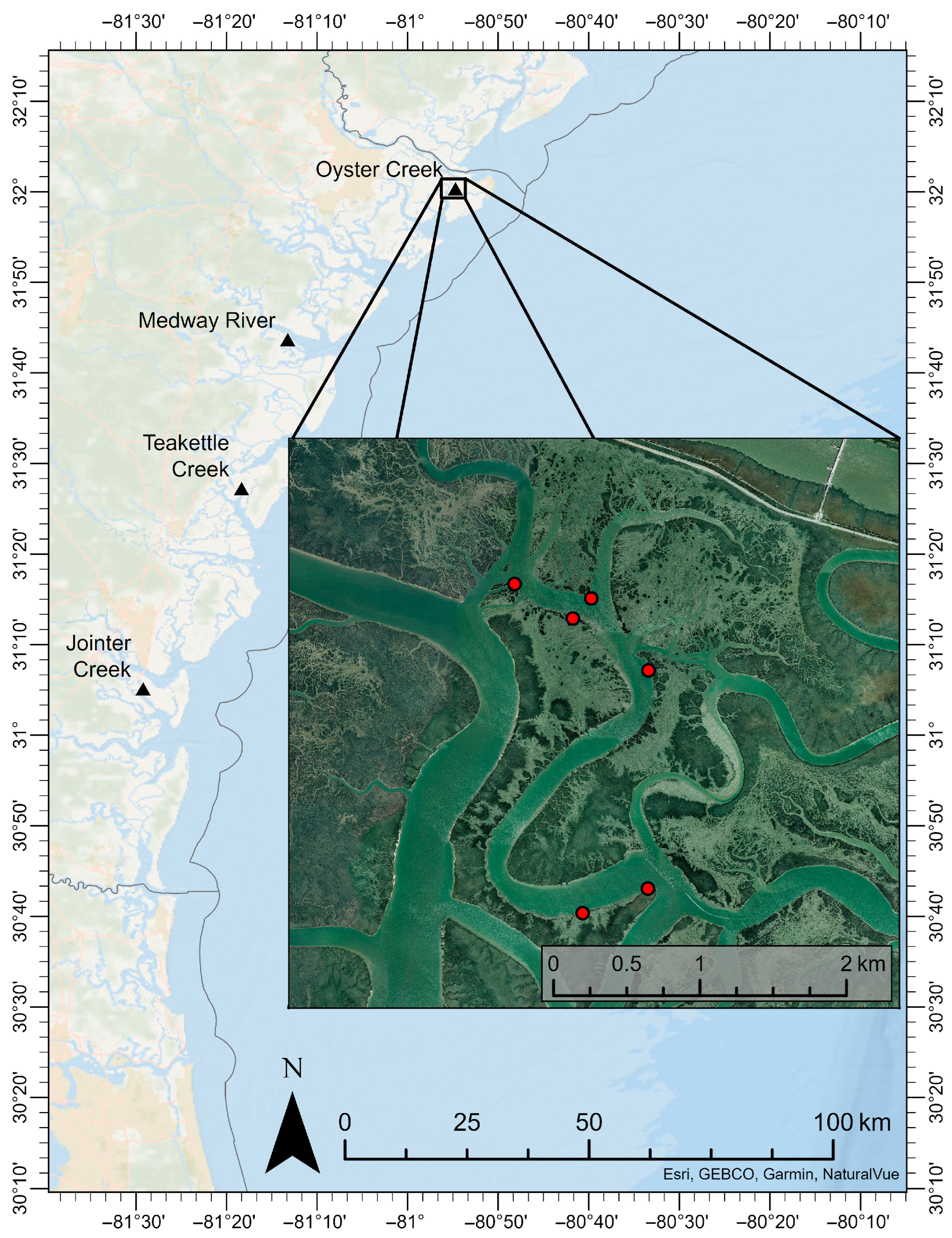
To assess within-creek genetic variation, adult oysters were collected in 2016 from six sites in Oyster Creek, GA. Oyster Creek runs approximately 3 km through extensive intertidal marshes. Oysters form fringing reefs that run parallel to shore and are patchily distributed along the creek. Samples were opportunistically collected from six reefs: OC1 (n = 29), OC2 (n = 21), OC13 (n = 15), OC14 (n = 18), OC21 (n = 10), OC22 (n = 19) (Figure 1 inset) at the lower (just above the waterline at low tide) and upper (top of the reef structure) intertidal elevations (see [33] for site information).
To estimate among-marsh genetic diversity, adult oysters were collected in 2018 from four sites along the Georgia coast: Oyster Creek (n = 29), Medway (n = 25), Teakettle Creek (n = 29), and Jointer Creek (n = 28) (Figure 1). Samples from each site included individuals from more than one reef. Gill tissue samples were taken from each oyster and stored in 95% ethanol until DNA extraction. DNA was extracted using the Zymo Quick-DNA Plant/Seed Miniprep Kits (Zymo Research, Irvine, CA, USA) to improve the removal of PCR inhibitors common in oyster tissues [34].

2.2. Microsatellite Locus Amplification and Genotyping

A total of 20 nuclear microsatellite loci were used to estimate genetic variation. PCR primers for these loci were taken from previous studies [27,35,36,37,38,39] (Table 1). PCR reactions followed the protocols published by Adrian et al. [27] using 4 multiplex reactions containing primers for 5 loci. Reactions were run in 10 μL total volume with 50–100 ng of DNA. PCR cycling parameters are outlined by Adrian et al. [27]. PCR products were run on a 3500 Series Genetic Analyzer (Applied Biosystems, Foster City, CA, USA).

2.3. Population Structure and Kinship Analysis

Alleles for each microsatellite locus were manually scored using the GeneMapper software (v6.1) and the internal size standard. Repeat units and allele size ranges were consistent with those previously published in the literature [27,35,36,37,38,39]. Possible null alleles and genotyping errors were tested using Micro-Checker 2.2.3 with 1000 randomizations [40]. Deviations from Hardy–Weinberg equilibrium were tested in Arlequin 3.5.2.1 using the Markov chain method with 1,000,000 chain steps and an initial burn-in of 100,000 steps [41]. GenAlEx software (version 6.503) was used to calculate genetic diversity metrics, including the observed number of alleles (Na), effective number of alleles (Ne), observed heterozygosity (Ho), and expected heterozygosity (He). For each dataset, an AMOVA was performed in GenAlEx to partition genetic variation within and among populations. Weir and Cockerham’s F-statistics were used to calculate pairwise values of population differentiation, and p-values were also calculated to test significance (using 20,000 permutations).
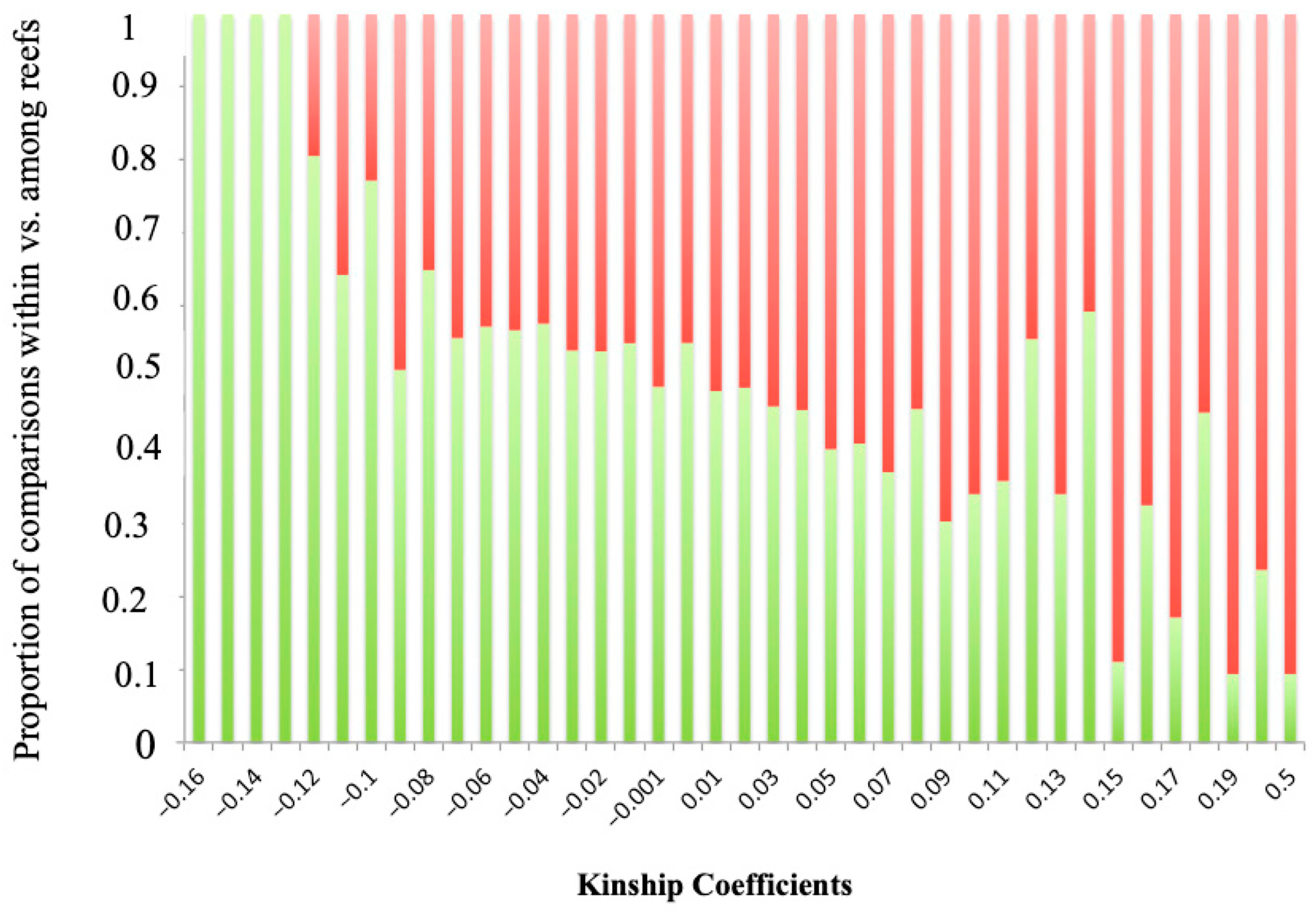
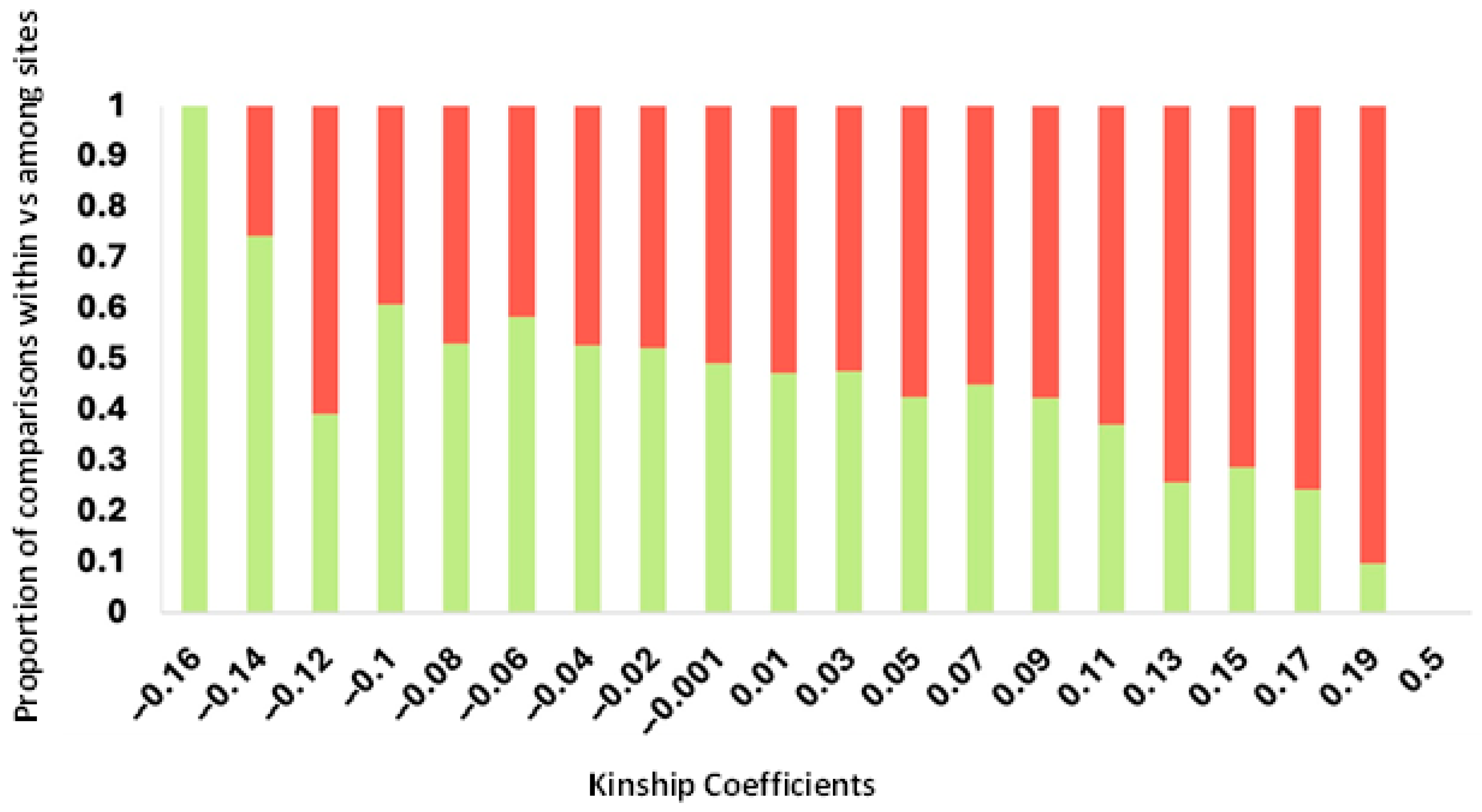
Kinship coefficients were calculated for each sampling location using the program GENODIVE 3.0 [42]. The kinship covariance matrices were used to compare variation in kinship coefficients within and among populations. A PERMANOVA was run to test if observed number of related individuals within populations deviated from a null distribution of kinship coefficients where oysters were randomly assigned to populations [32]. The PERMANOVA was performed in Primer 7, with 10,000 unrestricted permutations of the raw data and type III sums of squares differences [27,32]. Kinship coefficients from within and among reefs were binned according to kinship levels (‘nearly identical’, 0.57 > k > 0.375; ‘full siblings’, 0.375 > k > 0.1875; ‘half siblings’, 0.1875 > k > 0.09375; and ‘quarter siblings’, 0.09375 > k > 0.047). Bin boundaries were determined using the midpoints between Loiselle et al.’s [43] co-ancestry coefficients (full sibling = 0.25, half sibling = 0.125) [27,32].
Oyster creek was the only location sampled in both 2016 and 2018. Because the 2018 samples included individuals from more than one reef, we estimated temporal variation by generating random subsamples of 29 individuals six reefs in the 2016 dataset (N = 112). This subset was used to estimate FST values between the 2016 and 2018 Oyster Creek samples (N = 29). The analysis was repeated 10 times (10 randomly generated 2016 sample sets).

3. Results

3.1. Within-Creek Genetic Diversity

The mean number of alleles per locus ranged from 7.3 to 12.7 across all reefs in Oyster Creek sampled in 2016 (Table 2). Observed heterozygosity (Ho: 0.52 to 0.58) was lower than expected heterozygosity (He: 0.78 to 0.81) for all reefs. There were significant deviations from HWE in 48 of the 120 comparisons (40%), but no sample specific patterns were observed. Tests for the presence of null alleles using MicroChecker found that 9 of 20 loci showed potential for null alleles but no evidence of scoring errors due to large allele dropout or stutter. The null allele frequencies were low (<5%), and no sample-specific patterns were observed. Inbreeding coefficients (FIS) ranged from 0.218 to 0.31 and were significantly than 0 at all reefs consistent with heterozygote deficiency (Table 2).
AMOVA analysis revealed low but significant structure among reefs within Oyster Creek, with 2% of the variation partitioned among reefs (Global FST = 0.019, p < 0.001). Pairwise comparisons also indicated slight but significant variation between 11 of the 16 reef comparisons (Table 2). Pairwise FST values ranged from 0.006 to 0.032 (Table 3).

3.2. Within-Creek Kinship

Kinship coefficients ranged from −0.139 to 0.846. The mean kinship among reefs was lower (−0.00275 ± 0.073) than the mean kinship within reefs (0.0036 ± 0.006). The mean proportion for each kinship category within populations was 0.136 ± 0.014 quarter sibling, 0.051 ± 0.013 half sibling, 0.0046 ± 0.0021 full sibling, and 0.0015 ± 0.0008 nearly identical. A higher proportion of full, half, and quarter siblings was found within than among reefs, indicating that related larvae are more likely to settle on the same reef patch (PERMANOVA, p = 0.0004) (Figure 2).

3.3. Regional Among-Creek Genetic Diversity

The mean number of alleles per locus ranged from 11.6 to 13.75 among the four coastal Georgia creeks sampled in 2018 (Table 4). Observed heterozygosity (Ho) ranged from 0.58 to 0.827 and expected heterozygosity (He) from 0.78 to 0.81. There were significant deviations from HWE in 29 of the 80 comparisons (36.2%), but no sample-specific patterns were observed. Tests for the presence of null alleles using MicroChecker found that 7 of 20 loci showed potential for null alleles but no evidence of scoring errors due to large allele dropout or stutter. The null allele frequencies were low (<5%), and no sample-specific patterns were observed. Inbreeding coefficients (FIS) ranged from −0.018 to 0.278, with two sites, Medway River and Oyster Creek, having inbreeding coefficients that were significantly different from 0 (Table 4). In each case, FIS was positive, consistent with heteryzotote deficiency.
AMOVA analysis revealed low but significant structure among regional creek sites, with 1% of the variation partitioned among creeks (FST = 0.010, p < 0.001). Pairwise comparisons also indicated slight but significant variation between 4 of the 6 population comparisons (Table 5). Pairwise FST values ranged from 0.003 to 0.017 (Table 5).

3.4. Regional Among-Creek Kinship Analysis

Kinship coefficients ranged from −0.1465 to 0.212 among coastal creek sites. The mean kinship among creeks was lower (−0.0024 +/− 0.0006) than the mean kinship within creeks (0.0063 +/− 0.0012). The mean proportion for each kinship category within populations weas 0.127 ± 0.008 quarter sibling, 0.039 ± 0.010 half sibling, 0.0024 ± 0.0017 full sibling, and 0 nearly identical. A higher proportion of full, half, and quarter siblings was found within than among populations (PERMANOVA, p = 0.0001 (Figure 3)).

3.5. Temporal Genetic Variation

Temporal variation at the Oyster Creek site between 2016 and 2018 was estimated using random subsamples of 29 individuals from the 2016 dataset. Ten subsamples were used to estimate FST values between 2016 and 2018. Estimated FST values ranged from 0.028 to 0.039 (p < 0.001) with a mean of 0.035 ± 0.001.

4. Discussion

Maintenance of genetic variation in natural populations is an important component of conservation and management strategies. High levels of genetic variation enhance a population’s adaptive potential and limit negative factors, such as the probability of widespread inbreeding and inbreeding depression [44]. Characterizing genetic variation in natural populations is also important because “healthy” levels of genetic variation, as well as the environmental and life history characteristics that influence population dynamics, can vary among species [45]. In this study, we used microsatellite loci to assess genetic variation in eastern oyster populations at local and regional scales on the Georgia coast. We found high levels of allelic variation and modest but significant population structure.
The eastern oyster has a mid-length larval development time of 14–25 days, indicating a high potential for dispersal [15]. Despite the potential for dispersal, the strongest levels of genetic differentiation were observed between fringe reef sites within a 3.8 km tidal creek. At a larger regional scale spanning the Georgia coast, there was no relationship between geographic distance and genetic differentiation between populations. The non-random distribution of genetic variation that occurs regardless of geographic distance (chaotic genetic patchiness) can be driven by kin aggregation, local larval retention, and/or sweepstakes chance reproduction [29,46]. The 2018 samples were pooled within creeks, potentially increasing our within-population variation and reducing our ability to detect stronger differentiation among regional sites if similar patterns of fringe reef kinship existed within these creeks. Alternatively, oysters grow rapidly in Georgia and can become sexually mature within a single growing season [14], suggesting that the 2018 samples were of a different cohort or a mixed cohort of different parent populations. These results are consistent with predictions for temporal and spatial variation in the magnitude of the complex interaction of larval kin aggregation and sweepstakes reproductive success in coastal Georgia oyster populations.
We found that relatedness among individuals within reefs and populations was an important component of the observed population genetic patterns. Kinship within populations was greater than would be expected by chance. Given the larval duration (14–25 days) and dispersal potential (>100 km) of oyster larvae, this result is surprising yet consistent with recent research showing high levels of relatedness within oyster populations and reefs [15,27]. An increasing number of studies indicate that marine invertebrates exhibit local retention or kin aggregation during larval dispersal. These findings contradict predictions from high dispersal potential and evolutionary theory regarding the costs of related individuals settling near each other [27,32,47,48,49]. For example, the spiny lobster, Panulirus interruptus, has a pelagic larval period of 240–330 days, and a higher-than-expected proportion of related individuals was observed within, relative to between, sampling locations, suggesting that larval kin aggregation is a contributing factor to patterns of chaotic genetic patchiness [32]. The Atlantic stalked barnacle, Pollicipes pollicipes, has a larval period of 15–30 days, and populations exhibit significant local retention and relatedness [50].
The phenomenon of kin aggregation, where closely related larvae travel and settle together rather than evenly mixing and dispersing, is often biologically intertwined with sweepstakes reproductive success [27,32]. Our findings are similar to patterns seen in North Carolina populations of C. virginica, where high kinship and FIS values within reefs indicate that generational aggregations of kin is an important factor in fine-scale genetic structure in C. virginica [27]. This pattern was consistent across fringe reefs within a 3.8 km tidal creek, also suggesting that local retention of larvae is a potential driver of fine-scale within-creek genetic structure. We also found higher levels of kinship within than among populations on a broader scale covering ~115 km of the Georgia coast. This pattern is consistent with the findings of Adrian et al. [27], who observed higher kinship values within than among four C. virginica populations along 200 km of the North Carolina coastline, as well as within reefs at those sites. Unfortunately, we were unable to directly assess the role of kin aggregation vs. local recruitment because we did not sample larvae or new recruits. Variables important for dispersal and settling will differ between intertidal estuarine creeks and seaward areas [51]. Models accounting for the dynamic nature of variable flow and localized physical factors affecting dispersal suggest that the fraction of larvae retained near their sites of origin can vary temporally [51,52]. In addition, larval behavior can change in response to local environmental variables, further influencing inconsistent patterns in dispersal potential and genetic structure in nearshore and coastal species [52].
Patterns of chaotic genetic patchiness can result from lower-than-expected effective population sizes in high-fecundity species, driven by large variance in individual reproductive success rather than selection or non-random mating [1,6,29]. Because random events result in relatively few individuals contributing to each generation, temporal genetic variation among larval cohorts is common and may coincide with greater than expected relatedness in larval cohorts [1,53,54]. We were not able to directly test temporal variation by comparing larval cohorts between years, and likewise, the opportunistic sampling precluded comparisons from the same reefs across both years. However, FST estimates between years at the Oyster Creek site suggest temporal variation may be a contributing factor to observed genetic variation in Georgia populations.
Sweepstakes reproductive success is common in marine species, especially those that spawn in highly variable nearshore environments [2,29]. The timing of unfavorable environmental conditions is one driver of high pre-reproductive mortality and variance in reproductive success [2,29]. The European oyster, Ostrea edulis, exhibited temporal genetic variation between juveniles and adults, where juvenile samples possessed 60% of the adult allelic diversity [55]. In other species, such as the broadcast spawning coral Acropora hyacinthus and the mussel Mytilus chilensis, variation in allelic diversity among larval cohorts and the magnitude of allelic diversity reduction between larvae and adults were location-dependent [53,54]. Our results align with studies of C. virginica populations in North Carolina, indicating that the modest but significant population genetic structure at both the local and regional scales is largely driven by larval behavior and reproductive timing rather than by geographic distance and larval development time [27]. A study of genetic C. virginica in hatchery conditions also found sweepstakes success was a strong driver of genetic variation, even in controlled conditions with no difference in environmental variability [26]. Six juvenile cohorts created under the same hatchery conditions varied twofold in genetic diversity, and significant genetic differentiation was observed among nearly all juvenile cohorts (high FST), unlike in the adult oysters from the same sites [26]. Other studies involving C. virginica population structure show a different pattern, indicating regional nuance in population dynamics. Evidence of genetic differentiation following an isolation-by-distance pattern was found among 16 sites ranging from 1 to 100 km apart in Chesapeake Bay, and juvenile and adult oysters showed no difference in allele richness [56]. A study in the western Gulf of Mexico identified two distinct populations between Aransas Bay and Corpus Christi Bay, with a mixed population in a “transition zone” between them [57]. Interestingly, a previous study by King et al. [58] investigated these same locations 20 years earlier and found gene flow to be rare between the sites, concluding that geographic isolation occurs between them. Anderson et al. [57] hypothesized that there may have been a shift in what used to be distinguishable populations; recent mixture may have created a disequilibrium, resulting in fine-scale structure in Aransas/Corpus Christi Bay.

5. Conclusions

Eastern oysters are economically important species that also provide valuable ecosystem services to coastal communities, but unfortunately, populations have declined throughout their range. Understanding the population genetic structure and levels of kinship within and among Georgia’s wild oyster populations could significantly aid local and regional conservation efforts. Kin aggregation, local retention, and sweepstakes reproductive success likely all play a role in the complex pattern of genetic structure in Georgia (this study) and other southeastern US oyster populations (i.e., North Carolina [27], Gulf of Mexico [59]). The weight of these processes may vary across different coastal habitats within the region. For management, restoration areas and no-take zones should be designed to account for patterns of spawning potential and distribution of struggling oyster populations; if recruitment success is random year by year, many small efforts may be more beneficial than a few large ones, as this would increase the probability of successful settlement [60,61,62]. Incorporating research on larval behavior, potential kin aggregation, and environmental variables associated with reproductive success is necessary to better understand localized population dynamics.

Author Contributions

Conceptualization, J.S.H. and J.M.C.; methodology, J.S.H., S.B., J.C.W. and J.M.C.; software and formal analysis J.S.H., S.B. and J.C.W.; investigation, S.B., J.C.W. and J.M.C.; resources J.S.H. and J.M.C.; data curation, J.S.H.; writing—original draft preparation, S.B. and J.C.W.; writing—review and editing, J.S.H., S.B., J.C.W. and J.M.C.; supervision J.S.H. and J.M.C.; project administration J.M.C.; funding acquisition J.S.H. and J.M.C. All authors have read and agreed to the published version of the manuscript.

Funding

This research was funded by Georgia Sea Grant, grant number NA18OAR4170084, and institutional seed funding from Georgia Southern University.

Institutional Review Board Statement

Not applicable.

Data Availability Statement

The original contributions presented in this study are included in the article. Further inquiries can be directed to the corresponding author.

Acknowledgments

We would like to thank Jada Daniels, Sabrina Gale, William Annis, Percy Henderson, for field and lab assistance. We would like to acknowledge Thomas Bliss at the UGA Marine Extension and Georgia Sea Grant Shellfish Hatchery for feedback during the development of this project. Finally, we would like to acknowledge Stephen Greiman of Georgia Southern for feedback.

Conflicts of Interest

The authors declare that they have no conflicts of interest.

Abbreviations

The following abbreviations are used in this manuscript:
PCR = Polymerase Chain Reaction, HWE = Hardy–Weinberg Equilibrium, He = Expected Heterozygosity, Ho = Observed Heterozygosity, FIS = Inbreeding coefficient, FST = Fixation Index, AMOVA = Analysis of Molecular Variance, PERMANOVA = Permutational Multivariate Analysis of Variance.

References

  1. Hellberg, M.; Burton, R.; Neigel, J.; Palumbi, S. Genetic assessment of connectivity among marine populations. Bull. Mar. Sci. 2002, 70, 273–290. [Google Scholar]
  2. Flowers, J.; Schroeter, S.; Burton, R. The recruitment sweepstakes has many winners: Genetic evidence from the sea urchin Strongylocentrotus purpuratus. Evolution 2002, 56, 1445–1453. [Google Scholar] [CrossRef] [PubMed]
  3. Leiva, C.; Perez-Sorribes, L.; Gonzalez-Delgado, S.; Ortiz, S.; Wangensteen, O.; Perez-Portela, R. Exceptional population genomic homogeneity in the black brittle star Ophiocomina nigra (Ophiuroidea, Echinodermata) along the Atlantic-Mediterranean coast. Sci. Rep. 2023, 13, 12349. [Google Scholar] [CrossRef]
  4. Gruenthal, K.; Kroska, A.; Wolf, N.; Harris, B.; Booz, M. High spatiotemporal genetic connectivity in the Pacific razor clam (Siliqua patula) throughout Cook Inlet, Alaska. J. Shellfish Res. 2023, 42, 371–380. [Google Scholar] [CrossRef]
  5. Kobayashi, G.; Doi, W.; Yamamoto, T. Genetic homogeneity in soldier crab Mictyris guinotae populations across their geographic distribution in the Ryukyu Islands, Japan. Mar. Biol. Res. 2025, 21, 38–46. [Google Scholar] [CrossRef]
  6. Hedgecock, D.; Pudovkin, A. Sweepstakes reproductive success in highly fecund marine fish and shellfish: A review and commentary. Bull. Mar. Sci. 2011, 87, 971–1002. [Google Scholar] [CrossRef]
  7. Barry, P.; Broquet, T.; Gagnaire, P. Age-specific survivorship and fecudntiy shape genetic diversity in marine fishes. Evol. Lett. 2022, 6, 46–62. [Google Scholar] [CrossRef] [PubMed]
  8. Lima, A. Exploring Nationwide Oyster Aquaculture Data: An Index to Compare Regulatory, Production, and Economic Attributes of Oyster Aquaculture Among U.S. States and Regions. Fishes 2025, 10, 138. [Google Scholar] [CrossRef]
  9. Coen, L.; Brumbaugh, R.; Buskek, D.; Grizzle, R.; Luckenbach, M.; Posey, M.; Tolley, S. Ecosystem services related to oyster restoration. Mar. Ecol. Prog. Ser. 2007, 341, 303–307. [Google Scholar] [CrossRef]
  10. Grabowski, J.; Brumbaugh, R.; Conrad, R.; Keeler, A.; Opaluch, J.; Peterson, C.; Piehler, M.; Powers, S.; Smyth, A. Economic valuation of ecosystem services provided by oyster reefs. BioScience 2012, 62, 900–909. [Google Scholar] [CrossRef]
  11. Beck, M.; Brumbaugh, R.; Airoldi, L.; Carranza, A.; Coen, L.; Crawford, C.; Lenihan, H. Oyster reefs at risk and recommendations for conservation, restoration, and management. BioScience 2011, 61, 107–116. [Google Scholar] [CrossRef]
  12. Rothschild, B.; Ault, J.; Goulletquer, P.; Heral, M. Decline of the Chesapeake Bay oyster population: A century of habitat destruction and overfishing. Mar. Ecol. Prog. Ser. 1994, 111, 29–39. [Google Scholar] [CrossRef]
  13. Heffernan, P.B.; Walker, R.L.; Carr, J.L. Gametogenic cycles of three marine bivalves in Wassaw Sound, Georgia: II. Crassostrea virginica (Gmelin, 1791). J. Shellfish Res. 1989, 8, 61–70. [Google Scholar]
  14. O’Beirn, F.X.; Heffernan, P.B.; Walker, R.L.; Jansen, M.L. Young-of-the-year oyster, Crassostrea virginica, reproduction in coastal Georgia. Estuaries 1996, 19, 651–658. [Google Scholar] [CrossRef]
  15. Haase, A.; Eggleston, D.; Luettich, R.; Weaver, R.; Puckett, B. Estuarine circulation and predicted oyster larval dispersal among a network of reserves. Estuar. Coast. Shelf Sci. 2012, 101, 33–43. [Google Scholar] [CrossRef]
  16. Hughes, T.; Baird, A.; Dinsdale, E.; Moltschaniwskyj, N.; Pratchett, M.; Tanner, J.; Willis, B. Supply-side ecology works both ways: The link between benthic adults, fecundity, and larval recruits. Ecology 2000, 81, 2241–2249. [Google Scholar] [CrossRef]
  17. Carriker, M. Interrelation of functional morphology, behavior, and autecology in early stages of the bivalve Mercenaria mercenaria. J. Elisha Mitchell Sci. Soc. 1961, 77, 168–241. [Google Scholar]
  18. Dekshenieks, M.; Hofmann, E.; Klinck, J.; Powell, E. Modeling the vertical distribution of oyster larvae in response to environmental conditions. Mar. Ecol. Prog. Ser. 1996, 136, 97–110. [Google Scholar] [CrossRef]
  19. Adams, T.; Aleynik, D.; Burrows, M. Larval dispersal of intertidal organisms and the influence of coastline geography. Ecography 2014, 37, 698–710. [Google Scholar] [CrossRef]
  20. Narvaez, D.; Klinck, J.; Powell, E.; Hofmann, E.; Wilkin, J.; Haidvodel, D. Modeling the dispersal of eastern oyster (Crassostrea virginica) larvae in Delaware Bay. J. Mar. Res. 2012, 70, 381–409. [Google Scholar] [CrossRef]
  21. Carroll, J.; Riddle, K.; Woods, K.; Finelli, C. Recruitment of the eastern oyster, Crassostrea virginica, in response to settlement cues and predation in North Carolina. J. Exp. Mar. Biol. Ecol. 2015, 463, 1–7. [Google Scholar] [CrossRef]
  22. Smee, D.; Overath, R.; Johnson, K.; Sanchez, J. Intraspecific variation influences natrual settlement of eastern oysters. Oecologia 2013, 173, 947–953. [Google Scholar] [CrossRef]
  23. Goelz, T.; Vogt, B.; Hartley, T. Alternative substrates used for oyster reef restoration: A review. J. Shellfish Res. 2020, 39, 1–12. [Google Scholar] [CrossRef]
  24. Hanley, T.; Hughes, A.; Williams, B.; Garland, H.; Kimbro, D. Effects of intraspecific diversity on survivorship, growth, and recruitment of the eastern oyster across sites. Ecology 2016, 97, 1518–1529. [Google Scholar] [CrossRef]
  25. Ford, S.; Haskin, H. Infection and mortality patterns in strains of oysters Crassostrea virginica selected for resistance to the parasite Haplosporidium nelsoni (MSX). J. Parasitol. 1987, 73, 368–376. [Google Scholar] [CrossRef] [PubMed]
  26. Hughes, A.; Hanley, T.; Byers, J.; Grabowski, J.; McCrudden, T.; Piehler, M.; Kimbro, D. Genetic diversity and phenotypic variation within hatchery-produced cohorts predict size and success in the field. Ecol. Appl. 2019, 29, e10940. [Google Scholar] [CrossRef] [PubMed]
  27. Adrian, A.; Lack, C.; Kamel, S. Kin aggregations occur in eastern oyster Crassostrea virginica reefs despite limited regional genetic differentiation. Mar. Ecol. Prog. Ser. 2017, 584, 79–90. [Google Scholar] [CrossRef]
  28. Munroe, D.; Powell, E.; Ford, S.; Hofmann, E.; Klinck, J. Outcomes of asymmetric selection pressure and larval dispersal on evolution of disease resistance: A metapopulation modeling study with oysters. Mar. Ecol. Prog. Ser. 2015, 531, 221–239. [Google Scholar] [CrossRef]
  29. Hedgecock, D. Is gene flow from pelagic larval dispersal important in the adaptation and evolution of marine invertebrates? Bull. Mar. Sci. 1986, 39, 550–564. [Google Scholar]
  30. Veliz, D.; Duschesne, P.; Bourget, E.; Bernatchez, L. Genetic evidence for kin aggregation in the intertidal acorn barnacle (Semibalanus balanoides). Mol. Ecol. 2006, 15, 4193–4202. [Google Scholar] [CrossRef]
  31. Vendrami, D.; Peck, L.; Clark, M.; Eldon, B.; Meredith, M.; Hoffman, J. Sweepstake reproductive success and collective dispersal produce chaotic genetic patchiness in a broadcast spawner. Sci. Adv. 2021, 7, eabj4713. [Google Scholar] [CrossRef]
  32. Iacchei, M.; Ben-Horin, T.; Selkoe, K.; Bird, C.; Garcia-Rodriguez, F.; Toonen, R. Combined analyses of kinship and FST suggest potential drivers of chaotic genetic patchiness in high gene-flow populations. Mol. Ecol. 2013, 22, 3476–3494. [Google Scholar]
  33. Carroll, J.; Kelly, J.; Treible, L.; Bliss, T. Submarine groundwater discharge as a potential driver of eastern oyster, Crassostrea virginica, populations in Georgia. Mar. Environ. Res. 2021, 170, 105440. [Google Scholar] [CrossRef]
  34. Suther, C.; Moore, M. Quantification and discovery of PCR inhibitors found in food matrices commonly associated with foodborne viruses. Food Sci. Hum. Wellness 2019, 8, 351–355. [Google Scholar] [CrossRef]
  35. Brown, B.; Franklin, D.; Gaffney, P.; Hong, M.; Dendanto, D.; Kornfield, I. Characterization of microsatellite loci in the eastern oyster, Crassostrea virginica. Mol. Ecol. 2000, 9, 2216–2218. [Google Scholar] [CrossRef]
  36. Carlsson, J.; Morrison, C.; Reece, K. Wild and aquaculture populations of the eastern oyster compared using microsatellites. J. Hered. 2006, 97, 595–598. [Google Scholar] [CrossRef]
  37. Reece, K.; Ribeiro, W.; PM, G.; Carnegie, R.; Allen, S., Jr. Microsatellite marker development and analysis in the eastern oyster (Crassostrea virginica): Confirmation of null alleles and non-Mendelian segregation ratios. J. Hered. 2004, 95, 346–352. [Google Scholar] [CrossRef] [PubMed]
  38. Wang, Y.; Guo, X. Development and characterization of EST-SSR markers in the eastern oyster, Crassostrea virginica. Mar. Biotechnol. 2007, 9, 500–511. [Google Scholar] [CrossRef] [PubMed]
  39. Wang, Y.; Shi, Y.; Guo, X. Identification and characterization of 66 EST-SSR markers in the eastern oyster Crassostrea virginica (Gmelin). J. Shellfish Res. 2009, 28, 227–234. [Google Scholar] [CrossRef]
  40. van Oosterhout, C.; Hutchinson, W.; Wills, D.; Shipley, P. MICRO-CHECKER: Software for identifying and correcting genotyping errors in microsatellite data. Mol. Ecol. Notes 2004, 4, 535–538. [Google Scholar] [CrossRef]
  41. Excoffier, L.; Lischer, H. Arlequin suite ver 3.5: A new series of programs to perform population genetics analyses under Linux and Windows. Mol. Ecol. Resour. 2010, 10, 564–567. [Google Scholar] [CrossRef] [PubMed]
  42. Miermans, P.; van Tienderen, P. GENOTYPE and GENODIVE: Two programs for the analysis of genetic diversity of asexual organisms. Mol. Ecol. Resour. 2004, 4, 792–794. [Google Scholar]
  43. Loiselle, B.; Sork, V.; Nason, J.; Graham, C. Spatial genetic structure of a tropical understory shrub, Psychotria officinalis (Rubiaceae). Am. J. Bot. 1995, 82, 1420–1425. [Google Scholar] [CrossRef]
  44. Kardos, M.; Armstrong, E.; Fitzpatrick, S.; Hauser, S.; Hedrick, P.; Miller, J.; Tallmon, D.; Funk, W. The crucial role of genome-wide genetic variation in conservation. Proc. Natl. Acad. Sci. USA 2021, 118, e2104642118. [Google Scholar] [CrossRef]
  45. Moreas, A.; Ruiz-Miranda, C.; Galetti, P., Jr.; Niebuhr, B.; Alexandre, B.; Muylaert, R.; Gravitol, A.; Ribeiro, J.; Ferreira, A.; Ribeiro, M. Landscape resistance influences effective dispersal of endangered golden lion tamarins within the Atlantic forest. Biol. Conserv. 2018, 224, 178–187. [Google Scholar] [CrossRef]
  46. Johnson, M.; Black, R. Pattern beneath the chaos—The effect of recruitment on genetic patchiness in an intertidal limpet. Evolution 1984, 38, 1371–1383. [Google Scholar] [CrossRef]
  47. Garwood, J.; Fuchs, H.; Gerbi, G.; Hunter, E.; Chant, R.; Wilkin, J. Estuarine retention of larvae: Contrasting effects of behavioral responses to turbulence and waves. Limnol. Oceanogr. 2022, 67, 992–1005. [Google Scholar] [CrossRef]
  48. Selwyn, J.; Hogan, J.; Downey-Wall, A.; Gurski, L.; Portnoy, D.; Heath, D. Kin-aggregations explain chaotic genetic patchiness, a commonly observed genetic pattern, in a marine fish. PLoS ONE 2016, 11, e0153381. [Google Scholar] [CrossRef]
  49. Burgess, S.; Powell, J.; Bueno, M. Dispersal, kin aggregation, and the fitness consequences of not spreading sibling larvae. Ecology 2023, 104, e3858. [Google Scholar] [CrossRef] [PubMed]
  50. Parrondo, M.; Moran, P.; Ballenghien, M.; Acuna, J.; Aguion, A.; Arrontes, J.; Chiss, J.; Cruz, T.; Garcia-Vazquez, E.; Geiger, K.; et al. Chaotic genetic patchiness in the highly valued Atlantic stalked barnacle Pollicipes pollicipes from the Iberian Peninsula: Implications for fisheries management. Front. Mar. Sci. 2022, 9, 801780. [Google Scholar] [CrossRef]
  51. Nickols, K.; White, J.; Largier, J.; Gaylord, B. Marine population connectivity: Reconciling large-scale dispersal and high self-retention. Am. Nat. 2015, 185, 196–211. [Google Scholar] [CrossRef]
  52. Tepolt, C.; Blakeslee, A.; Fowler, A.; Darling, J.; Torchin, M.; Miller, A.; Ruiz, G. Strong genetic structure in a widespread estuarine crab: A test of potential versus realized dispersal. J. Biogeogr. 2020, 47, 2532–2542. [Google Scholar] [CrossRef]
  53. Haye, P.; Segovia, N. Shedding light on variation in reproductive success through studies of population genetic structure in a southeast Pacific coast mussel. Heredity 2024, 130, 402–413. [Google Scholar] [CrossRef]
  54. Barfield, S.; Davies, S.; Matz, M. Evidence of sweepstakes reproductive success in a broadcast-spawning coral and its implications for coral metapopulation persistence. Mol. Ecol. 2022, 32, 696–702. [Google Scholar] [CrossRef]
  55. Hedgecock, D.; Launey, S.; Pudovkin, A.; Naciri, Y.; Lapegue, S.; Bonhomme, F. Small effective number of parents (N b) inferred for a naturally spawned cohort of juvenile European flat oysters Ostrea edulis. Mar. Biol. 2007, 150, 1173–1182. [Google Scholar] [CrossRef]
  56. Rose, C.; Paynter, K.; Hare, M. Isolation by distance in the eastern oyster, Crassostrea virginica, in Chesapeake Bay. J. Hered. 2006, 97, 158–170. [Google Scholar] [CrossRef]
  57. Anderson, J.; Karel, W.; Mace, C.; Bartram, B.; Hare, M. Spatial genetic features of eastern oysters (Crassostrea virginica Gmelin) in the Gulf of Mexico: Northward movement of a secondary contact zone. Ecol. Evol. 2014, 4, 1671–1685. [Google Scholar] [CrossRef]
  58. King, T.; Ward, R.; Zimmerman, E. Population structure of eastern oysters (Crassostrea virginica) inhabiting the Laguna Madre, Texas, and adjacent bay systems. Can. J. Fish. Aquat. Sci. 1994, 51, 215–222. [Google Scholar] [CrossRef]
  59. Varney, R.; Galindo-Sanchez, C.; Cruz, P.; Gaffney, P. Population genetics of the eastern oyster, Crassostrea virginica (Gmelin 1791) in the Gulf of Mexico. J. Shellfish Res. 2009, 28, 855–865. [Google Scholar] [CrossRef]
  60. Larson, R.; Julian, R. Spatial and temporal genetic patchiness in marine populations and their implications for fisheries management. Calif. Coop. Ocean. Fish. Investig. Rep. 1999, 40, 94–99. [Google Scholar]
  61. White, J.; Hopf, J.; Kilduff, D.; Hastings, A.; Botsford, L. The roles of population dynamics theory in the design and assessment of marine reserves. Theor. Ecol. 2025, 18, 15. [Google Scholar] [CrossRef]
  62. Puckett, B.; Eggleston, D. Metapopulation dynamics guide marine reserve design: Importance of connectivity, demographics, and stock enhancement. Ecosphere 2016, 7, e01322. [Google Scholar] [CrossRef]
Figure 1. Locations along the Georgia coastline where oysters were collected. Samples from 2016 were collected from six stations (red circles) within Oyster Creek (inset), whereas 2018 samples were collected from reefs within four creeks that span the Georgia coastline: Oyster Creek, Medway River, Teakettle Creek and Jointer Creek (black triangles).
Fishes 11 00154 g001
Figure 2. Distribution of kinship coefficients divided into 0.01 bins and colored by proportion of within reef (red) and among reef (green) comparisons within each bin. Bars on the x-axis represent the divisions between the unrelated and related oysters and between each kinship level where ‘quarter sibling’ 0.047 < k < 0.09375; ‘half sibling’ 0.09375 < k < 0.1875; ‘full sibling’ 0.1875 < k < 0.375; and ‘nearly identical’ 0.375 < k < 0.57.
Fishes 11 00154 g002
Figure 3. Distribution of kinship within (red) and among (green) coastal Georgia populations from 2018 compared as proportions. Coefficients were divided into 0.02 bins for the figure, but kinship levels are defined as ‘quarter sibling’ 0.047 < k < 0.09375; ‘half sibling’ 0.09375 < k < 0.1875; ‘full sibling’ 0.1875 < k < 0.375; and ‘nearly identical’ 0.375 < k < 0.57.
Fishes 11 00154 g003
Table 1. Microsatellite names and the unlabeled forward and reverse sequences, with the citation for each.
Name and LocusPrimers SequenceCitation
CV1F-gctacacacgaaaaatggg[39]
Cvi1g8R-tcaaatgaagagcacctcc
CV2F-accggagatggtggtatttcc[35]
Cvi13R-gtgttgcaagacttacagaagaaac
CV3F-gaagttaatatggatccgtgcttgta[38]
RUCV10R-ttatcttttgtatagggtgagggcaa
CV4F-gtacaacagcctcagagccaatggca[38]
RUCV25R-tcttagttgtggcgctgccggttggt
CV5F-tgtttagtcatggcagtgtgc[38]
RUCV45R-gtgacttcattttgagccttttacc
CV6F-caagttatgataagagtgacagg[38]
RUCV60R-catacacagaaacacacatacag
CV7F-cagccaacatcactttgagg[38]
RUCV61R-ctgtgccggtacaatctgc
CV8F-tgatactttcgtattgcttg[38]
RUCV63R-gattgtaatttatttgaacatt
CV9F-gggagcattattgcctaaacc[38]
RUCV73R-ttcgataatcacagaaggatgg
CV11F-gtgagaagggattggagtgc[39]
RUCV114R-atgaaataatggcgatacgg
CV12F-ctctggagacaaatccatgc[39]
RUCV131R-catttctctgtgctgatgacg
CV13F-ggaccaaatattccacatcacac[39]
RUCV270R-aagctgaatgcccaaacatc
CV14F-tggtttgaagggaagaaagc[39]
RUCV374R-gacggaactcttcatcaaagg
CV15F-gcgaagaggaagaaaaattgg[39]
RUCV424R-aagcatgagctaaaccatctcc
CV16F-aaaattcgccctgttcgtgtttcatt[38]
RUCV22R-aagcgccttagacactcgtttgcaca
CV17F-gtcgtgcaagttgacattcc[38]
RUCV46R-tccacctctatttcatgttgtcc
CV18F-accatcagcaacacagaacg[38]
RUCV66R-gggtcccaagtgttgtcg
CV19F-ataaaagtccattcgtaagc[36]
Cvi5VIMR-agatttgaagtattgctatcg
CV20F-ctgagcttagactacagccctacaccag[35]
Cvi8R-gatatcctaaacctactcctcttttgcatttttg
CV21F-cccacacagttgccacacaaac[37]
Cvi2j10R-ccacaatagatttccatcccttcc
Table 2. Genetic variation for 20 microsatellite loci of Crassostrea virginica sampled from six reefs in Oyster Creek, GA. N = sample size, Na = the number of alleles, Ne = effective number of alleles, Ho = observed heterozygosity, He = expected heterozygosity, FIS = inbreeding coefficient. * = p < 0.001.
Reef NNaNeHoHeFIS
OC1Mean2912.657.1580.5200.7590.310 *
SE 1.281.1450.0340.0360.035
OC2Mean2112.407.7360.5780.7850.250 *
SE 1.251.0530.0450.0400.055
OC13Mean159.956.6340.5850.7680.241 *
SE 0.950.8830.0490.0400.060
OC14Mean1810.156.5620.5450.7750.300 *
SE 0.890.7980.0490.0370.060
OC21Mean107.305.4100.5610.7580.279 *
SE 0.770.6660.0650.0270.079
OC22Mean1910.356.7690.5750.7660.218 *
SE 1.070.9010.0530.0420.070
Table 3. Pairwise population FST values for Oyster Creek reef populations. p-values < 0.05 are bolded.
ReefOC1OC2OC13OC14OC21OC22
OC1*
OC20.008*
OC130.0200.013*
OC140.0220.0100.028*
OC210.0290.0230.0130.027*
OC220.0320.0230.0060.0300.011*
Table 4. Genetic variation for 20 microsatellite loci of Crassostrea virginica sampled from four coastal Georgia creek sites. N = sample size, Na = the number of alleles, Ne = effective number of alleles, Ho = observed heterozygosity, He = expected heterozygosity, FIS = inbreeding coefficient. * = p < 0.001.
Site NaNeHoHeFIS
Medway RiverMean11.6006.9710.5760.7770.278 *
SE1.0550.9580.0480.0340.051
Teakettle CreekMean13.5507.8620.7710.7690.015
SE1.5771.2490.0520.0420.039
Jointer CreekMean13.3008.0150.8270.798−0.018
SE1.3671.2170.0430.0310.036
Oyster CreekMean13.7507.8400.7930.8040.061 *
SE1.4541.1020.0390.0280.026
Table 5. Pairwise Population FST Values for Coastal Georgia Creek Sites (2018). p-values < 0.05 are bolded.
PopulationMedwayTeakettleJointer CreekOyster Creek
Medway*
Teakettle0.005*
Jointer Creek0.0030.007*
Oyster Creek0.0100.0170.007*
Disclaimer/Publisher’s Note: The statements, opinions and data contained in all publications are solely those of the individual author(s) and contributor(s) and not of MDPI and/or the editor(s). MDPI and/or the editor(s) disclaim responsibility for any injury to people or property resulting from any ideas, methods, instructions or products referred to in the content.