


Abstract
A new species of Poropuntius endemic to the Mae Klong River basin is described and compared to nine congeneric species in the Mae Klong, Chao Phraya, Salween, and Tenasserim River basins. Species of Poropuntius in these basins are almost universally poorly known, with information often confined to brief original descriptions. New morphological data are provided for most species, and differential comparisons are provided for all. Some species display a large amount of intraspecific variation, including ontogenetic variation related to environmental factors, and can be difficult to identify. Taxonomic revisionary studies are needed for wide-ranging species. Puntius faucis Smith, 1945, is not a species of Poropuntius, as currently assumed.
Key Contribution:
The paper describes a new species of Poropuntius endemic to the Mae Klong River basin and provides comparative data for previously described, but poorly documented, species.
1. Introduction
Roberts [1] revised the genus Poropuntius using morphological data and recognized 23 existing species names as valid and described six new species. He noted that the types and other material for several species described from China were unavailable for him to examine, which reduced his confidence in some names currently in use. More recently, Hoàng et al. [2] used mitochondrial sequence data to investigate the validity of species names for Poropuntius. They recognized 15 names as valid, synonymized 17 names, provided no opinions on 10 names for which no molecular data were available, and described a new species from Vietnam. Even with these major contributions, most species of Poropuntius are poorly known.
Poropuntius is diagnosed as having large serrae on the posterior edge of a robust dorsal-fin spine (the last simple ray), a strongly forked caudal fin, tubercles covering the snout and extending over the lacrimal bones, 8½ branched dorsal-fin rays, 5½ branched anal-fin rays, and 9 pelvic-fin rays [1,2,3]. Tubercles occur on both sexes and, at least in most species, on juveniles as well as on adults. Most species have maxillary and mandibular barbels and black-to-dusky submarginal stripes on the upper and lower caudal-fin lobes. Some have a well-developed keratinized edge on the lower jaw.
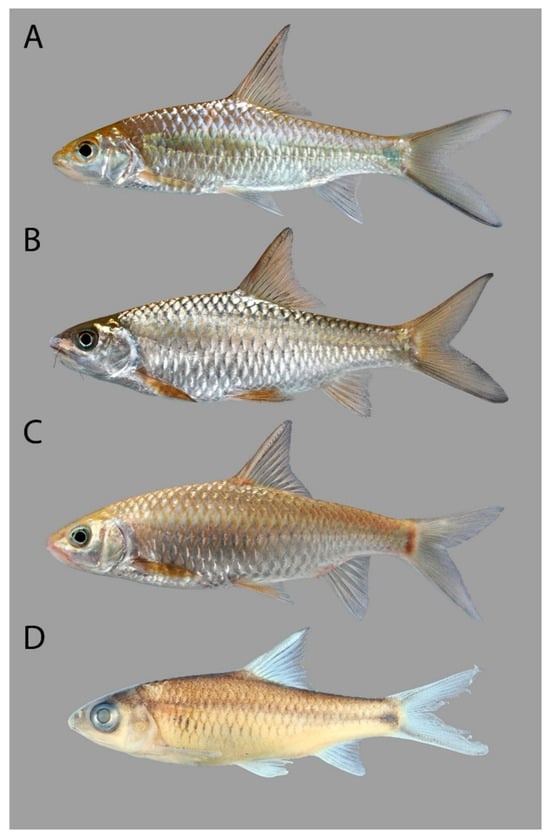
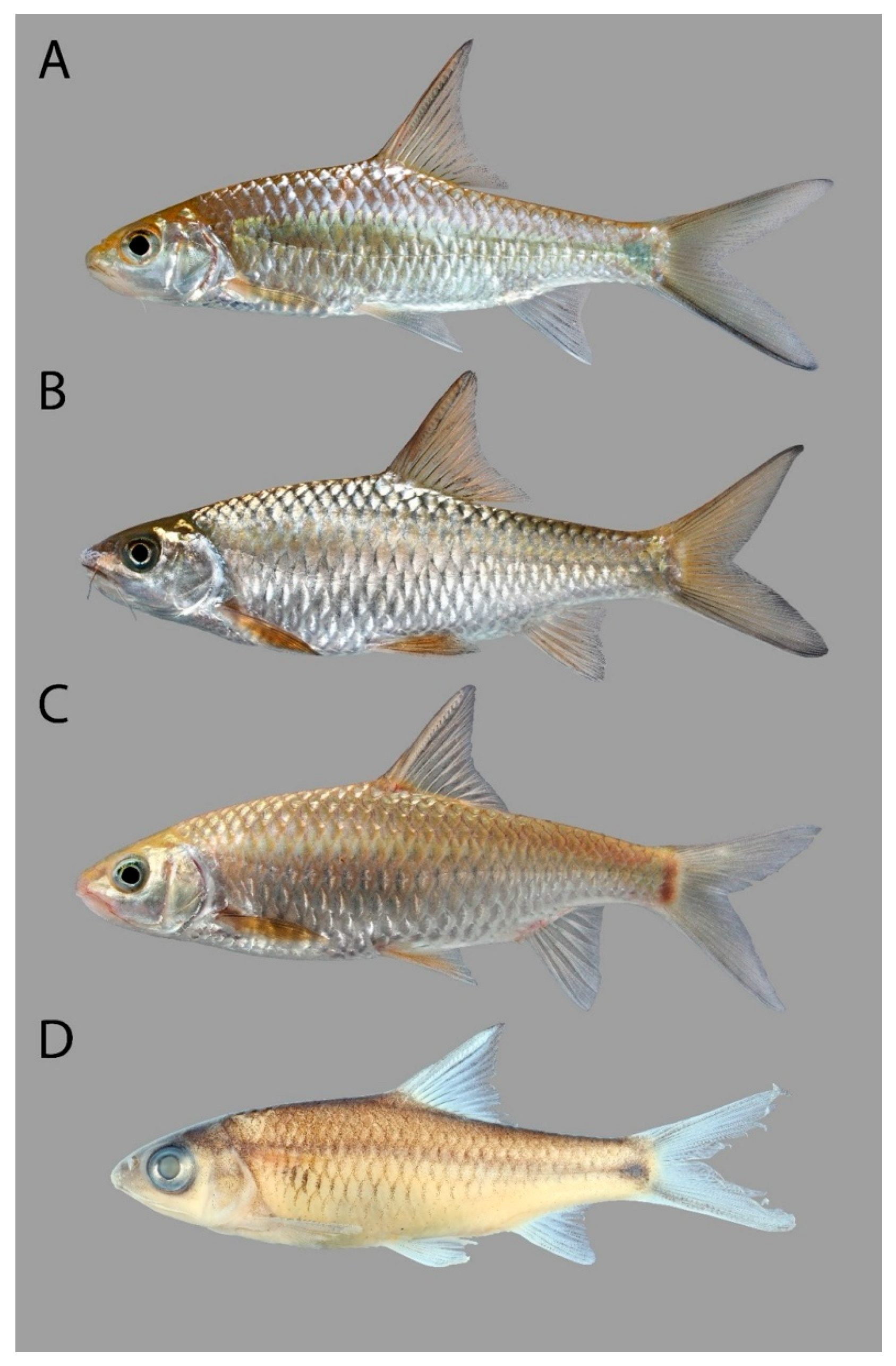
Recently collected specimens of Poropuntius (Figure 1) in the Mae Klong River basin in Western Thailand could not be identified to species and led to a comparative study of Poropuntius that have been recorded in the Mae Klong and adjacent river basins [1,2,4,5]. Included in the morphological comparison were P. carinatus (Wu & Lin, in Wu, 1977), P. hampaloides (Vinciguerra, 1890), P. hathe Roberts, 1998, P. heterolepidotus Roberts, 1998, and P. opisthopterus (Wu, in Wu, 1977) from the Salween River basin; P. genyognathus Roberts, 1998 from the Tenasserim basin; P. deauratus (Valenciennes, in Cuvier & Valenciennes, 1842), P. faucis (Smith, 1945), and P. laoensis (Günther, 1868) from the Chao Phraya basin; and P. melanogrammus Roberts, 1998 from the Mae Klong basin. Molecular data for these and additional species of Poropuntius, including all for which barcode data (cytochrome oxidase subunit 1) were available [2], were included in an analysis of phylogenetic relationships. Color photographs of specimens and close-up images of mouths for several species for which only scant information has been published are presented.
Figure 1.
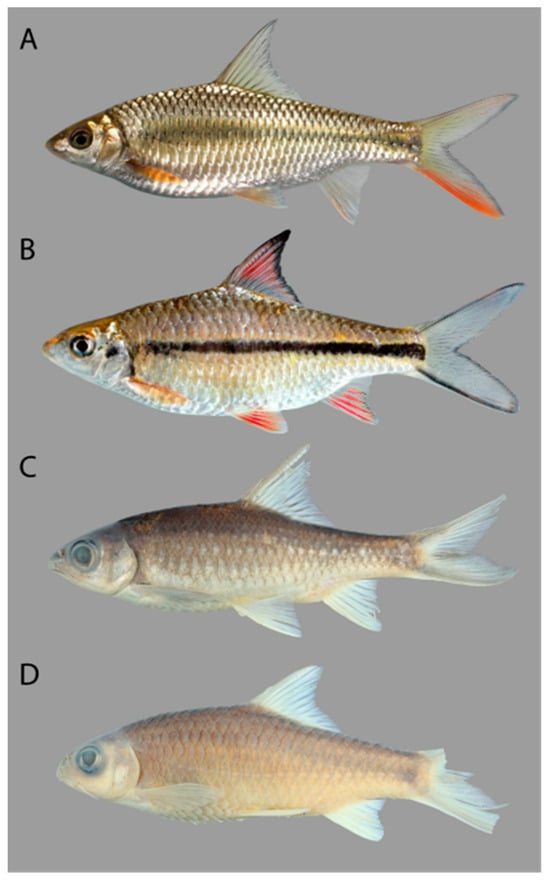
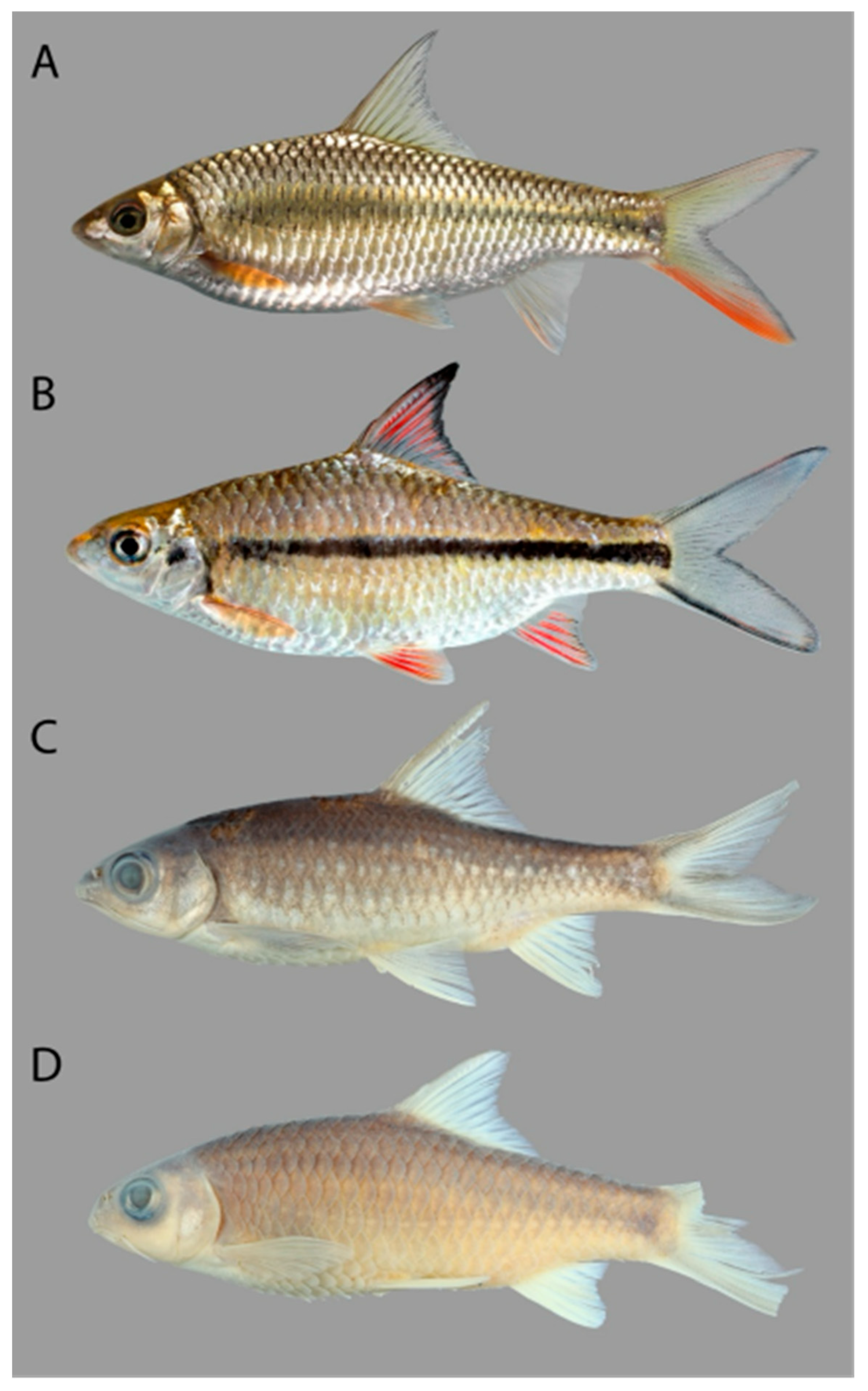
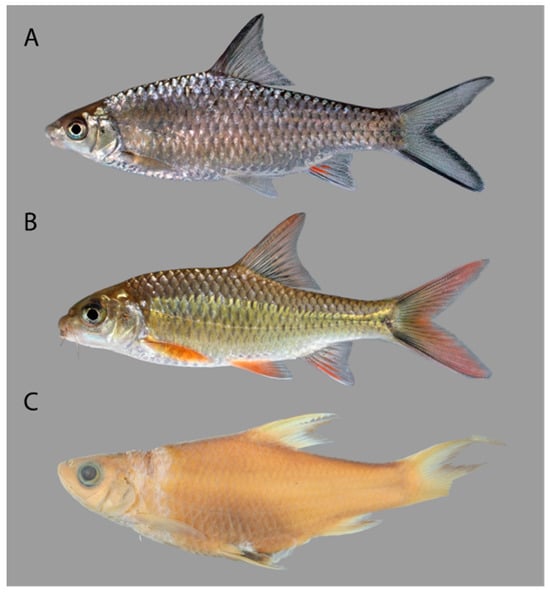
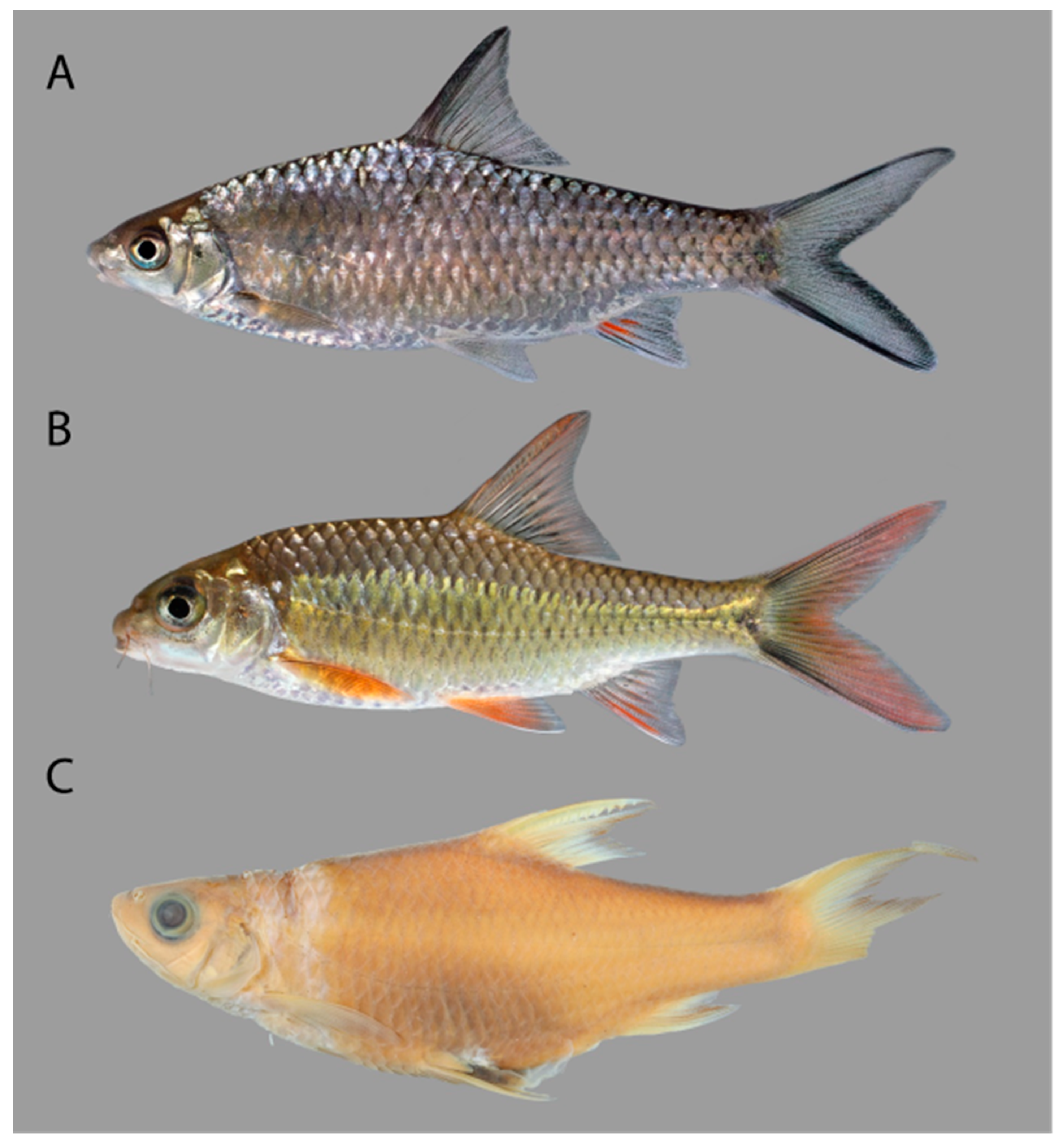
Poropuntius tongnunui, n. sp. (A) UF 192177, 63.5 mm SL, Nong Luang Creek, Khwae Yai drainage, Tak Province, 9 January 2018; (B) UF 192160, 111.4 mm SL, Mae Lamung Creek, Khwae Yai drainage, Tak Province, 10 January 2018; (C) THNHM-F00023980, holotype, 151.4 mm SL, Dongwee River, Khwae Yai drainage, Kanchanaburi Province, 14 December 2018; (D) UF 192160, 51.6 mm SL juvenile, Mae Lamung Creek, Khwae Yai drainage, Tak Province, Thailand, 10 January 2018. (A,C) live, (D) preserved.
2. Materials and Methods
2.1. Fieldwork and Imaging
Fish were collected with nets and anesthetized with tricaine methanesulfonate (MS-222). Selected specimens were fin-clipped for DNA extraction, with the fin clips placed in 95% ethanol. Specimens not returned to the native stream were fixed in 4% formalin and later transferred to 70% ethanol for long-term preservation and deposited at the Florida Museum of Natural History, Florida, USA (UF), or the University of Science, Ho Chi Minh City, Vietnam (UNS).
Photographs of live and preserved specimens were taken with a Canon EOS R camera. Images were edited using Adobe Photoshop CC 2024 (Adobe, San Jose, CA, USA). Vertebral counts were taken from computed tomography (CT) scans generated using a Phoenix v|tome|x M scanner (GE Measurement & Control, Boston, MA, USA) at the University of Florida’s Nanoscale Research Facility. CT projections were processed using datos|x software v. 2.3 (Baker Hughes, Jacksonville, FL, USA), and X-rays were visualized using VG StudioMax v. 2024.3 (Volume Graphics, Heidelberg, Germany). CT scans of the scanned specimens (UF 192160 and UF 183353) can be downloaded from MorphoSource (https://www.morphosource.org, accessed on 13 November 2025). A map was produced using ArcMap 10.8.1 in ArcGIS (Esri, Redlands, CA, USA).
2.2. Molecular Data
Molecular sequence data were newly generated or taken from GenBank (Table S1) for the species listed in the Introduction, except for P. faucis, which is known only from the type, and no sequence data were available. To more broadly examine the phylogenetic relationships of the new species within Poropuntius, published data [2] were included for P. alloiopleurus (Vaillant, 1893), P. anlaoensis Hoàng, Phạm & Trần, 2024, P. burtoni (Mukerji, 1933), P. huangchuchieni (Tchang, 1962), P. kontumensis (Chevey, 1934), P. krempfi (Pellegrin & Chevey, 1934), and P. schanicus (Boulenger, 1893). Hypsibarbus wetmorei (Smith, 1931) was used as the outgroup species based on recent studies of cyprinid higher-level relationships [6,7,8].
2.3. DNA Extraction and Amplification
DNA was extracted from fin clips stored in 95% ethanol using the DNeasy Blood & Tissue Kit (Qiagen, Valencia, CA, USA) and following the protocol suggested by the manufacturer. The mitochondrial gene, cytochrome oxidase subunit 1 (CO1), was amplified using polymerase chain reaction (PCR). Primers and PCR conditions followed Ward et al. [9]. PCR products were visualized on 1–2% agarose gels, and the most intense products were selected for purifying and Sanger sequencing by 1ST BASE (https://base-asia.com/, accessed on 13 November 2025).
2.4. Phylogenetic Reconstruction
Chromas 2.6.6 (http://technelysium.com.au/, accessed on 13 November 2025) was used to inspect the sequence chromatograms and assemble them into contigs, and MUSCLE in MEGA 7 [10,11] was used to align the consensus sequences. Alignments were inspected by eye for accuracy, and sequences were trimmed at the 3′ and 5′ ends to minimize missing characters. Uncorrected pairwise sequence divergence was estimated using the substitution model of Kimura 2 parameters, with 1000 bootstraps implemented in MEGA 7 [11]. All sequences generated for this study were deposited in GenBank. The phylogenetic inference based on Maximum Likelihood (ML) was made using IQ-TREE [12] through the IQ-TREE web server (http://www.iqtree.org/, accessed on 13 November 2025). Optimal partitioning models for the ML inference were selected by ModelFinder [13,14] in IQ-TREE, using the minimum BIC score. Partition analysis suggested the best-fit model HKY+F+I+G4 (BIC = 5383.050, lnL = −2377.590) for ML inference. Ultrafast bootstrap (BS) analysis [15] for 1000 iterations was carried out to determine statistical support for the nodes in ML. The trees obtained from ML were visualized using Figtree v. 1.4.3 (http://tree.bio.ed.ac.uk/software/figtree, accessed on 15 August 2025).
2.5. Morphological
Morphological data were from original descriptions for all species, from subsequently published descriptions as available and considered correctly assigned taxonomically, and from the examination of 95 specimens of Poropuntius (see Section 5).
Measurements were taken to the nearest 0.1 mm using digital calipers following [16] except for predorsal-, prepectoral-, prepelvic-, and preanal-fin lengths, all taken from the tip of the snout to the origin of the fin; head width taken at the middle of the opercle and at the posterior margin of the eye; body depth, taken at the dorsal-fin origin; body width, taken at the dorsal-fin origin, and pectoral-to-pelvic and pelvic-to-anal distances taken at the origin of each fin, and other measurements that are self-explanatory. Proportional data are expressed as percentages of standard length (SL) or head length (HL). Lateral-line scale counts were counts of pored scales on the body, excluding those on the caudal fin. Total ray counts are given for paired fins and branched ray counts for unpaired fins. For the last ray of the dorsal and anal fins, sharing a pterygiophore with the last branched ray, the count is given as ½. Vertebral counts were made from CT scans. Counts of abdominal vertebrae include those in the Weberian complex (n = 4 vertebrae). Counts of caudal vertebrae began at the vertebra with its hemal spine just posterior to the anterior anal-fin pterygiophore and include the urostyle complex (n = 1 vertebra).
The abbreviations for institutional collections are CAS—California Academy of Sciences, San Francisco, CA, USA; LSUMZ—Louisiana State University Museum of Natural Science, Baton Rouge, LA, USA; NIFI—National Inland Fisheries Institute, Bangkok, Thailand; THNHM—Thailand Natural History Museum, National Science Museum, Pathum Thani, Thailand; UF—University of Florida, Florida Museum of Natural History, Gainesville, FL, USA; ZRC—Zoological Research Collection, Lee Kong Chian Natural History Museum, Singapore.
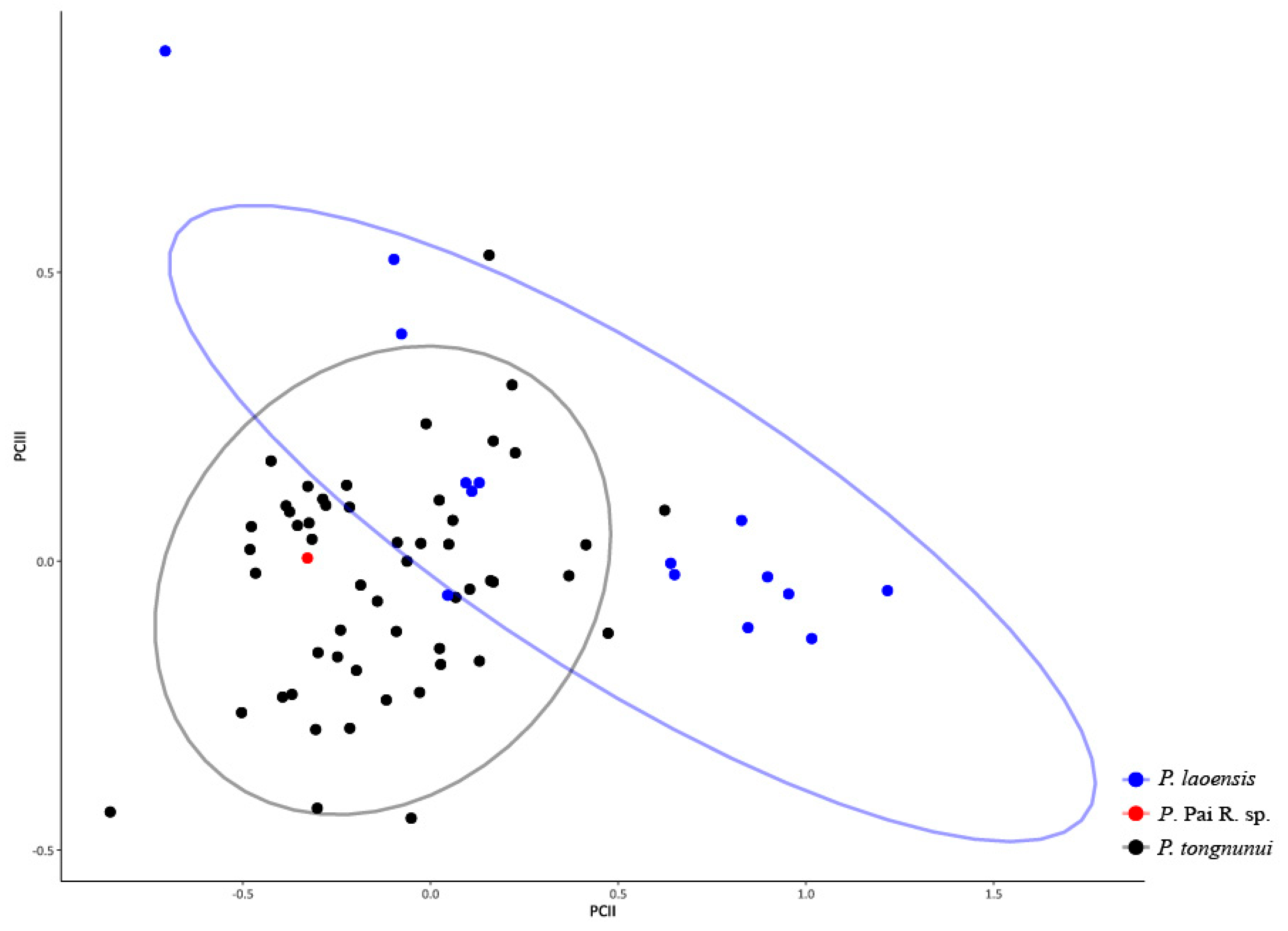
A sheared principal component analysis was conducted for the new species, the closest relative, and the morphologically similar P. laoensis (see Section 4), in accordance with [17] and adapted for R (R Core Team, 2023; https://www.R-project.org/, accessed on 13 November 2025) on 28 measurements from 69 specimens. Following species identification by morphological examination and molecular analyses, a log-transformed covariance matrix was generated from morphometric data centered intraspecifically and regressed on a within-group size factor. The sheared second and third principal components were plotted in R to visualize variation in shape independent of size [18]. Individuals could not be consistently sexed using only external characteristics, and therefore, sexes were not analyzed separately.
3. Results
3.1. Molecular
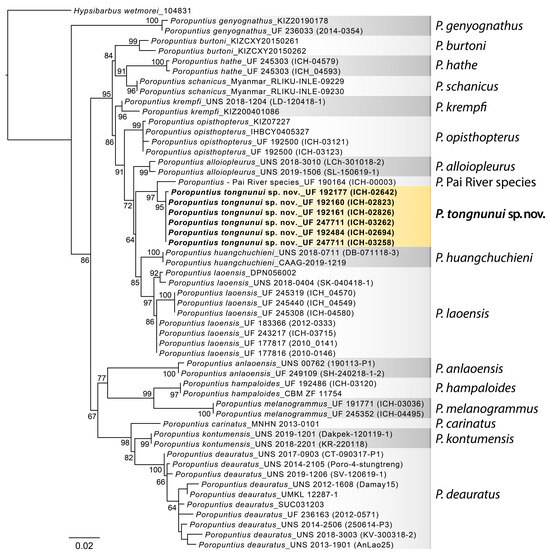
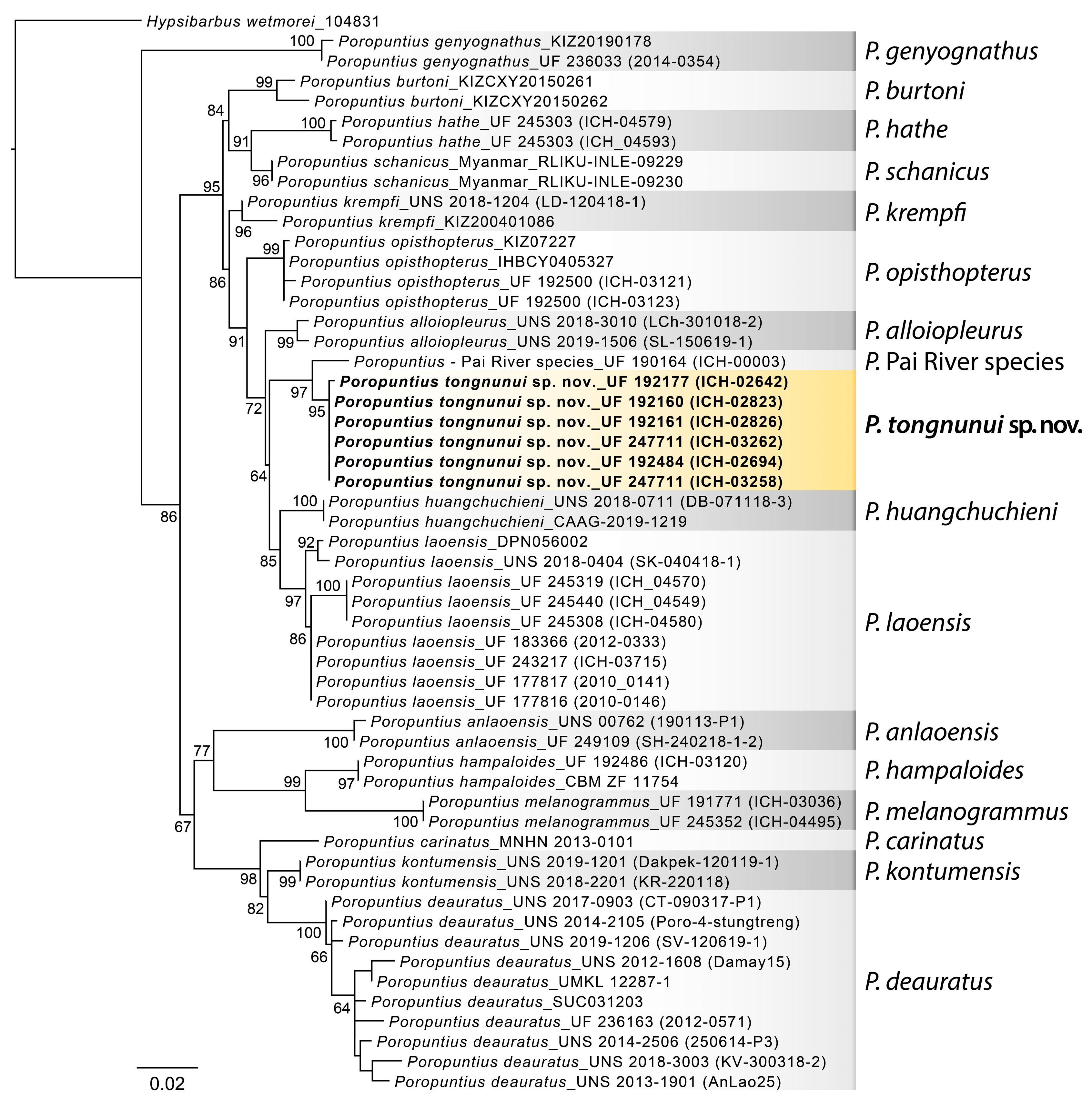
In the molecular-based phylogeny (Figure 2), P. tongnunui, n. sp., was sister to an unnamed species represented by a specimen (UF 190164) from the Pai River drainage, Mae Hong Son Province, Thailand, and those two species were sister to P. opisthopterus, described from the Salween River basin in Yunnan Province, China. UF 190164, hereafter referred to as the Pai River species, was identified as P. heterolepis [2] but is not that species and is unusual among Poropuntius in having 24 lateral-line scales (Table 1). Poropuntius heterolepidotus has 36–40 lateral-line scales. The Pai River species is not described herein, as only one specimen is available. Phylogenetic relationships among other species (Figure 2) are the same as previously published [2].
Figure 2.
Maximum-likelihood tree based on CO1 mitochondrial gene sequences for species of Poropuntius. Numbers on branches are ML bootstrap values > 50%.
Table 1.
Comparative morphological traits of Poropuntius tongnunui and geographically proximate species of Poropuntius. Data from original descriptions, Roberts [1], Hoang et al. [2], and examined specimens. 1 Roberts gave 34, but 3 paratypes (CAS 94264) have 29–30. 2 Roberts gave 39–40, but a paratype (CAS 94266) has 36.
CO1 genetic distances between species of Poropuntius in the phylogenetic analysis with Hypsibarbus wetmorei as the outgroup and using the Kimura 2-parameter model are in Table 2. Standard error estimates are above the diagonal with bootstraps at 1000.
Table 2.
CO1 genetic distances between species of Poropuntius in the phylogenetic analysis with Hypsibarbus wetmorei as the outgroup using the Kimura 2-parameter model. Standard error estimates are blue and above the diagonal with bootstraps at 1000. The bold highlights the name and position of the new species.
3.2. Morphological
Meristic data for Poropuntius tongnunui, n. sp., the closely related and taxonomically undescribed Pai River species, and the morphologically similar P. laoensis are in Table 3. Proportional data for these species are in Table 4.
Table 3.
Frequency of lateral-line scales, predorsal scales, and pectoral-fin rays in P. tongnuni, P. laoensis, and Pai River species.
Table 4.
Morphometric data for Poropuntius tongnunui, P. laoensis, and Pai River species.
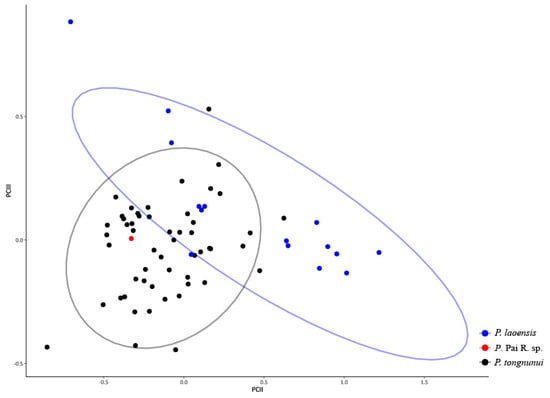
In the principal component (PC) analysis of morphometric data for P. tongnunui, Pai River species, and P. laoensis, size accounted for 98.7% of observed variance (on PC1, not plotted). The sheared second and third principal components (PC2 and PC3) accounted for 0.6% and 0.2% of observed variance, respectively. Mandibular-barbel length (0.231), maxillary-barbel length (0.210), and orbital length (0.173) had the highest loadings on PC2. PC3 was predominantly influenced by mandibular-barbel length (0.114), anal-fin length (0.080), and orbital length (−0.072). The single specimen available of the Pai River species was within the cluster of P. tongnunui, which has shorter maxillary and mandibular barbels, anal fin, and eye diameter than P. laosensis (Figure 3).
Figure 3.
Sheared principal component analysis of morphometric data. Size accounted for 98.7% of the observed variance on PC1, which is not plotted. Second and third principal components (PCII and PCIII) accounted for 0.6% and 0.2% of observed variance, respectively.
3.3. Poropuntius tongnunui, n. sp.
Mae Klong Barb
(Figure 1)
LSID:zoobank.org:act:60C0935F-94D2-48FF-ABD5-80FD2B52C04A
Holotype (Figure 1C): THNHM-F00023980, 151.4 mm SL, Dongwee River at Dong Wee Station, Thung Yai Wildlife Sanctuary, 15.27128, 98.8396, Kanchanaburi Province, Thailand, 14 December 2018, D. Boonwun, D. A. Boyd, Z. S. Randall, J. Liao, T. Punkumsing, P. Kritjirakorn, and L. M. Page.
Paratypes: Thailand: Kanchanaburi Province: LSUMZ 22753, 2, 45.8–131.3 mm SL, UF 192484, 13, 19.6–173.9 mm SL, ZRC 69286, 2, 48.1–148.7 mm SL, all same data as holotype; UF 248658, 1, 45.5 mm SL, Kroeng Krawia, 14.9261, 98.6681, 11 June 2022, W. Tangjitjaroen, D. A. Boyd, Z. S. Randall, J. Limpichat, R. Kohkaew, and L. M. Page. Tak Province: UF 192094, 4, 43.8–59.8 mm SL, Khwae Yai River at Ban Mo Kro on route 1090, 16.18828, 98.8812, 11 January 2018, D. Boonwun, D. A. Boyd, Z. S. Randall, and L. M. Page; UF 192160, 17, 44.6–129.9 mm SL, Mae Lamung Creek, 15.87288, 98.84567, 10 January 2018, D. Boonwun, D. A. Boyd, Z. S. Randall, and L. M. Page; UF 192124, 3, 40.0–67.1 mm SL, Nong Luang Creek at Umphang Wildlife Sanctuary on route 1288, 16.03218, 98.75429, 9 January 2018, D. Boonwun, D. A. Boyd, Z. S. Randall, and L. M. Page; UF 192177, 2, 63.5–76.9 mm SL, Nong Luang Creek on route 1288, 16.02995, 98.76385, 9 January 2018, D. Boonwun, D. A. Boyd, Z. S. Randall, and L. M. Page; UF 192192, 1, 100.0 mm SL, Mae Khlong Yai Creek, 6.5 km S of Ban Mae Khlong Noi on route 1090, 16.31681, 98.99502, 8 Jan 2018, D. Boonwun, D. A. Boyd, Z. S. Randall, and L. M. Page; UF 247826, 7, 27.6–37.2 mm SL, Mae Chan, 15.889, 98.64835, 30 April 2021, J. Limpichat, W. Tangjitjaroen and L. M. Page; UF 247848, 23, 18.9–38.4 mm SL, Umphang River, 15.98852, 98.87418, 5 January 2021, J. Limpichat, W. Tangjitjaroen and L. M. Page; UF 247980, 9, 28.9–89.5 mm SL, Umphang River, 16.01397, 98.8586, 29 April 2021, J. Limpichat, W. Tangjitjaroen and L. M. Page; UF 249296, 5, 37.4–67.8 mm SL, Umphang River, 16.01375, 98.85911, 21 February 2021, J. Limpichat, W. Tangjitjaroen, J. Miguez, and L. M. Page; UF 249335, 3, 33.2–38.3 mm SL, Nong Luang Creek at Umphang Wildlife Sanctuary on route 1288, 16.03248, 98.75429, 23 February 2021, J. Limpichat, W. Tangjitjaroen, J. Miguez, and L. M. Page. Uthai Thani Province: UF 247711, 18, 28.1–106.7 mm SL, Huay Kha Khaeng, 15.53938, 99.17424, 10 March 2021, L. M. Page, et al.
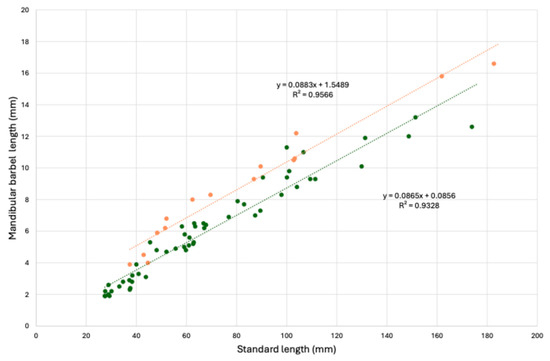
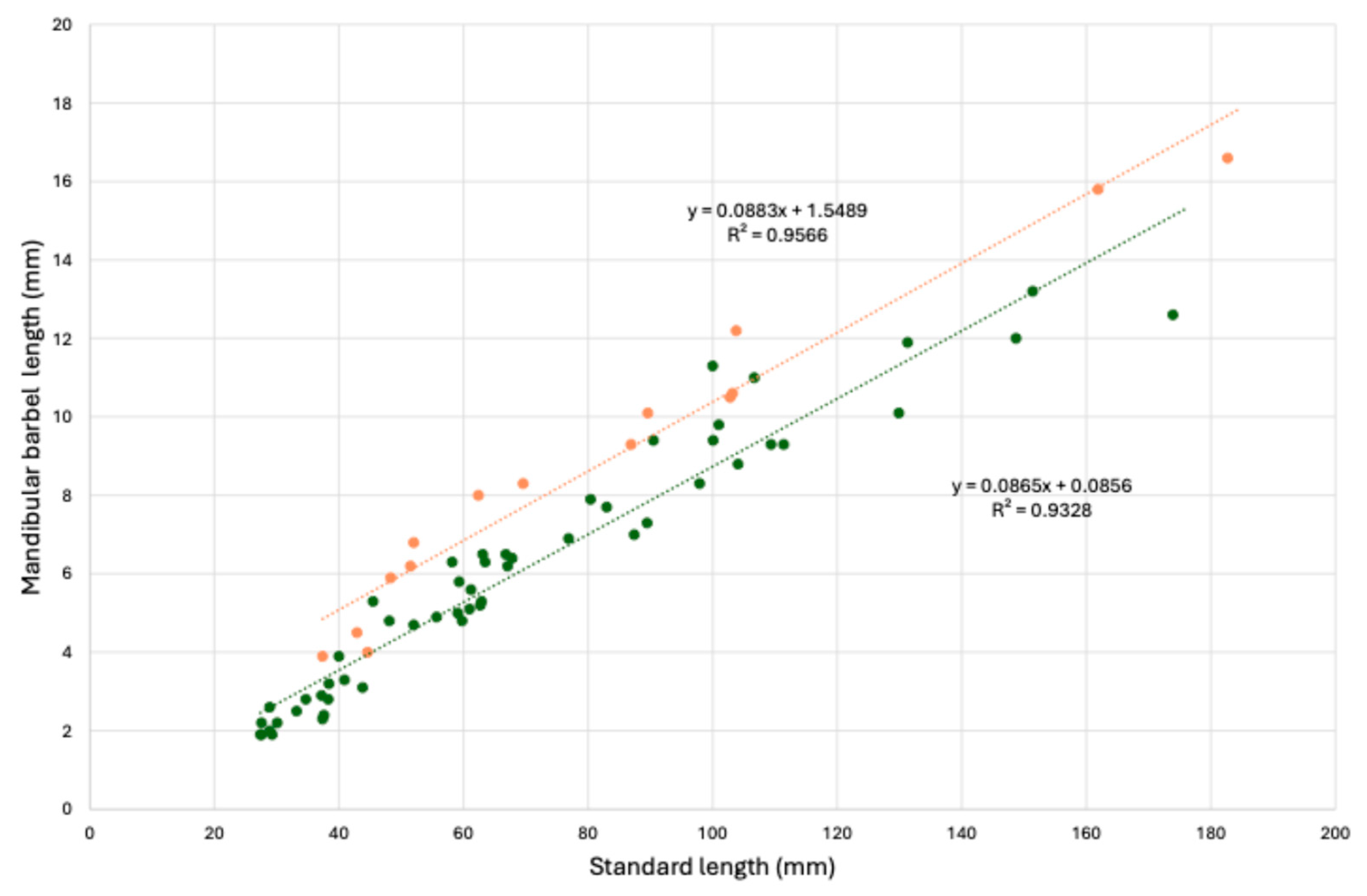
Diagnosis: Among species for which molecular data are available (Figure 2), P. tongnunui is most closely related to Pai River species, from which it differs in having 28–33 vs. 24 lateral-line scales, and then to P. opisthopterus, from which it differs in having the dorsal-fin origin over or slightly behind (vs. far behind) the pelvic-fin origin, black submarginal stripes on the caudal fin, and larger scales, e.g., 28–33 vs. 34–38 lateral-line scales and 10–14 vs. 16–18 predorsal scales (Table 3). It is similar morphologically to P. laoensis but differs in having consistently shorter barbels, regardless of body size (Table 4, Figure 4), and is distant genetically (Figure 2).
Figure 4.
Mandibular barbel length/SL for Poropuntius tongnunui (green) and P. laoensis (orange).
Etymology: Named for Dr. Sampan Tongnunui, Department of Conservation Biology, Mahidol University, Kanchanaburi Campus, Thailand, for his outstanding contributions to our knowledge of the fishes of Thailand.
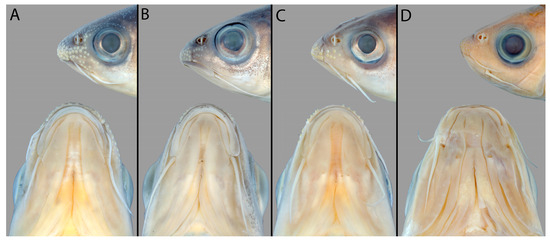
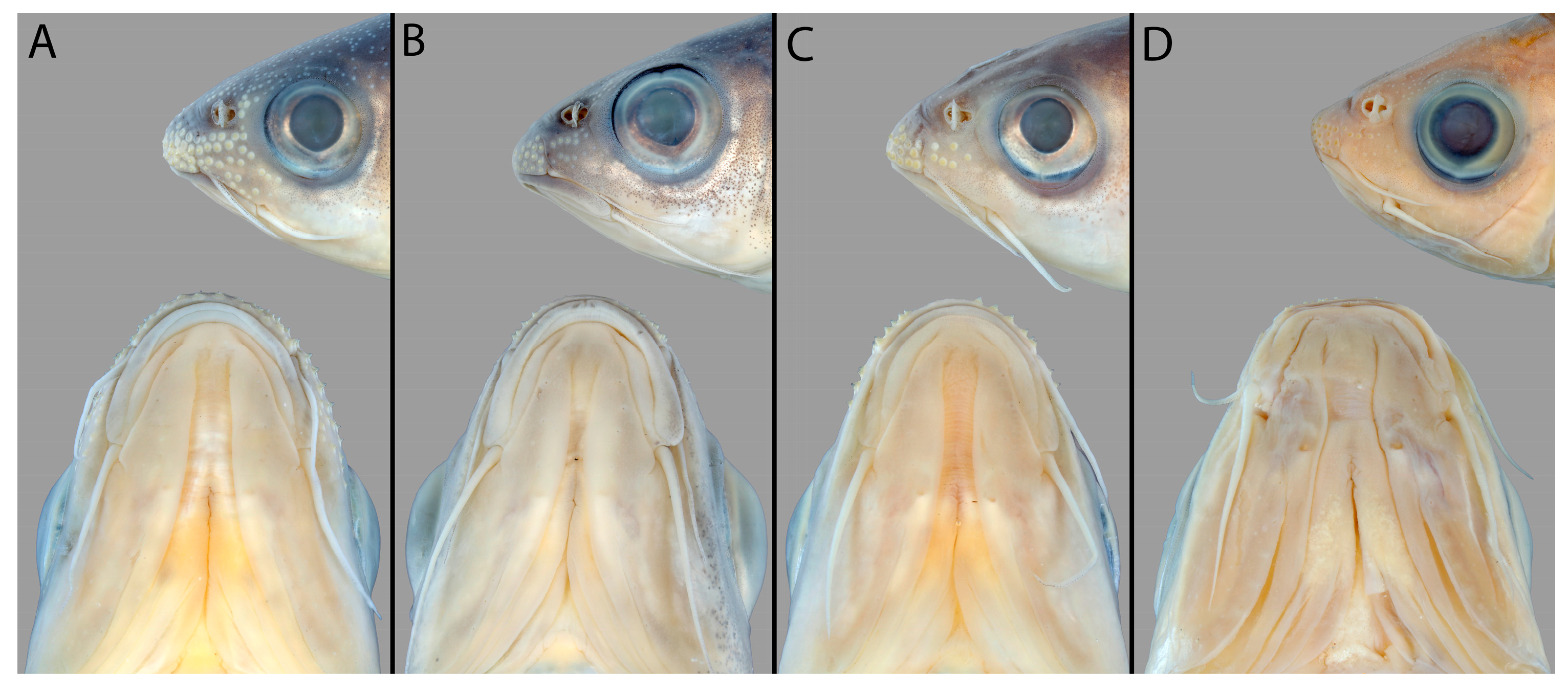
Description: Meristic data are in Table 3, and relative proportions are in Table 4. The body is elongated; the depth at dorsal-fin origin = 24.9–33.1% SL, much narrower at the caudal peduncle, with a depth = 16.4–20.2% SL. The snout is pointed, covered with tubercles usually extending almost to the eye (Figure 5). Some specimens have smaller tubercles covering the top of the head. The eye round is lateral and centered on the top half of the head. The mouth is horseshoe-shaped (Figure 5); the lips are fleshy and thinner medially. The upper lip has plicae on the anterior half; the lower lip is continuous or slightly interrupted medially, with no cornified edge. There are two pairs of barbels, a maxillary barbel reaching to the middle of the eye (shorter in small specimens) and a mandibular barbel reaching past the eye, sometimes to the posterior margin of the preopercle. The dorsal-fin origin is over or slightly behind the pelvic-fin origin; the largest dorsal spine (last unbranched ray) is robust, with 18–24 large serrae on the posterior margin, always longer than half body depth, sometimes almost equal to body depth (Figure 1). There are 28–33 (usually 28–30) lateral-line scales, 10–14 predorsal scales, 14 scales around the caudal peduncle, 8½ branched dorsal-fin rays, 5½ branched anal-fin rays, 16–17 branched caudal-fin rays, 14–17 pectoral-fin rays, 9 pelvic fin rays, and 25 abdominal plus 16 caudal = 41 total vertebrae. The largest specimen of P. tongnunui is 174 mm SL.
Figure 5.
Mouths and snouts of Poropuntius. (A) P. tongnunui, UF 192160, 97.9 mm SL, Mae Lamung Creek, Khwae Yai drainage, Tak Province, Thailand, 10 January 2018; (B) P. laoensis, UF 245308, 103.8 mm SL, Kasat River, Ataran drainage, Kanchanaburi Province, Thailand, 4 February 2020; (C) P. laoensis, UF 177817, 87.9 mm SL, Mae Tiaen, Ping drainage, Chiang Mai Province, Thailand, 10 May 2010; (D) P. heterolepidotus, CAS 94266, paratype, 92.5 mm SL, Salween River, Tak Province, Thailand, 18 March 1989.
Color: Adult individuals photographed live show variation in color among the collection sites (Figure 1). The head and body are silver, and some individuals are pale yellow dorsally. Melanophores cover the head and body dorsally and laterally; there is a concentration of melanophores on the caudal peduncle at the base of the caudal fin. Fins are hyaline or with faint orange on the dorsal, anal, and caudal fins, and sometimes darker orange on the paired fins. The caudal fin has black submarginal stripes; one on the lower lobe is blacker. In ethanol, the head and body are dark brown, the underside light brown. Silver remains on the scale centers on some individuals. Melanophores on the head and body, except ventrally, are concentrated on the posterior edges of scales. Melanophores on the caudal peduncle form a large black spot. Prominent black stripes remain on the caudal fin, with the lower one darker.
Intraspecific variation: The distribution and size of the tubercles on the head are extremely variable, but too few collecting dates were sampled to examine the development of tubercles by season. And sexes could not be determined externally to examine variation by sex. However, tubercles often were as well-developed on collections of medium-sized individuals as on those of large individuals, suggesting a factor other than size determines their development. As noted below in the Discussion, the body shape of species of Poropuntius can be influenced by the environment in which early development occurs. The individual at the top in Figure 1 is from the upper Khwae Yai drainage, a system of fast-flowing streams in the mountains in Tak Province, and is more slender (body depth/SL = 30.1%) and has a longer dorsal-fin spine (length/BD = 94.8%) than the holotype (Figure 1C) from further downstream in Kanchanaburi Province, with BD/SL = 30.8% and dorsal-fin length/BD = 74.7%.
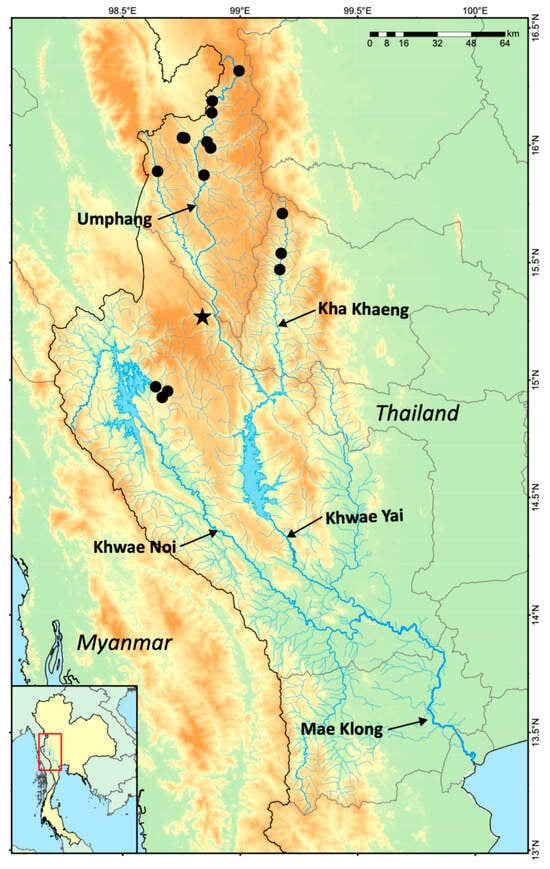
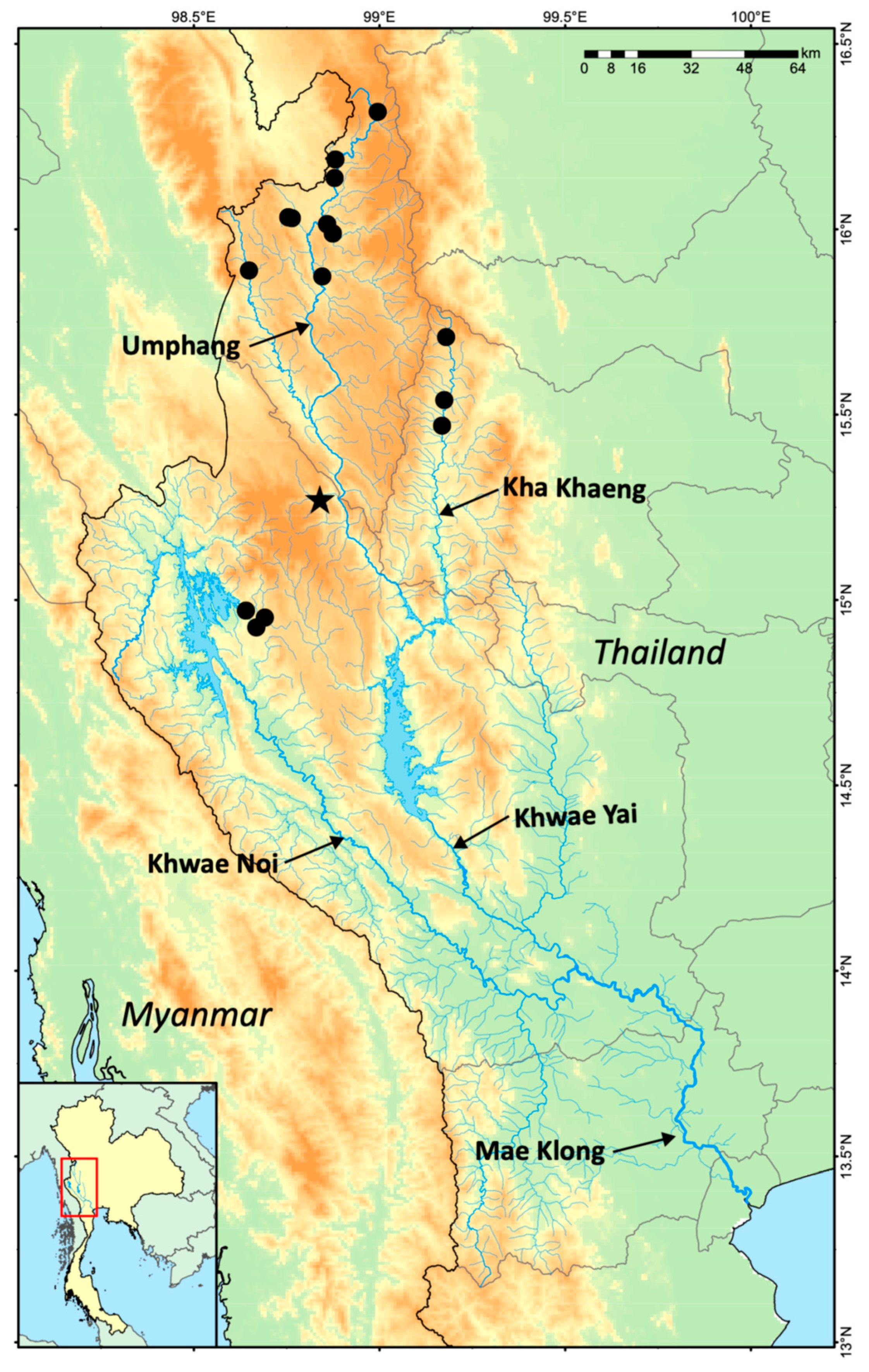
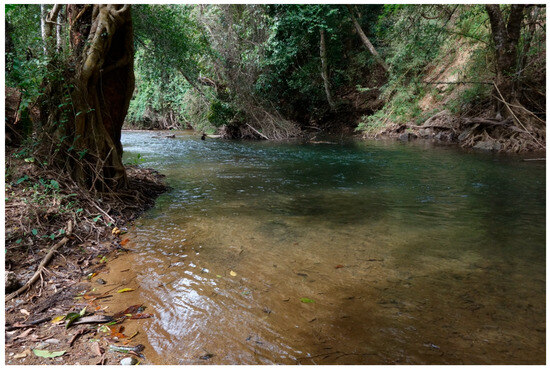
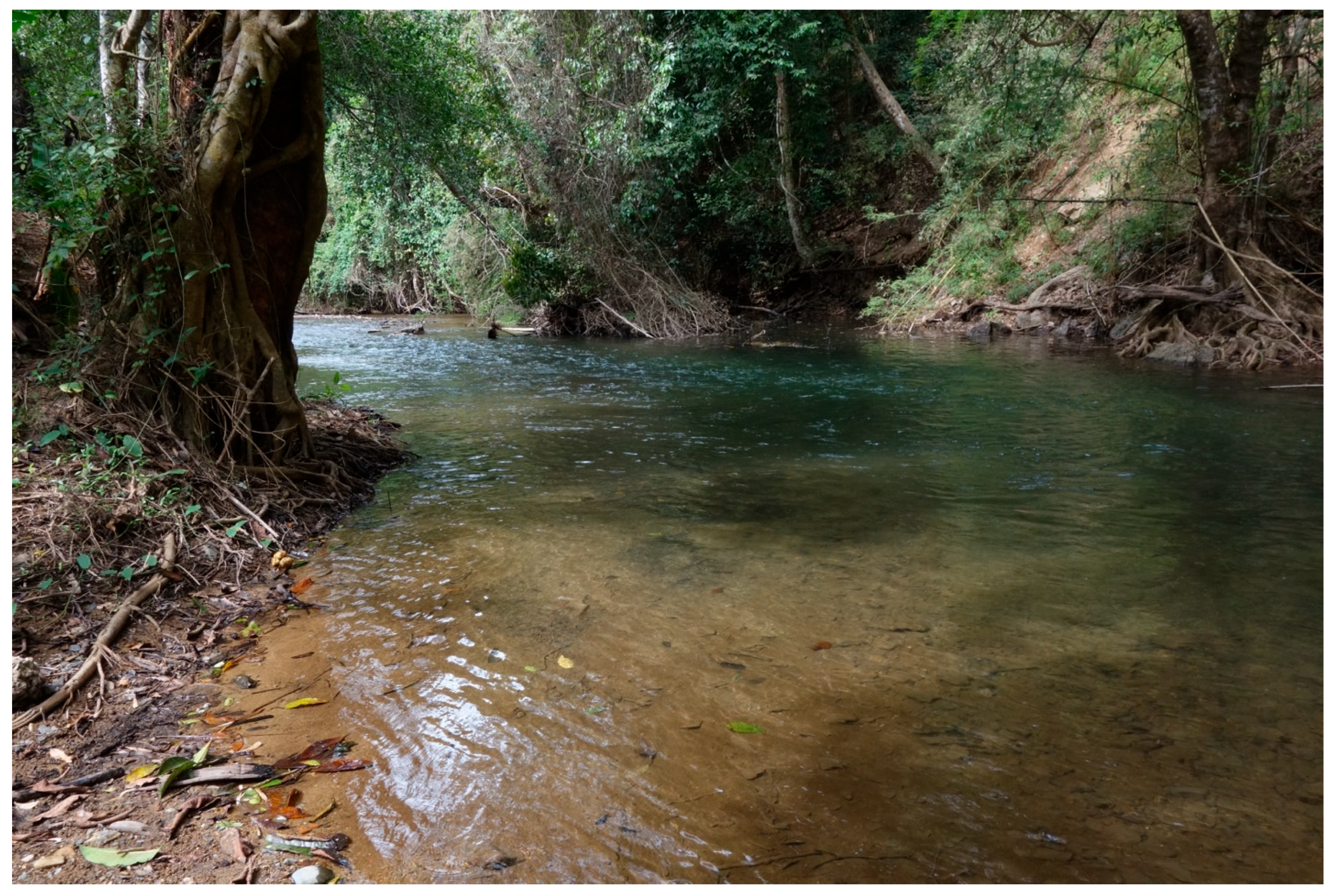
Distribution and status: Poropuntius tongnunui is found in creeks and small-to-large rivers over rocky habitats in the upper Khwae Noi and upper Khwae Yai drainages (Figure 6). Although populations of P. tongnunui in the upper Khwae Noi drainage may have been negatively impacted by construction of the Vajiralongkorn Reservoir and development of nearby municipalities, other populations of the species are in the Western Forest Complex, one of the least disturbed and most highly protected areas in Southeast Asia. Poropuntius tongnunui is common in the clear and fast-flowing streams in the Huay Kha Khaeng, Thung Yai Naresuan, and Umphang wildlife sanctuaries. Streams in these sanctuaries, including at the type locality (Figure 7), drain large areas of forested land, seem to suffer from only minor impacts by humans, and support highly diverse communities of organisms. Young-of-the-year P. tongnunui, as small as 18.9 mm SL, were present in collections from the upper Khwae Yai in Umphang District in May 2022 (UF 247848).
Figure 6.
Mae Klong River basin in western Thailand, with localities of Poropuntius tongnunui examined; star = type locality.
Figure 7.
Type locality of Poropuntius tongnunui, Dongwee River, Khwae Yai drainage, Kanchanaburi Province, 14 December 2018.
4. Discussion
Little information on morphological variation is available for most species of Poropuntius, and while the following descriptions of species are considered to represent the common adult morphotypes, identifications of individuals need to consider the intraspecific variation that can occur in color and body shape. The bright colors described for some species are most likely sexually or seasonally variable and may be geographically variable. The body shape of Poropuntius can be influenced intraspecifically by the environment [1,2], with those developing in swifter water inclined to be more slender, and those in quieter water more deep-bodied. Similar variation in body shape is known in other cyprinids [19,20,21]. The width of the mouth, size of the fins and fin spines, thickness of lips, and presence/absence of a cornified edge on the lower jaw also may be impacted by the environment during development [1]. This morphological variation has led to taxonomic confusion in Poropuntius, at least some of which was corrected recently with a review of taxonomy in the genus based on molecular data [2]. However, uncertainties remain concerning the application of names to some populations of Poropuntius, especially those of wide-ranging species such as P. laoensis (discussed below).
Some species of Poropuntius are distinctive, while others are easy to confuse with morphologically similar species. Among the most distinctive is P. genyognathus (Figure 8A), recently found to be basal to all other species in the genus [2]. It has only one, extremely short, pair of barbels (stub-like structures originating from the corner of the mouth), a cornified sheath on the lower jaw, a wide interruption on the lower lip, dorsal-fin origin over or slightly in front of pelvic-fin origin, no black lateral stripe, a bright red margin on the lower lobe of the caudal fin, no black submarginal stripes on the caudal fin, 35–37 lateral-line scales, 16 scales around the caudal peduncle, and 10–11 predorsal scales. The dorsal spine is less robust than that of other species. Data in Table 1 are from Roberts [1] and a freshly collected and photographed specimen.
Figure 8.
Species of Poropuntius. (A) P. genyognathus, UF 236033, 114.5 mm SL, Khlong Tasae, Panang Tak basin, Chumphon Province, Thailand, 2 February 2014; (B) P. melanogrammus, UF 237509, 9.5 cm SL, Ulong Creek, Khwae Noi drainage, Kanchanaburi Province, Thailand, 28 January 2015; (C) P. laoensis (right side, flipped horizontally), UF 245308, 103.8 mm SL, Kasat River, Ataran drainage, Kanchanaburi Province, Thailand, 4 February 2020; (D) Pai River species (right side, flipped horizontally), UF 190164, 76.3 mm SL, Khong River, Pai drainage, Mae Hong Son Province, Thailand, 10 January 2016. (A,B) live, (C,D) preserved.
Poropuntius melanogrammus (Figure 8B) has no barbels, a cornified sheath on the lower jaw, a narrow interruption on the lower lip, the dorsal-fin origin in front of the pelvic-fin origin, a bold black midlateral stripe, light yellow on the caudal fin, bold black submarginal stripes on the caudal fin, 29–31 lateral-line scales, 14 scales around the caudal peduncle, and 10–11 predorsal scales. Data in Table 1 are from Roberts [1] and the specimens examined. A specimen of P. melanogrammus from Khwae Noi, Kanchanaburi Province, Thailand has 23 abdominal plus 14 caudal = 37 total vertebrae.
Poropuntius hampaloides (Figure 9A) has no barbels, a cornified sheath on the lower jaw, a wide interruption on the lower lip, dorsal-fin origin over or slightly in front of the pelvic-fin origin, a black midlateral stripe, no bright color on the caudal fin but bright red on the anal fin, bold black submarginal stripes on the caudal fin, 28–30 lateral-line scales, 14 scales around the caudal peduncle, and 10–11 predorsal scales. Data in Table 1 are from Roberts [1] and the specimens examined.
Figure 9.
Poropuntius in the Salween River basin. (A) P. hampaloides, UF 192486, 117.7 mm SL, Mae Khamu Luang Creek, Moei drainage, Tak Province, Thailand, 25 December 2018; (B) P. hathe, UF 245303 (right side, flipped horizontally), 76.2 mm SL, Kasat River, Ataran drainage, Kanchanaburi Province, Thailand, 4 February 2020; (C) P. heterolepidotus, CAS 94266, paratype, 92.5 mm SL, Salween River, Tak Province, Thailand, 18 March 1989. (A,B) live, (C) preserved.
Poropuntius hathe (Figure 9B) has two pairs of long barbels, no cornified sheath on the lower jaw, an interruption (variable in size) on the lower lip, dorsal-fin origin over the pelvic-fin origin, no black lateral stripe, red fins, black submarginal stripes on the caudal fin with the one on the lower lobe much more prominent, 14 scales around the caudal peduncle, and 12–14 predorsal scales. Data in Table 1 are from specimens examined, including three paratypes. Roberts [1] count of 34 lateral-line scales for 5 specimens in the original description may have included scales on the caudal fin; our counts for 3 paratypes (CAS 94364) were 29–30.
Poropuntius heterolepidotus (Figure 5D and Figure 9C, paratype) has two pairs of long barbels, no cornified sheath on the lower jaw, no interruption in the lower lip, dorsal-fin origin over or slightly behind the pelvic-fin origin, no black midlateral stripe, no bright color on the caudal fin, black submarginal stripes on the caudal fin, 18 scales around the caudal peduncle, and 15–17 predorsal scales. Data in Table 1 are from specimens examined, including one paratype. Although Roberts [1] gave a count of 39–40 lateral-line scales for 2 specimens in the original description, our count for a paratype (CAS 94366) was 36.
Poropuntius opisthopterus has two pairs of long barbels, no cornified sheath on the lower jaw, no interruption in the lower lip, dorsal-fin origin far behind the pelvic-fin origin, no black lateral stripe, no bright color on the caudal fin, 34–38 lateral-line scales, 14–16 scales around the caudal peduncle, and 16–18 predorsal scales. No bright colors on the fins are mentioned in the original description [22], but mention is made of a faint black submarginal stripe on the lower, but not the upper, lobe of the caudal fin, a black spot at the posterior end of the caudal peduncle, and a black blotch behind the opercle.
Poropuntius carinatus. We were unable to examine specimens of P. carinatus, but based on the original description [22], P. carinatus has two pairs of long barbels, no cornified sheath on the lower jaw, no interruption in the lower lip, dorsal-fin origin far behind the pelvic-fin origin, a black stripe—shown as arched and on the upper side in the original description ([22], figure 7-3)—a black spot at the posterior end of the caudal peduncle, black submarginal stripes on the caudal fin, 34–35 lateral-line scales, 14–16 scales around the caudal peduncle, and 14–15 predorsal scales. In the original description, no bright colors on the fins are mentioned. However, Kottelat [23] described specimens presumed to be P. carinatus from the Mekong basin as having 33–34 + 3 lateral-line scales and yellow on the caudal fin. He also described the last simple dorsal-fin ray (longest spine) as being equal to or longer than the body depth at the dorsal-fin origin, in contrast to that of P. laoensis (the two species being in the same area under study), described as being less than half the body depth. However, only one of three specimens of P. carinatus shown ([23], figure 68) has a dorsal spine equal to or longer than the body depth, and the one specimen of P. laoensis shown ([23], figure 69) has a spine that is more than half the body depth. Kottelat also noted his specimens of P. carinatus had a striking resemblance to the figure in the original description ([22], figure 7-3), but unlike the fishes in Kottelat’s figure, the original description shows the dorsal-fin origin far behind the pelvic-fin origin.
Poropuntius laoensis (Figure 5B,C and Figure 8C). In the original description, the one specimen examined was described as being uniformly silver [24]. Although this could mean there was no black midlateral stripe or black submarginal stripes on the caudal fin, it was more likely a preserved specimen that had lost its pigmentation. Kottelat [23] examined the holotype and found it to lack dark pigment but described presumed specimens of P. laoensis from the Mekong basin as having 30–32 + 2–3 lateral-line scales, 14 circumpeduncular scales, 14 pectoral-fin rays, and black submarginal stripes on a yellow caudal fin. The specimen shown by Kottelat ([23], figure 69) is deep-bodied and has yellow anal, caudal, and pelvic fins. Topotypic specimens of P. bantamensis and P. aluoiensis, synonyms of P. laoensis, have bold black submarginal stripes on the caudal fin. The proximal half of the fin is orange, and the distal half is bright yellow [2].
Specimens of P. laoensis from the Ping River (Chao Phraya basin) and Ataran River (Salween basin) examined herein aligned phylogenetically (Figure 2) with P. laoensis from Cochinchina, the type locality. They have black submarginal stripes on the caudal fin, with the one on the lower lobe more prominent, and dusky black in the center of the distal half of the fin (Figure 8C). Although these specimens seem to agree in general body shape, as well as genetically, with P. laoensis, the specimens from the Ping River differed from those in the Ataran in having 25–29 vs. 29–35 lateral-line scales and a smaller eye (Figure 5B,C). These differences are substantial and suggest more than one taxon may be involved, even though the mitochondrial data failed to separate them. A study of geographic variation in P. laoensis is needed but is beyond the scope of the present project.
Summarizing the data from the Mekong [23], Chao Phraya, and Salween basins, as currently understood, P. laoensis has two pairs of long barbels, no cornified sheath on the lower jaw, no interruption in the lower lip, dorsal-fin origin behind the pelvic-fin origin, 25–35 lateral-line scales, 14 scales around the caudal peduncle, and 12–14 predorsal scales. At least some populations have a yellow or orange/yellow caudal fin. A specimen of P. laoensis from Chiang Mai Province, Thailand, has 25 abdominal plus 16 caudal = 41 total vertebrae.
Poropuntius deauratus. Like P. laoensis, P. deauratus is distributed across several river basins [22], has been recorded with a range of meristic counts, and is in need of a study of geographic variation. It has two pairs of barbels, a narrow interruption in the lower lip, dorsal-fin origin over or slightly in front of the pelvic-fin origin, no black lateral stripe or black midpeduncular spot, 26–31 lateral-line scales, 14 scales around the caudal peduncle, and 9–12 predorsal scales. The caudal fin is yellow with bold submarginal stripes. The presence/absence of a cornified sheath on the lower jaw is variable.
The original description of P. deauratus described the dorsal spine as being smooth (presumably meaning unserrated) and slender, which would suggest the species does not belong in Poropuntius. However, images of the type, MNHN 0000-2727, on the Muséum national d’Histoire naturelle official website show the dorsal spine to have serrae. Roberts [1] examined the holotype and found it to have 10 predorsal scales, 28 lateral scales, 14 scales around the caudal peduncle, and 39 vertebrae, but did not comment on the dorsal-fin spine. A specimen of P. deauratus from Chanthaburi Province, Thailand, has 23 abdominal plus 14 caudal = 37 total vertebrae.
Poropuntius faucis. The holotype of Puntius faucis Smith, 1945, is in poor condition, but as noted in the original description, there are no serrae on the dorsal spine. It was first placed in Poropuntius with the comment, “Probably the juvenile of another species” [25]. We agree it is probably a juvenile, but not of Poropuntius. Roberts [1] examined the type but noted only that it has 40 vertebrae. Puntius faucis is not a species of Poropuntius.
“Pai River species” (Figure 8D). Based on molecular data, the Pai River species seems to represent a taxonomically undescribed population. Because only one specimen is available, it is not named herein. However, meristic and proportional data are provided in hopes that more specimens can be obtained and recognized as belonging to this species and taxonomically described.
Morphological Key to Identification of Species of Poropuntius in the Chao Phraya
Mae Klong, Salween, and Tenasserim River basins
1a. No barbels … 2
1b. One or two pairs of barbels … 3
2a. Bold black midlateral stripe … P. melanogrammus
2b. No or only a diffuse black midlateral stripe … P. hampaloides
3a. One pair of barbels (very short maxillary barbels) … P. genyognathus
3b. Two pairs of long barbels … 4
4a. Dorsal-fin origin far behind pelvic-fin origin … 5
4b. Dorsal-fin origin not or only slightly behind pelvic-fin origin … 6
5a. Black midlateral stripe, 14–15 predorsal scales … P. carinatus
5b. No black midlateral stripe, 16–18 predorsal scales … P. opisthopterus
6a. Eighteen circumpeduncular scales, horny edge on lower jaw … P. heterolepidotus
6b. Fourteen circumpeduncular scales, no horny edge on lower jaw (possibly variable in P. deauratus) … 7
7a. Bright red on caudal fin, … P. hathe
7b. No bright red on caudal fin, …8
8b. Bright yellow on caudal fin … 9
8a. No bright yellow on caudal fin … P. tongnunui
9a. Bold upper and lower black submarginal stripes on caudal fin; no midpeduncular black spot; narrow interruption in lower lip … P. deauratus
9b. Lower submarginal black stripe on caudal fin bolder than upper; midpeduncular black spot; no interruption in lower lip … P. laoensis
5. Material Examined
Morphological data were from original descriptions for all species, subsequent published descriptions as cited, and specimens or data sources listed below.
Poropuntius carinatus: Data from Kottelat (1998).
Poropuntius deauratus: UF 188846, 7, 34.0–75.4 mm SL, Sato River, Trat basin, Chanthaburi Province, Thailand, 2 May 2002, W. Beamish et al.
Poropuntius faucis: USNM 119497, holotype, 56 mm SL, Mae Chaem, Ping drainage, Chiang Mai Province, Thailand, July 1935, R. Buchanan and P. D. Harrison.
Poropuntius genyognathus: UF236033, 1, 115.5 mm SL, Khlong Tasae, Panang Tak basin, Chumphon Province, Thailand, 2 February 2014, Thailand Expedition 2014.
Poropuntius hampaloides: UF 192486, 3, 97.9–117.7 mm SL, Mae Khamu Luang Creek, Moei drainage, Tak Province, Thailand, 25 December 2018, D. Boonwun, Z. S. Randall, et al.
Poropuntius hathe: CAS 94264, 3 paratypes, 51.6–55.7 mm SL, Moei River, Salween basin, Tak Province, Thailand, 30 April 1991, T. R. Roberts; UF 245303, 2, 70.3–76.2 mm SL, Kasat River, Ataran drainage, Kanchanaburi Province, Thailand, 4 February 2020, L. Page, D. A. Boyd, etc.
Poropuntius heterolepidotus: CAS 94266, 1 paratype, 92.5 mm SL, Salween River, Tak Province, Thailand, 18 March 1989, T. R. Roberts.
Poropuntius laoensis: Data from Kottelat (1998); UF 177816, 3, 44.1–47.1 mm SL, Mae Tiaen, Chao Phraya basin, Chiang Mai Province, Thailand, 10 May 2010, W. Tangjitjaroen and L. M. Page; UF 177817, 2, 71.6–87.9 mm SL, Mae Tiaen, Ping drainage, Chiang Mai Province, Thailand, 10 May 2010, W. Tangjitjaroen and L. M. Page; UF 183353, 1, 87.2 mm SL, Mae Tang, Chao Phraya basin, Chiang Mai Province, Thailand, 15 January 2012, A. Suvarnaraksha, Z. Martin, Z. Randall, et al.; UF 183366, 2, 52.8–70.5, Mae Tang, Chao Phraya basin, Chiang Mai Province, Thailand, 22 January 2012, W. Tangjitjaroen and L. M. Page; UF 245308, 8, 48.3–103.8 mm SL, Kasat River, Ataran basin, Kanchanaburi Province, Thailand, 3 February 2020, Z. S. Randall, L. M. Page, G. Somarriba, et al.; UF 245440, 3, 37.4–44.6 mm SL, Kasat River, Ataran basin, Kanchanaburi Province, Thailand, 3 February 2020, Z. S. Randall, L. M. Page, G. Somarriba, et al.
Poropuntius melanogrammus: UF 181192, 1, 67.2 mm SL, Huay Ulong, Mae Klong basin, 23 April 2011, W. Beamish, R. Plongsethee, L. M. Page, et al.; UF 191771, 1, 104.6 mm SL, Mae Nam Noi Creek, Mae Klong basin, 24 January 2018, R. Thoni, L. M. Page, et al., UF 237509, 1, 90.6 mm SL, Huay Ulong, Mae Klong basin, 28 January 2015, P. Nithirojpakdee, Z. S. Randall, L. M. Page, et al.; UF 245352, 1, 77.3 mm SL, Ro Khi River, Mae Klong basin, 30 January 2020, D. A. Boyd, Z. S. Randall, L. M. Page, et al.; UF 247587, 1, 95.0 mm SL, Mae Nam Noi Creek, Mae Klong basin, 27 February 2021, L. M. Page, et al.
Poropuntius opisthopterus: UF192500, 4, 102.8–182.7 mm SL, Mae Khamu Luang Creek, Moei River drainage, 25 December 2018, L. M. Page, Z. S. Randall, et al.
Poropuntius Pai River species: UF 190164, 1, 76.3 mm SL, Khong River, Pai River drainage, Mae Hong Son Province, Thailand, 10 January 2016, L. M. Page, M. Tan, G. Deein, et al.
6. Conclusions
Poropuntius tongnunui, n. sp., was discovered during fieldwork in the Mae Klong River basin and is named and described herein. It is most closely related to an unnamed species from the Pai River drainage, Salween River basin, Thailand, and those two species are most closely related to P. opisthopterus, from the Salween River basin. New morphological data and differential comparisons are provided for all nine congeneric species in the Mae Klong, Chao Phraya, Salween, and Tenasserim River basins. Reviews of the available data and published information indicate that taxonomic revisionary studies are needed for wide-ranging species of Poropuntius, including P. laoensis and P. deauratus. Puntius faucis Smith, 1945, is not a species of Poropuntius, as currently assumed.
Supplementary Materials
The following supporting information can be downloaded at https://www.mdpi.com/article/10.3390/fishes11020102/s1; Table S1. Samples included in molecular analysis, with GenBank accession numbers for cytochrome oxidase c subunit 1 (COI) sequence data.
Author Contributions
Conceptualization, L.M.P. and H.D.H.; methodology, L.M.P., H.D.H., Z.S.R. and H.M.P.; data collection, all authors; formal analysis, L.M.P., H.D.H., W.T. and H.M.P.; resources, L.M.P., H.D.H., W.T. and Z.S.R.; data curation, L.M.P., H.D.H. and Z.S.R.; writing—original draft preparation, L.M.P.; writing—review and editing, all authors; visualization, Z.S.R. and H.D.H.; project administration, L.M.P. All authors have read and agreed to the published version of the manuscript.
Funding
This project was supported in part by the U.S. National Science Foundation through a Planetary Biodiversity Inventory award (NSF-DEB 0315963), a Rules of Life award (NSF 1839915), American and Thailand–American Fulbright Scholar Awards (2563-64), to L.M.P., and a Research Infrastructure award (NSF-DBI 2210415) to L.M.P. and Z.S.R. CT scans were provided by oVert (NSF-DBI 1701714). Institutional records were searched through iDigBio, funded by the NSF Advancing Digitization of Biodiversity Collections program (NSF-EF 1115210, NSF-DBI 1547229).
Institutional Review Board Statement
The animal study protocol for this project was approved by the Institutional Review Board of the University of Florida; IACUC protocol 202110365_01, approval date: 1 July 2021.
Data Availability Statement
Micro CT scan data are available on MorphoSource.org. DNA sequence data are available through NCBI GenBank (accession numbers in Table S1). Morphological data are available from the first author.
Acknowledgments
We thank Frederick W. H. Beamish, Duangsamorn Boonwun, David Boyd, Justin Havird, R. Kohkaew, Patitta Kritjirakorn, Jirasin Limpichat, James Liao, Joseph Miguez, Patchara Nithirojpakdee, Ajay Patel, John Pfeiffer, Rungthip Plongsesthee, Thanasit Punkumsing, Randal Singer, Gabriel Somarriba, and Ryan Thoni for assistance in collecting specimens of Poropuntius. We thank Tzu-Han Chen for translating original and subsequent descriptions of Chinese species of Poropuntius from Chinese to English, David Boyd for creating the distribution map, Caden Delano for the principal component analysis, and Christopher Bartholomew for taking some of the morphological data. Research was conducted in Thailand with permission from the National Research Council of Thailand (NRCT). Fishes were collected with permission from the Thailand Department of Fisheries. Methods were approved by NRCT and the University of Florida Animal Care and Use Committee.
Conflicts of Interest
The authors declare no conflicts of interest.
References
- Roberts, T.R. Review of the Tropical Asian Cyprinid Fish Genus Poropuntius, with Descriptions of New Species and Trophic Morphs. Nat. Hist. Bull. Siam Soc. 1998, 46, 105–135. [Google Scholar]
- Hoàng, H.D.; Phạm, H.M.; Trần, N.T.; Durand, J.-D.; Wu, L.; Pfeiffer, J.; Chen, X.-Y.; Page, L.M. Taxonomic Revision of the Southeast Asian Brook Barb Genus Poropuntius with Description of a New Species from Vietnam. ZooKeys 2024, 1204, 199–222. [Google Scholar] [CrossRef] [Scilit] [PubMed]
- Rainboth, W.J. The Taxonomy, Systematics and Zoogeography of Hypsibarbus, a New Genus of Large Barbs (Pisces, Cyprinidae) from the Rivers of Southeastern Asia. Univ. Calif. Publ. Zool. 1996, 129, 1–199. [Google Scholar]
- Panitvong, N. A Photographic Guide to Freshwater Fishes of Thailand; Parbpim Printing: Maha Sawat, Thailand, 2022; 818p. (In Thai) [Google Scholar]
- Suvarnaraksha, A.; Utsugi, K. A Field Guide to the Northern Thai Fishes; Maejo University: Chiang Mai, Thailand; Nagao Natural Environment Foundation: Tokyo, Japan, 2023; 188p. [Google Scholar]
- Stout, C.C.; Tan, M.; Lemmon, A.R.; Lemmon, E.M.; Armbruster, J.W. Resolving Cypriniformes relationships using an anchored enrichment approach. BMC Evol. Biol. 2016, 16, 244. [Google Scholar] [CrossRef] [Scilit] [PubMed]
- Wang, X.; Gan, X.; Li, J.; Chen, Y.; He, S. Cyprininae phylogeny revealed independent origins of the Tibetan Plateau endemic polyploid cyprinids and their diversifications related to the Neogene uplift of the plateau. Sci. China Life Sci. 2016, 59, 1149–1165. [Google Scholar] [CrossRef] [Scilit] [PubMed]
- Yang, L.; Sado, T.; Hirt, M.V.; Pasco-Viel, E.; Arunachalam, M.; Li, J.; Wang, X.; Freyhof, J.; Saitoh, K.; Simons, A.M.; et al. Phylogeny and Polyploidy: Resolving the Classification of cyprinine fishes (Teleostei: Cypriniformes). Mol. Phylogenet. Evol. 2015, 85, 97–116. [Google Scholar] [CrossRef] [Scilit] [PubMed]
- Ward, R.D.; Zemlak, T.S.; Innes, B.H.; Last, P.R.; Hebert, P.D. DNA Barcoding Australia’s Fish Species. Philos. Trans. R. Soc. Lond. B Biol. Sci. 2005, 360, 1847–1857. [Google Scholar] [CrossRef] [Scilit] [PubMed]
- Edgar, R.C. MUSCLE: Multiple Sequence Alignment with High Accuracy and High Throughput. Nucleic Acids Res. 2004, 32, 1792–1797. [Google Scholar] [CrossRef] [Scilit] [PubMed]
- Kumar, S.; Stecher, G.; Tamura, K. MEGA7: Molecular Evolutionary Genetics Analysis Version 7.0 for Bigger Datasets. Mol. Biol. Evol. 2016, 33, 1870–1874. [Google Scholar] [CrossRef] [Scilit] [PubMed]
- Nguyen, L.T.; Schmidt, H.A.; Von Haeseler, A.; Minh, B.Q. IQ-TREE: A Fast and Effective Stochastic Agorithm for Estimating Maximum-likelihood Phylogenies. Mol. Biol. Evol. 2015, 32, 268–274. [Google Scholar] [CrossRef] [Scilit] [PubMed]
- Chernomor, O.; Von Haeseler, A.; Minh, B.Q. Terrace Aware Data Structure for Phylogenomic Inference from Supermatrices. Syst. Biol. 2016, 65, 997–1008. [Google Scholar] [CrossRef] [Scilit] [PubMed]
- Kalyaanamoorthy, S.; Minh, B.Q.; Wong, T.K.; Von Haeseler, A.; Jermiin, L.S. ModelFinder: Fast Model Selection for Accurate Phylogenetic Estimates. Nat. Methods 2017, 14, 587–589. [Google Scholar] [CrossRef] [Scilit] [PubMed]
- Bui, Q.M.; Nguyen, M.A.T.; von Haeseler, A. Ultrafast approximation for phylogenetic bootstrap. Mol. Biol. Evol. 2013, 30, 1188–1195. [Google Scholar] [CrossRef] [Scilit] [PubMed]
- Hubbs, C.L.; Lagler, K.F.; Smith, G.R. Fishes of the Great Lakes Region; The University of Michigan Press: Ann Arbor, MI, USA, 2004; 232p. [Google Scholar] [CrossRef] [Scilit]
- Bookstein, F.L.; Chernoff, B.; Elder, R.L.; Humphries, J.M.; Smith, G.R.; Strauss, R.E. Morphometrics in Evolutionary Biology: The Geometry of Size and Shape Change, with Examples from Fishes; Academy of Natural Sciences: Philadelphia, PA, USA, 1985; 277p. [Google Scholar] [CrossRef] [Scilit]
- Humphries, J.M.; Bookstein, F.L.; Chernoff, B.; Smith, G.R.; Elder, R.L.; Poss, S.G. Multivariate discrimination by shape in relation to size. Syst. Zool. 1981, 30, 291–308. [Google Scholar] [CrossRef] [Scilit]
- Rainboth, W.J. Neolissochilus, a New Genus of South Asian Cyprinid Fishes. Beaufortia 1985, 35, 25–35. [Google Scholar]
- Roberts, T.R.; Khaironizam, M.Z. Trophic Polymorphism in the Malaysian Fish Neolissochilus soroides and other Old World Barbs (Teleostei, Cyprinidae). Nat. Hist. Bull. Siam Soc. 2008, 56, 25–53. [Google Scholar]
- Khaironizam, M.Z.; Zakaria-Ismail, M.; Armbruster, J.W. Cyprinid Fishes of the Genus Neolissochilus in Peninsular Malaysia. Zootaxa 2015, 3692, 139–157. [Google Scholar] [CrossRef] [Scilit] [PubMed]
- Wu, H.-W. (Ed.) The Cyprinid Fishes of China; Technical Printing House: Shanghai, China, 1977; Volume 2. (In Chinese) [Google Scholar]
- Kottelat, M. Fishes of the Nam Theun and Xe Bangfai basins, Laos, with Diagnoses of Twenty-two New Species (Teleostei: Cyprinidae, Balitoridae, Cobitidae, Coiidae and Odontobutidae). Ichthyol. Explor. Freshw. 1998, 9, 1–128. [Google Scholar]
- Günther, A. Catalogue of the Fishes in the British Museum; British Museum: London, UK, 1868; Volume 7. [Google Scholar]
- Kottelat, M. Zoogeography of the Fishes from Indochinese Inland Waters with an Annotated Check-list. Bull. Zool. Mus. Univ. Amst. 1989, 12, 1–55. [Google Scholar]

Disclaimer/Publisher’s Note: The statements, opinions and data contained in all publications are solely those of the individual author(s) and contributor(s) and not of MDPI and/or the editor(s). MDPI and/or the editor(s) disclaim responsibility for any injury to people or property resulting from any ideas, methods, instructions or products referred to in the content. |
© 2026 by the authors. Licensee MDPI, Basel, Switzerland. This article is an open access article distributed under the terms and conditions of the Creative Commons Attribution (CC BY) license.