1. Introduction
Solar photovoltaic (PV) technology has become a cornerstone of the global transition toward sustainable energy systems owing to its modularity, rapidly declining installation costs, and suitability for both centralized and distributed power generation [
1]. Recent international cost benchmarks reported by global agencies confirm substantial long-term reductions in PV module prices, balance-of-system components, and installation expenditures [
2]. Independent techno–economic studies further validate the sustained decline in capital and operational costs of PV systems worldwide [
3]. As a result, the levelized cost of electricity (LCOE) of PV energy has decreased significantly, positioning PV among the most economically competitive renewable technologies [
4]. Despite these advantages, the inherent intermittency and weather dependence of PV generation introduce operational challenges related to voltage stability, frequency regulation, and power quality, particularly in weak and islanded grid conditions [
5].
To mitigate these challenges and enhance the reliability of PV-based systems, energy storage systems (ESS), particularly battery energy storage systems (BESS), have become indispensable components of modern renewable-energy architectures [
6]. Recent comprehensive reviews on alternative battery chemistries, such as nickel–zinc systems, emphasize that reliability and degradation issues remain central challenges across battery technologies, thereby motivating the development of intelligent monitoring and control frameworks [
7]. Among the available battery chemistries, lithium iron phosphate (LiFePO
4, LFP) batteries have gained widespread adoption due to their high safety margin, long cycle life, and thermal stability when compared with nickel–manganese–cobalt (NMC) batteries and other lithium-ion chemistries [
6,
8]. In PV microgrids and grid-connected applications, LFP batteries are extensively deployed for peak shaving, load shifting, frequency regulation, voltage support, and continuity of power supply to critical loads [
9]. Furthermore, the integration of BESS significantly improves microgrid resilience and operational autonomy during grid disturbances and outages [
10].
However, the characteristic flat voltage–state-of-charge (SoC) profile of LFP batteries presents notable challenges for voltage-based SoC estimation and reliable charge balancing [
11,
12]. The balancing characteristics and SoC observability of LFP batteries differ fundamentally from those of NMC chemistries. Whereas NMC batteries exhibit a largely monotonic voltage–SoC relationship, LFP cells operate over an extended voltage plateau spanning a wide SoC range, which severely compromises voltage-based SoC observability during pack-level balancing [
12]. Detailed comparative investigations have demonstrated that extremely small voltage differences among LFP cells in the plateau region may correspond to large internal SoC variations, making equalization significantly more difficult than in NMC packs [
8,
13]. These electrochemical limitations strongly motivate the development of advanced, adaptive, and physically consistent charge-balancing strategies for LFP-based energy-storage systems.
Accurate estimation of SoC and state of health (SoH) is therefore fundamental to ensuring operational safety, preventing overstressing, and maximizing usable battery capacity [
14]. Traditional SoC/SoH estimation techniques can be broadly classified into model-based methods, data-driven approaches, and hybrid frameworks [
15]. Model-based techniques such as equivalent circuit models, electrochemical models, and observer-based methods rely heavily on accurate parameter identification and often degrade under temperature variation and aging [
16]. Data-driven approaches, including neural networks and deep-learning techniques, have demonstrated a strong ability to capture nonlinear battery behavior and enhance estimation accuracy [
17]. Hybrid estimation strategies that integrate physical models with learning algorithms have recently emerged as a promising direction for improving robustness and long-term prediction reliability [
18].
In multi-battery PV systems, maintaining balanced charging and discharging among parallel-connected battery modules is essential to achieve uniform aging, maximize usable capacity, and extend overall lifetime [
19]. Variations in internal resistance, temperature distribution, degradation rate, and initial SoC among modules often result in uneven current sharing [
20]. These imbalances may cause localized overcharging, thermal hotspots, loss of effective capacity, and accelerated degradation [
21]. Such challenges become increasingly critical in safety-critical and data-scarce battery applications, such as spacecraft power systems, where accurate online modeling and health diagnosis are essential for reliable operation [
22]. Moreover, temperature-dependent degradation effects in satellite lithium-ion batteries can be effectively captured through physics-informed neural-network modeling, even under data-limited operating conditions [
23].
Conventional battery-management and equalization methods—including passive balancing, proportional–integral–derivative (PID) control, fuzzy logic approaches, and rule-based strategies—remain widely used due to their structural simplicity and low computational demands [
24,
25]. However, these techniques often struggle with the strong nonlinearities, uncertainties, and fast dynamics inherent in PV–battery systems [
26]. Advanced model predictive control (MPC) offers improved dynamic performance but requires accurate system modeling and introduces a significant computational burden, which limits its real-time deployment in embedded microgrid controllers [
27].
Recent advancements in artificial intelligence (AI) and machine learning (ML) have introduced powerful tools for energy-system modeling, battery diagnostics, and adaptive control [
28]. Data-driven learning techniques such as deep neural networks and reinforcement learning have demonstrated strong potential in optimal charging strategies and PV power forecasting for PV–battery systems [
29]. Nevertheless, purely data-driven models often require large training datasets, lack physical interpretability, and generalize poorly to unseen operating conditions [
18].
To overcome these limitations, physics-informed neural networks (PINNs) have emerged as a promising hybrid learning paradigm that directly embeds physical laws into the optimization and training process [
30]. By incorporating governing constraints derived from electrochemical behavior, charge conservation, and energy balance, PINNs achieve superior physical consistency and robustness compared with conventional neural networks [
31]. Recent studies have reported the successful application of PINNs to battery thermal modeling, SoH estimation, lithium-ion degradation prediction, and dynamic behavior identification [
32,
33,
34]. Their ability to integrate first-principle physics with data-driven adaptability makes PINNs highly attractive for complex nonlinear energy-storage systems.
Despite these advances, the application of PINNs to real-time charge allocation and SoC equalization in PV-connected multi-battery LFP systems remains largely unexplored [
35].
Most prior studies address single-cell modeling or high-level energy-management layers, whereas comparatively fewer works investigate real-time converter-embedded balancing architectures for modular battery packs under fast dynamic operating conditions and coordinated thermal–SOC regulation [
36,
37,
38].
In this work, a physics-informed neural-network-based charge-allocation strategy is proposed for PV-connected multi-battery LFP systems. The controller dynamically distributes charging currents among parallel battery modules using real-time SoC, voltage, and temperature feedback, while embedding electrochemical and electrical constraints directly into the learning process. The proposed methodology is implemented within a unified PV-battery-converter framework developed in MATLAB/Simulink, incorporating PV-array modeling, maximum-power-point tracking, bidirectional DC–DC conversion, and grid-interfaced inverter control. Comparative simulation studies demonstrate that the proposed PINN-based controller achieves superior SoC equalization accuracy, faster transient response, and higher energy-conversion efficiency than conventional PID and MPC strategies.
2. Materials and Methods
This study develops an intelligent control framework that integrates photovoltaic (PV) generation, multi-battery energy storage, and grid interconnection using a Physics-Informed Neural Network (PINN)—based Battery Management System (BMS). The complete model was implemented in MATLAB/Simulink R2023a and evaluated under variable irradiance and load conditions. The proposed framework integrates data-driven learning with embedded physical constraints to ensure optimal charge allocation among parallel-connected battery modules while maintaining system stability and converter efficiency and extending battery lifespan.
2.1. System Architecture
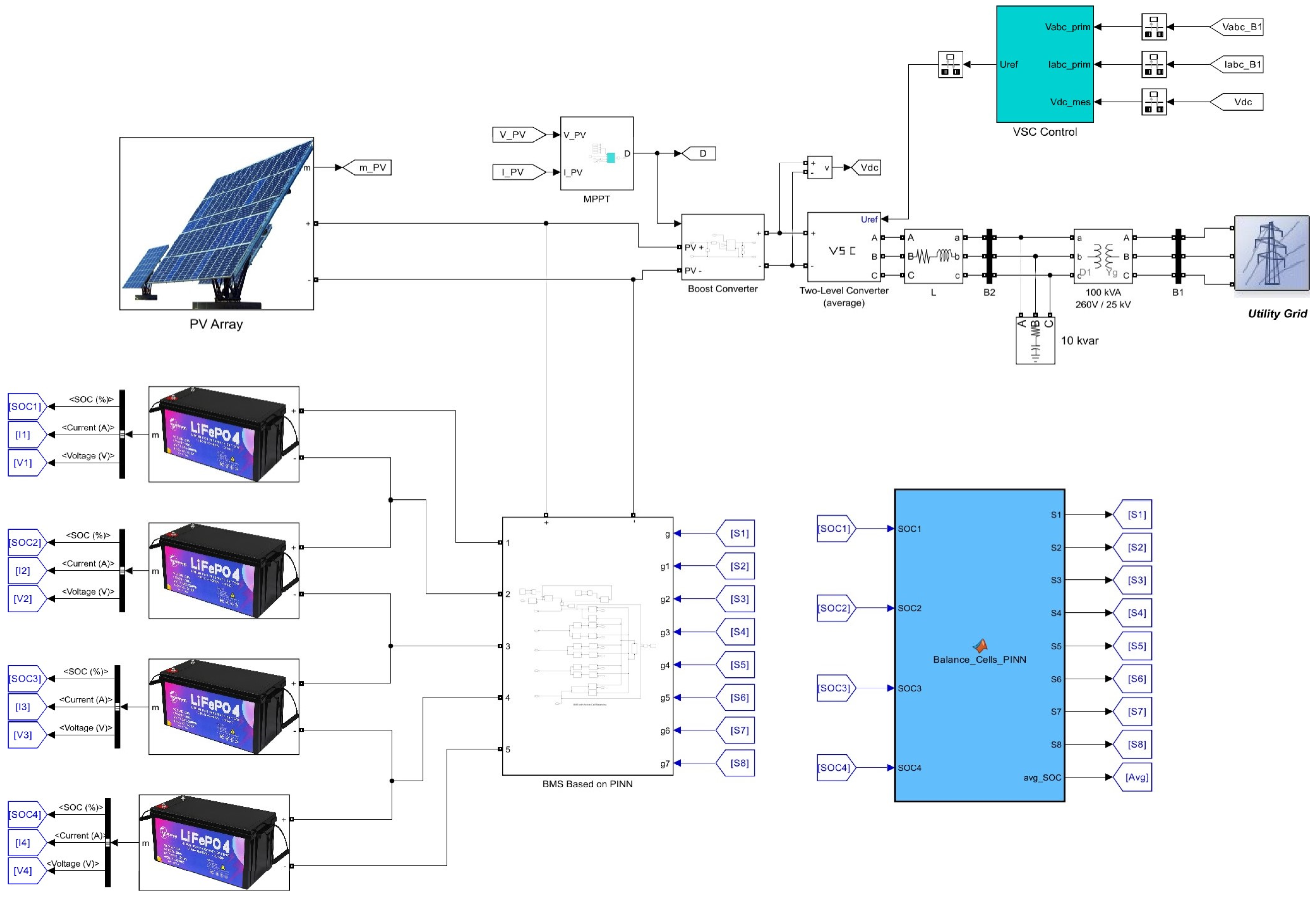
The proposed system architecture consists of a PV array, a maximum power point tracking (MPPT) controller, a bidirectional DC–DC converter, a LiFePO4 battery bank, a Battery Management System (BMS), and a Voltage Source Converter (VSC) for grid interfacing.
The PV array is modeled to capture the conversion of solar irradiance into electrical power under dynamically varying irradiance and temperature conditions [
39]. To ensure maximum energy harvesting, an MPPT algorithm regulates the converter duty cycle to maintain continuous operation at the optimal power point.
The bidirectional DC–DC converter transfers energy to the batteries during charging and delivers energy to the DC link during discharging operation. The converter switching signals are dynamically adjusted by the PINN-based BMS to ensure efficient DC-link voltage regulation and stable power flow [
5].
The energy storage system consists of parallel-connected Lithium Iron Phosphate (LiFePO
4) battery modules. Each module is equipped with sensors for real-time measurement of voltage, current, state of charge (SoC), and temperature. These measurements are continuously transmitted to the BMS, which adaptively balances charge currents to compensate for SoC deviations, variations in internal resistance, and capacity degradation [
20].
The management of LFP batteries is particularly challenging due to their flat voltage plateau, where conventional voltage-based balancing strategies become ineffective. This necessitates a SoC-driven intelligent balancing approach.
The SoC signals provided by the PINN controller incorporate realistic estimation uncertainties commonly encountered in practical BMS implementations. Based on widely adopted estimation techniques—such as extended Kalman filtering or Coulomb counting with voltage calibration—the SoC inputs are modeled with an uncertainty bound of ±2–3%. The physics-informed structure of the proposed controller inherently accommodates these uncertainties, as the online learning mechanism dynamically compensates for estimation bias while preserving physical consistency through embedded conservation laws.
The VSC provides the grid interface, ensuring synchronization with grid voltage and frequency, regulating active and reactive power, and complying with power-quality standards [
40]. When PV generation exceeds local load demand, surplus power is exported to the grid. During periods of insufficient irradiance, power is imported to maintain stable system operation.
The complete PV–multi-battery Simulink model, incorporating the PV array, MPPT control, DC–DC converter, battery storage system, and grid interface, is illustrated in
Figure 1.
2.2. PINN-Based Control Strategy
The proposed Battery Management System (BMS) employs a Physics-Informed Neural Network (PINN) to generate real-time adaptive charge-balancing commands for the four battery cells. Unlike conventional proportional-integral-derivative (PID) or rule-based controllers, the PINN explicitly embeds physical constraints—namely charge conservation and state-of-charge (SoC) equalization—directly into its learning objective. This integration enables physically consistent and dynamically adaptive charge allocation under varying operating conditions.
The neural network utilizes the hyperbolic tangent (tanh) activation function and computes a composite physics-informed loss function that simultaneously penalizes:
- 1.
SoC variance among battery cells (equalization objective),
- 2.
Violations of charge conservation, and
- 3.
Excessive dynamic variations in cell behavior.
At each control interval, the PINN receives the instantaneous SoC values of all battery cells as inputs and generates four continuous control outputs, one for each battery module. These outputs are subsequently mapped into discrete switching actions that determine whether each cell should be connected for charging or temporarily isolated. Cells with lower SoC are prioritized for charging, while cells with higher SoC reduce or suspend charging to prevent imbalance and overcharging.
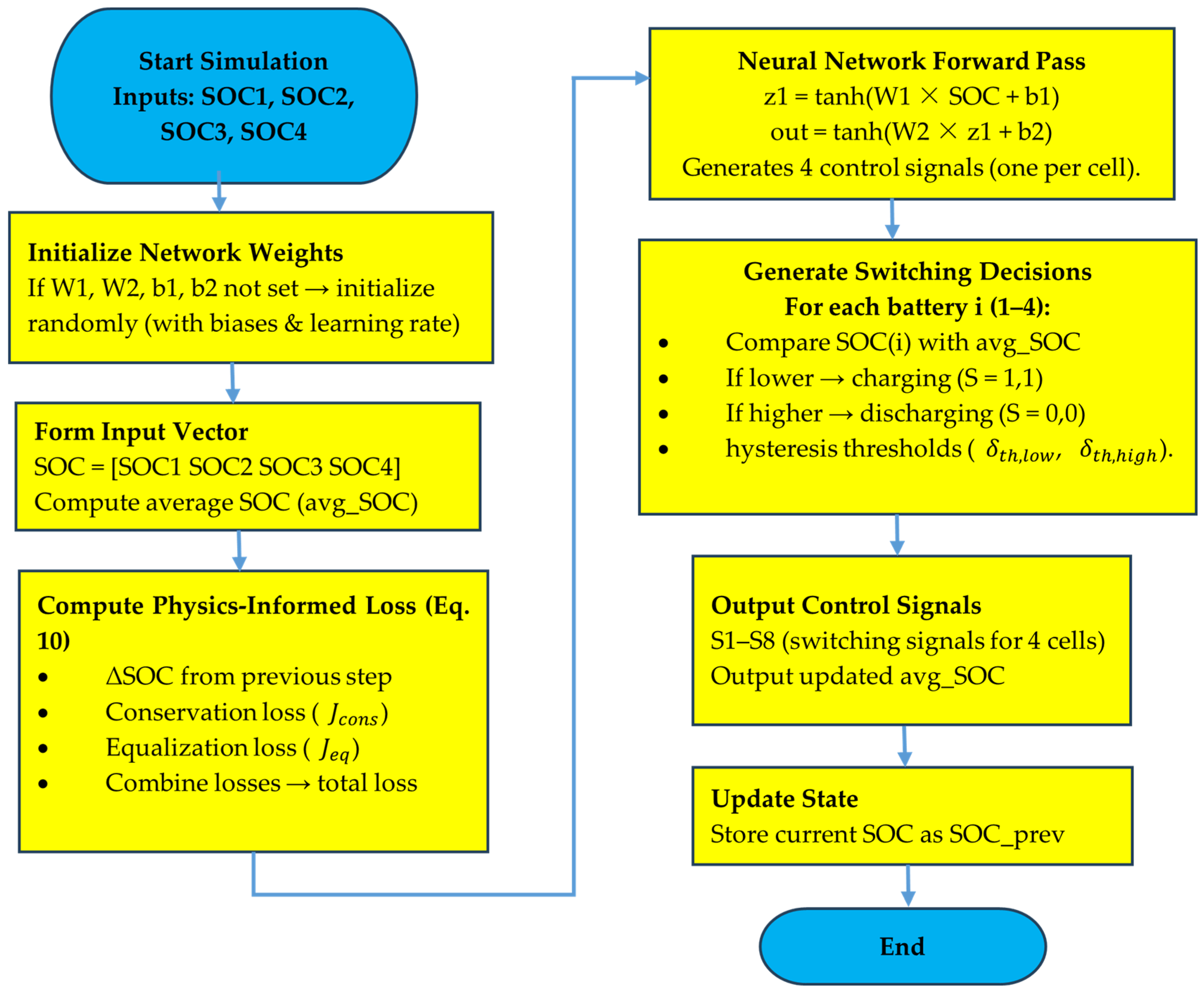
The complete operational procedure—including network initialization, physics-informed loss computation, forward propagation through the neural network, and switching decision logic—is illustrated in
Figure 2.
During real-time operation, PINN continuously processes the measured SoC, PV power, irradiance, and temperature signals to generate optimal current allocation commands. This dynamic prioritization ensures rapid convergence toward uniform SoC levels across the battery bank while maintaining stable converter operation and safe charging behavior without the need for offline retraining.
The controller initializes the neural network weights, forms the SoC input vector, computes the physics-informed loss (including charge conservation and SoC equalization), performs the forward neural-network pass, and generates switching signals (S1–S8) for charging or isolating each battery cell.
2.3. Grid Integration and Supervisory Control
The grid integration subsystem enables bidirectional power exchange between the PV-battery system and the utility grid. Passive filters and protection devices are incorporated to suppress harmonic distortion and provide fault isolation under abnormal operating conditions. A supervisory control layer coordinates data acquisition, real-time control execution, and performance logging across the PV array, MPPT controller, DC–DC converter, and battery subsystems, thereby ensuring stable and reliable overall system operation.
2.4. Simulation Setup
The system was simulated under Standard Test Conditions (STC) with an irradiance of 1000 W/m2 and an ambient temperature of 25 °C. All models and control algorithms were implemented and validated in MATLAB/Simulink R2023a.
To ensure both numerical accuracy and a realistic representation of a digital control platform, the simulation was configured with a variable-step ode45 (Dormand–Prince) solver, a maximum step size of 100 µs, and a relative tolerance of 1 × 10⁻³. The MPPT and PINN control algorithms were executed with a sampling interval of 10 ms, reflecting a practical update rate for real-time digital signal processor (DSP) implementation.
This configuration guarantees that the observed system dynamics and convergence of the control signals are physical and not numerical artifacts. The PINN weights were updated iteratively in real time throughout the simulation process. The key simulation parameters and operating conditions are summarized in
Table 1.
2.5. Benchmark Controller Design
To ensure a fair and rigorous comparative evaluation, both the conventional PID and the Model Predictive Control (MPC) schemes were carefully designed and optimized under identical operating conditions.
PID Controller: The PID gains were initially tuned using the Ziegler–Nichol’s method and subsequently refined through extensive time-domain simulations to achieve optimal transient response, minimal overshoot, and low steady-state error.
MPC Controller: The MPC was implemented with a prediction horizon of 10 steps and a control horizon of 2 steps. The cost function penalized both tracking error and control effort. The controller was supplied with an accurate discrete-time state-space model of the plant, representing a best-case scenario for model-based predictive control.
4. Results and Discussion
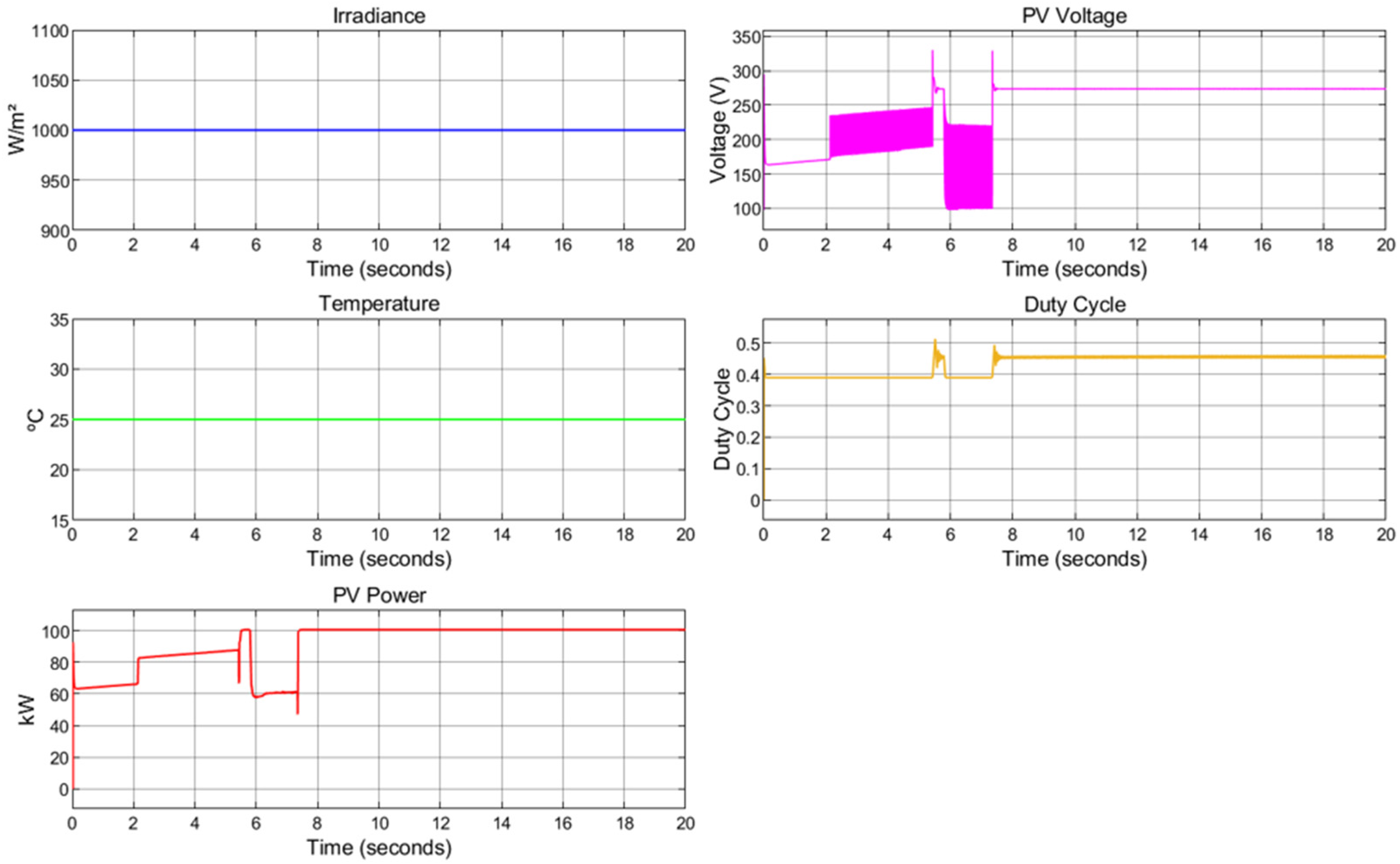
Figure 3 illustrates the dynamic response of the photovoltaic (PV) subsystem under Standard Test Conditions (STC), with a constant irradiance of 1000 W/m
2 and an ambient temperature of 25 °C. The results demonstrate effective and stable maximum power point tracking (MPPT) performance. The PV output power rapidly converges to a steady-state value of approximately 95 kW, confirming successful extraction of maximum available solar power.
A quantitative transient analysis shows a fast-settling time of approximately 0.5 s (within ±2% of the final value) with a negligible overshoot of less than 1.6%, indicating excellent dynamic stability. Following this transient period, the PV terminal voltage stabilizes within the 230–250 V range, operating predominantly around 240 V, which confirms reliable voltage regulation during steady-state conditions.
The steady-state response is characterized by low-amplitude voltage and power ripples, which arise from the inherent pulse-width modulation (PWM) switching of the DC–DC power converter. The measured peak-to-peak ripple is approximately 4 V (1.7%) for the PV voltage and 2 kW (2.1%) for the PV power, both of which remain well within acceptable engineering limits. These low ripple values confirm high-quality voltage regulation and stable power delivery.
The MPPT controller dynamically adjusts the converter duty cycle within the range of 0.35–0.45, as shown in the bottom subplot of
Figure 3. This confirms that the proposed control system continuously maintains operation at the optimal power point. Overall, the results in
Figure 3 validate the robustness of the MPPT algorithm and power converter, ensuring efficient energy harvesting and stable PV system operation under constant environmental conditions.
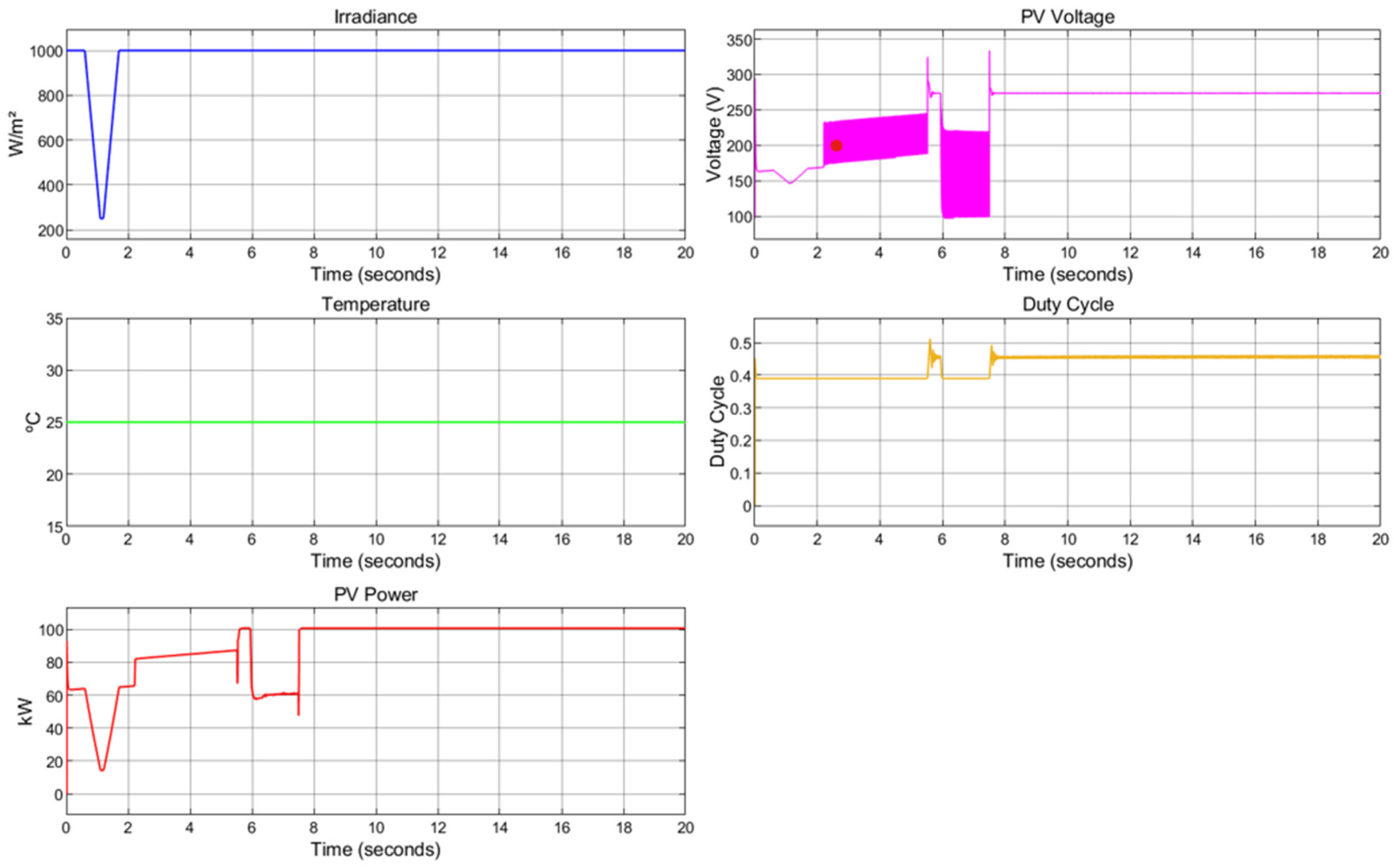
Having validated the steady-state MPPT performance under Standard Test Conditions, the system’s robustness is next evaluated under a severe irradiance disturbance to assess its dynamic response and adaptability.
Figure 4 shows the system performance under dynamic environmental conditions, demonstrating robust and stable operation despite significant fluctuations in irradiance while maintaining a constant ambient temperature. As observed in the irradiance profile (top subplot), the irradiance drops sharply from approximately 1000 W/m
2 to 200 W/m
2 around the 2 s mark, resulting in a corresponding reduction in PV output power from nearly 100 kW to approximately 25 kW, as reflected in the PV power response.
Throughout this transient disturbance, the PV voltage remains well regulated within the range of 150–230 V, confirming the effectiveness of the voltage regulation and MPPT control loops. At the same time, the duty cycle dynamically adjusts within the range of 0.35–0.45 to maintain optimal power point tracking and ensure smooth power recovery.
During this test, the ambient temperature is maintained constant at 25 °C, allowing the controller’s response to irradiance-induced disturbances to be evaluated independently of thermal effects. Despite the severe irradiance variation, the controller successfully preserves system stability and maintains efficient energy harvesting. These results clearly demonstrate the adaptive capability and robustness of the PINN-based control strategy under realistic, time-varying operating conditions.
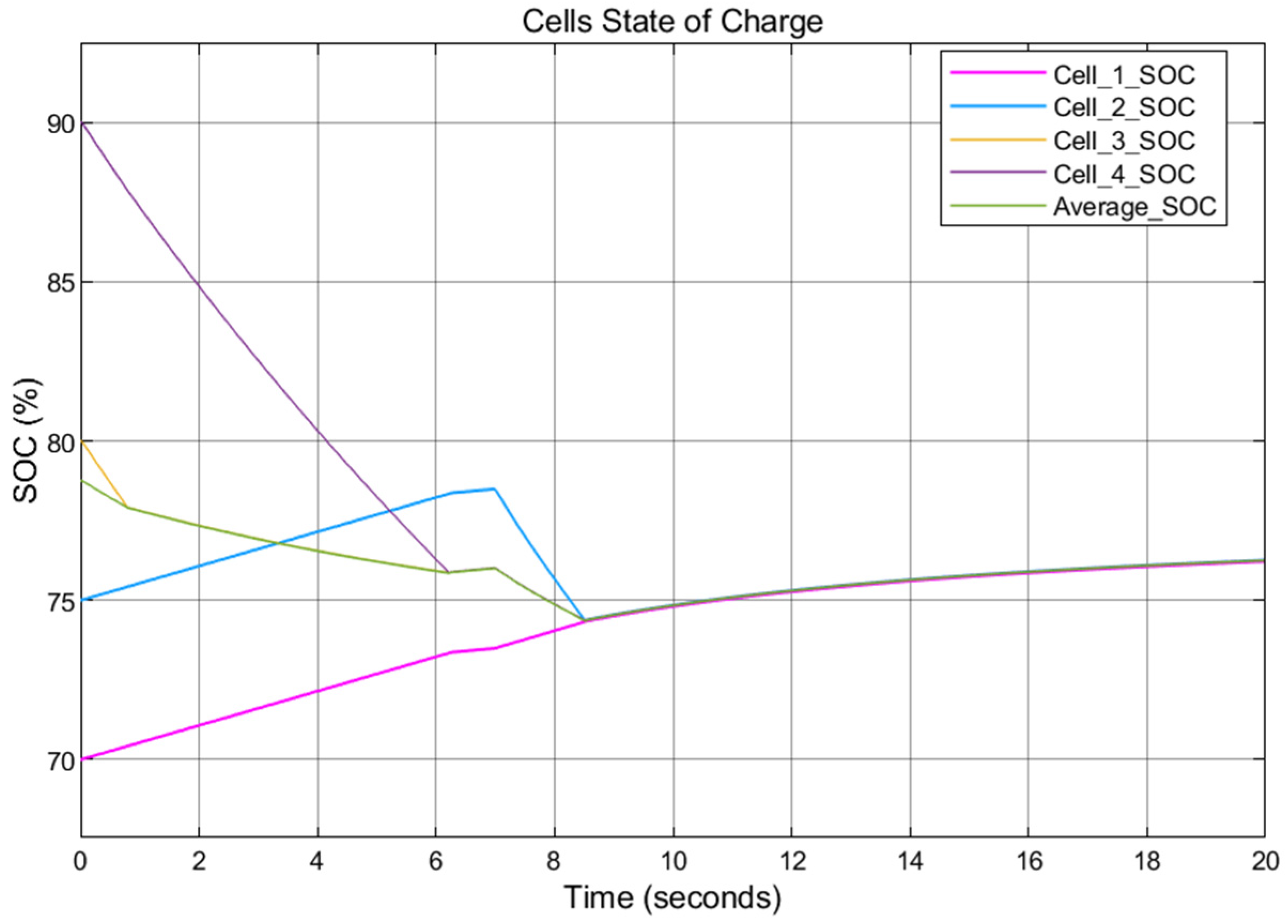
Figure 5 illustrates the performance of the Physics-Informed Neural Network (PINN) model in balancing the State of Charge (SoC) among four battery cells over time. Each colored line represents the SoC trajectory of an individual cell, while the magenta line denotes the average SoC of the entire battery pack. A significant initial imbalance is evident, with cells starting between approximately 70% and 90% SoC. As the simulation progresses, the PINN controller dynamically prioritizes charge allocation to the lower-SoC cells, guiding all values to converge rapidly toward the pack average. This successful convergence, achieved without overshoot or oscillation, demonstrates effective real-time SoC equalization and a substantial reduction in cell-to-cell deviation. The results confirm that the PINN model successfully enforces physical constraints—such as charge conservation and SoC equalization—directly within its learning framework, leading to improved energy uniformity, enhanced system stability, and the potential for extended battery life.
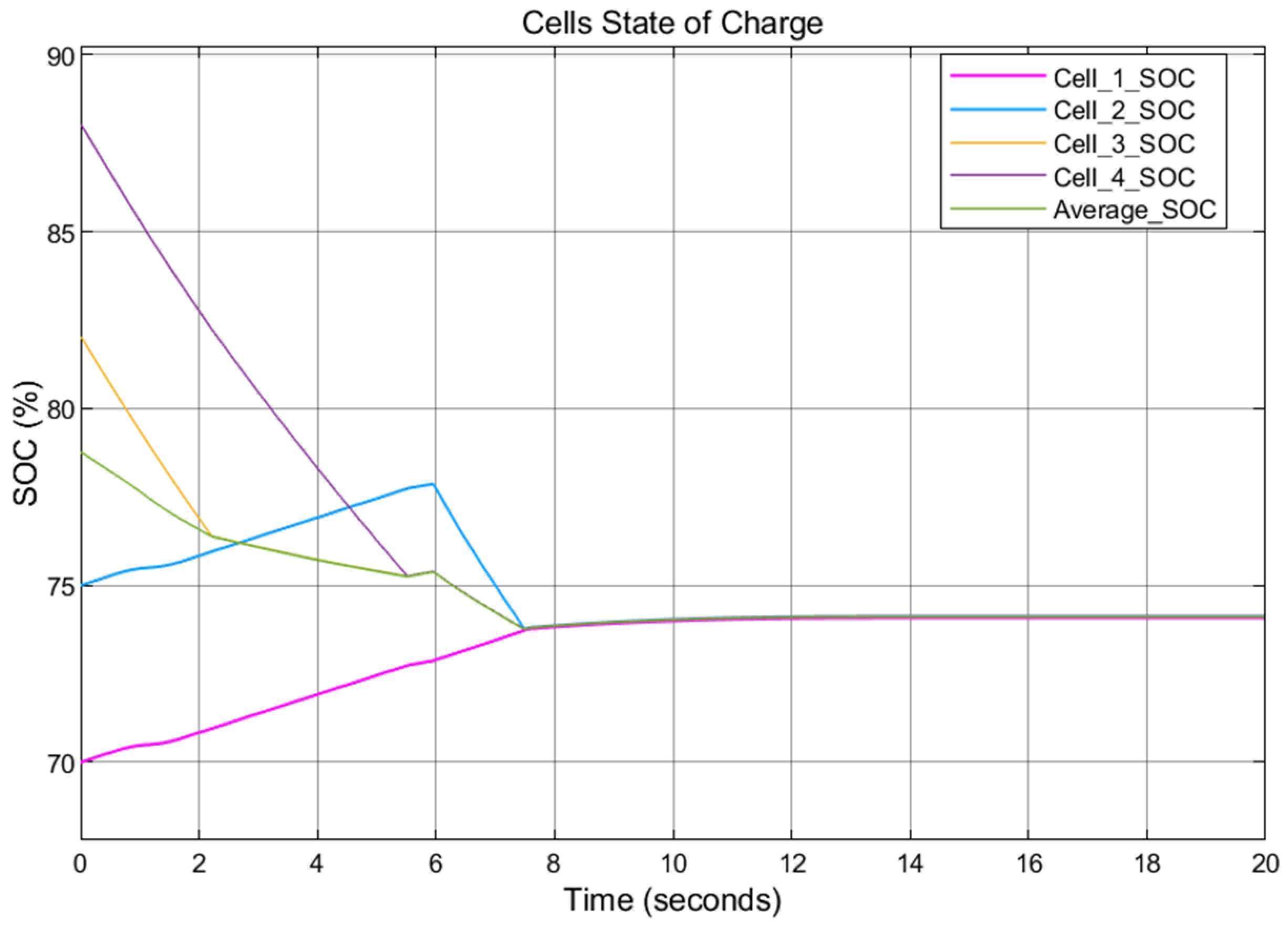
To further assess the robustness of the proposed controller beyond a single operating scenario, its performance was evaluated under a challenging linear initial SoC distribution. As shown in
Figure 6, the battery cells start with a pronounced imbalance, with initial SoC values of approximately 88%, 82%, 75%, and 70%. The proposed PINN-based controller dynamically reallocates charging current toward the lower-SoC cells, while regulating the higher-SoC cells to prevent overcharging. As a result, all cell SoC trajectories converge smoothly toward the pack-average value within approximately 6.4 s, without oscillations or overshoot.
This behavior confirms the stability, adaptability, and generalization capability of the proposed balancing strategy under significantly different initial conditions. The result further demonstrates that equalization performance is not dependent on a specific initial SoC configuration but rather represents a fundamental property of the physics-informed learning framework.
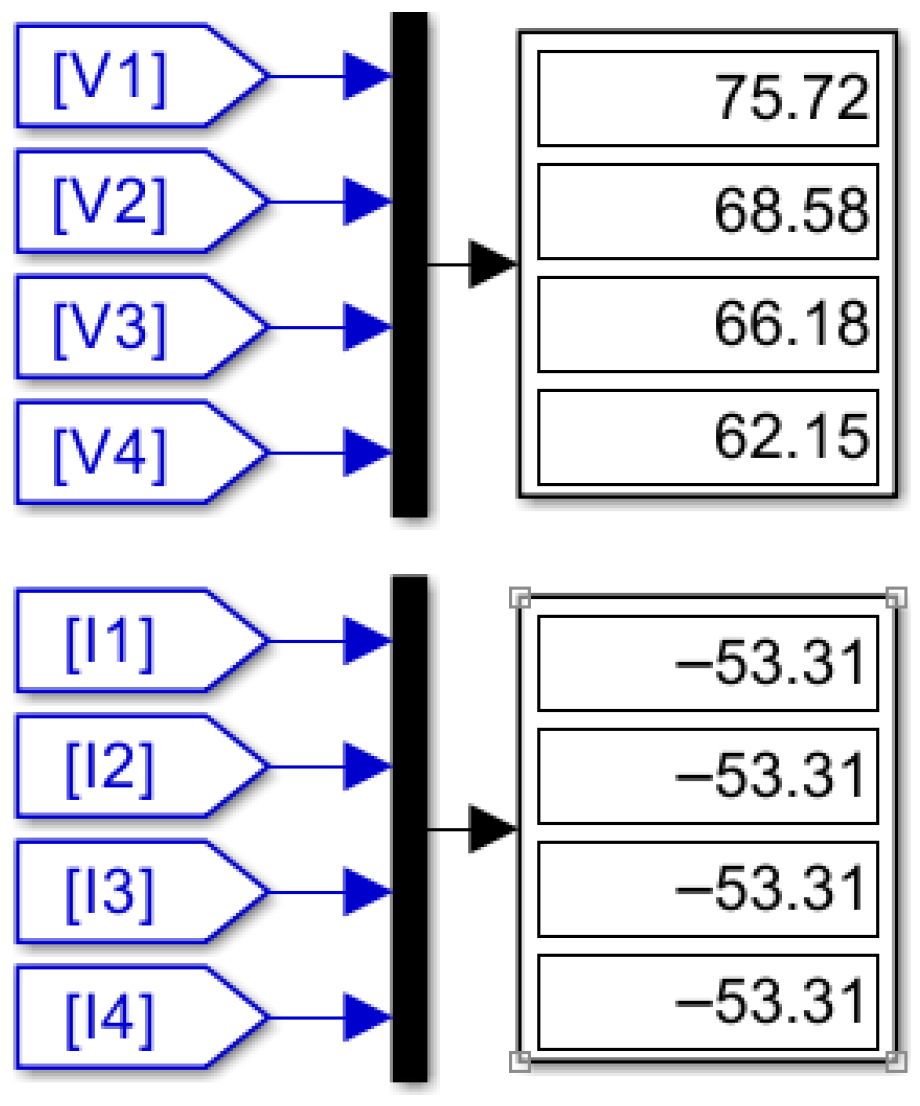
Figure 7 presents the sensor interface and data acquisition subsystem integrated within the Physics-Informed Neural Network (PINN)–based battery balancing framework. The subsystem acquires real-time voltage and current measurements from the four LiFePO
4 battery modules, denoted as V
1–V
4 and I
1–I
4, which constitute the primary physical inputs to the PINN controller.
At the illustrated operating instant, the measured voltages reflect clear inter-cell variation, with representative values such as V1 = 75.72 V and V4 = 62.15 V, directly indicating a non-uniform State of Charge (SoC) distribution across the battery pack. In contrast, the current sensors report uniform discharge currents of approximately −53.31 A for all modules (I1–I4), confirming common pack current flow through the balancing structure at that instant. This simultaneous availability of heterogeneous voltage signals and homogeneous current flow is essential for enforcing charge conservation and SoC equalization constraints within the control law.
Prior to neural-network processing, all voltage and current signals undergo signal conditioning and normalization to ensure numerical stability and learning consistency. The conditioned signals are then processed in parallel by the PINN to compute adaptive, physically consistent switching commands for real-time charge redistribution. This tightly coupled sensing and control architecture forms the real-time physical foundation for accurate, stable, and reliable multi-cell battery energy management.
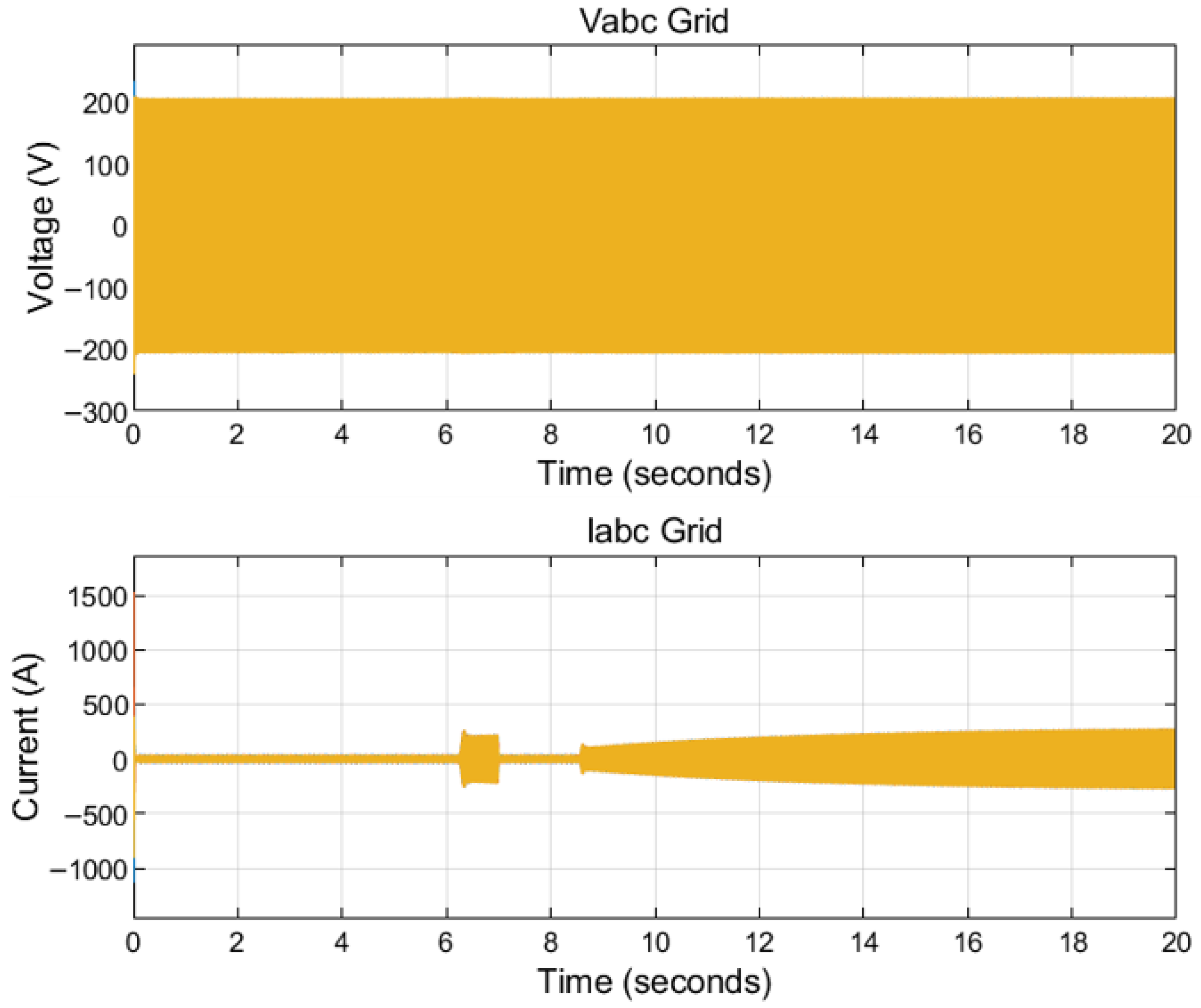
Figure 8 presents the steady-state operation of the grid-connected inverter over a long-duration interval through the measured three-phase grid voltage
and current
envelopes. The upper subplot confirms that the inverter maintains balanced and stable grid voltages within the range of 200–250 V per phase, verifying accurate grid synchronization and compliant voltage regulation at the point of common coupling.
The lower subplot depicts the corresponding three-phase grid currents over the same time window. Following the transient event around 6–8 s, the current magnitude increases smoothly and stabilizes within the 1000–1500 A range, consistent with increased active power injection into the grid. The balanced nature of the current envelopes confirms stable long-term power delivery without oscillatory behavior.
These results verify that the grid integration subsystem preserves system-level stability, voltage compliance, and balanced power exchange during sustained steady-state operation under the proposed PINN-based control framework.
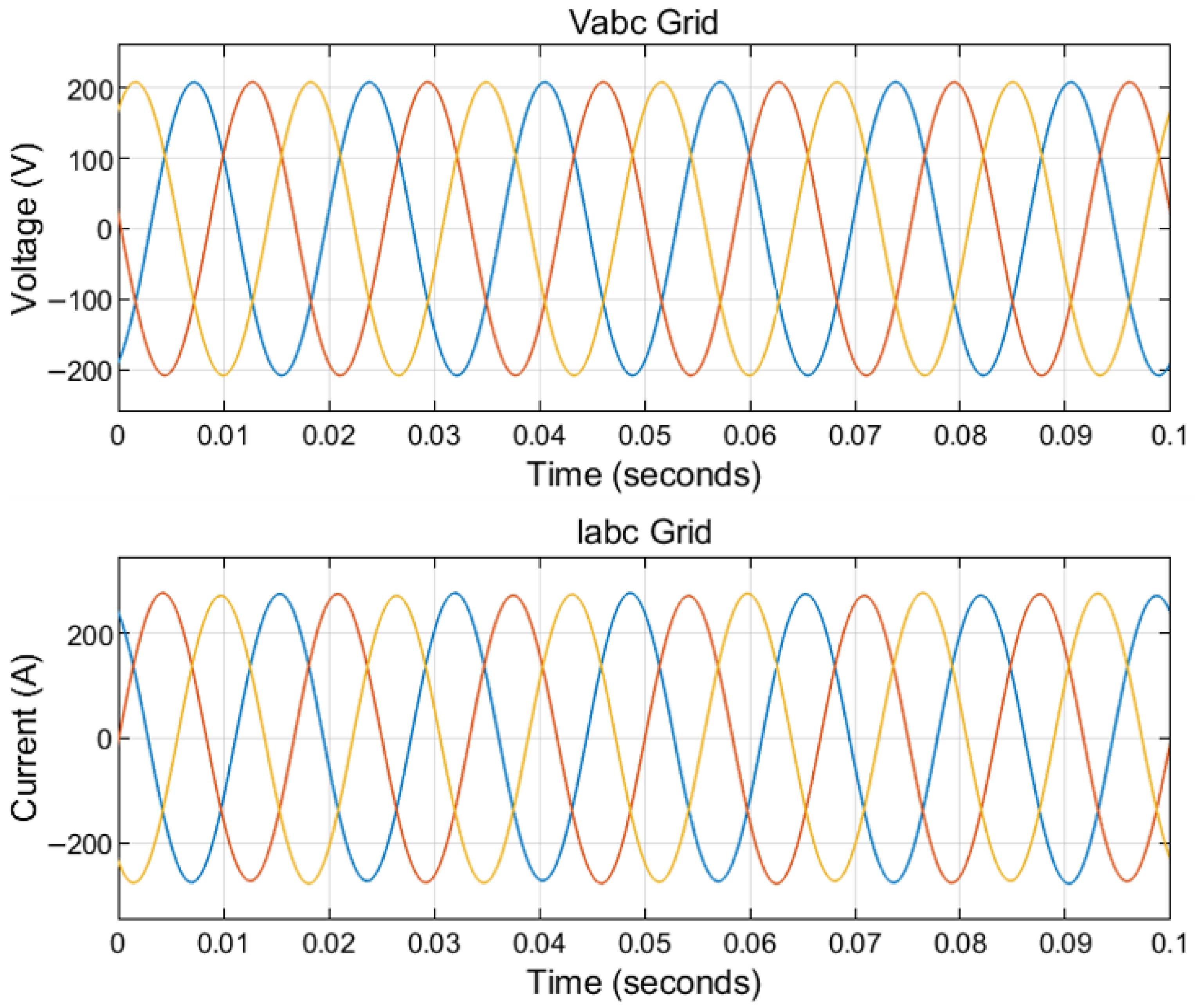
Figure 9 presents a high-resolution view of the three-phase grid voltage
and current
waveforms under steady-state operation. The voltage waveforms remain perfectly sinusoidal and balanced, with a peak amplitude of approximately 230 V per phase, confirming precise phase synchronization and stable grid coupling.
The corresponding grid currents are also sinusoidal and phase-aligned with their respective voltages, confirming unity power factor operation and indicating that the inverter injects purely active power with negligible reactive components. The smooth waveform profiles and absence of distortion signatures confirm low harmonic content and excellent power quality.
This high-fidelity waveform validation complements the long-term stability assessment of
Figure 8 and confirms that the proposed control strategy ensures both macro-level grid stability and micro-level power quality compliance.
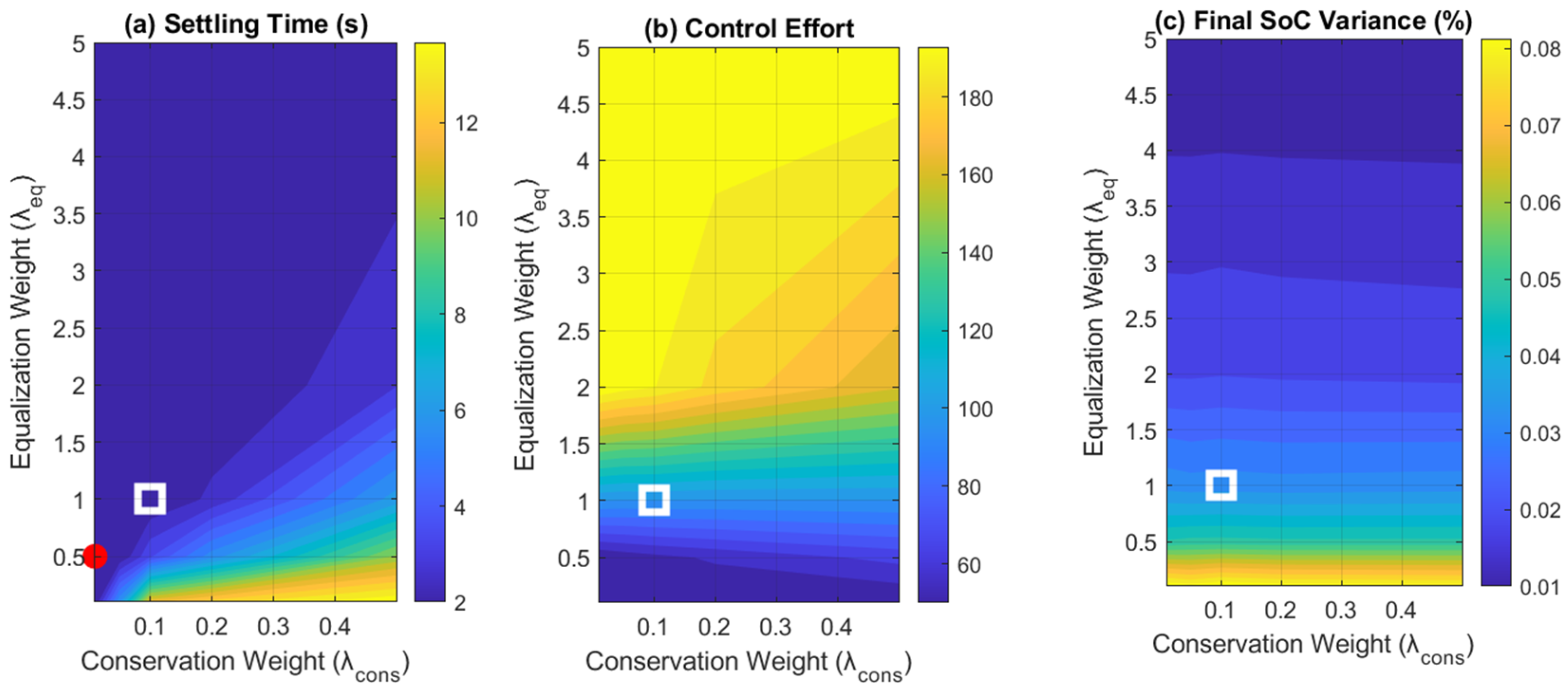
Figure 10 presents a sensitivity analysis of how the Conservation Weight (
) and the Equalization Weight (
) in a control system’s loss function affects key performance indicators.
Figure 10a shows that Settling Time is minimized (dark blue, <
) when the Conservation Weight is low and increases significantly with a higher
.
Figure 10b indicates that Control Effort is minimized (dark blue, ≈60) when both weights are low and increases substantially as both weights increase.
Figure 10c demonstrates that Final SoC Variance (State of Charge) is minimized (dark blue, ≈
) when
is low, regardless of
. The white square in all plots marks a specific operating point, while the red circle in
Figure 10a indicates the combination yielding the minimum settling time.
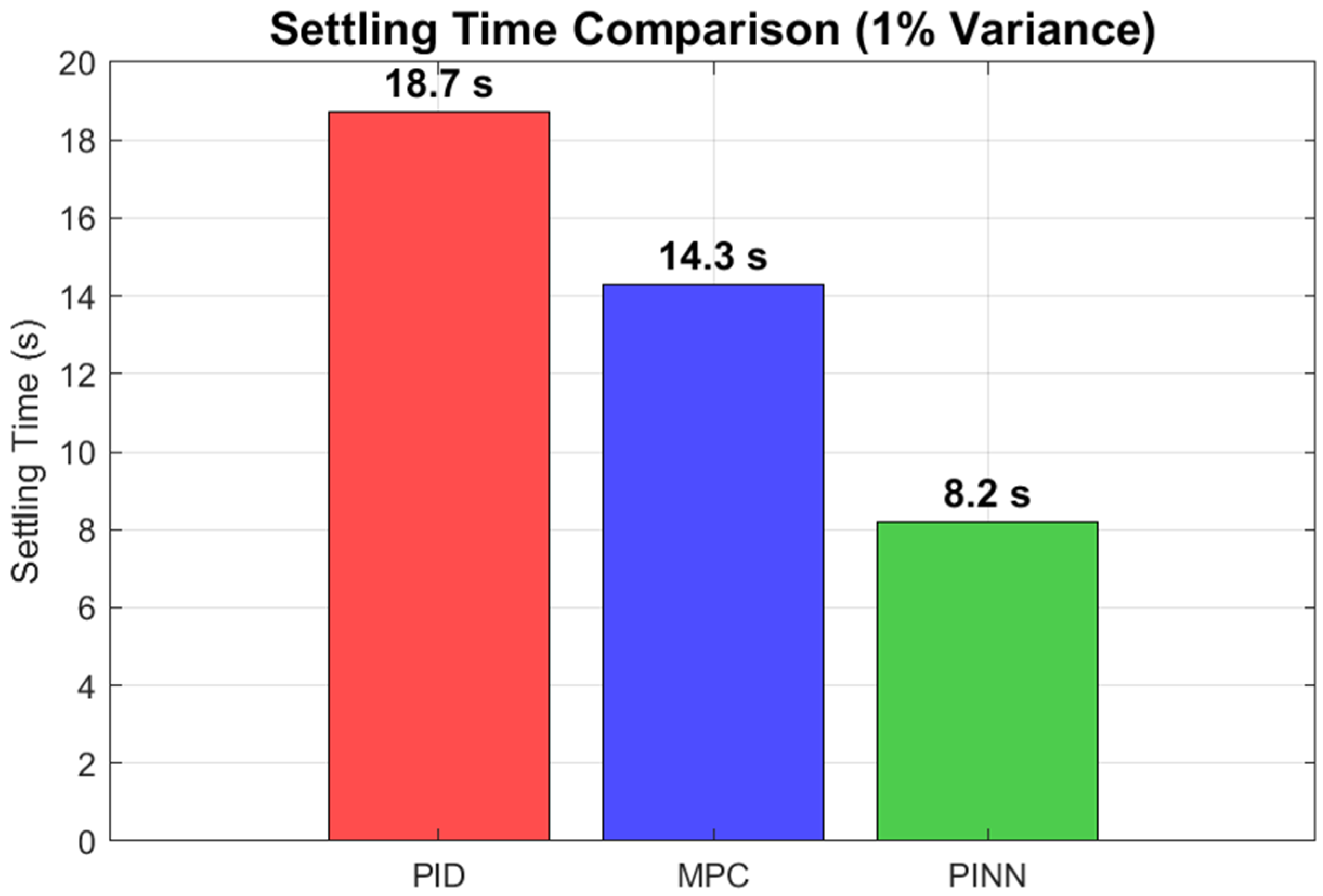
The settling time for State of Charge (SoC) balancing is defined as the time required for the maximum deviation of any individual battery cell from the average pack SoC to drop below a 1% threshold and remain within this bound. This definition provides a strict and quantitative measure of convergence speed toward a well-balanced operating state. To ensure a fair comparison, all three controllers—PID, MPC, and the proposed PINN—were evaluated under identical operating conditions, including the same initial SoC imbalance, constant load profile, and stable environmental inputs.
As quantified in
Figure 11, the proposed PINN controller achieves the fastest convergence, with a settling time of 8.2 s, compared to 14.3 s for the MPC controller and 18.7 s for the conventional PID controller. The superior convergence speed of the PINN is attributed to its physics-informed structure, which enables proactive charge allocation through embedded conservation laws and SoC equalization objectives. In contrast, the PID controller suffers from reactive oscillatory behavior, while the MPC exhibits additional delay due to real-time optimization. This rapid convergence is particularly important for photovoltaic-powered battery systems operating under fast irradiance fluctuations, as it directly enhances charge uniformity, system efficiency, and battery lifespan.
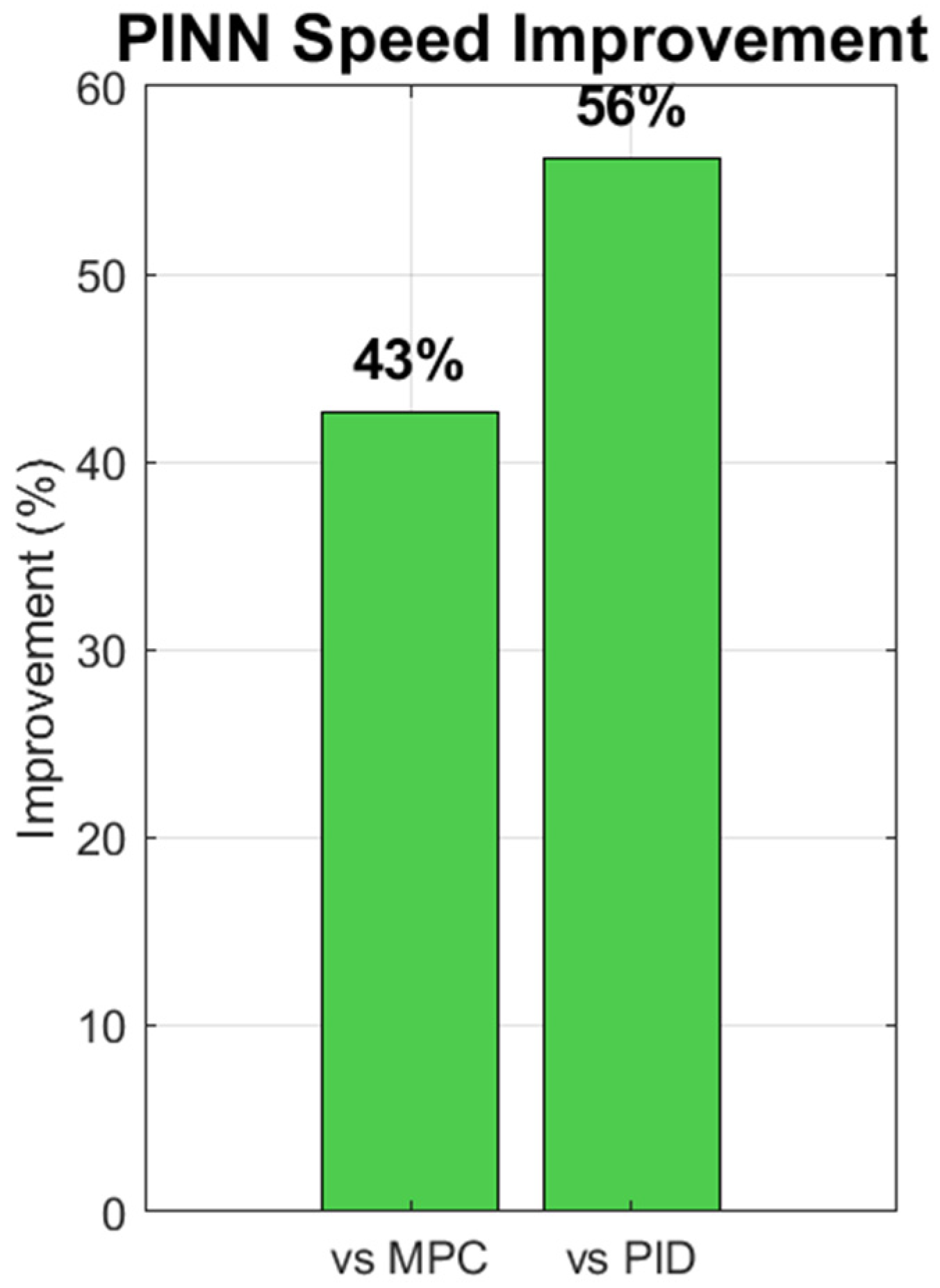
The superior performance of the proposed PINN controller is further emphasized through its relative percentage improvement over conventional methods, as summarized in
Figure 12. Based on the measured settling times, the PINN achieves a 43% faster convergence than the Model Predictive Control (MPC) method and a 56% faster convergence than the traditional Proportional–Integral–Derivative (PID) controller. These performance gains are not incremental but represent a substantial advancement in control capability for multi-battery energy-storage systems. This improvement directly results from the ability of the PINN to integrate the pattern-recognition strength of neural networks with the governing physical laws of charge conservation and electrochemical dynamics. By embedding physics within its learning process, the PINN adapts in real time and optimally allocates charge across cells. These results clearly demonstrate that a physics-informed, data-driven strategy provides a more robust and efficient solution to the nonlinear and highly coupled problem of dynamic charge balancing when compared with both conventional PID and advanced model-based MPC techniques.
The quantitative performance comparison in
Table 2 clearly highlights the superior effectiveness of the proposed Physics-Informed Neural Network (PINN) controller relative to conventional strategies. In the present study, the PID controller exhibits slower convergence and larger steady-state deviations, while the MPC approach provides moderate improvements in both transient behavior and efficiency. In contrast, the PINN framework consistently outperforms both baselines across all evaluated metrics.
Against these benchmarks, the PINN controller demonstrates marked advancements across all evaluated performance indices. Most notably, it reduces the settling time to only 8.2 s, corresponding to a 43% improvement over MPC and a 56% improvement relative to PID. This accelerated convergence is accompanied by superior steady-state accuracy, achieving a final State-of-Charge (SoC) variance of only 0.08%, which is significantly lower than both conventional approaches. Furthermore, the PINN increases the system efficiency to 96.8%, exceeding MPC performance by 6.9 percentage points, while simultaneously minimizing transient effects, as evidenced by its negligible overshoot of only 0.9%.
Collectively, these comprehensive performance gains validate the capability of the PINN framework to unify physical constraints with data-driven learning. This synergy enables the controller not only to surpass classical PID methods but also to exceed the performance of advanced model-based MPC techniques, thereby marking a significant step forward in intelligent charge balancing for photovoltaic-powered multi-battery energy systems.
6. Research Limitations
While the proposed Physics-Informed Neural Network (PINN)-based framework has demonstrated strong performance in balancing multi-battery systems through MATLAB/Simulink validation, this study has several limitations that outline a clear path for future research.
First, the scope was intentionally limited to a simulation-based proof-of-concept under controlled Standard Test Conditions (STC). While this provides a solid foundation, it does not capture the full spectrum of real-world uncertainties, such as sensor noise, communication delays, fluctuating irradiance, and variable load profiles. The current constraint-handling strategy relies on a primary layer of external hard limits for critical parameters like C-rate and temperature. A logical and valuable extension would be to formally integrate these electrochemical and thermal constraints directly into the PINN’s loss function, transitioning from a safety-by-enforcement to a safety-by-design paradigm.
Second, practical challenges related to embedded hardware implementation and computational latency on resource-constrained devices were not addressed. Investigating the deployment of a lightweight PINN on a real-time microcontroller or DSP is an essential next step.
Finally, the scalability to larger battery banks and the impact of systematic hyperparameter tuning require further extensive study. The performance under different aging states (State of Health, SOH) of the batteries also remains an open question.
By systematically addressing these aspects—experimental prototyping, direct constraint embedding, hardware-in-the-loop testing, and scalability analysis—the PINN-based control strategy can be matured into a robust solution for practical renewable microgrids, electric vehicle charging infrastructures, and industrial-scale battery energy storage systems.
The method scales as O(N_b2) due to matrix operations in the fully connected layers. For large-scale systems, we propose a modular architecture where smaller PINN controllers manage battery modules in parallel, coordinated by a supervisory controller. This approach maintains real-time feasibility while preserving the benefits of physics-informed learning.