1. Introduction
Due to the massive increase in consumer demand for smartphones and the short lifespan of these products, the amount of waste generated is also increasing [
1]. It is estimated that by 2030, waste electrical and electronic equipment (WEEE) will increase by 21% compared to 2023 [
2]. An important component of smartphones is batteries, which currently cannot be removed from the phone without special tools. According to Regulation (EU) 2023/1542 of 12 July 2023 on batteries and waste batteries, from February 2027 onwards, portable batteries in consumer devices must be designed in such a way that end users can easily and safely remove and replace them [
3], which should simplify and streamline their recycling. The main components of portable batteries are metals such as cobalt, nickel, manganese and lithium, which are classified by the European Union as critical and strategically important [
4]. Reducing dependence on imports of these metals is one of the priorities of European raw materials policy. An important solution for reducing the EU’s dependence on raw materials is the development of effective recycling technologies that can recover these raw materials from waste and reuse them in industrial production. Smartphones, which are classified as waste electrical and electronic equipment, are currently recycled in several European plants, mainly using pyrometallurgical processes, e.g., at Boliden, Aurubis and Umicore. Outside Europe, these include Dowa, Glencore and Sims Metal Management Limited [
5]. Regarding waste batteries, the above-mentioned Regulation [
3] sets binding targets for the recovery of metals from waste batteries—at least 50% for lithium and 90% for cobalt, nickel and copper. These targets must be achieved by recycling operators and battery manufacturers by 2027 at the latest, with a gradual increase expected in subsequent years. The recycling targets set underline the need to increase the efficiency of recycling processes. To achieve these ambitious limits, the loss of valuable metals during the individual steps must be minimised.
While pyrometallurgical and pyro-hydrometallurgical processes predominate in the processing of spent lithium-ion batteries (LiBs) in practice, research is increasingly focusing on sophisticated hydrometallurgical methods. The input for hydrometallurgical processing is primarily black mass, which contains the desired metals (Co, Li, Mn, Ni) and is obtained through mechanical–physical processing or manual dismantling.
Table 1 provides an overview of published work and results achieved over the last 30 years in the field of acid leaching of black mass spent in LiBs.
To recover metals from acidic leachate after leaching the black mass from spent LiBs, precipitation is often investigated, for example, with NaOH in combination with solvent extraction [
22,
23]. Oxalic acid has proven to be a selective precipitating agent for extracting cobalt from seepage water [
24,
25], whereby a precipitation efficiency of up to 90% can be achieved, with lithium remaining in the leachate. This makes oxalic acid a suitable selective leaching agent, whereby lithium is leached out, and other metals are converted into an insoluble residue in the form of oxalates [
26,
27,
28,
29]. To enhance the selectivity of the lithium leaching process, hydrogen peroxide can be added to the oxalic acid, which can increase the Li yield to 95%, but most of the cobalt remains in the solid residue [
30].
During solvent extraction of the desired metals from the recovered leachate, a multiple efficiency of 95–98% can be successfully achieved [
31]. In paper [
32], a two-stage solvent extraction process using the Versatic 10 reagent was employed, which enabled the selective separation of nickel, manganese and cobalt, with lithium subsequently being isolated by precipitation in the form of Li
2CO
3 with a purity of 99.61%. Through a combination of precipitation (KMnO
4 for Mn, dimethylglyoxime for Ni, Na
2CO
3 for Li) and solvent extraction (Cyanex 272 for Co), an overall efficiency of over 88% can be achieved for most target metals [
33]. In addition to Cyanex 272, the reagent P507 is also suitable for cobalt extraction. In the study [
8], the authors first removed aluminium by leaching with NaOH, then extracted cobalt with P507 and finally precipitated it with ammonium oxalate. The result was an extraction efficiency of 95% and a Co precipitation efficiency of 99%. In another study [
34], the authors chose a combined process: nickel was precipitated with dimethylglyoxime (DMG) with an efficiency of 98.7%, manganese was separated by solvent extraction with an efficiency of 97.1%, and finally lithium and cobalt were selectively precipitated.
In addition, extraction processes from the field of solvometallurgy, i.e., using non-aqueous solvents such as deep eutectic solvents (DESs), are also coming to the fore in research. In their work [
29,
35,
36] the authors investigated the possibility of using solvent extraction to recover Mn from leachate, using D2EPHA for the selective recovery of manganese oxide with a purity of 99.5%, while HDES (hydrophobic deep eutectic solvents) was used to extract cobalt with an efficiency of 95.64% and HBTA (benzoyltrifluoroacetone) was used to extract Li with an efficiency of 92%. The research focuses on different variants and combinations of DESs.
In the study [
37], the authors used a mixture of choline chloride and formic acid as a leaching agent and obtained a solution rich in lithium and cobalt. An alternative combination is chloroacetic acid with ethanol, which can achieve lithium yields of up to 100% [
38]. A combination of choline chloride and ethylene glycol has also proven effective for the selective leaching of cobalt [
39]. The authors in [
40] investigated the possibilities of using DESs based on betaine hydrochloride and citric acid, achieving very high yields—99.8% for Li, 98.8% for Co, 99.1% for Ni and 99.2% for Mn. In another study, a mixture of betaine chloride and formic acid was tested, achieving yields of 98.03% for Li, 96.1% for Mn, 94.19% for Co and 92.35% for Ni [
37]. Another combination tested was ethylene glycol with tartaric acid, which yielded 99.2% for Li, 96.1% for Ni, 95.2% for Co and 97.8% for Mn [
41]
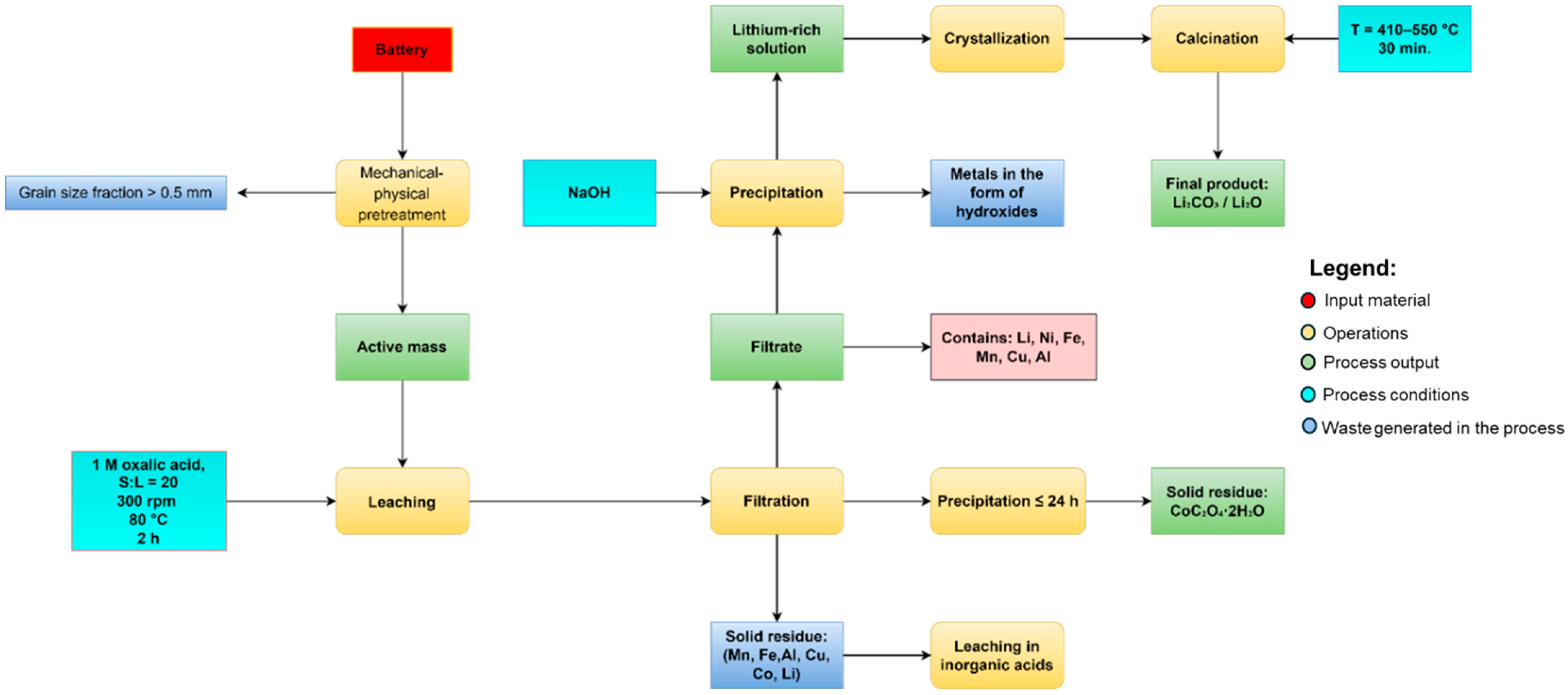
In this study, an aqueous oxalic acid solution was chosen for leaching the black mass from spent LiBs for several reasons. Oxalic acid is an organic acid with relatively low toxicity and biodegradability, making it a more environmentally friendly reagent compared to inorganic acids commonly used in hydrometallurgy. In addition to its favourable ecological profile, oxalic acid is also characterised by its high selectivity towards certain metals, in particular cobalt and manganese, with which it forms insoluble oxalates. This precipitation effect was exploited in this process to ensure selective leaching of lithium and to limit the presence of Co, Mn and Ni in the leachate. Previous studies have mainly focused on the use of oxalic acid as a selective leaching agent for cobalt extraction, as this acid forms an insoluble cobalt oxalate precipitate with cobalt ions. The aim of these studies was to separate the solid precipitate from the solution and obtain cobalt oxalate as the product. The present study builds on previous findings but goes one step further and focuses on the use of oxalic acid as a leaching agent to selectively leach lithium from the black mass while retaining cobalt in the insoluble residue. The aim is to optimise the leaching conditions (acid concentration, temperature, reaction time), monitor the co-leaching of minor metals (e.g., aluminium, iron) and investigate the process of lithium recovery from the leachate through precipitation, crystallisation and subsequent calcination of the recovered product. The contribution of this work lies in its primary focus on the selective extraction of lithium using oxalic acid—an approach that has not yet been systematically investigated in this context. The study offers a potentially sustainable and environmentally friendly alternative to conventional methods of recycling Li-ion batteries, with a focus on the efficient separation and recovery of individual metal components. AAS (atomic absorption spectrometry), XRD (X-ray diffraction analysis) and SEM (scanning electron microscope)-EDX (X-ray dispersive spectroscopy) methods were used to analyse the input sample and the solid products. The AAS method was used to determine the metals in the solution, while TG (Thermogravimetric Analysis)-DTA (Differential Thermal Analysis) analysis of the solid product was performed at the same time.
2. Materials and Methods
2.1. Experimental Samples and Reagents
Oxalic acid (C2H2O4·2H2O, analytical grade) and sodium hydroxide (NaOH, analytical grade), both supplied by Slavus s.r.o., were used for the leaching and precipitation experiments, respectively. Solutions of the desired concentrations were prepared using distilled water.
2.2. Analytical and Experimental Methods
The chemical composition of solid and liquid samples was determined by AAS using a Varian Spectrometer AA 20+ and high-resolution continuum source atomic absorption spectrometry (HR CS AAS)—contrAA 700 (Analytik Jena, Jena, Germany), with an analytical uncertainty of ±5% for the instrumental method used. The mineralogical composition of the solid phases was determined using XRD on a PANalytical X’Pert PRO MRD instrument with Co-Kα radiation (Almelo, The Netherlands). The morphology of the particles was analysed using a MIRA3 FE-SEM-EDX on a TESCAN (Brno, Czech Republic) accessory device with a resolution of 1.2 nm at 30 kV and 2.3 nm at 3 kV. TG-DTA analysis of the crystalline product was performed using a NETZSCH STA 449 F3 Jupiter device (Selb, Germany). The pH was measured on a WTW inolab pH/Ion 7320 device (Weilheim in Oberbayern, Germany). Crystallisation was performed in a Memmert ULE 600 device (Schwabach, Germany). Calcination was performed in a LE 05/11 laboratory furnace from LAC s.r.o. (Židlochovice, Czech Republic) The HSC Chemistry programme, version 10, was used to create E-pH diagrams, and the HYDRA-18 (2009) and MEDUSA-16 (2010) programmes were used to create speciation diagrams.
All leaching experiments were repeated three times. Prior to the experiment, the samples were thoroughly homogenised by mixing and grinding to ensure a uniform composition. The results were repeatable, with minimal deviations between repetitions. The error bars in the graphs represent the standard deviation.
2.3. Leaching Experiments
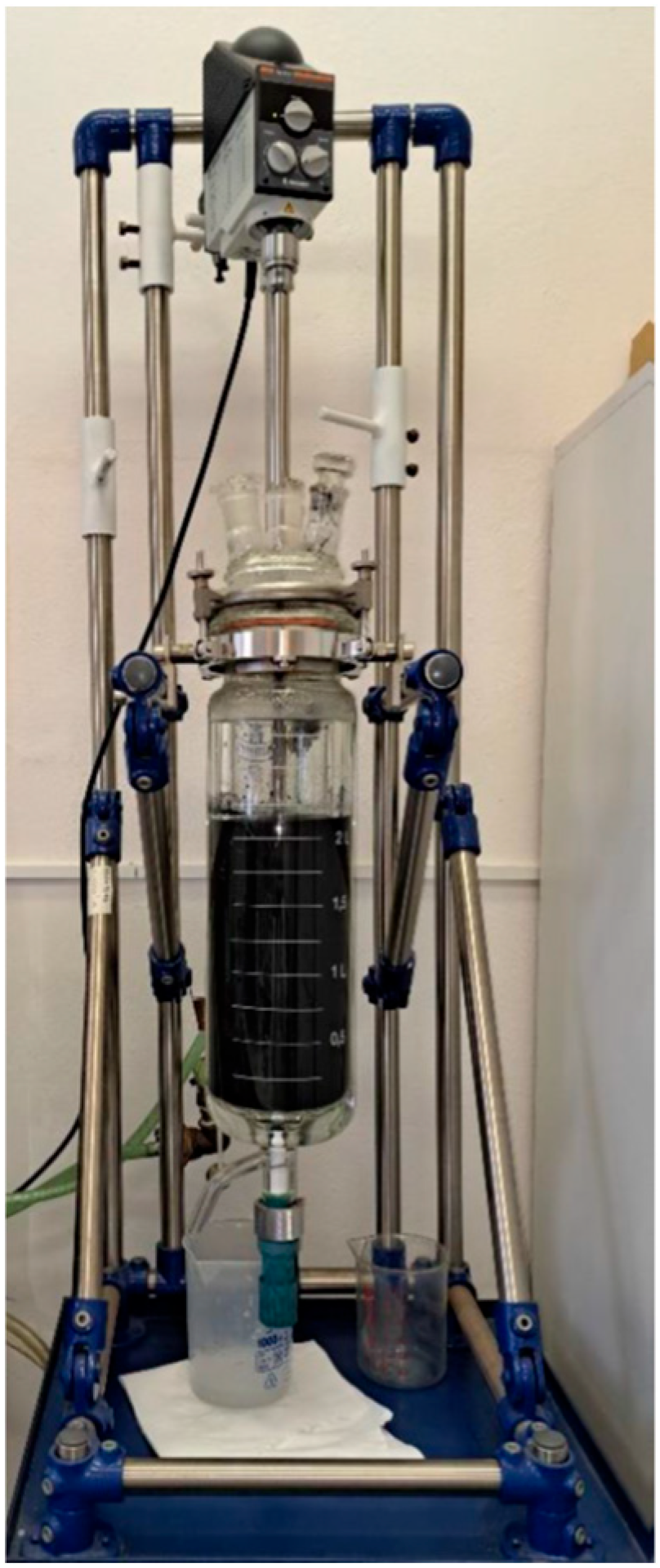
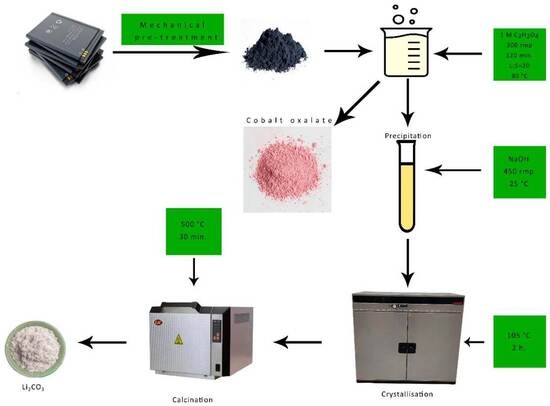
Leaching experiments with a black mass obtained from spent lithium batteries were carried out in a closed apparatus equipped with a condenser (
Figure 1) at temperatures of 20 °C, 40 °C, 60 °C and 80 °C. Oxalic acid was used as the leaching agent at three different concentrations: 0.25 M, 0.6 M and 1 M. The aim of the experiments was to investigate the influence of temperature and leaching agent concentration on leaching efficiency. In all experiments, the mixing speed was kept constant at 300 rpm and the liquid to solid ratio (L:S) at 20, with the weight of the input sample subjected to the leaching process being 12 g. All experiments were conducted under atmospheric pressure. The leaching was carried out for 60 min in the initial experiments, and subsequently, the use of a longer leaching duration, specifically 120 min, was experimentally tested. Liquid samples were taken at time intervals of 5, 15, 30, 60, 90 and 120 min. The leachates were analysed using AAS to determine the concentrations of lithium, cobalt, manganese, iron, aluminium, nickel and copper in the solution. The solid residues after leaching were analysed by XRD and SEM–EDX. The conditions identified in this study represent locally optimal conditions within the experimental range investigated. A comprehensive determination of globally optimal conditions, including the assessment of interactions among process variables, would require the application of a Design of Experiments (DOE) approach.
2.4. Precipitation Experiments
The precipitation experiments were carried out in standard precipitation apparatus with a built-in thermostat and automatic mixing with adjustable speed, at ambient temperature and at 450 rpm. To precipitate accompanying metals, the pH of the leachate was gradually adjusted using NaOH in the range of 0.5 to 12. The most significant precipitation effect was expected at pH 5 to 12, which corresponds to the intervals in which, according to fractional diagrams, metals such as Cu, Mn and Fe precipitate. Once the desired pH was reached, precipitation occurred immediately. The precipitates were then filtered, dried to a constant weight, weighed and analysed by AAS for the content of metals present.
2.5. Crystallisation and Calcination
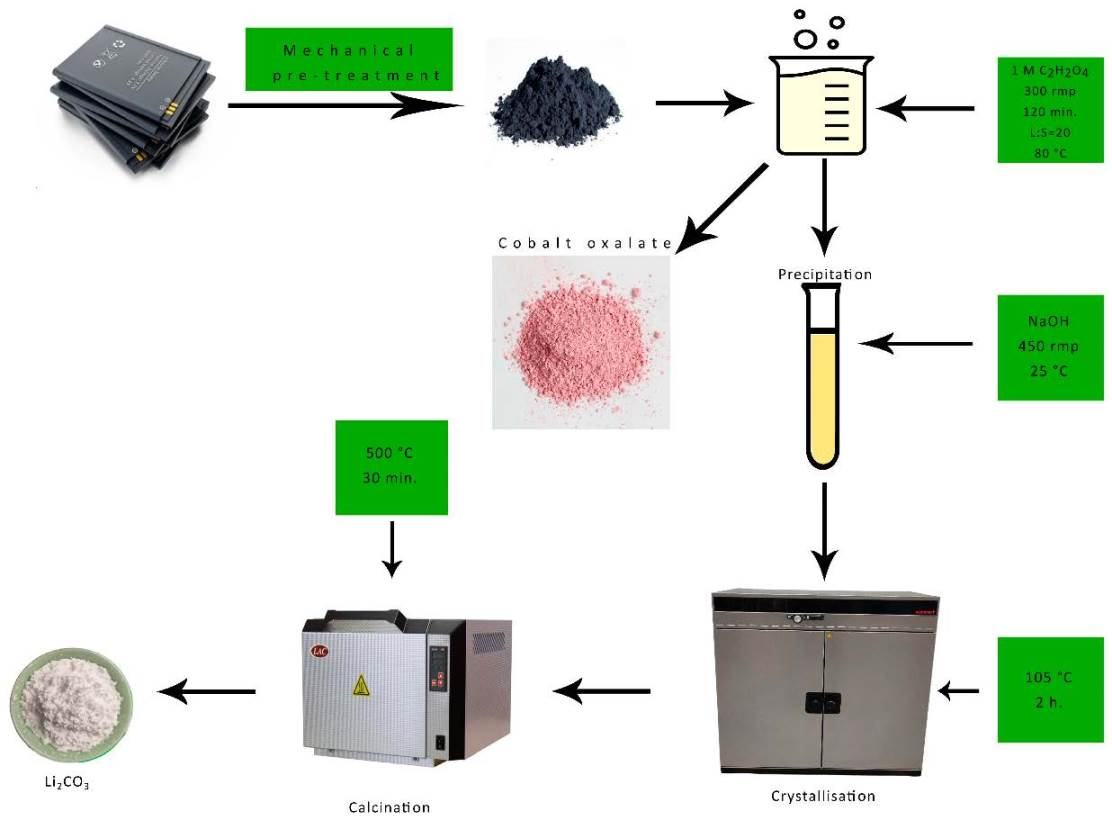
Crystallisation was carried out in crystallisation dishes at a temperature of 105 °C until complete removal of water, i.e., until a constant weight of the crystallisation was achieved. Calcination was then carried out at a temperature of 450 °C for 30 min in platinum crucibles. The obtained crystallisation and calcinate were subjected to AAS and XRD analysis.
3. Results
3.1. Characterisation of the Black Mass
A sample of black mass from spent LiBs recovered from mobile phones and laptops was used for the leaching experiments. The black mass was obtained by mechanical–physical pre-treatment, which involved several crushing and screening steps, followed by drying to constant weight. The fine fraction (<0.5 mm) containing the concentrated black mass accounted for 50.35% of the total weight of the sample. This black mass was then analysed to determine its chemical composition and phase composition. The results are shown in
Table 2.
The cobalt and lithium content in the sample was 25.54% and 3.86%, respectively. Other metals commonly found in cathode materials for LiBs, such as Mn and Ni, were present only in small amounts, suggesting that most of the input samples contained LCO as the cathode material.
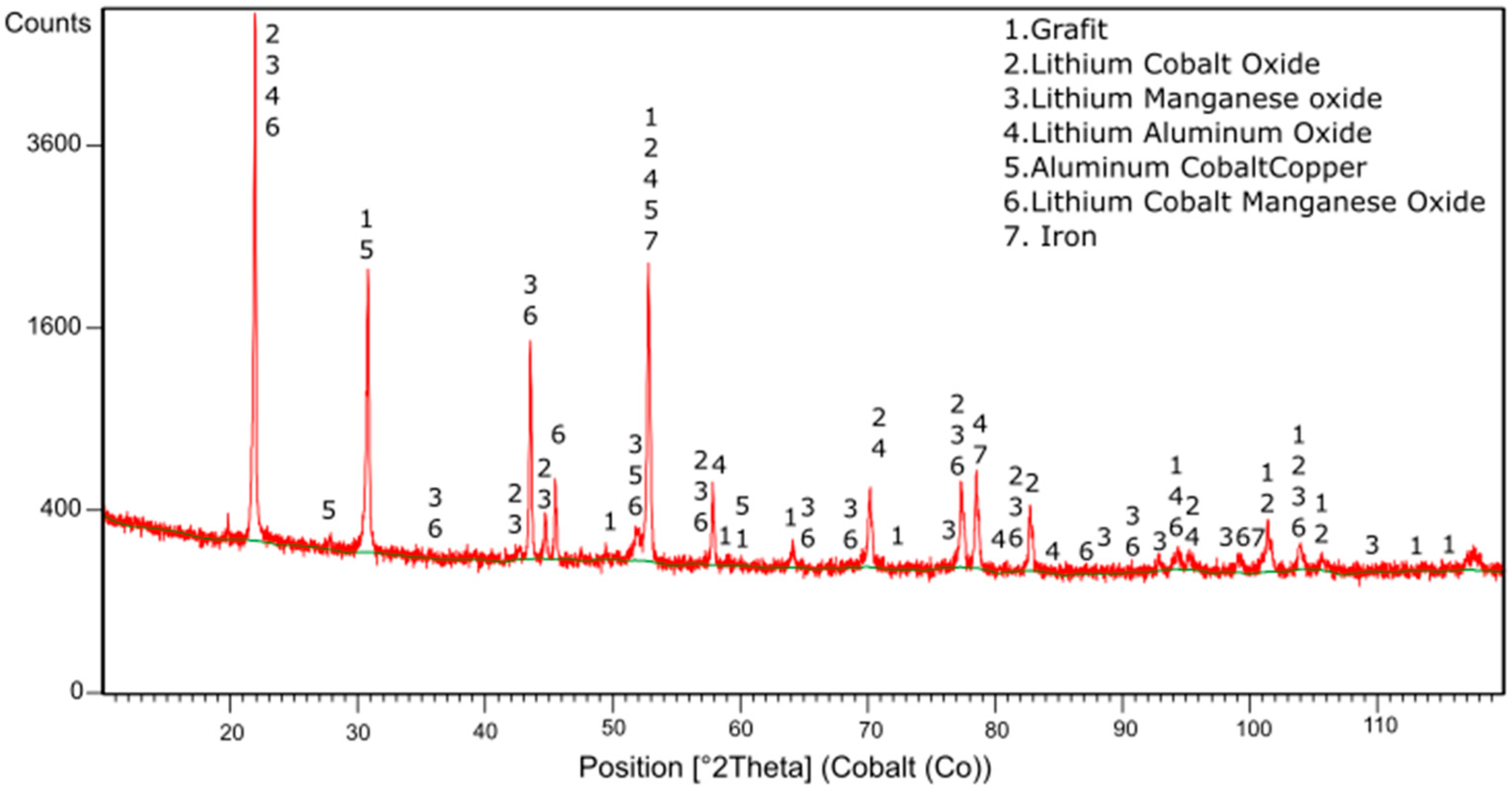
According to the qualitative XRD analysis in
Figure 2 cobalt and lithium in the black mass are mainly present in the form of LiCoO
2 and Li
2CoMn
3O
8. In addition, lithium was identified in phases such as Li
0.89Mn
1.78O
4 and LiAlO
2. The results also showed a significant proportion of graphite, which originates from the anodes of Li batteries and constitutes a major component of the black mass. These identified phases are consistent with the chemical composition of the black mass shown in
Table 2. Considering the origin of Co, Li, Mn and Ni in the black mass and the identified compounds, it can be confirmed that these metals were mainly present in oxidised form as part of the cathode material. In contrast, Fe, Al and Cu originated predominantly from electrode residues and housing materials and are likely to be present in metallic form, which was confirmed in the case of iron.
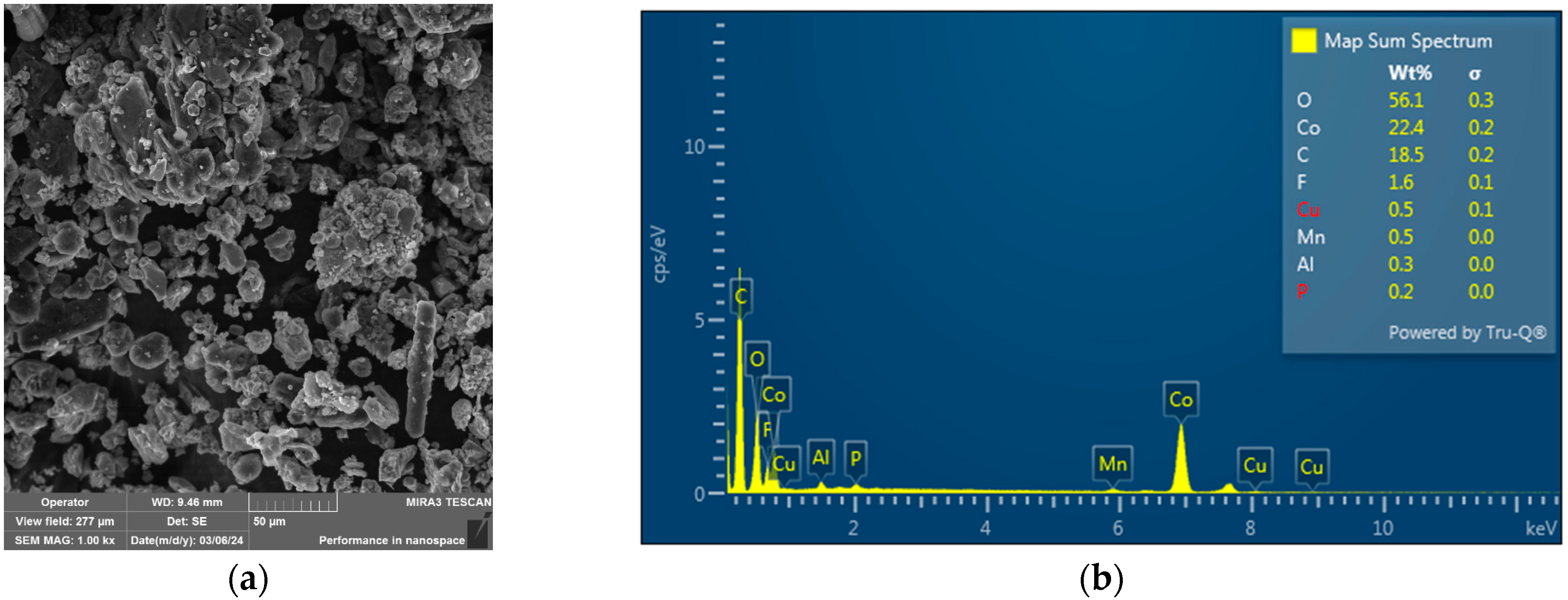
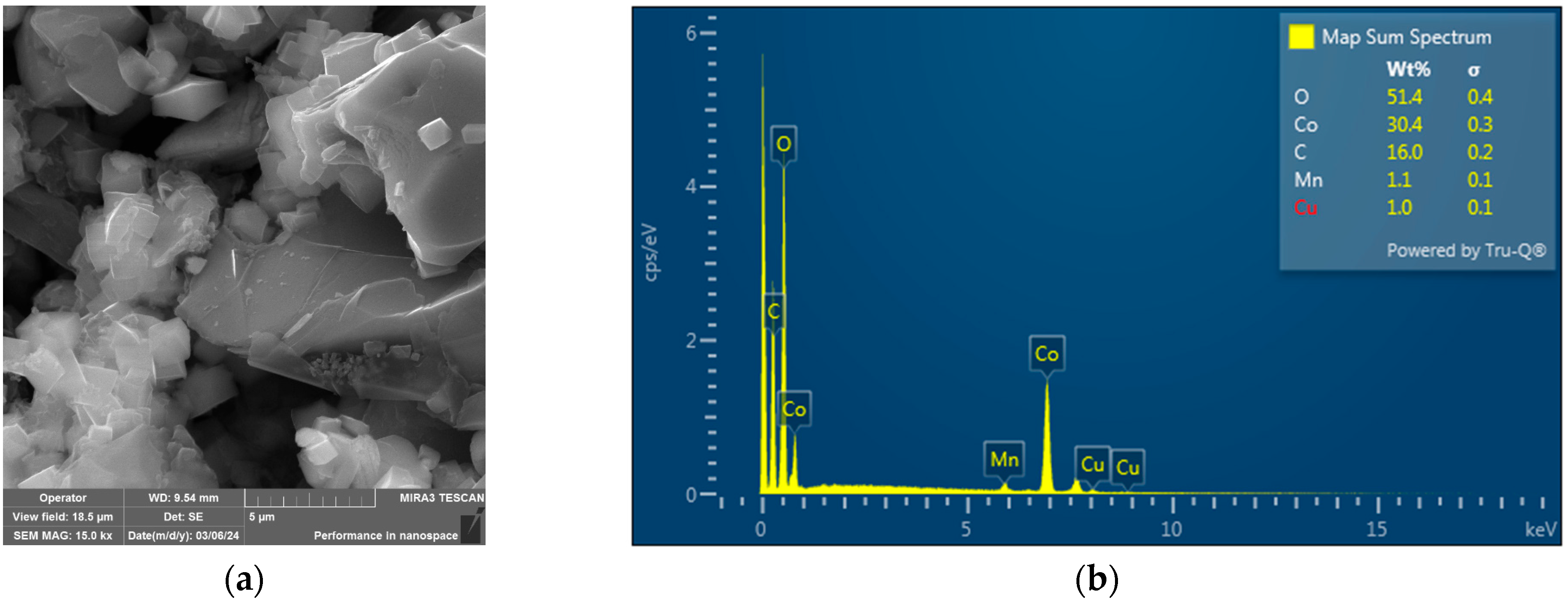
SEM-EDX analysis of the source material of the black mass from spent batteries is in
Figure 3.
EDX analysis confirmed a high cobalt and graphite content and the presence of other metals in only small quantities, such as Cu, Mn and Al. This method cannot be used to detect the presence of lithium. The input sample has a heterogeneous and agglomerated morphology with particles of varying shapes and sizes. The particles form compact aggregates and clusters. Most particles are irregularly shaped, uneven and have a rough surface. The surface is porous and has a microgranular texture.
3.2. Thermodynamic Study of Black Mass Leaching in Oxalic Acid
The aim of the theoretical investigation into the use of oxalic acid for selective lithium leaching was to analyse the behaviour of the metals present in the black mass (Co, Li, Mn, Ni and Cu) in an oxalic acid environment and to evaluate the probability of individual products forming depending on the process conditions. During the leaching of the black mass with oxalic acid, the following chemical reactions (1–4) are to be expected, listed in order of their thermodynamic favouring (or expected reactivity under the given conditions). The Gibbs energy was converted to 1 mole of leaching agent.
Based on the Gibbs free energy values (ΔG293), which are negative for all reactions, it can be concluded that the reactions are thermodynamically spontaneous and proceed in the direction of product formation. A comparison of the absolute values of ΔG293 makes it possible to rank metals according to their reaction affinity to oxalic acid, i.e., according to the probability of their transition into solution (or their precipitation as oxalates). The lowest ΔG293 value is found in the reaction between oxalic acid and LiCoO2, in which lithium is extracted and cobalt precipitates in the form of oxalate dihydrate (ΔG293 = −129.128 kJ/mol). In second place is the reaction with nickel oxide, in which nickel oxalate is formed and CO2 is released (ΔG293 = −143.51 kJ/mol). Further reactions, ranked in descending order of thermodynamic advantage, occur with manganese oxide (ΔG293 = −95.085 kJ/mol) and finally with copper oxide (ΔG293 = −44.304 kJ/mol). It follows that during leaching with oxalic acid, individual metals are gradually dissolved according to their thermodynamic stability: cobalt and lithium are likely to be extracted first, followed by nickel, then manganese and copper. This sequence is of practical importance for the design of selective processing steps, especially when combining leaching and subsequent metal separation.
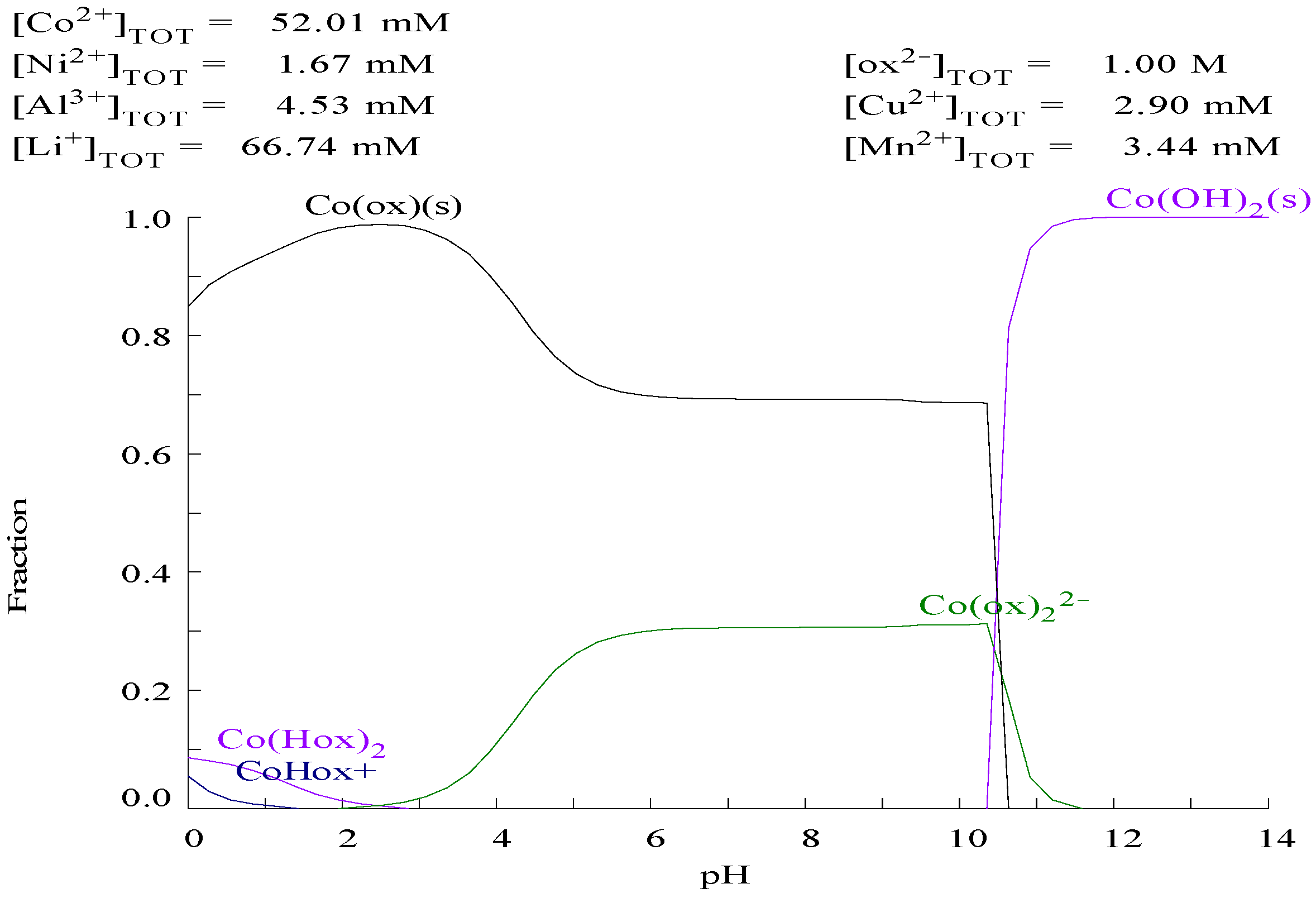
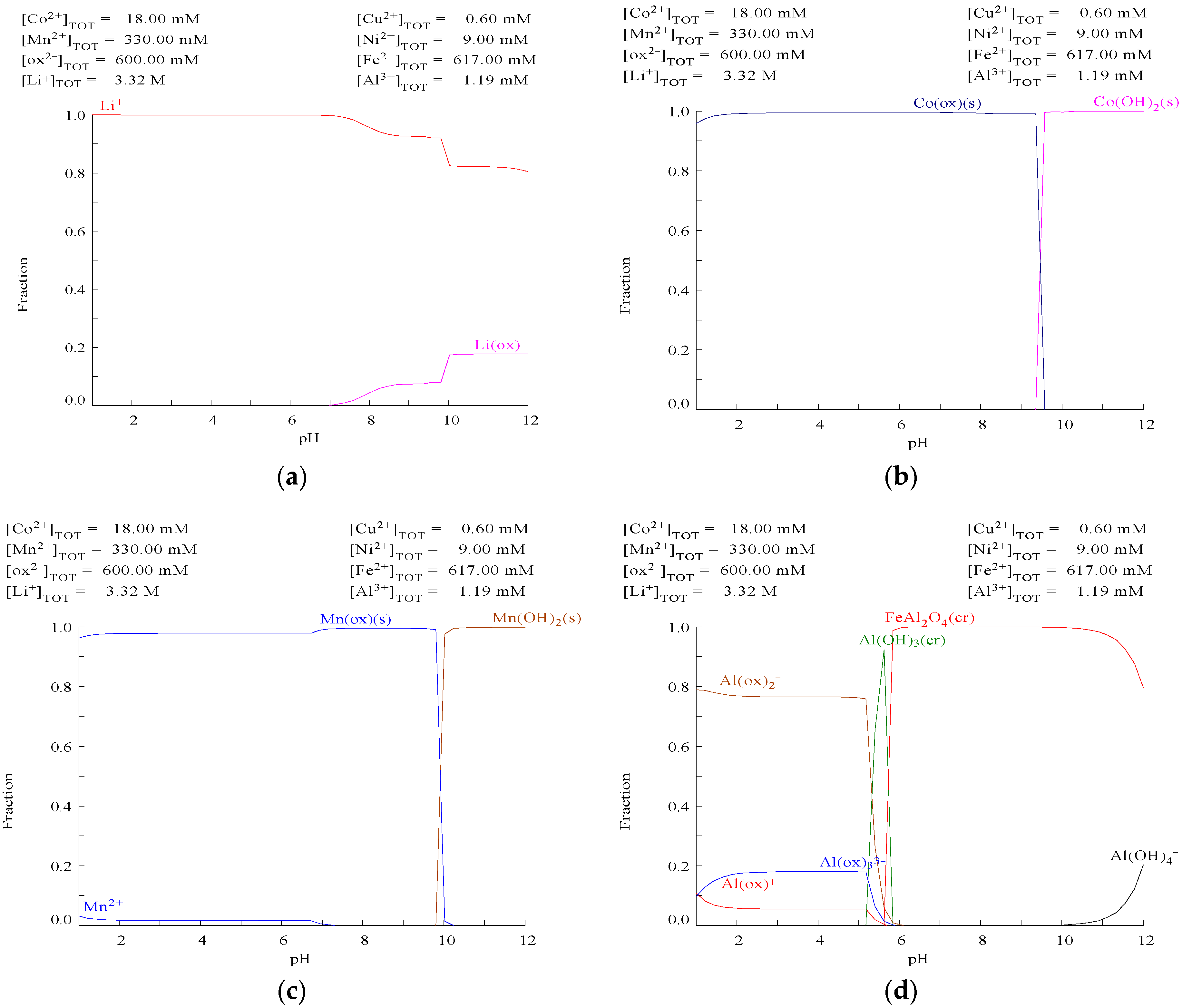
In order to visualise the dominant forms of metals depending on the pH value and the composition of the solution and to determine the stability ranges of the individual oxidation forms of metals and to evaluate the conditions under which they dissolve or precipitate, fraction diagrams were created using the Medusa programme for the two most important metals (Co and Li). These diagrams served as the basis for designing the experimental conditions for leaching and subsequent separation of the metals.
Figure 4 and
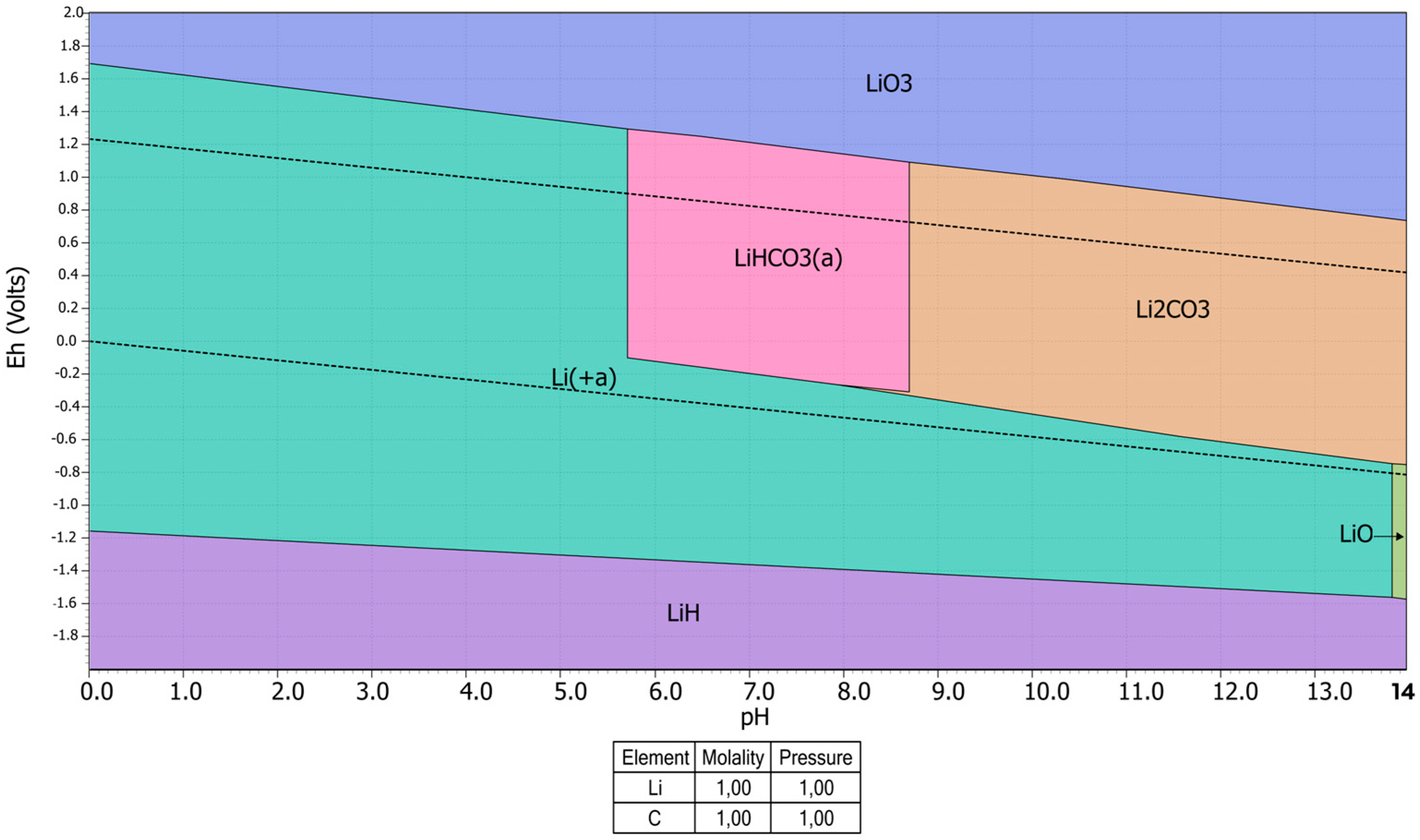
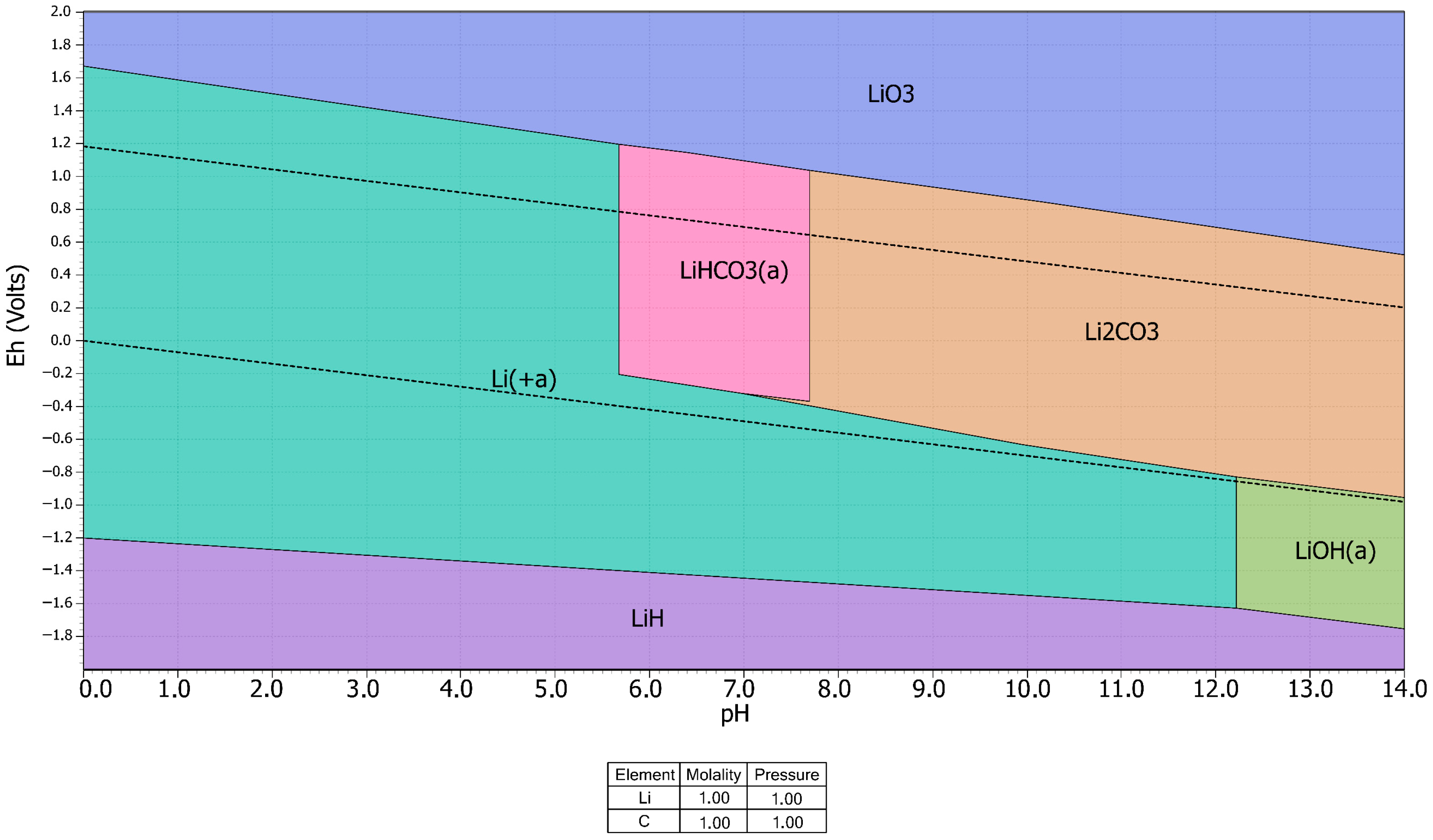
Figure 5 show the E-pH diagrams for the lithium–carbon system at both monitored temperatures. Note: The dotted lines mark the limits of water stability.
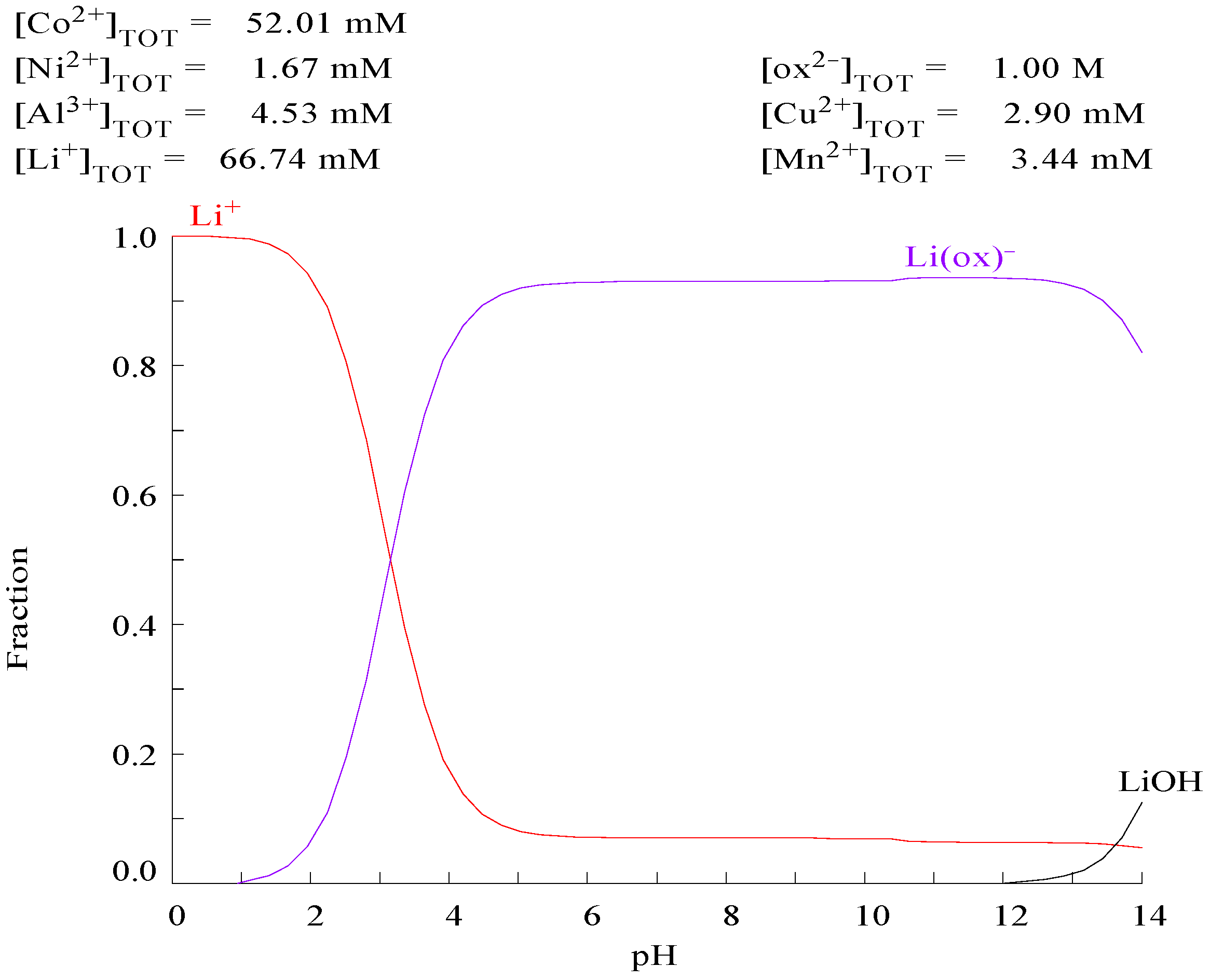
Figure 6 shows a fractional diagram of lithium in oxalic acid.
The E-pH diagrams show that at temperatures of 20 °C and 80 °C, lithium is predominantly present in the solution in the form of ions (Li
+) up to a pH value of approximately 6. Above a pH value of approximately 6, lithium hydrogen carbonate (LiHCO
3) begins to form as a transition form at both temperatures, which can exist in the solution depending on the pH value and CO
2 equilibrium [
44].
Lithium carbonate (Li
2CO
3) forms at a pH value of around 10 at 20 °C and already at a pH value of ~7 at 80 °C, which indicates that higher temperatures significantly promote carbonate precipitation. The fractional diagram in
Figure 6 shows that most of the lithium in the solution is present in ionic form up to a pH value of ~4, with soluble oxalate accounting for 90% at a pH value of 4–5.
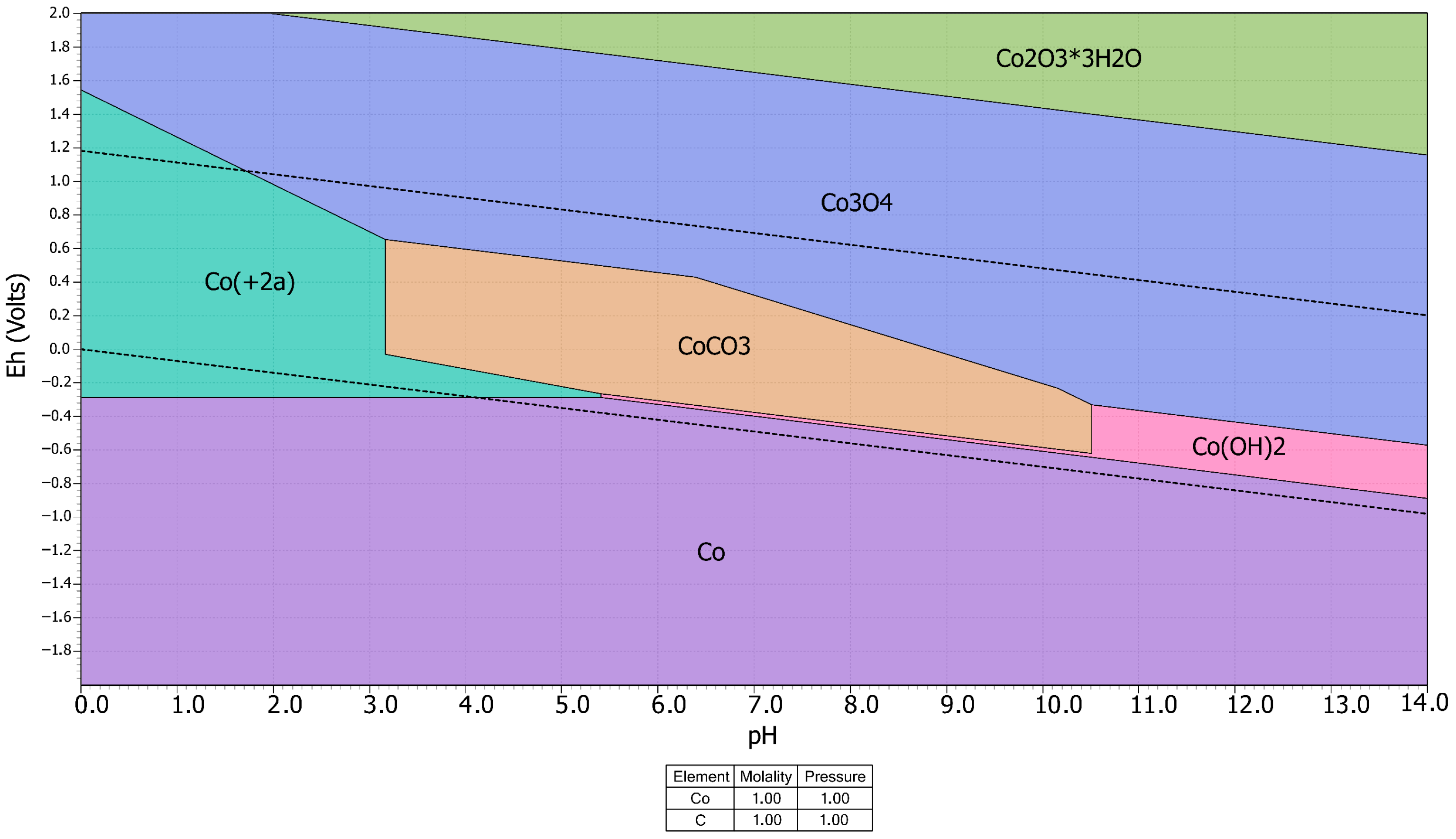
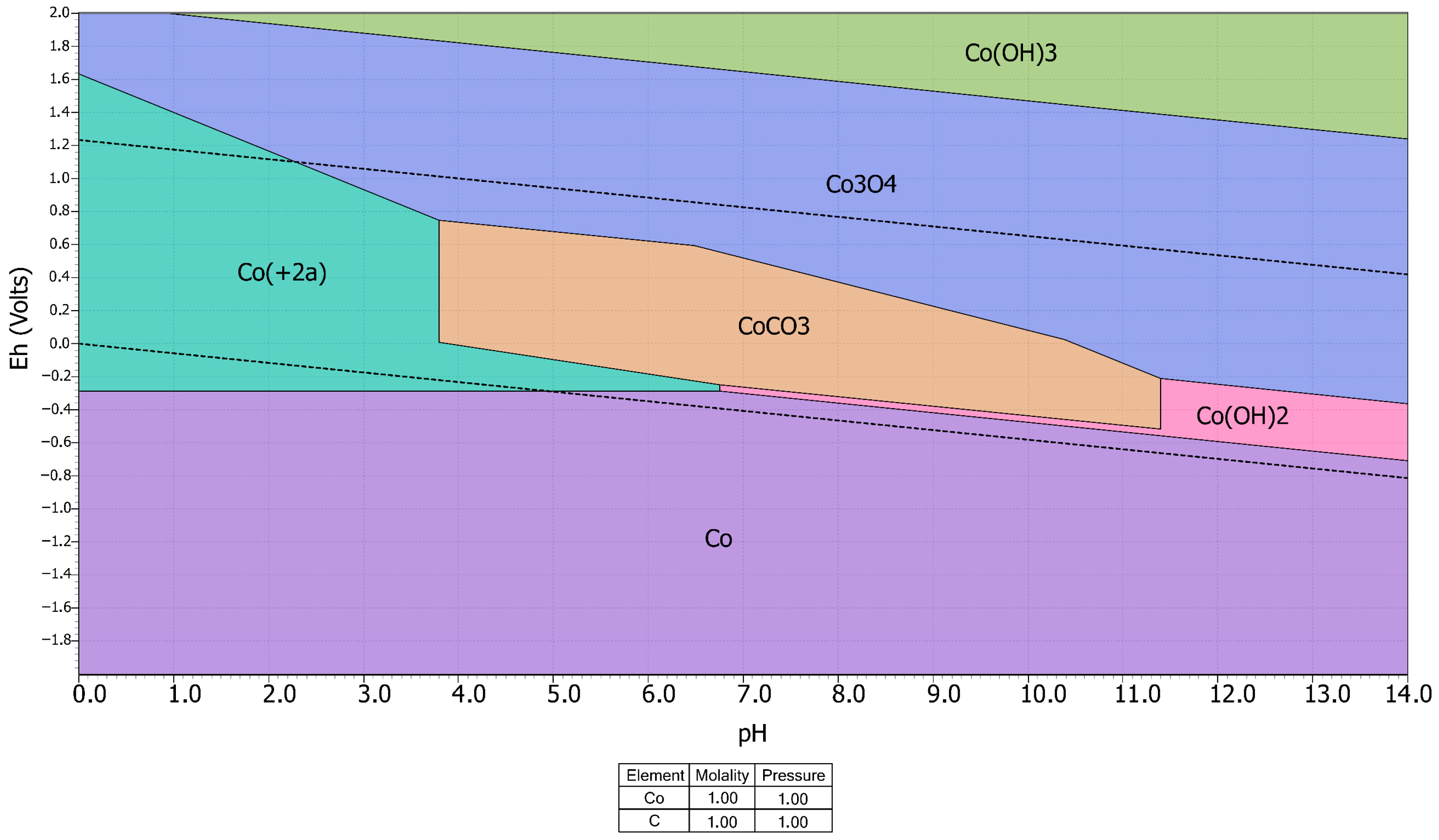
Figure 7 shows E-pH diagrams for the Co-C system at boundary temperatures of 20 and 80 °C.
Figure 8 and
Figure 9 show a fractional diagram for the behaviour of cobalt in an oxalic acid environment.
According to E-pH diagrams, cobalt in the form of ions (Co2+) is stable at a temperature of 20 °C up to a pH value of approximately 4. Above this value, insoluble cobalt carbonate (CoCO3) forms. At higher temperatures (80 °C), this transition shifts to a higher pH value, approximately pH 5, which indicates the temperature dependence of the solubility of cobalt salts.
The fraction diagram for cobalt in oxalic acid (
Figure 9) shows that cobalt forms complex compounds with oxalates in the pH range from 0 to 7, such as CoC
2O
4 or [Co(C
2O
4)
2]
2−. Depending on the pH value and concentration of the ligands, these complexes can be present in the solution in soluble or insoluble form. Depending on the pH value and concentration of the ligands, these complexes can be present in the solution in soluble or insoluble form. However, at very low pH values (0–3), the insoluble form dominates, which does not quite correspond to the E-pH diagrams, which do not take complex formation into account. This discrepancy highlights the limitations of theoretical models in predicting the actual behaviour of metals in systems containing complexing agents such as oxalic acid. However, experimental evidence suggests that cobalt predominantly precipitates as insoluble cobalt oxalate (CoC
2O
4·2H
2O) in such environments and that its solubility is limited. According to the speciation diagram, a significant transition to seepage water can only be observed at a pH value of approximately 4, which underscores the need to combine theoretical approaches with experimental data to assess the behaviour of the system more accurately.
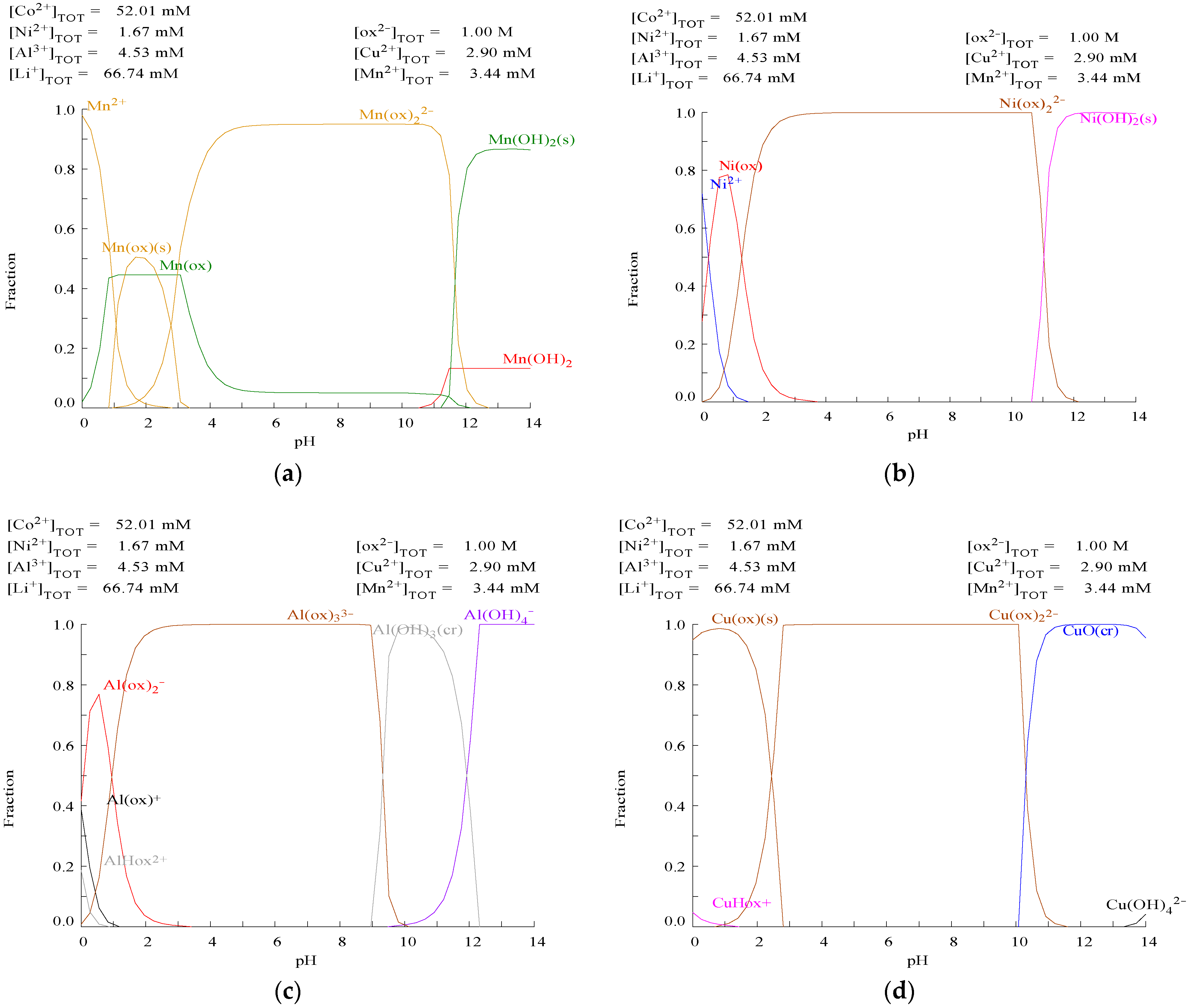
Figure 10 shows fractional diagrams of accompanying metals.
Based on E-pH and fractional diagrams (
Figure 10), it can be concluded that selective leaching of lithium from the black mass of spent lithium batteries is theoretically possible. In an oxalic acid environment, lithium is mainly present in the form of free Li
+ ions at a pH value of around 6, which are highly soluble and chemically stable over a wide pH range. In contrast, transition metals such as cobalt, manganese and nickel typically form oxalate complexes under acidic conditions (especially at a pH value < 4), which have low solubility and usually precipitate as salts of the type Me(C
2O
4)·xH
2O (Me = Co, Mn, Ni) [
43].
These metals thus remain bound in the solid phase, allowing them to be separated from the lithium during leaching. Fraction diagrams show that these metals are only leached at higher pH values. A notable exception to this trend is aluminium, which is present in the form of complexes that are soluble in an oxalate environment at very low pH values. This means that it can pass into the leachate together with lithium, reducing the selectivity of the process. In practice, it may therefore be necessary to remove aluminium from the leachate (e.g., by selective precipitation or solvent extraction) or to select a suitable pH value that minimises its solubility. These findings suggest that the optimisation of leaching conditions should aim to maximise lithium yield while minimising leach contamination from transition metals and aluminium.
3.3. Leaching Experiments
This chapter presents the results of experiments investigating the effects of temperature, leaching time and acid concentration. Not only lithium was considered, but also other metals present, such as cobalt, manganese, aluminium, copper, iron and nickel, which can partially dissolve into the solution under various conditions and impair the purity of the resulting leachate. The experimental data obtained in this phase serve as the basis for designing optimal leaching conditions to maximise the selective recovery of lithium and minimise the presence of unwanted metals in the solution. Based on the results obtained, optimal leaching conditions were then determined that enable efficient and selective recovery of lithium while minimising the transfer of unwanted metals into the solution.
3.3.1. Effect of Temperature
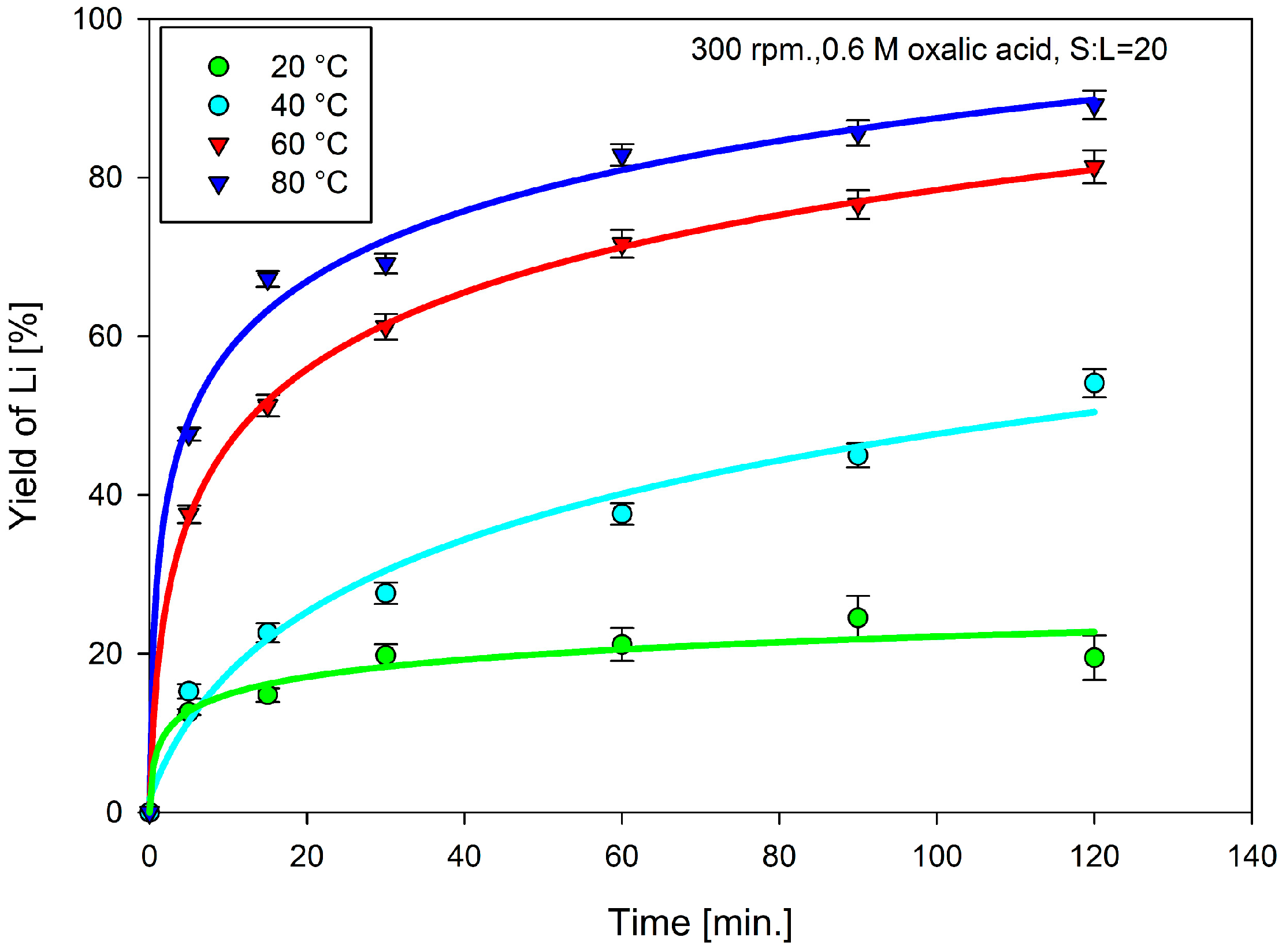
Figure 11 shows the influence of temperature (20–80 °C) on the lithium yield when leaching black mass from spent Li batteries in 0.6 M oxalic acid at an L:S ratio of 20 over a period of 0–120 min.
Figure 11 shows that the highest lithium yield under the given conditions was achieved at a temperature of 80 °C—almost 90%. The curves also show that the leaching process was not yet complete, suggesting that extending the leaching time could lead to a further increase in lithium yield.
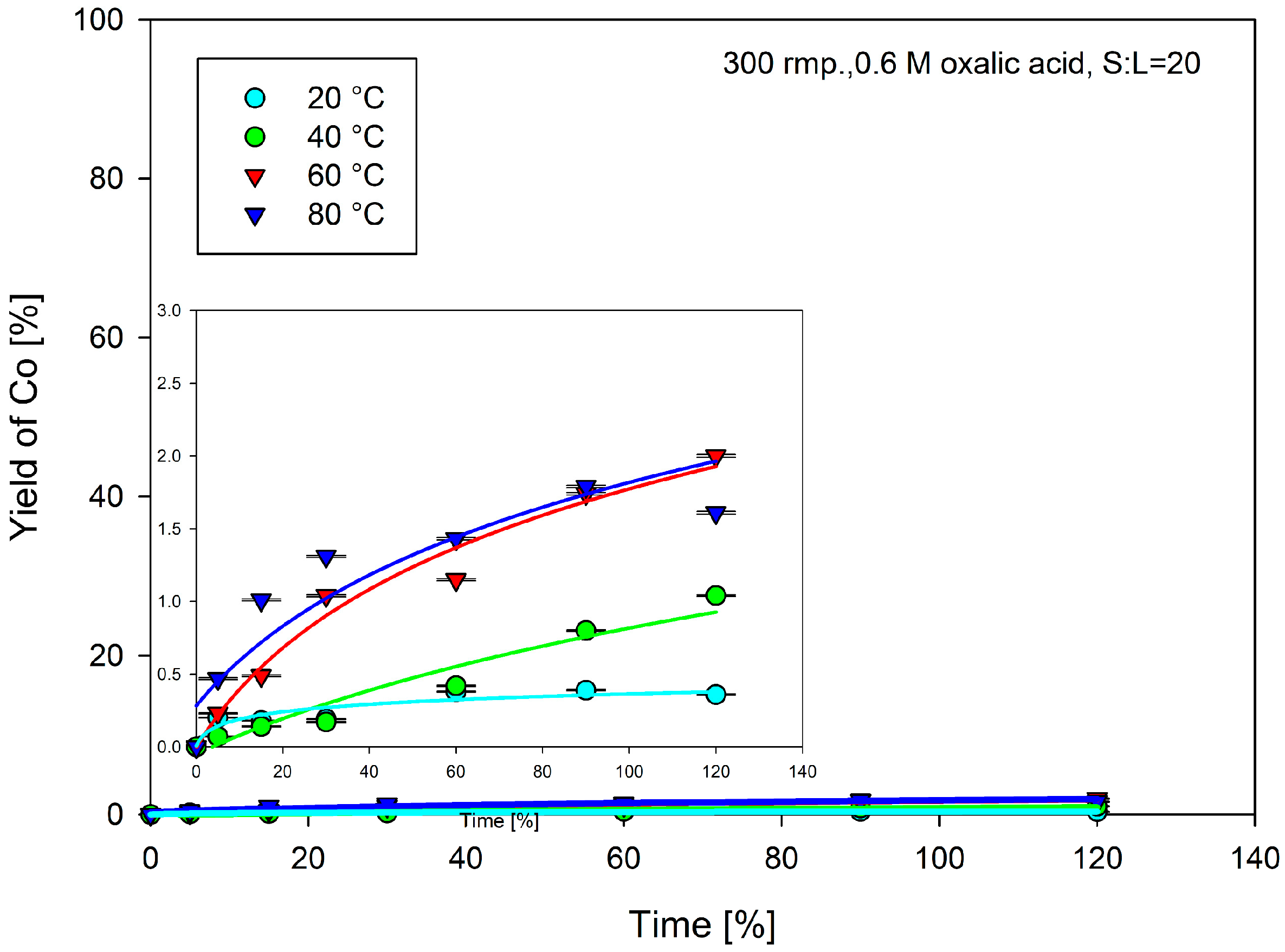
Figure 12 shows the influence of temperature on cobalt yield during leaching in oxalic acid under the specified conditions.
As can be seen in
Figure 12, the cobalt yield ranged between 0 and 3%, with the highest value measured at a temperature of 60 °C. This result confirms that oxalic acid acts as a selective leaching agent, with lithium transferring into the solution and cobalt transferring into the solution only to a very limited extent. Error bars are part of the graph, but due to the low percentage yield and low standard deviation, they are less visible.
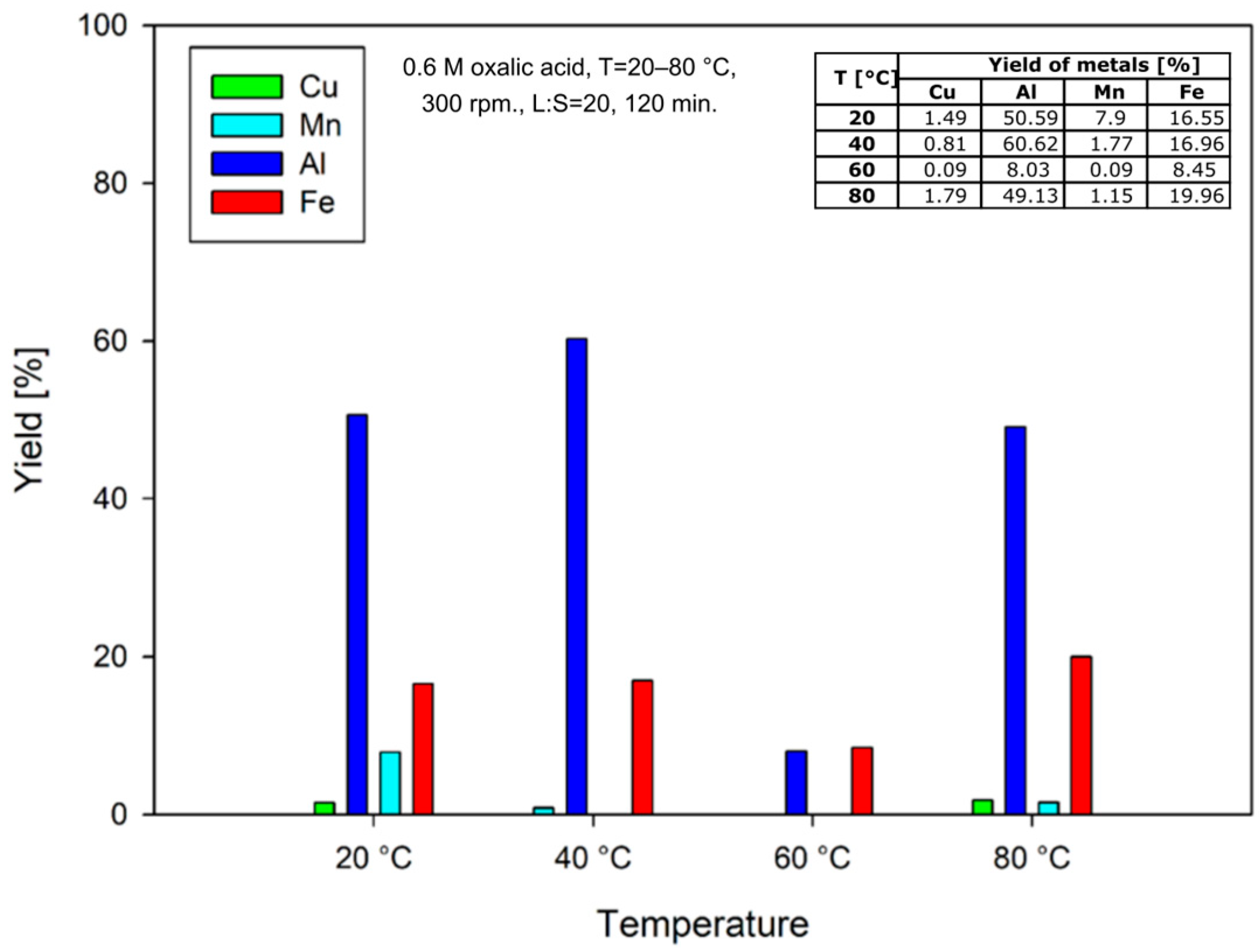
Figure 13 shows the transition of minor accompanying metals into the leachate during the leaching of the black mass in 0.6 M oxalic acid at temperatures of 20–80 °C and 300 rpm after 120 min of leaching. These results are consistent with the results obtained by the authors [
45].
As shown in
Figure 13, aluminium has the highest yield of all the accompanying metals examined. The maximum yield was measured at T = 40 °C (60.3%). Since aluminium is present in the black mass in metallic form as residues from electrodes and packaging, its leaching probably occurs through a redox reaction with oxalic acid, in which hydrogen is simultaneously produced according to reaction (5):
A temperature increase from 20 °C to 40 °C may have promoted the kinetics of this reaction, but a further increase in temperature probably led to the formation of a passivation layer or inhibition of dissolution due to the reduced stability of aluminium oxalate complexes under the given conditions. The significant decrease in yield at 60 °C (to 8%) could be a consequence of these factors.
The highest Mn yield was achieved at T = 20 °C (7.9%) and decreased with increasing temperature, so that it was practically zero at 60 °C (0.085%). This decrease in yield could be related to the formation of insoluble manganese oxalate (MnC2O4·xH2O). At lower temperatures, this complex may be more soluble, but at higher temperatures its solubility decreases and Mn precipitates, reducing its concentration in the leachate.
The iron yield was relatively stable at all monitored temperatures, ranging between 8.4% and 20%, with the maximum value measured at T = 80 °C. Since iron is present in the black mass in the form of metallic Fe0, it must be oxidised to be released into the leachate. In an oxalate environment, iron can be oxidised to divalent iron (Fe2+), which then reacts with oxalate ions to form soluble complexes such as Fe(C2O4) or [Fe(C2O4)2]2−. An increase in temperature promotes the kinetics of oxidation and complex formation, resulting in higher iron yields at higher temperatures.
The copper yield was generally very low, with a maximum at 80 °C (1.79%) and a minimum at 60 °C (0.085%). The low yield indicates that copper is practically not leached under the given conditions, which is advantageous from the point of view of selectivity.
3.3.2. Optimisation of the Concentration of the Leaching Agent
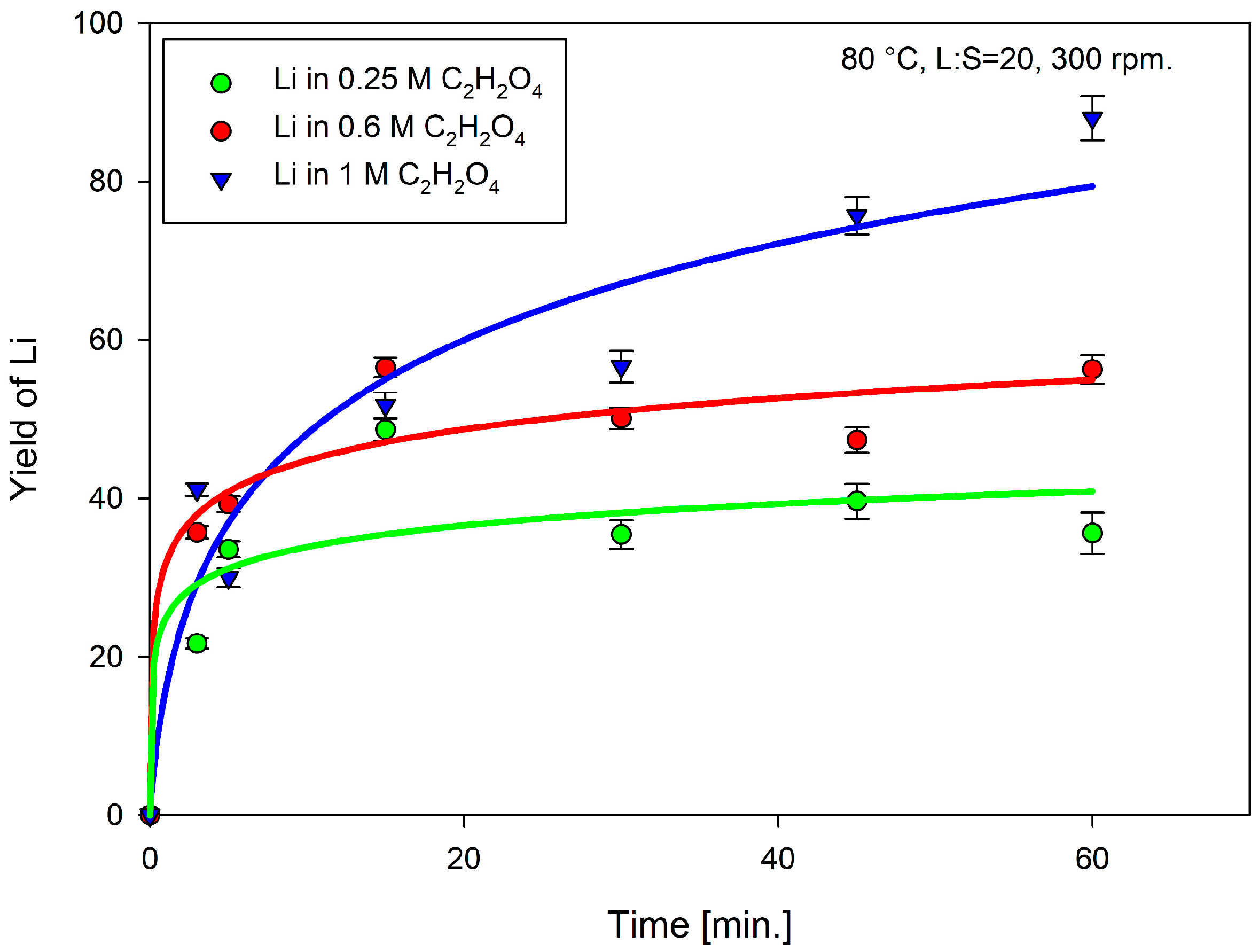
The next step was to investigate the influence of the leaching agent concentration on the lithium and cobalt yield. Two additional oxalic acid concentrations were selected, namely 0.25 M and 1 M. The experiments were carried out at T = 80 °C, where the highest Li yields were achieved, at a speed of 300 rpm, L:S = 20 and a leaching time of 60 min.
Figure 14 shows the influence of oxalic acid concentration on lithium yield during 60 min of leaching.
As shown in
Figure 14, the highest lithium yield was achieved with 1 M oxalic acid–88%. Based on the test results, it can be concluded that for effective lithium leaching, the use of oxalic acid in a concentration of at least 1 M at a temperature of 80 °C and a leaching time of 60 to 120 min is appropriate. Higher acid concentrations were not investigated in this study, so their possible effect on yield remains unknown.
3.3.3. Kinetic Investigation of Lithium Leaching
Investigating lithium leaching kinetics is an important step towards optimising the processes involved in separating and extracting lithium from various material sources. In this part of the work, the apparent activation energy (Eₐ) for lithium leaching was determined based on experimental data obtained using 0.6 M oxalic acid (C
2H
2O
4) as the leaching agent (
Figure 11) at various temperatures (20, 40, 60 and 80 °C) and a leaching time of 120 min.
To calculate the activation energy, the lithium conversion (α) was first determined from the mass balance between the solid residue and the solution. The lithium conversion degree (α) during leaching with 0.6 M oxalic acid was calculated using Equation (6) [
46].
where m
0 is the amount of Li in the solid sample at time t = 0 and m is the calculated amount of lithium in the solution at the specific time of leaching.
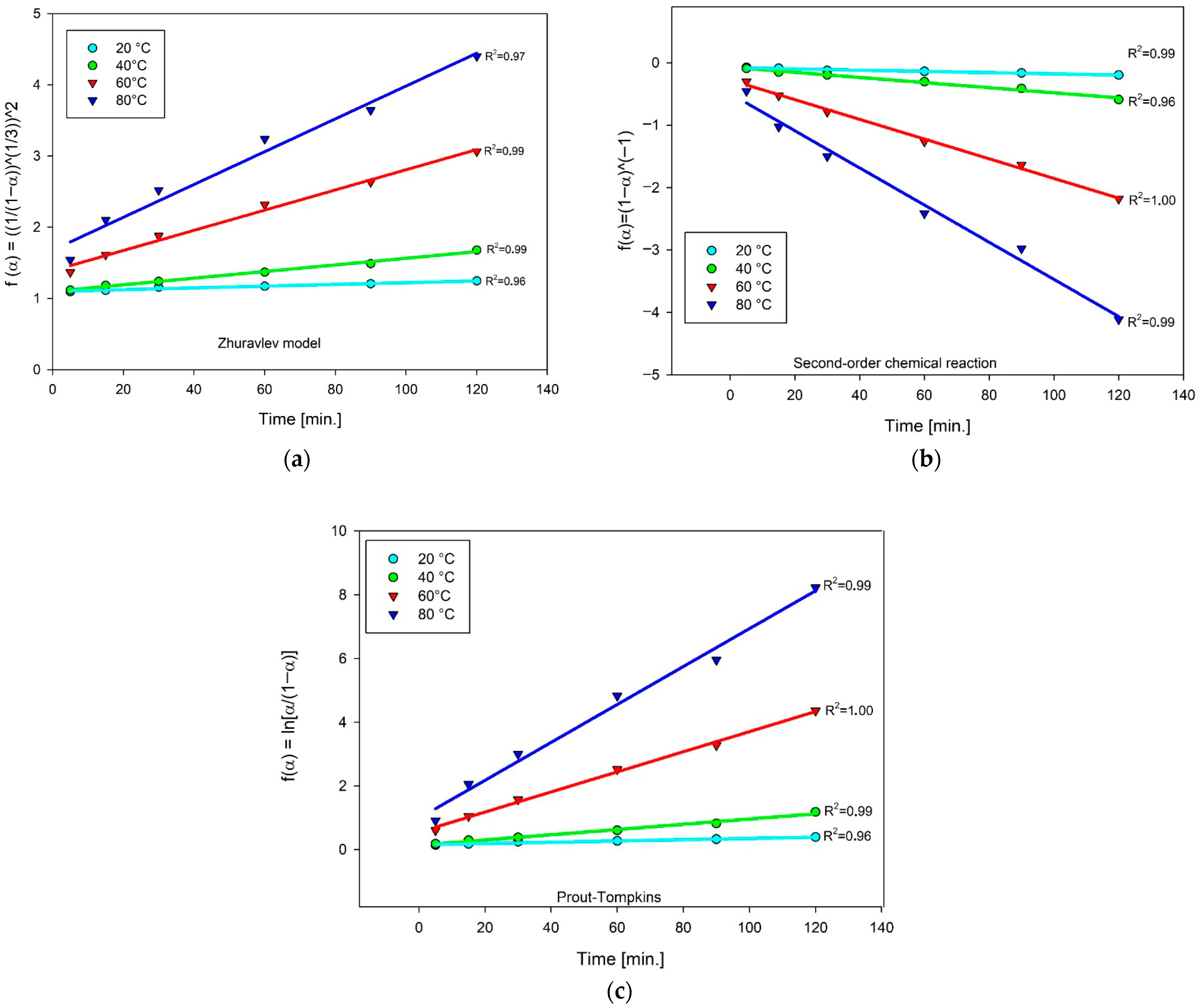
Various kinetic models were then applied to evaluate the linear relationship between the specific model function f(α) and time (t). A model was only considered applicable if a strong linear correlation between f(α) and t was observed, as indicated by a high coefficient of determination (R2) with values above 0.95.
Table 3 shows the kinetic models used [
46] and their calculated R
2 values from the 0.6 M C
2H
2O
4 leaching in the time interval from the 5th to the 120th minute of the experiment. The R
2 values given in
Table 3 confirmed the three models (Zhuravlev model, second-order chemical reaction and Prout–Tompkins) with R
2 values above 0.95.
The time dependence of the functions of the selected diffusion models and the value of R
2 are shown in
Figure 15.
The Zhuravlev model is based on the kinetics of reactions that take place on the surface of solid particles and considers the influence of surface interactions and possible diffusion restrictions that can affect the overall reaction rate [
47]. The second-order chemical reaction model assumes that the process is purely chemically controlled and that the reaction rate depends quadratically on the concentration of the reacting substances. This approach is often used for homogeneous chemical reactions or simple molecular interactions [
48]. In contrast, the Prout–Tompkins model assumes an autocatalytic mechanism in which the product formed during the reaction accelerates the further course of the reaction, which is typical for some heterogeneous systems with nucleation and growth [
49].
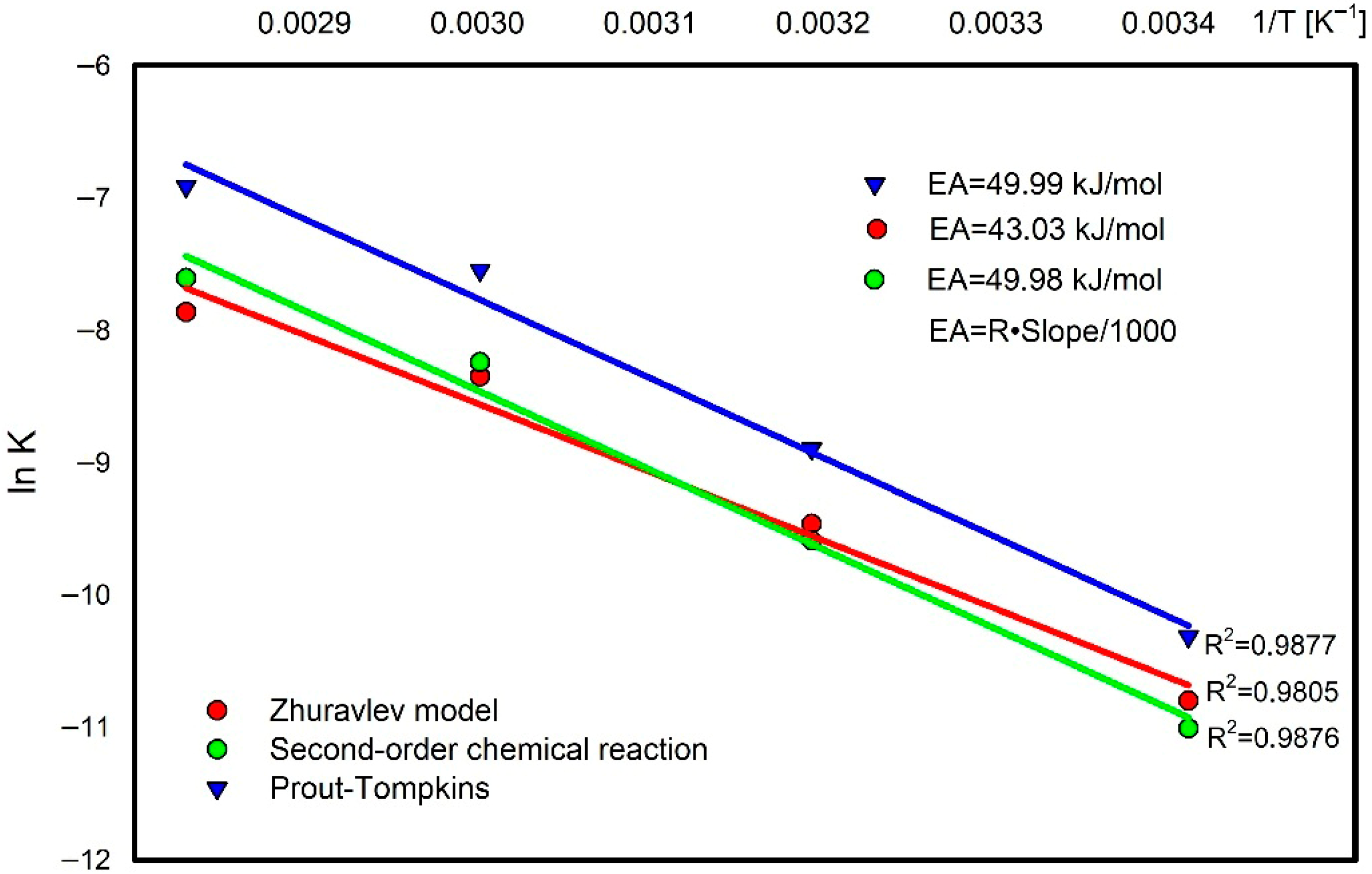
The apparent rate constants (k) were extracted from the slopes of the selected model function at different temperatures, and their natural logarithm values (ln k) were plotted against the reciprocal temperature (1/T) (
Figure 16). The apparent activation energy was calculated from the slope according to the Arrhenius Equation (7) in the following form:
Activation energy values below 21 kJ/mol indicate that diffusion is the rate-determining step of the reactions, in the range of Ea values from 21 to 35 kJ/mol it is a mixed mechanism, and activation energy values above 35 kJ/mol indicate that the rate-determining step is a chemical reaction [
46]. The activation energy (Ea) calculated from three different kinetic models confirms that lithium leaching at four different temperatures has Ea values above 35 kJ/mol, suggesting that temperature and acid concentration significantly influence leaching efficiency. Chemically controlled processes are generally strongly influenced by temperature [
48].
3.4. Characterisation of the Insoluble Residue from Leaching
The solid residue obtained after leaching the black mass from spent LiBs under the following conditions: 0.6 M oxalic acid, T = 80 °C, duration 2 h, L:S ratio = 20 and stirring at 300 rpm, was analysed using AAS, XRD and SEM-EDX methods.
Table 4 shows the chemical composition of the solid residue analysed using the AAS.
Figure 17 shows the SEM-EDX record of the solid residue after leaching. Based on chemical analysis and EDX analysis, it can be concluded that the solid residue contains Co, Mn, Fe, Al and Ni. EDX analysis in this case does not allow Li to be analysed, but based on AAS, its content is lower than in the input sample because extraction is not 100%.
As shown in
Figure 17, the solid residue consists of regularly shaped particles whose Co-C-O content is approximately 97% according to EDX analysis, indicating the presence of cobalt in the oxide phase or possibly in the stannate. In area (1), rod-shaped (rod-like, needle-like) crystals typical of CoC
2O
4·2H
2O can be observed. This morphology corresponds to the description of a ‘rod-shaped structure’ for CoC
2O
4·2H
2O [
50] and suggests that this structure was formed by the precipitation of cobalt using oxalic acid and is most likely cobalt oxalate.
3.5. Precipitation Experiments
3.5.1. Theoretical Investigation of Precipitation
NaOH was selected as a precipitating agent for the precipitation of accompanying metals, the presence of which hinders the extraction of lithium from seepage water. NaOH was selected as a means of purifying the seepage water from accompanying metals. The aim was to gradually precipitate all impurities except lithium based on a pH change and to obtain a purified solution. Precipitation takes place according to the following Equation (8):
Metals in ionic form will theoretically precipitate from the extract with the addition of NaOH in the form of hydroxides—Mn(OH)
2, Co(OH)
2, Ni(OH)
2, Cu(OH)
2, Fe(OH)
3 [
42]. The solubility products of these compounds are found in
Table 5.
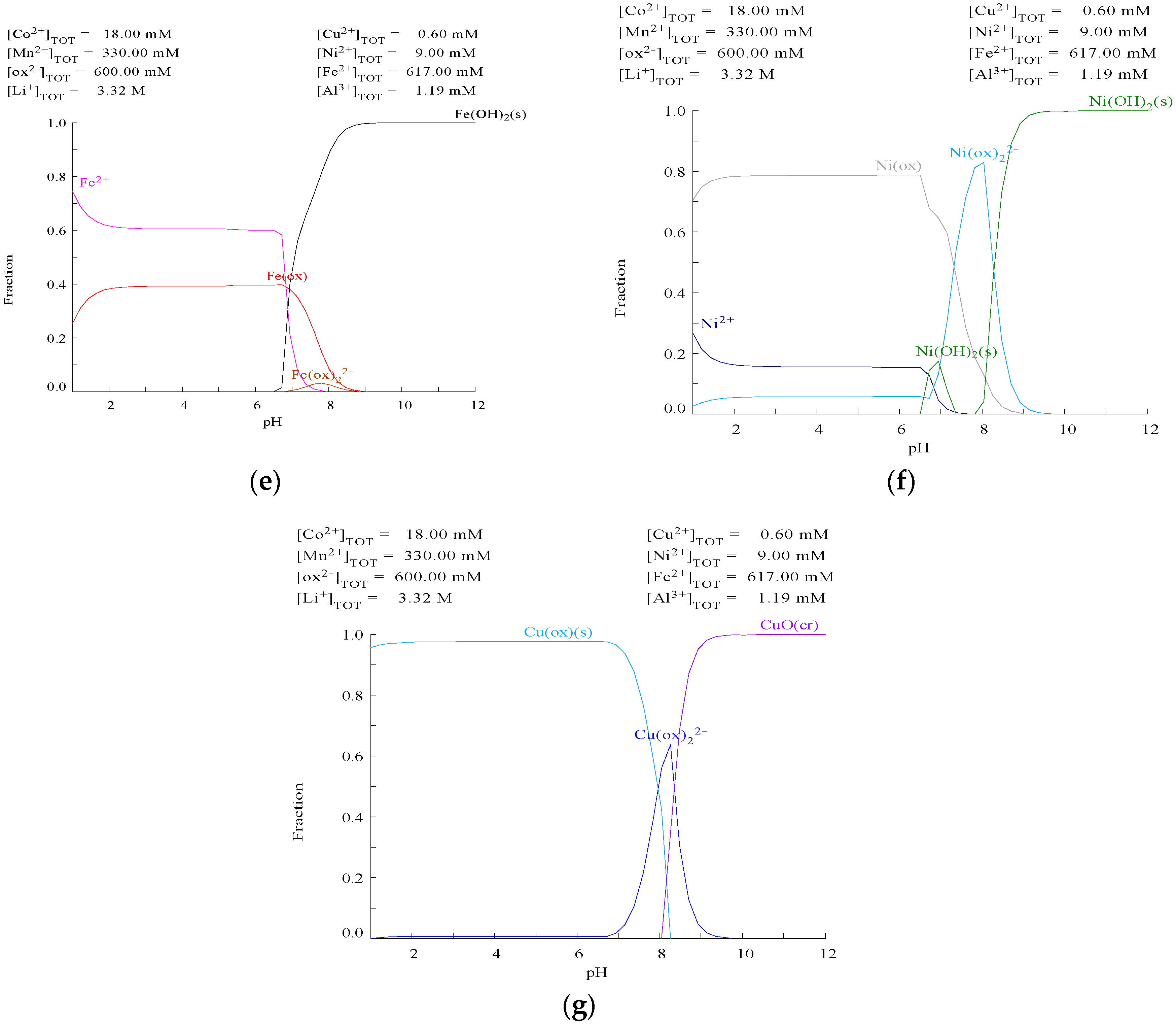
Figure 18 shows fractional diagrams of metals—Mn, Ni, Al and Cu in oxalic acid and NaOH environments.
Fraction diagrams can be used to create a sequence in which, by gradually changing the pH value, the contaminants present in soluble form in the leachate should precipitate out of the leachate in the form of (hydr)oxides: Al, pH ~5 → Fe, pH ~ 6→Ni, pH ~ 7 → Cu, pH ~8 → Mn pH ~10. This sequence results from the stability of metal complexes with oxalic acid and the formation of (hydr)oxides at different pH values. A correctly selected pH range should theoretically enable their selective separation from the mixture.
3.5.2. Results of the Precipitation Experiments
The extract intended for the study of precipitation was obtained under the following conditions: 1 M oxalic acid, 60 °C, 300 rpm, L:S = 20 and a leaching time of 3 h with a final volume of 1800 mL. The experiments were carried out on a volume of 200 mL. Precipitation of impurities was carried out by gradually increasing the pH using NaOH up to a value of pH 12. The content of the monitored metals in the obtained extract and in the extract after precipitation of accompanying metals, analysed by the AAS method, is shown in
Table 6.
The results of the large-scale experiment confirmed earlier laboratory results, as lithium passes into the solution to a considerable extent, while other metals such as Ni, Al, Mn, Fe, Cu and Co only pass into the seepage water in low concentrations or remain predominantly in the insoluble phase.
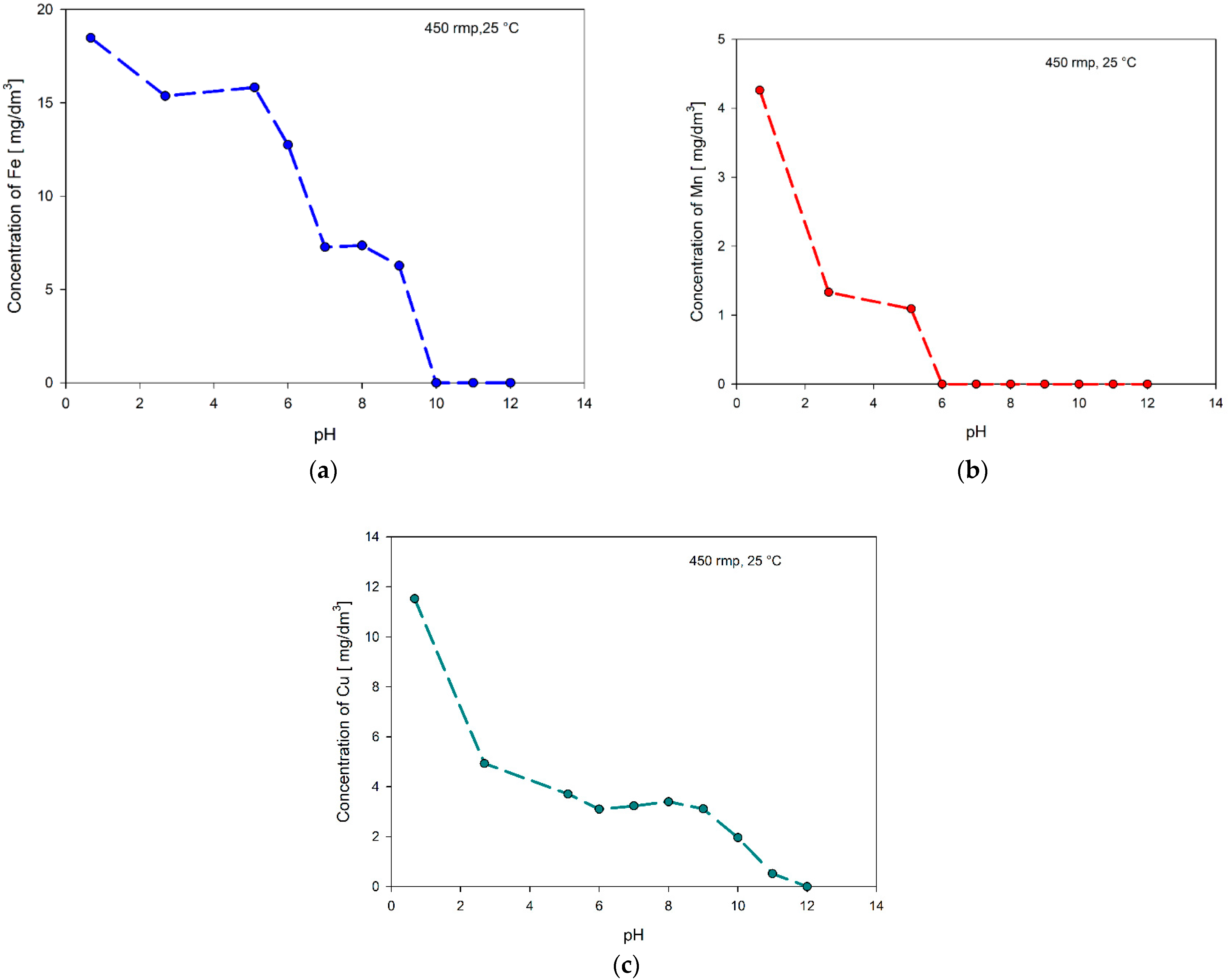
The influence of pH (0.5–12) on the precipitation of the accompanying metals Fe, Mn and Cu using NaOH is shown in
Figure 19. The graphs show the decrease in concentration in the leachate as a function of pH during precipitation at a temperature of 25 °C, rpm = 450, with sampling after each addition of NaOH and change in pH. The sample volume was 10 mL.
As shown in
Figure 19, iron began to partially precipitate at a pH of 2.7, with complete precipitation occurring at a pH of 10. Manganese began to precipitate at a pH of 2.69 and was completely precipitated at a pH of 6. Copper also began to precipitate at a pH of 2.69, but complete precipitation was not achieved until a pH of 12. Subsequently, the pH was reduced to pH = 2 using oxalic acid in order to precipitate sodium.
After precipitation of the accompanying metals, the refined lithium-containing extract had a pH of 2 and contained sodium that originated from the precipitating agent and had been transferred to the extract during the precipitation process. This sodium could act as a significant impurity during the subsequent crystallisation of the leachate and was therefore precipitated by adjusting the pH to 2 by adding oxalic acid, at which point chemical reaction (9) was expected to occur.
This reaction leads to the formation of insoluble Na
2C
2O
4, which is subsequently removed by filtration. The ΔG
293 is approximately −256.181 kJ/mol, indicating that the reaction proceeds spontaneously. Although pure Na
2C
2O
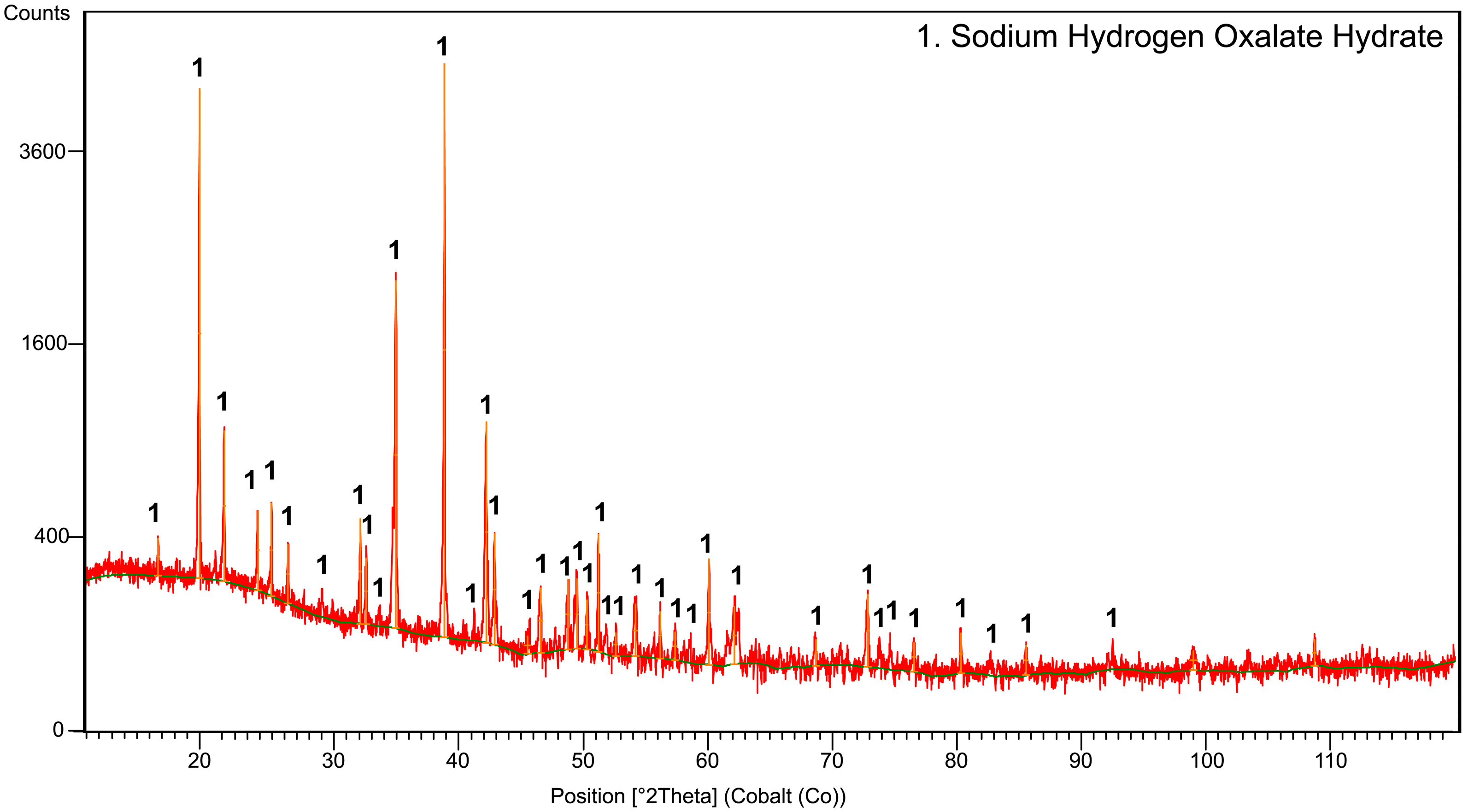
4 is relatively water-soluble under normal conditions, XRD analysis of the precipitate (see
Figure 20) confirmed the presence of hydrated sodium oxalate (Na
2C
2O
4·xH
2O). Some peaks could not be clearly identified, which may be related to the presence of trace impurities or secondary phases. Due to the inhomogeneous and chemically impure nature of the analysed material, it is not possible to assign each observed peak.
The formation of the insoluble form of sodium oxalate can be explained by the supersaturation of the solution due to the high concentrations of sodium ions from the previous addition of NaOH and an excess of oxalate ions after the addition of oxalic acid. In such a supersaturated system, sodium oxalate could crystallise, especially at room temperature and with a longer settling time or slight evaporation of the solution. Local crystal formation is also possible at the point of reagent dosing, where there was a short-term supersaturation of the system [
52].
The residual concentration of sodium in the leachate after its removal was 11.15 g/L. It follows from the above that it is not possible to remove all the sodium from the solution by precipitation with oxalic acid. Some of the sodium probably remains in the leachate in the form of dissolved sodium oxalate. After calcination, sodium can be removed from the product by exploiting the different solubilities of carbonates. Lithium carbonate is significantly less soluble in water (1.29 g/100 mL H
2O at 25 °C) than sodium carbonate (30 g/100 mL H
2O at 25 °C), which allows it to be separated from the sodium carbonate in the precipitating agent [
53,
54]. However, such an approach would need to be experimentally verified in further research.
An interesting fact is that within a few hours to days after completion of the leaching of the black mass, a pink precipitate spontaneously formed in the extract. Before further processing of the leaching product, the precipitate had to be removed by filtration. The weight of the filtered precipitate was 1.97 g/L of the leaching residue intended for precipitation. The content of the relevant metals in this precipitate is shown in
Table 7. The cobalt concentration in the extract before spontaneous precipitation reached 864 mg/dm
3, and after removal of the precipitate, the cobalt concentration dropped to 8.93 × 10
−4 g/L.
The high cobalt content in the precipitate corresponds to the presence of cobalt oxalate dihydrate. This phenomenon is the result of the natural maturation of the extract, during which the dissolved complex cobalt oxalate gradually transforms into a less soluble crystalline form of cobalt oxalate dihydrate. This conversion is determined by the kinetics of crystallisation and the stability of the individual chemical forms under specific conditions in terms of pH, temperature and concentration. The result is a spontaneous precipitation of cobalt, which can be separated from the solution, reducing the risk of contamination of the target lithium compound and minimising cobalt losses. Before extracting lithium from the leachate, it is therefore necessary to allow the leachate to stand for a certain period and then remove the resulting precipitate by filtration.
3.6. Crystallisation and Calcination of Li Compounds
Crystallisation was chosen as the separation process because organic acids with short hydrocarbon chains were used in the leaching of the black mass, which meant that predominantly physically bound water could be removed without any significant complications due to organic residues. The expected product is solid lithium oxalate (Li
2C
2O
4), the purity of which may be impaired by accompanying metals that were also extracted during leaching. Subsequent calcination at 450 °C for 30 min should result in the following chemical reaction (10):
The calcination conditions were selected based on the results of several studies [
55,
56,
57], according to which T= 450–800 °C and a duration of 30–60 min can be considered optimal. The product is lithium carbonate, which can serve as a precursor to produce new lithium batteries.
Crystallisation was carried out from the leachate after leaching pure electrode material obtained by manually dismantling spent LiBs. The use of leachate from electrode material obtained by manual dismantling (without the presence of unwanted impurities) was chosen to verify the feasibility of crystallisation and calcination of lithium carbonate and to obtain a product with the highest possible purity. The extract contained 13.64% Co and 1.98% Li in 0.6 M oxalic acid at a temperature of 80 °C for 60 min with a ratio of L:S = 20 and a speed of 300 rpm. The composition of the extract intended for crystallisation is given in
Table 8.
The percentage of Li and Co in the electrode material is approximately half that found in the black mass obtained by mechanical–physical pretreatment. Similarly, the concentration of Li and Co in the solution is significantly lower than in the solution obtained from the black mass obtained by standard treatment. A more detailed comparison can be found in
Table 9.
The presence of impurities could influence the course of crystallisation and calcination and distort the results of thermal analysis. TG/DTA analysis was used to determine the temperature range of lithium carbonate decomposition and to establish suitable calcination conditions, thereby ensuring efficient conversion to lithium carbonate without decomposition of the desired phases.
If the extract of the active ingredient obtained by mechanical pretreatment is to be used, the sodium remaining after the precipitation of unwanted impurities would have to be removed.
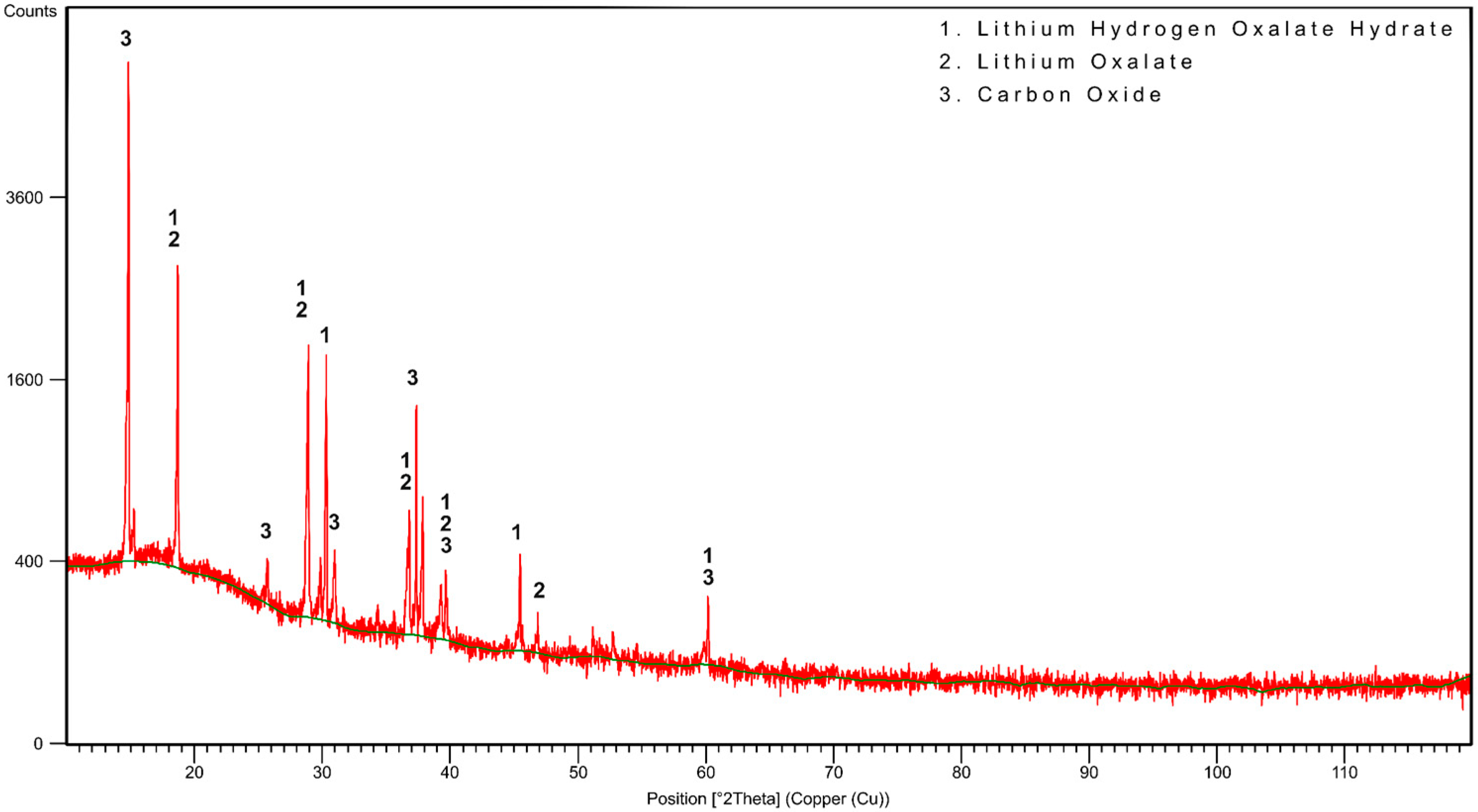
Figure 21 shows the XRD record of the crystalline product obtained by crystallisation of the above extract at 105 °C. According to AAS analysis, the crystalline product contained 1.186 wt.% lithium.
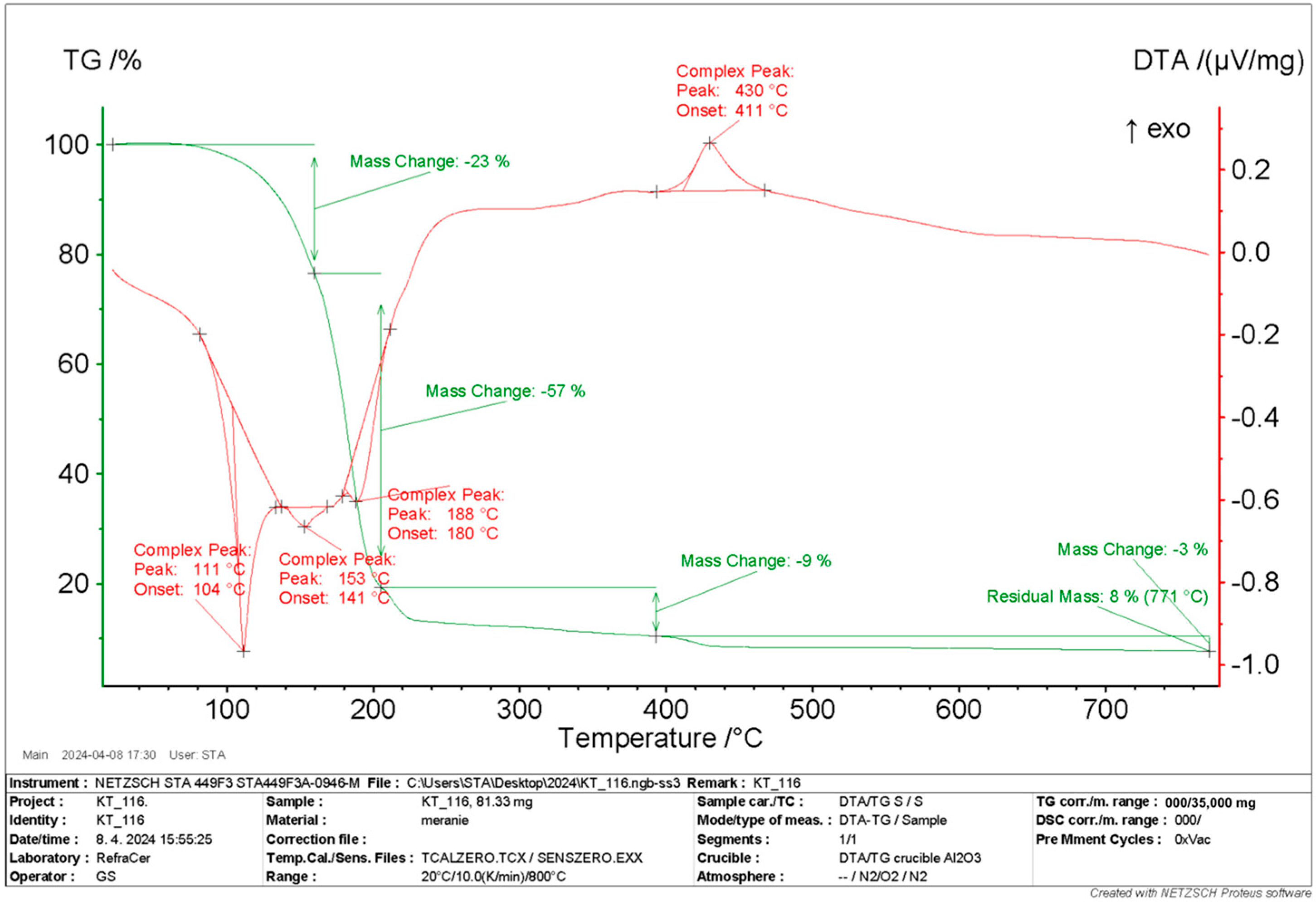
XRD analysis identified the sample as a product of lithium oxalate crystallisation and its hydrated form. This crystalline product was further analysed using TG-DTA, with the results shown in
Figure 22.
As can be seen from the thermal curves, the sample contained a significant amount of chemically bound water and free acid after crystallisation. The first significant weight loss occurred at a temperature of approximately 111 °C, which corresponds to the evaporation of chemically bound water. A further weight loss was recorded at 153 °C, which is related to the removal of freely bound oxalic acid. At a temperature of 180 °C, gaseous decomposition products were released. The composition of these gases depends on the atmosphere used: in the presence of air, oxidation to CO
2 takes place, while in an inert or reducing atmosphere, mainly toxic CO oxide is produced. Lithium carbonate begins to form at 430 °C through an exothermic reaction. This process is consistent with the findings of the authors [
58], who note that at a temperature of 400 °C, carbon dioxide is released and lithium carbonate is formed, while at 700 °C, further carbon dioxide is lost and lithium oxide is formed. Despite the successful conversion of oxalate to carbonate, the product yield was very low: lithium carbonate accounted for only about 8% of the total weight of the starting material. This low yield is due to the high content of chemically bound water and free acid, and possibly also to impurities or unreacted salts.
TG/DTA analysis confirmed that a temperature of 500 °C was appropriate for effective calcination of lithium oxalate and should ensure complete decomposition of lithium oxalate and its conversion to lithium carbonate. Calcination must be carried out in a platinum crucible, as the use of a corundum crucible can lead to undesirable reactions between the reaction mixture and the crucible material. This results in clumping of the product and its decomposition.
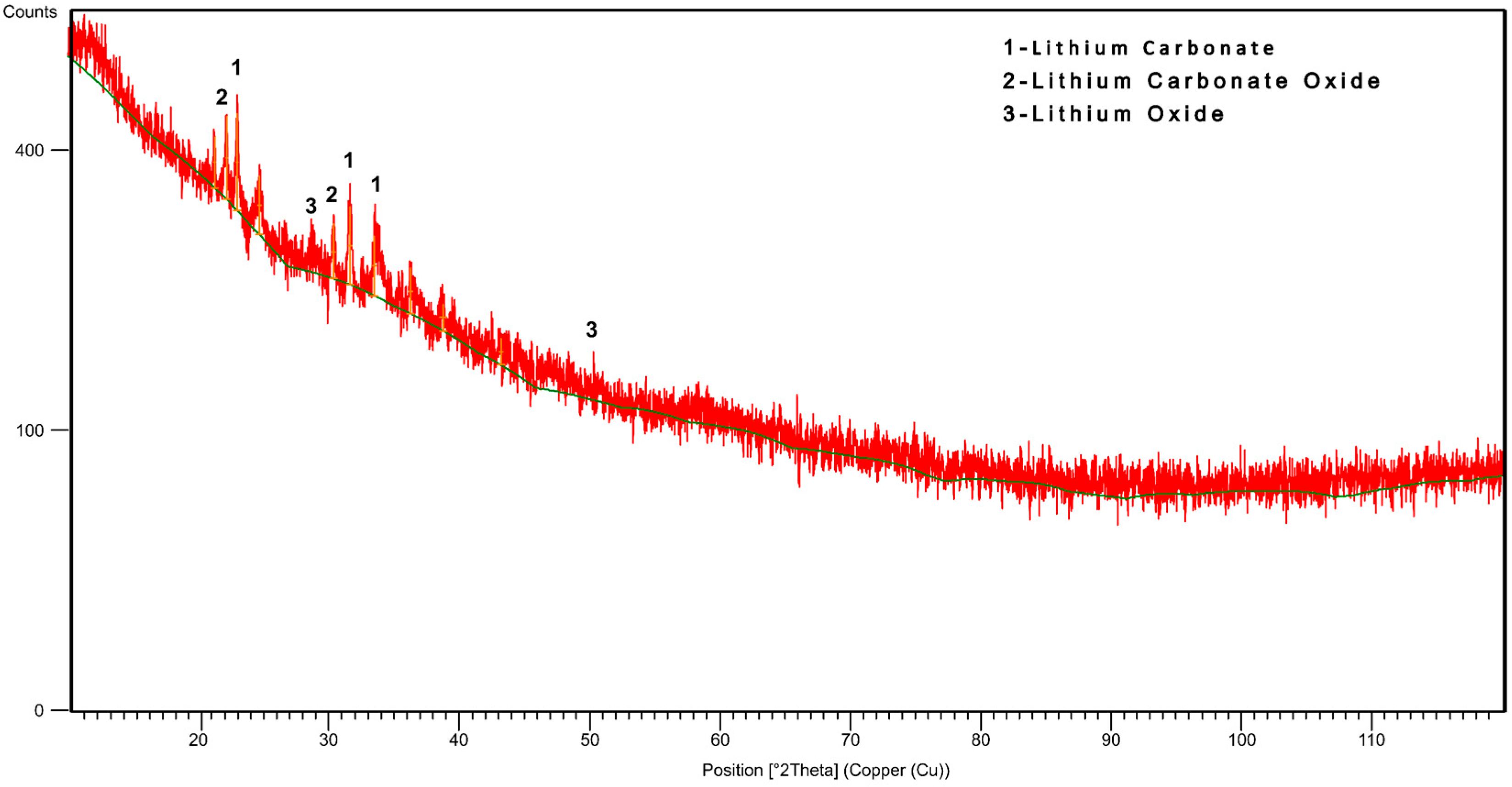
The lithium content in the calcine obtained, determined by the AAS method, reached 17.1% by weight. XRD analysis (
Figure 23) confirmed the presence of lithium carbonate and lithium oxide, which is consistent with the results of the TG/DTA analysis. Based on the determined lithium content and the known stoichiometric composition of lithium carbonate (if the calcined material contains only this carbonate), the purity of the product was calculated to be approximately 91%.
The production of Li2CO3 with a purity of 91% was demonstrated on manually dismantled cathode material, which served as a model system. This approach allows for a controlled study of the crystallisation and calcination steps without the influence of accompanying metals or impurities present in real black mass. Although the result may not be directly transferable to real black mass leachates, it provides proof of concept for the process and a basis for future tests on real black mass.
5. Conclusions
This work focused primarily on extracting lithium from the black mass of spent lithium batteries from mobile phones, which contained approximately 4% lithium. The results of the experiments showed that oxalic acid is a promising and selective leaching agent for extracting lithium from black mass. Important parameters such as acid concentration, temperature, leaching time and S:L ratio had a significant influence on the efficiency of lithium extraction. The activation energy value, which was calculated to be in the range of 43–50 kJ/mol, shows that the leaching process is chemically controlled and its course is significantly influenced by temperature. The most suitable conditions within the experiments conducted for lithium leaching were determined to be 1 M C2H2O4, 120 min. L:S = 20, 80 °C, 300 rpm, 120 min., with a lithium yield of 88% and a cobalt yield of 1.57%.
The process of precipitating unwanted metals with NaOH has shown that pH regulation is key to successfully separating Fe, Mn and Cu from the solution. Gradual precipitation at elevated pH values (up to 12) enables the selective removal of these metals, thereby improving the quality of the leachate prior to further processing. The discovery of the possibility of re-precipitating sodium by adding oxalic acid at low pH opens opportunities for more efficient use of the precipitant and minimisation of its transfer to subsequent processes, contributing to the overall sustainability of the technology. The unexpected precipitation of cobalt during leaching maturation indicates a favourable tendency of the system to spontaneously purify the solution, which could simplify subsequent processing steps. These findings provide a valuable basis for optimising post-treatment steps, especially when the purity of the solution needs to be increased prior to subsequent recovery of the target metal lithium.
The products obtained after crystallisation and calcination confirm the possibility of obtaining the desired lithium compound in the form of carbonate with a purity of 91%. It has been shown that the choice of crucible material and the thermal conditions of calcination have a significant influence on the quality of the final product, which must be considered when developing the technology. The findings obtained form the basis for the development of an efficient, low-waste process for processing the black mass from Li batteries based on organic acids.
Further research must focus on optimising precipitation and completely removing sodium from the leachate to minimise its transfer to subsequent processing steps and improve the quality of the end product. At the same time, the focus must be on further increasing lithium yield (from 91% to 100%) by fine-tuning the technological parameters of leaching while limiting the dissolution of unwanted impurities. For the investigation of refining and metal recovery from leachate, solvent extraction appears to be a promising alternative to precipitation, which can contribute to higher selectivity and purity of the recovered solution. Finally, attention must be paid to the insoluble residue after leaching, which contains up to 95% of the cobalt originally present. Its effective processing and recovery will be key to maximising the overall efficiency and sustainability of the proposed process.




 ,
, 










 0.94
0.94 0.98
0.98 0.87
0.87 0.75
0.75
 0.95
0.95  0.99
0.99 0.92
0.92 0.84
0.84
 0.95
0.95 0.99
0.99 0.93
0.93 0.86
0.86
 0.96
0.96 0.99
0.99 0.99
0.99 0.97
0.97
 0.97
0.97 0.99
0.99 0.93
0.93 0.82
0.82
 0.97
0.97 0.99
0.99 0.96
0.96 0.88
0.88
 0.97
0.97 0.98
0.98 0.98
0.98 0.94
0.94
 0.97
0.97 0.98
0.98 0.97
0.97 0.90
0.90
 0.95
0.95 0.99
0.99 0.96
0.96 0.91
0.91
 0.96
0.96 0.99
0.99 1.00
1.00 0.99
0.99 0.95
0.95 0.91
0.91 0.99
0.99 0.92
0.92 (n = 0.5)
 0.97
0.97 0.99
0.99 0.93
0.93 0.82
0.82 (n = 1)
 0.94
0.94 0.98
0.98 0.87
0.87 0.75
0.75 (n = 2)
 0.92
0.92 0.96
0.96 0.83
0.83 0.71
0.71
 0.89
0.89 0.91
0.91 0.79
0.79 0.68
0.68
 0.93
0.93 0.98
0.98 0.92
0.92 0.86
0.86
 0.92
0.92 0.97
0.97 0.90
0.90 0.84
0.84
 0.92
0.92 0.96
0.96 0.89
0.89 0.82
0.82
 0.96
0.96 0.99
0.99 1.00
1.00 0.99
0.99 unacceptable value,
  approximating value,
  acceptable value.