3.1. Morphology and Microstructure, Phase Analysis
The morphology of regenerated NCM materials is strongly dependent on synthesis route, precursor chemistry, and calcination parameters. SEM analysis revealed clear distinctions between sol–gel and co-precipitation methods.
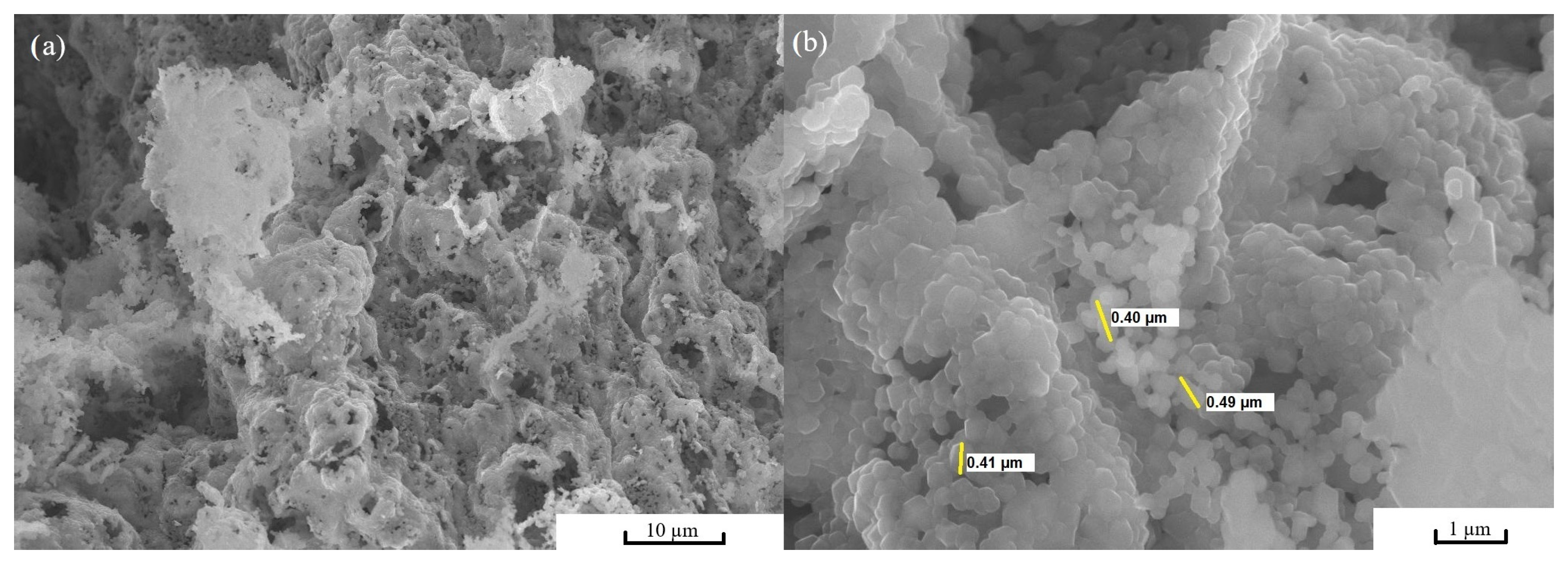
Figure 4 presents SEM micrographs of the NCM622 powder synthesized via the sol–gel method, shown at different magnification levels. In
Figure 4a (10 μm scale), the material exhibits a highly porous, continuous network composed of irregular secondary agglomerates. The morphology demonstrates a sponge-like interconnected structure formed during organic binder decomposition and subsequent calcination, which typically accompanies sol–gel processing and leads to extensive internal porosity.
The higher-magnification image (
Figure 4b, 1 μm scale) reveals that these secondary structures consist of densely assembled primary particles with sub-micrometer dimensions. The annotated measurements indicate characteristic grain sizes in the range of 0.40–0.49 μm. The particle contacts exhibit neck-type junctions, suggesting partial coalescence during calcination. The fine particle size and hierarchical porosity may enhance electrolyte infiltration and shorten lithium-ion diffusion pathways.
Overall, the obtained powders demonstrate the characteristic spherical-granular morphology typical of sol–gel materials, combining uniform faceted particle surfaces and well-defined intergranular boundaries, indicating advanced grain growth. While the SEM micrographs provide information primarily on particle size and packing behavior, the crystallinity and structural ordering were confirmed separately via X-ray diffraction analysis, which verified the formation of a well-developed layered phase. Such structural compactness and uniform microstructure are favorable for achieving high electrochemical performance.
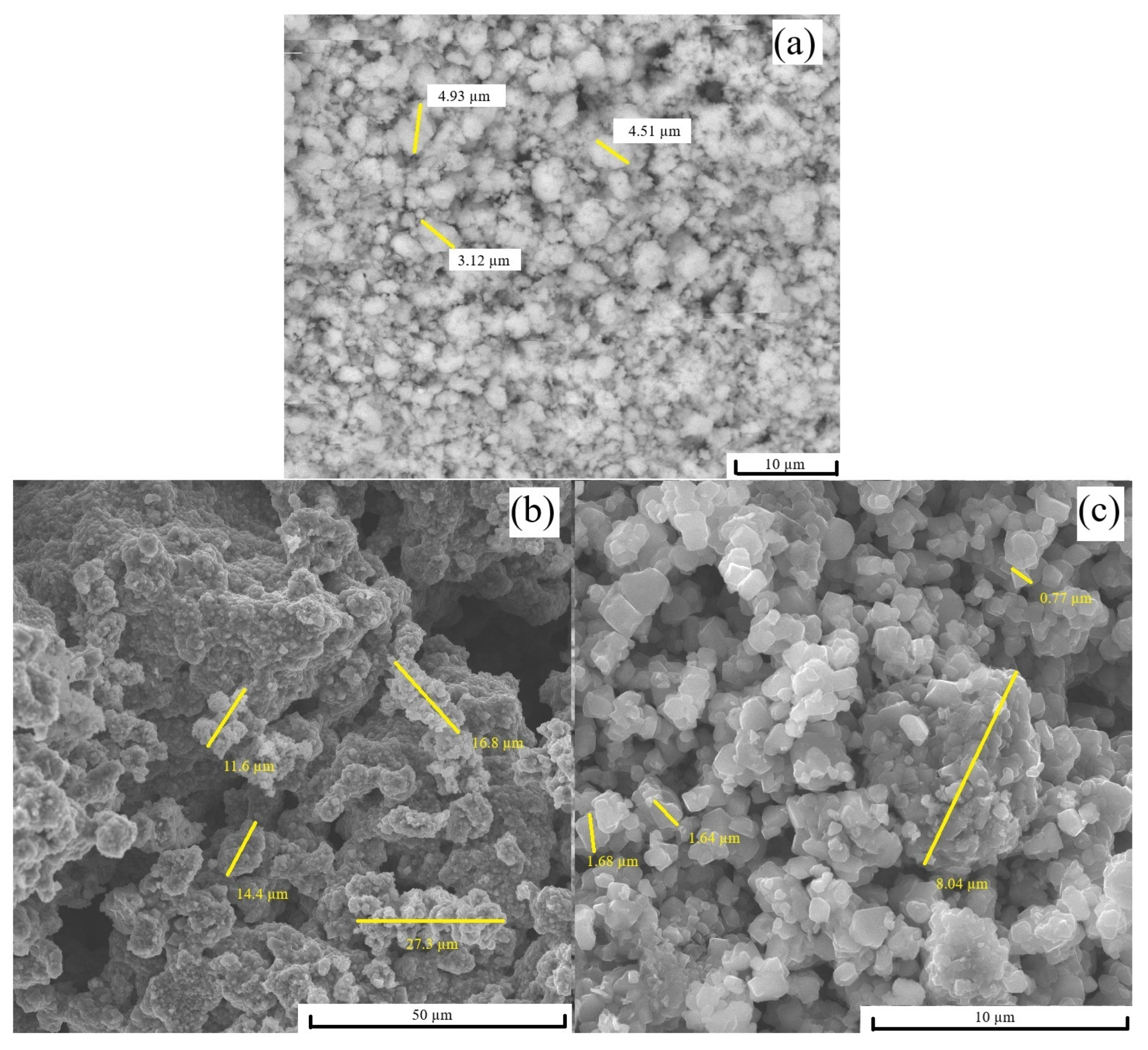
Hydroxide co-precipitated precursor and lithiated NCM622 powder displayed in
Figure 5. In
Figure 5a, as can be seen, the precursor material consists of fine, spherical or near-spherical primary particles that are densely packed into agglomerates. The particle size distribution appears relatively narrow, with individual particle diameters ranging from approximately 3.12 µm to 4.93 µm. The overall structure is granular and uniform, which is characteristic of materials produced via co-precipitation, where controlled nucleation and growth lead to homogenous particle formation. The surface texture of the precursor particles is smooth, suggesting good crystallinity and minimal surface defects at this stage. This morphology is crucial for ensuring uniform lithium diffusion and structural stability in the final cathode material. In
Figure 5b,c, the microstructure of the NCM622 material after high-temperature lithiation is shown. The material exhibits a highly porous, sponge-like morphology composed of interconnected secondary particles. These secondary particles are aggregates of smaller primary crystallites, forming a network with visible voids and channels. The annotated dimensions reveal a range of aggregate sizes: from 11.6 µm to 27.3 µm, indicating significant particle growth and sintering during the high-temperature calcination process. The higher-magnification view provides a closer look at the primary crystallites within the calcined NCM622 material. The particles now exhibit more defined, angular surfaces, which are characteristic features typically associated with faceted grain growth. Such morphology may suggest the development of a more ordered layered oxide structure; however, confirmation of crystallization is provided separately by XRD analysis. Particle sizes are significantly reduced compared to the precursor, ranging from 0.77 µm to 8.04 µm. Notably, many particles fall below 2 µm, indicating fragmentation or recrystallization during calcination.
Compared to NCM622 synthesized via the sol–gel method—which typically yields fine, irregularly shaped primary particles (<2 µm) with limited agglomeration and relatively low intrinsic porosity—the co-precipitation-derived material demonstrates well-defined spherical secondary agglomerates composed of interconnected nanocrystallites. Such hierarchical morphology, clearly observed in the SEM micrographs, generates an open porous network that facilitates electrolyte infiltration and significantly improves Li+ diffusion pathways throughout the particle interior. Enhanced porosity reduces ionic transport resistance and mitigates mechanical stress generated during repeated lithiation/delithiation, thereby contributing to improved cycling stability and reduced polarization during electrochemical operation.
While the sol–gel route offers superior molecular-level homogeneity and more precise stoichiometric control, the resulting loosely aggregated particles lack the engineered secondary-particle architecture required for high tap density, uniform current distribution, and structural durability under cycling. In contrast, spherical secondary particles produced via hydroxide co-precipitation provide improved electrode packing and mechanical integrity, leading to enhanced retention of electrochemical performance over prolonged cycling.
EDX measurements confirmed that the regenerated powders had near-stoichiometric compositions, the results obtained by EDX method are presented in
Table 2. The Ni:Co:Mn ratios were calculated as averaged values from multiple EDX point measurements after excluding oxygen content to obtain normalized transition-metal atomic proportions; standard deviations are also included. The sol–gel sample showed almost excellent compositional control, with Ni:Co:Mn ratios close to the intended 6:2:2. There is a slight cobalt deficiency and manganese excess. This near-ideal composition arises from the molecular-level homogeneity inherent to the sol-gel process. The small Co deficit may stem from volatilization of cobalt species during high-temperature calcination or from incomplete incorporation due to slightly different decomposition kinetics of cobalt-containing precursors compared to Ni and Mn. The compensatory increase in Mn content suggests that the system maintains charge balance and overall stoichiometry, albeit with a minor shift toward Mn-rich regions.
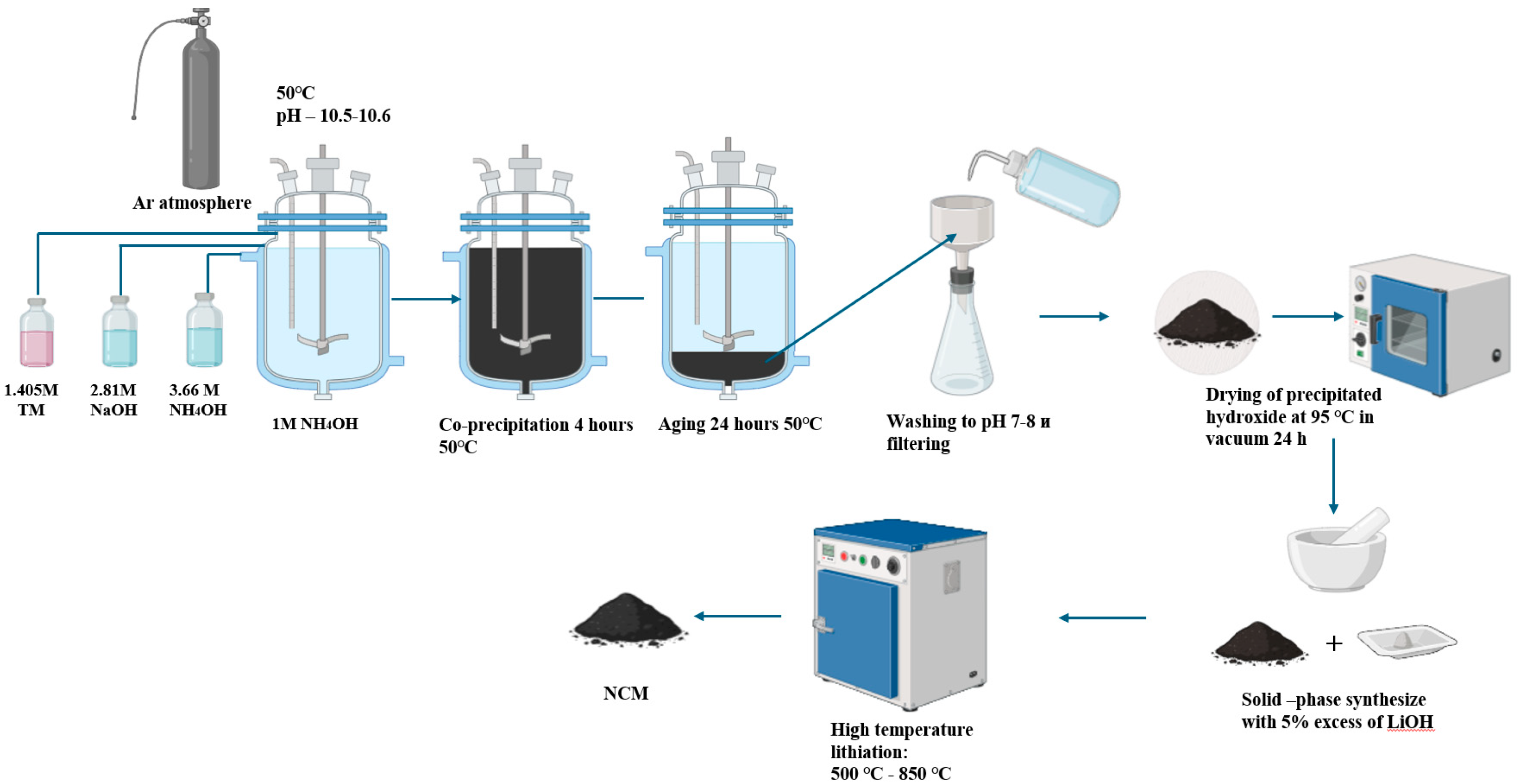
Before discussing the composition of the final co-precipitated oxide, the chemical composition of the hydroxide precursor was evaluated to identify potential metal losses occurring during the precipitation step. The obtained deviation of stoichiometry indicates preferential precipitation of Co2+ and Mn2+ relative to Ni2+, likely caused by competition between metal ions for complexation with residual malate ligands and ammonia, as well as differences in precipitation kinetics. Ni2+ may form more stable complexes, hindering its full incorporation into the hydroxide sediment or causing partial retention in the filtrate during washing. These precursor-level deviations directly influence the composition of the calcined co-precipitated NCM622 powder.
As a result, the final co-precipitation-derived oxide sample shows a significant nickel deficiency and excess cobalt relative to the intended 6:2:2 ratio. This off-stoichiometry has direct electrochemical implications: reduced Ni limits the theoretical capacity (given the dominant role of the Ni2+/Ni4+ redox couple), while increased Co may enhance rate performance and conductivity but potentially worsen structural stability. Moreover, deviations from ideal stoichiometry intensify cation mixing (migration of Ni2+ into Li layers), which increases internal resistance and accelerates capacity fading during cycling. Therefore, precise control of nickel retention during the precursor precipitation stage is essential for optimizing both initial capacity and long-term cycling stability of NCM622 cathodes.
The structural evolution of the NCM622 cathode material was monitored by X-ray diffraction from the hydroxide precursor stage to the final layered oxide phase. Two synthesis routes were compared to evaluate their impact on crystallinity, phase purity, and structural ordering. In
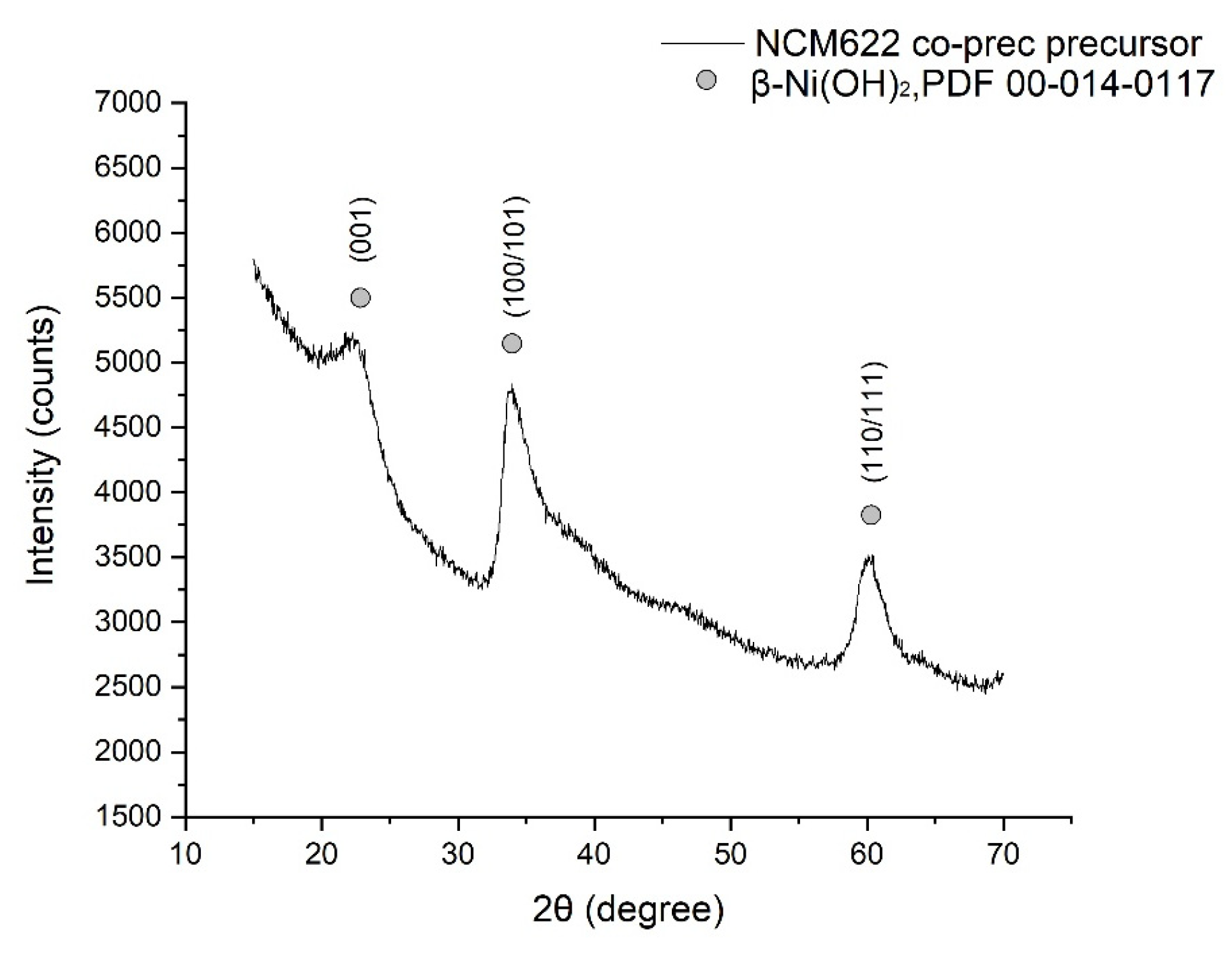
Figure 6 there is a diffractogram of precursor of NCM obtained from co-precipitation approach. The XRD pattern exhibits broad, low-intensity reflections centered at 2θ ≈ 23.5°, 33.4°, and 60.7°, which are assigned to the (001), (100/101), and (110/111) planes of β-Ni(OH)
2 (PDF #00-014-0117). The absence of sharp peaks indicates a poorly crystalline or nanocrystalline nature, typical of hydroxide precursors formed under mild aqueous conditions. The broadening of the (001) peak suggests limited stacking along the c-axis, consistent with the layered structure of β-Ni(OH)
2, where metal hydroxide sheets are held together by weak hydrogen bonding. No impurity phases such as NiO, α-Ni(OH)
2, or mixed-metal oxides are detected, confirming the formation of a single-phase hydroxide precursor suitable for subsequent calcination into layered NCM. The phase, morphology, and crystallinity of the hydroxide precursor directly dictate the microstructure, compositional homogeneity, and electrochemical performance of the final NCM cathode material. In particular, β-Ni(OH)
2 is preferred over α-Ni(OH)
2 due to its thermodynamic stability and well-defined layered structure, which facilitates uniform Li
+ insertion/extraction and minimizes structural degradation during cycling. Poorly controlled precipitation can lead to phase impurities, non-uniform metal distribution, or amorphous regions—all of which degrade capacity retention and rate capability. Therefore, precise control over precursor phase and morphology is not merely preparative, it is a fundamental design parameter for high-performance cathode materials.
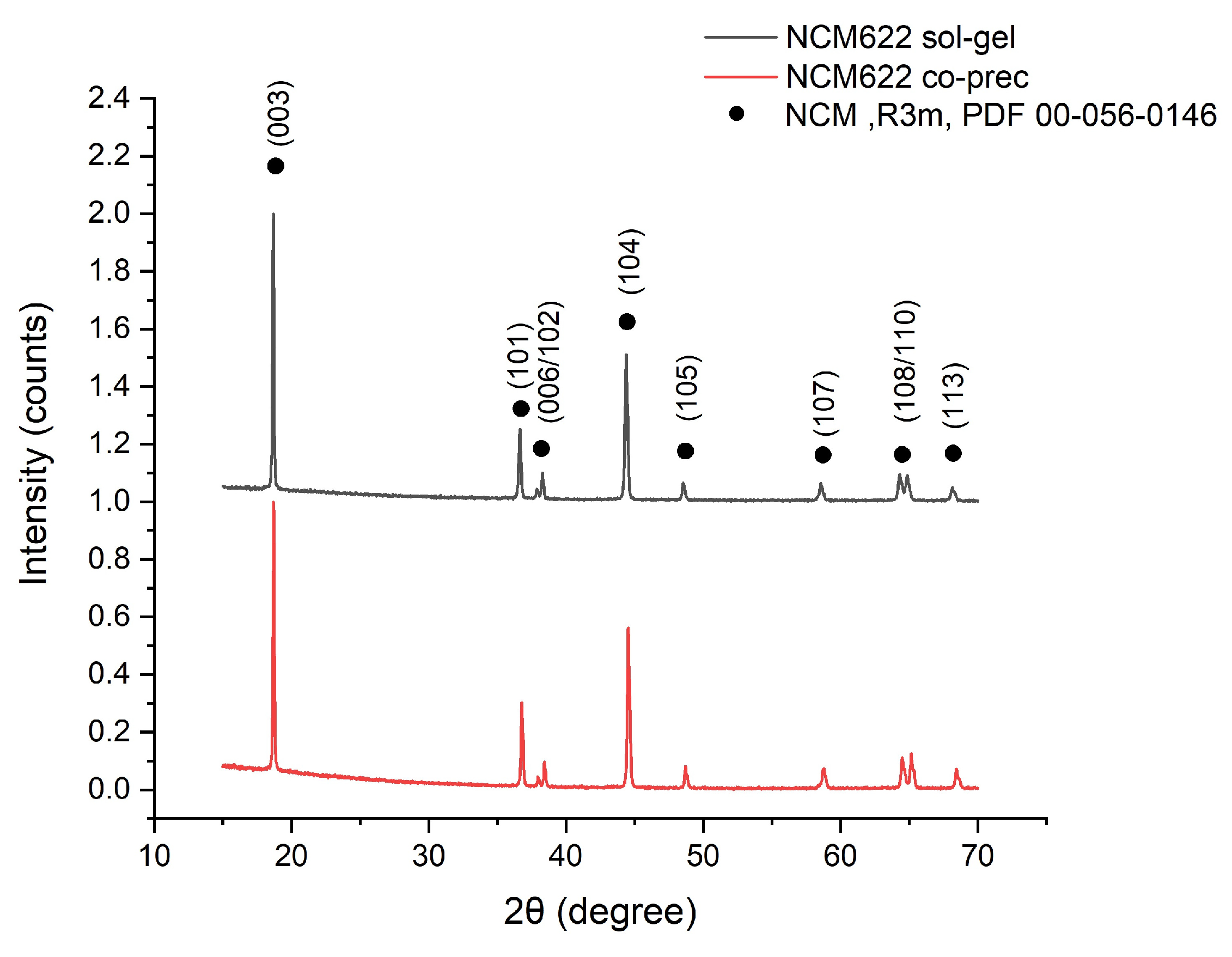
The XRD patterns of the calcined NCM622 materials (
Figure 7) reveal well-defined, sharp peaks corresponding to the layered R-3m crystal structure (PDF 00-056-0146), confirming successful formation of the desired layered oxide phase in both samples. Quantitative analysis of peak intensities and structural parameters is presented in
Table 3. The refinement results show that the co-precipitated sample exhibits a lower R-factor value (0.66 vs. 0.739), which should primarily be interpreted as an indicator of improved goodness-of-fit between the experimental XRD data and the applied structural model rather than a direct measure of cation mixing or structural disorder. However, the more relevant metric for evaluating cation mixing in layered oxide cathode materials is the I(003)/I(104) intensity ratio. This ratio is commonly used as a qualitative descriptor of the degree of cation disorder between Li
+ sites and Ni
2+ ions in layered NCM oxides. A lower value of this ratio typically reflects greater migration of Ni
2+ into the lithium layer, which disrupts the ideal layered arrangement. Such antisite defects not only reduce the amount of electrochemically active lithium but also hinder Li
+ diffusion pathways, ultimately leading to diminished capacity and overall poorer electrochemical performance [
24]. A significantly higher ratio obtained for the sol–gel sample (1.896 vs. 1.720 for the co-precipitated sample) suggests reduced Ni
2+ migration into Li
+ layers and improved layered structural ordering. This indicates that, despite the slightly higher R-factor, the sol–gel-derived material possesses superior intrinsic structural arrangement within the R-3m framework, which is beneficial for maintaining fast Li
+ diffusion kinetics and structural stability during electrochemical cycling. Both samples exhibit clear splitting of the (006)/(102) doublet, confirming the development of a well-ordered layered structure without significant rock-salt impurities [
20,
22,
25].
Notably, despite the slightly higher R-factor, the sol-gel-derived material displays sharper peaks and higher absolute intensities for major reflections, suggesting superior crystallinity and grain growth during calcination. This enhanced structural quality likely stems from the molecular-level homogeneity inherent to the sol-gel process, which minimizes local compositional fluctuations that can promote defect formation.
In summary, while both synthesis routes yield phase-pure NCM622 with the desired R-3m symmetry, the sol-gel method produces a more structurally ordered material with reduced cation mixing, as evidenced by the higher I(003)/I(104) ratio and clearer peak splitting. These structural advantages are expected to translate into improved electrochemical performance, particularly in terms of initial capacity, rate capability, and cycle life—even if the co-precipitated material exhibits marginally lower R-factor values.
3.2. Electrochemical Properties
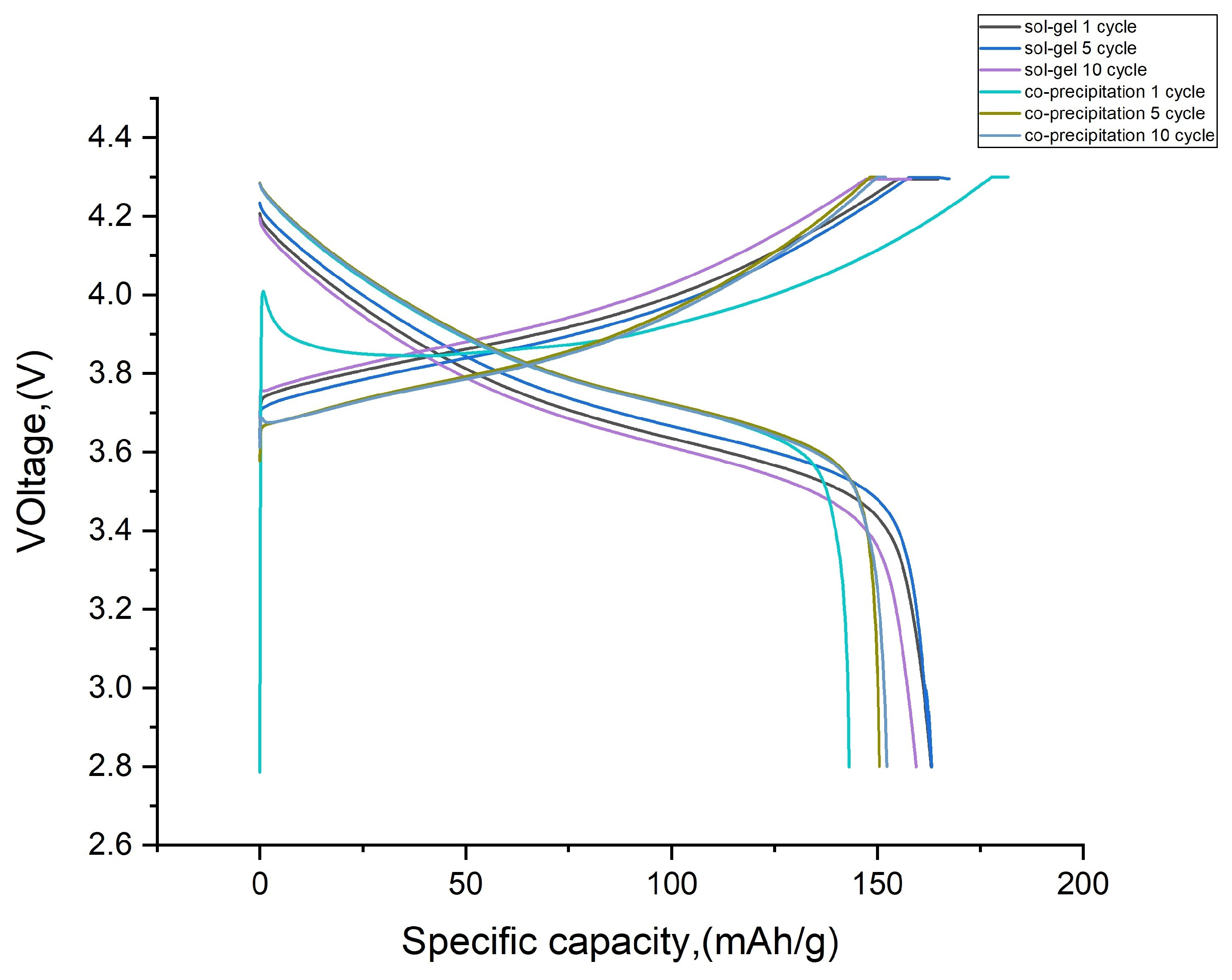
Figure 8 presents the galvanostatic charge–discharge voltage profiles of NCM622 cathode materials synthesized via sol-gel and co-precipitation methods, recorded during the 1st, 5th, and 10th cycles within the voltage window of 2.8–4.3 V vs. Li
+/Li at a constant current rate 0.1 C. All curves exhibit the typical S-shaped voltage profile characteristic of layered cathodes, with two distinct regions of charge process, with gradual voltage rise from 3.6 V to 4.3 V, reflecting progressive delithiation of the layered structure and associated redox reactions of Ni
2+/Ni
4+ and Co
3+/Co
4+, and discharge process with a smoother, slightly sloping curve from 4.3 V down to 2.8 V, indicating reversible lithium reinsertion.
The presence of a small plateau near 3.8–3.9 V during discharge is more pronounced in the sol-gel material. This fact suggests minor phase transitions or kinetic hysteresis, consistent with the layered-to-spinel or layered-to-rock-salt transformations that can occur in Ni-rich materials under cycling stress. The sol-gel material exhibits higher initial specific capacity, reaching 170 mAh/g in the first cycle, which is close to the theoretical capacity of NCM622 (~180 mAh/g). The Coulombic efficiency on the 1st cycle for this material—99%. The voltage profiles remain relatively stable between the 1st and 10th cycles, with only minor voltage decay and capacity fade—indicating good structural integrity and minimal irreversible side reactions. The overlap of curves across cycles suggests high reversibility and low polarization growth, consistent with the superior crystallinity and reduced cation mixing observed in XRD analysis (I(003)/I(104) = 1.896).
The co-precipitated material shows an initial charge capacity of 181 mAh/g and a discharge capacity of 149 mAh/g, corresponding to a Coulombic efficiency of 79%. The reduced initial efficiency does not arise solely from structural and morphological factors, although the compositional deviation from the target stoichiometry and smaller crystallite domain size may limit the accessible active material volume and increase polarization resistance. Additional contributions include interfacial processes such as electrolyte decomposition and the initial formation of CEI layer, which consume lithium irreversibly during early cycles and are typically more significant in materials with higher specific surface area and open porous structures. A more pronounced voltage fade between the 1st and 10th cycles indicates increasing internal resistance and structural degradation, while the downward shift of discharge curves suggests stronger polarization and possible microcrack development due to mechanical stress during repeated Li+ insertion/extraction. The discharge curves shift downward more significantly than those of the sol-gel sample, indicating greater polarization and possible accumulation of interfacial impedance or microcracking due to mechanical stress during repeated Li+ extraction/insertion.
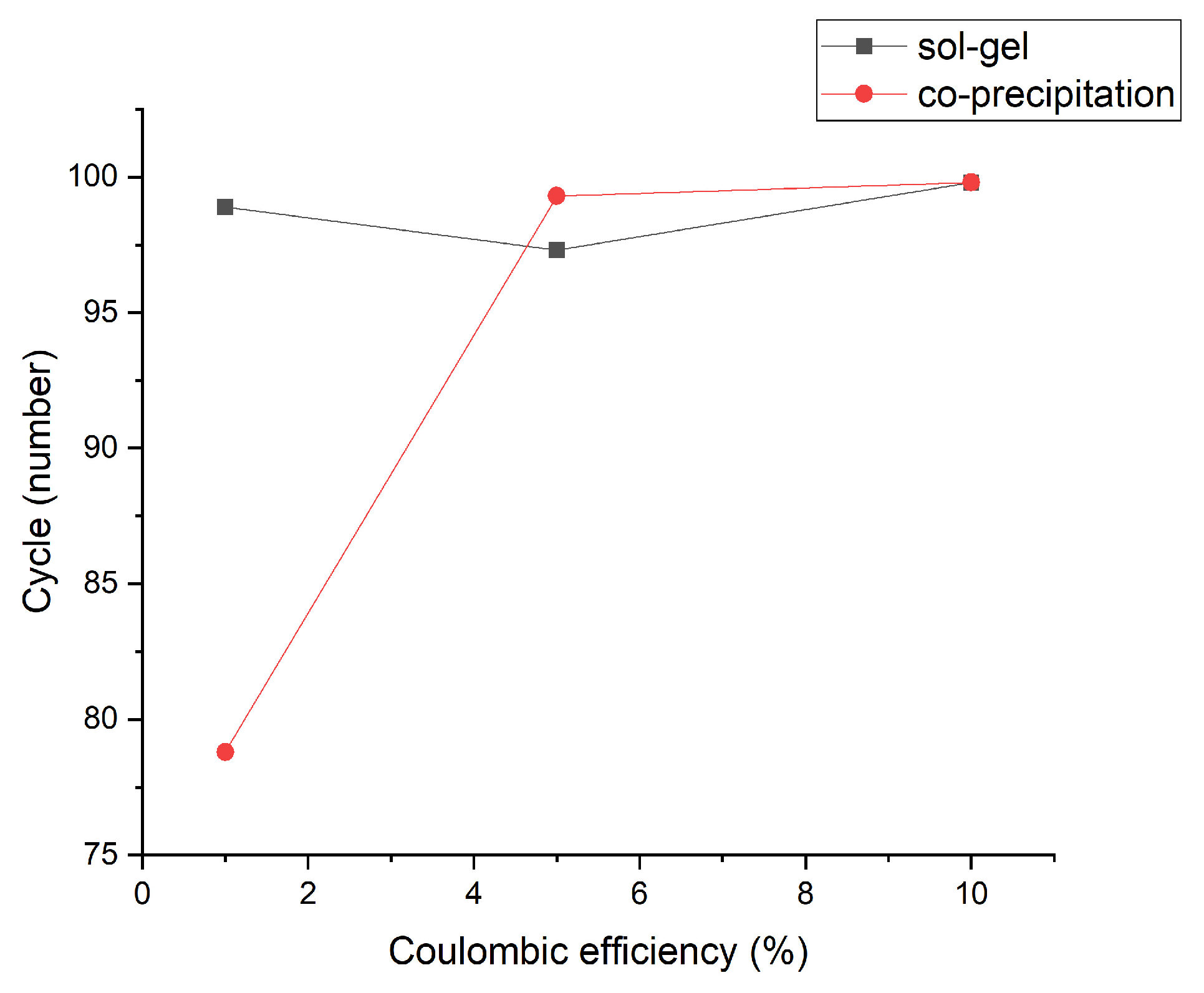
To better illustrate the dynamic evolution of reversibility of lithium-ion transport processes over cycling, the Coulombic efficiency values for both samples over the first 10 cycles are presented in
Figure 9. As shown, the sol–gel material maintains a relatively stable Coulombic efficiency near 98–100% throughout cycling, indicating excellent rechargeability and suppressed side reactions. Conversely, the co-precipitation-derived sample exhibits a substantial improvement in Coulombic efficiency after the initial cycle, rapidly increasing from 79% to approximately 98% by the 10th cycle. This behavior suggests that initial structural stabilization and formation of surface passivation layers contribute to performance improvement. The convergence of Coulombic efficiency values for both materials after the first few cycles reveals that although initial losses are higher in the co-precipitated sample, long-term electrochemical reversibility can be effectively stabilized.
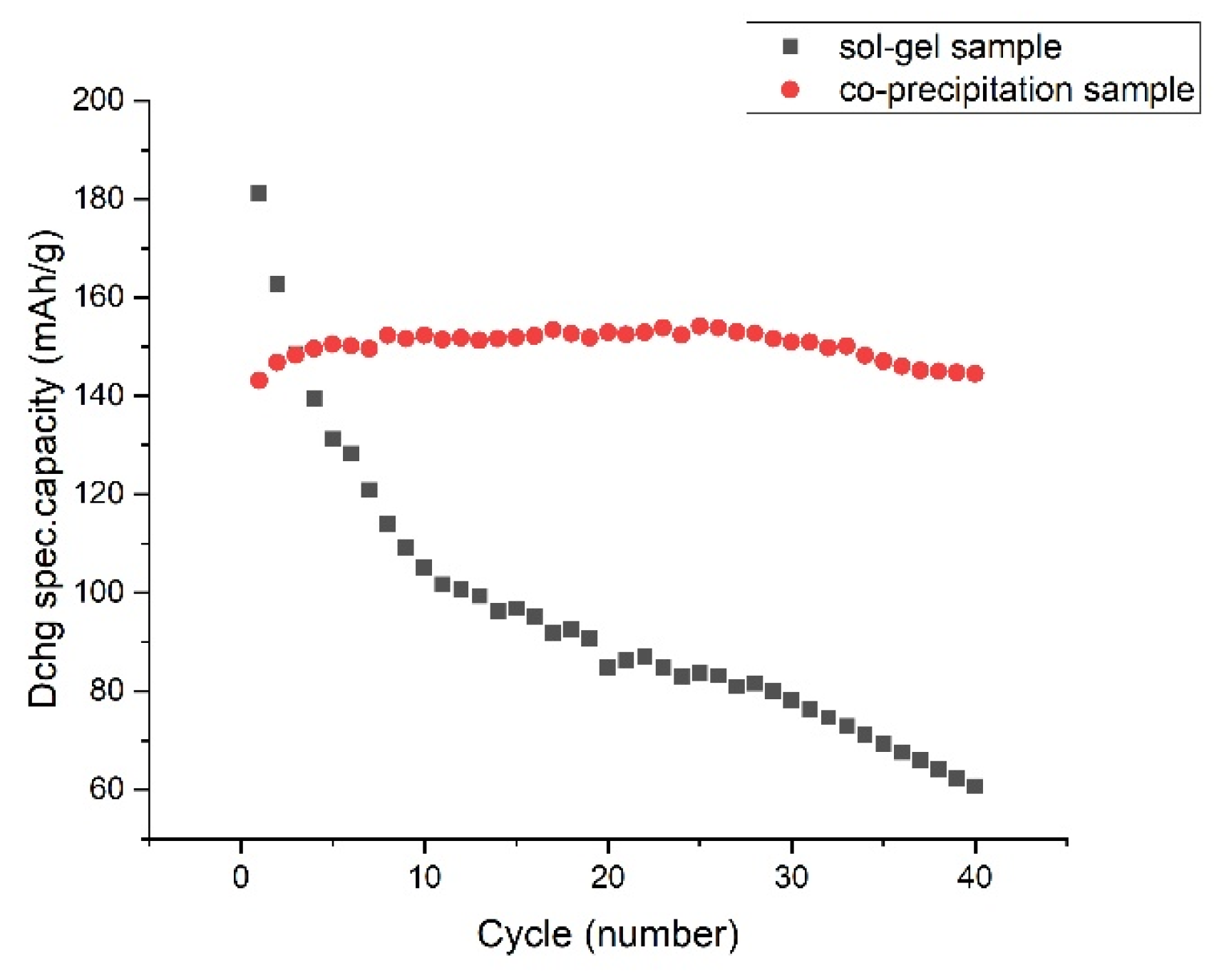
Figure 10 presents the evolution of discharge-specific capacity as a function of cycle number, revealing starkly different degradation behaviors. The sol-gel sample (black squares) exhibits a rapid initial capacity loss from 180 mAh/g in cycle 1 to 140 mAh/g by cycle 10—followed by a slower, steady decline to ~60 mAh/g by cycle 40, thus capacity loss is 75%. This behavior is typical of Ni-rich cathodes undergoing surface reconstruction, CEI growth, and possible microcracking due to anisotropic lattice strain during repeated Li
+ extraction/insertion. The steep early decay may also reflect incomplete activation or irreversible side reactions at the electrode-electrolyte interface. In contrast, the co-precipitation sample (red circles) demonstrates remarkable capacity stability: after an initial rise (from 145 to 152 mAh/g in cycles 2–5), it maintains a nearly flat plateau (~150–152 mAh/g) until cycle 25, followed by only a moderate decline to ~145 mAh/g by cycle 40, the capacity loss is 3%. This suggests that despite its lower initial capacity and compositional deviation, the co-precipitated material possesses enhanced structural resilience during prolonged cycling—possibly due to its finer particle size and porous agglomerate morphology (observed in SEM), which mitigates mechanical stress and accommodates volume changes more effectively than the denser, larger-grained sol-gel particles.
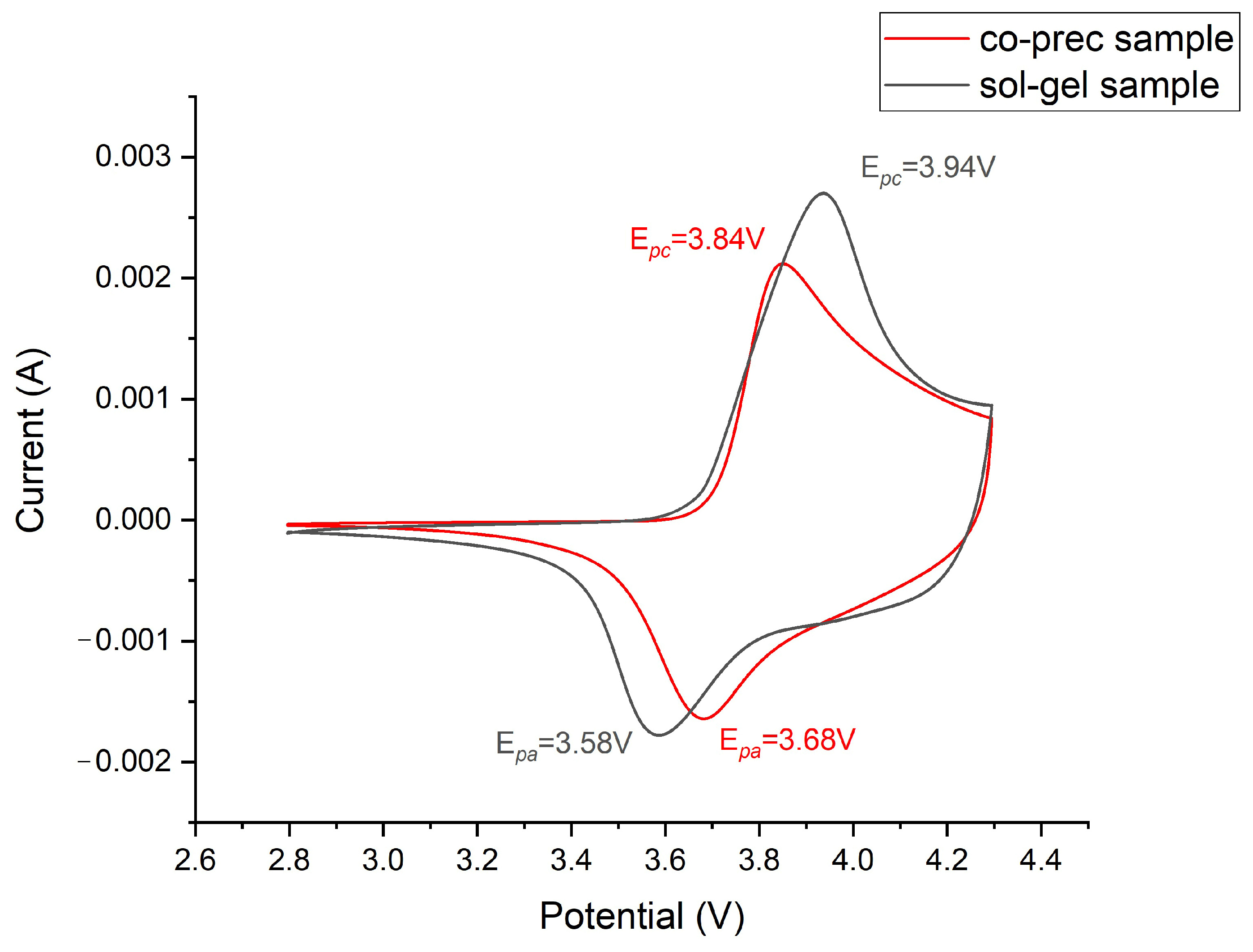
Figure 11 presents the second-cycle cyclic voltammograms (CV) of NCM622 cathode materials synthesized via co-precipitation (red curve) and sol-gel (black curve) methods, recorded at a scan rate of 0.1 mV/s between 2.6–4.3 V vs. Li
+/Li. The co-precipitated sample exhibits a significantly lower peak separation ΔE
p of 0.16 V (160 mV), compared to 0.36 V (360 mV) for the sol–gel sample, confirming reduced polarization and faster Li
+ kinetics due to the more porous secondary particle architecture. The CV profiles reveal distinct redox signatures that reflect fundamental differences in electronic structure, reaction kinetics, and compositional homogeneity—all of which are directly linked to the materials’ synthesis-dependent microstructure and electrochemical behavior.
Both curves exhibit a single prominent anodic peak during charge (oxidation) and a corresponding cathodic peak during discharge (reduction), characteristic of Ni2+/Ni4+ redox activity in layered NCM oxides. Minor contributions from Co3+/Co4+ may also be present but are not resolved as separate peaks under these conditions.
The smaller ΔEp observed for the co-precipitated sample indicates lower electrochemical polarization and potentially faster reaction kinetics, which is consistent with its porous, spherical secondary particle morphology (SEM), which facilitates ion transport and reduces interfacial resistance. In contrast, the larger ΔEp for the sol-gel material suggests higher activation barriers, possibly due to denser particle packing or minor surface passivation.
The anodic peak shift from 3.58 V (sol-gel) to 3.68 V (co-precipitation) reflects a thermodynamic change in the redox process. This shift is directly attributable to the Ni deficiency in the co-precipitated sample. Nickel is the primary redox-active element in NCM622; reducing its content lowers the average oxidation state of transition metals, thereby shifting the Ni
2+/Ni
4+ redox couple to slightly higher potentials during oxidation (charge) and lower potentials during reduction (discharge). This explains why the cathodic peak also shifts downward from 3.94 V (sol-gel) to 3.84 V (co-precipitation), indicating easier reduction of Ni
4+ back to Ni
2+ in the Ni-deficient matrix, likely due to reduced electrostatic repulsion within the lattice or altered local coordination environments Similar anodic and cathodic peak shifts in Ni-rich NCM materials have been reported in the literature, where Ni content variation affects redox potential and structural stability [
25,
26].
The sol-gel sample exhibits sharper, more symmetric peaks, reflecting its high crystallinity and reduced cation mixing. This structural perfection enables well-defined, reversible phase transitions during Li+ extraction/insertion. The co-precipitation sample, while showing broader peaks, maintains excellent reversibility (low ΔEp). Its porous agglomerate morphology enhances electrolyte access and mitigates kinetic limitations, compensating for its lower crystallinity and compositional deviation.
These CV observations align perfectly with the long-term cycling behavior. The sol-gel material’s high initial capacity correlates with its sharp, intense redox peaks, which are indicative of efficient utilization of active material. However, its rapid capacity fade (to 60 mAh/g by 40th cycle) is mirrored in the larger ΔEp, suggesting increasing internal resistance or structural degradation during repeated cycling, possibly due to microcracking in its dense, irregular particles. The co-precipitated material’s stable capacity retention (~150 mAh/g after 40 cycles) is supported by its low ΔEp and stable peak positions, implying minimal accumulation of irreversible side reactions or impedance growth, enabled by its favorable microstructure that buffers mechanical stress.
While the sol-gel sample’s CV profile reflects excellent thermodynamics and structural order, the co-precipitated sample’s profile reveals practical advantages: lower polarization, better kinetics, and resilience to degradation—making it more suitable for real-world battery operation despite its off-stoichiometry.