1. Introduction
Nasopharyngeal carcinoma (NPC) is an epithelial-derived malignant tumor originating from the mucosal layer of the nasopharyngeal cavity under endoscopy, commonly occurring in the nasopharyngeal recess [
1]. According to data from the International Agency for Research on Cancer in 2020, there were 13,334 new cases of NPC globally in 2020, accounting for only 0.7% of all new cancer cases [
2,
3]. The global geographical distribution of NPC is highly uneven, with over 70% of new cases concentrated in East and Southeast Asia. In high-incidence regions, non-keratinizing NPC constitutes more than 95% of cases [
2,
4,
5].
Currently, single-agent chemotherapy is the most widely used clinical treatment regimen for NPC [
6]. Although single-agent chemotherapy has shown certain therapeutic effects and can improve patient survival rates, this treatment approach has shortcomings such as poor targeting, limited anti-cancer efficacy, significant systemic toxic reactions, and a tendency to induce tumor drug resistance [
7,
8]. The synergistic combination of two therapeutic agents or the adoption of multimodal treatment strategies can overcome the severe drug resistance issues associated with traditional high-dose single-agent tumor therapy, effectively prevent tumor recurrence, and thereby achieve ideal therapeutic outcomes [
9,
10]. Therefore, developing a dual-drug nano-delivery platform is of significant practical necessity and urgency [
11,
12].
Superparamagnetic iron oxide nanoparticles (SPIONs), as a class of superparamagnetic contrast agents, have been extensively applied in biomedicine. Actually, in contrast to normal tissues, tumor blood vessels exhibit a highly disorganized architecture with discontinuous endothelial cells. Owing to the enhanced permeability and retention (EPR) effect, SPIONs can preferentially accumulate at tumor sites [
13]. In the meantime, under the action of an external magnetic field, SPIONs enable targeted delivery, thereby promoting the effective accumulation of drug-loaded nanoparticles at lesion sites [
14]; they are metabolized into iron salts that are ultimately absorbed by the human body. Furthermore, the superparamagnetic behavior of SPIONs allows the conversion of alternating magnetic field energy into thermal energy via the Neel–Brown mechanism, thus generating a thermal effect. Therefore, magnetothermal therapy can be employed to disrupt the extracellular matrix surrounding tumors and indirectly enhance the penetration of drugs into cancer cells [
15,
16]. Beyond these advantages, the surfaces of SPIONs can be covalently conjugated with various targeting moieties, such as folic acid (FA), transferrin (Tf), and targeting peptides [
17,
18], to achieve specific active targeting. Simultaneously, SPIONs can be loaded with therapeutic agents including doxorubicin (DOX), paclitaxel (PTX), and 5-fluorouracil (5-FU) [
19,
20,
21] for co-delivery, which facilitates the site-specific delivery of these agents and augments drug delivery efficiency. Notably, SPIONs have been well validated for single-drug loading applications in preclinical studies.
In most drug delivery systems, nanodrugs are often inefficiently internalized by tumor cells, which hinders their full tumoricidal effects [
22,
23]. To explore and construct nanocarriers with an optimal architecture for achieving the maximum antitumor efficacy [
24], the present study investigated the effects of modification with polyethylene glycol (PEG) of different architectures on nanocarriers with similar molar masses. Meanwhile, a comprehensive evaluation of their antitumor activity, in vivo biodistribution, and systemic toxicity was performed [
25,
26].
Nanoparticle (NP)-based drug delivery systems can improve the targeting selectivity of chemotherapeutic drugs, reduce drug-associated adverse effects, and enhance anticancer efficacy by virtue of the EPR effect, and thus have been widely exploited in oncology research. In particular, nanoparticles can co-encapsulate two or more chemotherapeutic drugs simultaneously, serving as a robust carrier platform for combination tumor therapy [
27,
28,
29,
30,
31,
32]. However, after internalization by tumor cells, such drug-loaded nanoparticles commonly suffer from low drug release efficiency, which markedly compromises their anticancer efficacy [
33]. Lignin nanoparticles (LNPs) as the delivery carrier of curcumin have been demonstrated to effectively improve the stability, bioavailability, and lesion-site accumulation of curcumin, ensure the full exertion of its wound healing-related pharmacological effects, and verify their inherent biosafety [
34]. These findings indicate that nanocarriers represent an effective strategy to address the bottlenecks in the delivery of small-molecule chemotherapeutic drugs, and provide practical references for the construction of highly efficient and low-toxicity dual-drug synergistic delivery systems.
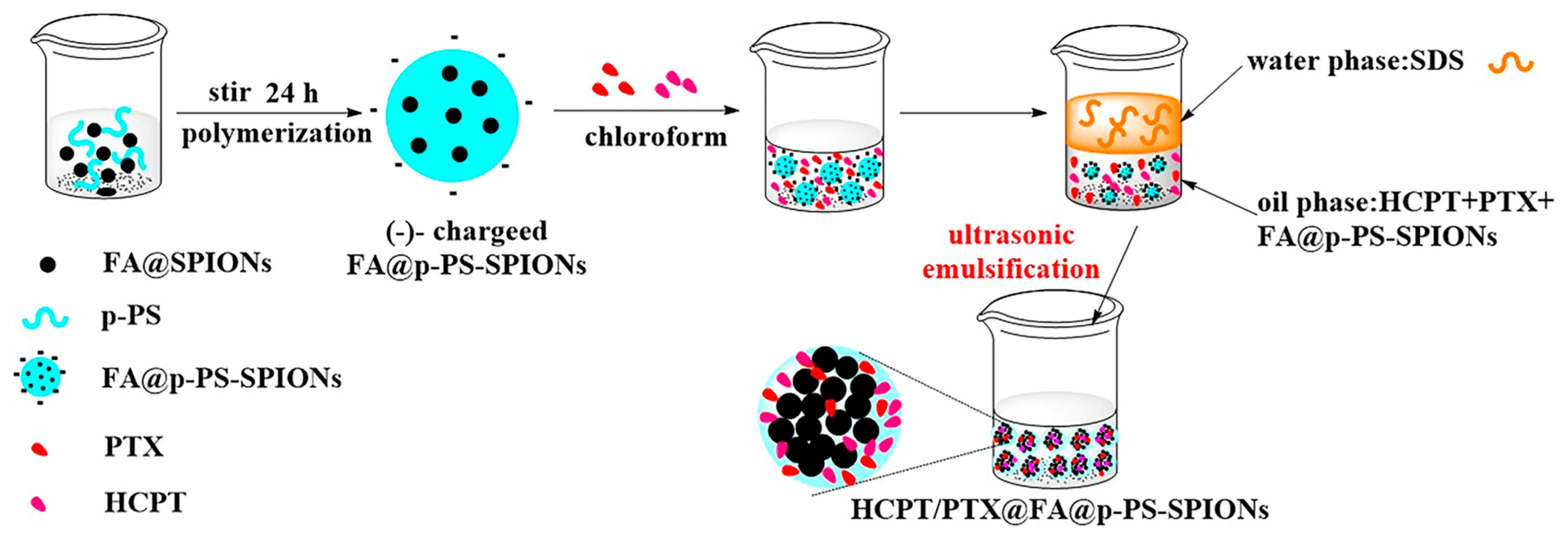
In this study, HCPT/PTX@FA@p-PS-SPIONs were fabricated via the emulsification–solvent evaporation method, as shown in
Figure 1. The physicochemical properties of this nanodelivery system were characterized by transmission electron microscopy (TEM), determination of average hydrodynamic diameter, zeta potential, and Fourier transform infrared spectroscopy (FTIR). Four nasopharyngeal carcinoma cell lines were selected as experimental models, including CNE-1 cells (folate receptor-negative, keratinizing squamous), CNE-2 cells (folate receptor-negative, non-keratinizing), HNE-1 cells (folate receptor-positive, non-keratinizing), and C666-1 cells (Epstein–Barr virus-positive, non-keratinizing), to evaluate the biological safety of drug-loaded nanoparticles (HCPT/PTX@FA@p-PS-SPIONs) and blank nanoparticles (FA@p-PS-SPIONs).
Figure 1.
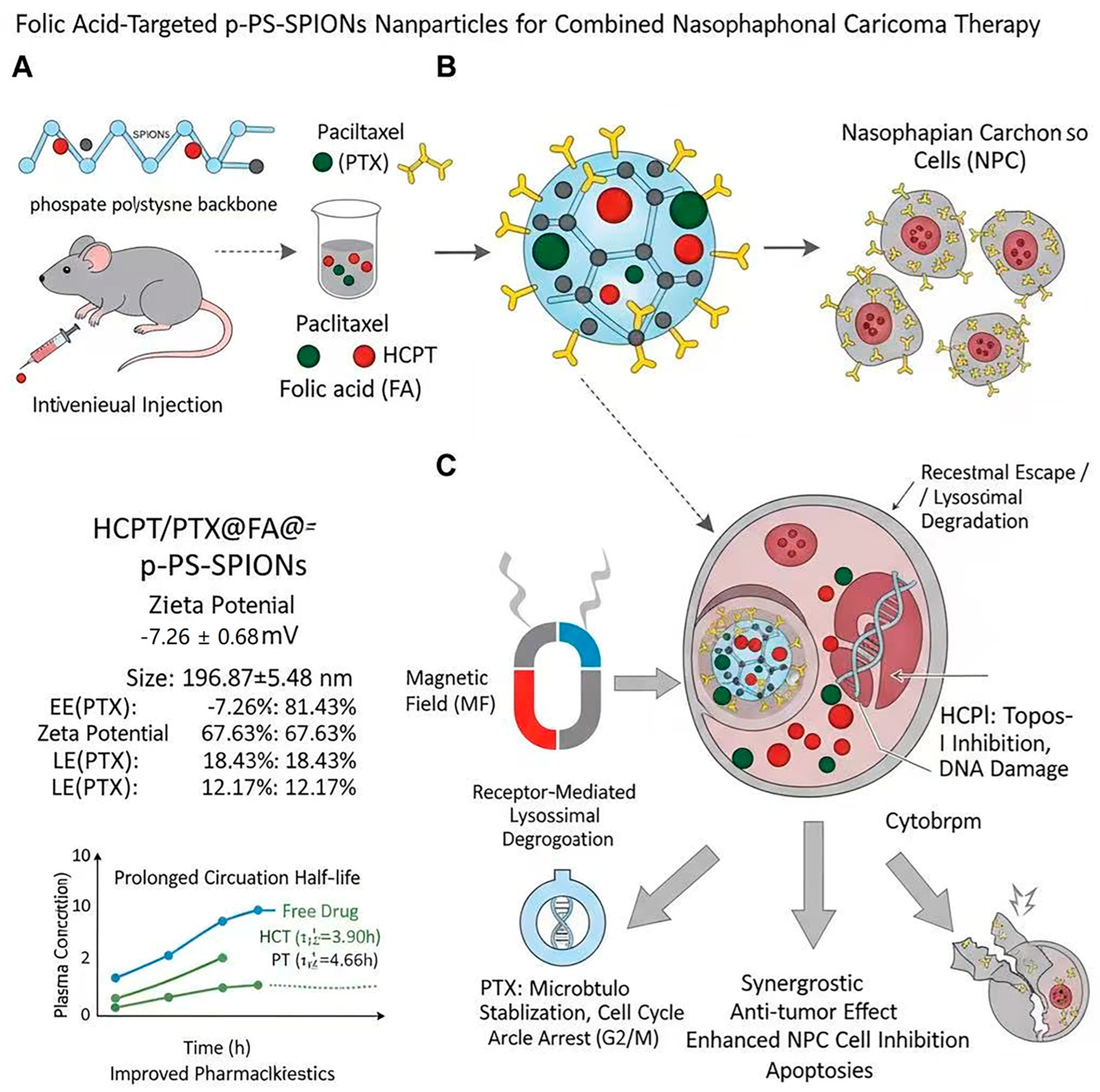
The overall strategy and mechanism of HCPT/PTX@FA@p–PS-SPIONs targeting NPC cells. (A) The novel functionalized NPs (HCPT/PTX@FA@p–PS–SPIONs) were constructed in this study, incorporating a phosphorylated polystyrene backbone modified with SPIONs, co-loaded with PTX and HCPT, and surface-modified with folic acid for targeted delivery. The NPs were administered intravenously into a mouse model. (B) Nanoparticle characteristics and pharmacokinetics, including particle size (196.9 ± 5.5 nm), zeta potential (−7.3 ± 0.7 mV), encapsulation efficiency (EE: 81.4 ± 2.5% for PTX; 67.6 ± 4.1% for HCPT), and drug loading efficiency (LE: 18.4 ± 1.5% for PTX; 12.2 ± 1.0% for HCPT). The graph demonstrates a prolonged circulation half-life compared to free drugs (t1/2 = 3.9 ± 1.2 h for HCPT; t1/2 = 4.7 ± 1.1 h for PTX), thus enhancing in vivo stability and bioavailability. (C) The mechanism of the synergistic anti-tumor effect on NPC after HCPT/PTX@FA@p-PS-SPION uptake. “①” NPs bind to NPC cells via receptor-mediated endocytosis mediated by folic acid targeting; “②” lysosomal degradation and endosomal escape facilitate the release of HCPT and PTX into the cytoplasm; “③” HCPT inhibits topoisomerase I, leading to DNA damage; “④” PTX stabilizes microtubules, inducing cell cycle arrest at the G2/M phase; “⑤” the combined action under optimal magnetic field (MF) guidance promotes enhanced NPC cell inhibition, apoptosis, and synergistic anti-tumor effects. Abbreviations: HCPT, hydroxycamptothecin; PTX, paclitaxel; FA, folic acid; p-PS, phosphorylated polystyrene; SPIONs, superparamagnetic iron oxide nanoparticles; NPC, nasopharyngeal carcinoma; EE, encapsulation efficiency; LE, drug loading efficiency; MF, magnetic field; t1/2, half–life.
Figure 1.
The overall strategy and mechanism of HCPT/PTX@FA@p–PS-SPIONs targeting NPC cells. (A) The novel functionalized NPs (HCPT/PTX@FA@p–PS–SPIONs) were constructed in this study, incorporating a phosphorylated polystyrene backbone modified with SPIONs, co-loaded with PTX and HCPT, and surface-modified with folic acid for targeted delivery. The NPs were administered intravenously into a mouse model. (B) Nanoparticle characteristics and pharmacokinetics, including particle size (196.9 ± 5.5 nm), zeta potential (−7.3 ± 0.7 mV), encapsulation efficiency (EE: 81.4 ± 2.5% for PTX; 67.6 ± 4.1% for HCPT), and drug loading efficiency (LE: 18.4 ± 1.5% for PTX; 12.2 ± 1.0% for HCPT). The graph demonstrates a prolonged circulation half-life compared to free drugs (t1/2 = 3.9 ± 1.2 h for HCPT; t1/2 = 4.7 ± 1.1 h for PTX), thus enhancing in vivo stability and bioavailability. (C) The mechanism of the synergistic anti-tumor effect on NPC after HCPT/PTX@FA@p-PS-SPION uptake. “①” NPs bind to NPC cells via receptor-mediated endocytosis mediated by folic acid targeting; “②” lysosomal degradation and endosomal escape facilitate the release of HCPT and PTX into the cytoplasm; “③” HCPT inhibits topoisomerase I, leading to DNA damage; “④” PTX stabilizes microtubules, inducing cell cycle arrest at the G2/M phase; “⑤” the combined action under optimal magnetic field (MF) guidance promotes enhanced NPC cell inhibition, apoptosis, and synergistic anti-tumor effects. Abbreviations: HCPT, hydroxycamptothecin; PTX, paclitaxel; FA, folic acid; p-PS, phosphorylated polystyrene; SPIONs, superparamagnetic iron oxide nanoparticles; NPC, nasopharyngeal carcinoma; EE, encapsulation efficiency; LE, drug loading efficiency; MF, magnetic field; t1/2, half–life.

This study initially investigated the in vitro antitumor activity and cellular uptake capacity of HCPT/PTX@FA@p-PS-SPIONs. Simultaneously, High-Performance Liquid Chromatography (HPLC) was employed to determine the plasma concentrations of paclitaxel (PTX) and hydroxycamptothecin (HCPT) in rats following in vivo administration of the nanoparticles. The in vivo pharmacokinetic parameters were subsequently calculated and the pharmacokinetic profiles were analyzed, with the aim of providing a novel research paradigm for combination multidrug administration in the treatment of nasopharyngeal carcinoma (NPC).
2. Materials and Methods
2.1. Materials
Hydroxycamptothecin (HCPT) was purchased from Shanghai Adamas Reagent Co., Ltd. (Shanghai, China); paclitaxel (PTX) was purchased from Guilin Hui’ang Biochemical Engineering Co., Ltd. (Guilin, China); folic acid (FA) was supplied by Sinopharm Chemical Reagent Co., Ltd. (Shanghai, China). Iron(III) acetylacetonate (Fe(acac)3, purity 98%) was obtained from Tokyo Chemical Industry Co., Ltd. (TCI, Tokyo, Japan); polyethyleneimine (PEI, molecular weight Mw = 1800) was purchased from Aladdin Industrial Corporation; polyethylene glycol (PEG, molecular weight Mw = 1000) and other conventional reagents were all purchased from Shantou Xilong Scientific Co., Ltd. (Shantou, China). Lysosomal red fluorescent probe, paraformaldehyde, fetal bovine serum (FBS), and 4′,6-diamidino-2-phenylindole (DAPI) were all obtained from Shanghai Biyuntian Biotechnology Research Institute (Shanghai, China).
2.2. Cell Lines and Animals
Human nasopharyngeal carcinoma cell lines CNE-1, CNE-2, HNE-1 and C666-1 were all purchased from the Xiangya School of Medicine, Central South University (Changsha, China). The cells were cultured in RPMI-1640 medium supplemented with 10% fetal bovine serum (FBS) and 1% penicillin–streptomycin double antibody, under the incubation conditions of 37 °C, 5% CO2 and saturated humidity. Specific pathogen-free (SPF) grade male Sprague–Dawley (SD) rats, aged 6–8 weeks, were provided by the Hunan Provincial Center for Laboratory Animals with the animal production license number: SCXK (Xiang) 2019-0004. The rats had free access to standard rodent chow. All animal experiments in this study were approved by the Animal Ethics Committee of Guilin Medical University and strictly performed in accordance with the Regulations for the Administration of Animal Experiments and Ethical Guidelines of Guilin Medical University.
2.3. Preparation of HCPT/PTX@FA@p-PS-SPIONs
Iron oxide nanoparticles modified with polyethylene glycol (PEG-1000) and polyethyleneimine (PEI-1800) (PEG/PEI-SPIONs) were synthesized via the previously reported high-temperature thermal decomposition method [
35]. Briefly, 0.3 g of PEI-1800 and 0.7 g of Fe(acac)
3 were added to 15.0 g of PEG-1000, and the mixture was heated to 260 °C. For the preparation of FA@PEG/PEI-SPIONs, folic acid (FA) (0.199 mmol) was completely dissolved in 25 mL of dimethyl sulfoxide (DMSO) for activation, followed by the addition of 0.398 mmol of 1-ethyl-3-(3-dimethylaminopropyl)carbodiimide (EDC) and 0.398 mmol of N-hydroxysulfosuccinimide (sulfo-NHS); the mixture was stirred for 3 h to achieve FA activation, yielding the FA active ester. Meanwhile, PEG/PEI-SPIONs were slowly added dropwise to the FA active ester solution under rapid stirring. After magnetic stirring for a 24 h reaction, the sample was separated using an LS magnetic separation column. Finally, dialysis was performed with a dialysis bag (MWCO 8000–14,000 Da) to remove free folic acid until no ultraviolet absorption was detected in the dialysate, affording a FA@PEG/PEI-SPIONs dispersion, which was used for the subsequent preparation of HCPT/PTX@FA@p-PS-SPIONs.
To graft phosphorylated polystyrene (p-PS) onto the surface of FA@PEG/PEI-SPIONs, 5 mg of p-PS was accurately weighed and dissolved in 5 mL of N,N-dimethylformamide (DMF), and a certain amount of FA@PEG/PEI-SPIONs was added dropwise to the above solution, followed by magnetic stirring at 1000 rpm for 24 h. After the reaction, the mixture was centrifuged at 10,000 rpm for 15 min and washed repeatedly with chloroform (CHCl3) to remove the free p-PS polymer. The resulting FA@p-PS-SPIONs were collected and dissolved in 500 μL of CHCl3. Subsequently, 10 mg of paclitaxel (PTX) and 5 mg of hydroxycamptothecin (HCPT) were added to the above solution, and the mixture was poured into a sodium dodecyl sulfate (SDS) solution of a certain concentration, followed by ultrasonic emulsification at a certain power for a specific duration. The emulsion was gently stirred at room temperature for 24 h to allow the complete evaporation of CHCl3, then centrifuged at 2000 rpm for 5 min, and the precipitate and supernatant were collected. The obtained nanoparticle assemblies were alternately washed with CHCl3 and distilled water three times to remove excess SDS, unbound FA@p-PS-SPIONs, free PTX, free HCPT and ultrafine nanoparticles, thus finally affording the target HCPT/PTX@FA@p-PS-SPION.
2.4. Characterization of HCPT/PTX@FA@p-PS-SPIONs
The average particle size and zeta potential of HCPT/PTX@FA@p-PS-SPIONs were determined using a Malvern Zetasizer (ZEN 3690, Malvern Panalytical, Malvern, Worcestershire, UK). The morphological characteristics of the nanoparticles were observed via transmission electron microscopy (TEM, JEM 2100F, JEOL Ltd., Tokyo, Japan) at an accelerating voltage of 200 kV. Fourier transform infrared (FTIR) spectroscopy was performed on a Nicolet Nexus 470 FTIR spectrometer (Thermo Fisher Scientific, Waltham, MA, USA), and ultraviolet–visible (UV–Vis) absorption spectroscopy was carried out using a Hitachi U-3010 UV–Vis spectrophotometer (Hitachi Ltd., Tokyo, Japan).
2.5. Dual-Drug Loading and In Vitro Drug Release Assays
To determine the drug-loading efficiency (LE) and entrapment efficiency (EE) of HCPT/PTX@FA@p-PS-SPIONs, the nanoparticle solution was centrifuged at 2000 r/min for 5 min, and the supernatant and precipitate were collected separately. The precipitate was washed three times with chloroform to remove unencapsulated paclitaxel (PTX) and hydroxycamptothecin (HCPT). The drug-loaded nanoparticles after washing were freeze-dried, and the dry weight was measured. The drug concentrations in the supernatant and the original drug solution were determined separately by UV spectrophotometry. The EE and LE of the nanoparticles for the two drugs were calculated according to Equations (1) and (2), respectively:
To investigate the in vitro drug release characteristics of the nanoparticles, HCPT/PTX@FA@p-PS-SPIONs were dispersed in 5 mL of phosphate-buffered saline (PBS) (pH 5.0 and pH 7.4, containing 0.1% Tween 80), respectively, and the drug release assays were conducted in a constant-temperature shaking incubator. At predetermined time points, 1 mL of the release medium was withdrawn from each sample tube, and an equal volume of fresh release medium was supplemented simultaneously. The concentrations of PTX and HCPT in the release medium were determined by UV spectrophotometry to calculate the cumulative drug release amount.
2.6. In Vitro Stability Assay of HCPT/PTX@FA@p-PS-SPIONs
HCPT/PTX@FA@p-PS-SPIONs were incubated in 0.01 mol/L PBS and PBS containing 10% fetal bovine serum (FBS), respectively, at 37 °C for 72 h and stored at 4 °C for 30 d to evaluate their stability. The dynamic changes in the particle size of the nanoparticles over time were monitored using a Malvern Zetasizer, and the concentrations of PTX and HCPT in the supernatant at each time point were determined by UV spectrophotometry.
2.7. In Vitro Cell Proliferation Inhibition Assay
The 3-(4,5-dimethylthiazol-2-yl)-2,5-diphenyltetrazolium bromide (MTT) assay was used to detect the cytotoxicity of blank FA@p-PS-SPIONs against nasopharyngeal carcinoma cell lines CNE-1, CNE-2, HNE-1 and C666-1, so as to evaluate the biosafety of the carrier material. Nasopharyngeal carcinoma cells were seeded in 96-well plates at a density of 4 × 10³ cells per well with a sample volume of 200 μL. After the cells were adherent, FA@p-PS-SPIONs at different concentrations were added, and the cells were incubated for 24 h and 48 h, respectively. The cell viability in each well was detected by the MTT assay to calculate the cell survival rate.
2.8. Cellular Uptake
Utilizing the intrinsic green fluorescence of HCPT, the cellular uptake of drug-loaded nanoparticles by nasopharyngeal carcinoma cells was directly observed using an inverted fluorescence microscope. Digested nasopharyngeal carcinoma cells (CNE-1, CNE-2, HNE-1, C666-1) were seeded in 24-well plates at a concentration of approximately 1 × 10⁵ cells/mL with 500 μL of cell suspension per well, and cultured in an incubator for 24 h. The culture medium was discarded, and the cells were washed three times with PBS. Then 5 μmol/L HCPT/PTX@FA@p-PS-SPIONs solution was added, and the cells were incubated for 1 h, 2 h and 6 h, respectively. The culture medium was aspirated and discarded, and the cells were washed three times with PBS (1 mL per well, 3 min each time). Pre-cooled 4% paraformaldehyde was added to fix the cells (200 μL per well, 15 min), followed by another three washes with PBS. Then, 500 μL of 4′,6-diamidino-2-phenylindole (DAPI) staining solution was added to each well, and the cells were incubated at room temperature in the dark for 3 min. The staining solution was aspirated and discarded, and the cells were rinsed three times with PBS before observation and photography under an inverted fluorescence microscope.
2.9. In Vitro Hemolysis Assay
An in vitro hemolysis assay was performed to evaluate the hematotoxicity of HCPT/PTX@FA@p-PS-SPIONs. Fresh human whole blood was collected, and red blood cells (RBCs) were isolated by centrifugation. The RBCs were washed three times with 0.9% normal saline and then prepared into a 2% RBC suspension. HCPT/PTX@FA@p-PS-SPION solutions at different concentrations (15, 30, 60, 120, 250, 500 μg/mL) were mixed with an equal volume of 2% RBC suspension. PBS was used as the negative control and ultrapure water as the positive control. All samples were shaken in a 37 °C constant-temperature shaking incubator for 2 h, then centrifuged at 3000 r/min for 3 min. The absorbance of the supernatant of each sample was determined by UV–Vis spectrophotometry to calculate the hemolysis rate.
2.10. Pharmacokinetic and In Vivo Distribution Studies
Sprague–Dawley (SD) rats were randomly divided into two groups with six rats in each group: the PTX + HCPT mixture group and the HCPT/PTX@FA@p-PS-SPION group. All rats were administered via tail vein injection at a dose of 5 mg/kg for PTX and 2 mg/kg for HCPT in both groups. At 0.038, 0.083, 0.25, 0.5, 1, 2, 4, 6, 8, 12, 24 and 36 h after administration, 0.5 mL of blood was collected from the retro-orbital venous plexus of the rats. The blood samples were placed in heparinized centrifuge tubes and centrifuged at 5000 r/min for 10 min to separate the upper plasma, which was stored in a −20 °C refrigerator for subsequent detection.
3. Results and Discussion
Screening of carrier materials and optimization of preparation technology constitute the core prerequisite for the construction of drug-loaded nanosystems, which directly determine their in vitro and in vivo biological behaviors as well as the feasibility of clinical translation. In this study, phosphorylated polystyrene (p-PS) was selected as the carrier skeleton. Its unique amphiphilic structure enables spontaneous self-assembly into core–shell structured nanoparticles in aqueous solution, and the hydrophobic core can efficiently encapsulate two hydrophobic chemotherapeutic drugs, paclitaxel (PTX) and hydroxycamptothecin (HCPT). This encapsulation mode effectively prevents drug aggregation, degradation and loss of bioactivity, thereby markedly enhancing the drug-loading stability of the nanosystem. The phosphate groups in the molecular structure of p-PS can significantly improve the hydrophilicity and biocompatibility of the carrier, reduce the recognition and clearance of nanoparticles by the reticuloendothelial system (RES) in vivo, and meanwhile provide active reactive sites for folic acid (FA)-targeted modification. Notably, phosphorylation modification can substantially boost the hydrophilicity and drug-loading capacity of polymeric carriers, rendering p-PS an ideal carrier material for the targeted delivery of hydrophobic chemotherapeutic drugs [
36].
To fabricate dual-drug loaded superparamagnetic iron oxide nanoparticle (SPION) vesicles, a dual-drug co-delivery system of hydroxycamptothecin/paclitaxel@folic acid@phosphorylated polystyrene-superparamagnetic iron oxide nanoparticles (HCPT/PTX@FA@p-PS-SPIONs) was first synthesized and systematically characterized in this study. As illustrated in
Figure 2, the amphiphilic copolymer p-PS was employed as the basic skeleton. Taking advantage of the characteristic that one or two oxygen atoms of phosphate anions in p-PS can bind to the surface of SPIONs, bidentate complexes were formed on the SPION surface via this coordination interaction. Subsequently, the self-assembly of amphiphilic FA@p-PS-SPIONs was induced through the oil-in-water (O/W) microemulsion method, ultimately yielding the HCPT/PTX@FA@p-PS-SPIONs. The prepared vesicles presented a spherical nanostructure, with polyethyleneimine/polyethylene glycol-modified superparamagnetic iron oxide nanoparticles (PEI/PEG-SPIONs) tightly conjugated on their outer shells.
The HCPT/PTX@FA@p-PS-SPIONs prepared in this study were capable of loading a variety of hydrophobic drugs with different molecular weights. Our preliminary studies revealed that a 1:1 molar ratio of paclitaxel (PTX) to hydroxycamptothecin (HCPT) enabled the two drugs to exert a synergistic inhibitory effect on various nasopharyngeal carcinoma (NPC) cell lines (combination index, CI = 0.72, <0.9). Therefore, a 1:1 molar ratio of PTX to HCPT was adopted for drug loading in this study to evaluate the targeted synergistic inhibitory effect of this nanodelivery system on NPC cells. For the first time, amphiphilic phosphorylated polystyrene (p-PS) was used as the raw material to assemble superparamagnetic iron oxide nanoparticles (SPIONs) with p-PS encapsulating HCPT and PTX via self-assembly technology, thus constructing a dual-drug loaded SPION vesicle drug delivery platform (
Figure 1) [
37,
38]. This nanoplatform could achieve the sequential release of HCPT and PTX in response to tumor microenvironment stimulation; meanwhile, folic acid (FA), the tumor cell-specific targeting ligand grafted on its surface, would be downregulated accordingly, realizing the dynamic regulation of targeting ability.
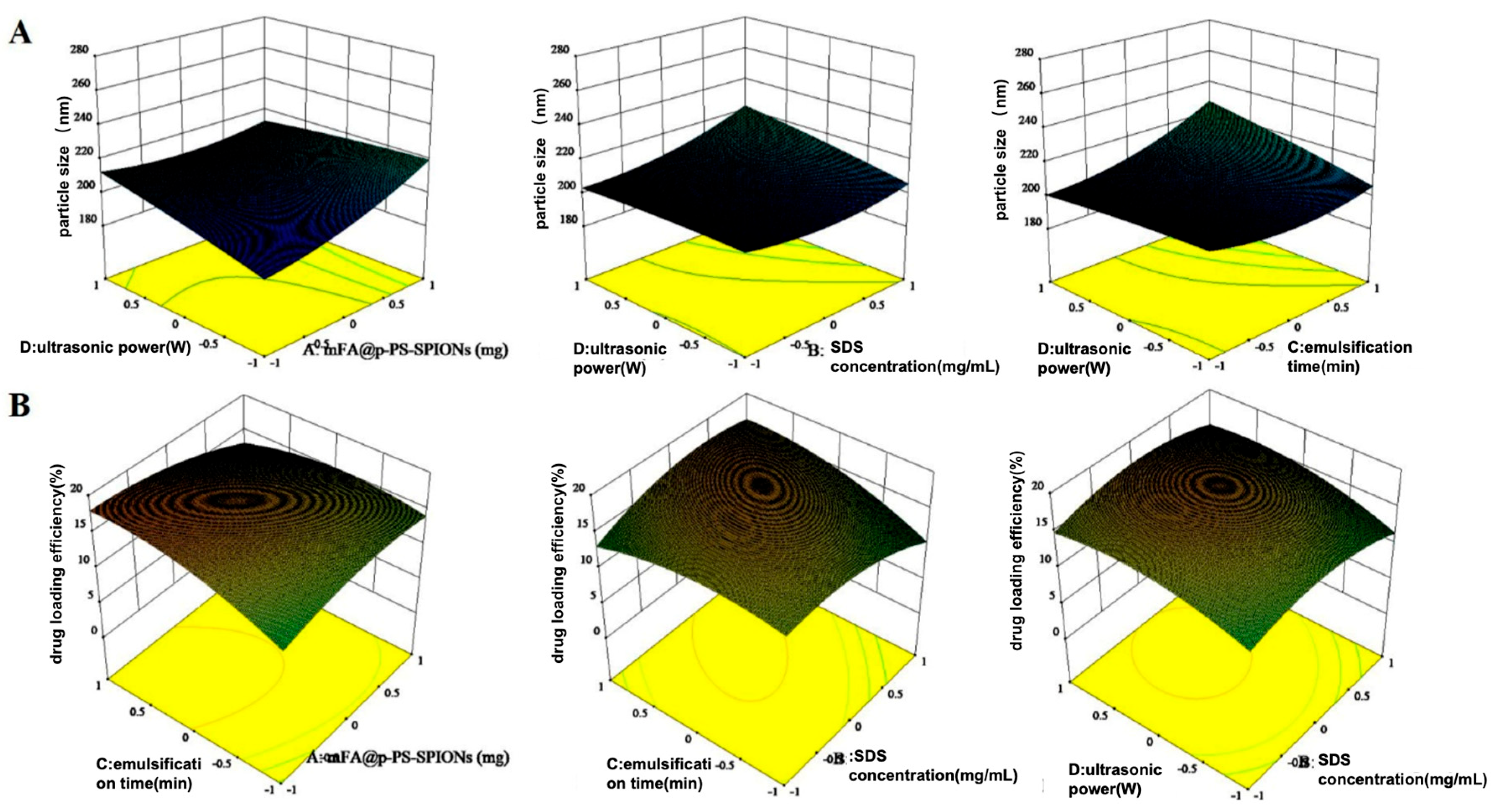
In the Response Surface Methodology (RSM) design, with the aim of achieving a particle size of less than 200 nm and the maximum drug-loading efficiency, the effects of four factors on HCPT/PTX@FA@p-PS-SPIONs were investigated, including the mass of FA@p-PS-SPIONs (mg) (X1), sodium dodecyl sulfate (SDS) concentration (mg/mL) (X2), emulsification time (min) (X3), and ultrasonic power (W) (X4). Design Expert 10.0.7 was employed to determine the optimal preparation process of HCPT/PTX@FA@p-PS-SPIONs.
Table 1 lists the uncoded independent variables and response values of the 30 experiments. Two quadratic models were selected as the appropriate statistical models for optimizing particle size and drug-loading efficiency, respectively. As shown in
Table 2, the regression equations for each response value generated by the design are as follows:
At this point, the quadratic models for Y1 and Y2 were highly significant (P1 = 0.0002; P2 = 0.0001), with correlation coefficients of R1 = 0.9377 and R2 = 0.9520, respectively. These results demonstrated satisfactory goodness of fit between the regression equations and the experimental data.
Based on the aforementioned models, 3D response surface plots for the interactions between partial factors were generated, as shown in
Figure 3. When the amount of FA@p-PS-SPIONs was fixed, the nanoparticle size decreased with the increase in SDS concentration within a certain range of the system, and then increased conversely thereafter. With the increase in the amount of FA@p-PS-SPIONs, the nanoparticle size increased accordingly, while the drug-loading capacity was reduced. Within a certain range of emulsification time and ultrasonic power, the nanoparticle size decreased; however, it increased conversely with the further elevation of these two parameters. Meanwhile, the 3D response surface plots presented elliptical contours, which indicated an interactive effect among the factors for achieving the optimal particle size. Thus, through the analysis of
Figure 3, the optimal preparation protocol was determined as follows: 2.5 mg of FA@p-PS-SPIONs, an SDS concentration of 4 mg/mL, and emulsification for 2.5 min at an ultrasonic power of 135 W.
Three batches of samples were prepared in parallel according to the optimal preparation protocol. As shown in
Table 3, the average hydrodynamic diameter of HCPT/PTX@FA@p-PS-SPIONs was 196.9 ± 5.5 nm (the predicted value was 200.3 nm, with a relative standard deviation of 2.8%), and the zeta potential was approximately −7.3 ± 0.7 mV. These results demonstrated that the established mathematical model was reliable, predictive and relatively stable. Entrapment efficiency (EE) and drug loading (DL) are the core quantitative indicators for evaluating the drug-loading capacity of nanodelivery systems, which are directly correlated with drug delivery efficiency, clinical medication safety and therapeutic economy. Their values can directly reflect the encapsulation capacity of nanocarriers for drugs and the drug delivery potential of nanocarriers per unit dose. The drug-loading performance of nanocarriers is closely related to their molecular structural characteristics, and the hydrophobic interaction between the hydrophobic core of nanocarriers and drug molecules is the key mechanism for improving EE and DL [
39], which provides a clear theoretical basis for the formation of the drug-loading superiority of the p-PS carrier in this study. Meanwhile, the DL and EE of SPTX@FA@PEG/PEI-SPIONs were also determined. The results showed that the EE of the nanoparticles was 81.4 ± 2.5% for PTX and 67.6 ± 4.1% for HCPT, and the DL was 18.4 ± 1.5% for PTX and 12.2 ± 1.0% for HCPT, indicating that both drugs achieved high drug-loading efficiency.
Three samples were prepared in parallel according to the optimal process, and all samples were labeled in strict accordance with the standardized marking method. As shown in
Table 3, the hydration kinetic particle size of the SPTX@FA@PEG/PEI–SPIONs was 196.9 ± 5.5 nm (predicted value of 200.3 nm, relative standard deviation = 2.8%), and the zeta potential was approximately −7.3 ± 0.7 mV. The results indicated that the mathematical model was reliable, predictable, and relatively stable. The drug loading and encapsulation rates of SPTX@FA@PEG/PEI-SPIONs (polystyrene nanoparticles double-loaded with PTX and HCPT, modified with FA and PEG/PEI-SPIONs) were also measured. The results showed that the encapsulation and drug loading rates of the nanoparticles were 81.4 ± 2.5% (PTX), 67.6 ± 4.1% (HCPT) and 18.4 ± 1.5% (PTX), 12.2 ± 1.0% (HCPT), respectively.
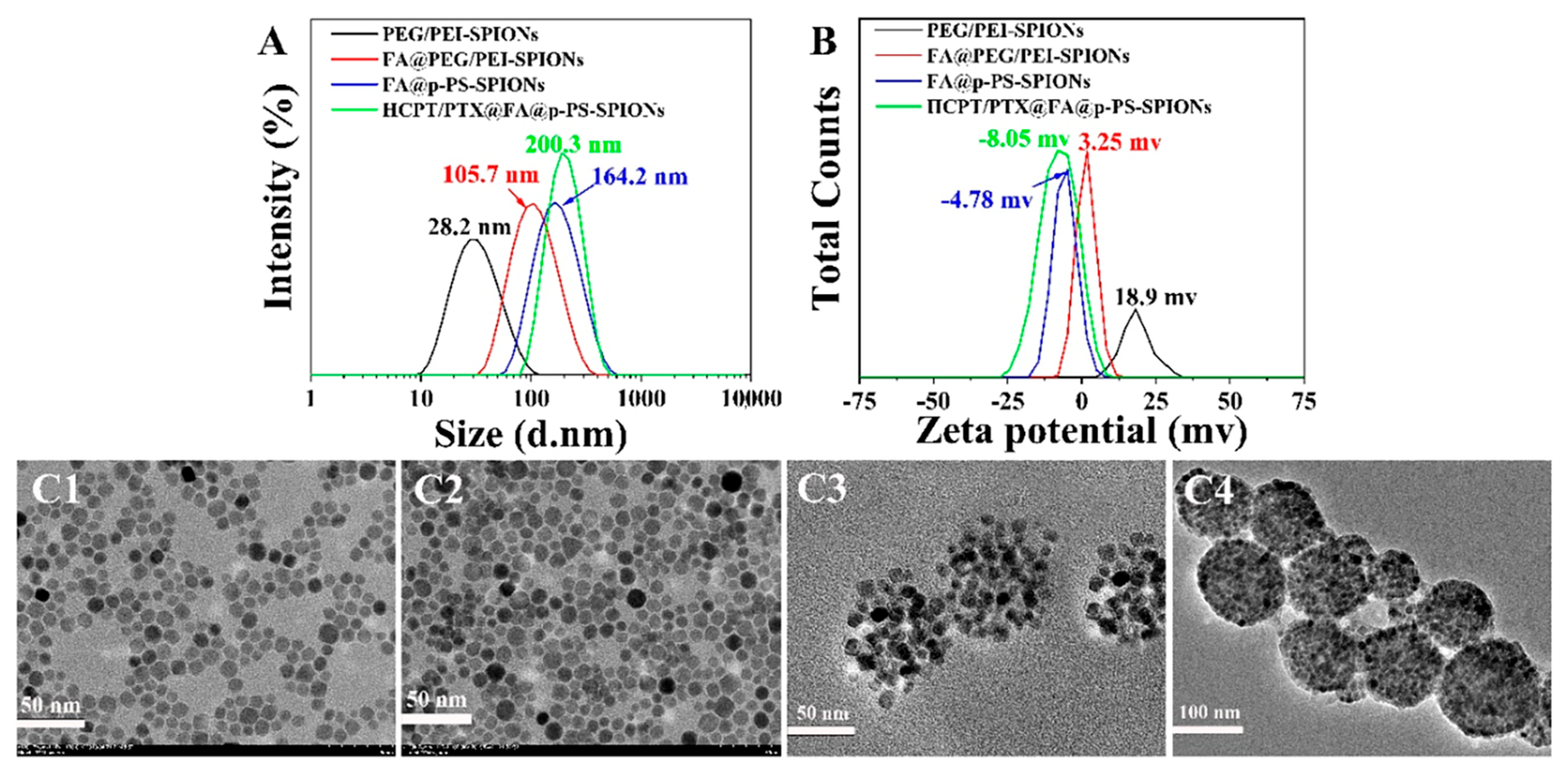
HCPT/PTX@FA@p–PS–SPIONs were prepared by the emulsification–solvent evaporation method in this study, which has the advantages of simple operation, mild reaction conditions, and accurate regulation of nanoparticle morphology and particle size distribution. After optimizing the preparation process parameters via single–factor experiments, nanoparticles with uniform morphology and favorable dispersion were successfully obtained. The detection results showed that the average hydrodynamic diameter of HCPT/PTX@FA@p-PS-SPIONs was 200.3 nm (
Figure 4A). The zeta potential of the nanoparticles was approximately −8.0 mV, which was significantly lower than that of PEG/PEI-SPIONs (+18.9 mV), FA@PEG/PEI–SPIONs (~+3.25 mV) and FA@p–PS–SPIONs (~−4.78 mV). This difference was mostly attributed to the introduction of phosphorylated polystyrene (p-PS) (
Figure 4B). Zeta potential can inhibit the aggregation of nanoparticles through electrostatic repulsion. TEM analysis further clarified the particle size and morphological characteristics of HCPT/PTX@FA@p–PS–SPIONs (
Figure 4(C1–C4)): both FA@p-PS-SPIONs and HCPT/PTX@FA@p-PS-SPIONs presented a spherical shape with favorable dispersion, and their average particle sizes were 50 ± 2 nm and 100 ± 4 nm, respectively. The physicochemical properties of the prepared nanoparticles conformed to the core requirements for in vivo targeted delivery of nanodelivery systems: nanoparticles with a particle size of 100–200 nm can achieve passive targeted accumulation at tumor sites via the enhanced permeability and retention (EPR) effect of tumor tissues; a weak negative potential can effectively reduce the self-aggregation of nanoparticles, decrease their non–specific binding to red blood cells and plasma proteins, and prolong the in vivo circulation time. Functionalized nanostructures with a particle size of 100–200 nm and a zeta potential in the range of −5~−10 mV exhibit the optimal in vivo dispersion and circulation stability, and can efficiently achieve passive targeted accumulation at tumor sites [
40]. These results verified the rationality of the preparation process and the scientificity of carrier material selection.
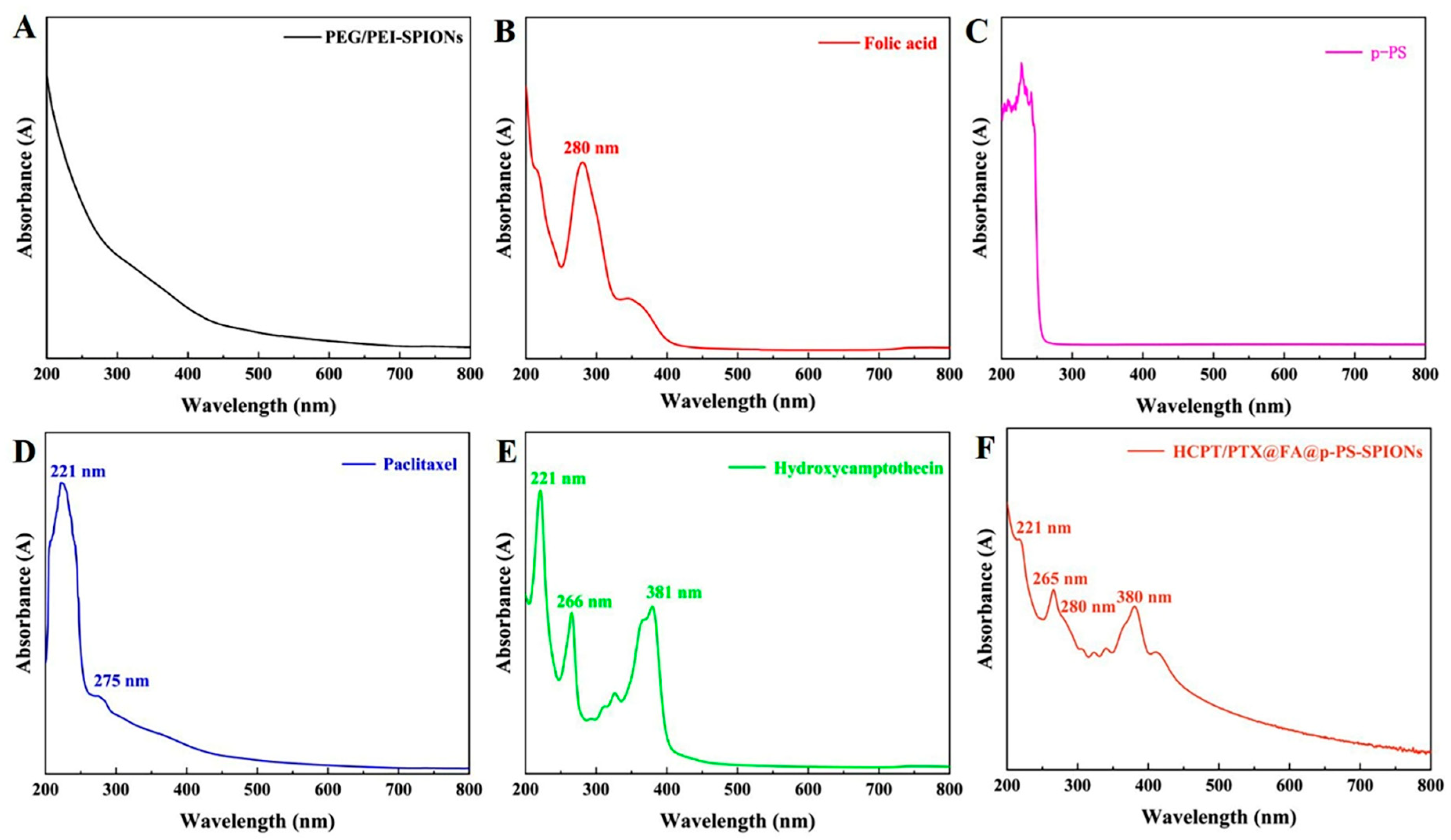
The ultraviolet–visible (UV–Vis) absorption characteristics of polyethylene glycol/polyethyleneimine-modified superparamagnetic iron oxide nanoparticles (PEG/PEI–SPIONs), folic acid (FA), phosphorylated polystyrene (p–PS), paclitaxel (PTX), hydroxycamptothecin (HCPT) and HCPT/PTX@FA@p-PS-SPIONs were characterized by UV-Vis spectrophotometry in the wavelength range of 200~800 nm, with the results presented in
Figure 5. PEG/PEI-SPIONs exhibited no characteristic absorption peaks in this wavelength range, while HCPT/PTX@FA@p-PS-SPIONs showed maximum UV absorption peaks at 221 nm, 265 nm, 280 nm and 380 nm, respectively. These peaks corresponded to the characteristic absorption peak of FA at 280 nm, PTX at 221 nm, and HCPT at 266 nm and 381 nm, confirming the successful co-loading of PTX and HCPT into the nanoparticles.
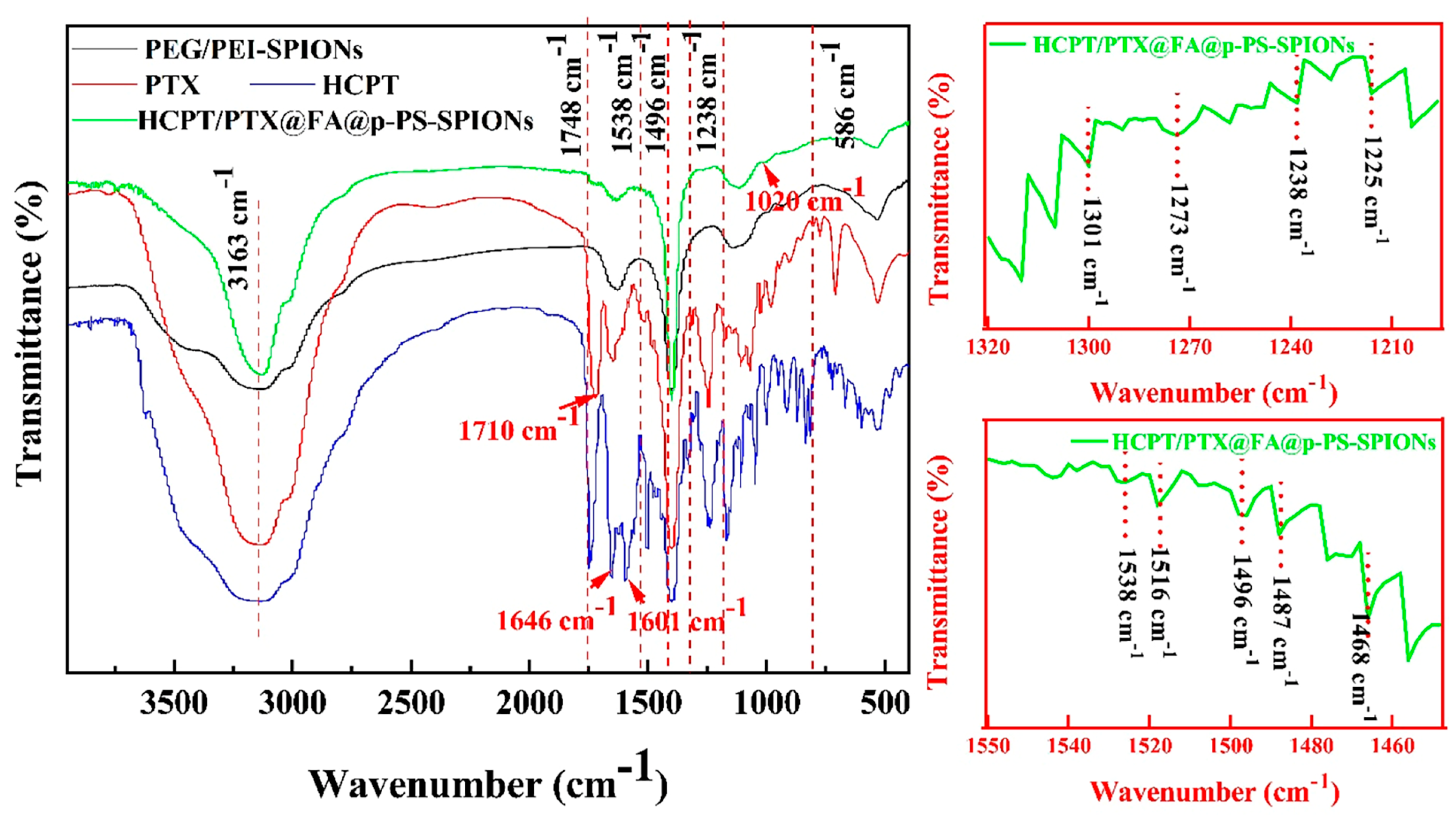
Fourier transform infrared (FT-IR) spectroscopy was further employed to investigate the chemical structure and functional group bonding characteristics of HCPT/PTX@FA@p–PS–SPIONs, and the results are shown in
Figure 6. A characteristic vibration peak of the Fe–O bond was observed at 586 cm
−1 for the nanoparticles, verifying that SPIONs served as the core framework of the nanosystem. A new vibration peak appeared at 1538 cm
−1, which indicated that the primary amine groups (–NH
2) on the surface of FA@PEG/PEI–SPIONs were consumed with the concomitant formation of secondary amine groups (–NH–) during the conjugation reaction, demonstrating that FA was successfully conjugated to PEG/PEI–SPIONs. The characteristic vibration peaks at 1020 cm
−1 and 1238 cm
−1 were assigned to the asymmetric stretching vibration of phosphate anions (PO
43−) and the stretching vibration of phosphorus-oxygen double bonds (P=O) in p–PS, respectively, confirming the successful grafting of p–PS onto the nanoparticle surface. The peak at 3163 cm
−1 resulted from the superposition of the stretching vibrations (υ(–OH)) of hydroxyl groups (–OH) in PTX and HCPT molecules and the intrinsic hydroxyl groups on the surface of iron oxide nanoparticles. The vibration peak at 1748 cm
−1 was attributed to the stretching vibration of ester carbonyl groups, representing the characteristic functional group responses of PTX and HCPT.
In addition, the characteristic vibration peaks of PTX and HCPT at 1646 cm−1 (Amide I band) and 1601 cm−1 (Amide II band) were significantly attenuated in HCPT/PTX@FA@p-PS-SPIONs. This phenomenon suggested that the amide groups (-CONH2) and amino groups (-NH2) in PTX and HCPT molecules were involved in the ionization reaction of phosphate groups on the surface of FA@p-PS-SPIONs during the cross-linking reaction, leading to the formation of stable non-covalent interactions between the drugs and the nanocarrier. The vibration band at 1710 cm−1 corresponded to the stretching vibration of C=O bonds in the δ(-CONH-) of imide groups, and the peak at 1225 cm−1 was associated with the stretching vibration of phenolic hydroxyl groups. All the above characteristic vibrations of functional groups were structural responses of PTX and HCPT. Collectively, the presence of various characteristic vibration peaks and the distinct changes in functional group signals further confirmed the successful loading of both HCPT and PTX into HCPT/PTX@FA@p-PS-SPIONs, as well as the existence of specific interactions between the loaded drugs and the nanocarrier.
The above results are mainly attributed to the synergistic effect of the amphiphilic structure of the p-PS carrier and the emulsification–solvent evaporation method: the hydrophobic segments of p-PS molecules form stable hydrophobic interactions with the hydrophobic domains of PTX and HCPT, which firmly encapsulate the two drugs in the nanoparticle core and reduce drug loss during the preparation process; the addition of an emulsifier effectively reduces the oil–water interfacial tension, disperses drug molecules uniformly in the organic phase, and further improves the entrapment efficiency [
41]. These findings fully verify the remarkable advantages of the p-PS carrier in dual-drug co-loading and delivery. To clarify the performance advantages of the HCPT/PTX@FA@p-PS-SPIONs nanosystem constructed in this study, a systematic comparative analysis was conducted with the dual-drug nano drug delivery systems for nasopharyngeal carcinoma reported in the field. When similar polymeric carriers were used for the co-loading of two hydrophobic chemotherapeutic drugs, the entrapment efficiency (EE) of both drugs did not exceed 75%, and the drug-loading capacity (DL) was lower than 15% [
42]. In contrast, after optimizing the p-PS carrier with phosphorylation modification in this study, the EE and DL of both PTX and HCPT were significantly improved. The core reason for this improvement is speculated to be that the amphiphilic molecular structure and phosphorylation modification of p-PS endow it with a stronger encapsulation capacity for hydrophobic drugs. Combined with the process optimization of the emulsification–solvent evaporation method, drug loss during preparation was further reduced. These results suggest that p-PS, as a carrier material, has significant performance advantages in dual-drug synergistic delivery, which can ensure the effective drug concentration at tumor sites while reducing the clinical administration dose.
The in vitro stability of nanocarriers is closely related to their drug-loading capacity; insufficient stability can lead to premature burst release of drugs, which reduces therapeutic efficacy and increases systemic toxic side effects [
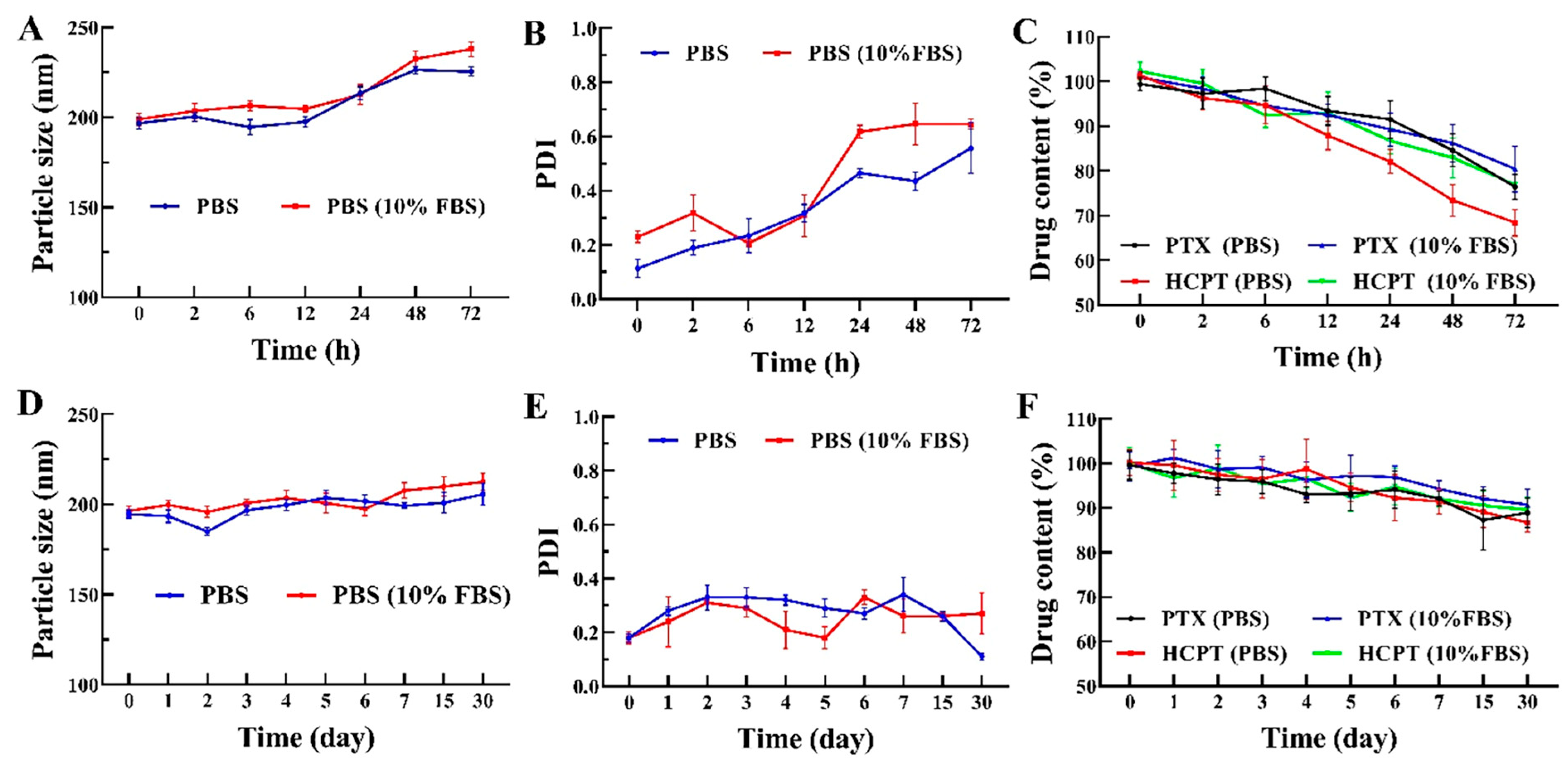
43]. To evaluate the in vitro stability of HCPT/PTX@FA@p-PS-SPIONs, the nanoparticles were incubated in 0.01 mol/L phosphate-buffered saline (PBS) and PBS containing 10% fetal bovine serum (FBS) at 37 °C for 72 h, and simultaneously stored at 4 °C for 30 d for stability assessment (
Figure 7). The results showed that when the nanoparticles were incubated at 37 °C for 72 h, the particle size slightly increased and the polydispersity index (PDI) rose accordingly (
Figure 7A,B), indicating mild aggregation of the nanoparticles, while the overall particle size remained relatively stable. After storage at 4 °C for 30 d, the particle size of the nanoparticles remained stable throughout the period, and the PDI was less than 0.5 (
Figure 7D,E), demonstrating the absence of aggregation. More importantly, when mimicking the in vivo physiological environment at 37 °C, the drug retention rate of the nanoparticles remained above 80% within 24 h (
Figure 7C). In addition, the drug retention rate of HCPT/PTX@FA@p-PS-SPIONs remained stably above 90% within 15 d of storage at 4 °C, and the drug content only decreased to approximately 85% after 15 d (
Figure 7F). The HCPT/PTX@FA@p-PS-SPIONs prepared in this study not only exhibit excellent drug-loading capacity but also good in vitro stability, which further confirms the superiority of the p-PS carrier and lays a solid foundation for subsequent in vivo experiments and preclinical research.
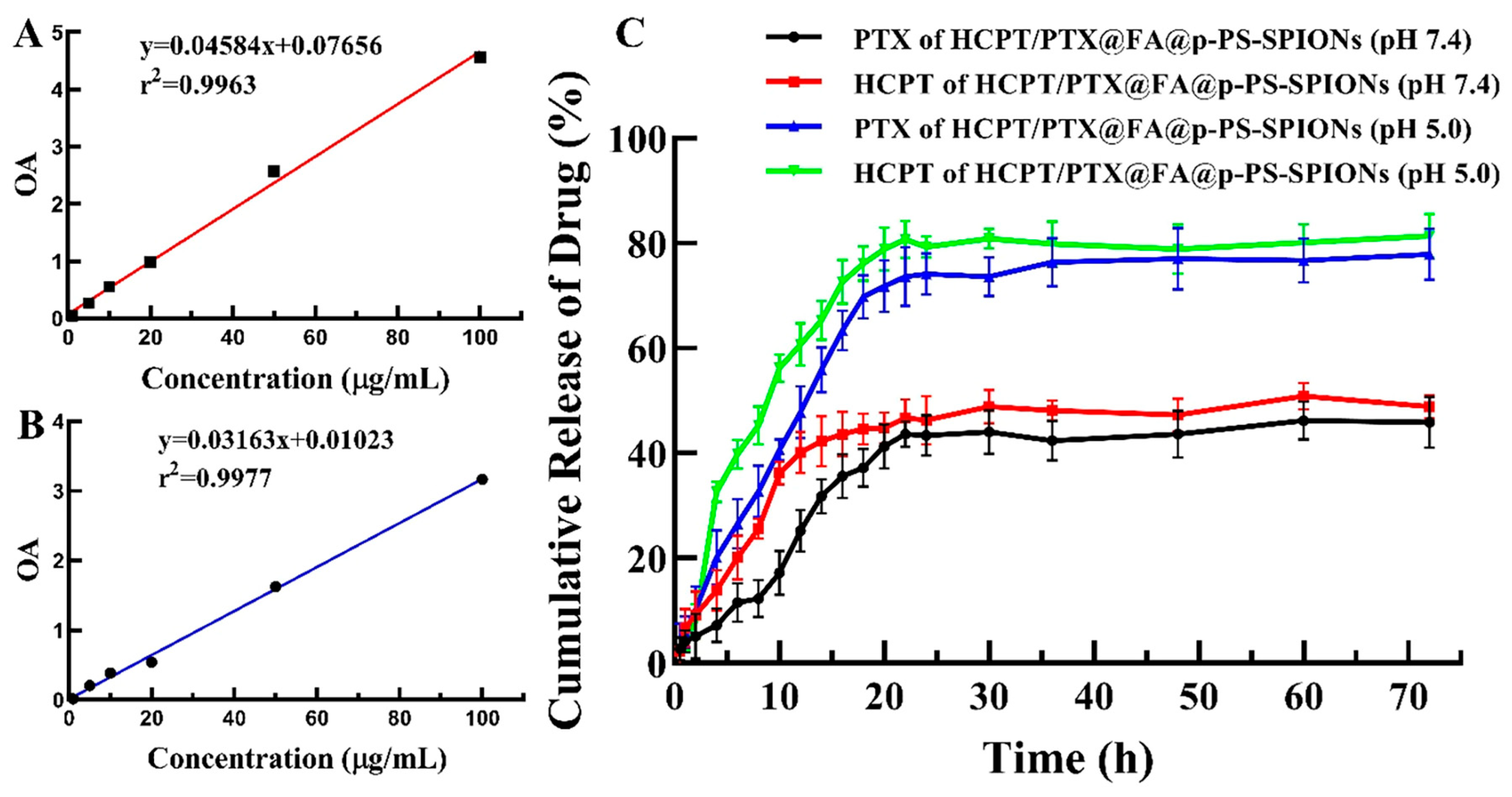
In this study, PTX and HCPT standard solutions with different concentrations were prepared, and the linear regression equations of concentration versus absorbance for the two drugs were plotted separately (
Figure 8). The regression equation for PTX was y = 0.04584x + 0.07656 (r
2 = 0.9963), and that for HCPT was y = 0.03163x + 0.01023 (r
2 = 0.9977). The results demonstrated a good linear relationship between the concentration and absorbance of both PTX and HCPT in the concentration range of 1 μg/mL to 100 μg/mL (
Figure 8A,B). The results of the in vitro drug release experiment showed that in PBS buffer at pH 7.4, the cumulative release rate of HCPT was only 43.6% and that of PTX was 41.3% after 70 h of nanoparticle release. In contrast, in acidic buffer at pH 5.0, the cumulative release rates of PTX and HCPT reached 76.5% and 81.3%, respectively (
Figure 8C). This phenomenon was attributed to the dissociation of the nanoparticle outer shell under acidic conditions, which further enabled the massive release of the encapsulated drugs.
As shown in
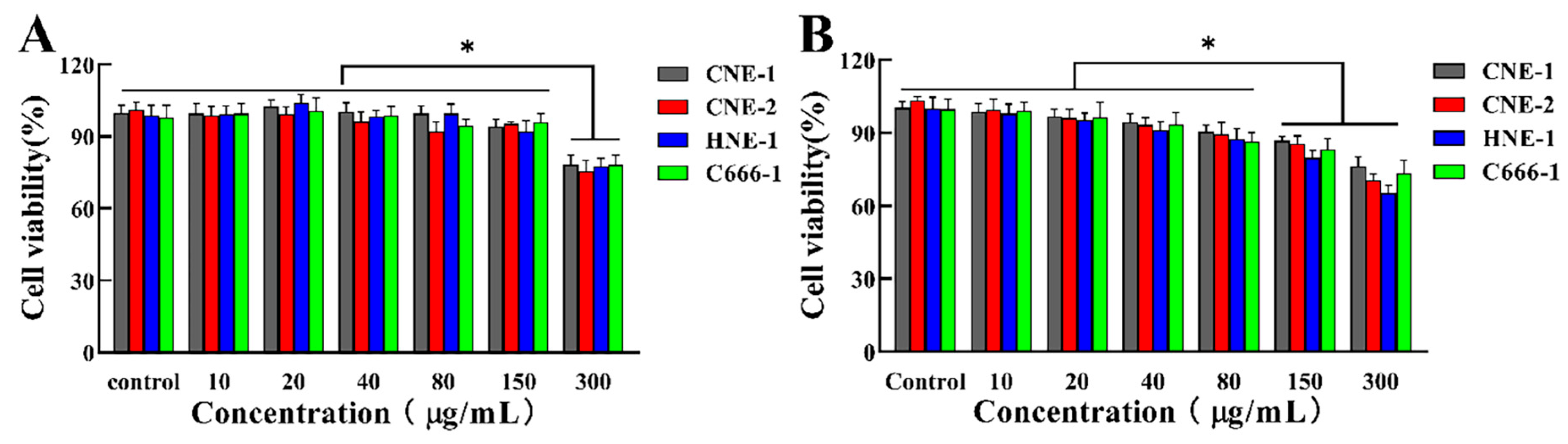
Figure 9, blank FA@p-PS-SPIONs were co-incubated with nasopharyngeal carcinoma cell lines CNE-1, CNE-2, HNE-1 and C666-1 for 24 h and 48 h. The results revealed that the viability of all cell lines remained above 80% at the concentration range of 10~150 μg/mL; in contrast, FA@p-PS-SPIONs exerted a significant inhibitory effect on the cells when the concentration was increased to 300 μg/mL (
p < 0.05). This indicated that the working concentration of FA@p-PS-SPIONs should be controlled below 300 μg/mL in subsequent experiments.
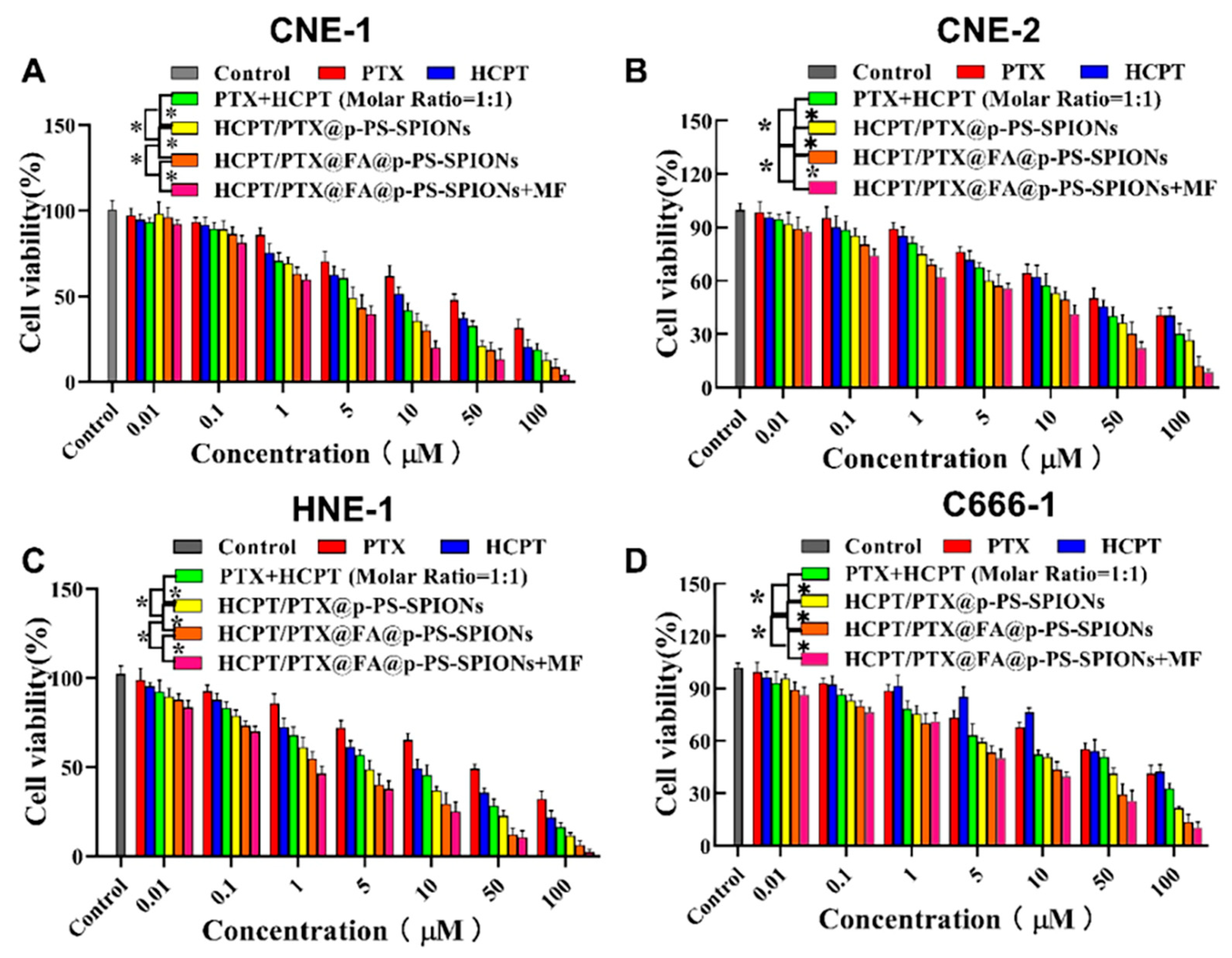
The 3-(4,5-dimethylthiazol-2-yl)-2,5-diphenyltetrazolium bromide (MTT) assay was employed to determine the proliferation inhibition rates of nasopharyngeal carcinoma cell lines induced by paclitaxel (PTX), hydroxycamptothecin (HCPT), PTX + HCPT mixture (molar ratio = 1:1), HCPT/PTX@FA@p-PS-SPIONs, and HCPT/PTX@FA@p-PS-SPIONs combined with a magnetic field (MF, 0.3 T). The results are presented in
Figure 10. Intrinsic heterogeneity existed among different nasopharyngeal carcinoma cell lines, along with distinct sensitivities to various drugs, which resulted in different degrees of inhibition of each cell line by the drugs. Free PTX and HCPT could enter cells via free diffusion and directly kill tumor cells; in contrast, drug-loaded nanoparticles required cellular internalization to enter tumor cells prior to drug release for exerting antitumor effects, which was a slow process dependent on time and the intracellular microenvironment. As shown in
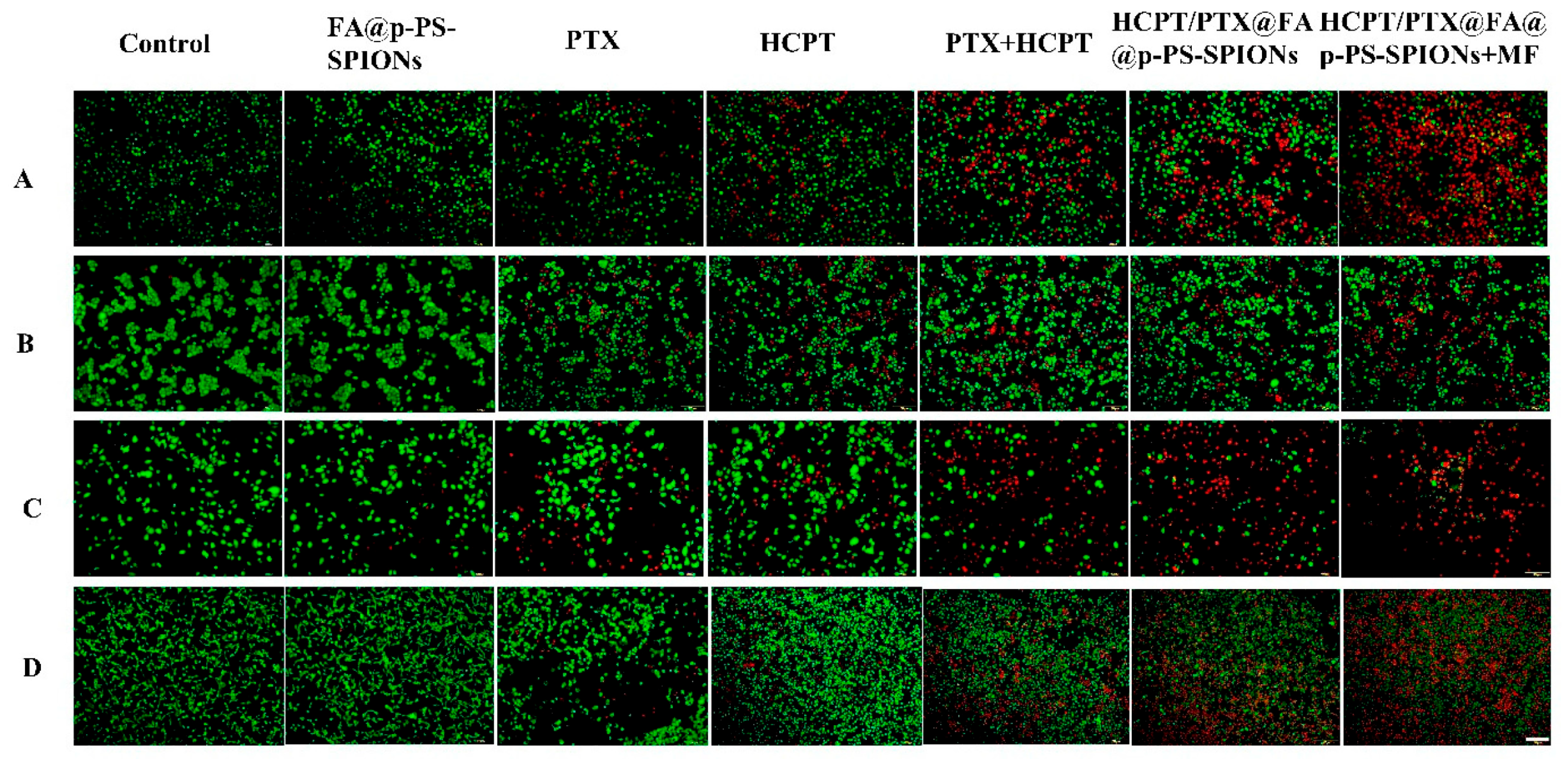
Figure 10 and
Figure 11, the PTX + HCPT combination exerted a significantly stronger inhibitory effect on the proliferation of CNE-1, CNE-2, HNE-1 and C666-1 cells than single-agent PTX or HCPT. Compared with unmodified HCPT/PTX@p-PS-SPIONs, folic acid (FA)-conjugated HCPT/PTX@FA@p-PS-SPIONs exhibited a more potent inhibitory effect on the cells, and a significant difference in the cellular uptake efficiency of the nanoparticles was observed between folate receptor-negative and folate receptor-positive cells [
39]. These findings suggested that HCPT/PTX@FA@p-PS-SPIONs could achieve specific targeting to folate receptor-positive HNE-1 cancer cells via a receptor-ligand mediated pathway, thereby exerting effective cytotoxic activity. The proliferation inhibition rates of the nanoparticles against the various nasopharyngeal carcinoma cell lines were ranked as follows: HNE-1 > CNE-1 > C666-1 > CNE-2.
Previous studies have confirmed that the combination of PTX and HCPT exerts a significant synergistic antitumor effect on nasopharyngeal carcinoma CNE-2 cells with a combination index (CI) < 1, indicating a synergistic enhancement effect of the two drugs in combination. The results of in vitro pharmacodynamic experiments in this study showed that under the action of an external magnetic field (MF), HCPT/PTX@FA@p-PS-SPIONs combined with MF exhibited a more potent proliferation inhibitory effect on the above four nasopharyngeal carcinoma cell lines. This demonstrated that HCPT/PTX@FA@p-PS-SPIONs could achieve a dual targeting effect on nasopharyngeal carcinoma cells (folate receptor targeting and magnetic targeting), thereby significantly enhancing its growth inhibitory capacity against these cells. The core mechanism lies in the synergistic enhancement effect of the dual targeting system: on the one hand, FA modified on the nanoparticle surface can specifically recognize the highly expressed folate receptors (FRs) on the surface of nasopharyngeal carcinoma cells, realizing active targeted delivery of drugs into tumor cells via receptor-mediated endocytosis (RME) and significantly increasing the local drug concentration in tumors; on the other hand, the superparamagnetic iron oxide nanoparticles (SPIONs) encapsulated in the nanoparticles can be directionally accumulated in nasopharyngeal carcinoma tumor tissues under the guidance of an external static magnetic field, achieving magnetic targeting enhancement and further improving drug delivery efficiency [
44].
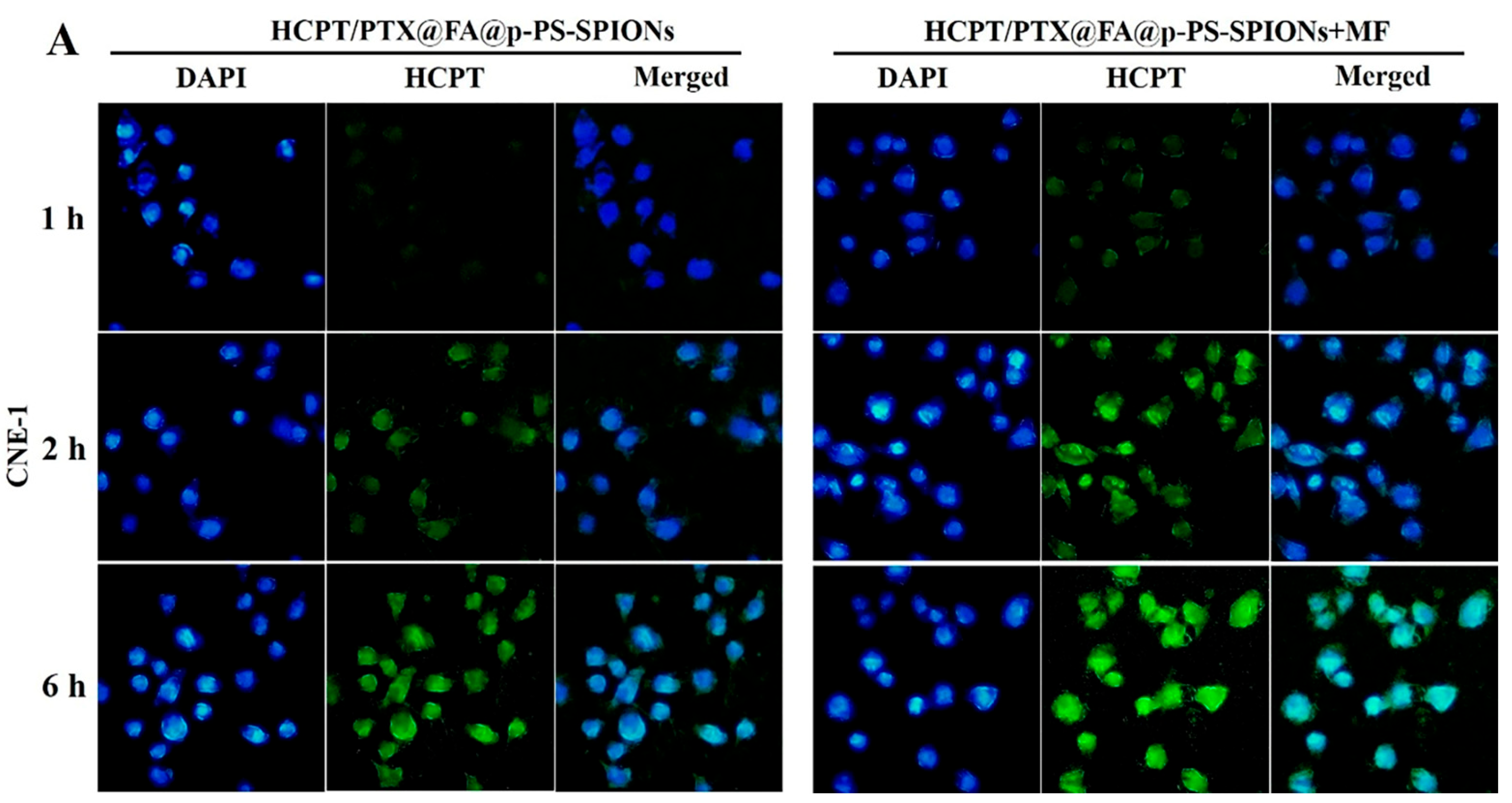
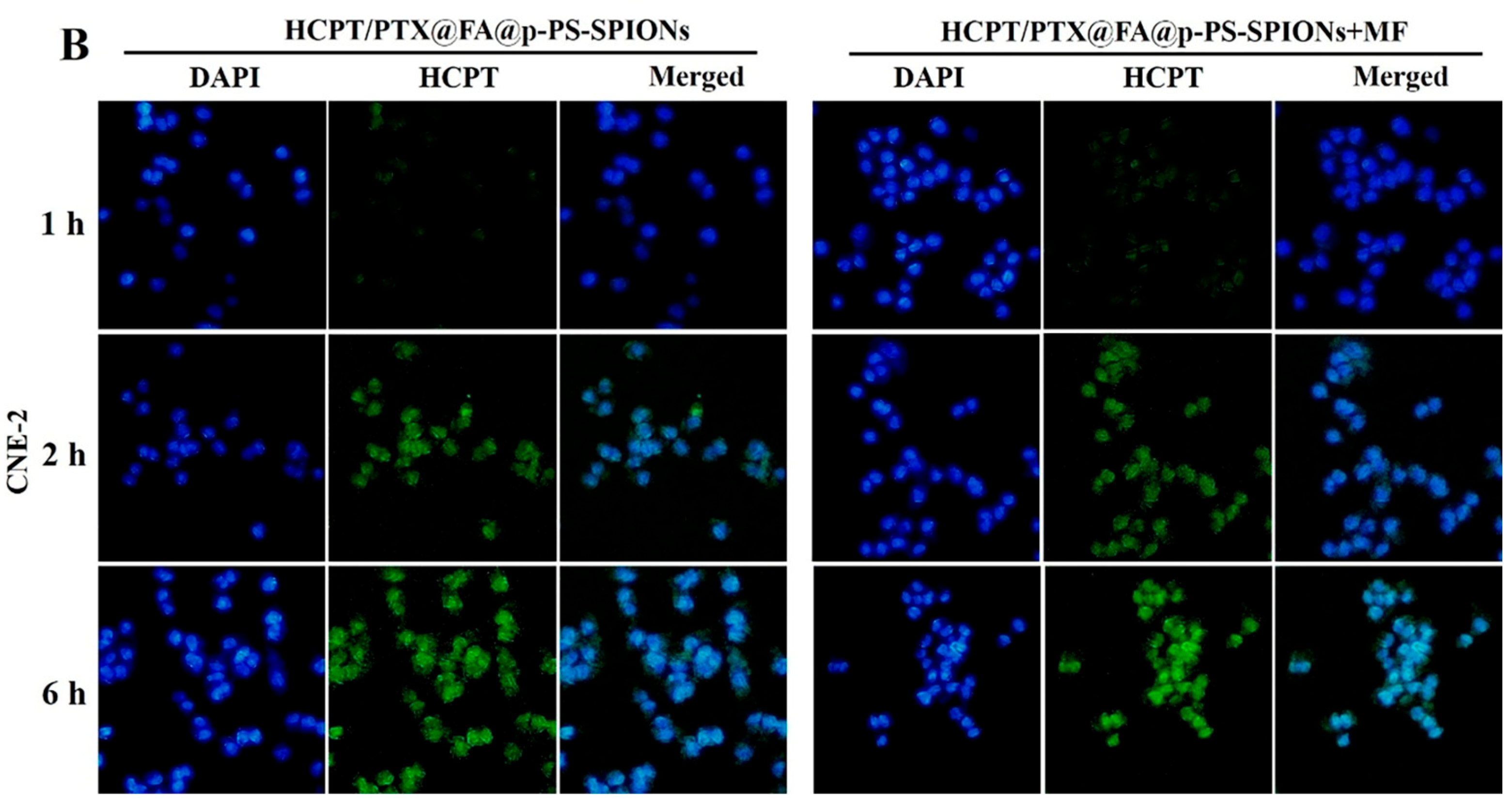
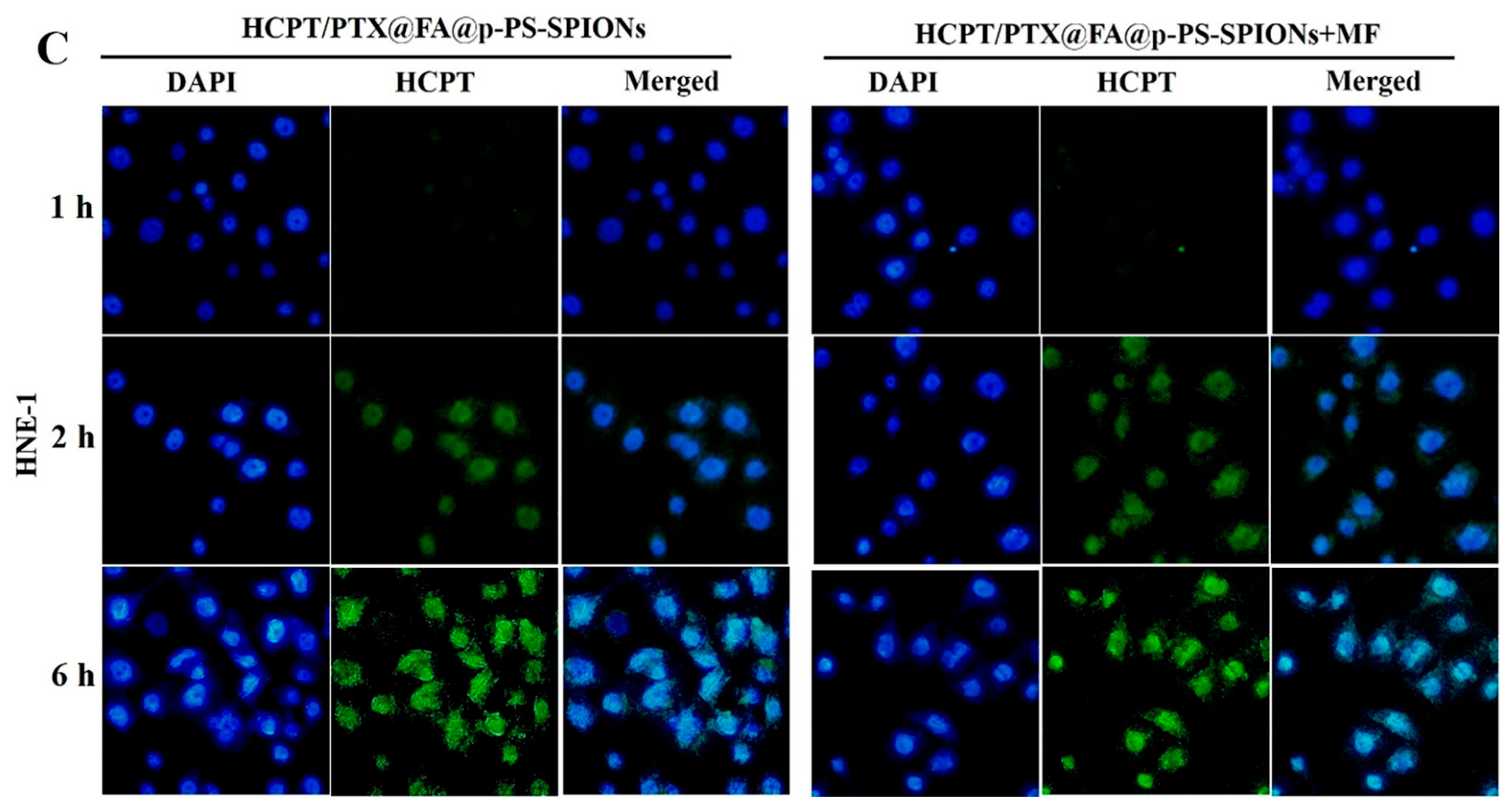
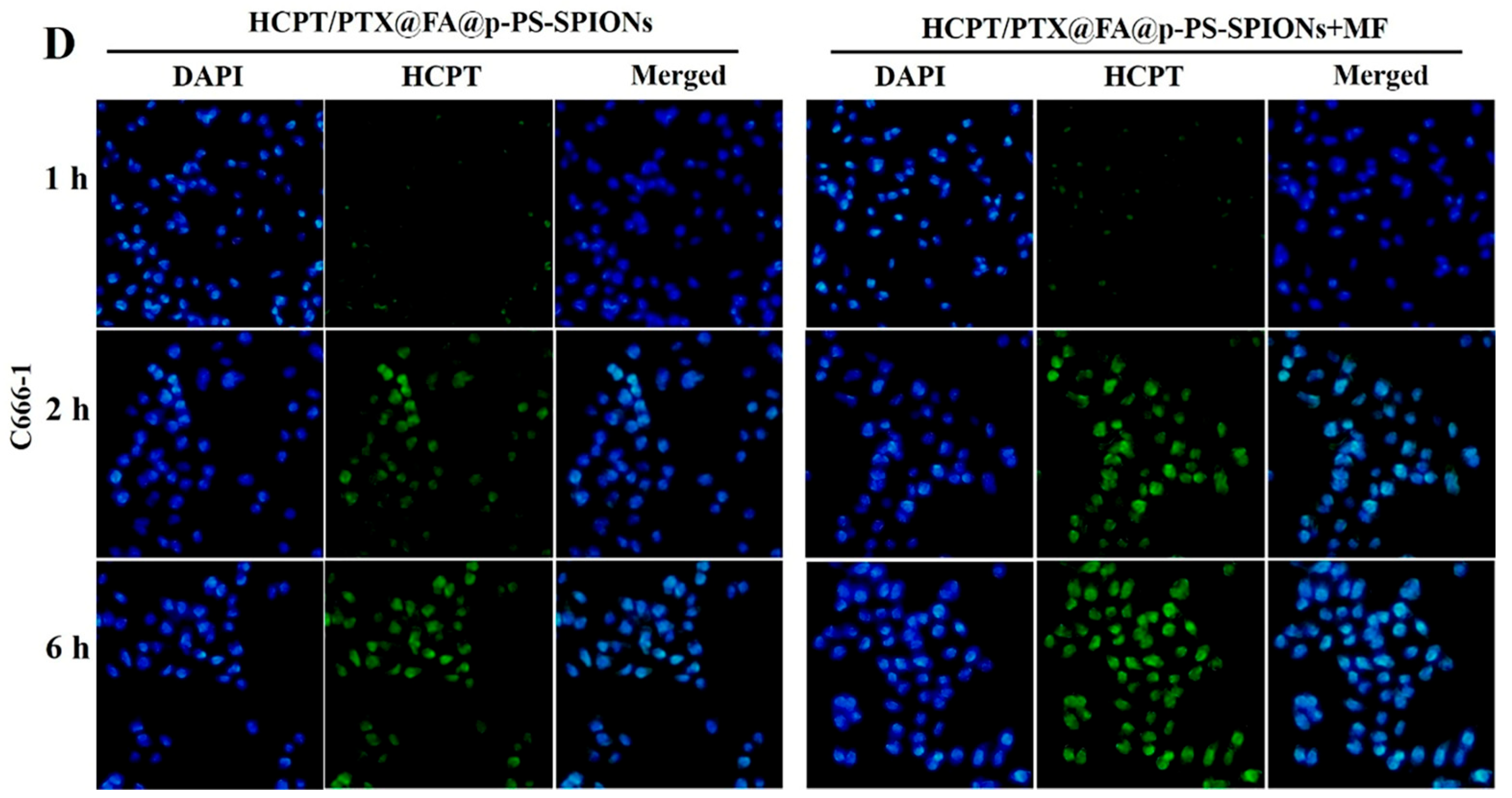
To investigate the cellular uptake characteristics of HCPT/PTX@FA@p-PS-SPIONs, the nanoparticles were co-incubated with nasopharyngeal carcinoma cell lines CNE-1, CNE-2, HNE-1 and C666-1 for different durations (1 h, 2 h, 6 h), respectively, and the cells were subsequently subjected to nuclear staining with DAPI solution. The results are presented in
Figure 12: after 1 h of co-incubation, the cellular uptake of the nanoparticles by nasopharyngeal carcinoma cells was low, and only weak and scattered fluorescent signals were observed in the cells; after 2 h of co-incubation, PTX and HCPT were obviously enriched in the cell nucleus, and the fluorescent intensity at this time was significantly higher than that of the 1 h incubation group; after 6 h of incubation, the intracellular drug accumulation in the nucleus of nasopharyngeal carcinoma cells was further increased, and the fluorescent intensity was also significantly elevated compared with the 1 h and 2 h incubation groups. An external magnetic field could significantly improve the cellular drug uptake capacity, thereby enhancing the targeting of nanoparticles to tumor cells. The dual targeting strategy combining folic acid modification and magnetic targeting can significantly improve the accumulation efficiency of nanoparticles at tumor sites, reduce the nonspecific accumulation of drugs in normal tissues, and alleviate the systemic toxic side effects of chemotherapy [
44].
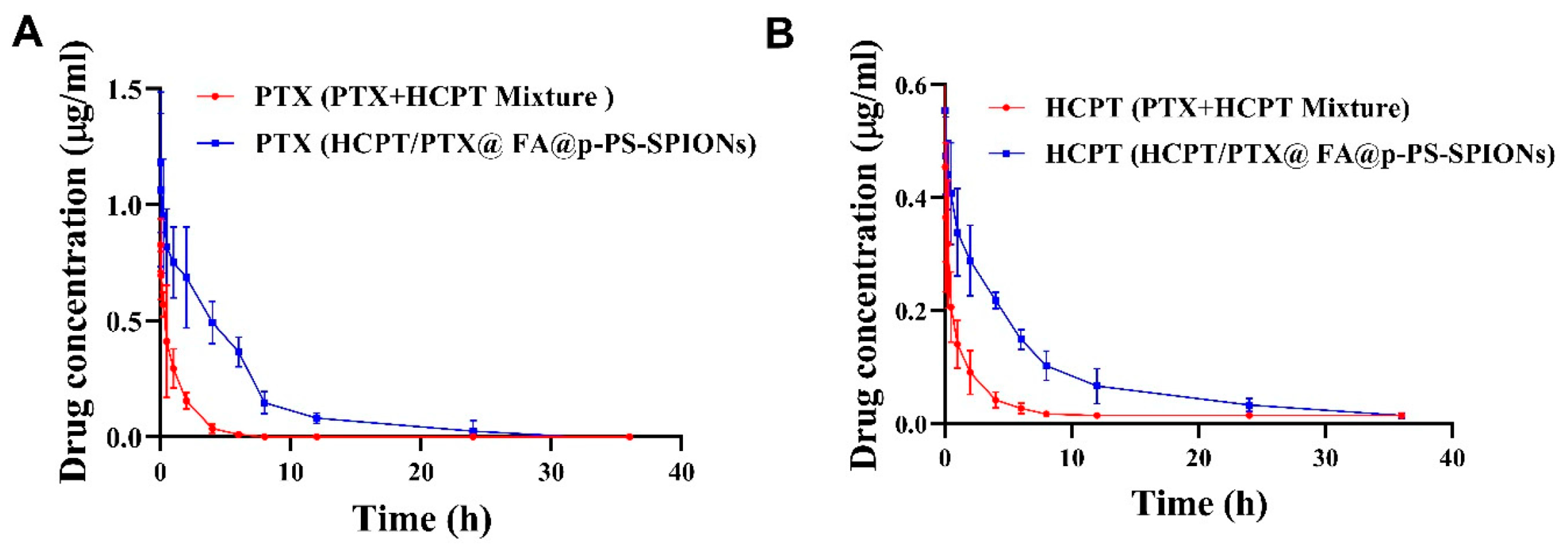
DAS 2.0 software was employed to perform fitting analysis on the pharmacokinetic parameters, and the fitting parameters of the in vivo pharmacokinetic model are shown in
Table 4 and
Figure 13. The results indicated that PTX and HCPT in both the PTX + HCPT mixture and HCPT/PTX@FA@p-PS-SPIONs were consistent with the characteristics of the two-compartment model. The area under the plasma concentration–time curve (AUC) of PTX and HCPT in HCPT/PTX@FA@p-PS-SPIONs was 5.5 ± 1.1 μg·h/mL and 2.7 ± 1.2 μg·h/mL μg·h/mL, respectively, which were 5-fold and 2-fold those of the two drugs in the PTX + HCPT mixture (AUC of PTX in the mixture: 1.0 ± 0.1 μg·h/mL; AUC of HCPT in the mixture: 0.69 ± 0.03 μg·h/mL). These findings suggested that HCPT/PTX@FA@p-PS-SPIONs could significantly increase the plasma concentrations of PTX and HCPT in rats and effectively prolong their in vivo half-lives. The experimental pharmacokinetic parameters obtained in this study can provide data support for further exploring the optimal in vivo administration conditions of HCPT/PTX@FA@p-PS-SPIONs and promoting the practical application of this nanodelivery system, and also lay a scientific foundation for the research and translational development of this type of drug delivery system.
The innovative points of this study are mainly reflected in three aspects: 1. Phosphorylated polystyrene (p-PS) was innovatively selected as the polymeric backbone. Its phosphate groups can synergistically enhance magnetic responsiveness with superparamagnetic iron oxide nanoparticles (SPIONs) [
39,
45]; phosphorylation modification improves biocompatibility and enables mild degradation [
46]; the amphiphilic structure addresses the challenge of synergistic delivery of paclitaxel (PTX) and hydroxycamptothecin (HCPT) with large solubility differences [
40,
42]. Compared with poly(lactic-co-glycolic acid) (PLGA) and chitosan, p-PS exhibits significant advantages in entrapment efficiency, in vitro release, targeting efficiency and biosafety, and there is currently an application gap for its use in the targeted therapy of nasopharyngeal carcinoma. 2. A dual delivery system integrating folic acid (FA)-mediated active targeting and SPION-based magnetic targeting was constructed to improve the drug accumulation efficiency at tumor sites [
47]. 3. Co-loading of PTX and HCPT was achieved to realize dual-drug synergy and overcome tumor drug resistance [
48,
49]. In summary, the application of the p-PS backbone fills the relevant application gap, and the combination of dual targeting and dual-drug synergy significantly enhances the innovation and application value of this study.
Meanwhile, this study has certain limitations: 1. Both in vitro cellular experiments and in vivo animal experiments are only preliminary verifications, and no clinical trials have been conducted; the safety and efficacy of the nanoparticles in the human body still need to be further verified. 2. Verifications were only completed in in vitro cells and normal Sprague–Dawley (SD) rats, with no clinical trials or studies on nasopharyngeal carcinoma tumor-bearing animal models performed. 3. The lack of in vivo biodistribution imaging experiments makes it impossible to visually verify the drug accumulation efficiency at tumor sites. 4. Only preliminary evaluation of in vitro cytotoxicity was conducted, with insufficient research on in vivo long-term toxicity and immunotoxicity. Subsequent studies need to further clarify its in vivo metabolic process to provide theoretical support for the optimization of carrier materials.
In conclusion, HCPT/PTX@FA@p-PS-SPIONs magnetic self-assembled nanoparticles were successfully prepared in this study, which possess favorable characterization properties, good biocompatibility, synchronized dual-drug release capacity, and a synergistic effect of magnetic targeting and FA-mediated targeting. This study provides a novel carrier system and research strategy for the combined dual-drug targeted therapy of nasopharyngeal carcinoma, and confirms the application potential of p-PS-based nanoparticles in tumor-targeted delivery. In view of the limitations of this study, subsequent research will focus on the following aspects: constructing human nasopharyngeal carcinoma xenograft models in nude mice and combining with biodistribution imaging to verify the in vivo targeting and antitumor efficacy of the nanoparticles; systematically conducting in vivo long-term toxicity experiments to clarify its safety; and further investigating the molecular mechanisms underlying dual-drug synergy and targeted delivery.