
Article

Long-Range Interaction and Magnetic Anisotropy of [(CoP)hard/(NiP)am/(CoP)am/(NiP)am]n Superlattices

by
Gennadiy S. Patrin
1,2,*,
Vitaliy A. Orlov
1,2,
Yaroslav G. Shiyan
1,2 and
Aleksandr V. Kobyakov
1,2
1
Institute of Engineering Physics and Radio Electronics, Siberian Federal University, 79 Svobodny Prospekt, 660041 Krasnoyarsk, Russia
2
Kirensky Institute of Physics, Krasnoyarsk Scientific Center, Siberian Branch, Russian Academy of Sciences, 660041 Krasnoyarsk, Russia
*
Author to whom correspondence should be addressed.
Magnetochemistry 2026, 12(3), 33; https://doi.org/10.3390/magnetochemistry12030033
Submission received: 26 January 2026 / Revised: 1 March 2026 / Accepted: 3 March 2026 / Published: 5 March 2026
(This article belongs to the Special Issue 10th Anniversary of Magnetochemistry: Past, Present and Future)

Abstract

We present a study of [(CoP)soft/(NiP)am/(CoP)hard/(NiP)am]n (n ≤ 20) magnetic superlattices (tCoP = 5 nm, tNiP = 4 nm) synthesized via chemical bath deposition (CBD). Atomic force microscopy reveals that the soft magnetic layer is fine-grained (amorphous), whereas the hard magnetic layer exhibits a polycrystalline hexagonal structure. The results demonstrate a long-range interlayer interaction whose magnitude depends on the number of blocks (n). This interaction manifests as multiple resonance peaks in the magnetic resonance spectra: three peaks were observed for structures with n = 5, 10, and 15, while two peaks were identified for n = 20. Temperature dependencies of the interlayer interaction fields were obtained: the interaction between the nearest magnetically hard and soft layers is negative (HJ1 < 0), while the interaction between the soft layers (HJ2) undergoes a sign reversal from positive to negative with increasing temperature at a threshold temperature depending on n. The oscillations of the magnetization saturation field correlate with the magnetic anisotropy fields.

1. Introduction

Co-containing magnetic materials are widely used in magnetoelectronic devices due to the high degree of electron spin polarization (P) at the Fermi level and the ability to control their magnetic properties. For the hexagonal close-packed (hcp) phase of cobalt [1], P is estimated at ≈ 60%, while for the cubic (bcc) phase, it reaches ≈ 90% [2]. Amorphous films in the Co-Ni-P system exhibit high magnetization, low coercivity, and minimal losses at ultrahigh frequencies [3]. Soft magnetic CoP films (amorphous phase) have found applications as materials for thermomagnetic magneto-optical memory [4] and are suitable for microwave devices [5]. Meanwhile, hard magnetic CoP films (hexagonal phase) are considered to be promising materials for micro- and nanoelectromechanical systems (MEMS/NEMS) [6].
Developing complex structures by combining materials with distinct magnetic properties and varying stacking sequences enables the achievement of unique physical characteristics. Furthermore, the state of the interface between adjacent layers serves as a key factor in tuning these properties [7]. Modifying the interface allows for the control of ion spin states within magnetic layers, interlayer interactions, surface and interface anisotropy, and electron scattering in spin-dependent transport devices.
To enhance these effects, multilayer structures with periodic repeating units are often designed. Under certain conditions, such structures can be regarded as superlattices. Superlattice structures such as Co/Cr(001) [8] and Co/Cu(111) [9] have been investigated in detail. Oscillations in both magnetic anisotropy and the resonance linewidth have been observed as a function of the interlayer thickness. In Ni/Co(111) [10] and Co/Ru [11] superlattices, strong perpendicular anisotropy emerges depending on the Co thickness, correlating with oscillations in the interlayer interaction. Superlattices composed of rare-earth and yttrium (RE/Y) layers [12,13] exhibit long-range interlayer interaction, as determined by neutron diffraction through direct measurement of the spin-density wave and by magnetic resonance data. In the [GeTe/Sb2Te3]6/FeNi superlattice [14], a topological insulator with strong spin–orbit coupling, spin–torque transfer is observed during ferromagnetic resonance.
Previously [15], long-range interlayer interaction and interface magnetic anisotropy were observed in [(CoP)soft/(NiP)am/(CoP)hard/(NiP)am]n superlattices with tNiPam = 2 nm. To identify general patterns in the formation of the magnetic state, we fabricated structures with a different nonmagnetic spacer thickness. This work investigates the magnetic and resonance properties of these superlattices as a function of the increased spacer thickness (tNiPam = 4 nm), the number of blocks (n), and variations in anisotropy at the hard/soft magnetic interfaces.

2. Experimental Methodology

The [(CoP)soft/NiP/(CoP)hard/NiP]n films were fabricated on glass substrates via chemical bath deposition (CBD). Substrates: cover glass Deckgläser 18 × 18 mm, thickness I, Menzel-glaser, Germany. The deposition process is described in detail elsewhere [15,16]. Film deposition from the gas or liquid phase occurs under equilibrium conditions between the fluid (liquid/gaseous) and solid phases [17,18]. Such conditions typically result in sharp and smooth interfaces. As previously demonstrated by X-ray photoelectron spectroscopy (XPS) [19], the nominal composition at the air–cobalt interface is reached within a thickness of ≤1 nm.
The phosphorus content in all layers was 8 at.%. The magnetically hard CoP layer was in a hexagonal polycrystalline phase, while the soft magnetic CoP layer was amorphous. The intermediate NiP layer was also amorphous and nonmagnetic [20].
Multilayered structures with the number of blocks n = 1, 5, 10, 15, and 20 were synthesized. The entire series was deposited in a single run. Both magnetic layers had a thickness of tCoP ≈ 5 nm, and the nonmagnetic layer thickness was tNiP ≈ 4 nm. These thicknesses were chosen so that the interlayer interaction energy is comparable to the magnetic energy of the ferromagnetic layers, ensuring that interlayer interaction effects are not masked by other types of interactions. In this case, the Zeeman energy of each layer type provides a comparable contribution.
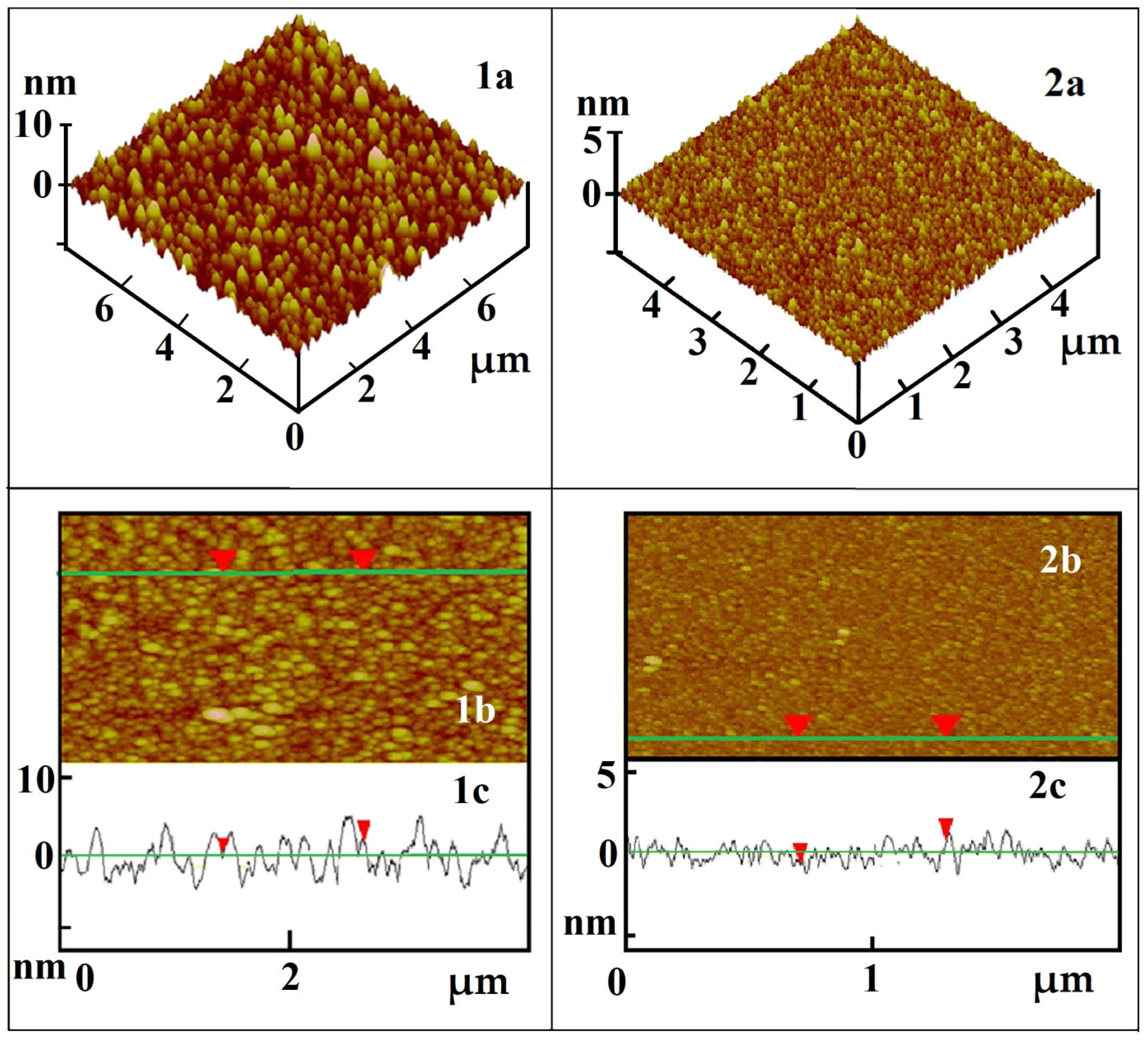
Layer thicknesses were measured using an S4 Pioneer X-ray fluorescence spectrometer (Bruker AXS GmbH, Karlsruhe,Germany) with an accuracy of ±0.5 nm. The X-ray diffraction (XRD) patterns of individual layers agree with those reported in [16]. Film quality was assessed via surface roughness, characterized by a Veeco MultiMode NanoScope IIIa SPM atomic force microscope with a resolution of 0.2 nm. The maximum peak-to-valley roughness was ±4 nm for the polycrystalline (hard magnetic) layer and ±1 nm for the amorphous (soft magnetic) layer (see Figure 1). Based on Figure 1c, the surface exhibits “pancake-like” inhomogeneities with average lateral sizes of ~130 nm for the hard magnetic cobalt and ~15 nm for the soft magnetic cobalt.
It is known [21] that during crystallization and the transition to the hexagonal phase, the grain size increases depending on the deposition parameters. Our results are consistent with those in [22], where the transition from an amorphous to a nanocrystalline structure with increasing film thickness was analyzed. This transition leads to an approximately 2–3-fold increase in coercivity.
Previously [15], transmission electron microscopy (JEOL JEM-2100) demonstrated that the layers do not intermix and the interfaces are sharp, with an interface thickness not exceeding 1 nm, correlating with XPS data [20]. Magnetic measurements were performed using an MPMS-XL system over a temperature range of T = 4.2–300 K. The magnetic field was applied in the film plane. Electron magnetic resonance (EMR) spectra were recorded at T = 78–300 K using a Bruker Elexsys E580 (Bruker, Billerica, MA, USA) CW EPR spectrometer operating at 9.49 GHz. Spectral processing involved fitting the experimental absorption lines by decomposing them into Lorentzian components.

3. Results and Discussions

3.1. Experimental Results

Previously [15], [(CoP)hard/(NiP)am/(CoP)soft/(NiP)am]n film structures with an intermediate layer thickness of tNiP ≈ 2 nm and n = 1, 5, 10, 15, 20, 40 were fabricated and investigated. The key findings were as follows: (1) interface processes between dissimilar materials significantly influence the magnetic properties of multilayer structures; and (2) long-range interlayer interaction is present. Specifically, antiferromagnetic (AFM) coupling occurs between adjacent hard and soft magnetic layers, whereas ferromagnetic (FM) interaction exists between adjacent soft magnetic layers; as a result, the soft magnetic system partitions into two distinct subsystems.
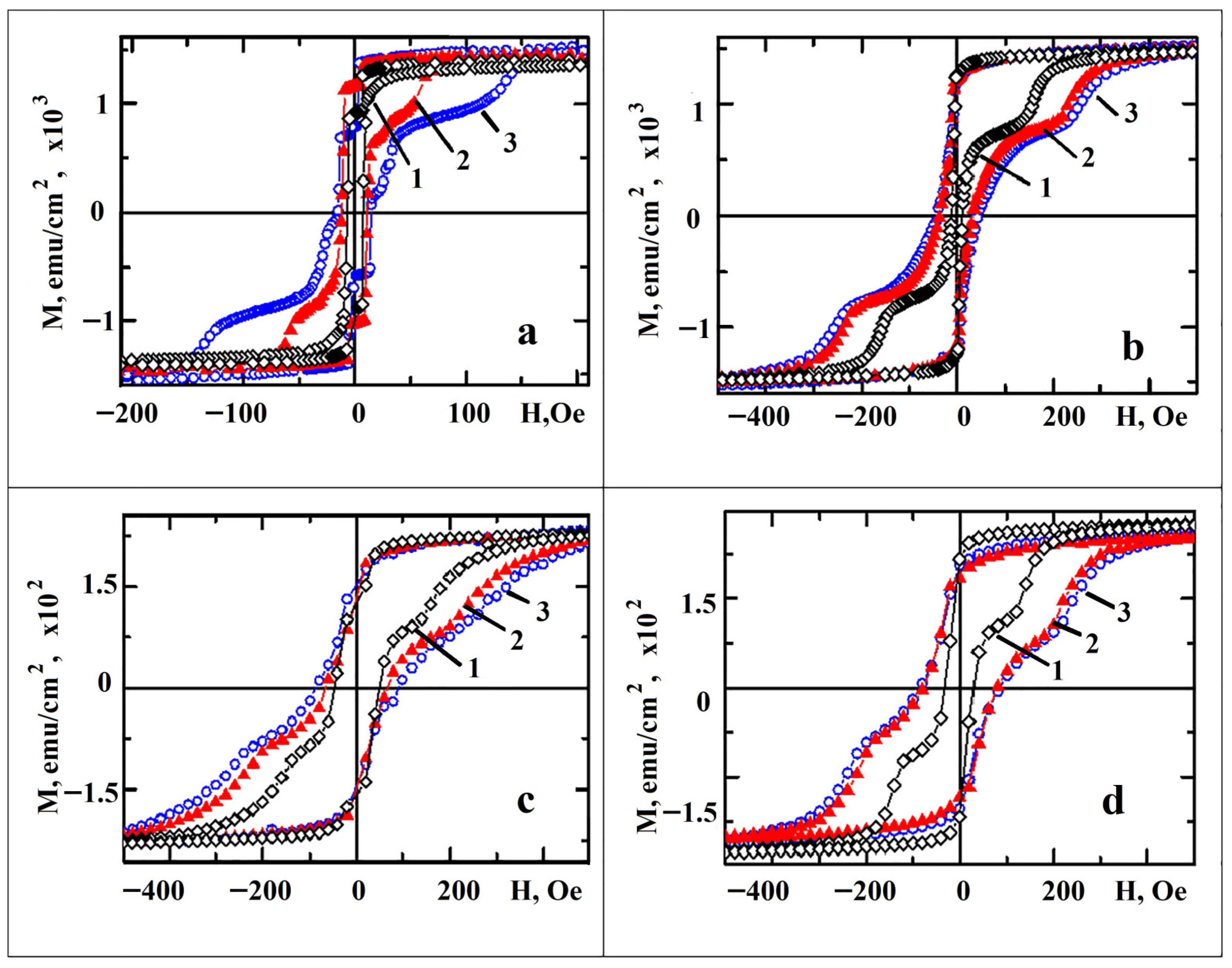
Initial studies of film structures without a spacer [23] and with a spacer thickness of tNiP = 2 nm [15] showed that the magnetization curve exhibits a superposition of two loops. However, this is not a simple algebraic sum of the original curves, as the inner loop is broadened relative to the original soft magnetic curve, while the outer loop is noticeably narrowed. This stems from the interlayer interaction—specifically, the exchange–spring effect. In the former case (tNiP = 0), the interlayer coupling strengthens with the number of blocks (n), whereas in the latter case (tNiP ≠ 0), the coupling remains relatively moderate [24]. This interaction affects the coercivity (HC) of the structure. The resulting hysteresis loop consists of two parts: (a) a low-field region corresponding to the soft magnetic subsystem, and (b) a high-field region corresponding to the hard magnetic subsystem. The transition between these magnetization modes exhibits a step-like feature, which is more pronounced in the case of moderate coupling.
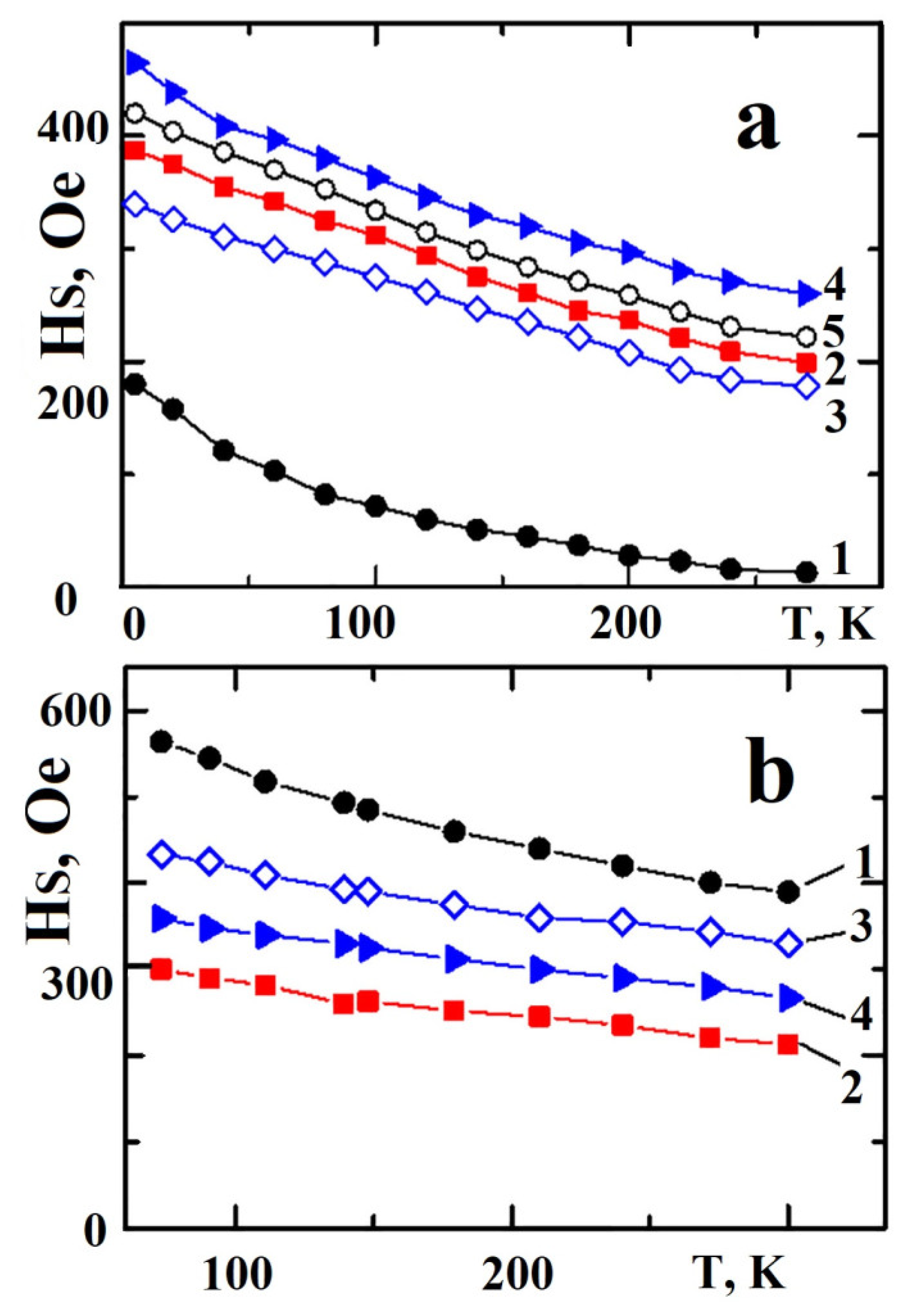
In the present study (tNiP = 4 nm, Figure 2), for n = 1 and 10, the step-like feature is clearly observed compared to the results for films with tNiP = 2 nm. For n = 15 and 20, the feature undergoes smoothing and occurs at a reduced field. A noticeable difference is also observed in the saturation field (HS) of the magnetization curves (Figure 3); notably, in both cases, HS oscillations depending on the number of blocks n are evident at a fixed temperature. The HS values were determined following the procedure outlined in [25].
However, saturation fields and magnetization curve features provide only indirect information regarding interlayer interactions and do not allow for unambiguous identification of the mechanisms responsible for the magnetic structure. In contrast, EMR serves as a highly informative tool for probing internal magnetic fields and yields direct data on specific interactions.
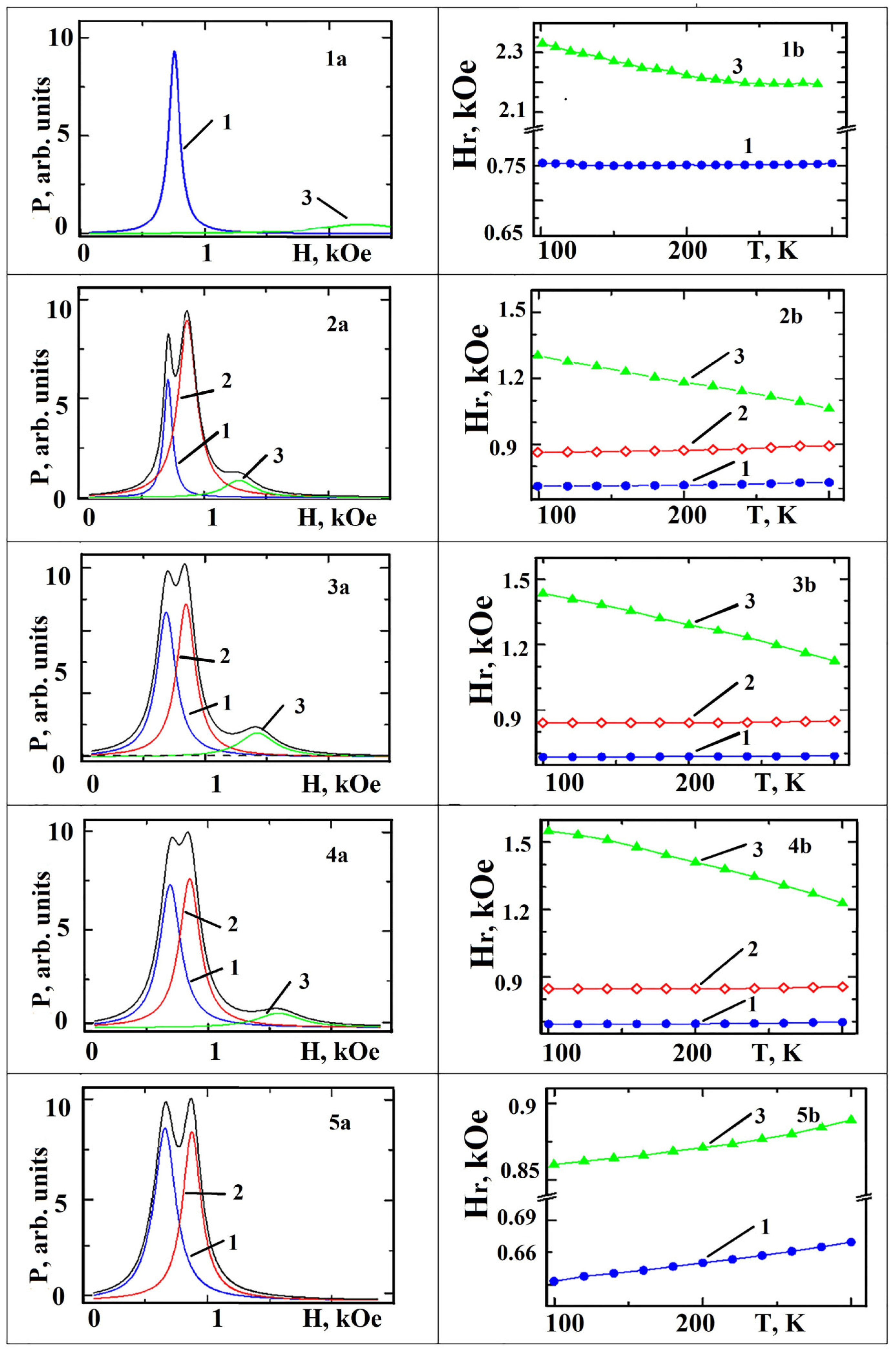
Figure 4a shows the microwave absorption spectra for [(CoP)hard/(NiP)am/(CoP)soft/(NiP)am]n film structures (tNiP = 4 nm) with various numbers of blocks (n). No resonant microwave absorption is observed from the amorphous NiP intermediate layer. For films with n = 5, 10, and 15, three peaks are observed, replicating the behavior of the series with a thinner nonmagnetic spacer (tNiP = 2 nm). However, for the n = 20 structure, only two peaks are present.
This behavior indicates that the interlayer interaction extends beyond adjacent magnetic layers. The temperature dependencies of the resonance fields, shown in Figure 4b, are qualitatively similar to those observed for the system with tNiP = 2 nm. The high-field peak exhibits the strongest temperature dependence, whereas the low-field peaks show only a weak thermal response.
However, differences are observed in the resonance field magnitudes for structures with the same number of blocks but different nonmagnetic spacer thicknesses. Notably, the resonance field of the high-field peak exhibits an oscillatory dependence on n (Figure 4b).

3.2. Theoretical Model and Discussion

As previously noted [15], the experimental data for these superlattices cannot be described by a simple model where adjacent alternating magnetic layers interact solely through a nonmagnetic spacer. Specifically, accounting for the third microwave absorption peak in the magnetic resonance spectra required the introduction of a long-range interlayer interaction extending beyond nearest-neighbor layers. To interpret the present results, we employ a model that incorporates additional interactions between the nearest soft magnetic layers:
W = J 1 m 1 · m 2 J 1 m 2 · m 3 J 2 m 1 · m 3 m 1 · H m 2 · H m 3 · H   ( K 1 / 2 ) · ( m 1 · z ) 2 ( K 1 / 2 ) · ( m 3 · z ) 2 ( K 2 / 2 ) · ( m 2 · z ) 2
In Equation (1), the first three terms represent the interlayer interactions, the next three terms describe the Zeeman energy, and the final three terms account for the surface anisotropy—originating primarily from demagnetizing effects and interface contributions. Here, m1 and m3 are the magnetization vectors of the soft magnetic layers, while m2 corresponds to the hard magnetic layer. H denotes the external magnetic field. The parameters J1 and J2 are the interaction constants between adjacent hard/soft and soft/soft magnetic layers, respectively. The z-axis is oriented perpendicular to the film plane. The layer magnetizations lie within the film plane and are defined by azimuthal angles φα (α = 1, 2, 3) relative to the external field, which is applied along the y-axis within the xy-plane.
As before, the dynamics of the magnetic system is described by the Landau–Lifshitz equation without dissipation:
m α t = γ α × m α × H α e f f
Here, α denotes the layer index. Based on the energy expression (1), the effective field for each magnetic subsistem is defined as H α e f f = W / m α . Equation (2) are subsequently linearized by assuming m α = m 0 α + μ α , where μα represents a small time-dependent deviation and m denotes the equilibrium static magnetization direction for each sublattice.
Using the shorthand notations q = 2 A 3 / 27 + A B / 3 C , p = B A / 3 , the resonant absorption frequencies are given by [15]:
ω n 2 = p 3 1 / 2 cos 1 3 arctan 1 + 4 p 3 27 q 2 1 / 2 + 2 π n 3 + A 3  
where n = 1, 2, 3. Detailed expressions for the notation used are given in the Appendix A.
Expressions (3) were used to calculate the temperature dependencies of the interlayer interaction fields HJ1 and HJ2, as well as the anisotropy fields HA2.
Since the magnetic layer parameters were identical for both superlattice systems, we employed the same values as previously reported, specifically:
m T = m 0 × 1 a T T C 3 / 2  
where m0 = 1084 G, a = 0.137, TC = 853 ± 5 K. The value of HA1 is taken as zero because the coercivity of the amorphous layer is approximately two orders of magnitude lower than that of the hard magnetic layer [23]. Furthermore, the γCo coefficient remains nearly identical for both the hexagonal and amorphous phases; thus, γ1 = γ2 = γ = 3.02 ± 0.005 [26,27].
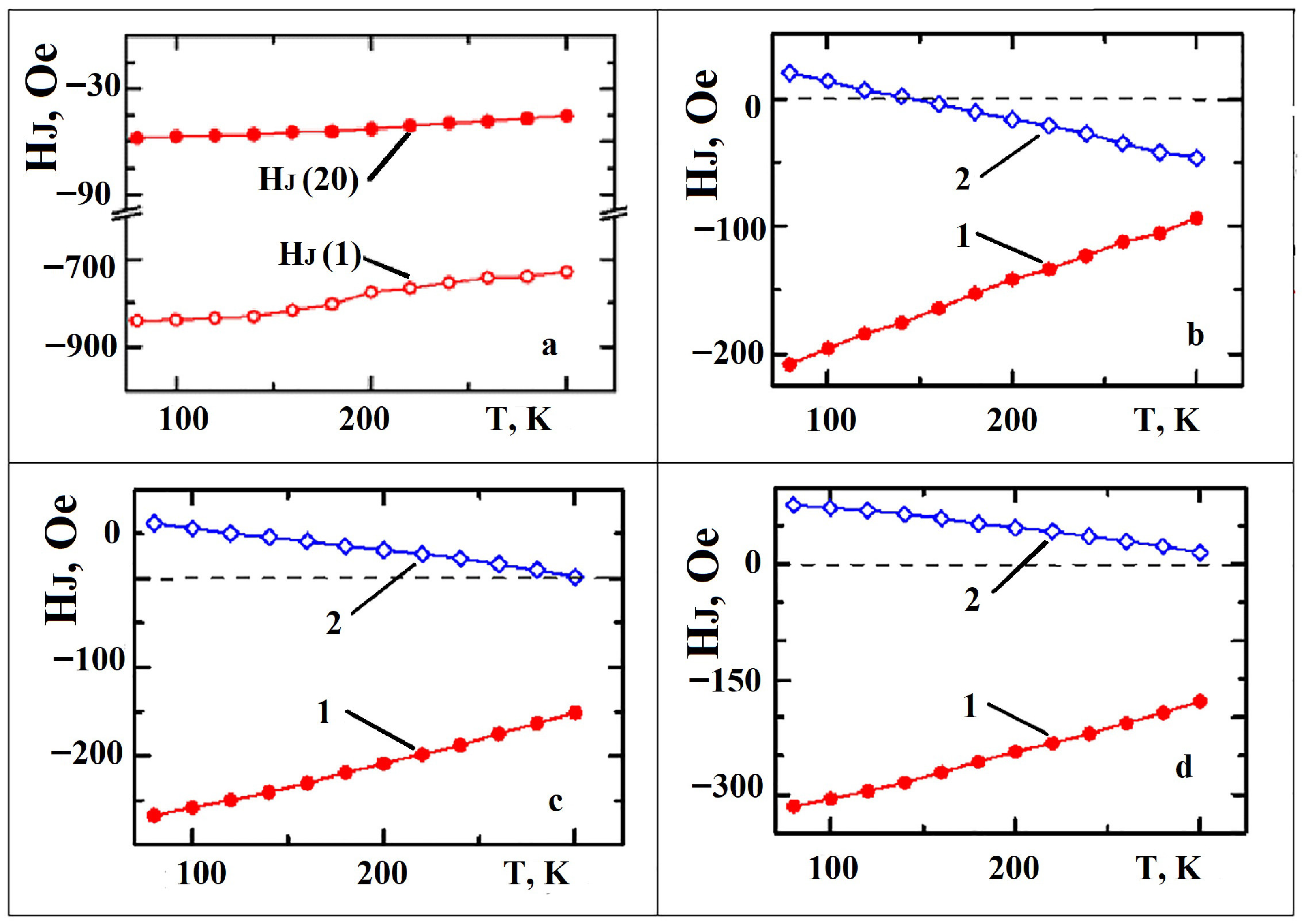
Figure 5 shows the results calculated using Equation (3), representing the temperature dependencies of the interlayer interaction fields. It is found that the interlayer interaction between the hard and soft magnetic layers (HJ1) is antiferromagnetic for all films. At a fixed temperature, the magnitude of HJ1 increases with the number of blocks (n) in the structure. The interaction between the soft magnetic layers (HJ2) is ferromagnetic at low temperatures, with its magnitude increasing as n grows. As the temperature rises, a sign reversal of the interaction is observed. For the n = 5 structure, this reversal occurs at TJ ≈ 140 K; with increasing n, this compensation temperature shifts upward, reaching TJ ≈ 320 K for n = 15.
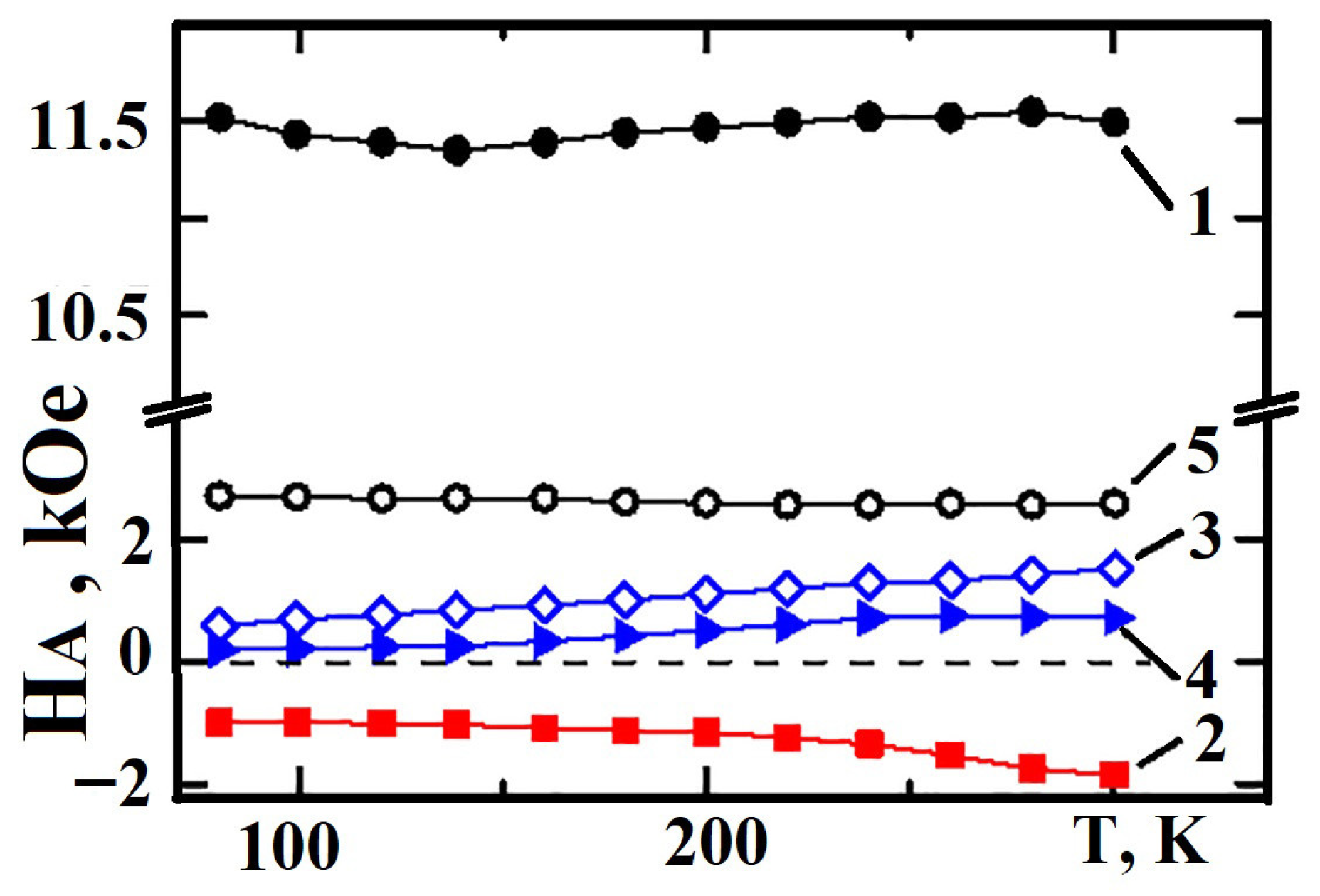
The anisotropy fields, HA, were also calculated (Figure 6). The field for the film with n = 5 is negative, which deviates from the overall trend. For all other structures, the magnetic anisotropy is positive; however, oscillations in the HA magnitude are observed as a function of the number of blocks. Comparing these HA results with those reported for three-layer films [26], we note that in the latter, the magnetic layers were amorphous, and the interface anisotropy contributed to the shape anisotropy. In the present case, we observe an additional perpendicular anisotropy, which is consistent with reported data for hexagonal cobalt [10]. Thus, in superlattices composed of alternating soft and hard magnetic cobalt layers, a competition between interface anisotropies occurs. Given the oscillatory behavior of HA, this likely suggests an interference mechanism underlying the formation of the overall structural anisotropy.
Notably, in (Co/Cu(111))20 superlattices [9], oscillations of the magnetic resonance parameters (HA, ΔH) were observed as a function of the nonmagnetic layer thickness, synchronized with magnetoresistance oscillations. This suggests that both phenomena are governed by the same underlying mechanism. Regarding the formation of magnetic anisotropy, this may be attributed to either interference effects of electronic states or to specific interface properties.
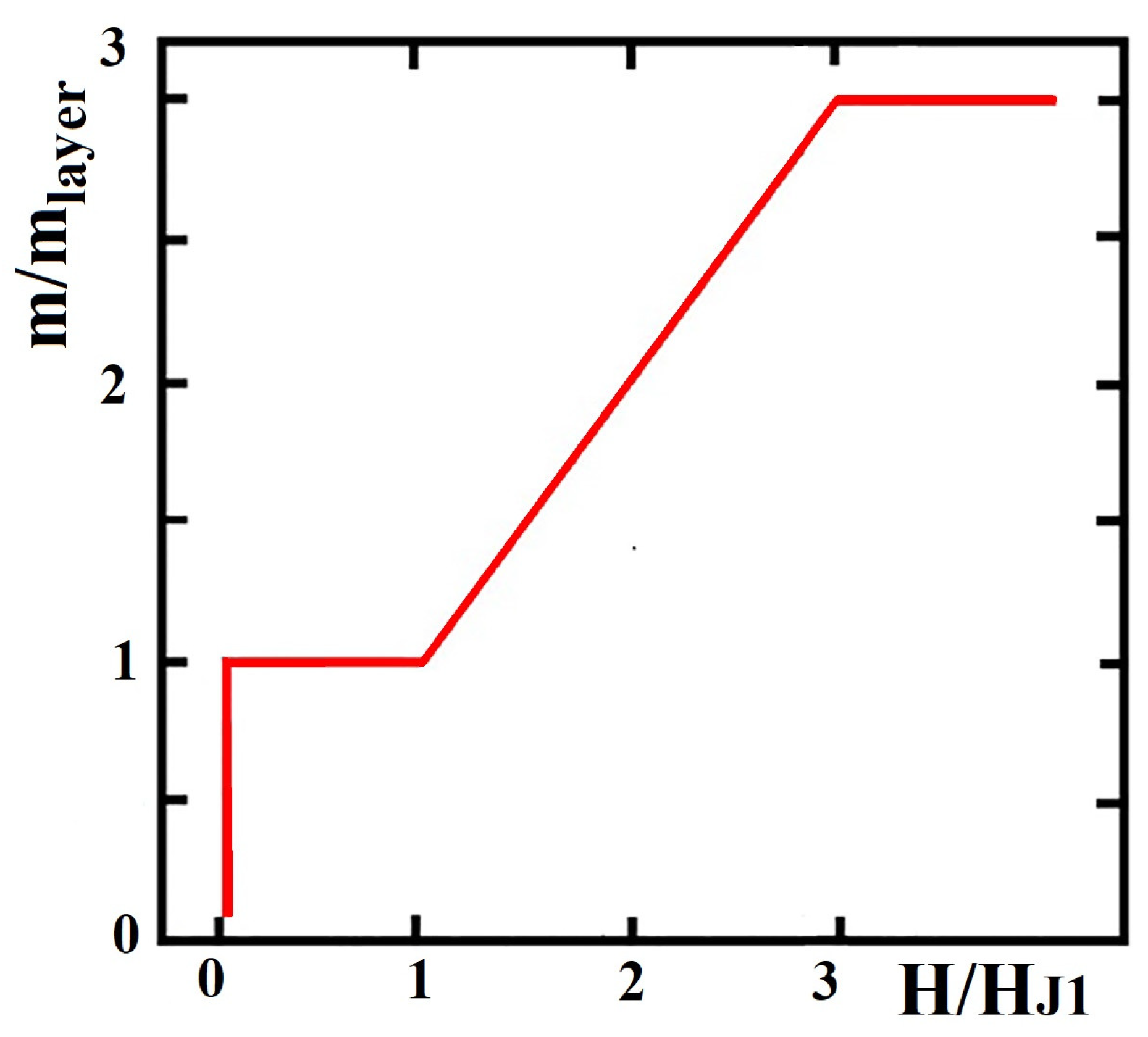
To analyze the magnetostatic properties of the studied superlattices, we also employed the previously developed three-sublattice model (1). The conditions for the realization of various magnetic states were determined as a function of the structural parameters and the external magnetic field. The set of non-trivial solutions for the magnetic field intervals is given as follows [15]:
a )   H J 1 > H > 0         φ 1 = φ 3 = 0 ,     φ 2 = π b )   3 H J 1 > H > H J 1                                                                                                     tan φ 1 = tan φ 3 = H 4 10 H J 1 2 H 2 + 9 H J 1 4 H 2 + 3 H J 1 2 tan φ 2 = H 4 10 H J 1 2 H 2 + 9 H J 1 4 H 2 3 H J 1 2                                       c )   H > 3 H J 1         φ 1 = φ 2 = φ 3 = 0 ;                                  
The magnetization of the entire structure is determined by the expression m = m S cos φ i . Model magnetization results are shown in Figure 7. These data are qualitatively consistent with the experimental results (Figure 2). The experimental observation that the magnetization curve becomes flatter and the step is smoothed out as n increases suggests that a large number of blocks in the superlattice strengthens the interlayer interaction between subsystems, which correlates with the magnetic resonance results (Figure 4, curves 2). The discrepancy between model predictions and experimental curves may be attributed to model limitations, specifically the neglect of interference effects between states from layers at different distances. Beyond the enhanced interlayer interaction, the mechanisms responsible for long-range coupling remain an open question. Cases are known where the magnetic proximity effect extends interaction over significant distances, such as Fe–Au (tSM ≈ 10 nm) [28], FeNi–Ag, Au, Cu (tSM ≈ 5 nm) [29], and IrMn–FeCo (tSM ≈ 15 nm) [30]. These scales are consistent with our system, where the distance between the nearest soft magnetic layers is t S S = 2 t N i P + t h a r d   13   n m .
In superlattices, one of the common mechanisms for interlayer interaction is the formation of a spin–density wave (e.g., in [Fe/Cr]n structures [31]). This approach was further developed within the Hubbard model [32], which accounts for the multiperiodicity of interlayer coupling. Also noteworthy is the study in [33], where in the (Co–Al–Zr)/(Co–Sm) system, magnetic order can be induced throughout a 40 nm thick amorphous paramagnetic layer via the proximity effect with ferromagnetic layers. This manifests as exchange–spring magnet behavior combined with exchange bias. The authors emphasize that magnetic proximity effects can be leveraged to achieve novel functionalities.

4. Conclusions

This study demonstrates that long-range interlayer interaction is established in [(CoP)soft/(NiP)am/(CoP)hard/(NiP)am]n multilayer film superlattices. Within the proposed model, the dependence of the number of resonance absorption peaks on the number of blocks indicates multiperiodicity in interlayer coupling. Furthermore, oscillations in the magnetic anisotropy magnitude of the multilayer structure were observed. This behavior of interlayer interaction and interface magnetic anisotropy may stem from a mechanism driven by the interference of states from different magnetic layers, although this aspect warrants further investigation. The system exhibits an exchange–spring effect with moderate interlayer interaction, which tends to strengthen as the number of blocks increases.

Author Contributions

Conceptualization, G.S.P.; methodology, V.A.O.; software, Y.G.S.; validation, A.V.K. and Y.G.S.; formal analysis, G.S.P. and V.A.O.; investigation, Y.G.S.; data curation, Y.G.S.; writing—original draft preparation, G.S.P. and A.V.K.; writing—review and editing, G.S.P. and A.V.K. All authors have read and agreed to the published version of the manuscript.

Funding

The research was conducted according to the state assignment of the Ministry of Science and Higher Education of the Russian Federation and the Federal State Autonomous Educational Institution of Higher Education Siberian Federal University (No. FSRZ-2026-0010).

Data Availability Statement

The raw data supporting the conclusions of this article will be made available by the authors on request.

Acknowledgments

The ferromagnetic resonance spectra were measured by means of the equipment of the Krasnoyarsk Regional Center of Research Equipment of Federal Research Center ‘Krasnoyarsk Science Center SB RAS’.

Conflicts of Interest

The authors declare that they have no known competing financial interests or personal relationships that could have appeared to influence the work reported in this paper.

Appendix A

The following notations are introduced for brevity:
H M i = 4 π m i ,     c 1 = cos φ ,     c 2 = cos 2 φ , H 1 = H M 1 + H A 1 + H c 1 ,     H 2 = H M 2 + H A 2 + H c 2 , H J 1 = 2 J 1 m S 1 V ,     H J 2 = 3 J 2 m S 2 V ,     H A 1 = K 1 m S 1 ,     H A 2 = K 2 m S 2 ,
where V denotes the magnetic layer volume.
A = γ 1 2 γ 2 ( C 3 + B 2 + A 1 ) , B = γ 1 2 γ 2 3 1 γ 2 A 1 C 3 A 3 C 1 + 1 γ 1 A 1 B 2 A 2 B 1 + B 2 C 3 B 3 C 2 C = A 1 B 2 C 3 + A 2 B 3 C 1 + A 3 B 1 C 2 A 3 B 2 C 1 A 1 B 3 C 2 A 2 B 1 C 3
A 1 = H J 2 2 c 2 + H J 1 2 c 2 γ 2 γ 1 + H J 1 c 1 + H J 2 c 2 + H 1 H J 1 c 1 + H J 2 c 2 + H c 1 A 2 = H J 2 H J 1 c 1 H J 1 2 H J 1 c 1 + H γ 2 γ 1 H J 1 c 1 H J 1 c 1 + H J 2 c 2 + H 1 A 3 = H J 1 2 c 1 γ 2 γ 1 H J 2 H J 1 c 1 + H J 2 c 2 + H c 1 H J 2 c 2 H J 1 c 1 + H J 2 c 2 + H 1
B 1 = H J 2 H J 1 c 2 H J 1 H J 1 c 1 + H J 2 c 2 + H c 1 H J 1 c 1 γ 2 γ 1 × 2 H J 1 c 1 + H 2 B 2 = 2 H J 1 2 c 1 + γ 2 γ 1 2 H J 1 c 1 + H 2 2 H J 1 c 1 + H c 1 B 3 = H J 2 H J 1 c 2 H J 1 H J 1 c 1 + H J 2 c 2 + H c 1 H J 1 c 1 γ 2 γ 1 2 H J 1 c 1 + H 2
C 1 = H J 1 2 c 2 γ 2 γ 1 H J 2 H J 1 c 1 + H J 2 c 2 + H 1 H J 2 c 2 H J 1 c 1 + H J 2 c 2 + H 1 C 2 = H J 2 H J 1 c 1 H J 1 γ 2 γ 1 2 H J 1 c 1 + H H J 1 c 1 H J 1 c 1 + H J 2 c 2 + H 1 C 3 = H J 2 2 c 2 + H J 1 2 c 1 γ 2 γ 1 + H J 1 c 1 + H J 2 c 2 + H 1 H J 1 c 1 + H J 2 c 2 + H c 1

References

  1. Stöhr, J.; Siegmann, H.C. Magnetism: From Fundamentals to Nanoscale Dynamics; Springer: Berlin/Heidelberg, Germany, 2006; Volume 12, p. 524. [Google Scholar]
  2. Schwarz, K.; Mohn, P.; Blaha, P.; Kübler, J. Electronic and magnetic structure of BCC Fe-Co alloys from band theory. J. Phys. F Met. Phys. 1984, 14, 2659–2671. [Google Scholar] [CrossRef]
  3. Belyaev, B.A.; Izotov, A.V.; Kiparisov, S.Y.; Skomorokhov, G.V. Synthesis and study of the magnetic characteristics of nanocrystalline cobalt films. Phys. Solid State 2008, 50, 676–683. [Google Scholar] [CrossRef]
  4. Treves, D.; Wolf, I.W.; Ballard, N. Temperature-Sensitive Magnetic Film for a Magneto-optic Memory. J. Appl. Phys. 1969, 40, 976–977. [Google Scholar] [CrossRef]
  5. Podorozhnyak, S.A.; Volochaev, M.N.; Ryzhenkov, A.V.; Chzhan, A.V.; Patrusheva, T.N.; Patrin, G.S. Magnetic CoP films for microwave applications. Microw. Electron. Microelectron. 2016, 2, 102–105. (In Russian) [Google Scholar]
  6. Myung, N.V.; Park, D.-Y.; Yoo, B.-Y.; Sumodjo, P.T.A. Development of electroplated magnetic materials for MEMS. J. Magn. Magn. Mater. 2003, 265, 189–198. [Google Scholar] [CrossRef]
  7. Hellman, F.; Hoffmann, A.; Tserkovnyak, Y.; Beach, G.S.D.; Fullerton, E.E.; Leighton, C.; MacDonald, A.H.; Ralph, D.C.; Arena, D.A.; Dürr, H.A.; et al. Interface-induced phenomena in magnetism. Rev. Mod. Phys. 2017, 89, 025006. [Google Scholar] [CrossRef]
  8. Donner, W.; Zeidler, T.; Schreiber, F.; Metoki, N.; Zabel, H. Structural and magnetic properties of Co/Cr(001) superlattices. J. Appl. Phys. 1994, 75, 6421–6423. [Google Scholar] [CrossRef]
  9. Kaplienko, A.I.; Nikolova, É.P.; Kut’ko, K.V.; Anders, A.G.; Zorchenko, V.V.; Stetsenko, A.N. Magnetic resonance and magnetic anisotropy oscillations in Co/Cu (111) superlattices. Low Temp. Phys. 2005, 31, 358–363. [Google Scholar] [CrossRef]
  10. Girod, S.; Gottwald, M.; Andrieu, S.; Mangin, S.; McCord, J.; Fullerton, E.E.; Beaujour, J.-M.L.; Krishnatreya, B.J.; Kent, A.D. Strong perpendicular magnetic anisotropy in Ni/Co(111) single crystal superlattices. Appl. Phys. Lett. 2009, 94, 262504. [Google Scholar] [CrossRef]
  11. Alayo, W.; Baggio-Saitovitch, E.; Pelegrini, F.; Nascimento, V.P. Oscillations of the ferromagnetic resonance linewidth and magnetic phases in Co/Ru superlattices. Phys. Rev. B 2008, 78, 134417. [Google Scholar] [CrossRef]
  12. Goff, J.P. Rare-earth thin films and superlattices. J. Phys. Condens. Matter 2020, 32, 374009. [Google Scholar] [CrossRef]
  13. Majkrzak, C.; Kwo, J.; Hong, M.; Yafet, Y.; Gibbs, D.; Chien, C.; Bohr, J. Magnetic rare earth superlattices. Adv. Phys. 1991, 40, 99–189. [Google Scholar] [CrossRef]
  14. Sumi, S.; Hirano, Y.; Awano, H.; Tominaga, J. Ferromagnetic Resonance of a [GeTe/Sb2Te3]6/Py Superlattice. Magnetochemistry 2021, 7, 156. [Google Scholar] [CrossRef]
  15. Patrin, G.; Orlov, V.; Shiyan, Y. Magnetic properties of [(CoP)soft/(NiP)am/(CoP)hard/(NiP)am]n superlattices. Phys. B Condens. Matter 2025, 696, 416664. [Google Scholar] [CrossRef]
  16. Chzhan, A.V.; Podorozhnyak, S.A.; Volochaev, M.N.; Bondarenko, G.N.; Patrin, G.S. Effect of the pH of solutions on the coercivity and microstructure of chemically deposited CoP films. Phys. Solid State 2017, 59, 1440–1445. [Google Scholar] [CrossRef]
  17. Ezekoye, B.A.; Offor, P.; Ezekoye, V.A.; Ezema, F.I. Chemical Bath Deposition Technique of Thin Films: A Review. Int. J. Sci. Res. Phys. 2013, 2, 452–456. [Google Scholar] [CrossRef]
  18. Samal, N.; Chetry, K.B.; Rook, K.; Hayes, A.; Devasahayam, A. Low-temperature (≤150 °C) chemical vapor deposition of pure cobalt thin films. J. Vac. Sci. Technol. B 2014, 32, 011206. [Google Scholar] [CrossRef]
  19. Chzhan, A.V.; Seredkin, V.; Patrin, G.S.; Zabluda, V.N.; Zubavichus, Y.V.; Mikhlin, Y.; Rudenko, R. Morphology and magnetic properties of amorphous Co-P and Co-Ni-P films. Solid State Phenom. 2015, 233–234, 686–689. [Google Scholar] [CrossRef]
  20. Colaruotolo, J.; Tramontana, D. Engineering applications of electroless nickel. In Electroless Plating: Fundamentals and Applications; Mallory, G.O., Hajdu, J.B., Eds.; AESF: New York, NY, USA; Noyes Publications: Park Ridge, NJ, USA; William Abdrew Publishing, LLC.: Norwich, NY, USA, 1990; Volume 8, p. 208. [Google Scholar]
  21. Chzhan, A.V.; Podorozhnyak, S.A.; Mal’Tsev, V.K.; Krayukhin, I.N.; Patrin, G.S. Allotropic Modifications of Cobalt upon Chemical Deposition. Phys. Solid State 2021, 63, 42–46. [Google Scholar] [CrossRef]
  22. Sharma, A.; Tripathi, S.; Brajpuriya, R.; Shripathi, T.; Chaudhari, S.M. Thickness Dependent Structural, Magnetic and Transport Properties of Nanostructured Cobalt Thin Films. J. Nanosci. Nanotechnol. 2007, 7, 2041–2045. [Google Scholar] [CrossRef]
  23. Patrin, G.S.; Shiyan, Y.; Patrin, K.G.; Yurkin, G.Y. Synthesis and Magnetic Properties of [(CoP)soft /NiP/(CoP)hard /NiP]n Films. J. Low Temp. Phys. 2016, 182, 73–81. [Google Scholar] [CrossRef]
  24. Leineweber, T.; Kronmuller, H. Magnetization Reversal Modes in Inhomogeneous Magnets. Phys. Solid State 1997, 201, 291–301. [Google Scholar] [CrossRef]
  25. Patrin, K.G.; Yarikov, S.A.; Patrin, G.S.; Yakovchuk, V.Y.; Lyamkin, A.I. Magnetic Resonance Studies of Three-Layer FeNi/Bi/FeNi Films. J. Exp. Theor. Phys. 2017, 124, 779–785. [Google Scholar] [CrossRef]
  26. Patrin, G.S.; Shiyan, Y.G.; Chzhan, A.V.; A Podorozhnyak, S. Influence of interface anisotropy on ferromagnetic resonance in CoP/(NiP)am/CoP films. Mater. Res. Express 2021, 8, 056102. [Google Scholar] [CrossRef]
  27. Patrin, G.S.; Vas’kovskii, V.O.; Svalov, A.V.; Eremin, E.V.; Panova, M.A.; Vasil’ev, V.N. Magnetic Resonance in Multilayer Gd/Si/Co Magnetic Films. J. Exp. Theor. Phys. 2006, 102, 131–136. [Google Scholar] [CrossRef]
  28. Moodera, J.S.; Taylor, M.E.; Meservey, R. Exchange-induced spin polarization of conduction electrons ion paramagnetic metals. Phys. Rev. B 1989, 40, 11980–11982. [Google Scholar] [CrossRef]
  29. Gökemeijer, N.J.; Ambrose, T.; Chien, C.L. Long-Range Exchange Bias across a Spacer Layer. Phys. Rev. Lett. 1997, 79, 4270–4273. [Google Scholar] [CrossRef]
  30. Thomas, L.; Kellock, A.J.; Parkin, S.S.P. On the exchange biasing through a nonmagnetic spacer layer. J. Appl. Phys. 2000, 87, 5061–5063. [Google Scholar] [CrossRef]
  31. Bodeker, P.; Sonntag, P.; Schreyer, A.; Borchers, J.; Hamacher, K.; Kaiser, H.; Zabel, H. Spin density waves in epitaxial Fe/Cr films. Phys. B Condens. Matter 1997, 234–236, 464–466. [Google Scholar] [CrossRef]
  32. Malvezzi, A.L.; Paiva, T.; dos Santos, R.R. Multiperiodic magnetic structures in Hubbard superlattices. Phys. Rev. B 2002, 66, 064430. [Google Scholar] [CrossRef]
  33. Magnus, F.; Brooks-Bartlett, M.E.; Moubah, R.; Procter, R.A.; Andersson, G.; Hase, T.P.A.; Banks, S.T.; Hjörvarsson, B. Long-range magnetic interactions and proximity effects in an amorphous exchange-spring. Nat. Commun. 2016, 7, 11931. [Google Scholar] [CrossRef]
Figure 1. Morphology of the (CoP)soft (1a1c) and CoPsoft (2a2c) layer (at n = 1) obtained by atomic force microscopy. (a) Three–dimensional image, (b) top view, and (c) height profile along the line indicated in (b).
Magnetochemistry 12 00033 g001
Figure 2. Field dependence of magnetization for [(CoP)hard/(NiP)am/(CoP)soft/(NiP)am]n films: (ad) correspond to n = 1, 10, 15, and 20, respectively. Curves 1, 2, and 3 represent temperatures T = 10, 100, and 280 K, respectively.
Magnetochemistry 12 00033 g002
Figure 3. Temperature dependence of the saturation field for the multilayer films: (a) [(CoP)hard/(NiP)am/(CoP)soft/(NiP)am]n and (b) [(CoP)hard/(CoNiP)soft]n. Curves 1, 2, 3, 4, and 5 correspond to n = 1, 5, 10, 15, and 20, respectively.
Magnetochemistry 12 00033 g003
Figure 4. (a) Magnetic resonance spectra at T = 300 K and (b) temperature dependencies of the resonance field for [(CoP)hard/(NiP)am/(CoP)soft/(NiP)am]n films: (1a5a,1b5b) correspond to n = 1, 5, 10, 15, and 20, respectively. In (a), the solid black curve represents the experimental data, while the colored lines 1, 2, and 3 indicate the Lorentzian deconvolution.
Magnetochemistry 12 00033 g004
Figure 5. Temperature dependences of the interlayer interaction fields HJ1 (1) and HJ2 (2). (a) Fields for films with n = 1 and n = 20 blocks; (bd) results for n = 5, 10, and 15, respectively.
Magnetochemistry 12 00033 g005
Figure 6. Temperature dependences of the perpendicular anisotropy fields for [(CoP)hard/(NiP)am/(CoP)soft/(NiP)am]n. Curves 1–5 correspond to n = 1, 5, 10, 15, and 20, respectively.
Magnetochemistry 12 00033 g006
Figure 7. Field dependence of the normalized magnetization msample/mlayer.
Magnetochemistry 12 00033 g007
Disclaimer/Publisher’s Note: The statements, opinions and data contained in all publications are solely those of the individual author(s) and contributor(s) and not of MDPI and/or the editor(s). MDPI and/or the editor(s) disclaim responsibility for any injury to people or property resulting from any ideas, methods, instructions or products referred to in the content.