Article

Integrated Effects of Sodium Nitroprusside, Arginine, and Salicylic Acid on Chilling Tolerance, Antioxidant Defense, and Postharvest Quality of Cold-Stored ‘Keitt’ Mango Fruit


by
Nahed M. Rashed
1,*,
Ahmed F. Abd El-Khalek
2,*,
Sherif F. El-Gioushy
3,
Gehan. A. Mahmoud
4,
Saleh M. Alturki
1,
Alaa S. Alharbi
5,
Randa A. Zarban
6 and
Mohamed S. Gawish
7,8
1
Department of Arid Land Agriculture, College of Agricultural and Food Science, King Faisal University, Al-Ahsa 31982, Saudi Arabia
2
Department of Horticulture, Faculty of Agriculture, Tanta University, Tanta 31527, Egypt
3
Horticulture Department, Faculty of Agriculture, Benha University, Benha 13736, Egypt
4
Fruit Handling Department, Horticulture Research Institute, Agricultural Research Center, Giza 12619, Egypt
5
Food and Nutrition Sciences Department, College of Agricultural and Food Sciences, King Faisal University, Al-Ahsa 31982, Saudi Arabia
6
Department of Biotechnology, College of Agricultural and Food Science, King Faisal University, Al-Ahsa 31982, Saudi Arabia
7
Horticulture Department, Faculty of Agriculture, Damietta University, New Damietta City 34517, Egypt
8
The Center for Excellence in Research of Advanced Agricultural Sciences (CERAAS), Faculty of Agriculture, Damietta University, Damietta 34517, Egypt
*
Authors to whom correspondence should be addressed.
Horticulturae 2026, 12(6), 751; https://doi.org/10.3390/horticulturae12060751
Submission received: 17 May 2026 / Revised: 17 June 2026 / Accepted: 18 June 2026 / Published: 20 June 2026

Abstract

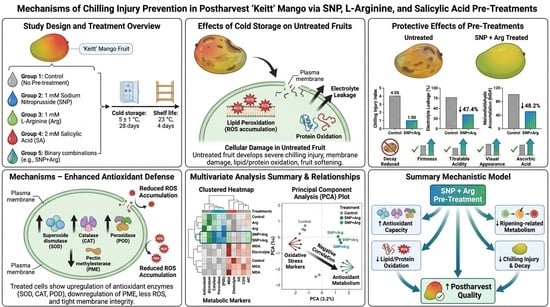
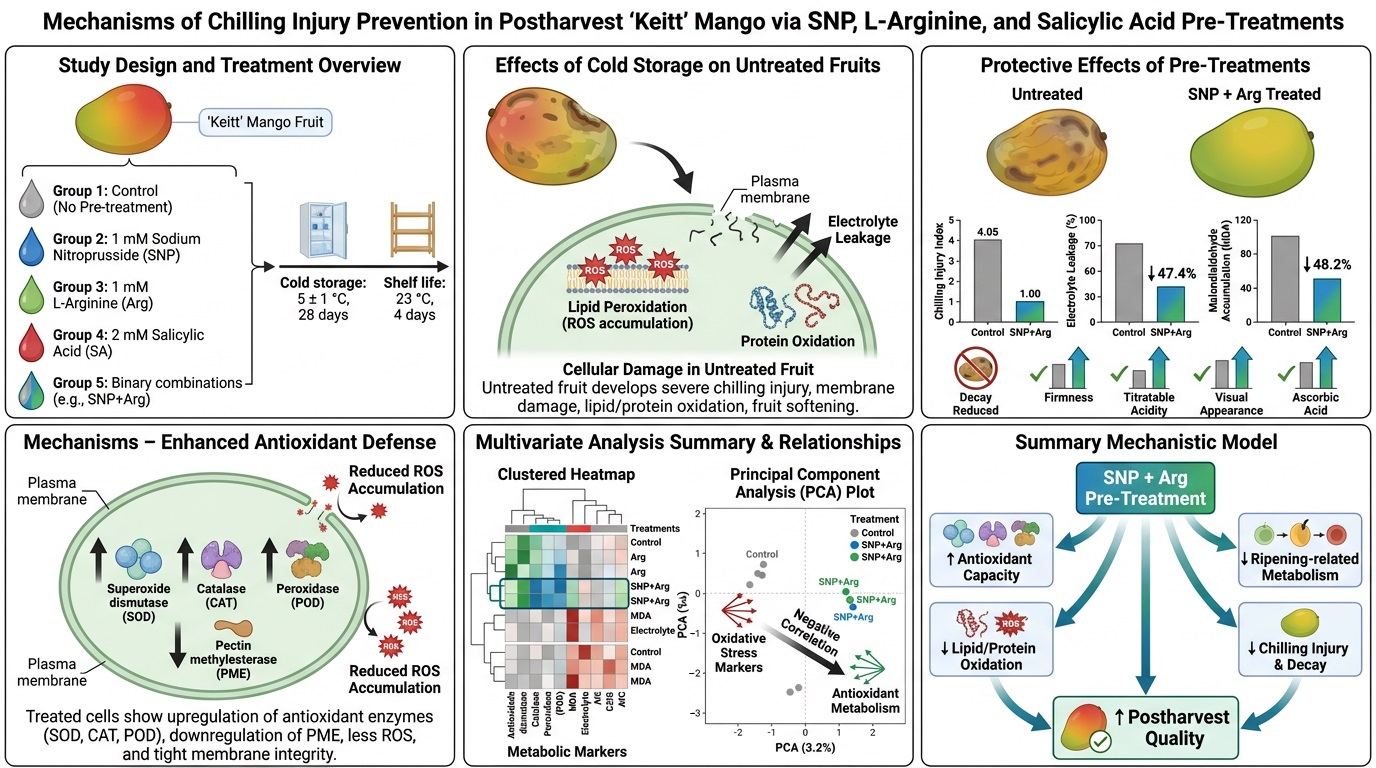
Chilling injury is a major problem limiting the postharvest storage and marketability of mango fruit at low temperature. The present study investigated the individual and combined effects of sodium nitroprusside (SNP), L-arginine (Arg) and salicylic acid (SA) on chilling tolerance, regulation of oxidative stress and the postharvest quality of ‘Keitt’ mango fruit stored at 5 ± 1 °C for 28 days followed by 4 days of shelf life at 23 °C. Fruits were pre-treated with 1 mM SNP, 1 mM Arg, 2 mM SA or their binary combinations before storage. The chilling injury, membrane damage, lipid peroxidation, protein oxidation and fruit softening were greatly enhanced by cold storage in untreated fruits. In contrast, all the treatments significantly ameliorated these deteriorative changes, and the combined treatments were superiorly effective. Among these, SNP + Arg was the most effective treatment, which reduced the chilling injury index from 4.05 in control fruits to 1.00 after shelf life, completely inhibiting the incidence of decay and reducing electrolyte leakage and malondialdehyde accumulation by 47.4 and 48.2%, respectively. The same treatment also maintained higher firmness, titratable acidity, visual appearance and ascorbic acid content than untreated fruits. The enhanced chilling tolerance was accompanied by increased antioxidant defense, as SNP + Arg significantly stimulated the activities of superoxide dismutase, catalase and peroxidase, but suppressed the activity of pectin methylesterase. Multivariate analyses, such as PCA, clustered heatmap and integrated stress index, demonstrated a strong negative relationship between oxidative stress markers and antioxidant metabolism. The results showed that combined SNP and Arg treatments enhanced chilling tolerance through increasing antioxidant capacity, preserving membrane integrity, and retarding ripening-related metabolism, which provides an effective way to maintain the postharvest quality of cold-stored mango fruit.

Graphical Abstract

1. Introduction

Mango (Mangifera indica L.) is one of the most economically important tropical fruits worldwide due to its high nutritional value, attractive flavor, and consumer acceptance. It is cultivated in roughly 304,118 feddans, of which 265,509 produce roughly 1,091,535 tons in Egypt [1]. However, postharvest storage of mango fruit is severely limited by rapid ripening, membrane deterioration, and susceptibility to chilling injury (CI) during low-temperature storage, particularly in chilling-sensitive cultivars such as ‘Keitt’ [2,3]. Chilling injury commonly appears as peel discoloration, pitting, uneven ripening, increased membrane permeability, accelerated decay, and loss of marketability, resulting in substantial postharvest losses during storage and export operations [4,5]. Cold storage is essential for delaying senescence and extending mango shelf life; by lowering ethylene production, low temperatures can postpone the ripening of climacteric fruits. However, exposure to temperatures below the optimum threshold disrupts cellular homeostasis and promotes excessive generation of reactive oxygen species (ROS), including superoxide radicals and hydrogen peroxide [6,7,8,9].
The accumulation of ROS induces oxidative stress, leading to membrane lipid peroxidation, protein oxidation, electrolyte leakage, and impairment of cellular metabolism [10,11]. Mango fruits that are stored below 10 °C develop chilling injury (CI), which is characterized by skin pitting, uneven ripening, a greyish scald-like discoloration, a decrease in internal quality, and an increased vulnerability to fungal decay [12,13,14,15]. Antioxidants are essential for preventing ROS-induced oxidative damage to fruit tissues. In plants, salicylic acid (SA), a straightforward phenolic phytohormone, controls a variety of physiological and defense-related functions [16,17]. In a variety of horticultural crops, SA effectively controls physiological disorders while maintaining postharvest quality [18,19], inhibits ethylene biosynthesis and modulates cell wall metabolism to delay fruit ripening [20,21], and induces antioxidant systems and the biosynthesis of defense compounds. Malondialdehyde (MDA) accumulation and electrolyte leakage are considered reliable indicators of oxidative membrane damage associated with chilling injury development in horticultural crops [22,23].
In addition, chilling stress accelerates cell wall degradation and fruit softening through enhanced activity of pectin-degrading enzymes such as pectin methylesterase (PME), ultimately reducing fruit firmness and storage quality [24,25]. Enhancing the antioxidant defense system has emerged as an effective strategy for improving chilling tolerance in fruit crops. Antioxidant enzymes, including superoxide dismutase (SOD), catalase (CAT), and peroxidase (POX), play critical roles in detoxifying ROS and maintaining membrane integrity under abiotic stress conditions [26,27]. Therefore, postharvest treatments capable of stimulating antioxidant metabolism may effectively alleviate chilling-induced oxidative damage and preserve postharvest quality.
Numerous biological activities in plants have been linked to polyamines, which are found in all living things [28,29]. They exist in plant cells as cations and can attach to a variety of negatively charged structures, including proteins, phospholipids, pectic polysaccharides, and nucleic acids. They can also be conjugated to different phenolic acids to create chemicals that are associated with plant defense [30]. Young tissues have high quantities of polyamines, which subsequently decrease as the tissues age [31]. With the largest nitrogen to carbon ratio, Arg is one of the most functionally varied amino acids. It is a precursor to the biosynthesis of proline, agmatine, polyamines, and signaling molecules like glutamate, γ-aminobutyric acid, and nitric oxide. L-arginine (Arg), a precursor for polyamines and nitric oxide biosynthesis, contributes to stress resistance by stabilizing membranes, scavenging free radicals, and regulating cellular metabolism [32,33].
Similarly, nitric oxide (NO) is an important signaling molecule involved in plant stress tolerance and postharvest physiology. Sodium nitroprusside (SNP), a widely used NO donor, has been reported to reduce chilling injury, delay ripening, and enhance antioxidant activity in several horticultural commodities through modulation of redox balance and membrane stability [34,35]. Accordingly, endogenous NO administration enhanced the activities of antioxidant enzymes while decreasing increases in lipid peroxidation and membrane permeability. Applying NO after harvest has been shown to slow down the ripening process, diminish CI symptoms, lessen the incidence of disease, delay flesh softening, delay skin color changes, and lower the activities of the softening enzyme when mangoes are kept cold [36,37,38]. Salicylic acid (SA) is another signaling compound known to induce defense responses, improve antioxidant capacity, suppress ethylene biosynthesis, and enhance chilling tolerance in fruit crops during cold storage [39,40].
Although the individual effects of SNP, Arg, and SA on postharvest quality have been investigated in several fruit species, information regarding their combined application and possible integrated interaction in alleviating chilling injury in mango fruit remains limited. Understanding such interactions is important because combined treatments may provide stronger and more coordinated protection against oxidative stress and ripening-related deterioration than single treatments alone. Therefore, the present study aimed to evaluate the effectiveness of SNP, Arg, and SA, applied individually or in combination, in alleviating chilling injury and maintaining the postharvest quality of ‘Keitt’ mango fruit during cold storage. Emphasis was placed on oxidative stress regulation, membrane stability, antioxidant defense responses, and ripening-associated changes through physiological, biochemical, and multivariate analyses. To our knowledge, this is the first report investigating the combined interaction between nitric oxide donor (SNP), arginine, and salicylic acid in regulating antioxidant metabolism and chilling tolerance mechanisms in cold-stored ‘Keitt’ mango fruit.

2. Materials and Methods

2.1. Fruit Material and Experimental Site

The present study was conducted during the 2024 and 2025 seasons using late mango fruits of the cultivar ‘Keitt’ (Mangifera indica L.). Experimental work was carried out at the Postharvest Laboratory, Horticulture Research Institute, Agricultural Research Center (ARC), Giza, Egypt. Fruits were harvested from a private orchard located in Wadi El-Mollak, Ismailia Governorate, Egypt (30°36′ N, 32°14′ E). The orchard consisted of 10-year-old mango trees grown in sandy soil under a drip irrigation system, with a planting distance of 2–3 m between trees. All trees were subjected to the recommended cultural practices issued by the Ministry of Agriculture and Land Reclamation, Egypt. Mango fruits were harvested from uniform trees during the third week of October at the commercial maturity stage, as described by [41]. Fruits were carefully selected based on uniformity in size and color and were free from visible defects, mechanical damage, and signs of infection.

2.2. Fruit Preparation and Treatments

The fruits were harvested and transported from the orchard to the laboratory within 2 h in plastic boxes (15 kg capacity). Upon arrival, fruits were sorted, cleaned, and graded, and any damaged or abnormal fruits were discarded. Selected fruits were surface disinfected by immersion in 1% sodium hypochlorite solution for 2 min, rinsed with distilled water, and air-dried under ambient laboratory conditions (20 ± 2 °C and 65 ± 5% RH) for approximately 30 min. A baseline sample of 30 fruits was immediately selected, divided into three replicates of 10 fruits each, and analyzed for initial quality attributes at harvest (Day 0). The remaining 1050 uniform fruits were assigned to seven treatments. Treatments were as follows: (1) Control (distilled water); (2) L-arginine (Arg) at 1 mM; (3) sodium nitroprusside (SNP) at 1 mM; (4) salicylic acid (SA) at 2 mM; (5) SNP at 1 mM + Arg at 1 mM; (6) SNP at 1 mM + SA at 2 mM; and (7) Arg at 1 mM + SA at 2 mM. The concentrations of these compounds were selected based on previous studies demonstrating their optimal efficacy in maintaining postharvest quality [42,43,44]. The chemicals used in this study, including sodium nitroprusside (SNP), L-arginine (Arg), and salicylic acid (SA). Tween-80 (0.05%, v/v) was included in all solutions to improve wettability and adhesion, and fruits were immersed for 5 min in 10 L of solution, followed by air-drying for 1 h under the same ambient conditions. All chemicals used in this research were imported from Sigma Aldrich (St. Louis, MO, USA).
To strictly avoid pseudoreplication and the effects of repeated handling, an independent, destructive sampling design was employed. The experimental unit was defined as a single corrugated carton (45 × 35 × 10 cm) lined with a perforated polyethylene sheet (0.04 mm thickness; five holes of 7 mm diameter) containing exactly 10 fruits packed in a single layer. For each of the seven treatments, a total of 150 fruits were prepared and packed into 15 cartons (experimental units). These 15 cartons were pre-assigned to five specific evaluation periods: four cold storage intervals (7, 14, 21, and 28 days) and one simulated shelf-life period. Therefore, each treatment × storage duration combination consisted of three independent biological replications (3 cartons × 10 fruits = 30 fruits per time point). Fruits were stored at 5 ± 1 °C and 90 ± 5% relative humidity. At each specified cold storage interval, the designated three cartons per treatment were removed for evaluation, while cartons designated for later intervals remained undisturbed. For the shelf-life assessment, subsets of fruits (three dedicated cartons per treatment) that had completed 28 days of cold storage were transferred to room temperature (20 ± 2 °C and 65 ± 5% RH) for 4 days prior to evaluation.

2.3. Assessments Performed

2.3.1. Physical Characteristics of Fruits

Weight loss % (WL) was calculated for each replicate (carton) using the following formula and measured with a digital scale: [(initial weight of fruits—weight of fruits at examined date)/initial weight of fruits] × 100.
-
Chilling injury index (ChI): The following hedonic scale was used to assess skin conditions of mango fruits for each replicate (carton) [45]. Zero indicates no injury, one indicates a minor injury (less than 5% of the skin area affected), two indicates a moderate injury (between 6–25% of the skin area affected), three indicates a serious injury (between 26 and 50% of the skin area affected), and four indicates a very severe injury (more than 50% of the skin area affected). The following formula was used to determine the ChI: ChI = ∑(number of injured fruits by chilling × score of severity)/total number of assessed fruits. Using the approach given by Barman and Asrey, the decay incidence (DI) was assessed for each replicate (carton) [46]. A scale with 0 denoting no symptoms of decay, 1 denoting 1–10% decay, 2 denoting 1–25% decay, 3 denoting 26–50% deterioration, and 4 denoting >50% decay was used to measure the bacterial and fungal development on the fruit surface. The following formula was used to get the decay incidence: DI% is equal to 100 × (∑(DI level) × (number of decayed fruits at the DI level))/(total number of assessed fruits × the highest score of the decay).
According to a rating system, each fruit’s visual attractiveness was evaluated as follows: very good = 9, good = 7, acceptable = 5, unacceptable = 3, and poor = 1 [47].
-
Fruit firmness was measured at nine mangoes per replicate using a hand-held penetrometer (FT-327, Italy) with an 8 mm plunger. Measurements were taken at two equatorial positions after peeling. Results were expressed as Newton (N), where 1 N = 0.1 kgf, according to Watkins and Harman [48].

2.3.2. Biochemical Characteristics of Fruits

Nine mango fruits from each treatment (three duplicates) were extracted by crushing the fruit pulp after each period of cold storage. The juice was then filtered through a muslin cloth and utilized to measure the chemical characteristics of the fruit in the following ways:
The Association of Official Analytical Chemists (AOAC) provided an estimate for fruit ascorbic acid (AsA) analysis [49].
A digital refractometer (HI 96801, HANNA Instrument, USA) was used to measure the amount of fruit total soluble solids (TSS °Brix) in mango juice in accordance with AOAC [49].
To determine the fruit’s titratable acidity (TA), the AOAC’s protocol was used [49]. The recorded values of mango juice TSS and TA were divided to establish the fruit’s TSS/TA ratio.
Electrolyte leakage (EL) was determined following Zhao et al. [50]. Eight discs (7 mm diameter) from skin and pulp tissues were taken from four fruits per replicate. The discs were rinsed three times with deionized water and incubated in 25 mL of 0.4 M mannitol at 25 °C for 3 h with continuous shaking. Electrical conductivity (EC1) was then measured. Samples were subsequently heated at 100 °C for 20 min, cooled to 25 °C, and the final conductivity (EC2) was recorded. EL (%) was calculated as:
EL (%) = (EC1/EC2) × 100.
-
Protein carbonyl groups (PCG) were determined according to Levine et al. [51], using a spectrophotometric method. The absorbance of the formed 2,4-dinitrophenylhydrazone was measured at 390 nm using a UV–Vis spectrophotometer, model UV-9100-B (LabTech Inc., Hopkinton, MA, USA). Samples containing purified proteins were measured against water, while blanks (without protein) were used as references for treated samples. Protein carbonyl content was calculated using an extinction coefficient of 22,000 M−1 cm−1.
Lipid peroxidation was estimated by measuring malondialdehyde (MDA) following Dhindsa et al. [52]. One gram of skin tissue was homogenized in 5 mL of ice-cold 10% trichloroacetic acid and centrifuged at 12,000× g for 20 min. Two milliliters of the supernatant were mixed with 2 mL of 0.67% thiobarbituric acid and heated at 100 °C for 20 min. The reaction mixture was then rapidly cooled in an ice bath to terminate the reaction and minimize further oxidation. After centrifugation at 3000× g for 10 min, absorbance was recorded at 450, 532, and 600 nm using a UV–Vis spectrophotometer. MDA content was calculated as:
MDA = [6.45 × (A532 − A600)] − (0.56 × A450), and expressed as nmol g−1 fresh weight.

2.3.3. Enzymes Specific Activities Assessment

Specific antioxidant enzyme activities in fruit skin were determined from crude extracts [53]. Five grams of tissue from four fruits (per treatment) were homogenized in 5 mL of cold 0.05 M potassium phosphate buffer (pH 7.8) containing KCl, polyvinylpyrrolidone, EDTA, and dithiothreitol. The homogenate was centrifuged at 20,000× g at 4 °C for 15 min, and the supernatant was used for enzyme assays. Soluble protein content was determined using bovine serum albumin as a standard. Activities of superoxide dismutase (SOD), catalase (CAT), peroxidase (POX), and pectin methylesterase (PME) were then measured.
Superoxide dismutase (SOD; EC 1.15.1.1) activity was determined by its ability to inhibit the photochemical reduction of nitroblue tetrazolium (NBT) following Van Camp et al. [54]. Absorbance was measured at 560 nm using a UV–Vis spectrophotometer. One unit of SOD activity was defined as the amount of enzyme required to cause 50% inhibition of NBT reduction, and activity was expressed as units mg−1 protein.
Catalase (CAT; EC 1.11.1.6) activity was determined spectrophotometrically following the Greenwald method [55] by monitoring the decrease in absorbance at 240 nm due to H2O2 decomposition. A UV–Vis spectrophotometer was used, with an extinction coefficient of 40 mM−1 cm−1. One unit of CAT activity was defined as the amount of enzyme that decomposes 1 µmol of H2O2 per minute, and activity was expressed as µmol min−1 mg−1 protein.
Peroxidase (POX; EC 1.11.1.7) activity was determined using guaiacol as an electron donor and H2O2 as a substrate following [56]. The reaction mixture contained sodium phosphate buffer (pH 6.6), guaiacol, and H2O2. The reaction was initiated by adding crude enzyme extract, and the increase in absorbance was measured at 470 nm for 3 min at 30 s intervals using a UV–Vis spectrophotometer. One unit of POX activity was defined as the amount of enzyme causing an increase in absorbance per minute, and activity was expressed as µmol min−1 mg−1 protein.
Pectin methylesterase (PME; EC 3.1.1.11) activity was determined following [57] with slight modifications. The reaction mixture contained citrus pectin, NaCl, bromothymol blue, distilled water, and enzyme extract, adjusted to pH 7.5 before use. Absorbance was measured at 620 nm immediately and after 3 min using a UV–Vis spectrophotometer. PME activity was calculated from the change in absorbance using a standard curve and expressed as µmol min−1 mg−1 protein [57], where one unit corresponds to the release of 1 µmol of methyl ester per minute.

2.4. Integrated Stress Index

A modified integrated stress index was calculated to evaluate the balance between oxidative damage and antioxidant defense mechanisms. Oxidative stress indicators (CI, EL, and MDA) and antioxidant defense parameters (SOD, CAT, and POX) were normalized using min–max normalization. The stress index was calculated as:
Stress   Index = C I n   +   E L n   +   M D A n 3 1 + S O D n   +   C A T n   +   P O X n 3
n = normalized values.
Lower stress index values indicate enhanced chilling tolerance and improved physiological stability.

2.5. Experimental Design and Statistical Data Analysis

The experiment was conducted in a completely randomized design (CRD) with a factorial arrangement of postharvest treatments and storage periods, using three replications per treatment combination. Data from two successive growing seasons were initially analyzed separately to verify the assumptions of normality and homogeneity of error variances (via Shapiro–Wilk and Levene’s tests, respectively). Subsequently, a combined analysis of variance (ANOVA) across the two seasons was performed, with season (two levels) and postharvest treatment (seven levels) modeled as fixed factors. Within this combined ANOVA, the F-test for the season main effect and the season × treatment interaction were utilized to assess seasonal variability and the consistency of treatment responses across seasons. Since both the season main effect and the season × treatment interaction were non-significant (p > 0.05) for all evaluated quality and biochemical parameters, the data from the two seasons were pooled by averaging the means of each treatment combination. The final pooled data were then subjected to a two-way ANOVA to evaluate the main effects of Postharvest Treatment (Control, Arg, SNP, SA, SNP + Arg, SNP + SA, and Arg + SA) and Storage Period, as well as their two-way interaction (Treatment × Storage Period). Percentage data were arcsine square-root transformed prior to analysis to meet the assumption of normality, and back-transformed means are reported in the results. All statistical computations were performed using CoStat software (v6.311; CoHort Software, Monterey, CA, USA). Whenever significant main effects or interactions were detected (p ≤ 0.05), mean separation was performed using Tukey’s honestly significant difference (HSD) test.

2.6. Multivariate Analysis

Principal component analysis (PCA), hierarchical clustered heatmap analysis, and Pearson correlation analysis were performed using Python version 3.12 (Python Software Foundation, Wilmington, DE, USA). Data processing and visualization were conducted using the NumPy, pandas, SciPy, scikit-learn, matplotlib, and seaborn libraries to evaluate relationships among physiological and biochemical variables and to visualize treatment clustering patterns.

3. Results

3.1. Weight Loss and Firmness

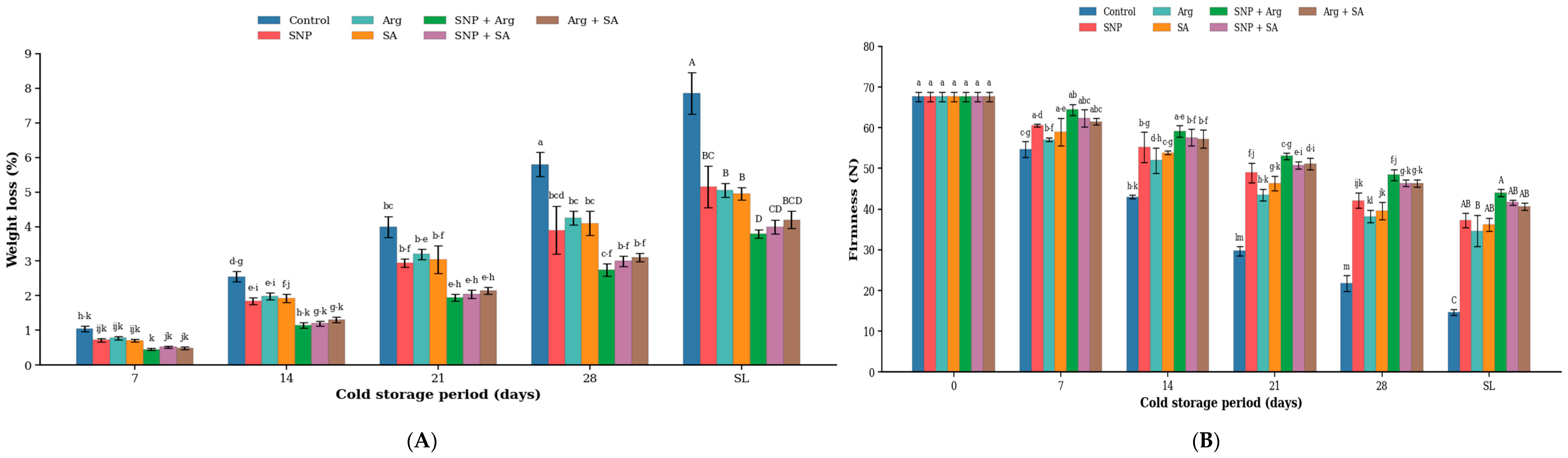
Weight loss increased progressively with storage duration in all treatments, with a more pronounced increase during the shelf-life period (Figure 1A). Control fruits exhibited the highest weight loss, reaching 5.78% after 28 days and 7.81% after shelf life, indicating substantial moisture loss and tissue dehydration. In contrast, all treated fruits showed significantly lower weight loss values throughout storage. Among the individual treatments, SNP, Arg and SA decreased weight loss to similar extent, but combined treatments were more effective, especially SNP + Arg, with the lowest mean value (1.28%), followed by SNP + SA (1.35%) and Arg + SA (1.41%). During shelf life, combined treatments decreased weight loss to 3.83–4.20% compared to 7.81% in control fruits, corresponding to a decrease of approximately 45–50%. Fruit firmness decreased significantly during storage in all treatments, reflecting the normal ripening and softening processes (Figure 1B). The decrease was greatest in control fruits, where firmness dropped sharply from 67.62 N at harvest to 21.75 N after 28 days and further decreased to 14.61 N after shelf life. However, treated fruits showed significantly higher firmness values throughout storage. All treatments showed a significant decrease in fruit firmness, which is a normal ripening and softening process. However, the firmness values of treated fruits were significantly higher in storage. Combined treatments were generally more effective than individual applications, with SNP + Arg showing the highest firmness retention, followed by SNP + SA and Arg + SA. The results of the main effects of treatments and storage periods are presented in Supplementary Table S1.

3.2. Chilling Injury, Decay Incidence and Visual Appearance

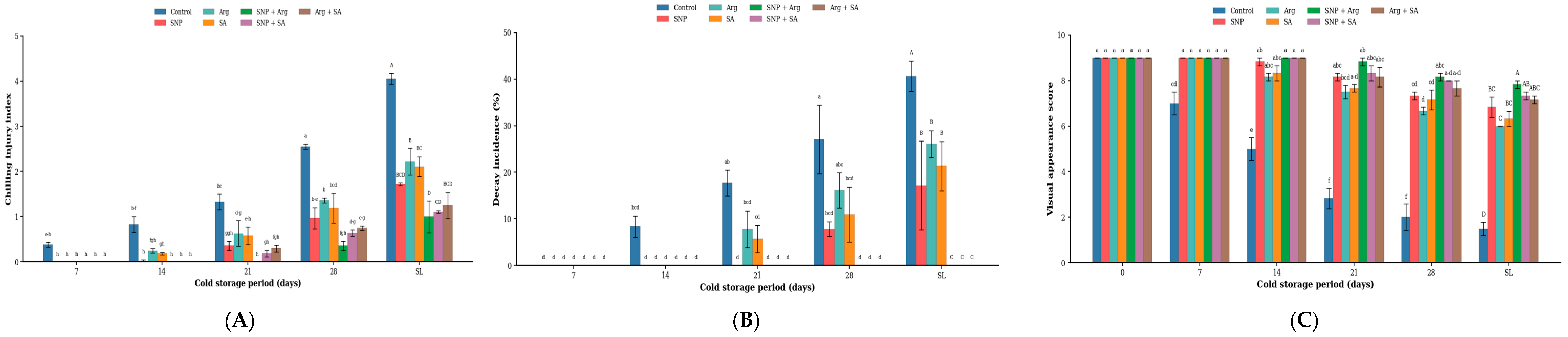
Chilling injury (CI) symptoms increased progressively with storage duration in all treatments with a pronounced escalation after the shelf-life period Figure 2A. The control fruits showed the highest CI values, reaching 2.55 after 28 days and sharply increasing to 4.05 after shelf life, indicating severe susceptibility to low-temperature stress. On the contrary, all treated fruits presented a significant decrease in the development of CI. Of individual treatments, SNP was the most effective, followed by SA and Arg. However, combined treatments performed better, especially SNP + Arg, which showed extremely low values of CI (0.36 at 28 days and 1.00 after shelf life), representing a decrease of more than 60–75% compared with control fruits.
Decay incidence showed a similar trend with increases during storage becoming more pronounced after shelf life Figure 2B. The highest percentage of decay was recorded in control fruits (27.08% at 28 days and 40.62% after shelf life), indicating rapid deterioration under chilling conditions. All treatments significantly reduced the incidence of decay. SNP was the most effective of the single applications. All combined treatments (SNP + Arg, SNP + SA and Arg + SA) completely inhibited the development of decay during storage and shelf life (0% decay), indicating a remarkable protective effect against postharvest fungal infection. Visual appearance scores decreased gradually with storage duration in all treatments due to the combined effects of chilling injury, decay and tissue deterioration. Control fruits showed a rapid decrease in visual quality from 9.00 at harvest to 2.00 at 28 days and 1.50 after shelf life, which was unacceptable for market. On the other hand, visual appearance scores of treated fruits were significantly higher during storage Figure 2C. The best performance was observed with combination treatments, especially SNP + Arg, which maintained high scores (8.16 at 28 days and 7.83 after shelf life) followed by SNP + SA and Arg + SA, indicating excellent preservation of external quality and marketability.
The combined protective effect of the applied treatments against both physiological and pathological deterioration is indicated by the simultaneous reduction of chilling injury and decay incidence, as well as the maintenance of better visual appearance of treated fruits. The total elimination of decay in combined treatments shows a strong effect, which is presumably associated with enhanced resistance to fungal infection and reduction of chilling injury. In general, these results indicate that the combined application of SNP, arginine and salicylic acid effectively maintained fruit quality, delayed quality deterioration and significantly enhanced the postharvest performance of ‘Keitt’ mango during cold storage and subsequent shelf life. The results clearly indicated that integrated treatments were effective in mitigating chilling injury and acted as a good barrier against the decay development, thereby keeping the commercial value and market acceptability of mango fruits. The results of the main effects of treatments and storage periods are presented in Supplementary Tables S1 and S2.

3.3. Changes in TSS, TA and TSS/TA Ratio

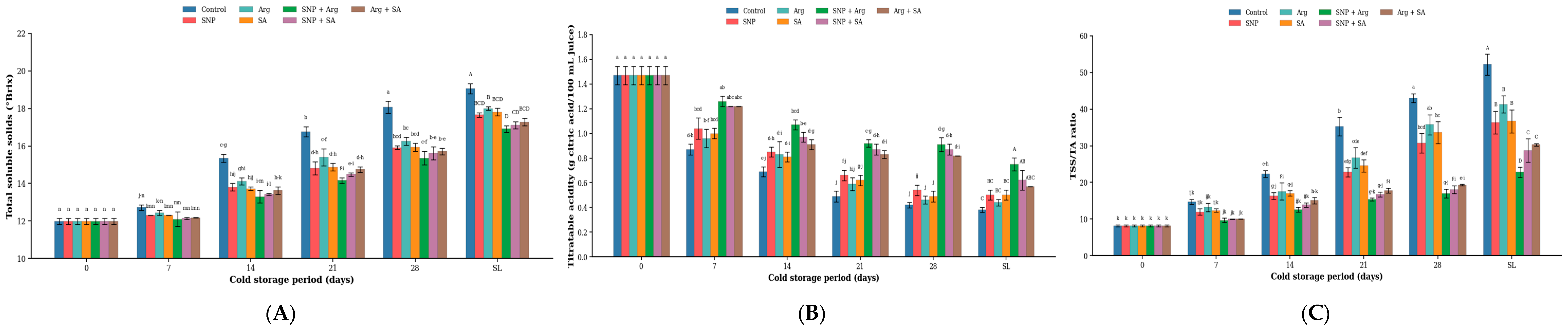
In all the treatments, total soluble solids (TSS) increased progressively during cold storage and further after shelf life. This reflects the advancement of fruit ripening (Figure 3A). The highest increment was recorded in control fruits, where TSS reached up to 18.06 °Brix after 28 days and increased up to 19.06 °Brix after shelf life. Contrary to that, the TSS values of the treated fruits were significantly (p < 0.05) lower during the storage, indicating a delay in ripening. Among the individual treatments, SNP and SA were more effective than Arg, and the combined treatments had the lowest TSS accumulation. The TSS values were lowest for SNP + Arg (15.36 °Brix at 28 days, 16.91 °Brix after shelf life) followed by SNP + SA and Arg + SA, indicating a significant inhibitory effect of these treatments on sugar accumulation.
During storage, titratable acidity (TA) showed a slow decline in all treatments, which is a typical characteristic of fruit ripening, as organic acids are used in respiration processes (Figure 3B). The control fruits showed the highest decay rate, which ranged from 1.47% to 0.42% after 28 days and to 0.38% after shelf life, respectively, indicating increased metabolic activity. On the contrary, treated fruits showed higher acidity significantly. The combined treatments showed the highest effectiveness, with SNP + Arg having the highest acidity (0.91% at 28 days and 0.75% after shelf life), followed by SNP + SA and Arg + SA, with strong ability to slow down acid degradation.
The simultaneous increase in TSS and decrease in TA led to a significant increase in the TSS/TA ratio, especially in control fruits (43.04 at 28 days and 52.17 after shelf life), indicating rapid ripening and loss of balance of flavor during storage (Figure 3C). On the other hand, the TSS/TA ratios of treated fruits were significantly lower, with the highest effect in combined treatments. The lowest ratio was observed in SNP + Arg treatment (17.04 at 28 days and 22.80 at the end of shelf life), followed by SNP + SA and Arg + SA, indicating a significant retardation of ripening process and better maintenance of sugar–acid balance.
The combined regulation of TSS, TA and TSS/TA ratio clearly showed that the postharvest treatments, especially under combined applications, effectively slowed down the ripening processes. The delay is probably related to reduced respiration rate, inhibition of ethylene biosynthesis and preservation of metabolic stability. The improved performance of the combined treatments also confirms an additive effect on the modulation of fruit metabolism, preserving eating quality and extending the postharvest life of ‘Keitt’ mango fruits. The results indicate that the combined treatments were effective in delaying ripening and preserving flavor quality and maintaining the physiological and biochemical balance of the fruit. The results of the main effects of treatments and storage periods are presented in Supplementary Tables S2 and S3.

3.4. Ascorbic Acid Retention

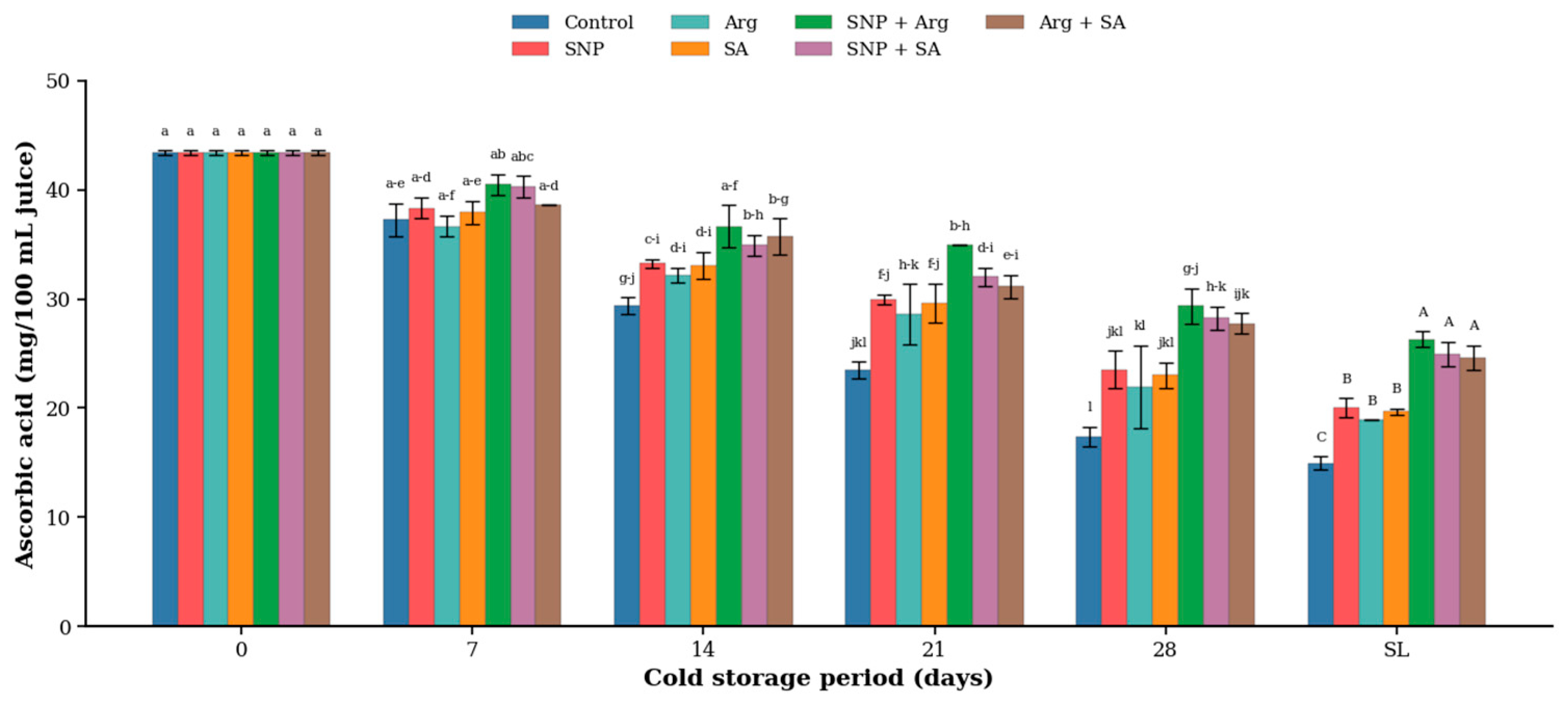
In all treatments the ascorbic acid content steadily decreased through cold storage and further decreased after shelf life, indicating oxidative degradation associated with fruit senescence and chilling stress (Figure 4). The reduction was more pronounced in the control fruits, where ascorbic acid decreased sharply from 43.39 mg/100 mL at harvest to 17.41 mg/100 mL after 28 days and further to 14.96 mg/100 mL after shelf life, indicating substantial loss of nutritional quality.
All postharvest treatments significantly reduced the rate of degradation of ascorbic acid compared with the control. Among individual treatments, SNP, SA and Arg were equally effective to maintain higher levels of ascorbic acid throughout the storage. However, the combined treatments were significantly superior. The highest ascorbic acid content was found in SNP + Arg treatment (29.36 mg/100 mL at 28 days and 26.30 mg/100 mL after shelf life) followed by SNP + SA and Arg + SA, indicating improved protection of antioxidant compounds.
The treated fruits retained about 40–75% more ascorbic acid than the control fruits at the end of storage and shelf life, showing a strong protective effect against oxidative degradation. Better antioxidant status and decreased oxidative stress in treated fruits are suggested by the preservation of ascorbic acid.
The improved performance of combined treatments indicates a superior effect in maintaining ascorbic acid levels, probably through improved ROS scavenging and reduced oxidative damage. The results of the main effects of treatments and storage periods are presented in Supplementary Table S2.

3.5. Membrane Damage Indicators: Electrolyte Leakage, MDA and PCG

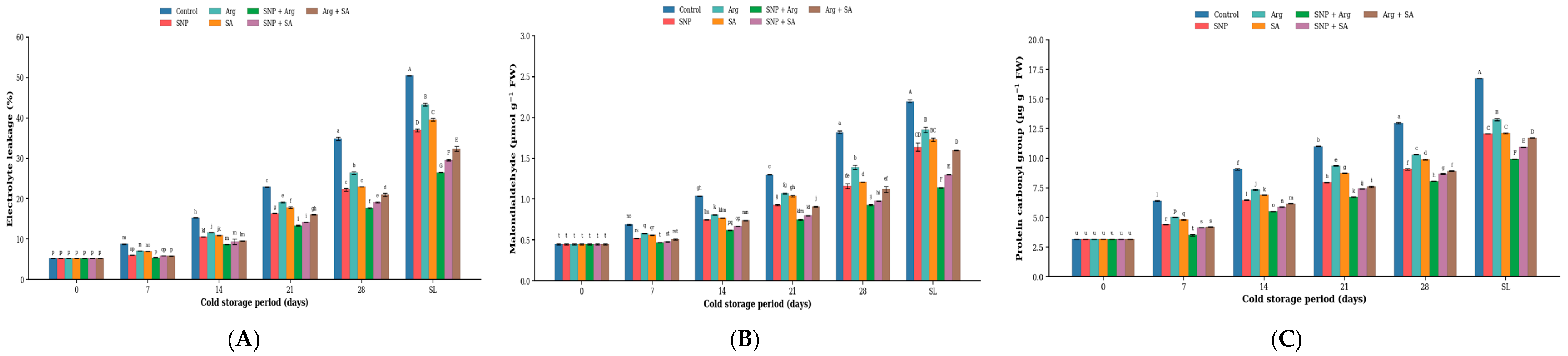
Electrolyte leakage (EL), malondialdehyde (MDA) and protein carbonyl group (PCG) levels gradually increased during cold storage and further after shelf life in all treatments, reflecting the intensification of membrane damage, lipid peroxidation and protein oxidation under chilling stress conditions (Figure 5A–C). In control fruits, the increase was most pronounced with EL reaching 34.91% at 28 days and then increasing to 50.45% after shelf life, indicating severe loss of membrane integrity. Similarly, the MDA and PCG levels exhibited a sharp increase in control fruits to 1.82 µmol g−1 fw and 12.97 µg g−1 fw, respectively, at 28 days, and further increased to 2.20 µmol g−1 fw and 16.73 µg g−1 fw at shelf life.
On the other hand, all postharvest treatments significantly decreased the levels of EL, MDA and PCG in comparison with the control, suggesting increased protection against oxidative damage. Among individual treatments, SNP was the most effective, followed by SA and Arg. However, combined treatments had a markedly superior effect. The SNP + Arg treatment showed the lowest values for all parameters, with EL reaching 17.67% at 28 days and 26.53% after shelf life and MDA and PCG being reduced to 0.93 µmol g−1 fw and 8.08 µg g−1 fw, respectively. Similar trends were observed for SNP + SA and Arg + SA but the effects were less prominent than SNP + Arg.
The significant decrease in EL implies better membrane stability and the decrease in MDA accumulation also reflects the inhibition of lipid peroxidation processes. The lower PCG levels also indicate effective protection against protein oxidation, indicating preservation of cellular functionality. At the end of storage, the combined treatments showed a significant reduction of EL (45–50%), MDA (40–50%) and PCG (35–45%) compared to control fruits, indicating good protection against oxidative stress. These results offer strong biochemical evidence for a reduction of chilling injury and improvement of fruit quality in treated mango fruits. The results of the main effects of treatments and storage periods are presented in Supplementary Table S3.

3.6. Antioxidant Enzyme Activities (SOD, CAT and POX)

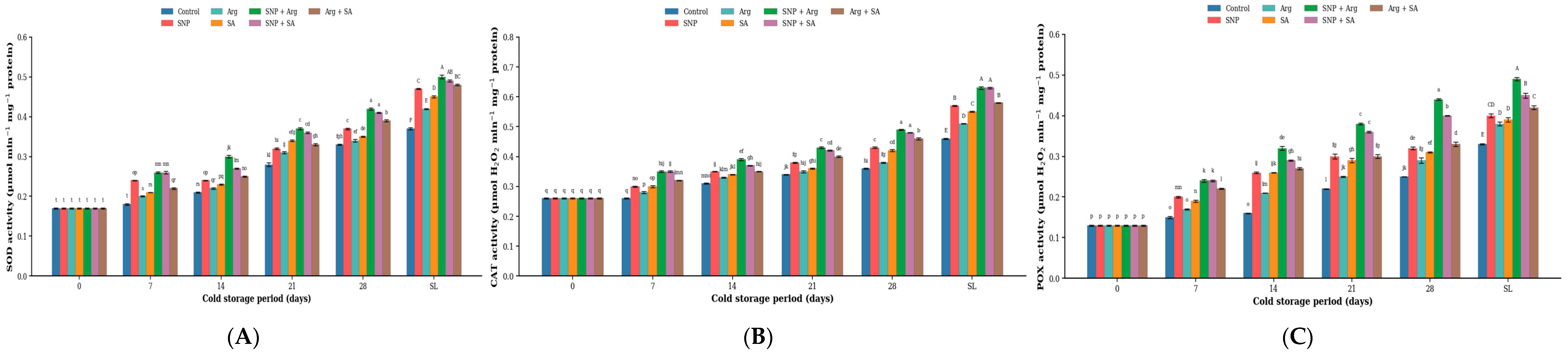
The activities of antioxidant enzymes such as superoxide dismutase (SOD), catalase (CAT) and peroxidase (POX) increased gradually during cold storage and further after shelf life in all treatments, indicating an induced defense response against chilling-induced oxidative stress (Figure 6A–C). The size of this increase varied greatly among treatments, however. Control fruits during storage had the lowest enzyme activities. The enzyme activities in the control fruits increased slightly over time but levels were not enough to counteract oxidative stress, as shown by the higher accumulation of MDA, electrolyte leakage and protein oxidation observed earlier. For example, activities of SOD, CAT and POX in control fruits were only 0.330, 0.360 and 0.250 µmol min−1 mg−1 protein, respectively, at 28 days.
In contrast, the activities of antioxidant enzymes were significantly higher than that of the control, indicating an increased ROS-scavenging capacity in treated fruits. Individual treatment of SNP showed the highest stimulatory effect, followed by SA and Arg. This improvement could be because salicylic acid and nitric oxide act as signaling molecules, initiating antioxidant defense pathways.
Combined treatments showed a markedly better effect, confirming a strong interaction. Maximum enzyme activities were observed in SNP + Arg treatment with SOD, CAT and POX as 0.423, 0.490 and 0.436 µmol min−1 mg−1 protein, respectively, after 28 days. SNP + SA and Arg + SA exhibited similar trends but with slightly less pronounced effects than SNP + Arg. The enzyme activities were significantly higher (p < 0.05) in the combined treatments after shelf life, suggesting continued activation of antioxidant defense mechanisms.
The activities of antioxidant enzymes in combined treatments were 25–40% higher than in individual treatments and 50–70% higher than in control fruits. This substantial increase reflects an enhanced ability to detoxify the reactive oxygen species, and therefore to reduce oxidative damage and maintain cellular homeostasis. The results of the main effects of treatments and storage periods are presented in Supplementary Table S4.

3.7. PME Activity and Fruit Softening

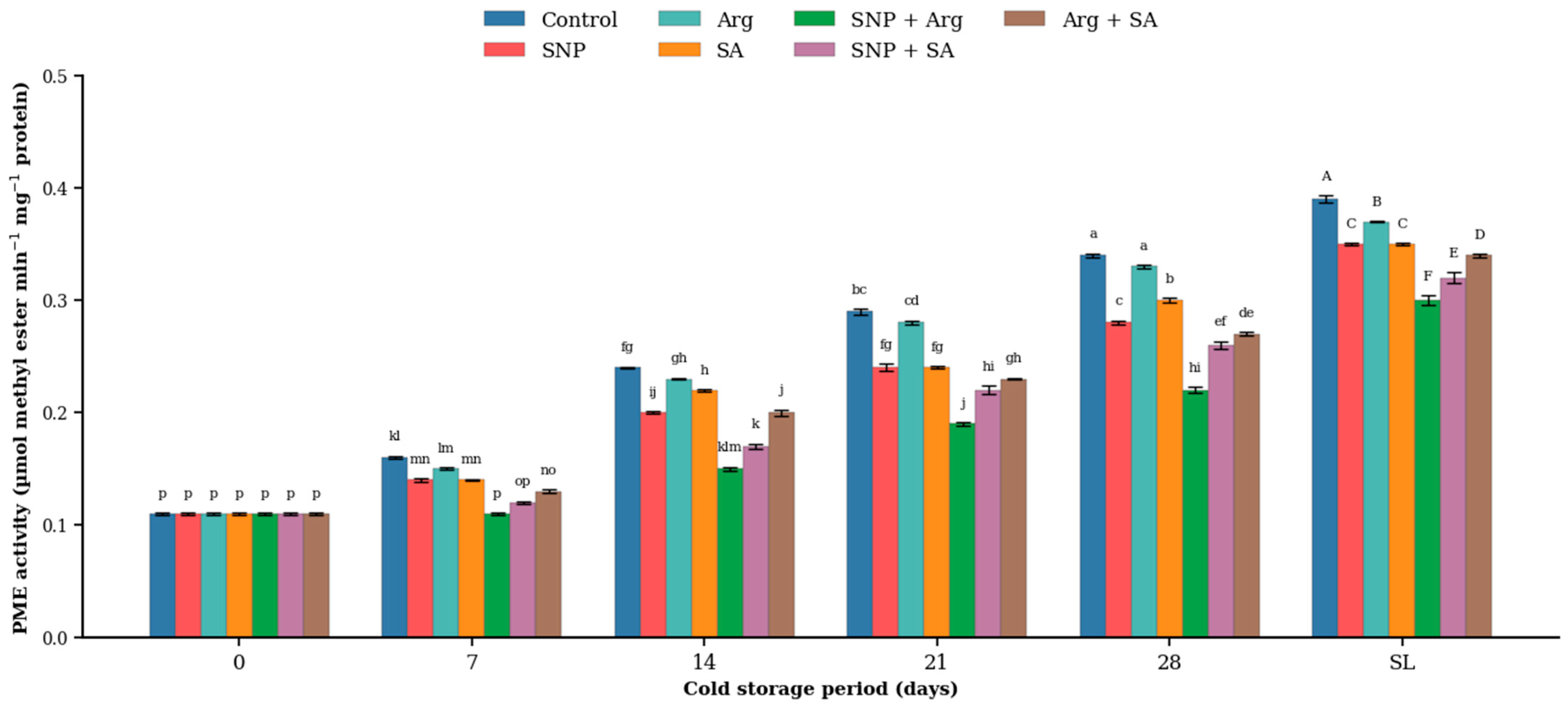
Pectin methylesterase (PME) activity increased gradually throughout cold storage and shelf life in all treatments, suggesting the progress of cell wall degradation and fruit softening processes (Figure 7). The increase was higher in control fruits, in which PME activity increased from 0.106 to 0.336 µmol min−1 mg−1 protein at 28 days and then to 0.386 µmol min−1 mg−1 protein after shelf life, indicating a rapid degradation of pectic substances and a faster softening of tissues.
All postharvest treatments significantly reduced PME activity during storage compared to the control. SNP and SA were more effective than Arg in suppressing PME activity among the individual treatments. But the combined treatments had a much better inhibitory effect. The lowest PME activity was observed in SNP + Arg (0.216 at 28 days and 0.300 after shelf life), followed by SNP + SA and Arg + SA, indicating a strong suppression of cell wall degrading processes.
The combined treatments reduced the activity of PME at the end of storage by about 25–40% compared with the control fruits, indicating a substantial delay in cell wall disassembly. This suppression of PME activity is directly related to the better firmness retention found in treated fruits, thus confirming a strong relationship between the enzyme activity and the fruit texture. The results of the main effects of treatments and storage periods are presented in Supplementary Table S4.

3.8. Integrated Stress Response Analysis

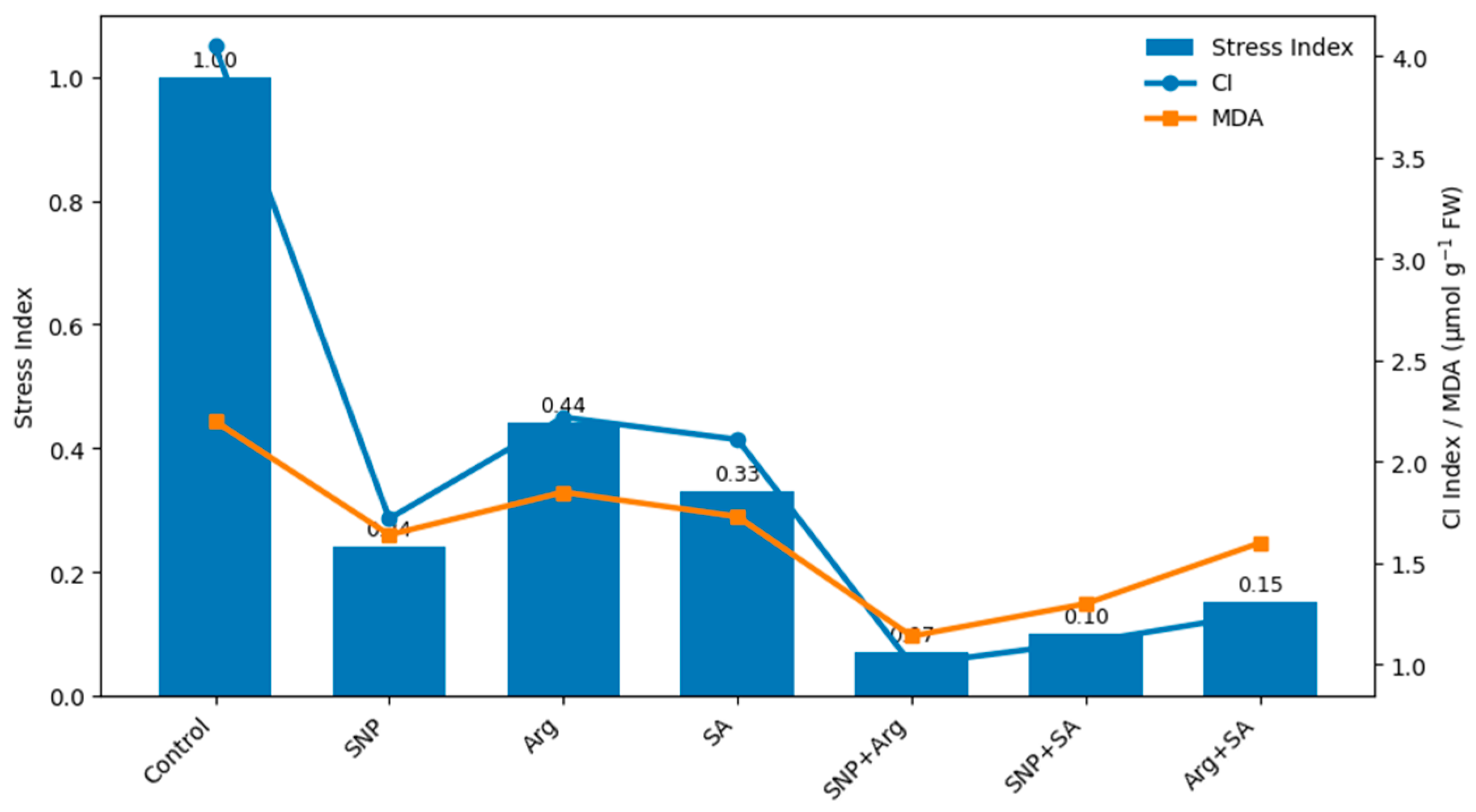
The integrated visualization clearly demonstrates the variation in stress index, chilling injury (CI), and malondialdehyde (MDA) among postharvest treatments (Figure 8). Control fruits had the highest stress index with higher CI and MDA values, indicating severe oxidative stress and membrane damage. On the contrary, all treated fruits showed a significant reduction in these parameters, indicating an increased physiological stability.
The lowest stress index values were recorded in the combined applications, especially SNP + Arg, correlating well with the low CI and MDA levels. The good agreement confirms that the index of stress is a successful integration of oxidative damage indicators and is a good indicator of the general stress status of the fruit. The simultaneous decrease in CI and MDA in all the treatments indicates that lipid peroxidation plays an important role in the development of chilling injury. The significant reduction in these parameters under combined treatments is indicative of enhanced protection from oxidative damage. Furthermore, the combined treatments exhibited better performance, indicating an integrated interaction that enhances the oxidative stress tolerance and sustains the fruit quality during storage. The tight correlation of stress index, CI and MDA verified oxidative stress as the key factor for chilling injury, and the combined treatments effectively mitigated this process through integrated regulation.

3.9. 3D Response Surface Plot of Oxidative Stress Indicators (CI, EL, and MDA)

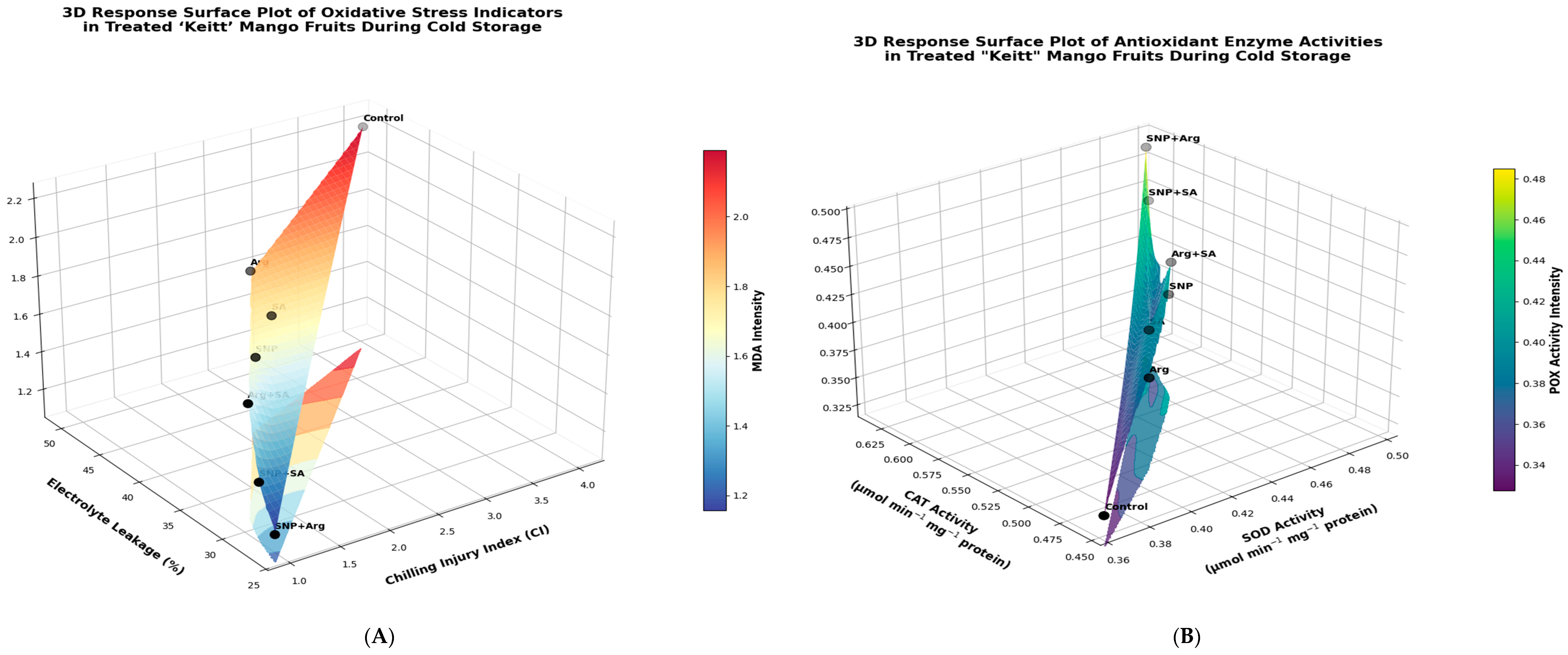
The three-dimensional response surface plot clearly showed a strong positive association among chilling injury index (CI), electrolyte leakage (EL) and malondialdehyde (MDA) accumulation in ‘Keitt’ mango during cold storage (Figure 9A). Untreated control fruits were placed in the high-stress region of the surface with high CI, increased membrane permeability and increased lipid peroxidation, indicating severe oxidative damage under chilling conditions. However, the combined treatments, especially SNP + Arg, were clustered in the low-stress zone and had the lowest values of CI, EL and MDA, confirming their better protective effect against chilling-induced oxidative injury. The reduction in surface elevation from control to combined treatments indicated that reduction in chilling injury was associated with improved membrane stability and less oxidative deterioration. The close spatial relationship between EL and MDA also suggests that membrane leakage was highly associated with lipid peroxidation processes. These results are consistent with the hypothesis that SNP and Arg-mediated chilling tolerance mainly correlate with the suppression of oxidative stress and the maintenance of membrane integrity during cold storage.
The response surface analysis revealed a coordinated enhancement of antioxidant enzyme activities in treated mango fruits during cold storage (Figure 9B). Combined treatments occupied the upper region of the response surface and exhibited markedly higher SOD, CAT, and POX activities compared with untreated fruits. Among all treatments, SNP + Arg showed the strongest antioxidant activation, indicating a combined stimulation of enzymatic reactive oxygen species-scavenging systems. In contrast, control fruits were localized within the lower region of the surface, reflecting weak antioxidant defense capacity and greater susceptibility to oxidative stress. The positive spatial association among SOD, CAT, and POX activities suggests that these enzymes functioned cooperatively to detoxify reactive oxygen species and maintain cellular redox balance during chilling storage. The inverse relationship between the antioxidant response surface and oxidative stress indicators observed in Figure 10 further confirms that enhanced antioxidant metabolism contributed directly to reduced membrane damage, lower lipid peroxidation, and alleviation of chilling injury in treated fruits. Overall, the 3D surface plots provide integrated visual evidence that combined SNP- and Arg-based treatments effectively improved chilling tolerance through coordinated antioxidant defense regulation.

3.10. Multivariate Analysis: PCA and Correlation Heatmap

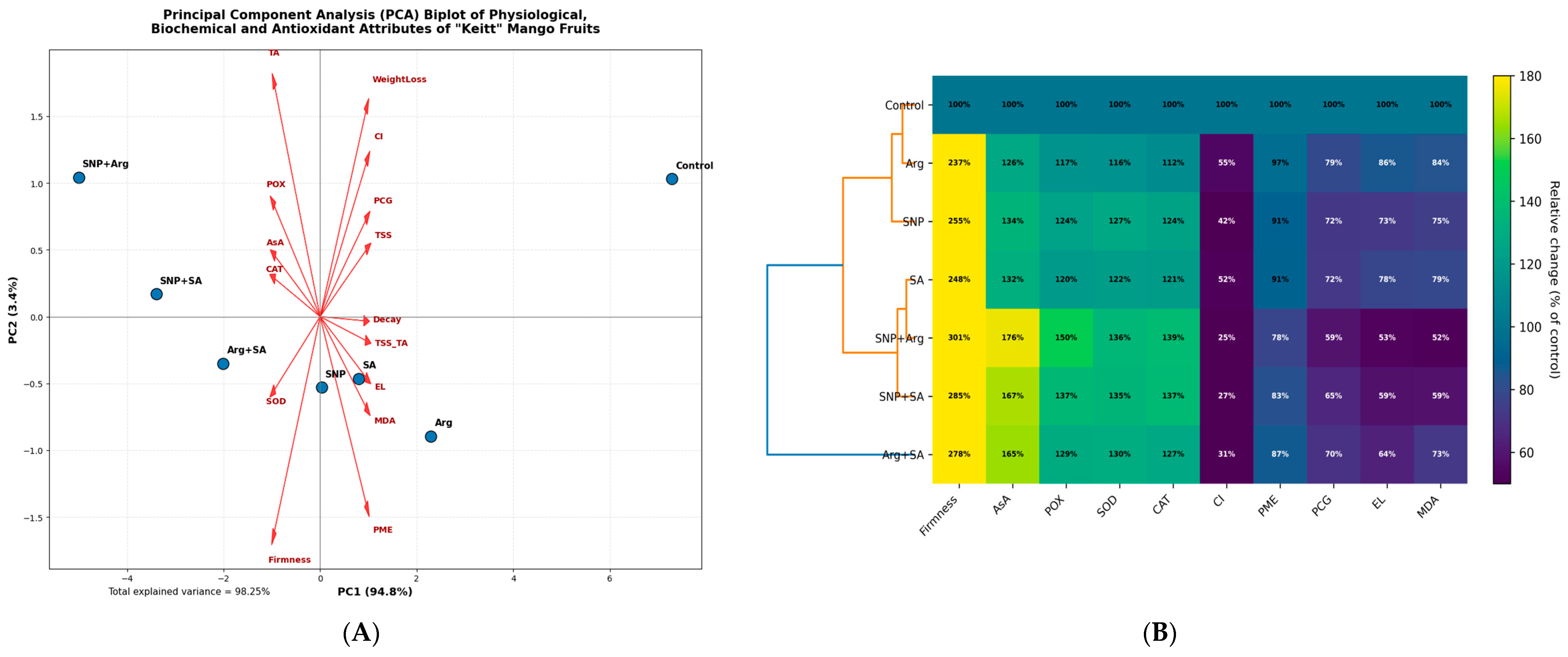
Principal component analysis (PCA) was conducted to investigate the relationships among chilling injury, oxidative stress indicators, antioxidant enzyme activities, and the quality attributes of ‘Keitt’ mango fruits subjected to different postharvest treatments during cold storage (Figure 10A). The first two principal components explained 98.25% of the total variance, with PC1 and PC2 accounting for 94.8% and 3.4%, respectively, indicating that the major variability among treatments was effectively summarized within these two dimensions. The score plot clearly separated the treatments according to their physiological and biochemical responses. Untreated fruits (control) were located on the positive side of PC1 and were closely associated with chilling injury (CI), weight loss, electrolyte leakage (EL), malondialdehyde (MDA), decay incidence, PME activity, and total soluble solids (TSS), indicating advanced senescence and greater susceptibility to chilling stress. In contrast, fruits treated with the combined applications, particularly SNP + Arg and SNP + SA, were positioned on the negative side of PC1 and were strongly associated with antioxidant enzyme activities (SOD, CAT, and POX), ascorbic acid (ASA), and firmness retention. The loading plot further demonstrated two contrasting physiological groups. The first group comprised antioxidant-related attributes, including SOD, CAT, POX, ASA, and firmness, which were clustered together and oriented opposite to chilling injury and oxidative stress variables. The second group included CI, EL, MDA, PME activity, weight loss, and decay percentage, which were closely associated and positively loaded on PC1. This opposite orientation indicates strong negative relationships between antioxidant defense mechanisms and oxidative stress development during storage. Among all treatments, SNP + Arg showed the greatest separation from the control and exhibited the closest association with antioxidant-related variables, reflecting its superior ability to maintain membrane integrity, reduce oxidative damage, and preserve fruit firmness. The PCA therefore confirmed that enhancement of antioxidant defense systems was closely associated with reduced chilling injury and improved postharvest quality of cold-stored ‘Keitt’ mango fruits.
Likewise, the two-way hierarchical clustered heatmap provided an integrated visualization of treatment performance and the relationships among quality attributes after shelf life (Figure 10B). The heatmap revealed two major variable clusters corresponding to quality-preservation attributes and deterioration-related indicators. Firmness, ascorbic acid (ASA), peroxidase (POX), superoxide dismutase (SOD), and catalase (CAT) were grouped within the same cluster and showed markedly higher relative values in fruits treated with SNP, Arg, SA, and particularly their combined applications. The highest relative increases were recorded in the SNP + Arg treatment, which exhibited 301%, 176%, 150%, 136%, and 139% of the control values for firmness, ASA, POX, SOD, and CAT, respectively. These findings indicate a substantial enhancement of antioxidant defense capacity and maintenance of tissue integrity. In contrast, chilling injury index (CI), PME activity, peel color greenness (PCG) loss, electrolyte leakage (EL), and malondialdehyde (MDA) accumulation formed a separate deterioration-related cluster. These parameters were markedly reduced in fruits receiving combined treatments, especially SNP + Arg and SNP + SA. The SNP + Arg treatment reduced CI, PME, PCG, EL, and MDA to 25%, 78%, 59%, 53%, and 52% of the control values, respectively, indicating substantial suppression of membrane damage, oxidative stress, and ripening-associated deterioration. The dendrogram of treatments further distinguished two major groups. The control treatment formed an independent cluster characterized by the highest levels of chilling injury and oxidative damage. In contrast, combined treatments, particularly SNP + Arg and SNP + SA, clustered separately and were strongly associated with enhanced antioxidant activity and improved quality retention. Individual applications of SNP, Arg, and SA occupied intermediate positions, reflecting moderate protective effects relative to the combined treatments. Overall, the clustered heatmap corroborated the PCA results by clearly separating quality-preservation attributes from oxidative stress indicators and identifying SNP + Arg as the most effective treatment for enhancing chilling tolerance and maintaining the postharvest quality of ‘Keitt’ mango fruits during cold storage.

4. Discussion

4.1. Chilling Injury and Oxidative Stress Alleviation

The ‘Keitt’ mangoes showed increasing development of symptoms of chilling injury (CI) in cold storage, as suggested by the increased CI index, decay incidence and deterioration of visual appearance during storage and shelf life. However, all postharvest treatments significantly improved chilling-related disorders compared to untreated fruits. In addition, combined treatments were more effective than individual applications. The superior performance of SNP + Arg agrees with previous reports. These results indicated an interaction of nitric oxide donor SNP and arginine in enhancing chilling tolerance and maintaining marketable fruit quality during low-temperature storage. The increase in chilling injury observed in the untreated fruits is a typical response of tropical and sub-tropical fruits to temperatures below their critical threshold, in which cellular homeostasis is disrupted, and oxidative stress is increased [7,58]. Chilling conditions can result in overproduction of reactive oxygen species (ROS), resulting in membrane dysfunction, metabolic imbalance and tissue browning, leading to visible CI symptoms and increased susceptibility to pathogen invasion [4,10,50]. The close association between the severity of CI and the incidence of decay in the present study lends further support to the role of chilling-induced oxidative damage in weakening cellular defense systems and increasing tissue vulnerability during storage.
The large reduction of chilling injury in SNP treated fruits may be related to physiological role of nitric oxide (NO) in regulation of stress-responsive metabolism and maintenance of cellular redox homeostasis. Nitric oxide has been identified as an important signaling molecule that can reduce the accumulation of ROS, stabilize membranes and enhance antioxidant defense systems under abiotic stress conditions [22,59]. Arginine can also be important for chilling tolerance, likely related to its role in the biosynthesis of polyamines and nitric oxide, membrane stabilization and scavenging of free radicals [60,61,62]. Salicylic acid also improved chilling tolerance, probably by induction of defense-related pathways and modulation of stress-signaling mechanisms [39,60,63]. Combined treatments were more efficacious than single applications, highlighting the fact that SNP, Arg and SA may exert complementary and protective effects. The improved performance of SNP + Arg might be likely related to the coordinated regulation of nitric oxide-mediated signaling and antioxidant metabolism, which leads to better cellular protection against chilling-induced oxidative stress. Multivariate analyses supported this interpretation, highlighting a clear separation between combined treatments and control and a strong association of the former with lower values of oxidative stress markers and better physiological performance. The results showed that the treatments were successful in slowing down the chilling damage and kept the external quality of the fruit during long-term cold storage, as indicated by the higher visual appearance scores of the treated fruit. In summary, the present results indicated that the combined SNP- and Arg-based treatments could be effective in alleviating chilling injury and increase the storage tolerance of ‘Keitt’ mango fruits by combining oxidative stress alleviation and physiological stability.

4.2. Membrane Stability and Oxidative Damage

Membrane integrity is one of the major targets affected by chilling stress in tropical fruits during cold storage. In the present study, electrolyte leakage (EL), malondialdehyde (MDA) and protein carbonyl group (PCG) contents increased gradually in all treatments during storage and shelf life, indicating gradual membrane deterioration, lipid peroxidation and protein oxidation under chilling conditions [64].
The dramatic increase in EL in the control fruits indicates that the severe disturbance of membrane permeability may have contributed oxidative stress induced by chilling. Cold storage produces reactive oxygen species, which can damage membrane lipids and proteins, resulting in reduction in membrane selectivity, increase in ion leakage and inhibition of cellular metabolism [10,65]. The concurrent increase in MDA in untreated fruits also supports the increased lipid peroxidation and oxidative deterioration of membrane lipids during chilling exposure. Similar increases in EL and MDA have been reported in cold-stored mango and other chilling-sensitive fruits exposed to low temperature stress [6,58]. Also, protein oxidation increased progressively during storage, as evidenced by higher PCG accumulation in the control fruits. Protein carbonyl formation is considered a reliable marker of oxidative modification of cellular proteins under stress conditions and reflects severe impairment of metabolic functionality [11]. The significant reduction in PCG levels by the treatments of SNP-, Arg- and SA-based treatments indicates better protection of oxidative protein damage and better maintenance of cellular metabolism.
The SNP-treated fruits showed a significant decrease in oxidative damage markers, which likely may be related to nitric oxide-mediated inhibition of ROS accumulation and enhanced membrane stability. Nitric oxide prevents oxidative degradation of membrane lipids by modulating antioxidant defense systems and by direct interaction with reactive oxygen intermediates [22]. Arginine can also contribute to an additional membrane protective effect as a precursor for polyamines and nitric oxide biosynthesis, which enhance the stabilization of membrane structures and the maintenance of cellular homeostasis under stress conditions [65]. Salicylic acid also contributed to decreased oxidative damage, potentially by stimulating stress-related defense mechanisms and enhancing antioxidant metabolism [40].
Fruit firmness is an important index of mango turgidity and is a major factor determining consumer acceptance, but generally mango fruit quickly softens after harvest [66]. This softening is mainly likely related to conversion of insoluble protopectin to water-soluble pectin by degradation of middle lamella, which is controlled by cell wall hydrolytic enzymes like pectinesterase, polygalacturonase, pectin methylesterase and pectate lyase, leading to a decrease in the rigidity of the cell wall [67]. In the present study, the gradual decline in flesh firmness of ‘Keitt’ mango fruit during cold storage and subsequent shelf life can be explained by increased activity of these enzymes driven by increased respiration rate, ethylene production and associated metabolic processes that accelerate ripening [37,38,46,65].
Importantly, treated fruits showed reduced weight loss (WL) and increased firmness, which were closely associated with improved membrane integrity and reduced oxidative decay. The maintenance of membrane functionality likely decreased water loss and the inhibition of membrane lipid peroxidation helped to delay tissue disintegration and slow down softening and maintain a better texture. The increase in WL and firmness loss observed during storage was mainly associated with moisture loss and the enhancement of physiological processes such as transpiration, respiration and ethylene biosynthesis that are further aggravated by oxidative stress-induced cellular disintegration [37,38,46]. Among the treatments, salicylic acid (SA) was found to improve chilling tolerance by decreasing respiration and ethylene production while enhancing antioxidant enzyme activities, leading to better water retention and delayed metabolic activity. Moreover, arginine (Arg) contributed to mitigating stress as a precursor for polyamines, proline and nitric oxide (NO), thereby increasing the antioxidant capacity and membrane stability [68,69]. Sodium nitroprusside (SNP) as a NO donor was important for the delay of senescence and the maintenance of membrane integrity by regulating oxidative metabolism and ethylene biosynthesis [70,71].
Importantly, the increased efficacy of combined treatments, especially of SNP + Arg, indicates a strong integrated interaction between NO, SA and Arg signaling pathways. These responses may be associated with improved oxidative stress tolerance and membrane protection. These results were further confirmed by the integrated stress index, heatmap clustering and PCA analyses, which indicated obvious negative correlations between antioxidant defense components and membrane damage indicators. In general, these results show that the external application of SNP [47,72,73], salicylic acid (SA) [9,74], and arginine (Arg) [32,65,75], especially combined treatments, significantly decreases weight loss and chilling injury and suppresses pathological disorders in stored ‘Keitt’ mango fruit. The beneficial effects of probiotics can be explained by their roles in improving antioxidant defense systems, suppressing ROS accumulation and stabilizing cellular membranes. Collectively, the data confirms that the main mechanisms underlying enhanced chilling tolerance of treated mango fruits during cold storage included preservation of membrane integrity and mitigation of oxidative damage.

4.3. Antioxidant Defense System

The antioxidant defense system is critical in the protection of plant tissues against chilling-induced oxidative stress via ROS detoxification and maintenance of cellular redox homeostasis. In the present study, the activities of superoxide dismutase (SOD), catalase (CAT) and peroxidase (POX), and ascorbic acid (AsA) content were significantly increased in treated fruits compared to untreated controls during the cold storage and shelf life. In all cases, the combined treatments, especially SNP + Arg, showed the highest antioxidant activities and retained more AsA content, indicating a greater tolerance to oxidative stress and better protection of cells. The increase in antioxidant enzymes activities during storage could be an adaptive defense response induced by chilling stress. However, the much lower enzyme activities in untreated fruits indicate insufficient antioxidant capacity for detoxifying the excessive ROS accumulation efficiently, which resulted in more severe deterioration of membrane and oxidative damage. Similar reductions in the efficiency of antioxidants have been linked to the development of severe chilling injury in cold-stored tropical fruits [10,27,76].
SOD is the first enzymatic barrier against oxidative stress; it catalyzes the dismutation of superoxide radicals into hydrogen peroxide, which may contribute to scavenging by CAT and POX enzymes [26]. The simultaneous increase in SOD, CAT and POX activities in treated fruits suggests activation of an integrated antioxidant defense network that can reduce ROS accumulation and protect the membrane structures from oxidative degradation [6,58]. Also, the strong negative associations between antioxidant enzymes and oxidative stress markers obtained from PCA and correlation analyses support this interpretation. The improved antioxidant response in SNP-treated fruits may be due to the NO signaling in the regulation of stress-responsive metabolism and up-regulation of antioxidant-related genes under abiotic stress. Cold storage has been suggested to cause increases in antioxidant enzyme activity, stabilization of cellular membranes, and decreases in ROS-mediated injury in several horticultural crops through nitric oxide [22,77]. Moreover, arginine may be involved in this process by enhancing the activity of antioxidants likely related to its role in the biosynthesis of nitric oxide and polyamines, which are involved in stress tolerance and ROS scavenging [78,79]. Similarly, it has been reported that salicylic acid enhances chilling tolerance through regulating stress signaling and redox homeostasis by inducing antioxidant defense pathways [39]. Ascorbic acid is a significant non-enzymatic antioxidant that directly scavenges ROS and contributes to the protection of membrane integrity and cellular metabolism under stress conditions. The maintenance of increased AsA level in treated fruits suggests the reduction of oxidative degradation and retardation of senescence processes during storage. The combined treatments, particularly SNP + Arg, showed the strongest ability to maintain AsA content, indicating they may have enhanced antioxidant efficiency and metabolic stability.
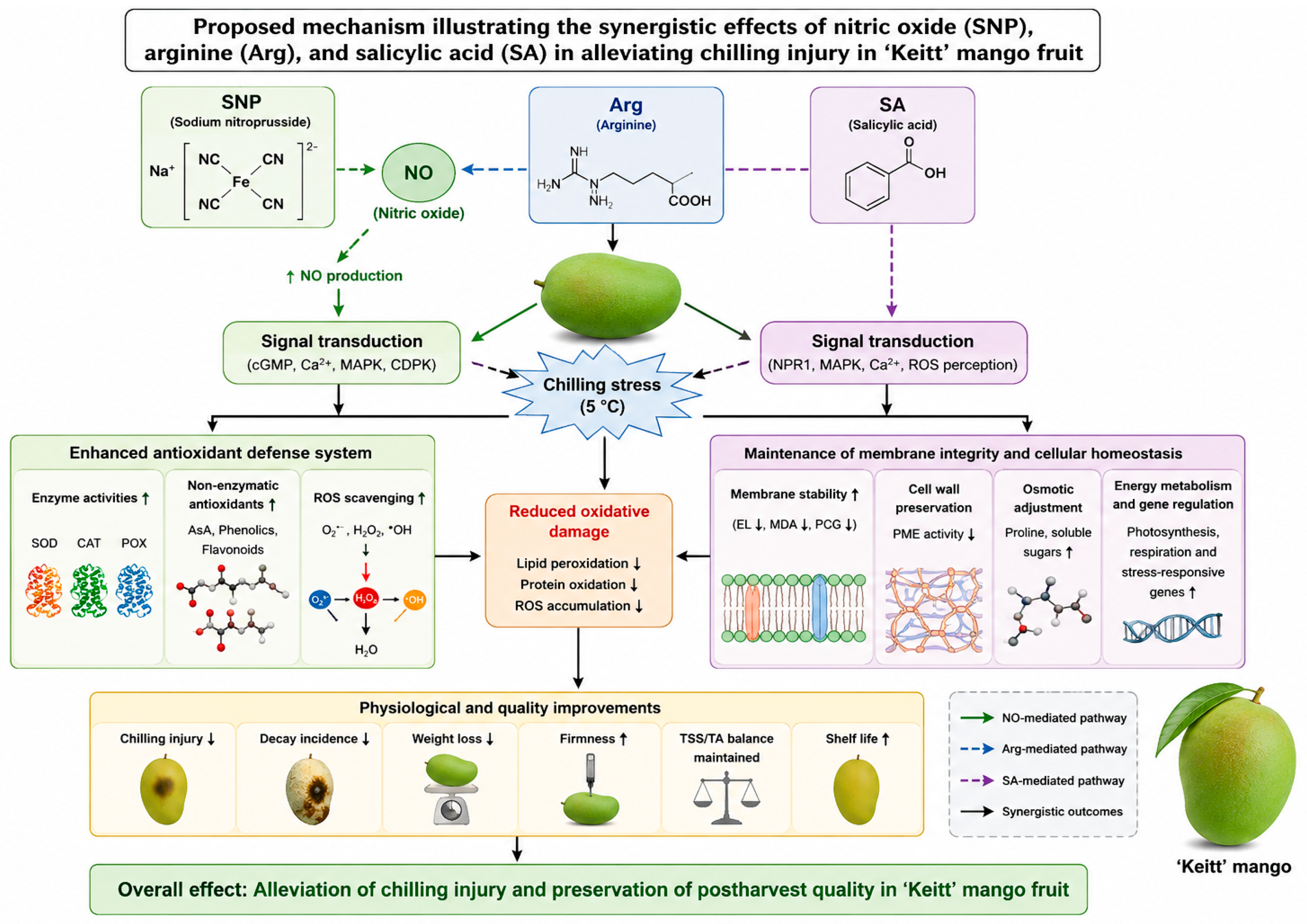
Importantly, the combined treatments showed superior effects compared to individual treatments, suggesting interactions of SNP, Arg and SA in the activation of antioxidant defense mechanisms. The enhanced antioxidant activity of SNP + Arg was closely associated with the reduced oxidative damage, the alleviation of chilling injury and the improved retention of fruit quality, indicating that coordinated antioxidant regulation was important for improving the chilling tolerance of ‘Keitt’ mango fruits during cold storage. The coordinated action of these enzymes is essential for maintaining redox balance in plant tissues (Figure 11). Salicylic acid is known to induce antioxidant enzyme activities and enhance stress tolerance by regulating defense signaling pathways. Nitric oxide also modulates antioxidant responses by acting as a signaling molecule that activates protective mechanisms. Additionally, arginine contributes indirectly by promoting polyamine synthesis, which has been associated with increased antioxidant capacity. The elevated enzyme activities observed in combined treatments suggest enhancement of the antioxidant system. Similar results have been reported in mango, peach, and pomegranate fruits, where increased antioxidant enzyme activity was associated with reduced chilling injury and improved storage quality [17,19,74]. It should be noted that the proposed model is hypothetical and is intended to summarize the potential mechanisms underlying the observed responses based on the present findings and previous reports. Although the current study suggested significant improvements in chilling tolerance, membrane stability, antioxidant capacity, and fruit quality following SNP-, Arg-, and SA-based treatments, several signaling pathways illustrated in the model, including nitric oxide signaling, polyamine metabolism, ethylene regulation, and stress-responsive defense networks, were not directly investigated. Therefore, these pathways should be considered as plausible interpretations supported by previous studies rather than experimentally confirmed mechanisms in the present work [10,22,39,59,77].

4.4. Ripening Modulation and Fruit Quality Maintenance

Cold storage and shelf life had a significant effect on the ripening attributes of ‘Keitt’ mango fruits. Total soluble solids (TSS), TSS/TA ratio and pectin methylesterase (PME) activity increased progressively while titratable acidity (TA) and fruit firmness decreased simultaneously. However, all postharvest treatments delayed these ripening-associated changes compared to the untreated fruits, the combined treatments being more effective. Among them, SNP + Arg was the most effective in maintaining firmness, retaining acidity, suppressing the activity of PME, and moderating the increase in TSS and TSS/TA ratio, indicating delayed ripening and improved maintenance of fruit quality during cold storage and shelf life. The increase in TSS observed during storage is a common feature of mango ripening and is related to hydrolysis of starch reserves and accumulation of soluble sugars [24]. The progressive reduction of TA on the other hand shows the use of organic acids as substrates for respiration in senescence and ripening metabolism. Consequently, TSS/TA ratio was significantly higher in untreated fruits, which indicates faster ripening and decline in storage quality. The combined treatments maintained a significantly lower TSS/TA ratio, indicating delayed metabolic progression and reduced senescence rates under chilling conditions.
Fruit softening is one of the major factors limiting the postharvest storage life of mango fruit and is closely associated with the degradation of cell wall polysaccharides. PME is essential for pectin solubilization and cell wall disassembly during ripening, resulting in softening and tissue texture deterioration [5,24,80]. The increase in PME activity in untreated fruits was in accordance with the rapid decrease in firmness and the faster ripening process during storage. In contrast, treated fruits, especially with SNP + Arg, showed significantly lower PME activity and better firmness retention, indicating suppression of cell wall degradation processes. The delayed ripening of fruits treated with SNP might be associated with the regulatory role of nitric oxide in ethylene biosynthesis and respiration metabolism. Nitric oxide was reported to delay fruit ripening by inhibiting ethylene production, decreasing respiratory activity and preserving membrane stability during storage [22,81]. Arginine is also a potential contributor in delayed senescence through its involvement in polyamine biosynthesis, which is known to stabilize membranes, maintain cellular integrity and slow down tissue softening under stress conditions [60]. Salicylic acid is also able to delay ripening by regulating the ethylene signaling pathways and improving the stress tolerance mechanisms [82].
The observed correlation between lower PME activity and higher firmness retention in the combined treatments confirms the important role of the regulation of cell wall metabolism in the preservation of mango texture during cold storage. In addition, the higher TA and lower TSS accumulation indicated slower metabolic conversion processes and delayed senescence progress in treated fruits. Such responses were most pronounced in the SNP + Arg-treated fruits, which exhibited the best overall quality retention during storage and shelf life. The present results collectively indicate that the combined application of SNP- and Arg-based treatments effectively retarded the ripening-related metabolic process, maintained the textural quality, and preserved biochemical balance in ‘Keitt’ mango fruits during cold storage, thereby significantly improving postharvest storability and marketability.

4.5. Integrated Effect of Combined Treatments

The combined application of SNP, Arg and SA was more efficient than individual application of these substances for alleviating chilling injury and maintaining the postharvest quality of ‘Keitt’ mango fruits during cold storage. Among all treatments, SNP + Arg showed the highest protective effect by decreasing the oxidative stress markers, maintaining the membrane integrity, increasing the antioxidant enzyme activities, and delaying the changes associated with ripening. These results suggest a combined interaction between NO-mediated signaling and arginine-associated stress tolerance pathways. Nitric oxide released from SNP has been reported to play a critical regulatory role in ROS scavenging, membrane stabilization, and stress-responsive signaling, while arginine is a precursor for nitric oxide and polyamine biosynthesis, which are closely related to cellular protection under abiotic stress conditions [22,65]. Salicylic acid can also act by inducing defense-related pathways and modulating antioxidant metabolism [39]. Therefore, it is likely that combined treatments enhanced chilling tolerance by means of coordinated regulation of the antioxidant defense systems and oxidative stress responses.
Multivariate analyses further supported the integrated effect of combined treatments. PCA and clustered heatmap analyses discriminated against combined treatments from untreated fruits and revealed strong negative associations between antioxidant-related traits and markers of oxidative stress. The integrated stress index confirmed the efficiency of combined treatments, especially SNP + Arg, in reducing oxidative injury and maintaining a higher antioxidant defense capacity. Overall, combined treatments were associated with enhanced chilling tolerance by improving antioxidant metabolism, membrane stability, suppression of oxidative damage and delay in ripening progression in cold-stored ‘Keitt’ mango fruits.

5. Conclusions

The present study indicated that the postharvest application of sodium nitroprusside (SNP), arginine (Arg) and salicylic acid (SA), especially the combined treatment of SNP + Arg, could effectively alleviate chilling injury and maintain the postharvest quality of ‘Keitt’ mango fruits during cold storage at 5 °C. Combined treatments markedly decreased chilling injury severity, incidence of decay, membrane leakage, lipid peroxidation and protein oxidation, but retained firmness, visual appearance, titratable acidity and ascorbic acid content. The improved chilling tolerance was tightly correlated with activation of antioxidant defense systems, as indicated by the increased activities of SOD, CAT and POX, as well as repression of PME activity and postponed ripening-related metabolism. Multivariate analyses such as PCA, cluster heatmap and integrated stress index assessment further confirmed the high negative correlation between oxidative stress markers and components of antioxidant defense, and clearly separated combined treatments from untreated fruits. The highest protective efficiency was observed in all treatments under SNP + Arg, suggesting integrated interaction between nitric oxide-mediated signaling and arginine-related stress tolerance mechanisms. The integrated treatment improved membrane stability, enhanced resistance to oxidative stress, and slowed down senescence progression, thus extending the storage life, and maintaining fruit marketability in cold storage and shelf life. Overall, the findings demonstrate that combined SNP and Arg application represents a promising postharvest strategy for enhancing chilling tolerance, preserving fruit quality, and extending the storage potential of ‘Keitt’ mango fruit during cold storage and subsequent shelf life.

Supplementary Materials

The following supporting information can be downloaded at: https://www.mdpi.com/article/10.3390/horticulturae12060751/s1, Table S1. Effect of sodium nitroprusside (SNP), arginine (Arg), and salicylic acid (SA), applied individually or in combination, on weight loss (%), chilling injury index, decay incidence (%), and flesh firmness of ‘Keitt’ mango fruits during storage at 5 °C; Table S2. Effect of sodium nitroprusside (SNP), arginine (Arg), and salicylic acid (SA), applied individually or in combination, on visual appearance score, ascorbic acid content (mg/100 mL juice), titratable acidity (%), and total soluble solids (TSS, °Brix) of ‘Keitt’ mango fruits during storage at 5 °C; Table S3. Effect of sodium nitroprusside (SNP), arginine (Arg), and salicylic acid (SA), applied individually or in combination, on TSS/TA ratio, electrolyte leakage (%), malondialdehyde (MDA) content (µmol g−1 FW), and protein carbonyl group (PCG) content (µg g−1 FW) of ‘Keitt’ mango fruits during storage at 5 °C; Table S4. Effect of sodium nitroprusside (SNP), arginine (Arg), and salicylic acid (SA), applied individually or in combination, on superoxide dismutase (SOD), catalase (CAT), peroxidase (POX), and pectin methylesterase (PME) activities of ‘Keitt’ mango fruits during storage at 5 °C.

Author Contributions

Conceptualization, A.F.A.E.-K., M.S.G. and S.F.E.-G.; methodology, A.F.A.E.-K., S.F.E.-G. and G.A.M.; software, A.F.A.E.-K., M.S.G. and N.M.R.; validation, A.F.A.E.-K. and G.A.M.; formal analysis, N.M.R. and M.S.G. investigation, A.F.A.E.-K., N.M.R. and R.A.Z.; resources, S.M.A., R.A.Z. and A.S.A.; data curation, N.M.R., A.S.A. and R.A.Z.; writing original draft preparation, A.F.A.E.-K., M.S.G. and S.M.A.; writing review and editing, A.S.A., S.M.A. and R.A.Z.; visualization, N.M.R. and S.M.A.; supervision, N.M.R.; project administration, S.M.A., N.M.R. and M.S.G.; funding acquisition, N.M.R. All authors have read and agreed to the published version of the manuscript.

Funding

This work was supported by Deanship of Scientific Research, Vice Presidency for Graduate Studies and Scientific Research, King Faisal University, Saudi Arabia (KFU262540) and The APC was funded by the same organization.

Data Availability Statement

The original contributions presented in this study are included in the article/Supplementary Materials. Further inquiries can be directed to the corresponding authors.

Acknowledgments

The authors gratefully acknowledge the Deanship of Scientific Research, Vice Presidency for Graduate Studies and Scientific Research, King Faisal University, Saudi Arabia, for supporting this research work.

Conflicts of Interest

The authors declare that the research was conducted in the absence of any commercial or financial relationships that could be construed as a potential conflict of interest.

References

  1. Yahia, E.M.; de Jesús Ornelas-Paz, J.; Brecht, J.K.; García-Solís, P.; Celis, M.E.M. The Contribution of Mango Fruit (Mangifera indica L.) to Human Nutrition and Health. Arab. J. Chem. 2023, 16, 104860. [Google Scholar] [CrossRef]
  2. Dolhaji, N.H.; Muhammad, I.D.; Yaakob, H.; Mohd Marsin, A. Chilling Injury in Pineapple Fruits: Physical Quality Attributes and Antioxidant Enzyme Activity. Food Res. 2020, 4, 86–95. [Google Scholar] [CrossRef] [PubMed]
  3. Shrestha, S.; Khanal, A. Factors Associated with Chilling Injury of Mango and Potential Mitigation Strategies. J. Agric. Food Environ. 2024, 5, 10–15. [Google Scholar] [CrossRef]
  4. Korumilli, T.; Kesavamoorthy, I.; Prashant, P.P.; Selva Kumar, T.; Jagajjanani Rao, K.; Sevanan, M. Understanding Chilling Injury in Postharvest Produce: Mechanisms, Diagnosis, and Mitigation Strategies. Planta 2026, 263, 29. [Google Scholar] [CrossRef]
  5. Kuldeep; Singh, A.K.; Rawat, M.; Shivam; Mani, G.; Gautam, R.; Raj, R.; Shah, I.; Pandey, A.K.; Maurya, D.; et al. Postharvest Physiology of Mango Crops: Understanding Ripening, Quality, and Storage Strategies. Appl. Fruit Sci. 2025, 67, 60. [Google Scholar] [CrossRef]
  6. Ding, Z.; Tian, S.; Zheng, X.; Zhou, Z.; Xu, Y. Responses of Reactive Oxygen Metabolism and Quality in Mango Fruit to Exogenous Oxalic Acid or Salicylic Acid under Chilling Temperature Stress. Physiol. Plant. 2007, 130, 112–121. [Google Scholar] [CrossRef]
  7. Sevillano, L.; Sanchez-Ballesta, M.T.; Romojaro, F.; Flores, F.B. Physiological, Hormonal and Molecular Mechanisms Regulating Chilling Injury in Horticultural Species. Postharvest Technologies Applied to Reduce Its Impact. J. Sci. Food Agric. 2009, 89, 555–573. [Google Scholar] [CrossRef]
  8. Nunes, M.C.N.; Emond, J.P.; Brecht, J.K.; Dea, S.; Proulx, E. Quality Curves for Mango Fruit (Cv. Tommy Atkins and Palmer) Stored at Chilling and Nonchilling Temperatures. J. Food Qual. 2007, 30, 104–120. [Google Scholar] [CrossRef]
  9. Wills, R.B.H.; Li, Y. Use of Arginine to Inhibit Browning on Fresh Cut Apple and Lettuce. Postharvest Biol. Technol. 2016, 113, 66–68. [Google Scholar] [CrossRef]
  10. Gill, S.S.; Tuteja, N. Reactive Oxygen Species and Antioxidant Machinery in Abiotic Stress Tolerance in Crop Plants. Plant Physiol. Biochem. 2010, 48, 909–930. [Google Scholar] [CrossRef] [PubMed]
  11. Hodges, D.M.; Lester, G.E.; Munro, K.D.; Toivonen, P.M. Oxidative Stress: Importance for Postharvest Quality. HortScience 2004, 39, 924–929. [Google Scholar] [CrossRef]
  12. Blokhina, O.; Virolainen, E.; Fagerstedt, K.V. Antioxidants, Oxidative Damage and Oxygen Deprivation Stress: A Review. Ann. Bot. 2003, 91, 179–194. [Google Scholar] [CrossRef] [PubMed]
  13. Mohammed, M.; Brecht, J.K. Reduction of Chilling Injury in ‘Tommy Atkins’ Mangoes during Ripening. Sci. Hortic. 2002, 95, 297–308. [Google Scholar] [CrossRef]
  14. Nair, S.; Singh, Z.; Tan, S.C. Aroma Volatiles Emission in Relation to Chilling Injury in ‘Kensington Pride’Mango Fruit. J. Hortic. Sci. Biotechnol. 2003, 78, 866–873. [Google Scholar] [CrossRef]
  15. Phakawatmongkol, W.; Ketsa, S.; Van Doorn, W.G. Variation in Fruit Chilling Injury among Mango Cultivars. Postharvest Biol. Technol. 2004, 32, 115–118. [Google Scholar] [CrossRef]
  16. Chen, S.; Zhao, C.-B.; Ren, R.-M.; Jiang, J.-H. Salicylic Acid Had the Potential to Enhance Tolerance in Horticultural Crops against Abiotic Stress. Front. Plant Sci. 2023, 14, 1141918. [Google Scholar] [CrossRef] [PubMed]
  17. García-Pastor, M.E.; Zapata, P.J.; Castillo, S.; Martínez-Romero, D.; Guillén, F.; Valero, D.; Serrano, M. The Effects of Salicylic Acid and Its Derivatives on Increasing Pomegranate Fruit Quality and Bioactive Compounds at Harvest and during Storage. Front. Plant Sci. 2020, 11, 668. [Google Scholar] [CrossRef] [PubMed]
  18. Hanaei, S.; Bodaghi, H.; Ghasimi Hagh, Z. Alleviation of Postharvest Chilling Injury in Sweet Pepper Using Salicylic Acid Foliar Spraying Incorporated with Caraway Oil Coating under Cold Storage. Front. Plant Sci. 2022, 13, 999518. [Google Scholar] [CrossRef] [PubMed]
  19. Zhang, G.; Zhang, Y.; Kou, X.; Li, J.; Luo, D.; Huang, T.; Wang, X.; Cao, S. Salicylic Acid Mitigates Chilling Injury to Peaches by Improving Antioxidant Capacity and Energy Metabolism. Sci. Hortic. 2024, 338, 113841. [Google Scholar] [CrossRef]
  20. Huang, Q.; Huang, L.; Chen, J.; Zhang, Y.; Kai, W.; Chen, C. Maintenance of Postharvest Storability and Overall Quality of ‘Jinshayou’Pummelo Fruit by Salicylic Acid Treatment. Front. Plant Sci. 2023, 13, 1086375. [Google Scholar] [CrossRef] [PubMed]
  21. Junmatong, C.; Faiyue, B.; Rotarayanont, S.; Uthaibutra, J.; Boonyakiat, D.; Saengnil, K. Cold Storage in Salicylic Acid Increases Enzymatic and Non-Enzymatic Antioxidants of Nam Dok Mai No. 4 Mango Fruit. Sci. Asia 2015, 41, 12–21. [Google Scholar] [CrossRef]
  22. Aghdam, M.S.; Bodbodak, S. Postharvest Heat Treatment for Mitigation of Chilling Injury in Fruits and Vegetables. Food Bioprocess. Technol. 2014, 7, 37–53. [Google Scholar] [CrossRef] [PubMed]
  23. Liang, S.; Kuang, J.; Ji, S.; Chen, Q.; Deng, W.; Min, T.; Shan, W.; Chen, J.; Lu, W. The Membrane Lipid Metabolism in Horticultural Products Suffering Chilling Injury. Food Qual. Saf. 2020, 4, 9–14. [Google Scholar] [CrossRef]
  24. Brummell, D.A.; Harpster, M.H. Cell Wall Metabolism in Fruit Softening and Quality and Its Manipulation in Transgenic Plants. Plant Mol. Biol. 2001, 47, 311–339. [Google Scholar] [CrossRef]
  25. Liu, B.; Xin, Q.; Zhang, M.; Chen, J.; Lu, Q.; Zhou, X.; Li, X.; Zhang, W.; Feng, W.; Pei, H. Research Progress on Mango Post-Harvest Ripening Physiology and the Regulatory Technologies. Foods 2022, 12, 173. [Google Scholar] [CrossRef] [PubMed]
  26. Apel, K.; Hirt, H. Reactive Oxygen Species: Metabolism, Oxidative Stress, and Signal Transduction. Annu. Rev. Plant Biol. 2004, 55, 373–399. [Google Scholar] [CrossRef] [PubMed]
  27. Hasanuzzaman, M.; Bhuyan, M.B.; Zulfiqar, F.; Raza, A.; Mohsin, S.M.; Mahmud, J.A.; Fujita, M.; Fotopoulos, V. Reactive Oxygen Species and Antioxidant Defense in Plants under Abiotic Stress: Revisiting the Crucial Role of a Universal Defense Regulator. Antioxidants 2020, 9, 681. [Google Scholar] [CrossRef] [PubMed]
  28. Alcázar, R.; Bueno, M.; Tiburcio, A.F. Polyamines: Small Amines with Large Effects on Plant Abiotic Stress Tolerance. Cells 2020, 9, 2373. [Google Scholar] [CrossRef] [PubMed]
  29. Tripathi, D.K.; Bhat, J.A.; Ahmad, P.; Allakhverdiev, S.I. Polyamines and Nitric Oxide Crosstalk in Plant Development and Abiotic Stress Tolerance. Funct. Plant Biol. 2023, 50, i–iv. [Google Scholar] [CrossRef] [PubMed]
  30. Seifi, H.S.; Shelp, B.J. Spermine Differentially Refines Plant Defense Responses against Biotic and Abiotic Stresses. Front. Plant Sci. 2019, 10, 117. [Google Scholar] [CrossRef] [PubMed]
  31. Sharma, S.; Pareek, S.; Sagar, N.A.; Valero, D.; Serrano, M. Modulatory Effects of Exogenously Applied Polyamines on Postharvest Physiology, Antioxidant System and Shelf Life of Fruits: A Review. Int. J. Mol. Sci. 2017, 18, 1789. [Google Scholar] [CrossRef] [PubMed]
  32. Hasan, M.U.; Rehman, R.N.U.; Malik, A.U.; Haider, M.W.; Ahmed, Z.; Khan, A.S.; Anwar, R. Pre-Storage Application of L-Arginine Alleviates Chilling Injury and Maintains Postharvest Quality of Cucumber (Cucumis sativus). J. Hort. Sci. Technol. 2019, 2, 102–108. [Google Scholar] [CrossRef]
  33. Rehman, Z.U.; Azam, M.; Chaudhary, B.; Umer, M.A.; Ali, B.; Khan, Z.U.; Muqadas, S.; Qadri, R.; Hashem, A.; Avila-Quezada, G.D. Postharvest L-Arginine Treatment Reduces Senescence and Improves Storability of Sweet Cherry during Cold Storage. Sci. Hortic. 2025, 350, 114340. [Google Scholar] [CrossRef]
  34. Aghdam, M.S.; Hassanpouraghdam, M.B.; Paliyath, G.; Farmani, B. The Language of Calcium in Postharvest Life of Fruits, Vegetables and Flowers. Sci. Hortic. 2012, 144, 102–115. [Google Scholar] [CrossRef]
  35. Li, C.; Yu, W.; Liao, W. Role of Nitric Oxide in Postharvest Senescence of Fruits. Int. J. Mol. Sci. 2022, 23, 10046. [Google Scholar] [CrossRef] [PubMed]
  36. Li, J.; Van Gerrewey, T.; Geelen, D. A Meta-Analysis of Biostimulant Yield Effectiveness in Field Trials. Front. Plant Sci. 2022, 13, 836702. [Google Scholar] [CrossRef] [PubMed]
  37. Zaharah, S.S.; Singh, Z. Mode of Action of Nitric Oxide in Inhibiting Ethylene Biosynthesis and Fruit Softening during Ripening and Cool Storage of ‘Kensington Pride’Mango. Postharvest Biol. Technol. 2011, 62, 258–266. [Google Scholar] [CrossRef]
  38. Zaharah, S.S.; Singh, Z. Postharvest Nitric Oxide Fumigation Alleviates Chilling Injury, Delays Fruit Ripening and Maintains Quality in Cold-Stored ‘Kensington Pride’Mango. Postharvest Biol. Technol. 2011, 60, 202–210. [Google Scholar] [CrossRef]
  39. Asghari, M.; Aghdam, M.S. Impact of Salicylic Acid on Post-Harvest Physiology of Horticultural Crops. Trends Food Sci. Technol. 2010, 21, 502–509. [Google Scholar] [CrossRef]
  40. Sayyari, M.; Castillo, S.; Valero, D.; Díaz-Mula, H.M.; Serrano, M. Acetyl Salicylic Acid Alleviates Chilling Injury and Maintains Nutritive and Bioactive Compounds and Antioxidant Activity during Postharvest Storage of Pomegranates. Postharvest Biol. Technol. 2011, 60, 136–142. [Google Scholar] [CrossRef]
  41. Siddiq, M.; Ahmed, J.; Lobo, M.G.; Ozadali, F. Tropical and Subtropical Fruits: Postharvest Physiology, Processing and Packaging; John Wiley & Sons: Hoboken, NJ, USA, 2012. [Google Scholar]
  42. Sadeghi, S.; Jabbarzadeh, Z. The Effect of Pre- and Post-Harvest Sodium Nitroprusside Treatments on the Physiological Changes of Cut Alstroemeria aurea ‘Orange Queen’ during Vase Life. BMC Plant Biol. 2024, 24, 678. [Google Scholar] [CrossRef] [PubMed]
  43. Nasibi, F.; Farahmand, H.; Oloumi, H.; Malekpourzadeh, L.; Nourzad, S. Comparison the Effects of Arginine and Sodium Nitroprusside on the Vase-Life of Polianthes tuberosa L. Cut Flowers. Sci. Rep. 2025, 15, 29692. [Google Scholar] [CrossRef] [PubMed]
  44. Sachin, A.J.; Sudhakar Rao, D.V.; Ranjitha, K.; Vasugi, C.; Narayana, C.K.; Reddy, S.V.R.; Preethi, P. Differential Efficacy of Postharvest Application of Ethylene Inhibitors on Storage Life and Nutritional Quality of Guava (Cv. ‘Arka Mridula’). Appl. Fruit Sci. 2024, 66, 215–227. [Google Scholar] [CrossRef]
  45. Chongchatuporn, U.; Ketsa, S.; van Doorn, W.G. Chilling Injury in Mango (Mangifera indica) Fruit Peel: Relationship with Ascorbic Acid Concentrations and Antioxidant Enzyme Activities. Postharvest Biol. Technol. 2013, 86, 409–417. [Google Scholar] [CrossRef]
  46. Barman, K.; Asrey, R. Salicylic Acid Pre-Treatment Alleviates Chilling Injury, Preserves Bioactive Compounds and Enhances Shelf Life of Mango Fruit during Cold Storage. J. Sci. Ind. Res. 2014, 73, 713–718. [Google Scholar]
  47. Abd El-Khalek, A.F.; El-Abbasy, U.K.; Ismail, M.I. Postharvest Applications of 1-Methylcyclopropene and Salicylic Acid for Maintaining Quality and Enhancing Antioxidant Enzyme Activity of Apricot Fruits Cv.‘Canino’During Cold Storage. Egypt. J. Hortic. 2018, 45, 1–23. [Google Scholar]
  48. Watkins, C.B.; Harman, J.E. Use of Penetrometer to Measure Flesh Firmness of Fruit. Orchard. N. Z. 1981, 54, 14–16. [Google Scholar]
  49. AOAC Official Methods of Analysis of the Association of Official Analytical Chemists; The Association: Rockville, MD, USA, 2000; Volume 11.
  50. Zhao, Z.; Jiang, W.; Cao, J.; Zhao, Y.; Gu, Y. Effect of Cold-shock Treatment on Chilling Injury in Mango (Mangifera indica L. Cv.‘Wacheng’) Fruit. J. Sci. Food Agric. 2006, 86, 2458–2462. [Google Scholar] [CrossRef]
  51. Levine, R.L.; Wehr, N.; Williams, J.A.; Stadtman, E.R.; Shacter, E. Determination of Carbonyl Groups in Oxidized Proteins. In Stress Response Methods Protocols; Humana Press: Berlin/Heidelberg, Germany, 2000; pp. 15–24. [Google Scholar]
  52. Dhindsa, R.S.; Plumb-Dhindsa, P.; Thorpe, T.A. Leaf Senescence: Correlated with Increased Levels of Membrane Permeability and Lipid Peroxidation, and Decreased Levels of Superoxide Dismutase and Catalase. J. Exp. Bot. 1981, 32, 93–101. [Google Scholar] [CrossRef]
  53. Politou, A.; Temussi, P.A. Revisiting a Dogma: The Effect of Volume Exclusion in Molecular Crowding. Curr. Opin. Struct. Biol. 2015, 30, 1–6. [Google Scholar] [CrossRef] [PubMed]
  54. Van Camp, W.; Van Montagu, M.; Inzé, D. Superoxide Dismutases. In Causes of Photooxidative Stress and Amelioration of Defense Systems in Plants; CRC Press: Boca Raton, FL, USA, 2019; pp. 317–342. [Google Scholar]
  55. Greenwald, R.A. Handbook Methods for Oxygen Radical Research; CRC Press: Boca Raton, FL, USA, 2018. [Google Scholar]
  56. Lundquist, I.; Josefsson, J.-O. Sensitive Method for Determination of Peroxidase Activity in Tissue by Means of Coupled Oxidation Reaction. Anal. Biochem. 1971, 41, 567–577. [Google Scholar] [CrossRef] [PubMed]
  57. Hagerman, A.E.; Austin, P.J. Continuous Spectrophotometric Assay for Plant Pectin Methyl Esterase. J. Agric. Food Chem. 1986, 34, 440–444. [Google Scholar] [CrossRef]
  58. Wang, D.; Huang, H.; Jiang, Y.; Duan, X.; Lin, X.; Aghdam, M.S.; Luo, Z. Exogenous Phytosulfokine α (PSKα) Alleviates Chilling Injury of Banana by Modulating Metabolisms of Nitric Oxide, Polyamine, Proline, and γ-Aminobutyric Acid. Food Chem. 2022, 380, 132179. [Google Scholar] [CrossRef] [PubMed]
  59. Huang, Q.; Song, H.; Pan, Y.; Zhang, Z. Exogenous Arginine Enhances the Chilling Tolerance in Postharvest Papaya Fruit by Regulating Arginine and Proline Metabolism. J. Food Process. Preserv. 2021, 45, e15821. [Google Scholar] [CrossRef]
  60. Ali, M.H.; Khan, A.S.; Jaskani, M.J.; Anwar, R.; Ali, S.; Malik, A.U.; Hasan, M.U.; Rehman, R.N.U.; Ayyub, S. Pre-Storage Application of L-Arginine Mitigates Chilling Injury and Maintains Quality of Sandhuri Guava Fruit. J. Food Process. Preserv. 2022, 46, e16405. [Google Scholar] [CrossRef]
  61. Ghorbani, B.; Pakkish, Z.; Khezri, M. Nitric Oxide Increases Antioxidant Enzyme Activity and Reduces Chilling Injury in Orange Fruit during Storage. N. Z. J. Crop Hortic. Sci. 2018, 46, 101–116. [Google Scholar] [CrossRef]
  62. Zhang, X.; Sheng, J.; Li, F.; Meng, D.; Shen, L. Methyl Jasmonate Alters Arginine Catabolism and Improves Postharvest Chilling Tolerance in Cherry Tomato Fruit. Postharvest Biol. Technol. 2012, 64, 160–167. [Google Scholar] [CrossRef]
  63. Aghdam, M.S.; Asghari, M.; Khorsandi, O.; Mohayeji, M. Alleviation of Postharvest Chilling Injury of Tomato Fruit by Salicylic Acid Treatment. J. Food Sci. Technol. 2014, 51, 2815–2820. [Google Scholar] [CrossRef] [PubMed]
  64. Sati, H.; Kataria, P.; Pareek, S.; Neuwald, D.A. Molecular Biochemistry and Physiology of Postharvest Chilling Injury in Fruits: Mechanisms and Mitigation. Agronomy 2025, 15, 2914. [Google Scholar] [CrossRef]
  65. Shu, P.; Min, D.; Ai, W.; Li, J.; Zhou, J.; Li, Z.; Zhang, X.; Shi, Z.; Sun, Y.; Jiang, Y. L-Arginine Treatment Attenuates Postharvest Decay and Maintains Quality of Strawberry Fruit by Promoting Nitric Oxide Synthase Pathway. Postharvest Biol. Technol. 2020, 168, 111253. [Google Scholar] [CrossRef]
  66. Rathore, H.A.; Masud, T.; Sammi, S.; Soomro, A.H. Effect of Storage on Physico-Chemical Composition and Sensory Properties of Mango (Mangifera indica L.) Variety Dosehari. Pak. J. Nutr. 2007, 6, 143–148. [Google Scholar] [CrossRef]
  67. Payasi, A.; Mishra, N.N.; Chaves, A.L.S.; Singh, R. Biochemistry of Fruit Softening: An Overview. Physiol. Mol. Biol. Plants 2009, 15, 103–113. [Google Scholar] [CrossRef] [PubMed]
  68. Sivankalyani, V.; Sela, N.; Feygenberg, O.; Zemach, H.; Maurer, D.; Alkan, N. Transcriptome Dynamics in Mango Fruit Peel Reveals Mechanisms of Chilling Stress. Front. Plant Sci. 2016, 7, 1579. [Google Scholar] [CrossRef] [PubMed]
  69. Pakkish, Z.; Mohammadrezakhani, S. Quality Characteristics and Antioxidant Activity of the Mango (Mangifera indica) Fruit under Arginine Treatment. J. Plant Physiol. Breed. 2021, 11, 63–74. [Google Scholar] [CrossRef]
  70. Wu, F.; Yang, H.; Chang, Y.; Cheng, J.; Bai, S.; Yin, J. Effects of Nitric Oxide on Reactive Oxygen Species and Antioxidant Capacity in Chinese Bayberry during Storage. Sci. Hortic. 2012, 135, 106–111. [Google Scholar] [CrossRef]
  71. Rümer, S.; Gupta, K.J.; Kaiser, W.M. Plant Cells Oxidize Hydroxylamines to NO. J. Exp. Bot. 2009, 60, 2065–2072. [Google Scholar] [CrossRef] [PubMed]
  72. Manjunatha, G.; Lokesh, V.; Neelwarne, B. Nitric Oxide in Fruit Ripening: Trends and Opportunities. Biotechnol. Adv. 2010, 28, 489–499. [Google Scholar] [CrossRef] [PubMed]
  73. Kang, R.; Zhang, L.; Jiang, L.; Yu, M.; Ma, R.; Yu, Z. Effect of Postharvest Nitric Oxide Treatment on the Proteome of Peach Fruit during Ripening. Postharvest Biol. Technol. 2016, 112, 277–289. [Google Scholar] [CrossRef]
  74. Tareen, M.J.; Abbasi, N.A.; Hafiz, I.A. Postharvest Application of Salicylic Acid Enhanced Antioxidant Enzyme Activity and Maintained Quality of Peach Cv.‘Flordaking’Fruit during Storage. Sci. Hortic. 2012, 142, 221–228. [Google Scholar] [CrossRef]
  75. Babalar, M.; Pirzad, F.; Sarcheshmeh, M.A.A.; Talaei, A.; Lessani, H. Arginine Treatment Attenuates Chilling Injury of Pomegranate Fruit during Cold Storage by Enhancing Antioxidant System Activity. Postharvest Biol. Technol. 2018, 137, 31–37. [Google Scholar] [CrossRef]
  76. Liu, X.; Ding, Y.; Huang, H.; Zang, Z.; Guo, L.; Li, X.; Ji, R.; Wang, M.; Kuang, H.; Wang, Z. Structural Characterization, Pharmacological Activities, Applications, and Chemical Modification of Cassia Seed Polysaccharides: A Review. J. Agric. Food Chem. 2026, 74, 14721–14740. [Google Scholar] [CrossRef] [PubMed]
  77. Ren, Y.; He, J.; Liu, H.; Liu, G.; Ren, X. Nitric Oxide Alleviates Deterioration and Preserves Antioxidant Properties in ‘Tainong’Mango Fruit during Ripening. Hortic. Environ. Biotechnol. 2017, 58, 27–37. [Google Scholar] [CrossRef]
  78. Chen, Q.; Wang, Y.; Zhang, Z.; Liu, X.; Li, C.; Ma, F. Arginine Increases Tolerance to Nitrogen Deficiency in Malus hupehensis via Alterations in Photosynthetic Capacity and Amino Acids Metabolism. Front. Plant Sci. 2022, 12, 772086. [Google Scholar] [CrossRef] [PubMed]
  79. Haghighi, M.; Majumdar, S. The Role of Different Elicitors in Decreasing the Deleterious Effect of Abiotic Stress. In Application of Eco-Friendly Exogenous Elicitors and Metabolic Dissection for Crop Improvement; CRC Press: Boca Raton, FL, USA, 2025; pp. 199–242. [Google Scholar]
  80. Razzaq, K.; Amin, M.; Naz, A. Post-Harvest Treatments, Storage, and Ripening. In Handbook of Research on Mango Fruit; Apple Academic Press: Palm Bay, FL, USA, 2025; pp. 509–529. [Google Scholar]
  81. Noiwan, D.; Suppakul, P.; Joomwong, A.; Uthaibutra, J.; Rachtanapun, P. Kinetics of Mango Fruits (Mangifera indica Cv.‘Nam Dok Mai Si Thong’) Quality Changes during Storage at Various Temperatures. J. Agric. Sci. 2017, 9, 199–212. [Google Scholar] [CrossRef][Green Version]
  82. Guan, Y.; Wei, C.; Cheng, Y.; Guan, J. Salicylic Acid Alleviates Chilling Injury in Cold-Stored ‘Huangguan’ Pear. J. Appl. Bot. Food Qual. 2019, 92, 355–359. [Google Scholar] [CrossRef]
Figure 1. Effect of sodium nitroprusside (SNP), arginine (Arg), and salicylic acid (SA), applied individually or in combination, on weight loss (A) and firmness (N) (B) of ‘Keitt’ mango fruits during storage at 5 °C for 28 days followed by 4 days of shelf life at 20 °C. Data represent mean ± SE of two seasons. Lowercase letters indicate significant differences among treatments and storage period interactions during cold storage, whereas uppercase letters indicate significant differences among treatments after shelf life according to Tukey’s HSD test at p ≤ 0.05. SL = 4 days shelf life at 23 ± 2 °C following 28 days of cold storage.
Horticulturae 12 00751 g001
Figure 2. Effect of sodium nitroprusside (SNP), arginine (Arg), and salicylic acid (SA), applied individually or in combination, on chilling injury development (A), decay incidence (B), and visual appearance (C) of ‘Keitt’ mango fruits during storage at 5 °C for 28 days followed by 4 days of shelf life at 20 °C. Data represent mean ± SE of two seasons. Lowercase letters indicate significant differences among treatments and storage period interactions during cold storage, whereas uppercase letters indicate significant differences among treatments after shelf life according to Tukey’s HSD test at p ≤ 0.05. SL = 4 days shelf life at 23 ± 2 °C following 28 days of cold storage.
Horticulturae 12 00751 g002
Figure 3. Effect of sodium nitroprusside (SNP), arginine (Arg), and salicylic acid (SA), applied individually or in combination, on total soluble solids (TSS) (A), titratable acidity (TA) (B), and TSS/TA ratio (C) of ‘Keitt’ mango fruits during storage at 5 °C for 28 days followed by 4 days of shelf life at 20 °C. Data represent mean ± SE of two seasons. Lowercase letters indicate significant differences among treatments and storage period interactions during cold storage, whereas uppercase letters indicate significant differences among treatments after shelf life according to Tukey’s HSD test at p ≤ 0.05. SL = 4 days shelf life at 23 ± 2 °C following 28 days of cold storage.
Horticulturae 12 00751 g003
Figure 4. Effect of sodium nitroprusside (SNP), arginine (Arg), and salicylic acid (SA), applied individually or in combination, on ascorbic acid content (mg/100 mL juice) of ‘Keitt’ mango fruits during storage at 5 °C for 28 days followed by 4 days of shelf life at 20 °C. Data represent mean ± SE of two seasons. Lowercase letters indicate significant differences among treatments and storage period interactions during cold storage, whereas uppercase letters indicate significant differences among treatments after shelf life according to Tukey’s HSD test at p ≤ 0.05. SL = 4 days shelf life at 23 ± 2 °C following 28 days of cold storage.
Horticulturae 12 00751 g004
Figure 5. Effect of sodium nitroprusside (SNP), arginine (Arg), and salicylic acid (SA), applied individually or in combination, on electrolyte leakage (EL) (A), malondialdehyde (MDA) (B), and protein carbonyl group (PCG) content (C) of ‘Keitt’ mango fruits during storage at 5 °C for 28 days followed by 4 days of shelf life at 20 °C. Data represent mean ± SE of two seasons. Lowercase letters indicate significant differences among treatments and storage period interactions during cold storage, whereas uppercase letters indicate significant differences among treatments after shelf life according to Tukey’s HSD test at p ≤ 0.05. SL = 4 days shelf life at 23 ± 2 °C following 28 days of cold storage.
Horticulturae 12 00751 g005
Figure 6. Effect of sodium nitroprusside (SNP), arginine (Arg), and salicylic acid (SA), applied individually or in combination, on antioxidant enzyme activities SOD (A), CAT (B), and POX (C) of ‘Keitt’ mango fruits during storage at 5 °C for 28 days followed by 4 days of shelf life at 20 °C. Data represent mean ± SE of two seasons. Lowercase letters indicate significant differences among treatments and storage period interactions during cold storage, whereas uppercase letters indicate significant differences among treatments after shelf life according to Tukey’s HSD test at p ≤ 0.05. SL = 4 days shelf life at 23 ± 2 °C following 28 days of cold storage.
Horticulturae 12 00751 g006
Figure 7. Effect of sodium nitroprusside (SNP), arginine (Arg), and salicylic acid (SA), applied individually or in combination, on pectin methylesterase (PME) activity of ‘Keitt’ mango fruits during storage at 5 °C for 28 days followed by 4 days of shelf life at 20 °C. Data represent mean ± SE of two seasons. Lowercase letters indicate significant differences among treatments and storage period interactions during cold storage, whereas uppercase letters indicate significant differences among treatments after shelf life according to Tukey’s HSD test at p ≤ 0.05. SL = 4 days shelf life at 23 ± 2 °C following 28 days of cold storage.
Horticulturae 12 00751 g007
Figure 8. Integrated analysis of stress index, chilling injury (CI), and lipid peroxidation (MDA) in ‘Keitt’ mango fruits as affected by postharvest treatments after shelf life. Bars represent the calculated stress index, while blue and orange lines represent chilling injury index (CI) and malondialdehyde (MDA) content, respectively. Lower stress index values were associated with reduced chilling injury and oxidative damage.
Horticulturae 12 00751 g008
Figure 9. Three-dimensional response surface plots illustrating the interactive relationships among chilling injury index (CI), electrolyte leakage (EL), and malondialdehyde (MDA) accumulation; and between antioxidant enzyme activities (SOD, CAT, and POX) (A) and oxidative stress alleviation (B) in ‘Keitt’ mango fruits subjected to different postharvest treatments during cold storage.
Horticulturae 12 00751 g009
Figure 10. Integrated multivariate analysis combining principal component analysis (PCA) biplot (A) and two-way hierarchical clustered heatmap illustrating the relationships among physiological, biochemical, oxidative stress, antioxidant, and quality attributes (B) of ‘Keitt’ mango fruits subjected to different postharvest treatments [sodium nitroprusside (SNP), arginine (Arg), and salicylic acid (SA), applied individually or in combination] during cold storage and shelf life.
Horticulturae 12 00751 g010
Figure 11. Hypothetical model summarizing the potential roles of sodium nitroprusside (SNP), arginine (Arg), and salicylic acid (SA) in enhancing chilling tolerance, Membrane stability and maintaining postharvest quality of ‘Keitt’ mango fruit during cold storage. The proposed pathways are based on the present findings and previously published studies.
Horticulturae 12 00751 g011
Disclaimer/Publisher’s Note: The statements, opinions and data contained in all publications are solely those of the individual author(s) and contributor(s) and not of MDPI and/or the editor(s). MDPI and/or the editor(s) disclaim responsibility for any injury to people or property resulting from any ideas, methods, instructions or products referred to in the content.