1. Introduction
The cultivation of cherry tomato (
Solanum lycopersicum L.) has expanded significantly in recent years due to the increasing commercial demand and the high consumer acceptance of the fruit [
1,
2]. However, in semiarid regions, the scarcity and poor quality of water available for irrigation represent important limitations for the production of this fruit vegetable [
3].
In these regions, environmental factors such as high temperatures, low relative air humidity, increased vapor pressure deficit, high solar radiation, and water scarcity have been intensified by climate change [
3]. These factors act simultaneously, increasing the evaporative demand of plants and intensifying the effects of salt stress, since the increase in transpiration raises the plant water demand under conditions where water uptake is already limited by the lower osmotic potential of the saline solution [
4,
5]. Consequently, physiological and ionic imbalances occur, leading to reductions in stomatal conductance, photosynthetic limitations, and greater impairment of crop growth and productivity under protected cultivation conditions [
6,
7]. In hydroponic greenhouse systems, these factors may compromise crop performance by reducing photosynthetic efficiency and limiting the productive stability of horticultural crops, especially under arid and semiarid conditions [
8].
In addition to its effects on plant growth and production, saline stress directly affects the physicochemical characteristics of fruits after harvest, since excess salts in the root zone alter plant metabolism, affecting chemical composition, accumulation of bioactive compounds, sugar synthesis, fruit firmness, and respiratory behavior [
9,
10]. The cultivation environment during fruit development plays a fundamental role in maintaining physicochemical and metabolic characteristics that directly influence nutritional value, storage potential, and post-harvest commercial quality [
7], aspects discussed herein strictly as a broader literature background rather than variables empirically evaluated in the present work.
In this context, hydroponic cultivation systems have become a promising alternative for salinity management because they allow greater control of the nutrient solution, pH, and electrical conductivity, partially reducing the effects of salt accumulation commonly observed in conventional cultivation systems [
11]. However, despite the benefits provided by hydroponic cultivation, high salt concentrations in irrigation water may still cause osmotic and ionic imbalances, promoting Na
+ and Cl
− toxicity, increased production of reactive oxygen species (ROS), damage to cell membranes, and impairment of essential physiological processes [
4,
6].
Another strategy used to attenuate the effects of salinity in plants is the foliar application of salicylic acid (SA), a plant regulator involved in the activation of different defense mechanisms [
12]. This phytohormone acts in osmotic regulation, strengthening of the antioxidant system, and scavenging of reactive oxygen species (ROS), in addition to contributing to ionic homeostasis, membrane stability, and stomatal regulation [
12,
13]. Furthermore, SA may enhance nutrient absorption and stimulate the accumulation of osmoprotective metabolites and antioxidant compounds, increasing plant tolerance to adverse cultivation conditions [
13,
14].
Several studies have demonstrated the promising effects of using the hydroponic system and SA application, as reported in cucumber cv. Hiroshi under ECns ranging from 2.1 to 6.6 dS m
−1 Oliveira et al. [
14]. These authors observed that the application of SA at concentrations between 1.4 and 2.0 mM reduced salt stress effects and promoted increased production, also improving the fruit quality at harvest of cucumber fruits. A study with okra cv. Canindé, found that the use of SA at concentrations between 1.2 and 2.3 mM mitigates the effects of salts on plants, which enables the use of saline water in okra cultivation in semi-arid regions [
15]. In another study evaluating the physicochemical attributes at harvest of West Indian cherry, it was observed that the application of SA enables the maintenance of the fruit quality at harvest and promotes changes in secondary metabolism compounds, such as flavonoids and anthocyanins [
16].
These results highlight the potential of salicylic acid in mitigating the deleterious effects of salinity in different horticultural crops. However, studies simultaneously evaluating the effects of nutrient solution salinity and foliar application of salicylic acid on the production and physicochemical characteristics of red cherry tomato cultivated in NFT hydroponic systems are still scarce. Furthermore, the understanding of how SA modulates productive and biochemical fruit attributes under saline stress conditions in protected environments remains limited. In this context, the present study proposes an innovative approach, contributing to the advancement of physiological management of cherry tomato under hydroponic cultivation and providing relevant information for commercial production systems in semiarid regions, where the use of saline water has become an increasingly evident alternative.
2. Materials and Methods
2.1. Experimental Area Location and Characterization
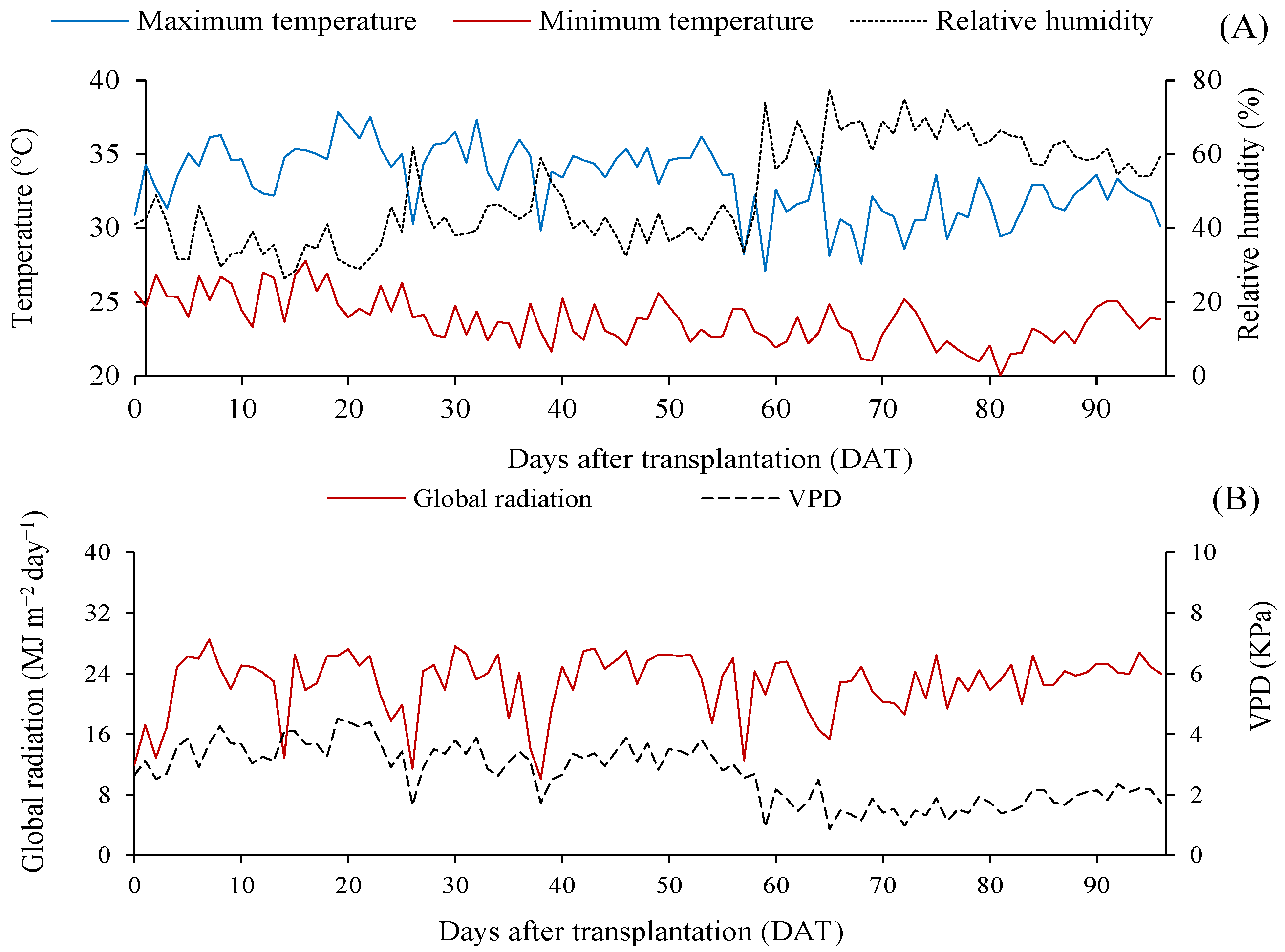
The experiment was conducted under greenhouse conditions at the Center for Sciences and Agri-Food Technology of the Federal University of Campina Grande, located in Pombal, PB, Brazil (6°46′13″ S, 37°48′06″ W, and an altitude of 184 m). The cultivation structure consisted of a commercial greenhouse with a polyethylene cover and lateral insect-proof screens, providing natural ventilation. During the experimental period, the microclimatic variables were monitored daily. The dataset was expanded to include maximum, minimum, and mean air temperature (T), relative humidity (RH), and global solar radiation (Rg). Additionally, the atmospheric vapor pressure deficit (VPD) was calculated daily using the integrated T and RH values to precisely represent the evaporative demand influencing plant transpiration under saline conditions (
Figure 1).
2.2. Treatments and Statistical Design
A completely randomized split-plot design was used, with the plot consisting of five levels of electrical conductivity of the nutrient solution—ECns (2.1, 2.6, 3.1, 3.6, and 4.1 dS m
−1) and the subplots consisting of five concentrations of salicylic acid—SA (0, 0.8, 1.6, 2.4, and 3.2 mM), with three replicates and two plants per plot. The ECns levels were adapted from the study conducted by Guedes et al. [
17] with ‘Laranja’ cherry tomato. Salicylic acid concentrations were established based on a study conducted by Mendonça et al. [
15] with okra cv. Canindé.
2.3. Installation and Conduct of the Experiment
The hydroponic system used was NFT type, made with polyvinyl chloride (PVC) pipe of 100 mm diameter and 6 m length, composed of five subsystems spaced 0.80 m apart, each of which composed of three channels spaced 0.40 m apart. In the channels, the spacing was 0.50 m between plants and 1.0 m between treatments (subsystems), and the cells for planting had a diameter of 54.17 mm. The hydroponic profiles were supported by 0.60-m-high trestles with 4% slope to allow the nutrient solution circulation flow.
At the end of each subsystem, 150 L polyethylene boxes were placed to store and collect the nutrient solution that returned to recirculation in the system. The nutrient solution was injected into the cultivation channels by a 35 W pump at a flow rate of 3 L per min. Nutrient solution circulation was programmed using a timer, with an intermittent flow of 15 min during the day and 30 min every hour during the night.
The nutrient solution used was the one recommended by Hoagland and Arnon (1950) [
18], whose composition and concentrations of nutrients are presented in
Table 1. The solution was prepared in local-supply water (0.3 dS m
−1) and had electrical conductivity of 2.1 dS m
−1 after preparation.
The saline nutrient solutions were prepared so as to obtain an equivalent ratio of 7:2:1 between NaCl, CaCl
2·2H
2O, and MgCl
2·6H
2O, respectively. It is a ratio commonly found between Na, Ca, and Mg in the water sources of the Brazilian northeast region. Thus, adopting this combination allowed for the reproduction of conditions more representative of the regional agricultural environment, considering the interaction between the main cations present in these waters and their effects on the nutritional and physiological balance of the plants. The nutrient solutions were prepared considering the relationship between ECw and salt concentration [
19], according to Equation (1):
where:
Q = Sum of cations (mmolc L−1); and
ECw = Desired electrical conductivity after discounting the ECw of the water from the municipal supply system (dS m−1).
Red cherry tomato seeds from ISLA
® (Porto Alegre, RS, Brazil) were used in this study. This cultivar is characterized by having a cycle of approximately 90 days, productive plants, and round and small fruits (diameter between 30 and 40 mm) with a slightly sweet flavor [
20].
The seedlings were produced in 80 mL polyethylene cups filled with autoclaved fine sand. During the seedling production stage, from germination until transplanting, a nutrient solution containing half of the recommended concentration (50% of the recommendation proposed by [
18]) was used in order to avoid saline and osmotic stress in the developing plants. The emergence of the first true leaf occurred approximately between 10 and 13 days after sowing (DAS). At 28 DAS, when the seedlings presented, on average, two fully expanded true leaves, as well as visual uniformity regarding vigor, coloration, and vegetative development, they were transplanted into the hydroponic channels, and from that point onward, the nutrient solution was supplied at full strength (100%).
The nutrient solution was monitored daily through electrical conductivity (ECns) and pH measurements using a conductivity meter and a digital pH meter. The ECns was maintained according to the established treatments by replenishing the system with local-supply water (ECw of 0.3 dS m−1), while the pH was adjusted between 5.5 and 6.5 by adding 0.1 M KOH or HCl whenever necessary. When a reduction in ECns relative to the initial value was observed, generally after approximately 7 days of use, the nutrient solution was completely replaced in order to maintain adequate nutrient availability for the plants. The plants were trained using a vertical staking system with the aid of nylon strings.
Preparation and Application of Salicylic Acid
Salicylic acid concentrations were prepared by dissolving salicylic acid (A.R.) in 30% ethyl alcohol, used as a solvent to aid in the solubilization of the compound, and 0.05% Haiten®, a nonionic adhesive spreader used to break surface tension and improve absorption by cherry tomato leaves. Foliar application of salicylic acid was chosen due to the compound’s rapid absorption and translocation through plant tissues, allowing for more efficient physiological responses in activating mechanisms of tolerance to saline stress. Spraying was performed in the late afternoon in order to reduce evaporative losses, minimize the risk of phytotoxicity caused by high radiation and temperature, and promote a longer foliar absorption time of the applied solution. The first application of salicylic acid was performed 72 h before the beginning of the application of saline nutrient solutions, according to their respective treatments, aiming to previously induce physiological mechanisms of tolerance to salt stress. Subsequently, four additional applications were performed at 12-day intervals.
The applications were carried out between 5:00 p.m. and 6:00 p.m. with a manual sprayer, in order to fully wet the leaves (abaxial and adaxial sides), applying an average volume of 149 mL per plant. During spraying, a plastic structure was used to prevent the solution from drifting onto neighboring plants. The plants were monitored and phytosanitary practices were carried out whenever necessary.
2.4. Variables Measured
At 66 days after transplanting (DAT), harvest began and the following production components were quantified: number of fruits per plant (NFP—units per plant), average fruit weight (AFW—g per fruit), total production per plant (TPP—g per plant), polar fruit diameter (PFD—mm), and equatorial fruit diameter (EFD—mm). Polar and equatorial diameters were obtained with a digital caliper, while average fruit weight and total production per plant were determined with a 0.01 g precision scale.
Physicochemical analyses were performed on fresh fruits by determining the contents of soluble solids—SS (ºBrix), titratable acidity—TA (%), ascorbic acid—AA (mg per 100 g of pulp), maturity index—MAT (%), firmness—FRM (N), reducing sugars—RS (%), non-reducing sugars—NRS (%), total sugars—TS (%), flavonoids—FLA (mg 100 g−1), and anthocyanins—ANT (mg 100 g−1).
Fully ripe fruits were used, corresponding to the main commercial maturity stage of cherry tomato, which allows a better evaluation of physicochemical characteristics under commercial conditions.
An average of three fruits per replicate was collected from the middle third of the plants. The sampling was destructive, and the harvested fruits were separated and grouped according to their respective treatments and collection dates. In addition, harvests were standardized to occur at maximum intervals of 7 days in order to reduce possible variations associated with fruit maturity stage and the time the fruits remained on the plants.
Total soluble solids were determined using a digital refractometer with automatic temperature compensation (Atago
®, model PAL
−1, Ribeirão Preto—SP, Brazil). For titratable acidity, 3 g of fruit pulp were deposited into a 125 mL Erlenmeyer flask, which received 47 mL of distilled water and was stirred. Subsequently, 3 drops of 5% phenolphthalein indicator were added, and titration was performed with 0.1 M sodium hydroxide solution until pink color was obtained [
21]. The percentage of titratable acidity was calculated using Equation (2):
where:
TA—total titratable acidity (%);
V—volume of NaOH solution (0.1 M) spent in titration;
f—correction factor of the titrant solution;
N—normality of the NaOH solution (0.1 M); and
P—mass of the pulp used.
To determine the ascorbic acid contents, 3 g of the fruit extract sample were weighed in an Erlenmeyer flask, and then 47 mL of the 0.5% oxalic acid solution were added for dilution. Subsequently, titration was performed with the 2-6-dichlorophenolindophenol (DCPIP) solution until obtaining the pink color, and the volume spent was recorded. Ascorbic acid contents were obtained using Equation (3):
where:
AA—ascorbic acid (mg per 100 g of pulp);
V—volume of DCPIP used in titration;
F—DCPIP solution factor; and
M—mass of the sample (g).
Fruit maturity index was determined by the ratio between soluble solids and titratable acidity. Fruit firmness was evaluated using a digital penetrometer (Fruit hardness tester model, Instrutherm PTR-300) equipped with a 2-mm-diameter tip, inserted at a distance of 5 mm, with a test speed of 2 mm s−1 and a force of 5 g. The analyses were performed without removing the fruit skin, in the equatorial region of the fruits, with two measurements taken on opposite sides of each fruit. An average of three fruits per replicate was evaluated, all at a uniform ripening stage.
Contents of reducing sugars were obtained using the dinitrosalicylic acid (DNS) method. For preparation of the extracts, 1 g of the sample was macerated with distilled water using a mortar and pestle, weighed and transferred to a 50-mL volumetric flask, which was completed with distilled water, where they remained for 30 min. Subsequently, the extracts were filtered with filter paper. An aliquot of 500 μL (based on pre-tests) and 500 μL of DNS were added into screw-cap glass tubes.
The tubes were shaken and kept in a water bath at 100 °C for 15 min. After this process, the tubes were cooled, 4 mL of distilled water were added, and the total volume was completed to 5 mL. Reading was taken in a spectrophotometer (SP 2000 UV) using a wavelength of 540 nm. Non-reducing sugars were quantified based on the difference between total sugars and reducing sugars. For total sugars, the extracts were prepared with 1 g of sample (macerated with distilled water), transferred to a 50 mL volumetric flask, and completed with distilled water, remaining at rest for 30 min. Subsequently, the extracts were filtered with filter paper. A total of 20 μL of the extract (based on pre-tests), 980 μL of distilled water, and 2000 μL of Anthrone were added in the screw-cap glass tubes. The tubes were shaken and taken to a water bath at 100 °C, where they remained for 3 min. After cooling, reading was performed in a spectrophotometer (SP 2000 UV) at wavelength of 620 nm [
22].
Contents of flavonoids and anthocyanins were determined using the method of Francis (1982) [
23], by weighing 2 g of sample and placing it in a mortar, followed by the addition of 5 mL of Ethanol:HCl (85:15) and macerated with a pestle for 2 min. Then, the sample was transferred to Falcon
® tubes, and the mortar was washed with more 5 mL of Ethanol:HCl, totaling 10 mL.
The results of the biochemical analyses were expressed based on the fresh weight of the fruits (FW).
2.5. Statistical Analysis
The collected data were subjected to the Shapiro–Wilk normality test and Bartlett’s test to verify the assumptions of normality and homogeneity of variances, respectively. Upon verifying these assumptions, analysis of variance (ANOVA) was performed using the F test at a probability level of
p ≤ 0.05. Then, polynomial regression analysis (linear and quadratic) was performed for the levels of saline nutrient solution and salicylic acid concentrations with the aid of the statistical software SISVAR—ESAL version 5.7 [
24]. In cases of significant interaction between factors, SigmaPlot v.12.5 software was used to construct the response surfaces. Additionally, Pearson’s correlation matrix was performed with the help of the statistical software RStudio (version 4.1.0) [
25] to explore linear relationships among the evaluated traits.
The collected data were automatically standardized via Z-score transformation (mean = 0 and variance = 1) to eliminate scaling bias and then subjected to principal component analysis (PCA), a technique that reduces the complexity of the original data sets by synthesizing the information into a smaller number of dimensions, effectively mitigating data multicollinearity. These dimensions result from linear combinations of the original variables, defined from the eigenvalues (λ ≥ 1.0) obtained from the correlation matrix, following Kaiser’s criterion, and complemented by the cumulative variance where each component represents more than 10% of the total variance. Only variables with a correlation coefficient equal to or greater than 0.5 with the orthogonal axes were considered in the PCA to avoid graphical saturation and noise in the biplot. The multivariate data mining was executed using the FactoMineR package (Factor Analysis and Data Mining with R) in the R platform, version 4.3.2 [
25].
3. Results
There was a significant effect of the interaction between the factors (ECns × SA) for the equatorial fruit diameter (EFD), number of fruits per plant (NFP), total production per plant (TPP) and average fruit weight (AFW) of cherry tomato (
Table 2). Polar fruit diameter was not significantly affected (
p > 0.05) by the sources of variation tested.
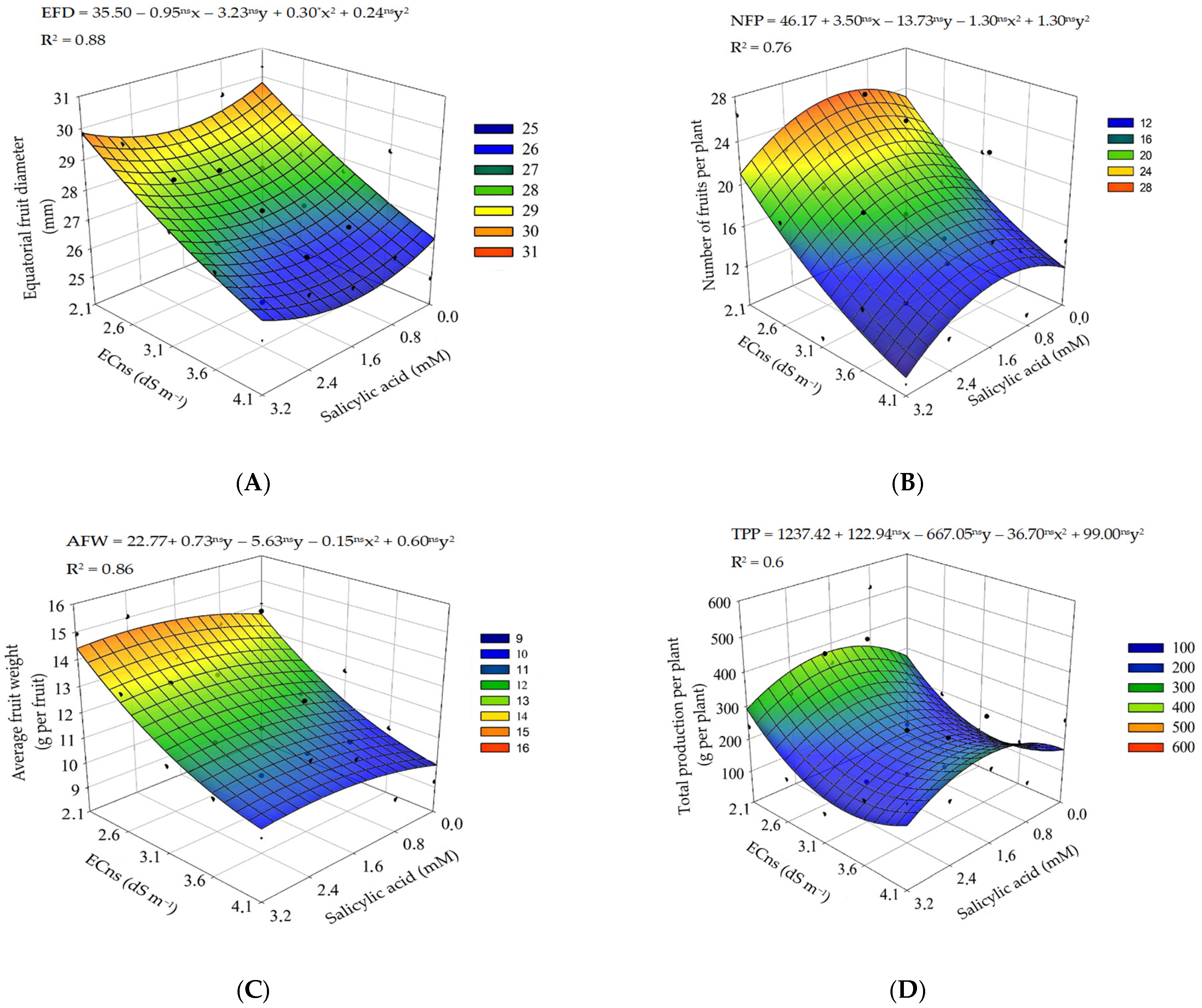
For equatorial fruit diameter (
Figure 2A), the increase in the electrical conductivity of the nutrient solution (ECns) caused a linear reduction in the values. Plants cultivated under ECns of 2.1 dS m
−1 obtained the highest estimated value (29.81 mm) when subjected to an SA concentration of 3.2 mM, highlighting an upward effect of salicylic acid under the lower salinity level. Conversely, the lowest value (25.54 mm) was observed under ECns of 4.1 dS m
−1 and an SA concentration of 1.6 mM, corresponding to a reduction of 14.22% compared to plants of the control treatment (2.1 dS m
−1 and 0 mM of SA).
For the number of fruits per plant (
Figure 2B), increments in ECns levels caused a decrease in the number of fruits. The maximum estimated value of 25.42 fruits per plant was obtained in plants cultivated with ECns of 2.1 dS m
−1 and under the application of SA at a concentration of 1.3 mM, indicating a promoting action of SA at low conductivities. In contrast, the minimum value of 9.61 fruits per plant was reached under ECns of 4.1 dS m
−1 and an SA concentration of 3.2 mM, demonstrating that the combination of high salinity with the highest SA dose accentuated the reduction of this variable, which corresponds to a reduction of 58.30% (14.82 fruits per plant) compared to plants grown under ECns of 2.1 dS m
−1 and without application of SA (control).
The average weight of tomato fruits was reduced by the isolated increase in the salinity of the nutrient solution. Under an ECns of 2.1 dS m
−1 and foliar application of 2.4 mM of salicylic acid, the variable exhibited a maximum estimated value of 14.48 g per fruit (
Figure 2C), confirming the positive influence of SA under a lower stress level. Conversely, the lowest estimated value of 9.77 g per fruit was observed under ECns of 4.1 dS m
−1 and without SA application (0 mM), which corresponds to a reduction of 28.10% compared to plants grown under an ECns of 2.1 dS m
−1 and without salicylic acid (control), indicating that the absence of the phytonutrient accentuates the depreciative effect of salinity.
For the total production per tomato plant (
Figure 2D), the increase in ECns acted as the main factor reducing yield. The foliar application of salicylic acid at a concentration of 1.7 mM resulted in the highest estimated value of 376.14 g per plant under an ECns of 2.1 dS m
−1, promoting an increase of 27.36% in relation to the plants in the control treatment (2.1 dS m
−1 and without SA application), characterizing the attenuating effect of SA in baseline salinity ranges. The lowest value was obtained in plants grown without salicylic acid (0 mM) under a saline nutrient solution of 3.6 dS m
−1, reinforcing the yield loss in the absence of foliar application.
There was a significant effect of the interaction between the factors (ECns × SA) for the soluble solids (SS), titratable acidity (TA), ascorbic acid (AA) and maturity index (MAT) of cherry tomato fruits, while fruit firmness (FRM) was not affected by the sources of variation tested (
Table 3).
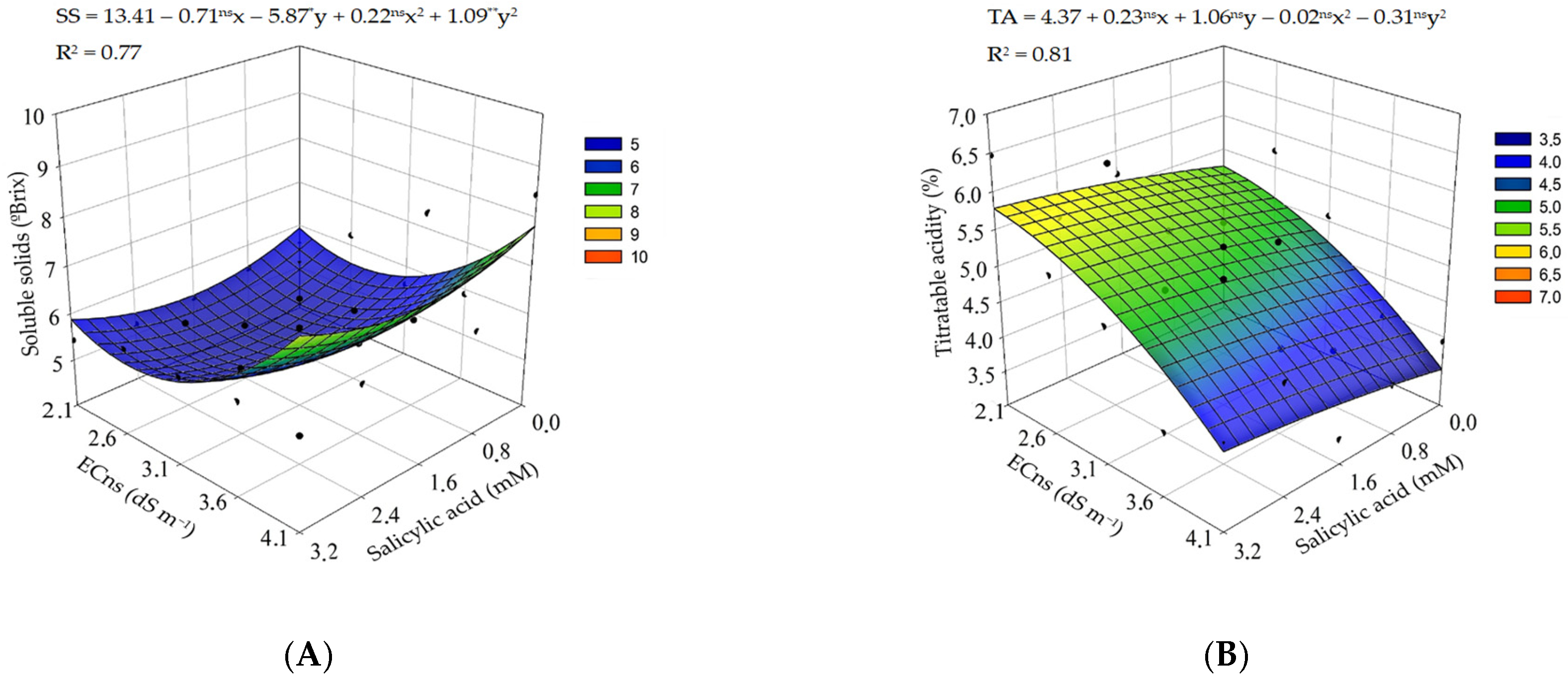
Regarding the soluble solids of cherry tomato fruits (
Figure 3A), the increment in the electrical conductivity of the nutrient solution (ECns) promoted an overall increase in the values. The maximum estimated value of 7.66 ºBrix was obtained under the highest nutrient solution salinity (4.1 dS m
−1) and without application of SA (0 mM), resulting in an increase of 30.15% compared to plants grown under the control treatment (2.1 dS m
−1 and 0 mM of SA). On the other hand, the exogenous application of SA generated a quadratic response, shifting the minimum estimated value to 4.94 ºBrix, which was found in plants under an estimated ECns of 2.6 dS m
−1 and an SA concentration of 1.6 mM, marking the lowest threshold for this trait under combined intermediate factors.
For titratable acidity (
Figure 3B), the independent increase in ECns levels induced a downward linear trend across the treatments, whereas the increase in salicylic acid concentrations conversely promoted an upward shift in the values. The highest estimated value of 5.76% was reached in plants grown under the lowest nutrient solution salinity (2.1 dS m
−1) combined with the highest application of SA at a concentration of 3.2 mM, confirming the strong positive effect of the phytohormone under low salinity. Conversely, the minimum estimated value of 3.50% was verified in plants that received the highest ECns level (4.1 dS m
−1) and no application of SA (0 mM), corresponding to a reduction of 32.97% compared to the control plants (2.1 dS m
−1 and 0 mM of SA), demonstrating that the absence of SA maximizes the salinity-induced decrease in acidity.
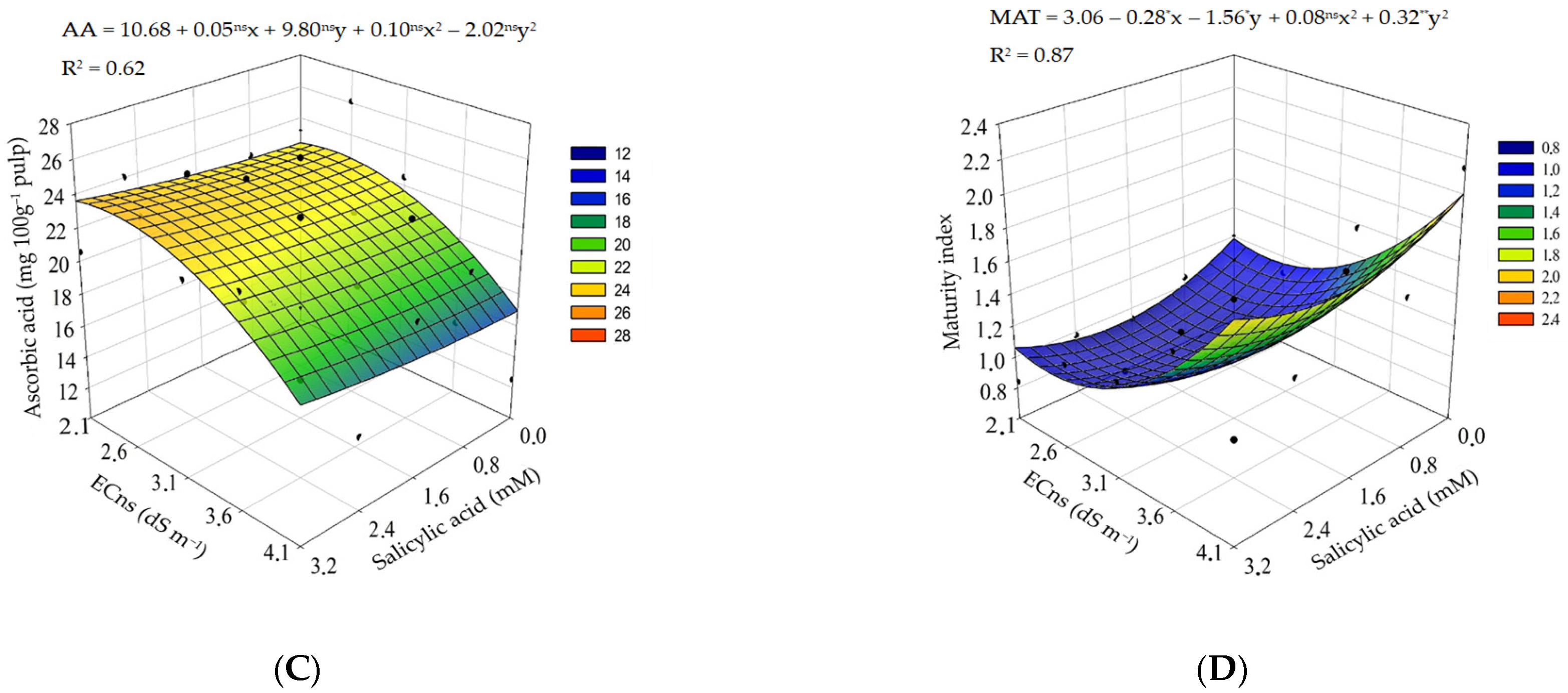
Regarding the ascorbic acid contents (
Figure 3C), the trait exhibited variations influenced by both factors, where increasing ECns levels caused a reduction at the highest electrical conductivity, while SA consistently elevated the values. The maximum estimated value (23.68 mg 100 g
−1 of pulp) was found in plants that received an intermediate ECns of 2.6 dS m
−1 and the highest application of 3.2 mM of SA, reflecting the optimization of this parameter through hormone supplementation. In contrast, the minimum value (16.90 mg 100
−1 of pulp) was observed in plants subjected to the highest ECns of 4.1 dS m
−1 and without SA application (0 mM), which marks the unmitigated limit of severe salt exposure.
For the maturity index of tomato fruits (
Figure 3D), the progression of solution salinity generated an upward effect on the values, while the application of salicylic acid modified this pattern through a quadratic surface behavior. The highest estimated value of 2.04 was reached in plants under the highest ECns of 4.1 dS m
−1 and without application of SA (0 mM), corresponding to an increase of 70.95% compared to those cultivated with the baseline nutrient solution salinity of 2.1 dS m
−1 and without application of SA (control), revealing a sharp acceleration of the index in the absence of the phytohormone. On the other hand, the minimum estimated value (0.924) was found under an intermediate ECns of 2.6 dS m
−1 and an SA concentration of 1.9 mM, demonstrating a depressive response under intermediate combinations of both factors.
There was a significant effect of the interaction between the factors (ECns × SA) for the contents of reducing sugars (RS) and flavonoids (FLA) of fruits of cherry tomato plants grown with saline nutrient solution (ECns) and application of SA (
Table 4). The salinity levels of the nutrient solution did not significantly affect the total sugars (TS), non-reducing sugars (NRS) and anthocyanins (ANT) of the cherry tomato fruits, whereas the SA concentrations did not significantly influence TS and NRS.
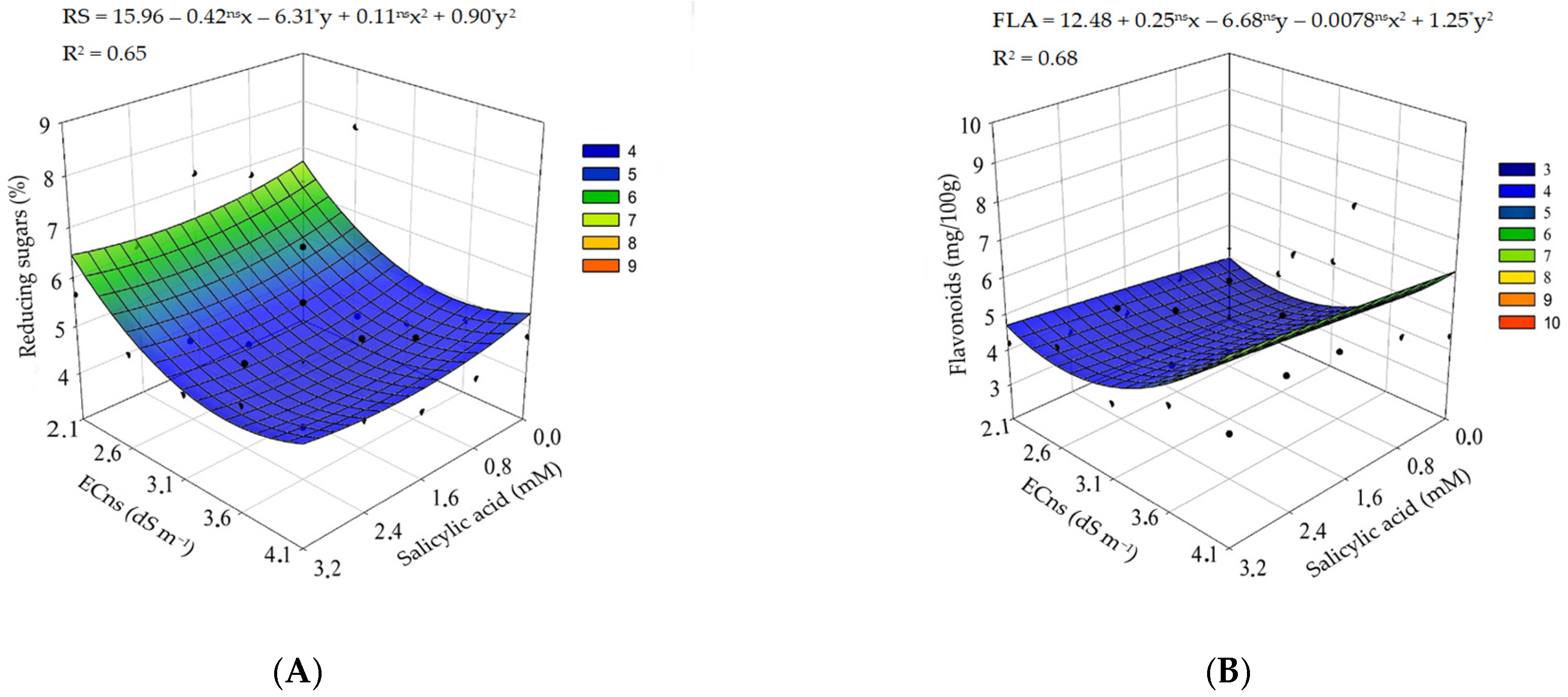
For reducing sugars (
Figure 4A), the elevation of ECns decreased the values, while SA induced a quadratic surface response. It was observed that plants grown under ECns of 2.1 dS m
−1 and without application of SA (control) obtained the maximum estimated value of 6.67%. On the other hand, the minimum value of 3.56% was obtained under an ECns of 3.6 dS m
−1 and application of SA at a concentration of 3.2 mM, reflecting the depreciative effect of the joint action of the higher salinity level and the maximum hormone dose, which corresponds to a reduction of 46.64% compared to the highest content of reducing sugars.
Regarding the flavonoid contents (
Figure 4B), the increment in ECns exerted an upward effect on the variable, which was linearly reinforced by increasing SA concentrations. The maximum estimated value (6.82 mg 100 g
−1) was obtained in plants grown under the highest nutrient solution salinity of 4.1 dS m
−1 and application of SA at a concentration of 3.2 mM, evidencing a concomitant stimulus of both factors on the accumulation of the compound. On the other hand, the minimum estimated value (3.56 mg 100 g
−1) was observed in the fruits of plants subjected to ECns of 2.6 dS m
−1 and without application of SA (0 mM).
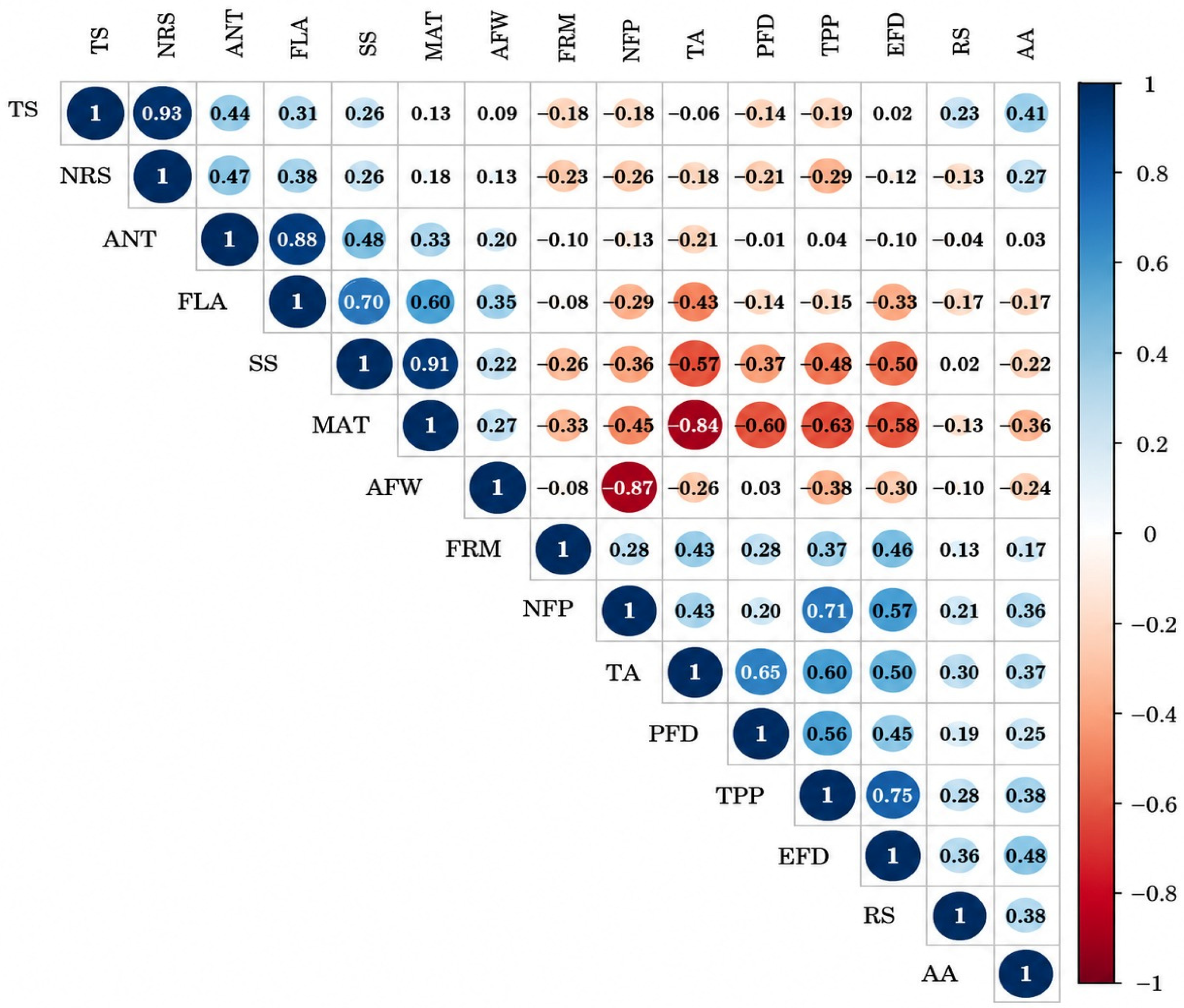
Pearson’s correlation matrix graphically illustrates the linear relationships and covariations among the evaluated production and fruit quality parameters (
Figure 5). Strong positive linear correlations (r ≥ 0.70) were established between carbohydrate fractions and bioactive compounds, specifically between total sugars and non-reducing sugars (r = 0.93), and flavonoids and anthocyanins (r = 0.88). Fruit internal quality attributes also exhibited high positive covariation, as observed between flavonoids and soluble solids (r = 0.70), and soluble solids and the maturity index (r = 0.91). Regarding macro-yield components, the number of fruits per plant displayed a strong positive correlation with total production per plant (r = 0.71), which in turn aligned with the equatorial fruit diameter (r = 0.75). Conversely, pronounced negative correlations were detected between morphometric and physicochemical characteristics, with average fruit weight and the number of fruits per plant showed a strong negative correlation (r = −0.87), while the maturity index and titratable acidity exhibited a matching inverse relationship (r = −0.84). It is critical to note, however, that these linear correlation vectors establish mutual mathematical associations and phenotypic covariations rather than direct mechanistic causality.
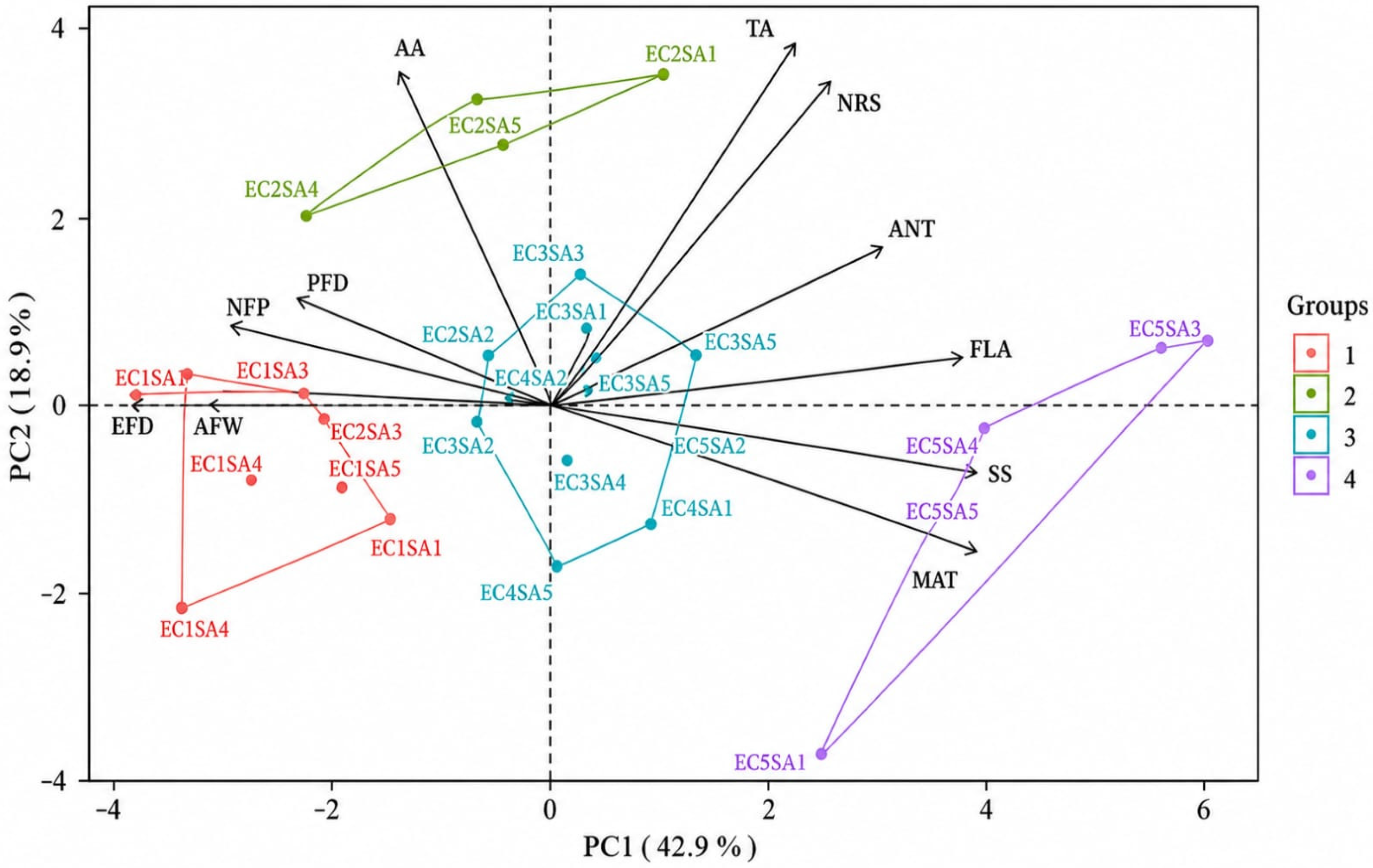
The Principal Component Analysis (PCA) synthesized the data variability into the first two dimensions, explaining 61.8% of the total variance, with principal component 1 (PC1) accounting for 42.9% and principal component 2 (PC2) accounting for 18.9% (
Figure 6). The multivariate projection clustered the treatment combinations into four distinct groups based on their vector loadings and spatial distribution, eliminating individual coordinate redundancies.
Group 1, positioned in the negative quadrants of PC1, clustered baseline and low-salinity treatments (EC1 and EC2 levels) and was directly characterized by yield components, specifically equatorial fruit diameter (EFD), average fruit weight (AFW), number of fruits per plant (NFP), and polar fruit diameter (PFD). Group 2, clustered in the upper positive quadrant of PC2, comprised low-salinity treatments under specific salicylic acid concentrations (EC2SA1, EC2SA4, and EC2SA5), showing a strong alignment with metabolic attributes, namely ascorbic acid (AA), titratable acidity (TA), and non-reducing sugars (NRS).
Group 3 occupied the central region of the biplot, gathering intermediate salinity levels (2.6, 3.1, and 4.1 dS m−1) across different hormone configurations, which represents a transition zone with intermediate values for both yield and quality parameters. Conversely, Group 4 shifted to the positive quadrants of PC1, grouping the highest salinity treatments (EC5 levels). This cluster established a direct inverse relationship to the production components of Group 1, aligning strictly with fruit quality parameters, including soluble solids (SS), flavonoids (FLA), anthocyanins (ANT), and the maturity index (MAT).
Biologically, this spatial separation highlights a physiological trade-off where the plant shifts resources from biomass accumulation and yield parameters (Group 1) toward stress-induced secondary metabolism and osmotic defense pathways (Group 4) under salt exposure. Practically, these clusters demonstrate that intermediate configurations (Group 3) or targeted elicitation thresholds (Group 2) can be utilized as a management blueprint to achieve an operational equilibrium between yield stability and fruit nutritional quality.
4. Discussion
The reduction in yield components of cherry tomato under nutrient solution salinity is a direct consequence of the osmotic and ionic components of salt stress. The high electrical conductivity of the solution restricts water uptake by the root system due to the reduction in osmotic potential, inducing a water deficit state even in hydroponic systems that exhibit a near-zero matric potential [
26]. This osmotic limitation, combined with the energetic cost of metabolic adjustments and the toxic accumulation of Na
+ and Cl
−, restricts the translocation of photoassimilates from sources to sinks [
27,
28]. Consequently, this correlates with the reduction in total fruit mass and mean fruit weight under high salinity conditions. Similar effects of salinity on cherry tomato have been observed by Nóbrega et al. [
3] and Guedes et al. [
17].
These alterations directly impacted the soluble solids content of the fruit, which was expected, given that the reduction of yield parameters by solution salinity, as well as the decrease in water flux due to the osmotic effect, concentrates the translocation of photoassimilates to the sinks [
29]. Crucially, this response does not solely represent an active metabolic enhancement of fruit quality, but partially reflects a passive solute concentration effect associated with restricted fruit volumetric growth and reduced water accumulation within the fruit tissue under salt stress [
30].
However, although not directly measured in this study, the literature suggests that the metabolic cost of maintaining ion efflux pumps (Na
+/H
+) in the roots and salt compartmentalization requires continuous ATP hydrolysis, increasing the respiratory rate. This process consumes the organic acids present in the fruit (such as citric and malic acids) that compose the titratable acidity, oxidizing them as primary substrates in the mitochondria to generate energy [
30,
31]. This behavior leads to an abrupt increase in the biochemical maturation index within a shorter interval, configuring an anticipation of senescence and ripening relative to the standard phenological cycle [
32].
The exogenous application of salicylic acid (SA) acted as an immunomodulator capable of mitigating these deleterious effects on yield parameters up to specific limits. This corroborates findings from previous studies in hydroponic systems with Japanese cucumber [
14] and okra [
15]. This behavior is associated with the role of SA in plant secondary metabolism, as the literature demonstrates its proven effect on osmotic adjustment, water status maintenance, and antioxidant defense [
33,
34], besides contributing to hormonal and genic adjustments under salt stress conditions [
35]. Thus, the increase in yield can be associated with gains in fruit set promoted by SA application, since the uncompensated production of reactive oxygen species (ROS) causes lipid peroxidation in reproductive structures, inducing floral abortion and the abscission of newly formed fruits [
36].
This induced metabolic regulation improves the energy balance, SA reduces the need to oxidize organic acids during maintenance respiration, increasing their concentration in the fruit and, consequently, resulting in reductions in the maturity index, even while maintaining soluble solids accumulation in the fruit due to increased solution salinity. This behavior becomes desirable for fruits destined for the processing industry, given the reduction in the use of acidifiers, which improves nutritional and organoleptic quality, bringing benefits to juice production and fresh consumption of tomato fruits [
37].
It is worth noting that the experimental data reinforce the idea that reducing sugars (glucose and fructose) decrease due to solution salinity and SA application because they are immediately recruited for defense metabolism, either for use in osmotic adjustment or in the shikimic acid pathway. This pathway requires phosphoenolpyruvate and erythrose-4-phosphate, which are direct derivatives of reducing sugar breakdown in glycolysis and the pentose-phosphate pathway [
38], which becomes more probable given the increase in fruit flavonoid content under these conditions. These compounds exhibit higher efficiency in neutralizing free radicals due to the hydroxyl group on their aromatic rings and by acting in photoprotection and energy dissipation, especially anthocyanin, preventing damage to the cellular machinery [
39,
40].
It is worth noting that among the evaluated quality attributes, a clear distinction was observed between responsive and non-responsive traits. The reducing sugars (glucose and fructose) and flavonoids significantly responded to the treatments, which can be hypothetically linked to defensive allocation. Conversely, total sugars, non-reducing sugars, anthocyanins, and fruit firmness remained statistically unaffected, indicating that the elicitation effect of SA is highly selective.
For the responsive traits, the literature profiles suggest that reducing sugars decrease due to solution salinity and SA application because they are immediately recruited for defense metabolism, either for use in osmotic adjustment or in the shikimic acid pathway. This pathway requires phosphoenolpyruvate and erythrose-4-phosphate, which are direct derivatives of reducing sugar breakdown in glycolysis and the pentose-phosphate pathway [
38], a mechanism that aligns with the increase in fruit flavonoid content under these conditions. Although an overall antioxidant enhancement cannot be generalized due to the lack of response in anthocyanins, the accumulated flavonoids are documented to exhibit higher efficiency in neutralizing free radicals due to the hydroxyl group on their aromatic rings, preventing damage to the cellular machinery [
39,
40].
Furthermore, caution must be exercised when interpreting the increases in flavonoids and ascorbic acid as absolute quality improvements, since stress-induced antioxidant accumulation represents a physiological stress index that does not necessarily translate into superior commercial grade or higher consumer acceptance. The absence of effects of SA on the remaining non-responsive parameters further supports the hypothesis that this phytohormone acts via targeted pathways in maintaining cellular homeostasis without universally altering secondary metabolism [
41].
From a commercial and practical standpoint, the utilization of brackish water in hydroponic systems involves an economic trade-off that requires planned management. The increase in qualitative parameters, such as soluble solids and titratable acidity, improves organoleptic quality and market value per cherry tomato unit. However, this superior quality does not completely compensate for the reduction in total yield under high salinity levels, rendering the system economically unviable without the integration of management strategies. In this context, foliar application of optimal SA concentrations under moderate salinity presents potential economic viability for commercial hydroponics. This strategy stabilizes yield at acceptable levels while exploiting the natural increase in fruit quality induced by salinity, offering an integrated approach for brackish water utilization in semi-arid environments.
Crucially, the sharp decline in yield components under severe salinity (ECns 4.1 dS−1) limits the commercial acceptability of unmitigated salt stress, as premium pricing for high-quality fruits rarely offsets a major reduction in marketable volume. Regarding the economic viability of the management strategy, although repeated foliar applications of SA add material and labor costs, the low required concentrations (1.3 to 3.2 mM) mean that input costs remain minimal relative to the potential financial returns. In commercial greenhouse hydroponics, the adoption of this elicitation protocol under low-to-moderate salinity thresholds is economically viable because SA stabilizes yield parameters while capitalizing on the salinity-induced enhancements in fruit flavor and antioxidants, thereby satisfying both production quotas and market demands for premium fruit categories.




 ,
,