Article

Multivariate Analysis of the Phytochemical Composition and Evaluation of the Antimicrobial and Antioxidant Activity of Hexane Extracts from Bixa orellana L. Leaves of Different Cultivars from Campeche, Mexico


by
Joseph Aaron Espadas-Uc
1,
Rosa Yazmín Us-Camas
1,*,
Nubia Noemi Cob-Calan
1,
Julio Enrique Oney-Montalvo
1,
Emanuel Hernández-Núñez
1,
Fabiola Escalante-Erosa
2,
Lorenzo Felipe Sánchez-Teyer
2,
Luis Alfonso Can-Herrera
1,
Oscar Fernando Pacheco-Salazar
1,
Henry Jesús Loeza-Concha
3,
Dany Alejandro Dzib-Cauich
4,
Rodrigo Portillo-Salgado
1,
Luis Humberto May-Hernández
1,
Fátima Patricia Duarte-Ake
5 and
Laura Angélica Espinosa-Barrera
6
1
Departamento de Posgrado e Investigación, Instituto Tecnológico Superior de Calkiní, Tecnológico Nacional de México (TecNM) Campus Calkiní, Avenida Ah-Canul, Sin Número, San Felipe, Calkiní 24900, Campeche, Mexico
2
Unidad de Biotecnología, Centro de Investigación Científica de Yucatán A.C, Calle 43 Núm. 130 Col., Chuburná de Hidalgo, Mérida 97205, Yucatán, Mexico
3
Colegio de Postgraduados (COLPOS), Campus Campeche, Carretera Haltunchén-Edzná Km. 17.5, Sihochac, Champotón 24450, Campeche, Mexico
4
Programa de Ingeniera en Industrias Alimentarias, Instituto Tecnológico Superior de Escárcega, Tecnológico Nacional de México (TecNM) Campus Escárcega, 85 SN Unidad Esfuerzo y Trabajo 1, Escárcega 24350, Campeche, Mexico
5
Instituto Tecnológico de Mérida, Tecnológico Nacional de México, Campus Mérida, Av. Tecnológico Km. 4.5, Mérida 97118, Yucatán, Mexico
6
Universidad Nacional Rosario Castellanos, San Juan de Aragón II Sección, Gustavo A. Madero, Ciudad de México 07969, Mexico
*
Author to whom correspondence should be addressed.
Horticulturae 2026, 12(6), 709; https://doi.org/10.3390/horticulturae12060709

Submission received: 28 April 2026 / Revised: 29 May 2026 / Accepted: 2 June 2026 / Published: 8 June 2026

Abstract

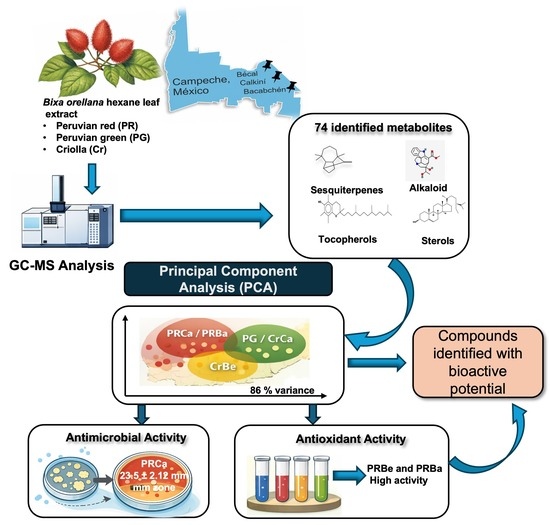
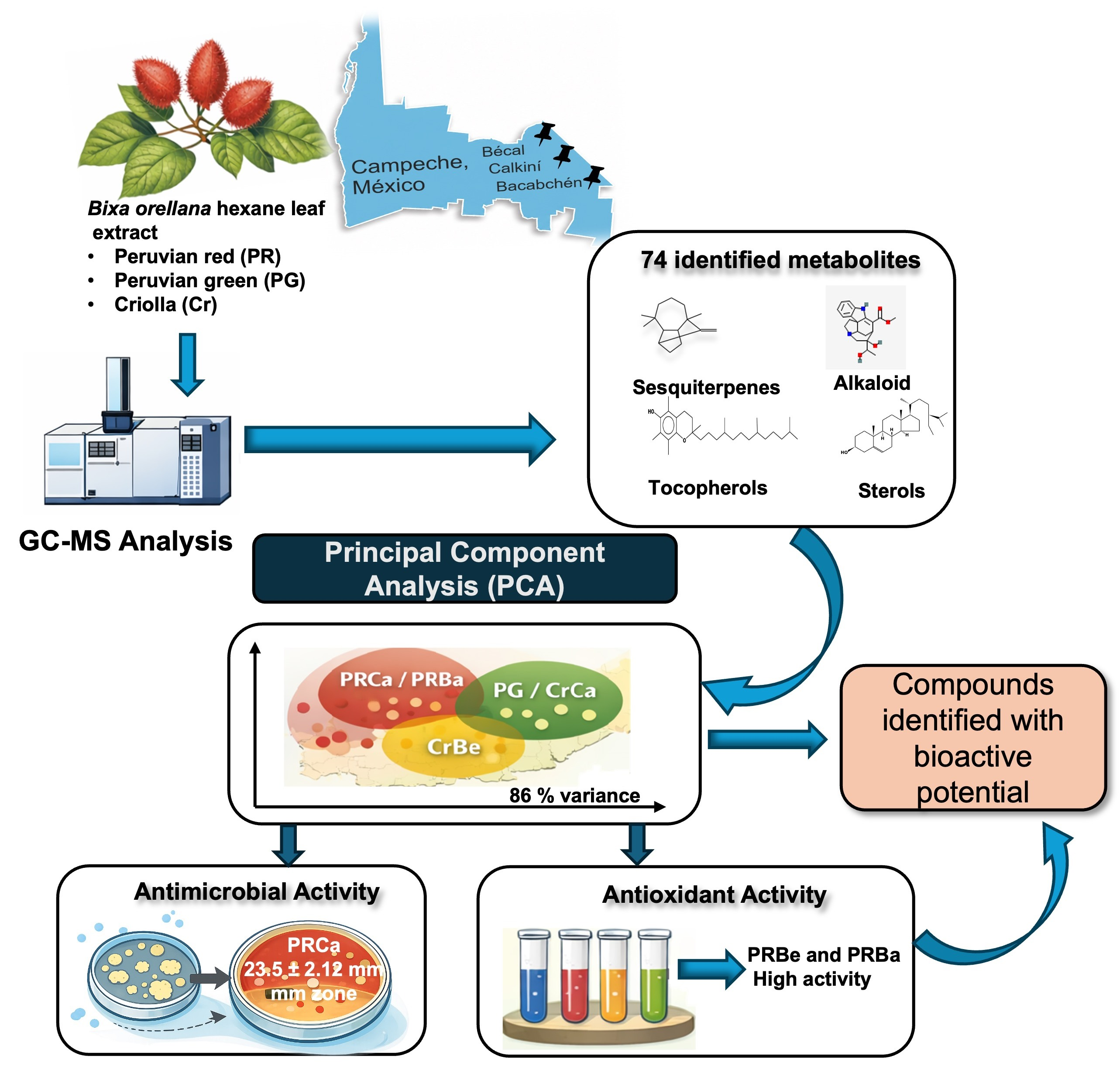
This study aimed to analyze the phytochemical composition of hexane extracts from Bixa orellana L. leaves using multivariate analysis and to evaluate their antimicrobial and antioxidant activities. A total of 74 compounds were identified by Gas chromatography–mass spectrometry (GC-MS) from three cultivars, Peruvian red (PR), Peruvian green (PG), and Criolla (Cr), collected in distinct regions of Campeche, Mexico: Bécal (Be), Calkiní (Ca), and Bacabchén (Ba). The chemical classes identified included sesquiterpenes, sesquiterpenoids, alkanes, quinones, tocopherols, and sterols. Principal component analysis (PCA) indicated a clear separation of PRCa, PRBa, and CrBe from the other samples, with 86% of the total variation explained by 22 components. In PRCa (+)-ledol, (E)-β-farnesene, germacrene D, cis-β-santalene, and α-bisabolol were found abundantly. PRBa showed an abundance of β-elemene and moderate levels of caryophyllene oxide, guaiol, and γ-sitosterol. CrBe contained abundant (−)-spathulenol and phytol. The antimicrobial activity against Staphylococcus aureus showed that PRCa extracts exhibited the largest inhibition zones (23.5 ± 2.12 mm), statistically influenced by geographic origin (p = 0.0005). Conversely, PRBe and PRBa showed higher total polyphenol content and antioxidant activity, with the geographic origin × variety interaction significantly influencing these traits (p < 0.001). The findings highlight the importance of B. Orellana, particularly the Peruvian red variety, as a valuable source of bioactive secondary metabolites and underscore the influence of cultivar phenotype and geographic origin on phytochemical variability and its antimicrobial and antioxidant properties.

Graphical Abstract

1. Introduction

Bixa orellana L., commonly known as achiote or annatto, is a perennial woody species native to the Amazon basin that grows in tropical regions worldwide. It is a shrub or small tree that typically reaches 3.5 to 8.0 m in height. It features a smooth stem with ash-gray branches and alternate, dark-green, ovate leaves with entire to slightly serrated margins, measuring approximately 10–25 cm in length and 10–20 cm in width [1]. This species is highly valued for its production of bioactive secondary metabolites, including carotenoids (primarily bixin and norbixin), terpenoids, flavonoids, and phenolic compounds, which have demonstrated antioxidant, antimicrobial, and anti-inflammatory activities [2,3].
The rich phytochemical profile of B. orellana makes it a promising candidate for research aimed at discovering novel therapeutic agents. This plant has been attributed to various medicinal properties, largely due to its production of bioactive compounds, particularly in the seeds and leaves [2,4,5]. Moreover, phytochemical investigations of annatto seeds and leaves have revealed the presence of terpenoids, steroids, saponins, carbohydrates, tannins, alkaloids, and flavonoids [6]. In particular, the leaves constitute an important reservoir of diverse bioactive metabolites, including carotenoids, apocarotenoids, tannins, flavonoids, phenolic compounds, terpenoids, alkaloids, saponins, and anthraquinones [3], which collectively confer antioxidant, antimicrobial, and anti-inflammatory activities [2,4,5].
One of the most pressing challenges in public health is the growing resistance of bacteria to conventional antibiotics, prompting efforts to identify alternative natural sources of antimicrobial activity [7]. Previous studies have reported the antimicrobial activity of ethanolic leaf extracts from B. orellana against Staphylococcus aureus and Escherichia coli. Inhibition zones of up to 20 mm against S. aureus, along with a minimum inhibitory concentration (MIC) of 250 µg/mL, have been reported, supporting the potential of this species as a promising source of antimicrobial agents [8]. S. aureus is a pathogen of major medical relevance because it is responsible for numerous nosocomial and community-acquired infections [9].
Additionally, annatto seeds and leaves have been reported to be rich sources of apocarotenoids, such as bixin, and polyphenolic compounds, which together contribute to their high antioxidant capacity [5,6]. These compounds may reduce the risk of various chronic diseases, such as cardiovascular disorders, cancer, atherosclerosis, neurodegenerative diseases (including Parkinson’s and Alzheimer’s disease), and age-related conditions, due to their ability to mitigate oxidative stress [3,5,6].
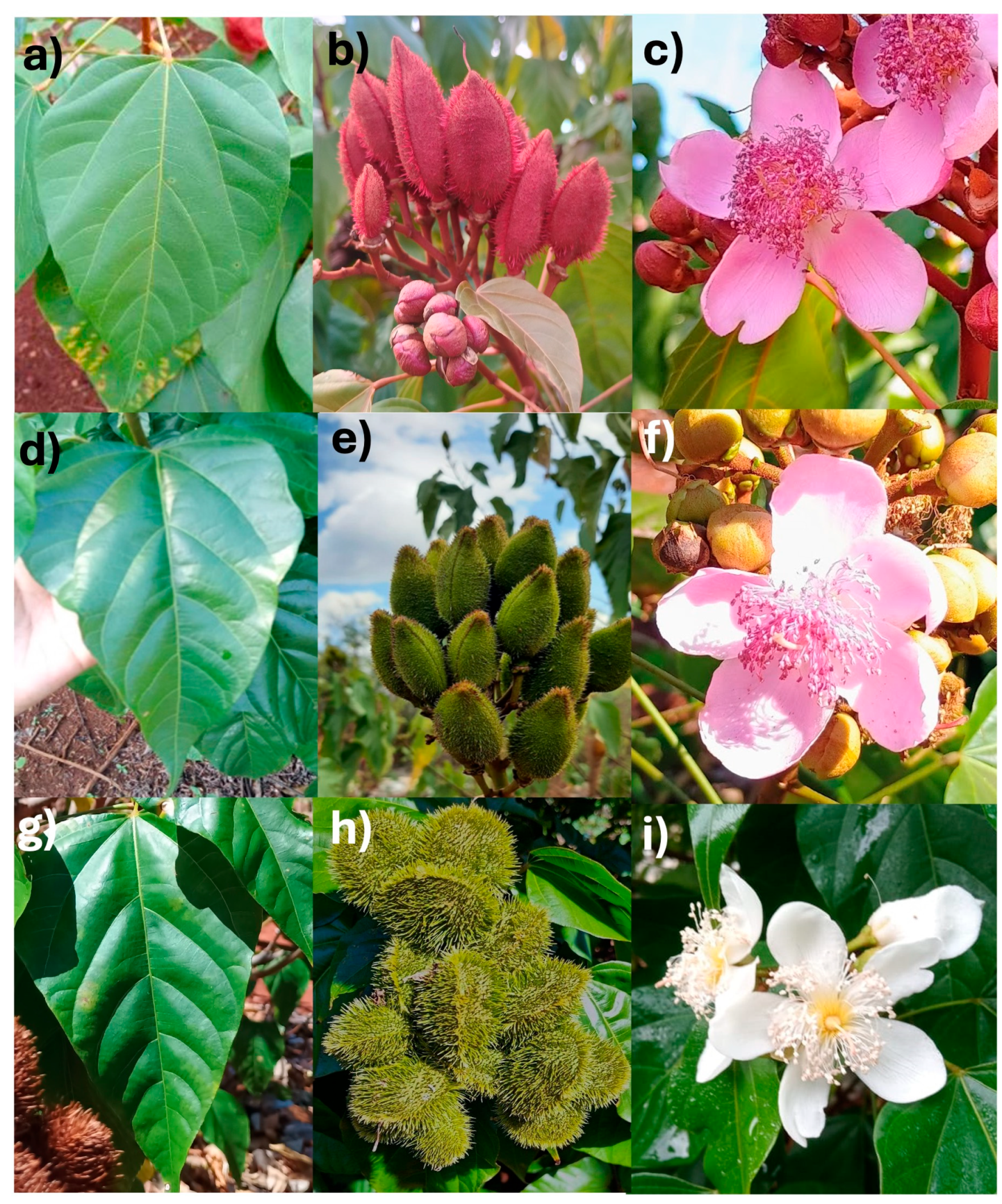
Recently, annatto cultivation in Mexico has increased, promoted by the “Sembrando Vida” social program, which aims to support environmental restoration and the strengthening of the social economy by cultivating commercially important plant species. In the state of Campeche, annatto is cultivated in 9 of the 13 municipalities. In a previous study, annatto varieties were morphologically characterized using qualitative and quantitative descriptors. This characterization enabled the identification of the two predominant varieties: Peruvian red (PR) and Criolla (Cr). The Peruvian red variety is characterized by lilac-colored flowers; elongated, elliptical red fruits with red spines; and orange-red stems and leaf veins. In contrast, the Criolla variety is characterized by white flowers, round green capsules with green spines, green stems, and leaf veins [10]. A third variety of lower abundance, known as Peruvian green (PG), is characterized by lightly lilac flowers, elongated-to-globular green fruits with green spines, green stems, and leaf veins (Figure 1).
Studies establishing the relationship between the cultivar’s geographic origin and the resulting biological activity of B. orellana remain scarce [11]. Raddatz-Mota et al. [12] examined how geographic location affects metabolite content. They revealed that B. orellana from different accessions shows chemical variation, even within the same region. Mexican accessions from the State of Yucatan: Akil (43), Tekax (45), Oxkutzcab (48, 47), and Merida (50), showed differences in bixin, phenols, tocotrienols, and antioxidant capacity. For instance, accessions 48, 45, 43, and 47 had higher bixin content, while accession 50 showed higher content of total phenols, tocotrienols, and antioxidant capacity. It has been reported that irradiance and light significantly affect bixin production in Bixa orellana L. by modulating biosynthetic pathways across different cultivars [11]. Similar trends have been observed in wild chili pepper, where microclimatic conditions and cultivar type significantly influence (p ≤ 0.05) capsaicinoid and polyphenol contents, which are associated with antioxidant capacity [13]. Additionally, agroclimatic conditions influence the phytochemical profile of Bixa orellana phenotypes and their anticancer and antimicrobial activities [3]. Principal component analysis (PCA) has been shown to be a key chemometric tool for studying B. orellana, as it reduces a complex matrix of chemical and biological data to a few explanatory factors. This is especially useful for annatto studies because a single accession can differ in its content of bixin, norbixin, phenols, flavonoids, tannins, terpenoids, tocotrienols, antioxidant activity, and antimicrobial activity [12]. PCA allows identification of which variables best explain differences among varieties, accessions, phenotypes, plant organs, or extraction methods [3]. It not only identifies which accessions have higher concentrations of a specific metabolite but also allows the recognition of association patterns between metabolites and biological activities. This facilitates the selection of plant materials for agro-industrial, pharmacological, nutraceutical, or genetic improvement purposes. Varga et al. [14] highlighted that integrated morphological and chemical characterization is essential for the effective management of highly diverse germplasm collections, thereby facilitating the development of future plant breeding programs.
In this context, the morphological diversity of B. orellana is closely associated with its phytochemical diversity, making it a valuable source of natural bioactive compounds. Therefore, the aim of this study was to explore the chemical variability of hexane leaf extracts from three B. orellana varieties, Peruvian red (PR), Peruvian green (PG), and Criolla (Cr), collected from Calkiní (Ca), Bécal (Be), and Bacabchén (Ba). Multivariate statistical analysis was conducted on the data, including antioxidant and antimicrobial activities, to evaluate patterns in their bioactive potential. The results expand knowledge of how variety and geographic location determine differences in metabolite composition and influence antimicrobial and antioxidant effects, characteristics that make annatto a species with invaluable bioactive potential.

2. Materials and Methods

2.1. Plant Material and Sample Collection

Plant material was collected in April and May in both 2023 and 2024. B. orellana leaves were harvested from three plantations in the municipalities of Bécal (20°26′24.9″ N, 90°00′16.8″ W), Calkiní (20°22′12.1″ N, 90°04′34.0″ W), and Bacabchén (20°13′28.4″ N, 90°01′06.5″ W) in the State of Campeche, Mexico. At each plantation, sampling was conducted using mature, healthy leaves from three B. orellana varieties: Peruvian red, Peruvian green, and Criolla (Figure 1). The selected varieties exhibited distinct, readily observable morphological traits, including flower color, leaf shape, leaf vein color, stem color, fruit shape, fruit color, and level of spinosity (Figure 1). The leaves of three plants of each variety from each of the three locations, in optimal condition, were collected using clean pruning shears and placed in airtight bags to preserve their integrity until transport to the laboratory. Subsequently, fresh leaf samples were weighed and washed with plenty of water to remove any extraneous material. They were then air-dried for 48 h, followed by oven-drying at 45 °C for 3 days to ensure complete moisture removal. After drying, the leaves of three plants of each variety from each location were mixed and ground into a fine powder using a mechanical grinder and then sieved through a No. 40 (425 μm) mesh to ensure uniform particle size. The resulting powder was stored in sealed, labeled containers in a dry, dark environment until further analysis.

2.2. Compound Extraction

The extraction was performed by maceration of 100 g of B. orellana leaf powder, yielding nine distinct sample types (three varieties from each of three locations). The maceration method was carried out with 600 mL of hexane as the solvent, with continuous stirring for 48 h at room temperature. The resulting solvent extract was concentrated under reduced pressure using a Heidolph Laborota 4000 rotary evaporator (Heidolph Instruments GmbH & Co. KG. Schwabach, Germany.) at 40 °C until the solvent was completely removed. The resulting dry extracts were weighed to determine the extraction yield and then stored at low temperature in airtight containers for further phytochemical, antimicrobial, and antioxidant analyses.

2.3. Gas Chromatography–Mass Spectrometry (GC-MS) Analysis

Each of the nine crude extracts was analyzed using a gas chromatography–mass spectrometry system (GC-MS, Agilent Technologies 7890A, Inc., Santa Clara, CA, USA) coupled to a 5975C mass-selective detector. Compound separation was achieved using a programmed oven temperature gradient, starting at 50 °C (held for 1 min), then increasing at 30 °C/min to 80 °C, then at 10 °C/min to 110 °C, and finally at 6 °C/min to 270 °C, where it was held for 13 min. The maximum oven temperature was set to 320 °C. The injector and transfer line temperatures were maintained at 280 °C and 250 °C, respectively. Metabolite identification was performed by comparing the obtained mass spectral profiles with reference mass spectra from the NIST11 mass spectral library, using Agilent ChemStation software, version G1701DA, was used for data acquisition and analysis. Only metabolites with a match percentage of at least 90% were considered. Results were expressed as the mean relative percentage area (% area) of the identified compounds.

2.4. Multivariate Analysis

Total ion chromatograms (TICs) obtained from gas chromatography–mass spectrometry (GC-MS) analysis of hexane leaf extracts were used for multivariate analyses. Data were derived from three annatto varieties, Peruvian red (PR), Peruvian green (PG), and Criolla (Cr), collected from three geographic locations: Bécal (Be), Calkiní (Ca), and Bacabchén (Ba). For multivariate statistical analysis, the data were processed and analyzed using MetaboAnalyst 6.0. Principal component analysis (PCA) was performed to reduce data dimensionality, identify clustering patterns, and assess similarities and differences among samples, based on their metabolite profiles. Variables with more than 50% missing values were removed before statistical analysis. Subsequently, the remaining missing values were imputed using the k-nearest neighbors (k-NN) algorithm. The filtered data were normalized using Pareto scaling. Additionally, hierarchical clustering analysis (HCA) was performed, and a heat map was generated to visualize patterns in metabolite relative abundance across samples. Finally, Spearman’s rank correlation coefficient was calculated for the filtered metabolite dataset to evaluate relationships among metabolites and samples.

2.5. Antimicrobial Activity

The antimicrobial activity of the B. orellana hexane leaf extracts was evaluated against S. aureus using the disc diffusion assay. Sterile filter paper discs (16 mm in diameter) were impregnated with 30 μL of extract (10 mg/mL in DMSO), then dried under a laminar flow hood (model HCB-1300H Qingdao Biomedical Co., Ltd. Haeir Biomedical, China) to prevent contamination. For the assay, Petri dishes were prepared with 20 mL of Luria–Bertani (LB) agar and inoculated with 100 μL of a bacterial suspension adjusted to an optical density (OD600) of 0.1, equivalent to a 0.5 McFarland standard (approximately 1.5 × 10⁸ CFU/mL). The impregnated discs were placed on the agar surface and incubated at 35 °C for 18 h. Chloramphenicol (50 μg/mL) was the positive control, while dimethyl sulfoxide (DMSO) alone served as the negative control. The diameter of the inhibition zone was measured using a digital vernier caliper. The assay was conducted independently for each B. orellana variety and collection site, and all experiments were performed in triplicate for each biological sample.

2.6. Total Phenolic Compounds

The total phenolic content (TPC) of B. orellana hexane leaf extracts was determined using the Folin–Ciocalteu colorimetric assay, based on the work of Dzib-Cauich et al. [15] with slight adaptations. A 50 µL aliquot of the extract was mixed with 3 mL of distilled water and 250 µL of the Folin–Ciocalteu reagent. After incubation in the dark for 8 min, 750 µL of Na2CO3 (20% w/v) and 950 µL of distilled water were added, and the mixture was thoroughly homogenized. The reaction mixture was then allowed to stand at room temperature for 2 h. Absorbance was measured at 765 nm using a UV-Vis spectrophotometer (model VE- 5100UV, Velab Company, Mexico). Gallic acid served as the standard for the calibration curve, and results were expressed as milligrams of gallic acid equivalents per gram of dry sample (mg GAE/g).

2.7. Antioxidant Activity by ABTS

Antioxidant activity was determined using the ABTS (2,2′-azino-bis (3-ethylbenzothiazoline-6-sulfonic acid)) radical scavenging assay, as described by Puc-Santamaria et al. [16]. For this purpose, 2.97 mL of ABTS working solution was mixed with 30 µL of the extract in Falcon tubes, and then thoroughly homogenized using a vortex mixer (model MX-S Científica Vela Quin Company, Mexico). The reaction mixture was incubated in the dark for 8 min, after which absorbance was measured at 734 nm using a UV-Vis spectrophotometer. The percentage of radical inhibition was calculated from the decrease in absorbance relative to the control. Results were expressed as Trolox equivalents (µmol Trolox/g of sample), calculated from a standard calibration curve of varying concentrations.

2.8. Statistical Analysis

Statistical analyses were conducted to evaluate the influence of geographic origin, cultivar type, and their interaction on the antimicrobial and antioxidant activities of the hexane extracts from B. orellana leaves. A two-way analysis of variance (ANOVA) was performed at a 95% confidence level to assess the main effects of geographic origin and cultivar type, as well as their interaction, on the measured biological responses. When a statistically significant interaction was detected, the data were further analyzed via one-way ANOVA followed by Tukey’s honestly significant difference (HSD) post hoc test. When the normality and homoscedasticity assumptions required for ANOVA were not met, the non-parametric Kruskal–Wallis test was applied. All statistical analyses were performed using STATGRAPHICS Centurion XIX software (StatPoint Technologies, Inc., Warrenton, VA, USA). All experiments were conducted in triplicate, and results were expressed as mean ± standard deviation (SD). Differences were considered statistically significant at p ≤ 0.05.

3. Results

3.1. Phytochemical Composition of Hexane Leaf Extract

GC-MS analysis of the chemical constituents revealed a total of 74 compounds in the hexane extract of B. orellana leaves, encompassing several chemical classes, such as long-chain alkanes, monoterpenes, triterpene, sesquiterpenes, monoterpenoids, diterpenoids, triterpenoids, sesquiterpenoids, alkaloids, quinones, tocopherols, and sterols. Each chemical class comprised diverse metabolites with varying relative abundances. The most abundant chemical classes were sesquiterpenes, sesquiterpenoids, alkanes, and tocopherols, whereas the remaining metabolite classes were present in low relative amounts (Table S1). The yield of the hexanic extract of B. orellana leaves showed significant differences among varieties (p ≤ 0.05). The Peruvian green (PG) variety exhibited the highest extract yield, averaging 6.5 ± 1.01%, followed by Peruvian red (PR) (4.6 ± 1.05%), while the Criolla variety showed the lowest yield (3.5 ± 1.04%). A significant difference in yield was observed between PG and Cr, but not within PR (Table S2). The variance analysis confirmed that variety had a significant effect on hexanic extract yield (p = 0.032).

3.2. Principal Component Analysis of Hexane Leaf Extract

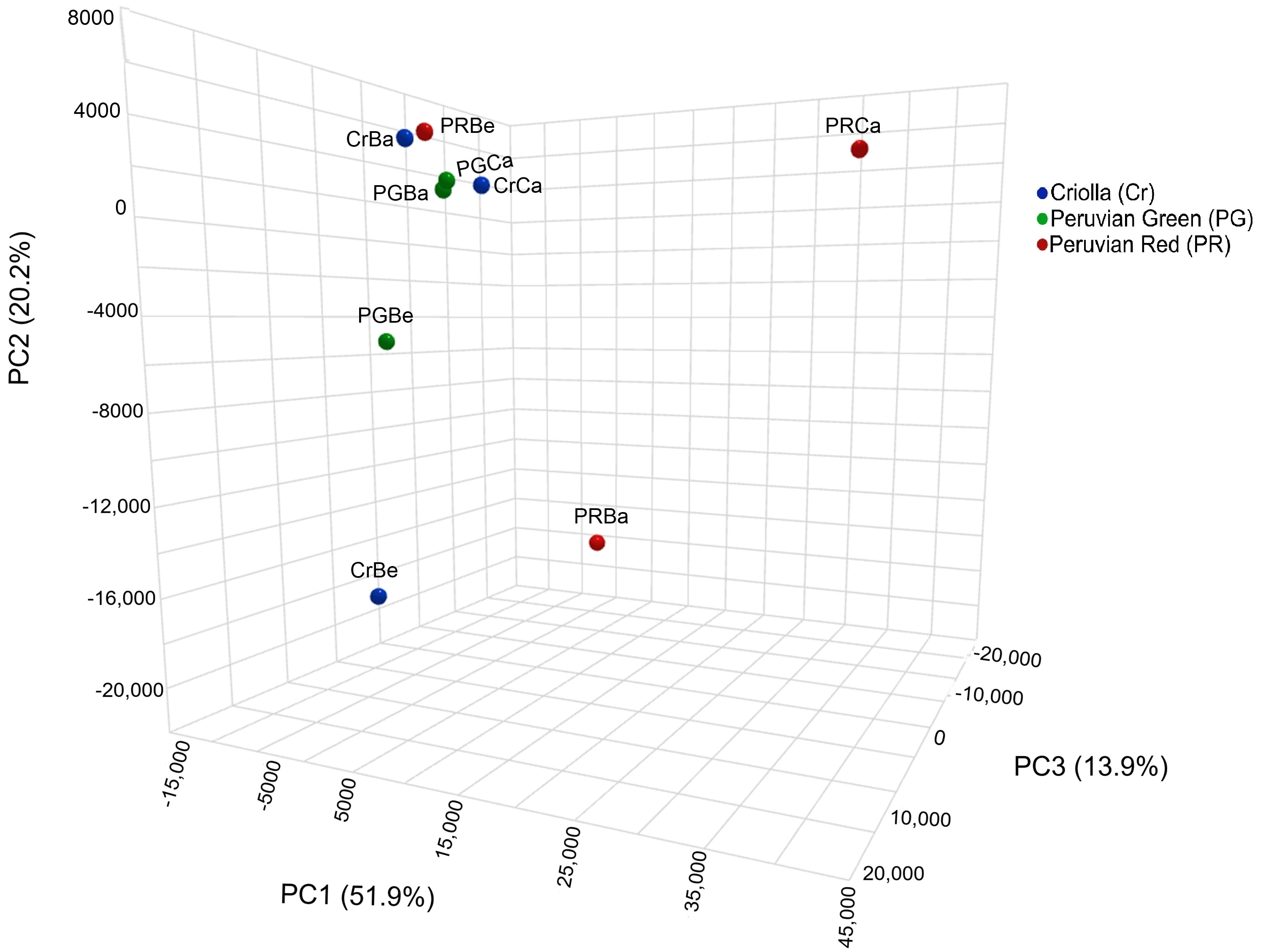
To explore chemical variability among varieties and/or populations, a principal component analysis (PCA) was performed on the complete set of identified compounds. The scores plot shows that the first principal component (PC1) accounts for 51.9% of the total variance, PC2 explains 20.2%, and PC3 accounts for 13.9%. The PCA triplot revealed that most samples clustered near the center of the distribution, indicating a high degree of chemical similarity among them. In contrast, the Peruvian red variety from Calkiní (PRCa) and Bacabchén (PRBa), and the Criolla variety from Bécal (CrBe), were clearly separated from the central cluster along the principal axes, with PRCa showing the most pronounced separation. Similarly, although less marked, the Peruvian green variety from Bécal (PGBe) also exhibited separation along PC1 and PC2. These patterns suggest that PRCa, PRBa, CrBe, and PGBe exhibit distinct metabolite profiles compared with the other samples (Figure 2). Seventy-two percent of the variance was explained only by PC1 (51.9%) and PC2 (20.2%) (Figure S1 and Table 1), underscoring the contribution of key metabolites to chemical discrimination among varieties and locations. Although PERMANOVA analysis did not indicate statistically significant global separation among groups (p > 0.05), the R2 value (0.3026) suggests that approximately 30% of the variability is explained by differences among PR and PG varieties, providing evidence of a moderate influence of both genetic background and geographical origin on the chemical composition (Figure S1).
The PCA triplot analysis further revealed that 22 compounds accounted for approximately 86% of the total variance (Table 1). Variation along PCA1 showed a positive correlation with most associated metabolites, and (+)-ledol, α-bisabolol, and (E)-β-farnesene contributed most strongly to this component, explaining a substantial proportion of the observed variability. In PCA2, most metabolites exhibited negative correlations, particularly (+)-valencene, nonacosane, phytol, and octacosane, which contributed notably to sample discrimination. Conversely, positive correlations in PCA2 were observed with (+)-ledol, germacrene D, phytol, and squalene oxide. The PCA biplot analysis provided additional information about the metabolites that contributed most strongly to sample separation (Figure S2).
In PCA3, positive loadings were mainly associated with (+)-valencene, phytol, and octacosane. Collectively, these 22 metabolites drive the differentiation of B. orellana varieties across the evaluated locations (Figure 2 and Table 1). Loadings and contribution analyses indicated that (+)-ledol exhibited the highest contribution to PC1 (30.43%), followed by α-bisabolol (6.23%), (E)-β-farnesene (5.43%), and cis-β-santalene (2.84%), indicating that sesquiterpenes and terpenoid-related compounds constituted the principal metabolites driving phytochemical differentiation among the evaluated samples In contrast, compounds such as β-tocopherol and vitamin E contributed comparatively little to the PCA model (Table 1).

3.3. Spearman Correlation Analysis

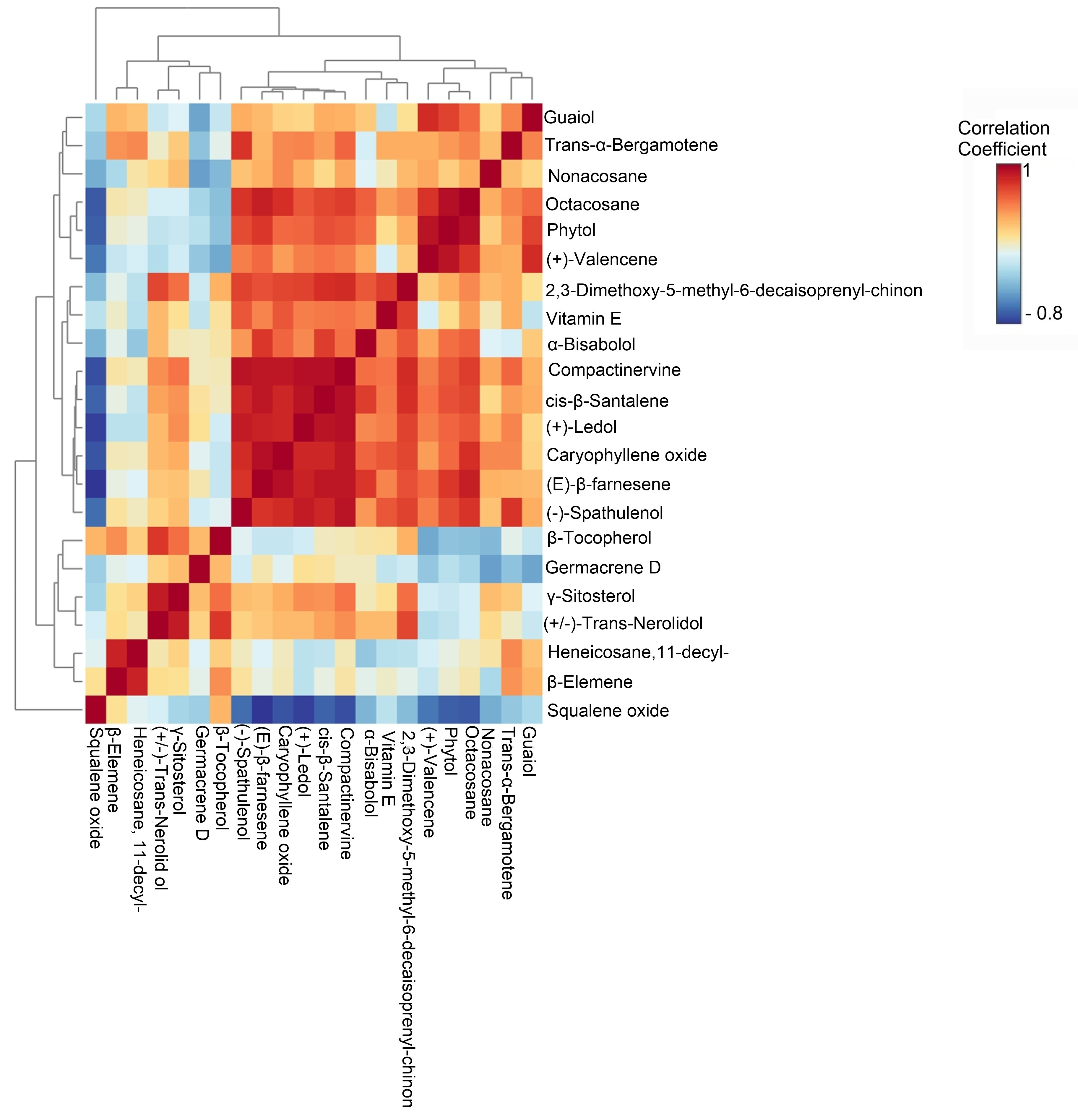
A Spearman correlation analysis was performed on the 22 metabolites, which together accounted for 86% of the total variation across all samples. The results indicate moderate-to-strong correlations across most compounds (Figure 3). In particular, a strong positive correlation was observed among compactinervine, cis-β-santalene, (+)-ledol, caryophyllene oxide, (E)-β-farnesene, and (−)-spathulenol.
Another strong positive correlation was detected among phytol, octacosane, and (+)-valencene, as well as between phytol and (+)-valencene. Additionally, phytol and (+)-valencene showed a positive correlation with guaiol. (−)-Spathulenol showed a positive correlation with trans-α-bergamotene, while β-tocopherol, (+/−)-trans-nerolidol, and γ-sitosterol also showed positive correlations among themselves. By contrast, squalene oxide showed a negative correlation with other compounds, including octacosane, phytol, (+)-valencene, compactinervine, cis-β-santalene, (+)-ledol, caryophyllene oxide, (E)-β-farnesene, and (−)-spathulenol (Figure 3).
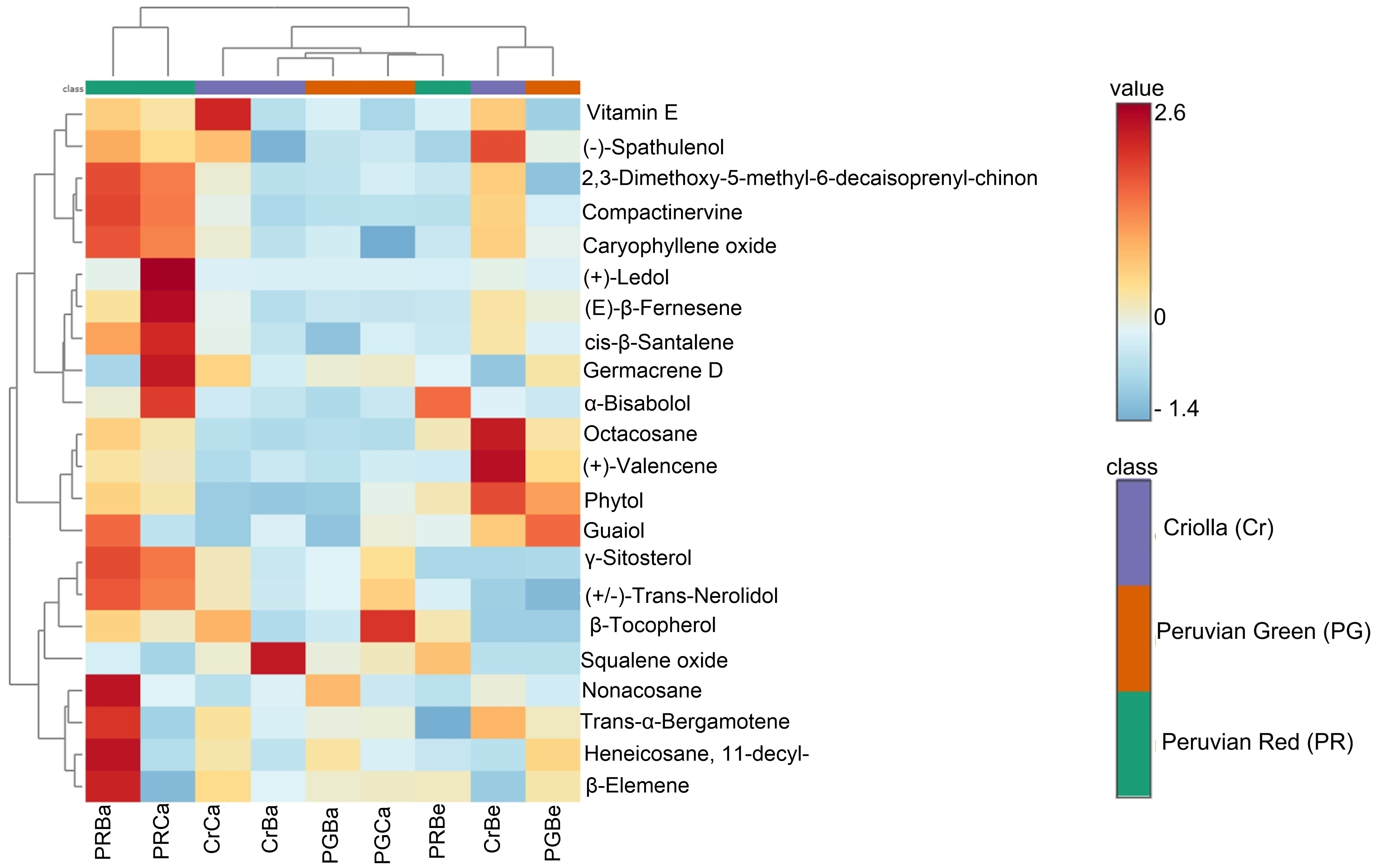
Abundance analysis of these metabolites by variety and geographic location indicated that PRBa and PRCa, followed by CrBe, had the highest abundance among the 22 compounds analyzed (Figure 4). PRBa was characterized by high abundances of nonacosane, heneicosane, 11-decyl-, trans-α-bergamotene, and β-elemene, along with moderate levels of compactinervine, caryophyllene oxide, guaiol, γ-sitosterol, (+/−)-trans-nerolidol, and 2,3-dimethoxy-5-methyl-6-decaisoprenylchinon. Notably, (+)-ledol, (E)-β-farnesene, germacrene D, cis-β-santalene, and α-bisabolol were particularly abundant in PRCa. CrBe samples contained elevated levels of (−)-spathulenol, octosane, (+)-valencene, and phytol (Figure 4). Other compounds showing notable abundance included vitamin E in CrCa, squalene oxide in CrBa, β-tocopherol in PGCa, and α-bisabolol in PRBe. Finally, PGBe exhibited moderate levels of guaiol and phytol (Figure 4).

3.4. Antimicrobial Activity of Hexane Leaf Extracts

To assess the bioactive potential of B. orellana by variety and geographic location, the antimicrobial activity of hexane leaf extracts of B. orellana L. was evaluated using disc diffusion assays against the Gram-positive bacterium S. aureus. Hexane leaf extracts from the Criolla (Cr), Peruvian red (PR), and Peruvian green varieties (PG), collected in Bécal (Be), Calkiní (Ca), and Bacabchén (Ba), were evaluated. The diameter of the inhibition zones varied mainly by collection site. Extracts obtained from Bécal exhibited inhibition diameters ranging from 6.36 ± 0.34 mm to 6.5 ± 0.14 mm, whereas those from Bacabchén ranged from 6.0 ± 0.0 mm to 6.21 ± 0.07 mm, with no statistically significant differences among varieties at either location. In contrast, extracts from Calkiní exhibited greater antimicrobial activity than those from the Bécal and Bacabchén varieties, with inhibition zones of 23.5 ± 2.12 mm for the Peruvian red variety, 18.5 ± 0.70 mm for the Peruvian green variety, and 20.5 ± 0.70 mm for the Criolla variety. Interestingly, the hexane leaf extract of the Peruvian red variety from Calkiní produced inhibition zones comparable to those of the antibiotic across all assays (Table 2 and Figure S3).
Two-way ANOVA revealed a highly significant effect of geographic origin on inhibition zone diameter (p = 0.0005), while the variety factor showed no statistically significant differences (p = 0.1132). Tukey’s HSD post hoc test indicated that extracts from Calkiní differed significantly from those of Bécal and Bacabchén (p < 0.05), whereas no significant differences were observed between the latter two. Although the variety factor was not statistically significant, the Peruvian red variety consistently produced the largest inhibition zones. The controls behaved as expected: the negative control (DMSO) showed no antimicrobial activity, while the positive control, chloramphenicol, consistently produced an average inhibition zone of 25 mm across all assays (Table 2 and Figure S3).

3.5. Antioxidant Activity of Hexane Leaf Extracts

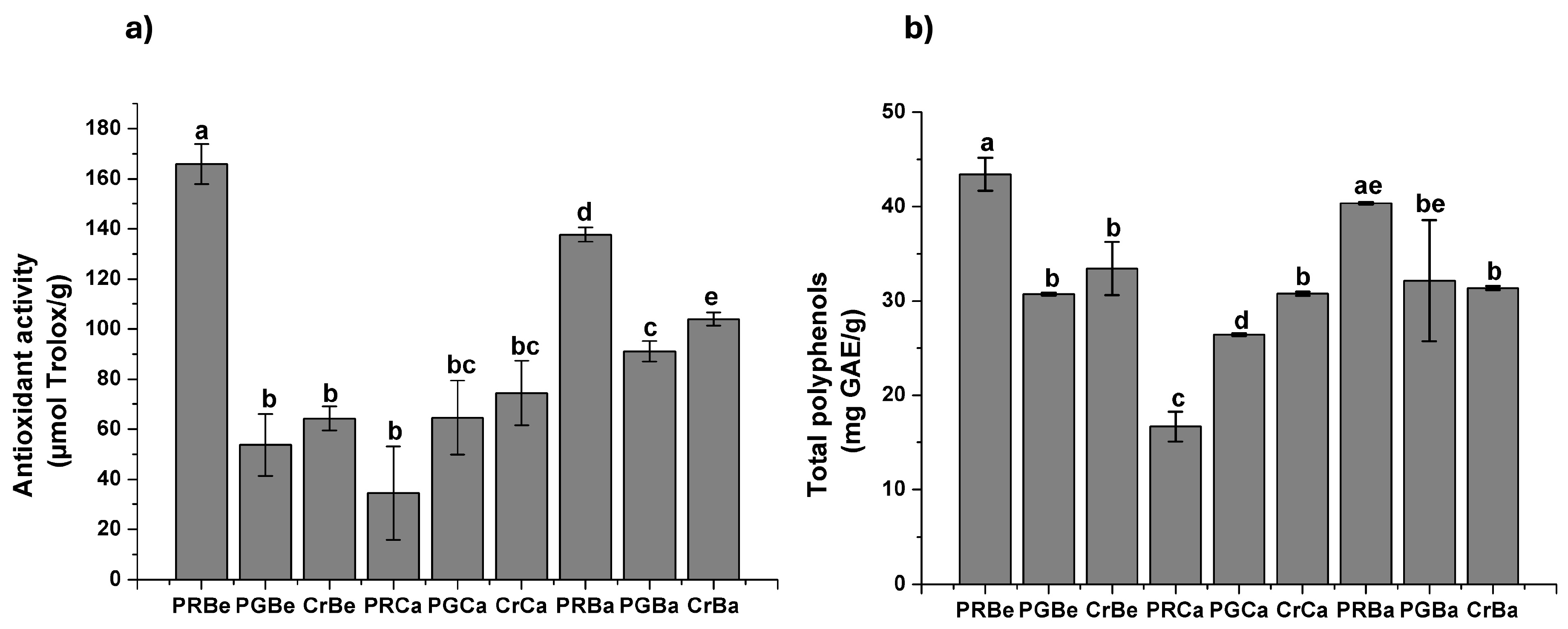
The total polyphenol content and antioxidant activity were determined using the ABTS method [17] (Figure 5). The results indicated significant differences in total polyphenol content and antioxidant activity, mainly between Peruvian red varieties and other varieties. ABTS analysis showed the highest values in PRBe (165.84 ± 7.99 μmol Trolox/g) and PRBa (137.69 ± 2.81 μmol Trolox/g), followed by CrBa (103.96 ± 2.65 μmol Trolox/g). A similar pattern was observed in total polyphenol content, with PRBe (43.42 ± 1.75 mg GAE/g) and PRBa (40.43 ± 0.14 mg GAE/g) showing the highest values, followed by CrBe (33.43 ± 2.83 GAE mg/g) and CrBa (33.43 ± 2.83 mg GAE/g). In contrast, the lowest values of antioxidant activity and polyphenol content were observed in PRCa (Figure 5). Two-way ANOVA showed that variety (p < 0.001) and location (p < 0.001) significantly influenced antioxidant capacity. Specifically, the location-variety interaction was highly significant (p < 0.001). Taken together, these results confirm that both individual factors and their interaction significantly influence antioxidant capacity (p < 0.05). Total polyphenol content was significantly influenced by location (p < 0.001) and by the location × variety interaction (p = 0.0002), more so than by variety alone (p = 0.0797). These results indicate that polyphenol content depends primarily on the site of origin and, more significantly, on the specific combination of location and variety, thereby demonstrating differential effects among treatments.

4. Discussion

4.1. Phytochemical Composition of Hexane Leaf Extracts

GC-MS analysis of the chemical constituents identified 74 compounds in the hexane leaf extracts of B. orellana varieties. The predominant chemical classes were sesquiterpenes, sesquiterpenoids, and long-chain alkanes, whereas the remaining metabolite groups were present at lower relative abundances (Table S1). This phytochemical profile is consistent with hexane’s high selectivity for lipophilic metabolites, as previously reported [5], which demonstrated that non-polar solvents efficiently extract alkanes and terpenoids. Similarly, Kumar and Periyasamy [18] identified 43 non-polar compounds, mainly alkanes and sesquiterpenes in the hexane seed extract of B. orellana. Although less frequently reported, Sarkar et al. [19] also detected additional metabolites, including carbohydrates, flavonoids, phenolics, tannins, alkaloids, and glycosides, in hexane extracts of annatto leaves, indicating that minor polar compounds may also be co-extracted.
Multivariate analysis is crucial for elucidating the chemical variability of plant extracts across genetic backgrounds and environmental conditions [14]. In the present study, principal component analysis (PCA) revealed distinct chemical profiles for PRCa, PRBa, and CrBe relative to the other samples, with PRCa showing the most pronounced differences. The PCA triplot model explained 86% of the total variance using 22 key metabolites (Figure 2 and Table 1), highlighting their major contribution to chemical discrimination among varieties and locations.
Comparable findings have been reported for essential oils from B. orellana leaves, in which β-bisabolene (19.71%) and caryophyllene (10.42%) were identified as the most abundant sesquiterpene and sesquiterpenoid, respectively, along with nerolidol and spathulenol (0.68%) [8]. Olufemi et al. [20] identified 36 volatile metabolites, with α-guaiene (49.3%), guaiol (8.1%), valencene (7.7%), and β-elemene (5.9%) as the predominant compounds. López Orozco [21] reported spathulenol, guaiol, phytol, and longifolene in oleoresinous extracts of B. orellana leaves, metabolites that are also predominant in the present study (Figure 3).
From a chemometric perspective, PCA did more than reduce data dimensionality; it revealed putative chemotype-like signatures among cultivar-location combinations. Similar approaches have been used in aromatic and medicinal plants to define chemotypes from volatile profiles. For example, PCA and cluster analysis of 85 accessions and 77 volatile compounds from O. basilicum identified five chemotypes, demonstrating that multivariate analysis can uncover chemical groupings that are not necessarily predicted by morphology alone. Therefore, the PCA in the present study supports the idea that B. orellana cultivars from Campeche may harbor location-dependent metabolic signatures with different associated bioactive potential [14]. Varga et al. [14] emphasize the importance of integrated morphological and chemical characterization for the effective management of genetically diverse germplasm collections and for the development of breeding programs.
Furthermore, Guerrero-Lagunes et al. [3] conducted a multivariate bioprospective meta-analysis of 28 B. orellana phenotypes from different geographical origins. They integrated variables such as plant organ, extraction method, metabolite classes, phytochemical groups, specific compounds, and biological activities, including antimicrobial and antioxidant activities. In that study, PCA explained 86.31% of the cumulative variation across four principal components. The authors observed that metabolite classes contribute differentially to phenotype separation. Phenotypes from India, Brazil, and the Yucatán Peninsula exhibited greater anticancer and antibacterial activities against S. aureus, E. coli, and P. aeruginosa than African phenotypes. This effect was attributed to both environmental factors and the presence of metabolites such as geranylgeraniol, ellagic acid, carotenoids (bixin and norbixin), naringenin, and alkaloids [3]. Flavonoids had a significant loading on PC1, terpenoids contributed to both PC1 and PC2, and tannins defined a secondary dimension of variability. This demonstrates that the chemical diversity of annatto and a broader set of secondary metabolites that can explain functional differences between phenotypes.
Given the wide geographic distribution of B. orellana throughout tropical regions, substantial variability in its volatile and semi-volatile metabolite profile is expected [19,22]. Dequigiovanni et al. [23] applied PCA to B. orellana var. urucurana, considered the wild ancestor of cultivated annatto. The study examined 19 bioclimatic variables, and more than 91% of the variation was accounted for by three principal components, highlighting climatic differentiation among populations from Rondônia, Pará, and Roraima. This is relevant because environmental gradients that likely influence genetic distribution and, potentially, the metabolic variation in wild and cultivated populations could be identified. In addition, PC1 explained 71% of the variation and was determined by annual precipitation, while PC2 explained 20% and was associated with precipitation during the coldest quarter. This highlights that precipitation is a key environmental variable for differentiating Bixa populations, supporting the hypothesis that edaphoclimatic conditions can indirectly influence the chemical and functional composition of annatto cultivars.
A relevant novelty of this study is that the chemical and biological variation in B. orellana was analyzed not only at the species level but also through a cultivar-by-location framework. Previous studies have characterized annatto accessions mainly in seeds, focusing on pigment yield, bixin, norbixin, tocotrienols, phenolics, and antioxidant capacity. In contrast, fewer studies have simultaneously evaluated how cultivar phenotype and geographic origin influence the GC-MS metabolite profiles, antimicrobial activity, and antioxidant activity of hexane leaf extracts. For instance, Raddatz-Mota et al. [12] demonstrated that pigment accumulation and antioxidant potential are not necessarily associated with the same accession. In this context, the present study extends the comparative framework by showing that the Peruvian red cultivar exhibited divergent bioactive profiles across localities, where PRCa was associated with antimicrobial activity and sesquiterpene-rich profiles, whereas PRBe and PRBa showed higher polyphenol content and antioxidant capacity.
Overall, the present results further confirm the high chemical plasticity of B. orellana and suggest that its phytochemical composition is shaped by a combination of genetic, physiological, and environmental factors. This chemical variability may explain the differences in biological activity observed across varieties and locations, underscoring the importance of selecting sites and genotypes for future bioprospecting and crop improvement strategies.

4.2. Compounds Identified with Potentially Associated Antimicrobial Activity

Differences in antimicrobial activity may also be reflected in the variation in inhibition zone diameters observed in this study. The geographical location where plant materials were harvested was a crucial factor influencing antimicrobial activity. The hexane extracts from leaves collected in Calkiní exhibited greater antimicrobial activity than those from Bécal and Bacabchén, with PRCa (23.5 ± 2.12 mm) showing the greatest inhibition (Table 2 and Figure S3). In this sense, the Peruvian red cultivar did not show a uniform chemical or biological response across the three localities. This behavior suggests that cultivar identity alone does not explain the observed bioactivity; rather, the interaction between cultivar and geographic origin appears to modulate the accumulation of distinct metabolite groups. This interpretation aligns with evidence that light quality and irradiance influence bixin biosynthesis across contrasting B. orellana cultivars. For instance, Piave Vermelha, grown under blue/red LED light, produced 1.6-fold more bixin than the UESB74 variety grown under fluorescent light. Therefore, environmental modulation of secondary metabolism appears to be genotype-dependent in annatto [11].
It has been reported that the agroclimatic conditions of B. orellana phenotypes can influence their antimicrobial activity [3]. These findings are consistent with those reported by Fróes et al. [8], who evaluated essential oils against both Gram-positive and Gram-negative bacteria. S. aureus (ATCC 25923) and E. coli (ATCC 25922) exhibited inhibition zones of 20 mm and 13 mm, respectively. Although the extraction methods and chemical fractions differ (non-volatile hexane extract vs. essential oil), both studies confirm that B. orellana leaves contain compounds with associated antimicrobial potential against Gram-positive bacteria. It is suggested that S. aureus is more susceptible to lipophilic compounds due to the absence of an outer membrane in its cell wall [7].
Metabolites previously associated with antimicrobial activity were identified in the hexane leaf extract. (+)-Ledol was identified as one of the main metabolites in PRCa hexane leaf extracts (Figure 4). This compound has been reported as a major component of the essential oils of various plants. The essential oil of Cistus ladanifer has shown significant antimicrobial activity against S. aureus and E. coli, with Ledol as one of its main constituents [24]. Although Ledol was neither isolated nor tested individually in that study, its substantial proportion in the mixture suggests a potential associated role as an antimicrobial agent, possibly through synergistic interactions with other compounds. β-bisabolene was another metabolite identified in high amounts in the hexane leaf extracts of PRCa and PRBe (Figure 4). It was reported that the essential oil of Eremanthus erythropappus leaves accounted for β-bisabolene by 33.4% of its composition, and present MIC values ranging from 8 to 40 µg/mL against S. aureus. The compound exhibited sustained bacteriostatic activity for 24 h and bactericidal effects within 3 h. Moreover, significant synergistic activity was observed when β-bisabolene was combined with ampicillin [25].
The alkaloid compactinervine was also detected at moderate concentrations in PRCa and PRBa, followed by CrBe (Figure 4). This would be the first report of this compound in B. orellana. Compactinervine was previously isolated from the root bark of Aspidosperma excelsum in studies aimed at identifying antimicrobial alkaloids [26]. Despite its apparent lack of bacterial activity, its detection in B. orellana expands the known chemical diversity of this species and may be relevant to other biological activities. Sitosterol is a sterol with a wide range of medicinal properties, including anti-inflammatory, antihypertensive, and antibacterial effects [27]. Gamma-sitosterol was found in moderate amounts in PRCa and PRBe. Metabolites such as germacrene D, caryophyllene oxide, and α-bisabolol, known for their antimicrobial activity, were also identified as predominant in the PRCa hexane leaf extract, consistent with other reports of their presence in B. orellana essential oil [20,22].
Rodrigues et al. [28] reported the antimicrobial activity of α-bisabolol against S. aureus and E. coli. Moo et al. [29] reported the activity of pure caryophyllene oxide against Bacillus cereus, obtaining favorable results. This is relevant because the antimicrobial effect may be more closely associated with lipophilic, terpenoid-rich profiles than with total phenolic content. This interpretation aligns with the bioprospecting analysis of B. orellana phenotypes, which shows that antimicrobial activity against S. aureus, E. coli, and P. aeruginosa is associated with phenotype-specific metabolite profiles, including terpenoids, carotenoids, alkaloids, and phenolic derivatives [3].
Other compounds identified by GC-MS in the hexane leaf extracts with reported antimicrobial activities against Gram-negative and Gram-positive bacteria include 1,5,5-trimethyl-6-methylene-cyclohexene [30], and (−)-spathulenol [31]. The high antimicrobial activity observed in PRCa is likely due to the synergistic action among the most abundant compounds (Figure 4).
The importance of phenotype-dependent bioactivity is also supported by studies in northern Brazil, where red, yellow, and green B. orellana phenotypes differed in phenolic content, antioxidant activity, and antibacterial response. Oliveira et al. [5] observed that hydroethanolic seed extracts from the three phenotypes were active against S. aureus Newman, with MIC values ranging from 4.9 to 6.6 µg/mL. Interestingly, the green phenotype had the highest phenolic content and antioxidant activity. Although the plant organ and solvent system differ from those used in the present study, both studies converge on the conclusion that phenotype and origin are relevant variables for understanding the biological activity of B. orellana extracts.

4.3. Compounds Identified with Potentially Associated Antioxidant Activity

Plants constitute an abundant, natural source of antioxidant compounds, including phenolic compounds, polyphenols, and flavonoids, which play a key role in mitigating oxidative stress [5]. The antioxidant activity of B. orellana has traditionally been attributed to the high content of bixin and polyphenol in the seeds [4], while other studies have emphasized the contribution of tannins and flavonoids [32]. In the present study, significant differences in total polyphenol content and antioxidant capacity were observed among varieties and locations. PRBe and PRBa exhibited significantly higher levels of total polyphenols and antioxidant activity than the other varieties, whereas PRCa had the lowest values (Figure 5). A positive relationship between polyphenol content and antioxidant activity has been reported in hexane extracts of annatto seeds [5], supporting the relevance of phenolic compounds even in nonpolar fractions. Oliveira et al. [5] reported a value of 6.90 ± 0.05 mg GAE/g for hexane extracts, similar to values found for Peruvian green variety (Figure 5). On the other hand, Cardarelli et al. [33] reported values of 0.30 GAE mg/g of phenolic compounds in hexane extracts. Statistical analysis showed that antioxidant and polyphenol content depend primarily on the site of origin and the specific combination of location x variety. For example, in wild chili pepper, microclimatic conditions and cultivar type significantly influence (p ≤ 0.05) capsaicinoid and polyphenol contents, as well as their antioxidant capacity [13].
Among the identified metabolites, the tocopherol group stands out for its well-established antioxidant properties. The tocopherol group comprises the most biologically active forms of vitamin E and is characterized by its ability to protect lipids from peroxidation caused by free radicals [34]. In this study, β-tocopherol showed the highest relative abundance in PGCa, followed by CrCa, PRBa, and PRBe. Additionally, α-tocopherol and γ-tocopherol were found in CrBa and PRBe, respectively (Table S1 and Figure 4). Previous studies have reported the presence of tocopherols in extracts of B. orellana seeds and leaves [35], reinforcing their relevance as intrinsic antioxidant components of the species. Another metabolite of particular interest is phytol, a diterpene alcohol widely reported in essential oils and lipophilic extracts of medicinal plants. Phytol has been associated with antimicrobial, anti-inflammatory, antioxidant, and cytotoxic activities, in addition to its role as a precursor of essential compounds such as vitamin E, making it a secondary metabolite of high biochemical and pharmacological interest [36]. In the present study, phytol was detected at relatively high levels in CrBe and PGBe, while lower concentrations were observed in Peruvian red varieties across all locations. This pattern suggests a shared distribution of phytol among varieties, with accumulation depending on genotype and environment (Table S1 and Figure 4).
Squalene and squalene oxide, both triterpenes with recognized antioxidant and anti-inflammatory properties, were also identified. Squalene oxide showed relatively high abundance in CRBa. This metabolite is a natural triterpene with antioxidant activity, found in olive and wheat germ oils, and is crucial for reducing oxidative damage caused by free radicals in the skin. It is found in olive oil and wheat germ oil [37]. It has also been reported that the anticancer activity of the essential oil from B. orellana leaves and seeds is mediated by inducing cytotoxicity and apoptosis [18]. Other identified metabolites are (Z,E)-α-farnesene, trans-geranylgeraniol, squalene, (+/−)-trans-nerolidol, (−)-spathulenol, and δ-cadinene. These metabolites with antioxidant activity have also been detected in annatto leaf extracts [19,38]. Kumar and Periyasamy [18] report that the non-polar extract of B. orellana seeds presents anticancer activity; among the extracts, α-farnesene, trans-geranylgeraniol, and squalene were identified [18].
Although the present study did not evaluate the molecular mechanisms underlying antioxidant activity, previous studies have demonstrated that natural bioactive compounds may exert antioxidant effects through free radical scavenging, modulation of oxidative stress pathways, and anti-inflammatory effects. Shi et al. [39] characterized leaf extracts of Kadsua coccinea using UHPLC-Q-Exactive Orbitrap mass spectrometry and identified 98 constituents, mainly phenolic acids, flavonoids, and lignans. Their extracts exhibited hydroxyl radical and DPPH scavenging activities, as well as Fe2+ chelating ability, demonstrating that antioxidant activity in plant extracts may result from multiple complementary mechanisms. The leaf extracts of K. coccinea seem to exert anti-inflammatory effects by inhibiting NO secretion, reducing COX-2 protein levels, downregulating IL-2 and IL-6, and promoting IL-10 secretion. Recent studies combining cellular assays and molecular docking analyses have highlighted the importance of pathways, such as the Keap1–Nrf2 pathway, in the antioxidant response to plant-derived metabolites [40]. Likewise, molecular docking has increasingly been used to elucidate the biological activity of plant secondary metabolites, including antioxidant and anti-inflammatory effects [41]. Wang et al. [41] isolated four new compounds from Moringa oleifera seeds and revealed that three of them moderately inhibited nitric oxide production in LPS-stimulated RAW 264.7 macrophages. Their target prediction and molecular docking analyses suggested that MMP-9 antagonism may contribute to the observed anti-inflammatory response. Therefore, the metabolites identified in B. orellana hexane extracts may collectively contribute to the antioxidant activity observed in this study, potentially associated through additive or synergistic interactions among terpenoids, sterols, tocopherols, and other lipophilic compounds [41]. Finally, the inflammatory and antioxidant biomarkers could be used as a reference framework for future studies on B. orellana extracts, especially in PRCa, PRBa, and CrBe.

5. Conclusions

This study provides a comprehensive phytochemical characterization of B. orellana L. leaf extracts in hexane. Taken together, these findings support that B. orellana is not a chemically homogeneous species. Instead, cultivar phenotype, geographic origin, and their interaction should be considered key determinants of metabolite composition and biological activity. Overall, the findings highlight the Peruvian red variety as a promising natural source of bioactive compounds and underscore geographic origin as a key determinant of its phytochemical composition and biological activity.
Finally, integrating GC-MS profiling, principal component analysis (PCA), and biological assays provides a useful chemometric framework for bioprospecting and for selecting B. orellana cultivars with differentiated associated bioactive potential.

Supplementary Materials

The following supporting information can be downloaded at: https://www.mdpi.com/article/10.3390/horticulturae12060709/s1.

Author Contributions

Conceptualization, J.A.E.-U., R.Y.U.-C., N.N.C.-C., J.E.O.-M. and E.H.-N.; methodology, J.A.E.-U., N.N.C.-C., F.E.-E. and L.F.S.-T.; software, F.E.-E., L.F.S.-T., L.A.C.-H., D.A.D.-C. and R.P.-S.; validation, J.A.E.-U., R.Y.U.-C., J.E.O.-M., F.E.-E., L.F.S.-T. and E.H.-N.; formal analysis, J.A.E.-U., R.Y.U.-C., J.E.O.-M., R.P.-S. and E.H.-N.; investigation, J.A.E.-U., R.Y.U.-C., J.E.O.-M., E.H.-N., J.A.E.-U., N.N.C.-C., F.E.-E., L.F.S.-T., L.A.C.-H., H.J.L.-C., O.F.P.-S., F.P.D.-A. and L.A.E.-B.; resources, R.Y.U.-C., D.A.D.-C., F.P.D.-A., L.A.E.-B. and L.H.M.-H.; data curation, J.A.E.-U., R.Y.U.-C., J.E.O.-M., H.J.L.-C., O.F.P.-S., E.H.-N., D.A.D.-C. and R.P.-S.; writing—original draft preparation, J.A.E.-U., R.Y.U.-C., J.E.O.-M. and E.H.-N.; writing—review and editing, R.Y.U.-C., N.N.C.-C., J.E.O.-M., E.H.-N., H.J.L.-C., O.F.P.-S., L.H.M.-H., F.P.D.-A. and L.A.E.-B.; visualization, SAVC, N.N.C.-C., E.H.-N., L.A.C.-H. and R.Y.U.-C.; supervision, R.Y.U.-C., N.N.C.-C., J.E.O.-M., F.E.-E., L.F.S.-T. and E.H.-N.; project administration, R.Y.U.-C., N.N.C.-C. and J.E.O.-M.; funding acquisition, R.Y.U.-C. All authors have read and agreed to the published version of the manuscript.

Funding

This work was supported by the Secretaría de Ciencia, Humanidades, Tecnología e Innovación (SECIHTI) (Project No. CBF-2025-I-3267) and Tecnológico Nacional de México (TecNM) (Project No. 23479.25-PD), both granted to R.Y.U.-C. To SECIHTI for the master’s scholarship to J.A.E.-U. (Reg. Núm. 8567) to develop this research. This research was made possible thanks to the financial support provided to the “Biotecnología y Aprovechamiento de Recursos Naturales (ITESCAM-CA-8)” Academic Group by the Programa para el Desarrollo Profesional Docente (PRODEP).

Data Availability Statement

The original contributions presented in this study are included in the article/Supplementary Material. Further inquiries can be directed to the corresponding author.

Acknowledgments

To Sara Camacho Castillo, facilitator of the Sembrando Vida Program, to Marcelo Contreras Roldan, Coordinator of the Sembrando Vida Program for the State of Campeche, and the plantation owners for the assistance provided to conduct this research. This research was also made possible thanks to the support provided by the members and collaborators of the "Biotecnología y Aprovechamiento de Recursos Naturales (ITESCAM-CA-8)" Academic Group of the Instituto Tecnológico Superior de Calkiní.

Conflicts of Interest

The authors declare no conflicts of interest.

References

  1. Leal, F.; de Clavijo, C.M. Acerca de la historia, taxonomía, botánica y usos de Bixa orellana L. Rev. UNELLEZ Cienc. Tecnol. 2010, 28, 78–86. [Google Scholar]
  2. Rivera-Madrid, R.; Aguilar-Espinosa, M.; Cárdenas-Conejo, Y.; Garza-Caligaris, L.E. Carotenoid derivates in Achiote (Bixa orellana) seeds: Synthesis and health promoting properties. Front. Plant Sci. 2016, 7, 1406. [Google Scholar] [CrossRef]
  3. Guerrero-Lagunes, L.; Ruiz-Posadas, L.; Cadena-Iñiguez, J.; Soto-Hernández, R.; Avendaño-Arrazate, C.; Aguirre-Medina, J.; Soto-Mendoza, C.; Aguirre-Cadena, J. The bioprospecting of Bixa orellana L. for the selection of characters with biological activity. Metabolites 2025, 15, 115. [Google Scholar] [CrossRef]
  4. Quintero Quiroz, J.; Naranjo Duran, A.M.; Silva Garcia, M.; Ciro Gomez, G.L.; Rojas Camargo, J.J. Ultrasound-assisted extraction of bioactive compounds from annatto seeds, evaluation of their antimicrobial and antioxidant activity, and Identification of main compounds by LC/ESI-MS analysis. Int. J. Food Sci. 2019, 2019, 3721828. [Google Scholar] [CrossRef]
  5. Oliveira, S.d.S.d.C.; Araújo, R.D.C.; da Silva, G.A.; Leitão, J.H.; da Silva Sousa, S.A.B.; Fonseca, L.P.; Carvalho, J.C.T.; Cantuária, P.; Hage-Melim, L.I.d.S.; Ferreira, I.M. Bixa orellana L. from northern Brazil: Morphological analysis, phenolic content, antioxidant and antibacterial activities. Braz. J. Bot. 2022, 45, 883–896. [Google Scholar] [CrossRef]
  6. Muddapur, U.M.; Turakani, B.; Jalal, N.A.; Ashgar, S.S.; Momenah, A.M.; Alshehri, O.M.; Mahnashi, M.H.; Shaikh, I.A.; Khan, A.A.; Dafalla, S.E.; et al. Phytochemical screening of Bixa orellana and preliminary antidiabetic, antibacterial, antifibrinolytic, anthelmintic, antioxidant, and cytotoxic activity against lung cancer (A549) cell lines. J. King Saud. Univ.-Sci. 2023, 35, 102683. [Google Scholar]
  7. Espadas-Uc, J.A.; Velázquez-Collí, S.A.; Cob-Calan, N.N.; Moo-Puc, J.A.; Loeza-Concha, H.; Us-Camas, R. Plantas de las familias Lamiaceae, Asteraceae y Malvaceae, utilizadas en la medicina tradicional mexicana con propiedades antibacterianas. TIP Rev. Espec. Cienc. Quím.-Biol. 2025, 28, 1–18. [Google Scholar] [CrossRef]
  8. Fróes, Y.N.; Pereira, A.P.M.; Rosa, P.V.S.; da Silva Souto, L.A.; Arruda, M.O.; Araújo, L.F.C.; Costa, A.T.; Fonseca, D.; do Nascimento, D.P.; Everton, G.O.; et al. Antimicrobial activity of the essential oil from Bixa orellana L. Res. Soc. Dev. 2020, 9, e8129108447. [Google Scholar] [CrossRef]
  9. O’Neill, J. Antimicrobial Resistance: Tackling a Crisis for the Health and Wealth of Nations; Review on Antimicrobial Resistance: Grande-Bretagne: London, UK, 2014; p. 16. [Google Scholar]
  10. Velázquez-Colli, S.A.; Espadas-Uc, J.A.; Oney-Montalvo, J.E.; Estrada-León, R.J.; Cob-Calan, N.N.; Can-Herrera, L.A.; Pacheco-Salazar, O.F.; Dzib-Cauich, D.A.; Us-Camas, R. Morphological characterization and evaluation of agroeconomic traits of annatto (Bixa orellana L.) crops from the social program Sembrando Vida in Campeche, Mexico. HortScience 2025, 60, 1826–1832. [Google Scholar] [CrossRef]
  11. Faria, D.V.; de Freitas Correia, L.N.; Souza, M.V.C.; Ríos-Ríos, A.M.; Vital, C.E.; Batista, D.S.; Costa, M.G.C.; Otoni, W.C. Irradiance and light quality affect two annatto (Bixa orellana L.) cultivars with contrasting bixin production. J. Photochem. Photobiol. B Biol. 2019, 197, 111549. [Google Scholar] [CrossRef]
  12. Raddatz-Mota, D.; Pérez-Flores, L.; Carrari, F.; Insani, M.; Asis, R.; Mendoza, J.A.; Díaz de León-Sánchez, F.; Rivera-Cabrera, F. Chemical characterization and quantification of the pigment extraction yield of seven Mexican accessions of Bixa orellana. Rev. Mex. Ing. Quim. 2016, 15, 727–740. [Google Scholar] [CrossRef]
  13. Cruz-Hernández, M.; Cuervo-Osorio, V.D.; Cabal-Prieto, A.; Herrera, L.A.C.; Guerrero-Ortiz, C.A.; Uribe-Cuauhtzihua, F.; Hernandez-Arzaba, J.C.; Ramírez-Rivera, E.d.J.; Oney-Montalvo, J.E. Determination of the antioxidant activity of capsaicinoids and polyphenols extracted from wild chili pepper. Hortic. Bras. 2025, 43, e291946. [Google Scholar] [CrossRef]
  14. Varga, F.; Carović-Stanko, K.; Ristić, M.; Grdiša, M.; Liber, Z.; Šatović, Z. Morphological and biochemical intraspecific characterization of Ocimum basilicum L. Ind. Crops Prod. 2017, 109, 611–618. [Google Scholar] [CrossRef]
  15. Dzib-Cauich, D.A.; Rea-Caamal, K.G.; Chi-Gutiérrez, E.d.J.; Can-Herrera, L.A.; Portillo-Salgado, R.; Cabal-Prieto, A.; Ramírez-Rivera, E.d.J.; Oney-Montalvo, J.E. Ultrasonic bath assisted extraction of total polyphenols and betalains from dragon fruit peel: Optimization by Box–Behnken design. Biotecnia 2025, 27, e2695. [Google Scholar]
  16. Puc-Santamaria, C.G.; Us-Camas, R.; Hernández-Núñez, E.; Can-Herrera, L.A.; Dzib-Cauich, D.A.; Cabal-Prieto, A.; Pensupa, N.; Oney-Montalvo, J.E. Ultrasonic-assisted enzymatic extraction: An innovative technique for the obtention of betalains and polyphenols from dragon fruit peel. Processes 2025, 13, 2307. [Google Scholar] [CrossRef]
  17. Moon, J.K.; Shibamoto, T. Antioxidant assays for plant and food components. J. Agric. Food Chem. 2009, 57, 1655–1666. [Google Scholar] [CrossRef]
  18. Kumar, Y.; Periyasamy, L. GC-MS analysis and in-vitro cytotoxic studies of Bixa orellana seed extract against cancer cell line. Int. J. Pharm. Pharm. Sci. 2016, 8, 408–413. [Google Scholar]
  19. Sarkar, K.K.; Mitra, T.; Aktaruzzaman, M.; Abid, M.A.; Rahman, M.A.; Debnath, P.; Sadhu, S.K. Exploring antioxidative, cytotoxic and neuropharmacological insights into Bixa orellana leaves: Experimental and in silico approaches. Heliyon 2024, 10, e27001. [Google Scholar] [CrossRef]
  20. Olufemi, G.-A.; Ademefun, A.; Lawal, O.A.; Ogunwande, I. Chemical composition of essential oils from the leaves, seeds, seed-pods and stems of Bixa orellana L. (Bixaceae). Arch. Curr. Res. Int. 2016, 6, 1–6. [Google Scholar] [CrossRef]
  21. López Orozco, I.G. Evaluación de la Actividad Bacteriostática de la Oleorresina de Cuatro Especies Americanas, Hoja de Achiote (Bixa orellana, L.), Pimienta Gorda (Pimenta dioica (L.) Merril), Hoja de Aguacate (Persea americana Miller) y Hierbabuena (Mentha spicata L.) Contra Escherichia coli en Carne de res a Escala Laboratorio. Bachelor’s Thesis, Universidad de San Carlos de Guatemala, Ciudad de Guatemala, Guatemala, 2017. [Google Scholar]
  22. Valarezo, E.; Torres-Torres, S.; Pineda-Guarnizo, N.; Jaramillo-Fierro, X.; Cartuche, L.; Morocho, V.; Meneses, M.A. Study of essential oil Isolated from achiote (Bixa orellana) leaves: Chemical composition, enantiomeric distribution and antimicrobial, antioxidant and anticholinesterase activities. Antibiotics 2023, 12, 710. [Google Scholar] [CrossRef]
  23. Dequigiovanni, G.; Ramos, S.L.F.; Alves-Pereira, A.; Fabri, E.G.; Picanço-Rodrigues, D.; Clement, C.R.; Gepts, P.; Veasey, E.A. Highly structured genetic diversity of Bixa orellana var. urucurana, the wild ancestor of annatto, in Brazilian Amazonia. PLoS ONE 2018, 13, e0198593. [Google Scholar] [CrossRef]
  24. El Karkouri, J.; Bouhrim, M.; Al Kamaly, O.M.; Mechchate, H.; Kchibale, A.; Adadi, I.; Amine, S.; Alaoui Ismaili, S.; Zair, T. Chemical composition, antibacterial and antifungal activity of the essential oil from Cistus ladanifer L. Plants 2021, 10, 2068. [Google Scholar] [CrossRef]
  25. Nascimento, A.M.A.; Brandão, M.G.L.; Oliveira, G.B.; Fortes, I.C.P.; Chartone-Souza, E. Synergistic bactericidal activity of Eremanthus erythropappus oil or β-bisabolene with ampicillin against Staphylococcus aureus. Antonie Leeuwenhoek 2007, 92, 95–100. [Google Scholar] [CrossRef]
  26. Verpoorte, R.; Ruigrok, C.; Svendsen, A.B. Medicinal plants of Surinam. II. Antimicrobial active alkaloids from Aspidosperma marcgravianum. Planta Medica 1982, 46, 149–152. [Google Scholar] [CrossRef]
  27. Pierre Luhata, L.; Usuki, T. Antibacterial activity of β-sitosterol isolated from the leaves of Odontonema strictum (Acanthaceae). Bioorganic Med. Chem. Lett. 2021, 48, 128248. [Google Scholar] [CrossRef] [PubMed]
  28. Rodrigues, F.F.G.; Colares, A.V.; Nonato, C.d.F.A.; Galvão-Rodrigues, F.F.; Mota, M.L.; Moraes Braga, M.F.B.; Costa, J.G.M.d. In vitro antimicrobial activity of the essential oil from Vanillosmopsis arborea Barker (Asteraceae) and its major constituent, α-bisabolol. Microb. Pathog. 2018, 125, 144–149. [Google Scholar] [CrossRef] [PubMed]
  29. Moo, C.L.; Yang, S.K.; Osman, M.A.; Yuswan, M.H.; Loh, J.Y.; Lim, W.M.; Lim, S.H.; Lai, K.S. Antibacterial activity and mode of action of β-caryophyllene on Bacillus cereus. Pol. J. Microbiol. 2020, 69, 49–54. [Google Scholar] [CrossRef]
  30. Addai, Z.; Sattar Abood, M.; Hlail, S. GC-MS profiling, antioxidants and antimicrobial activity of prickly pear (Opuntiaficus-indica) pulp extract. Pharmacogn. J. 2022, 14, 262–267. [Google Scholar] [CrossRef]
  31. Rocha, P.M.d.M.; Rodilla, J.M.; Díez, D.; Elder, H.; Guala, M.S.; Silva, L.A.; Pombo, E.B. Synergistic antibacterial activity of the essential oil of aguaribay (Schinus molle L.). Molecules 2012, 17, 12023–12036. [Google Scholar] [CrossRef] [PubMed]
  32. Abayomi, M.; Adebayo, A.S.; Bennett, D.; Porter, R.; Shelly-Campbell, J. In vitro antioxidant activity of Bixa orellana (annatto) seed extract. J. Appl. Pharm. Sci. 2014, 4, 101–106. [Google Scholar] [CrossRef]
  33. Cardarelli, C.R.; Benassi, M.d.T.; Mercadante, A.Z. Characterization of different annatto extracts based on antioxidant and colour properties. LWT-Food Sci. Technol. 2008, 41, 1689–1693. [Google Scholar] [CrossRef]
  34. Azzi, A. Molecular mechanism of alpha-tocopherol action. Free Radic. Biol. Med. 2007, 43, 16–21. [Google Scholar] [CrossRef]
  35. Raddatz-Mota, D.; Pérez-Flores, L.J.; Carrari, F.; Mendoza-Espinoza, J.A.; de León-Sánchez, F.D.; Pinzón-López, L.L.; Godoy-Hernández, G.; Rivera-Cabrera, F. Achiote (Bixa orellana L.): A natural source of pigment and vitamin E. J. Food Sci. Technol. 2017, 54, 1729–1741. [Google Scholar] [CrossRef]
  36. Islam, M.T.; Ali, E.S.; Uddin, S.J.; Shaw, S.; Islam, M.A.; Ahmed, M.I.; Chandra Shill, M.; Karmakar, U.K.; Yarla, N.S.; Khan, I.N.; et al. Phytol: A review of biomedical activities. Food Chem. Toxicol. 2018, 121, 82–94. [Google Scholar] [CrossRef] [PubMed]
  37. Huang, Z.-R.; Lin, Y.-K.; Fang, J.-Y. Biological and pharmacological activities of squalene and related compounds: Potential uses in cosmetic dermatology. Molecules 2009, 14, 540–554. [Google Scholar] [CrossRef]
  38. Giorgi, A.; De Marinis, P.; Granelli, G.; Luca, M.; Panseri, S. Secondary metabolite profile, antioxidant capacity, and mosquito repellent activity of Bixa orellana from Brazilian Amazon region. J. Chem. 2013, 2013, 409826. [Google Scholar] [CrossRef]
  39. Shi, S.; Li, K.; Peng, J.; Li, J.; Luo, L.; Liu, M.; Chen, Y.; Xiang, Z.; Xiong, P.; Liu, L.; et al. Chemical characterization of extracts of leaves of Kadsua coccinea (Lem.) A.C. Sm. by UHPLC-Q-Exactive Orbitrap Mass spectrometry and assessment of their antioxidant and anti-inflammatory activities. Biomed. Pharmacother. 2022, 149, 112828. [Google Scholar] [CrossRef]
  40. Quan, Y.; Ren, H.; Liu, S.; Zhao, X.; Hao, J. Identification and molecular mechanism of novel antioxidant peptides from tiger nut (Cyperus esculentus L.). Food Biosci. 2025, 63, 105738. [Google Scholar] [CrossRef]
  41. Wang, Z.; Jiang, Y.; Ge, C.; Wang, Y.; He, J.; Chen, J.; Hou, X. Anti-inflammatory activity evaluation and molecular docking analysis of four new compounds isolated from M. oleifera seeds. J. Mol. Struct. 2024, 1318, 139269. [Google Scholar] [CrossRef]
Figure 1. Morphological characteristics of the B. orellana L. varieties (ac). The Peruvian red (PR) features cordate leaves with an acuminate apex, heart-shaped bases, and pigmentation along the main vein; elongated, elliptical red capsules with red thorns; and lilac-colored flowers (df). The Peruvian green (PG) variety has ovate leaves with an aristate apex, a heart-shaped base, and no pigmentation on the main vein; a green, elongated, globular capsule with green thorns; and light lilac-colored flowers (gi). The Criolla (Cr) variety shows white flowers with cordate leaves with an acuminate apex, a heart-shaped base, and no pigmentation on the main vein; a green, round capsule with green thorns; and white flowers.
Horticulturae 12 00709 g001
Figure 2. Principal component analysis (PCA) based on 74 compounds identified in three varieties of B. orellana L. from three localities. Peruvian red from Calkiní (PRCa), Peruvian green from Calkiní (PGCa), Criolla from Calkiní (CrCa), Peruvian red from Bécal (PRBe), Peruvian green from Bécal (PGBe), Criolla from Bécal (CrBe), Peruvian red from Bacabchén (PRBa), Peruvian green from Bacabchén (PGBa), Criolla from Bacabchén (CrBa).
Horticulturae 12 00709 g002
Figure 3. Heat map clustering analysis between the 22 main hexane extract compounds identified in three varieties of B. orellana L. from three localities. The correlation coefficient is shown. Red color intensity (to 1) indicates a strong association, while blue color intensity indicates a weak association (to −0.8).
Horticulturae 12 00709 g003
Figure 4. Heatmap and hierarchical clustering analysis of metabolites identified in leaf extracts of B. orellana corresponding to the Criolla (Cr), Peruvian green (PG), and Peruvian red (PR) varieties, from the localities of Bécal (Be), Calkiní (Ca), and Bacabchén (Ba). Peruvian red from Calkiní (PRCa), Peruvian green from Calkiní (PGCa), Criolla from Calkiní (CrCa), Peruvian red from Bécal (PRBe), Peruvian green from Bécal (PGBe), Criolla from Bécal (CrBe), Peruvian red from Bacabchén (PRBa), Peruvian green from Bacabchén (PGBa), Criolla from Bacabchén (CrBa). Red color intensity (to 2.6) indicates a strong association, while blue color intensity indicates a weak association (to −1.4).
Horticulturae 12 00709 g004
Figure 5. Antioxidant activity (a) and total polyphenols (b) of hexane extracts of B. orellana leaves corresponding to the Criolla (Cr), Peruvian green (PG), and Peruvian red (PR) varieties, from the localities of Bécal (Be), Calkiní (Ca), and Bacabchén (Ba). Peruvian red from Calkiní (PRCa), Peruvian green from Calkiní (PGCa), Criolla from Calkiní (CrCa), Peruvian red from Bécal (PRBe), Peruvian green from Bécal (PGBe), Criolla from Bécal (CrBe), Peruvian red from Bacabchén (PRBa), Peruvian green from Bacabchémn (PGBa), Criolla from Bacabchén (CrBa). GAE: gallic acid equivalent. Results are presented as means (n = 3) ± SD. Letters indicate a statistically significant difference (p < 0.05).
Horticulturae 12 00709 g005
Table 1. PCA based on the twenty-two metabolites identified in three B. orellana L. varieties from three localities. Loadings, eigenvalues, variance percent, and percentage contribution of individual metabolites of B. orellana leaf extracts are indicated.
MetabolitesPC1Contribution %PC2Contribution %PC3Contribution
%
1β-Elemene−0.0770480.308−0.122150.30−0.304661.29
2Trans-α-Bergamotene−0.0447840.104−0.283131.62−0.170240.40
3(E)-β-Farnesene0.323455.430−0.0681180.090.0106450.00
4cis-β-Santalene0.233922.840−0.129550.34−0.0800040.09
5(+)-Valencene0.0638470.212−0.478764.630.440462.70
6(+)-Ledol0.7657530.430.170680.590.0367620.02
7Germacrene D0.136560.9680.150830.46−0.0143650.00
8(+/–)-trans-Nerolidol0.122740.782−0.0283450.02−0.328311.50
9Caryophyllene oxide0.136030.960−0.211610.90−0.109850.17
10Guaiol−0.0229820.027−0.295111.760.0205890.01
11(−)-Spathulenol0.0402780.084−0.16260.530.0188480.0049
12α-Bisabolol0.346416.2280.133450.360.0977540.13
13Phytol0.0546920.155−0.310041.940.259210.93
14Nonacosane0.00699330.003−0.312641.97−0.387772.09
15Squalene oxide−0.080360.3350.132280.35−0.0202050.01
16β-Tocopherol0.00126640.00010.088420.16−0.227560.72
17Vitamin E0.0365180.069−0.0707240.10−0.09790.13
18Compactinervine0.134570.940−0.203690.84−0.131870.24
192,3-Dimethoxy-5-methyl-6-dekaisoprenyl-chinon0.138030.989−0.179790.65−0.16240.37
20Octacosane0.0536550.149−0.305791.890.238680.79
21ϒ-Sitosterol0.126630.832−0.0722710.11−0.311.34
22Heneicosane, 11-decyl-−0.031570.052−0.169540.58−0.264130.97
Eigenvalue11.41 4.44 3.05 
Variance (%)51.9 20.2 13.9 
Cumulative (%)51.972.186
Table 2. Zone of inhibition observed against S. aureus of hexane extracts of leaves of B. orellana varieties from the three different localities. The concentration used for all extracts was 10 mg/mL. Cloranfenicol at 50 µg/mL; Nd, not detected. Results are presented as means ± SD. Values are in mm. Letters indicate a significant statistical difference (p < 0.05).
LocalityPeruvian red
(PR)
Peruvian green
(PG)
Criolla
(Cr)
DMSOChloramphenicol
Bécal
(Be)
6.5 ± 0.146.47± 0.046.36 ± 0.34Nd25 ± 0.3 b
Calkiní
(Ca)
23.5 ± 2.12 b18.5 ± 0.70 a20.5 ± 0.70 aNd25 ± 0.2 b
Bacabchén
(Ba)
6.0 ± 0.06.0 ± 0.06.21 ± 0.08Nd25 ± 0.1 b
Disclaimer/Publisher’s Note: The statements, opinions and data contained in all publications are solely those of the individual author(s) and contributor(s) and not of MDPI and/or the editor(s). MDPI and/or the editor(s) disclaim responsibility for any injury to people or property resulting from any ideas, methods, instructions or products referred to in the content.