Article

Integrating Physiological and Comparative Transcriptomic Data to Decipher the Mechanisms of Acetylcholine-Mediated Salt Stress Alleviation in Grapevines

Shandong Academy of Grape, Shandong Academy of Agricultural Science, Jinan 250100, China
*
Author to whom correspondence should be addressed.
These authors contributed equally to this work.
Horticulturae 2026, 12(6), 677; https://doi.org/10.3390/horticulturae12060677
Submission received: 13 April 2026 / Revised: 26 May 2026 / Accepted: 27 May 2026 / Published: 30 May 2026
(This article belongs to the Special Issue Grapevine Responses to Abiotic and Biotic Stresses)

Abstract

Salt stress is one of the main abiotic stress factors affecting plant growth and development. Acetylcholine (ACh) is a potential signaling molecule involved in plant stress resistance and growth, but its role in grapevine stress tolerance remains poorly understood, largely because its exogenous application has not been investigated in grapevines. In this study, we found that 40 μmol/L ACh significantly alleviated salt stress induced by 200 mM NaCl in the Vitis hybrid ‘Summer Black’ (V. vinifera × V. labrusca). Exogenous application of ACh significantly improved plant growth under salt stress, including plant height, stem diameter, root fresh weight, and dry weight, while also increasing chlorophyll content and enhancing photosynthetic efficiency. Additionally, exogenous ACh substantially increased antioxidant enzyme activity and considerably reduced the accumulation of reactive oxygen species and malondialdehyde. Moreover, exogenous application of ACh decreased Na+ uptake and dramatically lowered relative electrical conductivity. Comparative transcriptomic analysis revealed that although salt stress repressed genes involved in photosynthesis and carbon fixation, ACh application effectively reversed this suppression by up-regulating transcriptional programs associated with photosystem, carbon metabolism, peroxisome and hormone signal transduction. Collectively, exogenous ACh enhances salt tolerance in grapevines, providing preliminary insights into ACh-mediated stress tolerance signaling in woody plants.

1. Introduction

Soil salinity is a major global agricultural and environmental issue that poses a serious threat to sustainable crop production [1,2,3]. Grapevines (Vitis vinifera L.), as economically important fruit crops cultivated worldwide, are moderately sensitive to salt stress [4,5]. Soil salinization affects vast agricultural areas worldwide, especially in arid and semi-arid regions where high evaporation rates exacerbate salt accumulation. Moreover, global warming exacerbates the scarcity of freshwater resources and increases evaporation rates, which is projected to result in more than 50% of arable land being affected by salt-alkali stress by 2050 [6]. Under saline conditions, grapevines suffer from multiple detrimental effects, including osmotic stress, ion toxicity (notably Na+ accumulation and K+/Na+ imbalance), and oxidative damage triggered by reactive oxygen species (ROS) bursts. Collectively, these stresses reduce photosynthetic capacity, inhibit growth, impair fruit quality, and ultimately cause significant economic losses [7,8,9,10]. Therefore, elucidating the salt tolerance mechanisms of grapevines and developing effective mitigation strategies are essential for ensuring the sustainability of the grape industry.
Among various mitigation strategies, the application of exogenous signaling molecules has gained increasing attention. Acetylcholine (ACh) is a well-characterized neurotransmitter in animals and is also present across various plant taxa [11,12,13]. In plants, ACh has been reported to regulate multiple physiological processes, including root–shoot signal transduction [14], seedling development [15], stomatal movement [16], ion permeability [17], and growth and differentiation [18,19,20]. It has also been suggested to enhance carbohydrate translocation from cotyledons to roots, thereby promoting root elongation and biomass accumulation, and to activate key metabolic pathways such as glycolysis and the Krebs cycle [21]. Moreover, ACh may interact with phytochromes and influence gene expression, potentially improving plant growth and tolerance to abiotic stresses [22,23]. These properties suggest that ACh may play a protective role against stress-induced damage in plants.
Consistent with this notion, accumulating evidence indicates that exogenous ACh application alleviates the detrimental effects of various abiotic stresses. Under salt stress, ACh treatment increases net photosynthetic rate, chlorophyll content, and antioxidant enzyme activity, while reducing malondialdehyde (MDA) levels and Na+ accumulation in tobacco [24,25]. Similarly, ACh promotes seed germination, modulates hormone balance, and enhances antioxidant capacity in maize under salt stress [26]. Beyond salt tolerance, ACh mitigates drought-induced damage by improving water retention, photosynthetic efficiency, and antioxidant defenses in tobacco and soybean [27,28], and alleviates heavy metal toxicity by regulating subcellular cadmium distribution and vesicle-mediated uptake in tobacco and duckweed [29,30].
Despite these beneficial effects, the precise role of ACh in plants remains incompletely understood. For instance, whether the reported effects are direct or mediated through other signaling molecules is often unclear, and no canonical ACh receptors or well-defined downstream signaling pathways have been unequivocally identified in plants. These knowledge gaps limit mechanistic understanding and warrant cautious interpretation of available data. Furthermore, while ACh has been extensively studied in herbaceous plants such as tobacco, maize, and soybean, its functions in woody perennials remain poorly understood. This is particularly true for grapevine, an economically important fruit crop often cultivated under saline conditions.
Therefore, in this study, we investigated the effects of exogenous ACh on salt tolerance in grapevines, identified its most effective concentration, and explored the underlying physiological and molecular mechanisms through integrated transcriptomic analysis. Our findings will not only advance the understanding of stress signaling in woody plants but also provide a theoretical and experimental basis for breeding salt-tolerant grapevine varieties and developing novel biogenic stress-resistant agents.

2. Materials and Methods

2.1. Plant Materials and Treatment

Own-rooted, one-year-old ‘Summer Black’ grapevines (a triploid Vitis hybrid derived from ‘Kyoho’ (V. labrusca lineage) × ‘Thompson Seedless’ (V. vinifera)) were used. Cuttings of a single clone from Zhichang Grape Nursery Co. (Juxian, Rizhao, Shandong, China) were rooted and grown for one year. Plants were cultivated in plastic pots (18 cm × 20 cm) filled with washed river sand (0.5–2 mm) and placed in a greenhouse under 16 h light/8 h dark, 25 °C, and LED light at 600 µmol·m−2·s−1.
When they had 7–8 functional leaves, the seedlings with consistent growth were selected for the experiment. The experimental setup included a control group (CK) irrigated with 1/2 Hoagland nutrient solution, a high-salt treatment group irrigated with 200 mmol/L NaCl solution, and an acetylcholine treatment group irrigated with high-salt solutions containing 10 μmol/L ACh (NaCl + 10 ACh), 20 μmol/L ACh (NaCl + 20 ACh), 40 μmol/L ACh (NaCl + 40 ACh), 60 μmol/L ACh (NaCl + 60 ACh), 80 μmol/L ACh (NaCl + 80 ACh), and 100 μmol/L ACh (NaCl + 100 ACh). Ten pots of grape plants with uniform growth were used per treatment (n = 10). The treatment was initiated with a 50 mM NaCl solution, and the concentration was increased by 50 mM every 12 h until 200 mM NaCl was reached. The seedlings were watered with 2 L solution per pot every 3 days. Acetylcholine solution was replenished every 4 days during the treatment process until effluent was observed at the bottom of the flowerpots, at which point irrigation was stopped. Each treatment had 10 replicates. Photosynthetic parameters and chlorophyll fluorescence indices were measured on the 5th, 7th, and 10th days of treatment using a portable photosynthesis system CIRAS-3 and a portable continuous fluorescence spectrometer Handy-PEA (Hansatech, King’s Lynn, UK). During photosynthetic measurements, light intensity was set to 1200 µmol·m−2·s−1, temperature was 25 ± 1 °C, CO2 concentration was 400 μmol mol−1, and relative humidity was 60–70%.
For these measurements, ten leaves with the 5th to 6th fully expanded from the top of the grape seedling were used (n = 10). Morphological observation and measurement (plant height, stem diameter, fresh weight, and dry weight) were conducted on the 12th day of treatment for all seedlings (n = 10). For other physiological indicators, the 2nd to 3rd fully expanded leaves from the top of the grape seedling were selected on day 12. Four seedlings with uniform growth were used per treatment (n = 4). Leaf samples were quickly frozen in liquid nitrogen and stored at −80 °C for subsequent physiological and biochemical index determination.

2.2. Determination of Chlorophyll Content

In total, 0.2 g of the finely chopped and well-mixed leaf samples were accurately weighed and placed in 10 mL of 95% ethanol solution. The samples were extracted in the dark for 24 h. The absorbance values of the extract were measured at wavelengths of 665 nm, 649 nm, and 470 nm using a UV-2450 ultraviolet spectrophotometer. The contents of chlorophyll a (Chla), chlorophyll b (Chlb), total chlorophyll (Chla + b), and carotenoids (Car) were calculated according to the method of Lichtenthaler and Wellburn (1983) [31]. Chlorophyll a (mg/g) = (13.36D665 − 5.19D645) × V × W−1 × 10⁻³, Chlorophyll b (mg/g) = (27.43D645 − 8.12D663) × V × W−1 × 10⁻³, Carotene (mg/g) = (1000A470 − 2.13Ca − 97.64Cb)/209 × V × W−1 × 10⁻³.

2.3. Determination of Electrical Conductivity of Plant Leaves

The leaves were cut into small pieces and mixed evenly, and placed in 10 mL of deionized water. After standing for 4 h, the initial conductivity value S1 was measured. Subsequently, the samples were treated in a boiling water bath for 20 min to measure the final conductivity value S2. Data processing and analysis were carried out according to the calculation formula of relative electrical conductivity (REC, %): REC = S1/S2 × 100.

2.4. Determination of Na+ and K+ Content

A sample of 0.1 g dry powdered tissue was placed at the bottom of a 50 mL Kjeldahl flask. Five milliliters of concentrated sulfuric acid were added and mixed well, and the mixture was left to stand overnight. The next day, it was heated on a digestion furnace until the solution turned uniformly brownish-black. After cooling, 10 drops of 30% hydrogen peroxide were added, and the digestion was continued for about 10 min. This digestion process was repeated 3–4 times until the solution became completely colorless and transparent. Finally, the solution was made up to 100 mL in a volumetric flask with deionized water. The concentrations of sodium and potassium ions in the samples were accurately determined using an M410 flame spectrophotometer from Sherwood Scientific, Cambridge, UK.

2.5. Determination of Malondialdehyde (MDA), Reactive Oxygen Species (ROS), and Antioxidant Enzymes Contents

To assessment of membrane lipid peroxidation, reactive oxygen species (ROS) levels, and antioxidant enzyme activities. In total, 0.1 g of liquid nitrogen ground leaf powder was homogenized in an ice bath with 1 mL of extraction solution. The homogenate was centrifuged at 10,000× g for 20 min and the supernatant used to assay Malondialdehyde (MDA), Superoxide dismutase (SOD), Peroxidase (POD) and Catalase (CAT). The analyses were carried out using commercial assay kits from Beijing Solarbio Science & Technology Co., Ltd. (Beijing, China). Absorbance measurements were performed with a UV-2450 ultraviolet-visible spectrophotometer (Shimadzu, Kyoto, Japan). MDA content was evaluated by the method of the TBA using the BC0020 kit [32]. The absorbance was measured at wavelengths of 532 nm and 600 nm. H2O2 contents were evaluated by the method of the titanium sulfate using a BC3595 kit [33]. The absorbance was measured at a wavelength of 415 nm. O2ˉ content was evaluated by the method of the hydroxylamine hydrochloride using a BC1290 kit [34]. The absorbance was measured at a wavelength of 530 nm. SOD activity was evaluated by the method of the NBT using the BC5160 kit [35]. The absorbance was measured at a wavelength of 560 nm. POD activity was evaluated by the method of guaiacol using the BC0090 kit [36]. The absorbance at 240 nm was measured every 30 s. CAT activity was evaluated by the method of the UV absorbance using the BC0200 kit [37]. The absorbance at 470 nm was measured at 30 s intervals.

2.6. Transcriptome Sequencing Analysis

After 3 days of high-salt treatment, leaves from control, high-salt, and high-salt with 40 μmol/L ACh plants were collected. The leaves were flash-frozen and sent to Novogene Bioinformatics Technology Co., Ltd. (Beijing, China). for transcriptome sequencing. Trimmomatic software (version 0.39) was used to remove sequencing adapters and filter out low-quality reads. Clean reads were then aligned to the grape Vitis vinifera v2.1 [38] reference genome (https://phytozome-next.jgi.doe.gov/info/Vvinifera_v2_1, accessed on 3 May 2026) using the Hisat2 (version 2.2.1) [39] alignment software for sequence mapping analysis (Genome mapping). The HTSeq-count software (version 2.0) was used to standardize gene expression levels using the FPKM (expected number of Fragments Per Kilobase of transcript sequence per Millions base pairs sequenced) method. DESeq2 software (version 1.46.0, Bioconductor release 3.20) was utilized to screen for differentially expressed genes, with the criteria being: q-value < 0.05 and |log2Foldchange| > 0.5. Gene Ontology (GO) enrichment analysis and Kyoto Encyclopedia of Genes and Genomes (KEGG) pathway significance analysis were conducted using the Novogene cloud analysis platform (https://www.novogene.cn, Beijing, China).

2.7. RNA Analysis

Total RNA was extracted from grape leaves using the E.Z.N.A. Total RNA Kit I (OMEGA Bio-tek, Inc., Norcross, GA, USA). The quality and concentration of the total RNA samples were assessed by 2% (w/v) agarose gel electrophoresis and a NanDrop ND-1000 spectrophotometer (Thermo Scientific, Waltham, MA, USA), with A260/A280 and A260/A230 ratios exceeding 1.8. The first-strand cDNA was synthesized using SMART MMLV Reverse Transcriptase (TaKaRa, Beijing, China). All qRT-PCR experiments were performed using the Applied Biosystems PCR instrument (ABI, Los Angeles, CA, USA) under the following conditions: 1 cycle of 95 °C for 30 s, followed by 40 cycles of 95 °C for 10 s, and 60 °C for 30 s. The reaction system (20 μL) was as follows: 10 μL 2 × SYBR Green I Master Mix, 0.8 μL (each) specific primers, 2 μL (100 ng) cDNA, and 6.4 μL of sterile water. The relative mRNA ratios were calculated using the 2−∆∆CT method [40]. Each sample was tested in three technical replicates, and the average value was used for RT-qPCR analysis. The primers used for qPCR are listed in Supplementary Table S1.

2.8. Data Analysis

Data were analyzed by one-way ANOVA in SPSS Statistics 27.0, and post hoc comparisons were performed using Tukey’s HSD test, comparing the mean of each column with the mean of every other column. The significance level was set at p < 0.05. Graphs were plotted using GraphPad Prism 10. The experimental data were based on three replicates.

3. Results

3.1. Exogenous Acetylcholine Improves the Growth of Grape Shoots Under High Salt Stress

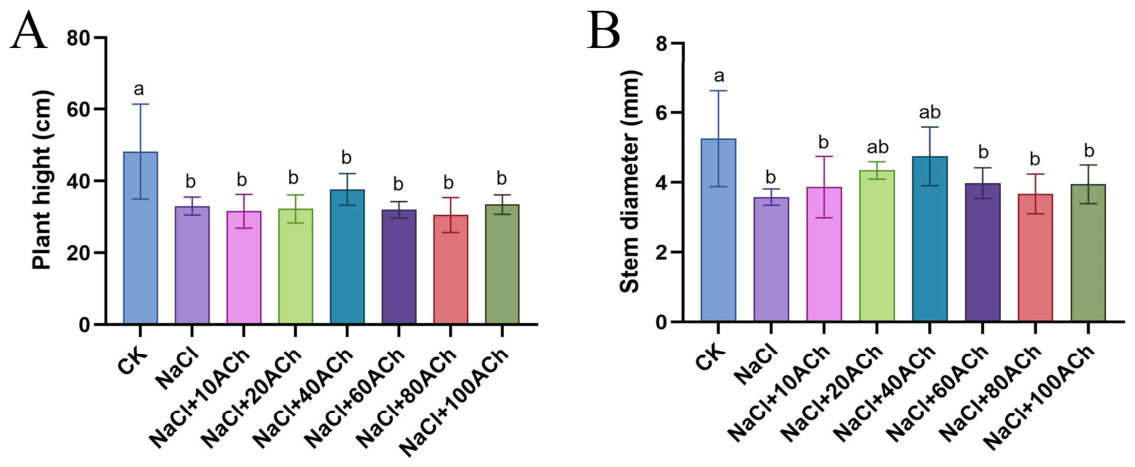
After 12 days of high-salt treatment, the plant height and stem diameter reduced to 68.53% and 68.22% of CK, respectively (Figure 1A,B). Exogenous acetylcholine treatment significantly improved plant growth under salt stress. Among all tested concentrations, the 40 μmol/L ACh treatment showed the greatest effect, significantly increasing plant height by 14.07% and stem diameter by 32.50% compared with salt treatment alone (Figure 1A,B). These results demonstrate that exogenous acetylcholine effectively alleviates salt stress-induced inhibition of grape growth and promotes aboveground biomass accumulation. Although the 14.07% increase in plant height did not reach statistical significance, it consistently indicated a trend of growth improvement, supporting the role of ACh in alleviating salt-induced growth suppression.

3.2. Exogenous Acetylcholine Enhances the Growth of Grape Roots Under High Salt Stress

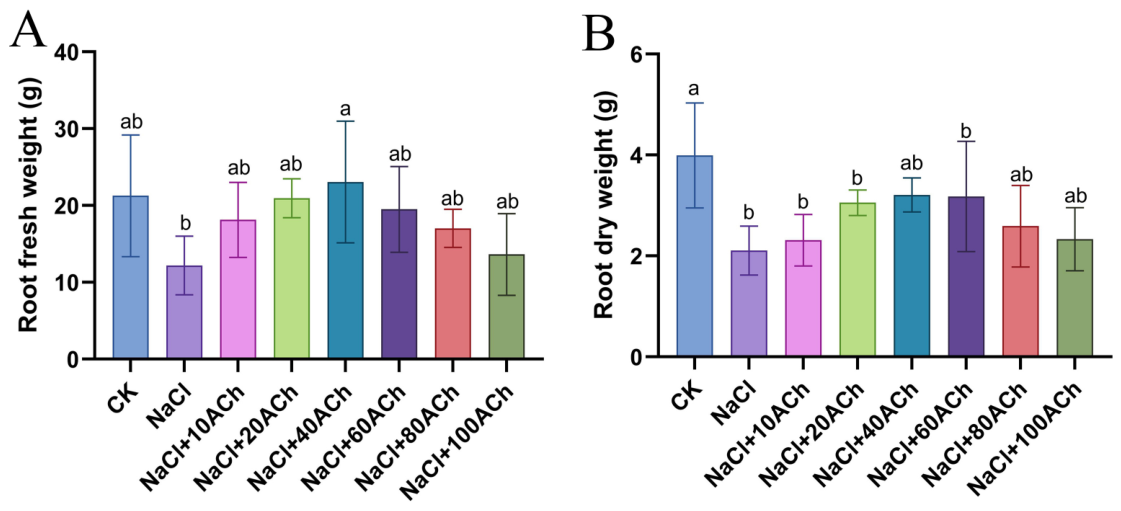
High salt stress significantly inhibits the growth of grape roots [41]. After 12 days of salt treatment, the fresh weight and dry weight of the roots decreased to 57.32% and 52.77% of the control group, respectively. Exogenous acetylcholine treatment effectively alleviated the salt stress effect, with the 40 μmol/L concentration showing the most significant effect: compared with the single salt treatment, the fresh weight and dry weight of the roots increased by 89.17% and 52.35%, respectively (Figure 2A,B).

3.3. Exogenous Acetylcholine Preserves Chlorophyll Content in Grape Under Salt Stress

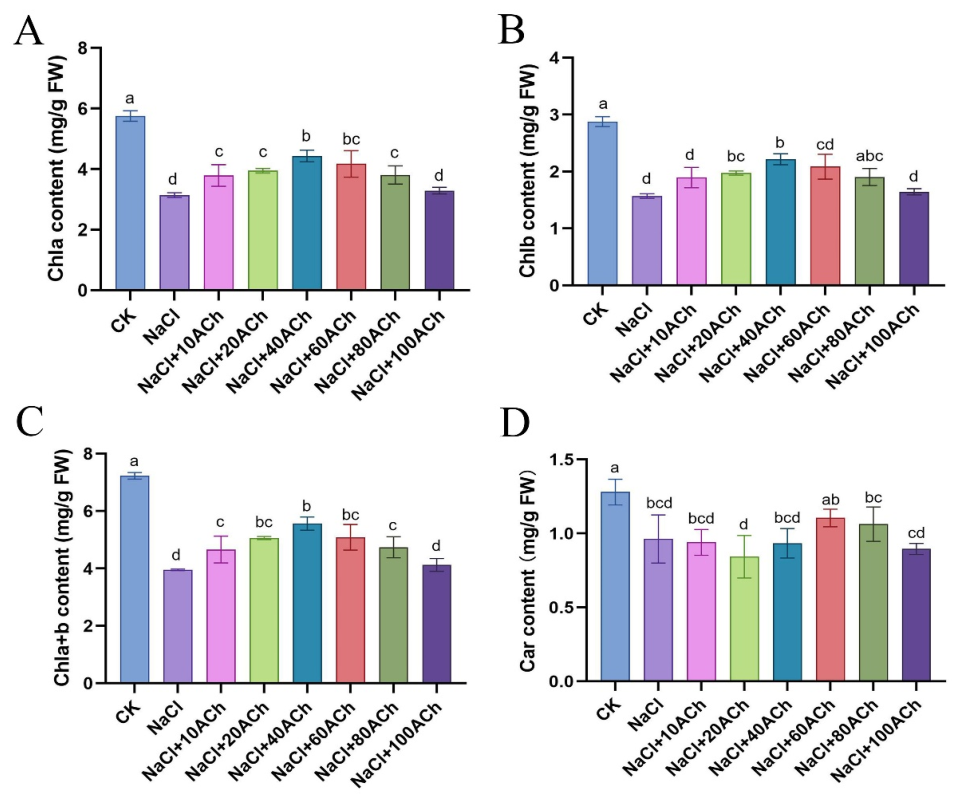
Chlorophyll, as the core pigment in the light reaction of photosynthesis, directly affects the photosynthetic efficiency of plants [42]. After 10 days of salt stress treatment, the total chlorophyll content of the plants decreased to 54.71% of the control group. Acetylcholine treatment effectively reversed this trend, with the 40 μmol/L treatment group showing the most significant effect: the contents of chlorophyll a, chlorophyll b, and total chlorophyll increased by 41.19%, 38.94%, and 40.74% respectively compared to the salt stress group (Figure 3). The experimental data indicate that acetylcholine at an appropriate concentration can effectively maintain chlorophyll homeostasis under salt stress potentially by counteracting stress-induced chlorophyll degradation.

3.4. Exogenous Acetylcholine Alleviates Salt-Induced Photosynthetic Impairment in Grape

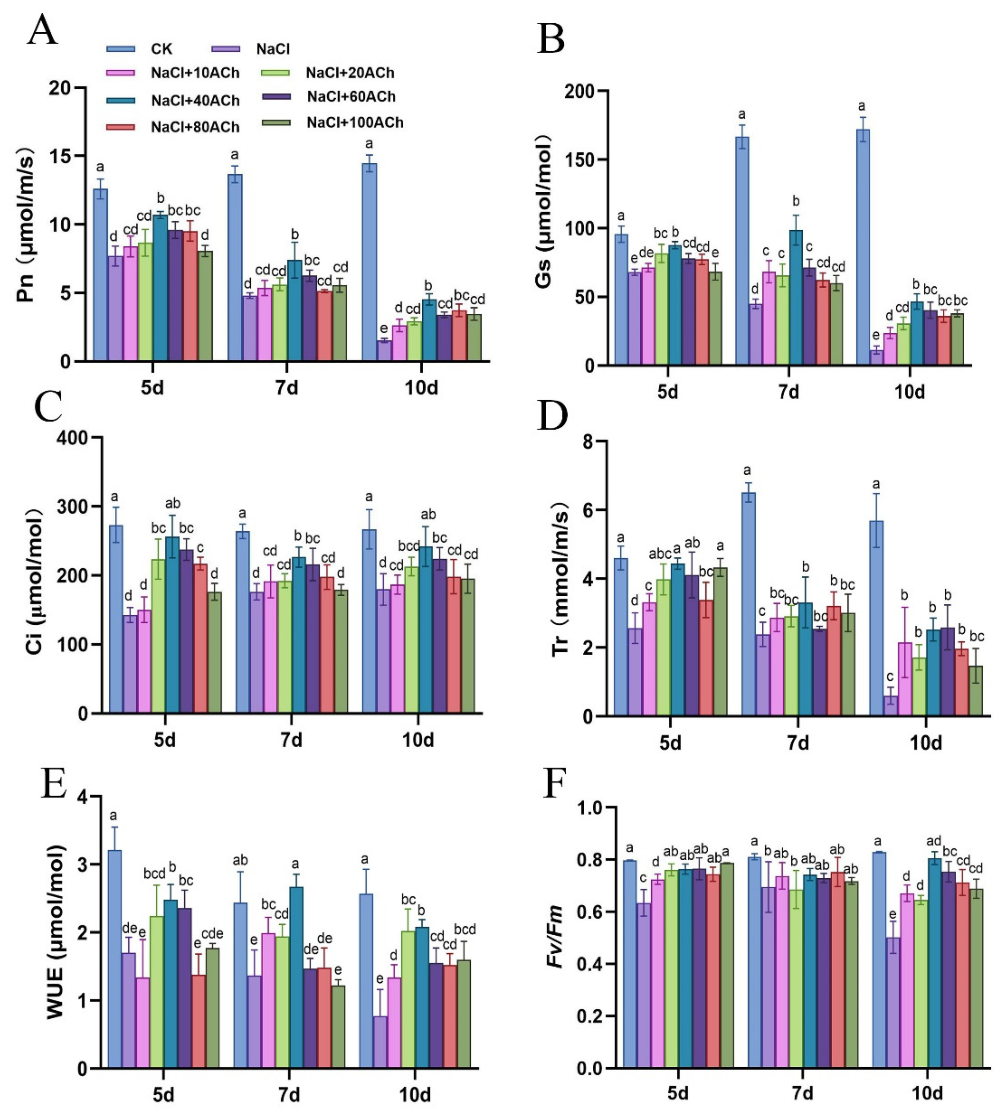
Salt stress significantly inhibited the photosynthetic physiological indices of grape seedlings [43]. After 5 days of salt treatment alone, the net photosynthetic rate (Pn), stomatal conductance (Gs), intercellular CO2 concentration (Ci), transpiration rate (Tr), and water use efficiency (WUE) were significantly lower than those of the control, and continued to decline with the extension of treatment time. By the 10th day, these indices had decreased to 10.6%, 6.59%, 67.29%, 10.48% and 30.09% of the control, respectively (Figure 4A–E). Exogenous ACh treatment (40 μmol/L) significantly mitigated salt-induced declines in Pn, Gs, Ci, Tr, and WUE, with the protective effect being most evident within the first 5–7 days (Figure 4A–E). The changes in the maximum photochemical efficiency of PSII (Fv/Fm) were consistent with this. After 10 days of salt treatment, the Fv/Fm value was only 60.61% of the control, while the 40 μmol/L acetylcholine treatment group maintained 95.67%, 91.62%, and 97.22% of the control level at each time point (5/7/10 days) (Figure 4F). The experiment confirmed that an appropriate concentration (40 μmol/L) of acetylcholine could effectively stabilize the Fv/Fm value and significantly alleviate the damage of salt stress to the photosynthetic system of grape seedlings. The above research results indicate that an appropriate concentration of acetylcholine can alleviate the inhibition of salt stress on the photosynthetic performance of grapes.

3.5. The Effect of Acetylcholine on Ion Content in Grape Under Salt Stress

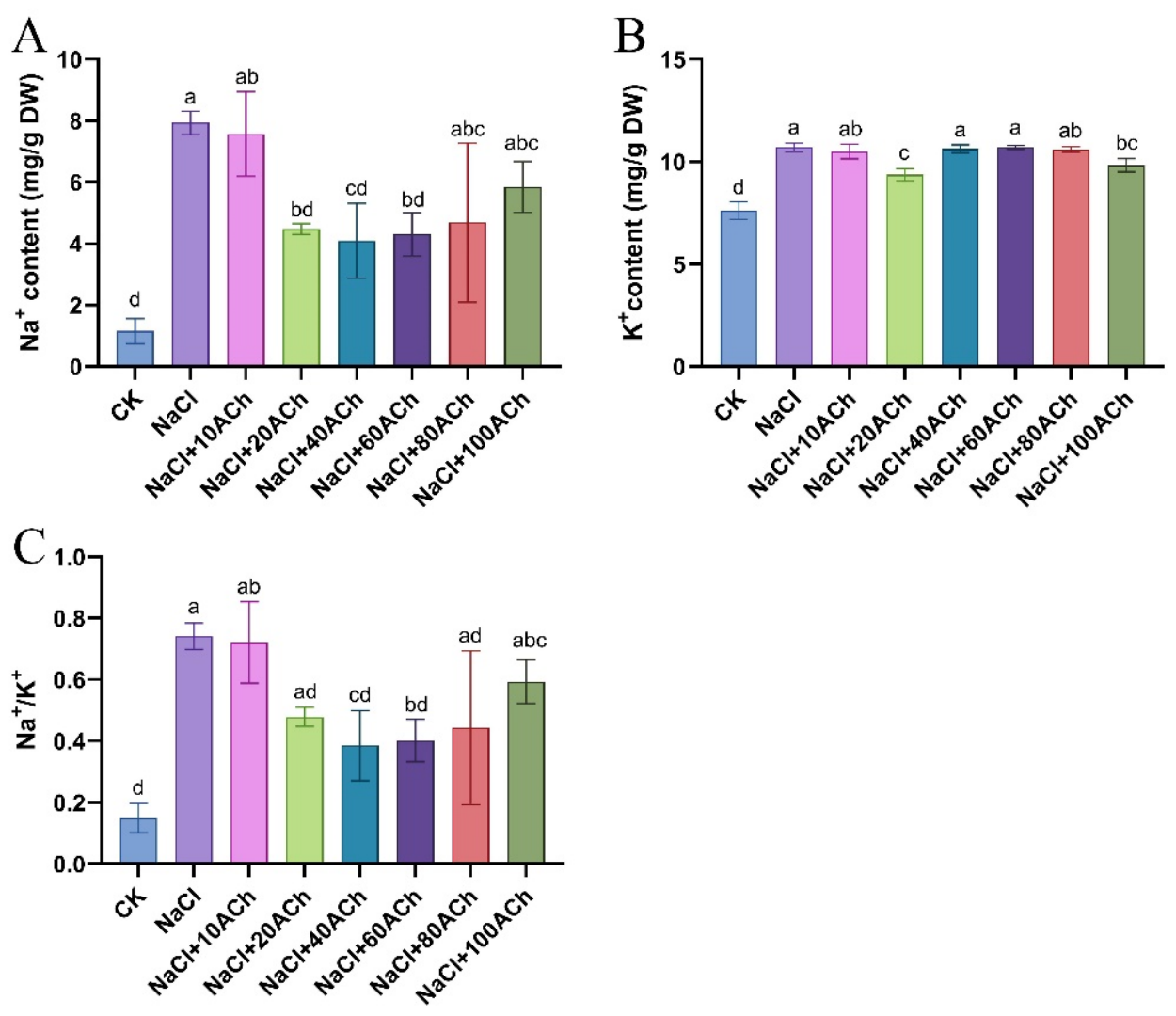
Under high salt stress, the ion homeostasis of plants can be characterized by changes in Na+ and K+ contents. Salt treatment significantly increased the Na+ and K+ contents and the Na+/K+ ratio in the leaves of grape seedlings, reaching 690.43%, 140.60%, and 494.20% of the control group, respectively (Figure 5). The observed increase in K+ content under salt stress is a known adaptive response in plants. It contributes to maintaining a favorable K+/Na+ ratio in the cytoplasm, which is essential for preserving membrane integrity and enzyme function. Additionally, K+ acts as a major osmotic solute, helping to lower cellular water. Exogenous acetylcholine treatment effectively regulated ion balance. At a concentration of 40 μmol/L, it reduced the Na+ content by 48.36% compared to the salt treatment alone, while the K+ content remained relatively stable, and the Na+/K+ ratio significantly decreased to 48.06% of the salt treatment (Figure 5). The above results indicate that exogenous application of acetylcholine under salt stress can reduce the accumulation of Na+ in grapes and maintain a stable Na+/K+ ratio.

3.6. Exogenous Acetylcholine Alleviates Salt-Induced Oxidative Stress and Electrolyte Leakage in Grape

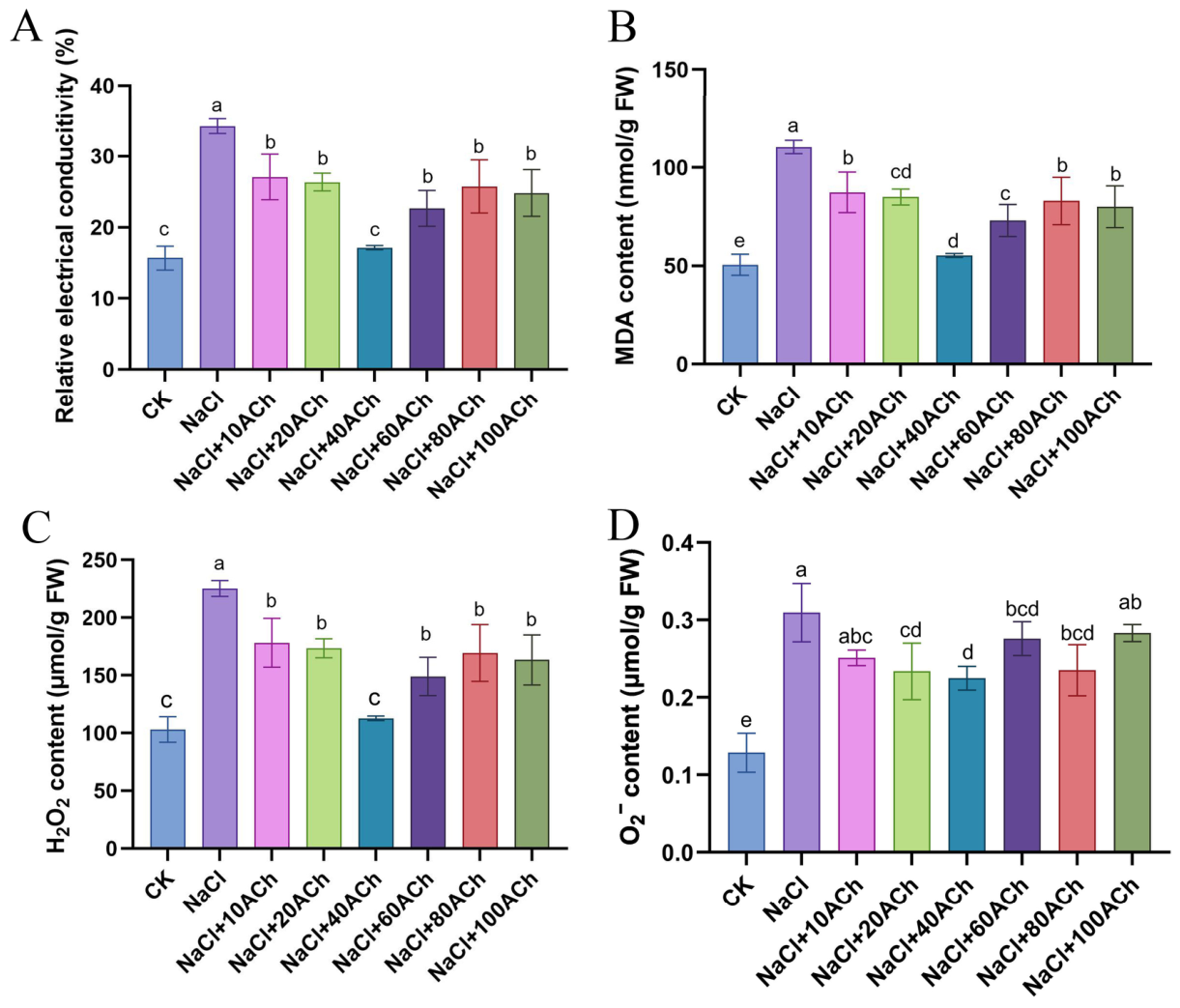
High salt treatment significantly increased the relative electrical conductivity (REC) of grape seedlings. The REC under sole salt treatment was 2.18-fold that of the control. The application of exogenous acetylcholine could alleviate the leakage of ions, and the relative conductivity of the treatment with 40 μmol/L acetylcholine was 1.09-fold that of the control. Meanwhile, we also measured the contents of MDA and reactive oxygen species (ROS) in grapes. Salt treatment alone significantly increased the contents of MDA, H2O2, and O2 in grape leaves, which were approximately 2.64-fold, 2.96-fold and 2.4-fold that of the control (CK), respectively (Figure 6). Different concentrations of exogenous acetylcholine treatment could alleviate the accumulation of reactive oxygen species. The contents of MDA, H2O2, and O2 in treatment with 40 μmol/L exogenous acetylcholine were only 57.46%, 55.99% and 72.70% of those in the sole salt treatment, respectively (Figure 6). The above results indicate that the application of acetylcholine under salt stress could alleviate the electrolyte leakage caused by the damage of grape seedling cell membranes and improve the stability of cell membranes.

3.7. Effects of Acetylcholine on Antioxidant Enzyme Activities in Grape Under Salt Stress

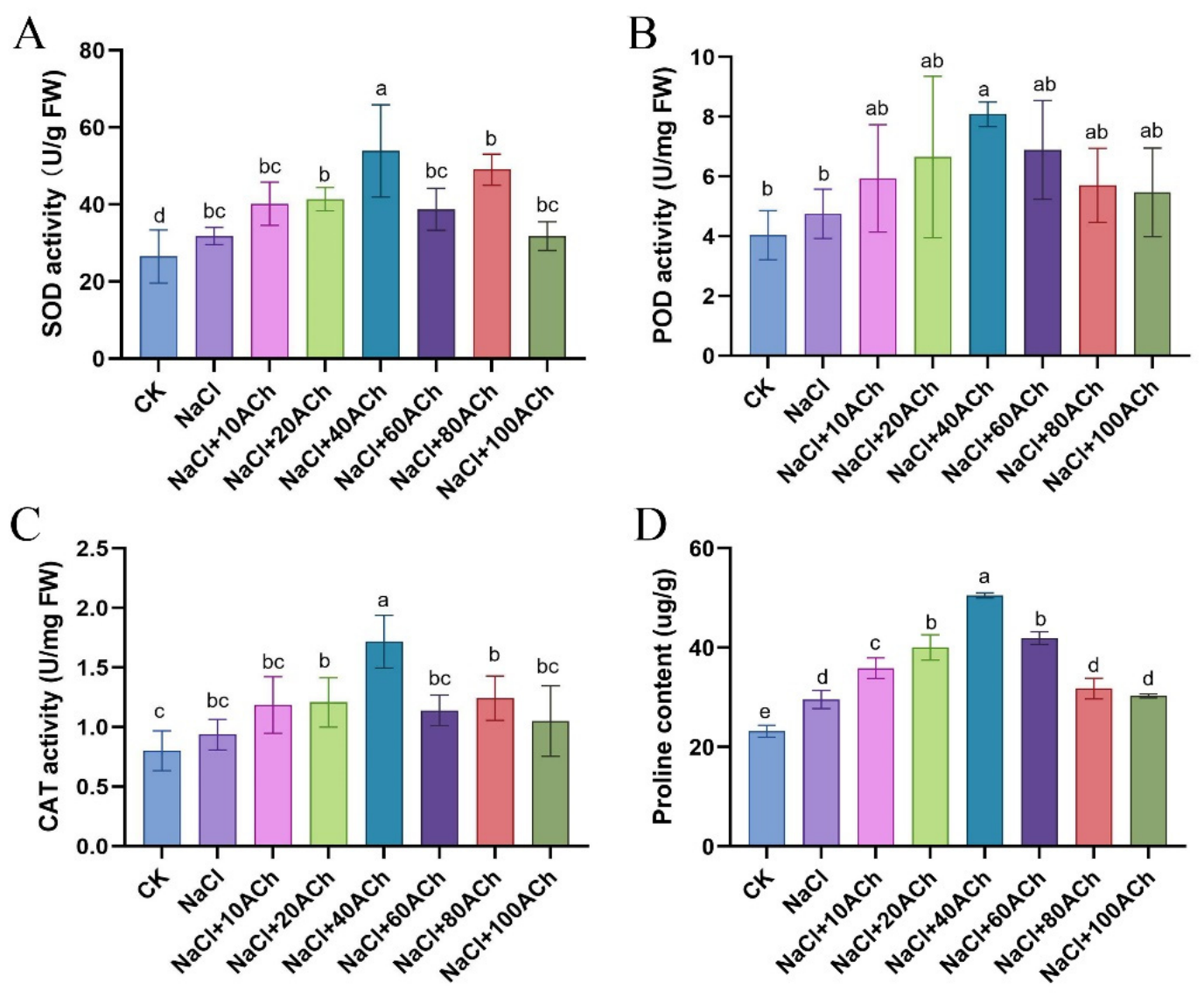
Plants eliminate excessive reactive oxygen species through the antioxidant enzyme system to alleviate oxidative damage caused by adverse stress [44]. In this experiment, the activities of SOD, POD, CAT and Proline content in the leaves of grape seedlings under high salt stress were measured. It was found that salt stress increased the activities of the four enzymes by 61.48%, 17.65%, 16.90% and 27.52% respectively compared with the control (Figure 7). Exogenous acetylcholine treatment significantly increased the activities of SOD, POD, CAT and Proline, and there was a concentration-dependent effect: the peak was reached at 40 μmol/L treatment, which was 26.03%, 70.00%, 83.13% and 70.8% higher than that of the single salt treatment, respectively, showing a typical “low promotion and high inhibition” effect (Figure 7). The results indicated that acetylcholine at an appropriate concentration could effectively alleviate the oxidative damage induced by salt stress by activating the antioxidant enzyme system.

3.8. Screening of DEGs in Grape Under Salt Stress Based on Transcriptome Analysis

A transcriptome analysis was conducted on grape leaves treated with salt and 40 μmol/L ACh (NaCl + 40 ACh) for 3 days. A total of 63.84 Gb of clean bases was obtained (average 7.09 Gb per sample), with Q20 ≥ 98%, Q30 ≥ 96%, and GC content ranging from 45.54% to 46.19% (Table S2), providing a robust data foundation for subsequent analyses.
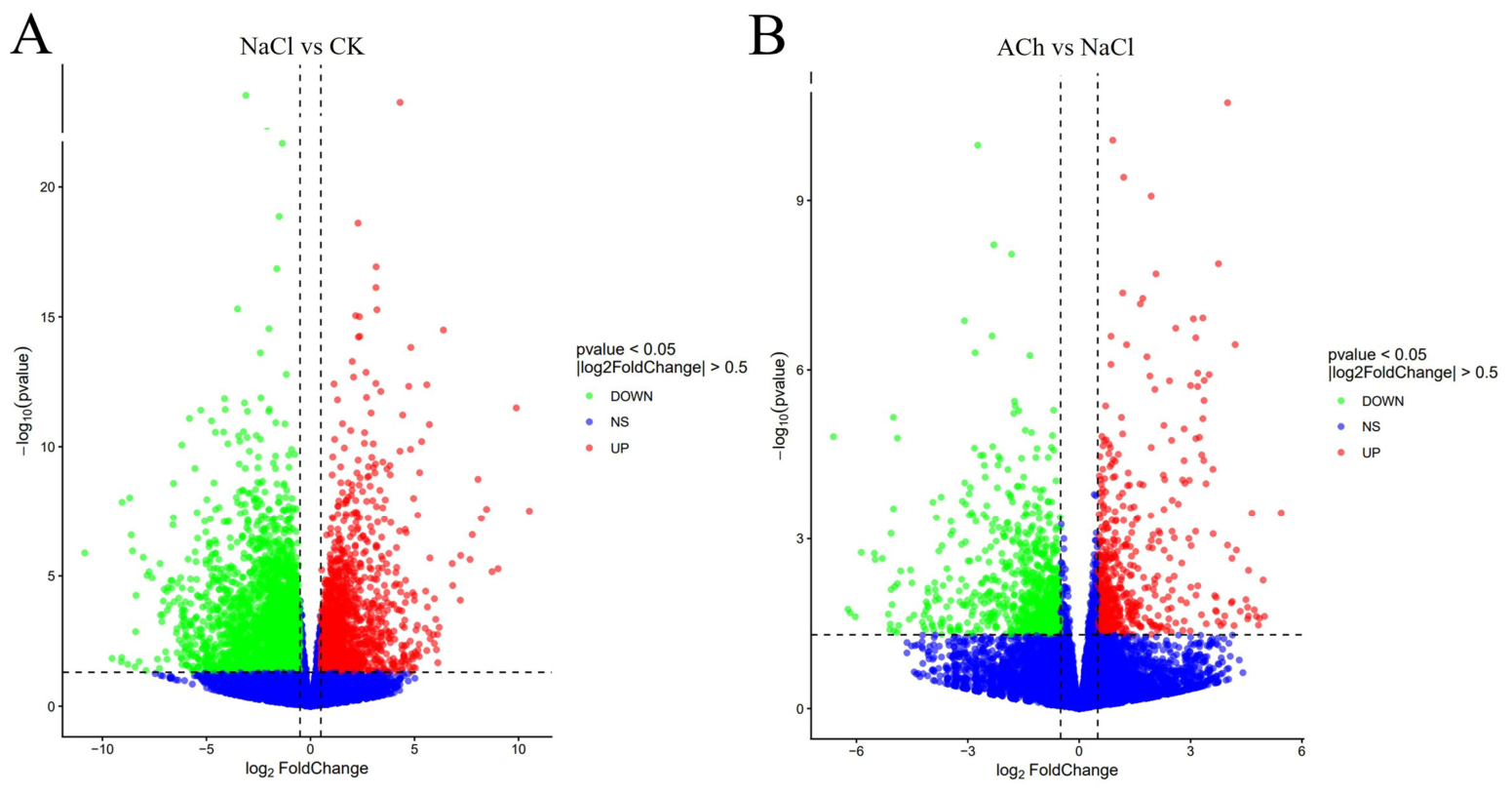
Differential gene expression analysis was performed based on the screening thresholds of padj < 0.05 and |log2Foldchange| > 0.5 (Figure 8). Volcano plot analysis revealed 4083 DEGs between the control (CK) and high-salt treatment group (NaCl), with 1553 up-regulated and 2533 down-regulated genes; and 1770 DEGs between the salt treatment group (NaCl) and salt + acetylcholine group (ACh), including 844 up-regulated and 926 down-regulated genes.
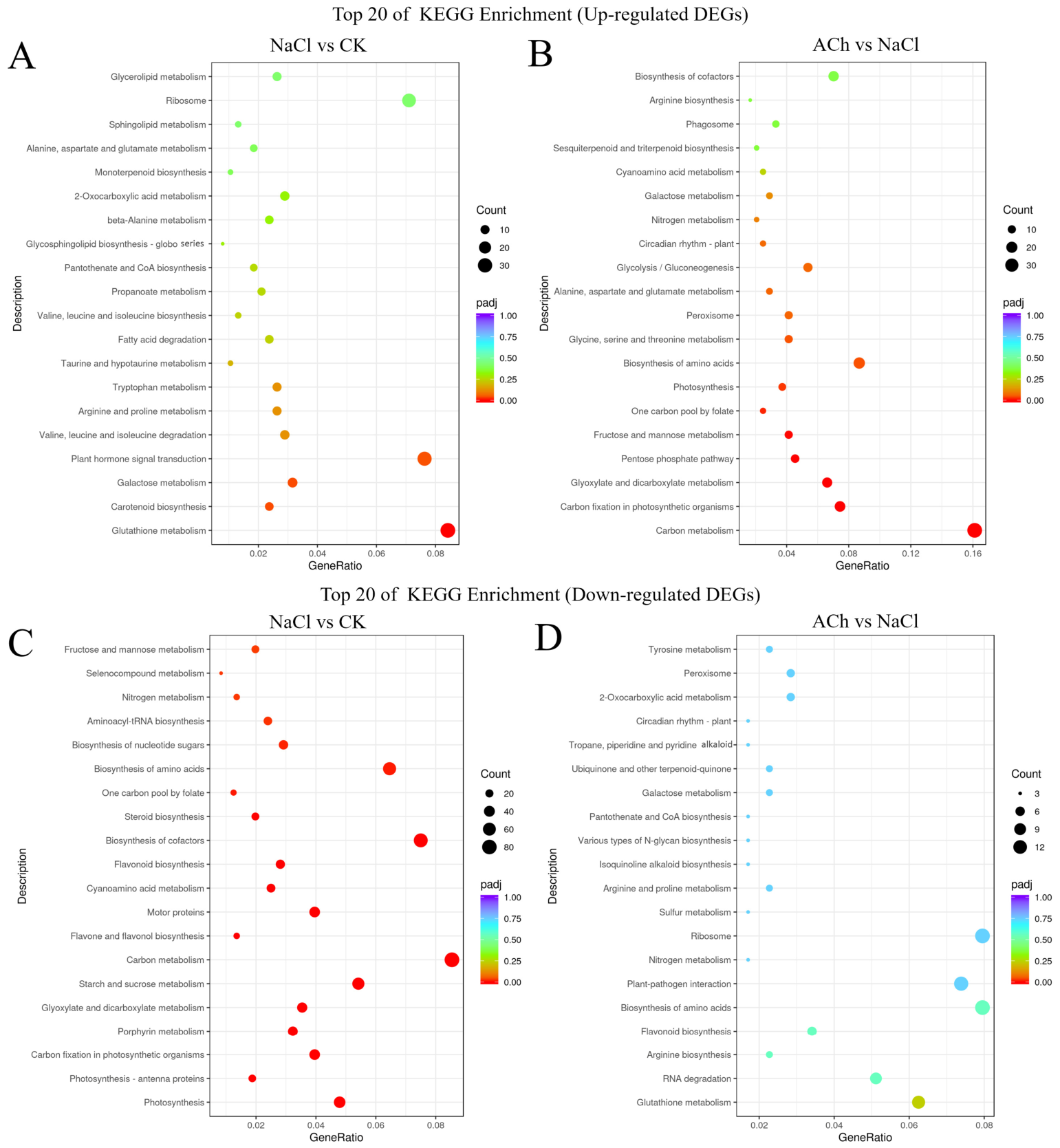
Our transcriptomic analysis revealed a coordinated transcriptional reprogramming across several core metabolic pathways, as illustrated in Figure 8 and Figure 9. In the KEGG analysis of DEGs between the NaCl vs. CK groups, the significantly up-regulated genes were primarily enriched in pathways including Glutathione metabolism, Carotenoid biosynthesis, Galactose metabolism, Plant hormone signal transduction et al. (Figure 9A). While the down-regulated differentially expressed genes were mainly involved in Photosynthesis, Photosynthesis-antenna proteins, Carbon fixation in photosynthetic organisms, Porphyrin metabolism, Glyoxylate and dicarboxylate metabolism, Starch and sucrose metabolism, Carbon metabolism, Flavone and flavonol biosynthesis et al. (Figure 9C).
In the KEGG analysis of DEGs between the ACh vs. NaCl groups, the up-regulated genes were primarily enriched in pathways including Carbon metabolism, Carbon fixation in photosynthetic organisms, Glyoxylate and dicarboxylate metabolism, Pentose phosphate pathway, One carbon pool by folate, Photosynthesis, Biosynthesis of amino acids, Peroxisome et al. (Figure 9B). The down-regulated genes were primarily enriched in pathways including Glutathione metabolism, RNA degradation, Arginine biosynthesis, Biosynthesis of amino acids, Plant-pathogen interaction, Nitrogen metabolism, Ribosome et al. (Figure 9D).

3.9. The Differentially Expressed Genes (DEGs) Induced by ACh Under Salt Stress

3.9.1. The DEGs Involved in ‘Photosynthesis’ and ‘Carbon Fixation in Photosynthetic Organisms’ Pathway

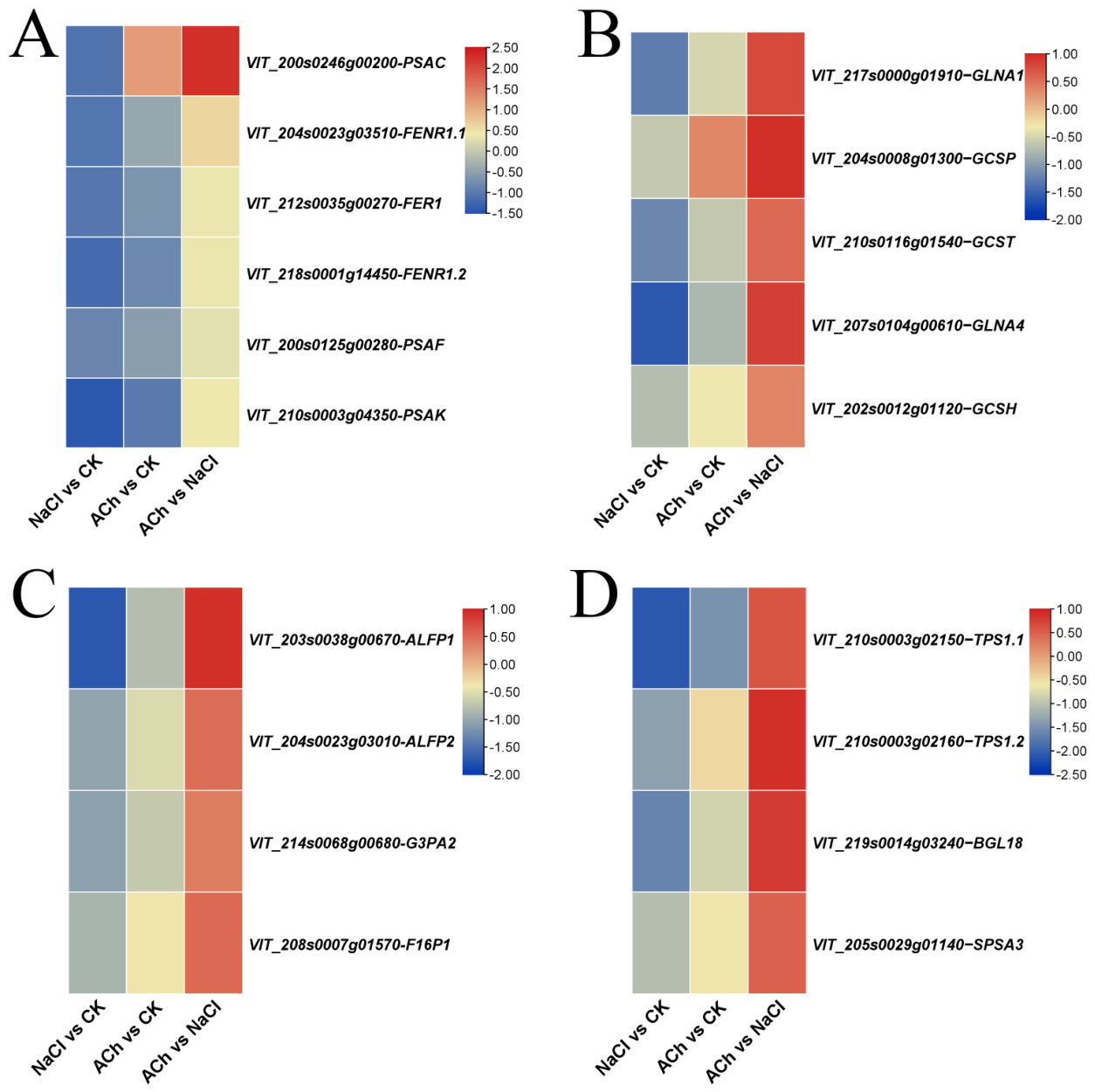
Salt stress disrupts the chloroplast structure, impairs the synthesis of photosynthetic pigments, and induces stomatal closure, thereby severely inhibiting photosynthesis [45]. In the ‘photosynthesis’ pathway, DEGs encoded proteins responsible for such activities as electron transport, water-splitting, subunits of photosystem I or II, and ATPase. Notably, of these genes in the ‘photosynthesis’ pathway in this study, a PSAC gene was identified. The PSAC is a Photosystem I iron-sulfur center protein, which functions to accept and transfer electrons within the complex. In this study, the expression of the VvPSAC (VIT_200s0246g00200) gene was increased 4.87-fold under ACh relative to NaCl (Figure 10, Table S3). In addition, four DEGs related to ‘Carbon fixation in photosynthetic organism’ pathway (VvALFP1, VvALFP2, VvG3PA2, VvF16P1) were significantly up-regulated in NaCl + ACh treatment.

3.9.2. DEGs Related to Carbon Metabolism

Carbon metabolism is a central metabolic network that integrates photosynthetic carbon fixation, sugar biosynthesis, and energy production, playing a critical role in plant growth and stress responses [46]. Under salt stress, the reprogramming of carbon metabolism helps maintain cellular energy status, provide carbon skeletons for osmoprotectant synthesis, and support ROS scavenging mechanisms [47,48]. In this study, exogenous ACh treatment under NaCl stress significantly up-regulated key genes involved in carbon metabolism pathways, particularly those related to trehalose biosynthesis. The TPS (trehalose 6-phosphate synthase) gene family is pivotal in controlling trehalose synthesis [49]. Its expression products assist plants in effectively mitigating environmental stresses, such as salinity, through a dual mechanism involving signaling regulation and direct protective effects. As a functional gene, it has garnered significant attention in plant stress resistance research [50]. Based on our transcriptome data, we found VvTPS1.1 (VIT_210s0003g02150) and VvTPS1.2 (VIT_210s0003g02160) were significantly up-regulated in NaCl + ACh treatment. These results suggest that ACh may enhance salt tolerance in grapevines by activating carbon metabolism pathways that support osmoprotectant biosynthesis and energy homeostasis.

3.9.3. DEGs Related to Peroxisome

Peroxisomes are essential organelles involved in various metabolic processes, including reactive oxygen species (ROS) metabolism and fatty acid β-oxidation, which play critical roles in plant adaptation to abiotic stresses [51]. Under salt stress, the perturbation of peroxisomal homeostasis often leads to the accumulation of toxic byproducts, exacerbating oxidative damage. In this study, exogenous ACh treatment under NaCl stress significantly up-regulated several peroxisome-related genes. Notably, a gene encoding superoxide dismutase (VIT_214s0030g00835, VvSODC2), a key antioxidant enzyme involved in ROS scavenging, was up-regulated 1.86-fold under NaCl + ACh compared to NaCl alone (Table S3). Additionally, a hydroxymethylglutaryl-CoA lyase gene (VIT_206s0009g02640, VvACOX1), which participates in ketone body metabolism and may contribute to peroxisomal metabolic homeostasis, was up-regulated 1.67-fold (Table S3). These results suggest that ACh may enhance peroxisomal functions related to ROS detoxification and metabolic regulation, thereby contributing to the alleviation of salt-induced oxidative stress in grapevines.

3.9.4. DEGs Related to Hormone Signal Transduction

ABA (abscisic acid), a central regulator of many plant responses to environmental stresses, plays a crucial role in salt stress defense [52,53]. Genes involved in the ABA signaling pathway are critical for plant stress resistance. Seven DEGs related to ABA signaling (VvP2C37, VvAI5L7, VvP2C76, VvP2C57, VvP2C55, VvCPBP and VvP2C40) were significantly up-regulated in NaCl + ACh treatment (Table S3). The up-regulation of these genes allows plants to better mitigate the damage caused by salt stress.

3.10. Validation of Transcriptome Data by qRT-PCR

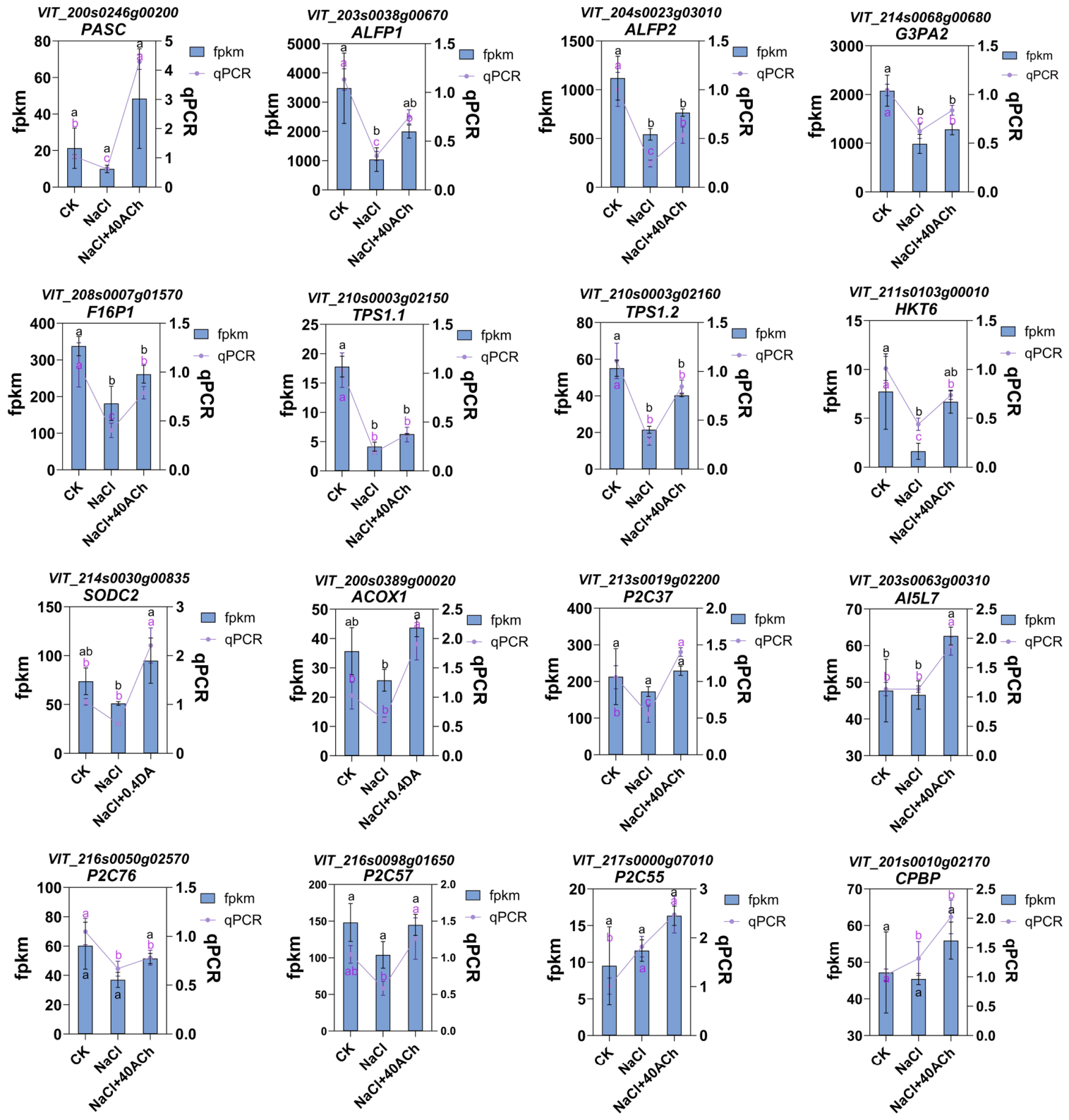
To verify the reliability of the transcriptome data, the qRT-PCR was performed to validate the expression patterns of 16 randomly selected candidate genes, including photosynthesis-related genes (VvPSAC), Carbon fixation in photosynthetic organism-related genes (VvALFP1, VvALFP2, VvG3PA2, VvF16P1), Starch and Sucrose Metabolism-related genes (VvTPS1.1, VvTPS1.2), ion transport-related genes (VvHKT6), Peroxisome-related genes (VvSODC2, VvACOX1) and ABA signaling-related genes (VvP2C37, VvAI5L7, VvP2C76, VvP2C57, VvP2C55, and VvCPBP). The results showed that both qRT-PCR and transcriptome sequencing data exhibited highly consistent expression trends (Figure 11), indicating that the transcriptome sequencing results are reliable.

4. Discussion

Salinity is recognized as a major abiotic constraint inhibiting plant growth and yield [2,3]. Acetylcholine (ACh) is an evolutionarily conserved signaling molecule involved in diverse physiological processes in plants, including stomatal movement [16], root development [19], photosynthesis [20], and substance transport [17]. In this study, we present physiological and transcriptomic evidence suggesting that exogenous ACh mitigates salt stress in grapevines. Among the concentrations tested, 40 μmol/L ACh appeared most effective under our experimental conditions. A dose-dependent trend was also observed. Lower concentrations (10–20 μmol/L) conferred modest benefits, whereas higher concentrations (80–100 μmol/L) were less effective or even inhibitory. This pattern is suggestive of a “low promotion, high inhibition” effect. Our findings point to interconnected mechanisms through which ACh may alleviate salt-induced damage, including growth promotion, enhanced photosynthesis, ion homeostasis, and antioxidant defense activation. The data presented are primarily correlative, and the proposed mechanistic interpretations should be regarded as working hypotheses.

4.1. ACh Is Associated with Preserved Photosynthetic Integrity and Carbon Assimilation Under Salt Stress

Salt stress is known to inhibit photosynthesis, thereby limiting plant growth and biomass accumulation [7,54]. Our results indicate that exogenous ACh application, particularly at 40 μmol/L, was associated with a partial alleviation of this inhibition. At the physiological level, ACh-treated plants exhibited higher chlorophyll content (Figure 3), maintained higher maximal photochemical efficiency of PSII (Fv/Fm; Figure 4F), and showed less pronounced suppression of gas exchange parameters (Pn, Gs; Figure 4A,B). These observations are consistent with a protective effect of ACh on the photosynthetic apparatus against salt-induced damage.
Our transcriptomic analysis provides potential molecular correlates for these physiological observations. KEGG enrichment analysis revealed that salt stress alone was associated with widespread down-regulation of genes involved in core photosynthetic pathways, including “Photosynthesis”, “Photosynthesis-antenna proteins”, and “Carbon fixation in photosynthetic organisms” (Figure 9C). Notably, when the ACh-treated group was compared with the salt-stressed group, these same pathways were significantly enriched among up-regulated genes (Figure 9B and Figure 10A,C). The reliability of these expression changes was further supported by qRT-PCR validation, which demonstrated consistent expression trends for selected genes involved in photosynthesis (e.g., VvPSAC) and carbon fixation (e.g., VvALFP1, VvALFP2, VvG3PA2, VvF16P1) (Figure 11). This pattern is consistent with the hypothesis that ACh may modulate the transcriptome to enhance the expression of genes critical for light capture, electron transport, and the Calvin cycle.
Beyond photosynthetic pathways, carbon metabolism also plays a critical role in plant stress responses [46]. Under salt stress, the reprogramming of carbon metabolism helps maintain cellular energy status and support osmoprotectant synthesis [47,48]. In our study, ACh treatment significantly up-regulated key genes involved in trehalose biosynthesis, including VvTPS1.1 and VvTPS1.2 (Table S3). The TPS gene family is known to assist plants in mitigating salinity stress through signaling regulation and direct protective effects [49,50]. These findings suggest that ACh may enhance salt tolerance not only by preserving photosynthetic integrity but also by activating carbon metabolism pathways that support osmoprotectant biosynthesis and energy homeostasis. Whether these transcriptional changes represent a direct effect of ACh signaling or an indirect consequence remains to be determined.

4.2. ACh Is Associated with Modulated Ion Homeostasis and Reduced Sodium Toxicity

Ionic imbalance, particularly Na+ accumulation and a high Na+/K+ ratio, is a primary cause of metabolic dysfunction under salt stress [55,56]. Our physiological data indicate that ACh treatment was associated with a 48.36% reduction in leaf Na+ content and a 48.06% decrease in the Na+/K+ ratio (Figure 5). These observations suggest that ACh may promote Na+ exclusion from leaves or its sequestration into vacuoles, consistent with previous reports in Nicotiana benthamiana in which ACh was shown to modulate the expression of ion transporters (e.g., NHX, AKT1, HKT1) [25,57]. In our transcriptomic data, the expression of VvHKT6 (a putative cation transporter) was increased 4.11-fold in ACh-treated plants relative to salt-treated controls (Table S2). This result was further validated by RT-qPCR, which confirmed the up-regulation of VvHKT6 in response to ACh treatment (Figure 11). Although this correlation is intriguing, it does not demonstrate causality. Collectively, these findings suggest that ACh may enhance salt tolerance in part through modulation of ion homeostasis, specifically by contributing to a lower Na+/K+ ratio, which is known to be important for enzymatic activity and plant adaptation.

4.3. ACh Is Associated with Enhanced Oxidative Stress Tolerance and Activation of the Antioxidant System

Salt stress is known to induce the overproduction of reactive oxygen species (ROS), leading to oxidative damage such as lipid peroxidation, as reflected by elevated MDA levels and increased REC [58,59]. Our results show that ACh treatment was associated with significantly reduced accumulation of H2O2, O2, and MDA, as well as lower REC (Figure 6), which is consistent with reduced oxidative damage and improved membrane stability. In line with this observation, ACh-treated plants exhibited higher activities of key antioxidant enzymes, including SOD, POD, and CAT, as well as increased proline (Pro) content (Figure 7). These findings support the interpretation that ACh treatment enhances the ROS-scavenging capacity of the antioxidant system.
Our transcriptomic analysis further revealed that ACh treatment significantly up-regulated peroxisome-related genes involved in ROS detoxification. Notably, a gene encoding superoxide dismutase (VvSODC2), a key antioxidant enzyme, was up-regulated 1.86-fold, and a hydroxymethylglutaryl-CoA lyase gene (VvACOX1), which participates in peroxisomal metabolic homeostasis, was up-regulated 1.67-fold under NaCl + ACh compared to NaCl alone (Table S3). These results suggest that ACh may enhance peroxisomal functions related to ROS detoxification and metabolic regulation. Additionally, salt stress alone up-regulated genes in the glutathione metabolism pathway (Figure 9), likely representing an innate defense response. In the ACh vs. NaCl comparison, the glutathione metabolism pathway was enriched among down-regulated genes. One possible interpretation is that ACh reduces the overall oxidative burden, thereby diminishing the need for glutathione-related stress signaling. qRT-PCR validation confirmed the expression patterns of peroxisome-related genes (e.g., VvSODC2, VvACOX1), showing good agreement with the transcriptomic data (Figure 11). These correlative observations point to a coordinated metabolic adjustment involving peroxisomal ROS detoxification and antioxidant enzyme activation.

4.4. Potential Involvement of Hormone Signaling Pathways

Our transcriptomic data revealed that several genes involved in abscisic acid (ABA) signaling (e.g., VvP2C37, VvP2C57) were differentially expressed in response to ACh treatment, a pattern confirmed by qRT-PCR (Figure 11, Table S3). While this observation raises the possibility of crosstalk between ACh and ABA signaling [52,53], our data do not provide direct evidence for such an interaction. The observed expression changes could be secondary effects of improved plant physiological status rather than direct targets of ACh signaling. Therefore, the potential crosstalk between ACh and ABA signaling remains speculative at this stage.
Several limitations of this study should be acknowledged. First, the interpretation that 40 μmol/L is the most effective concentration for ACh-mediated salt stress alleviation is based on a single experiment using one grapevine genotype (‘Summer Black’) under controlled greenhouse conditions. Our observation of a dose-dependent trend should not be overinterpreted as a full characterization of the concentration–response relationship across different genetic backgrounds or environments. Second, although our transcriptomic analysis revealed numerous gene expression changes associated with ACh treatment, these data are inherently correlative. Nevertheless, the high concordance between RNA-seq and qRT-PCR results for the 16 selected genes (Figure 11) supports the reliability of our transcriptomic data. Third, no canonical ACh receptor has been unequivocally identified in plants; whether the observed effects are direct or mediated through other signaling molecules remains an open question [12,13]. Fourth, the 200 mM NaCl treatment used in this study represents a severe stress level [7,10]. Therefore, the observed physiological changes should be interpreted as near-threshold stress responses rather than direct models of moderate, field-realistic salinity, and extrapolation of these results to agronomic conditions should be made with caution [60,61].
Despite these limitations, our study provides a comprehensive dataset and a conceptual framework for understanding how ACh may enhance salt tolerance in a woody perennial species. The observed correlations generate testable hypotheses for future mechanistic studies, including functional validation of candidate genes, identification of putative plant ACh receptors, and testing across diverse varieties and field conditions.

5. Conclusions

In summary, this integrated study provides physiological and transcriptomic evidence consistent with the hypothesis that exogenous ACh enhances salt stress tolerance in grapevines through multiple interconnected mechanisms. Under our experimental conditions, 40 μmol/L ACh appeared to be correlated with (1) transcriptional reinforcement of photosynthetic and carbon metabolism pathways; (2) modulation of ion transporter expression associated with reduced Na+ accumulation; and (3) enhancement of antioxidant enzyme activities linked to reduced oxidative damage. The observed dose-dependent pattern highlights the importance of concentration optimization for potential application. These findings advance our understanding of cholinergic signaling in plant stress physiology and provide a basis for exploring ACh as a potential biostimulant to enhance crop resilience in salinized soils.

Supplementary Materials

The following supporting information can be downloaded at https://www.mdpi.com/article/10.3390/horticulturae12060677/s1. Table S1: The primers used for qPCR; Table S2: Summary of Sample Sequencing Data Quality; Table S3: The differently expressed genes (DEGs) induced by ACh under salt stress.

Author Contributions

Conceptualization, Z.Z. and Q.Z.; methodology, Z.Z. and Q.Z.; software, X.L.; validation, Q.Z. and Z.H.; formal analysis, Q.Z. and L.L.; investigation, X.L. and Z.H.; resources, X.L.; data curation, Q.Z. and Z.Z.; writing—original draft preparation, Q.Z.; writing—review and editing, Z.Z., B.L. and Q.Z.; visualization, L.L.; supervision, B.L. and Z.Z.; project administration, B.L. All authors have read and agreed to the published version of the manuscript.

Funding

This work was supported by the Key R&D Program of Shandong Province (Grant No. 2023TZXD015), Special Project of the National Modern Grape Industry Technology System (CARS-29-16), the Scientific Research Guide Foundation of Shandong Academy of Grape (SDAG2021B11).

Data Availability Statement

The transcriptome has been deposited into the China National Center for Bioinformation with the code CRA042562 (https://ngdc.cncb.ac.cn/gsa/browse/CRA042562, accessed on 7 May 2026).

Conflicts of Interest

The authors declare no conflicts of interest.

Abbreviations

The following abbreviations are used in this manuscript:
AChAcetylcholine
NaClSodium Chloride
PnPhotosynthetic Rate
GsStomatal Conductance
Ci Intercellular CO2 Concentration
TrTranspiration Rate
WUEWater Utilization Rate
Fv/FmMaximum Quantum Yield of Photo System II
ROSReactive Oxygen Species
SODSuperoxide Dismutase
PODPeroxidase
CATCatalase
H2O2Hydrogen Peroxide
O2Superoxide Anion Radical
MDAMalondialdehyde
RECRelative Electrical Conductivity
DEGsDifferentially Expressed Genes
FPKMFragments Per Kilobase of Transcript per Million Fragments Mapped
GOGene Ontology
KEGGKyoto Encyclopedia of Genes and Genomes
ABAAbscisic Acid

References

  1. Van Zelm, E.; Zhang, Y.; Testerink, C. Salt tolerance mechanisms of plants. Annu. Rev. Plant Biol. 2020, 71, 403–433. [Google Scholar] [CrossRef]
  2. Hu, Y.; Schmidhalter, U. Opportunity and challenges of phenotyping plant salt tolerance. Trends Plant Sci. 2023, 28, 552–566. [Google Scholar] [CrossRef]
  3. Zhou, H.; Shi, H.; Yang, Y.; Feng, X.; Chen, X.; Xiao, F.; Lin, H.; Guo, Y. Insights into plant salt stress signaling and tolerance. J. Genet. Genom. 2024, 51, 16–34. [Google Scholar] [CrossRef] [PubMed]
  4. Raza, A.; Bashir, S.; Khare, T.; Karikari, B.; Copeland, R.G.R.; Jamla, M.; Abbas, S.; Charagh, S.; Nayak, S.N.; Djalovic, I.; et al. Temperature-smart plants: A new horizon with omics-driven plant breeding. Physiol. Plant 2024, 176, e14188. [Google Scholar] [CrossRef]
  5. Hamrouni, L.; Abdallah, F.B.; Abdelly, C.; Ghorbel, A. La culture in vitro: Un moyen rapide et efficace pour sélectionner des génotypes de vigne tolérant la salinité. Compt. Rend. Biol. 2008, 331, 152–163. [Google Scholar] [CrossRef] [PubMed]
  6. Ma, L.; Li, J.; Li, J.; Huo, Y.; Yang, Y.; Jiang, C.; Guo, Y. Plant salt-tolerance mechanisms: Classic signaling pathways, emerging frontiers, and future perspectives. Mol. Plant 2026, 19, 538–570. [Google Scholar] [CrossRef]
  7. Lu, X.; Ma, L.; Zhang, C.; Yan, H.; Bao, J.; Gong, M.; Wang, W.; Li, S.; Ma, S.; Chen, B. Grapevine (Vitis vinifera) responses to salt stress and alkali stress: Transcriptional and metabolic profiling. BMC Plant Biol. 2022, 22, 528. [Google Scholar] [CrossRef] [PubMed]
  8. Walker, R.R.; Blackmore, D.H.; Clingeleffer, P.R.; Correll, R.L. Rootstock effects on salt tolerance of irrigated field-grow grapevines (Vitis vinifera L. cv. Sultana.) 1. Yield and vigour interrelationships. Aust. J. Grape Wine Res. 2002, 8, 3–14. [Google Scholar] [CrossRef]
  9. Walker, R.R.; Blackmore, D.H.; Clingeleffer, P.R.; Correll, R.L. Rootstock effects on salt tolerance of irrigated field-grown grapevines (Vitis vinifera L. cv. Sultana) 2. Ion concentrations in leaves and juice. Aust. J. Grape Wine Res. 2004, 10, 90–99. [Google Scholar] [CrossRef]
  10. Daldoul, S.; Hanzouli, F.; Hamdi, Z.; Chenenaoui, S.; Wetzel, T.; Nick, P.; Mliki, A.; Gargouri, M. The root transcriptome dynamics reveals new valuable insights in the salt-resilience mechanism of wild grapevine (Vitis vinifera subsp. sylvestris). Front. Plant Sci. 2022, 13, 1077710. [Google Scholar] [CrossRef]
  11. Tanveer, M.; Shabala, S. Neurotransmitters in Plant Signaling and Communication; Neurotransmitters in Signalling and Adaptation to Salinity Stress in Plants; Baluška, F., Mukherjee, S., Ramakrishna, A., Eds.; Springer: Cham, Switzerland, 2020; pp. 49–73. [Google Scholar]
  12. Malakar, P.; Gupta, S.K.; Chattopadhyay, D. Role of plant neurotransmitters in salt stress: A critical review. Plant Physiol. Biochem. 2024, 211, 108601. [Google Scholar] [CrossRef] [PubMed]
  13. Dehghanian, Z.; Ahmadabadi, M.; Asgari Lajayer, B.; Bagheri, N.; Chamani, M.; Gougerdchi, V.; Hamedpour-Darabi, M.; Shu, W.; Price, G.W.; Dell, B. Role of neurotransmitters (Biomediators) in plant responses to stress. Plants 2024, 13, 3134. [Google Scholar] [CrossRef]
  14. Wang, H.; Zhang, S.; Wang, X.; Lou, C. Role of acetylcholine on plant root-shoot signal transduction. Chin. Sci. Bull. 2003, 48, 570–573. [Google Scholar] [CrossRef]
  15. Murata, J.; Watanabe, T.; Sugahara, K.; Yamagaki, T.; Takahashi, T. High-resolution mass spectrometry for detecting Acetylcholine in Arabidopsis. Plant Signal. Behav. 2015, 10, e1074367. [Google Scholar] [CrossRef] [PubMed]
  16. Wang, H.; Zhang, S.; Wang, X.; Lou, C. Involvement of Ca2+/CaM in the signal transduction of acetylcholine regulating stomatal movement. Chin. Sci. Bull. 2003, 48, 351–354. [Google Scholar] [CrossRef]
  17. Leng, Q.; Hua, B.; Guo, Y.; Lou, C. Regulating role of acetylcholine and its antagonists in inward rectified K(+) channels from guard cell protoplasts of Vicia faba. Sci. China Life Sci. 2000, 43, 217–224. [Google Scholar] [CrossRef]
  18. Jia, W.; Zhang, J. Stomatal movements and long-distance signaling in plants. Plant Signal. Behav. 2008, 3, 772–777. [Google Scholar] [CrossRef]
  19. Brenner, E.D.; Stahlberg, R.; Mancuso, S.; Vivanco, J.; Baluska, F.; Van Volkenburgh, E. Plant neurobiology: An integrated view of plant signaling. Trends Plant Sci. 2006, 11, 413–419. [Google Scholar] [CrossRef] [PubMed]
  20. Sarangle, Y.; Bamel, K.; Purty, R.S. Role of acetylcholine and acetylcholinesterase in improving abiotic stress resistance/tolerance. Commun. Integr. Biol. 2024, 28;17, 2353200. [Google Scholar] [CrossRef]
  21. Nelson, N.; Yocum, C.F. Structure and function of photosystems I and II. Annu. Rev. Plant Biol. 2006, 57, 521–565. [Google Scholar] [CrossRef]
  22. Wiśniewska, J.; Tretyn, A. Acetylcholinesterase activity in Lycopersicon esculentum and its phytochrome mutants. Plant Physiol. Biochem. 2003, 41, 711–717. [Google Scholar] [CrossRef]
  23. Fluck, R.A.; Leber, P.A.; Lieser, J.D.; Szczerbicki, S.K.; Varnes, J.G.; Vitale, M.A.; Wolfe, E.E. Choline conjugates of auxins. I. Direct evidence for the hydrolysis of choline-auxin conjugates by pea cholinesterase. Plant Physiol. Biochem. 2000, 38, 301–308. [Google Scholar] [CrossRef]
  24. Qin, C.; Su, Y.Y.; Li, B.S.; Cheng, Y.; Wei, C.; Yuan, S.; Ahmed, N.; Ashraf, M.; Zhang, L. Acetylcholine mechanism of action to enhance tolerance to salt stress in Nicotiana benthamiana. Photosynthetica 2019, 57, 590–598. [Google Scholar] [CrossRef]
  25. Qin, C.; Ahanger, M.A.; Lin, B.; Huang, Z.; Zhou, J.; Ahmed, N.; Ai, S.; Mustafa, N.S.; Ashraf, M.; Zhang, L. Comparative transcriptome analysis reveals the regulatory effects of acetylcholine on salt tolerance of Nicotiana benthamiana. Phytochemistry 2021, 181, 112582. [Google Scholar] [CrossRef] [PubMed]
  26. Shen, J.; Qin, C.; Qin, Y.; Du, M.; Begum, N.; Lian, H. Acetylcholine alleviates salt stress in Zea mays L. by promoting seed germination and regulating phytohormone level and antioxidant capacity. J. Plant. Growth Regul. 2024, 43, 341–352. [Google Scholar] [CrossRef]
  27. Qi, M.; Zheng, X.; Niu, G.; Ye, A.; Rather, S.A.; Ahmed, N.; Mustafad, N.S.; Wang, P.; Siddiqui, M.H.; Kimar, R.; et al. Supplementation of acetylcholine mediates physiological and biochemical changes in tobacco lead to alleviation of damaging effects of drought stress on growth and photosynthesis. J. Plant. Growth Regul. 2023, 42, 4616–4628. [Google Scholar] [CrossRef]
  28. Braga-Reis, I.; Neris, D.M.; Ribas, A.F.; Vieira, L.G.E.; Souza, G.M. Gamma-aminobutyric acid (GABA) and acetylcholine (ACh) alleviate water deficit effects in soybean: From gene expression up to growth performance. Environ. Exp. Bot. 2021, 182, 104303. [Google Scholar] [CrossRef]
  29. Su, Y.; Qin, C.; Begum, N.; Ashraf, M.; Zhang, L. Acetylcholine ameliorates the adverse effects of cadmium stress through mediating growth, photosynthetic activity and subcellular distribution of cadmium in tobacco (Nicotiana benthamiana). Ecotoxicol. Environ. Saf. 2020, 198, 110671. [Google Scholar] [CrossRef]
  30. Yang, L.; Ma, X.; Guo, Y.; He, Y.; Yang, Y.; Wang, W.; Xu, Z.; Zuo, Z.; Xue, Y.; Yang, R.; et al. Acetylcholine (ACh) enhances Cd tolerance through transporting ACh in vesicles and modifying Cd absorption in duckweed (Lemna turionifera 5511). Environ. Pollut. 2023, 335, 122305. [Google Scholar] [CrossRef]
  31. Lichtenthaler, H.K.; Wellburn, A.R. Determinations of total carotenoids and chlorophylls a and b of leaf extracts in different solvents. Biochem. Soc. Trans. 1983, 11, 591–592. [Google Scholar] [CrossRef]
  32. Hodges, D.M.; DeLong, J.M.; Forney, C.F.; Prange, R.K. Improving the thiobarbituric acid-reactive-substances assay for estimating lipid peroxidation in plant tissues containing anthocyanin and other interfering compounds. Planta 1999, 207, 604–611. [Google Scholar] [CrossRef]
  33. Satterfield, C.N.; Bonnell, A.H. Interferences in titanium sulfate method for hydrogen peroxide. Anal. Chem. 1995, 27, 1174–1175. [Google Scholar] [CrossRef]
  34. Elstner, E.F.; Heupel, A. Inhibition of nitrite formation from hydroxylammoniumchloride: A simple assay for superoxide dismutase. Anal. Biochem. 1976, 70, 616–620. [Google Scholar] [CrossRef] [PubMed]
  35. Giannopolitis, C.N.; Ries, S.K. Superoxide dismutases: I. Occurrence in higher plants. Plant Physiol. 1977, 59, 309–314. [Google Scholar] [CrossRef]
  36. Doerge, D.R.; Divi, R.L.; Churchwell, M.I. Identification of the colored guaiacol oxidation product produced by peroxidases. Anal. Biochem. 1997, 250, 10–17. [Google Scholar] [CrossRef] [PubMed]
  37. Johansson, L.H.; Borg, L.A.H. A spectrophotometric method for determination of catalase activity in small tissue sample. Anal. Biochem. 1988, 174, 331–333. [Google Scholar] [CrossRef]
  38. Jaillon, O.; Aury, J.M.; Noel, B.; Policriti, A.; Clepet, C.; Casagrande, A.; Choisne, N.; Aubourg, S.; Vitulo, N.; Jubin, C.; et al. The grapevine genome sequence suggests ancestral hexaploidization in major angiosperm phyla. Nature 2007, 449, 463–467. [Google Scholar] [CrossRef]
  39. Kim, D.; Paggi, J.M.; Park, C.; Bennett, C.; Salzberg, S.L. Graph-based genome alignment and genotyping with HISAT2 and HISAT-genotype. Nat. Biotechnol. 2019, 37, 907–915. [Google Scholar] [CrossRef]
  40. Livak, K.J.; Schmittgen, T.D. Analysis of relative gene expression data using real-time quantitative PCR and the 2−ΔΔCT method. Methods 2001, 25, 402–408. [Google Scholar] [CrossRef]
  41. Zhao, S.; Zhang, Q.; Liu, M.; Zhou, H.; Ma, C.; Wang, P. Regulation of Plant Responses to Salt Stress. Int. J. Mol. Sci. 2021, 22, 4609. [Google Scholar] [CrossRef]
  42. Mao, H.T.; Pang, X.; Li, T.; Qin, Y.; Zhang, Z.W.; Yuan, S.; Yuan, M.; Brestic, M.; Chen, Y.E. Chlorophyll b is essential for the growth, photoprotection, and photosystem I assembly in wheat. Plant J. 2025, 123, e70442. [Google Scholar] [CrossRef]
  43. Qin, C.; Ahanger, M.A.; Zhou, J.; Ahmed, N.; Wei, C.; Yuan, S.; Ashraf, M.; Zhang, L. Beneficial role of acetylcholine in chlorophyll metabolism and photosynthetic gas exchange in Nicotiana benthamiana seedlings under salinity stress. Plant Biol. 2020, 22, 357–365. [Google Scholar] [CrossRef]
  44. Raza, A.; Salehi, H.; Rahman, M.A.; Zahid, Z.; Madadkar Haghjou, M.; Najafi-Kakavand, S.; Charagh, S.; Osman, H.S.; Albaqami, M.; Zhuang, Y.; et al. Plant hormones and neurotransmitter interactions mediate antioxidant defenses under induced oxidative stress in plants. Front. Plant Sci. 2022, 13, 961872. [Google Scholar] [CrossRef]
  45. Krishnamurthy, P.; Vishal, B.; Ho, W.J.; Lok, F.C.J.; Lee, F.S.M.; Kumar, P.P. Regulation of a cytochrome P450 gene CYP94B1 by WRKY33 transcription factor controls apoplastic barrier formation in roots to confer salt tolerance. Plant Physiol. 2020, 184, 2199–2215. [Google Scholar] [CrossRef] [PubMed]
  46. Saddhe, A.A.; Manuka, R.; Penna, S. Plant sugars: Homeostasis and transport under abiotic stress in plants. Physiol. Plant 2021, 171, 739–755. [Google Scholar] [CrossRef]
  47. Khan, N.; Ali, S.; Zandi, P.; Mehmood, A.; Ullah, S.; Ikram, M.; Ismail, M.I.; Shahid, M.A.; Babar, M.A. Role of sugars, amino acids and organic acids in improving plant abiotic stress tolerance. Pak. J. Bot. 2019, 52, 355–363. [Google Scholar] [CrossRef]
  48. Zhang, Z.; Zhao, Q.; Wang, W.; Feng, R.; Cao, Y.; Wang, G.; Du, J.; Du, Y. Starch-sucrose metabolic homeostasis in germinating soybean reserve mobilization with different levels of salt stress. Plant Physiol. Biochem. 2025, 225, 110050. [Google Scholar] [CrossRef] [PubMed]
  49. Kosar, F.; Akram, N.A.; Sadiq, M.; Al-Qurainy, F.; Ashraf, M. Trehalose: A key organic osmolyte effectively involved in plant abiotic stress tolerance. J. Plant Growth Regul. 2019, 38, 606–618. [Google Scholar] [CrossRef]
  50. Eh, T.J.; Jiang, Y.; Jiang, M.; Li, J.; Lei, P.; Ji, X.; Kim, H.I.; Zhao, X.; Meng, F. The role of trehalose metabolism in plant stress tolerance. J. Adv. Res. 2025, 76, 57–72. [Google Scholar] [CrossRef]
  51. Miller, G.; Suzuki, N.; Ciftci-Yilmaz, S.; Mittler, R. Reactive oxygen species homeostasis and signaling during drought and salinity stresses. Plant Cell Environ. 2010, 33, 453–467. [Google Scholar] [CrossRef]
  52. Niu, M.; Xie, J.; Chen, C.; Cao, H.; Sun, J.; Kong, Q.; Shabala, S.; Shabala, L.; Huang, Y.; Bie, Z. An early ABA-induced stomatal closure, Na+ sequestration in leaf vein and K+ retention in mesophyll confer salt tissue tolerance in Cucurbita species. J. Exp. Bot. 2018, 69, 4945–4960. [Google Scholar] [CrossRef]
  53. Altaf, M.A.; Shahid, R.; Kumar, R.; Altaf, M.M.; Kumar, A.; Khan, L.U.; Saqib, M.; Nawaz, M.A.; Saddiq, B.; Bahadur, S.; et al. Phytohormones mediated modulation of abiotic stress tolerance and potential crosstalk in horticultural crops. J. Plant. Growth Regul. 2022, 42, 4724–4750. [Google Scholar] [CrossRef]
  54. Chaves, M.M.; Flexas, J.; Pinheiro, C. Photosynthesis under drought and salt stress: Regulation mechanisms from whole plant to cell. Ann. Bot. 2009, 103, 551–560. [Google Scholar] [CrossRef]
  55. Zhu, J.K. Regulation of ion homeostasis under salt stress. Curr. Opin. Plant. Biol. 2003, 6, 441–445. [Google Scholar] [CrossRef]
  56. Fukuda, A.; Nakamura, A.; Hara, N.; Toki, S.; Tanaka, Y. Molecular and functional analyses of rice NHX-type Na+/H+ antiporter genes. Planta 2011, 233, 175–188. [Google Scholar] [CrossRef]
  57. An, D.; Chen, J.G.; Gao, Y.Q.; Li, X.; Chao, Z.F.; Chen, Z.R.; Li, Q.Q.; Han, M.L.; Wang, Y.L.; Wang, Y.F.; et al. AtHKT1 drives adaptation of Arabidopsis thaliana to salinity by reducing floral sodium content. PLoS Genet. 2017, 13, e1007086. [Google Scholar] [CrossRef]
  58. Kiselevsky, D.B.; Oleskin, A.V.; Samuilov, V.D. The effect of neurotransmitters on programmed cell death and Formation of reactive oxygen species in the Pea leaf epidermis. Mosc. Univ. Biol. Sci. Bull. 2023, 78, 205–211. [Google Scholar] [CrossRef]
  59. Lu, X.; Chen, G.; Ma, L.; Zhang, C.; Yan, H.; Bao, J.; Nai, G.; Wang, W.; Chen, B.; Ma, S.; et al. Integrated transcriptome and metabolome analysis reveals antioxidant machinery in grapevine exposed to salt and alkali stress. Physiol. Plant. 2023, 175, e13950. [Google Scholar] [CrossRef] [PubMed]
  60. Gajjar, P.; Ismail, A.; Islam, T.; Darwish, A.G.; Moniruzzaman, M.; Abuslima, E.; Dawood, A.S.; El-Saady, A.M.; Tsolova, V.; El-Kereamy, A.; et al. Physiological comparison of two salt-excluder hybrid grapevine rootstocks under salinity reveals different adaptation qualities. Plants 2023, 12, 3247. [Google Scholar] [CrossRef] [PubMed]
  61. Li, Z.; Nai, G.; Zhang, J.; Ma, L.; Sun, P.; Dang, J.; Qin, X.; Wu, B.; Li, S.; Chen, B.; et al. Physiological differences and transcriptional regulatory characteristics of salt-tolerant and salt-sensitive grapevine cultivars under salt stress. Plants 2026, 15, 735. [Google Scholar] [CrossRef]
Figure 1. Grape growth status under salt stress and acetylcholine conditions. (A) Plant height; (B) stem diameter. CK: Control group; NaCl: Salt treatment alone; NaCl + 10 (20, 40, 60, 80, 100) ACh: Salt treatment combined with exogenous application of 10 (20, 40, 60, 80, 100) μmol/L acetylcholine. Different lowercase letters above the bars indicate significant differences (p < 0.05).
Horticulturae 12 00677 g001
Figure 2. Root phenotypes of grapevines under salt stress with ACh treatments. (A) Root fresh weight; (B) root dry weight. Different lowercase letters above the bars indicate significant differences (p < 0.05).
Horticulturae 12 00677 g002
Figure 3. Effects of acetylcholine on chlorophyll content of grape under salt stress. (A) Chlorophyll-a content; (B) Chlorophyll-b content; (C) Carotenoid content; (D) total chlorophyll content. Different lowercase letters above the bars indicate significant differences (p < 0.05).
Horticulturae 12 00677 g003
Figure 4. Effects of acetylcholine on photosynthetic parameters of grape under salt stress. (A) Net photosynthesis rate (Pn); (B) stomatal conductance (Gs); (C) intercellular CO2 concentration (Ci); (D) transpiration rate (Tr); (E) water utilization rate (WUE); (F) Maximum photochemical efficiency of PSII (Fv/Fm). Different lowercase letters above the bars indicate significant differences (p < 0.05).
Horticulturae 12 00677 g004
Figure 5. Effects of acetylcholine on ion content in grape under salt stress. (A) Na+ content; (B) K+ content; (C) Na+/K+ ratio. Different lowercase letters above the bars indicate significant differences (p < 0.05).
Horticulturae 12 00677 g005
Figure 6. Effects of acetylcholine on MDA and ROS content under salt stress. (A) Relative electrical conductivity; (B) MDA content; (C) H2O2 content; (D) O2 content. Different lowercase letters above the bars indicate significant differences (p < 0.05).
Horticulturae 12 00677 g006
Figure 7. (A) SOD activity; (B) POD activity; (C) CAT activity; (D) proline content. Different lowercase letters above the bars indicate significant differences (p < 0.05).
Horticulturae 12 00677 g007
Figure 8. Volcano plot of transcriptome data for (A) NaCl vs. CK, and (B) ACh vs. NaCl. In the plot, non-significant genes are shown in blue, while significant genes are colored red (for up-regulated) and green (for down-regulated). The vertical dashed lines represent |log2Foldchange| > 0.5. The horizontal dashed line indicates −log10 (p-value) > 1.301 (p-value < 0.05).
Horticulturae 12 00677 g008
Figure 9. The KEGG enrichment analysis of DEGs (top 20 pathways). (A) Up-regulated in NaCl vs. CK; (B) Up-regulated in ACh vs. NaCl; (C) Down-regulated in NaCl vs. CK; (D) Down-regulated in ACh vs. NaCl.
Horticulturae 12 00677 g009
Figure 10. The expression patterns of DEGs related to the (A) ‘Photosynthesis’, (B) ‘glyoxylate and dicarboxylate metabolism’, (C) ‘Carbon fixation in photosynthetic organism’, and (D) ‘Carbon metabolism’ pathways.
Horticulturae 12 00677 g010
Figure 11. QRT-PCR validation of RNA-seq data. Expression profiles of selected genes as determined by RNA-seq and qRT-PCR. fpkm: fragments per kilobase of transcript per million fragments mapped; qPCR: qRT-PCR. Different lowercase letters above the bars indicate significant differences (p < 0.05).
Horticulturae 12 00677 g011
Disclaimer/Publisher’s Note: The statements, opinions and data contained in all publications are solely those of the individual author(s) and contributor(s) and not of MDPI and/or the editor(s). MDPI and/or the editor(s) disclaim responsibility for any injury to people or property resulting from any ideas, methods, instructions or products referred to in the content.