Article

Assessment of the Heat-Stress-Mitigating Effect of Kaolin in Grapevine: A Comparative Study in Two Vineyards


Agricultural, Food and Environmental Sciences Department, Università Politecnica delle Marche, 60131 Ancona, Italy
*
Author to whom correspondence should be addressed.
Horticulturae 2026, 12(3), 325; https://doi.org/10.3390/horticulturae12030325
Submission received: 5 February 2026 / Revised: 4 March 2026 / Accepted: 5 March 2026 / Published: 9 March 2026

Abstract

Climate change is intensifying summer stress conditions, with significant impacts on vine physiology and grape production. Kaolin is commonly used to mitigate heat stress, though its effectiveness may vary depending on vineyard conditions. This study aimed to compare the effects of kaolin application (K) with an untreated control (C) on Verdicchio grapevines across two distinct vineyard sites differing in environmental conditions over two consecutive growing seasons, focusing on leaf gas exchange, leaf temperature, grape composition and yield, and wine characteristics. Results showed that the effects of kaolin varied between sites. Under high thermal stress and low vine vigor, kaolin application improved gas exchange, sustained higher photosynthetic rates, and reduced leaf temperature. Conversely, in higher-vigor vineyards, the effects were less pronounced and mainly limited to reductions in leaf temperature. Under low-vigor conditions, K resulted in higher berry weight and lower total soluble solids. Wines from kaolin-treated grapes exhibited slightly reduced alcohol content and pH. These findings suggest that kaolin’s effectiveness is strongly influenced by climatic conditions and vine vigor. In Mediterranean regions, where heatwaves and drought are common, kaolin application may be a promising tool to alleviate heat stress, supporting improved grape yield and composition.

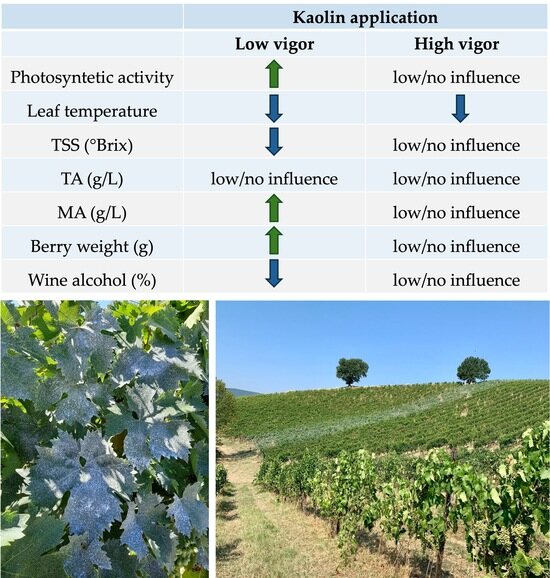
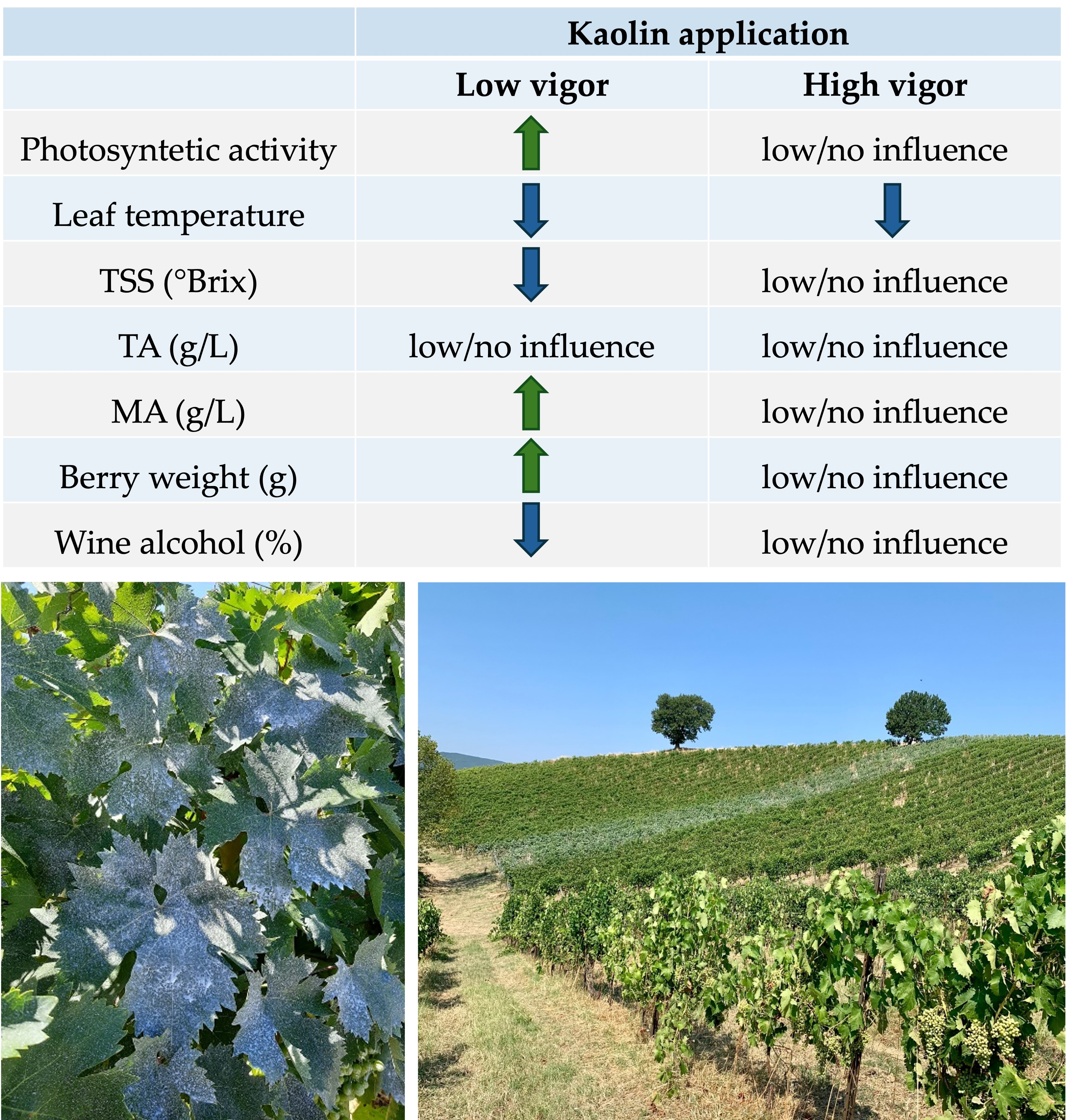
Graphical Abstract

1. Introduction

Viticulture plays a vital economic, cultural, and social role in many regions [1,2]. However, it is increasingly threatened by global warming [3,4,5], particularly in already warm climates [6].
Heatwaves trigger physiological responses in grapevines that can compromise both yield and fruit quality [7]. When temperatures exceed 35 °C, photosynthetic efficiency and grape metabolism are impaired [8,9]. Combined thermal and water stress can also cause sunburn and significant crop losses [10,11,12,13]. Moreover, high temperatures accelerate ripening [14,15,16], producing grapes with excessive sugar levels and reduced acidity at harvest [17,18,19] as well as higher potential alcohol levels [20].
Verdicchio represents the main white grape variety in the Marche region, contributing substantially to the region’s total grape production [21] and forming the basis of two of the region’s principal protected designation of origin (PDO) denominations. However, Verdicchio is increasingly threatened by the effects of climate change. Over the past 30 years, Verdicchio has shown a significant advancement in harvest date, mainly driven by increased thermal availability [22]. This trend contrasts with current consumer preferences, which are more oriented towards fresh and fruity wines [23], thereby highlighting the need to identify effective and suitable adaptation strategies.
These challenges have prompted research into strategies to mitigate heat stress and slow berry ripening, including irrigation management [24,25], artificial shading to limit photosynthetic activity [26,27], the use of bio-protectors [28] or seaweeds extracts [29], canopy manipulation [30] and applications of other chemical products on the canopy. Among the latter, antitranspirants, such as zeolite and pinolene, have shown particular promise in enhancing vine tolerance and preserving grape quality in Central Italian environments [31,32]. By restricting gas exchange, they can reduce heat and water stress while delaying berry ripening [33]. Kaolin, an aluminum silicate, is widely used in vineyards to mitigate abiotic stresses [15,34,35,36] while posing minimal risk to both operators and consumers [37]. It is particularly appreciated by farmers for its cost-effectiveness and economic feasibility [38].
By forming a white reflective film [39], kaolin treatment reflects infrared, ultraviolet, and photosynthetically active radiation [40], thereby lowering both leaf [41,42,43] and berry [44,45,46] temperature. Conditions of high water and heat stress may further increase this cooling effect [33,43,47]. It also improves water status by reducing water stress and limiting water loss [35,41,48,49]. As a result, grapevines maintain higher photosynthetic efficiency [9,35,47,48,49], partly due to enhanced protection of PSII structure and functionality [50] or reduced stomatal closure [43].
In terms of grape production and quality, the reflective particle layer on berries reduces sunburn incidence [51] and lowers the production of reactive oxygen species (ROS) and oxidative damage [52]. Kaolin application generally results in lower sugar concentration [9,53], increased must acidity [35], enhanced berry color in red grapes [33,43,44,47,54] and reduced wine alcohol and pH [55,56]. In warm environments, improved resilience to water stress results in higher berry weight [35,36,57] and increased yield [58]. Conversely, in humid climates, kaolin may negatively affect berry weight and overall vine yield [59]. Nonetheless, under such conditions, it remains a valuable tool for pest and disease management, reducing the incidence of sour rot, gray mold (Botrytis cinerea), and downy mildew (Plasmopara viticola) [51,58,59].
Hence, there is growing interest in using kaolin as a short-term strategy to mitigate summer heat stress. This approach is particularly relevant for winegrowers in Central Italy, where climate change is causing highly variable environmental conditions from year to year, making long-term management decisions challenging. The objective of this study is to evaluate the physiological and productive responses of kaolin-treated vines based on vineyard variability.

2. Materials and Methods

2.1. Plant Material and Experimental Conditions

The trial was carried out in two commercial rainfed vineyards made available by the winery “Terre Cortesi Moncaro Soc. Coop. Agr.” located in Fondiglie (43°29′09″ N 13°02′47″ E, 375 m a.s.l.), near Rosora (AN), in the Marche region of Central Italy. The two vineyards were approximately 500 m apart and differed in vine vigor. The first vineyard, “Querce”, was characterized by low vigor, while the second, “Moro”, exhibited high vigor. The “Querce” vineyard was planted in 2004 with Vitis vinifera L. cv. Verdicchio Bianco (clone VCR 107) grafted onto SO4 rootstock, whereas the “Moro” vineyard was planted in 2005 using the same clone grafted onto Kober 5BB rootstock. In both vineyards, vines were spaced at 2.6 m × 1.0 m, resulting in a planting density of approximately 3850 vines ha−1. Soil characteristics at both sites were similar, with both vineyards classified as clay loam and having a comparable organic matter content (Table S1). Both vineyards are situated at the same altitude of 360 m above sea level, but they differ in slope: the Querce vineyard has a steepness of 20%, while the Moro vineyard has a gentler slope of 6%. At both sites, vines were trained on a trellis system with unilateral Guyot pruning and rows were oriented NW–SE.

2.2. Treatments and Experimental Design

Two treatments were tested in this trial: (i) kaolin spraying (K) and (ii) an untreated control (C). Treatments were carried out using Surround WP kaolin (Tessenderlo Kerley Inc., Phoenix, AZ, USA), containing 95% kaolin at a dosage of 30 kg/ha. Applications were performed with a low-volume tractor-mounted sprayer, ensuring complete canopy coverage. The trial was conducted over two consecutive years. In 2022, two applications were performed: the first on day of the year (DOY) 196 (July 15) and the second on DOY 223 (August 11), following rainfall events that had washed off the particle film. In 2023, a single application was carried out on DOY 199 (July 18). On both vineyards, the trial followed a randomized block experimental design, with four replicates of 10 vines, resulting in a total of 40 sample plants per treatment.

2.3. Vigor Assessment

Vine vigor was quantified using the Normalized Difference Vegetation Index (NDVI) [60], a reliable indicator of vegetative biomass, crop stress, and vine vigor [61,62,63,64]. NDVI values were extracted from Sentinel-2 satellite imagery and processed in QGIS (version 3.40) to produce vigor maps at 10 × 10 m spatial resolution.
Given the evident differences in vigor between the two vineyards, a characterization of vegetative cover was performed on 21 July 2022. Measurements were performed using the VitiCanopy application, which provides a non-destructive estimation of canopy size, porosity, and coverage [65]. In this study, photographs were taken with a smartphone positioned beneath the canopy in two intra-row spaces across four rows per treatment, including all vines within each block. The smartphone was placed at ground level, approximately 0.9 m from the cordon, and images were acquired using the front camera between 9:00 and 11:00 a.m., when lighting conditions provided good illumination without the sun being at its zenith, in order to obtain the clearest possible images. The images, acquired using the front camera to capture the canopy structure (Figure S1), were processed with the VitiCanopy application to quantify porosity and cover. High porosity values, reflecting a greater number and size of gaps within the canopy, indicate more restrained canopy development and therefore lower vigor, whereas high cover values are associated with more extensively developed canopies. These data were then used to assess vineyard variability between the “Querce” and “Moro” vineyards.

2.4. Gas Exchange and Leaf Temperature Assessment

Leaf gas exchange was measured in the morning between 9:00 and 12:00 local time. Physiological parameters measured consisted of: net assimilation (AN), stomatal conductance (gs), and transpiration (E). Data were collected using an open-path infrared gas analyzer (LCA3, ADC BioScientific, Hoddesdon, UK) on one mature, fully expanded leaf per vine located in the middle portion of the main shoot, well-exposed to light, and under saturating light conditions (PAR > 1200 μmol photons m−2 s−1). AN was recorded once stabilization of the CO2 differential was achieved. Following each photosynthesis measurement, leaf surface temperature was determined with an infrared thermometer (IRtec MicroRay PRO, E Instruments Group LLC, Langhorne, PA, USA) on both the upper and lower surfaces. Average leaf temperature (Tleaf) was calculated as the average of these two measurements.

2.5. Berry Ripening and Grape Production

Berry ripening was monitored in collaboration with “Terre Cortesi Moncaro Soc. Coop. Agr.” from mid-July until harvest, focusing on the following parameters: total soluble solids (TSS), pH, titratable acidity (TA), malic acid concentration (MA) and yeast assimilable nitrogen (YAN). Samples of 100 berries per replicate were collected and taken to the laboratory, weighed and squeezed. The analyses were conducted using a Hyperlab Smart Automatic Analyzer (Hyperlab steroglass, Perugia, Italy) and Foss WineScan (FossItalia, Padova, Italy).
Harvesting occurred on 6 September 2022 (DOY 249) and 13 September 2023 (DOY 256). For each sample vine, grapes were manually harvested, and the total number of clusters per vine was recorded and weighed. Average cluster weight was calculated as the total yield per vine divided by the number of clusters per vine. Additionally, samples of 100 berries per vine were collected and weighed to determine the average berry weight. Berry samples were weighed, placed in individual plastic bags, stored in a portable refrigerator, and transported to the laboratory. Samples were then crushed, and the resulting must was filtered prior to analysis, which was conducted as described above.

2.6. Wine Characteristics

Winemaking was carried out by the staff of “Terre Cortesi Moncaro Soc. Coop.” using grapes harvested from the sample vines, occasionally supplemented with grapes from neighboring vines within the same block subjected to the same treatment, to reach a total quantity of 120–150 kg. Grapes were collected in plastic boxes and kept separate by replicate to allow for vinification of each block individually. In the winery, grapes were destemmed and subjected to gentle pressing. The resulting must was analyzed and treated with sulfur dioxide, then subjected to cold static clarification. The clarified must was transferred into 50–60 L containers, placed in a temperature-controlled tank, and inoculated with Saccharomyces cerevisiae, where alcoholic fermentation was initiated and periodically monitored. Upon completion of fermentation, the wines were racked into smaller containers. After six months of aging, wines were analyzed using a Foss WineScan (FossItalia, Padova, Italy) to determine alcohol content, total acidity, malic acid, volatile acidity, pH, residual sugars, and dry extract.

2.7. Pruning Weight Assessment

During winter pruning, surveys were conducted in January on the same sample vines harvested in the previous year. One or two shoots per vine were retained as fruiting canes for the following season, while the remaining shoots were removed, counted, and weighed. On three shoots per sample vine, measurements were taken to determine average shoot length. Average shoot weight was calculated by dividing the total weight of removed shoots by their number per vine. The Ravaz index [66], a commonly used indicator of the balance between vine growth and yield, was calculated for each sample vine as the ratio of harvested grape weight to pruned shoot weight.

2.8. Meteorological Data

Meteorological data were obtained from the Regional Meteorological-Hydro-Pluviometric Information System (SIRMIP), provided online by the Civil Protection Service of the Marche Region. Data were sourced from the Colle di Montecarotto meteorological station (Station Code 119; 43°32′ N, 13°3′ E; elevation 350 m above sea level), including daily minimum, mean, and maximum temperatures (Sensor Code 1272). For each physiological survey date, temperature values recorded between 08:00 and 12:00, corresponding to the period of field measurements, were extracted. Rainfall data (Sensor Code 1270) were retrieved as cumulative daily precipitation. These data were then processed to determine, for each month of the growing season, the number of days when maximum temperatures exceeded critical thresholds of 30 °C and 35 °C, as well as the monthly mean values of minimum, average, and maximum temperatures. Daily maximum temperatures from 2010 to 2023 were used to assess the occurrence of heatwaves, following the methodology described by Russo et al. [67], with minor adjustments due to data limitations. In this study, a “heatwave” is defined as a period of at least three consecutive days during which maximum temperatures exceed a thermal threshold, established on the basis of the available historical series, which in our case begins only in 2010.

2.9. Statystical Analysis

The results were tested with Statistica version 4.3 (StatSoft, Tulsa, OK, USA) for homogeneity of variance and subjected to ANOVA. The graphical representations were obtained using the Sigma Plot version 10 (SPSS, Chicago, IL, USA). In each year, data on gas exchange, berry ripening, grape composition at harvest and yield components were tested using mean separation calculated by applying Tukey’s HSD test at p ≤ 0.05. Principal component analysis (PCA) of wine components was conducted using R software (version 4.3.1).

3. Results and Discussion

3.1. Meteorological Conditions

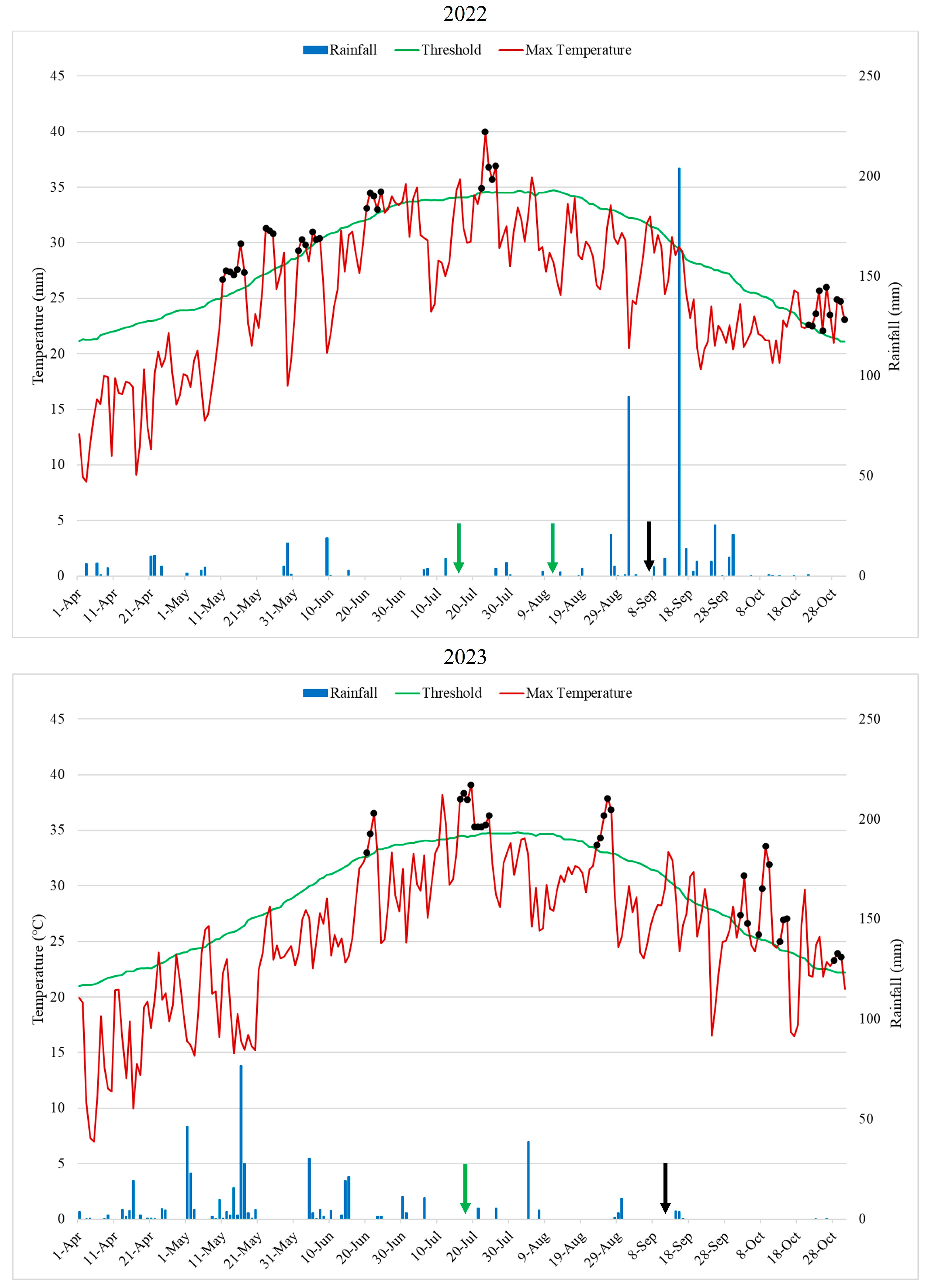
Climatic data for 2022 and 2023 are reported in Table 1. The average minimum, mean, and maximum temperatures recorded between April and October were comparable across the two seasons. The analysis of heatwave events revealed several periods of exceptional thermal stress (Figure 1), which markedly affected vine physiology and grape composition.
Heatwaves were more frequent in 2022 than in 2023, when the rainier months of May and June helped to maintain moderately lower air temperatures. Notably, the first heatwave occurred as early as the first half of May, lasting for seven consecutive days. This observation is particularly relevant when contextualizing kaolin application, typically used preventively against heatwaves. However, when the increasing frequency and earlier onset of these events under current climatic conditions are not adequately considered, its efficacy may be compromised. In 2022, five distinct heatwaves occurred before the first kaolin treatment, likely reducing its efficacy. This highlights the importance of timing kaolin applications appropriately, as they are typically applied in summer without accounting for the heightened vulnerability of vines to extreme heat events that can occur even in mid to late spring due to climate change.
By contrast, precipitation patterns were markedly different. Although total rainfall between April and October was similar in the two years, 2022 values were strongly influenced by two intense rainstorms on 9 September and 15 September, after the harvest date, which together accounted for 393 mm of precipitation. Furthermore, 2023 was characterized by a wetter spring and summer and a more even rainfall distribution. These conditions likely improved vine water availability in 2023, influencing vine physiology and fruit composition.

3.2. Vigor Analysis

The results obtained with the VitiCanopy application [65] are presented in Table 2. In the “Querce” vineyard, porosity values ranged from 0.232 to 0.279, while canopy cover ranged from 0.502 to 0.597. In the “Moro” vineyard, porosity ranged from 0.216 to 0.259, and cover ranged from 0.535 to 0.628. These results confirm the greater vigor observed in the “Moro” vineyard, as evidenced by its significantly lower porosity (fewer empty spaces, denser foliage) and higher cover (more developed canopies).
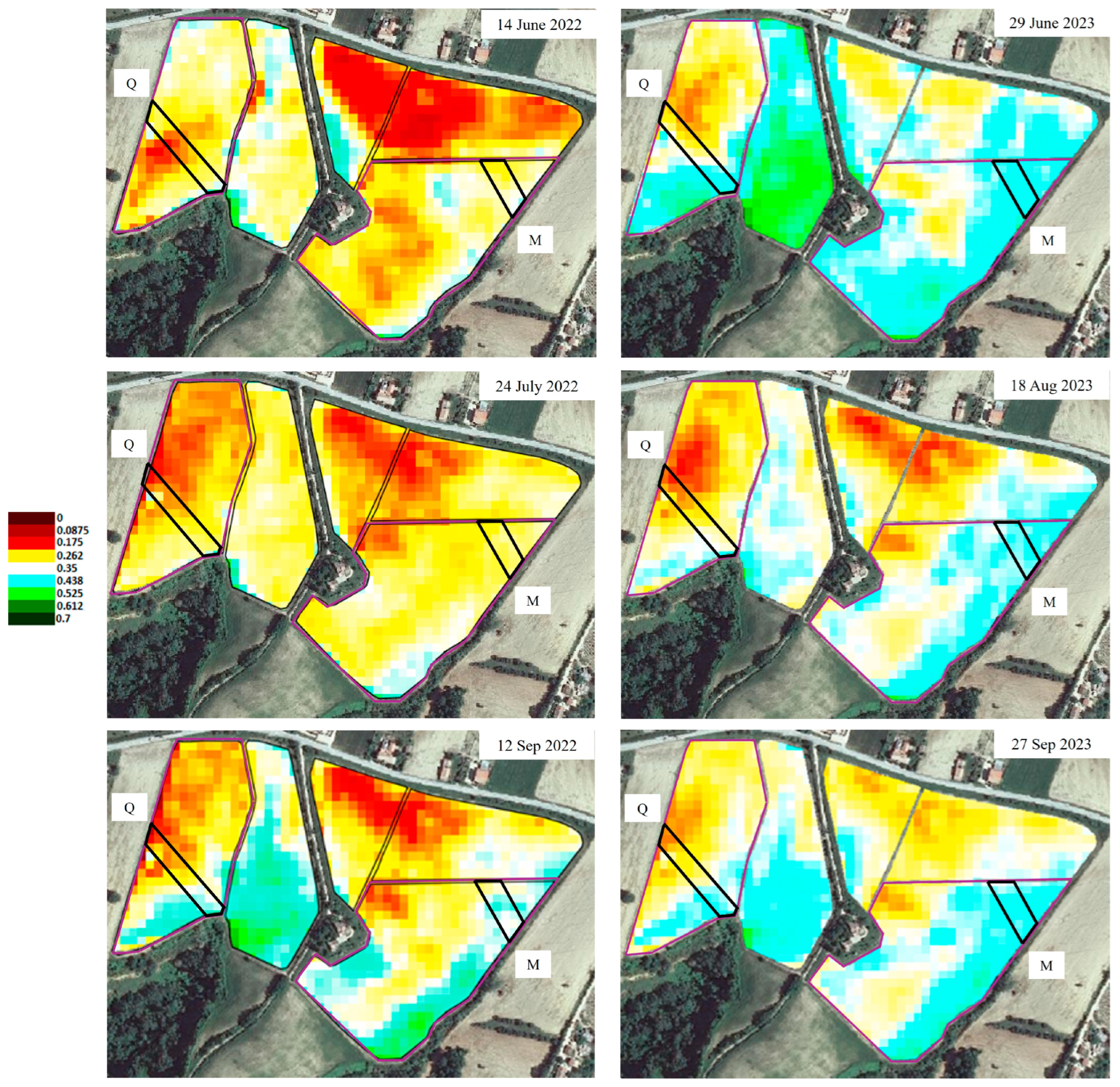
NDVI analysis (Figure 2) further supported this pattern, with “Moro” vines consistently exhibiting higher vigor, particularly during mid-summer when climatic conditions are more challenging for vegetative growth.
These differences are attributable to environmental and management factors. The “Querce” vineyard is situated on steeper soils (approximately 20%), making vines more susceptible to drought, whereas the “Moro” vineyard benefits from gentler slopes (approximately 6%), ensuring greater water availability. Rootstock choice further accentuates these differences: vines in the “Querce” vineyard are grafted onto SO4 which is more sensitive to water deficit, whereas in the “Moro” vineyard, Kober 5BB, which is more tolerant to water scarcity, was used as rootstock.

3.3. Gas Exchange and Leaf Temperature

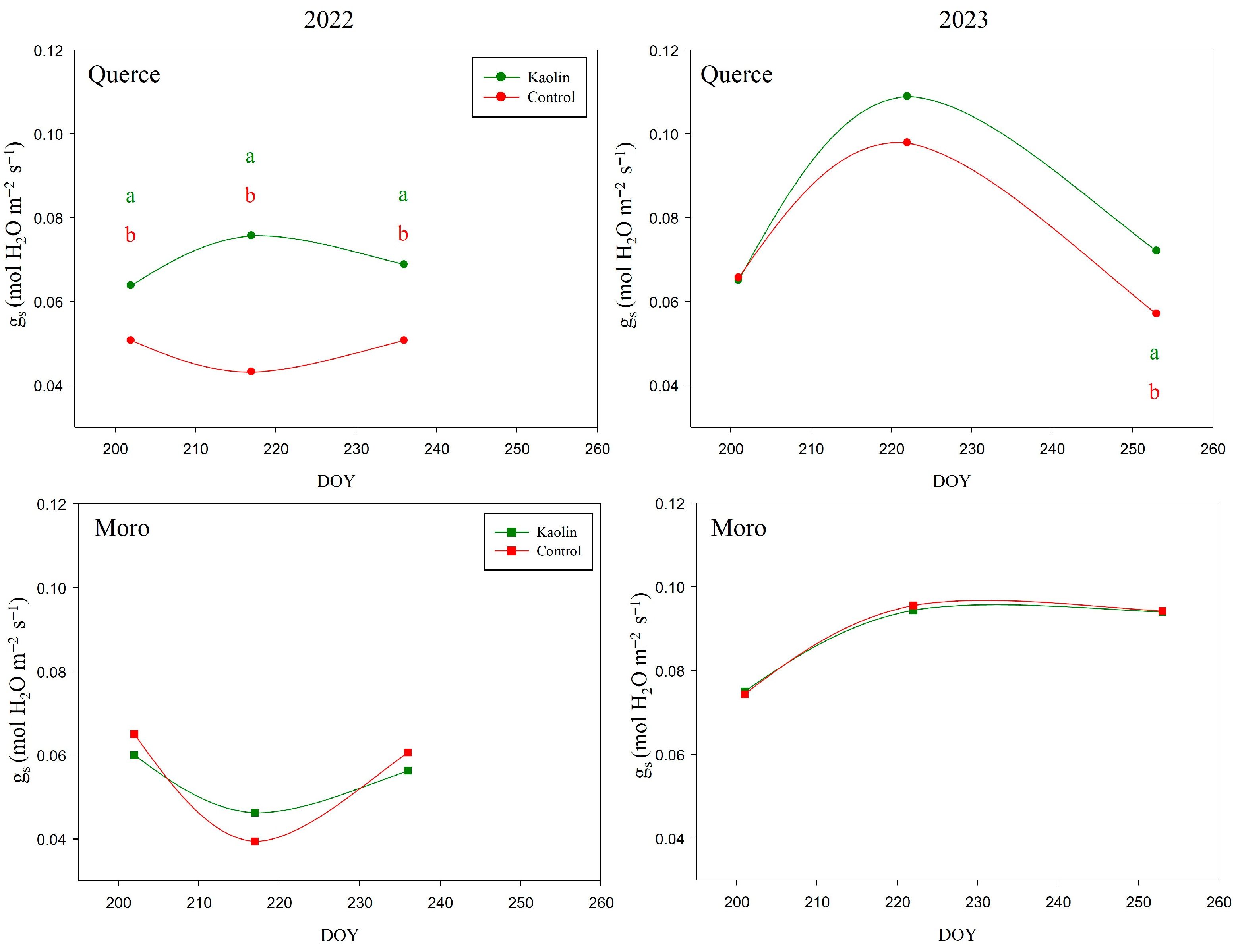
Stomatal conductance (gs) in 2022 was generally lower than in 2023 (Figure 3), irrespective of treatment or vineyard, consistent with the higher air temperatures. In the “Querce” vineyard, kaolin application significantly increased gs throughout the season, with the difference between treatments being particularly pronounced in mid-summer. At this time, air temperatures exceeded 35 °C (Figure 4), imposing severe stress on the vines. Under these conditions, control plants closed their stomata to limit water loss, whereas kaolin-treated vines, protected by the particle film, maintained higher gs due to reduced heat stress. In 2023, gs values were higher overall, and kaolin effects were limited, likely owing to sufficient soil water availability from evenly distributed spring rainfall (Table 1), which reduced the need for stomatal closure, thereby diminishing the relative benefit of kaolin application. In the “Moro” vineyard, kaolin induced only minor, non-significant gs increases at mid-season in 2022, while treatment trends were nearly identical in the following year.
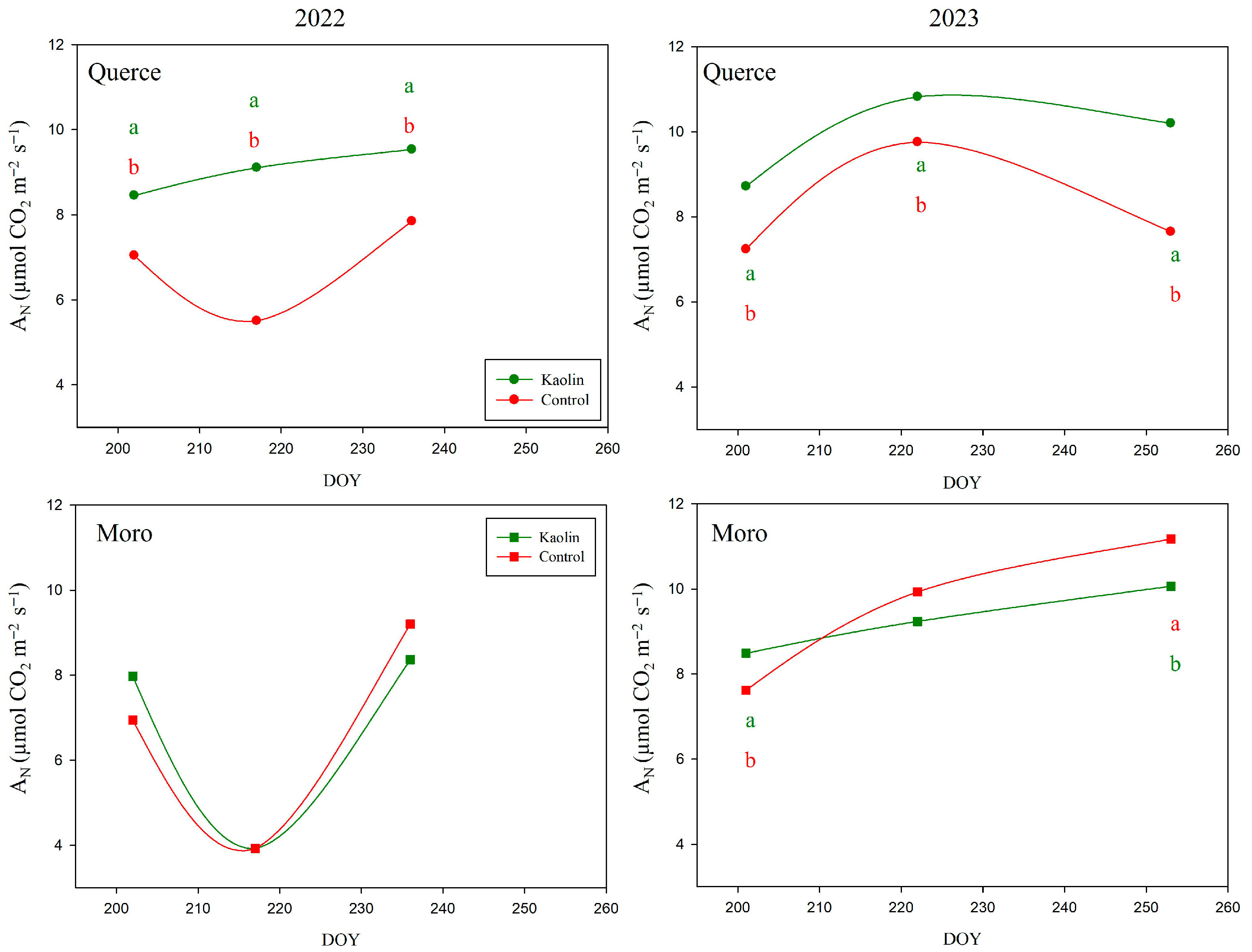
Net assimilation (AN) in the “Querce” vineyard was consistently enhanced by kaolin application, with treated vines maintaining higher AN throughout both seasons (Figure 5). The effect was particularly marked in mid-summer 2022, when untreated vines exhibited a marked decline during heat stress, while treated vines sustained stable rates. By contrast, results from the “Moro” vineyard revealed no overall improvement in AN following kaolin application. In 2023, AN was again enhanced by kaolin in “Querce”, whereas in “Moro” this effect was observed only at the beginning of the experiment, when temperatures briefly exceeded 35 °C (Figure 4). For the remainder of the season, AN was lower in treated vines, possibly due to the reflective particle film reducing incident solar radiation under non-stress conditions.
Overall, results from “Querce” confirm kaolin’s effectiveness in mitigating photoinhibition and maintaining photosynthesis under limited water availability [47], heat stress [68] or both [9,35,36,48]. In contrast, the absence of benefits in “Moro” is consistent with the findings of Cao et al. [69], who reported reduced kaolin effects in more humid environments and in vines with higher vigor.
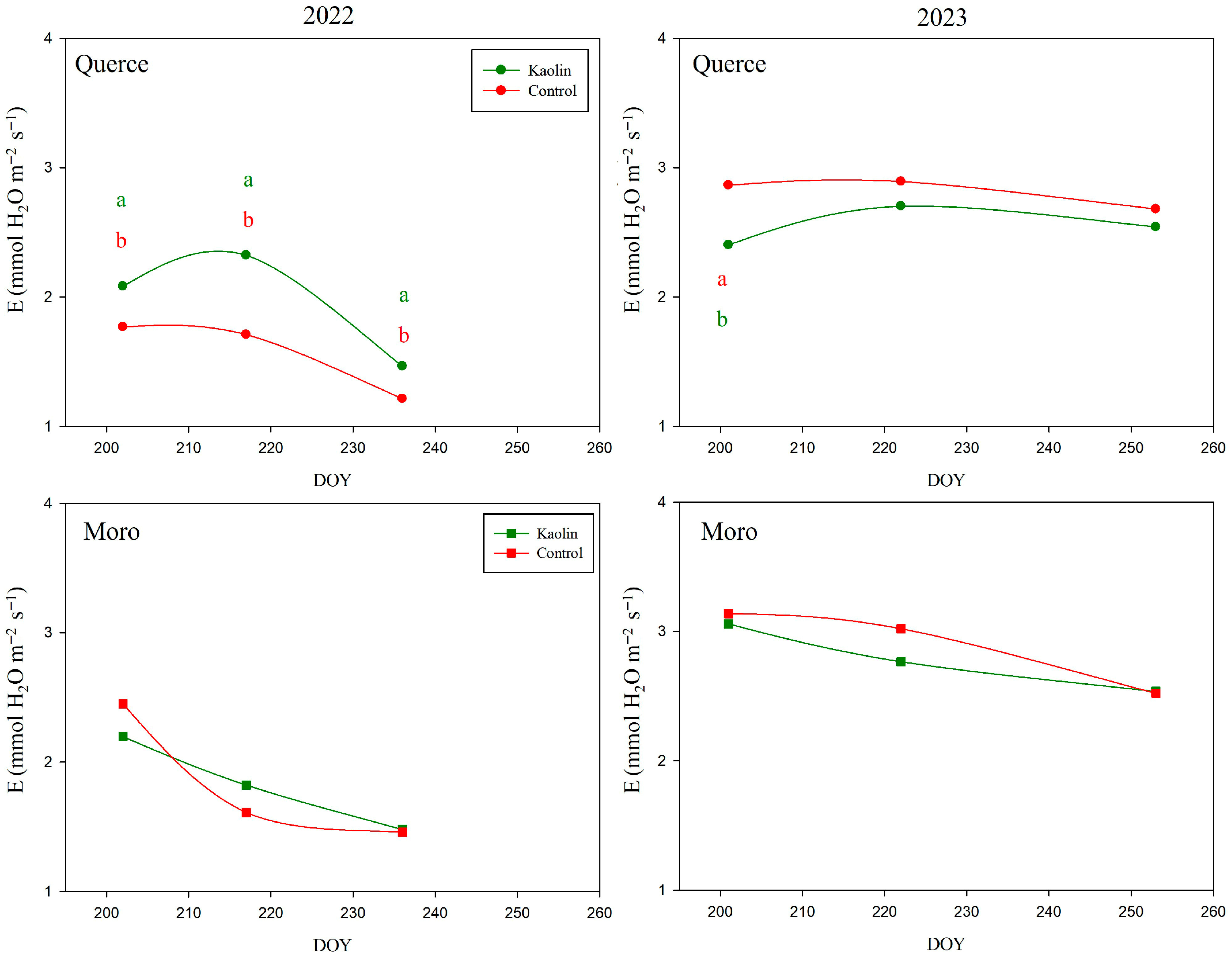
Transpiration (E) largely reflected the dynamics of gs. In 2022, E was significantly higher in kaolin-treated vines in the “Querce” vineyard (Figure 6), particularly under elevated air temperatures, whereas no significant differences were observed in “Moro”. In 2023, treatment-related differences were minimal in both vineyards, except at the first measurement in “Querce”, where control vines exhibited higher E despite lower gs. This pattern likely reflected the environmental conditions during measurement, as high air temperatures (>34 °C) and low relative humidity (Figure 4) increased evaporative demand, resulting in greater water loss from unprotected leaves.
A reduction in transpiration after kaolin application has been reported in both semi-arid vineyards [69] and in other irrigated crops [70]. Similar effects were partly observed in 2023 but not in 2022, when the alleviation of heat stress and reduction in leaf temperature likely prevented stomatal closure, leading to higher E values in treated vines. In contrast, the abundant and evenly distributed rainfall in 2023 limited stress conditions, reducing the relative impact of kaolin. Overall, transpiration rates were higher in 2023, consistent with improved water availability of that season. Under these conditions, kaolin appeared to reduce transpiration slightly by lowering leaf temperature and minimizing excess energy dissipation, in agreement with previous findings [47,69].
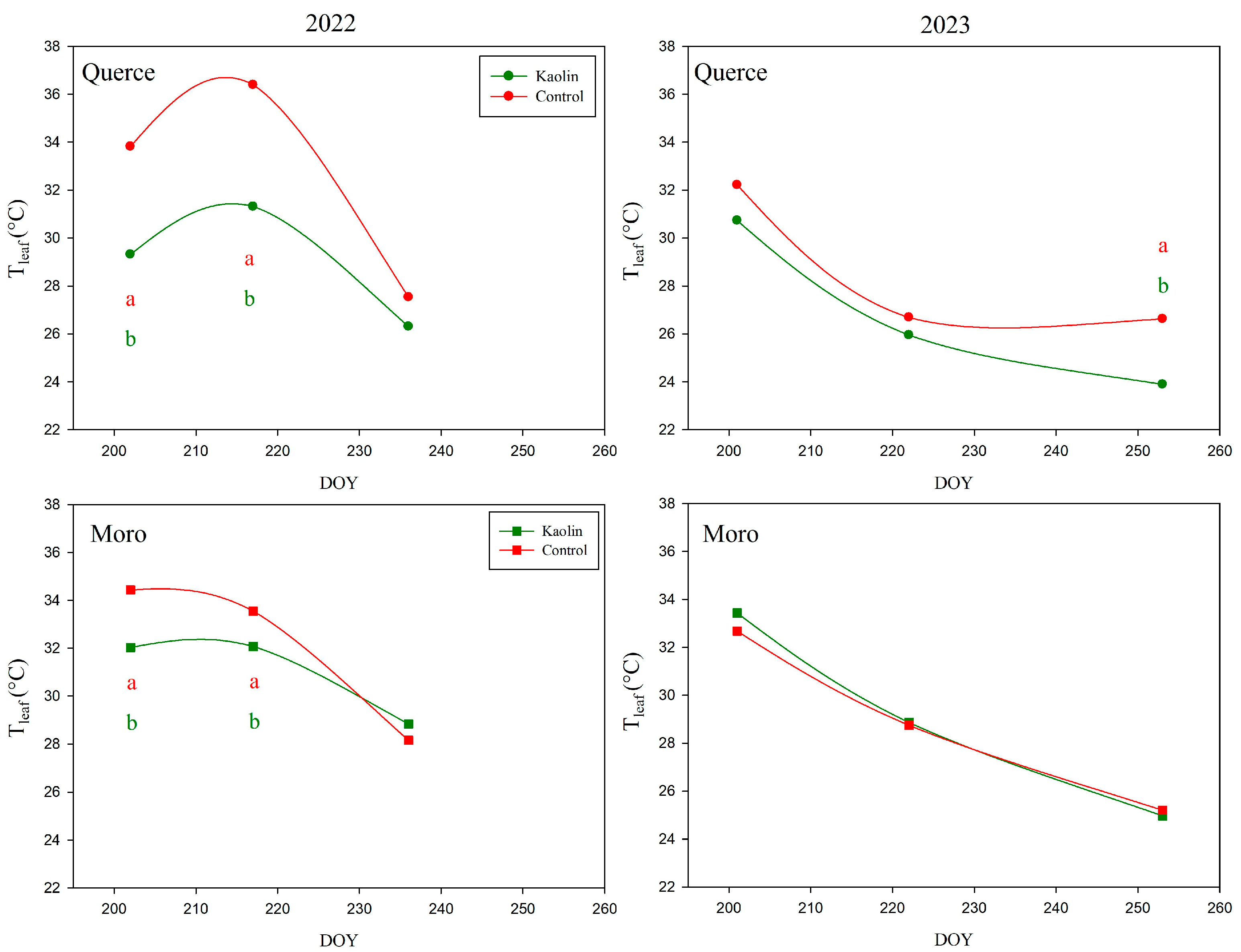
Figure 7 illustrates the trend of leaf temperature across the two seasons. In 2022, kaolin applications reduced leaf temperature in both vineyards, particularly during mid-summer, when high air temperatures likely limited the vines’ capacity for thermoregulation. In 2023, the cooling effect was less pronounced, although a moderate reduction was still observed in the “Querce” vineyard. This attenuated response can be attributed to two main factors: first, leaf temperatures in 2023 were generally lower than in 2022, reducing the necessity for additional cooling; second, the higher rainfall and more evenly distributed precipitation in 2023 improved soil water availability, allowing vines to thermoregulate more effectively on their own.
The cooling capacity of kaolin has been widely reported under both limited water availability [9,35,36,51] and irrigated conditions [33,46,47,57,69]. The present results align with these findings, as leaf temperature decreased following kaolin application, particularly under the less vigorous and more stress-prone conditions of the “Querce” vineyard. This observation agrees with Brillante et al. [33], who reported that kaolin’s cooling efficiency is more pronounced under stress conditions, whereas its effect diminishes when limiting factors are less severe, as in the case of “Moro”.

3.4. Berry Ripening and Grape Composition at Harvest

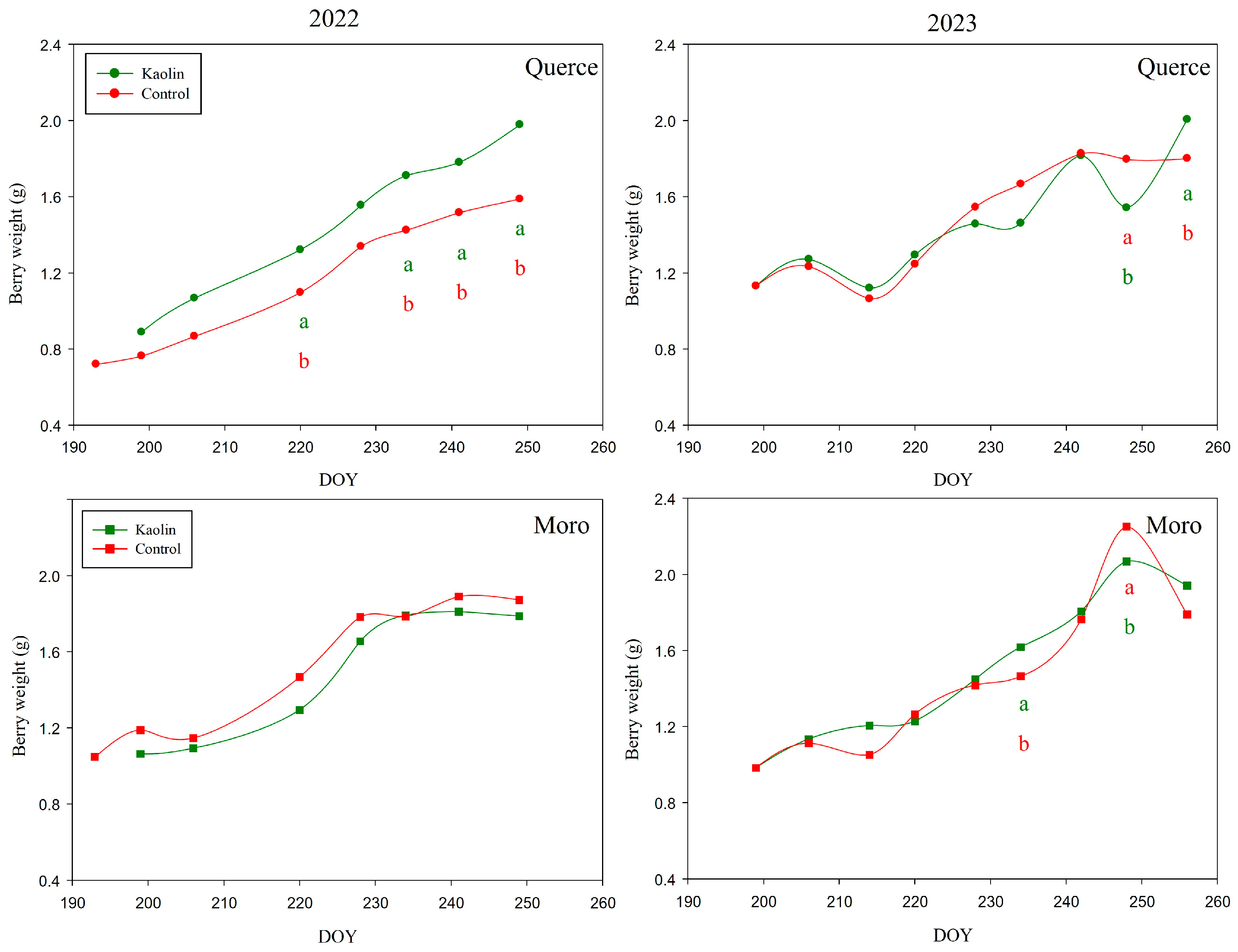
In 2022, characterized by hotter and drier conditions, kaolin application in the “Querce” vineyard increased berry weight throughout the season, resulting in a 25% higher value at harvest (Figure 8). In contrast, no significant differences were detected in the “Moro” vineyard. In 2023, no consistent treatment effects or trends were observed in either site. These results suggest that kaolin may enhance berry weight in dryer seasons. Similar effects have been reported in other studies conducted in dry environments, including increases in berry size [57] and berry weight [36], supporting the present observations.
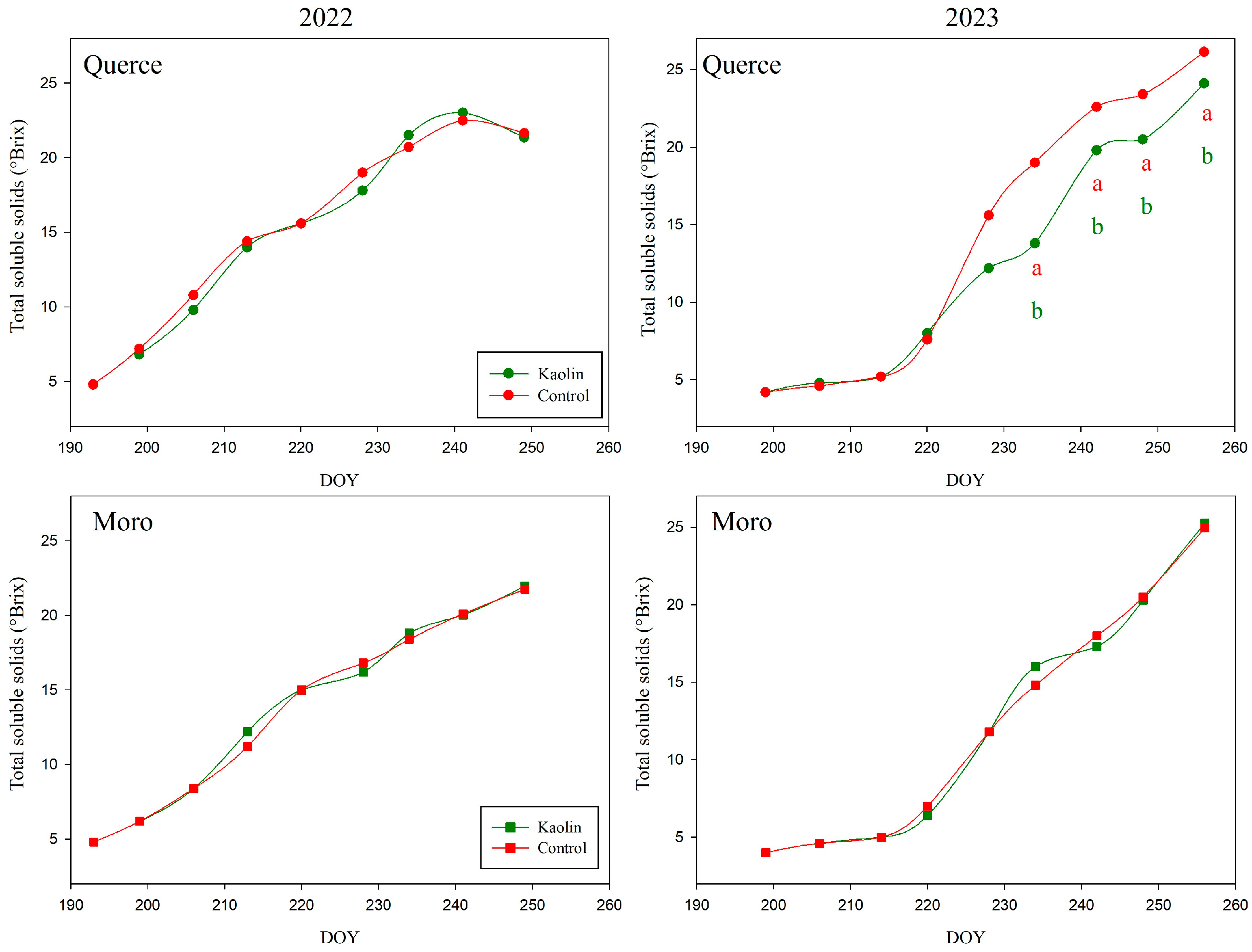
Total soluble solids (TSS) accumulation was only influenced by kaolin application in 2023 in the “Querce” vineyard from mid-August onwards, showing lower sugar concentration with kaolin spraying up until harvest (Figure 9). Similar reductions in sugar concentration following kaolin application have been reported by other authors [9,68]. The present findings are partly consistent with these studies, as a comparable effect was observed only in 2023 in the drier Querce vineyard.
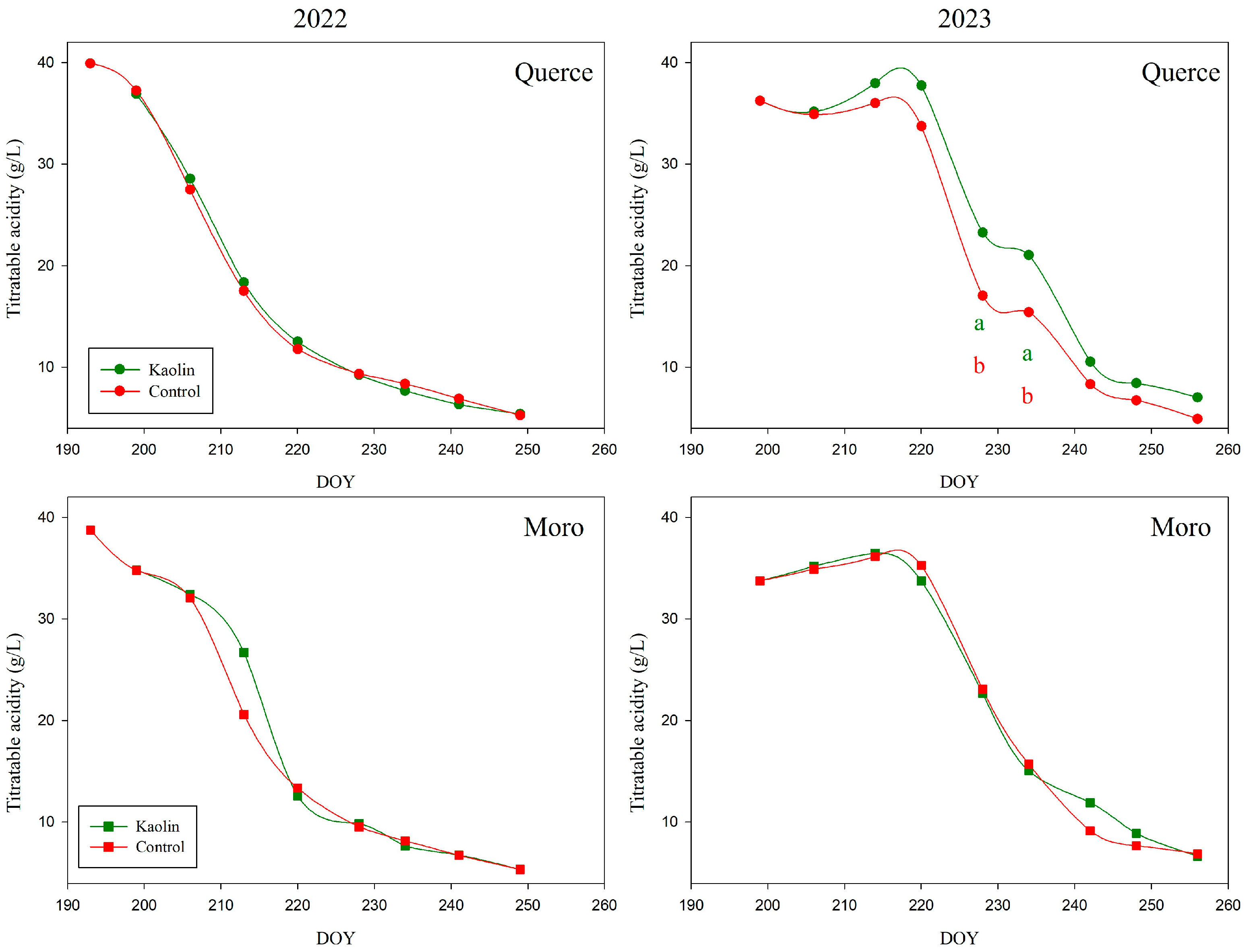
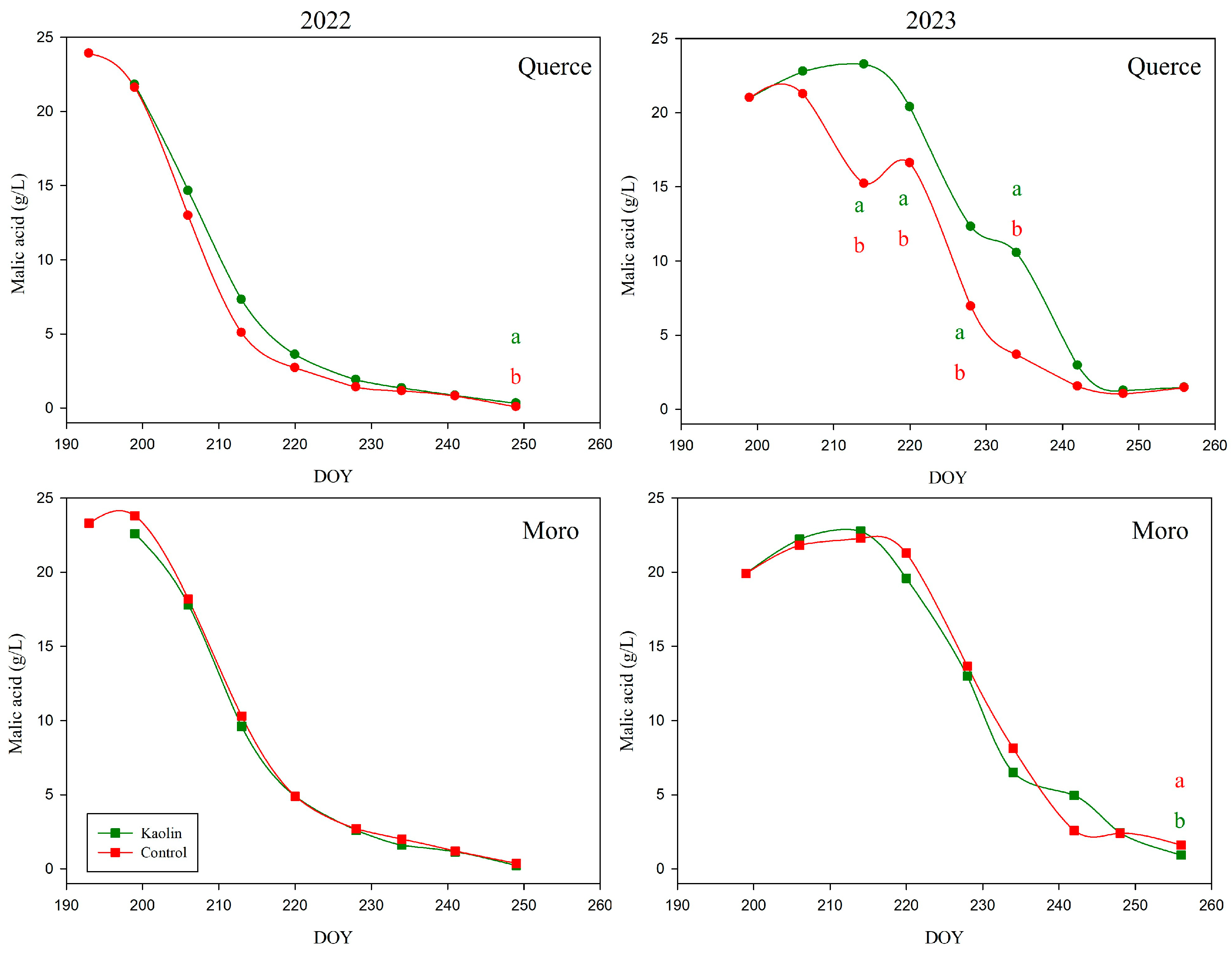
Consistent with the TSS trends, kaolin influenced grape acidity only in 2023 and exclusively in the “Querce” vineyard. Treated vines exhibited higher titratable acidity (TA) values (Figure 10), coinciding with delayed sugar accumulation and elevated mid-summer temperatures, with peaks 6.2 g/L and 5.6 g/L higher than controls. A comparable pattern was observed for malic acid (MA), with treated vines maintaining higher MA concentrations for most of the season, peaking at differences of 5–7 g/L during the central ripening period (Figure 11). Although kaolin-treated vines still displayed higher TA at harvest, the difference in MA was no longer significant. It is plausible that kaolin contributed to a reduced salification of tartaric acid, which may explain the divergent behavior of the two acids near harvest. These findings are consistent with previous studies [9,71], partly confirming the capacity of kaolin to mitigate organic acid degradation under heat stress conditions, especially in low-vigor conditions.
Grape production data are presented in Table 3. Overall, yields were higher in 2022 than in 2023, reflecting seasonal climatic differences: higher rainfall in 2023 promoted bunch rot and downy mildew, while a hailstorm on August 8 further reduced crop load. In 2022, kaolin significantly increased total yield per vine in the “Querce” vineyard, with treated vines producing on average 1.5 kg more than controls, primarily due to higher cluster and berry weights. Despite the adverse conditions in 2023, the same trend was maintained in “Querce”, where kaolin-treated vines again exhibited significantly greater berry and cluster weights, resulting in nearly double the yield compared with the control. In the “Moro” vineyard, no significant differences in total yield were detected in either year, although in 2023 cluster and berry weights were slightly higher in treated vines. Overall, these findings suggest that kaolin may enhance yield under water-limited conditions typical of drier seasons [35,36,52,72], whereas its effects are limited in humid, high-vigor environments [54], as in the case of the “Moro” vineyard. In 2023, kaolin application likely contributed indirectly to yield stability by reducing the incidence of bunch diseases, as previously reported by other authors [51,54,68]. Although disease incidence was not directly assessed in this study, the observed stabilization of yield in treated vines suggests a potential protective effect that mitigated crop losses under favorable conditions for pathogen development.
Regarding grape composition, in 2022, kaolin application slightly reduced sugar concentration and increased malic acid content, the latter significantly in the “Querce” vineyard (Table 3). In 2023, the effect was more evident in “Querce”, where treated vines showed lower TSS (−2.1 °Brix) and higher titratable acidity (7.0 vs. 4.9 g/L), indicating delayed ripening. Overall, these results are consistent with previous reports of kaolin’s capacity to moderate temperature and reduce metabolic stress [9,35,53,68].

3.5. Wine Composition

Wine chemical composition is reported in Table 4. The two vintages differed notably, reflecting contrasting climatic conditions. Grapes from 2023 had higher TSS, resulting in wines with increased alcohol and residual sugar content, while elevated volatile acidity likely resulted from increased bunch rot due to abundant rainfall.
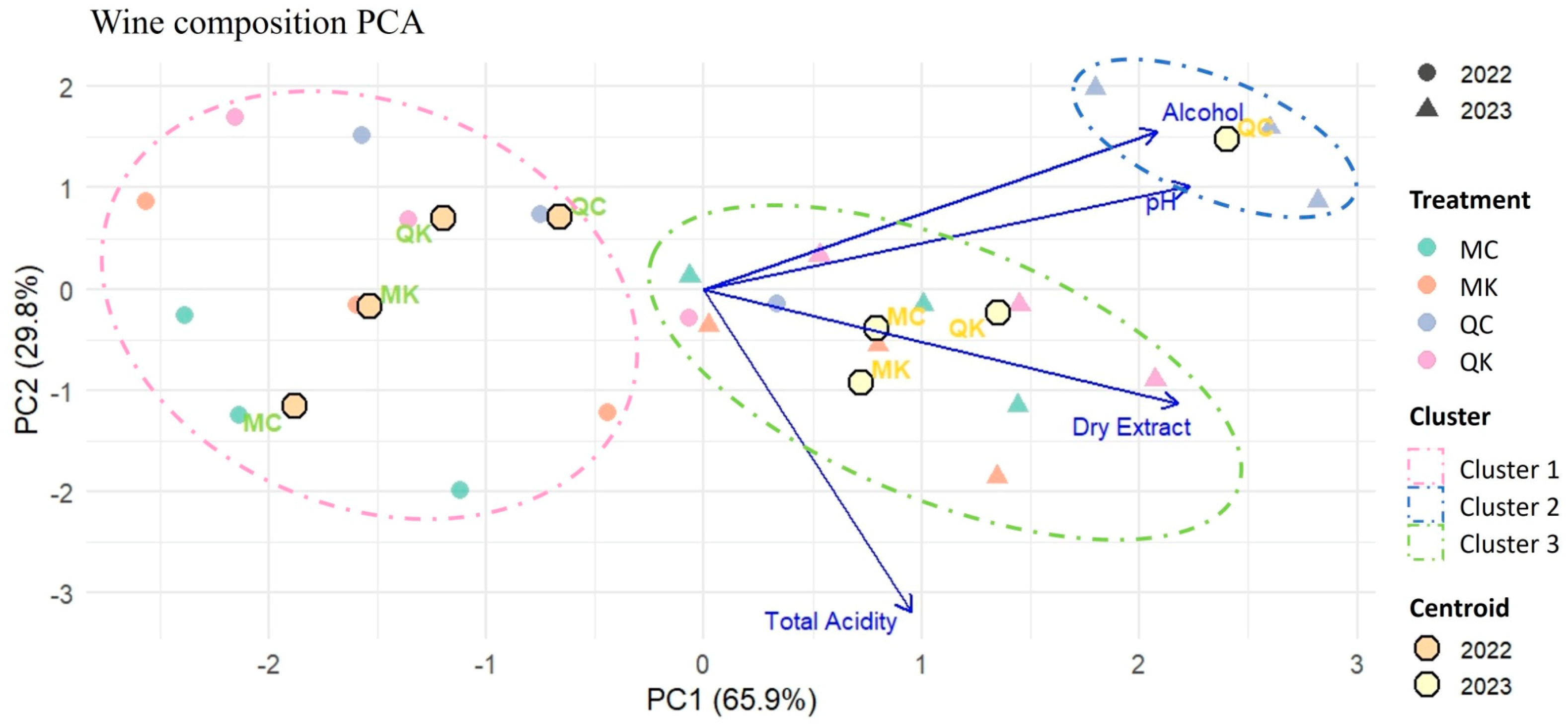
As with grape composition, kaolin effectiveness varied by site. The treatment was notably more effective in the “Querce” vineyard, producing wines with lower alcohol, residual sugar and pH and higher acidity. Interestingly, kaolin-treated wines from “Querce” displayed higher similarity to those from “Moro”, as confirmed by the cluster analysis (Figure 12). In contrast, no treatment-related differences were observed in wines from the “Moro” vineyard, and both control and treated samples clustered together.
As shown by the cluster division in Figure 12, although samples from the “Querce” vineyard in 2022 belonged to the same cluster, a partial separation was evident based on alcohol content and dry extract, with kaolin-treated wines showing significantly lower values. In 2023, the separation between treatments was more distinct: control wines from “Querce” formed a separate cluster characterized by higher alcohol content, pH, and dry extract and lower acidity. Conversely, kaolin application in “Querce” produced wines with opposite characteristics, showing greater similarity to those from the more vigorous “Moro” vineyard. Overall, these findings are consistent with previous studies reporting that kaolin application, particularly under more severe climatic conditions, can reduce alcohol content and increase acidity, contributing to improved wine balance [9,73]. Conversely, results from the “Moro” vineyard align with those of Linder et al. [74], who observed no significant compositional changes following kaolin application, further supporting the conclusion that kaolin efficacy is strongly influenced by site-specific vineyard conditions [72].

3.6. Pruning Weight

Data on vine vegetative performance are presented in Table 5. In 2023, differences in pruning weight were observed between treatments, with higher values for control vines in the “Querce” vineyard and for kaolin-treated vines in the “Moro” vineyard. These differences likely reflect the contrasting site conditions: the deeper soils of “Moro” favor higher vigor but may also promote Plasmopara viticola incidence, potentially affecting cane lignification. The higher pruning weight of kaolin-treated vines in “Moro” may therefore be related to kaolin’s reported capacity to reduce pathogen incidence [58,59].
The Ravaz index revealed that in 2022 kaolin-treated vines were better balanced, with values closer to the optimal range of 5–10 [66]. Lower values in 2023 mainly reflected reduced yields caused by the adverse climatic conditions. Overall, results suggest that kaolin application at the onset of ripening may help maintain a favorable balance between vegetative growth and fruit production, particularly under stress conditions.

4. Conclusions

This trial demonstrated that spraying kaolin on vine canopies and clusters can mitigate the negative effects of heat stress, which are increasingly frequent during summer due to climate change. Its effectiveness, however, depends on seasonal weather patterns, stress intensity, and vine vigor.
Under hot and dry conditions, kaolin improved gas exchange and maintained higher photosynthetic rates, likely by reducing photoinhibition. In more humid seasons, kaolin showed little effect on physiological performance. Leaf temperature was consistently lowered, particularly under stressful conditions.
These physiological benefits have positive effects on production. Treated vines generally showed higher yields and improved berry composition, with lower sugar and higher acidity, particularly in less vigorous vineyards. Conversely, under high-vigor and more humid conditions, kaolin had minimal impact on physiological processes and productivity. Accordingly, wine composition benefited from kaolin application primarily in less vigorous environments, resulting in reduced alcohol content and enhanced acidity.
Kaolin did not affect reserve accumulation but helped maintain a better balance between vegetative growth and fruit production. Nevertheless, further multi-year studies are needed to assess potential carry-over effects and account for seasonal climate variability.
Overall, kaolin shows potential as a useful tool in low-vigor, arid and semi-arid vineyards. In Mediterranean climates like Central Italy, it mitigates heat stress, improving grape yield, composition, and wine quality. However, rising temperatures and earlier heatwaves highlight the need to optimize application timing, which may require farmers to reconsider the most effective periods for its use. Moreover, management practices affecting vigor, rootstock choice and canopy architecture should also be considered critical factors influencing treatment efficacy. Therefore, vineyard practices may significantly modulate the effectiveness of kaolin in mitigating heat stress

Supplementary Materials

The following supporting information can be downloaded at https://www.mdpi.com/article/10.3390/horticulturae12030325/s1. Figure S1: Example of an image suitable for analysis with VitiCanopy. Table S1. Soil characteristics at both vineyards.

Author Contributions

Conceptualization, O.S.; methodology, O.S. and V.L.; software, L.P.; validation, O.S.; formal analysis, L.P. and O.S.; investigation, L.P., T.L., V.L. and O.S.; resources, T.L., V.L. and O.S.; data curation, L.P., T.L. and V.L.; writing—original draft preparation, L.P.; writing—review and editing, L.P. and O.S.; visualization, L.P. and O.S.; supervision, O.S.; project administration, O.S.; funding acquisition, O.S. All authors have read and agreed to the published version of the manuscript.

Funding

This research was partially funded by the Italian Ministry of Economic Development (MISE) under the “Fabbrica intelligente, Agrifood e Scienze della vita” program (project No: F/250006/01-04/X50; Ministerial Decree No. 81 of 13 January 2021).

Data Availability Statement

The original contributions presented in this study are included in the article. Further inquiries can be directed to the corresponding author.

Acknowledgments

The authors thank Denis Animali and Marco Narcisi for their assistance during field data collection, Giulio Piazzini and Giuliano D’Ignazi for conducting the microvinifications, and Gianni Mazzoni for his support during the microvinifications and wine analyses. AI-assisted software (ChatGPT, version GPT–5.3) was employed to enhance English grammar and fluency. All outputs were subsequently reviewed and validated by the authors.

Conflicts of Interest

The authors declare no conflicts of interest. The funders had no role in the design of the study; in the collection, analyses, or interpretation of data; in the writing of the manuscript; or in the decision to publish the results.

References

  1. Garcia, L.; Celette, F.; Gary, C.; Ripoche, A.; Valdés-Gómez, H.; Metay, A. Management of Service Crops for the Provision of Ecosystem Services in Vineyards: A Review. Agric. Ecosyst. Environ. 2018, 251, 158–170. [Google Scholar] [CrossRef]
  2. Marlowe, B.; Lee, S. Conceptualizing Terroir Wine Tourism. Tour. Rev. Int. 2018, 22, 143–151. [Google Scholar] [CrossRef]
  3. Martínez De Toda, F.; Balda, P. Delaying Berry Ripening through Manipulating Leaf Area to Fruit Ratio. VITIS—J. Grapevine Res. 2015, 52, 171–176. [Google Scholar] [CrossRef]
  4. Van Leeuwen, C.; Destrac-Irvine, A.; Dubernet, M.; Duchêne, E.; Gowdy, M.; Marguerit, E.; Pieri, P.; Parker, A.; De Rességuier, L.; Ollat, N. An Update on the Impact of Climate Change in Viticulture and Potential Adaptations. Agronomy 2019, 9, 514. [Google Scholar] [CrossRef]
  5. De Toda, F.M.; Sancha, J.C.; Balda, P. Reducing the Sugar and pH of the Grape (Vitis vinifera L. Cvs. ‘Grenache’ and ‘Tempranillo’) Through a Single Shoot Trimming. S. Afr. J. Enol. Vitic. 2016, 34, 2013. [Google Scholar] [CrossRef]
  6. Lionello, P.; Scarascia, L. The Relation between Climate Change in the Mediterranean Region and Global Warming. Reg. Environ. Change 2018, 18, 1481–1493. [Google Scholar] [CrossRef]
  7. Garcia-Tejera, O.; Bonada, M.; Petrie, P.R.; Nieto, H.; Bellvert, J.; Sadras, V.O. Viticulture Adaptation to Global Warming: Modelling Gas Exchange, Water Status and Leaf Temperature to Probe for Practices Manipulating Water Supply, Canopy Reflectance and Radiation Load. Agric. For. Meteorol. 2023, 331, 109351. [Google Scholar] [CrossRef]
  8. Ferrini, F.; Mattii, G.B.; Nicese, F.P. Effect of Temperature on Key Physiological Responses of Grapevine Leaf. Am. J. Enol. Vitic. 1995, 46, 375–379. [Google Scholar] [CrossRef]
  9. Dinis, L.-T.; Bernardo, S.; Matos, C.; Malheiro, A.; Flores, R.; Alves, S.; Costa, C.; Rocha, S.; Correia, C.; Luzio, A.; et al. Overview of Kaolin Outcomes from Vine to Wine: Cerceal White Variety Case Study. Agronomy 2020, 10, 1422. [Google Scholar] [CrossRef]
  10. Rustioni, L.; Milani, C.; Parisi, S.; Failla, O. Chlorophyll Role in Berry Sunburn Symptoms Studied in Different Grape (Vitis vinifera L.) Cultivars. Sci. Hortic. 2015, 185, 145–150. [Google Scholar] [CrossRef]
  11. Fraga, H.; Molitor, D.; Leolini, L.; Santos, J.A. What is the Impact of Heatwaves on European Viticulture? A Modelling Assessment. Appl. Sci. 2020, 10, 3030. [Google Scholar] [CrossRef]
  12. Torres, N.; Martínez-Lüscher, J.; Porte, E.; Kurtural, S.K. Optimal Ranges and Thresholds of Grape Berry Solar Radiation for Flavonoid Biosynthesis in Warm Climates. Front. Plant Sci. 2020, 11, 931. [Google Scholar] [CrossRef]
  13. Gambetta, G.A.; Kurtural, S.K. Global Warming and Wine Quality: Are We Close to the Tipping Point? OENO One 2021, 55, 353–361. [Google Scholar] [CrossRef]
  14. Keller, M. Managing Grapevines to Optimise Fruit Development in a Challenging Environment: A Climate Change Primer for Viticulturists. Aust. J. Grape Wine Res. 2010, 16, 56–69. [Google Scholar] [CrossRef]
  15. Palliotti, A.; Tombesi, S.; Silvestroni, O.; Lanari, V.; Gatti, M.; Poni, S. Changes in Vineyard Establishment and Canopy Management Urged by Earlier Climate-Related Grape Ripening: A Review. Sci. Hortic. 2014, 178, 43–54. [Google Scholar] [CrossRef]
  16. Jones, G.V. Climate, Grapes, and Wine: Structure and Suitability in a Changing Climate. Acta Hortic. 2012, 19–28. [Google Scholar] [CrossRef]
  17. Leolini, L.; Moriondo, M.; Romboli, Y.; Gardiman, M.; Costafreda-Aumedes, S.; Bindi, M.; Granchi, L.; Brilli, L. Modelling Sugar and Acid Content in Sangiovese Grapes under Future Climates: An Italian Case Study. Clim. Res. 2019, 78, 211–224. [Google Scholar] [CrossRef]
  18. Molitor, D.; Junk, J. Climate Change is Implicating a Two-Fold Impact on Air Temperature Increase in the Ripening Period under the Conditions of the Luxembourgish Grapegrowing Region. OENO One 2019, 53. [Google Scholar] [CrossRef]
  19. Santos, J.A.; Fraga, H.; Malheiro, A.C.; Moutinho-Pereira, J.; Dinis, L.-T.; Correia, C.; Moriondo, M.; Leolini, L.; Dibari, C.; Costafreda-Aumedes, S.; et al. A Review of the Potential Climate Change Impacts and Adaptation Options for European Viticulture. Appl. Sci. 2020, 10, 3092. [Google Scholar] [CrossRef]
  20. Duchêne, E.; Schneider, C. Grapevine and Climatic Changes: A Glance at the Situation in Alsace. Agron. Sustain. Dev. 2005, 25, 93–99. [Google Scholar] [CrossRef]
  21. Crespan, M.; Migliaro, D.; Larger, S.; Pindo, M.; Palmisano, M.; Manni, A.; Manni, E.; Polidori, E.; Sbaffi, F.; Silvestri, Q.; et al. Grapevine (Vitis vinifera L.) Varietal Assortment and Evolution in the Marche Region (Central Italy). OENO One 2021, 55, 17–37. [Google Scholar] [CrossRef]
  22. Pallotti, L.; Potentini, R.; Casturà, T.; Lanari, V.; Lattanzi, T.; Dottori, E.; Silvestroni, O. Analysis of Verdicchio Harvest Data in Matelica Appellation Area during the 1989–2016 Time Series. BIO Web Conf. 2022, 44, 02009. [Google Scholar] [CrossRef]
  23. Deroover, K.; Siegrist, M.; Brain, K.; McIntyre, J.; Bucher, T. A Scoping Review on Consumer Behaviour Related to Wine and Health. Trends Food Sci. Technol. 2021, 112, 559–580. [Google Scholar] [CrossRef]
  24. Bonini, P.; Danesi, B.; Gabrielli, M.; Poni, S. Effects of Automated Fruit-Zone Irrigation Cooling and Basal Leaf Removal on Physiology and Performances of Field Grown Sauvignon Blanc and Barbera Grapevines. Irrig. Sci. 2025, 43, 1485–1502. [Google Scholar] [CrossRef]
  25. Tănase, A.; Sumedrea, D.I.; Florea, A.; Onache, A.P.; Dinu, D.; Asănică, A. Effect of Water Deficit on Table Grape Berry Quality. Acta Hortic. 2025, 1418, 127–134. [Google Scholar] [CrossRef]
  26. Pallotti, L.; Silvestroni, O.; Dottori, E.; Lattanzi, T.; Lanari, V. Effects of Shading Nets as a Form of Adaptation to Climate Change on Grapes Production: A Review. OENO One 2023, 57, 467–476. [Google Scholar] [CrossRef]
  27. Crouchett-Rojas, R.; Araya-Alman, M.; Verdugo-Vásquez, N.; Fourment, M.; Gutiérrez-Gamboa, G. Shading Nets: A Current Viticultural Strategy to Mitigate the Negative Impacts of Global Warming on Grape and Wine Quality. Aust. J. Grape Wine Res. 2025, 2025, 9729885. [Google Scholar] [CrossRef]
  28. Giordano, L.; Frioni, T.; Nicolosi, E.; Rapisarda, L.; Ferlito, F.; Las Casas, G.; Alfieri, G.; Bellincontro, A.; Collins, C.; Cinosi, N.; et al. New Bio-Protector for Combating Heat and Light Stress across Different Grape Cultivars and Environments. OENO One 2025, 59. [Google Scholar] [CrossRef]
  29. Sabir, A.; Bakir, M.S.; Sabir, F.K. Mitigating the Water Deficit Stress of Grapevines by Seaweed Extract (Ascophyllum nodosum L.) Pulverization in Soilless Culture Under Controlled Glasshouse Condition. Appl. Fruit Sci. 2025, 67, 123. [Google Scholar] [CrossRef]
  30. Pallotti, L.; Partida, G.; Laroche-Pinel, E.; Lanari, V.; Pedroza, M.; Brillante, L. Late-Season Source Limitation Practices to Cope with Climate Change: Delaying Ripening and Improving Colour of Cabernet-Sauvignon Grapes and Wine in a Hot and Arid Climate. OENO One 2025, 59. [Google Scholar] [CrossRef]
  31. Valentini, G.; Allegro, G.; Pastore, C.; Chinnici, F.; Filippetti, I. Optimizing Viticulture Sustainability Through Foliar Zeolite Treatments: An In-Depth Analysis of Their Impact on Gas Exchange, Yield, and the Composition of Sangiovese Grapes and Wine. Aust. J. Grape Wine Res. 2025, 2025, 7719408. [Google Scholar] [CrossRef]
  32. Silvestroni, O.; Lanari, V.; Lattanzi, T.; Dottori, E.; Palliotti, A. Effects of Anti-transpirant Di-1-p-menthene, Sprayed Post-veraison, on Berry Ripening of Sangiovese Grapevines with Different Crop Loads. Aust. J. Grape Wine Res. 2020, 26, 363–371. [Google Scholar] [CrossRef]
  33. Brillante, L.; Belfiore, N.; Gaiotti, F.; Lovat, L.; Sansone, L.; Poni, S.; Tomasi, D. Comparing Kaolin and Pinolene to Improve Sustainable Grapevine Production during Drought. PLoS ONE 2016, 11, e0156631. [Google Scholar] [CrossRef]
  34. Frioni, T.; Tombesi, S.; Sabbatini, P.; Squeri, C.; Lavado Rodas, N.; Palliotti, A.; Poni, S. Kaolin Reduces ABA Biosynthesis through the Inhibition of Neoxanthin Synthesis in Grapevines under Water Deficit. Int. J. Mol. Sci. 2020, 21, 4950. [Google Scholar] [CrossRef]
  35. Cataldo, E.; Fucile, M.; Mattii, G.B. Effects of Kaolin and Shading Net on the Ecophysiology and Berry Composition of Sauvignon Blanc Grapevines. Agriculture 2022, 12, 491. [Google Scholar] [CrossRef]
  36. Petoumenou, D.G. Enhancing Yield and Physiological Performance by Foliar Applications of Chemically Inert Mineral Particles in a Rainfed Vineyard under Mediterranean Conditions. Plants 2023, 12, 1444. [Google Scholar] [CrossRef] [PubMed]
  37. European Food Safety Authority (EFSA); Alvarez, F.; Arena, M.; Auteri, D.; Binaglia, M.; Castoldi, A.F.; Chiusolo, A.; Colagiorgi, A.; Colas, M.; Crivellente, F.; et al. Peer Review of the Pesticide Risk Assessment of the Active Substance Aluminium Silicate Calcined (Kaolin calcined). EFSA 2022, 20, e07637. [Google Scholar] [CrossRef]
  38. Bellitti, S.; Mezzano, M.; Massaad, M.; Gugliuzza, G.; Scuderi, D.; Farina, V. Kaolin as a Cost-Effective Approach for Sunburn On Mango in the Mediterranean Basin. Appl. Fruit Sci. 2025, 67, 378. [Google Scholar] [CrossRef]
  39. Lal, N.; Sahu, N. Management Strategies of Sun Burn in Fruit Crops-A Review. Int. J. Curr. Microbiol. App. Sci. 2017, 6, 1126–1138. [Google Scholar] [CrossRef]
  40. Glenn, D.M. The Mechanisms of Plant Stress Mitigation by Kaolin-Based Particle Films and Applications in Horticultural and Agricultural Crops. HortScience 2012, 47, 710–711. [Google Scholar] [CrossRef]
  41. Abou-Khaled, A.; Hagan, R.M.; Davenport, D.C. Effects of Kaolinite as a Reflective Antitranspirant on Leaf Temperature, Transpiration, Photosynthesis, and Water-use Efficiency. Water Resour. Res. 1970, 6, 280–289. [Google Scholar] [CrossRef]
  42. Rogiers, S.Y.; Fahey, D.J.; Holzapfel, B.P. Mitigating Sunburn, Dehydration and Smoke Taint in the Vineyard: Is There a Role for Sunscreens, Antitranspirants and Film Forming Barriers? Acta Hortic. 2020, 1274, 71–78. [Google Scholar] [CrossRef]
  43. Petoumenou, D.G.; Liava, V. Sustainable Foliar Applications to Improve Grapevine Responses to Drought, High Temperatures, and Salinity: Impacts on Physiology, Yields, and Berry Quality. Plants 2025, 14, 2157. [Google Scholar] [CrossRef] [PubMed]
  44. Valentini, G.; Pastore, C.; Allegro, G.; Mazzoleni, R.; Colucci, E.; Filippetti, I. Foliar Application of Kaolin and Zeolites to Adapt the Adverse Effects of Climate Change in Vitis vinifera L. Cv. Sangiovese. BIO Web Conf. 2022, 44, 01003. [Google Scholar] [CrossRef]
  45. Valentini, G.; Pastore, C.; Allegro, G.; Muzzi, E.; Seghetti, L.; Filippetti, I. Application of Kaolin and Italian Natural Chabasite-Rich Zeolitite to Mitigate the Effect of Global Warming in Vitis vinifera L. Cv. Sangiovese. Agronomy 2021, 11, 1035. [Google Scholar] [CrossRef]
  46. Teker, T. A Study of Kaolin Effects on Grapevine Physiology and Its Ability to Protect Grape Clusters from Sunburn Damage. Sci. Hortic. 2023, 311, 111824. [Google Scholar] [CrossRef]
  47. Frioni, T.; Saracino, S.; Squeri, C.; Tombesi, S.; Palliotti, A.; Sabbatini, P.; Magnanini, E.; Poni, S. Understanding Kaolin Effects on Grapevine Leaf and Whole-Canopy Physiology during Water Stress and Re-Watering. J. Plant Physiol. 2019, 242, 153020. [Google Scholar] [CrossRef]
  48. Dinis, L.-T.; Bernardo, S.; Luzio, A.; Pinto, G.; Meijón, M.; Pintó-Marijuan, M.; Cotado, A.; Correia, C.; Moutinho-Pereira, J. Kaolin Modulates ABA and IAA Dynamics and Physiology of Grapevine under Mediterranean Summer Stress. J. Plant Physiol. 2018, 220, 181–192. [Google Scholar] [CrossRef]
  49. Pádua, L.; Bernardo, S.; Dinis, L.-T.; Correia, C.; Moutinho-Pereira, J.; Sousa, J.J. The Efficiency of Foliar Kaolin Spray Assessed through UAV-Based Thermal Infrared Imagery. Remote Sens. 2022, 14, 4019. [Google Scholar] [CrossRef]
  50. Conde, A.; Neves, A.; Breia, R.; Pimentel, D.; Dinis, L.-T.; Bernardo, S.; Correia, C.M.; Cunha, A.; Gerós, H.; Moutinho-Pereira, J. Kaolin Particle Film Application Stimulates Photoassimilate Synthesis and Modifies the Primary Metabolome of Grape Leaves. J. Plant Physiol. 2018, 223, 47–56. [Google Scholar] [CrossRef]
  51. Coniberti, A.; Ferrari, V.; Dellacassa, E.; Boido, E.; Carrau, F.; Gepp, V.; Disegna, E. Kaolin over Sun-Exposed Fruit Affects Berry Temperature, Must Composition and Wine Sensory Attributes of Sauvignon Blanc. Eur. J. Agron. 2013, 50, 75–81. [Google Scholar] [CrossRef]
  52. Bernardo, S.; Dinis, L.-T.; Luzio, A.; Pinto, G.; Meijón, M.; Valledor, L.; Conde, A.; Gerós, H.; Correia, C.M.; Moutinho-Pereira, J. Kaolin Particle Film Application Lowers Oxidative Damage and DNA Methylation on Grapevine (Vitis vinifera L.). Environ. Exp. Bot. 2017, 139, 39–47. [Google Scholar] [CrossRef]
  53. Bernardo, S.; Dinis, L.; Machado, N.; Barros, A.; Pitarch-Bielsa, M.; Malheiro, A.C.; Gómez-Cadenas, A.; Moutinho-Pereira, J. Uncovering the Effects of Kaolin on Balancing Berry Phytohormones and Quality Attributes of Vitis vinifera Grown in Warm-temperate Climate Regions. J. Sci. Food Agric. 2022, 102, 782–793. [Google Scholar] [CrossRef]
  54. Wang, Y.; Xue, T.; Han, X.; Guan, L.; Zhang, L.; Wang, H.; Li, H. Kaolin Particle Film Affects Grapevine Berry Quality in Cv. Meili in Humid Climate Conditions. HortScience 2020, 55, 1987–2000. [Google Scholar] [CrossRef]
  55. Poni, S.; Frioni, T. Revised Viticulture for Low-Alcohol Wine Production: Strategies and Limitations. Horticulturae 2025, 11, 932. [Google Scholar] [CrossRef]
  56. Dinis, L.T.; Pereira, S.; Fraga, I.; Rocha, S.M.; Costa, C.; Martins, C.; Vilela, A.; Arrobas, M.; Moutinho-Pereira, J. Kaolin Foliar Spray Induces Positive Modifications in Volatile Compounds and Fruit Quality of Touriga-Nacional Red Wine. OENO One 2024, 58. [Google Scholar] [CrossRef]
  57. Luzio, A.; Bernardo, S.; Correia, C.; Moutinho-Pereira, J.; Dinis, L.-T. Phytochemical Screening and Antioxidant Activity on Berry, Skin, Pulp and Seed from Seven Red Mediterranean Grapevine Varieties (Vitis vinifera L.) Treated with Kaolin Foliar Sunscreen. Sci. Hortic. 2021, 281, 109962. [Google Scholar] [CrossRef]
  58. Rashad, Y.M.; El-Sharkawy, H.H.A.; El-kenawy, M.A.; Galilah, D.A. Kaolin Triggers Defense-Responsive Genes in Grapevines (Cv. King Ruby Seedless) to Downy Mildew and Enhances Its Vegetative Development, Production, and Berries Quality Standards. Sci. Hortic. 2023, 309, 111674. [Google Scholar] [CrossRef]
  59. Wang, Y.; Cao, X.; Han, Y.; Han, X.; Wang, Z.; Xue, T.; Ye, Q.; Zhang, L.; Duan, X.; Wang, H.; et al. Kaolin Particle Film Protects Grapevine Cv. Cabernet Sauvignon Against Downy Mildew by Forming Particle Film at the Leaf Surface, Directly Acting on Sporangia and Inducing the Defense of the Plant. Front. Plant Sci. 2022, 12, 796545. [Google Scholar] [CrossRef]
  60. Rouse, J.W., Jr.; Haas, R.H.; Schell, J.A.; Deering, D.W. Monitoring Vegetation Systems in the Great Plains with Erts. In NASA Special Publication; NASA: Washington, DC, USA, 1974; Volume 351, p. 309. [Google Scholar]
  61. Dobrowski, S.Z.; Ustin, S.L.; Wolpert, J.A. Remote Estimation of Vine Canopy Density in Vertically Shoot-Positioned Vineyards: Determining Optimal Vegetation Indices. Aust. J. Grape Wine Res. 2002, 8, 117–125. [Google Scholar] [CrossRef]
  62. Johnson, L.F.; Roczen, D.E.; Youkhana, S.K.; Nemani, R.R.; Bosch, D.F. Mapping Vineyard Leaf Area with Multispectral Satellite Imagery. Comput. Electron. Agric. 2003, 38, 33–44. [Google Scholar] [CrossRef]
  63. Campos, J.; Llop, J.; Gallart, M.; García-Ruiz, F.; Gras, A.; Salcedo, R.; Gil, E. Development of Canopy Vigour Maps Using UAV for Site-Specific Management during Vineyard Spraying Process. Precis. Agric 2019, 20, 1136–1156. [Google Scholar] [CrossRef]
  64. Khaliq, A.; Comba, L.; Biglia, A.; Ricauda Aimonino, D.; Chiaberge, M.; Gay, P. Comparison of Satellite and UAV-Based Multispectral Imagery for Vineyard Variability Assessment. Remote Sens. 2019, 11, 436. [Google Scholar] [CrossRef]
  65. De Bei, R.; Fuentes, S.; Gilliham, M.; Tyerman, S.; Edwards, E.; Bianchini, N.; Smith, J.; Collins, C. VitiCanopy: A Free Computer App to Estimate Canopy Vigor and Porosity for Grapevine. Sensors 2016, 16, 585. [Google Scholar] [CrossRef]
  66. Ravaz, L. Sur La Brunissure de La Vigne. In Les Comptes Rendus de l’Académie des Sciences; Academy Science: Paris, France, 1903; Volume 136, pp. 1276–1278. [Google Scholar]
  67. Russo, S.; Sillmann, J.; Fischer, E.M. Top Ten European Heatwaves since 1950 and Their Occurrence in the Coming Decades. Environ. Res. Lett. 2015, 10, 124003. [Google Scholar] [CrossRef]
  68. Pallotti, L.; Dottori, E.; Lattanzi, T.; Lanari, V.; Brillante, L.; Silvestroni, O. Anti-Hail Shading Net and Kaolin Application: Protecting Grape Production to Ensure Grape Quality in Mediterranean Vineyards. Horticulturae 2025, 11, 110. [Google Scholar] [CrossRef]
  69. Cao, X.; Wang, Y.; Wang, Z.-L.; Tian, X.-L.; Han, X.; Wu, D.; Yao, F.; Hui, M.; Li, H.; Wang, H. Effects of Kaolin Particle Film Coatings on the Water-Saving Efficiency and Fruit Quality of Cabernet Sauvignon (Vitis vinifera L.) Grape Plants in the Ningxia Region of China. Hortic. Environ. Biotechnol. 2023, 64, 421–435. [Google Scholar] [CrossRef]
  70. Boari, F.; Donadio, A.; Schiattone, M.I.; Cantore, V. Particle Film Technology: A Supplemental Tool to Save Water. Agric. Water Manag. 2015, 147, 154–162. [Google Scholar] [CrossRef]
  71. Montevecchi, G.; Masino, F.; Versari, A.; Ricci, A.; Nigro, G.; Antonelli, A. Effect of Kaolin/Defoliation Combined with Dry Ice on Lambrusco Red Wine Production to Constrain the Effects of Climate Change. S. Afr. J. Enol. Vitic. 2021, 42, 100–113. [Google Scholar] [CrossRef]
  72. Pardo, A.I.; Yeves, A.; Intrigliolo, D.S.; Ferrer-Gallego, R. Vineyard Management Practices to Mitigate the Effects of Climate Change on ‘Monastrell’ Grapes Quality. Discov. Appl. Sci. 2025, 7, 1117. [Google Scholar] [CrossRef]
  73. Pereira, S.; Baltazar, M.; Branco, Z.; Monteiro, A.; Serrano, A.S.; Morales, A.M.; Cruz, R.; Casal, S.; Balfagón, D.; Moura, R.; et al. Grape Berries Biochemical Shifts from Vines under Summer Stress Treated with Kaolin and Silicon Mixtures. Front. Plant Sci. 2025, 16, 1681593. [Google Scholar] [CrossRef] [PubMed]
  74. Linder, C.; Rösti, J.; Lorenzini, F.; Deneulin, P.; Badertscher, R.; Kehrli, P. Efficacy of Kaolin Treatments against Drosophila Suzukii and Their Impact on the Composition and Taste of Processed Wines. VITIS—J. Grapevine Res. 2020, 59, 49–52. [Google Scholar] [CrossRef]
Figure 1. Daily trend of rainfall and maximum air temperature between 1 April and 31 October for 2022 and 2023. The green line represents the thermal threshold calculated for the previous decade. Black dots indicate days identified as part of a heatwave event. Green arrows mark the dates of kaolin applications, while black arrows indicate harvest dates.
Horticulturae 12 00325 g001
Figure 2. 2023 NDVI vigor map. Q indicates the “Querce” vineyard and M indicates the “Moro” vineyard. Black rectangles denote the sites of the trial. Red areas correspond to low NDVI values, while green areas indicate high NDVI values.
Horticulturae 12 00325 g002
Figure 3. Stomatal conductance (gs) trend in 2022 and 2023 for the “Querce” and “Moro” vineyards. When ANOVA was significant, different letters indicate differences between treatments with p-value ≤ 0.05 (Tukey’s HSD test). DOY indicates the day of the year.
Horticulturae 12 00325 g003
Figure 4. Hourly air temperature and relative humidity registered for the survey dates in 2022 and 2023.
Horticulturae 12 00325 g004
Figure 5. Net assimilation (AN) trend in 2022 and 2023 for the “Querce” and “Moro” vineyards. When ANOVA was significant, different letters indicate differences between treatments with p-value ≤ 0.05 (Tukey’s HSD test). DOY indicates the day of the year.
Horticulturae 12 00325 g005
Figure 6. Transpiration (E) trend in 2022 and 2023 for the “Querce” and “Moro” vineyards. When ANOVA was significant, different letters indicate differences between treatments with p-value ≤ 0.05 (Tukey’s HSD test). DOY indicates the day of the year.
Horticulturae 12 00325 g006
Figure 7. Leaf temperature (Tleaf) in 2022 and 2023 for the “Querce” and “Moro” vineyards. When ANOVA was significant, different letters indicate differences between treatments with p-value ≤ 0.05 (Tukey’s HSD test). DOY indicates the day of the year.
Horticulturae 12 00325 g007
Figure 8. Berry weight in 2022 and 2023 for the “Querce” and “Moro” vineyards. When ANOVA was significant, different letters indicate differences between treatments with p-value ≤ 0.05 (Tukey’s HSD test). DOY indicates the day of the year.
Horticulturae 12 00325 g008
Figure 9. Total soluble solids (TSS) in 2022 and 2023 for the “Querce” and “Moro” vineyards. When ANOVA was significant, different letters indicate differences between treatments with p-value ≤ 0.05 (Tukey’s HSD test). DOY indicates the day of the year.
Horticulturae 12 00325 g009
Figure 10. Titratable acidity (TA) in 2022 and 2023 for the “Querce” and “Moro” vineyards. When ANOVA was significant, different letters indicate differences between treatments with p-value ≤ 0.05 (Tukey’s HSD test). DOY indicates the day of the year.
Horticulturae 12 00325 g010
Figure 11. Malic acid (MA) concentration in 2022 and 2023 for the “Querce” and “Moro” vineyards. When ANOVA was significant, different letters indicate differences between treatments with p-value ≤ 0.05 (Tukey’s HSD test). DOY indicates the day of the year.
Horticulturae 12 00325 g011
Figure 12. Principal component analysis (PCA) of wine characteristics. “MC” and “MK” correspond to control and kaolin treatments from the “Moro” vineyard, respectively, while “QC” and “QK” represent control and kaolin treatments from the “Querce” vineyard.
Horticulturae 12 00325 g012
Table 1. Weather variables and growing degree-days for the area.
20222023
Average Min. Temperature Apr–Oct (°C)15.9516.08
Average Mean Temperature Apr–Oct (°C)20.5520.53
Average Max. Temperature Apr–Oct (°C)25.7925.82
GDD 1 April–October22642255
Days with Max. Temperature >30 °C (n°)6559
Days with Max. Temperature >35 °C (n°)1015
Rainfalls April–October (mm)583473
Rainfalls March–May (mm)149326
Rainfalls June–August (mm)82193
1 GDD, growing degree-days (daily temperature base 10 °C).
Table 2. Vine vigor results obtained with the VitiCanopy App.
VineyardPorosityCover
“Querce”0.254 ± 0.005 a0.552 ± 0.014 b
“Moro”0.240 ± 0.006 b0.580 ± 0.011 a
Porosity indicates the presence of empty spaces inside the canopy (values reported with standard error). Cover indicates the coverage of the entire canopy (values reported with standard error). When ANOVA was significant, different letters indicate differences between treatments with p-value ≤ 0.05 (Tukey’s HSD test).
Table 3. Grape production and composition at harvest for 2022 and 2023.
YearVineyardTreatmentYield
(kg/vine)
Clusters
(no.)
Cluster Weight
(g)
Berry Weight
(g)
TSS 1
(°Brix)
TA 2
(g/L)
MA 3
(g/L)
pHYAN 4
(mg/L)
2022QuerceControl3.4 ± 0.2 b13 ± 1 a255 ± 6 b1.52 ± 0.04 b21.7 ± 0.6 a5.3 ± 0.2 a0.08 ± 0.05 b3.3 ± 0.02 a35 ± 3 a
Kaolin4.9 ± 0.4 a15 ± 1 a333 ± 17 a1.87 ± 0.05 a19.9 ± 0.5 a5.7 ± 0.1 a0.95 ± 0.13 a3.8 ± 0.02 a38 ± 5 a
MoroControl5.0 ± 0.4 a15 ± 1 a345 ± 14 a1.81 ± 0.06 a21.8 ± 0.6 a5.3 ± 0.3 a0.37 ± 0.12 a3.3 ± 0.04 a43 ± 5 a
Kaolin4.5 ± 0.5 a14 ± 1 a324 ± 16 a1.68 ± 0.03 a20.4 ± 0.6 a5.6 ± 0.2 a0.64 ± 0.09 a3.8 ± 0.02 a34 ± 4 a
2023QuerceControl0.8 ± 0.1 a7 ± 1 a100 ± 15 b1.77 ± 0.03 b26.2 ± 0.4 a4.9 ± 0.9 a1.45 ± 0.09 a3.4 ± 0.03 a104 ± 2 a
Kaolin1.6 ± 0.2 a9 ± 1 a178 ± 8 a2.01 ± 0.04 a24.1 ± 0.1 b7.0 ± 0.1 a1.47 ± 0.08 a3.4 ± 0.02 a91 ± 5 a
MoroControl1.3 ± 0.1 a8 ± 1 a158 ± 7 a1.84 ± 0.04 a25.0 ± 0.3 a6.9 ± 0.1 a1.60 ± 0.19 a3.3 ± 0.01 a76 ± 3 a
Kaolin1.4 ± 0.1 a8 ± 1 a180 ± 22 a1.94 ± 0.04 a25.3 ± 0.3 a6.6 ± 0.1 a0.93 ± 0.09 b3.4 ± 0.03 a83 ± 6 a
1 TSS: total soluble solids, 2 TA: titratable acidity, 3 MA: malic acid, 4 YAN: yeast available nitrogen. When ANOVA was significant, different letters indicate differences between treatments within the same site and year with p-value ≤ 0.05 (Tukey’s HSD test).
Table 4. Wine chemical profile for 2022 and 2023.
YearVineyardTreatmentAlcohol
(%)
Total Acidity
(g/L)
Malic Acid
(g/L)
Volatile Acidity
(g/L)
pHResidual Sugars
(g/L)
Dry Extract
(g/L)
2022QuerceControl13.85 ± 0.08 a6.61 ± 0.13 a0.86 ± 0.09 b0.24 ± 0.03 a3.12 ± 0.01 a1.75 ± 0.18 a18.56 ± 0.46 a
Kaolin13.42 ± 0.02 b6.67 ± 0.08 a1.28 ± 0.15 a0.22 ± 0.03 a3.13 ± 0.02 a1.41 ± 0.08 b17.69 ± 0.37 b
MoroControl12.59 ± 0.11 b7.30 ± 0.09 a1.53 ± 0.10 a0.22 ± 0.01 a3.07 ± 0.01 a1.43 ± 0.08 a18.07 ± 0.29 a
Kaolin13.24 ± 0.12 a7.31 ± 0.12 a1.32 ± 0.06 b0.20 ± 0.04 a3.09 ± 0.01 a1.49 ± 0.12 a18.05 ± 0.49 a
2023QuerceControl15.68 ± 0.23 a7.11 ± 0.20 b1.93 ± 0.05 a0.34 ± 0.03 a3.29 ± 0.03 a2.61 ± 0.09 a21.04 ± 0.67 a
Kaolin14.49 ± 0.14 b7.64 ± 0.24 a2.01 ± 0.06 a0.30 ± 0.02 a3.22 ± 0.01 b2.20 ± 0.11 b20.85 ± 0.33 a
MoroControl14.35 ± 0.09 a7.67 ± 0.18 a1.98 ± 0.08 a0.32 ± 0.02 a3.18 ± 0.01 a2.04 ± 0.11 a20.42 ± 0.12 a
Kaolin14.20 ± 0.16 a7.85 ± 0.14 a1.98 ± 0.04 a0.30 ± 0.01 a3.16 ± 0.02 a2.25 ± 0.10 a20.66 ± 0.56 a
When ANOVA was significant, different letters indicate differences between treatments within the same site and year with p-value ≤ 0.05 (Tukey’s HSD test).
Table 5. Pruning wood and vegetative parameters for 2022 and 2023.
YearVineyardTreatmentCanes (n°/vine)Pruning Wood (g/vine)Cane Weight (g)Ravaz Index
2022QuerceControl12 ± 0.6 a511 ± 10 a42 ± 2 a7 ± 0.3 b
Kaolin13 ± 0.6 a500 ± 35 a38 ± 3 a10 ± 0.7 a
MoroControl11 ± 0.9 a400 ± 27 a41 ± 7 a13 ± 1.3 a
Kaolin12 ± 0.4 a456 ± 28 a38 ± 3 a10 ± 1.3 a
2023QuerceControl10 ± 1 a445 ± 19 a48 ± 4 a2 ± 0.4 b
Kaolin10 ± 1 a363 ± 15 b41 ± 2 b5 ± 1.0 a
MoroControl10 ± 1 a318 ± 41 b33 ± 3 b4 ± 0.4 a
Kaolin11 ± 1 a395 ± 17 a44 ± 5 a4 ± 0.3 a
When ANOVA was significant, different letters indicate differences between treatments within the same site and year with p-value ≤ 0.05 (Tukey’s HSD test).
Disclaimer/Publisher’s Note: The statements, opinions and data contained in all publications are solely those of the individual author(s) and contributor(s) and not of MDPI and/or the editor(s). MDPI and/or the editor(s) disclaim responsibility for any injury to people or property resulting from any ideas, methods, instructions or products referred to in the content.