Article

Efficacy of Drench Applications of Insecticides Against Systena frontalis (Coleoptera: Chrysomelidae) in Hydrangea paniculata

Department of Entomology, University of Georgia, Griffin, GA 30223, USA
Horticulturae 2025, 11(11), 1311; https://doi.org/10.3390/horticulturae11111311
Submission received: 17 September 2025 / Revised: 23 October 2025 / Accepted: 31 October 2025 / Published: 1 November 2025

Abstract

Systena frontalis (Fabricius) is a serious pest of panicled hydrangea (Hydrangea paniculata Siebold) and various other ornamental plant species in container ornamental nurseries. Effective season-long management strategies are essential, particularly in nursery settings where drench applications of insecticides offer a potential method for targeting the larval stages. Several insecticides, such as isocycloseram, cyantraniliprole + thiamethoxam, chlorantraniliprole, flupyradifurone, and tolfenpyrad are currently available or expected to become available for use. However, their efficacy, when applied as growing media drenches, has not been thoroughly evaluated. The objective of this study was to assess the effectiveness of isocycloseram, cyantraniliprole + thiamethoxam, flupyradifurone, and tolfenpyrad against S. frontalis larvae through drench applications to container media. Results from 2024 showed that high rates of isocycloseram significantly reduced larvae, while lower rates were less effective in the 2025 trial. Although the performance of cyantraniliprole + thiamethoxam was mixed between 2024 and 2025, it effectively reduced larvae in both 2025 trials. Chlorantraniliprole formulation with high active ingredient dose reduced larvae relative to nontreated. In contrast, flupyradifurone and tolfenpyrad failed to reduce larvae following drench application. These findings suggest that drench application of high rates of isocycloseram and cyantraniliprole + thiamethoxam will be a valuable addition to the pest management toolbox for controlling S. frontalis in ornamental container nurseries.

1. Introduction

In recent years, Systena frontalis (Fabricius) (Coleoptera: Chrysomelidae) has become a serious pest in many ornamental container nurseries across the eastern USA [1,2,3]. As a polyphagous pest, S. frontalis can cause economic damage to over 50 ornamental plant species [1,2,3]. Major ornamental plants affected by adult S. frontalis feeding include panicled hydrangea (Hydrangea paniculata Siebold; Cornales: Hydrangeaceae), hollies (Ilex spp.; Aquifoliales: Aquifoliaceae), and Weigela (Weigela spp. Thunb.; Dipsacales: Caprifoliaceae) [3]. Feeding by adult S. frontalis causes shot holes and skeletonization of the leaves (Supplementary Materials Figure S1), leading to esthetic damage that complicates marketing [3]. Adults oviposit inside the growing media of plant containers, and larvae develop, feeding on roots (RV unpublished data). However, damage caused by developing larvae in the growing media of plant containers has not been documented [3]. Larvae pupate within the growing media and emerge as adults, which then feed on the leaves of many plants in nurseries [3].
Systena frontalis overwinters in the growing media, mainly as eggs [2,3]. Eggs hatch in late winter or early spring in Georgia (USA), and adults typically emerge in early May [4]. During the growing season, S. frontalis has multiple overlapping generations [4]. Because plant damage occurs from May to October, it is essential to develop management strategies that target both larvae and adult stages. Currently, S. frontalis is mainly managed using foliar insecticide sprays targeting adults [3], and there are limited studies targeting larval stages. Moreover, more reliance on foliar spray using the same modes of action will increase the risk of resistance to effective active ingredients.
Previously, studies showed that isocycloseram at 295.7 mL in 378.5 L of water and the maximum label rate of cyclaniliprole reduced larval survival in the growing media of containerized panicled hydrangea [5]. Similarly, spinetoram + sulfoxaflor and tetraniliprole have shown evidence of efficacy on larval stages of S. frontalis [6]. However, spinetoram + sulfoxaflor is not registered for the growing media drench, and tetraniliprole is not registered for use in nursery production. Although isocycloseram is not registered for use in nurseries, its registration is pending with the US Environmental Protection Agency. Therefore, the rate of isocycloseram should be further optimized based on efficacy results for the larval stages of S. frontalis.
A recent study demonstrated that drench applications in February, March, or April as single or repeated monthly (February, March, or April) applications of cyclaniliprole before adult emergence effectively reduced the larval S. frontalis population in containerized panicled hydrangea [7]. Moreover, when many active ingredients were evaluated, cyclaniliprole and spinetoram + sulfoxaflor were effective for managing adult S. frontalis as a foliar spray [8]. This suggests that cyclaniliprole has greater potential for use as a foliar spray during the season. Therefore, it is important to identify potential additional active ingredients that can be used as a drench application. As part of exploring alternatives, we tested isocycloseram 1.67 SC, cyantraniliprole + thiamethoxam (Mainspring® Xtra), chlorantraniliprole (DurentisTM), flupyradifurone (AltusTM), and tolfenpyrad (Hachi-Hachi®SC) for drench application. Although we found that isocycloseram 1.67 SC at 295.7 mL in 378.5 L of water was effective in reducing larval stages of S. frontalis, its efficacy against S. frontalis at lower rates of isocycloseram remains unknown. Isocycloseram 1.67 SC is an isoxazoline insecticide, classified under a new IRAC group 30 [9]. Its mode of action involves acting as a gamma-aminobutyric acid (GABA)-gated chloride channel allosteric modulator [9]. Since it is a new active ingredient, it is essential to determine how various rates of isocycloseram affect the larvae of S. frontalis. Similarly, cyantraniliprole + thiamethoxam (Mainspring® Xtra) is a new insecticide that has recently become available to nursery growers. It is a combination product with cyantraniliprole and thiamethoxam classified under IRAC Groups 28 and 4A, respectively [9]. Cyantraniliprole targets ryanodine receptors, disrupting muscle function in insects, while thiamethoxam targets nicotinic acetylcholine receptors in the insect nervous system. Thiamethoxam is a systemic, broad-spectrum insecticide belonging to the neonicotinoid class. When applied as a drench, cyantraniliprole suppressed larvae of S. frontalis [6].
In addition to neonicotinoids, cyclaniliprole currently represents the only other effective insecticide available to ornamental container-nursery growers for managing S. frontalis [7]. While cyclaniliprole has demonstrated efficacy as a foliar spray [8], its repeated use, particularly in both foliar and drench applications at short intervals, may increase the risk of resistance development, especially among growers who do not incorporate neonicotinoids into their pest management programs. Given that S. frontalis larvae primarily reside within the growing media of containerized plants [4], drench applications are a critical component of any season-long management strategy. However, the limited availability of effective active ingredients underscores the urgent need to identify and evaluate additional compounds for sustainable S. frontalis control. Therefore, the objective of this study was to determine whether novel active ingredients (isocycloseram, cyantraniliprole + thiamethoxam, etc.) applied as drenches can suppress larval survival of S. frontalis in panicled hydrangea, and to compare their efficacy across rates and products.

2. Materials and Methods

2.1. Study Site

In 2024 and 2025, four experiments were conducted at a wholesale container nursery in McDuffie County, GA, USA. Three sides of the experimental site had container plants (~300 plants). Crape myrtle (Lagerstroemia indica L.) and panicled hydrangea were the major plant species. A woodlot bordered one side of the experimental site. The plants were irrigated for one hour daily using an overhead sprinkler system permanently installed at the site.

2.2. Plant and Insect

For the experiments, 11.4 L, 90 cm tall panicled hydrangea cv. ‘LimeLight’ container plants were used. They were planted in pine bark growing media. Before the start of the trials, sixty (25 March 2024) and 160 (26 March 2025) containerized panicled hydrangea plants were relocated from the nursery to the experimental site. These selected panicled hydrangea containers were exposed to the natural population of adult S. frontalis in the nursery each year. They were top-dressed with slow-release fertilizer (Osmocote Pro, 18:9:10 [N:P:K], Summerville, SC, USA) at 7.59 kg per m2 each July. Adult S. frontalis naturally oviposited on the growing media of these plants, as high densities of adults were observed in the nursery in both years. To prevent mortality of S. frontalis immatures inside the containers, the growing media were not disturbed when quantifying larvae of S. frontalis.

2.3. Insecticide and Experimental Design

The insecticides and their application rates used in the experiments are listed in Table 1. The treatments in each experiment were arranged in a randomized complete block design with 10 plant replications. The insecticide treatments used in each experiment (trials 1–4) are shown in Table 1. The experimental unit was a single panicled hydrangea container. In each experiment, treatments were blocked to minimize potential variability, such as differences in irrigation patterns, shading, and other environmental factors at the experimental site. The number of plants per experiment varied depending on the number of treatments used. A nontreated control was included in each experiment.
Cyantraniliprole + thiamethoxam, chlorantraniliprole, flupyradifurone, thiamethoxam, and tolfenpyrad are labeled for drench delivery to control various pests, including leaf beetles on ornamental nurseries (Table 1). Registration of isocycloseram 1.67 SC is pending for use on ornamental nurseries (Table 1). Insecticide solutions were prepared using either the maximum labeled rate or experimental rates in 378.5 L of water (Table 1). The application involved pouring 709.5 mL of insecticide solution onto the surface of the growing media of panicled hydrangea containers using a graduated plastic mug. This volume used in the trial was based on preliminary trials to minimize leachate. The drench application was performed on 28 March 2024 for trial 1 and 28 March 2025 for trials 2–4. No adjuvant was used in trials 1–4. After application, the containers were maintained at the experimental site with regular irrigation, as described. When adult activity was first observed in the area or nursery, individual plant containers were caged. Mesh cages (60 [W] × 60 [D] × 91 [H] cm, Butterfly Habitat XL, RestCloud, Hangzhou, China) were used to enclose the containers. The emerging adults were trapped inside the cages and fed on the panicled hydrangea plants. Plants were caged on 25 April 2024 for trial 1 and on 28 April 2025 for trials 2–4. Damage caused by adults to the leaves of panicled hydrangea was then assessed.

2.4. Evaluation

The number of adults inside each cage was counted after spending 30 s per cage in all trials. Adults were not removed from the cages after counting during observation days. The plants were evaluated on 9, 16, 23, and 28 May 2024 for trial 1, on 14, 22, and 28 May 2025 for trials 2 and 3, and on 14 and 22 May 2025 for trial 4. The feeding damage caused by S. frontalis adults (Supplementary Materials Figure S1) on the whole plant was scored using a damage scale system (0–10), where 0, < 1%; 1, 2–10%; 2, 11–20%; 3, 21–30%; 4, 31–40%; 5, 41–50%; 6, 51–60%; 7, 61–70%; 8, 71–80%; 9, 81–90%; and 10, 91–100% of the damaged area on the plant (referred to hereafter as damage score) as described in Joseph (2025) [7]. The observer visually inspected each plant (experimental unit) for 15 s to assess feeding damage on the leaves. Based on the estimated percentage of leaf damage, a single score was assigned to represent the overall condition of the plant. For this assessment, plant cages were individually unzipped from the side, and plants were gently rotated to ensure a comprehensive view of all regions. Additionally, the number of damaged leaves in each cage was counted for 1 min per cage. To minimize observer bias, each observer handled a specific block at a time. One minute for observation was determined based on preliminary data, as it was manageable by the individual observer and accurately captured the data. All evaluations were conducted around 11:30 AM across all trials.

2.5. Statistical Analyses

All analyses were conducted using the Statistical Analysis System (SAS, version 9.4) [10]. The dependent variables, such as the S. frontalis feeding damage score and the number of damaged leaves, were examined using generalized linear models (PROC GLIMMIX) with a log link function and a Poisson distribution. The estimation method used was Laplace. Fixed effects included insecticides (and their rates) and observation time (after the detection of the first emerged adults), while replication served as the random effect. An interaction between insecticides and observation time was included in the model. Observation time also functioned as a repeated measure in the analysis. Means were compared using the Tukey–Kramer test (α = 0.05). The means and standard errors were calculated with the PROC MEANS procedure in SAS using non-transformed data.

3. Results

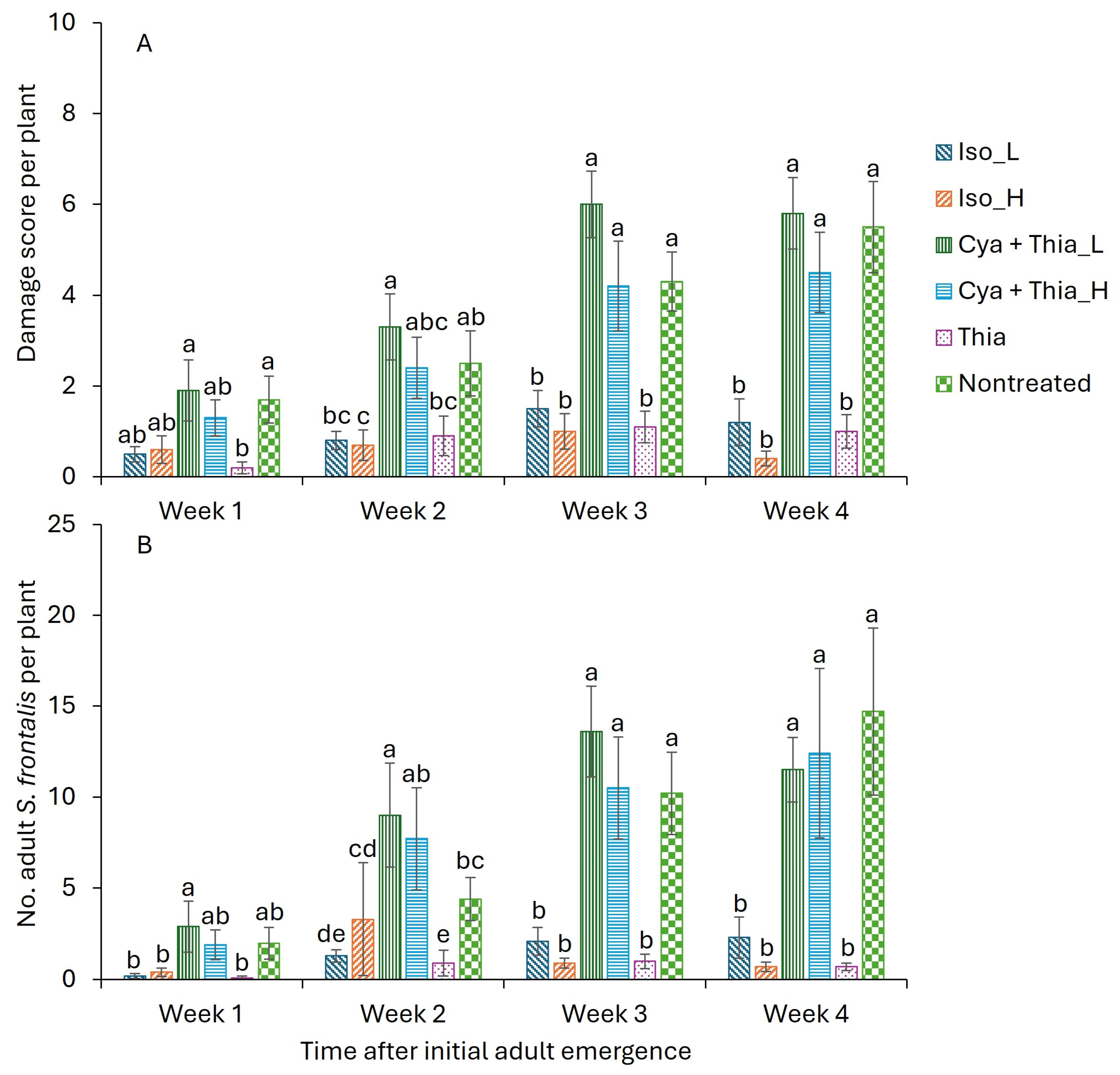
In 2024 trial 1, the insecticide treatment and observation time significantly differed for the damage score and beetle densities (Table 2). The interaction between insecticide treatment and observation time was not significantly different for damage score, but the interaction was significantly different for the beetle densities (Table 2). At week-one post-initial adult emergence, the damage scores were significantly lower for the Thia treatment than for the Cya + Thia_L and nontreated control treatments (Figure 1A). At week-two post-initial adult emergence, the damage scores were significantly lower for the Iso_M treatment than for the nontreated control treatment (Figure 1A). At week-three and four post-initial adult emergence, the plant damage scores were significantly lower for the Iso_L and H treatments than for the nontreated control treatment (Figure 1A). For the number of adults, there were no significant differences between all the insecticide treatments and nontreated control at week-one post-initial adult emergence (Figure 1B). At week-two post-initial adult emergence, the number of beetles for the Iso_L and Thia treatments was significantly lower than for the nontreated control treatment (Figure 1B). At week-three and four post-initial adult emergences, the number of adults was significantly lower for the Iso_L and H treatments than for the nontreated control treatment (Figure 1B).
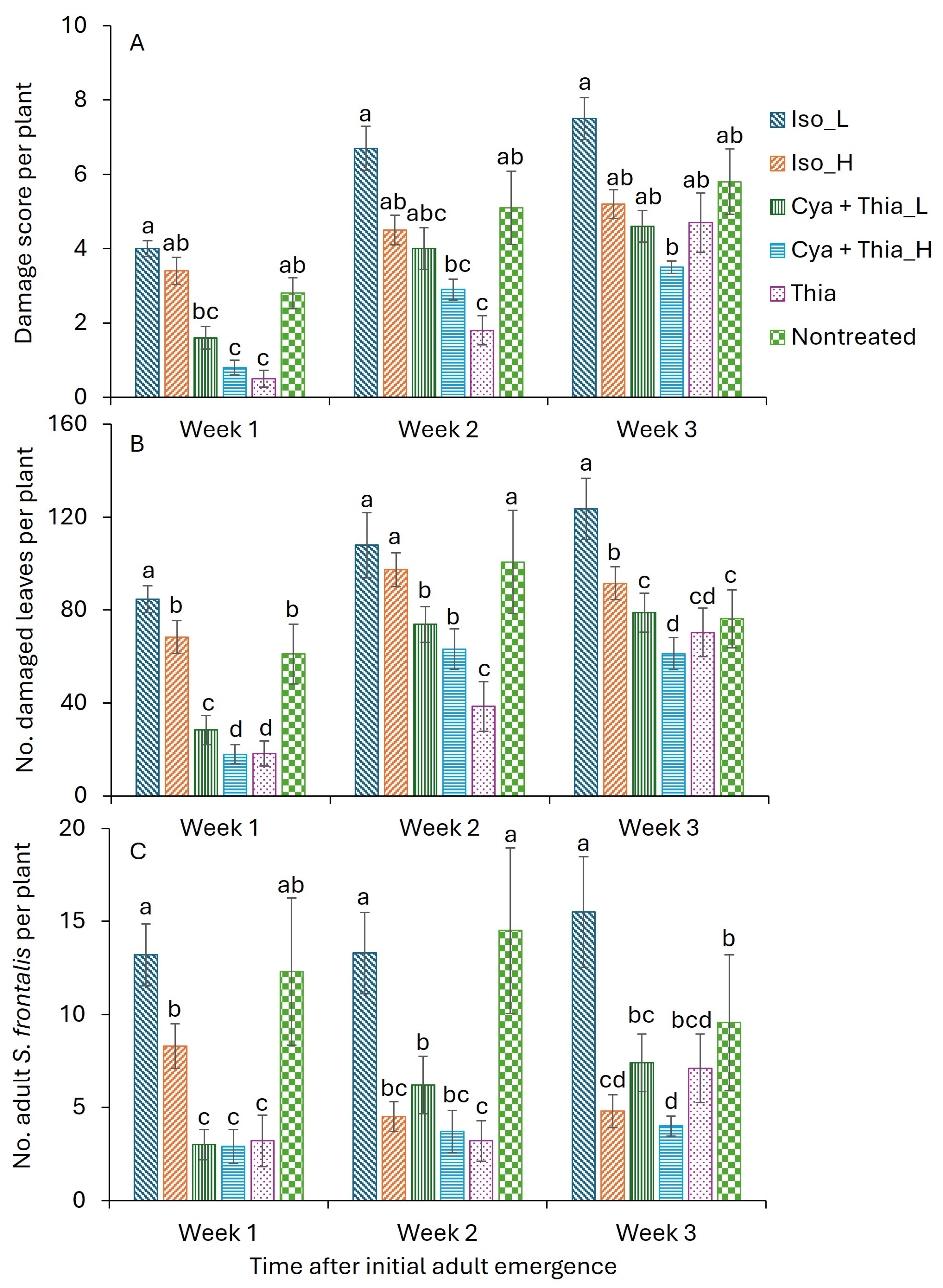
In 2025 trial 2, the insecticide treatment, observation time, and their interaction significantly differed for the damage score, the number of damaged leaves, and beetle densities (Table 2). At week-one post-initial adult emergence, the damage scores were significantly lower for the Cya + Thia_L and Thia treatments than for the nontreated control treatment (Figure 2A). At week-two post-initial adult emergence, the damage scores were significantly lower for the Thia treatment than for the nontreated control treatment (Figure 2A). There were no significant differences between Iso_L. Iso_H, Cya + Thia_L, Cya + Thia_H, and nontreated control treatments for damage scores. At week-three post-initial adult emergence, damage scores were not significantly different between insecticide treatments and the nontreated control treatment (Figure 2A). Damage scores were not significantly different between insecticide treatments and the nontreated control treatment (Figure 2A).
Significantly lower number of damaged leaves was observed for the Cya + Thia_H and Thia treatments than for the Cya + Thia_L treatment, followed by the nontreated control treatment at week-one post-initial adult emergence (Figure 2B). At week-two post-initial adult emergence, the number of damage leaves was significantly lower for the Thia treatment than for the Cya + Thia_L and Cya + Thia_H treatments, followed by the nontreated control treatment (Figure 2B). There were no significant differences between Iso_L, Iso_H, and nontreated control treatments for the number of damaged leaves. At week-three post-initial adult emergence, the number of damaged leaves was significantly lower for the Cya + Thia_H treatment than for the nontreated control treatment (Figure 2B).
For the beetles, at week-one post-initial adult emergence, the number of adults was significantly lower for the Cya + Thia_L, Cya + Thia_H, and Thia treatments than for the nontreated control treatment (Figure 2C). At week-two post-initial adult emergence, the number of adults was significantly lower for the Thia treatment than for the Cya + Thia_L treatment, followed by the nontreated control treatment (Figure 2C). At week-three post-initial adult emergence, the number of adults was significantly lower for the Cya + Thia_H treatment than for the nontreated control treatment (Figure 2C).
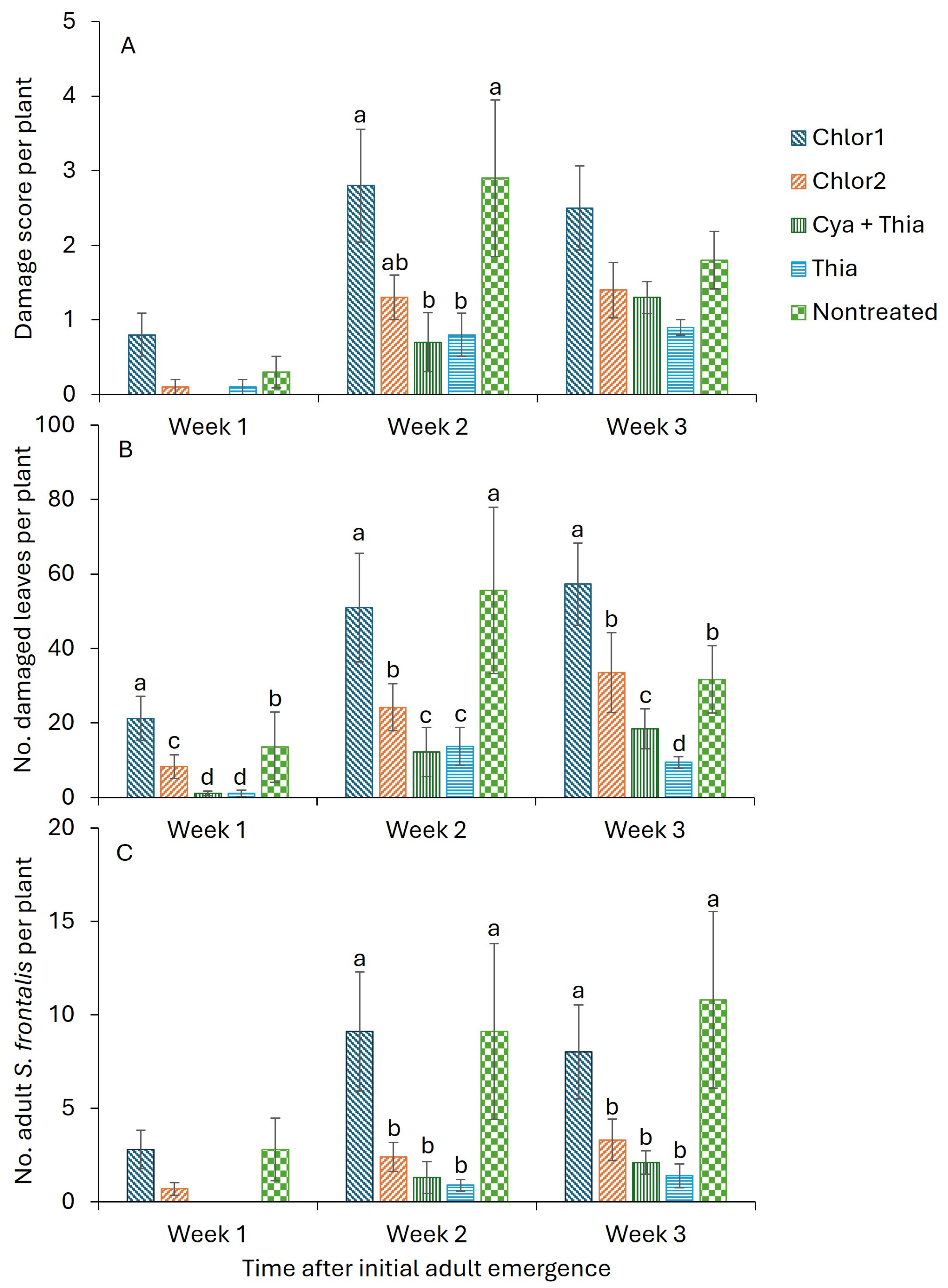
In 2025 trial 3, the insecticide treatment significantly differed only in terms of damage scores and beetle densities, whereas the insecticide treatment, observation time, and their interaction significantly differed in the number of damaged leaves (Table 2). At week two post-initial adult emergence, the damage scores were significantly lower for the Cya + Thia and the Thia treatments than for the nontreated control treatment (Figure 3A). However, there was no significant difference between treatments at one or three weeks post-initial adult emergence. The number of damaged leaves was significantly lower for the Cya + Thia and the Thia treatments than for the nontreated control treatment at all three days post-initial adult emergence (Figure 3B). Significantly lower numbers of damaged leaves were observed in Chlor_2 treatment than for the Chlor_1 and nontreated control treatments in all three days post-initial adult emergence (Figure 3B). At two and three-week post-initial adult emergence, the number of adults was significantly lower for the Chlor_2, Cya + Thia and the Thia treatments than for the Chlor_1 and nontreated control treatment (Figure 3C).
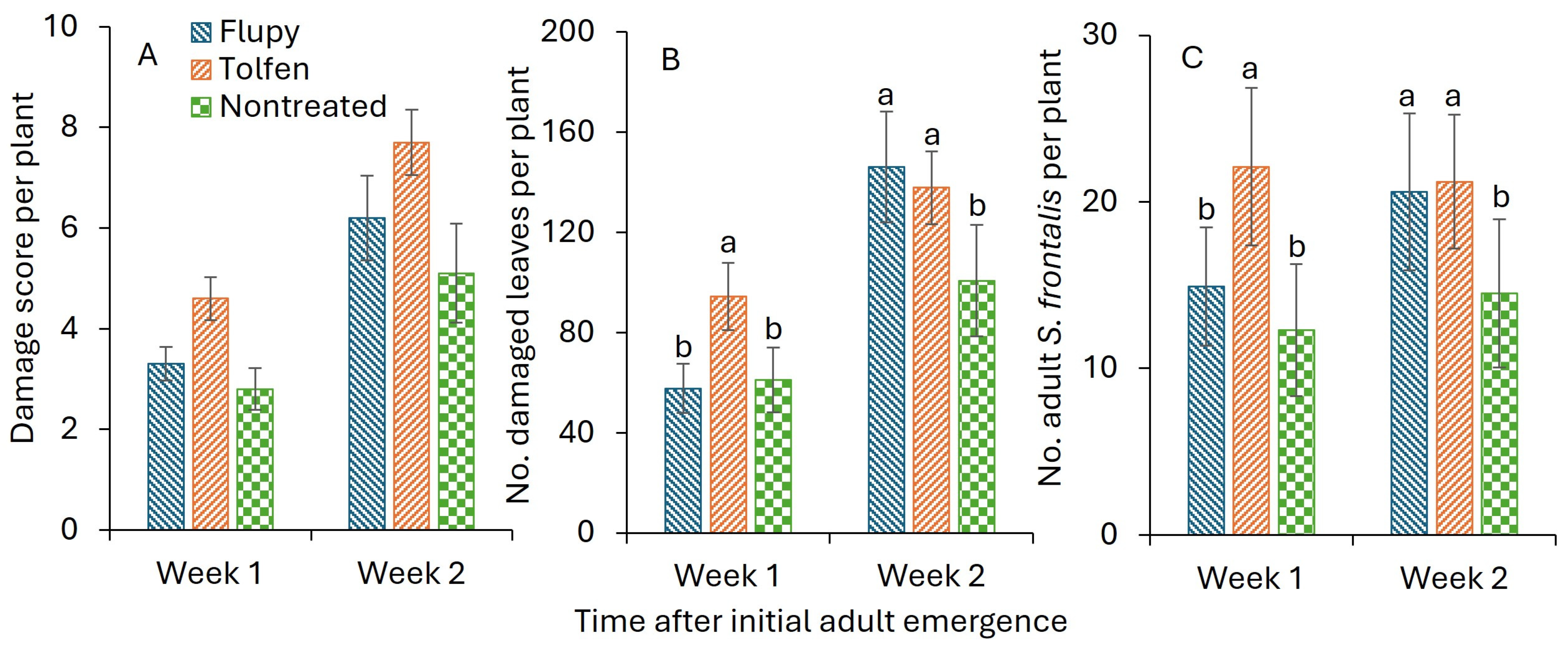
In 2025 trial 4, although the insecticide treatments significantly differed in the number of damaged leaves and beetle densities, these values were significantly greater for the Flupy and Tolfen treatments than for the nontreated control (Table 2; Figure 4B,C). There were no significant differences between treatments for damage scores at 1 or 2 weeks post-adult emergence (Figure 4A).

4. Discussion

Results indicate that drenching with high rates of isocycloseram effectively reduced S. frontalis larvae, although lower rates did not significantly decrease larval densities based on adult emergence. This suggests that an adequate dose of isocycloseram is necessary to be effective on S. frontalis larvae. This suggests that a high rate of isocycloseram might be useful as a drench application for controlling S. frontalis larvae. However, results with cyantraniliprole + thiamethoxam over two years were inconsistent, although two trials in 2025 showed significant suppression of S. frontalis larvae after drench application. This indicates that cyantraniliprole + thiamethoxam could potentially be used for larval suppression of S. frontalis. Previous studies showed that cyantraniliprole can reduce S. frontalis larvae and damage caused by emerging adults when applied as a drench [6]. Based on current data, isocycloseram and cyantraniliprole + thiamethoxam are effective products for controlling S. frontalis larvae during the growing season in ornamental nurseries.
In the current study, thiamethoxam was evaluated as a standard insecticide, as growers use it for S. frontalis management. Previous studies have shown that thiamethoxam is effective against adult S. frontalis after foliar application [11]. The data indicate that thiamethoxam is also effective against S. frontalis larvae when applied as a drench. Joseph and Pozo-Valdivia (2023) [6] examined dinotefuran, another neonicotinoid, as a drench application, where results were mixed. Zylam® Liquid was used in a 2021 trial, and Safari® 20G was used in a 2022 trial. It is worth noting that Zylam® Liquid and Safari® 20G contain different concentrations of dinotefuran, at 10% and 20%, respectively. The dinotefuran product with a higher concentration reduced adult emergence and leaf damage after drench application [6]. Meanwhile, thiamethoxam (Flagship® 25WG) has a 25% concentration of the active ingredient, which consistently caused larval mortality across all three trials in this study. This suggests that thiamethoxam is an effective option for drench applications targeting S. frontalis larvae.
Chlorantraniliprole also showed mixed results in this study. Chlorantraniliprole is a diamide insecticide classified under IRAC Group 28. Its mode of action works by activating ryanodine receptors in insect muscle cells, causing uncontrolled calcium release [9]. This leads to muscle paralysis, feeding cessation, and ultimately death of the insect. Acelepyrn® did not effectively suppress S. frontalis larvae, while DurentisTM did provide effective suppression. The effectiveness of DurentisTM may be due to its higher chlorantraniliprole concentration, as it contains 2.6 times more chlorantraniliprole than Acelepyrn®. Additionally, the application rate for DurentisTM was higher than for Acelepyrn®. In previous studies, chlorantraniliprole (Acelepyrn®) did not consistently demonstrate efficacy when applied as a drench across multiple trials [8,9]. Clearly, DurentisTM at a higher drench rate was effective against S. frontalis larvae and could be a useful tool for managing this challenging pest in ornamental nurseries.
Other products tested in the study, flupyradifurone and tolfenpyrad, did not show efficacy against S. frontalis larvae. Flupyradifurone is classified under IRAC group 4D, as it acts as an agonist to the insect’s nicotinic acetylcholine receptor [9]. It is particularly effective on piercing and sucking insects, causing continuous nerve stimulation and disrupting the nervous system, which leads to death [12]. The efficacy of flupyradifurone has been thoroughly examined in this and a previous study on immature stages of S. frontalis [6], but it does not provide any efficacy against larvae. The mode of action of tolfenpyrad involves inhibiting Complex I (NADH: ubiquinone oxidoreductase) in the mitochondrial electron transport chain of target pests, disrupting energy metabolism and ATP production [9]. It is effective against leaf-feeding beetles, such as adult and larval stages of Leptinotarsa decemlineata (Say) (Coleoptera: Chrysomelidae) [13]. The limited efficacy of flupyradifurone may be attributed to its restricted movement through pine bark media. The high organic matter content in pine bark could be impeding its mobility, similar to findings from a previous study where the leaching of flupyradifurone in sandy loam soil was significantly reduced following the application of farmyard manure [14]. Additionally, the water volume used in the current study may have been insufficient to facilitate substantial leaching, as earlier research demonstrated that flupyradifurone movement increased with higher water volumes [14]. These observations suggest that both substrate composition and irrigation volume play critical roles in the distribution and efficacy of flupyradifurone in container-grown systems. The precise reasons for tolfenpyrad’s poor activity on S. frontalis larvae are unknown. Tolfenpyrad is a pyrazole-based insecticide classified under IRAC Group 21A, which includes mitochondrial complex I electron transport inhibitors [9]. it is possible that tolfenpyrad residue did not penetrate the growing medium of the container and reach the larvae living inside the root ball of the plant. Perhaps adding an adjuvant capable of penetrating the pine bark growing medium could reach the zone where the larvae reside. This indicates that more research is needed to determine tolfenpyrad’s efficacy against S. frontalis larvae.
These effective insecticides, especially isocycloseram, cyantraniliprole + thiamethoxam, thiamethoxam, and chlorantraniliprole, could be used for managing S. frontalis by targeting the immature stages. Other effective insecticides against the larvae include cyclaniliprole [7]. Of these, isocycloseram is not yet registered for use. At the same time, isocycloseram, cyantraniliprole + thiamethoxam, thiamethoxam, chlorantraniliprole [8,15], cyclaniliprole, and spinetoram + sulfoxaflor [8] have proven effective on adults when applied as a foliar spray. Chlorantraniliprole applied as a foliar spray did not significantly reduce adult S. frontalis activity on the leaves [8]. This suggests that growers should plan applications without rotating the same active ingredients or those in the same IRAC group [9] for drench and foliar methods. This strategy will be effective and will also delay or prevent the development of resistance to these insecticides. Spinetoram + sulfoxaflor is only registered for foliar application at this time. Furthermore, the current study did not assess the persistence of insecticide residues in the growing media. This information is essential for understanding potential effects on non-target organisms, evaluating the risk of resistance development, and determining long-term impacts from exposure across multiple generations of S. frontalis. Although drench applications are generally more expensive [7], growers use them to suppress the overall population of S. frontalis in the nursery. Therefore, more research is needed to determine how to best combine insecticide drench applications with foliar treatments to control S. frontalis throughout the growing season and produce high-quality plants ready for various market windows.
In summary, this study demonstrates that isocycloseram, cyantraniliprole + thiamethoxam, thiamethoxam, and chlorantraniliprole are effective when applied as drenches targeting S. frontalis larvae. Notably, higher rates of isocycloseram yielded significantly better control than lower rates, underscoring the importance of dosage in achieving optimal efficacy. While chlorantraniliprole showed promising results, selecting formulations with higher concentrations of active ingredients is critical for consistent performance. Flupyradifurone and tolfenpyrad were ineffective as a drench, whereas they warrant further investigation, particularly in combination with adjuvants that enhance penetration into the pine bark substrate and by increasing the water volume to enhance movement. In early spring, either isocycloseram, cyantraniliprole + thiamethoxam, or chlorantraniliprole can be drenched to target the larval population. Despite these findings, our understanding of insecticide movement within containerized pine bark media and their interactions with plant roots under varying irrigation regimes remains limited. Continued research in this area will be essential to enhance the residual activity of effective insecticides and support long-term management strategies for S. frontalis.


Supplementary Materials

The following supporting information can be downloaded at https://www.mdpi.com/article/10.3390/horticulturae11111311/s1: Figure S1: Adult Systena frontalis feeding damage on the panicled hydrangea leaves, where the epidermal tissue has been removed. Over time, the affected areas turn brown (white arrows), and shot holes appear on the leaves (blue arrows).

Funding

This research was supported by Syngenta, SePro, Envu, and the University of Georgia’s Hatch Project.

Data Availability Statement

The raw data supporting the conclusions of this article will be made available by the author on request.

Acknowledgments

I thank Aaron Chapman, Chris Hardin, Navdeep Kaur, Nived Muralidharan, Kavitha Patchipala, Anne Stalvey, and Zia Williamson for assistance in setting up and evaluating plants. Additionally, I thank the nursery grower and the managers for their assistance with the research.

Conflicts of Interest

The author declares no conflicts of interest. The funders had no role in the design of the study; in the collection, analyses, or interpretation of data; in the writing of the manuscript; or in the decision to publish the results.

References

  1. Lauderdale, D. Red-Headed Flea Beetle Biology and Management. Winter 2017, Nursery and Landscape Notes. 2017; Volume 35. Available online: https://wilson.ces.ncsu.edu/wp-content/uploads/2017/02/2017-Nursery-Landscape-Notes-RHFB-Article.pdf?fwd=no (accessed on 16 September 2025).
  2. Kunkel, B. Redheaded Flea Beetles: An Invasive Native. Growers Talk. 2021. Available online: https://www.growertalks.com/Article/?articleid=25339 (accessed on 16 September 2025).
  3. Arshad, R.; Chong, J.-H.; Lauderdale, D.; Kunkel, B.; Joseph, S.V. Biology and Management of Systena frontalis (Coleoptera: Chrysomelidae) in Ornamental Plant Nurseries. J. Integr. Pest Manag. 2023, 14, 7. [Google Scholar] [CrossRef]
  4. Arshad, R.; Chong, J.-H.; Pozo-Valdivia, A.D.; Joseph, S.V. Growing Media is the Major Source of Damaging Population of Systena frontalis (Coleoptera: Chrysomelidae) in Ornamental Plant Nurseries. J. Econ. Entomol. 2023, 116, 1760–1766. [Google Scholar] [CrossRef] [PubMed]
  5. Joseph, S.V. Evaluation of Drench Application of Insecticides Against Larvae of Systena frontalis in Panicled Hydrangea, 2023. Arthropod Manag. Tests 2023, 48, tsad121. [Google Scholar] [CrossRef]
  6. Joseph, S.V.; Pozo-Valdivia, A.D. Effects of Insecticide Drench Application against Immatures of Systena frontalis in Containerized Hydrangea paniculata. J. Environ. Hortic. 2023, 41, 161–169. [Google Scholar] [CrossRef]
  7. Joseph, S.V. Response to the Winter Drench Application and Dosage of Cyclaniliprole on Systena frontalis (Coleoptera: Chrysomelidae) in Containerized Panicled Hydrangea. Crop Prot. 2025, 197, 107345. [Google Scholar] [CrossRef]
  8. Arshad, R.; Joseph, S.V. Residual Activity of Insecticides Against Adult Systena frontalis (Coleoptera: Chrysomelidae) Under Semi-field Conditions. J. Econ. Entomol. 2024, 117, 251–258. [Google Scholar] [CrossRef] [PubMed]
  9. [IRAC] Insecticide Resistance Action Committee. Mode of Action Classification Scheme. 2025. Available online: https://irac-online.org/mode-of-action/classification-online/ (accessed on 16 September 2025).
  10. SAS Institute. SAS, version 9.4; SAS Institute Inc.: Cary, NC, USA, 2024.
  11. Cloyd, R.A.; Herrick, N.J. Evaluation of Systemic Insecticides in Protecting Container-Grown Nursery Plants From Damage Caused by Field-Collected Populations of Redheaded Flea Beetle, Systena frontalis (Coleoptera: Chrysomelidae), Adults. J. Entomol. Sci. 2023, 58, 294–306. [Google Scholar] [CrossRef]
  12. Nauen, R.; Jeschke, P.; Velten, R.; Beck, M.E.; Ebbinghaus-Kintscher, U.; Thielert, W.; Wölfel, K.; Haas, M.; Kunz, K.; Raupach, G. Flupyradifurone: A Brief Profile of a New Butenolide Insecticide. Pest Manag. Sci. 2015, 71, 850–862. [Google Scholar] [CrossRef] [PubMed]
  13. Wimer, A.; Philips, C.; Kuhar, T.; Adams, J.; Szendrei, Z. A New Tool for Resistance Management: Baseline Toxicity, Ovicidal Activity, and Field Efficacy of the Novel Insecticide Tolfenpyrad on Colorado Potato Beetle, Leptinotarsa decemlineata. Adv. Entomol. 2015, 3, 139–147. [Google Scholar] [CrossRef]
  14. Sarkar, S.; Mukherjee, I. Effect of Organic Amendment on Mobility Behavior of Flupyradifurone in Two Different Indian Soils. Bull. Environ. Contam. Toxicol. 2021, 107, 160–166. [Google Scholar] [CrossRef] [PubMed]
  15. Joseph, S.V. Efficacy of Insecticides Against Systena frontalis in Containerized Panicled Hydrangea in Nursery, 2023. Arthropod Manag. Tests 2023, 48, tsad092. [Google Scholar] [CrossRef]
Figure 1. Mean (±SEM) (A) whole plant feeding damage scores after adult Systena frontalis feeding and (B) number of adult S. frontalis after drenching of various insecticides in 2024 (trial 1). The same case letters above the bars within observation date indicate no significant difference between treatments using the Tukey–Kramer test (α = 0.05). The abbreviations: Iso_L, 236.6 mL Isocycloseram 1.67 SC [Plinazolin® Technology] per 378.5 L water; Iso_H, 295.7 mL Isocycloseram 1.67 SC per 378.5 L water; Cyn + Thia_L, 226.8 g cyantraniliprole + thiamethoxam [Mainspring® Xtra] per 378.5 L water; Cyn + Thia_H, 283.5 g cyantraniliprole + thiamethoxam [Mainspring® Xtra] per 378.5 L water; and Thia, 226.8 g thiamethoxam [Flagship® 25WG] per 378.5 L water.
Horticulturae 11 01311 g001
Figure 2. Mean (±SEM) (A) whole plant feeding damage scores after adult Systena frontalis feeding, (B) the number of adult S. frontalis, and (C) the number of damaged leaves with adult S. frontalis feeding damage after drenching of various insecticides in 2025 (trial 2). The same case letters above bars within observation date indicate no significant difference between treatments using the Tukey–Kramer test (α = 0.05). The abbreviations: Iso_L, 147.9 mL Isocycloseram 1.67 SC [Plinazolin® Technology] per 378.5 L water; Iso_H, 177.4 mL Isocycloseram 1.67 SC [Plinazolin® Technology] per 378.5 L water; Cyn + Thia_L, 226.8 g cyantraniliprole + thiamethoxam [Mainspring® Xtra] per 378.5 L water; Cyn + Thia_H, 283.5 g cyantraniliprole + thiamethoxam [Mainspring® Xtra] per 378.5 L water; and Thia, 226.8 g thiamethoxam [Flagship® 25WG] per 378.5 L water.
Horticulturae 11 01311 g002
Figure 3. Mean (±SEM) (A) whole plant feeding damage scores after adult Systena frontalis feeding, (B) the number of adult S. frontalis, and (C) the number of damaged leaves with adult S. frontalis feeding damage after drenching of various insecticides in 2025 (trial 3). The same case letters above bars within observation date indicate no significant difference between treatments using the Tukey–Kramer test (α = 0.05). Where letters were not provided for certain observation dates, there were no significant differences. The abbreviations: Chlor_1, 295.7 mL chlorantraniliprole [Acelepyrn®] per 378.5 L water; Chlor_2, 316.4 mL chlorantraniliprole [DurentisTM] per 378.5 L water; Cyn + Thia_L, 283.5 g cyantraniliprole + thiamethoxam [Mainspring® Xtra] per 378.5 L water; and Thia, 226.8 g thiamethoxam [Flagship® 25WG] per 378.5 L water.
Horticulturae 11 01311 g003
Figure 4. Mean (±SEM) (A) whole plant feeding damage scores after adult Systena frontalis feeding, (B) the number of adult S. frontalis, and (C) the number of damaged leaves with adult S. frontalis feeding damage after drenching of various insecticides in 2025 (trial 4). The same case letters above bars within observation date indicate no significant difference between treatments using the Tukey–Kramer test (α = 0.05). Where letters were not provided for certain observation dates, there were no significant differences. The abbreviations: Flupy, 828.1 mL flupyradifurone [AltusTM] per 378.5 L water; and Tolfen, 946.4 mL tolfenpyrad [Hachi-Hachi®SC] per 378.5 L water.
Horticulturae 11 01311 g004
Table 1. Insecticide products, active ingredients, and application rates used in drench trials against adult Systena frontalis.
Insecticide ProductActive Ingredient (%)IRAC GroupRate dTrial
1 (2024)2 (2025)3 (2025)4 (2025)
Plinazolin® Technology aIsocycloseram 1.67 SC30147.9 mL *
177.4 mL *
236.6 mL*
295.7 mL*
Acelepyrn® aChlorantraniliprole (18.4%)28295.7 mL *
DurentisTM bChlorantraniliprole (47.85%)28316.4 mL *
Mainspring® Xtra aCyantraniliprole (20%) +
thiamethoxam (20%)
28 + 4A226.8 g**
283.5 g***
Flagship® 25WG aThiamethoxam (25%)4A226.8 g***
AltusTM bFlupyradifurone (17.09%)4D828.1 mL *
Hachi-Hachi®SC cTolfenpyrad (15%)21A946.4 mL *
* Rate and insecticide used in each study; a Syngenta, Greensboro, North Carolina; b Envu, Cary, North Carolina; c SePRO Corporation, Carmel, Indiana. d Product per 378.5 L of water.
Table 2. Statistics on damage whole plant scores, the number of Systena frontalis feeding-damaged leaves, and the number of adult S. frontalis feeding after drenching application of various insecticides in 2024 and 2025.
TrialVariableDamage ScoreDamaged LeavesBeetles
FdfpFdfpFdfp
2024 trial 1
Insecticide29.25, 207<0.001---53.65, 207<0.001
Time11.85, 207<0.001---17.23, 207<0.001
Insecticide × Time0.715, 2070.819---4.415, 207<0.001
2025 trial 2
Insecticide16.25, 153<0.001271.75, 153<0.00170.35, 152<0.001
Time36.12, 153<0.001407.82, 153<0.0015.12, 1520.007
Insecticide × Time2.310, 1530.01538.210, 153<0.0016.010, 152<0.001
2025 trial 3
Insecticide4.84, 126<0.001156.54, 126<0.001154.24, 126<0.001
Time0.02, 1260.965156.32, 126<0.0011.92, 1260.147
Insecticide × Time0.98, 1260.50518.88, 126<0.0010.88, 1260.609
2025 trial 4
Insecticide4.92, 450.01262.92, 45<0.00119.32, 45<0.001
Time22.31, 45<0.001477.91, 45<0.0015.61, 450.023
Insecticide × Time0.12, 450.91437.82, 45<0.0013.32, 450.048
Disclaimer/Publisher’s Note: The statements, opinions and data contained in all publications are solely those of the individual author(s) and contributor(s) and not of MDPI and/or the editor(s). MDPI and/or the editor(s) disclaim responsibility for any injury to people or property resulting from any ideas, methods, instructions or products referred to in the content.