

Abstract
Elevated oxygen is regarded as an effective approach to maintaining the quality of fresh plant products. To elucidate the role of elevated oxygen in polyphenol biosynthesis and antioxidant capacity, we evaluated the impact of different concentrations of oxygen on polyphenol metabolism, individual polyphenol contents, and antioxidant levels of strawberries during storage. Elevated oxygen (40%, 60%, and 80%) promoted the accumulation of polyphenols, including tannin, flavone, and anthocyanin. At the end of storage, total polyphenol contents of strawberries treated with 60% and 80% oxygen were 1.11 and 1.13 times higher, respectively, than the control group. In addition, elevated oxygen effectively enhanced DPPH and FRAP, which was consistent with the observed changes in polyphenol contents. Additionally, most genes involved in polyphenol biosynthesis were found to be upregulated during storage, with elevated oxygen resulting in higher expression levels compared to controls. These findings show that presumably, the main reason for the improvement in the commercial and edible quality of strawberries is physical treatments, such as elevated oxygen.
1. Introduction
Strawberries (Fragaria × ananassa Duch.) are immensely popular among consumers on account of their bright color, desirable flavor, and abundant nutrients, especially polyphenols. However, their economic and edible value is highly limited by the short interval between after-ripening and senescence [1]. During this period, polyphenol contents change rapidly, accumulating during after-ripening and then undergoing degradation during senescence [2]. Thus, to increase the economic and edible value of strawberries, it is necessary to devise effective treatments to maintain adequate nutritional value and extend their shelf lives.
Previous studies have argued in favor of modification atmosphere packaging (MAP) due to its physical mode of action [3], which is more environmentally friendly and viewed as healthier for consumers in comparison to edible coatings [4], melatonin [5], and other chemical treatments. Gong et al. [6] found that strawberries treated with a combination of 2.5% O2 and 15% CO2 had shelf lives 4–6 d longer than controls. In addition, Li et al. [7] found that treatment with 20% CO2 could delay the accumulation of aromatic secondary metabolites, providing insight into the maintenance of postharvest strawberry quality during storage. Even so, low O2 storage conditions can result in the production of acetaldehyde and ethanol [8], producing an unpleasant alcohol smell. However, elevated O2 storage conditions have shown promise in maintaining fruit quality. Wei et al. (2018) found that high O2 (50% or 100%) resulted in increased polyphenol contents during the initial stages after wounding in kiwis and provided substrates for wound healing in later stages [9]. Chen et al. (2018) also found that high O2 (50%, 70%, or 90%) resulted in the maintenance of fruit quality and increased the polyphenol contents of passion fruits during the storage process [10]. Similar results were obtained with oranges [11] and mulberries [12]. Additionally, strawberries exposed to high O2 showed lower rates of decay, higher firmness, and higher total phenolic contents than those exposed to normal air, which demonstrated that elevated O2 contributed to the maintenance of strawberry quality [13]. That said, the aforementioned studies did not explicitly assess the polyphenol contents of strawberries at the molecular level when exposed to a range of elevated oxygen concentrations.
In the present study, we examined changes in individual and total polyphenol contents as well as the antioxidant capacities of strawberries in response to different concentrations of elevated O2 in the atmosphere during storage. Based on the effect of elevated O2 on the economic and edible value of strawberries, we explored the role of elevated O2 in the regulation of polyphenol metabolism in strawberries at the transcriptional level. Our results offered a deeper understanding of the impact of elevated O2 on the improvement in the quality of strawberries, providing detailed insights about the potential of elevated O2 for the storage of postharvest fruits.
2. Materials and Methods
2.1. Strawberry Materials and Treatments
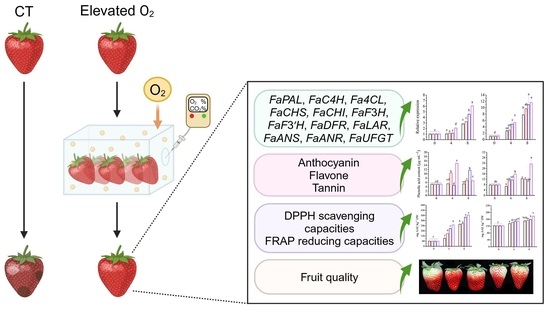
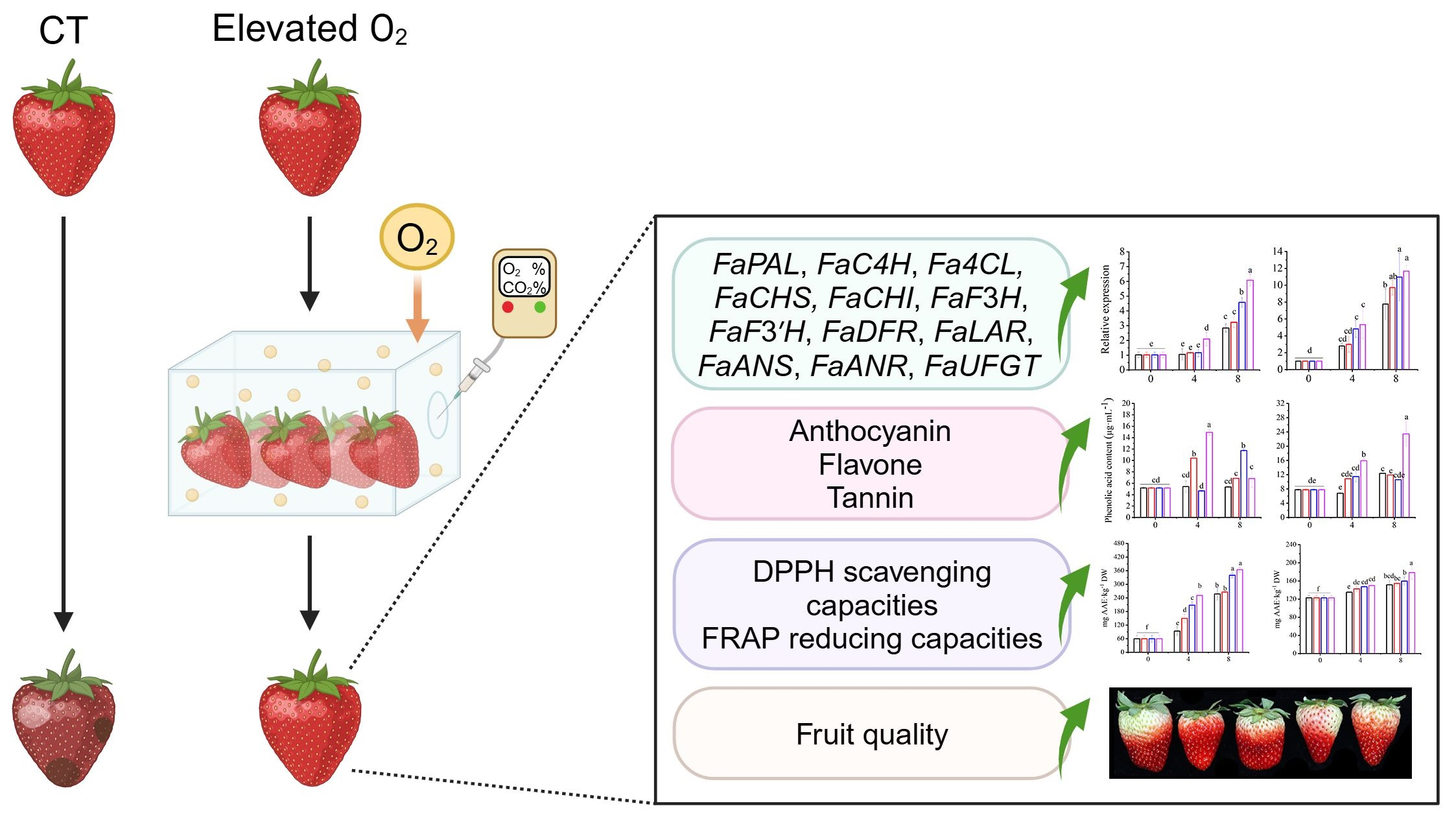
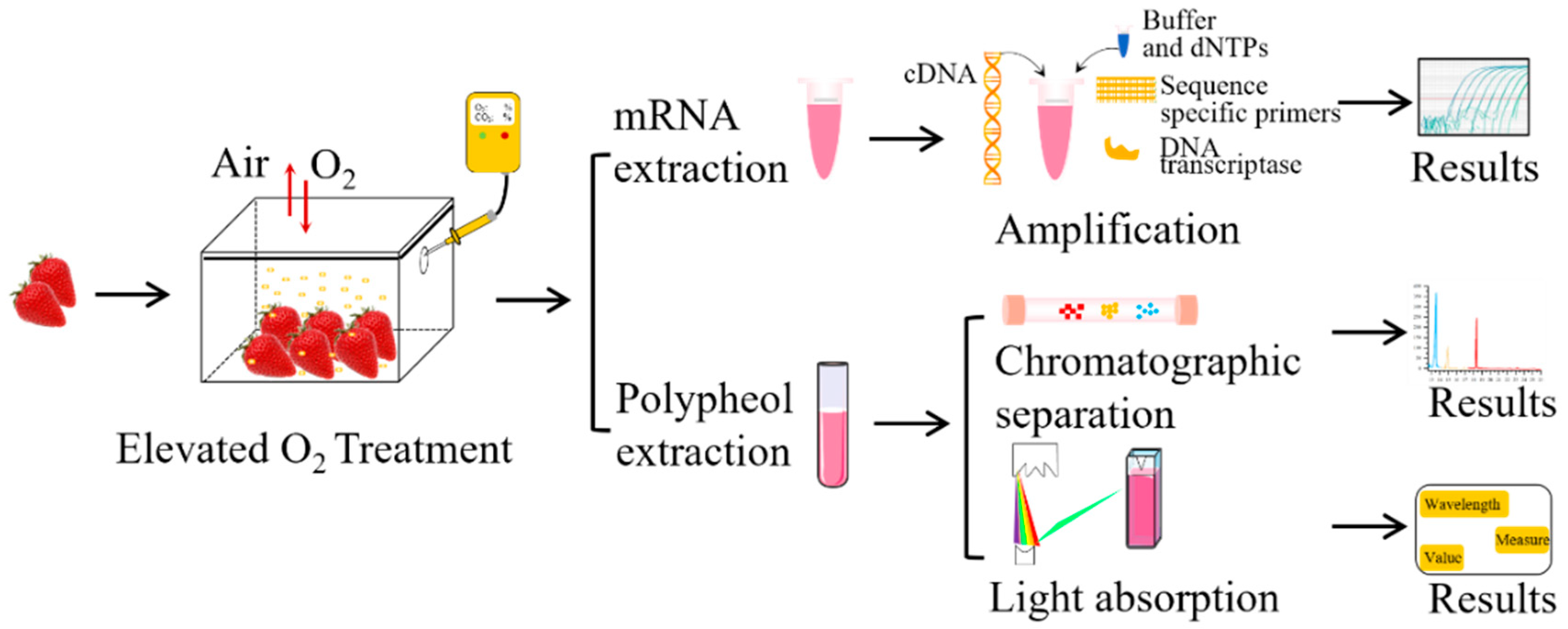
Strawberries (Fragaria × ananassa Duch. cv. Benihoppe) were harvested from a greenhouse on a farm (120°18′, 30°25′) in Hangzhou City, Zhejiang Province, China, and transported to the laboratory within 2 h. Strawberries with uniform size and similar maturities (75% ripeness) that were free of defects and diseases were selected for further analysis; 75% ripeness means that 3/4 of the surface of the strawberry is reddish in color and 1/4 is still white or green. The average firmness of samples was 8.0 ± 0.5 N, the average soluble solid content was 6.7 ± 0.3%, and the average TA was 0.55 ± 0.02%. Samples were randomly divided into 4 groups (1 kg for each group) and loaded into one of four plastic boxes (RH of 90%, length of 50 cm, width of 35 cm, and height of 30 cm) with varied O2 levels. The boxes were filled with air [11], 40 vt% O2, 60 vt% O2, or 80 vt% O2. The gas content of the box was measured daily, maintaining a fixed high O2 content and a CO2 content of less than 1%, whereas the N2 content was not measured. The plastic boxes had low permeability to O2 and CO2 and high permeability to water vapor. Boxes with strawberries were stored at 4 °C for 8 d. The ratio of the gas composition in the box was monitored every 6 h using a portable gas analyzer (HGT-01H, Zhongke Instrument, Jinan, China) to ensure constant composition of the gas throughout the experiment. Twenty samples of each treatment were collected randomly every 4 d (0, 4, and 8 d) and assessed for appearance, polyphenol contents, antioxidant capacities, and metabolic levels in response to elevated O2 treatments. The experimental design is illustrated schematically in Figure 1.
Figure 1.
A schematic diagram of the experimental design.
2.2. Determination of Polyphenols
2.2.1. Polyphenol Extraction
According to the method described by Bodelón et al. [14], 1 g of frozen sample was ground to a powder in liquid nitrogen and homogenized in 2 mL of 0.1% HCl–methanol solution. The homogenate was left undisturbed in the dark for 24 h at 4 °C. After centrifugation at 10,000× g for 20 min at 4 °C, the supernatant was collected, and the remaining pellet was re-extracted as above. The combined supernatants were filtered through a 0.45 μm sterile syringe filter and subsequently used for UPLC-DAD-MS analysis.
2.2.2. Polyphenol Concentrations
The analysis of polyphenol contents was carried out using an ACQUITY series UPLC system (LC-2010A, Shimadzu Corporation, Kyoto, Japan) equipped with a diode array detector and a 5 mm AQ-C18 column (4.6 × 250 mm, Welch Materials, Inc., Shanghai, China). The mobile phase consisted of 0.05% phosphoric acid (solvent A) and acetonitrile (solvent B). The line gradient system started on 10% B and went up to 25% B in 30 min, from 25 to 95% B in 40 min, and from 95% to 10% B in 50 min. The flow rate was 1 mL/min, and the injected volume was 20 mL. The absorbance was measured at 280 nm (tannins and flavones) and 520 nm (anthocyanins). The values for tannins and flavones are expressed as proanthocyanidin tetramer equivalents (mg/L), and the values for anthocyanin contents are expressed as cyanidin-3-glucoside (mg/L).
2.2.3. Identification of Individual Polyphenols
Mass spectrometry analysis was performed using a UPLC (AB Triple TOFTM 5600 plus, AB Sciex, Boston, MA, USA) equipped with electrospray ionization (ESI). The conditions were set as follows: in positive mode, the source voltage was +3.0 kV, the source temperature was 300 °C, the voltage of curtain gas was 45 psig, the flow rate was 12 L/min, and the spectrum was recorded in the m/z = 200–1000 region. The chromatogram and the corresponding peak area of each phenolic acid were obtained by UPLC analysis. The concentration of each phenolic acid in the sample was calculated from the standard curve.
2.3. Determination of Antioxidant Capacity
2.3.1. DPPH Scavenging Capacity
The antioxidant scavenging capacity was evaluated using 1,1-diphenyl-2-picryhydrazyl (DPPH), as described by Rodriaguez et al. [15], with slight modifications. First, 1 g of frozen sample was ground to a powder and homogenized in 10 mL of 0.1% HCl–methanol solution. The homogenate was sonicated for 1 h and then left undisturbed in the dark for 2 h at room temperature. After centrifugation at 10,000× g for 20 min at room temperature, the supernatant was collected and used for the following analysis. Briefly, 2 mL of methanol (SP) was mixed with 4 mL DPPH solution (0.1 mM, purity > 98%) and incubated at room temperature for 30 min in the dark. Absorbance was then measured at 517 nm using a spectrophotometer (Spectramax 190, Molecular Devices, Sunnyvale, CA, USA) and recorded as A0. Then, 2 mL of the sample extract was mixed with 4 mL DPPH solution (0.1 mM) and incubated at room temperature for 30 min in the dark. Absorbance was then measured at 517 nm and recorded as A1. The formula used to calculate the DPPH free radical scavenging rate is (A0-A1)*100/A0. The results are expressed as ascorbic acid equivalents (mg AAE/g DW).
2.3.2. FRAP
Ferric reducing antioxidant power (FRAP) was another important index for analyzing the antioxidant capacity of substances, measured using the method of Benzie and Strain [16] with slight modifications. 2,4,6-Tripyridyl-s-triazine (TPTZ) reagent was prepared by diluting 10 mM TPTZ in 40 mM HCl. FRAP reagent was prepared by mixing 2 mL of TPTZ solution and 2 mL FeCl3 (0.02 M) in 20 mL sodium acetate buffer (pH 3.6, 300 mM). Briefly, 0.1 mL of methanol was mixed with 4.9 mL FRAP solution and incubated at 37 °C for 10 min in the dark. Absorbance was then measured at 593 nm using a spectrophotometer (Spectramax 190, Molecular Devices) and recorded as A0. Then, 0.1 mL of sample extract was mixed with 4.9 mL FRAP solution and incubated at 37 °C for 10 min in the dark. Absorbance was measured at 593 nm and recorded as A1. The results are expressed as ascorbic acid equivalents (mg AAE/g DW).
2.4. Real-Time Quantitative PCR (RT-qPCR) Assay
Total RNA was extracted from 2 g of the frozen samples using the CTAB method described by Wang et al. [17]. The CTAB extraction buffer was first configured with 2% CTAB (w/v), 2% PVP (w/v), 25 mmol/L EDTA, 100 mmol/L Tris-HCl (pH 8.0), 2.0 mol/L NaCl, and 0.5 g/L spermidine and then sterilized, followed by the addition of 2% β-mercaptoethanol. The milled sample was added to the preheated CTAB extraction buffer (65 °C) and vortexed vigorously for 30 s. An equal volume of chloroform/isoamyl alcohol (24:1) mixture was added and vortexed to mix and centrifuge the supernatant. This step was repeated once. The supernatant was transferred to a new centrifuge tube, and 4 mol/L LiCl was added; then, it was precipitated for more than 2 h at 4 °C. The precipitate was washed with 70% and 100% ethanol, and finally, the RNA was solubilized with DEPC water. The extracted RNA was reverse-transcribed to cDNA using HiScript III All-in-one RT SuperMix Perfect for qPCR (R333-01, Vazyme Biotech Co., Ltd., Beijing, China). Then, relative gene expression was determined using Taq Pro Universal SYBR qPCR Master Mix (Q712-02, Vazyme Biotech Co., Ltd., Beijing, China), and Applied Biosystems QuantStudio 3 (Thermo Fisher Scientific, Ltd., Hangzhou, China) was used to determine relative gene expression. 23S rRNA was used as the reference gene. Relative expression levels were calculated using the 2−ΔΔCT method. Three technical and biological replicates were carried out.
2.5. Statistical Analysis
The experiment was performed with three biological (three sets of samples were taken) and three technical (measurements were repeated three times) replications. All data were analyzed using SPSS 25 (SPSS Inc., Chicago, IL, USA) and expressed as the means of three determinations ± standard deviation. Significant differences were determined using Duncan’s multiple range test (p < 0.05).
3. Results
3.1. Appearance Quality
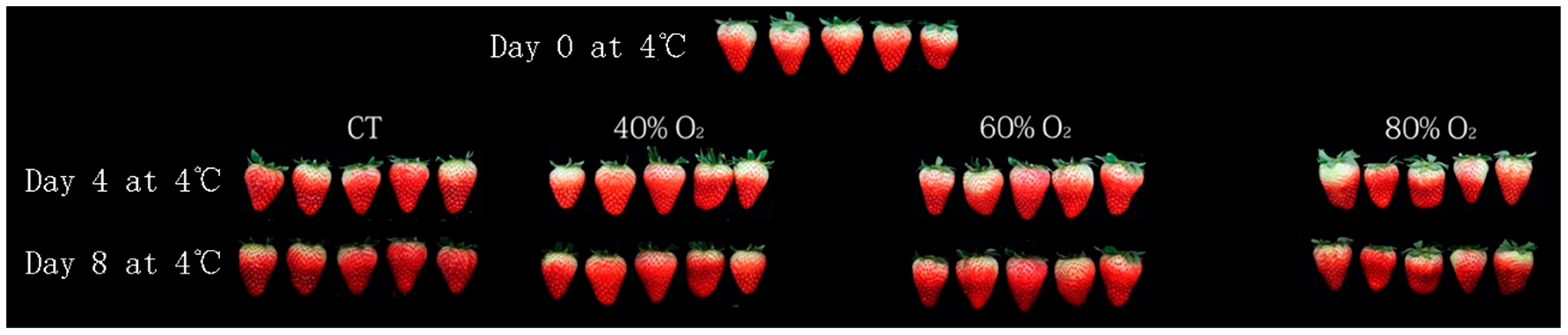
The morphologies of strawberries at various timepoints during the storage period are shown in Figure 2. In general, the color of all fruits developed from white to red during the storage period. Fruits treated with high concentrations of oxygen were brighter in color compared to CT strawberries, especially in the 60% and 80% O2 treatment groups. At 8 d of storage, the strawberry fruits of all the other groups had a dark red color, and only the 80% O2 treatment group was able to maintain the bright color of the strawberry fruits. It is speculated that the high oxygen treatment may have maintained the content of related metabolites, resulting in a better appearance of the fruit.
Figure 2.
The appearance quality of postharvest strawberries during storage. CT indicates control (air) treatment, 40% O2 indicates 40 vt% O2 treatment, 60% O2 indicates 60 vt% O2 treatment, and 80% O2 indicates 80 vt% O2 treatment.
3.2. Individual Polyphenol Concentrations
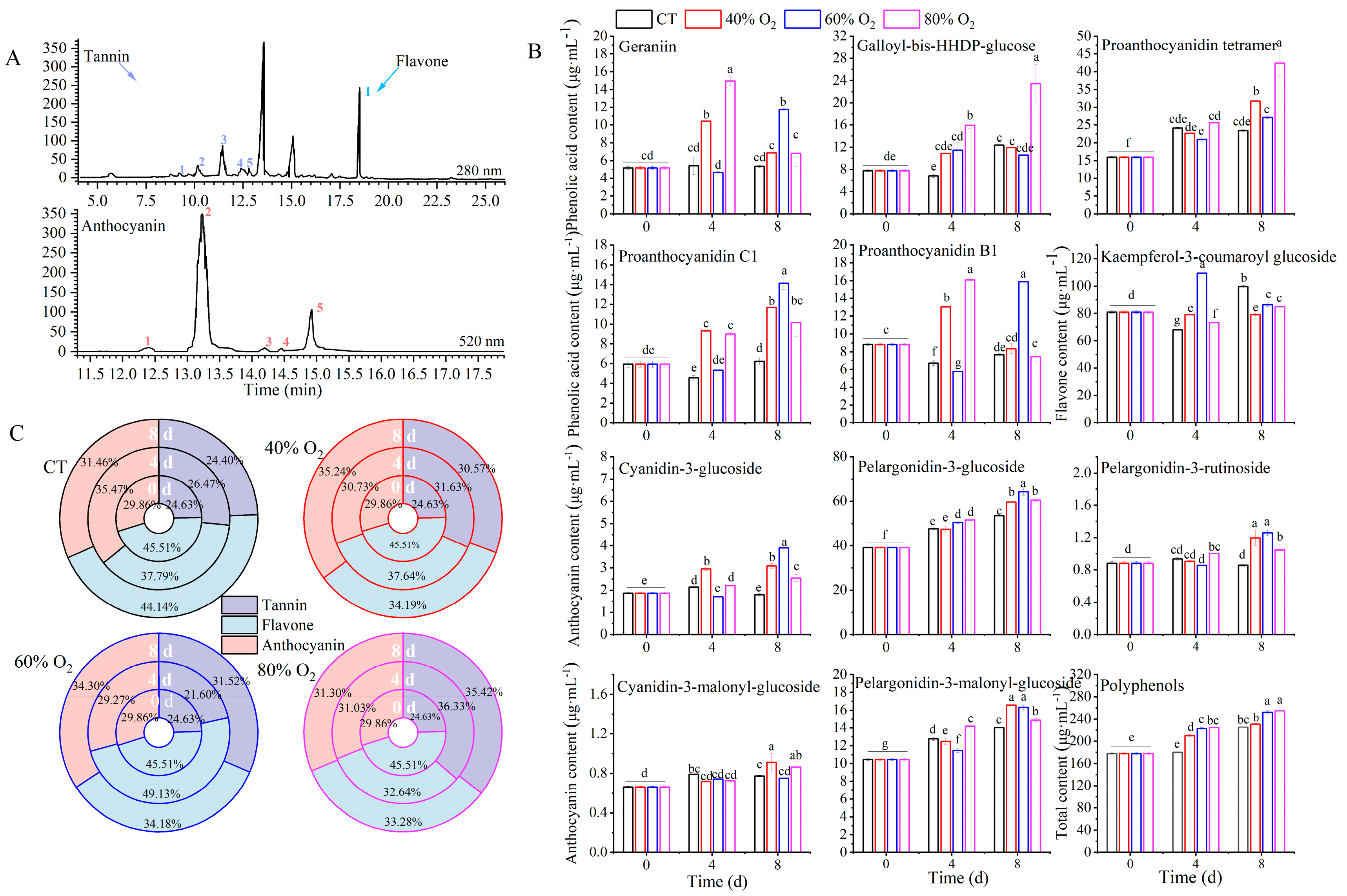
As shown in Table 1 and Figure 3A, five tannins, one flavone, and five anthocyanins were identified in strawberries via mass spectrometry. Strawberry tannins in this study consisted of hydrolyzable tannins (geranin and galloyl-bis-HHDP-glucose) and condensed tannins (proanthocyanidin tetramer, proanthocyanidin C1, and proanthocyanidin B1) (Figure 3B). Individual tannin contents generally increased with storage time, except for geranin and proanthocyanidin B1 in CT, 40% O2, and 80% O2 treatment groups. Peak geranin and proanthocyanidin B1 contents in these treatment groups were observed on the 4th day of storage. Total tannin contents were generally higher in the elevated O2 treatment groups compared to the CT group. At the end of storage, total tannin contents for the 40% O2, 60% O2, and 80% O2 treatments were 1.28-fold, 1.44-fold, and 1.64-fold higher, respectively, than those of CT (Figure 3B). The contents of the flavone kaempferol-3-coumaroyl glucoside were higher in the elevated O2 groups than in CT on the 4th day of storage, especially with 60% O2, although the content in the CT group was higher on the 8th day. On the 4th day, kaempferol-3-coumaroyl glucoside contents for the 40% O2, 60% O2, and 80% O2 treatments were 1.16-fold, 1.61-fold, and 1.08-fold higher, respectively, than that of the CT group (Figure 3B). At the end of storage, total anthocyanin contents of strawberries with 40% O2, 60% O2, and 80% O2 treatments were 1.15-fold, 1.22-fold, and 1.13-fold higher, respectively, than those of the CT group. Furthermore, there was a general increase in the proportion of anthocyanins in the 40% O2 and 60% O2 treatment groups over time, which was particularly evident at the end of storage on 8 d. (Figure 3C). The proportions of flavone generally decreased and the proportions of tannins, especially condensed tannins, generally increased in elevated oxygen treatment groups with storage time, while the opposite was observed in the CT group. The accumulation of polyphenol compounds in fruits is an adaptive mechanism to prevent oxidative damage to cells by providing hydrogen and peroxides to enhance the fruits’ antioxidant activity. This may be due to the accelerated changes in cell membrane composition and structure caused by elevated oxygen treatments, resulting in a large accumulation of polyphenol compounds in strawberry fruits, thereby improving fruit quality.
Table 1.
Mass spectrometry data of polyphenols in strawberries.
Figure 3.
Effect of elevated oxygen on polyphenol contents, including tannins, a flavone, and anthocyanins, during cold storage. (A) Chromatograms of polyphenols; (B) contents of individual tannins, a flavone, anthocyanins, and total polyphenols; and (C) proportions of tannins, a flavone, and anthocyanins. Values are presented as means ± standard deviation (n = 3). Different letters indicate significant differences between groups (p < 0.05).
3.3. Antioxidant Capacity
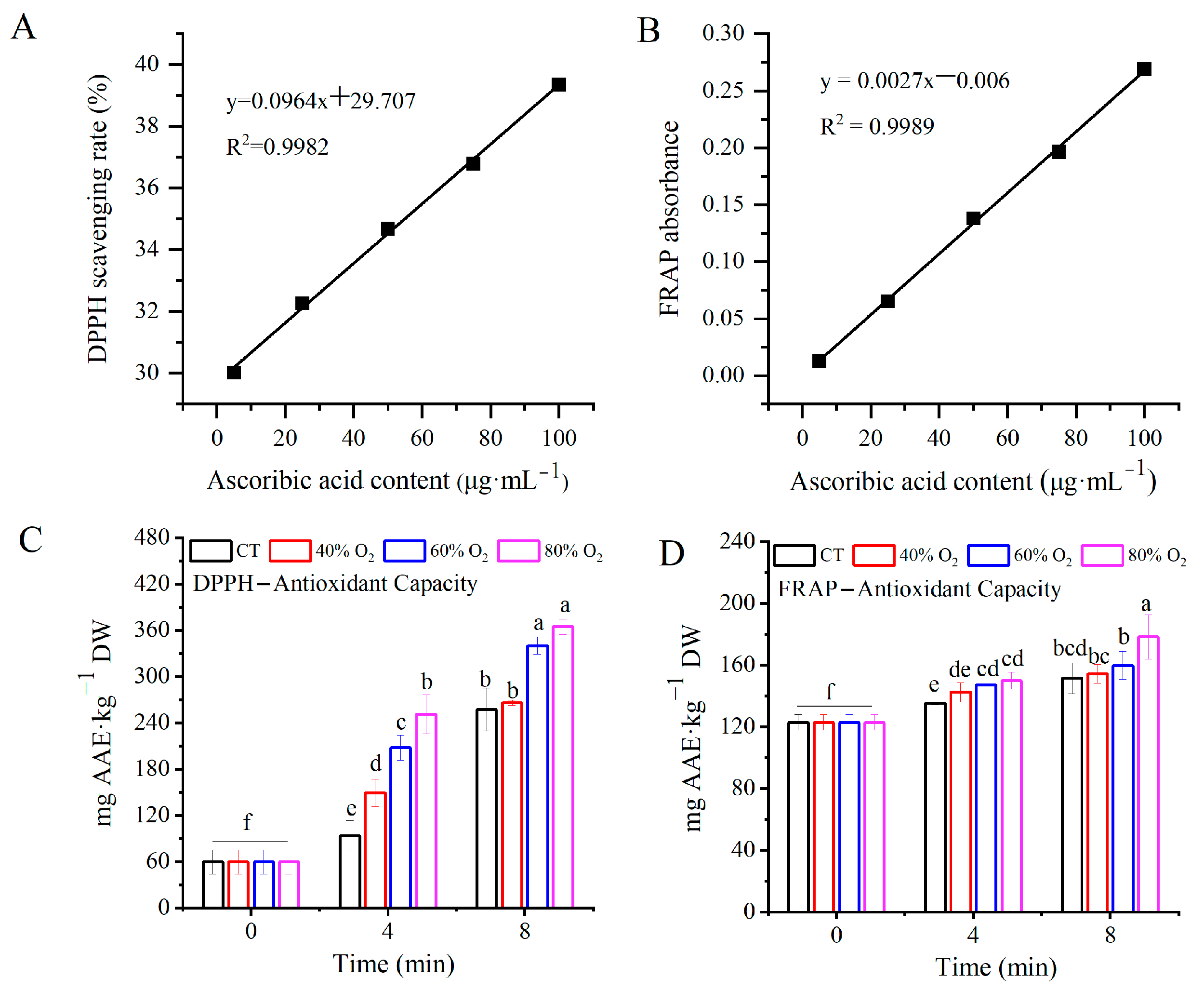
Standard curves of DPPH scavenging capacity (Figure 4A) and FRAP reducing capacity (Figure 4B) were first generated to facilitate the determination of the corresponding antioxidant capacities of strawberries treated with elevated O2 during cold storage, as shown in Figure 4C,D. DPPH scavenging capacities generally increased with storage time and increased oxygen concentrations (Figure 4C), which was consistent with changes in polyphenol contents (Figure 3B). By the end of storage, the ascorbic acid equivalent (AAE) levels of strawberries with 60% O2 and 80% O2 treatments were 1.32-fold and 1.42-fold higher, respectively, than that of CT. FRAP reducing capacities similarly increased with storage time and increased oxygen (Figure 4D). On day 8, the FRAP reducing capacities of strawberries with 80% O2 treatments were 1.18-fold higher than that of CT. Different polyphenol substances have slightly different changes. The changes in tannins and anthocyanins are consistent with the trend of the changes in antioxidant activity, while the trend of the changes in flavonoids is different. Perhaps different substances in the phenylpropane metabolic pathway have different metabolic rates.
Figure 4.
(A) diphenyl-2-picryhydrazyl (DPPH) scavenging capacity. (B) Standard curve for ferric reducing antioxidant power (FRAP) reducing capacity. (C) DPPH scavenging capacities. (D) FRAP reducing capacities. Values are presented as means ± standard deviation (n = 3). Different letters indicate significant differences between groups (p < 0.05).
3.4. Gene Expression Involved in Polyphenol Pathway
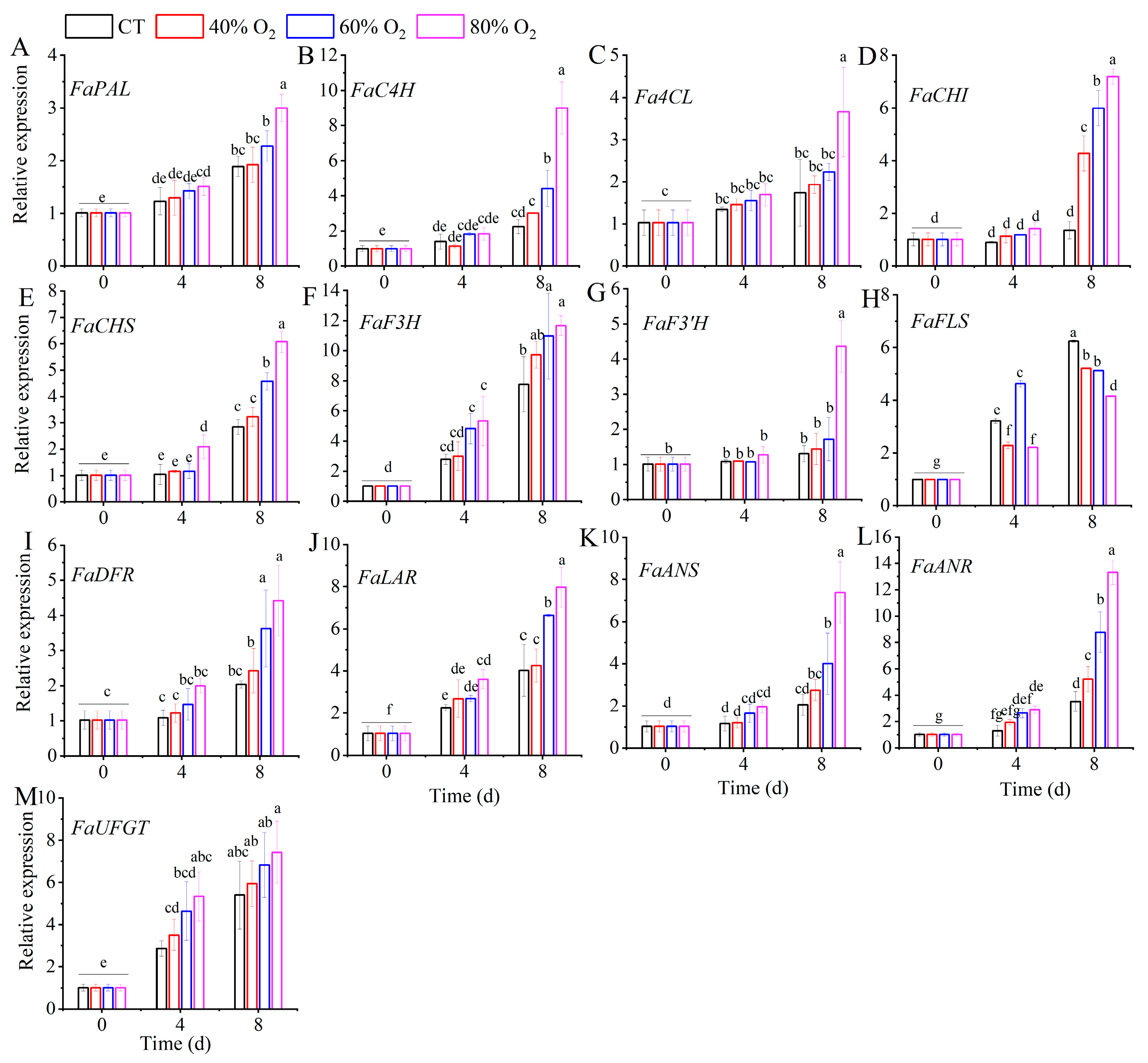
The expression levels of genes involved in the polyphenol biosynthesis pathway were measured in each treatment group during the storage period (Figure 5). The expression of most genes was upregulated with increased storage time, except for FaFLS. In general, gene expression levels were also positively correlated with increasing oxygen content. The upregulation of the sampled genes in strawberries of both CT and elevated oxygen treatment groups was consistent with changes in polyphenol contents and antioxidant capacities. Significant differences in the expression levels of most sampled genes were obtained between CT, 40% O2, 60% O2, and 80% O2 treatments.
Figure 5.
Effect of elevated oxygen on the expression levels of genes involved in the polyphenol biosynthesis pathway. Expression values are presented as means ± standard deviation (n = 3). Different letters indicate significant differences between groups (p < 0.05). Gene names are abbreviated as follows: (A) PAL, phenylalanine ammonia lyase; (B) C4H, cinnamic acid 4-hydroxylase; (C) 4CL, 4-coumarate–CoA ligase; (D) CHI, chalcone isomerase; (E) CHS, chalcone synthase; (F) F3H, flavanone 3-hydroxylase; (G) F3ʹH, flavanone 3ʹ-hydroxylase; (H) FLS, flavonol synthase; (I) DFR, dihydroflavonol 4-reductase; (J) LAR, leucoanthocyanidin reductase; (K) ANS, anthocyanidin synthase; (L) ANR, anthocyanidin reductase; and (M) UFGT, UDP-glucose flavonoid 3-O-glucosyltransferase.
4. Discussion
Recent studies have shown that elevated O2 treatments play an important role in the maintenance of the quality and marketability of fruits during postharvest storage [9,10,11,12]. It has also been reported that strawberries exposed to elevated O2 show lower rates of decay, higher firmness, and higher total phenolic content than those exposed to normal air [13]. However, these studies did not investigate the relationship between the polyphenol content of strawberries at the molecular level and increasing oxygen concentrations. In the present study, we investigated the effects of elevated O2 on polyphenol metabolism during the postharvest storage of strawberries. Color is a reliable indicator of the polyphenol contents and freshness of fruits [18,19]. As shown in Figure 2, the maintained brightness and similar redness of strawberries in elevated O2 treatment groups compared to strawberries treated with normal air suggested that high O2 levels improved the luster while maintaining the redness of strawberries, indirectly highlighting the improvement in the nutritional and economic value of fruits after treatment. Zheng et al. [20] studied the effect of elevated O2 treatment on blueberry fruits and found that fruits treated with an O2 concentration above 60% exhibited less decay, which is consistent with our result.
Polyphenols, which are important secondary metabolites, can act as antioxidants to enhance the quality of strawberry preservation [21,22]. The polyphenols of berries include tannins, flavones, and anthocyanins [23]. As shown in Figure 3B, the contents of tannins and anthocyanins were significantly enhanced by elevated O2 (p < 0.05), especially with the 80% O2 treatment, throughout the whole storage period, but the positive effect of elevated O2 on flavone was only observed on day 4. These results are consistent with higher anthocyanin accumulation of myrtle fruits treated with 80% O2 compared to controls [24]. Yang et al. [25] and Ayala-Zavala et al. [26] also found that the total phenolic, anthocyanin, and flavonoid contents of strawberries exposed to high O2 were increased, consistent with our results (Figure 3B). However, fresh-cut strawberries exposed to 60 or 80 kPa O2 showed lower levels of phenolic acids in comparison to controls [27]. This reduction might result from the excessive oxidation of exposed phenolic acids after cutting, which has been previously reported under high O2 conditions [28,29].
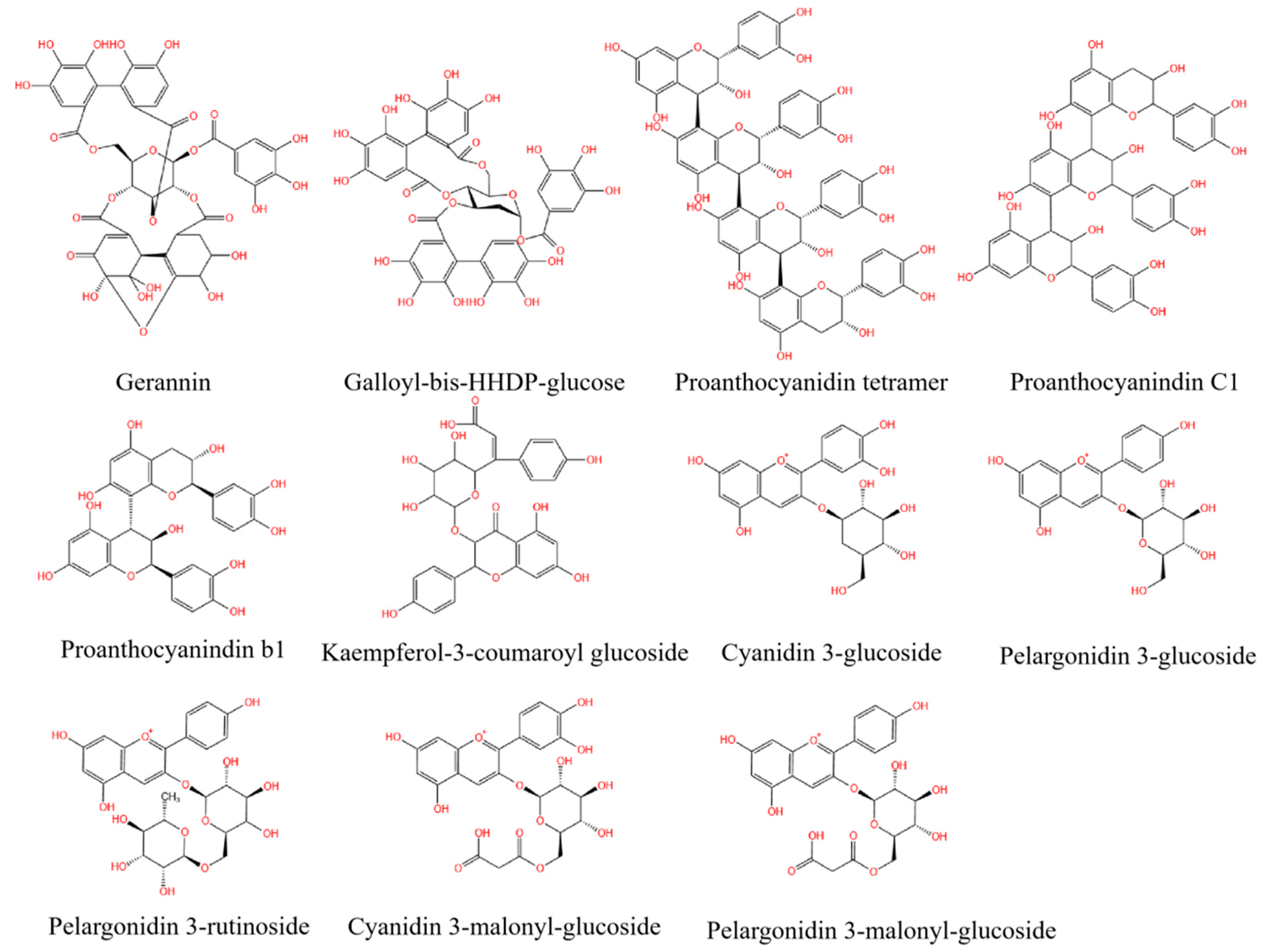
Polyphenols, common biological antioxidants, possess at least one phenol group (i.e., an aromatic ring with a hydroxyl group) in their chemical structure [30]. Multiple phenolic hydroxyl groups have been observed in the polyphenols detected in strawberries, with structures that can be classified as catechol, hydroquinone, resorcinol, or phloroglucinol based on the number and location of the hydroxyl groups within the chemical structure (Figure 6) [31]. The phenolic hydroxyl group in polyphenols tends to donate an electron or hydrogen atom to free radicals, converting them into inoffensive molecules [23]. DPPH and FRAP, representative persistent radicals and inorganic oxidizing species [32], respectively, have been used to predict the antioxidant capacity of some substances [33], thus also indirectly verifying the accumulation of polyphenols. Changes in the DPPH antioxidant capacities and FRAP reducing capacities of strawberries in the CT and elevated O2 treatments (Figure 4) were consistent with the changes in most individual polyphenol and total polyphenol contents (Figure 3B), suggesting that elevated O2 has a strong effect on the improvement in the commercial value of strawberries. Consistent with our results, a 1.22-fold higher DPPH scavenging capacity and a 1.21-fold higher FRAP reducing capacity were previously observed in strawberries with 100% O2 treatment in comparison to controls [34]. Liu et al. [35] found that total phenol and flavonoid contents in wolfberry pulp during fermentation increased significantly, which led to a substantial increase in DPPH and ABTS free radical scavenging rates. This is consistent with our research trend.
Figure 6.
General structures of tannins, a flavone, and anthocyanins identified in strawberries. Among these, geranin, galloyl-bis-HHDP-glucose, proanthocyanidin tetramer, proanthocyanidin C1, and proanthocyanidin B1 are tannins; kaempferol-3-coumaroyl glucoside is a flavone; and cyanidin 3-glucoside, pelargonidin 3-glucoside, pelargonidin 3-rutinoside, cyanidin 3-malonyl-glucoside, and pelargonidin 3-malonyl-glucoside are anthocyanins.
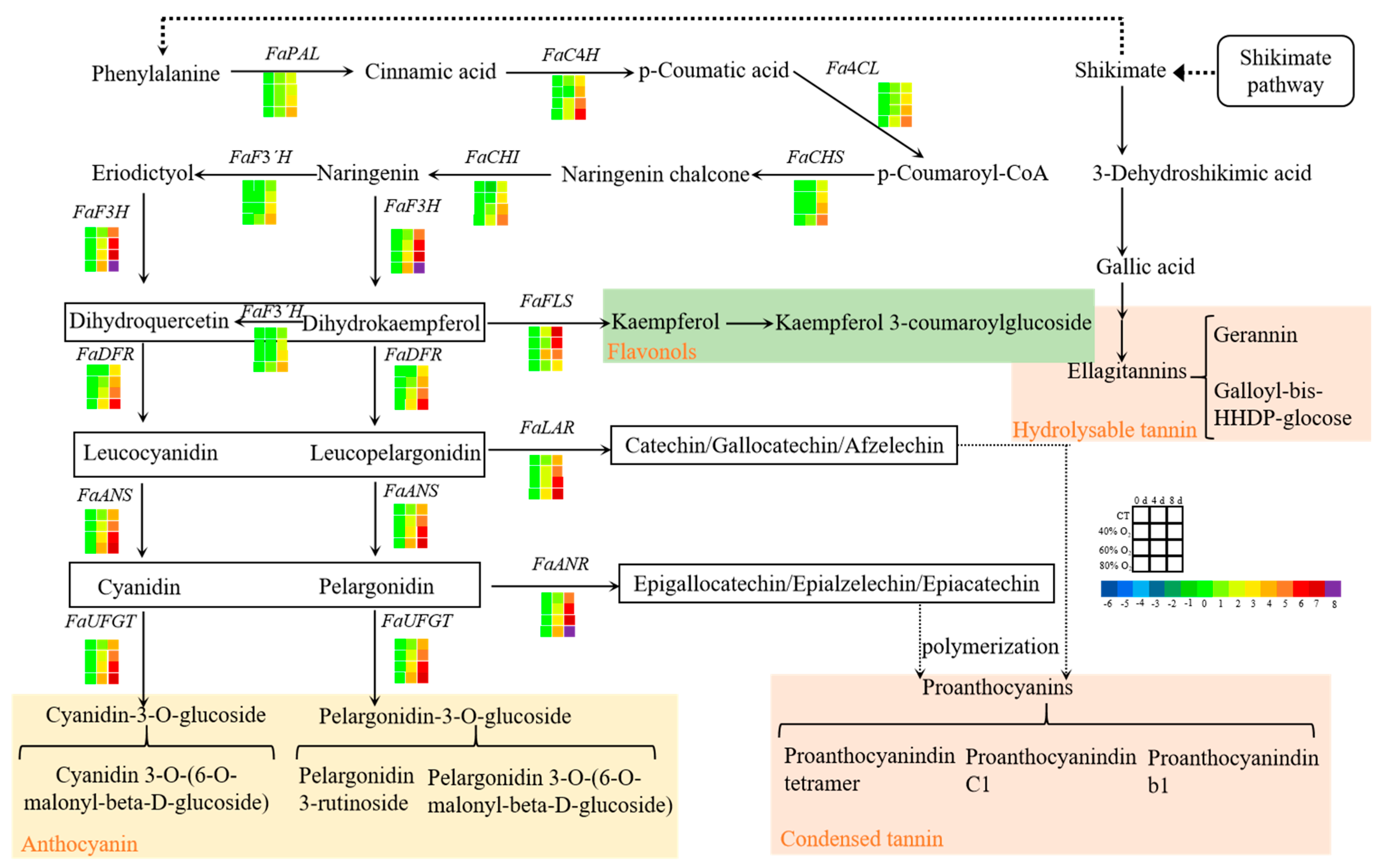
To clarify the role of elevated O2 in polyphenol metabolism at the molecular level, the expression of genes involved in phenylpropanoid and flavonoid pathways was studied further. In this study, elevated O2 significantly increased the expression of PAL, C4H, and 4CL, precursors of the flavonoid pathway (Figure 7) [36]. Their elevated expression may result in the production of sufficient substrates for downstream steps in the pathway. As the first and primary enzyme of the flavonoid pathway, the upregulation of CHS with elevated O2 treatments has been shown to make great contributions to fruit coloring [37]. The elevated expression of other genes involved in the pathway, including CHI, F3H, F3’H, DFR, LAR, ANS, ANR, and UFGT, is consistent with the promotion of anthocyanin and proanthocyanin accumulation under elevated O2 treatment (Figure 5). Although the expression of FLS was also upregulated in each treatment group as storage time increased, the highest levels of FLS were observed in CT among all four treatment groups (Figure 5 and Figure 7). Dihydrokaempferol is a branch point in the phenylpropanoid and flavonoid pathways, catalyzed by DFR and FLS (Figure 7) [38]. Catechin and epigallocatechin serve as substrates for the biosynthesis of proanthocyanins, being catalyzed by LAR and ANR [39]. Therefore, in this study, the relative decrease in kaempferol-3-coumaroyl glucoside and relative increase in anthocyanins and proanthocyanins in strawberries after high O2 treatment might be attributed to the upregulation of DFR, LAR, and ANR and the downregulation of FLS compared to the CT group. Overall, the expression of most genes involved in the biosynthesis of polyphenols under high O2 treatment was upregulated. These results are consistent with the observed changes in polyphenol contents, including tannins, a flavone, and anthocyanins, the antioxidant capacities of DPPH, and the reducing capacities of FRAP, suggesting that elevated O2 may promote polyphenol synthesis by regulating the flavonoid pathway.
Figure 7.
Relative expression levels of genes involved in the phenylpropanoid and flavonoid pathways of strawberries stored at 4 °C subjected to CT, 40% O2, 60% O2, and 80% O2 treatments. Data are expressed as means ± standard deviation from three replicates.
5. Conclusions
The present study showed that elevated O2 maintained the bright colors of strawberries during cold storage. Strawberries treated with elevated O2 also showed higher accumulation of polyphenols and elevated expression of genes in the polyphenols’ pathways. In addition, the antioxidant capacities of fruits treated with elevated O2, especially those in the 80% O2 treatment group, were also improved, as assayed using scavenging DPPH and enhancing FRAP. Overall, our study revealed that elevated O2 is a potential method for stimulating the accumulation of polyphenols and characterized the potential mechanism at a molecular level for the biosynthesis of polyphenols after elevated O2 exposure, providing a deeper understanding of the impact of elevated O2 on maintaining better strawberry fruit quality during storage.
Author Contributions
Conceptualization; data curation; and writing of original draft: Y.D. and L.P. Investigation and validation: M.M. and J.Z. Methodology and visualization: Q.H. and Y.X. Conceptualization; supervision; and writing—review and editing: L.L. All authors have read and agreed to the published version of the manuscript.
Funding
This work was financially supported by the National Natural Science Foundation of Zhejiang Province (No. LR25C200002) and the National Natural Science Foundation of China (No. 32472399).
Data Availability Statement
Data are contained within the article. Additional data can be obtained by contacting the first corresponding author of the article.
Conflicts of Interest
The authors declare no commercial conflicts of interest.
References
- Chen, J.X.; Mao, L.C.; Mi, H.B.; Zhao, Y.Y.; Ying, T.J.; Luo, Z.S. Detachment-accelerated ripening and senescence of strawberry (Fragaria × ananassa Duch. cv. Akihime) fruit and the regulation role of multiple phytohormones. Acta Physiol. Plant. 2014, 36, 2441–2451. [Google Scholar] [CrossRef]
- Jiang, Y.M.; Joyce, D.C. ABA effects on ethylene production, PAL activity, anthocyanin and phenolic contents of strawberry fruit. Plant Growth Regul. 2003, 39, 171–174. [Google Scholar] [CrossRef]
- Oliveira, M.; Abadias, M.; Usall, J.; Torres, R.; Teixidó, N.; Viñas, I. Application of modified atmosphere packaging as a safety approach to fresh-cut fruits and vegetables—A review. Trends Food Sci. Technol. 2015, 46, 13–26. [Google Scholar] [CrossRef]
- Yan, J.; Luo, Z.; Ban, Z.; Lu, H.; Li, D.; Yang, D.; Aghdam, M.S.; Li, L. The effect of the layer-by-layer (LBL) edible coating on strawberry quality and metabolites during storage. Postharvest Biol. Technol. 2019, 147, 29–38. [Google Scholar] [CrossRef]
- Aghdam, M.S.; Fard, J.R. Melatonin treatment attenuates postharvest decay and maintains nutritional quality of strawberry fruits (Fragaria × anannasa cv. Selva) by enhancing GABA shunt activity. Food Chem. 2017, 221, 1650–1657. [Google Scholar] [CrossRef]
- Xiao, G.; Zhang, M.; Luo, G.; Peng, J.; Salokhe, V.M.; Guo, J. A Effect of modified atmosphere packaging on the preservation of strawberry and the extension of its shelf-life. Int. Agrophys. 2004, 18, 195–201. [Google Scholar]
- Li, D.; Zhang, X.; Qu, H.; Li, L.; Mao, B.; Xu, Y.; Lin, X.; Luo, Z. Delaying the biosynthesis of aromatic secondary metabolites in postharvest strawberry fruit exposed to elevated CO2 atmosphere. Food Chem. 2020, 306, 125611. [Google Scholar] [CrossRef]
- Lumpkin, C.; Fellman, J.K.; Rudell, D.R.; Mattheis, J. Scarlett Spur Red Delicious apple volatile production accompanying physiological disorder development during low pO2 controlled atmosphere storage. J. Agric. Food Chem. 2014, 62, 1741–1754. [Google Scholar] [CrossRef]
- Wei, X.; Mao, L.; Han, X.; Lu, W.; Xie, D.; Ren, X.; Zhao, Y. High oxygen facilitates wound induction of suberin polyphenolics in kiwifruit. J. Sci. Food Agric. 2018, 98, 2223–2230. [Google Scholar] [CrossRef]
- Chen, F.P.; Xu, X.Y.; Luo, Z.; Chen, Y.; Xu, Y.; Xiao, G. Effect of high O2 atmosphere packaging on postharvest quality of purple passion fruit (Passiflora edulis Sims). J. Food Process. Preserv. 2018, 42, e13749. [Google Scholar] [CrossRef]
- Molinu, M.G.; Dore, A.; Palma, A.; D’Aquino, S.; Azara, E.; Rodov, V.; D’hallewin, G. Effect of superatmospheric oxygen storage on the content of phytonutrients in ‘Sanguinello Comune’ blood orange. Postharvest Biol. Technol. 2016, 112, 24–30. [Google Scholar] [CrossRef]
- Yin, H.; Tong, W.; Liu, G.; Wang, Z.; Li, Y.; Huang, G.; Wei, L. Effect of high oxygen treatment on the respiratory rate and preservation of mulberry. Sci. Technol. Food Ind. 2015, 36, 306–309, 314. [Google Scholar]
- Lu, H.; Wang, K.; Wang, L.; Li, D.; Yan, J.; Ban, Z.; Luo, Z.; Li, L.; Yang, D. Effect of superatmospheric oxygen exposure on strawberry (Fragaria × ananassa Duch.) volatiles, sensory and chemical attributes. Postharvest Biol. Technol. 2018, 142, 60–71. [Google Scholar] [CrossRef]
- Bodelón, O.G.; Blanch, M.; Sanchez-Ballesta, M.T.; Escribano, M.I.; Merodio, C. The effects of high CO2 levels on anthocyanin composition, antioxidant activity and soluble sugar content of strawberries stored at low non-freezing temperature. Food Chem. 2010, 122, 673–678. [Google Scholar] [CrossRef]
- Rodriguez, R.; Jaramillo, S.; Rodriguez, G.; Espejo, J.A.; Guillen, R.; Fernandez-Bolanos, J.; Heredia, A.; Jimenez, A. Antioxidant activity of ethanolic extracts from several asparagus cultivars. J. Agric. Food Chem. 2005, 53, 5212–5217. [Google Scholar] [CrossRef] [PubMed]
- Benzie, I.F.F.; Strain, J.J. The Ferric Reducing Ability of Plasma (FRAP) as a Measure of “Antioxidant Power”: The FRAP Assay. Anal. Biochem. 1996, 239, 70–76. [Google Scholar] [CrossRef]
- Wang, L.; Luo, Z.; Yang, M.; Li, D.; Qi, M.; Xu, Y.; Abdelshafy, A.M.; Ban, Z.; Wang, F.; Li, L. Role of exogenous melatonin in table grapes: First evidence on contribution to the phenolics-oriented response. Food Chem. 2020, 329, 127155. [Google Scholar] [CrossRef]
- Marino, M.; Del Bo, C.; Tucci, M.; Klimis-Zacas, D.; Riso, P.; Porrini, M. Modulation of Adhesion Process, E-Selectin and VEGF Production by Anthocyanins and Their Metabolites in an in vitro Model of Atherosclerosis. Nutrients 2020, 12, 655. [Google Scholar] [CrossRef]
- Wang, Y.; Zhang, J.; Wang, X.; Zhang, T.; Zhang, F.; Zhang, S.; Li, Y.; Gao, W.; You, C.; Wang, X.; et al. Cellulose Nanofibers Extracted from Natural Wood Improve the Postharvest Appearance Quality of Apples. Front. Nutr. 2022, 9, 881783. [Google Scholar] [CrossRef]
- Zheng, Y.; Wang, C.Y.; Wang, S.Y.; Zheng, W. Effect of high-oxygen atmospheres on blueberry phenolics, anthocyanins, and antioxidant capacity. J. Agric. Food Chem. 2003, 51, 7162–7169. [Google Scholar] [CrossRef]
- Hébert, C.; Charles, M.T.; Gauthier, L.; Willemot, C.; Khanizadeh, S.; Cousineau, J. Strawberry Proanthocyanidins: Biochemical Markers for Botrytis Cinerea Resistance and Shelf-Life Predictability. Acta Hortic. 2002, 567, 659–662. [Google Scholar] [CrossRef]
- Forbes-Hernandez, T.Y.; Gasparrini, M.; Afrin, S.; Bompadre, S.; Mezzetti, B.; Quiles, J.L.; Giampieri, F.; Battino, M. The Healthy Effects of Strawberry Polyphenols: Which Strategy behind Antioxidant Capacity? Crit. Rev. Food Sci. Nutr. 2016, 56 (Suppl. S1), S46–S59. [Google Scholar] [CrossRef] [PubMed]
- Skrovankova, S.; Sumczynski, D.; Mlcek, J.; Jurikova, T.; Sochor, J. Bioactive Compounds and Antioxidant Activity in Different Types of Berries. Int. J. Mol. Sci. 2015, 16, 24673–24706. [Google Scholar] [CrossRef] [PubMed]
- Fadda, A.; Palma, A.; D’Aquino, S.; Mulas, M. Effects of Myrtle (Myrtus communis L.) Fruit Cold Storage Under Modified Atmosphere on Liqueur Quality. J. Food Process. Preserv. 2017, 41, e12776. [Google Scholar] [CrossRef]
- Yang, M.; Ban, Z.; Luo, Z.; Li, J.; Lu, H.; Li, D.; Chen, C.; Li, L. Impact of elevated O2 and CO2 atmospheres on chemical attributes and quality of strawberry (Fragaria × ananassa Duch.) during storage. Food Chem. 2020, 307, 125550. [Google Scholar] [CrossRef]
- Ayala-Zavala, J.F.; Wang, S.Y.; Wang, C.Y.; Gonzalez-Aguilar, G.A. High oxygen treatment increases antioxidant capacity and postharvest life of strawberry fruit. Food Technol. Biotechnol. 2007, 45, 166–173. [Google Scholar]
- Odriozola-Serrano, I.; Soliva-Fortuny, R.; Martín-Belloso, O. Changes in bioactive composition of fresh-cut strawberries stored under superatmospheric oxygen, low-oxygen or passive atmospheres. J. Food Compos. Anal. 2010, 23, 37–43. [Google Scholar] [CrossRef]
- Cocci, E.; Rocculi, P.; Romani, S.; Rosa, M.D. Changes in nutritional properties of minimally processed apples during storage. Postharvest Biol. Technol. 2006, 39, 265–271. [Google Scholar] [CrossRef]
- Oms-Oliu, G.; Odriozola-Serrano, I.; Soliva-Fortuny, R.; Martín-Belloso, O. Antioxidant Content of Fresh-Cut Pears Stored in High-O2 Active Packages Compared with Conventional Low-O2 Active and Passive Modified Atmosphere Packaging. J. Agric. Food Chem. 2008, 56, 932–940. [Google Scholar] [CrossRef]
- Marchiosi, R.; Dos Santos, W.D.; Constantin, R.P.; de Lima, R.B.; Soares, A.R.; Finger-Teixeira, A.; Mota, T.R.; de Oliveira, D.M.; de Paiva Foletto-Felipe, M.; Abrahão, J.; et al. Biosynthesis and metabolic actions of simple phenolic acids in plants. Phytochem. Rev. 2020, 19, 865–906. [Google Scholar] [CrossRef]
- Chiorcea-Paquim, A.M.; Enache, T.A.; De Souza Gil, E.; Oliveira-Brett, A.M. Natural phenolic antioxidants electrochemistry: Towards a new food science methodology. Compr. Rev. Food Sci. Food Saf. 2020, 19, 1680–1726. [Google Scholar] [CrossRef] [PubMed]
- Amorati, R.; Valgimigli, L. Advantages and limitations of common testing methods for antioxidants. Free Radic. Res. 2015, 49, 633–649. [Google Scholar] [CrossRef]
- Gutteridge, J.M.; Halliwell, B. Antioxidants: Molecules, medicines, and myths. Biochem. Biophys. Res. Commun. 2010, 393, 561–564. [Google Scholar] [CrossRef] [PubMed]
- Prempree, P.; Setha, S.; Pranamornkith, T. High oxygen pre-treatment affects quality and antioxidant capacity of strawberry (Fragaria x ananassa Duch.) during cold storage. Int. Soc. Hortic. Sci. 2022, 205–212. [Google Scholar] [CrossRef]
- Liu, H.; Li, N.; Wang, Y.; Cheng, T.; Yang, H.; Peng, Q. Study on fermentation kinetics, antioxidant activity and flavor characteristics of Lactobacillus plantarum CCFM1050 fermented wolfberry pulp. Food Innov. Adv. 2024, 3, 126–134. [Google Scholar] [CrossRef]
- Ou, M.; Xiao, R.; Chen, J.-Y.; Lin, H.-T.; Duan, X.-W.; Jiang, Y.-M.; Lu, W.-J. Expression of a phenylalanine ammonia-lyase gene in relation to aril breakdown in harvested longan fruit. J. Hortic. Sci. Biotechnol. 2015, 84, 553–559. [Google Scholar] [CrossRef]
- Ghasemzadeh, A.; Nasiri, A.; Jaafar, H.Z.; Baghdadi, A.; Ahmad, I. Changes in phytochemical synthesis, chalcone synthase activity and pharmaceutical qualities of sabah snake grass (Clinacanthus nutans L.) in relation to plant age. Molecules 2014, 19, 17632–17648. [Google Scholar] [CrossRef]
- Davies, K.M.; Schwinn, K.E.; Deroles, S.C.; Manson, D.G.; Lewis, D.H.; Bloor, S.J.; Bradley, J.M. Enhancing anthocyanin production by altering competition for substrate between flavonol synthase and dihydroflavonol 4-reductase. Euphytica 2003, 131, 259–268. [Google Scholar] [CrossRef]
- Metsämuuronen, S.; Sirén, H. Bioactive phenolic compounds, metabolism and properties: A review on valuable chemical compounds in Scots pine and Norway spruce. Phytochem. Rev. 2019, 18, 623–664. [Google Scholar] [CrossRef]
Disclaimer/Publisher’s Note: The statements, opinions and data contained in all publications are solely those of the individual author(s) and contributor(s) and not of MDPI and/or the editor(s). MDPI and/or the editor(s) disclaim responsibility for any injury to people or property resulting from any ideas, methods, instructions or products referred to in the content. |
© 2025 by the authors. Licensee MDPI, Basel, Switzerland. This article is an open access article distributed under the terms and conditions of the Creative Commons Attribution (CC BY) license (https://creativecommons.org/licenses/by/4.0/).