Article

Olive Escudete (Dalmatian Disease) Caused by Botryosphaeria dothidea as a Result of Fly–Midge–Fungus Interaction


by
Hani K. Aldebis
1,
Antonio Santos-Rufo
1,2,*,
Ibrahim Eldesouki-Arafat
3,
Enrique Vargas-Osuna
1,
Juan Moral
1,
Antonio Trapero
1 and
Francisco Javier López-Escudero
1
1
Excellence Unit ‘María de Maeztu’ 2020–23, Department of Agronomy, Campus de Rabanales, University of Cordoba, 14071 Cordoba, Spain
2
Department of Agroforestry Sciences, ETSI University of Huelva, 21007 Huelva, Spain
3
Horticulture Research Institute (HRI), Agricultural Research Center (ARC), Giza 12619, Egypt
*
Author to whom correspondence should be addressed.
Horticulturae 2024, 10(4), 321; https://doi.org/10.3390/horticulturae10040321

Submission received: 10 January 2024 / Revised: 8 February 2024 / Accepted: 10 February 2024 / Published: 26 March 2024

Abstract

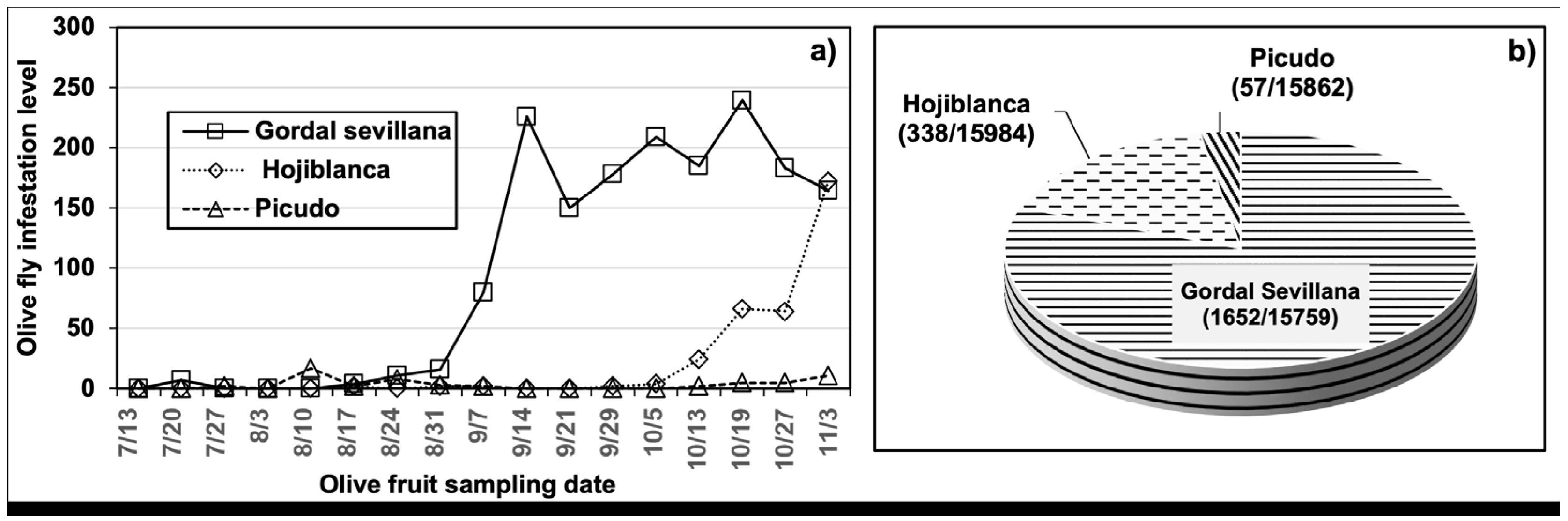
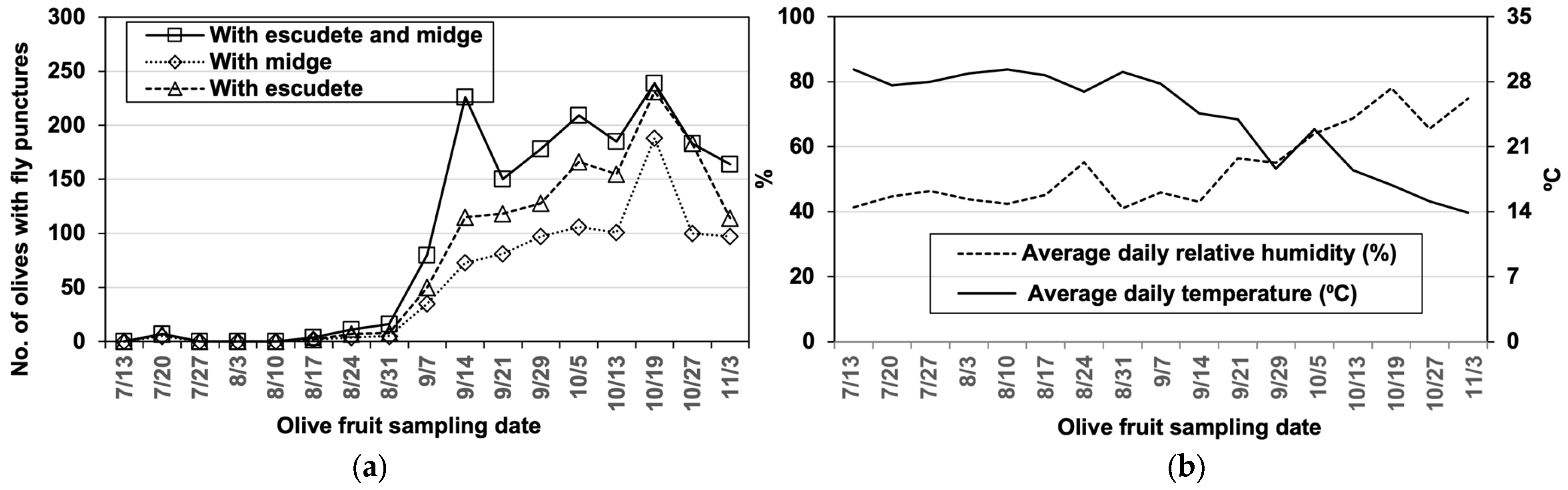
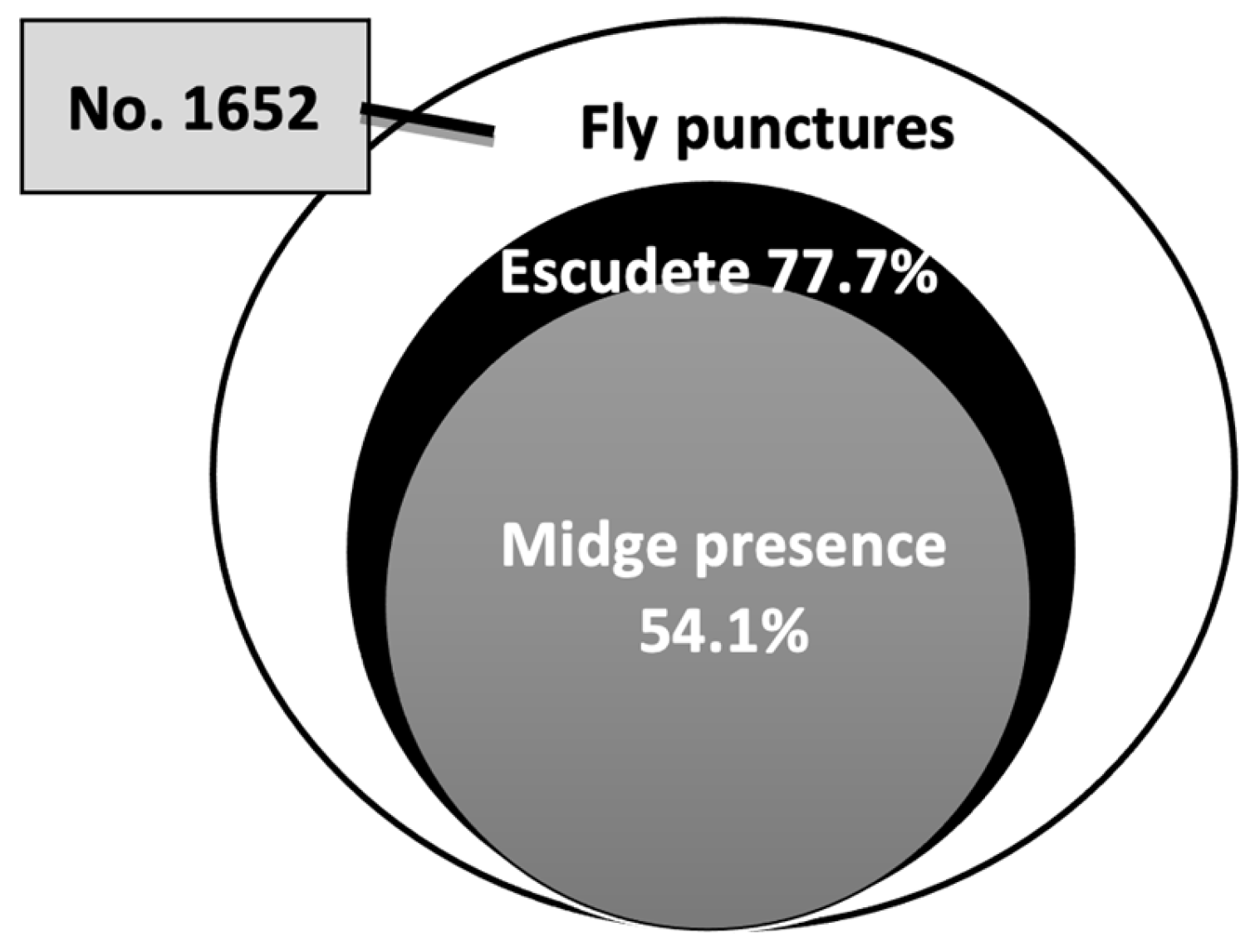
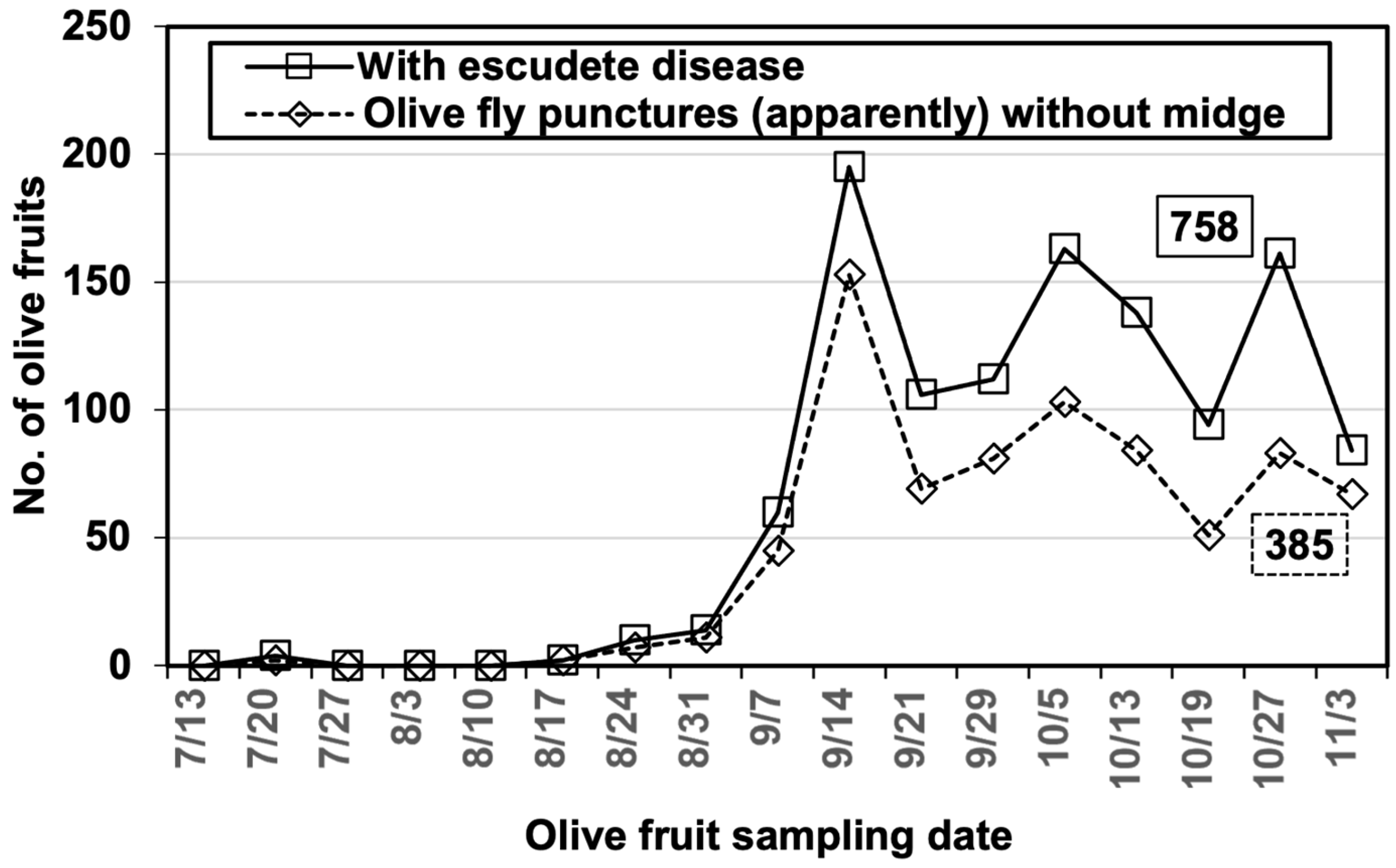
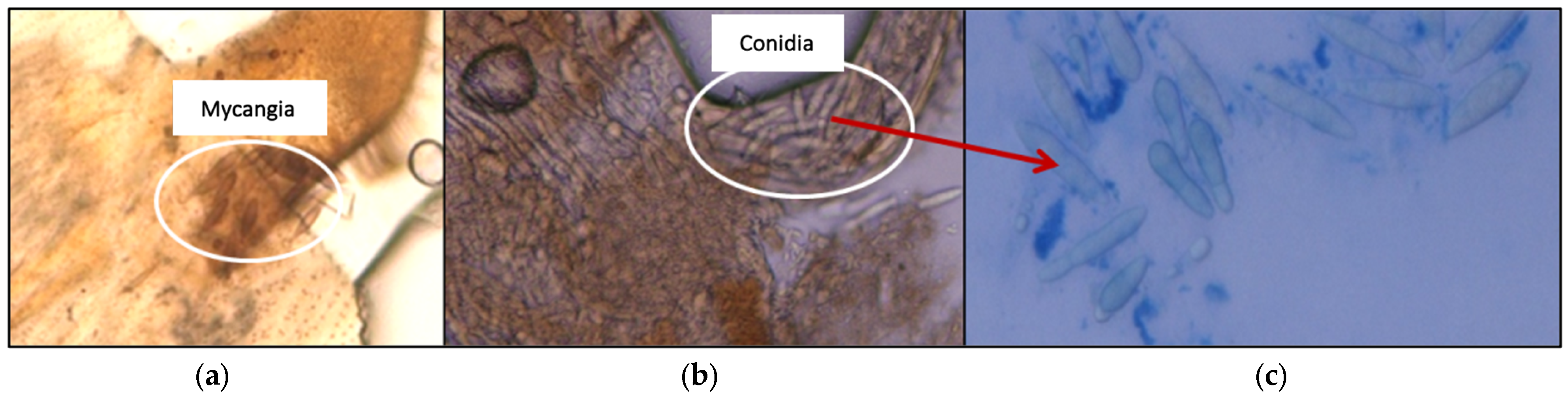
Escudete, which is caused by Botryosphaeria dothidea, is a disease that is widely distributed in the Mediterranean basin, but is of little general importance. Nevertheless, serious attacks have been observed on occasion, which have caused a considerable reduction in the quality of table olives. The incidence of the pathogen has been associated with damage caused by the olive fly (Bactrocera oleae) and the presence of a possible vector agent, i.e., the midge Prolasioptera berlesiana, whose larvae can feed on fly eggs (although the role the midge may play in the spread of this disease is not well known). Therefore, it is necessary to clarify these interactions to adopt appropriate disease control measures. Studies were conducted in olive orchards planted with the Gordal Sevillana, Picudo, and Hojiblanca olive cultivars. Field surveys were carried out in order to sample their fruits for laboratory analysis, and several bioassays were also performed. Moreover, the population of B. oleae adults was monitored using traps that were baited with food attractants. The results indicated that the three agents developed and evolved in parallel under field conditions. Thus, the midges were attracted by the oviposition punctures caused in fruits by olive fruit flies, regardless of whether the punctures contained eggs. All the investigated olive fruits in which midges were present inside punctures created by olive fruit flies exhibited typical symptoms of escudete, which is necessary for the development of this disease. Forty-eight hours after fly punctures were artificially simulated in the olive fruits, 48.0% of them contained a midge, whereas no midges appeared in the artificially created shapeless wounds in the fruits. This indicates that an olive fly egg is not required for the development of midges; however, they do prefer punctures made by B. oleae. Moreover, when the olive fruits were incubated in a humid chamber, the B. dothidea fungus only appeared in those fruits that contained midges, thus indicating a close relationship between these two agents. Additionally, the midges were able to complete their entire development from egg to adult under controlled conditions, and they fed on the pure cultures of the B. dothidea fungus. Furthermore, although no pathogens were present in the immature midges, some of the pathogens could have been isolated from the inner tissues of the adult female midges. The fact that mycangia is present in the abdomen of P. berlesiana supports the hypothesis that their relationship with B. dothidea may be mutualistic and that they may act as a vector for the fungus.
Keywords: aerial mycoses; Bactrocera oleae; Prolasioptera berlesiana; Olea europaea; table olive production aerial mycoses; Bactrocera oleae; Prolasioptera berlesiana; Olea europaea; table olive production