Article

Comparative Enzymatic Production of Xylooligosaccharides from Wheat, Rice, Barley, and Oat Straw Using Xylanase from Bacillus sonorensis


National Center for Biotechnology, Astana 010000, Kazakhstan
*
Author to whom correspondence should be addressed.
Fermentation 2026, 12(7), 299; https://doi.org/10.3390/fermentation12070299 (registering DOI)
Submission received: 22 May 2026 / Revised: 15 June 2026 / Accepted: 18 June 2026 / Published: 24 June 2026

Abstract

The growing amounts of agricultural residues require sustainable solutions for their use. Here, wheat, rice, barley, and oat straw were evaluated as renewable feedstocks for the enzymatic production of xylooligosaccharides (XOS). Hydrolysis used recombinant xylanase from Bacillus sonorensis T6 under optimized conditions (40 °C, pH 7.0), with stepwise enzyme addition. Subsequently, hydrolysis efficiency was found to vary by substrate, with wheat straw producing the highest reducing sugar yield (up to 40.1 g kg−1), followed by barley, oat, and rice straw. As hydrolysis progressed, the influence of enzyme concentration became less pronounced, suggesting that substrate accessibility and the accumulation of hydrolysis products may increasingly affect the overall hydrolysis efficiency. FTIR, NMR, SEM, and TLC analyses confirmed substantial structural changes in the biomass and the formation of carbohydrate-rich hydrolysis products. TLC analysis indicated the presence of low-degree polymerization oligosaccharides with migration behavior similar to X2 and X3 standards, while FTIR and NMR spectra were consistent with β-(1→4)-linked carbohydrate structures. The xylanase from Bacillus sonorensis T6 hydrolyzed all substrates, revealing broad specificity and suitability for diverse lignocellulosic feedstocks, despite differences in biomass structure. Overall, the results highlight the importance of substrate-dependent factors in enzymatic hydrolysis and demonstrate that xylanase from Bacillus sonorensis T6 converts cereal straw into value-added oligosaccharide-rich products, thereby supporting the development of cost-effective, region-specific biorefinery strategies.

1. Introduction

Cereal crop cultivation produces large amounts of straw, an abundant lignocellulosic biomass. Much of this straw remains underutilized or is burned, which raises environmental concerns. Lignocellulosic biomass is mainly composed of cellulose, hemicellulose, and lignin. Hemicellulose, the second most abundant polysaccharide, is primarily made up of xylan [1,2,3,4]. Due to its composition and availability, cereal straw is a promising feedstock for value-added products such as xylooligosaccharides (XOS), xylitol, and furfural [5,6,7].
Xylooligosaccharides (XOS) are short-chain oligosaccharides composed of D-xylose residues linked predominantly by β-(1→4)-glycosidic bonds and have attracted considerable interest for applications in food, feed, and biotechnology [8,9,10,11]. Among the available production methods, alkaline pretreatment followed by enzymatic hydrolysis is considered one of the most effective approaches, as it improves xylan accessibility for enzymatic degradation [12,13,14].
Using cereal straw for XOS production represents an efficient strategy for the valorization of agricultural residues [15,16]. Wheat, rice, barley, and oat straw vary in the structure of their hemicellulosic fractions, such as arabinoxylan branching, acetylation, and lignin interactions. These differences affect enzyme accessibility and hydrolysis efficiency [17,18,19]. Although XOS production from individual lignocellulosic feedstocks has been widely investigated, direct comparisons of different cereal straws under identical processing conditions remain scarce [20,21]. Such comparisons are important for assessing the impact of substrate characteristics on the efficiency of XOS production.
Efficient enzymatic conversion of lignocellulosic biomass depends on xylanases with high catalytic activity and stability under process conditions [22]. Xylanases from Bacillus species have been widely studied for this purpose [23,24,25,26]. GH11 endo-xylanases are especially valued because they mainly produce short-chain XOS (X2–X3) with high functional value [27].
This study aimed to compare the enzymatic hydrolysis of wheat (Triticum aestivum L.), rice (Oryza sativa L.), barley (Hordeum vulgare L.), and oat (Avena sativa L.) straw using a recombinant xylanase from Bacillus sonorensis T6 for XOS production. The effects of enzyme loading and substrate structure on hydrolysis efficiency and hydrolysis product profiles were evaluated. The resulting products were characterized using TLC, FTIR, NMR, and SEM analyses. This work builds on the authors’ previous research on cereal biomass processing and oligosaccharide production [17], and further explores substrate-dependent hydrolysis using a recombinant Bacillus sonorensis xylanase previously characterized by the authors [28].

2. Materials and Methods

2.1. Raw Materials

Wheat (Triticum aestivum L.), rice (Oryza sativa L.), barley (Hordeum vulgare L.), and oat (Avena sativa L.) straw were used as lignocellulosic biomass substrates for the production of xylooligosaccharides. The straw samples were obtained after harvest from the fields of the A.I. Barayev Research and Production Centre for Grain Farming (Shortandy, Akmola Region, Kazakhstan), while rice straw was provided by Shapagat Astyk LLP (Terenozek, Kyzylorda Region, Kazakhstan).
The collected biomass was air-dried at room temperature and milled using a laboratory grinder. The ground material was sieved to obtain a uniform particle size fraction (1–3 mm) and stored at room temperature until further use.

2.2. Ammonia Pretreatment of Straw

Prior to enzymatic hydrolysis, the straw samples were subjected to alkaline pretreatment using aqueous ammonia to improve the availability of hemicellulose for enzymatic hydrolysis [29,30,31]. The milled straw was treated with an aqueous ammonia solution at 18.5% (w/w) at a solid-to-liquid ratio of 1:10 (w/v). The suspension was incubated at 65 °C for 14 h under constant agitation. After pretreatment, the solid fraction was separated and thoroughly washed with distilled water until the pH reached neutrality. The treated biomass was then dried at 90 °C and used as a substrate for subsequent enzymatic hydrolysis.

2.3. Chemicals and Enzymes

A recombinant xylanase derived from Bacillus sonorensis T6 was used for enzymatic hydrolysis, as previously reported [28]. The enzyme activity was determined using birchwood xylan (Megazyme, Bray, Ireland) as a substrate and expressed as U/mg protein, where one unit (U) of xylanase activity is defined as the amount of enzyme required to release 1 μmol of reducing sugar (xylose equivalents) per minute under the assay conditions [28].
All chemicals used in this study were of analytical grade or suitable for biochemical applications and were obtained from commercial suppliers. Commercial standards of xylooligosaccharides (xylobiose, xylotriose, xylotetraose, xylopentaose) were purchased from Megazyme and used to identify hydrolysis products.

2.4. Enzymatic Hydrolysis of Cereal Straw

Enzymatic hydrolysis of the pretreated straw samples was performed to produce xylooligosaccharides (XOS). Ammonia-pretreated straw (Section 2.2) was suspended in 100 mM sodium phosphate buffer (pH 7.0) at a solid-to-liquid ratio of 1:10 (w/v). Hydrolysis experiments were carried out using 1 g of dry biomass (total volume 10 mL) for optimization studies.
Recombinant xylanase from Bacillus sonorensis T6 was added to the reaction mixture at loadings of 200, 300, and 400 U g−1 of dry substrate. Enzymatic hydrolysis was performed using a two-step enzyme addition strategy (60/40), with 60% of the total enzyme added at the beginning of the reaction and the remaining 40% introduced after 6 h of hydrolysis.
The reaction was carried out at 40 °C with continuous shaking (150 rpm). Samples were collected at 3, 6, 9, 12, and 24 h of hydrolysis. All experiments were performed in triplicate. The reaction was terminated by heating the samples at 100 °C for 10 min, followed by centrifugation (10,000× g for 10 min) to remove residual solids. The supernatants were collected and used for further analysis.

2.5. Determination of Reducing Sugars

The concentration of reducing sugars released during hydrolysis was measured using the 3,5-dinitrosalicylic acid (DNS) method [32]. Briefly, 1 mL of hydrolysate was mixed with 1.5 mL of DNS reagent and heated at 100 °C for 10 min. After cooling to room temperature, the absorbance was measured at 540 nm using a spectrophotometer. A calibration curve was constructed using xylose (Acros Organic, Geel, Belgium) as a standard. The results were expressed as reducing sugar concentrations in xylose equivalents and were used to evaluate hydrolysis efficiency.

2.6. Thin-Layer Chromatography (TLC)

The hydrolysis products were analyzed by thin-layer chromatography (TLC), following the method described by [33] with modifications for cereal straw hydrolysates. Hydrolysate samples were spotted onto aluminum-backed silica gel 60 F254 plates (Merck, Darmstadt, Germany). Commercial standards, including xylose, xylobiose, xylotriose, xylotetraose, xylopentaose, and xylohexaose (Megazyme, Bray, Ireland), were used for identification and comparison.
The plates were developed in a solvent system of n-butanol:ethanol:deionized water (5:3:2, v/v/v) until the solvent front reached ~8 cm from the origin. After development, the plates were air-dried and then immersed in a staining solution containing sulfuric acid and ethanol (5:95, v/v). Hydrolysis products were visualized by heating the plates at 100 °C until colored spots appeared.

2.7. FTIR Spectroscopy

The structural characterization of hydrolysis products was performed using Fourier-transform infrared (FTIR) spectroscopy. Prior to FTIR analysis, the enzymatic hydrolysates were filtered through 0.45 μm and 0.22 μm membrane filters to remove suspended particles. The filtrates were subsequently freeze-dried to obtain solid samples for analysis. FTIR spectroscopy was performed using a Bruker ALPHA II Attenuated Total Reflectance Fourier Transform Infrared (ATR-FTIR) spectrometer (Bruker Optics GmbH, Ettlingen, Germany). Spectra were collected in the mid-IR range from 400 to 4000 cm−1 with a resolution of 2 cm−1.

2.8. NMR Spectroscopy

The structural features of the hydrolysis products were investigated by nuclear magnetic resonance (NMR) spectroscopy. For NMR analysis, the hydrolysates were filtered through 0.45 μm and 0.22 μm membrane filters and lyophilized. The obtained dry samples were used for further structural characterization. Samples were dissolved in D2O and analyzed using a JNM-ECA-500 NMR spectrometer (JEOL, Tokyo, Japan), operating at 500 MHz for 1H NMR and 125 MHz for 13C NMR. Spectra were processed using DELTA version 5.0.4, and signals were assigned based on previously reported chemical shifts for xylooligosaccharides. The analysis provided structural information on the hydrolysis products, including the presence of characteristic β-(1→4)-linked xylan-derived structures.

2.9. Scanning Electron Microscopy (SEM)

Morphological changes in straw samples before and after enzymatic hydrolysis were observed using a scanning electron microscope (Auriga Crossbeam 540, Carl Zeiss, Oberkochen, Germany). Before analysis, the samples were air-dried and sputter-coated with a thin layer of gold using a Q150T ES sputter coater (Quorum Technologies, Laughton, UK) to improve surface conductivity. SEM images were acquired at accelerating voltages of 10–20 kV at various magnifications to visualize surface structure, including fiber disruption and porosity changes resulting from ammonia pretreatment and enzymatic hydrolysis.

2.10. Statistical Analysis

All experiments were conducted in triplicate, and results are presented as mean ± standard deviation (SD). Prior to statistical analysis, the assumptions of ANOVA were evaluated. Normality of residuals was assessed using the Shapiro–Wilk test, and homogeneity of variances was evaluated using Levene’s test. Since both assumptions were satisfied, the data were analyzed using two-way analysis of variance (ANOVA).
The ANOVA model included substrate type (wheat, rice, oat, and barley straw), enzyme concentration (200, 300, and 400 U g−1), and their interaction as fixed factors. The model was fitted using ordinary least squares (OLS), and Type II sums of squares were used to estimate the contribution of each factor. When significant effects were detected, pairwise comparisons among enzyme concentration treatments were performed using Tukey’s honestly significant difference (HSD) post hoc test. Statistical significance was accepted at p < 0.05.
All statistical analyses and data visualization were performed in Python (version 3.13.7) using the pandas, scipy, statsmodels, and matplotlib libraries.

3. Results

3.1. Effect of Xylanase Loading on the Enzymatic Hydrolysis of Cereal Straws

The effect of recombinant Bacillus sonorensis T6 xylanase loading on the enzymatic hydrolysis of cereal straws was investigated under stepwise addition conditions (60/40), with the second enzyme portion introduced after 6 h of hydrolysis. The kinetics of reducing sugar release for wheat, rice, oat, and barley straw are presented in Figure 1.
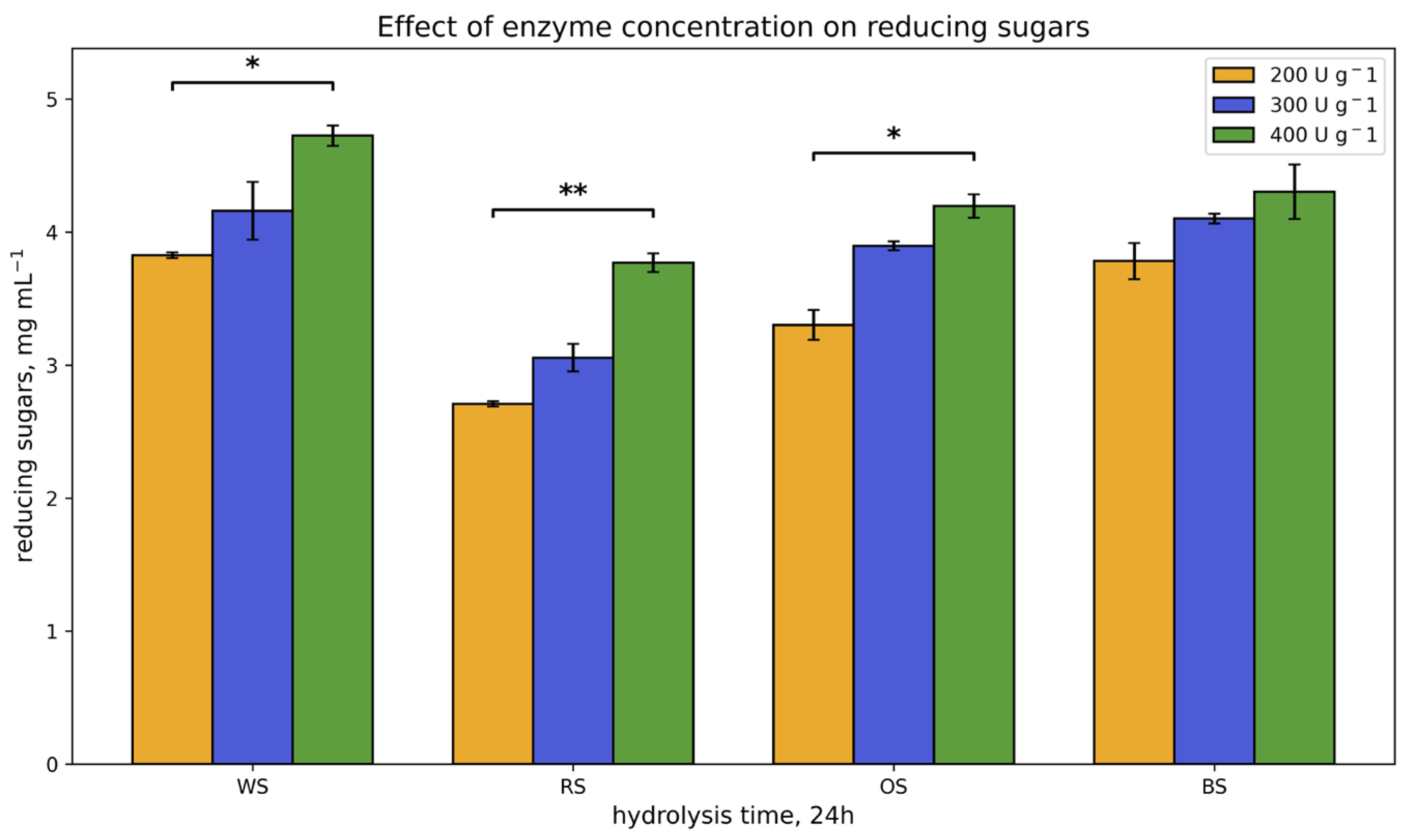
For wheat straw, increasing the enzyme loading from 200 to 400 U g−1 resulted in a progressive increase in reducing sugar concentration throughout the hydrolysis process. The effect of enzyme loading was most evident at the early stages (3–9 h). A noticeable increase in sugar concentration was observed after 6 h, corresponding to the second enzyme addition. At later stages (12–24 h), the differences between enzyme loadings became less pronounced. After 24 h, the highest sugar concentration (4.72 mg mL−1) was obtained at 400 U g−1, compared to 4.16 and 3.83 mg mL−1 at 300 and 200 U g−1, respectively, indicating a reduced influence of enzyme loading at the later stages of hydrolysis.
Similar results were obtained for rice straw hydrolysis; however, the overall hydrolysis efficiency was lower than that for wheat straw. Increasing enzyme loading enhanced sugar release, particularly at the early stages of hydrolysis. A noticeable increase in sugar concentration was observed after 6 h, corresponding to the second enzyme addition. However, at later stages, the differences between enzyme loadings became less pronounced. After 24 h, the highest sugar concentration (3.77 mg mL−1) was obtained at 400 U g−1, compared to 3.06 and 2.71 mg mL−1 at 300 and 200 U g−1, respectively.
For oat straw, increasing enzyme loading resulted in higher sugar release throughout the hydrolysis process. The influence of enzyme concentration was evident in the early stages and remained noticeable in the later stages, although the differences between treatments decreased over time. A distinct increase in sugar concentration was observed after 6 h, corresponding to the second enzyme addition. After 24 h, the highest sugar concentration (4.19 mg mL−1) was obtained at 400 U g−1, compared to 3.90 and 3.30 mg mL−1 at 300 and 200 U g−1, respectively.
Barley straw showed smaller differences in reducing sugar concentration among the tested enzyme loadings than the other substrates. Although reducing sugar concentration generally increased with increasing enzyme dosage, the differences among enzyme loadings remained limited throughout the hydrolysis process. The increase in sugar concentration after 6 h was less pronounced than that of the other substrates. After 24 h, sugar concentrations averaged approximately 3.78, 4.10, and 4.30 mg mL−1 at 200, 300, and 400 U g−1, respectively.
Overall, increasing enzyme loading enhanced reducing sugar release in all substrates, although the amount of reducing sugars released differed among the cereal straws. Two-way ANOVA revealed significant effects of substrate type (F = 24.33, p < 0.001) and enzyme concentration (F = 26.88, p < 0.001) on reducing sugar concentration. However, the interaction between these factors was not significant (F = 0.79, p = 0.589), indicating that the response to increasing enzyme concentration was generally consistent among substrates (Figure 2).

3.2. Production and Characterization of Carbohydrate-Rich Hydrolysates

Based on the optimization results, an enzyme loading of 400 U g−1 with stepwise addition (60/40) was selected for subsequent hydrolysis experiments. Enzymatic hydrolysis was carried out using 2 g of pretreated biomass under the selected hydrolysis conditions for 24 h.
The yield of reducing sugars, expressed as xylose equivalents, varied with cereal straw type. The highest yield was achieved from wheat straw (40.08 ± 2.17 g kg−1), followed by barley (36.87 ± 0.86 g kg−1), oat (32.33 ± 1.18 g kg−1), and rice straw (27.55 ± 1.86 g kg−1). These results indicate that wheat straw was the most efficiently hydrolyzed under the applied conditions, whereas rice straw exhibited the lowest hydrolysis efficiency.
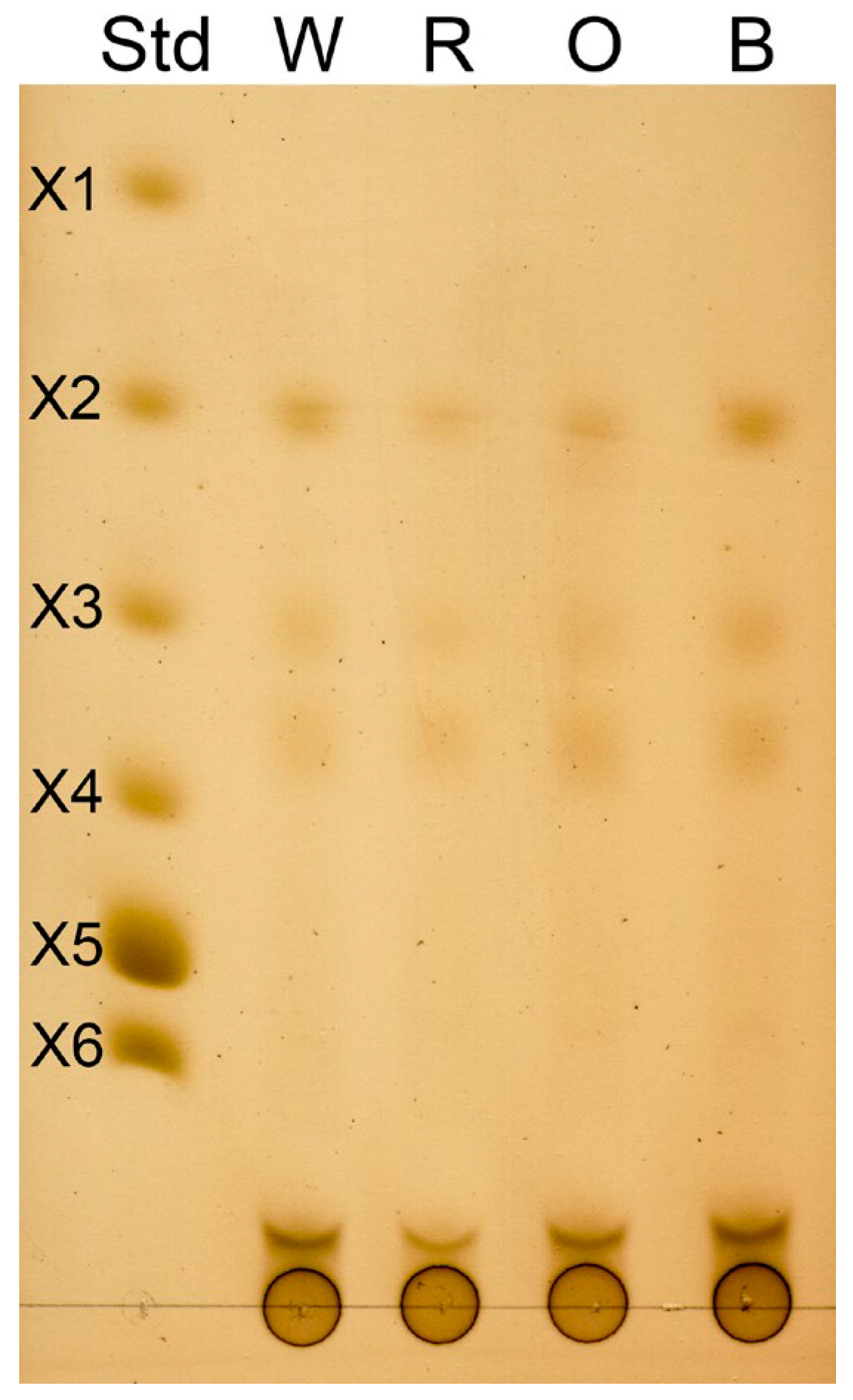
Thin-layer chromatography (TLC) analysis of the hydrolysates revealed bands with migration behavior similar to xylobiose (X2) and xylotriose (X3) standards (Figure 3). The most intense signals were observed in the region corresponding to X2, whereas weaker bands were detected near the X3 standard. No distinct bands corresponding to higher oligosaccharides (X4–X6) were observed (Figure 3). Only weak and diffuse signals were detected in the region above X3, suggesting the presence of minor amounts of higher-molecular-weight products or partially hydrolyzed xylan fragments.
A weak diffuse band was also observed between the X3 and X4 standards. A residual signal near the origin further suggests the presence of high-molecular-weight oligosaccharides or incompletely hydrolyzed polysaccharide fragments.
TLC profiles were comparable among all cereal straws, indicating that enzyme loading primarily affected the yield of hydrolysis products rather than their qualitative distribution (Figure 3).

3.3. Structural and Morphological Characterization of Biomass and Hydrolysis Products

Structural and morphological changes in cereal straw biomass after enzymatic hydrolysis were evaluated using scanning electron microscopy (SEM), Fourier transform infrared spectroscopy (FTIR), and nuclear magnetic resonance (NMR) analyses.
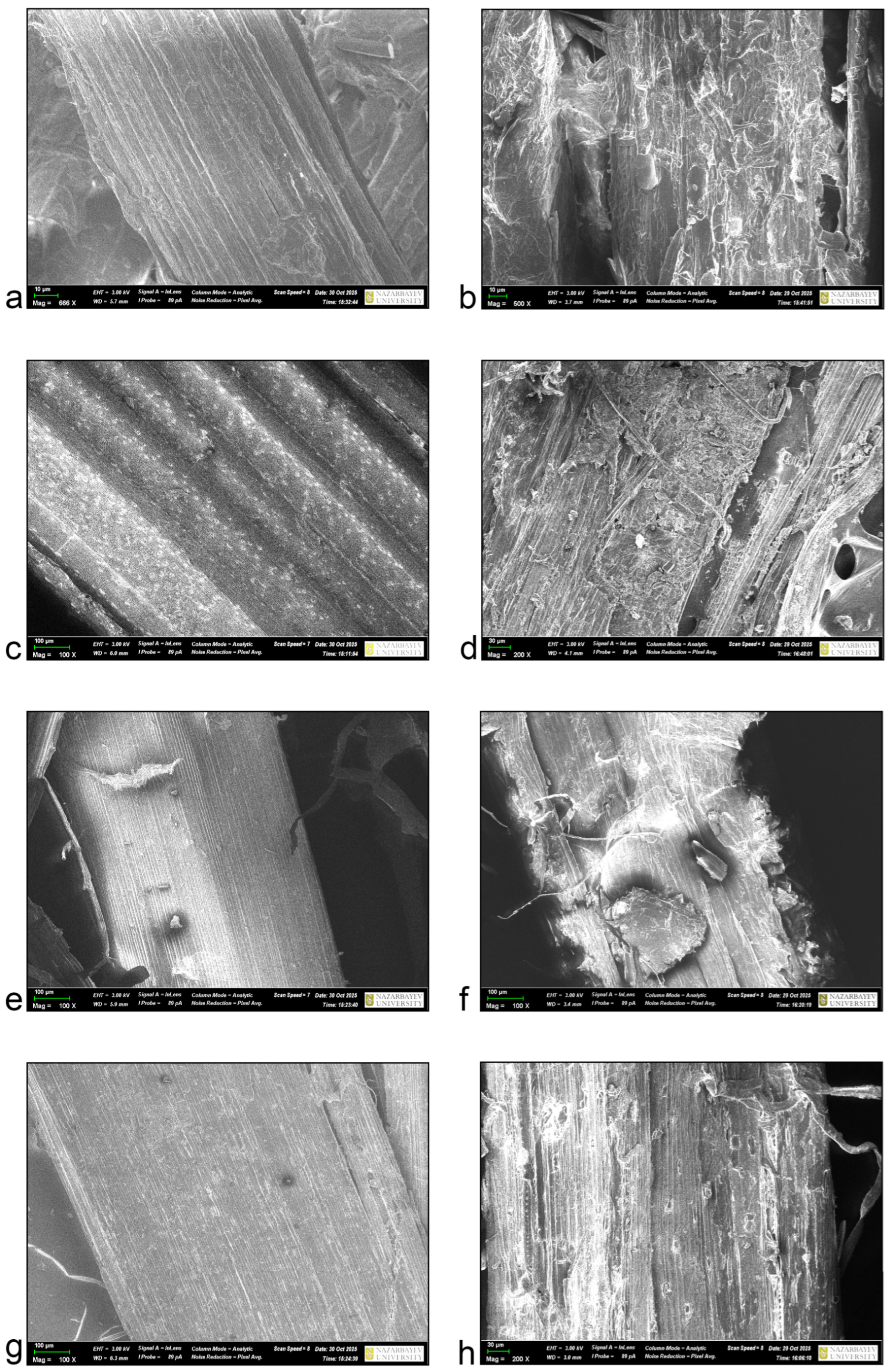
SEM analysis revealed substrate-dependent differences in the morphology of cereal straws before and after enzymatic hydrolysis (Figure 4). Untreated wheat straw exhibited an intact and dense fibrous structure with a smooth surface (Figure 4a). After hydrolysis, partial disruption of the surface structure was observed, including the appearance of cracks, increased surface roughness, and the presence of regions with disrupted structural integrity (Figure 4b).
The SEM image of rice straw prior to enzymatic hydrolysis shows a dense and compact structure (Figure 4c), characterized by a predominantly smooth surface. After enzymatic hydrolysis, moderate structural changes were observed, including signs of cracking and increased surface roughness (Figure 4d). Isolated regions with disrupted structural integrity were also observed.
The SEM image of barley straw prior to enzymatic hydrolysis shows a dense and compact structure (Figure 4e). The surface is characterized by a pronounced linear texture. After enzymatic hydrolysis, structural changes were observed, including increased surface roughness and the appearance of regions with disrupted structure. Partial disruption of the fibrous structure was also noted (Figure 4f).
The SEM image of oat straw prior to enzymatic hydrolysis shows a characteristic fibrous structure (Figure 4g). After enzymatic hydrolysis, more pronounced structural changes were observed, including increased surface roughness, fiber disruption, and the appearance of gaps between fibers (Figure 4h).
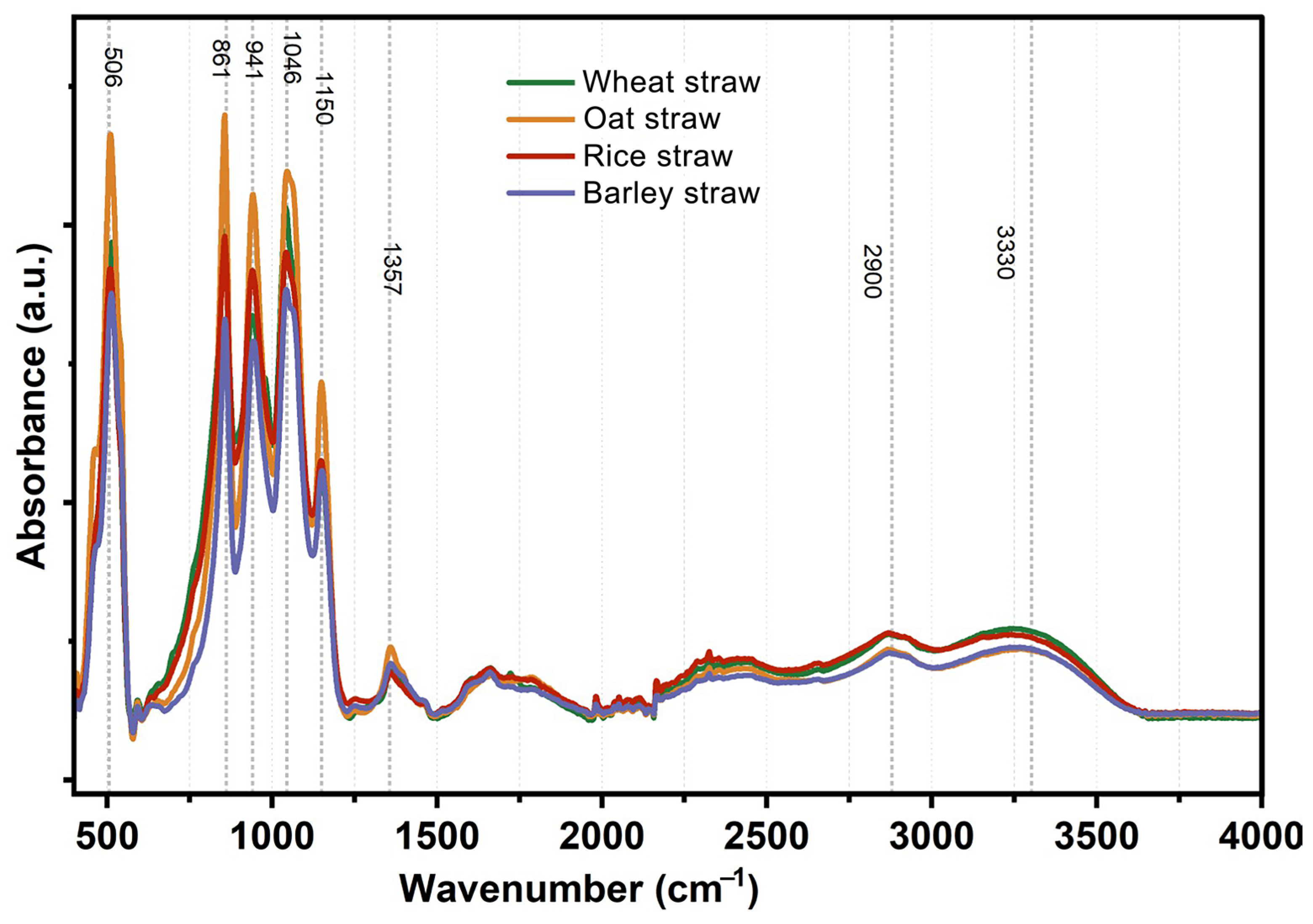
FTIR spectra of the hydrolysates obtained from wheat, oat, rice, and barley straw are presented in Figure 5. A broad absorption band at approximately 3330 cm−1 was observed in all samples and was attributed to the stretching vibrations of hydroxyl (O–H) groups involved in intermolecular and intramolecular hydrogen bonding. Such bands are characteristic of carbohydrates and polysaccharides. The absorption band near 2900 cm−1 corresponds to the stretching vibrations of C–H bonds in carbohydrate structures. Weak bands in the 1350–1500 cm−1 region are associated with the bending vibrations of O–H and C–H groups and are also characteristic of carbohydrate compounds.
The main absorption bands characteristic of carbohydrate compounds were observed in the 1200–900 cm−1 region. In this range, strong peaks corresponding to C–O, C–C, and C–O–C stretching vibrations, as well as glycosidic linkages, were detected. The band around 1150 cm−1 can be attributed to asymmetric C–O–C stretching vibrations, while peaks in the 1040–1060 cm−1 region are associated with symmetric C–O and C–C vibrations typical of carbohydrate structures. The band in the 940–870 cm−1 region may be assigned to β-glycosidic linkages, suggesting the presence of β-linked carbohydrate structures characteristic of xylooligosaccharides.
Weak bands observed in the 500–600 cm−1 region may be related to deformation vibrations of C–O–C and C–C bonds within carbohydrate ring structures. Comparison of the spectra of different samples (Figure 5) showed similar spectral features, indicating a comparable chemical composition and confirming the presence of carbohydrate compounds. Minor differences in band intensities may be attributed to variations in oligosaccharide composition and degree of polymerization, depending on the biomass source. Overall, the FTIR analysis confirms that the products obtained are carbohydrate-based, predominantly xylooligosaccharides. The main absorption bands correspond to O–H, C–H, C–O, and C–O–C vibrations typical of carbohydrates. The observed differences between the spectra may be associated with structural variations in the oligosaccharides and the presence of partially hydrolyzed products derived from different cereal straws.
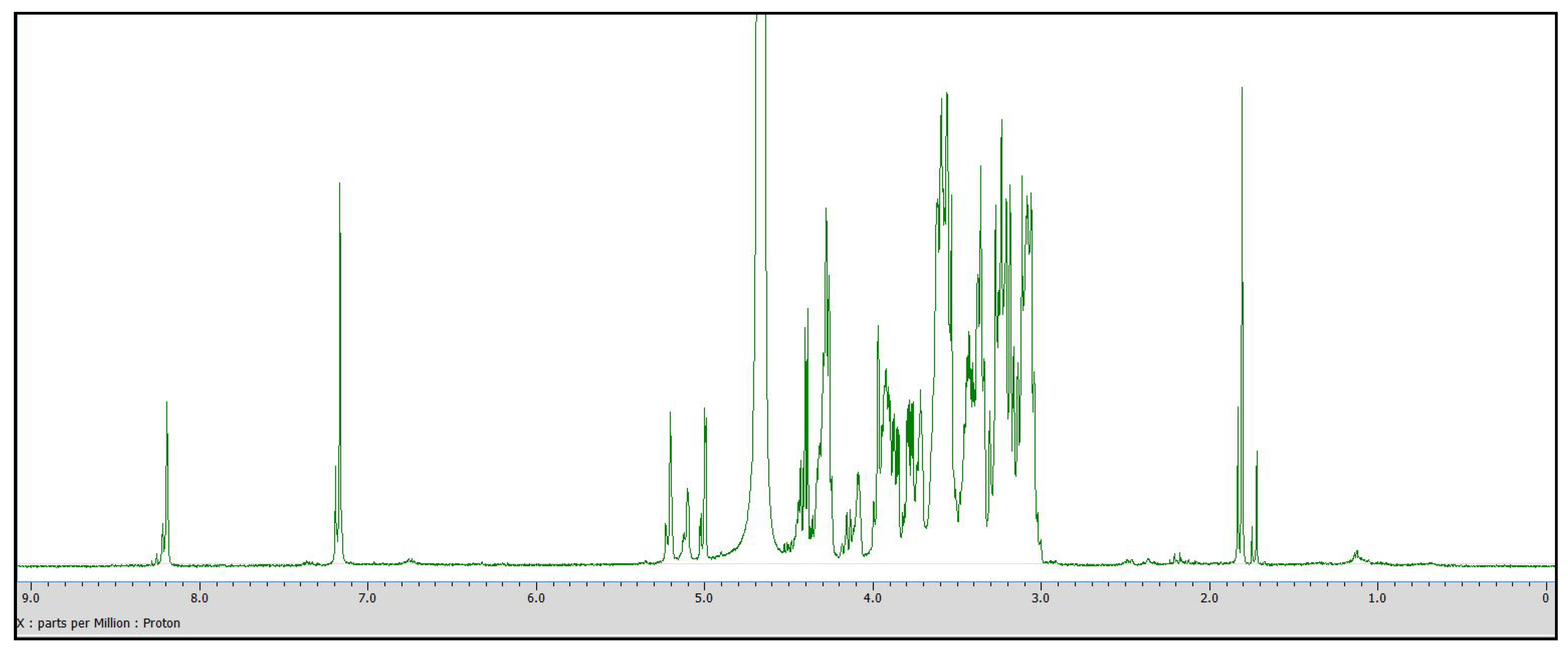
The 1H NMR (Figure 6) spectrum showed signals in the region of 4.2–5.2 ppm corresponding to anomeric protons. Signals observed at 4.26–4.43 ppm are consistent with β-anomeric protons of xylopyranosyl and other carbohydrate residues, whereas weaker signals at 5.00–5.20 ppm may be attributed to α-anomeric configurations present in the hydrolysate. Multiple overlapping resonances in the region of 3.0–4.0 ppm correspond to ring protons (H-2 to H-5) and hydroxymethyl groups of carbohydrate structures. Weak signals detected at 2.1–2.5 ppm may indicate the presence of residual acetyl substituents associated with hemicellulosic fragments, while minor resonances in the aromatic region (7.1–8.2 ppm) could be related to trace lignin-derived compounds. The signals in the carbohydrate region were relatively broad and overlapped, indicating a complex mixture of carbohydrate-containing hydrolysis products.
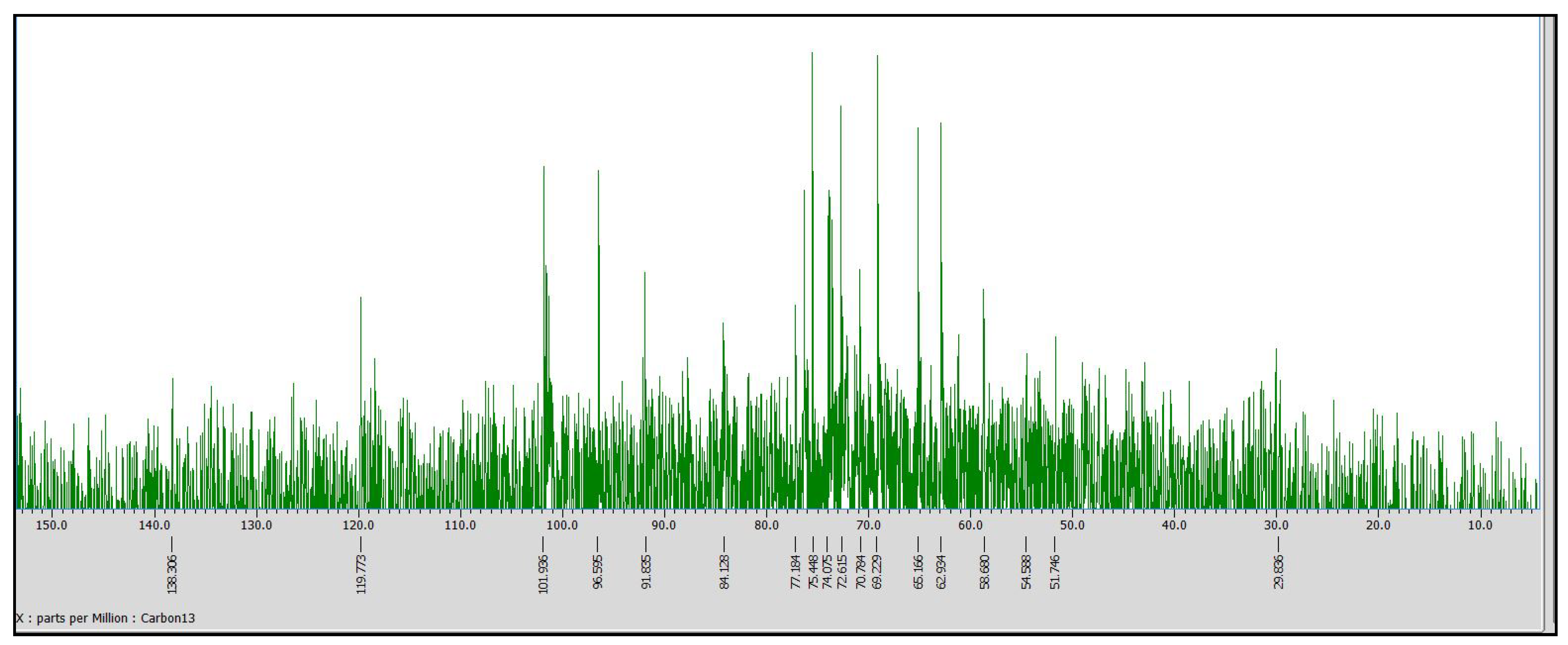
The 13C NMR (Figure 7) spectrum exhibited signals characteristic of anomeric carbon atoms of carbohydrate residues. In particular, resonances observed at 91.8–102.0 ppm are consistent with C1 atoms of carbohydrate residues in different anomeric configurations. A signal at approximately 84.1 ppm may be associated with C4 atoms involved in glycosidic linkages, supporting the presence of linked carbohydrate units. Additional signals were observed at 69–78 ppm and 62–65 ppm, corresponding to internal ring carbons (C2, C3, and C5) and hydroxymethyl carbons, respectively. Minor signals detected at lower and higher chemical shift regions may be related to residual acetyl substituents and trace non-carbohydrate components originating from the lignocellulosic biomass.
Similar NMR spectral patterns were observed for hydrolysates from oat, rice, and barley straw (Figures S2–S7, Supplementary Materials), indicating a comparable chemical profile for the resulting compounds. The combined SEM, FTIR, and NMR analyses collectively indicate the formation of hydrolysis products predominantly composed of carbohydrate compounds. At the same time, SEM observations reveal differences in the extent of structural changes among the substrates after enzymatic hydrolysis.

4. Discussion

The results of this study demonstrate that both substrate type and enzyme loading significantly influence the enzymatic hydrolysis of cereal straws. Two-way ANOVA confirmed significant effects of both substrate type and enzyme concentration on reducing sugar production, whereas their interaction was not significant, indicating a generally consistent response to increasing enzyme loading across the tested substrates. An increase in xylanase loading from 200 to 400 U g−1 led to higher reducing sugar concentrations in all substrates. Differences among enzyme loading treatments were most pronounced during the early stages of hydrolysis (3–9 h) and gradually diminished at later time points (12–24 h).
This trend may be attributed to the gradual depletion of readily accessible hemicellulose fractions generated during pretreatment with an 18.5% aqueous ammonia solution. Ammonia pretreatment has been reported to partially disrupt lignin–carbohydrate complexes, loosen the lignocellulosic matrix, and improve enzyme accessibility while preserving a substantial fraction of hemicellulose [29,30,31]. At the initial stages of hydrolysis, the availability of accessible cleavage sites allows enzyme loading to strongly influence the hydrolysis rate. As the process progresses, the remaining substrate becomes increasingly resistant to enzymatic attack due to structural factors, including residual lignin and the complex organization of the plant cell wall [34,35]. Furthermore, the accumulation of soluble hydrolysis products may contribute to a decline in hydrolysis rate through product inhibition, a phenomenon previously reported for xylanolytic enzymes during the conversion of lignocellulosic substrates. Therefore, both increasing substrate recalcitrance and the accumulation of reaction products may have contributed to the diminished effect of enzyme loading observed at later stages of hydrolysis [36,37].
In this study, four types of cereal straw were evaluated under identical enzymatic hydrolysis conditions, allowing the influence of substrate structural characteristics on hydrolysis efficiency to be assessed. This approach enabled a more accurate interpretation of differences in hydrolysis efficiency among the substrates.
The composition of cereal straw exhibits considerable variability depending on cultivar, environmental conditions, and geographical origin. According to literature data, wheat, barley, oat, and rice straw differ in their cellulose, hemicellulose, and lignin contents, which influence substrate accessibility during enzymatic hydrolysis (Table 1). In particular, hemicellulose content determines the amount of xylan available for hydrolysis, whereas lignin limits enzyme access to the polysaccharide matrix. These differences may have contributed to the observed variations in hydrolysis efficiency among the investigated straw substrates.
Differences in hydrolysis efficiency among the cereal straw types analyzed may be related to variations in cell wall structure and the chemical composition of the biomass. Lignin content, cell wall organization, and the degree of arabinoxylan substitution significantly affect enzyme accessibility and the efficiency of lignocellulosic biomass hydrolysis [41,42]. The higher hydrolysis efficiency observed for wheat and oat straw compared with rice and barley straw may be explained by greater accessibility of cell wall components to enzymatic degradation.
The reducing sugar yields obtained in this study (27.5–40.1 g kg) are consistent with previously reported values for the enzymatic hydrolysis of lignocellulosic biomass, where efficiency depends on substrate type and process conditions [19,20,43]. It has been reported that one of the most effective approaches for XOS production is the combination of alkaline pretreatment followed by enzymatic hydrolysis [12]. In the present study, ammonia pretreatment combined with a recombinant xylanase facilitated the production of XOS-containing hydrolysates from cereal straw.
The detection of oligosaccharide fractions corresponding to X2 and X3 standards is consistent with the action of endo-xylanases, which hydrolyze internal β-(1→4)-glycosidic bonds and typically generate short-chain xylooligosaccharides [44,45,46]. Short-chain xylooligosaccharides are considered valuable due to their high fermentability and well-established prebiotic effects [47,48,49].
In addition to these fractions, diffuse and intermediate zones observed in TLC analysis may correspond to oligosaccharides of varying composition and structure formed during the hydrolysis of lignocellulosic biomass. In particular, the zone between the X3 and X4 standards may correspond to substituted xylooligosaccharides, including arabinoxylan-oligosaccharides (AXOS), as cereal arabinoxylans contain arabinose substituents and can form structurally diverse oligosaccharides [48,50].
The efficiency of hydrolysis is also influenced by the properties of the recombinant xylanase used. The xylanase from Bacillus sonorensis T6 has been reported to exhibit optimal activity at moderate temperatures and near-neutral pH, and to be highly stable over a broad pH range [28]. The qualitative product profiles observed by TLC are consistent with the typical action profile of GH11 family endo-xylanases.
FTIR and NMR analyses supported the presence of β-(1→4)-linked carbohydrate structures characteristic of xylan-derived hydrolysis products [20,51]. Furthermore, SEM analysis revealed differences in the extent of structural modifications among the examined substrates after enzymatic hydrolysis, suggesting variations in cell wall architecture and enzyme accessibility.
The obtained results are relevant for regions with high levels of agricultural residue generation, including Kazakhstan, where cereal straw remains an underutilized agro-industrial resource. Overall, the results demonstrate that the efficiency of cereal straw conversion is governed by both process conditions and biomass characteristics. The data highlight the potential of cereal straw as a renewable feedstock for the production of xylooligosaccharide-rich hydrolysates and other value-added products.

5. Conclusions

This study demonstrated the production of xylooligosaccharides from cereal straw via enzymatic hydrolysis using a recombinant xylanase from Bacillus sonorensis T6. The applied hydrolysis conditions (40 °C, pH 7.0) ensured stable enzyme activity and efficient biomass conversion.
The results showed that hydrolysis efficiency strongly depends on substrate type, with wheat straw providing the highest reducing sugar yield (up to 40.1 g kg−1), followed by barley, oat, and rice straw. These differences were associated with variations in biomass structure and accessibility, highlighting the importance of substrate-specific characteristics in enzymatic processing.
TLC, FTIR, and NMR analyses confirmed the presence of xylooligosaccharides and indicated the presence of short-chain oligosaccharide fractions corresponding to X2 and X3 standards.
Importantly, the enzyme hydrolyzed all tested cereal straws, demonstrating broad substrate specificity and suitability for processing diverse lignocellulosic feedstocks.
Overall, the findings highlight the potential of the xylanase developed in this study for the efficient processing of agricultural residues and confirm the suitability of cereal straw as a feedstock for value-added xylooligosaccharides.

Supplementary Materials

The following supporting information can be downloaded at: https://www.mdpi.com/article/10.3390/fermentation12070299/s1, Figure S1: FTIR spectra of hydrolysis products obtained from wheat, rice, barley, and oat straw; Figure S2: 1H NMR spectrum of rice straw hydrolysate; Figure S3: 13C NMR spectrum of rice straw hydrolysate; Figure S4: 1H NMR spectrum of oat straw hydrolysate; Figure S5: 13C NMR spectrum of oat straw hydrolysate; Figure S6: 1H NMR spectrum of barley straw hydrolysate; Figure S7: 13C NMR spectrum of barley straw hydrolysate.

Author Contributions

Conceptualization, A.K.; methodology, A.K., Y.S., D.S.; software, S.T. and B.Y.; validation, A.Y., D.A.; formal analysis, D.S.; investigation, A.K., Y.S.; resources, A.K.; data curation, S.T. and B.Y.; writing—original draft preparation, A.K.; visualization, D.A. and A.Y.; project administration, A.K.; funding acquisition, A.K. All authors have read and agreed to the published version of the manuscript.

Funding

This work was funded by the Committee of Science of the Ministry of Science and Higher Education of the Republic of Kazakhstan, Grant No. AP23487935.

Institutional Review Board Statement

Not applicable.

Informed Consent Statement

Not applicable.

Data Availability Statement

The original contributions presented in this study are included in the article. Further inquiries can be directed to the corresponding author.

Acknowledgments

The authors gratefully acknowledge Nazarbayev University for providing research facilities and support. The authors thank Zhanar Zhakiyeva for assistance with FTIR measurements, Farkhad Tarikhov for NMR analysis, and Nurgul Daniyeva for SEM imaging and technical support.

Conflicts of Interest

The authors declare no conflicts of interest.

References

  1. Kumar, R.; Næss, G.; Sørensen, M. Xylooligosaccharides from lignocellulosic biomass and their applications as nutraceuticals: A review on their production, purification, and characterization. J. Sci. Food Agric. 2024, 104, 7765–7775. [Google Scholar] [CrossRef] [PubMed]
  2. Houfani, A.A.; Anders, N.; Spiess, A.C.; Baldrian, P.; Benallaoua, S. Insights from enzymatic degradation of cellulose and hemicellulose to fermentable sugars—A review. Biomass Bioenergy 2020, 134, 105481. [Google Scholar] [CrossRef]
  3. N, S.; Afzal, A.; V, S.H.; Ağbulut, Ü.; Alahmadi, A.A.; Gowda, A.C.; Alwetaishi, M.; Shaik, S.; Hoang, A.T. Poultry fat biodiesel as a fuel substitute in diesel-ethanol blends for DI-CI engine: Experimental, modeling and optimization. Energy 2023, 270, 126826. [Google Scholar]
  4. Yan, F.; Tian, S.; Du, K.; Xue, X.; Gao, P.; Chen, Z. Preparation and nutritional properties of xylooligosaccharide from agricultural and forestry byproducts: A comprehensive review. Front. Nutr. 2022, 9, 977548. [Google Scholar] [CrossRef] [PubMed]
  5. Sawhney, D.; Sharma, S.; Singh, M.; Kumar, P.; Pandey, R. Harnessing hemicellulose: A systematic review of its role in bioethanol and value-added product synthesis from lignocellulosic feedstocks. Bioresour. Technol. Rep. 2026, 34, 102640. [Google Scholar] [CrossRef]
  6. Dutta, S.; Zhang, Q.; Cao, Y.; Wu, C.; Moustakas, K.; Zhang, S.; Wong, K.-H.; Tsang, D.C. Catalytic valorisation of various paper wastes into levulinic acid, hydroxymethylfurfural, and furfural: Influence of feedstock properties and ferric chloride. Bioresour. Technol. 2022, 357, 127376. [Google Scholar] [CrossRef] [PubMed]
  7. Gupta, M.; Bangotra, R.; Sharma, S.; Vaid, S.; Kapoor, N.; Dutt, H.C.; Bajaj, B.K. Bioprocess development for production of xylooligosaccharides prebiotics from sugarcane bagasse with high bioactivity potential. Ind. Crop. Prod. 2022, 178, 114591. [Google Scholar] [CrossRef]
  8. Chakraborty, M.; Bhowal, J. Prospects of health beneficial functional xylooligosaccharides produced by enzymatic hydrolysis of xylan and application in food industry: A comprehensive review. Food Rev. Int. 2025, 41, 643–670. [Google Scholar]
  9. Dyshlyuk, L.; Ulrikh, E.; Agafonova, S.; Kazimirchenko, O. Xylooligosaccharides from biomass lignocellulose: Properties, sources and production methods. Rev. Agric. Sci. 2024, 12, 1–12. [Google Scholar] [CrossRef]
  10. Feng, Y.; Tian, S.; Chen, H.; Gao, S.; Dong, X.; Du, K. Advances in xylooligosaccharides from grain byproducts: Extraction and prebiotic effects. Grain Oil Sci. Technol. 2022, 5, 98–106. [Google Scholar] [CrossRef]
  11. Chen, Y.; Xie, Y.; Zhong, R.; Liu, L.; Lin, C.; Xiao, L.; Chen, L.; Zhang, H.; Beckers, Y.; Everaert, N. Effects of xylo-oligosaccharides on growth and gut microbiota as potential replacements for antibiotic in weaning piglets. Front. Microbiol. 2021, 12, 641172. [Google Scholar] [CrossRef] [PubMed]
  12. Santibáñez, L.; Henríquez, C.; Corro-Tejeda, R.; Bernal, S.; Armijo, B.; Salazar, O. Xylooligosaccharides from lignocellulosic biomass: A comprehensive review. Carbohydr. Polym. 2021, 251, 117118. [Google Scholar] [CrossRef] [PubMed]
  13. Zhao, J.; Xu, Y.; Zhang, M.; Wang, D. Integrating bran starch hydrolysates with alkaline pretreated soft wheat bran to boost sugar concentration. Bioresour. Technol. 2020, 302, 122826. [Google Scholar] [CrossRef] [PubMed]
  14. Ponce, J.; da Silva Andrade, J.G.; dos Santos, L.N.; Bulla, M.K.; Barros, B.C.B.; Favaro, S.L.; Hioka, N.; Caetano, W.; Batistela, V.R. Alkali pretreated sugarcane bagasse, rice husk and corn husk wastes as lignocellulosic biosorbents for dyes. Carbohydr. Polym. Technol. Appl. 2021, 2, 100061. [Google Scholar] [CrossRef]
  15. Gruening de Mattos, P.B.; Porto de Souza Vandenberghe, L.; Valladares-Diestra, K.K.; Ramos Neyra, L.C.; Vieira, S.; Júnior Letti, L.A.; Soccol, C.R. Recent developments in xylooli gosaccharides: Sustainable production, characterization, beneficial properties and applica tions. Food Res. Int. 2024, 197, 115206. [Google Scholar] [CrossRef] [PubMed]
  16. Hermiati, E.; Wijaya, H.; Pramasari, D.A. Extraction, isolation, purification, and potential application of xylose and xylooligosaccharides from lignocellulosic biomass. In Advances in Biomass Processing; Springer Nature Singapore Pte Ltd.: Singapore, 2024; pp. 229–267. [Google Scholar]
  17. Kostanova, A.; Shamsiyeva, Y.; Yermukhanov, A.; Kiribayeva, A. Cereal biomass-derived xylo- and malto-oligosaccharides as next-generation prebiotics: A comprehensive review of sustainable production and translational benefits for human and animal gut microbiota. Front. Microbiol. 2026, 17, 1803157. [Google Scholar] [CrossRef] [PubMed]
  18. González-Alonso, V.; Verce, M.; De Vuyst, L.; Leroy, F. Cereal arabinoxylans—Their enzymatic degradation and relevance for breadmaking and human health. Compr. Rev. Food Sci. Food Saf. 2026, 25, e70391. [Google Scholar] [CrossRef] [PubMed]
  19. Rodríguez-Sanz, A.; Fuciños, C.; Míguez, M.; Rúa, M.L.; Torrado, A.M. Direct enzymatic hydrolysis of solid wheat straw with endo-xylanases: Effect of the temperature on the hemicellulose release and the product profile modulation. Int. J. Biol. Macromol. 2024, 270, 132211. [Google Scholar] [CrossRef] [PubMed]
  20. Ali, K.; Niaz, N.; Waseem, M.; Ashraf, W.; Hussain, M.; Khalid, M.U.; Tahir, A.B.; Raza, A.; Khan, I.M. Xylooligosaccharides: A comprehensive review of production, purification, characterization, and quantification. Food Res. Int. 2025, 201, 115631. [Google Scholar] [CrossRef] [PubMed]
  21. Farheen, V.H.; Abdullah, M.A.; Moorthy, I.G. Lignocellulosic bioethanol production: A review on pretreatment strategies, biofuel separation, and artificial intelligence/machine learning—Based sustainable optimization. Curr. Res. Biotechnol. 2026, 11, 100355. [Google Scholar] [CrossRef]
  22. de Oliveira Rodrigues, P.; da Silva Barreto, E.; Brandão, R.L.; Gurgel, L.V.A.; Pasquini, D.; Baffi, M.A. On-site produced enzyme cocktails for saccharification and ethanol production from sugarcane bagasse fractionated by hydrothermal and alkaline pretreatments. Waste Biomass Valorization 2022, 13, 95–106. [Google Scholar] [CrossRef]
  23. Mussakhmetov, A.; Kiribayeva, A.; Daniyarov, A.; Bulashev, A.; Kairov, U.; Khassenov, B. Genome sequence and assembly of the amylolytic Bacillus licheniformis T5 strain isolated from Kazakhstan soil. BMC Genom. Data 2025, 25, 3. [Google Scholar]
  24. Kiribayeva, A.; Silayev, D.; Akishev, Z.; Baltin, K.; Aktayeva, S.; Ramankulov, Y.; Khassenov, B. An impact of N-glycosylation on biochemical properties of a recombinant α-amylase from Bacillus licheniformis. Heliyon 2024, 10, e28064. [Google Scholar] [CrossRef] [PubMed]
  25. Supmeeprom, S.; Thammasittirong, A.; Jeennor, S.; Sopalun, K.; Thammasittirong, S.N.R. Valorisation of sawdust-based spent mushroom from substrate for sustainable xylooligosaccharides production using low-cost crude xyla nases aspergillus flavus KUB2. Mycology 2024, 15, 651–664. [Google Scholar] [CrossRef] [PubMed]
  26. Zhang, K.; Qi, X.; Feng, N.; Wang, Y.; Wei, H.; Liu, M. Antioxidant capacity of xylooligosaccharides generated from beechwood xylan by recombinant family GH10 Aspergillus niger xylanase a and insights into the enzyme’s competitive inhibition by riceXIP. Enzym. Microb. Technol. 2024, 179, 110456. [Google Scholar] [CrossRef]
  27. Klangpetch, W.; Pattarapisitporn, A.; Phongthai, S.; Utama-ang, N.; Laokuldilok, T.; Tangjaidee, P.; Wirjantoro, T.I. Microwave-assisted enzymatic hydrolysis to produce xylooligosaccharides from rice husk alkali-soluble arabinoxylan. Sci. Rep. 2022, 12, 11. [Google Scholar] [CrossRef] [PubMed]
  28. Kiribayeva, A.; Mukanov, B.; Silayev, D.; Akishev, Z.; Ramankulov, Y.; Khassenov, B. Cloning, expression, and characterization of a recombinant xylanase from Bacillus sonorensis T6. PLoS ONE 2022, 17, e0265647. [Google Scholar] [CrossRef] [PubMed]
  29. Khat-udomkiri, N.; Sivamaruthi, B.S.; Sirilun, S.; Lailerd, N.; Peerajan, S.; Chaiyasut, C. Optimization of alkaline pretreatment and enzymatic hydrolysis for the extraction of xylooligosaccharide from rice husk. AMB Express 2018, 8, 115. [Google Scholar] [CrossRef] [PubMed]
  30. Zhang, H.; Xu, X.; Shi, Z.; Zhu, L.; Shi, S.; Wang, X.; Liu, X.; Han, L. Lignocellulose deconstruction and mechanistic insights into wheat straw using extrusion-ammoniation synergistic pretreatment. Ind. Crops Prod. 2025, 228, 120820. [Google Scholar] [CrossRef]
  31. Wang, X.; Tao, Y.; Yang, Q.; Cheng, Y.; Lu, J.; Du, J.; Wang, H. Ammonia and sodium sulfite synergistically pretreat reed to enhance enzymatic saccharification. Bioresour. Technol. 2023, 380, 129070. [Google Scholar] [CrossRef] [PubMed]
  32. Zarina, R.; Mezule, L. Enzymatic hydrolysis of waste streams originating from wastewater treatment plants. Biotechnol. Biofuels Bioprod. 2024, 17, 104. [Google Scholar] [CrossRef] [PubMed]
  33. Ratnadewi, A.A.I.; Rahma, M.T.; Nurhayati, N.; Santoso, A.B.; Senjarini, K.; Labes, A.; Reza, M. Production of Xylooligosaccharide from Cassava Pulp’s Waste by Endo-β-1,4-D-Xylanase and Characterization of Its Prebiotic Effect by Fermentation of Lactobacillus acidophilus. Fermentation 2022, 8, 488. [Google Scholar] [CrossRef]
  34. Zoghlami, A.; Paës, G. Lignocellulosic Biomass: Understanding Recalcitrance and Predicting Hydrolysis. Front. Chem. 2019, 7, 874. [Google Scholar] [CrossRef] [PubMed]
  35. Santos, D.; Siqueira, J.G.W.; da Silva, M.G.L.; Donato, M.; da Silva, G.; Pratto, B.; Albuquerque, A.A.; Dutra, E.D.; Sonego, J.L.S. Enzymatic Hydrolysis of Lignocellulosic Biomass: Structural Features, Process Aspects, Kinetics, and Computational Tools. Biomass 2026, 6, 13. [Google Scholar] [CrossRef]
  36. Setiadi, T.; Kresnowati, M.T.A.P.; Boopathy, R.; Hidayatullah, I.M. Xylanase inhibition by the derivatives of lignocellulosic material. Bioresour. Technol. 2020, 300, 122740. [Google Scholar] [CrossRef]
  37. Dahiya, S.; Rapoport, A.; Singh, B. Biotechnological Potential of Lignocellulosic Biomass as Substrates for Fungal Xylanases and Its Bioconversion into Useful Products: A Review. Fermentation 2024, 10, 82. [Google Scholar] [CrossRef]
  38. Piedade, P.J.; Venkat, V.; Al-Shwafy, K.W.A.; Aregawi, M.A.; Dudek, G.; Zygadło, M.; Lukasik, R.M. Comprehensive Wheat Straw Processing with Deep Eutectic Solvent to Deliver Reducing Sugar. BioEnergy Res. 2024, 17, 1559–1574. [Google Scholar] [CrossRef]
  39. Ramos, M.; Laveriano, E.; San Sebastián, L.; Perez, M.; Jiménez, A.; Lamuela-Raventós, R.M.; Garrigós, M.C.; Vallverdú-Queralt, A. Rice straw as a valuable source of cellulose and polyphenols: Applications in the food industry. Trends Food Sci. Technol. 2023, 131, 14–27. [Google Scholar] [CrossRef]
  40. Borrega, M.; Hinkka, V.; Hörhammer, H.; Kataja, K.; Kenttä, E.; Ketoja, J.A.; Palmgren, R.; Salo, M.; Sundqvist-Andberg, H.; Tanaka, A. Utilizing and Valorizing Oat and Barley Straw as an Alternative Source of Lignocellulosic Fibers. Materials 2022, 15, 7826. [Google Scholar] [CrossRef] [PubMed]
  41. Zhang, L.; Larsson, A.; Moldin, A.; Edlund, U. Comparison of lignin distribution, structure, and morphology in wheat straw and wood. Ind. Crops Prod. 2022, 187, 115432. [Google Scholar] [CrossRef]
  42. Espinosa, E.; Sánchez, R.; Otero, R.; Domínguez-Robles, J.; Rodríguez, A. A comparative study of the suitability of different cereal straws for lignocellulose nanofibers isolation. Int. J. Biol. Macromol. 2017, 103, 990–999. [Google Scholar] [CrossRef] [PubMed]
  43. Lin, Y.; Dong, Y.; Li, X.; Cai, J.; Cai, L.; Zhang, G. Enzymatic production of xylooligosaccharide from lignocellulosic and marine biomass: A review of current progress, challenges, and its applications in food sectors. Int. J. Biol. Macromol. 2024, 277, 134014. [Google Scholar] [CrossRef] [PubMed]
  44. Corrêa Junior, L.C.S.; Gautério, G.V.; de Medeiros Burkert, J.F.; Kalil, S.J. Purification of xylanases from Aureobasidium pullulans CCT 1261 and its application in the production of xylooligosaccharides. World J. Microbiol. Biotechnol. 2022, 38, 52. [Google Scholar] [CrossRef] [PubMed]
  45. Phukon, L.C.; Chourasia, R.; Abedin, M.M.; Priya, A.; Sharma, S.; Singh, S.P.; Tayung, K.; Rai, A.K. Process optimization and partial purification of a highly catalytic xylanase from high-altitude novel Bacillus altitudinis strain for efficient production of functional prebiotic xylooligosaccharides. Int. J. Biol. Macromol. 2025, 319, 145589. [Google Scholar] [CrossRef] [PubMed]
  46. Zhou, M.; Fan, G.; Xia, H.; Zhang, X.; Teng, C.; Li, X. Ultrasound-assisted production of xylo-oligosaccharides from alkali-solubilized corncob bran using Penicillium janthinellum XAF01 acidic xylanase. Front. Bioeng. Biotechnol. 2021, 9, 755003. [Google Scholar] [CrossRef] [PubMed]
  47. Hero, J.S.; Pisa, J.H.; Romero, C.M.; Nordberg Karlsson, E.; Linares-Pastén, J.A.; Martinez, M.A. Endo-xylanases from Cohnella sp. AR92 aimed at xylan and arabinoxylan conversion into value-added products. Appl. Microbiol. Biotechnol. 2021, 105, 6759–6778. [Google Scholar] [CrossRef] [PubMed]
  48. Huang, C.; Yu, Y.; Li, Z.; Yan, B.; Pei, W.; Wu, H. The preparation technology and application of xylo-oligosaccharide as prebiotics in different fields: A review. Front. Nutr. 2022, 9, 996811. [Google Scholar] [CrossRef] [PubMed]
  49. Qiu, X.; Sun, Q.; Huo, C.; Fu, W.; Cai, N.; Gao, P.; Teng, C. Identification, optimisation and production of xylooligosaccharides by heat-tolerant xylanase-producing strain. 3 Biotech 2025, 15, 228. [Google Scholar] [CrossRef] [PubMed]
  50. Marim, A.V.C.; Gabardo, S. Xylooligosaccharides: Prebiotic potential from agro-industrial residue, production strategies and prospects. Biocatal. Agric. Biotechnol. 2021, 37, 102190. [Google Scholar] [CrossRef]
  51. Fan, X.; Ren, M.; Zhou, C.; Kong, F.; Hua, C.; Fakayode, O.A.; Okonkwo, C.E.; Li, H.; Liang, J.; Wang, X. Total utilization of lignocellulosic biomass with xylooligosaccharides production priority: A review. Biomass Bioenergy 2024, 181, 107038. [Google Scholar] [CrossRef]
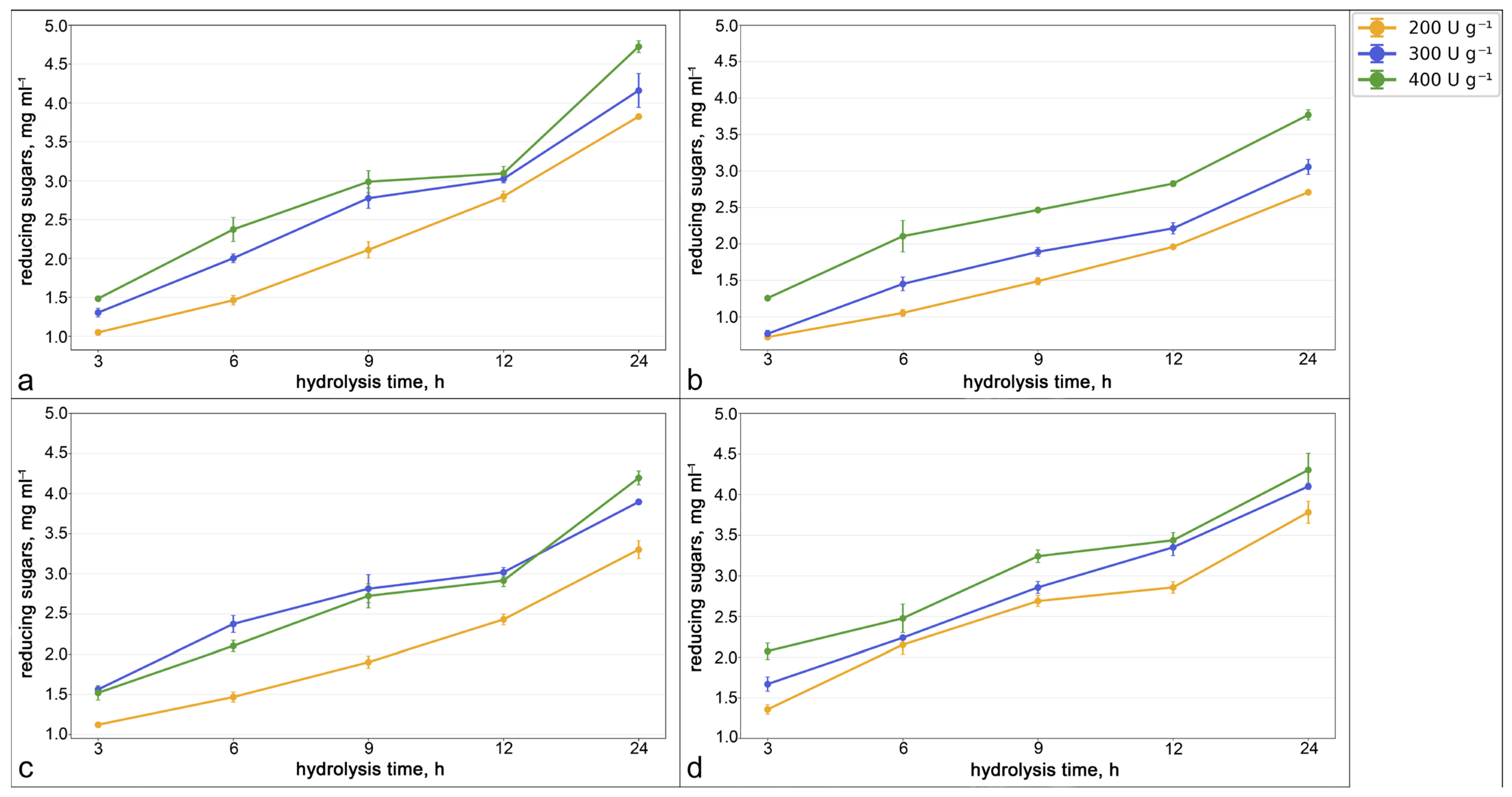
Figure 1. Effect of xylanase loading on reducing sugar production from cereal straws: (a) wheat, (b) rice, (c) barley, and (d) oat straw. Hydrolysis was performed under stepwise addition conditions (60/40, second addition at 6 h) at enzyme loadings of 200, 300, 400 U g−1 for 24 h at 40 °C. Values are expressed as mg mL−1 (mean ± SD, n = 3).
Fermentation 12 00299 g001
Figure 2. Effect of enzyme loading on reducing sugar concentration after 24 h of hydrolysis of wheat (WS), rice (RS), oat (OS), and barley (BS) straw. Wheat (Triticum aestivum L.), rice (Oryza sativa L.), barley (Hordeum vulgare L.), and oat (Avena sativa L.) straw were hydrolyzed using xylanase at loadings of 200, 300, and 400 U g−1 under stepwise addition conditions (60/40, second addition after 6 h). Values represent mean ± SD (n = 3). Asterisks indicate statistically significant differences between enzyme loading treatments according to Tukey’s HSD post hoc test (* p < 0.05; ** p < 0.01).
Fermentation 12 00299 g002
Figure 3. Thin-layer chromatography (TLC) analysis of cereal straw hydrolysates. W—wheat; R—rice; O—oat; B—barley; Std—xylooligosaccharide standards (X1–X6 corresponding to xylose through xylohexaose).
Fermentation 12 00299 g003
Figure 4. SEM images of cereal straws before and after enzymatic hydrolysis. Wheat (a,b), rice (c,d), barley (e,f), and oat (g,h) straw before (left column) and after (right column) enzymatic hydrolysis under optimized conditions.
Fermentation 12 00299 g004
Figure 5. FTIR spectra of hydrolysates obtained from wheat, oat, rice, and barley straw.
Fermentation 12 00299 g005
Figure 6. 1H NMR spectrum of wheat straw hydrolysate.
Fermentation 12 00299 g006
Figure 7. 13C NMR spectrum of wheat straw hydrolysate.
Fermentation 12 00299 g007
Table 1. Typical composition of cereal straws reported in the literature.
StrawCellulose (%)Hemicellulose (%)Lignin (%)Ref.
Wheat straw30–4820–305–25[38]
Rice straw28–4220–3510–20[39]
Barley straw25–4317–2510–24[40]
Oat straw25–3616–269–25[40]
Disclaimer/Publisher’s Note: The statements, opinions and data contained in all publications are solely those of the individual author(s) and contributor(s) and not of MDPI and/or the editor(s). MDPI and/or the editor(s) disclaim responsibility for any injury to people or property resulting from any ideas, methods, instructions or products referred to in the content.