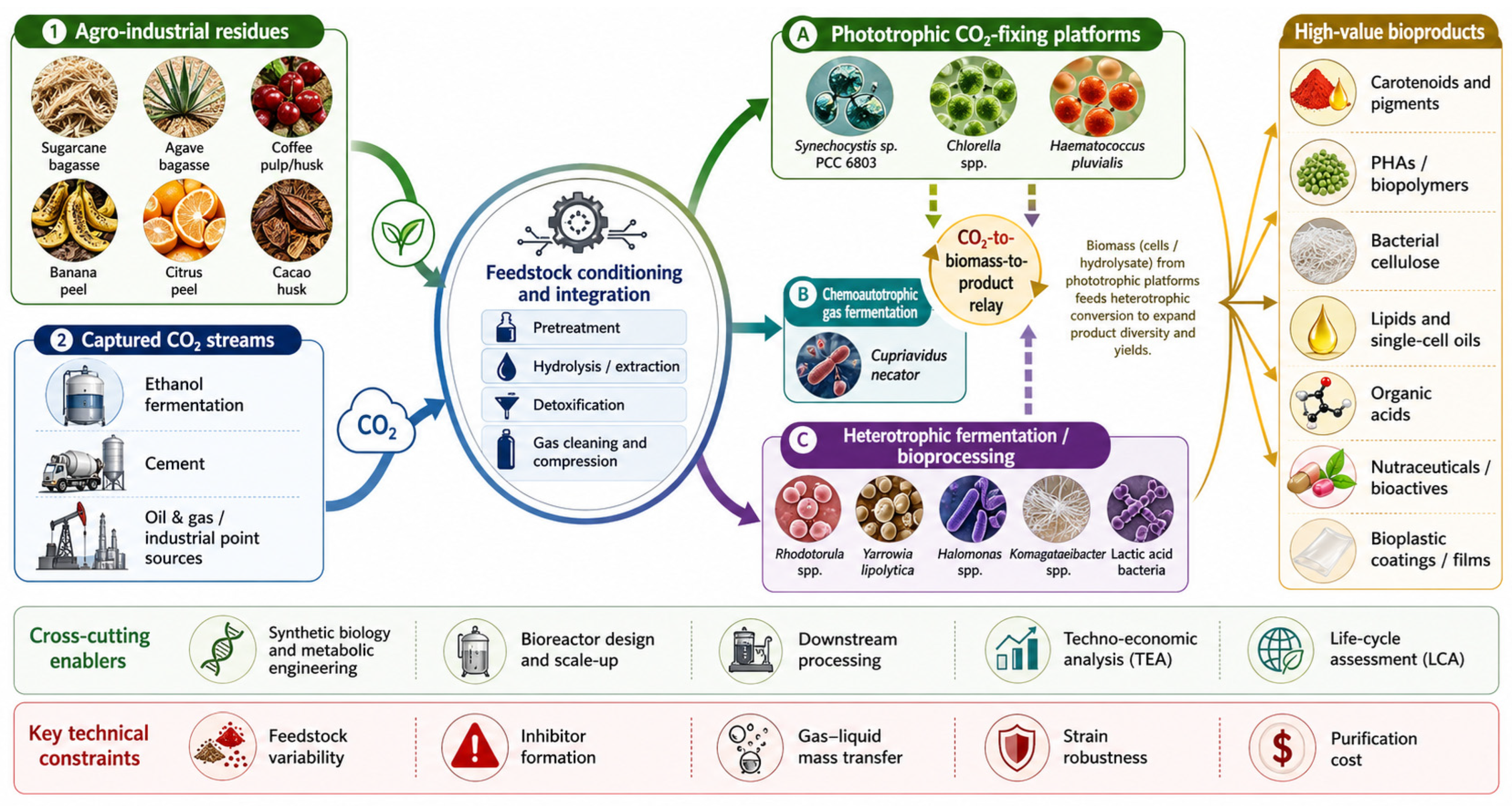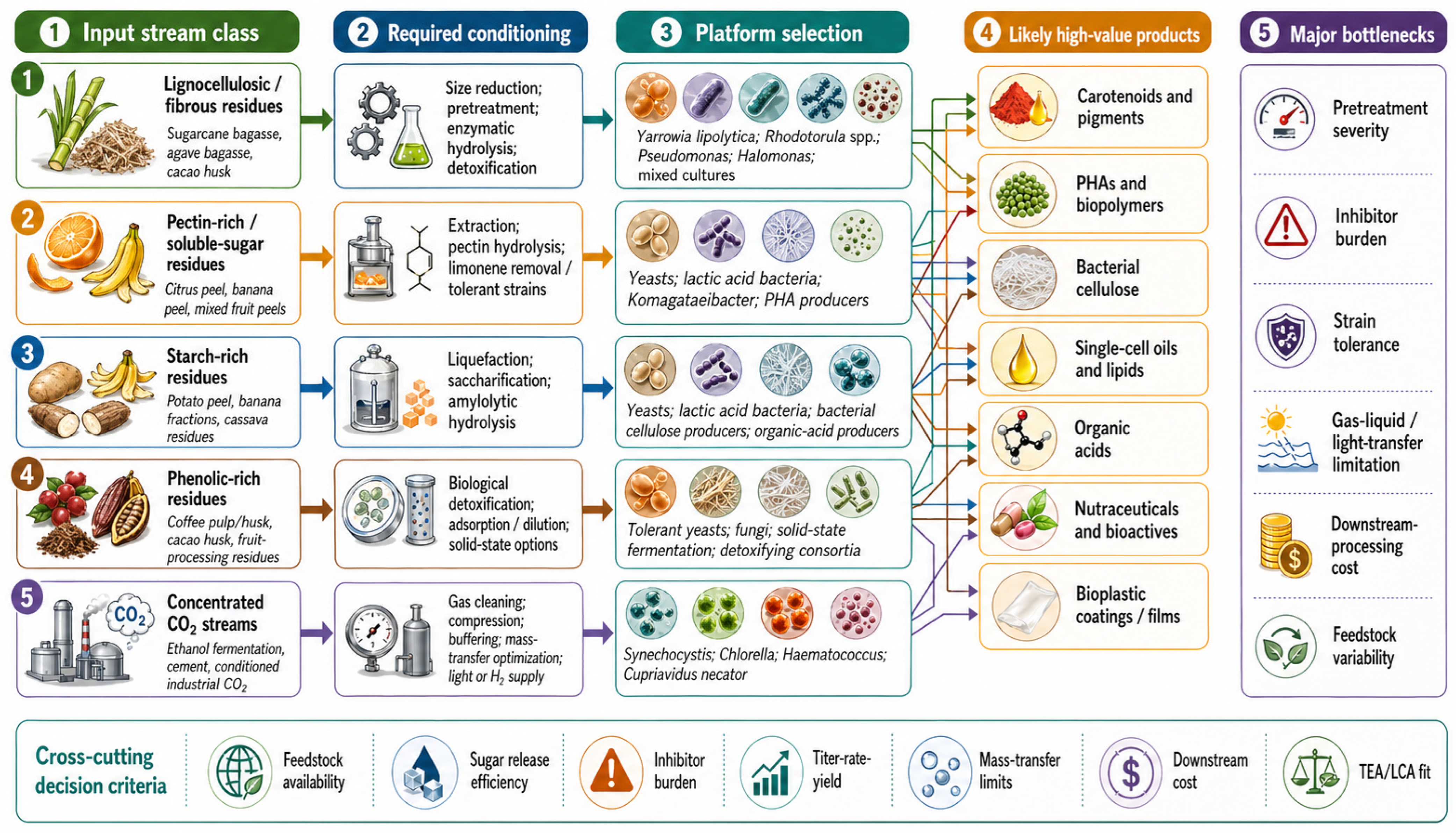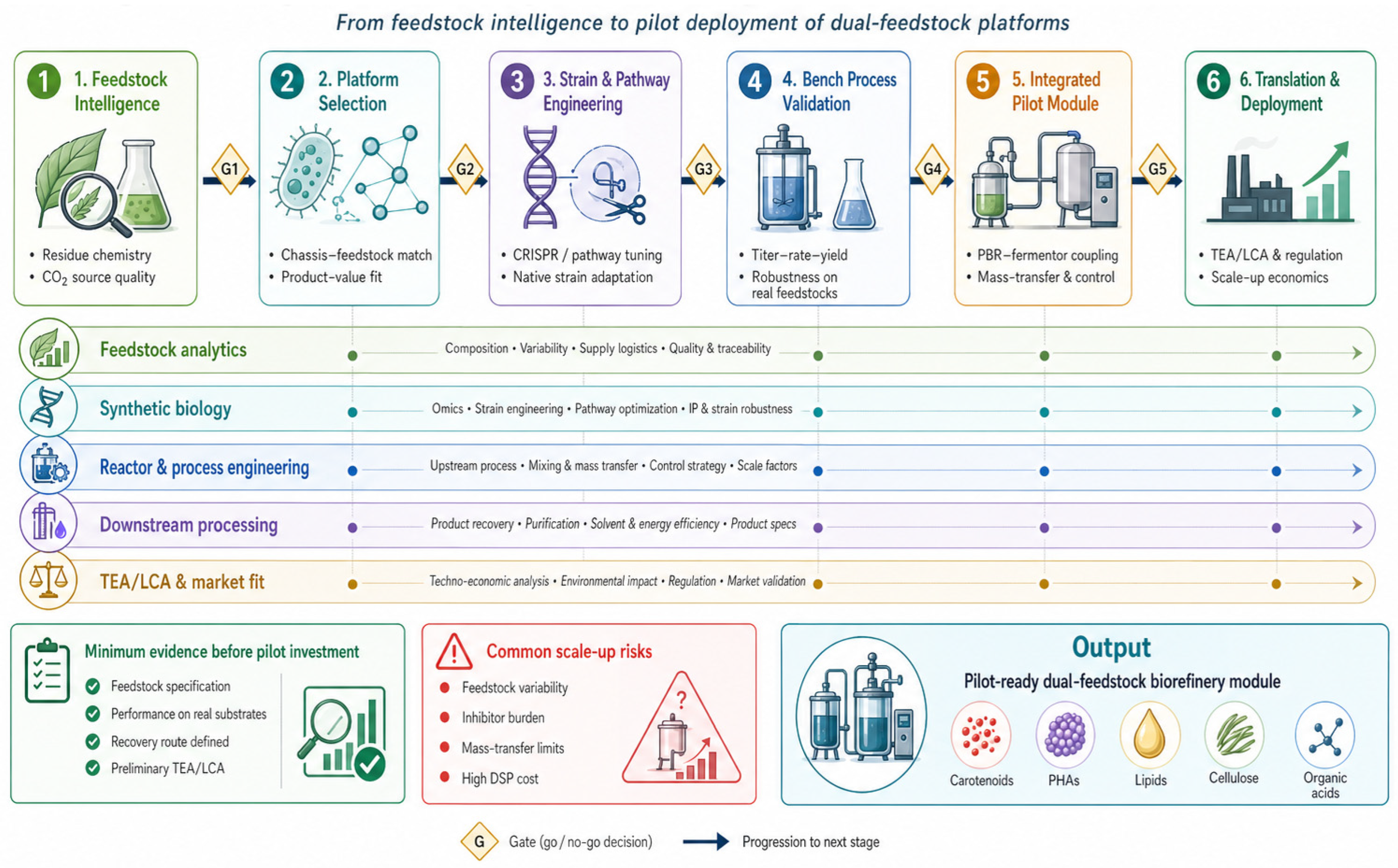

From Latin American Agro-Industrial Waste and CO2 to High-Value Bioproducts: Fermentation-Based Production Platforms for a Regional Bioeconomy

Abstract
1. Introduction
1.1. Focused-Review Scope, Search Strategy, and Selection Logic


1.2. Technical Assessment Criteria
2. Boundary Conditions: LATAM Feedstock and CO2-Source Context
3. Technical Platform Matching for CO2- and Waste-Fed Bioproduction
3.1. Phototrophic CO2-Fixing Modules
3.1.1. Cyanobacteria: Synechocystis sp. PCC 6803 as a CO2-to-Intermediate Chassis
3.1.2. Microalgae: High-Value Biomass Under Light-, Nutrient-, and Stress-Controlled Regimes
3.1.3. Design Rules for Phototroph-to-Fermenter Coupling
3.2. Chemoautotrophic Gas Fermentation
3.3. Heterotrophic Yeast Platforms
3.3.1. Rhodotorula spp. and Locally Isolated Red Yeasts
3.3.2. Yarrowia Lipolytica as an Engineered Benchmark Chassis
3.3.3. Fermentation Modes for Yeasts on Residue-Derived Substrates
3.4. Bacterial Platforms for Polymers, Cellulose, and Organic Acids
3.5. Designed Consortia and Sequential Microbial Relays
4. Technical Engineering Pipeline for LATAM-Relevant Chassis
4.1. Pretreatment and Hydrolysate Specification
4.2. Local-Strain Development: From Isolate to Production Chassis
4.3. CRISPR, Base Editing, CRISPRi/a, and Pathway Control
4.4. Dynamic Regulation, Biosensors, and Process-Responsive Circuits
4.5. Reactor and Process-Control Variables
4.6. Downstream Processing as the Decisive Economic Bottleneck
5. High-Value Bioproduct Classes and Technical Readiness
5.1. Carotenoids and Terpenoid-Derived Pigments
5.2. PHAs, Bacterial Cellulose, and Bioplastic Coating Films
5.3. Lipids, Single-Cell Oils, PUFAs, SCP, and Bioactives
6. TEA, LCA, and Scale-up as Technical Filters
6.1. Quantitative Gates for Platform Progression
6.2. TEA Structure for Dual-Feedstock Biorefineries
6.3. LCA Boundaries and Carbon Accounting
6.4. Pilot-Scale Validation Protocol
7. Policy and Innovation Ecosystem as Enabling Constraints
8. Research Priorities for a Focused LATAM Fermentation Program
9. Conclusions
Funding
Institutional Review Board Statement
Informed Consent Statement
Data Availability Statement
Conflicts of Interest
References
- Intergovernmental Panel on Climate Change (IPCC). Climate Change 2023: Synthesis Report. Contribution of Working Groups I, II and III to the Sixth Assessment Report of the IPCC; IPCC: Geneva, Switzerland, 2023. [Google Scholar] [CrossRef]
- United Nations Framework Convention on Climate Change. The Paris Agreement; UNFCCC: Bonn, Germany, 2015. [Google Scholar]
- United Nations. Transforming Our World: The 2030 Agenda for Sustainable Development; Sustainable Development Goal 12: Responsible Consumption and Production; United Nations: New York, NY, USA, 2015. [Google Scholar]
- Bachleitner, S.; Ata, Ö.; Mattanovich, D. The Potential of CO2-Based Production Cycles in Biotechnology to Fight the Climate Crisis. Nat. Commun. 2023, 14, 6978. [Google Scholar] [CrossRef]
- USDA Foreign Agricultural Service. Brazil: Sugar Annual; GAIN Report BR2025-0011; USDA-FAS: Washington, DC, USA, 2025.
- Ntunka, M.G.; Makhathini, T.P.; Khumalo, S.M.; Bwapwa, J.K.; Tshibangu, M.M. Recent Developments in the Valorization of Sugarcane Bagasse Biomass via Integrated Pretreatment and Fermentation Strategies. Fermentation 2025, 11, 632. [Google Scholar] [CrossRef]
- Paz Cedeno, F.R.; Petrielli, G.P.; Medeiros, S.R.; Berndt, A.; Hernandes, T.A.D.; Bonomi, A.; Driemeier, C. Biorefining Lignocellulose into Feed and Food: The Case of the Brazilian Sugarcane and a Technology Outlook. Front. Bioeng. Biotechnol. 2025, 13, 1653367. [Google Scholar] [CrossRef] [PubMed]
- Consejo Regulador del Tequila (CRT). Información Estadística de la Industria Tequilera, 2023–2024; Consejo Regulador del Tequila: Guadalajara, Mexico, 2024. [Google Scholar]
- Gómez-Navarro, C.S.; Warren-Vega, W.M.; Serna-Carrizales, J.C.; Zárate-Guzmán, A.I.; Ocampo-Pérez, R.; Carrasco-Marín, F.; Collins-Martínez, V.H.; Niembro-García, J.; Romero-Cano, L.A. Evaluation of the Environmental Performance of Adsorbent Materials Prepared from Agave Bagasse for Water Remediation: Solid Waste Management Proposal of the Tequila Industry. Materials 2023, 16, 8. [Google Scholar] [CrossRef] [PubMed]
- Flores-Gómez, C.A.; Escamilla Silva, E.M.; Zhong, C.; Dale, B.E.; da Costa Sousa, L.; Balan, V. Conversion of Lignocellulosic Agave Residues into Liquid Biofuels Using an AFEX-Based Biorefinery. Biotechnol. Biofuels 2018, 11, 7. [Google Scholar] [CrossRef]
- Valle-Pérez, A.U.; Flores-Cosío, G.; Amaya-Delgado, L. Bioconversion of Agave Bagasse to Produce Cellulases and Xylanases by Penicillium citrinum and Aspergillus fumigatus in Solid-State Fermentation. Waste Biomass Valorization 2021, 12, 4929–4942. [Google Scholar] [CrossRef]
- Gil-Gómez, J.A.; Flórez-Pardo, L.M.; Leguizamón-Vargas, Y.C. Valorization of Coffee By-Products in the Industry: A Vision towards Circular Economy. Discov. Appl. Sci. 2024, 6, 480. [Google Scholar] [CrossRef]
- Arango-Agudelo, D.; Rendón-Muñóz, Y.; Cadena-Chamorro, E.; Felipe Santa, J.; Buitrago-Sierra, R. Evaluation of Colombian Coffee Waste to Produce Antioxidant Extracts. BioResources 2023, 18, 4102–4120. [Google Scholar] [CrossRef]
- Chaurra Arboleda, S.S.; Bastidas, J.C.M.; Santos, C.I.; Rodríguez, J.C.W. Valorization of Coffee Pulp in the Production of Pleurotus pulmonarius in Rural Communities of Colombia. ACS Food Sci. Technol. 2023, 3, 1189–1198. [Google Scholar] [CrossRef]
- Patsalou, M.; Chrysargyris, A.; Tzortzakis, N.; Koutinas, M. A Biorefinery for Conversion of Citrus Peel Waste into Essential Oils, Pectin, Fertilizer and Succinic Acid via Different Fermentation Strategies. Waste Manag. 2020, 113, 124–135. [Google Scholar] [CrossRef] [PubMed]
- Campos-Vega, R.; Nieto-Figueroa, K.H.; Oomah, B.D. Cocoa (Theobroma cacao L.) Pod Husk: Renewable Source of Bioactive Compounds. Trends Food Sci. Technol. 2018, 81, 172–184. [Google Scholar] [CrossRef]
- Barros Tiburcio, P.; de Carvalho Neto, D.P.; Soccol, C.R.; Medeiros, A.B.P. Cocoa Pod Husk Valorization through Rhizopus stolonifer Solid-State Fermentation: Enhancement in Antioxidant Activity. Microorganisms 2025, 13, 716. [Google Scholar] [CrossRef] [PubMed]
- Faulkner, M.; Andrews, F.; Scrutton, N.S. Improving Productivity of Citramalate from CO2 by Synechocystis sp. PCC 6803 through Design of Experiment. Biotechnol. Biofuels Bioprod. 2024, 17, 143. [Google Scholar] [CrossRef]
- Xu, X.; Li, J.; Qian, J.; Wang, B.; Liu, J.; Xu, R.; Chen, P.; Zhou, W. Recent Advances in CO2 Fixation by Microalgae and Its Potential Contribution to Carbon Neutrality. Chemosphere 2023, 319, 138025. [Google Scholar] [CrossRef]
- Chen, H.; Jiang, Y.; Zhu, K.; Yang, J.; Fu, Y.; Wang, S. A Review on Industrial CO2 Capture through Microalgae Regulated by Phytohormones and Cultivation Processes. Energies 2023, 16, 897. [Google Scholar] [CrossRef]
- Wu, S.; Ye, K.; Zheng, X.; Zhao, L. Microalgal Valorization of CO2: A Sustainable Pathway to Carbon Capture and High-Value Bioproducts. Fermentation 2025, 11, 371. [Google Scholar] [CrossRef]
- Yu, J.; Munasinghe, P. Gas Fermentation Enhancement for Chemolithotrophic Growth of Cupriavidus necator on Carbon Dioxide. Fermentation 2018, 4, 63. [Google Scholar] [CrossRef]
- Puiman, L.; Bokelmann, C.; Simpson, S.D.; Spormann, A.M.; Takors, R. Dos and Don’ts for Scaling up Gas Fermentations. Curr. Opin. Biotechnol. 2025, 93, 103294. [Google Scholar] [CrossRef]
- Novak, K.D.; Heidinger, P.; Schwendenwein, D.; Haneder, F.; Martinjak, D.; Hochenauer, C.; Schwab, H.; Reisinger, C. Performance of a Pilot-Scale Pressurized Deep-Jet Gas Bioreactor for SCP Production with Cupriavidus necator H16. J. Biotechnol. 2025, 408, 1–14. [Google Scholar] [CrossRef] [PubMed]
- Alhafiz, H.A.; Di Bisceglie, F.; Meier, H.P.F.; Weickardt, I.; González, I.A.C.; Navarro, J.G.; Schoenmakers, P.; Oyen, S.J.; Lettau, E.; Lombard, E.; et al. Cupriavidus necator as a Model Organism for CO2-Based Biotechnology. Methods Enzymol. 2025, 714, 163–194. [Google Scholar] [CrossRef] [PubMed]
- Torres-Alvarez, D.; León-Buitimea, A.; Albalate-Ramírez, A.; Rivas-García, P.; Hernández-Núñez, E.; Morones-Ramírez, J.R. Conversion of Banana Peel into Diverse Valuable Metabolites Using an Autochthonous Rhodotorula mucilaginosa Strain. Microb. Cell Factories 2022, 21, 96. [Google Scholar] [CrossRef] [PubMed]
- Li, C.; Swofford, C.A.; Sinskey, A.J. Rhodotorula mucilaginosa: Alternative Sources of Natural Carotenoids, Lipids, and Enzymes for Industrial Use. Heliyon 2022, 8, e11505. [Google Scholar] [CrossRef]
- Šovljanski, O.; Cvetković, D.; Budimac, T.; Vučetić, A.; Tomić, A.; Marić, T.; Ranitović, A. A Potential of Agro-Industrial Biowaste as Low-Cost Substrates for Carotenoid Production by Rhodotorula mucilaginosa. Fermentation 2025, 11, 531. [Google Scholar] [CrossRef]
- Papadaki, S.; Tricha, N.; Panagiotopoulou, M.; Krokida, M. Innovative Bioactive Products with Medicinal Value from Microalgae and Their Overall Process Optimization through the Implementation of Life Cycle Analysis—An Overview. Mar. Drugs 2024, 22, 152. [Google Scholar] [CrossRef] [PubMed]
- Cui, H.; Zhu, X.; Yu, X.; Li, S.; Wang, K.; Wei, L.; Li, R.; Qin, S. Advancements of astaxanthin production in Haematococcus pluvialis: Update insight and way forward. Biotechnol. Adv. 2025, 79, 108519. [Google Scholar] [CrossRef]
- Adamczyk, J.; Chacón, M.G.; Nicaud, J.-M.; Ganesan, V.; Liu, D. Recent Developments of Oleaginous Yeasts toward Sustainable Biomanufacturing. Curr. Opin. Biotechnol. 2025, 92, 103297. [Google Scholar] [CrossRef]
- Ma, J.; Gu, Y.; Marsafari, M.; Xu, P. Synthetic biology, systems biology, and metabolic engineering of Yarrowia lipolytica toward a sustainable biorefinery platform. J. Ind. Microbiol. Biotechnol. Off. J. Soc. Ind. Microbiol. Biotechnol. 2020, 47, 845–862. [Google Scholar] [CrossRef]
- Lee, S.; Lee, J.H.; Park, H.J.; Baek, S.H. Yarrowia lipolytica as a Promising Cell Factory for Microbial Production of Value-Added Nutraceuticals. Front. Bioeng. Biotechnol. 2025, 13, 1673169. [Google Scholar] [CrossRef] [PubMed]
- Pesantes-Munoz, M.; Ledesma-Amaro, R. Pathway engineering for beta-carotene and carotenoid biosynthesis in Y. lipolytica. In Yarrowia lipolytica: Methods and Protocols; Springer: New York, NY, USA, 2021; pp. 191–204. [Google Scholar]
- Zhou, T.; Park, Y.K.; Fu, J.; Hapeta, P.; Klemm, C.; Ledesma-Amaro, R. Metabolic Engineering of Yarrowia lipolytica for the Production and Secretion of the Saffron Ingredient Crocetin. Biotechnol. Biofuels Bioprod. 2025, 18, 1. [Google Scholar] [CrossRef]
- Getino, L.; García, I.; Cornejo, A.; Mateos, R.; Ariza-Carmona, L.M.; Sánchez-Castro, N.; Moran, J.F.; Olivera, E.R.; Chamizo-Ampudia, A. The Effectiveness of Polyhydroxyalkanoate (PHA) Extraction Methods in Gram-Negative Pseudomonas putida U. Polymers 2025, 17, 150. [Google Scholar] [CrossRef]
- Verdini, M.; Tabasso, S.; Mariatti, F.; Bosco, F.; Mollea, C.; Gaudino, E.C.; Cirio, A.; Cravotto, G. From Agri-Food Wastes to Polyhydroxyalkanoates through Mixed Microbial Cultures and Physicochemical Pretreatments. Fermentation 2022, 8, 556. [Google Scholar] [CrossRef]
- Gautam, S.; Gautam, A.; Pawaday, J.; Kanzariya, R.K.; Yao, Z. Current Status and Challenges in the Commercial Production of Polyhydroxyalkanoate-Based Bioplastic: A Review. Processes 2024, 12, 1720. [Google Scholar] [CrossRef]
- Getino, L.; Martín, J.L.; Chamizo-Ampudia, A. A Review of Polyhydroxyalkanoates: Characterization, Production, and Application from Waste. Microorganisms 2024, 12, 2028. [Google Scholar] [CrossRef] [PubMed]
- Tao, X.; Liu, S.; Lv, L.; Sun, L.; Zhang, G.; Liang, J.; Zou, W. Recent Advances in Polyhydroxyalkanoate Production from Volatile Fatty Acids Derived from Food Waste Fermentation. Front. Microbiol. 2025, 16, 1693596. [Google Scholar] [CrossRef]
- Suryanto, H.; Yanuhar, U.; Mansingh, B.B.; Binoj, J.S. Bacterial nanocellulose from agro-industrial wastes. In Handbook of Biopolymers; Springer Nature: Singapore, 2022; pp. 1–39. [Google Scholar]
- Revin, V.; Liyaskina, E.; Nazarkina, M.; Bogatyreva, A.; Shchankin, M. Cost-Effective Production of Bacterial Cellulose Using Acidic Food Industry By-Products. Braz. J. Microbiol. 2018, 49, 151–159. [Google Scholar] [CrossRef]
- Rasool, K. Comprehensive Insights into Agro-Industrial Waste-Derived Bacterial Cellulose Advancing Green Technologies across Industries. Mater. Today Sustain. 2025, 33, 101274. [Google Scholar] [CrossRef]
- Catarino, R.P.F.; Mascareli, V.A.; da Costa, V.L.L.; Pavanello, A.C.; Spinosa, W.A. Sustainability and Influencing Factors in Bacterial Cellulose Production: A Review of the Impact of Microorganisms, Culture Media and Cultivation Methods. Food Technol. Biotechnol. 2025, 63, 332–350. [Google Scholar] [CrossRef] [PubMed]
- Kaneko, T.; Sato, S.; Kotani, H.; Kotani, H.; Sazuka, T.; Miyajima, N.; Sugiura, M.; Tabata, S. Sequence Analysis of the Genome of the Unicellular Cyanobacterium Synechocystis sp. Strain PCC 6803. DNA Res. 1996, 3, 109–136. [Google Scholar] [CrossRef]
- Viola, S.; Rühle, T.; Leister, D. A single vector-based strategy for marker-less gene replacement in Synechocystis sp. PCC 6803. Microb. Cell Fact. 2014, 13, 4. [Google Scholar] [CrossRef] [PubMed] [PubMed Central]
- Woźniak, A.; Kuligowski, K.; Świerczek, L.; Cenian, A. Review of Lignocellulosic Biomass Pretreatment Using Physical, Thermal and Chemical Methods for Higher Yields in Bioethanol Production. Sustainability 2025, 17, 287. [Google Scholar] [CrossRef]
- Dixit, S.S.; Muruganandam, L.; Moorthy, I.G. Pectin from fruit peel: A comprehensive review on various extraction approaches and their potential applications in pharmaceutical and food industries. Carbohydr. Polym. Technol. Appl. 2025, 9, 100708. [Google Scholar] [CrossRef]
- Castillo-Patiño, D.L.; Rosas-Mejía, H.G.; Albalate-Ramírez, A.; Rivas-García, P.; Carrillo-Castillo, A.; Morones-Ramírez, J.R. Transforming Agro-Industrial Waste into Bioplastic Coating Films. ACS Omega 2024, 9, 42970–42989. [Google Scholar] [CrossRef]
- Lyu, Q.; Dar, R.A.; Baganz, F.; Smoliński, A.; Rasmey, A.H.; Liu, R.; Zhang, L. Effects of Lignocellulosic Biomass-Derived Hydrolysate Inhibitors on Oleaginous Microbial Growth and Metabolism. Fermentation 2025, 11, 121. [Google Scholar] [CrossRef]
- International Renewable Energy Agency (IRENA). Sustainable Bioenergy Pathways in Latin America: Promoting Bioenergy Investment and Sustainability; IRENA: Abu Dhabi, United Arab Emirates, 2024. [Google Scholar]
- Klähn, S.; Opel, F.; Hess, W.R. Customized Molecular Tools to Strengthen Metabolic Engineering of Cyanobacteria. Green Carbon 2024, 2, 149–163. [Google Scholar] [CrossRef]
- Li, X.-D.; Liu, L.-M.; Xi, Y.-C.; Sun, Q.-W.; Luo, Z.; Huang, H.-L.; Wang, X.-W.; Jiang, H.-B.; Chen, W. Development of a Base Editor for Convenient and Multiplex Genome Editing in Cyanobacteria. Commun. Biol. 2024, 7, 994. [Google Scholar] [CrossRef]
- Bourgade, B.; Xie, H.; Lindblad, P.; Stensjö, K. Development of a CRISPR Activation System for Targeted Gene Upregulation in Synechocystis sp. PCC 6803. Commun. Biol. 2025, 8, 772. [Google Scholar] [CrossRef] [PubMed]
- Koch, M.; Bruckmoser, J.; Scholl, J.; Hauf, W.; Rieger, B.; Forchhammer, K. Maximizing PHB Content in Synechocystis sp. PCC 6803: A New Metabolic Engineering Strategy. Microb. Cell Factories 2020, 19, 231. [Google Scholar] [CrossRef]
- Blanc-Garin, V.; Veaudor, T.; Sétif, P.; Gontero, B.; Lemaire, S.D.; Chauvat, F.; Cassier-Chauvat, C. First in vivo analysis of the regulatory protein CP12 of the model cyanobacterium Synechocystis PCC 6803: Biotechnological implications. Front. Plant Sci. 2022, 13, 999672. [Google Scholar] [CrossRef] [PubMed]
- Sun, J.; Xu, X.; Wu, Y.; Sun, H.; Luan, G.; Lu, X. Conversion of Carbon Dioxide into Valencene and Other Sesquiterpenes with Metabolic Engineered Synechocystis sp. PCC 6803 Cell Factories. GCB Bioenergy 2023, 15, e13086. [Google Scholar] [CrossRef]
- Hong, B.; Qiu, L.; Lv, R.; Yu, Z. The Sustainable Production of Terpenoids in Cyanobacterial Chassis. Microorganisms 2025, 13, 1342. [Google Scholar] [CrossRef] [PubMed]
- Wang, Y.; Cui, L.; Ding, L.; Su, X.; Luo, H.; Huang, H.; Wang, Y.; Yao, B.; Zhang, J.; Wang, X. Unlocking the Potential of Cupriavidus necator H16 as a Platform for Bioproducts Production from Carbon Dioxide. World J. Microbiol. Biotechnol. 2024, 40, 389. [Google Scholar] [CrossRef]
- Weldon, S.; Euler, C. Physiology-Informed Use of Cupriavidus necator in Biomanufacturing. Microb. Cell Factories 2025, 24, 30. [Google Scholar] [CrossRef]
- Chen, Q.; Lyu, L.; Xue, H.; Shah, A.M.; Zhao, Z.K. Engineering a Non-Model Yeast Rhodotorula mucilaginosa for Terpenoids Synthesis. Synth. Syst. Biotechnol. 2024, 9, 1060–1069. [Google Scholar] [CrossRef]
- Moon, S.Y.; An, N.-Y.; Lee, J.Y. Transforming Non-Conventional Yeasts into Key Players in Biotechnology: Advances in Synthetic Biology Applications. Front. Microbiol. 2025, 16, 1600187. [Google Scholar] [CrossRef]
- Tong, B.; Yu, Y.; Shi, S. Rhodotorula sp. as a promising host for microbial cell factories. Metab. Eng. 2025, 90, 178–196. [Google Scholar] [CrossRef]
- Jiang, Y.; Wu, R.; Zhang, W.; Xin, F.; Jiang, M. Construction of stable microbial consortia for effective biochemical synthesis. Trends Biotechnol. 2023, 41, 1430–1441. [Google Scholar] [CrossRef]
- Troiano, D.T.; Studer, M.H.-P. Microbial consortia for the conversion of biomass into fuels and chemicals. Nat. Commun. 2025, 16, 6712. [Google Scholar] [CrossRef]
- Li, Z.; Waghmare, P.R.; Dijkhuizen, L.; Meng, X.; Liu, W. Research advances on the consolidated bioprocessing of lignocellulosic biomass. Eng. Microbiol. 2024, 4, 100139. [Google Scholar] [CrossRef]
- World Intellectual Property Organization (WIPO). Cultivating Innovation: How AgTech Can Transform Latin America; WIPO: Geneva, Switzerland, 2024. [Google Scholar]
- Castagnoli, A.; Malibo, S.; Li, T.; Falcioni, S.; Modeo, L.; Petroni, G.; Kongjan, P.; Pecorini, I. Impact of phosphate limitation on PHBV production and microbial community dynamics fed with synthetic fermentation digestate. J. Environ. Manag. 2025, 395, 127759. [Google Scholar] [CrossRef]
- Inter-American Institute for Cooperation on Agriculture (IICA). The Latin American Bioeconomy Network Was Launched in Buenos Aires; IICA: San José, Costa Rica, 2023. [Google Scholar]
- Inter-American Institute for Cooperation on Agriculture (IICA). The Latin American Bioeconomy Network Presented Its Guiding Principles; IICA: San José, Costa Rica, 2024. [Google Scholar]
- Papapostolou, H.; Kachrimanidou, V.; Alexandri, M.; Plessas, S.; Papadaki, A.; Kopsahelis, N. Natural Carotenoids: Recent Advances on Separation from Microbial Biomass and Methods of Analysis. Antioxidants 2023, 12, 1030. [Google Scholar] [CrossRef]
- Esfandiari, Z.; Hassani, B.; Karimi Sani, I.; Talebi, A.; Mohammadi, F.; Zomorodi, S.; Kaveh, M.; Assadpour, E.; Khodaei, S.M.; Eghbaljoo, H.; et al. Characterization of edible films made with plant carbohydrates for food packaging: A comprehensive review. Carbohydr. Polym. Technol. Appl. 2025, 11, 100979. [Google Scholar] [CrossRef]
- Yue, H.; Ling, C.; Yang, T.; Chen, X.; Chen, Y.; Deng, H.; Wu, Q.; Chen, J.; Chen, G.-Q. A seawater-based open and continuous process for polyhydroxyalkanoates production by recombinant Halomonas campaniensis LS21 grown in mixed substrates. Biotechnol. Biofuels 2014, 7, 108. [Google Scholar] [CrossRef]
- Zhang, J.; Yan, X.; Park, H.; Scrutton, N.S.; Chen, T.; Chen, G.-Q. Nonsterile microbial production of chemicals based on Halomonas spp. Curr. Opin. Biotechnol. 2024, 85, 103064. [Google Scholar] [CrossRef]
- Mitra, R.; Xu, T.; Xiang, H.; Han, J. Current developments on polyhydroxyalkanoates synthesis by using halophiles as a promising cell factory. Microb. Cell Fact. 2020, 19, 86. [Google Scholar] [CrossRef]
- Rosas-Mejía, H.G.; León-Buitimea, A.; Castillo-Patiño, D.L.; Rivas-García, P.; Delgadillo, S.S.F.; Salinas-Salazar, C.; Morones-Ramírez, J.R. Transforming CO2 into Nutrients: Sustainable Production of Carotenoids Using Rhodotorula mucilaginosa UANL-001L Cultivated on Synechocystis sp. PCC 6803 Biomass. Ind. Eng. Chem. Res. 2024, 63, 17006–17013. [Google Scholar] [CrossRef]



| Stream | Dominant Fermentation-Relevant Chemistry | Main Technical Constraint | Best-Matched Microbial Route | Key Reporting Metrics |
|---|---|---|---|---|
| Sugarcane bagasse/straw + ethanol CO2 [5] | Cellulose/hemicellulose/lignin residues [6,7]; molasses sugars; concentrated biogenic CO2 [5] | Pretreatment severity, enzyme loading, furans/phenolics, ash and moisture [21,25]; gas capture/compression [26] | SSF/SSCF yeasts [6,7]; PHA bacteria [28,29,30,31,32]; C. necator gas fermentation [4,20,26,33,34,35,36]; cyanobacterial biomass-to-product relays [37,38] | Sugar release; inhibitor profile; titer/yield/productivity; carbon balance; kLa or CO2 transfer rate |
| Agave bagasse [8,9] | Crystalline cellulose, hemicellulose, residual soluble sugars/fructan-derived components [9,10] | Variable moisture, lignin accessibility, hydrolysate standardization [10,11] | Oleaginous yeasts; cellulase/xylanase SSF [11]; ethanol or lipid/carotenoid routes [10] | Reducing sugars after pretreatment; enzyme units; yeast growth; product per g dry residue |
| Coffee pulp/husk [12,13,14] | Pectin, cellulose, nitrogen, caffeine, tannins, chlorogenic acids, phenolics [12,13,14] | Phenolic toxicity, caffeine stress, variable solids and moisture [12,13,14,25] | Fungal or LAB conditioning [14]; Rhodotorula-type stress-tolerant yeasts [23,39,40]; bioactive recovery [12,13] | Detoxification index; phenolic retention or removal; biomass/product yield |
| Citrus peel [15] | Pectin, soluble sugars, essential oils, limonene, flavonoids [15,22] | Limonene inhibition, pectin-extraction vs. fermentation sequencing [15,22] | Pectin-first cascade [22]; succinic/lactic acid [15]; EPS or coating materials [24] | Pectin yield; limonene removal; acid titer; polymer/coating properties |
| Banana/potato/vegetable peels [23,24] | Starch, pectin, soluble sugars, minerals, phenolics [23,24] | Batch variability, sterilization load, low-solids extracts [24] | Rhodotorula metabolites [23]; BC/EPS; coating-film precursors [24] | Extract solids; C/N ratio; carotenoids/EPS; film yield and surface metrics |
| Cacao pod husk [16,17] | Pectin, cellulose/hemicellulose, minerals, antioxidants, phenolics [16,17] | High mineral load, phenolic inhibition, collection logistics [16,17] | LAB/fungal SSF [17]; organic acids; antioxidant-rich extracts [16,17]; PHA after hydrolysis [28,29] | Lactic acid; antioxidant capacity; sugar release; detoxification |
| Cement/lime/oil-and-gas CO2 [4,26] | CO2 with variable O2, NOx/SOx, particulates, water vapor and heat [4,26] | Gas cleanup, intermittency, pressure, bioreactor compatibility [26] | C. necator and other gas fermenters [4,20,26,33,34,35,36]; microalgae where light and water allow [41,42,43] | CO2 purity; gas utilization efficiency; safety window; power-to-product efficiency |
| Platform | Feed-Mode Requirement/Dual-Feed Compatibility | Carbon Input | Engineering Levers | Reactor/Process Bottleneck | Best Product Fit |
|---|---|---|---|---|---|
| Synechocystis sp. PCC 6803 | Single autotrophic CO2/bicarbonate module; can participate in dual-feedstock relays when its biomass or secreted intermediates feed a downstream heterotroph. | CO2/bicarbonate; light; mineral nutrients | Organic-acid/process optimization and carbon-sink engineering [38]; strain-customized tools and promoter tuning [44]; base editing [45]; CRISPRa [46]; terpenoid modules [50] | Light path, self-shading, O2 removal, dilute-biomass harvesting | Organic acids, PHB, terpenoids, hydrolysable biomass intermediates |
| Chlorella/Nannochloropsis/Haematococcus | Single phototrophic CO2-based module; dual-feedstock use is optional when biomass is routed to a second process or when wastewater nutrients are integrated. | CO2 + light; optional wastewater nutrients | Microalgal CO2 capture, nutrient limitation, strain selection and PBR design [41,42,43]; stress induction for Haematococcus astaxanthin [51,52] | Dewatering, contamination, heat removal, extraction | Astaxanthin, lipids, PUFAs, protein-rich biomass |
| Cupriavidus necator | Single carbon feed as CO2 under lithoautotrophic gas fermentation; H2 and O2 are required process gases, not additional carbon feedstocks. Hybrid or mixotrophic modes with formate or organic substrates are possible but not mandatory. | H2/O2/CO2; formate possible in hybrid systems | Native CO2 fixation and PHB basis [20]; gas-fermentation scale-up and inoculum adaptation [26,35]; product diversification [33,34,36] | Gas–liquid mass transfer, flammability, pressure, H2 cost | PHB, SCP, isopropanol, chemicals, engineered products |
| Rhodotorula spp. | Single heterotrophic organic-feed module using hydrolysates, peel extracts, glycerol, or mixed sugars; does not directly fix CO2. Dual-feedstock use occurs only when CO2-derived biomass hydrolysate is used as feed. | Hydrolysates, peel extracts, glycerol, mixed sugars | Local-strain screening and waste-substrate use [23,39,40]; pathway engineering, inhibitor tolerance and MVA flux [53,54,55] | Low pigment titers, intracellular extraction, substrate variability | Carotenoids, lipids, EPS, enzymes |
| Yarrowia lipolytica | Single heterotrophic organic-feed module using glucose, glycerol, acetate, or conditioned hydrolysates; dual-feedstock operation is optional through staged or blended organic feeds. | Glucose, glycerol, acetate, conditioned hydrolysates | CRISPR and promoter/copy-number tuning [56,57,58]; compartmentalization and biosensors [59,60] | Translation from defined media to real hydrolysates | Carotenoids, apocarotenoids, lipids, terpenoids |
| PHA bacteria/MMC | Usually single organic-feed operation using sugars, glycerol, or VFAs; C. necator is the main exception because it can operate autotrophically on CO2/H2/O2. Residue-to-VFA-to-PHA cascades are sequential rather than inherently dual-feed. | Sugars, VFAs, glycerol, CO2/H2 for C. necator | PHA platform control [28]; nutrient-limitation and C/N/P control [28,30,31,67]; mixed-culture feast–famine selection [29,32,67]; halophilic/non-sterile selection [68,69,70]; DSP and polymer-quality optimization [28,30,31] | Nutrient-limitation control, DO/kLa, VFA variability, feast–famine selection for MMCs, culture stability, DSP, solvent use, polymer purity | PHB, PHBV, medium-chain-length PHAs |
| Komagataeibacter spp. | Single organic-feed operation using sugars, molasses, fruit residues, or peel extracts; oxygen transfer is the main process requirement. | Sugars, molasses, fruit residues, peel extracts | Medium optimization and waste substrates [61,62]; oxygen control and cultivation method [63,64] | Oxygen transfer, pellicle morphology, purification | Bacterial cellulose, BC composites, coatings |
| LAB/fungal conditioning modules | Single residue-derived feed or solid-state fermentation modules; typically used as upstream conditioning steps in sequential relays. | Pectin/starch/phenolic residues | Enzyme production, acidification, detoxification, SSF | Moisture, contamination, process reproducibility | Lactic/succinic acids, detoxified hydrolysates, bioactives |
| Platform/Route | Representative References | Feedstock or Carbon Source | Organism/Chassis | Reactor Mode | Reported Titer or Content | Reported Yield | Reported Productivity | Recovery/DSP Strategy | Main Scale-up Constraint |
|---|---|---|---|---|---|---|---|---|---|
| Cyanobacterial CO2-to-intermediate module | [38,47,48,49,50] | CO2 or bicarbonate; light; mineral nutrients | Synechocystis sp. PCC 6803 | Photobioreactor; 2 L benchmark for citramalate | 6.35 g/L citramalate reported in 2 L photobioreactors [38]; other products often reported as intracellular content or product-specific titer | Product-specific; carbon recovery from CO2 often not fully reported | 1.59 g/L/day citramalate [38] | Extracellular organic-acid recovery or biomass harvesting followed by product-specific extraction | Light delivery, self-shading, CO2 transfer, O2 stripping, dilute-biomass harvesting |
| Microalgal pigment/lipid/SCP platforms | [41,42,43,51,52] | CO2 + light; mineral nutrients; optional wastewater nutrients | Chlorella, Nannochloropsis, Haematococcus pluvialis | Open ponds, closed photobioreactors, or two-stage stress cultivation | Often reported as mg/g DCW, %DCW, or pigment/lipid content rather than only g/L | NC across product classes | Areal and volumetric productivity required; not uniformly reported | Harvesting, dewatering, cell disruption, solvent extraction, pigment stabilization | Contamination, evaporation, heat removal, dewatering energy, stress induction, outdoor seasonal variability |
| Chemoautotrophic gas fermentation | [20,26,33,34,35,36] | H2/O2/CO2; formate possible in hybrid systems | Cupriavidus necator H16 and related hydrogen-oxidizing bacteria | Pressurized or gas-transfer-intensive bioreactors; 300 L deep-jet benchmark for SCP [35] | Product-specific; CDW, PHB %DCW, SCP biomass, or engineered-product titer | Gas-to-product or substrate-to-product yield as reported | Volumetric productivity and gas conversion as reported | Biomass drying for SCP; cell disruption and polymer extraction for PHB; product-specific DSP for engineered products | H2/O2 safety, gas–liquid mass transfer, pressure operation, H2 cost, gas recycling, heat removal |
| Rhodotorula residue-fed platform | [23,39,40,53,54,55] | Banana peel extract, agro-industrial hydrolysates, glycerol, mixed sugars, non-refined carbon sources | Rhodotorula mucilaginosa and related red yeasts | Submerged batch or fed-batch fermentation | Carotenoids, lipids, EPS, and enzymes reported as product-specific titer or content; often lower than engineered Yarrowia benchmarks | Product per substrate or product per dry residue when available | Often underreported in residue-fed studies | Biomass harvesting, cell disruption, solvent extraction, pigment stabilization | Low pigment titer, intracellular extraction, feedstock variability, supplementation needs, limited genetic standardization |
| Engineered Yarrowia benchmark platform | [56,57,58,59,60] | Glucose, glycerol, acetate, defined media, or conditioned hydrolysates | Yarrowia lipolytica | Batch, fed-batch, or two-stage growth/production induction | High engineered titers reported for carotenoids, apocarotenoids, terpenoids, lipids, and nutraceuticals in defined or conditioned media | Product/substrate yield as reported | Fed-batch or two-stage productivity as reported | Biomass harvesting, intracellular extraction, oil or pigment recovery, product purification | Translation from defined media to real LATAM hydrolysates, oxygen control, strain stability, substrate inhibition |
| PHA-producing bacteria and mixed microbial cultures | [28,29,30,31,32,67,68,69,70] | Sugars, glycerol, VFAs from food-waste fermentation, residue hydrolysates, or CO2/H2 for C. necator | Cupriavidus, Pseudomonas, Halomonas, and MMCs | Pure-culture fed-batch, halophilic/non-sterile systems, or feast–famine mixed-culture operation | g/L PHA and %DCW commonly reported | YP/S, VFA-to-PHA yield, or gas-to-PHA yield as reported | g/L/h or g/L/day when reported | Cell disruption, solvent or non-solvent extraction, polymer purification, residual biomass/endotoxin removal | DSP cost, polymer purity, monomer consistency, Mw/PDI control, mixed-culture stability |
| Bacterial-cellulose platform | [61,62,63,64] | Sugars, molasses, fruit residues, acidic food by-products, peel extracts | Komagataeibacter spp. and related acetic-acid bacteria | Static, agitated, or modified aerobic cultivation | g/L BC or pellicle yield as reported | Substrate-to-BC yield when available | g/L/day or surface/volume productivity when available | Washing, alkali purification, depigmentation, water removal, application-specific conditioning | Oxygen transfer, pellicle morphology, cellulose-negative mutants, slow static cultivation, purification burden |
| LAB/fungal conditioning and organic-acid modules | [11,14,15,17] | Pectin-rich, starch-rich, phenolic, or lignocellulosic residues | LAB, Bacillus, filamentous fungi, mixed consortia | Solid-state fermentation, submerged fermentation, acidogenic conditioning | Organic acids, enzymes, detoxified hydrolysates, or bioactives reported in product-specific units | Product/substrate or enzyme yield when reported | Acid or enzyme productivity when reported | Acid recovery, neutralization, enzyme extraction, conditioned hydrolysate transfer | Moisture control, contamination, pH/product inhibition, substrate heterogeneity, reproducibility |
| Non-fermentative boundary case: peel-extract coating films | [24] | Banana, orange, potato, and mixed peel extracts | No microbial production chassis; included as boundary case | Extract preparation and spin-coating | Film yield, thickness, roughness, FTIR/XRD signatures, tensile properties, WVTR, biodegradation | NA for fermentation yield | NA for fermentation productivity | Film formation, drying, surface and mechanical characterization, application-fit testing | Batch composition, adhesion, permeability, reproducibility, biodegradation, regulatory use case |
| Product Class | Main Platform Routes | Production Intensity | Yield/Carbon-Efficiency Metric | Productivity Metric | Recovery Burden/Product-Quality Metric | Readiness/Near-Term LATAM Deployment Rationale |
|---|---|---|---|---|---|---|
| Carotenoids/pigments | Rhodotorula, Yarrowia, Haematococcus, cyanobacteria | mg/L and mg/g DCW; pigment profile | Product per g substrate, per kg dry residue, or carbon retained in pigment for CO2-linked relays | mg/L/day, mg/g DCW/day, or areal productivity for phototrophs | Extraction efficiency, cell-disruption method, solvent compatibility, oxidation stability, purity | High-value nutraceutical/colorant markets; local yeast strains |
| PHAs | C. necator, Pseudomonas, Halomonas, MMC | g/L PHA and %DCW; monomer composition | YP/S, VFA-to-PHA yield, gas-to-PHA yield, or carbon retained in polymer | g/L/h or g/L/day; feast/famine ratio for MMCs when applicable | Polymer recovery yield, purity, Mw/PDI, thermal/mechanical behavior, residual biomass/endotoxin control, solvent recovery | Residue-to-VFA-to-PHA cascades; sugarcane/agro-waste clusters; selected halophilic or mixed-culture routes when stability and product quality are demonstrated |
| Bacterial cellulose | Komagataeibacter spp. and consortia | g/L, g/m2, or pellicle mass | BC per g sugar, per g residue-derived carbon, or carbon retained in cellulose | g/L/day or g/m2/day | Washing/alkali burden, crystallinity, morphology, tensile strength, WHC, WVTR, sterility or biocompatibility depending on application | Food coatings, wound dressings, packaging composites |
| Organic acids | LAB, engineered yeasts/bacteria, cyanobacteria for selected acids | g/L acid titer | g acid/g substrate, mol acid/mol carbon source, or CO2-to-acid carbon efficiency where applicable | g/L/h or g/L/day | Acid-recovery yield, neutralization salts, by-products, final purity, pH-control cost | Citrus/cacao/peel hydrolysates; platform intermediates |
| Single-cell protein | C. necator, microalgae, yeasts | g/L CDW and protein fraction | Biomass yield per substrate or gas input; nitrogen-to-protein efficiency; gas utilization for CO2/H2 routes | g CDW/L/h or g CDW/L/day; areal productivity for microalgae | Drying energy, nucleic-acid reduction, amino-acid profile, digestibility, safety, regulatory approval | CO2/H2 routes near renewable power; feed applications |
| Lipids/PUFAs | Yarrowia, Rhodotorula, Chlorella, Nannochloropsis | Lipid g/L, lipid %DCW, fatty-acid profile | Lipid per g substrate, per kg dry residue, or carbon retained in lipid fraction | g/L/day or mg/g DCW/day | Oil extraction efficiency, fractionation, oxidative stability, solvent use, purity | Specialty oils rather than bulk fuels |
| Bioplastic coatings/films | Fermentation-derived BC/EPS; peel-extract and starch/pectin blends as non-fermentative boundary or hybrid material routes | Film yield, thickness, and solids-normalized film mass | Film mass per g extract or dry residue; not applicable as fermentation carbon yield for non-fermentative boundary cases | Batch production rate or coating throughput when available | Composition, adhesion, roughness, WVTR, tensile properties, biodegradation, food-contact or agricultural-use testing | Low-CapEx packaging/agricultural films |
Disclaimer/Publisher’s Note: The statements, opinions and data contained in all publications are solely those of the individual author(s) and contributor(s) and not of MDPI and/or the editor(s). MDPI and/or the editor(s) disclaim responsibility for any injury to people or property resulting from any ideas, methods, instructions or products referred to in the content. |
© 2026 by the author. Licensee MDPI, Basel, Switzerland. This article is an open access article distributed under the terms and conditions of the Creative Commons Attribution (CC BY) license.
Share and Cite
Morones-Ramírez, J.R. From Latin American Agro-Industrial Waste and CO2 to High-Value Bioproducts: Fermentation-Based Production Platforms for a Regional Bioeconomy. Fermentation 2026, 12, 268. https://doi.org/10.3390/fermentation12060268
Morones-Ramírez JR. From Latin American Agro-Industrial Waste and CO2 to High-Value Bioproducts: Fermentation-Based Production Platforms for a Regional Bioeconomy. Fermentation. 2026; 12(6):268. https://doi.org/10.3390/fermentation12060268
Chicago/Turabian StyleMorones-Ramírez, José Rubén. 2026. "From Latin American Agro-Industrial Waste and CO2 to High-Value Bioproducts: Fermentation-Based Production Platforms for a Regional Bioeconomy" Fermentation 12, no. 6: 268. https://doi.org/10.3390/fermentation12060268
APA StyleMorones-Ramírez, J. R. (2026). From Latin American Agro-Industrial Waste and CO2 to High-Value Bioproducts: Fermentation-Based Production Platforms for a Regional Bioeconomy. Fermentation, 12(6), 268. https://doi.org/10.3390/fermentation12060268