Article

Anti-Inflammatory Effects of Sword Bean (Canavalia gladiata) and Its Lacticaseibacillus paracasei SKH 003-Fermented Extracts in LPS-Stimulated RAW 264.7 Macrophages


1
Department of Food Science and Nutrition, Hallym University, Chuncheon 24252, Republic of Korea
2
The Korean Institute of Nutrition, Hallym University, Chuncheon 24252, Republic of Korea
3
Institute of Medical Bio-Convergence, Hallym University, Chuncheon 24252, Republic of Korea
*
Author to whom correspondence should be addressed.
Fermentation 2026, 12(5), 234; https://doi.org/10.3390/fermentation12050234

Submission received: 30 March 2026 / Revised: 1 May 2026 / Accepted: 8 May 2026 / Published: 11 May 2026

Abstract

Chronic inflammation contributes to various metabolic and immune disorders. Plant-derived phytochemicals and fermented foods have attracted attention as dietary modulators of inflammation. This study evaluated the anti-inflammatory potential of sword bean (Canavalia gladiata) extract (CG) and its Lacticaseibacillus paracasei SKH 003-fermented derivative (CGF) in lipopolysaccharide (LPS)-stimulated RAW 264.7 macrophages. Cells were treated with CG or CGF (0–400 µg/mL) with or without LPS (0.1 µg/mL). Both CG and CGF significantly attenuated LPS-induced inflammatory responses while maintaining high cell viability. The extracts reduced nitric oxide (NO) and prostaglandin E2 (PGE2) production, suppressed mRNA expression of iNOS, COX-2, TNF-α, IL-6, IL-1β, MCP-1, and CXCL10, and upregulated IL-1Ra. Notably, CGF showed broader and stronger suppressive effects on most pro-inflammatory mediators, cytokines, and chemokines than unfermented CG, whereas IL-1Ra induction was comparable between the two extracts. Western blot analysis revealed that CGF inhibited the phosphorylation of NF-κB p65 and all three major MAPKs (p38, JNK, ERK), whereas CG showed limited effects on MAPK activation. These findings demonstrate that fermentation with the specific strain L. paracasei SKH 003 enhances the anti-inflammatory activity of sword bean extract by simultaneously targeting NF-κB and MAPK signaling pathways. Consequently, CGF holds significant potential as a functional food ingredient for managing macrophage-mediated inflammatory responses.

1. Introduction

Chronic inflammation plays a crucial role in the pathogenesis of various metabolic and immune-related disorders [1,2]. Extensive clinical and epidemiological evidence demonstrates that chronic systemic inflammation is a common denominator in the etiology of major age-related diseases, including cardiovascular disease, neurodegenerative disorders, and cancer [3]. Furthermore, prolonged inflammatory responses persistently alter intracellular signaling, significantly increasing the risk of malignancies and metabolic dysfunction [4]. Macrophages, central components of innate immunity, initiate inflammatory responses upon exposure to stimuli such as lipopolysaccharide (LPS). LPS binds to Toll-like receptor 4 (TLR4), triggering intracellular signaling cascades that activate nuclear factor-κB (NF-κB) and mitogen-activated protein kinases (MAPKs) [5,6,7]. These pathways upregulate the expression of pro-inflammatory mediators, including nitric oxide (NO), prostaglandin E2 (PGE2), inducible nitric oxide synthase (iNOS), cyclooxygenase-2 (COX-2), and cytokines (e.g., TNF-α, IL-6, IL-1β) [8,9]. Although acute inflammation is protective, prolonged macrophage activation exacerbates tissue injury [10,11]. Current anti-inflammatory drugs, particularly non-steroidal anti-inflammatory drugs, are effective in many inflammatory conditions, but their long-term application can be limited by adverse effects [12,13]. Therefore, identifying natural compounds that effectively modulate these pathways is a promising strategy for managing chronic inflammation [14,15].
Sword bean (Canavalia gladiata) is a widely consumed legume rich in flavonoids, saponins, and phenolic acids [16]. Previous studies have reported that sword bean extracts suppress inflammatory mediators in LPS-stimulated RAW 264.7 macrophages and alleviate DSS-induced colitis in mice. Immature sword bean pod extract has also been shown to inhibit LPS-induced inflammatory responses in RAW264.7 cells [17,18]. While unfermented extracts already exhibit certain biological activities, recent advances have demonstrated that lactic acid bacteria (LAB) fermentation significantly enhances the functional properties of legumes. Specifically, microbial biotransformation during fermentation hydrolyzes complex glycosylated polyphenols into highly bioavailable aglycones, which drastically enhances their antioxidant and anti-inflammatory efficacies [19]. Lactic acid fermentation is frequently employed to enhance the bioactivity and bioavailability of plant-derived functional foods [20,21]. Fermentation with Lacticaseibacillus paracasei has been shown to yield novel bioactive metabolites and exert favorable immunomodulatory effects [22]. However, whether lactic acid bacteria fermentation can further enhance the anti-inflammatory potential of sword bean extract and alter its signaling profile remains unclear.
In this study, we aimed to compare the anti-inflammatory efficacy of unfermented sword bean extract (CG) and its L. paracasei SKH 003-fermented counterpart (CGF) in LPS-stimulated RAW 264.7 macrophages. We hypothesized that microbial transformation during fermentation potentiates the extract’s ability to attenuate the production of inflammatory mediators by concurrently inhibiting the NF-κB and MAPK signaling pathways.

2. Materials and Methods

2.1. Materials

Sword bean extract (CG) and Lacticaseibacillus paracasei SKH 003-fermented sword bean extract (CGF) were obtained from IJFOOD Co., Ltd. (Inje, Gangwon-do, Republic of Korea). The strain L. paracasei SKH 003 used for fermentation was deposited at the Korean Culture Center of Microorganisms (KCCM, Seoul, Republic of Korea) under the accession number KCCM13640P. Briefly, domestic sword beans (Canavalia gladiata, Republic of Korea) were roasted and extracted with water to achieve a concentrated extract of 20 Brix, which served as the unfermented control (CG). For the preparation of the fermented extract (CGF), the L. paracasei SKH 003 strain was pre-cultured in de Man, Rogosa, and Sharpe (MRS) broth at 36 °C and 80 rpm for 16 h. The pre-cultured bacterial suspension was then inoculated into the 20 Brix sword bean extract at a concentration of 1.6% (v/v). The fermentation process was carried out in a shaking incubator at 36 °C and 80 rpm for 48 h. Following fermentation, the broth was heat-sterilized at 90 °C for 1 h to completely inactivate live bacteria and halt any residual enzymatic activity. The heat-treated fermented matrix was then lyophilized into a fine powder. Therefore, CGF should be interpreted as a heat-treated fermented sword bean preparation that may contain transformed phytochemicals, microbial metabolites, and non-viable bacterial components, rather than live bacteria. Lipopolysaccharide (LPS) from Escherichia coli O111:B4 and all chemical reagents were purchased from Sigma-Aldrich (St. Louis, MO, USA) unless otherwise specified.

2.2. Cell Culture

The murine macrophage cell line RAW 264.7 (ATCC TIB-71) was obtained from the American Type Culture Collection (ATCC, Manassas, VA, USA). Cells were routinely cultured in Dulbecco’s Modified Eagle Medium (DMEM; Welgene Inc., Gyeongsan, Republic of Korea) supplemented with 10% fetal bovine serum (FBS) and a 1% penicillin-streptomycin antibiotic mixture. The cell cultures were maintained in a humidified incubator at 37 °C with an atmosphere of 5% CO2, and subculturing was performed upon reaching 80–90% confluence.

2.3. Cell Viability Assay

Cytotoxicity was evaluated employing a standard 3-(4,5-dimethylthiazol-2-yl)-2,5-diphenyltetrazolium bromide (MTT) reduction assay. Macrophages were seeded into 24-well tissue culture plates at a density of 1 × 10⁵ cells per well and allowed to adhere for 24 h. Subsequently, the cells were exposed to various concentrations of CG or CGF (0–1000 μg/mL) for an additional 24 h. Following the treatment, the media were discarded, and the cells were washed with phosphate-buffered saline (PBS) to eliminate any potential colorimetric interference from the extracts. A volume of 50 μL of MTT reagent (1 mg/mL dissolved in PBS) was added to each well, followed by a 2 h incubation at 37 °C. The intracellular formazan crystals were then solubilized using 500 μL of isopropanol per well. The optical density was quantified at 570 nm utilizing a Synergy H1 microplate reader (BioTek Instruments, Winooski, VT, USA). Viability results were calculated as a percentage relative to the untreated control group.

2.4. Nitric Oxide Measurement

The accumulation of extracellular nitrite, serving as a proxy for NO synthesis, was quantified utilizing the Griess reaction. RAW 264.7 macrophages were seeded at 1 × 10⁵ cells/well in 24-well plates, incubated for 24 h, and then subjected to a 2 h serum starvation period. The cells were concurrently treated with CG or CGF (0–400 μg/mL) and LPS (0.1 μg/mL) for 24 h. Afterward, 100 μL aliquots of the culture supernatants were collected and mixed with an equivalent volume of Griess reagent (composed of 1% sulfanilamide and 0.1% N-(1-naphthyl)ethylenediamine dihydrochloride in 2.5% phosphoric acid). After a 10 min incubation at ambient temperature, the absorbance was measured at 540 nm. Nitrite concentrations were extrapolated utilizing a standard curve generated with known concentrations of sodium nitrite (0–100 μM).

2.5. Real-Time PCR

Total RNA was extracted from RAW 264.7 cells (5 × 10⁶ cells per 100 mm dish) using TRIzol reagent (Invitrogen, Carlsbad, CA, USA). RNA purity and concentration were determined spectrophotometrically (A260/A280 ratio). Complementary DNA was synthesized from 1 μg total RNA using SuperScript II Reverse Transcriptase (Invitrogen) with oligo (dT) primers. Quantitative real-time PCR was performed with SYBR Green Master Mix (Qiagen, Valencia, CA, USA) on a LightCycler 480 II (Roche Diagnostics, Basel, Switzerland). Primer sequences are presented in Table 1. Cycling conditions: 95 °C for 5 min, followed by 45 cycles of 94 °C for 10 s, 60 °C for 30 s, 72 °C for 10 s. Relative mRNA expression was calculated using the 2−ΔΔCt method with GAPDH as internal control, normalized to vehicle-treated control cells without LPS.

2.6. Enzyme-Linked Immunosorbent Assay (ELISA)

Cell-free culture supernatants were harvested post-treatment and preserved at −70 °C prior to analysis. The extracellular concentrations of TNF-α and IL-1β were measured using commercially available ELISA kits from R&D Systems (Minneapolis, MN, USA). PGE2 levels were quantified utilizing an ELISA kit provided by Cayman Chemical (Ann Arbor, MI, USA), strictly adhering to the manufacturers’ analytical protocols. Optical absorbance was assessed at 450 nm, and cytokine/lipid mediator concentrations were deduced from the respective standard curves.

2.7. Western Blot Analysis

RAW 264.7 cells (5 × 10⁶ cells/100 mm dish) were pre-incubated with CG or CGF (0–400 μg/mL) for 2 h prior to a 24 h stimulation period with LPS (0.1 μg/mL). Total cellular proteins were extracted using PRO-PREP lysis buffer (iNtRON Biotechnology, Seongnam-si, Gyeonggi-do, Republic of Korea) supplemented with phosphatase inhibitors (Roche Diagnostics). The crude lysates were clarified by centrifugation (12,000× g, 10 min, 4 °C), and protein concentrations were established via the BCA assay (Thermo Fisher Scientific, Waltham, MA, USA). Equivalent amounts of protein (50 μg) were resolved by 10% SDS-PAGE and electroblotted onto PVDF membranes (Millipore, Billerica, MA, USA). The membranes were blocked with 5% non-fat milk in TBST for 1 h and subsequently probed overnight at 4 °C with specific primary antibodies (Cell Signaling Technology, Danvers, MA, USA, 1:1000 dilution) against p-NF-κB p65, total NF-κB p65, p-p38, total p38, p-JNK, total JNK, p-ERK1/2, total ERK1/2, and β-actin. Following rigorous washing, the blots were incubated with appropriate HRP-conjugated secondary antibodies (1:5000 dilution) for 1 h at ambient temperature. Immunoreactive bands were detected employing an enhanced chemiluminescence reagent (Millipore) and captured on an ImageQuant LAS 500 system (GE Healthcare, Chicago, IL, USA). Densitometric quantification was conducted using ImageQuant TL 8.1 software, normalized against β-actin, and expressed as a fold change relative to the basal control.

2.8. Statistical Analysis

All experiments were performed at least in triplicate using independently cultured cells. Data are presented as mean ± standard error of the mean (SEM). Statistical significance was evaluated using unpaired Student’s t-test with GraphPad Prism software (version 8.0; GraphPad Software, San Diego, CA, USA). Differences were considered statistically significant at p < 0.05. Statistical significance symbols: * p < 0.05, ** p < 0.01, *** p < 0.001; ### p < 0.001 (versus LPS control).

3. Results

3.1. Cell Viability and Biocompatibility

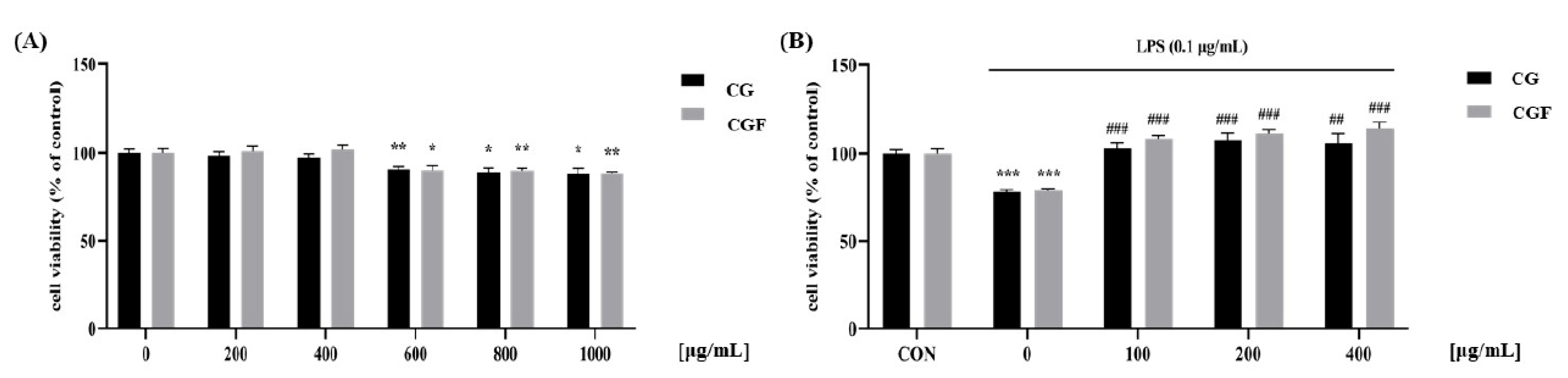
To establish non-cytotoxic concentrations for functional food ingredient evaluation, MTT assay was performed on RAW 264.7 macrophages exposed to CG or CGF. Under basal conditions, both extracts preserved cell viability up to 400 μg/mL, with only minor viability reduction (~90% of control) observed at the tested concentration of 600~1000 μg/mL (Figure 1A), indicating excellent biocompatibility within the experimental dose range. Importantly, the preservation of cell viability up to 400 μg/mL indicates that when the lyophilized fermented extract (CGF) is dissolved in a buffered culture medium at these low working concentrations, any residual acidity from fermentation is effectively neutralized by the medium’s buffering capacity, averting pH-induced cytotoxicity. LPS stimulation (0.1 μg/mL) significantly decreased cell viability to 78% of untreated control levels (Figure 1B). Co-treatment with CG or CGF (100–400 μg/mL) dose-dependently restored cell viability, with CGF demonstrating slightly superior protective efficacy, particularly at 400 μg/mL. Based on these results, concentrations ≤ 400 μg/mL were selected for all subsequent analyses.

3.2. Inhibition of NO and PGE2 Secretion

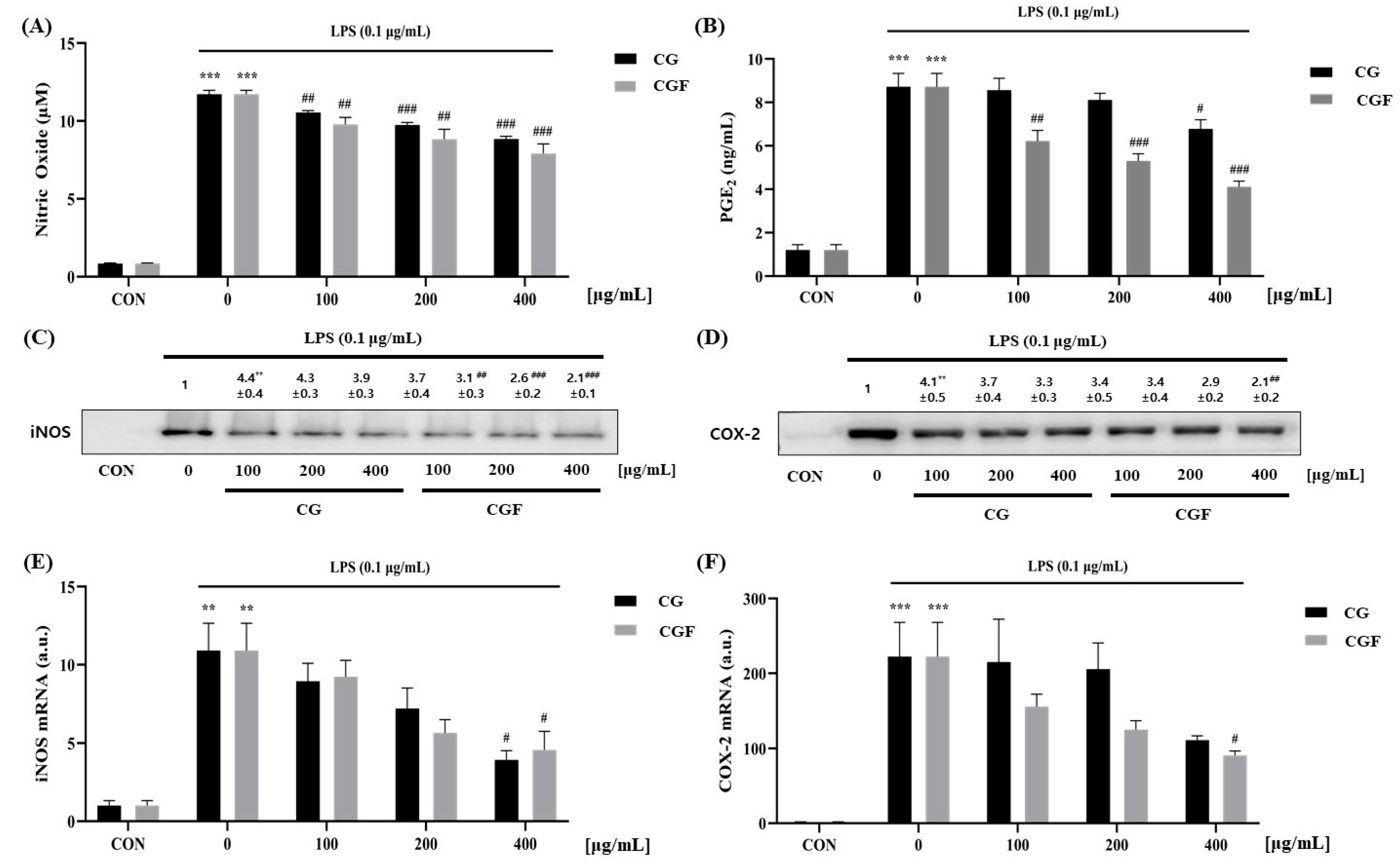
LPS stimulation (0.1 µg/mL, 24 h) increased NO production in RAW 264.7 culture supernatants from baseline levels (set as 1.0) to 13.9-fold of the control (*** p < 0.001). Co-treatment with CG or CGF dose-dependently reduced LPS-induced NO production, with NO levels decreasing from 13.9 to approximately 10.5-fold of the control at 400 µg/mL CG and to about 9.4-fold of the control at 400 µg/mL CGF (### p < 0.001 vs. LPS). These data indicate that both extracts significantly attenuate LPS-induced NO overproduction, with CGF exerting a more pronounced inhibitory effect than CG (Figure 2A). ELISA quantification further demonstrated CGF’s enhanced inhibitory capacity against COX-2-derived PGE2 secretion. LPS stimulation increased PGE2 levels to 726.5 ± 24.2% of control, which CGF dose-dependently suppressed, achieving 47 ± 4.4% inhibition (342.5 ± 10.6% of control) at 400 μg/mL (### p < 0.001 vs. LPS), significantly outperforming CG (Figure 2B).

3.3. Downregulation of iNOS and COX-2 Expression

Consistent with NO suppression, Western blot analysis revealed dose-dependent attenuation of LPS-induced iNOS and COX-2 protein expression by both extracts. At 400 μg/mL, CG reduced iNOS protein to 84 ± 10% and COX-2 to 84 ± 9% of LPS levels, whereas CGF achieved greater suppression (iNOS: 47 ± 4%, COX-2: 52 ± 5%, ### p < 0.001 vs. CG) (Figure 2C,D). Parallel reductions in iNOS and COX-2 mRNA expression were confirmed by real-time PCR, with CGF at 400 μg/mL reducing iNOS mRNA by 58 ± 7% and COX-2 mRNA by 59 ± 8% relative to LPS alone (normalized to GAPDH) (Figure 2E,F).
These results across transcriptional (mRNA), translational (protein), and functional (NO/PGE2 secretion) endpoints confirm that fermentation enhances CG’s capacity to downregulate the iNOS/COX-2 inflammatory axis in LPS-activated macrophages.

3.4. Downregulation of Pro-Inflammatory Cytokines and Chemokines

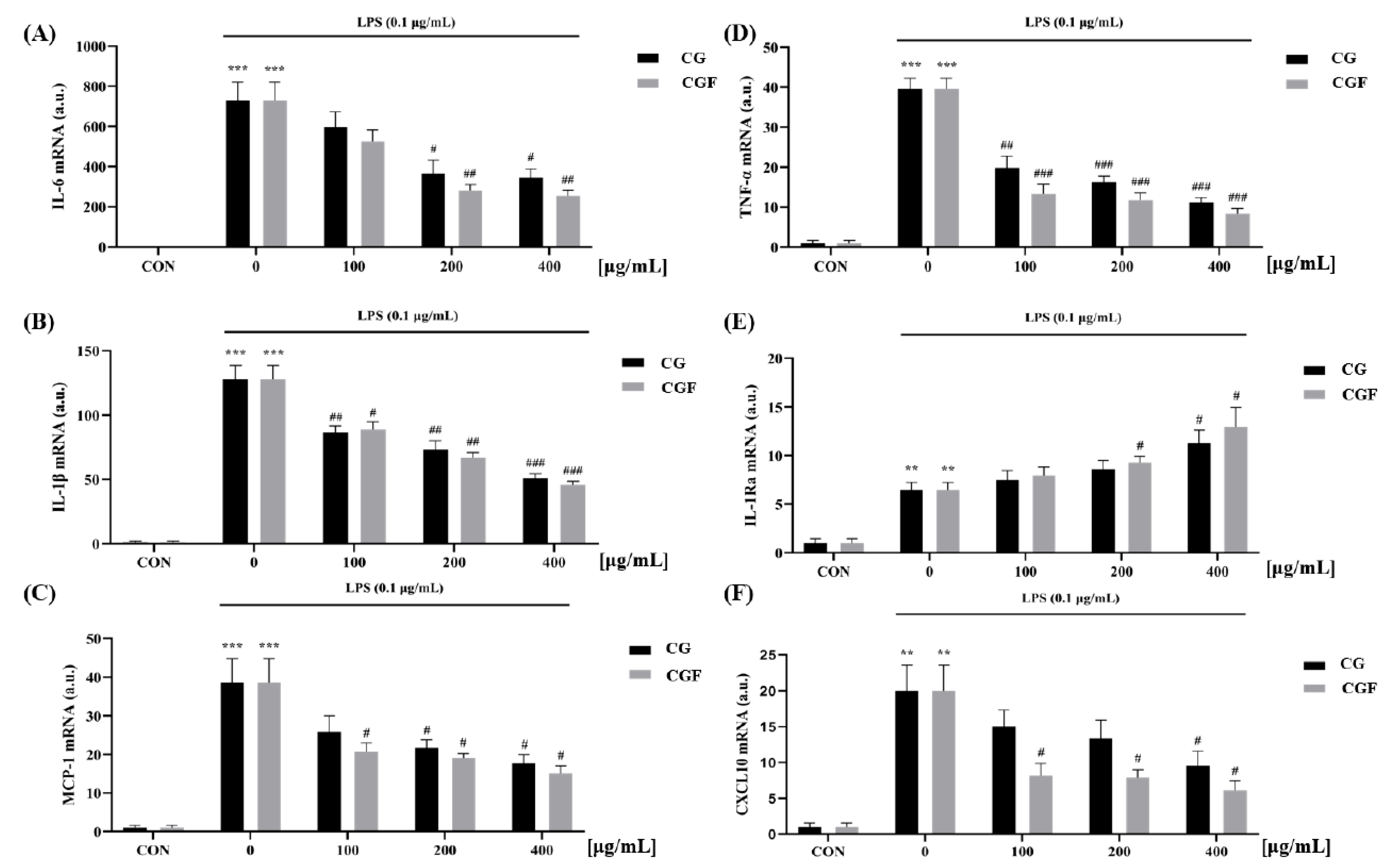
LPS increased mRNA levels of IL-6, IL-1β, and TNF-α. Co-treatment with CG or CGF significantly attenuated all three cytokines in a dose-dependent manner (Figure 3A,B,D), achieving approximately 40–60% reduction at 400 μg/mL, with CGF consistently showing greater suppression. This parallel downregulation suggests coordinated transcriptional control via NF-κB, which has binding sites in the promoter regions of all three genes.
Both extracts enhanced IL-1Ra mRNA expression above LPS-stimulated levels in a dose-dependent fashion (Figure 3E), establishing a dual anti-inflammatory mechanism: simultaneous IL-1β suppression coupled with upregulation of its endogenous antagonist.
LPS-induced expression of the chemokines MCP-1 and CXCL10 was similarly suppressed (Figure 3C,F). CGF significantly reduced both chemokines across all tested concentrations (100–400 μg/mL), whereas CG showed significant suppression only at 400 μg/mL, demonstrating enhanced chemokine-suppressive capacity following fermentation. Across all pro-inflammatory genes examined, CGF consistently demonstrated superior suppression, particularly at intermediate concentrations, whereas the upregulation of the anti-inflammatory cytokine IL-1Ra was comparable between both extracts.

3.5. Attenuation of Pro-Inflammatory Mediator Secretion

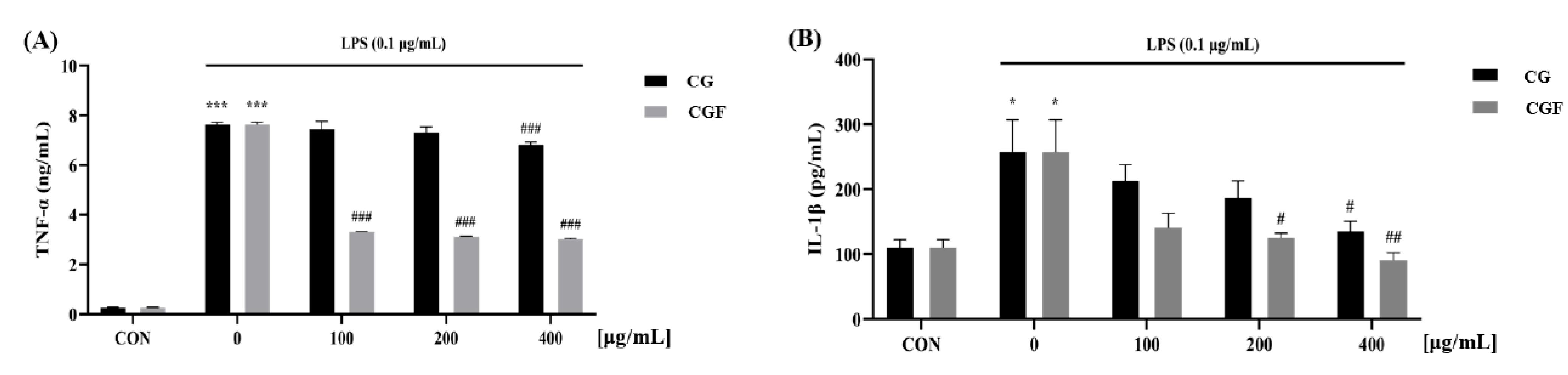
Consistent with transcriptional profiles, ELISA analysis confirmed dose-dependent reductions in secreted inflammatory mediators. LPS elevated TNF-α (2968.3 ± 59.2%) and IL-1β (233.1 ± 39.6%) relative to unstimulated controls. CG significantly reduced both TNF-α and IL-1β secretion only at 400 µg/mL, whereas CGF exerted broader and more potent inhibition, decreasing TNF-α levels at 100, 200, and 400 µg/mL with ### p < 0.001 at all concentrations and significantly suppressing IL-1β at 400 µg/mL (## p < 0.01) (Figure 4A,B). These results confirm that, although both extracts show anti-inflammatory activity, CGF displays a wider effective concentration range and greater potency at the translational level.

3.6. Inhibition of NF-κB and MAPK Signaling Pathways

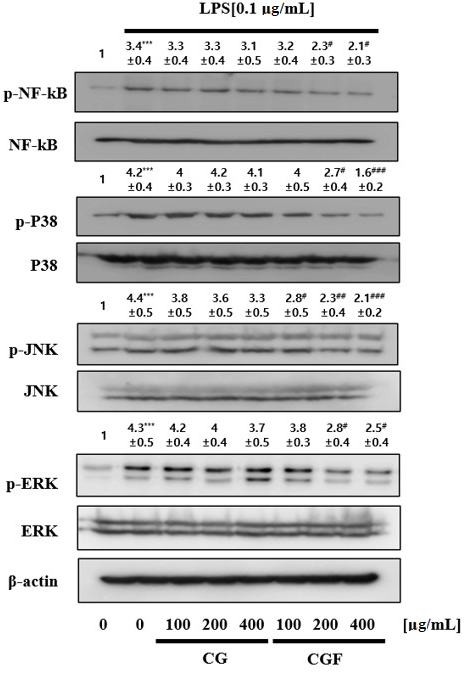
As shown in Figure 5, LPS stimulation significantly enhanced the phosphorylation of NF-κB p65 (3.4 ± 0.4-fold, *** p < 0.001), p38 (4.2 ± 0.4-fold, *** p < 0.001), JNK (4.4 ± 0.5-fold, *** p < 0.001), and ERK (4.3 ± 0.5-fold, *** p < 0.001) compared with the control group. Treatment with CG showed only a modest, non-significant tendency to reduce the phosphorylation of these signaling proteins, with levels remaining approximately 3.1–4.2-fold over the control values. In contrast, CGF treatment dose-dependently attenuated LPS-induced phosphorylation. Specifically, CGF at 200 and 400 µg/mL significantly reduced p-p65 levels, and CGF at 400 µg/mL significantly decreased the phosphorylation of p38, JNK, and ERK compared with LPS alone. These results indicate that CGF, but not CG, effectively inhibits LPS-induced activation of NF-κB p65 and all three MAPK branches (p38, JNK, ERK), suggesting that fermentation confers enhanced anti-inflammatory potential.

4. Discussion

This study demonstrates that L. paracasei SKH 003-fermented sword bean extract (CGF) exhibits significantly enhanced anti-inflammatory properties compared to its unfermented counterpart (CG) in LPS-stimulated RAW 264.7 macrophages. Both preparations effectively reduced the production of NO, PGE2, and key pro-inflammatory cytokines (TNF-α, IL-6, IL-1β) while downregulating iNOS and COX-2 expression [23,24,25]. CGF demonstrated a stronger suppressive effect on most pro-inflammatory endpoints, whereas IL-1Ra upregulation was comparable between CG and CGF.
The excessive production of NO and PGE2 by iNOS and COX-2 is a primary driver of tissue injury in chronic inflammation [23,26]. Our results indicate that CG and CGF suppress these mediators at the transcriptional level. The concurrent downregulation of TNF-α, IL-6, and IL-1β further supports a coordinated transcriptional inhibition, likely mediated by the NF-κB pathway [27,28]. In addition to suppressing pro-inflammatory cytokines, both extracts upregulated IL-1Ra, the natural receptor antagonist of IL-1β [29], establishing a dual mechanism that actively promotes the resolution of inflammation [30]. The extracts also suppressed the expression of chemokines MCP-1 and CXCL10, which are critical for leukocyte recruitment [31], indicating their potential to prevent the amplification of inflammatory responses [9].
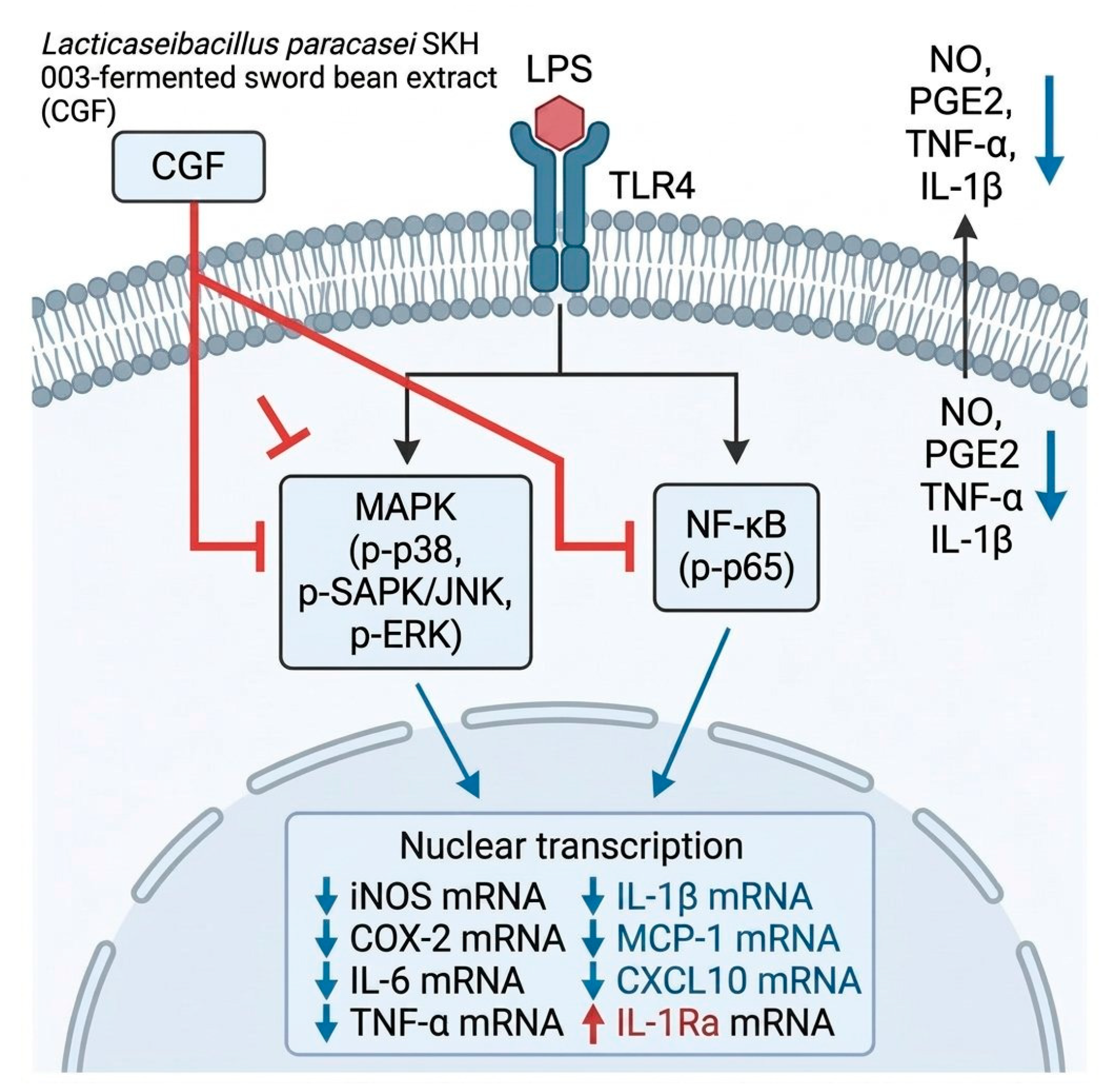
The anti-inflammatory effects of CG and CGF were closely associated with the inhibition of NF-κB and MAPK signaling. NF-κB is a master regulator of inflammatory gene expression [32,33]. Both extracts dose-dependently inhibited LPS-induced NF-κB p65 phosphorylation. Unfermented CG showed robust anti-inflammatory effects without significantly inhibiting MAPK phosphorylation. This suggests that the baseline anti-inflammatory activity of CG might be mediated through MAPK-independent pathways, such as direct reactive oxygen species (ROS) scavenging via its high phenolic content or the activation of antioxidant signaling [17,18]. However, CGF was uniquely effective in significantly dampening the phosphorylation of all three major MAPK branches (p38, JNK, and ERK) [34,35]. Our findings align with the latest research paradigms emphasizing microbial biotransformation. Recent studies on LAB-fermented legumes have shown that specific Lactobacillus strains possess unique enzymatic repertoires that efficiently hydrolyze glycosylated flavonoids into lipophilic aglycones [19]. These biotransformed metabolites demonstrate superior membrane permeability, allowing them to directly interact with intracellular kinase cascades [15]. This comprehensive inhibition of both NF-κB and MAPKs likely accounts for CGF’s superior anti-inflammatory efficacy. Based on these comprehensive in vitro findings, we propose a schematic model illustrating the intracellular regulatory mechanisms of CGF (Figure 6). Upon LPS stimulation, CGF attenuated sustained LPS-induced activation of NF-κB p65 and MAPK signaling (p38, SAPK/JNK, and ERK). This upstream blockade leads to a significant transcriptional downregulation of pro-inflammatory mediators (iNOS, COX-2) and cytokines/chemokines (TNF-α, IL-6, IL-1β, MCP-1, CXCL10), coupled with the upregulation of the anti-inflammatory counter-regulator IL-1Ra. Consequently, the excessive secretion of NO, PGE2, and pro-inflammatory cytokines is markedly attenuated, highlighting the potential of CGF in resolving macrophage-driven inflammation.
The enhanced bioactivity of CGF can be attributed to the microbial transformation during fermentation [20,21]. Although the current study did not explicitly quantify the pre- and post-fermentation nutritional profiles, previous studies have consistently shown that lactic acid fermentation of leguminous plants decreases anti-nutritional factors and significantly increases the concentration of free amino acids, soluble peptides, and bio-accessible isoflavone aglycones [19,20,21]. In fermented soymilk, for example, β-glucosidase activity from lactic acid bacteria can convert isoflavone glucosides into aglycones such as daidzein and genistein, which are more bioavailable and may contribute to anti-inflammatory activity [36]. Therefore, we propose that L. paracasei SKH 003 fermentation may enhance the anti-inflammatory activity of sword bean extract through β-glucosidase/esterase-mediated release of phenolic aglycones, free amino acids or small peptides, and the presence of non-viable microbial components. In conclusion, fermentation with L. paracasei SKH 003 significantly amplifies the anti-inflammatory capacity of sword bean extract by broadly targeting the NF-κB and MAPK pathways. These findings highlight the potential of CGF as a functional food ingredient for managing macrophage-driven inflammatory conditions. Further in vivo studies are warranted to validate these in vitro observations and identify the specific metabolites responsible for CGF activity.

5. Conclusions

This work identifies fermented sword bean extract as a particularly effective modulator of macrophage inflammation, showing that the Lacticaseibacillus paracasei SKH 003–fermented preparation more effectively attenuates LPS-triggered responses than the non-fermented extract through combined targeting of NF-κB and MAPK signaling. Inhibitory effects on classical inflammatory mediators (NO, PGE2), key cytokines (TNF-α, IL-6, IL-1β), and chemokines (MCP-1, CXCL10), together with upregulation of the counter-regulatory molecule IL-1Ra, point to a broad anti-inflammatory profile at the level of both mediator production and leukocyte recruitment. The clear advantage of fermentation—evident in the selective and significant suppression of NF-κB p65 and all three major MAPK branches (p38, JNK, ERK) uniquely observed with CGF—highlights microbial processing utilizing this specific strain as a highly useful strategy for amplifying the bioactivity of sword bean–derived components. Taken together, our findings suggest that L. paracasei SKH 003-fermented sword bean can serve as a candidate functional food ingredient.

6. Patents

The strain used in this study, Lacticaseibacillus paracasei SKH 003, has been deposited at the Korean Culture Center of Microorganisms (Accession No. KCCM13640P) for patent procedure purposes under the Budapest Treaty.

Author Contributions

Conceptualization, I.-J.K. and G.T.K.; methodology, S.M.K. and J.I.J.; validation, C.Y.P. and H.H.; formal analysis, G.T.K., S.M.K. and J.I.J.; investigation, G.T.K. and C.Y.P.; resources, I.-J.K.; data curation, H.H.; writing—original draft preparation, G.T.K.; writing—review and editing, I.-J.K.; supervision, I.-J.K.; project administration, I.-J.K.; funding acquisition, I.-J.K. All authors have read and agreed to the published version of the manuscript.

Funding

This research was supported by the Regional Innovation System & Education (RISE) program through the Gangwon RISE Center, funded by the Ministry of Education (MOE) and the Gangwon State (G.S.), Republic of Korea (2025-RISE-10-009).

Institutional Review Board Statement

Not applicable.

Informed Consent Statement

Not applicable.

Data Availability Statement

The raw data supporting the conclusions of this article will be made available by the authors on request.

Acknowledgments

During the preparation of this work, the authors used Gemini (Google) to assist in drafting the structural layout of the schematic diagram (Figure 6). After using this tool, the authors reviewed and edited the graphical content to ensure scientific accuracy and take full responsibility for the final content of the publication.

Conflicts of Interest

The authors declare no conflicts of interest.

Abbreviations

CG, sword bean extract; CGF, Lacticaseibacillus paracasei-fermented sword bean extract; COX-2, cyclooxygenase-2; DMEM, Dulbecco’s Modified Eagle Medium; ELISA, enzyme-linked immunosorbent assay; ERK, extracellular signal-regulated kinase; FBS, fetal bovine serum; IL, interleukin; iNOS, inducible nitric oxide synthase; JNK, c-Jun N-terminal kinase; LPS, lipopolysaccharide; MAPK, mitogen-activated protein kinase; MCP-1, monocyte chemoattractant protein-1; NO, nitric oxide; PGE2, prostaglandin E2; RT-qPCR, real-time quantitative polymerase chain reaction; SEM, standard error of the mean; TLR4, Toll-like receptor 4; TNF-α, tumor necrosis factor-α; CXCL10, C-X-C motif chemokine 10; IL-1Ra, interleukin-1 receptor antagonist; NF-κB, nuclear factor-κB.

References

  1. Hotamisligil, G.S. Inflammation and metabolic disorders. Nature 2006, 444, 860–867. [Google Scholar] [CrossRef]
  2. Golia, E.; Limongelli, G.; Natale, F.; Fimiani, F.; Maddaloni, V.; Pariggiano, I.; Bianchi, R.; Crisci, M.; D’Acierno, L.; Giordano, R.; et al. Inflammation and cardiovascular disease: From pathogenesis to therapeutic target. Curr. Atheroscler. Rep. 2014, 16, 435. [Google Scholar] [CrossRef] [PubMed]
  3. Furman, D.; Campisi, J.; Verdin, E.; Carrera-Bastos, P.; Targ, S.; Franceschi, C.; Ferrucci, L.; Gilroy, D.W.; Fasano, A.; Miller, G.W.; et al. Chronic inflammation in the etiology of disease across the life span. Nat. Med. 2019, 25, 1822–1832. [Google Scholar] [CrossRef]
  4. Pahwa, R.; Goyal, A.; Jialal, I. Chronic Inflammation. In StatPearls; StatPearls Publishing: Treasure Island, FL, USA, 2024. [Google Scholar]
  5. Takeuchi, O.; Akira, S. Pattern recognition receptors and inflammation. Cell 2010, 140, 805–820. [Google Scholar] [CrossRef]
  6. Lawrence, T. The nuclear factor NF-κB pathway in inflammation. Cold Spring Harb. Perspect. Biol. 2009, 1, a001651. [Google Scholar] [CrossRef] [PubMed]
  7. Mogensen, T.H. Pathogen recognition and inflammatory signaling in innate immune defenses. Clin. Microbiol. Rev. 2009, 22, 240–273. [Google Scholar] [CrossRef]
  8. Liu, T.; Zhang, L.; Joo, D.; Sun, S.-C. NF-κB signaling in inflammation. Signal Transduct. Target. Ther. 2017, 2, 17023. [Google Scholar] [CrossRef] [PubMed]
  9. Guha, M.; Mackman, N. LPS induction of gene expression in macrophages. Cell. Signal. 2001, 13, 85–94. [Google Scholar] [CrossRef]
  10. Murray, P.J.; Wynn, T.A. Protective and pathogenic functions of macrophage subsets. Nat. Rev. Immunol. 2011, 11, 723–737. [Google Scholar] [CrossRef]
  11. Medzhitov, R. Origin and physiological roles of inflammation. Nature 2008, 454, 428–435. [Google Scholar] [CrossRef]
  12. Domper Arnal, M.J.; Hijos-Mallada, G.; Lanas, A. Gastrointestinal and cardiovascular adverse events associated with NSAIDs. Expert Opin. Drug Saf. 2022, 21, 373–384. [Google Scholar] [CrossRef] [PubMed]
  13. Jang, Y.H.; Choi, E.-Y.; Lee, H.; Woo, J.; Park, S.; Noh, Y.; Jeon, J.-Y.; Yoo, E.-Y.; Shin, J.-Y.; Lee, Y.W. Long-Term Use of Oral Corticosteroids and Safety Outcomes for Patients with Atopic Dermatitis. JAMA Netw. Open. 2024, 7, e2423563. [Google Scholar] [CrossRef] [PubMed]
  14. Newman, D.J.; Cragg, G.M. Natural products as sources of new drugs from 1981 to 2014. J. Nat. Prod. 2016, 79, 629–661. [Google Scholar] [CrossRef]
  15. Ben Ammar, R. Potential Effects of Plant-Derived Bioactive Compounds on Cancer and Inflammation-Related Diseases: A Review of the Recent Research Findings. Molecules 2023, 28, 3669. [Google Scholar] [CrossRef] [PubMed]
  16. Jung, J.-Y.; Rhee, J.-K. Roasting and Cryogenic Grinding Enhance the Antioxidant Property of Sword Beans (Canavalia gladiata). J. Microbiol. Biotechnol. 2020, 30, 1706–1719. [Google Scholar] [CrossRef] [PubMed]
  17. Lee, H.-J.; Park, J.U.; Guo, R.H.; Kang, B.Y.; Park, I.-K.; Kim, Y.R. Anti-Inflammatory Effects of Canavalia gladiata in Macrophage Cells and DSS-Induced Colitis Mouse Model. Am. J. Chin. Med. 2019, 47, 1571–1588. [Google Scholar] [CrossRef] [PubMed]
  18. Hwang, K.-A.; Heo, W.; Hwang, H.-J.; Han, B.K.; Song, M.C.; Kim, Y.J. Anti-Inflammatory Effect of Immature Sword Bean Pod (Canavalia gladiata) in Lipopolysaccharide-Induced RAW264.7 Cells. J. Med. Food 2020, 23, 1183–1191. [Google Scholar] [CrossRef]
  19. Yang, X.; Hong, J.; Wang, L.; Cai, C.; Mo, H.; Wang, J.; Fang, X.; Liao, Z. Effect of Lactic Acid Bacteria Fermentation on Plant-Based Products. Fermentation 2024, 10, 48. [Google Scholar]
  20. Marco, M.L.; Sanders, M.E.; Gänzle, M.; Arrieta, M.C.; Cotter, P.D.; De Vuyst, L.; Hill, C.; Holzapfel, W.; Lebeer, S.; Merenstein, D.; et al. The International Scientific Association for Probiotics and Prebiotics (ISAPP) consensus statement on fermented foods. Nat. Rev. Gastroenterol. Hepatol. 2021, 18, 196–208. [Google Scholar] [CrossRef]
  21. Şanlier, N.; Gökcen, B.B.; Sezgin, A.C. Health benefits of fermented foods. Crit. Rev. Food Sci. Nutr. 2019, 59, 506–527. [Google Scholar] [CrossRef]
  22. Bermudez-Brito, M.; Plaza-Díaz, J.; Muñoz-Quezada, S.; Gómez-Llorente, C.; Gil, A. Probiotic mechanisms of action. Ann. Nutr. Metab. 2012, 61, 160–174. [Google Scholar] [CrossRef]
  23. Weinberg, J.B. Nitric oxide synthase 2 and cyclooxygenase 2 interactions in inflammation. Immunol. Res. 2000, 22, 319–341. [Google Scholar] [CrossRef]
  24. Xie, Q.-W.; Nathan, C. The high-output nitric oxide pathway: Role and regulation. J. Leukoc. Biol. 1994, 56, 576–582. [Google Scholar] [CrossRef]
  25. Lee, A.K.; Sung, S.H.; Kim, Y.C.; Kim, S.G. Inhibition of lipopolysaccharide-inducible nitric oxide synthase, TNF-α and COX-2 expression by sauchinone effects on I-κBα phosphorylation, C/EBP and AP-1 activation. Br. J. Pharmacol. 2003, 139, 11–20. [Google Scholar] [CrossRef] [PubMed]
  26. Kim, J.-K.; Kim, Y.; Na, K.-M.; Surh, Y.-J.; Kim, T.-Y. [6]-Gingerol prevents UVB-induced ROS production and COX-2 expression. Free Radic. Res. 2007, 41, 603–614. [Google Scholar] [CrossRef]
  27. Dinarello, C.A.; Donath, M.Y.; Mandrup-Poulsen, T. Role of IL-1β in type 2 diabetes. Curr. Opin. Endocrinol. Diabetes Obes. 2010, 17, 314–321. [Google Scholar] [CrossRef] [PubMed]
  28. Xiao, W.; Hodge, D.R.; Wang, L.; Yang, X.; Zhang, X.; Farrar, W.L. NF-κB activates IL-6 expression through cooperation with c-Jun and IL6-AP1 site, But is independent of its IL6-NFκB regulatory site in autocrine human multiple myeloma cells. Cancer Biol. Ther. 2004, 3, 1007–1017. [Google Scholar] [CrossRef]
  29. Arend, W.P.; Malyak, M.; Guthridge, C.J.; Gabay, C. Interleukin-1 receptor antagonist: Role in biology. Annu. Rev. Immunol. 1998, 16, 27–55. [Google Scholar] [CrossRef]
  30. Serhan, C.N.; Savill, J. Resolution of inflammation: The beginning programs the end. Nat. Immunol. 2005, 6, 1191–1197. [Google Scholar] [CrossRef] [PubMed]
  31. Gerszten, R.E.; Garcia-Zepeda, E.A.; Lim, Y.-C.; Yoshida, M.; Ding, H.A.; Gimbrone, M.A., Jr.; Luster, A.D.; Luscinskas, F.W.; Rosenzweig, A. MCP-1 and IL-8 trigger firm adhesion of monocytes to vascular endothelium. Nature 1999, 398, 718–723. [Google Scholar] [CrossRef]
  32. Baldwin, A.S., Jr. The NF-κB and IκB proteins: New discoveries and insights. Annu. Rev. Immunol. 1996, 14, 649–681. [Google Scholar] [CrossRef]
  33. Ghosh, S.; May, M.J.; Kopp, E.B. NF-κB and Rel proteins: Evolutionarily Conserved Mediators of Immune Responses. Annu. Rev. Immunol. 1998, 16, 225–260. [Google Scholar] [CrossRef]
  34. Eferl, R.; Wagner, E.F. AP-1: A double-edged sword in tumorigenesis. Nat. Rev. Cancer 2003, 3, 859–868. [Google Scholar] [CrossRef]
  35. Dérijard, B.; Hibi, M.; Wu, I.-H.; Barrett, T.; Su, B.; Deng, T.; Karin, M.; Davis, R.J. JNK1: A protein kinase stimulated by UV light and Ha-Ras that binds and phosphorylates the c-Jun activation domain. Cell 1994, 76, 1025–1037. [Google Scholar] [CrossRef]
  36. Chuang, Y.-C.; Cheng, M.-C.; Lee, C.-C.; Chiou, T.-Y. Effect of ethanol extract from Lactobacillus plantarum TWK10-fermented soymilk on wound healing in streptozotocin-induced diabetic rat. AMB Expr. 2019, 9, 163. [Google Scholar] [CrossRef]
Figure 1. Effects of CG and CGF on LPS-stimulated RAW 264.7 macrophage viability. RAW 264.7 cells were treated with CG or CGF (0–1000 μg/mL) for 24 h under basal conditions (A) or serum-starved and treated with CG or CGF (0–400 μg/mL) in the presence or absence of LPS (0.1 μg/mL) for 24 h (B). Cell viability was determined by MTT assay. Data are presented as mean ± SEM (n = 3). * p < 0.05, ** p < 0.01, *** p < 0.001 vs. control, ## p < 0.01, ### p < 0.001 vs. LPS.
Fermentation 12 00234 g001
Figure 2. Effects of CG and CGF on LPS-induced iNOS, COX-2 expression in RAW 264.7 cells. RAW 264.7 macrophages were treated with CG or CGF (0–400 μg/mL) in the presence or absence of LPS (0.1 μg/mL) for 24 h. (A) NO and (B) PGE2 were measured using the Griess reaction and ELISA, respectively. Protein expression of (C) iNOS and (D) COX-2 was determined by Western blot analysis, and mRNA expression of (E) iNOS and (F) COX-2 was quantified by RT-qPCR and normalized to GAPDH. Data are presented as mean ± SEM (n = 3). ** p < 0.01, *** p < 0.001 vs. control; # p < 0.05, ## p < 0.01, ### p < 0.001 vs. LPS.
Fermentation 12 00234 g002
Figure 3. Effects of CG and CGF on LPS-induced inflammatory gene expression. RAW 264.7 cells were treated with CG or CGF (0–400 μg/mL) in the presence or absence of LPS (0.1 μg/mL) for 24 h. mRNA expression levels of (A) IL-6, (B) IL-1β, (C) MCP-1, (D) TNF-α, (E) IL-1Ra, and (F) CXCL10 were determined by real-time RT-qPCR and normalized to GAPDH. Data are presented as mean ± SEM (n = 3). ** p < 0.01, *** p < 0.001 vs. control; # p < 0.05, ## p < 0.01, ### p < 0.001 vs. LPS.
Fermentation 12 00234 g003
Figure 4. Effects of CG and CGF on LPS-induced cytokine secretion. RAW 264.7 cells were treated with CG or CGF (0–400 μg/mL) in the presence or absence of LPS (0.1 μg/mL) for 24 h. Levels of (A) TNF-α, and (B) IL-1β in culture supernatants were determined by ELISA. Data are presented as mean ± SEM (n = 3). * p < 0.05, *** p < 0.001 vs. control; # p < 0.05, ## p < 0.01, ### p < 0.001 vs. LPS.
Fermentation 12 00234 g004
Figure 5. Effects of CG and CGF on LPS-induced NF-κB p65, p38, JNK, and ERK phosphorylation. RAW 264.7 cells were treated with CG or CGF (0–400 μg/mL) in the presence or absence of LPS (0.1 μg/mL) for 24 h. Representative Western blots and densitometric analyses show phosphorylated and total protein levels. β-actin served as a loading control. Phosphorylation levels of NF-κB p65, p38, JNK, and ERK were increased by LPS treatment and significantly decreased by CGF treatment. Data are presented as mean ± SEM (n = 3). *** p < 0.001 vs. control; # p < 0.05, ## p < 0.01, ### p < 0.001 vs. LPS.
Fermentation 12 00234 g005
Figure 6. Schematic diagram illustrating the proposed anti-inflammatory mechanism of CGF in LPS-stimulated RAW 264.7 macrophages. CGF attenuates inflammatory responses by inhibiting the NF-κB and MAPK signaling pathways, leading to the downregulation of pro-inflammatory mediators and the upregulation of IL-1Ra. Black arrows indicate activation, and red blunt lines indicate inhibition. The structural layout of this schematic diagram was generated with the assistance of Gemini 3.1 PRO (Google).
Fermentation 12 00234 g006
Table 1. Primers Used for Real-Time Quantitative PCR Analysis.
Target GenePrimer Sequences (5′→3′)GenBank Accession
IL-6F: CCTCTGGTCTTCTGGAGTACCNM_001314054.1
R: ACTCCTTCTGTGACTCCAGC
iNOSF: AATGAGGTACTCAGCGTGCTNM_001313922.1
R: TCTTCCACCTGCTCCTCGCT
COX-2F: TGGACGAGGTTTTTCCACCAGNM_011198.5
R: CAAAGGCCTCCATTGACCAGA
TNF-αF: ATGAGCACAGAAAGCATGANM_001278601.1
R: AGTAGACAGAAGAGCGTGGT
IL-1βF: CCTTCCAGGATGAGGACATGANM_008361.4
R: TGAGTCACAGAGGATGGGCTC
IL-1RaF: GAAGATGTGCCTGTCCTGTGTXM_021194071.1
R: CGCTCAGGTCAGTGATGTTAA
MCP-1F: CCCAATGAGTAGGCTGGAGANM_011333.3
R: TCTGGACCCATTCCTTCTTG
CXCL10F: GACGGTCCGCTGCAACTGXM_021161764.2
R: CTTCCCTATGGCCCTCATTCT
GAPDHF: GTATTGGGCGCCTGGTCACCNM_001411843.1
R: CGCTCCTGGAAGATGGTGATG
F, Forward; R, Reverse.
Disclaimer/Publisher’s Note: The statements, opinions and data contained in all publications are solely those of the individual author(s) and contributor(s) and not of MDPI and/or the editor(s). MDPI and/or the editor(s) disclaim responsibility for any injury to people or property resulting from any ideas, methods, instructions or products referred to in the content.