


Abstract
Thraustochytrids are promising alternatives for the production of docosahexaenoic acid (DHA; C22:6 n-3), a long-chain polyunsaturated fatty acid with health benefits. For practical application of this oleaginous microorganism, an efficient cultivation method to enhance DHA production is required, which relies on several factors that support cell growth, lipid accumulation, and lipid turnover. In this study, the robust submerged fermentation of an acid- and high-temperature-tolerant strain of Aurantiochytrium limacinum was investigated. Under controlled temperature and acidic conditions (pH 4.5 and 30 °C), glucose and peptone were the best carbon and nitrogen sources for enhancing biomass and DHA production, respectively, with a glucose concentration of 60 g/L and a C/N ratio of 24 being optimal for DHA production. Applying an aeration rate of 2 vvm and an agitation speed of 300 rpm using a combination of a ring sparger and pitch-blade impeller in a stirred-tank bioreactor improved DHA production using intermittent fed-batch fermentation. The highest DHA titer was obtained at 3.01 g/L, and the DHA content in biomass was 10.69% (w/w) after intermittent feeding of cassava starch hydrolysate as the substrate.
1. Introduction
Docosahexaenoic acid (DHA; C22:6 n-3) is an n-3 long-chain polyunsaturated fatty acid (LC-PUFA), which is essential for the growth and functional development of the eyes and brain in infants and maintenance of normal brain function in adults. Clinical studies have been conducted on the effects of DHA in the prevention of some diseases, including hypertension, atherosclerosis, thrombosis, coronary heart disease, type-2 diabetes mellitus, depression, and some cancers, resulting in a continuously rising global demand [1,2].
The traditional sources of DHA include fish oil and breast milk. Marine oleaginous microorganisms have been proposed as alternatives for DHA production using microbial biotechnology. Due to the rapid decrease in fish resources and several disadvantages of fish oils, such as low quantities of DHA, highly saturated fatty acids, hazardous substances contaminated by ocean pollution, fishy odor, and complications in purification processes, the production of DHA from marine thraustochytrids is an alternative and more sustainable production platform [3]. Marine thraustochytrids such as Aurantiochytrium/Schizochytrium and Crypthecodinium cohnii are excellent DHA producers. Of the microbial DHA producers, Aurantiochytrium spp. have attracted attention due to rapid growth, high lipid accumulation, and the ability to synthesize DHA as a major fatty acid component under controlled fermentation conditions [4,5,6]. Aurantiochytrium can produce large amounts of lipids, up to 60% of the biomass, and as much as 35–55% of the total fatty acids (TFAs) as DHA [7,8].
The optimal culture conditions for cell growth and DHA production are pH 6–7 and 28 °C [9,10,11]. Recently, A. limacinum TBRC-BCC55172 (BBF002), an adaptive evolution-derived microorganism capable of producing DHA under low-pH and high-temperature conditions, was developed through adaptive laboratory evolution (ALE) [12]. This strain can grow and produce DHA at pH 4.5 and 30 °C, which helped prevent cross-contamination from unwanted microorganisms and reduced production costs when operating at elevated temperatures. Therefore, this strain has attracted research interest for optimizing culture conditions to improve biomass growth and DHA production. Efficient production of DHA by A. limacinum is strongly dependent on bioprocess conditions. Nutritional factors (such as carbon and nitrogen sources and C/N ratio) and fermentation conditions (including oxygen transfer, agitation speed, aeration rate, and bioreactor configuration) critically influence cell growth, lipid accumulation, and DHA content [10,13,14,15,16].
In addition to simple carbon and nitrogen sources, the use of waste and cheap feedstocks has also been considered to reduce the production cost of DHA. Examples are cassava pulp as an alternative low-cost carbon source for A. limacinum SR21 [17]; maize starch hydrolysate, and soybean meal hydrolysate as carbon and nitrogen sources for biomass, and DHA production by Schizochytrium limacinum OUC88 [18]; and the replacement of pure glucose with organosolv-pretreated spruce hydrolysate for DHA production by Schizochytrium limacinum SR21 [19]. Cassava starch hydrolysate (CSH) has been considered as a potential carbon source for DHA production and microbial fermentation due to its high conversion efficiency into fermentable sugars (85−97.7%) following enzymatic hydrolysis [20,21]. Moreover, more than 80% of CSH was glucose [21], which can be directly assimilated by microorganisms. In addition, cassava starch is a low-cost, abundant substrate in tropical regions, non-toxic, and a promising feedstock for sustainable bioprocesses [22]. These characteristics support its application in the production of various bioproducts, including biofuels, organic acids, and biopolymers [20,21,23,24].
In the current study, an adaptive evolution-derived strain of A. limacinum (A. limacinum BBF002) was used as a robust, biological platform for comprehensive process optimization using a one-factor-at-a-time method to obtain efficient DHA production. The effects of key nutritional parameters, including carbon source, nitrogen source, C/N ratio, and initial glucose concentration, were evaluated at flask and bioreactor scales to establish optimal conditions for cell growth and DHA accumulation. Subsequently, critical engineering factors, such as impeller type, sparger type, agitation speed, and aeration rate, were systematically investigated in stirred-tank bioreactors to determine oxygen transfer performance. Finally, a fed-batch cultivation strategy was implemented to study biomass and DHA production using cassava starch hydrolysate as the substrate. This integrated approach provides a practical framework for robust DHA production, and demonstrates the industrial potential of adaptive evolution-based bioprocess development.
2. Materials and Methods
2.1. Microbial Strain, Inoculum Preparation, and Cultivation Medium
The acid- and temperature-tolerant strain of A. limacinum, TBRC-BCC55172 (BBF002) (hereafter referred to as BBF002), which was previously improved via an adaptive laboratory evolution (ALE) approach through prolonged cultivation under low pH and high temperature [12], was maintained in 20% (v/v) glycerol at −80 °C and used throughout this work.
The inoculum of BBF002 was prepared in a 250 mL Erlenmeyer flask containing 50 mL medium (modified from Rampai et al. [12]), which contained 40 g/L glucose, 10 g/L yeast extract, 10 g/L peptone, 0.4 g/L MgSO4∙7H2O, 0.02 g/L FeSO4∙7H2O, 0.02 g/L MnSO4∙5H2O, and 30 g/L NaCl. The pH of the medium was adjusted to 4.5. The cultivation was operated in a rotary shaker at an agitation rate of 200 rpm and temperature of 30 °C for 3 d.
2.2. Cassava Starch Hydrolysate Preparation
Cassava starch hydrolysate (CSH) was prepared by modifying the two-step enzymatic hydrolysis method described by Wei et al. [21]. A starch slurry (15–20% w/v) was prepared by suspending 15 g of cassava starch in 50 mL distilled water, followed by adjustment to pH 6.0. Liquefaction was subsequently conducted by adding 50 µL α-amylase (4.0 × 10⁴ U/mL; iKnowZyme HTAA 40 L, Thailand) at 95 °C and stirring for 3 h. For saccharification, the liquefied starch was adjusted to pH 4.5 and 1 mL glucoamylase (2.0 × 10⁵ U/mL; iKnowZyme GA 200 L, Thailand) was added at 60 °C and stirred for 1 h. After the hydrolysis reaction, the solution was centrifuged at 5000 rpm for 5 min to remove the insoluble residues. The resulting CSH, which contained approximately 20% (w/v) glucose, was subsequently diluted with the production medium to achieve the desired initial glucose concentration for further experiments.
2.3. Shake-Flask Culture
2.3.1. Investigation of Growth and DHA Production of A. limacinum BBF002 on Various Carbon Sources
The growth performance and DHA production of BBF002 using various carbon sources, including glucose, xylose, fructose, sucrose, and glycerol, at an initial concentration of 40 g/L were evaluated using shake-flask cultivation. The cultures were grown in the production media containing 10 g/L yeast extract, 10 g/L peptone, 0.4 g/L MgSO4∙7H2O, 0.02 g/L FeSO4∙7H2O, 0.02 g/L MnSO4∙5H2O, and 30 g/L NaCl, with an initial pH of 4.5, a 10% (v/v) inoculum, at 30 °C, and a shaking rate of 200 rpm for 5 d. All experiments were conducted independently in triplicate. The flasks were sampled after 5 d of fermentation to measure the concentrations of biomass or dry cell weight (DCW), residual sugar, total fatty acids (TFA) and DHA.
2.3.2. Investigation of Growth and DHA Production of BBF002 on Various Nitrogen Sources
To investigate the effect of nitrogen sources on the growth and DHA production of BBF002, sole nitrogen sources, including 12.51 g/L (NH4)2SO4, 12.50 g/L (NH4)2HPO4, 10.13 g/L NH4Cl, 16.09 g/L NaNO3, 19.14 g/L KNO3, 24.09 g/L yeast extract, and 17.10 g/L peptone, as well as mixed nitrogen sources (10 g/L peptone with 10 g/L yeast extract, 10 g/L peptone with 5.19 g/L (NH4)2HPO4, and 10 g/L peptone with 6.68 g/L KNO3) were evaluated. Shake-flask cultivation was conducted at a constant initial C/N ratio of 6 by using 40 g/L glucose as carbon source. The cultures were grown in the production media by adding 0.4 g/L MgSO4∙7H2O, 0.02 g/L FeSO4∙7H2O, 0.02 g/L MnSO4∙5H2O, and 30 g/L NaCl at an initial of pH 4.5, temperature of 30 °C using a 10% (v/v) inoculum, and a shaking rate of 200 rpm for 5 d. All experiments were conducted independently in triplicate. After fermentation was completed (day 5), the fermentation broths from all nitrogen source tests were collected to determine DCW and the concentrations of residual glucose, TFA, and DHA.
2.3.3. Investigation of Growth and DHA Production of BBF002 on Various Carbon-to-Nitrogen (C/N) Ratios
The effects of various C/N ratios (3, 6, 12, 24, and 48) on the growth and DHA production of BBF002 were investigated using glucose and peptone as the carbon and nitrogen sources, respectively. Cultivation was conducted in shake flasks containing cultivation media supplemented with 40 g/L glucose, 0.4 g/L MgSO4∙7H2O, 0.02 g/L FeSO4∙7H2O, 0.02 g/L MnSO4∙5H2O, and 30 g/L NaCl. The cultures were inoculated at 10% (v/v) with an initial pH of 4.5 and maintained at 30 °C and a shaking rate of 200 rpm for 5 d. All experiments were conducted independently in triplicate. Samples were taken every day to measure DCW and the concentrations of residual glucose, TFA, and DHA.
2.3.4. Investigation of Growth and DHA Production of BBF002 from Cassava Starch Hydrolysate
Cassava starch hydrolysate (CSH) with an initial glucose concentration of 40 g/L was used as the sole carbon source to evaluate the growth and DHA production of BBF002 in comparison to commercial glucose. The experiments were conducted in 250 mL Erlenmeyer flasks containing 50 mL of cultivation medium supplemented with 0.4 g/L MgSO4∙7H2O, 0.02 g/L FeSO4∙7H2O, 0.02 g/L MnSO4∙5H2O, and 30 g/L NaCl, at an initial pH of 4.5 and C/N ratios of 6 and 24. The flasks were inoculated with 10% (v/v) inoculum and incubated at 30 °C on a rotary shaker at 200 rpm for up to 5 d. All experiments were conducted independently in triplicate. Samples were collected at regular intervals (i.e., daily) to analyze cell growth, sugar consumption, and DHA production.
2.4. Laboratory-Scale Bioreactor Culture
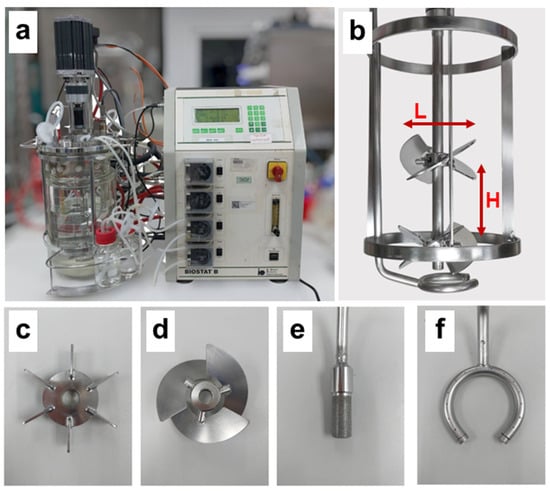
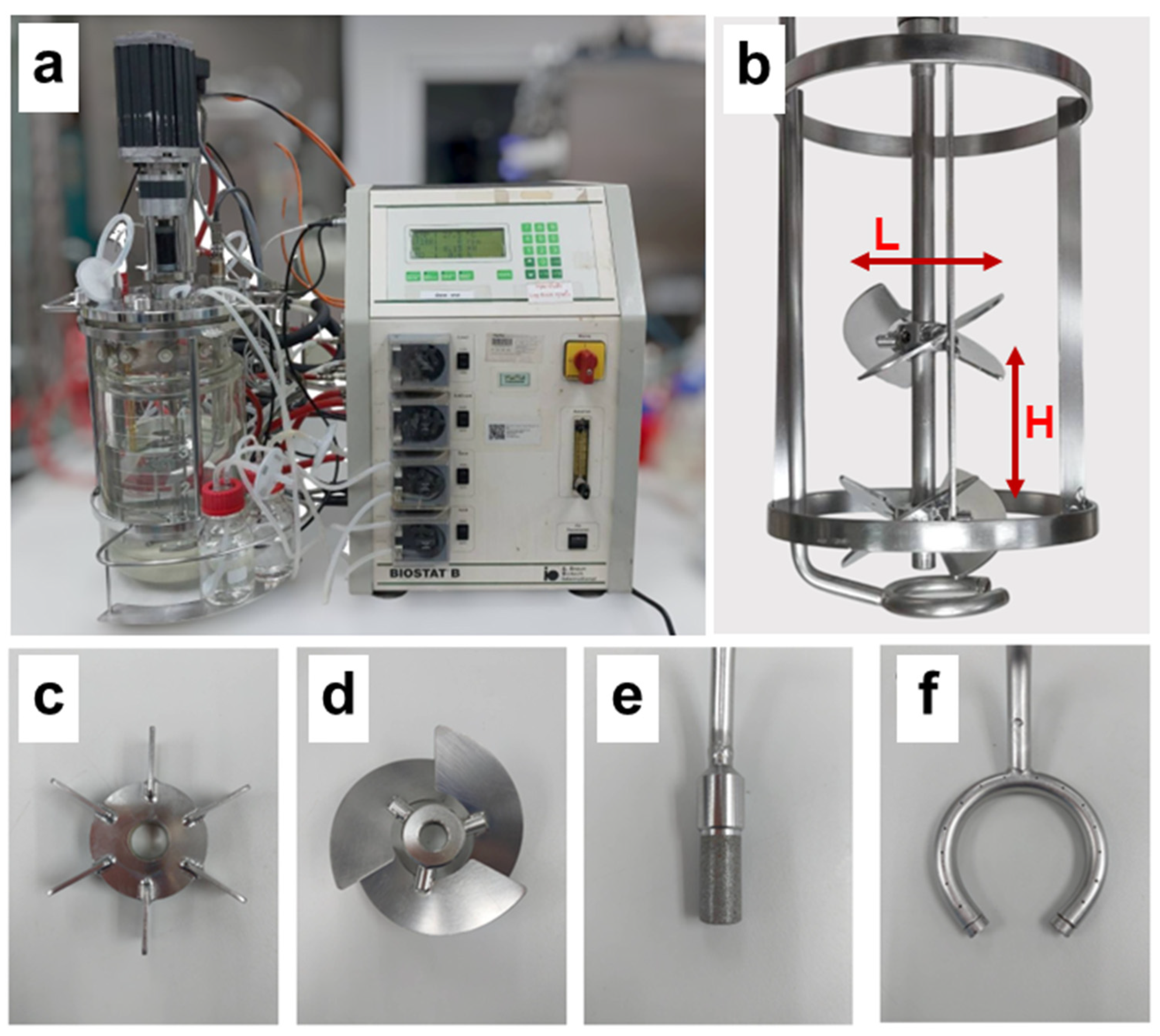
BBF002 was cultivated in a 5 L stirred-tank bioreactor with an initial working volume of 3 L cultivation medium, using glucose and peptone as carbon and nitrogen sources, respectively, and the medium was supplemented with 0.4 g/L MgSO4∙7H2O, 0.02 g/L FeSO4∙7H2O, 0.02 g/L MnSO4∙5H2O, and 30 g/L NaCl. Growth and DHA production were evaluated at various agitation speeds and aeration rates using different types of spargers and impellers. Figure 1 illustrates the laboratory-scale stirred-tank bioreactor setup and the types of impellers and spargers. The effects of initial glucose concentrations (40, 60, and 80 g/L) and C/N ratios (6 and 24) were investigated under controlled conditions at 30 °C, pH 4.5, an agitation speed of 300 rpm, and aeration rate of 2.0 vvm. The optimal fermentation conditions were chosen to examine cell growth and DHA production using cassava starch hydrolysate as a substrate in batch and intermittent fed-batch fermentations. Samples were taken daily to measure DCW, TFA, DHA, and residual sugar concentrations.
Figure 1.
The laboratory-scale stirred-tank bioreactor (a) and an example of the configuration setup (b) for investigation of various types of impellers and spargers, including (c) six-blade Rushton impeller, (d) pitch-blade or marine impeller, (e) micro sparger, and (f) ring sparger, for growth and DHA production of A. limacinum in 5 L bioreactor. L = impeller diameter, H = distance between impeller, and L/H = 1 [25].
2.5. Analytical Methods
Harvested cells were recovered from the fermented broths by centrifugation at 5000 rpm for 5 min and subsequently dried at 60 °C in a hot-air oven until a constant weight of biomass was achieved. The concentration of biomass was expressed as dry cell weight (DCW). The resulting supernatant was subjected to analysis of its pH value by pH meter and residual sugar concentration by high performance liquid chromatography (HPLC; Ultimate 3000, Thermo, USA). An Aminex HPX-87H ion exclusion column (Bio-Rad Laboratories, Hercules, CA, USA) was used at temperature of 60 °C for 30 min. The injection volume was 10 µL. Chromatographic separation was performed using 5 mM H2SO4 as the mobile phase in isocratic mode at a flow rate of 0.6 mL/min, with detection by a refractive index detector. The concentrations of residual sugar were calculated from sugar standard calibration curves at 0.1–10.0 g/L [12].
Fatty acid methyl esters (FAMEs) were prepared according to a modified method of Lepage and Roy [26] for fatty acid analysis. The quantities of FAMEs were then determined using gas chromatography (GC; Agilent 7890B, California, USA) with an HP-88 capillary column (100 m × 250 µm × 0.2 µm, Agilent, USA) and a flame ionization detector (FID). The retention times of individual fatty acids were identified and compared with those of FAME standards (Sigma, USA). Nonadecanoic acid (C19:0) was used as an internal standard [12].
The volumetric oxygen transfer coefficient (kLa; h–1) for a 250 mL nonbaffled Erlenmeyer flask was estimated following the method of Schiefelbein et al. [27] under the culture condition at temperature of 30 °C, total flask volume filled with the liquid of 20%, and shaking speed of 200 rpm. The kLa values of the bioreactor using various types of impellers and spargers were determined using the gassing-out method [28].
2.6. Data Analysis
Experimental data are presented as mean values ± standard deviation (SD). Statistical significance was assessed using Duncan’s one-way analysis of variance (ANOVA) with SPSS software (version 11.5; SPSS Inc., Chicago, IL, USA), with the significance threshold set at p < 0.05. Fermentation kinetic parameters were calculated from the start of cultivation (t1 = 0) to the point of maximum DHA concentration (t2; d).
Volumetric rates of biomass production (QX; g/L d), carbon substrate consumption (QS; g/L d), DHA production (QDHA; g/L d), and TFA production (QTFA; g/L d) were calculated as:
The specific growth rate (µ; d−1) was calculated by dividing the relevant volumetric rate of biomass production by the average biomass concentration:
For yield coefficients, the biomass yield (YX/S; g/g) was calculated from the amount of produced biomass per unit of consumed carbon substrate, whereas the DHA yield (YDHA/S; g/g) and TFA yield (YTFA/S; g/g) were calculated from the titers of produced DHA and TFA per unit of consumed carbon substrate:
3. Results and Discussion
3.1. Growth and DHA Production of BBF002 in Shake Flasks
3.1.1. Effect of Different Carbon Sources
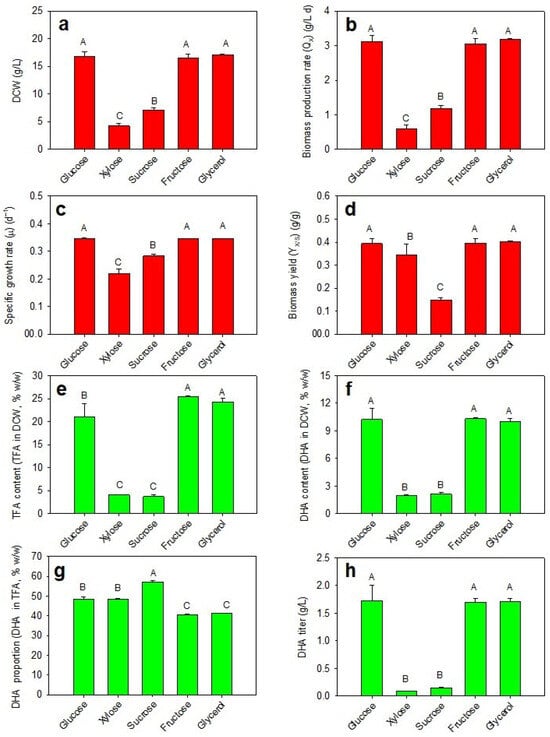
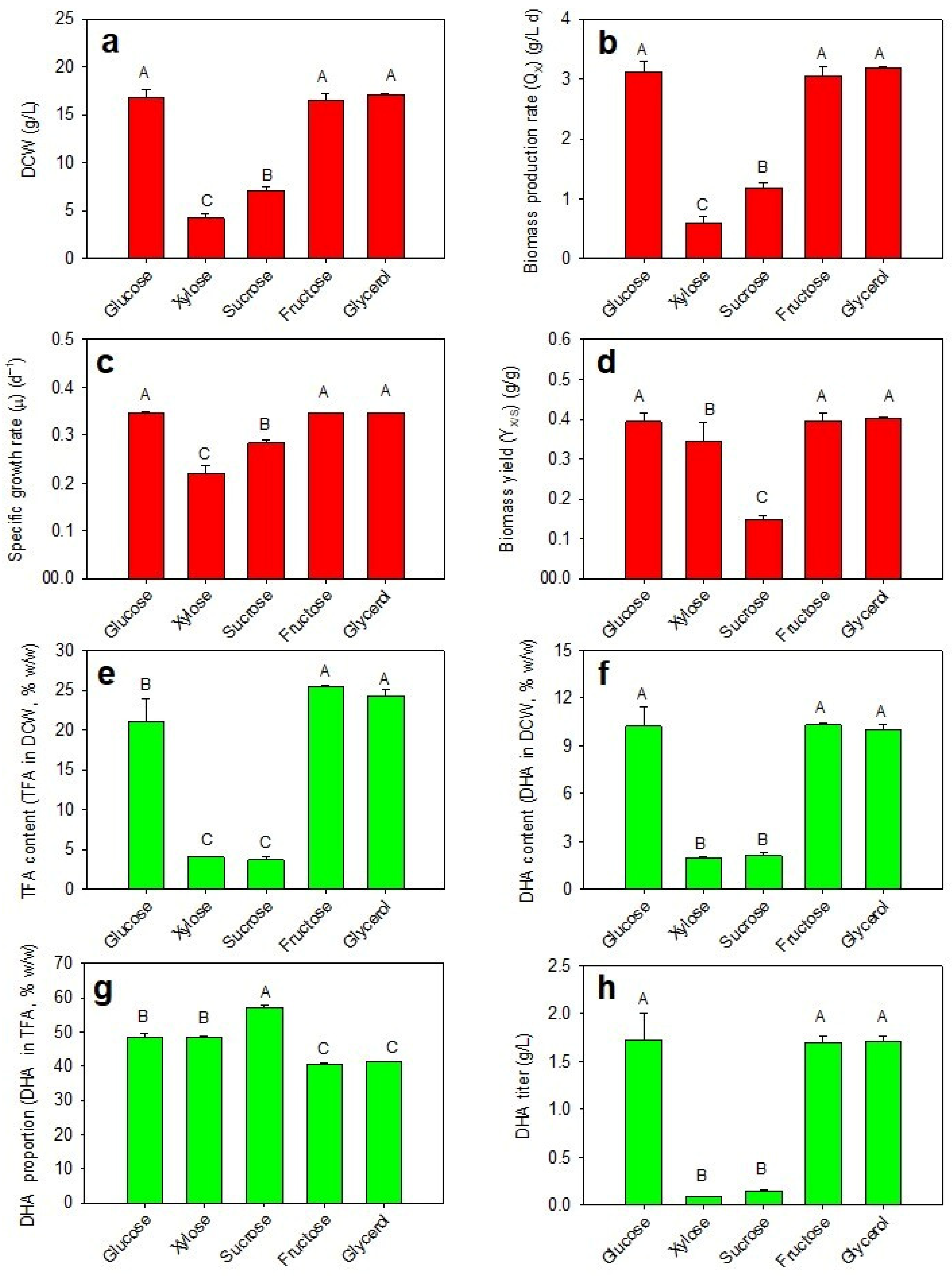
Of the carbon sources studied, glucose, glycerol and fructose were conducive to cell growth of BBF002 based on the biomass titer (CX) (Figure 2a; Supplementary Table S1; 16.5–17.1 g/L), volumetric biomass productivity (QX) (Figure 2b; 3.06–3.18 g/L d), specific growth rate (µ) (Figure 2c; 0.345–0.347 d–1), and biomass yield from substrate (YX/S) (Figure 2d; 0.39–0.40 g/g). Moreover, they were also significant carbon sources for DHA production for BBF002 as indicated by DHA content (Figure 2f; 10.0–10.3% DHA in DCW) and DHA titer (CDHA) (Figure 2h; 1.70–1.73 g/L). However, fructose and glycerol were more suitable fermentable carbon sources for maximizing total fatty acid (TFA) content (Figure 2e; 24.30–25.4% TFA in DCW). Xylose and sucrose were poor carbon sources for cell growth and DHA production. However, they exhibited a high proportion of DHA in TFA, accounting for 48.29% and 57.10% (w/w), respectively, which was comparable to the DHA proportion obtained from glucose (48.55% DHA in TFA) (Figure 2g). These results correlate with those of Chatdumrong et al. [29], who reported that glucose and fructose are effective carbon sources, yielding DCW of 13.4 and 14.3 g/L, DHA titers of 0.362 and 0.392 g/L, and DHA contents of 49.7 and 49.1% DHA in TFA, respectively. In contrast, sucrose was found to be a poor carbon source for both growth and DHA production by Schizochytrium limacinum BR2.1.2. Abad and Turon [30] demonstrated that cultures with added glucose offered similar biomass yields and DHA productivity compared to pure and crude glycerol in A. limacinum. The biomass titers were 8.21–8.86 g/L, biomass yields were 0.7–0.8 g/g, and final concentrations of DHA were 1.24–1.33 g/L. Ding et al. [31] found that glucose and peptone substantially improved the DHA concentration and DHA content (8.33 g/L and 21.23% DHA in DCW) of Schizochytrium sp. compared to other carbon and nitrogen sources. Wang et al. [10] reported that glycerol was the best carbon source for polyunsaturated fatty acids (PUFAs) and DHA production by Schizochytrium sp. PKU#Mn4 and Thraustochytriidae sp. PKU#Mn16, generating DCW of 11.27 and 10.25 g/L, DHA titers of 1.61 and 2.25 g/L, and PUFA titers of 1.90 and 2.70 g/L, respectively. Moreover, Li et al. [32] indicated that glucose enabled rapid growth and lipid synthesis, whereas glycerol promoted the accumulation of DHA in A. limacinum SR21; the use of glucose and glycerol as mixed carbon sources could improve DHA productivity in fed-batch cultures, with the highest DHA yield at 32.36 g/L and DHA productivity at 0.337 g/L h. Although BBF002 was able to use a wide range of carbon sources (glucose, fructose, and glycerol) for cell growth and DHA production, glucose was selected for further study as it resulted in a higher DHA proportion (48.550% DHA in TFA) than that obtained from fructose and glycerol (40.565 and 41.323% DHA in TFA) (Figure 2g).
Figure 2.
Effect of various carbon sources on cell growth and DHA production of the adaptive A. limacinum BBF002. (a) DCW or biomass titer, (b) volumetric rate of biomass production, (c) specific growth rate, (d) biomass yield on substrate, (e) TFA content in DCW, (f) DHA content in DCW, (g) DHA proportion in TFA, and (h) DHA titer are shown. Different uppercase letters represent significant differences at various carbon sources tested (p < 0.05). All fermentation parameters were calculated for 0–5 days.
3.1.2. Effect of Different Nitrogen Sources
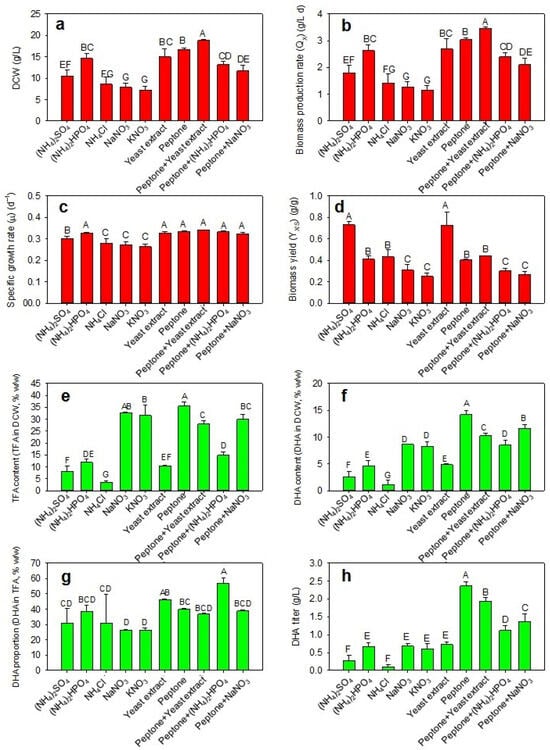
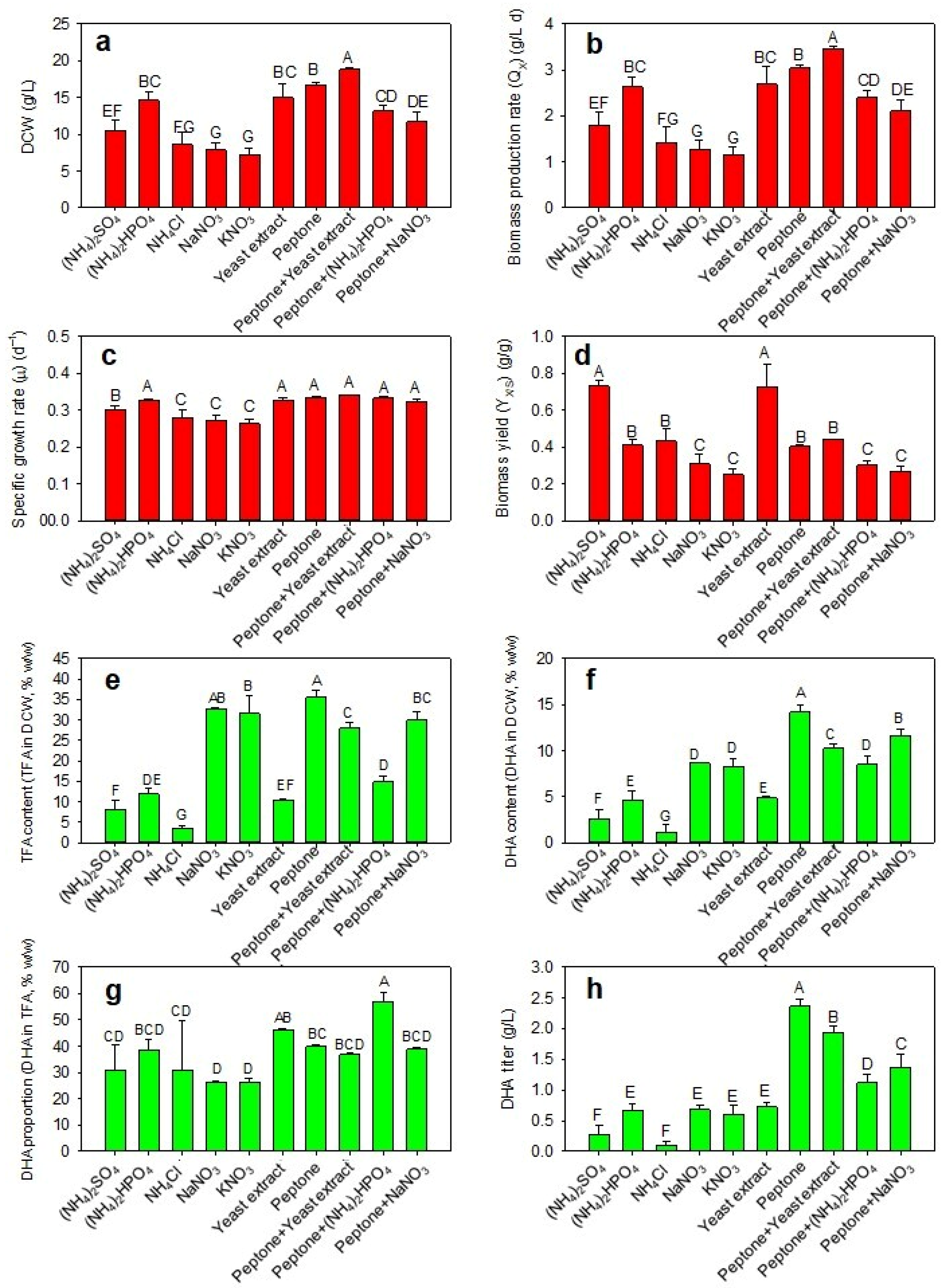
The concentrations of biomass (DCW), residual glucose, TFA, and docosahexaenoic acid (DHA) and the kinetic parameters obtained from the cultivation of A. limacinum BBF002 on various nitrogen sources in shake-flask culture at 5 days of fermentation are shown in Supplementary Table S2 and Figure 3. The cells grew well in media with organic nitrogen sources, including peptone, yeast extract, and mixed nitrogen sources (peptone and yeast extract). Aurantiochytrium sp. are known to prefer organic nitrogen sources. Organic nitrogen sources contain readily assimilable amino acids, which enhance protein synthesis and cellular metabolism. Therefore, complex organic nitrogen sources, such as peptone, yeast extract, and meat extract, substantially improve biomass formation compared to inorganic nitrogen sources [33,34,35,36,37]. The mixed peptone and yeast extract-grown culture generated the highest biomass titer at 18.80 g/L, which was higher than using only peptone (16.67 g/L) or yeast extract (14.95 g/L) at ~12.8% and 25.8%, respectively (Figure 3a). Although the volumetric rate of biomass production using the mixture of peptone and yeast extract was the highest (Figure 3b), the specific growth rate was not significantly different (Figure 3c). Yeast extract was an efficient nitrogen source in terms of a high biomass yield (0.73 g biomass per g glucose) (Figure 3d).
Figure 3.
Effect of various nitrogen sources on cell growth and DHA production of the adaptive A. limacinum BBF002: (a) DCW, (b) volumetric rate of biomass production, (c) specific growth rate, (d) biomass yield on substrate, (e) TFA content in DCW, (f) DHA content in DCW, (g) DHA proportion in TFA, and (h) DHA titer are shown. Different uppercase letters represent significant differences in various nitrogen sources tested (p < 0.05). All fermentation parameters were calculated for 0–5 days.
However, the highest DHA production of BBF002 was obtained using peptone as the sole nitrogen source. The highest DHA content (14.17% DHA in DCW; Figure 3f), DHA titer (2.36 g/L; Figure 3h), and TFA content (35.62% TFA in DCW; Figure 3e) were observed, indicating that peptone could enhance cell growth and was conducive to lipid biosynthesis.
The DHA proportion in the peptone-supplemented culture was only 39.77% DHA in TFA, whereas the highest DHA proportion was obtained in the culture using mixed peptone and (NH4)2HPO4 (57% DHA in TFA) (Figure 3g). These results are consistent with previous reports on Aurantiochytrium and Schizochytrium spp., in which peptone was identified as one of the most effective nitrogen sources for DHA production, yielding DHA titers ranging from 0.828 to 6.22 g/L [29,31,38].
Overall, the present study demonstrated that peptone was the most suitable nitrogen source for enhancing growth, DHA production, and TFA accumulation in BBF002 to improve DHA production in microbial fermentation processes.
3.1.3. Effect of Various C/N Ratios
The effects of the C/N ratio on the growth and DHA production of BBF002 were compared at C/N ratios of 3, 6, 12, 24, and 48. The glucose concentration was fixed at 40 g/L and the peptone concentration was varied to obtain the desired C/N ratio. The highest biomass titer was obtained at a C/N ratio of 6 (17.63 g/L), followed by C/N 3, whereas further increases in the C/N ratio (≥12) resulted in a gradual decrease in biomass titer (Table 1). Similarly, the volumetric biomass production rate (QX), specific growth rate (μ), and biomass yield from substrate (YX/S) were highest at low C/N ratios (C/N 3–6), indicating that sufficient nitrogen availability strongly promoted rapid cell growth [19,39]. At higher C/N ratios (24 and 48), biomass formation was reduced despite the increase in glucose consumption rates (Qs). This suggests that under nitrogen limitation, BBF002 used glucose to promote lipid accumulation rather than cellular growth. The growth inhibition under nitrogen-limited conditions had been reported for Aurantiochytrium and Schizochytrium spp. [40,41,42,43,44]. Consequently, the highest TFA titer (4.59 g/L), volumetric rate of TFA production (QTFA), TFA yield from substrate (YTFA/S), and TFA content were observed at higher C/N ratios (24−48). The maximum TFA content was obtained at 36.95% TFA in DCW at C/N 48. However, this increase in total fatty acid accumulation was accompanied by a substantial decrease in the proportion of DHA in TFA, which decreased from 49.95% at C/N 3 to 25.69% at C/N 48 (Table 1). This suggests that excessive carbon availability under severe nitrogen limitation (C/N 48) preferentially enhances the accumulation of saturated and monounsaturated fatty acids, especially palmitic acid (C16:0) (54.90%), rather than long-chain polyunsaturated fatty acids, such as DHA.
Table 1.
Kinetic parameters of growth and DHA production of A. limacinum on various C/N ratios.
C/N 24 was the optimal C/N ratio for DHA production of BBF002, with the highest DHA titer (1.385 g/L), DHA content (9.99% DHA in DCW), and volumetric rate of DHA production (QDHA) (0.462 g/L d). Moderate C/N ratios have been reported to enhance DHA production in Aurantiochytrium and Schizochytrium species, whereas excessively high C/N ratios favor saturated and monounsaturated fatty acids over DHA [43,44]. Patel et al. [19] varied the C/N ratio from 10 to 50 and found that a C/N ratio of 10 was optimal for DHA production in S. limacinum SR21. The highest DHA content was obtained at an optimal C/N ratio of 27 in Schizochytrium sp., PKU#Mn4 and Thraustochytriidae sp., PKU#Mn16 [10]. An optimal C/N ratio of 15:1 is suitable for S. limacinum BR2.1.2 in terms of growth and DHA production [29].
In the current study, a C/N ratio of 6 was optimal for biomass production, whereas a C/N ratio of 24 resulted in the highest DHA titer, DHA productivity, DHA content in the biomass, and TFA production. This provides valuable guidance for selecting an appropriate C/N ratio for the desired process objective, whether optimizing biomass growth or DHA production in cultivation systems.
3.1.4. Growth and DHA Production from Cassava Starch Hydrolysate (CSH) as a Carbon Source at Low and High C/N Ratios
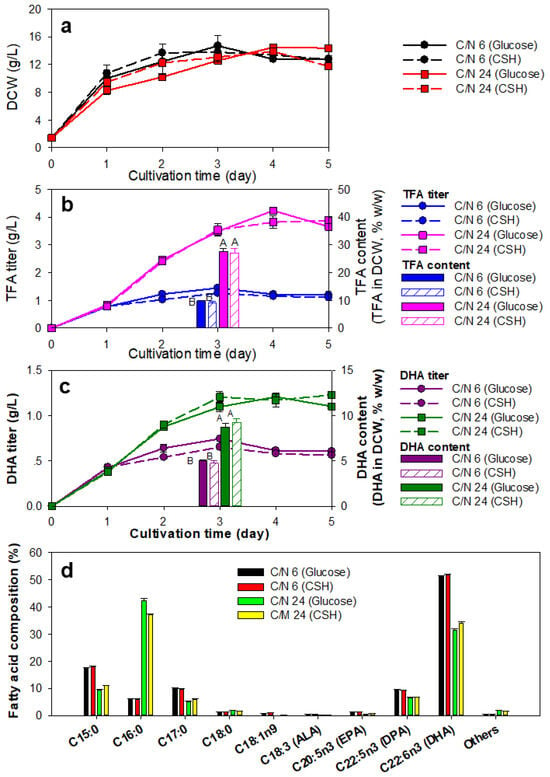
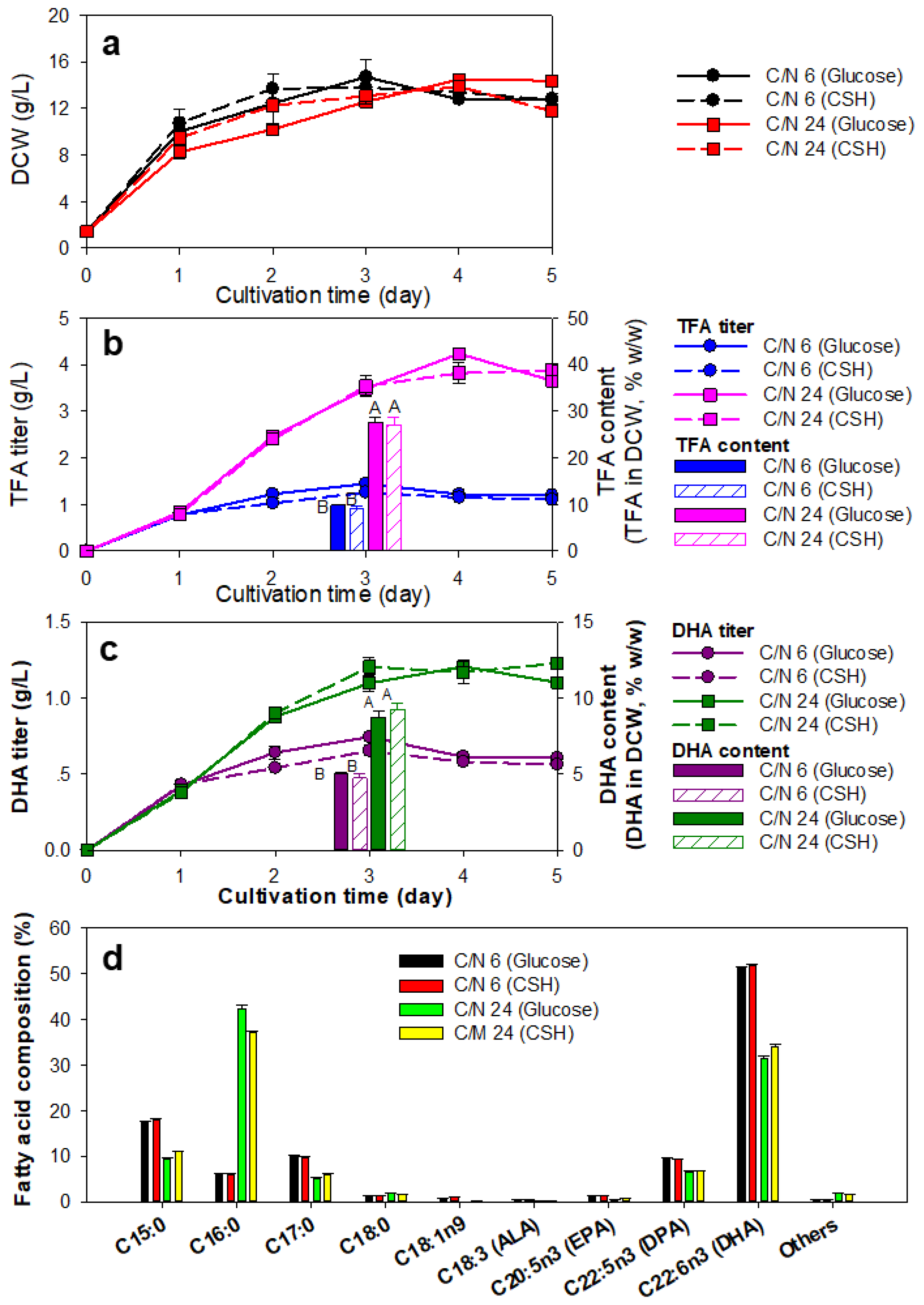
The growth performance and DHA production of BBF002 were evaluated by comparing cassava starch hydrolysate (CSH) with commercial glucose as the carbon source at different C/N ratios (6 and 24). There were no statistical differences in biomass titer between cultures grown on glucose and CSH at the same C/N ratio (Figure 4a). At a C/N ratio of 6, the highest biomass titers and specific growth rates were achieved at 14.70 g/L and 0.550 d−1 for glucose, and 13.80 g/L and 0.543 d−1 for CSH after 3 d of fermentation. At a C/N ratio of 24, maximum biomass titers of 14.48 g/L and 13.87 g/L and specific growth rates of 0.411 d−1 and 0.407 d−1 were obtained from glucose and CSH, respectively, after 4 d of fermentation. Therefore, CSH can effectively substitute glucose as a fermentable substrate, providing sufficient assimilable sugars to support cell growth.
Figure 4.
The shake-flask cultivations of A. limacinum BBF002 using glucose and CSH as carbon sources at low and high C/N ratios. Profiles of A. limacinum BBF002 growth (a), TFA production (b), DHA production (c), and fatty acid composition (d) on day 3 of fermentation, at which the maximum DHA titer was observed. A and B indicate significant differences among C/N ratios within the same carbon source (p < 0.05).
The titers of DHA and TFA were not markedly different when using glucose and CSH as carbon sources at the same C/N ratio (Figure 4b,c), indicating that CSH was an effective alternative carbon source for DHA and TFA biosynthesis. The C/N ratio affected DHA and TFA production. Cultivation at C/N 24 resulted in a markedly higher DHA and TFA titer, and DHA and TFA content compared with cultivation at C/N 6 for both carbon sources (Figure 4b,c). This result confirmed the effect of nitrogen limitation at a high C/N ratio, which forced carbon flux from biomass synthesis to lipid accumulation in Aurantiochytrium spp. [40,42,43].
Figure 4d illustrates the fatty acid composition of BBF002 under cultivation with glucose and CSH at C/N ratios of 6 and 24 after 3 d of cultivation. Pentadecanoic acid (C15:0), palmitic acid (C16:0), heptadecanoic acid (C17:0), docosapentaenoic acid (DPA), and DHA were the predominant fatty acids under all conditions. At C/N 6, cultures grown on both glucose and CSH exhibited the highest proportion of DHA in TFA (51.40−51.78%), whereas lower proportions in TFA of C15:0 (17.83−18.09%), C16:0 (6.07−6.36%), C17:0 (9.80−10.30%), and DPA (9.34−9.63%) were obtained. This fatty acid profile is generally associated with nitrogen-sufficient conditions, which supports active membrane lipid synthesis and PUFA formation via the polyketide synthase (PKS) pathway [43,44,45,46]. Increasing the C/N ratio to 24 increased the proportion of C16:0 (37.26−42.33% in TFA), accompanied by a relative decrease in the proportion of DHA (31.49−34.10% in TFA). This shift in fatty acid composition reflects enhanced storage lipid accumulation under nitrogen-limited conditions; carbon is preferentially channeled toward saturated and monounsaturated fatty acids for triacylglycerol synthesis [44]. Although the DHA proportion decreased at high C/N ratios, the DHA titer and content increased substantially due to an increase in total lipid accumulation. The fatty acid profiles obtained from glucose and CSH were comparable at both C/N ratios (Figure 4d), indicating that CSH did not markedly influence fatty acid biosynthesis in Aurantiochytrium.
3.2. Growth and DHA Production of A. limacinum in a 5 L Bioreactor
3.2.1. Effect of Different Agitation Speeds, Aeration Rates, and Types of Sparger and Impeller
Several factors affect growth and DHA production in thraustochytrids. Oxygen is critical in this process. The agitation speed and aeration rate of the stirred-tank bioreactor, which might affect oxygen transfer and shear stress, should be optimized. The types of spargers and impellers, which affect oxygen and mass transfer, were evaluated (Figure 1). From the preliminary test, an agitation speed of 200 rpm and an aeration rate of 1 vvm using the six-blade Rushton turbine was insufficient for growth and DHA production by BBF002. A small amount of glucose was consumed, leading to low biomass concentration and DHA titer (Supplementary Figure S1). To increase the oxygen availability and its transfer rate during cultivation, the aeration rate was increased to 2 vvm, which was consistent with previous studies on oxygen supply for growth and DHA synthesis [19,47,48].
The growth rate, glucose consumption rate, DHA production, and DHA yield of the cultures cultivated at an agitation speed of 300 rpm were higher than those of the cultures grown at 200 rpm. This was a positive effect of agitation speed, which showed that a higher agitation speed resulted in better mixing of the medium to improve culture homogeneity and the transfer of oxygen and nutrients, resulting in increased microbial cell growth and DHA production [49]. Unfortunately, increasing the agitation speed to 400 rpm generated high shear stress on the cells, leading to a decrease in the biomass and DHA titers, which could not be recovered by reducing the agitation speed (Supplementary Figure S2).
The optimal agitation speed for biomass and DHA production in oleaginous microbes has been reported: the optimal agitation speed for biomass and DHA production was 250 rpm in Aurantiochytrium SW1, and a negative effect occurred when the agitation speed exceeded this value [16]. An agitation speed of 250 rpm improved biomass and DHA production in Schizochytrium limacinum OUC88 [50]. A higher agitation speed of 300–350 rpm generated high cell densities, whereas a moderate agitation speed of 200–250 rpm was suitable for lipid and DHA accumulation in Schizochytrium Sp. FJU-512 [51]. In the current study, an agitation speed of 300 rpm and an aeration rate of 2 vvm were recommended as optimal conditions for the cultivation of BBF002.
The effects of different impeller and sparger configurations on the growth and TFA and DHA production of BBF002 are summarized in Table 2. Of the tested conditions, the combination of a ring sparger with a pitch-blade impeller (kLa = 33.24 h−1) resulted in the highest biomass concentration (18.60 g/L), followed by a ring sparger with a Rushton impeller (kLa = 66.60 h−1) (11.43 g/L). The use of a micro sparger combined with a pitch-blade impeller (kLa = 44.30 h−1) led to the lowest biomass accumulation (6.83 g/L). The shear stress generated from the impeller and air sparger affects cell growth more than the amount of oxygen. The sparger type had a stronger influence on biomass formation than the impeller type. The ring sparger generally provided a more uniform gas distribution and moderate bubble size, resulting in effective oxygen transfer without imposing excessive shear stress on the cells. The micro sparger generated smaller bubbles, which enhanced the oxygen transfer efficiency. However, this can increase the shear stress on cells if very small bubbles are generated under high aeration rates, potentially causing mechanical stress and growth inhibition in shear-sensitive microorganisms such as thraustochytrids [52]. The superior performance of the pitch-blade impeller compared with the Rushton turbine under ring–sparger conditions was attributed to its axial flow characteristics, which promoted better bulk mixing and lower shear stress, making it more suitable for cell growth [53].
Table 2.
Comparative production of biomass, DHA, and TFA by A. limacinum BBF002 using various impeller and sparger types at an agitation speed of 300 rpm, an aeration rate of 2 vvm, and a cultivation time of 5 d.
DHA and TFA production were influenced by the hydrodynamic conditions generated by different impeller–sparger combinations. The highest DHA titer (0.659 g/L), TFA titer (1.367 g/L), DHA content (3.545% DHA in DCW), and TFA content (7.349% TFA in DCW) were obtained using the ring sparger with a pitch-blade impeller, corresponding to the condition that also yielded the highest biomass concentration (18.60 g/L). Although the ring sparger combined with a Rushton impeller produced lower biomass and DHA and TFA titers than the pitch-blade system, this produced the highest DHA proportion in total fatty acids (54.07%). The strong radial flow and higher shear associated with the Rushton impeller stimulate DHA synthesis by increasing the oxygen availability to the polyketide synthase (PKS) pathway [10,19]. However, cultivation under unsuitable conditions could limit DHA and TFA accumulation; although the relative proportion of DHA in TFA was high, the DHA titer was low because of reduced overall DHA production. The micro sparger–pitch-blade combination resulted in the lowest DHA and TFA titers, despite the relatively high DHA and TFA contents in the DCW. This suggests that excessive shear stress or unfavorable gas–liquid interactions limit the overall biomass formation, thereby inhibiting DHA and TFA production. These results indicate that DHA accumulation is influenced not only by oxygen supply but also by the balance between shear stress and mixing efficiency under optimal aeration and axial flow mixing.
In addition, the result of growth and DHA production in the shake-flask and 5 L bioreactor were compared. The cultivation of BBF002 from glucose in the shake-flask generated the titers of biomass, TFA and DHA at 12.839, 1.197, and 0.607 g/L, respectively under an initial pH of 4.5, a 10% (v/v) inoculum, C/N ratio of 6, at 30 °C, and a shaking rate of 200 rpm at day 5 of fermentation time (Figure 4), while the cultivation in the bioreactor generated the titers of biomass, TFA and DHA at 18.60, 1.369, and 0.659 g/L, respectively under a controlled pH of 4.5, a 10% (v/v) inoculum, C/N ratio of 6, at 30 °C, an agitation speed of 300 rpm, and an aeration rate of 2 vvm (Table 2). The growth, TFA and DHA production of BBF002 in shake-flask culture were lower than the cultivation in the bioreactor, although the volumetric oxygen transfer coefficient (kLa), a key parameter for scale-up, was higher in shake-flask cultivation (48.20 h−1) than in the stirred-tank bioreactor (33.24 h−1). This difference can be attributed to the transition from shake flasks to a laboratory-scale stirred-tank bioreactor, which represents a critical step in bioprocess development due to significant differences in mass transfer, hydrodynamics, and process control. Shake flasks are commonly employed for preliminary screening due to their simplicity, minimal cost and material. However, cultivation in the shake flask cannot control key parameters such as dissolved oxygen, pH, and mixing efficiency. On the other hand, stirred-tank bioreactors enable control of these variables, which is necessary for scalable performance.
3.2.2. Effect of Initial Glucose Concentration
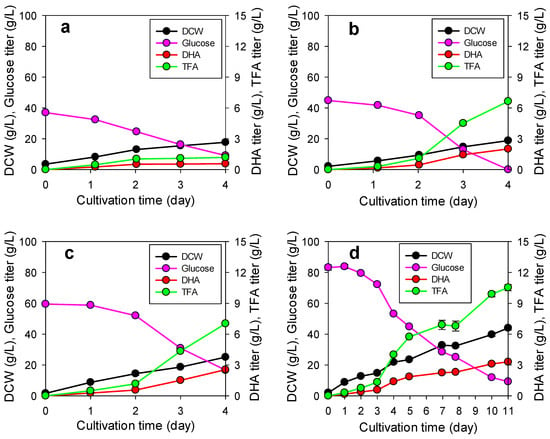
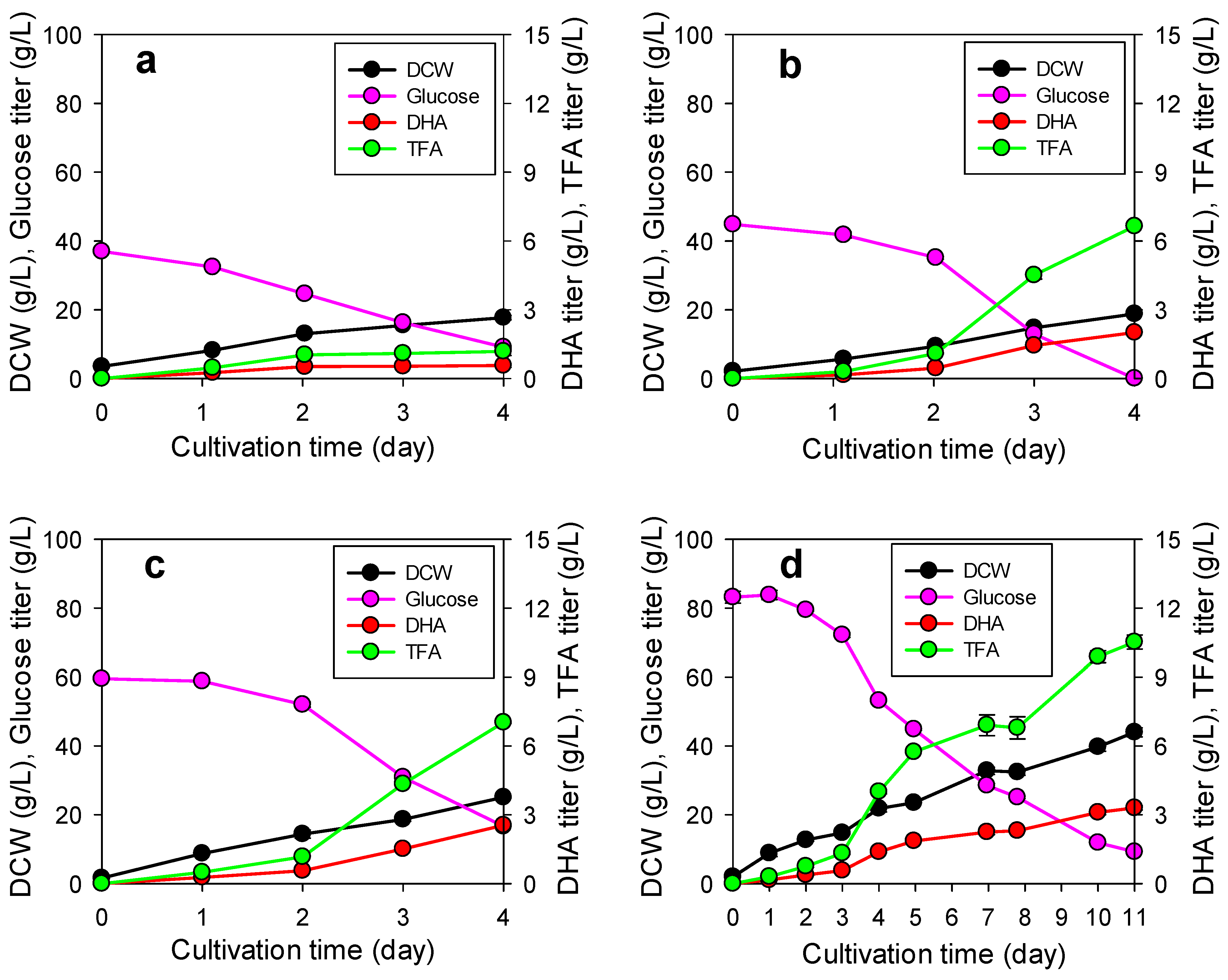
The profiles and kinetic parameters of growth, DHA, and TFA production by BBF002 cultivated under low and high C/N ratios at varying initial substrate concentrations using glucose as the carbon source in a 5 L stirred-tank bioreactor are illustrated in Figure 5 and Table 3. The cultivations were operated using a ring sparger and pitch-blade impeller at an agitation speed of 300 rpm, aeration rate of 2 vvm, and controlled pH of 4.5 at 30 °C.
Figure 5.
Cell growth, glucose consumption, TFA and DHA production of A. limacinum BBF002 by batch cultivation in 5 L stirred-tank bioreactor under different C/N ratios and initial glucose concentrations: (a) C/N 6, glucose 40 g/L; (b) C/N 24, glucose 40 g/L; (c) C/N 24, glucose 60 g/L; and (d) C/N 24, glucose 80 g/L.
Table 3.
Kinetic parameters of growth, DHA and TFA production of the adaptive A. limacinum BBF002 on various C/N ratios and initial substrate concentrations when using glucose as substrate.
At a low C/N ratio (C/N 6), glucose at an initial concentration of 40 g/L (Figure 5a) produced the highest biomass titer of 17.70 g/L after 4 d of cultivation. The biomass yield from substrate (YX/S) was 0.51 g/g. The volumetric biomass production rate (QX) and specific growth rate (µ) were 3.54 g/L d and 0.333 d−1, respectively. However, DHA and TFA production remained relatively low under nitrogen-sufficient conditions. The DHA and TFA titers were 0.58 and 1.19 g/L, respectively. DHA content in biomass was 3–4% (w/w), and TFA content in biomass was 6.71% (w/w).
When the C/N ratio was increased from 6 to 24 at the same glucose concentration (40 g/L), a change from growth to TFA and DHA accumulation was observed (Figure 5b). After 4 d of cultivation, biomass increased slightly from 17.70 to 18.85 g/L, but DHA titer dramatically increased from 0.58 to 2.00 g/L, and TFA titer increased from 1.19 to 6.64 g/L—increases of 3.46-fold and 5.59-fold, respectively. DHA content improved from 3.27% to 10.63% (w/w), and TFA content rose from 6.71% to 35.25% (w/w). The volumetric DHA production rate (QDHA) also increased 3.47-fold from 0.14 to 0.50 g/L d.
DHA and TFA yields from substrate increased at C/N 24 compared to C/N 6. This marked improvement confirmed the nitrogen limitation theory in oleaginous microorganisms. When nitrogen was exhausted, the excess carbon was channeled to the fatty acid synthesis pathway. The DHA proportion in total fatty acids decreased from approximately 48% at C/N 6 to 30% at C/N 24. This shift indicated that nitrogen limitation favored the synthesis of saturated and monounsaturated fatty acids associated with storage lipids; therefore, the relative DHA proportion was reduced. Sufficient nitrogen availability under low C/N ratios is conducive to biomass growth but limits lipid biosynthesis [19,40,41,42,43,44].
To investigate the effect of initial glucose concentration on cell growth and DHA production of BBF002, the increased initial glucose concentrations of 60 and 80 g/L at C/N 24 were studied and compared to 40 g/L glucose (Figure 5c,d). Increasing the initial glucose concentration improved biomass and DHA titers. The biomass increased from 18.85 g/L (40 g/L glucose, day 4) to 25.08 g/L (60 g/L, day 4) and reached 43.95 g/L at 80 g/L (day 11). Available carbon is a limiting factor for biomass formation under nitrogen-limited conditions or high C/N ratios, and higher carbon concentrations extend the cultivation time and enhance biomass production, as previously reported for Aurantiochytrium spp. [40,43,44].
For DHA and TFA production, the DHA titer also increased from 2.00 g/L at an initial glucose of 40 g/L to 3.30 g/L at an initial glucose of 80 g/L, whereas TFA reached 10.52 g/L. Although the total DHA titer was the highest at 80 g/L; the volumetric production rates of biomass, DHA, and TFA were lower than initial glucose at 40 g/L and 60 g/L, respectively.
DHA content in biomass decreased from 10.63% (40 g/L) to 7.50% (80 g/L), whereas TFA content in biomass decreased from 35.24% (40 g/L) to 23.94% (80 g/L). The specific growth rate (µ) decreased markedly at 80 g/L (0.166 d−1). This suggests that excessive carbon loading will prolong the cultivation time and reduce all process productivity under the influence of substrate inhibition or osmotic stress at high sugar concentrations [16,19,54,55]. Glucose at 60 g/L was the optimal initial glucose concentration, due to the highest volumetric rates of biomass (QX), DHA (QDHA) and TFA (QTFA) production (5.87 g/L d, 0.64 g/L d, and 1.76 g/L d, respectively), and the highest specific growth rate was attained at 0.440 d−1 (Table 3). The highest DHA (0.059 g/g) and TFA yields (0.164 g/g) were obtained at 60 g/L glucose, indicating the efficient conversion of substrate carbon into DHA and TFA under nitrogen-limited conditions.
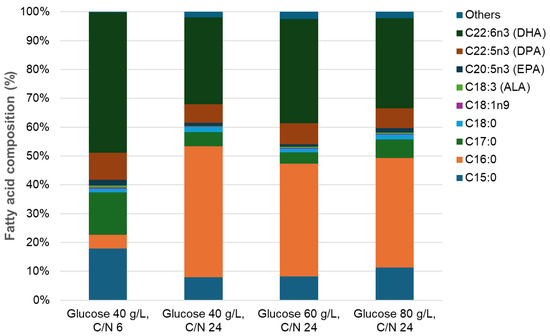
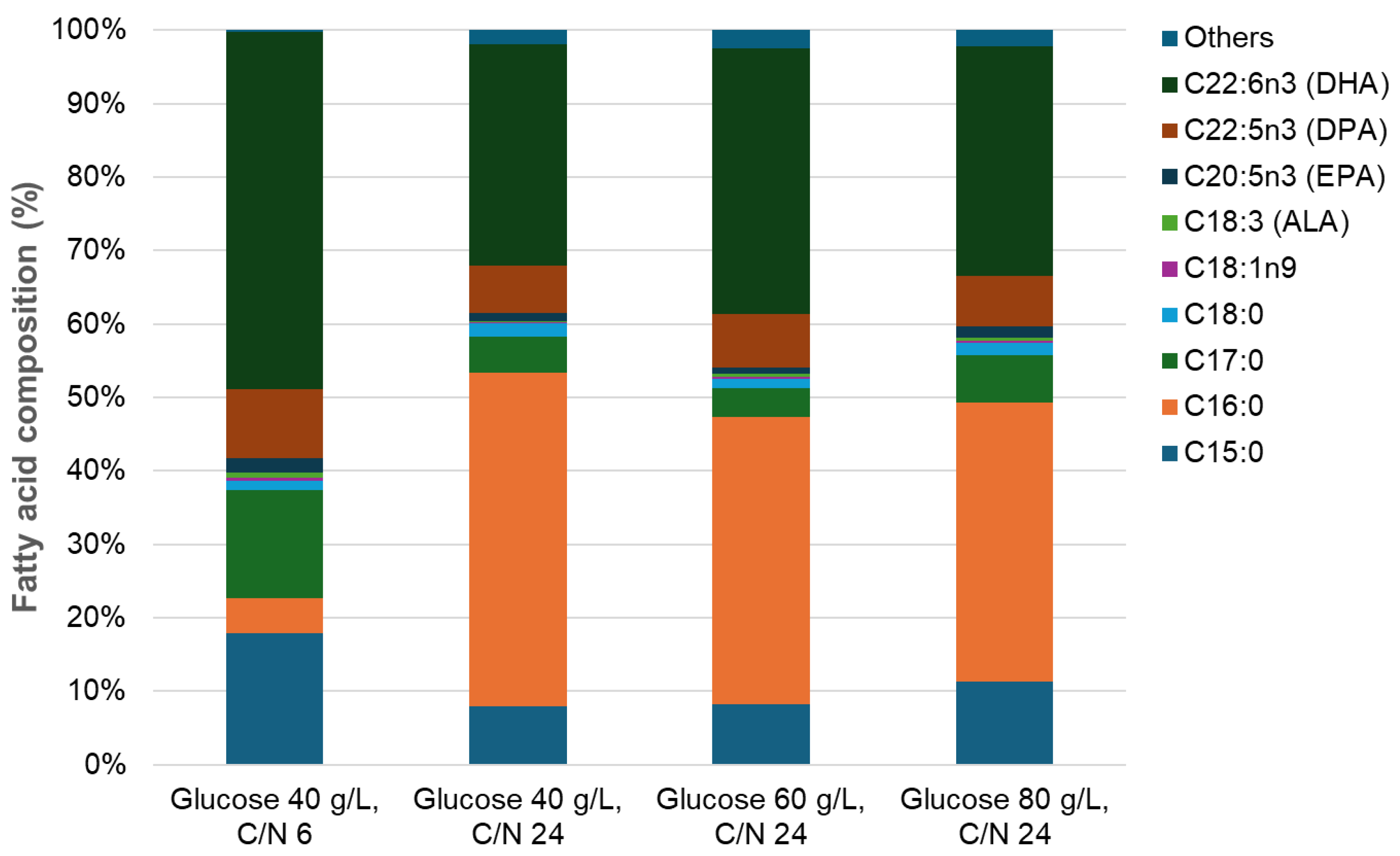
The fatty acid composition of BBF002 cultivated under different C/N ratios (6 and 24) and initial substrate concentrations (40–80 g/L) are presented in Figure 6. Under nitrogen-sufficient conditions (C/N 6), the fatty acid profile was mainly composed of saturated fatty acids (SFAs), particularly pentadecanoic acid (C15:0; 17.88%), palmitic acid (C16:0; 4.86%), and heptadecanoic acid (C17:0; 14.70%) with proportions of polyunsaturated fatty acids (PUFAs), such as DPA (C22:5n3; 9.38%) and DHA (C22:6n3; 48.63%).
Figure 6.
Fatty acid compositions of A. limacinum BBF002 cultivated in 5 L bioreactors under different C/N ratios, and initial glucose concentrations.
Increasing the C/N ratio to 24 resulted in an obvious shift in fatty acid composition. The proportion of DHA decreased to 30–36% of total fatty acids, accompanied by a marked increase in palmitic acid (C16:0) (38.00−45.41%), which became the dominant fatty acid under nitrogen-limited conditions. The relative contents of short-chain SFAs and DPA decreased. This phenomenon had been frequently observed in thraustochytrids and has been attributed to the preferential activation of the fatty acid synthase (FAS) pathway, which produces C16 fatty acids, whereas the polyketide synthase (PKS) pathway responsible for DHA biosynthesis is more sensitive to metabolic and redox balance [43,44,45,46].
These results clearly demonstrate that the C/N ratio plays a crucial role in regulating TFA and DHA biosynthesis in A. limacinum. Under nitrogen-sufficient conditions (C/N = 6), the cells exhibited higher proportions of SFAs, such as C15 and C17 fatty acids, and a relatively high DHA fraction. However, nitrogen limitation (C/N = 24) promoted the redirection of excess carbon toward TFA and DHA accumulation, leading to enhanced PUFA synthesis, particularly DHA. The observed variations in fatty acid composition clearly indicate that nitrogen availability is a key regulatory factor governing TFA and DHA biosynthesis in Aurantiochytrium. Therefore, an optimal nitrogen limitation level is required to balance the TFA accumulation and DHA enrichment.
3.2.3. Intermittent Fed-Batch Fermentation by BBF002 from CSH
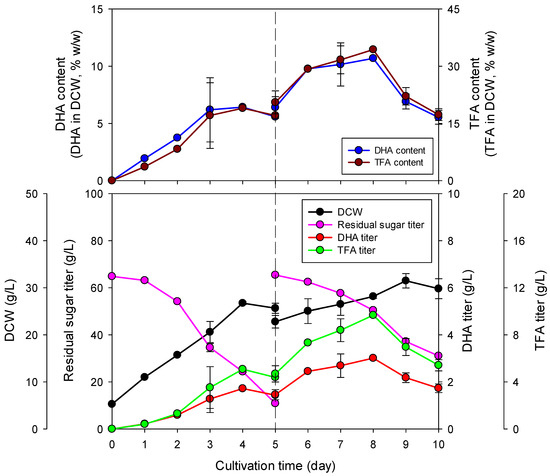
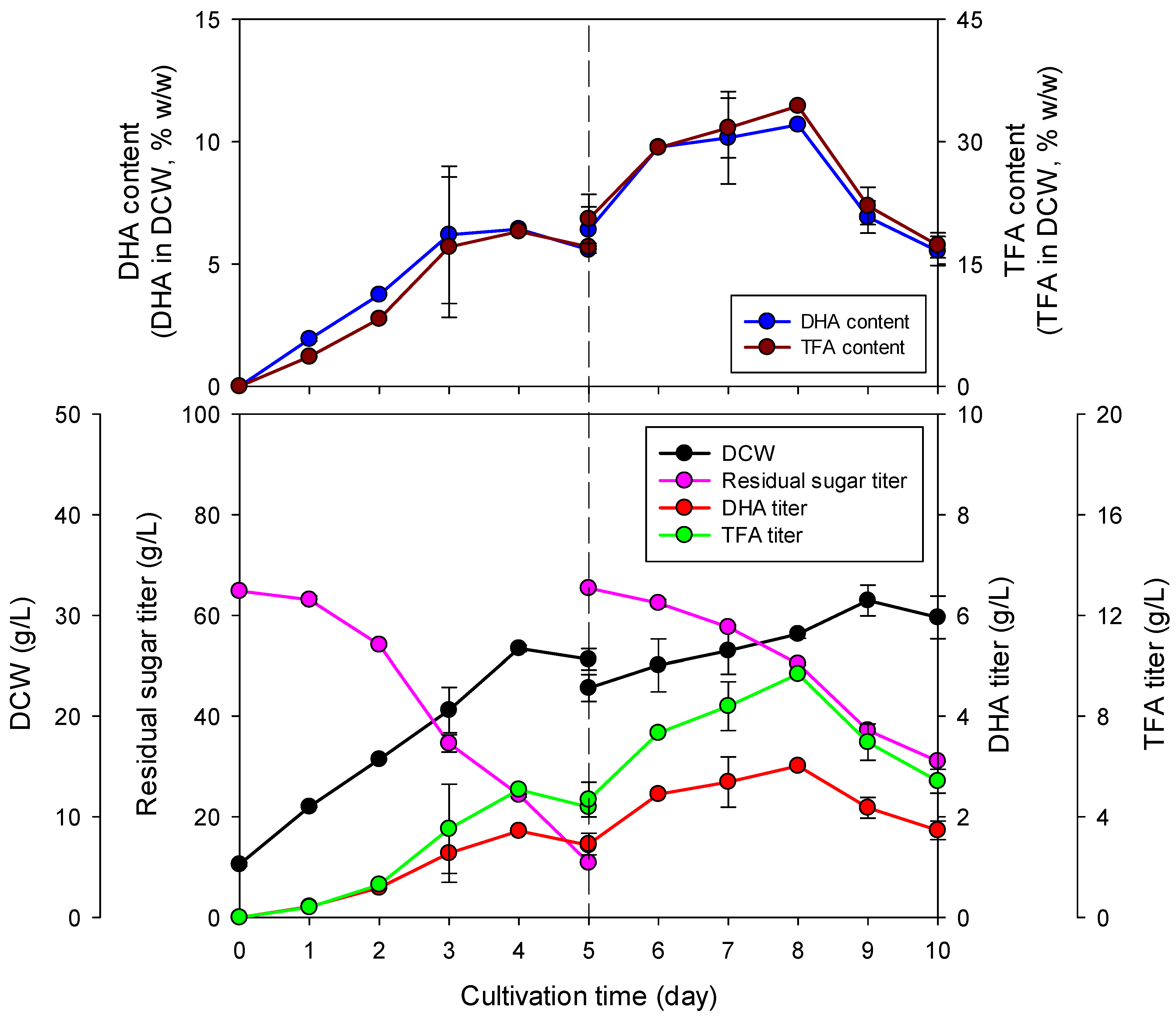
In this study, CSH was applied at 60 g/L and a C/N ratio of 24 to evaluate cell growth and TFA and DHA production by intermittent fed-batch fermentation. The time-course profiles of biomass formation, substrate consumption, and DHA and TFA production by A. limacinum BBF002 using CSH as the substrate are illustrated in Figure 7, and the kinetic fermentation parameters during batch and fed-batch cultivation are shown in Table 4. During the initial batch phase (0–5 d), rapid biomass accumulation was observed, accompanied by a sharp decrease in the residual sugar concentration. The biomass concentration (DCW) increased steadily, indicating efficient utilization of the supplied carbon source for cell growth. DHA and TFA titers gradually increased during this phase, indicating that TFA and DHA biosynthesis occurred concurrently with biomass formation. The highest titers of biomass, DHA, and TFA after 4 d of cultivation were 26.73 g/L, 1.72 g/L and 5.08 g/L, respectively. Although biomass production was comparable to that of 60 g/L glucose (25.075 g/L), the titers, content, and productivity of TFA and DHA were substantially lower than those of glucose at the same C/N ratio (Table 3). This suggests that, although CSH effectively supported growth, glucose remained superior for TFA and DHA accumulation under nitrogen-limited conditions. This difference may be attributed to the presence of mixed sugars or minor impurities in CSH, which could influence substrate uptake kinetics and DHA biosynthesis efficiency. The overall performance of CSH was competitive, and it has the potential to become a low-cost alternative carbon source.
Figure 7.
Intermittent fed-batch production by A. limacinum BBF002 using cassava starch hydrolysate as a carbon source in a 5 L bioreactor under controlled pH 4.5 at 30 °C. The dashed line indicates the onset of the fed-batch phase.
Table 4.
Kinetic parameters of growth and DHA and TFA production of the adaptive A. limacinum BBF002 by intermittent fed-batch production.
Following intermittent CSH feeding (after day 5), residual sugar was consumed, resulting in a lower rate of continuous biomass production than that in the batch phase (Figure 7; Table 4). DHA and TFA titers increased markedly during the fed-batch phase, reaching maximum values of 3.01 g/L and 9.68 g/L on day 8 of cultivation. DHA and TFA contents also increased substantially to 10.69% and 34.38% after the fed-batch operation. The yields of DHA and TFA from CSH increased by approximately 2.47−2.65-fold when compared to the batch phase. After prolonged cultivation (9–10 d), the titers and contents of DHA and TFA declined slightly, which was attributed to lipid turnover, oxidative degradation, or increased oxygen demand under extended cultivation [56].
Therefore, intermittent fed-batch fermentation affected cell growth and DHA and TFA biosynthesis in Aurantiochytrium. The initial batch phase favored rapid cell production due to sufficient nitrogen and carbon availability, whereas the fed-batch phase promoted DHA and TFA accumulation under carbon-rich but nitrogen-limited conditions. Similar observations have been reported where fed-batch cultures were highly effective for the growth of oleaginous biomass and improvement of high lipid content in cells. Stepwise aeration control and intermittent glucose-feeding strategies substantially improved DHA production in Schizochytrium sp., resulting in high cell density (71 g/L), high lipid titers (35.75 g/L), high DHA proportion (48.95% DHA in TFA), and high DHA productivity (119 mg/L h) [57]. Intermittent fed-batch fermentation of mixed glucose and glycerol resulted in a marked increase in growth and DHA productivity of Thraustochytriidae spp. PKU#Mn16, obtaining maximum biomass at 52.2 g/L, and DHA productivity at 100.7 mg/L h [58]. The current results confirm that intermittent fed-batch fermentation is an effective strategy for improving DHA and TFA production.
4. Conclusions
This study provided a preliminary evaluation of key fermentation parameters governing cell growth and docosahexaenoic acid (DHA) production by the acid- and temperature-tolerant strain of Auranthiochytrium limacinum BBF002 at a specified pH of 4.5 and temperature of 30 °C. Among the factors examined, carbon and nitrogen sources, C/N ratio, and bioreactor operating conditions were identified as critical determinants affecting both biomass accumulation and DHA biosynthesis. Superior growth and DHA production were observed using glucose, fructose, or glycerol. Glucose was considered to be the most suitable carbon source because it resulted in the highest proportion of DHA. Organic nitrogen sources including peptone, yeast extract, or a mixture of peptone and yeast extract are recommended for A. limacinum BBF002 growth. Of these, peptone has been suggested as the best nitrogen source for DHA production. Kinetic analysis demonstrated that the C/N ratio was a key factor in DHA and total fatty acid (TFA) production by A. limacinum BBF002. The findings demonstrate that nitrogen availability plays a critical regulatory role, nitrogen-sufficient conditions (C/N 6) promote rapid cell proliferation, while nitrogen limitation (C/N 24) causes TFA and DHA accumulation. This metabolic shift emphasizes the importance of carefully balancing nutrient supply to optimize overall process performance. For production in a stirred-tank bioreactor, the agitation speed and aeration rate affected the biomass and DHA production. An agitation speed of 300 rpm and an aeration rate of 2 vvm were optimal conditions for cell growth, TFA titer, and DHA titer using a ring sparger and pitch-blade impeller. This configuration offers adequate oxygen transfer while maintaining relatively low shear stress, which is favorable for Aurantiochytrium cultivation. In this study, 60 g/L of glucose was found to be the optimal concentration for cell growth and DHA production. Cassava starch hydrolysate (CSH) exhibited similar trends to glucose, providing equal growth performance and a similar fatty acid composition, which supports its feasibility as an alternative substrate for an economically viable and sustainable fermentation process for microbial DHA production. Moreover, intermittent fed-batch fermentation was an effective strategy to improve TFA and DHA content and volumetric productivity compared to batch cultivation, providing valuable insights for the development of scalable DHA production processes. The results and data generated from this study serve as a useful basis for future development and advanced optimization strategies, such as statistical experimental design, to further enhance DHA yield and productivity. In addition, techno-economic analysis and validation at pilot and industrial scales will be essential to fully assess the feasibility of large-scale microbial DHA production using alternative substrates such as casava starch hydrolysate.
Supplementary Materials
The following supporting information can be downloaded at: https://www.mdpi.com/article/10.3390/fermentation12040207/s1, Figure S1: Batch fermentation of Aurantiochytrium limacinum BBF002 in a 5-L stirred-tank bioreactor at an agitation speed of 200 rpm, aeration rate of 1 vvm, temperature of 30 °C, and pH 4.5; Figure S2: Batch fermentation of A. limacinum BBF002 in a 5-L stirred-tank bioreactor under control at 30 °C, pH 4.5, aeration rate 2 vvm, and agitation speed 200-400 rpm; Table S1: The concentrations of biomass (DCW), residual sugar, total fatty acid (TFA), and docosahexaenoic acid (DHA) obtained from the cultivation of A. limacinum BBF002 on various carbon sources in shake-flask culture at 5 days of fermentation; Table S2: The concentrations of biomass (DCW), residual glucose, total fatty acid (TFA), and docosahexaenoic acid (DHA) obtained from the cultivation of A. limacinum BBF002 on various nitrogen sources in shake-flask culture at 5 days of fermentation
Author Contributions
Conceptualization, K.L. and S.W.; Formal analysis, R.N., T.R. and T.D.; Funding acquisition, S.W.; Methodology, R.N., T.R. and T.D.; Project administration, S.W.; Writing—original draft, R.N. and S.W.; Writing—review and editing, K.L. and S.W. All authors have read and agreed to the published version of the manuscript.
Funding
This project was funded by the National Research Council of Thailand (NRCT) and National Science and Technology Development Agency (NSTDA) (grant number: N42A650178).
Institutional Review Board Statement
Not applicable.
Informed Consent Statement
Not applicable.
Data Availability Statement
The original contributions of this study are included in this article. Further inquiries can be directed to the corresponding authors.
Conflicts of Interest
The authors declare no conflicts of interest. The funders had no role in the design of the study; in the collection, analyses, or interpretation of data; in the writing of the manuscript; or in the decision to publish the results.
References
- Swanson, D.; Block, R.; Mousa, S.A. Omega-3 Fatty Acids EPA and DHA: Health Benefits Throughout Life. Adv. Nutr. 2012, 3, 1–7. [Google Scholar] [CrossRef] [Scilit] [PubMed]
- Shahidi, F.; Ambigaipalan, P. Omega-3 Polyunsaturated Fatty Acids and Their Health Benefits. Annu. Rev. Food Sci. Technol. 2018, 9, 345–381. [Google Scholar] [CrossRef] [Scilit]
- Adarme-Vega, T.C.; Thomas-Hall, S.R.; Schenk, P.M. Towards Sustainable Sources for Omega-3 Fatty Acids Production. Curr. Opin. Biotechnol. 2014, 26, 14–18. [Google Scholar] [CrossRef] [Scilit] [PubMed]
- Barclay, W.R.; Meager, K.M.; Abril, J.R. Heterotrophic Production of Long Chain Omega-3 Fatty Acids Utilizing Algae and Algae-like Microorganisms. J. Appl. Phycol. 1994, 6, 123–129. [Google Scholar] [CrossRef] [Scilit]
- Shafaghat, Z.; Najafi, F.; Khavari-Nejad, R.-A.; Mohammadi, M.; Tahmasebi Enferadi, S. Growth Dynamics and Lipid Metabolism of Aurantiochytrium sp.: Insights into Its Potential Applications. Aquat. Ecol. 2024, 58, 789–799. [Google Scholar] [CrossRef] [Scilit]
- Ratledge, C. Microbial Oils: An Introductory Overview of Current Status and future Prospects. OCL 2013, 20, D602. [Google Scholar] [CrossRef] [Scilit]
- Barclay, W.; Weaver, C.; Metz, J.; Hansen, J. 4—Development of a Docosahexaenoic Acid Production Technology Using Schizochytrium: Historical Perspective and Update. In Single Cell Oils, 2nd ed.; Cohen, Z., Ratledge, C., Eds.; AOCS Press: Urbana, IL, USA, 2010; pp. 75–96. [Google Scholar]
- Gao, M.; Song, X.; Feng, Y.; Li, W.; Cui, Q. Isolation and Characterization of Aurantiochytrium Species: High Docosahexaenoic Acid (DHA) Production by the Newly Isolated Microalga, Aurantiochytrium sp. SD116. J. Oleo Sci. 2013, 62, 143–151. [Google Scholar] [CrossRef] [Scilit]
- Liu, Y.; Tang, J.; Li, J.; Daroch, M.; Cheng, J.J. Efficient Production of Triacylglycerols Rich in Docosahexaenoic Acid (DHA) by Osmo-Heterotrophic Marine Protists. Appl. Microbiol. Biotechnol. 2014, 98, 9643–9652. [Google Scholar] [CrossRef] [Scilit]
- Wang, Q.; Ye, H.; Sen, B.; Xie, Y.; He, Y.; Park, S.; Wang, G. Improved Production of Docosahexaenoic Acid in Batch Fermentation by Newly-Isolated Strains of Schizochytrium sp. and Thraustochytriidae sp. through Bioprocess Optimization. Synth. Syst. Biotechnol. 2018, 3, 121–129. [Google Scholar] [CrossRef] [Scilit] [PubMed]
- Zhu, L.; Zhang, X.; Ren, X.; Zhu, Q. Effects of Culture Conditions on Growth and Docosahexaenoic Acid Production from Schizochytrium limacinum. J. Ocean Univ. China 2008, 7, 83–88. [Google Scholar] [CrossRef] [Scilit]
- Rampai, T.; Nopgasorn, R.; Laoteng, K.; Wannawilai, S. Adaptive Evolution of Aurantiochytrium limacinum for Efficient Production of Docosahexaenoic Acid Under Acidic and High-Temperature Conditions. Microorganisms 2025, 13, 2022. [Google Scholar] [CrossRef] [Scilit] [PubMed]
- Liu, L.; Zhu, X.; Ye, H.; Wen, Y.; Sen, B.; Wang, G. Low Dissolved Oxygen Supply Functions as a Global Regulator of the Growth and Metabolism of Aurantiochytrium sp. PKU#Mn16 in the Early Stages of Docosahexaenoic Acid Fermentation. Microb. Cell Fact. 2023, 22, 52. [Google Scholar] [CrossRef] [Scilit]
- Manikan, V.; Kalil, M.S.; Hamid, A.A. Response Surface Optimization of Culture Medium for Enhanced Docosahexaenoic Acid Production by a Malaysian Thraustochytrid. Sci. Rep. 2015, 5, 8611. [Google Scholar] [CrossRef] [Scilit] [PubMed]
- Huang, T.Y.; Lu, W.C.; Chu, I.M. A Fermentation Strategy for Producing Docosahexaenoic Acid in Aurantiochytrium limacinum SR21 and Increasing C22:6 Proportions in Total Fatty Acid. Bioresour. Technol. 2012, 123, 8–14. [Google Scholar] [CrossRef] [Scilit] [PubMed]
- Nazir, Y.; Shuib, S.; Kalil, M.S.; Song, Y.; Hamid, A.A. Optimization of Culture Conditions for Enhanced Growth, Lipid and Docosahexaenoic Acid (DHA) Production of Aurantiochytrium SW1 by Response Surface Methodology. Sci. Rep. 2018, 8, 8909. [Google Scholar] [CrossRef] [Scilit]
- Aini, U.N.; Lunprom, S.; Reungsang, A.; Salakkam, A. Docosahexaenoic Acid (DHA) Production by Aurantiochytrium limacinum Using Cassava Pulp Hydrolysate as an Alternative Low-Cost Carbon Source. Front. Mar. Sci. 2022, 9, 985119. [Google Scholar] [CrossRef] [Scilit]
- Song, X.; Zang, X.; Zhang, X. Production of High Docosahexaenoic Acid by Schizochytrium sp. Using Low-Cost Raw Materials from Food Industry. J. Oleo Sci. 2015, 64, 197–204. [Google Scholar] [CrossRef] [Scilit]
- Patel, A.; Liefeldt, S.; Rova, U.; Christakopoulos, P.; Matsakas, L. Co-Production of DHA and Squalene by Thraustochytrid from Forest Biomass. Sci. Rep. 2020, 10, 1992. [Google Scholar] [CrossRef] [Scilit]
- Soumya, M.P.; Sasikumar, K.; Pandey, A.; Nampoothiri, K.M. Cassava Starch Hydrolysate as Sustainable Carbon Source for Exopolysaccharide Production by Lactobacillus Plantarum. Bioresour. Technol. Rep. 2019, 6, 85–88. [Google Scholar] [CrossRef] [Scilit]
- Wei, A.; Zhang, X.; Wei, D.; Chen, G.; Wu, Q.; Yang, S.T. Effects of Cassava Starch Hydrolysate on Cell Growth and Lipid Accumulation of the Heterotrophic Microalgae Chlorella protothecoides. J. Ind. Microbiol. Biotechnol. 2009, 36, 1383. [Google Scholar] [CrossRef] [Scilit]
- Ghani, R.S.M.; Lee, M.D.; Razali, S.M. A Comprehensive Review of Sustainable Benefit of Cassava Starch and Its Potential in Wood-Based and Lignocellulosic Materials. JETIA 2023, 2, 1–10. [Google Scholar]
- Unban, K.; Puangkhankham, N.; Kanpiengjai, A.; Govindarajan, R.K.; Kalaimurugan, D.; Khanongnuch, C. Improvement of Polymer Grade L-Lactic Acid Production Using Lactobacillus rhamnosus SCJ9 from Low-Grade Cassava Chips by Simultaneous Saccharification and Fermentation. Processes 2020, 8, 1143. [Google Scholar] [CrossRef] [Scilit]
- Lépiz-Aguilar, L. Acetone-Butanol-Ethanol (ABE) Production in Fermentation of Enzymatically Hydrolyzed Cassava Flour by Clostridium beijerinckii BA101 and Solvent Separation. J. Microbiol. Biotechnol. 2013, 23, 1092–1098. [Google Scholar] [CrossRef] [Scilit] [PubMed]
- McNeil, B.; Harvey, L.M. Fermentation: A Practical Approach; Oxford University Press: Oxford, UK, 1990. [Google Scholar]
- Lepage, G.; Roy, C.C. Improved Recovery of Fatty Acid through Direct Transesterification without Prior Extraction or Purification. J. Lipid Res. 1984, 25, 1391–1396. [Google Scholar] [CrossRef] [Scilit] [PubMed]
- Schiefelbein, S.; Fröhlich, A.; John, G.T.; Beutler, F.; Wittmann, C.; Becker, J. Oxygen Supply in Disposable Shake-Flasks: Prediction of Oxygen Transfer Rate, Oxygen Saturation and Maximum Cell Concentration during Aerobic Growth. Biotechnol. Lett. 2013, 35, 1223–1230. [Google Scholar] [CrossRef] [Scilit] [PubMed]
- Aguiar, W.B.; Faria, L.F.F.; Couto, M.A.P.G.; Araujo, O.Q.F.; Pereira, N. Growth Model and Prediction of Oxygen Transfer Rate for Xylitol Production from D-Xylose by C. guilliermondii. Biochem. Eng. J. 2002, 12, 49–59. [Google Scholar] [CrossRef] [Scilit]
- Chatdumrong, W.; Yongmanitchai, W.; Limtong, S.; Worawattanamateekul, W. Optimization of Docosahexaenoic Acid (DHA) Production and Improvement of Astaxanthin Content in a Mutant Schizochytrium limacinum Isolated from Mangrove Forest in Thailand. Kasetsart J. Nat. Sci. 2007, 41, 324–334. [Google Scholar]
- Abad, S.; Turon, X. Biotechnological Production of Docosahexaenoic Acid Using Aurantiochytrium limacinum: Carbon Sources Comparison And Growth Characterization. Mar. Drugs 2015, 13, 7275–7284. [Google Scholar] [CrossRef] [Scilit]
- Ding, J.; Fu, Z.; Zhu, Y.; He, J.; Ma, L.; Bu, D. Enhancing Docosahexaenoic Acid Production of Schizochytrium sp. by Optimizing Fermentation Using Central Composite Design. BMC Biotechnol. 2022, 22, 39. [Google Scholar] [CrossRef] [Scilit]
- Li, J.; Liu, R.; Chang, G.; Li, X.; Chang, M.; Liu, Y.; Jin, Q.; Wang, X. A Strategy for the Highly Efficient Production of Docosahexaenoic Acid by Aurantiochytrium limacinum SR21 Using Glucose and Glycerol as the Mixed Carbon Sources. Bioresour. Technol. 2015, 177, 51–57. [Google Scholar] [CrossRef] [Scilit]
- Chen, X.; Liu, L.; Zhu, X.; Li, Q.; Zhao, Y.; Liu, X.; Xie, N.; Wang, G. Different Nitrogen Sources Influence Docosahexaenoic Acid Biosynthesis in Marine Heterotrophic Protist Aurantiochytrium sp. PKU#SW8 by Modulating Central Metabolic Pathways. Bioresour. Technol. 2025, 436, 132951. [Google Scholar] [CrossRef] [Scilit]
- Jiang, X.; Zhang, J.; Zhao, J.; Gao, Z.; Zhang, C.; Chen, M. Regulation of Lipid Accumulation in Schizochytrium sp. ATCC 20888 in Response to Different Nitrogen Sources. Eur. J. Lipid Sci. Technol. 2017, 119, 1700025. [Google Scholar] [CrossRef] [Scilit]
- Pahlavanyali, M.; Jalili, H.; Noroozi, M.; Moradi, Y.; Hallajisani, A. The Effect of Temperature and Different Carbon and Nitrogen Sources on the Growth and Fatty Acid Profile of a Newly Isolated Microorganism Aurantiochytrium sp. Strain SHY. Iran. J. Fish. Sci. 2020, 19, 3112–3126. [Google Scholar]
- Humhal, T.; Kronusova, O.; Kaštánek, P.; Potočár, T.; Kohoutková, J.; Brányik, T. Influence of Nitrogen Sources on Growth of Thraustochytrids in Waste Water from the Demineralization of Cheese Whey. Czech J. Food Sci. 2019, 37, 383–390. [Google Scholar] [CrossRef] [Scilit]
- Wu, S.T.; Yu, S.T.; Lin, L.P. Effect of Culture Conditions on Docosahexaenoic Acid Production by Schizochytrium sp. S31. Process Biochem. 2005, 40, 3103–3108. [Google Scholar] [CrossRef] [Scilit]
- Chen, X.; He, Y.; Ye, H.; Xie, Y.; Sen, B.; Jiao, N.; Wang, G. Different Carbon and Nitrogen Sources Regulated Docosahexaenoic Acid (DHA) Production of Thraustochytriidae sp. PKU#SW8 through a Fully Functional Polyunsaturated Fatty Acid (PUFA) Synthase Gene (PfaB). Bioresour. Technol. 2020, 318, 124273. [Google Scholar] [CrossRef] [Scilit]
- Patel, A.; Pruthi, V.; Pruthi, P.A. Synchronized Nutrient Stress Conditions Trigger the Diversion of CDP-DG Pathway of Phospholipids Synthesis towards de Novo TAG Synthesis in Oleaginous Yeast Escalating Biodiesel Production. Energy 2017, 139, 962–974. [Google Scholar] [CrossRef] [Scilit]
- Heggeset, T.M.B.; Ertesvåg, H.; Liu, B.; Ellingsen, T.E.; Vadstein, O.; Aasen, I.M. Lipid and DHA-Production in Aurantiochytrium sp.—Responses to Nitrogen Starvation and Oxygen Limitation Revealed by Analyses of Production Kinetics and Global Transcriptomes. Sci. Rep. 2019, 9, 19470. [Google Scholar] [CrossRef] [Scilit]
- Long, L.; Ren, X.; Zhang, F.; Shi, A.; Zhai, Y.; Chen, W.; Duan, Y.; Shi, P.; Chen, L.; Li, D. Enhanced Fermentation Process for Production of High Docosahexaenoic Acid Content by Schizochytrium sp. GCD2032. Fermentation 2024, 10, 460. [Google Scholar] [CrossRef] [Scilit]
- Yu, X.-J.; Yu, Z.-Q.; Liu, Y.-L.; Sun, J.; Zheng, J.-Y.; Wang, Z. Utilization of High-Fructose Corn Syrup for Biomass Production Containing High Levels of Docosahexaenoic Acid by a Newly Isolated Aurantiochytrium sp. YLH70. Appl. Biochem. Biotechnol. 2015, 177, 1229–1240. [Google Scholar] [CrossRef] [Scilit] [PubMed]
- Chen, X.; He, Y.; Liu, L.; Zhu, X.; Sen, B.; Wang, G. Nitrogen Starvation Enhances the Production of Saturated and Unsaturated Fatty Acids in Aurantiochytrium sp. PKU#SW8 by Regulating Key Biosynthetic Genes. Mar. Drugs 2022, 20, 621. [Google Scholar] [CrossRef] [Scilit]
- Ratledge, C. Fatty Acid Biosynthesis in Microorganisms Being Used for Single Cell Oil Production. Biochimie 2004, 86, 807–815. [Google Scholar] [CrossRef] [Scilit] [PubMed]
- Yin, F.; Sun, X.; Luo, X.; Zheng, W.; Yin, L.; Zhang, Y.; Fu, Y. A Review on Marine Microbial Docosahexaenoic Acid Production Through Circular Economy, Fermentation Engineering, and Antioxidant Technology. Mar. Drugs 2025, 23, 256. [Google Scholar] [CrossRef] [Scilit]
- Metz, J.G.; Roessler, P.; Facciotti, D.; Levering, C.; Dittrich, F.; Lassner, M.; Valentine, R.; Lardizabal, K.; Domergue, F.; Yamada, A.; et al. Production of Polyunsaturated Fatty Acids by Polyketide Synthases in Both Prokaryotes and Eukaryotes. Science 2001, 293, 290–293. [Google Scholar] [CrossRef] [Scilit]
- Qu, L.; Ji, X.J.; Ren, L.J.; Nie, Z.K.; Feng, Y.; Wu, W.J.; Ouyang, P.K.; Huang, H. Enhancement of Docosahexaenoic Acid Production by Schizochytrium sp. Using a Two-stage Oxygen Supply Control Strategy Based on Oxygen Transfer Coefficient. Lett. Appl. Microbiol. 2011, 52, 22–27. [Google Scholar] [CrossRef] [Scilit] [PubMed]
- Qu, L.; Ren, L.J.; Huang, H. Scale-up of Docosahexaenoic Acid Production in Fed-Batch Fermentation by Schizochytrium sp. Based on Volumetric Oxygen-Transfer Coefficient. Biochem. Eng. J. 2013, 77, 82–87. [Google Scholar] [CrossRef] [Scilit]
- Rosa, S.M.; Soria, M.A.; Vélez, C.G.; Galvagno, M.A. Improvement of a Two-Stage Fermentation Process for Docosahexaenoic Acid Production by Aurantiochytrium limacinum SR21 Applying Statistical Experimental Designs and Data Analysis. Bioresour. Technol. 2010, 101, 2367–2374. [Google Scholar] [CrossRef] [Scilit]
- Song, X.; Zhang, X.; Kuang, C.; Zhu, L.; Guo, N. Optimization of Fermentation Parameters for the Biomass and DHA Production of Schizochytrium limacinum OUC88 Using Response Surface Methodology. Process Biochem. 2007, 42, 1391–1397. [Google Scholar] [CrossRef] [Scilit]
- Zhang, M.; Wu, W.; Guo, X.; Weichen, Y.; Qi, F.; Jiang, X.; Huang, J. Mathematical Modeling of Fed-Batch Fermentation of Schizochytrium sp. FJU-512 Growth and DHA Production Using a Shift Control Strategy. 3 Biotech 2018, 8, 162. [Google Scholar] [CrossRef] [Scilit]
- Chen, C.Y.; Yang, Y.T. Combining Engineering Strategies and Fermentation Technology to Enhance Docosahexaenoic Acid (DHA) Production from an Indigenous Thraustochytrium sp. BM2 Strain. Biochem. Eng. J. 2018, 133, 179–185. [Google Scholar] [CrossRef] [Scilit]
- Guo, D.S.; Ji, X.J.; Ren, L.J.; Li, G.L.; Sun, X.M.; Chen, K.Q.; Gao, S.; Huang, H. Development of a Scale-up Strategy for Fermentative Production of Docosahexaenoic Acid by Schizochytrium sp. Chem. Eng. Sci. 2018, 176, 600–608. [Google Scholar] [CrossRef] [Scilit]
- Yokochi, T.; Honda, D.; Higashihara, T.; Nakahara, T. Optimization of Docosahexaenoic Acid Production by Schizochytrium limacinum SR21. Appl. Microbiol. Biotechnol. 1998, 49, 72–76. [Google Scholar] [CrossRef] [Scilit]
- Wong, M.K.M.; Tsui, C.K.M.; Au, D.W.T.; Vrijmoed, L.L.P. Docosahexaenoic Acid Production and Ultrastructure of the Thraustochytrid Aurantiochytrium mangrovei MP2 under High Glucose Concentrations. Mycoscience 2008, 49, 266–270. [Google Scholar] [CrossRef] [Scilit]
- Zhao, B.; Li, Y.; Mbifile, M.D.; Li, C.; Yang, H.; Wang, W. Improvement of Docosahexaenoic Acid Fermentation from Schizochytrium sp. AB-610 by Staged PH Control Based on Cell Morphological Changes. Eng. Life Sci. 2017, 17, 981–988. [Google Scholar] [CrossRef] [Scilit] [PubMed]
- Ren, L.J.; Ji, X.J.; Huang, H.; Qu, L.; Feng, Y.; Tong, Q.Q.; Ouyang, P.K. Development of a Stepwise Aeration Control Strategy for Efficient Docosahexaenoic Acid Production by Schizochytrium sp. Appl. Microbiol. Biotechnol. 2010, 87, 1649–1656. [Google Scholar] [CrossRef] [Scilit] [PubMed]
- Ye, H.; He, Y.; Xie, Y.; Sen, B.; Wang, G. Fed-Batch Fermentation of Mixed Carbon Source Significantly Enhances the Production of Docosahexaenoic Acid in Thraustochytriidae sp. PKU#Mn16 by Differentially Regulating Fatty Acids Biosynthetic Pathways. Bioresour. Technol. 2020, 297, 122402. [Google Scholar] [CrossRef] [Scilit]

Disclaimer/Publisher’s Note: The statements, opinions and data contained in all publications are solely those of the individual author(s) and contributor(s) and not of MDPI and/or the editor(s). MDPI and/or the editor(s) disclaim responsibility for any injury to people or property resulting from any ideas, methods, instructions or products referred to in the content. |
© 2026 by the authors. Licensee MDPI, Basel, Switzerland. This article is an open access article distributed under the terms and conditions of the Creative Commons Attribution (CC BY) license.