Article

Effects of Cold Smoking on the Microbiological Characteristics and Volatile Compounds of a Formaella-Type Hard Ewe’s Milk Cheese


by
Thomas Bintsis
1,*,
Sofia Lalou
2,
Stylianos Exarhopoulos
3,
Ioanna Voulgaridi
4 and
Fani Th Mantzouridou
5
1
Laboratory of Safety and Quality of Dairy Foods, School of Veterinary Medicine, Aristotle University of Thessaloniki, 54124 Thessaloniki, Greece
2
Department of Food Science and Technology, American Farm School, Perrotis College, Marinou Antipa 54, 57001 Thessaloniki, Greece
3
Department of Hygiene and Technology of Food of Animal Origin, School of Veterinary Medicine, Aristotle University of Thessaloniki, 54124 Thessaloniki, Greece
4
Laboratory of Hygiene and Epidemiology, Faculty of Medicine, University of Thessaly, 41334 Larissa, Greece
5
Laboratory of Food Chemistry and Technology, School of Chemistry, Aristotle University of Thessaloniki, 54124 Thessaloniki, Greece
*
Author to whom correspondence should be addressed.
Fermentation 2026, 12(4), 208; https://doi.org/10.3390/fermentation12040208
Submission received: 19 February 2026 / Revised: 2 April 2026 / Accepted: 14 April 2026 / Published: 20 April 2026
(This article belongs to the Special Issue Traditional and Innovative Fermented Dairy Products)

Abstract

The effect of cold smoking on the physicochemical, microbiological, and aromatic properties of Formaella-type cheese has not been previously investigated. In this study, experimental Formaella-type hard cheeses (≤38% moisture) were produced using a multistep high-temperature cooking process and subjected to weak (20 min) and intense (60 min) cold smoking, alongside an unsmoked control. Cheeses were analyzed before and after smoking and during refrigerated storage (up to 90 days). Smoking significantly influenced pH, water activity, and colour parameters, with intensively smoked cheeses exhibiting lower pH, reduced lightness (L*), and increased redness (a*) and yellowness (b*). Microbiological analyses revealed low viable counts across all samples, attributed to severe cooking steps and vacuum storage. Smoking, particularly at high intensity, significantly reduced total mesophilic counts and enterococci, while Enterobacteriaceae, staphylococci, yeasts, and moulds were not detected after manufacture. The dominant microbiota consisted mainly of lactic acid bacteria, identified by MALDI-TOF MS, including Enterococcus durans, Ent. faecium, Leuconostoc lactis, Leuconostoc mesenteroides, Streptococcus thermophilus, Lacticaseibacillus rhamnosus, and Lactobacillus curvatus. Headspace-SPME-GC-MS analysis identified 75 volatile compounds, with free fatty acids, ketones, aldehydes, and lactones as the predominant groups. Smoking introduced characteristic phenolic and furan derivatives associated with smoky aroma. Overall, smoking intensity modulated microbial dynamics and aroma development without compromising microbiological quality.

1. Introduction

Cheesemaking is in fact a dehydration process in which fat and casein in milk are concentrated between 6- and 12-fold, depending on the cheese variety [1]. During the cheesemaking process, that is acidification, coagulation, post-coagulation processes (i.e., cutting, cooking, cheddaring, curd washing, stretching, moulding, pressing and salting) and maturation, complex and interdependent chemical, biochemical and microbiological changes occur [2,3]. All cheeses undergo these changes to a greater or lesser extent, and the extent of these changes is directly influenced by the cheesemaking procedure. Even when the same raw material is used, numerous cheese varieties can be produced due to modifications of the technological processes.
Greece has a long tradition in cheesemaking and Greek cheeses are well-known cheeses appreciated by a great number of consumers and cheese connoisseurs. Nowadays, over 70 cheese varieties are produced in Greece, and 23 Greek cheeses have registered as Protected Designation of Origin (PDO) and two as Protected Geographical Indication [4,5]. The use of ewe’s milk, sometimes mixed with goat’s milk, is the common characteristic of most Greek cheeses [6].
Ewe’s milk cheeses are characterized by superior organoleptic characteristics and nutritional quality [6,7]. Differences in the chemical composition of different kinds of milk reflect different cheesemaking behaviours. Ewe’s milk contains higher amounts of fat, proteins and minerals than cow or goat milk and this results in better coagulation properties, stronger and firmer curds and increased cheese yield [6,8,9,10,11,12].
Formaella cheese is a PDO cheese and is produced in the area of Arachova, on the Southern slopes of Mount Parnassos; Formaella Parnassou has been registered as a PDO product since 1996 [13]. It is a semi-hard to hard cheese made from ewe’s milk, and the cheesemaking follows a unique process. This process includes one weak and two heavy cooking steps, and these have a special impact on the distinct organoleptic characteristics [6].
Smoking is an old method of food preservation and the smoking process also has an impact on food organoleptical, microbiological and chemical characteristics; smoking is widely used in the fish, meat and cheese industries [14,15]. Smoking is primarily used to enhance the sensory quality of cheese, along with providing a preservative effect [16,17,18,19,20,21]. Smoking typically adds aroma compounds to high-protein foods like cheese, imparting flavour and colour while also serving bacteriostatic and antioxidant functions. Studies on the effect of smoking on the microbiological quality of cheese are limited; the impact is complex and depends on the smoking process applied and the type of cheese. Warm smoking for one day decreased the populations of Streptococcus sp. and Lactococcus sp., while no effects on the counts of Lactobacillus sp. and Enterococcus sp. were observed in Oscypek cheese; on the other hand, smoking for three days led to significant reductions in Lactobacillus, Streptococcus and Enterococcus counts [16]. Natural smoking had different effects on the NSLAB of smoked Cheddar, depending on the time that smoking was applied [17]. Variations in the counts of LAB were found in different samples of Polish smoked cheese from raw goat’s milk; the differences were more pronounced in the counts of Enterobacteriaceae [18]. An antimicrobial effect on Enterobacteriaceae was also observed in Oscypek made from raw ewe’s milk [19]. Moreover, liquid smoke showed an inhibitory effect on the growth of moulds in Cheddar [20]. The antimicrobial effects are primarily due to phenolic derivatives in smoke, especially isoeugenol, guaiacol and 4-methylguaiacol, and reduced water activity [20,21].
Cheese is smoked with natural hardwood smoke in artisanal cheeses, but some manufacturers choose liquid smoke for certain cheeses [14,17]. The most common varieties of cheese that are smoked are Caramakase in Germany, Metsovone in Greece, Bandal in India, Seretpanir in Iran, Provolone and Fiore Sardo in Italy, Oscypek in Poland and San Simon da Costa in Spain [14,15].
The effect of smoking treatment on Formaella-type cheese has not been studied previously. The objective of the study was to investigate the effect of the smoking treatment process on the physicochemical properties, microbiological quality and volatile organic compound (VOC) characteristics of experimental Formaella-type cheese during the storage.

2. Materials and Methods

2.1. Cheesemaking Process

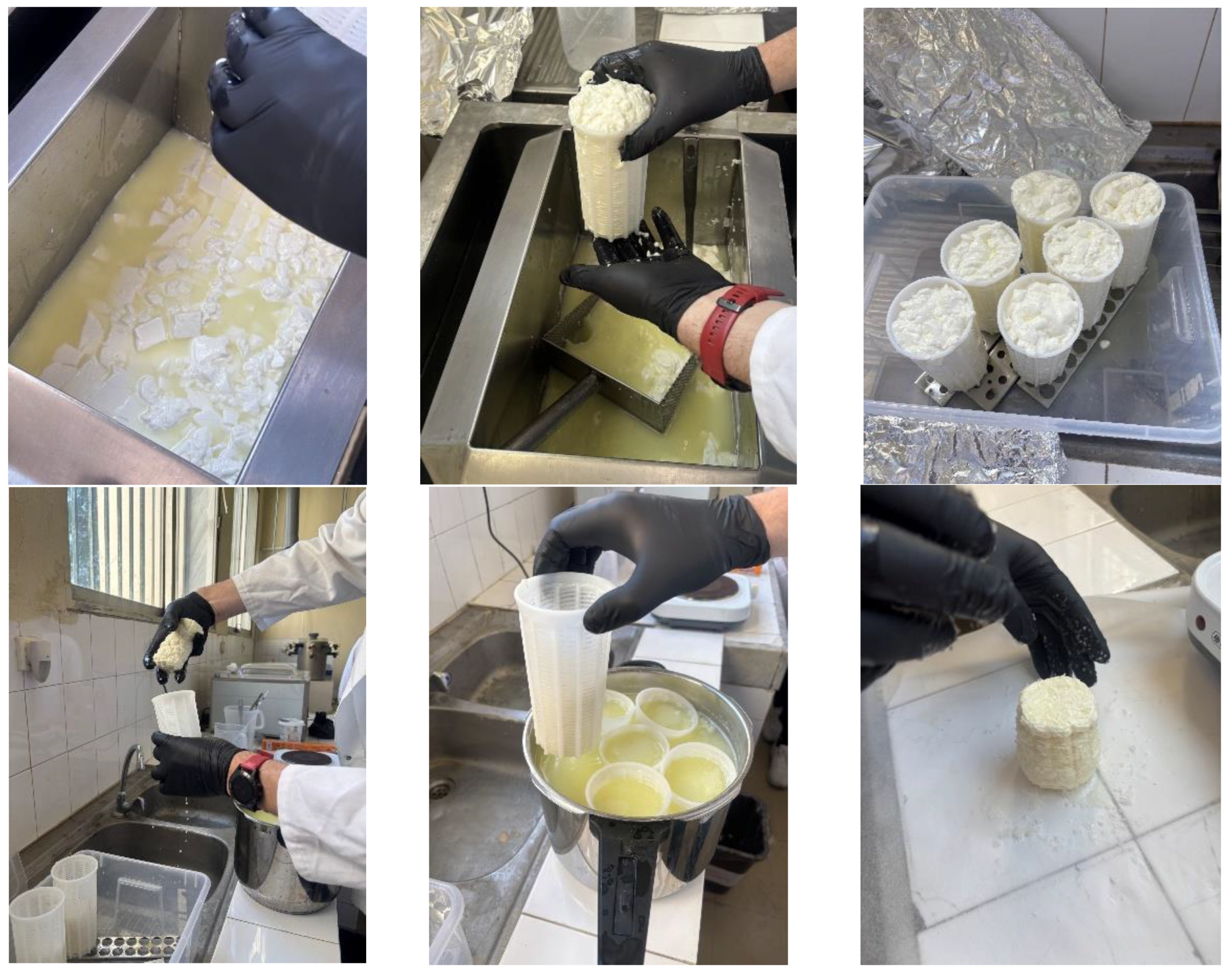
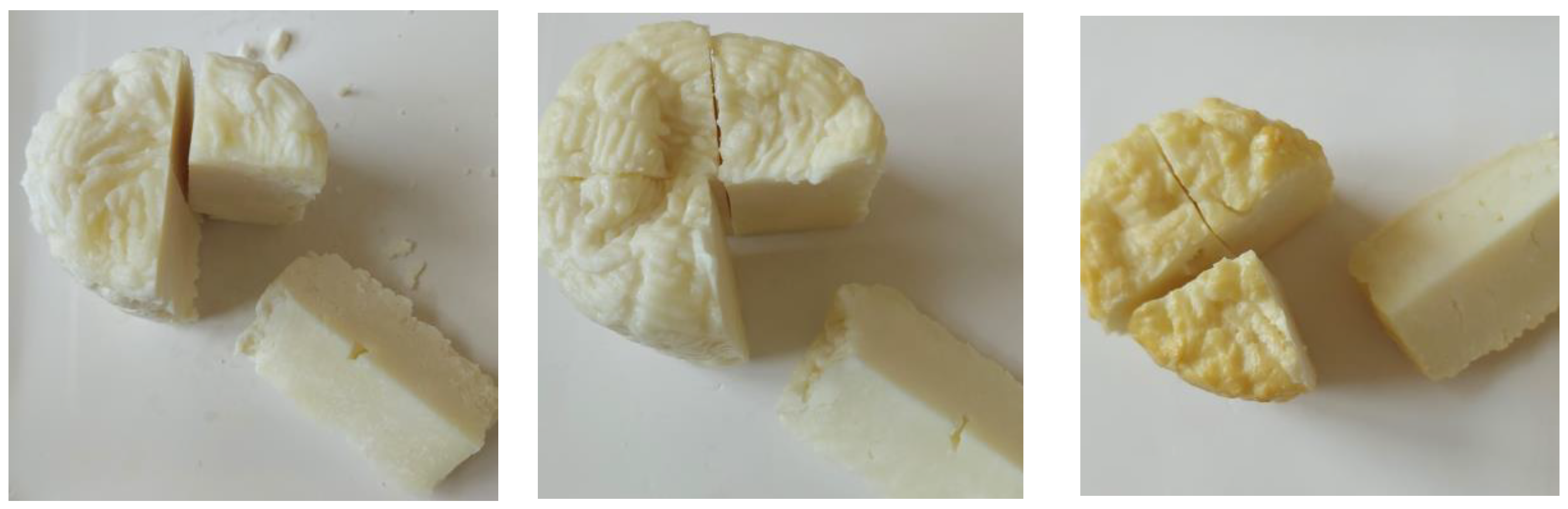
Experimental Formaella-type cheese was manufactured from ewe’s milk (fat: 5.24 ± 0.15; protein: 6.15 ± 0.05; lactose: 4.92 ± 0.03; solids non-fat: 11.4 ± 0.56) provided from a local dairy plant. Two consecutive cheese trials were manufactured with one week’s difference; 8 kg of milk was processed for each trial. The pasteurized milk (at 72 °C for 20 s) was transferred to the laboratory. To standardize the initiation of acidification, a starter culture was added at 1% inoculum; the starter was prepared by adding commercial traditional yoghurt (100 g yoghurt/10 kg milk). The milk was coagulated with liquid rennet (2 mL/10 kg of milk) (Chr. Hansen, Hørsholm, Denmark) within 1 h at 33 ± 1 °C. The cheesemaking process is summarized in Figure 1. Briefly, the coagulum was heated at 40 ± 1 °C for 10 min and then cut into 2 cm cubes. The curd was transferred into cylindrical perforated moulds (7 cm in diameter and 15 cm in height) and subsequently cooked in hot whey at 60 ± 1 °C for 1 h. The moulds were removed from the vat, and the curd was reversed and cooked again in hot whey at 78 ± 2 °C for 1 h. The cheeses were removed from the moulds, dry-salted on the surface (20 g/200 g cheese) and inserted again into the moulds to dry for 24 h at 20 ± 1 °C. The next day (day 1), the cheeses were removed from the moulds and left to ripen for 3 days (at 5 ± 0.5 °C) (Figure 2). On day 5, the cheeses were cold-smoked (maximum temperature 30 °C, relative humidity 70%), using olive wood sawdust in a smoke oven (model Hendi 238486, Hendi B.V. De Klomp, Ede, The Netherlands). Three groups of cheeses were manufactured: S1—a control batch without any treatment; S2—a batch with smoking for 20 min; and S3—a batch with smoking for 60 min (Figure 3). The cheeses were vacuum-packed in polyamide/polyethylene (PA/PE) laminated pouches (Vacupack S.A., Thessaloniki, Greece) and stored at 5 ± 0.5 °C for 90 days.
Cheese samples of each of the three treatments (S1, S2 and S3) of Formaella type were analyzed on the day of manufacture (curd), the next day (day 1), and on days 5 (fresh cheese), 40 and 90 (ripened cheese). At each time-point, S1, S2 and S3 were analyzed for the determination of the microbiological profile and intrinsic properties, while colour parameters and volatile compounds were determined on days 5 and 90. Sampling times were selected to represent different stages of cheese ripening and storage and to allow monitoring of temporal changes in cheese characteristics. The early sampling point reflected the initial post-treatment state, whereas later sampling points were included to assess changes developing during storage. Day 40 was chosen as an intermediate ripening stage to capture transitional changes before the end of storage. VOC and colour analyses were performed only on days 5 and 90, as these determinations were intended to compare the cheeses at two contrasting and technologically relevant stages, namely the initial stage after treatment and the final stage of ripening/storage, when the cumulative effects of smoking and storage on aroma and visual appearance were expected to be more pronounced.

2.2. Physicochemical Analyses

The pH was measured directly using a pH meter (XS Instruments, Carpi, Italy), while water activity (aw) was determined with an AquaLab instrument (Decagon Devices, Pullman, WA, USA). Moisture content was determined by drying a grated cheese sample at 105 ± 2 °C until constant weight was achieved. All physicochemical analyses were performed in triplicate.

2.3. Colour Parameters

The surface colour of cheese samples was evaluated using the CIELab scale (Queensland, Australia), and the evaluated colour parameters included L* (lightness), a* (+red colour to –green component), and b* (+yellow to −blue component). A non-contact imaging spectrophotometer (MetaVue VS3200, X-Rite, Inc., Grand Rapids, MI, USA) was used for measurements with the lighting condition set to daylight D65. Colour was determined in three different areas in each sample.

2.4. Microbiological Analyses

A 10 g cheese sample was diluted in 90 mL of sterile Ringer’s solution and homogenized in a stomacher. Serial dilutions were carried out in 9 mL of sterile Ringer’s solution. The methods for microbiological analyses were previously described by Bintsis et al. [22]. Briefly, total mesophilic count (TMC) was enumerated in Plate Count Agar (Biolife, Monza, Italy) following incubation at 30 °C for 72 h, aerobically, according to ISO 4833-2:2013; Enterobacteriaceae were grown in Violet Red Bile Glucose Agar (Biolife, Italy), with incubation at 37 °C for 24 h, under microaerophilic conditions, according to ISO 21528-2:2017; Staphylococcus sp. was grown in in Baird–Parker Agar, with incubation at 37 °C for 48 h, aerobically, according to ISO 6888-1:2021; presumptive lactobacilli were grown in Man, Rogosa and Sharpe (MRS) Agar (Biolife, Italy), with incubation at 30 °C for 72 h; presumptive lactococci were grown in M17 Agar (Biolife, Italy), with incubation at 30 °C for 48 h, under microaerophilic conditions, according to ISO 7889:2003; Enterococcus sp. was grown in Slanetz and Bartley Agar, with incubation at 37 °C for 48 h; and yeasts and moulds were grown in Rose Bengal Chloramphenicol Agar (Biolife, Italy), with incubation at 25 °C for 5 days, according to ISO 6611:2004. The limits of detection (LOD) were defined as <1 log cfu/g for Enterobacteriaceae (pour-plate method) and <2 log cfu/g for Staphylococcus sp. and yeasts and moulds (spread-plate method). Microbiological analyses were carried out in duplicate.

2.5. Identification of LAB

Approximately 8–10 colonies cultivated on MRS and M17 Agar plates were randomly selected from the two batches of smoked Formaella-type cheese on day 90. The colonies were sub-cultured in MRS and M17 broth (Biolife, Italy) and incubated at 30 °C for 24–48 h. The grown cultures were stored at −20 °C in the broth with 20% glycerol. A loopful of each culture was streaked on MRS and M17 Agar.
Lactic acid bacteria (LAB) isolates were identified to the species level using Matrix-Assisted Laser Desorption Ionization–Time of Flight Mass Spectrometry (MALDI-TOF MS) using the MALDI Microflex LT (Bruker Daltonic GmbH, Bremen, Germany), as described by Bintsis and Kyritsi [23]. An identification score value between 0.000 and 1.699 represents an unreliable identification, between 1.700 and 1.999 a probable genus identification, between 2.000 and 2.299 a secure genus identification and probable species identification, and finally between 2.300 and 3.000 a highly probable species identification.

2.6. Determination of VOCs

The extraction and analysis of VOCs from cheese samples were performed as described by Bintsis et al. [22]. Five grams of grated cheese was mixed with 10 mL of saturated NaCl solution (360 g/L) and homogenized using an ULTRA-TURRAX T-25 (IKA-Werke GmbH & Co. KG, Staufen, Germany). An internal standard (5 μL of 4-methyl-2-pentanol, 10 mg/kg in ethanol) was then added. The samples, after sealing with PTFE–silicone septa, were incubated at 60 °C with agitation (250 rpm). VOCs were extracted from the headspace using a divinylbenzene–carboxen–polydimethylsiloxane SPME fibre (2 cm length, 50/30 μm film thickness; Supelco, Darmstadt, Germany) for 50 min. The extracted VOCs were analyzed using a Shimadzu GCMS-QP2020 instrument (Kyoto, Japan), equipped with a MEGA-5 MS capillary column (30 m × 0.25 mm, 0.25 μm) (MEGA, Legnano, Italy). The mass spectrometer operated in electron impact ionization mode at 70 eV and data were collected in full-scan mode, with a scan time of 0.2 s over a mass range from 35 to 350. Source and interface temperatures were held at 250 °C. To check any carryover effects, analyses of blanks were conducted, while pooled QC (quality control) samples (n = 5) were injected to monitor the instrumentation drift and analyte reproducibility. All compounds in QC presented RSD < 25%, indicating satisfactory stability and reproducibility of the system during the analytical batch. The samples were analysed in triplicate and randomized order. The identification was carried out by comparing the retention times of the compounds and mass spectra (over 80% match) with a commercial database NIST17 and FFNSC 3 Shimadzu. The LabSolutions GCMS solution (v.4.44) software was used for the integration of the peak areas. The chromatographic peak areas were used to determine relative peak area.

2.7. Statistical Analyses

Two independent cheesemaking trials were conducted using separate milk batches and were considered biological replicates. Within each trial, two independent cheese samples were analyzed for each treatment. The individual cheese sample was considered the experimental unit. For each unit, analytical determinations were performed in triplicate for physicochemical and in duplicate for microbiological analyses; these measurements were considered technical replicates and were averaged (for microbiological counts after conversion to log cfu/g) prior to statistical analysis to obtain a single value per cheese sample. Data were analyzed using the General Linear Model (GLM) procedure of SPSS Statistics program 29.0.0.0 (IBM, Armonk, NY, USA). The treatment methods and storage time were included in the model as fixed factor effects and the cheesemaking trial included as the biological replication factor, while the physicochemical and microbiological parameters were considered as dependent variables. Pairwise multiple comparisons between least-squares means were carried out by using Tukey’s test (p < 0.05). For the analysis of VOC, heatmap visualization and hierarchical clustering analysis were performed using the Morpheus web-based tool [24]. Volatile compounds were analyzed and grouped into chemical classes prior to statistical evaluation. Pearson correlation analysis was performed to assess relationships among variables, followed by principal component analysis (PCA) to identify patterns and reduce data dimensionality. All statistical analyses were conducted using IBM SPSS Statistics (version 22, IBM Corp., Armonk, NY, USA), and components with eigenvalues >1 were considered significant according to the Kaiser criterion. PCA was performed on standardized data, and loadings were used to interpret the contribution of variables to each principal component. Biplots were generated based on PC1 and PC2 scores and loadings to visualize the distribution of samples and variable associations. Graphical visualization and formatting of the PCA plots were performed using Microsoft Excel.

3. Results and Discussion

3.1. Physicochemical Analyses

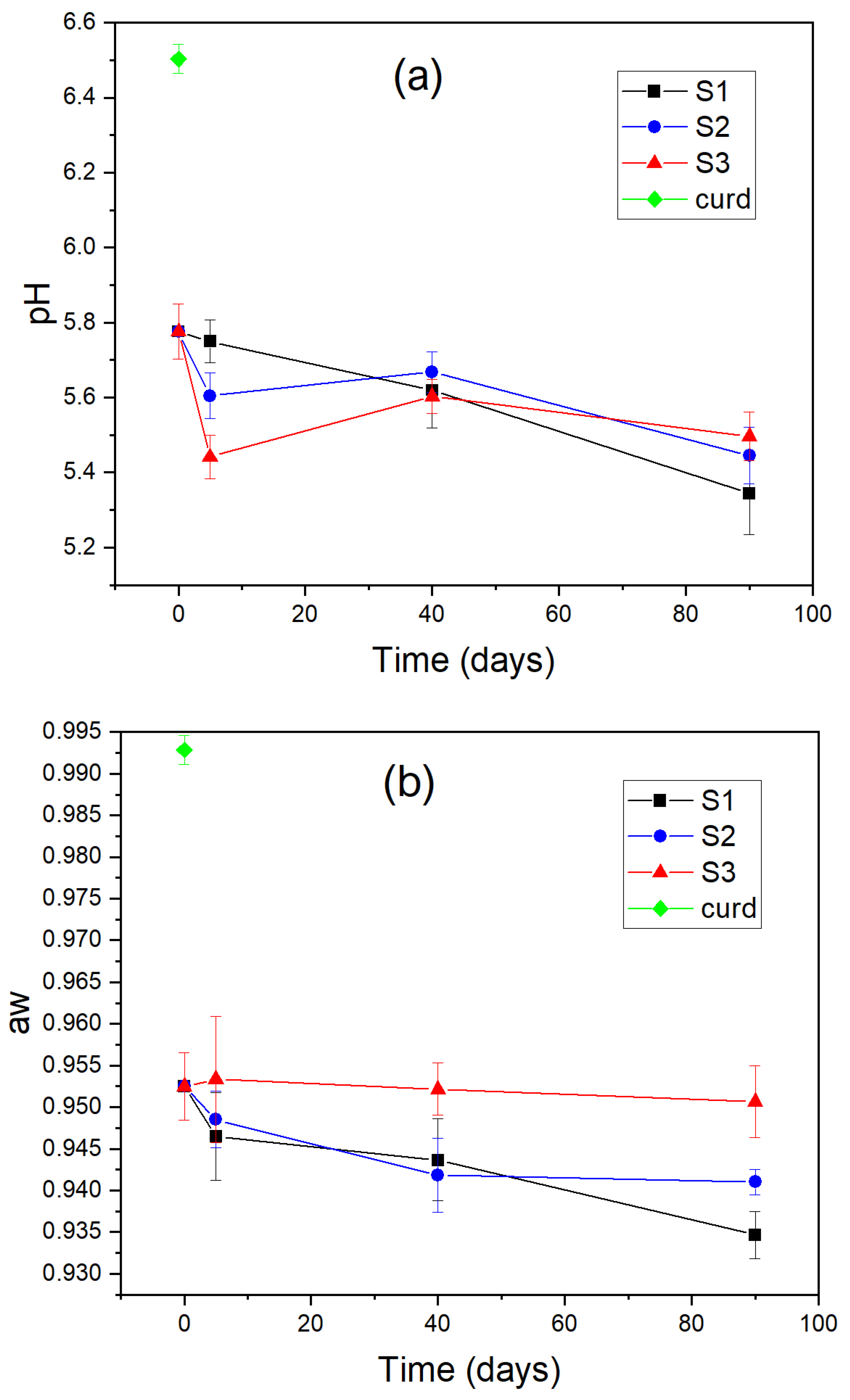
The experimental Formaella-type cheeses were manufactured following a specific cheesemaking process with three cooking steps. Formaella-type cheeses were classified as hard cheeses, that is cheeses with a maximum moisture content of 38%. The pH of the curd was 6.50 ± 0.04 and the aw was 0.993 ± 0.002. Both parameters were significantly reduced (p < 0.05) after the first day’s cheesemaking steps (Figure 4); during the first day, the basic steps of the cheesemaking were carried out, that is drainage in the moulds, and three scaldings, two of them at high temperature and time, as well as dry-salting. The pH was reduced to 5.78 ± 0.07, due to the activity of starter and non-starter lactic acid bacteria (NSLAB) that were present, even at low numbers (see below). The decrease in the aw value was due to the removal of whey during the first steps of the cheesemaking.
The pH was further reduced on day 5, that is 1 day after the smoking process (Figure 1), and the reduction was more pronounced for the S2 and S3 samples. S3 showed a significant difference (p < 0.05) from S1 and S2. Similarly, the intense smoke caused a significant reduction (p < 0.05) in the aw in sample S3 on day 5 (Figure 4). After 35 days of storage at 5 °C (day 40), the cheeses showed some fluctuations in pH values, with sample S1 showing a slight reduction and S2 and S3 a slight increase. At day 90, the pH further dropped, with S1 showing the lowest value (pH 5.34 ± 0.11) and S3 the highest (pH 5.50 ± 0.06).
The aw values, which are described as the free or unbound moisture in the cheese, significantly decreased on day 5; the samples that were smoked for 60 min (S3) had significantly higher values (p < 0.05) for aw than the control samples (S1) and the cheeses smoked for 20 min (S2). It is possible that the cold smoking caused an increase in moisture due to the high humidity in the smoking chamber; this increase was more pronounced in intense smoking samples (S3). Higher moisture content was observed for cold-smoked Cheddar cheese [17].

3.2. Colour Parameters

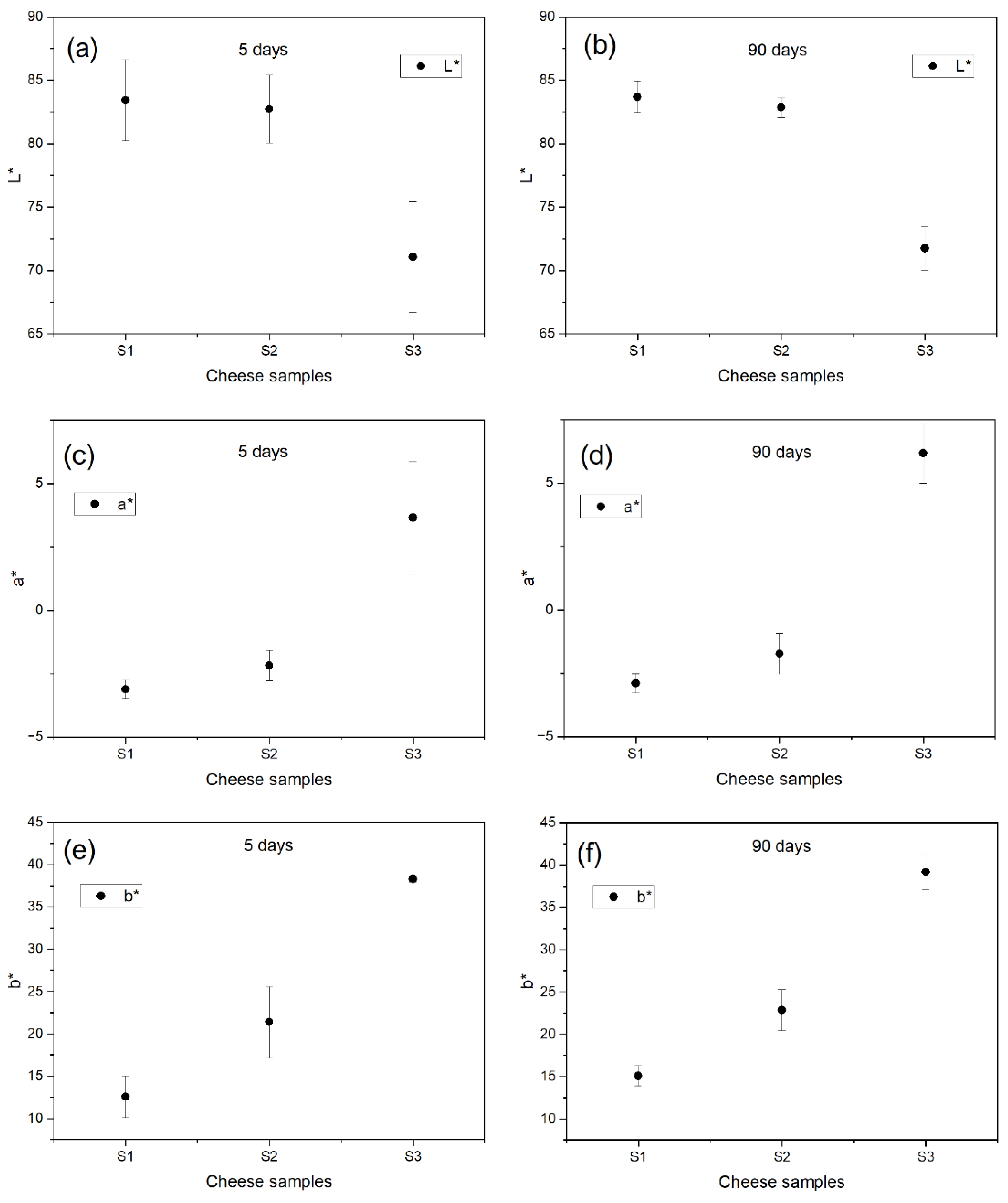
The colour parameters were recorded as an additional indication of the effect of smoking on the experimental cheeses. As can be seen in Figure 5, the smoking process as well as the smoking duration affected the colour parameters of cheese samples. In particular, the smoking treatment increased the yellow colour intensity (b*) of the cheese samples, and the intensively smoked samples (S3) were found to have higher values than the samples smoked for 20 min (S2) and the control samples (S1). The negative values of the a* colour parameter of S1 and S2 samples are due to the presence of the riboflavin found in milk and whey that exhibits a yellow-green colour [25]. Since the curd was heated inside the whey, this pigment might have migrated into the cheese matrix. However, intensive smoking increased the colour parameter a* to positive values of the S3 samples. Moreover, the lightness (L*) of S3 samples showed a lower value than S2 and S1. Storage time did not affect the colour parameters as expected, since no significant differences occurred in samples’ moisture content, as the samples were stored in vacuum packaging. The results of the colour analysis suggest that the intense smoking process (S3) had an impact on the development of the characteristic golden colour of smoked cheese (Figure 3). Similar values for the parameter b*, which is a descriptor of the blueness/yellowness, were observed for artisanal smoked cheese from raw goat’s milk [19].

3.3. Microbiological Analyses

Enterobacteriaceae were present at low numbers (2.29 ± 0.06 log cfu/g) in the curd and declined to non-detectable numbers in the fresh cheese; thereafter, Enterobacteriaceae were below the LOD throughout the cheesemaking and storage. Staphylococcus spp. were counted at 3.49 ± 0.03 log cfu/g in the curd; their numbers reduced to 2.09 ± 0.09 log cfu/g in the fresh cheese and were below the LOD in the cheese sample throughout the storage.
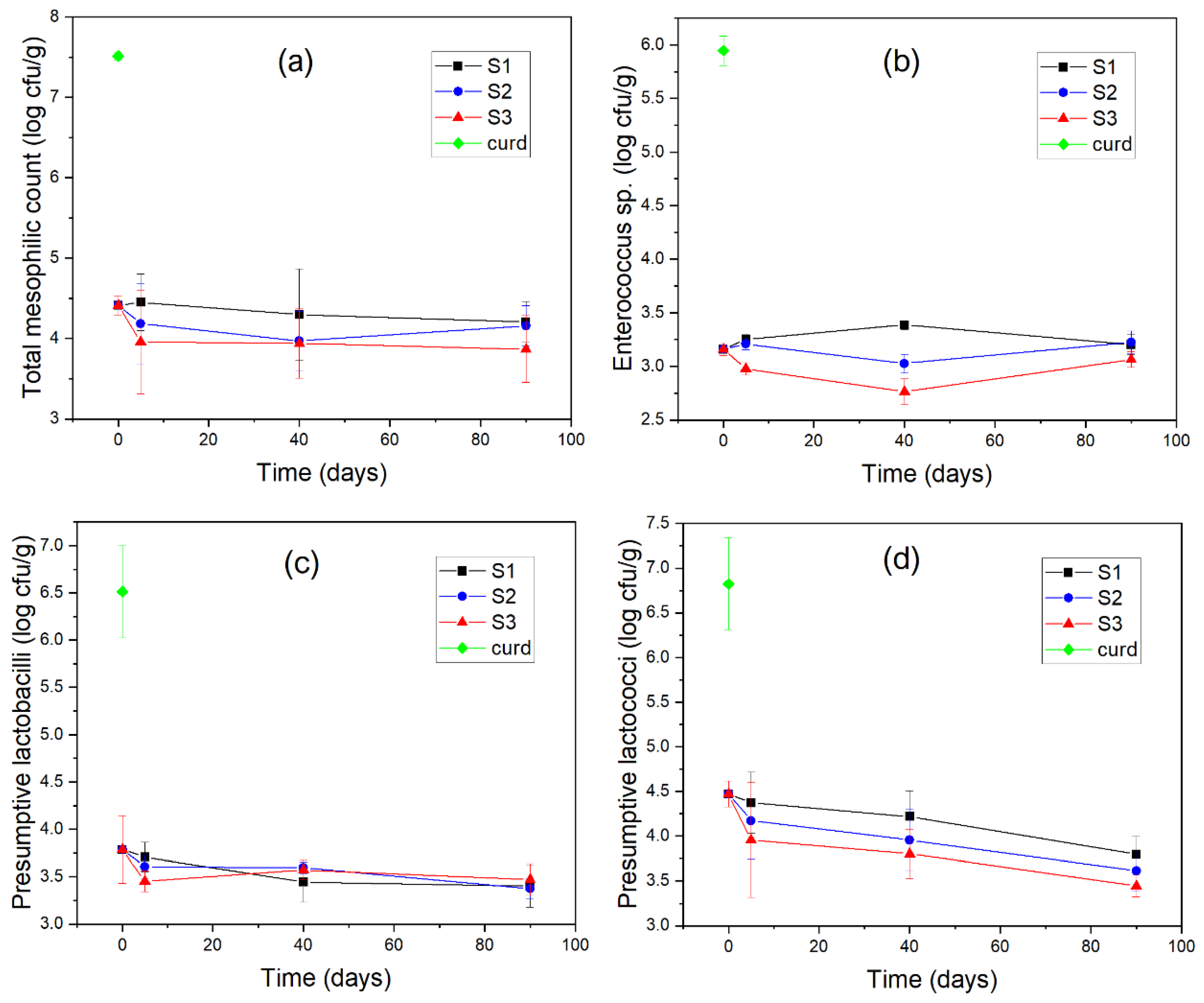
TMC was counted at 7.51 ± 0.05 log cfu/g in the curd and decreased to 4.41 ± 0.12 log cfu/g in the fresh cheese (Figure 6). Similarly, Lactobacillus sp. declined from 6.51 ± 0.49 to 3.79 ± 0.36 log cfu/g, Lactococcus sp. and Streptococcus sp. from 6.82 ± 0.51 to 4.47 ± 0.14 log cfu/g, Enterococcus sp. from 5.95 ± 0.14 to 3.16 ± 0.05 log cfu/g and yeasts and moulds from 3.33 ± 0.03 log cfu/g to non-detectable numbers (Figure 6). This overall reduction in microbial populations is likely attributable to the severe cooking steps where the cheese curds are heated at high temperatures.
Enterobacteriaceae, staphylococci, and yeasts and moulds were not detected in any of the samples at 5 days from the manufacture and thereafter throughout the cold storage. The TMCs of the control cheese (S1) were 4.46 ± 0.34 log cfu/g in the fresh cheese at 5 days, whereas the same group showed significantly lower counts for the weakly smoked cheese (S2) (4.19 ± 0.51 log cfu/g, p < 0.05) and for the intensively smoked cheese (S3) (3.96 ± 0.65 log cfu/g, p < 0.05). During storage, TMC levels fluctuated: in S1, counts decreased at 40 days and increased at 90 days; in S2, a decrease was observed at 40 days followed by an increase at 90 days; in S3, TMC progressively decreased at both 40 and 90 days of storage.
Presumptive lactobacilli showed similar trends, with S1 showing slightly higher values than S2 and S3, although the differences were not significant. The counts showed some fluctuations at 40 days and significantly reduced (p < 0.05) at 90 days for all three groups of experimental cheeses. No significant differences (p > 0.05) were obtained between the three batches. Majcher et al. [16] reported no differences in lactobacilli counts for Oscypek cheese smoked in a traditional wood smoker for 1 day, while the cheeses smoked for 3 days had more (ca. 1 log cfu/g), showing reduced counts of Lactobacillus sp.
Presumptive lactococci and streptococci were the dominant microbial groups in the experimental Formaella-type cheeses, both control and smoked. At 5 days, their counts were 4.37 ± 0.34 log cfu/g for S1, 4.17 ± 0.43 log cfu/g for S2 and 3.96 ± 0.64 log cfu/g for S3. The counts significantly decreased (p < 0.05) for S1 at 40 days with a further decrease at 90 days, and the same trend was observed for S2 and S3.
Enterococci were at lower counts than presumptive lactobacilli, presumptive lactococci and streptococci for all samples at 5 days, and then the counts showed some fluctuations during storage. The application of smoke had a significant effect on Enterococcus sp. at 5 days, with S3 showing significantly lower counts than S1 and S2, and this trend was also observed at 40 and 90 days. The susceptibility of enterococci to cold smoking is an interesting point; however, studies on the effect of smoke on enterococci counts in cheese are scarce.
Moreover, the results from the microbiological analyses showed that storage at 5 °C may affect the TMC at 40 days for all three batches, the lactobacilli at 90 days, the lactococci and streptococci at 40 and 90 days, and enterococci at 40 days (Figure 6).
In general, relatively low viable counts were obtained for Formaella-type experimental cheese. The low counts may be explained by the high-heat cooking steps during cheesemaking and the subsequent storage under vacuum. Higher microbial populations in Formaella PDO were observed; Asteri et al. [26] reported TMC of 7.0 ± 0.3 log cfu/g for fresh Formaella (3 days old) and 7.1 ± 0.1 log cfu/g for matured Formaella (2 months old); mesophilic lactobacilli were reported at 7.0 ± 0.0 and 6.4 ± 0.8 log cfu/g, respectively, and mesophilic cocci reached 7.0 ± 0.5 in fresh and 6.7 ± 0.5 log cfu/g in matured Formaella and enterococci at 5.9 ± 0.2 and 6.2 ± 0.1 log cfu/g respectively, whereas counts of coliforms were found at 6.6 ± 0.2 log cfu/g and yeasts at 5.3 ± 0.4 cfu/g in the matured Formaella [26]. The Formaella cheese samples were commercially available cheeses made in Arachova in the Parnassos Mountain area [26]. These discrepancies may result from substantial differences in the basic steps of cheesemaking, including cooking severity, maturation or hygiene practices during the manufacture and distribution.
Similarly to our results, no growth of NSLAB was observed in smoked Cheddar cheese, whereas, at the end of 6-month ripening, the smoked Cheddar cheeses had ca. 1 log cfu/g lower counts of NSLAB than control cheese [17]. However, the microbial groups that were enumerated in the Formaella-type cheeses were notably lower than the reported microbial loads of other smoked cheeses, probably due to the different manufacturing process which includes repeated high-temperature cooking. Alegria et al. [19] reported that Lactococcus sp. were the dominant microorganisms in Oscypek cheese (ca. 9 log cfu/g). High numbers of Lactobacillus sp. were also observed in Oscypek cheese samples, though at levels 1–2 log cfu/g lower than those of lactococci; yeasts and moulds were also present in all cheese samples in numbers ranging from 5 to 6 log cfu/g and enterobacterial populations were present at similar numbers [19].
Cardinali et al. analyzed the characteristics of commercial samples of Polish artisanal smoked cheeses made from raw goat’s milk and reported that presumptive lactococci counts were 7.82–8.63 log cfu/g, and presumptive lactobacilli counts were 8.52–9.50 log cfu/g [18]. Moreover, the same authors reported coagulase-negative cocci counts below 1 log cfu/g and enterococci counts at 4.96–5.93 log cfu/g, while Enterobacteriaceae counts ranged between <1 and 3.29 log cfu/g and yeasts and moulds were between <1 and 2.68 log cfu/g.

3.4. Identification of LAB

The dominant microbiota of the Formaella-type cheeses were identified using MALDI-TOF MS; this method generates spectral fingerprints from specific peptides released from the cell surface by special acidic treatment [23] and has been successfully used for the identification of LAB in milk [27], cheese [28] and other dairy products [29]. A total of 53 LAB isolates were identified at the species level and the results are presented in Table 1.
All the identified LAB in the current study have been found to be part of the microbiota of several Greek cheeses; moreover, some species found in Formaella-type cheeses have been reported in smoked cheeses. Enterococcus durans has been found to dominate the microbiota in Graviera [30] and in Oscypek (smoked from raw ewe milk) [19]. Enterococcus faecium was detected in Graviera [30], Graviera Kritis [31], Graviera Naxos [32], Orinotyri [33], Anthotyro of Naxos (ripened whey cheese) [34], Feta [35], fresh white-brined cheese [36] and Sfela [37]. Enterococci are thermoduric LAB and part of the subdominant microbiota of many artisanal cheeses [38,39], where they play an important role in the development of sensorial properties, help modulate the cheese microbiota, and may play a role in controlling pathogenic and spoilage microorganisms [40,41]. Besides their thermoduric character, post-treatment recontamination may also explain the presence of enterococci in cheese, with biofilms on milk-contact surfaces acting as a potential source of high numbers of bacteria [42].
Leuconostoc lactis was the second most dominant LAB in smoked Formaella-type cheese. This species was found in artisanal Graviera Kritis [32], whereas Leuconostoc mesenteroides was reported in Graviera [30], Graviera Naxos [32], Kefalotyri of Naxos [34], fresh semi-hard caprine milk [36], Anthotyro of Naxos (ripened whey cheese) [34] and fresh white-brined cheese [36]. Furthermore, Leuc. mesenteroides was one of the main species of LAB in smoked cheeses such as San Simón da Costa [43]. The presence of Leuconostoc species in different varieties of raw milk cheeses has been reported, with Leu. mesenteroides subsp. mesenteroides being the most frequently isolated in raw ewe’s milk cheeses [44]. Leuconostoc sp. showed moderate to high resistance to different stress factors, such as heat treatments, acidity, osmotic and oxidative stresses, and grew well in the presence of 3% and 4% NaCl [45,46].
The presence of Streptococcus thermophilus in the experimental Formaella-type cheese may be explained by the introduction as part of the starter culture used for the experimental cheeses. Moreover, Str. thermophilus was detected in Graviera [30], Batzos and Feta [47], Feta [35] and Sfela cheese [37]. The absence of Lactobacillus bulgaricus, i.e., typical yoghurt-associated bacteria, in the matured smoked cheese may suggest the smoke sensitivity of this species; however, the identification of LAB isolates in the matured and smoked cheeses limits the interpretation of any effects of the intense heat treatments during the cheese manufacture.
Lacticaseibacillus rhamnosus and Lactobacillus curvatus were found to be the most prevalent species from the former Lactobacillus genus [48] in smoked Formaella-type cheese. Lcb. rhamnosus was reported in the dominant microbiota in Graviera cheese made from raw bovine milk [49]. Also, this species is widely present, as an autochthonous NSLAB, in long-ripened cheeses such as Grana Padano, Parmigiano Reggiano and Piedmont cheese, made without addition of commercial starters [50,51,52]. Lb. curvatus has been frequently found as a minor component of the microbiota of hard Cheddar [53], Graviera Kritis and Manoura [31], Orinotyri [33] and Feta cheese [35].

3.5. Determination of VOCs

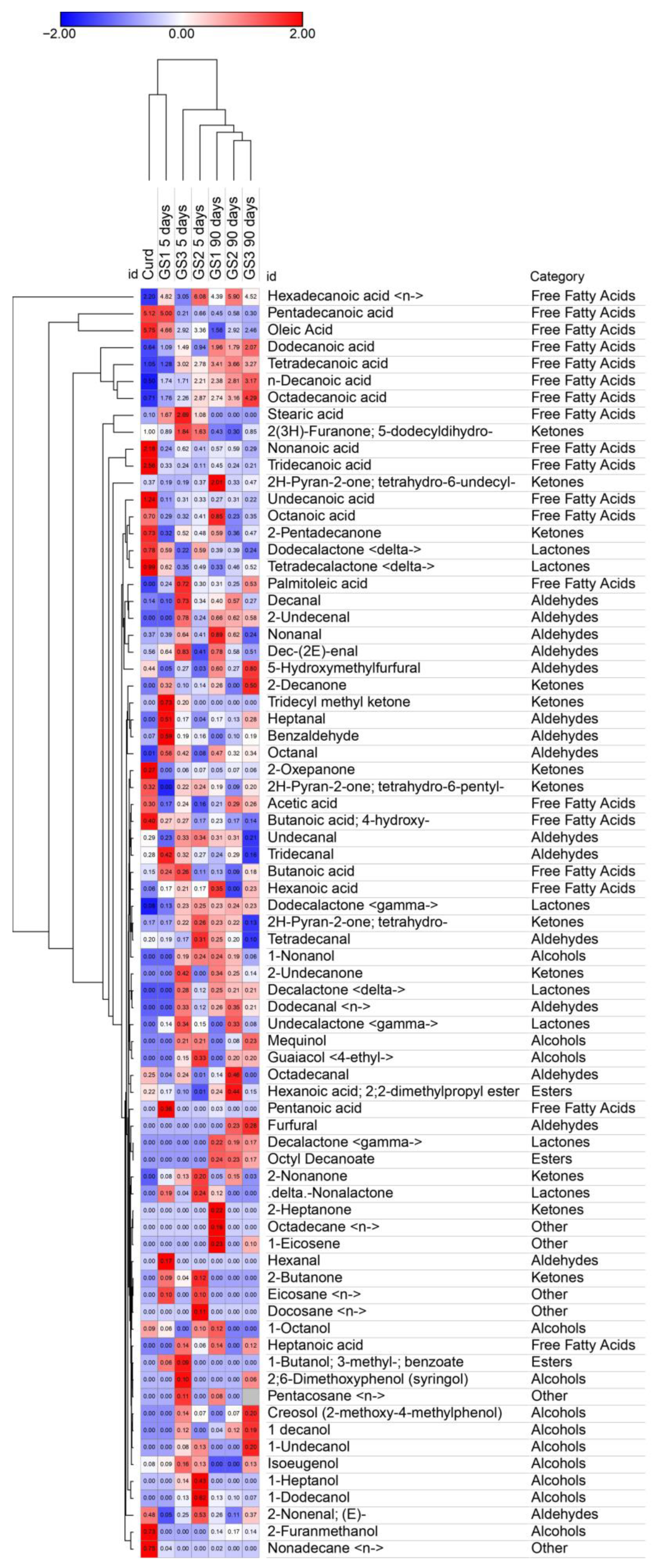
The headspace-SPME fibre extraction coupled with GC-MS analysis of experimental Formaella-type cheeses revealed a diversity of volatile organic compounds (VOC) and several differences between smoked, lightly smoked and unsmoked Formaella-type cheese. Free fatty acids (FFA), ketones, lactones, aldehydes, esters, alcohols and hydrocarbons were the main chemical groups detected (Supplementary Material, Table S1). A heatmap of all VOCs detected by GC-MS is presented in Figure 7; 75 volatiles were identified in Formaella-type cheeses, comprising 19 FFAs, 12 ketones, seven lactones, 16 aldehydes, three esters, 12 alcohols and six hydrocarbons.
Formaella-type cheese was found to be particularly rich in volatile FFAs. Several FFAs were present in the ewe’s milk curd; some of the FFAs such as acetic acid, 4-hydroxy-butanoic acid, butanoic acid, octanoic acid, nonanoic acid, undecanoid acid, tridecanoid acid, pentadecanoid acid and octadecanoid acid were present at higher quantities in curd than in the fresh cheeses (Table S1). The matured cheeses showed increased abundances in FFAs with even numbers of carbon atoms, such as n-decanoic acid, dodecanoic acid, tetradecanoic acid and octadecanoic acid; some of them were also at higher amounts in the smoked Formaella-type cheese (S3). Most of the even-chain FFAs were found to be dominant in Feta cheese made from ewe’s milk [54,55,56]. Short- and medium-chain FFAs were also abundant in smoked cheeses such as Herreňo, a smoked goat’s milk cheese [57], and Oskypek [16]. FFAs are, in general, produced in the cheese by the enzymatic breakdown of milk fat triglycerides [58]. However, FFAs may also derive from the deamination of amino acids, as metabolic products of lactose metabolism or even lipid oxidation [59,60]. Medium-chain FFAs were described as fatty, acidic, cheesy and floral in smoked Cheddar, while longer ones (e.g., decanoic acid) have waxy and soapy aromas [61].
Ketones were the second most abundant group of VOCs in the experimental cheeses; these compounds were found at variable amounts in the fresh and matured Formaella-type cheeses. The sum of the relative abundances of ketones increased from curd to the fresh cheese and decreased during storage. Ketones were the largest group of VOCs in artisanal Polish cow’s milk smoked cheeses [62]. 2-Nonanone was one of the most abundant ketones in Feta and Herreňo cheese [54,55,56,57].
Lactones were also present in relatively high quantities. γ-Decalactone, γ-undecalactone and γ-dodecalactone increased with storage and/or the smoking process, whereas δ-dodecalactone and δ-tetradecalactone were present in fresh and matured Formaella-type cheese. δ-Decalactone and γ-dodecalactone were found in Palmero cheese, an artisanal fresh goat’s cheese smoked with pine needles [63] or dry prickly pear [64]. Lactones are formed through the intramolecular esterification of hydroxy fatty acids within triglycerides [65]. High-temperature cooking of experimental Formaella-type cheeses may induce changes in lactone profile due to enhanced lipid decomposition. The presence of lactones in the curd may be explained by the heat treatment of ewe’s milk; Tian et al. [66] emphasized the role of the intensity of milk heat treatment in the formation of lactones.
Aldehydes were found in fresh and matured Formaella-type cheese and, due to their low odour thresholds, may have an impact on the flavour of Formaella-type cheese. While heptanal was detected in very low amounts in one sample, furfural, heptanal, benzaldehyde, octanal, nonanal, 2-nonenal, decanal, dec-2-enal, 5-hydroxymethylfurfural, undecanal, 2-undecenal, dodecanal, tetradecanal and octadecanal were found in variable quantities. In general, aldehyde levels decreased from the curd to the fresh cheese and increased during maturation. Aldehydes in cheese can be formed by the decarboxylation of keto acids depending on the physicochemical conditions, and may be reduced to alcohols or oxidized to acids [67]. They have been reported to be an important group of VOCs in both unsmoked and smoked Herreño cheese [57]. Similarly, hexanal, furfural, heptanal, benzaldehyde and nonanal were reported in Oscypek cheese, with total aldehyde levels increasing after smoking [16]. According to Majcher et al. [16], furfural was present in smoked Oscypek, likely derived from wood smoke as a decomposition product of hemicelluloses.
The number of esters detected in Formaella-type cheeses was very limited; 2,2-dimethylpropyl hexanoate was detected both in the curd and the cheeses. Ethyl esters were abundant but their total concentration halved during storage of smoked Oscypek cheese [16]. Esters are formed from the esterification of alcohols and fatty acids catalyzed by esterases from NSLAB [68] and yeasts [69], or by chemical reactions [67]. The low numbers of NSLAB and the absence of yeasts in the Formaella-type cheeses did not, probably, allow the esterification reactions.
Alcohols were also found in relatively small abundances; however, some phenolic alcohols were detected, especially in the smoked samples (S2 and S3). Mequinol (4-methoxyphenol), creosol (2-methoxy-4-methylphenol), guaiacol (2-methoxyphenol) and syringol (2,6-dimethoxyphenol) were the predominant volatile alcohols in the smoked Formaella-type cheese. These compounds were also detected in smoked Chaddar [61] and smoked sausages [70] and provided the characteristic smoky flavour. Guaiacol, in particular, was the most abundant odour compound in Oscypek; due to its relatively high amount and low odour threshold, guaiacol was characterized as the compound with the biggest influence on the aroma of Oscypek cheese [16]. Ethanol, 2,3-butanediol and furanmethanol were also abundant alcohols in Oscypek [16]; the former two were absent from Formaella-type cheese and the latter was found in smoked samples. According to the study of Majcher and Jelen [19], 2-methoxyphenol, 4-methylphenol, 2-methoxy-4-methylphenol, 3-ethylphenol and 2,4-dimethylphenol were the most important volatile compounds that were responsible for the special, characteristic smoky aroma of Oscypek cheese. 2-Furanmethanol was initially present in the curd and re-formed during the storage; this alcohol was reported to contribute to the nutty, roasted aroma of high-cooked cheeses, such as Parmigiano-Reggiano cheese [71]. Furans are often formed by the thermal degradation of fructose in the presence of amines and amino acids via the Maillard reaction [72].
A small number of hydrocarbons were detected in the experimental cheeses; however, no consistent trends were noticed. These compounds are possible secondary products of lipid autoxidation [73] and do not make a major contribution to cheese aroma, although they may serve as precursors for the formation of other aromatic compounds [74].
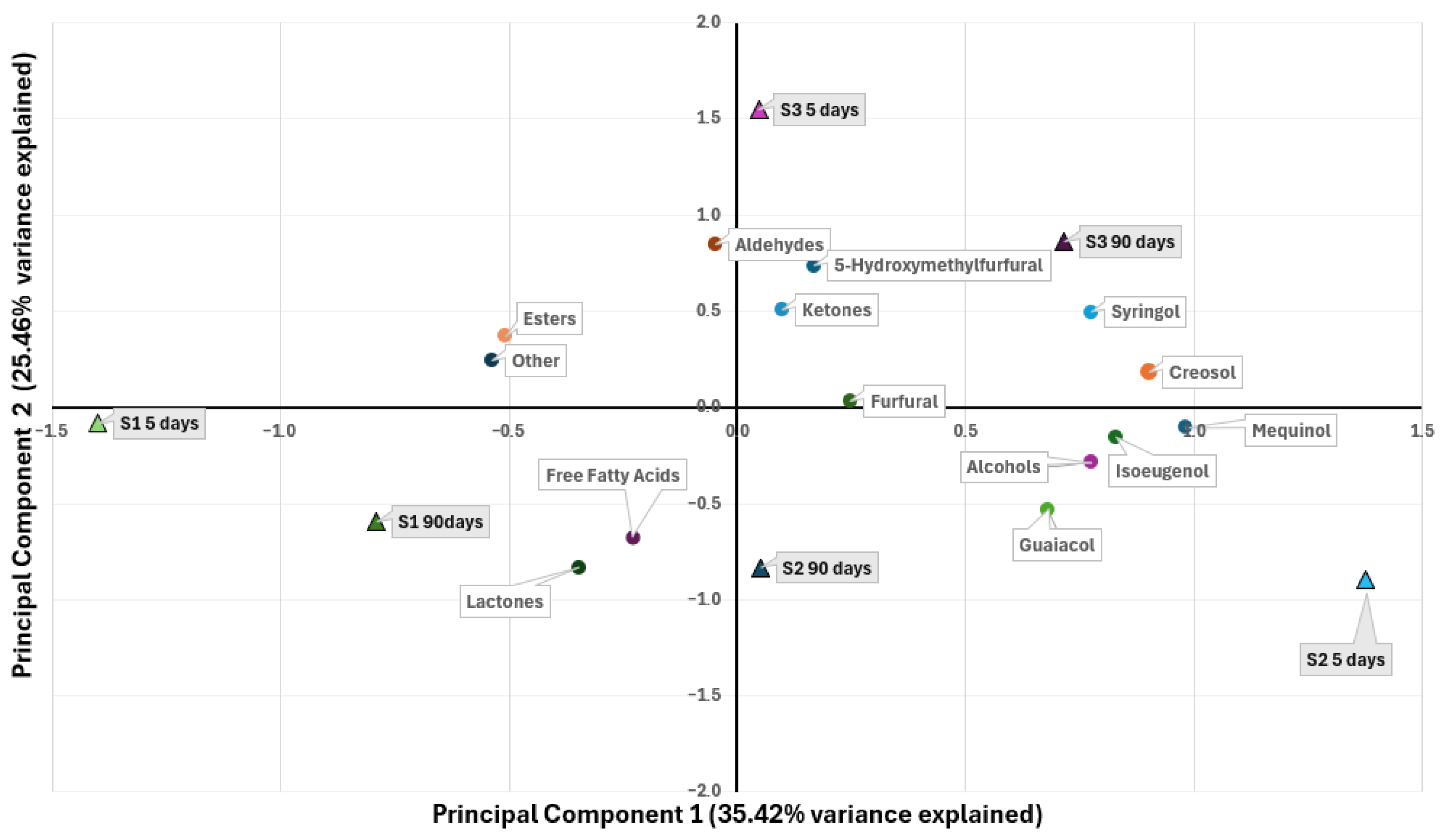
Principal component analysis (PCA) was applied to explore patterns in the volatile composition of the samples. Although four components had eigenvalues greater than 1 and cumulatively explained 93.36% of the variance, interpretation focused on the first two components due to their relevance for visualization and meaningful chemical interpretation. The first two principal components (PC1 and PC2) explained 60.88% of the total variance, with PC1 accounting for 35.42% and PC2 for 25.46%. The first PC was mainly associated with phenolic compounds (mequinol, creosol, guaiacol, isoeugenol, syringol) and alcohols (loadings > 0.70, Table S2) and opposed to esters, lactones and FFAs, indicating a separation between smoky/phenolic and fruity/sweet profiles. PC2 was driven by thermal degradation and oxidation markers, with high positive loadings for 5-hydroxymethylfurfural (5-HMF) and aldehydes, and a negative contribution from lactones and FFAs, reflecting processing intensity and a contrast between oxidized and lipid-related profiles.
Correlation analysis (Table S3) supported these findings, showing strong positive relationships among phenolic compounds and alcohols (r > 0.8), suggesting a common origin, whereas strong negative correlations were observed between compounds from different chemical groups, such as free fatty acids and ketones (r = −0.769) and isoeugenol and esters (r = −0.838), highlighting opposing trends in their formation. The non-positive definite matrix indicates multicollinearity, justifying the application of PCA.
The PCA biplot (Figure 8) revealed clear sample differentiation; S1 samples were positioned on the negative side of PC1 and were associated with esters and lactones, indicating a fruitier and lipid-derived profile. In contrast, S3 samples, particularly at early storage, were located along the positive side of PC2 and were associated with aldehydes and 5-hydroxymethylfurfural, reflecting a greater contribution of oxidation and thermal processing products. S2 samples were primarily distributed along the positive side of PC1, correlating with phenolic compounds such as mequinol, creosol, and guaiacol, indicative of a more pronounced smoky/aromatic profile.
Overall, the results demonstrate a clear trade-off between fruity and thermally derived/phenolic compounds, driven by processing and storage conditions.

4. Conclusions

The results of this pilot-scale study provided insight into selected physicochemical, colour, microbiological and volatile characteristics of smoked Formaella-type cheeses. Microbiological analyses of the Formaella-type samples revealed relatively low microbial populations mainly composed of LAB including presumptive lactococci, presumptive lactobacilli and leuconostocs, as well as enterococci. The low counts of viable bacteria are possibly caused by high-heat cooking steps during cheesemaking, whereas the subsequent storage under vacuum kept the counts at these levels. The LAB community included species such as Ent. durans, Ent. faecium, Leu. lactis, Leu. mesenteroides, Str. thermophilus, Lcb. rhamnosus and Lb. curvatus. These microorganisms are commonly associated with cheese manufacturing and are known to contribute to the fermentation of lactose and the formation of organic acids during cheesemaking and ripening.
Differences in microbial counts were observed among the treatments, with more intense smoking appearing to influence the levels of total viable bacteria and certain LAB groups (e.g., Lactococcus, Streptococcus and Enterococcus spp.). However, these differences should be interpreted with caution, as microbial dynamics in cheese are strongly influenced by multiple factors related to the cheesemaking process and storage conditions. Therefore, the present results should be considered exploratory with respect to the potential effects of smoking on the microbial ecosystem of Formaella-type cheese.
The key odorants of unsmoked and smoked cheese samples were determined. FFAs, aldehydes, ketones and lactones were the most abundant groups of VOCs in Formaella-type cheese. Several phenolic and furan derivatives were present in the smoked samples, and these compounds have been previously reported as typical compounds of smoked cheeses.
Further research is required to better elucidate the interactions between smoking, microbial dynamics and flavour development. Future work will be extended to small-scale production, allowing more comprehensive comparisons and additional analyses, including sensory evaluation. Such studies could also explore the technological properties of selected isolates to assess their potential use as starter or adjunct cultures in the production of Formaella-type cheese.

Supplementary Materials

The following supporting information can be downloaded at https://www.mdpi.com/article/10.3390/fermentation12040208/s1: Table S1. Volatile organic compounds of smoked Formaella-type cheeses at different times of manufacture/storage. Table S2. Loadings of volatile compounds on the first four principal components obtained from PCA. Table S3. Pearson correlation coefficients among volatile compound groups and selected individual compounds.

Author Contributions

Conceptualization, T.B.; methodology, T.B., S.L., S.E., I.V. and F.T.M.; formal analysis, T.B., S.L., S.E., I.V. and F.T.M.; resources, T.B., S.L., S.E., I.V. and F.T.M.; data curation, T.B., S.L., S.E., I.V. and F.T.M.; writing—original draft preparation, T.B.; writing—review and editing, T.B., S.L., S.E., I.V. and F.T.M.; visualization, T.B., S.L., S.E., I.V. and F.T.M. All authors have read and agreed to the published version of the manuscript.

Funding

This research received no external funding.

Institutional Review Board Statement

Not applicable.

Informed Consent Statement

Not applicable.

Data Availability Statement

The original contributions presented in this study are included in the article/Supplementary Materials. Further inquiries can be directed to the corresponding author.

Conflicts of Interest

The authors declare no conflicts of interest.

References

  1. Fox, P.F.; McSweeney, P.L.H. Cheese: An Overview. In Cheese: Chemistry, Physics and Microbiology, 5th ed.; McSweeney, P.L.H., Everett, D.W., Cotter, P., Govindasamy-Lucey, S., Eds.; Academic Press: London, UK, 2025; pp. 5–20, Chapter 1. [Google Scholar]
  2. Bintsis, T.; Papademas, P. An Overview of the Cheesemaking Process. In Global Cheesemaking Technology: Cheese Quality and Characteristics; Papademas, P., Bintsis, T., Eds.; John Wiley & Sons Ltd.: Chichester, UK, 2018; pp. 120–156, Chapter 6. [Google Scholar]
  3. Kindstedt, P.S. The Basics of Cheesemaking. Microbiol. Spectr. 2013, 1, CM-0002-2012. [Google Scholar] [CrossRef]
  4. Bintsis, T.; Alichanidis, E. Cheeses from Greece. In Global Cheesemaking Technology: Cheese Quality and Characteristics; Papademas, P., Bintsis, T., Eds.; John Wiley & Sons Ltd.: Chichester, UK, 2018; pp. 180–181. [Google Scholar]
  5. Pappa, E.C.; Kondyli, E. Descriptive characteristics and cheesemaking technology of Greek cheeses not listed in the EU Geographical Indications registers. Dairy 2023, 4, 43–67. [Google Scholar] [CrossRef]
  6. Papademas, P.; Bintsis, T. Cheeses from ewes’ and goats’ milk. In Cheese: Chemistry, Physics and Microbiology, 5th ed.; McSweeney, P.L.H., Everett, D.W., Cotter, P., Govindasamy-Lucey, S., Eds.; Academic Press: London, UK, 2025; pp. 1109–1138, Chapter 41. [Google Scholar]
  7. Papademas, P.; Bintsis, T. Cheese from non-bovine milk. In Reference Module in Food Science; Elsevier Science: Amsterdam, The Netherlands, 2021. [Google Scholar] [CrossRef]
  8. Balthazar, C.F.; Pimentel, T.C.; Ferrao, L.L.; Almada, C.N.; Santillo, A.; Albenzio, M.; Mollakhalili, N.; Mortazavian, A.M.; Nascimento, J.S.; Silva, M.C.; et al. Sheep milk: Physicochemical characteristics and relevance for functional food development. Compr. Rev. Food Sci. Food Saf. 2017, 16, 247–262. [Google Scholar] [CrossRef] [PubMed]
  9. Bittande, G.; Amalfitano, N.; Bergamaschi, M.; Patel, N.; Haddi, M.-L.; Benabid, H.; Pazzola, M.; Vacca, G.M.; Tagliapietra, F.; Schiavon, S. Composition and aptitude for cheese-making of milk from cows, buffaloes, goats, sheep, dromedary camels, and donkeys. J. Dairy Sci. 2022, 105, 2132–2152. [Google Scholar] [CrossRef] [PubMed]
  10. Li, S.; Delger, M.; Dave, A.; Singh, H.; Ye, A. Acid and rennet gelation properties of sheep, goat, and cow milks: Effects of processing and seasonal variation. J. Dairy Sci. 2023, 106, 1611–1625. [Google Scholar] [CrossRef]
  11. Pappa, E.; Kondyli, E.; Vlachou, A.-M.; Malamou, E. Characteristics of a hard cheese manufactured using high heat-treated sheep or mixed sheep-goat milk. J. Hell. Vet. Med. Soc. 2025, 76, 9363–9374. [Google Scholar] [CrossRef]
  12. Park, Y.W.; Juarez, M.; Ramos, M.; Haenlein, G.F.W. Physico-chemical characteristics of goat and sheep milk. Small Rumin. Res. 2007, 68, 88–113. [Google Scholar] [CrossRef]
  13. European Commission—eAmbrosia—Union Register of Geographical Indications, 2025. Available online: https://ec.europa.eu/agriculture/eambrosia/geographical-indications-register/ (accessed on 16 December 2025).
  14. Ledesma, E.; Rendueles, M.; Díaz, M. Smoked Food. In Current Developments in Biotechnology and Bioengineering; Pandey, A., Sanromán, M.A., Du, G., Soccol, C.R., Dussap, C.-G., Eds.; Elsevier: Amsterdam, The Netherlands, 2017; pp. 201–243. [Google Scholar]
  15. Sopelana, P.; Ibargoitia, M.L.; Guillén, M.D. Smoked Cheese. In Handbook of Cheese in Health: Production, Nutrition and Medical Sciences; Preedy, V.R., Watson, R.R., Patel, V.B., Eds.; Wageningen Academic: Wageningen, The Netherlands, 2013; pp. 313–326. [Google Scholar]
  16. Majcher, M.A.; Goderska, K.; Pikul, J.; Jeleń, H.H. Changes in volatile, sensory and microbial profiles during preparation of smoked ewe cheese. J. Sci. Food Agric. 2011, 91, 1416–1423. [Google Scholar] [CrossRef]
  17. Shakeel-ur-Rehman; Farkye, N.; Drake, M.A. The effect of application of cold natural smoke on the ripening of Cheddar cheese. J. Dairy Sci. 2003, 86, 1910–1917. [Google Scholar] [CrossRef]
  18. Cardinali, F.G.; Rampanti, J.; Harasym, J.; Lucci, P.; Ferrocino, I.; Pacetti, D.; Fanesi, B.; Milanović, V.; Garofalo, C.; Petruzzelli, A.; et al. Comprehensive profiling of smoked cheese from raw goat’s milk handcrafted in lower Silesia (Poland). Food Res. Int. 2025, 211, 116398. [Google Scholar] [CrossRef]
  19. Alegria, A.; Szczesny, P.; Mayo, B.; Bardowski, J.; Kowalczyk, M. Biodiversity in Oscypek, a Traditional Polish Cheese, Determined by Culture-Dependent and -Independent Approaches. Appl. Environ. Microbiol. 2012, 78, 1890–1898. [Google Scholar] [CrossRef]
  20. Wendorff, W.L.; Riha, W.E.; Muehlenkamp, E. Growth of Molds on Cheese Treated with Heat or Liquid Smoke. J. Food Prot. 1993, 56, 963–966. [Google Scholar] [CrossRef]
  21. Majcher, M.A.; Jeleń, H.H. Key Odorants of Oscypek, a Traditional Polish Ewe’s Milk Cheese. J. Agric. Food Chem. 2011, 59, 4932–4937. [Google Scholar] [CrossRef]
  22. Bintsis, T.; Mantzouridou, F.T.; Lalou, S.; Alvanoudi, P.; Ordoudi, S.A.; Angelidis, A.S.; Fletouris, D. Comparative analysis of chemical, microbiological, sensory, and volatile compound profiles in Manouri PDO cheese and artisanal whey cheeses: A preliminary study. Food Bioprocess Technol. 2024, 17, 3561–3575. [Google Scholar] [CrossRef]
  23. Bintsis, T.; Kyritsi, M.A. Impact of Commercial Protective Culture on Manouri PDO Cheese. Fermentation 2025, 11, 35. [Google Scholar] [CrossRef]
  24. Broad Institute, 2026. Available online: https://software.broadinstitute.org/morpheus (accessed on 19 February 2026).
  25. Walstra, P.; Wouters, J.T.M.; Geurts, T.J. Dairy Science and Technology, 2nd ed.; CRC Press: Boca Raton, FL, USA, 2005; pp. 159–174. [Google Scholar]
  26. Asteri, I.-A.; Robertson, N.; Kagkli, D.-M.; Andrewes, P.; Nychas, G.; Coolbear, T.; Holland, R.; Crow, V.; Tsakalidou, E. Technological and flavour potential of cultures isolated from traditional Greek cheeses—A pool of novel species and starters. Int. Dairy J. 2009, 19, 595–604. [Google Scholar] [CrossRef]
  27. Malissiova, E.; Papadopoulos, T.; Kyriazi, A.; Mparda, M.; Sakorafa, C.; Katsioulis, A.; Katsiaflaka, A.; Kyritsi, M.; Zdragas, A.; Hadjichristodoulou, C. Differences in sheep and goats milk microbiological profile between conventional and organic farming systems in Greece. J. Dairy Res. 2017, 84, 206–213. [Google Scholar] [CrossRef] [PubMed]
  28. Demir, F.; Kaptan, B. Identification of lactic acid bacteria isolated from the protected geographical indication Edirne white cheese using MALDI-TOF MS: Impact of ripening time and type of milk on microbial diversity. Int. Dairy J. 2025, 162, 106156. [Google Scholar] [CrossRef]
  29. Lappa, I.K.; Gantzias, C.; Manolopoulou, E.; De Brandt, E.; Aerts, M.; Vandamme, P.; Tsakalidou, E.; Georgalaki, M. MALDI-TOF MS insight into the biodiversity of Staka, the artisanal Cretan soured cream. Int. Dairy J. 2021, 116, 104969. [Google Scholar] [CrossRef]
  30. Samelis, J.; Kakouri, A.; Pappa, E.C.; Matijasic, B.B.; Georgalaki, M.D.; Tsakalidou, E.; Rogelj, I. Microbial stability and safety of traditional Greek Graviera cheese: Characterization of the lactic acid bacterial flora and culture-independent detection of bacteriocin genes in the ripened cheeses and their microbial consortia. J. Food Prot. 2010, 73, 1294–1303. [Google Scholar] [CrossRef]
  31. Litopoulou-Tzanetaki, E.; Tzanetakis, N. The microfloras of traditional Greek cheeses. Microbiol. Spectr. 2014, 2, CM-0009-2012. [Google Scholar] [CrossRef] [PubMed]
  32. Bozoudi, D.; Pavlidou, S.; Kotzamanidis, C.; Georgakopoulos, P.; Torriani, S.; Kondyli, E.; Claps, S.; Belibasaki, S.; Litopoulou-Tzanetaki, E. Graviera Naxou and Graviera Kritis Greek PDO cheeses: Discrimination based on microbiological and physicochemical criteria and volatile organic compounds profile. Small Rumin. Res. 2016, 136, 161–172. [Google Scholar] [CrossRef]
  33. Prodromou, K.; Thasitou, P.; Haritonidou, E.; Tzanetakis, N.; Litopoulou-Tzanetaki, E. Microbiology of “Orinotyri”, a ewe’s milk cheese from the Greek mountains. Food Microbiol. 2001, 18, 319–328. [Google Scholar] [CrossRef]
  34. Gantzias, C.; Lappa, I.K.; Aerts, M.; Georgalaki, M.; Manolopoulou, E.; Papadimitriou, K.; De Brandt, E.; Tsakalidou, E.; Vandamme, P. MALDI-TOF MS profiling of non-starter lactic acid bacteria from artisanal cheeses of the Greek island of Naxos. Int. J. Food Microbiol. 2020, 323, 108586. [Google Scholar] [CrossRef]
  35. Tzora, A.; Nelli, A.; Voidarou, C.; Fthenakis, G.; Rozos, G.; Theodorides, G.; Bonos, E.; Skoufos, I. Microbiota ‘Fingerprint’ of Greek Feta Cheese through Ripening. Appl. Sci. 2021, 11, 5631. [Google Scholar] [CrossRef]
  36. Kamarinou, C.S.; Papadopoulou, O.S.; Doulgeraki, A.I.; Tassou, C.C.; Galanis, A.; Chorianopoulos, N.G.; Argyri, A.A. Mapping the key technological and functional characteristics of indigenous lactic acid bacteria isolated from Greek traditional dairy products. Microorganisms 2022, 10, 246. [Google Scholar] [CrossRef]
  37. Tsouggou, N.; Slavko, A.; Tsipidou, O.; Georgoulis, A.; Dimov, S.G.; Yin, J.; Vorgias, C.E.; Kapolos, J.; Papadelli, M.; Papadimitriou, K. Investigation of the microbiome of industrial PDO Sfela cheese and Its artisanal variants using 16S rDNA amplicon sequencing and shotgun metagenomics. Foods 2024, 13, 1023. [Google Scholar] [CrossRef]
  38. Dapkevicius, M.d.L.E.; Sgardioli, B.; Câmara, S.P.A.; Poeta, P.; Malcata, F.X. Current Trends of Enterococci in Dairy Products: A Comprehensive Review of Their Multiple Roles. Foods 2021, 10, 821. [Google Scholar] [CrossRef]
  39. McAuley, C.; Gobius, K.S.; Britz, M.L.; Craven, H.M. Heat resistance of thermoduric enterococci isolated from milk. Int. J. Food Microbiol. 2012, 154, 162–168. [Google Scholar] [CrossRef]
  40. Johnson, M.E. Factors Affecting Cheese Quality. In Cheese: Chemistry, Physics and Microbiology, 5th ed.; McSweeney, P.L.H., Everett, D.W., Cotter, P., Govindasamy-Lucey, S., Eds.; Academic Press: London, UK, 2025; pp. 633–649, Chapter 24. [Google Scholar]
  41. Terzić-Vidojević, A.; Veljović, K.; Popović, N.; Tolinacki, M.; Golić, N. Enterococci from Raw-Milk Cheeses: Current Knowledge on Safety, Technological, and Probiotic Concerns. Foods 2021, 10, 2753. [Google Scholar] [CrossRef]
  42. Didienne, R.; Defargues, C.; Callon, C.; Meylheuc, T.; Hulin, S.; Montel, M.-C. Characteristics of microbial biofilm on wooden vats (‘gerles’) in PDO Salers cheese. Int. J. Food Microbiol. 2012, 156, 91–101. [Google Scholar] [CrossRef] [PubMed]
  43. González, L.; Cuadrillero, A.F.; Castro, J.M.; Bernardo, A.; Tornadijo, M.E. Selection of Lactic Acid Bacteria Isolated from San Simón da Costa Cheese (PDO) in Order to Develop an Autochthonous Starter Culture. Adv. Microbiol. 2015, 05, 748–759. [Google Scholar] [CrossRef][Green Version]
  44. Nieto-Arribas, P.; Sesena, S.; Poveda, J.M.; Palop, L.L.; Cabezas, L. Genotypic and technological characterization of Leuconostoc isolates to be used as adjunct starters in Manchego cheese manufacture. Food Microbiol. 2010, 27, 85–93. [Google Scholar] [CrossRef] [PubMed]
  45. Cardamone, L.; Quiberoni, A.; Mercanti, D.J.; Fornasari, M.E.; Reinheimer, J.; Guglielmotti, D.M. Adventitious dairy Leuconostoc strains with interesting technological and biological properties useful for adjunct starters. Dairy Sci. Technol. 2011, 91, 457–470. [Google Scholar] [CrossRef]
  46. D’ Angelo, L.; Cicotello, J.; Zago, M.; Guglielmotti, D.; Quiberoni, A.; Suárez, V. Leuconostoc strains isolated from dairy products: Response against food stress conditions. Food Microbiol. 2017, 66, 28–39. [Google Scholar] [CrossRef]
  47. Michailidou, S.; Pavlou, E.; Pasentsis, K.; Rhoades, J.; Likotrafiti, E.; Argiriou, A. Microbial profiles of Greek PDO cheeses assessed with amplicon metabarcoding. Food Microbiol. 2021, 99, 103836. [Google Scholar] [CrossRef]
  48. Zheng, J.; Wittouck, S.; Salvetti, E.; Franz, C.M.A.P.; Harris, H.M.B.; Mattarelli, P.; O’Toole, P.W.; Pot, B.; Vandamme, P.; Walter, J.; et al. A taxonomic note on the genus Lactobacillus: Description of 23 novel genera, emended description of the genus Lactobacillus Beijerinck 1901, and union of Lactobacillaceae and Leuconostocaceae. Int. J. Syst. Evol. Microbiol. 2020, 70, 2782–2858. [Google Scholar] [CrossRef]
  49. Psomas, E.; Sakaridis, I.; Boukouvala, E.; Karatzia, M.A.; Ekateriniadou, L.V.; Samouris, G. Indigenous lactic acid bacteria isolated from raw Graviera cheese and evaluation of their most important technological properties. Foods 2023, 12, 370. [Google Scholar] [CrossRef]
  50. Bautista-Gallego, J.; Alessandria, V.; Fontana, M.; Bisotti, S.; Taricco, S.; Dolci, P.; Cocolin, L.; Rantsiou, K. Diversity and functional characterization of Lactobacillus spp. isolated throughout the ripening of a hard cheese. Int. J. Food Microbiol. 2014, 181, 60–66. [Google Scholar] [CrossRef]
  51. Pogačić, T.; Mancini, A.; Santarelli, M.; Bottari, B.; Lazzi, C.; Neviani, E.; Gatti, M. Diversity and dynamic of lactic acid bacteria strains during aging of a long ripened hard cheese produced from raw milk and undefined natural starter. Food Microbiol. 2013, 36, 207–215. [Google Scholar] [CrossRef]
  52. Santarelli, M.; Bottari, B.; Lazzi, C.; Neviani, E.; Gatti, M. Survey on the community and dynamics of lactic acid bacteria in Grana Padano cheese. Syst. Appl. Microbiol. 2013, 36, 593–600. [Google Scholar] [CrossRef] [PubMed]
  53. Beresford, T.P.; Cotter, P.D. Microbiome Changes during Cheese Manufacture and Ripening. In Cheese: Chemistry, Physics and Microbiology, 5th ed.; McSweeney, P.L.H., Everett, D.W., Cotter, P., Govindasamy-Lucey, S., Eds.; Academic Press: London, UK, 2025; pp. 419–447, Chapter 15. [Google Scholar]
  54. Bintsis, T.; Robinson, R.K. A study of the effects of adjunct cultures on the aroma compounds of Feta-type cheese. Food Chem. 2004, 88, 435–441. [Google Scholar] [CrossRef]
  55. Kondyli, E.; Pappa, E.C.; Vlachou, A.M. Effect of package type on the composition and volatile compounds of Feta cheese. Small Rumin. Res. 2012, 108, 95–101. [Google Scholar] [CrossRef]
  56. Maggira, M.; Ioannidou, M.D.; Parissi, Z.M.; Abraham, E.M.; Karatassiou, M.; Samouris, G. Compositional characteristics, fatty acid profile, phenolic content and volatile organic compounds (VOCs) of Feta cheese made in mountainous grasslands and plains of Greece. Dairy 2023, 4, 672–688. [Google Scholar] [CrossRef]
  57. Palencia, G.; Ibargoitia, M.L.; Fresno, M.; Sopelana, P.; Guillén, M.D. Complexity and uniqueness of the aromatic profile of smoked and unsmoked Herreño cheese. Molecules 2014, 19, 7937–7958. [Google Scholar] [CrossRef]
  58. Singh, T.K.; Drake, M.A.; Cadwallader, K.R. Flavor of cheddar cheese: A chemical and sensory perspective. Compr. Rev. Food Sci. Food Saf. 2003, 2, 139–162. [Google Scholar] [CrossRef]
  59. Larráyoz, P.; Addis, M.; Gauch, R.; Bosset, J.O. Comparison of dynamic headspace and simultaneous distillation extraction techniques used for the analysis of the volatile components in three European PDO ewe milk cheeses. Int. Dairy J. 2001, 11, 911–926. [Google Scholar] [CrossRef]
  60. Urbach, G. Relations between cheese flavor and chemical composition. Int. Dairy J. 1993, 3, 389–422. [Google Scholar] [CrossRef]
  61. Rizzo, P.V.; Del Toro-Gipson, R.S.; Cadwallader, D.C.; Drake, M.A. Identification of aroma-active compounds in Cheddar cheese imparted by wood smoke. J. Dairy Sci. 2022, 105, 5622–5640. [Google Scholar] [CrossRef]
  62. Dopieralska, P.; Barlowska, J.; Teter, A.; Krol, J.; Brodziak, A.; Domaradzki, P. Changes in fatty acid and volatile compound profiles during storage of smoked cheese made from the milk of native Polish cow breeds raised in the low beskids. Animals 2020, 10, 2103. [Google Scholar] [CrossRef]
  63. Guillén, M.D.; Ibargoitia, M.L.; Sopelana, P.; Palencia, G.; Fresno, M. Components detected by means of solid-phase microextraction and gas chromatography/mass spectrometry in the headspace of artisan fresh goat cheese smoked by traditional methods. J. Dairy Sci. 2004, 87, 284–299. [Google Scholar] [CrossRef]
  64. Guillén, M.D.; Ibargoitia, M.L.; Sopelana, P.; Palencia, G. Components detected by headspace solid phase microextraction in artisanal fresh goat’s cheese smoked using dry prickly pear (Opuntia ficus indica). Lait 2004, 84, 385–397. [Google Scholar] [CrossRef]
  65. Alewijn, M.; Smit, B.A.; Sliwinski, E.L.; Wouters, J.T.M. The formation mechanism of lactones in Gouda cheese. Int. Dairy J. 2007, 17, 59–66. [Google Scholar] [CrossRef]
  66. Tian, H.; Xu, C.; Yao, W.; Yu, H.; Pan, X.; Chen, C. Changes of lactones in milk and their correlation with lipids under different heating treatments. Food Biosci. 2025, 66, 106190. [Google Scholar] [CrossRef]
  67. Spinnler, H.-E. Generation of Flavor Compounds in Cheese During Ripening. In Cheese: Chemistry, Physics and Microbiology, 5th ed.; McSweeney, P.L.H., Everett, D.W., Cotter, P., Govindasamy-Lucey, S., Eds.; Academic Press: London, UK, 2025; pp. 531–543, Chapter 15. [Google Scholar]
  68. Murtaza, M.A.; Shakeel-ur-Rehman; Anjum, F.M.; Huma, N.; Hafiz, I. Cheddar cheese ripening and flavor characterization: A review. Crit. Rev. Food Sci. Nutr. 2014, 54, 1309–1321. [Google Scholar] [CrossRef] [PubMed]
  69. Bintsis, T.; Vafopoulou-Mastrojiannaki, A.; Litopoulou-Tzanetaki, E.; Robinson, R.K. Protease, peptidase and esterase activities by lactobacilli and yeast isolates from Feta cheese brine. J. Appl. Microbiol. 2003, 95, 68–77. [Google Scholar] [CrossRef]
  70. Han, B.; Wang, X.; Liu, H.; Wang, D. Characterization of the flavor profile in sausages collected from four typical regions of Southern China using headspace Solid-Phase Microextraction-Gas Chromatography-Mass Spectrometry (HS-SPME-GC-MS) combined with electronic nose and electronic tongue. Food Sci. Anim. Resour. 2025, 45, 1752–1769. [Google Scholar] [CrossRef]
  71. Qian, M.; Reineccius, G. Identification of Aroma Compounds in Parmigiano-Reggiano Cheese by Gas Chromatography/Olfactometry. J. Dairy Sci. 2002, 85, 1362–1369. [Google Scholar] [CrossRef]
  72. Bertrand, E.; Meyer, X.-M.; Machado-Maturana, E.; Berdague, J.-L.; Kondjoyan, A. Modelling the Maillard reaction during the cooking of a model cheese. Food Chem. 2015, 184, 229–237. [Google Scholar] [CrossRef]
  73. Barbieri, G.; Bolzoni, L.; Careri, M.; Mangia, A.; Parolari, G.; Spagnoli, S.; Virgili, R. Study of the volatile fraction of Parmesan cheese. J. Agric. Food Chem. 1994, 42, 1170–1176. [Google Scholar] [CrossRef]
  74. Arora, G.; Cormier, F.; Lee, B. Analysis of odour-active volatiles in Cheddar cheese headspace by multidimensional GC/MS/sniffing. J. Agric. Food Chem. 1995, 43, 748–752. [Google Scholar] [CrossRef]
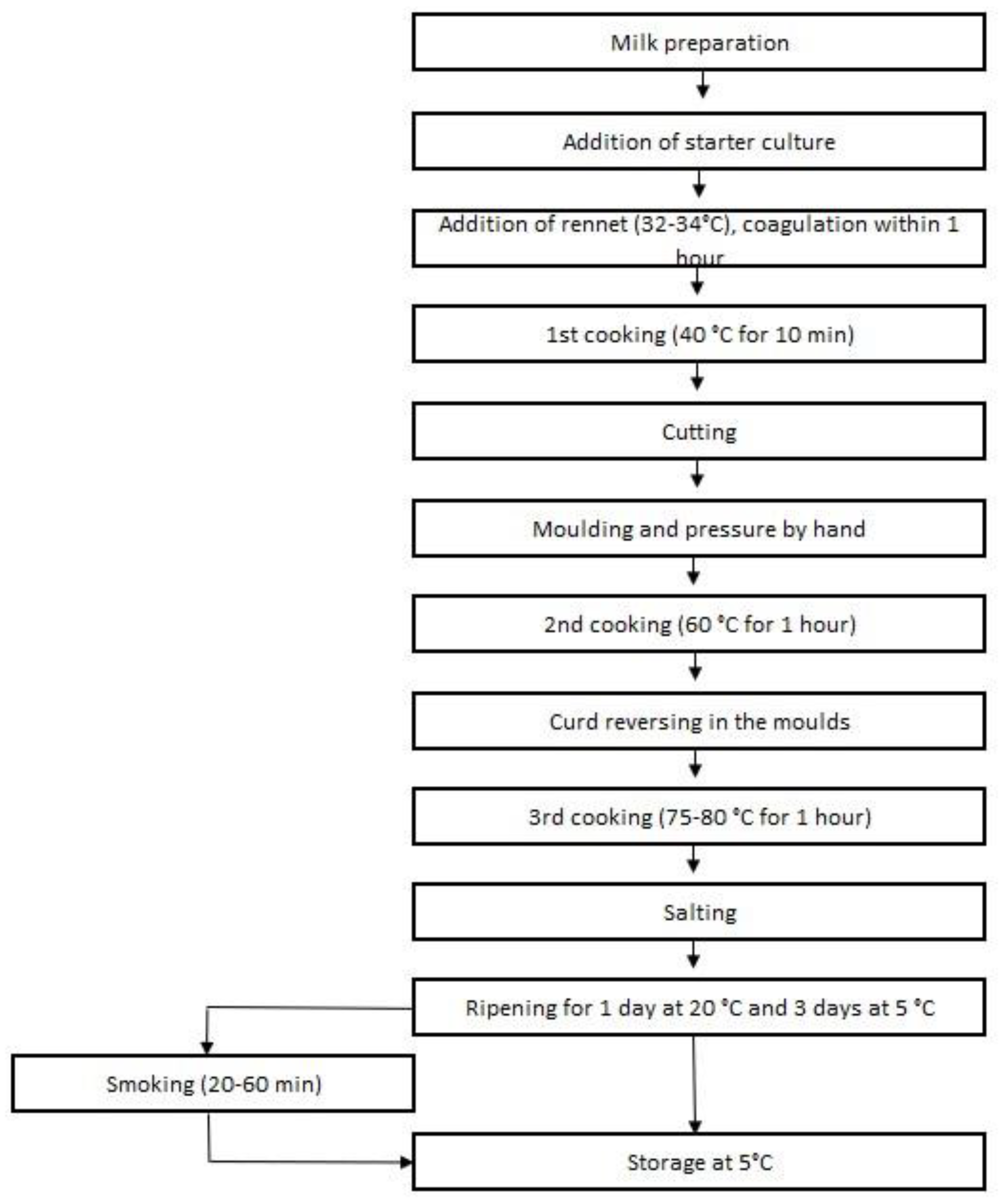
Figure 1. Cheesemaking process for experimental Formaella-type cheese. Day 0 was defined as the day of basic cheesemaking (including curd formation). Day 1 was the following day, after 24 h of ripening at 20 °C (fresh cheese). Day 5 was the day smoking was applied, after the fresh cheese had ripened for 72 h at 5 °C. After day 5, the cheeses were stored in vacuum packaging at 5 °C for an additional 85 days (total age: 90 days).
Fermentation 12 00208 g001
Figure 2. Cheesemaking steps for the manufacture of experimental Formaella-type cheese.
Fermentation 12 00208 g002
Figure 3. Experimental Formaella-type cheese on day 5; S1: control; S2: smoked for 20 min; S3: smoked for 60 min.
Fermentation 12 00208 g003
Figure 4. Physicochemical characteristics of curd and smoked Formaella-type cheeses at different times of manufacture/storage: (a) pH values and (b) water activity values; S1 represents the control batch without treatment, S2 the batch with smoking for 20 min and S3 the batch with smoking for 60 min; cheeses were stored at 5 ± 0.5 °C for 90 days.
Fermentation 12 00208 g004
Figure 5. Effect of smoking treatment and storage time (5 days: (a,c,e); 90 days: (b,d,f)) on colour parameters L* (a,b), a* (c,d), b* (e,f) of cheese samples (S1, S2, S3); S1 represents the control batch without treatment, S2 the batch with smoking for 20 min and S3 the batch with smoking for 60 min; cheeses were stored at 5 ± 0.5 °C for 90 days.
Fermentation 12 00208 g005
Figure 6. Microbiological counts of curd and smoked Formaella-type cheeses at different times of manufacture/storage. (a) Total mesophilic count. (b) Enterococcus sp. (c) Presumptive lactobacilli. (d) Presumptive lactococci. The limits of detection (LOD) were defined as <2 log cfu/g. Error bars designate standard deviation.
Fermentation 12 00208 g006
Figure 7. Heatmap with hierarchical clustering analysis (HCA) of metabolite profiles, using row-wise Z-score normalization of absolute GC–MS concentrations. Colours represent relative abundance changes of each metabolite across samples. Metabolites are annotated according to their chemical categories.
Fermentation 12 00208 g007
Figure 8. Principal component analysis (PCA) biplots of data on chemical categories and selected volatile organic compounds of fresh (5 days) and ripened (90 days) smoked Formaella-type cheeses; S1 represents the control batch without treatment, S2 the batch with smoking for 20 min and S3 the batch with smoking for 60 min; cheeses were stored at 5 ± 0.5 °C for 90 days.
Fermentation 12 00208 g008
Table 1. Dominant lactic acid bacteria species from smoked Formaella-type cheeses identified using MALDI-TOF MS and their score ranges and relative abundances.
SpeciesScore RangeRelative Abundances 1
Enterococcus durans2.269–2.44043.4 (23)
Leuconostoc lactis2.194–2.38637.7 (20)
Leuconostoc mesenteroides2.122–2.3387.5 (4)
Streptococcus salivarius ssp. thermophilus2.032–2.1663.8 (2)
Lacticaseibacillus rhamnosus1.788–2.0303.8 (2)
Lactobacillus curvatus1.8841.9 (1)
Enterococcus faecium2.3301.9 (1)
1 absolute numbers of isolates are shown in parentheses.
Disclaimer/Publisher’s Note: The statements, opinions and data contained in all publications are solely those of the individual author(s) and contributor(s) and not of MDPI and/or the editor(s). MDPI and/or the editor(s) disclaim responsibility for any injury to people or property resulting from any ideas, methods, instructions or products referred to in the content.