
Article

Effects of Yeast Culture Supplementation Rate on Rumen Fermentation and the Rumen Microbial Community in Kazakh Sheep In Vitro
1
College of Life Sciences and Technology, Xinjiang University, Urumqi 830049, China
2
Institute of Microbiology, Academy of Agricultural Sciences of Xinjiang Uyghur Autonomous Region, Urumqi 830091, China
3
Xinjiang Laboratory of Special Environment Microbiology, Urumqi 830091, China
*
Authors to whom correspondence should be addressed.
Fermentation 2026, 12(4), 203; https://doi.org/10.3390/fermentation12040203
Submission received: 11 March 2026 / Revised: 10 April 2026 / Accepted: 15 April 2026 / Published: 17 April 2026
(This article belongs to the Special Issue Ruminal Fermentation: 2nd Edition)

Abstract

To explore the appropriate supplementation rate of yeast culture (YC) in Kazakh sheep during fattening, the effects of different YC supplementation rates on rumen fermentation parameters and microbial community were studied through in vitro rumen fluid fermentation experiments. A 0.40 g high-concentrate diet was used as the fermentation substrate, and five groups were added with YC at 0% (CK), 1.25% (YC1), 2.5% (YC2), 3.75% (YC3) and 5% (YC4) of dietary dry matter, respectively. Anaerobic fermentation was carried out for 48 h in 60 mL fermentation broth. The results showed that the 48 h GP and microbial crude protein (MCP) concentration in all YC supplementation groups were significantly higher than those in the CK group (p < 0.05). The concentrations of total volatile fatty acids (TVFA) and propionate in the YC1 and YC2 groups were significantly increased and the A/P ratio in the two groups was significantly decreased (p < 0.05). The Multi-factor Comprehensive Evaluation Index (MFAEI) calculation indicated that 1.25% was appropriate. The YC1 and YC2 groups significantly increased the richness and diversity of rumen bacterial communities (Chao1 and Shannon indices, p < 0.05), and significantly increased the relative abundance of Bacteroidota and NK4A214_group (p < 0.05), while significantly decreasing the relative abundance of the potential pathogenic bacterium Campylobacter (p < 0.05). Ustilago abundance was significantly suppressed in all the YC-supplemented groups (p < 0.05). The most effective YC supplementation rate among the tested doses was 1.25% according to the MFAEI and key microbial indicators. The results suggest that dietary supplementation of 1.25% YC (dry matter basis) may beneficially modulate rumen fermentation parameters under in vitro conditions, providing a reference for further in vivo studies on its application in fattening Kazakh sheep.

1. Introduction

Against the backdrop of sustainable national economic development and upgrading of residential consumption, mutton has gained increasing market attention as an important meat product [1]. Kazakh sheep, a historically significant breed primarily raised in western China, are recognized for their desirable production traits, including rapid growth, efficient meat yield, and high-quality, nutritious meat [2]. However, limited land availability for high-quality forage production and direct competition with staple food crops have resulted in persistent quantitative and qualitative roughage shortages. This forage deficit has emerged as a principal nutritional constraint, limiting the production potential of sheep and hindering the intensive development of production systems in the region. To meet market demands and enhance production efficiency, the use of high-concentrate diet for rapid fattening has become a standard practice in sheep farming. However, the rapid fermentation of high-concentrate diet causes excessive accumulation of volatile fatty acids (VFAs) in the rumen. When this surplus cannot be promptly absorbed, buffered, and utilized, it results in a persistently low ruminal pH, inducing subacute ruminal acidosis (SARA) [3]. This condition leads to adverse clinical symptoms such as decreased ruminal pH, inappetence, and diarrhea [4]. Studies have shown that additives such as plant extracts [5], thiamine [6], and buffers [7] can improve the rumen fermentation environment and stabilize pH, thereby effectively preventing and alleviating rumen acidosis. However, their application is limited by several issues, such as high cost, negative impact of long-term use on rumen microbial adaptability, and difficulty in addressing the root cause of subacute ruminal acidosis [8].
Yeast culture (YC) is a product obtained through yeast fermentation, followed by concentration and drying under specific processing conditions. YC is primarily composed of yeast cell contents, extracellular metabolites, spent fermentation medium, and yeast cell walls [9]. As a safe, green, and efficient microecological preparation, YC has demonstrated positive effects on nutritional regulation. It can not only mitigate the adverse effects of acidosis in ruminants, optimize feed nutritional value, and enhance feed palatability and digestibility [10], but also help establish beneficial microbial flora in the host. This aids in preventing pathogenic bacterial invasion and maintaining a balanced microbial ecosystem [11]. Studies have indicated that supplementing ruminant diets with YC enhances rumen function and health, increasing feed intake, improving cellulolytic bacterial activity and fiber digestibility, and altering the ruminal VFAs profile, thereby improving overall ruminant performance [12]. Other studies have found that YC supplementation in diets did not significantly affect the feed intake [13]. These divergent results are likely attributable to interactions among factors such as yeast strain, fermentation process, culture composition, dietary structure, and management practices of the animals.
Previous in vitro fermentation studies have confirmed that the YC developed by our team has a positive effect on rumen fermentation in ruminants because of its simple process, low cost, and high mannan content [14]. However, there is still a lack of guidance regarding its application in different animal species and precise dosage. Currently, there is a lack of systematic research on the precise supplementation rate of YC in high-concentrate diet for fattening Kazakh sheep. In vitro rumen fermentation simulation has become an important method for studying rumen nutrition regulation, offering advantages such as time and cost saving, and ease of environmental control, which allows it to partially replicate in vivo fermentation conditions [15]. Therefore, this study aimed to systematically evaluate the effects of different YC supplementation rates on the rumen fermentation parameters and microbial community of fattening Kazakh sheep through in vitro fermentation experiments, and to determine the most effective YC supplementation rate in a high-concentrate diet, thereby providing a theoretical basis for its precise application in the healthy fattening of Kazakh sheep.

2. Materials and Methods

2.1. Ethical Statement

This study was supported by the Ethics Committee of the Animal Husbandry Research Institute, Xinjiang Academy of Animal Sciences (Approval No. 202510031).

2.2. Experimental Design and In Vitro Rumen Fermentation

The YC used in this study was produced by solid-state fermentation of Saccharomyces cerevisiae. The solid-state medium consisted of corn flour, wheat bran, soybean meal, and molasses. The nutritional composition and feed ingredients of the experimental diet are presented in Table 1. The total mixed ration was formulated in accordance with the “Feeding Standard of Meat-producing Sheep and Goats (NY/T 816-2021)” [16] in China.
In accordance with the 3R principles of animal ethics, rumen fluid was collected from five healthy male Kazakh sheep with similar body weights fed the same diet formula, pooled in equal volumes, and used for in vitro fermentation experiments to replace large-scale animal trials. On the morning of the experiment before feeding, approximately 200 mL of rumen fluid was collected from each donor sheep via a gastric tube and immediately filtered through four layers of cheesecloth. The five filtrates were pooled in equal volumes to form a homogeneous sample, transferred to a pre-warmed thermos flask pre-filled with CO2, sealed, and promptly transported to the laboratory. Fermentation broth was prepared by mixing the pooled rumen fluid with a preheated buffer solution (39 °C) at a 1:2 ratio. The buffer was prepared according to the method described by Menke et al. [17]. The system consisted of a fermentation bottle, a water-collecting bottle, and a collection bottle as described by Trei et al. [18]. Each fermentation bottle was filled with 60 mL of fermentation broth and 0.40 g of a high-concentrate diet, either with or without yeast culture supplementation. The gas generated during fermentation displaced water from the water-collecting bottle into a collection bottle, and the volume of gas produced was quantified using the water displacement method. All components were tightly connected via tubing to form a sealed system, thus maintaining a strictly anaerobic environment in the fermentation vessel. The experimental unit was the individual fermentation bottle. A single-factor experimental design was employed, which comprised five treatment groups. Based on the reference dosages of yeast culture from in vivo and in vitro experiments in sheep [14,19]. YC supplementation levels were set at 0% (CK), 1.25% (YC1), 2.5% (YC2), 3.75% (YC3), and 5% (YC4) of dietary dry matter to cover the effective concentration range. Each group was set up with three technical replicates, meaning three fermentation bottles per treatment, and subjected to 48 h of anaerobic fermentation with 30 r/min oscillation.

2.3. Fermentation Broth Sampling and Analysis of Rumen Fermentation Parameters

During the 48 h culture period, gas production (GP) was recorded every 4 h by drainage method. After culture, the fermentation bottles were placed in an ice-water bath to terminate fermentation, after which the broth pH was promptly determined. Subsequently, the fermentation broth was divided into several 2 mL sterile centrifuge tubes and frozen at −80 °C for the analysis of ammonia nitrogen (NH3-N), microbial crude protein (MCP), volatile fatty acids (VFAs), and rumen microbial community. The NH3-N concentration was determined colorimetrically according to the method described by Feng et al. [20]. MCP concentration was quantified using the Bradford method [21] with bovine serum albumin as the standard. The concentrations of VFAs were analyzed using LC-MS/MS [22] after derivatization with 3-NPH-d4. Chromatographic separation was performed on a Waters ACQUITY UPLC BEH C18 column with gradient elution using 10 mM ammonium acetate in water and acetonitrile/isopropanol (1:1) as mobile phases. Mass spectrometry was conducted in negative ion ESI mode with multiple reaction monitoring (MRM). The method was validated for linearity, precision, recovery, and stability, with all parameters within acceptable ranges.

2.4. Determination of Microbial Community in Rumen Fermentation Broth

Samples of rumen fermentation broth preserved at −80 °C were sent to Novogene Bioinformatics Technology Co., Ltd. (Beijing, China) for high-throughput microbial sequencing. The bacterial 16S V3–V4 region was amplified with primers 341F (5′-CCTAYGGGRBGCASCAG-3′) and 806R (5′-GGACTACNNGGGTATCTAAT-3′), and the fungal ITS1 region was amplified using primers ITS1F (5′-CTTGGTCATTTAGAGGAAGTAA-3′) and ITS2R (5′-GCTGCGTTCTTCATCGATGC-3′). Following amplification, the PCR products were purified using magnetic beads, pooled in equimolar amounts based on concentration, and the target bands were recovered. Sequencing libraries were then constructed, quantified using Qubit fluorometry and qPCR, and subjected to quality control. After passing QC, the libraries were sequenced on an Illumina platform.

2.5. Statistical Analysis

2.5.1. Conventional Statistical Analysis and Multi-Factor Comprehensive Evaluation Index

The initial data processing was conducted using Excel 2020. The residuals of the ANOVA model were tested for normality using the Shapiro–Wilk test and for homogeneity of variance using Levene’s test. All assumptions were satisfied (Shapiro–Wilk test, p > 0.05 for each group; Levene’s test, p > 0.05). Subsequently, one-way analysis of variance (ANOVA) was performed using SPSS 22.0 software, employing Duncan’s method for post hoc multiple comparisons. Data are expressed as mean ± standard deviation, with statistical significance deemed present at p < 0.05. The correlation between in vitro fermentation parameters and rumen bacteria and fungi was analyzed using Spearman’s correlation.
The Multi-factor Comprehensive Evaluation Index (MFAEI) was calculated following the method of Chen et al. [23], and is defined as the sum of all Single-factor Evaluation Indices (SFAEI). The calculation formula is as follows:
SFAEI = n = 1 1 ( A 2 A 1 ) n × A 3
A1: Value of a given fermentation parameter (pH, GP, NH3-N, MCP, or TVFA) in an individual replicate of the control group at 48 h.
A2: Value of the same fermentation parameter in an individual replicate of a treatment group at 48 h.
A3: Mean value of the same fermentation parameter across all A2 replicates at 48 h.
n: Number of sampling time points. In this study, samples were collected only at 48 h; therefore, n = 1.
MFAEI = SFAEI (pH) + SFAEI (GP) + SFAEI (NH3-N) + SFAEI (MCP) + SFAEI (TVFA)
All five single-factor indices (pH, GP, NH3-N, MCP, and TVFA) were summed with equal weight to obtain the MFAEI.

2.5.2. Bioinformatic Analysis of Microbial Community

Using fastp software (v 0.23.1), raw sequencing reads were first subjected to stringent quality filtering to yield high-quality data and the removal of chimeric sequences, resulting in the final clean dataset [24]. Amplicon sequence variants (ASVs) were derived by denoising the sequences using the DADA2 algorithm in QIIME2 [25,26]. Representative ASV sequences were then taxonomically classified using the SILVA (v 138.1) and UNITE (v 9.0) databases for bacterial and fungal classification, respectively [27,28]. Based on the above results, the α-diversity indices such as Observed features, Shannon, Simpson, and Chao1 were calculated using QIIME2 software (QIIME2-202202). β-diversity was analyzed using QIIME2 based on the unweighted UniFrac distance metric. Venn diagrams illustrating species distribution relationships were generated using the R (v 4.0.3) package VennDiagram. The Perl Scalable Vector Graphics (SVG) module was used to create stacked bar charts showing the relative abundance of the top ten taxa at both the phylum and genus levels.

3. Results

3.1. Effect of Yeast Culture Supplementation Levels on In Vitro Rumen Fermentation Parameters in Fattening Kazakh Sheep

As shown in Table 2, the supplementation of YC significantly affected the ruminal fermentation parameters in Kazakh sheep. The 48 h GP and MCP contents in all the YC supplementation groups were significantly higher than those in the CK group (p < 0.05). TVFA concentrations were significantly higher in the YC1 and YC2 groups than in the CK group, while propionate concentrations were significantly higher in the YC1 and YC2 groups than in the CK, YC3, and YC4 groups (p < 0.05). Acetate concentration was significantly lower in the YC1 and YC2 groups than in the CK group (p < 0.05), but reaching the CK level in the YC4 group. The A/P ratio of the YC1 and YC2 groups was significantly lower than that of the CK group (p < 0.05); it then increased with rising addition levels, resulting in no significant difference between the YC4 and CK groups. The concentrations of isobutyrate, valerate, and isovalerate in the YC1 group were significantly higher than those in the CK group (p < 0.05), but decreased to the same level in the YC3 and YC4 groups. Rumen fluid pH, NH3-N, and butyrate levels did not significantly vary across the treatment groups.

3.2. Evaluation of the Associative Effects of Yeast Culture Supplementation Levels on In Vitro Rumen Fermentation in Fattening Kazakh Sheep

As shown in Table 3, the MFAEI for the effects of YC on in vitro ruminal fermentation in Kazakh sheep decreased with increasing supplementation rates, in the order of YC1 > YC2 > YC3 > YC4. Among these, the SFAEI of MCP was the highest, followed by 48 h GP, whereas the effect indices for pH, NH3-N, and TVFA were relatively lower, with pH and NH3-N even showing negative values at higher supplementation rates. In summary, under the experimental conditions, the appropriate rate of YC to promote rumen fermentation in vitro in fattening Kazakh sheep was 1.25%.

3.3. Analysis of Rumen Bacterial Diversity

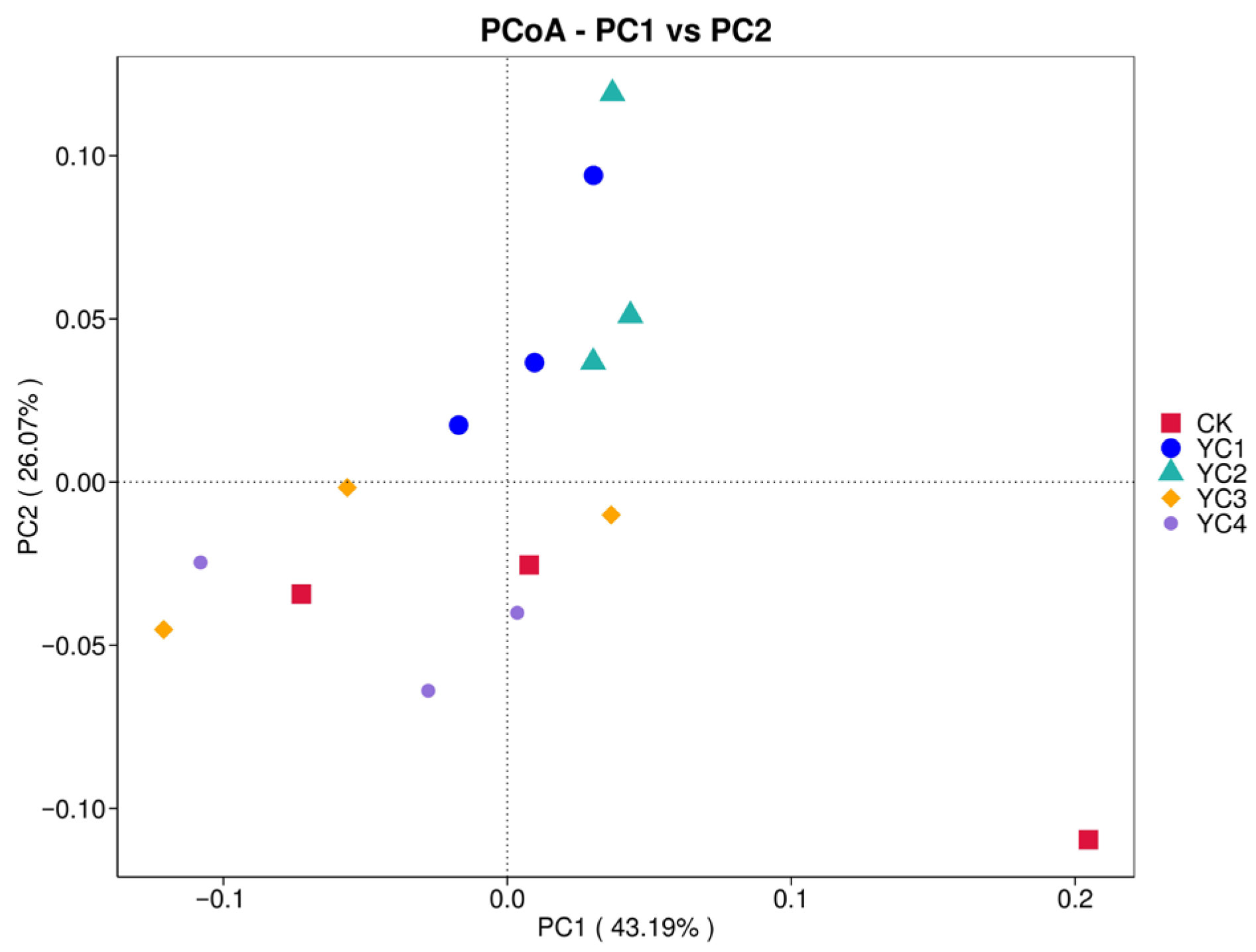
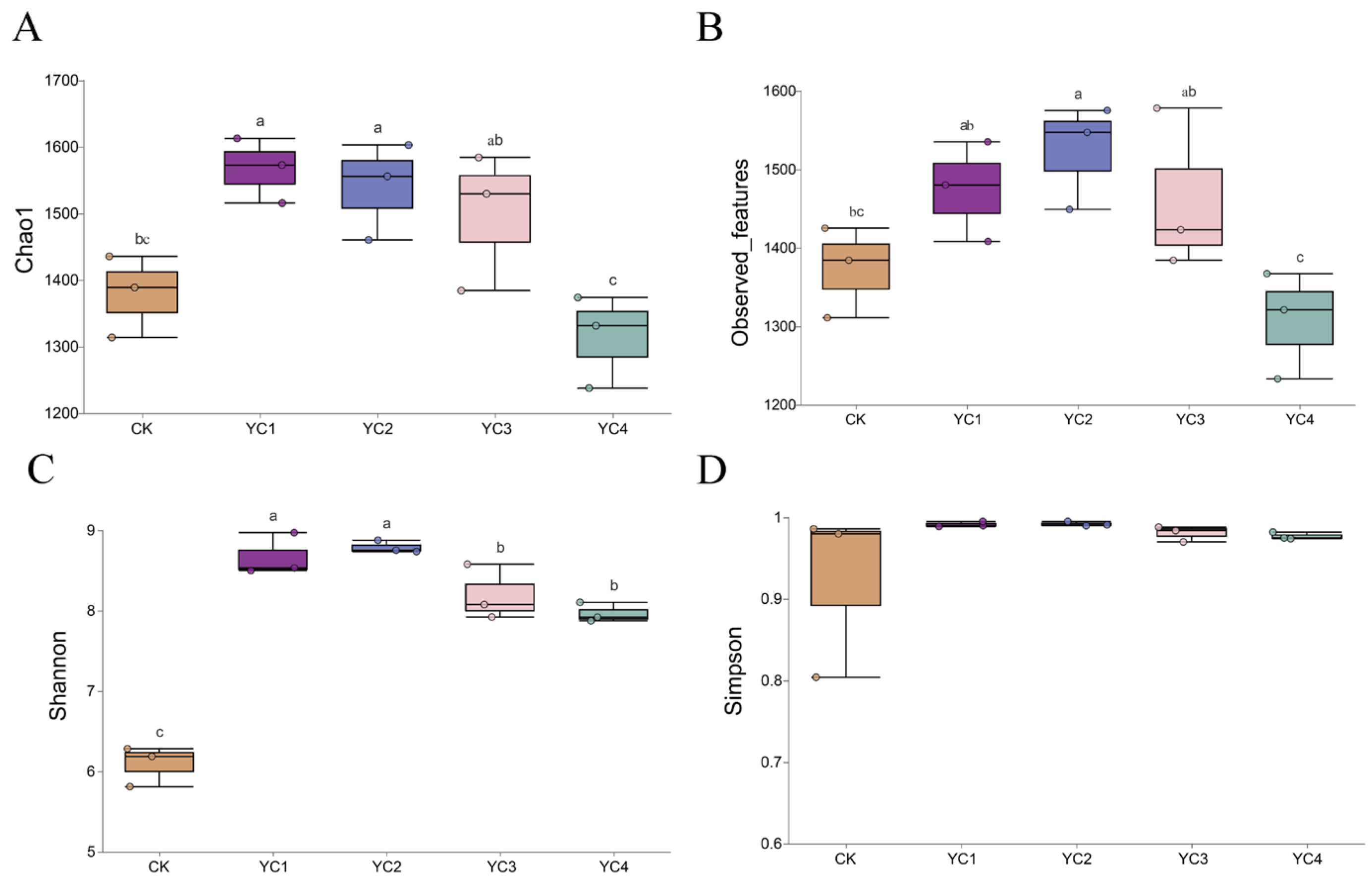
The addition of YC significantly altered the diversity of the bacterial community. The effects of YC supplementation on the α and β-diversity of the bacterial community in the rumen fermentation broth of Kazakh sheep are shown in Figure 1 and Figure 2. Analysis of α-diversity showed that the Chao1 and Shannon indices of the YC1 and YC2 groups were significantly higher than those of the CK group (p < 0.05). Moreover, the Shannon index in the YC1 and YC2 groups was also significantly higher than that in the YC3 and YC4 groups. Principal coordinate analysis (PCoA) showed that the first two principal coordinates (PC1 and PC2) explained 43.19% and 26.07% of the variation, respectively, and this pattern was similar to that of the rumen fermentation parameters. Concurrently, the sample points of the CK group were clearly separated from those of the YC1 and YC2 groups along the PC1 and PC2 axes.
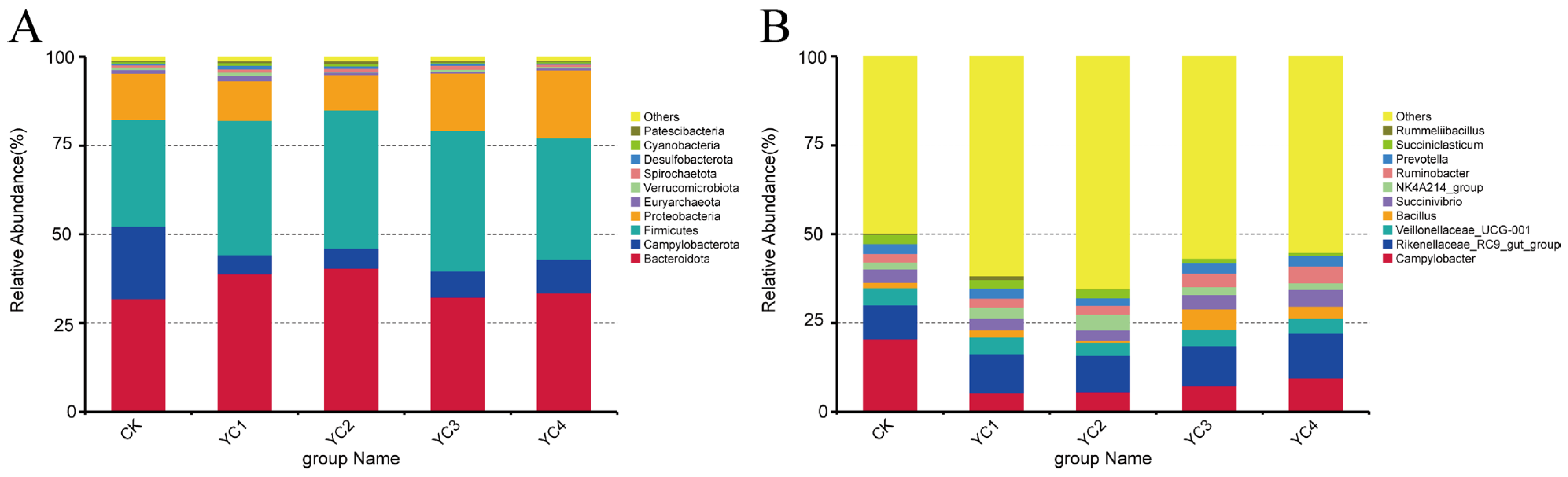
Based on 16S rRNA gene sequencing, a total of 20 bacterial phyla and 195 genera were annotated across the 15 samples, with their relative abundances shown in Figure 3. At the phylum level, the dominant bacterial taxa shared across all groups were Bacteroidota, Campylobacterota, Firmicutes, and Proteobacteria. The relative abundance of Bacteroidota was significantly higher in the YC1 and YC2 groups than in the CK, YC3, and YC4 groups (p < 0.05). The relative abundance of Campylobacterota was markedly higher in the CK group than in any YC-supplemented groups (p < 0.05). Furthermore, Proteobacteria abundance showed a decrease in the YC1 and YC2 groups compared with the CK group, but then increased significantly at higher doses, being greater in the YC3 and YC4 than in the YC1 and YC2 (p < 0.05). At the genus level, the dominant taxa included Campylobacter, Rikenellaceae_RC9_gut_group, Veillonellaceae_UCG-001, Succinivibrio, Ruminobacter, and Prevotella. Specifically, the relative abundance of Campylobacter was significantly higher in the CK group than in any of the YC-supplemented groups (p < 0.05). The most pronounced inhibitory effects were observed for the YC1 and YC2 groups. Although suppression persisted at higher supplementation levels (YC3 and YC4), a recovery trend was evident relative to the lower dose groups. Additionally, the abundance of NK4A214_group was significantly higher in the YC1 and YC2 groups than in the CK, YC3, and YC4 groups (p < 0.05). The YC1 group exhibited a significantly higher relative abundance of Rummeliibacillus than the CK and all other YC-supplemented groups (p < 0.05).

3.4. Correlation Analysis of Rumen Bacterial Composition and Fermentation Parameters

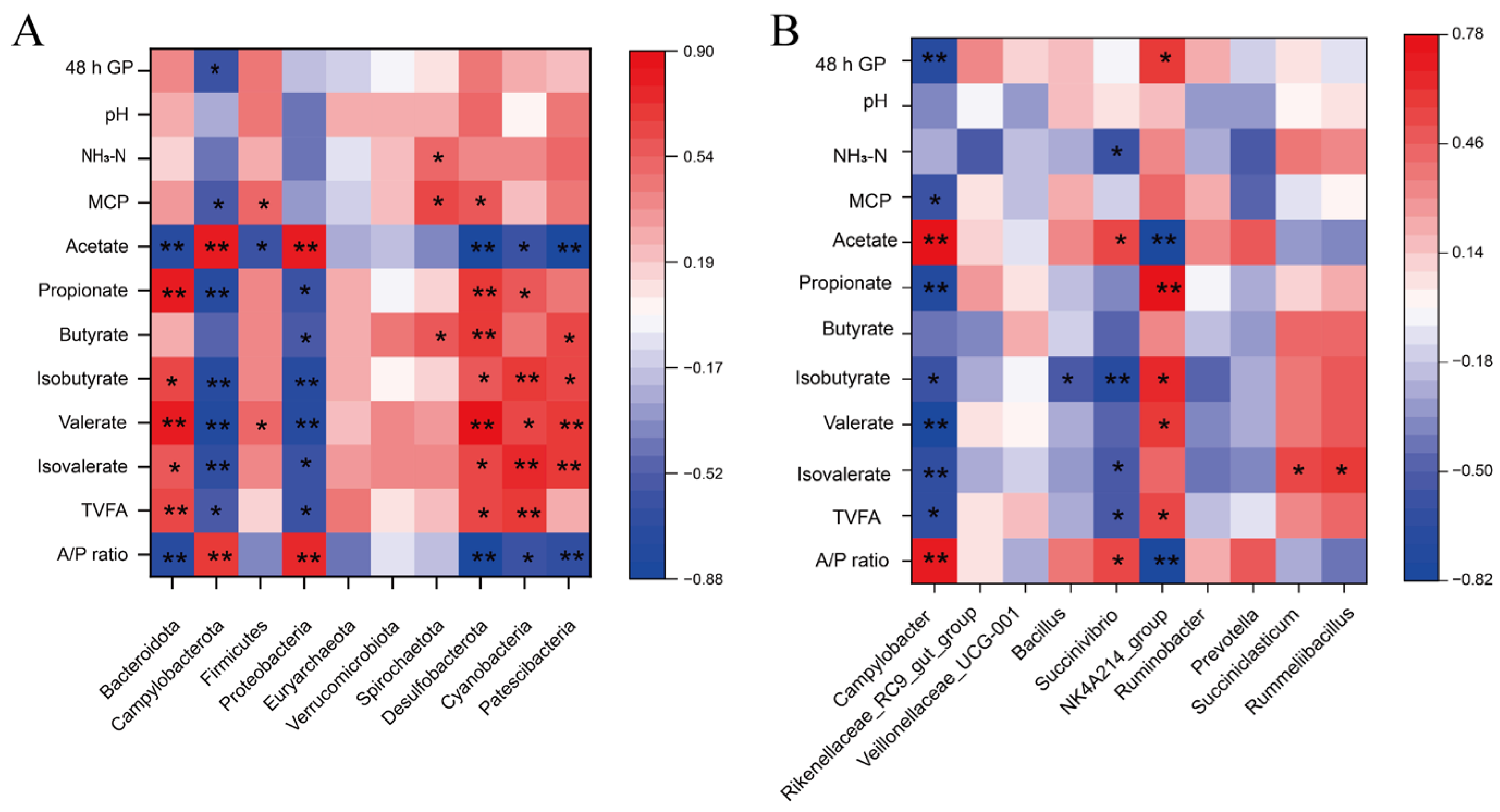
Spearman’s correlation analysis revealed significant associations between the ruminal bacterial microbiota and fermentation parameters (Figure 4). At the phylum level (Figure 4A), the abundance of Bacteroidota, Desulfobacterota, and Cyanobacteria correlated positively with propionate and TVFA concentrations but negatively with acetate and A/P ratio (p < 0.05). In contrast, the abundance of Campylobacterota and Proteobacteria was negatively correlated with several VFAs and positively correlated with acetate and A/P ratio (p < 0.05). At the genus level (Figure 4B), Campylobacter abundance showed significant negative correlations with the 48 h GP, MCP, propionate, and TVFA, and significant positive correlations with the A/P ratio and acetate concentration (p < 0.05). NK4A214_group abundance showed significant positive correlations with propionate and TVFA, and negative correlations with the A/P ratio and acetate concentration (p < 0.05). The abundance of Rummeliibacillus and Succiniclasticum correlated positively with isovalerate concentration (p < 0.05).

3.5. Analysis of Rumen Fungal Diversity

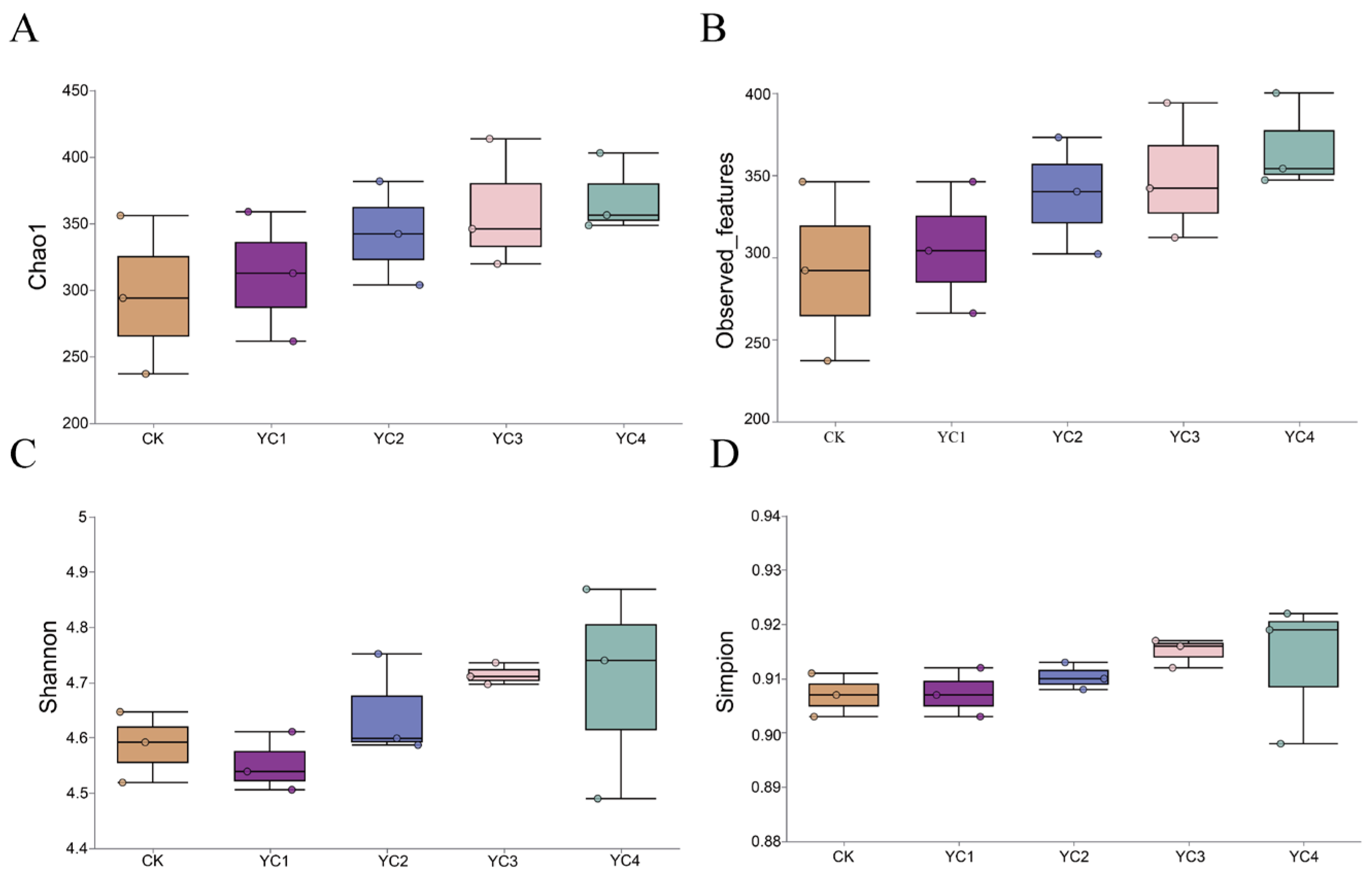
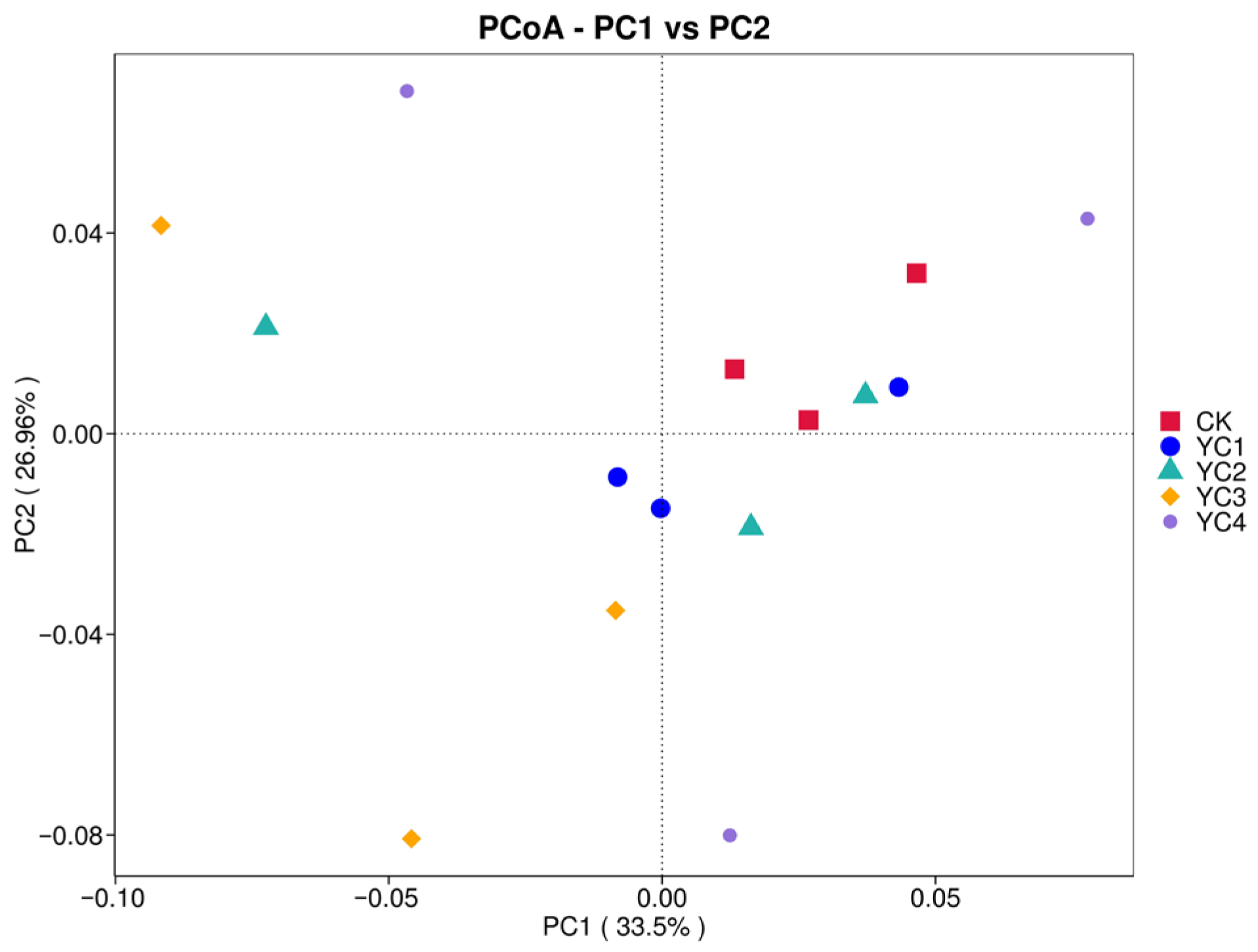
The addition of YC did not significantly change fungal community diversity. The effects of YC supplementation on the α and β-diversity of the fungal community are shown in Figure 5 and Figure 6. Compared with the CK group, all treatment groups exhibited non-significant increases in the Chao1, Observed features, and Simpson indices of the ruminal fungal microbiota (p > 0.05). The PCoA of β-diversity showed that the first two principal coordinates, PC1 and PC2, explained 33.50% and 26.96% of the variation, respectively. The PCoA plot indicated that the fungal community of each group clustered closely in two-dimensional space.
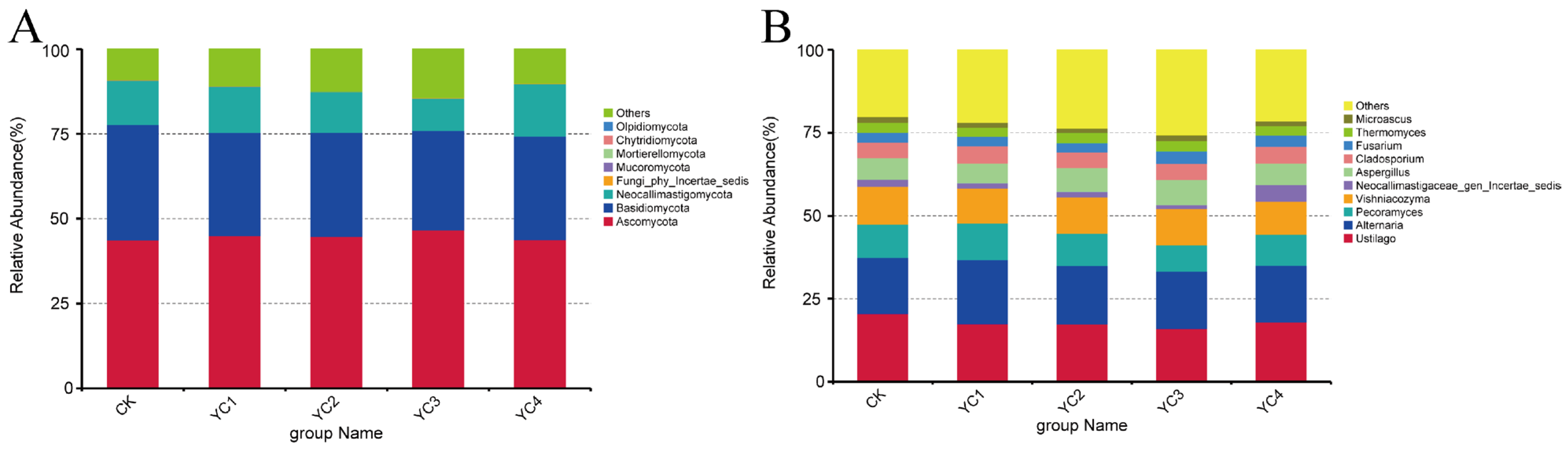
ITS sequencing of the 15 samples identified a total of 8 fungal phyla and 203 genera across the five groups, with relative abundance profiles detailed in Figure 7. The dominant fungal phyla shared across all groups were Ascomycota, Basidiomycota, and Neocallimastigomycota. Compared with the CK group, the relative abundance of Neocallimastigomycota decreased in the YC3 group but increased in the YC4 group. The dominant fungal genera observed across all groups were primarily Ustilago, Alternaria, Pecoramyces, and Vishniacozyma. Ustilago abundance was significantly suppressed in all the YC-supplemented groups (p < 0.05). Pecoramyces was more abundant in the YC1 group than in the CK and other YC-supplemented groups.

3.6. Correlation Analysis of Rumen Fungal Composition and Fermentation Parameters

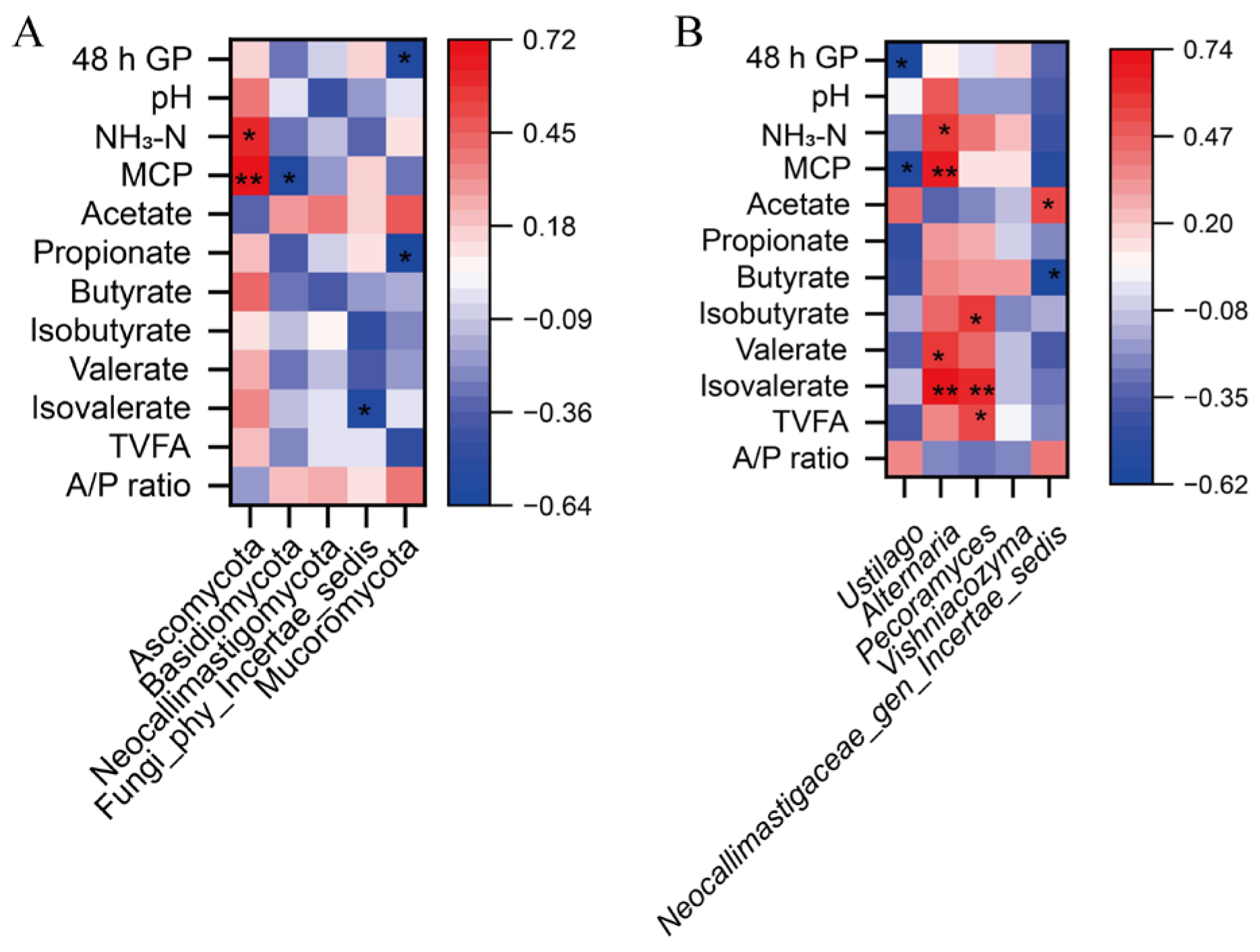
Spearman’s correlation analysis indicated significant associations between the ruminal fungal community and fermentation parameters at both the phylum and genus levels. At the phylum level (Figure 8A), Ascomycota abundance showed significant positive correlations with MCP and NH3-N concentrations (p < 0.05), whereas Basidiomycota abundance exhibited a significant negative correlation with MCP concentration (p < 0.05). At the genus level (Figure 8B), Ustilago abundance showed significant negative correlations with the 48 h GP and MCP (p < 0.05). Pecoramyces abundance exhibited significant positive correlation with the TVFA (p < 0.05).

4. Discussion

Rumen fermentation parameters and microbial community structure are key indicators for evaluating the effects of YC [29]. The results of this study showed that the effect of YC was significant on rumen fermentation in fattening Kazakh sheep, and that 1.25% YC was the most effective among the tested doses under the in vitro conditions of this study. These effects were mainly manifested in a shift in the fermentation pattern and were attributable to YC-induced remodeling of the rumen microbial community structure and function.
Rumen fermentation parameters are an evaluation system that comprehensively reflects the rumen fermentation status and environment through indicators such as GP, pH, NH3-N, MCP, and VFAs. GP is a key indicator of ruminal microbial degradative activity, and its increase generally implies more adequate substrate fermentation [30,31]. The results of this study showed that the addition of YC significantly improved GP, in agreement with previous findings [32]. The lower GP in the CK group may be related to the lack of microbial activity, whereas the active components such as polysaccharides, small peptides, and digestive enzymes in YC may promote the growth and metabolism of rumen microorganisms, thus accelerating substrate degradation [33]. Rumen pH is an important parameter for maintaining rumen health and microbial activity. The pH values (6.40–6.50) of all groups were within the appropriate range (5.5–7.0) with no significant difference [34], indicating that the addition of self-developed YC did not affect the healthy pH environment of the rumen. NH3-N is a key precursor for MCP synthesis, and its concentration reflects the balance of ruminal nitrogen metabolism [35]. It has been demonstrated that the concentration of NH3-N decreased significantly after YC was added [19]. However, in the present study, MCP increased significantly whereas NH3-N remained stable across all experimental groups, indicating that YC may promote the conversion of NH3-N to MCP by increasing microbial uptake and assimilation efficiency [36], as the rate of NH3-N production from protein degradation may increase proportionally to the rate of microbial uptake under high-concentrate diet conditions, resulting in stable NH3-N concentrations [14]. Rumen VFAs are the main energy source of ruminants, among which acetate, propionate, and butyrate account for more than 95% of the TVFA [37]. Propionate is key to gluconeogenesis, and elevated levels of propionate increase energy utilization efficiency [38]. Studies have shown that the addition of YC increases the TVFA concentration and reduces the A/P ratio in the rumen of lambs [39]. These findings were supported by the present study, which indicated that the addition of YC promoted a shift in ruminal fermentation from acetate-type to propionate-type pattern. However, a continued increase in the YC supplementation rate did not further improve the propionate concentration and fermentation efficiency.
As the core digestive organ of ruminants, the rumen harbors a complex microbial community whose composition directly affects animal health [40]. In terms of community diversity, low-level YC supplementation significantly increased the richness (Chao1 index) and diversity (Shannon index) of rumen bacteria; however, as the level of YC supplementation increased, this promotion was reduced. This result is consistent with the findings of Wang et al. [41], suggesting that YC exerts its positive regulatory effects on the rumen microbial community only within an appropriate dosage range, rather than in a “more is better” manner, underscoring the importance of precise YC supplementation. Bacteroidota are mainly involved in the degradation of non-fibrous carbohydrates and promote VFAs production to provide energy for ruminants [42]. This study showed a significant increase in the relative abundance of this phylum in the YC1 and YC2 groups compared to the CK group, but this enrichment was attenuated or became non-significant in the YC3 and YC4 groups, consistent with previous reports [43]. Correlation analysis indicated that Bacteroidota was significantly positively correlated with propionate concentration and negatively correlated with the A/P ratio. This correlation suggests that YC may drive a fundamental shift toward propionate-type fermentation by enriching specific propionate-producing populations within Bacteroidota, which generally contains key enzyme genes encoding the succinate-propionate conversion pathway. This would directly enhance the metabolic flux through the succinate-propionate pathway and channel more fermentative substrates toward propionate production [44]. Proteobacteria contains many potentially pathogenic bacteria such as Escherichia coli, and Salmonella spp., and its abnormal proliferation is often regarded as a sign of an imbalance in the microbiota [45]. This study showed that an appropriate amount of YC may help regulate the composition of rumen microorganisms, potentially affecting the immune function of the host. The proliferation of Proteobacteria may be associated with a shift in rumen fermentation patterns towards a metabolic state characterized by enhanced acetate production and inhibited propionate synthesis [46]. At the genus level, Campylobacter belongs to the phylum Campylobacterota. Most species of this genus are pathogenic and can cause symptoms such as diarrhea [47]. Its relative abundance decreased significantly after the addition of YC, and the inhibitory effects in the YC1 and YC2 groups were the most significant. With the increase in dose (YC3, YC4), its abundance was still lower than that of CK group, but there was a tendency to rise. This is consistent with previous research [48]. The abundance of Campylobacter was negatively correlated with the concentration of propionate, but positively correlated with A/P ratio. This suggests that Campylobacter may participate in the regulation of energy metabolism by influencing the ruminal fermentation process. A reduction in its abundance likely contributes to enhanced propionate production and an improved A/P ratio. The NK4A214_group is known to be rich in carbohydrate-active enzymes and VFAs synthesis gene clusters [49,50]. In this study, the abundance of NK4A214_group showed significant changes in the different YC supplementation groups. It was significantly higher in the YC1 and YC2 groups than in the CK, YC3, and YC4 groups. The results showed that low dose YC significantly improved its abundance, and NK4A214_group was positively correlated with various VFAs concentrations. Rummeliibacillus, as an aerobic or facultative anaerobic Gram-positive bacterium, participates in many metabolic processes, especially closely related to protein decomposition and branched-chain amino acid transformation [51,52]. The results showed that the relative abundance of Rummeliibacillus in the YC1 group was significantly higher than that in the CK and other YC supplementation groups, indicating that a low dose of YC could specifically promote the enrichment of this genus. Correlation analysis further showed that the abundance of this genus was significantly positively correlated with the concentration of isovalerate, further supporting its role in energy provision as a core fiber-degrading microorganism.
In addition to the bacterial community, the fungal community is also vital for rumen function. The dominant fungal phyla in the Kazakh sheep rumen were Ascomycota, Basidiomycota, and Neocallimastigomycota, consistent with previous findings in yaks [53], sheep [54], and goats [55]. Together, these three phyla account for approximately 80% of the total rumen fungal community, Ascomycota is the largest group of microorganisms in the fungal kingdom. It can not only remove oxygen for anaerobic fermentation environments, but also mainly participates in the degradation process of organic substances such as lignin and keratin [56]. Correlation analysis further showed that Ascomycota was positively correlated with MCP content, suggesting that YC may indirectly assist in MCP synthesis by promoting the growth of such fungi and improving the nitrogen metabolism microenvironment [57]. Ustilago, Alternaria, Pecoramyces, and Cladosporium were the dominant fungal genera in the Kazakh sheep rumen across all groups, consistent with previous findings [58]. Pecoramyces is an obligate anaerobic, fiber-degrading fungus found in the rumen. It secretes a diverse array of cellulases and xylanases and plays a key role in degrading complex plant polysaccharides [59]. In this study, its abundance increased under YC1, suggesting that an appropriate supplementation rate may promote the growth of these functional anaerobic fungi by improving the rumen microenvironment. However, with the increase in YC rate to YC3 rate, the abundance of Pecoramyces increased slowly, which may reflect the change in fermentation mode caused by a high dose of YC, which is not conducive to the survival and colonization of these strictly anaerobic fungi. Correlation analysis further revealed that Pecoramyces was significantly and positively correlated with TVFA concentration, directly confirming its central role in energy provision as a core fiber-degrading microorganism.

5. Conclusions

This in vitro rumen fermentation study suggested that YC supplementation in a high-concentrate diet positively regulates rumen fermentation and the rumen microbial community of fattening Kazakh sheep, with 1.25% being the most effective supplementation level. This addition rate significantly increased rumen gas production, TVFA, MCP, and propionate concentrations, while decreasing the A/P ratio, thereby improving energy conversion efficiency. Furthermore, it optimized the structure and diversity of the rumen bacterial community and promoted the enrichment of the rumen fungus Pecoramyces. The practical application of this effective supplementation level in Kazakh sheep production requires further validation through animal trials. These findings highlight the importance of precise YC supplementation and provide a theoretical basis for precise nutritional regulation in Kazakh sheep.

Author Contributions

Conceptualization, Q.L., X.H. and K.L.; Methodology, Q.L., X.H. and K.L.; Data Research, H.Z., G.N. and Y.C.; Data Curation, H.Z., X.H., G.N., Y.C., Y.G. and J.Z.; Writing—Original Draft Preparation, H.Z.; Writing—Review& Editing, Q.L., X.H. and K.L.; Visualization, Q.L., H.Z. and X.H.; Supervision, Q.L., X.H. and K.L.; Project administration, K.L. and Q.L.; Funding acquisition, K.L. All authors have read and agreed to the published version of the manuscript.

Funding

This research was supported by the Key Project of the Natural Science Foundation in Xinjiang Uygur Autonomous Region (Grant No. 2023D01D11).

Institutional Review Board Statement

The animal study protocol was approved by the Animal Ethics Committee at the Institute of Animal Husbandry, Xinjiang Academy of Animal Sciences (protocol code 202510031, date of approval: 10 November 2025).

Informed Consent Statement

Not applicable.

Data Availability Statement

The original contributions presented in this study are included in the article. Further inquiries can be directed to the corresponding authors.

Acknowledgments

Our laboratory members deserve particular appreciation for their dedicated efforts in conducting the experiments described here.

Conflicts of Interest

The authors declare no conflict of interest.

References

  1. Kantono, K.; Hamid, N.; Ma, Q.; Chadha, D.; Oey, I. Consumers’ perception and purchase behaviour of meat in China. Meat Sci. 2021, 179, 108548. [Google Scholar] [CrossRef]
  2. Ceyhan, A.; Avcı, M.; Tanrıkulu, M.M.; Yılmaz, B.; Ul Hassan, M. The effect of different management systems on milk yield and milk quality in Awassi sheep. Arch. Anim. Breed. 2022, 65, 407–416. [Google Scholar] [CrossRef] [PubMed]
  3. Wang, W.; Wang, Y.; Guo, T.; Gao, C.; Yang, Y.; Yang, L.; Cui, Z.; Mao, J.; Liu, N.; An, X. Blend of cinnamaldehyde, eugenol, and capsicum oleoresin improved rumen health of lambs fed high-concentrate diet as revealed by fermentation characteristics, epithelial gene expression, and bacterial community. Animals 2023, 13, 1663. [Google Scholar] [CrossRef]
  4. Colman, E.; Fokkink, W.B.; Craninx, M.; Newbold, J.; De Baets, B.; Fievez, V. Effect of induction of subacute ruminal acidosis on milk fat profile and rumen parameters. J. Dairy Sci. 2010, 93, 4759–4773. [Google Scholar] [CrossRef] [PubMed]
  5. Hou, G.; Wang, J.; Liu, S.; Gao, D.; Xu, Y.; Zhuang, Y.; Dong, W.; Yue, Y.; Bai, J.; Li, S. Integrating Subacute Ruminal Acidosis, Lipopolysaccharide, and Trained Immunity: A Comprehensive Review. Int. J. Biol. Sci. 2025, 21, 2806. [Google Scholar] [CrossRef]
  6. Pan, X.; Yang, L.; Beckers, Y.; Xue, F.; Tang, Z.; Jiang, L.; Xiong, B. Thiamine supplementation facilitates thiamine transporter expression in the rumen epithelium and attenuates high-grain-induced inflammation in low-yielding dairy cows. J. Dairy Sci. 2017, 100, 5329–5342. [Google Scholar] [CrossRef]
  7. He, M.; Nie, X.; Wang, H.; Yan, S.; Zhang, Y. Effects of a High-Grain Diet with a Buffering Agent on Milk Protein Synthesis in Lactating Goats. Front. Vet. Sci. 2021, 8, 696703. [Google Scholar] [CrossRef]
  8. Christodoulopoulos, G. Subacute ruminal acidosis in cattle: A critical review of clinical management. Vet. Res. Commun. 2025, 49, 273. [Google Scholar] [CrossRef]
  9. Jiao, P.; Wei, C.; Sun, Y.; Xie, X.; Zhang, Y.; Wang, S.; Hu, G.; AlZahal, O.; Yang, W. Screening of live yeast and yeast derivatives for their impact of strain and dose on in vitro ruminal fermentation and microbial profiles with varying media pH levels in high-forage beef cattle diet. J. Sci. Food Agric. 2019, 99, 6751–6760. [Google Scholar] [CrossRef]
  10. Titi, H.H.; Dmour, R.O.; Abdullah, A.Y. Growth performance and carcass characteristics of Awassi lambs and Shami goat kids fed yeast culture in their finishing diet. Anim. Feed Sci. Technol. 2008, 142, 33–43. [Google Scholar] [CrossRef]
  11. Cao, Y.; Fan, Z.; Jiang, L.; Zhou, Y.; Zhu, B.; Xu, J.; Shao, Y.; Lu, J.; Cai, G. Systematic evaluation and strategic utilization of bioactive constituents in solid-state fermentation-derived yeast culture. Syst. Microbiol. Biomanuf. 2026, 6, 23. [Google Scholar] [CrossRef]
  12. Evci, Ş.; Karsli, M.A.; Demirci, M.; Şen, G. Effects of ionophore and yeast addition to the diet on starch digestion and rumen and blood parameters in sheep with subacute rumen acidosis. Turk. J. Vet. Anim. Sci. 2025, 49, 19–26. [Google Scholar] [CrossRef]
  13. Pienaar, G.H.; Einkamerer, O.B.; Van der Merwe, H.J.; Hugo, A.; Scholtz, G.D.J.; Fair, M.D. The effects of an active live yeast product on the growth performance of finishing lambs. S. Afr. J. Anim. Sci. 2012, 42, 657–710. [Google Scholar] [CrossRef]
  14. Nueraihemaiti, G.; Huo, X.; Zhang, H.; Shi, H.; Gao, Y.; Zeng, J.; Lin, Q.; Lou, K. Effect of diet supplementation with two yeast cultures on rumen fermentation parameters and microbiota of fattening sheep in vitro. Microorganisms 2025, 13, 550. [Google Scholar] [CrossRef]
  15. Neto, H.L.; Okello, E. In vitro Fermentation Method as a Tool to Assess the Effects of Secondary Metabolites on Rumen Fermentation—A Brief Review. J. Agric. Sci. 2018, 10, 28. [Google Scholar] [CrossRef][Green Version]
  16. NY/T 816-2021; Feeding Standard of Meat-producing Sheep and Goats. Ministry of Agriculture and Rural Affairs: Beijing, China, 2021.
  17. Menke, K.H.; Raab, L.; Salewski, A.; Steingass, H.; Fritz, D.; Schneider, W. The estimation of the digestibility and metabolizable energy content of ruminant feedingstuffs from the gas production when they are incubated with rumen liquor in vitro. J. Agric. Sci. 1979, 93, 217–222. [Google Scholar] [CrossRef]
  18. Trei, J.; Hale, W.H.; Theurer, B. Effect of grain processing on in vitro gas production. J. Anim. Sci. 1970, 30, 825–831. [Google Scholar] [CrossRef]
  19. Xu, J.; Li, X.; Fan, Q.; Zhao, S.; Jiao, T. Effects of Yeast Culture on Lamb Growth Performance, Rumen Microbiota, and Metabolites. Animals 2025, 15, 738. [Google Scholar] [CrossRef]
  20. Feng, Z.C.; Gao, M. Improvement of colorimetric method for determination of ammonia nitrogen in rumen fluid. Anim. Husb. Feed Sci. 2010, 31, 37. [Google Scholar]
  21. Bradford, M.M. A rapid and sensitive method for the quantitation of microgram quantities of protein utilizing the principle of protein-dye binding. Anal. Biochem. 1976, 72, 248–254. [Google Scholar] [CrossRef] [PubMed]
  22. Dei Cas, M.; Paroni, R.; Saccardo, A.; Casagni, E.; Arnoldi, S.; Gambaro, V.; Saresella, M.; Mario, C.; La Rosa, F.; Marventano, I. A straightforward LC-MS/MS analysis to study serum profile of short and medium chain fatty acids. J. Chromatogr. B 2020, 1154, 121982. [Google Scholar] [CrossRef] [PubMed]
  23. Chen, X.; Xiao, J.; Zhao, W.; Li, Y.; Zhao, W.; Zhang, W.; Xin, L.; Han, Z.; Wang, L.; Aschalew, N.D. Mechanistic insights into rumen function promotion through yeast culture (Saccharomyces cerevisiae) metabolites using in vitro and in vivo models. Front. Microbiol. 2024, 15, 1407024. [Google Scholar] [CrossRef]
  24. Bokulich, N.A.; Subramanian, S.; Faith, J.J.; Gevers, D.; Gordon, J.I.; Knight, R.; Mills, D.A.; Caporaso, J.G. Quality-filtering vastly improves diversity estimates from Illumina amplicon sequencing. Nat. Methods 2013, 10, 57–59. [Google Scholar] [CrossRef] [PubMed]
  25. Wang, Y.; Guo, H.; Gao, X.; Wang, J. The intratumor microbiota signatures associate with subtype, tumor stage, and survival status of esophageal carcinoma. Front. Oncol. 2021, 11, 754788. [Google Scholar] [CrossRef]
  26. Edgar, R.C.; Haas, B.J.; Clemente, J.C.; Quince, C.; Knight, R. UCHIME improves sensitivity and speed of chimera detection. Bioinformatics 2011, 27, 2194–2200. [Google Scholar] [CrossRef]
  27. Quast, C.; Pruesse, E.; Yilmaz, P.; Gerken, J.; Schweer, T.; Yarza, P.; Peplies, J.; Glöckner, F.O. The SILVA ribosomal RNA gene database project: Improved data processing and web-based tools. Nucleic Acids Res. 2012, 41, D590–D596. [Google Scholar] [CrossRef]
  28. Edgar, R.C. Search and clustering orders of magnitude faster than BLAST. Bioinformatics 2010, 26, 2460–2461. [Google Scholar] [CrossRef] [PubMed]
  29. Ge, L.; Bai, S.; Shen, H.; Sha, K.; Shao, Y.; Shi, H. Yeast cultures improve lactation performance by influencing rumen microbial composition in dairy goats. Anim. Nutr. 2025, 2, e3. [Google Scholar] [CrossRef]
  30. Liu, Z.; Chen, B.; Chan, J.P.W.; Chen, P.W. Development and validation of a custom-built system for real-time monitoring of in vitro rumen gas fermentation. Animals 2025, 15, 2308. [Google Scholar] [CrossRef] [PubMed]
  31. Zhang, X.; Wang, M.; Yu, Q.; Ma, Z.; Beauchemin, K.A.; Wang, R.; Wen, J.N.; Lukuyu, B.A.; Tan, Z.L. Liquid hot water treatment of rice straw enhances anaerobic degradation and inhibits methane production during in vitro ruminal fermentation. J. Dairy Sci. 2020, 103, 4252–4261. [Google Scholar] [CrossRef]
  32. Halfen, J.; Carpinelli, N.; Del Pino, F.A.B.; Chapman, J.D.; Sharman, E.D.; Anderson, J.L.; Osorio, J.S. Effects of yeast culture supplementation on lactation performance and rumen fermentation profile and microbial abundance in mid-lactation Holstein dairy cows. J. Dairy Sci. 2021, 104, 11580–11592. [Google Scholar] [CrossRef]
  33. Zhang, J.; Yang, Y.; Lei, X.; Wang, Y.; Li, Y.; Yang, Z.; Yao, J. Active dry yeast supplementation benefits ruminal fermentation, bacterial community, blood immunoglobulins, and growth performance in young dairy goats, but not for intermittent supplementation. Anim. Nutr. 2023, 13, 289–301. [Google Scholar] [CrossRef]
  34. Li, Z.; Hu, Y.; Li, H.; Lin, Y.; Cheng, M.; Zhu, F.; Guo, Y. Effects of yeast culture supplementation on milk yield, rumen fermentation, metabolism, and bacterial composition in dairy goats. Front. Vet. Sci. 2024, 11, 1447238. [Google Scholar] [CrossRef]
  35. Yuan, J.; Wan, X.; Chen, G. Study on the associative effects of different proportions of soybean pod, alfalfa and concentrate on the diets at different ratio of concentrate to roughage in vitro. Czech J. Anim. Sci. 2020, 65, 389–401. [Google Scholar] [CrossRef]
  36. Putri, E.M.; Zain, M.; Warly, L.; Hermon, H. Effects of rumen-degradable-to-undegradable protein ratio in ruminant diet on in vitro digestibility, rumen fermentation, and microbial protein synthesis. Vet. World 2021, 14, 640. [Google Scholar] [CrossRef]
  37. Hackmann, T.J. New biochemical pathways for forming short-chain fatty acids during fermentation in rumen bacteria. JDS Commun. 2024, 5, 230–235. [Google Scholar] [CrossRef]
  38. Zhang, F.; Zhao, Y.; Wang, H.; Nan, X.; Wang, Y.; Guo, Y.; Xiong, B. Alterations in the milk metabolome of dairy cows supplemented with different levels of calcium propionate in early lactation. Metabolites 2022, 12, 699. [Google Scholar] [CrossRef]
  39. Li, X.; Wang, Y.; Xu, J.; Yang, Q.; Sha, Y.; Jiao, T.; Zhao, S. Effects of yeast cultures on meat quality, flavor composition and rumen microbiota in lambs. Curr. Res. Food Sci. 2024, 9, 100845. [Google Scholar] [CrossRef]
  40. Amancio, B.R.; da Silva, T.H.; Cortinhas, C.; Carvalho, V.V.; Tamassia, L.F.; Branco, R.H.; de Paula, E.M. PSXIII-14 Evaluation of two levels of 3-nitrooxypropanol (3-NOP) as feed additive on methane emission, rumen microbiome, animal performance, dry matter intake and digestibility, of Nellore cattle in a feedlot. J. Anim. Sci. 2025, 103, 621–622. [Google Scholar] [CrossRef]
  41. Wang, H.; Liu, G.; Zhou, A.; Yang, H.; Kang, K.; Ahmed, S.; Li, B.; Farooq, U.; Hou, F.; Wang, C. Effects of yeast culture on in vitro ruminal fermentation and microbial community of high concentrate diet in sheep. AMB Express 2024, 14, 37. [Google Scholar] [CrossRef]
  42. Yan, L.; Hua, J.; Lu, W.; Zhao, H.; Chao, C.; Yan, L.; Lv, X. Effects of Silage from Different Maize Varieties on Growth Traits, Meat Quality, Slaughter Performance, Apparent Digestibility of Nutrients, and Rumen Microbiota in Hu Sheep. Front. Anim. Sci. 2025, 6, 1640756. [Google Scholar] [CrossRef]
  43. Wang, C.; Niu, Y.; Zhang, P.; Lu, Q.; Yang, J.; Chen, N.; Zhang, W. Effects of yeast culture (Saccharomyces cerevisiae) on growth performance, serum biochemistry, rumen fermentation and microbiota of intake-restricted multiparous Suffolk sheep. Front. Microbiol. 2025, 16, 1601805. [Google Scholar] [CrossRef]
  44. Li, F.; Wang, Z.; Dong, C.; Li, F.; Wang, W.; Yuan, Z.; Mo, F.; Weng, X. Rumen bacteria communities and performances of fattening lambs with a lower or greater subacute ruminal acidosis risk. Front. Microbiol. 2017, 8, 2506. [Google Scholar] [CrossRef]
  45. Xu, X.; Williams, T.C.; Divne, C.; Pretorius, I.S.; Paulsen, I.T. Evolutionary engineering in Saccharomyces cerevisiae reveals a TRK1-dependent potassium influx mechanism for propionic acid tolerance. Biotechnol. Biofuels 2019, 12, 97. [Google Scholar] [CrossRef]
  46. Gao, K.; Geng, C. Alterations in the rumen bacterial communities and metabolites of finishing bulls fed high-concentrate diets supplemented with active dry yeast and yeast culture. Front. Microbiol. 2022, 13, 908244. [Google Scholar] [CrossRef]
  47. LaPolt, D.; Smith, S.; Gazu, L.; Alonso, S.; Teshale, A.M.; Azmeraye, B.M.; Kowalcyk, B. Environmental Risk Factors Associated with Community Diarrheal Disease in Ethiopia. BMC Public Health 2025, 25, 1959. [Google Scholar] [CrossRef] [PubMed]
  48. Wang, H.; Su, M.; Wang, C.; Li, D.; Li, Q.; Liu, Z.; Qi, X.; Wu, Y.; Zhao, Y.; Li, T. Yeast culture repairs rumen epithelial injury by regulating microbial communities and metabolites in sheep. Front. Microbiol. 2023, 14, 1305772. [Google Scholar] [CrossRef]
  49. Wang, F.; Sha, Y.; He, Y.; Liu, X.; Chen, X.; Yang, W.; Chen, Q.; Gao, M.; Huang, W.; Wang, J. Age differences in ileum microbiota density: VFAs and their transport-related gene interactions in Tibetan sheep. Fermentation 2024, 10, 509. [Google Scholar] [CrossRef]
  50. Wu, Q.; Chen, H.; Zhang, F.; Wang, W.; Xiong, F.; Liu, Y.; Lv, L.; Li, W.; Bo, Y.; Yang, H. Cysteamine supplementation in vitro remarkably promoted rumen fermentation efficiency towards propionate production via Prevotella enrichment and enhancing antioxidant capacity. Antioxidants 2022, 11, 2233. [Google Scholar] [CrossRef] [PubMed]
  51. Feng, G.; Fan, X.; Liang, Y.; Li, C.; Xing, J.; He, Y. Genomic and transcriptional characteristics of strain Rummeliibacillus sp. TYF-LIM-RU47 with an aptitude of directly producing acetoin from lignocellulose. Fermentation 2022, 8, 414. [Google Scholar] [CrossRef]
  52. Zhang, B.; Jiang, X.; Yu, Y.; Cui, Y.; Wang, W.; Luo, H.; Stergiadis, S.; Wang, B. Rumen microbiome-driven insight into bile acid metabolism and host metabolic regulation. ISME J. 2024, 18, wrae098. [Google Scholar] [CrossRef]
  53. Liang, Z.; Zhang, J.; Ahmad, A.A.; Han, J.; Gharechahi, J.; Du, M.; Zheng, J.; Wang, P.; Yan, P.; Salekdeh, G.H. Forage lignocellulose is an important factor in driving the seasonal dynamics of rumen anaerobic fungi in grazing yak and cattle. Microbiol. Spectr. 2023, 11, e00788-23. [Google Scholar] [CrossRef] [PubMed]
  54. Guo, W.; Na, M.; Liu, S.; Li, K.; Du, H.; Zhang, J.; Zhang, Y.; Na, R.; Liu, Y. Relationships between rumen methanogens and fungal communities and their response to changes in alfalfa forms and starch in sheep diets. Front. Microbiomes 2025, 4, 1567462. [Google Scholar] [CrossRef] [PubMed]
  55. Hanafy, R.A.; Dagar, S.S.; Griffith, G.W.; Pratt, C.J.; Youssef, N.H.; Elshahed, M.S. Taxonomy of the anaerobic gut fungi (Neocallimastigomycota): A review of classification criteria and description of current taxa. Int. J. Syst. Evol. Microbiol. 2022, 72, 005322. [Google Scholar] [CrossRef]
  56. Wang, X.; Zhang, Q.; Xu, T.; Hu, L.; Zhao, N.; Liu, H.; Xu, S. Effects of winter barn feeding and grazing on growth performance, meat quality and rumen fungal community of Tibetan sheep. Ital. J. Anim. Sci. 2023, 22, 959–971. [Google Scholar] [CrossRef]
  57. Wei, H.; Liu, J.; Liu, M.; Zhang, H.; Chen, Y. Rumen fermentation and microbial diversity of sheep fed a high-concentrate diet supplemented with hydroethanolic extract of walnut green husks. Anim. Biosci. 2023, 37, 655. [Google Scholar] [CrossRef]
  58. Zhang, S.; Chen, X.; Zhong, Q.; Zhuang, X.; Bai, Z. Microbial community analyses associated with nine varieties of wine grape carposphere based on high-throughput sequencing. Microorganisms 2019, 7, 668. [Google Scholar] [CrossRef]
  59. Li, Y.; Li, Y.; Jin, W.; Sharpton, T.J.; Mackie, R.I.; Cann, I.; Cheng, Y.; Zhu, W. Combined genomic, transcriptomic, proteomic, and physiological characterization of the growth of Pecoramyces sp. F1 in monoculture and co-culture with a syntrophic methanogen. Front. Microbiol. 2019, 10, 435. [Google Scholar] [CrossRef]
Figure 1. Effects of yeast culture supplementation rates on ruminal bacterial α-diversity indices. (A) Chao1 index, (B) Observed features index, (C) Shannon index, (D) Simpson index. CK (high-concentrate diet); YC1 (high-concentrate diet + 1.25% YC); YC2 (high-concentrate diet + 2.5% YC); YC3 (high-concentrate diet + 3.75% YC); YC4 (high-concentrate diet + 5% YC). a–c: means with different superscripts within the same column differ significantly, (p < 0.05).
Fermentation 12 00203 g001
Figure 2. PCoA of ruminal bacterial communities based on β-diversity under different yeast culture supplementation rates. CK (high-concentrate diet); YC1 (high-concentrate diet + 1.25% YC); YC2 (high-concentrate diet + 2.5% YC); YC3 (high-concentrate diet + 3.75% YC); YC4 (high-concentrate diet + 5% YC).
Fermentation 12 00203 g002
Figure 3. Effects of yeast culture supplementation rates on the taxonomic composition of the ruminal microbiota. (A) Relative abundance at the phylum level. (B) Relative abundance at the genus level. CK (high-concentrate diet); YC1 (high-concentrate diet + 1.25% YC); YC2 (high-concentrate diet + 2.5% YC); YC3 (high-concentrate diet + 3.75% YC); YC4 (high-concentrate diet + 5% YC).
Fermentation 12 00203 g003
Figure 4. Spearman correlation analysis between ruminal fermentation parameters and key microbial taxa at the phylum (A) and genus (B) levels. The heatmap depicts the correlation coefficients, with red and blue indicating positive and negative correlations, respectively. Significance levels are denoted as * p < 0.05 and ** p < 0.01.
Fermentation 12 00203 g004
Figure 5. Effects of yeast culture supplementation rates on ruminal fungal α-diversity indices. (A) Chao1 index, (B) Observed features index, (C) Shannon index, (D) Simpson index. CK (high-concentrate diet); YC1 (high-concentrate diet + 1.25% YC); YC2 (high-concentrate diet + 2.5% YC); YC3 (high-concentrate diet + 3.75% YC); YC4 (high-concentrate diet + 5% YC).
Fermentation 12 00203 g005
Figure 6. PCoA of ruminal fungal communities based on β-diversity under different yeast culture supplementation rates. CK (high-concentrate diet); YC1 (high-concentrate diet + 1.25% YC); YC2 (high-concentrate diet + 2.5% YC); YC3 (high-concentrate diet + 3.75% YC); YC4 (high-concentrate diet + 5% YC).
Fermentation 12 00203 g006
Figure 7. Effects of yeast culture supplementation levels on the taxonomic composition of the ruminal fungal community. (A) Relative abundance at the phylum level. (B) Relative abundance at the genus level. CK (high-concentrate diet); YC1 (high-concentrate diet + 1.25% YC); YC2 (high-concentrate diet + 2.5% YC); YC3 (high-concentrate diet + 3.75% YC); YC4 (high-concentrate diet + 5% YC).
Fermentation 12 00203 g007
Figure 8. Spearman correlations between ruminal fermentation parameters and key fungal taxa at the phylum (A) and genus (B) levels. The heatmap depicts the correlation coefficients, with red and blue indicating positive and negative correlations, respectively. Significance levels are denoted as * p < 0.05 and ** p < 0.01.
Fermentation 12 00203 g008
Table 1. Ingredients and nutritional composition of the experimental diet (DM basis).
Ingredients, % Nutrient Levels
Corn42.00ME 2 (MJ/kg)10.26 
Soybean meal10.00CP (%)14.55
Corn germ meal8.00Ash (%)6.59
Cottonseed meal5.00NDF (%)35.40
Chrysanthemum meal3.00ADF (%)18.89
Sodium bicarbonate0.40Ca (%)0.81
Leymus chinensis35.00P (%)0.34
Premix 12.60  
Total100.00  
Abbreviations: DM, dry matter; ME, metabolizable energy; CP, crude protein; NDF, neutral detergent fiber; ADF, acid detergent fiber; Ash, crude ash. 1 The premix provided per kg of diet: vitamin A 200,000 IU; vitamin D3 51,000 IU; vitamin E 400 IU; Fe 1600 mg; Zn 1000 mg; Mn 480 mg; Cu 170 mg; I 24 mg; Se 12 mg; Co 14 mg; NaCl > 10%. 2 ME was a calculated value, whereas other nutrient levels were analytically determined.
Table 2. Effects of yeast culture supplementation rates on ruminal fermentation parameters.
ItemsGroups 1SEMp-Value
CKYC1YC2YC3YC4
48 h GP, mL44.67 ± 3.06 b74.33 ± 5.03 a75.00 ± 5.29 a73.00 ± 7.21 a71.33 ± 6.66 a1.46<0.001
pH6.45 ± 0.046.51 ± 0.046.46 ± 0.116.49 ± 0.056.40 ± 0.100.020.488
NH3-N, mg/dL31.48 ± 0.2731.78 ± 0.1331.72 ± 0.6931.39 ± 0.6231.18 ± 0.310.120.527
MCP, mg/dL12.13 ± 0.45 b50.50 ± 1.79 a49.02 ± 1.61 a49.17 ± 2.00 a48.13 ± 1.60 a0.41<0.001
TVFA, mmol/L98.94 ± 0.70 c102.16 ± 1.05 a100.93 ± 0.98 ab99.39 ± 0.80 bc99.70 ± 1.31 bc0.260.015
Acetate, mmol/L58.65 ± 1.26 a56.22 ± 0.47 c56.10 ± 0.38 c57.30 ± 0.46 bc58.16 ± 0.37 ab0.180.003
Propionate, mmol/L21.66 ± 0.31 c25.52 ± 0.77 a25.31 ± 1.19 a23.06 ± 1.00 bc23.38 ± 0.85 b0.230.001
Butyrate, mmol/L14.15 ± 0.5715.42 ± 0.7214.70 ± 0.6514.53 ± 0.4013.71 ± 0.700.160.061
Isobutyrate, mmol/L1.43 ± 0.03 b1.56 ± 0.10 a1.53 ± 0.05 ab1.40 ± 0.07 b1.40 ± 0.07 b0.020.044
Valerate, mmol/L1.66 ± 0.05 b1.88 ± 0.03 a1.80 ± 0.03 a1.70 ± 0.07 b1.66 ± 0.04 b0.01<0.001
Isovalerate, mmol/L1.40 ± 0.06 b1.56 ± 0.07 a1.49 ± 0.06 ab1.40 ± 0.07 b1.38 ± 0.04 b0.020.022
A/P ratio2.59 ± 0.25 a2.20 ± 0.09 b2.22 ± 0.12 b2.45 ± 0.05 ab2.51 ± 0.11 a0.040.023
a–c: means with different superscripts within the same column differ significantly, (p < 0.05). 1 Groups: CK (high-concentrate diet); YC1 (high-concentrate diet + 1.25% YC); YC2 (high-concentrate diet + 2.5% YC); YC3 (high-concentrate diet + 3.75% YC); YC4 (high-concentrate diet + 5% YC). Abbreviations: 48 h GP, 48 h gas production; NH3-N, ammonia nitrogen; MCP, microbial crude protein; TVFA, total volatile fatty acids; A/P ratio, acetate-to-propionate ratio.
Table 3. Evaluation of the associative effects of yeast culture supplementation rates on ruminal fermentation.
Groups 1SFAEIMFAEI
48 h GPpHNH3-NMCPTVFA
YC11.200.030.032.280.093.63 ± 0.10 a
YC21.210.000.022.260.063.56 ± 0.10 a
YC31.160.02−0.012.260.013.45 ± 0.10 ab
YC41.12−0.02−0.032.240.023.34 ± 0.11 b
a,b: means with different superscripts within the same column differ significantly, (p < 0.05). 1 Groups: YC1 (high-concentrate diet + 1.25% YC); YC2 (high-concentrate diet + 2.5% YC); YC3 (high-concentrate diet + 3.75% YC); YC4 (high-concentrate diet + 5% YC). Abbreviations: 48 h GP, 48 h gas production; NH3-N, ammonia nitrogen; MCP, microbial crude protein; TVFA, total volatile fatty acids; SFAEI = single-factor associative effects index; MFAEI = multiple-factor associative effects index.
Disclaimer/Publisher’s Note: The statements, opinions and data contained in all publications are solely those of the individual author(s) and contributor(s) and not of MDPI and/or the editor(s). MDPI and/or the editor(s) disclaim responsibility for any injury to people or property resulting from any ideas, methods, instructions or products referred to in the content.