Article

Can Pre-Fermented Juice Be an Alternative Probiotic Helping to Reduce Heat Stress in Laying Japanese Quails (Metabolism and Nutrition)


1
Department of Animal Nutrition and Nutritional Disease, Faculty of Veterinary Medicine, Harran University, 63200 Şanlıurfa, Türkiye
2
Department of Livestock, GAP Agricultural Research Institute, 63040 Şanlıurfa, Türkiye
3
Şanliurfa Food Control Laboratory, Ministry of Food, Agriculture and Livestock, TR-63100 Şanlıurfa, Türkiye
4
Department of Animal Husbandry, Faculty of Veterinary Medicine, Harran University, 63300 Şanlıurfa, Türkiye
*
Author to whom correspondence should be addressed.
Fermentation 2026, 12(2), 109; https://doi.org/10.3390/fermentation12020109
Submission received: 8 January 2026 / Revised: 26 January 2026 / Accepted: 26 January 2026 / Published: 12 February 2026

Abstract

This study aimed to determine the effects of incorporating probiotic fermented natural lactic acid bacteria (PFJ) into the drinking water of laying quails subjected to temperature stress on egg production, egg quality, cecum microbiology, blood parameters, and incubation performance. A total of 260 Japanese quails (Coturnix coturnix japonica) aged 8 weeks were used, of which 200 were females, and 60 were males. The quails were divided into four groups, each containing 50 individuals, and further split into five subgroups of 10 quails. For every 10 female quails, three male quails were housed together in cages. The experiment was conducted under normal environmental conditions in control, PFJ, heat-stressed control, and heat-stressed PFJ groups. Temperature stress (34–36 °C) was applied for 8 h daily. The results indicated that by the end of weeks 1–4, the feed conversion ratios of all groups were significantly different, with the best feed conversion ratio of 2.36 found in the PFJ group under temperature stress. Throughout the periods of weeks 1–4 and 5–8, there were statistically significant differences (p < 0.01) in the daily average feed consumption and egg weights among all treated groups. Temperature stress and the addition of PFJ significantly affected shell thickness, Haugh units, albumen weight, yolk weight, and yolk color; no significant impacts were observed on egg shape index, yolk percentage (%), albumen percentage (%), and specific gravity (g/cm3). The highest counts of lactic acid bacteria (LAB) were found in the PFJ-treated groups under both normal and temperature-stressed conditions. Under temperature stress, the levels of Enterobacter, coliform, and E. coli decreased with the addition of PFJ. Regarding blood parameters, significant differences (p < 0.05) were observed in total protein values among groups, while differences in chloride, triglycerides, total cholesterol, LDL cholesterol, HDL cholesterol, and triglyceride concentrations were not statistically significant (p > 0.05). Furthermore, the addition of temperature stress and PFJ significantly affected fertility rates, incubation efficiency, and hatchability. In conclusion, these findings suggest that PFJ could be considered a potential probiotic alternative for improving nutrition in laying quails under conditions of temperature stress.

1. Introduction

With the rapid increase in the global population, a shortage of animal protein sources has emerged, leading to growing importance in the poultry industry as a means to address this gap. Quail (Coturnix coturnix japonica) are a species that can produce large quantities of protein rich eggs in a short period. Stress factors negatively affect the production performance of poultry, with nutrition and environmental temperature being the most influential. Stress is an overall response to conditions that adversely disrupt the body’s physiological homeostasis. Temperature fluctuations are among the factors that directly affect the reproductive performance and egg quality of poultry. High temperatures trigger an increase in body temperature, resulting in elevated stress hormone concentrations, negatively impacting egg shell and interior quality [1]. Temperature stress can disrupt the physiological and metabolic processes of quails, leading to adverse effects. High temperatures can cause eggshells to become thinner and more fragile, as well as adversely affect the density of egg whites and the color of egg yolks [2], and significant reductions in egg production can be observed. To mitigate the negative effects of temperature stress, probiotics are used. Probiotics are live microorganisms that help support the digestive system, aid in controlling pathogenic bacteria, enhance nutrient absorption, and contribute to a healthy microbiota. In recent years, studies have focused on the potential of probiotics to reduce the negative effects of stress factors and improve overall health in animal nutrition [3,4]. Some studies have shown that the use of various probiotic strains, either separately or in combination, can improve growth and performance in birds subjected to temperature stress [5,6].
The current study aimed to determine the effects of adding probiotic fermented natural lactic acid bacteria (PFJ) to the drinking water of laying quails under temperature stress on egg production, egg quality, cecum microbiology, blood parameters, and incubation performance.

2. Materials and Methods

This research was conducted with permission from the Local Animal Experiments Ethics Committee of Harran University (HRÜ-HADYEK-2022/001/06).

2.1. Experimental Animals and Design

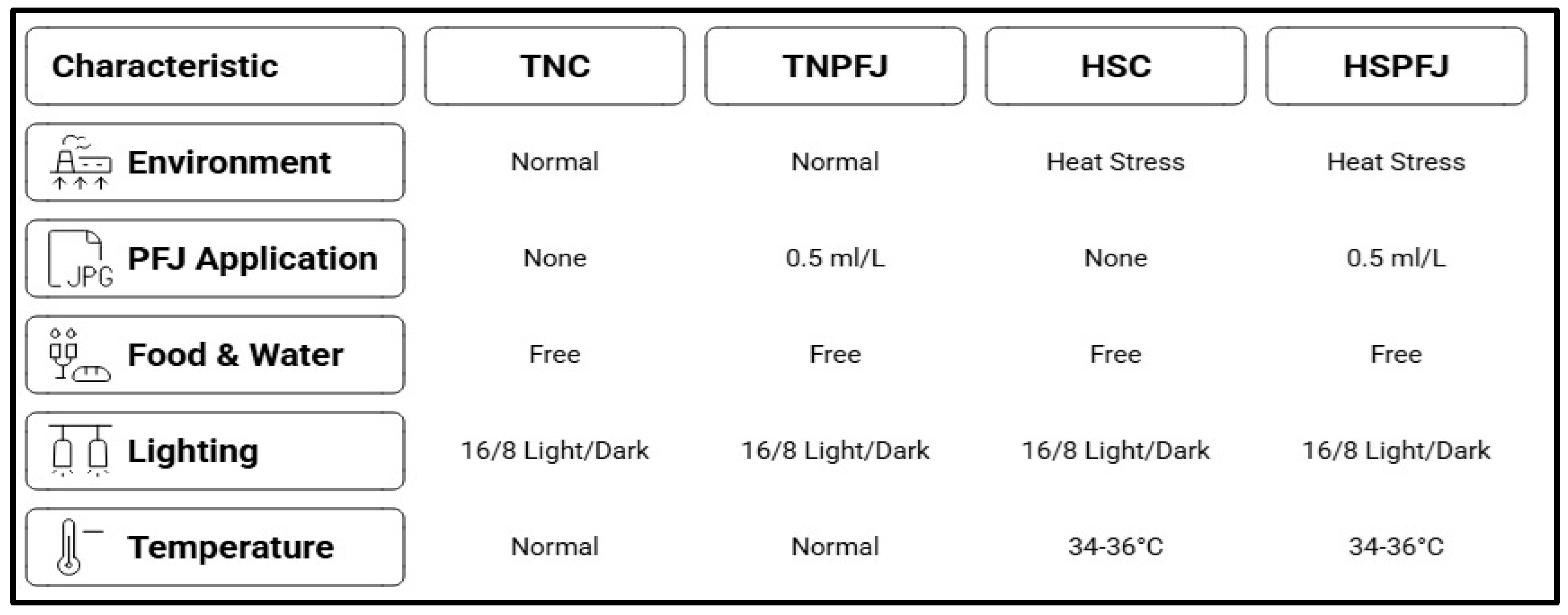
The experiment was conducted using Japanese quails (Coturnix coturnix japonica) aged 8 weeks, and the experimental period lasted eight weeks. A total of 200 female and 60 male Japanese quails were used; the animals were divided into four equal groups (50 females and 15 males in each group). Accordingly, the groups were named TNC (Control under normal environmental conditions), TNPFJ (0.5 mL/L PFJ application under normal environmental conditions), HSC (Control under heat stress), and HSPFJ (0.5 mL/L PFJ application under heat stress). For all groups, feed and water were provided ad libitum. The pH and microbial content of the liquid mixture were determined before and after fermentation (Table 1). The ration used in feeding the animals was formulated to contain 21% crude protein and 2800 kcal/kg metabolizable energy (ME) according to NRC norms. The chemical analyses of the feed ingredients were conducted according to AOAC [7] methods, and the ME content of the ration was calculated using TSE [8] formulas (Table 2).

2.2. Preparation of Fermented Lactic Acid Bacteria (LAB) Culture

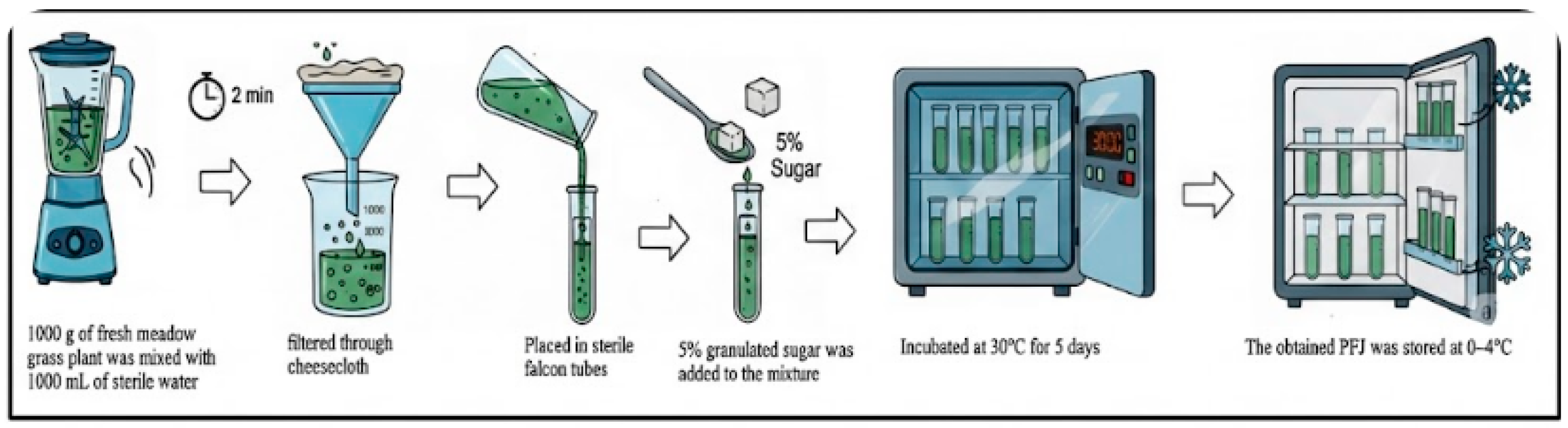
The fermented natural lactic acid bacterial liquid (Pre-Fermented Juice—PFJ) used in the study was modified based on the method described by Masuko et al. [9]. In this context, 1000 g of fresh plant material (meadow grass) was mixed with 1000 mL of sterile water and blended for 2 min. The resulting mixture was then filtered using cheesecloth and stored in sterile Falcon tubes. A 5% sugar solution was added to the mixture, which was then incubated at 30 °C for 5 days. After the incubation period, the fermented liquid was stored at 0–4 °C during the experimental period. Preparation Method of PFJ from meadow grass Plant (Figure 1).

2.3. Heat Stress Application

Throughout the experiment, for the groups subjected to heat stress, the ambient temperature was adjusted to 34–36 °C every day from 08:00 to 16:00 using thermostatically controlled radiant heaters. The lighting cycle was set to 16 h of light and 8 h of darkness (Figure 2).

2.4. Egg Production and Quality Measurements

During the trial period, feed consumption for each subgroup was recorded every two weeks. Egg production was monitored daily, and the obtained eggs were left at room temperature for 24 h before being weighed on a precision scale (0.01 g). Feed conversion ratio (FCR) was calculated as the amount of feed consumed for the production of 1 kg of eggs. Egg quality assessments were conducted every 15 days on a total of 60 eggs, with 15 eggs from each group analyzed during the study period, resulting in a total of 240 egg analyses. Egg yolk and albumen heights were measured using a micrometer with a precision of 0.01 mm; yolk diameter, albumen length, and width were determined using a digital caliper. Shape index, yolk index, albumen index, and Haugh unit were calculated using relevant formulas [10]. The color of egg yolk was assessed using the Roche color scale [11].

2.5. Incubation Application

To evaluate incubation performance, all eggs were placed in separate trays according to groups and were incubated at 37.5 °C with 50–60% humidity. In the final days, humidity was increased to 80–90%, and temperature was reduced by 1 °C. During the incubation period, the eggs were automatically turned 12 times daily. After hatching, the number of chicks and unhatched eggs was counted to calculate fertility and hatch rates. Unfertilized eggs were identified through breakage and internal examination.

2.6. Cecum Content Analyses

At the end of the experiment, 1 g of cecum content obtained from slaughtered quails was homogenized with 9 mL of distilled water, and the pH value was determined using a digital pH meter (Hanna Instruments Inc., Woonsocket, RI, USA). Total lactic acid bacteria (LAB) counts were determined [12], as well as coliform bacteria counts [13,14], enterobacteriaceae counts [15], yeast-mold counts [16], E. coli, and total mesophilic aerobic bacteria (TAB) counts using protocols specified by Alçay [17]. The obtained data were expressed as log10 cfu/mL. Lactic acid and acetic acid concentrations were determined using a high-pressure liquid chromatography device (HPLC) following the method reported by Suzuki and Lund [18]. For this purpose, a HPLC device [Shimadzu LC-20 AD HPLC pump, Shimadzu SIL-20 ADHT Autosampler, Shimadzu SPD M20A Detector (DAD), Shimadzu CTO-20ac Column oven (Shimadzu Corporation, Kyoto, Japan), and Icsep Coregel (87H3 column)] was utilized.

2.7. Biochemical Analyses

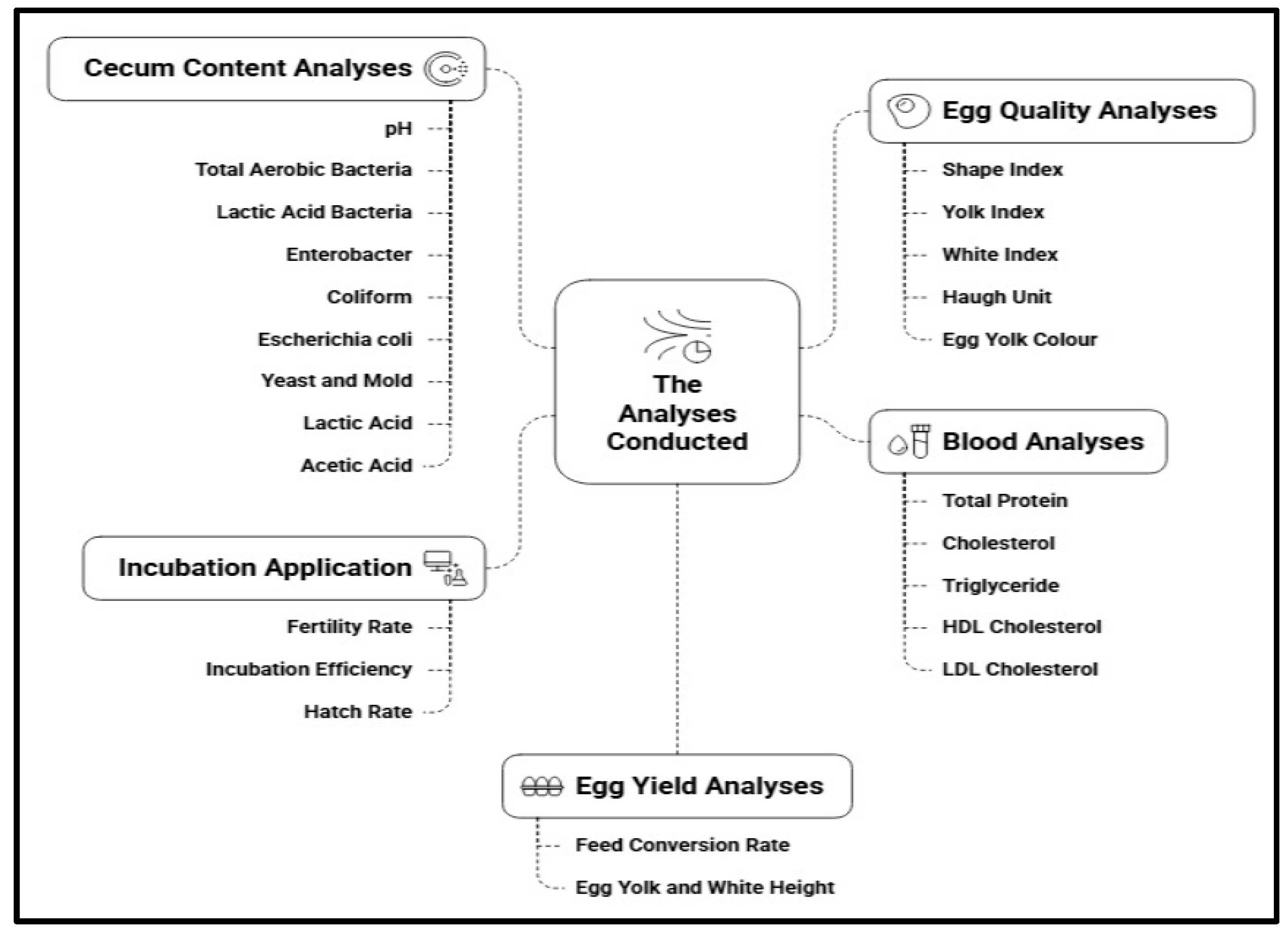
At the end of the experiment, serum samples obtained from a total of 60 sacrificed quails, with 15 quails from each group, were analyzed for total protein, cholesterol, triglycerides, HDL cholesterol, LDL cholesterol, chloride, phosphorus, AST, and other biochemical parameters. Analyses were quantitatively conducted using Roche commercial kits on a Roche Integra 800 autoanalyzer (Roche Diagnostics, Mannheim, Germany) using a spectrophotometric method at the Şanlıurfa Güven Laboratories (Figure 3).

2.8. Statistical Analysis

Data obtained from the groups in the study were recorded in the Microsoft Excel program. Statistical analyses of the obtained data were performed using SPSS software (SPSS, version 19) [19], arranged in random plots according to a factorial experimental design. Duncan’s multiple comparison test was applied to determine the differences between the groups.

3. Results

The microbial and pH values of the liquid obtained from Meadow grass before and after incubation are presented in Table 1. When Table 1 is evaluated, the highest microbial increase after incubation was observed in the total LAB count, reaching 7.7 × 10¹⁰ cfu/mL, while a decrease was noted in the counts of coliform and Enterobacter. The pH value decreased from 6.36 to 3.64 during the incubation period. This condition indicates that the environment was acidic and provided suitable conditions for the growth of microorganisms that can tolerate acid, such as LAB. Notably, pathogenic E. coli was not detected at the low pH value of 3.64 after incubation.
Data related to the live weights, feed consumption, feed conversion ratios, egg weights, and egg production of Japanese quails at the beginning and end of the study are presented in Table 3.
When examining the effect of probiotic use on feed consumption in this study, significant statistical differences were observed among the daily average feed consumptions of all groups during the 1st to 4th weeks (p < 0.001) and the 4th to 8th weeks (p < 0.01), as shown in Table 3. The feed consumption of the experimental groups in the 1st to 4th weeks ranged from 27.02 to 36.98 g. The highest feed consumption was recorded in the TNC group at 36.98 g, while the lowest feed consumption value was found in the HSPFJ group at 27.02 g. At the end of the 4th to 8th weeks, the feed consumption of the experimental groups varied from 24.84 to 30.00 g. Again, the highest feed consumption value was in the TNC group at 30.00 g, whereas the lowest was recorded in the HSPFJ group at 24.84 g. Compared to normal environmental conditions, it was observed that the daily feed consumption values of quails exposed to temperature stress decreased. At the end of the 1st to 4th weeks, the weekly feed conversion ratios of all groups subjected to the trial were statistically significant; however, no significant differences were noted at the end of the 4th to 8th weeks. As a result, it can be asserted based on these findings that the addition of probiotics to the drinking water of Japanese quails exposed to temperature stress significantly reduced the adverse conditions induced by temperature stress, thereby numerically improving the feed conversion ratio. The lowest feed conversion ratio was found in the HSPFJ group at 2.36, while the highest value was determined in the TNC group at 3.32. Although not statistically significant during the 4th–8th weeks, the addition of probiotics numerically improved feed conversion in the supplemented groups.
The effects of probiotic use on egg quality parameters are shown in Table 4. The highest eggshell thickness was observed in the TNC group at 0.22 mm during the 1st–4th weeks, while the lowest was observed in the HSPFJ group at 0.15 mm. The shell thickness decreased due to temperature stress. At the end of the 4th to 8th weeks, while no statistical difference was found among the values, the numerically highest eggshell thickness was observed in the TNPFJ group at 0.24 mm. In our study, upon examining the data at the end of the 4th week, it was determined that the probiotic supplement did not have a statistical effect on the Haugh unit and albumin index, whereas temperature stress had a significant impact on both parameters. At the end of the 4th to 8th weeks, the Haugh unit values were found to be statistically insignificant, while significant differences were observed in albumin index values. Under normal environmental conditions, the addition of probiotics reduced Haugh unit and albumin index values; however, in groups exposed to temperature stress, the addition of probiotics improved these parameters. Furthermore, when evaluating the data at the end of the 4th week, it was found that the probiotic contribution did not have a statistically significant effect on the yolk index, while the effect of temperature stress was statistically significant. However, in the data from the 8th week, yolk index values were found to be statistically insignificant with both probiotic supplementation and temperature stress. Under TN conditions, a decrease in yolk index values was observed due to the addition of probiotics; however, in HS groups, the PFJ application led to an improvement in yolk index values. This suggests that probiotics can have more pronounced positive effects under environmental stress conditions. Regarding yolk color, in normal environmental conditions (TN), the highest color values were observed in the TNPFJ group on both the 30th and 60th days. In groups exposed to temperature stress, yellow color values increased in the HSC group, while a decrease was noted in the HSPFJ group. Nevertheless, the highest yellow color values under temperature stress were detected in the HSPFJ-treated groups. These findings highlight the positive contribution of PFJ to egg yolk pigmentation.
The effect of different probiotics on cecal microbiota pH, microbial populations, and organic acid concentrations is presented in Table 5. Treatment differences were found for cecal microbiota pH, microbial populations, and organic acid concentrations. Differences were observed in pH, microbial populations [Total Aerobic Bacteria (TAB), Lactic Acid Bacteria (LAB), Enterobacter, Coliform, Escherichia coli (E. coli), yeast, and mold], as well as lactic acid (LA) and acetic acid (AA) concentrations (p < 0.05). According to the data obtained at the end of the experiment, cecal pH values were found to range from 6.47 to 7.60. It was determined that the pH values, which were lower under normal environmental conditions, significantly increased under temperature stress. Total Aerobic Bacteria (TAB) counts generally decreased in groups exposed to temperature stress. Similarly, a decrease in Lactic Acid Bacteria (LAB) counts was observed due to temperature stress. However, the addition of probiotics increased LAB counts under both normal and temperature stress conditions. Under normal environmental conditions, the highest LAB concentrations were recorded in the TNPFJ group at Log10 9.60 cfu/mL, while under temperature stress, the highest value was found in the HSPFJ group at Log10 9.52 cfu/mL. These findings indicate that PFJ supports the growth of beneficial bacteria in the gut microbiota. Enterobacter counts increased in the control group exposed to temperature stress. However, the addition of PFJ proved to be effective in reducing Enterobacter counts under both environmental conditions. The lowest Enterobacter level was measured in the HSPFJ group under temperature stress at Log10 5.38 cfu/mL. In terms of coliform bacteria counts, the lowest value was detected in the TNPFJ group at Log10 5.32 cfu/mL, while in temperature stress conditions, it was found in the HSPFJ group at Log10 5.45 cfu/mL. In contrast, the highest coliform level was observed in the TNC group at Log10 6.78 cfu/mL. E. coli levels distinctly increased in the control group under temperature stress, while a significant decrease was observed in the PFJ-supplemented group. The highest E. coli level was found in the HSC group at Log10 6.65 cfu/mL, whereas the lowest was determined in the HSPFJ group at Log10 4.91 cfu/mL. This result supports the potential pathogen-suppressing effect of PFJ. Yeast numbers were also affected by environmental stress conditions, showing a significant decrease with PFJ supplementation under both normal and temperature stress conditions. The highest yeast count was recorded in the TNC group at Log10 3.83 cfu/mL, while the lowest was found in the TNPFJ group at Log10 2.53 cfu/mL.
The biochemical measures in blood are presented in Table 6. Statistically, significant differences were found in total protein and AST values between groups (p < 0.05). However, the differences observed in chloride, phosphorus, total cholesterol, LDL cholesterol, HDL cholesterol, and triglyceride levels were not statistically significant (p > 0.05). The total protein concentrations in the serum of the experimental quails varied between 2.84 and 4.12 (g/dL). The highest total protein value of 4.12 (g/dL) was obtained from the control group, while the lowest total protein value of 2.84 (g/dL) was recorded in the HSPFJ probiotic group. The phosphorus levels in the blood of the experimental quails ranged from 7.06 to 11.02 (g/dL). The lowest phosphorus value of 7.06 (g/dL) was obtained from the HSC group, while the highest phosphorus value of 11.02 (g/dL) was obtained from the HSPFJ supplemented group.
The effects of probiotics on fertility rate, hatchability, and egg production rate are presented in Table 7. A total of 485 quail eggs were used to determine the fertility rate and hatchability efficiency, while 405 quail eggs were utilized for hatch rate detection. At the end of the incubation period, the highest percentage of fertilized eggs (95.6%) and the hatchling count (88.3%) was observed in the TNC group, whereas the lowest percentage of unfertilized eggs (4.4%) and the number of unhatched eggs (11.7%) was also recorded in the TNC group.
When evaluating the hatch rate at the end of the incubation period, the highest percentage of hatched chicks (92.4%) and the lowest percentage of unhatched chicks (7.6%) were determined in the TNC group. The addition of PFJ and temperature stress conditions negatively affected both the number of fertilized eggs and hatchability efficiency.

4. Discussion

In the study by Yan et al. [20], the counts of LAB in the Meadow grass plant were reported as 1.8 × 10², yeast as 1.5 × 10⁴, and mold as 1.2 × 10³ cfu/g, which differ from our findings. It is noted that in various studies, the LAB count on the pre-formed plant varies from 1 × 101 cfu/mL to 1.0 × 10⁷ cfu/mL, and that there are differences in the counts and species of LAB on the plant. Possible reasons for these differences include plant species, ultraviolet rays, ambient temperature, environmental humidity, and numerous factors related to the plant itself [21,22]. In this study, the total LAB count in the PFJ prepared by incubating with a 5% sugar addition for 5 days was found to be 7.7 × 10¹⁰ cfu/mL, which is higher than the values obtained in studies by several researchers [23,24,25,26,27,28] (1.4 × 10⁷–1.85 × 10⁹ cfu/mL). The value of 7.7 × 10¹⁰ cfu/mL obtained in our study is similar to other reported values [29,30].
In a study by Pambuka et al. [31], an increase in feed consumption and feed conversion ratio was observed in layer hens fed with a probiotic liquid containing Lactobacillus and Bacillus species. These findings contradict the results observed in our current study, which showed a decrease in feed consumption and an improvement in feed efficiency. Similarly, Ölmez et al. [32] reported that probiotic supplementation had no significant effect on feed consumption and feed conversion ratio. On the other hand, in the study conducted by Lokapirnasari et al. [33], it was reported that probiotic supplementation reduced feed consumption and improved feed conversion. These findings parallel the results obtained in our study. Astuti F.K. et al. [34] and Suroso and Kalsum U. [35] indicated that the addition of beneficial bacteria for poultry could enhance microbial activity in the digestive system and digestibility. The increase in beneficial bacterial populations in the digestive system inhibits the proliferation of harmful bacteria, effectively enhancing the digestion and absorption of feed materials, subsequently improving the feed conversion ratio and contributing to reduced feed consumption. In our study, it was determined that PFJ contains LAB at a level of 7.7 × 10¹⁰ cfu/mL. The increase in beneficial LAB counts in the cecum of the groups supplemented with PFJ (TNPFJ and HSPFJ) is significant in this context. The high LAB density in the cecum reduced the counts of harmful microorganisms such as Enterobacter and coliforms under normal environmental conditions, while also reducing the levels of E. coli and mold under high-temperature conditions. This resulted in improved digestive health, which increased feed and consequent improvement in digestibility, elevated feed conversion ratios, and decreased feed consumption. These findings can be explained as the fundamental reasons for the observed improvements in feed conversion and reductions in feed consumption in our study.
Studies by Ayasan et al. [36] and Lokapirnasari et al. [37] reported an increase in eggshell thickness with probiotic supplementation. These reports are contrary to those observed in the current study. Conversely, studies by Cufadar et al. [38], which included Bacillus megaterium and Bacillus amyloliquefaciens, and by Kalsum et al. [39], which included Lactobacillus salivarius, reported no significant effect of probiotic applications on eggshell thickness. These results resemble the data obtained from our study at the end of the 8th week. The cause of ineffectiveness may depend on several variables, such as the characteristics of the probiotic strains applied, dosage, duration of application, and environmental factors [38]. Nahashon et al. [40] attributed improvements in eggshell quality to the increased calcium retention caused by low pH levels in the gastrointestinal system. However, the decrease in eggshell thickness observed in our study due to temperature stress can be explained by the high pH levels detected in the cecum. The reduction in eggshell thickness observed at the end of week 4 due to temperature stress may also be linked to the adverse effects of high temperatures on calcium absorption and its bioavailability in circulation [41,42]. Furthermore, the literature indicates that high ambient temperatures increase respiratory rates in poultry, which negatively impacts eggshell quality. Increased respiration lowers carbon dioxide concentrations in the body, leading to a rise in blood pH (alkalosis). This causes a decrease in bicarbonate, which plays a role in eggshell mineralization, results in an increase in organic acid concentrations, and reduces free calcium concentrations [43,44]. However, the increase in eggshell thickness observed in all groups at the end of the 8th week suggests that shell thickness and strength may increase during late laying periods. These findings and results are consistent with reports by Xu and Lu et al. [45], indicating that egg quality may improve with advancing age.
The ineffectiveness of probiotics under normal environmental conditions may be explained, as mentioned by Mikulski et al. [46], where probiotic efficacy can depend on environmental stress conditions in addition to factors such as microbial strain composition, application method, dosage, and frequency. The negative effects of temperature stress on quail egg quality are frequently emphasized in the literature. Oluwagbenga et al. [47] reported that environmental temperatures above 30 °C lead to decreases in egg weight, Haugh unit, and albumin index values. These findings are consistent with the decreases in Haugh unit and albumin index observed in groups exposed to temperature stress in our study. Additionally, the improvement observed in the Haugh unit and albumin index under temperature stress with PFJ supplementation can be explained by probiotics enhancing the activity of digestive enzymes, potentially improving protein synthesis and gross digestible energy utilization [48]. Moreover, as reported by Wang et al. [49], complex probiotics containing numerous and various types of bacteria facilitate protein synthesis and transport, which aligns with the rich microbial content of PFJ used in our study. The positive effects of PFJ supplementation under temperature stress conditions are also supported by the improvement in feed conversion ratios obtained in these groups. These results suggest that probiotics can exhibit pronounced positive effects not only under normal conditions but particularly in animals under environmental stress.
Reports in the literature support the potential effects of probiotics on yolk color. Some studies conducted on layer hens have reported that the incorporation of Bacillus subtilis [50], Bacillus velezensis [51], and Enterococcus faecium [52] into the diet leads to increased yolk color. However, there are studies in the literature that indicate no changes in yolk color due to the addition of probiotics or plant extracts [53,54,55]. This situation highlights the importance of factors such as the type and dosage of probiotics used and the physiological condition of the animal. In the study conducted by Macit et al. [52], it was reported that probiotic supplementation increased the level of unsaturated fatty acids in egg yolk and that this increase had a positive effect on egg yolk color. The increase in yellow color values observed in our study with PFJ supplementation aligns with these findings. It is known that the pigmentation of egg yolks occurs through the absorption of carotenoid pigments present in poultry diets [56]. Probiotic bacteria have been reported to increase the production of proteins that bind carotenoids in the liver, facilitating the transport of these compounds to the yolk [57]. Additionally, probiotics can enhance the absorption of these pigments by producing enzymes that break down complex food molecules, such as carotenoid esters [58]. In our study, the rich microbial content of PFJ may support these enzymatic effects, making it a fundamental reason for the observed increase in yolk color.
Based on the study findings, it is understood that the decreased pH values in the cecum under normal environmental conditions with PFJ supplementation are primarily derived from organic acids, particularly lactic acid (LA). The highest lactic acid value of 24.82 in the TNPJF group can explain the lowest pH value of 6.47. The highest pH value of 7.60 in the HSPFJ supplemented group can also be explained by the lowest lactic acid value of 8.26 and acetic acid of 4.26. In the control group, under temperature stress compared to normal conditions, the decreasing lactic acid concentrations correspond to a pH increase from 6.54 to 6.98. Literature indicates that this increase in intestinal pH in chicks exposed to temperature stress may be due to an imbalance in the intestinal microbiota and an increase in pathogenic microorganisms following heat stress [59]. The increased pH value in the present study’s control group can be explained by the increase in pathogenic microorganisms, such as Enterobacter, coliform, E. coli, and yeast, resulting from temperature stress. Reports indicate that heat stress causes significant changes in the intestinal microbiota and structure in both broiler and layer chickens, which include decreases in Lactobacillus and Bifidobacterium concentrations and increases in total coliform and E. coli concentrations [60,61,62,63]. The decrease in E. coli, a pathogen under temperature stress, due to probiotic supplementation can be attributed to probiotics adhering to the intestinal epithelium, occupying binding sites for pathogens, and competing for nutrients; they also produce compounds such as hydrogen peroxide and bacteriocins in the environment, preventing the proliferation of pathogens [64]. Mold counts increased in the current control groups due to temperature stress, but PFJ supplementation reduced this increase, suggesting that PFJ may possess antifungal potential. Therefore, it is evident that PFJ supplementation is effective in maintaining intestinal microbial balance and suppressing potential pathogens, with this effect becoming more pronounced under adverse environmental conditions such as temperature stress.
Cecal microbial populations are indicators of intestinal health in animals [65]. The cecum is a complex ecosystem of microbial colonization in poultry. Volatile fatty acids are typically produced in the cecum through bacterial fermentation, which is necessary for intestinal function and integrity [66]. The levels of short-chain fatty acids in the ceca of chicks under heat stress, particularly acetic, propionic, butyric, valeric, and isovaleric acids, are significantly reduced [67,68], similar to the data from the control group. The lowest values of LA and AA were identified under temperature stress related to PFJ supplementation. We evaluate that this decline is due to the probiotics altering the proportions of LA and AA-producing bacteria in the cecal microflora. Novak et al. [69] demonstrated that certain volatile fatty acids were reduced in the ceca of broiler chickens receiving probiotics, supporting our results.
Despite the high LAB counts in the PFJ-supplemented group under temperature stress in the current study, the presence of low amounts of volatile fatty acids may indicate a change in the cecal microbiota. In complex ecosystems like the cecum, LAB can attain numerical superiority over other microorganisms. However, it is observed that LAB exhibit a strategic reduction in metabolic activity (downregulation) in high competition environments [70,71]. In environments with high competition, the enzymes and metabolic pathways that LAB attempt to produce may be suppressed by other microorganisms, thus decreasing the fermentation capacity of LAB. Such interactions influence not only the metabolism of LAB but also the overall microbial balance within the ecosystem. As LAB strive to survive against inhibitory factors, their metabolic rates may be reduced, consequently lowering their fermentative performance. Other microorganisms, particularly in highly competitive environments, may limit the growth and fermentative capacities of LAB by producing antibiotic-like substances or enzyme inhibitors [72]. In the current study, the low levels of fatty acids in the cecum despite the high lactic acid bacteria in the PFJ supplemented group under temperature stress can be explained by these reports. Additionally, it can be noted that probiotics may be less effective under specific conditions. Temperature stress conditions [73] and alkaline environments with high pH levels [74] can reduce the viability and efficacy of live cultures.
Önol et al. [75] reported that probiotics added to the diets of quails under continuous heat stress did not affect chloride and cholesterol values but reduced total protein values, aligning with the current study findings. Similarly, İnci [76] identified a decrease in total protein values due to probiotic supplementation, suggesting a parallel with our data.
Under temperature stress conditions, PFJ increased the phosphorus content in the blood. It has been noted that some probiotics can enhance the bioavailability of phosphorus in plant-based feeds by producing phytase enzyme [77]. Probiotics improve gut health by increasing the number of beneficial microorganisms in the digestive system, allowing for more effective absorption of phosphorus.
In the study conducted by Güçlü [78], it was reported that the probiotics applied did not create significant and statistically meaningful differences in fertility rate and hatchability, which does not align with data from the current study. Similarly, in Japanese quails (Coturnix japonica), the overall fertility rate under thermoneutral conditions (23.8 ± 0.7 °C) was 84.8%, while under heat stress conditions (35.8 ± 0.6 °C), this rate dropped to 78.9%. Likewise, the hatchability rate was 80.2% in the thermoneutral group (23.8 ± 0.7 °C) but declined to 74.1% under heat stress conditions [79]. This similarity with data from the current study may indicate that heat stress causes oxidative stress, adversely affecting the physiological performance of small yellow follicles, ovaries, and oviducts in poultry; this can lead to significantly reduced fertility [80,81]. Excessive increases in temperature can pressure the reproductive capabilities of chicks [82] and can explain the observed low fertility rates under heat stress. Males are more affected by heat stress compared to females in terms of infertility [83]. Ambient temperatures above the thermoneutral zone increase lipid peroxidation due to the rise in reactive oxygen species (ROS), causing damage to the testes and negatively affecting seminal parameters. Key seminal parameters include semen volume, testis weight, sperm concentration and motility, sperm viability, spermatids, spermatocytes, and spermatogonia [84]. Low fertility rates are associated with suboptimal environmental conditions, reducing sperm quality and causing infertility [84,85]. McDaniel et al. [86] observed a reduction in sperm-egg penetration rates when hens were artificially inseminated with semen collected from roosters under heat stress, which led to a decrease in the percentage of fertilized eggs. These findings give support for the fertility outcomes seen in the current study.
In most poultry species, mating occurs through the joining of cloacae. The addition of probiotics to the diets of hens and layer hens has been reported to increase the concentration of Lactobacilli in the cloaca [87,88]. Caution is required when determining the dosage of probiotics used in a reproductive flock of roosters. Concerns exist that probiotics administered to male broiler breeders may reach levels that could affect the quantity of Lactobacilli in the male reproductive tract and cloaca, potentially impacting semen quality.
When rooster semen comes into contact with probiotic bacteria, particularly Lactobacillus species, it has been demonstrated that sperm motility rapidly declines and sperm quality diminishes. This decrease in motility is hypothesized to result from the binding of Lactobacilli to sperm [89]. Additionally, a decline in sperm quality resulting from high concentrations of probiotics in the rooster cloaca can lead to decreased fertilization rates and potentially increased infertility [89,90]. In the study by Aydın, S.S., and Denek, N. [91], the highest levels of lactobacilli were observed in fermented liquids obtained by adding 5% sugar. In the current study, it is thought that the low fertility and hatching rates associated with PFJ supplementation may be due to the high lactobacillus count in the fermented fluid, which could negatively affect sperm quality by increasing cloacal lactobacillus density.

5. Conclusions

In this study, the effects of adding fermented natural lactic acid bacteria (PFJ) as a probiotic to the drinking water of layer quails under temperature stress were investigated. The findings indicate that PFJ has the potential to preserve egg quality, reduce feed consumption, suppress pathological E. coli concentrations, and exert positive effects on blood values while mitigating the adverse effects of temperature stress. Particularly, its low cost and the health benefits it provides position PFJ as a significant step towards expanding its potential as an alternative probiotic and contributing to quail farming. It is suggested to investigate the effects of PFJ under varying doses, strains, application durations, and environmental conditions through comparative studies with stress-resistant probiotics to better understand its role in poultry health.

Author Contributions

Conceptualization, data curation, formal analysis, methodology, project administration, resources, software, writing—review and editing, S.S.A.; data curation, formal analysis, investigation, validation M.A.; data curation, formal analysis, software, N.K.; formal analysis, methodology, resources, software, A.O.; formal analysis, methodology, software, validation, M.S.; data curation, validation, writing—original draft, A.D. All authors have read and agreed to the published version of the manuscript.

Funding

This research received no external funding.

Institutional Review Board Statement

This research was conducted with permission from the Local Animal Experiments Ethics Committee of Harran University (HRÜ-HADYEK-2022/001/06, approval date: 9 February 2022).

Informed Consent Statement

Not applicable.

Data Availability Statement

The original contributions presented in this study are included in the article. Further inquiries can be directed to the corresponding author.

Conflicts of Interest

The authors declare no conflict of interest.

References

  1. Qin, Q.; Li, Z.; Zhang, M.; Dai, Y.; Li, S.; Wu, H.; Zhang, Z.; Chen, P. Effects of melittin on production performance, antioxidant function, immune function, heat shock protein, intestinal morphology, and cecal microbiota in heat-stressed quails. Poult. Sci. 2023, 102, 102713. [Google Scholar] [CrossRef]
  2. Abdulkadir, A.; Reddy, D. A scoping review of the impact of heat stress on the organs of the Japanese quail (Coturnix japonica). J. Basic Appl. Zool. 2023, 84, 8. [Google Scholar] [CrossRef]
  3. Hatipoglu, D.; Senturk, G.; Aydin, S.S.; Kirar, N.; Top, S.; Demircioglu, İ. Rye-grass-derived probiotics alleviate heat stress effects on broiler growth, health, and gut microbiota. J. Therm. Biol. 2024, 119, 103771. [Google Scholar] [CrossRef]
  4. Aydin, S.S.; Hatipoglu, D. Probiotic strategies for mitigating heat stress effects on broiler chicken performance. Int. J. Biometeorol. 2024, 68, 2153–2171. [Google Scholar] [CrossRef] [PubMed]
  5. Fathi, M.; Al-Homidan, I.; Al-Dokhail, A.; Ebeid, T.; Abou-Emera, O.; Alsagan, A. Effects of dietary probiotic Bacillus subtilis supplementation on productive performance, immune response, and egg quality characteristics in laying hens under high ambient temperature. Ital. J. Anim. Sci. 2018, 17, 804–814. [Google Scholar] [CrossRef]
  6. Zulkifli, I.; Abdullah, N.; Azrin, N.M.; Ho, Y.W. Growth performance and immune response of two commercial broiler strains fed diets containing Lactobacillus cultures and oxytetracycline under heat stress conditions. Br. Poult. Sci. 2000, 41, 593–597. [Google Scholar] [CrossRef] [PubMed]
  7. AOAC. Official Methods of Analysis; Association of Official Analytical Chemists: Washington, DC, USA, 1990. [Google Scholar]
  8. TSE No: 9610; Animal Feed-Metabolic (Reversible) Energy Determination (Chemical Method). Turkish Standards Institute: Ankara, Turkey, 1991.
  9. Masuko, T.; Hariyama, Y.; Takahashi, Y.; Cao, L.M.; Goto, M.; Ohshima, M. Effect of addition of fermented juice of epiphytic lactic acid bacteria prepared from timothy and orchardgrass on fermentation quality of silages. Grassl. Sci. 2002, 48, 120–125. [Google Scholar] [CrossRef]
  10. Haugh, R.R. The Haugh unit for measuring egg quality. US Egg Poult. Mag. 1937, 43, 522–525. [Google Scholar]
  11. Çimrin, T.; Demirel, M. Influences of rosemary essential oil on some blood parameters and small instentine microflora laying hens. Turk. J. Agric. Food Sci. Technol. 2016, 4, 769–775. [Google Scholar] [CrossRef]
  12. Duman, A.; Sezer, C.; Oral, N.B. Kars’ ta Satis a Sunulan Suzme Ballarin Kalite Niteliklerinin Aras tirilmasi. Kafkas Univ. Vet. Fak. Derg. 2008, 14, 89–94. [Google Scholar] [CrossRef]
  13. Sert, S.; Kıvanç, M. Microbiological studies on fresh cottage and lor cheeses. Food 1985, 10, 251–254. [Google Scholar]
  14. Harrigan, W.F. Laboratory Methods in Food Microbiology; Gulf Professional Publishing: Houston, TX, USA, 1998. [Google Scholar]
  15. McCance, M.E.; Harrigan, W.F. Laboratory Methods in Food and Dairy Microbiology; Blackwell Science: Hoboken, NJ, USA, 2000. [Google Scholar]
  16. Brooks, J.C.; Martinez, B.; Stratton, J.; Bianchini, A.; Krokstrom, R.; Hutkins, R. Survey of raw milk cheeses for microbiological quality and prevalence of foodborne pathogens. Food Microbiol. 2012, 31, 154–158. [Google Scholar] [CrossRef]
  17. Alçay, A.Ü. İstanbul’da satılan pişmiş tavuk dönerlerin mikrobiyolojik kalitesinin araştırılması. Türk Mikrobiyoloji Cemiy. Derg. 2019, 49, 74–85. [Google Scholar] [CrossRef]
  18. Suzuki, M.; Lund, C.W. Improved gas-liquid chromatography for simultaneous determination of volatile fatty acids and lactic acid in silage. J. Agric. Food Chem. 1980, 28, 1040–1041. [Google Scholar] [CrossRef]
  19. SPSS Inc. Statistical Package for the Social Sciences (SPSS/PC+); SPSS Inc.: Chicago, IL, USA, 1991. [Google Scholar]
  20. Yan, Y.; Li, X.; Guan, H.; Huang, L.; Ma, X.; Peng, Y.; Li, Z.; Nie, G.; Zhou, J.; Yang, W.; et al. Microbial community and fermentation characteristics of Italian ryegrass silage prepared with corn stover and lactic acid bacteria. Bioresour. Technol. 2019, 279, 166–173. [Google Scholar] [CrossRef]
  21. Jones, R. Role of biological additives in crop conservation. In Biotechnology in the Feed Industry, Proceedings of the 11th Annual Symposium, Washington, DC, USA, 23–28 July 1995; Nottingham University Press: Nottingham, UK, 1995; pp. 627–646. [Google Scholar]
  22. Jones, R.; Gogerddan, P. The importance of quality fermentation in silage making and future trends in forage production. In Proceedings of the Alltech 8th Annual European Lecture Tour, Dunboyne, Ireland, 21 February 1994. [Google Scholar]
  23. Guney, M.; Kale, C.; Temur, C.; Bingol, N.T.; Aksu, T. The effect of molasses and pre-fermented lactic acid juice on silage quality and in vitro digestibility of sugar beet pulp + wheat straw silage. Fresenius Environ. Bull. 2018, 27, 7454–7459. [Google Scholar]
  24. Bureenok, S.; Langsoumechai, S.; Pitiwittayakul, N.; Yuangklang, C.; Vasupen, K.; Saenmahayak, B.; Schonewille, J.T. Effects of fibrolytic enzymes and lactic acid bacteria on fermentation quality and in vitro digestibility of Napier grass silage. Ital. J. Anim. Sci. 2019, 18, 1438–1444. [Google Scholar] [CrossRef]
  25. Ohshima, M.; Kimura, E.; Yokota, H. A method of making good quality silage from direct-cut alfalfa by spraying previously fermented juice. Anim. Feed. Sci. Technol. 1997, 66, 129–137. [Google Scholar] [CrossRef]
  26. Denek, N.; Can, A.; Avci, M.; Aksu, T.; Durmaz, H. The effect of molasses-based pre-fermented juice on the fermentation quality of first-cut lucerne silage. Grass Forage Sci. 2011, 66, 243–250. [Google Scholar] [CrossRef]
  27. Bureenok, S.; Namihira, T.; Tamaki, M.; Mizumachi, S.; Kawamoto, Y.; Nakada, T. Fermentative quality of guinea grass silage using fermented juice of the epiphytic lactic acid bacteria (FJLB) as a silage additive. Asian-Australas. J. Anim. Sci. 2005, 18, 807–811. [Google Scholar] [CrossRef]
  28. Aydın, S.S.; Denek, N. The effect of fermented lactic acid juice prepared with different levels of sucrose and incubation times on the alfalfa silage quality. Harran Univ. Vet. Fac. J. 2019, 8, 44–51. [Google Scholar]
  29. Aydın, S.S.; Denek, N. Amount of lactic acid bacteria in fermented natural lactic acid bacteria liquids prepared with varying sucrose inclusion at different incubation periods. Med. Weter. 2022, 78, 456–460. [Google Scholar] [CrossRef]
  30. Aydın, S.S.; Denek, N. Determination of lactic acid bacterial numbers of lyophilized or frozen natural lactic acid bacterial liquids prepared with different methods and stored for different times. Kocatepe Vet. J. 2024, 17, 29–41. [Google Scholar] [CrossRef]
  31. Pambuka, S.R.; Sjofjan, O.; Radiati, L.E. Effect of liquid probiotics mixed culture supplements through drinking water on laying hens’ performance and yolk cholesterol. J. World’s Poult. Res. 2014, 4, 5–9. [Google Scholar]
  32. Ölmez, M.; Şahin, T.; Karadağoğlu, Ö.; Uysal, S.; Bekinkayan, B.; Filizoğlu, E.; Yörük, M.A. The effect of probiotic supplementation on performance and egg quality in laying quails under heat stress. Van Health Sci. J. 2021, 14, 228–236. [Google Scholar] [CrossRef]
  33. Lokapirnasari, W.P.; Dewi, A.R.; Fathinah, A.; Hidanah, S.; Harijani, N.; Karimah, B.; Andriani, A.D. Effect of probiotic supplementation on organic feed as alternative antibiotic growth promoter on production performance and economics analysis of quail. Vet. World 2017, 10, 1508–1514. [Google Scholar] [CrossRef]
  34. Astuti, F.K.; Busono, W.; Sjofjan, O. Effect of liquid probiotics addition in feed on the production in broiler. J. PAL 2015, 6, 99–104. [Google Scholar]
  35. Suroso, K.; Kalsum, U. Effects of probiotics encapsulation addition to feed consumption, egg production, and feed efficiency in quail. J. Anim. Res. 2016, 1, 1–5. [Google Scholar]
  36. Ayaşan, T.; Özcan, B.A.H.R.İ.; Baylan, M.; Canoğulları, S. The effects of dietary inclusion of probiotic protexin on egg yield parameters of Japanese quail (Coturnix coturnix japonica). Int. J. Poult. Sci. 2006, 5, 776–779. [Google Scholar] [CrossRef]
  37. Lokapirnasari, W.P.; Al Arif, A.; Soeharsono, S.; Fathinah, A.; Najwan, R.; Wardhani, H.C.P.; Noorrahman, N.F.; Huda, K.; Ulfah, N.; Yulianto, A.B. Improves in external and internal egg quality of Japanese quail (Coturnix coturnix japonica) by giving lactic acid bacteria as alternative antibiotic growth promoter. Iran. J. Microbiol. 2019, 11, 406–412. [Google Scholar] [CrossRef]
  38. Cufadar, Y.; Beyari, E.A.; Hassoubah, S.A.; Curabay, B.; Sevim, B.; Aksoy, A.; Alfassam, H.E.; Rudayni, H.A.; Allam, A.A.; Youssef, I.M.; et al. Impacts of Bacillus probiotics on productive performance and egg quality criteria in laying Japanese quails. J. Appl. Poult. Res. 2024, 33, 100445. [Google Scholar] [CrossRef]
  39. Kalsum, U.; Soetanto, H.; Achmanu, A.; Sjofjan, O. Effect of probiotic containing Lactobacillus salivarius on the laying performance and egg quality of Japanese quails. Med. Vet. 2012, 29, 65–73. [Google Scholar]
  40. Nahashon, S.N.; Nakaue, H.S.; Mirosh, L.W. Production variables and nutrient retention in Single Comb White Leghorn laying pullets fed diets supplemented with direct-fed microbials. Poult. Sci. 1994, 73, 1699–1711. [Google Scholar] [CrossRef]
  41. Wang, G.; Huang, Z.; Yu, M.; Kemp, B.; Zhang, M.; van den Brand, H. Impact of chronic heat stress in broiler breeders on egg quality, hatchability, and day-old chick quality. Poult. Sci. 2025, 104, 105452. [Google Scholar] [CrossRef]
  42. Kim, H.R.; Ryu, C.; Lee, S.D.; Cho, J.H.; Kang, H. Effects of heat stress on the laying performance, egg quality, and physiological response of laying hens. Animals 2024, 14, 1076. [Google Scholar] [CrossRef]
  43. Mack, L.A.; Felver-Gant, J.N.; Dennis, R.L.; Cheng, H.W. Genetic variations alter production and behavioral responses following heat stress in two strains of laying hens. Poult. Sci. 2013, 92, 285–294. [Google Scholar] [CrossRef] [PubMed]
  44. Marder, J.; Arad, Z. Panting and acid-base regulation in heat stressed birds. Comp. Biochem. Physiol. Part A Physiol. 1989, 94, 395–400. [Google Scholar] [CrossRef] [PubMed]
  45. Xu, H.; Lu, Y.; Li, D.; Yan, C.; Jiang, Y.; Hu, Z.; Zhang, Z.; Du, R.; Zhao, X.; Zhang, Y.; et al. Probiotic mediated intestinal microbiota and improved performance, egg quality, and ovarian immune function of laying hens at different laying stages. Front. Microbiol. 2023, 14, 1041072. [Google Scholar] [CrossRef]
  46. Mikulski, D.; Jankowski, J.; Naczmanski, J.; Mikulska, M.; Demey, V. Effects of dietary probiotic (Pediococcus acidilactici) supplementation on performance, nutrient digestibility, egg traits, egg yolk cholesterol, and fatty acid profile in laying hens. Poult. Sci. 2012, 91, 2691–2700. [Google Scholar] [CrossRef]
  47. Oluwagbenga, E.M.; Tetel, V.; Schober, J.; Fraley, G.S. Chronic heat stress part 1: Decrease in egg quality, increase in cortisol levels in egg albumen, and reduction in fertility of breeder Pekin ducks. Front. Physiol. 2022, 13, 1019741. [Google Scholar] [CrossRef]
  48. Ahiwe, E.U.; Abdallh, M.E.; Chang’a, E.P.; Omede, A.A.; Al-Qahtani, M.; Gausi, H.; Graham, H.; Iji, P.A. Influence of dietary supplementation of autolyzed whole yeast and yeast cell wall products on broiler chickens. Asian-Australas. J. Anim. Sci. 2020, 33, 579–584. [Google Scholar] [CrossRef]
  49. Wang, X.-C.; Wang, X.-H.; Wang, J.; Wang, H.; Zhang, H.-J.; Wu, S.-G.; Qi, G.-H. Dietary tea polyphenol supplementation improved egg production performance, albumen quality, and magnum morphology of Hy-line Brown hens during the late laying period. J. Anim. Sci. 2018, 96, 225–235. [Google Scholar] [CrossRef] [PubMed]
  50. Upadhaya, S.D.; Rudeaux, F.; Kim, I.H. Efficacy of dietary Bacillus subtilis and Bacillus licheniformis supplementation continuously in pullet and lay period on egg production, excreta microflora, and egg quality of Hyline-Brown birds. Poult. Sci. 2019, 98, 4722–4728. [Google Scholar] [CrossRef]
  51. Ye, M.; Wei, C.; Khalid, A.; Hu, Q.; Yang, R.; Dai, B.; Cheng, H.; Wang, Z. Effect of Bacillus velezensis to substitute in-feed antibiotics on the production, blood biochemistry, and egg quality indices of laying hens. BMC Vet. Res. 2020, 16, 400. [Google Scholar] [CrossRef]
  52. Macit, M.; Karaoglu, M.; Celebi, S.; Esenbuga, N.; Yoruk, M.A.; Kaya, A. Effects of supplementation of dietary humate, probiotic, and their combination on performance, egg quality, and yolk fatty acid composition of laying hens. Trop. Anim. Health Prod. 2021, 53, 63. [Google Scholar] [CrossRef]
  53. Chung, S.H.; Lee, J.; Kong, C. Effects of multi-strain probiotics on egg production and quality in laying hens fed diets containing food waste products. Int. J. Poult. Sci. 2015, 14, 19–24. [Google Scholar]
  54. Song, D.; Wang, Y.W.; Lu, Z.X.; Wang, W.W.; Miao, H.J.; Zhou, H.; Wang, L.; Li, A.K. Effects of dietary supplementation of microencapsulated Enterococcus fecalis and the extract of Camellia oleifera seed on laying performance, egg quality, serum biochemical parameters, and cecal microflora diversity in laying hens. Poult. Sci. 2019, 98, 2880–2887. [Google Scholar] [CrossRef]
  55. César, O.; Maribel, J.F.; César, A.S.; Robles, E.F.F. Effect of probiotic Bifidobacterium animalis as an alternative to growth-promoting antibiotics on performance, egg quality, and health parameters in young laying hens. Eur. PMC 2022. [Google Scholar] [CrossRef]
  56. Garcia, E.A.; Mendes, A.A.; Pizzolante, C.C.; Gonçalves, H.C.; Oliveira, R.P.; Silva, M.A. Effect of cantaxanthin levels on performance and egg quality of laying hens. Braz. J. Poult. Sci. 2002, 4, 15–20. [Google Scholar] [CrossRef]
  57. Carvalho, C.L.; Andretta, I.; Galli, G.M.; Stefanello, T.B.; Camargo, N.d.O.T.; Mendes, R.E.; Pelisser, G.; Balamuralikrishnan, B.; Melchior, R.; Kipper, M. Dietary supplementation with β-mannanase and probiotics as a strategy to improve laying hen performance and egg quality. Front. Vet. Sci. 2023, 10, 1229485. [Google Scholar] [CrossRef]
  58. Eroğlu, A.; Al’Abri, I.S.; Kopec, R.E.; Crook, N.; Bohn, T. Carotenoids and their health benefits as derived via their interactions with gut microbiota. Adv. Nutr. 2023, 14, 238–255. [Google Scholar] [CrossRef]
  59. Humam, A.M.; Loh, T.C.; Foo, H.L.; Samsudin, A.A.; Mustapha, N.M.; Zulkifli, I.; Izuddin, W.I. Effects of feeding different postbiotics produced by Lactobacillus plantarum on growth performance, carcass yield, intestinal morphology, gut microbiota composition, immune status, and growth gene expression in broilers under heat stress. Animals 2019, 9, 644. [Google Scholar] [CrossRef]
  60. Wang, S.; Mahfuz, S.; Song, H. Effects of Flammulina velutipes Stem Base on microflora and volatile fatty acids in the cecum of growing layers under heat stress condition. Braz. J. Poult. Sci. 2019, 21, eRBCA-2019-0989. [Google Scholar] [CrossRef]
  61. Shi, D.; Bai, L.; Qu, Q.; Zhou, S.; Yang, M.; Guo, S.; Li, Q.; Liu, C. Impact of gut microbiota structure in heat-stressed broilers. Poult. Sci. 2019, 98, 2405–2413. [Google Scholar] [CrossRef] [PubMed]
  62. Song, J.; Xiao, K.; Ke, Y.; Jiao, L.; Hu, C.; Diao, Q.; Shi, B.; Zou, X. Effect of a probiotic mixture on intestinal microflora, morphology, and barrier integrity of broilers subjected to heat stress. Poult. Sci. 2014, 93, 581–588. [Google Scholar] [CrossRef]
  63. Siriken, B.; Bayram, I.; Önol, A.G. Effects of probiotics: Alone and in a mixture of Biosacc plus zinc bacitracin on the cecal microflora of Japanese quail. Res. Vet. Sci. 2003, 75, 9–14. [Google Scholar] [CrossRef] [PubMed]
  64. Rondón, A.; González, J.; Rodríguez, M.; Milián, G.; Martínez, M.; Beruvides, A.; Valdivia, A.; Vera, R. In vitro metabolic activity of Lactobacillus salivarius and its effect on productive and health indicators of lactating calves. Cuba. J. Agric. Sci. 2020, 54, 169–181. [Google Scholar]
  65. Mahfuz, S.; Hui, S.; Zongjun, L. Improved production performance and health status with winter mushroom stem (Flammulina velutipes) in laying chickens: Review. Int. J. Poult. Sci. 2017, 16, 112–117. [Google Scholar] [CrossRef]
  66. Meimandipour, A.; Shuhaimi, M.; Soleimani, A.F.; Azhar, K.; Hair-Bejo, M.; Kabeir, B.M.; Javanmard, A.; Anas, O.M.; Yazid, A.M. Selected microbial groups and short-chain fatty acids profile in a simulated chicken cecum supplemented with two strains of Lactobacillus. Poult. Sci. 2010, 89, 470–476. [Google Scholar] [CrossRef]
  67. Ryu, S.T.; Park, B.S.; Bang, H.T.; Kang, H.K.; Hwangbo, J. Effects of anti-heat diet and inverse lighting on growth performance, immune organ, microorganisms, and short-chain fatty acids of broiler chickens under heat stress. J. Environ. Biol. 2016, 37, 185–192. [Google Scholar]
  68. Khan, R.U.; Naz, S.; Ullah, H.; Ullah, Q.; Laudadio, V.; Bozzo, Q.G.; Tufarelli, V. Physiological dynamics in broiler chickens under heat stress and possible mitigation strategies. Anim. Biotechnol. 2023, 34, 438–447. [Google Scholar] [CrossRef] [PubMed]
  69. Novak, R.; Matijašić, B.B.; Terčič, D.; Červek, M.; Gorjanc, G.; Holcman, A.; Levart, A.; Rogelj, I. Effects of two probiotic additives containing Bacillus spores on carcass characteristics, blood lipids, and cecal volatile fatty acids in meat-type chickens. J. Anim. Physiol. Anim. Nutr. 2011, 95, 424–433. [Google Scholar] [CrossRef]
  70. DeLong, J.P.; Hanley, T.C.; Vasseur, D.A. Competition and the density dependence of metabolic rates. J. Anim. Ecol. 2014, 83, 51–58. [Google Scholar] [CrossRef] [PubMed]
  71. Ghedini, G.; White, C.R.; Marshall, D.J. Does energy flux predict density-dependence? An empirical field test. Ecology 2017, 98, 3116–3126. [Google Scholar] [CrossRef]
  72. Pettersen, A.K.; Hall, M.D.; White, C.R.; Marshall, D.J. Metabolic rate, context-dependent selection, and the competition-colonization trade-off. Evol. Lett. 2020, 4, 333–344. [Google Scholar] [CrossRef]
  73. Ahmed, T.; Hashem, M.A.; Afrin, A.; Lahiry, A.; Rahman, S.; Bungo, T.; Das, S.C. Effects of fasting on heat-stressed broiler chickens: Part I—Growth performance, meat quality, gut histomorphological and microbial responses. bioRxiv 2024. [Google Scholar] [CrossRef]
  74. Al-Khalaifa, H.; Al-Nasser, A.; Al-Surayee, T.; Al-Kandari, S.; Al-Enzi, N.; Al-Sharrah, T.; Ragheb, G.; Al-Qalaf, S.; Mohammed, A. Effect of dietary probiotics and prebiotics on the performance of broiler chickens. Poult. Sci. 2019, 98, 4465–4479. [Google Scholar] [CrossRef]
  75. Önol, A.G.; Sari, M.; Ogüz, F.K.; Gülcan, B.; Erbas, G. The effect of probiotic supplementation on the performance and some blood parameters of quails during periods of chronic heat stress. Turk. J. Vet. Anim. Sci. 2003, 27, 857–862. [Google Scholar]
  76. İnci, H. The effect of probiotic use against temperature stress on some blood parameters in laying quails. Turk. J. Agric. Nat. Sci. 2019, 6, 887–892. [Google Scholar]
  77. Bedford, M.R.; Apajalahti, J.H. The role of feed enzymes in maintaining poultry intestinal health. J. Sci. Food Agric. 2022, 102, 1759–1770. [Google Scholar] [CrossRef]
  78. Güçlü, B.K. Effects of probiotic and prebiotic (mannanoligosaccharide) supplementation on performance, egg quality, and hatchability in quail breeders. Ank. Univ. Vet. Fac. J. 2011, 58, 27–32. [Google Scholar]
  79. Deng, W.; Dong, X.; Tong, J.; Zhang, Q. The probiotic Bacillus licheniformis ameliorates heat stress-induced impairment of egg production, gut morphology, and intestinal mucosal immunity in laying hens. Poult. Sci. 2012, 91, 575–582. [Google Scholar] [CrossRef]
  80. El-Tarabany, M.S. The effect of thermal stress on fertility and egg quality in Japanese quails. J. Therm. Biol. 2016, 61, 38–43. [Google Scholar] [CrossRef]
  81. Sahin, K.; Sahin, N.; Kucuk, O.; Hayirli, A.; Prasad, A. Role of dietary zinc in heat-stressed poultry: A review. Poult. Sci. 2009, 88, 2176–2183. [Google Scholar] [CrossRef]
  82. Obidi, J.; Onyeanusi, B.; Ayo, J.; Rekwot, P.; Abdullahi, S. Effect of timing of artificial insemination on fertility and hatchability of Shikabrown breeder hens. Int. J. Poult. Sci. 2008, 7, 1224–1226. [Google Scholar] [CrossRef]
  83. Bonato, M.; Malecki, I.A.; Rybnik-Trzaskowska, P.K.; Cornwallis, C.K.; Cloete, S.W. Predicting ejaculate quality and libido in male ostriches: Effect of season and age. Anim. Reprod. Sci. 2014, 151, 49–55. [Google Scholar] [CrossRef] [PubMed]
  84. Türk, G.; Çeribaşı, A.O.; Şimşek, Ü.G.; Çeribaşı, S.; Güvenç, M.; Kaya, Ş.Ö.; Çiftçi, M.; Sönmez, M.; Yüce, A.; Bayrakdar, A.; et al. Dietary rosemary oil alleviates heat stress-induced structural and functional damage through lipid peroxidation in the testes of growing Japanese quail. Anim. Reprod. Sci. 2016, 164, 133–143. [Google Scholar] [CrossRef]
  85. Fouad, A.; Chen, W.; Ruan, D.; Wang, S.; Xia, W.; Zheng, C. Impact of heat stress on meat, egg quality, immunity, and fertility in poultry and nutritional factors that overcome these effects: A review. Int. J. Poult. Sci. 2016, 15, 81–95. [Google Scholar] [CrossRef]
  86. McDaniel, C.D.; Bramwell, R.K.; Howarth, B. The male contribution to broiler breeder heat-induced infertility as determined by sperm-egg penetration and sperm storage within the hen’s oviduct. Poult. Sci. 1996, 75, 1546–1554. [Google Scholar] [CrossRef]
  87. Miyamoto, T.; Horie, T.; Fujiwara, T.; Fukata, T.; Sasai, K.; Baba, E. Lactobacillus flora in the cloaca and vagina of hens and its inhibitory activity against Salmonella enteritidis in vitro. Poult. Sci. 2000, 79, 7–11. [Google Scholar] [CrossRef]
  88. Van Coillie, E.; Goris, J.; Cleenwerck, I.; Grijspeerdt, K.; Botteldoorn, N.; Van Immerseel, F.; De Buck, J.; Vancanneyt, M.; Swings, J.; Herman, L.; et al. Identification of lactobacilli isolated from the cloaca and vagina of laying hens and characterization for potential use as probiotics to control Salmonella enteritidis. J. Appl. Microbiol. 2007, 102, 1095–1106. [Google Scholar] [CrossRef] [PubMed]
  89. Haines, M.D.; Parker, H.M.; McDaniel, C.D.; Kiess, A.S. When rooster semen is exposed to Lactobacillus fertility is reduced. J. Anim. Sci. 2015, 93, 3778–3784. [Google Scholar] [CrossRef]
  90. Kiess, A.S.; Hirai, J.H.; Triplett, M.D.; Parker, H.M.; McDaniel, C.D. Impact of oral Lactobacillus acidophilus gavage on rooster seminal and cloacal Lactobacilli concentrations. Poult. Sci. 2016, 95, 1934–1938. [Google Scholar] [CrossRef] [PubMed]
  91. Aydın, S.S.; Denek, N. Effect of adding lactic acid bacteria to maize silage on nutritive quality, fermentation properties and in vitro digestibility. J. Agric. Sci. 2023, 29, 1050–1058. [Google Scholar] [CrossRef]
Figure 1. Preparation Method of PFJ from meadow grass Plant.
Fermentation 12 00109 g001
Figure 2. Experimental Design for the Investigation of the Effects of Heat Stress and PFJ Application on Quails.
Fermentation 12 00109 g002
Figure 3. Types of Analyses Conducted in the Experiment.
Fermentation 12 00109 g003
Table 1. Microbial and pH values of the liquid obtained from the meadow grass plant before and after incubation.
Raw Material Meadow GrassPFJ: Data of the Fermented Natural Lactic Acid Bacteria Obtained from the Meadow Grass Plant 5% Sugar as Substrate
Total Lactic Acid Bacteria (LAB)3.1 × 10⁴ cfu/mL7.7 × 1010 cfu/mL
Yeast6.2 × 105 cfu/mL2.2 × 106 cfu/mL
Molds4.2 × 103 cfu/mL4.5 × 102 cfu/mL
Total Aerobic Mesophilic Bacteria (TAB)2.9 × 10⁸ cfu/mL3.2 × 109 cfu/mL
Coliform 5.1 × 10⁵ cfu/mL6.9 × 102 cfu/mL
Enterobacter8.8 × 106 cfu/mL2.2 × 105 cfu/mL
E. coli2.9 × 105 cfu/mL<10
pH6.36 3.64
Table 2. Composition and Nutritional Contents of the Feed Mixtures Used.
ComponentsMaterial ContentComponentsMaterial Content
Ingredients%Nutrient levels
Corn63ME/(MJ/kg) value10.92
Soybean meal24Crude protein value, %15.73
Limestone8Lysine value, %0.82
Premix 5Methionine value, %0.41
Total100Calcium value, %3.32
Table 3. Different probiotics effect on laying performance of laying hens.
0 Day1–4. Weeks Day4–8. Weeks Day
IBWFBWAEWLRAEWLRFCFCRAEWLRFCFCR
TNTNC287.98289.4312.6585.0013.4484.5636.983.3213.8380.7730.002.70
TNPFJ281.93288.0813.2086.4313.6683.4827.342.4313.5980.5428.932.61
HSHSC282.80291.4912.9285.0013.2182.8627.922.5313.0580.9827.812.78
HSPFJ280.73287.1112.2788.5712.8883.3027.022.3612.6678.9324.842.61
S*PFJC285.39290.4612.7885.0013.3283.7132.452.9213.4480.8828.912.74
PFJ281.33287.6012.7387.5013.2783.3927.182.3913.1379.7326.892.61
Source of variationPFJNSNSNSNSNSNS*******NS**NS
HSNSNSNS NS***NS********NS***NS
HS*PFJNSNS*NS*NS****NSNSNSNS
TN: Means of Normal Environmental Conditions; HS: Temperature Stress Conditions; C: Control Group; PFJ: Probiotic obtained from Meadow grass with 5% sugar added and incubated for 5 days; TNC: Control group under Normal Environmental Conditions; TNPFJ: Probiotic obtained from Meadow grass with 5% sugar added and incubated for 5 days under Normal Environmental Conditions; HSC: Control group under Temperature Conditions; HSPFJ: Probiotic obtained from Meadow grass with 5% sugar added and incubated for 5 days under Temperature Conditions; IBW: Initial Body Weight; FBW: Final Body Weight; AEW: Average Egg Weights (g); LR: Laying Rate (%); FC: Feed Consumption (g); FCR: Feed Conversion Ratio. *,**,***: statistical significance level; NS: Insignificant.
Table 4. The effect of different probiotics on egg quality traits in laying hens.
TNHSHS*PFJ Source of Variation
CPFJCPFJCPFJSEMPFJHSPFJXHS
Egg weightB12.6513.2012.9112.2612.7812.730.110.820.150.01
3013.4413.6513.2012.8713.3213.260.050.600.02
6013.8313.5913.0512.6613.4413.120.050.00800.48
Egg shape indexB79.1478.4678.8778.8079.0178.610.310.560.950.56
3078.7478.1477.8678.9178.3078.480.620.860.960.86
6078.0577.4478.3078.1578.1777.760.260.480.370.48
Shell thickness (mm)B0.220.220.210.220.220.220.000.590.370.59
300.220.200.160.150.190.180.0040.0200.02
600.230.240.230.230.230.230,0020.870.350.87
Shell percentage (%)B8.958.248.738.628.848.410.100.060.690.06
308.988.678.738.478.858.580.080.120.220.12
608.758.838.728.758.748.790.130.840.850.84
Yolk
percentage (%)
B30.1028.1929.6130.6329.8529.270.320.500150.50
3029.9230.4831.2331.1530.5830.780.290.690.110.69
6030.0732.7031.4530.9530.7631.920.290.090.750.09
Albumen
percentage (%)
B60.9663.5761.6660.7561.3162.320.360.260.160.26
3061.1060.8560.0460.3960.5760.640.330.940.270.94
6061.1858.4759.8360.3060.5159.280.330.110.720.11
Specific gravity (g/cm3)B101.00103.00100.00101.25100.50102.220.640.220.300.22
30101.00103.00100.00101.25100.50102.220.640.220.300.22
60101.00103.00100.00101.25100.50102.220.640.220.300.22
Haugh unitB95.9396.2884.5494.4990.2395.490.20000
3094.7592.5289.2590.2592.0091.510.460.510.0010.51
6091.9490.9289.1291.1290.5391.010.600.690.290.69
Albumen IndexB3.643.622.263.432.953.540.03000
303.263.162.602.672.932.950.060.9200.92
603.082.942.622.752.852.860.060.960.020.96
Yolk indexB49.8849.3848.6147.9149.2548.730.360.410.070.41
3048.3646.6243.0243.5945.6945.280.470.5400.54
6046.1144.0243.7445.0944.9344.500.350.600.360.60
Yolk colorB8.008.878.008.018.008.490.090.030.040.03
308.0013.6711.6112.419.8113.110.11000
608.0012.8110.9612.579.4812.700.09000
B: Start; TN: Means of Normal Environmental Conditions; HS: Temperature Stress Conditions; C: Control Group; PFJ: Probiotic obtained from Meadow grass with 5% sugar added and incubated for 5 days. *: Interaction.
Table 5. The Effect of Different Probiotics on Cecum Microbiota pH, Microbial Populations, and Organic Acid Levels.
Cecum pHCecum Dry MatterCecum Lactic Acid (LA)Cecum Acetic Acid (AA)Lactic Acid Bacteria Log10 cfu/mLTotal Mesophilic Aerobic Bacteria Log10 cfu/mLEnterobacter Log10 cfu/mLColiform Log10 cfu/mLE. coli Log10 cfu/mLYeast Log10 cfu/mLMold Log10 cfu/mL
TNC6.5420.8524.688.339.489.536.655.905.872.951.48
PFJ6.4721.5724.828.339.609.516.515.326.252.532.57
HSC6.9823.2714.976.458.958.956.876.786.653.832.38
PFJ7.6025.338.264.269.528.905.385.454.913.511.70
HS*PFJK6.7622.0619.837.399.229.246.766.346.263.391.93
PFJ7.0423.4516.546.309.569.205.945.385.583.022.13
0.01400.01200.49100.20400.00300.00300.00400.00400.00400.00300.0040
PFJ 0.00000.00000.01000.02800.00000.00000.00000.00000.00000.00000.0000
S 0.00000.00000.00000.00000.00000.00000.00000.00000.00000.00000.0650
HS*PFJ 0.00000.00000.00800.02800.00000.06400.00000.00000.00000.00000.0000
TN: Means of Normal Environmental Conditions; HS: Temperature Stress Conditions; C: Control Group; PFJ: Probiotic obtained from Meadow grass with 5% sugar added and incubated for 5 days. *: Interaction.
Table 6. The Effect of Probiotics on Blood Biochemical Parameters.
Total Proteın (g/dL)Clor (mmol/L)Phosphorus (mmol/L)Trıglycerıdes (mg/dL)AST (u/L)Cholesterol (mg/dL)HDL (mg/dL)LDL (mg/dL)
TNC4.12113.809.621035.20399.60252.6081.8064.60
PFJ3.56115.008.08809.00444.20324.4093.0082.40
HSC3.18113.607.06993.80312.00180.0078.2060.00
PFJ2.84111.0011.021045.60327.00322.4099.2059.20
HS*PFJC3.65113.708.341014.50355.80216.3080.0062.30
PFJ3.2113.009.55927.30385.60323.4096.1070.80
SEM 0.080.850.4264.8014.6226.645.756.78
PFJ 0.010.680.170.510.320.060.180.54
HS 00.230.820.460.0030.490.910.32
HS*PFJ 0.520.280.0050.290.620.510.670.50
TN: Averages of Normal Environmental Conditions; HS: Temperature Stress Conditions; C: Control Group; PFJ: Probiotic obtained from Meadow grass with 5% sugar added and incubated for 5 days.
Table 7. Effects of Probiotics on Fertility Rate, Hatchability, and Egg Production Rate.
Fertility Ratio
FertilizedUnfertilizedX2SDp
TNC131 a (95.6)6 b (4.4)
TNPFJ91 b (82.7)19 a (17.3)
HSC93 b (78.8)25 a (21.2)22.83530.000
HSPFJ90 b (75.0)30 a (25.0)
Total40580
Hatchability Yield
Hatched ChicksUnhatched EggsX2SDp
TNC121 a (88.3)16 b (11.7)
TNPFJ69 b (62.7)41 a (37.3)
HSC70 b (59.3)48 a (40.7)41.167 a30.000
HSPFJ65 b (54.2)55 a (45.8)
Total325160
Chick Output Rate
Hatched ChicksUnhatched ChicksX2SDp
TNC121 a (92.4)10 b (7.6)
TNPFJ69 b (75.8)22 a (24.2)
HSC70 b (75.3)23 a (24.7)18.37230.000
HSPFJ65 b (72.2)25 a (27.8)
Total32580
a, b: Values with different letters in the same column were found to be different. TNC: Control group under Normal Environmental Conditions; TNPFJ: Probiotic obtained from Meadow grass with 5% sugar added and incubated for 5 days under Normal Environmental Conditions; HSC: Control group under Temperature Conditions HSC: Temperature Stress Conditions Control Group; HSPFJ: Probiotic obtained from Meadow grass with 5% sugar added and incubated for 5 days under Temperature Conditions; Total: this context is sample size.
Disclaimer/Publisher’s Note: The statements, opinions and data contained in all publications are solely those of the individual author(s) and contributor(s) and not of MDPI and/or the editor(s). MDPI and/or the editor(s) disclaim responsibility for any injury to people or property resulting from any ideas, methods, instructions or products referred to in the content.