


Abstract
Dongbei suancai is a popular traditional fermented vegetable in Northeast China. However, the conventional production methods often lead to nitrite accumulation and quality fluctuations, which to some extent constrain the development towards health and scale. To address this, a novel Direct-Vat-Set (DVS) starter was developed based on L. mesenteroides AA001, a strain isolated from traditional fermented foods and possessing high nitrite-degrading capability. By optimizing the culture medium and cryoprotectant formulation, the cell density and freeze-drying survival rate were significantly enhanced. Crucially, the freeze-drying process did not impair the core degradation function of the strain, with the nitrite degradation rate remaining above 90%. The DVS starter was applied to Dongbei suancai fermentation, effectively inhibiting nitrite accumulation while simultaneously increasing organic acid content and optimizing the proportion of essential amino acids. It simultaneously suppressed the growth of undesirable bacteria and, under low-temperature conditions, steered the microbial community toward metabolic activities, ensuring the controllability and safety of the fermentation process. Therefore, inoculation with the L. mesenteroides AA001 DVS starter effectively inhibits nitrite accumulation, enabling a highly efficient, stable, and clean fermentation process that significantly improves the quality of Dongbei suancai.
1. Introduction
Dongbei suancai, a beloved traditional fermented vegetable from Northeast China, is made from Chinese cabbage through low-salt natural fermentation [1]. Early production was dominated by small-scale household practices, which suffered from inconsistent quality and limited output. With growing demand, the production model has gradually shifted toward industrialization, and many enterprises now operate at capacities exceeding one thousand tons [2]. However, traditional natural fermentation has drawbacks such as high nitrite content, susceptibility to contamination, long fermentation cycles, and inconsistent quality, making it difficult to meet the demands of industrial production [3,4,5]. To address these challenges, the artificial inoculation of lactic acid bacteria (LAB) has become an important strategy for enhancing fermentation efficiency and product quality [6,7,8]. LAB are a class of food-grade safe microorganisms that ferment carbohydrates to produce lactic acid [9,10]. They are taxonomically diverse and include important species such as L. mesenteroides [11,12]. They not only effectively promote the breakdown and absorption of macronutrients—enhancing the flavor, safety, and nutritional value of fermented foods—but also offer multiple health benefits in the human gut, such as aiding digestion, lowering blood lipids, and boosting immunity [13,14]. Currently, the application of artificially inoculated LAB has been extensively studied. Yang, Song, and Ji demonstrated that inoculation with single or mixed LAB strains can significantly shorten the fermentation period, optimize the microbial community structure, and increase the levels of organic acids and flavor compounds, thereby effectively improving the overall quality of fermented products [3,15,16].
Despite the significant advantages of lactic acid fermentation mediated by LAB, excessive nitrite accumulation remains a persistent challenge [17,18]. Nitrites originate from nitrates naturally present in Chinese cabbage, which are extensively reduced by nitrate-reducing bacteria during the early stages of fermentation, leading to a hazardous “nitrite peak” [19,20]. Although the subsequent proliferation of LAB could suppress these bacteria and partially degrade nitrites, the process is often slow and unreliable, risking final products that exceed safety limits [21]. Nitrites pose serious health risks: they oxidize hemoglobin, causing tissue hypoxia, and react with dietary amines in the stomach to form carcinogenic nitrosamines [22,23,24]. Consequently, in situ biodegradation—employing highly efficient nitrite-degrading strains as “natural engineers” that continuously remove nitrites during fermentation—has emerged as the optimal strategy for addressing this issue [25,26]. Not only does this approach surpass end-of-pipe methods such as adsorption or chemical additives, which can cause off-flavors, leave residues, and compromise naturalness, but it is also inherently safe, non-toxic, and synergistic with acid production and flavor development, leading to comprehensive quality improvement [27,28,29,30,31]. This effectiveness has been demonstrated in multiple studies. For instance, Bacillus subtilis N4, isolated from natto, efficiently degraded nitrites via nitrite reductase activity [32]. The application of such strains can significantly suppress the nitrite peak, offering a practical solution for enhancing the safety and quality of fermented vegetables.
To address the challenges of traditional strain preservation—such as susceptibility to deactivation, complex cultivation, and uncontrolled fermentation—DVS starters have emerged [33]. By employing advanced technologies like vacuum freeze-drying, DVS starters significantly enhance strain stability and activity, making them an important enabler of standardized and controlled fermentation [34,35]. The efficacy of the starter has been validated across multiple fermented foods. In large yellow croaker surimi balls, a DVS starter effectively inhibited protein oxidation [34]. In Hong Kong Suan Tang, fermentation with a mixed starter enabled rapid acidification, shortened the fermentation duration, and reduced nitrite levels [36]. Furthermore, when applied to doubanjiang, the starter suppressed the formation of off-odor compounds such as 2-phenylfuran and hexanoic acid and decreased the accumulation of harmful biogenic amines [37]. Given the relatively mild environment of Dongbei suancai fermentation, vacuum freeze-drying is an ideal method for preparing DVS starter. This technique preserves strain viability and functionality through low-temperature dehydration, enabling rapid dominance of beneficial microbes during fermentation and ensuring safety from the outset [33,38,39]. The resulting DVS starter exhibited high stability, which not only ensured consistent quality and predictable flavor across batches but also contributed to cost-effectiveness by extending shelf life and reducing losses during storage and transportation. In this study, the highly efficient nitrite-degrading strain L. mesenteroides AA001, isolated from traditional fermented foods, was employed. An orthogonal experimental design was adopted to synergistically optimize the enrichment medium and cryoprotectant formulations for preparing a high-performance DVS starter. The starter was applied to the fermentation of Dongbei suancai, where parameters including nitrite levels, pH, and organic acid content were systematically monitored. By utilizing High Performance Liquid Chromatography (HPLC), Gas Chromatography–Mass Spectrometry (GC-MS), and high-throughput sequencing, the amino acid profiles, flavor characteristics, microbial community succession, and colonization patterns of dominant species were analyzed. The aim is to propose a safe and high-quality process method for the industrial-scale production of Dongbei suancai.
2. Result
2.1. Preparation and Optimization of High-Concentration DVS Starter
L. mesenteroides AA001, a highly efficient nitrite-degrading bacterium, was isolated from traditional fermented foods. Preparation of the strain into a high-concentration, direct-set, freeze-dried starter culture allows for direct inoculation, thereby eliminating the need for strain propagation. The characteristics of storage stability and product uniformity could enhance production efficiency and product consistency, facilitating large-scale manufacturing.
2.1.1. Optimization of Fermentation Medium Formulation
The critical factor for high-density fermentation is medium optimization, which aims to provide optimal conditions for rapid bacterial proliferation. The medium is composed of three essential elements: carbon sources, nitrogen sources, and growth factors. These components collectively meet the basic demands for bacterial growth and metabolism, directly dictating the growth rate and metabolic profile. Therefore, we separately evaluated the effects of these three elements on the strain’s growth.
Impact of Carbon Sources on Strain Growth
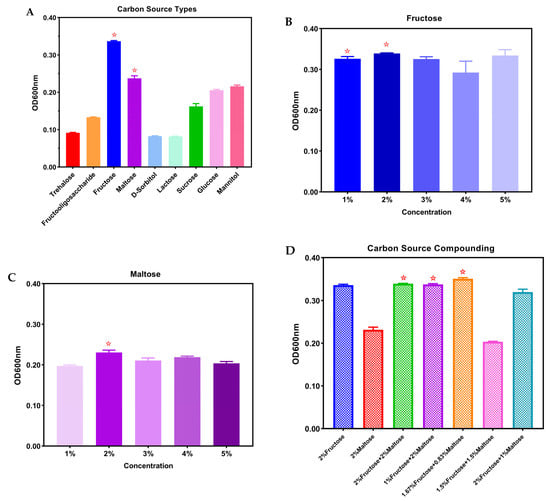
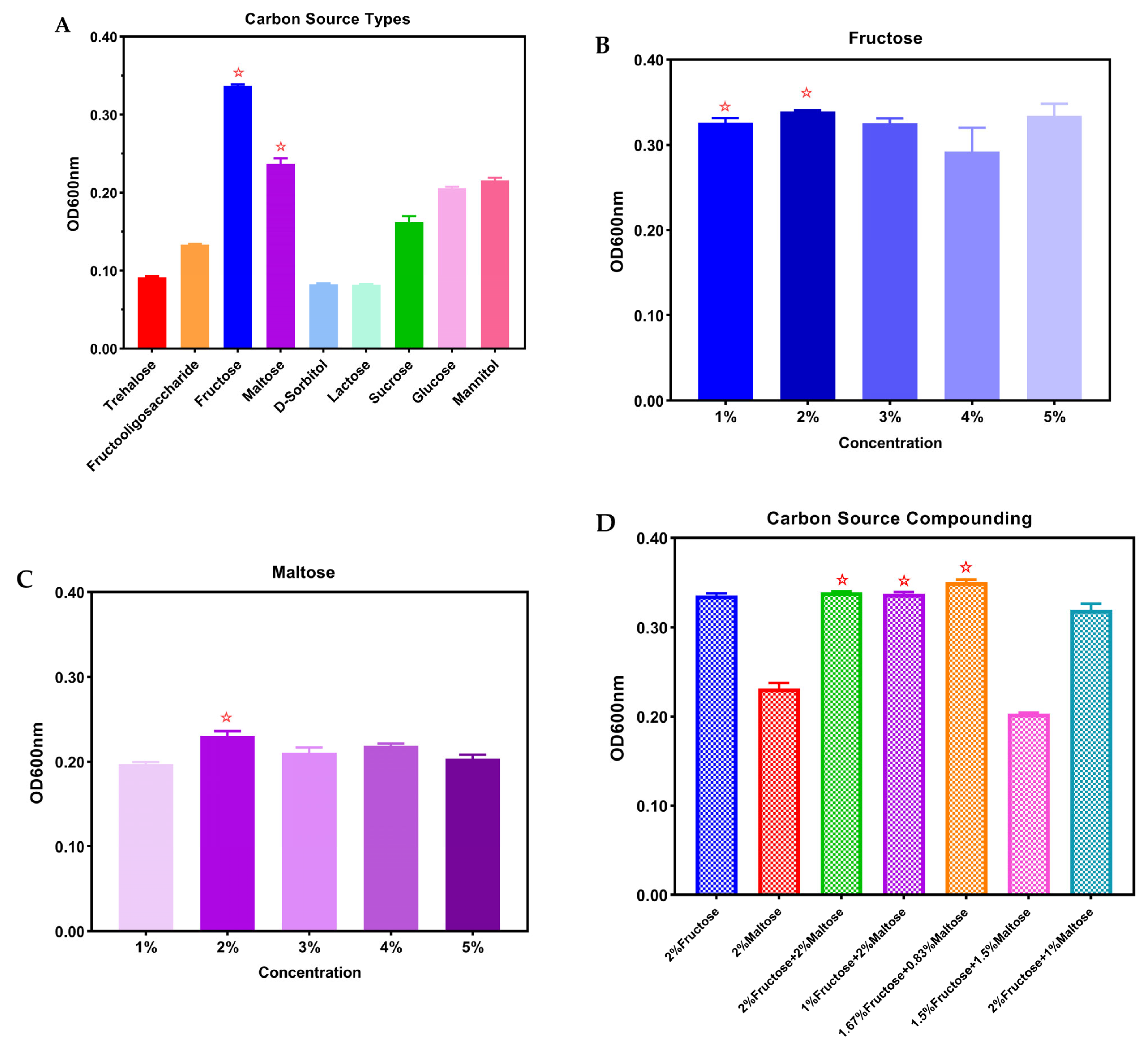
L. mesenteroides is a lactic acid bacterium capable of fermenting various sugars [9]. The carbon sources selected for this study were lactose, fructose, glucose, sucrose, D-sorbitol, trehalose, fructooligosaccharide, mannitol, and maltose. When a single carbon source was used, fructose and maltose showed a more significant promotional effect on the strain’s growth (Figure 1A). Subsequent concentration optimization revealed that optimal growth was observed at 1% and 2% concentrations of fructose (with no significant difference from the 5% concentration; however, 5% was not selected to conserve raw materials) (Figure 1B). The optimal concentration for maltose was determined to be 2% (Figure 1C). Subsequently, fructose and maltose were combined. Among the five tested combinations, the fructose + maltose mixtures at concentrations of 2% + 2%, 1% + 2%, and 1.67% + 0.83% demonstrated superior growth-promoting effects. In summary, these three concentration combinations were selected as the levels for the orthogonal experiment (Figure 1D).
Figure 1.
Optimization of carbon sources for the growth of L. mesenteroides AA001. (A) Screening of single carbon sources. This section compares bacterial growth (OD600 mm) on eight different carbon sources (1% w/v). (B) Optimization of fructose concentration. The effect of varying fructose concentrations (1–5% w/v) on growth was determined. (C) Optimization of maltose concentration. The effect of varying maltose concentrations (1–5% w/v) on growth was determined. (D) Evaluation of combined carbon sources. The red asterisk (☆) indicates the optimal growth concentration selected in this study.
Impact of Nitrogen Sources on Bacterial Growth
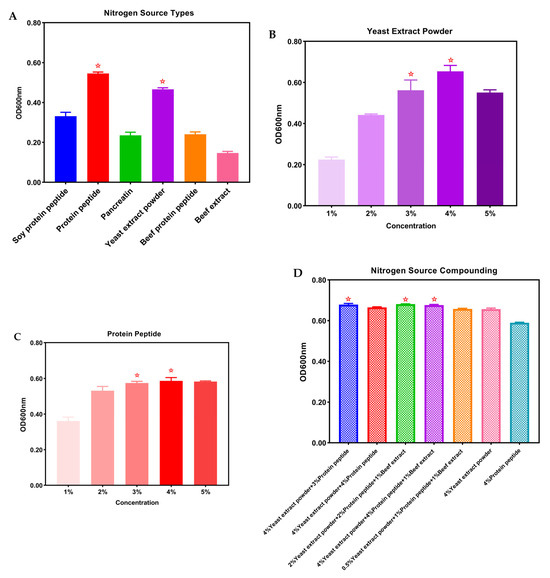
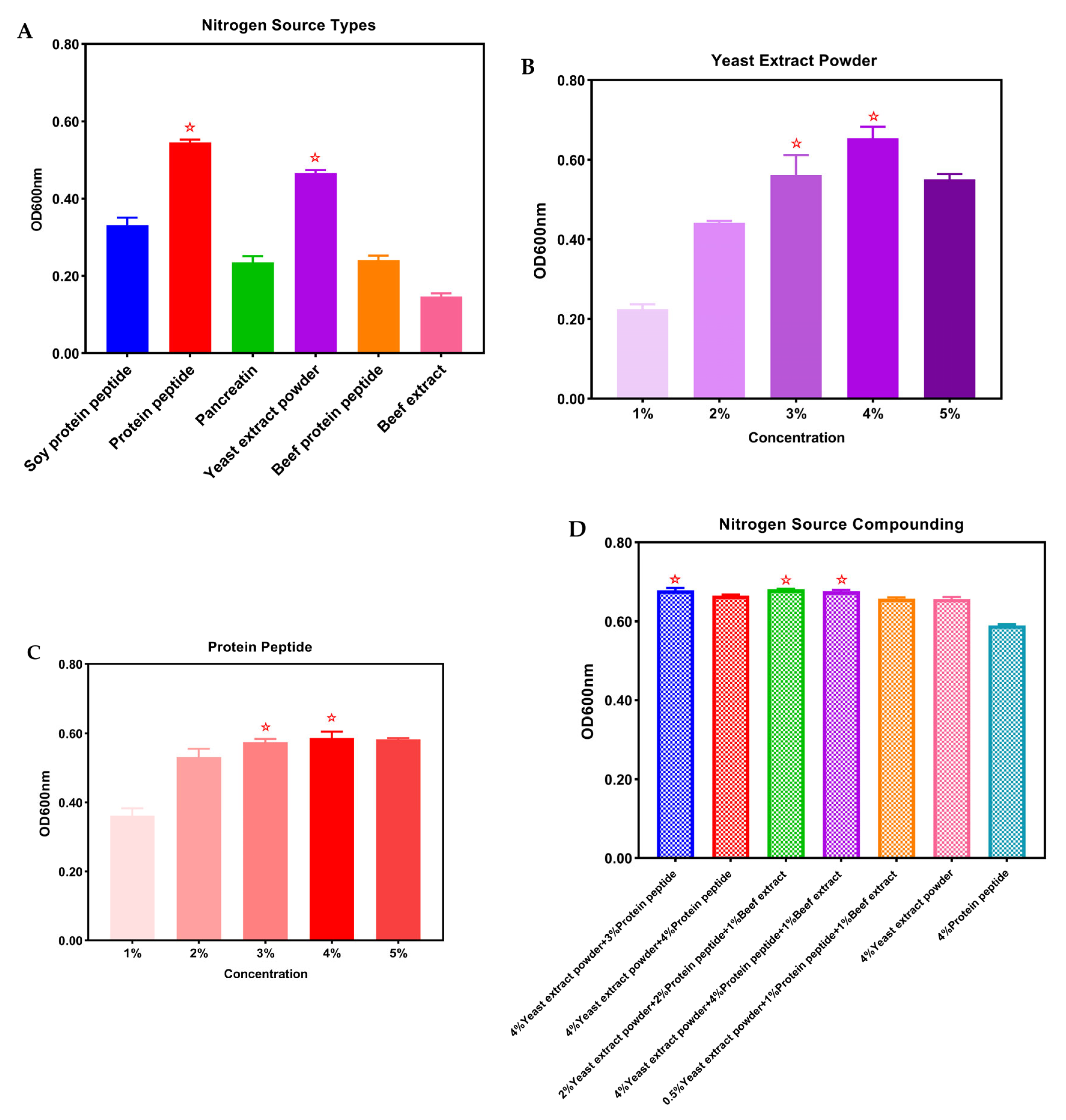
Nitrogen sources provide amino acids, peptides, and other nutrients in microbial culture media, playing a crucial role in the growth and metabolism of the strain [40]. The nitrogen sources selected included soy peptone, peptone, yeast extract, beef extract, tryptone, casein peptone, and beef peptone. When using a single nitrogen source, peptone and yeast extract showed a significant promotional effect on strain growth (Figure 2A). Further concentration optimization showed that both yeast extract and peptone supported robust growth at 3% and 4% concentrations (Figure 2B,C). Among the seven compound nitrogen sources, the combination of yeast extract + peptone + beef extract yielded superior strain growth at the ratios of 2% + 2% + 1%, 4% + 4% + 1%, and 4% + 3% + 0% (Figure 2D). Beef extract was included in the blends due to its rich content of vitamins, nucleotides, and trace elements that complement the amino acid profiles of yeast extract and peptone. In summary, an orthogonal experiment was designed to optimize these three levels.
Figure 2.
Optimization of nitrogen sources for the growth of L. mesenteroides AA001. (A) Screening of single nitrogen sources. This section compares bacterial growth (OD600 mm) on six different nitrogen sources (1% w/v). (B) Optimization of yeast extract powder concentration. The effect of varying concentrations (1–5% w/v) on growth was determined. (C) Optimization of peptone concentration. The effect of varying concentrations (1–5% w/v) on growth was determined. (D) Evaluation of combined nitrogen sources. Growth was assessed using mixtures of the optimal nitrogen sources. The red asterisk (☆) indicates the optimal growth concentration selected in this study.
Impact of Growth Factors on Bacterial Growth
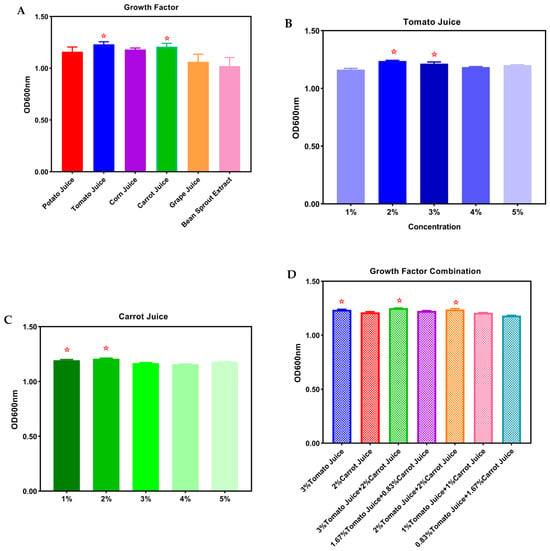
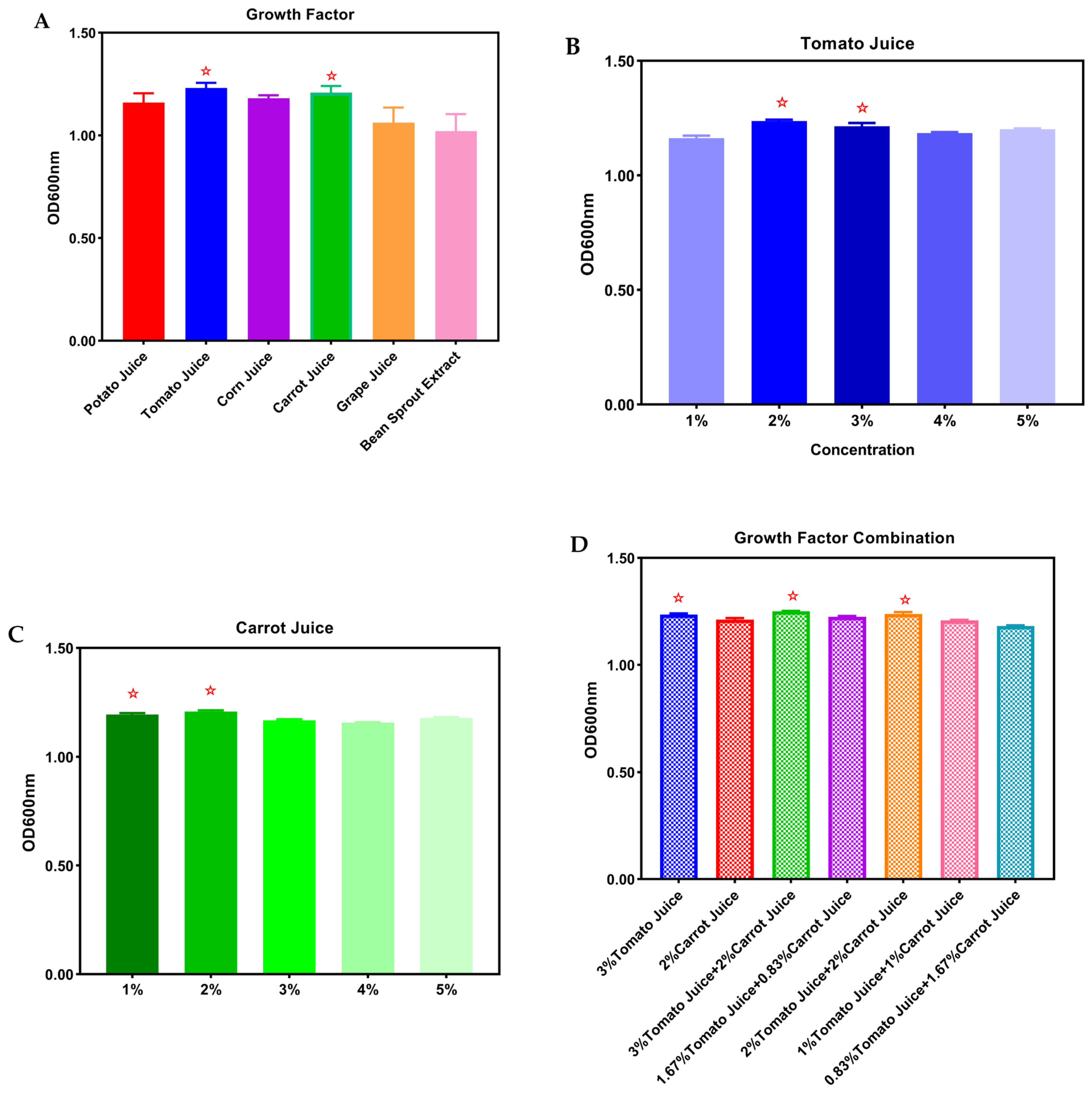
Growth factors are trace organic active substances that microorganisms cannot or have difficulty synthesizing on their own and must obtain from the external environment. They include vitamins, trace elements, nucleic acids, and free amino acids. They play an important catalytic role in life activities such as the regulation of enzyme activity, nucleic acid synthesis, and cell division [41]. We selected plant extracts as a natural carrier for growth factors due to their low cost and rich, synergistic nutrients. This composite source better mimics the natural microbial environment, efficiently meeting diverse growth requirements. When using a single growth factor, carrot juice and tomato juice showed a significant promotional effect on strain growth in the optimized medium (Figure 3A). The finding suggests that fruit and vegetable juices provide a more favorable growth environment for L. mesenteroides AA001 compared to grain juices. Subsequent concentration optimization revealed that the strain exhibited optimal growth with tomato juice at both 2% and 3% concentrations, and with carrot juice at both 1% and 2% concentrations (Figure 3B,C). In the combination tests, the mixtures of tomato juice and carrot juice at ratios of 3% + 0%, 3% + 2%, and 2% + 2% yielded the best strain growth (Figure 3D). Therefore, an orthogonal experiment was designed using these three levels for further optimization.
Figure 3.
Optimization of growth factors for the growth of L. mesenteroides AA001. (A) Screening of single growth factors. This section compares bacterial growth (OD600 mm) on six different nitrogen sources (1% w/v). (B) Optimization of yeast extract powder concentration. The effect of varying concentrations (1–5% w/v) on growth was determined. (C) Optimization of peptone concentration. The effect of varying concentrations (1–5% w/v) on growth was determined. (D) Evaluation of combined nitrogen sources. The red asterisk (☆) indicates the optimal growth concentration selected in this study.
Orthogonal Optimization of the Culture Medium
We conducted an L9(34) orthogonal array experiment with three factors—A (carbon source), B (nitrogen source), and C (growth factor)—and an empty column D for error estimation. The OD600 value was used as the response variable to identify the optimal medium formulation. This optimization is a critical step toward preparing for cell enrichment to produce high-concentration, ready-to-use freeze-dried bacterial powder.
In the L9(34) orthogonal experiment, the OD600 value of test group No. 7 was the highest. Analysis of variance (ANOVA) showed that the effects of the carbon source (A) and nitrogen source (B) on the growth of L. mesenteroides AA001 were highly significant (p < 0.01), while the effect of the growth factor (C) was significant (p < 0.05). The optimal medium composition was determined to be A3B1C3, comprising a carbon source mixture (1.67% fructose and 0.83% maltose), a nitrogen source blend (2.0% yeast extract powder, 2.0% peptone, and 1.0% beef extract), and a growth factor combination (3.0% tomato juice and 2.0% carrot juice) (Table 1 and Table 2). To validate the efficacy of the optimized medium, L. mesenteroides AA001 was inoculated into both the optimized medium (experimental group) and MRS medium (control group), with the viable cell count in the optimized medium being approximately one order of magnitude (10-fold) higher than that in the MRS control (Table 3).
Table 1.
Orthogonal Design and Results for Optimizing the Growth Medium of L. mesenteroides AA001.
Table 2.
Analysis of Variance for the Effects of Medium Components.
Table 3.
Comparison of viable counts of L. mesenteroides AA001 in the optimized medium and MRS medium.
2.1.2. Screening and Formulation Optimization of Cryoprotectants for DVS Starter
Vacuum freeze-drying is a critical technology for preparing a highly active DVS starter. This technique produces a stable, transportable bacterial powder by freeze-drying a mixture of high-density lactic acid bacteria and cryoprotectants. However, because the freeze-drying process is inherently damaging to cells, optimizing the cryoprotectant formulation to maximize cell viability represents the most crucial step in the entire workflow.
Screening of Single Cryoprotectants
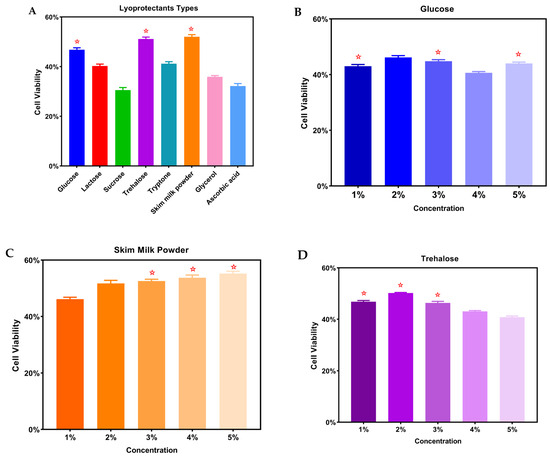
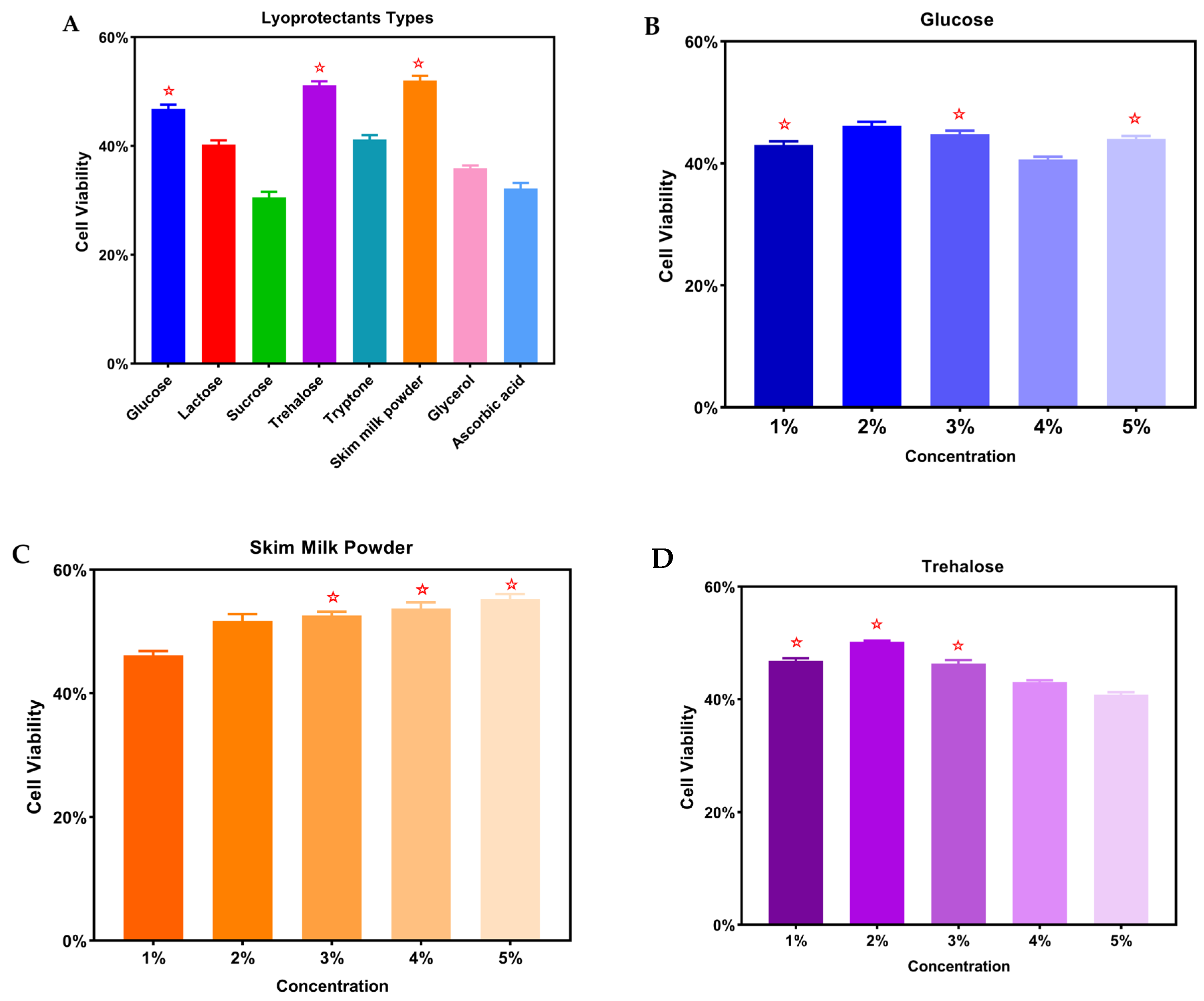
During freeze-drying, Lactobacillus cells are subjected to freezing and dehydration stresses, which cause membrane damage, protein denaturation, and cell death. To mitigate these effects, cryoprotectants were added to enhance cell survival and stability. These cryoprotectants function through multiple mechanisms: stabilizing cellular membranes (e.g., skim milk, trehalose), preventing protein denaturation (e.g., sucrose), exerting antioxidant activity (e.g., ascorbic acid), and improving rehydration capacity (e.g., glycerol). From a panel of tested cryoprotectants, glucose, skim milk powder, and trehalose were identified as the most effective in enhancing the survival of L. mesenteroides AA001 and were therefore selected for further optimization (Figure 4A). Concentration screening showed that high freeze-drying survival rates were maintained at 2%, 3%, and 5% glucose, 3%, 4%, and 5% skim milk powder, and 1%, 2%, and 3% trehalose (Figure 4B,D). Accordingly, an orthogonal experiment was designed to optimize the combined formulation of the three cryoprotectants, testing each at its three designated concentration levels.
Figure 4.
Optimization of cryoprotectants for the freeze-drying survival of L. mesenteroides AA001. (A) Screening of single cryoprotectants compares the survival rate of cells treated with eight different cryoprotectants. (B) Optimization of glucose concentration. The effect of varying concentrations (1–5% w/v) on the survival rate was determined. (C) Optimization of skim milk powder concentration. The effect of varying concentrations (1–5% w/v) on the survival rate was determined. (D) Optimization of trehalose concentration. The effect of varying concentrations (1–5% w/v) on the survival rate was determined. The red asterisk (☆) indicates the optimal growth concentration selected in this study.
Optimal Cryoprotectant Combination Determined by Orthogonal Experiment
The L9(34) orthogonal experiment was designed to optimize the cryoprotectant formulation. Using skim milk powder (A), trehalose (B), and glucose (C)—three selected cryoprotectants—as the experimental factors and the freeze-drying cell survival rate as the evaluation index, the highest survival rate was observed in experimental group No. 8. All three cryoprotectants were found to have a significant effect on the survival rate (p < 0.05). The optimal combination was determined to be A3B2C3, corresponding to 5% skim milk powder, 2% trehalose, and 5% glucose (Table 4 and Table 5).
Table 4.
Orthogonal Design and Results for Optimizing the Cryoprotectant Combination of L. mesenteroides AA001.
Table 5.
Analysis of Variance for the Effects of Cryoprotectant Combination.
Preparation of DVS Starter
The production of a DVS starter involves cell enrichment and freeze-drying. L. mesenteroides AA001 was cultured in an optimized medium containing a carbon source mixture (1.67% fructose, 0.83% maltose), a nitrogen source blend (2.0% yeast extract powder, 2.0% peptone, 1.0% beef extract), and a growth factor combination (3.0% tomato juice, 2.0% carrot juice). After addition of the optimal cryoprotectant formulation (5% skim milk powder, 2% trehalose, and 5% glucose), the culture was subjected to vacuum freeze-drying. Following rehydration after 48 h, the survival rate of the treated group was 70.01%, representing a 39-fold increase over that of the control group (1.79%) (Table 6). The optimized process significantly enhanced both cell biomass accumulation and post-freeze-drying viability, thereby demonstrating the industrial potential of L. mesenteroides AA001.
Table 6.
Comparison of post-freeze-drying cell viability using the optimized cryoprotectant formulation versus the control.
2.2. Nitrite Degradation by the L. mesenteroides AA001 DVS Starter
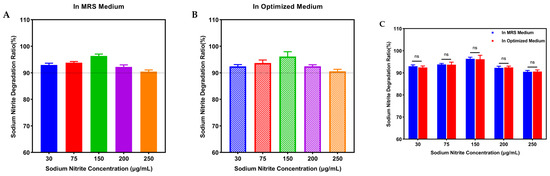
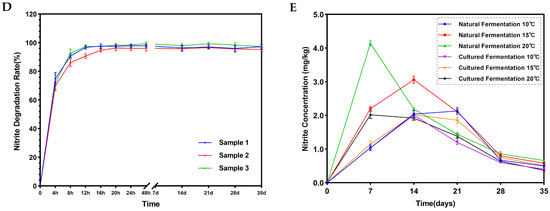
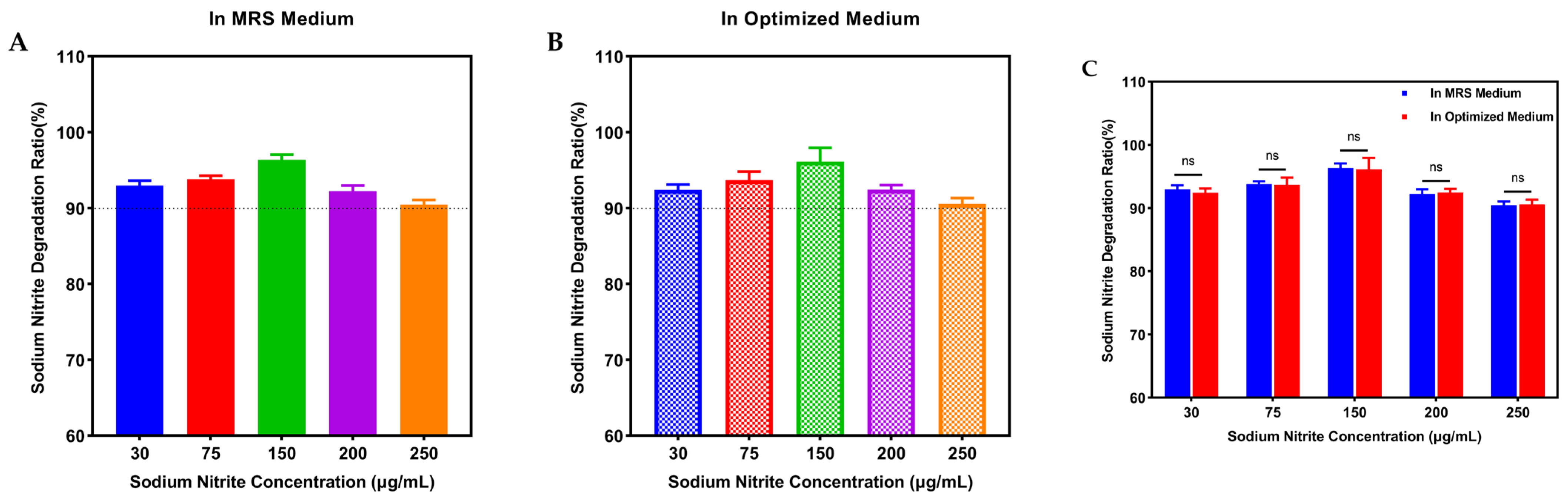
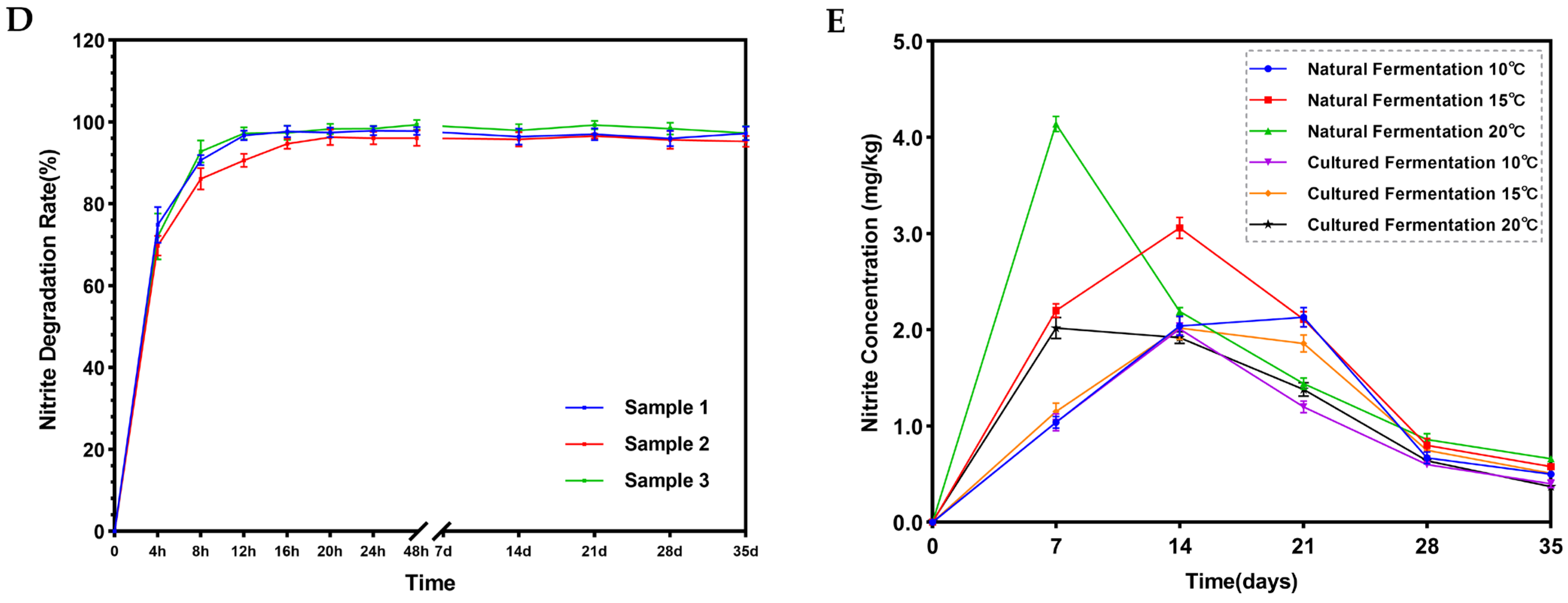
L. mesenteroides AA001 was confirmed to exhibit high nitrite-degrading capability, achieving a degradation efficiency of over 90% in MRS medium (Figure 5A). To determine whether a DVS starter prepared from this strain retains this high efficiency, we evaluated the performance in an optimized growth medium. The DVS starter demonstrated robust nitrite-degrading activity across a wide range of sodium nitrite concentrations (30–250 μg/mL), consistently achieving >90% degradation within 24 h (Figure 5B). Notably, no significant difference was observed in degradation efficiency between the optimized medium and MRS medium (Figure 5C), indicating that the optimized formulation fully supports the strain’s functional activity. Further kinetic analysis at an initial nitrite concentration of 150 μg/mL revealed that the DVS starter exhibited a rapid increase in degradation activity. The degradation rate rose sharply within the first 16 h, after which the degradation efficiency remained stably above 90% for the remainder of the incubation period (Figure 5D).
Figure 5.
Nitrite degradation performance of L. mesenteroides AA001. (A) Degradation efficiency in MRS medium at sodium nitrite concentrations of 30–250 μg/mL. (B) Degradation efficiency in optimized medium at sodium nitrite concentrations of 30–250 μg/mL. (C) Comparison of degradation efficiency between MRS and optimized media, Significant differences between groups were analyzed by Student’s t-test and indicated as follows: ns for p > 0.05 (not significant). (D) Time-course of nitrite degradation over 28 days (initial nitrite: 150 μg/mL). (E) Nitrite dynamics in natural and inoculated Dongbei suancai fermentation at 10 °C, 15 °C, and 20 °C.
Subsequently, the freeze-dried powder of L. mesenteroides AA001 was used as a DVS starter to inoculate Dongbei suancai fermentation and was compared with natural fermentation to evaluate the nitrite-degrading efficacy. During fermentation, nitrite levels typically followed a biphasic trend: an initial increase followed by a decline. Most treatments reached their peak nitrite concentration around day 14, except for the natural fermentation at 20 °C, which peaked earlier on day 7 (4.14 ± 0.08 mg/kg) and then declined steadily, plateauing after 28 days. Fermentation temperature significantly influenced nitrite accumulation: nitrite levels were consistently higher at 20 °C than at 10 °C across all groups. Moreover, inoculated fermentations exhibited lower nitrite concentrations than natural fermentations throughout the process. Collectively, these results indicate that inoculation with the DVS starter enhances nitrite control, with the DVS-inoculated fermentation at 10 °C demonstrating the lowest nitrite accumulation—making it the most effective strategy for mitigating nitrite (Figure 5E).
2.3. Application and Efficacy of Lyophilized L. mesenteroides AA001 in Dongbei Suancai Fermentation
We fermented Dongbei suancai using the DVS starter of L. mesenteroides AA001 and compared it with a naturally fermented control to assess the DVS starter’s efficacy in the fermentation process.
2.3.1. Effect of the DVS Starter on pH During Dongbei Suancai Fermentation
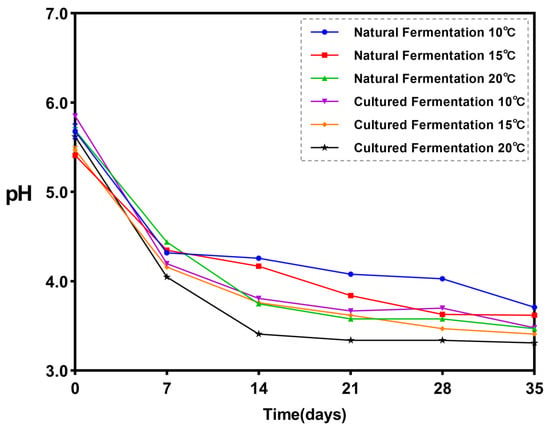
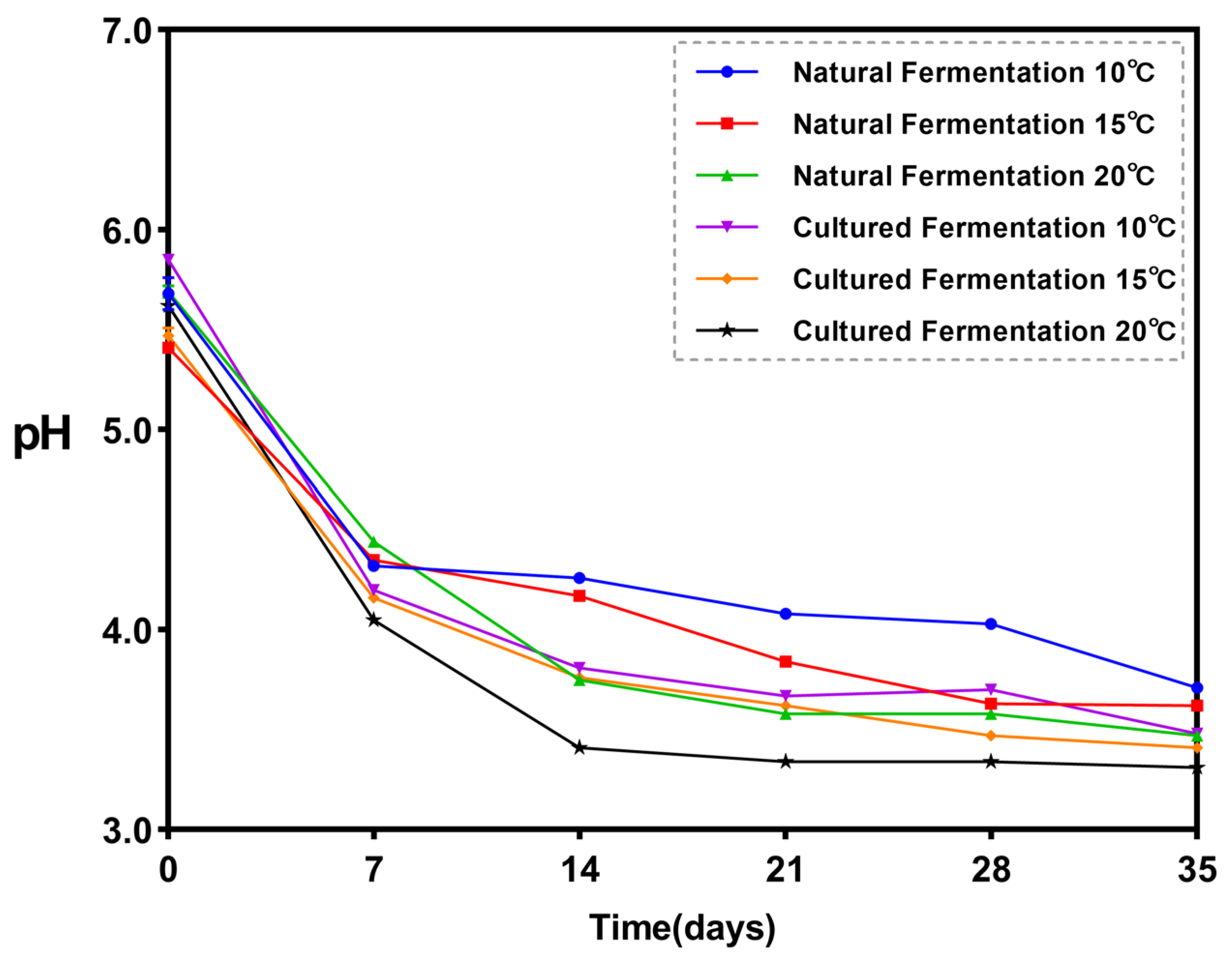
The pH, a critical indicator of fermentation progress, is tightly linked to microbial activity and ultimately determines the flavor of Dongbei suancai. The pH profile typically showed a rapid decrease (days 0–7), followed by a slower decline (days 7–14) and stabilization thereafter. The pH decreased most rapidly in the inoculated fermentation at 20 °C, reaching 3.31 ± 0.01 by day 35, whereas the slowest decrease occurred in the natural (spontaneous) fermentation at 10 °C, which had a final pH of 3.71 ± 0.02. In general, inoculated fermentations yielded lower pH values than natural fermentations, and higher temperatures accelerated acidification. Given that the optimal pH range for Dongbei suancai is 3.1–3.8, inoculated fermentation was the more favorable approach (Figure 6).
Figure 6.
pH dynamics in naturally fermented versus DVS-inoculated Dongbei suancai fermentation at 10 °C, 15 °C, and 20 °C.
2.3.2. Effect of the DVS Starter on Total Acidity During Dongbei Suancai Fermentation
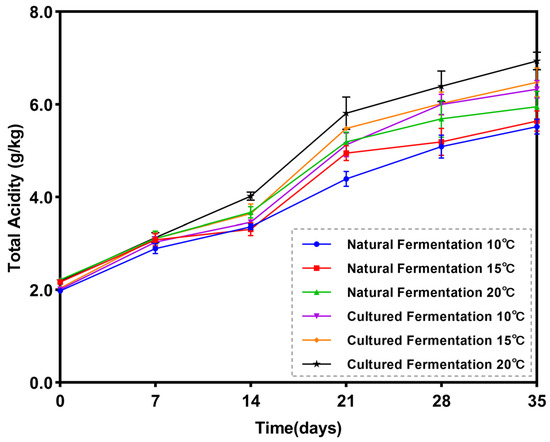
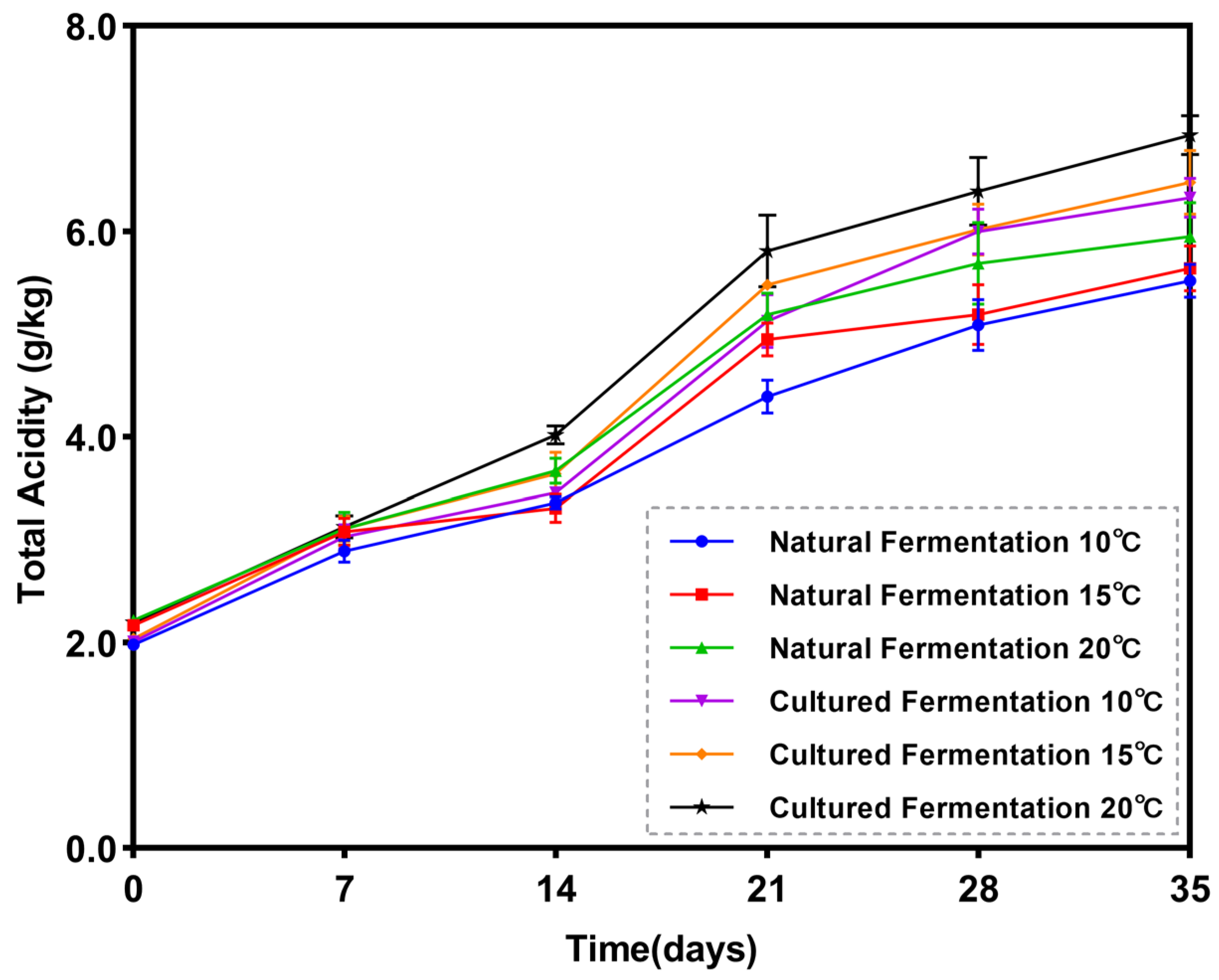
Total acidity is crucial in Dongbei suancai fermentation, ensuring food safety by inhibiting undesirable microbes and contributing to the signature sour flavor. The total acidity profile showed a three-phase trend: a slow increase (days 0–14), followed by a rapid rise (days 14–21), and finally a gradual stabilization (days 21–35). The inoculated fermentation at 20 °C achieved the highest total acidity (6.94 ± 0.19 g/kg at day 35), surpassing other groups. In contrast, the natural (spontaneous) fermentation at 10 °C had the lowest acidity (5.52 ± 0.16 g/kg). In summary, inoculated fermentations consistently produced sauerkraut with higher total acidity than natural fermentations, with the 20 °C inoculated process being the most effective (Figure 7).
Figure 7.
Total Acidity dynamics in naturally fermented versus DVS-inoculated Dongbei suancai fermentation at 10 °C, 15 °C, and 20 °C.
2.3.3. Effect of the DVS Starter on Organic Acids During Dongbei Suancai Fermentation
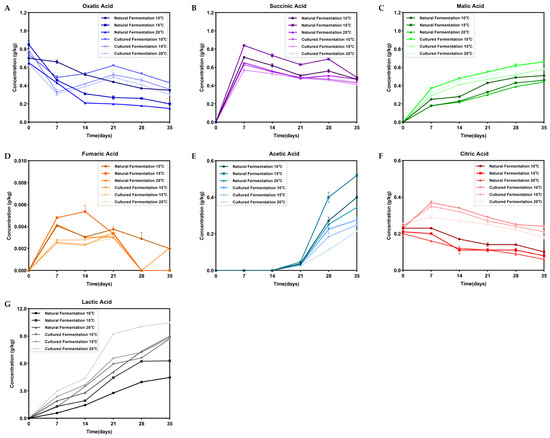
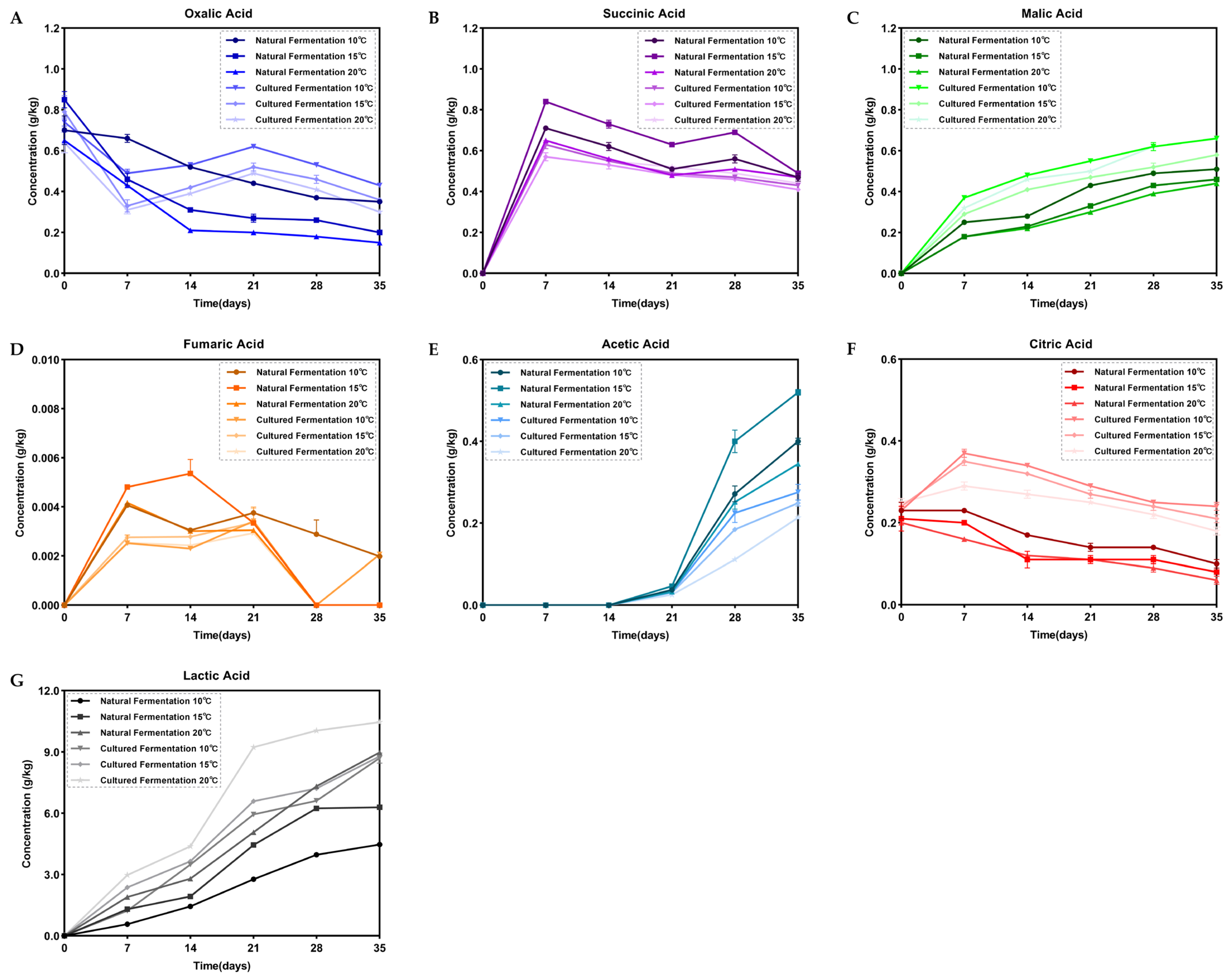
Organic acids are crucial for the flavor, nutrition, and safety of Dongbei suancai. Compared to the steady decline of oxalic and citric acids in natural fermentation, inoculated fermentation caused them to fluctuate (rise and then fall). Succinic and fumaric acids also rose and fell in both types but remained lower in inoculated batches. Conversely, malic and lactic acids accumulated to higher levels in inoculated Dongbei suancai, while acetic acid was lower. Temperature also played a key role: 20 °C maximized lactic acid production, whereas 10 °C preserved more oxalic, fumaric, and citric acids (Figure 8A–G). In summary, inoculated fermentation effectively enhances Dongbei suancai quality by suppressing bitterness-associated oxalic and citric acids while increasing key flavor compounds such as malic and lactic acid; temperature serves as a critical factor for precise modulation: 10 °C favors the retention of oxalic and citric acids, whereas 20 °C significantly promotes the accumulation of beneficial organic acids like lactic acid.
Figure 8.
Organic acid dynamics in naturally fermented versus DVS-inoculated Dongbei suancai fermentation at 10 °C, 15 °C, and 20 °C. (A) Oxalic acid. (B) Succinic acid. (C) Malic acid. (D) Fumaric acid. (E) Acetic acid. (F) Citric acid. (G) Lactic acid.
2.3.4. Effects of the DVS Starter on Free Amino Acids During Dongbei Suancai Fermentation
Free amino acids are important biochemical indicators for the flavor evaluation of Dongbei suancai. During fermentation, microbial enzymes hydrolyze Chinese cabbage proteins, producing free amino acids. These amino acids provide basic tastes such as umami, sweetness, and bitterness, and act as flavor precursors to further enrich their flavor profile [2,42].
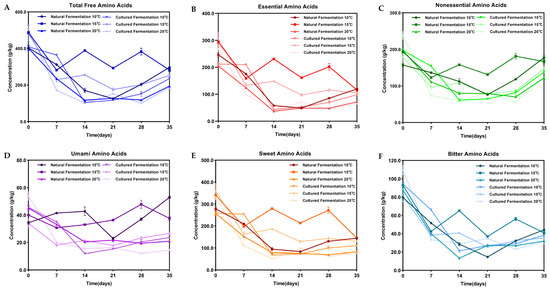
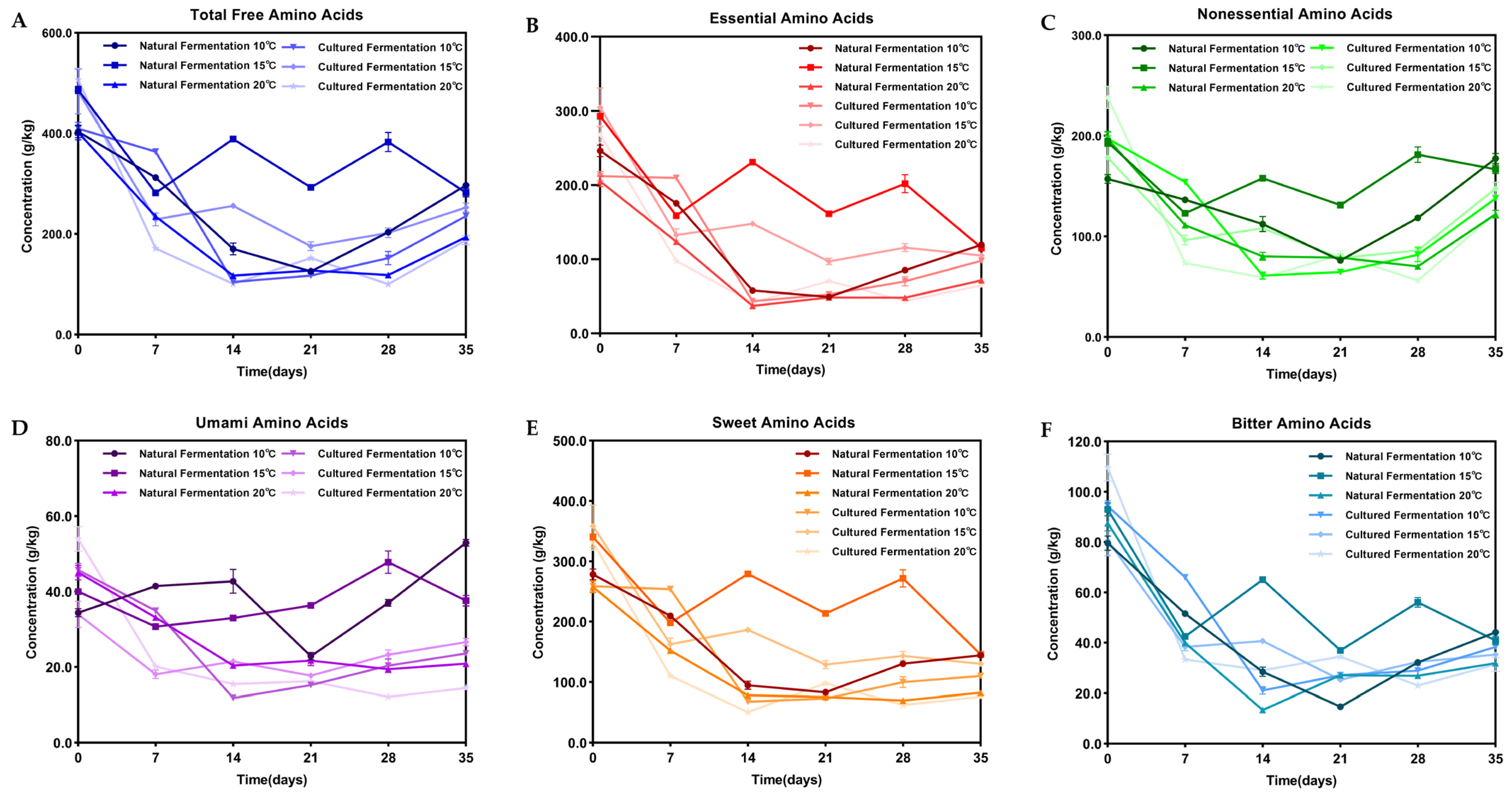
The content of 17 common free amino acids in Dongbei suancai was measured. Among them, the total concentrations of free amino acids, including essential, non-essential, and flavor-related (umami, sweet, and bitter) amino acids, were generally lower in the starter-inoculated Dongbei suancai than in the naturally fermented counterpart. However, the starter-inoculated Dongbei suancai had a higher proportion of essential amino acids and a more balanced amino acid composition. During fermentation, the total content of most amino acids decreased from day 0 to day 14. From day 14 to day 21, the inoculated group showed a significant increase, with some levels surpassing those in the natural fermentation group. From day 21 to day 35, most groups continued to increase, with the inoculated group showing a greater rise. Additionally, the highest total free amino acid content (383.27 ± 19.19 mg/100 g) was found in the natural fermentation group at 15 °C on day 28, while the lowest (100.20 ± 4.08 mg/100 g) was in the inoculated group at 20 °C. The trends for flavor-related amino acids varied: umami amino acids in the natural fermentation group at 10 °C continuously increased to 52.93 ± 0.90 mg/100 g, whereas sweet and bitter amino acids in the inoculated group at 20 °C showed a trend of first increasing and then decreasing. In conclusion, although the DVS starter reduced the total amino acid content, it optimized the amino acid composition and flavor characteristics (Figure 9A–F).
Figure 9.
Free amino acid dynamics in naturally fermented versus DVS-inoculated Dongbei suancai fermentation at 10 °C, 15 °C, and 20 °C. (A) Total free amino acids. (B) Essential amino acids. (C) Non-essential amino acids. (D) Umami amino acids. (E) Sweet amino acids. (F) Bitter amino acids.
2.4. Bacterial Community Succession During Dongbei Suancai Fermentation
2.4.1. Analysis of Bacterial Community Structure and Composition
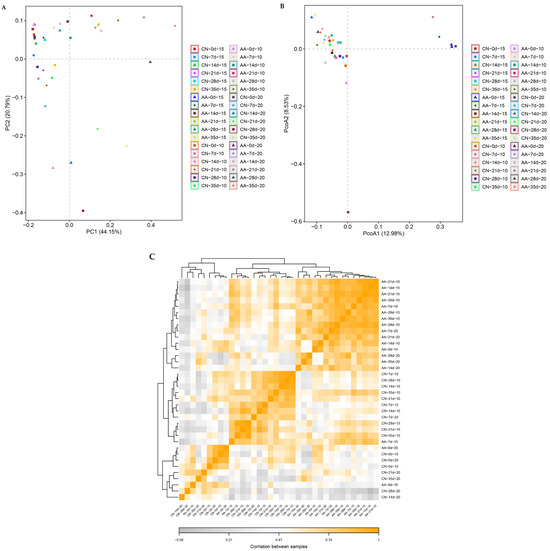
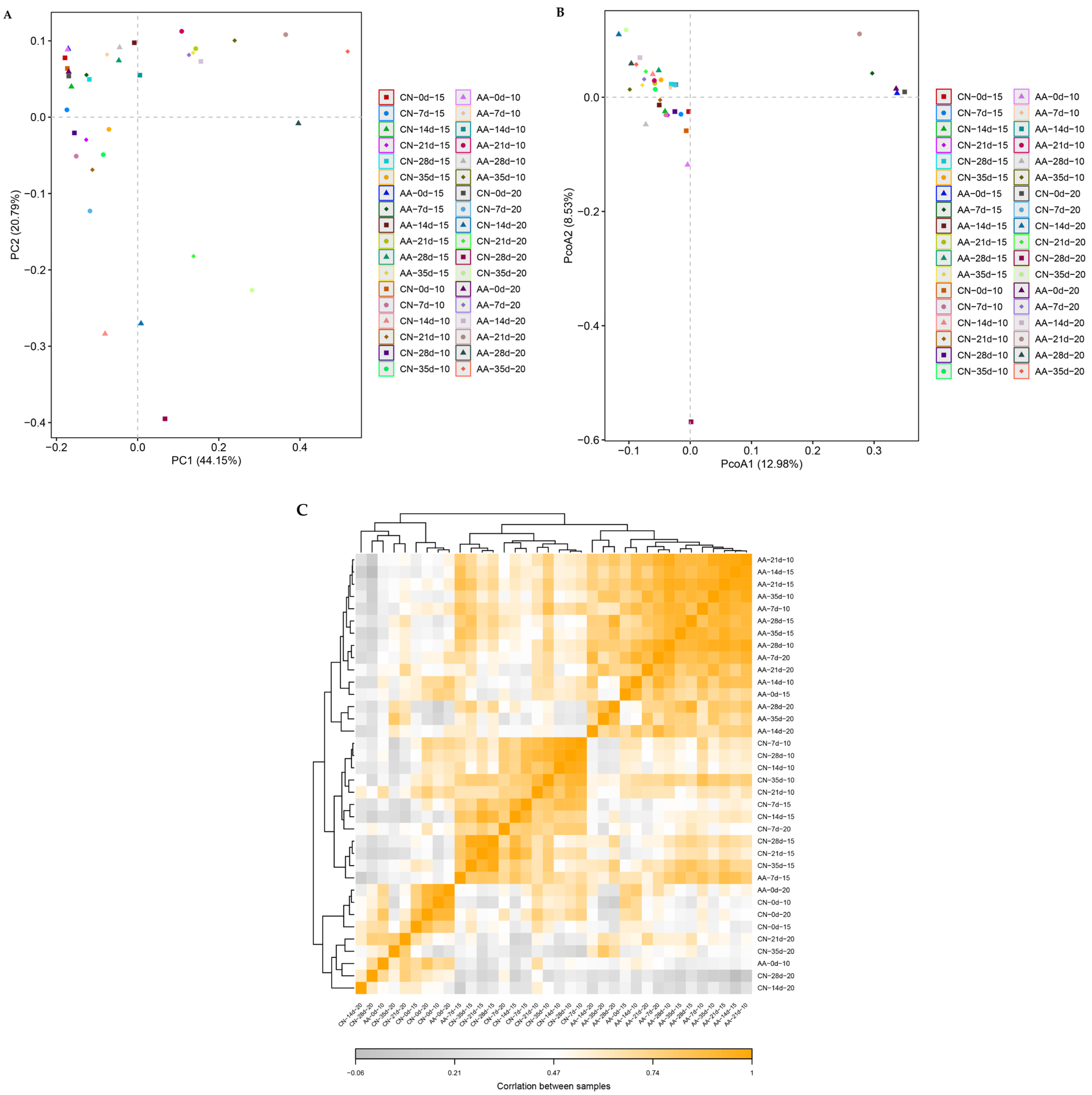
The bacterial community structure was comprehensively analyzed using principal component analysis (PCA), principal coordinates analysis (PCoA), and a correlation heatmap. PCA revealed that PC1 and PC2 accounted for 87.43% of the total variance, effectively capturing the major variation in the bacterial community (Figure 10A). A distinct separation was observed along the PC1 axis, with naturally fermented (CN group) samples and samples inoculated with the DVS starter of L. mesenteroides AA001 (AA group) occupying the negative and positive regions, respectively. This clear distinction indicates that the fermentation method is the primary driver of bacterial community divergence. Despite compositional differences, PCoA showed that most samples shared considerable similarity in bacterial composition, clustering mainly in the upper-left quadrant (Figure 10B). The correlation heatmap provided further insight into intra-group variation: samples from the DVS starter group were highly correlated and formed a tight cluster, indicating high homogeneity (Figure 10C). In contrast, the CN group exhibited more complex correlation patterns, although strong associations persisted among some samples. Collectively, these findings suggest that fermentation initiated with the DVS starter of L. mesenteroides AA001 promotes greater sample-to-sample consistency compared to natural fermentation, highlighting a transition of the bacterial community from a stochastic to a deterministic state, driven by the colonization advantage of dominant species and the dominant role of their functional pathways.
Figure 10.
(A) Principal component analysis (PCA) plot. (B) Principal coordinates analysis (PCoA) plot. The horizontal and vertical axes represent the first two principal components, and the percentages indicate the proportion of total variance in bacterial community composition explained by each component. Axis scales reflect relative distances between samples. Points with different colors or shapes denote samples from different fermentation groups; the closer two points are, the more similar their bacterial community composition. (C) Sample correlation heatmap. Color intensity represents Pearson correlation coefficients: darker gray indicates lower correlation, while yellow indicates higher correlation between samples. CN denotes naturally fermented samples, and AA denotes samples fermented with the DVS starter of L. mesenteroides AA001.
2.4.2. Analysis of Bacterial Community Structure
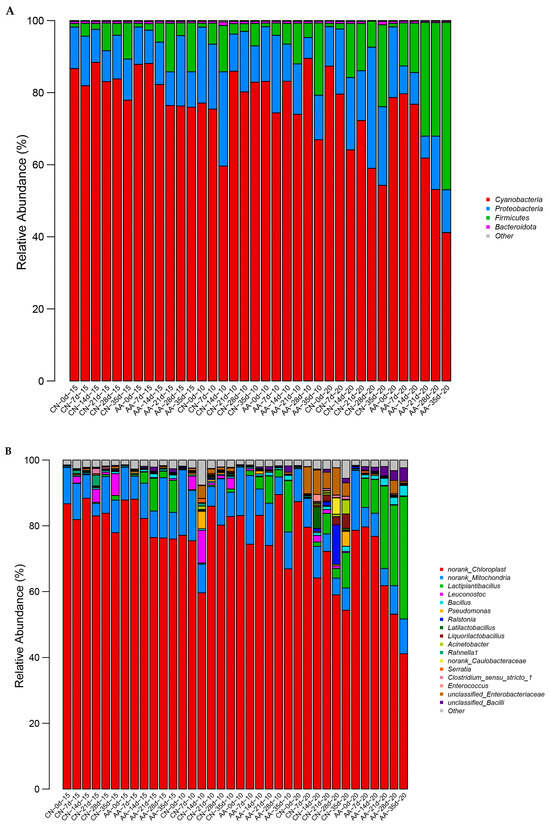
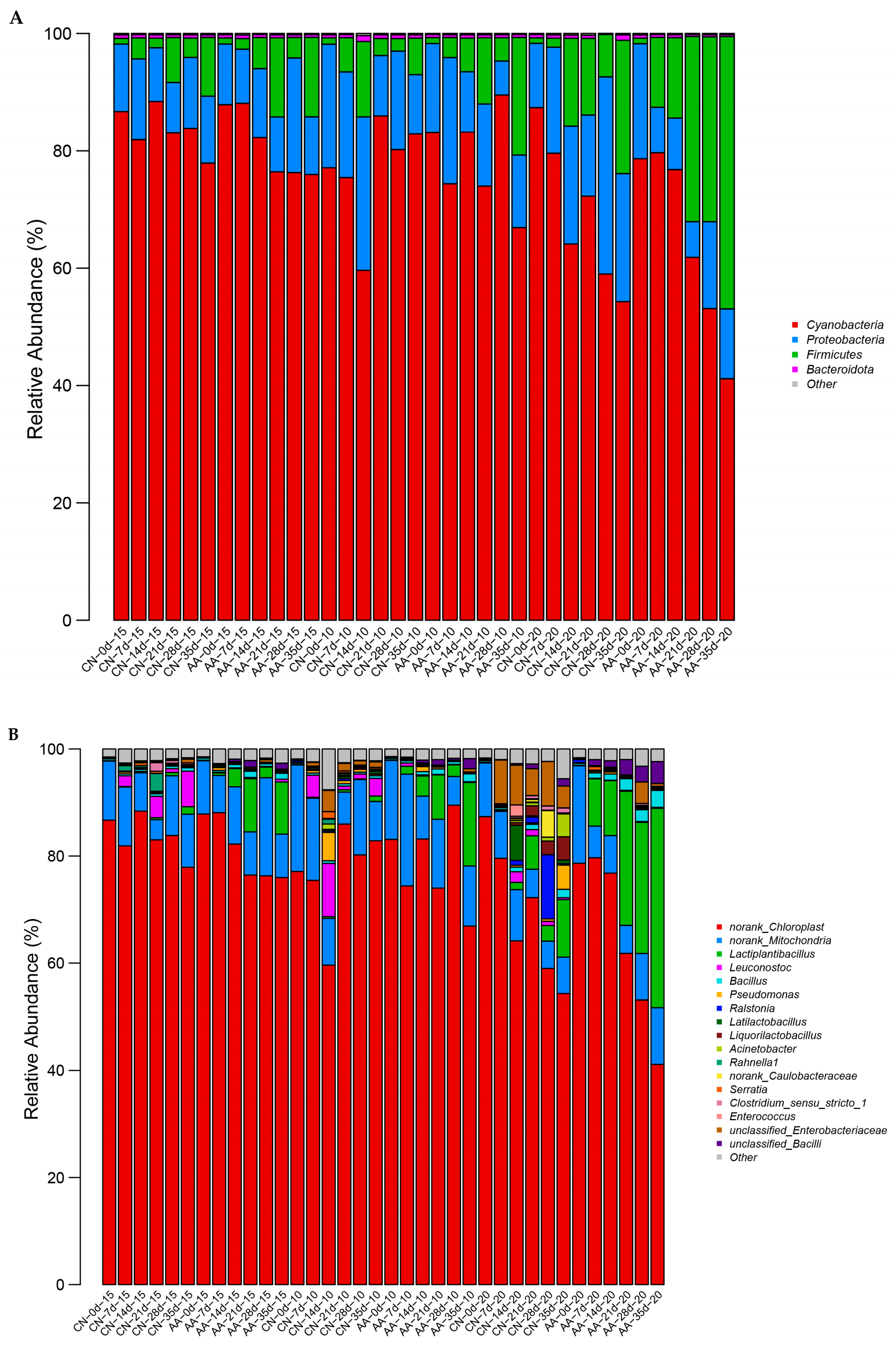
At the phylum level, Cyanobacteria and Proteobacteria were the initially dominant phyla, while Firmicutes—the phylum encompassing lactic acid bacteria—gradually became dominant during the later stages of DVS-inoculated fermentation, particularly at 20 °C (Figure 11A). At the genus level, the bacterial community was dominated by Lactobacillus and Leuconostoc. Compared with the naturally fermented group, DVS inoculation significantly increased the relative abundance of Lactobacillus. As fermentation progressed, the abundances of Lactobacillus and Leuconostoc gradually increased throughout the fermentation period, with the highest levels observed by day 35. Notably, during the later fermentation phase (days 21–35) at 20 °C, Lactobacillus—a key member of the Firmicutes phylum—was significantly more abundant in the DVS-inoculated group than in the naturally fermented group, clearly reflecting the colonization advantage of the starter strain. This contributed to the overall dominance of Firmicutes in the inoculated samples. Furthermore, the diversity and abundance of non-target or opportunistic bacteria were markedly lower in the DVS-inoculated group than in the naturally fermented group. Fermentation temperature strongly influenced bacterial community structure, with 20 °C being more conducive to the proliferation of Firmicutes, particularly Lactobacillus, thereby enabling their dominance (Figure 11B).
Figure 11.
(A) Relative abundance of the bacterial community at the phylum level across different samples. (B) Relative abundance of the bacterial community at the genus level across different samples.
2.4.3. Principal Component Analysis of Bacterial Functional Potential
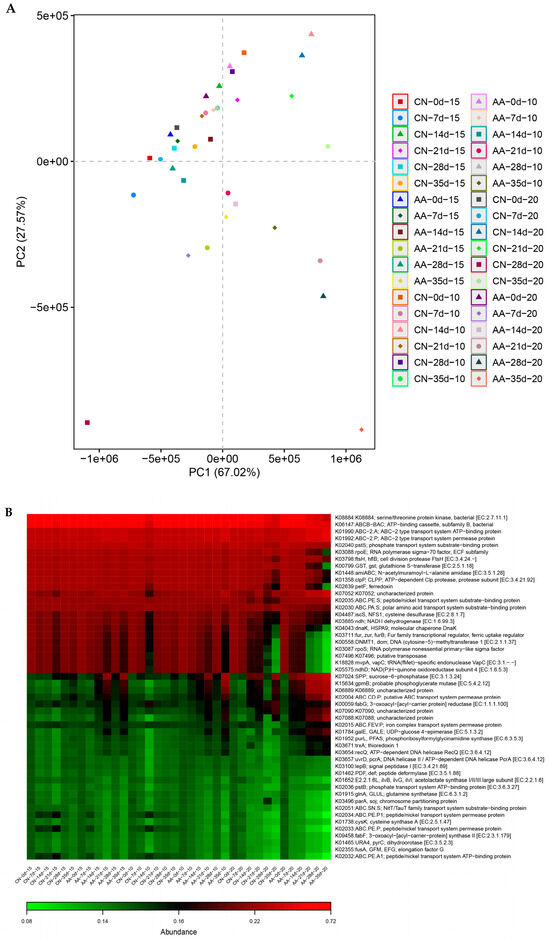
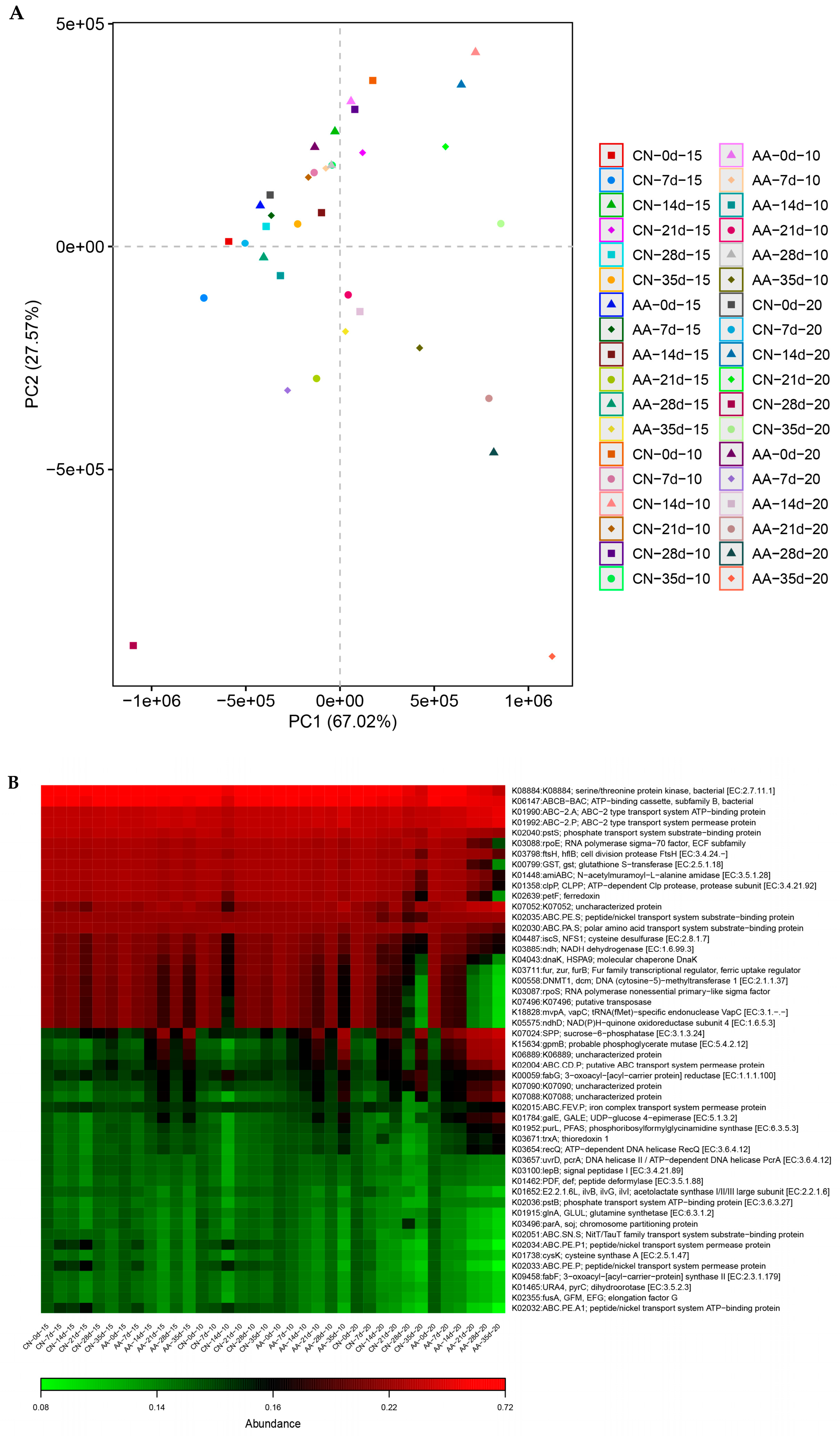
The functional potential of the bacterial community during Dongbei suancai fermentation was inferred from 16S rRNA gene sequences using PICRUSt2. Principal component analysis (PCA) was performed on the predicted functional gene abundance matrix to assess differences in functional profiles. The PCA scatter plot revealed a clear separation between the naturally fermented group (CN) and the DVS-inoculated group (AA) along the first principal component (PC1), which accounted for 67.02% of the total variance, indicating that fermentation strategy is a major driver of functional variation (Figure 12A). Further analysis via heatmap revealed a bipartite clustering pattern in functional gene distribution (Figure 12B). The upper cluster (in red), which exhibited high abundance across most samples, was primarily enriched in functions related to cell signaling, transcriptional regulation, and intracellular transport. In contrast, the lower cluster (in green), present at lower abundance, was primarily enriched in functions related to energy metabolism, DNA repair, and cellular maintenance, suggesting a hierarchical division of functional roles. Fermentation strategy and temperature were jointly associated with these functional dynamics. At lower temperatures (10 °C and 15 °C), DVS inoculation was associated with significantly higher abundance of metabolism- and transport-related functions compared to the naturally fermented group, which remained relatively stable. However, at 20 °C or during the later stages of low-temperature fermentation, the DVS-inoculated group exhibited a marked functional shift: metabolic functions decreased, while those related to gene expression regulation and stress response increased substantially. This transition suggests that the inoculated community may adaptively reallocate its functional resources from growth-oriented processes toward regulatory and homeostatic mechanisms to maintain stability under changing environmental conditions.
Figure 12.
(A) Principal component analysis (PCA) of predicted bacterial functional profiles based on PICRUSt2 inference, “e” is the exponent symbol (i.e., 10n). (B) Heatmap Analysis of Microbial Functional Component Abundance during Sauerkraut Fermentation.
3. Discussion
To improve the utilization, application, and storage stability of fermentation bacteria, formulating them into a DVS starter culture is an effective strategy [43]. The development of a high-performance DVS starter hinges on the synergistic optimization of both the growth medium and the cryoprotectant formulation. First, medium optimization significantly enhanced the growth efficiency of L. mesenteroides AA001, with viable cell counts reaching an order of magnitude higher than those in the MRS medium control group. Second, the starter was prepared via vacuum freeze-drying—a simple and cost-effective technique in which the cryoprotectant plays a critical role. The survival rate of cells in the optimized formulation was 39-fold higher than that of the control. In contrast, survival rate improvements for other strains during freeze-drying are typically around 2.1-fold, underscoring the exceptional efficacy of our approach in preserving bacterial viability [44]. The DVS starter offers multiple advantages: it significantly enhances vegetable fermentation efficiency by enabling lactic acid bacteria to rapidly dominate the microbiota and initiate acidification; it is user-friendly, eliminating the need for pre-cultivation and allowing direct inoculation; it exhibits excellent storage stability due to the protective effects of freeze-drying; and it ensures consistent product quality through standardized production, minimizing batch-to-batch variation and yielding highly reproducible fermentation outcomes [43,45,46]. This approach has been validated in prior studies. Song et al. (2021) developed a DVS starter composed of Lactobacillus plantarum and Pediococcus pentosaceus, while Zhao et al. (2023) employed a similar formulation containing Lactobacillus plantarum DP189 and Leuconostoc mesenteroides subsp. mesenteroides UA107—both achieving efficient and consistent fermentations, thereby corroborating the practical value of DVS cultures in vegetable fermentation [15,45].
The L. mesenteroides AA001 DVS starter largely retained the strain’s core function of high-efficiency nitrite degradation. In both MRS and the optimized medium, the strain achieved nitrite degradation rates exceeding 90% within 24 h. Kinetic analysis further showed that degradation activity increased rapidly during the first 16 h and thereafter remained stably above 90%, indicating that the freeze-drying process did not substantially compromise its functional capacity. This observation is consistent with previous findings that effective cryoprotectants can help maintain bacterial cell membrane integrity and thereby preserve metabolic activity [47]. In practical application, using the L. mesenteroides AA001 freeze-dried powder as a DVS starter in Dongbei suancai fermentation significantly reduced nitrite accumulation in the final product. Among the tested conditions, DVS-inoculated fermentation at 10 °C yielded the lowest nitrite peak, which was markedly lower than that observed in spontaneous fermentation. This outcome may be attributed to the combined effects of low temperature: suppressing the growth of contaminating microorganisms while favoring the nitrite-degrading activity of L. mesenteroides AA001. The benefits of low-temperature fermentation have been reported in related studies; for example, Song et al. (2021) observed that lower temperatures in Dongbei suancai fermentation delayed nitrite accumulation and promoted its subsequent degradation, ultimately resulting in reduced residual nitrite levels [48]. Our results further support that the L. mesenteroides AA001 DVS starter is a high-efficiency DVS starter for effective nitrite control in fermented vegetables. Future work will focus on the in-depth optimization of fermentation parameters to maximize its practical application value.
The application of the L. mesenteroides AA001 freeze-dried powder as a DVS starter in Dongbei suancai fermentation was then evaluated. The results showed that inoculation with this strain effectively dominated the microbial community and accelerated acidification. This is consistent with the general understanding that DVS starters based on L. mesenteroides can rapidly establish dominance and suppress spoilage microorganisms. Johanningsmeier et al. reported that inoculating low-salt Dongbei suancai with L. mesenteroides accelerated the pH decline, inhibited contaminant growth, and improved fermentation stability—the finding that aligns closely with our observations [49]. In terms of product quality, DVS-inoculated fermentation significantly increased total acid and organic acid contents, contributing to a distinctive aroma and flavor profile. Notably, although the total free amino acid content was lower than in spontaneous fermentation, the proportion of essential amino acids was higher, resulting in a more balanced amino acid composition. This suggests that L. mesenteroides AA001 utilizes substrates more efficiently for metabolic synthesis rather than relying primarily on proteolysis, thereby enhancing both nutritional value and flavor development. This phenomenon may be linked to the metabolic versatility of lactic acid bacteria, which can modulate amino acid profiles during vegetable fermentation—not merely by promoting protein degradation, but by preferentially enriching essential amino acids through biosynthetic or conversion pathways [35,50,51]. Microbial community analysis further elucidated the underlying mechanism enabling controllable fermentation. The data indicated that the inoculated L. mesenteroides AA001 established dominance in the community, likely due to a colonization advantage, which contributed to the suppression of spoilage-associated taxa and enhanced process stability. More importantly, the study revealed that the functional potential of the microbial community is not a direct reflection of its taxonomic composition but is dynamically shaped by environmental conditions: at low temperatures, community functions were enriched in substrate metabolism, whereas at higher temperatures or during late-stage fermentation, they shifted toward regulatory processes such as quorum sensing to maintain cellular homeostasis.
4. Materials and Methods
4.1. Bacteria and Reagents
The strain L. mesenteroides AA001, isolated from homemade pickles in Northeast China, was obtained from the China Center for Type Culture Collection (CCTCC NO. M 2018129). Prior to use, the strain was inoculated into MRS broth and activated in a 30 °C incubator for 24 h. This activation process was repeated for three consecutive generations before subsequent experiments. Chemical reagents were purchased from Macklin (Shanghai, China). Peptone, beef extract, yeast extract, glucose, agar, lactose, fructose, sucrose, fructooligosaccharide, mannitol, maltose, soy peptone, tryptone, casein peptone, beef peptone, D-sorbitol, and trehalose were purchased from Aoboxing (Beijing, China). Potato Juice, Tomato Juice, Corn Juice, Carrot Juice, Grape Juice, and Bean Sprout Extract were also obtained from Aoboxing (Beijing, China). Amino acid standards (≥99%) and ninhydrin (guaranteed reagent) were purchased from Sykam (Beijing, China). Cabbage and natural sea salt were purchased from the Linhe Street Store of Eurasia Supermarket (Changchun, China).
4.2. The Fermentation Medium Formulation Optimization
The fermentation medium for L. mesenteroides AA001 was optimized through a series of single-factor experiments. First, various carbon sources (trehalose, fructooligosaccharide, fructose, maltose, D-sorbitol, lactose, sucrose, glucose, and mannitol) were individually supplemented into U-MRS medium at a concentration of 2% (w/v). After incubation at 30 °C for 24 h, the OD600 was measured to identify the three carbon sources that most effectively supported bacterial growth; their concentrations (1–5%, w/v) and blend ratios were then optimized. A similar approach was applied to evaluate multiple nitrogen sources (soy protein peptide, protein peptide, pancreatin, yeast extract powder, beef protein peptide, and beef extract) at a 2% (w/v) concentration, followed by optimization of concentration and combination ratios for the most effective ones. Subsequently, the effects of plant-based growth factors (potato juice, tomato juice, corn juice, carrot juice, grape juice, and bean sprout extract) (each added at 2%, v/v)—on bacterial growth were assessed, and their types, concentrations (1–5%, v/v), and blending proportions were further optimized. Finally, based on the single-factor results, three composite factors were selected: fructose + maltose (Factor A), yeast extract + peptone + beef extract (Factor B), and tomato juice + carrot juice (Factor C). An L9(34) orthogonal experimental design (with Factor A assigned to column 1, Factor B to column 2, Factor C to column 3, and column 4 left as a blank control) was employed to determine the optimal medium formulation, which was validated through three independent replicate trials and compared with a control group.
4.3. The Cryoprotectants Optimization
The cryoprotectant formulation for L. mesenteroides AA001 was optimized through single-factor experiments. L. mesenteroides AA001 was first cultured in the optimized medium. After centrifugation to collect the cell pellet, individual cryoprotectants—glucose, lactose, sucrose, trehalose, tryptone, skim milk powder, glycerol, and ascorbic acid—were each added at a final concentration of 2% (w/v). The mixtures were then pre-frozen and subjected to vacuum freeze-drying. The viable cell count was determined using the standard plate count method, and the freeze-drying survival rate was calculated as (viable cells after freeze-drying/viable cells before freeze-drying) × 100%. Based on these results, the three most effective cryoprotectants—skim milk powder, trehalose, and glucose—were selected. Subsequently, the optimal concentration (1–5%, w/v) of each of these three agents was evaluated. For each agent, the three concentrations yielding the highest survival rates were chosen as the three levels for orthogonal design. An L9(34) orthogonal experimental design was then conducted with skim milk powder assigned to Factor A (column 1), trehalose to Factor B (column 2), glucose to Factor C (column 3), and column 4 left as a blank control to determine the optimal composite cryoprotectant formulation. Finally, the optimization effect was confirmed through three independent validation experiments and compared with a control group.
4.4. Dongbei Suancai Preparation
Fresh Chinese cabbage was packed into glass jars (each with a capacity of 30 L). Salt was added at a concentration of 1% (w/w) relative to the fresh cabbage weight, followed by the addition of an appropriate amount of water. The experiment was divided into two groups: a spontaneous fermentation group and an inoculated fermentation group, with three replicates per group. The spontaneous fermentation group was not inoculated and underwent natural fermentation, whereas the inoculated fermentation group was inoculated with the DVS starter at a concentration of 1.0 × 10⁶ CFU/g of cabbage. Fermentation was carried out in a temperature-controlled incubator for 35 d. Samples of brine and cabbage leaves were aseptically collected at 0, 7, 14, 21, 28, and 35 d and stored at −40 °C for subsequent analysis [45].
4.5. Nitrite Content Determination
To evaluate the nitrite degradation capacity of the L. mesenteroides AA001 lyophilized powder, the strain was inoculated into both MRS and the optimized culture media, to which sodium nitrite was added at final concentrations of 30, 75, 150, 200, and 250 μg/mL, respectively. The cultures were incubated statically at 30 °C for 24 h, after which samples were collected to determine residual nitrite levels and calculate degradation rates. Subsequently, the lyophilized powder was used as a direct vat set (DVS) starter culture at an inoculation rate of 1% (w/w) in the fermentation of Northeast-style sauerkraut. Fermentation was carried out at three temperatures: 10 °C, 15 °C, and 20 °C, with a non-inoculated spontaneous fermentation group serving as the control. Samples were collected at 0, 4, 8, 12, 16, 20, 24, and 48 h, as well as at 7, 14, 21, and 28 d, to compare the dynamic changes in nitrite content among the groups. Nitrite content was determined according to the Chinese National Food Safety Standard GB 5009.33–2016 (National Food Safety Standard—Determination of Nitrite and Nitrate in Foods), with the English description adapted from a translation available at ChineseStandard.net (https://www.chinesestandard.net, accessed on 1 December 2024). The procedure was as follows: Approximately 5 g (±0.001 g) of homogenized sample was weighed into a beaker, followed by the addition of 12.5 mL of 50 g/L saturated borax solution and approximately 150 mL of hot water (70 °C). The mixture was heated in a boiling water bath for 15 min. After cooling to room temperature, it was quantitatively transferred to a 200 mL volumetric flask. Subsequently, 5 mL of 106 g/L potassium ferrocyanide solution and 5 mL of 220 g/L zinc acetate solution were added sequentially, and the volume was brought to the mark with distilled water. The solution was allowed to stand for 30 min, after which the upper fat layer was removed. The mixture was then filtered through qualitative filter paper; the first 30 mL of filtrate was discarded, and the subsequent filtrate was collected for analysis. The nitrite content, expressed as sodium nitrite (NaNO2, mg/kg), was calculated using the following formula:
X = NaNO2 concentration (mg/kg), m2 = NaNO2 mass in aliquot (μg), m3 = sample mass (g), V1 = aliquot volume (mL), and V0 = total extract volume (mL).
4.6. pH Determination
The pH value was determined in accordance with the Chinese National Food Safety Standard GB 5009.237–2016 (National Food Safety Standard—Determination of pH in Foods), with the English description adapted from a translation available at ChineseStandard.net (https://www.chinesestandard.net, accessed on 1 December 2024). Briefly, 10 g of the homogenized sample was mixed with 90 mL of freshly boiled and cooled distilled water. The mixture was stirred at room temperature for 30 min and then allowed to stand for 10 min. Prior to measurement, the pH meter (pH-STAR, Matthaus, Eckelsheim, Germany) was calibrated using standard buffer solutions. The electrode was immersed in the sample extract, and the pH reading was recorded once stable. All measurements were performed in triplicate.
4.7. Total Titratable Acidity Determination
The total acid content was determined by acid–base titration in accordance with the Chinese National Food Safety Standard GB 12456–2021 (National Food Safety Standard—Determination of Total Acid in Foods), with the English description adapted from a translation available at ChineseStandard.net (https://www.chinesestandard.net, accessed on 2 December 2024). Briefly, a sample of 5.00 g was weighed and mixed with approximately 50 mL of CO2-free distilled water at 80 °C, then heated in a boiling water bath for 30 min. After cooling to room temperature, the mixture was diluted to 250 mL with CO2-free water and filtered to obtain the test solution. A 25 mL aliquot of the test solution was transferred to an Erlenmeyer flask, and two drops of phenolphthalein indicator (10 g/L) were added. The solution was titrated with 0.1 mol/L NaOH standard solution until a faint pink color persisted for 30 s. The volume of NaOH consumed (V1) was recorded. An equal volume of CO2-free water was used as the blank control, and the corresponding NaOH volume (V2) was also recorded. The total acid content, expressed as lactic acid (g/kg), was calculated using the following formula:
X = total acid content as lactic acid (g/kg), c = concentration of NaOH standard solution (mol/L), V1 = volume of NaOH used for sample titration (mL), V2 = volume of NaOH used in blank titration (mL), k = 0.090 (conversion factor for lactic acid, g/mmol), F = 10 (dilution factor, i.e., 250 mL/25 mL), m = mass of the original sample (g).
4.8. Determination of Organic Acid Content
The content of organic acids was determined by high-performance liquid chromatography (HPLC; Alliance e2695, Waters Corporation, Milford, MA, USA) in accordance with the Chinese National Food Safety Standard GB 5009.157–2016 (National Food Safety Standard—Determination of Organic Acids in Foods), with the English description adapted from an unofficial translation available at ChineseStandard.net (https://www.chinesestandard.net, accessed on 12 December 2024). Specifically, 10.00 g of the sample was weighed into a 50 mL centrifuge tube, and 20 mL of deionized water was added. The mixture was homogenized at 14,000 r/min for 5 min and then centrifuged at 4000 r/min for 5 min. The supernatant was transferred to a 50 mL volumetric flask. The residue was re-extracted with an additional 20 mL of deionized water, and the second supernatant was combined with the first extract. The combined solution was diluted to the mark with deionized water and filtered through a 0.45 μm aqueous-phase membrane filter prior to HPLC analysis. The chromatographic conditions were as follows: a CAPCELL PAK MGS5 CB column (4.6 mm × 250 mm, 5 μm; Shiseido, Tokyo, Japan) or equivalent was used. The mobile phase consisted of 0.1% (v/v) phosphoric acid aqueous solution and methanol in an initial ratio of 97.5:2.5 (v/v). Isocratic elution was performed for 10 min, followed by a linear gradient to 100% methanol over 5 min, held at 100% methanol for 5 min for column cleaning, and then re-equilibrated to the initial mobile phase composition over 5 min, followed by an additional 5 min of equilibration before the next injection. The column temperature was maintained at 40 °C, the injection volume was 20 μL, and detection was carried out at 210 nm. The organic acid content (expressed as g/kg) was calculated using the following formula:
X = organic acid content (g/kg), C = concentration of the organic acid obtained from the calibration curve (mg/L), V = final volume of the extract (L), mass of the original sample (kg).
4.9. Amino Acid Determination
The amino acid content was determined using an amino acid analyzer (S-4300, SYKAM GmbH, Eresing, Germany) in accordance with the Chinese National Food Safety Standard GB 5009.124–2016 (National Food Safety Standard—Determination of Amino Acids in Foods), with the English description adapted from an unofficial translation available at ChineseStandard.net (https://www.chinesestandard.net, accessed on 2 December 2024). Briefly, a 0.5 g sample was mixed with 0.5 mL of 10% (w/v) sulfosalicylic acid to precipitate proteins. After centrifugation, 0.1 mL of the supernatant was diluted with 0.9 mL of diluent, filtered through a 0.22 μm membrane filter, and injected for analysis. Chromatographic conditions were as follows: an ion-exchange column was used with sodium citrate buffer systems (Buffer A: 0.12 N, pH 3.45; Buffer B: 0.20 N, pH 10.85), and ninhydrin was employed as the post-column derivatization reagent. The flow rate was maintained at 0.45 mL/min. The reactor temperature was set to 130 °C, and the column temperature was maintained at 58 °C. The injection volume was 50 μL. UV detection was performed at 440 nm for proline and 570 nm for other amino acids.
4.10. Microbial Analysis
The microbial communities of 36 Dongbei suancai samples were analyzed. Total genomic DNA was extracted using the E.Z.N.A.™ Mag-Bind® Soil DNA Kit (Omega Bio-tek, Norcross, GA, USA) and subjected to a two-step PCR amplification. In the first PCR, universal 16S rRNA gene primers were used in a 30 µL reaction mixture containing 15 µL of 2× Hieff® Ultra High-Fidelity PCR Master Mix, 1 µL of each primer (10 µM), and 10–20 ng of template DNA. The thermal cycling conditions were as follows: initial denaturation at 94 °C for 3 min, followed by 5 cycles of (94 °C for 30 s, 45 °C for 20 s, 65 °C for 30 s), then 20 cycles of (94 °C for 20 s, 55 °C for 20 s, 72 °C for 30 s), and a final extension at 72 °C for 5 min. In the second PCR, Illumina sequencing adapters were added using 20–30 ng of the first-round amplicon as template. The cycling program consisted of: 95 °C for 3 min; 5 cycles of (94 °C for 20 s, 55 °C for 20 s, 72 °C for 30 s); and a final extension at 72 °C for 5 min. Following verification by 2% (w/v) agarose gel electrophoresis and quantification with a Qubit™ 3.0 Fluorometer (Thermo Fisher Scientific, Waltham, MA, USA), the amplicons were pooled in equimolar amounts and sequenced on an Illumina MiSeq platform (2 × 300 bp paired-end).
The resulting sequences were processed using QIIME2 (v2022.11) and clustered into operational taxonomic units (OTUs) at 97% sequence similarity. A total of 2,824,917 high-quality (effective) sequences and 9601 OTUs were obtained, with Good’s coverage index reaching 1.000 across all samples, indicating near-complete sampling coverage. Alpha diversity indices—including Shannon, Simpson, Chao1, and ACE—were calculated based on the rarefied OTU table. For beta diversity analysis, principal component analysis (PCA) and principal coordinates analysis (PCoA) were performed in R (v3.6.0) using the vegan and ape packages. PCA was conducted on Euclidean distances of Hellinger-transformed OTU relative abundance data, while PCoA was based on Bray–Curtis dissimilarity. These multivariate approaches enabled comprehensive visualization of bacterial community structure and identification of key drivers of variation among fermentation groups.
4.11. Statistical Analysis
All experimental data were subjected to one-way analysis of variance (ANOVA) using SPSS version 21.0 (IBM Corp., Armonk, NY, USA). Significant differences among group means were identified using Duncan’s multiple range test at a significance level of α = 0.05. The results are presented as mean ± standard deviation (SD). A p-value < 0.05 was considered statistically significant.
5. Conclusions
This study establishes L. mesenteroides AA001 as a high-performance direct-vat-set (DVS) starter culture suitable for low-temperature vegetable fermentation. Through synergistic optimization of the growth medium and cryoprotectant formulations, nitrite-degrading activity is retained at over 90% after lyophilization, and the mechanisms underlying AA001’s competitive dominance and its ability to modulate microbial community function are further elucidated. Results indicate that AA001’s advantage under suboptimal conditions—particularly at 10 °C—arises not only from rapid colonization but, more critically, from the capacity to actively reshape the functional structure of the microbial community and redirect metabolic flux toward beneficial pathways. This dual functionality—combining robust fermentative performance with community-level metabolic regulation—confers significant practical advantages. In summary, the AA001-based DVS provides a safe, efficient, and scalable solution for producing Dongbei suancai with reduced nitrite accumulation, enhanced nutritional quality, and improved flavor, marking a transition in traditional vegetable fermentation from empirical practices toward microbiome-informed, rationally designed processes.
Author Contributions
Conceptualisation, X.Z. (Xiaoou Zhao), R.H.; data curation, X.Z. (Xiaoou Zhao), R.H.; funding acquisition, X.Z. (Xiaoou Zhao) and X.L.; investigation, R.H., X.Z. (Xin Zhang), Y.Z., L.Z.; methodology, X.Z. (Xiaoou Zhao), R.H., D.W.; project administration, X.Z. (Xiaoou Zhao), D.W. and X.L.; supervision, X.J., X.L. and D.W.; validation, L.W.; writing—original draft, X.Z. (Xiaoou Zhao), R.H.; writing—review and editing, X.Z. (Xiaoou Zhao), R.H. All authors have read and agreed to the published version of the manuscript.
Funding
This work was supported by the Jilin Provincial Science and Technology Development Project (20250102295JC) and the Jilin Province Agricultural Science and Technology Innovation Project (CXGC2023RCG008).
Data Availability Statement
Data are contained within the article.
Conflicts of Interest
The authors declare that there are no conflicts of interest.
References
- Ye, H.; Lang, X.; Ji, Y.; Li, S.; Xin, N.; Meng, X.; Zhang, T.; Shen, X.; Zhao, C. The interaction between Lactobacillus plantarum sc-5 and its biogenic amine formation with different salt concentrations in Chinese Dongbei Suancai. Food Res. Int. 2021, 150, 110813. [Google Scholar] [CrossRef] [Scilit]
- Hu, W.; Yang, X.; Ji, Y.; Guan, Y. Effect of starter cultures mixed with different autochthonous lactic acid bacteria on microbial, metabolome and sensory properties of Chinese northeast sauerkraut. Food Res. Int. 2021, 148, 110605. [Google Scholar] [CrossRef] [Scilit]
- Yang, X.; Hu, W.; Xiu, Z.; Jiang, A.; Yang, X.; Sarengaowa; Ji, Y.; Guan, Y.; Feng, K. Comparison of northeast sauerkraut fermentation between single lactic acid bacteria strains and traditional fermentation. Food Res. Int. 2020, 137, 109553. [Google Scholar] [CrossRef] [Scilit]
- Yang, X.; Hu, W.; Xiu, Z.; Jiang, A.; Yang, X.; Sarengaowa; Ji, Y.; Guan, Y.; Feng, K. Microbial dynamics and volatilome profiles during the fermentation of Chinese northeast sauerkraut by Leuconostoc mesenteroides orc 2 and Lactobacillus plantarum hbuas 51041 under different salt concentrations. Food Res. Int. 2020, 130, 108926. [Google Scholar] [CrossRef] [Scilit]
- Wang, J.; Liu, X.; Liu, J.; Sui, Y.; Yu, W.; Kong, B.; Chen, Q. Improving the bacterial community, flavor, and safety properties of northeastern sauerkraut by inoculating autochthonous Levilactobacillus brevis. Food Chem. X 2024, 22, 101408. [Google Scholar] [CrossRef] [Scilit] [PubMed]
- Hang, S.; Zeng, L.; Han, J.; Zhang, Z.; Zhou, Q.; Meng, X.; Gu, Q.; Li, P. Lactobacillus plantarum zj316 improves the quality of Stachys sieboldii miq. Pickle by inhibiting harmful bacteria growth, degrading nitrite and promoting the gut microbiota health in vitro. Food Funct. 2022, 13, 1551–1562. [Google Scholar] [CrossRef] [Scilit]
- Zou, J.; Shen, H.; Li, A.; Wang, X.; Yang, H.; Cheng, J.; Liu, X.; Tang, D. The effect of lactic acid bacteria as a starter on the microbial community and flavors of the fermented beef-soybean paste. Food Chem. 2025, 484, 144328. [Google Scholar] [CrossRef] [Scilit] [PubMed]
- Helena, S.R.M.; Meira, B.F.; Paula, D.C.A.A.; Soares, P.R.; Mendes, S.C.; Nakajima, M.; Sugino, R. Fermentation of coffee fruit with sequential inoculation of Lactiplantibacillus plantarum and Saccharomyces cerevisiae: Effects on volatile composition and sensory characteristics. Food Chem. 2024, 444, 138608. [Google Scholar] [CrossRef] [Scilit]
- Ullah, M.; Naeem, M.; Andoh, V.; Khan, M.N.; Han, J.; Rizwan, M.; Hussain, N.; Saeed, M.; Chen, Y.; Chen, H. Lactic acid bacteria as biofactories: Mechanistic insights, engineering strategies, and future horizons for heterologous enzyme expression. J. Agric. Food Chem. 2025, 73, 16028–16048. [Google Scholar] [CrossRef] [Scilit]
- Latreche, B.; Bendjama, E.; Loucif, L.; Sanah, I.; Messaoudi, M.; Bensouici, C.; Djeghim, F.; Kerbab, K.; Rolain, J.M.; D’Elia, M.; et al. Unveiling the potential of lactic acid bacteria from algerian dromedary camel milk: Diversity, technological applications, and antimicrobial insights. Front. Nutr. 2025, 12, 1647344. [Google Scholar] [CrossRef] [Scilit] [PubMed]
- Wu, Y.; Li, A.; Cheng, L.; Chen, Q.; Li, J.; Xu, Y.; Huo, D. Deep shotgun metagenomic and 16s rrna analysis revealed the microbial diversity of lactic acid bacteria in traditional fermented foods of eastern Hainan, China. Food Funct. 2022, 13, 12938–12952. [Google Scholar] [CrossRef] [Scilit]
- Abouloifa, H.; Hasnaoui, I.; Rokni, Y.; Bellaouchi, R.; Ghabbour, N.; Karboune, S.; Brasca, M.; Abousalham, A.; Jaouadi, B.; Saalaoui, E.; et al. Antifungal activity of lactic acid bacteria and their application in food biopreservation. Adv. Appl. Microbiol. 2022, 120, 33–77. [Google Scholar] [CrossRef] [Scilit]
- Raman, J.; Kim, J.S.; Choi, K.R.; Eun, H.; Yang, D.; Ko, Y.J.; Kim, S.J. Application of lactic acid bacteria (lab) in sustainable agriculture: Advantages and limitations. Int. J. Mol. Sci. 2022, 23, 7784. [Google Scholar] [CrossRef] [Scilit] [PubMed]
- Murata, R.; Shim, Y.Y.; Kim, Y.J.; Reaney, M.; Tse, T.J. Exploring lactic acid bacteria in food, human health, and agriculture. Crit. Rev. Food Sci. Nutr. 2025, 65, 8122–8148. [Google Scholar] [CrossRef] [Scilit] [PubMed]
- Song, G.; He, Z.; Wang, X.; Zhao, M.; Cao, X.; Lin, X.; Ji, C.; Zhang, S.; Liang, H. Improving the quality of Suancai by inoculating with Lactobacillus plantarum and Pediococcus pentosaceus. Food Res. Int. 2021, 148, 110581. [Google Scholar] [CrossRef] [Scilit] [PubMed]
- Jung, J.Y.; Lee, S.H.; Lee, H.J.; Seo, H.Y.; Park, W.S.; Jeon, C.O. Effects of Leuconostoc mesenteroides starter cultures on microbial communities and metabolites during kimchi fermentation. Int. J. Food Microbiol. 2012, 153, 378–387. [Google Scholar] [CrossRef] [Scilit]
- Li, Y.; Xiong, D.; Yuan, L.; Fan, P.; Xiao, Y.; Chen, J.; Feng, W. Transcriptome and protein networks to elucidate the mechanism underlying nitrite degradation by Lactiplantibacillus plantarum. Food Res. Int. 2022, 156, 111319. [Google Scholar] [CrossRef] [Scilit]
- Li, Y.; Chen, J.; Feng, W.; Xiao, Y. Untargeted metabolomics and physiological phenotypic analyses reveal the defense strategies of nitrite by Lactiplantibacillus plantarum pk25. Food Chem. 2025, 463, 141338. [Google Scholar] [CrossRef] [Scilit]
- Clayton-Cuch, D.; Niklas, A.A.; Duedahl-Olesen, L.; Amlund, H.; Sloth, J.J. Nitrite, nitrate and n-nitrosamine occurrence in processed nitrate accumulating vegetables stored under different conditions. Food Chem. 2025, 493, 145631. [Google Scholar] [CrossRef] [Scilit]
- Du, X.; Li, J.; Xu, Y.; Wu, J.; Peng, J.; Cheng, L.; Hu, T.; Yu, Y.; Li, L. Different starter cultures regulate the histamine, physicochemical properties, microbial community and volatile compounds during sour bamboo shoot fermentation. Int. J. Food Microbiol. 2025, 442, 111351. [Google Scholar] [CrossRef] [Scilit]
- Wei, W.; Hu, X.; Yang, S.; Wang, K.; Zeng, C.; Hou, Z.; Cui, H.; Liu, S.; Zhu, L. Denitrifying halophilic archaea derived from salt dominate the degradation of nitrite in salted radish during pickling. Food Res. Int. 2022, 152, 110906. [Google Scholar] [CrossRef] [Scilit]
- Abu-Halaka, D.; Gover, O.; Rauchbach, E.; Zelber-Sagi, S.; Schwartz, B.; Tirosh, O. Whole body metabolism is improved by hemin added to high fat diet while counteracted by nitrite: A mouse model of processed meat consumption. Food Funct. 2021, 12, 8326–8339. [Google Scholar] [CrossRef] [Scilit]
- Yan, H.; Zhao, Z.; Li, W. Nitrite exposure leads to glycolipid metabolic disorder via the heme-ho pathway in teleost. Ecotoxicol. Environ. Saf. 2024, 281, 116653. [Google Scholar] [CrossRef] [Scilit]
- Chazelas, E.; Pierre, F.; Druesne-Pecollo, N.; Esseddik, Y.; Szabo, D.E.F.; Agaesse, C.; De Sa, A.; Lutchia, R.; Gigandet, S.; Srour, B.; et al. Nitrites and nitrates from food additives and natural sources and cancer risk: Results from the nutrinet-sante cohort. Int. J. Epidemiol. 2022, 51, 1106–1119. [Google Scholar] [CrossRef] [Scilit] [PubMed]
- Zhang, M.; He, T.; Chen, M.; Wu, Q. Ammonium and hydroxylamine can be preferentially removed during simultaneous nitrification and denitrification by Pseudomonas taiwanensis en-f2. Bioresour. Technol. 2022, 350, 126912. [Google Scholar] [CrossRef] [Scilit] [PubMed]
- Wang, Z.; Cui, T.; Wang, Q. Optimization of degradation conditions and analysis of degradation mechanism for nitrite by Bacillus aryabhattai 47. Sci. Total Environ. 2024, 921, 171096. [Google Scholar] [CrossRef] [Scilit] [PubMed]
- Adebowale, O.J.T.J. Stabilization of wholegrain sorghum flour and consequent potential improvement of food product sensory quality by microwave treatment of the kernels. LWT-Food Sci. Technol. 2020, 132, 109827. [Google Scholar] [CrossRef] [Scilit]
- Kim, M.; Bae, S.M.; Yoo, Y.; Park, J.; Jeong, J.Y. Clean-label strategies for the replacement of nitrite, ascorbate, and phosphate in meat products: A review. Foods 2025, 14, 2442. [Google Scholar] [CrossRef] [Scilit]
- Tang, T.; Zhang, M.; Lim, L.C.; Mujumdar, A.S. Novel strategies for controlling nitrite content in prepared dishes: Current status, potential benefits, limitations and future challenges. Food Res. Int. 2023, 170, 112984. [Google Scholar] [CrossRef] [Scilit]
- Yu, X.; Zhu, K.; Hu, F.; Hu, R.; Dong, W. Effects of ultrasonic treatment on the physicochemical, structural, and functional properties of soluble dietary fiber from coffee peels. Ultrason. Sonochem. 2025, 114, 107247. [Google Scholar] [CrossRef] [Scilit]
- Lim, H.S.; Lee, S.J.; Choi, E.; Lee, S.B.; Nam, H.S.; Lee, J.K. Development and validation of an ionic chromatography method for nitrite determination in processed foods and estimation of daily nitrite intake in Korea. Food Chem. 2022, 382, 132280. [Google Scholar] [CrossRef] [Scilit]
- Huang, T.Y.; Ju, H.J.; Huang, M.Y.; Kuo, Q.M.; Su, W.T. Optimal nitrite degradation by isolated Bacillus subtilis sp. N4 and applied for intensive aquaculture water quality management with immobilized strains. J. Environ. Manag. 2025, 374, 123896. [Google Scholar] [CrossRef] [Scilit]
- Qiao, H.; You, M.; Yan, J.; Zhang, M.; Lai-Yu, K.; Zhang, W. Abrogating the adenine methylation ability of Lacticaseibacillus paracasei improves its freeze-drying and storage resistance. NPJ Sci. Food 2025, 9, 78. [Google Scholar] [CrossRef] [Scilit]
- Liu, S.; Deng, Y.; Chen, S.; Yao, R.; Li, S.; Ye, P.; Wang, R.; Saleh, A.; Li, J. Tailored fermentation of large yellow croaker surimi balls with direct vat set starters: Effects on physicochemical and sensory properties. Foods 2025, 14, 3825. [Google Scholar] [CrossRef] [Scilit]
- Hu, K.; Li, J.; Zhang, M.; Wan, Y.; Yang, Y.; Ren, J.; Jin, Z.; Wang, W.; Wan, Y.; Zhang, Q.; et al. Characterizing the impact of lactic acid bacteria-fermented vegetable juice on microbial assemblage and quality of pickled Suancai. Food Res. Int. 2025, 221, 117271. [Google Scholar] [CrossRef] [Scilit]
- Wang, C.; Song, X.; Li, C.; He, L.; Wang, X.; Zeng, X. Mixed fermentation with Lactobacillus plantarum, Bifidobacterimicrom animalis subsp. Lactis and Candida utilis improves the fermentation quality of Hong Suan Tang. Food Chem. 2023, 402, 134488. [Google Scholar] [CrossRef] [Scilit] [PubMed]
- Jiang, L.; Lu, Y.; Ma, Y.; Liu, Z.; He, Q. Comprehensive investigation on volatile and non-volatile metabolites in low-salt doubanjiang with different fermentation methods. Food Chem. 2023, 413, 135588. [Google Scholar] [CrossRef] [Scilit]
- Fusieger, A.; Cratiu, M.M.; Camargo, A.C.; Randazzo, C.; Nero, L.A.; Perrone, I.T.; de Carvalho, A.F. Can operational parameters impact spray-dried bacteria viability and production costs? An experimental study with autochthonous Lactococcus lactis subsp. Lactis isolated from amazonian artisanal cheese. Food Res. Int. 2025, 202, 115725. [Google Scholar] [CrossRef] [Scilit] [PubMed]
- Sakr, S.S.; Barakat, H. Freeze-dried probiotic fermented camel milk enriched with ajwa date pulp: Evaluation of functional properties, probiotic viability, and in vitro antidiabetic and anticancer activities. Foods 2025, 14, 2698. [Google Scholar] [CrossRef] [Scilit] [PubMed]
- He, H.; Li, Y.; Zhang, L.; Ding, Z.; Shi, G. Understanding and application of Bacillus nitrogen regulation: A synthetic biology perspective. J. Adv. Res. 2023, 49, 1–14. [Google Scholar] [CrossRef] [Scilit]
- Alagawany, M.; Elnesr, S.S.; Farag, M.R.; Tiwari, R.; Yatoo, M.I.; Karthik, K.; Michalak, I.; Dhama, K. Nutritional significance of amino acids, vitamins and minerals as nutraceuticals in poultry production and health—A comprehensive review. Vet. Q. 2020, 41, 1–29. [Google Scholar] [CrossRef] [Scilit]
- Qi, C.; Wen, B.; Zheng, Y.; Wang, S.; Zhao, Y.; Liu, Y.; Gao, Z.; Ma, X.; Wang, W. Combining untargeted metabolomics and high-throughput sequencing to explore the dynamics of small-molecular metabolites in the fermentation stage of inner Mongolian cheese. J. Agric. Food Chem. 2025, 73, 20341–20351. [Google Scholar] [CrossRef] [Scilit]
- Sun, Y.; Hua, Q.; Tian, X.; Xu, Y.; Gao, P.; Xia, W. Effect of starter cultures and spices on physicochemical properties and microbial communities of fermented fish (suanyu) after fermentation and storage. Food Res. Int. 2022, 159, 111631. [Google Scholar] [CrossRef] [Scilit] [PubMed]
- Meng, F.; Lyu, Y.; Zhao, H.; Lyu, F.; Bie, X.; Lu, Y.; Zhao, M.; Chen, Y.; Lu, Z. Lsrr-like protein responds to stress tolerance by regulating polysaccharide biosynthesis in Lactiplantibacillus plantarum. Int. J. Biol. Macromol. 2023, 225, 1193–1203. [Google Scholar] [CrossRef] [Scilit]
- Zhao, Y.; Zhao, Z.; Gao, Y.; Yang, G.; Liu, X.; Huang, R.; Liang, W.; Li, S. Assessment of autochthonous lactic acid bacteria as starter culture for improving traditional Chinese Dongbei Suancai fermentation. Food Sci. Technol./Lebensm.-Wiss. Technol. 2023, 178, 9. [Google Scholar] [CrossRef] [Scilit]
- Xu, J.; Peng, S.; Xiong, Y.; Zheng, Z.; Liu, M.; Xu, J.; Chen, W.; Liu, M.; Kong, J.; Wang, C.; et al. A review on fermented vegetables: Microbial community and potential upgrading strategy via inoculated fermentation. Compr. Rev. Food Sci. Food Saf. 2024, 23, e13362. [Google Scholar] [CrossRef] [Scilit] [PubMed]
- Coulibaly, I.; Amenan, A.Y.; Lognay, G.; Fauconnier, M.L.; Thonart, P. Survival of freeze-dried Leuconostoc mesenteroides and Lactobacillus plantarum related to their cellular fatty acids composition during storage. Appl. Biochem. Biotechnol. 2009, 157, 70–84. [Google Scholar] [CrossRef] [Scilit]
- Song, Q.; Zhao, F.; Wang, B.; Han, Y.; Zhou, Z. Metagenomic insights into Chinese northeast suancai: Predominance and diversity of genes associated with nitrogen metabolism in traditional household suancai fermentation. Food Res. Int. 2021, 139, 109924. [Google Scholar] [CrossRef] [Scilit]
- Johanningsmeier, S.; Mcfeeters, R.F.; Fleming, H.P.; Thompson, R.L. Effects of Leuconostoc mesenteroides starter culture on fermentation of cabbage with reduced salt concentrations. J. Food Sci. 2007, 72, M166–M172. [Google Scholar] [CrossRef] [Scilit]
- Munoz-Pina, S.; Khvostenko, K.; Garcia-Hernandez, J.; Heredia, A.; Andres, A. Implications of Pleurotus ostreatus solid-state bioprocessing on the nutritional composition, protein structure, and anti-hypertensive and anti-inflammatory potential of local beans (Phaseolus vulgaris L.). Curr. Res. Food Sci. 2025, 11, 101167. [Google Scholar] [CrossRef] [Scilit]
- Luo, J.W.; Xiao, S.; Suo, H.; Wang, B.; Cai, Y.X.; Wang, J.H. Dynamics of nutrients, sensory quality and microbial communities and their interactions during co-fermentation of pineapple by-products and whey protein. Food Chem. X 2024, 22, 101254. [Google Scholar] [CrossRef] [Scilit] [PubMed]

Disclaimer/Publisher’s Note: The statements, opinions and data contained in all publications are solely those of the individual author(s) and contributor(s) and not of MDPI and/or the editor(s). MDPI and/or the editor(s) disclaim responsibility for any injury to people or property resulting from any ideas, methods, instructions or products referred to in the content. |
© 2026 by the authors. Licensee MDPI, Basel, Switzerland. This article is an open access article distributed under the terms and conditions of the Creative Commons Attribution (CC BY) license.