


Abstract
The global change toward sustainable manufacturing has intensified the development of alternatives to petrochemical-based surfactants, which are environmentally recalcitrant and fossil dependent. Biosurfactants have emerged as the most promising petrochemical-based surfactant substitutes, due to their biodegradability, low toxicity, and robust performance under extreme conditions; however, their industrial use is hindered by high production costs, limited productivity, and complex downstream processing, for instance high protein content can make the ultrafiltration (downstream strategy) unfeasible. This review critically examines recent advances in integrated bioprocess design to overcoming these constraints, with particular emphasis on the convergence of enzymatic catalysis and microbial fermentation. Comparative assessment across key biosurfactant classes demonstrates that tailored enzymatic transformations, enabled by lipases, glycosyltransferases, acyltransferases, and oxidoreductases, offer precision in structural modification unattainable through fermentation alone, enabling programmable amphiphilicity and improved functional performance. Thus, the translation of enzymatic and hybrid routes to industry remains restricted by enzyme stability, cofactor regeneration, and process engineering challenges. Emerging strategies such as continuous fermentation, in situ product recovery, and machine learning-based process control show strong potential to enhance productivity and reduce energy demands. By integrating molecular design, metabolic engineering, and intensified bioprocessing, this review delineates a strategic framework for advancing next-generation biosurfactants toward commercial viability within circular and sustainable value chains.
1. Introduction
The global transition towards sustainable industrial processes has intensified efforts to develop renewable alternatives to petrochemical surfactants, which are widely used in detergents, cosmetics, food, pharmaceuticals, and various industrial applications. Conventional surfactants are mainly derived from fossil resources and often exhibit environmental persistence, aquatic toxicity, and a high carbon footprint, motivating the adoption of biologically derived compounds. In this context, biosurfactants, microbial or enzymatically produced amphiphilic molecules, have emerged as promising candidates due to their high biodegradability, low toxicity, selective functionality, and stability under extreme pH, salinity, or temperature conditions [1,2,3,4,5]. These properties make biosurfactants particularly suitable for sustainable value chains and increasingly stringent regulatory frameworks in Europe, North America, and Asia. Furthermore, many microorganisms can convert agro-industrial residues or secondary feedstocks into functional molecules, aligning these processes with the circular bioeconomy [1,2,6,7].
Despite their ecological and functional advantages, the industrial application of biosurfactants is hindered by technical and economic limitations. Traditional fermentation routes face high costs of raw materials (pure substrates, refined nutrients), low volumetric productivity, oxygen transfer limitations, and foam control issues in large bioreactors, in addition to downstream processing challenges, including microbial removal, separation, and purification of amphiphilic molecules, which can generate stable emulsions and increase energy consumption [1,2,6,8]. Additionally, biosurfactant production costs remain higher than those for petrochemical surfactants, limiting their competitiveness in high-volume applications. These limitations make it feasible for only a few commercial-scale biosurfactant plants; that is, the most available data are from laboratory or pilot scales [1,3,6,7].
In this sense, the integration of enzymatic and fermentative pathways has emerged as a promising strategy to overcome limitations in yield, cost, and purification. This approach combines the molecular control of biocatalysis with the robustness and scalability of microbial fermentation. Fermentative processes benefit from metabolic engineering of producer microorganisms, such as Pseudomonas aeruginosa, Bacillus subtilis, or sophorolipid-producing yeasts, which enhance substrate conversion efficiency and overall biosurfactant yield [3,7,9,10]. Concurrently, enzymatic approaches using lipases, glycosyltransferases, and acyltransferases enable targeted modifications or synthesis of surfactants with tailored properties, such as lower critical micelle concentrations, improved thermal stability, and enhanced compatibility in industrial formulations [6,7,11,12]. The integration of enzymatic and fermentative steps can improve process efficiency, product purity, and enable functionalization of molecules for demanding industrial applications, forming a central component of next-generation bioprocess design.
Furthermore, the development of intensified process designs, including continuous fermentation, in situ product recovery, membrane bioreactors, and foam-assisted separation, mitigates product inhibition, reduces downstream complexity, and lowers energy consumption. These strategies, combined with computational modeling, bioreactor simulation, and machine-learning-based optimization, have facilitated scale-up from the laboratory to industrial production [3,6,7,13]. In addition, automation and adaptive control technologies improve reproducibility, minimize variability, and accelerate the transfer to pilot or industrial scale. Collectively, these approaches enable the production of the next-generation of biosurfactants that combine functional performance with economic viability, making them competitive with traditional petrochemical surfactants.
Several recent reviews have comprehensively addressed the classification, production routes, physicochemical properties, and application spectrum of biosurfactants, with particular emphasis on microbial diversity, molecular structures, or isolated fermentation strategies. However, these studies often treat enzymatic synthesis, fermentation processes, and downstream operations as independent topics, with limited integration between molecular-level functionalization and industrial-scale bioprocess design. Moreover, the interplay between process intensification strategies, enzymatic modification, and techno-economic constraints remains insufficiently discussed in a unified framework. Therefore, this review critically discusses the recent advances in bioprocess design for next generation biosurfactants, focusing on (i) integrated enzymatic-fermentative production, (ii) enzymatic modification and functionalization of surfactant molecules, (iii) process intensification and integration strategies for industrial scale-up, (iv) emerging industrial applications, and (v) perspectives for commercial and sustainable implementation. Correlating these technical challenges, including cost, yield, purification, and energy consumption, with bioengineering solutions that integrate molecular biology, biocatalysis, and fermentation engineering, this review provides an updated and comprehensive perspective on the development of biosurfactants for industrial applications.
2. Fundamentals and Classification of Biosurfactants: Physicochemical Properties and Interfacial Applications
Surfactants are amphiphilic molecules that reduce surface and interfacial tension and can be classified as ionic or nonionic based on the charge of their polar moiety [12,14,15]. Ionic surfactants carry an electric charge and are further classified into anionic, cationic, and amphoteric types. Anionic surfactants possess a negatively charged polar head, commonly containing sulfonate groups. They are highly effective in oil removal and are widely used as wetting agents in detergents, shampoos, and soaps [12]. Cationic surfactants carry a positive charge, typically associated with ammonium functional groups. They are less diverse in type and are utilized as disinfectants, antibacterials, and antimicrobial agents due to their interaction with microbial cell membranes. Amphoteric surfactants exhibit both anionic and cationic properties, resulting in a net neutral charge, which confers versatile applications in cosmetic and pharmaceutical formulations. In addition to synthetic surfactants, microbially derived biosurfactants exhibit significant structural and functional diversity. Based on molecular weight, they can be classified as low-molecular-weight, which efficiently reduce surface and interfacial tension, and high-molecular-weight, which primarily act as bioemulsifiers [16,17]. Table 1 provides an overview of the main classes of biosurfactants, highlighting their structural types, representative microbial producers, and associated biological or functional activities.
Table 1.
Summary of Biosurfactant Categories, Structural Types, and Biological Roles.
Low-molecular-weight biosurfactants include glycolipids, lipopeptides, lipoproteins, and phospholipids, all of which exhibit strong emulsifying properties [7,17,41]. High-molecular-weight biosurfactants are generally polymeric and stabilize complex emulsions, such as emulsan, liposan, and protein-polysaccharide complexes [17,41,42].
2.1. Glycolipids
Glycolipids are among the most extensively studied low-molecular-weight biosurfactants, consisting of fatty acids covalently linked to carbohydrate moieties, with structural variations defining their specific subclasses [43,44,45]. The polar head groups are composed of distinct sugar residues, giving rise to rhamnolipids (RLs), which contain rhamnose; trehalolipids (TLs), comprising trehalose; mannosylerythritol lipids (MELs), consisting of mannose and erythritol; and sophorolipids (SLs), in which sophorose constitutes the sugar moiety [45,46]. Glycolipids are produced by a wide range of microorganisms. Among bacteria, Pseudomonas aeruginosa and Burkholderia species are well-known RL producers, while members of the genus Mycobacterium and Rhodococcus synthesize TLs. Yeasts, such as Candida apicola, Starmerella bombicola, and Pseudozyma species, are prolific producers of SLs and MELs, respectively. Additionally, Streptomyces enissocaesilis has emerged as a promising candidate for cost-effective glycolipid production, highlighting the potential of microbial diversity for applications in healthcare, environmental remediation, and industrial biotechnology [47]. The structural diversity of microbial glycolipid biosurfactants, including RLs, TLs, SLs, and MELs, is illustrated in Figure 1.
Figure 1.
General Chemical Structures of Major Microbial Glycolipid Biosurfactants (source: authors).
RLs are the most extensively investigated glycolipid biosurfactants, initially reported as “oil glycolipid” produced by Pseudomonas aeruginosa [48]. Each RL molecule comprises two rhamnose units linked to two 3-hydroxydecanoic acids via glycosidic bonds. Based on the number of rhamnose units, they are classified as mono-rhamnolipids or di-rhamnolipids. RLs have wide-ranging industrial applications, including petroleum recovery, bioremediation, cosmetics, food, and pharmaceuticals. Recent studies have demonstrated their efficacy against Bacillus cereus, inhibiting over 99% of endospore germination, and their potential dermatological applications, including treatment of psoriasis and topical infections [49,50]. RLs also exhibit significant antifungal activity by suppressing mycelial growth and spore germination in plant pathogens [51].
SLs are glycolipids produced by non-pathogenic yeasts, initially identified in Torulopsis magnolia, and later classified as Candida apicola [52]. Structurally, they consist of sophorose linked to hydroxylated fatty acids. SLs are divided into lactonic (forming a macrocyclic lactone) and acidic (non-lactonic), with a free carboxylic group [53,54]. Recent investigations have highlighted their ability to disrupt the lipid envelope of SARS-CoV-2, suggesting antiviral potential. High-yield-producing strains, such as Starmerella bombicola, along with crude-oil-degrading fungi like Rhodotorula mucilaginosa, are currently being explored for SL production [55,56]. Novel SL-glyceride derivatives have also been isolated from S. bombicola [57].
TLs are carbohydrate-based biosurfactants produced by mycolic acid-containing microorganisms, including Rhodococcus, Nocardia, and Mycobacterium [58]. They are composed of trehalose linked to long-chain hydroxy fatty acids (mycolic acids) and have applications in microbial-enhanced oil recovery (MEOR), the cosmetics industry, and the food industry [59]. Recent research has demonstrated green, low-cost extraction methods from Rhodococcus and production by fungi such as Fusarium fujikuroi [28,29].
MELs are glycolipid biosurfactants composed of a mannosylerythritol core conjugated with fatty acids or acetyl moieties. Biosynthesis is predominantly restricted to yeasts of the genus Pseudozyma, which efficiently assemble structurally diverse MEL variants [60]. These amphiphilic molecules exhibit exceptional interfacial activity, biocompatibility, and stability, underpinning their potential in high-value applications. In cosmetology, MELs function as anti-dandruff and conditioning agents, while in agriculture, they act as biostimulants, enhancing plant growth and stress resilience [17,61]. Their tunable physicochemical properties and biodegradability make MELs promising candidates for sustainable industrial utilization.
2.2. Lipopeptides, Phospholipids, Polymeric and Particulate Forms
Microbial biosurfactants comprise structurally diverse amphiphilic molecules with wide-ranging industrial and environmental applications. Lipopeptides, mainly produced by Bacillus subtilis, consist of 7–10 amino acids linked to hydrophobic fatty acid chains, with major groups including surfactin, iturin, fengycin, and kurstakins. They exhibit antimicrobial, anticancer, emulsifying, and bioremediation activities, and novel compounds such as bioelan have been identified in Streptomyces spp. [62,63]. Phospholipids and fatty acid-derived biosurfactants, produced by organisms such as Pseudomonas aeruginosa, Thiobacillus, Arthrobacter, and Aspergillus spp., contain phosphate head groups and hydrophobic tails, enabling surface activity and efficient emulsification of hydrocarbon. Linear lipoamino biosurfactants, including proline lipids from Alcanivorax dieselolei, demonstrate industrially relevant thermal and saline stability [64,65].
Polymeric biosurfactants are high-molecular-weight compounds composed of proteins, polysaccharides, or lipopolysaccharides, such as emulsan, liposan, alasan, and mannoproteins. These molecules form stable emulsions even at low concentrations, originating from Acinetobacter, Candida, and Saccharomyces spp., providing advantages in fermentation and environmental applications [66]. Lastly, particulate biosurfactants, such as extracellular vesicles produced by Acinetobacter spp., consist of proteins, phospholipids, and lipopolysaccharides, enabling nanoscale emulsification of hydrophobic substrates and localized interfacial activity [67,68]. Together, these diverse biosurfactants demonstrate how structural variations determine functionality, stability, and suitability for biotechnological processes.
2.3. Physicochemical Properties, Structure–Function Relationship, and Bioreactor Production Implications
Similar to surfactants, biosurfactants are amphiphilic molecules (surfactants), produced by living cells, that reduce superficial and interfacial tensions, act as emulsifiers, and form self-aggregation structures at higher CMC concentrations. The hydrophobic moieties are usually lipid chains, hydrocarbons, or fatty acids, whereas the hydrophilic domains are sugars, peptides, phosphates, or polymers. This molecular orientation enables the reduction in water surface tension from ~72 mN. m−1 to approximately 30–35 mN. m−1, and the water-oil interfacial tension to only a few mN/m, thereby optimizing emulsification and fermentation processes [7,12,69]. The critical micelle concentration (CMC) is a key physicochemical parameter: below the CMC, most molecules are adsorbed at the interface; above it, micelles form in the aqueous phase, enhancing solubilization of hydrophobic compounds and mass transfer efficiency in bioreactors [16,17].
These biomolecules also exhibit remarkable stability under extreme conditions of pH (3–12), salinity (≥10%), and temperature (>80 °C), making them suitable for robust industrial operations [41]. In bioprocesses, biosurfactants disperse hydrophobic substrates, stabilize cell–substrate emulsions, reduce interfacial resistance, and influence downstream operations, thereby facilitating contaminant removal or complicating phase separations [12].
The molecular architecture dictates the functional performance of biosurfactants. Variations in chain length, saturation, acetylation, and the presence of lactone or acidic forms modulate their self-assembly behavior, tension reduction capacity, foaming, and stability [15,70]. In SLs, the lactonic form displays superior surface activity compared to the acidic form, whereas in rhamnolipids, pH governs micelle-vesicle transitions [42]. Consequently, substrate selection (e.g., oil, glucose, glycerol) and fermentation conditions (pH, oxygenation, feed strategy) directly affect yield and structural composition. Excessive foaming during lipopeptide production requires foam management or foam fractionation strategies [71].
Beyond their interfacial functionality, their low toxicity and high biodegradability make biosurfactants ideal candidates for environmental remediation and agriculture. The presence of lipoprotein-type biosurfactants increased the biodegradation of pyrene by Pseudomonas sp. from 8% to 95%, while co-cultivation of Pseudomonas putida with E. coli enhanced phenanthrene degradation from 61% to 74% within seven days [31,42].
3. Process Design for Enzymatic/Microbial Production of Glycolipids
3.1. Bioprocess Design Considerations for Glycolipid Production
A robust bioprocess design is fundamental to enabling economically viable, scalable biosurfactant production. Because these molecules often require complex metabolic pathways, involve hydrophobic substrates, generate intense foaming, and may accumulate extracellularly, the process configuration strongly determines productivity, product yield, and downstream efficiency [72]. Optimized reactor operation, feeding strategies, oxygen-transfer management, and foam-control technologies directly influence metabolic fluxes and substrate accessibility, thereby shaping process robustness [73,74]. Integrated intensification approaches, such as combined foam fractionation and repeated fed-batch systems, have already demonstrated substantial gains in titer and process stability [72]. Overall, rational process design remains a key driver in translating biosurfactant production from laboratory-scale feasibility to industrial manufacturing [75]. In general, biosurfactant manufacturing is fundamentally constrained by reactor hydrodynamics, oxygen-transfer capacity, substrate handling, and foaming, which collectively define both productivity and downstream feasibility. Under these conditions, process intensification, particularly strategies integrating foam control and in situ product recovery, is often decisive rather than incremental for successful scale-up. The following subsections highlight how these constraints and mitigation strategies diverge across major glycolipid families.
3.1.1. Rhamnolipids (RLs)
The most established microbial routes for RL production employ Pseudomonas aeruginosa in aerated, stirred-tank bioreactors (STRs), operating under aerobic submerged fermentation in batch or fed-batch mode. Under optimized conditions, titers of 40–50 g L−1 are achieved, with an overall efficiency (Yₚ/ₛ) of 0.3–0.4 g g−1. At the same time, methods that substantially suppress foaming, such as auxiliary foam-control towers, play a decisive role in maintaining operational stability [72,76,77]. Beyond sucrose and glycerol, agro-industrial residues, such as biodiesel-derived crude glycerol or treated waste frying oils, have been successfully used, yielding high titers and productivity in 2025. Jiang et al. [76], using purified waste-glycerol (TWG), reported that optimized process parameters were enabled by real-time simulation integrated into the bioreactor. Regarding continuous improvement, high-cell-density strategies have also resulted in significant gains, enhancing both productivity and conversion [76].
With respect to enzymatic integration using renewable substrates, the main contribution of lipase application is the pre-hydrolysis of triglycerides (residual oils) into free fatty acids. This increases the assimilable fraction and, consequently, the formation of β-hydroxyacyl intermediates and rhamnosides, improving both titers and overall process productivity [71,78]. In summary, high RL titers can be achieved in STRs, neverthless process robustness depends on stringent foam control and safe, reproducible operation of P. aeruginosa based systems. Low-cost residues (e.g., crude glycerol and waste oils) are increasingly feasible when supported by optimized feeding and control strategies. Lipase-enabled pre-hydrolysis further improves lipid accessibility and stabilizes conversion from complex triglyceride-rich feedstocks.
3.1.2. Sophorolipids (SLs)
The traditional microbial route for SL production employs Starmerella bombicola in aerated STRs, typically in fed-batch mode, supplying both a hydrophilic carbon source (glucose/molasses) and a long-chain hydrophobic substrate (C16-C18 oils). Under standard conditions (25–30 °C, initial pH 5–6, high aeration) and with effective foam management or in situ product removal, titers exceeding 200 g L−1 and productivities >1 g L−1 h−1 are frequently reported, explaining the high technological maturity and industrial adoption of the process [71,79,80]. The updated biosynthetic pathway confirms that the yeast secretes a mixture of acidic and lactonic SLs generated from hydroxylated fatty acids and the disaccharide sophorose, without requiring exogenous enzymes [81].
In approaches focused on waste valorization, waste cooking oil (WCO) can be converted into SLs in fed-batch bioreactor processes, yielding approximately 142.8 g L−1 and 2% (w/w). Additionally, other residual oils also maintain robust performance in bioreactor-based systems [79,82]. Thus, SLs represent the most technologically mature glycolipid platform, combining very high titers with established fed-batch operation and industrial relevance. This maturity, however, hinges on precise control of feed balance, foaming, and viscosity at high product loads. While waste-oil valorization enhances the economic and sustainability case, its success ultimately depends on managing feedstock variability rather than on further gains in intrinsic productivity.
3.1.3. Mannosylerythritol Lipids (MELs)
These biosurfactants are produced by basidiomycetous yeasts, such as Moesziomyces aphidis, M. antarcticus, and Ustilago maydis, primarily in aerated STRs operated in fed-batch mode, where sugars are co-fed with oils. Recent results have shown strong performance, with titers ranging from 100 to 165 g L−1, depending on the strain used and nutrient feeding strategy [41,83]. MEL production relies on a specific biosynthetic gene cluster (emt1, mac1, mac2, mat1, and mmf1) that has been fully elucidated by Liu and Tiefenbacher [41,84]. Emt1 initiates synthesis by generating the mannosyl-erythritol nucleus. The acyltransferases mac1 and mac2 then attach lipid moieties to this backbone, followed by mat1, which introduces acetyl groups. Finally, mmf1 mediates the membrane export, dictating the predominance of MEL types A to C. Notably, this biosynthetic operates entirely without exogenous enzyme supplementation.
For enzymatic integration and use of waste feedstocks, lipases are applied to hydrolyze residual triglycerides, such as used frying oils and other by-products, enabling consolidated lipase-assisted MEL production within a single operation. Additionally, a genetic engineering strategy for U. maydis allows “fine-tuning” of fatty-acid chain profiles and composition derived from renewable raw materials [83,85]. MELs production combines high titers and genetic tractability with substantial compositional tunability, nevertheless this advantage is counterbalanced by oil-rich process conditions that complicate broth rheology and downstream separation. While lipase-enabled valorization of residual oils can lower feedstock costs, its benefits are conditional on tight integration to avoid added operational and separation complexity.
3.1.4. Trehalolipids (TLs)
TLs are glycolipids produced mainly by Rhodococcus, Nocardia, and Mycobacterium, in which a trehalose core is esterified with fatty-acid chains such as trehalose 6,6′-dimycolate [6,29]. In aerated STR bioreactors (submerged fermentation), traditional routes use hydrophobic substrates such as n-alkanes (hexadecane, diesel, residual vegetable oils) or mixed feeds, typically in batch or fed-batch mode, with rigorous control of aeration/foaming and supplementation with hydrophilic carbon sources when required [6,29,86]. The concentration of TLs is usually lower than that of other glycolipids. Microbial production with Rhodococcus erythropolis in bioreactors often yields 0.23–0.45 g L−1 in batch mode [87]. Using marine strains such as Rhodococcus PML026, titers of 1–3 g L−1 in 5–80 L scales are frequently cited (≈2.1 g L−1 at 80 L) [86], and more recent studies seldom report values higher than ~2 g L−1 for most Rhodococcus strains [88]. Some intensification strategies have raised this benchmark: coupling fermentation with foam fractionation and optimizing medium/waste-derived inputs have produced 7.2–8.0 g L−1 under specific conditions [6].
From a processing standpoint, TLs share challenges associated with hydrophobic substrates (O2 transfer and toxicity), foaming, and complex downstream purification (closely related congeners). However, they exhibit low surface/interfacial tension, strong emulsifying power, and strong circular-economy appeal when streams such as WCO or waste frying oil are utilized [6,29]. Despite their high-value functional profile, TLs remain intrinsically constrained by low titers and pronounced sensitivity to hydrophobic-substrate toxicity and oxygen-transfer limitations. This places a disproportionate reliance on process intensification strategies, which may offset cost advantages unless carefully integrated. In this context, enzymatic pretreatment emerges as an optimization, and as a prerequisite for viable TLs production from circular-economy feedstocks.
3.2. Enzymatic Tools for Microbial Biosurfactant Processes: Production and Integration
Enzymes are highly specific biocatalysts that accelerate chemical reactions under mild temperature and pH conditions, playing a pivotal role in both biological and industrial processes. In the context of biotechnology, they are critical for the design of microbial processes for biosurfactant production, as they enable the optimization of key steps, such as substrate hydrolysis, molecular modification, and the metabolic regulation of the producing microorganisms. The judicious selection of enzymes, combined with precise control of cultivation parameters and microbial metabolism, can enhance productivity, reduce operational costs, and render the process more sustainable by leveraging the intrinsic catalytic efficiency of these biocatalysts [89].
Figure 2 shows the structure and function of three principal enzyme classes: glycosyltransferases, which transfer sugar residues to specific molecules; lipases, which catalyze the hydrolysis of lipids into fatty acids and glycerol; and acyl/acetyltransferases, which mediate the transfer of acyl or acetyl groups to diverse substrates.
Figure 2.
Key enzyme classes and their functions: glycosyltransferases [90] transfer sugars, lipases [91] break down lipids, and acyl/acetyltransferases [92] transfer acyl or acetyl groups.
This representation underscores how each enzyme type contributes to biotechnological applications, including molecular modification and biosurfactant synthesis, highlighting the importance of understanding enzyme function for the efficient design of microbial and enzymatic processes. Overall, enzymatic tools accelerate biosurfactant processes by enhancing substrate conversion and enabling the use of low-cost feedstocks. The impact is maximized when enzyme selection is aligned with bioreactor constraints and downstream recovery requirements, as shown in the following section.
Roles of Glycosyltransferases, Acetyltransferases, and Lipases in Glycolipid Biosynthesis
Glycolipid biosynthesis relies on coordinated enzymatic steps that define the hydrophilic–lipophilic architecture, physicochemical behavior, and production performance of each class of molecules. In glycolipids, glycosyltransferases (GTs) form the hydrophilic moiety by transferring activated sugars (e.g., UDP-Glc, dTDP-Rha) onto lipidic acceptors.
Figure 3, created from Liu et al. [41], provides an integrated overview of the key genetic and enzymatic components involved in the biosynthesis of MELs in basidiomycetous yeasts, highlighting their functional organization within the cell. The roles of the peroxisomal acyltransferases Mac1 and Mac2, which link MEL biosynthesis to β-oxidation, were originally described by Freitag et al. [93]. The process is initiated by the glycosyltransferase Emt1, which catalyzes the formation of the hydrophilic 4-O-β-D-mannopyranosyl-erythritol backbone, serving as the scaffold for subsequent lipid acylation. The figure further emphasizes the pivotal role of the peroxisomal acyltransferases Mac1 and Mac2, whose localization within peroxisomes directly links MEL biosynthesis to the β-oxidation pathway of fatty acids, as demonstrated.
Figure 3.
Overview of the key enzymes and genes involved in MEL biosynthesis in basidiomycetous yeasts (Ustilago, Pseudozyma, Moesziomyces, and Sporisorium). Reproduced from Liu et al. [41] with permission.
Additionally, the acetyltransferase Mat1 is depicted as the enzyme responsible for introducing acetyl groups, thereby generating the acetylated MEL variants MEL-A, MEL-B, and MEL-C, whereas the non-acetylated MEL-D is synthesized independently of Mat1. Finally, the transporter protein Mmf1 is shown to mediate the extracellular secretion of these biosurfactants. Collectively, Figure 3 summarizes the organization of the essential genes and the metabolic steps underlying MEL production in species of the genera Ustilago, Pseudozyma, Moesziomyces, and Sporisorium.
In SLs, endogenous acetyltransferases determine mono- or diacetylation patterns, indirectly influencing the acid–lactone equilibrium. Genetic tools, particularly in Ustilago maydis, have enabled fine-tuning of acetylation profiles using renewable substrates [81,83]. Lipases complement these pathways by hydrolyzing oils or lipid-rich residues (e.g., waste cooking oil, WCO) to release free fatty acids, which enhance RL and SL titers. In MEL-producing systems, endogenous lipase activity enables the simultaneous formation of lipase and MEL. A representative case for SLs is a fed-batch process using WCO that reached 142.8 g L−1 with an approximate yield of 72% [14]. Solid-state fermentation protocols have also been developed for low-cost, high-performance lipase production from agro-industrial residues [94]. When comparing microbial routes (without enzymatic integration) to enzyme-assisted processes for RLs, SLs, MELs, and TLs, key differences arise in overall process configuration, cultivation mode, productivity, and economic performance.
Enzyme integration often improves substrate conversion, reduces aeration and mechanical stress requirements in stirred-tank reactors, mitigates foam formation through in situ product release strategies, and simplifies downstream processing, ultimately affecting scalability and cost efficiency across glycolipid classes. Table 2 compares RLs, SLs, MELs, and TLs produced via purely microbial routes (without enzymatic intervention) with those obtained through enzyme-integrated pathways, highlighting differences in titer/yield, production costs, scalability, STR requirements (aeration and foam control/ISPR), and downstream processing implications.
Table 2.
Advantages and Limitations of Microbial vs. Enzymatic Production Pathways for Key Glycolipids.
Overall, SLs exhibit the highest titers among microbial glycolipids [79,80,,82], while MELs offer notable versatility, including routes that rely solely on hydrophilic carbon sources [41,79,82,95]. RLs achieve promising concentrations in g·L−1, contingent upon careful management of foam and biosafety concerns [72,76,77]. TLs are particularly suited for challenging hydrophobic feeds, albeit with lower titers, which can be enhanced through enzymatic pretreatment and foam fractionation [6,29,76,77,83,85,86,87]. Enzymatic integration, particularly via lipases and WCO, becomes advantageous when it lowers feedstock costs without compromising process control or downstream operations. Furthermore, multiple studies emphasize the necessity of pilot-scale validation to compare routes most compatible with the plant’s raw material portfolio [29,71,72,78,79,80,82,83,85,86,87,95]. Glycolipid production is governed by the coordinated action of glycosyltransferases, acyl/acetyltransferases, and lipid supply, which together define congener distribution and functional performance. Thus, enzyme functionality emerges as a key process-design variable, directly influencing productivity, robustness, and downstream complexity across glycolipid biosurfactants.
4. Bioengineering and Enzymatic Modification of Biosurfactants
The sustainable synthesis of surfactants from biological sources offers advantages over traditional methods due to their biodegradability and biocompatibility. Production can be achieved via chemical synthesis, enzymatic processes, or fermentation by microorganisms, which naturally produce secondary metabolites as byproducts under limiting conditions [96], derived from biomass elements such as carbohydrates, fats, or proteins [97].
Traditional chemical synthesis often requires harsh reaction environments and high solvent consumption. In contrast, microbial cell factory production offers a scalable, environmentally friendly alternative. However, this approach faces obstacles, such as the need for complex genetic manipulations to direct production and the generation of a final compound that is a mixture of similar molecules [9]. Enzymatic catalysis, unlike these methods, enables synthesis under more favorable ecological conditions and efficiently utilizes renewable inputs in highly selective reactions. Although high selectivity is the main attribute valued in enzymes, their catalytic versatility, the ability to process different substrates, is frequently exploited for synthetic purposes, in contrast to chemical synthesis [98,99].
4.1. Catalytic Strategies for the Structural Diversification of Amphiphilic Biomolecules
Enzymatic and chemical strategies for modifying amphiphilic molecules encompass several reaction classes, including esterification and transesterification, glycosylation and deglycosylation, and selective oxidation and reduction. Transesterification, in particular, proceeds through the exchange of the alcohol moiety of an ester with an alternative alcohol, carboxylic acid, or ester, and all three reaction pathways are inherently reversible, requiring thermodynamic or operational strategies to drive the equilibrium toward the desired products [69,100]. Alkyl esters are formed when a fatty acid, either in the free state or within a triacylglycerol matrix, reacts with an alcohol [101]. A wide range of heterogeneous catalysts has been reported for these transformations, including acidic, basic, bifunctional, biological, and nanoscale systems, each offering distinct mechanistic and operational advantages. Basic catalysts are especially efficient for transesterification, and one notable benefit of such systems is their ability to mediate esterification and transesterification concurrently within a single reactor. Within this landscape, biological catalysts, particularly microbial lipases (e.g., Aspergillus niger, Burkholderia cepacia, Candida antarctica), stand out due to their high catalytic efficiency, regio- and stereoselectivity, and operational mildness [69].
Glycosylation is another key modification pathway and is a highly conserved enzymatic process that initiates in the endoplasmic reticulum and culminates in the Golgi apparatus, where carbohydrates are covalently linked to proteins or lipids to generate structurally and functionally diverse glycoconjugates [102,103,104]. In proteins, glycosyltransferases catalyze the transfer of activated sugar donors to specific amino acid residues, forming glycosidic linkages and yielding glycoproteins [105]. Extensive prior work has underscored the centrality of glycosylation in protein quality control, especially in ensuring proper folding and conformational stability [106,107]. The regulatory importance of this pathway is well established, and its mechanistic principles extend to broader biotechnological applications involving the targeted modification of bioactive molecules.
Selective oxidation exemplifies a third major category of modifications, wherein catalytic systems promote the preferential transformation of one functional group despite the presence of other reactive sites. Industrially relevant examples include the selective oxidation of benzyl alcohols using laccase in combination with TEMPO (2,2,6,6-tetramethylpiperidine-N-oxyl) [108], as well as the oxidation of thioanisole through cascaded catalytic systems [109]. Such chemoselective control is critical for upgrading biomass-derived substrates, which often contain multiple oxidizable functionalities, especially polyhydroxylated structures, that require targeted, position-specific transformations [110].
4.2. Enzymatic Production and Functionalization of Biosurfactants
Biosurfactant stability is determined both by the intrinsic robustness of the hydrophilic and hydrophobic domains and by the chemical nature of the linkage connecting them. Ester bonds are prone to alkaline hydrolysis, restricting their use in detergent formulations, whereas acetal linkages are labile under acidic conditions; amide and ether bonds confer enhanced stability [97]. Enzymatic strategies for head-tail linkage formation commonly involve ester, amide, and glycosidic bonds. Glycoside Hydrolases (GHs) catalyze glycosidic bond formation through either reverse hydrolysis, a thermodynamically controlled process favored by low water activity, or transglycosylation, a kinetically controlled pathway that minimizes hydrolysis of the newly formed bond [109,111]. Alkyl glycosides, produced via GH-catalyzed coupling of carbohydrates to fatty alcohols, are non-ionic, biodegradable, and non-toxic surfactants; however, industrial-scale production has predominantly relied on chemical synthesis [112]. Renewable biomass, such as wheat bran, can serve as a substrate for endo-GHs (e.g., β-mannanase and xylanase), generating oligomers that can be oxidized to uronic acids [113,114], a process that could be further expanded through lipase-catalyzed transesterification.
Proteases constitute an alternative enzymatic route for the synthesis of amino acid-derived surfactants, which are biodegradable and mild [115,116]. Acyltransferases facilitate the formation of esters, amides, carbonates, and carbamates in aqueous media, although they typically prefer short-chain acyl donors [117]; engineering of acyltransferases, such as EstCE1, has expanded substrate acceptance to glucose, maltose, and maltotriose, enabling the production of short-chain sugar esters [118]. Lipases remain among the most widely exploited biocatalysts due to their stability and interfacial activation [119,120] and have been effectively applied in the synthesis of laurate esters from C5 sugars derived from lignocellulosic biomass [121,122,123]. Immobilized Candida antarctica lipase B (CALB; Novozym 435) allows fine-tuning of operational conditions to achieve high selectivity toward primary alcohols [121,122,123].
MEGA surfactants (N-alkanoyl-N-methylglucamides) are non-ionic, biodegradable, non-toxic, and stable under alkaline conditions, making them highly relevant for detergent and pharmaceutical applications [124]. Their selective synthesis has been achieved using the adenylation domain of carboxylic acid reductase (CAR, EC 1.2.1.30) in combination with ATP regeneration by polyphosphate kinase, surpassing lipase-mediated processes in purity and energy efficiency, despite the cost of AMP [124]. CARs can accept long-chain fatty acids (C8–C12), overcoming the short-chain limitation of acyltransferases. Chitin deacetylases (CDAs, EC 3.5.1.41) are emerging as promising catalysts for N-acylation of chitin and chitosan derivatives [125,126], including the introduction of functional groups such as propiolate that enable downstream click-chemistry functionalization [126]. Benign chemical alternatives, including electrochemical N-acylation, are also under investigation [127].
4.3. Enzymatic Functionalization for Advanced Surfactant Synthesis
Enzymatic functionalization enables precise, site-specific modification of substrates, providing a versatile platform for the synthesis of advanced surfactants. This approach facilitates the incorporation of reactive groups suitable for click chemistry, which allows rapid and selective C-X-C bond formation and broad combinatorial expansion of amphiphilic architectures [128]. For instance, chitosan fragments can be N-acylated using chitin deacetylases (CDAs) with propiolate, followed by Cu(I)-catalyzed azide-alkyne cycloaddition (CuAAC), demonstrating highly selective conjugation [126,127,128,129]. Oxidative functionalization, mediated by lytic polysaccharide monooxygenases (LPMOs; AA, EC 1.14.99.56), introduces regioselective modifications at C1 and/or C4 positions, creating reactive handles for subsequent chemical coupling [130,131]. C4-specific LPMOs have been shown to produce oxidized cellulose oligomers directly from cellulose, which can then be further oxidized at the reducing end by cellobiose dehydrogenase (CDH; EC 1.1.99.18, AA3_1) to generate bifunctional substrates suitable for additional functionalization [132,133,134].
Carbohydrate oxidases (AA5 CROs) complement this approach, displaying broad substrate specificity toward mono- and disaccharides as well as fatty alcohols, thereby enabling the enzymatic production of anionic surfactants through direct oxidation of alkyl glycosides or pre-oxidation of the carbohydrate before head-tail coupling [135,136,137]. Laccase-mediated oxidation with TEMPO as a mediator has achieved up to 85% conversion of octyl-β-D-glucoside and dodecyl-β-D-maltoside into uronic acids [114,136]. Enzymatic amination further extends the functional repertoire of carbohydrates; for example, O-6 oxidation of galactose or GalNAc via a galactose oxidase/horseradish peroxidase/catalase system, followed by ω-transaminase (ω-TA; EC 2.6.1.18)-mediated amination with 1-phenylethylamine, produces 6-amino-6-deoxy-D-galactose, whereas O-2 oxidation by pyranose dehydrogenase (AA3_2) coupled with laccase similarly allows subsequent ω-TA amination [138].
Comprehensive multienzyme cascades have also been developed to convert triglycerides, such as coconut and soybean oils, into fatty amines, which serve as precursors for cationic surfactants [139]. These cascades typically combine lipase-catalyzed hydrolysis to release fatty acids, CAR-mediated reduction to aldehydes with NADPH and ATP regeneration via glucose dehydrogenase and polyphosphate kinase, and ω-TA-catalyzed amination with isopropylamine, achieving overall conversions exceeding 95% [139]. Collectively, these enzymatic strategies provide modular, highly selective, and sustainable routes to produce structurally diverse surfactants from renewable substrates. Table 3 summarizes the target molecules, the enzymes employed for their synthesis and functionalization, the corresponding reaction types, substrates, and key functional properties.
Table 3.
Overview of Enzyme-Catalyzed Modifications.
In summary, the bioengineering and enzymatic modification of biosurfactants provide highly selective, modular, and sustainable routes for producing structurally diverse and functionally tailored surfactants. Enzymatic strategies, ranging from glycosylation and acylation to selective oxidation and multienzyme cascades, enable precise control over molecular architecture, enhancing stability, biocompatibility, and industrial applicability. Collectively, these approaches illustrate the potential of integrating enzyme catalysis with renewable substrates to develop advanced surfactants while minimizing environmental impact and supporting scalable bioprocesses, however, purity, yield, process integration, should be deeply taking into account.
5. Integration of Production and Modification: Towards Tailor-Made Biosurfactants
The production of next-generation biosurfactants has advanced significantly through the integration of enzymatic and fermentative pathways, enabling the synthesis of target molecules and also their functional modification within a single system. “One-pot” or multi-enzymatic cascade strategies have emerged as promising approaches to reduce processing steps, simplify automation, and intensify production [141,142].
A substrate-pocket reconstruction strategy, guided by insights into the catalytic mechanism, was applied to expand the substrate-binding cavity and optimize substrate coordination within the active site. Molecular docking and molecular dynamics analyses identified key enzyme-substrate interactions and measured catalytic distances including the nucleophilic attack geometry. Molecular Dynamics (MD) simulations also revealed flexible loop regions that approach the catalytic pocket, suggesting potential mutation targets. Consequently, 28 residues near the active site and flexible domains were selected for NNK-based site-saturation mutagenesis. The optimized mutant, Mu6, exhibited a 2.04-fold improvement in the transphosphatidylation-to-hydrolysis ratio and produced 58.6 g L−1 of phosphatidylserine with 77.2% conversion in 12 h at 3 L scale, confirming its industrial potential [143]. These strategies enable distinct enzymes to act sequentially or simultaneously, facilitating complex chemical transformations within a single fermenter or module and thereby minimizing product loss and operational costs.
Microbial bioengineering has played a pivotal role in this context. The employment of heterologous enzymes in microbial chassis enables co-expression of distinct catalytic activities, allowing the microorganism to perform both biosynthesis and structural modification of biosurfactants within a single fermentation cycle. For instance, microorganisms such as Pseudomonas putida and yeasts of the genus Yarrowia have been genetically engineered to express lipases and glycosyltransferases, resulting in functionalized biosurfactants with tunable acidity, hydrophobicity, and emulsifying capacity [141]. Furthermore, recent advances include the glycosyltransferase amylosucrase, which transfers glucose residues to glyceride acceptors, generating glyceride glycoside surfactants with adjustable properties [144], and the acyltransferase GlcB in combination with the N-acetyltransferase GlcA, identified in the Rouxiella badensis operon, whose heterologous expression in E. coli led to glucolipids with enzyme-defined acylation patterns [145]. This integration increases overall yield and also creates opportunities for production of tailor-made biosurfactants with specific properties for industrial, pharmaceutical, and environmental applications.
Digital tools, including AI and ML, are transforming the design and control of fermentation and biocatalysis processes. Predictive models can anticipate microbial metabolic behavior, optimizing cultivation parameters such as pH, temperature, aeration rate, and substrate feeding, and forecasting cascade enzymatic kinetics. For example, one study applied neural networks, support vector machines, and random forests to predict MEL production in Moesziomyces spp., achieving mean absolute errors of approximately 0.58 g L−1 on day 4 and 1.1 g L−1 on day 7, enabling early and precise adjustments to the fermentation batch [146]. Another study employed artificial neural networks as soft sensors for online monitoring of oleaginous Yarrowia lipolytica fermentation, accurately estimating dry cell weight, glucose concentration, and lipid production based on dissolved oxygen, pH, and NaOH correction volume, demonstrating the value of AI for controlling complex fermentative processes [147]. AI-based systems also enable real-time dynamic control, adjusting operational conditions as fermentation progresses, which is critical for integrated processes where enzymatic activity and cellular growth must be balanced.
From a process engineering perspective, enzymatic-fermentative integration imposes both challenges and opportunities. Plant layout should prioritize modularity and flexibility, allowing adaptation to different biosurfactant production lines without extensive infrastructure investments. Economies of scale are favored by reducing unit operations and total process time, as well as lowering energy and input consumption associated with post-fermentation purification and modification. Process intensification strategies, including continuous reactors, moving-bed bioreactors, and immobilized enzyme systems, can enhance volumetric productivity and operational robustness, enabling viable industrial-scale up [142].
Moreover, technological modularity facilitates the integration of fermentation and biocatalysis units into standardized platforms, enabling scalable production and product customization. This is particularly relevant for markets demanding specialized biosurfactants with tailored physicochemical properties, such as biodegradable surfactants for cosmetics, emulsifiers for pharmaceutical formulations, foaming agents for detergents, dispersants for agrochemical formulations, and wetting agents for enhanced oil recovery. These diverse applications are supported by multiple studies demonstrating the versatility and sustainability of microbial biosurfactants, including their dermatologically compatible and emulsifying properties for cosmetics, effectiveness in bioremediation, and replacement of petroleum-based surfactants [4], enhanced oil recovery in heavy oil reservoirs [148], production from oleochemical by-products for detergents and food applications [149], and broad applicability in pharmaceutical, agricultural, and industrial formulations [7]. Process flexibility allows switching between different substrates and microorganisms, adapting the plant to new demands without requiring complete reengineering.
The convergence of “one-pot” strategies, microbial bioengineering, and digital tools optimizes biosurfactant yield and functionalization and also lays the foundation for more sustainable, economically viable processes. Integrating production and modification steps reduces the use of solvents and chemical agents, decreases waste generation, and simplify the production chain, aligning with the principles of green chemistry and the concepts of the circular bioeconomy. In summary, integrating biotechnology, process engineering, and artificial intelligence enables the transition from conventional biosurfactants to high-value, tailor-made products for specific industrial applications.
6. Scalability and Green Economy: Industrial Feasibility of Microbial Surfactants
Biosurfactants have gained prominence as viable alternatives to petrochemical surfactants owing to their biodegradability, low toxicity, and broad functional versatility. Nevertheless, the transition from laboratory-scale production to industrial-scale applications demands rigorous evaluation of scalability constraints, process economics, and environmental sustainability. The scale-up of microbial biosurfactant production introduces interconnected technical and operational challenges that strongly influence process feasibility. Among these, foam formation represents one of the most persistent bottlenecks, particularly in rhamnolipid and surfactin fermentations, where excessive foaming can jeopardize sterility, provoke biomass losses, and destabilize reactor operation. To address this, various engineering solutions have been adopted, including mechanical foam breakers, strategically positioned stop-valve systems, and foam-recirculation configurations, all of which aim to maintain operational stability while preserving product yield [150,151,152].
Feedstock heterogeneity further complicates performance at scale, as low-cost substrates such as agro-industrial residues often vary in nutrient composition and may contain inhibitory compounds requiring upstream conditioning or pretreatment, as demonstrated in fermentations using crude glycerine or waste-derived substrates [153,154]. Consistent control of physicochemical parameters, including pH, temperature, aeration, and mixing, remains essential, since deviations that are easily corrected in bench-scale reactors can lead to significant productivity losses at larger volumes; optimization studies have shown that controlled aeration and agitation may increase surfactin yields nearly threefold in pilot-scale bioreactors [88].
Fermentation mode also plays a pivotal role, SmF offers precise regulation of environmental variables and is therefore preferred industrially, whereas SSF allows valorization of solid waste materials with lower energy input nevertheless presents intrinsic scale-up barriers such as non-uniform moisture distribution, limited heat transfer, and restricted process monitoring [150,155]. Downstream processing remains the principal cost driver, accounting for 60–80% of total production expenses, due to the difficulty of recovering amphiphilic molecules from complex broths, the formation of stable emulsions, and the presence of co-extracted impurities such as proteins and polysaccharides that increase purification burden [156,157]. Conventional downstream processing approaches, including precipitation, solvent extraction, and centrifugation, are often associated with high solvent consumption, environmental impact, and inconsistent product purity, while membrane-based separations, although promising, still suffer from fouling, product retention, and variable recovery efficiencies [157,158].
Bioreactor configuration is therefore central to overcoming scale-up limitations; STRs remain the industrial standard due to efficient mixing and oxygen transfer yet require anti-foam engineering due to the inherent foam-generating capacity of biosurfactant-producing strains; MBRs reduce foam-related issues and facilitate integrated separation, though they may introduce oxygen transfer constraints that require compensatory aeration strategies [152,159,160]. Overall, the scale-up of biosurfactant fermentation requires coordinated optimization across substrate selection, bioreactor design, fermentation control, and downstream operations, as these elements interact to determine productivity, cost-efficiency, and environmental sustainability.
In parallel, industrial scalability and sustainability are increasingly strengthened by enzymatic synthesis and biosynthetic tailoring, where enzymes such as lipases, glycosyltransferases, and acyl/acetyltransferases enable selective transformations under mild conditions, thereby improving yields while reducing energy consumption and environmental burdens [161]. These enzymes facilitate structural refinement, modulating fatty acid chain length, sugar residues, or acetylation patterns, which enhances solubility, emulsification efficiency, and physicochemical stability, ultimately reducing required dosages and simplifying downstream purification [83,88]. Such enzymatic and molecular strategies also support the integration of low-cost or waste-derived substrates into production chains, reinforcing alignment with green-economy principles and lowering the overall environmental footprint [162]. Collectively, the convergence of optimized large-scale fermentation, enzyme-enabled biocatalysis, and targeted structural modification mitigates technical scale-up barriers and also establishes a more efficient, resource-conscious, and environmentally sustainable framework for producing high-value microbial surfactants for applications in cosmetics, pharmaceuticals, agriculture, food, and environmental remediation [163].
Regulatory, Safety, and Economic Considerations in Biosurfactant Commercialization
The commercialization of microbial biosurfactants is constrained by technical and operational challenges and also by stringent regulatory frameworks, safety requirements, and economic limitations. Despite their natural origin, biodegradability, and low toxicity, biosurfactants derived from opportunistic or pathogenic microorganisms, such as Pseudomonas aeruginosa, require a comprehensive risk assessment before industrial or consumer application. Regulatory approval varies across jurisdictions, with agencies such as the FDA (USA), EFSA (Europe), and FSSAI (India) demanding detailed toxicological, stability, and environmental risk data. Biosurfactants produced by GRAS organisms, including Lactobacillus, Candida utilis, and Bacillus subtilis, generally achieve faster regulatory acceptance due to their established safety profiles, whereas products from pathogenic strains undergo rigorous evaluation for cytotoxicity, immunogenicity, and endotoxin potential. Safety assessment typically includes acute toxicity, mutagenicity, irritation, and biodegradation studies, with evidence indicating that compounds such as RLs, SLs, and surfactin exhibit low toxicity and high biocompatibility in vitro and in vivo [164,165]. Furthermore, Life Cycle Assessment (LCA) has revealed that the environmental footprint of biosurfactants, particularly their Global Warming Potential, can be significant due to energy-intensive downstream processing and solvent use, highlighting the need for eco-design and renewable energy integration during production [6].
Economic constraints represent another critical barrier to large-scale deployment. The high cost of substrates, such as purified glucose and oleic acid for SLs production, and energy-intensive downstream processing can render processes economically unfeasible when production costs exceed market value [6,166]. Downstream operations, including solvent extraction, membrane filtration, and drying, account for up to 80% of total production costs and are associated with environmental impacts, such as CO2 emissions (~43 kg CO2-equation per kg of surfactin) [156,157,166,167]. Strategies to mitigate these limitations using low-cost renewable substrates such as agro-industrial residues, molasses, corn steep liquor, and food-processing wastes, which have demonstrated substantial reductions in production costs without compromising biosurfactant yield or functionality [168,169]. Optimizing fermentation parameters using statistical methods, such as RSM, enables fine-tuning of pH, temperature, nutrient concentration, and agitation, thereby improving productivity and reducing input requirements. SSF and co-production strategies, simultaneous generation of biosurfactants and other value-added metabolites, offer additional economic advantages by minimizing water and energy consumption and maximizing substrate utilization [165,166,170].
Integration of regulatory foresight, safety-by-design principles, and techno-economic considerations is thus essential to accelerate commercialization. Selecting GRAS or non-pathogenic microbial hosts, applying standardized toxicity and biodegradability testing frameworks, and incorporating LCA and TEA analyses can provide a holistic understanding of environmental and economic performance. These approaches, coupled with innovations in substrate valorization, fermentation design, downstream simplification, and modular process integration, enhance the commercial viability of microbial surfactants while aligning production with circular economy and green-process principles. Collectively, addressing these regulatory, safety, and economic factors is critical for the sustainable scale-up and market adoption of biosurfactants in the industrial environment.
7. Conclusions and Outlooks
This review synthesizes the scientific and technological foundations underpinning the development of next-generation biosurfactants, highlighting the strategic integration of enzymatic catalysis and microbial fermentation as a central driver of sustainable molecular design and industrial feasibility. Comparative analysis across RLs, SLs, MELs, and TLs demonstrates that tailored enzyme systems enable structural precision and functional diversification beyond the limits of fermentation alone. While biocatalysis offers unmatched selectivity and feedstock flexibility under mild conditions, its industrial deployment remains constrained by enzyme cost, reaction engineering challenges, and integration with upstream microbial production. From a process engineering perspective, this work underscores critical trade-offs between microbial and enzyme-assisted routes in terms of productivity, operational complexity, foaming, downstream separability, and economic viability. These findings reinforce the need for integrated process design, in which fermentation, enzymatic functionalization, and downstream recovery are treated as interdependent stages. Looking forward, advances in strain engineering, enzyme design, computational modeling, and process intensification, coupled with circular-economy feedstocks and quantitative sustainability assessments, will be decisive in translating biosurfactants from promising biochemicals into scalable, high-performance, and sustainable industrial surfactants.
Funding
This research was funded by The National Council for Scientific and Technological Development (CNPq), grant number 305875/2023-0 and 403717/2023-0.
Institutional Review Board Statement
Not applicable.
Informed Consent Statement
Not applicable.
Data Availability Statement
No new data were created or analyzed in this study. Data sharing is not applicable to this article.
Acknowledgments
The authors acknowledge the support from colleagues and mentors who provided valuable discussions and critical insights during the development of this review. We also thank the institutional library services for facilitating access to scientific databases.
Conflicts of Interest
The authors declare no conflicts of interest.
Abbreviations
The following abbreviations are used in this manuscript:
| RLs | rhamnolipids |
| SLs | sophorolipids |
| MELs | mannosylerythritol lipids |
| TLs | trehalolipids |
| STR | stirred-tank reactor |
| SSF | solid-state fermentation |
| ISPR | in situ product recovery |
| WCO | waste cooking oil |
| UDP-Glc | uridine diphosphate glucose |
| dTDP-Rha | deoxythymidine diphosphate rhamnose |
| GTs | glycosyltransferases |
| Lipases | enzymes catalyzing hydrolysis of lipids |
| Acyl/acetyltransferases | enzymes transferring acyl or acetyl groups |
| CAR | carboxylic acid reductase |
| CDH | cellobiose dehydrogenase |
| LPMOs | lytic polysaccharide monooxygenases |
| CDAs | chitin deacetylases |
| LCA | Life Cycle Assessment |
| TEA | Techno-Economic Analysis |
| ω-TA | ω-transaminase |
| ATP | adenosine triphosphate |
| NADPH | nicotinamide adenine dinucleotide phosphate (reduced form) |
| ML | machine learning |
| DFT | density functional theory |
| MD | molecular dynamics |
| GH | Glycoside Hydrolases |
| CRISPR | clustered regularly interspaced short palindromic repeats |
| pH | potential of hydrogen |
| C16-C18 oils | long-chain fatty acids (palmitic, stearic) |
| TWG | treated waste glycerol |
| Yₚ/ₛ | product yield per substrate |
| Hydrophilic carbon source | glucose, molasses |
| Fed-batch | semi-continuous microbial cultivation mode |
| Foam fractionation | in situ foam-based product recovery |
References
- Simões, C.R.; da Silva, M.W.P.; de Souza, R.F.M.; Hacha, R.R.; Merma, A.G.; Torem, M.L.; Silvas, F.P.C. Biosurfactants: An Overview of Their Properties, Production, and Application in Mineral Flotation. Resources 2024, 13, 81. [Google Scholar] [CrossRef] [Scilit]
- Nikolova, C.; Gutierrez, T. Biosurfactants and Their Applications in the Oil and Gas Industry: Current State of Knowledge and Future Perspectives. Front. Bioeng. Biotechnol. 2021, 9, 626639. [Google Scholar] [CrossRef] [Scilit] [PubMed]
- Singh, N.; Hu, X.H.; Kumar, V.; Solanki, M.K.; Kaushik, A.; Singh, V.K.; Singh, S.K.; Yadav, P.; Singh, R.P.; Bhardwaj, N.; et al. Microbially Derived Surfactants: An Ecofriendly, Innovative, and Effective Approach for Managing Environmental Contaminants. Front. Bioeng. Biotechnol. 2024, 12, 1398210. [Google Scholar] [CrossRef] [Scilit] [PubMed]
- Kumari, R.; Singha, L.P.; Shukla, P. Biotechnological Potential of Microbial Bio-Surfactants, Their Significance, and Diverse Applications. FEMS Microbes 2023, 4, xtad015. [Google Scholar] [CrossRef] [Scilit]
- Kugaji, M.; Ray, S.K.; Parvatikar, P.; Raghu, A.V. Biosurfactants: A Review of Different Strategies for Economical Production, Their Applications and Recent Advancements. Adv. Colloid Interface Sci. 2025, 337, 103389. [Google Scholar] [CrossRef] [Scilit]
- Miao, Y.; To, M.H.; Siddiqui, M.A.; Wang, H.; Lodens, S.; Chopra, S.S.; Kaur, G.; Roelants, S.L.K.W.; Lin, C.S.K. Sustainable Biosurfactant Production from Secondary Feedstock—Recent Advances, Process Optimization and Perspectives. Front. Chem. 2024, 12, 1327113. [Google Scholar] [CrossRef] [Scilit]
- Garg, R.; Garg, R.; Anjum, A.; Eddy, N.O.; Watandost, H. Comprehensive Review of the Synthesis and Sustainable Applications of Biosurfactants. Discov. Appl. Sci. 2025, 7, 1168. [Google Scholar] [CrossRef] [Scilit]
- Shalini, D.; Benson, A.; Gomathi, R.; John Henry, A.; Jerritta, S.; Melvin Joe, M. Isolation, Characterization of Glycolipid Type Biosurfactant from Endophytic Acinetobacter sp. ACMS25 and Evaluation of Its Biocontrol Efficiency against Xanthomonas oryzae. Biocatal. Agric. Biotechnol. 2017, 11, 252–258. [Google Scholar] [CrossRef] [Scilit]
- Agger, J.W.; Zeuner, B. Bio-Based Surfactants: Enzymatic Functionalization and Production from Renewable Resources. Curr. Opin. Biotechnol. 2022, 78, 102842. [Google Scholar] [CrossRef] [Scilit]
- Valkenburg, A.D.; Ncube, M.Z.; Teke, G.M.; van Rensburg, E.; Pott, R.W.M. A Review on the Upstream Production and Downstream Purification of Mannosylerythritol Lipids. Biotechnol. Bioeng. 2024, 121, 853–876. [Google Scholar] [CrossRef] [Scilit]
- Solomon, A.A.; Vishnu, D. Integrated Strategies for Biosurfactant Production and Scale-up: Advances in Fermentation Engineering and Computational Modelling. Results Eng. 2025, 27, 106853. [Google Scholar] [CrossRef] [Scilit]
- Bjerk, T.R.; Severino, P.; Jain, S.; Marques, C.; Silva, A.M.; Pashirova, T.; Souto, E.B. Biosurfactants: Properties and Applications in Drug Delivery, Biotechnology and Ecotoxicology. Bioengineering 2021, 8, 115. [Google Scholar] [CrossRef] [Scilit] [PubMed]
- Bustos-Vázquez, M.G.; Rodríguez-Durán, L.V.; Pichardo-Sánchez, M.A.; Rodríguez-Durán, N.R.; Rodríguez-Durán, N.A.; Trujillo-Ramírez, D.; Torres-de los Santos, R. Recent Advances in Biosurfactant Production in Solid-State Fermentation. Fermentation 2025, 11, 592. [Google Scholar] [CrossRef] [Scilit]
- Handore, A.V.; Khandelwal, S.R.; Karmakar, R.; Gupta, D.L.; Jagtap, V.S. Applications and Future Prospects of Biosurfactants. In Microbial Surfactants; Sayyed, R.Z., Boca Raton, F.C.P., Eds.; CRC Press: Boca Raton, FL, USA, 2022. [Google Scholar]
- Jimoh, A.A.; Lin, J. Biosurfactant: A New Frontier for Greener Technology and Environmental Sustainability. Ecotoxicol. Environ. Saf. 2019, 184, 109607. [Google Scholar] [CrossRef] [Scilit]
- de Oliveira Schmidt, V.K.; de Souza Carvalho, J.; de Oliveira, D.; de Andrade, C.J. Biosurfactant Inducers for Enhanced Production of Surfactin and Rhamnolipids: An Overview. World J. Microbiol. Biotechnol. 2021, 37, 21. [Google Scholar] [CrossRef] [Scilit]
- Matosinhos, R.D.; Cesca, K.; Carciofi, B.A.M.; de Oliveira, D.; de Andrade, C.J. Mannosylerythritol Lipids as Green Pesticides and Plant Biostimulants. J. Sci. Food Agric. 2023, 103, 37–47. [Google Scholar] [CrossRef] [Scilit]
- Das, R.P.; Sahoo, S.; Paidesetty, S.K.; Ahmad, I.; Sahoo, B.; Jayabaskaran, C.; Patel, H.; Arakha, M.; Pradhan, A.K. Isolation, Characterization, and Multimodal Evaluation of Novel Glycolipid Biosurfactant Derived from Bacillus Species: A Promising Staphylococcus aureus Tyrosyl-TRNA Synthetase Inhibitor through Molecular Docking and MD Simulations. Int. J. Biol. Macromol. 2024, 261, 129848. [Google Scholar] [CrossRef] [Scilit]
- Kiran, G.S.; Sabarathnam, B.; Selvin, J. Biofilm Disruption Potential of a Glycolipid Biosurfactant from Marine Brevibacterium casei. FEMS Immunol. Med. Microbiol. 2010, 59, 432–438. [Google Scholar] [CrossRef] [Scilit]
- Howe, J.; Bauer, J.; Andrä, J.; Schromm, A.B.; Ernst, M.; Rössle, M.; Zähringer, U.; Rademann, J.; Brandenburg, K. Biophysical Characterization of Synthetic Rhamnolipids. FEBS J. 2006, 273, 5101–5112. [Google Scholar] [CrossRef] [Scilit]
- Andrä, J.; Rademann, J.; Koch, M.H.J.; Heine, H.; Zähringer, U.; Brandenburg, K. Endotoxin-like Properties of a Rhamnolipid Exotoxin from Burkholderia (Pseudomonas) plantarii: Immune Cell Stimulation and Biophysical Characterization. Biol. Chem. 2006, 387, 301–310. [Google Scholar] [CrossRef] [Scilit]
- Zhu, M.; Zhang, H.; Cui, W.; Su, Y.; Sun, S.; Zhao, C.; Liu, Q. Performance Evaluation of Rhamnolipid Biosurfactant Produced by Pseudomonas aeruginosa and Its Effect on Marine Oil-Spill Remediation. Arch. Microbiol. 2024, 206, 183. [Google Scholar] [CrossRef] [Scilit]
- Thaniyavarn, J.; Chianguthai, T.; Sangvanich, P.; Roongsawang, N.; Washio, K.; Morikawa, M.; Thaniyavarn, S. Production of Sophorolipid Biosurfactant by Pichia anomala. Biosci. Biotechnol. Biochem. 2008, 72, 2061–2068. [Google Scholar] [CrossRef] [Scilit] [PubMed]
- Kurtzman, C.P.; Price, N.P.J.; Ray, K.J.; Kuo, T.M. Production of Sophorolipid Biosurfactants by Multiple Species of the Starmerella (Candida) bombicola Yeast Clade. FEMS Microbiol. Lett. 2010, 311, 140–146. [Google Scholar] [CrossRef] [Scilit] [PubMed]
- Msanne, J.; Ashby, R.D.; Harron, A.; Czerhoniak, A. Sustainable Production of Sophorolipid Biosurfactants Using Renewable Cellulose-Derived Feedstocks. J. Surfactants Deterg. 2024, 27, 781–791. [Google Scholar] [CrossRef] [Scilit]
- Kitamoto, D.; Akiba, S.; Hioki, C.; Tabuchi, T. Extracellular Accumulation of Mannosylerythritol Lipids by a Strain of Candida antarctica. Agric. Biol. Chem. 1990, 54, 31–36. [Google Scholar] [CrossRef] [Scilit]
- Fukuoka, T.; Morita, T.; Konishi, M.; Imura, T.; Kitamoto, D. A Basidiomycetous Yeast, Pseudozyma tsukubaensis, Efficiently Produces a Novel Glycolipid Biosurfactant. The Identification of a New Diastereomer of Mannosylerythritol Lipid-B. Carbohydr. Res. 2008, 343, 555–560. [Google Scholar] [CrossRef] [Scilit]
- dos Reis, C.B.L.; Morandini, L.M.B.; Bevilacqua, C.B.; Bublitz, F.; Ugalde, G.; Mazutti, M.A.; Jacques, R.J.S. First Report of the Production of a Potent Biosurfactant with α,β-Trehalose by Fusarium fujikuroi under Optimized Conditions of Submerged Fermentation. Braz. J. Microbiol. 2018, 49, 185–192. [Google Scholar] [CrossRef] [Scilit]
- Andreolli, M.; Villanova, V.; Zanzoni, S.; D’Onofrio, M.; Vallini, G.; Secchi, N.; Lampis, S. Characterization of Trehalolipid Biosurfactant Produced by the Novel Marine Strain Rhodococcus sp. SP1d and Its Potential for Environmental Applications. Microb. Cell Factories 2023, 22, 126. [Google Scholar] [CrossRef] [Scilit]
- Morais, I.M.C.; Cordeiro, A.L.; Teixeira, G.S.; Domingues, V.S.; Nardi, R.M.D.; Monteiro, A.S.; Alves, R.J.; Siqueira, E.P.; Santos, V.L. Biological and Physicochemical Properties of Biosurfactants Produced by Lactobacillus jensenii P6A and Lactobacillus gasseri P65. Microb. Cell Factories 2017, 16, 155. [Google Scholar] [CrossRef] [Scilit]
- Ramani, K.; Jain, S.C.; Mandal, A.B.; Sekaran, G. Microbial Induced Lipoprotein Biosurfactant from Slaughterhouse Lipid Waste and Its Application to the Removal of Metal Ions from Aqueous Solution. Colloids Surf. B Biointerfaces 2012, 97, 254–263. [Google Scholar] [CrossRef] [Scilit]
- Ghasemi, A.; Moosavi-Nasab, M.; Setoodeh, P.; Mesbahi, G.; Yousefi, G. Biosurfactant Production by Lactic Acid Bacterium Pediococcus dextrinicus SHU1593 Grown on Different Carbon Sources: Strain Screening Followed by Product Characterization. Sci. Rep. 2019, 9, 5287. [Google Scholar] [CrossRef] [Scilit] [PubMed]
- González-Jaramillo, L.M.; Aranda, F.J.; Teruel, J.A.; Villegas-Escobar, V.; Ortiz, A. Antimycotic Activity of Fengycin C Biosurfactant and Its Interaction with Phosphatidylcholine Model Membranes. Colloids Surf. B Biointerfaces 2017, 156, 114–122. [Google Scholar] [CrossRef] [Scilit] [PubMed]
- Hathout, Y.; Ho, Y.P.; Ryzhov, V.; Demirev, P.; Fenselau, C. Kurstakins: A New Class of Lipopeptides Isolated from Bacillus thuringiensis. J. Nat. Prod. 2000, 63, 1492–1496. [Google Scholar] [CrossRef] [Scilit] [PubMed]
- Adamu, A.; Ijah, U.J.J.; Riskuwa, M.L.; Ismail, H.Y.; Ibrahim, U.B. Study on Biosurfactant Production by Two Bacillus Species. Int. J. Sci. Res. Knowl. 2015, 3, 13–20. [Google Scholar] [CrossRef] [Scilit]
- Cirigliano, M.C.; Carman, G.M. Purification and Characterization of Liposan, a Bioemulsifier from Candida lipolytica. Appl. Environ. Microbiol. 1985, 50, 846–850. [Google Scholar] [CrossRef] [Scilit]
- Rosenberg, E.; Ron, E.Z. High- and Low-Molecular-Mass Microbial Surfactants. Appl. Microbiol. Biotechnol. 1999, 52, 154–162. [Google Scholar] [CrossRef] [Scilit]
- Navon-Venezia, S.; Zosim, Z.; Gottlieb, A.; Legmann, R.; Carmeli, S.; Ron, E.Z.; Rosenberg, E. Alasan, a New Bioemulsifier from Acinetobacter radioresistens. Appl. Environ. Microbiol. 1995, 61, 3240–3244. [Google Scholar] [CrossRef] [Scilit]
- Rasheed, H.G.; Haydar, N.H. Purification, Characterization and Evaluation of Biological Activity of Mannoprotein Produced from Saccharomyces cerevisiae By. Iraqi J. Agric. Sci. 2023, 54, 347–359. [Google Scholar] [CrossRef] [Scilit]
- Kappeli, O.; Finnerty, W.R. Partition of Alkane by an Extracellular vesicle Derived from Hexadecane-Grown Acinetobacter. J. Bacteriol. 1979, 140, 707–712. [Google Scholar] [CrossRef] [Scilit]
- Liu, D.; Liu, G.; Liu, S. Promising Application, Efficient Production, and Genetic Basis of Mannosylerythritol Lipids. Biomolecules 2024, 14, 557. [Google Scholar] [CrossRef] [Scilit]
- Qin, R.; Xu, T.; Jia, X. Engineering Pseudomonas putida To Produce Rhamnolipid Biosurfactants for Promoting Phenanthrene Biodegradation by a Two-Species Microbial consortium. Microbiol. Spectr. 2022, 10, e0091022. [Google Scholar] [CrossRef] [Scilit]
- Mnif, I.; Ghribi, D. Glycolipid Biosurfactants: Main Properties and Potential Applications in Agriculture and Food Industry. J. Sci. Food Agric. 2016, 96, 4310–4320. [Google Scholar] [CrossRef] [Scilit] [PubMed]
- Eslami, P.; Hajfarajollah, H.; Bazsefidpar, S. Recent Advancements in the Production of Rhamnolipid Biosurfactants By Pseudomonas aeruginosa. RSC Adv. 2020, 10, 34014–34032. [Google Scholar] [CrossRef] [Scilit] [PubMed]
- Pal, S.; Chatterjee, N.; Das, A.K.; McClements, D.J.; Dhar, P. Sophorolipids: A Comprehensive Review on Properties and Applications. Adv. Colloid Interface Sci. 2023, 313, 102856. [Google Scholar] [CrossRef] [Scilit] [PubMed]
- Jezierska, S.; Claus, S.; Van Bogaert, I. Yeast Glycolipid Biosurfactants. FEBS Lett. 2018, 592, 1312–1329. [Google Scholar] [CrossRef] [Scilit]
- Long, W.; Zhao, W.; He, L.; Khan, T.A.; Lai, X.; Sun, Y.; Huang, W.; Yi, G.; Xia, L. Streptomyces Enissocaesilis L-82 Has Broad-Spectrum Antibacterial Activity and Promotes Growth for Carassius auratus. Appl. Microbiol. Biotechnol. 2024, 108, 220. [Google Scholar] [CrossRef] [Scilit]
- Jarvis, F.G.; Johnson, M.J.; Jarvis, B.F.G. A Glycolipide Produced by Pseudomonas aeruginosa1 A Glyco-Lipide. J. Am. Chem. Soc. 1949, 71, 4124–4126. [Google Scholar] [CrossRef] [Scilit]
- Bertuso, P.d.C.; Marangon, C.A.; Nitschke, M. Susceptibility of Vegetative Cells and Endospores of Bacillus cereus to Rhamnolipid Biosurfactants and Their Potential Application in Dairy. Microorganisms 2022, 10, 1860. [Google Scholar] [CrossRef] [Scilit]
- Adu, S.A.; Twigg, M.S.; Naughton, P.J.; Marchant, R.; Banat, I.M. Characterisation of Cytotoxicity and Immunomodulatory Effects of Glycolipid Biosurfactants on Human Keratinocytes. Appl. Microbiol. Biotechnol. 2023, 107, 137–152. [Google Scholar] [CrossRef] [Scilit]
- Onlamool, T.; Saimmai, A.; Maneerat, S. Antifungal Activity of Rhamnolipid Biosurfactant Produced by Pseudomonas aeruginosa A4 against Plant Pathogenic fungi. Trends Sci. 2023, 20, 6524. [Google Scholar] [CrossRef] [Scilit]
- Oliveira, M.R.; Camilios-neto, D.; Baldo, C.; Magri, A.; Celligoi, M.A.P.C. Biosynthesis and Production of Sophorolipids. Int. J. Sci. Technol. Res. 2014, 3, 133–143. [Google Scholar]
- Celligoi, M.A.P.C.; Silveira, V.A.I.; Hipólito, A.; Caretta, T.O.; Baldo, C. Sophorolipids: A Review on Production and Perspectives of Application in Agriculture. Span. J. Agric. Res. 2020, 18, e03R01. [Google Scholar] [CrossRef] [Scilit]
- Claus, S.; Van Bogaert, I.N.A. Sophorolipid Production by Yeasts: A Critical Review of the Literature and Suggestions for Future Research. Appl. Microbiol. Biotechnol. 2017, 101, 7811–7821. [Google Scholar] [CrossRef] [Scilit] [PubMed]
- Kazemzadeh, S.; Emami-Karvani, Z.; Naghavi, N.S.; Emtiazi, G. Production of Surface-Active Sophorolipid Biosurfactant and Crude Oil Degradability by Novel Rhodotorula mucilaginosa Strain SKF2. J. Surfactants Deterg. 2022, 25, 439–454. [Google Scholar] [CrossRef] [Scilit]
- Daverey, A.; Dutta, K.; Joshi, S.; Daverey, A. Sophorolipid: A Glycolipid Biosurfactant as a Potential Therapeutic Agent against COVID-19. Bioengineered 2021, 12, 9550–9560. [Google Scholar] [CrossRef] [Scilit]
- Kobayashi, Y.; Li, Q.; Ushimaru, K.; Hirota, M.; Morita, T.; Fukuoka, T. Isolation and Characterization of Novel Naturally Occurring Sophorolipid Glycerides. Bioresour. Technol. Rep. 2023, 22, 101399. [Google Scholar] [CrossRef] [Scilit]
- Kuyukina, M.S.; Ivshina, I.B. Production of Trehalolipid Biosurfactants by Rhodococcus. In Biology of Rhodococcus; Springer Nature: Berlin/Heidelberg, Germany, 2019; pp. 271–298. [Google Scholar] [CrossRef] [Scilit]
- Khandare, V.C.; Madankar, C.S. An Overview on Trehalolipids: A Promising Eco-Friendly Bio-Surfactant. Tenside Surfactants Deterg. 2024, 61, 92–104. [Google Scholar] [CrossRef] [Scilit]
- Yu, M.; Liu, Z.; Zeng, G.; Zhong, H.; Liu, Y.; Jiang, Y.; Li, M.; He, X.; He, Y. Characteristics of Mannosylerythritol Lipids and Their Environmental Potential. Carbohydr. Res. 2015, 407, 63–72. [Google Scholar] [CrossRef] [Scilit]
- Beck, A.; Haitz, F.; Thier, I.; Siems, K.; Jakupovic, S.; Rupp, S.; Zibek, S. Novel Mannosylerythritol Lipid Biosurfactant Structures from Castor Oil Revealed by Advanced Structure Analysis. J. Ind. Microbiol. Biotechnol. 2021, 48, kuab042. [Google Scholar] [CrossRef] [Scilit]
- Chen, W.C.; Juang, R.S.; Wei, Y.H. Applications of a Lipopeptide Biosurfactant, Surfactin, Produced by Microorganisms. Biochem. Eng. J. 2015, 103, 158–169. [Google Scholar] [CrossRef] [Scilit]
- Varnava, C.K.; Grenni, P.; Mariani, L.; Caracciolo, A.B.; Hadjipakkou, H.; Lefkaritis, G.; Pinakoulaki, E.; Chronakis, N.; Kalogerakis, N.; Tsipa, A. Characterization, Production Optimization and Ecotoxicity of a Lipopeptide Biosurfactant by Pseudomonas citronellolis Using Oily Wastewater. Biochem. Eng. J. 2024, 205, 109257. [Google Scholar] [CrossRef] [Scilit]
- Rodríguez-López, L.; Rincón-Fontán, M.; Vecino, X.; Cruz, J.M.; Moldes, A.B. Extraction, Separation and Characterization of Lipopeptides and Phospholipids from Corn Steep Water. Sep. Purif. Technol. 2020, 248, 117076. [Google Scholar] [CrossRef] [Scilit]
- Anidu, F.N.; Uba, B.O.; Ezemba, C.C.; Okoye, E.L.; Dokubo, C.U. Study on Optimization, Degreasing and Destaining Potentials of Glycophospholipid Biosurfactant Produced by Bacillus anthracis S62A. Dutse J. Pure Appl. Sci. 2023, 9, 29–43. [Google Scholar] [CrossRef] [Scilit]
- Khanna, A.; Handa, S.; Rana, S.; Suttee, A.; Puri, S.; Chatterjee, M. Biosurfactant from Candida: Sources, Classification, and Emerging Applications. Arch. Microbiol. 2023, 205, 149. [Google Scholar] [CrossRef] [Scilit]
- Moldes, A.B.; Rodríguez-López, L.; Rincón-Fontán, M.; López-Prieto, A.; Vecino, X.; Cruz, J.M. Synthetic and Bio-Derived Surfactants versus Microbial Biosurfactants in the Cosmetic Industry: An Overview. Int. J. Mol. Sci. 2021, 22, 2371. [Google Scholar] [CrossRef] [Scilit]
- Venkataraman, S.; Rajendran, D.S.; Vaidyanathan, V.K. An Insight into the Utilization of Microbial Biosurfactants Pertaining to Their Industrial Applications in the Food Sector. Food Sci. Biotechnol. 2024, 33, 245–273. [Google Scholar] [CrossRef] [Scilit]
- de Andrade, C.J.; de Andrade, L.M.; Rocco, S.A.; Sforça, M.L.; Pastore, G.M.; Jauregi, P. A Novel Approach for the Production and Purification of Mannosylerythritol Lipids (MEL) by Pseudozyma tsukubaensis Using Cassava Wastewater as Substrate. Sep. Purif. Technol. 2017, 180, 157–167. [Google Scholar] [CrossRef] [Scilit]
- Kumar, A.; Singh, S.K.; Kant, C.; Verma, H.; Kumar, D.; Singh, P.P.; Modi, A.; Droby, S.; Kesawat, M.S.; Alavilli, H.; et al. Microbial Biosurfactant: A New Frontier for Sustainable Agriculture and Pharmaceutical Industries. Antioxidants 2021, 10, 1472. [Google Scholar] [CrossRef] [Scilit]
- Wongsirichot, P.; Winterburn, J. Recent Fermentation Developments for Improved Rhamnolipid Production. Appl. Microbiol. Biotechnol. 2025, 109, 145. [Google Scholar] [CrossRef] [Scilit]
- Xu, N.; Liu, S.; Xu, L.; Zhou, J.; Xin, F.; Zhang, W.; Qian, X.; Li, M.; Dong, W.; Jiang, M. Enhanced Rhamnolipids Production Using a Novel Bioreactor System Based on Integrated Foam-Control and Repeated Fed-Batch Fermentation Strategy. Biotechnol. Biofuels 2020, 13, 80. [Google Scholar] [CrossRef] [Scilit] [PubMed]
- Jackson, P.M.; Smith, L.K. Exploring the Undulating Plateau: The Future of Global Oil Supply. Philos. Trans. R. Soc. A Math. Phys. Eng. Sci. 2014, 372, 20120491. [Google Scholar] [CrossRef] [Scilit] [PubMed]
- Meyer, H.-P.; Minas, W.; Schmidhalter, D. Industrial-Scale Fermentation. In Industrial Biotechnology: Products and Processes; Wiley-VCH: Weinheim, Germany, 2017. [Google Scholar]
- Humbird, D.; Davis, R.; McMillan, J.D. Aeration Costs in Stirred-Tank and Bubble Column Bioreactors. Biochem. Eng. J. 2017, 127, 161–166. [Google Scholar] [CrossRef] [Scilit]
- Jiang, J.; Zhang, D.; Niu, J.; Jin, M.; Long, X. Extremely High-Performance Production of Rhamnolipids by Advanced Sequential Fed-Batch Fermentation with High Cell Density. J. Clean. Prod. 2021, 326, 129382. [Google Scholar] [CrossRef] [Scilit]
- Treinen, C.; Claassen, L.; Hoffmann, M.; Lilge, L.; Henkel, M.; Hausmann, R. Evaluation of an External Foam Column for in Situ Product Removal in Aerated Surfactin Production Processes. Front. Bioeng. Biotechnol. 2023, 11, 1264787. [Google Scholar] [CrossRef] [Scilit]
- Lan, G.; Fan, Q.; Liu, Y.; Chen, C.; Li, G.; Liu, Y.; Yin, X. Rhamnolipid Production from Waste Cooking Oil Using Pseudomonas SWP-4. Biochem. Eng. J. 2015, 101, 44–54. [Google Scholar] [CrossRef] [Scilit]
- Hirata, Y.; Igarashi, K.; Ueda, A.; Quan, G.L. Enhanced Sophorolipid Production and Effective Conversion of Waste Frying Oil Using Dual Lipophilic Substrates. Biosci. Biotechnol. Biochem. 2021, 85, 1763–1771. [Google Scholar] [CrossRef] [Scilit]
- De Graeve, M.; De Maeseneire, S.L.; Roelants, S.L.K.W.; Soetaert, W. Starmerella bombicola, an Industrially Relevant, yet Fundamentally Underexplored Yeast. FEMS Yeast Res. 2018, 18, foy072. [Google Scholar] [CrossRef] [Scilit]
- Diao, Z.; Roelants, S.L.K.W.; Luyten, G.; Goeman, J.; Vandenberghe, I.; Van Driessche, G.; De Maeseneire, S.L.; Soetaert, W.K.; Devreese, B. Revision of the Sophorolipid Biosynthetic Pathway in Starmerella bombicola Based on New Insights in the Substrate Profile of Its Lactone Esterase. Biotechnol. Biofuels Bioprod. 2024, 17, 89. [Google Scholar] [CrossRef] [Scilit]
- Wang, H.; Gao, R.; Song, X.; Yuan, X.; Chen, X.; Zhao, Y. Study on the Production of Sophorolipid by Starmerella bombicola Yeast Using Fried Waste Oil Fermentation. Biosci. Rep. 2024, 44, BSR20230345. [Google Scholar] [CrossRef] [Scilit] [PubMed]
- Becker, F.; Stehlik, T.; Linne, U.; Bölker, M.; Freitag, J.; Sandrock, B. Engineering Ustilago Maydis for Production of Tailor-Made Mannosylerythritol Lipids. Metab. Eng. Commun. 2021, 12, e00165. [Google Scholar] [CrossRef] [Scilit] [PubMed]
- Tiefenbacher, J.; Linne, U.; Freitag, J.; Sandrock, B. Two Gene Clusters Are Required for Mannosylerythritol Lipid Biosynthesis in Sporisorium reilianum. mBio 2025, 16, e0089925. [Google Scholar] [CrossRef] [Scilit]
- Nascimento, M.F.; Coelho, T.; Reis, A.; Gouveia, L.; Faria, N.T.; Ferreira, F.C. Production of Mannosylerythritol Lipids Using Oils from Oleaginous Microalgae: Two Sequential Microorganism Culture Approach. Microorganisms 2022, 10, 2390. [Google Scholar] [CrossRef] [Scilit]
- Bages-Estopa, S.; White, D.A.; Winterburn, J.B.; Webb, C.; Martin, P.J. Production and Separation of a Trehalolipid Biosurfactant. Biochem. Eng. J. 2018, 139, 85–94. [Google Scholar] [CrossRef] [Scilit]
- Jardim Pacheco, G.; Mara Prioli Ciapina, E.; de Barros Gomes, E.; Pereira Junior, N. Biosurfactant Production by Rhodococcus Erythropolis and Its Application to Oil Removal. Braz. J. Microbiol. 2010, 41, 685–693. [Google Scholar] [CrossRef] [Scilit] [PubMed]
- Zhu, N.; Han, C.; Guo, X.; Luo, D.; Leng, F.; Zhuang, Y.; Gao, P.; Zhao, P.; Zhou, K.; Chen, J.; et al. Developing a Bioprocess for a Novel Trehalose Tetraester Biosurfactant from Rhodococcus Erythropolis KB1 and Evaluating Its Efficacy in PAH Bioremediation. Bioresour. Technol. 2026, 439, 133347. [Google Scholar] [CrossRef] [Scilit]
- Marie, A. Biocatalysis in Organic Synthesis: Enzymatic Pathways to Green Chemistry. Chem. Sci. J. 2024, 15. [Google Scholar] [CrossRef]
- RCSB Protein Data Bank Glycosyltransferases. Available online: https://www.rcsb.org/structure/6EJI (accessed on 20 November 2025).
- Bank RCSB Protein Data Lipase. Available online: https://www.rcsb.org/structure/1LBS (accessed on 20 November 2025).
- RCSB Protein Data Bank Acyl/Acetyltransferases. Available online: https://www.rcsb.org/structure/5LKT (accessed on 20 November 2025).
- Freitag, J.; Ast, J.; Linne, U.; Stehlik, T.; Martorana, D.; Bölker, M.; Sandrock, B. Peroxisomes Contribute to Biosynthesis of Extracellular Glycolipids in Fungi. Mol. Microbiol. 2014, 93, 24–36. [Google Scholar] [CrossRef] [Scilit]
- Damaso, M.C.; Passianoto, M.A.; de Freitas, S.C.; Freire, D.M.; Lago, R.C.; Couri, S. Utilization of Agroindustrial Residues for Lipase Production by Solid-State Fermentation. Braz. J. Microbiol. 2008, 39, 676–681. [Google Scholar] [CrossRef] [Scilit]
- Valkenburg, A.D.; Teke, G.M.; Pott, R.W.M.; van Rensburg, E. The Fed-Batch Production of Mannosylerythritol Lipids by Ustilago Maydis DSM 4500 from Hydrophilic Carbon Sources. Bioprocess Biosyst. Eng. 2024, 47, 2043–2054. [Google Scholar] [CrossRef] [Scilit]
- López Hernández, M.; Otzen, D.E.; Pedersen, J.S. Investigating the Interactions between an Industrial Lipase and Anionic (Bio)Surfactants. J. Colloid Interface Sci. 2025, 679, 294–306. [Google Scholar] [CrossRef] [Scilit]
- Wang, L.; Queneau, Y. Carbohydrate-Based Amphiphiles: Resource for Bio-Based Surfactants. In Green Chemistry and Chemical Engineering; Springer: New York, NY, USA, 2019; pp. 349–383. [Google Scholar] [CrossRef] [Scilit]
- Pallister, E.; Gray, C.J.; Flitsch, S.L. Enzyme Promiscuity of Carbohydrate Active Enzymes and Their Applications in Biocatalysis. Curr. Opin. Struct. Biol. 2020, 65, 184–192. [Google Scholar] [CrossRef] [Scilit] [PubMed]
- Wu, S.; Snajdrova, R.; Moore, J.C.; Baldenius, K.; Bornscheuer, U.T. Biocatalysis: Enzymatic Synthesis for Industrial Applications. Angew. Chem. Int. Ed. 2021, 60, 88–119. [Google Scholar] [CrossRef] [Scilit] [PubMed]
- Rodríguez, A.; Gea, T.; Font, X. Sophorolipids Production from Oil Cake by Solid-State Fermentation. Inventory for Economic and Environmental Assessment. Front. Chem. Eng. 2021, 3, 632752. [Google Scholar] [CrossRef] [Scilit]
- Buckley, B.R. Carboxylic Esters and Lactones. In Comprehensive Organic Functional Group Transformations II; Elsevier Science: Amsterdam, The Netherlands, 2004; Volume 5, pp. 127–174. [Google Scholar] [CrossRef] [Scilit]
- Naseef, H.H.; Tulaimat, R.H. Transesterification and Esterification for Biodiesel Production: A Comprehensive Review of Catalysts and Palm Oil Feedstocks. Energy Convers. Manag. X 2025, 26, 100931. [Google Scholar] [CrossRef] [Scilit]
- Séverac, E.; Galy, O.; Turon, F.; Pantel, C.A.; Condoret, J.S.; Monsan, P.; Marty, A. Selection of CalB Immobilization Method to Be Used in Continuous Oil Transesterification: Analysis of the Economical Impact. Enzym. Microb. Technol. 2011, 48, 61–70. [Google Scholar] [CrossRef] [Scilit]
- Fournet, M.; Bonté, F.; Desmoulière, A. Glycation Damage: A Possible Hub for Major Pathophysiological Disorders and Aging. Aging Dis. 2018, 9, 880–900. [Google Scholar] [CrossRef] [Scilit]
- Liu, M.; Huang, J.; Ma, S.; Yu, G.; Liao, A.; Pan, L.; Hou, Y. Allergenicity of Wheat Protein in Diet: Mechanisms, Modifications and Challenges. Food Res. Int. 2023, 169, 112913. [Google Scholar] [CrossRef] [Scilit]
- Wu, T.; Gu, J.; Sun, Y.; Ye, P. The Role of Protein Glycosylation in Colorectal Cancer: From Molecular Pathways to Clinical Applications. Biochim. Et Biophys. Acta (BBA) Rev. Cancer 2025, 1880, 189438. [Google Scholar] [CrossRef] [Scilit]
- Schjoldager, K.T.; Narimatsu, Y.; Joshi, H.J.; Clausen, H. Global View of Human Protein Glycosylation Pathways and Functions. Nat. Rev. Mol. Cell Biol. 2020, 21, 729–749. [Google Scholar] [CrossRef] [Scilit]
- Reily, C.; Stewart, T.J.; Renfrow, M.B.; Novak, J. Glycosylation in Health and Disease. Nat. Rev. Nephrol. 2019, 15, 346–366. [Google Scholar] [CrossRef] [Scilit] [PubMed]
- Zhu, X.; Liu, X.; Ding, Y.; Li, S.; Jiang, Y.; Chen, Y. The Selective Oxidation of Thioanisole to Sulfoxide Using a Highly Efficient Electroenzymatic Cascade System. Green Chem. 2024, 26, 6039–6045. [Google Scholar] [CrossRef] [Scilit]
- Jadhao, A.R.; Patel, H.; Kodam, K.M.; Gupte, A.; Waghmode, S.B. Selective Oxidation of Benzylic Alcohols by Laccase from White-Rot Mushroom Tricholoma giganteum AGHP: Total Synthesis of Taccabulin A, Taccabulin D and Taccabulin E. Tetrahedron 2022, 128, 133114. [Google Scholar] [CrossRef] [Scilit]
- Takei, T.; Akita, T.; Nakamura, I.; Fujitani, T.; Okumura, M.; Okazaki, K.; Huang, J.; Ishida, T.; Haruta, M. Heterogeneous Catalysis by Gold. In Advances in Catalysis; Academic Press Inc.: Orlando, FL, USA, 2012; Volume 55, pp. 1–126. [Google Scholar]
- Zeuner, B.; Jers, C.; Mikkelsen, J.D.; Meyer, A.S. Methods for Improving Enzymatic Trans-Glycosylation for Synthesis of Human Milk Oligosaccharide Biomimetics. J. Agric. Food Chem. 2014, 62, 9615–9631. [Google Scholar] [CrossRef] [Scilit]
- Adlercreutz, P. Comparison of Lipases and Glycoside Hydrolases as Catalysts in Synthesis Reactions. Appl. Microbiol. Biotechnol. 2016, 101, 513–519. [Google Scholar] [CrossRef] [Scilit]
- Milliasseau, D.; Jeftić, J.; Pessel, F.; Plusquellec, D.; Benvegnu, T. Transformation of Pectins into Non-Ionic or Anionic Surfactants Using a One-Pot and Cascade Mode Process. Molecules 2021, 26, 1956. [Google Scholar] [CrossRef] [Scilit]
- Ngo, N.T.N.; Linares-Pastén, J.A.; Grey, C.; Adlercreutz, P. Synthesis of Novel Oligomeric Anionic Alkyl Glycosides Using Laccase/TEMPO Oxidation and Cyclodextrin glucanotransferase (CGTase)-Catalyzed Transglycosylation. Biotechnol. Bioeng. 2021, 118, 2548–2558. [Google Scholar] [CrossRef] [Scilit]
- Ngo, N.T.N.; Grey, C.; Adlercreutz, P. Efficient Laccase/TEMPO Oxidation of Alkyl Glycosides: Effects of Carbohydrate Group and Alkyl Chain Length. J. Biotechnol. 2020, 324, 100026. [Google Scholar] [CrossRef] [Scilit]
- Hayes, D.G.; Smith, G.A. Biobased Surfactants: Overview and Industrial State of the Art. In Biobased Surfactants: Synthesis, Properties, and Applications; Academic Press: New York, NY, USA; AOCS Press: Champaign, IL, USA, 2019; pp. 3–38. [Google Scholar] [CrossRef] [Scilit]
- Ribeiro, M.H.L.; Carvalho, P.; Martins, T.S.; Faustino, C.M.C. Lipoaminoacids Enzyme-Based Production and Application as Gene Delivery Vectors. Catalysts 2019, 9, 977. [Google Scholar] [CrossRef] [Scilit]
- Müller, H.; Godehard, S.P.; Palm, G.J.; Berndt, L.; Badenhorst, C.P.S.; Becker, A.K.; Lammers, M.; Bornscheuer, U.T. Discovery and Design of Family VIII Carboxylesterases as Highly Efficient Acyltransferases. Angew. Chem. Int. Ed. 2021, 60, 2013–2017. [Google Scholar] [CrossRef] [Scilit]
- Godehard, S.P.; Müller, H.; Badenhorst, C.P.S.; Stanetty, C.; Suster, C.; Mihovilovic, M.D.; Bornscheuer, U.T. Efficient Acylation of Sugars and Oligosaccharides in Aqueous Environment Using Engineered Acyltransferases. ACS Catal. 2021, 11, 2831–2836. [Google Scholar] [CrossRef] [Scilit]
- Reis, P.; Malmsten, M.; Nydén, M.; Folmer, B.; Holmberg, K. Interactions between Lipases and Amphiphiles at Interfaces. J. Surfactants Deterg. 2019, 22, 1047–1058. [Google Scholar] [CrossRef] [Scilit]
- Patti, A.; Sanfilippo, C. Stereoselective Promiscuous Reactions Catalyzed by Lipases. Int. J. Mol. Sci. 2022, 23, 2675. [Google Scholar] [CrossRef] [Scilit] [PubMed]
- Jocquel, C.; Muzard, M.; Plantier-Royon, R.; Rémond, C. An Integrated Enzymatic Approach to Produce Pentyl Xylosides and Glucose/Xylose Laurate Esters from Wheat Bran. Front. Bioeng. Biotechnol. 2021, 9, 647442. [Google Scholar] [CrossRef] [Scilit]
- Gérard, D.; Méline, T.; Muzard, M.; Deleu, M.; Plantier-Royon, R.; Rémond, C. Enzymatically-Synthesized Xylo-Oligosaccharides Laurate Esters as Surfactants of Interest. Carbohydr. Res. 2020, 495, 108090. [Google Scholar] [CrossRef] [Scilit]
- Gaber, Y.; Törnvall, U.; Orellana-Coca, C.; Ali Amin, M.; Hatti-Kaul, R. Enzymatic Synthesis of N-Alkanoyl-N-Methylglucamide Surfactants: Solvent-Free Production and Environmental Assessment. Green Chem. 2010, 12, 1817–1825. [Google Scholar] [CrossRef] [Scilit]
- Lubberink, M.; Finnigan, W.; Schnepel, C.; Baldwin, C.R.; Turner, N.J.; Flitsch, S.L. One-Step Biocatalytic Synthesis of Sustainable Surfactants by Selective Amide Bond Formation. Angew. Chem. Int. Ed. 2022, 61, e202205054. [Google Scholar] [CrossRef] [Scilit]
- Laborda, P.; Lyu, Y.-M.; Parmeggiani, F.; Lu, A.-M.; Wang, W.-J.; Huang, Y.-Y.; Huang, K.; Guo, J.; Liu, L.; Flitsch, S.L.; et al. An Enzymatic N-Acylation Step Enables the Biocatalytic Synthesis of Unnatural Sialosides. Angew. Chem. 2020, 132, 5346–5349. [Google Scholar] [CrossRef] [Scilit]
- Linhorst, M.; Wattjes, J.; Moerschbacher, B.M. Chitin Deacetylase as a Biocatalyst for the Selective N-Acylation of Chitosan Oligo- and Polymers. ACS Catal. 2021, 11, 14456–14466. [Google Scholar] [CrossRef] [Scilit]
- Ke, F.; Xu, Y.; Zhu, S.; Lin, X.; Lin, C.; Zhou, S.; Su, H. Electrochemical N-Acylation Synthesis of Amides under Aqueous Conditions. Green Chem. 2019, 21, 4329–4333. [Google Scholar] [CrossRef] [Scilit]
- Kolb, H.C.; Finn, M.G.; Sharpless, K.B. Click Chemistry: Diverse Chemical Function from a Few Good Reactions. Angew. Chem. Int. Ed. 2001, 40, 2004–2021. [Google Scholar] [CrossRef]
- Castro, V.; Rodríguez, H.; Albericio, F. CuAAC: An Efficient Click Chemistry Reaction on Solid Phase. ACS Comb. Sci. 2015, 18, 1–14. [Google Scholar] [CrossRef] [Scilit]
- Agger, J.W.; Isaksen, T.; Várnai, A.; Vidal-Melgosa, S.; Willats, W.G.T.; Ludwig, R.; Horn, S.J.; Eijsink, V.G.H.; Westereng, B. Discovery of LPMO Activity on Hemicelluloses Shows the Importance of Oxidative Processes in Plant Cell Wall Degradation. Proc. Natl. Acad. Sci. USA 2014, 111, 6287–6292. [Google Scholar] [CrossRef] [Scilit] [PubMed]
- Westereng, B.; Arntzen, M.T.; Aachmann, F.L.; Várnai, A.; Eijsink, V.G.H.; Agger, J.W. Simultaneous Analysis of C1 and C4 Oxidized Oligosaccharides, the Products of Lytic Polysaccharide Monooxygenases Acting on Cellulose. J. Chromatogr. A 2016, 1445, 46–54. [Google Scholar] [CrossRef] [Scilit] [PubMed]
- Westereng, B.; Kračun, S.K.; Leivers, S.; Arntzen, M.; Aachmann, F.L.; Eijsink, V.G.H. Synthesis of Glycoconjugates Utilizing the Regioselectivity of a Lytic Polysaccharide Monooxygenase. Sci. Rep. 2020, 10, 13197. [Google Scholar] [CrossRef] [Scilit] [PubMed]
- Koskela, S.; Wang, S.; Fowler, P.M.P.; Tan, F.; Zhou, Q. Structure and Self-Assembly of Lytic Polysaccharide Monooxygenase-Oxidized Cellulose Nanocrystals. ACS Sustain. Chem. Eng. 2021, 9, 11331–11341. [Google Scholar] [CrossRef] [Scilit]
- Karnaouri, A.; Chorozian, K.; Zouraris, D.; Karantonis, A.; Topakas, E.; Rova, U.; Christakopoulos, P. Lytic Polysaccharide Monooxygenases as Powerful Tools in Enzymatically Assisted Preparation of Nano-Scaled Cellulose from Lignocellulose: A Review. Bioresour. Technol. 2022, 345, 126491. [Google Scholar] [CrossRef] [Scilit]
- Mathieu, Y.; Cleveland, M.E.; Brumer, H. Active-Site Engineering Switches Carbohydrate Regiospecificity in a Fungal Copper Radical Oxidase. ACS Catal. 2022, 12, 10264–10275. [Google Scholar] [CrossRef] [Scilit]
- Ribeaucourt, D.; Saker, S.; Navarro, D.; Bissaro, B.; Drula, E.; Correia, L.O.; Haon, M.; Grisel, S.; Lapalu, N.; Henrissat, B.; et al. Identification of Copper-Containing Oxidoreductases in the Secretomes of Three Colletotrichum Species with a Focus on Copper Radical Oxidases for the Biocatalytic Production of Fatty Aldehydes. Appl. Environ. Microbiol. 2021, 87, e01526-21. [Google Scholar] [CrossRef] [Scilit]
- Ngo, N.T.N.; Grey, C.; Adlercreutz, P. Chemoenzymatic Synthesis of the PH Responsive Surfactant Octyl β-D-Glucopyranoside Uronic Acid. Appl. Microbiol. Biotechnol. 2019, 104, 1055–1062. [Google Scholar] [CrossRef] [Scilit]
- Méline, T.; Muzard, M.; Deleu, M.; Rakotoarivonina, H.; Plantier-Royon, R.; Rémond, C. D-Xylose and l-Arabinose Laurate Esters: Enzymatic Synthesis, Characterization and Physico-Chemical Properties. Enzym. Microb. Technol. 2018, 112, 14–21. [Google Scholar] [CrossRef] [Scilit] [PubMed]
- Guan, A.; Hou, Y.; Yang, R.; Qin, J. Enzyme Engineering for Functional Lipids Synthesis: Recent Advance and Perspective. Bioresour. Bioprocess. 2024, 11, 1. [Google Scholar] [CrossRef] [Scilit] [PubMed]
- Helleckes, L.M.; Hemmerich, J.; Wiechert, W.; von Lieres, E.; Grünberger, A. Machine Learning in Bioprocess Development: From Promise to Practice. Trends Biotechnol. 2023, 41, 817–835. [Google Scholar] [CrossRef] [Scilit] [PubMed]
- Qi, N.; Liu, J.; Song, W.; Liu, J.; Gao, C.; Chen, X.; Guo, L.; Liu, L.; Wu, J. Rational Design of Phospholipase D to Improve the Transphosphatidylation Activity for Phosphatidylserine Synthesis. J. Agric. Food Chem. 2022, 70, 6709–6718. [Google Scholar] [CrossRef] [Scilit]
- Kim, Y.J.; Siziya, I.N.; Hong, S.; Lee, G.Y.; Seo, M.J.; Kim, Y.R.; Yoo, S.H.; Park, C.S.; Seo, D.H. Biosynthesis of Glyceride Glycoside (Nonionic Surfactant) by Amylosucrase, a Powerful Glycosyltransferase. Food Sci. Biotechnol. 2021, 30, 267–276. [Google Scholar] [CrossRef] [Scilit]
- Harahap, A.F.P.; Treinen, C.; Van Zyl, L.J.; Williams, W.T.; Conrad, J.; Pfannstiel, J.; Klaiber, I.; Grether, J.; Hiller, E.; Vahidinasab, M.; et al. Glucoselipid Biosurfactant Biosynthesis Operon of Rouxiella badensis DSM 100043T: Screening, Identification, and Heterologous Expression in Escherichia coli. Microorganisms 2025, 13, 1664. [Google Scholar] [CrossRef] [Scilit]
- Vares, C.A.; Agostinho, S.P.; Fred, A.L.N.; Faria, N.T.; Rodrigues, C.A.V. Machine Learning Strategies for Forecasting Mannosylerythritol Lipid Production Through Fermentation: A Proof-of-Concept. Appl. Sci. 2025, 15, 3709. [Google Scholar] [CrossRef] [Scilit]
- Wang, K.; Zhao, W.; Lin, L.; Wang, T.; Wei, P.; Ledesma-Amaro, R.; Zhang, A.H.; Ji, X.J. A Robust Soft Sensor Based on Artificial Neural Network for Monitoring Microbial Lipid Fermentation Processes Using Yarrowia lipolytica. Biotechnol. Bioeng. 2023, 120, 1015–1025. [Google Scholar] [CrossRef] [Scilit]
- Al-Wahaibi, Y.; Al-Hadrami, H.; Al-Bahry, S.; Elshafie, A.; Al-Bemani, A.; Joshi, S. Injection of Biosurfactant and Chemical Surfactant Following Hot Water Injection to Enhance Heavy Oil Recovery. Pet. Sci. 2016, 13, 100–109. [Google Scholar] [CrossRef] [Scilit]
- Bhardwaj, G.; Cameotra, S.S.; Chopra, H.K. Utilization of Oleo-Chemical Industry by-Products for Biosurfactant Production. AMB Express 2013, 3, 68. [Google Scholar] [CrossRef] [Scilit]
- Thakur, V.; Baghmare, P.; Verma, A.; Verma, J.S.; Geed, S.R. Recent Progress in Microbial Biosurfactants Production Strategies: Applications, Technological Bottlenecks, and Future Outlook. Bioresour. Technol. 2024, 408, 131211. [Google Scholar] [CrossRef] [Scilit] [PubMed]
- Jiang, J.; Zu, Y.; Li, X.; Meng, Q.; Long, X. Recent Progress towards Industrial Rhamnolipids Fermentation: Process Optimization and Foam Control. Bioresour. Technol. 2020, 298, 122394. [Google Scholar] [CrossRef] [Scilit] [PubMed]
- Tiso, T.; Ihling, N.; Kubicki, S.; Biselli, A.; Schonhoff, A.; Bator, I.; Thies, S.; Karmainski, T.; Kruth, S.; Willenbrink, A.L.; et al. Integration of Genetic and Process Engineering for Optimized Rhamnolipid Production Using Pseudomonas putida. Front. Bioeng. Biotechnol. 2020, 8, 976. [Google Scholar] [CrossRef] [Scilit] [PubMed]
- Brito, H.A.; Napp, A.P.; Pereira, E.; Bach, E.; Borowski, J.V.B.; Passaglia, L.M.P.; Melo, V.M.M.; Moreira, R.; Foster, E.J.; Lopes, F.C.; et al. Enhanced Low-Cost Lipopeptide Biosurfactant Production by Bacillus velezensis from Residual Glycerin. Bioprocess Biosyst. Eng. 2024, 47, 1555–1570. [Google Scholar] [CrossRef] [Scilit]
- Begum, W.; Saha, B.; Mandal, U. A Comprehensive Review on Production of Bio-Surfactants by Bio-Degradation of Waste Carbohydrate Feedstocks: An Approach towards Sustainable Development. RSC Adv. 2023, 13, 25599–25615. [Google Scholar] [CrossRef] [Scilit]
- Dabaghi, S.; Ataei, S.A.; Taheri, A. Production of Rhamnolipid Biosurfactants in Solid-State Fermentation: Process Optimization and Characterization Studies. BMC Biotechnol. 2023, 23, 2. [Google Scholar] [CrossRef] [Scilit]
- Nascimento, M.F.; Keković, P.; Ribeiro, I.A.C.; Faria, N.T.; Ferreira, F.C. Novel Organic Solvent Nanofiltration Approaches for Microbial Biosurfactants Downstream Processing. Membranes 2023, 13, 81. [Google Scholar] [CrossRef] [Scilit]
- Najmi, Z.; Ebrahimipour, G.; Franzetti, A.; Banat, I.M. In Situ Downstream Strategies for Cost-Effective Bio/Surfactant Recovery. Biotechnol. Appl. Biochem. 2018, 65, 523–532. [Google Scholar] [CrossRef] [Scilit]
- de Andrade Bustamante, R.; de Oliveira, J.S.; dos Santos, B.F. Modeling Biosurfactant Production from Agroindustrial Residues by Neural Networks and Polynomial Models Adjusted by Particle Swarm Optimization. Environ. Sci. Pollut. Res. 2023, 30, 6466–6491. [Google Scholar] [CrossRef] [Scilit]
- Bongartz, P.; Karmainski, T.; Meyer, M.; Linkhorst, J.; Tiso, T.; Blank, L.M.; Wessling, M. A Novel Membrane Stirrer System Enables Foam-Free Biosurfactant Production. Biotechnol. Bioeng. 2023, 120, 1269–1287. [Google Scholar] [CrossRef] [Scilit] [PubMed]
- Márquez-Villa, J.M.; Mateos-Díaz, J.C.; Rodríguez-González, J.A.; Camacho-Ruíz, R.M. Optimization of Lipopeptide Biosurfactant Production by Salibacterium sp. 4CTb in Batch Stirred-Tank Bioreactors. Microorganisms 2022, 10, 983. [Google Scholar] [CrossRef] [Scilit] [PubMed]
- Parthipan, P.; Elumalai, P.; Sathishkumar, K.; Sabarinathan, D.; Murugan, K.; Benelli, G.; Rajasekar, A. Biosurfactant and Enzyme Mediated Crude Oil Degradation by Pseudomonas stutzeri NA3 and Acinetobacter baumannii MN3. 3 Biotech 2017, 7, 278. [Google Scholar] [CrossRef] [Scilit] [PubMed]
- Mohanty, S.S.; Koul, Y.; Varjani, S.; Pandey, A.; Ngo, H.H.; Chang, J.S.; Wong, J.W.C.; Bui, X.T. A Critical Review on Various Feedstocks as Sustainable Substrates for Biosurfactants Production: A Way towards Cleaner Production. Microb. Cell Factories 2021, 20, 120. [Google Scholar] [CrossRef] [Scilit]
- Veenanadig, N.K.; Gowthaman, M.K.; Karanth, N.G.K. Scale up Studies for the Production of Biosurfactant in Packed Column Bioreactor. Bioprocess Eng. 2000, 22, 95–99. [Google Scholar] [CrossRef] [Scilit]
- Ceresa, C.; Fracchia, L.; Sansotera, A.C.; De Rienzo, M.A.D.; Banat, I.M. Harnessing the Potential of Biosurfactants for Biomedical and Pharmaceutical Applications. Pharmaceutics 2023, 15, 2156. [Google Scholar] [CrossRef] [Scilit]
- Sharma, D.; Singh, D.; Sukhbir-Singh, G.M.; Karamchandani, B.M.; Aseri, G.K.; Banat, I.M.; Satpute, S.K. Biosurfactants: Forthcomings and Regulatory Affairs in Food-Based Industries. Molecules 2023, 28, 2823. [Google Scholar] [CrossRef] [Scilit]
- Kabeil, S.S.A.; Darwish, A.M.G.; Abdelgalil, S.A.; Shamseldin, A.; Salah, A.; Taha, H.A.I.M.; Bashir, S.I.; Hafez, E.E.; El-Enshasy, H.A. Rhamnolipids Bio-Production and Miscellaneous Applications towards Green Technologies: A Literature Review. PeerJ 2025, 13, e18981. [Google Scholar] [CrossRef] [Scilit]
- Poveda-Giraldo, J.A.; Solarte-Toro, J.C.; Treinen, C.; Noll, P.; Henkel, M.; Hausmann, R.; Cardona Alzate, C.A. Assessing the Feasibility and Sustainability of a Surfactin Production Process: A Techno-Economic and Environmental Analysis. Environ. Sci. Pollut. Res. 2024, 32, 27699–27714. [Google Scholar] [CrossRef] [Scilit]
- Verma, R.; Sharma, S.; Kundu, L.M.; Maiti, S.K.; Pandey, L.M. Enhanced Production of Biosurfactant by Bacillus subtilis RSL2 in Semicontinuous Bioreactor Utilizing Molasses as a Sole Substrate. J. Biotechnol. 2023, 362, 24–35. [Google Scholar] [CrossRef] [Scilit]
- Makkar, R.S.; Cameotra, S.S.; Banat, I.M. Advances in Utilization of Renewable Substrates for Biosurfactant Production. AMB Express 2011, 1, 5. [Google Scholar] [CrossRef] [Scilit]
- Banat, I.M.; Satpute, S.K.; Cameotra, S.S.; Patil, R.; Nyayanit, N.V. Cost Effective Technologies and Renewable Substrates for Biosurfactants’ Production. Front. Microbiol. 2014, 5, 697. [Google Scholar] [CrossRef] [Scilit]
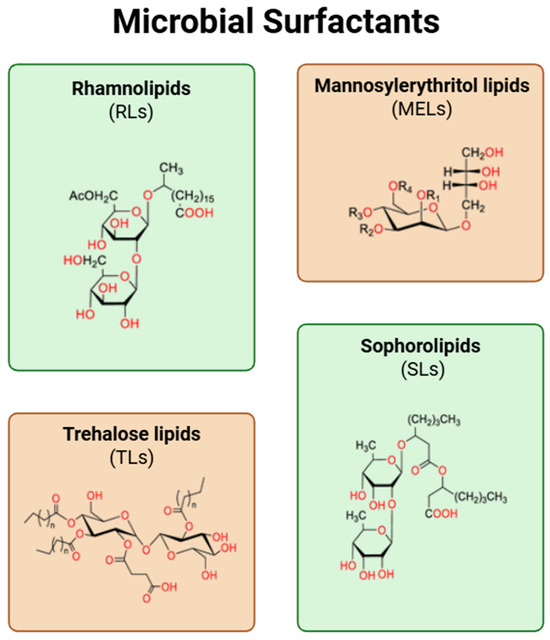
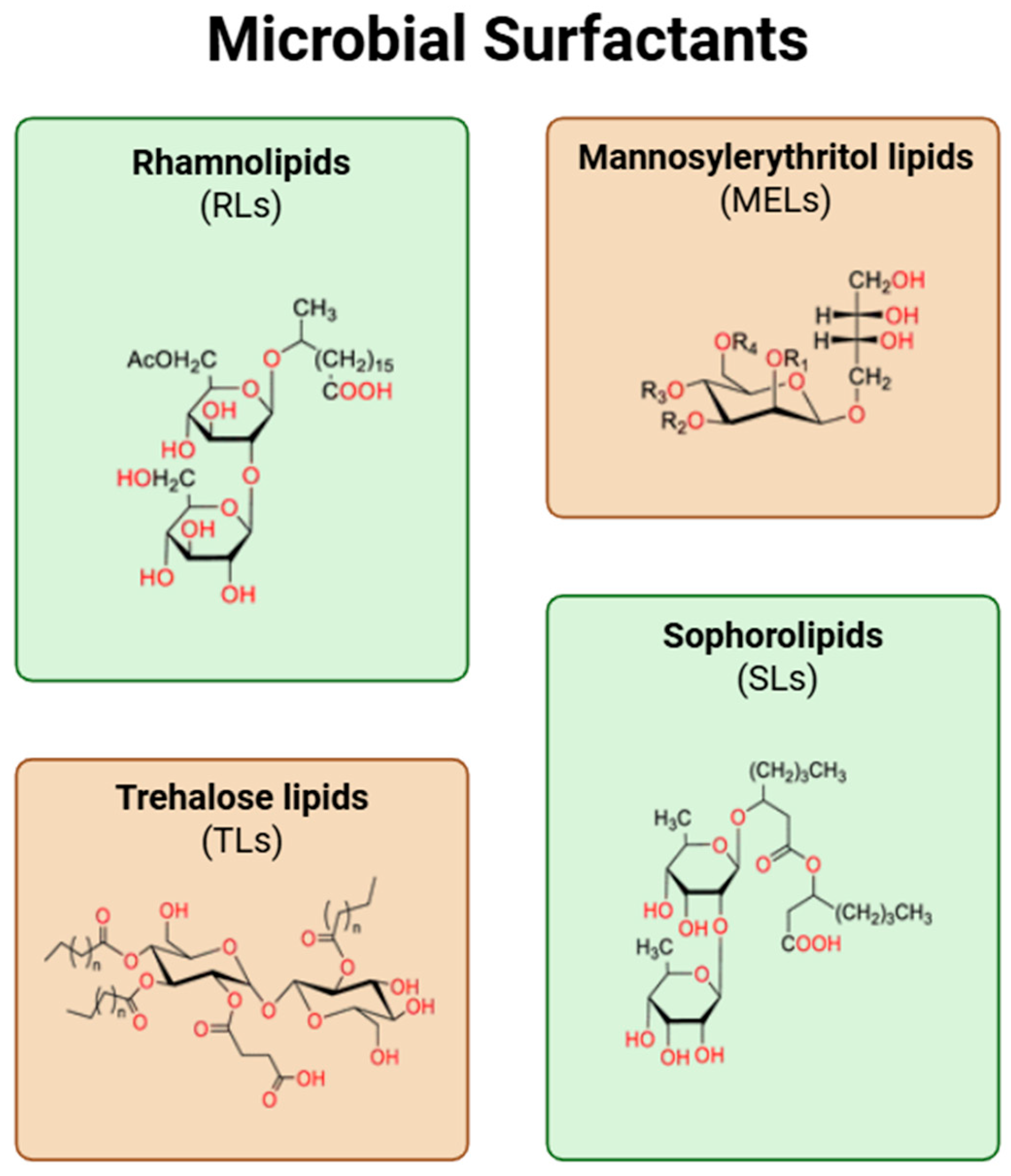
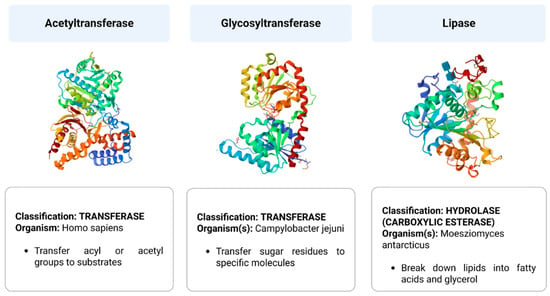
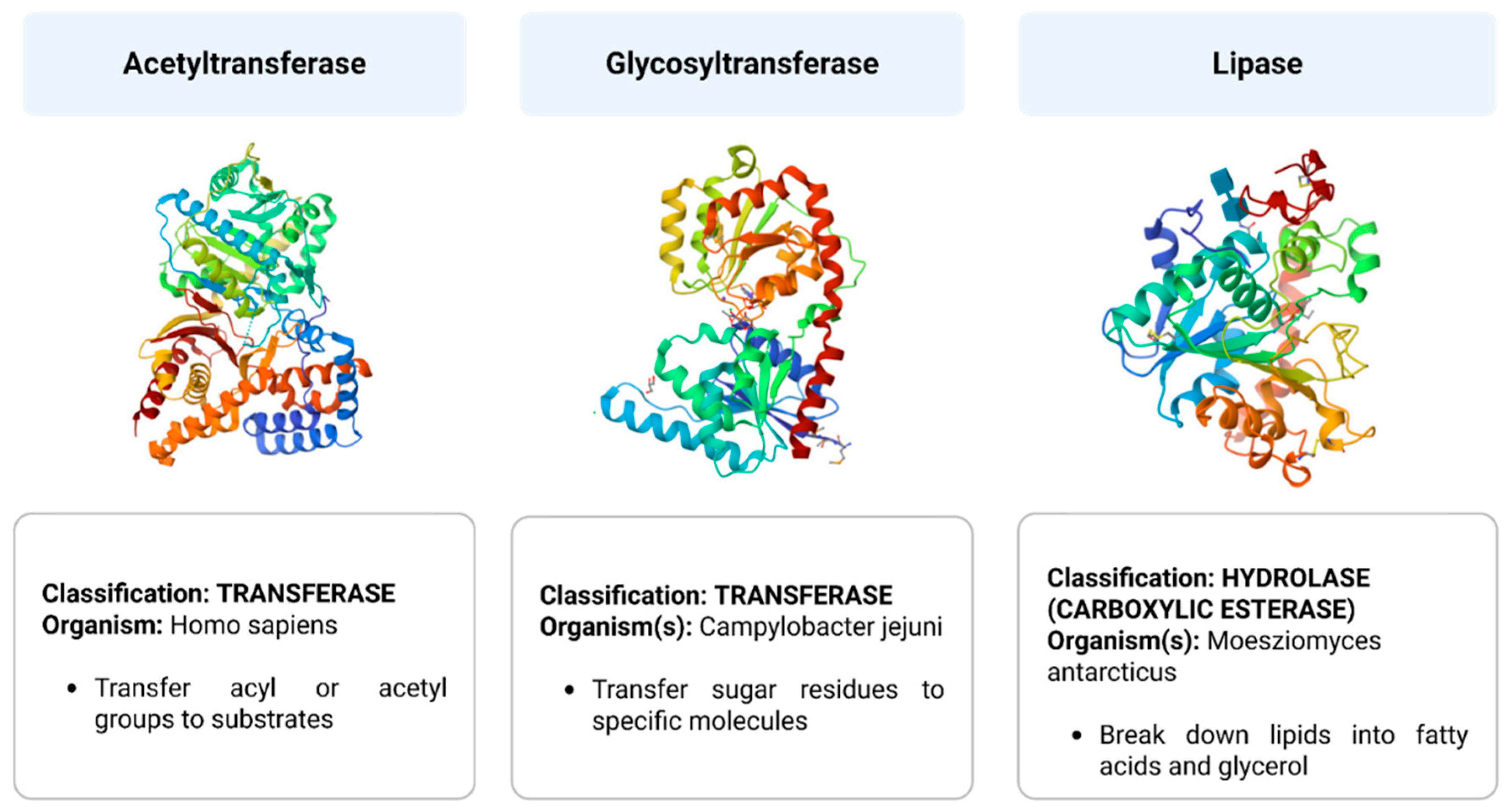
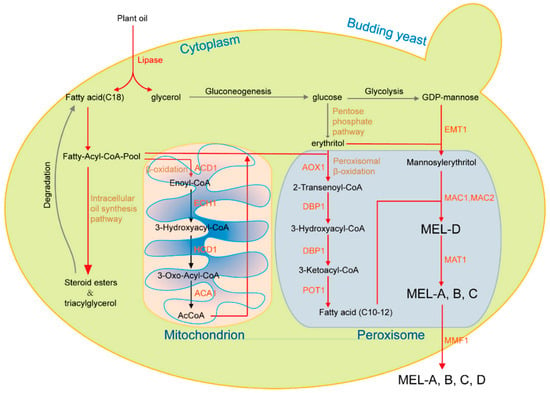
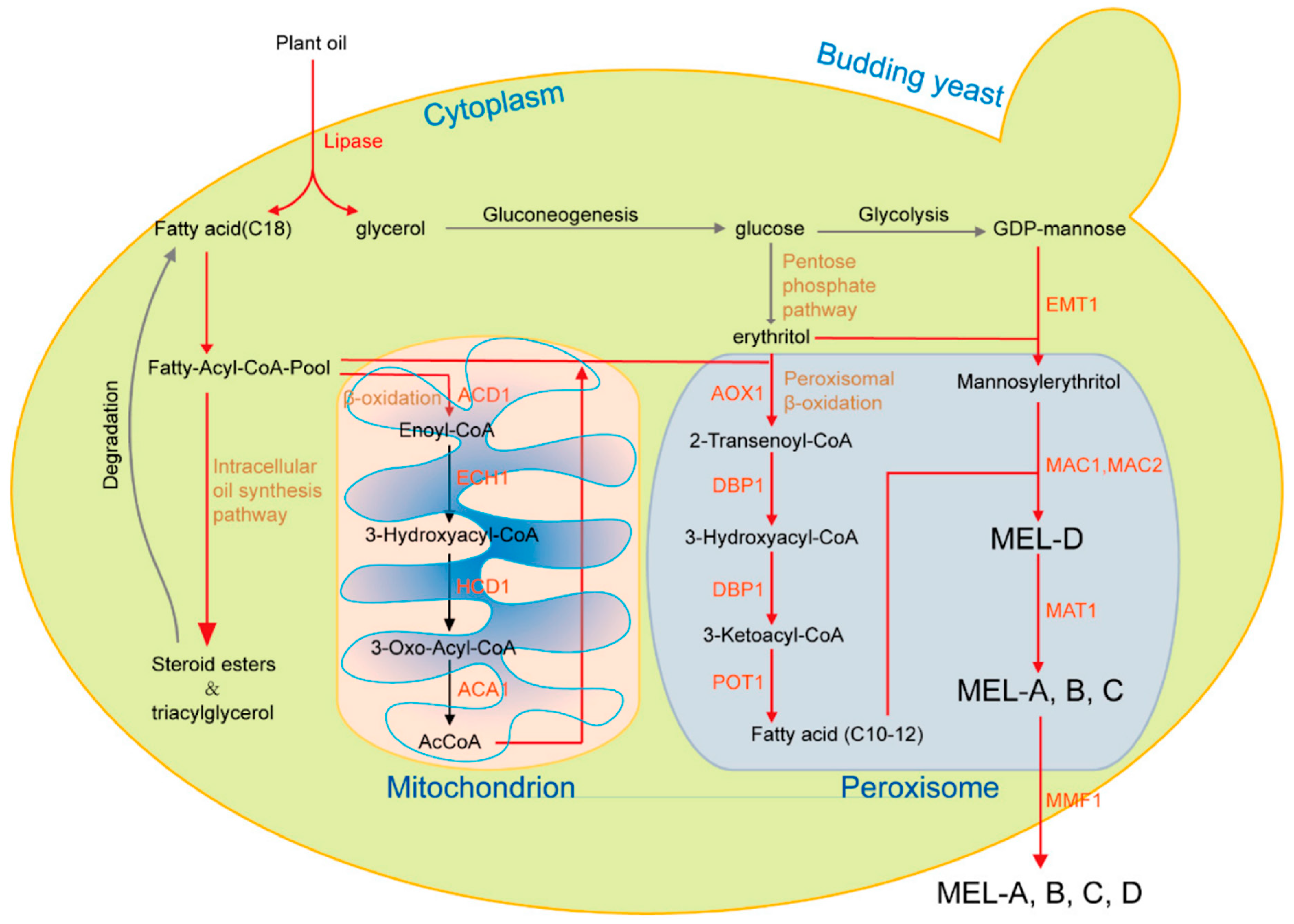

Disclaimer/Publisher’s Note: The statements, opinions and data contained in all publications are solely those of the individual author(s) and contributor(s) and not of MDPI and/or the editor(s). MDPI and/or the editor(s) disclaim responsibility for any injury to people or property resulting from any ideas, methods, instructions or products referred to in the content. |
© 2026 by the authors. Licensee MDPI, Basel, Switzerland. This article is an open access article distributed under the terms and conditions of the Creative Commons Attribution (CC BY) license.