Article

FTIR Spectroscopy, a New Approach to Evaluating Caseinolytic Activity of Probiotic Lactic Acid Bacteria During Goat Milk Fermentation and Storage


by
Juan José Carol Paz
1,2,
Ana Yanina Bustos
1,2,3,*,† and
Ana Estela Ledesma
1,4,†
1
Centro de Investigación en Biofísica Aplicada y Alimentos (CIBAAL-UNSE-CONICET), Universidad Nacional de Santiago del Estero, Santiago del Estero PC 4200, Argentina
2
Facultad de Agronomía y Agroindustrias, Universidad Nacional de Santiago del Estero, Santiago del Estero PC 4200, Argentina
3
Facultad de Humanidades, Ciencias Sociales y de la Salud, Universidad Nacional de Santiago del Estero, Santiago del Estero PC 4200, Argentina
4
Departamento Académico de Química, Facultad de Ciencias Exactas y Tecnologías, FCEyT, Universidad Nacional de Santiago del Estero, Santiago del Estero PC 4200, Argentina
*
Author to whom correspondence should be addressed.
These authors contributed equally to this work.
Fermentation 2025, 11(12), 699; https://doi.org/10.3390/fermentation11120699
Submission received: 25 October 2025 / Revised: 30 November 2025 / Accepted: 10 December 2025 / Published: 17 December 2025
(This article belongs to the Special Issue Advances in Functional Fermented Foods)

Abstract

Goat milk can be a vehicle for beneficial microorganisms, such as probiotic lactic acid bacteria (LAB). During lactic fermentation, the hydrolysis of milk proteins can improve their nutritional properties and sensory attributes and even have beneficial health effects. The objective of this study was to evaluate the caseinolytic activity of LAB strains with probiotic potential and to monitor the changes induced by fermentation and during storage in milk components using Fourier transform infrared (FTIR) spectroscopy. First, the proteolytic activity of 36 LAB strains isolated from dairy products was qualitatively assessed. Then, 17 strains with probiotic potential and moderate to high proteolytic activity were selected for further analysis. Casein proteolysis was found to be strain-dependent, with a decrease in total protein concentration ranging from 28% to 87% and an increase in amino acids ranging from 29% to 88%. Furthermore, a notable difference was observed in the amide bands in the FTIR spectra between the beginning and end of incubation, showing a decrease in the intensities of the bands attributed to proteins. In fermented goat milk, LAB growth resulted in a final count between 0.62 and 2.6 log CFU/mL, a 0.29 to 2.0 drop in pH, and lactic acid production between 0.20 and 1 g/L. FTIR spectra revealed time-dependent modifications in amide I and II bands accompanied by a marked reduction in carbohydrate content and an increase in lactic acid signal. After 21 days of storage, the viability of the strains, pH, and lactic acid in the fermented milks were not substantially modified. These results highlight the potential of lactic fermentation with strains selected for their probiotic potential as an approach to producing value-added goat milk products, as well as the usefulness of FTIR spectroscopy for characterizing complex systems such as goat milk.

1. Introduction

Lactic acid fermentation has a long history in food production and preservation since it improves the technological and functional characteristics of foods. Currently, fermented foods respond to two major consumer demands: natural products—without labels—and functional foods that provide health benefits beyond their nutritional properties [1]. Indeed, fermentation produces metabolites that improve the sensory quality of the product, increase the bioavailability of nutrients, and confer biopreservative effects, among others [2]. Furthermore, fermented foods can be vehicles for live microorganisms that can modulate body functions by positively altering the composition of the gut microbiota [3].
Goat milk has been gaining special interest in recent years, as it has undeniable dietary properties and greater nutritional value compared to cow milk. In terms of its composition, goat’s milk has a lower concentration of lactose and a lower proportion of casein relative to whey proteins, as well as a relatively higher proportion of β-casein relative to αs-casein, compared to cow’s milk. This composition has been shown to promote faster digestion of milk proteins. Therefore, it constitutes an attractive alternative as a possible natural ingredient for infant formulas to reduce the symptoms of gastrointestinal disorders such as vomiting, colic, constipation, and diarrhea, among others [4,5]. Furthermore, in vivo studies have shown that goat’s milk may be less allergenic than cow’s milk. In mice fed goat’s milk, lower serum concentrations of immunoglobulins E and G, pro-inflammatory cytokines, and reduced intestinal infiltration were observed [6]. Also, goat milk has a higher content of calcium, potassium, phosphorus, zinc, iron, magnesium, and manganese, as well as vitamins A and B, and even certain antibacterial properties [7].
Despite its extraordinary properties, goat milk is a specific substrate that is not always accepted by consumers in terms of taste, and its consumption has not yet spread globally. One of the main strategies for the development of this sector is its diversification through the development of dairy products with added value [8]. In this sense, goat milk can be a vehicle for beneficial microorganisms, such as certain LAB that can improve both nutritional and technological attributes and provide probiotic properties. Remarkably, some authors reported that lactic fermentation can improve the sensory attributes and sensory acceptance by consumers in fermented goat milk and goat milk yogurt. In particular, significant differences were found in the profile of volatile compounds, responsible for aroma and flavor, and improvements in texture after lactic fermentation, so it could be a strategy to improve the goat flavor in products and increase their acceptability [8,9,10].
LAB can develop in goat’s milk by consuming the amino acids obtained by protein hydrolysis to meet their high nutritional requirements. The casein in goat’s milk can be broken down by acidification and the action of proteolytic enzymes, releasing peptides that form stable foams or emulsions, which are highly valuable in the cheese industry and in the production of protein hydrolysates [11,12]. Also, the hydrolysis of proteins produced during the fermentation of LAB presents beneficial effects on health, and contributes to the release of bioactive peptides derived mainly from casein [13,14].
For this reason, it is essential to have routine, rapid, and sensitive techniques for monitoring changes in proteins, and also, carbohydrates, and organic acids produced during fermentation processes. FTIR spectroscopy is a reliable and non-invasive analytical technique that appears to be a promising tool that makes it possible to analyze and monitor milk components during the fermentation process and the shelf life [15]. FTIR spectroscopy was able to track carbohydrate and protein variations during the fermentation of oat- and pea-based yogurt, offering a potential for a fast and reliable process and product monitoring [16].
In a previous study, we isolated and characterized LAB from goat milk cheese. These strains demonstrated probiotic potential, as they exhibited resistance to gastrointestinal tract conditions, adherence to intestinal mucus, and bile salt hydrolase activity, considered a probiotic biomarker [17], and could therefore be used in the production of value-added fermented goat milk.
Therefore, the objective of the present study was as follows: i. to study the caseinolytic activities of selected LAB strains with probiotic potential, ii. to characterize fermented goat milk in terms of LAB growth, pH, titratable acidity, protein concentration, and free amino acids during refrigerated storage for 21 days, and iii. to monitor the changes produced by lactic fermentation of proteins and other components such as fat and carbohydrates present in goat milk by FTIR spectroscopy.
Our results demonstrate that lactic fermentation, using potentially probiotic strains, is a valuable strategy for designing value-added foods that represent a contribution to the dairy products of goat origin already offered on the market. Furthermore, through these investigations, we seek to highlight the valuable contributions of FTIR spectroscopy to characterize functional fermented foods.

2. Materials and Methods

2.1. Source of Strain and Culture Conditions

Thirty-six lactic strains isolated from goat’s milk, homemade goat milk cheese, and goat milk cheese whey were evaluated in the current study. These strains include 15 LAB strains previously isolated by our research group from goat milk and selected for their probiotic potential, as they exhibited resistance to gastrointestinal tract conditions, adherence to intestinal mucus, and bile salt hydrolase activity [17]. The remaining strains were isolated from goat milk and goat cheese whey, as previously reported [17]. Briefly, appropriate dilutions of the different samples were plated onto MRS agar and incubated for 48 h at 37 °C under microaerophilic conditions. After incubation, 10 representative colonies were randomly selected from the last dilution at which growth occurred. The purity of the isolates was checked by streaking and subculturing in MRS broth as well as MRS agar, followed by microscopic examination. The identification of isolated strains was performed by Matrix-Assisted Laser Desorption/Ionization-Time-of-Flight Mass Spectrometry (MALDI-TOF MS). All strains were stored at −20 °C in a medium containing 10% (w/v) skim milk, 0.5% (w/v) yeast extract, and 30% (v/v) glycerol. Before use, strains were activated in MRS medium for 24 h at 37 °C under microaerophilic conditions and subcultured three times in a similar manner.

2.2. Qualitative Evaluation of Proteolytic Activity

Skim Milk Agar (SMA) media, containing 2.8% skimmed milk powder and 1.5% agar, was used for the qualitative evaluation of proteolytic activity. For this, 20 μL of each strain in the stationary phase of growth were placed in wells distributed over the SMA medium [18]. Inoculated Petri plates were incubated at 37 °C for two days in microaerophilic conditions. The proteolytic activity of the cultures was determined by the presence of a clear hydrolysis halo around the colonies. The diameter of the halo was used to classify the studied strains into weakly proteolytic, moderately proteolytic, highly proteolytic, and non-proteolytic. Strains classified as moderately and highly proteolytic were selected for further quantitative studies.

2.3. Quantitative Evaluation of Caseinolytic Activity by LAB

Stationary-phase cultures were centrifuged at 12,000× g for 10 min (Hermle Labortechnik GmbH—Z326K, Wehingen, Germany) and washed twice with sterile 0.9% (w/v) NaCl. They were then concentrated in 20 mM sodium phosphate buffer (pH 7.2) to a final optical density of 3 at A560. This cell suspension was mixed in a 1:1 ratio with 5 mg/mL of analytical-grade bovine milk casein (Sigma-Aldrich, Burlington, MA, USA), dissolved in the same buffer. The reaction mixture was incubated for 24 h at 37 °C. Samples were taken during the exponential phase (2 and 4 h) and the stationary phase (16 and 24 h). The samples were analyzed as described below.

2.3.1. Determination of the Protein Concentration

Protein concentration was determined at the beginning and end of the incubation using the Bradford method [19]. Briefly, 100 μL of the sample was mixed with 1000 μL of Bradford reagent, the mixture was allowed to stand for 1 min, and the absorbance was measured at 595 nm (A595). A bovine serum albumin calibration curve (0–20 μg/mL) was used.

2.3.2. Determination of the Free Amino Acid Concentration

The enzymatic reaction was stopped by adding an equal volume of cold 20% (w/v) trichloroacetic acid, and then the reaction mixture was centrifuged. The free amino acid concentrations in supernatants were determined by the o-phthaldialdehyde (OPA) method [20]. The OPA solution was prepared by mixing 12.5 mL of 100 mM sodium tetraborate, 1.25 mL of 20% (w/w) sodium dodecyl sulfate, 20 mg of OPA (dissolved in 0.5 mL of methanol), and 50 μL of β-mercaptoethanol. This was diluted to a final volume of 25 mL with deionized water. The reaction mixture, consisting of 20 μL of the sample and 400 μL of OPA reagent, was mixed and then incubated in the dark for 3 min at room temperature, and the A340 was measured. A standard curve using glycine (0.25–1.5 mg/mL) was used, and the results were expressed in micrograms of glycine per milliliter of sample.

2.3.3. Evaluation of the Caseinolytic Activity by FTIR

An FTIR spectrometer (Nicolet 6700, Thermo Scientific, Waltham, MA, USA) was used to detect the infrared spectrum of each sample. A 2 μL aliquot of samples taken at different times (0, 4, 16, and 24 h) was dropped onto a zinc selenide window and dried in a drying oven at room temperature for 1 h. Each sample was scanned in attenuated total reflection (ATR-FTIR) mode, 64 scans with a spectral wavenumber range of 600–4000 cm−1 and at a resolution of 4 cm−1. The spectral data were analyzed using the Opus 7.0 software (Bruker, Bremen, Germany).

2.4. Goat Milk Fermentation: Evaluation of the Fermentative Capacity of Strains with Proteolytic Activity

Raw goat milk samples were collected in Santiago del Estero, Argentina. The samples of milk were transported and stored at refrigeration temperatures (+5 °C) for no more than 12 h before experimental treatments. The proximate analysis of goat milk samples was performed using a ultrasonic milk analyzer (Milkotester—Master Pro Touch, Bulgaria). Protein, total fat, non-fat solids, and lactose were determined. Pasteurization was performed at 62–63 °C for 30 min (Low Temperature Long Time, LTLT) and monitored by enumerating coliforms and mesophiles using MacConkey and PCA agar, respectively. Fifteen strains, with moderate and high proteolytic activity, were used to inoculate pasteurized goat milk with and without supplementation of 1% (w/v) glucose. Goat milk was inoculated from overnight cultures of each strain, calculating the inoculum volume to obtain a final A560 of 0.05 in the milk. Fermentation was then carried out at 37 °C for 24 h as reported in Biadata et al. (2020) [21]. Samples were then taken at the beginning and end of incubation to compare microbial growth, acidifying capacity, titratable acidity, and free amino acid concentration. Microbial growth was determined by plate counts using MRS agar, and the results were expressed as log10 CFU/mL. pH was recorded using a pHmeter (Adwa – AD1000, Wichelen, Belgium), while titratable acidity was measured using Dornic solution (NaOH 0.11 N). Concentration of free amino acids was evaluated using the OPA technique, as was previously described.
The fermented milks were monitored using ATR-FTIR spectroscopy (Nicolet 6700, Thermo Scientific, Waltham, MA, USA) as previously described.

Refrigerated Shelf Life of Fermented Milks

Based on the proteolytic activity against casein, the ability to grow in milk, and its probiotic potential demonstrated in previous studies, the strains L. plantarum CB2, L. mesenteroides CB6, and L. parabuchneri CB12 were selected to further study fermented milks under refrigeration conditions. The milk samples were prepared as described in the previous section and, after the fermentation period, were immediately refrigerated at 4 °C. Samples were taken on days 1, 7, 14, and 21 to evaluate microbial growth, pH, and titratable acidity. In addition, the main milk components were monitored using ATR-FTIR as previously described.

2.5. Statistical Analyses

Minitab 22.1 was used to analyze the significance level of data, and p < 0.05 was the significance level. The drawing software was Origin 8.5. All experiments were run in triplicate, and the presented results are the average of the recorded values.

3. Results and Discussion

3.1. Qualitative Proteolytic Activity of LAB

Thirty-six lactic strains isolated from goat’s milk, homemade goat’s cheese, and goat cheese whey were evaluated in the current study. The strains where identified by MALDI-TOF MS as Lactiplantibacillus (L.) plantarum (CB2, CB4, CB5, CB8, CB9, CB10, CB11, CB13, CB15, CB16, CB17 and CB27), three Lentilactobacillus (L.) parabuchneri (CB7, CB12 and CB14), four Leuconostoc (L.) mesenteroides (CB6, CB26, CB28 and CB29), Lactococcus (L.) garvieae CB36, Enterococcus (E.) durans CB34 and Enterococcus (E.) faecium (CB39, CB41, CB42, CB43, CB44, CB45, CB46, CB47, CB48, CB59, CB60, CB61, CB62, CB74 and CB75). These collections include 15 LAB strains previously selected by our research group for their probiotic potential that include resistance to gastrointestinal tract conditions, adherence to intestinal mucus, and bile salt hydrolase activity, considered a probiotic biomarker [17].
Proteolytic activities were qualitatively determined for LAB strains as a hydrolysis halo in SMA medium. L. plantarum CB2 turned out to be the most proteolytic strain, followed by L. plantarum CB3, CB4, and CB27 strains, L. mesenteroides CB6, CB28, and CB21 strains, E. durans CB34 and L. garvieae CB36 strains with moderate activity, and L. parabuchneri CB7, CB12, and CB14, L. plantarum CB1, CB5, CB8, CB9, CB10, CB11, CB15, CB16, and CB17 that displayed weak proteolytic activity (Figure S1, Supplementary Material).

3.2. Quantitative Measurement of Caseinolytical Activity by LAB Strains

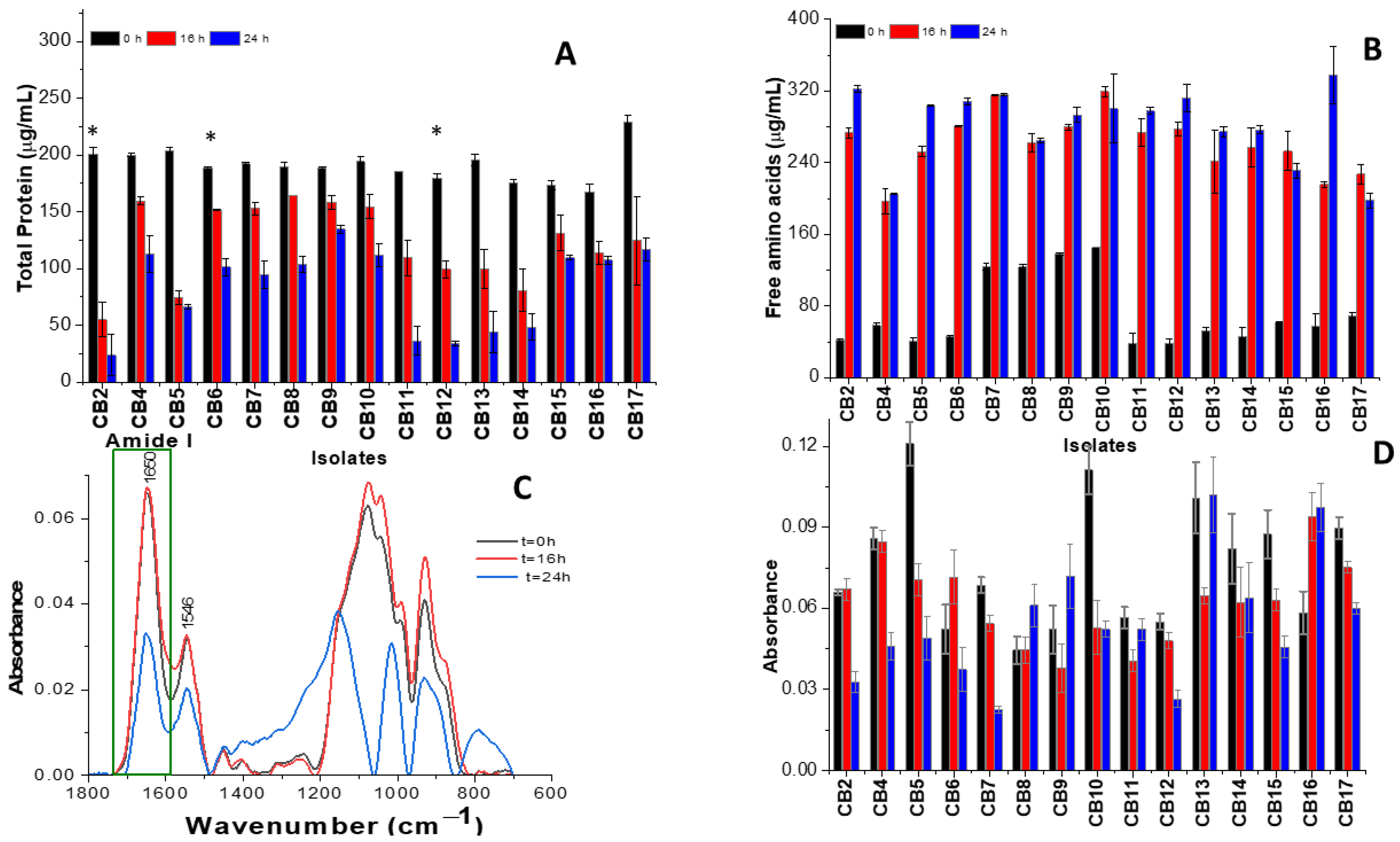
To further the analysis, the 15 strains that showed moderate to high activity in previous trials were selected, and their ability to hydrolyze bovine casein was evaluated. (Figure 1A). Casein hydrolysis was dependent on the strain and incubation time, with maximum activity observed after 24 h of incubation. At 2 and 4 h of incubation, no significant changes were observed in the concentration of proteins or amino acids, so the graphs show the results obtained from 16 h of incubation onwards. L. plantarum CB2 was the most proteolytic strain, showing a decrease of 177.45 µg/mL of casein after 24 h from the initial (200.98 µg/mL), which represents a breakdown of proteins of around 88%. L. plantarum CB11 and CB13, as well as L. parabuchneri CB12 and CB14, showed moderate activity, reducing the initial casein concentration by 20 to 25%, respectively. Finally, casein was weakly hydrolyzed by the other L. plantarum strains, such as CB9, CB16, and CB17, with 53.92, 64.21, and 60.29 µg/mL decreases in protein concentration, respectively.
The changes in free amino acid concentration are shown in Figure 1B. All strains analyzed showed an increase in free amino acid concentration due to casein hydrolysis after 24 h of incubation. As expected, strains L. plantarum CB2, CB5, and CB11; L. parabuchneri CB12; and L. mesenteroides CB6 showed the greatest increase in amino acids, with average values of 0.04 to 0.32 mg/mL, reaching up to seven times the initial concentration.
These results showed that the casein hydrolysis capacity is strain-dependent, which may be related to the differential expression of protease and peptidase enzymes, as previously reported in Vukotić et al. [22].

3.3. Caseinolytical Activity Studied by ATR-FTIR Spectroscopy

FTIR spectroscopy was used to monitor changes in characteristic casein bands during incubation with the selected strains. As an example, Figure 1C shows the ATR-FTIR spectra of casein hydrolysis recorded by L. plantarum CB2 at different incubation times. The strongest absorbance band, observed at 1650 cm−1 (t = 0 h), was assigned to the amide I band characteristic of proteins and corresponds to C=O stretching, while the band at 1546 cm−1 was assigned to the amide II band and corresponds to N–H secondary bending [23].
The analysis showed that the bands attributed to amide I and II of casein changed with incubation time and therefore with the degree of hydrolysis. Therefore, the casein spectra of the samples taken at the initial time were compared with the spectra obtained after 24 h of incubation (Figure 1D). A notable difference was observed in the region of the amide bands between the beginning and the end of incubation, showing a decrease in the intensities of the bands due to protein hydrolysis. Most strains showed a decrease in the intensity of the band at 1650 cm−1 after 24 h, as shown in Figure 1D, consistent with the increase in amino acid concentrations previously observed. On the other hand, L. plantarum strains CB8, CB9, CB13, and CB16 showed an increase in the intensity of the amide I band.
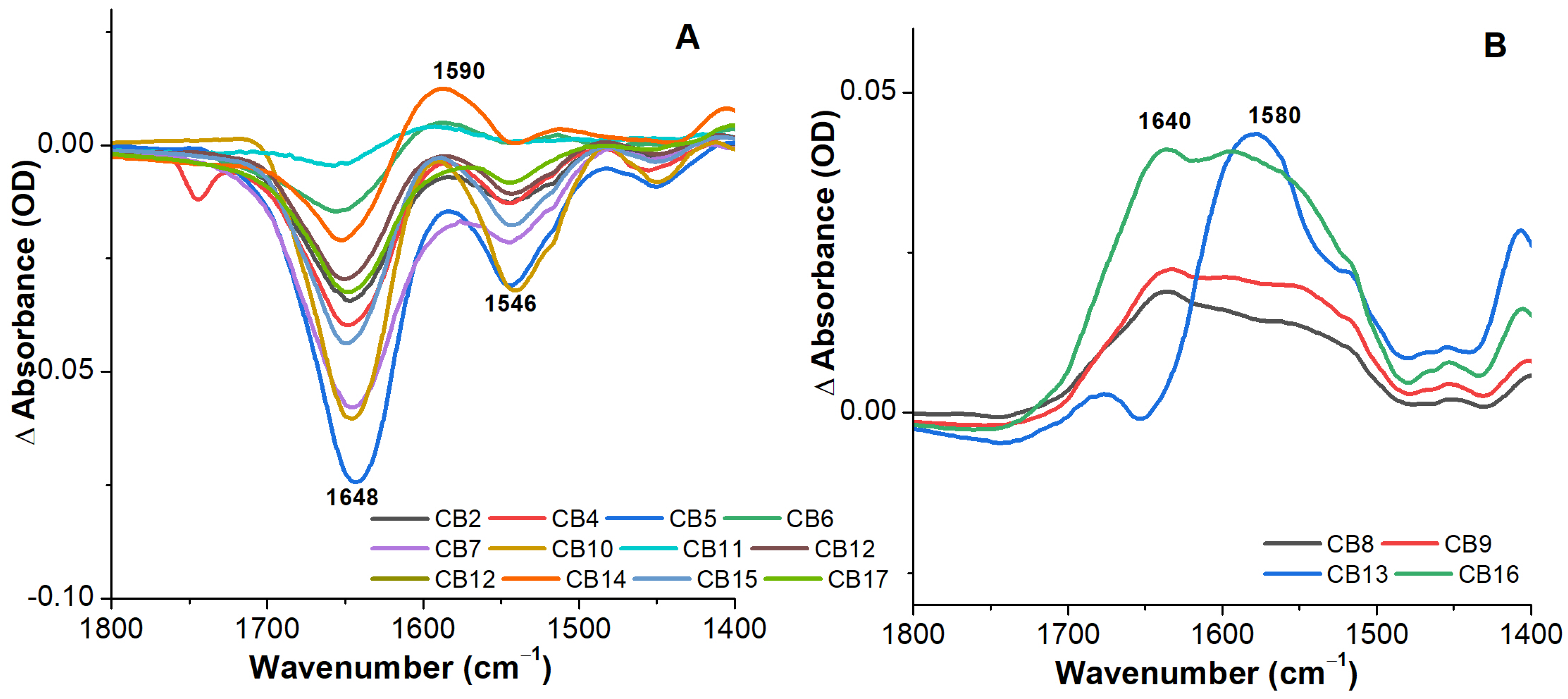
For a more detailed study, ATR-FTIR difference spectra were calculated between the final and initial times to evaluate the most significant differences observed in the protein signal. The most significant spectral changes arising from breakdown of proteins occur in the amide I and amide II regions (Figure 2). The intensity of the amide I band located around 1648 cm−1 decreases together the amide II centered at 1546 cm−1 for L. plantarum CB2, CB4, CB5, CB10, CB11, CB15, CB17, L. mesenteroides CB6 and L. parabuchneri CB7, CB12, CB14, indicating a loss of the protein secondary structure (Figure 2A). For L. plantarum CB8, CB9, CB13 and CB16 strains, difference spectra showed an increase in bands centered around 1640 and 1580 cm−1 (Figure 2B). This behavior can be explained by differences in the secondary structure of the proteins during the hydrolysis process. The maximum of the absorption band at 1580 cm−1 could indicate the formation of free carboxylates as proteolysis products [24].

3.4. Fermentation of Goat Milk by LAB Strains

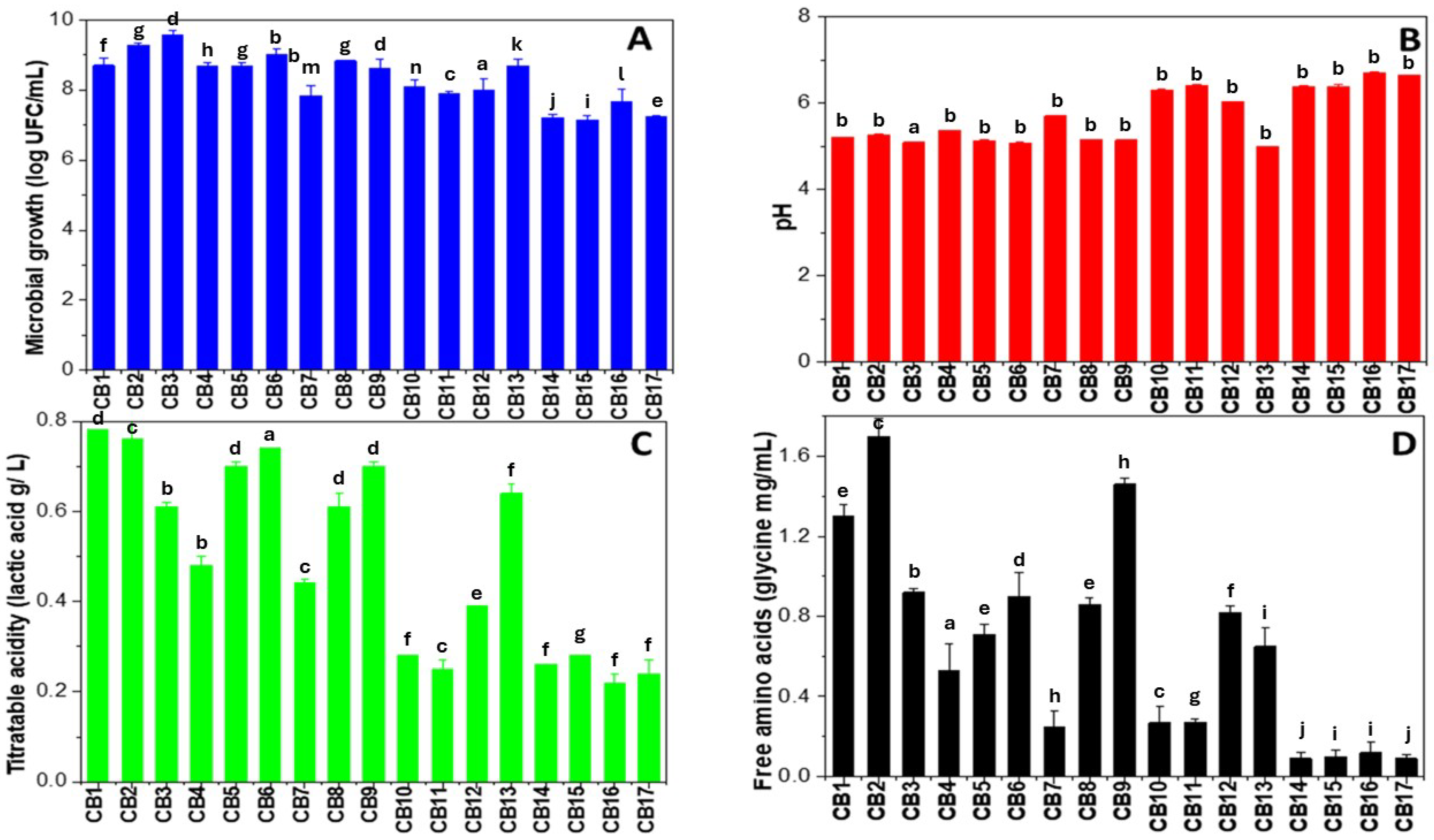
The raw goat milk underwent pasteurization before being inoculated with the selected strains. After heat treatment, no growth of mesophilic bacteria or coliform bacteria was observed. The goat milk has a proximate composition of 7.16 ± 0.15% fat, 10.47 ± 0.50% non-fat solids, 4.83 ± 0.20% protein, and 4.60 ± 0.35% lactose. The protein and fat values were higher than the average reported for goat milk probably because the approximate composition of goat milk, particularly in terms of fat and protein, depends on the breed and diet of the animal, which in turn depends on the available vegetation, the time of year the sample is taken, and the external supplementation provided to the animals [25]. Selected LAB strains were inoculated into milk and incubated for 24 h. The incubation time was chosen based on reports from other authors who state that between 16 and 24 h, they obtain the greatest cell growth, the best functional properties, and the best nutritional profile in fermented dairy products [26,27]. The 15 strains showed growth between 0.65 and 1.28 log CFU/mL, a decrease in pH from 0.13 to 0.52, and a range of 0.12 to 0.16 g/L for titratable acidity after 24 h of incubation (Supplementary Material, Table S1).
Previous reports showed that goat milk fermented with added glucose shows greater growth because LAB strains utilize glucose more efficiently [14,28]. Glucose is readily phosphorylated to glucose-6-phosphate, unlike galactose and fructose, which require an additional step in the phosphoenolpyruvate-dependent phosphotransferase system before being converted to pyruvate, which bacteria can then utilize for growth via glycolysis [29]. Therefore, to improve the fermentation parameters, we added glucose to the milk in concentrations of 1% (w/v). The results are shown in Figure 3A. L. plantarum CB2 and CB3 and L. mesenteroides CB6 showed the greatest growth, with increases of 2.6, 2.1, and 2.4 log UFC/mL, respectively. The pH reduction by all strains in goat’s milk ranged from 0.29 to 2 after 24 h. L. plantarum CB3, CB5, CB8, CB9, and CB13 showed maximum pH reduction (final pH 5.00–5.15) followed by L. plantarum CB1, CB2, and CB4 (final pH 5.2–5.7), as shown in Figure 3B. A slight decrease in pH was observed with L. parabuchneri CB12 and CB14, L. plantarum CB15, CB16, and CB17. These data are in line with those reported by Albayrak and Duran [30] and Mohammed and Con [31], for LAB strains isolated from artisanal white cheese and traditional cheese, respectively, who found a drop of approximately 1.6 after 24 h of fermentation [30,31]. Those results were in agreement with the high production of lactic acid observed for L. plantarum CB1, CB2, CB3, and CB13 and L. mesenteroides CB6 with values of 0.78, 0.76, 0.61, 0.64, and 0.74 g/L, respectively (Figure 3C).
The L. plantarum CB1, CB2, CB3, and CB9, L. mesenteroides CB6, and L. parabuchneri CB12 strains showed a higher proteolysis with a 6-fold increase in free amino acid concentration compared to the control (0.2 mg/L), as shown in Figure 3D. Remarkably, L. plantarum CB2 exhibited the highest values for growth, pH reduction, titratable acidity, and free amino acid production. These findings are consistent with those reported in previous studies for other L. plantarum strains LP69, P-8, CRL 1449, and CRL 1472.

3.5. Structural Changes in Lactic Acid, Carbohydrates, Proteins, and Lipids During Milk Fermentation

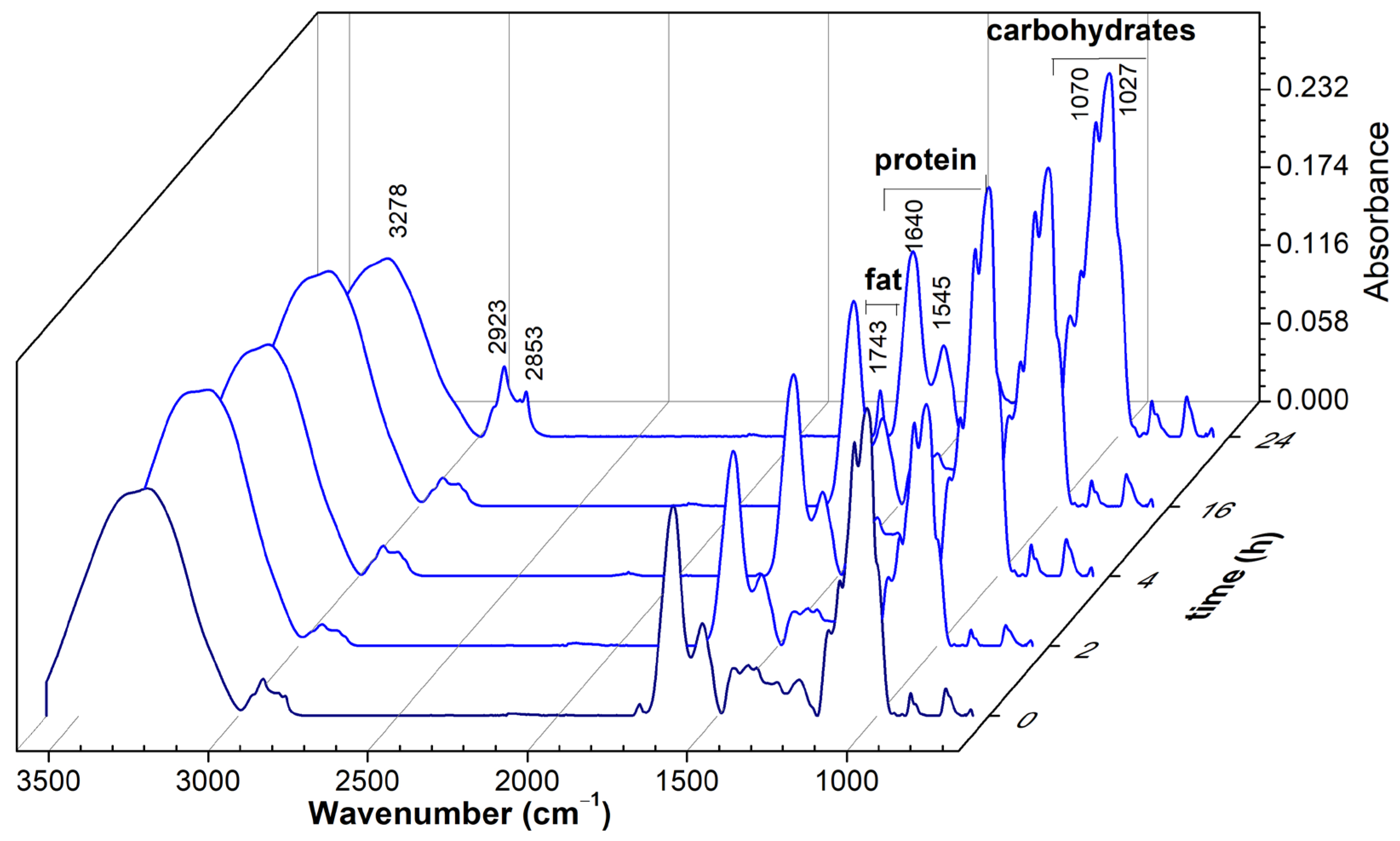
To characterize the bands corresponding to the different functional groups, the ATR-FTIR absorbance spectra of goat milk fermented with the L. plantarum CB2 strain are presented in Figure 4. Different functional groups can be distinguished, such as protein amide bands, C=O stretching of fats, and vibrations related to carbohydrates [28,29]. The bands observed at 3278, 2923, 2853, and 1743 cm−1 are characteristic of fatty acid components, while the bands at 1640 and 1545 cm−1 correspond amide I and II bands of proteins, respectively [32]. The bands at 1070 and 1027 cm−1 correspond to C-O stretching absorbance from carbohydrates [33]. The aforementioned bands change their intensity with the time incubation, which implies hydrolysis of protein components and a consumption of carbohydrates, as described below.
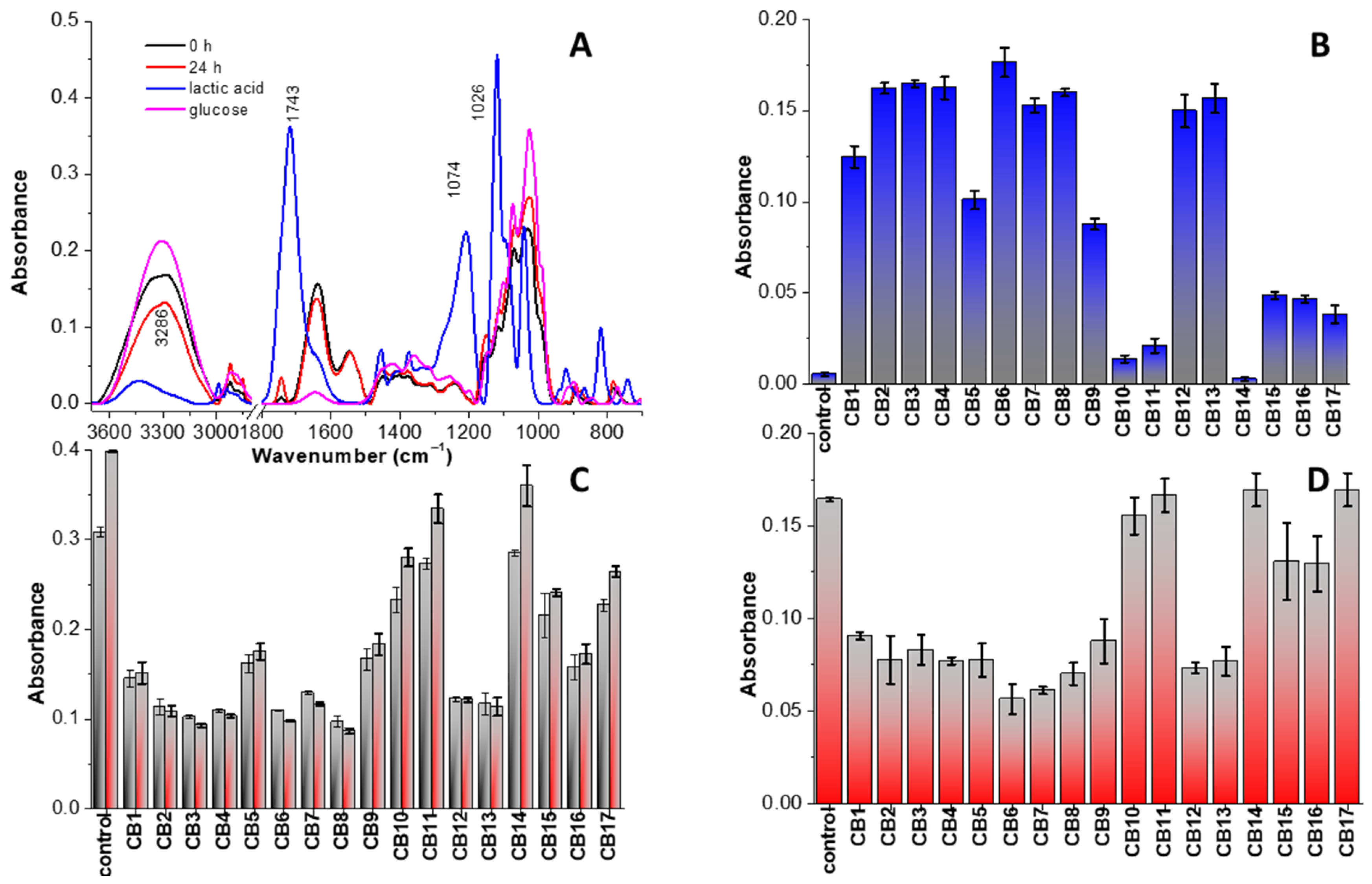
Lactose is an essential substrate for LAB fermentation, as its hydrolysis into glucose and galactose, which are then converted into lactic acid, provides energy for metabolism [34,35]. Figure 5A shows the spectrum of standard lactic acid and glucose and the spectra for goat milk fermented for 24 h by L. plantarum CB2 strain.
Fatty acid bands are mainly found at 2923 and 2853 cm−1, corresponding to asymmetric and symmetric -CH2 stretching modes [36]. Fatty acid concentration increased after milk fermentation, as it was illustrated in the ATR-FTIR spectra from Figure 4.
The C=O stretching band at 1743 cm−1 is characteristic of carboxylic acid groups, and it was assigned to lactic acid formation. As shown in Figure 5B, the L. plantarum CB1, CB2, CB3, CB4, CB8, CB13, L. mesenteroides CB6, and L. parabuchneri CB7, CB12 showed increases in the intensity of the band attributed to lactic acid in relation to the beginning of fermentation, while the remaining ones only showed slight increases. These results coincided with the titratable acidity values observed in the previous tests. Significant differences were observed in the bands at 1070 and 1030 cm−1, which can be attributed to lactose. Our results evidenced that the carbohydrate content decreased sharply due to fermentation with L. plantarum CB1, CB2, CB3, CB4, CB5, CB8, CB9, CB13, L. mesenteroides CB6, and L. parabuchneri CB7, CB12 strains (Figure 5C).
Figure 5D shows the changes in the intensity of the amide bands as a result of fermentation. In milk fermented with L. plantarum strains CB1, CB2, CB3, CB4, CB5, CB8, CB9, and CB13, the intensity of the amide I band (1640 cm−1) was reduced by approximately 50% compared to control milk. Similar behavior was observed with L. mesenteroides CB6, and L. parabuchneri CB7 and CB12.
The FTIR findings are consistent with the results presented in the previous section, demonstrating that this spectroscopy could be used to evaluate and monitor the main components of milk during lactic fermentation. On the other hand, our results evidenced that L. plantarum CB1, CB2, CB3, CB4, CB5, CB8, CB9 and CB13, L. mesenteroides CB6, and L. parabuchneri CB7, CB12 strains have an important proteolysis activity in milk.
Based on these findings, L. plantarum CB2, L. mesenteroides CB6, and L. parabuchneri CB12 strains were selected for further refrigerated storage studies. These strains were selected for their proteolytic activities against casein, their acidifying properties, their good growth capabilities, and their bile salt hydrolase activities, as described in previous studies [17]. From these, we aimed to obtain a candidate strain of each LAB genus with probiotic potential.

3.6. Refrigerated Storage of Goat Milk Fermented by Selected LAB: Study of the Viability of the Strain, pH, Titratable Acidity, and Main Components of Milk

Goat milk supplemented with 1% (w/v) glucose was fermented with CB2, CB6, and CB12 strains and then subjected to refrigerated storage for 21 days.
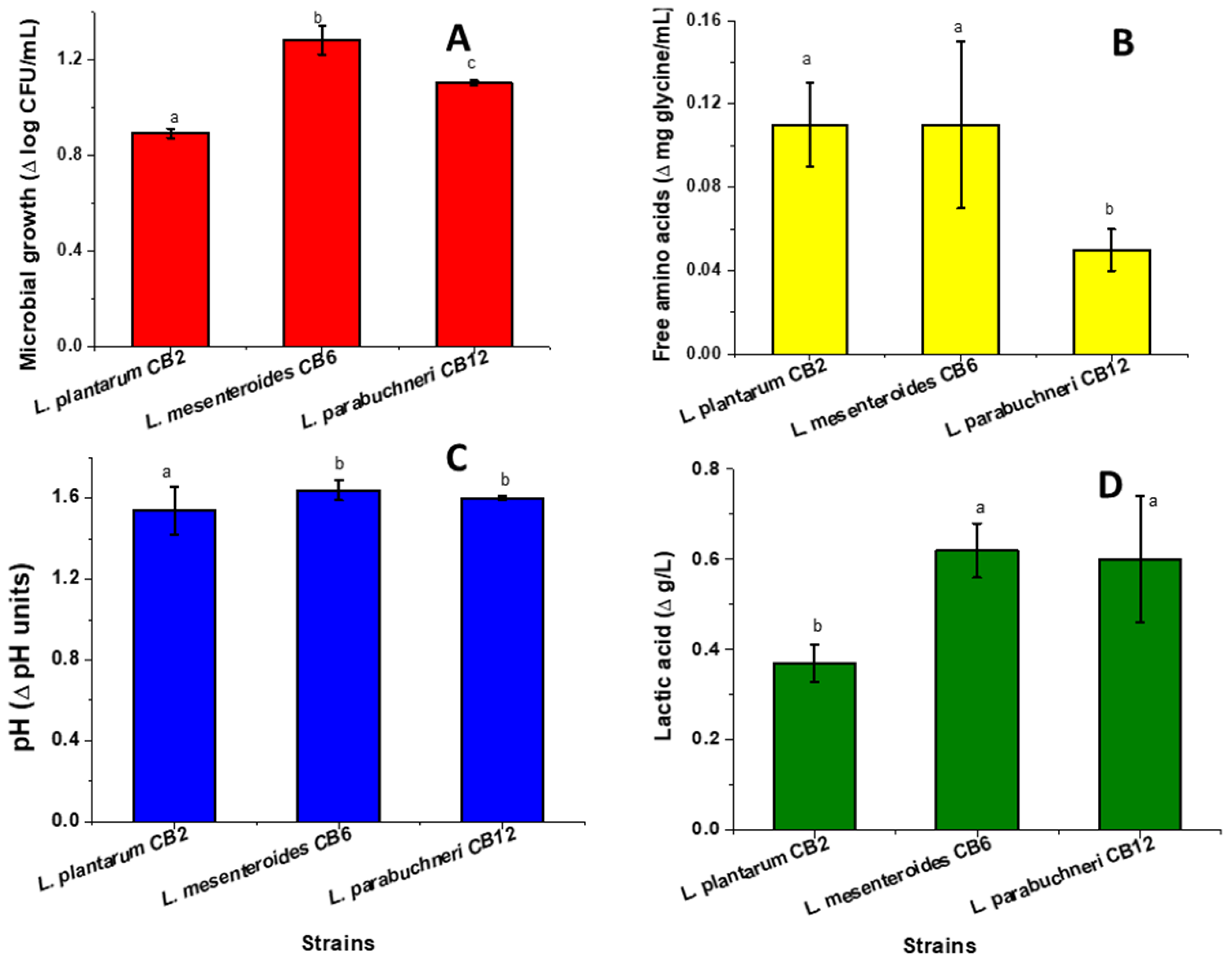
After 24 h of fermentation at 37 °C, the strains showed viability increases of 0.89, 1.28, and 1.09 log CFU/mL, L. plantarum CB2, L. mesenteroides CB6, and L. parabuchneri CB12, respectively. Concurrently, the pH decreased by approximately 1.60 units due to lactic acid production. Lactic acid levels increased by 0.37, 0.44, and 0.42 g/L, respectively. Free amino acid production also increased after the 24 h fermentation period, rising by 0.11, 0.11, and 0.05 mg/mL, respectively (Figure 6).
The results obtained with the L. parabuchneri CB6 strain are remarkable, as these microorganisms are not typically strong acidifying species or commonly used as starter cultures. In this regard, Valdiviezo et al. (2023) [32] report that the strains of L. parabuchneri BQ2, OQ2, and RQ3 showed a weak acidification capacity. Similarly, the L. mesenteroides CB6 strain demonstrated a greater acidifying capacity when compared to the L. mesenteroides TAUL1341 and TAUL1342 strains, as was previously reported by Abarquero et al. (2022) [37]. Regarding amino acid production, our results were consistent with those previously reported for Zarour et al., with the results obtained with L. parabuchneri standing out, since proteolytic activity is very unusual in these strains [38].
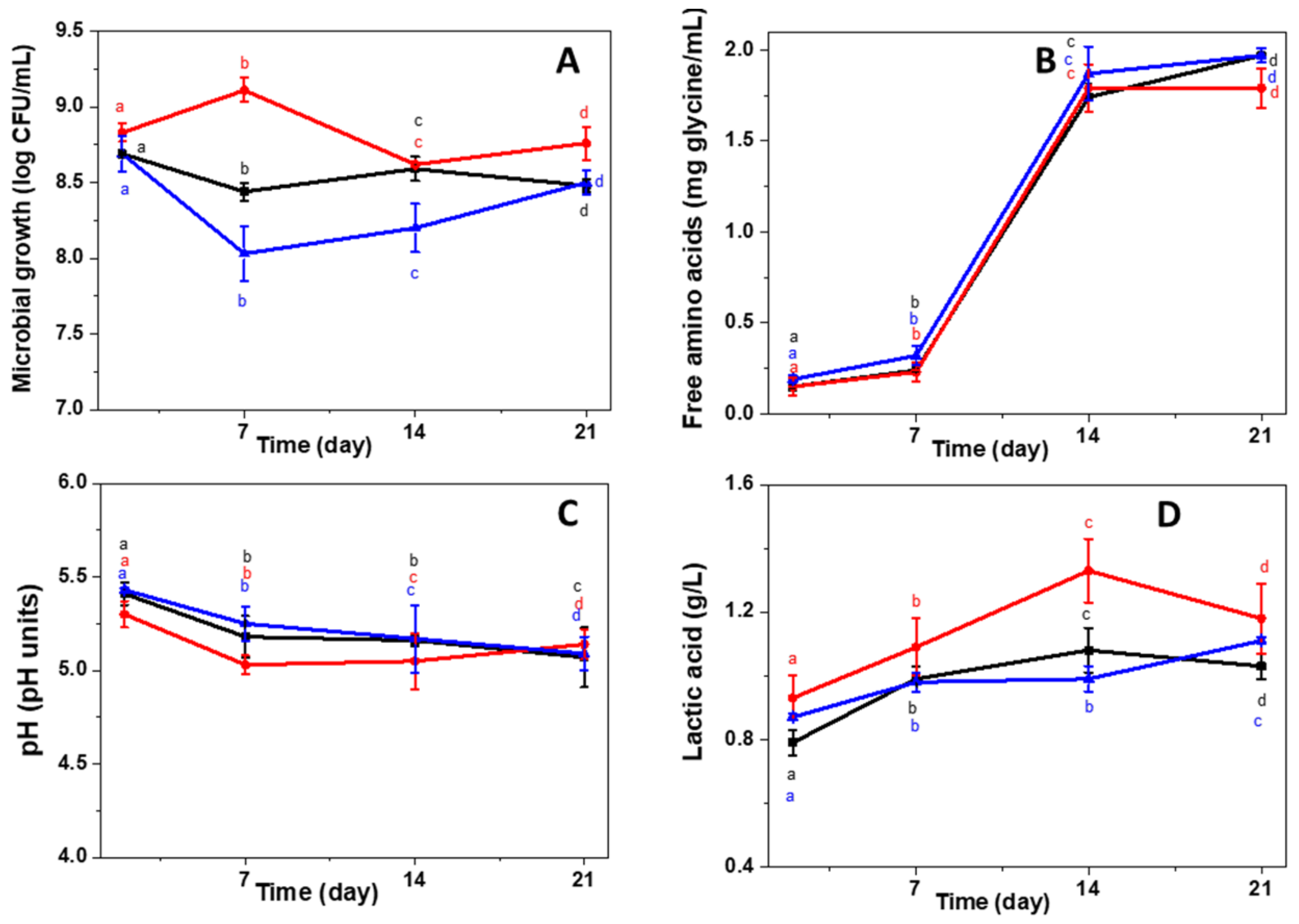
The viability values at the end of storage were 8.48, 8.76, and 8.50 log CFU/mL for L. plantarum CB2, L. mesenteroides CB6, and L. parabuchneri CB12, respectively. L. mesenteroides CB6 reached its peak growth (9.11 log CFU/mL) after 7 days, followed by a decrease of one log unit by the end of storage. This trend is similar to findings reported by Zarour et al. (2012) [38] for the L. mesenteroides subsp. dextranicum C3LMA. L. parabuchneri viability dropped to approximately 8 log CFU/mL after 7 days before gradually increasing to 8.50 log CFU/mL by the end of storage, whereas L. plantarum viability remained stable (Figure 7A). The decrease in microbial count observed with strain CB12 during the first days of refrigerated storage may be due to the fact that low temperatures drastically slow down the metabolism and growth of lactic acid bacteria, causing the death of some of the most sensitive bacteria. However, some LAB strains are able to adapt and survive at refrigeration temperatures, although their multiplication is very slow. With prolonged storage, these adapted microorganisms gradually resume their metabolic activity and consume the remaining nutrients, which would explain the gradual increase in growth observed.
The pH decreased slightly after 7 days of storage, with the most pronounced drop occurring with L. mesenteroides. By the end of the 21-day storage period, the final pH was approximately 5 for all three strains (Figure 6B). Lactic acid concentration gradually increased until day 14, at which point a maximum peak was observed, reaching 1.30 g/L for L. mesenteroides and 1.00 g/L for the other two strains. At the conclusion of storage, the final concentration averaged 1.10 g/L across all three strains (Figure 6C). During storage, the acidic pH contributed to the destabilization of the proteins, which facilitated their hydrolysis by the proteolytic system of the strains [39,40]. In this sense, the amino acid concentration remained unchanged until the seventh day, after which a drastic increase was observed for the three strains evaluated, reaching concentrations of almost 2.00 mg/mL, values that were maintained until the end of storage (Figure 6D).
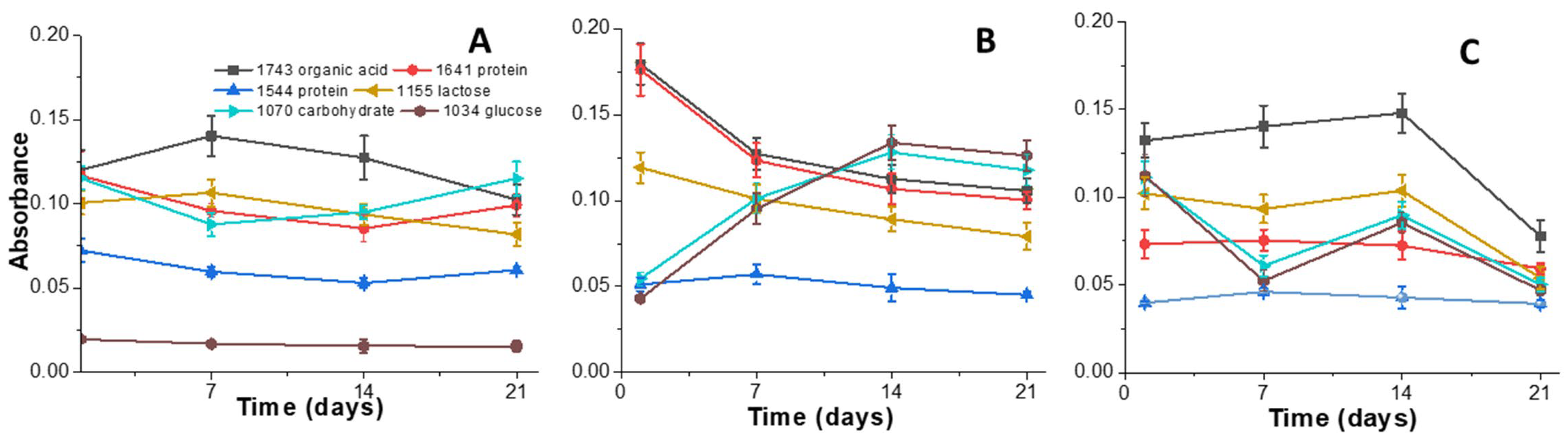
Figure 8 shows the ATR-FTIR absorbance values of the most important compounds found in goat milk fermented with the three selected strains at different storage times. The absorption of bands localized at 1743 cm−1 (fatty acids), 1641 and 1544 cm−1 (proteins), 1155 cm−1 (lactose), 1070 cm−1 (carbohydrate) and 1034 cm−1 (glucose) were analyzed. The changes observed were dependent on the strain.
The fatty acids decreased in milk fermented by the three strains, being CB6 and CB12, which produced the most relevant modifications after the 7th day and 14th day of refrigerated storage. The most significant changes during storage were observed in milk fermented with strain CB6, where a decrease in the intensity of the bands corresponding to proteins and organic acids was recorded, accompanied by an increase in the intensity of the signal corresponding to carbohydrates with increasing storage time. Notably, milk fermented with the CB2 strain, and to a lesser extent with CB12, did not show significant changes in the main components analyzed, indicating good preservation under refrigeration storage for 21 days. In this regard, previous studies monitored the main components of milk fermented with strains of L. lactis and L. mesenteroides during 21 days of refrigerated storage at 4–6 °C. The authors reported an increase in the levels of lactic acid and esters during refrigerated storage [41].

4. Conclusions

This study aims to study the caseinolytic activities of selected LAB strains with probiotic potential, characterize fermented goat milk in terms of LAB growth, pH, titratable acidity, protein concentration, and free amino acids during refrigerated storage, and monitor the changes produced by lactic fermentation in goat milk by FTIR spectroscopy.
Our results showed that the proteolytic activity of the strains was highly strain-dependent, with L. plantarum CB2 exhibiting the strongest caseinolytic activity. This strain achieved significant hydrolysis of milk proteins, reflected by an 88% reduction in initial amino acid content and a sevenfold increase in free amino acids. When casein was incubated with LAB strains, a notable difference was observed in the amide band region at 1650 cm−1 with a decrease in band intensity due to protein hydrolysis. In addition, differences in the secondary structure of caseins were observed after incubation.
Selected LAB strains were capable of growing in goat milk, producing notable acidification and lactic acid production after 24 h. FTIR was used to monitor the main components of goat milk during lactic fermentation, identifying the characteristic bands of proteins, carbohydrates, lactic acid, and fatty acids. Analysis of the spectra showed lactose consumption accompanied by lactic acid production, as well as decreased amide I and amide II after fermentation. After 21 days of refrigerated storage, the viability of the strains and the stability of the product were maintained.
Overall, these findings highlight the potential of lactic fermentation with strains selected for their probiotic potential as an approach to producing value-added goat milk products.The usefulness of FTIR spectroscopy was also demonstrated for characterizing complex systems such as goat milk and for monitoring biochemical changes during fermentation and storage.

Supplementary Materials

The following supporting information can be downloaded at https://www.mdpi.com/article/10.3390/fermentation11120699/s1, Figure S1: Qualitative determination of proteolytic activity of LAB in Skim Milk Agar. Table S1: Microbial growth, pH, lactic acid, and free amino acids in goat milk with and without glucose fermented by LAB.

Author Contributions

Conceptualization, A.Y.B. and A.E.L.; methodology, J.J.C.P.; formal analysis, A.Y.B. and A.E.L.; investigation, J.J.C.P.; data curation, A.Y.B. and A.E.L.; writing—original draft preparation, A.E.L. and J.J.C.P.; writing—review and editing, A.Y.B.; supervision, A.Y.B. and A.E.L.; project administration, A.Y.B.; funding acquisition, A.Y.B. and A.E.L. All authors have read and agreed to the published version of the manuscript.

Funding

This work was supported by grants from Consejo de Investigaciones Científicas y Técnicas (23/A297, 23/c147 and 23/A329).

Institutional Review Board Statement

Not applicable.

Informed Consent Statement

Not applicable.

Data Availability Statement

The original contributions presented in this study are included in the article/Supplementary Materials. Further inquiries can be directed to the corresponding author.

Conflicts of Interest

The authors declare no conflict of interest.

References

  1. Ter, Z.; Chang, L.; Babji, A.; Zaini, N.; Fazry, S.; Sarbini, S.; Peterbauer, C.; Lim, S. A review on proteolytic fermentation of dietary protein using lactic acid bacteria for the development of novel proteolytically fermented foods. Int. J. Food Sci. Technol. 2024, 59, 1213–1236. [Google Scholar] [CrossRef]
  2. Mahmoudi, S.; Barrocas, C.; Manhita, A.; Boutoumi, H.; Charif, R. Formulation of goat’s milk yogurt with fig powder: Aromatic profile, physicochemical and microbiological characteristics. Food Sci. Technol. Int. 2021, 202, 712–725. [Google Scholar] [CrossRef] [PubMed]
  3. Martín, A.; Janer, C.; Peláez, C.; Requena, T. Development of a fermented goat’s milk containing probiotic bacteria. Int. Dairy J. 2003, 13, 827–833. [Google Scholar] [CrossRef]
  4. Chen, Q.; Yin, Q.; Xie, Q.; Etareri, S.; Zhao, X.; Li, B.; Huo, G. Elucidating the physicochemical properties and surface composition of goat milk-based infant formula powders. Food Chem. 2022, 377, 131936. [Google Scholar] [CrossRef] [PubMed]
  5. Roy, D.; Ye, A.; Moughan, P.J.; Singh, H. Composition, structure, and digestive dynamics of milk from different species—A review. Front. Nutr. 2020, 7, 577759. [Google Scholar] [CrossRef]
  6. Duan, C.; Ma, L.; Cai, L.; Li, X.; Ma, F.; Chen, J.; Li, D. Comparison of allergenicity among cow, goat, and horse milks using a murine model of atopy. Food Funct. 2021, 12, 5417–5428. [Google Scholar] [CrossRef]
  7. Dhasmana, S.; Das, S.; Shrivastava, S. Potential nutraceuticals from the casein fraction of goat’s milk. J. Food Biochem. 2021, 46, e13982. [Google Scholar] [CrossRef] [PubMed]
  8. Mituniewicz–Małek, A.; Zielińska, D.; Ziarno, M. Probiotic monocultures in fermented goat milk beverages–sensory quality of final product. Int. J. Dairy Technol. 2019, 72, 240–247. [Google Scholar] [CrossRef]
  9. Muelas, R.; de Olives, A.M.; Romero, G.; Díaz, J.R.; Sayas-Barberá, M.E.; Sendra, E. Evaluation of individual lactic acid bacteria for the fermentation of goat milk: Quality parameters. LWT 2018, 98, 506–514. [Google Scholar] [CrossRef]
  10. Huang, Z.; Huang, L.; Xing, G.; Xu, X.; Tu, C.; Dong, M. Effect of co-fermentation with lactic acid bacteria and K. marxianus on physicochemical and sensory properties of goat milk. Foods 2020, 9, 299. [Google Scholar] [CrossRef]
  11. Padilla, J.; Zambrano, J. Structure, properties and genetic of milk caseins: A review. Rev. Med. Vet. Zoot. 2021, 16, 62–95. [Google Scholar]
  12. De Kruif, C.; Holt, C. Casein micelle structure, functions and interactions. In Advances Dairy Chemistry—Proteins; Fox, P.F., McSweeney, P.L.H., Eds.; Springer: Boston, MA, USA, 2003; Volume 1, pp. 233–276. [Google Scholar]
  13. Shu, G.; Huang, J.; Chen, L.; Lei, N.; Chen, H. Characterization of goat milk hydrolyzed by cell envelope proteinases from Lactobacillus plantarum LP69: Proteolytic system optimization, bioactivity, and storage stability evaluation. Molecules 2018, 23, 1317. [Google Scholar] [CrossRef]
  14. Dan, T.; Chen, H.; Li, T.; Tian, J.; Ren, W.; Zhang, H.; Sun, T. Influence of Lactobacillus plantarum P-8 on fermented milk flavor and storage stability. Front. Microbiol. 2019, 9, 3133–3147. [Google Scholar] [CrossRef]
  15. Yulyana, A.; Rohman, A.; Arifah, M.F.; Windarsih, A.; Nisa, K. Authentication analysis of goat milk from cow milk using Fourier Transform Infrared spectroscopy and chemometrics. Food Res. 2024, 8, 459–466. [Google Scholar] [CrossRef]
  16. Papadopoulou, O.S.; Argyri, A.A.; Kounani, V.; Tassou, C.C.; Chorianopoulos, N. Use of Fourier Transform Infrared Spectroscopy for Monitoring the Shelf Life and Safety of Yogurts Supplemented with a Lactobacillus plantarum Strain with Probiotic Potential. Front. Microbiol. 2021, 12, 678356. [Google Scholar] [CrossRef] [PubMed]
  17. Sesín, A.A.; Paz, J.J.C.; Ledesma, A.E.; Taranto, M.P.; Bustos, A.Y. Probiotic characterization of lactic acid bacteria from artisanal goat cheese for functional dairy products development. Braz. J. Food Technol. 2023, 26, e2023024. [Google Scholar] [CrossRef]
  18. Matti, A.; Utami, T.; Hidayat, C.; Rahayu, E.S. Isolation, Screening, and Identification of Proteolytic Lactic Acid Bacteria from Indigenous Chao Product. J. Aquat. Food Prod. Technol. 2019, 28, 781–793. [Google Scholar] [CrossRef]
  19. Bradford, M. A rapid and sensitive method for the quantitation of microgram quantities of protein utilizing the principle of protein-dye binding. Anal. Biochem. 1976, 72, 248–254. [Google Scholar] [CrossRef]
  20. Cruz-Casas, D.E.; Aguilar, C.N.; Ascacio-Valdés, J.A.; Rodríguez-Herrera, R.; Chávez-González, M.L.; Flores-Gallegos, A.C. Bioactive protein hydrolysates obtained from amaranth by fermentation with lactic acid bacteria and Bacillus species. Heliyon 2023, 9, e13491. [Google Scholar] [CrossRef]
  21. Biadata, A.; Szablewski, T.; Lasik, M.; Cegielska, R. Antimicrobial activity of goat’s milk fermented by single strain of kefir grain microflora. Eur. Res. Technol. 2020, 246, 1231–1239. [Google Scholar] [CrossRef]
  22. Vukotić, G.; Strahinić, I.; Begović, J.; Lukić, J.; Kojić, M.; Fira, D. Survey on proteolytic activity and diversity of proteinase genes in mesophilic lactobacilli. Microbiology 2016, 85, 33–41. [Google Scholar] [CrossRef]
  23. Ren, X.; Pan, D.; Wu, Z.; Zeng, X.; Sun, Y.; Cao, J.; Guo, Y. Limited hydrolysis of β-casein by cell wall proteinase and its effect on hydrolysates’s conformational and structural properties. Int. J. Food Sci. Technol. 2015, 50, 55–61. [Google Scholar] [CrossRef]
  24. Vorob’ev, M.M.; Açıkgöz, B.D.; Güler, G.; Golovanov, A.V.; Sinitsyna, O.V. Proteolysis of Micellar Casein by Trypsin: Secondary Structure Characterization and Kinetic Modeling at Different Enzyme Concentrations. Int. J. Mol. Sci. 2023, 24, 3874. [Google Scholar] [CrossRef]
  25. Nayik, G.A.; Jagdale, Y.D.; Gaikwad, S.A.; Devkatte, A.N.; Dar, A.H.; Ansari, M.J. Nutritional Profile, Processing and Potential Products: A Comparative Review of Goat Milk. Dairy 2022, 3, 622–647. [Google Scholar] [CrossRef]
  26. Izquierdo, J.; Amil, F.; Zazzu, S.; Sánchez, R.; Fuentes, C.; Rodríguez, M. Proteomic análisis of goat milk kéfir: Profiling the fermentation-time dependent protein digestion and identification of potential peptides with biological activity. Food Chem. 2019, 295, 456–465. [Google Scholar] [CrossRef]
  27. Mangia, N.; Carta, S.; Murgia, M.; Montanari, L.; Nudda, A. Fermentend milk produced with goat milk enriched with PUFA Omega-3 by supplementation of diet with extruded linseed. Fermentation 2023, 9, 522. [Google Scholar] [CrossRef]
  28. Purwaningsih, P.; Ashidiqie, M.W.; Arkan, A.; Djafar, T.F.; Rahayu, E.S.; Suroto, D.A. Development of Fermented Etawa Goat Milk Containing Gamma-Aminobutyric Acid (GABA) by Indigenous Lactiplantibacillus plantarum subsp. plantarum T-3. Trends Sci. 2025, 22, 9067. [Google Scholar] [CrossRef]
  29. Yang, J.; Lu, J.; Zhu, Q.; Tao, Y.; Zhu, Q.; Guo, C.; Fang, Y.; Chen, L.; Koyande, A.K.; Wang, S.; et al. Isolation and characterization of a novel Lactobacillus plantarum MMB-07 from traditional Suanyu for Acanthogobius hasta fermentation. J. Biosci. Bioeng. 2021, 132, 161–166. [Google Scholar] [CrossRef]
  30. Albayrak, C.; Duran, M. Isolation and characterization of aroma producing lactic acid bacteria from artisanal White cheese for multifunctional properties. LWT 2021, 150, 112053. [Google Scholar] [CrossRef]
  31. Mohammed, S.; Con, A. Isolation and characterization of potential probiotic lactic acid bacteria from traditional cheese. LWT 2021, 152, 112319. [Google Scholar] [CrossRef]
  32. Valdiviezo, J.; Arana, N.; Vega, E.; Ruiz, L.; Tamariz, C.; Olivera, P.; Rosales, M.; Espinoza, L. Technological potential native lactic acid bacteria isolated from Swiss-type artisanal cheese (Ancahs, Peru) for their application in food. Front. Sustain. Food Syst. 2023, 7, 1212229. [Google Scholar]
  33. Dimitriou, L.; Koureas, M.; Pappas, C.; Manouras, A.; Kantas, D.; Malissiova, E. Rapid Classification of Cow, Goat, and Sheep Milk Using ATR-FTIR and Multivariate Analysis. Sci 2025, 7, 87. [Google Scholar] [CrossRef]
  34. Widyastuti, R.; Febrisiantosa, A. The Role of Lactic Acid Bacteria in Milk Fermentation. Food Nutr. Sci. 2014, 5, 435–442. [Google Scholar] [CrossRef]
  35. Kök Taş, T.; Duran, F.E.; Özdemir, N.; Çubuk Demiralay, E. Functional Component Production Capabilities in Milk Fermentation of Some Featured Lactic Acid Bacteria Species for Use in Different Food Processes. Fermentation 2025, 11, 165. [Google Scholar] [CrossRef]
  36. Greulich, O.; Duedahl-Olesen, L.; Mikkelsen, M.S.; Smedsgaard, J.; Bang-Berthelsen, C.H. Fourier Transform Infrared Spectroscopy Tracking of Fermentation of Oat and Pea Bases for Yoghurt-Type Products. Fermentation 2024, 10, 189. [Google Scholar] [CrossRef]
  37. Abarquero, D.; Renes, E.; Combarros, P.; Fresno, J.; Tornadijo, M. Evaluation of technological properties and selection of wild lactic acid bacteria for starter culture development. LWT 2022, 171, 114121. [Google Scholar] [CrossRef]
  38. Zarour, K.; Benmechernene, Z.; Hadadji, M.; Moussa, B.; Henni, D.; Kihal, M. Bioprospecting of Leuconostoc mesenteroides strains isolated from Algerian raw camel and goat milk for technological properties useful as adjunct starters. Afr. J. Microbiol. Res. 2012, 6, 3192–3201. [Google Scholar]
  39. Gobbetti, M.; Lanciotti, R.; De Angelis, M.; Corbo, M.R.; Massini, R.; Fox, P.F. Study of the effects of temperature, pH and NaCl on the peptidase activities of non-starter lactic acid bacteria (NSLAB) by quadratic response surface methodology. Int. Dairy J. 1999, 9, 865–875. [Google Scholar] [CrossRef]
  40. Zotta, T.; Ricciardi, A.; Parente, E. Enzymatic activities of lactic acid bacteria isolated from Cornetto di Matera sourdoughs. Int. J. Food. Microbiol. 2007, 115, 165–172. [Google Scholar] [CrossRef] [PubMed]
  41. Păucean, A.; Vodnar, D.; Socaciu, C.; Man, S. Monitoring the Evolution of Major Chemical Compound in Dairy Products During Shelf-Life by FTIR. Bull. UASVM Food Sci. Technol. 2014, 71, 2. [Google Scholar] [CrossRef]
Figure 1. Caseinolytical activity at 0, 16, and 24 h of incubation. (A) Total protein concentration, (B) Free amino acidconcentration, (C) FTIR spectra of casein hydrolysis by CB2 strain, (D) changes in absorption of amide I band (1650 cm−1) characteristic of protein. Error bars represent the standard deviation of three means (n = 3). In (A) the strains selected for further studies are indicated with *.
Fermentation 11 00699 g001
Figure 2. FTIR difference spectra obtained from the difference between the absorbance differences between the spectra at the end and the beginning of fermentation. (A) CB2, CB4, CB5, CB6, CB7, CB10, CB11, CB12, CB14, CB15, and CB17 strains, (B) CB8, CB9, CB13, and CB16 strains.
Fermentation 11 00699 g002
Figure 3. Fermentation of goat milk by LAB strains. (A) Microbial growth, (B) pH, (C) titratable acidity, and (D) free amino acids for 24 h-fermentation of LAB strains in goat milk supplemented with 1% (w/v) glucose. Error bars represent the standard deviation of three means (n = 3). Different letters indicate statistically significant differences between strains.
Fermentation 11 00699 g003
Figure 4. FTIR absorbance spectra of goat milk fermented with L. plantarum CB2 at different times in the 3600–2700 cm−1 and 1800–600 cm−1 regions.
Fermentation 11 00699 g004
Figure 5. Structural changes in lactic acid, carbohydrates, and proteins during milk fermentation with LAB. (A) Spectra of glucose and lactic acid standards and goat milk fermented with L. plantarum CB2 at 0 and 24 h of incubation, (B) Absorbance of bands at 1745 cm−1 (corresponding to lactic acid production), (C) Absorbance of bands at 1070 and 1030 cm−1 (corresponding to carbohydrates), (D) Absorbance of bands at 1640 cm−1 of amide I bands (corresponding to proteins).
Fermentation 11 00699 g005
Figure 6. Goat milk fermented for 24 h by L. plantarum CB2, L. mesenteroides CB6, and L. parabuchneri CB12 strains. (A) microbial growth, (B) concentration of free amino acids, (C) difference between initial and final pH, (D) difference between initial and final titrable acidity. Different letters indicate statistically significant differences between strains.
Fermentation 11 00699 g006
Figure 7. Refrigerated storage of goat milk fermented by L. plantarum CB2 (black line), L. mesenteroides CB6 (red line), and L. parabuchneri (blue line). (A) microbial growth, (B) free amino acids concentration, (C) pH values, and (D) lactic acid concentration. Different letters indicate statistically significant differences between strains.
Fermentation 11 00699 g007
Figure 8. ART-FTIR absorbance of the most important compounds from goat milk fermented at different storage times. (A) L. plantarum CB2, (B) L. mesenteroides CB6, and (C) L. parabuchneri CB12.
Fermentation 11 00699 g008
Disclaimer/Publisher’s Note: The statements, opinions and data contained in all publications are solely those of the individual author(s) and contributor(s) and not of MDPI and/or the editor(s). MDPI and/or the editor(s) disclaim responsibility for any injury to people or property resulting from any ideas, methods, instructions or products referred to in the content.