Article

Intraspecific Diversity of Saccharomyces cerevisiae Associated with Traditional Fermented Beverages in Chiapas, Mexico


by
Maritza Tawas-Penagos
1,
Ruth Percino-Daniel
2,
José Alberto Narváez-Zapata
3,
René Quezada-Romero
4,
Anne Christine Gschaedler-Mathis
4 and
Alma Gabriela Verdugo-Valdez
5,*
1
Programa de Doctorado en Ciencias en Biodiversidad y Conservación de Ecosistemas Tropicales, Instituto de Ciencias Biológicas, Universidad de Ciencias y Artes de Chiapas, Libramiento Norte Poniente 1150, Colonia Lajas Maciel, Tuxtla Gutiérrez C.P. 29039, Mexico
2
Instituto de Ciencias Biológicas, Universidad de Ciencias y Artes de Chiapas, Lajas Maciel, Tuxtla Gutiérrez C.P. 29039, Mexico
3
Centro de Biotecnología Genómica, Instituto Politécnico Nacional, Boulevard del Maestro s/n esq. Elías Piñas, Col. Narcizo Mendoza, Cd. Reinosa, Reynosa C.P. 88710, Mexico
4
Laboratorio de Biotecnología Industrial, Centro de Investigación y Asistencia en Tecnología y Diseño del Estado de Jalisco, Camino Arenero 1227, El Bajío, Zapopan C.P. 45017, Mexico
5
Laboratorio de Biotecnología, Instituto de Ciencias Biológicas, Universidad de Ciencias y Artes de Chiapas, Libramiento Norte Poniente 1250, Colonia Lajas Maciel, Tuxtla Gutiérrez C.P. 29039, Mexico
*
Author to whom correspondence should be addressed.
Fermentation 2025, 11(12), 697; https://doi.org/10.3390/fermentation11120697
Submission received: 6 November 2025 / Revised: 29 November 2025 / Accepted: 1 December 2025 / Published: 16 December 2025

Abstract

Traditional fermented beverages from Chiapas, Mexico, represent an important source of microbial diversity, particularly of Saccharomyces cerevisiae. In native strains isolated from traditional fermented beverages, Saccharomyces cerevisiae has been observed to display distinct morphological and physiological traits; therefore, the aim of this study was to evaluate the population growth and the tolerance of twenty isolates to different stress factors such as temperature, osmotic pressure, and high ethanol concentrations, as well as the genetic variability through interdelta analysis, and to determine whether these physiological and molecular characteristics are associated with the type of beverage and the locality of origin. Differences were observed in tolerance to various factors, including high ethanol concentrations and elevated temperatures, as well as in the production of volatile compounds, with Taberna and Mezcal isolates showing notable performance. These isolates were able to withstand temperatures ranging from 43 to 45 °C and ethanol concentrations of up to 17% in Mezcal and Pox isolates, and 15% in Taberna isolates. High concentrations of isoamyl acetate and higher alcohols such as isoamyl alcohol were detected. In addition, the genetic variability of the isolates was evaluated, and its relationship with the type of beverage and the geographical origin of production was explored, including isolates obtained from Taberna, Mezcal, Pox, and Chicha de Chilacayote. Intraspecific variability was assessed through a retrotransposon-based analysis of the interdelta region using different primer combinations (δ1-δ2, δ12-δ21, and δ12-δ2). The generated banding patterns were analyzed using the Unweighted Pair Group Method with Arithmetic Mean (UPGMA), which enabled the identification of molecular variability patterns among the isolates. Furthermore, a UPGMA analysis was performed using physiological and compound production data, revealing a relationship between these characteristics and the geographical origin of the isolates. The results revealed a high degree of intraspecific variability, which was associated with both the type of beverage and the locality of origin of the isolates.

1. Introduction

Traditional fermented beverages are an essential component of Chiapas, Mexico’s cultural heritage, characterized by unique organoleptic properties derived from diverse raw materials and local production practices. Among these beverages, Taberna produced from the sap of the Coyol palm (Acrocomia aculeata), Chicha de Chilacayote, made from the white gourd or Chilacayote, Chicha de Maíz, and Pox, prepared from wheat bran, stand out as representative examples. Among the key factors influencing these sensory attributes, microorganisms play a central role, as their ability to metabolize sugars and other compounds directly determines both the fermentation process and the quality of the final product [1,2,3]. Previous studies on spontaneous fermentations of beverages such as tequila, mezcal, and wine have documented the presence of several yeast genera, including Candida, Hanseniaspora, Kluyveromyces, Pichia, and, most notably, Saccharomyces, with Saccharomyces cerevisiae consistently dominating these processes [1,2,3]. This yeast is widely recognized as a model eukaryotic microorganism due to its relevance in food biotechnology, remarkable adaptability, and ease of genetic manipulation. Morphological, physiological, and molecular differences among strains of the same species have been reported, indicating that phenotypic variability is closely associated with molecular diversity. The importance of studying the variability of native Saccharomyces cerevisiae strains lies in their ability to adapt to specific fermentative conditions and in their contribution to the functional and chemical diversity of traditional beverages, as well as in their value as a genetic resource with potential biotechnological applications [4,5].
Since the quality and yield of fermented products largely depend on the activity and persistence of yeast populations, fermentation-based industries increasingly employ molecular tools to characterize and better exploit yeast diversity. Techniques such as Random Amplified Polymorphic DNA (RAPD), Pulsed-Field Gel Electrophoresis (PFGE), mitochondrial DNA Restriction Fragment Length Polymorphism (mtDNA-RFLP), microsatellite analysis, and PCR-based typing of interdelta sequences from Ty retrotransposons have proven highly effective in discriminating variability at both interspecific and intraspecific levels. These approaches provide a deeper understanding of yeast diversity in traditional fermentation systems. Other methods for determining intraspecific variability include massive sequencing (Next-Generation Sequencing, NGS), which enables the analysis of entire genomes or multiple genes simultaneously, thereby detecting variations that cannot be observed with PCR- or electrophoresis-based techniques. However, interdelta analysis offers significant methodological advantages for the differentiation of Saccharomyces cerevisiae strains. This technique employs specific primers that amplify regions flanked by δ sequences of Ty retrotransposons, generating highly reproducible banding patterns with strong discriminatory power. In contrast, methods such as RAPD show limitations due to their low reproducibility, while techniques like PFGE and mtDNA-RFLP require extensive procedures, large amounts of DNA, and specialized equipment. Although next-generation sequencing (NGS) provides high-resolution genomic information, its high cost and technical complexity make it impractical for routine studies of intraspecific diversity. Taken together, these characteristics position interdelta analysis as an efficient, cost-effective, and reliable alternative for evaluating genetic variability in Saccharomyces cerevisiae populations [3,5,6,7].
Several studies have extensively investigated the intraspecific variability of Saccharomyces cerevisiae in industrial fermentations of wine, beer, and other foods, employing molecular tools such as interdelta analysis, microsatellite markers, and, more recently, genomic approaches. These investigations have shown that Saccharomyces cerevisiae populations exhibit a marked genetic structure associated with technological use, geographical origin, and specific fermentation conditions, providing valuable insights into processes of domestication and adaptation. However, most of this work has focused on commercial strains or those linked to enological industries, whereas native populations present in traditional fermented beverages, particularly in Mesoamerican regions, remain poorly characterized. Moreover, few studies have jointly evaluated genetic variability, stress tolerance, and the production of volatile compounds, despite the relevance of these traits for fermentative performance and the sensory quality of beverages. In this context, there is a need to deepen our understanding of how the genetic diversity of native Saccharomyces cerevisiae isolates relates to their functional characteristics, the type of beverage, and their geographical origin [8,9]. Therefore, the present study aims to evaluate the physiological characteristics of the isolates, their adaptation to different environmental conditions, and their resistance to various stress factors, to determine the relationship between the intraspecific variability of Saccharomyces cerevisiae isolates obtained from traditional fermented beverages of the state of Chiapas, assessed through retrotransposon-based interdelta analysis their physiological traits, and their origin, with the ultimate goal of elucidating the factors that contribute to their genetic and functional diversity.

2. Materials and Methods

2.1. Strains and Culture Conditions

The yeast strains used in this study were obtained from two reference collections: the yeast collection of the Biotecnology Laboratory at the Instituto de Ciencias Biologicas, Universidad de Ciencias y Artes de Chiapas (UNICACH), and the yeast collection of the Industrial Laboratory at the Centro de Investigación y Asistencia en Tecnología y Diseño del Estado de Jalisco (CIATEJ) (México). All strains were preserved in glycerol stocks at −80 °C. The strains T0L1 and T0L2, isolated from the traditional fermented beverage Pox, were previously identified as Zygosaccharomyces bailii. The isolates DA1, OAX, and MC4 are mezcal strains used as reference strains. Another strain used as reference is Ethanol Red®, a standard in biofuels production (Table 1).

2.2. Macroscopic Characterization of the S. cerevisiae Isolates

The S. cerevisiae isolates were cultured on WL Nutrient agar plates (Alpha Biosciences, Baltimore, MD, USA). Each isolate was inoculated at the center of the plate and incubated at 27 °C for four weeks. The morphological characteristics of the colonies were observed and recorded according to the established criteria [10].

2.3. Physiological Characterization of S. cerevisiae Isolated

All S. cerevisiae isolates were tested for thermal and osmotic sensitivity following the previously described methodology [11,12]. Thermotolerance was assessed on YPD agar plates inoculated with active cells from a 24–48 h YPD culture of each isolate. The inoculated plates were sealed with plastic strips to prevent water evaporation and incubated at 37, 39, 41, 45, and 47 °C for one week [10,11].
Tolerance to high osmotic pressures was evaluated using three different culture media. The ability to grow in high sugar concentrations was tested on agar plates containing 50% glucose (20 g agar, 20 g casein peptone, 10 g yeast extract, 500 g glucose, 1000 mL distilled water) and 60% glucose (20 g agar, 20 g casein peptone, 10 g yeast extract, 600 g glucose, 1000 mL distilled water). After inoculation, the plates were sealed with plastic strips to prevent water loss. Tolerance to sodium chloride and glucose was assessed in tubes containing 5 mL of a medium composed of 10% NaCl, 5% glucose, 0.67 g YNB (BD-Difco, Beckton Dickinson, Sparks, MD, USA), and 100 mL distilled water. All three media were inoculated with active cells from a 48 YM culture (3 g yeast extract, 3 g malt extract, 5 g peptone, 10 g glucose, 20 g agar. and 1 L distilled water) and incubated at 27 °C for 7 days [8]. The ethanol tolerance of all S. cerevisiae isolates was evaluated on YM agar plates supplemented with 8% glucose, according to the methodology described [5]. Warm absolute ethanol, ranging from 2% to 15% (v/v) in 1% increments, was added to the sterile, warm medium at 45–50 °C immediately before pouring it into Petri dishes. Plates were inoculated with active cells from 48 h YM cultures of each isolate and incubated at 27 °C for 10 days. Growth was evaluated daily [10].

2.4. Evaluation of the Population Growth of Saccharomyces cerevisiae Isolates

An appropriate volume of culture from each isolate, corresponding to an inoculum of 1 × 10⁶ cells/mL, was transferred into 250 mL Erlenmeyer flasks containing 50 mL of YPD broth. The flasks were maintained under constant agitation at a temperature of 29 °C. Samples were collected every 12 h, transferred to a microplate, and analyzed using a Microplate Spectrophotometer X-Mark (Bio-Rad, Hercules, CA, USA) at an absorbance of 600 nm. Data analysis was performed using Microplate Manager Software 6 [12].

2.5. Determination of Volatile Compounds

From each fermentation sample, 2 mL were placed in clean 20 mL vials sealed with silicone/PTFE (polytetrafluoroethylene, Teflon) septa and aluminum caps (20 mm). The samples were stored frozen until subsequent analysis. Compound injection was performed using a Headspace Sampler model 7697A (Agilent Technologies, Santa Clara, CA, USA) coupled to a Gas Chromatograph GC System model 789,013 (Agilent Technologies, USA). The vials were placed in the Headspace carousel under the following conditions: vial temperature at 80 °C, loop temperature at 110 °C, transfer line temperature at 115 °C, vial equilibration time of 5 min, pressurization time of 0.2 min, loop filling time of 0.2 min, loop equilibration time of 0.5 min, injection time of 1 min, and an injection volume of 1 mL. The HP6890 GC coupled to an FID was operated with the following parameters: the oven was held at 55 °C for 5 min, followed by two temperature ramps—5 °C/min to 160 °C and then 25 °C/min to 220 °C—holding the final temperature for 8 min. A 60 m × 0.32 mm × 0.25 µm HP Innowax column was used. Both the injector and detector were maintained at 250 °C. The total analysis time was 45 min, including headspace extraction and GC run. Chromatographic peak integration was performed using GSCHBI (offline) software (Version A.03.02.024) [13].

2.6. Determination of Organic Acids by HPLC

Each sample was diluted 1:10 and filtered through a 0.45 µm filter. One milliliter of each dilution was placed into clean 2 mL vials sealed with silicone/PTFE (Teflon) septa (20 mm). The analysis was carried out using an HPLC system equipped with an Organic Acid Analysis Column Aminex HPX-87H Ion Exclusion Column (300 mm × 7.8 mm, 9 μm) (Bio-Rad, USA). The column was maintained at 50 °C, and 5 mM H2SO4 was used as the mobile phase at a flow rate of 0.5 mL/min for 30 min. Organic acids were quantified using a UV-Vis detector (Santa Clara, CA, USA) set at 210 nm [13].

2.7. Molecular Analysis of Saccharomyces cerevisiae Isolates

Interdelta Sequence-Based Strain Characterization

Total DNA extraction was performed using a DNA Clean and Concentrator Kit (Zymo Research, Irvine, CA, USA) according to the manufacturer’s protocol. Subsequently, DNA quantification was performed using a spectrophotometer (Eppendorf BioSpectrometer basic, Hamburg, Germany). Interdelta PCR was performed using four primers: δ1 (5′-CAAAATTCACCTATATCT-3′), δ2 (5′-GTGGATTTTTATTCCAAC-3′), δ12 (5′-TCAACAATGGAATCCCAAC-3′), and δ21 (5′-CATCTTAACACCGTATATGA-3′). Primers were used in the following combinations: δ1–δ2, δ12–δ2, and δ12–δ21 [14,15]. Each PCR reaction (25 µL) contained approximately 10 ng of template DNA, 1.0 U of Taq polymerase, Taq buffer (10 mM Tris-HCl, 50 mM KCl, 0.08% Nonidet P-40), 20 pmol of each primer, 0.2 mM of each dNTP, and 2.5 mM MgCl2. The thermal cycling program consisted of an initial denaturation at 95 °C for 4 min, followed by 35 cycles of 95 °C for 30 s, 52 °C for 30 s, and 72 °C for 90 s, with a final extension at 72 °C for 10 min. Amplification products were resolved by electrophoresis on 2% (w/v) agarose gels at 90 V for 2.5 h in 0.5× TBE buffer. Samples were prepared with loading buffer containing 30% (w/v) glycerol, 0.25% bromophenol blue, and 20 mM EDTA. A 100 bp molecular weight marker was used as reference. After staining with ethidium bromide (0.5 µg mL−1), bands were visualized under a UV transilluminator [14].

2.8. Statistical Analysis

The relationship between physiological characteristics, beverage type, and geographical origin was determined through a UPGMA analysis. Banding profiles obtained from interdelta PCR were analyzed by UPGMA clustering using Jaccard’s coefficient. Likewise, the relationship between physiological and molecular characteristics was established through a UPGMA analysis [16].

3. Results

3.1. Macroscopic Characterization of the S. cerevisiae Isolates

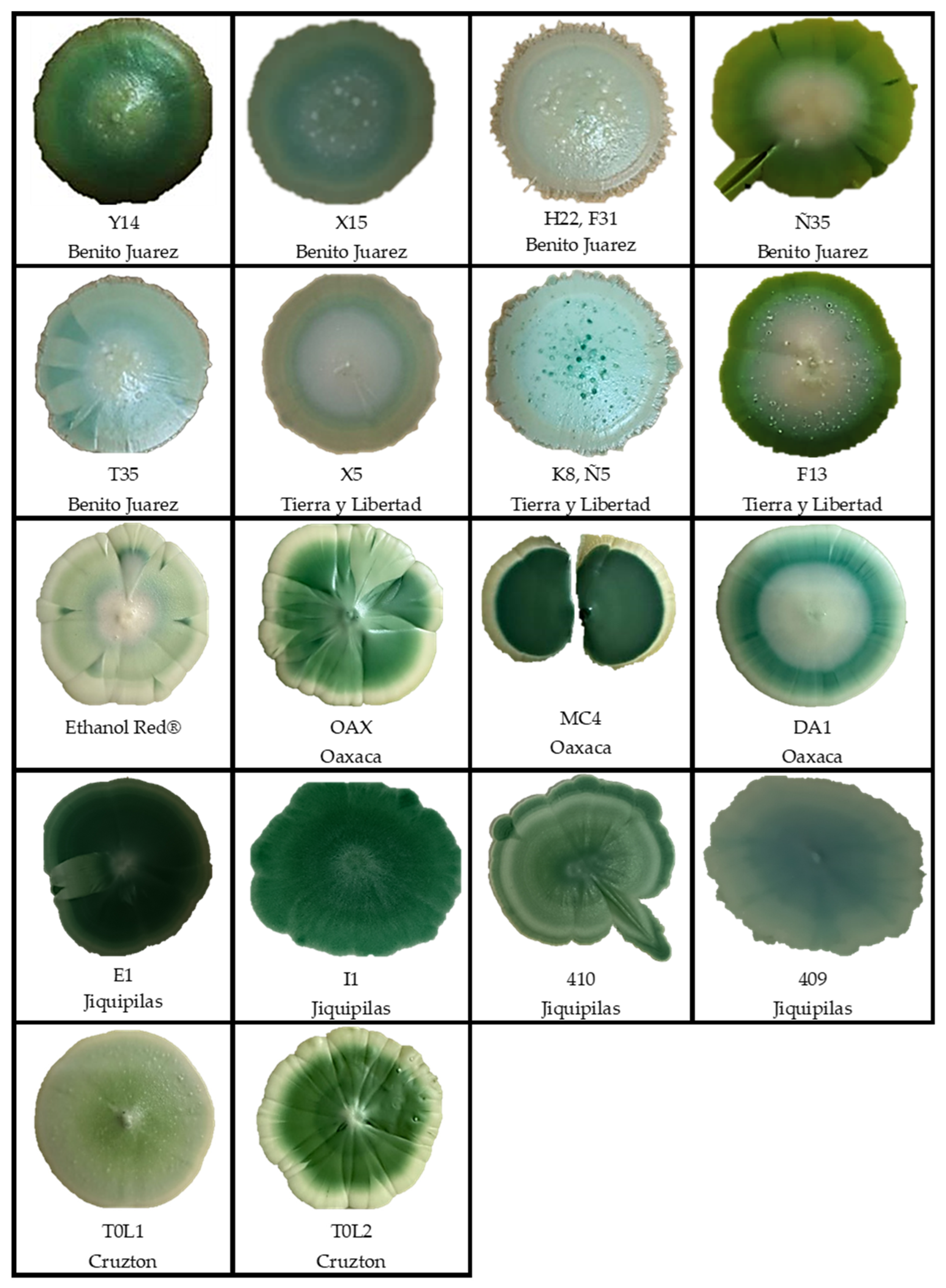
The twenty isolates displayed phenotypic variability in colony morphology, allowing classification into 18 distinct morphotypes (Table 2). Three morphotypes were observed in isolates from Tierra y Libertad, five from Benito Juárez, four from Oaxaca, four from Jiquipilas, and two from Zygosaccharomyces bailii. Morphotypes were unique to each locality and beverage, with no overlap detected (Figure 1).

3.2. Physiological Characterization of S. cerevisiae Isolates

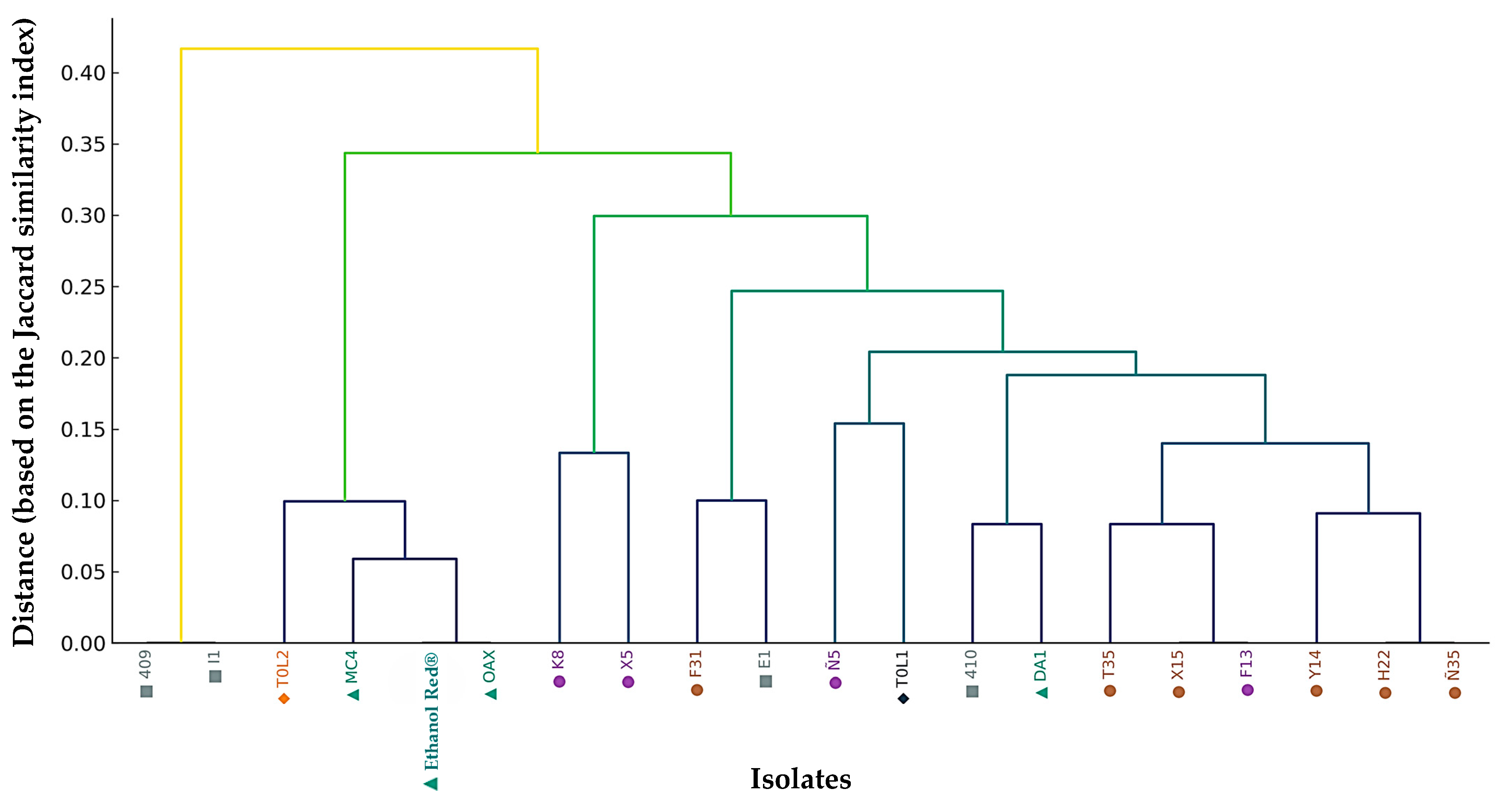
According to the observed physiological response, isolates K8 and Ñ5 from the Taberna beverage collected in the locality of Tierra y Libertad exhibited greater resistance to high temperatures. Likewise, the isolates obtained from Mezcal (reference strains) and isolate T0L2, belonging to Zygosaccharomyces bailii, showed higher resistance to elevated ethanol concentrations (Table 3). Based on the evaluated physiological characteristics, the UPGMA analysis revealed that the isolates cluster primarily according to the type of beverage (Figure 2).

3.3. Population Growth of Saccharomyces cerevisiae Isolates

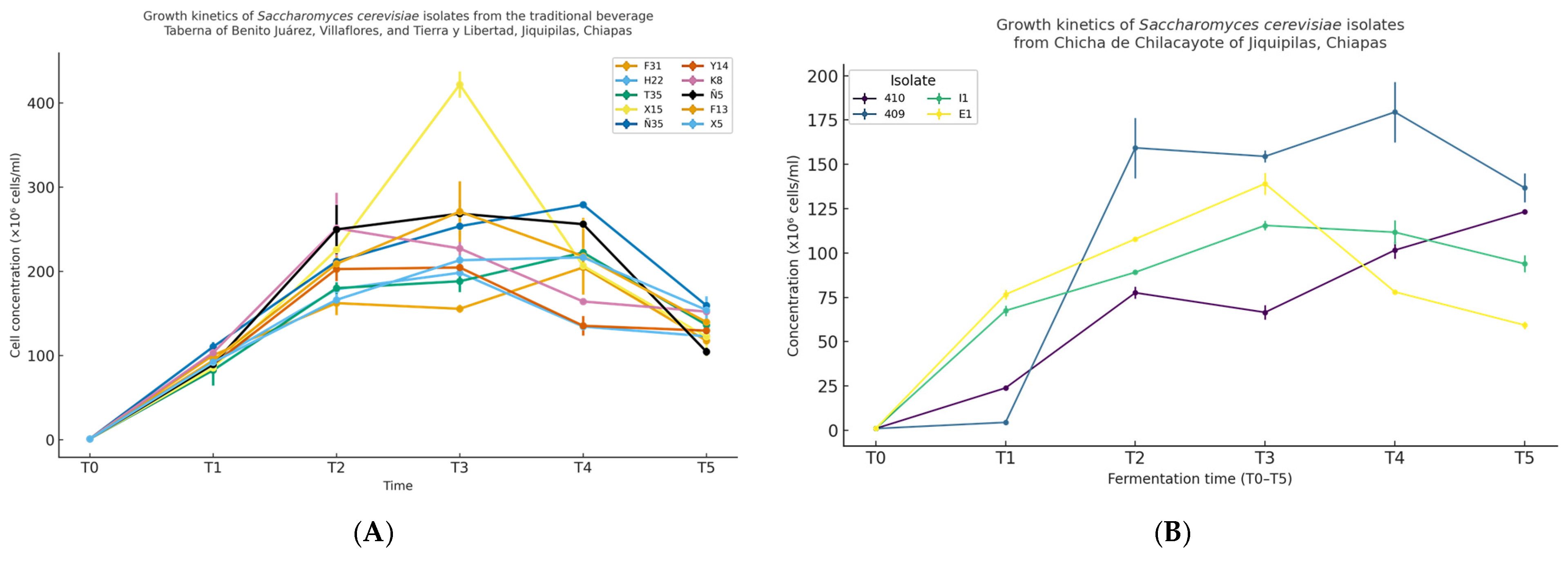
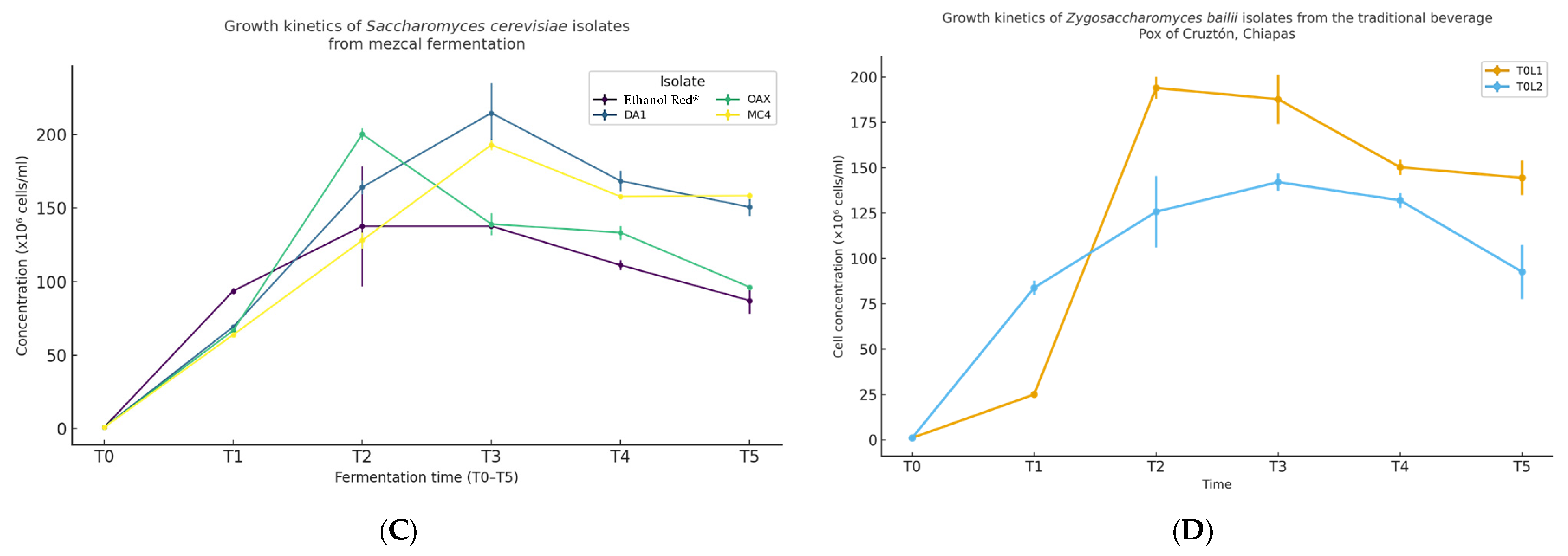
During the population growth of the different Saccharomyces cerevisiae isolates, most of them reached the exponential phase at 36 h (T3) after the onset of fermentation. However, the OAX isolate exhibited a distinct behavior, entering the exponential phase at 24 h (T2), indicating a faster growth rate compared with the other isolates. In contrast, the 410 isolates displayed a prolonged adaptation phase, reaching the exponential stage only after 60 h (T5), suggesting a slower initiation of growth relative to the rest (Figure 3).

Analysis of Volatile Compounds Produced by Saccharomyces cerevisiae Isolates

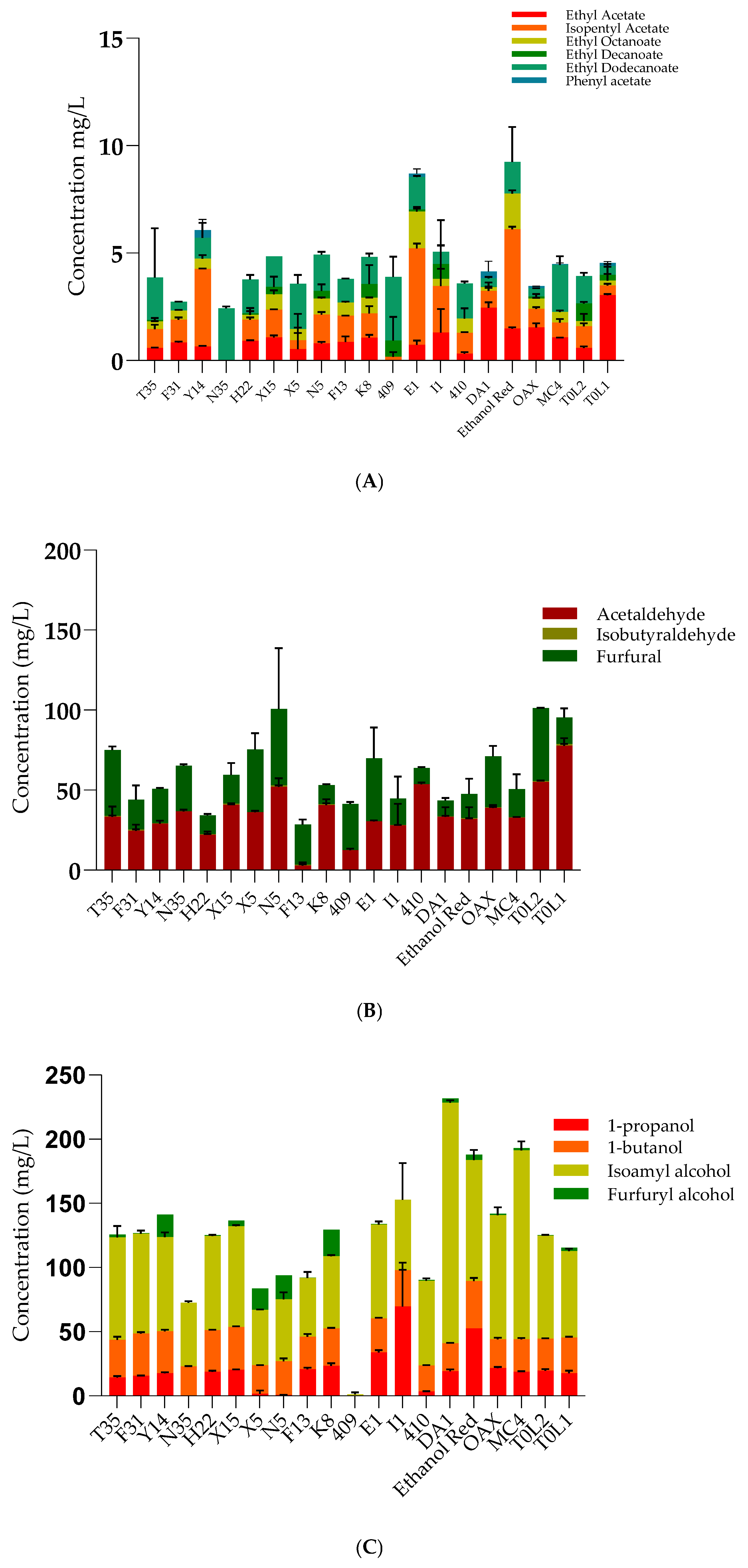
The analysis of the volatile compound profile revealed high variability in ester production among the Saccharomyces cerevisiae isolates. The most representative esters were, isopentyl acetate, ethyl dodecanoate, ethyl octanoate, and phenyl acetate. The isopentyl acetate, showed a wide distribution and variability among isolates, with maximum values observed in H22 (4.64 mg/L), E1 (4.34 mg/L), 409 (4.55 mg/L), 410 (4.71 mg/L), and OAX (4.34 mg/L). These results suggest that isolates from Tierra y Libertad and Oaxaca may possess a higher enzymatic capacity for the synthesis of volatile esters. Overall, the ester profiles revealed high intraspecific variability in the production of volatile compounds, with isolates T35, Y14, X15, F13, 410, and OAX standing out for their higher abundance and diversity of esters (Figure 4).
Three main aldehydic compounds were identified: acetaldehyde, isobutyraldehyde, and furfural. Among them, acetaldehyde was the most abundant compound. The highest concentrations were observed in isolates T0L2 (81.07 mg/L) and T0L1 (74.26 mg/L), indicating a high production capacity in the isolates from Cruzton. Among the alcohols, the most abundant compound was isopentyl alcohol, with the highest concentrations observed in isolates DA1 (188.72 mg/L) and Ethanol Red® (186.02 mg/L), as observed in Figure 4.
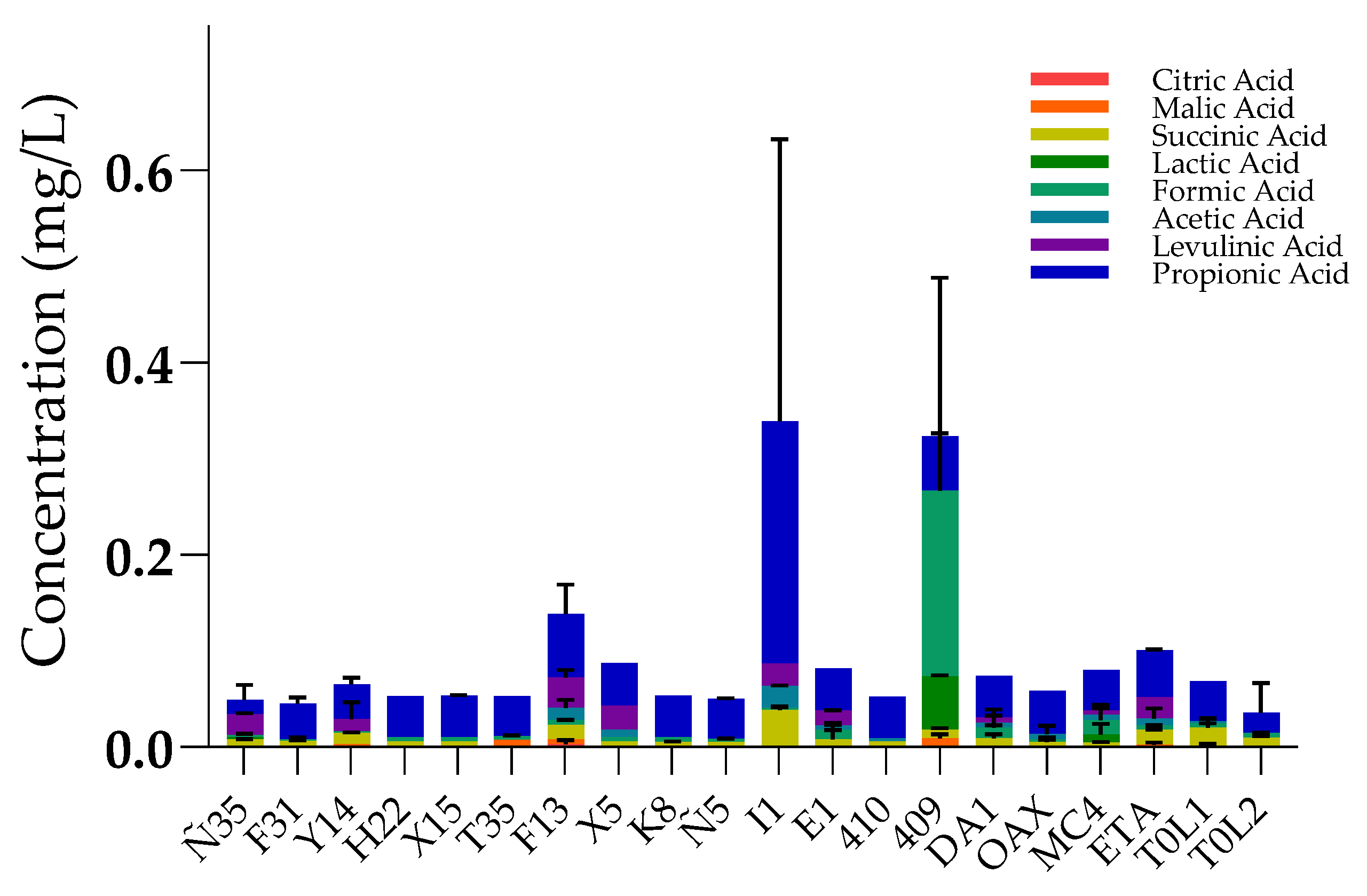
It was found that propionic acid was the most abundant compound, present in all isolates, with the highest concentrations observed in isolates I1 (0.036 mg/L) and E1 (0.041 mg/L) (Figure 5).

3.4. Interdelta Sequence-Based Strain Characterization

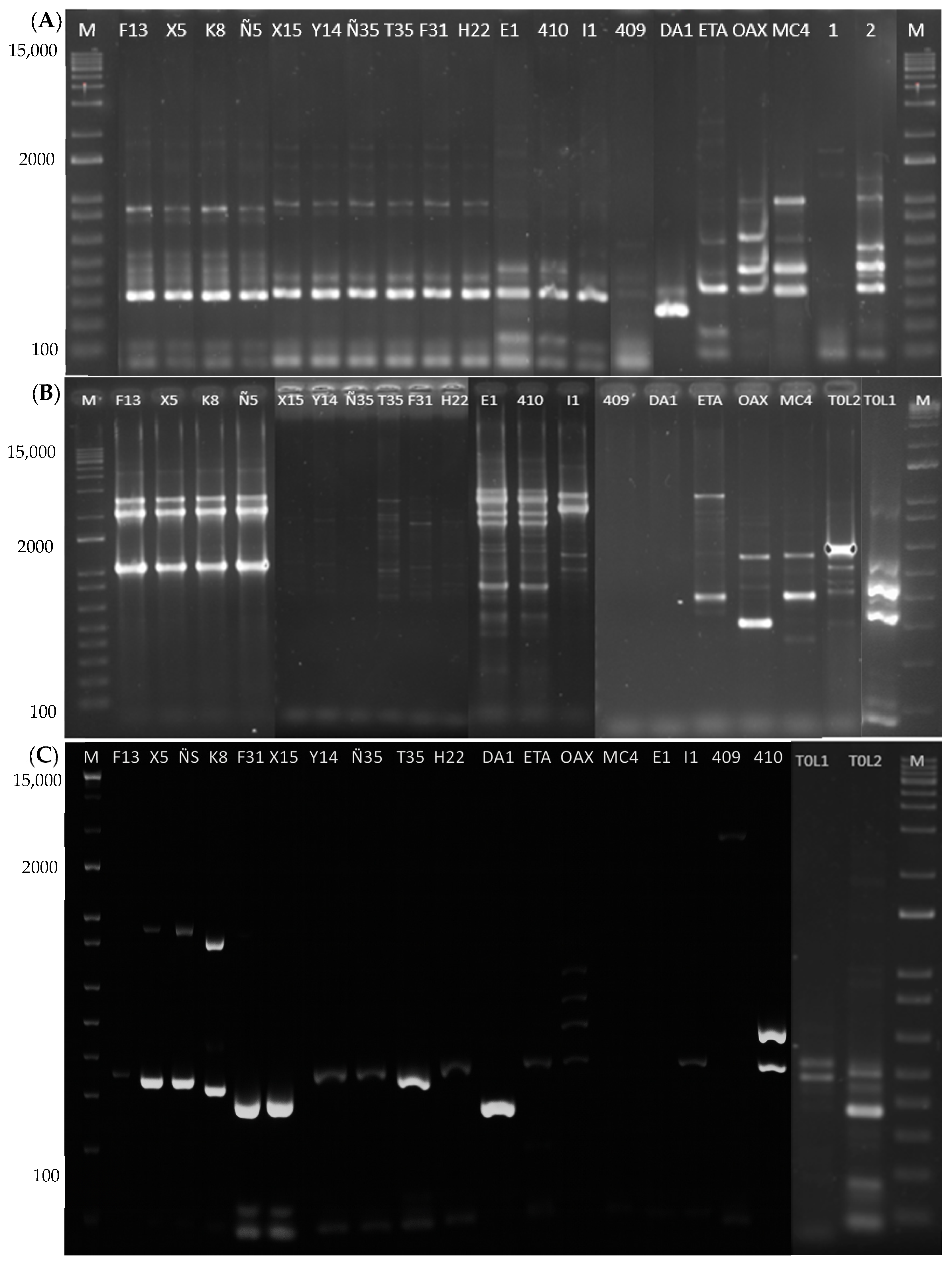
Interdelta PCR analysis revealed genetic variability among Saccharomyces cerevisiae strains isolated from different fermentative environments. Distinct banding profiles were obtained, reflecting significant differences in the organization of delta elements within the genome of each strain. The results showed clear associations between the banding patterns, the locality, and the beverage from which the strains were isolated. This genetic variability is key to understanding the evolutionary dynamics and fermentative behavior of the yeasts studied. Analyses were performed using three groups of specific primer pairs (δ1-δ2, δ12-δ21, and δ12-δ2). Each combination generated different banding profiles that were associated with both the localities and the fermented beverages from which the strains were obtained. In the interdelta analysis using the δ12-δ21 primers exhibited greater intraspecific variability. In contrast, the analysis with primers δ12-δ2 revealed lower variability (Figure 6). Overall, interdelta PCR analysis revealed several distinct banding profiles associated with both beverage type and locality of isolation. The δ1-δ2 primers yielded nine different banding profiles, while the δ12-δ21 primers showed higher intraspecific variability, producing 10 distinct banding profile groups (Table 4).
The UPGMA analysis revealed a high level of intraspecific variability among the Saccharomyces cerevisiae strains, which were grouped according to the type of beverage and the locality from which they were isolated. In addition, strains from Chicha de chilacayote showed considerable variability even among strains belonging to the same beverage and originating from the same locality (Figure 7).
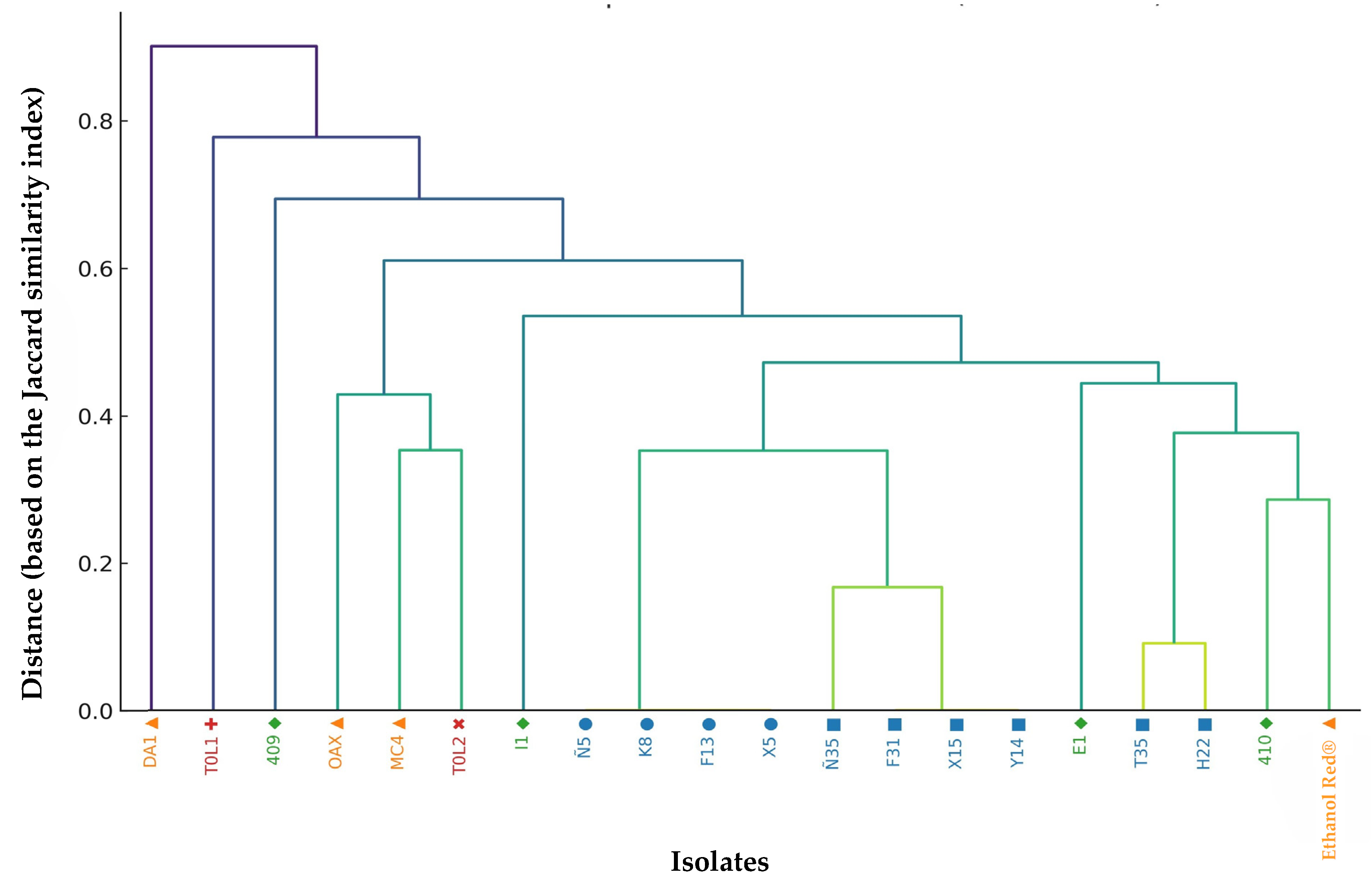
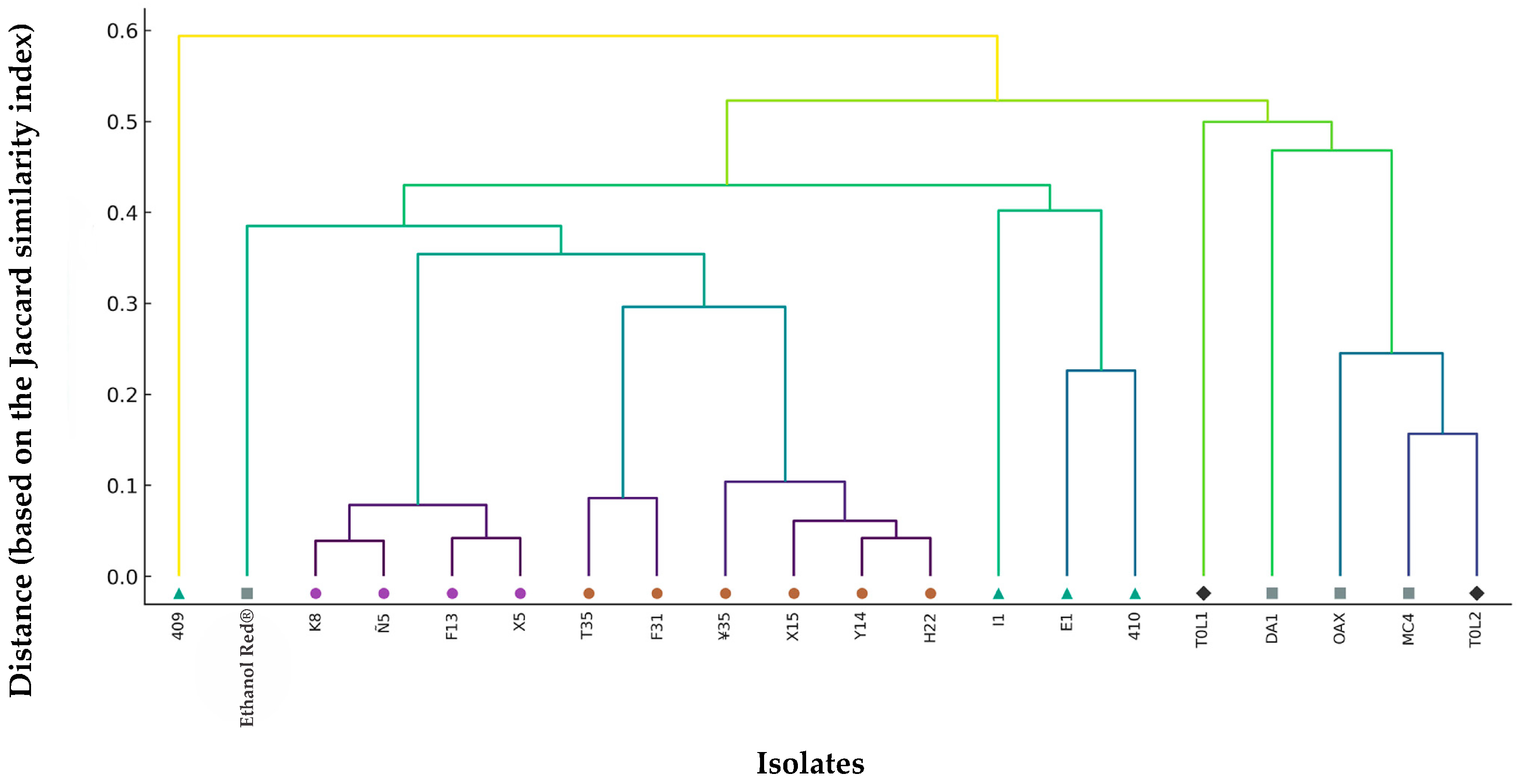
The principal clusters show a tendency for strains to group by beverage type, with clear separation among the Taberna, Mezcal, and Chicha de chilacayote groups. Some Pox and Chicha de Chilacayote strains occur in close proximity, suggesting shared physiological or genetic similarities, possibly associated with comparable fermentation conditions. Taberna strains from Benito Juárez and Tierra y Libertad cluster closely, indicating coherence between molecular profiles and patterns of thermal and ethanol tolerance (Figure 8).
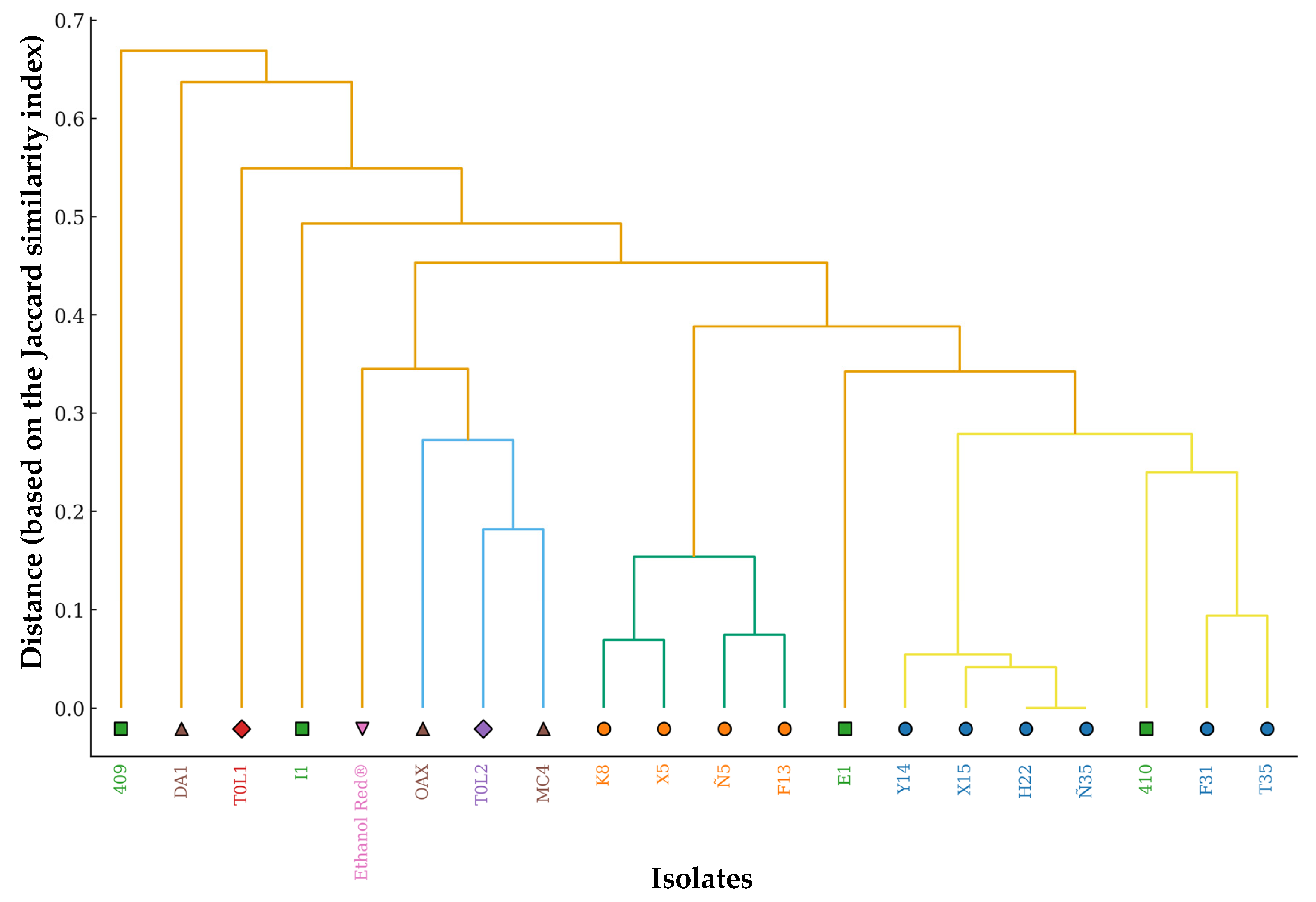
In the UPGMA analysis used to assess the relationship between volatile compound production and molecular profiles, it was observed that the isolates from Taberna showed a clear correspondence between their genetic profiles and their patterns of volatile compound production. In contrast, the other isolates exhibited high intraspecific variability, even among those originating from the same source and beverage type (Figure 9).

4. Discussion

The isolates analyzed in the present study exhibited clearly differentiated physiological, productive, and yield-related characteristics that were directly associated with the beverage and locality of origin. Marked variations were observed in ethanol tolerance, thermotolerance, osmotic stress response, and the production of volatile compounds. Likewise, the interdelta profiles revealed intraspecific genetic variability related to the fermentative environment and to the functional properties of each isolate. Notably, strains obtained from Chicha de Chilacayote displayed unique molecular profiles, indicating a high level of intraspecific diversity among isolates from the same source [17,18,19,20]. These findings are consistent with previous studies demonstrating a close relationship between the genetic profiles of Saccharomyces cerevisiae, environmental conditions, and phenotypic traits [16]. As documented in Mezcal fermentations, isoamyl alcohol was identified as the most abundant higher alcohol, in agreement with reports indicating that this compound and isobutyl alcohol are typically dominant [21].
Regarding population genomics, several studies have shown that autochthonous populations of Saccharomyces cerevisiae frequently cluster into monophyletic Neotropical clades, sharing characteristics associated with domestication and micro-domestication processes [22,23,24,25,26]. Recent literature also highlights the role of genomic variants including CNVs, polyploidy, and specific alleles in determining traits such as ethanol tolerance, temperature tolerance, and osmotic stress resistance [26,27,28,29,30,31,32].
With respect to the interdelta marker, our results align with previous research associating these profiles with fermentative efficiency, productivity, and stress tolerance in brewing and wine yeasts [21,22,26], as well as distinguishing industrial strains (characterized by more stable profiles) from wild strains (exhibiting greater variability) [27,28]. The differences observed in the interdelta profiles likely reflect structural variations in genome organization resulting from the mobilization and recombination of Ty1 elements, which alter the arrangement of delta sequences [27]; chromosomal rearrangements such as duplications, deletions, and inversions, which modify the distribution of Ty elements [14,30]; and the accumulation of evolutionary divergence, including mutations in delta regions and genome reorganization over time [14,17,31,33,34].
From a physiological perspective, genomic diversity translates into observable functional traits such as increased thermotolerance, ethanol resistance, and the ability to thrive under osmotic stress. These phenomena may be modulated by variations in membrane composition, differences in the activation of the HOG pathway, the fine-tuned regulation of stress-response networks, and changes in cellular metabolism that influence the synthesis of volatile compounds, which is known to be closely related to cellular growth rate [35]. Moreover, the specific adaptations detected in isolates from Chicha de Chilacayote may stem from local variations in nutrients, oxygen availability, and ethanol concentration, which impose distinct selective pressures within the same beverage type [23,24,25].
Based on the results obtained and considering the limitations identified, future research could be oriented toward (i) high-resolution genomic approaches (e.g., WGS, CNV analyses, transcriptomics) to identify genes, pathways, or mobile elements associated with the observed profiles; (ii) experimental assays under controlled stress conditions (temperature, ethanol, osmotic pressure) to validate genotype–phenotype associations; (iii) longitudinal evaluations of the fermentative process integrating population dynamics, metabolomics, and genetic variation over time; (iv) functional studies exploring the role of Ty elements in adaptation to fermentative environments and in the modulation of metabolic pathways that influence aromatic compound production [20,36,37].

5. Conclusions

The results of this study demonstrate that the indigenous isolates of Saccharomyces cerevisiae exhibit remarkable physiological, genetic, and metabolic diversity closely associated with the type of beverage and locality of origin. The differences observed in the interdelta profiles reflect genomic variability resulting from micro-domestication and adaptive processes to distinct fermentative environments. This diversity is manifested in functional traits such as tolerance to high ethanol concentrations, thermotolerance, and variations in the production of volatile compounds of biotechnological interest.
Furthermore, the correlation between interdelta patterns and fermentative characteristics suggests that Ty elements and structural genome variations play a fundamental role in modulating cellular metabolism and the response to environmental stress. Overall, the findings confirm that the genomic plasticity of S. cerevisiae strains contributes to their adaptive capacity and the emergence of differentiated phenotypes, underscoring their biotechnological potential and value as a genetic resource for traditional fermented beverage production.

Author Contributions

Conceptualization, M.T.-P., A.G.V.-V., R.P.-D. and A.C.G.-M.; methodology, M.T.-P., A.G.V.-V., R.P.-D., J.A.N.-Z. and A.C.G.-M.; software, M.T.-P. and R.Q.-R.; validation, M.T.-P., A.G.V.-V., R.P.-D. and A.C.G.-M.; formal analysis, M.T.-P., A.G.V.-V., R.P.-D., J.A.N.-Z. and A.C.G.-M.; investigation, M.T.-P.; resources, A.G.V.-V. and A.C.G.-M.; data curation, M.T.-P. and R.Q.-R.; writing—original draft preparation, M.T.-P.; writing—review and editing, M.T.-P., A.G.V.-V., R.P.-D., J.A.N.-Z., R.Q.-R. and A.C.G.-M.; visualization, M.T.-P., A.G.V.-V., R.P.-D., R.Q.-R. and A.C.G.-M.; supervision, A.G.V.-V., R.P.-D. and A.C.G.-M.; project administration, A.G.V.-V., R.P.-D., J.A.N.-Z. and A.C.G.-M.; funding acquisition, A.G.V.-V. and A.C.G.-M. All authors have read and agreed to the published version of the manuscript.

Funding

This research received no external funding.

Institutional Review Board Statement

Not applicable.

Informed Consent Statement

Not applicable.

Data Availability Statement

The original contributions presented in this study are included in the article. Further inquiries can be directed to the corresponding author.

Acknowledgments

The authors thank the Universidad de Ciencias y Artes de Chiapas for allowing the use of the teaching laboratories at the Instituto de Ciencias Biológicas and for providing the materials necessary for the project’s development and completion. We also thank the Centro de Investigación y Asistencia en Tecnología y Diseño del Estado de Jalisco for enabling part of the project to be conducted during a research stay by M. C. Maritza Tawas Penagos. We are grateful to the Secretaria de Ciencias, Humanidades, Tecnologia e Innovacion (SECIHTI) for the financial support provided to M. C. Maritza Tawas Penagos, who is part of the Programa Doctorado en Ciencias en Biodiversidad y Conservacion de Ecosistemas Tropicales (No. CVU 1031881). During the preparation of this manuscript, the authors used the ChatGPT-5 tool to perform statistical analyses through scripts provided by the AI for correct execution in RStudio (version 2025.05+496). The authors have reviewed and edited the output and take full responsibility for the content of this publication.

Conflicts of Interest

The authors declare no conflicts of interest.

References

  1. Ambrocio-Ríos, J.A.; Orantes-García, C.; Sánchez-Cortés, M.S.; Verdugo-Valdez, A.G. Use of the Coyol Palm (Acrocomia aculeata) for the Production of “Taberna”, a Traditional Fermented Beverage in México. Front. Sustain. Food Syst. 2021, 5, 695494. [Google Scholar] [CrossRef]
  2. Santiago-Urbina, J.A.; Arias-García, J.A.; Ruíz-Terán, F. Yeast species associated with spontaneous fermentation of Taberna, a traditional palm wine from the southeast of Mexico. Ann. Microbiol. 2015, 65, 287–296. [Google Scholar] [CrossRef]
  3. Santiago-Urbina, J.A.; Verdugo-Valdez, A.G.; Ruíz-Terán, F. Physicochemical and microbiological changes during tapping of palm sap to produce an alcoholic beverage called “Taberna”, which is produced in the south east of México. Food Control 2013, 33, 58–62. [Google Scholar] [CrossRef]
  4. Tawas, M. Estudio de la relaciones Fisiológicas y Moleculares Entre Cepas de Saccharomyces cerevisiae Asociadas a la Taberna, Bebida Extraída de la Palma de Coyol (Acrocomia aculeata. Jacq. Lodd Ex. Mart). Master’s Thesis, Instituto de Ciencias Biológicas, Universidad de Ciencias y Artes de Chiapas, Tuxtla Gutiérrez, Mexico, 2022; p. 85. [Google Scholar]
  5. Peter, J.; De Chiara, M.; Friedrich, A.; Yue, J.-X.; Pflieger, D.; Bergström, A.; Sigwalt, A.; Barré, B.; Freel, K.; Llored, A.; et al. Genome evolution across 1011 Saccharomyces cerevisiae isolates. Nature 2018, 556, 339–344. [Google Scholar] [CrossRef]
  6. Goodwin, S.; McPherson, J.D.; McCombie, W.R. Coming of age: Ten years of next-generation sequencing technologies. Nat. Rev. Genet. 2016, 17, 333–351. [Google Scholar] [CrossRef]
  7. Vazquez, A.; Ramírez, M.; Monsalve, Z. Actualización en caracterización molecular de levaduras de interés industrial. Rev. Colomb. Biotecnol. 2016, 18, 129–139. [Google Scholar] [CrossRef]
  8. Castillo, M.; Parra, N.; Cämara, J.S.; Khadem, M. Unveiling the Regional Identity of Madeira Wine: Insights from Saccharomyces cerevisiae Strains Using Interdelta Analysis. Beverages 2025, 11, 84. [Google Scholar] [CrossRef]
  9. González, M.L.; Chimeno, S.V.; Sturm, M.E.; Becerra, L.M.; Lerena, M.C.; Rojo, M.C.; Combina, M.; Mercado, L.A. Populations of Saccharomyces cerevisiae in Vineyards: Biodiversity and Persistence Associated with Terroir. Fermentation 2023, 9, 292. [Google Scholar] [CrossRef]
  10. Kurtzman, C.P.; Fell, J.W.; Boekhout, T.; Robert, V. Methods for Isolation, Phenotypic Characterization and Maintenance of Yeast. In The Yeasts, a Taxanomy, 5th ed.; Kurtzman, C.P., Fell, J.W., Boekhout, T., Eds.; Elsevier: Amsterdam, The Netherlands, 2011; pp. 87–110. [Google Scholar]
  11. Lachance, M. Yeast communities in a natural tequila fermentation. Antonie van Leeuwenhoek 1995, 68, 151–160. [Google Scholar] [CrossRef]
  12. Madigan, M.T.; Bender, K.S.; Buckley, D.H.; Sattley, W.M.; Stahl, D.A. Brock Biology of Microorganisms, 15th ed.; Pearson Education: London, UK, 2018; p. 1064. [Google Scholar]
  13. Quezada, R. Estudio del Impacto del Proceso de Obtención de Juego de Agave tequilana Sobre los Consorcios Microbianos Involucrados en la Fermentación. Master’s Thesis, Centro de Investigación y Asistencia en Tecnología y Diseño del estado de Jalisco (CIATEJ), Guadalajara, Mexico, 2017. [Google Scholar]
  14. Ness, F.; Lavallée, F.; Dubourdieu, D.; Aigle, M.; Dulau, L. Identification of Yeast Strains Using the Polymerase Chain Reaction. J. Sci. Food Agric. 1993, 62, 89–94. [Google Scholar] [CrossRef]
  15. Legras, J.L.; Karst, F. Optimisation of interdelta analysis for Saccharomyces cerevisiae strain characterisation. FEMS Microbiol. Lett. 2003, 221, 249–255. [Google Scholar] [CrossRef]
  16. Roberto, T.N.; Carvalho, J.A.; Beale, M.A.; Hagen, F.; Fisher, M.C.; Hahn, R.C.; Camargo, Z.P.; Rodríguez, A.M. Trends in the molecular epidemiology and population genetics of emerging Sporothrix species. Stud. Mycol. 2021, 100, 100131. [Google Scholar] [CrossRef]
  17. Nolasco-Cancino, H.; Santiago-Urbina, J.A.; Wacher, C.; Ruíz-Terán, F. Predominant Yeasts During Artisanal Mezcal Fermentation and their Capacity to Ferment Maguey Juice. Front. Microbiol. 2018, 9, 2900. [Google Scholar] [CrossRef] [PubMed]
  18. Ruíz-Terán, F.; Martínez-Zepeda, P.N.; Geyer-de la Merced, S.Y.; Nolasco-Cancino, H.; Santiago-Urbina, J.A. Mezcal: Indigenous Saccharomyces cerevisiae strains and their potential as starter cultures. Food Sci. Biotechnol. 2018, 28, 459–467. [Google Scholar] [CrossRef] [PubMed]
  19. Baldisseri, A.; Santinello, D.; Granuzzo, S.; Frizzarin, M.; De Pascale, F.; Sartori, G.; Antoniali, P.; Campanaro, S.; Lopreiato, R. A Novel PCR-Based Tool to Trace Oenological Saccharomyces cerevisiae Yeast by Monitoring Strain-Specific Nucleotide Polymorphisms. Foods 2025, 14, 2379. [Google Scholar] [CrossRef] [PubMed]
  20. Stanley, D.; Fraser, S.; Stanley, G.A.; Chambers, P.J. Retrotransposon expression in ethanol-stressed Saccharomyces cerevisiae. Appl. Microbiol. Biotechnol. 2010, 87, 1447–1454. [Google Scholar] [CrossRef]
  21. Visinoni, F.; Zhang, P.; Hollywood, K.A.; Carlin, S.; Vrhovsek, U.; Winterburn, J.; Delneri, D. Volatile Aroma Compound Production Is Affected by Growth Rate in S. cerevisiae. Appl. Environ. Microbiol. 2022, 88, e01509-22. [Google Scholar] [CrossRef]
  22. Wei, D.; Peng, L.; Chen, D. Genome Analysis Reveals Genetic Characteristics of Industrial Saccharomyces cerevisiae for Ethanol Fermentation of Sugarcane Molasses. Appl. Biochem. Microbiol. 2025, 61, 1082–1092. [Google Scholar] [CrossRef]
  23. Legras, J.L.; Merdinoglu, D.; Cornuet, J.M.; Karst, F. Bread, beer and wine: Saccharomyces cerevisiae diversity reflects human history. Mol. Ecol. 2007, 16, 2091–2102. [Google Scholar] [CrossRef]
  24. Hohmann, S.; Krantz, M.; Nordlander, B. Yeast osmoregulation. Methods Enzymol. 2007, 428, 29–45. [Google Scholar] [CrossRef]
  25. Gallone, B.; Steensels, J.; Prahl, T.; Soriaga, L.; Saels, V.; Herrera-Malaver, B.; Merlevede, A.; Roncoroni, M.; Voordeckers, K.; Miraglia, L.; et al. Domestication and divergence of Saccharomyces cerevisiae beer yeasts. Cell 2016, 166, 1397–1410. [Google Scholar] [CrossRef] [PubMed]
  26. Avelar-Rivas, J.A.; Sedeño, I.; García-Ortega, L.F.; Urban-Aragon, J.A.; Mancera, E.; DeLuna, A.; Morales, L. Recurrent Introgression and Geographical Stratification Shape Saccharomyces cerevisiae in the Neotropics. bioRxiv 2024. [Google Scholar] [CrossRef]
  27. Borneman, A.R.; Desany, B.A.; Riches, D.; Affourtit, J.P.; Forgan, A.H.; Pretorius, I.S.; Egholm, M.; Chambers, P.J. The genome sequence of the wine yeast VIN7 reveals an allotriploid hybrid genome with Saccharomyces cerevisiae and Saccharomyces kudriavzevii origins. FEMS Yeast Res. 2012, 12, 88–96. [Google Scholar] [CrossRef] [PubMed]
  28. Bergström, A.; Simpson, J.T.; Salinas, F.; Barré, B.; Parts, L.; Nguyen, A.N.; Moses, A.M.; Louis, E.J.; Mustonen, V.; Warringer, J.; et al. A high-definition view of functional genetic variation from natural yeast genomes. Mol. Biol. Evol. 2014, 31, 872–888. [Google Scholar] [CrossRef]
  29. Riles, L.; Fay, J.C. Genetic basis of variation in heat and ethanol tolerance in Saccharomyces cerevisiae. G3 Genes Genomes Genet. 2019, 9, 179–188. [Google Scholar] [CrossRef]
  30. Kim, J.M.; Vanguri, S.; Boeke, J.D.; Gabriel, A.; Voytas, D.F. Transposable elements and genome organization: A comprehensive survey of retrotransposons revealed by the complete Saccharomyces cerevisiae genome sequence. Genome Res. 1998, 8, 464–478. [Google Scholar] [CrossRef]
  31. Hennequin, C.; Thierry, S.; Richard, J.P.; Dujardin, D. Multilocus sequence typing for the identification of pathogenic Candida species. J. Clin. Microbiol. 2001, 39, 3772–3779. [Google Scholar]
  32. Sun, Y.; Guo, J.; Liu, F.; Liu, Y. Identification of indigenous yeast flora isolated from the five winegrape varieties harvested in Xiangning, China. Antonie van Leeuwenhoek 2014, 105, 533–540. [Google Scholar] [CrossRef]
  33. Chen, Y.; Jiang, J.; Song, Y.; Zang, X.; Wang, G.; Pei, Y.; Song, Y.; Qin, Y.; Liu, Y. Yeast Diversity during Spontaneous Fermentations and Oenological Characterisation of Indigenous Saccharomyces cerevisiae for potential as Wine Starter Cultures. Microorganisms 2022, 10, 1455. [Google Scholar] [CrossRef]
  34. Bigey, F.; Segond, D.; Friedrich, A.; Guezenec, S.; Bourgais, A.; Huyghe, L.; Agier, N.; Nidelet, T.; Sicard, D. Evidence for two main domestication trajectories in Saccharomyces cerevisiae linked to distinct bread-making processes. Curr. Biol. 2021, 31, 722–732. [Google Scholar] [CrossRef]
  35. Zhang, J.; Plowman, J.E.; Tian, B.; Clerens, S.; On, S.L.W. Genotyping and Phenotyping of Indigenous Saccharomyces cerevisiae from a New Zealand Organic Winery and Commercial Sources Using Interdelta and MALDI-TOF MS typing. Microorganisms 2024, 12, 1299. [Google Scholar] [CrossRef]
  36. Monnin, L.; Nidelet, T.; Noble, J.; Galeote, V. Insights into intraspecific diversity of central carbon metabolites in Saccharomyces cerevisiae during wine fermentation. Food Microbiol. 2024, 121, 104513. [Google Scholar] [CrossRef]
  37. Badotti, F.; Belloch, C.; Rosa, C.A.; Barrio, E.; Querol, A. Physiological and molecular characterisation of Saccharomyces cerevisiae cachaςa strains isolated from different geographic regions in Brazil. World J. Microbiol. Biotechnol. 2010, 26, 579–587. [Google Scholar] [CrossRef]
Figure 1. Macromorphological characterization of colonies of the Saccharomyces cerevisiae isolate colonies. Representative colonies showing various characteristics including shape, color, margin, and surface shine, among others.
Fermentation 11 00697 g001
Figure 2. UPGMA analysis based on the physiological characteristics of Saccharomyces cerevisiae strains isolated from traditional fermented beverages. Label colors denote the beverage of origin of each isolate.
Fermentation 11 00697 g002
Figure 3. Growth kinetics of Saccharomyces cerevisiae isolates from traditional fermented beverages. (A) Isolates obtained from the traditional fermented beverage Taberna. (B) Isolates obtained from the traditional fermented beverage Chicha de chilacayote. (C) Isolates obtained from Mezcal. (D) Isolates of Zygosaccharomyces bailii obtained from the traditional fermented beverage Pox.
Fermentation 11 00697 g003aFermentation 11 00697 g003b
Figure 4. Volatile compounds produced by Saccharomyces cerevisiae isolates. (A) Esters, (B) Aldehydes, (C) Alcohols.
Fermentation 11 00697 g004
Figure 5. Organic acids produced by Saccharomyces cerevisiae isolates.
Fermentation 11 00697 g005
Figure 6. Interdelta analysis of S. cerevisiae strains isolated from traditional fermented beverages from Chiapas using (A) the δ1–δ2 primers (1. T0L1, 2. T0L2); (B) δ12-δ21 primers; (C) δ12-δ2 primers. 15,000 bp molecular weight marker (1 kb Plus, Invitrogen) on a 2% agarose gel.
Fermentation 11 00697 g006
Figure 7. UPGMA dendrogram based on the molecular characterization of Saccharomyces cerevisiae strains isolated from traditional fermented beverages from Chiapas, Mexico. The analysis was performed using the Dice similarity coefficient and the presence/absence matrix of interdelta PCR banding profiles. Label colors and forms denote the beverage of origin of each isolate.
Fermentation 11 00697 g007
Figure 8. UPGMA analysis of the relationships among Saccharomyces cerevisiae isolates based on their physiological and molecular characteristics, using the Jaccard similarity index. Label colors and forms denote the beverage of origin of each isolate.
Fermentation 11 00697 g008
Figure 9. UPGMA analysis of the relationships among Saccharomyces cerevisiae isolates based on their production organic compounds and molecular characteristics, using the Jaccard similarity index. Label colors and forms denote the beverage of origin of each isolate.
Fermentation 11 00697 g009
Table 1. Origin and conservation of isolates of Saccharomyces cerevisiae from traditional fermented beverages of Chiapas.
IsolatesBeverageLocalityConservation
F13, X5, K8, Ñ5TabernaTierra y Libertad, Jiquipilas, Chiapas−80 °C/Glycerol 1:1Biotecnology Lab./
UNICACH
X15, Y14, Ñ35, T35, F31, H22TabernaBenito Juarez, Villaflores, Chiapas−80 °C/Glycerol 1:1Biotecnology Lab./
UNICACH
E1, 410, I1, 409Chicha de chilacayoteJiquipilas, Chiapas−80 °C/Glycerol 1:1Biotecnology Lab./
UNICACH
DA1, Oax, MC4MezcalOaxaca−80 °C/Glycerol 1:1Industrial Lab./CIATEJ
T0L1, T0L2PoxCruzton, Chiapas−80 °C/Glycerol 1:1Biotecnology Lab./
UNICACH
Table 2. Morphological characteristics of colonies of Saccharomyces cerevisiae isolates grown on Nutrient WL agar plates incubated at 27 °C for four weeks.
GroupsShapeColorMargin ShineElevationTextureIsolate/Locality/
ColorShape
IROGGUSHCY14/BJ
IIROGGUMFCX15/BJ
IIIRGW/WDMWUFSHCH22/BJ
F31/BJ
IVRGW/WDMWUSHCÑ35/BJ
VRGWLGUSHCT35/BJ
VIRWJGUMFCX5/TL
VIIRGW/WDWUSHCK8/TL
Ñ5/TL
VIIIRGW/WDJGUMHCF13/TL
IXRGWWUSHCEthanol Red®
XROGWUSHCOAX/OA
XIROGWUSHCMC4/OA
XIIRWJGUSHCDA1/OA
XIIIRGWWUSHCT0L1/CR
XIVRGWWUSHCT0L2/CR
XVROGWUHHCE1/JP
XVIROGGUSHCI1/JP
XVIIROGGUSHC410/JP
XVIIIRTWUMFC409/JP
Abbreviations. Form: Round (R); Color: Olive green (OG), Greenish white (GW), Whitish green (WG), White dots (WD), Green dots (GD), White (W), Turquoise (T); Margin color: Green (G), Milky white (MW), Light green (LG), Jade green (JG); Margin shape: undulate (U), undulate to fimbriate (UF); Shine. Shiny (S), Matte (M); Elevation: Flat (F), high (H); Texture: Creamy (C); Localities Benito Juárez (BJ), Tierra y Libertad (TL), Oaxaca (OA), Cruzton (CR), Jiquipilas (JP).
Table 3. Physiological traits of S. cerevisiae isolates from traditional fermented beverages.
IsolatesTemperature Osmotic Tolerance% Ethanol Concentration
373941434550%60%10% NaCl
+ 5% Glu
246810121314151617
Taberna
Benito Juarez
F31+++++++++
H22++++++++++
X15+++++++++++
T35++++++++++++
Y14+++++++++++
Ñ35++++++++++
Tierra y Libertad
K8+++++++++++++
X5+++++++++++++++
Ñ5+++++++++++++
F13+++++++++++
Chicha de Chilacayote
Jiquipilas
E1++++++++++
409+++++++
I1+++++++
410++++++++++++
Pox
Cruzton Lote 1
T0L1+++-++++++++
Cruzton Lote 2
T0L2++++-+++++++++++
Mezcal
DA1+++++++++++
OAX+++++++++++++++++
MC4++++++++++++++++
Reference isolates
Ethanol Red®+++++++++++++++++
The +/− symbols indicate the presence or absence of growth in the strains of S. cerevisiae.
Table 4. Banding profiles obtained from interdelta PCR analysis using the δ1–δ2, δ12–δ21, and δ12–δ2 primers in Saccharomyces cerevisiae strains isolated from different traditional fermented beverages from the state of Chiapas.
Isolatesδ1-δ2δ12-δ21δ2-δ12P.G.
Taberna
Benito Juarez
X15BBBB
Y14BBBB
Ñ35BBBB
T35BCBC
F31BDBD
H22BEBF
Tierra y Libertad
F13AAAA
X5AAAA
K8AAAA
Ñ5AAAA
Chicha de Chilacayote
Jiquipilas
E1CFFG
410CFEH
I1CGDI
409D-GJ
Pox
Cruzton Lote 1
T0L1HKHO
Cruzton Lote 2
T0L2ILIP
Mezcal
Oaxaca
DA1E-CK
OAXGIEM
MC4GJBN
Reference isolates
Ethanol Red®FHDL
The general profile (P.G.) was obtained by combining the results from the different typing approaches. A different letter was assigned to each new combination or pattern type.
Disclaimer/Publisher’s Note: The statements, opinions and data contained in all publications are solely those of the individual author(s) and contributor(s) and not of MDPI and/or the editor(s). MDPI and/or the editor(s) disclaim responsibility for any injury to people or property resulting from any ideas, methods, instructions or products referred to in the content.