
Mechanisms Underlying the Effects of Rumen Microbiota Transplantation on the Growth and Development of Ruminants



Abstract
1. Introduction
2. Materials and Methods
2.1. Literature Search Strategy
2.2. Inclusion and Exclusion Criteria
- (1)
- Original research studies in which rumen microbiota transplantation (RMT) was the principal experimental treatment;
- (2)
- Studies employing ruminants (e.g., cattle, sheep, goats) or artificial rumen systems (e.g., Rusitec, continuous-culture fermenters);
- (3)
- Studies evaluating the effects of RMT on rumen microbial communities, fermentation characteristics, host metabolism, or production performance.
- (1)
- Non-original literature (e.g., reviews, commentaries);
- (2)
- Duplicate publications;
- (3)
- Studies lacking accessible full text;
- (4)
- Research not aligned with the primary objectives of this review.
2.3. Literature Screening and Data Extraction
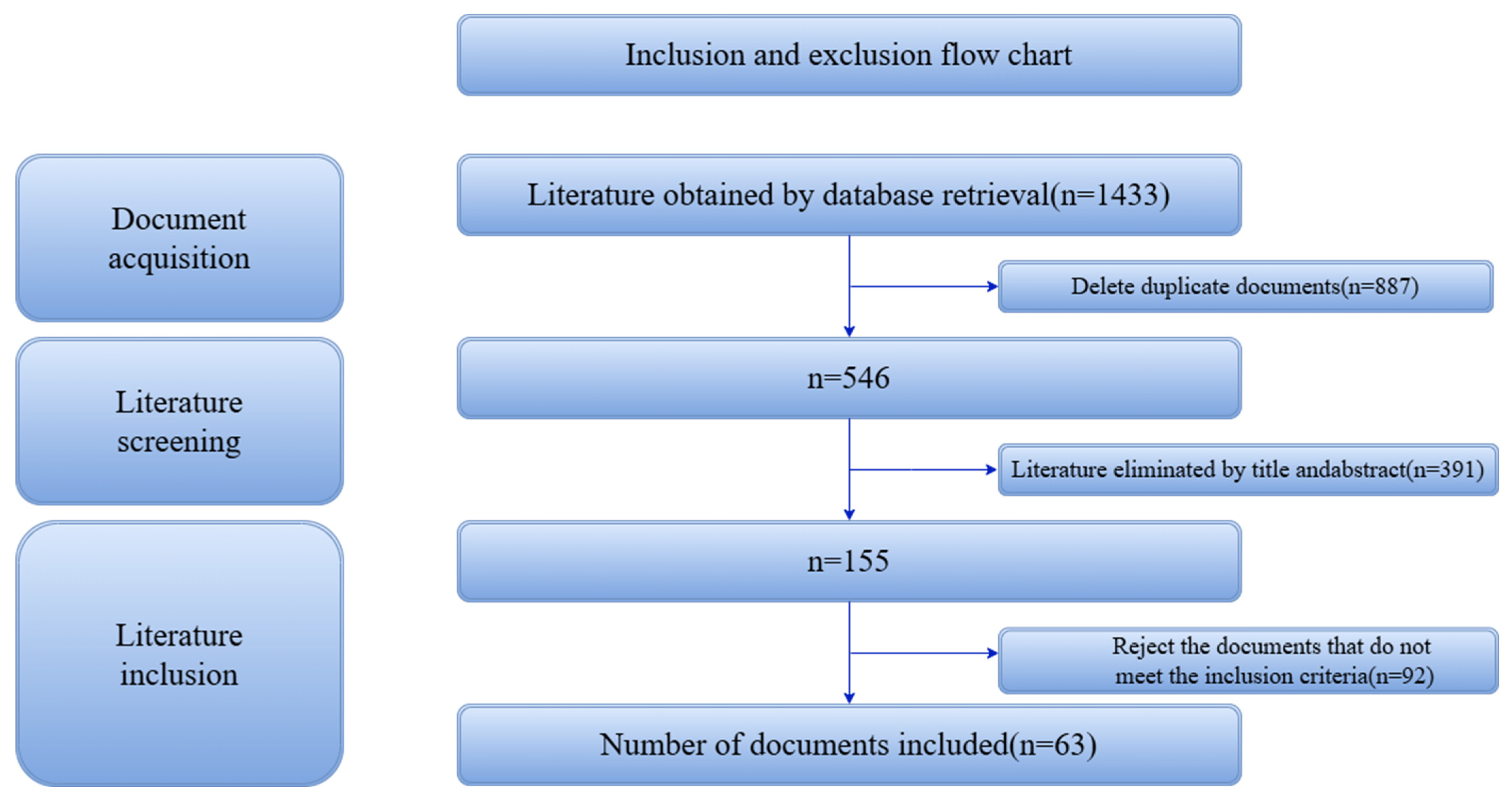
2.4. Results of Literature Screening
3. Methods of Rumen Microbiota Transplantation
3.1. Content Transplantation
- Via rumen fistula—This minimally invasive technique allows for the collection of 8–16 L of active rumen fluid from the donor. It enables precise donor health control and repeatable sampling but requires surgical fistula implantation.
- Via oral or nasogastric tube—A non-surgical, flexible method applicable to animals without fistulas. It allows for the collection of 1–4 L per session but requires stringent donor screening to prevent pathogen transmission.
- Via regurgitated bolus—A traditional and simple approach involving the feeding of chewed cud from healthy animals to sick recipients. However, the microbial and substrate concentrations are relatively low.
- Slaughterhouse collection—Provides large volumes of rumen material and is useful when live donors are unavailable. Nonetheless, it carries a high risk of pathogen contamination and decreased microbial activity due to unknown donor background, feed withdrawal, and transport conditions [18].
3.2. Functional Microbiota Transplantation
4. Remodeling Effects of Rumen Microbiota Transplantation on Microbial Communities
4.1. Adaptive Changes and Metabolic Diversity of Microbial Communities
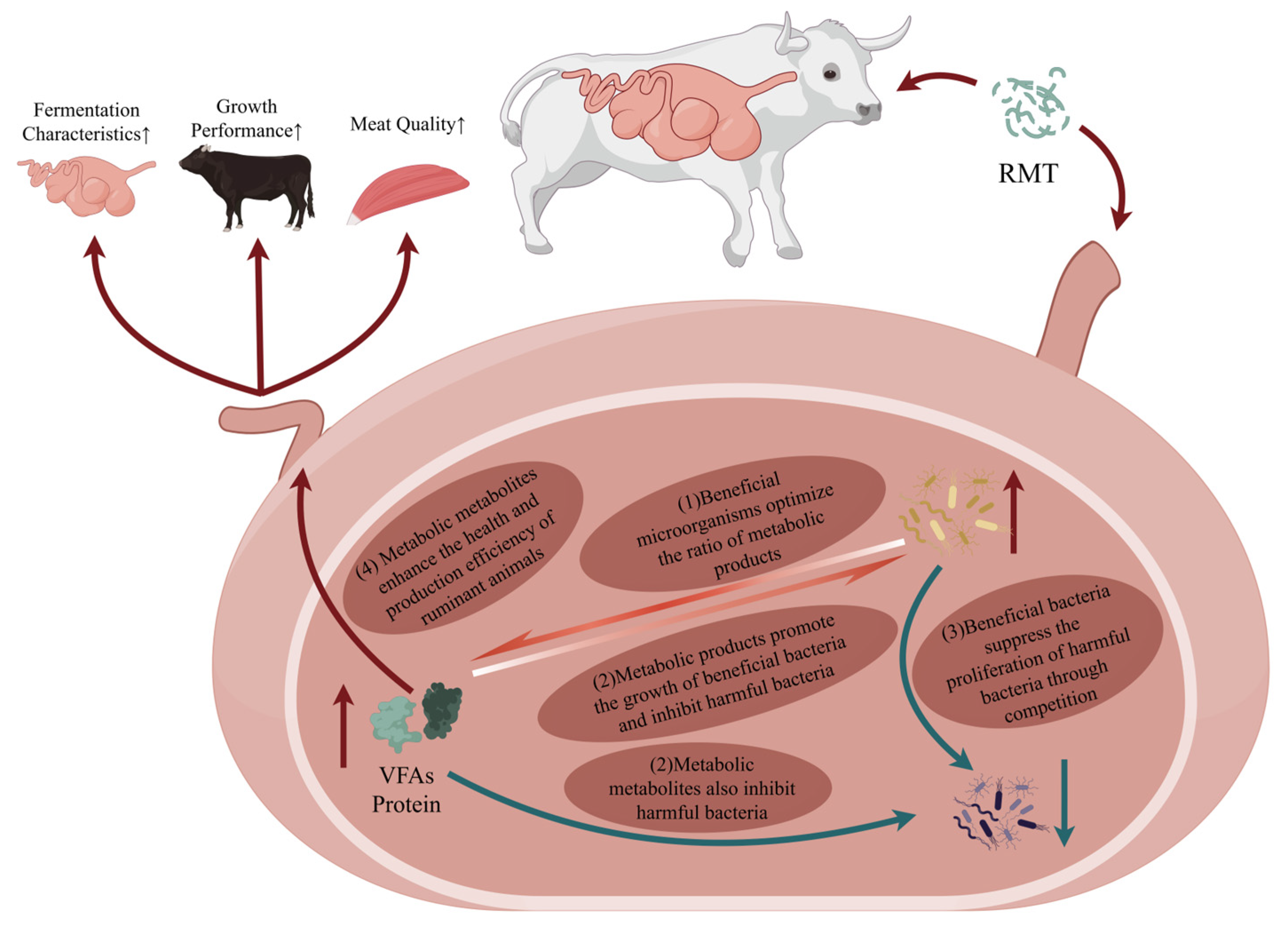
4.2. Interactions and Optimization Among Microbial Communities
5. Application of Rumen Microbiota Transplantation in Ruminant Production
5.1. Regulation of Rumen Fermentation and Nutrient Metabolism
5.2. Regulation of Gut Health and Microbiota Composition
5.3. Impacts on Host Health and Growth Performance
6. Summary
Author Contributions
Funding
Data Availability Statement
Conflicts of Interest
References
- Liang, J.; Zhang, P.; Zhang, R.; Chang, J.; Chen, L.; Wang, G.; Tian, Y.; Zhang, G. Response of Rumen Microorganisms to pH during Anaerobic Hydrolysis and Acidogenesis of Lignocellulose Biomass. Waste Manag. 2024, 174, 476–486. [Google Scholar] [CrossRef]
- Mizrahi, I.; Jami, E. Review: The Compositional Variation of the Rumen Microbiome and Its Effect on Host Performance and Methane Emission. Animal 2018, 12, s220–s232. [Google Scholar] [CrossRef]
- Silva, É.B.R.D.; Silva, J.A.R.D.; Silva, W.C.D.; Belo, T.S.; Sousa, C.E.L.; Santos, M.R.P.D.; Neves, K.A.L.; Rodrigues, T.C.G.D.C.; Camargo-Júnior, R.N.C.; Lourenço-Júnior, J.D.B. A Review of the Rumen Microbiota and the Different Molecular Techniques Used to Identify Microorganisms Found in the Rumen Fluid of Ruminants. Animals 2024, 14, 1448. [Google Scholar] [CrossRef]
- Lobo, R.R.; Faciola, A.P. Ruminal Phages—A Review. Front. Microbiol. 2021, 12, 763416. [Google Scholar] [CrossRef] [PubMed]
- Matthews, C.; Crispie, F.; Lewis, E.; Reid, M.; O’Toole, P.W.; Cotter, P.D. The Rumen Microbiome: A Crucial Consideration When Optimising Milk and Meat Production and Nitrogen Utilisation Efficiency. Gut Microbes 2019, 10, 115–132. [Google Scholar] [CrossRef] [PubMed]
- Yu, Y.; Li, X.; Liu, Z.; Xu, Y.; Shen, Y.; Li, G.; Huang, X. Effects of Chlortetracycline Rumen-Protected Granules on Rumen Microorganisms and Its Diarrhea Therapeutic Effect. Front. Vet. Sci. 2022, 9, 840442. [Google Scholar] [CrossRef] [PubMed]
- Xing, B.-S.; Han, Y.; Wang, X.C.; Wen, J.; Cao, S.; Zhang, K.; Li, Q.; Yuan, H. Persistent Action of Cow Rumen Microorganisms in Enhancing Biodegradation of Wheat Straw by Rumen Fermentation. Sci. Total Environ. 2020, 715, 136529. [Google Scholar] [CrossRef]
- Gharechahi, J.; Vahidi, M.F.; Sharifi, G.; Ariaeenejad, S.; Ding, X.-Z.; Han, J.-L.; Salekdeh, G.H. Lignocellulose Degradation by Rumen Bacterial Communities: New Insights from Metagenome Analyses. Environ. Res. 2023, 229, 115925. [Google Scholar] [CrossRef]
- Wang, L.; Li, Y.; Zhang, Y.; Wang, L. The Effects of Different Concentrate-to-Forage Ratio Diets on Rumen Bacterial Microbiota and the Structures of Holstein Cows during the Feeding Cycle. Animals 2020, 10, 957. [Google Scholar] [CrossRef]
- Yang, C.J.; Mao, S.Y.; Long, L.M.; Zhu, W.Y. Effect of Disodium Fumarate on Microbial Abundance, Ruminal Fermentation and Methane Emission in Goats under Different Forage: Concentrate Ratios. Animal 2012, 6, 1788–1794. [Google Scholar] [CrossRef]
- Chirase, N.K.; Greene, L.W.; Schelling, G.T.; Byers, F.M. Effect of Magnesium and Potassium on Microbial Fermentation in a Continuous Culture Fermentation System with Different Levels of Monensin or Lasalocid. J. Anim. Sci. 1987, 65, 1633–1638. [Google Scholar] [CrossRef]
- Anee, I.J.; Alam, S.; Begum, R.A.; Shahjahan, R.M.; Khandaker, A.M. The Role of Probiotics on Animal Health and Nutrition. J. Basic Appl. Zool. 2021, 82, 52. [Google Scholar] [CrossRef]
- Michalak, M.; Wojnarowski, K.; Cholewińska, P.; Szeligowska, N.; Bawej, M.; Pacoń, J. Selected Alternative Feed Additives Used to Manipulate the Rumen Microbiome. Animals 2021, 11, 1542. [Google Scholar] [CrossRef]
- Thacharodi, A.; Hassan, S.; Ahmed, Z.H.T.; Singh, P.; Maqbool, M.; Meenatchi, R.; Pugazhendhi, A.; Sharma, A. The Ruminant Gut Microbiome vs Enteric Methane Emission: The Essential Microbes May Help to Mitigate the Global Methane Crisis. Environ. Res. 2024, 261, 119661. [Google Scholar] [CrossRef]
- Kholif, A.E.; Anele, A.; Anele, U.Y. Microbial Feed Additives in Ruminant Feeding. AIMS Microbiol. 2024, 10, 542–571. [Google Scholar] [CrossRef]
- Zhang, Y.; Choi, S.H.; Nogoy, K.M.; Liang, S. Review: The Development of the Gastrointestinal Tract Microbiota and Intervention in Neonatal Ruminants. Animal 2021, 15, 100316. [Google Scholar] [CrossRef]
- Ding, G.; Chang, Y.; Zhao, L.; Zhou, Z.; Ren, L.; Meng, Q. Effect of Saccharomyces Cerevisiae on Alfalfa Nutrient Degradation Characteristics and Rumen Microbial Populations of Steers Fed Diets with Different Concentrate-to-Forage Ratios. J. Anim. Sci. Biotechnol. 2014, 5, 24. [Google Scholar] [CrossRef]
- DePeters, E.J.; George, L.W. Rumen Transfaunation. Immunol. Lett. 2014, 162, 69–76. [Google Scholar] [CrossRef]
- Yu, S.; Zhang, G.; Liu, Z.; Wu, P.; Yu, Z.; Wang, J. Repeated Inoculation with Fresh Rumen Fluid before or during Weaning Modulates the Microbiota Composition and Co-Occurrence of the Rumen and Colon of Lambs. BMC Microbiol. 2020, 20, 29. [Google Scholar] [CrossRef]
- Ma, Z.Y.; Zhou, J.W.; Yi, S.Y.; Wang, M.; Tan, Z.L. In Vitro Inoculation of Fresh or Frozen Rumen Fluid Distinguishes Contrasting Microbial Communities and Fermentation Induced by Increasing Forage to Concentrate Ratio. Front. Nutr. 2022, 8, 772645. [Google Scholar] [CrossRef]
- Yu, S.; Shi, W.; Yang, B.; Gao, G.; Chen, H.; Cao, L.; Yu, Z.; Wang, J. Effects of Repeated Oral Inoculation of Artificially Fed Lambs with Lyophilized Rumen Fluid on Growth Performance, Rumen Fermentation, Microbial Population and Organ Development. Anim. Feed Sci. Technol. 2020, 264, 114465. [Google Scholar] [CrossRef]
- Li, Y.; Yang, Y.; Chai, S.; Pang, K.; Wang, X.; Xu, L.; Chen, Z.; Li, Y.; Dong, T.; Huang, W.; et al. Ruminal Fluid Transplantation Accelerates Rumen Microbial Remodeling and Improves Feed Efficiency in Yaks. Microorganisms 2023, 11, 1964. [Google Scholar] [CrossRef]
- Huuki, H.; Ahvenjärvi, S.; Lidauer, P.; Popova, M.; Vilkki, J.; Vanhatalo, A.; Tapio, I. Fresh Rumen Liquid Inoculant Enhances the Rumen Microbial Community Establishment in Pre-Weaned Dairy Calves. Front. Microbiol. 2022, 12, 758395. [Google Scholar] [CrossRef]
- Spanghero, M.; Chiaravalli, M.; Colombini, S.; Fabro, C.; Froldi, F.; Mason, F.; Moschini, M.; Sarnataro, C.; Schiavon, S.; Tagliapietra, F. Rumen Inoculum Collected from Cows at Slaughter or from a Continuous Fermenter and Preserved in Warm, Refrigerated, Chilled or Freeze-Dried Environments for In Vitro Tests. Animals 2019, 9, 815. [Google Scholar] [CrossRef]
- Chaudhry, A.S.; Mohamed, R.A.I. Fresh or Frozen Rumen Contents from Slaughtered Cattle to Estimatein Vitro Degradation of Two Contrasting Feeds. Czech J. Anim. Sci. 2012, 57, 265–273. [Google Scholar] [CrossRef]
- Denek, N.; Can, A.; Avci, M. Frozen Rumen Fluid as Microbial Inoculum in the Two-Stage in Vitro Digestibility Assay of Ruminant Feeds. S. Afr. J. Anim. Sci. 2010, 40, 251–256. [Google Scholar] [CrossRef]
- Hua, D.; Hendriks, W.H.; Xiong, B.; Pellikaan, W.F. Starch and Cellulose Degradation in the Rumen and Applications of Metagenomics on Ruminal Microorganisms. Animals 2022, 12, 3020. [Google Scholar] [CrossRef]
- Ghaffari, M.H.; Hammon, H.M.; Koch, C. Early Rumen Development in Calves: Biological Processes and Nutritional Strategies—A Mini-Review. JDS Commun. 2025, 6, 427–431. [Google Scholar] [CrossRef]
- Diao, Q.; Zhang, R.; Fu, T. Review of Strategies to Promote Rumen Development in Calves. Animals 2019, 9, 490. [Google Scholar] [CrossRef]
- Yáñez-Ruiz, D.R.; Abecia, L.; Newbold, C.J. Manipulating Rumen Microbiome and Fermentation through Interventions during Early Life: A Review. Front. Microbiol. 2015, 6, 1133. [Google Scholar] [CrossRef]
- Arshad, M.A.; Hassan, F.; Rehman, M.S.; Huws, S.A.; Cheng, Y.; Din, A.U. Gut Microbiome Colonization and Development in Neonatal Ruminants: Strategies, Prospects, and Opportunities. Anim. Nutr. 2021, 7, 883–895. [Google Scholar] [CrossRef]
- Huang, S.; Zheng, G.; Men, H.; Wang, W.; Li, S. The Response of Fecal Microbiota and Host Metabolome in Dairy Cows Following Rumen Fluid Transplantation. Front. Microbiol. 2022, 13, 940158. [Google Scholar] [CrossRef]
- Xue, M.-Y.; Sun, H.-Z.; Wu, X.-H.; Liu, J.-X.; Guan, L.L. Multi-Omics Reveals That the Rumen Microbiome and Its Metabolome Together with the Host Metabolome Contribute to Individualized Dairy Cow Performance. Microbiome 2020, 8, 64. [Google Scholar] [CrossRef]
- Weimer, P.J. Redundancy, Resilience, and Host Specificity of the Ruminal Microbiota: Implications for Engineering Improved Ruminal Fermentations. Front. Microbiol. 2015, 6, 296. [Google Scholar] [CrossRef]
- Shinkai, T.; Takizawa, S.; Fujimori, M.; Mitsumori, M. —Invited Review—The Role of Rumen Microbiota in Enteric Methane Mitigation for Sustainable Ruminant Production. Anim. Biosci. 2024, 37, 360–369. [Google Scholar] [CrossRef]
- Mu, Y.Y.; Qi, W.P.; Zhang, T.; Zhang, J.Y.; Mei, S.J.; Mao, S.Y. Changes in Rumen Fermentation and Bacterial Community in Lactating Dairy Cows with Subacute Rumen Acidosis Following Rumen Content Transplantation. J. Dairy Sci. 2021, 104, 10780–10795. [Google Scholar] [CrossRef]
- Martínez-Álvaro, M.; Auffret, M.D.; Stewart, R.D.; Dewhurst, R.J.; Duthie, C.-A.; Rooke, J.A.; Wallace, R.J.; Shih, B.; Freeman, T.C.; Watson, M.; et al. Identification of Complex Rumen Microbiome Interaction Within Diverse Functional Niches as Mechanisms Affecting the Variation of Methane Emissions in Bovine. Front. Microbiol. 2020, 11, 659. [Google Scholar] [CrossRef]
- Ribeiro, G.O.; Oss, D.B.; He, Z.; Gruninger, R.J.; Elekwachi, C.; Forster, R.J.; Yang, W.; Beauchemin, K.A.; McAllister, T.A. Repeated Inoculation of Cattle Rumen with Bison Rumen Contents Alters the Rumen Microbiome and Improves Nitrogen Digestibility in Cattle. Sci. Rep. 2017, 7, 1276. [Google Scholar] [CrossRef]
- Du, W.; Wang, X.; Hu, M.; Hou, J.; Du, Y.; Si, W.; Yang, L.; Xu, L.; Xu, Q. Modulating Gastrointestinal Microbiota to Alleviate Diarrhea in Calves. Front. Microbiol. 2023, 14, 1181545. [Google Scholar] [CrossRef]
- Belanche, A.; Palma-Hidalgo, J.M.; Jiménez, E.; Yáñez-Ruiz, D.R. Enhancing Rumen Microbial Diversity and Its Impact on Energy and Protein Metabolism in Forage-Fed Goats. Front. Vet. Sci. 2023, 10, 1272835. [Google Scholar] [CrossRef]
- Liu, J.; Li, H.; Zhu, W.; Mao, S. Dynamic Changes in Rumen Fermentation and Bacterial Community Following Rumen Fluid Transplantation in a Sheep Model of Rumen Acidosis: Implications for Rumen Health in Ruminants. FASEB J. 2019, 33, 8453–8467. [Google Scholar] [CrossRef]
- Fu, L.; Wang, L.; Liu, L.; Zhang, L.; Zhou, Z.; Zhou, Y.; Wang, G.; Loor, J.J.; Zhou, P.; Dong, X. Effects of Inoculation with Active Microorganisms Derived from Adult Goats on Growth Performance, Gut Microbiota and Serum Metabolome in Newborn Lambs. Front. Microbiol. 2023, 14, 1128271. [Google Scholar] [CrossRef] [PubMed]
- Fu, L.; Liu, L.; Zhang, L.; Hu, Y.; Zeng, Y.; Ran, Q.; Zhou, Y.; Zhou, P.; Chen, J.; Loor, J.J.; et al. Inoculation of Newborn Lambs with Ruminal Solids Derived from Adult Goats Reprograms the Development of Gut Microbiota and Serum Metabolome and Favors Growth Performance. J. Agric. Food Chem. 2024, 72, 983–998. [Google Scholar] [CrossRef]
- Flint, H.J.; Bayer, E.A.; Rincon, M.T.; Lamed, R.; White, B.A. Polysaccharide Utilization by Gut Bacteria: Potential for New Insights from Genomic Analysis. Nat. Rev. Microbiol. 2008, 6, 121–131. [Google Scholar] [CrossRef]
- Zhou, Y.; Feng, Q.; Li, Y.; Qi, Y.; Yang, F.; Zhou, J. Adding Rumen Microorganisms to Improve Fermentation Quality, Enzymatic Efficiency, and Microbial Communities of Hybrid Pennisetum Silage. Bioresour. Technol. 2024, 410, 131272. [Google Scholar] [CrossRef] [PubMed]
- Oss, D.B.; Ribeiro, G.O.; Marcondes, M.I.; Yang, W.; Beauchemin, K.A.; Forster, R.J.; McAllister, T.A. Synergism of Cattle and Bison Inoculum on Ruminal Fermentation and Select Bacterial Communities in an Artificial Rumen (Rusitec) Fed a Barley Straw Based Diet. Front. Microbiol. 2016, 7, 2032. [Google Scholar] [CrossRef] [PubMed][Green Version]
- Nguyen, T.T.M.; Badhan, A.K.; Reid, I.D.; Ribeiro, G.; Gruninger, R.; Tsang, A.; Guan, L.L.; McAllister, T. Comparative Analysis of Functional Diversity of Rumen Microbiome in Bison and Beef Heifers. Appl. Environ. Microbiol. 2023, 89, e01320-23. [Google Scholar] [CrossRef]
- Yue, Z.-B.; Li, W.-W.; Yu, H.-Q. Application of Rumen Microorganisms for Anaerobic Bioconversion of Lignocellulosic Biomass. Bioresour. Technol. 2013, 128, 738–744. [Google Scholar] [CrossRef] [PubMed]
- Belanche, A.; Palma-Hidalgo, J.M.; Nejjam, I.; Jiménez, E.; Martín-García, A.I.; Yáñez-Ruiz, D.R. Inoculation with Rumen Fluid in Early Life as a Strategy to Optimize the Weaning Process in Intensive Dairy Goat Systems. J. Dairy Sci. 2020, 103, 5047–5060. [Google Scholar] [CrossRef]
- Huuki, H.; Tapio, M.; Mäntysaari, P.; Negussie, E.; Ahvenjärvi, S.; Vilkki, J.; Vanhatalo, A.; Tapio, I. Long-Term Effects of Early-Life Rumen Microbiota Modulation on Dairy Cow Production Performance and Methane Emissions. Front. Microbiol. 2022, 13, 983823. [Google Scholar] [CrossRef]
- Zhou, M.; Peng, Y.-J.; Chen, Y.; Klinger, C.M.; Oba, M.; Liu, J.-X.; Guan, L.L. Assessment of Microbiome Changes after Rumen Transfaunation: Implications on Improving Feed Efficiency in Beef Cattle. Microbiome 2018, 6, 62. [Google Scholar] [CrossRef]
- Weimer, P.J.; Cox, M.S.; Vieira De Paula, T.; Lin, M.; Hall, M.B.; Suen, G. Transient Changes in Milk Production Efficiency and Bacterial Community Composition Resulting from Near-Total Exchange of Ruminal Contents between High- and Low-Efficiency Holstein Cows. J. Dairy Sci. 2017, 100, 7165–7182. [Google Scholar] [CrossRef] [PubMed]
- Weimer, P.J.; Stevenson, D.M.; Mantovani, H.C.; Man, S.L.C. Host Specificity of the Ruminal Bacterial Community in the Dairy Cow Following Near-Total Exchange of Ruminal Contents. J. Dairy Sci. 2010, 93, 5902–5912. [Google Scholar] [CrossRef] [PubMed]
- Steele, M.A.; Penner, G.B.; Chaucheyras-Durand, F.; Guan, L.L. Development and Physiology of the Rumen and the Lower Gut: Targets for Improving Gut Health. J. Dairy Sci. 2016, 99, 4955–4966. [Google Scholar] [CrossRef]
- Palma-Hidalgo, J.M.; Jiménez, E.; Popova, M.; Morgavi, D.P.; Martín-García, A.I.; Yáñez-Ruiz, D.R.; Belanche, A. Inoculation with Rumen Fluid in Early Life Accelerates the Rumen Microbial Development and Favours the Weaning Process in Goats. Anim. Microbiome 2021, 3, 11. [Google Scholar] [CrossRef]
- Zhang, Y.; Liang, S.; Choi, S.; Li, G. Effects of Maternal Rumen Microbiota on the Development of the Microbial Communities in the Gastrointestinal Tracts of Neonatal Sika Deer. J. Anim. Sci. Technol. 2025, 67, 619–635. [Google Scholar] [CrossRef]
- Bu, D.; Zhang, X.; Ma, L.; Park, T.; Wang, L.; Wang, M.; Xu, J.; Yu, Z. Repeated Inoculation of Young Calves With Rumen Microbiota Does Not Significantly Modulate the Rumen Prokaryotic Microbiota Consistently but Decreases Diarrhea. Front. Microbiol. 2020, 11, 1403. [Google Scholar] [CrossRef]
- Yin, X.; Ji, S.; Duan, C.; Ju, S.; Zhang, Y.; Yan, H.; Liu, Y. Rumen Fluid Transplantation Affects Growth Performance of Weaned Lambs by Altering Gastrointestinal Microbiota, Immune Function and Feed Digestibility. Animal 2021, 15, 100076. [Google Scholar] [CrossRef]
- Zhong, R.Z.; Sun, H.X.; Li, G.D.; Liu, H.W.; Zhou, D.W. Effects of Inoculation with Rumen Fluid on Nutrient Digestibility, Growth Performance and Rumen Fermentation of Early Weaned Lambs. Livest. Sci. 2014, 162, 154–158. [Google Scholar] [CrossRef]
- Huo, W.; Qiao, Y.; Li, E.; Li, M.; Che, L. Interplay between Nutrition, Microbiota, and Immunity in Rotavirus Infection: Insights from Human and Animal Models. Front. Vet. Sci. 2025, 12, 1680448. [Google Scholar] [CrossRef]
- Wang, Y.; Li, Z.; Chen, G.; Xing, Y.; Wang, J.; Zhao, Y.; Kang, M.; Huang, K.; Li, E.; Ma, X. Dietary Galacto-Oligosaccharides Enhance Growth Performance and Modulate Gut Microbiota in Weaned Piglets: A Sustainable Alternative to Antibiotics. Animals 2025, 15, 1508. [Google Scholar] [CrossRef] [PubMed]
- Li, E.; Horn, N.; Ajuwon, K.M. Mechanisms of Deoxynivalenol-Induced Endocytosis and Degradation of Tight Junction Proteins in Jejunal IPEC-J2 Cells Involve Selective Activation of the MAPK Pathways. Arch. Toxicol. 2021, 95, 2065–2079. [Google Scholar] [CrossRef] [PubMed]
- Zhao, J.B.; Liu, P.; Huang, C.F.; Liu, L.; Li, E.K.; Zhang, G.; Zhang, S. Effect of Wheat Bran on Apparent Total Tract Digestibility, Growth Performance, Fecal Microbiota and Their Metabolites in Growing Pigs. Anim. Feed Sci. Technol. 2018, 239, 14–26. [Google Scholar] [CrossRef]



| Transplantation Type | Study Subject | Microbial Community Changes | Metabolite/Fermentation Parameter Changes | Production/Health Effects | References |
|---|---|---|---|---|---|
| Fresh Rumen Fluid | Calves | Succinivibrionaceae ↑, Prevotella ↑ become dominant | Propionate production ↑, intestinal pH ↓ | Inhibited pathogens like E. coli, reduced calf diarrhea frequency, enhanced hindgut microbial diversity | [39] |
| Freeze-Dried Rumen Fluid | Lambs | Firmicutes (Eubacterium) ↑, Bacteroidetes (Polaribacter) ↑, Proteobacteria (Acidiphilium) ↑ | Propionate concentration ↑, acetate/propionate ratio ↓ | Promoted rumen development, optimized fermentation, improved growth performance | [19,31] |
| Adult Ruminant Rumen Fluid | Young Goats | Enhanced bacteria-fungi-protozoa synergy, increased fibrolytic microbiota richness | Butyrate ↑ 92%, propionate ↑ 19%, acetate ↓, formed high-energy VFA profile | Significantly enhanced fiber degradation, drove rumen epithelial morphology and function | [40] |
| Healthy Cow Rumen Fluid | Fresh Cows | Overall diversity unchanged, but specific “signal” microbiota (e.g., beneficial bacteria) reshaped | Altered amino acid, fatty acid, and bile acid metabolic pathways | Improved peripartum metabolic health, provided new insights for microbial intervention | [32] |
| Bison Rumen Content | Cattle | Ostracadinium protozoa ↑, Christensenellaceae ↑ | Nitrogen apparent digestibility ↑ 3.2% (66.5% vs. 63.3%), nitrogen retention ↑ 150% (13.2 vs. 5.3 g/d) | Significantly improved nitrogen use efficiency, reduced nitrogen emissions, environmental benefits | [38] |
| Healthy Microbiota | SARA Cows | Competitively excluded SARA-associated bacteria (e.g., Treponema), promoted fibrolytic bacteria colonization | Reestablished rumen fermentation balance, normalized pH, LPS levels ↓ | Alleviated SARA, reduced rumen papilla damage, protected epithelial barrier | [36,41] |
| Active Rumen Fluid | Lambs | Pathogens Escherichia-Shigella ↓, probiotics Rikenellaceae_RC9_gut_group ↑ | Serum alkaline phosphatase (ALP) ↑ 66%, high-density lipoprotein (HDL) ↑ 37% | Increased average daily gain (ADG), faster weight recovery, enhanced bone development and anti-inflammatory capacity | [42] |
| Rumen Solid Phase Microbiota | Lambs | Bacteroidetes ↑, Clostridium ↓, Fusobacterium ↓ | Total bile acid levels ↑, arachidonic acid metabolism downregulated | Optimized lipid digestion and energy utilization, reduced pro-inflammatory mediators, improved feed conversion ratio (FCR) | [43] |
| Category | Specific Changes/Metrics | Results | References |
|---|---|---|---|
| Microbial Composition | Increased Beneficial Taxa (e.g., Succinivibrionaceae, Prevotella, RFN20) | Enhanced propionate production and pathogen inhibition Competitive exclusion of harmful bacteria | [39,57] |
| Decreased Pathogens/Harmful Taxa (e.g., Escherichia coli, Megasphaera, SARA-associated Treponema) | Reduced diarrhea incidence Restored fermentative balance | [36,39,57] | |
| Gut Barrier Function | Morphology | Increased rumen papilla length Alleviated papillary damage | [41] |
| Molecular Markers | Increased tight junction proteins (Claudin-1, Claudin-4) Decreased rumen LPS concentration and serum D-lactate (a permeability marker) | [41,58] | |
| Immune and Inflammatory Response | Inflammatory Milieu (Rumen Epithelium) | TNF-α (pro-inflammatory) decreased and IL-10 (anti-inflammatory) increased. This shift toward an anti-inflammatory state reduces local tissue damage, promotes epithelial repair, and contributes to improved rumen health and overall host resilience. | [41] |
| Other Immune Responses | Increased serum inflammatory cytokines (IL-6, IFN-α)—observed as a potential adverse effect during weaning, associated with increased intestinal permeability and impaired growth performance. | [58] | |
| Health and Production Outcomes | Local and Systemic Health | Accelerated recovery of fermentation homeostasis Reduced frequency of diarrhea in calves/lambs | [36,39,57] |
| Note on Context | Effects are highly dependent on recipient physiology; benefits are most pronounced in neonates or pathological states, while transitional phases (e.g., weaning) may elicit adverse inflammatory responses. | [41] |
Disclaimer/Publisher’s Note: The statements, opinions and data contained in all publications are solely those of the individual author(s) and contributor(s) and not of MDPI and/or the editor(s). MDPI and/or the editor(s) disclaim responsibility for any injury to people or property resulting from any ideas, methods, instructions or products referred to in the content. |
© 2025 by the authors. Licensee MDPI, Basel, Switzerland. This article is an open access article distributed under the terms and conditions of the Creative Commons Attribution (CC BY) license (https://creativecommons.org/licenses/by/4.0/).
Share and Cite
Zhao, Y.; Li, E.; Qiu, Y.; Ma, X.; Xiao, D.; Li, Z. Mechanisms Underlying the Effects of Rumen Microbiota Transplantation on the Growth and Development of Ruminants. Fermentation 2025, 11, 674. https://doi.org/10.3390/fermentation11120674
Zhao Y, Li E, Qiu Y, Ma X, Xiao D, Li Z. Mechanisms Underlying the Effects of Rumen Microbiota Transplantation on the Growth and Development of Ruminants. Fermentation. 2025; 11(12):674. https://doi.org/10.3390/fermentation11120674
Chicago/Turabian StyleZhao, Yirun, Enkai Li, Yutao Qiu, Xiaokang Ma, Dingfu Xiao, and Zhiqing Li. 2025. "Mechanisms Underlying the Effects of Rumen Microbiota Transplantation on the Growth and Development of Ruminants" Fermentation 11, no. 12: 674. https://doi.org/10.3390/fermentation11120674
APA StyleZhao, Y., Li, E., Qiu, Y., Ma, X., Xiao, D., & Li, Z. (2025). Mechanisms Underlying the Effects of Rumen Microbiota Transplantation on the Growth and Development of Ruminants. Fermentation, 11(12), 674. https://doi.org/10.3390/fermentation11120674