
Article

In Vitro Digestibility Methodology Modification to Account for Horse Foregut Digestion Using Diets with Increased Soluble Carbohydrates and Protein †

by
Ryon W. Springer
1,*,
Trinette N. Jones
1,
Michaela R. Plowman
1,
Nichole M. Cherry
2,
Walter F. Owsley
1,
Tryon A. Wickersham
3 and
James P. Muir
2,4,*
1
Department of Animal Science, Tarleton State University, Stephenville, TX 76402, USA
2
Texas A&M AgriLife Research, Stephenville, TX 76401, USA
3
Department of Animal Science, Texas A&M University, College Station, TX 77843, USA
4
Department of Wildlife & Natural Resources, Tarleton State University, Stephenville, TX 76402, USA
*
Authors to whom correspondence should be addressed.
This paper is an extended version of our paper published at the 2025 Equine Science Symposium, Fort Collins, CO, USA, 3–6 June 2025.
Fermentation 2025, 11(11), 624; https://doi.org/10.3390/fermentation11110624
Submission received: 12 September 2025 / Revised: 28 October 2025 / Accepted: 30 October 2025 / Published: 1 November 2025
(This article belongs to the Special Issue In Vitro Fermentation, Fourth Edition)

Abstract

Ruminant in vitro methodologies use washing with neutral detergent solution (NDS) after incubation to mimic ruminant digestion, which is physiologically different compared to that of horses. Our objectives were to determine if washing feed samples with NDS before in vitro fermentation (PRE) would suppress fiber digestion versus a post-incubation wash (POST), and to compare in vitro digestibility of forage-based feed mixtures with added soluble carbohydrates (CARB), soluble protein (PROT), or soluble carbohydrates and soluble protein (C + P) to only-forage samples (CONT). Dried, ground feed mixtures sealed in ANKOM filter bags were placed in DaisyII incubators for 48 h in a split–split-plot batch culture design. Digestibility was determined as in vitro neutral detergent fiber digestibility (IVNDFD), in vitro acid detergent fiber digestibility (IVADFD), in vitro hemicellulose digestibility (IVHD), and in vitro true digestibility (IVTD). The PRE treatment decreased IVHD for CARB versus POST (p = 0.007). Pooling all mixtures, PRE decreased IVTD (p = 0.001), IVADFD (p = 0.036), and IVHD (p = 0.001) and tended to decrease IVNDFD (p = 0.072). The CARB mixture increased IVTD versus all other mixtures (p < 0.001). Pre-washing with NDS suppressed in vitro fermentation by removing soluble carbohydrates. Without removal of soluble carbohydrates to mimic in vivo digestion, fiber digestibility is likely overestimated.

1. Introduction

In vivo trials are the most accurate procedures for determining digestibility coefficients of nutrients in the horse. However, in vivo digestibility protocols are labor-intensive, time-consuming, and expensive [1]. Moreso, public perception and the need to maintain our social license to operate and conduct research require utilizing less invasive procedures such as in vitro total digestibility (IVTD) protocols [2]. Current in vitro methods using the DaisyII incubator batch culture system are based on the ruminant gastrointestinal tract, in which feed samples are fermented in microbial inoculum for 48 h and then undergo a neutral detergent solution (NDS) wash that mimics the abomasum and small intestine removal of carbohydrates and proteins [3]. However, this methodology does not represent in vivo feedstuff digestion in horses and likely overestimates fiber digestion in the horse.
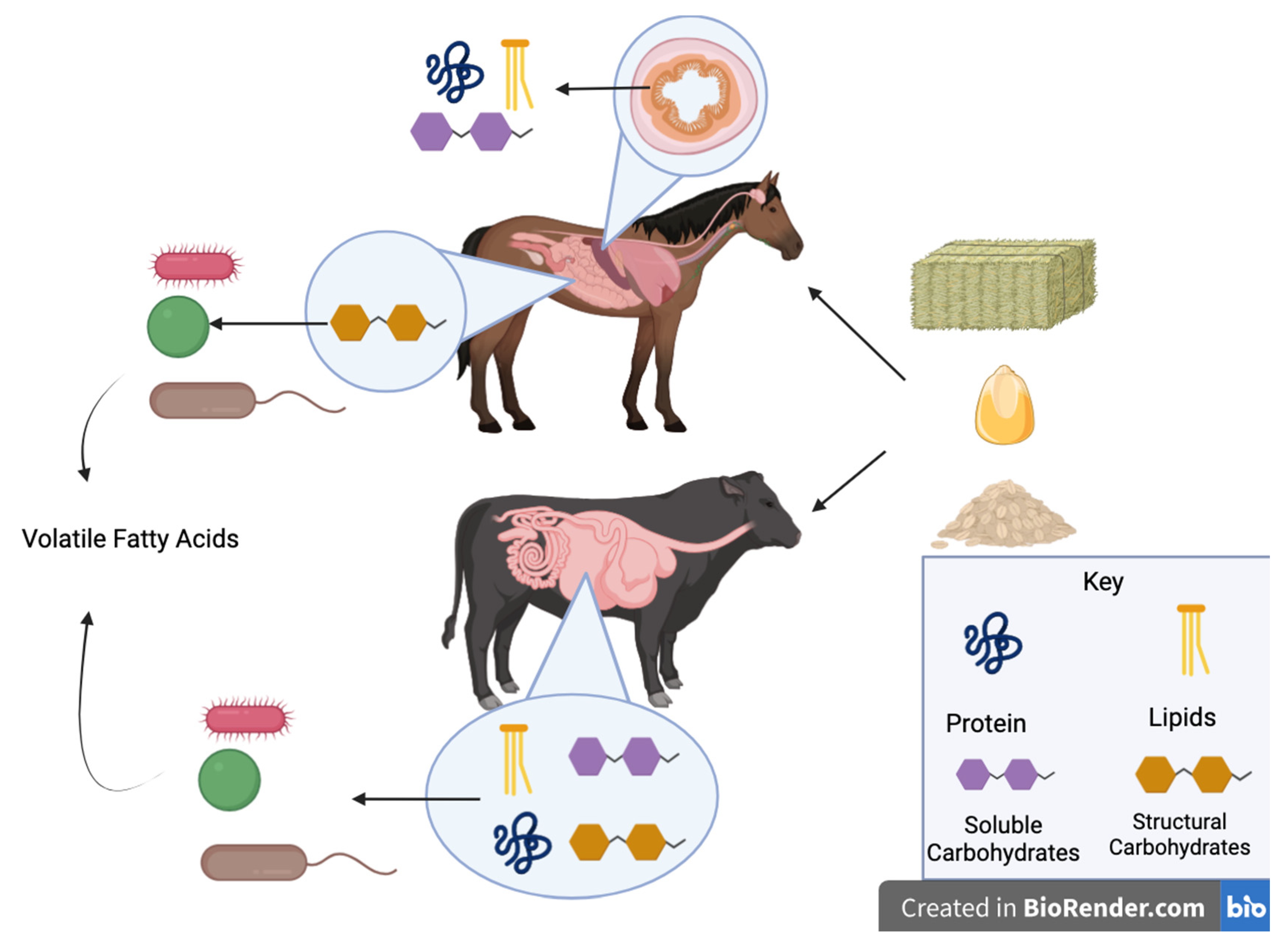
Horses and ruminants differ in their dietary fiber utilization due to distinct differences in their gastrointestinal anatomy (Figure 1). Forage neutral detergent fiber (NDF) digestibility in vivo ranges from 337 to 522 g NDF/kg dry matter (DM) in horses compared to 502 to 708 g/kg in cattle [4,5]. Greater digestibility in ruminants is likely due to fermentation occurring in the rumen, with soluble carbohydrates and protein available to stimulate microbial fermentation with reduced particle size from rumination [6]. However, horses remove soluble protein and carbohydrates in the small intestine prior to digestion by fibrolytic microbes in the cecum and colon. Therefore, the digesta reaching the cecum and colon are poorer in nutrients, which may limit fiber digestion [4,5,6]. Prior studies in horses demonstrated a much greater in vitro NDF digestibility than what is normally observed in vivo, and modifications to the in vitro methodology to better mimic equine gastrointestinal physiology were recommended [7,8]. Therefore, our study objectives were to determine if washing feed samples with NDS before incubation would suppress NDF digestion compared to a post-incubation wash, and to compare the effects of added soluble carbohydrates, soluble protein, or soluble carbohydrates and soluble protein to forage-based diets on fiber digestion compared to only-forage samples. We hypothesized that pre-washing example equine diets with NDS before incubation would suppress fiber digestion, specifically in diets with added neutral detergent soluble crude protein and carbohydrates.

2. Materials and Methods

2.1. Animals and Diets

All animal procedures were approved by the Tarleton State University Institutional Animal Care and Use Committee (Protocol #05-001-2024 A2). A 2 × 4 factorial experiment arranged as an in vitro split–split-plot batch culture design was conducted using two DaisyII incubators (n = 2; whole plots; ANKOM Technology Corporation, Fairport, NY, USA) with four different feed mixtures (n = 4) placed into four jars in each incubator (n = 4/incubator; split-plots) serving as replicates. Four mature Quarter Horse geldings selected from Tarleton State University’s herd located in Stephenville, TX, served as microbial inoculum donors. Horses weighed 579.5 ± 30.4 kg and had a body condition score [9] of 6.8 ± 0.8 on the day of fecal collection. Horses were acclimated for 14 d to a standardized environment and diet. The geldings were individually housed in 10 × 20 m dry lot runs at the Tarleton State University Equestrian Center (Stephenville, TX, USA). The daily diet consisted of 15 g/kg body weight as-fed of coastal Bermudagrass hay (Cynodon dactylon: 915 g DM/kg; 145 g crude protein (CP)/kg DM, 645 g NDF/kg DM; 348 g acid detergent fiber (ADF)/kg DM; 8.87 MJ Digestible Energy/kg DM) and 500 g as-fed of a commercial concentrate (Bluebonnet® Equilene® Pellets, Bluebonnet® Feeds, Ardmore, OK, USA; 917 DM g/kg; 158 g CP/kg DM; 333 NDF/kg DM; 216 g ADF/kg DM; 10.38 MJ Digestible Energy/kg DM). Meals were offered at 800 h and 1600 h each day in equal feedings. Horses had ad libitum access to water and salt blocks.

2.2. Feed Sample Preparation

Approximately 500 g of whole oats (Avena sativa), soybean meal (Glycine max), and coastal Bermudagrass hay were randomly collected. Feedstuffs were dried in duplicate at 50 °C for 48 h in a forced-air drying oven to determine DM (g/kg). Feedstuffs were then individually ground within a Wiley Mill (Arthur H. Thomas Co., Philadelphia, PA, USA) to pass through a 2 mm screen. Each feedstuff was then individually weighed and mixed to produce feed mixtures containing only forage (CONT; n = 8), forage with soybean meal as a source of added neutral detergent soluble crude protein (PROT; n = 8), forage with oats added as a source of neutral detergent soluble carbohydrates (CARB; n = 8), or forage with added neutral detergent soluble protein and carbohydrates (C + P; n = 8). The subsequent mixtures contained 1000 g/kg coastal Bermudagrass hay (CONT), 100 g/kg soybean meal with 900 g/kg coastal Bermudagrass hay (PROT), 600 g/kg whole oats with 400 g/kg coastal Bermudagrass hay (CARB), and 200 g/kg whole oats with 50 g/kg soybean meal and 750 g/kg coastal Bermudagrass hay (C + P). The experimental mixtures were designed to mimic different diets commonly fed to horses, including only forage (CONT), a forage diet with a ration balancer concentrate (PROT), a performance horse diet with increased digestible energy content for horses in intense exercise (CARB), and a common concentrate to be fed at 5 to 10 g/kg BW/d (C + P).
ANKOM F57 filter bags (ANKOM Technology Corporation, Fairport, NY, USA) were labeled with acetone-resistant markers, soaked in acetone for 5 min, air-dried for 15 min, then dried in a forced-air drying oven at 50 °C for 1 h and then weighed. The feed mixtures described above were then weighed to 0.5 g and heat-sealed within individual filter bags. Two filter bags from each mixture were placed in each incubator jar (n = 4/incubator) for both DaisyII incubators (n = 2 incubators), resulting in sixteen total sample bags for each mixture with the duplicate bags in each incubator jar averaged to produce n = 8/mixture. Each incubator jar contained 8 sample filter bags with 1 empty filter bag to serve as a correction factor (n = 9 filter bags/incubator jar), which yielded 72 total filter bags used in vitro. Eight sample bags from each mixture were randomly selected to undergo a pre-incubation NDS wash for isolation of cell walls (PRE). This process mimicked the removal of soluble carbohydrates, proteins, and lipids that would be digested before microbial fermentation within the horse. Briefly, the filled sample bags were placed within ANKOM200 Fiber Analyzers and washed with NDS following the directions of ANKOM Technology [10]. Briefly, samples were placed in 16-sample runs within each fiber analyzer. The vessel was then filled with NDS with 4 mL of heat-stable amylase and 20 g of sodium sulfite and sealed. The heating implement and agitator were then activated and the samples were washed for 1.25 h. After completion, the samples underwent two 5 min washes with water and 4 mL of heat-stable amylase, then one wash with only water [10]. After isolation of cell walls, the samples were rinsed with acetone and allowed to air-dry for 15 min, then placed in a forced-air drying oven at 100 °C for 1 h. The pre-washed samples were subsequently placed in one incubator to serve as the main plot. The remaining eight sample bags for each mixture were not pre-washed with NDS, and underwent a post-incubation wash (POST) following the directions for IVTD as described by ANKOM Technology [3]. A duplicate set of feed mixtures were prepared for analysis of NDF, ADF, acid detergent lignin (ADL), neutral detergent insoluble crude protein (NDICP), and acid detergent soluble crude protein (ADICP).

2.3. Fecal Inoculum Collection

Fresh feces were collected on Day 14 of the study at 900 h via rectal grab or immediately after defecation by the same researchers as the horses stood in stocks [11]. Fecal collection was performed 1 h after the morning feeding. A minimum of 500 g of feces from each horse was collected and immediately placed into individual resealable plastic bags. The air was forced out of each bag to decrease air exposure to microbes. The bagged feces were then placed into pre-warmed thermoses (39 °C) [11,12] and transported to the laboratory. Total time between fecal collection and incubation was approximately 1 h.

2.4. Fecal Inoculum Preparation

Two buffers were pre-warmed to 39 °C prior to fecal preparation. Buffer A contained 10.0 g/L KH2PO4, 0.5 g/L MgSO4 · H2O, 0.5 g/L NaCL, 0.1 g/L CaCl2 · H2O, and 0.5 g/L urea while Buffer B contained 15.0 g/L Na2CO3 and 1.0 g/L Na2S · 9H2O. Buffers A and B were measured to a 5:1 ratio (1330 mL Buffer A; 270 mL Buffer B) to produce a pH of 6.8 at 39 °C with the mixed solution subsequently poured into each incubator jar (1600 mL/jar) [3]. The jars were placed back into the pre-heated incubators until fecal inoculum preparation. Fecal samples from each horse were weighed to 50 g each to produce 200 g of total feces and placed into a blender (Hamilton Beach®, Glen Allen, VA, USA) and mixed with ~400 mL of mixed buffer solution. The feces and buffer were then homogenized for ~30 s, then strained through four layers of cheesecloth into a plastic container. The inoculum solution was poured back into the incubator jar along with the filter bags (n = 9/jar). The jar was then purged with CO2 for 30 s before being placed into the DaisyII incubator for 48 h (ANKOM Technology Corporation, Fairport, NY, USA). The process was repeated for each jar (n = 8) [12,13].

2.5. Chemical Analysis

The split feed mixtures were used to determine pre-digestion NDF, ADF, and ADL concentrations. The NDF and ADF assays were performed using two ANKOM200 Fiber Analyzers. Neutral detergent fiber was analyzed using heat-stable amylase while both NDF and ADF were measured with residual ash (ANKOM Technology Corporation, Fairport, NY, USA) using methods described by ANKOM Technology [10]. Sample ADL was analyzed using 500 mL glass beakers following the procedures outlined by ANKOM Technology [10]. Crude protein, NDICP, and ADICP were determined by combustion for determination of nitrogen using the Dumas total combustion method in a LECO Cornerstone CN 828 (Elementar Americas, Mt. Laurel, NJ, USA; Method 990.09) [14] and subsequently converted to protein by multiplying by 6.25 [15]. After 48 h of fermentation, all samples were washed with distilled water until the rinsate was cleared. The PRE samples were then rinsed with acetone, air-dried for 15 min, placed in a forced-air drying oven at 100 °C for 1 h, and re-weighed to determine residual NDF. The POST samples underwent NDF analysis within the ANKOM200 Fiber Analyzers, and were then rinsed with acetone, air-dried for 15 min, dried at 100 °C for 1 h in a forced-air drying oven, then re-weighed to measure NDF residue. Both PRE and POST then underwent ADF and ADL assays for determination of residual cell wall composition.

2.6. Calculations

Hemicellulose, cellulose, neutral detergent soluble crude protein (NDSCP), and acid detergent soluble crude protein (ADSCP) were not directly measured; thus, they were calculated using the following equations adapted from Van Soest [16]:
Hemicellulose:
(Hemicellulose, g/kg DM) = NDF (g/kg DM) − ADF (g/kg DM)
Cellulose:
(Cellulose, g/kg DM) = ADF (g/kg DM) − ADL (g/kg DM)
Neutral detergent soluble crude protein:
(NDSCP, g/kg DM) = CP (g/kg DM) − NDICP (g/kg DM)
Acid detergent soluble crude protein:
(ADSCP, g/kg DM) = NDICP (g/kg DM) − ADICP (g/kg DM)
Sample weights from pre- and post-incubation were used to determine the digestibility measures for the total samples and cell wall fractions using modified equations from ANKOM Technology [3] and Tassone et al. [17]:
In vitro true digestibility:
(IVTD, g/kg DM) = 1000 × (DM0h − (NDFresidue − Blankcorrection))/DM0h
In vitro NDF digestibility:
(IVNDFD, g/kg NDF) = 1000 × (NDF0h − (NDFresidue − Blankcorrection))/NDF0h
In vitro hemicellulose digestibility:
(IVHD, g/kg Hemicellulose) = 1000 × (HEMI0h − (HEMIresidue − Blankcorrection))/HEMI0h
In vitro ADF digestibility:
(IVADFD, g/kg ADF) = 1000 × (ADF0h − (ADFresidue − Blankcorrection))/ADF0h
In vitro cellulose digestibility:
(IVCD, g/kg cellulose) = 1000 × (CELL0h − (CELLresidue − Blankcorrection))/CELL0h
where the terms are described as follows:
DM0h = Initial sample weight (g DM—dry matter);
NDF0h = Split sample weight after neutral detergent treatment (g NDF);
Blankcorrection = Final oven-dried weight (g DM) − original blank bag weight (g DM);
NDFresidue = Final bag weight after incubation and neutral detergent treatment (g NDF);
ADF0h = Split sample weight after acid detergent treatment (g ADF);
ADFresidue = Final bag weight after incubation and acid detergent treatment (g ADF)
HEMI0h = NDF0h − ADF0h
HEMIresidue = NDFresidue − ADFresidue
ADL0h = Split sample weight after 72% sulfuric acid treatment
ADLresidue = Final bag weight after incubation and 72% sulfuric acid treatment
CELL0h = ADF0h − ADL0h
CELLresidue = ADFresidue − ADLresidue

2.7. Statistical Analysis

All data were analyzed within R Statistical Program© (v4.4.0). Nutrient composition was analyzed using one-way analysis of variance (ANOVA) using the main effect of mixture while digestibility data were analyzed using three-way ANOVA with the main effects of washing treatment (DaisyII incubator), incubator jar, feed mixture, and treatment x mixture. Normality was evaluated using a Shapiro–Wilk test and normalized to two standard deviations for each nutrient and digestibility measure if the data lacked normality. Results are presented as mean ± standard error of the mean (SEM) and were separated using a Tukey HSD test. Results were considered significant at p  0.05 and trends discussed at 0.05 < p  0.10. Cohen’s d was used to determine effect size of the differences between treatment, mixture, and treatment × mixture interactions. Effect size was considered minimal at |d| < 0.2, small at 0.2 |d| < 0.5, moderate at 0.5 |d| < 0.8, large at 0.8 |d| < 1.0, and very large at 1.0 |d|.

3. Results

The nutrient composition of the feed mixtures is presented in Table 1. Protein was greatest in PROT compared to all other mixtures (p ≤ 0.003), with C + P having more than CONT (p = 0.002) and CARB (p < 0.001). CARB had the least NDICP (p ≤ 0.001), ADICP (p ≤ 0.01), and ADSCP (p ≤ 0.004) versus all other treatments. Mixture NDSCP was greatest in PROT (p < 0.001) with CONT having less than C + P (p < 0.001) and CARB (p = 0.003). Neutral detergent fiber was greatest in CONT (p ≤ 0.003), with CARB having less than all other treatments (p < 0.001). Feed mixture ADF was not significantly different between PROT and C + P (p = 0.83), greatest in CONT (p < 0.001), and least in CARB (p < 0.001). Lignin (ADL) was not different between C + P and PROT (p = 0.483) and tended to differ between PROT and CARB (p = 0.07). The CARB mixture had lower ADF compared to C + P (p = 0.002) and CONT (p < 0.001), with CONT having more than C + P (p = 0.007) and PROT (p < 0.001). Hemicellulose was greater in CONT compared to C + P (p = 0.014) and CARB (p < 0.001), with PROT not being different to either CONT (p = 0.67) or C + P (p = 0.196). The CONT mixture tended to have more cellulose compared to PROT (p = 0.088) and had more than C + P (p = 0.001), with CARB having less than all other mixtures (p < 0.001).
Mixture IVTD was greatest in CARB (p  0.001), with C + P having more than CONT (p = 0.001). The PROT mixture was not different to either C + P (p = 0.12) or CONT (p = 0.117). There were no mixture effects for IVNDFD (p = 0.851), IVADFD (p = 0.685), IVHD (p = 0.240), or IVCD (p = 0.63; Table 2). Pre-washing with neutral detergent solution decreased IVTD (p = 0.001), IVADFD (p = 0.036), IVHD (p = 0.001), and IVCD (p = 0.006), and tended to decrease IVNDFD (p = 0.072; Table 3). Very large effect sizes were observed between PRE and POST for IVTD (d = 1.271), IVHD (d = 1.271), and IVCD (d = 1.060), with moderate effect sizes for IVNDFD (d = 0.665) and IVADFD (d = 0.785; Table 3).
Regarding IVTD, CARB had a greater digestibility than all other treatments (p  0.021), C + P tended to be greater than CONT (p = 0.053), and PROT was not different from C + P (p = 0.984) or CONT (p = 0.29) for the post-washed samples. For the pre-washed samples, IVTD was greatest in CARB (p  0.046), C + P had a greater value than CONT (p = 0.049), and no difference was observed for PROT compared to C + P (p = 0.287) or CONT (p = 0.981). Mixtures did not differ within the post-wash (p  0.999) or pre-wash treatments (p  0.691) or between treatments within a mixture (p  0.604) for IVNDFD. Mixture IVADFD did not differ within the post-wash (p  0.999) or pre-wash treatments (p  0.879) or between treatments within a mixture (p  0.819). In vitro cellulose digestibility (IVCD) did not differ among mixtures within the post-wash (p  0.936) or pre-wash treatments (p  0.995) or between treatments within a mixture (p  0.497). No differences were found among mixtures within the pre-wash treatment for IVHD (p  0.933), but CARB tended to have greater values than CONT (p = 0.067) within the post-wash treatment. Furthermore, CARB had a greater IVHD when undergoing the post-wash treatment versus the pre-wash treatment (p = 0.007), while no other mixtures differed between treatments (p  0.705; Table 4).
For IVTD, CONT (d = 0.963) and C + P (d = 0.939) had large effect sizes while PROT (d = 2.002) and CARB (d = 1.181) had very large effect sizes. Regarding IVNDFD and IVHD, PRE versus POST had small effect sizes for CONT (d = 0.255; d = 0.286), while C + P had moderate effect sizes for IVNDFD (d = 0.577) and IVHD (d = 0.649). However, PROT and CARB had very large effect sizes for IVNDFD (d = 1.042; d = 1.298) and IVHD (d = 1.181; d = 2.967). Mixture IVADFD had a small effect size between PRE and POST for C + P (d = 0.373) compared to large effect sizes for CONT (d = 0.824) and CARB (d = 0.909), with a very large effect size for PROT (d = 1.034). The IVCD effect size between PRE and POST was moderate for CARB (d = 0.681), large for CONT (d = 0.968), and very large for C + P (d = 1.172) and PROT (d = 1.420; Table 4).
Pre-washing with neutral detergent solution (PRE) resulted in increased effect sizes for IVNDFD (0.249 ≤ d ≤ 1.197) and IVADFD (0.06 ≤ d ≤ 0.94) among the different treatments compared to POST (IVNDFD: 0.092 ≤ d ≤ 0.356; IVADFD 0.005 ≤ d ≤ 0.284). Effect sizes were greater for the POST treatment among the different mixtures for IVHD (0.406 ≤ d ≤ 2.252) and IVCD (0.082 ≤ d ≤ 0.820) compared to PRE (IVHD: 0.044 ≤ d ≤ 0.827; IVCD: 0.065 ≤ d ≤ 0.524). However, there was not a great difference in effect size between treatments for IVTD within PRE (0.651 ≤ d ≤ 4.714) or POST (0.632 ≤ d ≤ 4.932; Table 5).

4. Discussion

4.1. Modification of Sample Preparation to Account for Foregut Digestion

The primary objective of this study was to evaluate a modified preparation step for feedstuffs prior to incubation in fecal inoculum to mimic foregut digestion in the horse compared to current procedures of washing feedstuffs with neutral detergent solution after incubation. Forage digestion in ruminants likely benefits from microbial exposure to cell contents such as soluble protein and carbohydrates along with decreased particle size from greater mastication to increase fiber digestion compared to horses. Studies show that total volatile fatty acid production is approximately 50% greater in the rumen of cattle compared to the cecum of ponies when consuming low-protein timothy hay [18]. Within our study, IVTD had a bias from POST to PRE washing treatments ranging from a 36.9 to 78.1 g/kg increase. The greatest bias was associated with IVHD (14.1 to 146.2 g/kg hemicellulose), followed by IVADFD (30.4 to 84.2 g/kg ADF), IVCD (40.9 to 85.3 g/kg cellulose), and IVNDFD (−15.0 to 76.2 g/kg NDF) between washing treatments. Cymbaluk [5] found that horses digested less NDF (165 g/kg NDF) and ADF (157 g/kg ADF) compared to cattle consuming the same forages. Furthermore, cattle had greater gross energy digestion than horses, with no differences in true protein digestion (cattle: 834 g/kg CP; horse: 803 g/kg CP) [5]. Chenost et al. [4] further demonstrated a negative delta for NDF digestion (−91 to −146 g/kg NDF) and ADF digestion (−190 to −198 g/kg ADF) when comparing horses to cattle. Dry matter digestibility was lower in horses compared to cattle by ~76 g/kg DM, with cellulose digestion being lower in horses versus steers by 157 g/kg cellulose [6]. The differences in digestibility measures between PRE and POST were not as great as those found in the literature. However, our results demonstrated a sizeable shift between pre-washing and post-washing samples with NDS. While the advantage of the ruminant gastrointestinal tract is acknowledged in terms of increased digestibility of fibrous materials, previous in vitro methods for the DaisyII incubator do not account for such differences in digestive physiology, and the modifications to sample preparation described in the current study are more in accordance with horse in vivo data while the POST treatment was more in accordance with ruminant data from the literature [4,5,6]. However, in vivo data are warranted to further validate our proposed methodology of pre-washing samples to remove NDS, which would occur in the small intestine of the horse.
Other studies have attempted to develop modified in vitro methods to mimic the gastrointestinal physiology of horses. Abdouli and Attia [19] first proposed a two-stage in vitro technique for horses by incubating feedstuffs in pepsin (2 to 8 h) and amylase (2 to 16 h). Gas production at 48 h was greater in non-treated barley grain and soybean meal compared to the enzyme-treated samples, likely due to the exposure of the microbial inoculum to rapidly fermentable carbohydrates and soluble protein in the barley and soybean meal, respectively [19]. We observed that added soluble carbohydrates or protein may have a physiological effect on fiber digestibility. Compared to Abdouli and Attia [19], we washed samples with NDS to isolate the cell wall within the feed mixtures. According to the procedures to isolate NDF, amylase and sodium sulfite are added to the solution and incubated for 1.25 h in the Ankom200 Fiber analyzer [10]. Our proposed procedures are similar to the 2 h pepsin + 2 h amylase procedure proposed by Abdouli and Attia [19] and may require less labor and time due to simultaneous removal of soluble protein and carbohydrates. Kara and Altinsoy [20] proposed a three-step process to simulate the environments of the stomach, the small intestine, and then the colon. The authors found similar in vitro dry matter digestibility values for Italian ryegrass (510.7 g/kg DM) and meadow hay (457.7 g/kg DM) which are similar to the pre-washed IVTD values we observed for CONT (443.6 g/kg DM) and C + P (535.0 g/kg DM) with similar nutrient profiles [20]. However, a three-step process requires experienced lab workers and its comparability to in vivo data should be addressed. Therefore, a two-stage method simply reversing the order of the ANKOM Technology [3] IVTD procedure may be more appropriate to better emulate in vivo digestibility.
Previous work in cattle showed that batch culture incubation had no effect on in vitro digestibility compared to single feedstuff samples being incubated within the same jar in the DaisyII incubator. The incubated feedstuffs included steam-flaked corn, corn silage, grass hay, and alfalfa hay, indicating that high-starch, high-fiber, or high-protein feedstuffs did not affect other feedstuffs when contained in ANKOM F57 fiber bags. The author also noted no effect of donor diet (total mixed ration vs. forage-only) on in vitro digestibility [21]. Our horses consumed a high-forage diet with limited concentrate. Godwin et al. [22] found that inoculum from donor horses consuming high neutral detergent soluble carbohydrate diets only improved the digestibility of low-quality forages, but there was no difference in samples with CP greater than 100 g/kg DM and NDF less than 700 g/kg DM. As none of our mixtures were below 100 g CP/kg DM or above 700 g NDF/kg DM, further work is warranted to investigate how our proposed methodology would be impacted by donor diet.

4.2. Effect of Soluble Carbohydrates and Soluble Protein on In Vitro Digestion

Preceding in vitro work demonstrated that increased non-structural carbohydrates provided to equine hindgut microbes increased IVNDFD of low-quality forages [22,23]. A study by Murray et al. [24] showed that adding small amounts of sugar beet pulp to an alfalfa-based diet provided the microbial inoculum a source of rapidly fermentable carbohydrates. Increases in rapidly fermentable carbohydrates provide short-term energy for cellulolytic microbes to reproduce and subsequently ferment secondary cell walls [25]. This concept is demonstrated in our study when hemicellulose digestibility is increased in CARB when a post-incubation wash is performed. Pre-cecal starch digestion in the horse can range from 200 to 900 g/kg starch depending on the cereal grain provided in the diet [26]. Our study used oats as a source of non-structural carbohydrates (NSCs) to increase fiber digestion in vitro; previous studies have shown pre-cecal digestibility of ground oat starch to be greater than 900 g/kg starch [27]. The relatively high pre-cecal digestion of ground oats indicates a low likelihood of starch reaching the hindgut of the horse. Therefore, removing NSCs by pre-washing with NDS more closely mimics the mammalian enzyme digestion of starch from the cereal grains in the small intestine provided that the capacity of the small intestine to digest starch is not exceeded.
Protein digestion and absorption primarily occur in the foregut of the horses within the stomach and small intestine, respectively. Zeyner et al. [28] concluded that the apparent pre-cecal digestibility of NDSCP is 900 g/kg. Furthermore, Bockisch et al. [29] demonstrated a linear relationship between CP and pre-cecal digestible crude protein, with approximately 860 g/kg CP being digested and absorbed in the small intestine. Therefore, only small amounts of protein-bound nitrogen escape the small intestine and reach the hindgut of the horse. Equine hindgut and ruminal microbes require nitrogen for reproduction of cell bodies and the production of digestive and fermentative enzymes. Cattle recycle 48 to 67% of blood urea–nitrogen to the rumen [30] while horses only return 21 to 36% of blood urea–nitrogen to the lumen of the gastrointestinal tract [31]. Previous work has shown that equine hindgut microbes can use non-protein nitrogen and protein-bound nitrogen from fiber fermentation when dietary protein is deficient [32]. However, our horses were fed to exceed daily crude protein requirements; therefore, this was likely not the case and there was sufficient residual nitrogen in the fecal inoculum. Our buffer solution also provided 0.5 g urea/L to the microbes in the incubator jars. As there is no statistically discernable effect of added soluble protein on fiber digestibility, the nitrogen requirement of the microbes was likely met with the added urea. However, there was a large effect size between PRE and POST in the PROT mixture for IVHD (d = 1.181) and IVCD (d = 1.420), indicating a potential physiological effect not detected by parametric analyses.
Therefore, addition of soluble carbohydrates increased fiber digestibility for POST. Halpin et al. [33] reported that increasing CP content in low-quality grass hay (74 g CP/kg DM) via sodium caseinate improved in vitro gas production by mixed cecal microbes up to 94 g CP/kg DM but no further increases were observed at 114 g CP/kg DM. Additional CP via sodium caseinate did not improve in vitro gas production when alfalfa hay (224 g CP/kg DM) was fermented, indicating no benefit of additional CP beyond 90 g/kg DM to digestibility or microbial fermentation [33]. The coastal Bermudagrass hay in our study contained 118 g CP/kg DM, above the threshold for benefit of additional protein in the hindgut. This likely explains why the addition of soluble carbohydrates may have a greater increase in fiber digestion, specifically hemicellulose, as the soluble protein within the CONT likely was adequate to support microbial reproduction within the POST treatment and the soluble carbohydrates served as an energy source to stimulate initial microbial fermentation [34].

4.3. Comparison of In Vitro and Literature In Vivo Data

Fonnesbeck et al. [35] found that in vivo dry matter digestibility (DMD) ranged from 460 to 601 g/kg DM in horses fed a variety of forages. Our study showed a similar range for IVTD (443.6 to 535.0 g/kg DM) except for CARB (627.3 g/kg DM) when undergoing the pre-wash treatment, which may be due to decreased NDF content of CARB compared to the other mixtures. Previous work showed that NDF has a strong negative correlation to IVTD [8]. It should be noted that, while increased compared to the pre-wash treatment, the post-wash values for IVTD (481.1 to 571.9 g/kg DM) remain within the range of in vivo data for forages [35], except for CARB (673.3 g/kg DM).
Further work by Fonnesbeck [36] investigated the in vivo digestibility of grasses with similar CP (112 to 138 g/kg DM), NDF (611 to 750 g/kg DM), and ADF (390 to 426 g/kg) to the CONT (CP: 118.8 g/kg DM; NDF: 677.4 g/kg DM; 369.8 g/kg DM) and C + P (CP: 130.3 g/kg DM; NDF: 560.0 g/kg DM; ADF: 302.4 g/kg DM) mixtures used in our study. Fonnesbeck [36] found that the apparent NDF (388 to 501 g/kg NDF), ADF (342 to 429 g/kg ADF), hemicellulose (419 to 533 g/kg hemicellulose), and cellulose digestibility (415 to 491 g/kg cellulose) were more similar to CONT and C + P when pre-washed with neutral detergent solution than digestibility values obtained from samples that were fermented without isolation of cell walls. Furthermore, regression models by Fonnesbeck [37] showed that the true digestibility values for NDF, ADF, hemicellulose, and cellulose were 594 g/kg NDF, 447 g/kg ADF, 495 g/kg hemicellulose, and 434 g/kg cellulose, respectively. While our study showed greater ADF (538.2 to 614.7 g/kg ADF), hemicellulose (523.9 to 564.6 g/kg hemicellulose), and cellulose (473.2 to 500.8 g/kg cellulose) than the values provided by Fonnesbeck [37], the values we observed for IVNDFD when pre-washed with neutral detergent solution were within a normal variation (474.4 to 617.7 g/kg NDF) compared to the previous study. Moreover, the digestibility coefficients for IVNDFD (602.7 to 623.6 g/kg NDF), IVADFD (622.4 to 645.5 g/kg ADF), IVHD (559.1 to 670.1 g/kg hemicellulose), and IVCD (521.9 to 571.2 g/kg) were greater in the post-wash treatment compared to the values obtained by Fonnesbeck [36,37]. However, the values observed for the PRE treatment were closer to the ranges for in vivo digestibility within the literature compared to the POST treatment. An integrative analysis by Pagan [38] determined the apparent digestibility of NDF, ADF, and hemicellulose across 30 different diets ranging in CP (96 to 204 g CP/kg DM), NDF (383 to 574 g NDF/kg DM), ADF (206 to 406 g ADF/kg DM), hemicellulose (60 to 241 g hemicellulose/kg DM), and soluble carbohydrates (183 to 369 g soluble carbohydrates/kg DM). Pagan [38] found averages (mean ± standard deviation) for NDF digestibility, ADF digestibility, and hemicellulose digestibility of 454 ± 57, 399 ± 79, and 519 ± 106 g/kg DM, respectively. While the hemicellulose digestibility we observed for PRE fell within the range of Pagan [38] and the POST treatment was numerically greater than the range, both of our PRE and POST treatments were above the values for NDF and ADF digestibility. Our observed values for ADF digestibility were much greater than those found by Chenost et al. [4] and Cymbaluk [5] (ADF digestibility: 375 to 427 g/kg DM). However, while the NDF digestibility measures we found for PRE and POST were greater than those in both Chenost et al. [4] and Cymbaluk [5] (337 to 522 g/kg DM), the average PRE IVNDFD was 577.7 g/kg DM, which was numerically more similar to the previous values compared to the POST treatment (616.8 g/kg DM). Overall, the ranges for fiber digestion provided by previous in vivo work [4,5,35,36,37,38] demonstrate that our modified protocol does bring in vitro values more in line with in vivo data. However, our modified in vitro protocol produced data that were numerically greater than previous in vivo data, and therefore, more work is needed to validate our in vitro methodology.

5. Conclusions

Our objective was to determine if pre-washing feed mixtures with NDS reduces in vitro digestibility measures compared to the current standard practice of washing samples after fermentation. Results showed that pre-washing with NDS reduced in vitro digestibility measures, specifically hemicellulose digestion when soluble carbohydrates were added to the mixture. Furthermore, the digestibility data presented in our study were more proximate to in vivo data on similar diets when samples were pre-washed with NDS versus post-washing. While the proposed methodology may not match the exact physiology of in vivo digestibility of the horse, the modified method more closely resembles in vivo data from the literature and is a simple alteration to protocols currently practiced in commercial laboratories. While further validation of our proposed methodology with in vivo data using the same horses is warranted, we propose that this modified methodology presented in this paper be implemented to better represent the digestive capabilities of the horse to prevent overestimation of fiber digestion. However, in vivo digestibility trials are warranted for further validation of our modified methodology across a greater range of nutrient compositions and donor diets.

Author Contributions

Conceptualization, R.W.S., T.N.J.; methodology, R.W.S., T.N.J., N.M.C.; formal analysis, R.W.S.; investigation, R.W.S., M.R.P., N.M.C., T.N.J.; resources, N.M.C., J.P.M., W.F.O., T.N.J.; data curation, R.W.S., M.R.P., N.M.C., T.N.J.; writing—original draft preparation, R.W.S.; writing—review and editing, J.P.M., W.F.O., T.A.W., T.N.J.; visualization, R.W.S.; supervision, N.M.C., T.N.J.; project administration, R.W.S., T.N.J.; funding acquisition, R.W.S., N.M.C., J.P.M., W.F.O., T.N.J. All authors have read and agreed to the published version of the manuscript.

Funding

This research was funded by the FY24 Tarleton Presidential Excellence in Research Scholars Fund (funding number: JONES-PERS-FY-24). The APC was funded by the Tarleton State University College of Agriculture & Natural Resources.

Institutional Review Board Statement

The animal study protocol was approved by the Institutional Animal Care and Use Committee of Tarleton State University (IACUC Approval Number: 05-001-2024 A2; approved 29 May 2024).

Informed Consent Statement

Not applicable.

Data Availability Statement

The raw data supporting the conclusions of this article will be made available by the authors on request.

Acknowledgments

Preliminary results were presented as an abstract at the 2025 Tarleton RIED Symposium, Stephenville, TX, USA, 4 March 2025 and at the 2025 Equine Science Symposium, Fort Collins, CO, USA, 3–6 June 2025. The authors would like to thank Haley Saur and Gabrielle Wirtz for their help with horse care and laboratory assistance.

Conflicts of Interest

The authors declare no conflicts of interest.

Abbreviations

The following abbreviations are used in this manuscript:
ADFAcid detergent fiber
ADICPAcid detergent insoluble crude protein
ADLAcid detergent lignin
ADSCPAcid detergent soluble crude protein
ANOVAAnalysis of variance
CARB400 g/kg coastal Bermudagrass hay + 600 g/kg whole oats
CONTControl mixture (1000 g/kg DM coastal Bermudagrass hay)
C + P750 g/kg coastal Bermudagrass hay + 200 g/kg whole oats + 50 g/kg soybean meal
CPCrude protein
DMDry matter
DMDDry matter digestibility
IVADFDIn vitro acid detergent fiber digestibility
IVCDIn vitro cellulose digestibility
IVHDIn vitro hemicellulose digestibility
IVNDFDIn vitro neutral detergent fiber digestibility
IVTDIn vitro true digestibility
NDFNeutral detergent fiber
NDICPNeutral detergent insoluble crude protein
NDSNeutral detergent solution
NDSCPNeutral detergent soluble crude protein
NSCsNon-structural carbohydrates
POSTWashed with neutral detergent solution after fermentation
PREPre-washed with neutral detergent solution before fermentation
PROT900 g/kg coastal Bermudagrass hay + 100 g/kg soybean meal
SEMStandard error of the mean

References

  1. Coles, L.T.; Moughan, P.J.; Darragh, A.J. In vitro digestion and fermentation methods, including gas production techniques, as applied to nutritive evaluation of foods in the hindgut of humans and other simple-stomached animals. Anim. Feed Sci. Technol. 2005, 123–124, 421–444. [Google Scholar] [CrossRef]
  2. Douglas, J.; Owers, R.; Campbell, M.L.H. Social Licence to Operate: What Can Equestrian Sports Learn from Other Industries? Animals 2022, 12, 1987. [Google Scholar] [CrossRef]
  3. ANKOM Technology. In Vitro True Digestibility Using the DaisyII Incubator. Available online: https://www.ankom.com/sites/default/files/2024-08/Method_3_InVitro_D200_D200I.pdf?srsltid=AfmBOoo_jvVSQ98HoLKtlkQwK5f_J0o4ws61sIrJ8-2FBgh-R_jyLHdQ (accessed on 10 July 2024).
  4. Chenost, M.; Martin-Rosset, W.; Boissau, J.; Dudilieu, M.; Jailler, M.; L’Hotelier, L.; Dubroeucq, H.; Jailler, R.; Moins, G. Comparaison entre espèces (mouton, cheval, bovin) de la digestibilité et des quantités ingérées des fourrages verts. Ann. Zootech. 1985, 34, 291–312. [Google Scholar] [CrossRef][Green Version]
  5. Cymbaluk, N.F. Comparison of forage digestion by cattle and horses. Can. J. Anim. Sci. 1990, 70, 601–610. [Google Scholar] [CrossRef]
  6. Vander Noot, G.; Gilbreath, E. Comparative digestibility of components of forages by geldings and steers. J. Anim. Sci. 1970, 31, 351–355. [Google Scholar] [CrossRef]
  7. Springer, R.W.; Cherry, N.M.; Muir, J.P.; Raub, R.H.; Wellmann, K.B.; Jones, T.N. Fiber composition, in vitro true digestibility, and fiber degradation of hempseed meal compared to mainstream feedstuffs using equine feces as microbial inoculum within the DaisyII Incubator. J. Equine Vet. Sci. 2025, 144, 105230. [Google Scholar] [CrossRef]
  8. Springer, R.W.; Cherry, N.M.; Raub, R.H.; Wellmann, K.B.; Jones, T.N. Estimation of In Vitro True Digestibility and Fiber Degradation from Feedstuff Fiber Composition When Incubated in Equine Fecal Inoculum. Animals 2023, 13, 3699. [Google Scholar] [CrossRef]
  9. Henneke, D.R.; Potter, G.D.; Kreider, J.L.; Yeates, B.F. Relationship between condition score, physical measurements and body fat percentage in mares. Equine Vet. J. 1983, 15, 371–372. [Google Scholar] [CrossRef]
  10. ANKOM Technology. ANKOM 200 Fiber Analyzer Operator’s Manual. Available online: https://www.ankom.com/embed-only/document/ankom-200-fiber-analyzer-operators-manual (accessed on 10 July 2024).
  11. Lowman, R.S.; Theodorou, M.K.; Hyslop, J.J.; Dhanoa, M.S.; Cuddeford, D. Evaluation of an in vitro batch culture technique for estimating the in vivo digestibility and digestible energy content of equine feeds using equine faeces as the source of microbial inoculum. Anim. Feed Sci. Technol. 1999, 80, 11–27. [Google Scholar] [CrossRef]
  12. Earing, J.E.; Cassill, B.D.; Hayes, S.H.; Vanzant, E.S.; Lawrence, L.M. Comparison of in vitro digestibility estimate using the DaisyII incubator with in vivo digestibility estimates in horses. J. Anim. Sci. 2010, 88, 3954–3963. [Google Scholar] [CrossRef]
  13. Lattimer, J.M.; Cooper, S.R.; Freeman, D.W.; Lalman, D.L. Effect of yeast culture on in vitro fermentation of a high-concentrate or high-fiber diet using equine fecal inoculum in a Daisy II incubator. J. Anim. Sci. 2007, 85, 2484–2491. [Google Scholar] [CrossRef]
  14. AOAC. Official Methods of Analysis, 16th ed.; Association of Official Analytical Chemists: Washington, DC, USA, 2000. [Google Scholar]
  15. AOAC. Official Methods of Analysis, 14th ed.; Association of Official Analytical Chemists: Washington, DC, USA, 1984. [Google Scholar]
  16. Van Soest, P.J. Development of a comprehensive system of feed analyses and its application to forages. J. Anim. Sci. 1967, 26, 119–128. [Google Scholar] [CrossRef]
  17. Tassone, S.; Renna, M.; Barbera, S.; Vallen, E.; Fortina, R. In vitro digestibility measurement of feedstuffs in donkeys using the DaisyII incubator. J. Equine Vet. Sci. 2019, 75, 122–126. [Google Scholar] [CrossRef]
  18. Kern, D.L.; Slyter, L.L.; Leffel, E.C.; Weaver, J.M.; Oltjen, R.R. Ponies vs. Steers: Microbial and Chemical Characteristics of Intestinal Ingesta. J. Anim. Sci. 1974, 38, 559–564. [Google Scholar] [CrossRef]
  19. Abdouli, H.; Attia, S.B. Evaluation of a two-stage in vitro technique for estimating digestibility of equine feeds using horse faeces as the source of microbial inoculum. Anim. Feed Sci. Technol. 2007, 132, 155–162. [Google Scholar] [CrossRef]
  20. Kara, K.; Altinsoy, A. Comparison of forages’ digestion levels for different in vitro digestion techniques in horses. Vet. Med. Sci. 2024, 10, e31373. [Google Scholar] [CrossRef] [PubMed]
  21. Holden, L.A. Comparison of methods of in vitro dry matter digestibility for ten feeds. J. Dairy Sci. 1999, 82, 1791–1794. [Google Scholar] [CrossRef] [PubMed]
  22. Godwin, T.; Webb, G.; Lancaster, P. Effect of donor diet on in vitro digestibility of forages by fecal inoculate. J. Equine Vet. Sci. 2021, 105, 103722. [Google Scholar] [CrossRef]
  23. Duvnjak, M.; Bošnjak, A.; Zadravec, M.; Pintar, J.; Grbeša, D.; Kiš, G. Starch in horse diet improves feces microbiota, in vitro digestibility of fiber and dry matter. J. Centr. Euro. Agric. 2018, 19, 918–930. [Google Scholar] [CrossRef]
  24. Murray, J.-A.M.; Longland, A.; Moore-Colyer, M. In vitro fermentation of different ratios of high-temperature dried lucerne and sugar beet pulp incubated with an equine faecal inoculum. Anim. Feed Sci. Technol. 2006, 129, 89–98. [Google Scholar] [CrossRef]
  25. Chesson, A. Nutritional Significance and Nutritive Value of Plant Polysaccharides; Butterworths: Guildford, UK, 1990. [Google Scholar]
  26. Julliand, V.; De Fombelle, A.; Varloud, M. Starch digestion in horses: The impact of feed processing. Livest. Sci. 2006, 100, 44–52. [Google Scholar] [CrossRef]
  27. Radicke, S.; Kienzle, E.; Meyer, H. Preileal apparent digestibility of oats and corn starch and consequences for cecal metabolism. In Proceedings of the 12th Equine Nutrition and Physiology Symposium, Calgary, AB, Canada, 6–8 June 1991; pp. 43–48. [Google Scholar]
  28. Zeyner, A.; Kirchhof, S.; Susenbeth, A.; Südekum, K.-H.; Kienzle, E. A new protein evaluation system for horse feed from literature data. J. Nutr. Sci. 2015, 4, e4. [Google Scholar] [CrossRef]
  29. Bockisch, F.; Taubert, J.; Coenen, M.; Vervuert, I. Protein evaluation of feedstuffs for horses. Animals 2023, 13, 2624. [Google Scholar] [CrossRef] [PubMed]
  30. Li, M.M.; Titgemeyer, E.C.; Hanigan, M.D. A revised representation of urea and ammonia nitrogen recycling and use in the Molly cow model. J. Dairy Sci. 2019, 102, 5109–5129. [Google Scholar] [CrossRef] [PubMed]
  31. Obitsu, T.; Hata, H.; Taniguchi, K. Nitrogen digestion and urea recycling in Hokkaido native horses fed hay-based diets. Anim. Sci. J. 2015, 86, 159–165. [Google Scholar] [CrossRef]
  32. Martin, R.; McMeniman, N.; Norton, B.; Dowsett, K. Utilization of endogenous and dietary urea in the large intestine of the mature horse. Brit. J. Nutr. 1996, 76, 373–386. [Google Scholar] [CrossRef] [PubMed][Green Version]
  33. Halpin, M.Y.; Drouillard, J.S.; Fehlberg, L.K.; Douthit, T.L.; Lattimer, J.M. Effects of Sodium Caseinate and Varying Protein Sources on In Vitro Fermentation of Forages by Mixed Equine Cecal Microorganisms. J. Equine Vet. Sci. 2020, 91, 103127. [Google Scholar] [CrossRef]
  34. Santos, A.S.; Ferreira, L.M.M.; Martin-Rosset, W.; Cone, J.W.; Bessa, R.J.B.; Rodrigues, M.A.M. Effect of nitrogen sources on in vitro fermentation profiles and microbial yield using equine caecal contents. Anim. Feed Sci. Technol. 2013, 182, 93–99. [Google Scholar] [CrossRef]
  35. Fonnesbeck, P.; Lydman, R.; Vander Noot, G.; Symons, L. Digestibility of the proximate nutrients of forage by horses. J. Anim. Sci. 1967, 26, 1039–1045. [Google Scholar] [CrossRef]
  36. Fonnesbeck, P.W. Digestion of soluble and fibrous carbohydrate of forage by horses. J. Anim. Sci. 1968, 27, 1336–1344. [Google Scholar] [CrossRef]
  37. Fonnesbeck, P.V. Partitioning the nutrients of forage for horses. J. Anim. Sci. 1969, 28, 624–633. [Google Scholar] [CrossRef]
  38. Pagan, J.D. Nutrient Digestibility in Horses. In Advances in Equine Nutrition; Pagan, J.D., Ed.; Nottingham University Press: Nottingham, UK, 1998; pp. 77–84. [Google Scholar]
Figure 1. Comparison of the general nutrients exposed to microbial populations for fermentation in the cecum and colon of the horse and the rumen of the cow. Created in Biorender. Ryon W. Springer. (2025) https://app.biorender.com/illustrations/6580620bf403e1564a632150?slideId=d1bba3c0-d7a8-4cfe-b8a0-5dc9a8414759.
Fermentation 11 00624 g001
Table 1. Protein and fiber composition (mean ± SEM) of feed mixtures containing coastal Bermudagrass hay (CONT) with either added soluble protein (PROT), added soluble protein and carbohydrates (C + P), or soluble carbohydrates (CARB).
Nutrient
(g/kg DM)
CONT (n = 8)PROT (n = 8)C + P (n = 8)CARB (n = 8)p-Value
CP118.8 ± 1.7 c157.9 ± 1.9 a130.3 ± 2.1 b114.6 ± 2.2 c<0.001
NDICP34.9 ± 2.0 a35.7 ± 1.9 a31.3 ± 1.2 a19.1 ± 1.2 b<0.001
NDSCP83.9 ± 2.4 c122.1 ± 7.3 a98.9 ± 1.6 b95.5 ± 1.6 b<0.001
ADICP14.4 ± 0.8 a13.7 ± 0.7 a13.1 ± 0.4 a10.0 ± 0.7 b<0.001
ADSCP20.5 ± 2.3 a22.0 ± 1.9 a18.2 ± 1.2 a9.1 ± 1.3 b<0.001
NDF677.4 ± 15.7 a615.2 ± 11.4 b560.0 ± 5.8 c430.2 ± 9.8 d<0.001
ADF369.8 ± 4.4 a311.5 ± 11.9 b302.4 ± 4.4 b216.7 ± 6.7 c<0.001
ADL79.0 ± 1.0 a69.3 ± 2.2 a76.1 ± 3.5 a57.2 ± 2.2 b<0.001
Hemicellulose308.4 ± 16.9 a303.7 ±   7.7  ab257.6 ± 6.2 b211.9 ± 9.4 c<0.001
Cellulose273.4 ± 8.1 ax246.3 ± 10.1 aby226.3 ± 8.1 b159.5 ± 7.3 c<0.001
Abbreviations: DM: dry matter; CP: crude protein; NDICP: neutral detergent insoluble crude protein; NDSCP: neutral detergent soluble crude protein; ADICP: acid detergent insoluble crude protein; ADSCP: acid detergent soluble crude protein; NDF: neutral detergent fiber; ADF: acid detergent fiber; ADL: acid detergent lignin; a,b,c,d means within a row differ (p  0.05); x,y means within a row tend to differ (0.05 < p  0.10).
Table 2. In vitro digestibility measures (mean ± SEM) of feed mixtures containing coastal Bermudagrass hay (CONT) with added soluble protein (PROT), added soluble protein and carbohydrates (C + P), or soluble carbohydrates (CARB) pooled incubation preparation treatments.
DigestibilityCONT (n = 8)PROT (n = 8)C + P (n = 8)CARB (n = 8)p-Value
IVTD462.3 ± 16.6 c507.9 ± 20.3 bc553.3 ± 11.0 b650.3 ± 15.3 a<0.001
IVNDFD610.2 ± 25.7592.6 ± 21.3600.8 ± 10.5585.5 ± 25.20.851
IVADFD609.9 ± 16.9580.3 ± 36.7629.9 ± 18.2608.5 ± 39.00.685
IVHD553.1 ± 19.9593.7 ± 23.8563.2 ± 9.5597.0 ± 31.10.240
IVCD533.8 ± 17.0515.8 ± 31.4536.0 ± 19.2501.4 ± 22.90.630
Abbreviations: SEM: standard error of the mean; IVTD: in vitro true digestibility (g/kg DM); IVNDFD: in vitro NDF digestibility (g/kg NDF); IVADFD: in vitro ADF digestibility (g/kg ADF); IVHD: in vitro hemicellulose digestibility (g/kg hemicellulose); IVCD: in vitro cellulose digestibility (g/kg cellulose); a,b,c means within a row differ (p  0.05) if followed by different letters.
Table 3. In vitro digestibility measures (mean ± SEM) of the pooled feed mixtures undergoing a neutral detergent solution wash after incubation (POST) or before fermentation (PRE).
MeasurePOST (n = 16)PRE (n = 16)p-Value|Cohen’s d|
IVTD568.2 ± 18.6 a518.7 ± 21.4 b0.0011.271 ****
IVNDFD616.8 ± 9.7 x577.7 ± 17.4 y0.0720.665 **
IVADFD639.1 ± 15.7 a575.1 ± 21.7 b0.0360.785 **
IVHD607.8 ± 14.4 a545.2 ± 13.6 b0.0011.271 ****
IVCD553.6 ± 15.4 a489.9 ± 12.6 b0.0061.060 ****
Abbreviations: SEM: standard error of the mean; IVTD: in vitro true digestibility (g/kg DM); IVNDFD: in vitro NDF digestibility (g/kg NDF); IVADFD: in vitro ADF digestibility (g/kg ADF); IVHD: in vitro hemicellulose digestibility (g/kg hemicellulose); IVCD: in vitro cellulose digestibility (g/kg cellulose); a,b means differ within a row if followed by different letters (p  0.05); x,y means tend to differ within a row if followed by different letters (0.05 < p  0.10); ** moderate effect size (0.50 ≤ |d| < 0.80); **** very large effect size (1.00 ≤ |d|).
Table 4. In vitro digestibility measures (mean ± SEM) of feed mixtures containing coastal Bermudagrass hay (CONT) with either added soluble protein (PROT), added soluble protein and carbohydrates (C + P), or soluble carbohydrates (CARB) undergoing a neutral detergent solution wash after incubation (POST) or before fermentation (PRE).
Digestibility MeasureTreatmentCONTPROTC + PCARBp-Value 1
IVTDPOST481.1 ± 7.6 by547.0 ± 14.4 b571.9 ± 15.7 bx673.3 ± 7.4 a0.025
PRE443.6 ± 31.5 c468.9 ± 26.3 bc535.0 ± 9.8 b627.3 ± 26.3 a
|Cohen’s d|0.963 ***2.002 ****0.939 ***1.181 ****
IVNDFDPOST602.7 ± 22.5623.1 ± 26.3617.7 ± 12.1623.6 ± 20.70.441
PRE617.7 ± 50.4562.0 ± 28.4583.9 ± 13.4547.4 ± 39.8
|Cohen’s d|0.255 *1.042 ****0.577 **1.298 ****
IVADFDPOST643.4 ± 10.7622.4 ± 35.4645.1 ± 21.0645.5 ± 54.90.918
PRE576.2 ± 21.5538.2 ± 62.1614.7 ± 30.9571.4 ± 56.4
|Cohen’s d|0.824 ***1.034 ****0.373 *0.909 ***
IVHDPOST559.1 ± 32.7 y622.8 ± 18.3 xy579.2 ± 6.7 xy670.1 ± 15.5 Ax0.067
PRE545.0 ± 23.9564.6 ± 41.9547.2 ± 14.4523.9 ± 26.8 B
|Cohen’s d|0.286 *1.181 ****0.649 **2.967 ****
IVCDPOST562.9 ± 18.1558.5 ± 45.2571.2 ± 13.4521.9 ± 41.60.898
PRE491.0 ± 23.3473.2 ± 36.6500.8 ± 26.6481.0 ± 21.0
|Cohen’s d|0.968 ***1.420 ****1.172 ****0.681 **
Abbreviations: SEM: standard error of the mean; IVTD: in vitro true digestibility (g/kg DM); IVNDFD: in vitro NDF digestibility (g/kg NDF); IVADFD: in vitro ADF digestibility (g/kg ADF); IVHD: in vitro hemicellulose digestibility (g/kg hemicellulose); IVCD: in vitro cellulose digestibility (g/kg cellulose); a,b,c mixtures within a treatment differ (p ≤ 0.05); x,y means tend to differ within a row if followed by different letters (0.05 < p  0.10); A,B treatments within a mixture differ (p ≤ 0.05) if followed by different letters; * small effect size (0.20 < |d| < 0.50); ** moderate effect size (0.50 < |d| < 0.80); *** large effect size (0.80 < |d| < 1.00; **** very large effect size (1.00 < |d|); 1 treatment × mixture interaction (n = 4/interaction).
Table 5. Effect sizes of in vitro digestibility measures between feedstuff mixtures within each neutral detergent solution wash either pre-fermentation (PRE) or post-fermentation (POST).
|Cohen’s d|IVTDIVNDFDIVADFDIVHDIVCD
ContrastPRE
(PROT)-(C + P)1.695 ****0.373 *0.940 ***0.354 *0.460 *
(PROT)-(CONT)0.651 **0.948 ***0.468 *0.398 *0.524 **
(PROT)-(CARB)4.063 ****0.249 *0.408 *0.827 ***0.130
(C + P)-(CONT)2.345 ****0.576 **0.472 *0.0440.065
(C + P)-(CARB)2.368 ****0.622 **0.532 **0.472 *0.329 *
(CONT)-(CARB)4.714 ****1.197 ****0.0600.429 *0.394 *
ContrastsPOST
(PROT)-(C + P)0.632 **0.0920.278 *0.886 ***0.211 *
(PROT)-(CONT)1.690 ****0.349 *0.258 *1.293 ****0.072
(PROT)-(CARB)3.242 ****0.0070.284 *0.959 ***0.609 **
(C + P)-(CONT)2.322 ****0.257 *0.0200.406 *0.139
(C + P)-(CARB)2.610 ****0.1000.0051.846 ****0.820 ***
(CONT)-(CARB)4.932 ****0.356 *0.0262.252 ****0.681 **
Abbreviations: IVTD: in vitro true digestibility (g/kg DM); IVNDFD: in vitro NDF digestibility (g/kg NDF); IVADFD: in vitro ADF digestibility (g/kg ADF); IVHD: in vitro hemicellulose digestibility (g/kg hemicellulose); IVCD: in vitro cellulose digestibility (g/kg cellulose); * small effect size (0.20 ≤ |d| < 0.50); ** moderate effect size (0.50 ≤ |d| < 0.80); *** large effect size (0.80 ≤ |d| < 1.00; **** very large effect size (1.00 ≤ |d|).
Disclaimer/Publisher’s Note: The statements, opinions and data contained in all publications are solely those of the individual author(s) and contributor(s) and not of MDPI and/or the editor(s). MDPI and/or the editor(s) disclaim responsibility for any injury to people or property resulting from any ideas, methods, instructions or products referred to in the content.