
Article

Three-Dimensional Long-Wave Instability of an Evaporation/Condensation Film
1
School of Energy Science and Engineering, Harbin Institute of Technology, Harbin 150001, China
2
State Key Laboratory of Aerodynamics, Mianyang 621000, China
3
Institute of Mechanics, Chinese Academy of Sciences, Beijing 100190, China
*
Authors to whom correspondence should be addressed.
These authors contributed equally to this work.
Fluids 2024, 9(6), 143; https://doi.org/10.3390/fluids9060143
Submission received: 19 May 2024 / Revised: 5 June 2024 / Accepted: 10 June 2024 / Published: 14 June 2024
(This article belongs to the Special Issue Evaporation, Condensation and Heat Transfer)

Abstract

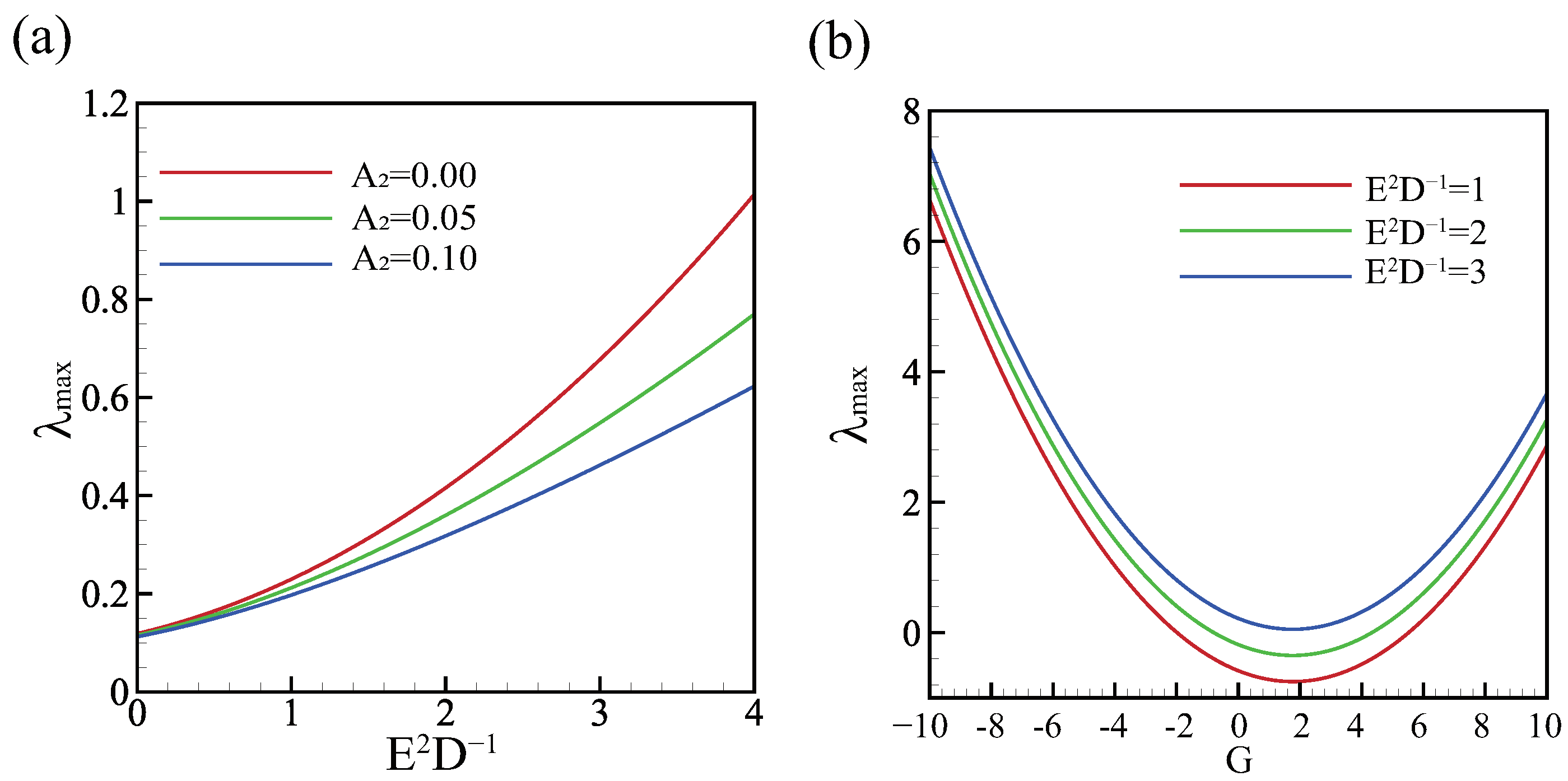
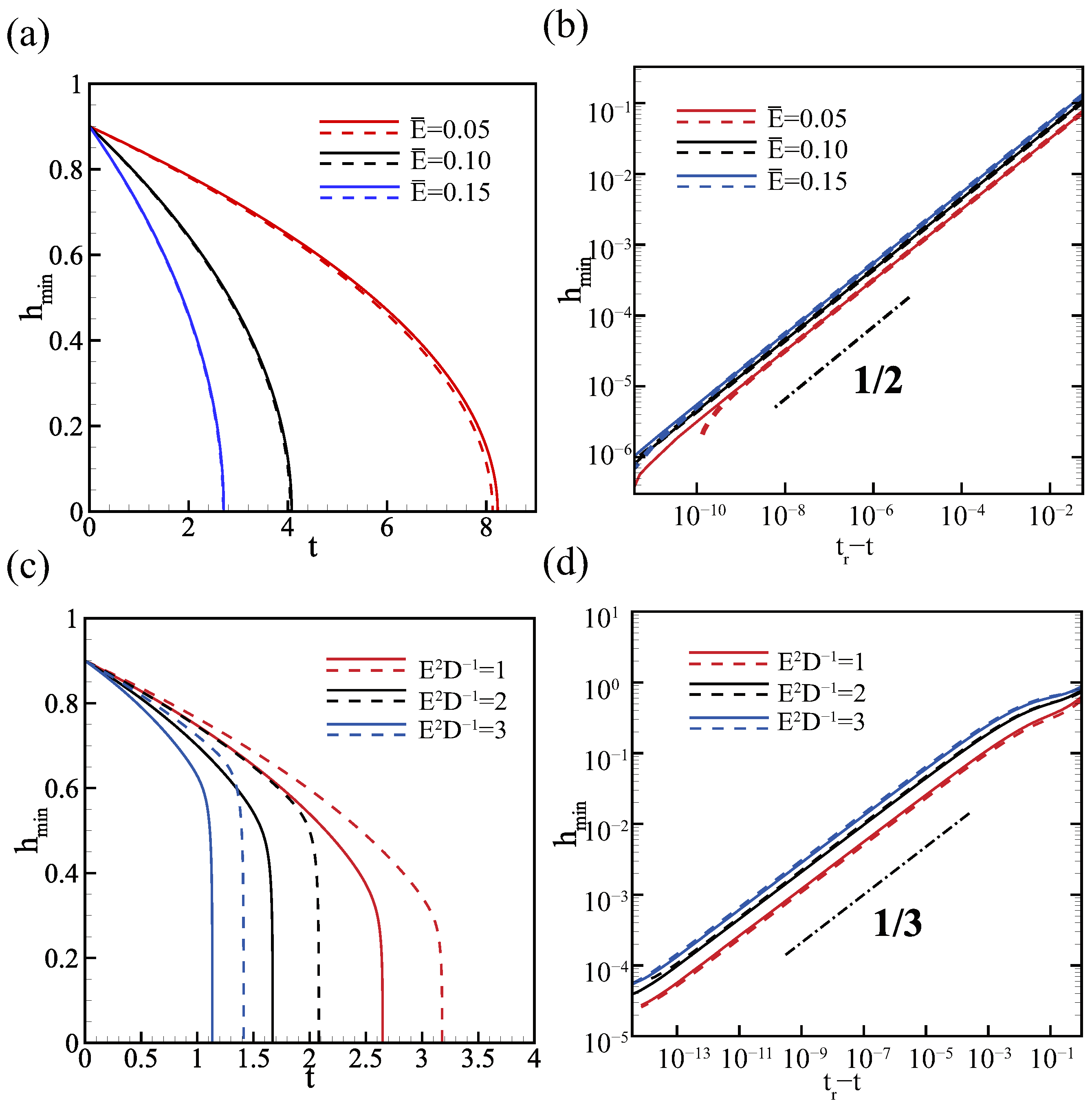
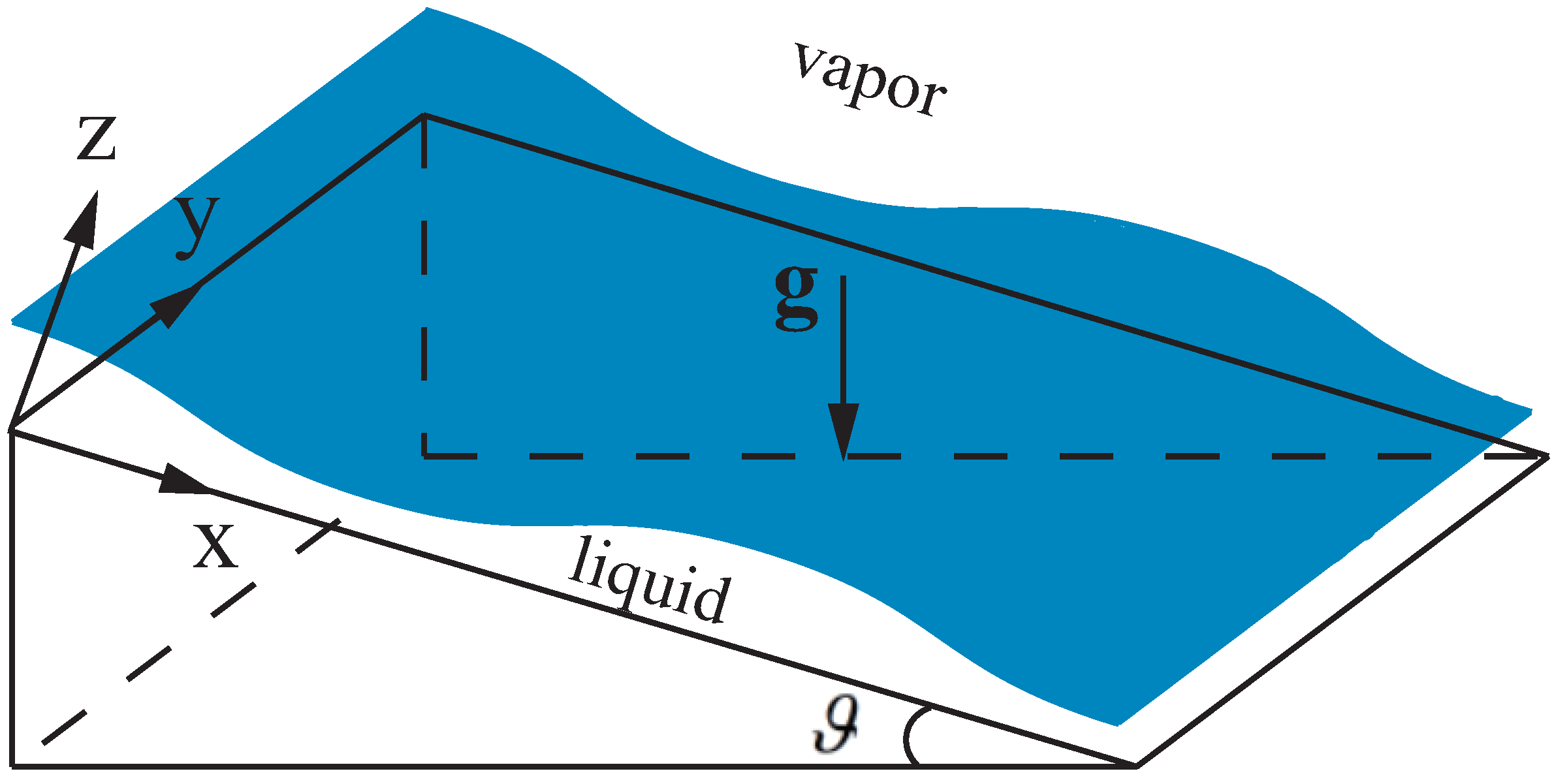
This paper explores the stability and dynamics of a three-dimensional evaporating/condensing film while falling down a heated/cooled incline. Instead of using the Hertz–Knudsen–Langmuir relation, a more comprehensive phase-change boundary condition is employed. A nonlinear differential equation is derived based on the Benny-type equation, which takes into account gravity, energy transport, vapor recoil, effective pressure, and evaporation. The impact of effective pressure and vapor recoil on instability is studied using a linear stability analysis. The results show that spanwise perturbations can amplify the destabilizing effects of vapor recoil, leading to instability. Energy transport along the interface has almost no effect on the stability of the system, but it does influence the linear wave speed. Nonlinear evolution demonstrates that, in contrast to the vapor recoil effect, effective pressure can improve stability and delay film rupture. The self-similar solution demonstrates that the minimal film thickness decreases as (trt)1/2 and (trt)1/3 under the dominance of evaporation and vapor recoil, respectively.
Keywords: stability analysis; evaporation; condensation; vapor recoil; falling liquid films stability analysis; evaporation; condensation; vapor recoil; falling liquid films