QbD Approach for Development of a Mucoadhesive Thermosensitive Gel for Oral Application: Risk Assessment Followed by Screening and Optimization

 ,
,  ,
,  ,
, 
 ,
,
Abstract
1. Introduction
2. Results and Discussion
2.1. The QbD Approach in the Development of a Mucoadhesive Thermosensitive Buccal Gel Formulation
2.1.1. Establishment of QTTP and CQAs
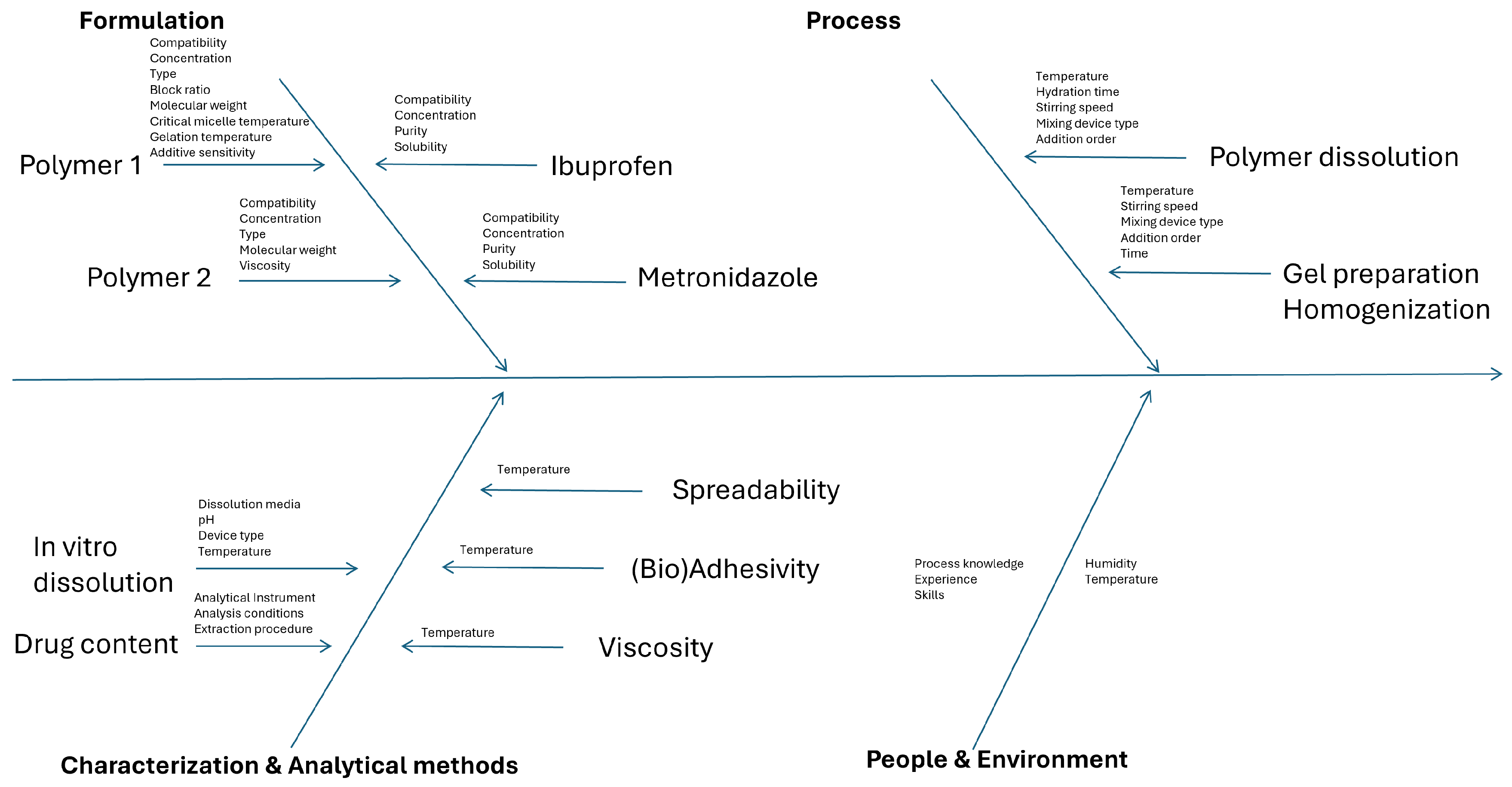
2.1.2. Risk Identification and Evaluation
2.2. Design of Experiments (DoEs)
2.2.1. Screening DoE
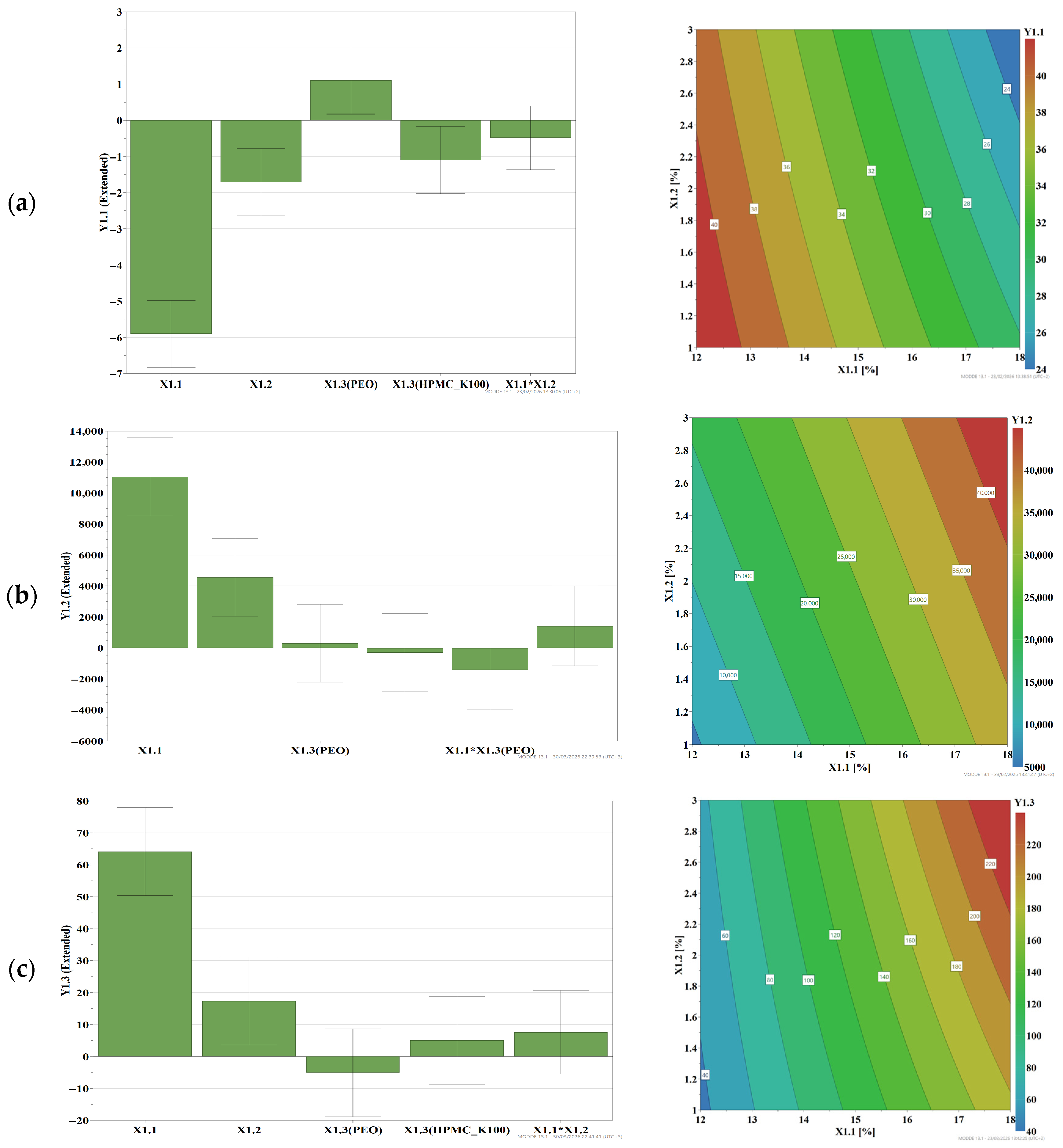
The Influence of the Formulation Factors on Rheological and In Vitro Adhesive Characteristics of Gel Bases Formulations, Consisting of P407 Combined with PEO1105 and HPMC K100M
2.2.2. Optimization DoE
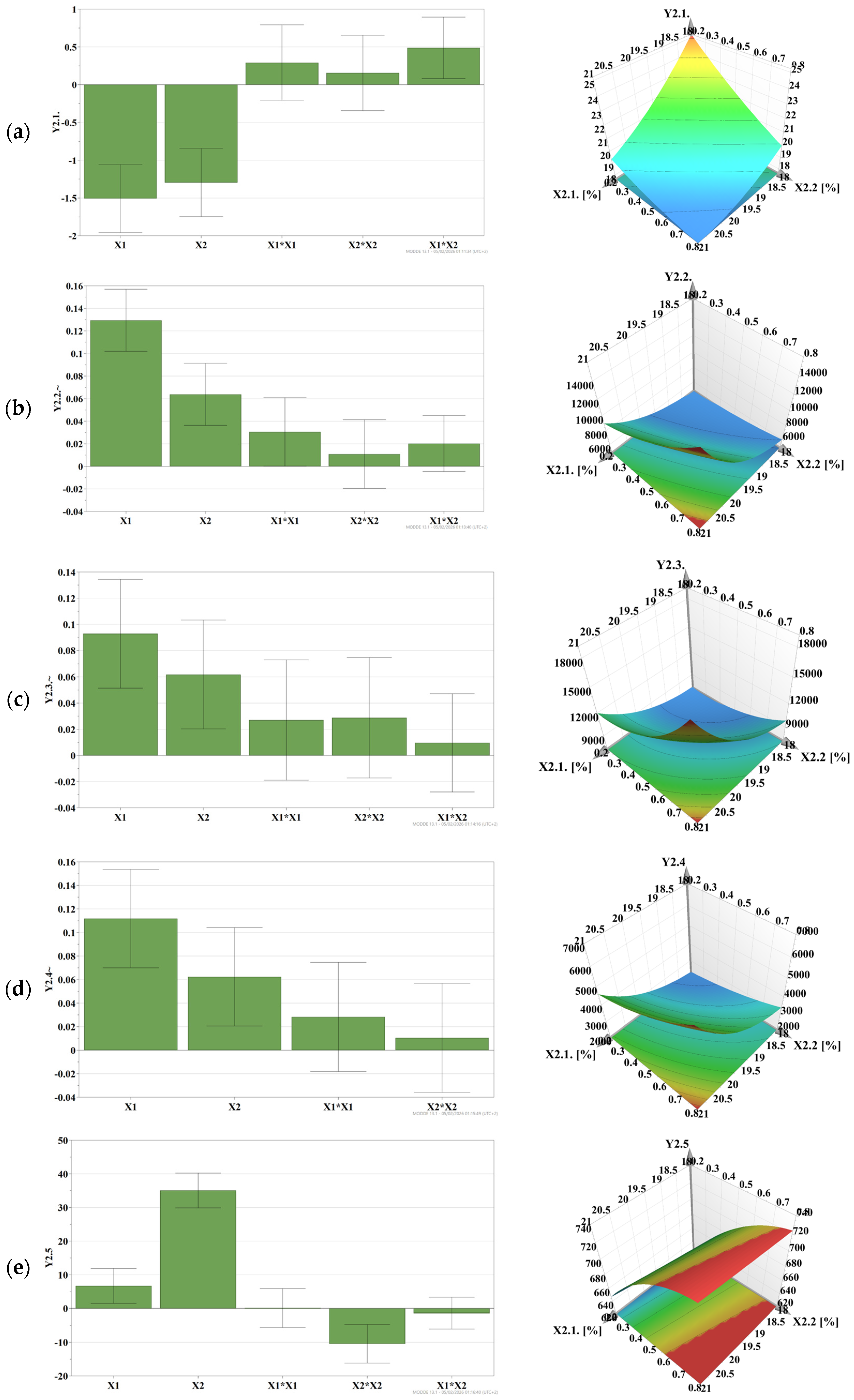
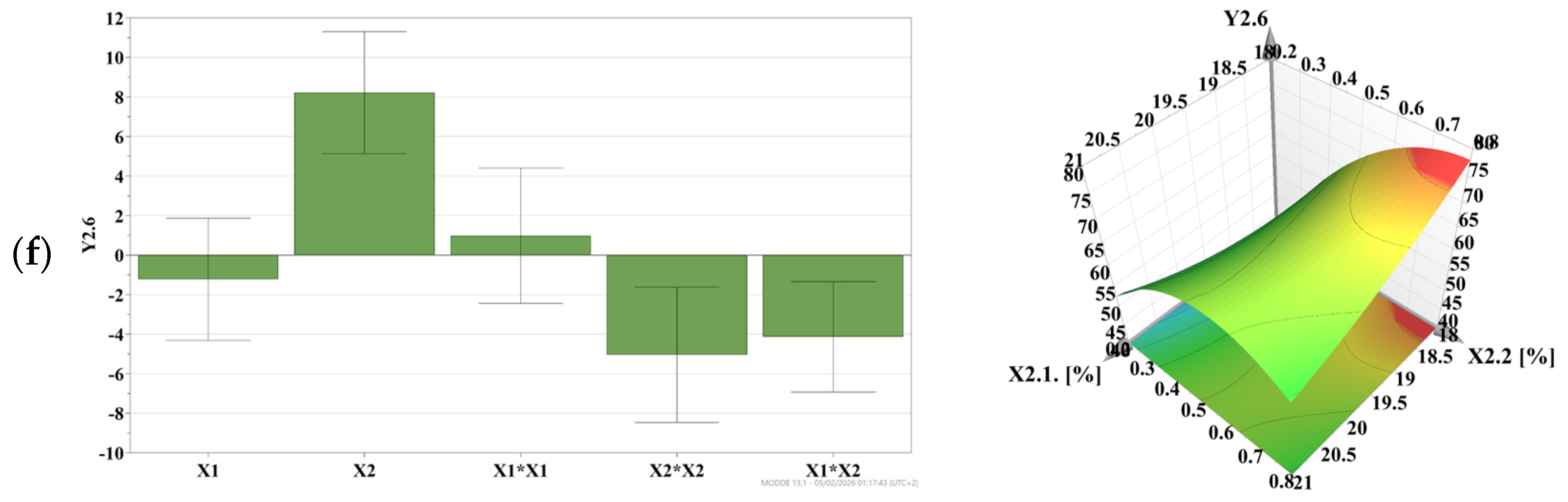
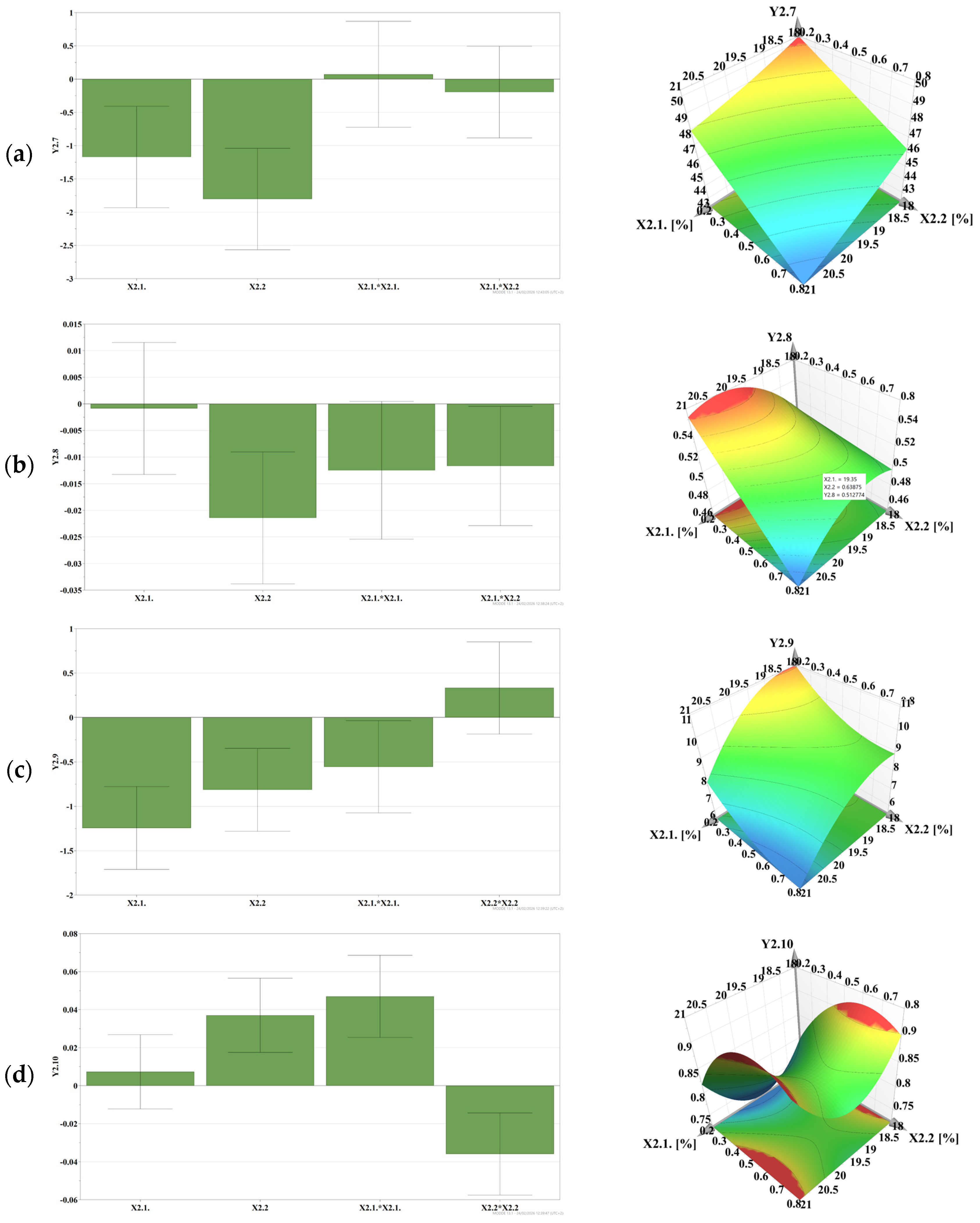
The Influence of Formulation Factors on In Vitro Rheologic and Adhesive Properties of the Studied MZ-IB-MTBG Formulations
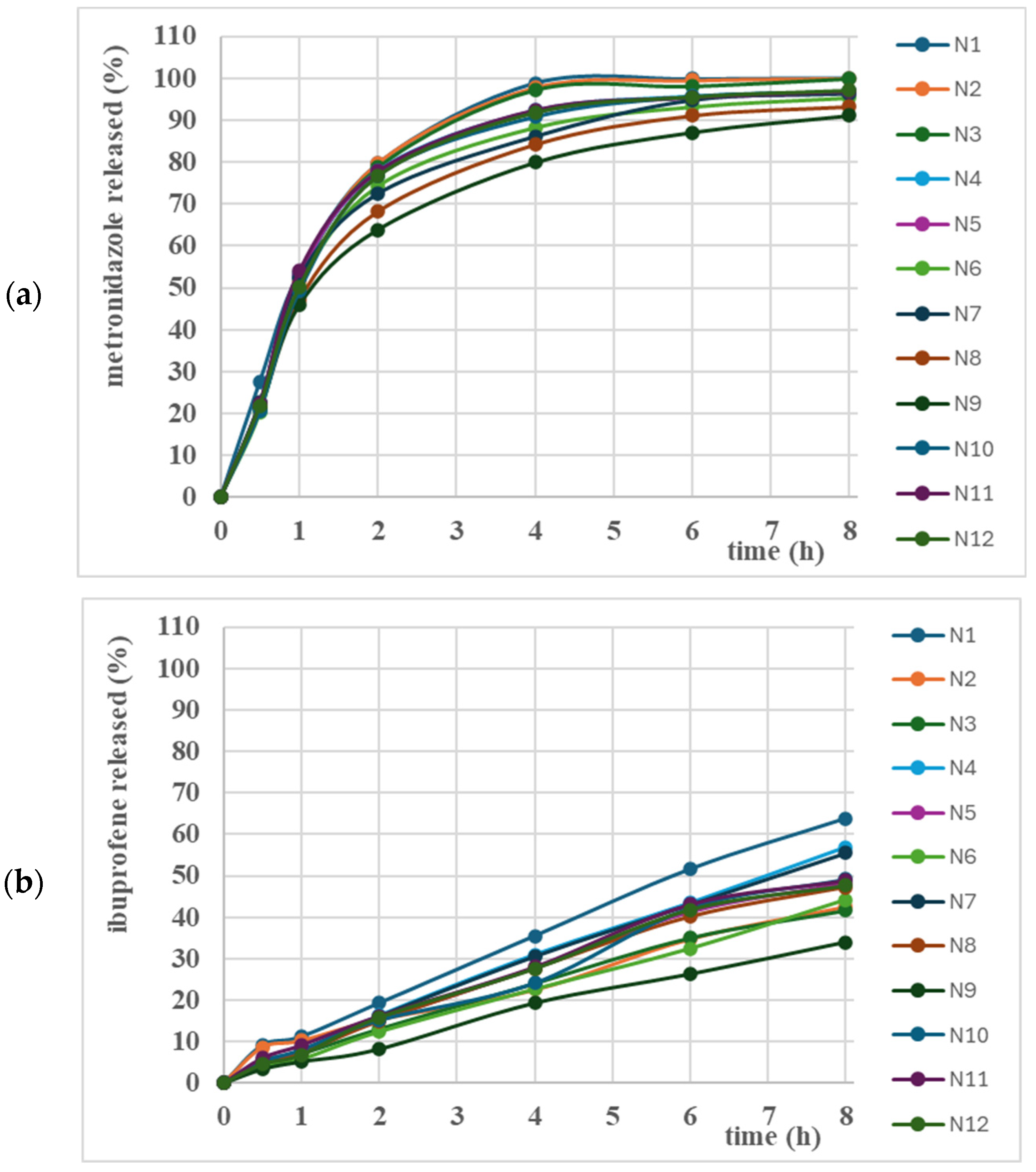
2.3. In Vitro Release Studies
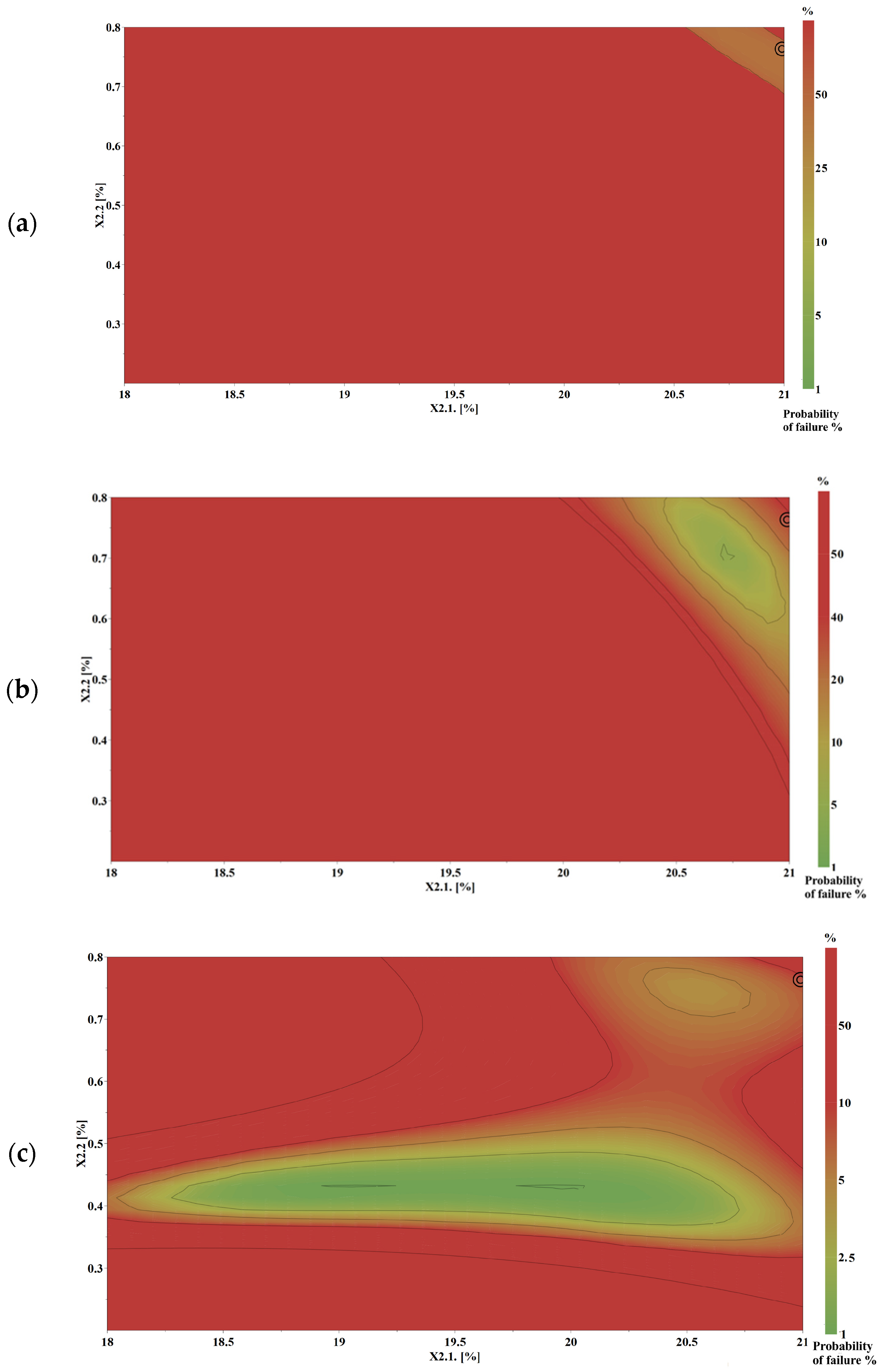
2.4. Design Space and Optimal Formulations
2.5. Additional Characterization of the Optimized Formulation of MZ-IB-MTBG and Stability Studies
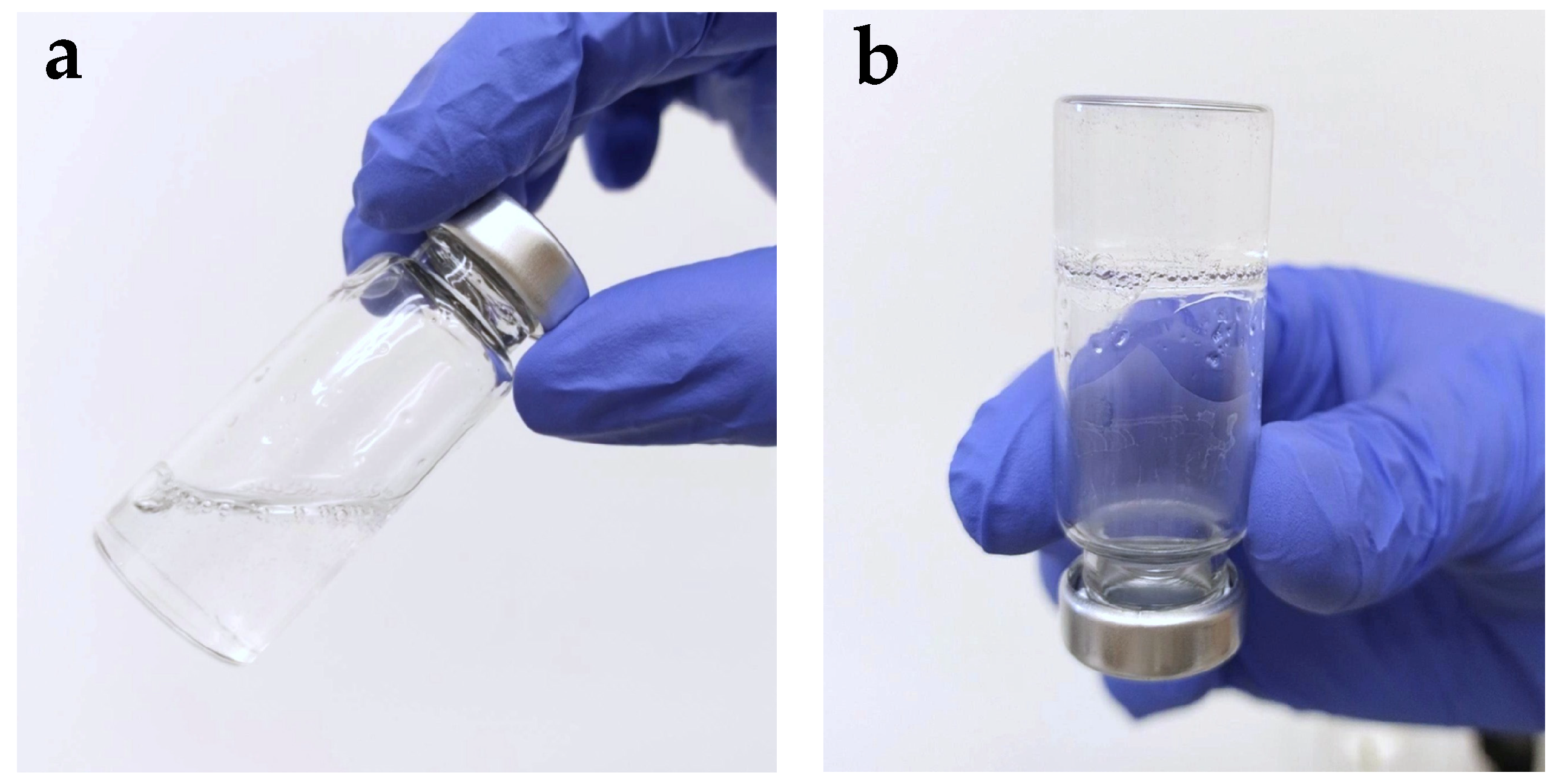
2.5.1. Physical Appearance, Gelation Time and Gelation Temperature (Tgel)
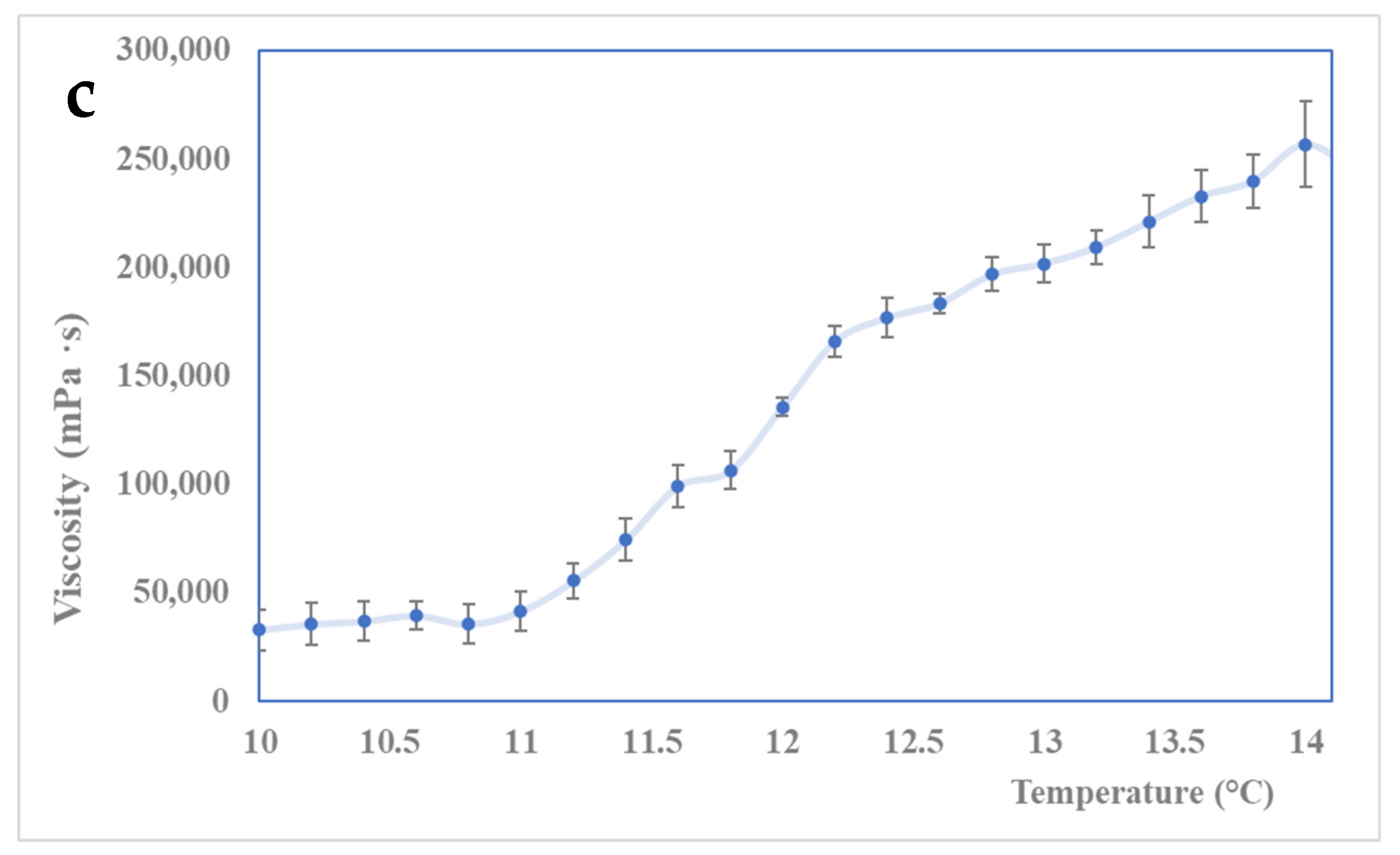
2.5.2. Viscosity
2.5.3. Drug Content
2.5.4. pH
2.5.5. Ex Vivo Mucoadhesion Time
2.5.6. In Vivo Evaluation
2.6. Limitations and Future Research Directions
3. Conclusions
4. Materials and Methods
4.1. Materials
4.2. Preparation of Thermosensitive Mucoadhesive Gel Systems
4.3. The QbD Approach
4.3.1. Risk Analysis
4.3.2. Design of Experiments
4.4. Determination of Pharmaceutical Characteristics of Gel Bases and MZ-IB-MTBG Formulations Used as DoE Responses
4.4.1. Study of Spreading Capacity
4.4.2. Viscosity Studies
4.4.3. The Study of In Vitro Bioadhesion Properties
The In Vitro Detachment Force
- F—the detachment force (mN)
- m—maximum weight needed for detachment (g)
- g—gravitational acceleration (m·s−2)
Bioadhesion Force
- —system viscosity;
- —mucin viscosity;
- —bioadhesive gel viscosity;
- —rheological synergism.
- —deformation speed (s−1);
- —rheological synergism, an empirical determinant of the absolute bioadhesion force, calculated using experimental values measured under identical conditions of concentration, temperature, time, and rotation speed. This parameter also reflects different physicochemical properties of bioadhesive polymers, such as molecular weight, electrostatic charges, and configuration.
4.4.4. In Vitro Dissolution Testing
4.4.5. Kinetic Release Estimation
4.4.6. Additional Characterization of the Optimized MZ-IB-MTBG Formulation
Homogeneity
Gelation Temperature (Tgel) and Gelation Time
Uniformity of Drug Content
pH Determination
Ex Vivo Mucoadhesion Time
In Vivo Evaluation
Supplementary Materials
Author Contributions
Funding
Institutional Review Board Statement
Informed Consent Statement
Data Availability Statement
Conflicts of Interest
Abbreviations
| AO | Alveolar Osteitis |
| APIs | Active Pharmaceutical Ingredients |
| CQAs | Critical Quality Attributes |
| DoE | Design of Experiments |
| DS | Design Space |
| FMEA | Failure Mode and Effects Analysis |
| HPMC | Hydroxypropyl Methylcellulose |
| IB | Ibuprofen |
| MTBG | Mucoadhesive Thermosensitive Buccal Gel |
| MZ | Metronidazole |
| PEO | Polyethylene oxide |
| PLS | Partial Least Squares |
| QbD | Quality by Design |
| QTPP | Quality Target Product Profile |
| RPN | Risk Priority Number |
References
- World Health Organization. Oral Health. Available online: https://www.who.int/news-room/fact-sheets/detail/oral-health (accessed on 5 December 2025).
- Zahid, E.; Bhatti, O.; Zahid, M.A.; Stubbs, M. Overview of common oral lesions. Malays. Fam. Physician 2022, 17, 9–21. [Google Scholar] [CrossRef] [Scilit] [PubMed] [PubMed Central]
- Ślebioda, Z.; Drożdżyńska, J.; Karpińska, A.; Krzyżaniak, A.; Kasperczak, M.; Tomoń, N.; Wiśniewska, P.; Wyganowska, M.L. Oral Lichen Planus: Clinical Presentation, Demographic Characteristics, and Risk Factors in a Retrospective Study of 186 Polish Patients. J. Clin. Med. 2024, 13, 7363. [Google Scholar] [CrossRef] [Scilit] [PubMed]
- Rohe, C.; Schlam, M. Alveolar Osteitis. In StatPearls; StatPearls Publishing: Treasure Island, FL, USA, 2025. Available online: https://www.ncbi.nlm.nih.gov/books/NBK582137/ (accessed on 5 February 2026).
- Ghosh, A.; Aggarwal, V.R.; Moore, R. Aetiology, Prevention and Management of Alveolar Osteitis-A Scoping Review. J. Oral Rehabil. 2022, 49, 103–113. [Google Scholar] [CrossRef] [Scilit] [PubMed]
- Chow, O.; Wang, R.; Ku, D.; Huang, W. Alveolar Osteitis: A Review of Current Concepts. J. Oral Maxillofac. Surg. 2020, 78, 1288–1296. [Google Scholar] [CrossRef] [Scilit] [PubMed]
- Faizel, S.; Thomas, S.; Yuvaraj, V.; Prabhu, S.; Tripathi, G. Comparision between neocone, alvogyl and zinc oxide eugenol packing for the treatment of dry socket: A double-blind randomised control trial. J. Maxillofac. Oral Surg. 2015, 14, 312–320. [Google Scholar] [CrossRef] [Scilit] [PubMed] [PubMed Central]
- Riba-Terés, N.; Jorba-García, A.; Toledano-Serrabona, J.; Aguilar-Durán, L.; Figueiredo, R.; Valmaseda-Castellón, E. Microbiota of alveolar osteitis after permanent tooth extractions: A systematic review. J. Stomatol. Oral Maxillofac. Surg. 2021, 122, 173–181. [Google Scholar] [CrossRef] [Scilit]
- Khachatryan, H.; Hovhannisyan, M.; Hakobyan, G. Management of alveolar osteitis: New regenerative techniques in patients with type 2 diabetes. Oral Maxillofac. Surg. 2025, 29, 77. [Google Scholar] [CrossRef] [Scilit] [PubMed]
- Garola, F.; Gilligan, G.; Panico, R.; Leonardi, N.; Piemonte, E. Clinical management of alveolar osteitis. A systematic review. Med. Oral Patol. Oral Cir. Bucal 2021, 26, e691–e702. [Google Scholar] [CrossRef] [Scilit]
- Daly, B.J.; Sharif, M.O.; Jones, K.; Worthington, H.V.; Beattie, A. Local interventions for the management of alveolar osteitis (dry socket). Cochrane Database Syst. Rev. 2022, 9, CD006968. [Google Scholar] [CrossRef] [Scilit] [PubMed] [PubMed Central]
- Pejicic, R.; Bichsel, D.; Valdec, S. Management der Alveolitis sicca/Ostitis circumscripta mit Socketol®-Paste [Management of the dry socket with Socketol® paste]. Swiss Dent. J. 2021, 131, 607–609. [Google Scholar] [CrossRef] [Scilit] [PubMed]
- Dinte, E.; Tomuta, I.; Iovanov, R.I.; Leucuta, S.E. Design and formulation of buccal mucoadhesive preparation based on sorbitan monostearate oleogel. Farmacia 2013, 61, 284–297. [Google Scholar]
- Dinte, E.; Muntean, D.M.; Andrei, V.; Boșca, B.A.; Dudescu, C.M.; Barbu-Tudoran, L.; Borodi, G.; Andrei, S.; Gal, A.F.; Rus, V.; et al. In Vitro and In Vivo Characterisation of a Mucoadhesive Buccal Film Loaded with Doxycycline Hyclate for Topical Application in Periodontitis. Pharmaceutics 2023, 15, 580. [Google Scholar] [CrossRef] [Scilit]
- Bender, L.; Boostrom, H.M.; Varricchio, C.; Zuanon, M.; Celiksoy, V.; Sloan, A.; Cowpe, J.; Heard, C.M. A novel dual action monolithic thermosetting hydrogel loaded with lidocaine and metronidazole as a potential treatment for alveolar osteitis. Eur. J. Pharm. Biopharm. 2020, 149, 85–94. [Google Scholar] [CrossRef] [Scilit] [PubMed]
- Huanbutta, K.; Sriamornsak, P.; Chatchaipan, T.; Tuntipimonpun, K.; Mongkhon, C.; Rattanachitthawat, N.; Thampithak, A.; Sangnim, T. Development of Thermosensitive Hydrogel Mouthwash Loaded with Zingiber zerumbet Extract for Enhanced Oral Thrush Treatment. Phytomed. Plus 2024, 4, 100655. [Google Scholar] [CrossRef] [Scilit]
- Vlad, R.A.; Pintea, A.; Pintea, C.; Rédai, E.M.; Antonoaea, P.; Bîrsan, M.; Ciurba, A. Hydroxypropyl Methylcellulose-A Key Excipient in Pharmaceutical Drug Delivery Systems. Pharmaceutics 2025, 17, 784. [Google Scholar] [CrossRef] [Scilit] [PubMed] [PubMed Central]
- Wróblewska, M.; Szymańska, E.; Szekalska, M.; Winnicka, K. Different Types of Gel Carriers as Metronidazole Delivery Systems to the Oral Mucosa. Polymers 2020, 12, 680. [Google Scholar] [CrossRef] [Scilit] [PubMed] [PubMed Central]
- Nikandish, M.; Alyari, M.; Javaheri, M.; Goderidze, T. Overview of the Effectiveness of Aspirin, Ibuprofen, Acetaminophen on Teeth. Eur. Sci. J. ESJ 2021, 17, 263. [Google Scholar] [CrossRef] [Scilit]
- Safta, D.A.; Bogdan, C.; Iurian, S.; Moldovan, M.-L. Optimization of Film-Dressings Containing Herbal Extracts for Wound Care—A Quality by Design Approach. Gels 2025, 11, 322. [Google Scholar] [CrossRef] [Scilit]
- Constantinou, A.P.; Provatakis, N.; Li, Q.; Georgiou, T.K. Homopolymer and ABC Triblock Copolymer Mixtures for Thermoresponsive Gel Formulations. Gels 2021, 7, 116. [Google Scholar] [CrossRef] [Scilit]
- Singla, P.; Garg, S.; McClements, J.; Jamieson, O.; Peeters, M.; Mahajan, R.K. Advances in the therapeutic delivery and applications of functionalized Pluronics: A critical review. Adv. Colloid. Interface Sci. 2022, 299, 102563. [Google Scholar] [CrossRef] [Scilit]
- Qutub, M.; Tatode, A.; Premchandani, T.; Taksande, J.; Mane, D.; Umekar, M. Blending induced variations in Poloxamer’s/Pluronic’s® gelation: Thermodynamic and rheological perspectives. JCIS Open 2024, 16, 100126. [Google Scholar] [CrossRef] [Scilit]
- Boraste, S.V.; Patil, S.B. Formulation development and evaluation of nasal in situ gel of promethazine hydrochloride. Drug Dev. Ind. Pharm. 2024, 50, 11–22. [Google Scholar] [CrossRef] [Scilit] [PubMed]
- Qian, L.; Cook, M.T.; Dreiss, C.A. In Situ Gels for Nasal Delivery: Formulation, Characterization and Applications. Macromol. Mater. Eng. 2025, 310, 2400356. [Google Scholar] [CrossRef] [Scilit]
- Kurniawansyah, I.S.; Rusdiana, T.; Arya, I.F.D.; Ramoko, H.; Wahab, H.A. Optimizing chemically stable chloramphenicol in-situ gel formulations using poloxamer 407 and HPMC through full-factorial design. Sci. Rep. 2024, 14, 25344. [Google Scholar] [CrossRef] [Scilit]
- Moore, T.; Croy, S.; Mallapragada, S.; Pandit, N. Experimental investigation and mathematical modeling of Pluronic F127 gel dissolution: Drug release in stirred systems. J. Control. Release 2000, 67, 191–202. [Google Scholar] [CrossRef] [Scilit]
- Li, T.; Morales-Acosta, M.D.; Burgess, D.J. Liquid crystalline structure affects drug release from Pluronic® gels. Int. J. Pharm. 2026, 688, 126453. [Google Scholar] [CrossRef] [Scilit]
- International Council for Harmonisation of Technical Requirements for Pharmaceuticals for Human Use (ICH). ICH Harmonised Guideline: Quality Risk Management Q9(R1); Final Version Adopted 18 January 2023. Available online: https://database.ich.org/sites/default/files/ICH_Q9%28R1%29_Guideline_Step4_2023_0126_0.pdf (accessed on 25 March 2026).
- Eriksson, L.; Johansson, E.; Kettaneh-Wold, N.; Wikstrom, C.; Wold, S. Design of Experiments: Principles and Applications, 3rd ed.; Umetrics: Umeå, Sweden, 2008. [Google Scholar]
- Hassan, E.E.; Gallo, J.M. A simple rheological method for the in vitro assessment of mucin-polymer bioadhesive bond strength. Pharm. Res. 1990, 7, 491–495. [Google Scholar] [CrossRef] [Scilit] [PubMed]
- Olechno, K.; Higuchi, J.; Winnicka, K. Why Does Mucoadhesion Matter? Mucoadhesive Drug Delivery Systems with Antifungal Activity in the Local Treatment of Oral Cavity Candidiasis. Materials 2026, 19, 33. [Google Scholar] [CrossRef] [Scilit]
- Abdeltawab, H.; Svirskis, D.; Sharma, M. Formulation strategies to modulate drug release from poloxamer based in situ gelling systems. Expert. Opin. Drug Deliv. 2020, 17, 495–509. [Google Scholar] [CrossRef] [Scilit]
- Dinte, E.; Bodoki, E.; Leucuta, S.; Iuga, C.A. Compatibility studies between drugs and excipients in the preformulation phase of buccal mucoadhesive systems. Farmacia 2013, 61, 703–712. [Google Scholar]
- Klouda, L.; Mikos, A.G. Thermoresponsive hydrogels in biomedical applications. Eur. J. Pharm. Biopharm. 2008, 68, 34–45. [Google Scholar] [CrossRef] [Scilit] [PubMed] [PubMed Central]
- Wang, S.; Georgiou, T.K. Temperature- and time-dependent evolution of hydrogel network formed by thermoresponsive BCACB pentablock terpolymers: Effect of composition. Polymer 2025, 328, 128426. [Google Scholar] [CrossRef] [Scilit]
- Li, T.; Bao, Q.; Shen, J.; Lalla, R.V.; Burgess, D.J. Mucoadhesive in situ forming gel for oral mucositis pain control. Int. J. Pharm. 2020, 580, 119238. [Google Scholar] [CrossRef] [Scilit] [PubMed]
- Syed, M.A.; Hanif, S.; Ain, N.u.; Syed, H.K.; Zahoor, A.F.; Khan, I.U.; Abualsunun, W.A.; Jali, A.M.; Qahl, S.H.; Sultan, M.H.; et al. Assessment of Binary Agarose–Carbopol Buccal Gels for Mucoadhesive Drug Delivery: Ex Vivo and In Vivo Characterization. Molecules 2022, 27, 7004. [Google Scholar] [CrossRef] [Scilit]
- Kashyap, A.; Das, A.; Ahmed, A.B. Formulation and Evaluation of Transdermal Topical Gel of Ibuprofen. J. Drug Deliv. Ther. 2020, 10, 20–25. [Google Scholar] [CrossRef] [Scilit]
- Limpongsa, E.; Tabboon, P.; Tuntiyasawasdikul, S.; Sripanidkulchai, B.; Pongjanyakul, T.; Jaipakdee, N. Formulation and In Vitro Evaluation of Mucoadhesive Sustained Release Gels of Phytoestrogen Diarylheptanoids from Curcuma comosa for Vaginal Delivery. Pharmaceutics 2023, 15, 264. [Google Scholar] [CrossRef] [Scilit]
- Zima, J.; Nováková, E.; Špaglová, M.; Šupolíková, M. Rheological behavior and texture analysis of oleogel suspension containing chondroitin sulfate and fucoidan. Farmacia 2025, 73, 949–962. [Google Scholar] [CrossRef] [Scilit]
- Dinte, E.; Iovanov, R.I.; Bodoki, A.E.; Colosi, I.A.; Colosi, H.A.; Tosa, N.; Vostinaru, O.; Tomuta, I. Optimization of a Mucoadhesive Vaginal Gel Containing Clotrimazole Using a D-Optimal Experimental Design and Multivariate Analysis. Polymers 2023, 15, 2023. [Google Scholar] [CrossRef] [Scilit]
- Bassi da Silva, J.; Ferreira, S.B.d.S.; Reis, A.V.; Cook, M.T.; Bruschi, M.L. Assessing Mucoadhesion in Polymer Gels: The Effect of Method Type and Instrument Variables. Polymers 2018, 10, 254. [Google Scholar] [CrossRef] [Scilit]
- Korsmeyer, W.; Gurny, R.; Doelker, E.; Buri, P.; Peppas, N. Mechanisms of solute release from porous hydrophilic polymers. Int. J. Pharm. 1983, 15, 25–35. [Google Scholar] [CrossRef] [Scilit]
- Askarizadeh, M.; Esfandiari, N.; Honarvar, B.; Sajadian, S.A.; Azdarpour, A. Kinetic Modeling to Explain the Release of Medicine from Drug Delivery Systems. Chem. Eng. Technol. 2023, 10, 1006–1049. [Google Scholar] [CrossRef] [Scilit]
- Saeidi, Z.; Giti, R.; Emami, A.; Rostami, M.; Mohammadi, F. Thermosensitive and mucoadhesive gels containing solid lipid nanoparticles loaded with fluconazole and niosomes loaded with clindamycin for the treatment of periodontal diseases: A laboratory experiment. BMC Oral Health 2024, 24, 551. [Google Scholar] [CrossRef] [Scilit]
- Wahyuni, I.S.; Sufiawati, I.; Shafuria, A.; Nittayananta, W.; Levita, J. Formulation and Evaluation of Mucoadhesive Oral Care Gel Containing Kaempferia galanga Extract. Pharmaceutics 2024, 16, 421. [Google Scholar] [CrossRef] [Scilit] [PubMed] [PubMed Central]
- Kulkarni, R.; Fanse, S.; Lalla, R.V.; Morales, D.; Burgess, D.J. Mucoadhesive in situ forming Gels: Bridging Formulation design and physiological Realities. Int. J. Pharm. 2025, 681, 125834. [Google Scholar] [CrossRef] [Scilit]
- Syed, M.A.; Aziz, G.; Jehangir, M.B.; Tabish, T.A.; Zahoor, A.F.; Khalid, S.H.; Khan, I.U.; Hosny, K.M.; Rizg, W.Y.; Hanif, S.; et al. Evaluating Novel Agarose-Based Buccal Gels Scaffold: Mucoadhesive and Pharmacokinetic Profiling in Healthy Volunteers. Pharmaceutics 2022, 14, 1592. [Google Scholar] [CrossRef] [Scilit]





| QTPP Elements | Target | Is This a CQA? | Justification | |
|---|---|---|---|---|
| Dosage form | Gel | No | ||
| Route of administration | Buccal | No | ||
| Drug content | 1.00% (w/w) metronidazole 1.00% (w/w) ibuprofen | No | Content uniformity is directly linked with homogeneity and affects safety and efficacy | |
| Product quality attributes | Appearance | Homogeneous | No | Indicates a homogeneous, physically stable gel, allowing uniform distribution of APIs |
| Identification | Positive for metronidazole and ibuprofen | No | API identification is critical for safety and efficacy. However, this feature will be monitored at drug product release | |
| API content after 6 and 12 months | 90% to 110% of the labeled content | No | Recovery of the drugs after 12 months of storage is directly linked to their stability and affect safety and efficacy | |
| Spreadability (mm) | 17–19 | Yes | Spreading can affect the local application of the gel | |
| Viscosity at 25 °C and 20.38 s−1 (mPa·s) | 11,000–15,000 | Yes | May affect gel application and adhesion to the mucosa | |
| Viscosity at 37 °C and 20.38 s−1 (mPa·s) | 13,000–18,000 | Yes | A value higher than the value at 25 °C directly influences the formation of an adherent film on the mucosal surface | |
| Viscosity of diluted gel with water at 37 °C and 20.38 s−1 (mPa·s) | 5200–5900 | Yes | Viscosity directly influences application and adhesion to the mucosa | |
| Detachment force (mN) | 649–735 | Yes | Indicates the ability to adhere to the mucosa, with an effect on therapeutic efficacy | |
| Bioadhesion force (Pa) | 60–74 | Yes | Directly estimates the gel–mucin interaction that occurs in the mucoadhesion process | |
| Dissolution at pH 6.8 | Metronidazole release: Not less than 20% at 0.5 h Not less than 60% at 2 h Not less than 90% at 6 h | Yes | Indicates the local release of APIs in effective concentration, during the residence time of the gel on the mucosa | |
| Ibuprofen release: Not less than 5% at 0.5 h Not less than 15% at 2 h Not less than 40% at 6 h | Yes | |||
| pH | No less than 5.5 | No | Affects the tolerance of the gel on the oral mucosa | |
| Ex vivo mucoadhesion time (min) | No less than 60 min | No | Estimates the residence time on the mucosa and affects therapeutic efficacy | |
| Nr | CMC/CPP | Failure Mode | Failure Effects | Potential Causes | Control Methods | O | S | D | RPN |
|---|---|---|---|---|---|---|---|---|---|
| 1 | Polymer type | Lack of bioadhesive properties; improper rheological properties | Low residence time and poor adhesion | Inappropriate physical and chemical characteristics | DoE-based formulation optimization | 5 | 5 | 3 | 75 |
| 2 | Polymer concentration | Unsuitable concentration | 5 | 5 | 3 | 75 | |||
| 3 | Polymer molecular weight | Inappropriate physical and chemical characteristics | 5 | 5 | 3 | 75 | |||
| 4 | Polymer gelation temperature | Inappropriate physical and chemical characteristics | 5 | 5 | 3 | 75 | |||
| 5 | API concentration | Lack of homogeneity; variable/incomplete dissolution | Reduced therapeutic effect | API remains partially undissolved | Evaluate API solubility | 3 | 3 | 3 | 27 |
| 6 | API solubility | Use excipients that favor dissolution | 3 | 4 | 3 | 36 | |||
| 7 | Process temperature | Lack of homogeneity | Low residence time, poor adhesion, variable dissolution, incomplete polymer hydration, non-uniform viscosity, dose variability | The formulation components are not homogeneously distributed in the structure of the gel | Ensure appropriate process conditions for optimal ingredient mixing and complete polymer hydration; standardize the preparation procedure | 3 | 3 | 3 | 27 |
| 8 | Process hydration time | 3 | 3 | 3 | 27 | ||||
| 9 | Process stirring speed | 3 | 2 | 3 | 18 | ||||
| 10 | Process addition order | 2 | 4 | 3 | 24 | ||||
| 11 | Process time | 2 | 4 | 3 | 24 | ||||
| 12 | Characterization temperature | Improper testing conditions; incorrect estimation of product performance | Optimization performed on data that is not relevant; variable drug release | Variable testing conditions; non-representative testing conditions | Use relevant testing conditions that are representative of in vivo administration | 2 | 3 | 3 | 18 |
| 13 | Dissolution media type | 2 | 3 | 3 | 18 | ||||
| 14 | Dissolution pH | 2 | 3 | 3 | 18 |
| Exp Name | Run Order | Y1.1 | Y1.2 | Y1.3 |
|---|---|---|---|---|
| N1 | 10 | 42.0 | 7176 | 26.0 |
| N2 | 4 | 28.0 | 28,996 | 120.0 |
| N3 | 13 | 39.0 | 20,803 | 38.0 |
| N4 | 1 | 22.0 | 49,802 | 200.0 |
| N5 | 21 | 39.5 | 17,363 | 29.0 |
| N6 | 16 | 24.0 | 41,976 | 180.0 |
| N7 | 7 | 38.0 | 22,919 | 120.0 |
| N8 | 20 | 33.0 | 22,980 | 170.0 |
| N9 | 2 | 37.0 | 20,624 | 165.0 |
| N10 | 18 | 33.5 | 17,018 | 145.0 |
| N11 | 12 | 37.5 | 22,136 | 162.0 |
| N12 | 19 | 40.0 | 2943 | 28.0 |
| N13 | 5 | 27.0 | 32,808 | 210.0 |
| N14 | 15 | 37.0 | 15,081 | 35.0 |
| N15 | 3 | 20.5 | 52,184 | 250.0 |
| N16 | 17 | 38.0 | 13,626 | 30.0 |
| N17 | 9 | 22.5 | 43,540 | 220.0 |
| N18 | 11 | 35.0 | 19,738 | 110.0 |
| N19 | 14 | 32.0 | 24,272 | 190.0 |
| N20 | 8 | 34.0 | 20,108 | 140.0 |
| N21 | 6 | 32.0 | 16,923 | 118.0 |
| Statistical parameter | ||||
| Goodness of fit, R2 | 0.928 | 0.874 | 0.896 | |
| R2 adjusted | 0.909 | 0.832 | 0.861 | |
| Goodness of prediction, Q2 | 0.891 | 0.708 | 0.799 | |
| Model validity | 0.862 | 0.413 | 0.411 | |
| Reproducibility | 0.910 | 0.963 | 0.969 | |
| Exp Name | Run Order | Y2.1 | Y2.2 | Y2.3 | Y2.4 | Y2.5 | Y2.6 | Y2.7 | Y2.8 | Y2.9 | Y2.10 |
|---|---|---|---|---|---|---|---|---|---|---|---|
| N1 | 6 | 25.23 | 4900 | 6700 | 2320 | 622 | 40.42 | 50.557 | 0.5121 | 11.636 | 0.8198 |
| N2 | 1 | 21.94 | 5180 | 8990 | 2455 | 633 | 40.72 | 47.978 | 0.5493 | 9.745 | 0.6996 |
| N3 | 2 | 19.12 | 9660 | 12,100 | 5290 | 649 | 56.06 | 47.827 | 0.5469 | 7.668 | 0.8252 |
| N4 | 5 | 22.35 | 5390 | 8925 | 2870 | 701 | 72.51 | 47.829 | 0.5141 | 8.756 | 0.8993 |
| N5 | 10 | 19.75 | 6720 | 9050 | 3360 | 705 | 65.80 | 47.868 | 0.5110 | 8.737 | 0.8357 |
| N6 | 12 | 18.75 | 11,060 | 13,230 | 5320 | 711 | 61.13 | 45.211 | 0.5231 | 6.219 | 0.9367 |
| N7 | 7 | 19.87 | 5550 | 9030 | 3120 | 718 | 74.13 | 46.409 | 0.4846 | 8.652 | 0.8963 |
| N8 | 9 | 18.56 | 9450 | 13,370 | 5200 | 734 | 68.24 | 43.058 | 0.5158 | 8.700 | 0.8265 |
| N9 | 3 | 17.34 | 15,400 | 19,180 | 5950 | 735 | 60.12 | 42.249 | 0.4338 | 5.152 | 0.9105 |
| N10 | 4 | 19.9 | 6910 | 9200 | 3345 | 706 | 65.80 | 45.663 | 0.5376 | 8.007 | 0.8838 |
| N11 | 8 | 20.1 | 6880 | 8990 | 3211 | 702 | 69.03 | 48.289 | 0.5080 | 9.670 | 0.7954 |
| N12 | 11 | 19.5 | 6734 | 9300 | 3375 | 705 | 65.91 | 46.432 | 0.5302 | 8.691 | 0.8377 |
| Statistical parameter | |||||||||||
| Goodness of fit, R2 | 0.956 | 0.968 | 0.893 | 0.888 | 0.981 | 0.921 | 0.865 | 0.800 | 0.901 | 0.883 | |
| R2 adjusted | 0.919 | 0.940 | 0.804 | 0.824 | 0.965 | 0.855 | 0.788 | 0.686 | 0.844 | 0.816 | |
| Goodness of prediction, Q2 | 0.540 | 0.559 | 0.513 | 0.600 | 0.604 | 0.578 | 0.517 | 0.548 | 0.582 | 0.747 | |
| Model validity | 0.928 | 0.420 | 0.715 | 0.301 | 0.857 | 0.580 | 0.911 | 0.724 | 0.860 | 0.971 | |
| Reproducibility | 0.886 | 0.982 | 0.860 | 0.964 | 0.961 | 0.930 | 0.722 | 0.783 | 0.831 | 0.680 | |
| Responses | Objective | Minimum | Target | Maximum |
|---|---|---|---|---|
| Spreadability (Y2.1) | Predicted | - | - | - |
| Viscosity at 25 °C (Y2.2) | Predicted | - | - | - |
| Viscosity at 37 °C (Y2.3) | Target | 16,000 | 18,000 | 19,100 |
| Viscosity of diluted gel at 37 °C (Y2.4) | Target | 4800 | 5800 | 6800 |
| Detachment force (Y2.5) | Predicted | - | - | - |
| Bioadhesion force (Y2.6) | Target | 55 | 62 | 67 |
| k Peppas for metronidazole release (Y2.7) | Predicted | - | - | - |
| n Peppas for metronidazole release (Y2.8) | Predicted | - | - | - |
| k Peppas for ibuprofen release (Y2.9) | Predicted | - | - | - |
| n Peppas for ibuprofen release (Y2.10) | Predicted | - | - | - |
| Optimization 1—Robust Point (RP1) | Optimization 2—Robust Point | Negative Control (NC) | ||||||||||
|---|---|---|---|---|---|---|---|---|---|---|---|---|
| Responses | Predicted | Experimental | Residual | %Bias | Predicted | Experimental | Residual | %Bias | Predicted | Experimental | Residual | %Bias |
| Spreadability (Y2.1) | 17.71 | 17.58 ± 2.35 | −0.130 | −0.734 | 18.04 | 17.21 ± 2.82 | −1.028 | −4.590 | 23.94 | 25.56 ± 1.86 | 1.618 | 6.757 |
| Viscosity at 25 °C (Y2.2) | 14,461.50 | 13,998 ± 760 | −463.50 | −3.205 | 8564.45 | 8375 ± 707 | −189.45 | −2.212 | 4927.54 | 4978 ± 335 | 50.46 | 1.024 |
| Viscosity at 37 °C (Y2.3) | 17,552.60 | 17,998 ± 586 | 445.40 | 2.538 | 12,256.50 | 12,480 ± 675 | 223.50 | 1.824 | 7429.13 | 6790 ± 135 | −639.13 | −8.603 |
| Viscosity of diluted gel at 37 °C (Y2.4) | 5861.46 | 5725 ± 334 | −136.46 | −2.328 | 4245.23 | 4402 ± 287 | 156.77 | 3.693 | 2405.43 | 2340 ± 89 | −65.43 | −2.720 |
| Detachment force (Y2.5) | 733.23 | 745.6 ± 45 | 12.37 | 1.687 | 729.92 | 721 ± 67 | −8.923 | −1.222 | 627.37 | 635 ± 21 | 7.626 | 1.216 |
| Bioadhesion force (Y2.6) | 62.22 | 61.92 ± 4.55 | −0.300 | −0.482 | 66.93 | 67.11 ± 5.53 | 0.183 | 0.273 | 41.53 | 42.67 ± 8.90 | 1.143 | 2.752 |
| k Peppas for metronidazole release (Y2.7) | 43.98 | 42.53 + 6.64 | −1.450 | −3.297 | 44.11 | 42.81 ± 7.22 | −1.297 | −2.941 | 49.87 | 51.54 ± 1.21 | 1.674 | 3.357 |
| n Peppas for metronidazole release (Y2.8) | 0.493 | 0.479 ± 0.007 | −0.014 | −2.840 | 0.501 | 0.522 ± 0.009 | 0.021 | 4.163 | 0.531 | 0.513 ± 0.008 | −0.018 | −3.330 |
| k Peppas for ibuprofen release (Y2.9) | 7.507 | 7.345 ± 0.25 | −0.162 | −2.158 | 8.18 | 8.55 ±0.15 | 0.368 | 4.497 | 11.06 | 10.95 ± 1.09 | −0.107 | −0.964 |
| n Peppas for ibuprofen release (Y2.10) | 0.847 | 0.830 ± 0.004 | −0.017 | −2.007 | 0.821 | 0.808 ± 0.0045 | −0.013 | −1.622 | 0.753 | 0.825 ± 0.0067 | 0.072 | 9.598 |
| Composition | % (g) | mg/g Gel | |
| Poloxamer 407 ratio | 20.99 | 209.90 | |
| HPMC K100M | 0.37 | 3.70 | |
| HPMC K4M | 0.37 | 3.70 | |
| Ibuprofen | 1 | 10 | |
| Metronidazole | 1 | 10 | |
| Water | 76.27 | 762.70 | |
| Physicochemical Characteristics | Fresh | 6 Months After Preparation | 12 Months After Preparation |
| Appearance | Transparent to slightly opaque | Transparent to slightly opaque | Transparent to slightly opaque |
| pH | 6.2 ± 0.45 | 6.1 ± 0.24 | 5.95 ± 0.31 |
| Tgel (°C) | 14 ± 0.9 | - | - |
| Gelation time (s) | 75–120 ± 11 | - | - |
| Recovery in MZ content (%) | 98.20 ± 0.45 | 96.35 ± 0.21 | 94.67 ± 0.27 |
| Recovery in IB content (%) | 97.53 ± 0.89 | 97.11 ± 1.23 | 95.42 ± 1.98 |
| Viscosity at 10 s−1 (mPa·s) | 32,901 ± 302 | 33,420 ± 267 | 34,096 ± 330 |
| Ex vivo bioadhesion time (min) | 192 ± 25 | - | - |
| Independent Variables | DoE Matrix | |||||||
| Formulation Factors | Symbol | Levels of Variation | Exp | X1.1 | X1.2 | X1.3 | ||
| −1 | 0 | +1 | ||||||
| Polymer 1 * ratio | X1.1 | 12 | 15 | 18 | N1 | 12 | 1 | PEO |
| Polymer 2 ratio | X1.2 | 1 | 2 | 3 | N2 | 18 | 1 | PEO |
| Polymer 2 type | X1.3 | PEO ** | HPMC *** | N3 | 12 | 3 | PEO | |
| Dependent Variables | N4 | 18 | 3 | PEO | ||||
| N5 | 12 | 2 | PEO | |||||
| N6 | 18 | 2 | PEO | |||||
| Responses | Symbols | N7 | 15 | 1 | PEO | |||
| Spreadability (mm) | Y1.1 | N8 | 15 | 3 | PEO | |||
| Viscosity at 37 °C (mPa·s) | Y1.2 | N9 | 15 | 2 | PEO | |||
| Detachment force (mN) | Y1.3 | N10 | 15 | 2 | PEO | |||
| * Poloxamer 407 | N11 | 15 | 2 | PEO | ||||
| ** PEO grade 1105 | N12 | 12 | 1 | HPMC | ||||
| *** HPMC grade K100M | N13 | 18 | 1 | HPMC | ||||
| N14 | 12 | 3 | HPMC | |||||
| N15 | 18 | 3 | HPMC | |||||
| N16 | 12 | 2 | HPMC | |||||
| N17 | 18 | 2 | HPMC | |||||
| N18 | 15 | 1 | HPMC | |||||
| N19 | 15 | 3 | HPMC | |||||
| N20 | 15 | 2 | HPMC | |||||
| N21 | 15 | 2 | HPMC | |||||
| Independent Variables | DoE Matrix | ||||||
| Formulation Factors | Symbol | Levels of Variation | Exp Name | X2.1 | X2.2 | ||
| −1 | 0 | +1 | |||||
| Poloxamer 407 ratio | X2.1 | 18 | 19.5 | 21 | N1 | 18 | 0.2 |
| HPMC (blend of K100:K4, 1:1) ratio | X2.2 | 0.2 | 0.5 | 0.8 | N2 | 19.5 | 0.2 |
| Dependent Variables | N3 | 21 | 0.2 | ||||
| N4 | 18 | 0.5 | |||||
| Responses | Symbols | N5 | 19.5 | 0.5 | |||
| Spreadability (mm) | Y2.1 | N6 | 21 | 0.5 | |||
| Viscosity at 25 °C (mPa·s) | Y2.2 | N7 | 18 | 0.8 | |||
| Viscosity at 37 °C (mPa·s) | Y2.3 | N8 | 19.5 | 0.8 | |||
| Viscosity of diluted gel with water 37 °C (mPa·s) | Y2.4 | N9 | 21 | 0.8 | |||
| Detachment force (mN) | Y2.5 | N10 | 19.5 | 0.5 | |||
| Bioadhesion force (Pa) | Y2.6 | N11 | 19.5 | 0.5 | |||
| k Peppas for metronidazole release (h−n) | Y2.7 | N12 | 19.5 | 0.5 | |||
| n Peppas for metronidazole release | Y2.8 | ||||||
| k Peppas for ibuprofen release (h−n) | Y2.9 | ||||||
| n Peppas for ibuprofen release | Y2.10 | ||||||
| Mathematical Model Name | Equation |
|---|---|
| Baker–Lonsdale | (3/2)[1 − (1 − (Qt/Q∞)2/3] − (Qt/Q∞) = Kt |
| Korsmeyer–Peppas | Qt/Q∞ = Ktn |
| Hixon–Crowell | Q01/3 − Qt1/3 = Kt |
| Higuchi | Qt/Q∞ = K t0.5 |
| First order | Qt/Q∞ = K t |
| Zero order | Qt = Q0 + Kt |
Disclaimer/Publisher’s Note: The statements, opinions and data contained in all publications are solely those of the individual author(s) and contributor(s) and not of MDPI and/or the editor(s). MDPI and/or the editor(s) disclaim responsibility for any injury to people or property resulting from any ideas, methods, instructions or products referred to in the content. |
© 2026 by the authors. Licensee MDPI, Basel, Switzerland. This article is an open access article distributed under the terms and conditions of the Creative Commons Attribution (CC BY) license.
Share and Cite
Dinte, E.; Tomuță, I.; Iovanov, R.I.; Casian, T.; Achim, A.M.; Ilea, A.; Bosca, A.B.; Rotar, H. QbD Approach for Development of a Mucoadhesive Thermosensitive Gel for Oral Application: Risk Assessment Followed by Screening and Optimization. Gels 2026, 12, 331. https://doi.org/10.3390/gels12040331
Dinte E, Tomuță I, Iovanov RI, Casian T, Achim AM, Ilea A, Bosca AB, Rotar H. QbD Approach for Development of a Mucoadhesive Thermosensitive Gel for Oral Application: Risk Assessment Followed by Screening and Optimization. Gels. 2026; 12(4):331. https://doi.org/10.3390/gels12040331
Chicago/Turabian StyleDinte, Elena, Ioan Tomuță, Rareș Iuliu Iovanov, Tibor Casian, Ana Marcela Achim, Aranka Ilea, Adina Bianca Bosca, and Horațiu Rotar. 2026. "QbD Approach for Development of a Mucoadhesive Thermosensitive Gel for Oral Application: Risk Assessment Followed by Screening and Optimization" Gels 12, no. 4: 331. https://doi.org/10.3390/gels12040331
APA StyleDinte, E., Tomuță, I., Iovanov, R. I., Casian, T., Achim, A. M., Ilea, A., Bosca, A. B., & Rotar, H. (2026). QbD Approach for Development of a Mucoadhesive Thermosensitive Gel for Oral Application: Risk Assessment Followed by Screening and Optimization. Gels, 12(4), 331. https://doi.org/10.3390/gels12040331