This is an early access version, the complete PDF, HTML, and XML versions will be available soon.
Review

Recent Advances in Carbon Quantum Dot-Enhanced Stimuli-Sensitive Hydrogels: Synthesis, Properties, and Applications


1
Faculty of Food Science and Engineering, Kunming University of Science and Technology, Kunming 650500, China
2
Yunnan Key Laboratory of Plateau Food Advanced Manufacturing, Kunming 650500, China
3
Institute of Plateau Biology of Diqing Tibetan Autonomous Prefecture, Shangri La 674499, China
4
School of Food and Biological Engineering, Jiangsu University, Zhenjiang 212013, China
*
Author to whom correspondence should be addressed.
Gels 2026, 12(4), 332; https://doi.org/10.3390/gels12040332
Submission received: 25 March 2026 / Revised: 6 April 2026 / Accepted: 9 April 2026 / Published: 16 April 2026

Abstract

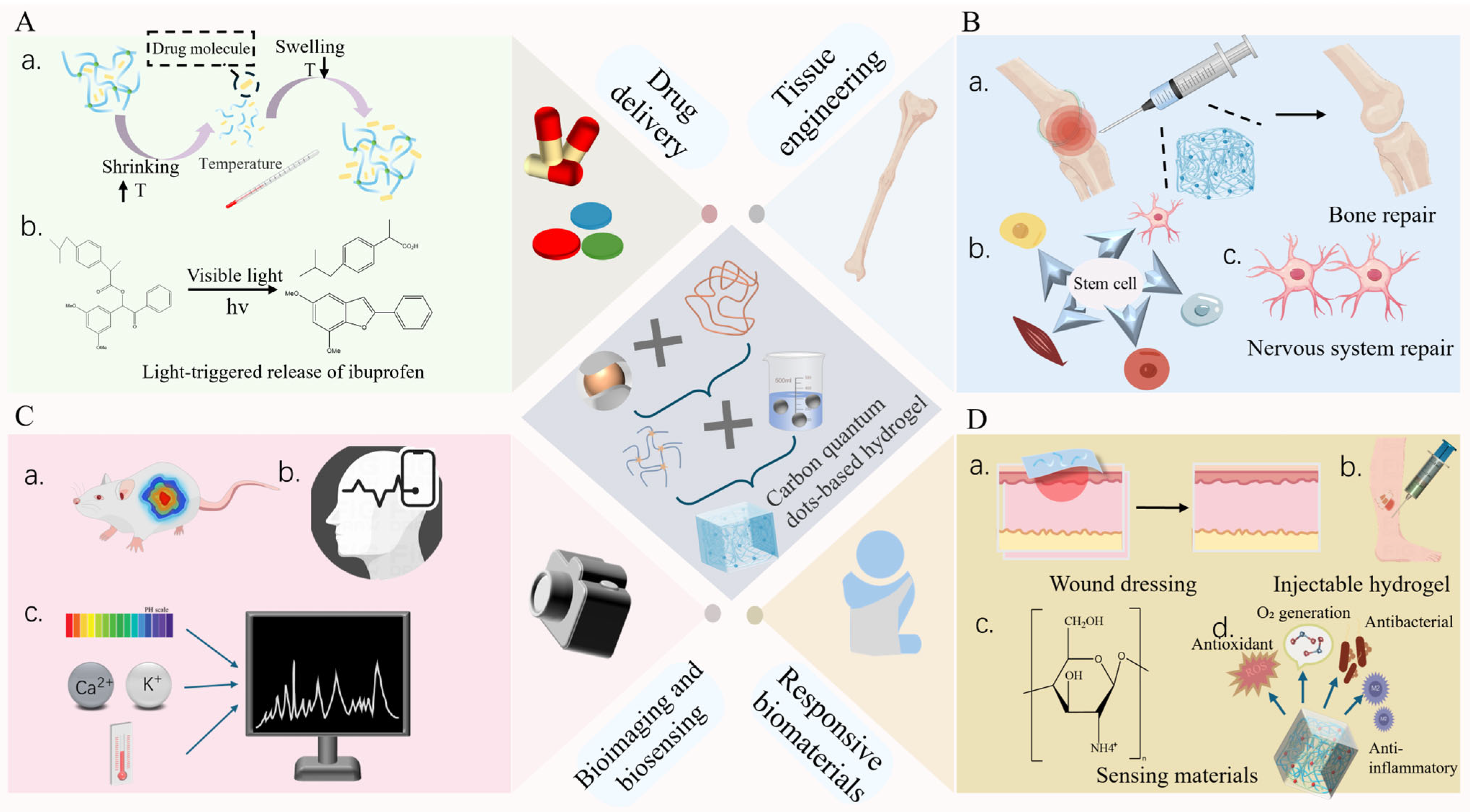
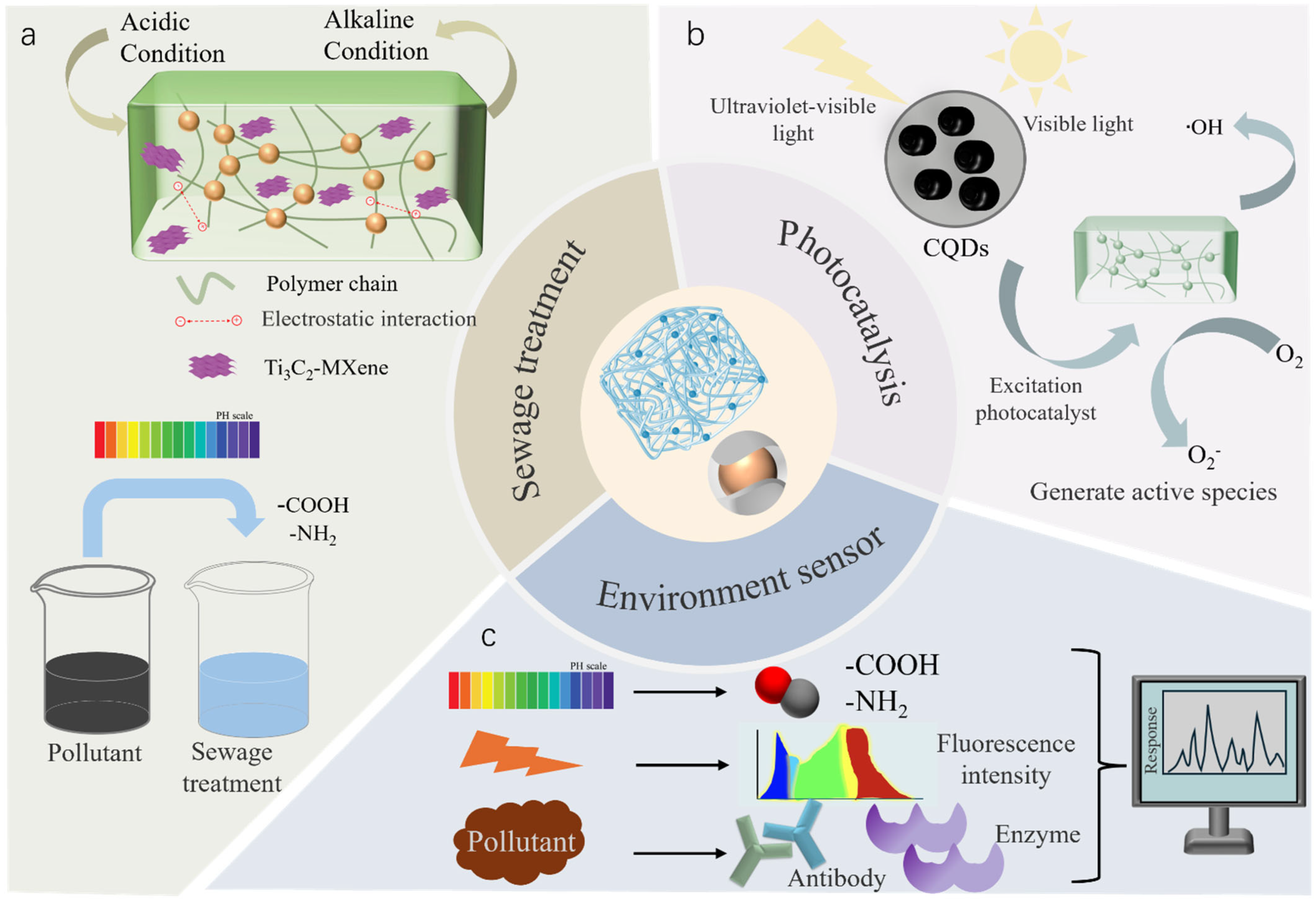
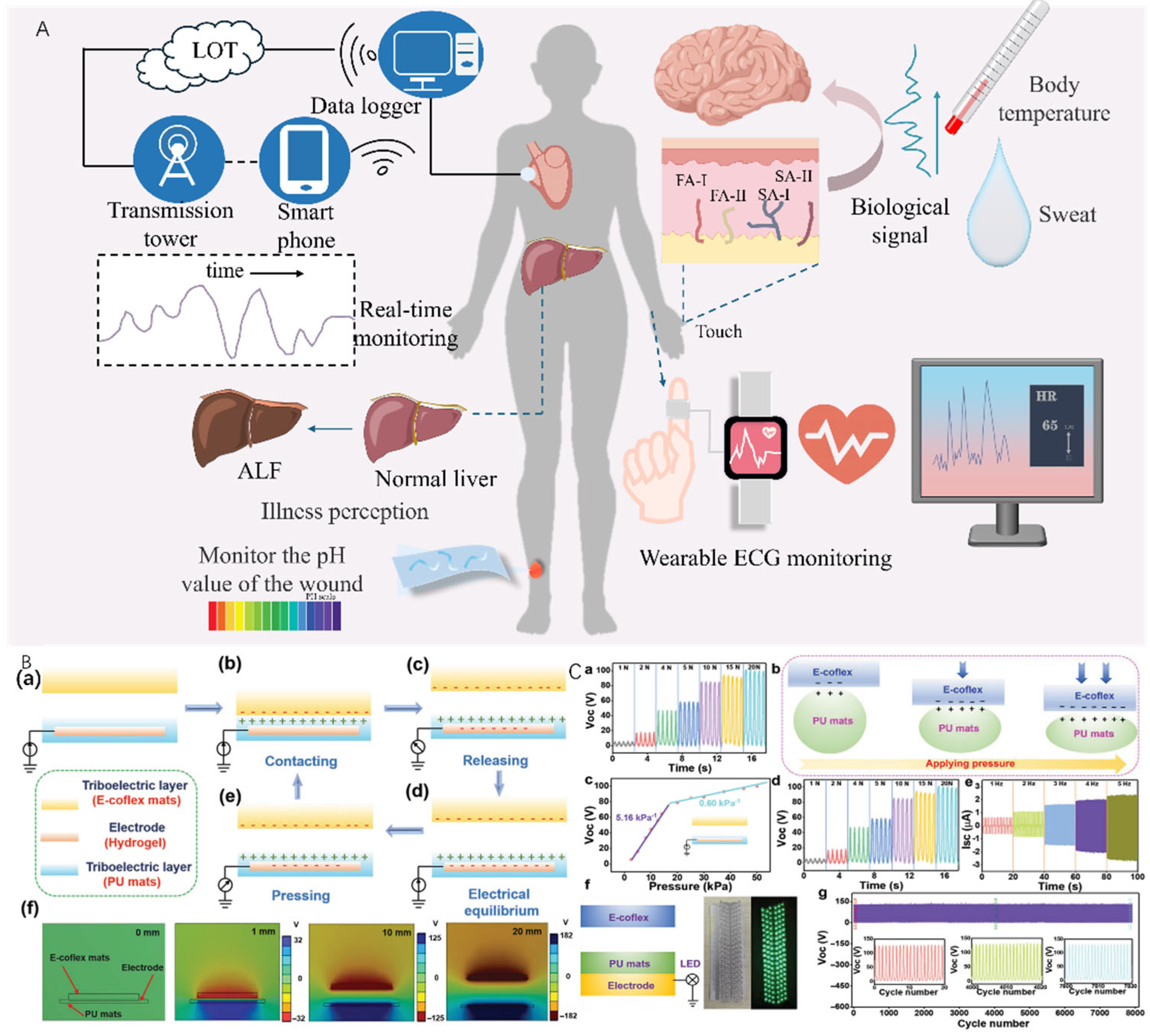
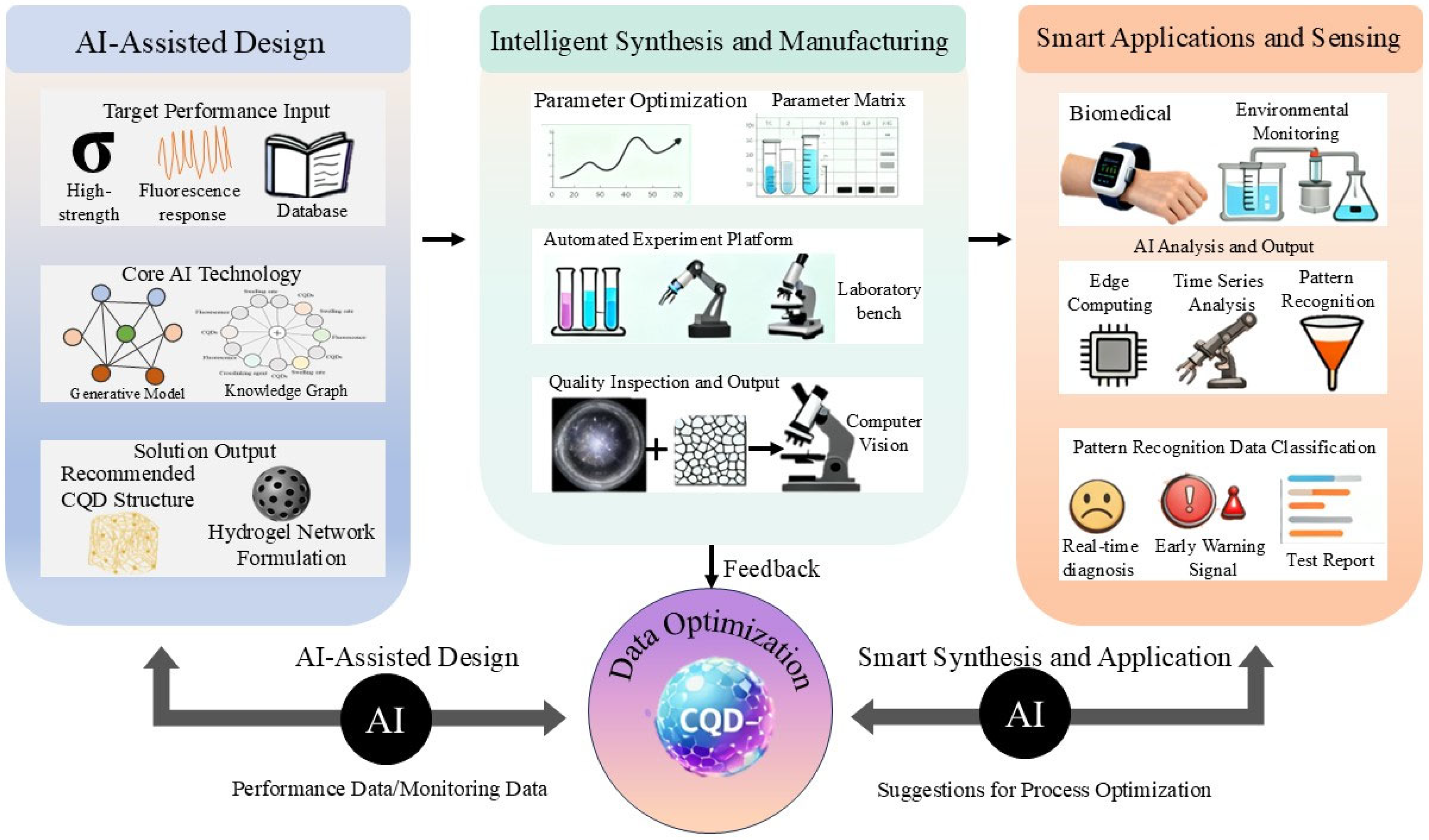
Carbon quantum dots (CQDs) and stimuli-responsive hydrogels are advanced functional materials whose hybridization yields CQD-enhanced stimuli-sensitive hydrogels, opening new interdisciplinary avenues for smart material applications. This review systematically summarizes the latest advances in these composites, focusing on synthetic strategies, structure–property modulation mechanisms, and practical applications. Distinct from existing reviews that either investigate CQDs or hydrogels independently or discuss their composites in a single research field, this work features core novelties in integration strategy, application scope and critical analysis: it systematically compares the advantages, limitations and applicable scenarios of three typical CQD–hydrogel integration approaches (physical entrapment, in situ synthesis, covalent conjugation), comprehensively covers the multi-field application progress of the composites and conducts in-depth cross-field analysis of their common scientific issues and technical bottlenecks. By incorporating CQDs, the composites achieve remarkable performance optimizations: 40% improved mechanical toughness, sub-ppm-level heavy metal-sensing sensitivity, and over 80% organic dye photocatalytic degradation efficiency, addressing pure hydrogels’ inherent limitations of insufficient strength and single functionality. These enhancements enable sophisticated applications in biomedical field (real-time biosensing, controlled drug delivery), environmental remediation (pollutant detection/degradation), energy storage, and flexible electronics. The synergistic interplay between CQDs and hydrogels facilitates precise single/multi-stimulus responsiveness (pH, temperature, light), a pivotal advance for precision medicine and intelligent environmental monitoring. Despite promising progress, the large-scale practical application of CQD–hydrogel composites still faces prominent challenges: the difficulty in scalable fabrication with the uniform dispersion of CQDs in hydrogel matrices, poor long-term stability of most composites under physiological cyclic stress (service life < 6 months in practical tests), and low accuracy in discriminating multi-stimuli in complex real-world matrices. Future research should prioritize biomass-based eco-friendly CQD synthesis, machine learning-aided multimodal responsive systems, and 3D bioprinting for scalable manufacturing.
Keywords: carbon quantum dots; stimuli-sensitive hydrogels; smart materials; drug delivery; biosensing carbon quantum dots; stimuli-sensitive hydrogels; smart materials; drug delivery; biosensing
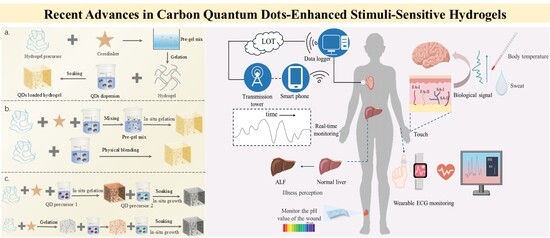
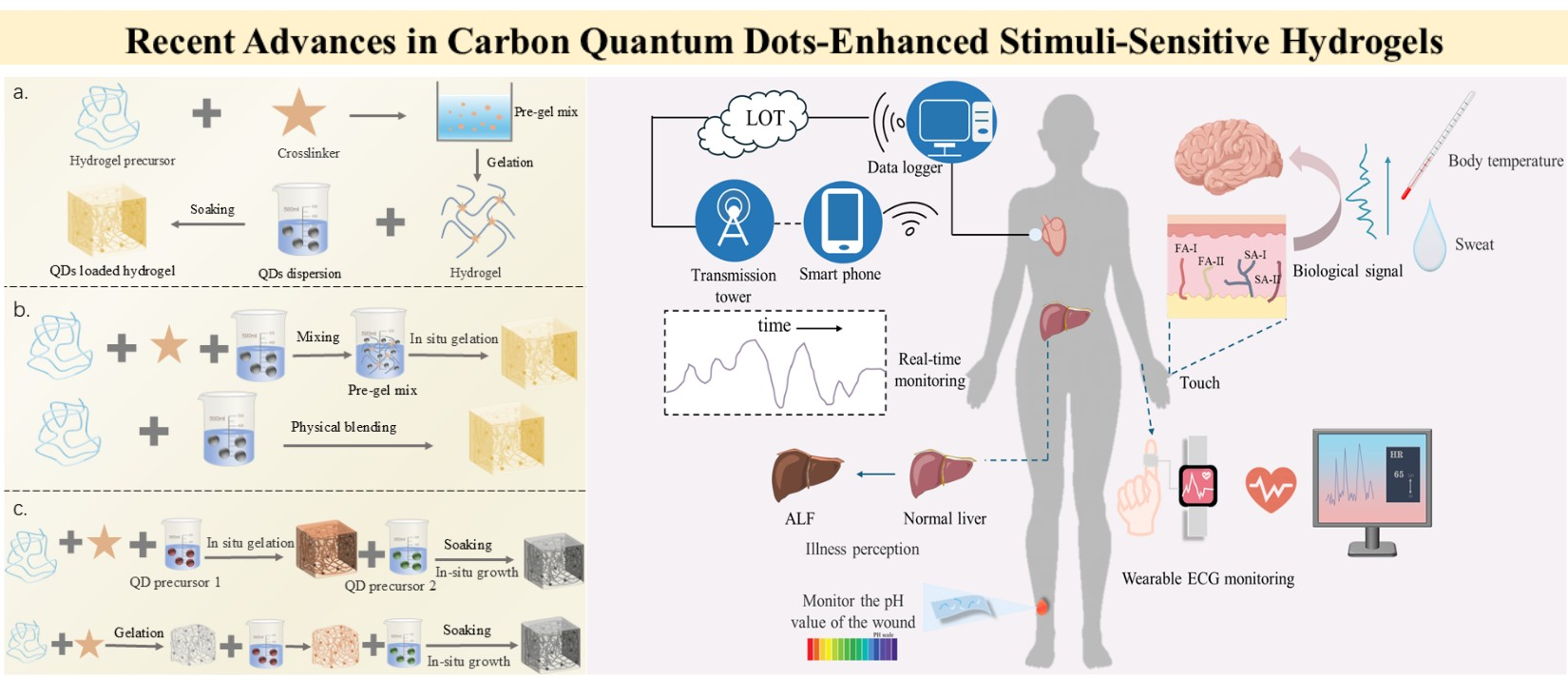
Graphical Abstract