Article

Antiplasmodial Properties and Cytotoxicity of Endophytic Fungi from Symphonia globulifera (Clusiaceae)


1
Department of Organic Chemistry, Faculty of Science, University of Yaoundé 1, P.O. Box 812, 237 Yaoundé, Cameroon
2
Department of Biochemistry, Faculty of Science, University of Yaoundé I, Cameroon; P.O. Box 812, 237 Yaoundé, Cameroon
3
Department of Chemistry, Faculty of Science, University of Bamenda, P.O. Box 39, 237 Bambili, Cameroon
4
Department of Chemistry, Organic and Bioorganic Chemistry, Bielefeld University, P.O. Box 100131, D-33501 Bielefeld, Germany
5
International Centre for Genetic Engineering and Biotechnology, Aruna Asaf Ali Marg, New Delhi 110067, India
6
Departamento de Química-Universidade Federal de São Carlos-CP 676, São Carlos-SP 13565-905, Brazil
7
Department of Chemistry, Higher Teacher Training College, University of Yaoundé 1, P.O. Box 47, 237 Yaoundé, Cameroon
*
Authors to whom correspondence should be addressed.
J. Fungi 2018, 4(2), 70; https://doi.org/10.3390/jof4020070
Submission received: 27 April 2018 / Revised: 7 June 2018 / Accepted: 8 June 2018 / Published: 12 June 2018
(This article belongs to the Special Issue Fungal Endophytes in Plants)

Abstract

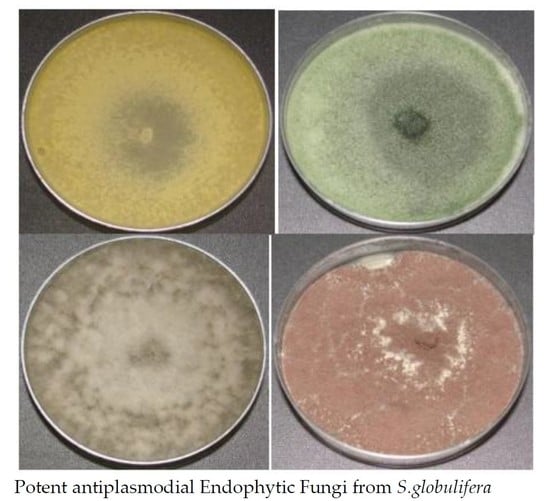
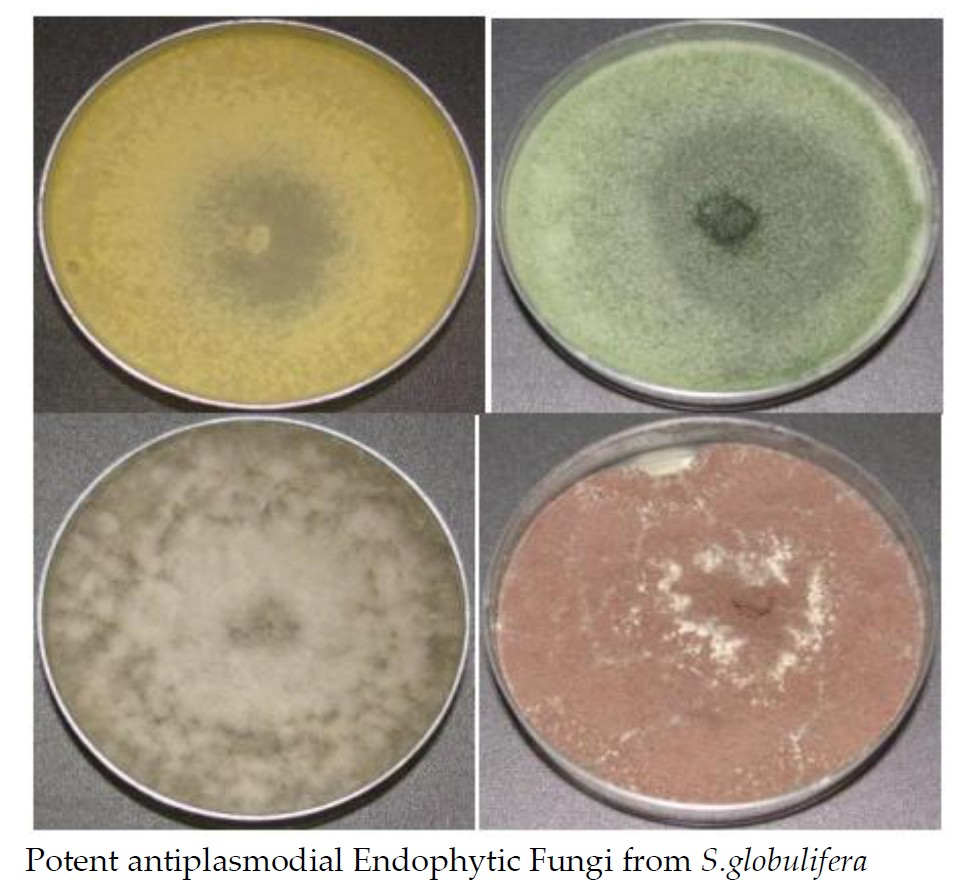
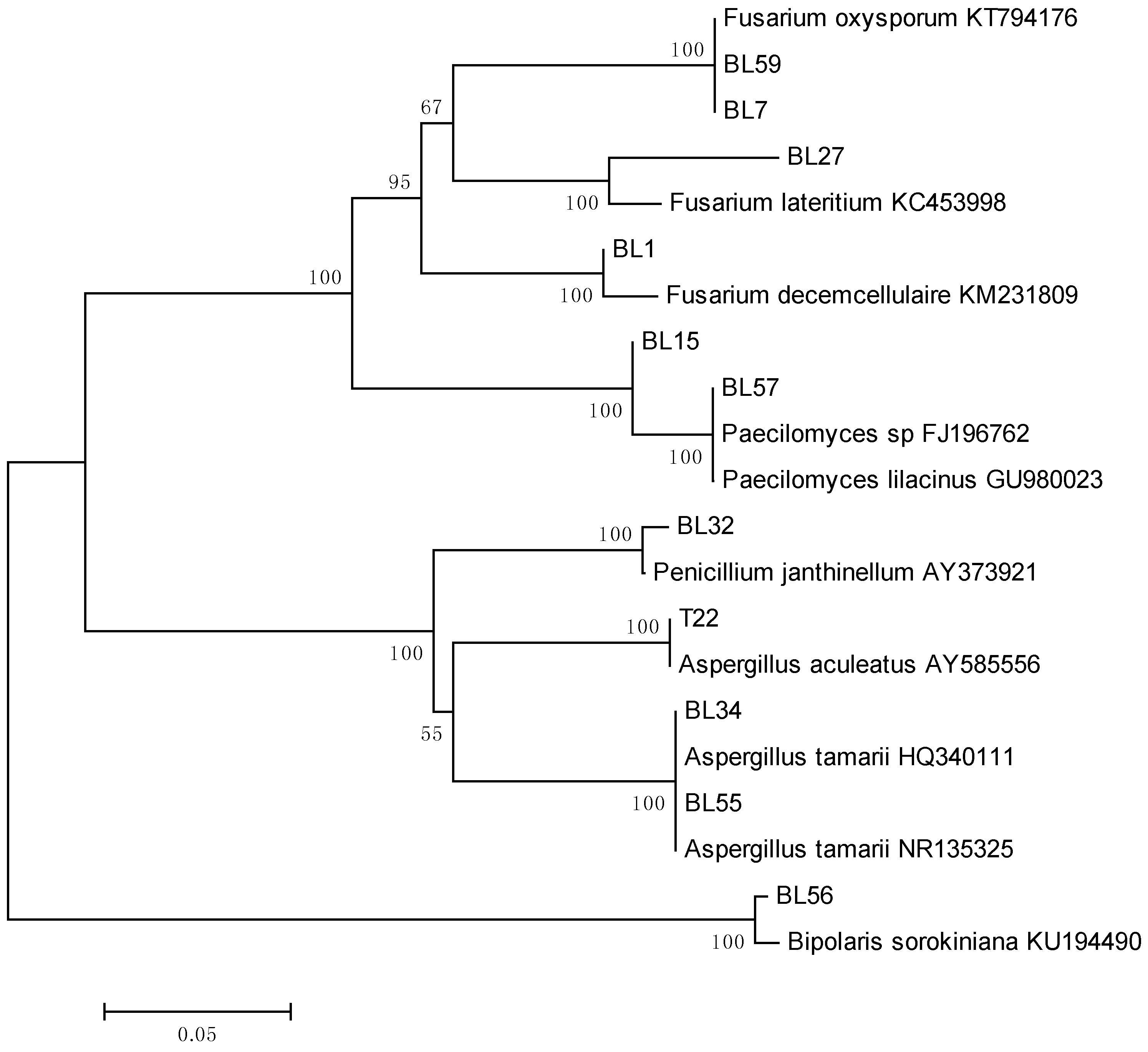
There is continuing need for new and improved drugs to tackle malaria, which remains a major public health problem, especially in tropical and subtropical regions of the world. Natural products represent credible sources of new antiplasmodial agents for antimalarial drug development. Endophytes that widely colonize healthy tissues of plants have been shown to synthesize a great variety of secondary metabolites that might possess antiplasmodial benefits. The present study was carried out to evaluate the antiplasmodial potential of extracts from endophytic fungi isolated from Symphonia globulifera against a chloroquine-resistant strain of Plasmodium falciparum (PfINDO). Sixty-one fungal isolates with infection frequency of 67.77% were obtained from the bark of S. globulifera. Twelve selected isolates were classified into six different genera including Fusarium, Paecilomyces, Penicillium, Aspergillus, Mucor, and Bipolaris. Extracts from the 12 isolates were tested against PfINDO, and nine showed good activity (IC50 < 10 μg·mL−1) with three fungi including Paecilomyces lilacinus (IC50 = 0.44 μg·mL−1), Penicillium janthinellum (IC50 = 0.2 μg·mL−1), and Paecilomyces sp. (IC50 = 0.55 μg·mL−1) showing the highest promise. These three isolates were found to be less cytotoxic against the HEK293T cell line with selectivity indices ranging from 24.52 to 70.56. Results from this study indicate that endophytic fungi from Symphonia globulifera are promising sources of hit compounds that might be further investigated as novel drugs against malaria. The chemical investigation of active extracts is ongoing.
Keywords: malaria; chloroquine-resistant Plasmodium falciparum; Symphonia globulifera; endophytic fungi; antiplasmodial IC50; selectivity index malaria; chloroquine-resistant Plasmodium falciparum; Symphonia globulifera; endophytic fungi; antiplasmodial IC50; selectivity index
Graphical Abstract