Article

New Record of Metarhizium brunneum Infecting Banana Weevil in Peru: Implications for Biological Control


by
Edwin Mondragon-Herrera
1,
Laydy Mitsu Mena-Chacon
2,3,
Santos T. Leiva-Espinoza
1,* and
Angel F. Huaman-Pilco
2,3,*
1
Facultad de Ingeniería y Ciencias Agrarias, Universidad Nacional Toribio Rodríguez de Mendoza de Amazonas (UNTRM), Chachapoyas 01001, Peru
2
Grupo de Investigación en Patología Intracelular de Plantas, Instituto de Investigación para el Desarrollo Sustentable de Ceja de Selva, Universidad Nacional Toribio Rodríguez de Mendoza de Amazonas, Chachapoyas 01001, Peru
3
Grupo de Investigación en Biopesticidas y Bioalternativas para la Protección Vegetal, Instituto de Investigación para el Desarrollo Sustentable de Ceja de Selva, Universidad Nacional Toribio Rodríguez de Mendoza de Amazonas, Chachapoyas 01001, Peru
*
Authors to whom correspondence should be addressed.
J. Fungi 2026, 12(5), 363; https://doi.org/10.3390/jof12050363
Submission received: 2 April 2026 / Revised: 7 May 2026 / Accepted: 12 May 2026 / Published: 15 May 2026
(This article belongs to the Special Issue Application of Entomopathogenic Fungi for Pest Biocontrol)

Abstract

The use of entomopathogenic fungi as biological control agents has gained increasing relevance as a sustainable alternative to chemical insecticides in tropical agroecosystems. In this study, a naturally occurring isolate of Metarhizium brunneum infecting adults of Metamasius hemipterus was recovered from banana plantations in the Amazonas region, Peru, and evaluated for its potential as a biological control agent. Multilocus phylogenetic analysis based on tef1α, β-tubulin, rpb1, and rpb2 sequences confirmed its taxonomic identity within the M. brunneum clade. Physiological characterization revealed variability in growth and thermal response among isolates, while conidial production differed significantly depending on the substrate. Notably, isolate PM9 exhibited the highest conidial yield on rice substrate. Pathogenicity assays demonstrated high virulence against adult weevils, with an LC50 of 2.91 × 10⁵ conidia·mL−1 and mortality exceeding 90% at the highest concentration tested. These findings indicate that isolate PM9 combines desirable physiological and pathogenic traits for biological control. The natural occurrence of this entomopathogen in banana systems suggests ecological adaptation to local conditions and supports its potential incorporation into integrated pest management strategies, although further field-based evaluation is required.

1. Introduction

Metarhizium brunneum (Hypocreales: Clavicipitaceae) is a cosmopolitan entomopathogenic fungus widely recognized for its role as a biological control agent (BCA) against a broad range of insect pests. Species within the genus Metarhizium are among the most extensively studied fungal BCAs due to their infective capacity, ecological adaptability, and compatibility with integrated pest management (IPM) programs [1,2,3,4]. Members of this genus typically produce green conidia on the cadavers of infected arthropods, a characteristic that has led to their common designation as “green muscardine fungi” [5]. Most species have been isolated from soil environments or in association with plant roots, although they are occasionally recovered from naturally infected arthropod hosts [4,6].
Several studies have demonstrated the pathogenic potential of M. brunneum against economically important agricultural pests. Documented targets include the coffee leaf miner (Leucoptera coffeella) [7], the western corn rootworm (Diabrotica virgifera virgifera) [8], wireworms (Agriotes spp.) [9], the sugar beet weevil (Asproparthenis punctiventris [10], and the two-spotted spider mite (Tetranychus urticae) [11]. Additionally, secondary metabolites produced by this fungus have shown antifungal activity against plant pathogens such as Verticillium dahliae and Phytophthora megasperma [12]. However, despite promising laboratory results, field efficacy may vary depending on environmental conditions, formulation strategies, host susceptibility, and application methods [3,13].
From an ecological perspective, the environmental safety of M. brunneum has also been investigated. High-throughput sequencing studies have shown that its application does not significantly disrupt native soil microbial communities, suggesting ecological compatibility with existing microbiomes [8,14,15]. Moreover, interactions with other biological control agents appear generally compatible, although sublethal effects on certain beneficial insects have been reported, highlighting the importance of evaluating multitrophic interactions when integrating microbial agents into IPM programs [16].
In tropical agroecosystems, banana (Musa spp.) production is significantly affected by curculionid pests. Among them, Metamasius hemipterus (L.) (Coleoptera: Curculionidae), commonly known as the sugarcane weevil, has emerged as an important pest in banana plantations. Larvae and adults feed within pseudostems and corm tissues, causing structural damage that leads to plant weakening, lodging, and yield reduction [17,18,19]. The damage caused by this species can be comparable to that produced by the banana weevil Cosmopolites sordidus, and both pests may coexist within the same production systems, intensifying economic losses [20].
Entomopathogenic fungi have been investigated as sustainable alternatives for managing M. hemipterus. For example, Metarhizium anisopliae has demonstrated high virulence against this pest under laboratory conditions, particularly at elevated conidial concentrations [21], supporting the potential of Metarhizium spp. as biological control agents against curculionid pests. Nevertheless, information regarding the natural occurrence and pathogenicity of M. brunneum infecting M. hemipterus in banana agroecosystems remains scarce, especially in South American production regions.
Therefore, the objective of this study was to isolate and molecularly identify Metarhizium brunneum naturally infecting Metamasius hemipterus in banana crops in Amazonas, Peru, representing the first report of this host–pathogen association in the country. Subsequently, the entomopathogen was cultured, mass-produced on rice substrate, and evaluated in dose–response bioassays against adult M. hemipterus under controlled laboratory conditions.

2. Materials and Methods

2.1. Isolation and Establishment of Fungal Isolates

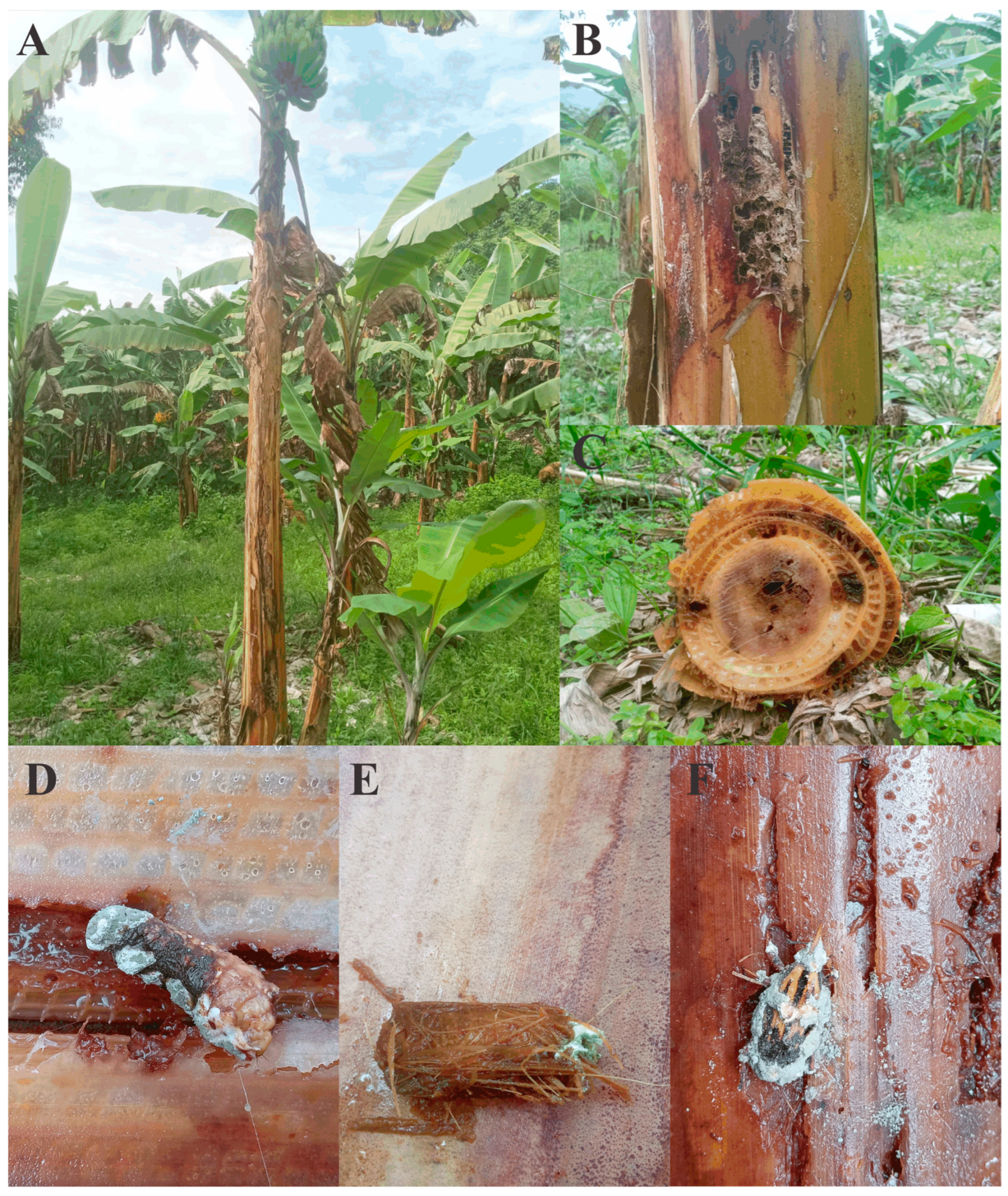
Larvae, pupae, and adults of Metamasius hemipterus exhibiting external signs of mycosis consistent with Metarhizium brunneum infection (Figure 1) were collected from banana plantations located in the Amazonas region, Peru (Table 1). Infected specimens were surface-sterilized in 0.5% sodium hypochlorite (NaClO) for 3 min and rinsed thoroughly with sterile distilled water. Sterilized individuals were placed separately in moist chambers and incubated at 25 °C for 7 days to promote sporulation. Emerging conidia were transferred onto potato dextrose agar (PDA) for fungal propagation. To ensure genetic uniformity, monosporic isolates were obtained from polysporic cultures using the single-spore isolation technique [22].

2.2. Molecular Identification and Phylogenetic Analysis

Genomic DNA was extracted from 8-day-old cultures grown on PDA using the Wizard® Genomic DNA Purification Kit (Promega, Madison, WI, USA), following the manufacturer’s protocol.
Four gene regions were amplified by PCR following the manufacturer’s protocol: translation elongation factor 1-alpha (tef1a) using primers EF1A-983F/EF1A-2218R, β-tubulin (β-TUB) using Bt2a/Bt2b, and the largest and second largest subunits of RNA polymerase II (rpb1 and rpb2) using RPB1Af/RPB1Cr and RPB2-5F/RPB2-7Cr, respectively [23,24]. PCR products were sequenced by Macrogen Inc. (Seoul, Republic of Korea).
Forward and reverse sequences were edited, assembled, and manually inspected to generate consensus sequences. Representative sequences of closely related Metarhizium species, including type and reference strains, were retrieved from GenBank and incorporated into the dataset (Table 2). Multiple sequence alignments were performed using the MUSCLE algorithm [25] implemented in MEGA version 11 [26]. The four loci were concatenated into a multilocus dataset using SeaView version 5.0 [27]. jModelTest v2 was used to identify the most appropriate nucleotide substitution model under the Akaike Information Criterion (AIC) [28].
Phylogenetic relationships were inferred under the Maximum Likelihood (ML) criterion using the CIPRES Science Gateway platform [29]. Branch support was assessed by bootstrap analysis with 1000 replicates. The resulting phylogenetic tree was midpoint-rooted and visualized and edited using Itol v5 [30]. The sequences generated in this study were deposited in GenBank under accession numbers provided in Table 2.

2.3. Morphological Characterization

For macromorphological characterization, a conidial suspension (1 × 10⁷ conidia·mL−1) was prepared for each isolate. An aliquot of 80 µL was evenly distributed onto PDA plates using sterile borosilicate glass beads and incubated at 25 °C in darkness for 3 days to promote uniform colony establishment. Subsequently, 5-mm-diameter mycelial plugs were transferred to the center of 90-mm Petri dishes containing fresh PDA.
Colony morphology was recorded after 14 days of incubation at 25 °C and 30 °C. The evaluated traits included colony color, margin characteristics, and surface texture, following the descriptive criteria proposed by Baró et al. [31].
Because all isolates were molecularly identified as Metarhizium brunneum, microscopic examination was conducted to confirm morphological consistency within the species. Actively sporulating 5-mm PDA plugs were transferred onto fresh PDA plates and covered with sterile coverslips to facilitate the development of conidiophores and conidia in situ. Plates were incubated in moist chambers at 25 °C for 4 days.
Microscopic structures were examined using a Leica® light microscope (Leica Microsystems, Wetzlar, Germany). Digital micrographs were captured, and morphometric analysis was performed using Image Tool version 3.0. The length and width of 50 randomly selected conidia per isolate were measured to determine conidial dimensions.

2.4. Physiological Characterization

2.4.1. Mycelial Growth

Colony diameter was measured along four perpendicular axes (two orthogonal diameters), and the mean value was calculated for each replicate to minimize measurement bias due to irregular colony margins. The inoculated plates were incubated at 25, 30, and 35 ± 1 °C to evaluate the thermal tolerance of the fungus [22]. The effect of temperature on radial growth was expressed as the thermal sensitivity (TS, %) relative to 25 °C, calculated after 14 d using the Formula (1).
T S   ( % ) = C R T C R 25 C R 25 × 100 ,
where CRT represents colony radial growth at the evaluated temperature (30 or 35 °C), and CR25 represents colony radial growth at 25 °C. Positive TS values indicate growth stimulation, whereas negative values indicate growth inhibition relative to 25 °C.

2.4.2. Conidial Production on PDA

For conidial production, 5-mm-diameter plugs were excised from the actively growing margin of 5-day-old colonies using a sterile cork borer and transferred to fresh PDA plates. Cultures were incubated at 25 ± 1 °C in darkness for 15 days. Four replicates were established per isolate. Conidia were harvested by flooding each plate with sterile distilled water containing 0.05% Tween 20 and gently scraping the colony surface with a sterile scalpel. The resulting suspension was homogenized for 1 min using a magnetic stirrer and filtered through sterile medical gauze to remove mycelial fragments [32]. Conidial production (CP) was quantified using a Neubauer hemocytometer. The concentration of conidia (conidia·mL−1) was calculated using the Formula (2).
C = ( C c ) ( 4 × 10 6 ) F d 80 ,
where Cc represents the mean number of conidia counted in five large squares of the hemocytometer, and Fd corresponds to the dilution factor. Four independent counts were performed per isolate.

2.5. Conidial Production on Rice Substrate

Conidial production was evaluated using rice as a solid substrate. Polypropylene bags containing 30 g of rice were moistened with 10 mL of sterile distilled water and sterilized at 120 °C for 20 min. After cooling to room temperature, each bag was inoculated with 5 mL of a conidial suspension adjusted to 1 × 10⁷ conidia·mL−1. Four independent replicates were established per isolate. Inoculated rice bags were incubated at 25 ± 1 °C in darkness for 15 days to allow fungal colonization and sporulation. After incubation, the entire 30 g of colonized rice was transferred into 150 mL of sterile distilled water containing 0.05% Tween 20. The suspension was agitated on an orbital shaker for 30 min to dislodge conidia from the substrate and subsequently filtered through sterile medical gauze to remove rice debris and mycelial fragments [22,32].
Conidial concentration was determined using a Neubauer hemocytometer under a light microscope. Conidial yield was expressed as the number of conidia per gram of rice (conidia·g−1), based on the total suspension volume recovered. Four independent counts were performed per isolate.

2.6. Dose–Response Bioassay in Metamasius hemipterus Adults

Dose–response bioassays were conducted to determine the median lethal concentration (LC50) of isolate PM9, selected based on its high conidial production on rice substrate, follow the procedure described by Mayo-Hernández et al. [22], with slight modifications. Conidial suspensions were prepared at four concentrations: 1 × 10⁵, 1 × 10⁶, 1 × 10⁷, and 1 × 10⁸ conidia·mL−1. Experimental units consisted of 500-mL plastic containers with modified lids to allow ventilation. Each container was provisioned with pieces of banana pseudostem surface-sterilized in 0.5% sodium hypochlorite (NaClO) for 1 min and rinsed with sterile distilled water. A moistened cotton plug was added to maintain humidity.
Ten field-collected adults of M. hemipterus were introduced into each experimental container after surface sterilization in 0.5% NaClO for 1 min and rinsing with sterile distilled water. Adults were individually immersed in the corresponding conidial suspension for 30 s (dip method) and then transferred to the containers. Each treatment consisted of four independent replicates (10 insects per replicate; total n = 40 insects per treatment), including a control treatment with sterile distilled water containing 0.05% Tween 20 [33]. Containers were maintained at 26 ± 1 °C under a 12 h photoperiod for 12 days. Mortality was recorded daily. Dead insects were removed, surface-sterilized (70% ethanol for 30 s followed by 0.5% NaClO for 1 min), rinsed with sterile distilled water, and placed in moist chambers at 26 °C to confirm mycosis. Mortality was attributed to fungal infection only when external sporulation was observed.

2.7. Statistical Analysis

Data were analyzed using one-way analysis of variance (ANOVA), followed by Tukey’s multiple comparison test at a 95% confidence level (p < 0.05), to assess differences among isolates or treatments when applicable. For dose–response bioassays, median lethal concentrations (LC50 and LC90) were estimated using a four-parameter log-logistic model (Formula (3)) implemented in the drc package in R software 4.4.1 (R Core Team, Vienna, Austria). The dose–response relationship was described by the following function:
f x = c + d c 1 + e x p b ( log x log e )
where x is the conidial concentration, c and d represent the lower and upper asymptotes, respectively, b is the slope around the inflection point, and e corresponds to the median lethal concentration (LC50).
Model parameters were estimated by nonlinear regression. Model fit was evaluated based on residual analysis, root mean square error (RMSE), and significance of model parameters (p < 0.05). Goodness-of-fit was additionally examined by visual inspection of residual distribution and predicted versus observed values. All statistical analyses were performed in R version 4.4.1.

3. Results

3.1. Molecular Identification of the Isolates

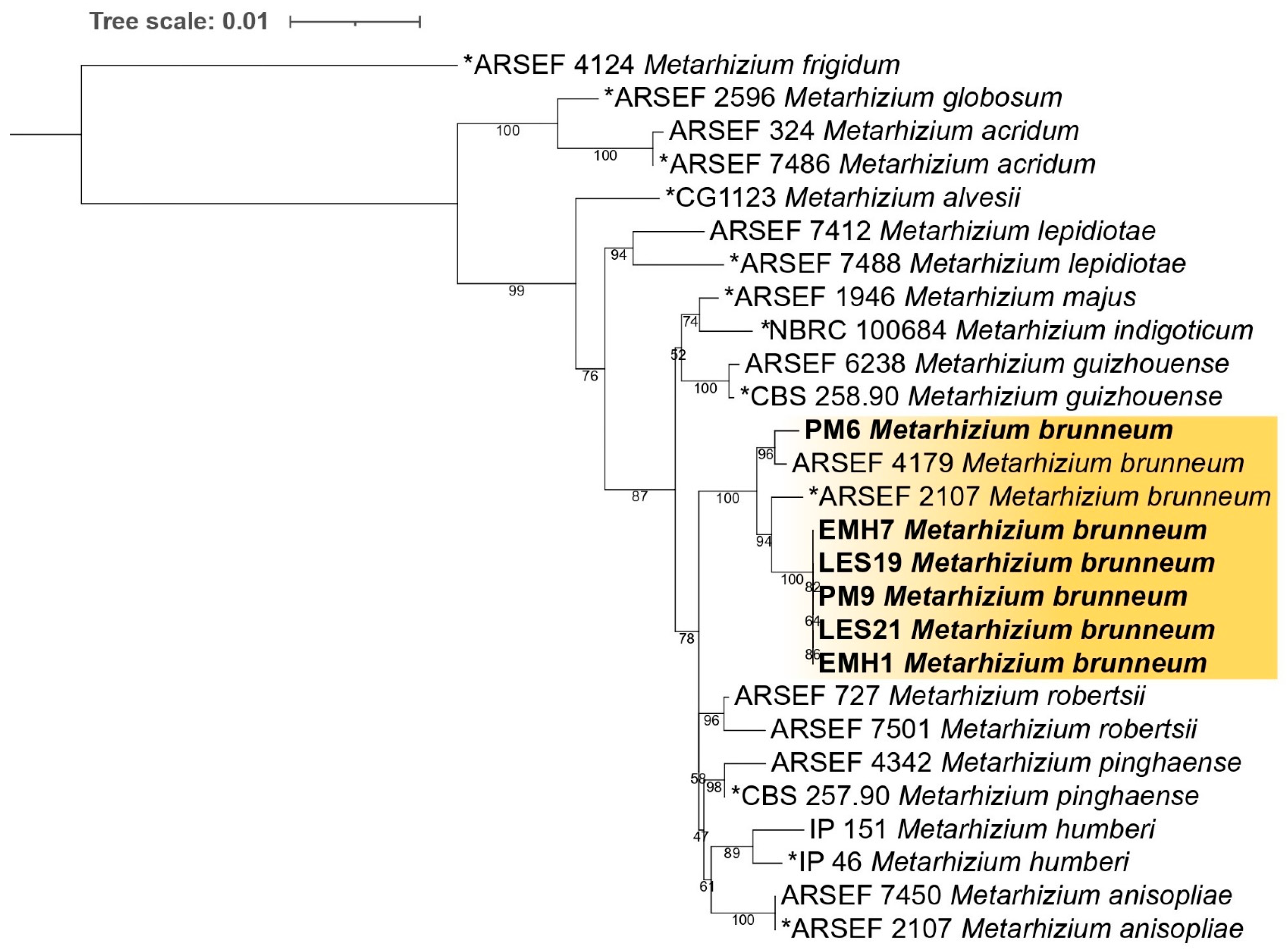
Multilocus phylogenetic analysis was performed under the TIM3 + I + G substitution model (transition model with unequal base frequencies, proportion of invariable sites, and gamma-distributed rate heterogeneity). The concatenated tef1a, β-tubulin (β-tub), rpb1, and rpb2 sequences resolved the relationships among the studied isolates and representative reference strains within the genus Metarhizium (Figure 2). The combined dataset separated the major species-level clades with strong bootstrap support. All isolates obtained from Metamasius hemipterus clustered within the Metarhizium brunneum clade, together with reference strains ARSEF 4179 and the ex-type strain ARSEF 2107T. This grouping was supported by high bootstrap values (≥96%), confirming their taxonomic placement as M. brunneum.
The M. brunneum lineage was well resolved and distinct from closely related species, including M. robertsii, M. anisopliae, and M. pinghaense, which formed separate and strongly supported clades. No internal phylogenetic structuring or evidence of cryptic divergence was detected among the isolates within the M. brunneum cluster.

3.2. Characterization of Isolates

3.2.1. Morphological Characteristics

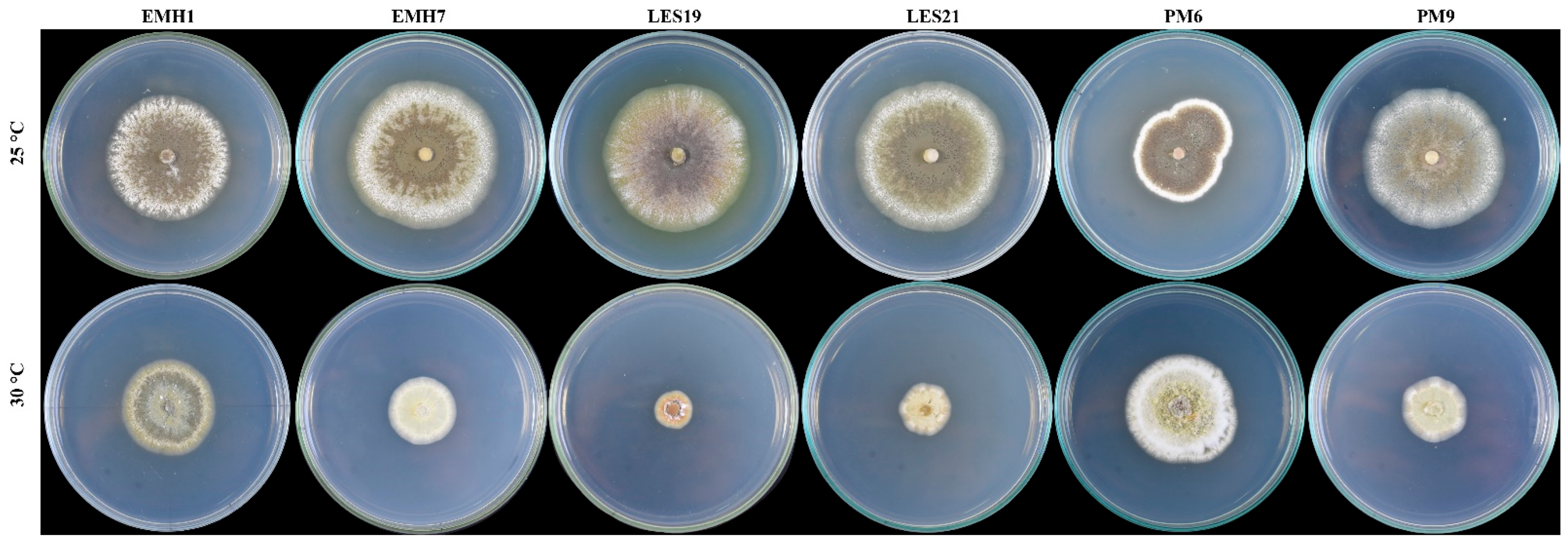
Colony morphology varied moderately among isolates when cultured on PDA at 25 °C and 30 °C (Figure 3). At 25 °C, all isolates developed well-expanded colonies with abundant aerial mycelium. Colonies were predominantly white to cream in color, with central zones exhibiting subtle beige to pale olive tones in some isolates. Margins were generally entire and well defined, although slight undulation was observed in isolates such as LES19 and PM6. Texture was mainly floccose to cottony, with evident radial growth patterns and moderate central density.
At 30 °C, overall radial growth was reduced in most isolates, and colonies exhibited a more compact morphology with decreased aerial mycelium (Figure 2). Surface coloration remained predominantly white to cream; however, central pigmentation became less evident compared to 25 °C. Margins were regular and sharply delimited, and colony texture shifted toward a denser and more compact appearance.
Isolate PM6 displayed comparatively vigorous growth at 30 °C relative to the other isolates, maintaining a floccose to cottony texture and well-developed mycelium, whereas isolates such as EMH7, LES19, and LES21 showed markedly reduced colony diameter and more compact growth under elevated temperature conditions. No diffusible pigments or exudates were observed in any isolate under the tested conditions.
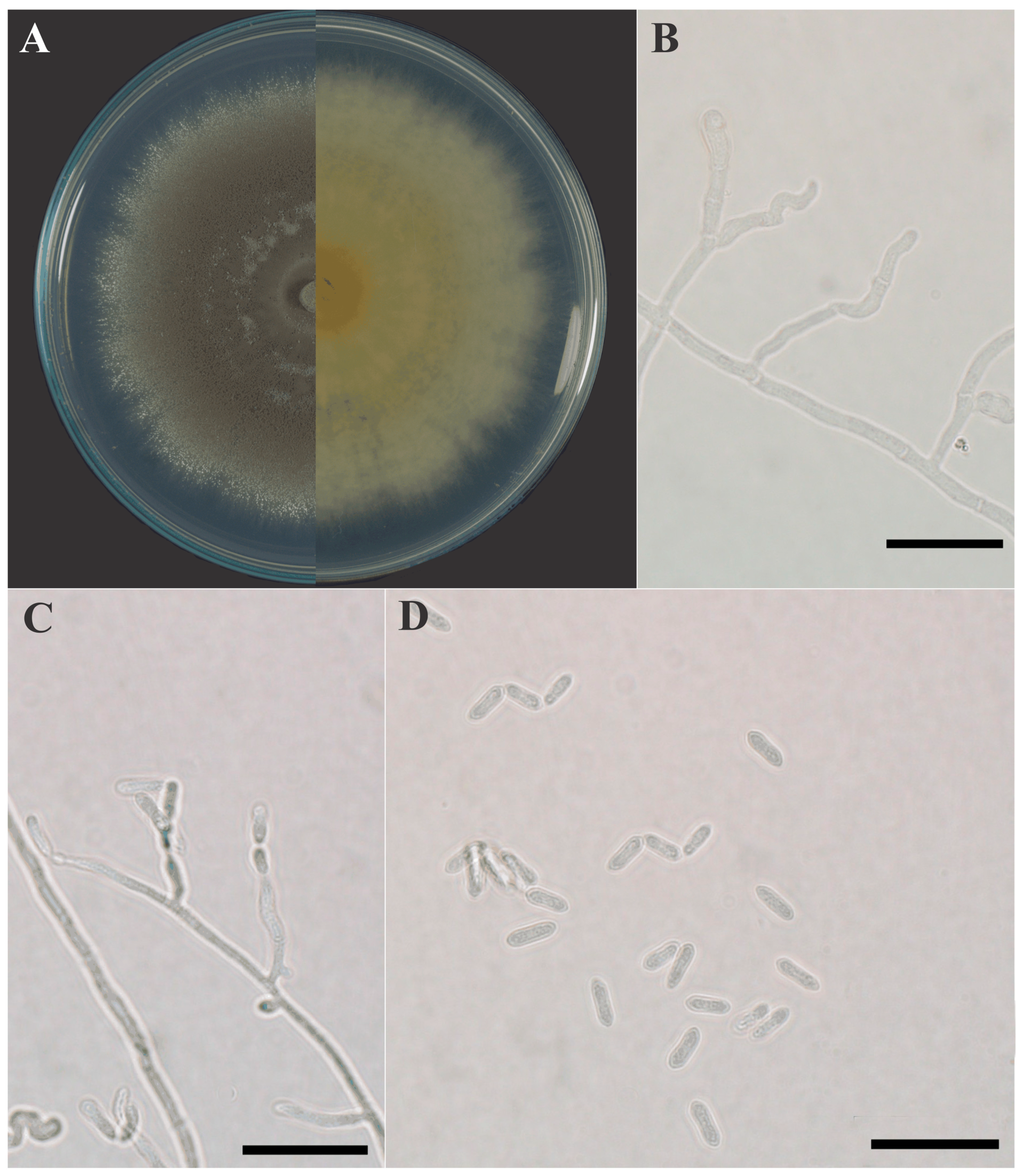
Microscopic observations, performed on isolate PM9 as a representative strain, revealed typical morphological features of Metarhizium brunneum, including hyaline, septate hyphae and conidiogenous cells producing ellipsoidal to cylindrical conidia (Figure 4). Conidia were observed singly or in short chains, with an average size of 7.37 ± 0.60 × 2.33 ± 0.19 µm.

3.2.2. Physiological Characterization

Significant differences in mycelial growth were observed among isolates at both temperatures evaluated (p < 0.0001; Table 3). At 25 °C, isolates EMH7, LES19, LES21, and PM9 exhibited the highest radial growth values (29.34–30.26 mm), without significant differences among them (p < 0.05). EMH1 showed intermediate growth (24.98 mm), whereas PM6 presented the lowest value (19.67 mm). At 30 °C, PM6 displayed the greatest radial growth (22.16 mm), significantly higher than all other isolates (p < 0.05). EMH1 showed intermediate growth (17.99 mm), while LES19 exhibited the lowest value (4.78 mm).
Thermal sensitivity differed significantly among isolates (p < 0.0001). Most isolates showed growth inhibition at 30 °C relative to 25 °C, with LES19 presenting the highest inhibition (−83.74%), followed by LES21 (−73.22%) and PM9 (−61.88%). In contrast, PM6 exhibited positive growth stimulation (12.65%), indicating increased radial growth at 30 °C. Conidial production on PDA also differed significantly among isolates (p < 0.0001). EMH7 and LES21 produced the highest concentrations (1.05 × 10⁸ and 9.77 × 10⁷ conidia·mL−1, respectively), whereas LES19 showed the lowest production (5.17 × 10⁷ conidia·mL−1).

3.3. Conidial Production on Rice

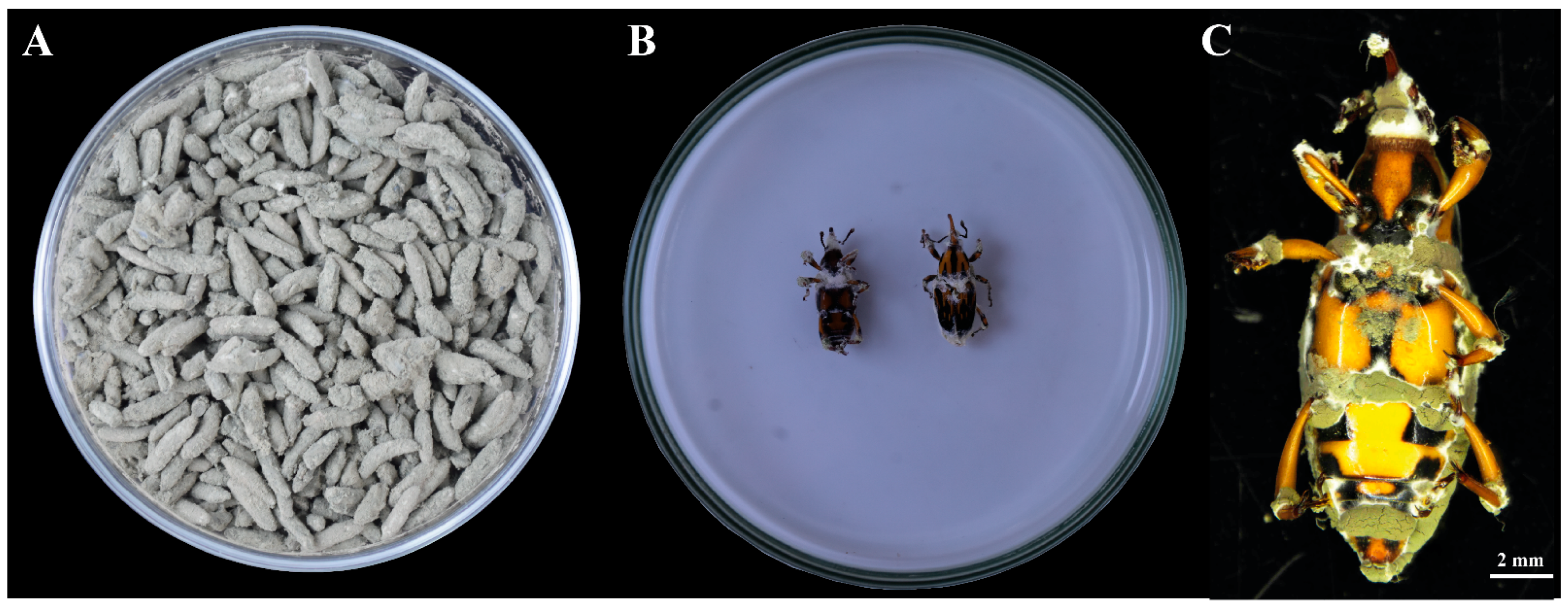
Significant differences in conidial production on rice were observed among isolates (p < 0.0001; Table 3). Isolate PM9 exhibited the highest conidial yield (2.63 × 10⁹ conidia·g−1), significantly exceeding all other isolates. EMH1 showed intermediate production (2.11 × 10⁹ conidia·g−1), followed by PM6 (1.76 × 10⁹ conidia·g−1). Lower yields were recorded for EMH7 and Les21 (1.65 × 10⁹ and 1.64 × 10⁹ conidia·g−1, respectively), whereas LES19 presented the lowest production (1.12 × 10⁹ conidia·g−1). In contrast to the pattern observed on PDA, conidial production on rice did not follow the same ranking among isolates. Notably, although EMH7 and LES21 showed high sporulation on PDA, their yields on rice were comparatively lower. Conversely, PM9 displayed moderate production on PDA but the highest conidial yield on rice substrate (Figure 5).
The results indicate that conidial production varied according to the culture substrate. While significant differences among isolates were observed on both PDA and rice, the relative performance of isolates was not consistent across substrates. This suggests substrate-dependent variation in sporulation capacity among M. brunneum isolates.

3.4. Dose–Response Curves in Banana Weevil Adults

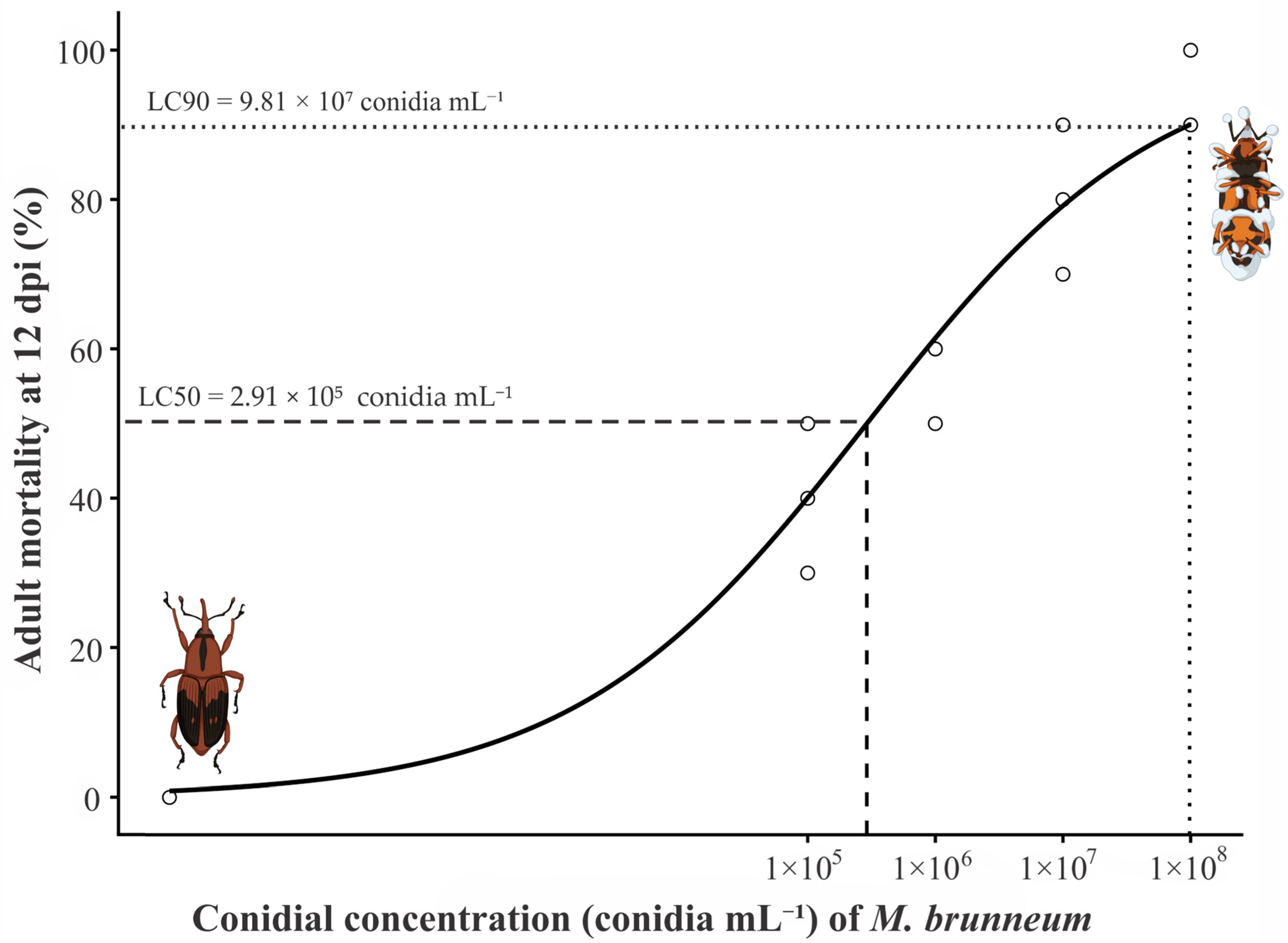
The dose–response bioassay revealed a concentration-dependent of isolated PM9 increase in adult mortality of M. hemipterus (p < 0.0001; Figure 6). After 12 days post-inoculation of isolated Pm9, mortality ranged from 42.5 ± 9.6% at 1 × 10⁵ conidia·mL−1 to 92.5 ± 5.0% at 1 × 10⁸ conidia·mL−1. Mycosis was confirmed by external fungal sporulation on cadavers, verifying that mortality resulted from fungal infection. Based on the mortality data, the median lethal concentration (LC50) was estimated at 2.91 × 10⁵ ± 7.90 × 10⁴ conidia·mL−1, whereas the LC90 was 9.81 × 10⁷ ± 5.82 × 10⁷ conidia·mL−1. The four-parameter log-logistic model was statistically significant (p = 0.00224), with an R2 of 0.933 and an RMSE of 7.02.

4. Discussion

The development of biopesticides based on entomopathogenic fungi has received increasing attention as a sustainable alternative to chemical insecticides [21,34]. Among these microorganisms, species of Metarhizium are widely recognized for their potential in the management of agricultural pests due to their broad host range and capacity to persist in soil and plant-associated environments [7,8,35]. Despite this potential, relatively few studies have investigated naturally occurring entomopathogenic fungi infecting banana weevils under field conditions.
The present study documents the natural infection of Metamasius hemipterus by Metarhizium brunneum in banana plantations of the Amazonas region, Peru, and demonstrates that isolate PM9 combines robust taxonomic identity, physiological competence, and high virulence under laboratory conditions. By integrating multilocus phylogenetic analysis, physiological characterization, and dose–response modeling, this work links species-level identification with functional traits relevant to biological control. The natural occurrence of this pathogen in field populations is particularly significant, as indigenous strains are often better adapted to local environmental conditions and host populations than introduced isolates [2,36].
Multilocus phylogenetic reconstruction based on concatenated TEF-1α, β-tubulin, RPB1, and RPB2 sequences placed all isolates within the M. brunneum clade, with strong bootstrap support (≥96%) at the relevant nodes. The isolates clustered together with reference strain ARSEF 4179 and the ex-type strain ARSEF 2107T, confirming their taxonomic identity. No internal phylogenetic structuring was observed among the isolates, indicating limited genetic divergence at the loci analyzed (Figure 2).
The use of a multilocus framework is particularly important within the genus Metarhizium, where morphological similarity and cryptic speciation can obscure species boundaries when relying on single-gene markers [37,38]. Accurate species-level identification is not merely taxonomic but functionally relevant, as members of the M. anisopliae species complex may differ in host range, ecological fitness, and environmental tolerance [39]. Therefore, the robust phylogenetic placement of the present isolates provides a reliable foundation for interpreting their physiological and pathogenic traits.
Studies on the diversity and global distribution of Metarhizium have shown that species within this genus can occur across wide geographic regions while remaining genetically closely related [2,4]. The limited genetic divergence observed among the isolates in the present study is consistent with this pattern and may reflect the broad ecological adaptability of M. brunneum, a species frequently associated with soil environments and diverse insect hosts. Previous surveys have also reported M. brunneum as one of the most frequently recovered species in soil environments, with its distribution influenced by environmental factors such as soil carbon content, C:N ratio, and microbial activity [3].
Marked physiological differences were observed among isolates, particularly in radial growth and thermal sensitivity (Table 3). While most isolates exhibited reduced growth at 30 °C relative to 25 °C, isolate PM6 showed enhanced growth under higher temperature conditions, indicating intraspecific variability in thermal response. Temperature is a major ecological driver of fungal development and host infection processes [5], and variation in thermal tolerance has been widely reported among Metarhizium isolates [3]. Such heterogeneity highlights the importance of considering environmental adaptability when selecting strains for biological control applications.
The observed differences in radial growth were accompanied by subtle but consistent changes in colony morphology across temperatures (Table 3, Figure 3). At 25 °C, colonies generally exhibited floccose to cottony textures with abundant aerial mycelium, whereas growth at 30 °C resulted in more compact colonies with reduced aerial development. Temperature-associated morphological plasticity has been reported in Metarhizium spp. and reflects adaptive responses influencing sporulation dynamics and tolerance to environmental stress [2,3,5].
Similar patterns of thermal growth inhibition have been reported in other studies of Metarhizium brunneum. For example, Mayo-Hernández et al. [22] observed that isolates grown at 30 °C exhibited reduced radial growth compared with 25 °C, with colony diameters ranging from 5.17 to 5.81 mm and an overall reduction of 64.7–69.1% in growth across isolates. In contrast, Torres-de la Cruz et al. [32] reported lower inhibition levels (0–27%) in native isolates of M. anisopliae, highlighting interspecific variability in thermal responses among entomopathogenic fungi. Previous studies have also indicated that the optimal temperature range for most entomopathogenic fungi lies between 20 and 28 °C [40]. Mycelial growth under different temperature conditions is therefore considered an important parameter when selecting promising isolates for biological control programs [41].
Conidial production varied significantly among isolates and differed according to the substrate used (Table 3). Notably, the ranking of isolates on PDA did not correspond to their performance on rice substrate. While some isolates exhibited high sporulation on artificial agar medium, their conidial yield on rice was comparatively lower. In contrast, isolate PM9 displayed moderate production on PDA but the highest yield on rice (Table 3, Figure 5). Substrate-dependent sporulation capacity has been documented in entomopathogenic fungi and may reflect differences in nutrient utilization efficiency and colonization dynamics [42]. Similar observations have been reported by Mayo-Hernández et al. [22], who found that Metarhizium isolates showing high sporulation on artificial media did not necessarily exhibit the highest conidial production on rice substrates used for solid-state fermentation.
From an applied standpoint, rice-based solid-state fermentation systems are widely employed for large-scale production of Metarhizium spp. due to their low cost and high conidial yield [43,44]. Consequently, the high conidial production observed for isolate PM9 under these conditions represents an advantageous trait for potential commercial development. Conidial yield is a key parameter in the selection of promising isolates for biological control programs, as it directly influences formulation efficiency and field applicability [22,45,46].
The pathogenicity assays confirmed the strong virulence of Metarhizium brunneum isolate PM9 against adults of Metamasius hemipterus. The LC50 estimated for PM9 (2.91 × 10⁵ conidia·mL−1; Figure 5) indicates a high level of infectivity under laboratory conditions. This value is substantially lower than LC50 estimates reported for other entomopathogenic fungi evaluated against M. hemipterus, where values ranging from 2.04 × 10⁹ to 7.94 × 10¹¹ conidia·mL−1 have been reported for Metarhizium anisopliae, Metarhizium sp., and Beauveria peruvienensis [21]. Such differences may reflect intrinsic variation in virulence among fungal species and isolates, as well as methodological differences among bioassays.
High mortality levels caused by Metarhizium isolates have also been documented in other insect hosts. For example, Mayo-Hernández et al. [22] reported mortality rates of up to 96.4% and 89.7% in Antiteuchus tripterus eight days after inoculation with highly virulent isolates. Similarly, Resquín-Romero et al. [47] observed mortality ranging from 83.3% to 100% in nymphs and adults of Euschistus heros exposed to M. brunneum. Other studies have also demonstrated the pathogenic potential of M. brunneum against a wide range of insect pests, including Bactrocera oleae and Agriotes spp. [35,48]. Likewise, isolates of M. anisopliae have caused high mortality levels in hemipteran pests such as Nezara viridula and Dichelops melacanthus [49,50], highlighting the broad applicability of entomopathogenic fungi in insect pest management.
In banana agroecosystems, entomopathogenic fungi have also been evaluated against coleopteran pests associated with the crop. For instance, Negrete González et al. [51] reported that isolate Ma148 of M. anisopliae caused 76.9% mortality in adults of the banana weevil Cosmopolites sordidus, with an LC50 of 8.6 × 10⁶ conidia·mL−1 under laboratory conditions. Compared with these results, the lower LC50 obtained for PM9 suggests a comparatively higher virulence of this isolate against M. hemipterus.
The sigmoidal response pattern observed (Figure 6) is consistent with the infection dynamics of entomopathogenic fungi, in which increasing propagule density enhances host–pathogen contact probability and successful cuticular penetration [5]. Although LC90 values exhibited greater variability, mortality at the highest concentration exceeded 90%, and mycosis was confirmed by external sporulation, ensuring that mortality was attributable to fungal infection rather than handling effects. Similar infection dynamics have been reported in other studies involving M. brunneum. For example, Zottele et al. [10] reported that direct treatment of beetles with 5 × 10⁶ conidia per individual resulted in LT50 and LT90 values of 5.5 and 10.2 days, respectively, under laboratory conditions. In that study, fungal outgrowth was also consistently observed on cadavers after death, confirming that mortality resulted from fungal infection.
The selection of effective entomopathogenic fungi for biological control requires consideration of multiple attributes beyond virulence alone, including inoculum production, growth capacity, sporulation efficiency, and tolerance to environmental stress [8,44,52]. In this context, the integration of physiological and pathogenicity data in the present study identified isolate PM9 as a promising candidate despite not exhibiting the highest radial growth rate. The combination of high conidial production on rice substrate and strong virulence therefore enhances the practical relevance of this isolate for biological control applications.
In banana production systems, management of weevil pests relies primarily on cultural practices, pheromone-based trapping, and, in some cases, chemical insecticides. However, chemical control is often limited by environmental concerns, residue restrictions, and reduced efficacy due to the concealed feeding habits of larvae within pseudostem tissues. Consequently, biological control strategies have gained increasing attention as sustainable alternatives [20,51].
Entomopathogenic fungi such as Beauveria bassiana and Metarhizium anisopliae have been evaluated against banana weevils and other curculionid pests, with variable success depending on environmental conditions and formulation [36,51,53]. Within this context, the identification of a naturally occurring and locally adapted M. brunneum isolate offers potential advantages. Integration of such fungal agents with pheromone trapping systems or cultural sanitation practices could enhance suppression of adult populations while reducing reliance on chemical inputs. The compatibility of Metarhizium spp. with integrated pest management (IPM) programs has been demonstrated in several cropping systems [8,14,15], supporting the feasibility of incorporating isolate PM9 into biologically based management strategies.
Nevertheless, the present study was conducted under controlled laboratory conditions, which may not fully represent the environmental variability encountered in field settings. Factors such as temperature fluctuations, UV radiation, rainfall, and interactions with native microbial communities can strongly influence fungal persistence and efficacy [9,13,51]. Additionally, only adult stages were evaluated, and susceptibility may differ among larval or pupal stages of M. hemipterus. Future research should therefore assess field performance, environmental persistence, formulation stability, and compatibility with other IPM components, including cultural practices and semiochemical-based monitoring systems, to determine the operational potential of this isolate within sustainable banana production systems.

5. Conclusions

This study documents the natural infection of Metamasius hemipterus by Metarhizium brunneum in banana agroecosystems of the Amazonas region, Peru. Multilocus phylogenetic analysis confirmed the taxonomic identity of the isolates within the M. brunneum clade, providing a robust framework for interpreting their biological traits. Among the evaluated isolates, PM9 exhibited the most promising combination of characteristics, including high conidial production on rice substrate and strong pathogenicity against adult weevils. The relatively low LC50 value obtained under laboratory conditions indicates high infectivity and suggests strong host compatibility.

Author Contributions

Conceptualization, E.M.-H. and A.F.H.-P.; methodology, E.M.-H., S.T.L.-E. and A.F.H.-P.; software, A.F.H.-P. and L.M.M.-C.; validation, A.F.H.-P. and L.M.M.-C.; formal analysis, L.M.M.-C.; investigation, E.M.-H. and A.F.H.-P.; resources, A.F.H.-P. and S.T.L.-E.; data curation, L.M.M.-C.; writing—original draft preparation, E.M.-H.; writing—review and editing, L.M.M.-C.; visualization, S.T.L.-E.; supervision, A.F.H.-P.; project administration, A.F.H.-P.; funding acquisition, S.T.L.-E. All authors have read and agreed to the published version of the manuscript.

Funding

This research and the Article Processing Charge (APC) were funded by the Vice-Rectorate for Research of the Universidad Nacional Toribio Rodríguez de Mendoza de Amazonas (UNTRM). The authors also acknowledge the technical and financial support provided by the Peruvian Public Investment Project CUI No. 2315081—CEINCACAO at UNTRM.

Institutional Review Board Statement

Not applicable.

Informed Consent Statement

Not applicable.

Data Availability Statement

The datasets generated in this study are available in the NCBI repository (https://www.ncbi.nlm.nih.gov/), with accession numbers provided in the article. The original contributions presented in this study are included in the article. Further inquiries can be directed to the corresponding authors.

Acknowledgments

The authors gratefully acknowledge Jherson Rojas Vargas for his contributions to molecular analyses, and Nicolas Olivares Valqui for his support in conidial production on rice substrate and associated laboratory work.

Conflicts of Interest

The authors declare no conflicts of interest.

References

  1. Kortsinoglou, A.M.; Saud, Z.; Eastwood, D.C.; Butt, T.M.; Kouvelis, V.N. The mitochondrial genome contribution to the phylogeny and identification of Metarhizium species and strains. Fungal Biol. 2020, 124, 845–853. [Google Scholar] [CrossRef] [PubMed]
  2. Glare, T.R.; Scholte Op Reimer, Y.; Cummings, N.; Rivas-Franco, F.; Nelson, T.L.; Zimmermann, G. Diversity of the insect pathogenic fungi in the genus Metarhizium in New Zealand. N. Z. J. Bot. 2021, 59, 440–456. [Google Scholar] [CrossRef]
  3. Fernández-Bravo, M.; Gschwend, F.; Mayerhofer, J.; Hug, A.; Widmer, F.; Enkerli, J. Land-use type drives soil population structures of the entomopathogenic fungal genus Metarhizium. Microorganisms 2021, 9, 1380. [Google Scholar] [CrossRef]
  4. Kim, S.; Heo, I.J.; Shin, T.Y. Biodiversity of Metarhizium from Korea and pathogenicity screening of two unrecorded species Metarhizium lepidiotae and Metarhizium robertsii. Entomol. Res. 2025, 55, 70017. [Google Scholar] [CrossRef]
  5. Roberts, D.W.; St Leger, R.J. Metarhizium spp., cosmopolitan insect-pathogenic fungi: Mycological Aspects. Adv. Appl. Microbiol. 2004, 54, 1–70. [Google Scholar] [CrossRef]
  6. Wyrebek, M.; Huber, C.; Sasan, R.K.; Bidochka, M.J. Three sympatrically occurring species of Metarhizium show plant rhizosphere specificity. Microbiology 2011, 157, 2904–2911. [Google Scholar] [CrossRef] [PubMed]
  7. Martins, J.L.A.; Franzin, M.L.; Ferreira, D.d.S.; Magina, L.C.R.; Martins, E.F.; Mendonça, L.V.P.; dos Neves, W.; Pallini, A.; Valicente, F.H.; Schmidt, J.M.; et al. Metarhizium-inoculated coffee seeds promote plant growth and biocontrol of coffee leaf miner. Microorganisms 2024, 12, 1845. [Google Scholar] [CrossRef]
  8. Zottele, M.; Mayerhofer, J.; Embleton, H.; Wechselberger, K.; Enkerli, J.; Strasser, H. Biological Diabrotica management and monitoring of Metarhizium diversity in Austrian maize fields following mass application of the entomopathogen Metarhizium brunneum. Appl. Sci. 2021, 11, 9445. [Google Scholar] [CrossRef]
  9. Reinbacher, L.; Bacher, S.; Knecht, F.; Schweizer, C.; Sostizzo, T.; Grabenweger, G. Preventive field application of Metarhizium brunneum in cover crops for wireworm control. Crop Prot. 2021, 150, 105811. [Google Scholar] [CrossRef]
  10. Zottele, M.; Mayrhofer, M.; Embleton, H.; Enkerli, J.; Eigner, H.; Tarasco, E.; Strasser, H. Integrated biological control of the sugar beet weevil Asproparthenis punctiventris with the fungus Metarhizium brunneum: New application approaches. Pathogens 2023, 12, 99. [Google Scholar] [CrossRef]
  11. Dogan, Y.O.; Hazir, S.; Yildiz, A.; Butt, T.M.; Cakmak, I. Evaluation of entomopathogenic fungi for the control of Tetranychus urticae (Acari: Tetranychidae) and the effect of Metarhizium brunneum on the predatory mites (Acari: Phytoseiidae). Biol. Control 2017, 111, 6–12. [Google Scholar] [CrossRef]
  12. Lozano-Tovar, M.D.; Garrido-Jurado, I.; Quesada-Moraga, E.; Raya-Ortega, M.C.; Trapero-Casas, A. Metarhizium brunneum and Beauveria bassiana release secondary metabolites with antagonistic activity against Verticillium dahliae and Phytophthora megasperma olive pathogens. Crop Prot. 2017, 100, 186–195. [Google Scholar] [CrossRef]
  13. Wey, M.; Neuenschwander, H.; Hoesli, E.; Maurhofer, M.; Grabenweger, G. Autodissemination of Metarhizium brunneum: A strategy for biological control of adult Japanese beetles. J. Pest Sci. (2004) 2025, 98, 1745–1758. [Google Scholar] [CrossRef]
  14. Mayerhofer, J.; Eckard, S.; Hartmann, M.; Grabenweger, G.; Widmer, F.; Leuchtmann, A.; Enkerli, J. Assessing effects of the entomopathogenic fungus Metarhizium brunneum on soil microbial communities in Agriotes spp. biological pest control. FEMS Microbiol. Ecol. 2017, 93, 117. [Google Scholar] [CrossRef]
  15. Mayerhofer, J.; Rauch, H.; Hartmann, M.; Widmer, F.; Gschwend, F.; Strasser, H.; Leuchtmann, A.; Enkerli, J. Response of soil microbial communities to the application of a formulated Metarhizium brunneum biocontrol strain. Biocontrol Sci. Technol. 2019, 29, 547–564. [Google Scholar] [CrossRef]
  16. de Azevedo, A.G.C.; Steinwender, B.M.; Eilenberg, J.; Sigsgaard, L. Interactions among the predatory midge aphidoletes Aphidimyza (Diptera: Cecidomyiidae), the fungal pathogen Metarhizium brunneum (Ascomycota: Hypocreales), and maize-infesting aphids in greenhouse mesocosms. Insects 2017, 8, 44. [Google Scholar] [CrossRef]
  17. Fancelli, M.; Lucia Borges, A.; Prata Ritzinger, H.C.; Dos Santos Silva, D.; Ringenberg, R. Mandioca e Fruticultura. Rev. Bras. Frutic. 2012, 3, 44380. [Google Scholar]
  18. Corassa, J.D.N.; Dos Santos, I.B.; Duarte, T.S. Population dynamics of Metamasius hemipterus and Cosmopolites sordidus, in cultivation of Musa sp., in the city of Sinop-MT. Nativa 2019, 7, 133–137. [Google Scholar] [CrossRef]
  19. Demetriou, J.; Koutsoukos, E.; Kazilas, C.; Kalaentzis, K.; Georgiadis, C. Metamasius hemipterus (Linnaeus, 1758) (Coleoptera, Curculionidae, Dryophthorinae) on a hand of bananas in Greece. Check List 2023, 19, 127–131. [Google Scholar] [CrossRef]
  20. Alpizar, D.; Fallas, M.; Oehlschlager, A.C.; Gonzalez, L.M. Management of Cosmopolites sordidus and Metamasius hemipterus in banana by pheromone-based mass trapping. J. Chem. Ecol. 2012, 38, 245–252. [Google Scholar] [CrossRef] [PubMed]
  21. Leiva-Espinoza, S.T.; Román, A.; Aguilar, V.; Requejo, E.; Meza-Maicelo, W.; Banda-Martinez, D.; Huaman-Pilco, Á.F.; Loyola, F.; Loja, M.; Oliva-Cruz, M.; et al. Identification of Metamasius hemipterus (Coleoptera: Dryophthoridae) and its biological control through the use of species of the genus Beauveria and Metarhizium. Front. Agron. 2026, 7, 1695515. [Google Scholar] [CrossRef]
  22. Mayo-Hernández, M.A.; Torres-De-la-Cruz, M.; Pérez-De-la-Cruz, M.; Huamán-Pilco, Á.F.; de la Cruz-Pérez, A.; Arias-Rodríguez, L. Native isolates of Metarhizium brunneum Petch with biocontrol potential against the black stink bug (Antiteuchus tripterus Fabricius) in cacao. Rev. Chapingo Ser. Cienc. For. Ambiente 2025, 31, 24032. [Google Scholar] [CrossRef]
  23. Castlebury, L.A.; Rossman, A.Y.; Sung, G.H.; Hyten, A.S.; Spatafora, J.W. Multigene phylogeny reveals new lineage for Stachybotrys chartarum, the indoor air fungus. Mycol. Res. 2004, 108, 864–872. [Google Scholar] [CrossRef] [PubMed]
  24. Liu, Y.J.; Whelen, S.; Hall, B.D. Phylogenetic relationships among Ascomycetes: Evidence from an RNA Polymerse II Subunit. Mol. Biol. Evol. 1999, 16, 1799–1808. [Google Scholar] [CrossRef]
  25. Edgar, R.C. MUSCLE: Multiple sequence alignment with high accuracy and high throughput. Nucleic Acids Res. 2004, 32, 1792–1797. [Google Scholar] [CrossRef]
  26. Tamura, K.; Stecher, G.; Kumar, S. MEGA11: Molecular Evolutionary Genetics Analysis Version 11. Mol. Biol. Evol. 2021, 38, 3022–3027. [Google Scholar] [CrossRef]
  27. Gouy, M.; Guindon, S.; Gascuel, O. Sea view version 4: A multiplatform graphical user interface for sequence alignment and phylogenetic tree building. Mol. Biol. Evol. 2010, 27, 221–224. [Google Scholar] [CrossRef]
  28. Darriba, D.; Taboada, G.L.; Doallo, R.; Posada, D. jModelTest 2: More models, new heuristics and high-performance computing. Nat. Methods 2012, 9, 772. [Google Scholar] [CrossRef] [PubMed]
  29. Miller, M.A.; Pfeiffer, W.; Schwartz, T. Creating the CIPRES Science Gateway for Inference of Large Phylogenetic Trees. In 2010 Gateway Computing Environments Workshop (GCE); IEEE: New York, NY, USA, 2010. [Google Scholar]
  30. Letunic, I.; Bork, P. Interactive tree of life (iTOL) v5: An online tool for phylogenetic tree display and annotation. Nucleic Acids Res. 2021, 49, W293–W296. [Google Scholar] [CrossRef]
  31. Baró, Y.; Schuster, C.; Gato, Y.M.E.; Márquez, A. Leclerque, Characterization, identification and virulence of Metarhizium species from Cuba to control the sweet potato weevil, Cylas formicarius Fabricius (Coleoptera: Brentidae). J. Appl. Microbiol. 2022, 132, 3705–3716. [Google Scholar] [CrossRef]
  32. Torres De la Cruz, M.; Cortez, H.; Ortiz, C.F.; Cappello, S.; De la Cruz, A. Caracterización de aislamientos nativos de Metarhizium anisopliae y su patogenicidad hacia Aeneolamia postica, en Tabasco, México. Rev. Colomb. Entomol. 2013, 39, 40–46. [Google Scholar] [CrossRef]
  33. Nunes-Silva, A.; Moreira, C.C.; Seibert, J.B.; Rodríguez, J.; Delalibera-Júnior, I. Exploring the potential of Metarhizium species for the control of Euschistus heros (Hemiptera: Pentatomidae). Biol. Control 2025, 207, 105823–105830. [Google Scholar] [CrossRef]
  34. Krell, V.; Jakobs-Schoenwandt, D.; Vidal, S.; Patel, A.V. Encapsulation of Metarhizium brunneum enhances endophytism in tomato plants. Biol. Control 2018, 116, 62–73. [Google Scholar] [CrossRef]
  35. Yousef, M.; Alba-Ramírez, C.; Jurado, I.G.; Mateu, J.; Díaz, S.R.; Valverde-García, P.; Quesada-Moraga, E. Metarhizium brunneum (Ascomycota; Hypocreales) treatments targeting olive fly in the soil for sustainable crop production. Front. Plant Sci. 2018, 9, 1. [Google Scholar] [CrossRef]
  36. Zimmermann, G. Review on safety of the entomopathogenic fungus Metarhizium anisopliae. Biocontrol Sci. Technol. 2007, 17, 879–920. [Google Scholar] [CrossRef]
  37. Kepler, R.M.; Humber, R.A.; Bischoff, J.F.; Rehner, S.A. Clarification of generic and species boundaries for Metarhizium and related fungi through multigene phylogenetics. Mycologia 2014, 106, 811–829. [Google Scholar] [CrossRef]
  38. Bischoff, J.F.; Rehner, S.A.; Humber, R.A. A multilocus phylogeny of the Metarhizium anisopliae lineage. Mycologia 2009, 101, 512–530. [Google Scholar] [CrossRef] [PubMed]
  39. Reingold, V.; Faigenboim, A.; Matveev, S.; Haviv, S.; Belausov, E.; Vilcinskas, A.; Ment, D. Transcriptional reprogramming in the entomopathogenic fungus Metarhizium brunneum and its aphid host Myzus persicae during the switch between saprophytic and parasitic lifestyles. BMC Genom. 2024, 25, 917. [Google Scholar] [CrossRef]
  40. Ortíz, C.; Alatorre, R.; Valdivia, B.; Medina, T.; Alejo, S. Effect of temperature and relative humidity on entomopathogenic fungi development. Rev. Biocienc. 2011, 1, 42–45. [Google Scholar]
  41. Gebremariam, A.; Chekol, Y.; Assefa, F. Phenotypic, molecular, and virulence characterization of entomopathogenic fungi, Beauveria bassiana (Balsam) Vuillemin, and Metarhizium anisopliae (Metschn.) Sorokin from soil samples of Ethiopia for the development of mycoinsecticide. Heliyon 2021, 7, 7091. [Google Scholar] [CrossRef]
  42. Jackson, M.A.; Jaronski, S.T. Production of microsclerotia of the fungal entomopathogen Metarhizium anisopliae and their potential for use as a biocontrol agent for soil-inhabiting insects. Mycol. Res. 2009, 113, 842–850. [Google Scholar] [CrossRef] [PubMed]
  43. Jenkins, N.E.; Heviefo, G.; Langewald, J.; Cherry, A.J.; Lomer, C.J. Development of mass production technology for aerial conidia for use as mycopesticides. Biocontrol News Inf. 1998, 19, 21N–32N. [Google Scholar]
  44. Mathulwe, L.L.; Malan, A.P.; Stokwe, N.F. Mass Production of entomopathogenic fungi, Metarhizium robertsii and Metarhizium pinghaense, for commercial application against insect pests. J. Vis. Exp. 2022, 31, 181. [Google Scholar] [CrossRef]
  45. Garcia-Ortiz, N.; Tlecuitl-Beristain, S.; Favela-Torres, E.; Loera, O. Production and quality of conidia by Metarhizium anisopliae var. lepidiotum: Critical oxygen level and period of mycelium competence. Appl. Microbiol. Biotechnol. 2015, 99, 2783–2791. [Google Scholar] [CrossRef]
  46. Valle-Ramírez, S.B.; Torres-Gutiérrez, R.; Caicedo-Quinche, W.O.; Abril-Saltos, R.V.; Sucoshañay-Villalba, D.J. Isolation and characterization of Metarhizium spp. of sugar cane crops and their pathogenicity against Mahanarva andigena (Hemiptera: Cercopidae). Cienc. Tecnol. Agropecu. 2022, 23, 19. [Google Scholar] [CrossRef]
  47. Resquín-Romero, G.; Cabral-Antúnez, C.; Sarubbi-Orue, H.; Garrido-Jurado, I.; Valverde-Garciá, P.; Schade, M.; Butt, T.M. Virulence of Metarhizium brunneum (Ascomycota: Hypocreales) strains against Stinkbugs Euschistus heros and Dichelops furcatus (Hemiptera: Pentatomidae). J. Econ. Entomol. 2020, 113, 2540–2545. [Google Scholar] [CrossRef]
  48. Razinger, J.; Schroers, H.J.; Urek, G. Virulence of Metarhizium brunneum to field collected Agriotes spp. Wireworms. J. Agric. Sci. Technol. 2025, 20, 309–320. [Google Scholar]
  49. Abdel-Raheem, M.A.; Ragab, Z.A.; Abdel-Rhman, I.E. Effect of entomopathogenic fungi on the green stink bug, Nezara viridula L. in sugar-beet in Egypt. Bull. NRC 2011, 36, 145–152. [Google Scholar]
  50. Groth, M.Z.; Bellé, C.; Zimmer, G.; Groth, M.Z.; Kaspary, T.E.; Pimentel, J.R.; Oliveira, I.G.; Kolesny, V.M.; Zimme, P.D. Control of wheat stink bugs (Hemiptera: Pentatomidae) in southern Brazil using the fungus Metarhizium anisopliae. Aust. J. Crop Sci. 2017, 11, 360–366. [Google Scholar] [CrossRef]
  51. Negrete González, D.; Ávalos Chávez, M.A.; Lezama Gutiérrez, R.; Chan Cupul, W.; Molina Ochoa, J.; Galindo Velasco, E. Suitability of Cordyceps bassiana and Metarhizium anisopliae for biological control of Cosmopolites sordidus (Germar) (Coleoptera: Curculionidae) in an organic Mexican banana plantation: Laboratory and field trials. J. Plant Dis. Prot. 2018, 125, 73–81. [Google Scholar] [CrossRef]
  52. Rivera, D.R.V.; Asang, S.E.F.; Morán, W.C.E.; Piguave, F.F.V.; Leoro, H.P.V.; Moran, E.S.H.; Espinoza, L.H. Biocontrol of Cosmopolites sordidus using entomopathogenic fungi under laboratory conditions, Ecuador. Rev. Fac. Agron. 2025, 42, e254217. [Google Scholar] [CrossRef]
  53. Kisaakye, J.; Fourie, H.; Coyne, D.; Cortada, L.; Masinde, S.; Subramanian, S.; Haukeland, S. Evaluation of the entomopathogenic potential of Beauveria bassiana, Metarhizium anisopliae and Isaria fumosorosea for management of Cosmopolites sordidus Germar (Coleoptera: Curculionidae). Agriculture 2021, 11, 1290. [Google Scholar] [CrossRef]
Figure 1. Field symptoms of Metamasius hemipterus infestation and natural infection by Metarhizium brunneum in banana plantations. (A) Banana plant showing severe pseudostem damage associated with weevil infestation. (B) External lesions and galleries in the pseudostem caused by M. hemipterus feeding activity. (C) Cross-section of banana pseudostem showing internal tunneling typical of weevil attack. (DF) Naturally infected individuals of M. hemipterus displaying mycosis with characteristic white fungal growth consistent with Metarhizium brunneum.
Jof 12 00363 g001
Figure 2. Multilocus phylogenetic tree of Metarhizium species. Maximum Likelihood phylogenetic tree inferred from concatenated TEF-1α, β-TUB, RPB1, and RPB2 sequences. Isolates obtained in this study are shown in bold and cluster within the Metarhizium brunneum clade together with reference strains ARSEF 4179 and the ex-type strain ARSEF 2107T. The tree was midpoint-rooted. “*” indicates ex-type/reference strains.
Jof 12 00363 g002
Figure 3. Colony morphology of Metarhizium brunneum isolates cultured on PDA at different temperatures. Representative colonies of isolates EMH1, EMH7, LES19, LES21, PM6, and PM9 grown on potato dextrose agar (PDA) at 25 °C (upper row) and 30 °C (lower row) after 14 days of incubation. Differences in radial growth, colony density, and aerial mycelium development are visible among isolates and between temperature conditions.
Jof 12 00363 g003
Figure 4. Micromorphological characteristics of Metarhizium brunneum isolate PM9. (A) Colony morphology on PDA showing obverse (left) and reverse (right) views after incubation at 25 °C. (B,C) Hyaline, septate hyphae with conidiogenous cells arising laterally. (D) Ellipsoidal to cylindrical conidia arranged singly or in short chains. Scale bars = 200 µm.
Jof 12 00363 g004
Figure 5. Growth and conidial production of M. brunneum isolate PM9. (A) Conidial production on rice substrate following solid-state fermentation at 25 ± 1 °C, illustrating abundant sporulation and substrate colonization. (B) Sporulation test on dead insects. (C) M. hemipterus adult with M. brunneum sporulate.
Jof 12 00363 g005
Figure 6. Dose–response curve of M. brunneum (isolate PM9) against adults of M. hemipterus at 12 days post-inoculation (dpi). Points represent observed mortality values, and the solid line corresponds to the fitted four-parameter log-logistic model. Vertical dashed lines indicate the estimated LC50 and LC90 values.
Jof 12 00363 g006
Table 1. Collection sites of M. hemipterus individuals naturally infected with M. brunneum in the Amazonas region, Peru.
IsolateVarietyProvinceDistrictLatitude (°S)Longitude (°W)Life Stage
EMH1ValeryUtcubambaBagua Grande−5.904444−78.329722Pupa
EMH7IslaUtcubambaBagua Grande−5.883333−78.317222Adult
LES19BellacoRodríguez de MendozaHuambo−6.431324−77.536046Larva
LES21SedaRodríguez de MendozaOmia−6.422469−77.335473Adult
PM6BellacoBongaraValera−6.069061−77.903197Larva
PM9BellacoBongaráPedro Ruiz−5.915421−77.956741Larva
Table 2. Reference strains of Metarhizium species included in the multilocus phylogenetic analysis, with GenBank accession numbers for TEF-1α, β-TUB, RPB1, and RPB2 sequences.
SpeciesHostCountryIsolateTEF-1αβ-TUBRPB1RPB2
M. mendoncearumM. posticataBrazilURM 8140MZ394805MZ394811MW885972MZ394799
M. mendoncearumA. alveataBrazilURM 8143TMZ394808MZ394814MW885975MZ394802
M. acridumOrthopteraNigerARSEF 7486TEU248845EU248813EU248897EU248925
M. acridumOrthopteraAustraliaARSEF 324EU248844EU248812EU248896XM_066120576
M. alvesiiSoilBrazilCG1123TKY007614KY007611KY007612KY007613
M. anisopliaeOrthopteraEritreaARSEF 7487TDQ463996EU248822DQ468355DQ468370
M. anisopliaeColeopteraAustraliaARSEF 7450EU248852EU248823EU248904EU248932
M. brunneumColeopteraUSAARSEF 2107TEU248855EU248826EU248907EU248935
M. brunneumSoilAustraliaARSEF 4179EU248854EU248825EU248906EU248934
M. brunneumM. hemipterusPeruEMH1PZ371316PZ353158PZ353146PZ353152
M. brunneumM. hemipterusPeruEMH7PZ371317PZ353159PZ353147PZ353153
M. brunneumM. hemipterusPeruLES19PZ371320PZ353162PZ353150PZ353156
M. brunneumM. hemipterusPeruLES21PZ371318PZ353163PZ353151PZ353157
M. brunneumM. hemipterusPeruPM6PZ371321PZ353160PZ353148PZ353154
M. brunneumM. hemipterusPeruPM9PZ371319PZ353161PZ353149PZ353155
M. frigidumColeopteraAustraliaARSEF 4124TDQ464002EU248828DQ468361DQ468376
M. globosumLepidopteraIndiaARSEF 2596TEU248846EU248814EU248898EU248926
M. guizhouenseLepidopteraChinaCBS 258.90TEU248862EU248834EU248914EU248942
M. guizhouenseLepidopteraChinaARSEF 6238EU248857EU248830EU248909EU248937
M. humberiSoilBrazilIP 46TMH837574MH837547MH837556MH837565
M. humberiSoilBrazilIP 151MH837579MH837552MH837561MH837570
M. indigoticumLepidopteraJapanNBRC 100684TKJ398784KJ398544OR115266KJ398692
M. lepidiotaeColeopteraAustraliaARSEF 7488TEU248865EU248837EU248917EU248945
M. lepidiotaeColeopteraAustraliaARSEF 7412EU248864EU248836EU248916EU248944
M. majusColeopteraPhilippinesARSEF 1946EU248867EU248839EU248919EU248947
M. pinghaenseColeopteraChinaCBS 257.90TEU248850EU248820EU248902EU248930
M. pinghaenseColeopteraSolomon IslandsARSEF 4342EU248851EU248821EU248903EU248931
M. robertsiiAustraliaARSEF 7501EU248849EU248818EU248901EU248929
M. robertsiiOrthopteraBrazilARSEF 727DQ463994EU248816DQ468353DQ468368
Type strains are indicated by the suffix “T”. Accession numbers correspond to sequences retrieved from GenBank. The dataset includes representative species of the M. anisopliae species complex. Outgroup: M. frigidum (ARSEF 4124T).
Table 3. Physiological characteristics of Metarhizium brunneum isolates, including mycelial growth at 25 and 30 °C, thermal sensitivity, and conidial production on PDA and rice substrate.
IsolateMycelial Growth (mm)Thermal
Sensitivity (%)
Conidial Production on PDA (conidia·mL−1)Conidial Production on Rice (conidia·g−1)
25 °C30 °C
EMH124.98 ± 0.57 b17.99 ± 0.94 b−27.88 ± 4.98 b6.43 × 107 ± 3.53 × 10⁶ d2.11 × 109 ± 1.01 × 10⁸ b
EMH729.81 ± 1.16 a12.53 ± 0.24 c−57.95 ± 1.52 c1.05 × 108 ± 2.82 × 10⁶ a1.65 × 109 ± 1.59 × 10⁸ d
LES1929.41 ± 0.62 a4.78 ± 0.28 f−83.74 ± 0.93 e5.17 × 107 ± 8.72 × 10⁶ e1.12 × 109 ± 1.07 × 10⁸ e
LES2130.26 ± 1.04 a8.09 ± 0.10 e−73.22 ± 1.13 d9.77 × 107 ± 2.96 × 10⁶ a1.64 × 109 ± 1.39 × 10⁸ d
PM619.67 ± 0.25 c22.16 ± 0.36 a12.65 ± 0.91 a8.04 × 107 ± 1.51 × 10⁶ c1.76 × 109 ± 7.22 × 10⁷ c
PM929.34 ± 1.07 a11.18 ± 0.13 d−61.88 ± 1.28 c8.99 × 107 ± 5.65 × 10⁶ b2.63 × 109 ± 1.71 × 10⁸ a
c.v. 3.133.454.733.975.98
LSD1.910.995.177.27 × 1061.03 × 108
p<0.0001<0.0001<0.0001<0.0001<0.0001
Values represent mean ± standard deviation (n = 4). Different letters within each column indicate significant differences according to Tukey’s test (p < 0.05). c.v.: coefficient of variation. LSD: least significant difference.
Disclaimer/Publisher’s Note: The statements, opinions and data contained in all publications are solely those of the individual author(s) and contributor(s) and not of MDPI and/or the editor(s). MDPI and/or the editor(s) disclaim responsibility for any injury to people or property resulting from any ideas, methods, instructions or products referred to in the content.