Heat-Stress Induced Apoptosis: A New Biotechnological Strategy to Enhance Ganoderic Acids Production in Ganoderma lucidum
 ,
,
Abstract
1. Introduction
2. Materials and Methods
2.1. Fungal Strain and Culture Condition
2.2. Identification and Structural Analysis of Glmca1 Gene in G. lucidum
2.3. Plasmids and Construction
2.4. Agrobacterium Transformation and Fungal Protoplast Preparation
2.5. Screening of Transformants by Selection Media
2.6. Western Blotting
2.7. Phenotypic Characterization and Growth Analysis
2.8. Heat Treatment
2.9. Assay of Metacaspase Activity
2.10. Analysis of Phosphatidylserine Externalization by Annexin V Staining
2.11. Cell Viability Assay via Evans Blue Staining
2.12. Ganoderic Acids Production Analysis
2.13. Statistical Analysis
3. Results
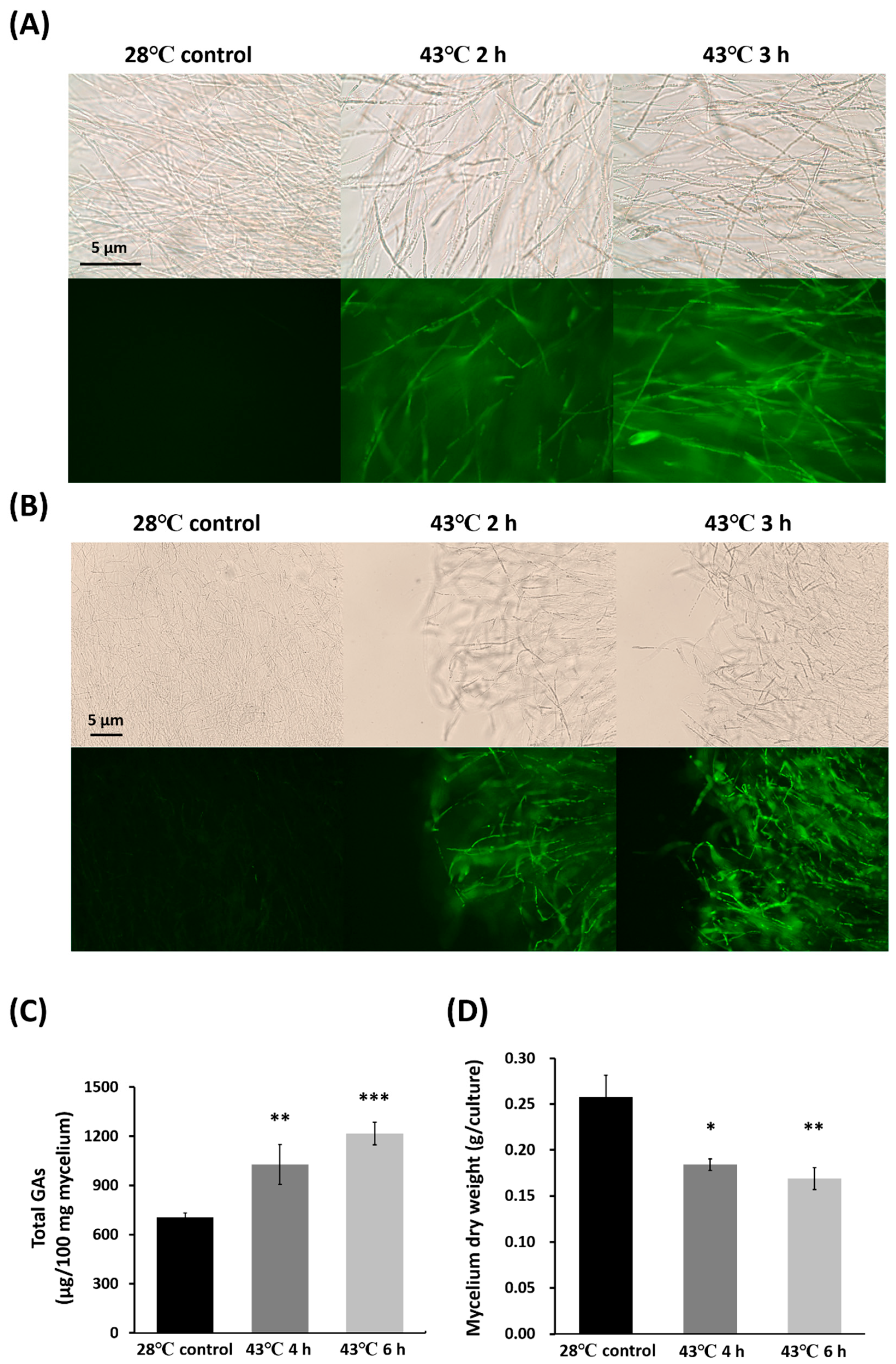
3.1. Heat-Induced Cell Apoptosis and GAs Production in G. lucidum
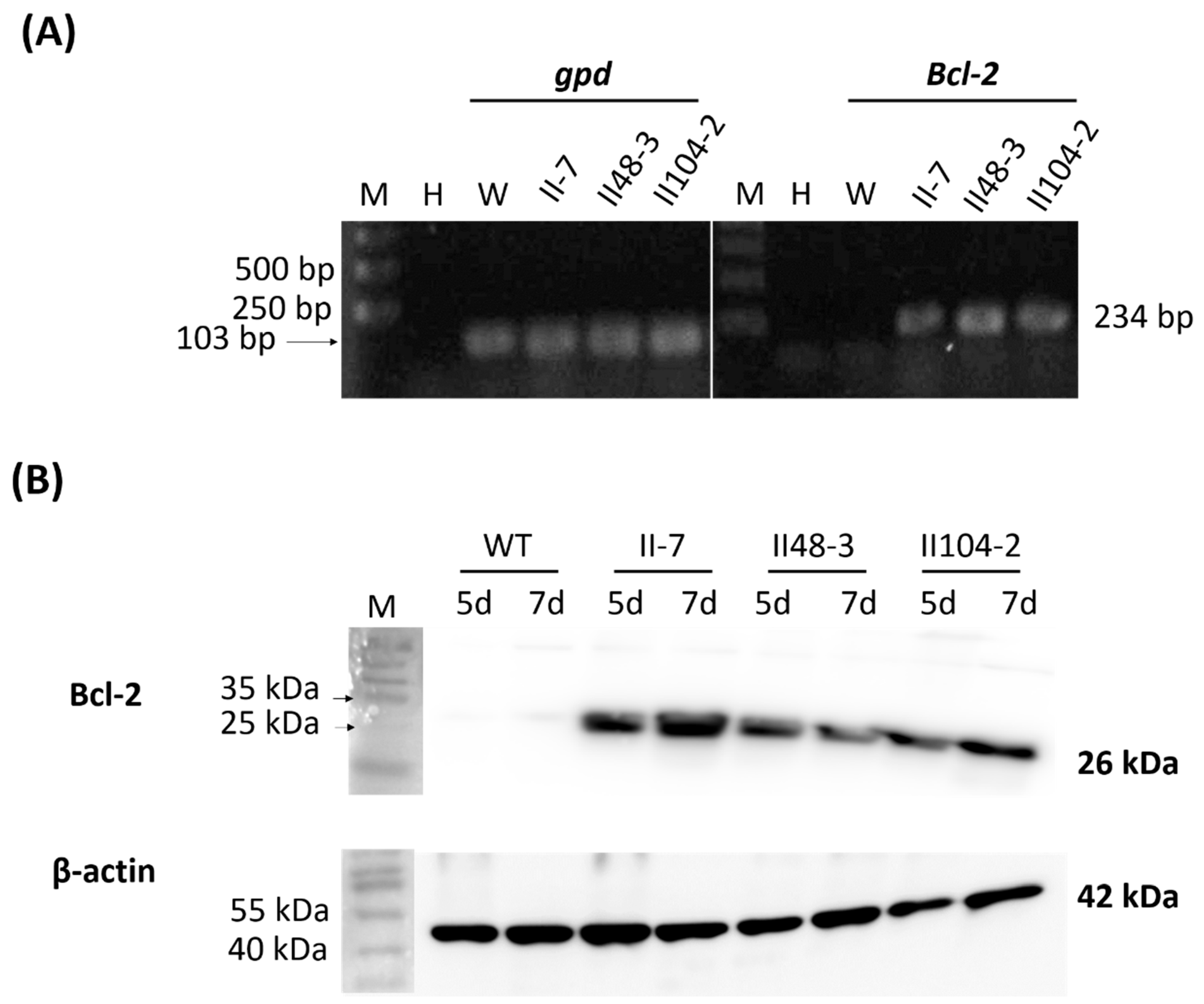
3.2. Bcl-2 Overexpression in G. lucidum Was Demonstrated with Protein Production
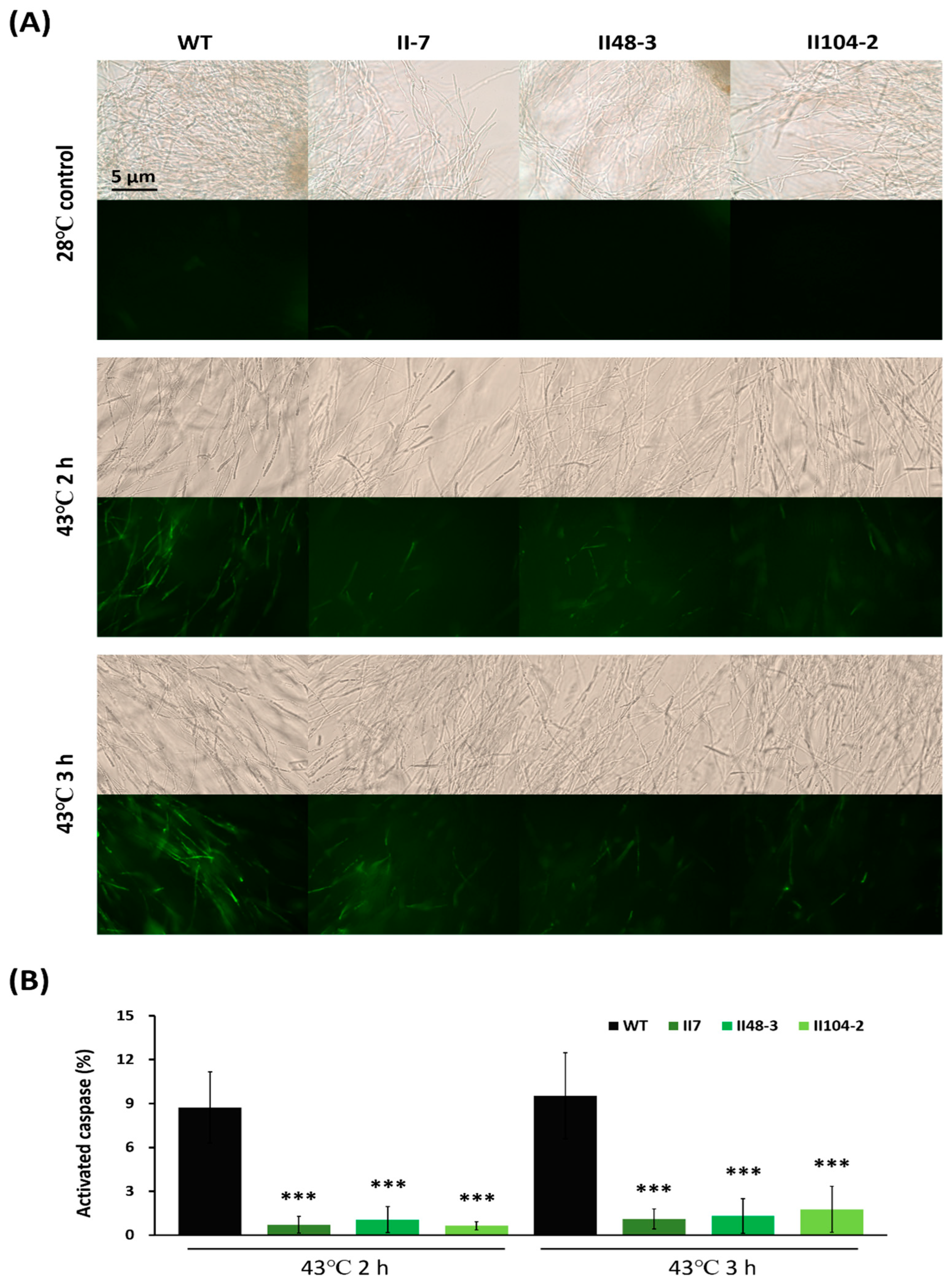
3.3. Bcl-2 Overexpression Delayed Fungal Apoptosis and Enhanced Cell Viability in G. lucidum
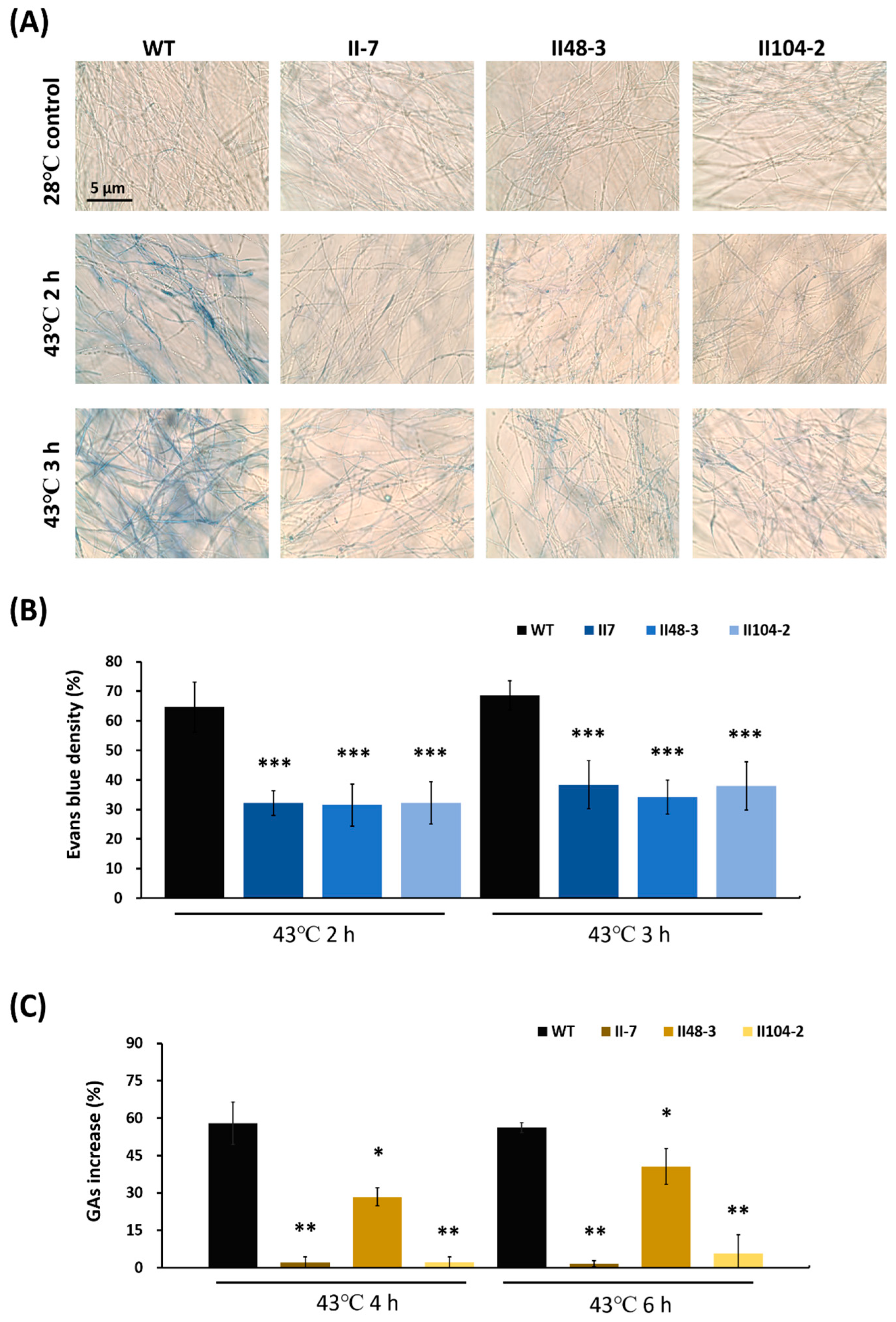
3.4. Bcl-2 Overexpression Reduced GAs Production During Fungal Apoptosis
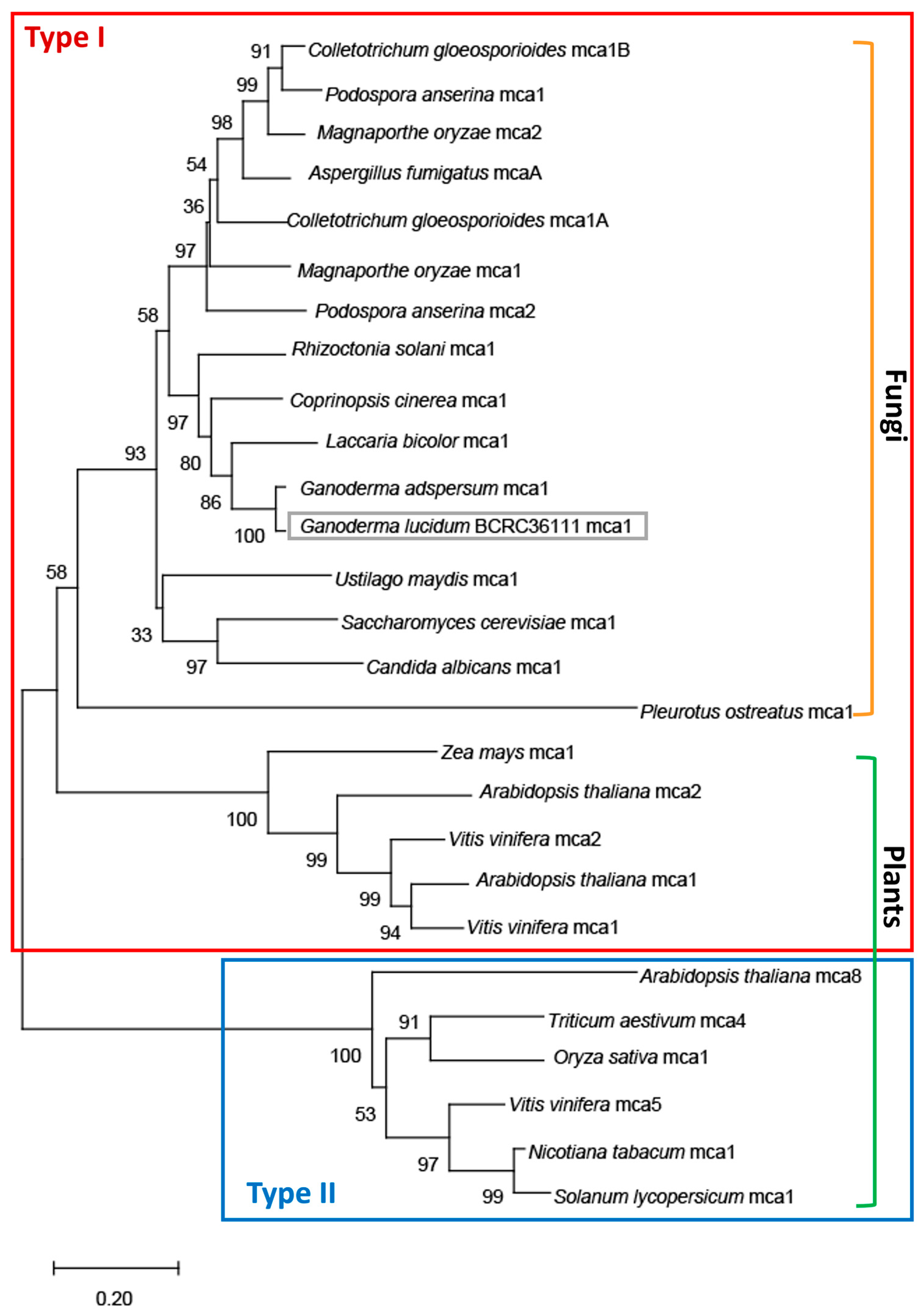
3.5. A Type I Metacaspase Gene Was Identified in G. lucidum
3.6. Metacaspase Gene Glmca1 Was Successfully Silenced in G. lucidum
3.7. The Growth of G. lucidum Was Not Significantly Affected by Glmca1 Silencing
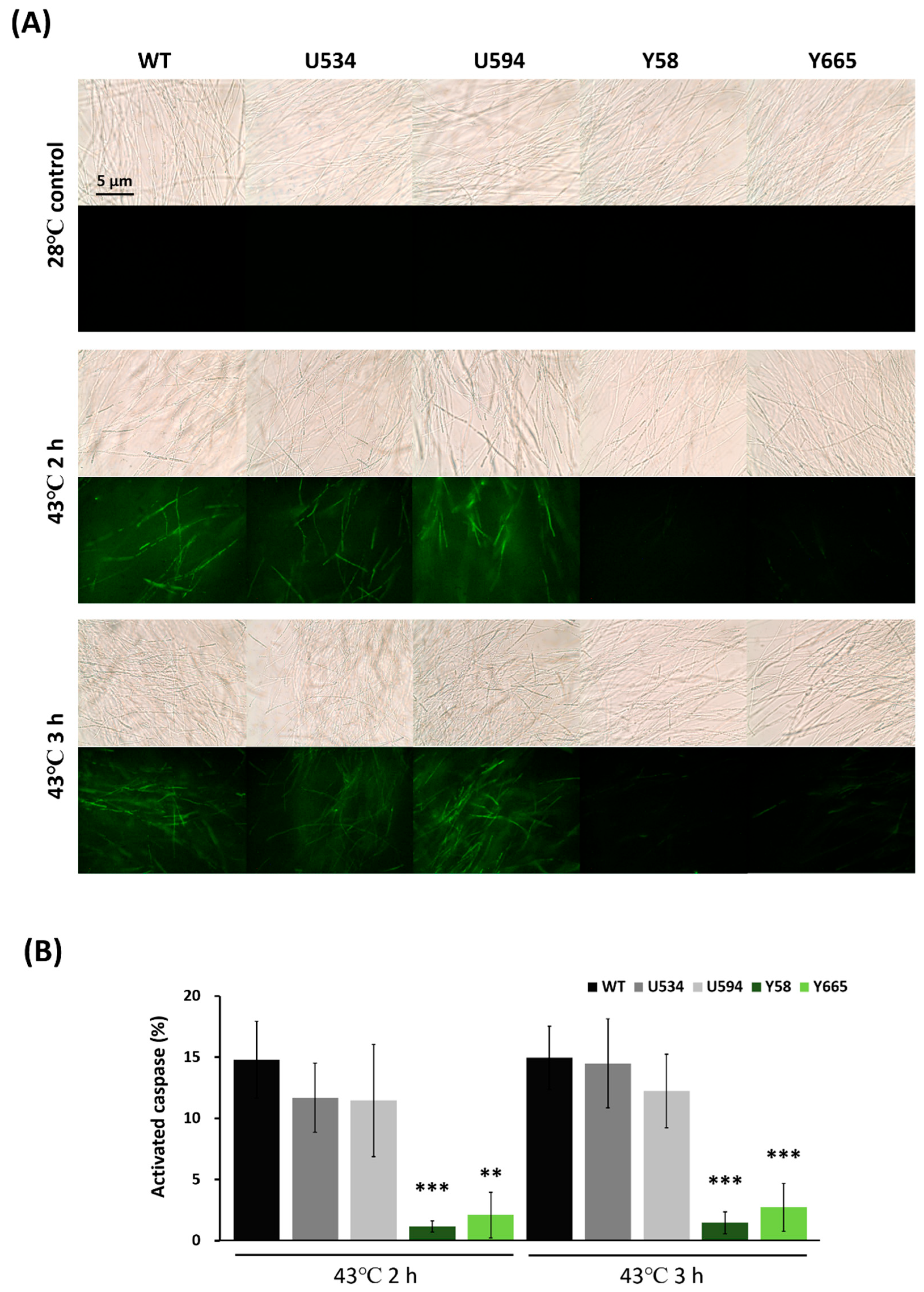
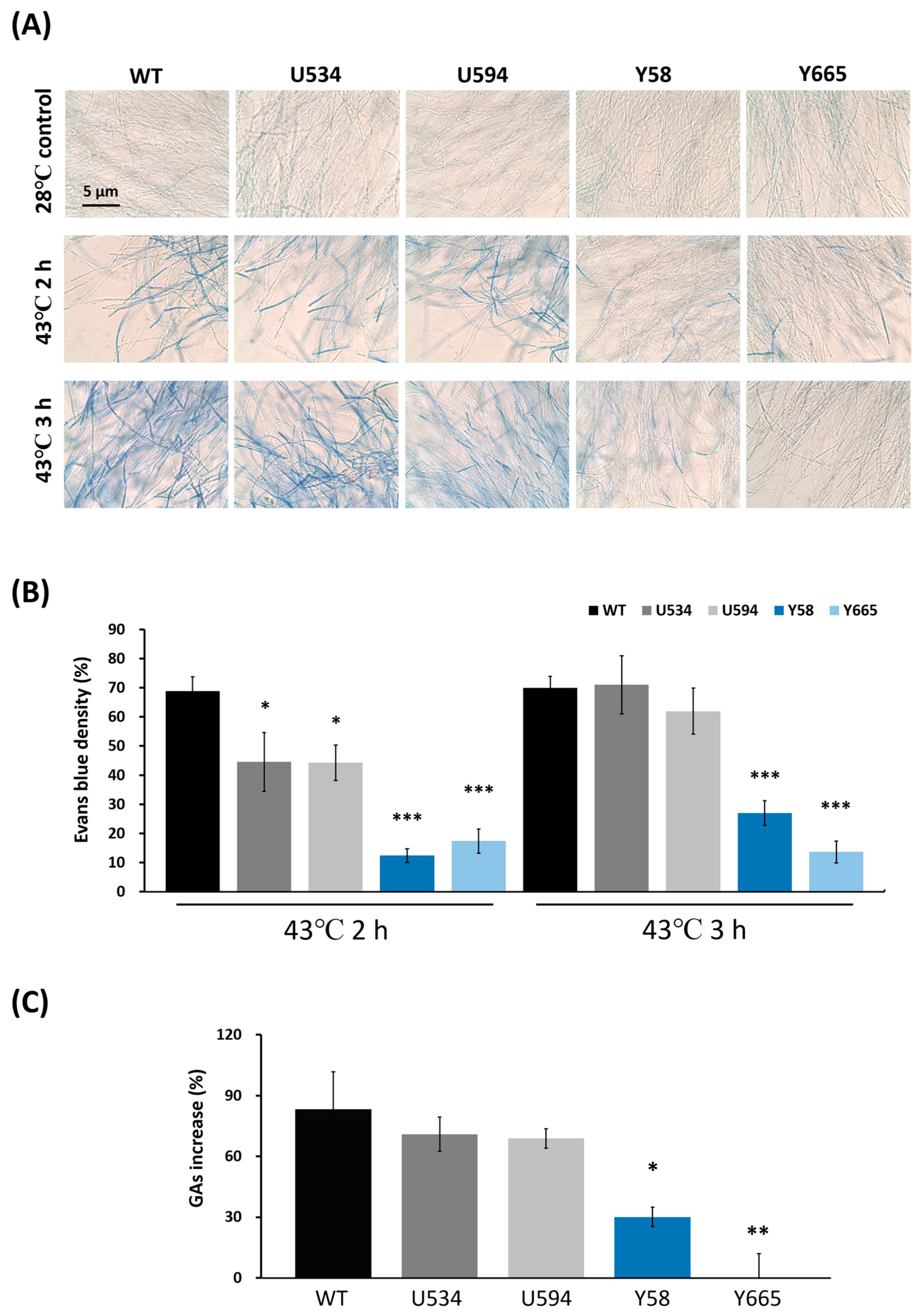
3.8. Glmca1 Silencing Delayed Fungal Apoptosis and Enhanced Cell Viability in G. lucidum
3.9. Glmca1 Silencing Reduced GAs Production During Fungal Apoptosis in G. lucidum
4. Discussion
5. Conclusions
Supplementary Materials
Author Contributions
Funding
Institutional Review Board Statement
Informed Consent Statement
Data Availability Statement
Conflicts of Interest
References
- El-Mekkawy, S.; Meselhy, M.R.; Nakamura, N.; Tezuka, Y.; Hattori, M.; Kakiuchi, N.; Shimotohno, K.; Kawahata, T.; Otake, T. Anti-HIV-1 and anti-HIV-1-protease substances from Ganoderma lucidum. Phytochemistry 1998, 49, 1651–1657. [Google Scholar] [CrossRef]
- Ren, S.; Liu, H.; Sang, Q.; Lu, M.; Gao, Q.; Chen, W. A review of bioactive components and pharmacological effects of Ganoderma lucidum. Food Sci. Nutr. 2025, 213, e70623. [Google Scholar] [CrossRef]
- Yue, Q.X.; Cao, Z.W.; Guan, S.H.; Liu, X.H.; Tao, L.; Wu, W.Y.; Li, Y.X.; Yang, P.Y.; Liu, X.; Guo, D.A. Effects of triterpenes from Ganoderma lucidum on protein expression profile of HeLa cells. Phytomedicine 2010, 17, 606–613. [Google Scholar] [CrossRef]
- Pérez-Garijo, A.; Steller, H. Spreading the word: Non-autonomous effects of apoptosis during development, regeneration and disease. Development 2015, 142, 3253–3262. [Google Scholar] [CrossRef] [PubMed]
- Borner, C. The Bcl-2 protein family: Sensors and checkpoints for life-or-death decisions. Mol. Immunol. 2003, 39, 615–647. [Google Scholar] [CrossRef]
- Danial, N.N.; Korsmeyer, S.J. Cell death: Critical control points. Cell 2004, 116, 205–219. [Google Scholar] [CrossRef]
- Xiong, S.; Mu, T.; Wang, G.; Jiang, X. Mitochondria-mediated apoptosis in mammals. Protein Cell 2014, 5, 737–749. [Google Scholar] [CrossRef]
- Carmona-Gutierrez, D.; Eisenberg, T.; Büttner, S.; Meisinger, C.; Kroemer, G.; Madeo, F. Apoptosis in yeast: Triggers, pathways, subroutines. Cell Death Differ. 2010, 17, 763–773. [Google Scholar] [CrossRef]
- Sharon, A.; Finkelstein, A.; Shlezinger, N.; Hatam, I. Fungal apoptosis: Function, genes and gene function. FEMS Microbiol. Rev. 2009, 33, 833–854. [Google Scholar] [CrossRef] [PubMed]
- Muzaffar, S.; Bose, C.; Banerji, A.; Nair, B.G.; Chattoo, B.B. Anacardic acid induces apoptosis-like cell death in the rice blast fungus Magnaporthe oryzae. Appl. Microbiol. Biotechnol. 2016, 100, 323–335. [Google Scholar] [CrossRef] [PubMed]
- Shlezinger, N.; Goldfinger, N.; Sharon, A. Apoptotic-like programmed cell death in fungi: The benefits in filamentous species. Front. Oncol. 2012, 2, 97. [Google Scholar] [CrossRef] [PubMed]
- Mousavi, S.A.A.; Robson, G.D. Oxidative and amphotericin B-mediated cell death in the opportunistic pathogen Aspergillus fumigatus is associated with an apoptotic-like phenotype. Microbiology 2004, 150, 1937–1945. [Google Scholar] [CrossRef]
- Azevedo, M.M.; Almeida, B.; Ludovico, P.; Cássio, F. Metal stress induces programmed cell death in aquatic fungi. Aquat. Toxicol. 2009, 92, 264–270. [Google Scholar] [CrossRef] [PubMed]
- Adám, A.L.; Kohut, G.; Hornok, L. Fphog1, a HOG-type MAP kinase gene, is involved in multistress response in Fusarium proliferatum. J. Basic Microbiol. 2008, 48, 151–159. [Google Scholar] [CrossRef]
- Song, C.; Chen, Q.; Wu, X.; Zhang, J.; Huang, C. Heat stress induces apoptotic-like cell death in two Pleurotus species. Curr. Microbiol. 2014, 89, 611–616. [Google Scholar] [CrossRef]
- Barhoom, S.; Sharon, A. Bcl-2 proteins link programmed cell death with growth and morphogenetic adaptations in the fungal plant pathogen Colletotrichum gloeosporioides. Fungal Genet. Biol. 2007, 44, 32–43. [Google Scholar] [CrossRef]
- Fahrenkrog, B.; Sauder, U.; Aebi, U. The S. cerevisiae HtrA-like protein Nma111p is a nuclear serine protease that mediates yeast apoptosis. J. Cell Sci. 2004, 117, 115–126. [Google Scholar] [CrossRef] [PubMed]
- Madeo, F.; Herker, E.; Maldener, C.; Wissing, S.; Lächelt, S.; Herlan, M.; Fehr, M.; Lauber, K.; Sigrist, S.J.; Wesselborg, S.; et al. A caspase-related protease regulates apoptosis in yeast. Mol. Cell 2002, 9, 911–917. [Google Scholar] [CrossRef] [PubMed]
- Tao, W.; Kurschner, C.; Morgan, J.I. Modulation of cell death in yeast by the Bcl-2 family of proteins. J. Biol. Chem. 1997, 272, 15547–15552. [Google Scholar] [CrossRef]
- Minina, E.A.; Coll, N.S.; Tuominen, H.; Bozhkov, P.V. Metacaspases versus caspases in development and cell fate regulation. Cell Death Differ. 2017, 24, 1314–1325. [Google Scholar] [CrossRef]
- Tsiatsiani, L.; Van Breusegem, F.; Gallois, P.; Zavialov, A.; Lam, E.; Bozhkov, P.V. Metacaspases. Cell Death Differ. 2011, 18, 1279–1288. [Google Scholar] [CrossRef]
- Hamann, A.; Brust, D.; Osiewacz, H.D. Deletion of putative apoptosis factors leads to lifespan extension in the fungal ageing model Podospora anserina. Mol. Microbiol. 2007, 65, 948–958. [Google Scholar] [CrossRef] [PubMed]
- Hamann, A.; Brust, D.; Osiewacz, H.D. Apoptosis pathways in fungal growth, development and ageing. Trends Microbiol. 2008, 16, 276–283. [Google Scholar] [CrossRef] [PubMed]
- Mukherjee, D.; Gupta, S.; Saran, N.; Datta, R.; Ghosh, A. Induction of apoptosis-like cell death and clearance of stress-induced intracellular protein aggregates: Dual roles for Ustilago maydis metacaspase Mca1. Mol. Microbiol. 2017, 106, 815–831. [Google Scholar] [CrossRef] [PubMed]
- Fujita, K.I.; Tatsumi, M.; Ogita, A.; Kubo, I.; Tanaka, T. Anethole induces apoptotic cell death accompanied by reactive oxygen species production and DNA fragmentation in Aspergillus fumigatus and Saccharomyces cerevisiae. FEBS J. 2014, 281, 1304–1313. [Google Scholar] [CrossRef]
- Guaragnella, N.; Pereira, C.; Sousa, M.J.; Antonacci, L.; Passarella, S.; Côrte-Real, M.; Marra, E.; Giannattasio, S. YCA1 participates in the acetic acid induced yeast programmed cell death also in a manner unrelated to its caspase-like activity. FEBS Lett. 2006, 580, 6880–6884. [Google Scholar] [CrossRef]
- Shirazi, F.; Pontikos, M.A.; Walsh, T.J.; Albert, N.; Lewis, R.E.; Kontoyiannis, D.P. Hyperthermia sensitizes Rhizopus oryzae to posaconazole and itraconazole action through apoptosis. Antimicrob. Agents Chemother. 2013, 57, 4360–4368. [Google Scholar] [CrossRef]
- Wang, J.W.; Xia, Z.H.; Tan, R.X. Elicitation on artemisinin biosynthesis in Artemisia annua hairy roots by the oligosaccharide extract from the endophytic Colletotrichum sp. B501. Acta Bot. Sin. 2002, 44, 1233–1238. [Google Scholar]
- Yuan, Y.J.; Li, C.; Hu, Z.D.; Wu, J.C.; Zeng, A.P. Fungal elicitor-induced cell apoptosis in suspension cultures of Taxus chinensis var. mairei for taxol production. Process Biochem. 2002, 38, 193–198. [Google Scholar] [CrossRef]
- Zhu, J.; Wu, F.; Yue, S.; Chen, C.; Song, S.; Wang, H.; Zhao, M. Functions of reactive oxygen species in apoptosis and ganoderic acid biosynthesis in Ganoderma lucidum. FEMS Microbiol. Lett. 2019, 366, fnaa015. [Google Scholar] [CrossRef]
- You, B.J.; Lee, M.H.; Tien, N.; Lee, M.S.; Hsieh, H.C.; Tseng, L.H.; Chung, Y.L.; Lee, H.Z. A novel approach to enhancing ganoderic acid production by Ganoderma lucidum using apoptosis induction. PLoS ONE 2013, 8, e53616. [Google Scholar] [CrossRef]
- You, B.J.; Tien, N.; Lee, M.H.; Bao, B.Y.; Wu, Y.S.; Hu, T.C.; Lee, H.Z. Induction of apoptosis and ganoderic acid biosynthesis by cAMP signaling in Ganoderma lucidum. Sci. Rep. 2017, 7, 318. [Google Scholar] [CrossRef] [PubMed]
- Pei, J.; Zhao, M.; Zhang, L.; Wu, X. The metacaspase gene PoMCA1 enhances the mycelial heat stress tolerance and regulates the fruiting body development of Pleurotus ostreatus. Horticulturae 2024, 10, 116. [Google Scholar] [CrossRef]
- Wen, S.; Ma, Q.M.; Zhang, Y.L.; Yang, J.P.; Zhao, G.H.; Fu, D.Q.; Luo, Y.B.; Qu, G.Q. Biochemical evidence of key residues for the activation and autoprocessing of tomato type II metacaspase. FEBS Lett. 2013, 587, 2517–2522. [Google Scholar] [CrossRef]
- Wang, X.; Wang, X.; Feng, H.; Tang, C.; Bai, P.; Wei, G.; Huang, L.; Kang, Z. TaMCA4, a novel wheat metacaspase gene functions in programmed cell death induced by the fungal pathogen Puccinia striiformis f. sp. tritici. Mol. Plant-Microbe Interact. 2012, 25, 755–764. [Google Scholar] [CrossRef]
- Richie, D.L.; Miley, M.D.; Bhabhra, R.; Robson, G.D.; Rhodes, J.C.; Askew, D.S. The Aspergillus fumigatus metacaspases CasA and CasB facilitate growth under conditions of endoplasmic reticulum stress. Mol. Microbiol. 2007, 63, 591–604. [Google Scholar] [CrossRef]
- Mu, D.; Shi, L.; Ren, A.; Li, M.; Wu, F.; Jiang, A.; Zhao, M. The development and application of a multiple gene co-silencing system using endogenous URA3 as a reporter gene in Ganoderma lucidum. PLoS ONE 2012, 7, e43737. [Google Scholar] [CrossRef] [PubMed]
- Shi, L.; Fang, X.; Li, M.; Mu, D.; Ren, A.; Tan, Q.; Zhao, M. Development of a simple and efficient transformation system for the basidiomycetous medicinal fungus Ganoderma lucidum. World J. Microbiol. Biotechnol. 2012, 28, 283–291. [Google Scholar] [CrossRef] [PubMed]
- Chao, Y.T.; Chen, W.C.; Chen, C.Y.; Ho, H.Y.; Yeh, C.H.; Kuo, Y.T.; Su, C.L.; Yen, S.H.; Hsueh, H.Y.; Yeh, J.H.; et al. Chromosome-level assembly, genetic and physical mapping of Phalaenopsis aphrodite genome provides new insights into species adaptation and resources for orchid breeding. Plant Biotechnol. J. 2018, 16, 2027–2041. [Google Scholar] [CrossRef]
- Savi, G.D.; Scussel, V.M. Effects of ozone gas exposure on toxigenic fungi species from Fusarium, Aspergillus, and Penicillium genera. Ozone Sci. Eng. 2014, 36, 144–152. [Google Scholar] [CrossRef]
- Chyr, R.; Shiao, M.S. Liquid chromatographic characterization of the triterpenoid patterns in Ganoderma lucidum and related species. J. Chromatogr. A 1991, 542, 327–336. [Google Scholar] [CrossRef]
- You, B.J.; Lee, H.Z.; Chung, K.; Lee, M.H.; Huang, M.J.; Tien, N.; Chan, C.W.; Kuo, Y.H. Enhanced production of ganoderic acids and cytotoxicity of Ganoderma lucidum using solid medium culture. Biosci. Biotechnol. Biochem. 2012, 76, 1529–1534. [Google Scholar] [CrossRef]
- Paterson, R.R.M. Ganoderma–a therapeutic fungal biofactory. Phytochemistry 2006, 67, 1985–2001. [Google Scholar] [CrossRef] [PubMed]
- Plosca, M.P.; Chiș, M.S.; Fărcaș, A.C.; Păucean, A. Ganoderma lucidum—From ancient remedies to modern applications: Chemistry, benefits, and safety. Antioxidants 2025, 14, 513. [Google Scholar] [CrossRef]
- Branco, S.; Schauster, A.; Liao, H.L.; Ruytinx, J. Mechanisms of stress tolerance and their effects on the ecology and evolution of mycorrhizal fungi. New Phytol. 2022, 235, 2158–2175. [Google Scholar] [CrossRef]
- Razzaq, A.; Zafar, M.M.; Ali, A.; Ihsan, L.; Qadir, F.; Khan, M.N.; Zhang, Y.; Gao, L.; Cong, H.; Iqbal, R.; et al. Elicitor-mediated enhancement of secondary metabolites in plant species: A review. Front. Plant Sci. 2025, 16, 1706600. [Google Scholar] [CrossRef]
- Attfield, P.V. Trehalose accumulates in Saccharomyces cerevisiae during exposure to agents that induce heat shock response. FEBS Lett. 1987, 225, 259–263. [Google Scholar] [CrossRef]
- Argüelles, J.C. Thermotolerance and trehalose accumulation induced by heat shock in yeast cells of Candida albicans. FEMS Microbiol. Lett. 1997, 146, 65–71. [Google Scholar] [CrossRef]
- Noventa-Jordão, M.A.; Couto, R.M.; Goldman, M.H.S.; Aguirre, J.; Iyer, S.; Caplan, A.; Terenzi, H.F.; Goldman, G.H. Catalase activity is necessary for heat-shock recovery in Aspergillus nidulans germlings. Microbiology 1999, 145, 3229–3234. [Google Scholar] [CrossRef] [PubMed]
- Zhang, X.; Ren, A.; Li, M.J.; Cao, P.F.; Chen, T.X.; Zhang, G.; Shi, L.; Jiang, A.L.; Zhao, M.W. Heat stress modulates mycelium growth, heat shock protein expression, ganoderic acid biosynthesis, and hyphal branching of Ganoderma lucidum via cytosolic Ca2+. Appl. Environ. Microbiol. 2016, 82, 4112–4125. [Google Scholar] [CrossRef] [PubMed]
- O’Brian, G.R.; Georgianna, D.R.; Wilkinson, J.R.; Yu, J.; Abbas, H.K.; Bhatnagar, D.; Cleveland, T.E.; Nierman, W.; Payne, G.A. The effect of elevated temperature on gene transcription and aflatoxin biosynthesis. Mycologia 2007, 99, 232–239. [Google Scholar] [CrossRef]
- Naito, M.; Nagashima, K.; Mashima, T.; Tsuruo, T. Phosphatidylserine externalization is a downstream event of interleukin-1 beta-converting enzyme family protease activation during apoptosis. Blood 1997, 89, 2060–2066. [Google Scholar] [CrossRef] [PubMed]
- Fadeel, B.; Åhlin, A.; Henter, J.I.; Orrenius, S.; Hampton, M.B. Involvement of caspases in neutrophil apoptosis: Regulation by reactive oxygen species. Blood 1998, 92, 4808–4818. [Google Scholar] [CrossRef] [PubMed]
- Katayama, T.; Uchida, H.; Ohta, A.; Horiuchi, H. Involvement of protein kinase C in the suppression of apoptosis and in polarity establishment in Aspergillus nidulans under conditions of heat stress. PLoS ONE 2012, 7, e50503. [Google Scholar] [CrossRef][Green Version]
- Chen, C.; Dickman, M.B. Proline suppresses apoptosis in the fungal pathogen Colletotrichum trifolii. Proc. Natl. Acad. Sci. USA 2005, 102, 3459–3464. [Google Scholar] [CrossRef]
- Wang, C.; Youle, R.J. The role of mitochondria in apoptosis. Annu. Rev. Genet. 2009, 43, 95–118. [Google Scholar] [CrossRef]
- Longo, V.D.; Ellerby, L.M.; Bredesen, D.E.; Valentine, J.S.; Gralla, E.B. Human Bcl-2 reverses survival defects in yeast lacking superoxide dismutase and delays death of wild-type yeast. J. Cell Biol. 1997, 137, 1581–1588. [Google Scholar] [CrossRef] [PubMed]
- Chen, S.R.; Dunigan, D.D.; Dickman, M.B. Bcl-2 family members inhibit oxidative stress-induced programmed cell death in Saccharomyces cerevisiae. Free Radic. Biol. Med. 2003, 34, 1315–1325. [Google Scholar] [CrossRef]
- Fagundes, D.; Bohn, B.; Cabreira, C.; Leipelt, F.; Dias, N.; Bodanese-Zanettini, M.H.; Cagliari, A. Caspases in plants: Metacaspase gene family in plant stress responses. Funct. Integr. Genom. 2015, 15, 639–649. [Google Scholar] [CrossRef] [PubMed]
- Jeong, J.H.; Lee, S.E.; Kim, J. Mutational analysis of metacaspase CaMca1 and decapping activator Edc3 in the pathogenicity of Candida albicans. Fungal Genet. Biol. 2016, 97, 18–23. [Google Scholar] [CrossRef]
- Khan, M.A.S.; Chock, P.B.; Stadtman, E.R. Knockout of caspase-like gene, YCA1, abrogates apoptosis and elevates oxidized proteins in Saccharomyces cerevisiae. Proc. Natl. Acad. Sci. USA 2005, 102, 17326–17331. [Google Scholar] [CrossRef] [PubMed]
- Léger, T.; Garcia, C.; Ounissi, M.; Lelandais, G.; Camadro, J.M. The metacaspase (Mca1p) has a dual role in farnesol-induced apoptosis in Candida albicans. Mol. Cell. Proteom. 2015, 14, 93–108. [Google Scholar] [CrossRef]
- Alvarez-Peral, F.J.; Zaragoza, O.; Pedreno, Y.; Argüelles, J.C. Protective role of trehalose during severe oxidative stress caused by hydrogen peroxide and the adaptive oxidative stress response in Candida albicans. Microbiology 2002, 148, 2599–2606. [Google Scholar] [CrossRef]
- Lu, H.; Zhu, Z.Y.; Dong, L.L.; Jia, X.M.; Sun, X.R.; Yan, L.; Chai, Y.F.; Jiang, Y.Y.; Cao, Y.Y. Lack of trehalose accelerates H2O2-induced Candida albicans apoptosis through regulating Ca2+ signaling pathway and caspase activity. PLoS ONE 2011, 6, e15808. [Google Scholar] [CrossRef]
- Cao, Y.Y.; Huang, S.; Dai, B.D.; Zhu, Z.Y.; Lu, H.; Dong, L.L.; Cao, Y.B.; Wang, Y.; Gao, P.H.; Chai, Y.F.; et al. Candida albicans cells lacking CaMCA1-encoded metacaspase show resistance to oxidative stress-induced death and change in energy metabolism. Fungal Genet. Biol. 2009, 46, 183–189. [Google Scholar] [CrossRef]
- Chen, S.; Xu, J.; Liu, C.; Zhu, Y.; Nelson, D.R.; Zhou, S.; Li, C.; Wang, L.; Guo, X.; Sun, Y.; et al. Genome sequence of the model medicinal mushroom Ganoderma lucidum. Nat. Commun. 2012, 3, 913. [Google Scholar] [CrossRef]
- Bondzie-Quaye, P.; Swallah, M.S.; Acheampong, A.; Elsherbiny, S.M.; Acheampong, E.O.; Huang, Q. Advances in the biosynthesis, diversification, and hyperproduction of ganoderic acids in Ganoderma lucidum. Mycol. Prog. 2023, 22, 31. [Google Scholar] [CrossRef]
- Xu, X.; Li, C.; Wu, F.; Zhao, S.; Chen, T.; You, H.; Lin, Y.; Zou, X. Integrated Transcriptomic and Targeted Metabolomic Analysis Reveals the Key Genes Involved in Triterpenoid Biosynthesis of Ganoderma lucidum. J. Fungi 2025, 11, 57. [Google Scholar] [CrossRef]
- Yang, C.; Li, W.; Li, C.; Zhou, Z.; Xiao, Y.; Yan, X. Metabolism of ganoderic acids by a Ganoderma lucidum cytochrome P450 and the 3-keto sterol reductase ERG27 from yeast. Phytochemistry 2018, 155, 83–92. [Google Scholar] [CrossRef] [PubMed]
- Li, X.; Liu, D.; Han, B.; Huang, S.; Deng, H. Genome-wide identification of CYP450 in Ganoderma lucidum and expression analysis of genes related to ganoderic acid synthesis. Arch. Microbiol. 2025, 207, 137. [Google Scholar] [CrossRef] [PubMed]
- Li, Y.; Li, M.; Liu, L.; Yang, W.; Yang, J.; Li, W.; Zhang, R.; Yang, Z.; Liang, Z.; Li, Z.; et al. Functional characterization of HMG_9 and C2H2.07 as positive regulators of ganoderic acid biosynthesis in Ganoderma lucidum. Microb. Cell Fact. 2026, 25, 2984. [Google Scholar] [CrossRef] [PubMed]
- Liang, C.; Tian, D.; Liu, Y.; Li, H.; Zhu, J.; Li, M.; Xin, M.; Xia, J. Review of the molecular mechanisms of Ganoderma lucidum triterpenoids: Ganoderic acids A, C2, D, F, DM, X and Y. Eur. J. Med. Chem. 2019, 174, 130–141. [Google Scholar] [CrossRef] [PubMed]
- Shiao, M.S. Triterpenoid natural products in the fungus Ganoderma lucidum. J. Chin. Chem. Soc. 1992, 39, 669–674. [Google Scholar] [CrossRef]


Disclaimer/Publisher’s Note: The statements, opinions and data contained in all publications are solely those of the individual author(s) and contributor(s) and not of MDPI and/or the editor(s). MDPI and/or the editor(s) disclaim responsibility for any injury to people or property resulting from any ideas, methods, instructions or products referred to in the content. |
© 2026 by the authors. Licensee MDPI, Basel, Switzerland. This article is an open access article distributed under the terms and conditions of the Creative Commons Attribution (CC BY) license.
Share and Cite
Lai, M.-H.; Tien, N.; Yang, H.-L.; Huang, J.-H.; Lee, M.-H.; You, B.-J. Heat-Stress Induced Apoptosis: A New Biotechnological Strategy to Enhance Ganoderic Acids Production in Ganoderma lucidum. J. Fungi 2026, 12, 364. https://doi.org/10.3390/jof12050364
Lai M-H, Tien N, Yang H-L, Huang J-H, Lee M-H, You B-J. Heat-Stress Induced Apoptosis: A New Biotechnological Strategy to Enhance Ganoderic Acids Production in Ganoderma lucidum. Journal of Fungi. 2026; 12(5):364. https://doi.org/10.3390/jof12050364
Chicago/Turabian StyleLai, Meng-Hsuan, Ni Tien, Hsiao-Lien Yang, Jun-He Huang, Miin-Huey Lee, and Bang-Jau You. 2026. "Heat-Stress Induced Apoptosis: A New Biotechnological Strategy to Enhance Ganoderic Acids Production in Ganoderma lucidum" Journal of Fungi 12, no. 5: 364. https://doi.org/10.3390/jof12050364
APA StyleLai, M.-H., Tien, N., Yang, H.-L., Huang, J.-H., Lee, M.-H., & You, B.-J. (2026). Heat-Stress Induced Apoptosis: A New Biotechnological Strategy to Enhance Ganoderic Acids Production in Ganoderma lucidum. Journal of Fungi, 12(5), 364. https://doi.org/10.3390/jof12050364